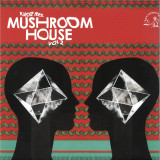
This one is a double first for Shall Not Fade - the launch of the new Killer Cuts series focused on groove-heavy dancefloor fillers, and Marc Brauner’s debut on the Bristol label. The born-and-raised Berliner has previously released on German labels Midnight Snacks and Pentagonik, and joins the Shall Not Fade roster with a collection of classic house tracks to make you miss the clubs. Brauner covers a breadth of moods on the record, the A-side filling you up with euphoria; opener ‘Too Real’ is a gorgeous bit of lofi house tinged with funky guitar inflections and a retro feel that sweeps across the whole release. ‘Things I Did’ and ‘Tool For Lovers’ drag you out of winter and into a 90s Ibiza summer, utilising a 303 bassline and classic house stabs to warm up your dancing feet. In comparison to the warmth of the first half of the record, the B-side gets more haunting in tone, first by introducing rolling breaks in ‘I Know You Would’ and especially in ‘Tears of a Fallen Angel’. This is the emotional core of Brauner’s offering, euphoria tinged with sadness over a punchy rhythm that juxtaposes the subtle vocals woven throughout. The record closes with a hint of post-disco; ‘Neptun’ is a real groover of squelchy electro synths that is reminiscent of Patrick Cowley and the early, smoky nightclubs of New York. The bonus digital track ‘Out of Time’ carries on a similar energy - it’s a piece that doesn’t keep still, glittering with playful synth melodies and a surging cacophony of vocal samples.
Cerca:marc o tool
- A1: Impulsion (03 02)
- A2: Tension Build (00 30)
- A3: Fast Action (02 28)
- A4: The Chaser (01 57)
- A5: Heat On (01 03)
- A6: Runaway (02 04)
- A7: Power Source (00 30)
- A8: Percussion Power (02 51)
- A9: Shivers (03 08)
- A10: Gathering Storm (02 21)
- A11: Drums On Parade (02 16)
- B1: Samba Street (A) (03 00)
- B2: Samba Street (B) (03 00)
- B3: Child’s Theme (A) (01 14)
- B4: Child’s Theme (B) (00 40)
- B5: Child’s Theme (C) (01 04)
- B6: Child’s Theme (D) (01 26)
- B7: Child’s Theme (E) (01 25)
- B8: Spanner In The Works (02 17)
- B9: Tropical Peace (01 45)
- B10: Clippity Clop (01 15)
- B11: Red Indian Drums (00 35)
- B12: Fairy Wand (A) (00 08)
- B13: Fairy Wand (B) (00 09)
- B18: Timpani (B) (00 05)
- B19: Timpani (C) (00 05)
- B20: Vibraphone (A) (00 15)
- B21: Vibraphone (B) (00 15)
- B22: Bell Chimes (00 27)
- B23: Clock Chimes (00 37)
- B14: Fairy Wand (C) (00 12)
- B15: Snare Drum Roll (A) (00 12)
- B16: Snare Drum Roll (B) (00 07)
- B17: Timpani (A) (00 25)
They Say: “Exploring the wide range of moods and sounds produced by percussion”.
We say: MPCs at the ready because this does exactly what it says on the tin, to devastating effect. Oh, and the sleeve is stunning.
Originally released in 1979, Percussion Spectrum was produced by the legendary percussionists Barry Morgan and Ray Cooper. With dope beats taking in diverse styles, from funk and soul and jazz through to Latin, Brazilian, samba and Afro-Cuban, this is an amazing sample source filled with killer drum-breaks and percussion flares. Unsurprisingly it’s one of the most sought-after records from the Themes catalogue.
This library LP is a library in itself, with its mix of short themes of single beats, short breaks and some longer, more fully-formed DJ-friendly tracks. Trust us when we say that this is a box full of percussion firework ready to be thrown onto the dancefloor at the just right moment. We don’t have anywhere near enough space to describe all 34 tracks (there isn’t even enough room on the labels to list them all!) so we’ll pick out some favourites.
Favourites like opener “Impulsion”, a percussive masterclass with drum upon drum upon drum making it feel like a neat prototype to the percussive underscores of Peter Lüdemann and Pit Troja’s eternal The Now Generation LP. And the dramatic “Fast Action” is exactly that, racing along on a rapid roll of congas, cymbal crashes and throbbing kicks. “The Chaser” is classic library cop-funk with dilapidated drum figures, and the outrageously funky “Heat On” is the perfect accompaniment to your wild action sequences.
A real highlight is “Runaway”, and not just because it sounds like nothing else on the record. Here are drums and percussion in that tight funk style that just cries out to be sampled. “Percussion Power” is an extended, near-three minute suite of funky drum solo after funky drum solo that just aches to be looped: open drums to die for people! “Shivers” is a tense, apprehensive underscore with shock stabs that builds to a climax whilst “Drums On Parade” is a showcase of head-nod drums and cymbals in march time. Did someone say “funky”?
Side B starts with a stroll down “Samba Street”. With the noise of the crowd in the background, this is riotous, authentically drawn samba that sounds like it’s been beamed straight in from Rio in full flow. Drop this at midnight and watch the cobwebs fly off any dancefloor. Prefer it without the fake crowd? “Samba Street (b)” has you covered.
The simple, innocent “Child’s Themes” (all five of them) provide a nice, sweet respite from all the funk. Nursery sounds tinged with only a touch of melancholy. The gentle marimba solo of “Tropical Peace” only adds to the sense of serenity we get from the relatively calm second side. The album closes out with a veritable toolkit of tom toms, snare drum rolls, timpani, vibraphones and chiming bells.
Percussion Spectrum is a joyous collection of sounds, as bright, beaming and downright funky as the vibrant cover. The Themes series is known for each record having its own particularly striking sleeve, which was unusual for library records at the time, and Percussion Spectrums’s multi-coloured drumsticks make for one of the most eye-catching.
As with all of our other Themes re-issues, the audio for Percussion Spectrum comes from the original analogue tapes and has been remastered for vinyl by Be With regular Simon Francis. As usual Richard Robinson has taken the same care with restoring the original sleeve from archive scans. This is another one ticked off the list of library records that should be out there for anyone who wants a copy.
Waterford hero Cailin inaugurates Gurriers with her solo debut Phantom Love Affair. 4 tracks of gritty, hardware focused techno with impressive variety and measured dancefloor focus that prove the producer to be one of Ireland's finest.
"The Unicorn" gets right down to business, siren-ated synths engulfing the hardened doofs for a tool'd up ride through the wild and uneasy. "Dickheads" proves heavier with an rising acid line leading the march to addictively hypnotic militant drums.
The flip gets funkier with Sphinx's staccato'd snares bouncing around a kinetic melody via peak time pace for prime floor effect. Our finale then involves the incredible title track, locking in for a mesmerising frenzy of pressure cooked 303's, high hats & kicks that will surely ravage the rave, whenever it may be.
Auf Bronsons Veröffentlichung ”White Bronco” (2018) rappte er: ”my next album’s only for dolphins”, und der prinzipientreue MC steht immer zu seinem Wort. Action ist eine Legende aus Queens, NY, die für seine eigenwillige Feder und seine lebendigen Raps respektiert wird. ”Der Delphin ist eines der intelligentesten Lebewesen, das je geschaffen wurde, egal auf welchem Planeten wir uns befinden”, erklärt Action. ”Sie haben ihre eigene Art zu kommunizieren. Sie haben Nuancen und Unwägbarkeiten wie wir.” In einer völlig ungewöhnlichen Analogie vergleicht er den Wassersäuger mit den sagenumwobenen ”Fünf-Tool”- Baseballspielern - also mit einer außergewöhnlichen Klasse von Spielern, die alle Elemente des Spiels in sich vereinen. ”Die einzigen Menschen, die mich verstehen, sind diese ”Five-Tool”-Spieler, diese höheren Wesen, die sich auf derselben telepathischen Welle befinden wie ich”. So viel Zeit, wie er für das Wortspiel und die Bildsprache aufwendet, hat er auch in die Sonics investiert. Action hält ”Only for Dolphins” in der Familie und arbeitet mit Produzenten und Rappern zusammen, die er seit Jahren kennt. The Alchemist, Harry Fraud, Budgie, DJ Muggs, Samiyam, Daringer und Tommy Mas liefern die knisternde, psychedelische Klanglandschaften für Bronsons einzigartige Erzählungen, während
sein enger Freund Meyhem Lauren und dessen Bruder Hologram die einzigen Feature-MCs des Albums sind.
The latest record from Delinquent Delivery sees label-head Stephen Mahoney round up five of Dublin’s most prolific producers. Stuey Lyons, Jon Hussey, Jack Jennings, Stephen Mahoney & Rustal have contributed to Stretching Ohms, the fifth release on Delinquent Delivery. Dancefloor directed techno at its finest.
Stuey Lyøns & Jon Hussey have teamed up for A1, a straight-shooting dancefloor oriented techno work. With over forty years of experience between them,Lyøns & Hussey’s expertise is put to work on A1. Dark, pensive and groove-oriented, A1 never deviates too far from its source, making it a useful techno tool for any DJ’s arsenal.
Jack Jennings contribution on A2 is another dancefloor directed number, featuring a dissonant lead married with a swinging percussive section which creates an infectious groove. Jennings’ production style would be synonymous with dark, late night sets, such as those by Marcel Dettmann or Chris Liebling.
Mahoney’s input to Stretching Ohms is B1, a commanding techno banger. Mahoney’s production style is similar to his DJ sets, delicately blending subtle elements throughout B1 while never losing focus of the main driving components. B1’s direct approach makes it perfect for late night sets.
Rustal rounds the record off with B2, a groovy roller which echoes Detroit through and through. Chiming in as the fastest track on the record, Rustal effortlessly balances a funky bassline with a compelling lead, reminiscent of the Belleville Three’s earlier work. B2 marks the end of Stretching Ohms, continuing on the energetic path set out before.
Stretching Ohms delivers high-octane dancefloor driven bangers of the highest quality. Each track differs in style, but combined they all have similar DNA – they’re all made in Dublin. This release highlights the talent that Ireland has to offer to techno globally.
Worst records is proud to present the third release of its growing catalogue. Unlike his
alias could evoke, Christian Coiffure is not so much specialized in online hairdressing
tutorials but has a fierce passion into brushing serious quality tracks. « Un Nouvel Âge
Réminiscent » hits hard with its progression into sharp and colorful forms, never bound to
redundancy. From slow EBMish , industrial tainted marching anthems of « A New New
Hope » and « Slowly Merging Into One » to synth-infused acid railroads built for futuristic
Trance Europe Express trains in « Révolutions Synchrones » and « La Dernière Volonté
des Atlantes », everything functions as a toolkit for imagination. Add to this a breaky
andrefreshing post-dubstep turn on « Biosphere is Reborn » alongside a delicious
headshot surprise on digital bonus with « Pouvoir Lacrymal Renforcé », and you will
never see the word « coiffure » the same way again.
Time Horizon's second episode enlists another team of dancefloor snipers delivering 5 brain-dancing tunes crafted appositively for late night use.
After his appearance on the first XCPT record, Andrea is back on the label with his unmistakable shuffling drums and a heavy square bassline followed by Anybody Anytime covering the uptempo-zone with a rotative junglistic tool dressed with celestial pads, closing the A side TANS reveals his new robot alias The Sympathizer' providing a neurotic electro progression fully based on his modular system.
Flipping the records you will find two XCPT homies bringing the audience straight into Matera landscapes: Farron gets a 909 unceasing toms orchestra surrounded by his atmospheric leads while Kreggo illustrates clearly his hypnotic mid-low vision of breakbeat locked by a mystic bass for the whole track.
ltd 250 hand-numbered units (12' + insert)
mastered by Marco Pellegrino at Analogcut Mastering Studio, Berlin
ABOUT THE 'LIBRARY TOOL KIT' SERIES
The new sub-label from WNCL Recordings features 12 short 'tools' per release, for use on discotheque sound systems and home stereos alike. Released on 10' vinyl with digital to follow at a later date
ABOUT THIS RECORD
EKOPLEKZ contributes to the Library Tool Kit series with 12 unique transmissions, live and direct from his radiochronic workshop.
'they've quietly found themselves elevated into the psych scenes premier league.' Drowned In Sound
'when they go pedal-to-metal it rarely fails.' Mojo Magazine
'The Lucid Dream are rapidly becoming major players in an ever-increasingly crowded psych scene..utterly seductive.' The Quietus
'one of the most enthralling bands in the UK.' Far Out Magazine
The Lucid Dream return in October with the release of their 4th album, 'Actualisation'.
Driven by fans raising £10,000 to help replace all equipment robbed after a Paris show in early 2017, a new album became the instant focus in the summer of 2017 for a rejuvenated The Lucid Dream.
'Actualisation' is soaked in the influence of acid house, amalgamated with dub and kosmische. It will again see them acknowledged for venturing into pastures new, setting themselves apart from 'genres', 'scenes' or what any other act are currently doing.
The album was penned over the summer of 2017 by Mark Emmerson (vocals/guitar/synths), using only the classic Roland 303/808 synths, bass and vocals as tools for writing. Inspiration for the writing was formed via continuous listening to the Chicago to UK acid house works of 1986-1992, the focus predominantly on the groove.
Several months on from those writing sessions and The Lucid Dream have completed their 4th album in 5 years. A record made for the dancefloor.
Recorded at Whitewood Studios, Liverpool, with Rob Whiteley, the album is produced alongside long-time collaborator Ross Halden (Ghost Town Studios, Leeds), with mastering via Dean Honer (All Seeing I/I Monster/The Moonlandingz).
The confrontational techno-punk of 'Alone In Fear' opens the album, a 9-minute attack fuelled by the frustration and anger spawned by Brexit, government and a realisation of what 2018 Britain currently is.
Recent single 'SX1000' (the first work from the album, unveiled via 12' vinyl in April this year) is the band's first move into pure acid house. The acid house fusion runs throughout the record, represented furthermore by 'Ardency', a track already praised by live critics when aired live for the first time earlier this year as 'even on first hearing, would've raised the roof of The Hacienda'.
The 2-part opus of 'Zenith' follows, commencing with a space-dub/house instrumental groove before building into a track that will go for your head as much as your hips. Only 'Breakdown' harks back to sounds of old for the band, a little reminder of the skull-crushing impact they can make when stripped to the bare bones. 'No Sunlight Dub' closes the album, a dark-dub that invites the classic acid-house tool (Roland 808) into the dub. The track makes a stop-off into drum 'n' bass/jungle along the way before rounding up in a manner suited to Lee Perry, King Tubby, Augustus Pablo and other Jamaican greats.
The Lucid Dream formed in Carlisle, Cumbria, in 2008. A string of sold-out 7s was followed by the debut longer player, 'Songs Of Lies and Deceit', in August 2013. The initial vinyl pressing of the debut album (500 copies) sold out within 2 days, and was backed by a main stage slot at Kendal Calling, and supports to Death In Vegas and A Place To Bury Strangers (full UK tour).
The bands 2nd album ('The Lucid Dream') was released in March 2015 to further acclaim. This included 2 BBC 6 Music sessions and plays across most shows on the station, as well as plays from BBC Radio 1 (Huw Stephens) and BBC Radio 2. Further press followed from Uncut, The Skinny, Louder Than War, and Drowned In Sound, who named the album #7 UK album of 2015. Supports to Clinic and A Place To Bury Strangers also coincided.
3rd album, 'Compulsion Songs' was released in September 2016, on Holy Are You Recordings. The vinyl pressing of the album sold-out within a day, prompting an immediate 2nd press, with pre-sales of the album topping 1,000 before release. The album was backed by a headline UK tour, and a main slot at Liverpool International Festival of Psychedelia (for which they were singled out for major plaudits from The Quietus, The Skinny and Drowned In Sound). The album again received acclaim from the likes of Mojo, Uncut, Classic Rock Magazine, BBC Radio 2 (Huey Morgan) and across the board on BBC 6 Music (Lauren Laverne, Marc Riley, Tom Ravenscroft, Gideon Coe, Stuart Maconie).
'Actualisation' is released on 19th October 2018 (CD/download/ltd red vinyl/standard black vinyl), via Holy Are You Recordings.
'they've quietly found themselves elevated into the psych scenes premier league.' Drowned In Sound
'when they go pedal-to-metal it rarely fails.' Mojo Magazine
'The Lucid Dream are rapidly becoming major players in an ever-increasingly crowded psych scene..utterly seductive.' The Quietus
'one of the most enthralling bands in the UK.' Far Out Magazine
The Lucid Dream return in October with the release of their 4th album, 'Actualisation'.
Driven by fans raising £10,000 to help replace all equipment robbed after a Paris show in early 2017, a new album became the instant focus in the summer of 2017 for a rejuvenated The Lucid Dream.
'Actualisation' is soaked in the influence of acid house, amalgamated with dub and kosmische. It will again see them acknowledged for venturing into pastures new, setting themselves apart from 'genres', 'scenes' or what any other act are currently doing.
The album was penned over the summer of 2017 by Mark Emmerson (vocals/guitar/synths), using only the classic Roland 303/808 synths, bass and vocals as tools for writing. Inspiration for the writing was formed via continuous listening to the Chicago to UK acid house works of 1986-1992, the focus predominantly on the groove.
Several months on from those writing sessions and The Lucid Dream have completed their 4th album in 5 years. A record made for the dancefloor.
Recorded at Whitewood Studios, Liverpool, with Rob Whiteley, the album is produced alongside long-time collaborator Ross Halden (Ghost Town Studios, Leeds), with mastering via Dean Honer (All Seeing I/I Monster/The Moonlandingz).
The confrontational techno-punk of 'Alone In Fear' opens the album, a 9-minute attack fuelled by the frustration and anger spawned by Brexit, government and a realisation of what 2018 Britain currently is.
Recent single 'SX1000' (the first work from the album, unveiled via 12' vinyl in April this year) is the band's first move into pure acid house. The acid house fusion runs throughout the record, represented furthermore by 'Ardency', a track already praised by live critics when aired live for the first time earlier this year as 'even on first hearing, would've raised the roof of The Hacienda'.
The 2-part opus of 'Zenith' follows, commencing with a space-dub/house instrumental groove before building into a track that will go for your head as much as your hips. Only 'Breakdown' harks back to sounds of old for the band, a little reminder of the skull-crushing impact they can make when stripped to the bare bones. 'No Sunlight Dub' closes the album, a dark-dub that invites the classic acid-house tool (Roland 808) into the dub. The track makes a stop-off into drum 'n' bass/jungle along the way before rounding up in a manner suited to Lee Perry, King Tubby, Augustus Pablo and other Jamaican greats.
The Lucid Dream formed in Carlisle, Cumbria, in 2008. A string of sold-out 7s was followed by the debut longer player, 'Songs Of Lies and Deceit', in August 2013. The initial vinyl pressing of the debut album (500 copies) sold out within 2 days, and was backed by a main stage slot at Kendal Calling, and supports to Death In Vegas and A Place To Bury Strangers (full UK tour).
The bands 2nd album ('The Lucid Dream') was released in March 2015 to further acclaim. This included 2 BBC 6 Music sessions and plays across most shows on the station, as well as plays from BBC Radio 1 (Huw Stephens) and BBC Radio 2. Further press followed from Uncut, The Skinny, Louder Than War, and Drowned In Sound, who named the album #7 UK album of 2015. Supports to Clinic and A Place To Bury Strangers also coincided.
3rd album, 'Compulsion Songs' was released in September 2016, on Holy Are You Recordings. The vinyl pressing of the album sold-out within a day, prompting an immediate 2nd press, with pre-sales of the album topping 1,000 before release. The album was backed by a headline UK tour, and a main slot at Liverpool International Festival of Psychedelia (for which they were singled out for major plaudits from The Quietus, The Skinny and Drowned In Sound). The album again received acclaim from the likes of Mojo, Uncut, Classic Rock Magazine, BBC Radio 2 (Huey Morgan) and across the board on BBC 6 Music (Lauren Laverne, Marc Riley, Tom Ravenscroft, Gideon Coe, Stuart Maconie).
'Actualisation' is released on 19th October 2018 (CD/download/ltd red vinyl/standard black vinyl), via Holy Are You Recordings.
Out-ER sub-label Pregnant Void is proud to announce the release of hi.mo's debut album Urtiis. Landing on double vinyl in June 2018, it is a fantastically absorbing showcase of the Italian's weird and wonderful fusion of various strains of sound from jazz to hip hop to classical. "The alteration of conventional musical patterns thrills me," says the artist who is classically trained in piano and uses that knowledge to play with rules, structures and forms. Influenced by IDM, African drums, jazz and the interplay of chords, rhythm and harmony, hi.mo infuses his electro-acoustic productions with found sound samples and analogue and digital tools. This is a spelling-binding and intimate album that is filled with invention, but never at the expense of the overall experience, which is beautiful and beguiling throughout.
- A1: Heron Dance
- A2: Twilight Song
- A3: Yes—Singing
- A4: Dragonfly Song
- A5: A Homesick Song
- A6: The Willows
- A7: Lullaby—Lahel
- B1: Long Singing
- B2: The Quail Song
- B3: A Teaching Poem
- B4: A River Song
- B5: Sun Dance Poem
- B6: A Music Of The Eighth House
Music and Poetry of the Kesh is the documentation of an invented Pacific Coast peoples from a far distant time, and the soundtrack of famed science fiction author, Ursula K. Le Guin's Always Coming Home In the novel, the story of Stone Telling, a young woman of the Kesh, is woven within a larger anthropological folklore and fantasy. The ways of the Kesh were originally presented in 1985 as a five hundred plus page book accompanied with illustrations of instruments and tools, maps, a glossary of terms, recipes, poems, an alphabet (Le Guin's conlang, so she could write non-English lyrics), and with early editions, a cassette of field recordings' and indigenous song. Le Guin wanted to hear the people she'd imagined, she embarked on an elaborate process with her friend Todd Barton to invoke their spirit and tradition.
For Music and Poetry of the Kesh, the words and lyrics are attributed to Le Guin as composed by Barton, an Oregon-based musician, composer and Buchla synthesist (the two worked together previously on public radio projects). But the cassette notes credit the sounds and voices to the world of the Kesh, making origins ambiguous. For instance, The River Song' description reads, The prominent rhythm instrument is the doubure binga, a set of nine brass bowls struck with cloth-covered wooden mallets, here played by Ready.' According to writer and long-time friend of LeGuin, Moe Bowstern (who pens the liners for the Freedom To Spend edition of Kesh), Barton built and then taught himself to play several instruments of Le Guin's design, among them the seven-foot horn known to the Kesh as the Houmbúta and the Wéosai Medoud Teyahi bone flute.' Barton's crafting of original instruments lends an other-worldly texture to the recordings of the Kesh, not unlike fellow builders Bobby Brown and Lonnie Holley. Bowstern notes, Other musician / makers have crafted their own Kesh instruments after encountering the earlier cassette recordings that accompanied some editions of the book.' Both Barton and Le Guin are sensitive to the sovereignty of indigenous Californians and were careful not to trample the traditions of the Tolowa people who lived in the valley long before the Kesh. You research deeply, and then you bring your own voice to the table,' said Barton. Within the Kesh culture, the numbers four and five shape the lives, society and rituals. Barton composed loosely around these numbers, patiently listening to the land of Napa Valley for signs and audio signals from the natural elements. Todd incorporated ambient sounds of the creek by Le Guin's house and a campfire they built together. The songs of Kesh are joyful, soothing and meditative, while the instrumental works drift far past the imaginary lands. Heron Dance' is an uplifting first track, featuring a Wéosai Medoud Teyahi (made from a deer or lamb thigh bone with a cattail reed) and the great Houmbúta (used for theatre and ceremony). A Music of the Eighth House' sends gossamer waves of the faintest sounds to float on the wind.' Like the languages invented in the vocal work of Anna Homler, Meredith Monk, and Elizabeth Fraser, the Kesh songs and poems play with the shape of voice.
The Music and Poetry of the Kesh cassette was meant to accompany and enhance the experience of reading Always Coming Home. Presented in this edition as a long-playing album, where only traces of the book linger (the jacket offers some of Le Guin's illustration, and a letterpressed bookmark featuring the the narrative modes of western civilization and the Kesh valley is included), the music alone breaking the silence of what might be. It can transport—offering a landscape for imagining a future homecoming. One in which we are balanced, peaceful, and tend to the earth and its creatures. A line from the Sun Dance poem reminds us, We are nothing much without one another.' Freedom To Spend gives new life to the recordings of the Kesh people in the first ever vinyl edition of Music and Poetry of the Kesh, out on LP, and digital formats on March 23, 2018. The LP will include a deluxe spot printed jacket with illustrations from Always Coming Home, a facsimile of the original lyric sheet, liner notes by Moe Bowstern, multi-format digital download code and a limited edition bookmark letter pressed by Stumptown Printers in Portland, OR.
This past Monday, January 22, Ursula passed from this realm to another leaving a life spent building and exploring other worlds while challenging social concepts of the real word she inhabited.
Freedom To Spend had been working under Ursula's enthusiastic endorsement and with Todd Barton, her musical collaborator on Kesh, to give the music that accompanied her 1985 epoch a new life. With the Le Guin family's encouragement to move forward with our planned release, we are humbled to play this small role in sharing Ursula's work.
As Pete Swanson, one third of Freedom To Spend, stated, Ursula's legacy is her work which transformed the world, and this is another piece of the universe that her imagination birthed becoming real.' Listen to A Teaching Poem / Heron Dance' below.
Mount Kimbie liefern ein grandioses Remix-Paket mit 4 verschiedenen Dancefloor-Lösungen für den treibenden Post-Punk-Sound ihres aktuellen Albums "Love What Survives". Als erstes mutiert Nina Kraviz den Albumfavoriten "Blue Train Lines" in einen ausgedehnten Techno-Trip mit Vocalfetzen von King Krule, und schiebt gleich noch zwei DJ-Tool-Versionen hinterher. EP 2 serviert zwei brettharte Techno-Monster von Marcel Dettmann und Ellen Allien, während Gerd Janson die Bassline des Originaltracks bis zum euphorisierenden Hands-in-the-Air-Acid-Höhepunkt zwickt.
The Lucid Dream return in April with the release of new single 'SX1000', the first taster from the recently completed 4th album.
Driven by fans raising £10,000 to hell replace all equipment robbed after a Paris show in early 2017, a new album became the instant focus for The Lucid Dream in the summer of 2017.
The track is a slice of pure acid house, and will again see them acknowledged for venturing into pastures new, setting themselves apart from 'genres', 'scenes' or what any other band are currently doing.
'SX1000', as with the whole album, was penned over the summer by Mark Emmerson (vocals/guitar/synths), using only the classic Roland 303/808 synths, bass and vocals as tools for writing.
Inspiration for the writing was formed via continuous listening to the Chicago to UK acid house works of 1986-1992, the focus predominantly on the groove. 5 months on from those writing sessions and The Lucid Dream have competed their 4th album in 5 years, this track a perfect indicator as to what awaits. A record made for the dancefloor.
The Lucid Dream formed in Carlisle, Cumbria, in 2008. A string of sold-out 7s was followed by the debut longer player, 'Songs Of Lies and Deceit', in August 2013. The album gained critical acclaim from the likes of Uncut, Q, Rocksound, Clash, The Quietus, and leading French culture magazine, 'Les Inrocks', to name a few. The initial vinyl pressing of the debut album (500 copies) sold out within 2 days, and was backed by a main stage slot at Kendal Calling, and supports to Death In Vegas and A Place To Bury Strangers (full UK tour).
The bands 2nd album ('The Lucid Dream') was released in March 2015 to further acclaim. This included 2 BBC 6 Music sessions, and press from Uncut, The Skinny, Louder Than War, and Drowned In Sound, who named the album #7 UK album of 2015. Further supports to Clinic and A Place To Bury Strangers coincided.
3rd album, 'Compulsion Songs' was released in September 2016, on Holy Are You Recordings. The vinyl pressing of the album sold-out within a day, prompting an immediate 2nd press, with pre-sales of the album topping 1,000 before release. The album was backed by a headline UK tour, and a main slot at Liverpool International Festival of Psychedelia (for which they were singled out for major plaudits from The Quietus, The Skinny and Drowned In Sound). The album again received acclaim from the likes of Mojo, Uncut, Classic Rock Magazine, BBC Radio 2 (Huey Morgan) and across the board on BBC 6 Music (Lauren Laverne, Marc Riley, Tom Ravenscroft, Gideon Coe, Stuart Maconie).
EMEX is the emergent techno act of Athenian producers George Apergis and
Alex Retsis, owners of Modular Expansion Records. The renowned EMEX live performances are based on analog synthesizers and hardware equipment. EMEX have performed live at legendary clubs such as Berghain and Tresor in Berlin.
The brand new EMEX EP "Z80A" includes two original tracks "Z80A" and "Source Code". The tracks go beyond a healthy mix of noisy techno beats, minimal acid synth-lines and dub chords. Modularz Records label boss Developer, remixes "Z80A" into a minimal acid banger with nods to rave, while George Apergis transforms "Source Code" into an epic minimal club tool.
Early Support by Chris Liebing, Luke Slater, Marcel Dettmann, Slam, Jeroen Search, Audio Injection - Truncate, Alexander Kowalski, Ilario Alicante, Subjected, Black Strobe, Mikael Jonasson, 2000 And One, Shlomi Aber, Johannes Volk, Philippe Petit, Axel Karakasis, Marcel Heese, Thomas Hessler, Liss C, Abstract Division and many more.
Anenon is Brian Allen Simon, an artist and the founder of
the Non Projects record label. Constantly shedding the non-essential in search of a deep and individualized core, Anenon's music feels potent and refined, yet still raw. His work reaches audiences through speakers and venues where music is given serious consideration. An experimental artist using contemporary tools, Brian mines the intersection of electronics, jazz, improvisation and spiritual atmospherics.Simon has performed internationally throughout Japan, Europe and North America, sharing the stage with the likes of Morton Subotnick, Julia Holter, Laurel Halo, Baths and many more. He is a distinguished entrant of the 2011 Red Bull Music Academy and has guest lectured at CalArts. Alongside multiple LP's and EP's released on Non Projects, Simon has also released songs on Ghostly International, Innovative Leisure and Brownswood. October saw Anenon's debut on Friends of Friends with the 'Camembert' EP, an effort that will be followed with the 'Petrol' LP in 2016. Born out of a series of improvisational sessions with friend and collaborator Jon-Kyle Mohr, Anenon's 'Petrol' is an album about his native city of Los Angeles, but not the Los Angeles you know. It's a city built as much upon the frenzied kinetic energy of its freeways as its moments of thoughtful, early morning solitude. In Anenon's mind, an Angeleno is 'one who understands the beauty of distance and the consistencies of irregularity' and those juxtapositions can be
found throughout 'Petrol', a spacious album that needs to be lived in to be believed. Those juxtapositions extend to the sonic makeup of 'Petrol', from the tactile bliss of opener 'Body' to the album closing title track's climactic bombast. Out March 4 on Friends of Friends, 'Petrol' is the culmination of years of work and a deeply refined sensibility,
a combination that seems to fit both label and artist like a glove.
French heavy weight producer and long time friend of the label, Rocco, is now back on Colourful Recordings! Going back to his techno roots sporting a gritty Lyon sound, A-side Viana, is building around a funky hook and housy beats. B-side sees Rocco picking it up a notch with a techno groover Basic Channel-esque style. On remix duty, romanian Marcman steps up to deliver an almost toolish remix of Viana that's been hammering the dance floors during the summer. Mastering by Andreas at Schnittstelle.
atom™'s ep »riding the void« is, together with the visual works of »HD+«, the conclusion of his critical yet delightful examination of pop music and culture on raster-noton.like the previous ep »ich bin meine maschine«, »riding the void« is set up very functionally,
aiming at being used in the club. techno maverick scuba, for example, turns the track with his »pulse mix« into a straight and dense march, whereas atom™ himself shakes the groove out of »riding the void« with his own two lighthearted remixes. his »nought remix« presents itself as slimmed-down yet very vibrant, while »tool« is a perfectly dance floor-ready reinterpretation of the original track. further more, an additional remix by hanno Leichtmann can be found on the digital version of the release.
Munich's Zenker Brothers arrive on Index Marcel Fengler for the first time with Pollioni, a four-track EP that captures the unique style that has brought the duo acclaim over a string of releases for Tresor and their own Ilian Tape label since they combined their considerable production talents as a dual force in dextrous, charismatic techno.
Each of Pollioni's tracks eschew the standard four-four in favour of insistent beat patterns that service a maelstrom of rave era-indebted synths and tumescent basslines, working themselves into grooves with their own personality and once again showing the Zenker ability to forge techno that rises above the standard DJ tool style into something more characterful and lasting.'Night Hustler' opens the A-side with a swinging, low-end-heavy groove that opens up for a sinister melody in the its second half. It's followed by 'Bias', which builds rolling tribalistic drums around a slowly rising degraded synth line. B1 'Karma Lounge' mines similar territory in the duo's collaboration with Ilian Tape colleague Philipp Von Bergmann, before 'Neunkeu' closes the EP by establishing its place in the continuum with its hardcore stabs and a sci-fi acid backbone.
- A1: Abayomy - Obatala (Pd)
- A2: Zebrabeat_Zebrabeat Afro - Amazônia Orquestra (Zebrabeat)
- A3: Burro Morto - Lúcifer Colômbia (Daniel Jesi/Burro Morto)
- A4: Ive Seixas - Cervejas Populares (Ive Seixas)
- B1: Iconili - O Rei De Tupanga (Iconili)
- B2: Zulumbi - Zulumbi (Rodrigo Brandão / Lúcio Maia / Pg / Dengue)
- B3: Passo Torto - Faria Lima Pra Cá (Kiko Dinucci / Rodrigo Campos)
- B4: André Sampaio E Os Afromandinga - Ecos De Niafunke (André Sampaio)
- B5: Fabrício - Feito Tamborim, Pará Céu (Fabrício.)
Over the past few decades, there has been a seismic shift in Brazil's musical landscape. A plethora of varying musical undergrounds has developed across the nation. While Rio and São Paulo have been overwhelmed with networks of talented musicians for a long time, creative life is now bursting all over the country. Amplificador exists to document and propagate the wonderfully diverse music currently blossoming from Brazil's vivacious and geographically varied musical undergrounds. Presenting an up-to date insight into Brazilian music, this compilation draws together some of the components of 'Novíssima Música Brasileira' (brand new Brazilian music), ranging from afro-grooves to rock, to modern samba and MPB. The music reaches back across Brazil's incredibly rich musical and cultural traditions, while also taking in influence from other movements around the globe.
Having begun life in 2012 as a Brazilian music blog run by Marcelo Monteiro, Eduardo Rodrigues, Mateus Campos, and Ricardo Calazans, the aim of Amplificador is to document and propel to wider audiences, Brazilian music of the '00s and '10s generation. This is a task made more significant by obvious changes in the way music is consumed. 'People are no longer obliged to listen to what the radio and TV are presenting. There is a whole new generation that wants to listen to new bands and new sounds and we try to connect those bands with other bands, producers, fans and even the mainstream.' These changes in technology and the way music is discovered and shared have developed parallel to the proliferation of these emerging scenes. The ostensible decentralization of the music industry means the promoting and filtering work of journalists and blogs, like Amplificador, have become increasingly important, as people try to keep up with the tsunami of new music and media flooding the country on a daily basis.
Marcelo uses the example of the Mangue Beat movement to explain a trend in contemporary Brazilian music that looks both inwards, to Brazil's own musical traditions and outwards, to movements around the world to create a novel, localised identity: 'The 90's Pernambuco art-social movement was inspired by Coco, Maracatu and Forró all mixed with modern riffs and grooves. The mythical
revolutionary Chico Science, his Nação Zumbi, Mundo Livre, Siba, and many others do this blend perfectly. There are also the references to the older generations and masters - Gil, Caetano, Luiz Gonzaga, João Gilberto, Tim Maia, Jorge Benjor - as a constant inspiration for all bands.' This is very much the case for the Brazilian artists of today.
Music is unquestionably informed by place. Brazil has always been famed for its regional differences in this sense. Indeed there are still pronounced variations between the scenes of Rio, Sao Paulo, Natal, Goiânia, Belo Horizonte and Belém for example, there are also great divergences within cities and while technology has brought changes to the way musical influences are shared, there are cultural differences, rooted in folkloric traditions, that aren't going away. Expressing his appreciation for this fact, while highlighting the potential of Brazil's spread of musical flavours, Marcelo explains that 'what we have now is new ingredients to make an even better mixture.'
This compilation heavily features music from a scene in Brazil's current musical make-up, which draws inspiration from African music, particularly Afro-beat music. Abayomy Afrobeat Orchestra from Rio formed because of their shared love of the music of Fela Kuti, uniting initially in 2009 for a jam session in his honour. But what sets Abayomy apart from other groups of a similar nature, is the fact that their sound also brings with it the songs and rhythms of candomblé. In this sense, Abayomy was the first band of its kind. The thirteen members of the orchestra have a palpable current of Rio's musical heritage - its rhythms and culture - running through them. So while their sound is distinctly African, it is also inherently Brazilian. Similarly, Zebrabeat Afro-Amazônia Orquestra draw upon traditional guitarradas and carimbos from the state of Pará and fuse these with the poly-rhythms of Afrobeat to create another regional hybrid, which stays true to both its Amazonian and African roots, yet which results in a very fresh, Brazilian sound. From Belo Horizonte (capital of Minas Gerais), Iconilli are another key band on Brazil's Afro-groove scene. With influences as varied as funk, jazz and psychedelic rock, congado, mining harmonies, maracatu, coco, ijexá, carimbó, Iconilli somehow manage to balance all of these sounds in such a way that makes it impossible to pin them down. From the Northeastern city of Joao Pessao, Parayba, Burro Morto's pshychadelic afro sound leans more towards rock and funk influences, with hint of regional Brazilian rhythms such as frevo and forro. They add another flavour to the Brazilian afro-groove scene: just one of the many exciting facets of Novíssima Música Brasileira.
While African-inspired music features heavily on the compilation, it is just one of the many styles within. Ive Seixas has a fresh approach to MPB, based on traditional rhythms and instrumentation, punctuated by a pop sensibility, coupled with a powerful female vocal. As an artist she is a product of a 'Do It Yourself' outlook to creativity, taken from her love of rock growing up. In 2013 she embarked on a project of street performance: wandering, like a lonely troubadour with just her guitar. Ive and her project began to gain notoriety and shortly after, her first EP was recorded, featuring some important names of South Rio's underground scene. 'Cervejas Populares' taken from the EP, is a beautiful, sombre piece of modern Brazilian pop, with a traditional samba rhythm. Another artist of the new MPB scene is Fabricio, from the city of Vitoria, who's 'Feito Tamborim' melds rock and funk and is also clearly reminiscent of the old Brazilian masters. It's an appreciation for the national musical heritage, alongside a keen ear for melody and an acceptance of foreign influences that results in these promising new sounds of Brazilian MPB.
Sao Paulo's super group of the underground 'Passo Torto' have been at the helm of an emerging scene in the city: an innovative approach to samba which draws in and experiments with afro grooves, jazz melodies and rock structures. Their sound is naturally very Brazilian, but the nylon twang of Faira Lima Pra Ca, interspersed with ominous strings and light rolling percussion, seems reminiscent of Captain Beefheart or Tom Waits, as the band lament their frustrations with their native city through their music.
The Future of Novíssima Música Brasileira looks very bright. The main challenge (and purpose of this album) is to get the music beyond Brazil's underground and into view of international audiences. In the last 10 years this goal has become somewhat more attainable, as the Brazilian government has begun to see the internationalisation of the nation's culture as a strategic objective, with public projects gaining increased investment and backing. The continuing project of Amplificador is to reinforce this international bridge by writing, filtering and promoting the scene as a whole. There is a wealth of great music currently blooming in Brazil and using new media tools, Marcelo and the team, alongside many others, will passionately continue to get the voices of Brazil's underground heard.
3 Shit hot tracks on MB's debut for Bio Rhythm... What can we say 'The Miracle Sign' hit us by surprise... Title track is a beautiful and epic journey in techno soul quite rare to hear these days, reminding a bit of early nineties Detroit/UK techno and even some of the early Speedy J works, all with nowadays production skills. Stunning contemporary techno the classic way. Then from heaven to hell with '60606', an evil distorted acidic drum track guaranteed to damage kids brains worldwide... But no time to think long anyway cause there's 'We Only Have', an autistic out-of-the-box jack track providing a sneaky tool for the more adventurous dj. This will separate the gurners from the dancers. Top-notch showcase by the unstoppable man-machine that is Marco Bernardi..!
- A1: Toolman - Gold Bunny
- A2: Toolman - Gold Bunny (Bogdan Balaban Remix)
- B1: Toolman - Gold Bunny (Giomini & Konstress Remix)
- B2: Toolman - Gold Bunny (Tony Matt Remix)
- C1: Abnormal Boyz - Unlucky Day (Dj Emerson Funky Remix)
- C2: Abnormal Boyz - Unlucky Day (Simon Stokes Remix)
- E1: Kid Culture - It´s Time 2 Jack
- E2: Kid Culture - Diskobruck
- F1: Kid Culture - It´s Time 2 Jack (Giomini & Toolman Remix)
- G1: Francesco Grant - Black Sheep
- G2: Francesco Grant - Black Sheep (Abnormal Boyz Remix)
- H1: Francesco Grant - Power Words
- H2: Francesco Grant - Wakelon
- I1: Tony Matt - Chrome (Martin Woerner Remix)
- I2: Tony Matt - Alcatraz
- J1: Monque - I´m A Jazzman (2K10 Version)
- K1: Donk Boys - Gaffeltruck
- K2: Donk Boys - Gaffeltruck (Takuya Morita Remix)
- L1: Donk Boys - Fladder
- L2: Donk Boys - Lagret Runt
- M1: Abnormal Boyz & Marcus Raute - Bad Question
- N1: Abnormal Boyz & Marcus Raute - Think Darkly
Our first release is by Jay Clarke, a London based producer and resident of the renowned monthly party. The first release will showcase killer cuts from Jay himself, each showcasing a brand of Techno narrative that's become now synonymous with his contradistinctive sound.
Jay's production methods are by no means homogeneous to one strain of dancefloor Techno, his DJ sets regularly encompass tracks, tools or elements from the broader spectrum of electronic music, and you're sure to find an array of influences in abundance throughout his own productions. So it's not just First Flight by name, it's also First Flight by nature here for Jay.
First Flight features three original tracks from Jay himself and UK producer JoeFarr has been drafted in to take care of remix duties here, and brings his trademark rough- edged Techno sound along for the ride. This really isn't one for the faint-hearted; a great addition to what is a supremely versatile and well-rounded release.
Support from:
Dave Clarke, AnD, Phase, DVS1, Kriz!, Inigo Kenedy, Ben Sims, Shifted, Marcel Dettmann, Kwartz, Answer Code Request, Adam X, Surgeon, Norman Nodge, Henning Baer, Luke Slater, Nihad Tule, Francois X, Len Faki, Abstract Division, Slam, Pfirter, Happa, Rivet, Thomas Schumacher, Brendon Moeller, Ame, CTRLS, Joseph Capriati, Richie Hawtin, Steve Lawler, Sasha, Hernan Cattaneo, John Selway, Dave Angel, Dave Tarrida, Juho Kusti, Bas Mooy, Psyk, 2000 and One, Dax J, Espen Lauritzen, Arnaud Le Texier Fundamental Interaction, Vincent Neumann, Lee Holman, Gareth Wild, UZB, Mr Jones, Submerge, Sandrien, Setaoc Mas, Annie Hall, Matthias Woot