German Mark Jackus and Marcus Sur collaborated on this beautiful piece of music with singer/songwriter Golden Parazyth.
Noir Music is delighted to have signed the incredible 'In The Night' song which sits somewhere in between electronica and deephouse. This one works both as a club track and a treat for the ears when you just want some quality music in your life.
Timo Maas and Ed Ed deliver the more clubby vocal versions of the track and Tiger Stripes makes it a club-dub effort. All 3 remixes are a bit more edgy and functional for club plays.
Hit play and get sucked into the sweet melancholy of this track.
Buscar:marcus sur
Hypnotischer Tiefgang kann auch hell und freundlich sein, wie Marcus Sur einmal mehr unter Beweis stellt. Die melodiöse Eingängigkeit seiner Produktionen schwingt irgendwo zwischen Deep House und Dub Techno, wobei er das Beste aus beiden Welten mit organischer Eleganz verwebt und mit seiner ganz eigenen Note versieht.
Da ist das stimulierende Pochen und entrückte Klingeln von The World In Small Doses. Da ist die hintergründige Dramatik und perfide Vielschichtigkeit von Masquerade. Da ist die verträumte Stimme von Ann Jasmund, die sich über den warmen Wogen eines wabernderen Klangteppichs ausbreitet. Und da ist der verspielte Basslauf von Magnetic Ribbons, dessen schwerelose Synthesizer- und Piano-Zitate Mollono.Bass zwischen die perkussiven Rhythmen seines wundersamen Frequenz-Universums entführt. Das dubbig glitzernde Original gibt es als Zugabe für die Digital-Version. Leicht verdaulich und doch sehr gehaltvoll - wie gute Musik für den Sommer sein sollte!
- A1: Beirut
- A2: Free Spirit Feat Jon Batiste
- A3: Red & Black Light
- A4: All I Can't Say Feat Sting
- A5: Kalthoum (Movement I)
- B1: Harlem Feat Marcus Miller
- B2: True Sorry
- B3: Les Quais Feat Kronos Quartet
- B4: Happy Face
- B5: Shadows Feat M
- B6: All Around The Wall
This autumn, on the occasion of his fortieth birthday, Ibrahim Maalouf will release his 12th studio album named "40 Melodies". Maalouf has teamed up with his longtime friend and collaborator Belgian guitarist François Delporte for an intimist duet album. The duet revisits Ibrahim's most memorable melodies, through his albums, to the soundtracks, including a few exclusive new tracks.
This album includes many renowned surprise guests (Sting, Matthieu Chedid, Alfredo Rodriguez, Richard Bona, Trilok Gurtu, Hüsnü Senlendrici, Jon Batiste, Arturo Sandoval, and others). Ibrahim gets back to his roots, and to the basics: a trumpet, a guitar, and 40 melodies to celebrate his fortieth anniversary.
Earl Lindo production from 1984... TIP!
Teenage twins Ruffy & Tuffy deliver an apocalyptic slab of synth drenched Rub a Dub with what could be the first use of Vocoder in Reggae for 1982’s If The 3rd World War Is A Must. This release draws from both the original 12” and the master tapes combining the best vocal cut and dub versions.
Though not prolific musicians, many may recognize the twins sparring in matching red Pony track suits in Ted Bafaloukos’ iconic 1978 film Rockers. Ahead of its time in almost every way, the lyrics dealing with global war and the nefarious use of technology, sadly seem as relevant now as they did in 1982 though some of the actors may have changed. Surrounded by elite reggae musicians from childhood it was nothing unusual for the brothers to be in the presence of elders like Gregory Isaacs, Burning Spear, Augustus Pablo, Jacob Miller and especially Bob Marley at recording sessions and in daily life.
If The 3rd World War was their first venture into the studio as solo artists in 1982 first at Channel One and then Tuff Gong where Wailers alumni Earl Wire Lindo and Tyrone Downie (keys and Vocoder) laid down their space age additions to the track creating a genre bending Reggae /Electro/ Dub concoction that still sounds fresh 41 years later. Wire Lindo & the twins took the mastertapes to Texas based mechanical engineer and producer Stephen “Iya” James who ran Marcus Garvey Records and the label African Unity Productions in the unlikely Reggae hub of Austin Texas. The track was not released until two years later in 1984 as a 12” which had a run of only 500 copies and is no easy find these days.
green vinyl / full colour sleeve / incl dl. code
Klute, a.k.a. Tom Withers is no stranger to the LP format, Whatever It Takes is his 9th solo album. It was recorded over a period of 18 months in his own PBJ Studio, located in Suffolk.
Whatever It Takes contains Klute's signature blend of Drum & Bass, Hardcore, Jungle, House, Techno, Electro & Ambient stitched together with Klute' typical disregard for the rules of each genre.
Split into two halves, the album begins in high gear with 8 tracks of Drum & Bass. A rich pallet of D&B styles delicately layered with hidden depths and melancholic harmony. The album then shifts into Klute's own brand of House Techno & Electro, fully revealing his vivid tapestry of musical influences. The end result is highly original, individual and unique. Nobody sounds like Klute.
Klute on the album: "...with so much going on in the world and all the noise created by a growing instant culture I felt compelled to retreat into my own imagination and write individual chapters in melody and rhythm as a form of distraction and personal remedy. Early on in the process I made a conscious decision to make a wholly solo and instrumental record - the first time since my debut album CASUAL BODIES in 1998".
"There's something powerful in the mystique and imagination of music, closing your eyes and letting your mind and body loose to create its own visions. I feel that there is a lot of "surface" music around at the moment that physically dictates what you are supposed to feel. The music I love the most, the music that stays with me the longest is always the stuff that enters my subconscious state."
"Whatever It Takes" is an album for the long haul, to stand the test of time. Take your time, switch off your phone and listen and keep coming back for more.
Facts on Klute: Over the past 25 years Klute has established himself as a leader not just in the world of Drum & Bass but the entire Electronic music spectrum, counting a diverse range of luminaries amongst his fans, including the likes of Goldie, Laurent Garnier, Sasha, Mary Ann Hobbs, Doc Scott, Lee Burridge, Zane Lowe, Nastia, Andrew Weatherall, BT, and the sadly passed Marcus Intalex, David Bowie and late great John Peel.
Klute continues to tour the world as both an in demand DJ and drummer and singer in his hardcore band The Stupids.
(en) Following their much acclaimed surprise debut, VERMONT's sophomore longplayer presented "another set that rewards deep listening" (AllMusic) and "a mix of simplicity and richness" whose result is "a feeling of spaciousness and a thrilling sense of weightlessness" (XLR8R). Stripping away even more percussion than on its predecessor, "II" saw Marcus Worgull and Danilo Plessow zooming in on ambience, texture and sonic cohesiveness, allowing "each electronic voice to come into focus" (Pitchfork). Now, "II REMIXES" puts the beat back into the mix, thanks to iconic artists DIXON, I:CUBE and WASSERMANN who each develop their own irresistible groove out of the immersive source material. As one of the album's most highlighted cuts, DSCHUNA gets the royal treatment by Innervisions head and internationally revered selector DIXON who proves his strong command of the dance floor with a hypnotic ride that surrounds the soaring sounds of the original with tribal- esque vocals. The instrumental version drops the chants, but retains the enchantment, all elegant rhythm and gorgeous strings. Versatile's I:CUBE, legendary producer and DJ in its own right, brings a distinctly Parisian touch to the spectral SKORBUT, whose sci-fi-imbued widescreen aura gets reimagined as laser-gun-wielding space funk machine. Meanwhile, Wolfgang Voigt aka WASSERMANN condenses PARADIGMA's roaming synths into pulsating trance swells on his stomping KRAUTRAMATRIK MIX.
(de) Nach einem hochgelobten überraschungsdebüt präsentierte VERMONTs zweiter Langspieler "ein weiteres Set fürs Tiefenho¨ren" (AllMusic) und "eine Mischung von Einfachheit und Reichtum" deren Ergebnis "ein aufregendes Gefühl von Weitläufigkeit und Schwerelosigkeit" (XLR8R) ist. Auf "II" verzichten Marcus Worgull und Danil Plessow nahezu gänzlich auf Perkussion und konzentrieren sich auf Ambiente, Textur und klanglichen Zusammenhalt, erlauben so "jeder elektronischen Stimme, in den Fokus zu rücken" (Pitchfork). Nun bringen die "II REMIXES" den Beat zurück ins Spiel, dank des Kult-Trios DIXON, I:CUBE und WASSERMANN, von denen jeder einen ganz eigenen Groove im Klangbad des Quellmaterials findet. Als eines der aufsehenerregendsten Stücke des Albums erfährt DSCHUNA fürstliche Behandlung seitens des Innervisions-Chefs und international gefeierten DJs DIXON der den Dancefloor mit einem hypnotischen Trip im Griff hält und die aufsteigenden Flächen des Originals mit tribal-esken Vocals verziert. Die Instrumental- Version lässt die Stammesgesänge weg, behält aber den Zauber, durch und durch eleganter Schub und prachtvolle Streicher. Versatiles I:CUBE, legendärer franzo¨sischer Produzent und DJ von ganz besonderem Format, entwickelt eine ausgeprägt "parisische" Note für das leicht gespenstische SKORBUT, dessen Science-Fiction-getränkte Weitwinkel-Aura als Laserpistolen- schwingende Spacefunk-Maschine neu imaginiert wird. Derweil kondensiert Wolfgang Voigt auf seinem antrittsstarken KRAUTRAMATRIK MIX die umherstreifenden Synthesizer von PARADIGMA zu pulsierenden Trance-Schüben.
- A1: Paying The Cost To Be The Boss (Ft. Christone "Kingfish" Ingram)
- A2: Don't Answer The Door (Ft. Marcus King)
- A3: To Know You Is To Love You (Ft. Michael Mcdonald, Susan Tedeschi, Derek Trucks)
- A4: Let The Good Times Roll (Ft. Kenny Wayne Shepherd, Noah Hunt)
- A5: Sweet Little Angel (Ft. Buddy Guy)
- B1: When It All Comes Down (I'll Still Be Around) (Ft. Larry Mccray)
- B2: When Love Comes To Town (Ft. Slash, Shemekia Copeland, Myles Kennedy)
- B3: The Thrill Is Gone
- B4: Watch Yourself (Ft. Jimmie Vaughan)
- B5: Why I Sing The Blues (Ft. Bobby Rush)
- C1: Sweet Sixteen (Ft. Jimmy Hall, Larry Carlton)
- C2: Don't You Want A Man Like Me (Ft. Larkin Poe)
- C3: I'll Survive (Ft. Keb' Mo')
- C4: Heartbreaker (Ft. Trombone Shorty, Eric Gales)
- C5: There Must Be A Better World Somewhere (Ft. George Benson)
- D1: Chains And Things (Ft. Gary Clark Jr.)
- D2: How Blue Can You Get (Ft. Warren Haynes)
- D3: You Upset Me Baby (Ft. Chris Cain)
- D4: Ghetto Woman (Ft. Ivan Neville)
- D5: Night Life (Ft. Paul Rodgers)
- E1: Ain't Nobody Home (Ft. Jade Macrae, Robben Ford)
- E2: Bad Case Of Love (Ft. Joanne Shaw Taylor)
- E3: Never Make A Move Too Soon (Ft. Dion)
- E4: Three O'clock Blues (Ft. Marc Broussard)
- E5: Think It Over (Ft. Train, Chris Buck)
- F1: It's My Own Fault (Ft. Kim Wilson)
- F2: Every Day I Have The Blues (Ft. D.k. Harrell)
- F3: Please Accept My Love (Ft. John Németh)
- F4: So Excited (Ft. Aloe Blacc)
- F5: When My Heart Beats Like A Hammer (Ft. Dannielle De Andrea)
- F6: Playin' With My Friends
- A1: Ambition Of Men- Reuben Anderson
- A2: Come Down- Lord Tanomo
- A3: Yard Broom- Roland Alphonso & Don Drummond
- A4: Good News- The Skatalites
- A5: Birds And Bees- Ferdie Nelson
- A6: Please Beverly- Bibby And The Astronauts
- B1: Eastern Standard Time- Lord Tanamo
- B2: Lonely And Blue Boy- Ferdie Nelson
- B3: Let George Do It- Rico Rodriguez
- B4: Ska Down Jamaica Way- Ferdie Nelson & Ivan Jap
- B5: Sweet Dreams- Bibby & The Astronauts
- B6: Valley Of Green- Jackie Opel
SKA was the name given to the music that came out of Jamaica between 1961-1966. Based on the American R&B and Doo-wop records that the Sound Systems in Kingston Town used to play. However, the American records style started to mellow out, while the Jamaicans preferred a more upbeat sound. So the Sound System bosses became record producers to cater for this demand. Sir “Coxonne” Dodd and Duke Reid led the way putting the top musicians on the Island in the studio to make music unmistakably Jamaican. A lot of their early recordings were cut at Federal Records before they built their own studios.
Federal Records was the first domestic Jamaican studio, based at 220 Foreshore Road, Hagley Park, Kingston. It opened it’s doors in 1961 owned by Ken Khouri who first licensed American records to the island of Jamaica, before cutting his own tunes, which were some of the first Jamaican RnB and Ska singles. Ken Khouri initial studio was Records Limited but very basic so with the help of engineer Graeme Goodall built the new studio complex at 220 Foreshore Road which also contained a pressing plant and disc cutting room. The studio was not only the forerunner for Ska music but the music that followed and in 1981 Ken Khouri sold the complex now on the renamed road Marcus Garvey Drive to Bob Marley who renamed the premises Tuff Gong Studios whose legacy carries on today.
We have compiled some of the best SKA SOUNDS that came out of the Federal Vaults, with some of the best artists, musicians from the time. The great Lord Tanomo, Don Drummond, Rico Rodriguez, Roland Alphonso, alongside some lesser known artist. However, one thing is for sure, the quality never drops on this fine collection of Ska Hot Tunes……
If any album could conjure up the revolutionary spirit of Jamaica in the mid 1970’s, Tapper Zukie’s invincible M.P.L.A. set would surely be a fighting contender. The coming together of great rhythms and meaningful lyrics in a time of unrest in the country seemed to have made the album all the more urgent and relevant. As time would tell it would also prove to be a lasting success, not only with the hard core reggae fans but also their punk counterparts. Who embraced its militant themes and crossed the album over to a whole new audience. Tapper Zukie (b. David Sinclair, Kingston, Jamaica.) had already returned from a trip to London England by the mid 70’s .Initially sent with help from his parents, brother Blackbeard and producer Bunny ‘Striker’ Lee to remove the youth from his troublesome ways on the streets of Kingston, Jamaica. He had performed some live shows in London and made some recordings for Larry Lawrence, that produced his debut ‘Jump and Twist’. Alongside other recordings that would emerge as his ‘Man A Warrior’ set. But feeling homesick he had returned to Jamaica in 1974 to work with Bunny Lee. His work would consist of arranging sessions and collecting payments to bodyguard, the now very successful producer. His frustration of Bunny Lee’s reluctance to record him led him cutting ‘Judge I Oh Lord’ for producer Lloydie Slim. Bunny Lee’s then recording of Tapper’s ’Natty Dread Don’t Cry’ and its subsequent release aboard, led to an altercation between Tapper and producer. The police had to be called and an offer to provide the singer with a set of rhythms put this matter to rest. The eight rhythms and a further two from Jo Jo Hookim and Ossie Hibbert alongside some free studio time at King Tubby’s Studio would result in the M.P.L.A album.
The rhythm provided by Jo Jo Hookim was a Channel One studio cut by The Revolutionaires based on Little Richards ‘Freedom Blues’ and provided the backdrop to M.P.L.A. The Ossie Hibbert rhythm again cut at Channel One based on The Royals ‘Pick Up The Rockers’ would provide the backdrop to Tapper’s ‘Pick Up The Rockers’. These and the remaining Bunny Lee rhythms, were all cut in a one hour session, at King Tubby’s Studio. ’Don’t Get Crazy’ cut on a rhythm based on the Joe Frazier rhythm to Tony Brevett’s ‘Don’t Get Weary’. ‘Go De Natty’ cut on Cornell Campbell’s ‘Please Be True’, originally a cut to Alexander Henry’s ‘Please Be True’. ‘Stop The Gun Shooting’ runs over Horace Andy’s ‘Skylarking’.’Ital Pot’ cut on Johnny Clarke’s version of Burning Spear’s ‘Creation Rebel. ‘Marcus’ see’s Tapper professing over Johnny Clarke’s ‘Poor Marcus’ .’Chalice To Chalice’ pulls on Johnny Clarke’s ‘Give Me a Love’,’ Don’t Deal With Babylon’ answers Junior Ross and The Spears ‘Babylon Fall’ and ‘Freedom’ rides on the great rhythm of Junior Ross and The Spears ‘Liberty’. An outstanding album cut by one of Jamaica’s finest DJ’s and producers the mighty Tapper Zukie. We hope you enjoy this now timeless set.
The Understated Debut That Launched a Peerless Career: Bob Dylan Is the Clearest Connection to the Singer-Songwriter's Folk Roots
Pressed on MoFi SuperVinyl for Reference Playback: Mobile Fidelity 33RPM SuperVinyl Mono LP Features the Direct Sound Dylan Intended
1/4" / 15 IPS analogue mono master to DSD 256 to analogue console to lathe
Bob Dylan's self-titled 1962 debut is as understated of an entrance as any significant musician as ever made. Well-versed in American roots music, Dylan simultaneously pays homage to tradition and extends it by putting his own stamp on classic material that metaphorically functions as the soil of contemporary songs and styles. Free of ego, and performed with masterful conviction, Bob Dylan ranks with the initial efforts of giants like Elvis Presley and the Rolling Stones.
Nodding to Woody Guthrie and re-imagining Blind Lemon Jefferson's "See That My Grave Is Kept Clean," Dylan straddles the past and future. He authoritatively displays the ability to handle weighty topics such as death, sorrow, and lamentation with the vaudeville flair, bluesy mannerisms, and poignant command of an artist three times his then-20-year-old age.
Sourced from the original master tapes, housed in a Stoughton jacket, and pressed on MoFi SuperVinyl at Fidelity Record Pressing, Mobile Fidelity's numbered-edition 180g 33RPM mono SuperVinyl LP brings the contents of this seminal release as close as they've ever come to live-in-the-studio quality. Transparent to the source, Dylan's voice, acoustic guitar, and harmonica come across with exceptional realism — the "husk and bark" to which Robert Shelton referred in his legendary New York Times review of a Dylan appearance at Gerde's Folk City — courtesy of the format’s nearly non-existent noise floor, groove definition, and quiet surfaces.
Heard in the original mono configuration, Dylan’s vocals are in the heart of the musical action and as one with the accompaniment. This reissue paints an incredibly accurate portrait of the concrete mass of sound that features no artificial panning and offers a straight-ahead immersion into the music producer John Hammond recorded in just two days in November 1961.
Though much has been made of the commercial indifference that greeted the album upon its low-key release, focusing on sales figures and the reaction of a public not yet hip to Dylan's name miss the forest for the trees. Distinguished from the era's other folk efforts by way of the singer-songwriter’s determination, brazenness, and lived-through-this worldliness, Bob Dylan lays the groundwork for the path he'd soon trailblaze and everyone else would follow.
As Dylan scholar and pop-culture critic Greil Marcus observed in 2010: "Everybody knew Joan Baez and the Kingston Trio; if you knew Bob Dylan, you knew something other people didn't, something that soon enough everybody had to know. Within a year, an album could put an adjective in front of the singer's name as if it were already common coin."
Mono is how almost everyone first heard Dylan’s opening salvo. A career like none other starts here.
MoFi SuperVinyl:
Developed by NEOTECH and RTI, MoFi SuperVinyl is the most exacting-to-specification vinyl compound ever devised. Analog lovers have never seen (or heard) anything like it. Extraordinarily expensive and extremely painstaking to produce, the special proprietary compound addresses two specific areas of improvement: noise floor reduction and enhanced groove definition. The vinyl composition features a new carbonless dye (hold the disc up to the light and see) and produces the world's quietest surfaces. This high-definition formula also allows for the creation of cleaner grooves that are virtually indistinguishable from the original lacquer. MoFi SuperVinyl provides the closest approximation of what the label's engineers hear in the mastering lab.
Comes with insert and download coupon.
Imagine a Latin remake of Back to the Future. The mad scientist is Arsenio Rodriguez (the godfather of salsa) and the young student who travels through time with him is Eblis Alvarez (Meridian Brothers). This album can only be described as the perfect soundtrack for that movie that never was.
After the massive buzz generated by his first solo album, Mentallogenic, Alex Figueira got back in the studio to work in a more collective fashion this time, carefully assembling the second album of his largest project to date, Conjunto Papa Upa; a team of 6 musicians, spanning 3 generations of some of the best talent in the Latin and avant-garde scenes.
In an era where tropical music is dominated by purely electronic and rhythmically uniform sounds, the ten songs encompassed in “Fruta Madura” (“Ripe Fruit”) wander through the most diverse tempos, rhythms, and motifs effortlessly. A real breath of fresh air that gracefully incorporates soul, funk, jazz, psychedelia, and electronics into a solid tropical, irresistibly polyrhythmic foundation, without ever succumbing to the many genre clichés.
The distinctive production and catchy songwriting of Figueira shine in a very distinctive light on this second full-length. Living up to his reputation (Miles Cleret, founder of Soundway Records, called him “one of the scene's truly authentic and eccentric producers”), he takes the opportunity to show he’s not afraid to keep walking his own path.
Taking the band for a wild ride through the traditions of Africa, America, and the Caribbean; contrasting them with a ridiculously wide plethora of vintage, contemporary, and futuristic sounds, and pivoting on the exuberant musicality displayed by his musicians; the result leaves no doubt: this album is destined to be considered a future classic of the exciting tropical psychedelic music of the 21st century.
Addressing the most diverse themes in this new collection of songs, things take on a much more mature tone, as the title clearly suggests.
The opening track “El segundo es más sabroso” (“The second one is tastier”) sets the tone in the most assertive way imaginable, with the band boldly declaring, through multiple metaphorical references (laid upon a crazy mix of Dominican merengue, Detroit techno, classic and free jazz, dub, and electro), that the bar will be set higher with this second album.
The remaining compositions touch upon the most diverse subjects, with a fair dose of humor, sarcasm, and postmodern “magic realism”. “El Algoritmo” (The Algorithm) is a parranda-cumbia hybrid (for lack of a specific term) about the omnipresence of technology in our lives. The sophisticated Latin soul of the titling track “Fruta Madura” makes a case for the beauty of the maturity process. Some key philosophical teachings of Marcus Aurelius (the role of causality, the impositions of “the logos” and the importance of self-control) get a twisted cumbia treatment on “Reos del Deseo” (Prisoners of Desire). “No le pongas Coca-Cola” (“Don’t put Coca Cola in it”) shows us the most satirical side of the band, accusing those who mix Coca Cola with Rum of committing "sacrilege", on a powerful base of Dem Bow (the grandfather of Reggaeton), intertwined with touches of soul, salsa, and Cuban comparsa.
"Háblame Claro" (“Talk to me clearly”) is a story of heartbreak that evokes in its first part the spirit of the erotic salsa of the 80s (a subgenre deeply despised by purists), and after an unexpected samba interlude, leads to the hardest salsa of the 70s (a subgenre adored by purists), to end up in the surprising form of pure Afro-Cuban ceremonial music.
“Tu mamá tenía razón” ("Your Mom Was Right") is an attempt to exalt the spirit of the Latin American soap opera in the key of “acid bachata”, to recount a real-life case, witnessed by the band on countless occasions: the partying woman who arrives at the show accompanied by her bitter husband, who obviously does not like to dance. A very cheeky song to talk about the very serious and pertinent topic of female empowerment.
“La misma vaina” (“The same thing”) with its indescribable blend of bantú, candomblé, and Mozambique rhythms with abstract synthesizers, is an ode to adventure in favor of the aversion to taking risks and seeking predictability.
“Amigas picadas” (“Salty friends”) is another humorous song recounting another real-life case witnessed by the band on countless occasions: a love encounter sabotaged by the girlfriend's friends, who all happen to fancy the same guy. A jazzy take on the ancient Dominican rhythm of pambiche (grandfather of merengue), with generous psychedelic touches, resembling the classy late 60s releases of Guadeloupe's legendary producer / label owner Henri Debs.
“Vinimos a hablar” (“We came to talk”) takes sarcasm to the highest level, to ridicule the absurdity (also experienced by the band firsthand) seen in live music venues where people pay a ticket to go and have conversations that could be carried out much better on any bar, where no band is playing. The music alternates between a delicate melody with loose, sparse percussion and a full-on, pumping Angolan semba, with a techno kick drum included; bringing things to an apotheotic grooving finale, where the peculiar swing of Venezuelan calypso from the Callao region is thrown on top of all the precedent elements; closing the album in the most uplifting, “end of the carnival parade” feel.
The artwork is a delicate and impactful oil painting by Colombian artist Kevin Simón Mancera, who has collaborated many times with the label before (“Maracas, tambourines and other hellish things” tape and the Lola’s Dice LP).
What the experts are saying:
“Alex (Figueira) dove into this work with a brutal cohesion between lyrics and synths. Timbre poetry, sound poetry (you name it). And that, superimposed on his always impeccable percussive base, confirms the title of “avant-garde visionary of our beautiful Latin music”".
EBLIS ALVAREZ (MERIDIAN BROTHERS)
“Papa Upa's infectious quirkiness is a balm against boredom. A mature album, but without an expiration date”.
GLADYS PALMERA
“Here there is a lot of strength, drum, cadence and psychedelia, lost dance rhythms, united in an intercontinental Latin/African/and Caribbean journey, a unique winning combination that we could consider the new “Ritmo Figueira”.
DISCODELIC
Conjunto Papa Upa are:
Alex Figueira - Timbales, percussion, vocals.
Gerardo Rosales - Congas, percussion, vocals.
Ramón Mendeville - Bongos, percussion, vocals.
Randy Winterdal - Bass.
Andrew Moreno - Guitar.
Nico Chientarolli - Organ, piano, synths.
All songs written by Alex Figueira.
Arranged and performed by Conjunto Papa Upa.
Recorded, produced, mixed and mastered by Alex Figueira at Heat Too Hot, Amsterdam.
LRK are excited to announce their next full album release LRKLP-08
'ALL I EVER WONDER' By Johnny Burgos
Available on LP/CD/DIGITAL
Singer, songwriter, and producer Johnny Burgos converges with veteran soul producer, Jeremy Page, (Kendra Morris, Czarface, MF Doom) to offer their first joint album together titled, 'All I Ever Wonder.' The album is a vividly vulnerable and honest effort by Burgos, lyrically and vocally, supported effortlessly by Page's masterful production. The pairing of the two seems meant to be, with a sound steeped in retro soul techniques, the album is equal parts novelty and nostalgia, equalling a timelessness that speaks to the humanity in all of us. All I Ever Wonder will be released on Vinyl, CD and all digital platforms on Friday, JUNE 28th, 2024 via UK-based Soul label LRK Records.
Johnny - "Jeremy and I have been ships passing in the night for years now. However, our first official collaboration was a 2021 remix of my song The Grey, which featured his long-time co-collaborator Kendra Morris. From the get-go, the musical chemistry was strong, so we took a shot at writing some original tunes. Since then, we've locked in on a creative groove and churned out a bunch of material. As we learned how to complement each other's musical strengths, the project took on more form and purpose, exploring heavier subject matter and expanding its range of genres. I'm pretty sure that's what makes this project so fun for us, and possibly what the early gatekeepers and listeners resonated with most. Neither of us expected such a reception to the music, which only made us more excited to hone in with more intention towards a goal. This also allowed me to bring more raw ideas to the table and have the confidence in Jeremy to hear the potential, then work his magic to extrapolate on my foundation. The teamwork in this effort was inspiring as we listened and referred to each other in every step of the process, and had a crew of killer musicians on deck for when we needed the extra feels on some joints.
We worked really hard on this record and hope it reconnects our listeners to being human in a visceral way. It's accessible, honest, and soulful because I wanted it to speak to anyone who still wants music to relate to. Music to help you through the valleys, to celebrate the peaks, and handle everything in between. It's a journey of the soul that explores ego, insecurity, love, loss, survival, enlightenment and trusting the process. It's truly 'All I Ever Wonder.' "
"All I Ever Wonder" will have its digital release through LRK Records on all platforms on Friday, JUNE 28th, 2024.
Johnny Burgos is a Brooklyn - born singer, songwriter, producer & engineer. His brand of future-soul embodies a raw uncompromising sound revealing beauty from pain, hope from despair, and the will to keep fighting. Especially influenced by his uncle and world-class percussionist, Andre Martinez, Johnny grew a fascination with the percussive rhythms of salsa and soul music, eventually manifesting into a devoted passion for Hip Hop production using an Akai MPC. With influences from Michael Jackson, OutKast, J Dilla, Lauryn Hill and D'Angelo, Johnny's music draws upon the core principles of R&B, while encompassing elements of Hip Hop, Funk, Pop, Salsa and Reggae.
Johnny has collaborated with DJ Skizz, for Mobb Deep & M.O.P., Marco Polo, Frans Mernick, Liza Colby (The Gold Setting) and led his band Bridge City Hustle, with whom he toured nationally.
As a solo artist Johnny debuted with back-to-back brand endorsements from French's Mustard and Samsung US, using them as a platform to launch his 2018 EP 'Love Through it All.' His debut album 'Gone Into The Grey' was released to critical acclaim in March of 2021 and has since been added to multiple editorial playlists by Spotify, Apple Music and Tidal, creating exponential growth. In 2022, Burgos' song 'Wild About You' was heard as the soundtrack to Neiman Marcus' "It's Your Moment" global streaming campaign. Johnny's currently amid promoting his latest album, The Tangent Tape, performing with his band The Butter, recording new collaborations and preparing his upcoming LP with Jeremy Page & LRK Records.
credits
releases June 28, 2024
On February 28th 2020 NEAERA released their 7th album – it was their self-titled comeback record after a 7-year-hiatus - which caught everyone by surprise. Despite having been very well perceived the pandemic impeded the band’s long awaited and already scheduled return to the live stages. On February 29th 2020, NEAERA played a successful and sold out release show in the band’s hometown, but it remained the only show for the record in years since Wacken, the Impericon festivals and other shows had to be postponed until further notice which was a huge setback for the ambitious quintet. Sebastian Heldt (drums), Tobias Buck (guitar) and Stefan Keller (guitar) used the unfortunate state of the pandemic and the impossibility to play live shows to create something new. Together with Marcus Bischoff of German metalcore institution Heaven Shall Burn and old friend Tristan Hachmeister they unearthed a black metal project by the name of OUR LOSS IS TOTAL and released the bleak full-length record “I” end of 2022 through the project’s own label. After that release, the NEAERA band members decided it was time write new material. The band wanted to go back to an old school approach, like in the old days, when they wrote the songs together in their little rehearsal room in their hometown of Münster, North Rhine Westphalia, Germany. The band started the writing process in September 2021, skipped the first material and then started with a new approach to a more free and less comfortable style, trying to leave old boundaries behind. By 2022, NEAERA played the postponed Wacken Open Air show – which was an overwhelming experience – and asked Janosch Rathmer (drummer of long-time friends and post rock institution Long Distance Calling) to record the band’s new album ALL IS DUST. The mixing and mastering was skilfully handled by Kristian Kohle at Kohlekeller Studios (Powerwolf, Aborted, Electric Callboy) who adorned the songs with the exact right powerful yet organic sound. In terms of lyrics, NEAERA shifted their approach a little bit and put the individual and its survival and well-being center stage – beside lyrics that deal with global or social clamour; a shift that can be called pandemic infused. 2024 marks the 20th band anniversary and is the perfect timing to release the eighth studio album, ALL IS DUST. Nothing can stop the band this year with two video clips at hand and prestigious summer festivals confirmed such as Summer Breeze, Reload and Vainstream Rockfest, the latter being the album release show in front of 20,000 people!
*REMASTERED ROUGH TRADE 4 TRACK E.P LIMITED TO JUST 500 COPIES*
Everything on “Up Home!” is bigger, richer; the guitars are huge, as though they’re being played through the clouds, massive gusts of blue-green noise that move across the stereo spectrum like weather systems. “Baby Milk Snatcher” is built around face-flattening dub bass, with glinting piano and shards of guitar ricocheting through the song. “W.O.G.S.” is delirious to the point of expiration; “One Way Mirror” is their attempt at weird, lopsided ‘anti-funk’, the song’s melody crushed by avalanches of six-string interference. And the closing “Up” is AR Kane’s masterpiece, a disembodied thud pulsing at its heart as a six-note guitar melody spirals ever onward, Ayuli’s voice lost in its own reverie, hymning escapism via references to Jamaican political activist Marcus Garvey’s ‘black star line’.
• Jon Dale, lead review in Uncut Magazine
who grew up together in Stratford, East London. From the off the pair were outsiders in the culturally mixed (cockney/Irish/West Indian/Asian) milieu of the East End, with Alex and Rudy’s folks first generation immigrants from Nigeria and Malawi, respectively. The two of them quickly developed and fostered an innate and near-telepathic mutual understanding forged in musical, literary and
artistic exploration. Like a lot of second-generation immigrants, they were ferocious autodidacts in all kinds of areas, especially around music and literature. Diving deep into the music of afro-futurist luminaries such as Sun Ra, Miles Davis, Lee Perry and Hendrix, as well as devouring the explorations of lysergic noise and feedback from contemporaries like Sonic Youth and Butthole Surfers, they also thoroughly immersed themselves in the alternate literary realities of sci-fi and ancient history (the fascination with the arcane that gave the band their name), all to feed their voracious cultural thirsts and intellectual curiosity.
It was seeing the Cocteau Twins performing on Channel 4 show the Tube that spurred A.R. Kane into being - “They had no drummer. They used tapes and technology and Liz Fraser looked completely otherworldly with those big eyes. And the noise coming out of Robin’s guitar! That was the ‘Fuck! We could do that!
The duo debuted with the astonishing ‘When You’re Sad’ single for One Little Indian in
1986. Immediately dubbed a ‘black Jesus & Mary Chain’ by a press unsure of WHERE to put a black band clearly immersed in feedback and noise, what was immediately apparent for listeners was just how much more was going on here – a tapping of dub’s stealth and guile, a resonant umbilicus back to fusion and jazz, the music less a conjuration of past highs than a re-summoning of lost spirits.
The run of singles and EPs that followed picked up increasingly rapt reviews in the press, but it was the ‘Up Home EP’ released in 1988 on their new home, Rough Trade that really suggested something immense was about to break. SimonReynolds noted the EP was: Their most concentrated slab of iridescent awesomeness and a true pinnacle of an era that abounded with astounding
landmarks of guitar-reinvention, A.R. Kane at their most elixir-like.
If anything, the remastered ‘Up Home’ is even more dazzling, even more startling than it was when it first emerged, and listening now you again wonder not just about how many bands christened ‘shoegaze’ tried to emulate it, but how all of them fell so far short of its lambent, pellucid wonder. This
remains intrinsically experimental music but with none of the frowning orthodoxy those words imply. A.R. Kane, thanks to that second generation auto-didacticism were always supremely aware about the interstices of music and magic, but at the same time gloriously free in the way they explored that connection within their own sound, fascinated always with the creation of ‘perfect mistakes’ and the possibilities inherent in informed play.
2024 Reissue
redux packaging. aja monet's poems are a work of gravity. They are a fundamental for which all things are attracted, considered upon and enacted towards. Her work moves, constantly, between origin and outcome, allowing them to exist in converse. In her debut album when the poems do what they do, we glimpse her indefatigable commitment to speak. Those thematic origins of this album at times center around Black resistance, love and the inexhaustible quest for joy.In when the poems do what they do aja monet appears as a woman of letters and storm, her poems do not roar in pentameter - but rather in storm surge because, "Who's got time for poems when the world is on fire?!." And this work isn't one to pull apart into one liners, these are poems of things felt. There is a fullness here that can't be encapsulated in even the boundaries that language offers. aja monet is a griot, a storyteller, a chronicler, and your grandmother telling you about her first love all at once. These are baby making poems - literally the spring enacting upon the cherry trees. These are poems of urgency and want and the rallying cry to demolish the insidious systems from which our futures seem to be wrought, in other words, "If we had a sense of humor we'd be more radical. More migrant than citizen we'd breathe the air clean and ration our resources...we would melt ALL the guns." You will find yourself readying arms because of these poems, and simultaneously mourning the unstoppable loss of names already destined to be immortalized. aja monet crafts a work as she always does, that can be entered from many doors. These aren't poems for poets, but poems for everyone.She is joined in effort on this album by musicians Christian Scott (trumpet), Samora Pinderhughes (piano), Elena Pinderhughes (flute), Luques Curtis (bass), Weedie Braimah (djembe) and Marcus Gilmore (drums). Together creating music that is insistent and unrelenting. There are songs reminiscent of jazz club virtuosity and melee, others of a healing balm in gilead, and the chords of Castaway move like that of the call to intercessory prayer.
- A1: System Of Survival - Blueglass (Original Mix)
- A2: Wallflower - Say You Won't Ever (Larry Heard Underground Mix)
- A3: Nufrequency Feat Ben Onono - Fallen Hero (Motor City Drum Ensemble Mix)
- A4: Chromatic Filters - Horizon Stripes (Jamie 3 26 Re-Whump)
- B1: Yotam Avni - Pentimento (Joaquin Joe Claussell Divergent Mix)
- B2: Butch And C Vogt - The Infamous (Robytek Vs Shield Re-Edit)
- B3: Villanova - On The Loose (Larry Heard Trybalambient Beats)
- B4: Corrado Bucci - Open Your Eyes (Andres Remix)
- C1: A Xus - Suite Disappointment (Motorcitysoul Remix)
- C2: Bocca Grande - Even If (Mr Fingers Remix)
- C3: James Teej - Spending Life (Ripperton Hyperlove Dub)
- C4: Akra - Pure (Lake People Remix)
- D1: Tevo Howard Feat Tracey Thorn - Without Me (Marcus Worgull Dub Dixon Edit)
- D2: Larry Heard - Winterflower
- D3: Robytek - Luna Africana (Roland Appel Remix)
- D4: Squaremode - The Wheel (Original Piano Reprise)
Rebirth 10, a limited double CD released in 2016, celebrated the 10th anniversary of Rebirth Records. Curated by one of the greatest names in House Music, Larry Heard, aka Mr. Fingers, it featured key releases from the label's first decade. Now exclusively for Record Store Day 2024, it will be reissued for the first time on limited edition numbered double vinyl, showcasing sought-after tracks from the catalogue. Featuring original music and remixes from Larry Heard himself alongside further legends of the scene such as Motor City Drum Ensemble, Joe Clausell, Andres, Jamie 3:26, Ripperton, and Mr Fingers himself. This compilation shines a light on forgotten classics from one of House Music's most influential labels of the past 20 years. True house from THE house producer of the scene.
* 180 gramaudiophile vinyl
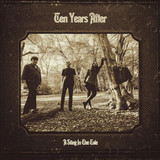
In 1967 Four Young Musicians From Nottinghamshire, England Formed Ten Years After. Alvin Lee, Chick Churchill, Ric Lee & Leo Lyons Became One Of The Most Explosive Quartets On The World Stage And Cemented Themselves As One Of The Biggest Bands In Rock N Roll History.
The Band Scored Eight Top 40 Albums On The Uk Albums Chart And Twelve Multimillion Selling Albums On The Us Billboard 200 Between 1967 And 1974.
In 2014 Founder Members Ric Lee And Chick Churchill Put Ten Years After Back Together With A New Lineup. This New And Exciting Lineup Features British Bass Icon Colin Hodgkinson (backdoor, Peter Green, Alexis Corner, Spencer Davis, Chris Rea, John Lord) And Multi British Blues Award Winning Guitarist And Singer Marcus Bonfanti (van Morrison, Ginger Baker, Ronnie Wood).
This New Lineup Has Been Touring Extensively Since 2013 With Over 150 Shows Under Their Belt And Has Received Rave Reviews From All Corners Of The World As They Continue To Produce The High Energy Of A Vintage Ten Years After Show 50 Years Down The Line.
To Tie In With The Bands 50th Anniversary In 2017, Ten Years After Have Recorded A New Studio Album,a Sting In The Taleand Are Touring Throughout The Year To Promote This New Release And To Celebrate Their Anniversary.
Harm’s Way is Duck Ltd.’s most intuitive and organic album yet, the result of keen observation, self-possessed songwriting, and a collaborative spirit. Building on the successes of their previous releases, the deeply relatable album displays a band operating at a nuanced, lyrical and musical best.
Ducks Ltd. make inviting and frenetic guitar pop for when life feels overwhelming. While the band’s songs are ostensibly breezy, a palpable anxiety boils underneath that communicates something deeper about everyday existence. On their latest album Harm’s Way, the Toronto duo of Tom McGreevy and Evan Lewis hones in on interpersonal and societal collapses, urban decay, and the near-impossibility of keeping a level head when everything around you seems to be falling apart.
“They’re songs about struggling,” says singer and lyricist McGreevy (who also plays bass and rhythm guitar). “About watching people I care for suffer, and trying to figure out how to be there for them. And about the strain of living in the world when it feels like it's ready to collapse.”
Even with its often dark subject matter, Harm’s Way is Ducks Ltd.’s most vividly rendered and collaborative collection yet. It’s an undeniable evolution for the band, not just in how these songs soar, but in their entire writing and recording processes. Composed on tour while supporting acts like Nation of Language, Illuminati Hotties, and Archers of Loaf, the album displays the band’s finely tuned songcraft and well-earned, road-tested confidence. “When we got signed, we had played maybe five or six shows ever. After last year, it’s in the hundreds. That experience can change your perception of your own music and songwriting,” says McGreevy. “In the past when we got stuck on a song we had a tendency to look at our favourite records to see how they tackled it. But now, instead of asking ‘what would Orange Juice do?’, we’d ask, ‘what would we do?’.” Lewis adds, “We have this really great thing where every decision with the band is filtered through both of us. Here especially, we really figured out how to make something that truly sounds like us.”
The band, fortified by this strong sense of sonic identity and a self-assurance in their new material—and in contrast to their critically acclaimed 2021 debut Modern Fiction and 2019 EP Get Bleak, both self-recorded and self-produced in a Toronto basement—wanted to bring Harm’s Way to life in a new city, with an outside producer, and with some of their favourite musicians. “We realised that so many of our favourite bands who are making guitar music right now are from Chicago,” says McGreevy. Working with producer Dave Vettraino (Dehd, Deeper, Lala Lala), they enlisted a marquee cast of Windy City collaborators to round out the tracks on Harm’s Way, including: Finom’s Macie Stewart (violin, string arrangements); Ratboys’ Marcus Nuccio (drums on most tracks); Dehd’s Jason Balla (who helped arrange the backing vocals, to which he also contributed); and backing vocals from Julia Steiner (Ratboys), Nathan O’Dell (Dummy), Margaret McCarthy (Moontype), Rui De Magalhaes (Lawn), and Lindsey-Paige McCloy (Patio). The band’s touring drummer, Jonathan Pappo, and bassist Julia Wittman also appear on the LP.
Ducks Ltd. are a band that already thrives on skirting the edges of buoyant jangle pop and driving power pop, and the duo credits these collaborators with helping to push their sound even further. “Historically our process has been really tightly controlled and insular. On this record, we worked with people who we trusted with a pretty wide range of musical backgrounds and they had approaches and ideas that helped open up the record's sonic palette,” explains McGreevy. “Jason thinks about backing vocals in a totally different way than I do and is super intuitive with melodic ideas. Julia and Margaret have a really deeo understanding of harmony. Macie and Dave were comfortable with the idea of improvising string parts which took some of those layers in some surprising directions. Dave also has an amazing ability to create atmosphere on a recording, and encouraged us to use a bunch of different techniques, tones, and processes to achieve that.”
Harm’s Way’s lush, melodic swagger is clear from the first notes of opener “Hollowed Out.” A song about living with decline (inspired by a Toronto sinkhole), its bright, indelible catchiness serves in contrast to its lyrical unease. Anchored by Lewis’ shimmering electric guitar, “The Main Thing” laments growing apart from a person whose views you once shared while managing to toss in references to both the unglamorous lives of middle relief baseball pitchers and the occult. Other songs split the difference between country and krautrock, like the rollicking “Train Full of Gasoline,” which uses the 2013 Lac-Mégantic rail disaster in Quebec as a metaphor for self-destructive patterns. Meanwhile, “Deleted Scenes” mourns the absence of someone no longer in your life (even if for very good reasons) and recalls The Cure at their most direct, and closer “Heavy Bag” employs enveloping, mournful strings to evoke a sense of how misery frequently loves company.
Sourced from the Original Master Tapes and Presented in Audiophile Sound for the First Time: Mobile Fidelity’s Numbered-Edition 180g SuperVinyl LP Plays with Riveting Detail
Three decades before he released The Philosophy of Modern Song — an insightful book devoted to 66 tunes that both impacted his career and the music world at large — Bob Dylan issued Good As I Been to You. The under-heralded 1992 album, Dylan’s first solo acoustic album in nearly 30 years and first all-covers effort in nearly 20 years, can be seen as a prophetic prelude to what has become the Nobel Laureate’s celebrated late-career arc. It’s also an absorbing continuation of the custom Dylan has embraced since he first picked up a guitar.
Sourced from the original master tapes, pressed at RTI, and housed in a Stoughton jacket, Mobile Fidelity's numbered-edition 180g SuperVinyl LP of Good As I Been to You reveals the immediacy, detail, and stripped-down nature of recording sessions that took place in Dylan’s garage studio in California. Simple, raw, and unplugged, the record presents Dylan in peak form — and showcases a diversity of vocal phrasing, soulful chording, harmonica accents, and close-up ambience that on this reissue emerge like never before. As the first-ever audiophile edition of this almost-lost classic, this LP also benefits from SuperVinyl’s extraordinary properties: a nearly inaudible noise floor, superb groove definition, and dead-quiet surfaces among them.
Recorded and mixed by Micajah Ryan, and supervised by Debbie Gold, Good As I Been to You took shape at Dylan’s home shortly after the singer-songwriter completed sessions in Chicago with a full band. Unaccompanied, he again gravitated to existing works — in this case, traditional folk music — and, with Gold serving as a trusted advisor, performed the songs in multiple keys and tempos until he arrived at what he desired. That careful, determined albeit loose, organic approach emanates from this reissue, on which each note, movement, and space come across more directly, fully, and immediately than on the original formats. It helps draw a through-line to Another Side of Bob Dylan (1964) as well as the similarly themed follow-up, World Gone Wrong (1993) and immersive old-world storytelling of Tempest (2012) and Rough and Rowdy Ways (2020).
Well before Dylan made those renowned 21st century LPs, however, he needed to find a way out of a funk that — save for his 1989 collaboration with Daniel Lanois, Oh Mercy — followed him for years. As author Clinton Heylin reported Dylan admitting in 1997: “My influences have not changed — and any time they have done, the music goes off to a wrong place. That’s why I recorded two LPs of old songs, so I could personally get back to the music that’s true for me.”
Truth: Few, if any, concepts better encapsulate Good As I Been to You. It resonates with the same originality, honesty, resolve, and age- and time-defying relevance as the seminal Anthology of American Folk Music that fired Dylan’s imagination as a kid in small-town Minnesota and, later, per Greil Marcus’ That Old Weird America book, informed Dylan and the Band’s Basement Tapes sessions. This record also contains the type of music Dylan was playing during his acoustic sets at his period Never Ending Tour shows; within a year of the record’s release, Dylan would play half the album’s songs live.
As for those songs: Rife with strange mystery, common circumstance, and epic adventure, the stories appeal to our base instincts. Their themes — jealousy, temptation, sacrifice, love, revenge, identity, opportunity — operate on a fundamentally human level immune to trends, generations, or eras. They’re ancient and modern, serious and comical, open and disguised, simple and multi-layered. They talk of vengeance and justice (“Frankie & Albert”; “Jim Jones”), romance and tenderness (“Tomorrow Night,” “Froggie Went a Courtin’”), the troubled and trouble-free (“Hard Times,” “Sittin’ on Top of the World”). They lend voice to lovers scorned and freed (“Blackjack Davey”), the used and users (“Diamond Joe”), the powerful and powerless (“Arthur McBride,” “Canadee-I-O”), the followed and followers (“Little Maggie”). And akin to much of Dylan’s finest output, things are not always what they appear to be.
Spanning country, folk, sea shanty, bluegrass, and blues motifs, Good As I Been to You re-confirms Dylan’s position as an elite interpreter and sculptor — not of just structure but emotion. Dylan delivers the tunes as if he’s known them forever. He plays with a subtle sense of mischievousness and retains a largely upbeat demeanour; his eyes seemingly twinkle as he sings and picks. His guitar serves as the guidepost for shuffles, boogies, ballads, and mess-arounds while his innate feel for each specific arrangement and melody helps inform pacing, tone, attack.
Like a great author, he understands the importance of adhering to concision, luring an audience, holding their attention, and maximizing the impact of details, actions, and unexpected turns. Though already coarse and ragged, his voice feels ideal for the subject matter and his phrasing — from the clever ways he stretches syllables to underline meanings on the surprise twists of “Canadee-I-O” to the sheer delight he gets from singing “rowdy-dow-dow” on the protest song “Arthur McBride” — outstanding.
Michael Mayer’s IMARA imprint is proud to announce a reissue of German electronica maestro Schlammpeitziger’s second album, Freundlichbaracudamelodieliedgut. Originally released in 1996 by Köln’s A-Musik label, it was the first Schlammpeitziger release to signal to a much wider audience that there was something very special going on in the music of Jo Zimmermann, the mastermind behind Schlammpeitziger. And while he’s subsequently gone on to release a further eight albums for labels like Sonig, Pingipung, and Bureau B, Freundlichbaracudamelodieliedgut is where it really all started for this most singular musician, illustrator and performance artist. Named after the ‘Schlammpeitzger’ or Weather Loach, a fish that breathes through its intestines, moves through substrate, and is surprisingly sensitive to changes in barometric pressure – hence its name – Schlammpeitziger is a similarly remarkable, singular creature.
Like all Schlammpeitziger’s music, Freundlichbaracudamelodieliedgut is overflowing with melody. Using the simplest of set-ups – much of his early music was made with Casio keyboards – Zimmermann magics entire worlds of joy and melancholy. The nine songs here are both rich tributes to the joys of the everyday, and surreal fantasias. “Cosmic Fick” sails out to sea on clouds of taffy and spindrift; “Winterschlafsüßbärentraum” slips and slides around a dream aviary of the mind; the closing “Mango und Papaja auf Tobago” is a diorama spun from springs and Slinkys. Sometimes there are echoes of more peaceable Kosmische music – think Cluster circa Sowiesoso – and both the pacing and the amorphous, tactile textures sometimes recall Chris & Cosey. But Zimmermann’s unique signature is everywhere on Freundlichbaracudamelodieliedgut – simply put, no one else makes music quite as lovely and incandescent as this.
The album’s initial release coincided with an explosion of interest in the music coming out of Köln. This was a unique moment – one where pop, techno, house, ambience, avant-gardism, musique concrete, heavy DSP, and all kinds of other creative phenomena got muddied up in the ‘general jelly’ of Köln’s fast-moving, spirited musical communities. Zimmermann was closely aligned with the music coming out of the A-Musik and Sonig labels – a tightly-knit collection of artists centred around the A-Musik record store, making all kinds of weird and wonderful music, from the electronica of Mouse On Mars to the compositions of Marcus Schmickler, from the electro-acoustics of C-Schulz and Hajsch to the digitalia of FX Randomiz. Zimmermann himself would collaborate with the latter on an album under the name Holosud; friends such as Mouse On Mars and Kompakt’s Reinhard Voigt turned up on Freundlichbaracudamelodieliedgut’s remix EP.
Here, then, is one of the loveliest albums of its era, a pop-electronics album of serious play, one as moistly melancholy as it is melodically riveting. Freundlichbaracudamelodieliedgut is rare beauty indeed.
Michael Mayers Label IMARA ist stolz darauf, eine Neuauflage des zweiten Albums des deutschen Electronica-Maestros Schlammpeitziger, “Freundlichbaracudamelodieliedgut”, bekannt zu geben. Ursprünglich 1996 vom Kölner Label A-Musik veröffentlicht, war es die erste Veröffentlichung von Schlammpeitziger, die einem viel breiteren Publikum signalisierte, dass in der Musik von Jo Zimmermann, dem Mastermind hinter Schlammpeitziger, etwas ganz Besonderes vor sich ging. Obwohl er seitdem weitere acht Alben für Labels wie Sonig, Pingipung und Bureau B veröffentlicht hat, ist “Freundlichbaracudamelodieliedgut” der Ort, an dem alles für diesen einzigartigen Musiker, Illustrator und Performance-Künstler begann. Schlammpeitziger, benannt nach dem “Schlammpeitzger” oder Wetterbarsch, einem Fisch, der durch seine Därme atmet, sich durch den Untergrund bewegt und erstaunlich empfindlich auf Veränderungen im Luftdruck reagiert – daher der Name – ist ebenfalls eine bemerkenswerte, einzigartige Kreatur.
Wie alle Musik von Schlammpeitziger ist auch “Freundlichbaracudamelodieliedgut” voller Melodien. Mit einfachsten Mitteln – ein Großteil seiner frühen Musik wurde mit Casio-Keyboards gemacht – zaubert Zimmermann ganze Welten voller Freude und Melancholie. Die neun Songs hier sind sowohl reiche Hommagen an die Freuden des Alltags als auch surreale Fantasien. “Cosmic Fick” segelt auf Wolken aus Karamell und Gischt hinaus aufs Meer; “Winterschlafsüßbärentraum” schlittert und gleitet durch einen Traum-Vogelkäfig im Geist; das abschließende “Mango und Papaja auf Tobago” ist ein Diorama aus Federn und Slinkys. Manchmal gibt es Echos von friedlicherer Kosmischer Musik – denke an Cluster circa “Sowiesoso” – und sowohl das Tempo als auch die amorphen, taktilen Texturen erinnern manchmal an Chris & Cosey. Aber Zimmermanns einzigartige Signatur ist überall auf “Freundlichbaracudamelodieliedgut” zu hören – ganz einfach, niemand sonst macht Musik so lieblich und leuchtend wie er.
Die ursprüngliche Veröffentlichung des Albums fiel mit einem Aufschwung des Interesses an der Musik aus Köln zusammen. Dies war ein einzigartiger Moment – einer, in dem Pop, Techno, House, Ambient, Avantgardismus, Musique Concrete, Heavy DSP und allerlei andere kreative Phänomene sich in der “Allgemeinen Gelee” der schnelllebigen, lebendigen musikalischen Gemeinschaften von Köln vermischten. Zimmermann stand in enger Verbindung mit der Musik der Labels A-Musik und Sonig – eine eng verbundene Gruppe von Künstlern rund um das A-Musik-Plattengeschäft, die alle möglichen seltsamen und wundervollen Musikrichtungen produzierten, von der Electronica von Mouse On Mars bis zu den Kompositionen von Marcus Schmickler, von der Elektroakustik von C-Schulz und Hajsch bis zur Digitalia von FX Randomiz. Zimmermann selbst würde mit letzterem an einem Album unter dem Namen Holosud zusammenarbeiten; Freunde wie Mouse On Mars und Reinhard Voigt von Kompakt tauchten in der Remix-EP von “Freundlichbaracudamelodieliedgut” auf.
Hier also eines der schönsten Alben seiner Zeit, ein Pop-Electronics-Album voller ernsthaftem Spiel, so feucht melancholisch wie melodisch fesselnd. “Freundlichbaracudamelodieliedgut” ist wahrlich eine seltene Schönheit.
In the debut EP 'We Are The Ones/Fire/Forever', Chicago DJ legend Rahaan collaborates with an incredibly talented group of musicians, including Marcus J. Austin on lead vocals, Nancy Clayton on backing vocals, Carnell C. Newbill (also known as Spike Rebel) on keyboards and backing vocals, Todd Swope on guitar, and Lou Terry on bass. Together, they create a 3-track EP that perfectly showcases Rahaan's production skills and the musical talents of the entire group. Rahaan's experience and expertise as a DJ and producer are evident in each track, with grooves that are sure to keep the dancefloor moving. The title track, 'We Are The Ones', is a story of adventure and return, with a twist. Created by Rahaan and The Ones while under the influence, the track was lost for years as it was unnamed on his computer. However, Rahaan's determination to find it paid off, and with the help of Ohio Players' Kenny Anderson on the horns, he built upon the elusive skeleton track. With Marcus J. Austin on lead vocals and Nancy Clayton on backing vocals, 'We Are The Ones' delivers a soulful, 4-to-the-floor anthem that showcases the vocal talents of the group. And in 'Fire', Todd Swope's guitar skills shine through, creating an epic production that draws spiritual inspiration from traditional AfroBeat rhythms. It's worth noting that The Ones features some truly talented musicians, including Carnell C. Newbill (Spike Rebel) on keyboards and backing vocals. Spike Rebel is a well-known producer and musician in his own right. With his soulful vocals taking center stage, Carnell Newbill leads the charge on "Forever," he also superbly delivers on bass, keys, percussion, and guitar. Expertly mixed by Rahaan, this track is sure to become a dance floor anthem. In summary, 'The Ones' EP is an impressive collaboration between some of the most talented musicians in the Chicago underground House and Disco scene. With Rahaan at the helm, this project is sure to be a hit with anyone who loves to dance. Mastered with Love by the Grammy nominated The Carvery Studios, this is one for any worthwhile DJ’s record bag.
On their third album, »Rideau«, Swedish trio Tape made their great leap forward. Released in 2005 on Häpna, following two albums of pastoral folk meets electronica, »Rideau« saw the trio of Andreas and Johan Berthling, and Tomas Hallonsten, working with an outside producer, Marcus Schmickler (best known for his post-rock outfit Pluramon). On »Rideau«, Tape’s music opened out considerably, embracing traditional minimalism, and luscious melodicism. Now, seventeen years later, »Rideau« has a new home with Morr Music, who are reissuing the album on vinyl, marking its first appearance on the format, including an extra track.
It’s only logical that »Rideau« should reappear via Morr Music. Like Tape themselves, Morr Music was a significant part of the worldwide gang busy reconciling electronica, pop, and acoustic, group- oriented sound across the 2000s, and »Rideau« sits neatly alongside other releases of similar heritage. And yet, »Rideau« feels contemporary, suggesting the creative discoveries made by the trio have ongoing resonance; their elliptical poetry echoes through recent music from the likes of Tara Clerkin Trio, and Tape’s sometime collaborators, Tenniscoats.
Asked about the album, Johan Berthling recalls, “»Rideau« was a special album for us to make”. While they had previously recorded their albums in rural Sweden, for »Rideau«, the trio decamped to Schmickler’s Piethopraxis Studio in Cologne. The creative space that Schmickler carved out for the group allowed them to explore this new material to its fullest. For his part, Schmickler found himself drawn to Tape’s music –“Their focus was a combination of seemingly timeless folk influences with noisy electronics and field recordings,” he explains. You can hear Schmickler’s influence at an almost molecular level – Tape had never sounded quite so graceful and assured with their compositions. “Marcus really shaped the music, working architecturally to build the form of the pieces,” Berthling recalls.
»Rideau« represents a collective exhalation for Tape, with the trio exploring more involved, longer pieces, which situates them in yet broader musical contexts. There are clear connections with the history of minimalism, for example, via the repeating organ phrase of »Sunrefrain«, and the insistent piano arpeggio of »A Spire«, which builds into a Reich-ian dream song, with sensuous electronics and glinting vibraphone dappling abstract shapes across the song’s stretched canvas.
Reflecting on Tape’s essence, Schmickler isolates their “uncompromised ethos, caring about small details.” This echoes most radically through the twilight environment of »Long Lost Engine«, which sets the listener adrift on impossibly radiant drones, while a gentle, almost Feldman-esque melody plays out over the song’s surface. It’s followed by the reissue’s extra track, Japanese electronica quartet Minamo’s remix of »Roulette«, a connection that would lead to a Minamo/Tape collaborative album, »Birds Of A Feather« (2007).
For now, though, here is the gorgeous, penumbral abstraction of »Rideau«, an album of whispers and clues, quiet moments and grand gestures, reintroduced to a welcoming world.
ATL via NYC producer Xiorro follows up his killer release on Brooklyn based label Sorry Records with four slabs of ravey industrial concrete on 1O PILLS MATE. Co-founding ALKHEMY - a collective whose genesis is dedicated to spreading diversity within techno and making space for marginalised, people of colour and women to play - their The Black Hole parties have helped to re-shape the NYC soundscape.
Xiorro's moniker is a reference to his Puerto Rican heritage and to African revolutionary Marcus Xiorro. Touted as one to watch by DJ Mag and Magnetic Mag, he has played Tresor;s New Faces and Berlin party Staub, co-hosting nights with Discwoman and ARTS on both sides of the atlantic. 'Zemi Of A Riot' begins with a surprisingly familiar sample before diving straight into a bass-driven, unrelenting groove. An instant curve-ball designed to delight and startle, it's an off-road space jam hurtling through a multi-verse of dark clubs and asteroid fields. 'Pa' Que Brinquen' turns the space rocks to goo with its frantic, melting analog patterns and hardcore aeshetic, striking a perfect balance between otherworldly and organic.
'Tooth and Nail' is an evocative cut of heads-down energy; a total surrender to the mundane that exists outside the walls of right now, hypnotic, groove-focused techno that's as bassy as it is heavy. Belgium based French producer Julian Muller caps the release off with a punchy remix of 'Pa' Que Brinquen', pushing the tempo slightly higher with a piece of trance-licked techno.
Wildly creative free-form songwriter Rachael Dadd is set to release
her brand new studio album, ‘Kaleidoscope’, via Memphis Industries.
The album follows 2019’s ‘Flux’, which was released to much
acclaim, and was the album she was touring when the pandemic
struck. Like so many people disconnected from their communities and
struggling through the lockdowns, Rachael Dadd turned inwards,
seeking escape through music and connection through songwriting,
and her hope is that when people listen to ‘Kaleidoscope’, “they will
feel held and find space to breathe, grieve and celebrate.”
“This album is a lot more honest and personal than ‘Flux’” she shares,
“but I feel the songs are universal as they are largely rooted in truth
and love. If I had to pick a favourite album it would be this one
because of the magical rekindling of human connection when me and
my band got back in a room together again. All that magic went into
these songs.”
Co-produced “intuitively, boldly, and playfully” by Rachael and Rob
Pemberton (The Staves, Emily Barker, Maja Lena), ‘Kaleidoscope’
includes musical collaborators such as Maja Lena (Low Chimes),
longtime collaborator Emma Gatrill (Willy Mason), Alex Heane (bass),
Charlotte West (synths), Alex Garden (strings) and ‘Flux’ producer
Marcus Hamblett (Villagers, James Holden, The Staves), giving the
record “just the right colour combination, just the right pattern of
shapes, plenty of space where needed and finally landing in a sound
world that feels fresh and open and true,” reflects Rachael.
Japanese aesthetics absorbed from her time spent living there are
subconsciously woven into Rachael’s songs. “I first stepped foot in
Tokyo in 2008, sparked by the adventure of such a rich and different
culture and later on I lived on a small island and experienced an
appealing and balanced way of life: the aesthetics, the art and the
traditions,” she recalls. “There was a lot of caring for each other, a lot
of gentleness, and a lot of simple living in harmony with nature. Japan
left its cultural mark on me and is now part of my inner world and I’m
sure this comes out with the words and music I write.”
“But overall,” Rachael explains, “this is an album of homecoming and
reconnecting to my own truth, to my community here, to the earthy
land that I love and to the sky that I know.”
repress
The music veers from post industrial heavy electronics with doomsday guitar punctuated with free jazz like woodwinds to ambient drone surf guitar found sound collage and back again.
One night Reuben Maher and Tony Maimone were sitting in a Brooklyn bar called Troost watching Marcus Cummins play solo soprano sax accompanied by one of those wind up toys that is a monkey playing cymbals. Several weeks later the trio met at Studio G Brooklyn and recorded several hours of improvised music. There were no overdubs. Mixes were done quickly and without much edititg. Tony (Pere Ubu) plays an old EML synthesizer which goes from pastoral clouds to industrial wreckage.Occasionally slide bass slinks through these mixes as well as a 70’s RMI electric piano playing ambient chords that cycle around and around.
Reuben Maher (FCAC) plays acid drenched psychedelic Fender Jazzmaster through pedals and loopers and two Fender Princetons, add to that Moog and Roland synthesizers all live. Throughout this weaves Marcus playing soprano, and alto saxophones sometimes individually sometime together ala Rahsaan Roland Kirk.
Repress in legendary Soul:r Sleeve for 2022
A Soul:r classic by Phil Tangent. 'Billie's Smile is a absolute Anthem! Sweeping strings rise over a mysterious female vocal enveloping your consciousness as super tight beats rain down. Showing D&B can be emotive and inspiring whilst remaining powerful enough for the dancefloor. 'Lunar' on the flip roams with a Detroit techno and funk backbone keep the groove driving to end. Surreal sonics evolve as a wall shaking bass line contorts the sub frequencies. A classic 12' not to be missed.
DJ support from Marcus Intalex, Doc Scott, Bailey, Hype, DJ Lee.
- A1: Don Cuco - Yuri (Populous Remix)
- A2: Dj Sameer - Return To The Rainforest
- A3: Beatkozina - Soye (Feat Radouan Naim)
- B1: Ben Arsenal & Moktar Gania - Heavy Like A Ton (Feat Akil Apollo)
- B2: Nickodemus - Obeah Woman (Feat Cole Williams - Kiko Navarro Remix)
- C1: Millok & Kingja - Riu (N'dini Mix)
- C2: Megatronic & Edseven - Don't Care
- C3: Oveous & Nickodemus - Nuyominican
- D1: Captain Planet & Dj Drm - Master Plan
- D2: Massimo Voci - Pecorino
- D3: La Dame - Bisous Francais (David Walters Remix)
- E1: Didje Doo - Black Sand (Feat The Spy From Cairo)
- E2: Dj Lenny Air & Abdallah Oumbadougou - Tabsikt (Desert Mix)
- E3: Vitu Valera & Mikongo - Mamakumba
- F1: Wichy De Vedado - Mototanke
- F2: Omeria - Past Is Passed
- F3: Busquelo - 32 Paths
After a sold out 20 Anniversary 3XLP, Turntables on the Hudson returns with a diverse 3 X vinyl set that carries the Inside the Dance series (previously on WONDERWHEEL Recordings) to all new releases made between the international friends & family between 2020 - 2022. It was a call to action for inspiration, creation, motivation & moving your body in response to the depressing times of initial lockdown & continued music gathering closures during the pandemic. What we did instead was invested in music, art, collaborations, videos, remixes hoping to keep the spirits alive & inspiration high for each other. It’s now Spring of 2022 & we’re happy we did it all. Here’s the fruits of those seeds planted. Songs from artists across the sound spectrum from Morocco, Italy, USA, Spain, Argentina, Peru, UK, Montenegro, France, Belgium, Turkey, Dominican Republic, Niger & more. Almost all songs slightly edited to make sure we got enough output on each side of the record to mix the music in the clubs & on sound systems everywhere. Combining the singles artwork of Marcus (Tupi Lab) & the album LP vinyl art of Bodo (Marcial Arts), we have a very special limited edition 400 until pressing of this soon to be collectible. We hope you enjoy the collective effort that makes this look & sound so special. Ever since the party & label began in 1998, its mission was to shine the light on the underground international community making dance music & after 15 compilations, this is another proud example. Thanks for your continued support.
A spellbinding tribute from one multi-faceted artist to another. New York-based artist Aki Onda (b. 1967) conjured a transduction to the Korean multi-media pioneer Nam June Paik (1932-2006). Aki himself describes the project:
“Nam June’s Spirit Was Speaking to Me occurred purely by chance. In 2010, I was spending four days at Nam June Paik Art Center in South Korea for a series of performances and had plenty of free time to wander. The building was packed with Paik’s artwork and related material. I have always felt a close kinship with him as an artist, and so it was a great opportunity to immerse myself in his works and ephemera.
It was that night I made the first contact, via a hand-held radio in a hotel room in Seoul. It was literally out of the blue. Scanning through the stations, I stumbled upon what sounded like a submerged voice and I began to record it in fascination. I concluded this was Paik’s spirit reaching out to me.
The project continued to grow organically as I kept channeling Paik’s spirit over long distance and receiving cryptic broadcasts/messages. The series of séances, conducted in different cities across the globe, began in Seoul in 2010, and continued in Köln, Germany in 2012, Wrocław, Poland in 2013, and Lewisburg, USA in 2014. The original recordings were captured by the same radio which has a tape recorder, with almost no editing, save for some minimal slicing and mastering.
Paik is known for his association with shamanism, a practice that constantly surfaces in his works all through his career. In an interview, he stated “In Korea, diverse forms of shamanism are strongly remained. Even though I have created my work unconsciously, the most inspiring thing in my work came from Korean female shaman Mudang.” Paik himself was a master shaman and vividly used shaman rituals and symbols for staging his performances and installations.
These recordings also became a way for me to explore the mythic form of radio—a medium which is full of mysteries. The transmissions captured may be “secret broadcasts” on anonymous radio stations. There are in fact hundreds of those stations around the world, although the numbers dwindle as clandestine messages can now be sent via encrypted digital channels. Some of these stations were likely for military use or espionage or relics of the Cold War. But many others continue without apparent explanation. These are just some of the questions that remain unanswered.”
Commissioned in 2017 by documenta 14's radio program “Every Time A Ear di Soun,” these recordings were continually broadcast on eight radios stations around the world that year. Nam June’s Spirit is a beautifully formed homage, I cannot think of any other like it. An intimate, flickering language discovered through the air. The LP comes replete with a booklet of photographs of Paik on the set of Michael Snow’s unreleased film Rameau’s Nephew (1974).
Sean McCann, 2020
Aki Onda, 2017
20-page art booklet including rare photographs of Nam June Paik from the set of Michael Snow’s film Rameau’s Nephew (1974), two essays on radio-wave phenomenon (by Onda and Marcus Gammel), and a remembrance of Paik by Yuji Agematsu
South London based producer and multi-instrumentalist Neue Grafik announces his new EP 'Foulden Road Part II' from his Neue Grafik Ensemble band, released 25th March on Total Refreshment Centre. The sequel to their impressive 2019 release 'Foulden Road', Neue Grafik continues to incorporate 100% live takes with the ensemble, as well as solo productions that reflect Neue Grafik's past work with both the Rhythm Section and 22a labels.
Neue Grafik explains, "This EP is a reflection of the social context which surrounds me" – created in a year of much social isolation as well as political unrest, 'Foulden Road II' explores the complex feelings that he found himself battling. He adds "In 2019, we released 'Foulden Road Part I', which was a transitional album, exploring a new culture and navigating between two worlds: Paris and London. 'Part II' is a bit darker, closer to realness with a sprinkle of hope. I couldn't have predicted that I'd finish it encased in my flat, between four walls, in December 2020 after a year of lockdown, Brexit, George Floyd protests, and without London's brilliant culture mesmerising my mind. Everything was sad and closed. Hills were difficult to climb. But it also gave me the time to work hard and deliver this second part of Foulden Road, pushing it forward".
Combining an array of influences — from London, to Paris via New York, Nigeria and Cameroon — with well-measured confidence, ' Foulden Road II' allows you to reflect on the complexities of the last year, whilst braced with energy and hope to move forward positively. Heavy horns and hypnotic poetry form the backbone record, which will ignite any room. 'Foulden Road II' begins with the grounding poetry of MA.MOYO on 'Black Bodies'. The EP is dedicated to Adama Traoré, a black man who died in police custody in Paris. Neue Grafik explains "His name is not well known outside of France. I was shocked, devastated even, to learn that his story didn't cross the Channel". 'Queen Assa' is a heavily percussive dancefloor-hitter which honours French activist Assa Traoré, (Adama's sister) her family, and her struggle to support all families hurt by police brutality. Broken beat elements flow through the horn accompanied 'Officer, Let Me Go To School', while West London rapper Lord Apex offers an unapologetic and poignantly personal perspective on 'Step To It'.
Released on the Total Refreshment Centre label, based out of Stoke Newington's Foulden Road, the EP is a testament to his versatility as an ever-shifting figurehead. Engineered by Capitol K, recorded at Total Refreshment Centre, mixed by Marcus Linon at Greasy Records and mastered by Guy Davie at Electric Mastering – a significant pillar in Neue Grafik's musical career. Having played a DJ set there in 2017, he was convinced by TRC founder Lex Blondin to start a band after he was heard playing some compositions on the communal piano. After spending a couple of sleepless nights on the living room couch, his first gig was booked in the venue space downstairs a week later. The ensemble was established and he has remained in London ever since.
Neue Grafik Ensemble's musicians include; Matt Gedrych, Benjamin 'The Chief' Appiah, Jack Banjo Courtney, Chelsea Carmichael, Dougal Taylor, Yahael Camara-Onono, Xvngo, Rebekah Reid, Dan-Iulian Drutac, Jamie-lee Glinsman and Zara Hudson-Kozdój.
Neue Grafik hosts The Orii Jam Sessions, an energising weekly jam night at Hackney Wick's Colour Factory, which has become a pivotal weekly gathering, inspired by the likes of Unit 31 and Steam Down.
A key proponent of the Korean music scene, Marcus L runs the infamous club Faust in Seoul, pushing forward the local sound and embodying the culture that comes along with it. Evidence of this can be found on the tongue-in-cheek title track Kimchi Slap where Marcus works with Korean rapper Kill.gone for a verse about the local food staple. The EP encapsulates Marcus’ love for techno, industrial & hardcore with a playful attitude sure to make you dance, rounded off nicely with an epically beautiful remix from Hadone.
Left Ear returns where they started, further highlighting the music of the enigmatic Leong Lau. Arguably one of the most unique artists to come out of Malaysia/Australia during the 70’s, Leong migrated to Australia to pursue an education in Engineering. He finished his degree but instead took a different ’career path’, choosing to explore his creativity.
From an early age Leong had been trained in the arts including both Chinese opera and flute. Leong recalls “making flutes out of grass weeds”, as he couldn’t afford a flute. It was this DIY ethos that Leong attached to his lifestyle. He found himself promoting festivals in the infamous town of Nimbin before moving to Sydney where he would record a small body of music with the sessional musicians he was playing with daily in the venues of Sydney’s Circular Quays. Leong’s ‘Late Night Flyer’ was the single to his supposed second album, which was allegedly manufactured but unfortunately a copy of the LP is yet to surface. One thing is for certain, two tracks landed on a 7” and together with a predominantly Chilean backing band known as ‘The East-West Unity Band’ they created two raw latin influenced jazz-rock tracks that stand the test of time.
The A-side a homage to the omnipresent characters that frequented the after-hours jazz clubs Leong performed at. Whereas the B-side is named after his favourite philosopher Herbert Marcuse’s novel ‘One Dimensional Man’, which sees Leong take a more psyched out approach.
- A1: Dark Waters
- A2: Aurora (With Nandini Srikar)
- A3: Take Me There (With Gvn)
- A4: 1995
- B1: She Was Looking Into The Sun (With Khomha)
- B2: Repondez-Moi (With Gjon's Tears)
- B3: Off The Grid
- B4: Revival (With Gabriel & Dresden, Andy Moor & Proff - Feat Mokka)
- C1: Alma
- C2: Koski (With Sonin & West Of The Sun)
- C3: By Your Side
- C4: Sisu
- D1: 5Am
- D2: Dusted
- D3: The Best Part
- D4: Surreal
There shouldn't have been a debut album on Anjunabeats, gardenstate shouldn't have existed, and we should have stuck to our normal day job. This album is to everyone out there who has been told that 'you can't do it'." Be it through passion, determination, or just sheer stubbornness, gardenstate continues to bloom. A transatlantic labour of love from superproducer Marcus Schössow and club promoter Matt Felner, their debut album 'Inspirations' is out this year on Above &Beyond's Anjunabeats imprint. At the heart of Sweden's decade-long domination of club music in the 2010s, Marcus' fifteen-year-long career boasts a smörgårdsbord of styles. You've got electro with 'Swedish Beatballs', the mainstage energy of 'Reverie' and 'Ulysses', and the driving progressive of 'London / 1985'. Few artists have record sleeves from Axtone, Armada, Size, Spinnin' and Anjunadeep in their catalogue. Heavily invested in the early 2010's big room sound, he was a permanent feature in the sets of Swedish House Mafia and Knife Party. New Jersey native Matt Felner gave up his blue-collar job to follow his passion for electronic music. A respected promoter and performer, he's brought emerging artists to the clubs of New York and the East Coast. In 2008, he toured Marcus Schössow and they became close friends. Eleven years later, and here we are - a hotly-tipped duo with a debut artist album on Anjunabeats. Making music on their own terms, the gardenstate sound is a melting pot of '90s trance nostalgia, brooding melodic techno, peak-time breaks and poignant song writing. Few acts can worm their way into the DJ sets of Kölsch, Cristoph, Tiestö and Above & Beyond at the same time.
"Pianist Nate Morgan (1964-2013) was a central figure on the Los Angeles jazz undergound. A core member of the circle around the legendary bandleader, pianist and community organiser Horace Tapscott, Morgan had been part of Tapscott’s U.G.M.A.A. (Union Of God’s Musicians and Artists Ascension) since he was just a teenager, and was a key member of the Pan Afrikan People’s Arkestra, known as ‘The Ark’. Through the 1980s and 1990s he kept the PAPA flame alive, organising the Ark’s sprawling songbook, running legendary jam sessions, and keeping LA’s deep jazz roots well watered. By the early 2000s he was bringing hard won knowledge to a new generation as part of the Build The Ark collective. He was a musician’s musician, at the beating heart of the radical, community-minded Los Angeles jazz network that Tapscott and his associates had first put together in the early 1960s.
Retribution, Reparation was the second of the two LPs Morgan recorded for Tom Albach’s storied Nimbus West imprint. His first, Journey Into Nigritia had been a declaration of arrival laced with energies drawn from Cecil Taylor and Coltrane. One year later, with nods to Herbie Hancock (‘One Finger Snap’) and Ellington (‘Come Sunday’), Retribution, Reparation was a confident statement of purpose. Politically charged with pan-Africanist and Black nationalist sentiments inspired by Marcus Garvey, and titled with uncompromising directness, the album focusses the sound world of the Ark into a surging, restless masterpiece of spiritualised modal jazz. With Danny Cortez on trumpet and Ark stalwart Jesse Sharps on saxophones the frontline is explosive (this set is also one of the few places the extraordinary Sharps can be heard in a small group setting), while Fritz Wise and Ark regular Joel Ector hold down the rhythm section. Morgan’s forceful, Tyner-like chords and virtuosic solos and bind the music together. From the poised drama of the opening dedication to Tapscott’s U.G.M.A.A. (‘U.G.M.A.A.GER’) to the propulsive militancy of the title track, Retribution, Reparation spreads the word: ‘Advance to Victory, Let Nigritia Be Free!’"
Perila (Aleksandra Zakharenko) left her native Russia six years ago, landing in Berlin. Finding her place almost immediately - first at Berlin Community Radio and through that amongst a group of like-minded creative individuals (including her current flatmates Special Guest DJ and exael) - she started a regular practice of working on an expressionistic "sonic diary" of field recordings and electronic sound research for her own pleasure. When the opportunity arose to create her own podcast series, WET (or Weird Erotic Tension) was born. Upon hearing her evocative and atmospheric music layered with friends Nat Marcus and Inger Wold Lund's erotic spoken word poetry, Sferic Records asked to release it, and Perila - a project name originally used for her BCR show - truly came to be. Aleksandra, who was raised in St. Petersburg, has been involved in music since childhood thanks to her melomaniac father. She's been both drummer and singer in local bands in Russia, and is also the co-founder of radio.syg.ma - one of the first online stations in Russian focusing on experimental sounds - but Perila is something else entirely. You could loosely describe it as ambient, but her soundworld is so specific and transportative, filled with detail and movement, it's more akin to hauntological musique concrète, touched by song. Her fascination with voice and language - she studied English literature at university - is still evident, although that's now her voice, her texts, her crooning you can hear on the Everything Is Already There cassette (Boomkat Editions, 2020), her processed breaths on the Meta Door L cassette (Paralaxe Editions, 2020). The Wire Magazine got it right when they said about Irer Dent that, "Sensuality is presented as a secret pass to a higher consciousness." For her debut album, How Much Time it is Between You and Me?, released via Smalltown Supersound on June 11th, Aleksandra takes inspiration from the concept of time, which she felt keenly during the pandemic. Recorded primarily in September 2020 in a rural village in France - her only travel during the first year of the pandemic period - surrounded by mountains but otherwise alone with no internet, her perception of time there differed immensely. She describes the trip as, "an immersive experience into self," viewed through a "silence prism" where everyday sounds usually ignored felt amplified. While her work has always dealt in intimacy - be it the private thrills of WET or the audible closeness of our surroundings - the organic response and consistent feedback she gets for Perila made Aleksandra recognize a longing, a need for it in today's world. Intent on creating work based in honesty and tenderness, Perila's practice also explores how we feel music and emotion throughout the body and how sound can help to release it. How does the sound enter a body and travel through it? Where does movement start? How do you reach and unblock emotional clusters with the help of sound and deep listening of the body responses? Aleksandra likes to describe her music and performances as trips - thick narratives drifting along sound to get closer to self. Let Perila guide you through this journey.
After severals EPs on labels such as Lumière Noir, Kill the DJs or Bahnsteig 23, here is the first album of french duo Il Est Vilaine, infused with a "Yellow Magic Orchestra-ish" touch, rooted in the french musical landscape.
A road trip in Brittany as a red thread, the two hooligans of Il Est Vilaine revisit Kawaii pop, crazy rock like DEVO and Detroit techno with a surprising coherence. An album long matured and awaited by the band's fans.
Il Est Vilaine aren’t Bretons, but they sure are tricksters. The Francophiles among you might have caught on to the corny pun in their name (beating a certain presidential candidate to the punch all while turning the name of the pastoral Ille-et-Vilaine region into, literally, “he’s a nasty woman,”) but the real takeaway is that these born-and-bred Parisians don’t take themselves too seriously – especially in an era in which there is much too much of that happening.
It was in 2014 (and on Dialect Recordings) that Florent and Simon tossed their debut 12” into the ring, the rightfully named Scandale – a tight little bombshell released that roused the electronic music scene out of its complacent little catnap.
So there we had it, two outcasts refusing to eat at the same table as the tech-house scene queens, serving up three whiplash-on-the-dancefloor cuts drenched in sweaty hedonistic disco and wrapped in a battered motorcycle jacket (with a gooey post-punk-pop core for good measure.) A clear mission statement right out of the gates, watermarked with mystical incantations and throbbing with rock ’n’ roll’s primitive drive. Everything and the kitchen sink, and a bag of chips – an invitation to just let lose that’s even better than the sum of its parts.
St Leonard’s premier manipulator of drones, loops and echoes delivers his most buzzed out, kosmische and beat driven work to date in a deluxe white vinyl album release for Castles in Space.
Here, Kieran explains the genesis and production of his masterwork:
“Eternal Return was unusual for me in that I actually set out to make an album, rather than find myself with a set of tunes that evolved into a project.
The “Eternal Return” is a concept I have been inspired by before. However it clicked with me in a more profound way recently. Far from seeing the prospect of living life over, unknowingly, on an endless loop as depressing, I suddenly felt amazing comfort in the theory. The Stoic emperor Marcus Aurelius said, “Waste no more time arguing about what a good man should be. Be one.” Far from being trapped in the loop I am elated to feel that it's simply about living the best life you can. One that you wouldn't fear having to live again.
To place the album in context against this newly realised perception, I think of the Side One as the battle to get to that realisation and enlightenment and Side Two represents the acceptance and the decision on how to proceed. The turning point is from thinking about the things I love most and what I would want to experience over and over again. I hope it is an uplifting listening experience. As it happens, the album originally had a darker ending. I think I actually learned a bit about my point of view during the process. There are drums, which wouldn’t often feature in my music (there are in fact more drums on this LP than in my combined output over the last 8 years) and the pieces are noticeably shorter, more focussed and concise than my usual longer form work.
Musically this album is probably the least clearly influenced by anything I regularly listened to. The main outcome was wanting to challenge myself and to add whatever the pieces needed and go with that. I think I was also probably pushed on by the wealth of amazing music being made by my peers across Bandcamp and social media. 2020 was an incredible year in this particular sphere of electronic music. The album was made as I started to transition from a semi-modular to a modular synth set up. I think that this was a key driving force, since a lot of the time I didn’t know exactly what I was doing. It is nice to be surprised by what you’re creating.
Finally, whilst this is in no way a “lockdown album”, the period of time in which much of it was recorded definitely had a bearing on how it sounds. For one thing I spent a lot more time around my studio space when working from home. In keeping with the album's theme, the lockdown also helped consolidate my feelings on what is important in life and what isn’t. One piece was in fact sketched out as a first draft while I sat on mute during a Zoom meeting.
White Vinyl
Impressed by the mass, the cold and the eternal ice. It seems empty, uninhabitable and barren - yet this island pulses with power, warmth and life. Deep and technoid sound, spherical surfaces, magical melodies and you have the feeling of flying over this island! Take a seat, fasten your seatbelts and enjoy the flight over "GREENLAND".
Beeindruckt von der Masse, der Kälte und dem ewigen Eis. Sie wirkt leer, unbewohnbar und karg - dennoch pulsiert diese Insel vor Kraft, Wärme und vor Leben: Grönland. Deeper und technoider Sound, sphärische Flächen, magische Melodien und schon hat man das Gefühl, über diese Insel zu fliegen! Nehmt Platz, schnallt Euch an und genießt den Flug über "GREENLAND".
Available on vinyl for the first time since its original release in 1984, Outernational Sounds proudly presents Build An Ark pianist Nate Morgan’s second outing for the celebrated Nimbus West label – the conscious and spiritualised sounds of Retribution, Reparation.
Pianist Nate Morgan (1964-2013) was a central figure on the Los Angeles jazz undergound. A core member of the circle around the legendary bandleader, pianist and community organiser Horace Tapscott, Morgan had been part of Tapscott’s U.G.M.A.A. (Union Of God’s Musicians and Artists Ascension) since he was just a teenager, and was a key member of the Pan Afrikan People’s Arkestra, known as ‘The Ark’. Through the 1980s and 1990s he kept the PAPA flame alive, organising the Ark’s sprawling songbook, running legendary jam sessions, and keeping LA’s deep jazz roots well watered. By the early 2000s he was bringing hard won knowledge to a new generation as part of the Build The Ark collective. He was a musician’s musician, at the beating heart of the radical, community-minded Los Angeles jazz network that Tapscott and his associates had first put together in the early 1960s.
Retribution, Reparation was the second of the two LPs Morgan recorded for Tom Albach’s storied Nimbus West imprint. His first, Journey Into Nigritia (Outernational Sounds OTR- 008), had been a declaration of arrival laced with energies drawn from Cecil Taylor and Coltrane. One year later, with nods to Herbie Hancock (‘One Finger Snap’) and Ellington (‘Come Sunday’), Retribution, Reparation was a confident statement of purpose. Politically charged with pan-Africanist and Black nationalist sentiments inspired by Marcus Garvey, and titled with uncompromising directness, the album focusses the soundworld of the Ark into a surging, restless masterpiece of spiritualised modal jazz. With Danny Cortez on trumpet and Ark stalwart Jesse Sharps on saxophones the frontline is explosive (this set is also one of the few places the extraordinary Sharps can be heard in a small group setting), while Fritz Wise and Ark regular Joel Ector hold down the rhythm section. Morgan’s forceful, Tyner-like chords and virtuosic solos and bind the music together. From the poised drama of the opening dedication to Tapscott’s U.G.M.A.A. (‘U.G.M.A.A.GER’) to the propulsive militancy of the title track, Retribution, Reparation spreads the word: ‘Advance to Victory, Let Nigritia Be Free!’
"Celebrity clouds" is compiled of four songs, which have been produced and recorded in 2018. It's an online collaboration of Alexandre Kordzaia (kordz) and Natalie Beridze. These two came up with the concept of the record uneventfully, after recording their first track "Celebrity clouds". Beridze's lyrics came out completely irrelevant to Kordz's music, that adopted a flair of humor and sarcasm to it. After that, they decided to stick the line of weird lyrics on top of synth, piano and ambiance recordings, played live by kordz. Musical ideas belong to kordz. Beridze would complete the tracks, adding few instruments (or none, in some cases), wrote lyrics and recorded vocals.
The artwork of the vinyl, made by Georgian artist Thea Djordjadze, resembles the concept of the music nonetheless. As though having nothing to do with neither celebrities, nor their clouds, it shows the sadness and the beauty of half-molten candle.
Alexandre Kordzaia aka kordz is a Georgian composer. After moving to Switzerland at a young age, he professionally studied piano and drums, audio design and recording acoustic music. shortly after he started producing electronic music.
Kordzaia is currently studying in Hague, Netherlands, where he is accomplishing his master's degree in composition. He releases on labels such as: Prrrrrrrr Records, Medschool Records, Hospital Records, Majestic Casual Records. Kordzaia also writes for acoustic instruments and orchestras with live electronics: for the Junge Norddeutsche Philharmonie, the Georgian Philharmonic Orchestra, the Residentie Orchestra (The Hague), the Dortmunder Philarmoniker, the Zagareli String Orchestra, the Nieuw Ensemble (Amsterdam) and Kluster5 (The Hague). To pack his music into popular categories is not easy: "His music is a mesh of carefully balanced oppositions: deliciously snappy transients punctuate shimmering soundscapes, gently morphing into funk; a melancholic post-soviet feel pays sentimental homage to a private vision of the 80s. Acoustic instruments sit side by side with analogue synthesizers and drum machines; field and foley recordings blend the recognizable into the fuzzy and surreal.
Natalie Beridze (tba) is a Georgian music composer and songwriter, considered a pioneer of Georgian electronic music. She has released over 10 records on labels such as Cologne based Max.E, Berlin based Laboratory instinct, CMYK, Chainmusic, CES Records and Berlin's Monika Enterprise, which has become her main label. Beridze's collaborations include: Thomas Brinkmann, AGF (Antye Greie), Gudrun Gut, Joerg Follert, Marcus Schmickler, Nika Machaidze aka Nikakoi, Sonae, Ryuichi Sakamoto, Gacha Bakradze, Alex Kordzaia.
Beridze works on music for acoustic instruments, orchestra and choir.
Her recent work - "Mapping Debris" was written for Swiss "Mondrian Ensemble" piano and string trio and electronics, performed in Zurich, in 2019.
Beridze collaborates with a Georgian string ensemble "Zagareli and strings", composing pieces for electronics, strings and viola.