Intruder is the first new music from the iconic and influential Gary Numan since 2017’s album Savage: Songs From a Broken World, which charted at #2 in the UK.
The forthcoming album, also titled Intruder, will be released in May 2021 - his 21st solo album. Intruder sees Gary reunite with producer Ade Fenton, who previously produced four critically acclaimed albums for Numan: Jagged, Dead Son Rising, Splinter and Savage.
With a career that has spanned nearly four decades, his approach to electronic music remains an inspiration to artists across genres and eras, from stadium goliaths such as Depeche Mode, Prince and Nine Inch Nails to alternative heroes such as Beck, Damon Albarn and Marilyn Manson. Even Kanye West owes him a debt, and David Bowie once credited him with “writing two of the finest songs” in British music.
Gary has had 23 top 40 singles and 15 top 40 albums in the UK. The British electro pioneer was also awarded the Inspiration Award for songwriting and composition at the Ivor Novellos in 2017.
2020 saw Gary release his critically acclaimed rollercoaster of an autobiography, (R)evolution.
Suche:mari
At the end of the '60s in Italy - but also abroad, especially in France and England - a very particular trend began to spread, that one known as 'Library music' or 'sonorization': as suggested by its name, those were real music libraries intended for the accompaniment of audiovisual productions such as
television programs, advertisements, documentaries and films. Since they were created in total artistic freedom condition, they are often difficult if not impossible to catalog, as they're not anchored to a specific musical genre; this freedom also allowed the authors to compose, sometimes in the most complete anonymity, experimental and avant-garde music, capable of anticipating the sounds that only many years later would have been widespread on a larger scale.
Egisto Macchi (1928-1992) was one of the most active composers of the sonorization and soundtrack genres together with artists such as Piero Umiliani, Alessandro Alessandroni and Ennio Morricone; he also collaborated with the latter in the experimental music project Gruppo di Improvvisazione Nuova Consonanza. "Fauna Marina" is among his most popular and sought-after by collectors titles: a set of eleven compositions intended to accompany the images of a hypothetical fish fauna documentary, an abstract hybrid of classical, contemporary and jazz music that is still fresh and surprising today.
"Fauna Marina" is part of a reissues series, made in collaboration with Edizioni Leonardi (Milan, Italy), of extremely rare library music LP's published between late '60s and early '70s, most of which have never been released again until today, and that are finally made available again for
collectors and sonorization music lovers.
Mia Maria Johansson has been active on Sweden’s underground scene since the early 2000s, both as a part of indie/electro/punk band Meine Kleine Deutsche and critically acclaimed and award winning punk act Snake but also choring with Swedish indie rock star Hurula. On March 19, her debut LP ‘Slay’ is out on Lazy Octopus Records (MANKIND, Holy Now, The Presolar Sands etc.)
‘Slay’ was written at home after a messy break-up, the Garageband home recordings have then been perfected in the studio with the ambition to keep the simple and direct feeling of the beats and melody.
Mia Maria Johanssons’ debut is a record that treats the subject of owning your own destiny and allow yourself to dream. To let go of the thoughts that hold you back. This have been melted down into eight straight-forward alternative rock anthems that are instantly
memorable.
For the first vinyl compilation this year, dotwav invites three techno heavyweights that need no further introduction: Kangding Ray, Denise Rabe and Mario Berger deliver their own version of a trippy peak time track. All the productions catapult us into the future and right onto the floor.
- 1: The Ballad Of Crowfoot
- 1: 2 Peruvian Dream (Part )
- 1: 3 Charlie
- 1: 4 Broker
- 1: 5I Pity The Country
- 1: 6C Razy Horse
- 1: 7L Ouis Riel
- 1: 8 S Hool Days
- 1: 9 Te Carver
- 1: 0O Canada!
- 1: Down By The Stream (Starlight Maiden)
- 1: 2 Rattling Along The Freight Train (To The Spirit Land)
- 1: 3 Pontiac
- 1: 4 The Pacific
- 1: 5 Nova Scotia
- 1: 6 The Dreamer
- 1: 7 Sonnet 33 And 55 / Friendship Dance
- 1: 8 Wounded Lake
- 1: 9 Métis Red River Song
- 1: 20 Son Of The Sun
- 1: 2 The Lovenant Chain
- 1: 22 Bear And Fish
- The definitive overview of one of Canada's unsung musical heroes - Rare/previously unreleased recordings, photos, and interviews - Lyrics, discography, and filmography - Audio re-mastered by John Baldwin Mastering - Artwork by Christi Belcourt and Alanna Edwards - Liner notes by Kevin Howes (Voluntary In Nature) - Contributions from the Dunn family, Bob Robb, and Alanis Obomsawin (OC) // How did you first experience the poetry, music, and film of Willie Dunn? In a Montreal coffeehouse during the mid-1960s? On a CBC Indian Magazine broadcast with host Johnny Yesno? At a Toronto record store or Native Friendship Centre at the turn of the 1970s? Waiting outside of the Mohawk Nation Longhouse? Maybe in your parent's record collection on the Rez? A White Roots of Peace gathering? Pow wow? The Mariposa Folk Festival? Or was it that Save James Bay Benefit back in '73? On a good friend's stereo? Sitting around a crackling campfire? How about an old NFB film reel or VHS tape in high school? Or while attending Manitou College? A German concert hall in the 1980s? Maybe a direct action protest on the colonial streets of Canada? Busking in Ottawa during the 1990s? College radio? At Willie's celebration of life service in 2013 alongside Alanis Obomsawin and Willy Mitchell? LITA's Grammy-nominated Native North America (Vol. 1) compilation or the very anthology you hold in your hands? There should be no judgment for coming to things when you do. All that's important is remaining open to life-changing messages such as these_ Willie Dunn shared truth through song and celluloid. His original composition, "I Pity the Country," is an unparalleled statement on the greed and hate created by humankind, recorded in 1971 and still unfortunately needed today. "It's like the reason you're supposed to make music," said Kurt Vile about the song to MOJO Magazine in 2015. With "Charlie," Willie was the first to deliver the devastating story of Chanie Wenjack and the Canadian residential school system to the music community, nearly 50 years before the much-celebrated Secret Path, yet ignored outside of Indian Country and the folk festival circuit. Dunn's film technique, featured in 1968's The Ballad of Crowfoot (NFB), predates the "Ken Burns effect" to great effect. Are you catching the drift? Willie Dunn was not only a trailblazing leader in his time, but well ahead of the curve, simply without the PR push and big money backing of major label players. "He was our Leonard Cohen," said singer-songwriter Eric Landry about his musical hero. The only difference is that Willie refused to play the Hollywood showbiz game. In talent, he is Cohen, Dylan, and Cash rolled into one and along with Buffy Sainte-Marie, Floyd Red Crow Westerman, and A. Paul Ortega, brought a new set of perspectives and realities to the folk music tradition. Willie spoke directly to his people and Mother Earth through his creations, not only from experience but by examining his roots and connecting with the world in which he lived. We are humbled to help honor Willie Dunn. May he never be forgotten_ PEACE
On August 20, 2020 the world lost an amazing
light with the passing of Justin Townes Earle.
Justin was a vibrant songwriter who could play the
blues, country and rock ‘n’ roll all in the same
song. In his short career, Justin released eight
albums and one EP that all manage to sound
classic and yet inventive.
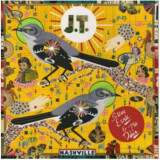
Justin’s father, Steve Earle, pays tribute to his son
by recording ‘J.T.’, an album of songs written by
Justin. The album consists of ten Justin Townes
Earle songs as well as one song written by Mr.
Earle shortly after Justin’s passing.
‘J.T.’ features fan favourites such as ‘Harlem River
Blues’, ‘Far Away In Another Town’ and
‘Champagne Corolla’, along with lyrically heavy
songs like ‘The Saint of Lost Causes’ and ‘Turn Out
My Lights’.
‘J.T.’ is a loving tribute to a loved son and beautiful
songsmith who left this Earth too early. But in his
wake, Justin left a wealth of beauty.
- A1: Barbara Moore - Steam Heat
- A2: Inflo - No Fear
- A3: Merle - Fannie Likes 2 Dance
- A4: Manuel Darquart - Birds Of Paradiso
- B1: Drumtalk - Red Haze
- B2: Admin - Space Cadet
- B3: Mocky - How It Goes
- B4: The Marías – Cariño
- C1: Sly5Thave - Super Rich Kids
- C2: Kamaal Williams - High Roller
- C3: Sam Evian - Next To You
- C4: Badbadnotgood Featuring Kaytranada - Lavender
- C5: Jungle - Come Back A Different Day
- D1: Mansur Brown - Shiroi
- D2: The Flying Stars Of Brooklyn Ny - Live On
- D3: Sault - Masterpiece
- D4: Paul Cherry - Like Yesterday
- D5: Hnny - Sunday
The iconic album series Back to Mine returns once again in 2019 with the first DJ imx compilation from world dominating indie-dance band Jungle, showcasing their personal tastes for the after-hours. The series was renowned for its eclectic selection and selectors which includes some of the biggest names in electronic and pop music, from the likes of Faithless to Pet Shop Boys, Groove Armada to New Order.
Building on Back to Mine’s heritage for quality this edition comes with limited edition heavyweight vinyl and extra thick cardboard sleeves with full coloured bespoke artwork, commissioned from illustrator Rich Fairhead, depicting the artist’s influences alongside personal sleeve notes from Jungle.
The collection includes an exclusive track from Jungle themselves and takes the listener on an eclectic musical journey. From 90s disco by Merle to more recent house tracks by Manuel Darquart and Drumtalk. Bristol DJ Admin provides the percussion heavy ‘Space Cadet’ and the irrepressible Mocky supplies good vibes on ‘How It Goes’. There’s sophisticated pop from The Marias and Sam Evian and there’s some spotlight for modern jazz with tracks by Kamaal Williams, Mansur Brown and BadBadNotGood featuring Kaytranada. There’s also room for some gospel influenced soul by The Flying Stars of Brooklyn NY, lo-fi dream pop from Paul Cherry before ending with the always impressive HNNY.
To coincide with the series release, Jungle will embark on an extensive Back to Mine global DJ tour.
- A1: Adeus Maria Fulo
- A2: Tunnel
- A3: Amor Verdadeiro (True Love) (True Love)
- A4: Ponteio
- A5: Arrasta Pe (Partytime, Northeast Brazil) (Partytime, Northeast Brazil)
- B1: Voce Abusou (I'm Free As A Bird) (I'm Free As A Bird)
- B2: Inquietacao (Foolishness Of Young Love) (Foolishness Of Young Love)
- B3: Ain't No Sunshine
- B4: Lament Of Berimbau
- B5: Rosa Na Favela (A Rose Born In The Ghetto) (A Rose Born In The Ghetto)
Two of our favorite records that we here at Real Gone Music have reissued in the last few years were the debut pair of records (both originally released in the early ‘70s) by legendary Brazilian percussionist Airto; each album serves up a savory, bubbling stew of Brazilian folk, fusion jazz and bossa nova spiced with a hint of tropicalia. While Airto’s contributions on each record were, of course, front and center, there was another player on those records that almost stole the show: one Severino Dias de Oliveira a.k.a. Sivuca, a small, wizened man (often somewhat uncharitably described as “gnomish”) whose dazzling virtuosity on accordion, guitar, and keyboards—coupled with a powerful singing voice that belied his small stature—made one instantly sit up and take notice. Further investigation revealed that stealing the show was nothing new to Sivuca; championed by Oscar Brown, Jr., he was the instant star of tours by both Harry Belafonte and Miriam Makeba among others. Sivuca started making records back in the mid ‘50s, and recorded for a number of labels in the States, including Reprise and RCA, but it is this record, made in 1973 for the Vanguard label, that is the one that collectors worldwide have zeroed in upon. And with good reason; it offers the same beautiful blend of styles found on those Airto records, but with an emotional shading all its own, a joyfulness paradoxically infused with melancholy, best expressed on Sivuca’s mesmerizing take on Bill Withers’ oft-covered “Ain’t No Sunshine,” which is likely to become your favorite version.
Following his latest contribution to Innervisions Limbo compilation and a personal EP on TAU, Skatman returns to his home of Scatcity Records.
This release defines Skatman's current artistic direction as well as his vision for the future of his label and the melodic scene. We see him bring his sound forward as a more minimalistic approach to the deep and melodic sounds that have shaped him over the years.
Skatman’s mission is to bring back the integrity to the sound he loves, taking it to a new level and triggering a change of direction within the niche that is melodic electronic music. The name ‘Aromanticism’ is a reference to the revolutionary aspect of the realism movement that happened as a reaction to what dominated art and literature in the age of romanticism in the 19th century.
- A1: Impulsion (03 02)
- A2: Tension Build (00 30)
- A3: Fast Action (02 28)
- A4: The Chaser (01 57)
- A5: Heat On (01 03)
- A6: Runaway (02 04)
- A7: Power Source (00 30)
- A8: Percussion Power (02 51)
- A9: Shivers (03 08)
- A10: Gathering Storm (02 21)
- A11: Drums On Parade (02 16)
- B1: Samba Street (A) (03 00)
- B2: Samba Street (B) (03 00)
- B3: Child’s Theme (A) (01 14)
- B4: Child’s Theme (B) (00 40)
- B5: Child’s Theme (C) (01 04)
- B6: Child’s Theme (D) (01 26)
- B7: Child’s Theme (E) (01 25)
- B8: Spanner In The Works (02 17)
- B9: Tropical Peace (01 45)
- B10: Clippity Clop (01 15)
- B11: Red Indian Drums (00 35)
- B12: Fairy Wand (A) (00 08)
- B13: Fairy Wand (B) (00 09)
- B18: Timpani (B) (00 05)
- B19: Timpani (C) (00 05)
- B20: Vibraphone (A) (00 15)
- B21: Vibraphone (B) (00 15)
- B22: Bell Chimes (00 27)
- B23: Clock Chimes (00 37)
- B14: Fairy Wand (C) (00 12)
- B15: Snare Drum Roll (A) (00 12)
- B16: Snare Drum Roll (B) (00 07)
- B17: Timpani (A) (00 25)
They Say: “Exploring the wide range of moods and sounds produced by percussion”.
We say: MPCs at the ready because this does exactly what it says on the tin, to devastating effect. Oh, and the sleeve is stunning.
Originally released in 1979, Percussion Spectrum was produced by the legendary percussionists Barry Morgan and Ray Cooper. With dope beats taking in diverse styles, from funk and soul and jazz through to Latin, Brazilian, samba and Afro-Cuban, this is an amazing sample source filled with killer drum-breaks and percussion flares. Unsurprisingly it’s one of the most sought-after records from the Themes catalogue.
This library LP is a library in itself, with its mix of short themes of single beats, short breaks and some longer, more fully-formed DJ-friendly tracks. Trust us when we say that this is a box full of percussion firework ready to be thrown onto the dancefloor at the just right moment. We don’t have anywhere near enough space to describe all 34 tracks (there isn’t even enough room on the labels to list them all!) so we’ll pick out some favourites.
Favourites like opener “Impulsion”, a percussive masterclass with drum upon drum upon drum making it feel like a neat prototype to the percussive underscores of Peter Lüdemann and Pit Troja’s eternal The Now Generation LP. And the dramatic “Fast Action” is exactly that, racing along on a rapid roll of congas, cymbal crashes and throbbing kicks. “The Chaser” is classic library cop-funk with dilapidated drum figures, and the outrageously funky “Heat On” is the perfect accompaniment to your wild action sequences.
A real highlight is “Runaway”, and not just because it sounds like nothing else on the record. Here are drums and percussion in that tight funk style that just cries out to be sampled. “Percussion Power” is an extended, near-three minute suite of funky drum solo after funky drum solo that just aches to be looped: open drums to die for people! “Shivers” is a tense, apprehensive underscore with shock stabs that builds to a climax whilst “Drums On Parade” is a showcase of head-nod drums and cymbals in march time. Did someone say “funky”?
Side B starts with a stroll down “Samba Street”. With the noise of the crowd in the background, this is riotous, authentically drawn samba that sounds like it’s been beamed straight in from Rio in full flow. Drop this at midnight and watch the cobwebs fly off any dancefloor. Prefer it without the fake crowd? “Samba Street (b)” has you covered.
The simple, innocent “Child’s Themes” (all five of them) provide a nice, sweet respite from all the funk. Nursery sounds tinged with only a touch of melancholy. The gentle marimba solo of “Tropical Peace” only adds to the sense of serenity we get from the relatively calm second side. The album closes out with a veritable toolkit of tom toms, snare drum rolls, timpani, vibraphones and chiming bells.
Percussion Spectrum is a joyous collection of sounds, as bright, beaming and downright funky as the vibrant cover. The Themes series is known for each record having its own particularly striking sleeve, which was unusual for library records at the time, and Percussion Spectrums’s multi-coloured drumsticks make for one of the most eye-catching.
As with all of our other Themes re-issues, the audio for Percussion Spectrum comes from the original analogue tapes and has been remastered for vinyl by Be With regular Simon Francis. As usual Richard Robinson has taken the same care with restoring the original sleeve from archive scans. This is another one ticked off the list of library records that should be out there for anyone who wants a copy.
- A1: X Okoot Kay Ppum T`huul
- A2: El Recinto Del Musgo Acuatico
- A3: La Aldea
- A4: Alush
- A5: Los Señores De Xiblaba
- B1: El Continente Sumergido
- B2: Altar De Los Espejos
- B3: La Corte De Los Patriarcas
- C1: Santuario De Mariposas
- C2: La Lengua De La Serpiente
- D1: Danza De Los Animales Espíritu
- D2: Circulo De Guirnaldas
- D3: Mariposa De Fuego
Santuario de Mariposas aims to explore the audio characteristics of musical instruments of pre-Columbian origin. They are complemented by a variety of instruments of an ethnographic order, associated with indigenous groups throughout Mexico. After more than 40 years of atnomusical research, Itxoneztli recorded this album trying to give life to sleeping instruments and reflect what the music of the Mexicas ancestors was like.
a 1 X Okoot Kay Ppum T`Huul The Song And Dance Of The Archer
Originally released in 1980, ‘Amanita’ is an early approach of Canadian artist Sherine Cisco, formerly known as Stu Cisco, to the limitless world of synthesizers in music, through ambient, progressive rock and drone noise.
A unique combination of ambient, progressive rock and even drone noises and space-age that converged in ‘Amanita’, her first full album and a piece of music history. This LP marks a milestone in the investigation, experimentation and evolution of musical instruments, where the Mini Moog demonstrated its versatility and creative potential, opening Sherine a path of limitless possibilities.
By the time ‘Amanita’ was first released in 1980 (only 300 copies were pressed at the time), Sherine had been playing synths for seven years. But far from acknowledging how traditional instruments were played, she tried to do things her own way, creating moving landscapes and a unique language of sound. This DIY approach to music was, as well how the album was made, in her own studio, with synthesizers that were originally meant for live performances such as the Elka Rhapsody or the Elektro Harmonix, channeled through a Dokorder 4 Tape Recorder.
However, what Sherine Cisco was living in her personal life, a gender transition, was as important to the record as the instruments she used to create it. “Beginning in the early 1980's, I began experimenting with taking the female hormone, estrogen. I felt like I was gradually being re-born. It affected my music, the mood of the music, and me, physically and mentally”.
A spacey vibe surrounds each of the 12 cuts that compose ‘Amanita’, waving from ambient to experimental music, introducing drone noises that add mystery to the whole piece and creating epic moments, with the Mini Moog accompanied by Randy Gray’s drums. To close things off, a synth pop infused track works as a masterpiece ending to this story.
Award-Winning Welsh Multi-Instrumentalist The Anchoress Returns With Her New
Studio Album ‘The Art Of Losing’
Featuring Guest Appearances From James Dean Bradfield (Manic Street Preachers)
And Sterling Campbell (David Bowie, Duran Duran)
“A devastatingly powerful voice.” MOJO “Hounds Of Love, updated for the 21st century.” PROG “Davies is making music like nobody else at the moment.” NME
‘The Art of Losing’ is the second album from Welsh multi-instrumentalist The Anchoress (aka Catherine Anne Davies), following up on her critically acclaimed debut album,
‘Confessions of A Romance Novelist’, which was named amongst the Guardian critics’
Albums of the Year, won HMV’s Welsh Album of the Year, Best Newcomer at the PROG
awards, and a nomination for the Welsh Music Prize.
Written and produced by Davies, the new album features guest performances from
James Dean Bradfield (Manic Street Preachers) and drums from Sterling Campbell (David Bowie, Duran Duran) along with the mixing talents of Dave Eringa (Manics, Wilko
Johnson) and grammy-award winner Mario McNulty (David Bowie, Prince, Laurie Anderson).
‘The Art Of Losing’ ambitiously navigates the topic of loss in all its forms and was written
and recorded during an unfeasibly busy few years as Davies found solace and purpose in
a range of projects whilst navigating her griefs. Most recently this came via the release
of her collaborative album ‘In Memory of My Feelings’ with Bernard Butler (on Pete
Paphides’ label Needle Mythology), duetting with the Manic Street Preachers on ‘Resistance Is Futile’, and being personally invited by The Cure’s Robert Smith to perform at his
Meltdown Festival. She also brought a new generation of ears to legendary Scottish rock
band Simple Minds, where she spent much of the last five years appearing on the ‘Big
Music’ (2015) and ‘Walk Between Worlds’ (2018) albums.
The Anchoress will launch the album with a special show at London’s Queen Elizabeth
Hall in July 2021.
*2 LP 140gm Black Gatefold Vinyl Edition with lyric printed inner bags.
With XXI Century remastering: "La Ventana" (1973) by Los Jaivas is released now on vinyl format for the very first time. Los Jaivas has often been considered one of the most important rock bands in Chile and South America. This influential Chilean band formed in 1963 mixes psychedelic rock and progressive rock with Latin American folk instruments and rhythms. In this album Los Jaivas shows many different artistic facets from improvisation and song writing to the first steps of symphonic creation. "La Ventana" version 2020, is the first work of a series to rescue the musical heritage of the band, which includes the search for archival material saved for years and the reissue of other historical titles of Los Jaivas. More info: Finally available on vinyl, 47 years after its original release on the Chilean label IRT, here it is Los Jaivas' "La Ventana", the iconic album that includes the anthems 'Todos juntos' and 'Mira niñita'. Original master tapes have been used for this reissue, following the reels find at the IRT vaults after years unavailable. State of the art technology has also been used to guarantee a top-quality remastered sound that shows music details barely noticeable in the original pressing. The artwork restoration process has been undertaken by Martín Uribe, a member of the band's team, with great attention to detail, by using several copies of the original issue. According to Felipe Domínguez (Al Albordaje Muchachos SPA), supervisor of this reissue project, "we aimed to publish a top-quality release, improving on previous rather average reissue editions. So, when we opened the box containing the tapes of "la Ventana" and found the reels with all the annotations made at the time, we knew we would be able to make a difference." This is the first in a series of various projects that will make the musical heritage of Los Jaivas available again, including recordings that have remained archived for years and the reissue of other historical titles of the band. This is the aim of the Los Jaivas Cultural Foundation: "to pass on its experience to new generations, along with encouraging a love for music without distinction of race, faith, political color or gender", highlights Mario Mutis, bassist and vocalist of the band. This 2020 reissue is presented in its original artwork and complete tracklist.
Tape
Dylan Henner is back on Dauw with his new album "Great Prairie Plains: studies of American Minimalism". The album is a celebration of two pieces of music that he loves and have been hugely important to his musical life and education.
The album starts with an arrangement of Terry Riley's In C. During his school-time, Henner was allowed by his music teacher - with plenty of persuasion, in an environment of mostly much straighter classical music - to study this piece. He not only had a deep familiarity with it, but also the pdf scores that he transcribed for his homework. The arrangement was created mostly with the marimba, as an instrument that can layer very deeply without muddying the frequency range and also includes some synths, piano and a VST choir.
“I tried to balance my boundless admiration for the piece with a personalised arrangement. It would be pointless to copy Riley's original - it's too good - but I can at least try to do well by it.”
Alongside In C is an arrangement of Su Tissue's 2nd Movement, from her near-mythical "lost" album Salon de Musique. After trying to buy a copy of this record for years - they are so scarcely found he suspects he never will – Henner wondered if the next best thing would be - instead of owning a copy - to create his own copy. He started this arrangement with as much faith as he could. According to Henner, Su’s work is too rare to warrant changing, but instead should be honoured with autencitiy.
“It's not until the end of the piece that my arrangement begins to take a different shape to Su's. Once I started playing along on the piano, the rest fell into place.”
Dylan lives in Brighton, works as a photographer's assistant for his day-job and plays analogue synths, tuned percussion and cello. Last year Dylan released well-received albums on Dauw and AD 93 (fka Whities) among others. Even though he is a relatively new name, with these albums he already came to the fore as a promising artist within the electro-acoustic field.
a 01. In C [Terry Riley]
[b] 02. 2nd Movement [Su Tissue]
[a] 01. In C [Terry Riley]
[b] 02. 2nd Movement [Su Tissue]
After the first EP release on visible spectrum a year ago, we are happy to announce the second EP on this label. It was a crazy year of radical change, that has also affected the label and its curator for the choice of this release. For the second EP label founder Yuri Boselie, aka Cinnaman, dives into deep listening territories with the five track “Kingfisher” EP. With two guest contributions by Oko Ebombo and Tom Trago, he completed a refined and well-rounded dreamy ambient narrative.
The first track ‘Verité' is the exciting collaboration with the Parisian street jazz artist Oko Ebombo. It originated two years ago as Oko came to Amsterdam for a friendly visit, resulting in a weekend long musical session that produced this blissful slow house trip. The track ‘Lima' is inspired by a trip Yuri made to this wonderful city, where he made field recordings of sea pelicans flying over the sea while walking on the beach. The collaboration ‘Changes' with Tom Trago came together early 2020, in which emotional and painful events were captured in a deeper ambient piece.
Artwork is by Marilyn Sonneveld. 150 copies with post card insert.
WRWTFWW Records is beaucoup happy to announce the official reissue of Pierre Barouh's hard-to-describe-but-easy-to-enjoy French flair meets Japanese avant-garde lost treasure of experimental-electronic-chanson-pop with a new-wave-minimal-bossa touch, Le Pollen. Originally recorded July 1982 at Nippon Columbia Studio in Tokyo and composed, arranged, and played by a who's who of Japan's most groundbreaking musicians of the 80s, the album comes as a LP with bonus 7inch, housed in a heavy sleeve displaying two immaculate photos of Barouh and holding a printed lyrics insert.
A free-spirited world traveler with an incredible ear for music, Paris-born singer and activist Pierre Barouh introduced the sounds of Brazil (and more) to Europe and pushed the envelope with his pio-neering label Saravah, home of adventurous innovators Brigitte Fontaine, Areski, Jacques Higelin, Naná Vasconcelos, and Roland Bocquet's Catharsis among many others. His bohemian border-free vision of modern chanson, blending musical tradition from various parts of the globe with forward-looking artistry, resonated particularly well in Japan, where the scene spearheaded by Yellow Magic Orchestra fell in love with everything Barouh.
And so one day in 1981, Pierre Barouh received an invitation from a Japanese label to come record an album in Tokyo. Not one to turn down an escapade around the world, the French visionary jumped on a plane and landed in a studio surrounded with a dream line-up of musicians: Yukihiro Takahashi (who had named his solo debut Saravah! after Barouh's imprint) and Ryuichi Sakamoto of YMO, Yasuaki Shimizu and his Mariah bandmates Masanori Sasaji and Hideo Yamaki, members of the Moonriders, Motohiko Hamase, Mitsuru Sawamura of Interior, Kazuhiko Katoh and the list goes on. Also participating in the making of the album were longtime collaborator Francis Laï and the mys-terious and beautiful David Sylvian.
The result is Le Pollen, a sincere and affectionate mix of nouveau chanson, techno-pop, post-punk, jazz, bossa, ambient, and minimalism. And probably something else entirely. Honestly impossible to classify in a particular genre, Pierre Barouh's fascinating cosmopolitan music melting pot is, above all, a reassuring ode to humanity, where friendship, exchange, and collaborative creativity breeze freely. Making music together. It's all love.
Pierre Barouh sadly passed away in December 2016, leaving behind a monumental legacy of music and art for us to cherish, and a life philosophy that's well worth considering:
La vie, qu'elle soit longue ou brève
Moi, tous mes rêves
Je les prends toujours au sérieux
Quand l'utopie brise les chaînes
C'est l'oxygène,
De ceux qui sont restés curieux
Life, be it long or brief
Me, all my dreams
I always take them seriously
When utopia breaks the chains
It's the oxygen,
Of those who've remained curious
From the song "L'Autre Rive" on Le Pollen.
EUPHORIC STUDIES by Kamron Saniee ? SVS RECORDS SVS017
Positivity. Lucidity. Velocity. In his second solo release, Kamron Saniee presents six animated studies of concentrated, rhythmic electronica – Euphoric Studies – in search of an "everyday euphoria" for the sunlit hours.
The works are characterized by a playful yet incisive energy, harkening back to the exuberance of early 2000s post-techno experimentation. Bubbling synthesizer melodies and emergent textural grooves serve to guide listeners towards a lucid, stimulated state.
Saniee acknowledges his classical influences on the track 'Badinage', in which a theme by Marin Marais played back on the violin is repurposed and diffused into a radiating sonic tapestry.
On the 10-minute opus 'Rhythm Force', raining percussive elements and drifting, formant harmonies create a prolonged and invigorating environment. The use of overlapping meters in 'Amnion' creates a similarly buoyant energy.
- A1: In The Mood
- A2: Moonlight Serenade
- A3: Chatanooga Choo Choo (Vocals: Tex Beneke)
- A4: (I’ve Got A Gal In) Kalamazoo (Vocals: Tex Beneke & Marion Hutton)
- A5: Moonlight Cocktail (Vocals: Ray Eberle)
- A6: That Old Black Magic (Vocals: Skip Nelson)
- A7: Pennsylvania 6-5000
- B1: A String Of Pearls
- B2: Tuxedo Junction
- B3: Little Brown Jug
- B4: The Woodpecker Song (Vocals: Marion Hutton)
- B5: Don’t Sit Under The Apple Tree (With Anyone Else But Me) (Vocals: Marion Hutton & Tex Beneke)
- B6: Juke Box Saturday Night (Vocals: Marion Hutton & Tex Beneke)
- B7: A Nightingale Sang In Berkeley Square (Vocals: Ray Eberle)
Glenn Miller, leader of the best-loved dance band of all time
enlisted in 1942 in a personal crusade to entertain Allied
troops with his own distinctive brand of music. Whether
delivering ballads or setting the dancefloor moving with
‘Pennsylvania 6-5000’ and ‘The Woodpecker Song’, Miller
and his merry men set the mood of not only his fellow troops
but whole nations. He, and they, will never be forgotten.
Pianist/composer Maria Kannegaard presents ‘Sand i en vik’, a rapid
follow-up to the album ‘Nadeslas’.
Where that latter album was an experimental and expressive affair, the former sees her return to more familiar musical pastures, although with a different viewpoint and attitude. Kannegaard’s piano playing remains immaculate, never cluttered or wasteful, always conveying the right mood or emotion, the perfectly balanced response to both the composition and the development of it.
The compositions carry their own moods and unique characteristics, their own internal tensions, sometimes haunting, sometimes exuberant, sometimes seeming stretched to a breaking point.
Plaintive ballads sit alongside riff-driven stompers, moments of abstract expressionism interweave with stop-start angular motifs, unexpected harmonizations, and moments that seem to be formless before revealing themselves to be details within a larger, clearer picture.
Frequently sounding like much more than a trio, the album is mixed and mastered by the award-winning Stefano Amerio at Artesuono recording studios.