
In Stock
On Stock and ready to ship
Last In: 4 months ago
13,40 €
On Stock and ready to ship
San Francisco’s 21 st century take on disco has long tended towards the cosmic and
psychedelic, a reflection of the Bay Area’s long association with trippy, mind-altering music.
Over the years, Leng Records has periodically dived into these fertile waters, delivering
inspired slabs of cosmic-minded and dub-flecked excellence from 40 Thieves and, more
recently, Marshall Watson and Cole Odin.
It’s to Watson, a long-serving producer and sound designer whose work has previously
appeared on labels including Sprechen, Shades of Sound, Seven Villas, Italians Do It Better, Highpoint Lowlife and NuNorthern Soul, that Leng has turned this time around. It marks his first solo appearance on the imprint and lands two years on from his inspired Odin collaboration, Voyager. ‘Little Monster’ is Watson at his most potent, club-focused best. Built around rock-solid
disco drums and a deliciously dubby, low-slung bassline, the track slowly builds via waves of intergalactic electronics, spaced-out and echoing vocal samples, audible nods to cosmic rock and bursts of starry synth melodies. Thickening and increasing in effects-laden intoxication as it progresses, ‘Little Monster’ not only lives up to its name but also cements Watson’s growing reputation as one of 21st century cosmic disco’s most distinctive talents.
Fittingly, the accompanying remix comes from Leng regulars and fellow San Francisco
residents 40 Thieves. Delivering a genuinely epic, near nine-minute excursion, the veteran
collective drag Watson’s inspired original mix further towards Daniele Baldelli style dub
disco-meets-Afro-cosmic territory. Expect bolder, funkier bass, echoing synth motifs, eyes-
closed electric guitar solos, echoing synth snippets and wild, sustained organ chords. It’s
cosmic disco in dub… and the perfect accompaniment to Watson’s future cosmic disco
classic.
On Stock and ready to ship

A document of chill-out room dreamscapes transmitted from San Francisco circa 1993-1994.
Rooted in live improvisation and arriving at the sweet spot where nascent dance music collided with dub tradition, Selene Songs marked an early highpoint for Sunshine and Moonbeam Jones' enduring partnership as Dubtribe Sound System. This collection of dreamy, harmonious grooves and ambient excursions were recorded between November 1993 and January 1994, captured live in the chill-out room at the duo's legendary Come-Unity parties held at their home on Bryant Street in San Francisco.
Selene Songs was originally released on Chicago-based label Organico in 1995 as a CD and abridged 12" EP. Now it receives a full reissue that spreads the blissed-out majesty of the full seven-track album across a double vinyl pressing and CD digipak edition. Across all formats, Kristen Anderson's original artwork has been faithfully reproduced.
“… All the elements of classic ambient dub with the Tribe’s own sense of love wonderment. One from the heart." - Muzik Mag - 1995
“ We have faith that the universally accessible warmth oozing from these tracks will eventually entice a larger audience." - Billboard - 1995
Number 1 on the Eastern Bloc shop chart - Muzik Mag - 1995
expected to be published on 30.10.2026

A document of chill-out room dreamscapes transmitted from San Francisco circa 1993-1994.
Rooted in live improvisation and arriving at the sweet spot where nascent dance music collided with dub tradition, Selene Songs marked an early highpoint for Sunshine and Moonbeam Jones' enduring partnership as Dubtribe Sound System. This collection of dreamy, harmonious grooves and ambient excursions were recorded between November 1993 and January 1994, captured live in the chill-out room at the duo's legendary Come-Unity parties held at their home on Bryant Street in San Francisco.
Selene Songs was originally released on Chicago-based label Organico in 1995 as a CD and abridged 12" EP. Now it receives a full reissue that spreads the blissed-out majesty of the full seven-track album across a double vinyl pressing and CD digipak edition. Across all formats, Kristen Anderson's original artwork has been faithfully reproduced.
“… All the elements of classic ambient dub with the Tribe’s own sense of love wonderment. One from the heart." - Muzik Mag - 1995
“ We have faith that the universally accessible warmth oozing from these tracks will eventually entice a larger audience." - Billboard - 1995
Number 1 on the Eastern Bloc shop chart - Muzik Mag - 1995
expected to be published on 30.10.2026
Craig Alexander drops back with the Soul Revival repress — a raw, deep house cut built for heads who know. Originally released on Transparent Records, now back on wax through Phonogramme.
Limited-run energy, timeless groove, straight-up dancefloor business.
Feedbacks:
Dave Huismans (ex_libris, In Transit) : Nice to get Soul Revival digitally, thanks!
Ben UFO (Hessle Audio / Rinse FM) : absolute classic
Laurent Garnier : SOUL REVIVAL is super cool track Will play
Mike Shannon (Cynosure) : Nice to have this one back! thx
Prosumer : this a journey into sound
Red Eye (Crash Planet Rec, R.E.A.D., Red/Shift, Lavish Habits, Multipass) : ahh i have this original vinyl. Glad to have a digi!!!
Dorian Paic (Raum Musik) : good re release too. Soul Revival is the one for me, in the past and now as well. ;) Thx for the promo !!
Hunee (Rush Hour) : lovely reissue
DJ Bone (FURTHER) : Lovin Feelin works for me, thanks
Chloe Caillet (Smile Records) : love these!
Franck Roger (Real Tone Records) : soul revivais is dope as always !!!
Terence :Terry: (La Vie En Ros / Freak N Chic) : what a good remember we use to played it a lot " Soul Revival" super track to surprise everyone Terence :Terry:
Tripmastaz (Plant 74) : tight cutz
Jorkes (Freeride Millenium) : soul revival is cute
Girls Of The Internet (Classic) : Classic!
Geir Aspenes (G-Ha (Sunkissed)) : Thanks
Terry Francis (Fabric) : nice
Sven Weisemann (Mojuba Records) : absolute classic!!!
Pacific Coliseum (Dublab, Teen Daze, Noire & Blanche) : DEEP!!! These are gorgeous, thank you so much for sending!
Pat Hyland (Northside Loft Society) : A welcome release from Craig. Three pure dancefloor heaters with Soul Revival topping!
Fred P : Dope...
Doc Martin (Sublevel) : Good Grooves!!!!
Mark Farina : good stuff. thanks!
Samuel Deep (SlapFunk Records) : yes
DJ Steaw (Rutilance / Steaward) : Nice ep thanks :-)
Lea Lisa (Phonica Records / Folklor Club) : Soul revival for me !
Brothers' Vibe (Luv4Wax) : Bangers!
Anthony Collins (Frank & Tony / Scissor & Thread) : great record
Carlos Valdes (Is Burning) : Loved it since the first time I've heard it! Happy to have the digital file!
expected to be published on 30.10.2026

This compilation presents a selection of highly sought-after tracks and milestone classics crafted by esteemed Royal UK house producers.
Terry Francis, Nathan Coles (rip), Laurant Webb, Dave Coker and Justin Bailey.
With 16 tracks, many of which have never been reissued since their original pressings, fetching prices of hundreds of euros in the second-hand market (if you can find any in decent quality), while others were never released on vinyl. These are milestone classics, recorded and re-mastered directly from the original DATs for the first time.
This collection represents a pinnacle meeting of visionary minds who pioneered an entirely music genre, subsequently shaping the UK club scene with legendary Wiggle residency nights at iconic venues like Fabric. An essential and must-have album curated by Yossi Amoyal for Sushitech Records.
On Stock and ready to ship

On Stock and ready to ship

Always lurking amidst the underground Porto music scene is Spitbender, the most stable moniker of the ever-morphing Francisco Antão. Spin gathers a collection of tracks that demonstrate his experimentalism & coy sonic precision. Spitbender takes cues from Jungle & Hip Hop producers to create his own unique blend of Downtempo. What becomes clear throughout the album is the attention to detail: it is infused as much by Industrial's red-line spectra as it is by the dubplate logic of the Darkside Continuum, yet it does so at its own tripped out speed.
Spin begins with the laid-back but constantly shifting 'Global Overgroove'. Its breakbeat science moves in & out of DSP glitch-work & dub reflections. When its slinky bassline melody arrives, a certain dread sets in.
'Weyward Fold' drops into a driving, hard-edged chug, threaded with snippets of Malcolm X's disobedient pedagogy. The momentum carries into 'Headnod Doctor', where the bass distortion thickens & the cymbal circuit is overloaded, landing somewhere between Hip‑Hop grit & metal weight.
Side A ends with the downtempo roller 'Dogs and Moles (Skylurk Mix)'. The familiar break drifts into new territory, pulled along & wrapped in a slap-back echo. A quirky melody cuts through the haze, giving the track a fresh tilt. The mulch of the track forms a steady, unhurried pulse.
Spitbender's spacious atmospherics & groove-focused approach comes further into focus on 'Nothing Here But the Recordings'. Creating his own chapter in the book of Trip Hop, his minimalist touch is laid out in full.
'Force the Hand Ov Chance' pulls Boom Bap gently into dub mechanics, letting space do the heavy lifting. Its simplicity hides a deep pocket.
Returning to broken-up distortion, 'Mirrors of Flesh (Dub Mix)' finds Spitbender using the mixer as an instrument to push & pull the heavy drums of Benjamin Brejon of Méchanosphere alongside the voice of Rui intoning the title phrase.
Sitting between the album's two poles, 'Out Take Dub' fuses the clipped‑obsession timbres of Spin's heavier moments with its blissed out flow. Feedback & distortion are welcomed & drawn long.
In the end, Spin hits like a fully formed statement—lean, focused, & unmistakably Spitbender. Every track pushes its own angle, but together they land with a clarity that feels earned. It's a sharp marker in his trajectory, & it leaves a charge in the air.
On Stock and ready to ship

Black Vinyl[24,79 €]
Mit "Tourist History" veröffentlicht die britisch-irische Indieband Two Door Cinema Club eines der einflussreichsten Debütalben der 2010er Jahre in einer besonderen 15th Anniversary Edition. Das Album, das 2010 erschien, gewann den Choice Music Prize als Irish Album of the Year und markierte den Start einer Weltkarriere, die von Festival-Headliner-Shows bis zu über 1 Milliarde Streams von "What You Know" führte.
Zur Feier des Jubiläums erscheint Tourist History in drei liebevoll gestalteten Formaten - inklusive bisher unveröffentlichter Remixe und Raritäten.
Seit dem Garageprojekt in Bangor haben Alex Trimble, Sam Halliday und Kevin Baird eine beeindruckende Karriere hingelegt - mit Top-10-Alben wie Beacon, Gameshow, False Alarm und Keep On Smiling und ausverkauften Touren weltweit. Diese Jubiläumsausgabe ist ein Muss für Indie-Fans und Sammler - ein Meilenstein moderner Gitarrenmusik.

Slope114 are Dmitri SFC & Elise Gargalikis, a duo that makes their house music live from home in San Francisco. That lends it a rare musicality and melodic lushness that sit their work right up there with deep house forefathers. This outing starts with the slouchy goodness and endearing bass of 'Dystopian Blues', complete with aloof vocals that exude cool. The dub is even more pillow and smooth than the Mark Ambrose mix that brings a little more roughness to the drums but still locks into a hypnotic vibe. 'Emu 2' is a gentle rhythm with dusty pads and candle-lit chords for when slow-burn subtlety is prized over immediacy. Classy stuff.
On Stock and ready to ship

ABOUT PHONE ME TONIGHT
Phone Me Tonight was recorded in 1981 at Studio Maïa in Bondy, just outside Paris - a creative hub where many artists of the African diaspora shaped their sound. On this track, Eko Roosevelt collaborates with producer Gabriel Nahas, known for his work with artists such as Pasteur Lappe, Marthe Zambo, Toto Guillaume, and Manu Dibango. The result is a shimmering blend of synth-driven groove and Eko’s signature ‘Funky Disco Music’ sound, capturing a moment where analogue warmth met futuristic ambition.
For this 2026 reissue, Phone Me Tonight has been carefully restored and remastered, breathing new life into Eko’s iconic Yamaha DX7 synth lines. The track has been subtly tightened to the grid, making it perfectly suited for contemporary dancefloors & dj’s while preserving its original spirit and charm.
This EP also offers a glimpse into Eko’s creative world: rare photographs of his home studio in Lobé, featuring the very DX7 synth used during the original recording. In addition, you’ll discover exclusive footage from the Phone Me Tonight video shoot, filmed at the breath-taking Lobé Waterfalls, documented together with Lobé’s community throughout 2025 and 2026.
ABOUT LOBE MON AMI
Lobé Mon Ami was written by Eko Roosevelt in 1981 as a heartfelt tribute to his home community of Lobé in Cameroon. Two versions of the song exist; this EP presents the rare and original version, restored and remastered here for the very first time. Using the download code, listeners can also access an exclusive alternate version of Lobé Mon Ami and the full EP in digital formats.
The song weaves together multiple languages, including Batanga and French, reflecting the rich cultural fabric of the region. Through its lyrics, Eko tells the story of his life - born and raised in Lobé, venturing abroad in pursuit of music, yet always drawn back home. Each return rekindles his deep connection to Lobé. In a poetic gesture, he names surrounding villages in various languages such as Batanga throughout the song, turning it into both a personal memoir and a cultural map.
ABOUT EKO ROOSEVELT
Born on November 13, 1946, to princess Kethy Mbenyo and William Roosevelt, Eko Roosevelt has led a life filled with mythical appeal and musical excellence. Local lore recalls how, at the age of ten, he bravely fought off and killed a serpent near the waterfalls of Lobé. An event that became part of his local legend prior to his enduring legacy as a musician and traditional chief.
Eko Roosevelt discovered his passion for music in church before furthering his studies in Dakar, where he met his wife, Nicole. Together they moved to France, where Eko launched his recording career - first with the Dikalo Group, and later as a solo artist. His discography includes standout releases such as Kilimandjaro My Home, Funky Disco Music, and the hit single Nalandi. In 2020 he renewed his status as hitmaker through his work with Disclosure on the revised version of his single ‘Tondoho Mba’, originally released in 1982. His enduring legacy and pioneership within Makossa and Funky Disco music helped shape the sound of many DJ’s and producers such as Gilles Peterson, Disclosure, Folamour, Diplo, ANOTR, Jax Jones, Sonny Fodera and Daphni.
Over the years, he shared stages and collaborations with renowned artists including Claude François, Nino Ferrer, Manu Dibango, and Miriam Makeba. As a producer and arranger, he became a respected figure across the African diaspora, working with talents such as Toto Guillaume, Marthe Zambo, M'Pongo Love, and experimenting in the studio with visionary artist Francis Bebey.
In 1998, Eko returned to Kribi, where he continues to live, create, and perform. Alongside his musical career, he has composed three albums of Catholic music, still awaiting release, and is currently working on new material. Today, he remains a beloved figure both locally and internationally.
Since 1996, he formally assumed his role as traditional chief of Lobé (usually reffered to as 'Chef Traditionnel'), following in the footsteps of his grandfather; his majesty ‘Bevigna Eko Louis’ - an enduring source of inspiration throughout Eko Roosevelt’s life. Despite his royal duties, he continues to perform regularly across Cameroon. When he takes the stage, entire crowds sing along to Lobé Mon Ami and classics like Nalandi and Attend-Moi, celebrating a legacy that bridges generations.
Balancing tradition and music, his majesty Eko Roosevelt Louis remains deeply committed to both his community and his art. This reissue of Phone Me Tonight / Lobé Mon Ami marks a renewed chapter in sharing his rich musical legacy, and his musical future with the world.
On Stock and ready to ship
Originally released by Time Capsule in 2021 and long out of print, Stories From Another Time 1982-1988 returns in an upgraded edition following years of demand and rising collector prices on the secondhand market. Widely regarded as a modern cult classic, Mário Rui Silva’s visionary recordings blend acoustic folk, cinematic soul, spiritual jazz and saudade-filled Lusophone rhythm into a deeply timeless and universal work that transcends genre and geography.
This new edition features half-speed mastering cut at Metropolis alongside an expanded 4-page insert with a tribute essay and unseen photographs following Silva’s passing in 2024.
Double LP + 4-page insert
==========================================================
The roots of Angolan popular music explored in the meticulous guitar studies of Mário Rui Silva. For fans of Naná Vasconcelos, John Hassell’s Fourth World ambient, Eduardo Mateo’s psychedelic folk and Cameroonian electronic music visionary Francis Bebey.
Whether on mesmerising acoustic ballads or hypnotic groove-led tracks, the music of Angolan guitarist, researcher and intellectual Mário Rui Silva has a beguiling, melancholy quality, woven into the dynamics of his deft guitar playing.Rhythmically complex yet supremely effortless, the music collected here stems from three albums Mário released in Luanda in the 1980s that reflect his diverse range of influences, from traditional Angolan and West African rhythms to European jazz and classical instrumentation. It is united by a sense of low-key beauty, whether on the chugging opener ‘Kazum-zum-zum’, the jazz-funk keys of ‘Lembrança Dum Velho’, or the twinkling, late-night poly-rhythms of ‘Kizomba Kya Kisanji’.
Born in Luanda, Angola in 1953, Mário dedicated his life to Angolan popular music. His fifty-year career has seen him live between Angola and Europe, rub shoulders with Cameroonian musicians Francis Bebey and Ewanjé, record the seminal album Angola ’72 with fellow Angolan musician Bonga, and draw influence from Brazilian guitarist Baden Powell.
It was the teaching of Angolan legend and Ngola Ritmos co-founder Liceu Vieira Dias that Mário gained a technical, political and spiritual understanding of Angolan musical culture. In the hands of Liceu, the traditional Angolan semba and kazukuta rhythms of the 1940s and ‘50s helped create an emancipatory sense of national pride and collective agency that awakened its listeners to the racism and tyranny of colonial rule, underpinning the country’s push for independence in the process.
What might sound like the intonations of Brazilian influence are what Mário attributes to the “African rhythms taken by the slaves which gave rise to other musical cultures” around the globe. Instead, this music emerged from a collective instinct to assert a cosmopolitan Angolan identity free from the patronising falsehoods of Lusotropicalism.
“There was a need within me to contribute in doing new things,” Mário describes. “In the sense of solidifying the music of Angola that was the result of the meeting of two cultures, and wanting to value the Angolan part whenever possible.”A selection from Mário’s three 1980s albums, Sung’Ali (1982), Tunapenda Afrika (1985) and Koizas dum Outru Tempu (1988) have been compiled here as a 2xLP release by Time Capsule’s Sam Jacob and Kay Suzuki. Together, they provide a snapshot of one man’s journey to the core of his nation’s music, charged with the search for a culture uprooted by colonialism
On Stock and ready to ship

San Francisco duo Vin Sol and Johnny Five, aka Triple Five Sol, unveil their Puppy Cuts imprint with the ‘Sounds From The Pound Vol.1’ EP. It follows their debut EP release on Dark Entries in 2025 and their appearance on a Nervous Records compilation in 2024.
“Puppy Cuts is my new label with Five. After our last record on Dark Entries we decided to start our new label. Deep house and acid steeped in New York Chicago and Detroit vibes” - Vin Sol Triple Five Sol’s ‘Sounds From The Pound Vol. 1’ kicks off with ‘Blocked’, a stripped-back groover with an understated 303 offset by chopped-up gospel samples, before culminating in a jacking vibe. ‘Come Over Mackin’ is next, deep and soulful chords weave through tough drums marked by rimshots saturated in reverb, before the crushed up pads and grainy rhythm of ‘Grocery Bag’ continues. ‘Roll Models’ then closes primed for the dancefloor with an irresistible organ bassline doused in a sustained, dub-like chord, along with more vocals full of feeling.
On Stock and ready to ship

Announcing Maara’s new album Ultra Villain, a deeply personal, narrative-driven record that explores desire, heartbreak, obsession, and the freedom that comes with choosing yourself.
Written from a place of hard-won self-trust, the song marks a shift toward clarity. “I realized people can only meet you where they’ve met themselves.”
Written and Produced by Maara Louisa Dunbar
Additional Production and Mixing by Francis Latreille and Patrick Holland at Jump Source Studios
Mastered by Noel Summerville
Cover Art by Dodleyz
Design by Jesse Osborne-Lanthier
On Stock and ready to ship

Fishbowl EP marks Natebytheway at his most personal, sounding like both a producer and a festival headliner electronic band with soul. His vocals stick instantly, built to work both in sweaty clubs and oversized main stages without losing intimacy. Synths radiate calmness and energy at once, thus mirroring Nate’s spirit: generous, luminous, but never naive.
Because, when he wants, he turns malicious grooves snappy, percussions schematic, and melodies that play dirty tricks. Fishbowl feels destined for permanence, a song that will outlive the night it was born in.
La Gente Es Sexi is a razor-sharp club tool for lovers of Spanish, hips forward, and crooked smiles.
Noodle Bloomers seduces dancers who live between gardens, terraces, daylight and dawn.
And lastly, The Eligible Groovester loops like an obsession its image already imagined as Nate cycling through warm San Francisco streets, collecting strange souls along the way.
On Stock and ready to ship
Max Gardner from San Francisco's Direct To Earth crew debuts on Sonic Groove with 'Echo Archive', a four-track EP of deep, physical techno marked by pulsing low-end bass, warped synth work, and hypnotic, late-night tension. Designed for those who like thought provocation in their techno.
On Stock and ready to ship
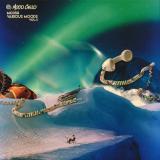
Mood Child returns with Various Moods Vol. 5, a razor-sharp six-track album curated by Manda Moor and Sirus Hood. Bringing together some of their biggest weapons in their sets, the release delivers a standout selection of special records and high-impact dancefloor cuts from a finely tuned cast of artists.
Built with the club in mind, Various Moods Vol. 5 moves through deep, rolling grooves, stripped-back minimal flavours and tougher tech-driven moments, with each track carrying its own identity while hitting with real force. The result is a versatile and powerful package made for peak-time pressure, late-night sessions and serious selectors.
The release marks the return of Antss, Paul C and Francis De Simone, while also welcoming RSquared and Drumcapelli for their first outing on Mood Child. Adding further weight to the project is a standout contribution from highly respected UK artist wAFF, rounding out a release full of character, energy and club-ready impact.
On Stock and ready to ship
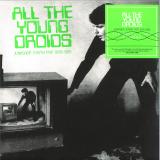
2025 REPRESS ON TRANSPARENT GREEN VINYL
Compiled by Philip King “And then came the rise of synth pop : blokes with dodgy haircuts hunched over keyboard-operated machines stuffed with wires and do-it-yourself tone oscillators making sounds like a brood of geese passing gas in a wind tunnel. Whoopee! This is the way the ‘70s ended : not with a blood-curdling bang bang but with a cheap, synthesized, emasculating whimper.” NICK KENT, NME. All The Young Droids: Junkshop Synth Pop 1978-1985 is a new compilation that charts the underbelly of the epoch-defining sound of the synthesiser in 80s popular music. Compiled by Philip King (previously seen compiling All The Young Droogs, Glitterbest and Boobs - The Junkshop Glam Discotheque), the music here connects the dots between DIY synth enthusiasts grappling with new, cheap synthesisers at the tail-end of punk and wannabe, jobbing songwriters enthral to the new music pioneered by Gary Numan, Depeche Mode and Daniel Miller’s Mute Records. Featuring rare tracks of auto-didactic progressive pop music, proto-techno punk, shoot-for-the-stars-land-in-the-gutter chart flops and heralded, underground synth classics, School Daze paints a picture of beautiful failure. Complete with extensive sleeve notes written by King and never before seen imagery, all 24 tracks were remastered by RPM in-house engineer Simon Murphy, many from vinyl copies due to lost master tapes. The story told on All The Young Droids is one of the dawning opportunity presented by both the emergence to the market of cheaper analog synthesisers and the distribution networks plus indie labels that exploded with the advent of punk music in 1976. While the music that sprouted out all over the globe in the wake of these factors was decried as fake, plastic, a refutation of punk’s guitar-led revolution, it’s telling that much of the music on All The Young Droids.. was created in bedrooms, ramshackle studios and home-made set ups with often borrowed equipment. In the era of record labels jumping to capitalise on the success of The Sex Pistols, The Clash (both on major labels, of course) these artists struggled to stand out from a new gold-rush with next to no budget or PR team. With radio and labels desperate for the new Yazoo, what resulted was a testament to necessity being the mother of invention. At the time, the synthesiser was the music of the future, a shiny new machine that could paint like an orchestra with a single finger and a 4-track. In the hands of Manchester avant-pranksters Gerry & The Holograms it’s a pulsing, sardonic weapon.. the only instrument on the Messthetics classic lampooning of New Wave fashion. In Hamburg, a 16 year old Andreas Dorau used it to write and record (with his female classmates on vocals) a global smash in Fred Vom Jupiter (later licensed to Mute Records). The hard-to-find English version (Fred From Jupiter, natch) is included here. Many artists with alreadystoried careers caught the bug and recorded synthesiser-fuelled peons to space, computers, the future and, of course, love-interests. Harry Kakoulli, late of Squeeze, recorded a solo album in 1979 that included the incredible power-synth-pop smash-that-never-smashed I’m On A Rocket. Similarly, Ian North of Neo and American Power Pop stalwarts Milk ’n’ Cookies bought a Korg MS20 and used a tape machine to record We’re Not Lonely, an absolute lost-classic of minimal synth pop. We’re Not Lonely also features on the Junkshop Synth Pop sampler 7” twinned with John Howard unreleased track You Will See, released April 12th 2025. There are plenty of compilation debuts in evidence. Sole Sister were a mysterious trio who were featured on the Scaling Triangles compilation of female-fronted, queer-adjacent post-punk / underground music that also featured The Petticoats. Selwin Image were from San Francisco and featured members of the recently defunct power pop/punk group The Pushups. Their stupidly catchy The Unknown fizzes with New Wave energy - think XTC to Sparks but remains unreleased until now. Dream Unit’s A Drop In The Ocean is an early synth wave cut, positively teaming with Joy Division instrumentation, previously only released on a long-forgotten and super rare, self-released EP. Incandescent Luminaire’s Famous Names belies an archetypal struggle of a small-town trying to make it in a cruel industry but is a thrilling New Romantic-Synth Wave cross over with a OMD gloominess that’s a joy to hear. Feminist Minimal Wave track I Am A Time Bomb by performance artist Peta Lilly and Michael Chance is a revelation destined for new found cult status. It was released on 7” and lost until now. The flipside to the subterranean, never-made-it synth pop mentioned above are the ambitious, even fruity attempts at success that have a perennial elegance to their confidence. New Jersey-ite Billy London (real name Ed Barth) tried to cash in on the synth boom with Woman, released by a major label, a lurching new wave track built on the Louie Louie rhythm and a wonderfully camp Lou Reedstyle sleazy vocal before exploding in the synthesised chorus. The song bombed but with a chorus like this, you have to wonder why? Ex-Glitter Band member John Springate’s My Life is truly epic, with doomed chord progressions and massive sounding drums turning into at least 3 different songs in the course of the track. Before you wonder what’s going on the song resolves with a glorious return to the main refrain. The dry-ice-dressed dance floor is well catered for too. Design’s Premonition and Vision’s Lucifer’s Friend are stone-cold minimal synth bangers, well loved but given a new lease of life here. The Warlord’s The Ultimate Warlord was released in 1978, a homespun proto Hi NRG banger that was later re-recorded by The Immortals in Canada who had a club hit with it. One-man- band Disco Volante’s No Motion was re-issued by Synth wave label Medical in 2012 but makes its first vinyl compilation appearance here. Close your eyes and you can imagine what Lawrence of Felt would have sounded like with some cheap Korgs a little earlier in his career. Gibraltar-based trio The Microbes imagined a computer programming people to dance - how prescient - and ended up with a propulsive, robo-funk track with splendid rubbery bass playing over a tectonic drum machine. Previously picked up by Belgian label Stroom TV, Dee Jay Bert & Eagle’s heavily Euro-accented I Am Your Master demands the listener to “come to paradise!” In a frankly terrifying manner. All The Young Droids is the first compilation to peel away from the narrative that dour, Minimal Synth and Cold Wave were the only musical children of the first rush of synth pop. Philip King and School Daze Records describe a much more complicated world: along with the austere, Brutalist children of Daniel Miller (who produced Alan Burnham’s Bowie-Low-influenced Science Fiction here) was a plethora of desperate cash-ins, accidental mainstream hits, ambitious pop dramas and major label punts that went nowhere. Crucially, the compilation blurs the line between junk and treasure. What if the two things are interchangeable. What if it’s all science fiction?
On Stock and ready to ship
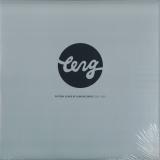
When Leng Records founders Paul ‘Mudd’ Murphy and Simon Purnell marked the imprint’s 10th birthday, they did so via a celebratory compilation that mixed classic catalogue cuts, remixes and exclusives. Five years on, and with the label’s 15th birthday upon us, they’ve decided to look to the future via a compilation made up entirely of fresh productions from Leng’s roster of current and new artists. Presented on limited-edition gatefold double vinyl with a bonus 10” single, the collection offers an updated showcase of Leng’s much-loved trademark sound, a distinctive fusion of mid-tempo sleazy-disco, Balearica and chugging house interspersed with elements of electronic psychedelia and synth-powered space disco. Fittingly for a compilation that wholeheartedly looks to the future, you’ll find first contributions from a handful of label newcomers.
Fast-rising duo Flying Mojito Bros give their spin on ‘Smoke Signals’ by label debutants Joe HarveyWhyte and Bobby Lee, turning in a heady and inspired revision that sits somewhere between dusk-ready cosmic disco and flash-fried desert blues. There’s also an appearance from Swedish producer Bo Wosticz with the dreamy and ultra-deep nu-jazz of ‘Bs As’. Naturally, you’ll also find plenty of heat from those who have already proved their mettle through prior releases on Leng. Danish duo Liminal, who made their debut earlier this year with the much-played ‘Keep Coming Back To Me’, open proceedings with the tactile, slow-disco flex of ‘Tzatziki Bay’ where sweet synth melodies and a heady electric piano riff ride a warming groove.
Roberto Intrallazzi and Dario Piana from Italy’s original Afro-cosmic movement return with ‘Plutos’, a typically deep dubbed-out cosmic chugger. Then there’s Rose Robinson AKA Tigerbalm, whose ‘Mexicana’ featuring singer Joi N’Juno is presented across the package in two different forms. Pete Herbert, who contributed to some of the earliest Leng releases, drops a driving dub disco take on the main compilation, while Robinson’s original mix – a more organic, percussive and horn-heavy affair blessed with plenty of hallucinatory intent – opens the bonus 10”.
There’s a welcome return to Leng for the brilliant Payfone, whose ‘Dime Algo’ is a typically classy, analogue-rich affair in which attractive Rhodes riffs, atmospheric female vocals and pitched-down house pianos rise above shuffling drum machine beats and a slow-motion bassline. Long-serving label contributor Lex (Athens) delivers the loose-limbed nu-disco breeze of ‘Stolen Dance’, while the imprint’s San Francisco connection – the ever-brilliant 40 Thieves collective – drop the dubbed-out Bay Area brilliance of ‘Such A Great Trip’.
Then there are the contributions of the label’s most storied artist, Andrew Meecham AKA Emperor Machine with ‘Eumig’, a deliciously slow, synth-rich chugger full of colourful chords, bubbly electronic melodies and jaunty electronic bass. Then, to round off the bonus 10” single, Meecham joins forces with Paul Murphy (as Mudd) on ‘Road To Nikko’, an extended, Japanese musical culture-influenced slab of pitched-down alien-funk packed to the rafters with squelchy synth sounds, effects-laden percussion, chiming melodies and rubbery bass guitar.
On Stock and ready to ship

Long kept in the shadows, "+ Ou – 8000" is a rare gem of the French musical avant-garde, born from the meeting of three
composers at the peak of their inventiveness. Initially intended as sound illustration, this album crosses the boundaries of
library music, space jazz, and electronic experimentation, with a freedom and boldness that today give it cult status.
Teddy Lasry, an iconic figure from the MAGMA universe, has always moved between jazz, progressive rock, and electronic
music. A saxophonist by training, he explores here synthetic and spatial territories with striking modernity.
Francis Mercier, discreet yet remarkably effective, is a sound craftsman who left his mark on many library music records
in the 1970s. Here he delivers precise rhythmic textures, tense atmospheres, and a minimalist groove mastery.
Christian Perraudin, a chameleon composer bridging academic music and film scoring, brings his cinematic touch—
floating melancholy and sci-fi tension. A true artisan of sonic ambiance.
Boldly visionary, + Ou - 8000 is an invitation to active listening, a journey into the heart of a fascinating sound laboratory.
This unprecedented vinyl reissue is a unique opportunity to (re)discover a crucial record that remained out of reach for far
too long.
Limited edition – for lovers of rarities, analog synths, and genre-defying musical exploration.
On Stock and ready to ship
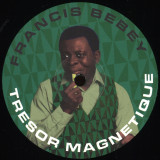
Francis Bebey was a visionary who explored the intersection of African traditions and global music long before it became a global trend. Born in Cameroon, Bebey's sound was an eclectic blend of his rich cultural heritage and his deep exploration of modern music, spanning genres from traditional folk and jazz to funk and electronic experimentation. As an artist, Bebey was ahead of his time, using his unique voice and instruments to forge new paths for African music to be heard worldwide. His legacy is not just in the music he created but in the way he opened doors for the global recognition of African artists, influencing generations of musicians, producers, and fans alike.
This release marks an exciting moment, as we introduce remixes of bebeys iconic productions by contemporary electronic producers, giving new life through creative re imaginings.
Tracks:
Le Grand Soleil De Dieu (Psychemagik Remix): The UK-based musical duo are known for their eclectic blend of electronic music, psychedelic rock and mystical global sounds. Formed by Danny McLewin and Tommy McLewin, the duo has carved out a unique niche within the global music scene though their intricate arrangements. Their Remixes and Collaborations have been with artists like Fleetwood Mac, Tame Impala, and Hercules & Love Affair. Their psychedelic dub remix has otherworldly qualities, with dreamy atmospheres and bouncing baselines throughout this brilliant opening track.
Guinee (Turbotito Edit): The Berlin-based DJ and producer known for his infectious blend of house, disco, and funk. With a knack for smooth, groovy beats and a deep love for melody, Turbotito's music brings a fresh, energetic vibe to the dance floor. On this track, he effortlessly re-imagines and elevates the world of Guinee to match his signature sound. A combination of a great pulsing base line, ethereal vocals and bird sound effects incorporated into the percussion makes this track an absolute stand out.
Agatha (Voilaaa Remix): Bruno "Patchworks" Hovart from Lyon is the brains behind the Voilaaa project. Fusing soulful grooves, funk, and disco with an unmistakable French touch, Voilaaa creates infectious, feel-good rhythms that blend classic and contemporary influences. In this track we find the first big hook of the album vocally, coupled with Bebey's lively humour in spoken French on top of joyous instrumentation. The smooth vocals, catchy melodies, and vibrant arrangements, bring a fresh energy to the original hit track - a brilliant homage.
Forest Nativity (Red Axes Edit): Red Axes are a dynamic electronic music duo from Tel Aviv, blending disco, house, and psychedelic influences into infectious, genre-defying tracks. Known for their unique sound, warm analog textures, and hypnotic rhythms, Niv Arzi and Dori Simao craft music that moves both the body and the mind. Forest Nativity arrives as a full circle closer, incorporating some of the most authentic African instruments such as a Balafon, an instrument similar to a xylophone and a Djembe, a hand drum central to many West African traditions. The 7 minute track is guaranteed to take you on a fascinating journey through Bebey's culture and livelihood.
On Stock and ready to ship

2025 Repress
Echospace Detroit’s cv313 aka Stephen Hitchell joins forces with Federsen for the second instalment on the latter’s newly minted Alt Dub label with the ‘Skyspace’ EP. Over the past decade and a half San Francisco based artist Federsen has been making his mark on the dub infused techno and house sound, delivering his vintage tape delay and analogue gear driven sound via the likes of Mixcult, Greyscale, Lempuyang and Ohm Series among others. In May this year Federsen inaugurated his own Alt Dub label with a split EP from himself and Hidden Sequence, and here the story continues following the split format with more original material from himself and cv313, accompanied by both artists remixing each other to run alongside their originals across the 12’’. cv313’s original mix of ‘Skycrossing’ opens the release and in typical Hitchellfashion treats us to eight and a half minutes of deep soundscapes, spiralling dub echoes, muted drums and a subtly unfurling feel throughout. Federsen’s ‘Dub’ remix of ‘Skycrossing’ then follows, offering a more refined and reduced feel with subby pulsations and crisp drums intertwined with dubby fragments of the original tracks. On the flip-side Federsen’s original ‘Skyway’ leads, employing a sturdy rhythm section with nuanced dub echoes and rumbling low-end swells. To conclude the release cv313 offers up his ‘Dub’ interpretation of ‘Skyway’, stamping his mark on things with phasing atmospherics, intricate oscillations and fluttering percussion
On Stock and ready to ship

Acclaimed Canadian electronic producer Francis Latreille, known as Priori, unveils his new singles "Learn To Fly" and “Segue” today, marking the first releases from his upcoming third album, This But More. "Learn To Fly" offers a taste of the album's lush, dubby techno soundscapes, while "Segue" showcases the album's ambient side. Arriving May 24th via NAFF, This But More marks a sonic departure for the artist, exploring a richly textured landscape of electroacoustic compositions inspired by literature, cinema, and the transformative power of nature.
Priori delved into This But More from September 2023 to March 2024, drawing upon archival recordings and fresh ideas. "This album is about healing," Priori explains. "Not necessarily 'music that heals', but about the process in its ups and downs, its beauty and uncertainty." Themes of protection, healing, sleep, and decay naturally emerged during the creative journey.
To craft this immersive world, Priori collaborated extensively. Writer and musician Devon Hansen penned a series of "Suggested Stories" to accompany the album, adding depth to its lore. Musically, Priori teamed up with James K, Ben Bondy, Sabola, Adam Feingold, and Jesse Osborne-Lanthier, infusing the album with diverse instrumentation, including violin, guitar, software instruments, and field recordings.
This collaborative spirit extends to the album's striking visuals. Jesse Orsborne Lanthier designed the main and single artworks, while Ulysse De Lezenne crafted a unique jewel, both pieces seamlessly connected to the album's narrative.
The intricate world-building sets This But More apart. "It's the biggest collaborative project I have tackled so far," Priori notes. This spirit of exploration extends to the second single, “Wake”, featuring Priori's first vocal collaboration with close friend Jamie Krasner (James K).
Priori's artistic process is grounded in self-awareness and intuition, asking vital questions about how each element serves the greater purpose of the music. Swimming sessions between studio work provided clarity and focus throughout the album's creation. These meditative moments reflect in the music, inviting listeners into a contemplative, dreamlike state.
Beyond music, Priori draws inspiration from the literary worlds of Gene Wolfe, Ursula K LeGuin, China Mieville, Brian Caitlin, the evocative games of Hidetaka Miyazaki and Yoko Taro, as well as the ever-evolving beauty of myths and nature.
On Stock and ready to ship
Pitched Peach's inaugural release marks a significant homage to the Bay Area's musical legacy, featuring five tracks from Darwin Chamber, the alter-ego of Mark Greenfield.
Chamber's contributions have been instrumental in shaping the distinctive sound of the ambient house/trip-hop and breakbeat movement that originated in San Francisco during the 1990s. His work offers listeners a timeless experience that represents the essence of electronic music's history. This EP encapsulates the playfulness we seek both as a listening experience and to burn the dance floor, setting the stage for an electrifying future of releases on the label. All tracks have been remastered for the occasion!
On Stock and ready to ship

*MILKY CLEAR VINYL - 300 COPIES ONLY FOR WORLD!!* Technology + Teamwork’s fizzling synths, interweaving textures and punchy rhythms are beguiling on their long-awaited debut album We Used To Be Friends. However, at the heart of it all it’s the connection between the group’s two members, Anthony Silvester and Sarah Jones, the friendship the much-travelled duo have managed to maintain for nearly 15 years and a showcase of the slow-burning construction of the electronic world that they’ve surrounded themselves with. We Used To Be Friends is ultimately the tale of two storied artists in their own right, holding onto each other through personal and career twists and turns, relocations and broader movements through respective phases of their lives. Silvester and Jones first met and then collaborated as part of biting post-punk five-piece XX Teens in 2008, eventually breaking off to forge their own path together even as the latter’s demand as a drummer grew. Performing with everyone from Hot Chip, Harry Styles and Bloc Party among many others, Jones has been a constant percussive presence across the sphere of alternative UK pop music – she’s also found time for her own solo project Pillow Person and played on records by the likes of Puscifer and Kurt Vile. Silvester meanwhile has performed in art galleries across Europe including: Fridericianum in Kassel, Kölnischer Kunstverein in Cologne, and Vleeshal in Middelburg, as well as providing sound design and composing work for several art films. Technology + Teamwork is the constant throughout all of that though. “Technology + Teamwork's name perfectly describes how we work” Silvester explains. “Sometimes the teamwork is between each other and sometimes it’s between us and the technology.” Although going by the name Technology + Teamwork as far back as 2014, two events conspired that pulled the project into focus for the pair of them: firstly, Silvester spent a year constructing a soundproof studio shed on the border of London and Essex where he lives. Secondly, inevitably, the pandemic brought the globe-trotting Jones back home to just seven miles away from her long-time collaborator and friend. “We probably hung out more than we had for a few years” says Silvester. “Also, after all her Pillow Person releases Sarah had gotten really good with recording vocals and knowing what did and didn’t work and had a really good home studio set up. We still worked separately though, exchanging ideas via email and WhatsApp.” As with many artists through 2020 and early 2021, working separately was a new necessity that they were forced to adapt to. However, it became clear that there were creative benefits to it. “It really changed our sound and our sounds became a lot more focused as a result” Jones says. “I wanted to use the same ideas of improvisation that I might use while playing the drums for myself and apply that to melodies and lyrics.” The album bristles with hyperpop modernity. You can hear it in the manipulated vocals most prominently on Big Blue’s disco strut and on Moving Too’s heady mix of pitched up voice and burrowing sub bass. However, the pair also looked to San Francisco and the West Coast synthesis movement of the 60s, Silvester inspired by the likes of Suzanne Ciani and Don Buchla. The plaintive lo-fi and melancholy of Amsterdam incorporates Mutable Instrument’s Marbles by Émilie Gillet which – inspired by Buchla’s own synthesis work – outputs random voltages to give the track an air of unpredictability. It’s something that occurs throughout the album, the duo revelling in the happy accidents that disrupt the flow of their hook-laden pop. “The ‘Buchlian’ ideas of music having randomness and uncertainty, completely freed us up” Silvester explains. “It felt a bit like having more members in the band, machines that didn't do what you expected or intended.” Perhaps more subtly, is the influence of 17th and 18th century Baroque music, with Silvester drawing a line between it and the 90’s R’n’B he and Jones both love – exemplified perhaps best on K+B’s percussive claps and sultry grooves. The portentous juddering synthpop of the title track, meanwhile, alludes specifically to Handel’s Sarabande. It’s typical of an album that only needs a scratch of its seemingly glossy surface to unearth a myriad of contorted touchstones and reference points that’ve fermented beneath it. Thematically there’s an anxious sense to the record, with tracks often balancing above a quiet sense of unerring tension even at their most bombastic. Moving Too is the result of an existential doubt that hit Silvester while out cycling, with the outro refrain "it's not enough to die you also have to be forgotten" a take on something Samuel Beckett once said. These worries are echoed on the album’s closing track What A Year, which borrows a lot of lines from the late drag performer and fashion designer Dorian Corey including the grimly defiant "you're gonna leave your mark somewhere in this world just by getting through it”. Those clouds offer a counter point to We Used To Be Friends, but then isn’t that what great pop albums do? Technology + Teamwork undoubtedly love the craft of the hook and the song, but they always position themselves left of centre, prepared to scuff things up, pull something out of shape or manipulate something to leave it sounding warped. Much like their friendship, nothing here is particularly linear – and it’s all the better for it. Bio: Anthony Silvester & Sarah Jones first collaborated as part of biting post-punk five piece XX Teens in 2008, eventually breaking off to forge their own path together even as the latter's demand as a drummer grew. Performing with everyone from Hot Chip, Bat for Lashes, Harry Styles and Bloc Party (among many others), Jones has been a constant percussive presence across the sphere of alternative UK pop music - she's also found time for her own solo project Pillow Person and played on records by the likes of Puscifer and Kurt Vile. Silvester meanwhile has performed in art galleries across Europe including Fridericianum in Kassel, Kölnischer Kunstverein in Cologne, and Wleeshal in Middelburg, as well as providing sound design and composing work for several art films. Technology & Teamwork is the constant throughout all of that though. "We Used To Be Friends" proves that Technology & Teamwork undoubtedly love the craft of the hook and the song, but they always position themselves left of centre, prepared to scuff things up, pull something out of shape or manipulate something to leave it sounding warped. Much like their friendship, nothing hear is particularly linear - and it's all the better for it.
On Stock and ready to ship

Omni AM presents the long-awaited reissue of “Can We Get / Keep Doing That.” This timeless record sent dance music in a new direction. Euphoria Record’s vaults are open and finally, for the first time since 1997, this seminal tech-house classic is available to everyone for the very first time in over 25 years. This 1997 indie record was Euphoria Records second release – and their first international record. Whether you agree with it or not, many people consider this one of the pioneering records of American Tech-House. Both sides and several mysterious alternate versions have graced the decks of DJs like Evil Eddie Richards, Terry Francis, Derrick Carter, Tyler Stadius, and Magda. The list goes on.
We were lucky. Curve Pusher lovingly remastered the original four tracks from the 1997 studio masters. Then, he went a step further, and remastered some previously unreleased versions – including a live version in Chicago that encapsulates what Omni AM was back then: ambient house. There’s a bit of Chicago, a bit of London, a bit of New York, and a bit of Tokyo in every second of these classic, genre-defining tracks.
A1.
“Can We Get” happily sits with the finest works of Ron Trent, Chez Damier, and Mood II Swing – and goes further, as Omni AM has never feared genre definitions. It opens with classic deep house chords, floating synth pads, and sparse vocals. The bassline is deep and warm. Marky Star and Adam Collins expertly work the percussive effects but always keep the theme simple and clear. Everyone knows this is a classic house track because it hypnotizes you.
A2.
“Keep Doing That” continues the theme with another classic late-night killer. However, this one is totally different – almost industrial, yet clearly housey and ambient. It drives deep into a tough groove that just builds and builds. The dub-influenced bass line gives way to a more angular synth riff that both offsets and adds to the track's forward thinking sound design. It’s dark and dirty, yet terribly sexxxy at the same time. It was and always will be mesmerizing. Once again, musical magic by Marky Star and Adam Collins.
B-Sides
The flip side features two remixes of “Keep Doing That” by UK tech-house legend Mark Ambrose. His bubbly, psychedelic take on the track pumps up the percussive Chi-town groove while going in a distinctly London afterhours direction. Trippy, for sure. Fun for all, for sure. These remixes are guaranteed to make your afterhours weird.
On Stock and ready to ship

Group Rhoda is the solo electronic music project of Mara Barenbaum, based out of Oakland, California. The project started around 2009 with a debut album 'Out of Time, Out of Touch' in 2012 on Night School Records and '12th House' in 2013 on Not Not Fun. She is also one half of Max and Mara who released the album 'Less Ness' in 2013 on Dark Entries Records. She is committed to live performance, situated within the analog synthesizer and drum machine medium.
'Wilderless' is Group Rhoda's third full length and first for Dark Entries Records. Each of the these 7 songs draw forth tones of tropical darkwave and soft industrial, while negating the sound of conformity and control. The album explore themes of societal and spiritual displacement, contemporary serfdom, the depths of empathy, regeneration through destruction, and the tyranny of claiming recognition and power. Lyrics are poetically expressed through allegory and explore archetypes rooted more in abstract observation rather than hard line experience. Through transgression and imagination, Group Rhoda explores the arc of songwriting interwoven into stark electronic environments, and creates a bridge between the corporeal and the dream worlds.
Each song was mixed by Mark Pistel at Room 5 in San Francisco and mastered by George Horn at Fantasy Studios in Berkeley. Each LP is packaged in a jacket featuring a colorful custom made collage by Hugo Barros and includes a full color sticker and digital download card.
On Stock and ready to ship

Honey Soundsystem releases 'Cosmologist', the latest offering from our Resident DJ: Robert Yang aka Bézier. A multi-instrumentalist, Robert was trained in saxophone starting at age 10, before moving onto a Fender Telecaster after high school. After being exposed to Southern California rave culture in the late 90s, he moved onto DJing and collecting records. By the time he planted his roots in San Francisco in 2005, Robert had built an impressive analog synth-based studio, which also serves as the creative hub for his riveting live performances.
'Cosmologist' explores Robert's personal universe with three tracks that connect his varied musical lineages. "Cosmos", a celebration of the late 80s/early 90s KIIS FM universe, is built around an infectious freestyle hook that morphs into a seven minute tour of intersecting styles. "Ether" begins as gothic night-driving electro, but breaks into fantasy-scapes inspired by Italo and 1980s Japanese anime theme songs. The final track, "d. Quelle", clocks in at over 11 minutes, incorporating bebop jazz solos drawn from his early exposure to improvisation techniques by Charlie Parker, Cannonball Adderley, and Stan Getz. All songs have been mixed by Mark Pistel (Meat Beat Manifesto, Consolidated) at Room 5, San Francisco and EQed for vinyl by George Horn at Fantasy Studios.
On Stock and ready to ship

Since 2010, Jackie House aka Jacob Sperber has been driving the A&R side of the San Francisco dance-music troupe running the HNYTRX label and producing remixes with other members under the Honey name. Putting label duties on hold in 2013 Sperber cocooned into his music studio, entering as a brave brunette and exiting as an ambitious blonde. "Stydive" is Jackie's debut to wax and has as much house-party in it as it does warehouse 4am. With a vocal sample nod to punk's past, 'Stydive' pogo dances to dusty and stuttering live/analog drum rhythms and skips along a rude and infectious bass-line. Bound to find lovers of all persuasions for its dub-esque qualities, instantly recognizable hook, and open relationship with house music, this tune begged to have it's own side. That said, there is always room for some Matrixxman who takes Stydive to a strobe lit South of Market darkroom in his remix on the B. Spurting erotic lazers around a cavernous kick, this tune finishes off even the most experienced edger.
On Stock and ready to ship

Dark Entries is proud to release the sophomore EP from BEZIER entitled Telomeres. Bézier is the moniker of local SF musician ROBERT YANG, who also is part of the illustrious HONEY SOUNDSYSTEM crew. Telomeres is the follow up to Bézier's debut EP Ensconced, released in 2013. The title relates to themes of time, science, analytics and procedures. Bézier integrates the refrains of Spanish new wave and Italo disco with the attitude and aggression of underground styles like synth-punk and industrial. These six tracks were written, produced and mixed by Bézier at his home studio in San Francisco between 2014 and 2015, and feature the debut of his own vocals. All songs have been mixed by Mark Pistel (of Meat Beat Manifesto fame) at Room 5, San Francisco and EQed for vinyl by George Horn at Fantasy Studios. The vinyl comes housed in a jacket featuring an illustration by in-house designer Eloise Leigh riffing on early 80s computer graphics. The matted sleeve is meant to resemble the side panels of early computing instruments like Macintoshes or the Commodore 64. Each LP includes a postcard with a photograph of actual telomeres captured by a microscope camera by the Blackburn Lab at UCSF. Telomeres' are life's building blocks, changing the lengths of chromosomes to determine lifespan. This music is an investigation of a future in which time elongates as well as contracts.
On Stock and ready to ship

Beneath the sleek, confident guitar line that powers “Overdrive,” the lead single of All Over You, another guitar marks the time more impatiently, as if the groove its locked into is the timebomb- tightness of a pre-hookup heartbeat. Its energy isn’t nervous — after all, it’s hard to be nervous with Will Schwartz cooing come-ons like “I just wanna get you in the bed / Light you up like a cigarette” in your ear — but it is urgent. Excited. Titillated.
That’s the word that best describes the prospect of a new Imperial Teen record: titillating. They come out every five or six years, each new album acting as, to quote Roddy Bottum, “an episodic piece of where we are now, where the world is now, who we have become, and the geography of our collective consciousness.” There is considerable distance between Imperial Teen, its members — Bottum (guitars, keyboards, vocals), Schwartz (vocals, guitars, keyboards), Jone Stebbins (bass, vocals), and Lynn Truell (drums, vocals) — having made lives for themselves in different cities, but the collective consciousness that exists between them makes distance and time seem immaterial to the listener.
Time, especially time together, is not immaterial to Imperial Teen: it is precious. “For the last few records,” Stebbins explains, “the process has been similar. We live great distances away from each other, so initially, we get together to collaborate, write, and create. When we have enough material, we reconvene to record. Both scenarios, creating and recording, take multiple trips, sometimes with big lapses of time in between due to our various schedules.” Bottum concurs: “The biggest challenge in writing and recording is the distance between us, but the longing and desire and the ultimate coming together becomes more potent as a result.”
All Over You is a triumph of maximized moments together, four people bringing the force of their personalities to bear on years of built-up ideas. Title track “All Over You,” initially built over the computer, gained its charming sneer in the studio, where Stebbins’ buoyant, fuzzed out bassline added bounce to the song’s punchy, sloganeering lyrics, a perfect set-up for Truell to drive the song home, screaming the last line of the chorus, “We’ve got nothing to do,” like a rallying cry for a generation that’s been given nothing and told to deny themselves everything. “In my head,” Truell says, “I just went back to punk, to that feeling of prowling around looking for anything to do and being so mad about how boring everything is that you just have to yell.” The track had an attitude, it had an unexpected texture thanks to Truell’s playing improvised percussion, but her scream is what took it to the next level, transforming it into a signature Imperial Teen song.
One of Imperial Teen’s less magical concerns on All Over You is the effect capitalism has on the creation of art. This expresses itself in the headspinning rush of music industry success and disappointment that plays out in “Hands All Up,” and also in Imperial Teen’s sound. All Over You features the band’s most expansive, textured palette to date, and much of it’s steeped in — bubblegum music and boy/girl harmonies, electro beats and grungy distortion, power pop mall anthems and kiss-off lyricism — has been dismissed, at one point or another, as a fad. Time, of course, has proven otherwise, and All Over You makes a case for Imperial Teen as four of that time’s architects, inheriting, preserving, and pushing the boundaries of what pop music can be from one song to the next.
“We want to make people dance and think and feel,” says Schwartz. In all of those ambitions, All Over You crushes, brought to life by four musicians who found each other in the clubs of San Francisco over three decades ago and have remained family ever since. It is less a return from hiatus than a broadcast from the sonic utopia Imperial Teen has long ruled over, where the music is bratty and sexy and the parties don’t stop until everyone’s found euphoria. A raveup for mind, body, and soul, best enjoyed in a dark room packed with as many sweaty bodies as possible
expected to be published on 09.10.2026
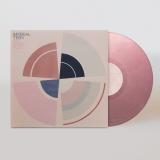
Black Vinyl[22,48 €]
Beneath the sleek, confident guitar line that powers “Overdrive,” the lead single of All Over You, another guitar marks the time more impatiently, as if the groove its locked into is the timebomb- tightness of a pre-hookup heartbeat. Its energy isn’t nervous — after all, it’s hard to be nervous with Will Schwartz cooing come-ons like “I just wanna get you in the bed / Light you up like a cigarette” in your ear — but it is urgent. Excited. Titillated.
That’s the word that best describes the prospect of a new Imperial Teen record: titillating. They come out every five or six years, each new album acting as, to quote Roddy Bottum, “an episodic piece of where we are now, where the world is now, who we have become, and the geography of our collective consciousness.” There is considerable distance between Imperial Teen, its members — Bottum (guitars, keyboards, vocals), Schwartz (vocals, guitars, keyboards), Jone Stebbins (bass, vocals), and Lynn Truell (drums, vocals) — having made lives for themselves in different cities, but the collective consciousness that exists between them makes distance and time seem immaterial to the listener.
Time, especially time together, is not immaterial to Imperial Teen: it is precious. “For the last few records,” Stebbins explains, “the process has been similar. We live great distances away from each other, so initially, we get together to collaborate, write, and create. When we have enough material, we reconvene to record. Both scenarios, creating and recording, take multiple trips, sometimes with big lapses of time in between due to our various schedules.” Bottum concurs: “The biggest challenge in writing and recording is the distance between us, but the longing and desire and the ultimate coming together becomes more potent as a result.”
All Over You is a triumph of maximized moments together, four people bringing the force of their personalities to bear on years of built-up ideas. Title track “All Over You,” initially built over the computer, gained its charming sneer in the studio, where Stebbins’ buoyant, fuzzed out bassline added bounce to the song’s punchy, sloganeering lyrics, a perfect set-up for Truell to drive the song home, screaming the last line of the chorus, “We’ve got nothing to do,” like a rallying cry for a generation that’s been given nothing and told to deny themselves everything. “In my head,” Truell says, “I just went back to punk, to that feeling of prowling around looking for anything to do and being so mad about how boring everything is that you just have to yell.” The track had an attitude, it had an unexpected texture thanks to Truell’s playing improvised percussion, but her scream is what took it to the next level, transforming it into a signature Imperial Teen song.
One of Imperial Teen’s less magical concerns on All Over You is the effect capitalism has on the creation of art. This expresses itself in the headspinning rush of music industry success and disappointment that plays out in “Hands All Up,” and also in Imperial Teen’s sound. All Over You features the band’s most expansive, textured palette to date, and much of it’s steeped in — bubblegum music and boy/girl harmonies, electro beats and grungy distortion, power pop mall anthems and kiss-off lyricism — has been dismissed, at one point or another, as a fad. Time, of course, has proven otherwise, and All Over You makes a case for Imperial Teen as four of that time’s architects, inheriting, preserving, and pushing the boundaries of what pop music can be from one song to the next.
“We want to make people dance and think and feel,” says Schwartz. In all of those ambitions, All Over You crushes, brought to life by four musicians who found each other in the clubs of San Francisco over three decades ago and have remained family ever since. It is less a return from hiatus than a broadcast from the sonic utopia Imperial Teen has long ruled over, where the music is bratty and sexy and the parties don’t stop until everyone’s found euphoria. A raveup for mind, body, and soul, best enjoyed in a dark room packed with as many sweaty bodies as possible
expected to be published on 09.10.2026
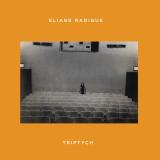
The final collaboration between Eliane Radigue and Important Records is this double LP edition of Triptych. Radigue insisted that her music only be released on vinyl if the pieces would fit without being edited or cut. Triptych met those requirements leaving room for an etching on the 4th side.
Back to music after three years of silence... On the suggestion of Robert Ashley, Douglas Dunn commissioned Triptych from Eliane Radigue for choreography. Only the first part of Triptych was staged at the premiere at the Dancehall/Theatre of Nancy on February 27 1978. Recorded in the composer's studio in Paris.
After the 1974 premiere of Adnos in San Francisco, a group of French students introduced Eliane Radigue to Tibetan Buddhism. When she returned to Paris, she†began to explore this spirituality in depth, which slowed her musical production up until 1978. Triptych marks her return to composition, and draws its inspiration from "the spirit of the fundamental elements, water, air, fire, earth" Eliane Radigue likes to add that this has often been useful to her in her moments of research and transitions.
This three-part composition, with its great humility and contemplative simplicity, heralded a new period of her work and was the first in a series of masterpieces inspired by Tibetan Buddhism: Adnos Trilogy (1980), Songs of Milarepa (1983) - with the voices of Lama Kunga Rinpoche and Robert Ashley , "Jetsun Mila"(1986), as well as the Trilogy of Death: Kyema (1988), Kailasha†(1991) and Koume†(1993).
-Manu Holterbach (translation: Maxime Guitton)
expected to be published on 11.09.2026

Strut presents Nigeria 80, the next essential chapter in the legendary Nigeria 70 series, diving deep into the explosive sound world of 1980s Nigeria.
Following the global impact of 2001's Nigeria 70, which helped introduce rare Nigerian recordings to international audiences, Nigeria 80 continues the journey, unearthing a rich, restless, and wildly creative decade of music from Lagos to Enugu. Despite economic instability and restrictive political conditions in the 1980's, Nigeria’s music industry flourished, driven by a growing network of independent labels such as Tabansi and Phonodisk, which championed local artists and expanded creative freedom. The 1980s also marked a significant rise in visibility for female artists, with trailblazers like Onyeka Onwenu helping to reshape the landscape and open doors for a new generation of performers, writers, and producers.
Nigeria 80 showcases the extraordinary breadth of this era, with all tracks reissued here for the first time. The compilation brings together essential recordings from across Nigeria’s musical spectrum: highlife greats Victor Uwaifo and Nico Mbarga appear alongside Paulson Kalu, whose personal favourite “Akugbue Nwa Ewu” stands out as a prime example of the style. Prince David Bull’s “Soko Soko” (later reinterpreted in Starboy’s Afrobeats hit “Soco”) features as a key touchpoint between eras. Segun Adewale delivers a driving juju workout, while Lekan Animashaun, longtime bandleader of Africa 70, contributes a late-era Afrobeat classic produced in collaboration with Fela Kuti.
The compilation also highlights more experimental and hybrid sounds, from I.C. Rock’s proto–hip hop gem “Advice” to Evi-Edna Ogholi’s self-produced reggae statement “The World”. The set closes with “Apama” by Ibealaoke Chukwukeziri, the “Apama Boy” from Achi in eastern Nigeria, featuring hypnotic vocals and percussion from his Anaedeonu band.
Nigeria 80 is available as a black vinyl 2LP housed in a gatefold sleeve or CD digipak, which includes a 16-page booklet with artist photos and liner notes by Francis Gooding. Compiled by Duncan Brooker. Audio restoration by See Why Audio. Mastered by The Carvery.
Order now and we will order the item for you at our supplier.

This compilation presents a selection of highly sought-after tracks and milestone classics crafted by esteemed Royal UK house producers.
Terry Francis, Nathan Coles (rip), Laurant Webb, Dave Coker and Justin Bailey.
With 16 tracks, many of which have never been reissued since their original pressings, fetching prices of hundreds of euros in the second-hand market (if you can find any in decent quality), while others were never released on vinyl. These are milestone classics, recorded and re-mastered directly from the original DATs for the first time.
This collection represents a pinnacle meeting of visionary minds who pioneered an entirely music genre, subsequently shaping the UK club scene with legendary Wiggle residency nights at iconic venues like Fabric. An essential and must-have album curated by Yossi Amoyal for Sushitech Records.
Order now and we will order the item for you at our supplier.

Chloe Lula Announces Syntax: A Singular Vision Connecting Ambient Meditations and Hypnotic Techno San Francisco-born, Berlin-based artist Chloe Lula announces the launch of Syntax, a record label that codifies her unique position within the electronic music landscape. Arriving as the definitive home for her work as a DJ, producer and cellist, Syntax follows her established residency at Tresor and acclaimed releases on foundational labels including Mord, Blueprint and the highly esteemed experimental imprint Subtext. Her label is the culmination of a decade spent as both a participant in and a defining voice in the scene—a space where Lula’s deep and cohesive vision of electronic music finally converge. The label’s name refers to the arrangement of elements to forge new meaning, a philosophy Lula applies to her singular musical grammar. Whether through her slow-burning, exacting techno or her instrumental compositions, Lula’s work is characterized by a patience that understands nuance and counterpoint. This vision is reflected in the label's structure: releases will arrive in thematic series that bypass traditional genre markers to focus on atmosphere, immersion and hypnotica. The imprint’s debut, SYN-PLS01, marks the beginning of the Pulse series, a collection specifically engineered for the floor. For this inaugural release, Lula took recordings from Swiss electroacoustic composer Alexandra Bellon as a jumping-off point, molding Bellon's architectural sense of space into six tracks of driving techno. Future series will expand the catalog into ambient and instrumental territories, reconciling formal acoustic tradition with the raw functionality of the electronic landscape. With a career spanning editorial leadership at Resident Advisor and her work shaping the dialogue of the culture through her writing and interviews, Lula brings a deep, analytical knowledge to her craft. Syntax is the connective tissue between her work in the booth and her critical contributions to the field—a project that formalizes her distinct perspective as both a curator and a creator. SYN-PLS01 arrives on May 8. Follow @syntax.records for updates.
Order now and we will order the item for you at our supplier.

Consolidated, the political dance/industrial music band from the early 90ties joined again for a studio session in San Francisco last summer, resulting in a new album. 'We're Already There'. The first release on Consolidated's own label 'The End Of Records'. What else to expect, the new recordings are an innovating mix of industrial, to hip-hop, to rock and funk with mixtures of live instruments and electronics. Topped with left political activism and politically radical lyrics address issues such as America, Covid and ecocide with song The Flood, demand *'Free Music, Stop America'* with Musica Sin Frontieras & welcome guest vocalist GRETA THUNBERG on the track The 'ol Mass Extinction Blues. The album starts in 'traditional Consolidatedgroove' with the song 'Capitalism A.F.', a mix of beats, industrial sounds and hiphop. Followed by funkypop songs, danceable industrial jams, techno beats, reggae and blues influences plus a remarkable noise track. Main musicians are Adam Sherburne (guitar/vocals) and Mark Pistel (synths/beats) backed by Lynn Farmer (Meat Beat Manifesto) on drums, who replaces the original drummer Phil Steir. The complete album is recorded, mixed and mastered by Mark Pistel at 'Room 5' in San Francisco. The cover shows art paintings from Ayelet Hay (front) and William Kendall (back). On 'We're Already There' Consolidated plays more music than ever. "I have zero interest in being in a band, especially my own_" "I had to develop a different way to be involved with music for aesthetic and mental health reasons_" "FREE MUSIC! is not to the detriment of artists, it's literally the end of artists-as anyone perceives them in the last 500 years" -Adam Sherburne - Consolidated are known for their live performances, in which a microphone is passed among audience members to discuss, rebut, argue or elaborate on song topics. Consolidated: Adam Sherburne & Mark Pistel.
expected to be published on 24.07.2026

DYING VICTIMS PRODUCTIONS is proud to present the highly anticipated debut album of Poland’s TORPOR, Ɖungeon Ɖescent, on CD and vinyl LP formats. TORPOR were formed in Warsaw by three school friends and music fans under the huge influence of Bathory. While recording their first release, Burning Realms / Behold the Spell of Black Fortress, in dusk of 2017, the band were laying their music foundations inspired by the epic side of black and the haunted / melancholic side of early ‘80s heavy metal. Since their last release – 2021’s The Ancient Tales EP, which was actually recorded in 2019 – TORPOR parted ways with their drummer, who alongside Mike Magister I.V. and Franciszek Archont, was a founding member of the trio. Upon the arrival of a new drummer and long-time friend, Bloodhammer, they recorded their debut album. It marks the result of their work and path undertaken. "We knew it was our direction to follow and polish, so now, after some time, we can happily present our debut album, Ɖungeon Ɖescent,” the band state. “It is our first real record that pictures our vision exactly how we liked to. After years of wandering around basement rehearsal rooms and two self-released demos, we are finally coming out of our lairs with this LP under the banners of DYING VICTIMS." Their past connections with fellow labelmates ARMAGH and FUKKIN’ VENGEANCE somewhat explains TORPOR’s link to the idiosyncratic side of ancient heavy metal, which has taken far more prominence on Ɖungeon Ɖescent over the first-wave black metal side – but that’s only part of the picture. Some might call it “cleaning up,” others might liken it to a harnessing of feral energies, but TORPOR’s emphatic-yet-stoic strut conveys equal amounts of energy and mystery, finesse and fine-tuning. Of course, the power-trio can kick into high gear when they want to, be it heroic gallop or even hypnotic blast, but their sense of movement from one moody segment to the next imparts a narrative flow that’s part and parcel of their lyrical imagery. Or, perhaps it’s true swords & sorcery metal without belaboring the point – no “COOL IMAGERY DUDE” without the music & atmosphere to back it up, more specifically – that harkens to a glorious, sadly bygone era. However you approach this Ɖungeon Ɖescent, TORPOR have surely delivered a cult classic in the making. Passion, authenticity, the reverberating ring of truth…ancient powers arise from time immemorial
expected to be published on 24.07.2026

Following the first two singles by Freiwillige Selbstkontrolle (later F.S.K) from 1980 and 1981, as well as their debut LP “Stürmer” and the 1982 EP “Magic Moments”, A-Musik is now releasing “Ça c’est le Blues,” another of their early works, all of which were released on Alfred Hilsberg’s legendary ZickZack label and have long since become rarities. “Ça c’est le Blues” was originally released in 1984 and marks nothing less than a milestone in F.S.K.’s already impressive discography. While numerous bands from the West German underground of the early 1980s, following the “Summer of Pop” of 1982 and the associated breakthrough of the “Neue Deutsche Welle,” either moved toward the mainstream or began singing in English, Justin Hoffmann, Thomas Meinecke, Michaela Melián, and Wilfried Petzi took a different path.
The songs became more elaborate, the production – influenced by bands like Gang of Four and Dexys Midnight Runners – more opulent, and the instrumentation now included wind instruments for the first time, which have since become an integral part of F.S.K.’s sound. At the same time, the Munich-based band’s music-historically motivated focus was directed more toward the US than was typical of the bands in the West German scene of that era. To their signature blend of post-punk and experimental music, as already evident on “Stürmer,” they now incorporated funk (on the opener “Faire Le Chicken”) and jazz (on the heartbreaking cover version of “My Funny Valentine”). From then on, this “transatlantic feedback” was an essential component of F.S.K.’s musical practice. The discursive twists and turns, the incorporation of references, and the insistence on German lyrics would influence bands in the coming decades, not just those of the “Hamburg School.” At the same time, the album features legendary hits by Freiwillige Selbstkontrolle – such as “Move Ahead” and “Fragen der Philosophie (Völkerball)”– which are still played at every concert to this day.
With the reissue of “Ça c’est le Blues,” one of the most impressive releases in 20th-century German avant-pop history is finally available again. The reissue includes a comprehensive booklet featuring an in-depth interview about the album with all band members, as well as numerous previously unpublished photos.
expected to be published on 17.07.2026

Inner City Sound Archives returns with its second chapter — digging deeper into the forgotten vaults of New York’s underground disco culture.
This new volume brings to light another cache of mysterious acetate recordings: no titles, no credits, just cryptic handwriting, tape hiss, and the unmistakable pulse of a bygone era. Painstakingly transferred and fully remastered through analog processes, these raw and extended cuts preserve the full emotional weight of the original sessions — dusty, physical, and made to move bodies in the dark.
These are tracks that once passed hand-to-hand among a tight circle of selectors, whispered about and played just once or twice at legendary loft parties between 1978 and 1983. Then, silence. Until now. Once championed in the shadows by the likes of Larry Levan, Francis Grasso, Steve D’Acquisto, but also by more elusive selectors like Bobby Guttadaro, Michael Cappello, Roy Thode, and Mark Paul Simon — these grooves return to tell their story, the way they were meant to be heard. Each piece is a sonic time capsule — hypnotic, unpolished, and intimate. Pressed loud and with care, for those who still believe in the ritual of vinyl.
Order now and we will order the item for you at our supplier.