Haga su pedido ahora y le encargaremos el artículo en nuestro proveedor.
Ültimo hace: 14 Días
Haga su pedido ahora y le encargaremos el artículo en nuestro proveedor.
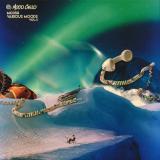
Mood Child returns with Various Moods Vol. 5, a razor-sharp six-track album curated by Manda Moor and Sirus Hood. Bringing together some of their biggest weapons in their sets, the release delivers a standout selection of special records and high-impact dancefloor cuts from a finely tuned cast of artists.
Built with the club in mind, Various Moods Vol. 5 moves through deep, rolling grooves, stripped-back minimal flavours and tougher tech-driven moments, with each track carrying its own identity while hitting with real force. The result is a versatile and powerful package made for peak-time pressure, late-night sessions and serious selectors.
The release marks the return of Antss, Paul C and Francis De Simone, while also welcoming RSquared and Drumcapelli for their first outing on Mood Child. Adding further weight to the project is a standout contribution from highly respected UK artist wAFF, rounding out a release full of character, energy and club-ready impact.
En el almacen y preparando para el envío
2026 Repress
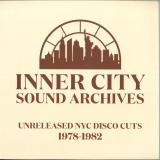
Inner City Sound Archives is the work of a small crew of obsessive DJs, diggers, and archivists. For years, they hunted lost reels — digging through basements, flea markets, forgotten storage rooms — until they uncovered a batch of mysterious acetate tapes. No credits, no labels. Just cryptic handwriting and the hiss of time. What they found were raw, extended disco cuts — played once or twice at underground NYC loft parties in the late '70s, passed hand to hand among a tight circle of selectors, then lost to history. Now, after painstaking transfers and full analog remastering, these tracks are back. Unpolished, hypnotic, physical. Restored with love. Cut loud. Pressed right. For our debut release: six unreleased NYC disco bombs, presented in their original long versions across Sides A & B. Once championed behind closed doors by the likes of Larry Levan, Francis Grasso, Steve D’Acquisto, Walter Gibbons, and Richie Kaczor.
El artículo ya está en camino a nosotros y se espera que sea enviado desde 14.05.2026.
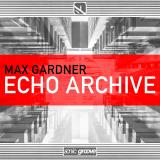
Max Gardner from San Francisco's Direct To Earth crew debuts on Sonic Groove with 'Echo Archive', a four-track EP of deep, physical techno marked by pulsing low-end bass, warped synth work, and hypnotic, late-night tension. Designed for those who like thought provocation in their techno.
debe ser publicado en 15.05.2026
Inner City Sound Archives returns with its second chapter — digging deeper into the forgotten vaults of New York’s underground disco culture.
This new volume brings to light another cache of mysterious acetate recordings: no titles, no credits, just cryptic handwriting, tape hiss, and the unmistakable pulse of a bygone era. Painstakingly transferred and fully remastered through analog processes, these raw and extended cuts preserve the full emotional weight of the original sessions — dusty, physical, and made to move bodies in the dark.
These are tracks that once passed hand-to-hand among a tight circle of selectors, whispered about and played just once or twice at legendary loft parties between 1978 and 1983. Then, silence. Until now. Once championed in the shadows by the likes of Larry Levan, Francis Grasso, Steve D’Acquisto, but also by more elusive selectors like Bobby Guttadaro, Michael Cappello, Roy Thode, and Mark Paul Simon — these grooves return to tell their story, the way they were meant to be heard. Each piece is a sonic time capsule — hypnotic, unpolished, and intimate. Pressed loud and with care, for those who still believe in the ritual of vinyl.
debe ser publicado en 30.05.2026
Slope114 are Dmitri SFC & Elise Gargalikis, a duo that makes their house music live from home in San Francisco. That lends it a rare musicality and melodic lushness that sit their work right up there with deep house forefathers. This outing starts with the slouchy goodness and endearing bass of 'Dystopian Blues', complete with aloof vocals that exude cool. The dub is even more pillow and smooth than the Mark Ambrose mix that brings a little more roughness to the drums but still locks into a hypnotic vibe. 'Emu 2' is a gentle rhythm with dusty pads and candle-lit chords for when slow-burn subtlety is prized over immediacy. Classy stuff.
debe ser publicado en 01.06.2026
1 Umbrella represents a watershed moment for modern Bay Area hip-hop, effectively serving as the region's "Avengers" assembly designed to consolidate the Northern California sound. For years, the local scene has been bisected by the distinct "mob music" bounce of Oakland and the melodic, trauma-drenched "pain music" of San Francisco; this collective is the first major commercial force to deliberately fuse these competing energies into a single, dominant infrastructure. The roster is a calculated cross-Bay alliance that balances opposing sonic weights: Lil Bean and Lil Yee anchor the group with the emotive, auto-tune-heavy melodies that define the current SF landscape, while Zaybang cuts through that introspection with his signature high-octane aggression.
Balancing the scales are ALLBLACK and 22nd Jim, who inject the classic East Bay attitude-ALLBLACK delivering the motivational, sports-heavy "player" lineage of the region, contrasted against Jim's nonchalant, rhythmic flow. Backed by the powerhouse infrastructure of EMPIRE and united under tracks like "Baller Blockin" and the unification anthem "The Blueprint," the group is attempting to solve the fragmentation that has historically plagued the Bay's independent market. By synchronizing their movement with the arrival of Super Bowl LX, 1 Umbrella is positioning itself not merely as a rap group, but as the official cultural ambassadors for the region, betting that a unified front can finally command the national spotlight that often eludes the West Coast's independent giants.
debe ser publicado en 15.06.2026
Always lurking amidst the underground Porto music scene is Spitbender, the most stable moniker of the ever-morphing Francisco Antão. Spin gathers a collection of tracks that demonstrate his experimentalism & coy sonic precision. Spitbender takes cues from Jungle & Hip Hop producers to create his own unique blend of Downtempo. What becomes clear throughout the album is the attention to detail: it is infused as much by Industrial's red-line spectra as it is by the dubplate logic of the Darkside Continuum, yet it does so at its own tripped out speed.
Spin begins with the laid-back but constantly shifting 'Global Overgroove'. Its breakbeat science moves in & out of DSP glitch-work & dub reflections. When its slinky bassline melody arrives, a certain dread sets in.
'Weyward Fold' drops into a driving, hard-edged chug, threaded with snippets of Malcolm X's disobedient pedagogy. The momentum carries into 'Headnod Doctor', where the bass distortion thickens & the cymbal circuit is overloaded, landing somewhere between Hip‑Hop grit & metal weight.
Side A ends with the downtempo roller 'Dogs and Moles (Skylurk Mix)'. The familiar break drifts into new territory, pulled along & wrapped in a slap-back echo. A quirky melody cuts through the haze, giving the track a fresh tilt. The mulch of the track forms a steady, unhurried pulse.
Spitbender's spacious atmospherics & groove-focused approach comes further into focus on 'Nothing Here But the Recordings'. Creating his own chapter in the book of Trip Hop, his minimalist touch is laid out in full.
'Force the Hand Ov Chance' pulls Boom Bap gently into dub mechanics, letting space do the heavy lifting. Its simplicity hides a deep pocket.
Returning to broken-up distortion, 'Mirrors of Flesh (Dub Mix)' finds Spitbender using the mixer as an instrument to push & pull the heavy drums of Benjamin Brejon of Méchanosphere alongside the voice of Rui intoning the title phrase.
Sitting between the album's two poles, 'Out Take Dub' fuses the clipped‑obsession timbres of Spin's heavier moments with its blissed out flow. Feedback & distortion are welcomed & drawn long.
In the end, Spin hits like a fully formed statement—lean, focused, & unmistakably Spitbender. Every track pushes its own angle, but together they land with a clarity that feels earned. It's a sharp marker in his trajectory, & it leaves a charge in the air.
debe ser publicado en 19.06.2026
2025 REPRESS ON TRANSPARENT GREEN VINYL
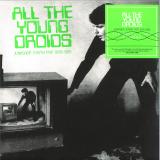
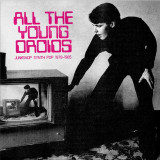
Compiled by Philip King “And then came the rise of synth pop : blokes with dodgy haircuts hunched over keyboard-operated machines stuffed with wires and do-it-yourself tone oscillators making sounds like a brood of geese passing gas in a wind tunnel. Whoopee! This is the way the ‘70s ended : not with a blood-curdling bang bang but with a cheap, synthesized, emasculating whimper.” NICK KENT, NME. All The Young Droids: Junkshop Synth Pop 1978-1985 is a new compilation that charts the underbelly of the epoch-defining sound of the synthesiser in 80s popular music. Compiled by Philip King (previously seen compiling All The Young Droogs, Glitterbest and Boobs - The Junkshop Glam Discotheque), the music here connects the dots between DIY synth enthusiasts grappling with new, cheap synthesisers at the tail-end of punk and wannabe, jobbing songwriters enthral to the new music pioneered by Gary Numan, Depeche Mode and Daniel Miller’s Mute Records. Featuring rare tracks of auto-didactic progressive pop music, proto-techno punk, shoot-for-the-stars-land-in-the-gutter chart flops and heralded, underground synth classics, School Daze paints a picture of beautiful failure. Complete with extensive sleeve notes written by King and never before seen imagery, all 24 tracks were remastered by RPM in-house engineer Simon Murphy, many from vinyl copies due to lost master tapes. The story told on All The Young Droids is one of the dawning opportunity presented by both the emergence to the market of cheaper analog synthesisers and the distribution networks plus indie labels that exploded with the advent of punk music in 1976. While the music that sprouted out all over the globe in the wake of these factors was decried as fake, plastic, a refutation of punk’s guitar-led revolution, it’s telling that much of the music on All The Young Droids.. was created in bedrooms, ramshackle studios and home-made set ups with often borrowed equipment. In the era of record labels jumping to capitalise on the success of The Sex Pistols, The Clash (both on major labels, of course) these artists struggled to stand out from a new gold-rush with next to no budget or PR team. With radio and labels desperate for the new Yazoo, what resulted was a testament to necessity being the mother of invention. At the time, the synthesiser was the music of the future, a shiny new machine that could paint like an orchestra with a single finger and a 4-track. In the hands of Manchester avant-pranksters Gerry & The Holograms it’s a pulsing, sardonic weapon.. the only instrument on the Messthetics classic lampooning of New Wave fashion. In Hamburg, a 16 year old Andreas Dorau used it to write and record (with his female classmates on vocals) a global smash in Fred Vom Jupiter (later licensed to Mute Records). The hard-to-find English version (Fred From Jupiter, natch) is included here. Many artists with alreadystoried careers caught the bug and recorded synthesiser-fuelled peons to space, computers, the future and, of course, love-interests. Harry Kakoulli, late of Squeeze, recorded a solo album in 1979 that included the incredible power-synth-pop smash-that-never-smashed I’m On A Rocket. Similarly, Ian North of Neo and American Power Pop stalwarts Milk ’n’ Cookies bought a Korg MS20 and used a tape machine to record We’re Not Lonely, an absolute lost-classic of minimal synth pop. We’re Not Lonely also features on the Junkshop Synth Pop sampler 7” twinned with John Howard unreleased track You Will See, released April 12th 2025. There are plenty of compilation debuts in evidence. Sole Sister were a mysterious trio who were featured on the Scaling Triangles compilation of female-fronted, queer-adjacent post-punk / underground music that also featured The Petticoats. Selwin Image were from San Francisco and featured members of the recently defunct power pop/punk group The Pushups. Their stupidly catchy The Unknown fizzes with New Wave energy - think XTC to Sparks but remains unreleased until now. Dream Unit’s A Drop In The Ocean is an early synth wave cut, positively teaming with Joy Division instrumentation, previously only released on a long-forgotten and super rare, self-released EP. Incandescent Luminaire’s Famous Names belies an archetypal struggle of a small-town trying to make it in a cruel industry but is a thrilling New Romantic-Synth Wave cross over with a OMD gloominess that’s a joy to hear. Feminist Minimal Wave track I Am A Time Bomb by performance artist Peta Lilly and Michael Chance is a revelation destined for new found cult status. It was released on 7” and lost until now. The flipside to the subterranean, never-made-it synth pop mentioned above are the ambitious, even fruity attempts at success that have a perennial elegance to their confidence. New Jersey-ite Billy London (real name Ed Barth) tried to cash in on the synth boom with Woman, released by a major label, a lurching new wave track built on the Louie Louie rhythm and a wonderfully camp Lou Reedstyle sleazy vocal before exploding in the synthesised chorus. The song bombed but with a chorus like this, you have to wonder why? Ex-Glitter Band member John Springate’s My Life is truly epic, with doomed chord progressions and massive sounding drums turning into at least 3 different songs in the course of the track. Before you wonder what’s going on the song resolves with a glorious return to the main refrain. The dry-ice-dressed dance floor is well catered for too. Design’s Premonition and Vision’s Lucifer’s Friend are stone-cold minimal synth bangers, well loved but given a new lease of life here. The Warlord’s The Ultimate Warlord was released in 1978, a homespun proto Hi NRG banger that was later re-recorded by The Immortals in Canada who had a club hit with it. One-man- band Disco Volante’s No Motion was re-issued by Synth wave label Medical in 2012 but makes its first vinyl compilation appearance here. Close your eyes and you can imagine what Lawrence of Felt would have sounded like with some cheap Korgs a little earlier in his career. Gibraltar-based trio The Microbes imagined a computer programming people to dance - how prescient - and ended up with a propulsive, robo-funk track with splendid rubbery bass playing over a tectonic drum machine. Previously picked up by Belgian label Stroom TV, Dee Jay Bert & Eagle’s heavily Euro-accented I Am Your Master demands the listener to “come to paradise!” In a frankly terrifying manner. All The Young Droids is the first compilation to peel away from the narrative that dour, Minimal Synth and Cold Wave were the only musical children of the first rush of synth pop. Philip King and School Daze Records describe a much more complicated world: along with the austere, Brutalist children of Daniel Miller (who produced Alan Burnham’s Bowie-Low-influenced Science Fiction here) was a plethora of desperate cash-ins, accidental mainstream hits, ambitious pop dramas and major label punts that went nowhere. Crucially, the compilation blurs the line between junk and treasure. What if the two things are interchangeable. What if it’s all science fiction?
En el almacen y preparando para el envío

When Leng Records founders Paul ‘Mudd’ Murphy and Simon Purnell marked the imprint’s 10th birthday, they did so via a celebratory compilation that mixed classic catalogue cuts, remixes and exclusives. Five years on, and with the label’s 15th birthday upon us, they’ve decided to look to the future via a compilation made up entirely of fresh productions from Leng’s roster of current and new artists. Presented on limited-edition gatefold double vinyl with a bonus 10” single, the collection offers an updated showcase of Leng’s much-loved trademark sound, a distinctive fusion of mid-tempo sleazy-disco, Balearica and chugging house interspersed with elements of electronic psychedelia and synth-powered space disco. Fittingly for a compilation that wholeheartedly looks to the future, you’ll find first contributions from a handful of label newcomers.
Fast-rising duo Flying Mojito Bros give their spin on ‘Smoke Signals’ by label debutants Joe HarveyWhyte and Bobby Lee, turning in a heady and inspired revision that sits somewhere between dusk-ready cosmic disco and flash-fried desert blues. There’s also an appearance from Swedish producer Bo Wosticz with the dreamy and ultra-deep nu-jazz of ‘Bs As’. Naturally, you’ll also find plenty of heat from those who have already proved their mettle through prior releases on Leng. Danish duo Liminal, who made their debut earlier this year with the much-played ‘Keep Coming Back To Me’, open proceedings with the tactile, slow-disco flex of ‘Tzatziki Bay’ where sweet synth melodies and a heady electric piano riff ride a warming groove.
Roberto Intrallazzi and Dario Piana from Italy’s original Afro-cosmic movement return with ‘Plutos’, a typically deep dubbed-out cosmic chugger. Then there’s Rose Robinson AKA Tigerbalm, whose ‘Mexicana’ featuring singer Joi N’Juno is presented across the package in two different forms. Pete Herbert, who contributed to some of the earliest Leng releases, drops a driving dub disco take on the main compilation, while Robinson’s original mix – a more organic, percussive and horn-heavy affair blessed with plenty of hallucinatory intent – opens the bonus 10”.
There’s a welcome return to Leng for the brilliant Payfone, whose ‘Dime Algo’ is a typically classy, analogue-rich affair in which attractive Rhodes riffs, atmospheric female vocals and pitched-down house pianos rise above shuffling drum machine beats and a slow-motion bassline. Long-serving label contributor Lex (Athens) delivers the loose-limbed nu-disco breeze of ‘Stolen Dance’, while the imprint’s San Francisco connection – the ever-brilliant 40 Thieves collective – drop the dubbed-out Bay Area brilliance of ‘Such A Great Trip’.
Then there are the contributions of the label’s most storied artist, Andrew Meecham AKA Emperor Machine with ‘Eumig’, a deliciously slow, synth-rich chugger full of colourful chords, bubbly electronic melodies and jaunty electronic bass. Then, to round off the bonus 10” single, Meecham joins forces with Paul Murphy (as Mudd) on ‘Road To Nikko’, an extended, Japanese musical culture-influenced slab of pitched-down alien-funk packed to the rafters with squelchy synth sounds, effects-laden percussion, chiming melodies and rubbery bass guitar.
En el almacen y preparando para el envío
Lilya Mandre makes her Crosstown Rebels debut with her emotive three-tracker, ‘Exi(s)t’. Out on 10th October 2025, the Casablancan artist unveils two originals, including a collaboration with Zac Martel and Jono McCleery, backed by a remix from Haitian star Francis Mercier. Marking her first appearance on Damian Lazarus’ iconic Crosstown Rebels imprint, Moroccan-born artist Lilya Mandre steps into the spotlight with ‘Exi(s)t’. Landing on 10th October, the EP pairs her expressive, melodic style with a striking vocal feature from UK-based singer-songwriter Jono McCleery and a collaboration with Montreal’s Zac Martel, completed by a stellar remix from Haitian heavyweight Francis Mercier.An ascending name in the global electronic sphere, Lilya Mandre channels her Casablanca roots into a sound that balances deep, minimal-leaning grooves with raw emotional weight. Her magnetic presence has already taken her to stages such as Hï Ibiza, where she joined Crosstown head honcho Lazarus for his summer residency, plus the likes of Moga Festival, La Clairière Paris, and Picnik Electronik, while recent releases on Mind of A Genius, IN/ROTATION and Madorasindahouse continue to position her as one of the scene’s most exciting breakthrough candidates. With ‘Exi(s)t’, she brings this same captivating energy into the studio, weaving powerful collaborations and evocative solo work into a release that captures her artistry in full.
Opening track ‘A Part Of Your Soul’, crafted alongside. Canadian producer Zac Martel (Madorasindahouse), sees Lilya also link up with acclaimed English singer-songwriter Jono McCleery (Ninja Tune), whose delicate and soulful vocals glide over rich synth work and fluid percussion to deliver a stirring and cinematic cut. Deep Roots founder Francis Mercier then steps in on remix duties, injecting his signature blend of worldly percussion and driving energy to transform the original into a hypnotic, club-ready anthem. Closing the package, ‘Malou’ takes things deeper as Lilya steps out solo, layering subtle melodies and textural flourishes for a track that’s both restrained and emotionally resonant. With its balance of expressive collaborations and immersive solo work, ‘Exi(s)t’ sets a compelling tone and brings an impressive debut to Crosstown Rebels, showcasing her ability to craft moments that resonate both on the dance floor and beyond.
En el almacen y preparando para el envío
Black Vinyl[24,79 €]
Mit "Tourist History" veröffentlicht die britisch-irische Indieband Two Door Cinema Club eines der einflussreichsten Debütalben der 2010er Jahre in einer besonderen 15th Anniversary Edition. Das Album, das 2010 erschien, gewann den Choice Music Prize als Irish Album of the Year und markierte den Start einer Weltkarriere, die von Festival-Headliner-Shows bis zu über 1 Milliarde Streams von "What You Know" führte.
Zur Feier des Jubiläums erscheint Tourist History in drei liebevoll gestalteten Formaten - inklusive bisher unveröffentlichter Remixe und Raritäten.
Seit dem Garageprojekt in Bangor haben Alex Trimble, Sam Halliday und Kevin Baird eine beeindruckende Karriere hingelegt - mit Top-10-Alben wie Beacon, Gameshow, False Alarm und Keep On Smiling und ausverkauften Touren weltweit. Diese Jubiläumsausgabe ist ein Muss für Indie-Fans und Sammler - ein Meilenstein moderner Gitarrenmusik.
El artículo no se ha publicado. Tú puedes reservar ahora el artículo y después de ser pagado se te será enviado.
Fishbowl EP marks Natebytheway at his most personal, sounding like both a producer and a festival headliner electronic band with soul. His vocals stick instantly, built to work both in sweaty clubs and oversized main stages without losing intimacy. Synths radiate calmness and energy at once, thus mirroring Nate’s spirit: generous, luminous, but never naive.
Because, when he wants, he turns malicious grooves snappy, percussions schematic, and melodies that play dirty tricks. Fishbowl feels destined for permanence, a song that will outlive the night it was born in.
La Gente Es Sexi is a razor-sharp club tool for lovers of Spanish, hips forward, and crooked smiles.
Noodle Bloomers seduces dancers who live between gardens, terraces, daylight and dawn.
And lastly, The Eligible Groovester loops like an obsession its image already imagined as Nate cycling through warm San Francisco streets, collecting strange souls along the way.
Long kept in the shadows, "+ Ou – 8000" is a rare gem of the French musical avant-garde, born from the meeting of three
composers at the peak of their inventiveness. Initially intended as sound illustration, this album crosses the boundaries of
library music, space jazz, and electronic experimentation, with a freedom and boldness that today give it cult status.
Teddy Lasry, an iconic figure from the MAGMA universe, has always moved between jazz, progressive rock, and electronic
music. A saxophonist by training, he explores here synthetic and spatial territories with striking modernity.
Francis Mercier, discreet yet remarkably effective, is a sound craftsman who left his mark on many library music records
in the 1970s. Here he delivers precise rhythmic textures, tense atmospheres, and a minimalist groove mastery.
Christian Perraudin, a chameleon composer bridging academic music and film scoring, brings his cinematic touch—
floating melancholy and sci-fi tension. A true artisan of sonic ambiance.
Boldly visionary, + Ou - 8000 is an invitation to active listening, a journey into the heart of a fascinating sound laboratory.
This unprecedented vinyl reissue is a unique opportunity to (re)discover a crucial record that remained out of reach for far
too long.
Limited edition – for lovers of rarities, analog synths, and genre-defying musical exploration.
En el almacen y preparando para el envío
MB Crystal Vinyl[32,73 €]
LTD Trans Pink Vinyl[32,82 €]
LTD Trans Pink Vinyl[27,69 €]
Compiled by Philip King
“And then came the rise of synth pop : blokes with dodgy haircuts hunched over keyboard-operated
machines stuffed with wires and do-it-yourself tone oscillators making sounds like a brood of geese
passing gas in a wind tunnel. Whoopee! This is the way the ‘70s ended : not with a blood-curdling bang
bang but with a cheap, synthesized, emasculating whimper.”
NICK KENT, NME.
All The Young Droids: Junkshop Synth Pop 1978-1985 is a new compilation that charts the
underbelly of the epoch-defining sound of the synthesiser in 80s popular music. Compiled by Philip
King (previously seen compiling All The Young Droogs, Glitterbest and Boobs - The Junkshop
Glam Discotheque), the music here connects the dots between DIY synth enthusiasts grappling with
new, cheap synthesisers at the tail-end of punk and wannabe, jobbing songwriters enthral to the new
music pioneered by Gary Numan, Depeche Mode and Daniel Miller’s Mute Records. Featuring rare
tracks of auto-didactic progressive pop music, proto-techno punk, shoot-for-the-stars-land-in-the-gutter
chart flops and heralded, underground synth classics, School Daze paints a picture of beautiful failure.
Complete with extensive sleeve notes written by King and never before seen imagery, all 24 tracks
were remastered by RPM in-house engineer Simon Murphy, many from vinyl copies due to lost master
tapes. The story told on All The Young Droids is one of the dawning opportunity presented by both the
emergence to the market of cheaper analog synthesisers and the distribution networks plus indie labels
that exploded with the advent of punk music in 1976. While the music that sprouted out all over the
globe in the wake of these factors was decried as fake, plastic, a refutation of punk’s guitar-led
revolution, it’s telling that much of the music on All The Young Droids.. was created in bedrooms,
ramshackle studios and home-made set ups with often borrowed equipment. In the era of record labels
jumping to capitalise on the success of The Sex Pistols, The Clash (both on major labels, of course)
these artists struggled to stand out from a new gold-rush with next to no budget or PR team. With radio
and labels desperate for the new Yazoo, what resulted was a testament to necessity being the mother
of invention.
At the time, the synthesiser was the music of the future, a shiny new machine that could paint like an
orchestra with a single finger and a 4-track. In the hands of Manchester avant-pranksters Gerry & The
Holograms it’s a pulsing, sardonic weapon.. the only instrument on the Messthetics classic lampooning
of New Wave fashion. In Hamburg, a 16 year old Andreas Dorau used it to write and record (with his
female classmates on vocals) a global smash in Fred Vom Jupiter (later licensed to Mute Records).
The hard-to-find English version (Fred From Jupiter, natch) is included here. Many artists with alreadystoried careers caught the bug and recorded synthesiser-fuelled peons to space, computers, the future
and, of course, love-interests. Harry Kakoulli, late of Squeeze, recorded a solo album in 1979 that
included the incredible power-synth-pop smash-that-never-smashed I’m On A Rocket. Similarly, Ian
North of Neo and American Power Pop stalwarts Milk ’n’ Cookies bought a Korg MS20 and used a
tape machine to record We’re Not Lonely, an absolute lost-classic of minimal synth pop. We’re Not
Lonely also features on the Junkshop Synth Pop sampler 7” twinned with John Howard unreleased
track You Will See, released April 12th 2025.
There are plenty of compilation debuts in evidence. Sole Sister were a mysterious trio who were
featured on the Scaling Triangles compilation of female-fronted, queer-adjacent post-punk /
underground music that also featured The Petticoats. Selwin Image were from San Francisco and
featured members of the recently defunct power pop/punk group The Pushups. Their stupidly catchy
The Unknown fizzes with New Wave energy - think XTC to Sparks but remains unreleased until now.
Dream Unit’s A Drop In The Ocean is an early synth wave cut, positively teaming with Joy Division
instrumentation, previously only released on a long-forgotten and super rare, self-released EP.
Incandescent Luminaire’s Famous Names belies an archetypal struggle of a small-town trying to
make it in a cruel industry but is a thrilling New Romantic-Synth Wave cross over with a OMD
gloominess that’s a joy to hear. Feminist Minimal Wave track I Am A Time Bomb by performance artist
Peta Lilly and Michael Chance is a revelation destined for new found cult status. It was released on 7”
and lost until now.
The flipside to the subterranean, never-made-it synth pop mentioned above are the ambitious, even
fruity attempts at success that have a perennial elegance to their confidence. New Jersey-ite Billy
London (real name Ed Barth) tried to cash in on the synth boom with Woman, released by a major
label, a lurching new wave track built on the Louie Louie rhythm and a wonderfully camp Lou Reedstyle sleazy vocal before exploding in the synthesised chorus. The song bombed but with a chorus like
this, you have to wonder why? Ex-Glitter Band member John Springate’s My Life is truly epic, with
doomed chord progressions and massive sounding drums turning into at least 3 different songs in the
course of the track. Before you wonder what’s going on the song resolves with a glorious return to the
main refrain.
The dry-ice-dressed dance floor is well catered for too. Design’s Premonition and Vision’s Lucifer’s
Friend are stone-cold minimal synth bangers, well loved but given a new lease of life here. The
Warlord’s The Ultimate Warlord was released in 1978, a homespun proto Hi NRG banger that was
later re-recorded by The Immortals in Canada who had a club hit with it. One-man- band Disco
Volante’s No Motion was re-issued by Synth wave label Medical in 2012 but makes its first vinyl
compilation appearance here. Close your eyes and you can imagine what Lawrence of Felt would have
sounded like with some cheap Korgs a little earlier in his career. Gibraltar-based trio The Microbes
imagined a computer programming people to dance - how prescient - and ended up with a propulsive,
robo-funk track with splendid rubbery bass playing over a tectonic drum machine. Previously picked up
by Belgian label Stroom TV, Dee Jay Bert & Eagle’s heavily Euro-accented I Am Your Master
demands the listener to “come to paradise!” In a frankly terrifying manner.
All The Young Droids is the first compilation to peel away from the narrative that dour, Minimal Synth
and Cold Wave were the only musical children of the first rush of synth pop. Philip King and School
Daze Records describe a much more complicated world: along with the austere, Brutalist children of
Daniel Miller (who produced Alan Burnham’s Bowie-Low-influenced Science Fiction here) was a
plethora of desperate cash-ins, accidental mainstream hits, ambitious pop dramas and major label
punts that went nowhere. Crucially, the compilation blurs the line between junk and treasure. What if the
two things are interchangeable. What if it’s all science fiction?
En el almacen y preparando para el envío
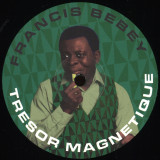
Francis Bebey was a visionary who explored the intersection of African traditions and global music long before it became a global trend. Born in Cameroon, Bebey's sound was an eclectic blend of his rich cultural heritage and his deep exploration of modern music, spanning genres from traditional folk and jazz to funk and electronic experimentation. As an artist, Bebey was ahead of his time, using his unique voice and instruments to forge new paths for African music to be heard worldwide. His legacy is not just in the music he created but in the way he opened doors for the global recognition of African artists, influencing generations of musicians, producers, and fans alike.
This release marks an exciting moment, as we introduce remixes of bebeys iconic productions by contemporary electronic producers, giving new life through creative re imaginings.
Tracks:
Le Grand Soleil De Dieu (Psychemagik Remix): The UK-based musical duo are known for their eclectic blend of electronic music, psychedelic rock and mystical global sounds. Formed by Danny McLewin and Tommy McLewin, the duo has carved out a unique niche within the global music scene though their intricate arrangements. Their Remixes and Collaborations have been with artists like Fleetwood Mac, Tame Impala, and Hercules & Love Affair. Their psychedelic dub remix has otherworldly qualities, with dreamy atmospheres and bouncing baselines throughout this brilliant opening track.
Guinee (Turbotito Edit): The Berlin-based DJ and producer known for his infectious blend of house, disco, and funk. With a knack for smooth, groovy beats and a deep love for melody, Turbotito's music brings a fresh, energetic vibe to the dance floor. On this track, he effortlessly re-imagines and elevates the world of Guinee to match his signature sound. A combination of a great pulsing base line, ethereal vocals and bird sound effects incorporated into the percussion makes this track an absolute stand out.
Agatha (Voilaaa Remix): Bruno "Patchworks" Hovart from Lyon is the brains behind the Voilaaa project. Fusing soulful grooves, funk, and disco with an unmistakable French touch, Voilaaa creates infectious, feel-good rhythms that blend classic and contemporary influences. In this track we find the first big hook of the album vocally, coupled with Bebey's lively humour in spoken French on top of joyous instrumentation. The smooth vocals, catchy melodies, and vibrant arrangements, bring a fresh energy to the original hit track - a brilliant homage.
Forest Nativity (Red Axes Edit): Red Axes are a dynamic electronic music duo from Tel Aviv, blending disco, house, and psychedelic influences into infectious, genre-defying tracks. Known for their unique sound, warm analog textures, and hypnotic rhythms, Niv Arzi and Dori Simao craft music that moves both the body and the mind. Forest Nativity arrives as a full circle closer, incorporating some of the most authentic African instruments such as a Balafon, an instrument similar to a xylophone and a Djembe, a hand drum central to many West African traditions. The 7 minute track is guaranteed to take you on a fascinating journey through Bebey's culture and livelihood.
En el almacen y preparando para el envío
Pitched Peach's inaugural release marks a significant homage to the Bay Area's musical legacy, featuring five tracks from Darwin Chamber, the alter-ego of Mark Greenfield.
Chamber's contributions have been instrumental in shaping the distinctive sound of the ambient house/trip-hop and breakbeat movement that originated in San Francisco during the 1990s. His work offers listeners a timeless experience that represents the essence of electronic music's history. This EP encapsulates the playfulness we seek both as a listening experience and to burn the dance floor, setting the stage for an electrifying future of releases on the label. All tracks have been remastered for the occasion!
En el almacen y preparando para el envío
A bit of skanking, space disco for you from mystery outfit Outtaface. The bass line is the ride on this clubbed-out big dipper to the far reaches of the dancefloor. Epic breakdowns make for a superb journey into house.
DJ Support:
Kryder, Eelke Kleijn, Sophie Francis, Mark Knight, Lost Frequencies, Jamie Jones, MING, Vanilla Ace, Neal McClelland, Joe T Vannelli, Chris Lake, Nic Fancuilli, Alec Monopoly, Christian Homan (RTE Radio), Colin Dale, Paul Roberts and Don Diablo
En el almacen y preparando para el envío
*MILKY CLEAR VINYL - 300 COPIES ONLY FOR WORLD!!* Technology + Teamwork’s fizzling synths, interweaving textures and punchy rhythms are beguiling on their long-awaited debut album We Used To Be Friends. However, at the heart of it all it’s the connection between the group’s two members, Anthony Silvester and Sarah Jones, the friendship the much-travelled duo have managed to maintain for nearly 15 years and a showcase of the slow-burning construction of the electronic world that they’ve surrounded themselves with. We Used To Be Friends is ultimately the tale of two storied artists in their own right, holding onto each other through personal and career twists and turns, relocations and broader movements through respective phases of their lives. Silvester and Jones first met and then collaborated as part of biting post-punk five-piece XX Teens in 2008, eventually breaking off to forge their own path together even as the latter’s demand as a drummer grew. Performing with everyone from Hot Chip, Harry Styles and Bloc Party among many others, Jones has been a constant percussive presence across the sphere of alternative UK pop music – she’s also found time for her own solo project Pillow Person and played on records by the likes of Puscifer and Kurt Vile. Silvester meanwhile has performed in art galleries across Europe including: Fridericianum in Kassel, Kölnischer Kunstverein in Cologne, and Vleeshal in Middelburg, as well as providing sound design and composing work for several art films. Technology + Teamwork is the constant throughout all of that though. “Technology + Teamwork's name perfectly describes how we work” Silvester explains. “Sometimes the teamwork is between each other and sometimes it’s between us and the technology.” Although going by the name Technology + Teamwork as far back as 2014, two events conspired that pulled the project into focus for the pair of them: firstly, Silvester spent a year constructing a soundproof studio shed on the border of London and Essex where he lives. Secondly, inevitably, the pandemic brought the globe-trotting Jones back home to just seven miles away from her long-time collaborator and friend. “We probably hung out more than we had for a few years” says Silvester. “Also, after all her Pillow Person releases Sarah had gotten really good with recording vocals and knowing what did and didn’t work and had a really good home studio set up. We still worked separately though, exchanging ideas via email and WhatsApp.” As with many artists through 2020 and early 2021, working separately was a new necessity that they were forced to adapt to. However, it became clear that there were creative benefits to it. “It really changed our sound and our sounds became a lot more focused as a result” Jones says. “I wanted to use the same ideas of improvisation that I might use while playing the drums for myself and apply that to melodies and lyrics.” The album bristles with hyperpop modernity. You can hear it in the manipulated vocals most prominently on Big Blue’s disco strut and on Moving Too’s heady mix of pitched up voice and burrowing sub bass. However, the pair also looked to San Francisco and the West Coast synthesis movement of the 60s, Silvester inspired by the likes of Suzanne Ciani and Don Buchla. The plaintive lo-fi and melancholy of Amsterdam incorporates Mutable Instrument’s Marbles by Émilie Gillet which – inspired by Buchla’s own synthesis work – outputs random voltages to give the track an air of unpredictability. It’s something that occurs throughout the album, the duo revelling in the happy accidents that disrupt the flow of their hook-laden pop. “The ‘Buchlian’ ideas of music having randomness and uncertainty, completely freed us up” Silvester explains. “It felt a bit like having more members in the band, machines that didn't do what you expected or intended.” Perhaps more subtly, is the influence of 17th and 18th century Baroque music, with Silvester drawing a line between it and the 90’s R’n’B he and Jones both love – exemplified perhaps best on K+B’s percussive claps and sultry grooves. The portentous juddering synthpop of the title track, meanwhile, alludes specifically to Handel’s Sarabande. It’s typical of an album that only needs a scratch of its seemingly glossy surface to unearth a myriad of contorted touchstones and reference points that’ve fermented beneath it. Thematically there’s an anxious sense to the record, with tracks often balancing above a quiet sense of unerring tension even at their most bombastic. Moving Too is the result of an existential doubt that hit Silvester while out cycling, with the outro refrain "it's not enough to die you also have to be forgotten" a take on something Samuel Beckett once said. These worries are echoed on the album’s closing track What A Year, which borrows a lot of lines from the late drag performer and fashion designer Dorian Corey including the grimly defiant "you're gonna leave your mark somewhere in this world just by getting through it”. Those clouds offer a counter point to We Used To Be Friends, but then isn’t that what great pop albums do? Technology + Teamwork undoubtedly love the craft of the hook and the song, but they always position themselves left of centre, prepared to scuff things up, pull something out of shape or manipulate something to leave it sounding warped. Much like their friendship, nothing here is particularly linear – and it’s all the better for it. Bio: Anthony Silvester & Sarah Jones first collaborated as part of biting post-punk five piece XX Teens in 2008, eventually breaking off to forge their own path together even as the latter's demand as a drummer grew. Performing with everyone from Hot Chip, Bat for Lashes, Harry Styles and Bloc Party (among many others), Jones has been a constant percussive presence across the sphere of alternative UK pop music - she's also found time for her own solo project Pillow Person and played on records by the likes of Puscifer and Kurt Vile. Silvester meanwhile has performed in art galleries across Europe including Fridericianum in Kassel, Kölnischer Kunstverein in Cologne, and Wleeshal in Middelburg, as well as providing sound design and composing work for several art films. Technology & Teamwork is the constant throughout all of that though. "We Used To Be Friends" proves that Technology & Teamwork undoubtedly love the craft of the hook and the song, but they always position themselves left of centre, prepared to scuff things up, pull something out of shape or manipulate something to leave it sounding warped. Much like their friendship, nothing hear is particularly linear - and it's all the better for it.
En el almacen y preparando para el envío
Omni AM presents the long-awaited reissue of “Can We Get / Keep Doing That.” This timeless record sent dance music in a new direction. Euphoria Record’s vaults are open and finally, for the first time since 1997, this seminal tech-house classic is available to everyone for the very first time in over 25 years. This 1997 indie record was Euphoria Records second release – and their first international record. Whether you agree with it or not, many people consider this one of the pioneering records of American Tech-House. Both sides and several mysterious alternate versions have graced the decks of DJs like Evil Eddie Richards, Terry Francis, Derrick Carter, Tyler Stadius, and Magda. The list goes on.
We were lucky. Curve Pusher lovingly remastered the original four tracks from the 1997 studio masters. Then, he went a step further, and remastered some previously unreleased versions – including a live version in Chicago that encapsulates what Omni AM was back then: ambient house. There’s a bit of Chicago, a bit of London, a bit of New York, and a bit of Tokyo in every second of these classic, genre-defining tracks.
A1.
“Can We Get” happily sits with the finest works of Ron Trent, Chez Damier, and Mood II Swing – and goes further, as Omni AM has never feared genre definitions. It opens with classic deep house chords, floating synth pads, and sparse vocals. The bassline is deep and warm. Marky Star and Adam Collins expertly work the percussive effects but always keep the theme simple and clear. Everyone knows this is a classic house track because it hypnotizes you.
A2.
“Keep Doing That” continues the theme with another classic late-night killer. However, this one is totally different – almost industrial, yet clearly housey and ambient. It drives deep into a tough groove that just builds and builds. The dub-influenced bass line gives way to a more angular synth riff that both offsets and adds to the track's forward thinking sound design. It’s dark and dirty, yet terribly sexxxy at the same time. It was and always will be mesmerizing. Once again, musical magic by Marky Star and Adam Collins.
B-Sides
The flip side features two remixes of “Keep Doing That” by UK tech-house legend Mark Ambrose. His bubbly, psychedelic take on the track pumps up the percussive Chi-town groove while going in a distinctly London afterhours direction. Trippy, for sure. Fun for all, for sure. These remixes are guaranteed to make your afterhours weird.
En el almacen y preparando para el envío
40 Thieves have been part of the Leng family since 2011 during which time they have released many quality singles and EPs as well as their sole full-length album, 2014’s epic The Sky Is Yours. Even so, double A-side ‘Love Is’/’Let Me Show You’ still marks their first release on Leng for almost three years.
In keeping with their signature sound, ‘Love Is’ is trippy, hallucinatory and gently mind-altering, with psychedelic guitar sounds, echoing percussion, and a heady lead vocal courtesy of crew member and Alona, all of which rides a chunky dub disco bassline and chugging mid-tempo beats. Richard Sen, a DJ and producer known for his love of dubbed-out sonics and pulsating grooves, delivers a typically spaced-out and otherworldly rework. Rooting his revision to the dancefloor via an undulating electronic bassline that throbs away restlessly throughout, Sen stretches out the track and emphasises its more trippy elements before introducing dreamier chords and heady vocals with a brilliant interpretation.
On ‘Let Me Show You’, 40 Thieves step things up to deep house tempo while remaining firmly rooted in 21st century San Francisco nu-disco with rich, dubby bass guitar, tactile piano chords, futurist synths and knowing nods to Patrick Cowley productions of the late 1970s and early ‘80s. The track is presented in two forms: the superb ‘Vocal Mix’, where Alona’s vocal rises above the groove and intoxicating electronics, and a genuinely radical and out-there dancefloor focused ‘Dub’. Pushing the track’s wilder and more out-there elements to the max via stripped-back arrangements and a smorgasbord of effects, 40 Thieves re-wire the cut as a heads-down psychedelic disco chugger topped off with wonderfully loved-up chords.
Haga su pedido ahora y le encargaremos el artículo en nuestro proveedor.
Announcing Maara’s new album Ultra Villain, a deeply personal, narrative-driven record that explores desire, heartbreak, obsession, and the freedom that comes with choosing yourself.
Written from a place of hard-won self-trust, the song marks a shift toward clarity. “I realized people can only meet you where they’ve met themselves.”
Written and Produced by Maara Louisa Dunbar
Additional Production and Mixing by Francis Latreille and Patrick Holland at Jump Source Studios
Mastered by Noel Summerville
Cover Art by Dodleyz
Design by Jesse Osborne-Lanthier
El artículo no se ha publicado. Tú puedes reservar ahora el artículo y después de ser pagado se te será enviado.
Freaky Chakra hails from San Francisco and is a local legend with a vast discography that has roots back in the early 90s and fetches mad prices on second-hand markets. This is a new one from him that shows off his take on tech, starting with 'Discotechno' which is a bubbly number with rubbery bass and aquatic synth globules. 'Foreign Element' is a heavy dubby stomper with a fat-ass groove and 'Space Jam' then takes off with more cosmic synth smears and delicate motifs drifting above a more muffled rhythm. 'Backflash' shuts down with a wonky back and forth and more late-night grit. A fresh sound from this venerated veteran.
Haga su pedido ahora y le encargaremos el artículo en nuestro proveedor.
1 Umbrella represents a watershed moment for modern Bay Area hip-hop, effectively serving as the region’s "Avengers" assembly designed to consolidate the Northern California sound. For years, the local scene has been bisected by the distinct "mob music" bounce of Oakland and the melodic, trauma-drenched "pain music" of San Francisco; this collective is the first major commercial force to deliberately fuse these competing energies into a single, dominant infrastructure. The roster is a calculated cross-Bay alliance that balances opposing sonic weights: Lil Bean and Lil Yee anchor the group with the emotive, auto-tune-heavy melodies that define the current SF landscape, while Zaybang cuts through that introspection with his signature high-octane aggression.
Balancing the scales are ALLBLACK and 22nd Jim, who inject the classic East Bay attitude—ALLBLACK delivering the motivational, sports-heavy "player" lineage of the region, contrasted against Jim’s nonchalant, rhythmic flow. Backed by the powerhouse infrastructure of EMPIRE and united under tracks like "Baller Blockin" and the unification anthem "The Blueprint," the group is attempting to solve the fragmentation that has historically plagued the Bay’s independent market. By synchronizing their movement with the arrival of Super Bowl LX, 1 Umbrella is positioning itself not merely as a rap group, but as the official cultural ambassadors for the region, betting that a unified front can finally command the national spotlight that often eludes the West Coast’s independent giants.
debe ser publicado en 03.04.2026
The ‘Haris – Fourtrack EP’ marks the debut release from Shimmy, a new reissue label with a sharp ear for overlooked gems. Originally released 25 years ago and long coveted on Discogs, this sought-after EP finally returns to the shelves, breathing new life into a classic of the tech house underground.
Haris made his mark in the late ’90s and early 2000s with releases on iconic labels like Oblong and his own imprint, Laus Records, collaborating with scene heavyweight, Terry Francis. Renowned for his mastery of rolling, groove-led tech house, Haris crafted a sound that remains timeless and endlessly playable.
Each of the four tracks delivers a distinct flavour for different dancefloor moments, offering real depth and versatility across the EP. Expect snappy tribal percussion, eerie synths, haunting vocals and deep, driving basslines - all the essential ingredients for a late-night shimmy.
Haga su pedido ahora y le encargaremos el artículo en nuestro proveedor.
Francis of Delirium is the moniker of 22-year old, Luxembourg-based Jana Bahrich. The young artist’s incredible journey up until this point has seen her release 3 critically acclaimed EPs, ‘All Change’, 'Wading’ and ‘The Funhouse’. With praise so far from the likes of Stereogum, FADER, Pitchfork, Line of Best Fit, 6 Music, Radio 1, KEXP and NPR to name but a few, Francis of Delirium is on the precipice of something extremely exciting with debut album ‘Lighthouse’.
The announcement of ‘Lighthouse’ comes following a busy year of touring with the likes of Soccer Mommy, Briston Maroney, Horsegirl, The Districts and hitting Eurosonic, Iceland Airwaves and Tree Fort Fest, as well as opening for The 1975 & Kings of Leon.
Production duties on ‘Lighthouse’ were shared by Catherine Marks (Boygenius, Wolf Alice) and Jana Bahrich/Chris Hewitt. ‘Lighthouse’ was mixed by Jolyon Thomas (U2, Royal Blood).
debe ser publicado en 20.03.2026
2026 Repress
Another Thought was the first collection of Arthur Russell’s music to be released after his death in 1992. Released in 1993 on Point Music it marked the beginning of nearly 30 years of work to let the world hear the enormous archive of unreleased recordings Arthur left behind. Be With revisits this first compilation for a new gatefold double vinyl version and a triple-fold digipak CD reissue.
Both versions of Be With’s 2021 reissue of Another Thought have been mastered by Simon Francis and the vinyl cut by Pete Norman. The original artwork has been restored and tweaked at Be With HQ for the gatefold sleeve and the triple-fold digipak, with the essential help of Janette Beckman. Each version comes with an insert reproducing the liner notes and lyrics from the original CD release.
Together with Calling Out Of Context, Soul Jazz’s World of Arthur Russell, and much of the ongoing work of Audika, Another Thought is absolutely essential for even the most casual Arthur Russell collection. In fact we’d argue it’s essential for any fan of non-obvious pop music. This is the only place where you can hear some of Arthur’s most recognisable tunes and it’s an album that absolutely deserves to be kept in press.
We’ll assume that by now you’re all at least a little familiar with the story of Arthur Russell, the farm boy from Iowa who moved to 1970s New York. Arthur Russell the genuine musical genius who died just 40 years old, leaving behind a wealth of music that dwarfed the few 12"s and LPs that were released during his short life.
Although Arthur had been working on an album for Rough Trade during his last years, with the label no-longer operating it was Point Music (Philip Glass and Michael Riesman’s label set up together with Philips) who stepped in to help Arthur’s partner Tom Lee start working out exactly what Arthur had left behind.
Tom suggested that Arthur’s friend Mikel Rouse was the right person to make the first catalogue. Working in Tom and Arthur’s apartment he had only two weeks to go through what turned out to be around 800 tapes.
As Tom explained “at the end of each day he would generally wait for me to come home and I would, to the best of my knowledge, name and identify pieces in question from that day’s work. As he worked Mikel compiled about a dozen cassettes that he thought would present the most finished sounding songs for Don/Point to use. As Don listened he would then suggest and ask me and thus we collaborated on the choices.”
Don is Don Christensen, Another Thought’s producer. With a final selection of songs from recordings made between 1982 and 1990, including sessions with some of Arthur’s regular collaborators Peter Zummo, Steven Hall, Mustafa Ahmed, Elodie Lauten, Julius Eastman, Jennifer Warnes and Joyce Bowden, it was then Don’s job to turn these into a finished album.
Another Thought is a little different from the compilations of Arthur’s music that came out since. In our conversations with Steve Knutson (who founded Audika Records and who manages Arthur’s estate together with Tom), he explained that “more than any project released by Arthur during his lifetime or posthumously by Audika, ‘Another Thought’ is the most worked over. The material was significantly edited and rearranged from the original source tapes”.
If the aim was to release a comprehensive exploration of every facet of Arthur’s music, from the most avant-garde of his avant-garde compositions through to the most disco-not-disco of his disco-not-disco tunes then the project was a spectacular failure. But as a coherent album of non-obvious pop music Another Thought is wonderful.
Starting with the sparse voice-and-cello of the title track, A Little Lost adds some guitar along with the sneaking suspicion that we’re listening to something nowhere near as simple as it first sounds. By the time we get to This Is How We Walk On The Moon - it could be the moment you notice the congas, or the percussion that’s been building behind them, or maybe it’s that blast of trumpet and trombone - we realise we’ve gone from splashing around to being completely submerged in the musical world of Arthur Russell.
From here the album heads off on its journey around the sounds of the left-field contemporary classical music of the time, re-directed towards pop ears, with minor detours through the swirling woozy disco of the half-remembered night before on In The Light Of The Miracle and My Tiger, My Timing. Whether it’s just Arthur, his cello and some bleeps on Just A Blip, or whether he has some vocal help as he does on the bounding Keeping Up, this is difficult music made so, so easy. And through it all is Arthur’s voice and cello. Sometimes drowned in distortion and sometimes clear as a bell, but always there somewhere.
A Sudden Chill finally returns us to the calmer waters we started in and this last track closes the album with a melancholy that’s not surprising given how soon after Arthur’s death the album was put together.
Whilst Another Thought holds together with the consistency of a proper album, there’s still no getting away from the fact that this was put together from audio recorded in different ways, in different places, with different people at different times. Those with keen ears will hear traces of tape hiss, the occasional blown-out note and some digital fuzz, all fingerprints of those original recordings as well as of the 1990s digital equipment that was used to piece Another Thought together.
Add to this Arthur’s obvious pleasure in making music from the sort of sounds that can make microphones, speakers and ears uncomfortable, it’s no surprise that Another Thought isn’t glossy and pristine. Don Christensen’s productions have been careful to not scrub up those original recordings so much that they lose their original vibe, understandable given that Arthur wasn’t around as a guide. We’ve applied a similarly light touch with the mastering for these Be With versions, just working to make sure they sound like they should on both the vinyl and the CD.
Despite the Discogs rumours, Another Thought was never originally released as an LP. So when it came to the sleeve for this Be With vinyl version we took the original CD artwork as a starting point to come up with something that looks like it could have been in the record racks back in 1993.
We have to thank Janette Beckman for helping us reproduce her iconic photograph of Arthur in his newspaper boat hat. One of many photographs she took of Arthur, Janette shot this in her New York studio back in 1986 for a short article in the January ’87 issue of The Face Magazine. Those with eagle-eyes will notice we’ve used an ever-so-slightly different shot from the one that appeared in The Face and then again on the original cover of Another Thought. The original has long since been lost so we’ve worked with what is left in Janette’s archives. And we also have to thank Tom Lee for giving us permission to reproduce his liner notes from the original CD booklet, together with Arthur’s lyrics.
Haga su pedido ahora y le encargaremos el artículo en nuestro proveedor.
This is that absolute stank-face filth: hard, espionage drama-soul and tough, jazzy street-funk. Hogan, The Hawk & Dirty John Crown sounds like the soundtrack of a blaxploitation movie from the early 70s and, packed with funky fusion and smoother orchestral numbers, it is basically that.
Featuring a veritable who's who of killer library break snakes - Alan Parker, Alan Hawkshaw (under sneaky alias William Parrish), Simon Haseley, Reg Tilsley and Gordon Grant - it's not hard to see how this commands over £350 on secondary markets.
This beautifully presented reissue, part of Be With's fresh campaign with the legendary library label Music De Wolfe, is well overdue.
Recorded for De Wolfe in 1972, Hogan, The Hawk, Dirty John Crown is a fantastic start-to-finish listen. The flute-funk of Hawkshaw and Parker's opener "The Hawk" comprises driving, fuzzy, wah-wah-drizzled bell-laced breaks with synths and basslines to murder for. Up next, Haseley's "The Happening" is a carefree, rhythmic builder with strings and horns. Let's face it, it doesn't prepare us for the monster that follows...
Hawkshaw and Parker's amazing "Main Chance" is likely the reason you're here; it's a moody, beaty proto-hip-hop banger; all rolling drums and flute-laced, organ-drenched, synth-funk breaks. Just sensational - you'll want to play it again and again and again.
The cool AF "Hogan Baby" has a soft, rounded, bluesy feel - it's a lighter number and Haseley's work here sounds more than a little indebted to Burt Bacharach. It's melancholic, reflective and contains ace breaks with beautiful flutes and wistful horns. It's just gorgeous. Grant's pounding "Dirty John Crown" brilliantly conjures swirling string-swept serenity atop driving, incisive drama-funk breaks. Sublime. Hawkshaw and Parker come roaring back with the murky, creeping crime-funk of "Swarf" with killer basslines underpinning slow-mo high-class flute-funk.
Reg Tilsley enters the fray with the bright, snappy, carefree "Turnover". It's lightweight but still retains some nice orchestral movements. The brief “Tarantula” gets us back on track - from the pen and chops of Hawkshaw and Parker, are we surprised? - with the driving crime funk breaks, super clean yet brooding. Synths, sax and 'nuff guitars. YES.
Side 2 opens with the car chase swag of Haseley's dramatic, driving "Precinct". Jazzy, instrumental flute funk over great percussive breaks. We love this. Haseley's rolling "Sidewinder Version 1" is robust and exuberant with bouncy horns before a cracking Parker-Hawkshaw one-two featuring the tense "Pressure" and the deeply soulful "Call Me", a relaxed, medium-tempo organ feature. With building piano and strings Gordon Grant's excellently titled "Scorch" is as aggressive and dramatic as you'd hope. Hawkshaw and Parker's furtive flute-funk of "Digger" precede the light, melodic and romantic themes of Tilsley's "Marianne" whilst "Sidewinder Version 2", a faster iteration of Track B2 sees Haseley close out this remarkable set in bouncy, bright fashion.
The audio for Hogan, The Hawk, Dirty John Crown has been meticulously remastered by Be With regular Simon Francis, ensuring this release sounds better than ever. Cicely Balston's expert skills have made sure nothing is lost in the cut whilst the records have been pressed to the highest possible standard at Record Industry in Holland. The original, iconic sleeve has been restored here at Be With HQ as the finishing touch to this long overdue re-issue.
debe ser publicado en 27.02.2026
San Francisco–born singer-songwriter Ben Kweller returns with Cover The Mirrors, his seventh studio album — and perhaps his most personal work to date. Known in the late ’90s as a member of post-grunge outfit Radish, who were signed to Mercury Records and even counted Nils Lofgren among their fans, Kweller has since carved out a long and prolific solo career rooted in melodic indie rock and unfiltered emotion. Cover The Mirrors is a deeply poignant record, written in honour of what would have been Kweller’s late son Dorian Zev’s 19th birthday. It also marks Kweller’s first release since Dorian’s tragic passing in 2023 — an event that reshaped both his life and his music. Far from retreating into silence, Kweller channels his grief into a collection of songs that explore loss, love, and renewal with raw honesty. “This is the most personal, emotionally raw project I've ever worked on,” he reflects, and every track bears that truth. The album features an impressive roster of collaborators from across the indie landscape: Waxahatchee joins on “Dollar Store,” a sparse and arresting song built on two vocals and a guitar that eventually erupts into a distorted, soaring finale; MJ Lenderman lends his touch to “Oh Dorian,” a tender tribute steeped in warmth and melancholy; Jason Schwartzman resurrects his mid-aughts project Coconut Records for the haunting “Depression”; and psych-rock icons The Flaming Lips appear on the shimmering, otherworldly “Killer Bee.” Musically, Kweller’s craft is as sharp and sincere as ever — intimate yet expansive, stripped-down yet powerful. Cover The Mirrors captures an artist walking through grief with purpose, turning heartbreak into something both fragile and transcendent. It’s the sound of Ben Kweller looking loss directly in the eye — and finding beauty, courage, and connection reflected back. - “One of the great American songwriters” – Jack Antonoff TRACKLIST: A1. Going Insane A2. Dollar Store (feat. Waxahatchee) A3. Trapped A4. Park Harvey Fire Drill A5. Depression (feat. Coconut Records) A6. Don't Cave B1. Optimystic B2. Brakes B3. Killer Bee (feat. The Flaming Lips) B4. Letter To Agony B5. Save Yourself B6. Oh Dorian (feat. MJ Lenderman) Clear Vinyl LP
debe ser publicado en 27.02.2026
Emeralds, the sophomore long player from Parlor Greens, finds the trio serving up a beautifully curated sampler of what funky organ music can be. Three true masters of their respective crafts: Tim Carman (formerly of GA-20) on drums, Jimmy James (True Loves, formerly of Delvon Lamarr Organ Trio) on guitar, and Adam Scone (Scone Cash Players, The Sugarman 3) on organ. Seasoned and soulful pros coming together to make infectiously funky instrumental jams. Parlor Greens are truly in top form: tour tight and more confident than ever in who they are and where they’re going.
The first time these three met in Loveland at Colemine’s Portage Lounge studio was marked by a certain freshness. It was new, it was the first time they had all played together. It was exciting, it was unknown territory. The session for Emeralds weighed much heavier on all three members. All three dealing with personal tragedies in their individual lives, the session truly served as a genuine moment of joy for the group. Just three talented musicians, writing and playing music now as friends in a familiar environment. No moment is the weight of the session more obvious than with the album’s closer, “Queen Of My Heart,” a tune Jimmy wrote for his mother shortly after she passed away. So with a heavy and soulful heart, Colemine Records is beyond proud to present the sophomore effort from three maestros. Parlor Greens presents… Emeralds.
debe ser publicado en 27.02.2026
Ascension marks the Manjumasi debut of Brazilian producer Canavezzi, distilling the label’s trademark quirky sophistication through a distinctly South American lens. The EP drifts between deep house, dub-soaked textures, micro-details and tech-driven grooves, always subtle, never obvious.
Across the record, Canavezzi works in tiny movements: flickers of percussion, vapor-trail chords and basslines that feel less “written” and more sculpted over time. Nothing shouts, everything glows. It’s the kind of sound that sneaks into a warm-up set and is still echoing in your head when the lights come on.
True to the San Francisco imprint’s ethos of deep, complex, melodic grooves with a playful twist, Ascension is built for dancers and listeners alike, equally at home on a smoky after-hours floor, a rooftop at sunrise or late-night headphones.
A thoughtful slice of contemporary house from Brasil to Manjumasi, Ascension is less about peak-time fireworks and more about that slow, undeniable lift: a steady climb into its own hypnotic orbit.
Haga su pedido ahora y le encargaremos el artículo en nuestro proveedor.
Colemine Records freut sich, eine spezielle 10-Jahres-Jubiläumsausgabe von ,Sound of Sinning", dem bahnbrechenden Studioalbum von Monophonics, zu präsentieren. Seit ihrer Gründung im April 2015 tragen Monophonics stolz die Fackel der reichen Musikgeschichte und -kultur San Franciscos durch die Generationen bis in die heutige Musiklandschaft. Sie halten an Traditionen fest, sind aber keineswegs Puristen, sondern spielen ihre eigene Musikrichtung, die als ,Psychedelic Soul" bekannt ist. Auf ihrem vorherigen Album ,In Your Brain" ließ sich die Band von Acts wie den frühen Funkadelic, Sly and The Family Stone und den von Norman Whitfield produzierten Platten der Temptations beeinflussen. ,Sound of Sinning" markierte den Beginn des Wachstums der Band in allen Bereichen. Mit Einflüssen aus Northern Soul, Doo-Wop, Rock ,n` Roll, Psych Pop und Filmmusik zeigen Monophonics ihre Vielseitigkeit, bleiben aber ihren Wurzeln treu. Insgesamt ist es herzliche Musik mit Old-School-Vibes, ohne dabei die Gegenwart aus den Augen zu verlieren. Diese Musik ist geprägt von dem zeitlosen Gefühl, als man noch Songs schreiben und produzieren konnte, die man sich immer wieder anhören konnte. ,Sound of Sinning" wurde von Kelly Finnigan & Ian McDonald produziert und auf einem alten Tascam-Acht-Spur-1/4-Zoll-Bandgerät in den Transistor Sound Studios in San Rafael, Kalifornien, aufgenommen. Seit ,Sound of Sinning" hat die Gruppe das von Kritikern hochgelobte Album ,It's Only Us" (2020) und das Konzeptalbum ,Sage Motel" (2023) veröffentlicht, das sich über 10.000 Mal verkauft hat. Die Band tourt weiter, hat kürzlich eine Reihe von Shows mit dem legendären Lee Fields absolviert und steht vor einer internationalen Tournee für 2025.
Haga su pedido ahora y le encargaremos el artículo en nuestro proveedor.
"Brooklyn-based pianist Eva Novoa returns with The Freedom Suite: Novoa / Carter / Mela Trio, Vol. 2 — the second radiant release from her compelling trio with saxophone icon Daniel Carter and celebrated drummer Francisco Mela. This marks Novoa’s sixth album with 577 Records. The trio first came together live in 2021, followed by a series of performances, including appearances in Cambridge (Boston) and later at the Brooklyn edition of the NY Forward Festival.
"The Freedom Suite is an homage to jazz titan Duke Ellington — particularly his masterful big band suites and legendary orchestra featuring Johnny Hodges and other luminaries who helped define an era of jazz greatness. In contrast, Novoa presents her Suite in a more intimate format: the piano trio. The album comprises twelve pieces — mostly brief — with a few extended tracks such as Free to Be Free and Cyborgs.
"For this recording, Novoa also steps in as a vocalist on several tracks, including Mainstream Media, Big Grande, Global, Free to Be Free, Dream, and Cyborgs. These pieces often feature a vocal dialogue between Novoa and Mela, whose expressive, word-infused style draws from rich Cuban traditions.
'Words are powerful,' says Novoa. 'They define who we are, where we come from, and who we hope to become. Without words, there is no conversation — and without conversation, there is no real sense of time, space, or connection.'
The Freedom Suite emerged from deep philosophical and creative conversations — spoken, written, and improvised — between Novoa, Carter, and Mela. In the studio, Novoa introduced printed texts that served as thematic foundations for spontaneous, in-the-moment musical interpretation. The result is an urgent and organic interplay, where instruments speak to one another in a language as fluid as it is fearless.
"Standout track Cyborgs begins with Novoa’s percussive piano, exemplifying the trio’s dynamic, conversational energy. Creative Destruction features Novoa on electric harpsichord in a wild, electric exchange. While Free to Be Free stands out as the album’s leading single, it also captures the essence and message of the entire Suite.
"Recorded in 2021 at New York City’s legendary Sear Sound Studio, the album captures a creative explosion of sound and spirit. Novoa dazzles on piano, Fender Rhodes, electric harpsichord, Chinese gongs — even whistle — showcasing her expansive sonic palette. Together, the trio embodies the power of free improvisation and emotional storytelling.
"Originally from Barcelona, Spain, Eva Novoa has been cultivating her distinctive voice since childhood. Now a staple of the New York creative music scene, she has performed across the globe and collaborated with some of the most adventurous voices in jazz and beyond."
debe ser publicado en 30.01.2026
Recorded in concert at the University of Sheffield in March 2025, Reality Is Not A Theory is the first collaboration between Mark Fell and Pat Thomas. Major figures in British experimental music since the 1990s, Fell and Thomas have developed their rigorous practices from radically different backgrounds and perspectives: where Fell’s singular take on synthetic abstraction emerged from Sheffield’s electronic underground, Thomas is a virtuoso improvising pianist steeped in jazz and modernist art music who has simultaneously worked with sampler-based electronics for decades. As the record’s wonderfully academic subtitle explains, we are presented here with two sides of ‘algorithmic and improvised music for computer and piano’, exemplifying both players’ insatiable search for new (and sometimes uncomfortable) playing situations.
The performance begins with Fell’s electronics close to the timbres of acoustic percussion, attacks that suggest wood, metal or glass threaded along a rapid pulse while Thomas focuses on the lowest registers of the piano, deadening the strings. As Fell’s electronics start to ring out and occupy more harmonic space, Thomas turns to wide, repeated clusters, which slowly expand into patterns of chords. Like in his recent solo recordings and his trio work with Joel Grip and Anton Gerbal, Thomas’ playing combines extreme dissonance with a deep lyrical sense. Fell’s work gradually shifts its focus toward drum sounds, drawing on the microtemporal processes that have characterized his practice in recent decades. Heard together with Thomas’ probing piano, the computer sounds call up unexpected associations with the klangfarben antics of improv drummers like Paul Lovens or Tony Oxley. Throughout its second half, the music grows increasingly frenetic, as Thomas sounds out rapid, irregularly repeated figures and beautifully sour chords in the upper register, while Fell’s percussion develops into angular pan-pipe-like feedback and waves of glissandi.
With great confidence and patience, Fell and Thomas often let their individual contributions remain rhythmically distinct and unsynchronised, allowing unexpected correspondence and coincidence to guide the music’s development. Recorded in a hall named after Sheffield steel manufacturer and Master Cutler Mark Firth, the location might suggest a model for understanding how Fell and Thomas interact here: two workers in the same workshop, each immersed in their own part of the production process. Arriving in a striking sleeve designed by Mark Fell, with liner notes by Francis Plagne, Reality Is Not A Theory is an invigorating document of the meeting of two mavericks of contemporary music.
debe ser publicado en 21.11.2025
GREEN VINYL[23,49 €]
Colemine Records freut sich, eine spezielle 10-Jahres-Jubiläumsausgabe von ,Sound of Sinning", dem bahnbrechenden Studioalbum von Monophonics, zu präsentieren. Seit ihrer Gründung im April 2015 tragen Monophonics stolz die Fackel der reichen Musikgeschichte und -kultur San Franciscos durch die Generationen bis in die heutige Musiklandschaft. Sie halten an Traditionen fest, sind aber keineswegs Puristen, sondern spielen ihre eigene Musikrichtung, die als ,Psychedelic Soul" bekannt ist. Auf ihrem vorherigen Album ,In Your Brain" ließ sich die Band von Acts wie den frühen Funkadelic, Sly and The Family Stone und den von Norman Whitfield produzierten Platten der Temptations beeinflussen. ,Sound of Sinning" markierte den Beginn des Wachstums der Band in allen Bereichen. Mit Einflüssen aus Northern Soul, Doo-Wop, Rock ,n` Roll, Psych Pop und Filmmusik zeigen Monophonics ihre Vielseitigkeit, bleiben aber ihren Wurzeln treu. Insgesamt ist es herzliche Musik mit Old-School-Vibes, ohne dabei die Gegenwart aus den Augen zu verlieren. Diese Musik ist geprägt von dem zeitlosen Gefühl, als man noch Songs schreiben und produzieren konnte, die man sich immer wieder anhören konnte. ,Sound of Sinning" wurde von Kelly Finnigan & Ian McDonald produziert und auf einem alten Tascam-Acht-Spur-1/4-Zoll-Bandgerät in den Transistor Sound Studios in San Rafael, Kalifornien, aufgenommen. Seit ,Sound of Sinning" hat die Gruppe das von Kritikern hochgelobte Album ,It's Only Us" (2020) und das Konzeptalbum ,Sage Motel" (2023) veröffentlicht, das sich über 10.000 Mal verkauft hat. Die Band tourt weiter, hat kürzlich eine Reihe von Shows mit dem legendären Lee Fields absolviert und steht vor einer internationalen Tournee für 2025.
debe ser publicado en 14.11.2025
Terry Francis makes his debut on Pariter with a rare and essential reissue from one of the UK Tech House's original pioneers. A cornerstone of the London scene, long time Fabric resident and a driving force behind the early Housey Doingz and Wiggle movements, Terry's influence runs deep in the foundations of underground house music as we know it today.
This release marks the first installment in a short-series with a carefully selected tracks from Terry's archive. Engineered by Wubble-U at the legendary Strange Weather studios and originally released on Eukahouse 25 years ago, these tracks capture the raw energy and spirit of the late 90's London Tech House at its finest. A timeless, sought-after release specially reissued and remastered with an unreleased retake, a vital document from a pivotal era.
Haga su pedido ahora y le encargaremos el artículo en nuestro proveedor.
Thank You For Almost Everything is the sophomore album for Headache, a collaboration between writer and poet Francis Hornsby Clark and music-producer Joseph Thornalley aka Vegyn. This new album follows on the surprise underground success of their debut: The Head Hurts But The Heart Knows The Truth (released 31 May 2023) releasing on Vegyn's own PLZ Make It Ruins label. The debut record has streamed over 19.4 million times on Spotify alone and sold over 8,000 physical copies worldwide. The debut gained its popularity entirely organically with zero marketing or PR spend. Since its release, Headache has built a dedicated global fanbase, with several fans even going so far as to get lyrics or the project's logo tattooed on themselves. Thank You For Almost Everything continues the original's distinct style of Trip-Hop / Downtempo Electronica but combining with its own unique (and now imitated) AI-voiced spoken word. For this new album, Headache steps away from the hum-drum of Blighty and instead focuses his gaze to sunnier shores. Recalling personal histories of ruffled hair and school cafeterias, ancient unsolved Albionic riddles, Rome's changing seasons and its poignant graffiti, arguments with girlfriends at luxury hotel beachfront restaurants, and what it truly feels like to be alive in this inscrutable but beautiful world. The project features a further collaboration with artist Cali Thornhill DeWitt who returns to design the packaging and cover for this new album. This double 12" vinyl release, like the first, includes the instrumental versions exclusive to the vinyl version. The album, mixed and mastered by Margo Broom at RAK Studios, will use a similar surprise drop strategy as with the first album. "Follow up to the 2023 debut that gained its popularity entirely organically with zero marketing or PR spend. "Total Streams Since Release (31 May 2023): 19,413,173 (Spotify alone) "Previous vinyl album sold over 8,000 physical copies worldwide. "2nd Disc contains instrumental versions exclusive to vinyl format
Haga su pedido ahora y le encargaremos el artículo en nuestro proveedor.
Mr Sam - HERITAGE (1995-2025)
HERITAGE celebrates 30 years of Mr Sam's career in a world-first collector's edition: a monumental best-of gathering 40 tracks across 10 vinyls. Never before has an electronic DJ and producer released such a project - an unprecedented box set that stands as a unique, sincere and intimate journey, blending emotion, innovation and musical memory.
Each track has been carefully selected, remastered, and placed as part of a personal narrative. More than just a compilation, HERITAGE is a musical journey - the story of an artist who has shaped the trance and progressive scene worldwide since 1995, and who continues to write history, with this release sealing his legacy forever.
The album features his most iconic productions (Lotus, the Screen series, Forever Waiting, Lyteo...) alongside timeless contributions from artists who influenced a generation, including D*Note, Timo Maas, Jam & Spoon...
This is more than a retrospective - with HERITAGE, Mr Sam permanently engraves his legacy in the history of electronic music.
Haga su pedido ahora y le encargaremos el artículo en nuestro proveedor.
Since 2006, listeners have been curious about the origin of the label name Italians Do It Better. Some say it's an homage to Italo Disco, others guess it's related to ancestry, but in fact it's a nod to the iconic T-shirt Madonna wears in the "Papa Don't Preach" video circa 1986.
Fast forward to a world pandemic... To encourage creativity & lift spirits, Italians Do It Better President, Megan Louise asked every artist “If you could cover your favourite Madonna song…What would it be?”
As a tribute to their label muse & the impact Madonna’s music has had on the world around us, Italians Do It Better are sharing a compilation of covers simply titled “Italians Do It Better”. One of the tracks (“Lucky Star” by Club Intl) is even produced by Max Kamins, the son of Mark Kamins, the New York DJ who helped break Madonna in the early 1980's. From the experience he says “Dance music was the soundtrack of my early childhood. Working on "Lucky Star" reconnected me not only to my father, but also reminded me that a good song is timeless".
Executive produced by Johnny Jewel, the compilation is a passport to 20 covers from the bedrooms of 19 artists across 10 different countries.
Haga su pedido ahora y le encargaremos el artículo en nuestro proveedor.
*Long overdue reissue of the first album by The Hanging Stars to coincide with their tour support slot with Edwyn Collins – initial 300 copies come with 12 x 12 print*
“In late-Sixties California, the Byrds and Flying Burrito Brothers combined traditional country music with hippy rock to great success. The influence lingered and whatever cultural relevance it has this is a delightful, transporting listen” – The Times 4/5
London-based psych-folk outfit The Hanging Stars re-release their much-loved debut album Over the Silvery Lake on Crimson Crow. Blending folk pastoralism with swampy 60s Americana, they sound like the missing link between the California desert sun and the grey skies of London Town. The album was recorded between LA, Nashville and Walthamstow, with each of these vastly different places leaving an indelible mark on the songs.
Now signed to the Loose Records label and fronted by London-based songwriter, singer and guitarist Richard Olson (The See See, Eighteenth Day of May), The Hanging Stars are essentially a loose collective of people who weave together a blissed-out psychedelic tapestry. The rest of the core band is made up of Sam Ferman on bass and Paulie Cobra on drums, Horse on pedal steel and Patrick Ralla on banjo, guitar. They jam rather than write and hang out rather than rehearse, harnessing a kind of tipsy euphoria resplendent with luscious arrangements and glorious vocal harmonies.
During 2015, prior to this album’s original release the band released two critically acclaimed singles via The Great Pop Supplement (both of which also appear on the album). “Golden Vanity” was premiered by The Line of Best Fit who said; “you'd be forgiven for thinking you'd just unearthed a rare deep cut from the late 60s/early 70s boom of psychedelia infused Americana” and “The House on The Hill” was described by The Guardian as; "a hazy, desert-dream of a song, nicely sharpened with steely-eyed guitars, Mersey-laced harmonies and just a whiff of the Gun Club”.
There are a number of allusions to nature and the weather on the album, borne in part out of the contrasting surroundings in which it was produced. The band’s fascination with Americana led them to record some of the material Stateside, laying down some of the parts at Battle Tapes Studios in Nashville (Lambchop, Paperhead), as well as at Vision Quest Studios in Los Angeles with Rob Campanella. His work with The Quarter After, The Brian Jonestown Massacre, Beachwood Sparks The Tyde, and GospelbeacH was a perfect match to capture their sound and they even had San Franciscan legend Chrystof Certik step in on lead guitar for a couple of tracks.
Following the LA recordings, a trip to the Californian desert provided the core notion of what they wanted to produce - a shard of light that they clung on to whilst recording the rest of the album in the significantly more rain-soaked atmosphere of Walthamstow, London, under the watchful eye of Brian O'Shaughnessy at Bark Studios (The Clientele, Comet Gain). As the band explained at the time: “Ultimately we hope you can hear both the sand and the rain in this record.”
The Hanging Stars place themselves firmly as part of a long folk tradition encompassing European and North American influences – as a continuation rather than a pastiche of these styles. This is the sound of a band really coming in to their own, fully formed and in no doubt of their vision. With Over the Silvery Lake they succeeded in producing a record, which has the country, blues and folk traditions at its heart.
debe ser publicado en 12.09.2025
In Guadeloupe, many people think that jazz and ka music are like a ring and a finger. To some extent, the same could be said about so called Latin music and the music played in the French West Indies.
Both aesthetics were born in the Caribbean and bear so many connections that they can easily be considered cousins. In constant dialogue, there are lots of examples of their fruitful alliance and have been for a while. The English country dance that used to be practiced in European lounges came to be called kadrille in Martinique and contradanza in Cuba. They both featured additional percussion instruments inherited from the transatlantic deportation. Drawing from shared feelings about the same traumatized identity – later to be creolized – it would be hard not to assume that they were meant to inspire each other. The golden age of the orchestras that graced the Pigalle nights during the interwar period further proves the point. As soon as the 1930s, Havana-born Don Barreto naturally mixed danzón and biguine music in a combo based at Melody's Bar. In the following decade, Félix Valvert, a conductor who was born and raised in Basse-Terre in Guadelupe, also worked wonders in Montparnasse with La Coupole, which was an orchestra made up of eclectic musicians. Afro- Caribbean performers of various origins were often hired on rhythm and brass sections in jazz bands, which used to enliven the typical French balls of the capital. In the 1930s and onwards, Rico’s Creole Band was one of them.
Martinican violinist-clarinettist Ernest Léardée, who would become the king of biguine music as well as the main figure of French Uncle Ben's TV commercials (a dark stigma of post-colonial stereotypes), had musicians from the whole Caribbean sphere play at his Bal Blomet – and they all enchanted "ces Zazous-là" (according the words of Léardée's biguine-calypso piece). In les Antilles (French for French West Indies), music history started to speed up in the 1950s, when trade expanded and radio stations grew bigger. The Guadelupean and Martiniquais youth tuned in their old galena radio sets to South American and Caribbean music. As for the women traders, les pacotilleuses, they bought and sold goods across different islands (the "passing of items through various hands" was thought to be most pleasurable) and brought back countless sounds in their luggage. Such was the case of Madame Balthazar, who once returned from Puerto Rico with the first 45rpm and 33rpm to ever enter Martinique.
Out of this adventure was created the famous Martinican label La Maison des Merengues, a music business she opened and undertook with her husband and which proved to be a major landmark. At the end of the 1950s, in Puerto Rico, Marius Cultier competed in the Piano International Contest playing a version of Monk's Round 'Midnight. He won the first prize and this distinction foreshadowed everything that was to come. Cultier, the heretic Monk of jazz, was quickly praised for writing superb melodies, always tinged with a twist that conferred a unique sound to his music. It didn't take long for the gifted self-taught musician to get to play with Los Cubanos, making a name for himself thanks to his impressive maestria on merengues.
The rest is history. Besides, in the late 1950s, Frantz Charles-Denis, born into the upper middle class in Saint-Pierre and better known by his first name Francisco, went back home after working at La Cabane Cubaine – a club located rue Fontaine where he had caught the Latin fever. Francisco's music was therefore heavily marked by his Cuban cousins' influence, which gave the combos he led a specific style and also led to renewal. Things were swinging hard in La Savane, located in the main square in Fort-de-France. He set up the Shango club close by and tested out the biguine lélé there, a new music formula spiced up with Latin rhythms. Soon afterwards, fate had him fly to Puerto Rico and Venezuela.
As for percussionist Henri Guédon (percussions were only a part of his many talents), he was born in Fort-de-France in May 22nd 1944, the day marking the celebration of the abolition of slavery. As an old man, he could remember that in " his father's Teppaz, a lot of hectic 6/8 music was constantly playing...". In the opening lines of his Lettre à Dizzy, a small illustrated collection of writings published by Del Arco, he highlighted the huge impact that cubop had on him as a teenage boy, around 1960. He eventually turned out to be the lider maximo in La Contesta, a big band steeped in Latin jazz. He was also the one who originated the word zouk to describe music which brought the sound of the New York barrio to Paris. It was the culmination of a journey that started in Sainte-Marie: "a mythical place for bélé, the equivalent of Cuban guaguancó". In the early 1960s, the tertiary economy developed to the detriment of agriculture. Yet rural life was where roots music emerged in Martinique and in Guadeloupe.
Record companies played a major part in the process of Latin versions sweeping across the islands – before reaching everywhere else. Producer Célini, boss of the great Aux Ondes label, and Marcel Mavounzy, both the head of Émeraude records - a firm which was founded in 1953 - as well as the brother of famous saxophonist Robert Mavounzy, were big names to bear in mind. Although there were many of them - all of whom are featured on this record - Henri Debs was definitely the major figure in the recording adventure. He proved to be so influential that he even got compared to Berry Gordy. In the mid 1950s, when he acquired his first Teppaz, he worked on his first compositions: a bolero and a chachacha. Then, he became the one man who made people discover Caribbean music, from calypso to merengue. He was among the first ones to rush out to San Juan, Puerto Rico, to buy records and distribute them through a store run by one of his brothers in Fort-de-France. He had members of the Fania All Star come and perform there, which he was madly proud about. He was also the first one to pay attention to Haitian music, such as compas direct and various other rhythms which would soon flood the market. As a result, many of the combos hitting his legendary studio would end up boosted by widespread "Afro-Latin" rhythms. However, he never denied his identity: gwo ka drums were given a major role, although they were instruments which had long been banned from the "official" music spheres. The present selection bears witness to such a creative swarming. Here are fourteen tracks of untimely yet unprecedented cross-fertilization: all types of music rooted in the Creole archipelago have found their way, whatsoever, to the tracklisting. Whether originating from the city or being more rural, they all go back to what Edouard Glissant, in an interview about the place of West Indian music in the Afro-American scope, called "the trace of singing, the one which got erased by slavery." "It is so in jazz, but also in reggae, calypso, biguine, salsa... This trace also manifests through the drums, whether Guadelupean, Dominican, Jamaican or Cuban... None of them being quite the same. They all point to the idea of a trace, seeking it out and connecting to each other through it. This is the hallmark of the African diaspora: its ability to create something new, in relation to itself, out of a trace. It may be the memory of a rhythm, the crafting of a drum, a means of expression which doesn't resort to an old language but to the modalities of it." The opening track features one of the emblematic orchestras of this aesthetic identity, criscrossing many music types from the archipelago. The 1974 Ray Barretto guajira – Ray Barretto was a major New York drummer influenced by Charlie Parker and Chano Pozzo – is magnificently performed by Malavoi, a legendary Fayolais group (i.e from Fort-de-France). Additionally, the compilation ends on a piece by Los Martiniqueños de Francisco. It symbolically closes the circle as it is a genuine potomitan of Martinique culture which also functions as a tireless campaigner for Afro-Caribbean music. Practicing the danmyé rounds (a kind of capoeiria) to the rhythm of the bèlè drum, it delivers a terrific Caterete, a kind of champeta of Afro- Colombian obedience which was originally composed by Colombian Fabián Ramón Veloz Fernández for the group Wgenda Kenya. The icing on the cake is Brazilian Marku Ribas, who found refuge in Martinique in the early 1970s, bringing his singing to the last trance-inducing track. These two "versions" convey the whole tone of a selection composed of rarities and classics of the tropicalized genre, swarming with tonic accents and convoluted rhythms. It is the sort of cocktail that the West Indians never failed to spice up with their own ingredients. For instance, the Los Caraïbes cover of Dónde, a famous Cuban theme composed by producer Ernesto Duarte Brito, has a typical violin and features renowned Martinique singer Joby Valente and his piquant voice.
The track used to be – or so we think – their only existing 45rpm. The meaningful Amor en chachachá by L'Ensemble Tropicana, a band which included Haitian musicians among whom was composer and leader Michel Desgrotte, also recalls how Latin music was pervasive in the tropics in the mid-1960s. They were the ones keeping people dancing at Le Cocoteraie in Guadelupe and La Bananeraie in Martinique. Around the same time, another "foreign" band, Congolese Freddy Mars N'Kounkou's Ryco Jazz, achieved some success on both islands by covering Latin jazz classics – such as their adaptation of Wachi Wara, a "soul sauce" by Dizzy Gillespie and Chano Pozo whose interweaving of strings and percussions can have anyone hit the dancefloor. How can you resist Dap Pinian indeed, a powerful guaguancó by Eugene Balthazar, performed by the Tropicana Orchestra and published by the Martinique-founded La Maison des Merengues? It also acts as a symbol of the maelstrom at work. Going by the name Paco et L'orchestre Cachunga, Roger Jaffory used to play guaguancó too: his Fania-inspired Oye mi consejo is one example of his style. Baila!!!!! Dancing was also one of the Kings' focus points. Oriza is a Puerto Rican bomba and a "classic" originally composed by Nuevayorquino trumpeter Ernie Agosto, which reserves major space for brasses, giving it a special sheen.
Emerging from the New York barrios crucible was also La Perfecta, a Martinique group originating from Trinidad, whose name directly references the totemic Eddie Palmieri figure as well as his own band, also called La Perfecta. Here they borrow Toumbadora from Colombian producer and composer Efraín Lancheros and interpret it by emphasizing percussions, which set fire to the track even more than the wind instruments. The same goes for Martinique's Super Jaguars, who use Tatalibaba – a composition by Cuban guitarist Florencio "Picolo" Santana which was made famous by Celia Cruz & La Sonora Matencera – as a pretext for sending their cadences into a frenzy. In a more typically salsa vein, the Super Combo, a famous Guadelupean orchestra from Pointe-Noire that was formed around the Desplan family and had Roger Plonquitte and Elie Bianay on board, adapt Serana, a theme by Roberto Angleró Pepín, a Puerto Rican composer, singer and musician also known for his song Soy Boricua. Here again, their vision comes close to surpassing the original. In the 1970s, L'Ensemble Abricot provided a handful of tracks of different syles, hence reaching the pinnacle of the art of achieving variety and giving pleasure. They played boleros, biguines, compas direct, guaguancó and even a good old boogaloo - the type they wanted to keep close to their hearts for ever, "pour toujours", as they sang along together in one of their songs. Léon Bertide's Martinican ensemble excelled at the boogaloo which had been composed by Puerto Rican saxophonist Hector Santos for the legendary El Gran Combo.
Three years later, in 1972, Henri Guédon, with the help of Paul Rosine on the vibraphone, tackled the Bilongo made famous by Eddie Palmieri. Such a classic!!!!! And so were the Aiglons, the band from Guadelupe: choosing to execute Pensando en tí, a composition by Dominican Aniceto Batista, on a cooler tempo than the original, they noticeably used a wonderfully (un)tuned keyboard in place of the accordion. On the high-value collectible single – the first one released by Les Aiglons under the Duli Disc label – there is a sticker classifying the track under the generic name "Afro". Now that is what we call a symbol. Jacques Denis
Haga su pedido ahora y le encargaremos el artículo en nuestro proveedor.
Recorded as part of the same daydreaming puzzle as Unwishing Well, Still Clouds at Noon brings out the slowcore/sadcore elements that drift through The Reds, Pinks & Purples' melancholy catalog. Donaldson names '90s hometown San Francisco acts such as American Music Club and the more obscure Timco as pivotal to his guitar playing and development as a songwriter, both of which shine bright here. The slower tempo ballads on Still Clouds_ often culminate in heavy fuzz drenched codas and showcase the more abstract poetic side of Donaldson's lyricism. There's an inherent pop-sensibility always at work though, with ear-worm melodies appearing over intoxicating circular riffs. Formerly a Bandcamp only digital release, this white vinyl version is remastered and adds two unreleased tracks, one featuring Mark Monnone from Australian pop-legends The Lucksmiths on bass. Strictly limited edition of 500 ww.
debe ser publicado en 23.08.2025
2025 Repress
Loose Grooves & Bastard Blues is Tommy Guerrero's sublime debut. Of this beloved masterpiece, the legendary skater himself says: "my 1st album. It was never meant to be released. I was just recording for the fun of it.. still my fave. Oh so naive..." And you know what? It's definitely Be With's fave too. An astonishingly great record. A chill, blissful, deeply moving album, it was rightly garlanded as an instant classic.
A laidback, fusionistic ride replete with loopy drum tracks underpinning Tommy's trademark reflective guitar stylings, Loose Grooves & Bastard Blues remains powerfully evergreen. Originally released in 1997, there's elements of jazz, trip hop, rock and downtempo groove. All shot through with a heavy dose of soul. Thirteen tracks of lo-fi (mostly) instrumental freshness fused with Cuban, Latin and blues, it's a must for fans of Money Mark, J Dilla, RJD2, DJ Shadow and Pete Rock. As ever with Tommy's records, the title sums up the music contained within most aptly. And writing about his songs, his vibes, is one of the trickier things to do, it has to be said. It's just all gorgeous!
A total vibe throughout, to blast Loose Grooves & Bastard Blues is a majestic experience, one that suits a start-to-finish listen and renders the picking out of highlights totally redundant. Featuring nagging, deeply melodic guitar lines - both electric and acoustic - over simple rhythms with such sumptuous elegance, the hypnotic playing against unrushed percussion releases a crystal clear stream of healing frequencies. It's ust divine. This album laid the blueprint from which Tommy Guerrero would subsequently explore further on A Little Bit of Somethin' and Soul Food Taquiera.
Meticulously remastered and cut by both Simon Francis and Cicely Balston respectively, it has been pressed to the highest possibly quality at Record Industry in Holland. The original and iconic sleeve, designed by Natas Kaupas, has been restored here at Be With HQ as the finishing touch to this long overdue re-issue.
Haga su pedido ahora y le encargaremos el artículo en nuestro proveedor.
Compiled by Philip King
“And then came the rise of synth pop : blokes with dodgy haircuts hunched over keyboard-operated
machines stuffed with wires and do-it-yourself tone oscillators making sounds like a brood of geese
passing gas in a wind tunnel. Whoopee! This is the way the ‘70s ended : not with a blood-curdling bang
bang but with a cheap, synthesized, emasculating whimper.”
NICK KENT, NME.
All The Young Droids: Junkshop Synth Pop 1978-1985 is a new compilation that charts the
underbelly of the epoch-defining sound of the synthesiser in 80s popular music. Compiled by Philip
King (previously seen compiling All The Young Droogs, Glitterbest and Boobs - The Junkshop
Glam Discotheque), the music here connects the dots between DIY synth enthusiasts grappling with
new, cheap synthesisers at the tail-end of punk and wannabe, jobbing songwriters enthral to the new
music pioneered by Gary Numan, Depeche Mode and Daniel Miller’s Mute Records. Featuring rare
tracks of auto-didactic progressive pop music, proto-techno punk, shoot-for-the-stars-land-in-the-gutter
chart flops and heralded, underground synth classics, School Daze paints a picture of beautiful failure.
Complete with extensive sleeve notes written by King and never before seen imagery, all 24 tracks
were remastered by RPM in-house engineer Simon Murphy, many from vinyl copies due to lost master
tapes. The story told on All The Young Droids is one of the dawning opportunity presented by both the
emergence to the market of cheaper analog synthesisers and the distribution networks plus indie labels
that exploded with the advent of punk music in 1976. While the music that sprouted out all over the
globe in the wake of these factors was decried as fake, plastic, a refutation of punk’s guitar-led
revolution, it’s telling that much of the music on All The Young Droids.. was created in bedrooms,
ramshackle studios and home-made set ups with often borrowed equipment. In the era of record labels
jumping to capitalise on the success of The Sex Pistols, The Clash (both on major labels, of course)
these artists struggled to stand out from a new gold-rush with next to no budget or PR team. With radio
and labels desperate for the new Yazoo, what resulted was a testament to necessity being the mother
of invention.
At the time, the synthesiser was the music of the future, a shiny new machine that could paint like an
orchestra with a single finger and a 4-track. In the hands of Manchester avant-pranksters Gerry & The
Holograms it’s a pulsing, sardonic weapon.. the only instrument on the Messthetics classic lampooning
of New Wave fashion. In Hamburg, a 16 year old Andreas Dorau used it to write and record (with his
female classmates on vocals) a global smash in Fred Vom Jupiter (later licensed to Mute Records).
The hard-to-find English version (Fred From Jupiter, natch) is included here. Many artists with alreadystoried careers caught the bug and recorded synthesiser-fuelled peons to space, computers, the future
and, of course, love-interests. Harry Kakoulli, late of Squeeze, recorded a solo album in 1979 that
included the incredible power-synth-pop smash-that-never-smashed I’m On A Rocket. Similarly, Ian
North of Neo and American Power Pop stalwarts Milk ’n’ Cookies bought a Korg MS20 and used a
tape machine to record We’re Not Lonely, an absolute lost-classic of minimal synth pop. We’re Not
Lonely also features on the Junkshop Synth Pop sampler 7” twinned with John Howard unreleased
track You Will See, released April 12th 2025.
There are plenty of compilation debuts in evidence. Sole Sister were a mysterious trio who were
featured on the Scaling Triangles compilation of female-fronted, queer-adjacent post-punk /
underground music that also featured The Petticoats. Selwin Image were from San Francisco and
featured members of the recently defunct power pop/punk group The Pushups. Their stupidly catchy
The Unknown fizzes with New Wave energy - think XTC to Sparks but remains unreleased until now.
Dream Unit’s A Drop In The Ocean is an early synth wave cut, positively teaming with Joy Division
instrumentation, previously only released on a long-forgotten and super rare, self-released EP.
Incandescent Luminaire’s Famous Names belies an archetypal struggle of a small-town trying to
make it in a cruel industry but is a thrilling New Romantic-Synth Wave cross over with a OMD
gloominess that’s a joy to hear. Feminist Minimal Wave track I Am A Time Bomb by performance artist
Peta Lilly and Michael Chance is a revelation destined for new found cult status. It was released on 7”
and lost until now.
The flipside to the subterranean, never-made-it synth pop mentioned above are the ambitious, even
fruity attempts at success that have a perennial elegance to their confidence. New Jersey-ite Billy
London (real name Ed Barth) tried to cash in on the synth boom with Woman, released by a major
label, a lurching new wave track built on the Louie Louie rhythm and a wonderfully camp Lou Reedstyle sleazy vocal before exploding in the synthesised chorus. The song bombed but with a chorus like
this, you have to wonder why? Ex-Glitter Band member John Springate’s My Life is truly epic, with
doomed chord progressions and massive sounding drums turning into at least 3 different songs in the
course of the track. Before you wonder what’s going on the song resolves with a glorious return to the
main refrain.
The dry-ice-dressed dance floor is well catered for too. Design’s Premonition and Vision’s Lucifer’s
Friend are stone-cold minimal synth bangers, well loved but given a new lease of life here. The
Warlord’s The Ultimate Warlord was released in 1978, a homespun proto Hi NRG banger that was
later re-recorded by The Immortals in Canada who had a club hit with it. One-man- band Disco
Volante’s No Motion was re-issued by Synth wave label Medical in 2012 but makes its first vinyl
compilation appearance here. Close your eyes and you can imagine what Lawrence of Felt would have
sounded like with some cheap Korgs a little earlier in his career. Gibraltar-based trio The Microbes
imagined a computer programming people to dance - how prescient - and ended up with a propulsive,
robo-funk track with splendid rubbery bass playing over a tectonic drum machine. Previously picked up
by Belgian label Stroom TV, Dee Jay Bert & Eagle’s heavily Euro-accented I Am Your Master
demands the listener to “come to paradise!” In a frankly terrifying manner.
All The Young Droids is the first compilation to peel away from the narrative that dour, Minimal Synth
and Cold Wave were the only musical children of the first rush of synth pop. Philip King and School
Daze Records describe a much more complicated world: along with the austere, Brutalist children of
Daniel Miller (who produced Alan Burnham’s Bowie-Low-influenced Science Fiction here) was a
plethora of desperate cash-ins, accidental mainstream hits, ambitious pop dramas and major label
punts that went nowhere. Crucially, the compilation blurs the line between junk and treasure. What if the
two things are interchangeable. What if it’s all science fiction?
Haga su pedido ahora y le encargaremos el artículo en nuestro proveedor.
Compiled by Philip King
“And then came the rise of synth pop : blokes with dodgy haircuts hunched over keyboard-operated
machines stuffed with wires and do-it-yourself tone oscillators making sounds like a brood of geese
passing gas in a wind tunnel. Whoopee! This is the way the ‘70s ended : not with a blood-curdling bang
bang but with a cheap, synthesized, emasculating whimper.”
NICK KENT, NME.
All The Young Droids: Junkshop Synth Pop 1978-1985 is a new compilation that charts the
underbelly of the epoch-defining sound of the synthesiser in 80s popular music. Compiled by Philip
King (previously seen compiling All The Young Droogs, Glitterbest and Boobs - The Junkshop
Glam Discotheque), the music here connects the dots between DIY synth enthusiasts grappling with
new, cheap synthesisers at the tail-end of punk and wannabe, jobbing songwriters enthral to the new
music pioneered by Gary Numan, Depeche Mode and Daniel Miller’s Mute Records. Featuring rare
tracks of auto-didactic progressive pop music, proto-techno punk, shoot-for-the-stars-land-in-the-gutter
chart flops and heralded, underground synth classics, School Daze paints a picture of beautiful failure.
Complete with extensive sleeve notes written by King and never before seen imagery, all 24 tracks
were remastered by RPM in-house engineer Simon Murphy, many from vinyl copies due to lost master
tapes. The story told on All The Young Droids is one of the dawning opportunity presented by both the
emergence to the market of cheaper analog synthesisers and the distribution networks plus indie labels
that exploded with the advent of punk music in 1976. While the music that sprouted out all over the
globe in the wake of these factors was decried as fake, plastic, a refutation of punk’s guitar-led
revolution, it’s telling that much of the music on All The Young Droids.. was created in bedrooms,
ramshackle studios and home-made set ups with often borrowed equipment. In the era of record labels
jumping to capitalise on the success of The Sex Pistols, The Clash (both on major labels, of course)
these artists struggled to stand out from a new gold-rush with next to no budget or PR team. With radio
and labels desperate for the new Yazoo, what resulted was a testament to necessity being the mother
of invention.
At the time, the synthesiser was the music of the future, a shiny new machine that could paint like an
orchestra with a single finger and a 4-track. In the hands of Manchester avant-pranksters Gerry & The
Holograms it’s a pulsing, sardonic weapon.. the only instrument on the Messthetics classic lampooning
of New Wave fashion. In Hamburg, a 16 year old Andreas Dorau used it to write and record (with his
female classmates on vocals) a global smash in Fred Vom Jupiter (later licensed to Mute Records).
The hard-to-find English version (Fred From Jupiter, natch) is included here. Many artists with alreadystoried careers caught the bug and recorded synthesiser-fuelled peons to space, computers, the future
and, of course, love-interests. Harry Kakoulli, late of Squeeze, recorded a solo album in 1979 that
included the incredible power-synth-pop smash-that-never-smashed I’m On A Rocket. Similarly, Ian
North of Neo and American Power Pop stalwarts Milk ’n’ Cookies bought a Korg MS20 and used a
tape machine to record We’re Not Lonely, an absolute lost-classic of minimal synth pop. We’re Not
Lonely also features on the Junkshop Synth Pop sampler 7” twinned with John Howard unreleased
track You Will See, released April 12th 2025.
There are plenty of compilation debuts in evidence. Sole Sister were a mysterious trio who were
featured on the Scaling Triangles compilation of female-fronted, queer-adjacent post-punk /
underground music that also featured The Petticoats. Selwin Image were from San Francisco and
featured members of the recently defunct power pop/punk group The Pushups. Their stupidly catchy
The Unknown fizzes with New Wave energy - think XTC to Sparks but remains unreleased until now.
Dream Unit’s A Drop In The Ocean is an early synth wave cut, positively teaming with Joy Division
instrumentation, previously only released on a long-forgotten and super rare, self-released EP.
Incandescent Luminaire’s Famous Names belies an archetypal struggle of a small-town trying to
make it in a cruel industry but is a thrilling New Romantic-Synth Wave cross over with a OMD
gloominess that’s a joy to hear. Feminist Minimal Wave track I Am A Time Bomb by performance artist
Peta Lilly and Michael Chance is a revelation destined for new found cult status. It was released on 7”
and lost until now.
The flipside to the subterranean, never-made-it synth pop mentioned above are the ambitious, even
fruity attempts at success that have a perennial elegance to their confidence. New Jersey-ite Billy
London (real name Ed Barth) tried to cash in on the synth boom with Woman, released by a major
label, a lurching new wave track built on the Louie Louie rhythm and a wonderfully camp Lou Reedstyle sleazy vocal before exploding in the synthesised chorus. The song bombed but with a chorus like
this, you have to wonder why? Ex-Glitter Band member John Springate’s My Life is truly epic, with
doomed chord progressions and massive sounding drums turning into at least 3 different songs in the
course of the track. Before you wonder what’s going on the song resolves with a glorious return to the
main refrain.
The dry-ice-dressed dance floor is well catered for too. Design’s Premonition and Vision’s Lucifer’s
Friend are stone-cold minimal synth bangers, well loved but given a new lease of life here. The
Warlord’s The Ultimate Warlord was released in 1978, a homespun proto Hi NRG banger that was
later re-recorded by The Immortals in Canada who had a club hit with it. One-man- band Disco
Volante’s No Motion was re-issued by Synth wave label Medical in 2012 but makes its first vinyl
compilation appearance here. Close your eyes and you can imagine what Lawrence of Felt would have
sounded like with some cheap Korgs a little earlier in his career. Gibraltar-based trio The Microbes
imagined a computer programming people to dance - how prescient - and ended up with a propulsive,
robo-funk track with splendid rubbery bass playing over a tectonic drum machine. Previously picked up
by Belgian label Stroom TV, Dee Jay Bert & Eagle’s heavily Euro-accented I Am Your Master
demands the listener to “come to paradise!” In a frankly terrifying manner.
All The Young Droids is the first compilation to peel away from the narrative that dour, Minimal Synth
and Cold Wave were the only musical children of the first rush of synth pop. Philip King and School
Daze Records describe a much more complicated world: along with the austere, Brutalist children of
Daniel Miller (who produced Alan Burnham’s Bowie-Low-influenced Science Fiction here) was a
plethora of desperate cash-ins, accidental mainstream hits, ambitious pop dramas and major label
punts that went nowhere. Crucially, the compilation blurs the line between junk and treasure. What if the
two things are interchangeable. What if it’s all science fiction?
Haga su pedido ahora y le encargaremos el artículo en nuestro proveedor.
REPRESS
New Delhi-based Peter Cat Recording Co. will release their debut album, ‘Bismillah’ on June 14, 2019 via French independent label Panache Records. Debut UK live shows are soon also to be announced by the band.
Peter Cat Recording Co. could almost have a question mark on the end of its name. Not least as founder & frontman Suryakant Sawhney refuses to explain where that name really comes from or what it means (perhaps a reference to the Tokyo jazz club owned by Haruki Murakami), but also since the very existence of the band itself raises a raft of questions. When was the last time we fell for an indie rock band for the right reasons? Not because the band in question nostalgically imitate a perceived ‘golden age’ but because they innately embody the fundamentals of such music: fantasy, sincerity and the freedom to make music without rules or career aspi- rations. And when was the last time this kind of band sounded like Sinatra, Barry White, the sweetest doo-wop, humid fanfares and a psychedelic wedding band, all at once? And all of this coming from India?
In truth, the story of Peter Cat Recording Co. was written within the triangle of San Francisco, Delhi and Paris.
In the first of these cities, Sawhney (a native of Delhi) pitched up to study film-making. More distracted by the city’s peaking live scene of the early noughties, this is where he started to make music and to sketch out an idea for the band.“
The people I lived with supported my idea of writing music, they introduced me to great mu-
sic. There used to be a great garage scene in San Francisco, like The Oh Sees also Ty Seagall, Mikal Conin, all those bands. This is a world I had never seen in my entire life. A big inspiration from San Francisco was that you could record yourself. You don’t need to be in a studio and spend a lot of money to make an album. You can do it”.
At the end of the 2000s, Suryakant returned home to New Delhi, and started his band for real, more or less the same band that plays today. “I wasn’t so concerned about will we be performing, will we be the greatest band, will we be trendy. I just wanted to make something that was consequential and important for us, I think. Something which would last, something people could listen to and be like « this is life changing ». It was for the sake of beauty”.
For the first few years and in India alone, this is exactly what Peter Cat Recording Co. did, in total indifference to the rest of the world. This was until young Parisian label Panache stumbled across the band online via Vice’s THUMP subsidiary, stupefied by the band’s cosmic video for seven-minutes-and-counting track, ‘Love De- mons’. And so in spring of 2018, ‘Portrait Of A Time: 2010-2016’ was released on Panache - making the first international release from Peter Cat Recording Co., bizarrely enough, an anthology of re-mastered, hidden gems from the band’s ramshackle back catalogue, previously recorded in Suryakant’s own living room. With Peter Cat’s off-kilter charm hitherto unheard of beyond the fringes of India, the release provided a gateway op-
Whilst the title track found its way onto Tracks Of The Year lists at the Guardian & NME, it was tricky for new PCRC enthusiasts to get a firm grip on the startling push/pull between the immediate, uncanny music this release gathered, and the cultural backdrop of New Delhi at which it was so startlingly at odds.
Opportunity for a wider fanbase to fall in love with their cloud-like, drunken songs for the first time.
If discovering your favourite new band via a ‘Best Of’ feels a curious premise, then ‘Bismillah’ does more than hint towards the promise of Peter Cat Recording Co’s future. Blending gypsy jazz, psychedelic cabaret, space disco, bossa supernova, Bollywood and uneasy listening with kaleidoscopic ease, in many senses, the band’s knack hasn’t altered. Always different, paradoxical, unpredictable yet somehow familiar. The new album opens to the strains of bird chatter, the whisper of a city’s soundscape and the first few notes from an instrument which seem to be calling us to the departure lounge, a fore-shadow of the flight ‘Bismillah’ launches its listener
on. Suryakant sings with the detached, rueful elegance of Sinatra marooned on a desert island, whilst his band create small space-time capsules which navigate their way through genres and eras – including the future – and between nostalgia and eccentricity.
Peter Cat recently trailed ‘Bismillah’ with the release of ‘Floated By’, an appositely titled musing on failure & missed opportunities, punctuated by the fulsome brass section which weaves through so much of the album.
The languid, blue quality to the track is offset by the attendant music video, created with footage shot, implau- sibly enough, at Suryakant’s own marriage ceremony (needless to say, the wedding band hired for the day was of course, Peter Cat Recording Co.) Sawhney dryly notes; “Hopefully it’s not a many-a-times-in-a-lifetime event. You can’t fake that set, those people actually having a good time, being really emotional and intense.” ‘Bismillah’’s colour-drenched album cover also captures Suryakant’s father-in-law making his wedding toast on that same day - a nod back towards the cover of ‘Portrait Of A Time’, itself a black & white image taken at the wedding ceremony of Suryakant’s own father.
A stumbling but gracious collection of songs rooted in a kind of drunken soul music, the melancholy nature of some of the songs on ‘Bismillah’ renders them almost liquid, before they develop into more dance-like shapes. Suryakant’s rangy voice swoops from the falsetto glide of ‘I’m This’ to the beat-up baritone blown along by the warm breeze of ‘Soulless Friends’. The elliptical structure of album opener ‘Where The Money Flows’ also al-
lows for the use of brief bursts of autotune effect on his vocal without feeling incongruous, whilst the desultory lyrics of ‘Heera’ (a Hindi word for diamond) - sharing something with the Morricone school of grand storytelling - have an emotional weight that would impress even coming from a native English speaker. Perhaps the most gleefully unpredictable moment on ‘Bismillah’ comes with the illusory, vocal loops on the intro to ‘Memory Box’, errupting into 8 exhilarating minutes worth of unbridled, string-backed disco joy. A cat might have nine lives, but on ‘Bismillah’ and beyond, Peter Cat Recording Co. are hinting towards an un- knowable multitude of dimensions. Throw them all together, and it equates less to a listening experience and more to an out-of-body experience.
Peter Cat Recording Co. are: Suryakant Sawhney (vocals/guitar/organ), Dhruv Bhola (bass), Kartik S Pillai (organ/guitar/electronics), Rohit Gupta (horns), Karan Singh (drums)
Haga su pedido ahora y le encargaremos el artículo en nuestro proveedor.
"Chasing the funky symphonies that filled my head and my dreams..."
December 25th, 2023 - an Instagram post. Stimulator Jones shared half a dozen FIRE tracks from his beat tape archive. We were immediately drawn to the rough hewn boom bap.
"I'd release that", Rob commented.
Hours of material was shared and the result is this: Cool Green Trees (1999-2005). A collection of beats and loops Stimulator Jones created between the ages of 14-20 at home in his basement, bedroom and computer room in Roanoke, Virginia.
You will not believe the profound soulful genius contained within these naive schoolboy melodies.
December 25th, 1998 - 25 years ago to the day and his much-coveted Yamaha SU10 sampler was finally bestowed upon young Stimmy AKA Sam Lunsford: "I immediately hooked up a CD Walkman to the input jack and looped the beginning two bars of Grover Washington Jr.'s "Mercy Mercy Me". I don't know what exactly was so thrilling about hearing two measures of music repeating over and over but it was so infectious and hypnotizing and enthralling to me. I'll never forget that ecstatic rush of making my first loop - an uncontrollable, gleeful smile plastered all over my face." When you hear the pocket breakbeat symphonies featured here on Cool Green Trees, you'll feel the same sense of frisson.
In the wake of his Stones Throw breakthrough - Exotic Worlds & Master Treasures - Stimulator Jones was pegged by many as a 90s throwback artist. However, he literally IS a 90s artist. He's been recording music most of his life and he's now 40. He created the bulk of Cool Green Trees as a teenager. Everything before 2004 was recorded when Sam was still in school. He was in 8th grade when he made the 1999 tracks - he didn't even have his learner's permit. This album is a snapshot of a young man in a simpler time. Things were still mysterious back then and he was flying blind, relying on his ears and having to figure things out for himself: "I had no road map for becoming a beatmaker. I have been collecting music since I was a kid, I am a lifelong digger and seeker of cool and interesting sounds. I was there in the golden age of Hip Hop, and while I may have been a suburban white kid in Roanoke, Virginia, I was tuned in and I bought so many classic albums when they came out. I was attracted to Hip Hop because of the musical and poetic quality. I was hypnotized by the rhythms, partially because I was a drummer. I didn't brag about collecting my breakbeat records or making beats - it was something I did in isolation. It wasn't something I generally wanted to bring attention to and it didn't really score me any cool points. I certainly wasn't flexing on social media about it."
Hell, he can do that now!
Opener "Pharoah Jones" was inspired by Yesterday's New Quintet and Madlib's ability to capture that classic 70s sound whilst playing all the instruments. Sam created this one stoned afternoon by laying down a 2 bar loop and a shaker loop on his Yamaha SU700 sampler. He hung a microphone from the ceiling and played his Yamaha Stage Custom drum kit over the top before adding ender Rhodes and playing his dad's Selmer tenor sax through an Electro Harmonix Memory Man echo pedal. Yes! Up next, "Ghost Gospel" utilises a dope loop from a gospel record and adds some soul-funk drums overtop, whilst working that filter knob. Says Sam: "The loop reminded me of something Ghostface would rap over. The sample was in 3/4 waltz time but I flipped it for a 4/4 groove, a technique I picked up from RZA. "Ill Feeling" uses sped-up pieces from a dusty old funk record and putting them over a classic NOLA drum loop; gain chopping up a slow, bluesy 3/4 time signature and bending it to a 4/4 groove. Classy shit. "Capital Punishment" features drums tapped in live, inspired by MF Doom's Special Herbs series. "Do Not Adjust" consists loops found on a compilation of 70s French music at Happy's Flea Market, a classic Roanoke digging spot.
The sublime, evocative title track, "Cool Green Trees" was created when Sam was still living at home. He dumped samples off his SU10 into the family desktop and arranged them in a demo version of Pro Tools: "This track was sort of my ode to the DJ Shadow style of sample based production. Super spacey, slow, and moody. The heavily filtered drums were inspired by Alec Empire's 'Low on Ice' album. I later added some scratches and sounds from a Spider Man storybook record." "Chill Scratch" snags the final bit of a bossanova record and pairs it with a drum loop before adding experimental scratching run through an Electro Harmonix Memory Man echo pedal. "Poisonous Fumes" was made using a sampler, mixer and a turntable; a kind of mixtape beat collage with added scratches and sounds from various records. Using dialogue from superhero records was a nod to Madlib. "Welcome Aboard The Starship" is dark, downtempo trip-hop with a spooky bent. Sam paired a slow, hard drum loop with a guitar sample grabbed off a psychedelic rock record. To finish, he added various backwards sounds and weird atmospheric effects and a little scratching. Swoon.
Side B opens with "Keep On Runnin", made on a borrowed Roland SP202 sampler. Having always loved the sound of the Lo-Fi filter on those machines, reminiscent of the Emu SP1200, Sam always imagined Del or another of the Hieroglyphics crew rapping over this beat. You can certainly hear why. "Sounds Impossible" sees Sam experimenting with layering multiple kick samples at different volumes to create patterns similar to those heard by Showbiz and Lord Finesse during their God-level 1995 period. "Painted Faces" was made by chopping up a REDACTED record which he had gotten from Happy's Flea Market and paired it with a REDACTED drum loop. By the time Sam recorded "The Knew Style", he had acquired a shitty old 1960s portable turntable off eBay. It didn't function properly when he bought it but his brother opened it up, cleaned it out and got it working: "I remember he told me that there was a bunch of sand inside of it when he opened it up, as if its previous owner had taken it to the beach. I would take that turntable on my Happy's Flea Market digs so I could preview records...that's how I found this loop."
"Chicken Wing Blues Sauce" loops up a classic blues joint and pairs it with some REDACTED drums. A bit of filtering and arranging et voilà! "Kool Breeze", from 1999, is one of Sam's oldest surviving beats, as is "Sexx Bullets". The Roots sampled the same record, leaving Sam frustrated yet vindicated. "Soul Child" was an early SU10 creation, looping a dusty old Soul Children 45 and pairing it with 70s rock drum loops to great effect. "Take Off Runnin" was another loop found digging with a portable turntable. Paired with some boom bap drums it makes for a hypnotic head-nod groove. "Centurian" was intended to be a little beat interlude a la Pete Rock. The sample is from a sun-dappled soft-psych record and it's paired with a Robin Trower drum loop that just happens to fit perfectly. Sometimes you slap things together kind of haphazardly and magic happens. "Bozack" was the first beat Sam made using Pro Tools, his first foray into using chopped sounds instead of loops, an exciting new world. "Church" is beat interlude using a Phil Upchurch loop with the "Long Red" drums - a favourite break of Dilla et al. Sam was really on a tear in late 2004, probably because he was unemployed and phoneless and able to just make beats all day. He made "Splash One" on a borrowed Yamaha SU700 and again was experimenting with tapping the drums in live with his fingers, instead of using a loop or sequenced pattern. Channeling 9th Wonder, Sam used a water splash sound effect from a Batman record as a percussive element, hence the title (also a 13th Floor Elevators reference). The main loop is a backwards portion of one of his favourite Roy Ayers songs.
"Hank" is another fun little beat interlude thing, created on a borrowed Roland SP202 sampler with the fantastic Lo-Fi effect that resembled the Emu SP1200 at a fraction of the price. "73 goatee", from 99, is another of his oldest surviving beats, created in his bedroom with his Yamaha SU10 and his brother's Vestax MR-300 4-track recorder: "This one will always feel special. I can remember having a feeling all the way back then on the night that I created it that this was a solid beat with a catchy loop. There was something in the Fender Rhodes melody that resonated with me emotionally, and I had never heard a producer sample that portion before. I felt like I had found my own unique sound, my own unique loop. It came from an Ahmad Jamal '73. I actually even recorded myself rapping and scratching over this beat way back then, I still have that version in all its imperfect sloppy glory."
Sam explains just how much these tracks mean to him: "They all have immense historical and sentimental value and I'm proud of them. These beats come from an innocent, simple time when I was just figuring out how to craft these sounds. They're something very personal to me. They are the initial part of a journey that I really was taking *alone*. There was no YouTube. I couldn't Google shit. I didn't even know any other beatmakers, producers or DJs in my town that could teach me anything. It was always just me, alone, in a room with some equipment - chasing the funky symphonies that filled my head and my dreams. What I was doing wasn't cool. Most of my peers thought I was a weirdo and couldn't care less. Creating these sounds was an anti-social endeavour. In a sense, I felt like it was me against the world, and all I had to instruct and assist me were the recordings produced by my heroes - RZA, DJ Premier, Erick Sermon, Beatminerz, Showbiz, Diamond D, Beatnuts, Prince Paul, The Bomb Squad, Pete Rock, Q-Tip, E-Swift, Mista Lawnge, DJ Shadow, Cut Chemist, Peanut Butter Wolf, El-P and so many more...I dedicate this collection to them, and to my older brother Joe who has always been a musical and technical guiding light for me.
This was a time before every kid was a self-described producer and beatmaker, before everyone had a DAW, before Kanye and "chipmunk soul", before Red Bull beat battles, before there was any social media beyond chat rooms and AOL Instant Messenger, before Soundcloud, before SP-404 mania, before lo-fi beats to study to, before Splice, before targeted ads for MIDI chord packs, etc. In 99 when I told people that I had a sampler and made beats I was mostly met with bewildered confusion and indifference. Kids and adults alike would wonder why I got this weird machine for Christmas instead of something worthwhile like a Playstation or a mountain bike or even a guitar for that matter because at least that could be used to make "real music". Back then, sampling was still not widely respected as an art form - it was seen as lazy, talentless and unoriginal at best and outright criminal theft at worst. I had gotten respect for playing drums and guitar and things of that nature but this was a step in the wrong direction in the eyes of many."
The cover photo is a picture of Sam standing on his back porch in the latter part of 1998, just before he got his first sampler. He was 13 years old, in 8th grade. His dad took the picture with his 35mm film camera: "I actually wanted to be pointing my dad's .22 pistol at the camera lens but he wouldn't let me. He gave me an old walking cane to use instead. The Tommy Hilfiger puffer jacket came from the lost and found at William Fleming High School where my mom worked as a secretary. I was thrilled when she brought it home because we never spent money on expensive name brand clothing like that - we were for the most part strictly a sale rack, bargain bin, thrift store, yard sale, flea market kind of family when it came to clothes. My watch is some cheap off-brand fake gold department store watch." Mastering for this vinyl edition was overseen by Be With regular Simon Francis and it was cut by the esteemed Cicely Balston at Abbey Road Studios to be pressed in the Netherlands by Record Industry.
Haga su pedido ahora y le encargaremos el artículo en nuestro proveedor.
WOW. Daniel O'Sullivan's transcendent new album, Eros, is one of the greatest things we've ever heard. A simply stunning song cycle of hypnotic, experimental contemporary chamber music composed for a 14-piece ensemble. Combining minimalism, complex syncopation, detailed acoustic textures, weird intervals and samurai precision, this record will elegantly blow your mind. When Daniel first sent us this, he pitched it as “Liquid Swords meets Michael Nyman”. Trust us, he wasn't wrong. A "unique hybrid orchestral music", it presents a confluence of Daniel's longstanding fixations; indeed, there's elements of Nyman, Antonio Carlos Jobim, Magma, Aaron Copland and RZA. But this is wholly O'Sullivan's. Originally commissioned for the Sonoton Music Library in Munich, Eros now receives a deluxe vinyl release courtesy of Be With Records, bringing this meticulously crafted work to a wider audience. Limited to just 500 copies for the world, these are gonna fly.
An English composer and multi-instrumentalist, Daniel O'Sullivan’s career has been marked by versatility and innovation. In addition to his work with Sonoton, he has composed extensively for the legendary KPM music library, contributing to its storied legacy of production music. As a deep virtuoso and collaborator, O'Sullivan has also played in a number of influential projects, including Ulver, Sunn O))), This Is Not This Heat, Grumbling Fur and Miracle (with Steve Moore), leaving an indelible mark on the contemporary experimental music landscape.
O’Sullivan’s first foray into classically informed chamber music, Eros is a culmination of his long-standing fixations and expansive musical influences. The album features arrangements that are as detailed as they are emotionally resonant, showcasing his unparalleled ear for intervals and mastery of counterpoint. The music brims with complex rhythmic syncopation and a sensitivity to texture and space, resulting in a soundscape that is both intoxicating and dauntingly precise.
Recorded June 2023 and February 2024, in Brussels, London and Carmarthenshire, Wales, Eros features members of Echo Collective (Neil Leiter and Margaret Hermant), Thighpaulsandra (from seminal post-industrial band Coil), and jazz pioneer Oren Marshall. Daniel's sonic weapons of choice, in his own inimitable words, were "Big Bad Drum, Pee Anne Oh, Low End Brass, Willowy Winds & Samurai Strings." You get the picture. As a cyclical suite, this is a record that really needs to be heard in its entitreity, from start to finish, to truly appreciate the genius at work here.
A jaw-dropping statement of intent, the minimalist "Golden Verses" sets the tone with its complex cue which has your neck snapping right when it feels like it needs to. Listen and you'll understand. A syncopated tangle of sharp strings, crunchy bass, drums percussion and bright piano and mallets vie for position with French horn and woodwind melody in the most compelling and unexpected ways. Quite simply, it's one of the finest album openers I've ever heard. It's followed by the atmospheric rippling minimalism of "Lyre Lyre", a gorgeous gem with shimmering chimes, bright melody, human percussion and syncopated pizzicato strings. It kinda comes on like a less-abstract Boards Of Canada, bursting with typical wonderment. The piano and string-drenched "Dolorous Stroke" effortlessly builds its warm, pastoral orchestration with flowing piano arpeggio, steadfast drums, expressive string quartet, rich low brass, woodwind and lyrical flute. Just sublime.
The insistent frenetic propulsion of "Plain Paper" is utterly beguiling, featuring a determined string motif, urgent drums and percussion, driving low brass and breathless, energetic flute. The haunting, interweaving string arpeggios that propel "Grapes Draped" presents a claustrophobic minimalism for chaos and darkness, with growling low woodwind and brass, spiky harpsichord, skittering flutes and tight drums. Up next, "Xanix Annum" is a stately minimalist waltz with expressive lyrical string quartet and delicate woodwind, anchored by drums and percussion. "Painting Rose" is a bouncy stop-start track with angular syncopated strings and a piano pulse underneath bright harpsichord and flutes. "Rotunda Garden" presents ethereal textural minimalism for landscapes and reflection with flowing string arpeggios, warm, low woodwind drones, floating choir and cymbal swells. Closing out this extraordinary side of music, the glowing, flowing minimalism of "Flowry Orb" features urgent organ, piano and woodwind arpeggios, half-time drums with shimmering cymbals, a soaring, beautiful violin solo and hypnotic vocal chant.
Side 2 opens with "Theia Mania" a determinedly off-kilter, angular track featuring low wind, brass and drum stomp in dialogue with lively string trio, woodwind and solo horn. The light, airy minimalism of "Painting Percy" is built around an interplay of rhythmic motifs for piano, low brass, bassoon, fluttering flutes, urgent strings, drums and percussion whilst "For Archetypes" is a delicate, gently syncopated chamber cue for nostalgia, nature, reflection and moments of calm, with steady piano motif, intimate woodwind and French horn, and warm, graceful strings. The urgent Ars Memoriae is a propulsive march for progress, processes and industry, underpinned by driving tuba, with determined strings, resolute drums, and vivid, expressive flute, clarinet and French horn.
The syncopated energetic minimalism of "Mirrored Seven" presents layers of melodic and cyclical piano, drums, low brass, harp, flute and strings. "Pure Ornament" follows, a slowly evolving chamber cue with flowing clarinet, string and harp arpeggio, plodding tuba and percussion, fluttering flute and graceful, lyrical solos. Stunning! Up next, "Brave Boy" moves from its tender, warm, lullaby-like intro with lyrical flute, clarinet and strings before opening into a playful backend driven by a bouncy tuba riff and syncopated piano, woodwind, string trio, and drums and percussion. Rounding out this astonishing piece, "Waxen Waned" is a warm, pastoral chamber cue with light lyrical woodwind, tender French horn and subtly pulsing string trio.
The album's title is a reference to Plato’s conception of Eros, which is more than romantic or physical desire. It is a dynamic and creative force that drives individuals to seek perfection whether in art, relationships, philosophy or the pursuit of truth. Wholly appropriate, here, we think. When asked what his influences were in making this astounding record, he answered thusly: "Non-musical: Householding, Pythagoras, Goethe, Grail romances, Hermeticism, Doctrine of Signatures (Parcelsus, Bohme, Pliny), Eric Rohmer, John Stezaker, Yasujiro Ozu. Musical: Duke Ellington (late suites), Smile-era Brian, early RZA, Wagner (Parsifal Overture), Magma, Mancini, Axelrod, YMO, Hildegard, Nyman, Penguin Cafe Orchestra, Jobim (Stone Flower), Alessandro Alessandroni, Tavener, Moondog, Orthodox Music, Secular Music." That's some pretty deep shit. Makes you want to dive in, no?
Mastering for this vinyl edition was overseen by Be With regular Simon Francis, and it was cut by the esteemed Cicely Balston at Abbey Road Studios to be pressed in the Netherlands by Record Industry. Truly, Eros is a work of extraordinary depth and sophistication. It invites listeners to immerse themselves in its intricate layers, to lose themselves in its hypnotic rhythms, and to marvel at the precision of its execution. With this release, O’Sullivan reaffirms his position as one of the most inventive and uncompromising voices in contemporary music. Do. Not. Sleep.
debe ser publicado en 23.05.2025
Panos Alexiadis is a sound artist based in Athens, Greece, active in the field of contemporary electro-acoustic music. He founded and co-curated the tape label Thalamos, a home for exploratory sounds, where some of his own works also found their place. Marking a return after a period of (sonic) reflection, Cestrum Nocturnum is an album of remembrance and renewal. Through a lattice of self-sampled piano, fragmented voices, field recordings, and transient digital traces, Alexiadis composes a space of warmth—an electronic tapestry woven from the ephemeral. Across six pieces, sound unfolds like memory: layered, textured, dissolving at the edges yet leaving an imprint. A meditation on the cyclical nature of being and the often unnoticed beauty that quietly persists, even in the darkest hours. Cestrum Nocturnum is both a shelter and a signal.
--
The night has a thousand eyes,
And the day but one;
Yet the light of the bright world dies
With the dying sun.
The mind has a thousand eyes,
And the heart but one:
Yet the light of a whole life dies
When love is done.
Francis William Bourdillon, 1899
--
All music composed, recorded & mixed by Panos Alexiadis
Spoken word on 'But One' & ‘Follower' by Fotini Stamatelopoulou
'The Night Has a Thousand Eyes' poem by Francis William Bourdillon
Mastered by Christophe Albertijn
debe ser publicado en 09.05.2025
Dateline: April 10, 1970. Setting: The storied Fillmore West in San Francisco, CA. Context: Miles Davis, three days removed from his first session for Jack Johnson and, with newly recruited soprano saxophonist Steve Grossman in tow, opening shows for countercultural heroes the Grateful Dead on the latter’s home turf. Result: The initial rumblings of a thrilling era in which Davis and his cohorts would again upend jazz and popular conceptions of the genre with music steeped in groove, improvisation, and hang-on-for-your-life adventurousness. All captured on Black Beauty: Miles Davis at Fillmore West.
Mastered at MoFi’s California studio, pressed at Fidelity Record Pressing in California, and housed in a Stoughton gatefold jacket, Mobile Fidelity's numbered-edition 180g 33RPM 2LP set helps bring what went down that spring evening in Bill Graham’s venue to your listening room with exceptional clarity, balance, and presence. Originally only released in Japan in 1973 and unavailable in the United States until the late ‘90s on compact disc, this marks the first time Black Beauty has been issued on domestic vinyl. The wait is worth it.
Benefitting from quiet surfaces and excellent definition, these LPs present the band’s livewire energy and torrential storm of notes with captivating dynamics, pacing, and fullness. At its core, this audiophile reissue takes you into the walls of sound erected by a band learning on-the-fly the sheer power, will, and breadth of the electric jazz Davis was orchestrating and realizing, on the spot, would reach rock audiences that until that point had only a faint awareness of his mad-scientist experimentation. The sense of release and reach conveyed by these carefully restored records make it clear the veteran bandleader was in the process of a permanent shift that he’d chase for the next five years.
Given Davis was only a few months away from releasing the pioneering double album Bitches Brew, it shouldn’t come as a surprise that much of the fare here adheres to similar explorative approaches. Turbulent rhythms, provocative trumpet passages, and rich, saturated tonal colors that seemingly splash against a blank canvas take precedence over any traditional attempts at organization and melody. Davis and Co. intentionally play everything on a line with the bandleader signaling changes with his horn via coded phrases. The group speaks a common language — with each member having gone to achieve iconic status for their career contributions and technical prowess.
In the company of Grossman, Chick Corea (piano), Dave Holland (bass), Jack DeJohnette (drums), and Airto Moreira (percussion), Davis constructs themes around “Directions,” “Miles Runs the Voodoo Down,” “It’s About That Time,” the title track to Bitches Brew, and more from his then most-recent studio works and the in-progress Jack Johnson. His farewell to the popular standards that for nearly two decades remained a part of his repertoire arrive via a brief dalliance with “I Fall in Love Too Easily,” a shortened albeit aggressive “Masqualero,” and the “Theme” finale of “Spanish Key.” Initially, Black Beauty lacked specific track listings due to Davis’ increasing frustration with listeners over-analyzing his music.
In retrospect, it’s difficult to blame anyone for wanting to view what’s on display here with the aural equivalent of a magnifying glass. Leaning in rock directions, yet maintaining an ear for spaciousness and solos, Black Beauty survives as a snapshot of a thrilling moment amid a transitory period in which evolution came fast and furious. Just two months later, Davis would add another instrumentalist to the lineup in the form of organist Keith Jarrett, and the perpetually restless visionary would blast off to a more atmospheric and arguably more chaotic universe.
Consider, then, this live document a bridge to that galaxy and a breathtaking example of the possibilities of jazz itself.
debe ser publicado en 30.04.2025
"Movements of Air" is the highly anticipated fifth album from Daniel Herskedal's acclaimed trio, featuring Eyolf Dale on piano and Helge Andreas Norbakken on drums and percussion. Marking his tenth remarkable release with Edition Records, this album seamlessly bridges his foundational trio debut, "Slow Eastbound Train," with previous masterpieces like "The Roc" and "Voyage."
Over the past decade, Daniel Herskedal has consistently pushed the boundaries of the tuba, crafting music that is both profoundly introspective and expansively cinematic. At its core, "Movements of Air" delves into themes of hope, the pursuit of a better future, and the very essence of musical creation. With masterful performances from all members and intricate compositions, Herskedal navigates the delicate balance between good and evil, war and peace. Tracks such as "The Olive Branch" and "Peace River Crossing" showcase his ability to create emotionally resonant soundscapes, while pieces like "Elements of Harmony" and "Harmonic Allusions" highlight his innovative approach to harmony and texture.
This album stands as a testament to Herskedal's extraordinary talent, transcending the traditional limits of his instrument to deliver music that is both emotionally compelling and artistically groundbreaking.
Daniel Herskedal's exceptional achievements further underscore his artistic prowess and versatility. His notable arrangement of"San Francisco (Be Sure to Wear Flowers in Your Hair)" for the 2019 film "The Last Black Man in San Francisco," produced by Brad Pitt, was later featured in Coca Cola's global 'Open Like Never Before' advertising campaign. His extensive collaborations include performances with prestigious ensembles such as the BBC Concert Orchestra, the Royal Norwegian Navy Band, and the Russian Patriarchate Choir of Moscow. His collaborative project with Marja Mortensson won the Norwegian Grammy in 2019, and in 2021,he secured The Ambies Award for Best Original Score and Music Supervision for the podcast "9/12." Additionally, his work with artists like Keaton Henson and Emilie Nicolas on their album "Out of the Fog" further highlights his versatility and collaborative spirit.
debe ser publicado en 25.04.2025
Bells Are Ringing is the debut EP by Melbourne Funk 10 piece outfit Mondo Freaks, released following on from the single of the same name and a thrilling Dub Version by Harvey Sutherland.
Mondo Freaks formed originally as a concept band, equipped with an ever-evolving setlist of late '70s and early '80s Funk classics, their journey has seen them invited to be the backing band for the Australian tours of such luminaries as Leroy Burgess (the producer and artist behind Boogie and Disco favourites Black Ivory, Logg, Aleem, Inner Life, and Universal Robot Band) and the iconic Evelyn "Champagne" King. Having performed at the iconic local Meredith Music, Golden Plains and Panama festivals and at numerous residencies Mondo Freaks have carved their mark, returning now to ring in a new era of groove-soaked original music.
The band revolves around the rhythm section of in demand session bassist Luke Hodgson and drummer Graeme Pogson (GL, The Bamboos). Gathering some of the finest musicians from Melbourne's legendary Soul scene, they're accompanied by five incredible vocalists including Jade McRae, Susie Goble, Francisco Tavares, Aaron Mendoza and Jason Heerah.
New tracks on the EP include "Find A Way", which hits straight away with a percussion and synth hook, blending Jade McCrae's vocal delivery with an uplifting message about finding hope in trying times.
Also included is the Harvey Sutherland Vocal Mix of "Bells Are Ringing", which keeps much of the spaced out Larry Levan, Shep Pettibone re-edit approach that was on his much lauded Dub Version.
It's easy to see why his remix skills have been in demand and utilised by Disclosure, Khruangbin, BadBadNotGood, Tycho, Boston Bun, Lucius, Jungle Giants, Genesis Owusu and Franc Moody. On his own releases Sutherland has collaborated with the likes of DāM FunK and Nubya Garcia.Tightening its hold on the dancefloor, the beefed-up rhythm section rolls deep into the nocturnal hours, as mesmerising reverb loops elevate the track skywards.
Luke and Graeme got to know Harvey Sutherland when they played together backing Leroy Burgesson his Australian tour in 2018. After that Luke and Graeme played in Harvey's live band across the world and then contributed his 'BOY' album. "We were thrilled when he turned in his Dub of "Bells"", Luke said. "A kind of 'what would Shep Pettibone or Larry Levan do?' moment. It's like being transported to Compass Point Studios in '81!"
Mondo Freaks make Funk inspired by late '70s / early '80s era as it gently moved beyond Disco. That era has continued to inspire many artists, but what sets Mondo Freaks apart is their live instrumentation plus a focus on vocals and great songwriting, creating something beyond simply instrumental grooves.In the studio and in their full live lineup Mondo Freaks are a formidable ensemble who take their sound beyond mere homage, without a hint of irony or any knowing winks. Mondo Freaks simply breathe life into a timeless sound and make it feel more relevant than ever.
Haga su pedido ahora y le encargaremos el artículo en nuestro proveedor.
Neue erweiterte Deluxe-Version des Debütalbums "fishmonger" (2021) der gefeierten Hyperpop-Produzentin underscores (aka April Harper Grey) aus San Francisco, das sie bislang nur im Eigenvertrieb auf den Markt brachte. Eine aussergewöhnlich frische, experimentelle Produktion zwischen Electronic, Pop, Dubstep und Pop-Punk, mit den Fanlieblingen "Spoiled Little Brat" und "Second Hand Embarrassment". Die neue "deadAir Legacy Edition" enthält eine zusätzliche LP mit 6 Single/EP-Tracks, 5 Remixen (Lunice, six impala, Virtual Riot, carolesdaughter) und 2 Bonustracks, dazu ein 24-seitiges Songtext-Booklet. Transparent-hellblaues und transparent-kobaltblaues Doppelvinyl.
Haga su pedido ahora y le encargaremos el artículo en nuestro proveedor.
PURPLE VINYL[26,01 €]
Orange/Black/Sunburst Vinyl "Choice Quality Stuff/Anytime," released in 1971, marked the third studio album by It's a Beautiful Day, a band celebrated for their eclectic blend of rock, jazz, folk, classical, and world-beat influences. Formed in 1967 in San Francisco during the height of the city's vibrant music scene, the band initially featured vocalist Pattie Santos, violinist David LaFlamme, and keyboardist Linda LaFlamme. Their distinct sound, highlighted by David's five-string violin, set them apart from their contemporaries, even though they never reached the same level of fame as Jefferson Airplane or Santana. By the time of this album, the band's lineup had shifted significantly. Founding members Mitchell Holman and Hal Wagenet had departed, replaced by bassist Tom Fowler (later known for his work with Frank Zappa) and guitarist Bill Gregory. The album, recorded amid these transitions, reflects both the band's creative maturity and their ability to evolve while staying true to their signature style. Tracks like "Creed of Love" and "Anytime" exemplify their musical diversity and lyrical depth. "Choice Quality Stuff/Anytime" was a continuation of the band's legacy, cementing their place as a unique voice in the late 60s and early 70s rock scene, even as their lineup and fortunes changed.
debe ser publicado en 14.03.2025
Purple Vinyl. "Choice Quality Stuff/Anytime," released in 1971, marked the third studio album by It's a Beautiful Day, a band celebrated for their eclectic blend of rock, jazz, folk, classical, and world-beat influences. Formed in 1967 in San Francisco during the height of the city's vibrant music scene, the band initially featured vocalist Pattie Santos, violinist David LaFlamme, and keyboardist Linda LaFlamme. Their distinct sound, highlighted by David's five-string violin, set them apart from their contemporaries, even though they never reached the same level of fame as Jefferson Airplane or Santana. By the time of this album, the band's lineup had shifted significantly. Founding members Mitchell Holman and Hal Wagenet had departed, replaced by bassist Tom Fowler (later known for his work with Frank Zappa) and guitarist Bill Gregory. The album, recorded amid these transitions, reflects both the band's creative maturity and their ability to evolve while staying true to their signature style. Tracks like "Creed of Love" and "Anytime" exemplify their musical diversity and lyrical depth. "Choice Quality Stuff/Anytime" was a continuation of the band's legacy, cementing their place as a unique voice in the late 60s and early 70s rock scene, even as their lineup and fortunes changed.
debe ser publicado en 14.03.2025
2025 Repress
Echospace Detroit’s cv313 aka Stephen Hitchell joins forces with Federsen for the second instalment on the latter’s newly minted Alt Dub label with the ‘Skyspace’ EP. Over the past decade and a half San Francisco based artist Federsen has been making his mark on the dub infused techno and house sound, delivering his vintage tape delay and analogue gear driven sound via the likes of Mixcult, Greyscale, Lempuyang and Ohm Series among others. In May this year Federsen inaugurated his own Alt Dub label with a split EP from himself and Hidden Sequence, and here the story continues following the split format with more original material from himself and cv313, accompanied by both artists remixing each other to run alongside their originals across the 12’’. cv313’s original mix of ‘Skycrossing’ opens the release and in typical Hitchellfashion treats us to eight and a half minutes of deep soundscapes, spiralling dub echoes, muted drums and a subtly unfurling feel throughout. Federsen’s ‘Dub’ remix of ‘Skycrossing’ then follows, offering a more refined and reduced feel with subby pulsations and crisp drums intertwined with dubby fragments of the original tracks. On the flip-side Federsen’s original ‘Skyway’ leads, employing a sturdy rhythm section with nuanced dub echoes and rumbling low-end swells. To conclude the release cv313 offers up his ‘Dub’ interpretation of ‘Skyway’, stamping his mark on things with phasing atmospherics, intricate oscillations and fluttering percussion
Haga su pedido ahora y le encargaremos el artículo en nuestro proveedor.
"Doctor Dark" ist das neueste Meisterwerk von San Franciscos schrägster
Beat-Combo, das sich zwischen seliger Electronica und Thrash Metal
bewegt, wie es nur The Residents können. Produziert wurde es zusammen
mit dem San Francisco Conservatory Of Music und einigen bekannten
Gästen und Mitwirkenden. Die 16 neuen Tracks erzählen in 3 Akten die
Geschichte von zwei jungen Metal-Fans Maƽot und Mark, die in den
Bann des mysteriösen Doctor Anastasia Dark geraten.
debe ser publicado en 28.02.2025
The "99 to 111" album was recorded in San Francisco over the past year. Album mixed by Damien Rasmussen in San Francisco and mastered by Mark Gardener at OX4 Sound in Oxford England.
debe ser publicado en 21.02.2025
Die 'weiße' LP GREATEST HITS" ist erstmals 1977 bei RAK erschienen und war nach einer Reihe von Top Hits die erste "offizielle" Best Of von Smokie.
Mit den Singles aus den ersten drei Alben, die für diese Kopplung ausgewählt wurden, sind schon reichlich Hits versammelt. Die zur Erstveröffentlichung bis dato völlig neuen 'Non-Album' Tracks sind dann allerdings für den Aufstieg der LP in den Legenden-Status verantwortlich. 'Living Next Door To Alice' wurde als erste neue Single ausgekoppelt und ein Welterfolg sondergleichen. Mit 'Lay Back In The Arms Of Someone' hat das Album zudem eine zweite neue Single, die ebenfalls zum Top-Hit avancierte. Das Album erreichte Platin Status in Deutschland, war 67 Wochen in den Charts, davon allein 8 Wochen auf der 1 und auch in vielen anderen Ländern in den Top 10, darunter mit einer #6 Platzierung auch der heimische Markt der Band, England.
Da die Erfolgsserie mit den folgenden Alben und Singles wie 'Mexican Girl' 'It's Your Life' oder 'Needles And Pins' anhielt erschien 1980 die 'goldene' GREATEST HITS VOL.2 und wurde ein weiteres Chart-Album für die Band. Ebenso wie die erste Greatest Hits ist auch Vol 2 durch verschiedene Vertragswechsel bis heute nicht wieder neu aufgelegt worden. Bis heute! Jetzt werden beide Alben zusammengefasst und zudem mit einigen weiteren Erfolgstitel, die der Erstveröffentlichung nachgelagert waren, ergänzt. Damit sind diese Kult-LP endlich wieder aufgelegt und das auch gleich noch auf hochwertigem 180g Vinyl die sich auf dem Plattenteller in strahlendem Weiß präsentieren .
debe ser publicado en 31.01.2025
Federsen inaugurates his new imprint Alt Dub this May with a split EP comprised of original cuts from himself and Hidden Sequence and a remix of each by the opposing artist.
Over the past decade and a half San Francisco based artist Federsen has been making his mark on the dub infused techno and house sound, delivering his vintage tape delay and analogue gear driven sound via the likes of Silent Season, Greyscale, Lempuyang and Ohm Series among others. Here though, Federsen opens a new chapter with the launch of his own imprint, Alt Dub, which kicks off here with music from himself and Federsen / Hidden Sequence - Positive Charge EP
Köln, Germany duo Hidden Sequence, whose music has found a home on the likes of Mosaic, Lempuyang and more.
Hidden Sequence’s ‘Switch’ leads the release and sees the duo smoothly blending an amalgamation of airy chord sequences, swelling pads, spiralling dub echoes and bumpy bass grooves with a shuffled, stripped back rhythm. Federsen’s ‘Polarity’ follows and dives into darker realms via expansive dub chords, intricately intertwined percussive reverberations, cascading bass flutters and crisp, minimalistic drums.
Opening the flip-side, Federsen interprets Hidden Sequence’s ‘Switch’, shifting the original’s ethereal aesthetic into a haze of billowing atmospherics, delayed percussion and vacillating low-end pulsations. The Hidden Sequence remix of ‘Polarity’ then rounds things out, upping the energy levels with a more upfront, robust rhythmic drive being intertwined with fragments of the original’s haunting textures and subtly unfurling feel.
Haga su pedido ahora y le encargaremos el artículo en nuestro proveedor.
Giulio Campagnolo, born in 1986, is an accomplished Italian jazz pianist and Hammond organ specialist whose
musical journey spans over two decades. His passion for music ignited at the age of 8 when he began studying
piano, and by 14, he had already delved into jazz under the guidance of masters D. Memoli and M. Polga. At
20, Campagnolo further honed his skills at the prestigious Siena Jazz summer seminars, while simultaneously
intensifying his concert activities with various jazz, blues, and soul ensembles. In 2012, he made a pivotal
shift in his career, dedicating himself exclusively to the Hammond organ and perfecting his craft with A. Marsico. The following year marked the beginning of his teaching career at the "Filarmonica Bassanese" Association in Bassano del Grappa, where he continues to instruct piano, organ, and ensemble music.
Campagnolo's formal education culminated in 2020 when he graduated with honors from the Conservatory
"A. Pedrollo" in Vicenza under the tutelage of maestro P. Birro. Throughout his career, Campagnolo has made
significant contributions to the music world, recording about ten albums as a sideman and four as a co-leader.
His debut solo album, scheduled for release in autumn 2024, is eagerly anticipated. Campagnolo's talents
have allowed him to collaborate with a diverse array of acclaimed musicians in both the jazz and blues scenes,
including Y. Silberstein, W. Bernard, N. Hempton, E. Martin, S. Waterstown, and U. Porcaro, among others. His
musical prowess has taken him across Europe, performing at jazz and blues clubs and festivals in Italy, Spain,
Switzerland, France, Germany, and beyond, establishing him as a truly international artist. Currently, Campagnolo leads his own quintet, featuring Piero Bittolo-Bon, Michele Polga, Federico Pierantoni, and Adam Pache,
for which he composes and arranges the repertoire, showcasing his skills not only as a performer but also as
a bandleader and composer.
debe ser publicado en 20.12.2024
Anglo-Norwegian ensemble celebrating the work of Nordic poet, Nils Christian Moe-Repstad. With Jan Bang (live sampling, samples & programming, synthesizer), Michael Francis Duch (double bass), Erik Honoré (live sampling, synthesizer), David Toop (paper, cardboard, leaves, friction, activated objects, air, aerophones, bone conduction, cassettes, vibration, voice), Mark Wastell (tam tam, gongs, sticks, beaters). Recorded live at Punkt, Kristiansand on 31 August 2023.
debe ser publicado en 13.12.2024
Kumio Kurachi is a Japanese singer-songwriter who has been active since the 1980's.
This is his 11th solo album and only the second to be released outside of Japan following ‘Sound of Turning Earth’ (2018) on bison. Though his songs are written and performed primarily on guitar, “Open Today” is a return to Kurachi’s full, multi-instrumental recording style - featuring drums, bass, strings, keys and Kurachi’s rich, distinctive vocals in multiple voicings. Incredibly, all instrumental performances and arrangements were performed and recorded by Kurachi himself - marking a brilliant return to the fully fleshed out visionary world we fell in love with on Supermarket Chitose (Enban, 2006). The super fine detail and dense landscapes of ‘Open Today’ should come as no surprise really - Kurachi is an illustrator by trade and it bleeds right through to his music. Even to the non-native speaker Kurachi’s vocals hold centre stage - at times enormous and thundering over urgent guitar and toms, then switching to softly spoken words amongst keys. Frequently Kurachi multiplies, whether multitracking himself or summoning voices for the characters he writes from sightings on train platforms or supermarkets. His lyrics - translated to English for both formats - are more like poetry, and though written about the mundane they quickly become surreal, bringing the quality of dreams into the everyday. The hours spent on buses, trains or walking home towards a cheap flat - familiar to us all - are catalysts for microcosms of detail.
Again, we shouldn’t be surprised - Kurachi is well known in Japan for winning the national championship of NHK's "Poetry Boxing" in 2002, which also might explain his amazing Discogs photo. Poet, illustrator, multi-instrumentalist - Kurachi is thought of by many as a genius. He’s worked with Jim O’Rourke, Tori Kudo, Eiko Ishibashi and Taku Unami (who did the mastering on this LP). There are lines to be drawn between Kurachi and Kazuki Tomokawa or Kan Mikami, but also Francis Plagne and Fairport Convention.
Ultimately though there is nothing else like it - it’s a brand of strange songcraft that’s totally captivating.
debe ser publicado en 06.12.2024
For the first time in their diverse second act, they allow themselves to be a rock band, freed of adornment and embellishment. As much as Carlson’s guitar has always been the focal point of EARTH’s music, it’s been surrounded by consistently diverse instrumentation. Here the dialog between Carlson and Davies drumming remains pivotal, underpinned by the sympathetic bass of Bill Herzog (Sunn O))), Joel RL Phelps, Jesse Sykes and the Sweet Hereafter) and thickened by additional layers of guitar from Brett Netson (Built To Spill, Caustic Resin) and Jodie Cox (Narrows). Perhaps the largest left turn on Primitive And Deadly, though, is the prominence of guest vocalists Mark Lanegan and Rabia Shaheen Qazi (Rose Windows) who transform the traditionally free ranging meditations of EARTH into something approaching traditional pop structures.
On “Rooks Across the Gates,” a song stylistically the closest to the folk inspired modality of Angels Of Darkness, Carlson stretches out into some of his most lyrical playing to date, creating an almost symbiotic relationship between his performance and the vocals of old friend Mark Lanegan. “From the Zodiacal Light,” meanwhile, takes the late 60s San Franciscan/freaked-out jazz-rock transcendence of The Bees Made Honey In The Lion’s Skull and quickly re-appropriates that sound into a musky torch song for the witching hour.
This contradictive tension between a band pushing itself ever-forward whilst surveying their history is reflected in the albums twin recording locales. The foundation of the record was laid in the mystic desert highlands of Joshua Tree, California where EARTH recorded hour after hour of meditations on each track's central theme at Rancho de la Luna. Upon returning to Seattle these were edited, arranged and expanded upon at Avast with the help of long-term collaborator Randall Dunn (who was previously at the helm for the Hex, The Bees Made Honey In The Lion's Skull and Hibernaculum sessions).
Haga su pedido ahora y le encargaremos el artículo en nuestro proveedor.
"Entitled Silêncio, the new album is due in September and will arrive as a natural continuation of the first, featuring songs that had been left out as well as those that were part of Nigro's shows with the band. ""The songs have come to life. Today I feel more confident about doing my own thing, more assured. I want to propose this listening to silence, to the hidden subtleties that are revealed in existence"", he concludes.
Recording the first album was a personal adventure with an uncertain destination. Apocalip Se embodies this feeling of conducting an internal investigation, a rediscovery from the inside out. On the new album, the image on the cover is about being open, with your hands absorbing the outside, feeling the power of nature reflected in its greatness,"" Nigro reflects.
""I always woke up at 4 a.m. to the sound of a variety of birdsongs, and I kept thinking 'what are these birds saying? Do they even think about us?'"". The artist then composed the instrumental part with his guitar and sent it to the poet Eveline Sin suggesting this theme, and she responded years later, at the time of the recording of Apocalip Se. The song was formed in several movements, also bringing together pianist and partner Dustan Gallas, with a new arrangement featuring more than 20 musicians, taking the new version to another level of interpretation. As for the construction of the melodies, Nigro reflects: ""I think the voice is an instrument, a fascinating harmonic instrument"". In addition to producing for numerous well-known artists, such as Russo Passapusso, Francisco el Hombre, Curumin, and Anelis Assumpção, onalbums that have marked the history of independent Brazilian music, Zé Nigro has used his role as a singer as a long experiment in self-knowledge."
debe ser publicado en 22.11.2024
Pianist, Composer, Multi-Instrumentalist Eva Novoa Releases First Album from Her Newly Forged Trio with Sax Legend Daniel Carter and Beloved Drummer Francisco Mela
"It’s not a rumor. Brooklyn’s Eva Novoa has formed a new trio! Novoa / Carter / Mela Trio, Vol. 1 marks their first sparkling album together (which is also Eva’s third with 577 Records). The group performed live for the first time in Cambridge (Boston) in 2022 and at the NY Forward Festival in August 2024.
In an invigorating creative explosion recorded at New York City’s Sear Sound in 2021, the multi-talented instrumentalist unites with sax legend Daniel Carter and beloved drummer Francisco Mela. Prepare to be reawakened when you experience Novoa tickling the ivories, dominating the Fender Rhodes, and wowing with the electric harpsichord and Chinese gongs. Even her whistling will linger in your mind!
As captured in the electrifying tracks “Aire” and “Fuego", Novoa / Carter / Mela Trio, Vol. 1 is inspired by the four elements (earth, wind, fire, and water). “Hasta Mañana Vida Mia” weaves together Cuban tradition with soulful lyrics (sung by Francisco) and high-energy, rhythmic conversations with horns and drums. The musicians’ free interplay approach defines this eclectic trio and their sonic universe.
Born in Barcelona, Spain, Eva Novoa is a pianist and composer who’s been mastering her talents since childhood. Calling NYC home since 2012, she has rocked countless local venues with her thrilling performances and has played with many adored artists all over the globe.
Her new album drops on November 22, 2024, and will be available on vinyl, CD, and digital download. Don’t miss the stunning cover art by Novoa’s friend and collaborator, acclaimed street photographer Richard Sandler, and stay tuned for Volumes 2, 3, and 4!"
Piano, Fender Rhodes, Cinese gongs, percussion & whistling by Eva Novoa.
Tenor, alto & soprano saxophones, trumpet, flute, clarinets by Daniel Carter.
Frums & vocals by Francisco Mela.
Recorded April 18, 2021.
Recorded, mixed and mastered by Jeremy Loucas at Sear Sound, New York City.
Photography by Richard Sandler.
Graphic design by Sergio Vezzali.
Graphic support by Mark Smith.
debe ser publicado en 21.11.2024
"Building off of their debut album last year, legendary musicians and 577 mainstays reunite for a second volume. As in the first, saxophonist and multi-instrumentalist Daniel Carter, pianist Leo Genovese, bassist William Parker (also playing Gralla and Shakuhachi on this album), and drummer and vocalist Francisco Mela, unite for another cosmic album. This project again draw from classic jazz arrangements, juxtaposed with a modern experimentalism and a huge range of instrumentation. Shine Hear, Vol. 2, their newest avant-garde album is testament to their mastery and ease. The album and tracks titles are inspired by another poem Carter wrote about the transience and motion of modern life. On these improvisations Francisco Mela sings themes inspired by the Cuban traditional repertoire."
Daniel Carter - Saxophones, trumpet, flute.
Leo Genovese - Piano.
William Parker - Bass, shakuhachi.
Francisco Mela - Drums, voice.
Recorded on July 16, 2021 by Jeremy Loucas at Sear Sound, New York City.
Mixed and mastered by Jeremy Loucas.
Illustration by Robert Mirolo.
Graphic design by Mark Smith.
debe ser publicado en 30.09.2024
Lucila Justina Sarcines Reyes was born on July 19, 1936, in the Rímac district. Lima, which had just mourned the death of the emblematic composer Felipe Pinglo two months earlier, was a city on the verge of modernization that clung to its colonial and racist ways. Having been born black marked a difficult path in her life: after the father's premature death and a fire that left her and her 15 siblings homeless, she takes the streets to financially support her mother, and at 5 years old learns to sing in bars while begging for money in the port of Callao. After being admitted to a Franciscan convent and studying only until the third grade of primary school, now a teenager, she returns home, but suffers an attempt of rape by her new stepfather; she is forced to move to the central neighborhood of Barrios Altos, to live with her uncle, a guitarist from the legendary Guardia Vieja, also known as the founders of the Peruvian criollo waltz. This group of non-professional musicians, made up of bricklayers, merchants, artisans, marble workers and other employees, prolonged the oral traditions of their African slave ancestors in working-class neighborhoods of the capital. While the wealthy reject the music of their peons, which they associate with alcohol and disorder, it is the workers who listen carefully to the European waltzes and Aragonese jotas at the aristocratic halls, and later, back in their famous one-pipe alleys, transform their music under the spell of the night. It is in these sociability spaces that house numerous low-income families, where these criollos cheer up birthdays, weddings, anniversaries and other parties until dawn with the trill of their guitars and cajones. It is there that Reyes, at 16 years old, picks up the legacy of the Guardia Vieja and her life changes forever: she is often asked to sing in jaranas (criollo parties), and since her voice stands out immediately, she is encouraged to make her debut on a radio show called "El Sentir de los Barrios", whereshe performs the waltz "Abandonada" by Sixto Carrera.
debe ser publicado en 13.09.2024
A Colourful Storm presents Effroyables Jardins, a soundtrack composed by Zbigniew Preisner for Jean Becker's eponymous film. Given limited distribution during its initial release, the soundtrack's lustre has only strengthened and it is now considered a lost gem of contemporary chamber composition. An understated triumph of the oeuvre of Preisner, who closely collaborated with Polish director Krzysztof Kie?lowski and was responsible for the film scores of Dekalog, The Double Life of Véronique and the Three Colours trilogy.
"Krzysztof and Zbigniew really found each other, as they were deeply complementary in their need of emotional expression," reflects actor Juliette Binoche upon her work in Three Colours: Blue. A Colourful Storm cites no other film leaving a greater impact on them than Three Colours: Red. These would be the last films the duo worked on together, before Kieslowski's retirement and untimely death.
Effroyable Jardins marks Preisner's post-Kieslowski era of solo composition, shifting from devotional harmonies into a beautifully restrained style of neo-Romanticism. It is his second soundtrack for Jean Becker, following Francis Ford Coppola's commission for The Secret Garden, the César-winning Élisa, and Edoardo Ponte's Between Strangers. Its leitmotif - a delicate, sparse melody for piano and organ, appears only during the opening sequence and, like Preisner's most powerful soundtracks, takes on a life of its own. Compositions for violin, harp and percussion are interspersed with haunting variations on a theme and a masterful use of silence. His music haunts the grieving Julie in Blue, soundtracks Valentine's epiphany in Red, and evokes the sublimity of moments in everyday life.
Haga su pedido ahora y le encargaremos el artículo en nuestro proveedor.
Carving an unlikely and elaborate niche in the stoney academic landscape
which she once shared with the likes of Phill Niblock, John Cage and Sorel
Hayes, the excitable proto-punk poèmes sonores of the linguistic loose
cannon known as Beth Anderson first rolled through New York in the mid-
1970s (from Kentucky via San Francisco) like a jumbled tumbleweed of lost
Letterism, face paint and threadbare drummy funk to astonish gallery floors,
lecture theatres and loft apartment stages.
One thousand leagues under the radar of the commercial music industry,
with a sense of humour that elevated way above her highbrow peer group,
the music of Beth Anderson has successfully evaded the pressing plant for
most of her creative career, and not unlike fellow New York gallery actionist
Suzanne Ciani, it has taken decades to successfully collect and contextualise
these early recordings - expanding her elusive discography beyond the rare
and mysterious solo single entry in the process.
When uttered amongst the type of vinyl vampires that haplessly gravitate
between both art school vintage vanity pressings and family funded plunder
funk, there’s an outside chance that the name Beth Anderson might muster
some vague recognition on account of her one and only solo wax sojourn
into the expansive DIY market. In 1980 the 45rpm single, ‘I Can’t Stand It’,
combusted into the consciousness of adventurous participants with its deep
rhythmic backbeat (courtesy of future Sonic Youth / Dinosaur Jr producer
Wharton Tiers, member of the new wave band Theoretical Girls), climaxing
with two colourful and commanding linguistic tantrums before disappearing in
a puff of smoke leaving would-be fans dumbstruck without so much as a
label name or distribution contact to explain what they had just heard.
For those who have spent the subsequent years on the edge of that same
seat, it might come as some comfort knowing that somewhere out there,
there is also a contrasting world of gallery patrons and experimental sound
poetry enthusiasts that similarly didn’t know that their regular performance
poet Beth Anderson even made the ambitious pop record. For the uninitiated,
the enigmatic Beth Anderson has straddled both sides of the art / rock fence
placed between two equally niche pastures.
Hopefully this first ever vinyl compendium will succeed in joining the dots,
loops, yelps, squeaks, beats and repeats. Let us follow Beth’s lineage, along
her magnetic tape highways crossing multiple boundaries in a hope to bridge
unlikely anti-genres like ‘yoga punk’, ‘ramble rap’, ‘combustion pop’ and
‘formroom funk’… all of which were officially neatly bracketed under the
curious Text-Sound movement where Beth garnered utmost respect as a key
practitioner.
debe ser publicado en 06.09.2024
Edwin Birdsong’s self titled album was released in 1978 on Philadelphia International Records at the height of the Disco craze. By this time, Edwin was a major player at PIR and a talented songwriter and producer as well. Birdsong’s vision hits the mark as the album boasts several gems that became dance floor classics, especially in New York, Philadelphia, Chicago, LA and San Francisco. “Cola Bottle Baby”, “Kunta Dance” and “Goldmine” are all hard hitting funks gems that kick in hard and are ready for partying. Daft Punk sampled the hitsong "Cola Bottle Baby" in "Harder, Better, Faster, Stronger". The sexy “Lollipop” is years ahead of its time and the irresistible “Freaky Deaky Sities” and “Phiss-Phizz” both became huge club hits, despite not having charted on any of the Billboard charts. Even though the album missed the charts, it became something of a hot item for disco/soul music collectors. Edwin Birdsong is available as a 45th anniversary limited edition of 750 copies on crystal clear and transparant green marbled vinyl.
debe ser publicado en 30.08.2024
This compilation presents a selection of highly sought-after tracks and milestone classics crafted by esteemed Royal UK house producers.
Terry Francis, Nathan Coles (rip), Laurant Webb, Dave Coker and Justin Bailey.
With 16 tracks, many of which have never been reissued since their original pressings, fetching prices of hundreds of euros in the second-hand market (if you can find any in decent quality), while others were never released on vinyl. These are milestone classics, recorded and re-mastered directly from the original DATs for the first time.
This collection represents a pinnacle meeting of visionary minds who pioneered an entirely music genre, subsequently shaping the UK club scene with legendary Wiggle residency nights at iconic venues like Fabric. An essential and must-have album curated by Yossi Amoyal for Sushitech Records.
Haga su pedido ahora y le encargaremos el artículo en nuestro proveedor.
This compilation presents a selection of highly sought-after tracks and milestone classics crafted by esteemed Royal UK house producers.
Terry Francis, Nathan Coles (rip), Laurant Webb, Dave Coker and Justin Bailey.
With 16 tracks, many of which have never been reissued since their original pressings, fetching prices of hundreds of euros in the second-hand market (if you can find any in decent quality), while others were never released on vinyl. These are milestone classics, recorded and re-mastered directly from the original DATs for the first time.
This collection represents a pinnacle meeting of visionary minds who pioneered an entirely music genre, subsequently shaping the UK club scene with legendary Wiggle residency nights at iconic venues like Fabric. An essential and must-have album curated by Yossi Amoyal for Sushitech Records.
Haga su pedido ahora y le encargaremos el artículo en nuestro proveedor.
This compilation presents a selection of highly sought-after tracks and milestone classics crafted by esteemed Royal UK house producers.
Terry Francis, Nathan Coles (rip), Laurant Webb, Dave Coker and Justin Bailey.
With 16 tracks, many of which have never been reissued since their original pressings, fetching prices of hundreds of euros in the second-hand market (if you can find any in decent quality), while others were never released on vinyl. These are milestone classics, recorded and re-mastered directly from the original DATs for the first time.
This collection represents a pinnacle meeting of visionary minds who pioneered an entirely music genre, subsequently shaping the UK club scene with legendary Wiggle residency nights at iconic venues like Fabric. An essential and must-have album curated by Yossi Amoyal for Sushitech Records.
Haga su pedido ahora y le encargaremos el artículo en nuestro proveedor.
This compilation presents a selection of highly sought-after tracks and milestone classics crafted by esteemed Royal UK house producers.
Terry Francis, Nathan Coles (rip), Laurant Webb, Dave Coker and Justin Bailey.
With 16 tracks, many of which have never been reissued since their original pressings, fetching prices of hundreds of euros in the second-hand market (if you can find any in decent quality), while others were never released on vinyl. These are milestone classics, recorded and re-mastered directly from the original DATs for the first time.
This collection represents a pinnacle meeting of visionary minds who pioneered an entirely music genre, subsequently shaping the UK club scene with legendary Wiggle residency nights at iconic venues like Fabric. An essential and must-have album curated by Yossi Amoyal for Sushitech Records.
Haga su pedido ahora y le encargaremos el artículo en nuestro proveedor.
Acclaimed Canadian electronic producer Francis Latreille, known as Priori, unveils his new singles "Learn To Fly" and “Segue” today, marking the first releases from his upcoming third album, This But More. "Learn To Fly" offers a taste of the album's lush, dubby techno soundscapes, while "Segue" showcases the album's ambient side. Arriving May 24th via NAFF, This But More marks a sonic departure for the artist, exploring a richly textured landscape of electroacoustic compositions inspired by literature, cinema, and the transformative power of nature.
Priori delved into This But More from September 2023 to March 2024, drawing upon archival recordings and fresh ideas. "This album is about healing," Priori explains. "Not necessarily 'music that heals', but about the process in its ups and downs, its beauty and uncertainty." Themes of protection, healing, sleep, and decay naturally emerged during the creative journey.
To craft this immersive world, Priori collaborated extensively. Writer and musician Devon Hansen penned a series of "Suggested Stories" to accompany the album, adding depth to its lore. Musically, Priori teamed up with James K, Ben Bondy, Sabola, Adam Feingold, and Jesse Osborne-Lanthier, infusing the album with diverse instrumentation, including violin, guitar, software instruments, and field recordings.
This collaborative spirit extends to the album's striking visuals. Jesse Orsborne Lanthier designed the main and single artworks, while Ulysse De Lezenne crafted a unique jewel, both pieces seamlessly connected to the album's narrative.
The intricate world-building sets This But More apart. "It's the biggest collaborative project I have tackled so far," Priori notes. This spirit of exploration extends to the second single, “Wake”, featuring Priori's first vocal collaboration with close friend Jamie Krasner (James K).
Priori's artistic process is grounded in self-awareness and intuition, asking vital questions about how each element serves the greater purpose of the music. Swimming sessions between studio work provided clarity and focus throughout the album's creation. These meditative moments reflect in the music, inviting listeners into a contemplative, dreamlike state.
Beyond music, Priori draws inspiration from the literary worlds of Gene Wolfe, Ursula K LeGuin, China Mieville, Brian Caitlin, the evocative games of Hidetaka Miyazaki and Yoko Taro, as well as the ever-evolving beauty of myths and nature.
Emerald vinyl LP is for Indies only. Cassette is also for indies only. San Francisco Bay Area-based metal desconstructionists’ latest is both inspired by the loss of a bandmate and the legacy of Oakland A’s legend Vida Blue. Time is a slippery fish. Loss has inspired Mamaleek’s latest full-length album, titled Vida Blue. This marks the San Francisco Bay Area metal deconstructionists’ eighth album and their third as a full lineup. Tragedy struck in March of 2023 when the band lost a longtime friend and member, keyboardist Eric Livingston, leaving the group, which began as a duo of two brothers and later expanded to a five-piece, now with only four members. Despite this profound loss, Mamaleek persevered, performing as a quartet at various festivals, including the 2023 edition of Tilburg. The band returned to the studio to create new material that appropriately reflects their journey through loss and honors their fallen comrade. The resulting album draws inspiration from the legacy of Oakland A’s baseball legend Vida Blue, whose former team coincidentally announced its relocation to Las Vegas that same year. The band members themselves describe this poignant chapter in their own words: “Time is a slippery fish. Maybe only someone like Vida could grasp it. Although he’s left time behind, his image and that lefty heat remain in the memories of many. Eventually they’ll be forgotten, and hopefully replaced with even more exultant ones. This musical recording is a reflection on loss and its acceptance. We explore several examples for each song, including the loss of pride, of money, of glory, of country, of sanity, of a favorite sports team, of significant others, and, every day, one’s self. It also explores various associated moods fear, panic, reverence, stoicism, and steadfastness—to arrive at a resolution: Loss is only a test, the glue that holds and erodes each memory, the connection that binds and loosens us all, pitch by pitch, inning by inning. This is your celebration.” Vida Blue is a person, moment, and memory, together the crystallization of apocalypse: “unveiling,” “disclosure.”
debe ser publicado en 09.08.2024
2024 Repress
Finders Keepers invite you to witness the incredible first ever Buchla synthesiser concerts/demonstrations providing a distinctive feminine alternative to The Silver Apples Of The Moon if they had ever been presented in phonographic form. This is history in the remaking.
This spring Finders Keepers Records are proud to release an archival project that not only redefines musical history but boasts genuine claim to the overused buzzwords such as pioneering, maverick, experimental, groundbreaking and esoteric, while questioning social politics and the evolution of music technology as we've come to understand it. To describe this records as a game-changer is an understatement. This record represents a musical revolution, a scientific benchmark and a trophy in the cabinet of counter culture creativity. This record is a triumphant yardstick in the synthesiser space race and the untold story of the first woman on the proverbial moon. While pondering the early accolades of this record it's daunting to learn that this record was in fact not a record at all... It was a manifesto and a gateway to a new world, that somehow never quite opened. If the unfamiliar, modernistic, melodic, pulses, tones and harmonics found on this 1975 live presentation/grant application/educational demonstration had been placed in a phonographic context alongside the promoted work of Morton Subotnick, Walter Carlos or Tomita then the name Suzanne Ciani and her influence would have already radically changed the shape, sound and gender of our record collections. Hopefully there is still chance.
In short, Suzanne was a self-imposed twenty-year-old employee of the Buchla modular synthesiser company, San Francisco's neck and neck contender to New York's Moog. Buchla was run by a community of festival freaks and academic acid eaters whose roots in new age lifestyles and the reinvention of art and music replaced the business acumen enjoyed by its likeminded East Coasters. In the eyes of the consumer the creative refusal to adopt rudimentary facets like a piano keyboard controller rendered the Buchla synthesiser the more obscure stubborn sister of the synth marathon, steering these incredible units away from the mainstream into the homes and studios of free music aficionados, art house composers and die-hard revolutionaries. Championed and semi-showcased by composer Morton Subotnick on his albums The Bull and Silver Apples Of The Moon, Buchla's versatility began to open the minds of a new generation, but the high-end design features and no-compromise modus operandi was often confused with incompatibility and, in the pulsating shadow of Moog's marketing, the revolution would not be televised nor patronised. Suzanne Ciani, as one of the very few female composers on the frontline (and also providing the back line) did not lose faith.
These concerts' are the epitome of rare music technology historic documents, performed by a real musician whose skills and academic education in classical composition already outweighed her male synthesiser contemporaries of twice her age. At the very start of her fragile career these recordings are nothing short of sacrificial ode to her mentor and machine, sonic pickets of the revolution and love letters to an absolutely genuine vision of and 'alternative' musical future. In denouncing her own precocious polymathmatic past in a bid to persuade the world to sing from a new hymn sheet, Suzanne Ciani created a bi-product of never before heard music that would render the pigeon holes ambient' and futuristic' utterly inadequate. Providing nothing short of an entirely different feminine take on the experimental records' of Morton Subotnick and proving to a small, judgmental audience and jury the true versatility of one of the most radical and idiosyncratic musical instruments of the 20th century. These recordings have not been heard since then.
The importance of these genuinely lost pieces of electronic musics puzzle almost eclipses the glaring detail of Suzanne's gender as a distinct minority in an almost exclusively male dominated, faceless, coldly scientific landscape. Those familiar with Suzanne's work, a vast vault of previously unpublished non-records', will already know how the creative politics in her art of being' simultaneously reshaped the worlds of synth design, advertising and film composition before anyone had even dropped a stylus in her groove. Needless to say this record, finally commanding the archival format of choice, courtesy of the Ciani and Finders Keepers longstanding unison, was not the last first' with which this hugely important composer would gift society, and the future of a wide range of exciting evolving creative disciplines.
You have found a holy grail of electronic music and a female musical pioneer who was too proactive to take the trophies. With the light of Buchla and Ciani's initial flame Finders Keepers continues to take a torch through the vaults of this lesser-celebrated music legacy shining a beam on these non-records' that evaded the limelight for almost half a century. You can't write history when you are too busy making it. With fresh ink in the bottomless well, let's start at the beginning. Again. You, are invited!
Haga su pedido ahora y le encargaremos el artículo en nuestro proveedor.
Recorded as part of the same daydreaming puzzle as Unwishing Well, Still Clouds at Noon brings out the slowcore/sadcore elements that drift through The Reds, Pinks & Purples’ melancholy catalog. Donaldson names '90s hometown San Francisco acts such as American Music Club and the more obscure Timco as pivotal to his guitar playing and development as a songwriter, both of which shine bright here. The slower tempo ballads on Still Clouds… often culminate in heavy fuzz drenched codas and showcase the more abstract poetic side of Donaldson’s lyricism. There’s an inherent pop-sensibility always at work though, with ear-worm melodies appearing over intoxicating circular riffs. Formerly a Bandcamp only digital release, this white vinyl version is remastered and adds two unreleased tracks, one featuring Mark Monnone from Australian pop-legends The Lucksmiths on bass
debe ser publicado en 02.08.2024
Seablite is a four-piece pop band from San Francisco inspired by 80s/90s indie and shoegaze. Seablite was formed in 2016 when Lauren Matsui (vocals / guitar) and Galine Tumasyan (vocals / bass) bonded over a mutual appreciation of early 90's Britpop and UK underground music. The pair began writing songs and soon after Jen Mundy (ex-Wax Idols) joined on second guitar and Andy Pastalaniec (Chime School) would eventually join on drums. They have released an LP (2019’s “Grass Stains and Novocaine”) and 7" single (“Breadcrumbs” c/w “Ink Bleeds”) via Emotional Response Records and a 10" EP (“High-Rise Mannequins” - recorded and produced by Alicia Vanden Heuvel of the Aislers Set) in conjunction with Spain’s Meritorio Records. The band is among San Francisco’s current indie pop renaissance and have opened for the likes of Brian Jonestown Massacre, The Charlatans and Ladytron upon their recent Bay Area visits. Seablite has finished their sophomore album, “Lemon Lights” (due out this summer on Mt. St. Mtn). Recorded over the summer of 2022, “Lemon Lights” contains 12 dreamy pop tracks showcasing the group’s continued growth and maturity and marks a strong progression from their debut album. After recording basic bed tracks with Robby Joseph, the band finished overdubs in their practice space and Lauren's apartment. The freedom of home recording allowed them to experiment, resulting in an organic and intuitive manifestation of the band's emotions and creativity - a sonic inkblot of unfiltered pop appreciation. One may hear Manchester undertones on "Hit the Wall" and “Melancholy Molly”, or the feminine noise-pop of Lush on "Pot of Boiling Water" but Seablite are not to be mistaken for anglophile copycats. Seablite incorporates the jangle of their San Francisco “Fog Pop” contemporaries on tracks like “Hold My Kite” and a relentless and driving guitar on “Blink Each Day”, while the wonderfully dark elements on “Monochrome Rainbow” and the wistful closer, “Orbiting My Sleep” give them a wide range of sounds and vibes. Mastered by Mark Gardener of Ride.
debe ser publicado en 30.06.2024
In a heartfelt tribute to Mike Wells, who tragically passed away in 2022, Viasonde, with the blessing of the Wells family, embarks on a mission to reintroduce Gridlock to the world. The four main Gridlock albums will be reissued on vinyl for the first time, starting with "The Synthetic Form" double LP.
Available on June 7th, this limited edition release will be featured on clear vinyl with black and bone splatter alongside black vinyl. Additionally, 50% of the proceeds from LP sales will be donated to the American Foundation for Suicide Prevention, honoring Wells' memory. Both formats are extremely limited and Non-Returnable.
In the mid-90s, a resurgence in Electro-Industrial was firmly focused on dance-floors. At this pivotal time, two San Francisco metal scene defectors, Mike Wells and Mike Cadoo, connected through a mutual friend. Bonding over their shared appreciation for non-metal influences, Wells, armed with a sampler and a couple of synths, had crafted a few tracks. Cadoo swiftly added vocals to these compositions, and thus, Gridlock was born.
With relentless dedication, the duo embarked on sculpting a grittier, more ominous variant of electro-industrial. Steering clear of the upbeat rhythms typical of the genre, they opted for a dystopian, dirge-like pace. Drawing inspiration from iconic acts like Skinny Puppy, Einsturzende Neubauten, and Fields of the Nephilim, they pieced together the Sickness demo. Eager to share their creation, they distributed the demo to anyone who would lend an ear, including many users on the rec.music.industrial newsgroup. Despite numerous rejections from industrial music labels citing its lack of danceability, Pendragon Records saw potential and took a chance.
Thus commenced the earnest endeavor of crafting their debut album, "The Synthetic Form." Upon its release, it marked a pivotal moment in industrial music, ushering in a fusion of classic, experimental, and dystopian ambient elements. Pendragon Records tantalizingly teased the album as "Unleashing a World of Your Demons," offering a glimpse into its bleak exploration of themes like regret and personal turmoil.
Over the years, Gridlock evolved through three subsequent albums, progressively exploring diverse sonic territories beyond the confines of industrial music. However, their journey met an acrimonious end with the duo parting ways, leaving behind their albums as poignant relics, elusive on digital platforms and sought after by collectors at premium prices... until now.
Haga su pedido ahora y le encargaremos el artículo en nuestro proveedor.
In the lineage of their constant exploration of high-quality progressive stoner rock, MY DILIGENCE proudly stands as one of Belgium's most prominent Heavy Psych bands. The Brussels-based trio elegantly combines catchy harmonies and compelling riffs, captivating listeners over the years. Following the success of "The Matter, Form and Power," MY DILIGENCE makes a powerful return with their 4th album, "Death.Horses.Black." on Listenable Records. After an acclaimed European tour, including memorable performances at Hellfest 2023, Alcatraz Metal Festival (2022 and 2023), and DesertFest Antwerp in 2022, the band immersed themselves in the Sainte-Marthe studio in Paris throughout the winter, collaborating with renowned producer Francis Caste (Hangman's Chair, Regarde les Hommes Tomber...). Exploring darker themes, this album marks a turning point in the band's history. The long and profound compositions guide the listener through unexpected territories, creating an auditory experience akin to a lucid dream or trance, oscillating between hope and ultimate darkness. Get ready to dive into this captivating universe as MY DILIGENCE embarks on a tour starting late May, joining the Scottish band DVNE for dates in France and Switzerland, culminating on June 11 at the Orangerie du Botanique in Belgium. The band will enthusiastically continue with Summer festivals, including Mystic Festival (PL) and Motocultor (FR). Stay tuned, as MY DILIGENCE promises an unforgettable musical experience at every stage of their journey.
debe ser publicado en 31.05.2024
BANGER MAKE MY BODY SHAKE MAKE THE SPEAKERS SHAKE
It was two and a half years ago when a conversation took place between Sal Carmona and Dj Producer Jovonn Armstrong; talks of which planted a seed in Sal Carmona's ear, which years later would manifest what was once a dream into a reality. No stranger, nor a newcomer in the world of dance music, Sal's experience in the club scene goes way back to the days when his sisters, to whom he credits for helping shape the person he is today, took him to Dave Mancuso's The Loft. An experience that he recalls being nothing short of magical. It was a spiritual encounter that immediately took over thus steering him towards the direction of clubs such as The Paradise Garage, Bentley's, Underground, Red Parrot, Latin Quarters, Roseland, Studio 54, just to name a few. Years later, Sal decided to take on the role, of which he became quite successful at, of promoting his own events in New York City; throwing regular parties at venues such as Park Circle & USA roller skating rinks, Red Parrot, The Palladium, The Copacabana and many others, soon becoming one of the premier go to promoters in NYC. Taking a long and well-deserved hiatus from the club scene, in 2012 Sal decided to make his return back to what he loves. It was around this time that he began thinking what it would be like to venture into creating his very own record label. Envisioning his first release being a bona fide House Music Album, one that would include some of his favorite producers. Not one to let dreams drift into the ether, while recollecting on that conversation with Jovan way back, Sal set out to make that vision manifest into a reality and thus emerged this dope compilation titled Banger "Make My Body Shake" "Make the Speakers Shake"
A great idea which brings together an interesting mix that includes highly sought out and respected veteran producers in the scene, such as Timmy Regisford, Ron Trent, Dj Jovonn, and Joe Claussell. Alongside with up and coming DJ producers who are garnering their own adulation of fans, in the likes of Vick Lavender, Mark Francis, Conway Kasey, and DJ Punch. With valuable directional contributions from friend Joe Claussell, this, to say the least, has become far more than just a seriously dope compilation that consists of a unique coming together of serious dance music. More than the aforementioned, Sal Carmona has manifested a dream into a game changing music scripture that is one of a kind, especially in this day and age where it seems where things are thrown together hoping for something to stick. On the contrary, this is well planned and thought out dopeness at A higher level consisting of all new house music that hasn't been brought together like this in a very long time and probably not for a while afterwards.
BOTANIST nehmen uns auf ihrem zwölften Album "Paleobotany" auf eine Reise mit, die 70 Millionen Jahre zurück in eine Zeit führt, in der Dinosaurier den Planeten beherrschten und die ersten Wälder zu Kohle wurden. Bevor der apokalyptische Einschlag des Chicxulub-Asteroiden das Zeitalter der Giganten in Flammen untergehen ließ, wuchsen auch viele Pflanzen, deren Artenfamilien auch heute noch Nachkommen haben, zu erstaunlichen Größen heran. "Paleobotany" kommt mit all jenen Markenzeichen daher, die BOTANIST aus der Masse aller Metal-Acts auf diesem Planeten hervorheben. Lyrisch dreht sich bei der Band aus San Francisco, Kalifornien alles um Pflanzen - ein klarer Bruch mit den üblichen Genre-Klischees wie Satan, Drachen und Bier. Ihre Musik ist einerseits deutlich im "Metal" verankert, doch statt 6-saitiger Gitarren verwenden die Amerikaner 110-saitige Hackbretter. Zur Verwirrung aller Traditionalisten statten BOTANIST die perkussiven Saiteninstrumente aus der Folklore mit magnetischen Tonabnehmern aus und verzerren sie mit verschiedenen Mitteln, die von Verstärkern über analoges Tonband bis hin zu digitaler Manipulation reichen. Der daraus resultierende Sound ist ebenso einzigartig wie spektakulär. Die kontinuierliche klangliche Entwicklung von BOTANIST begann an einem hörbar vom nordischen Black Metal geprägten Ausgangspunkt. Die Band entwickelte aber bald einen offeneren, avantgardistischeren Stil, der zu einer wachsenden Komplexität führte. Auf "Paleobotany" haben die Kalifornier einige der verschlungenen progressiven Elemente zugunsten songorientierterer Arrangements wieder abgelegt, die dennoch weiterhin detailreich bleiben und voller Überraschungen stecken. Dies wird dadurch verstärkt, dass das Album vom renommierten schwedischen Produzenten Fredrik Nordström (DIMMU BORGIR, OPETH, AT THE GATES) im Studio Fredman abgemischt wurde. BOTANIST bleiben eine einzigartige Band. "Paleobotany" erweitert die dunkelgrüne Klangpalette ihres Avantgarde-Metal-Sounds zu einem zugänglicheren und dynamischeren Klangerlebnis. Pflanzen bevölkerten schon weit vor den vierbeinige Giganten die Erde - und sie werden immer noch wachsen, wenn die Menschheit längst wieder zu Sternenstaub zerfallen ist. BOTANIST gewinnen ihre musikalische Zukunft, indem sie mit "Paleobotany" Millionen von Jahren in die Vergangenheit reisen!
debe ser publicado en 17.05.2024
Did you know that for decades, record collectors across the Dutch-speaking region have overlooked a significant portion of their own musical heritage while avidly searching for rare grooves and breaks in bins filled with more exotic music? It's a fact! And that's where Harde Smart comes in. After delving deep into dusty crates of Belgian and Dutch music, Harde Smart's inaugural compilation in 2019, dedicated to music from the 1970s, brought to light a selection of smooth, jazzy, funky, and soulful gems from Flanders (the Dutch-speaking part of Belgium) and Holland. In addition to exquisite grooves and hard-pounding drums, these songs shared Dutch lyrics, offering a unique compilation of lyric-driven Flemish and Dutch music from back in the days.
Yet, nothing is as certain as the unexpected. This compilation marked the first time a Dutch album uncovered the authentic Afro-American funk and soul vibe, which, albeit sporadically, influenced the work of both popular and lesser-known singers and musicians in this corner of the world during the 1970s. Undoubtedly, influences also stemmed from French chanson and rock music of the era. This 21-trackalbum shattered all musical predictability, taking listeners on a strange and nostalgic journey, offering a revised collection of "essential homegrown classics" for local listeners while also captivating non-Dutch-speaking audiences.
With the second compilation, Harde Smart shifts its focus from the 1970s sound to explore the next decade, the 1980s. Vinyl aficionados No Sleep Richy and Micha Marva joined forces with Sjefke De Kok, one of Holland's premier crate diggers, to continue their musical odyssey. Digging even deeper into dusty bins filled with Dutch and Flemish records once again unearthed an exquisite selection of tracks-too weird to play, too rare to ignore. From butt-shaking boogie to weird disco adventures on wax, this album encapsulates all the good stuff of the 1980s: smooth and seductive alongside dark and wavy. Get ready for an atypical introduction into the Dutch lyric-driven music from the 1980's.
Haga su pedido ahora y le encargaremos el artículo en nuestro proveedor.
This is long overdue. I mean, looooooonnnnnng overdue. A solo album by Jim. The trap kit - so straightforward, so mysterious. What"s inside those things? Air and light - from which century? Which continent? Which planet? Depending on how and when you hit them it can be a vibration sent through a prehistoric breath, particles of Saturn"s atmosphere, the dead, wet leaves you walked through on the way to the first day of school. These are the memories of the drums on this record. Infinite and personal. Editing each other as they muscle to the front or soft shoe to the shadow. Cymbals can override/cancel everything out - wipe your memory clear or make the memory clearer. Drums are the instrument where you can feel the presence of the player the most - the full body - and sense the thoughts of the player the most. The instrument with the most choices to be made sends out the most brainwaves. A bouquet of brainwaves is on this LP. Jim oversees it all, surveys from the lost place we"re in, the void - the drumless song. We trust. We trust, Jim. His big green eyes search for the right tool (mallet, brush, etc), eyes that search you like you"re a song he wants to join, wants to see if he can add to or understand. Before humans, drums were playing - these drums. Genesis was a solo drum piece. After humans, these drums, this album. Someone - the last man - is out in a spaceship at the edge of space. He plays a single chord on a synth to set time free from its bind and then lets go. This album sets time free, lets it frolic, lets it graze, lets it remember. This is a record of thoughts, memories, surgery. A deft surgical operation you may not even realize is happening as it"s happening but you"re back on your feet when it"s over. Memories refreshed. Did you really even listen to it? -Bill Callahan, November 2023
debe ser publicado en 29.03.2024
This is long overdue. I mean, looooooonnnnnng overdue. A solo album by Jim. The trap kit - so straightforward, so mysterious. What"s inside those things? Air and light - from which century? Which continent? Which planet? Depending on how and when you hit them it can be a vibration sent through a prehistoric breath, particles of Saturn"s atmosphere, the dead, wet leaves you walked through on the way to the first day of school. These are the memories of the drums on this record. Infinite and personal. Editing each other as they muscle to the front or soft shoe to the shadow. Cymbals can override/cancel everything out - wipe your memory clear or make the memory clearer. Drums are the instrument where you can feel the presence of the player the most - the full body - and sense the thoughts of the player the most. The instrument with the most choices to be made sends out the most brainwaves. A bouquet of brainwaves is on this LP. Jim oversees it all, surveys from the lost place we"re in, the void - the drumless song. We trust. We trust, Jim. His big green eyes search for the right tool (mallet, brush, etc), eyes that search you like you"re a song he wants to join, wants to see if he can add to or understand. Before humans, drums were playing - these drums. Genesis was a solo drum piece. After humans, these drums, this album. Someone - the last man - is out in a spaceship at the edge of space. He plays a single chord on a synth to set time free from its bind and then lets go. This album sets time free, lets it frolic, lets it graze, lets it remember. This is a record of thoughts, memories, surgery. A deft surgical operation you may not even realize is happening as it"s happening but you"re back on your feet when it"s over. Memories refreshed. Did you really even listen to it? -Bill Callahan, November 2023
debe ser publicado en 29.03.2024
Gently Down Your Stream marked a creative zenith within the Columbus, Ohio, soul scene, at the juncture of the 1960s and '70s. The Four Mints were one of the most influential local group harmony outfits of their era and - with assistance from Columbus doyen and Capsoul purveyor Bill Moss - among the few to release a full length LP. The roster of backing musicians hired to provide aural landscaping reads like a Midwest super-group, with surprising appearances from Indianapolis-based vibraphonist Billy Wooten and drummer Bobby Allen of the Fabulous Originals from Dayton, Ohio. And though most of the material on 1973's Gently had been previously released as 45s, the collection - five singles and one priceless track saved from the scrap heap - gives witness to a world-class vocal quartet at its professional and intuitive peak. Under the watchful eye of arranger and mega-talent Dean Francis, the Four Mints pour forth from your speakers soulful, faithful and clear, but perhaps more importantly, intrinsically homegrown and utterly honest.
debe ser publicado en 23.02.2024
Agrio is a duo from Madrid, Spain and using a "what if..." methodology they write instrumental songs that they send later to a revolving cast of their talented and generous friends so they can add their magic. With this in mind they sent music to MARK LANEGAN, Enablers frontman PETE SIMONELLI & to SCOTT MCCLOUD from Girls Against Boys, Soulside and so much more. 'El Amigo Americano' is the result of these collaborations, 10 tracks of some of the most beautifully striking music around. The work with Mark Lanegan and Pete Simonelli were originally released as two vinyl EPs and Scott McCloud as a digital EP. EP 1 - EP one 'La Murga Ep' with Mark Lanegan was their debut on feb. 2020. EP2 - followed it that same autumn with The Thin Man EP featuring Pete Simonelli (Enablers). Both were originally released on vinyl via the San Francisco based label Broken Clover Records. These records sold out fast. EP 3 - "Repeat to Infinity EP" (digital only), with Scott McCloud's (Girls Against Boys, New Wet Kojak, Paramount Styles) on voice and guitar. The three EPs are compiled together on one LP as "El Amigo Americano". La Murga Ep* + The Thin Man Ep** + Repeat To Infinity EP*** = EL AMIGO AMERICANO AA I. Nike Italy France *** II. Dj's In Heaven*** III. People Used To Dream*** IV. A Mayores * V. Nomeolvides ** B I. A Drink Of Poison Water * II. Cisnes * III. The Scales Of Embrace ** IV. Waking ∦ ∆** The album is mastered by John McBain (Monster Magnet, Wellwater Conspiracy) Agrio is David Flores and Jorge Fuertes with Mark Lanegan, Pete Simonelli and Scott McCloud.
debe ser publicado en 12.02.2024
In den letzten 20 Jahren hat der in Berlin lebende irische Künstler David Hedderman eine beeindruckende Karriere als bildender Künstler hingelegt. Sein markanter, eigenwilliger Stil überträgt sich nahtlos auf sein Songwriting, wie sein Debütalbum belegt. 'Pulling At The Briars' fängt die Übergangszeit ein, in der er von Dublin nach Berlin zog. Die erste Zeit war geprägt von intensiven Schaffensperioden und dem Aufbau einer kreativen Community, samt regelmäßigen Sessions in seinem Kreuzberger Studio. Aufgenommen wurden die zehn Songs live in 5 Tagen mit Brendan Jenkinson (Aoife Nessa Frances, John Francis Flynn, Villagers) in den Dubliner Sonic Studios. Als Produzent diente Heddermans Jugendfreund Conor O'Brien von den Villagers, mit dem er früher die Band The Immediate gründete. Die üppigen Arrangements sind von einer anrührenden Verletzlichkeit getragen, die sich in Heddermans Texten widerspiegelt. In kraftvollen Bildern singt der Ire von seinen Erfahrungen über Trauer, das Scheitern von Beziehungen und das Zurechtfinden in einem neuen Land.
debe ser publicado en 09.02.2024
Where everything Numero begins. Three guys in a purple Saturn station wagon drove down to Columbus, Ohio, and came back to Chicago with a lost label - the rest is history. In the early '70s, Bill Moss' Capsoul imprint could barely break wind in the larger music marketplace, and yet today the label's output can stand shoulder-to-shoulder with any classic soul of its era. Isolated in central Ohio and lacking the funds to back them, groups like the Four Mints and Johnson, Hawkins, Tatum & Durr might've easily withstood ten rounds against the Temptations, Smokey, or Otis. The scrappy Capsoul writing team of Dean Francis, Jeff Smith, and Norman Whiteside would've thrown blow-for-hook-filled-blow with any Gamble & Huff or Holland/Dozier/Holland thrown at them. From Bill Moss' civil rights meditation "Sock It To 'Em Soul Brother" to Marion Black's future hit about the future "Who Knows" to Kool Blues bounding "I'm Gonna Keep on Loving You," Eccentric Soul: The Capsoul Label remains dollar-for-dollar the best soul compilation of its century and the perfect primer for anyone piqued by the Eccentric Soul series - otherwise known around here as the "budding Numero enthusiast."
debe ser publicado en 26.01.2024
Part I[24,79 €]
It's the pair you've all been waiting for! FINALLY!
Alan Tew's Drama Suite Part II. What can we really say? Honestly? We guess the first thing that strikes you is how clean the drums are. Almost impossibly slick but dripping so, so heavy with the neck-snapping funk you'd expect from perhaps the most sought-after library funk set of them all! The cheapest on Discogs is, currently, £1300+. Now's your chance to remedy that. If you know, you know. And we think you know...
"The Rub" is a cool, low-slung heavy-funk roller with relaxed brass and alto flute phrases. Up next, "Money Runner" is another edgy funk glider, its easy-tempo moving in harmony with slinky rhythmic riffs and featuring a seemingly ad-libbed electric piano solo. Strutting along after, "White Elephant Walk" is another laconic, deeply stoned walking theme with electric piano and alto flutes. There follows a couple of brief "walking" links before the brilliantly tense "Master Plan" slowly builds. Expectancy grows to the main theme around a minute in and then a melodic theme builds slightly to the 3 minute mark before floating down gradually and elegantly to its climax. It's utterly fantastic. The smoky, after-hours "Night Watch" is a slow, cool gem featuring alto flutes and synths.
Now we're talking, "The Fence (a)" is just sensational and worth buying this album all on its own. It's likely the reason you're here, anyway. Another impossibly funky, slow and easy tempo with a bass riff to die for, dramatic guitar with gorgeous electric piano and alto flute phrases. It was sampled for "Action Satisfaction" by J5, way way back. "The Fence (b)" is a slower, more deliberate version of the previous heater, but it's no less essential. Indeed, it's absolutely jaw-drooping. Closing out this remarkable side, "Surveillance" is another horizontal masterpiece of relaxed yet dramatic jazz-funk. Vibes ad-lib in centre section and give you an idea of how Roy Ayers making library funk in the mid-late 70s might've sounded. Sensational.
Flip over for "Total Silence", a near-beatless and understated scene-setter featuring neat interplay of guitar and synthesizer themes over bass and hi-hats. The slow "Eyes" follows, a brief gem with subdued electric piano solo and a light climax. The fantastic "Drama Backcloth (1a)" is up next, a repetitive piano and bass refrain with guitar figures over the top. Its creeping crime-funk vibe was pilfered for "Outta Town Shit" by Ghostface Killah in 2006. "Drama Backcloth (1b)" is a short, subdued version without the guitar figure. "Drama Backcloth (2)" features an expectant, background marimba figure over light rhythm whilst the cool "Drama Backcloth (3)" centres around a relaxed riff and the angular "Drama Backcloth (4)" presents eerie progressions with piano interjections. It's decidedly non-rhythmic!
We're then onto 14 (!) different half-minute "Scenechanges", all jazzy and funky, some cool and dramatic, some slow and rhythmic. All ace and groove-fuelled. The aptly-titled "Final Statement" closes proceedings, a slow, pensive theme on guitar joined by cool brass and a solo trumpet to its climax.
As with all of our KPM re-issues, the audio for Drama Suite Part II comes from the original analogue tapes and has been remastered for vinyl by Be With regular Simon Francis. And as usual, the sleeve reproduction duties were handed over to Richard Robinson, the current custodian of KPM’s brand identity. We're not quite sure what else to say about this landmark record, other than, GET IT!
Haga su pedido ahora y le encargaremos el artículo en nuestro proveedor.
Red Vinyl
For the first time in their diverse second act, they allow themselves to be a rock band, freed of adornment and embellishment. As much as Carlson’s guitar has always been the focal point of EARTH’s music, it’s been surrounded by consistently diverse instrumentation. Here the dialog between Carlson and Davies drumming remains pivotal, underpinned by the sympathetic bass of Bill Herzog (Sunn O))), Joel RL Phelps, Jesse Sykes and the Sweet Hereafter) and thickened by additional layers of guitar from Brett Netson (Built To Spill, Caustic Resin) and Jodie Cox (Narrows). Perhaps the largest left turn on Primitive And Deadly, though, is the prominence of guest vocalists Mark Lanegan and Rabia Shaheen Qazi (Rose Windows) who transform the traditionally free ranging meditations of EARTH into something approaching traditional pop structures.
On “Rooks Across the Gates,” a song stylistically the closest to the folk inspired modality of Angels Of Darkness, Carlson stretches out into some of his most lyrical playing to date, creating an almost symbiotic relationship between his performance and the vocals of old friend Mark Lanegan. “From the Zodiacal Light,” meanwhile, takes the late 60s San Franciscan/freaked-out jazz-rock transcendence of The Bees Made Honey In The Lion’s Skull and quickly re-appropriates that sound into a musky torch song for the witching hour.
This contradictive tension between a band pushing itself ever-forward whilst surveying their history is reflected in the albums twin recording locales. The foundation of the record was laid in the mystic desert highlands of Joshua Tree, California where EARTH recorded hour after hour of meditations on each track's central theme at Rancho de la Luna. Upon returning to Seattle these were edited, arranged and expanded upon at Avast with the help of long-term collaborator Randall Dunn (who was previously at the helm for the Hex, The Bees Made Honey In The Lion's Skull and Hibernaculum sessions).
debe ser publicado en 08.12.2023
When Kronos plays a piece, they become fellow composers, true collaborators. Without them, we wouldn’t have the kind of string quartet playing that we find around us today. There are two kinds of string quartet playing: the ‘Before Kronos’ and the ‘After Kronos’.” – Philip Glass
‘Kronos Quartet has broken the boundaries of what string quartets can do.’ – New York Times
Nonesuch releases Kronos Quartet’s acclaimed album Kronos Quartet Performs Philip Glass on vinyl for the first time to coincide with Kronos Quartet: Five Decades, a year-long celebration marking the quartet’s 50th anniversary. Originally released in 1995, the album features David Harrington (violin), John Sherba, (violin), Hank Dutt (viola) and Joan Jeanrenaud (cello) performing Quartet No. 2 (Company) (1983), No. 3 (Mishima) (1985), No. 4 (Buczak) (1990), and No. 5 (1991), the first piece Glass wrote especially for Kronos. Recorded at Skywalker Sound in California, the album was produced by Judith Sherman, Kurt Munkacsi and Philip Glass. The cover art features Francesco Clemente’s painting The Four Corners (1985). At the time of the album’s release, the New York Times said, ‘It contains some of Glass's best music since Koyaanisqatsi. His ear for sumptuous string sonorities is undeniable,’ while the Washington Post called it ‘An ideal combination of composer and performers.’ It was a top 10 hit on Billboard’s Top Classical Albums, and spent 12 weeks on Billboard’s Classical chart.
In his original liner note, critic Mark Swed wrote, ‘Glass’ string quartets may contain his most intimate music. They are works through which a very public composer, perhaps the most important opera reformer of our age and a longstanding collaborator in large-scale music theater, holds up a mirror to himself and his way of composing. “In an odd way,” Glass explains, “string quartets have always functioned like that for composers. I don’t really know why, but it’s almost impossible to get away from it. It’s the way composers of the past have thought and that’s no less true for me. It’s almost as if we say we’re going to write a string quartet, we take a deep breath, and we wade in to try to write the most serious, significant piece that we can.” Glass says that as he sat down to write String Quartet No. 5, he had discovered that perhaps not taking a serious tone might be the most serious way to deal with it. “I was thinking that I had really gone beyond the need to write a serious string quartet and that I could write a quartet that is about musicality, which in a certain way is the most serious subject.”’
Glass’ first numbered quartet was written in 1966; however, he did not return to the string quartet medium until 1983, when he provided incidental music for a dramatization of Samuel Beckett’s prose poem, Company. During those 17 years, Glass had formed an ensemble and developed his style in a series of increasingly elaborate pieces for it. String Quartet No. 3 is also adapted to dramatic music, this time from his score to the 1985 Paul Schrader film, Mishima. It was with the music of Mishima that Kronos became associated with Glass, recording the string quartet sections of the soundtrack and subsequently working extensively with the composer on all five of his numbered quartets. Kronos also gave the first concert performances of Company and Mishima. String Quartet No. 4 was composed in remembrance of the artist Brian Buczak, who died of AIDS in 1988.
As Kronos’ anniversary season continues with further concerts around the world, Nonesuch will reissue Black Angels on vinyl on February 16. First released in 1990, the award-winning album includes George Crumb’s title piece, which inspired David Harrington to found the quartet. Called ‘an unusually elevated and searing Vietnam War protest’ by the New York Times, it sets a dark, powerful tone for this collection, which addresses the political/physical/spiritual consequences of war. Also featured are works by Charles Ives, István Márta, Thomas Tallis, and Dmitri Shostakovich. ‘Stylishly packaged, intelligently programmed, superbly recorded and brilliantly performed,’ proclaimed Gramophone. ‘In short, very much the sort of disc we’ve come to expect from the talented and imaginative Kronos Quartet.’ The Evening Standard included it among its ‘100 Definitive Classical Albums of the 20th Century’.
Born in Baltimore, Maryland, in 1937, Philip Glass is a graduate of the University of Chicago and the Juilliard School. By 1974, he had created a large collection of music for The Philip Glass Ensemble. The period culminated in the landmark opera, Einstein on the Beach. Since Einstein, Glass’s repertoire has grown to include music for opera, dance, theatre, orchestra, and film. His scores have received Academy Award nominations (including Kundun and The Hours, as well as Notes on a Scandal) and a Golden Globe (The Truman Show). Recent works include his memoir, Words Without Music, his first Piano Sonata, opera Circus Days and Nights, and Symphony No. 14. Glass received the Praemium Imperiale in 2012, the US National Medal of the Arts from President Barack Obama in 2016, and 41st Kennedy Center Honors in 2018.
Nonesuch’s relationship with Glass began in 1985, with the release of the score for Paul Schrader’s Mishima featuring Kronos Quartet. Over the years other Glass works on Nonesuch have included Einstein on the Beach (1993), Kronos Quartet Performs Philip Glass (1995), Music in Twelve Parts (1996), Glass Box (2008), as well as the soundtracks for Powaqqatsi (1988), Kundun (1997), Koyaanisqatsi (1998), and The Hours (2002), amongst others.
For 50 years, San Francisco’s Kronos Quartet – David Harrington (violin), John Sherba (violin), Hank Dutt (viola), and Paul Wiancko (cello) – has challenged and reimagined what a string quartet can be. Founded at a time when the form was largely centred on long-established, Western European traditions, Kronos has been at the forefront of revolutionizing the string quartet into a living art form that responds to the people and issues of our time. In the process, Kronos has become one of the most celebrated and influential groups of our era, performing thousands of concerts worldwide, releasing more than 70 recordings of extraordinary breadth and creativity, and collaborating with many of the world’s most accomplished composers and performers. Through its nonprofit organization, Kronos Performing Arts Association, Kronos has commissioned more than 1,000 works and arrangements for string quartet – including the Kronos Fifty for the Future library of free, educational repertoire. Kronos has received more than 40 awards, including three Grammy Awards and the Polar Music, Avery Fisher, and Edison Klassiek Oeuvre Prizes.
Kronos is prolific and wide-ranging on recordings. The ensemble’s expansive discography on Nonesuch includes three Grammy-winning albums: Terry Riley’s Sun Rings (2019), Landfall with Laurie Anderson (2018), and Alban Berg’s Lyric Suite featuring soprano Dawn Upshaw (2003); the 40th-anniversary boxed set Kronos Explorer Series; Nuevo (2002), a Grammy- and Latin Grammy–nominated celebration of Mexican culture; Pieces of Africa (1992), a showcase of African-born composers that simultaneously topped Billboard’s Classical and World Music charts; and Folk Songs (2017), Nonesuch’s 50th album with Kronos, which featured Sam Amidon, Olivia Chaney, Rhiannon Giddens, and Natalie Merchant singing traditional folk songs.
Haga su pedido ahora y le encargaremos el artículo en nuestro proveedor.
Sven Torstenson's notorious Drugs is a loopdigga's fever dream, bursting with breaks for days and featuring possibly the most iconic cover of all library music's cult classics. First released in 1980, it's now a hyper-rare and seriously sought-after electronic album full of experimental soundscapes and samples just waiting to be flipped. It's both terrifying and terrifyingly good. So much so, it's been brilliantly sampled by Kendrick Lamar and Chance The Rapper.
The sleeve describes Drugs as containing "the newest dimensions of electronic sounds. Dramatic underscores for all problems of today's life and society, at the border between reality and delusion." That's pretty spot-on. The fast moving "Euphoria" is an incredible, unignorable opener. It's loaded with disorientating effects and really needs to be heard to be believed. It's followed by the gorgeous "Soft Hallucinations", containing quiet, meditative and beautiful sounds - as the title suggests. One listen and you'll want to live in the warm embrace of this beatless, harmonic gem. Sinister squelchy synth stabs don't distract from the sheer beauty of the track's main (gentle) thrust. They only serve to elevate its trippy magic.
Next up, "Sky Move"'s agitated and repetitive rhythm makes it an intense listen but with a broad melody that will appeal to many. "Destroyed Dreams" utilises a muffled church organ and it sounds heavenly to begin with but it gradually invites increasingly distorted elements. Yes, you've had trips like this, we're pretty certain. Mental! Talking of bad trips, never have they sounded so good as "Horror Trip"; this fractured drama-synth just needs some some dusty beats to hold it up - get involved.
"Floating Illusions" almost sounds like a beatless Spiritualized bomb from the early-mid 90s; melodic, synthy, church organ-drenched. The mournful, dramatic "Lost Chance" pulses along on a bed of acidy synths whilst "The Morning After" is the sonic equivalent of the extreme fear and doom experienced in the aftermath of the previous night's carnage. Whilst somewhat uncomfortable listening, again, it's pretty compelling thanks to the myriad effects being expertly utilised. Fascinating. The sprawling, fragmented "Random Thoughts" is described as containing "confused melody phrases" - yeah, pretty much sums this one up.
The B-Side is ushered in by "Heroin" and it's as sketchy as you might think, all mysterious minor chords with a dominating - but not overbearing - bass refrain. Next up, the dream-like synthy fanfare of "Night Trip" climaxes after a few minutes of dramatic, ecclesiastical sounds whilst "Day Trip" layers its melody over a repetitive rhythmic base.
Next up, one of the *REAL* highlights makes itself known. Absolutely not to be missed, "Dealer's Corner" is all shifting tenors from quiet to hectic and back around again. The hectic parts are like a totally synthed-out-the-eyeballs jazz-funk collective wigging out with the latest electronic toys from 1980. This one totally SMOKES.
The dramatic "Sad And Hopeless" is appositely replete with dissonant, minor church-organ chords whilst "Riding Pegasus" uses a creepy ostinato bass melody to create irrational bleepy menace that's ripe for sampling. The penultimate track, "Hopeless Chaos" is another disorientating trip, a bleepy confection of sounds and phrases whilst closer "Goin' Mad" is all electronic percussion with an unpleasant rhthymic feel and irritating melody. Music to annoy your partner with!
Established in Munich in 1965 by Gerard and Rotheide Narholz, Sonoton introduced library music to Germany. Initially intended to cater to the country's new TV market, the library also provided an avenue for Gerhard Narholz's astonishing musical prolificacy, and soon became a haven for a wide range of European composers and musicians. In 1969, Sonoton struck a deal with the British label Berry Music for international publishing rights, exposing its catalog to a worldwide audience; when Berry was bought out by EMI in 1973, Sonoton transitioned into a full-fledged international label, with successes in the library and commercial fields and many innovations to its credit. Now a worldwide operation with hundreds of producers and composers under its employ, Sonoton nonetheless remains an independently run business still helmed by its founders - a remarkable achievement in an era when nearly every other major library has been absorbed by a multinational conglomerate.
The audio for Drugs has been remastered by Be With regular Simon Francis, ensuring this release sounds better than ever. Cicely Balston's expert skills have made sure nothing is lost in the cut whilst the original, iconic sleeve has been restored here at Be With HQ as the finishing touch to this long overdue re-issue.
Haga su pedido ahora y le encargaremos el artículo en nuestro proveedor.
In the late 1980s, Disco was taking a backseat to the burgeoning psychedelic scene in San Francisco, marking a pivotal shift in musical culture. A dynamic transformation was underway as the younger generation sought a fresh auditory adventure, all while the devastating AIDS epidemic cast a somber pall over the city's nightlife. Amidst this evolving backdrop, a subtle yet distinct sonic movement quietly emerged within the confines of San Francisco’s vibrant club scene, often referred to as "The Beat." Although Hip-Hop, New Wave, Gothic, Punk, and the burgeoning Modern Rock genre held considerable sway, the pre-RAVE clubs in SF witnessed the fusion of these genres into a unique amalgam of sound that insiders dubbed “The Beat.” This musical tapestry encompassed everything from Hip-Hop and Freestyle to Industrial, New Wave, Boogie, Miami Bass, and Techno – the unifying thread being the distinctive vibe that characterised this eclectic mix.
As House, Techno, and Raving gradually gained prominence along the West Coast, a distinctive interpretation of these evolving sounds took root. Drawing inspiration from influential hubs like New York, Chicago, Detroit, Europe, and notably the UK, which saw a wave of talented young DJs migrate to California, San Francisco became the backdrop for its own version of the second Summer of Love. While the exact chronology might spark debate – some recalling '92, while others leaning towards '93 – what remains indisputable is the era spanning from 1990 to 1994, an unparalleled epoch of exuberant dancefloor revelry on the western shores.
In the face of limited backing from major labels or established independent dance music entities of the time, a grassroots movement of labels and producers emerged organically, ardently championing this distinct sound and catapulting it onto the global stage. This sonic identity was deeply influenced by “the Beat,” acting as a creative wellspring that informed the musical landscape. While the tracks compiled in these volumes might not encompass the entirety of this transformative musical epoch, they offer a vivid snapshot of the melodious tapestry that coloured San Francisco and the broader West Coast during that era. Each track featured stands as a 100% Sure Shot that was played heavily by DJ Spun back in those very heady days.
Finally, but by no means least, we unveil the third and concluding volume of this extensive, impeccably curated chronicle of San Francisco's underground rave scene and its unique soundscape. Mirroring the same fervour and meticulous track selection as the first two volumes, 'The Beat By Spun' is nothing less than indispensable for any dedicated music enthusiast, DJ, or dancer. Once again, this collection showcases an outstanding array of tracks, featuring music from talents like Mattski, Bass Kittens, Hawke, and Deep2, all maintaining the high standards set by the previous volumes. It's a blend of rarities, classics, and obscurities, combining to deliver an exhilarating, almost transcendental experience to those who dare to immerse themselves in the sonics!
Haga su pedido ahora y le encargaremos el artículo en nuestro proveedor.
RIYL: The Fall, Royal Trux, The Dead C, Shirley Collins, ’70s British progressive rock, Dean Blunt.
Throughout their legendary, decade-long run, the Shadow Ring were an enigmatic force on the international musical sub-underground. Before their disbandment in 2002, this shambolic rock outfit, formed by a group of rowdy teenagers in southeast England, left behind a mighty run of eight LPs, a handful of 7"s, and a spate of raucous live shows and cryptic zine appearances on both sides of the Atlantic, all which have bolstered their enduring word-of-mouth mystique. Beginning this year with the first-ever vinyl pressing of the self-released pre-Shadow Ring tape The Cat & Bells Club (1992), Blank Forms Editions is conducting a systematic retrospective of the storied group, including a multi-year LP reissue effort and a forthcoming comprehensive CD box set and an over five hundred page book. Recorded in summer of 1994 at S.H.P studios (frontman Graham Lambkin’s parents’ home), the group’s sophomore record Put the Music In Its Coffin is a more sinister, saturnine affair than their debut City Lights. Coffin was many listeners’ introduction to the Shadow Ring, who had hitherto self-released their music, courting a steady stable of international fans through the magazine and mail-order catalog Forced Exposure. For their follow-up, the duo reached out to the ascending Philadelphia label Siltbreeze, whose eclectic roster of sneering, low-fidelity rock and noise connected disparate subterranean scenes from rust-belt America to the English Midlands, Dunedin, and beyond. As luck would have it, Siltbreeze proprietor Tom Lax was already a fan of the band’s first record and arranged to release both a 7” and their “difficult second album.” The connection proved to run deeper than vinyl within six months, Lax would pick up the pair from the airport for their spring 1995 US tour. This episode marked not only their first trip to the States but their first live performances at all, formally introducing the Shadow Ring to the American underground and solidifying the allure of the Folkestone pair. From the get-go, the record has a menacing, vile ambience. Its opening track “Horse-Meat Cakes,” inspired by an anecdote by pulp author Philip K. Dick about how he and his wife subsisted off low-grade pet food when he first arrived in San Francisco, sets the tone lyrically and sonically. Subsequent tracks are filled with Rabelaisian body horror and sinewy, haptic diction. “I try to pass out vital organs, convinced that they are waste,” intones Lambkin in “Heart, Liver & Lungs,” before a chorus of detuned guitars kicks in, nearly drowning out the speaker’s account of consuming chevaline intestines. Later songs similarly detail vernacular cooking (“Caribbean Porridge,” about a cornmeal hangover cure), bodily processes (“Nocturnal Middle Rumbles,” about nighttime defecation), and creaturely conflict (“Crystal Tears” and “Spin The Animal Dial”). The album’s makeshift percussion and teenaged rawness resembles the verve of City Lights, while its screeching strings and gnarly distorted vocals give it a sparse, miasmic atmosphere that look towards the uncompromising, otherworldly experimentation of the band’s Hold Onto I.D. (1996) and Lighthouse (1997), making this one of the Shadow Ring’s most distilled musical statements
debe ser publicado en 12.10.2023
»This River Only Brings Poison« was released in 2002 as the sixth full-length album of Chris Hooson’s Dakota Suite project. This first-ever vinyl edition of the record includes four bonus pieces and makes it possible for fans to re-evaluate one of the most crucial Dakota Suite albums in the project’s vast discography while also providing new listeners with an entry point into its intricate musical cosmos. With contributions by artists as diverse as steel guitarist Bruce Kaphan and drummer Tim Mooney from American Music Club, Derald Daugherty, and Laura and Chris Donohue as well as long-time collaborators such as David Buxton, Colin Dunkley or Ed Collins, »This River Only Brings Poison« turned out as a sonically rich and stylistically versatile as it is emotionally multi-layered.
»Writing music for me has always been a cathartic exercise,« explains Hooson. While the instrumental pieces generally serve to express a raw sense of his internal struggles, his vocal-led songs communicate them more directly. »Those are the words I cannot say openly. It’s not that I cannot voice them in a conversation, it’s just that they only seem half-formed and not ›true‹ unless they are located within a song,« he says. What makes Dakota Suite unique is that throughout the project’s history, the music and lyrics have always had a single addressee: Hooson’s wife Johanna, whose photographs were used for the album artwork and who is featured on clarinet on »sand fools the shoreline.«
»The title of the record was something that I had said when Johanna and I first met to make her see that the journey she was considering taking would be full of love, but also come at a cost,« explains Hooson. »The songs were written at a time when I was really struggling to think I could be the person that she deserved.« In the end however, »This River Only Brings Poison« marked a turning point in Hooson’s oeuvre after highly productive time with Dakota Suite: it would take another five years until he returned with a new album. »The reason for that was that I needed to accept that she had made her choice to be with me and that was a big thing for me to get my head around,« he says.
Hooson’s highly personal approach to writing songs also has an impact on the ways in which he works with his collaborators when recording them. »The people with whom I play really need to understand how I perceive the world to be able to play what I need,« he says. »My instructions would always be things like, ›This is what the song means to me, this is what I am trying to communicate to Johanna when she hears it, so your cello, for example, needs to sound like you have noticed that the cloud is covering the sun, and the weight of the air on your skin is heavier and it has unsettled you.‹«
For this particular record, he reached out to Mooney and Kaphan as an admirer of their group American Music Club. Expecting to be rejected, he instead found himself on a flight to San Francisco together with multi-instrumentalist Buxton shortly thereafter, about to make what he today calls one of his most cherished recording experiences. After the four musicians finished the basic tracks, overdubs were added in Hooson and Buxton’s respective houses as well as Daugherty’s home studio while Hooson was visiting his old friend in Nashville.
Hooson emphasises that revisiting his older releases can be complicated. »I feel intense feelings, as every record is a diary of who I was in that period and what I was feeling. That is why having to play the songs live is always like having PTSD: I need to re-experience the event that caused me to write the song, and I do not enjoy that.« He remains, however, proud of »This River Only Brings Poison,« pointing especially to the opener »the lepers companion« as what might perhaps be his favourite song of his. »But overall I just hope that Johanna feels it spoke to her,« he says, adding that the two do not discuss his records. »For me it's enough that she is listening to the things I mean to communicate to her.«
debe ser publicado en 29.09.2023
Vol.003[28,53 €]
In the late 1980s, Disco was taking a backseat to the burgeoning psychedelic scene in San Francisco, marking a pivotal shift in musical culture. A dynamic transformation was underway as the younger generation sought a fresh auditory adventure, all while the devastating AIDS epidemic cast a somber pall over the city's nightlife. Amidst this evolving backdrop, a subtle yet distinct sonic movement quietly emerged within the confines of San Francisco’s vibrant club scene, often referred to as "The Beat." Although Hip-Hop, New Wave, Gothic, Punk, and the burgeoning Modern Rock genre held considerable sway, the pre-RAVE clubs in SF witnessed the fusion of these genres into a unique amalgam of sound that insiders dubbed “The Beat.” This musical tapestry encompassed everything from Hip-Hop and Freestyle to Industrial, New Wave, Boogie, Miami Bass, and Techno – the unifying thread being the distinctive vibe that characterised this eclectic mix.
As House, Techno, and Raving gradually gained prominence along the West Coast, a distinctive interpretation of these evolving sounds took root. Drawing inspiration from influential hubs like New York, Chicago, Detroit, Europe, and notably the UK, which saw a wave of talented young DJs migrate to California, San Francisco became the backdrop for its own version of the second Summer of Love. While the exact chronology might spark debate – some recalling '92, while others leaning towards '93 – what remains indisputable is the era spanning from 1990 to 1994, an unparalleled epoch of exuberant dancefloor revelry on the western shores.
In the face of limited backing from major labels or established independent dance music entities of the time, a grassroots movement of labels and producers emerged organically, ardently championing this distinct sound and catapulting it onto the global stage. This sonic identity was deeply influenced by “the Beat,” acting as a creative wellspring that informed the musical landscape. While the tracks compiled in these volumes might not encompass the entirety of this transformative musical epoch, they offer a vivid snapshot of the melodious tapestry that coloured San Francisco and the broader West Coast during that era. Each track featured stands as a 100% Sure Shot that was played heavily by DJ Spun back in those very heady days.
The second installment of this remarkable journey into the underground scene maintains the same profound level of depth and significance as its precursor. Showcasing tracks from Electroliners, High Lonesome Soundsystem, Single Cell Orchestra, DJ Emma, and Spun's own Central Fire project, all harmoniously enclosed within the captivating and arresting artwork by Villain Standard, this release stands shoulder to shoulder with its forerunner. Beyond a mere compilation, it's an indispensable extension of the narrative that has indelibly shaped the culture of underground American dance music within the region, embodying the era and the individuals involved. This is the authentic underground sound that reverberated across San Francisco and its surrounding environs, a truly distinctive and exceptional moment in time and space.
Haga su pedido ahora y le encargaremos el artículo en nuestro proveedor.
Volume 1[23,49 €]
Every once in a while, a library record's absurd level of perfection will be enough to throw up your hands and pack it all in. "How will I ever find this record in the wild?!", you may despair. And, yes, up until now, Michel Gonet's Phasing News Volume 2 was such a work of this ridiculous standard. Not just hyper-rare, but hyper-brilliant. Its high points transcend the "library" genre. This is a record that has always been so so hot on secondary markets. And it's easy to hear why! It's a big big French library classic with mad crazy demand.
Opening with "Mondial Scoop (Number III)", it continues on from where the dramatic tracks of Phasing News Volume 1 left off. The group of "Phasing Percussions" get under your skin, sample material for days here. "Phasing Leitmotive A" and "Phasing Leitmotive B" hypnotise with their analogue synth loops. Yet it's "Phasing March", closing out the side, that is absolutely sensational. Timpani drums merge with open breaks making for an irresistible neck-snapping tour de force.
Side B starts with "Devil Dance A", an unbelievably infectious bass instrumental whilst "Devil Dance B" adds more percussion and bass flourishes and is all the more funky for it.
And now for the main event. "Flower Dance A". What can we even say? An instantly captivating, sparkling keys loop and glittering percussion neatly arranged atop a very strong bassline and drums, all lean and potent. The melody was lifted wholesale by The Soulsavers for "Rumblefish" back in 2002 and you can't really blame them. "Flower Dance B" removes the bassline for a lighter feel but that loop still burrows inside your brain. It's perfect.
"Happy Smith (Number II)" was used by Madlib for Erykah's "My People" (!!!) whilst the set closes out with a group of tense, phased workouts.
The audio for Phasing News Volume 2 has been remastered by Be With regular Simon Francis, ensuring this release sounds better than ever. Cicely Balston's expert skills have made sure nothing is lost in the cut whilst the original, iconic Tele Music house sleeve has been restored here at Be With HQ as the finishing touch to this long overdue re-issue.
Haga su pedido ahora y le encargaremos el artículo en nuestro proveedor.
Gold nugget vinyl (2023 repress)! A masterclass in cinematic psychedelia, `God Intentions' is the third studio album from Glasgow outfit Helicon and is due out April 28 on Fuzz Club. Their most ambitious and collaborative album to date, it was recorded at Dystopia, Glasgow with producers Luigi Pasquini and Jason Shaw, mastered by RIDE's Mark Gardener and includes contributions from the Rhona MacFarlane String Quartet, Lavinia Blackwall (Trembling Bells), Mark O'Donnell (Tomorrow Syndicate), Sotho Houle (French avant-garde violinist) and Anna McCracken. Talking about the new record, guitarist/vocalist John-Paul Hughes says: "`God Intentions' is inspired by my brother Gary's story and a few other influences. It's a journey through regret, redemption and resurrection. Our familiar darkness is there, but the record carries a fresh and uplifting positivity. I had a clear idea of how I wanted it to sound and feel long before it began. We're so pleased we achieved it. We managed to hold true to the idea whilst allowing the string quartet, Sotho, Lavinia, Anna, Mark, Jason, Luigi and other collaborators the space to put their mark on it. The album art, by San Francisco-based collage artist Nina Theda Black, captures the depth and breadth of themes and sounds we brought together to create a kind of motion in your mind."
debe ser publicado en 08.09.2023
„Eine blühende Solokarriere aufgebaut auf einfallsreicher Programmgestaltung und einem sondierenden Interpretationsstil“,
sagt die New York Times über Daniel Hope. Auf seinem neuen Album erkundet der Stargeiger die Diversität amerikanischer Musik in atemberaubenden neuen Bearbeitungen von Werken aus
Klassik und Jazz, die von George Gershwin, Aaron Copland, Leonard Bernstein, Kurt Weill, Florence Price, Duke Ellington, Sam Cooke und Samuel A. Ward stammen.
Begleitet wird Hope vom Zürcher Kammerorchester und von großartigen Gastmusiker*innen, u.a. Soul-Sängerin Joy Denalane und renommierten Jazzpianisten Marcus Roberts. Als künstlerischer Leiter des New Century Chamber Orchestra in San Francisco hat Hope einen engen Bezug zur amerikanischen Kulturlandschaft und dies wird nun auf seinem Album „America“ durch vielfältige und faszinierende Werke musikalisch erlebbar.
„In jüngster Zeit gibt es eine starke Bewegung mit dem Ziel, afro-amerikanische Komponisten wiederzubeleben und neu zu
entdecken, etwa Florence Price oder William Grant Still. Es gibt noch viele andere Komponisten, deren Geschichten erst heute erzählt werden‘“, sagt Hope.
Markus Roberts fügt hinzu: „Amerikanische Musik verkörpert das amerikanische Leben: Flexibilität und die Fähigkeit, kontinuierlich etwas zu erschaffen und neu zu gestalten“. Hope und Roberts sind über die Jahre oft zusammen aufgetreten; mit dieser Aufnahme
faszinieren sie einmal mehr durch einen exzellent musizierten Dialog zwischen Jazz und Klassik.
debe ser publicado en 17.08.2023
To mark the 65th anniversary of the album’s recording, Blue Train will be released in two special editions on September 16 as part of Blue Note’s acclaimed Tone Poet Audiophile Vinyl Reissue Series. A 1-LP mono pressing of the original album will be presented in a deluxe gatefold tip-on jacket, while the 2-LP stereo collection Blue Train: The Complete Masters will include a second disc featuring seven alternate and incomplete takes, none of which have been released previously on vinyl, and four of which have never been released before on any format. The Complete Masters comes with a booklet featuring never-before-seen session photos by Francis Wolff and an essay by Coltrane expert Ashley Kahn. Both Tone Poet Vinyl Editions were produced by Joe Harley, mastered by Kevin Gray from the original analog master tapes, and pressed on 180g vinyl at RTI. Blue Train: The Complete Masters will also be released as a 2-CD set and digital collection
“Few studio experiences I’ve had can compare with the thrill of listening to the original master tapes—mono, stereo and alternate takes—of Blue Train,” says Harley. “I consider these two new versions the definitive editions of this masterpiece performance by John Coltrane.”
debe ser publicado en 17.08.2023
Be With present the first ever reissue of the ultra rare double pack DJ promo of Malcolm McLaren & Bootzilla Orchestra's "Call A Wave". Originally slipping out in 1989 to a select few, there were rumoured to be only ever 300 copies pressed. Indeed, the entire package never got a proper release and now goes for a small fortune.
Say what? Bootsy Collins, Jeff Beck and Malcolm McLaren, all in one band, composing over a Barry White sample? And that's just the original. But you can forget about that for now. Here we have the incredibly sought-after "DFC Dance Mix", mixed by Massimino Lippoli of Morenas / Sueño Latino fame for the legendary DFC Italy. It's a throbbing, vital, dramatic slice of dreamy ambient house. A deep, entrancing track that's both blissful and dancefloor dynamite. It features the iconic, disaffected female vocal chopped up over elegant piano snatches, Beck's ace guitar stylings over rolling, heavy drums and a killer, hypnotic bassline with sparkling harp coming and going. It's exotic, otherworldly and brimming with that very special late 80s/early 90s Mediterranean vibe. Yes, it's Balearic, it's House. Above all else, it's a pure uncut slice of halcyon summer days, pressed on wax.
But on side B we also have the mesmeric "Breakdown Mix", again mixed by DFC Italy. For some, *this* is the mix to have - and who are we to argue? This time, the vocals are treated so they're uttered backwards, contributing to the wonderfully disorienting magic of this particular mix.
And how could we forget the equally iconic "Orbital Mix"? Not by the actual group Orbital, but courtesy of S'Express's Mark Moore & William Orbit, no less. A brilliant, beautiful remix that's perhaps more musical. They make more obvious use of the sample from the original Barry White track ("I'm Gonna Love You Just a Little More Baby") that Malcolm was inspired by. Flip over to Side D to find the duo's uber-horizontal "Return To The Deep Ambient Mix", a floaty, beatless gem that'll leave you swooning.
To round out this quite astonishing package, the "New Age Mix", again coming from the DFC Italy camp, elegantly sends us off into the cosmos with minimal percussion and maximum vibes.
Every mix on this DJ double pack is truly killer. Simon Francis remastered the original audio for this release and Cicely Balston's precise cut for Alchemy at AIR Studios ensures this 2x12" well and truly pumps. The immaculate Record Industry pressing will ensure this incredibly sought-after masterpiece finds a home in many more DJ boxes this and every summer. For the artwork, we've recreated the original DJ promo, a plain white gatefold sleeve complete with the iconic burnt orange hype sticker. Hold tight. Roof down, tops off.
Haga su pedido ahora y le encargaremos el artículo en nuestro proveedor.
Lewis Taylor's legendary magnum opus: The Lost Album. "Now you're talking. That's my favourite LT album. Unlike all of the others, there isn't anything about it that embarrasses me." Straight from the genius's mouth. What can we say about this? Well, it's the most requested record ever at Be With Towers. The Lost Album was the intended follow-up to his first album but Island rejected it for fear of "confusing" the marketplace and its conception of Lewis as a soul artist. Their loss. It's a breezy sunset masterpiece.
The genesis of this incredible record needs unpicking a bit. Lewis stopped promoting the first album after a year and went home to record a completely different record that was the most un-R&B album you could probably ever hear: "I pushed in such an extreme direction the other way with what eventually became The Lost Album. It was a knee-jerk reaction to a perceived ‘trapped in R&B’ feeling I was going through at the time. Some people around me were in favour of it and others weren’t. In the end I think I lost confidence in it and did Lewis II instead." We did at least get Lewis II, which is a remarkable album, and he kept Island happy...for a bit. Not long after, Lewis was dropped. And what was to become The Lost Album could've been...er...lost. Forever.
Thankfully, however, Lewis and longtime partner Sabina Smyth revisited those scrapped demo tracks in 2003. They decided to re-arrange, re-record and then self-release them. So it was that the brand new version of The Lost Album finally dropped in late 2004. It's sheer perfection, and we don't say that lightly. The Lost Album was a fully 50/50 collaboration between Lewis and Smyth. As well as production, Sabina did a lot more writing on it, from the melody to "Listen Here" to the chord sequence for "Let's Hope Nobody Finds Us." Thankfully, Sabina is credited this time around.
No, it's not straight up "soul music" in the vein of his previous work. Yet, in its perfectly formed suite of one dozen songs, The Lost Album is dripping in soul. It's so warm, so effervescent and so alive with possibilities. It features deep, fresh imprints on well-loved, accessible sounds. It's a proper 70s style double album. Just one listen and the musical influences on The Lost Album are fairly self-explanatory, as Lewis recently told us, but it's always nice to hear that, in case we were in any doubt, he was definitely channeling Love, Yes, Brian Wilson, CSN, Laura Nyro and, of course, Todd Rundgren. The influences don't end there: "I’m particularly fond of my bass playing on that album, there’s a lot of Chris Squire going on which is cool."
Deep orchestral opener "Lost" is a sublime, harp-laced, string drenched gem, a cinematic, melancholic Axelrod-esque mini-epic that simply beguiles. Written by Smyth, it evokes Donny Hathaway's celestial "I Love The Lord, He Heard My Cry" from Extensions Of A Man. The only problem is the brief 90 seconds running time. It segues into the classic Brian Wilson-meets-power-pop-rock splendour of "Listen Here" which, with its outstanding extended harp-licked beatless intro, sounds like the younger cousin to Boston's "More Than A Feeling". We then drift into the ringing guitars of classic 70s rock anthem "Hide Your Heart Away". It's Lewis's personal favourite, "especially the multi-tracked guitar solo – I was listening to Boston at the time, which was fun." A-ha!
A new version of the heart-stopping, shoulda-been-a-massive-pop-hit "Send Me An Angel" opens Side B before the arrival of, in Lewis's completely correct words, "the clear standout, "Leader of the Band"; the perfect distillation of everything that album was trying to achieve." Soaring, piano-led Rundgren-esque power pop that makes the hairs on the back of your next stand on end. Truly, otherworldly. This is pure pop for now (and then) people. The simple jangly brilliance meets experimental prog-rock of "Yeah" sounds like simultaneously like prime CSNY and late 90s Radiohead (if they'd had a slightly more accessible bent and could write better tunes).
Oh, you wish The Beach Boys had continued writing amazing songs beyond Holland? Well, allow us to point you in the direction of the downlifting stunner "Please Help Me If You Can" and the warm textures and brilliant atmospherics of goosebump-inducer "Let’s Hope Nobody Finds Us". Words can't really describe the sheer beauty of these songs. So we'll stop trying. Just listen. Listen, listen, listen. Closing out this remarkable side of music, the accidentally Balearic "New Morning" should be blasting out at every sunrise set in Ibiza, this summer and forevermore.
The final side opens with the vaguely Beatlesey "Say I Love You". It's just classic, soaring pop-rock songwriting and should strictly be canonical. It's that good. The sassy, Stonesy swagger of "See My Way" injects enough rock'n'roll attitude to compensate for the rest of record's peace-loving, AOR sun-dappled vibe whilst album closer, "One More Mystery", emerging out of the rubble of the previous track, comes on initially like a Baroque-Pop George Harrison before piling crunching drums and screeching guitar solos atop the dreamy harmonies til close.
When asked what it means to have these records available on vinyl for the first time, Lewis is in no doubt: "It’s great and it’s really nice to be able to offer fans a different listening experience. There’s a whole other dimension with vinyl that taps into that whole nostalgia thing, well for me anyway. Something about the physical aspect of pulling it out of the sleeve and putting it on, it does tend to make you feel like you’re more engaged."
Lewis was adamant that he wanted all new artwork for The Lost Album vinyl sleeve and his brief was just the sort of classic tropical-beach-at-sunset you’d want to see on the front of a record that sounds like this. On the finished sleeve, the beach at sunset is just where we start out, before heading up through the painterly clouds and heading out into the stars. And yes, the lettering is a definite subtle nod to all those in-between-period Beach Boys bootlegs we all love. Simon Francis's sensitive mastering combines with Cicely Balston's precise cut for Alchemy at AIR Studios so the album sounds appropriately outstanding. The immaculate Record Industry double LP pressing will ensure this previously lost masterpiece stays forever found.
Haga su pedido ahora y le encargaremos el artículo en nuestro proveedor.
Birds Of Rhythm deliver Bird Island, marking the 20th release from their imprint Lips & Rhythm Records.
The album is a smooth glide between Balearic house, contemporary funk and indie disco, powered by FM synthesizers.
Bird Island is the debut album from Birds Of Rhythm and features waves of varying tempos & grooves. It's a timeless adventure album laced with saxophone, fit to be played in natural settings and clubs alike.
Seven warm tracks, forged between San Francisco and London, tell the melodic story of Birds Of Rhythm and their journey to Bird Island...
Haga su pedido ahora y le encargaremos el artículo en nuestro proveedor.
Lost soul phenomenon Lewis Taylor's Numb finally arrives on double vinyl! One of UK soul’s most fascinating artists, most enigmatic figures and most under-appreciated talents, Andrew Lewis Taylor is a prodigious multi-instrumentalist and eclectic polymath. He enjoys a fiercely loyal following which, over the years, has included celebrity champions like Bowie, Elton and D'Angelo. Numb is Taylor's sixth album, initially released on his own label Slow Reality (an anagram of his name) and licensed to Be With for this long-awaited physical edition. It captures Taylor's wholly unique, intoxicating take on lush, late-night psychedelic soul music.
Lewis wrote and recorded these 10 brand new tracks after a 17 year break from making music, although the album came together over a two-year period. The years away have done nothing to dull Taylor's unique musical vision. He still astounds. The lyrical themes, however, have shifted. Understandably, more than a decade and a half of soul searching and unflinching self-examination cannot fail to influence this most honest of songwriters, and boy does it show. Numb marks a return to the darker, more mysterious side of his output: "Brian Wilson-channels-Smokey Robinson atmospheres", as Mojo put it recently.
After playing a rapturously received gig at the Bowery Ballroom in NYC in 2006, Lewis unceremoniously walked away from music and disappeared completely. An interview in 2016 shed light on some of the reasons for Taylor’s withdrawal from the business, but there was no hint of a return anytime soon. Then in June 2021, news emerged out of the blue that he was readying new music alongside Sabina Smyth with whom he had worked first time around.
On Numb, Lewis deftly balances stark, soul-bearing lyrics with moody mid-tempo pop-soul sheen. He deals candidly with depression, mental turmoil, even thoughts of suicide - clearly more personal than Taylor's earlier songs. The music is rich, warm and layered, with infectious melodies and hooks that stick with you. A true grower of an LP, it really does reward repeated listens. As Jim Irvin in Mojo reflected, "despite the depths these plumb, it's a curiously uplifting experience, unfurling like a concept album about life's challenges with an optimistic beauty at its heart."
Triumphant dubwise horns ring out yet, almost instantly, “Final Hour” takes on a dark, downbeat vibe. With lyrics that confront (and, seemingly, confound) death head-on, Lewis ensures the groove is still there, the beats still swing and your head still nods, strings glissade. Woven around delicate yet insistent piano and subtle strings over a killer bassline, the title track “Numb” is a good example of the lyrical themes throughout the album. As Taylor reflects, "So removed I feel no pain / And for all I know I could be having the time of my life" with a coda that feels very much in conversation with Brian Wilson's finest harmonies. "Feels So Good" is sophisticated 90s-sounding soul of the highest order. The music and vocals feel simultaneously optimistic and despondent. Downlifting. A neat trick, and one Lewis has been so adept at over the years. "Apathy" is a mini-epic, a symphonic-soul gem which builds and glides and, eventually, soars. “Worried Mind" is another slow-builder, creeping out the gate in a sketchy, discordant fashion before climbing to half-crescendo but never quite breaking free of its disorientating restraint.
The brighter "Please" presents a more hopeful mood, with the refrain "I still believe" ringing out as Lewis harmonises with himself. "Brave Heart" quietly struts from step one, as Lewis's falsetto swaggers over a downtempo backdrop with ace echoey drums, beautiful strings and serene electric guitar. Closing out Side C, "Is It Cool" answers its own (non-) question with a spellbinding five and a half minutes of swoonsome deep soul that oscillates between a restrained, barely-there backdrop and a lushly full musical accompaniment of acoustic and electric guitar and organ over bass and slick drums. The penultimate track "Nearer" is a magical, soul-stirring ballad in which Lewis sings of reaching a sweet salvation and achieving a peace of mind. If the hairs on the back of your neck aren't standing up by the midway point, you might need to check your pulse. Album closer and true tear-jerker "Being Broken" places Lewis's gorgeous voice high in the mix and the wordless falsetto and melodies invite you to ponder what Pet Sounds might sound like if it were refashioned as a dubby 21st Century electronic soul album. Astonishing.
Simon Francis’s vinyl mastering spreads out the ten tracks over a double LP so, as ever, nothing is compromised. And as usual, the records have been cut by Cicely Balston at Air Studios and pressed at Record Industry. Turn it up and let the Lewis Taylor sound envelop you.
Haga su pedido ahora y le encargaremos el artículo en nuestro proveedor.
Recorded entirely in 2021, "Perfect Worlds," the newest album by San
Francisco's mysterious lo-fi pop legend Tony Jay, delivers an intimate
record of thirteen dreamy, assured arrangements.Fresh off the heels of
"Hey There Flower," "Perfect Worlds" marks Tony Jay's first album with
Slumberland Records and further cements Tony Jay's status as dejected
crooner of the quotidian par excellence
Drawing inspiration from failed relationships, lack of sleep, a bicycle injury, and
depression, Tony Jay pairs catchy melodies and hushed vocals with ethereal
instrumental tracks. Headed by Michael Ramos, the former drummer of April
Magazine, and current member of Flowertown, Al Harper, and Sad Eyed Beatniks,
Tony Jay began recording in 2006 and added a live band in 2017. "Perfect
Worlds," recorded in Ramos's bedroom and mastered by Mikey Young, features
Kelsey Faber, Alexis Harper, and Cameron Baker, with guest vocals by Karina Gill
(Cindy, Flowertown, Sad Eyed Beatniks).
Studded with instant classics, Tony Jay's new album encapsulates the isolation
and loneliness of the past few years. "In a perfect world I'd find a place down in
the basement," begins the title track, and the refrain repeats, "You just can't
escape it." Interspersed with otherworldly instrumental tracks that call to mind a
machine struggling to work underwater and whale mating calls combined with
droning synth, horns, chimes, this album also provides space for listeners to
make new worlds of their own. Our times may be inescapable, but we're fortunate
to be able to wall ourselves in with fantasies of our own creation alongside
"Perfect Worlds.
debe ser publicado en 31.05.2023
Over the course of a 19-year career, Marshall Watson has released all manner of musical treats for a similarly wide array of labels, yet it’s the effortless beauty of his downtempo works – and particularly his ambient and Balearic excursions – that have often left a lasting impression.
It certainly caught the attention of NuNorthern Soul founder Phil Cooper, who brought the West Coast producer to the label in the summer of 2021. That EP, Sunsets on Larkin Parts 1 & 2, was undeniably special. The same can be said about his belated return to the label, Foothills, an EP packed to the rafters with slow-burn melodies, sustained chords, becalmed textures and gently unwinding grooves.
Watson’s distinctive take on Balearic naturally comes to the fore on EP opener ‘High Desert’, a soft-focus delight where languid electric guitars, starry electric piano lines, echoing chords and gently pulsing electronics stretch out across a shuffling groove. While tailor-made for watching the sun set off his beloved Pacific Coast – and over the Mediterranean Sea – ‘High Desert’ offers a dose of hazy sonic sunshine that can brighten up even the greyest of days.
Fittingly, the accompanying remix comes from long-time friends of the label Seahawks, whose textured, layered and atmospheric productions similarly blur boundaries between Balearic, ambient, pitched-down dancefloor grooves and glassy-eyed psychedelia. Employing opaque, shape-shifting pads, effects-laden guitars, subtle spoken word snippets and yearning, almost melancholic chords – all atop a crunchy, head-nodding beat and toasty bassline – the duo deliver a remix that’s as emotive and sonically stunning as Watson’s original mix.
The EP’s three other tracks amply demonstrate the subtle variety within Watson’s downtempo output. Vocalist Julie Childe makes her mark on ‘Sweet Sounds’, a brilliant blend of warming deep house and laidback Balearic nu-disco that sports subtle hints to his work as one half of synthwave duo Causeway, while ‘Open Sky’ brilliantly wraps undulating TB-303 acid lines and echoing Spanish guitars around a hypnotic, locked-in dancefloor groove.
Then there’s ‘The Landscape’, a deliciously saucer-eyed slab of breakbeat-powered, TB-303-sporting genius that evokes the immersive, early morning waviness of the ambient house era, the beach party psychedelia of San Francisco’s free party movement, and the bleeping wonder of turn-of-the-90s UK dance music. Like the rest of the EP, it’s an enveloping, head-soothing and mind-expanding treat.
e B2 High Desert Seahawks High Sky Remix
Haga su pedido ahora y le encargaremos el artículo en nuestro proveedor.
debe ser publicado en 07.04.2023
To mark the 65th anniversary of the album’s recording, Blue Train will be released in two special editions on September 16 as part of Blue Note’s acclaimed Tone Poet Audiophile Vinyl Reissue Series. A 1-LP mono pressing of the original album will be presented in a deluxe gatefold tip-on jacket, while the 2-LP stereo collection Blue Train: The Complete Masters will include a second disc featuring seven alternate and incomplete takes, none of which have been released previously on vinyl, and four of which have never been released before on any format. The Complete Masters comes with a booklet featuring never-before-seen session photos by Francis Wolff and an essay by Coltrane expert Ashley Kahn. Both Tone Poet Vinyl Editions were produced by Joe Harley, mastered by Kevin Gray from the original analog master tapes, and pressed on 180g vinyl at RTI. Blue Train: The Complete Masters will also be released as a 2-CD set and digital collection
“Few studio experiences I’ve had can compare with the thrill of listening to the original master tapes—mono, stereo and alternate takes—of Blue Train,” says Harley. “I consider these two new versions the definitive editions of this masterpiece performance by John Coltrane.”
debe ser publicado en 24.02.2023
To mark the 65th anniversary of the album’s recording, Blue Train will be released in two special editions on September 16 as part of Blue Note’s acclaimed Tone Poet Audiophile Vinyl Reissue Series. A 1-LP mono pressing of the original album will be presented in a deluxe gatefold tip-on jacket, while the 2-LP stereo collection Blue Train: The Complete Masters will include a second disc featuring seven alternate and incomplete takes, none of which have been released previously on vinyl, and four of which have never been released before on any format. The Complete Masters comes with a booklet featuring never-before-seen session photos by Francis Wolff and an essay by Coltrane expert Ashley Kahn. Both Tone Poet Vinyl Editions were produced by Joe Harley, mastered by Kevin Gray from the original analog master tapes, and pressed on 180g vinyl at RTI. Blue Train: The Complete Masters will also be released as a 2-CD set and digital collection
“Few studio experiences I’ve had can compare with the thrill of listening to the original master tapes—mono, stereo and alternate takes—of Blue Train,” says Harley. “I consider these two new versions the definitive editions of this masterpiece performance by John Coltrane.”
debe ser publicado en 24.02.2023
Fly Me To The Sun is a breathtaking German library gem from the hallowed Coloursound label. Originally out in 1983 it features two Polish composers, Andrzej Marko and André Mikola. If outré synth-funk is your thing, you need this record.
Almost blindingly luminous with positive vibes and radiant optimism, Fly Me to the Sun is a collection of funky, sun-dappled compositions for synthesizer and live instruments like drums, bass and guitar. A dope blend of beatbox driven future jazz and electro pop.
The wonderfully sleaze-adjacent opener "Dhamma" includes some grandiose piano chords amid floating ambient sounds a la Steve Hillage with slick drums entering the fray at a languid pace. "Circulation" sounds like Bowie ran into Chaz Jankel during an extended stay in Los Angeles, the Thin White Duke emerging out of a studio at 6am, bleary-eyed and clutching this filthy, bleepy instrumental of sonic smut. "Magic Scenery" is as delicate and astounding as the title suggests, a deep ambient movement conjuring halcyon images of rolling fields with abundant fauna and flora; acid-tinged visions of intense colour and natural beauty. Cool, slo-mo breaks adorn the strutting melancholy of “Longing for Tomorrow” and “Nocturnal Flowers” to close out Side A.
Skip the title track, which opens up Side B, and head straight to “Birth of a Butterfly” for a slice of creeping digi-dub-soul niceness. This should've been front and centre of that Personal Space compilation a decade ago. Raising both the tempo and the temperature, “Riding on a Sunbeam” continues in the mesmerising cosmic funk style before "Osmosis", one of the clear stand-outs, presents a fine vintage synth solo over a mellow funky rubberband beat. The closing track, "Solar Heating", warms things up with slapped bass and bold drum machine beats and the synth lends Sci-Fi vibes to the dark dub-funk-reggae rhythm.
As David Hollander, in Unusual Sounds: The Hidden History of Library Music, states, Coloursound was "founded in 1979 by composer, music lawyer, and vibraphonist Gunter Greffenius. A Munich-based library with a reputation for releasing innovative and ambitious music, it catered largely to the market for experimental sounds, its first release was 1980’s Biomechanoid, an abstract synthesizer excursion by Joel Vandroogenbroeck, of the pioneering kosmische band Brainticket. The record — complete with imposing, anonymous title and unearthly H.R. Giger cover art — set the tone for the label’s progressive leanings. The label’s catalogue stands as a tribute to the unfettered creative license that libraries were able to provide to forward-thinking musicians who, frustrated by the whims and constraints of the commercial scene, found complete freedom in the world of production music."
As with all our library music re-issues, the audio for Fly Me To The Sun comes from the original analogue tapes and has been remastered for vinyl by Be With regular Simon Francis. Richard Robinson has brought the original Coloursound sleeve back to life in all its metallic silver glory.
Haga su pedido ahora y le encargaremos el artículo en nuestro proveedor.
Heads have been after Otakar Olšaník and Jan Martiš's Advanced Process for a long time. That's because "coincidentally-cosmic disco" packed with spaced-out, smacky-synth dynamite tends to become sought-after. Originally slipping out on the mighty Coloursound in 1986, the label described the sound as "contemporary synthesizer underscores played by computers; depicting future technologies in today's process." If they'd just added "acid-drenched", they'd have been closer to nailing it.
The A-Side is totally beatless. It's also totally perfect. "Atomic Plant 1" is a pulsing synth epic and could've easily soundtracked a stylish 80s thriller such as Thief or To Live And Die In LA. It's a narcotically enhanced meeting between John Carpenter and Steve "Lovelock" Moore. "Atomic Plant 2" adds extra squelch and proper early computer synth squiggles. This stuff is addictive and truly ace. The 3 part "Fusion Point" showcases a dramatic and insistent industrial mood via a gripping sequencer pattern mixed with effects and accents. Menacing and magnificent. The trio of "Nuclear Radiation" tracks veer majestically from a hypnotic sequencer pattern with a heavy dramatic tune to hectic patterns without much of a tune, managing nevertheless to maintain a hold on the listener.
The drums enter proceedings on Side B and they're absolutely outstanding. Coming on like a slicker, heavier Johnny Jewel production, 20 years before Italians Do It Better, "Regulators 1" marries the smoothest head-nod beat you can wish for, with a murky mechanical rhythm and phasing effects. After the stunning beatless version ("Regulators 2") the suuuupppper slo-mo "Data Load" sounds like its wading through the heaviest K-Hole and is all the more thrilling for it. "Modem" is a brief and breezy funky bass and synth squiggle wonder, of the beatless variety. "Robot Masters", would you believe, actually sounds like something those Daft Parisians would've sampled on Discovery, over 15 years later. An uptempo, optimistic track with a real strut; propulsive rhythms with dramatic synths, what can only be described as "very-80s sounds" and digi-handclaps. The breathless "Digiheart" double bill rounds things out, one with a dynamic driving rhythm and more slick-as-hell beats and the other without drums. Mental, brilliant and completely essential.
As David Hollander, in Unusual Sounds: The Hidden History of Library Music, states, Coloursound was "founded in 1979 by composer, music lawyer, and vibraphonist Gunter Greffenius. A Munich-based library with a reputation for releasing innovative and ambitious music, it catered largely to the market for experimental sounds, its first release was 1980’s Biomechanoid, an abstract synthesizer excursion by Joel Vandroogenbroeck, of the pioneering kosmische band Brainticket. The record — complete with imposing, anonymous title and unearthly H.R. Giger cover art — set the tone for the label’s progressive leanings. The label’s catalogue stands as a tribute to the unfettered creative license that libraries were able to provide to forward-thinking musicians who, frustrated by the whims and constraints of the commercial scene, found complete freedom in the world of production music."
As with all our library music re-issues, the audio for Advanced Process comes from the original analogue tapes and has been remastered for vinyl by Be With regular Simon Francis. Richard Robinson has brought the original Coloursound sleeve back to life in all its metallic silver glory.
Haga su pedido ahora y le encargaremos el artículo en nuestro proveedor.
Emotionally, crafted by Brainislave Zivkovic and Andre Tschaskowski in 1986 for Coloursound, is arguably the most beautiful library album ever produced. A start-to-finish masterpiece of powerfully melodic music for reflection and introspection. It is, indeed, deeply emotional.
Branislave Zivkovic handles the majority of Side A. Opener "Morning Light" evokes exactly that feeling, with a gorgeous and plaintive acoustic guitar solo combining with alto flute to stunning effect. Its immediate counterpoint, "Sundown", in no less arresting but brings with it an after-dark drama of almost Lynchian proportions, again drawing upon guitar and flute but with a slightly more melancholic, even sinister edge, also calling to mind Ry Cooder's score for Paris, Texas. It truly captivates when the strings arrive. Remarkable.
The reflective cello solo with swelling strings at the heart of "Pastoral Walk 1" ensure this track is aptly titled, with parts 2 and 3 adding more agitation - via keys and percussive elements - to great effect. "In The Garden 1" presents an elegiac cello solo whilst its second part elevates the romance. The four-part "Soft Thoughts" suite invites further introspection via reflective alto flute and guitar. Fans of The Durutti Column will need to seek this.
Andre Tschaskowski enters proceedings with three tracks at the end of the Side A. All of them aces in the pack. "Grief", whilst sorrowful, uplifts in its second half through beautiful keys. Equally hopeful are the two-part "Personal Mood" sketches, both dreamy exercises in optimistic ambience.
Tschaskowski controls the entirety of Side B. "Woodland Mood", with its pastoral flute and cor anglais and "Reminiscence", with its classical, emotional strings, both beguile. The piano and strings-heavy "Sentimental View" suite is one of the most beautiful, atmospheric things you will ever hear, particularly its second part. "Moonset 1" with it's wonderful Joe Pass-esque guitar is tense yet easy, the beauty elevated further with the introduction of strings and horns. The more restrained "Moonset 2" is pared back to its divine, sweeping essence and should surely have been sampled by now. To close out an album of almost impossible refinement, the brief 2-part "Emotional Tension" salvo brings both increased stress before resolving itself and the LP with a piano motif and atmosphere of serenity. Blessed relief.
As David Hollander, in Unusual Sounds: The Hidden History of Library Music, states, Coloursound was "founded in 1979 by composer, music lawyer, and vibraphonist Gunter Greffenius. A Munich-based library with a reputation for releasing innovative and ambitious music, it catered largely to the market for experimental sounds, its first release was 1980’s Biomechanoid, an abstract synthesizer excursion by Joel Vandroogenbroeck, of the pioneering kosmische band Brainticket. The record — complete with imposing, anonymous title and unearthly H.R. Giger cover art — set the tone for the label’s progressive leanings. The label’s catalogue stands as a tribute to the unfettered creative license that libraries were able to provide to forward-thinking musicians who, frustrated by the whims and constraints of the commercial scene, found complete freedom in the world of production music."
As with all our library music re-issues, the audio for Emotionally comes from the original analogue tapes and has been remastered for vinyl by Be With regular Simon Francis. Richard Robinson has brought the original Coloursound sleeve back to life in all its metallic silver glory.
debe ser publicado en 17.02.2023
* 2022 Repress ** Profondo Nero compiled by Cinema Royale
Profondo Nero narrates a storyline that goes beyond the borders of Italy’s musical legacy. Cutting across the face of Italo disco’s leftfield musicians between the early and late ‘80s, Profondo Nero champions a multi-faceted sound that nods to the blueprint of Italo disco but tries to dig deeper. The music is unmistakably Italo disco but moves away from the familiar classic sound. Amsterdam based collector Cinema Royale stitches together eleven tracks from 1983 – 1989, celebrating a sound he fittingly describes as ‘leftfield Italo’.
The compilation connects the dots between soulful disco (Louise Freeman – Mirage), synth-pop (Mark – Dreamland), electro-rap (Loukas Thanos – Jazzburger), breaks (Santoro – Lover Message), 80s dub disco (Jet Set – Love Break), Balearic (Isamar & Compañia - No Estas), boogie (Tom Hooker – Talk With Your Body) and proto-house (International Music System - An English ’93).
Profondo Nero’s title salutes the legendary oeuvre of Italian horror director Dario Argento. His Profondo Rosso (1975) is a classic example of exquisite cinematic storytelling, boasting courageous colors, expressionist camera angles and an unforgettable Goblin score forming the ingredients for an intriguing piece of art. Profondo Rosso’s music, created the spark for a new Dekmantel Records endeavor led by Amsterdam based experimental film score connoisseur, record collector and DJ Cinema Royale.
For those in the know of underground Amsterdam music culture, Arne Visser aka Cinema Royale is among the city’s longest standing record collectors. Born to an Italian mother and Dutch father, Arne was brought up on a diet of Italo disco in the 80s. Cinema Royale explains: ‘For Profondo Nero I took a plunge into the lesser known fringes of Italo disco. From there I tried to connect, among others, San Francisco boogie, Balearic, Japanese late era Italo-electro and synth-pop funk. I hope you can hear what I had in mind: an infectious showcase of my take on traditional Italo disco that will hopefully get a lot of listeners itching for a spin. It’s fair to say that lately this particular sound has seen a reappraisal and renewed interest.
As a party-starting collection for entry-level connoisseurs or suave but lazy types, I hope Profondo Nero can be an education. I’m not claiming I’m the first DJ or collector to do so, but I did try do present something special by digging deep.’ It wasn’t my goal to unearth the most obscure tracks, instead I wanted to compose a compilation that takes you on a journey.
‘In my opinion the best DJs create something extraordinary out of illogical selections by combining music against all odds and showing different kind of moods along the way. There’s a certain amount of arrogance involved: you take the music out of its original context. But by doing so in a very conscious way, you might be able to enhance the power of the individual records. Hopefully each song on Profondo Nero provides an intimate and memorable experience.’
Haga su pedido ahora y le encargaremos el artículo en nuestro proveedor.
repress limited edition white 180gr vinyl !
Remastered Vinylerstveröffentlichung des ikonischen, selbstbetitelten 1994er IDM/Techno-Meisterwerks des Duos rEAGENZ, bestehend aus Jonah Sharp (Spacetime Continuum) & David Moufang (Move D, Deep Space Network), die sich bei einem Konzert ihrer Helden Autechre kennenlernten. Ein wunderbarer Hybrid aus satten Ambient-Strukturen und komplexen IDM/Techno-Rhythmen mit markanten und einprägsamen Ergebnissen, aufgenommen zwischen San Francisco und Heidelberg. Limitierte Auflage auf neon-grünem Doppelvinyl.
Haga su pedido ahora y le encargaremos el artículo en nuestro proveedor.
ENG Immerse yourself in the psychedelic and rock universe of Woodstock with this event double vinyl! Find the icons of the counter-culture of the end of the 60"s who marked their generation: Joan Baez, Bob Dylan, The Beatles, Donovan, The Turtles, The Zombies, Status Quo, The Pretty Things, The Foundations, Ravi Shankar
debe ser publicado en 09.12.2022
Strut present 3 separate reissues of the 1970s album trilogy from Idris Ackamoor & The Pyramids. As students at Antioch ollege, Ohio, alto saxophonist Idris Ackamoor, flautist Margaux Simmons and bass player Kimathi Asante created three lasting monuments in sound — Lalibela, King of Kings, and Birth / Speed / Merging, a trio of albums produced without any label backing or distribution between 1972 and 1976. Their music is unique among the varied canon of avant-garde and experimental music of 1970s America: high intensity African-styled percussion topped with songs, chants, and horns, laced with African instruments and arranged into long, flowing suites that surge and roll.
Birth/Speed/Merging was recorded in 1976 after the band's move to San Francisco. The album closes the Pyramids' 70s trilogy and makes more use of studio technology: adding overdubs and other effects, a marked departure from the previous two releases, though at no cost to the urgent message and energy of their earlier works.
debe ser publicado en 04.11.2022
Dj Spinna & Mark Francis present “Kilomanjaro” for the first time on Vinyl . Produced by Jersey’s Stim Dzyl, this tune has a unique style and sound that is perfectly captured over an Afro infused groove. It is undeniably hypnotic and built to make you wanna dance. This release contains an Original Mix, an Eye Candy Mix (that builds with a myriad of sounds.
Haga su pedido ahora y le encargaremos el artículo en nuestro proveedor.