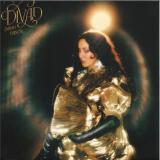
After two self-produced EPs, Sarah Maison (2018) and Soleils (2021), and the EP Karma (2021) with Anoraak, French singer, musician, author, composer, arranger, and producer Sarah Maison finally unveils her first album, DIVAD, the fruit of four years of creation. Sarah opens up, tackling personal themes through an exploration of the soul and existential questions. She also ventures into more autobiographical subjects such as melancholy, derealization, the search for meaning, and the breakdown of romantic or friendly relationships: often through coded language but always with a touch of humor. DIVAD is a manifesto of artistic independence, boldly and uncompromisingly fusing French chanson, Egyptian music, 70s disco, synth-pop, and English pop. Her influences draw on musical history while reinventing it, bringing together Alan Vega and Martin Rev, the 70s Egyptian band Al Massrieen, the king of Iranian psychedelia Kourosh Yaghmei, as well as Brigitte Fontaine and Françoise Hardy. Each track is a cinematic tableau, where the artist"s theatrical voice, both imperious and vulnerable, carries an intimate narrative with universal overtones. Co-produced with Steve Surmely (sound engineer) and Timotée Pédron (sound designer), the album blurs the lines and asserts an artist who defies categorization. Throughout these twelve tracks, we witnessa rebirth, with Sarah fully embracing her character as a dark, grandiose, and tragicomic diva straight out of a Dario Argentofilm, a sort of tribute to her Italian muses. Danceable, elegant, and elusive, DIVAD is a flamboyant work that reflects Sarah Maison"s image: free, sunny, and daring.
Buscar:martin de brig
- 1
Tell me something that makes a difference’ demands Gaia Weiss in Tenashee’s debut single. Something that immerses crisp melody into stodgy bass, collides warm dub with icy sound design, all the while slowly expanding like a supernova. ‘Tell me something’ takes the sounds and styles of the past and places them in a gravity-free future, while evoking an ethereal and precise atmosphere.
Gaia Weiss is an actress - not a singer by trade - and summons Charlotte Gainsbourg & Brigitte Bardot to deliver the spoken words as a fractured monologue, guiding us through splintered visions, and detuned chord progressions, in pursuit of the seemingly unattainable; ‘something that can make a difference’.
With this six-chapter journey on the newborn Street Cinema label, Tenashee (DJ Tennis and Ashee, Manfredi Romano and Joseph Ashworth) have crafted and refined - like two artisans from another era - a unique creation: a creature that reconnects electronic music with complexity and richness, fully aware of hyper-contemporaneity, yet capable of resisting surrender to it.
“Blink To Check It’s Real” featuring artist Campbell King - poet and beautiful soul - immediately immerses us in an electronic reality check, with 90s-inspired tweaking and glitching, all woven together with a poem from Campbell that contrasts the dizzying intensity of lust and connection with the comfort of being able to ‘loosen their grip’ and ‘make it safe.’
In ‘I Can See Now,’ Aurelia Ray (the stage name of pop-music-writing powerhouse Caitlin Stubbs) evokes a sense of serenity, pure love, and trust within a refined, spacious piece of minimalist electronica. “Blindsided” is a journey through pure, airy abstraction, a dance floor companion to the glacial trip-hop instrumental “Cold Logic”.
Finally, in “Memories,” the last track in the setlist but actually the first song the duo worked on, conceived and developed five years ago in 2020, the voice of Chinese German artist Mona Yim transports us to a place that is both emotionally introspective and intense, balancing on the edge between desire and reality.
“You should know where I go when I dream,” she states.
Over the course of five years, through exchanges, writing sessions, and fine-tuning in Paris, London, Saint Martin, and Ibiza, the world evolved, but Tenashee’s musical mission remained unchanged. The mini-album reflects the musical backgrounds of its two creators, their unique sensitivity to the present, and their desire to challenge each other with sharp, emotional, yet weightless styles and sounds. It is no longer just DJ Tennis; the successful DJ touring worldwide, organising events, and founding influential labels like Life & Death; nor only Joseph Ashworth with his scientific approach and creativity as a
producer and writer in the competitive world of pop; nor Ashee, with his releases on Circoloco and Aus Music. No, Tenashee is something more.
It is a duet searching for a thread that connects electronic music—past, present, and future—through experimentation, craft, and artistry. The moment has truly arrived for Tenashee to ‘tell us something.’
Accomplished NYC singer-songwriter Kelli Sae unveils joyful new single Good Feeling on 21st June 2024, the first fruit of her fourth solo artist album due early next year. Good Feeling swings, sways and shimmies with playful Latino spirit; a summer-fun delight all about seizing the day and embracing love and life. Sae’s sizzling vocals dance in and around deft keys, layered horns, tight guitar parts and, of course, that infectious percussion. Verses switch up to agile scat solos and down to emotive breakdowns – it’s the very best of feelings….
Good Feeling is produced by Chris Franck, co-founder of Da Lata, chief instigator behind Zeep, Smoke City and Batu, and long-standing mastermind for a wealth of other studio projects and remixes. The record features a talented cast of musicians including award-winning Brazilian composer Rafael Martini, who arranged and conducted the horn sections in one of Latin music’s truest heartlands Belo Horizonte.
Kelli Sae’s story has it all. An internationally acclaimed artist, she previously shone as lead vocalist for renowned jazz-funk collectives Incognito, Count Basic and Defunkt, and worked with Tina Turner, Chaka Khan, Patti LaBelle, Ashford & Simpson and Me’shell Ndegéocello among others. Born of Puerto Rican, African and French descent, Sae has soulful eclecticism in her blood. The exciting mix of sounds, cultures and influences across her three, independently-released solo albums to date is testament to this, as well as her respected forays into composing, playwrighting and stage performance.
Good Feeling is Kelli Sae’s latest impactful outing for Reel People Music, following singles Good Love, Right Now and Believe In A Brighter Day earlier this decade. The special relationship is set to blossom further over the coming months. We. Can’t. Wait.
From Wisdom Teeth’s recent compilation nagoyaka na kaze / 和やかな風 (quiet wind)—which cast a spotlight on the Japanese city of Nagoya—emerges “2++”, a new label launched by abentis, who curated the compilation alongside Facta and K-LONE as a central figure in the scene. Conceived as a series introducing facets of Nagoya’s underground electronic music to the world on vinyl, its inaugural release is abentis’ debut album, Dim Grow.
Across the album, intricately designed electronic mallet sounds—created using Ableton Live’s physical-modeling synthesizer—take center stage. Fresh and percussive like marimba or kalimba, yet simultaneously carrying an otherworldly, unreal quality, these tones form the core of the record’s sonic identity. In moments of near-silence, a crystalline resonance poised between glass and metal shimmers with subtle shifts in temperature, giving the album its distinctive texture.
While resonating with the sonic sensibilities of fellow Wisdom Teeth affiliates such as K-LONE, Tristan Arp, and Salamanda, abentis’ uniquely strange palette can be traced back to one of his strongest influences: Haruomi Hosono. In particular, Hosono’s mid-’70s tropical-infused solo albums — Tropical Dandy (1975), Bon Voyage Co. (1976), and Paraiso (1978) — serve as a key reference point. Symbolically reflected in Hosono’s marimba and vocal performance at a 1976 live show in Yokohama Chinatown, the marimba functioned as a central instrument for constructing imagined exotic landscapes inspired by Martin Denny and Hawaiian music.
For abentis—who worked at a local jazz bar before becoming active as a hip-hop beatmaker—the language of “tension chords,” a harmonic vocabulary rooted in jazz and R&B that hovers ambiguously between brightness and darkness, forms a consistent grammar throughout Dim Grow.
Behind the album’s core theme of “mallets + tension chords” lies a broad musical lineage: the harmonic sensibility of Claude Debussy, who anticipated the tensions of jazz; the proto-minimalist spirit of Erik Satie; the marimba-centered structures of Steve Reich; their continuation in Japan through Mkwaju Ensemble (with Midori Takada and production by Joe Hisaishi); and the subsequent branches into post-rock, electronica, and ambient music.
Growing up in Nagoya—an industrial city where creative independence is deeply valued—and being rooted in punk and hip-hop counterculture scenes naturally fostered abentis’ affinity with these predecessors. His practice between genres, combined with an encounter with the highly cross-pollinated musical perspective cultivated around Wisdom Teeth, provided the framework through which his own musical language crystallized. Dim Grow stands as the natural culmination of that journey.
Talulah’s Tape is the debut offering from magnetic Midwest-jangle collective Good Flying Birds. Across a patchwork mixtape of stripped-down home recordings that span the independent-guitar spectrum, the band delivers colorful, intricate pop songs perched between the immediacy of DIY punk and the intimate sweetness of twee. Breakbeats, memes, and noise glue everything together, making the album feel as chronically online as it is timeless.
Originally released on cassette in January 2025 by Midwest-punk legend Martin Meyers’s Rotten Apple label, the tape sold more than 300 copies in under a month and quickly became an out-of-print and coveted item. Meyers called it “certified catnip for popheads.” Now, with a refined track list and a fresh master from Greg Obis, Talulah’s Tape returns on LP and CD via Carpark and Smoking Room in October 2025.
While production and approach vary, a through-line of sensitive self-contemplation rests on bright, scrappy guitars and hyperactive melodic bass. Opener “Down on Me” rides a buoyant bass line while jangling guitars frame reflections on overcoming trauma: “I see you in the mirror every time I cry / I hear your voice every time I try.” Next, the guitars trade twinkling counter-melodies on “I Care for You,” pairing sugary, lovestruck lyrics with effervescent strums: “You catch me when I fall / You build me up so tall.”
The rosy grin occasionally twists into a wicked smirk. “Dynamic” warns, “You used to paint the face, but now you’re just the clown,” while “Glass” asks, “Is it lonely at the top when everyone follows the trend, and you hold the pen?” Both tracks brim with sparkling guitar interplay. By the closing, nearly five-minute “Last Straw,” Good Flying Birds stand far beyond conventional indie-pop or 4-track punk, unveiling a roller-coaster of unpredictable changes, vocal harmonies, and instrumental cross-talk.
Altogether, Talulah’s Tape is a pastel-yellow, candy-coated shell filled with thoughtful juxtapositions and melodic experiments. Standing on the same ground as idiosyncratic songwriters like Connie Converse and Daniel Johnston, Good Flying Birds find sweetness in sadness, tear stains on a colorful flower-print couch. Simultaneously, it’s packed with the scratchy guitars and vibrant rhythms of Scottish guitar groups like The Pastels, Orange Juice, and Josef K. It’s a tremendous opening statement from a band just getting started.
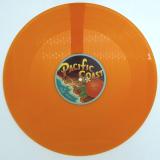
Introducing the 4th instalment of the Pacific Coast House rebirth. We bring back another much sought-after 12” from The Coastal Commission & Jesse Outlaw. “Bring down the Walls” was a nod to Raze’s “Break for Love”, Robert Owens “Bring Down the Walls” and Ritchie Hawtin’s use of the Roland 606 throughout “Sheet One”. Long out of reach and fetching $100+ on Discogs, Atjazz’s freshly remastered editions are finally available .. “Let it Go” was never mastered & only ever cut to dub-plate. It has now been mastered & available in all it’s glory.
Coastal Commission “Bring Down the Walls” “Bring down the Walls” was a nod to Raze’s “Break for Love”, Robert Owens “Bring Down the Walls” and Ritchie Hawtin’s use of the Roland 606 throughout “Sheet One.” We gave the tune a Californian psychedelic twist with conga laden drums, a moody synth, low pulsing 303 patterns + Benjamin Zephaniahs patois call to “Move the Body Rhythmwize!” The first PCH releases had dropped Worldwide to International acclaim from DJ’s far and wide across the Globe with support in London, Paris & New York. However the local scene here in L.A that preached “Love, inclusion & Unity” was anything but that. L.A at that time was very tribal & divided up into 3 camps. If you weren’t affiliated with any of them (aka independent) then you were pretty much locked out of getting any kind of gig support or the Dj’s from those camps actually playing the music. The local feedback from Dj’s was that what we were making wasn’t “house,” but “Techno” which was absurd to me. “Bring Down the Walls” was a mantra to “move the bod”y and in doing so “bring down the walls” of separation not just in L.A but throughout society in general. Thank goodness for support from people like Terry Francis, Eddie Richards, DJ Deep & Philly Stalwart King Britt. After years of copies going for upward of $100+ on Discogs the now freshly remastered copies by At Jazz’s Martin Iveson are finally hitting the platters this Spring.
Jesse Outlaw “Let it Go” I met Jesse at Beatnonstop Records on Melrose Ave with Miguel Placencia in the late 90’s. Miguel (RIP) was a mainstay in the Underground scene and had always been very supportive of my endeavors. He had had success with a huge release on Yellow Orange and was working with Jesse under the moniker “When Worlds Collide.” I signed “Brighter Days” & “Set you Free” from them and released the tracks on my Seductive imprint. They told me that they were making the tracks on a Sony Playstation “Music Now” program and I was like FFS “What.s more Underground than that!?” Later Jesse gave me some of his solo work. The track “Let it Go” was never mastered & only ever cut to Dub-plate and featured on my 1st PCH mix “Pacific Coast House Sounds.” It has now been mastered by Martin Iveson and is available in all it’s glory. The dreamy vocal “You need to let it go” beckons over the top of driving percussive Latin beats and church organ which is a great compliment to the flip side of “Bring down the Walls.” All in all two West Coast stompers now finally available remastered on PCH in Orange vinyl.
- You Smile When It Hurts
- Dreamin
- Time
- Blue Draginfly
- Arabian Night
- Reality
- Walking Alone
- Dar Tunnel
- I Try Alone
- Open My Head
- Tired To Follow
- Happy Birthday
Far from being a nostalgic exercise, the record reasserts their daring artistry, merging legacy and rebirth. Known for melodic minimalism, elegant melancholy, and pulsing electronics, the band has often been compared to Depeche Mode, New Order, or Joy Division, yet their singular identity has always set them apart. On this new album, they reinvent their sonic language, blending vintage synths with classical textures and luminous modern production. The result is a sensory journey where light and shadow converse, where poetry meets pulse, reaffirming their timeless relevance. Their influence extends across genres: sampled by Madlib, reinterpreted by Tricky, reimagined by Theophilus London, and remixed by DJs such as Marcel Dettmann. Tributes, reissues, and appearances in cinema and fashion underscore their resonance, from Lucie Borleteau's Chanson Douce movie to catwalks by Chloe.
Born in Marseille in the early 1980s and led by Alain Seghir alongside Catherine Loy , Brigitte Balian , and Beverley Jane Crew , Martin Dupont left a mythic legacy with tracks like ' Inside Ou't and 'Just Because...' before dissolving in 1987. Rediscovered through Minimal Wave reissues, their music captivated a new generation of underground and electronic enthusiasts. Today, Martin Dupont are reborn. Seghir and Crew, joined by Sandy Casado, Thierry Sintoni, and Olivier Leroy, embark on a world tour that affirms their unique ability to move and inspire. You Smile When It Hurts proves that their visionary sound has never been more alive
- A1: Robert Pico - Le Chien Fidèle
- A2: Annie Girardot - La Femme Faux Cils
- A3: Spauv Georges - Je Suis L'état
- A4: Zoé - Zoé
- A5: Jacques Da Sylva - Fou
- A6: Valentin - Je Suis Un Vagabond
- A7: Jacques Malia - Histoire De Gitan
- A8: Bernard Jamet - Raison Legale
- B1: Jean-Pierre Lebort - Barbara Au Chapeau Rose
- B2: Les Concentrés - Fils De Dégénérés
- B3: Les Missiles - Publicité
- B4: Hegessipe - Le Credi D'hegessipe
- B5: Marechalement Votre - Ethero Disco
- B6: Mamlouk - Decollez Les
- B7: Mozaique - L'amour Nu
- B8: Jean-Marc Garrigues - Je Dis Non
- B9: Penuel - Astronef 328
The journey through French-speaking pop archives continues with this fifth volume, packed with fuzz, gimmicks, and dissent. Far from the charts, the selected tracks display a great creative freedom, often backed by corrosive humor. Welcome to the surprising, kaleidoscopic, and colorful world of the late sixties and early seventies, Wizzz!
Born in Montauban, Robert Pico stumbled into music by chance when he met René Vaneste, then artistic director at Pathé-Marconi. René brought him to Paris to record his first 45 RPM EP in 1964. A year later, Pierre Perret introduced him to Vogue, where he recorded his second album with Claude Nougaro’s orchestra. Sylvie Vartan then introduced him to RCA, where he recorded four singles, including the astonishing "Chien Fidèle," a track backed by a hair-rising fuzz guitar. Alongside his solo career, he also composed for other artists like Alain Delon (the song was recorded but remains unreleased), Magali Noël, Bourvil, and Georges Guétary. In the Paris of the sixties, he mingled with Mireille Darc, Elsa Martinelli, Marie Laforêt, France Gall, Françoise Hardy, Petula Clark, Régine, Dani, Serge Gainsbourg, Joe Dassin, Franck Fernandel, Charles Level, and Roland Vincent. Despite his efforts and winning a Grand Prix Sacem for his final record, Robert Pico didn’t achieve the expected success in show business and decided to leave Paris and return to the Southwest, where he devoted himself to writing. He is the author of 23 books (including Delon et Compagnie, Jean-Marc Savary Editions 2025, a memoir about his youth and his many encounters). Today, he is relieved to never have become a celebrity and devotes himself to his work with passion.
In 1969, the Franco-Italian movie Erotissimo was released, directed by Gérard Pirès (who later directed Taxi in 1998, written and produced by Luc Besson). This pop comedy features Annie Girardot, Jean Yanne, Francis Blanche, Serge Gainsbourg, Nicole Croisille, Jacques Martin, and Patrick Topaloff. The soundtrack was written by Michel Polnareff and William Sheller, with lyrics by Jean-Lou Dabadie. "La Femme Faux-cils," performed by Annie Girardot. It recounts the feelings of a rich CEO's wife who seeks to develop her sex appeal under the influence of advertisement and magazines. Groovy, sparkling and light, this track, with ITS lush arrangements humorously critiques consumer society and feminine beauty standards.
“Je suis l’Etat” (1967) is the flagship track of the first EP by singer-songwriter Spauv Georges, aka Georges Larriaga, better known as Jim Larriaga (1941-2022). Born into a family of bakers, the young man was initially planning to become a hairdresser when he discovered English-speaking music through Elvis Presley and the Beatles. After this revelation, he decided he would become a songwriter and gave himself five years to succeed. He recorded his first two EP’s independently for RCA under the pseudonym Spauv Georges; meaning “that poor George”, a nickname given to him by the mother of her friend Jean-Pierre Prévotat (future drummer of the Players, Triangle, or Johnny Hallyday). Portraying a depressed and eccentric young man, Spauv Georges created corrosive and amusing songs that didn’t reach a wide audience, despite a TV appearance with Jean-Christophe Averty.
Supported by his loyal friend and fellow songwriter Jean-Max Rivière, Georges Larriaga met the future singer Carlos in the early '70s, then Sylvie Vartan’s assistant. He wrote songs for Carlos, including the popular "La vie est belle," "Y’a des indiens partout," and "La cantine", which went onto become a huge hit in 1972. He also composed for Claude François (“Anne-Marie”, 1971), Charlotte Julian (“Fleur de province”, 1972), helped launch child singer Roméo (who sold 4 million records), and later wrote the hit "Pas besoin d’éducation sexuelle" (1975) for the young Julie Bataille. In 1971, Jim recorded an album for Disc'Az: “L’univers étrange et fou de Jim Larriaga”, which featured pop gems like “La maison de mon père”.
The story of the song "Zoé" began when Pierre Dorsay, artistic director at Vogue Records, asked Swiss singer and musician Pierre Alain to write a song for a new female singer. The inspiration came when he realized that Zoé (the artist's name) was also the name of France's first atomic battery, created in 1948, which consisted of uranium oxide immersed in heavy water! The lyrics reflect a bubbling energy that must be handled with caution, while the instrumentation echoes this atomic theme, notably with the use of a theremin.
Zoé’s career lasted only as long as a single 45 RPM, but it seems Christine Fontane was the vocalist behind this pseudonym, who is known for several EPs, a good "popcorn" album in 1964, and a handful of children’s singles in the '70s. Regardless, the photograph on the cover is of a different girl entirely.
Later, Pierre Alain continued his career, writing songs for himself, Marie Laforêt, Danièle Licari, Alice Dona, Arlette Zola (3rd place in Eurovision 1982), and achieving multiple gold and platinum records in Canada. Also an inventor with several patents, president of the Romande Academy, and head of the French Alliance in Geneva, he now composes atonal music, books, and poetry. Moreover, he is also the host of "Les Mardis de Pierre Alain" at "Le P'tit Music'Hohl" in Geneva.
Filled with oriental choruses and fuzz guitar, "Fou" is from Jacques Da Sylva's only EP released by Vogue in 1967. Despite the quality of this recording, all traces of this singer disappear after this first effort.
Valentin is a baroque pop singer born in Belgium. He is the songwriter and composer of most of the tracks on his three singles released in the late 60s in Canada. A legend says that he reincarnated himself as Jacky Valentin during the 1970s for a rock'n'roll revival career in Belgium, but his older brother sadly debunked this story. Valentin's first two singles were arranged by Claude Rogen, a Parisian session pianist who had come to Canada to promote the song “Mister A Gogo”, a cover of David Bowie’s “Laughing Gnome”, adapted by singer Delphine, his wife at the time. Far from his usual network, Claude Rogen arranged music for Polydor, including the arrangements for “Je suis un vagabond” in 1969, a jerk tune with string arrangements and a furious optimism.
Jacques Malia wrote, composed, and recorded his only 45 EP for Festival in 1966. “Histoire de gitan” is an incredible beat track with bohemian scat that tells the story of a gypsy musician who came to Paris to make it in the Music-Hall, to no avail. The hero of the song and its author probably shared a similar fate, as Jacques Malia faded into anonymity after this remarkable attempt.
Bernard Jamet recorded two EPs for Barclay in the late sixties and co-wrote several songs with Christine Pilzer, Pascal Danel, and prolific songwriters Michel Delancray and Mya Simile. The track “Raison Légale” (1968), his masterpiece, immerses the listener in a courtroom right when a murderer is being judged, with jerk rhythm and free arrangements. A unique, paranoid, judicial, and psychedelic oddity.
Jean-Pierre Lebrot-Millers started his career in show business in 1967 as a singer and songwriter for the Philips label. After three singles, he wrote several songs of a new kind with his friend Pierre Halioche, in the midst of the sexual liberation movement and the democratization of drugs. With provocative lyrics, “Les filles du hasard” and “Barbara au Chapeau Rose” were released on a Philips singles in 1968. The character of Barbara was inspired by a queen of Parisian nightlife during the psychedelic years: model Charlotte Martin, who dated Eric Clapton from 1965 to 1968, then Jimmy Page from 1970 to 1983. Jean-Claude Petit’s arrangements, with a table-filled intro, soul brass, and Hendrixian guitar, emphasize the flamboyance of a hedonistic and sexy character, whose dog is named Junkie because “Junkie est un nom exquis”! The track was recorded live in three takes with a full orchestra.
Upon its release, the record was censored by Europe 1 and RTL due to its references to drug use. Jean-Pierre Lebrot was then banned from the airwaves and later dismissed by his record label. He changed his artist name to Jean-Pierre Millers, while his companion Pierre Halioche became D. Dolby for a new dreamy composition, “Chilla”, which Jean-Pierre produced himself with arrangements by Jean Musy. Once again, the song was immediately censored everywhere. After this setback, he decided to stop singing and started taking on odd jobs to support his Swedish wife and their son until the day he met Jean-Pierre Martin, then production manager at Decca, who had worked with Manu Dibango. Martin offered Jean-Pierre Lebrot-Millers, then employed at Rank Xerox, the position of artistic director at Decca. He accepted and became, a year later, promotion director (radio, press, TV). He worked on Julio Iglesias’s first album for Decca, which became a massive hit and allowed him to meet Claude Carrère. The latter asked him to write new songs and find their performers, much like a “talent scout.” It’s through him that Jean-Pierre discovered Julie Pietri and Corinne Hermès. He composed “Ma Pompadour” for Ringo, Sheila’s husband, and took the microphone again for the syncope hit “Rendez-Vous” in 1982.
That same year, Jean-Pierre Lebrot-Millers tried to release a track for which he had heavily gone into debt: “Si la vie est un cadeau”. Having recorded it in London, he presented it to numerous professionals, all of whom refused to get involved. The same thing happened with Antenne 2 and the Sacem when he proposed the song as France’s entry for Eurovision. He then met Haïm Saban, who was producing cartoon soundtracks and had just launched the Goldorak theme song. Saban, having listened to the song, declared it had the potential to become a hit. He sent Jean-Pierre and Corinne Hermès to meet the CEO of the Luxembourg radio and television network. The latter received them, asked to hear a verse and chorus a cappella in his office, and immediately hired them to represent Luxembourg at Eurovision 1983. They reworked the arrangements and recorded a new version with Haïm Saban as co-producer. The song ended up winning Eurovision 1983, a great comeback for our hero. He continued producing and hung out with the band Nacash in Belgium when a couple came to introduce their daughter for an impromptu audition in a hotel room. The girl sang “Les démons de minuit” while dancing to a radio cassette. Impressed, he had her take singing lessons for a year and composed a song for her (for which he had the melody and title, but no lyrics). This required him to go on the hunt for a lyricist, who ended up being Guy Carlier. They recorded the song, which was initially a ballad, at Bernard Estardy’s CBE studio, and gave the singer a new name: Melody. They showed the song around their industry network without success. Later, Estardy called Jean-Pierre to suggest changing the rhythm and making it pop-rock. Orlando, Dalida’s brother, liked the result and decided to co-produce the track. “Y’a pas que les grands qui rêvent » became a classic hit. The song has since been covered by Juliette Armanet (as a ballad, like the original) and Valentina.
Born into an aristocratic Breton family, Hervé Mettais-Cartier worked as a DJ at Queen Kiss, a nightclub in Poitiers, where he formed the band Les Concentrés with Michel (an actor) and Christian (a radio technician). Together, they created a repertoire of whimsical songs (“Ma bique est morte”, “J’suis un salaud”, “Fils de dégénéré”...) that they performed on stage dressed in white (in homage to “concentrated milk”). They performed at Bliboquet and Olympia in 1968 for the 10th edition of the “Relais de la chanson Française” organized by L’Humanité-Dimanche and Nous les Garçons et les Filles, sponsored by Pepsi Cola. Winners in the author-composer category, alongside Danish singer Dorte, their visibility allowed them to record a 45, and appear on television in Jean-Christophe Averty’s show. The A-side of the disc features Bruno le ravageur, a casatchok dedicated to Bruno Caquatrix, the director of Olympia, nicknamed in the song “Coq Atroce” or “croque-actrices”. The B-side is dedicated to “Fils de dégénéré”, a quirky tribute to Hervé's aristocratic roots, mixing absurdity with sophisticated vocal harmonies.
After Les Concentrés, Hervé Mettais-Cartier formed the duo La Paire et sa Bêtise with his friend Olivier Robert. They performed in Parisian cabarets and toured with Pierre Vassiliu. In the late 1970s, Hervé began a solo career. He recorded two albums for the Motors label in 1978 and 1979, which did not achieve their anticipated success due to lack of promotion. In 1980, he met Bernadette, with whom he started a family and created a “Chansons à voir” (songs to see) show that he performed until his death at the end of 2024.
Publicité comes from the final EP by the Missiles (Ducretet Thomson, 1966), a disc that also includes “La (nouvelle) guerre de cent ans”, featured on Volume 4 of our Wizzz! series. Please refer to the booklet for the story of the band.
“He’s 1.82 meters tall, 28 years old, weighs 135 kg, is black and Belgian”: this is the description of singer Hegesippe on the back of his sole single (Decca, 1967). He appears on the album cover wearing a Greek toga, like a hippie gag – we are at the end of the year 1967. In “Le crédo d’Hegesippe”, this former bodyguard of Antoine and the Charlots plays the delightful card of the thick brute converted to Flower-Power and non-violence, with arrangements by Jean-Daniel Mercier, aka Paul Mille.
“Ethéro-disco” was released on a promotional record for clients of the Maréchal company (Liège, Belgium) for the New Year 1979. Over a funky rhythm, celebrity impersonations (Brigitte Bardot, Jacques Dutronc, Fernandel…) deliver an enigmatic text about pharmaceutical products like ether, bismuth, and aspartate. The track was composed by Dan Sarravah (responsible for Joanna's “Hold-up inusité” featured on Wizzz! Volume 3) and Tony Talado, who was also a singer (one 45 in 1967), songwriter (with over a dozen credits between 1964 and 1985 in various styles from surf music to disco), author (Devenez Végétarien, Dricot Editions, 1985), ad designer, and psychologist.
Décollez-les is on the A-side of Mamlouk's only single, a pseudonym for Marsel Hurten, who is known for his work on several EPs in the late sixties, as well as composing music for Hervé Vilard’s “Capri, c’est fini”, Claude Channes' “La Haine”, Annie Philippe’s “On m’a toujours dit”, and Nancy Holloway’s “Panne de Cœur”.
This strange song, with Afrobeat horns and absurd dialogues between a chef and his kitchen staff, is the result of a collaboration between Marsel Hurten and one of his neighbors, a photographer from Pavillon-sous-Bois (93), where the musician settled after returning from the Algerian War. A music video was shot to promote the record.
Marsel Hurten was born in Tourcoing (59) into a musical family. At a young age, he joined the brass band founded by his grandfather, playing the piston before studying trumpet at the conservatory, as well as teaching himself how to play the guitar. As an orchestra musician, he toured in France, Belgium, Germany, and England. He released a series of solo 45’s between 1965 and 1968 for the DMF and Az labels before stopping recording to focus on working for other artists (Gilles Olivier, Noëlle Cordier…).
“L’amour nu” (Vogue, 1971) is the work of the short-lived Belgian band Mozaïque. The track, written by singer Jacques Albin, closely resembles another of his compositions, “Carré Blanc”, which he recorded in 1969 for Disc’AZ.
Represented by the Lumi Son micro-label based in Marignane (Côte d'Azur), Jean-Marc Garrigues released two 45 RPMs in the late sixties, defending the French jerk sound. The song “Je dis Non” is a short, joyful ode to youth, pop music, and rebellion.
Songwriter and performer Jacques Penuel released three singles. The first one, “Astronef 328” (Fontana, 1969), features a dizzying series of chords punctuated by sound effects, a sci-fi story, and arrangements by Jean-Claude Vannier.
We would like to sincerely thank Pierre Alain, Moon Blaha, Marsel Hurten, Bastien Larriaga, Jean-Pierre Lebrot-Millers, Bernadette Mettais-Cartier, Robert Pico, Olivier Robert, Claude Rogen, Micky Segura.
Talulah’s Tape is the debut offering from magnetic Midwest-jangle collective Good Flying Birds. Across a patchwork mixtape of stripped-down home recordings that span the independent-guitar spectrum, the band delivers colorful, intricate pop songs perched between the immediacy of DIY punk and the intimate sweetness of twee. Breakbeats, memes, and noise glue everything together, making the album feel as chronically online as it is timeless.
Originally released on cassette in January 2025 by Midwest-punk legend Martin Meyers’s Rotten Apple label, the tape sold more than 300 copies in under a month and quickly became an out-of-print and coveted item. Meyers called it “certified catnip for popheads.” Now, with a refined track list and a fresh master from Greg Obis, Talulah’s Tape returns on LP and CD via Carpark and Smoking Room in October 2025.
While production and approach vary, a through-line of sensitive self-contemplation rests on bright, scrappy guitars and hyperactive melodic bass. Opener “Down on Me” rides a buoyant bass line while jangling guitars frame reflections on overcoming trauma: “I see you in the mirror every time I cry / I hear your voice every time I try.” Next, the guitars trade twinkling counter-melodies on “I Care for You,” pairing sugary, lovestruck lyrics with effervescent strums: “You catch me when I fall / You build me up so tall.”
The rosy grin occasionally twists into a wicked smirk. “Dynamic” warns, “You used to paint the face, but now you’re just the clown,” while “Glass” asks, “Is it lonely at the top when everyone follows the trend, and you hold the pen?” Both tracks brim with sparkling guitar interplay. By the closing, nearly five-minute “Last Straw,” Good Flying Birds stand far beyond conventional indie-pop or 4-track punk, unveiling a roller-coaster of unpredictable changes, vocal harmonies, and instrumental cross-talk.
Altogether, Talulah’s Tape is a pastel-yellow, candy-coated shell filled with thoughtful juxtapositions and melodic experiments. Standing on the same ground as idiosyncratic songwriters like Connie Converse and Daniel Johnston, Good Flying Birds find sweetness in sadness, tear stains on a colorful flower-print couch. Simultaneously, it’s packed with the scratchy guitars and vibrant rhythms of Scottish guitar groups like The Pastels, Orange Juice, and Josef K. It’s a tremendous opening statement from a band just getting started.
Talulah’s Tape is the debut offering from magnetic Midwest-jangle collective Good Flying Birds. Across a patchwork mixtape of stripped-down home recordings that span the independent-guitar spectrum, the band delivers colorful, intricate pop songs perched between the immediacy of DIY punk and the intimate sweetness of twee. Breakbeats, memes, and noise glue everything together, making the album feel as chronically online as it is timeless.
Originally released on cassette in January 2025 by Midwest-punk legend Martin Meyers’s Rotten Apple label, the tape sold more than 300 copies in under a month and quickly became an out-of-print and coveted item. Meyers called it “certified catnip for popheads.” Now, with a refined track list and a fresh master from Greg Obis, Talulah’s Tape returns on LP and CD via Carpark and Smoking Room in October 2025.
While production and approach vary, a through-line of sensitive self-contemplation rests on bright, scrappy guitars and hyperactive melodic bass. Opener “Down on Me” rides a buoyant bass line while jangling guitars frame reflections on overcoming trauma: “I see you in the mirror every time I cry / I hear your voice every time I try.” Next, the guitars trade twinkling counter-melodies on “I Care for You,” pairing sugary, lovestruck lyrics with effervescent strums: “You catch me when I fall / You build me up so tall.”
The rosy grin occasionally twists into a wicked smirk. “Dynamic” warns, “You used to paint the face, but now you’re just the clown,” while “Glass” asks, “Is it lonely at the top when everyone follows the trend, and you hold the pen?” Both tracks brim with sparkling guitar interplay. By the closing, nearly five-minute “Last Straw,” Good Flying Birds stand far beyond conventional indie-pop or 4-track punk, unveiling a roller-coaster of unpredictable changes, vocal harmonies, and instrumental cross-talk.
Altogether, Talulah’s Tape is a pastel-yellow, candy-coated shell filled with thoughtful juxtapositions and melodic experiments. Standing on the same ground as idiosyncratic songwriters like Connie Converse and Daniel Johnston, Good Flying Birds find sweetness in sadness, tear stains on a colorful flower-print couch. Simultaneously, it’s packed with the scratchy guitars and vibrant rhythms of Scottish guitar groups like The Pastels, Orange Juice, and Josef K. It’s a tremendous opening statement from a band just getting started.
- 1: Expressions Of Regret (Feat. Remo Helfenstein) – Live At B-Sides 2024
- 2: Where We Broke Off – Live At B-Sides 04
- 3: Unsung – Live At B-Sides 2024
- 4: As Bright As A Burning Star – Live At B-Sides 202
- 5: About Atonement – Live At B-Sides 2024
Grown through collaboration, Samuel Savenberg’s EP As Bright as a Burning Star stands for a music that evolves and becomes newly tangible in the very moment of performance.
The live EP captures a concert by Savenberg and his band, recorded at the 2024 B-Sides Festival on Sonnenberg near Lucerne. In this setting, the concert with his close musical companions takes on a life distinct from the studio recordings it draws upon, casting the music in a new light: more immediate, vibrant, and warmer.
As Bright as a Burning Star features newly interpreted pieces from Unsung—Savenberg’s 2023 album released via Präsens Editionen—alongside two new songs. The title track had existed in a similar form since 2016 but had never been released—until it was rediscovered by chance during preparations for the concert. The second new piece, "Expressions of Regret", features vocals by Remo Helfenstein, a longtime friend and fellow Präsens Editionen artist.
As Bright as a Burning Star is a labor of love—shaped by shared musical histories and lasting friendships. It is available on cassette tape, for streaming and as a digital release via Präsens Editionen.
Samuel Savenberg is a composer and producer based between Lucerne and Berlin. Following the release of Unsung in 2023, he has presented selected remixes and live performances—the latter mostly in a band setup—and collaborated with other artists, taking on a variety of roles.
Founded in 2011 in the process of launching zweikommasieben, Switzerland-based publishing house and music label Präsens Editionen has released music on vinyl, cassette, CD, and digital formats—alongside magazines, books, and other printed matter. Audio releases include works by Anna Homler, Robert Turman, Belia Winnewisser, Samuel Reinhard, Martina Lussi, and Magda Drozd & Nicola Genovese’s Sopraterra.
* Edition of 66 professionally dubbed cassette tapes (colored)
* Special artwork by Denise Haeberli at INTR in custom snapbox
* Free DL
- Laughter
- Class A Cherry
- Come Apart
- Collider
- Matador
- Limassol
- Heavy Duty
- Thinking About It
- In Ways
- Nothing Left
- Falling Down
Mit zwei Singles Ende 2024 weckten Slung das Interesse anspruchsvoller Ohren in der Branche und im Netz. Nun folgt mit "In Ways" das Debütalbum der Band aus Brighton mit der traumatisch-herzzerreissenden ersten Single "Laughter". Ihr Klanguniversum – bestehend aus der Kraft der feurigen Riffs des Gitarristen Ali Johnson, der beneidenswert-dynamischen Bandbreite der Sängerin Katie Oldham, den wellenförmigen und doch erdenden Basslinien von Vlad Matveikov und der fachmännisch-rhythmischen Interpunktion des Drummers Ravi Martin – ist eine wahre musikalische Supernova. Die Einflüsse innerhalb des Slung-Lagers sind weitreichend - von Deftones und Baroness über Wednesday und MJ Lenderman bis zu Queens Of The Stone Age und sogar einer Prise Chappell Roan und Fleetwood Mac.
- A1: The Ballad Of Sacco Vanzetti
- A2: No One In This World
- A3: All I Want
- A4: One
- B1: Emotional Rescue (2 Many Beats Remix)
- B2: Diferente
- B3: Con Mi Sombra
- B4: Kiss Me Twice
- C1: You Aint Really Down (Jazzanovas Hey Baby Remix)
- C2: Little White Roses
- C3: Free For All (Soundstream Remix)
- D1: Bluebird
- D2: Et Toutes Ces Choses
- D3: Paris...demain Matin
- D4: Womb
- D5: Belle
The iconic Hôtel Costes music collection, a veritable benchmark of Parisian luxury and refinement, continues to captivate lovers of sophisticated sounds. Famous for its unique blends of warm vocals, funk, jazzy and pop grooves, fusing electronic sounds and acoustic instruments, this series is a must for connoisseurs of refined music.
This ninth volume, orchestrated by the talented Stéphane Pompougnac, offers light electro soul and racy house, perfect for livening up the most elegant evenings and keeping the most reluctant dancing until the wee hours. The Hôtel Costes series has revealed exceptional talents such as Pink Martini, Flight Facilities, General Elektriks, Angus & Julia Stone and Brigitte, while mixing hidden nuggets with masters such as Gotan Project, Femi Kuti, Trentemøller, Thievery Corporation, Shirley Bassey and Grace Jones.
With over 5 million copies sold worldwide, following the resounding success of the reissue of the first six volumes, this ninth opus is finally available for the first time on vinyl. A true gem that will delight long-time fans and appeal to a new generation of listeners worldwide.
- A1: The Brazilian Hipster
- A2: Work That Body
- A3: Clive The Runner
- A4: Addicted
- B1: Hip Hip Chin Chin (Yaziko Club Mix)
- B2: Palumbo
- B3: S.o.s. (The Sounds Of Silence)
- B4: Trail Of Dawn (Varano's Hotel Of Dawn Remix)
- C1: So Ma Guisee
- C2: Don't Stop (Dublex Inc. Remix)
- C3: Please Don't Leave (The Essential Mix)
- D1: Tone 10
- D2: Je Suis Venu Te Dire Que Je M'en Vais
- D3: Sunday Driver
- D4: Heaven's Gonna Burn Your Eyes
The iconic Hôtel Costes music collection, a veritable benchmark of Parisian luxury and refinement, continues to captivate lovers of sophisticated sounds. Famous for its unique blends of warm vocals, funk, jazzy and pop grooves, fusing electronic sounds and acoustic instruments, this series is a must for connoisseurs of refined music.
This seventh volume, orchestrated by the talented Stéphane Pompougnac, offers light electro soul and racy house, perfect for livening up the most elegant evenings and keeping the most reluctant dancing until the wee hours. The Hôtel Costes series has revealed exceptional talents such as Pink Martini, Flight Facilities, General Elektriks, Angus & Julia Stone and Brigitte, while mixing hidden nuggets with masters such as Gotan Project, Femi Kuti, Trentemøller, Thievery Corporation, Shirley Bassey and Grace Jones.
With over 5 million copies sold worldwide, following the resounding success of the reissue of the first six volumes, this seventh opus is finally available for the first time on vinyl. A true gem that will delight long-time fans and appeal to a new generation of listeners worldwide.
The iconic Hôtel Costes music collection, a veritable benchmark of Parisian luxury and refinement, continues to captivate lovers of sophisticated sounds. Famous for its unique blends of warm vocals, funk, jazzy and pop grooves, fusing electronic sounds and acoustic instruments, this series is a must for connoisseurs of refined music.
This eighth volume, orchestrated by the talented Stéphane Pompougnac, offers light electro soul and racy house, perfect for livening up the most elegant evenings and keeping the most reluctant dancing until the wee hours. The Hôtel Costes series has revealed exceptional talents such as Pink Martini, Flight Facilities, General Elektriks, Angus & Julia Stone and Brigitte, while mixing hidden nuggets with masters such as Gotan Project, Femi Kuti, Trentemøller, Thievery Corporation, Shirley Bassey and Grace Jones.
With over 5 million copies sold worldwide, following the resounding success of the reissue of the first six volumes, this eighth opus is finally available for the first time on vinyl. A true gem that will delight long-time fans and appeal to a new generation of listeners worldwide.
Sunset edition - 300 copies
Driving is Sam Wilkes’ Indie Rock record. Iit is the first release on Wilkes Records, an imprint borne of the artist’s emergent need to self-release. The songs presented here exist comfortably within the ever-expanding Wilkesian cosmos, characterized as they are by virtuosity, torqued experimentalism, and collaboration with a range of talented musicians. But Driving’s influences, its sincerity, and its allegiance to a certain pop sensibility reflects a departure for an artist who has primarily staked his claim within the experimental jazz idiom.
Take the first track, “Folk Home,” which inaugurates the album’s fecundity—a bright, green, humid, summer feel. A swirling, freakout coda of reversed vocals gives way, in no short order, to a caterwaul of flute work that conjures Van Morrison’s (in)famous Astral Weeks sessions. Standing beside Morrison, the usual suspects are all present, if somewhat abstractedly. Dylan, The Dead, Joni, the Fab Four. Wilkes has developed a reputation as an experimental jazz luminary, but his deep affinity for the pop/rock/folk idiom of the latter twentieth century rings clear throughout Driving. More so than any Wilkes release to date, Driving is a collection guided by and dedicated to the man’s attention to songcraft.
Written and recorded during a period of rain-damage induced renter’s itinerance (and the attendant desire to produce a kind of therapeutic, self-soothing, home-feeling music), Driving loosely charts the trajectory/experience of “a protagonist,” both Wilkes and not, “who has figured out how to live an enlightened and fulfilled life, but is unable to do so because he thinks about it too much.” This friction is surely relatable — a symptom of our compulsively self-aware present. But Wilkes avoids the obvious pitfalls of public hand-wringing. Rather, Driving’s nine tracks evince a genuine, and mature searching-ness, both sonically and lyrically. The ending refrain of “Own” serves like something close to a thesis— “Letting go // isn’t a concept // it’s an action.” In an attempt to beat back ego, hyper-cogitation, language itself, Wilkes arrives at an axiom that feels so true and familiar, you’d swear you’d heard it one hundred times before.
Driving’s final third is, fittingly, its most emotive and cathartic. Tracks seven and eight, “Again, Again” and “And Again,” form a diptych, joined most obviously by the jangling, recursive grooves of guitarist Daryl Johns. Wilkes is said to have encouraged Johns to go “full Lindsey Buckingham” (clearly a welcome and resonant prompt), but one also catches stray Knopfler vibes, some intermittent Fripp, and (perhaps more-so in tone than technique) the spirit of DIY prophet and jangling man himself, Martin Newell (the Cleaners from Venus). Wilkes has stated that he finds joy in creating musical environments suitable to the contribution and flourishing of his favorite musicians. Throughout Driving, and in these two tracks especially, he has more than succeeded.
The record closes with the titular track: a story-song that, according to Wilkes, poured out of him (melody, composition, and lyrics) in a single sitting. The tale is told plainly, bravely, starkly; a mistake was made, regrets have been had, and all is wrapped up in the recollection of a deeply felt adolescent heartsickness—a time when the narrator was first afire with music and automotive freedom. The song captures the moment when meaning inexplicably falls into place, when a long-nagging memory suddenly assumes narrative form, and the subsequent sense of lightness and unburdening. It is fitting that Driving, a record conceived as a form of self-therapy, should culminate with a sense of humble revelation. That Wilkes is plainly eager to share the vulnerable fruits of this labor constitutes Driving’s joyful offering.
Words by Emmett Shoemaker
- A1: Iron Mountain Foothills
- A2: Game Of Love
- A3: The Boyne Hunt
- A4: It Was In The Year Eighteen Hundred And Four
- A5: Wayside Wonders
- A6: Domhnall Na Griana / The Butcher’s March
- A7: The Four Courts / Rolling In The Barrel
- A8: Fisherman’s Garden
- A9: Macha
- B1: Packie’s Pandemonium
- B2: Banbha’s Ruins
- B3: Down In Whitestrand
- B4: Secret House In Fintra Beg
- B5: Death Doula Meet
WHO IS ULTAN O’BRIEN? Ultan O’Brien is a fiddle player and composer from the wilds of County Clare in the West of Ireland. Ultan is a performer as well as a regular at sessions all of Ireland and can be found by chance in any pub in Dublin, Cork or some remote village on the edge of nowhere, flying jigs and reels around the room. Ultan was reared in the rich tradition of Irish music which is so commonly found and heard in Co Clare, but he also delves deep into sound art and experimental music. He has often been heard in the back of a car after a few pints quoting lines from Alvin Lucier or speaking at length about improvisation and its place in modern Irish music. Ultan O’Brien is a fresh and vital player who has much to offer with his unique approach and technique to a tradition so old and ever ready for a subtle change every 100 years or so. Ultan has played and recorded with people and bands such as Skipper’s Alley, Eoghan Ó Ceannabháin, John Francis Flynn, Slow Moving Clouds, Cuar, Laura Jurd, Martin Green, Natalia Beylis, Paul Roe and Nic Gareiss. ‘in its Ultan’s fiddle playing sincerity of tone it reminds me somewhat of those great caoineadh which were played with such elusive grandeur by Denis Murphy and Pádraig O’Keefe’ Adrian Scahill ‘lets the heart brighten and the feet tap’ Richard Hollingum -KlofMag
ABOUT THIS WONDERFUL ALBUM: ‘This album, Dancing the Line, is my first solo album of music played on an alternatively-tune alto fiddle. I found that the resonance and growl of this lower tuned instrument sat me perfectly into the sound-world I wanted to be in, giving vibrancy to my own compositions and nestling into the traditional music I grew up with.’
- The Devil's House
- The Good Englishman
- Queen Of The Angels
- Oh What Love Is Made For
- Infamous Immoral Sister
- Tempest And Storm
- O Dayspring
- A Creature Came Slinking
- An Apocryphal Dream
- Born At Dawn And Dead At Sunset
A valentine for black hearts! An electric array of magic sounds! The shock return of a missing legend! The surprise formation of HOUSE Of ALL by five former members of The Fall was bound to provide some pleasant surprises, not the least of which being the creation of an identity distinct from that of any specific Fall line-up, and here the band offer an steep evolution of sound of their two previous albums . . . darker, more elliptic and can we say it? A more mystical sum of talents than most groups ever manage. They've kept their open door policy to former members of The Fall and expanded it. Phil Lewis, who's stepped in live for Pete Greenway, makes his studio debut, and the long-lost Karl Burns has emerged from his mystery lair to add a third set of drums to the line-up . . . besting The Glitter Band by 50%! How this will work live has yet to be determined, but the band has already scheduled dates in Spring, 2025. House Of All Souls is somewhat more psychedelic than its predecessors, and despite seven players, each with his own particular style, the songs and production are shockingly cohesive. From the breakneck pace of first tune, Tempest And Storm to the superb album closer, Born At Dawn And Dead At Sunset, there's quite a lot to unpack - it's an album-lover's album, each track magnificent in its own way and impossible for us to pick a fave from the lot of 'em. Plenty has been written about The Fall, whose 50th birthday is just a few years off, but rare is the group with an equally perverse and persuasive influence in that period. When HOUSE Of ALL debuted, Martin Bramah remarked on it being "part of the Fall family continuum" - a matter of actual fact, given the pedigree of its members. With this, HOUSE Of ALL's third full-length album, it's proven fact that the bright lights of those multiple talents behind the band have yet to dim.
Celebrating over ten years in the game, Seth Troxler and The Martinez Brothers' carefully cultivated Tuskegee Music imprint returns with a deeply rooted collaboration between West Coast-based talents Late Delivery and BL SUEDE. Reinterpreting a club classic from Sheila E. and Prince, blending soul, deep tech house and freestyle influences at 130 bpm, ‘Glam Life’ lives up to the prosperous vibe of its title.
Originally from Washington D.C. and New Orleans respectively, Late Delivery have been refining their shared love of house culture since meeting in 2008. Collaborating with Inglewood, CA raised producer and vocalist BL SUEDE, this ode to a iconic time in Black music culture is imbued with the same sense of musicality, with BL’s fluid vocals in a heavenly posture amid joyous horns and irresistible percussion.”
Kenny Glasgow’s smooth, restrained take presents a champagne room mirror perspective on this particular ‘Glamorous Life’, with the former Art Department man and US rave scene lifer tapping directly into sensual, minimal pleasure. Afriqua meanwhile takes BL SUEDE's versatile vocals in a bright, diverse direction, conjuring fresh elements from an archive of breaks and bubbling basslines, landing between modern Amapiano and vintage EBM.
Singer, songwriter and composer Melike Şahin is set to releases her new album AKKOR via Gülbaba Records in partnership with Day Dreamer
An empowering assertion of survival that propels traditional Anatolian pop and folk influences into the future, AKKOR rises like a phoenix from the flames to reintroduce the Turkish superstar diva to an international audience. An expression of Şahin’s personal growth, the album is an affirmation of her growing status as the voice of a generation, and hose lyrics have been adopted as a callto rights for the women’s movement in Turkey.
Recorded live in London with producer Martin Terefe (London Brew, Buika, Jamie Cullum), AKKOR features a selection of the most talented and forward-thinking musicians on the scene, including guitarists Dave Okumu and violinist Raven Bush, as well as terling Campell (David Bowie) on drums, Glen Scott (Eric Bibb) and Nikolaj mTorp Larsen on keyboards. Bringing an international feel to her mheart-rending performances, the record represents the most focussed and complete expression of Şahin’s sound to date. Melike Şahin has made a career of facing down criticism and censorship to make sumptuous and provocative music that captures the defiant tone of progressive creativity in contemporary Turkey. Having performed around the world with Turkish psych legends BaBa ZuLa, Şahin released her debut album Merhem in 2021, gathering billions of streams and building a reputation for unforgettable live performances in the process. Influenced by the style of Sade, cutting an elegant and beguiling figure on the stage. Where Şahin describes Merhem as about healing, she says AKKOR is about survival, both on an emotional level, coming to terms with difficult relationships, childhood trauma and the pressures of newfound fame, and on a social level, in continuing the champion the rights of the oppressed in the face of state and media violence. Powerful and vulnerable in equal measure, AKKOR demonstrates an orchestral grandeur and a dramatic flair drawn from Şahin’s love for traditional Anatolian pop and folk music, injected with the urgency of contemporary production. Bound together by Şahin’s inimitable voice AKKOR skips between Middle Eastern melancholy and classic disco hedonism, for an album that is as stylistically open, pluralistic and affirmative as the messages the music carries.
Although she does not describe herself as an activist, Şahin’s poignant lyrics have come to define the women’s movement in Turkey, with the words, “I deserve each and every inch of this smile,”adorning protest banners on International Women’s Day and celebratory posters at Pride.
“This is the moment that I told myself, Yes, I am an artist,” Şahin says. “I am bearing all of the other things because of this, because I am affecting people's lives, and I am giving some power.” AKKOR – which translates as candescent – finds Melike rising again and burning brighter than ever before.
Overall though, Şahin says AKKOR is her rebirth album – a statement of self-empowerment, through which she hopes tocontinue to raise up the voices of those around her. “You are seeinga woman who falls down, but who rises again and flies,” sheexplains. “Maybe she doesn't win, maybe she doesn't lose, but she's a survivor,” Şahin concludes. “She is a phoenix.”
Amandra, half head honcho behind Ahrpe Records, goes for subtly evolving and droning atmospheres. With releases spanning electronic genres and record labels: Nous klaer Audio, AD 93, Tikita or Semantica, just to name a few; the French producer ba with coherence his own vision of acid and tribal rhythms that can be presented with either bright and soft feelings or through a
Brera Som Som EP
As always with Amandra, there is a blend of poetic and soft hidden touch given to the music through carefully crafted personal Som is a 4 tracker EP, recorded back when he lived in Warsaw Poland, showcasing the artists ability to navigate through nich double 12 package cherry topped with four intelligent and eclectic remixes from artists with their own unique identity: Shieldin Brainwaltzera.
Amandra on disc 1
Brera Som Som
I want my music to breathe dirty so its alive to my ears, trying to stay away from surgical, clean, electronic music. The Prophet recorded by hand, with assumed offbeat imperfections, as always. I wanted to get a naive Asian mood out of it, just to try and c track. I tend to think a lot about my tracks and their meaning more in terms of feelings, art and techniques than in terms of dee
dance floors or whatever. Brera Som Som is a try at using the chiaroscuro technique depicted in classical paintings for instance interesting focus on some very specific elements.
Cyborg Pelikana
Recorded out of a jam on a Soma Pulsar 23 and some heavy distorted synths, it ended up sounding like no other recordings bit different as I wanted to have a more composed like approach here.
Fanfaron
Here is a try at going jungle... with a Moog DFAM and a 303 processed through a Sherman Filterbank.
Prorokini
This one belongs to a phase where I was exploring the sampling side of electronic music. Until that moment I was building 100 based on raw drum machines and some processing, then started feeling how it would feel to sample some raw external beats and process them my way. I didnt pursue that sampling lead much afterward because it felt like a boring approach to me that
stood out anyway, like this one, which Im very proud of. The synths are clearly programmed on the Prophet 08, it cant go any Instruments than that, if you like them, go grab that synth
Remixers on disc 2
Cyborg Pelikana Shielding Remix
I liked the dry and direct qualities of the original track and wanted to maintain that feeling while collaging it using my own proc Recorded in my old home studio in Stockholm.
Brera Som Som Brainwaltzera Remix
no comment.
Fanfaron Whylie Remix
The remix was made using resampling techniques, the rhythmic noises were transformed into driving percussive layers pushi character. A more emotional overlay was added to the track based on the sentimental and personal approach I built through.
Brera Som Som Martinou Remix
Interpreting Amandras work has been on my bucket list for a while. Theres something in it that is innately humanizing and raw capture in my remix. The melody line from the remix is just a snapshot of a small part of the full original track, but it stuck with my improvisation to what you see before you today. With this remix I wanted to make something that would swell slowly and ring o
All original tracks written and produced by Amandra.
Remixes written and produced by Brainwaltzera, Whylie, Martinou and Shielding.
Mastered by Amandra.
Artwork by Neurotypique.
- A1: The Dancing Marquis
- A2: Burn Bright
- A3: Tasmanian Tiger
- A4: Worship Me Now! (Ft. Jarvis Cocker)
- A5: Love Is Not On Trial (Ft. Carl Barât)
- A6: Death Of A Dandy (Ft. Danielz)
- B1: So, What’s Tonight?
- B2: Idiot Dancing
- B3: Burn Bright (Stripped Mix)*
- B4: Death Of A Dandy (Stripped Mix)*
- B5: Worship Me Now! (Starcluster Remix)
In 2013, Marc Almond realised the then ambition of his creative
career when he collaborated with legendary producer Tony Visconti
(David Bowie, Hazel O'Connor, T-Rex, Morrissey). The evocative
results of their unique collaboration can be heard on the opening
tracks ‘The Dancing Marquis’ and ‘Burn Bright’.
In collaboration with record producer Tris Penna, Tony Visconti also
lends a helping hand with string arrangements and mixing duties on
two further tracks; ‘Tasmanian Tiger’ and ‘Death of a Dandy’, the
latter lovingly inspired by the tragic and sudden death in 2010 of
Soho’s renowned hedonist, the writer and artist Sebastian Horsley.
Continuing in this collaborative vein, ‘The Dancing Marquis’ also
features the talents of Martin McCarrick (Siouxsie and the
Banshees, Therapy?) contributing cello on the hearteningly buoyant
‘Burn Bright’, and strings on title track ‘The Dancing Marquis’, a song
which Marc penned with Henry Paget, the 5th Marquess of Anglesey
very much in mind. Jarvis Cocker (Pulp) contributes an infectious
electro-pop song that he wrote especially for Marc, ‘Worship Me
Now!’ - he also features on backing vocals and production duties in
conjunction with Jason Buckle (The All Seeing I).
‘Love Is Not On Trial’ saw Marc once again collaborating with Carl
Barât (The Libertines), his co-star in the 2012 opera ‘Poppea’ as
performed at Théatre du Châtelet in Paris. Produced again by Tris
Penna, the song was written especially for Marc by Carl, who also
features on guitar and vocals.
- A1: Primordial Forest (The Lost World Jurassic Park)
- A2: Medal Of Honor
- A3: Bristow And Bristow (Alias)
- A4: Secret Weapons Over Normandy
- A5: The Incredibles Suite
- A6: Take A Hike (Lost)
- B1: Life And Death (Lost)
- B2: Sky High
- B3: Space Mountain
- B4: The Family Stone Waltz (The Family Stone)
- B5: Le Festin (Ratatouille)
- B6: Ratatouille
- B7: Roar! (Cloverfield)
- C1: Casa Cristo (Speed Racer)
- C2: Land Of The Lost
- C3: Enterprising Young Men (Star Trek)
- C4: Married Life (Up)
- C5: Let Me In
- C6: Lax (Lost)
- D1: The Turbomater (Cars 2)
- D2: A Man, A Plan, A Code, Dubai (Mission: Impossible - Ghost Protocol)
- D3: Monte Carlo
- D4: Super 8 Suite
Mutant is proud to present Academy Award-winning composer Michael Giacchino's latest album, Exotic Themes for the Silver Screen – Volume 1, featuring iconic scores from Giacchino's extensive portfolio rendered in the retro lounge style of Exotica from the 1950s.
“It's no secret that we at Mutant are huge fans of Michael Giacchino,” says Spencer Hickman, Co-Founder of Mutant. “We're excited to release a retrospective of his astonishing three decades as a composer. Rather than just curating a simple compilation of his previous works, Michael went back into the studio, rearranged and re-recorded every major theme from his career. These tracks have been recorded in an Easy Listening style inspired by such greats as Martin Denny and Les Baxter, creating not just a unique and incredible look back at some of the most beloved movie and television themes of the modern age, but also bringing a fresh, exciting take to the beautiful journey he has taken us all on with him. It feels like you are discovering these songs for the very first time: timeless, beautiful, and a joy to listen to. These newly recorded themes transport you to a far-off sunset, looking out at the ocean, complete with a cocktail in hand, providing a much-needed escape from the stress of modern times, and we can all agree that is something we all crave right now.”
Exotic Themes for the Silver Screen – Volume 1 spans nearly two decades of Michael Giacchino’s music, from his early video game scores to his television hits and blockbuster films. The album transforms these works through the lens of Exotica, replacing epic strings and thundering drums with vibraphones and marimbas.
“This album was inspired by the work of Arthur Lyman and Martin Denny,” says Giacchino. “What would they do with the Star Trek theme? Or video games like Medal of Honor? It was a way for me to play in that world I loved so much growing up. I thought it would be fun to create a fantasy world, where this album was recorded back in 1967 and then lost, only to resurface today.”
The album showcases Giacchino’s unerring talent for melody, stripping down grand symphonies to their essential elements while retaining their aesthetic and emotional core.
“So much was rooted in the big orchestral sound, so it was really about scaling it back. The real trick is figuring out the little fun hooks and things you can add along the way. There were no rules; I was up for anything. It was a way to re-engage with the material and be creative in a new way.”
Exotic Themes for the Silver Screen – Volume 1 includes an array of reinterpreted pieces from Michael Giacchino’s career. Highlights include ‘Primordial Forest’ from the 1997 video game The Lost World: Jurassic Park, ‘Life and Death’ from Lost, the theme from Ratatouille, ‘Roar!’ from Cloverfield, ‘Enterprising Young Men’ from Star Trek (2009), ‘A Man, A Plan, A Code, Dubai’ from Mission: Impossible - Ghost Protocol, and a Super 8 suite.
Featuring package design by Luke Insect, and liner notes by Charlie Brigden.
- A1: Calequi Y Las Panteras Sandía
- A2: El Sr. Rojo Dos Gatos
- A3: Astrid Jones & The Blue Flaps Shine
- A4: Chacho Brodas Sta. Mandanga
- A5: Lalo López Limited Orchestra Contradicciones (Ft. Brigitte Emaga Y Kapi One)
- B1: Julia Martín Low
- B2: Donny´s Black Shoes Why?!
- B3: Drunk In Palace Hardfunk
- B4: Juli Giuliani On My Way
- B5: Javier Simón Las Paro Todas
Spanish new grooves for the new era! The latest sample of some of the best tracks from the effervescent and creative new scene of funk, soul and R&B produced in Spain!
For the first time on vinyl! We present the fourth volume of the SAMPLADELIA series. After the resounding success of the previous volume, Enlace Funk magazine has selected sounds from funk, soul and R&B made in Spain 2023 and which are published for the first time on vinyl format.
The fourth installment of Sampladelia opens with an infectious tribute to Prince by Calequi, El Sr. Rojo brings then a bomb of raw hip hop and funk. Astrid Jones & The Blue Flaps delights us with their luxury soul and Chacho Brodas with the production by Griffi, surrounded by an all-star of names, offers solid R&B.
Lalo López ends the side A with his Limited Orchestra with the best electro funk hit. The B side starts with Julia Martín´s modern soul anthem with a positive message for the dance floor. The second track, the debut of Donny's Black Shoes, is a shocking declaration of principles that will give a lot to talk about.
Drunk In Palace updates the sound of the 80s in a personal way and Juli Giuliani brings the groove to the dancers. The last track, “Las paro todas” by Javier Simón offers R&B loaded with a message. This volume of Sampladelia presents the effervescent and creative new scene of proposals based on funk, soul and R&B made here in Spain and never before published in physical format.
Tracklist Side A A1. Calequi Y Las Panteras: Sandía A2. El Sr. Rojo: Dos Gatos A3. Astrid Jones & The Blue Flaps: Shine A4. Chacho Brodas: Sta. Mandanga A5. Lalo López Limited Orchestra: Contradicciones (Ft. Brigitte Emaga Y Kapi One) Side B B1. Julia Martín: Low B2. Donny´S Black Shoes: Why?! B3. Drunk In Palace: Hardfunk B4. Juli Giuliani: On My Way B5. Javier Simón: Las Paro Todas
THE LIGHT IS LEAVING US ALL is one of the C93 albums that haunts me the most. I was OverMoon and Blessed to work on it with the Astonishing Aeonic Beautiful Talents of Reinier Van Houdt, Alasdair Roberts, Ossian Brown, Rita Knuistingh Neven, Andrew Liles, Aloma Ruiz Boada, Michael York, Davide Pepe, Ania Goszczyńska, and Giulio Di Mauro. Once again, the Voice in the Mask of one of my favourite authors, and longest colleagues, Thomas Ligotti, also joined C93.
The album’s title was given to me in a dream, in which I saw The Souls of humans pouring out of their eyes, and returning to God—The Light Had Left Them Quite!
On THE LIGHT IS LEAVING US ALL, I brought together my studies of specific Akkadian and Biblical Hebrew texts that I was translating with my friends and teachers Professor Martin Worthington, Ola Wikander, and Professor Seth Sanders, and also Channelled my fascinations with The Red Barn Murder of 1827 and “The Witchcraft Murders” of “Bella” in Hagley Wood in c.1941 and Charles Walton in Lower Quinton in 1945.
All this time, the birds were sweetly singing, the kettle was on, the milkmaid was singing, and the policeman was dead—all this while the birds were softly singing, and The Light Was Leaving Us All.
Remastered by The Bricoleur at Bladud Flies!, and with the original artwork refreshed and reborn by Rob Hopeye, this 12” vinyl picture-disc comes in a full-colour die-cut sleeve, which is printed on both the outside and inside.
This is one of the first 4 reissues of the entire back catalogue of C93 on picture-disc and standard vinyl, in the lead-up to the publication of my autobiography at the end of 2025, whilst I also work on many other recording, publishing, and painting projects, and Watch And Pray! Each release in the picture-disc vinyl reissues series is limited to 1,000 copies, and the titles will not be repressed as picture-discs once they have sold out.
Bassist, bandleader and composer Orlando le Fleming continues to make music that crosses genres as readily as he crosses the Atlantic - after 20 years in New York City, he"s back in his native UK, forging new pathways and renewing old partnerships. His love for the acoustic tradition continues unabated alongside his deep affection for the robust, muscular electric fusion that emerged in the 1980s. Old London friends Tom Cawley (piano/keys) and James Maddren (drums) completed the rhythm section: new acquaintance Nathaniel Facey was picked from the ranks of the UK"s brightest young saxophone players: NYC stalwart Philip Dizack flew in from the US to play trumpet. Orlando"s old schoolfriend Chris Martin contributes a starkly sincere vocal performance, singing words from a poem by Persian poet Rumi, in unison with Orlando"s daughter Nadia.
When I arrived in Geneva, Claude picked me up in his Aston Martin. He had a tape deck playing Lowell Fulsom – a guy who used to come to Memphis a lot and I knew some of his musicians. I grew up around the Blues, so this was a natural sound for me. Claude didn’t tell me until much, much later that he played Blues harmonica. He took us to the hotel where we had a warm and cordial welcome. Montreux was a quaint and sleepy town in 1967. However, there was a palpable excitement in the air and we could feel it. Everyone seemed to know that they were about to launch something great – the Montreux Jazz Festival - and there was no turning back. I was their first international artist to perform there with my quartet with Keith Jarrett, Jack DeJohnette and Ron McClure.
We played two concerts at the Casino one in the afternoon and one at night. That was the start of three great and lasting friendships; Claude Nobs, Montreux Jazz Festival co-founder, Rene Langel, and the engineer of the recording, Pierre Grandjean, from Radio Suisse. And - a fourth person, who was 6 at the time, Yvan Ischer. We did not meet until many years later and have become good friends. It is thanks to Yvan’s persistent belief in this music and Pierre Grandjean’s safe keeping of the tapes, that we hear them now, more than fifty years later. live at Montreux Jazz Festival, June 18, 1967. Featuring Charles Lloyd, Keith Jarrett, Ron McClure, and Jack DeJohnette.
José James - the forward-looking, genre-defying Jazz singer for the hip-hop generation - has done it again. “1978” (his 12th studio album since 2008’s “The Dreamer'') announces an instant classic, combining James’ deep love of jazz and hip-hop with songwriting and production nods to R&B heroes Quincy Jones, Michael Jackson and Leon Ware. Produced by James and featuring an all-star ensemble including Grammy nominees Pedrito Martinez (Camilla Cabello, Eric Clapton), Marcus Machado (Daniel Ceasar, Pharoahe Monch), Jharis Yokley (Sleigh Bells, My Brightest Diamond) Chad Selph (Bilal, FREELANCE) and David Ginyard (Solange, Blood Orange), “1978” pulsates with the socially conscious feel-good vibes of Marvin Gaye, Prince and Stevie Wonder. James also skillfully explores the boundaries of Black music, featuring Brazilian rising star and recent Latin Grammy nominee Xênia França as well as Congolese-Belgian rapper/filmmaker Baloji.
This record invites you on an extraordinary journey, in the form of a spatio-temporal and transgenerational sound collage, into the parallel and singular universe of one of the major counter-culture movements of the 1960s fantastic realism. A cross between thematic compilation and sound creation, it offers a selection of rarities and nuggets with psychedelic and esoteric tonesby groups from the late 60's - early 70's French psychedelic scene, such as Haira, Guy Skornnik and Martin Circus, as well as previously unreleased tracks by major current and emerging bands such as The Limiñanas, Zombie Zombie featuring Pacôme Thiellement, The Penelopes or Terrains vagues, Rubin et le paradoxe featuring Brigitte Fontaine, Tuxedomoon or Exotourisme (Perez and Dominique Gonzalez Foerster). These tracks were created especially for the occasion. All mixed and interspersed with audio archives by Jacques Bergier, Louis Pauwels or Eugène Canseliet and sounds from installations designed by visual artists (Veronique Belland, Alexis Chapelain). At once cutting-edge and accessible to the uninitiated, between fantasy and science fiction, esotericism and occultism, popular culture and contemporary art, avant-garde and pop music, this disc offers a poetic ode to the Strange, to curiosity, to the capacity for wonder and the desire for knowledge, with a view to re-enchanting reality. Conceived by Jean-François Sanz (author, director and curator) and Hermione Volt (visual artist), in collaboration with Laurent Paulré (founder of the Contours label and producer at Radio France), and with the complicity of Céline Du Chéné (author and journalist), this album, an atypical sound object, is the musical extension of the eponymous group exhibition UN AUTRE MONDE ///DANS NOTRE MONDE, which opened at Galerie du Jour in Paris.
“Suddenly it’s ok to be a square” - Twelve Cubic Feet, a clear case of a band which should have been bigger than The Beatles but, for some malignant reason, became a blurry footnote in the history of underground music. Formed from the ashes of Exhibit A in the Spring of 1981, the band disappeared leaving no trace shortly after 1983. During their brief existence they released a series of stickers, a monthly newsletter, two cassette tapes and their incomparable ‘Straight Out Of The Fridge 10”, which was at the very top of our dream records to release since we started Sealed Records. Twelve Cubic Feet released this perfect 22 minute 7 track album in 1982 on Namedrop Records (home to Doof, Philip Johnson and Cold War and ran by Philip Johnson and 12CF guitarist Paul Platypus). It is a glorious scratchy DIY indie pop gem with a post punk spirit. The sound is naive and fragile yet very addictive. Based around jangly clean guitars, drums that are on the edge of falling apart, haunting keyboards and a female vocalist that has a knack for a golden pop hook. Hard not to fall in love with. It’s beautiful with a ragged charm that deserves to be heard by the masses. Anarcho Indie pop anyone?? The band played a lot of the anarcho punk haunts of the early 80’s - Autonomy Centre in Wapping, Centro Iberico and London Music Collective and were equally heralded by punks (Andy Martin from The Apostles released one of their tapes) and the DIY music crowd. The line up changed after the 10” and they recorded a Joe Foster produced demo and fell in with Alan McGee's Communication Club crowd. Twelve Cubic Feet burned bright for just a handful of years and now it’s time to burn bright again. Hopefully this reissue will help them reverse one of their sticker statements “today we’re nobodies but tomorrow you’ll know who we are”. This reissue comes with the 16 page booklet that came with the original 10". Twelve Cubic Feet feature members who did time in bands such as Khmer Rouge, The Reflections, Solid Space, Doof and What Is Oil? Amongst others. For fans of the Marine Girls, Girls at our Best, Hornsey At War, Swell Maps and Postcard Records
repress !
Eighteen years ago, Oppenheimer Analysis made its indelible mark with the iconic track ‘The Devil’s Dancers,’ heralding the birth of the Minimal Wave label. Founded with a singular mission, the label set out to share this musical gem with the world. The inaugural release was the self-titled Oppenheimer Analysis EP, meticulously pressed onto high-quality 180-gram black vinyl, accompanied by a striking 18” x 24” poster adorned with captivating photos and lyrics. This historic release graced the world on December 6th, 2005. Remarkably, this EP has been elusive for a decade now.
In an exciting development, the fifth edition of the Oppenheimer Analysis self-titled EP is set to debut in December 2023, featuring the original remastered version of ‘The Devil’s Dancers.’ This EP is presented as a loving tribute to Martin Lloyd (1950-2013 R.I.P.), one half of Oppenheimer Analysis. The EP showcases select tracks from the 1982 Oppenheimer Analysis cassette titled “New Mexico,” along with two previously unreleased gems. The story behind Oppenheimer Analysis began when Andy Oppenheimer, a nuclear weapons consultant, and Martin Lloyd, also known for his work with the Survival Label and the project “Analysis,” crossed paths at a Science Fiction Convention in London in 1979. They shared the stage with notable bands like Hawkwind and Spizz Energi and garnered attention in the pages of Melody Maker.
This fifth edition release consists of 999 meticulously hand-numbered 180-gram black vinyl copies, each accompanied by the first edition poster insert. Notably, the spot color on the sleeve distinguishes each edition: green for the first, deep blue-green for the second, light powder blue for the third, mint green for the fourth, and a brighter aqua mint for this current fifth edition.
- Edith Piaf - La Vie En Rose
- Georges Brassens - Les Amoureux Des Bancs Publics
- Jeanne Moreau - Le Tourbillon (Bof "Jules Et Jim")
- Hugues Aufray - Santiano
- Henri Salvador - Le Lion Est Mort Ce Soir
- Django Reinhardt - Minor Swing
- Luis Mariano - Mexico
- Sacha Distel - Scoubidou
- Sheila - Sheila
- Juliette Greco - Jolie Mome
- Claude Nougaro - Le Jazz Et La Java
- Mouloudji - Petite Fleur
- Charles Trenet - Douce France
- Bourvil - Salade De Fruits
- Fernandel - Félicie Aussi
- Alain Barrière - Cathy
- Dario Moreno - Si Tu Vas A Rio
- Guy Béart - L'eau Vive
- Boris Vian - Le Déserteur
- Charles Aznavour - Je M'voyais Déjà
- Johnny Hallyday - Retiens La Nuit
- Serge Gainsbourg - L'eau A La Bouche
- Barbara - Dis Quand Reviendras-Tu ?
- Line Renaud & Dean Martin - Relax-Ay-Voo
- Richard Anthony - J'entends Siffler Le Train
- Tino Rossi - Méditerranée
- Léo Ferré - Paname
- Claude Francois - Belles, Belles, Belles
- Eddy Mitchell & Les Chaussettes Noires - Daniela
- Sylvie Vartan - Tous Mes Copains
- Josephine Baker - J'ai Deux Amours
- Gilbert Bécaud - Et Maintenant
- Yves Montand - Les Feuilles Mortes
- Boby Lapointe - Aragon Et Castille
- Francoise Hardy - Le Temps De L'amour
- Brigitte Bardot - La Madrague
- Salvatore Adamo - En Blue Jeans Et Blouson De Cuir
- Maurice Chevalier - Paris Sera Toujours Paris
- Dalida - Bambino
- Enrico Macias - Adieu Mon Pays
- Jacques Brel - Ne Me Quitte Pas
From Serge Gainsbourg to Barbara, From Edith Piaf to George Brassens, all the classics of French singers are included in this very nice 3LP boxset.
With Scream If You Don’t Exist, Richie Culver metamorphoses from outsider musician to underground fixture, feeling his way from the fringes towards a growing community of musicians that have gravitated towards his singular sound world. Building upon the stark catharsis of his previous dispatches, on his sophomore album the artist draws from grimdark drone, industrial noise, experimental hip-hop and UK rave to map out a space for himself, caught between genre and discipline. While on his debut, I Was Born By The Sea, Culver took a last glimpse back at his grey, salt-flecked past while struggling towards somewhere brighter, here, he documents the process of finding fresh waters, parsing through the complexity of inhabiting a more open and optimistic place while contending with the weight of his resolve, staring hard won self-acceptance in the face. The album’s title speaks to this creative and emotional work, serving both as the foundational paradox from which the artist’s new discordant sound emerges and as a call to action, a defiant cry in the face of existential angst.
Part of this process involves visiting familiar territory with renewed focus. Macabre opener ‘Hottest Day Of The Year’ signals an unpleasant memory with crow caw, queasy, gas leak ambience and dental drill whir as Culver recalls a life lived in nihilism: “Everything is just something that happened / Reductionism, muscles spasms, a mother’s first contraction.” Yet, on Scream If You Don’t Exist, Culver’s irresistible formula for ragged machine poetry is shot through with palpable urgency. No longer listless and despairing, he finds new intricacies for these compositions, tracing a stark interplay between crushing bass excavations and penetrating vocal clarity, a contrast picked out in the delicate threads of rhythmic pulse suggesting themselves in the blunt pressure and skittering creep of ‘Weakness’, on which Culver offers up vulnerability as a tentative solution to self-described emotional constipation: “Please do / Do take my kindness for weakness / For I am weak / And that is ok.” The amniotic soundscape of ‘YOLO (then u die)’ gives way to depth charge drone and unnerving machinic improvisations, like a noise show heard from deep in the Mariana trench, while on ‘Underground Flower’ the low-end fog lifts to reveal a brighter, colder scene. “Love me for who I could be / Not who I am,” he pleads, tending gently to his own tenacious bud.
Scream If You Don’t Exist gives us a glimpse of this flower in bloom. On the album’s cursed self-help tape title track stuttering loops of off-kilter keys and childlike repetition make light of the very real risk of disappearing all-together, a nervous breakdown rendered as a malfunctioning nursery rhyme. Paranoiac anthem ‘Say 4 Sure’ introduces bit-crushed boom-bap stomp, as though hammered out on a water-logged Game Boy, swarms of loose-wire noise sparking up against guttural grunts and ragged exhalations, while ‘On The Top’ enacts a seance for the hardcore spirit, with loops of rave piano and hiccuping vocal chops pirouetting through knackered samples, air raid sirens and the ghostly crash of breakbeat cymbals. As though in response to the solitary nature of much of his musical exploration, this time, the artist invites other voices into the world of Scream If You Don’t Exist. On ‘Swollen’, the unflinching, brimstone prophecy of Billy Woods sounds clear through an expanse of spirallic bass, preaching the same frayed gospel as Culver when he issues the quietly devastating contemporary diagnosis: “Computer broke but it still works for now / That’s the best you can say for most of us anyhow,” while another fearless correspondent from the fringes, Moor Mother, brings earthbound heft to the ambient drift and obliterating barrage of ‘Restaurants,’ teasing out meaning with elongated intonation and pitch-shifted intensity.
It’s during the album’s most meditative moments that we might recognise this space Culver has found for himself for what it really is. ‘OMG They’re Gone’ follows a chopped and slowed monologue from Culver’s wife, who works as a death doula, reflecting on her own experiences with grief and the reality of living within a culture both terrified and ignorant of the process. Floating over glistening ebb, etherised croons and luminous chimes, her words stand as a prescient reminder of the power of ephemerality. Just as Culver flourishes in imperfection, here we can find enormous strength in transcience. But it’s with ‘Just Jump In,’ which unfurls like a buoyant counterpart to the sparkling oil rigs of ‘I was born by the sea’, that Culver illuminates the hopeful waters we realise we’ve been making our steady way towards. “I know now / That you loved me,” he admits, a revelation a lifetime in the making. Through the rawest reflection Culver has found a way forward, driven by an optimism drawn from a resolve to be better, to love and be loved, an admission to weakness and the discovery of a new kind of strength. “Don’t test the water,” he reassures us and himself, “just jump in.”
Scream If You Don’t Exist will be released in November 2023 by Participant, on limited edition vinyl, and digital download . The release will be accompanied by a series of films directed by Mau Morgo, Josiane M.H Pozi, William Markarian-Martin, Simon Bus, and Bruxism.
Minimal Wave presents the first vinyl reissue of French legends Martin Dupont’s seminal album from 1987, ‘Hot Paradox’. Martin Dupont was originally founded by Alain Seghir in Marseille in 1980. He enlisted numerous collaborators throughout the years, including Beverley Jane Crew, Brigitte Balian, and Catherine Loy. Martin Dupont was immensely talented with a rare dynamic between its varying members that was likely inspired by a combination of their magnetic personalities, creative vision, and the home studio where they recorded. Their music was colorful, enthusiastic, delicate, melancholy, and mysterious. A mixture of hot and cold, light and dark. They created electronic music that incorporated guitars, clarinets, and saxophones and is described by many as New Wave yet truly transcended genres.
Aside from having been released as part of ‘The Complete Collection: 1980-1988’ 5-LP box set, the ‘Hot Paradox’ album hasn’t been available on vinyl since 1987. It is one of Martin Dupont’s most exquisite albums, illustrating the band’s mastery of synthesizer work, drum programming, and vocal duets. The album is vibrant and emotive, simultaneously somber and bright, theatrical and danceable. It is an essential album in the French cold wave, new wave, and minimal synth scenes, and in recent years, has finally received the recognition it deserves beyond any musical categorization.
The Hot Paradox album reissue is pressed on 180-gram black vinyl, is accompanied by the original insert/lyrics sheet, and is housed in a heavy-weight sleeve featuring art by Yves Cheynet. After remaining under the radar for 35 years, Martin Dupont reformed in 2022 and returned to the stage in 2023 with a US tour and the Kintsugi album. The band continues to tour Europe and record new material in their new studio in France.
- 1: Level Up (Feat. Youssou N’dour)
- 2: Alarm Clock
- 3: Way Too Big
- 4: Bebo
- 5: Wonderful
- 6: Onyeka
- 7: Naughty By Nature (Feat. Naughty By Nature)
- 8: Comma
- 9 23:
- 10: Time Files (Featuring Sauti Sol)
- 11: Monster You Made (Feat. Chris Martin)
- 12: Wetin Dey Sup
- 13: Real Life (Feat. Stormzy)
- 14: Bank On It
GRAMMY NOMINATED AFRO-FUSION SINGER, SONGWRITER, AND PERFORMING ARTISTE The Nigerian singer-songwriter, Burna Boy, was born Damini Ogulu on the 2nd of July, 1991 in Port Harcourt city, Nigeria to Bosede and Samuel Ogulu and he is the only son and eldest of three children.
He started producing music when he was ten years old. After graduating from college, Burna relocated to London to attend university. After two years, he dropped out and moved back to Nigeria to pursue his passion. Coming from a family where music was loved but where a greater premium was placed on education, he spent most of his summer holidays in the UK and in language immersion summer camps in France, Togo and Cote d'Ivoire, before finally moving to the UK where he picked up the Brixton Patois accents which have become a signature in his music.
Young Damini attended Montessori International primary school in Port Harcourt (1993-2002) and Corona Secondary School, Lagos (2002-2008). It has always been music for Burna Boy as observed by his mum when he was still a teenager. She recounts that he was always hanging around his Grandfather, listening to classical music; little wonder his role model later became the man his grandfather managed, Fela Anikulapo Kuti.
His quest for knowledge took him outside the shores of Nigeria to the United Kingdom to study Media Technology at the University of Sussex (2008–2009) and Oxford Brookes University (2009–2010) to study Media Communications and Culture.
Thereafter, he did a one-year internship with Rhythm 93.7 FM Port Harcourt before officially launching his professional music career when he was signed on to Aristocrat records - prompting a permanent relocation to Lagos.
Burna Boy has released a series of EPs, singles, mixtapes, and albums including 2018’s extraordinary “Outside”. The award-winning collection led to Burna’s U.S breakthrough, debuting at #3 on Billboard’s “Reggae Albums” chart, which was partly fueled by the blockbuster single/video, “Ye”. His most recent album, “African Giant”, released in July 2019 has garnered praise from both Nigerian and international media.
Furthermore, the “African Giant” album got nominated for the 62nd Annual Grammy Award in the Best World Album category. Burna is among the contemporary African music’s brightest stars and also the pioneer of an enigmatic genre he simply dubs “Afro-fusion”. The gifted singer-songwriter got featured on American songstress Beyonce's curated Lion King soundtrack, “The Gift”. He also recently took home the 2019 BET Best International Act Award and 2019 MTV Europe Music Award for “Best African Act”.
A wild and funky collection of Afro grooves that was ahead of its time in 1977 and has become a collector’s item in recent years, especially due to the growing international interest in Colombian picó sound system culture. Fruko and his studio bands Wganda Kenya and Kammpala Grupo treat us to a diverse set of African and Caribbean styles, laced with crazy synths, psychedelic guitar and infectious pan-African polyrhythms. By the time Discos Fuentes released the album “Wganda Kenya Kammpala Grupo” in 1977, Wganda Kenya’s discography was expanding with many 45 singles and appearances in various artists collections. The group’s 1975 debut record “África 5.000” was a full length LP in the U.S. and a various artists compilation in Colombia, which was followed by the self-titled long player the following year. However, Kammpala Grupo, which shared the album’s title and was credited to three songs on the record, had never appeared before, yet was basically the same studio group as Wganda Kenya. Most likely the creation of this short-lived studio band was just a ploy by the label to make it seem like there were more groups playing the type of exotic afro tracks favored by the picotero DJs of Colombia’s Caribbean coast (especially in Barranquilla and Cartagena). 1974 Discos Fuentes’ management had sent musician, band leader and producer Julio Ernesto “Fruko” Estrada to the coast on an A&R mission to discover what people were dancing to in the verbenas (communal open air neighborhood parties) run by the owners of picó sound systems (decorated mobile DJ rigs). Always game for an adventure, Fruko was tasked with bringing some popular examples of these esoteric, hard-to-find African, French and Dutch Antillean records back to Medellín to serve as inspiration (or to outright copy) so that the label could enter into the growing regional market and spread its popularity to the interior of Colombia and other Latin American countries via its own studio creation, Wganda Kenya. Fuentes was always returning to exploit the rich African-rooted culture of the coast as it had with the cumbia and other regional genres before, so in a way it was not surprising that they were attuned to this particular niche phenomenon from a marginalized sector of the population. The most popular genres with the champeta dancers in the 70’s and 80’s were styles like Congolese rumba, highlife, afrobeat, juju, mbaqanga and soukous as well as the music of Haiti, Guadeloupe, Martinique, Curaçao and Dominica, all of which were fiercely guarded by the DJs who had managed to acquire them often through extreme means of travel, barter and intense digging. The record kicks off with the joyful ‘El Gallo Africano’ which features exquisite interplay between Sepúlveda’s highlife style guitar and an authentic-sounding African style saxophone, perhaps played by Carlos Piña. In reality it was ‘Go Call Police Chief’ by prolific Nigerian highlife guitarist Chief Oliver Sunday Akanite, aka Oliver De Coque. Next up is Kammpala Grupo’s ‘La Yuca Rayá’ (‘Grated Yuca’), written by Isaac Villanueva in a style he termed son haitiano which sounds much more like Zimbabwe Shona mbira music. Wganda Kenya’s ‘Caimito’ (star apple, a type of tropical fruit), on the other hand, is actually a cover of a relatively well-known Haitian merengue song. Kammpala Grupo then takes us from the French Antilles to the multi-cultural discotheques of Paris, where a cover version of Black Soul’s Afro-boogie anthem ‘Black Soul Music’ is retooled and renamed ‘King Kong’, perhaps in a nod to the 1976 remake of the monster flick of the same name. Side two introduces us to the infectious merengue rebita of Angola via ‘La riphyta’ with “Paparí”, aka Mariano Sepúlveda, doing the vocals and faithfully replicating the Angolan guitar style. ‘La Trompeta Loca’ (‘The Crazy Trumpet’), probably the nuttiest track on the album, is an ingenious cover of ‘Ye Gbawa Oo Baba (Tribute To Nigeria)’ by Joe Mensah of Ghana. As with all their covers of African tunes, this rendition tightens up the original with some pop sheen, more consistent drumming and higher production values, remaking it into a powerful slow-burning dance floor filler. This is followed by one of the most powerfully original songs to come out of the entire Wganda Kenya project, Mike Char’s reggae anthem ‘El Nativo’ with Joe Arroyo on vocals. The record ends on a more authentically Caribbean sounding note with the instrumental ‘El testamento’, a cheerful islands banger with bright brass, syncopated calypso beats and chunky cuatro guitar (or ukulele). The original was in the mento genre and titled ‘Sweet meat’, written and recorded by Jamaican trumpeter Bobby Ellis. First time reissue. 180g vinyl.
Manchester's Avant-Jazzy-Funk outfit Swamp Children were enviably eclectic and Taste What's Rhythm is their mini masterpiece. Flitting gracefully through a feast of genres with consummate ease, the band were almost indefinable and, accordingly, nigh-on impossible to market. So whilst this cult EP, originally out in 1982 on Factory Benelux, remains in demand for those in the know, it has also glided under the radar of many otherwise clued-up heads for over 40 years. If you don't know, get to know...
The Taste Whats Rhythm EP was originally released in 1982 on Factory Benelux (an informal partnership between the legendary Manchester-based Factory Records and Belgium-based Les Disques du Crépuscule). With it's kaleidoscopic brightness, silky panache and superb execution, it remains one of the most startling documents of a remarkable time and place.
The EP opens with the oh-so-Balearic title track. "Taste Whats Rhythm" gently unfolds with a Spanish guitar, hazy, drifting vocals and sun-bleached Latin percussion. After this most sumptuous of intros, the tempo is raised, the rhythms grow in complexity as horns jostle amidst the restrained chaos quite wonderfully. And then it winds down again. Proper fluctuating rhythms and tempos throughout. I guess that was the point - taste the variety!
“You’ve Got Me Beat” is a *perfect* piece of post-punk pop-jazz. A mysterious, after dark jazz-dancer, the aching vocals serve as a touching, tender resignation to love. A guitar hook which seems to elegantly reference The Blackbyrds' "Rock Creek Park" and a flowing pulse from New York's No Wave scene. It still sounds so fresh all the years later.
Closing out this most perfect of EPs, the twisted synths and nimble rhythms of bass-heavy roller "Softly Saying Goodbye" combine to create a super-slinky gem; Brit-Funk of the highest order.
Swamp Children formed in Manchester in 1980, around core members Ann Quigley (vocals), Tony Quigley (bass, metalaphone, percussion), John Kirkham (electric & acoustic guitars, metalaphone, percussion), Ceri Evans (keyboards, bass, percussion, background vocals), Cliff Saffer (saxaphone, clarine) and Martin Moscrop (drums, percussion, trumpet). They initially practised at a rehearsal space shared with fellow post-punk funkers A Certain Ratio and Joy Division/New Order. Young and relatively inexperienced upon getting together, the ages of Swamp Children's members ranged from just 16 to 19. Talk about the brilliance of youth.
From the outset, Swamp Children shared DNA with A Certain Ratio. Martin Moscrop was a founder member of Ratio, while Ann provided artwork for them. Although the close association with ACR led some to assume that Swamp Children were simply a splinter group, the new band pursued a more overt latin and jazz tinged direction, at the same time adopting a post-punk attitude towards making music, influenced by the records they were listening to at the time: Miles Davis, Brazilian jazz fusion and heavy funk dancefloor sides.
The band made their live debut at Manchester's infamous Beach Club in May 1980. Thanks to a double-booking blunder another support band turned up and were turned away, having travelled all the way from Dublin for a string of British dates. The name of the unlucky band was U2...
With arrangements that emphasised Tony Quigley’s darkly-coloured basslines (and Ann Quigley’s impressionistic vocals as another instrument in the mix) Swamp Children possessed an easygoing grace and a bubbling energy which indicated that the band's true strength was as an ensemble. The band’s musical sophistication (a fusion of funk, jazz, and bossa nova) would prove to be a strong influence on later UK acts like Sade. Indeed, Swamp Children themselves later mutated into the more known and acclaimed latin jazz outfit Kalima.
Working directly with James Nice, custodian of Factory Benelux, means that the audio for this re-issue of the classic EP comes from the original tapes. Cut at 45 RPM and released in the house Be With disco sleeve, we’ve made sure this record is well up to the job of having a permanent place in every DJ’s bag. As far as we’re concerned, this is essential stuff.
Ardalan’s debut album, “Mr. Good” was a perfect launching off point for the bright, young artist. A genuine reflection of the producer he has become with a considerable nod to the future. The album was widely admired by critics, DJs, fans and industry alike, and we’re super proud of what Ardalan continues to accomplish.
For the remixes of the album, Ardalan’s music receives re-interpretations from DJ Deron, Delano Smith, The Martin Brothers and Ardalan himself.
Following up his score for the japanese Netflix Anime series “Carole & Tuesday”, Mocky returns to album mode with his new orchestral opus “Overtones For The Omniverse”. Just days before the first Covid lockdowns, Mocky brought a 16 person orchestra comprising of his usual who’s who of underground talent into LA’s Barefoot Studios (and into the same room where Stevie Wonder recorded “Songs in the Key of Life”) to record a pile of scores he had come up with during his previous year’s sabbatical in Portugal. The result is a stunning orchestral album recorded in 36 hours in one or two takes straight off the written page. Shunning the “possible perfection” of today's recording techniques, Mocky looked back as a way to find an alternate future.
According to Mocky:
“We had to do it quick with no rehearsal to capture that big open sound of people working together in a room - in all its imperfect glory. In the imperfections you find the humanity. And in today’s tech driven spaces you have to fight to preserve a space for humanity. I felt a deep desire to create a sonic trajectory path for us to follow as we ascend and evolve our understanding of love and what it means to be human. This is the inspiration for „Overtones for the Omniverse“”.
The album runs the gamut from Steve Reich infused minimalism overlaid with Dorothy Ashby style harp runs (“Overtures”) to atonal analogue synth sounds over Martin Denny style percussion (“Bora!”). There's a classic Mocky crooning number that gives a Jim Henson-esque take on the state of “Humans” and the album as a whole captures Mocky's skill of bringing together the joyful energy of a unique cast of LA collaborators.
Featuring:
Randal Fisher / Flute, Vicky Farewell / Piano, Vocals, Harry Foster / Bass, Vibraphone, Tubular Bells, Vocals Joey Dosik / Organ and Glockenspiel, Vocals, Guilermo E. Brown aka Pw / Percussion, Vocals, Jhan Lee Aponte (TossTones) / Percussion, Vocals, Timpani, Paul Cartwright / Violin, Molly Rogers / Viola, Gabe Noel / Cello, Contrabass, Liza Wallace / Harp, Coco O. / Vocals, Mocky / Compositions, Drums, Vocals, Roland Sh-1000
O for the O Choir :
Nia Andrews, Leslie Feist, Moses Sumney, Durand Bernarr, Eddie Chacon
Recorded at Barefoot Studios, Los Angeles March 6 + 7, 2020.
All songs written by Dominic “Mocky” Salole and published by Heavy Sheet Music/Warner Chappell except "Wishful Thinking" written by Dominic “Mocky” Salole and Matt Corby and "Bora!" written by Dominic “Mocky” Salole, Guillermo Brown, Aponte Poro.
Produced by Mocky, Justin Stanley and Renaud Letang. Mixed by Renaud Letang at Ferber Studios Paris
Mastered by Emilie Daelemans. Cover artwork by Rand Sevilla. Photo by Vice Cooler.
ABOUT MOCKY
Performer, producer, songwriter, composer and multi-instrumentalist, Dominic "Mocky" Salole came to prominence in the Berlin electronic scene of the mid 2000s, releasing three acclaimed solo albums, co-writing and producing classics like Jamie Lidell's "Multiply" and Feist's "The Reminder" and making waves on stage with close collaborators (and fellow Canadians) Peaches, Feist and Chilly Gonzales.
In 2009, his music took a jazz-inflected turn to the acoustic with the release of "Saskamodie" and in 2011, after work in Big Sur on Feist's "Metals", Mocky relocated to Los Angeles, where he quickly established himself as a co-writer with uncommon credentials and eccentric working methods collaborating with L.A.’s brightest breakthrough artists like Kelela, Joey Dosik, Vulfpeck or Moses Sumney.
Whilst in L.A. songs he has written have been sung by Mary J. Blige, Jill Scott and many more and he has collaborated with artists as diverse as Mali’s Bassekou Kouyate and the GZA. His monthly rooftops gigs at the ACE Hotel breathed new life into the LA live scene and Mocky channeled those new creative energies into his fifth full length album "Key Change" and four digital mixtapes/EPs "The Moxtapes" Vol. I-IV.
After co-producing and co-writing Feist's "Pleasure", Kelela's "Take Me Apart" and Joey Dosik's "Inside Voice", in 2018 Mocky released two albums: "Music Save Me (One More Time)" - a collection of the best of Japan-only/unreleased gems and favorites from his so far digital only "Moxtapes" series and "A Day At United", an instrumental jazz album, recorded in a single day in the legendary LA recording studio United Recording.
In 2019 Mocky delved into soundtrack work by collaborating with legendary Anime director Shinichiro Watanabe (Cowboy Bebop) on the first two seasons of the breakthrough show “Carole and Tuesday” (Netflix) for which he won Best Score at the Anime Awards 2020.
In 1962 Martin left his record label Capitol and signed with Frank Sinatra’s new label Reprise. His debut album for them was French Style, released in April of that year. Martin had recently released an album of songs sung in Italian and would go on to record an
album of Latino material at the end of that year. French Style came in between the two, and collected a number of songs about France ably arranged by conductor Neal Hefti. At this point, France must have seemed impossibly glamorous, with Brigitte Bardot swanning
around St Tropez, while Grace Kelly raced her sports car around the clifftops of Cannes in Hitchcock’s To Catch A Thief. Beatniks filled the jazz cafés, where the New Wave of French cinema was being discussed over Disques Bleu and café au lait. What’s more, the
majority of songs in this collection focus on Paris – and the City of Lights has been a magnet for Americans ever since the days when Hemingway and F. Scott Fitzgerald and Cole Porter first took up residence there. French Style is delivered with his trademark
charm and ease. So, bon appetit!
After a year of releases exploring recent musics from the USA, Europe and the southern hemisphere the Horn of Plenty presents a survey of archival private, demo, and live tapes from local avant-anarcho-punks The Apostles. The tapes were (poorly) recorded in Islington & Hackney squats between 1981-1983 and they capture the fledgling band exploring various line-up’s, styles & techniques with limited means and ability. In 1983 The Apostles released their first vinyl EP and switched mainly to a more straight-ahead anarcho-punk style. They gained a strong following then called it a day in 1989. Their vinyl output is still regarded highly by fans and collectors and their ‘official’ demo tapes have become highly sought-after, particularly since being namechecked by Ty Segall in a 2014 interview. In a 2009 article charting the band’s history (frontman) Andy Martin gives these early tapes a mere footnote and states that, in his opinion, they are ‘Best Forgotten’. With respect Andy, I beg to differ. Best Forgotten shows the band grappling with the political, racial and cultural tensions of the time whilst exploring radical politics and issues around homosexuality and mental health. Their sympathies with The Angry Brigade’s ‘direct action’ ethos extended to their involvement with the squatted Centro Iberico and The Wapping Autonomy Centre where they worked closely with Crass, Poison Girls, Flux of Pink Indians and The Mob among others. Viewed retrospectively, it’s easy to draw comparisons with early Fall records, The Door and The Window etc… but also at their melodic best they echo 60’s beat groups and even 70’s blues-rock. A keen interest in tape collage (supplied here by Ian Rawes who later became established with his London Sound Survey project) and the avant garde also inform the mix. Highlights include a bleak reworking of Lemon Kittens’ Chalet D’Amour and a live version of Simon & Garfunkel's I Am A Rock segueing into their take on Alternative TV’s Splitting In Two recorded at The Recession Club in Ponsford Street, Hackney. The short-lived Recession Club, which The Apostles co-ran and where Andy Martin worked the door, also hosted the first ever Coil concert. On that night he refused entry to Death In June on account of their ‘inappropriate attire’. Best Forgotten comes in a hand stamped, stickered and assembled edition of 500 copies and includes an A3 poster and 32 page A4 zine collecting archival photos and images from The Apostles tapes & zines along with liner notes and reflections on the tracks written by Steve Underwood (Harbinger Sound), Chris Low (former Apostles drummer) and The Apostles frontman Andy Martin, who thought this whole thing was daft.
Pye Corner Audio releases a new album, Let’s Emerge!, for Sonic Cathedral. It’s his first studio outing for the label following the acclaimed live recording Social Dissonance, which came out earlier this year, and it features Ride guitarist Andy Bell playing on five of its ten tracks. From the first glimpse of the artwork to the first note of the music it’s a marked deviation from Pye Corner Audio’s more traditional shadowy sounds. Whereas his last outing for Ghost Box (2021’s Entangled Routes) was inspired by the underground fungal pathways through which plants communicate, this one is very much above ground, bathed in sunlight and acid-bright psychedelia.
“This is a departure to sunnier climes, but a departure nonetheless,” says Pye Corner Audio, aka Martin Jenkins. “It’s something that I’d been thinking about for a while. I try to tailor my work slightly differently for the various labels that I work with, and this seems to fit nicely with Sonic Cathedral’s ethos.” Designer Marc Jones’ bold and ultra vivid artwork consciously references the likes of LFO, Spacemen 3 and the early output of Stereolab. “I think it mixes together many of my earliest influences,” explains Martin. “I’ve been a long-time fan of Spacemen 3 and Stereolab.
Their moments of repetition and drone have always seeped into what I’ve tried to create.
“I was living in a small apartment and I’d stripped down my studio set-up when I was recording this album. This enabled me to focus on a few key pieces of equipment and explore them fully.” The recordings were fleshed out by Andy Bell, who Martin first met at the Sonic Cathedral 15th birthday party at The Social in London back in 2019 – the same show that became the live album Social Dissonance.
“New alliances were formed and friendships made in that basement in Little Portland Street,” recalls Martin. “When I met Andy, we agreed that we needed to work together in some way. After I’d remixed a few tracks from his album The View From Halfway Down, he kindly repaid the favour.” The end results – mastered in New York by acclaimed engineer Heba Kadry – are incredible, from the first stirrings of opener ‘De-Hibernate’, via the glorious ‘Haze Loops’ and ‘Saturation Point’, the album slowly but surely awakens, blinking and feeling its way into the light. It all culminates in the epic closing track ‘Warmth Of The Sun’ which, with its vocal harmonies and acid breakdown, is seven and a half minutes of pure release.
“That one’s about life’s simple pleasures,” concludes Martin. “The Beach Boys, tremolo guitars, infinite drones, Spacemen 3. Let’s emerge from this darkened era and feel the ‘Warmth Of The Sun’. “The last few years have seen huge changes, both personally and in a wider perspective. The album title is a reaction to this, a collective (tentative) sigh of relief. Here’s to new beginnings and a sense of hope.”
Martin Matiske's superb new six-track EP Circle Of Enlightenment on LDI Records is based around the concept of one-mindedness and togetherness. This German artist was fascinated with mixing records as early as his 10th birthday and had his first release on the legendary International Deejay Gigolo Records aged just 15. In the 20 years since he has released a selection of records on labels like Moustache Records and Bordello A Parigi. His timeless sound comes with a vintage touch and always fuses electro, italo and techno in fresh new ways. This new EP aims to describe the direct connection between human beings and the universe. Martin says: "Human beings are aliens always looking for answers to questions like why are we here and what life is about? We know the answer but won't accept it. We are made up of the elements of space and are directly connected to the universe. Each person contains the energy of the universe and is connected with everything that surrounds it. We are one! We are here because we are here! Our mission is to be!" The EP opens with 'Memory', and Martin explains that "Remembering is the ability to do things right but most of the time it causes pain." The track is a slick and icy electro workout with gorgeous retro-future pads bringing a cosmic sense of soul while the corrugated bass keeps busy below. 'Breakout' describes breaking out of normal thought and reaching a state of "no-mind." It is a playful and dynamic electro cut with characterful bass and synth stabs like shooting stars as shimmering arps ride up and down the scale. 'Lost In Space' deals with the idea that human beings on earth are just as lost in space as aliens. It's an interplanetary electro trip with glistening synths shining bright next to more twisted, tortured bass. 'Microbot' is about miniature robots that make our lives easier and ride on a punchy bassline, with neck-snapping snares and pads that circle around like spacecraft during battle. It is another lush electro workout that leads into 'Stars' and pays homage to the importance of these twinkling rays of light. It's a widescreen track with withering leads, cyborg vocals, and a real sense of hope as the snappy drums march into an unknown future. Last of all, 'Solaris' pays tribute to the life-giving force of the sun with another super crisp electro groove, slithering arps and conversational pads that make both a physical and emotional impact. Circle Of Enlightenment is a brilliantly adventurous and storytelling new EP from the ever-excellent Martin Matiske.
The debut LP from duo Sunflower Aquarium offers a full spectrum bloom into the electronic ecosystem. Dylan Batelic (Paper-Cuts) and Thomas Martin (Furious Frank) fuse together for a 7 track collection of low-slung immersive deepness, embodying a cycle of life via the ebbs and flows of sonic seasonal evolution. A collaboration of cyber synthesis; written simultaneously Melbourne through Adelaide during late 2021, the result a refined yet spontaneous take on dubbed downtempo through to driving dance deviance.
Beginning with a birth, the stand alone Intro’s saturated glow cultivates a vivid timbre and sun kissed sub-stratosphere. Sprouting melodic constructions continue to blossom throughout the record and growing pains are welcomed with open arms, a mature moodiness brooding delicately through assured drums and fleeting Janet vocal fragments. Broken beat patterns group together and tessellate, the woven sunken bass leaves space for flickering hi hat fissure in SA-124, this groove based atmospheric momentum evolving cohesively track after track. Bright, refined concepts that linger and dissolve in your subconscious for weeks. The B Side preserves the introspective tip but dives deeper, faster; Birds Of Paradise melting organic field recordings into blissful synth voices and ricochet breaks. Bubble (Contagious Mix) feels like a midnight highway dub drive, shooting and gliding fluently; coloured lights iridescently blurred as if it was all a dream... then the closing track, which induces a sharp sense of hypnosis. Traditional techno expressions flirt with your ears, layers of repetition locked and loaded, dwindling into the abyss; conclusion of the cycle.
- A1: Just Because .. (Lp1 Just Because)
- A2: Sticks In My Brain
- A3: Under Nylon
- A4: Take A Look
- A5: Soft Images
- A6: Brittle Hero
- B1: Dirty Hands
- B2: Willy Nilly
- B3: Lovely Monster
- B4: Welcome To The Dissidents
- B5: Pure Delight
- B6: Mouvement
- B7: Bent At The Window
- C1: You Are My Jail (Lp2 Sleep Is A Luxury)
- C2: It's So
- C3: I Met The Best
- C4: Hidden Inside
- C5: Andrei Roublev
- C6: Doron Doron
- D1: Hunted
- D2: Not Waiting
- D3: Broken Memory
- D4: The Light Goes Through My Mouth
- D5: 24 Love On My Side
- E3: Wagui
- E4: Never Never
- E5: I Love The Lovers
- E6: Other Souvenir
- E7: Unchanged (Version)
- F1: Not Such A Joke
- F2: Without Face
- F3: Meine Liebe
- F4: Shake Your Flowers
- F5: Makes Me Blind
- F6: It's No Use
- G1: Moons & Mouths (Lp4 Hot Paradox)
- G2: Hot Paradox
- G3: My Analyst "Assez
- G4: Pressure
- G5: Berlin Wall
- H1: He Saw The Light
- H2: Inside Out
- H3: I Never Tried
- H4: Where To Find It
- H5: Like A Lion
- I1: 22£ (Lp5 Accident Of Stars)
- I2: No Crying
- I3: He Calls The Sky Hector
- I4: Bit Of Smile
- I5: Lonely In His Farm
- E1: Just Because
- J1: Your Passion
- J2: Position
- J3: Searchin
- J4: Top Of The Pyramids
- J5: Lost & Late
- J6: War Game
- J7: Accident Of Stars
- J8: No Hands
- E2: No Hands
Minimal Wave presents The Complete Collection 1980-1988, a five LP box set by the highly lauded French group Martin Dupont. The band formed in Marseille in 1980 and consisted of Alain Seghir, Brigitte Balian, Beverley Jane Crew, and Catherine Loy. They were immensely talented with a rare dynamic between them that was likely inspired by a combination of their magnetic personalities, creative vision and and the home studio where they recorded. The music they made was colorful, enthusiastic and delicate, but also melancholy and mysterious. A mixture of hot and cold, light and dark. They made electronic music that incorporated guitars and clarinets and are described by many as a New Wave band yet they truly transcended genres. They had some mainstream success finding themselves opening for bands like The Lotus Eaters, The Lounge Lizards and Siouxsie and the Banshees, without any intention of ever being a commercial enterprise. In Beverley Jane Crew’s words, “the songs just tumbled out in a completely organic and spontaneous way and as soon as they were recorded on the four track, they were shared with friends on tapes, openly and excitedly.”
They released three studio albums: Just Because, Sleep Is A Luxury and Hot Paradox, one cassette entitled Inédits 1981-1983 and one 7” single entitled Your Passion. In 2008, Minimal Wave released a compilation of selected tracks entitled Lost And Late. Now one decade later, MW releases its first box set for this phenomenal band.
The Complete Collection 1980-1988 consists of all of Martin Dupont’s recorded material to date in the form of five 180 gram vinyl LPs and spans 60 songs recorded between 1980 and 1988. Along with the five LPs, the box contains a 12 page LP-sized full color booklet featuring previously unpublished photographs of the band, their history, and select song lyrics. The box itself is bound in platinum grey linen, with black foil type and both booklet and box are designed by NYC based artist Peter Miles. All five LPs are pressed on black 180 gram vinyl and feature the original artwork of the French artist Yves Cheynet.
First new release from Lizard Music in over two decades Since their hiatus, band members have joined Wilco, become the musical director for Cat Power, been a featured guest on RuPaul’s Drag Race, and worked with artists including Lana Del Rey, Brian Wilson, The Monkees, and more! Available on CD, Digital, and double-LP What Lizard Music says about Arizone! This collection of buzzy, whirly pop songs from a parallel dimension is a testament to Martin Short, Martin Sheen, Sheena Easton, Tina Turner, and Tiny Tim. Arizone! is better than discovering never-before seen discs for a View-Master. Arizone! is the sound of four old friends who spent their formative years playing music, traveling, and learning about the world, reuniting after a 25 year hiatus to compare notes and wound up with a one-way ticket to Arizone! Lizard Music began in Atlantic Highlands, NJ in 1989 when high school friends Mikael Jorgensen and Erik Paparozzi started learning and writing songs with a four-track. They pillaged their parents' record collections and discovered the musical universes of The Beatles, Frank Zappa, Captain Beefheart, XTC, James Brown and The Meters. In the fall of 1990, Lizard Music (named after the book by Daniel Pinkwater) was hired to be the backing band for David Peel and The Lower East Side at the recently-closed Brighton Bar in Long Branch, NJ, which would serve as the unofficial home base for the band for the next five years.
- A1: The House Song - Lee Hazlewood
- A2: If Only She Had Stayed - Chris Gantry
- 3: Endless Miles Of Highway - Jerry Reed
- A4: The Back Side Of Dallas - Jeannie C Riley
- A5: Way Before The Time Of Towns - Hoyt Axton
- A6: Strawberry Farms - Tom T Hall
- B1: Down From Dover - Dolly Parton
- B2: July 12, 1939 - Charlie Rich
- B3: What Am I Doing In L.a.? - Nat Stuckey
- B4: Mr Stanton Don’t Believe It - Rob Galbraith
- B5: Saunders’ Ferry Lane - Sammi Smith
- B6: Four Shades Of Love - Henson Cargill
- C1: Drivin’ Nails In The Wall – Waylon Jennings & The Kimberlys
- C2: Ruby, Don’t Take Your Love To Town – Kenny Rogers & The First Edition
- C3: Why Can’t I Come Home - Ed Bruce
- C4: Mr Walker, It’s All Over - Billie Jo Spears
- C5: Harlan County - Jim Ford
- C6: Widow Wimberly - Tony Joe White
- D1: Belinda (Alt Take) - Bobbie Gentry
- D2: Joanne - Michael Nesmith & The First National Band
- D3: Mr Jackson’s Got Nothing To Do - John Hartford
- D4: Alone - Lee Hazlewood & Suzi Jane Hokom
- D5: Fabulous Body And Smile – Sir Robert Charles Griggs
- D6: I Feel Like Going Home - Charlie Rich
• “Choctaw Ridge” explores a new country sound, one that emerged at the end of the 60s in the wake of Bobbie Gentry’s ‘Ode To Billie Joe’, a shock number one hit in 1967. When singers like Gentry, Jimmy Webb, Michael Nesmith and Lee Hazlewood moved from the south to Los Angeles to make it in the music business, they were not part of the Nashville in-crowd and they forged a new direction.
• ‘Ode To Billie Joe’ was the tip of the iceberg, and its success helped a bunch of singers and storytellers to emerge over the next three or four years. Some of the tracks on this collection bear that song’s stamp more clearly than others: Sammi Smith’s moody ‘Saunders’ Ferry Lane’ had a similar mystery lyric, and Henson Cargill’s ‘Four Shades Of Love’ is a portmanteau, with one (or possibly two) of the theoretically romantic situations ending in death.
• Suddenly, character sketches of southerners became a lot more rounded – women didn’t have to stay home, or take abuse at the office, and darkness wasn’t only found at the bottom of a bottle. Storytelling is the link between all of the songs on this collection. We have cautionary tales about what could happen to someone who heads for the bright lights and doesn’t make it, ending up in the grasping hands of ‘Mr Walker’ (Billie Joe Spears), or on the ‘Back Side Of Dallas’ (Jeannie C Reilly), or on a mortuary slab in the case of the songwriter with the ‘Fabulous Body And Smile’ (Robert Charles Griggs). And there are stories about wanting to go home – Nat Stuckey’s ‘What Am I Doing In LA?’ and Charlie Rich’s ‘Feel Like Going Home’ – and others from Ed Bruce and Lee Hazlewood, who know that their home isn’t home anymore.
• The tracklist and fulsome sleeve notes have been put together by Bob Stanley (Saint Etienne) and Martin Green (Smashing, The Sound Gallery), who have been collecting these records for decades.
• The voices are resonant and relatable, and the productions take in the best of what pop had to offer in the late 60s and early 70s. Before the factionalism between smooth pop-conscious Nashville and the hedonistic ‘outlaws’ made it look inward again, this was a golden era for an atmospheric, inclusive and progressive country music. It began on the third of June, another sleepy, dusty Delta day.
- A1: The Nips - Gabrielle
- A2: Dolly Mixture - New Look Baby
- A3: The Blades- Revelations Of Heartbreak
- A4: The Crooks - Modern Boys
- A5: Inspiral Carpets - Saturn 5
- A6: The Users - Kicks In Style
- A7: Untamed Youth - Untamed Youth
- B1: Les Elite - Get A Job
- B2: The Gents - The Faker
- B3: The Name - Fuck Art Let’s Dance
- B4: The Scene - Something That You Said
- B5: The Killermeters - Why Should It Happen To Me
- B6: The Accidents - Blood Spattered With Guitars
- C1: The Fixations - No Way Out
- C2: The Leepers - Paint A Day
- C3: The Variations - Fight Back
- C4: The Same - Movements
- C5: The Kick - Stuck On The Edge Of A Blade
- C6: Daggermen - Ivor The Engine Driver
- C7: New Hearts - Only A Fool
- D1: The Long Ryders - Looking For Lewis And Clark
- D2: Ocean Colour Scene - The Day We Caught The Train
- D3: Nine Below Zero - Pack Fair & Square
- D4: The Jolt - I Can’t Wait
- D7: The Moment - Sticks & Stones
- D5: The Inmates - Dirty Water
- D6: Scarlet Party - 101 Dam-Nations
In 1979 as a 15-year-old Eddie Piller was perfectly placed to be at the epicentre of the Mod revival. An inquisitive passion
for music, a family connection to Mod royalty The Small Faces, and an attitude that saw him travelling his home city, then
the country and then the world to take in the sounds that were emerging. In the years since, Piller has been a legendary
figure within the music industry setting up and continuing to own the ground-breaking Acid Jazz label, signing multiplatinum artists such as Jamiroquai and The Brand New Heavies collaborating on compilations with Martin Freeman and as
an award winning broadcaster even setting up his own Totally Wired Radio station. In The Mod Revival he looks back at the
movement that set him on his way.
• Mod is a sixties youth movement original built on sharp clothes, American soul music and nights on the town, that has never
really died. The originals added young British groups to their likes and then moved on, but their influence echoed on
through the 1970s in Northern Soul clubs, and in the sixties influenced bands of the pub rock era. When punk arrived, it was
supposed to sweep away the past, but instead the Sex Pistols were covering the Small Faces. The Clash brought in Mod DJ
Guy Stevens to produce London’s Calling, The Buzzcocks sounded closer to the Hollies than The Ramones and in The Jam’s
Paul Weller there was a musical and sartorial nod to the past of The Who, The Beatles and pop art arrows.
• Weller had spent the 1970s becoming obsessed by mod and saw punk as having a similar youthful energy to the era he had
missed by being born a decade too late. For others Weller’s style proved an inspiration, and as the Jam broke through in late
1978, they saw a wave of bands follow in their wake, and they themselves influenced others to form their own groups. But
there were other things. In bleak late 70s Britain the glorious optimism of the 1960s looked bright and shiny, and as it was
only a decade or so in the past, it was easy to pick up original records, clothes and books for pennies, and as you bought
these you met other like-minded souls who did the same. For those a little too young for punk, it was a community of gigs,
scooters, clothes, bands and records, and for many it developed on through.
• Eddie never stopped being a mod and has a unique perspective having now lived through four decades of being intimately
involved in the music that has emerged from the mod scene. In this part two double vinyl edition (Part 1 and its CD
equivalent reached #14 in the UK compilations charts) Ed guides us through some of his favourite music from the scene. He
guides us through a plethora of bands whose influences include The Who, The Kinks and the Jam, to sixties soul and R&B,
those with an eye on psychedelia. The records have a vitality and a certain stylish swagger to them, that marks them out as
mod. In the deluxe booklet, Piller has written a 5000 word note describing what it meant to him and has granted access to
his own scrapbooksfrom his many years of gig-going from which pages and memorabilia are reproduced.
• Eddie Piller’s Mod Revival is a personal appraisal from the founder of The Modcast, on what the mod explosion of the late
70s and 80s means to him…
- A1: An Introduction To Intention
- A2: Yesterday's Sun
- A3: Sustainer| Cub/Cub
- A4: The Scouring Of The White Horse
- A5: Throbbing Motor Lifeforms
- A6: Heralding The Dawn
- A7: Sage
- A8: And They Named Him Hen The Sun Stands Still
- A9: All Of Us, Under The Sun
- A10: Midsummer Men
- A11: The Sun-Stone
- A12: First Rays Of The Summer Sun
Beautiful orange & yellow sunburst vinyl - Solstice '21 sees twelve bright lights of independent electronic music mark the coming Summer Solstice. In such dark days, the age-old practice of celebrating the move from shadow to light, feels steeped in a renewed symbolic power. Solstice '21 marks this significant moment with a rich array of musical offerings. Reflective, lively, and always powerful, this collection is spun with modern twists of an ancient thread. Rotator - This is the first outing under this moniker from Justin Owen, also known under the alias Licit, as well as being a protagonist in the world of modular synthesis as the man behind the Abstract Data modules; Letters from Mouse - "Bubbling analogue synthesis from Scotland." This analogue synth maestro and inimitable broadcaster (aka The Magic Window), boasts a string of quality releases, including the recent highly acclaimed album An gàrradh, also on Subexotic; Cub/cub - "Cub/cub explores the world in-between nostalgia and nihilism, analogue and digital, real and false; creating evocative and mournful musical collages." First discovered on Boards of Canada forum Twoism, Cub/cub's two debut releases with Subexotic demonstrated his considerable talent to mix fascinating texture with beguiling melody. With an astonishing follow-up album coming soon, his rising star feels unstoppable; Orbury Common - "aural ephemera from the home of the orbs." This mysterious duo from the West of England are blessed with delightful musical cunning; their brilliant debut on Subexotic lifted the lid, and this offering reaffirms exciting times lie ahead; Onepointwo - "Minimal electronics, abstract radio signals and dystopian soundscapes are proceeded from both digital and analogue sources." A creator of intricate yet powerful collage, with finely wrought motifs that repeat and build to create a shimmering psychedelic impact. This is Onepointwo's glorious trademark. Spell-binding releases already exist on Woodford Halse, Poeta Negra, Lotus, as well as an imminent powerhouse album forthcoming on Subexotic; Giants of Discovery - "Experimental electronica with the occasional noisy guitar thrown in." Giants of Discovery's ability to get to grips with the musicality of his subject, has lead to previous exquisite sojourns into realms such as Victorian cosmic horror and Greek mythology, as well as an equally fantastical, towering follow up album on Woodford Halse; Wonderful Beasts - "A Wonderful collaboration between boycalledcrow and Xqui." Their playful interaction finds ways of crafting acoustic fragments into unexpected kaleidoscopes of sound. With beguiling debuts on cult label Wormhole World (soon to be followed up by an extraordinary new album on Subexotic), there is a kind of breathless magic about everything they do; Dogs versus Shadows - Electronic Sound Magazine says "A rare example of gamekeeper turned poacher...a welter of impressive electronica." Lee Pylon's ability to straddle a wealth of uncompromisingly inventive creations, and his broadcasting prowess as the much loved Kites & Pylons, is already the stuff of legend. A multitude of releases across many labels including Subexotic, Woodford Halse, Miracle Pond, Third Kind, Submarine Broadcasting, Sensory Leakage, provide a glittering treasure trove of work; Counter Silence - A stalwart of Subexotic, Counter Silence's sparkling and wistful musical work very much stands alone in temperament and style. 2020's Pathways EP on Subexotic remains a precious oasis, imbued with a haunting solitude that lives on in the memory; Transient Visitor - "All music unlocked by Alex Cargill (C.O.I. Central Office of Information) and Martin Jensen (The Home Current)." These two intercontinental maestros (well Sidcup & Luxembourg) boast impressive solo back catalogues across many labels (including Castles in Space, Polytechnic Youth, Woodford Halse). Their newly conceived collaborative Transient Visitor project, brought about the superb TV1 album in 2020 - we can see the sparks fly again in this welcome 2021 return; Simon Klee - "Natural, Electric, Organic Psychedelic - Sounds, noise and psychedelic beats." Klee's playful alchemy engages the mind and spirit, as witnessed in a flurry of top quality releases in recent times (e.g. Subexotic, ANR, Woodford Halse), and there is a visceral joy in his work that is perfectly placed for a midsummer celebration. Klee also produces a truly excellent mixcast and increasingly essential tape label, both under the guise of Anticipating Nowhere; Rupert Lally - "Hailing originally from England but now based in Switzerland, Guitarist, Percussionist and Electronic Musician Rupert Lally began his career as a Sound Designer and Composer for Theatre and TV, before launching his solo career in 2005. Since then his releases have blurred the boundaries between electronic and acoustic music." Lally's consistently brilliant work is always a highlight of the electronic music calendar, including recent stellar works across many labels such as Spun Out Of Control, Third Kind, Woodford Halse, and Modern Aviation.
cello player and electronic artist martina bertoni's new album "music for empty flats" delivers masterfully crafted experimental ambient / drone for fans of hildur guðnadóttir, giulio aldinucci or lawrence english.
martina bertoni is a berlin based cellist and composer. she started playing the cello at a very young age. classically trained, bertoni's career soon developed around experimental and film music where her cello has been featured in numerous records, soundtracks for awarded movies and tv series and collaborations, among others with blixa bargeld and teho teardo with whom she recorded several albums and performed at many prestigious festivals all around the globe.
the core of her solo work is based on deconstructing the relationship with her own instrument by combining acoustic sound, repetition, analog and digital synthesis. after the eps "in a paradise you would be happy" (2018) and "the green ep" (2019) she released her critically acclaimed full length album "all the ghosts are gone" with the reykjavík based label falk in january 2020.
on her new album she continues to explore the sonic possibilities of her instrument which she uses as sound source - sounds which are then processed, adding reverb, feedback and sub-bass frequencies and thus crafting sonic sculptures, rich of atmospheres and frictions.
"the inspiration for the title "music for empty flats" comes from a fraction of time during last winter, while i was visiting iceland. i had the strange opportunity to spend lots of time listening to music, alone in a brand new but unoccupied - therefore completely naked - empty flat in the suburbs of reykjavík. it was christmas, it was constantly dark, outside there was snow, inside there was this strange dystopian empty space in which i could listen to my favourite pieces of music in complete solitude. this is when i started sketching the new record." says bertoni.
the resulting seven new tracks deliver masterfully crafted experimental ambient / drone, dense and intense but fragile and sensitive at the same time. A more than impressive new artistic statement by martina bertoni, recommended not only for fans of hildur guðnadóttir, giulio aldinucci or lawrence english!
- Florence Is Deaf (But There's No Need To Shout) 3:35
- Glenda And The Test Tube Baby 3:15
- Idle Gossip 2:30
- Carol Dodds Is Pregnant 3:25
- Tommy Kowey's Car 2:38
- Peter Practice's Practice Place 3:06
- Deidre's A Slag 3:18
- Blue Suede Shoes 2:09
- Dig That Groove Baby 2:51
- Lambrusco Kid 3:08
- Dougy Giro 3:13
- Bless You My Son 2:53
- My Girlfriend's Dad Is A Vicar 1:11
- She Goes To Finos 3:06
- Harry Cross (A Tribute To Edna) 3:33
- Fiery Jack 2:53
To celebrate their first decade of existence, Sunderland’s ironic punk trio, Toy Dolls, issued
retrospective Ten Years Of Toys, but rather than using the standard-issue “Greatest Hits”
formula, the group chose to re-cut nuggets from their career so far, using the then-current
line-up of frontman Olga, bassist Dean Robson and drummer Martin Yule. Thus, tracks like
“Dougy Giro,” “Fiery Jack” and “Glenda And The Test Tube Baby” are given new leases of
life with a brighter, fuller sound and the inclusion of hard-to-find tracks such as “I’ve Got
Asthma” and “Tommy Kowey’s Car” add to the appeal.
"Cy Timmons, born in 1941, is “The World’s Greatest Unknown” singer-songwriter from Atlanta, Georgia.
His style may be called batida Americana: unusual bossa nova technique marked by the art of guitar percussion and turning his voice into a variety of instruments such as flute, trombone, synthesizer and more. But basically, it is difficult to specify the genre where his music belongs because it has been developed individually and heavily colored by his love of American music such as cool jazz, traditional pop, early R&B and many years of entertaining in various musical venues including Café Erewhon (“Nowhere” spelled backwards) which he ran in Atlanta. Rather than an imitation of bossa nova, Cy applied the bossa concept of expressing samba alone through classical guitar and vocals to expressing good old American popular music alone and so developed a new “traditional” American sound, a sound that was honed in part through an encounter with Judy Davis of Oakland, California, the stars’ vocal coach whose students included Frank Sinatra, Judy Garland, Mary Martin and Barbra Streisand.
He himself produced three albums of his music. On the first: “Cy Timmons” (1972) he was backed by a small orchestra, but the second, “The World’s Greatest Unknown” (1974), and the third “Heaven’s Gate” (1998), were Cy alone and show the true worth of his music that also has something in common with João Gilberto’s “White Album” and “Voz E Violão”."
Mastered and half-speed cut at Abbey Road, pressed at RTI, each release comes in a custom G-FLute cardboard mailer. 001 has a satin fabric heart sticker and 002 gold foil-stamped quotations from Cy. Both have extensive liner notes, including a full length interview.
- A1: Juliette Greco - La Chanson De Prevert
- A2: Hugues Aufray - Judith
- A3: Catherine Sauvage - La Femme Des Uns Sous Le Corps Des Autres
- A4: Philippe Clay - Le Rock De Nerval
- A5: Jean-Claude Pascal - Jeunes Femmes Et Vieux Messieurs
- A6: Juliette Greco - Charleston Des Demenageurs De Piano
- A7: Les Mercenaries - Ronsard 58
- A8: Pia Colombo - L'alcool
- A9: Isabelle Aubert - L'eau A La Bouche
- B1: Simone Bartel - Cha Cha Cha Du Loup
- B2: Trumpet Boy - Mambo Miam Miam
- B3: Hugues Aufray - Baudelaire
- B4: Helene Martin - La Recette De L'amour Fou
- B5: Brigitte Bardot - L'anthracite
- B6: Los Goragueros - Sois Belle Et Tais Toi
- B7: Catherine Sauvage - Douze Belles Dans La Peau
- B8: Ce Grand Mechant Vous
- B9: Viva Villa
- C1: Black Trombone
- C2: Les Amours Perdues
- C3: Intoxicated Man
- C4: Le Poinconneur Des Lilas
- C5: Du Jazz Dans Le Ravin
- C6: L'amour A La Papa
- C7: Quand Tu T'y Mets
- C8: Personne
- D1: Le Claqueur De Doigts
- D2: En Relisant Ta Lettre
- D3: Ce Mortel Ennui
- D4: Les Cigarillos
- D5: Requiem Pour Un Twisteur
- D6: Indifferente
- D7: Fugue (From "Les Loups Dans La Bergerie") (From "Les Loups Dans La Bergerie")
- D8: Les Femmes C'est Du Chinois
- D9: Black March (Bande Originale Du Film "L'eau A La Bouche") (Bande Originale Du Film "L'eau A La Bouche")
- E1: Les Amours Perdues
- E2: Le Poinconneur Des Lilas
- E3: Baudelaire
- E4: Chanson Pour Tezigue
- E5: La Recette De L'amour Fou
- E6: Valse De L'au-Revoir
- E7: Quand Tu T'y Mets
- E8: Defense D'afficher
- F1: La Chanson De Prevert
- F2: Douze Belles Dans La Peau
- F3: Le Claqueur De Doigts
- F4: Mes Petites Odalisques
- F5: Ronsard 58
- F6: L'appareil A Sous
- F7: Mambo Miam Miam
- F8: Black Trombone
Los Afroins was the flagship salsa band of the obscure but beloved INS label from Colombia. Their 1975 LP "Goza La Salsa" is just as hard to find as their first record, and contains 10 bright and sassy salsa dura treasures that light up the dance floor with their incessant rhythms, syncopated trumpets and trombone and buoyant melodies. There are smoking covers of hits by Panama's Bush y sus Magníficos ('Salsa Al Pindin') and Bronx timbalero Orlando Marín and His Orchestra ('Está De Bala') as well as updated renditions of old Cuban chestnuts 'La Masacre' (written by Joseíto Fernández of 'Guantanamera' fame) and 'Matusa' (originally titled 'Macusa', composed by Francisco Repilado aka Compay Segundo).
The entire record makes for a very tasty and satisfying party platter filled with guaguancó, mozambique, pachanga, descarga and bolero that deserves to be more accessible and better known by today's fans of Colombian salsa who may have heard of The Latin Brothers or Sonora Carruseles, but have yet to discover the short-lived but highly sought after Los Afroins. "Goza La Salsa" is presented here in facsimile artwork and pressed on 180 gram vinyl.
“The aptly named Goza La Salsa (Enjoy Salsa) is the second album by Los Afroins, the flagship salsa band of the obscure but beloved INS label (Industria Nacional Del Sonido Ltda., Medellín, Colombia). The combo's repertoire focused mostly on cover versions hit tunes from New York, Cuba and Puerto Rico, both classic and contemporary, but for this record, their sophomore outing from 1975, their arrangements got tighter and there are more original compositions, which makes for a satisfying evolution in both style and content. Pianist Agustín "El Conde" Martínez, who would later work with Joe Arroyo and Juan Piña, led the group and did some arranging, with studio session production by INS artistic director Alfredo "Sabor" Linares. The vocals were handled by a pair of fresh-faced singers, Lucho Puerto Rico and Roy "Tayrona" Betancourt, who would later go on to fame in the 1980s, the former with his own Lucho Puerto Rico Y Su Conjunto Sonero and Conjunto Son Del Barrio (both in collaboration with Alfredo Linares), and the latter with Willie Salcedo, Reales Brass De Colombia, and Los Caribes. Additional arrangements were by Luis Felipe Basto of Los Black Stars and Luis E Mosquera, while the rest of the band was made up of INS related studio musicians. Goza La Salsa is just as hard to find as their first record and contains 10 bright and sassy salsa dura treasures that light up the dance floor with their incessant rhythms, syncopated trumpets and trombone and buoyant melodies. There are smoking covers of hits by Panama's Bush y sus Magníficos ('Salsa Al Pindin') and Bronx timbalero Orlando Marín and His Orchestra ('Está De Bala') as well as updated renditions of old Cuban chestnuts 'La Masacre' (written by Joseíto Fernández of 'Guantanamera' fame, and a hit for Cuarteto Caney) and 'Matusa' (originally titled 'Macusa', composed by Francisco Repilado aka Compay Segundo and made famous by Duo Los Compadres). This time around there are six excellent originals with the hottest pair being Lucho Puerto Rico's theme song 'Puerto Rico Power' and the percussion heavy final track, 'Alejada' sung and composed by Roy Betancourt. Just like the first album, the entire record makes for a very tasty and satisfying party platter filled with guaguancó, mozambique, pachanga, descarga and bolero that deserves to be more accessible and better known by today's fans of Colombian salsa who may have heard of The Latin Brothers or Sonora Carruseles, but have yet to discover the short-lived but highly sought after Los Afroins." Pablo E Yglesias DJ Bongohead of Peace & Rhythm
- A1: Look What You Are Doing To Me (Feat Phonte)
- A2: Let Me Show Ya (Feat Paul Randolph)
- A3: I Can See (Feat Ben Westbeech)
- B1: Lie (Feat Thief)
- B2: Little Bird (Feat Jose James)
- B3: Rockin' You Eternally (Feat Leon Ware & Dwele)
- C1: So Far From Home (Feat Phonte)
- C2: What Do You Want? (Feat Joe Dukie)
- C3: Lucky Girl (Feat Paul Randolph)
- D1: Gafiera (Feat Pedro Martins & Azymuth)
- D2: Morning Scapes (Feat Bembe Segue)
- D3: Dial A Cliche (Feat Paul Randolph)
- E1: Little Bird (Instrumental)
- E2: Lucky Girl (Instrumental)
- E3: Gafiera (Instrumental)
- E4: Look What You're Doing To Me (Instrumental)
- F1: Lie (Instrumental Edit 2019)
- F2: Morning Scapes (Instrumental)
- F3: So Far From Home (Instrumental)
- F4: Rockin' You Eternally (Instrumental)
Very few albums manage to unveil their roots so honestly and at the same time succeed in creating something utterly distinct. "Of All The Things" from Jazzanova is one of these albums.
Originally released in 2008 on Universal, it now gets a luxurious reissue on Sonar Kollektiv as a 3LP with pop-up gatefold cover including previously unreleased instrumentals.
This format corresponds perfectly with the elegant opulence of the music that shines even brighter eleven years after its initial release. At no time is it unclear that this album is a deep bow to soul from the 1960s and 70s as well as genres like jazz, brazil and pop music in the vein of the early Beatles.
Along these lines, "Of All The Things" is meant to be perceived as a tribute to the music that Jazzanova has been honoring affectionately in their DJ sets and which has always had a decisive influence on their own productions.
At the same time, the Jazzanova guys have been successful in casually creating elaborate musical pieces which convey a deeply contemporary vibe - not least because of the multifarious references to electronic productions.
The path to this sophomore long player, which features the contribution of over 50 studio musicians, had been laid out beginning with Jazzanova's first album "In Between" from 2002.
"Nicolas Gaunin's surreal sound experiments lift you out of the everyday and transport you to an off-world Tiki lounge set high amongst the tree tops of a tropical rainforest, where you're surrounded by bizarre, colourful creatures and weird psychotropic plants. Noa Noa Noa is modern Dada, a neon soundtrack to your most outlandish fever dreams.
Nicolas Gaunin is the alter ego of Nicola Sanguin, part of the vibrant experimental music scene around Padua, Italy where he plays in outsider rock groups The Lay Llamas and Orange Car Crash. Nicolas Gaunin is his solo electronic project, a bright and playful cosmic mash-up that uses the rhythms of traditional African percussion groups and skews them slightly to create unsettling, off-kilter grooves. These drum machine experiments are laid over a teeming microscopic sound world of bird calls, insect chatter and weird jingles reminiscent of advertising earworms or video game soundtracks.
Noa Noa Noa takes its influences from music from around the world, and inspiration from high and low culture; from composer Gyorgy Ligeti to the cosmic sounds of Italian DJ Danielle Baldelli, from the experimental music of Moondog or Harry Partch to the playful sounds of Francis Bebey or the exotica of Martin Denny, from Iannis Xenakis to 8-bit video game music. Noa Noa Noa ends up sounding something like the imaginary soundtrack to the Nintendo Gameboy version of a lost William S. Burroughs novel.
Incredibly, most of the tracks on Noa Noa Noa were recorded live in one take with the express intention of creating music that is, in contrast to much of today's electronic music, bright, sunny, light-hearted and mischevious. The resulting album is both totally essential and also completely throwaway.
These tracks were originally released in 2018 by Artetetra Records (Italy) as Noa Noa (cassette & digital) and Danse de l'Oiseau (digital only). Hive Mind Records are proud to present Noa Noa Noa on vinyl for the first time."
First run of limited black and white vinyl versions of this huge cold war themed classic. Includes Devil's Dancers amongst other tracks. Huge!!
Minimal Wave proudly presents a newly remastered deluxe double album of archival material by pioneering 80s minimal electronic duo Oppenheimer Analysis. Oppenheimer Analysis formed in London, England in 1982 by Andy Oppenheimer and Martin Lloyd. Their first meeting though was at the 1979 World Science Fiction Convention in Brighton. They quickly became good friends, sharing an interest in the work of David Bowie, electronic music and early synthesizer bands such as the Human League and Soft Cell. They also shared a love of old science fiction movies, 1950s graphics and comic book imagery and a fascination with post-World War II propaganda, the politics and aesthetics of the Cold War, and the social impact of the atomic bomb. Over the next few years Andy and Martin frequented the growing club scene, including Studio 21 on Oxford Street, and became involved in the developing Futurist and New Romantic style sub-cultures. During this period Martin recorded as Analysis, both alone and with David Rome of Drinking Electricity. They released their first single, 'Surface Tension/Connections' on David's Survival label in 1981. In 1982, Oppenheimer Analysis began writing and recording together at Feedback Studio in Battersea, and performed several times at The Bell, Islington, the 1983 World David Bowie Convention in Hammersmith, the Starzone Birthday Party at Camden Palace, the 1984 European Science Fiction Convention in Brighton and other live venues. Their first demo tape and twelve song 'New Mexico' cassette were sold at gigs and by mail-order, and were reviewed in Melody Maker, Sounds and Soundmaker.
For the years to follow, Oppenheimer Analysis became recognized among electro-music aficionados as a pioneering duo who influenced countless other bands during the club and home-recording era of the early 1980s and beyond. Their cassettes became massively collectible. In 2005 they re-formed with the release of a self-titled four song 12' EP of selections from the New Mexico cassette, including 'Cold War' and 'The Devil's Dancers'. This marked the first release on Minimal Wave. Now in 2015, we're happy to present the entire New Mexico collection, newly remastered and cut to vinyl for the first time ever, to celebrate our 10 year anniversary. This first edition of 1000 copies is pressed on deluxe 'nuclear' style black and white 160 gram vinyl, housed in a glossy gatefold silver and black printed sleeve, featuring all the song lyrics on the inside of the sleeve. Release date: May 16th, 2015. This quintessential reissue has been produced in loving memory of Martin Lloyd.
- A1: Franz Von Papen
- A2: Konstantin Freiherr Von Neurath
- A3: Wilhelm Freiherr Von Gayl
- A4: Johann Ludwig Graf Schwerin Von Krosigk
- A5: Hermann Warmbold
- A6: Hugo Schäffer
- B1: Franz Gürtner
- B2: Kurt Von Schleicher
- B3: Paul Freiherr Von Eltz-Rübenach
- B4: Magnus Freiherr Von Braun
- B5: Franz Bracht
- B6: Johannes Popitz
- B7: (Bonuswitz)
Shortly before the turn of the year 2017/18, my friend Jan Müller wrote me an e-mail: »Dear Martin, I'll send you the new album of my band ›Dirty Dishes‹ now. The album is titled ›Kabinett Von Papen‹. It is a concept album, which has the third-last government cabinet of the Weimar Republic as a subject. So, please tell me how you see it - whatever your verdict, I'll use it as an incentive to put my mind and body in the service of global pop culture even more so in the future«.
Dirty Dishes is founded in 2005 by Jan »Rasmus Engler« Müller (Tocotronic) and Rasmus »Jan Müller« Engler (MHerrenmagazin, Little Whirls, Ludger) when the two are bored during recording sessions for the second album of their group Das Bierbeben. Immediately, they write two pieces of music (»Bon Giorno«, which has alcohol and drug abuse as a subject, as well as »Drink a Coke«, a Brigitte-Mira-dedicated anthem for the caffeine-containing soft drink), which are released in the same year as a single under the title »Hurra...! Endlich Ferien!« on the label K.i.N.d.V. Two years later, the duo releases their debut album »Tea Is Not Our Cup of Coffee«. Here one can hear the first experimental and more conceptual works such as »Dirty Dishes as Goofy as Asterix«. The following albums (»Mit uns nicht!«, 2009, and »Von der raffinierten Kunst, jemanden in einen Tümpel zu stoßen«, 2013) juxtapose song and experiment. The first pure concept album, including now-permanent members ALEXANDER (Schrottgrenze, Station 17), Guido vom Flockenberg (Back On The Road), Isabella Stellmann (pedagogue) and Zopfus (ByteFM), is »Der Egel vom Tegel - Die kleine Rock-Operette der Dirty Dishes« (2010), followed by »Round about Ignaz Kiechle«(2013). The latter brings together songs that deal with significant events in the life of former Agriculture Minister Kiechle and were recorded freely improvised in just one recording session.
On the now-available »Kabinett Von Papen«, composed in monastic retreat, each piece is named after a minister from Papen's presidential cabinet (1.6.1932-3.12.1932) and represents them tonally and/or lyrically succinct.
- A1: Interview - Salut Des Salauds
- A2: Philippe Krootchey - Qu'est Ce Qu'il A (D'plus Que Moi Ce Négro-Là)
- A3: Gérard Vincent - Gérard Vincent Pas Gérard Vincent
- A4: Style - Playboy En Détresse
- B1: Pierre-Edouard - A Mon Age Déjà Fatigué
- B2: Casino - Pât Impérial
- B3: Bianca - La Fourmi
- B4: Trigo & Friends - La Dégaine
- B5: Hugues Hamilton - Je M'laisse Aller
- C1: Pascal Davoz - Cinéma
- C2: Anisette - Scratch Au Standard
- C3: Pilou - Ça Va
- C4: Henriette Coulouvrat - Miam Miam Goody
- D1: New Paradise - Easy Life
- D2: Gérard Vincent - Tas Qu'à Fermer Ta Gueule
- D3: Ich - Ma Vie Dans Un Bocal
- D4: Attaché Case - Les Crabes
- D5: Yannick Chevalier - Ecoute Le Son Du Soleilv
This is France in the Mitterrand years: fashions fleet as fast as governments. In the early eighties, the happy-go-lucky gather the nectar of each and every new release.
Believing in a bright future for videotex, and loosened up by the sexy talks broadcasted on the budding pirate radios, the new generation dreams of dance floors and holiday clubs. French Boogie, which preserves the spirit of these years of boodle and bunkum, is the ideal soundtrack to their dreams.
What the web now refers to as French Boogie is some synthetic funk reflecting the spirit of those days when nothing was impossible, or so it seemed. Its syncopated flow heralded the dawning of French rap. Often considered as some kind of post-disco, inspired as much by black music as by new wave, this carefree pop music with bawdy lyrics indulged in simple pleasures: holidays, swank and sun were recurrent themes. Totally in tune with its time, it incidentally glorified luxury, success, and a certain consumerism embodied, for instance, in Bernard Tapie.
In popular clubs such as La Main Bleue in Montreuil, or L'Echappatoire in Clichy-sous-Bois - where Micky Milan could be seen behind the decks - an enthusiastic audience discovered this new sonic wave, influenced as much by French pop as by Sugar Hill Gang or Kurtis Blow. The artists who first launched the movement engaged in it wholeheartedly, but as often the case with new music trends in France, humour and casualness quickly became a decoy to impose a new style. This explosive mixture, in which startling and typically Frenchy French lyrics go along New-York-style tunes, is sometimes reminiscent of the kinky comedies directed by Max Pécas or Claude Zidi. On this prolific scene, partly originating from the Jewish community, everybody was looking for success, trying to hit the jackpot with what was to hand. Famous media personalities, one-hit wonders or John Does in quest of fame, all had a go at French Boogie - more or less successfully. Apart from « Vacances j'oublie tout » by Elégance, « Un fait divers et rien de plus » by Le Club, or « Chacun fait ce qui lui plaît » by Chagrin d'amour (produced by Patrick Bruel), very few songs became hits: the story of funk in France is that of a half-baked robbery.
In this myriad of new musicians, the very young François Feldman and Phil Barney pioneered a fresh and hybrid style. Other well-known artists like Gérard Blanc from Martin Circus (Attaché Case), Richard de Bordeaux (Ich), or Jean-Pierre Massiera (Anisette, Pirate Scratch Band, Mandrake, Scratch Man...) added an eccentric touch to this sound-wave, making it often entertaining, and sometimes showy.
Capture d'écran 2015-10-26 à 12.55.43Singers like Agathe (the author of 'La Fourmi' and of the hit song 'Je ne veux pas rentrer chez moi seule') were far more than just window dressing. They even tried to give an ironic and subversive twist to this rather harmless genre. The very vindictive rebel Gérard Vincent shared in this spirit, but as a whole, French Boogie became associated with nonchalance and sauciness. Thus, Stéphane Collaro, Gérard Jugnot, Alain Gillot Pétré and other TV clowns would clumsily contribute to this French variation on funky sounds. In a few but intense years, French Boogie gave all the tips to party with style.
If some hits made it possible for the happy few to get a real house under truly exotic palm trees, the wave actually ebbed away very quickly, leaving quite a few musicians stranded on the shore. Whether they were sincerely motivated, or simply opportunistic, they had failed. In 1984, French Boogie was already breathless, and got merged with other genres: on the one hand, rap and breakdance adapted its flow to a more urban world, especially with Sydney's show, H.I.P.H.O.P, and Dee Nasty's broadcasts on Radio Nova; on the other, italo, new beat and house began to rule over dance floors, even more strongly asserting the will to develop music for clubs.
Squeezed in between the age of disco and that of modern electronic music, French Boogie was a transitional phase, but it remains an amazingly refreshing testimony to the intermingling of pop and underground cultures. The genre was hastily categorized as anecdotal in spite of its pioneering synthetic groove and matchless bass lines. An attentive ear will discover the poetry of the ephemeral beyond the eccentricities of the genre, as well as a certain unexpected avant-gardism. At the origin of major music trends, always cheerful and catchy, French Boogie is what you need to party.
- 1