Rose Main Reading Room, the fourth full length by Peel Dream Magazine, is a lush, inviting headphones record; the kind of album made to accompany city bus rides and rainy-day solo trips to accidental destinations. The band, whose name nods to the BBC Radio 1 legend John Peel — arbiter of all things underground, quality, and (it must be said) "cool" — has since its inception been a genre-hopping experiment, jumping from motorik krautrock to shoegaze and space age pop, and their newest work is a perfect starting point for the uninitiated, beckoning toward a newfound romance and nostalgia with their catchiest collection of songs to date. Across its fifteen songs, Rose Main Reading Room ultimately proposes a world of marvels and compelling complexity: “Oblast” cheekily prods at mutually assured destruction; “Ocean Life” explores the infiniteness within ourselves; while “R.I.P. (Running in Place)” unpacks an all too familiar stagnation. It’s all part of, and crucial to, Rose Main Reading Room’s transportive power, ever reaching for the wonder and magic of the world we live in.
Cerca:marvels
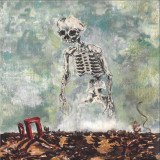
Limited Gray Marble Vinyl. This vinyl edition includes two EPs, one on each side: 'By the Ash Tree' and 'Upstream Dream', originally recorded and released in 2020 and 2021 respectively. To connect these compositions, Matt Kidd (Slow Meadow) composed new segues/crossfades from song to song, allowing the pieces to be experienced in one cohesive and harmonious flow. From Marc Weidenbaum's 'Disquiet' review: "Slow Meadow's new album, 'By the Ash Tree', opens with cascades of delays and proceeds through three tracks of reflective piano". The title track of 'By the Ash Tree' is one of Slow Meadow's most popular and enduring compositions. 'Upstream Dream' was composed around the time of 2019's Happy Occident. Soft electronics, bearing otherworldly tones and, at times, a sense of playful mischief, subtly shift expectations and bring discovery and wonder at every turn. It bookends a period of creative output that introduced Kidd's vision of calming and meditative ambient music. With a foundation of piano, string orchestration, and an ever-evolving electronic palette, Slow Meadow traverses the borders of neoclassical and minimalist electronics and delivers a deeply personal and transportive experience that speaks directly to the ebbs and flows and mundanity and marvels of life.
Iconoclastic Buddhist Línjì Yìxuán once remarked, "The miracle is not to walk on water. The miracle is to walk on earth." This profound statement serves as a reminder of the sheer beauty of our planet. We often take for granted the ground beneath our feet and the simple wonders that our ecosystem supports. Everyday activities like walking under a blue sky, feeling the breeze on our skin, or listening to a songbird's melody remind us that Earth is a precious host offering endless marvels.
"Breath," the latest album by Bordeaux-based producer Franck Zaragoza under his Ocoeur project, is a heart-felt tribute to these earthly wonders. This album, perhaps his most sincere and ambitious to date, comprises seven tracks that reflect Zaragoza's deep appreciation for the world around us. "Breath" is tranquil, peaceful, and meditative, yet its expansive, cinematic scope evokes vivid images of Earth's stunning landscapes. The album is both elegantly captivating and a poignant call for peace on our planet.
With "Breath," Zaragoza elevates his Ocoeur project to new heights, celebrating the marvels of the physical world around us.
Rose Main Reading Room, the fourth full length by Peel Dream Magazine, is a lush, inviting headphones record; the kind of album made to accompany city bus rides and rainy-day solo trips to accidental destinations. The band, whose name nods to the BBC Radio 1 legend John Peel — arbiter of all things underground, quality, and (it must be said) "cool" — has since its inception been a genre-hopping experiment, jumping from motorik krautrock to shoegaze and space age pop, and their newest work is a perfect starting point for the uninitiated, beckoning toward a newfound romance and nostalgia with their catchiest collection of songs to date. Across its fifteen songs, Rose Main Reading Room ultimately proposes a world of marvels and compelling complexity: “Oblast” cheekily prods at mutually assured destruction; “Ocean Life” explores the infiniteness within ourselves; while “R.I.P. (Running in Place)” unpacks an all too familiar stagnation. It’s all part of, and crucial to, Rose Main Reading Room’s transportive power, ever reaching for the wonder and magic of the world we live in.
Clear Vinyl
An album such as this obviously owes a lot to the atmosphere in which it was recorded, which we can imagine was magical. We know it took place in Fromentel, Normandy, in a farm converted into a studio by the producer Jacques Denjean, known for his work with Dionne Warwick or Françoise Hardy as well as having been a member of the Double Six. It was also at Fromentel, that Denjean would record two fantastic albums with Albert Marcoeur. When Emmanuelle Parrenin followed in his footsteps a year later she was in good company: the sound engineer at the studio was her partner and therefore uniquely capable (we imagine) of creating an adequate soundscape for her delicate universe. What is more, five years previously, Bruno Menny, the sound engineer partner, recorded his first and only album, but what an album: in electroacoustic terms we can hear things which make him appear as the spiritual son of his mentor Iannis Xenakis!
What makes Maison Rose unique is exactly this fusion between the two conceptions of Emmanuelle Parrenin and Bruno Menny, creating a perfect marriage of tradition and experimentation. The tradition comes from the songs collected by Emmanuelle Parrenin in rural areas, in a similar vein to the work carried out by Alan Lomax and Shirley Collins. The experimentation is in the sound captured by Bruno Menny, who both arranged and recorded the album. This is not to forget those who came with their guitar (Denis Gasser), or their lyrics (no less a figure than Jean-Claude Vannier). On the one hand we have the humble and non-demonstrative singing, with melodies which remind us of songs we would sing to calm a child's nightmares, and on the other hand a pronounced rhythmic intensity at certain points, such as on "Topaze" where the drums in particular evoke the Motorik of krautrock legends Faust.
A real haven of peace, Maison Rose is enchanting with its aura of mystery and spirituality, with soft, gentle songs which seem both ancestral and futurist. Originally published by Ballon Noir in 1977, this album follows on from other folk marvels such as Le Galant Noyé from the pre-Mélusine period. On the subject of Maison Rose, if we had to risk a few comparisons we would mention Vashti Bunyan, Linda Perhacs, Joanna Newsom, Collie Ryan, Shirley Collins, Trees Community, Sourdeline and Véronique Chalot as those which spring spontaneously to mind. But this is too reductive for the timeless singularity of Emmanuelle Parrenin: because Maison Rose was recorded in 1977, in the midst of the punk revolution.
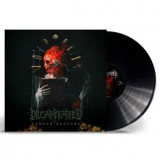
Across eight studio albums, DECAPITATED grew from the adolescent dream of teenagers from a small Central European town to one of the leaders of the metal genre. Each successive album further expands the band’s sound with genre-bending authenticity and integrity. As Metal Injection rightfully observed, “any self-respecting death metalhead knows the name well.”
DECAPITATED’s music is a weapon forged by four young men from a historic medieval-fortified town in Poland, which catapulted them to the top of a worldwide subculture. Like a rose in the devil’s garden, the DECAPITATED story builds triumph from tragedy. The gleeful grotesquery of extreme metal imagery and rifftastic bludgeoning beckons listeners to uncover broader truths.Upon the release of 2017’s Anticult, Metal Hammer declared DECAPITATED “a serious successor to the likes of Pantera and Lamb Of God – a band who can draw new legions into the metal world as its new champions.” Their diverse follow-up, 2022’s Cancer Culture, delivers on that promise.
Instantly recognizable devastation and deceptively sinister hooks abound. Freshly minted DECAPITATED anthems like “Last Supper,” “Hello Death,” “Just Cigarette,” “No Cure,” “Iconoclast,” and “Cancer Culture” shimmer with sonically sharp production and unrelenting bombast. There’s also a newly increased emphasis on melody, even venturing into darkly romantic territory. Wacław "Vogg" Kiełtyka (guitar), Rafał "Rasta" Piotrowski (vocals), Paweł Pasek (bass), and James Stewart (drums) are at the top of their game, delivering the goods at peak performance. Jinjer vocalist Tatiana Shmayluk and Machine Head frontman Robb Flynn make guest appearances.
Set on the descending plains of a mountain range amid a dense forest, Krosno boasts a 14th-century Gothic church, a Subcarpathian museum, and stunning artisan glassware. In this Polish town, teenage music student Wacław "Vogg" Kiełtyka discovered records from bands like Morbid Angel, Cannibal Corpse, Metallica, and Machine Head. The guitarist and his younger brother, drummer Witold “Vitek” Kiełtyka, cofounded DECAPITATED in 1996, inspired by a wide range of technical death, blackened thrash, and local heroes, like KAT and the world-renowned Vader. Death and black metal reigned supreme in the Polish scene of the 1990s, where Behemoth originated as well. In fact, a Vader song called “Decapitated Saints” inspired the band’s moniker.
The organic musical chemistry between the Kiełtykas was akin to the brotherly connectivity and vibe driving Pantera, Gojira, and the classic era of Sepultura. In 2006, Kerrang! praised the first three DECAPITATED albums - Winds of Creation (2000), Nihility (2002), and The Negation (2004) – as “superbly conceived and executed eruptions of technical brilliance and razor-sharp songwriting that turned these youthful Poles into one of the genre’s most widely respected bands.” That year’s Organic Hallucinosis further perfected Vogg’s penchant for blending extremity with catchy hooks.
The rule-breaking ferocity and invention of the first four albums reinvigorated death metal, as DECAPITATED inspired a new generation of bands who followed suit. Sadly, this era came to a shocking end in late 2007. While touring Russia, the band’s bus collided with a large truck near the border with Belarus. Both Vitak and then-singer Adrian “Covan” Kowanek sustained severe head injuries. Tragically, Vitak passed away in a Russian hospital a few days later. He was just 23.Vogg summoned the courage to continue, in honor of his brother and what they created, and returned with a new incarnation of DECAPITATED and the fiercely adventurous comeback album, Carnival is Forever (2011) featuring new vocalist Rafał "Rasta" Piotrowski. Blood Mantra (2014) introduced bassist, Paweł Pasek. Blabbermouth declared it “perhaps the most poised and gutsy” DECAPITATED album, adding “its courageous bends make it a turbulent but pleasurable ride.”
Cancer Culture sounds brilliant, modern, and tasty. “There is no place for any fake, plastic, bullshit drum machine or anything like that,” Vogg insists. “It’s all organic, pure, and clear, showing the true face of the band. Vogg and company entrusted the Cancer Culture mix to David Castillo at Sweden’s Fascination Street Studios / Studio Gröndahl (Sepultura, Carcass, Opeth, Katatonia), and legendary American producer Ted Jensen (Metallica, Slipknot, Pantera, Machine Head, Korn).
The devoted supporters who traveled to see DECAPITATED on international tours with the likes of Lamb Of God, Meshuggah, Soulfly, Fear Factory, and Suffocation over the years will recognize the ever-present pummeling backbone. Longtime fans and newcomers alike will connect to the variety of atmospheric depth throughout Cancer Culture’s ten boundlessly energetic and creative tracks.
“If you told me 25 years ago, in my neighborhood in the South of Poland, that I would be in Machine Head, sharing riffs with Robb Flynn,” Vogg marvels. “It’s simply incredible. It means that everything is possible in your life. That gives me the faith to believe that I can achieve even more in my career. The dreams we have when we are kids, things we can barely imagine, can happen.” Flynn contributes a hauntingly beautiful vocal to the Cancer Culture track “Iconoclast.” “Clean vocal singing is a really new thing in DECAPITATED,” Vogg notes. “It’s really unique and amazing.”
Driven by Vogg’s passion and integrity, the dual emphasis on creative invention and technical prowess maintains DECAPITATED’s stature as genre-leaders in 2022 and beyond. The band’s supporters continually demonstrate confidence and absolute certainty DECAPITATED will deliver.
Across eight studio albums, DECAPITATED grew from the adolescent dream of teenagers from a small Central European town to one of the leaders of the metal genre. Each successive album further expands the band’s sound with genre-bending authenticity and integrity. As Metal Injection rightfully observed, “any self-respecting death metalhead knows the name well.”
DECAPITATED’s music is a weapon forged by four young men from a historic medieval-fortified town in Poland, which catapulted them to the top of a worldwide subculture. Like a rose in the devil’s garden, the DECAPITATED story builds triumph from tragedy. The gleeful grotesquery of extreme metal imagery and rifftastic bludgeoning beckons listeners to uncover broader truths.Upon the release of 2017’s Anticult, Metal Hammer declared DECAPITATED “a serious successor to the likes of Pantera and Lamb Of God – a band who can draw new legions into the metal world as its new champions.” Their diverse follow-up, 2022’s Cancer Culture, delivers on that promise.
Instantly recognizable devastation and deceptively sinister hooks abound. Freshly minted DECAPITATED anthems like “Last Supper,” “Hello Death,” “Just Cigarette,” “No Cure,” “Iconoclast,” and “Cancer Culture” shimmer with sonically sharp production and unrelenting bombast. There’s also a newly increased emphasis on melody, even venturing into darkly romantic territory. Wacław "Vogg" Kiełtyka (guitar), Rafał "Rasta" Piotrowski (vocals), Paweł Pasek (bass), and James Stewart (drums) are at the top of their game, delivering the goods at peak performance. Jinjer vocalist Tatiana Shmayluk and Machine Head frontman Robb Flynn make guest appearances.
Set on the descending plains of a mountain range amid a dense forest, Krosno boasts a 14th-century Gothic church, a Subcarpathian museum, and stunning artisan glassware. In this Polish town, teenage music student Wacław "Vogg" Kiełtyka discovered records from bands like Morbid Angel, Cannibal Corpse, Metallica, and Machine Head. The guitarist and his younger brother, drummer Witold “Vitek” Kiełtyka, cofounded DECAPITATED in 1996, inspired by a wide range of technical death, blackened thrash, and local heroes, like KAT and the world-renowned Vader. Death and black metal reigned supreme in the Polish scene of the 1990s, where Behemoth originated as well. In fact, a Vader song called “Decapitated Saints” inspired the band’s moniker.
The organic musical chemistry between the Kiełtykas was akin to the brotherly connectivity and vibe driving Pantera, Gojira, and the classic era of Sepultura. In 2006, Kerrang! praised the first three DECAPITATED albums - Winds of Creation (2000), Nihility (2002), and The Negation (2004) – as “superbly conceived and executed eruptions of technical brilliance and razor-sharp songwriting that turned these youthful Poles into one of the genre’s most widely respected bands.” That year’s Organic Hallucinosis further perfected Vogg’s penchant for blending extremity with catchy hooks.
The rule-breaking ferocity and invention of the first four albums reinvigorated death metal, as DECAPITATED inspired a new generation of bands who followed suit. Sadly, this era came to a shocking end in late 2007. While touring Russia, the band’s bus collided with a large truck near the border with Belarus. Both Vitak and then-singer Adrian “Covan” Kowanek sustained severe head injuries. Tragically, Vitak passed away in a Russian hospital a few days later. He was just 23.Vogg summoned the courage to continue, in honor of his brother and what they created, and returned with a new incarnation of DECAPITATED and the fiercely adventurous comeback album, Carnival is Forever (2011) featuring new vocalist Rafał "Rasta" Piotrowski. Blood Mantra (2014) introduced bassist, Paweł Pasek. Blabbermouth declared it “perhaps the most poised and gutsy” DECAPITATED album, adding “its courageous bends make it a turbulent but pleasurable ride.”
Cancer Culture sounds brilliant, modern, and tasty. “There is no place for any fake, plastic, bullshit drum machine or anything like that,” Vogg insists. “It’s all organic, pure, and clear, showing the true face of the band. Vogg and company entrusted the Cancer Culture mix to David Castillo at Sweden’s Fascination Street Studios / Studio Gröndahl (Sepultura, Carcass, Opeth, Katatonia), and legendary American producer Ted Jensen (Metallica, Slipknot, Pantera, Machine Head, Korn).
The devoted supporters who traveled to see DECAPITATED on international tours with the likes of Lamb Of God, Meshuggah, Soulfly, Fear Factory, and Suffocation over the years will recognize the ever-present pummeling backbone. Longtime fans and newcomers alike will connect to the variety of atmospheric depth throughout Cancer Culture’s ten boundlessly energetic and creative tracks.
“If you told me 25 years ago, in my neighborhood in the South of Poland, that I would be in Machine Head, sharing riffs with Robb Flynn,” Vogg marvels. “It’s simply incredible. It means that everything is possible in your life. That gives me the faith to believe that I can achieve even more in my career. The dreams we have when we are kids, things we can barely imagine, can happen.” Flynn contributes a hauntingly beautiful vocal to the Cancer Culture track “Iconoclast.” “Clean vocal singing is a really new thing in DECAPITATED,” Vogg notes. “It’s really unique and amazing.”
Driven by Vogg’s passion and integrity, the dual emphasis on creative invention and technical prowess maintains DECAPITATED’s stature as genre-leaders in 2022 and beyond. The band’s supporters continually demonstrate confidence and absolute certainty DECAPITATED will deliver.
Tinnitus Tonight is the latest & sneakiest full-measure serving from LARS FINBERG, world-class bon vivant and prolific Panic Rock artiste. Why so sneaky? Here’s the dirt: Finberg developed a nerve rash leading up his 2017 tootle, the TY SEGALL-assisted Moonlight Over Bakersfield. Rather than blindly leap from the comfy zone, he tip-toed in secret to a friendly but far-flung (cough*Sacramento*cough) studio to capture a reserve of slanted tunes with a proven-effective team of buds. Those comrades – the glorious LAUREN MARIE MIKUS on keys, frequent collaborator & forever-gent KAANAN TUPPER on drums and, at the controls and elsewhere, the indestructible CHRIS WOODHOUSE – all fostered a supportive framework that first allowed Finberg to “think” beyond THE INTELLIGENCE, gearing him up for a life in the spotlight (or moonlight, as it were). So yes indeed: what appears to be an adventurous follow-up also doubles as a prequel. Keep accurate score or you’re dusted. The core of Tinnitus Tonight centers on an assemblage of Finberg’s most golden riffs – trash-coustic but driftwood-smooth, naughty and infinite, all of ‘em bangers and/or buggers. Tunes sprout and move matador-like until an inevitable goring. The past-it grunt that kicks off “Burger Queen” prompts a mimed chef’s kiss. “My Prison” and “The Doors” are quintessential, truly distilled Finberg moments, compounding his trademark acerbic, out-for-blood wit with these absurdly cool, whip-crack guitars. The massively impressive “Public Admirer” is unequivocally the loudest, most damaged blurt from this doggie in at least a decade. In total, Tinnitus Tonight is a wonderful and welcome reminder that our guy is a very real rouser and a vital, unique purveyor of artful aggression, playful and powerful. Finberg beams really fuckin’ brightly under his own name, perhaps more so than with any group orchestration he happens to be braising with. Do these higher personal stakes call for a dastardlier delivery? Maybe this permeating 2020 End Times feeling prohibits the normal corralling of the subconscious mind? Whatever the answers are, you will find them here.
"The gift Lars Finberg has to disfigure rock riffs into minor chord marvels should serve as a glowing example for those who feel the need to pick up a guitar and make some noise to share with the world. Using the conventional tools of rock and roll flavored with a mix of garage punk, post punk, synth punk and mutant surf, Mr. Finberg, with seemingly effortless cool, has crafted or contributed to countless albums with bands like The Intelligence, Puberty, Rubber Blanket, A Frames and more, all with a magnetic pull and genius lyrics that stand out from the indie rock heap and reveal an exceptionally creative mind that’s actually done its homework." - Noise For Zeros
Curtis Godino’s first album producing for The Midnight Wishers. Mastered by Shimmy-Dic’s Kramer. “Golden Wish” Yellow Vinyl LP ltd edition of 500. RIYL: the Shangri-Las, the Chiffons, the Crystals, the GTOS, Ween. What if a cute girl group scored a hit song about a car crash, then actually died in a car crash, but decades later, David Lynch conjured their spirits for a beach-themed Halloween special? That’s a feeble attempt to describe the fun, spooky universe evoked by musician, songwriter and producer Curtis Godino with his latest project, Curtis Godino Presents the Midnight Wishers. “I’ve always been a fan of girl groups and old generic love songs,” says the Brooklyn-based artist, previously known around town for his psychedelic band Worthless and his ’60s-style light projection shows. “No matter how cheesy, they always get stuck in my head, so I decided I would try to make some of my own, with the help of my friends.” Chief among those friends are the Midnight Wishers: lead vocalist Jin Lee and backing singers Rachel Herman and Jessica McFarland, all of whom Godino recruited for the project. Lee also contributed lyrics, which she tends to recite as often as she sings in a dreamy, earnest voice. The trio are the perfect messengers for Godino’s tunes, visually as well as sonically. In photos, they pose before bubble-gummy backgrounds, playing with a ouija board by candlelight, elemental like a cartoon crime-fighting team with their respective black, red and blonde hair. But make no mistake: This project belongs to Godino, a musical ringmaster in the tradition of Phil Spector or more aptly Shadow Morton, whose noir sensibilities spawned such uncanny pop marvels as the Shangri-Las’ “Leader of the Pack” and “Remember (Walking in the Sand).” In this case, Godino built the wall of sound almost entirely by himself, recording on his eight-track tape machine during the pandemic shutdown. Starting with drum tracks from Andrew Max and Adam Amram, he would add picked bass guitar in the style of L.A. studio legend Carol Kaye, then go bonkers with fuzzy guitars, Farfisa organ, mellotron, analog synthe- sizers, glockenspiel, an arsenal of other percussion instruments and an array of mysterious electronic effects. To fully realize the vision, however, Godino knew he needed more firepower. The Wishers’ multilayered harmonies and other vocal tracks were recorded and engineered by his roommate, Paul Millar, at Millar’s Bug Sound East studio. “I'm sure all those incredible old records were recorded on a four-track or whatever, but I don’t have the same discipline,” says Godino, whose stated goal was to create “songs so sweet they’ll give you a cavity
An unexpected musical combination of two masterpieces of modern music rethought through the use of contemporary electronic instruments that marvels at lively and innovative sounds, in the version with keyboards and electronics presented at Terraforma Festival 2019.
Ricciarda Belgiojoso and Walter Prati have created several musical projects were piano, keyboards, and electronics interact in a dynamic and unusual way. Together they have participated in contemporary and experimental music reviews and festivals such as Parade Électronique 2018, Piano City Milano, Musica per Slight Agitation 3/4: Gelitin at Fondazione Prada, Festival Aperto di Reggio Emilia 2019, Città Sonora 2019, Terraforma 2019 and NU 2020. They have recorded some of their works for DaVinciClassic.
Papiro’s approach to music is never technical, but always personal. Since the mid-Nineties, he has released a handful of noteworthy albums, each carefully put together and seemingly self- contained, yet all sharing an unmistakable musical language and a certain escapist aura.
La finestra dentata (The Toothed Window), is no exception. It includes both studio and concert recordings from 2016–2020. The sounds on this album appear infinite and full of marvels, ingenious in portraying imaginary creatures and environments.
The title track and Anelli take up most of the first side and include live outtakes. Papiro likes to describe his performances as therapeutic. These swirly symphonies are specifically intended as immersive deep-listening experiences for concert venues, and have been edited for this album to meet the physical demands of vinyl and domestic use. Imagine the younger cousins of Laurie Spiegel’s Concerto Generator performance, or Terry Riley’s Shri Camel.
However, those who know Papiro only from the stage might be unaware of a different side to his oeuvre; starry-eyed miniatures that may appear frivolous in comparison to the more heady stuff, but are nonetheless well worth discovering. Each piece adds a chapter to a phantasmagoric world populated by such characters as "Giant Duckling", "King Hard-Beard", or the "Bodulator". Tracks like the opener Odilon or Il triciclo nascosto, meanwhile, emanate a candor rarely found in the domain of serious music, and revisit Papiro’s early days of instrumental storytelling.
About Papiro:
Marco Papiro is a Swiss-Italian musician, composer and graphic designer. He teaches at the Schule für Gestaltung in Basel and is known for the posters and album covers that he's created for a number of prolific artists (Sun Araw, Sonic Boom, Panda Bear, Oren Ambarchi)
Mais Alors !!?... c’est à l’envers is the first release of new French Label ICI BIENTÔT (Here Soon ...), launched by Paris Fleamarket’s Record Shop, Geminicricket. On the Menu... Suspended Time,
Unsung Heroes, Hidden Records and Next Door Marvels.
In 1983, NEF released their first and only album, Mais Alors !!?... c’est à l’envers. At that point, the band already had a long history, interwoven with that of various musical trends and alternative
movements from the late sixties to the early eighties. That’s certainly what makes this record so special and able to conciliate such different worlds as Electronic Prog, Film Score, New Wave …
The band’s destiny was most certainly tied to their native region, the South of France, an idyllic environment that attracted a number of musicians during the 1970s, allowing the group to attend many
concerts or share the bill with several groups that have gone on to become well known: Can, Ash Ra Tempel, Magma, Catherine Ribeiro, Zao, Chêne Noir, Art Zoyd …
Founded in 1975 by Richard Lorenzi, NEF started as a kind of Free Rock band with multiple influences, going from Prog to Musique Concrete, in which any method of making sound, any way of
bringing out sounds was good … 2 musicians and a photographer, full member of the band who was projecting slides over the music and influenced their dreamlike universe. In 1978, Vincent Tronc came on board with his keyboards and synths. While the group had been influenced by electroacoustic techniques until then, Vincent broadened NEF’s horizons, bringing in a host of new influences: Ash Ra Tempel, Kraftwerk, Klaus Schulze … the beginnings of electronic music. When the album is recorded in 1983, new directions were taken and changed NEF’s usual sound.
First, the idea of playing the accordion, clearly not a common thing and a new Drum Machine, the Roland CJ-5000. Pressed the day a figure of French Chanson died, NEF’s pressing is botched up, a
good part of the records were unusable since the records came out totally warped. Then, at the end of the eighties the small stock of remaining records is lost in the sadly famous flood of Nîmes. 2000
records had been pressed, but very few survived! All the more reason to reissue Mais Alors !!?... c’est à l’envers, an unsung record, free and multifaceted, a quirky and daring musical ovni, transcending eras and genres, between synthetic
Krautrock and Film Score, reminiscent of NEU! (with a red nose), François de Roubaix and Pascal Comelade.
Connaisseur posthumously releases Daso's self-titled long player to create a final memento for his musical legacy.
We first came in touch with Daso when we saw him performing live at the
Dachkantine in Zurich around 2006. He really had this stage talent which
fascinated us straight from the beginning. At this party we agreed on the first release on Connaisseur, the "Adventure EP" including the strong "Sam n Max", which was a great presentiment of the many releases to come.
Daso was a unique character with a lovely sense of humour, and surprising quirks which could be like marvels to us. One moment, we would be worried just seeing him crossing a busy street and in the next, he would be rocking the stage with major self-confdence and the attitude of a real rock star.
In our history of Connaisseur, he defnitely was one of our most important
artists, and some of his best music was released with us. He played many label nights, and together we enjoyed uncountable laughs, discovered cities and countries while touring and collected invaluable memories.
It is the way of the world that we as a label eventually focussed on new artists, and Daso, too, embarked in new directions. We still stayed in touch, even though the gaps between our contacts became bigger with time. The frst time we realized that Daso was ill was in the frst quarter of 2016. We had invited him to our 10th anniversary party in Berlin, but he didn't feel well enough to be able to come. Shortly after this, he went to the doctor and was diagnosed with cancer. We were shocked. Daso was always such a positive person, it simply didn't add up for us that someone like him could get sick.
Obviously an irrational and unjust thought, but it just felt so unfair.
When he started chemo therapy I spoke to him on the phone, and my label partner Martin, who lives in Berlin, gave him a frst hospital visit early in summer of that year. A bit later we visited him together, and yes, he was optimistic, still full of humour and also motivated to pick up his career again as soon as possible. This impression was of course only from a distance, but I was delighted to see how confdently he presented himself on socials after all his treatments, and how after recovery he started playing gigs again.
At some point I realized Daso hadn't been active on his socials for a while, which concerned me. This was in the frst quarter of 2018. His last post on Facebook had been made on November 30th and I knew this couldn't bode well. After contacting some common friends I was told his prospects were not good. I was about to go on an Easter holiday but planned to visit him on my next monthly trip to Berlin. I didn't have the chance. On Easter Monday, April the 2nd, 2018 Daso passed away.
At Daso's funeral, which was on a wonderfully sunny day in late spring, his father came up to me and asked if I might be interested in releasing this album, which Daso had been able to fnalise in the last months and weeks of his life. We didn't decide on doing so lightly, knowing that the release of a post-mortem album can bring up certain issues. However, in the end, we agreed to do it, as we sincerely strive to create a fnal memento for Daso's musical legacy.
The self-titled album Daso will be released on April 5th, three days after the first anniversary of Daso's obit.