quête:marya

Genres
Tout
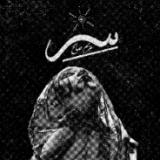
Maryam Saleh - Syrr LP

Maryam Saleh

Syrr LP

12inchSIMSARA005
Simsara Music
01.05.2026
  • 1: Mawdoo’ Tani
  • 2: El Faqd
  • 3: El Fetra
  • 4: Nafas
  • 5: Ma’na
  • 6: Wanas
  • 7: Alb
  • 8: Khayal
  • 9: Nedaa

Simsara Records is proud to announce Syrr, the new album by Egyptian artist Maryam Saleh, arriving 27 March 2026. A mythic and introspective work, Syrr transforms memory, loss, and lived experience into a shifting world of sound, voice, and embodied emotion. Written and composed by Saleh, the album traces a three-part journey—Origin & Image, Vessel, and Intuition & Echo—in which the self is fractured, questioned, reassembled, and ultimately expanded. Blending raw expression with subtle dramatics, Saleh crafts an immersive sonic autobiography rooted in intuition, embodiment, and human becoming.
Co-produced by Maryam Saleh, Maurice Louca, and Kamilya Jubran—who also perform keys, oud and backing vocals throughout—the album’s songs are set to or inspired by existing Egyptian and Arabic song forms (including mawwal, lullaby, madih, muwashshah, taqtuqa and more). The project underwent a rigorous three-year journey of songwriting and composition by Saleh with Kamilya Jubran as mentor before recording.
“Syrr” is mixed by Mokhtar El Sayeh and mastered by Heba Kadry, with artwork by Pauline Gouablin (photography), Omar Mostafa (image editing, treatment and inserts design), and Maged El Sokkary (typography and illustration). Lyrics translation by Nariman Youssef. Produced by Simsara Music with support from the Arab Fund for Arts and Culture (AFAC).

pré-commande01.05.2026

il devrait être publié sur 01.05.2026

26,68
Hannah Lew - Hannah Lew LP

“One foot out the door, another in the otherworld…”
So begins Hannah Lew’s debut, self-titled solo record, soaked in imperious, wide-eyed pop songwriting and a girl-group/post punk aesthetic that belies the artist’s history in the U.S. underground. A towering, hook-laden album, it’s infused with an optimism and surrealism that conversely deals with the times we find ourselves in.

Recorded at home in Richmond, CA and in The Best House studio with Maryam Qudus in Oakland CA, with the assistance of a crack team of West Coast musicians, this album sees Hannah Lew stepping out from behind the legacy of her two groups Grass Widow and Cold Beat. While musically bearing similarities with her previous work, “Hannah Lew” is a bold leap into direct pop territory, making ample use of a vocal style that teases out the inherent melancholy in her melodies. Mastered by Sarah Register, each song is a perfectly honed nugget that frequently pulls the heart in two directions at once.

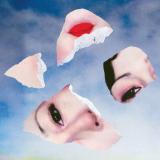
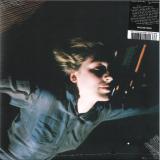
Themes of change, breaking up, shattering old ways of being are shot through the record. For the front cover, a photograph of the artist’s face was printed, ripped up and re-assembled, resembling the creative process embarked upon by Lew for her first “solo” material. The album feels instinctual, almost dream-like in its assemblage of sweeping synths and pulsating, propulsive drum machine beat patterns with Lew’s vocal performances sensitive and caressing over the top. Increasingly relying on the subconscious and dreams to guide her creative process, Hannah Lew frequently abandons literal interpretations or linear narratives, the songs seeming to exist in a swooning, effortless flow-state while remaining emotionally hard hitting.

On an album where every song could be a single, there are kaleidoscopic shades and varying emotional tones in abundance. First single Another Twilight is carried along a pumping, Italo-disco-style 4/4 beat and mono-synth bass line, the low end pulling at the heart and body. Lew’s vocal melody teases the track before swan-diving into a gorgeous chorus as she sings “it’s all over baby and I don’t mind… in decline, I take my time…” The album is suffused with moments like this. On slow builder Damaged Melody, an arpeggiated synth elongates the verse before a cascading synth showers down melodic glitter. The stunning Replica uses dual swirling synth patterns before a driving, synthpop chorus for the ages carries Hannah Lew’s vocal into the stereo field, sailing in on a high register singed with the embers of a break up.

In a departure from previous groups, her solo songs are guided by dreams and free association inspired by Dada and the Surrealist movement and sculpted afterwards. As such, the songs reveal themselves on repeated listens, revealing traces of heartbreak inspired by both personal and global elements - Hannah Lew regards the album “a wartime album.” On Move In Silence, Lew intones “there’s a war outside, just out of view,” revealing the dichotomy at play throughout. With the songs evolving naturally and in a flow state, the pressures and sadnesses of the modern age bleed through, mixed in with Lew’s inherent love, sensitivity and fractured-but-intact optimism. On the swooning, sublime Sunday layers of Numanoid synths open up for the commanding vocal performance pontificating on grief, love, pain as she “feels the ache on Sunday…” As the chorus builds and Lew’s call-and-response vocal adds to the emotional tension, it almost feels like too much to take.

Elsewhere, there are echoes of Hannah Lew’s previous work. On Time Wasted a bass guitar comes in with a heavy, punk attack before the synths and vocal harmonies reminiscent of later Cold Beat elevate everything. The glassy, sweetly resigned closer The Clock sounds like so classic it could be cover, a sweetened Jesus & Mary Chain tune perhaps, before it erupts into volcanic chorus that could only come from Hannah Lew in 2026.

pré-commande04.05.2026

il devrait être publié sur 04.05.2026

23,32
Michel Banabila - Through Global Frequency  LP

Following on from the November release of the Material Things / Pike album Rain & Cymbals, 12th Isle enter the new year with a limited vinyl edition of Through Global Frequency, a prescient work of ambient synth, electro-acoustic music and voice recordings by long-standing Dutch multimedia artist Michel Banabila (b. Amsterdam, 1961). Structured around a poem largely composed of titles from recordings he has made over the years, and written during a period marked by new Dutch migration policies, the genocide in Gaza, and the rise of the far right across Europe, Banabila enlists the voices of friends and family, each reciting the poem back to him in their native language. These voice recordings are set within a unique composition that works with the tonality, cadence and rhythm of the vocals, encompassing languages such as Arabic, Spanish, isiZulu, German, French, English, Japanese, Turkish, Ukrainian, and Dutch. Contributions come from Scanner (Robin Rimbaud), Ines Kooli, Sebastian Lee Philipp (Die Wilde Jagd), Yuko Kobayashi, Simone Eleveld, Cengiz Arslanpay and more.

“I felt the need to create something warm, something that embraced diversity. Every voice here is uniquely recognisable and reflects how I know them. I truly enjoyed working with these recordings, focusing on their personalities and the distinctive sound of their languages. For me, making music has always been a way to stay sane, and I have always loved working with voice recordings.”

Music, mix and poem by Michel Banabila,
track 3 featuring Robin Schaeverbeke,
track 8 featuring Cengiz Arslanpay,
track 10 featuring Machinefabriek.
Cello on track 9 by Peter Hollo.

En stock

Disponible en stock et prêt pour l'expédition

22,65
LUCY RAILTON - BLUE VEIL

Lucy Railton

BLUE VEIL

12inchSOMALP63
Ideologic Organ
08.05.2025

The first release to document the solo cello work of musician and composer Lucy Railton, the 40-minute composition Blue Veil recorded at Église du Saint-Esprit in Paris invites listeners into the realm of precision-tuned states of resonance: states made manifest through Railton's careful traversal of her cello's most subtle acoustic characteristics as they harmonically interlock with mind's embodied modalities of attention and imagination. Blue Veil arises out of, is sustained in and finally dissolves back into Railton's momentary presence with her intimate connection to the cello, a way of hearing that allows for a deeper engagement with harmonic resonance, one that opens a space for immediate encounters of mind and sound. Railton's exploratory practice of harmonic perception emerges from a focus on the physical qualities of intervallic and chordal sounds, their textural qualities, degrees of friction, and inner pulsations. Composing in the moment guided by resonances within the cello's body, her own, and their shared vibrational space, Railton moves through Blue Veil by giving sounds what they ask for: sounds of pure texture manifesting as a move through temporal transparency, sounds of rough texture marking regions of dimensionally dense space. Railton's creative and highly refined use of just intonation harmony deforms sound's inner movements in ways that suggest a mode of listening that actively supplies imagery of sounds implied or completely absent rather than merely savouring those fully present. This active mode of "listening-with", playfully and semi-metaphorically referred to by Railton as "sing-along music", allows listening to reflexively participate in the music's movement as it gradually passes through richly saturated domains of harmonic imagination. And just as the precision-tuned tones of Blue Veil lose their individuality when fusing multifaceted uniformity, listening's structures of reference and recognition dissolve into nameless waves of intensity, continuously unfolding themselves upon and merging with the listener. Blue Veil is the result of a deep exploration of the inner worlds of tuning, an undertaking in turn informed by and emerging out of Railton's realisations of the music of Catherine Lamb and Ellen Arkbro, her collaborative work with Kali Malone and Stephen O'Malley as well as her interpretive practice in performing the work of Maryanne Amacher, Morton Feldman and others.

En stock

Disponible en stock et prêt pour l'expédition

26,01
LUC-HUBERT SEJOR - MIZIK FILAMONIK: SPIRITUAL SOUND

180 G. BLACK VINYL WITH LINER NOTES IN CREOLE, FRENCH, ENGLISH

Originally released in 1979, "Spiritual Sound" lives up to its name, a soaring, triumphant album, six tracks of spirit magic from Guadeloupe.

Telluric, intense, terribly alive, the gwoka drums of Guadeloupe carry the identity of a painful and fervent island. Marked forever by the crime of slavery, Guadeloupe's créolité cherishes the ka drums and their natural environment: the low-pitched boula drum with male goatskin, the high-pitched soloist makè drum with female goatskin, the chacha, ti bwa, triangle, calabash and other percussion instruments that surround them, and the voices - the fiery, proud, timbred, urgent voices of the gwoka.


This album is also a legend for its voices: in his then dazzling youth, singer Lukuber Séjor was one of the first gwoka artists to largely feminize the chorus of répondè, who converse with his text delivered in a straight and powerful voice.

And everything here sets new standards. In 1979, Mizik Filamonik - Spiritual Sound proclaimed a spiritual patriotism of ferocious intensity. The album by Lukuber Séjor - whose spelling alone is a battle - sets out to give Guadeloupe the intangible weapons of self-respect and self-knowledge, through a singular practice of traditional music.

The genesis of gwoka music is less straightforward than one might imagine... The drums performed the servile task of accompanying the work of slaves in the fields and during the “corvées” imposed by the administration, before being freely practiced by the common people after the abolition of 1848. At the heart of the conviviality of the Guadeloupeans furthest from the cities - geographically and socially - the gwoka drums come out for carnival, funeral wakes and neighborhood celebrations, but also during strikes, fits of anger and armed vigils of the riots and revolts that have punctuated the island's history. For generations, governors of the colony and then the prefects of the overseas department of Guadeloupe have been viewing the gwoka as a potential for turbulence and a threat to public order.

But as the Beatlesmania, “chanson engagée” and rock revolutions unfolded in Europe, young people turned to the drums of mizik a vié nèg (“bad negro music”, in Creole), which Guadeloupeans had learned to despise by following the “assimilation” process advocated by the school system and most of the political class. At the end of the sixties, in a Guadeloupe mourning the deadly repression of the May 1967 social movement, they played traditional music, refusing to wrap it up in tourist prettiness and madras folk costumes. Instinctively, they played a rough and contemporary gwoka, led by the incendiary Guy Konkèt. This was the era of decisive 45 rpm records such as Robert Loyson's Kann a la richès, which brought to light the fieriest words of union rallies.

At his home in Sainte-Anne, Lukuber Séjor played with flautist Olivier Vamur and his brother Claude Vamur, who cobbled together a drum kit from tin crockery and became, a few years later, the most influential drummer in Kassav'.

These were the years of the Bumidom program, when young Guadeloupeans were encouraged to emigrate to mainland France. At the age of twenty, Lukuber Séjor embarked on the liner Irpinia, disembarking at Le Havre and taking the train to the Gare Saint-Lazare - the route taken by thousands of young West Indians who went on to study or looked for work, all the while trying to maintain a link with their homeland. In this case, it's at the Antony university residence, where Lukuber played the drum and participated in a thousand gwoka updates and aggiornamentos, while exile reinforced the need for a spiritual link with the native land.

In 1978, Guy Konkèt played at the Salle Wagram, a historic event for West Indian music. After serving as répondè - i.e. backing vocalist - on one of his home-recorded albums, Lukuber joined his live band. Little by little, he became one of the key artists on a circuit parallel to French show business. At a student party in Caen, he met a young woman from Martinique who, at the time, was more motivated by her ambitions as a visual artist than by her vocation as a musician. Her name was Jocelyne Béroard and, a few years before she plunged into the Kassav' adventure and became the greatest West Indian singer of her generation, she designed the cover of Lukuber Séjor's LP.

This ambition was obvious and imposed its will. A more or less regular band was formed, with Roger Raspail, Rudy Mompière and Éric Danquin on ka drums, Claude Vamur on ti bwa, Olivier Vamur and Françoise Lancréot on flutes and Annick Noël on keyboards. Lukuber Séjor is set on wanting to extend the gwoka palette to other instruments, as the jazz-rock revolution opens a thousand new doors. Annick Noël will play a wide range of timbres and textures on electric piano and synthesizer. Another novelty: the répondè are two men and two women, Roger Raspail, Olivier Vamur, Françoise Lancréot and Maryann Mathéus ...

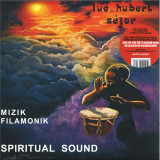
Mizik Filamonik - Spiritual Sound is a self-production in which the singer and leader sank all his savings, allowing him no more than a single day in the studio. The first side is more of a musical manifesto, with the first two tracks, Éritage and Penn é plézi, being instrumentals. The third, Son, forcefully celebrates the need for Guadeloupeans to connect with the gwoka. In fact, Jocelyne Béroard's cover shows a tambouyé in the shadow of a cloudy sky, against which a radiant sun is rising and whose light will soon flood the entire landscape. The silhouette and face of this man strongly evoke the immense Vélo, master of the ka, rejected at the time on the fringes of society.

The second side of the LP is surprising. Formally, three tracks are explicitly linked like the three parts of a triptych. Primyé voyaj evokes the appalling tribulation of Africans deported as slaves to Guadeloupe; dézyèm voyaj speaks of the Bumidom program and the economic, political and social forces driving young Guadeloupeans towards the mirage of prosperity in France; twazyèm voyaj closes the cycle with the emigrants' return from Europe after years away from their island...

This gwoka, obsessed with the need to save Guadeloupe spiritually, appeals far beyond the politicized audience. Mizik Filamonik - Spiritual Sound instantly became a classic, although Lukuber Séjor never really made a career for himself as a musician.

After all, the album was released in 1980, with no promotional resources in France or Guadeloupe - and therefore no concerts. The thirty-two-year-old author, composer and performer made his own third trip back to Guadeloupe. He set up a small woodworking business, which he lost in Hurricane Hugo in 1989. His other activity, teaching in a medical-educational institute, became the core of his professional life. He continued to be an active campaigner - a campaigner for the Creole language, a campaigner for the reawakening of identity, a campaigner for special education, a campaigner for a thousand causes that he ignited with his generous and perceptive enthusiasm, such as the defense of breadfruit fries...

The echoes of his 1979 album have not died down. Of course, the use of Penn é plézi as the theme tune for Radio Guadeloupe's funeral notices from 1980 to 1992 kept him in the collective memory, but he continues to sing and compose sporadically, as with his all-female

vocal group Vwapoulouéka... Still convinced that music is a means of liberating the spirit, he continues the journey of a young man eager to deploy the power of Creole music and language.

Bertrand Dicale
En stock

Disponible en stock et prêt pour l'expédition

19,75
Various - Best Of 2024

Various

Best Of 2024

12inchXPRESS80
The Disco Express
26.11.2024

Support from: Dave Lee ZR, Birdee, Mousse T, Da Lukas, Dr Packer, John Morales, Terry Farley, Horse Meat Disco, Basement Jaxx, Oliver Dollar, Yuksek, Bill Brewster, Bibi Seck, Chloe Callait, Glenn Underground, Nick The Record, Mark Brickman, Jimpster, Damian Lazarus, NTS Radio, BBC Radio 1, Joey Chicago & many more..

Full steam ahead! Put on your dancing shoes and jump aboard The Disco Express as the much loved London label unveils its hugely anticipated Best of 2024 compilation.

Pressed on special edition purple neon vinyl, this electrifying compilation showcases the wider breadth of the label's sound. Best of 2024 ventures into a multitude of styles: Soul, Disco, Italo and House, all made with cutting-edge production.

A brilliant fusion of established and emerging artists, the compilation boasts a stacked line up of talent; celebrating the vibrant spirit of The Disco Express whilst perfectly infusing modern twists, optimised for contemporary dance floors.

This is original house & disco for 21st century dance floors and this train ain't slowing down anytime soon...

En stock

Disponible en stock et prêt pour l'expédition

18,45
Various - Ethiopian Modern Instrumental Hits LP

Reissue of the original ethiopian vinyl compilation. 180g vinyl + heavy cardboard cover.
"Ethiopians' deep-seated ethiocentrism, the legacy of a thousand years of history, has contributed in no small way to their music's strong national identity, particularly impervious to any African influences. Latin influences, so pervasive in the great musical centers of West Africa and the Congo, have been similarly rebuffed, despite the brilliant attempts of a musician like Mulatu Astatke. He was the first and for a long time the only Ethiopian to have studied music abroad (England and USA). In the late '60s, he brought back 'ethio-jazz', as well as a passion for Latin rhythms that was not readily shared by the Ethiopian audience. As early as 1966, he released a single and two LPs in the US entitled Afro-Latin Soul (and a third LP, Mulatu of Ethiopia in 1972), with his Ethiopian Quintet composed of American and Latin-American musicians (Worthy Records). That was three years before Fela's first American tour and six years prior to Manu Dibango's key breakthrough with the release of Soul Makossa in the Western 'pre-World music' market. All this goes to show how much the history of the African continent's musical modernity should be reconsidered in light of the Ethiopian adventure, even though this lone spark bore little relation, musically or ideologically to the musical revolutions initiated most notably by Ghanian highlife, South African jazz, Congolese rumba or, much later on, by Fela."

En stock

Disponible en stock et prêt pour l'expédition

20,59
Lay-Far Dance Orchestra - Skybreak LP

DJ Support: Garnier, Opolopo, Worldwide FM, Marcia Carr, Bill Brewster, Timeout Moscow, Craig Smith, Delfonic, Tony Nwachukwu, Marcel Dettmann, DJ Rocca, Shuya Okino, Borrowed Identity, Titonton Duvante, Alex Attias, Rainer Truby, Sol Power All-Stars, Kyri R2, Robert Luis, Severino Panzetta, Lars Behrenroth, Kassian, Alkalino, Getdown Edits, Moodymanc, Gerd, Lea Lisa, Young Pulse, Mark de Clive-Lowe, Mark Grusane, Alex Barck….

International dance music heavyweight, producer and DJ Alexander Lay-Far returns with a powerful new chapter - Lay-Far Dance Orchestra (LFDO) - a fully-fledged live band project that reconnects him with his jazz-funk and fusion DNA while pushing dance music forward with unmistakable groove, musicianship and emotional weight. Formed in early 2024, LFDO is no nostalgia exercise. With Lay-Far at the helm as bassist, bandleader, composer, arranger and sound engineer, the orchestra has already been turning heads with explosive live performances, reinventing classic Lay-Far cuts, and now unveil their first album “Skybreak” with all new and original material written and produced by Lay-Far together with his bandmates and star guests, including Lipelis, Antoha MC and Seven Davis Jr. This work shows the departure from the predominantly electronic sound of Lay-Far's previous solo albums in favour of live instrumentation recorded to analogue tape and effortlessly bridging the gap between Jazz, Library Music, Disco-Funk, House, Broken Beat and Drum’n’Bass. “Skybreak” is dynamic, passionate, spiritual, cinematic, playful, heartfelt, life-affirming, dreamy and deeply romantic. Ultimately, there’s something profoundly romantic in recording and releasing such music in this day and age!


“Take Flight (Part 1)” is opening the album with style. It takes us on a beautifully orchestrated journey, blending the sensuality of Library Music with high-octane Jazz-Funk and raw b-boy breaks, propelled by breathtaking flute and Rhodes solos of Timur Nekrasov and Maxim Glonti. This aural symbiosis of “beauty and the beats” will become more and more prominent as the album unfolds.


It’s time for “Aquarius Love” created with the inimitable artist and vocalist Seven Davis Jr. (Secret Angels, Ninja Tune). In this composition cinematic soul and heavy jazz meet the restless energy of live drum & bass with deep and heartfelt vocals - timeless sound combined with a timeless message about love and life!


Next is “Head In The Clouds” - a theme for an imaginary rom-com, an ode to all the dreamers - sweet, light, naive and heartwarming. Space-Disco-Funk at its best!

“Where You From” is a fiery Soulful House number with heavy Afro-Latin influences recorded in collaboration with Lipelis. It’s full of Sun, joy and passion. Its irresistible rhythm is emphasised by funky octave bass, wah-wah guitar, catchy piano riffs, guitar solo by Lipelis and seemingly light conscious message delivered by Lay-Far and Maryag. Summer is here!

Now the album takes an unexpected twist in the form of “The Harp of Boom” which at first glance appears to be a classic-sounding Boom-Bap banger. Yes, It’s loud, raw, and gritty, yet it gradually evolves into something delicately-touching and deeply-soulful thanks to a memorable flute melody and lush string arrangement. Definitely recorded with tongue in cheek.


Next is “Feel The Moment” a remarkable collaboration with one of the most recognisable and distinctive Russian artists, singer, trumpeter and cultural icon Antoha MC. It’s a feel-good song, hopeful, life-affirming and bittersweet. A stylish excursion into Brit-Funk and Soviet Jazz-Fusion sound, drawing inspiration from the likes of Atmosfear, Light Of The World or Soviet Jazz bands like Allegro and Arsenal, but reimagining the influences through the modern West London broken beat lens.


The spectacular music journey continuous with “Take Flight (Part 2)” - it’s all about the deep infectious jazz-funk groove, heavy beats, rolling percussion and the glory of the soloing instruments - saxophone and flute by Timur Nekrasov, demonstrating the wide range of emotions from thoughtful and lyrical to restless and borderline vicious. One for freestyle dancing!

As the album draws to an end a vibrant musical triptych “Soul Constant” awaits, mixing together the deep and sensual mood of spiritual jazz with heavy syncopated drum’n’bass rhythms by Michail Fotchenkov, lush orchestration, expressive saxophone solos and the ending which can simply be described as “aural bliss”. It’s breath-taking!

A pleasant bonus is the exclusive version of “Where You From” by Lipelis himself, who is taking it into dub territories, further enhancing the rhythm section and enriching the song with his trademark playful synth flourishes and dreamy guitar solos for maximum effect (and appeal).

The album “Skybreak” by Lay-Far Dance Orchestra is the work of real artistry and craftsmanship with timeless sound that’s not only deeply-rooted but also forward-thinking.

pas en stock

Commandez maintenant et nous commanderons l'article pour vous chez notre fournisseur.

21,81

Derniere entrée: 33 jours
Kangding Ray - Sirāt - Original Motion Picture Soundtrack (LP + 7")
  • A1: Sirāt
  • A2: Horizon
  • A3: En La Noche
  • A4: Surah Maryam (Excerpt)
  • A5: Blank Empire (Sirāt Hu Remix)
  • A6: The Fall
  • B1: Desierto
  • B2: Katharsis
  • B3: Ritual
  • B4: Les Marches
  • C1: Amber Decay (Sirāt Remix)
  • D1: La Route

The official soundtrack to SIRĀT, written and produced by David Letellier aka Kangding Ray.

Pressed on opaque white vinyl with a black 7” single included as part of the package. The CD is presented in a digipack.

Set deep in the wild terrain of southern Morocco, SIRĀT is a visceral, atmospheric odyssey following a father (Sergi López) and son as they search for their missing daughter and sister. Their journey leads them through the throbbing heart of a nomadic rave scene where music becomes both guide and ghost — a haunting pulse that drives the narrative into the desert’s burning isolation.

At the film’s core is its mesmerizing original soundtrack, a fusion of electronic minimalism and grainy sonic textures that underscore the film’s themes of disappearance, connection, and liberation through sound.

pas en stock

Commandez maintenant et nous commanderons l'article pour vous chez notre fournisseur.

31,51

Derniere entrée: 17 jours
KANGDING RAY - SIRAT - ORIGINAL MOTION PICTURE SOUNDTRACK

Opaque Cream Vinyl LP + Black Vinyl 7" Single. Der offizielle Soundtrack zu SIRAT, geschrieben und produziert von David Letellier alias Kangding Ray. Die Vinyl-Version des Albums ist auf opakem weißem Vinyl gepresst und enthält eine schwarze 7-Zoll-Single. Die CD wird in einem Digipack präsentiert. SIRAT spielt tief in der wilden Landschaft Südmarokkos und ist eine viszerale, atmosphärische Odyssee, die einen Vater (Sergi López) und seinen Sohn auf der Suche nach ihrer vermissten Tochter und Schwester begleitet. Ihre Reise führt sie durch das pulsierende Herz einer nomadischen Rave-Szene, in der Musik sowohl Wegweiser als auch Geist ist - ein eindringlicher Puls, der die Erzählung in die brennende Isolation der Wüste treibt. Im Mittelpunkt des Films steht sein faszinierender Original-Soundtrack, eine Fusion aus elektronischem Minimalismus und körnigen Klangtexturen, die die Themen des Films - Verschwinden, Verbindung und Befreiung - durch Klang unterstreichen.

pas en stock

Commandez maintenant et nous commanderons l'article pour vous chez notre fournisseur.

26,01

Derniere entrée: 10 jours
Dae Han - Blue

Dae Han

Blue

12inchAGS-031LP
Aloha Got Soul
28.02.2026
  • 1: Dc2Nyc
  • 2: Interlude 1 (Movin')
  • 3: Dc2Nyc2 (Feat. Maryanne Ito, Shing02, Spin Master A-1)
  • 4: Interlude 2 (Ooh Aah)
  • 5: Blue (Feat. Nicholas Kaleikini)
  • 6: Interlude 3 (Game Over)
  • 7: Honolulu Jazz
  • 8: Disco
  • 9: The Flu
  • 10: In A Dream

Dae Han is the unsung backbone behind progressive Honolulu acts and international artists. He’s the go-to drummer whenever Japanese rapper Shing02 tours the US and Asia with a full band. In 2019, Takuya Kuroda tapped Dae to organize a band to support the Brooklyn-based trumpeter’s gig at Blue Note Hawaii. Dae also recently teamed up with guitarist Gilbert Batangan and bassist Mark Tanouye to open for Khruangbin. And every year he organizes an always impressive jazz-forward tribute to the late J Dilla.

On the drums, Dae’s swift, technical style compliments every situation, from jazz and funk to R&B, reggae, and hip hop. Much the same, Dae has approached the compositions and arrangements for his debut with craft and purpose.

BLUE, coming in February 2020, came to fruition over the past 12 months with the help of Nelson Cho, the musician and recording engineer behind Lightworks Recordings in Wahiawa, Oahu. Together, the two spent countless hours honing a sound that travels across hip hop, jazz, and house.

The resulting songs act as a diary of the artist’s fateful journey from Washington D.C. through New York to Honolulu, where he resides today. Reflecting on joyful highs and the lowest lows, Dae creates a collage for the listener to hear, appreciate, and understand the path he’s traveled thus far.

pré-commande28.02.2026

il devrait être publié sur 28.02.2026

20,59
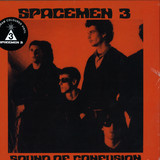
Spacemen 3 - Sound Of Confusion LP

Repress!

180 gram coloured vinyl now at new price. Spacemen 3's debut album "Sound Of Confusion", released in 1986, was a blistering affair - establishing their love of the two-chord song and also expressing their admiration for the likes of MC5, The 13th Floor Elevators and The Stooges. Sound of Confusion was 7 tracks of overdriven assault, with a strange bleakness and despair creeping through the hypnotic sprawl. R Hunter Gibson would later say: "It boosts the value of unlit rooms, unpaid debts and unfeigned terror and it would rather tackle the gradients than settle for level best. New digipack. Tracks : 1 Loosing Touch With Your Mind  2 2.35, 3 Little Doll, 4 MaryAnne, 5 Roller coaster, 6 Hey Man, 7 OD Catastophe.

pas en stock

Commandez maintenant et nous commanderons l'article pour vous chez notre fournisseur.

23,32

Last In: 12 years ago
Various - Lost Tracks: Accra To Addis LP
  • Opambuo International Band Of Ghana - Show Me Your Love (Afrocat Edit, 2025)
  • Ashanti Afrika-Jah Int. Band Of Ghana - Aluluya
  • Afro Funk - Farewell To Ibusa (Afrocat Edit, 2025)
  • Bezunesh Bekele - Aha Gedawo
  • Mulatu Astatke - Munayé (My Muna)
  • Mulatu Astatke & Tilahun Gessesse - Lanchi Biye
  • Alèmayèhu Eshèté - Mèkèyèrshin Salawiq
  • Tesfa-Maryam Kidane - Yetesfa Tezeta
  • Seifu Yohannes - Ebo Lala

"Lost Tracks: Accra To Addis" wurde von Afrocat zusammengestellt, seit 25 Jahren als DJ, Musik-/Kulturkuratorin, Radiomoderatorin der "Blaxploitation Lounge" (Totally Radio) und Abenteurerin tätig ist. Sie reiste nach Ghana und Äthiopien, um die Vielfalt der Vintage-Sounds zu erkunden und den Geist der ersten Revolutionsära Afrikas wiederzubeleben, in der Unabhängigkeit, Fortschritt und die Gleichstellung aller Menschen im Vordergrund standen – in diesem mitreißenden, funkigen und tiefgründigen Soundtrack, geprägt von Ethio-Jazz, Highlife, Gospel, afrikanische Polyrhythmen und psychedelischen Klängen. Aus der Idee eines Samplers entstand schließlich ein eigenes Plattenlabel: Lost Tracks Records ist unter Vertrag und hat einige fantastische Releases, internationale Live & Club-Events sowie Kollaborationen in petto. Als eine der wenigen schwarzen, weiblichen Labelinhaberinnen der Branche ist dies eine Stimme, die gehört werden muss. Freut euch auf die Entdeckung internationaler Disco-Klänge, Deep Funk, Blaxploitation, Dancefloor-Jazz und intergalaktische, afro-futuristische Klangabenteuer!

pré-commande27.02.2026

il devrait être publié sur 27.02.2026

25,17
MULUKEN MELLESSE - MULUKEN MELLESSE WITH THE DAHLAK BAND (ETHIOPIQUES)

Swan Song

The vinyl LP at the heart of this éthiopiques 31 tracks 2 to 11 was one of the very last vinyl records ever released in Ethiopia. But above all it represents, we felt, the absolute masterpiece of the Ethiopian Groove – the Swan Song of Swinging Addis. The album leaves a clear idea for posterity of the level of sophistication and mastery that modern Ethiopian music had achieved, before being crushed under the Stalino-military heel of the Derg – as the bloody revolution that was unfolding came to be called.

Ethiopia1976.

The Revolution that broke out in February 1974 rolled on in a ruthless march. The whole of Ethiopian society was utterly stunned. The bouquets of flowers handed joyfully to the first tanks of the coup d'état were to wilt very rapidly. From September 1976 to February 1978, 18 months of Red Terror (the name given by the junta itself) spilled blood throughout the country. This fratricidal conflict took its heaviest toll among students and youth. The shift from feudalism to a cruel and primitive Stalinism left the country's citizens deeply traumatised, and snuffed out any pretence of activism, whatever the sector of society. This ice age was to last for seventeen long years.

ሙሉቀን፡መለሰ Mulukèn Mellèssè Muluqän Mälläsä

It was three tracks by Muluken that served as the opener for éthiopiques-1 more than 25 years ago. Seven more tracks appeared on éthiopiques-3 and 13, all accompanied by The Equators, which was soon to become the Dahlak Band.

The first track, Hédètch alu, also the very first piece that Muluken ever recorded, left audiences both unsettled and amazed. Reflecting the singer's extremely young age (he was just 17 at the time), this angelic voice mystified many, who thought they were in fact listening to a feminine voice. He was not yet 22 when he released his last vinyl record in 1976 with Kaifa Records (KF 39LP), one of the very last to be issued in Ethiopia, before the cassette tape became the dominant medium for music distribution – and before the new revolutionary regime put a stop to all independent musical life, via an unspeakable barrage of prohibitions and other persecutions.

Mulu qèn, literally, “A well filled day”. This tender maternal intention wasn't enough to ward off the cruelty of fate. His mother's premature death drove Muluken to leave his native Godjam, in northeast Ethiopia, to live with an uncle in Addis Ababa. Born Muluken Tamer, he took his uncle's last name – Mèllèssè.

The spelling Muluken appeared in his administrative records. Transcription of Amharic to the Latin alphabet, both in Ethiopia and for scholars, gives rise to controversies and quibbles that can never be neatly settled. French allows for a closer approximation of the original pronunciation, thanks to its battery of accent marks, confusing as they may be to anglophones.

Between rather accommodating administrative record-keepers and the various versions that pop up in interviews given by the artist, Muluken's year of birth oscillates between 1953 and 1955…

1954? One thing is certain: the artist's talent made itself known very early indeed, because he got his start in 1966-67, at the age of 13 or 14. Photos from the period attest to his extreme youth. It's a strange sort of initiation for a very young teenager to become a sensation in the heart of Addis's nightlife at the time, Woubé Bèrèha – the Wilds of Woubé. And what's more, in the club of the Queen of the Night, the Godjamé Assègèdètch Alamrèw herself, the very same that was portrayed by Sebhat Guèbrè-Egziabhér in his novel-memoir Les Nuits d’Addis Abeba2… The legendary female club owner who is remembered to this day by the capital's ageing boomers.

Muluken first tried his hand at the drums, before he grabbed the microphone. He emigrated briefly to the Zula Club, across the street from the old Addis Post Office, one of the ground-breaking bars of the burgeoning musical scene, before joining the Second Police Band in 1968, for around three years. He spent a few months with the short-lived Blue Nile Band founded by saxophonist Besrat Tammènè. As the musical scene grew increasingly successful, and pulled slowly but decisively away from its institutional ties, Muluken released his first 45rpm single in February 1972 (Amha Records AE 440). It was included in two LP Ethiopian Hit Parade compilation albums in September of the same year. All in all, Muluken released eight two-track 45s and the same number of original cassette tapes between February 1972 and 1984, the year that he departed for permanent exile in the USA. After converting to Pentecostalism in 1980, Muluken gradually abandoned all secular musical activity. In 1985, at the end of a concert in Philadelphia, he decided to quit concerts and recording for good. Mèlakè Gèbré, the historic bass player from the Walias band who was playing with him that night, recalls that everything appeared so irredeemably diabolical in Muluken's eyes, that it was to be the end of his contribution to Ethiopian Groove.

The end of the story, the beginning of a legend.

Dahlak Band, forgotten by History

Aside from his personal history and vocal talents, it must be remembered that Muluken Mèllèssè was one of the biggest names in the musical innovations that marked the end of the imperial period. These éthiopiques aim to convince those who are just discovering this hidden gem... As for Ethiopians themselves, they are to this day captivated by this singular and atypical figure in the Abyssinian pop landscape – even though he withdrew from public life some 40 years ago. Incorrigible devotees of poetic twists, of more or less hidden meanings, Ethiopians appreciate above all the care Muluken took in choosing his lyrics and the writers who penned them, such as Feqerte Haylou, Alemtsehay Wodajo and, here, Shewalul Mengistu (1944-1977). Love songs, written by women, a far cry from the conventional drivel that pleases sappy sentimentalists.

Muluken is equally acclaimed for his perfectionism when it came to music, the opposite of the overly casual approach that is all too common. He remained a faithful partner of musicians who came from a lineage that borrowed from several inventive and pioneering bands (Venus, Equators, Dahlak). Amongst them were certain artists who began their musical lives with Nersès Nalbandian at the Haile Sellassie Theatre and who come of age in around 1973 – at just the wrong time, you might say. Among them were the pillars Shimèlis Bèyènè (trumpet), Dawit Yifru (keyboards) and Tilayé Gèbrè (sax & flute). Most notably Tilayé Gèbrè, certainly one of the most important musicians, composers and arrangers of his generation, of the end of the imperial era, and of the early years of the Derg.

It was only in 1981 that a miraculous opportunity arose for Tilayé to escape the Stalinist paradise of the dictator Menguistou Haylè-Maryam. Once again it was Amha Eshèté (1946-2021) who provided a solution. The spirited and courageous producer, who had been in exile in Washington since 1975, succeeded, thanks to his incredible perseverence, in bringing the Walias Band to the USA. It was, in fact an extended Walias Band comprising ten musicians3, six of whom chose to slip away after a few concerts and the recording of an LP (The Best of Walias, WRS 100). Tilayé Gèbrè was one of these. He has been living in the USA ever since. There he joined the then-nascent Ethiopian diaspora, which lived largely unto itself, and was making only very modest headway in the American musical market. It seems unfair that Tilayé Gèbrè and the Dahlak Band were not able to benefit earlier from the public recognition that they do deserve.

A similar draining away of the top-rate talents would lead to the reorganization of the major groups of the “Derg Time”. The remaining artists spread themselves around between Ibex Band (renamed Roha Band), Ethio Star Band and a remodeled Walias Band. That spelled the end of the Dahlak Band.

With this record, produced by the essential Ali Abdella Kaifa a.k.a. Ali Tango, we can appreciate everything that the Derg not only destroyed, but also prevented from flourishing. This gem of Ethiopian-style afrobeat came out in 1976 (and, by way of a parenthesis, before the FESTAC 1977 in Lagos, which was attended by an impressive delegation of Ethiopian musicians — although Fela was already personna non grata in his own country). Despite everything that might distinguish this ethio-groove from Fela’s music – no colonial axe to grind, no question of political confrontation with the authorities, no claims to negritude or Africanism for the Ethiopian musicians, and less extrovertion! –, this LP fits beautifully into the saga of intense and electrified soul of the new “African” groove that Fela and Manu Dibango embodied so well from that point onwards.

In restoring this record to its place in the afrobeat epic, it can be seen that, if nothing else, the timeline bestows a legitimate pedigree and a historical primacy to works that had no international impact when they were originally released.

Warning! Masterpiece!

pas en stock

Commandez maintenant et nous commanderons l'article pour vous chez notre fournisseur.

20,59

Last In: 3 months ago
ELIANA GLASS - E

ELIANA GLASS

E

12inchSPLP160
Shelter Press
21.08.2025

Der schwüle Ton von Eliana Glass ist nicht zu überhören - sie wechselt zwischen einer unkonventionellen, suchenden Qualität und ihrer ergreifenden, ehrfurchtgebietenden Bandbreite. Auch ihr Klavierspiel besitzt dieses mitreißende Hin und Her zwischen dem Jenseitigen und dem schmerzlich Menschlichen - jede Melodie ist ihr eigenes, einzigartiges, schmerzhaftes Reich. Glass' spärliche, meditative Musik fängt oft, wie sie sagt, die ,Verdichtung des Alltags" ein, ein Bild, das zu der bittersüßen, flüchtigen und abstrakten Natur ihrer Arbeit passt. Glass' Debütalbum E erscheint bei Shelter Press und ist nicht nur ein zärtliches Porträt ihrer lebenslangen Beziehung zum Klavier, sondern auch eine Destillation ganzer Lebenszeiten. Vier Jahre lang arbeitete Glass mit dem Mitbegründer und Produzenten von Public Records, Francis Harris (Frank & Tony, Adultnapper), und dem Tontechniker Bill Skibbe (Shellac, Jack White) zusammen, um das Album E in verschiedenen Studios in Nashville, Brooklyn, Memphis und Benton Harbor, Michigan, aufzunehmen. Glass' experimentelle, improvisatorische Werke erinnern an den sinnlichen Minimalismus von Annette Peacock, die freudige Rätselhaftigkeit von Carla Bley und die wehmütige Intimität von Sibylle Baier. Ihre Verehrung für die Größen des Leftfield Jazz und der freien Improvisation ist unüberhörbar, aber immer gefiltert durch ihren unverwechselbaren, naturalistischen Sound. ,Dreams" ist eine majestätische Interpretation von Peacocks gleichnamigem Stück aus dem Jahr 1971, ,Sing Me Softly the Blues` ist eine minimale, fesselnde Neuinterpretation von Baiers Jazzstandard mit einem von der norwegischen Sängerin Karin Krog adaptierten Text, und ,Emahoy` ist eine schmachtende Hommage an die äthiopische Pianistin, Komponistin und Nonne Emahoy Tsegué-Maryam Guèbrou und ihre 2006 erschienene Kompilation Éthiopiques. Glass' Musik basiert auf einem taktilen, sprunghaften Klang und ihrer stimmlichen Kraft und Vielseitigkeit. E's glatte Stöße von Kontrabass und Schlagzeug kitzeln den Gehörgang und betonen die Schlagfertigkeit ihrer unverwechselbaren tiefen Stimme, die sonore, androgyne Gelassenheit mit flatterhafter Zartheit verbindet. E hat auch eine rätselhafte elektronische Note, die die verschwommenen Emotionen von Glass' Songwriting noch verstärkt. Von Hintergrundrauschen und windigem Gesang bis hin zu kaleidoskopischen Synthesizern stammen diese subtilen, geschmackvollen Verzierungen oft von speziellem analogem Equipment: einer unterirdischen Echokammer aus den 1960er Jahren, einem Cooper Time Cube (im Grunde das Hardware-Äquivalent der Audioverarbeitung durch einen Gartenschlauch) und einem AEA-Bandmikrofon aus den 1940er Jahren. Aber das bedeutet nicht, dass E veraltet klingt - Glass' Songs sind von einem zukunftsweisenden Geist durchdrungen und fungieren letztlich als Vehikel für ihre berauschenden Emotionen und fragmentierten Erinnerungen und Träume. Glass' eigentümliche stimmliche Alchemie und ihre lebhaften Klavierausflüge sind meisterhaft und ganz und gar ihre Sache, und ihr Debütalbum ist ein Geschenk von klangvoller Schönheit und lohnender Mehrdeutigkeit. Als Musikerin und Improvisatorin ist Glass von der Suche nach Bedeutung, nach Klängen, nach Neuem, nach Verbindung begeistert und beherrscht diese. Und wie Krog 1975 in ,Sing Me Softly the Blues" sang: ,Life's so thrilling / if you search."

pas en stock

Commandez maintenant et nous commanderons l'article pour vous chez notre fournisseur.

23,95

Last In: 7 months ago
Gia Margaret - ROMANTIC PIANO LP

Zunächst nannte Gia Margaret ihr neues Album Romantic Piano, um ein wenig frech zu sein. Denn die sparsamen, sanften Klavierstücke haben mehr mit Erik Satie, Emahoy Tsegué-Maryam Guébrou und den "Marginalia"-Veröffentlichungen von Masakatsu Takagi gemeinsam als mit einem gemütlichen Date-Abend bei Kerzenschein. Doch in dieser Frechheit liegt eine verborgene Absicht: In dem wunderschönen Set wird "Romantik" in einem eher klassischen Sinne suggeriert, was die Deutschen als Waldeinsamkeit bezeichnen. Die Kompositionen beschwören die erhabenen Themen der romantischen Dichter herauf: Einsamkeit in der Natur, die Fähigkeit der Natur zu heilen und zu lehren, ein Gefühl von zufriedener Melancholie. "Ich wollte Musik machen, die nützlich ist", sagt Margaret und untertreibt damit gewaltig die Kraft der Platte. Romantic Piano ist neugierig, beruhigend, geduldig und unglaublich bewegend - aber es verweilt nicht länger als eine Sekunde. Margarets Debütalbum There's Always Glimmer war ein lyrisches Wunderwerk, aber als sie wegen einer Krankheit auf Tournee nicht mehr singen konnte, nahm sie ihr Ambient-Album "Mia Gargaret" (ein weiterer frecher Titel!) auf, das ein feines Gespür für Arrangement und Komposition zeigte, das bei den lyrischen Songs von There's Always Glimmer nicht voll zum Tragen kam. Auch Romantic Piano kommt fast ganz ohne Worte aus. "Das Schreiben von Instrumentalmusik ist im Allgemeinen ein viel freudigerer Prozess als das Schreiben von Lyrics und wirkt sich letztlich auf mein Songwriting aus.", sagt sie. Romantic Piano festigt sie als kompositorische Kraft. Ursprünglich hatte Margaret einen Abschluss in Komposition angestrebt, brach die Musikschule aber auf halbem Weg ab. "Ich wollte wirklich nicht in einem Orchester spielen", sagt sie über ihre Entscheidung, "ich wollte eigentlich nur Filmmusik schreiben. Dann begann ich, mich mehr und mehr darauf zu konzentrieren, eine Songschreiberin zu sein." Romantic Piano berührt in der Tat ein seltenes Gefühl in der Kunst, das oft nur dem Kino vorbehalten ist - die gleichzeitige Ehrfurcht vor dem Dasein mit der großen Linse und der intime innere Monolog nach der Sprache, wenn wir in unseren Schädeln festsitzen. Und das ist sehr romantisch!

pré-commande24.06.2025

il devrait être publié sur 24.06.2025

26,26
La Felix, Maryag, Borka & The Gang, Rayowa, Magnolia, Bustin' Loose, Third Attempt - Summer Heatwave

Revered as one of London’s ‘leading disco labels’, The Disco Express slows no signs of slowing down. Steaming in HOT with with seven Summer sizzlers, the much loved label serves up certified dance floor heat ahead of the sunny season.

Oozing in top tier quality, the Summer Heatwave vinyl compilation encompasses the best new music forthcoming on The Disco Express. Including superb remixes by the scintillating Bosq and Dr Packer, Summer Heatwave features 100% original music by label regulars Magnolia, Maryag, Rayowa, Third Attempt and label boss Bustin’ Loose.

Pulsating with pure infectious Summer grooves, this compilation is truly essential for Disco, Nu-Disco and House music lovers worldwide

pas en stock

Commandez maintenant et nous commanderons l'article pour vous chez notre fournisseur.

17,44

Last In: 3 months ago
Six Organs of Admittance - MariaKapel
  • Annunciation 06:12
  • Riel 04:52
  • Stone Leaf And Pond 04:11
  • Katwijk 04:01
  • Dongen 05:20
  • Tilburg 03:09
  • Maryam 04:51
  • Two Wings 04:53

Originally released on Ben Chasny's own Pavilion imprint in 2011.

"I was invited by the Incubate Festival and the city of Tilburg to participate in an artist residency where I would explore the region’s unique chapels built for the Virgin Mary. After writing the music for about six months by drawing on memories of the encounters with the chapels and using techniques inspired by Gaston Bachelard’s Poetics Of Reverie, I flew back to Tilburg to perform the music at the Incubate Festival. We recorded the evening and I released the result on my Pavilion label. Each cover was hand painted white on white in the old Pavilion style. I created a stencil and used graphite powder to make the design that is inspired by the sun imagery in Athanasius Kircher diagrams."

Roadside chapels express the identity of the inhabitants of North Brabant, a Dutch province, bordering on Belgium. Roman Catholicism has been the dominant religion in this southern part of the Netherlands since the eighth century. For about a century and a half this religion was strongly suppressed. Only when the French revolutionaries preached freedom of belief around 1800 could the people of North Brabant exercise their faith again. This was the start of a very strong emancipatory development from which a special form of the Roman Catholic faith arose that fully determined everyday life of the people here. This faith was the determining factor in life and the measure of all things. After the second Vatican Council (1962-1965) the reins of the catholic faith in Brabant were loosened as well. This was the start of a revolutionary process of secularisation. Within a decade hardly anything was left of the almighty influence of the Roman Catholic Church and this situation has lasted up to the present day.

In spite of the almightiness of the official, Vatican ruled, Roman Catholic faith, North Brabant has always and perhaps notoriously fostered an undercurrent of popular belief as well. This is a kind of belief in which elements of the official faith and age-old pre-Christian traditions are combined. Worshipping relics, holding pilgrimages and processions, the use of water from holy wells, popular art, recitations and songs, festivals, rituals, folk traditions, superstition and the like are all examples of popular devotion. These matters have strongly influenced and formed the identity of the present-day population of North Brabant. It is part of their immaterial heritage.

An obvious and still very much visible form of popular devotion are the roadside chapels. In Brabant some 400 can be found, most of which have been devoted to Mary. Chapels are small buildings in which Mary or other saints are worshipped. They can be found within villages or towns or in natural surroundings. Always at the finest spots! The beauty of the environment adds a primary religious or mystical feeling to the visitor. Local people attach great value to their chapels. In spite of the overall secularisation in society they are still at the centre of cultural and social life. Where people in North Brabant can hardly be found in the churches nowadays, this doesn’t mean at all they are no longer religious. On the contrary, religious feelings are perhaps stronger than ever, but now people have to find their own expression of them. That’s why they fall back on the age-old popular belief in which chapels play an important role. We can even witness new forms of popular belief with chapels as their focal point. An example of this is the scattering of ashes of people who have been cremated. Chapels clearly also play a role in the lives of young people. On an average five new chapels are added every year.

I have studied the popular culture and belief and the identity of the inhabitants of North Brabant for over thirty years. I have published over forty books on these subjects. In 2010 I was approached by the organisation of the Incubate Festival in the North Brabant town of Tilburg. Their request was for me to lead the American composer and guitarist Ben Chasny around a number of chapels in the province devoted to Mary. He had been invited to North Brabant to write some new compositions. Ben Chasny then chose to be inspired by these chapels and that’s how we met. I was especially curious how an American would react to something as specific and small as a roadside chapel in North Brabant, since we tend to think here of (people in) America in terms of ‘big-bigger-biggest’. Would an inhabitant of this enormous country with this prevailing culture be able to grasp and respect the identity of some 2.5 million people in North Brabant with their chapels? The answer to this question lies hidden in the compositions he made and that can be listened to on this album. Yes, Ben Chasny has been able to convert the phenomenon of a simple chapel devoted to Mary into music. The physical and the spiritual have found each other. What a beautiful world…just listen! - Paul Spapens

pré-commande09.05.2025

il devrait être publié sur 09.05.2025

22,27
Footshooter - The Oasis

Footshooter is the moniker of Barney Whittaker, a south London-based producer and DJ. His production style takes in influences from broken beat, jazz, house and more, working with rappers, poets and vocalists to create a soulful sound referencing the past while being firmly future-facing in its approach. His records as Footshooter and SAUL have earned airplay and support on BBC Radio 1 & 1xtra, BBC 6 Music, NTS Radio, Jazz FM and Rinse FM, from the likes of Gilles Peterson, Bradley Zero, Errol (Touching Bass), Alex Nut (Eglo Records) Shy One, Virgil Abloh, Zakia, Jyoti, Nabihah Iqbal, Bonobo, Jamz Supernova, Maryanne Hobbs, Mr Scruff and more.

His musically diverse live band sets and DJ sets over the past seven years have taken him to Boiler Room London, Tate Modern, Alexandra Palace, The Jazz Cafe and the Barbican Centre, as well as performances at Brainchild, We Out Here and Love Supreme Festivals. A Balamii Radio resident for the past 5 years with his monthly show 'Sonic Fruits', Footshooter's DJ sets are as versatile and wide ranging as his production credits, spanning the finest soulful house, broken beat, UK Rap, soul, jazz and beyond.

"This is the sound of London right now, and it is fantastic" - Juno Records

pas en stock

Commandez maintenant et nous commanderons l'article pour vous chez notre fournisseur.

27,52

Last In: 10 months ago
AYA - HEXED!

Aya

HEXED!

12inchHDBLP69
Hyperdub
02.04.2025

aya's incredibly inventive Hyperdub debut album im hole distilled the incisive sonic experimentation of her early run of releases, the tongue-in-cheek giggles of her DJ sets and radio show, and the identity-fluxing lyricism of her live shows into a delirious tug of war between pleasure and dysmorphia. The album was championed from all corners, 'Best New Music' in Pitchfork to Radio 6 DJ Maryanne Hobbs 'Album of the Year', followed by a run of incredible live shows which drew new listeners further into her world. hexed!, aya's second album, confronts the desperation and dysfunction of addiction. Internalised phobias and suppressed traumas haunt the corridors and golden hours once romanticised on 2021's im hole; daymares concealed by nocturnal afters-hopping and key bag circles. Opener `I am the pipe I hit myself with' exposes the gray portrait secreted somewhere between the 8th and 9th floors of her previous record. `I used to say some shit for sure', `I used to say it when I was me-less'. hexed! is about what happens when aya turns the lights on.

pas en stock

Commandez maintenant et nous commanderons l'article pour vous chez notre fournisseur.

23,49

Last In: 7 months ago
Articles par page:
N/ABPM
Vinyl