Bobo Integral Records announces the Deluxe Edition of "Dead Calm", the debut album by The Boys With The Perpetual Nervousness, available September 13, 2024. This edition enriches the original tracks (now remastered), which were met with immediate success and critical acclaim, with new material and acoustic demos. Also incorporates an expected insert with all lyrics. Upon its initial release in 2019 by Pretty Olivia Records, "Dead Calm" was celebrated for its melodic craftsmanship. Purepopradio praised it asa "masterpiece of melody and harmony", Powerpopaholic rated it 9/10 and included it in their "best of 2019 list for best power pop this year", and Section 26 recommended it as "Presque indispensable". After two other records, "Songs From Another Life" and "The Third Wave Of_", that are now cult classics in the genre, it's the time to come back to the record that started it all. The Deluxe Edition offers fans an exclusive track from the original sessions, "Wouldn't Be Anywhere Else", and six acoustic demos that provide insight into the band's creative process. Reflecting their musical influences, such as The Byrds, R.E.M., Big Star, The Go-Betweens, Teenage Fanclub and the classic power pop era, the band's sound is a contemporary homage to these inspirations. Andrew Taylor is the leader and soul of Dropkick, a wonderful Scottish power pop group with touches of altcountry. Gonzalo Marcos is part of the cult Spanish indie pop group El Palacio de Linares and founder of the Bobo Integral Records label. The two forged a friendship during Dropkick's first tour of Spain and Dropkick ended up releasing a couple of albums on the label. "The most perfect voice in jangle/power-pop at present (sorry Teenage Fanclub fans!)" - Janglepophub
Cerca:master h
Obsidian, the upcoming album from Pennsylvania's own riff-titans Crobot, and likely the band's most introspective journey yet, is set for release on the extraordinarily lucky 13th Friday. Produced by Crobot, recorded at The Machine Shop Studios in Austin, TX, and engineered, mixed, and mastered by Alberto De Icaza, the 12 tracks on Obsidian dive into the deep, murky waters of the human condition, threading ancient myths with personal demons across its tracks.
While the band's primary songwriters - Bishop and Yaegley - tend to leave their songs somewhat ambiguous, the upcoming album's new tunes touch upon very personal growth, conflicts, and reflections. "Each song descends into the darker reaches of the psyche," Bishop says, "set to a relentless rhythm of heavy, pulsing beats and gut-wrenching guitar solos, and offers a stark reflection of internal struggles." "'Obsidian' is almost a rebirth of our career," Brandon adds. "We were able to take a different approach to the writing and recording of this album, so the experience was very rewarding and different from past projects. Conflicts and reflections make you a better person, even in those darker moments, but I know I become a better person for it. I think that's what symbolizes this entire album for us. It's been a real breath of fresh air."
In the modern world where musical dystopia has cemented itself in common please, CTSD has stepped up to deliver a 4-track EP of proper, adult-Techno music.
After debuting on the label with his juggernaut track 'Algorithmica', the aptly named 'Vortextual' EP delivers a sonic landscape that's embellishing his status as an artist of immeasurably sonic capabilities. This time, with a full body of work to display, he is giving us a masterclass of unconventional and forward thinking sound design across all 4 tracks.
Studio[41,98 €]
Ben Webster ”At the Renaissance” wurde am 14. Oktober 1960 live im The Renaissance in Hollywood, Kalifornien, aufgenommen und auf Contemporary Records veröffentlicht. Neben dem Saxophonisten Webster spielen Jim Hall (Gitarre), Jimmy Rowles (Klavier), Red Mitchell (Bass) und Frank Butler
(Schlagzeug). Diese Neuauflage, die als Teil der Acoustic Sounds Series veröffentlicht wurde, verfügt über
(AAA)-Lackierungen, die von den Original-Masterbändern von Bernie Grundman geschnitten wurden, und
wurde bei QRP auf 180-Gramm-Vinyl gepresst und in einer Tip-On-Hülle präsentiert
Clear Vinyl[30,67 €]
Spectres have been stirring in the shadows for years now. Dark eyes watching from pallid faces. Siren songs calling to lost souls. In the blackest corners of the UK underground, a name whispered relentlessly amongst the faithful, first with curiosity, then soul-shuddering awe: Zetra.
Zetra is also the title of their striking debut LP. Ten tracks whose indefinable blend of shimmering shoegaze and pulsating goth-metal work deep beneath the skin, it is a masterclass in intimate dark romanticism and sweeping elemental beauty. It could be seen as a reaction to the geography of a strange new world, but also to the jagged topography of the human psyche itself. Is it a manifesto? A roadmap? A riddle waiting to be solved? Profound pleasure lies in peeling back its many layers.
Travelling alone, armed only with synths, guitar and drum-machine to compose, The Wanderers’ music could sound skeletal. Instead its early metallic bones have been fleshed-out with the electronic new-wave of Gary Numan and Pet Shop Boys and dreamy, droning guitars that hark to heroes like Slowdive and Sonic Youth as well as dark contemporaries Deafheaven and Alcest. As harsh as the truths with which they deal may be, these songs deliver beguiling brilliance.
Acolytes to spread the word of Zetra aren’t hard to find. British ‘contemporaries’ like Burner and Wallowing, Celestial Sanctuary and Employed To Serve have been dementedly singing their praises as far back as they can remember. Tours with the heavyweight likes of Creeper and Godflesh, VV and SKYND have taken their once-subterranean sounds into the spotlight. Unto Others’ Gabriel Franco (‘Moonfall’), Svalbard’s Serena Cherry (‘Starfall’) and Sólveig Matthildur Kristjánsdóttir from Iceland’s Kælan Mikla (‘Shatter The Mountain’) even crop up amongst these recordings, dissolving into the cult of Zetra themselves. But none are as important as the legions of fans Zetra are yet to reach with a dark gospel still unpicking all manner of psychological knots and existential truths.
2024 repress
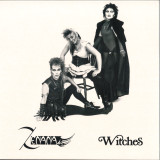
Rush Hour’s RSS series excels in unearthing buried treasure, offering a second chance for artists and releases that have long been overlooked. That’s certainly the case with ‘Witches’, the superb sole single by British 1980s wave trio Zenana.
Originally released on seven-inch by the tiny PRM label in 1986, ‘Witches’ was the product of a sister-brother songwriting team whose music was mostly recorded in the front room of a terraced house in Nanpean, a small industrial village in Cornwall, England’s most south-westerly county. While the single was infectious, impeccably produced and dancefloor-ready, it sold in limited quantities at the time.
Zenana’s story can be traced back to the early 1980s, when singer-songwriter Anita Tedder founded the all-female trio as a vehicle for her musical ambitions. To bring her songs to life, she joined voices with her brother Mike, an early adopter of electronic music who had built a studio – nicknamed MFR, short for ‘Mike’s Front Room’ – in his Cornish home.
Countless Zenana tracks were recorded at ‘MFR’ between 1984 and ’86, with the resultant demo cassette securing the band a management contract, a slew of live bookings, a video shoot and even a television appearance. Buoyed by this underground success, they headed to the remote Sawmills Studio in Cornwall – famously only accessible by boat – to re-record ‘Witches’, a song inspired by local folk tales of witches gathering near Mike’s home.
While this version of ‘Witches’ failed to make an impact at the time, it has become something of a cult classic following its’ rediscovery by crate digger Kiernan Abbott – and subsequent championing by other dusty-fingered DJs including Antal, Skyrager, Trevor Jackson and Luke Una – in early 2023. The buzz inspired Zenana to perform live again for the first time in decades, with the story of their surprise comeback being covered by British media outlets including the BBC and (more surprisingly) the Daily Mail.
Now presented in re-mastered form, ‘Witches’ is a genuinely slept-on gem. Propelled forwards by punchy drum machine beats, a killer synth bassline and fizzing keyboard sounds, the song benefits greatly from strong vocals and an extra-percussive middle eight layered with vocalisations, cosmic spoken word sections and swirling noises.
It comes backed by a brand-new extended ‘spell of love’ courtesy of Bristol duo Bedmo Disco, AKA music journalist Matt Anniss (author of Join The Future: Bleep Techno and the Birth of British Bass Music) and DJ/production partner Gareth Morgan. Anniss is a long-time friend of Mike and Anita Tedder who has fond memories of visiting Mike’s home studio with his family around the time that ‘Witches’ was recorded.
Working from Zenana’s original MFR eight-track recording (tapes of the single version were lost years ago), Anniss and Morgan have turned in the extended ‘dance mix’ the track never had first time around. More atmospheric, clandestine and dancefloor-focused, it offers authentic nods to New York proto-house, mid-80s Shep Pettibone dubs, and the pioneering synth-pop productions and dub mixes of Factory Records regular Martin Rushent.
Back in circulation after over a decade, Jahtari's seminal "Jahtarian Dubbers Vol. 1 EP" receives the long-awaited reissue treatment, reviving the raw, 8-bit-infused dub vibes that defined a new era of digital roots music.
Originally released in 2008 and quickly disappearing into dub obscurity, this heavyweight 12" returns with four essential cuts that perfectly encapsulate the Jahtari sound—where chiptune meets the echo chamber.
The EP kicks off with Blaze Dem's "Roots Defender", a hypnotic concotion of deep basslines and eerie samples from a Swedish cult ritual, setting a heavy tone right from the start. disrupt's cinematic "Kozure Okami" follows, channeling Black Ark vibes through 8-bit synth explorations.
On the flip, John Frum delivers the hauntingly beautiful "January Dub", while Rootah's slomo slammer "Holy Mount Part 2" closes the EP with Lynchian, echo-soaked vibrations that linger long after the needle lifts.
Timeless tracks, mastered by CGB-1 at D&M in Berlin for maximum impact. Pivotal piece of Dub music!
The Petersons’ were a vocal trio from Waycross, GA, their performing name came from their founder, lead vocalist and drummer Kenneth Peterson, along with Keyboard player Salem Chatman and vocalist/bassist Johnny Members. The trio regularly performed shows along America’s East Coast, and it was while working in Philadelphia during early 1973 that the group answered an advertisement in Billboard Magazine quote “Masters Turned Down? We Are Looking for New Acts to Sign, Contact Omega Sound Productions, Philadelphia, PA”.
Omega Sound was a fledgling independent Recording Company formed by Frank Fioravanti a budding songwriter and former Encyclopedia Britannica Salesman for the initial purpose of find some extra work for the musicians of The Philadelphia Orchestra who were looking to earn some side money. As a result of answering the Billboard advertisement ‘The Petersons’ found themselves booked into Frank Virtue’s recording studio to record two Fioravanti and the late Alan Felder penned songs, the up-tempo “What’s It Gonna Be” backed by the melodic “Just What I’ve Been Looking For” Mel Omega (1833). With the release failing to make much noise, The Petersons returned to their native Georgia where they continuing to perform and record but under the group name of ‘Toll Darkness’. Fast forward circa 30 years and a couple of copies of this obscure Mel Omega 45 was introduced into the UK by Soul Bowl’s John Anderson where they gained belated recognition initially at the Soul Essence Weekenders through resident DJ Steve Guarnori with “Just What I’ve Been Looking For” being his chosen side. These initial copies had a paper sticker on them crediting the Artist as ‘Toll Darkness’ but the subsequent find of further copies with no sticker coverings, revealed the real artist to be ‘The Petersons’, intriguing? The reason behind the differing artist names is reputedly assumed to be that Ken Peterson took some copies of the Mel Omega 45 back to Georgia and pasted the ‘Toll Darkness’ group name stickers over the Petersons label credits to enable him to sell them at shows with his other ‘Toll Darkness’ 45 “Party/Love Makes Me Do Foolish Things on Alpha Records. The up-tempo backing track of The Peterson’s “What’s It Gonna Be” was a Frank Virtue arrangement that he had great faith in, hence it’s usage on plethora of other Philly artists recordings, i.e. Fred Mark, Liza Mae, Michael Christian, Cody Michaels etc over different record labels, Melomega, Concept, Fox Century Plaza and Merben.
Frank Fioravanti also founded the Sound Gems label which brought us the timeless classic “Your My Main Squeeze” recorded on the New Beford, MA group ‘Crystal Motion’. Omega Sound’s most notable achievement would be William DeVaughn’s 1974 hit “Be Thankful For What You Got”.
- A1: Tonpei Hidari - Tonpei No Hey You Blues
- A2: Chu Kosaka & Ultra - Kimagure Party
- A3: Kazushi Inamura - Go Yojin
- A4: Fumio Karashima - American Tango
- B1: Takao Uematsu - Mysterious Jump
- B2: Maximum - Ashita Tenki Ni Nare
- B3: Jun Miyauchi - Heartbreak Highway
- B4: Hiroshi Murakami & Dancing Sphinx - Baby, It`s Trivial
- For this brand new chapter in the highly acclaimed Wamono series, DJ Chintam goes digging into the vaults of one of the most revered Japanese labels, Trio Records, and unearths some killer drum breaks, dope bass lines and funky horns, for an essential selection of jazz funk fusion and rare groove vibes produced on Trio between 1973 and 1981!
- 180g heavy vinyl pressing, reverse board jacket.
- Fully licensed Trio Records masters.
- Mastering and lacquer cut by Jukka Sarapää at Timmion Cutting Lab, Helsinki, Finland.
- Signature artwork by Yoxxx.
---
After many years working as a buyer for several record stores, DJ Chintam opened his own Blow Up shop in 2018 in Tokyo's Shibuya district. A member of the Dayjam Crew and a specialist of soul, funk, rare groove and disco music, Chintam is also an expert of the home-brewed Wamono grooves. He supervised and wrote the legendary Wamono A to Z records guide book together with DJ Yoshizawa Dynamite.
For this brand new chapter in the highly acclaimed Wamono series, our man Chintam goes digging into the vaults of one of the most revered Japanese labels: Trio Records. Established in 1969 by audio manufacturer Trio Electronics, now known as Kenwood, the label - and its subsidiaries such as Showboat and Trash - released high quality music spanning a large variety of genres including rock, jazz, fusion, soundtracks and popular songs, until its end in 1984. Through the eight tracks selected here, Chintam unearths some dope drum breaks, heavy bass lines and funky horns, for an essential selection of jazz funk fusion and rare groove vibes produced on Trio between 1973 and 1981.
Put the needle on the record, turn up the volume and dig right now into the Wamono sound - the cream of the Japanese jazz, funk, soul, rare groove and boogie music developed throughout the years since the sixties in Japan!
---
180GWALP05 - Manufactured and distributed by 180g.
>
Brooklyn underground rap heroes Tanya Morgan drop a two-track heatrock of a 7-inch that lights up dancefloors while maintaining their true-school status with clever wordplay and progressive beats.
Since breaking on to the blog-era rap scene in 2006 with their debut LPMoonlightingand solidifying their status in 2009 with the now-legendaryBrooklynati, Tanya Morgan has represented the best of underground hip-hop. Your favorite rapper's favorite group, they combine trademark witty wordplay with tough, headnodding beats that demand rewinds and repeat listens. Bouncing back in recent years withRubber Souland other one-off cuts, the duo of Donwill and Von Pea has teamed with producer 6th Sense and quietly set about building the next chapter of their rock-solid legacy.
"Move It Or Lose It" is the latest manifestation of Tanya Morgan, a cut that is neither throwback nor trend chasing, but does double duty on the dancefloor as well as a headphone banger. Irresistibly funky, with Mathien's guitar and vocal the icing on top, and riding at a perfect tempo to get dancers bubbling, it got immediate attention from DJs when the group teased the digital version online.
The double A-side single continues on the flip with "Don't Look Up," another grown-man rap (as Von Pea asks, "How you want the old me acting brand new?") set to 6th Sense's progressive uptempo beat that recalls Q-Tip's adventurous recent productions, and featuring Mia Jae on vocals driving the chorus. Donwill's commentary on getting older and wiser in the music industry hits home to any of us who've been around the block: "Slow growth while the roots spread / Somebody said rap group's dead / They prolly wrote it as a sponsored ad."
Both cuts are primed to move feet and represent the continued lineage of quality underground hip-hop, proudly coming straight from the heart of Brooklyn as a collab with BK-based indy vinyl masters Names You Can Trust.
Christian Schoppik aka Läuten der Seele brings his “Water” trilogy to a close with his new album ‘Die Reise zur Monsalwäsche’ (The Journey to Monsalwäsche) following up ‘Die Mariengrotte als Trinkwasseraufbereitungsanlage’ (2022, Hands in the Dark) and ‘Ertrunken im seichtesten Gewässer’ (2023, World of Echo).
This final instalment takes the listener on a sacred odyssey searching for the fulfilment of one's (or is it his own?) spiritual destiny, from beginning (‘Entschluss, Abschied & Aufbruch’ / ‘Decision, Farewell & Departure’) to end (‘Verirrung, Ankunft & Erlösung’ / ‘Losing Way, Arrival & Salvation’).
While the compositional technique of this opus still relies primarily on samples and altered audio-collages, each chapter of the trilogy was intentionally created from very different sources. The present collection is arguably less "experimental" than some of Läuten der Seele's previous works, as classical music takes center stage this time. However the mastery in crafting such magnificent and intriguing narratives sees the simplicity and emotional depth of these sonic mariages become the beauty of it all.
Schoppik remains consistent as ever in his creative explorations, and this release feels very much like a culmination of his past projects. “Die Reise zur Monsalwäsche” will probably come to be known as a standout entry in the German artist's music catalog, showcasing a new facet of his talent.
Slush Records are back for their second outing, remastering and rereleasing Sedona’s highly sought-after 1995 track, ‘Pulsation’. A portal to the underground of the ‘90s, Sedona’s original mixes and the remix from Robert Vaughan, fuse progressive house, trance and breakbeat, each oscillating to their own unique frequency. Not stopping there, Slush Records enlist the expertise of Seoul-born, Amsterdam-based Naone for a mesmerising new remix that harnesses all of that early ‘90s energy, with a fresh dynamism.
The story of Sedona begins with Dale Charles and Benny Blanco. As a touring DJ and buyer at Boston Beat Records in the mid ‘90s, Dale Charles was in diggers paradise. Freestyle was big business at the time and as a progressive house and breaks DJ, Dale couldn’t help but notice how good the drum programming was on some of the tracks. He spent endless hours trawling through the shops near 10,000 freestyle records, hoping to find that elusive secret weapon.
One day Dale found the break he was searching for and took it to Benny’s studio. Benny was an aspiring DJ and, more crucially, a producer with a conveniently concreted basement apartment he was slowly filling with synths, samplers and drum machines. Sampling and chopping up this gem of a break, utilising two TB-303’s that Benny recorded live for the acid lines and creating that signature throbbing arp on a Roland JD-800, the basis of ‘Pulsation’ was born.
The duo created a series of different mixes to tweak the feeling of the track. The ‘Ascending Mix’ and ‘Sinister Mix’ bookend this reissue. The former, a club-focussed cut with subtle to squelching 303 lines, rumbling sub bass frequencies and pulsating arps that anchor the track, as the sacred drum break fires your brain into trance-infused euphoria. The latter, an ominous slice of teleportational ambient electronica, sucking you into a wormhole of galactic synthesis and dream-state harps.
The first of the remixes sees Slush draft in the progressive wizardry of Naone to provide a fresh new take on the track. Leaning into the otherworldly ‘90s atmosphere of the original, Naone radiates the pulsating theme through swelling synth stabs and a driving acid bassline. Switching up the feel with an electro-tinged drum beat, she distorts the acid dials till the track explodes into a dystopian realm of twisted techno.
The second is Robert Vaughan’s ‘Test Tube’ mix from the original 12 Inch. A no-nonsense prog headspinner, that garnered plays from the likes of Sasha and Digweed. An acclaimed DJ and producer across the ‘90s, with releases on the likes of Space Records and Metropolis, Vaughan injected the track with added breakbeat energy and swirling, tripped-out breakdowns to masterful effect.
A timeless dancefloor classic, expertly remastered and reissued with a remix that both honours and updates the original.
- A1: Blunt Later For It (Stephen Brown Remix)
- B1: Vincent Desmont Thrust It (Markus Suckut Remix)
- B2: The Cruiser The Venue (Sawlin Remix)
- C1: B+A+D Moon, Sea And Waves (Alek S Remix)
- C2: B+A+D Moon, Sea And Waves (Alek S D-Town Edit)
- D1: Blunt 1Non1 (Joe Metzenmacher Remix)
- D2: Vincent Desmont Archensweet (Ashcaa Remix)
- E1: Ashppe Flexit (Drexl Remix)
- E2: Ashppe Fudge It (Simon Ferdinand Remix)
- F1: Ashppe Let's Do It (Alpha Gpc Remix Dub Mix)
- F2: Ashppe Let's Do It (Redrop Remix)
VDR Remixes: Beyond Music
The concept for this remix album evolved gradually through various encounters and exchanges. Despite its complexity, the project would not have come to fruition without the firm dedication of each artist involved.
Artists were given the freedom to select any track from my discography for their remix. With no directives, the LP's magic emerged from their unique styles and creative visions, resulting in a diverse palette of tones and rhythms.
The first record opens with Stephen Brown's electrifying remix of Blunt's "Later For It," originally released on Bright Sounds. Stephen's reinterpretation infuses the track with dark, captivating techno.
On the B-side, Markus Suckut presents his masterful adaptation of "Thrust It," a track marking my first release. Following this, Sawlin transforms "The Venue" from The Cruiser series, infusing it with his signature 'Made by Sawlin' style.
The second record continues with two compelling versions of "Moon, Sea and Waves" by Alek S. These reinterpretations—one dub techno and the other Detroit-oriented—offer a unique and immersive vision of the B+A+D tracks, originally released on Newmont.
On the flip side, Joe Metzenmacher delivers a daring electro remix of "1NON1" on D1, followed by Sicaa's bass music rendition of "Archensweet" on D2.
The third record is entirely dedicated to remixes of the Ashppe series, which I hold dear. Drexl provides a powerful breakbeat cut of "Flexit," a true bomb. Simon Ferdinand from Polycarp Records, with whom I had the pleasure of working, captures the punch and melancholy of "Fudge It". The LP concludes with two Dub 3.0 adaptations of "Let's do it" by Anthony Cacharron, using the aliases Alpha GPC and Redrop, ending on an exploratory high note.
A heartfelt thank you to all the remixers for their boundless creativity and commitment to this project
The core members of Jaubi are true masters of their craft, coming from a rich lineage of accomplished musicians. Kashif Ali Dhani is a classically trained tabla master from the Punjab gharana, and is the accompanist of choice on the local scene for some of Pakistan's great classical vocalists and instrumentalists, as well as in Europe and the USA. Zohaib Hassan Khan is a 7th generation sarangi master, who has performed globally, and is one of only 3 professional sarangi players left in Pakistan. Multi-instrumentalist, composer and Jaubi bandleader Ali Riaz Baqar aka Ila Zair began his musical journey as a hip-hop enthusiast, evolving into a jazz guitarist following the exposure to the genre’s rich sampling culture. He then became a disciple of the Senia-Shahjahanpur gharana, a lineage of musicians specialising in the sarod. His playing now focuses on merging North Indian classical music with modern jazz harmony on a traditional, unaltered 6-string electric guitar.
The collaborative relationship between the core group and wider collaborators dates back to April 2019, when 22a label founder and multi-instrumentalist Tenderlonious and EABS/Bloto keyboard and synth maestro Marek ‘Latarnik’ Pędziwiatr travelled to Lahore, Pakistan to take part in some improvised recording sessions with Jaubi. Nothing whatsoever was written down during the recording sessions – no sheet music, no song titles. It was sincere, bottled lightning. All egos were left behind, with hearts and souls being opened and poured into the music. The result has been described as spiritual jazz-fusion meets psychedelic Hindustani classical with nods to golden era hip hop.
An adventurous and absorbing record ‘A Sound Heart’ is the next chapter for Jaubi, both sonically and spiritually. The title is inspired from a verse in the Holy Qu’ran (26:89), where one comes to God with a spiritual or sound heart (Qalb) which is sincere, without doubts and free of materialistic attachments. Importantly it refers to a state where the heart is spiritually healthy and content with only God. A Sound Heart’s basis is goodness, rooted in love. In this case, it is the love for one’s creator. The album also acts as a tribute to fallen heroes, paying respect to the greatness that has come before, casting new light via cross-cultural collaboration and improvisation.
Throughout this incredible journey, meditative ragas blend with Herbie Hancock-esque motifs, joined by lament-filled contemporary melodies intertwining with the intricate sounds of the sarangi and earthy layering of the tabla. A true masterpiece of composition from start to finish.
- A1: Zenmai (2024 Remaster)
- A2: Kinoko (2024 Remaster)
- A3: Meijijingu (2024 Remaster)
- B1: Saboten (2024 Remaster)
- B2: Oh My God (2024 Remaster)
- B3: Tambarin (2024 Remaster)
- C1: Oponchi (2024 Remaster)
- C2: Ao-Oni (2024 Remaster)
- C3: Akafuji (2024 Remaster)
- D1: Alphaville (2024 Remaster)
- D2: Tanuki (2024 Remaster)
- E1: Floating G (2024 Remaster)**
- E2: H (2024 Remaster)**
- E3: B (2024 Remaster)**
- F1: F (2024 Remaster)**
- F2: 2 H (2024 Remaster)**
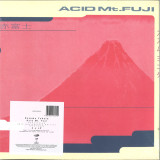
Triple gatefold heavyweight 180g vinyl, Remastered original LP , Incl. 5 unreleased tracks released for the 1st time on vinyl`see tracklist below for details!
"A mesmerizing Japanese ambient techno masterpiece that that completely rewires how you perceive music" Electronic Beats
"A mountainous Masterpiece. A powerful testament to rave culture's establishment and the birth of a new scene in Japan emerging in the mid '90s. One of Yokota's most celebrated work that merges Japanese new age and minimal techno"
Alex From Tokyo (Japan Vibrations, world famous, Paris)
**= 5 unreleased tracks released for the 1st time on vinyl.
New liner notes by Martyn Pepperell
Released in 1963 on the Contemporary Records label, “The Cry!” Is a free jazz album by saxophonists Prince Lasha and Sonny Simmons. Also featured are Gary Peacock and Mark Proctor (bass), and Gene Stone (drums). This new edition, released as part of the Acoustic Sounds Series, features (AAA) lacquers cut from the original master tapes by Bernie Grundman and is pressed on 180-gram vinyl at QRP, and presented in a tip-on jacket.
- Jacob Miller – Westbound Train
- Hortense Ellis – People Make The World Go Round
- Horace Andy – Aint’ No Sunshine
- Soul Vendors – Swing Easy
- The Heptones – Choice Of Colours
- Jackie Mittoo And The Brentford Disco Set – Choice Of Music Part 2
- Prine Jazzbo – Fool For Love
- Conrnell Campbell – Ten To One
- Winston Francis – Don’t Change
- Jackie Mittoo – Jumping Jeshosophat
- Tony Gregory – Get Out Of My Life Woman
- Dub Specialist – Darker Block
- Little Joe – Red Robe
- Devon Russell – Make Me Believe In You
- Jerry Jones – Compared To What
- Ken Boothe – Thinking
- Anthony Creary – Land Call Africa
- Jackie Mittoo – Fancy Pants
New one-off pressing coloured vinyl 18th anniversary edition of the long-out-of-print Studio One Soul 2, the long-awaited second volume of one of the largest selling Soul Jazz Records’ Studio One collections.
Studio One Soul 2 takes us deep into Jamaica’s long-standing fascination with American Soul and Funk music.
Featuring a host of seminal Reggae artists who all first established their careers at Studio One before finding worldwide success. Featured artists include Horace Andy, The Heptones, Cornell Campbell, Ken Boothe, Jackie Mittoo, Jacob Miller and many more A-Class Studio One legends interpreting both classic and littleknown American Soul and Funk tunes by the likes of Curtis Mayfield, Bill Withers, The Five Stairsteps, Marvin Gaye, The Stylistics, Lee Dorsey, Al Green, Syl Johnson and more.
Curtis Mayfield is without a doubt the main soul influence for many reggae groups in the 1960s and 70s. Cornell Campbell’s ‘Ten to One’ featured here is a stunning recut of the original Studio One single by The Mad Lads who first covered this Curtis-penned hit for the Impressions. Another great Curtis Mayfield production, The Five Stairsteps and Cubie’s ‘Don’t Change’, is interpreted by Studio One soul man Winston Francis. Similarly, Devon Russell’s superb ‘Make Me Believe in You’ is, if anything, superior to Curtis Mayfield’s ground-breaking original.
While American Soul and Funk remain a constant source of inspiration on this album, classic DJs such as Prince Jazzbo and Little Joe also used these rhythms to ride vocal toasts over to serious effect. This selection features a mixture of classics, super-rare and unreleased tracks from Studio One all lovingly digitally re-mastered for this release. The vinyl edition also comes on super-loud double vinyl housed in gatefold sleeve and with download code. The new CD edition comes as digipack plus booklet. Another essential Studio One release.
Japanese vibraphonist and marimba player Masayoshi Fujita returns with Migratory, his masterful new solo album, where his sonic explorations into the unknown continue.
In 2019, after 13 years of living in Berlin, Fujita returned to his native Japan with his wife and their three children, fulfilling his life-long dream of living and composing music in the midst of nature. The family found their new home in the mountain hills along the coast of Kami-cho, Hyōgo, three hours west of Kyoto.
Once settled in, Fujita spent his time turning an old kindergarten into his own music studio, Kebi Bird Studio, which became the birthplace of Migratory. On his new album, the composer and producer masterfully reimagines and mesmerises with his trademark sounds of vibraphone, and resumes his experimentation with the marimba and synthesisers that he first incorporated on his 2021 album, Bird Ambience, which followed the release of his acclaimed vibraphone triptych: Stories (2012), Apologues (2015) and Book of Life (2018).
On Fujita’s ever-evolving list of collaborators, Migratory introduces vocals from Moor Mother on ‘Our Mother’s Lights’ and Hatis Noit on ‘Higurashi’, as well as shō and saxophone to its soundscapes. Whilst at a music residency in Stockholm in 2021, Fujita met Swedish shō player Mattias Hållsten. Although it was a brief encounter, the two musicians stayed in touch. During a visit to Japan, Hållsten stopped by the studio and played on three of the tracks, including the alluring album closer ‘Yodaka’, exceeding Fujita’s own expectations.
Japanese vibraphonist and marimba player Masayoshi Fujita returns with Migratory, his masterful new solo album, where his sonic explorations into the unknown continue.
In 2019, after 13 years of living in Berlin, Fujita returned to his native Japan with his wife and their three children, fulfilling his life-long dream of living and composing music in the midst of nature. The family found their new home in the mountain hills along the coast of Kami-cho, Hyōgo, three hours west of Kyoto.
Once settled in, Fujita spent his time turning an old kindergarten into his own music studio, Kebi Bird Studio, which became the birthplace of Migratory. On his new album, the composer and producer masterfully reimagines and mesmerises with his trademark sounds of vibraphone, and resumes his experimentation with the marimba and synthesisers that he first incorporated on his 2021 album, Bird Ambience, which followed the release of his acclaimed vibraphone triptych: Stories (2012), Apologues (2015) and Book of Life (2018).
On Fujita’s ever-evolving list of collaborators, Migratory introduces vocals from Moor Mother on ‘Our Mother’s Lights’ and Hatis Noit on ‘Higurashi’, as well as shō and saxophone to its soundscapes. Whilst at a music residency in Stockholm in 2021, Fujita met Swedish shō player Mattias Hållsten. Although it was a brief encounter, the two musicians stayed in touch. During a visit to Japan, Hållsten stopped by the studio and played on three of the tracks, including the alluring album closer ‘Yodaka’, exceeding Fujita’s own expectations.