Skin/Glove is the second LP by Belgian musician Mathieu Serruys, following the release of his B.A.A.D.M. debut On Germaine Dulac back in 2014. Compiled over the course of a fortnight, the record features material recorded over the past five years: creaks of ice buckling under heat, thick hums like nauseating headaches, plumes of evaporated organ hymns, frostbitten crackles of dying tape loops. These disparate sources are unified by the pervasive corrosion of pain and time, which presses into the surface of every sonic object. Melodies splinter under the strain of being pulled apart; drones tremble under the gathering gravity of fatigue; dissonances flicker like candles on the brink of extinguishment. Yet despite the emotional density of the material itself, the process of composition provides a route toward comprehending how these sounds and experiences are connected. Skin/Glove reads as a constellatory map of adversity and grief, beautifully coalesced through the cathartic distance of retrospect, haunted by the sibilant whispers of distinct memories in dialogue, latticed by lesions that fatefully and poignantly intersect.
Buscar:mat s
A reissue of a cassette that was originally released on Uramado in 2020, this is the first time this live session appears on vinyl. The performance, featuring Kudo on piano and 3C123 on clarinet, was recorded on October 18, 2009, at the Uramado venue in Shinjuku. A beautiful and quixotic forty-minute set, that reconnects both Kudo and 3C123 with various musical histories, including those of classical composition and free improvisation.
The performance documented on Tori Kudo & 3C123 is a curious one. While they both appear to slip into improvised ruminations at times, for the most part, Kudo performs pieces by Erik Satie on the piano, over which 3C123 teases an excoriating stream of improvisation from the clarinet. His playing here is wild in its poetry: sometimes lushly nestly alongside Satie’s melodies, elsewhere loosing Ayler-esque squalls from the instrument, it’s a bravura performance that is matched, in an indirect manner, by the poise and pacing of Kudo’s generous, fluent recital.
When asked about the thinking behind the performance documented here, Kudo explains by describing the historical juxtaposition of Satie with Takehisa Kosugi’s improvised violin as “an essence of the Japanese art of collective improvisation.” The playing here, as within Japanese collective improvisation, is about sitting ‘alongside’ each other, not necessarily in direct (or even indirect) reference, but rather sharing the space; “just being there together,” Kudo says, and letting go of the need for performers to engage in interplay.
Tori Kudo & 3C123 is certainly part of that tradition, and this is where its curious poetry resides; in that ‘third space’ that sits in between, but not directly connecting, the two performers. Kudo makes an analogy with Fluxus, which is appropriate. But you can also hear their shared history here, somehow, as Kudo and 3C123 have known each other since the eighties, when they shared a house in Kunitachi City, Tokyo. Their musical paths have been multiple – Kudo, of course, best known perhaps for his Maher Shalal Hash Baz ensemble; 3C123 as a member of Vedda Music Workshop, and with other Japanese musicians like Koichiro Watanabe.
‘3, 10, WHY, WHEN.’ is the third studio album from Jamie Woon, his first since 2015’s Mercury Prize nominated ‘Making Time’.
Co-produced by Jamie and Grammy award-winning Swedish producer Martin Terefe, the release comes after Jamie’s notable time away from the public sphere, reminding us of his distinctive talent. Soulful and catchy as ever, this album sees Jamie explore themes of meaning and purpose with startling vulnerability. Tight songwriting meets expansive, genre-hopping moods. Woon’s previous work includes collaborations with Disclosure, Lil Silva, Elmiene, Holly Walker, and Burial.
Includes the singles ‘Heavy Going...’ & ‘When’.
- A1: Displacement (Kmru Rework) Feat Kmru
- A2: Reprisal (Penelope Trappes Rework) Feat Penelope Trappes
- A3: Empire Systems (Kevin Richard Martin Rework - Iced Mix) Feat Kevin Richard Martin
- B1: Ausencia (Mabe Fratti Hiatus Rework) Mabe Fratti
- B2: Persistence (Abul Mogard Rework)Feat Abul Mogard
- B3: Secretly Wishing For Rain (William Basinski & Gary Thomas Wright Rework)
A decade after its release, A Fragile Geography returns transformed. This limited edition cassette accompanies the AFG10 anniversary reissue, offering an inspired re-envisioning of Rafael Anton Irisarri’s landmark compositions. Reworks presents distinctive readings of these pieces, with each artist leaving their personal mark on the material. The titles remain unchanged, with the sole exception of “Hiatus,” reborn here as “Ausencia.” Together, these reimaginings extend the emotional cartography of the album into new terrains.
KMRU reframes “Displacement” with expansive, glimmering layers that open into meditative ambient landscapes. Nairobi born and Berlin based, he is known for morphing field recordings into vivid aural experiences, often capturing the texture of footsteps, foliage, and distant city life and weaving them into contemplative soundscapes. In this version he introduces subtle new sounds, including stringlike synths that trace and heighten the piece’s emotional arc. The result invites close listening, offering enveloping tones where the organic and the synthetic gently collide and flow.
Penelope Trappes renders “Reprisal” as a voice-led invocation of the delicate and the intimate. Her wistful vocals bloom with fragile sorrow, rising over shimmering strands of strings to create a sound world at once sacred and shadowed. She is adept at channeling inherited grief into music that is transcendent and otherworldly. The interplay of her voice, the strings, and her use of space and depth draws those qualities into Irisarri’s orbit, imbuing “Reprisal” with the same spiritual weight and clarity that define her most powerful work.
Kevin Richard Martin (a.k.a. The Bug) transforms “Empire Systems” into a cavernous “Iced Mix,” driven by polyrhythmic double bass motifs and sculpted from subterranean pressure and negative space. Known for pushing sound to its physical limits, Martin brings the stark intensity of his dub and noise infused practice into Irisarri’s architecture. The track seethes with harmonic distortion and erupts in white noise rhythms, its brooding low end depth and icy reverberant textures amplifying the tension. Vulnerability and force are set in stark relief, as silences feel as heavy as the bursts of sound themselves. The result is a stark study in atmosphere, restraint and impact, reframed through Martin’s singular lens of sonic mass and low end intensity.
On Side B, Mabe Fratti opens with a cinematic, dreamlike, Lynchian reimagining of “Hiatus” in her native Spanish (“Ausencia”). She threads cello and voice so wondrously that her rendering feels at once hauntingly beautiful and disquieting. Emotionally charged melodies shift in unexpected directions, while her soft, intimate vocals hover above Irisarri’s brooding synth textures. Fratti’s gift for blending experimental and avant pop sensibilities with visceral, emotionally powerful expression shines resplendently here. She gives voice to Irisarri’s reflections on the passage of time and his growing desire to reconnect with his familial roots.
Abul Mogard stretches “Persistence” into a vast drone elegy. A master of patient sound sculpting, Mogard layers evolving waves of analog synths into a dense shroud that radiates its own internal light. Gradual surges of tone and subtle harmonic shifts emphasize the piece’s endurance and inevitability. Irisarri’s original composition, in Mogard's hands, becomes a rumination on time’s unrelenting flow. Melancholy and transcendence coexist in equal measure in this engulfing, cathartic rework.
William Basinski and Gary Thomas Wright close the cycle with a spectral version of “Secretly Wishing for Rain.” Basinski’s field recordings of Reseda rainfall and birdsong, which open and close the rework, add a personal touch and evoke the imagined sound of a grainy film reel flickering to life. The piece suspends Irisarri’s yearning for the Pacific Northwest, lodging it hazily between memory, place and an unreachable dream. It feels like a fading recollection, half forgotten and half felt. A final gesture that dissolves the album into vapor, leaving the listener adrift in its lingering afterglow.
Mastered with great care by Stephan Mathieu and featuring a remixed version of the original artwork by Daniel Castrejón, this edition refracts the language of the original through new prisms. Less a return than a passage, across time, across interpretation, into uncharted emotional realms.
The Flight & TEKE::TEKE & Thunderdrum feat. Tiggs
Assassin's Creed Shadows - Soundtrack Collection LP 4x12"
- A1: Assassin's Creed Shadows - Original Score Von The Flight - Shadows Main Theme
- A2: Welcome To Kyoto
- A3: The Long Shadow Of Oda Nobunaga
- A4: The Fujibayashi Legacy
- A5: Morning Training
- A6: Auntie Matsu
- A7: Becoming A Shadow
- A8: What's Been Hidden
- B1: Tomiko
- B2: Steel And Shadows
- B3: Into The Shadows
- B4: Naoe Attacks
- B5: Death Of A Legend
- B6: An Assembly Of Enemies
- B7: Rise Of Yasuke
- C1: An Oath Fulfilled
- C2: Master Sorin
- C3: Sacred Ground
- C4: A Song Of Remembrance
- C5: Bamboo Grove
- C6: Masked Enemies
- C7: The Incident
- D1: Busy Streets
- D2: Code Of The Sword
- D3: A Moment Of Sweetness
- D4: Chasing Demons
- D5: Akechi Mitsuhide
- D6: Matters Of The Heart
- D7: Yasuke's Past
- E1: Assassin's Creed Shadows - Kage No Iro Von Teke::teke - Ezio's Family Shadows Version
- E2: Kurutta Hono
- E3: Mienai Iro
- E4: Toku
- F1: Kage No Koe
- F2: Michi
- F3: Mizukagami
- G1: Assassin's Creed Shadows - Ukombozi Von Thunderdrum Ft. Tiggs Da Author - Nguvu Ni Umoja (Shadow's Theme)
- G2: Mwanajeshi
- G3: Ukombozi - Part I
- G4: Ukombozi - Part Ii
- H1: Hadithi
- H2: Chinja
- H3: Jenga Jenga
- H4: Ukombozi - Gameversion
- 44 Tracks aus dem Open-World-RPG-Actionspiel von 2025
- Enthält drei Alben, die auch separat erhältlich sind:
Original Score (2LP) von The Flight
Kage No Iro (1LP) von TEKE::TEKE
UKOMBOZI (1LP) von Thunderdrum ft. Tiggs Da Author
- Artwork von Ubisoft, Maya Kuroki und Nathan Sam Long
Ubisoft und Laced Records haben ihre Zusammenarbeit erneuert, um die Musik von Assassin's Creed Shadows auf Vinyl zu veröffentlichen.
In Assassin's Creed Shadows werden die Spieler:innen in die reiche Kulisse des feudalen Japans versetzt. Der Soundtrack verwendet sowohl traditionelle Instrumente als auch verspielte moderne Produktionstechniken, die auf die Zeitperiode und die Sci-Fi-Themen der auf Zeitreisen basierenden Serie verweisen.
Das Komponisten-Duo The Flight (Joe Henson und Alexis Smith) kehrt zur Assassin's-Creed-Reihe zurück, um die düstere Originalmusik für das Spiel zu liefern. Das Duo hat mit japanischen Meisterspielern zusammengearbeitet, um eine subtile und suggestive Musik zu schaffen, die von weitläufigen Aussichten bis hin zu nervenzerreißender Spannung und explosiver Action reicht.
Die Spieler erleben die Geschichte durch zwei Charaktere: die Shinobi-Assassine Naoe und den Samurai Yasuke. Um der Geschichte jedes Charakters eine eigene klangliche Handschrift zu verleihen, hat Ubisoft mit einigen außergewöhnlichen Künstlern zusammengearbeitet.
So verleiht die japanisch-kanadische Band TEKE::TEKE der verstohlenen Naoe ihre eindrucksvollen "Needle Drop"-Momente und liefert außerdem eine einzigartige Interpretation von Jesper Kyds kultigem Serienthema "Ezio's Family". Ihre Surf- und Psych-Rock-Einflüsse erinnern an kultige Tarantino-Soundtracks.
Das Produktionsteam Thunderdrum (Alex Cameron Ward, Félix Rebaud-Sauer und Hugo Brijs) arbeitete mit dem britisch-tansanischen Sänger Tiggs Da Author zusammen, um die Geschichte des Samurai Yasuke zum Leben zu erwecken. Dabei verschmelzen Morricone-Gitarren, ostafrikanische Rhythmen und japanische Flöten mit Texten in Suaheli.
Blue Hour presents TERRA – a carefully curated selection of original works from artists shaping the current landscape of modern techno. Bringing together eight unique voices, the compilation continues Blue Hour’s reputation for thoughtful curation, revealing an immersive journey through rhythm and sound
SHADOWY FIGMENTS OF UNRELENTING SONIC SEEKINGS
The magic lantern music of Razen spirals into ever more fanatic territory with the addition of turntablist Guilhem All from Brest. Vietnamese flute, oscillator, chopped-up vinyls and a range of
uncomfortable techniques bring about a series of sandblown, rock-encrusted desert mirages.
MORE INFO SOON
credits
releases October 15, 2025
Recorded by Mathieu Grillo, with assistant engineer Gaia Lufrano
Recorded at Echo Chamber in Volta, Molenbeek on March 4,5 & 6, 2025
Mixed by Mathieu Grillo, with assistant engineer Gaia Lufrano
Mastered by Frédéric Alstadt
Artwork: Aurora/ ChromaGrid drawing by Wilfried Pulinckx
Brecht Ameel: oscillator & harmonium
Kim Delcour: sáo trúc, fijfer, chalumeau, santur
Guilhem All: turntables
Thank you: Arne and Mich at Volta & AB
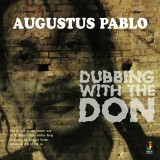
- A1: Skank On Dub
- A2: Way Out Rockers
- A3: Pablo's Express
- A4: Pablo's Happy Feeling
- A5: Soldier Man Dub
- A6: Well Frozen Dub
- A7: Sweet Cassava Dub
- B1: Talking Dub
- B2: Pablo's Connection
- B3: Skanking With Pablo
- B4: Pablo's Delight
- B5: Death Trap Dub
- B6: Rockers Downtown
- B7: New Train Dub
2024 Repress
If anyone in the reggae circles could be described as having their own sound it would have to be Mr Augustus Pablo, born Horace Swaby 1954 St Andrew Jamaica. He took the humble melodica a wind blown mouth keyboard and made it shine.
His musical journey started one sunny day in 1969. Walking into Herman Chin- loy's Aquarius Records shop and on playing his melodica so impressed its owner that he was taken off to Randy's Studio 17, the very next day to cut his first record 'Iggy Iggy'. But it was his second tune under the guidance of Clive Chin again cut at Randy's, the seminal 'Java ' that put the young Augustus Pablo on the map. Clive Chin continued his work producing Pablo's debut album 'THIS IS AUGUSTUS PABLO' . An instrumental affair on which the neo-mystical ''Far East'' sound synonymous with Pablo's work emerged.
Having worked with most of the top producers of the time,Lee Perry,Keith Hudson, Bunny Lee, Augustus decided to set up his own label "Rockers", named after his brothers sound system. Where many of his tunes would first be heard.The label came to define a new and exciting chapter in reggae history.Even when versioning acknowledged classic Studio One rhythms there was a precious maturity and depth to Pablo's productions that kept him at the top throughout the late 1970s and into the 1980s. His 'King Tubby meets the Rockers Uptown' set which featured some of these rhythms reworked; Swing EasySkanking Easy, Frozen SoulFrozen Dub, stands as one of the true dub classic albums of any reggae education.
This set of dubs are taken from his classic 70's period.All rare dubs straight from the masters. You may have heard the tune, but not these versions. So sit back and enjoy the Original Rocker..... STILL SOUNDS SWEET.
RESPECT....JAH FLOYD.
- Oh Yeah
- Black Wax
- We Don't Need Money To Have A Good Time
- Taking All The Blame
- Mary
- Alright
- Kalifornia
- Popdeath
- Just Like Jude
- Uncertain Joys
- I Need To Feel You Closer
- With You
- Kiss Kiss Bang Bang
- AT 1: Am
- Good Times
- I Won't Let You Down
- Passenger's Side
- I Want To Hear What You Have Got To Say
- You Kill My Cool
- My Heart Is Pumping To A Brand New Beat
- It's A Party
- Love Waiting On You
- Girls & Boys
- Rock & Roll Queen
In 2005, teenage trio The Subways made a phenomenal breakthrough with their Gold-certified debut album "Young For Eternity". It set them on the road to an endless succession of highlights, including their iconic "Rock & Roll Queen" becoming a mainstay of rock radio and streaming playlists. Twenty years on, and now five albums deep into their career, The Subways celebrate their 20th anniversary with the career-spanning collection "When I"m With You". The compilation brings new material too. It includes two new songs: "I Need To Feel You Closer", and "Passenger"s Side". The collection features the band"s work with some of the most influential producers around, including Butch Vig (Nirvana, Foo Fighters), Stephen Street (The Smiths, Blur) and The Lightning Seeds" Ian Broudie (Echo & The Bunnymen, The Coral). The tracks taken from their self-titled album and "Uncertain Joys" were produced by Billy Lunn.
- A1: Barbarella - Barbarella (The Irresistible Force Remix)
- A2: Spacetime Continuum - Fluresence
- A3: Nightmares On Wax - Nights Interlude
- B1: Insides - Skinned Clean
- B2: Global Communication - Incidental Harmony
- C1: Caustic Window - Cordialatron
- C2: Keiichi Suzuki - Satellite Serenade (Trans Asian Express Mix)
- D1: Tranquility Bass - Cantamilla (Bomb Pop)
- D2: Golden Girls - Kinetic (Morley’s Apollo Remix)
- D3: No-Man - Days In The Trees - Reich
2025 Repress
“In stark contrast to the stress-makingly staccato assault of your average 'ardcore rave, Telepathic Fish was a wombeldelic sound-and-light bath"
Simon Reynolds (Energy Flash: A Journey Through Rave Music And Dance Culture)
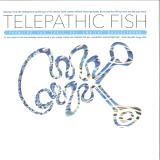
The first-ever illustrated compendium recounting the seminal underground South London ambient party that surfaced at the axis through which the likes of Ninja Tune, Warp and Rising High flowed. Telepathic Fish shared fertile waters with Megatripolis and The Big Chill, moving the early 90s London back room chill-out space into the kaleidoscopic spotlight.
Documenting the sights and sounds of South London’s seminal Telepathic Fish ambient parties. Hosted by Chantal Passamonte (aka Mira Calix - RIP), David Vallade, Mario Aguera and Kevin Foakes (aka DJ Food) - collectively named Openmind. With the help of Mixmaster Morris (The Irresistible Force) and Matt Black (Coldcut), they put on some of the earliest chill out events in London.
Rooted deep in the heart of the electronic underground they started DJing and decorating house parties or squats with mind-blowing installations and wholly idiosyncratic design, hosting the likes of Aphex Twin, Andrea Parker and Tony Morley (The Leaf Label). Within a year they were playing VIP after shows for the likes of Orbital and illegal New Year’s gatherings at the disused Roundhouse whilst guesting on Coldcut’s Solid Steel radio show on London’s KISS FM.
Whilst collaborations with legendary club nights such as Megatripolis saw them share bills with Autechre, Higher Intelligence Agency, Scanner and Global Communication, they also created their own ambient fanzine - Mindfood – to document the scene evolving around them. A 20-page history of their parties is included in the release, richly illustrated with personal photos, artwork and memorabilia from their adventures between 1992-95. The gatefold sleeve also features their Telepathic Fish logo, mirroring an original T-shirt design they sold in Ambient Soho, a record shop three of the four worked in at different times.
The selections featured here are all personal favourites that were played at the Telepathic Fish parties during the 90s. Picked and arranged by Mario, David and Kevin who combed their collections for key pieces they associate with the time and Chantal’s music tastes. Over a hundred tracks were selected, totalling nearly 11 hours of playing time, before being whittled down to the essentials by the trio, forming a snapshot of their world back in the day.
KEY POINTS:
* Features long deleted and hard to find tracks by Caustic Window (Richard D. James aka Aphex Twin), Tranquility Bass, Spacetime Continuum and Global Communication (Mark Pritchard and Tom Middleton).
• Pressed on DJ friendly double black vinyl
• Includes A 20-page history of their parties is included in the release, richly illustrated with unseen personal photos, artwork and memorabilia from the Telepathic Fish crew’s adventures between 1992-95, as well as detailed liner notes courtesy of founding members Mario Ageura and Kevin Foakes.
• Cover includes horizontal obi sticker with quote from Simon Reynolds' book Energy Flash: A Journey Through Rave Music And Dance Culture, describing the Telepathic Fish parties' place in the dance music landscape.
• Lacquer cut by Beau Thomas at Ten Eight Seven Mastering
- I Can't See Anything When I Close My Eyes (Remastered)
- Scott & Jeremiah (Remastered)
- Careful With That Fax Machine (Remastered)
- Wind & Wing (Remastered)
- Bring On The Cobras (Remastered)
- Stomachache Due To Sincere Belief That The Rest Of My Band Is Trying To Kill Me
- (Remastered)
- Wine=Water+Jesus (Remastered)
- Sausage Full Of Secrets (Remastered)
- Go Horsey Go (Remastered)
"Rumah Sakit 25" vereint das Debütalbum von Rumah Sakit und ihre lange vergriffene EP Travels In Constants in einem außergewöhnlichen Paket. Die Band hat sich erneut mit Bob Weston zusammengetan, um die Original-Masterbänder sorgfältig zu remastern. "Rumah Sakit 25" enthält neues Cover-Artwork von alten Freunden und Mitarbeitern, Jeremiah Maddock und Marty Anderson. Die umfangreiche 180-Gramm-Gatefold-2xLP in Audiophile-Qualität enthält vollfarbige Innenhüllen mit Hunderten von bisher unveröffentlichten Fotos, die die inspirierte Anfangszeit der Band dokumentieren, sowie ein massives 24-seitiges Kunstbuch im Format mit bisher unveröffentlichten Kunstwerken von Maddock. Es ist ein exquisites Werk, das eine Band meisterhaft einfängt, die letztendlich die nachfolgenden Künstler inspirierte und deren spätere Zusammenarbeit mit Foals, Pinback, Sweep the Leg Johnny, Sleeping People und HEY!TONAL unterstreicht, wie einzigartig vielfältig und produktiv Rumah Sakit wirklich waren. Rumah Sakit war eine vierköpfige Rockband aus San Francisco, Kalifornien. Die Gruppe begann 1998 Gestalt anzunehmen, nachdem Gitarrist John Baez, Bassist Kenseth Thibideau und Schlagzeuger Jeff Shannon alle von Redlands nach San Francisco gezogen waren. Nachdem Gitarrist Mitch Cheney schnell hinzukam, war die Band komplett und entschied sich für den Namen Rumah Sakit - eine wörtliche indonesische Übersetzung von ,Krankenzimmer" (alias Krankenhaus) - und einen Sound, der die frenetische Energie von King Crimson aus der "Red"-Ära mit einer meditativen Melodik verband, die in starkem Kontrast zu den meisten ,Math-Rock"-Bands dieser Zeit stand. Bald darauf betrat Rumah Sakit zum ersten Mal das Studio, um ihr gleichnamiges Debütalbum aufzunehmen. "Rumah Sakit" wurde 1999 im ehrwürdigen Music Annex Studio in zwei etwas geheimen Nachtsessions mit den Studio Praktikanten/guten Freunden/angehenden Toningenieuren Jay & Ian Pellicci aufgenommen. Das Album entstand nach einer ,No Tricks"-Philosophie, die den Ansatz der Band beim Spielen und Aufnehmen ihrer Musik prägen sollte. Aufgenommen vollständig live ohne Overdubs in nur wenigen Takes, nutzte die Band die Kunst, die natürliche Präsenz des Raumes und die strategische Platzierung der Geräte, um die reinste und genaueste Darstellung dieser Songs in diesen Momenten einzufangen. In einer Zeit, die schnell durch die aufkommende Popularität von ProTools und akribisch manikürten, maximalistischen Mixes verändert wurde, war die Welt von Rumah Sakit eine erfrischende Atempause. Ein Jahr später, im Herbst 2000, flog Rumah Sakit den renommierten Chicagoer Toningenieur und Shellac-Bassist Bob Weston nach San Francisco, um zwei kurze Tage lang eine neue EP im schäbigen Tiny Telephone Recording aufzunehmen. Diese EP wurde Teil der Abonnement-CD-Reihe ,Travels In Constants" von Temporary Residence (neben Veröfffentlichungen von Mogwai, Low, Explosions In The Sky, Eluvium und MONO). Abgesehen von der Originalauflage von 1.000 CDs, die für Abonnenten reserviert waren, waren die Studioaufnahmen auf Travels In Constants bis jetzt nie wieder erhältlich.
COLOURED VINYL[21,81 €]
Black Vinyl[21,81 €]
Welcome aboard captain, long-serving funkadelic maestro Luke Vibert returns to De:tuned with his first new Wagon Christ album in 5 years entitled 'Planet Roll'. Genre-bending as ever, this 16 track collection of electronic lushness sees Luke creating his own innovative take on a multi-diverse sonic world interspersed with rare breakbeats and groovy melodies. Expertly executed by a true pioneer of electronic music. Lay back and see you in an hour!
Animation Director and Illustrator Celyn Brazier created all the graphic work. Mastered by Matt Colton at Metropolis. A separate digital release will also be available at the usual digital shops. Stay tuned!
Welcome aboard captain, long-serving funkadelic maestro Luke Vibert returns to De:tuned with his first new Wagon Christ album in 5 years entitled 'Planet Roll'. Genre-bending as ever, this 16 track collection of electronic lushness sees Luke creating his own innovative take on a multi-diverse sonic world interspersed with rare breakbeats and groovy melodies. Expertly executed by a true pioneer of electronic music. Lay back and see you in an hour!
Animation Director and Illustrator Celyn Brazier created all the graphic work. Mastered by Matt Colton at Metropolis. A separate digital release will also be available at the usual digital shops. Stay tuned!
Developed over three years across residencies, tours, and periods of deep listening, “Your Whistle Tells of Landscape” finds Australian sound artist Alexandra Spence continuing her investigations into the perceptual entanglements of sound, place, memory, and imagination. Like much of the artist’s work, it unfolds at the liminal edge between the real and the imagined — between what is heard and what is remembered.
Composed from a constellation of materials gathered across sites and seasons — snowscapes recorded in Vancouver, insect choruses from a Sydney backyard, ceramic fragments unearthed while mudlarking with tinysound — it renders an intimate cartography of experience: one shaped equally by ecological resonance and internal drift. Each piece traces a kind of imaginary geography, where sonic ephemera become proxies for topography, weather, or myth.
The album is informed by time spent at EMS (Stockholm) and MESS (Melbourne), where Spence deepened her engagement with microtonality and tuned feedback systems, and by dialogues with sympathetic artists such as Tashi Wada and Patrick Farmer. Sound materials were sourced from Serge Modular systems, a custom lyre built by Tim Wall, amplified objects, handmade electronics, and Spence’s own field recordings captured within rockpools, beneath sand, and among a flock of sheep in the French Pyrenees. On “Magenta,” a collaboration with Delphine Dora, the domestic and mythic intertwine, as layers of voice, environmental recordings, and Halldorophone feedback drift in and out of one another like overlapping weather systems.
Despite its diverse material palette, the album resists spectacle or accumulation. Instead, it moves with a quiet sense of continuity and a rich interiority — less a sequence of compositions than a set of situated attunements. Across its duration, sounds seem to murmur, glint, or hover right at the edge of presence, invoking a listening practice that is as much about orientation as it is about reception. These are pieces not simply about place, but of place — etched with the grains of time, vibration, and breath.
- A1: 900 Miles
- A2: Oh Dear, What Can The Matter Be
- A3: Johnny Be Gay If You Can Be
- A4: Cotton Eyed Joe
- B1: It's About Time
- B2: Promenade In Green
- B3: Spin, Spin, Spin
- B4: I'm A Drifter
The revered debut from the genre-spanning guitarist, singer and songwriter, Terry Callier, has returned to vinyl. Originally recorded in 1964 for Prestige Records, the album features Callier’s version of standards such as “Cotton Eyed Joe” and “900 Miles.” AllMusic calls it Callier’s “most timeless and inviting” release.” Pressed on 180-gram vinyl at QRP and newly (AAA) remastered from the original tapes, while a replica tip-on jacket completes the package.
Many Amerindian cultures share the belief that the future lies behind us, while the past is what we face ahead. This challenge to Western chronology is, however, rooted in common sense: the open possibilities of what is to come are, in theory, what we cannot see—the uncertain—whereas the events that have already happened unfold before our eyes and are available for us to learn from.
This second album by Chilean producer, live performer, and DJ Valesuchi could be described as an experiment with time through music. Some years after relocating to Rio de Janeiro, she released Tragicomic LP (2019) on MAMBA rec—a label founded by the boundary-pushing Brazilian party Mamba Negra—and the self-released EP Cascada (2024). In both works, we can already appreciate her musical imprint: rhythmic and emotional timbral lines—wet, filtered, mathematical,
devotional, multilingual, fantastic, and unreal. However, in Futuro Cercano (Discos Nutabe, 2025), we can hear a leap: the sedimentation of her lived experiences in electronic communities across Latin America, her search for a universal yet personal language to convey emotion and new spiritual meaning, finds in this release a consistency and spontaneity that is rarely heard these days.
In a time when all cultural expression is not only expected to be taggable, but is also increasingly produced from templates that precondition our perception—favoring categorization and connections to works or scenes of the past—the tracks on this album are generically unclassifiable. They represent an openness to experiment without prejudice with electronic instruments and rhythms that are asancestral as they are futuristic. They publicly reveal an intimacy born from the compositional process, a bond formed through the encounter—sometimes tense, sometimes harmonious—between human will and that of the machines themselves. Or, as Valesuchi put it, "cyborging my friendship with the machine and becoming a tempest." Tempest as an eruption of the unknown into the present, the result of opening oneself to a nearly meditative state to uncover the deepest feelings through improvisation on cybernetic feedback and loops. And in that improvisation, to develop “técnicas para estirar o medir el tiempo”
“techniques to stretch or measure time” as she sings in 22, the album’s first track. “Connecting knowledges” as a portal to access that future so near it lies behind us, and to anticipate it as intuition and prospection.
That’s why Futuro Cercano is more than just electronic music: it is a technological ritual, an immersion into the secrets that machines hold as artifacts of human and non-human knowledge, as mysterious objects that allow us to connect with our own otherness—the personal alien hiding beneath the skin that opens us up to uncertainty as possibility rather than catastrophe.
* Blocks & Escher return to release on their own Narratives Music imprint with a double A side single, highlighting all of the musical emotion, production detail and bass weight, for which they are so highly regarded.
* Tracklist:
A. Charm Pt1 & Pt2: After five years with no release, Narratives Music is a fitting platform for the statement lead track “Charm” which disregards current trends and presents a full 11-minute journey through colors and moods. From the soothing nostalgic chords of the intro, Charm builds up through two contrasting movements, opening to a switching crescendo of bass hits at the mid-way point before delivering a cavernous “third drop”.
A2. All That Glitters: A long introduction intertwines tones of sorrow, joy and longing through its strings, guitars and vocals. This track breathes with space and beauty - even when the drums finally arrive, the intricate beat and low bass has air and a maturity to move a dancefloor without compromising its essence. This track has been a regular intro for DJs throughout the summer of 2025.