Lovski, alias Igor Sekulović, is redefining the Balkan musical landscape. A master guitarist and erstwhile “Projekt Rakjia” band member, he forges an uncanny blend of traditional folk melodies with dance, electronic and rock energy.
His debut solo album, Discoteka Jugoslavija—produced in collaboration with Napoli’s producer Raffaele “Whodamanny” Arcella—ventures through Italo-disco pulses, reggae grooves and psychedelic swirls, all anchored by the call-and-response warmth of Balkan traditional instruments. Each track feels like a borderless road trip: hypnotic rhythm sections give way to soaring guitar solos that nod to ancestral folk tunes, while propulsive synth arpeggios push listeners into tomorrow’s club.
Lovski’s signature lies in his seamless genre alchemy. He honors regional roots without succumbing to nostalgia, instead reframing folk elements as raw material for global dancefloors. As a performer, his live shows pulse with communal ecstasy—drawing dancing crowds around campfires of light, smoke and bass.
In a scene ripe for innovation, Lovski stands out as both torchbearer and trailblazer—proof that the Balkans still have surprises to offer, and that the old and new can coexist in brilliant harmony.
quête:mat s
This release represents the musical union of two friends who, despite the distance, have always found in music the place where they stay close. This EP is the proof that when the connection is real, sound becomes common ground - a space to share moments, ideas, and energy beyond geography.
Both artists have been devoted to physical formats from the very beginning, especially vinyl. They have always been record collectors, and that passion shapes the intention behind this project: a work conceived with the depth, respect, and materiality that only vinyl can convey. This EP is more than music; it is a cultural object that preserves a way of understanding techno.
Creatively, Truncate and Pushmann set out to merge their sonic identities. The result is an EP charged with strength, built for the dancefloor, and defined by a clear aesthetic: raw energy, firm rhythm, and a contemporary reading of hardgroove and jackin. These are intense, direct tracks - the kind that emerge when two visions complement each other effortlessly.
In a scene often driven by speed and overstimulation, this release stands out for its authenticity. It is fast, funky techno, yes, but crafted with soul, intention, and emotional depth. It does not chase trends; it delivers groove, substance, and a recognisable sonic character from the first bar.
Inspired by rave culture and the pure roots of hardgroove, this EP offers a journey that blends functionality, sensitivity, and force. A project that reinforces LILA's philosophy: preserving the essence of techno and supporting those who create it with passion.
- A1: Be Your Husband (Live)
- A2: Lover, You Should've Come Over (Live)
- A3: Mojo Pin (Live)
- A4: Monologue - Duane Eddy, Songs For Lovers (Live)
- B1: Grace (Live)
- B2: Monologue - Reverb, The Doors (Live)
- B3: Strange Fruit (Live)
- B4: Night Flight (Live)
- C1: If You Knew (Live)
- C2: Monologue - Fabulous Time For A Guinness (Live)
- C3: Unforgiven (Last Goodbye) (Live)
- C4: Twelfth Of Never (Live)
- C5: Monologue - Café Days (Live)
- D1: Monologue - Eternal Life (Live)
- D2: Eternal Life (Live)
- D3: Just Like A Woman (Live)
- D4: Monologue - False Start, Apology, Miles Davis (Live)
- D5: Calling You (Live)
- E1: Monologue - Nusrat, He's My Elvis (Live)
- E2: Yeh Jo Halka Saroor Hai (Live)
- E3: Monologue - I'm A Ridiculous Person (Live)
- E4: If You See Her, Say Hello (Live)
- F1: Monologue - Matt Dillon, Hollies, Classic Rock Radio (Live)
- F2: Dink's Song (Live)
- F5: Monologue - The Suckiest Water (Live)
- G1: The Way Young Lovers Do (Live)
- G2: Monologue - Walk Through Walls (Live)
- G3: Je N'en Connais Pas La Fin (Live)
- G4: I Shall Be Released (Live)
- H1: Sweet Thing (Live)
- H2: Monologue - Good Night Bill (Live)
- H3: Hallelujah (Live)
- F3: Monologue - Musical Chairs (Live)
- F4: Drown In My Own Tears (Live)
- A1: Hello To The Wind
- A2: The Orge
- A3: Mind Rain
- B1: After The Rain
- B2: Message From Mars
- B3: Rock Pile
Joe Chambers ist ein US-amerikanischer Jazz-Schlagzeuger, Pianist, Vibraphonist und Komponist. In den 1960er- und 1970er-Jahren spielte Chambers mit vielen namhaften Künstlern wie Eric Dolphy, Charles Mingus, Wayne Shorter und Chick Corea zusammen und wirkte an mehreren legendären Blue-Note-Alben der 1960er-Jahre mit. Double Exposure, ursprünglich 1978 bei Muse Records veröffentlicht, ist eine seltene und genreübergreifende Session, die zwei visionäre Musiker in einem sehr persönlichen, experimentellen Rahmen zusammenbringt. Der Schlagzeuger und Komponist Joe Chambers wird von Larry Young begleitet, einem wegweisenden Jazzorganisten, dessen modale und avantgardistische Neigungen Tony Williams' Lifetime und Miles Davis' Bitches Brew-Ära mitprägten. Remastered & Cut AAA direkt von den originalen Analogbändern durch Matthew Lutthans bei The Mastering Lab. Gepresst auf 180g-Vinyl und verpackt in Stoughton Old Style® Tip-On Jackets. Enthält ein Insert mit neu verfassten Liner Notes von Bill Milkowski und Barney Fields sowie seltenen Fotos von Jan Persson und Raymond Ross.
In spring 2025, Abul Mogard and Rafael Anton Irisarri created the source material for their second album, Where Light Pauses in the Silence of the Sun, during a three-day residency at Morphine Raum in Berlin. Functioning as both recording studio and performance venue, the space has no stage, with the audience gathered around the performers. Working within an open framework, the duo reshaped the music each evening while recording the performances live to multitrack. Rotary speakers, modular synthesizers and bowed guitar formed the core of their sonic language, captured through a 1970s mixing console and microphones placed around the room.
Back in Mogard’s studio in Rome, the material was further crafted as motifs were stretched, fragments isolated, and tempos dissolved. Irisarri recorded additional guitar textures and treatments in New York, while passages recorded by Martina Bertoni and Andrea Burelli in Berlin reinforced the harmonic centres and brought breath, refinement and a new sensibility to their compositions. The process continued as Mogard’s layering and subtraction reassembled everyone’s parts into the final arrangement.
The album opens with “In the Eastern Wild,” building from a sparse outline into a monumental formation of low-frequency weight, its internal motion shaped by the rotating Leslie speaker. “Over the Domes” widens into a broader acoustic field, where sustained modular tones meet waves of softly plucked guitar. The music then turns inward with “A Blue Descent,” centred on Bertoni’s cello, whose growling timbre introduces a melancholic depth.
At the album’s centre, “In a Quiet Radiance” unfolds around a slow guitar ostinato, its luminous stillness opening into a more expansive and reflective state. Across its ten-minute span, Burelli’s violin lines and Bertoni’s lower cello phrases gradually surface, weaving through the harmonic field. Mogard brings Burelli’s processed voice to the fore, its emotive, operatic presence becoming one of the record’s pivotal moments. “Of Blessed Ages” suspends the sonic flow, shifting between parallel major and minor chords as lingering, slowly decaying melodies shape the music’s internal drift. The closing “Among Shadows” settles into a darker resonance as layered textures recede.
Mogard and Irisarri’s shared language balances restraint and maximalism. UK magazine Crack describes the music as “a tidal wave held in suspension,” while Dutch newspaper de Volkskrant writes, “What a colossal sound, and how this music strikes at the emotions.” Reflecting on the residency sessions, Irisarri recalls: “At moments I genuinely couldn’t tell if a sound was coming from me or from Abul. It stopped feeling like two people making decisions and began to feel like we were inside a system moving on its own."
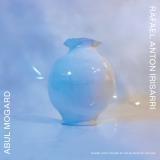
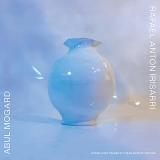
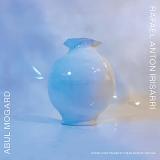
Marja de Sanctis’ cover artwork revisits the vessel sculpture from the duo’s first album, Impossibly Distant, Impossibly Close. There it appeared as raw, unfired clay. Here it has been fired in the kiln and finished with a glaze. Light gathers on its polished surface and spills into the surrounding space. As she explains, “I wanted to convey the idea of continuity within the duo, and the vessel became a kind of container for that idea. However, their music felt different this time, and with the collaboration of Martina and Andrea, I felt it should have a sleeker, softer, more glamorous look, very distant from the first raw appearance.” The transformation of the vessel from raw clay to fired form suggests a passage from immediacy toward permanence, mirroring the music’s gradual expansion.

In spring 2025, Abul Mogard and Rafael Anton Irisarri created the source material for their second album, Where Light Pauses in the Silence of the Sun, during a three-day residency at Morphine Raum in Berlin. Functioning as both recording studio and performance venue, the space has no stage, with the audience gathered around the performers. Working within an open framework, the duo reshaped the music each evening while recording the performances live to multitrack. Rotary speakers, modular synthesizers and bowed guitar formed the core of their sonic language, captured through a 1970s mixing console and microphones placed around the room.
Back in Mogard’s studio in Rome, the material was further crafted as motifs were stretched, fragments isolated, and tempos dissolved. Irisarri recorded additional guitar textures and treatments in New York, while passages recorded by Martina Bertoni and Andrea Burelli in Berlin reinforced the harmonic centres and brought breath, refinement and a new sensibility to their compositions. The process continued as Mogard’s layering and subtraction reassembled everyone’s parts into the final arrangement.
The album opens with “In the Eastern Wild,” building from a sparse outline into a monumental formation of low-frequency weight, its internal motion shaped by the rotating Leslie speaker. “Over the Domes” widens into a broader acoustic field, where sustained modular tones meet waves of softly plucked guitar. The music then turns inward with “A Blue Descent,” centred on Bertoni’s cello, whose growling timbre introduces a melancholic depth.
At the album’s centre, “In a Quiet Radiance” unfolds around a slow guitar ostinato, its luminous stillness opening into a more expansive and reflective state. Across its ten-minute span, Burelli’s violin lines and Bertoni’s lower cello phrases gradually surface, weaving through the harmonic field. Mogard brings Burelli’s processed voice to the fore, its emotive, operatic presence becoming one of the record’s pivotal moments. “Of Blessed Ages” suspends the sonic flow, shifting between parallel major and minor chords as lingering, slowly decaying melodies shape the music’s internal drift. The closing “Among Shadows” settles into a darker resonance as layered textures recede.
Mogard and Irisarri’s shared language balances restraint and maximalism. UK magazine Crack describes the music as “a tidal wave held in suspension,” while Dutch newspaper de Volkskrant writes, “What a colossal sound, and how this music strikes at the emotions.” Reflecting on the residency sessions, Irisarri recalls: “At moments I genuinely couldn’t tell if a sound was coming from me or from Abul. It stopped feeling like two people making decisions and began to feel like we were inside a system moving on its own."
Marja de Sanctis’ cover artwork revisits the vessel sculpture from the duo’s first album, Impossibly Distant, Impossibly Close. There it appeared as raw, unfired clay. Here it has been fired in the kiln and finished with a glaze. Light gathers on its polished surface and spills into the surrounding space. As she explains, “I wanted to convey the idea of continuity within the duo, and the vessel became a kind of container for that idea. However, their music felt different this time, and with the collaboration of Martina and Andrea, I felt it should have a sleeker, softer, more glamorous look, very distant from the first raw appearance.” The transformation of the vessel from raw clay to fired form suggests a passage from immediacy toward permanence, mirroring the music’s gradual expansion.
In spring 2025, Abul Mogard and Rafael Anton Irisarri created the source material for their second album, Where Light Pauses in the Silence of the Sun, during a three-day residency at Morphine Raum in Berlin. Functioning as both recording studio and performance venue, the space has no stage, with the audience gathered around the performers. Working within an open framework, the duo reshaped the music each evening while recording the performances live to multitrack. Rotary speakers, modular synthesizers and bowed guitar formed the core of their sonic language, captured through a 1970s mixing console and microphones placed around the room.
Back in Mogard’s studio in Rome, the material was further crafted as motifs were stretched, fragments isolated, and tempos dissolved. Irisarri recorded additional guitar textures and treatments in New York, while passages recorded by Martina Bertoni and Andrea Burelli in Berlin reinforced the harmonic centres and brought breath, refinement and a new sensibility to their compositions. The process continued as Mogard’s layering and subtraction reassembled everyone’s parts into the final arrangement.
The album opens with “In the Eastern Wild,” building from a sparse outline into a monumental formation of low-frequency weight, its internal motion shaped by the rotating Leslie speaker. “Over the Domes” widens into a broader acoustic field, where sustained modular tones meet waves of softly plucked guitar. The music then turns inward with “A Blue Descent,” centred on Bertoni’s cello, whose growling timbre introduces a melancholic depth.
At the album’s centre, “In a Quiet Radiance” unfolds around a slow guitar ostinato, its luminous stillness opening into a more expansive and reflective state. Across its ten-minute span, Burelli’s violin lines and Bertoni’s lower cello phrases gradually surface, weaving through the harmonic field. Mogard brings Burelli’s processed voice to the fore, its emotive, operatic presence becoming one of the record’s pivotal moments. “Of Blessed Ages” suspends the sonic flow, shifting between parallel major and minor chords as lingering, slowly decaying melodies shape the music’s internal drift. The closing “Among Shadows” settles into a darker resonance as layered textures recede.
Mogard and Irisarri’s shared language balances restraint and maximalism. UK magazine Crack describes the music as “a tidal wave held in suspension,” while Dutch newspaper de Volkskrant writes, “What a colossal sound, and how this music strikes at the emotions.” Reflecting on the residency sessions, Irisarri recalls: “At moments I genuinely couldn’t tell if a sound was coming from me or from Abul. It stopped feeling like two people making decisions and began to feel like we were inside a system moving on its own."
Marja de Sanctis’ cover artwork revisits the vessel sculpture from the duo’s first album, Impossibly Distant, Impossibly Close. There it appeared as raw, unfired clay. Here it has been fired in the kiln and finished with a glaze. Light gathers on its polished surface and spills into the surrounding space. As she explains, “I wanted to convey the idea of continuity within the duo, and the vessel became a kind of container for that idea. However, their music felt different this time, and with the collaboration of Martina and Andrea, I felt it should have a sleeker, softer, more glamorous look, very distant from the first raw appearance.” The transformation of the vessel from raw clay to fired form suggests a passage from immediacy toward permanence, mirroring the music’s gradual expansion.
- 1: Unified Field
- 2: Feeling Nothing
- 3: Praise Jesus! Hail Reagan!
- 4: Superbus
- 5: Cybertruck A Mouthful Of
- 6: Increasingly-Dangerous Substances
- 7: Line Go Up Line Go Down
- 8: Ostrich Toss
- 9: I Am A Beached Whale
- 10: Pissing With The Flashlight On
- 11: Also Unified Field
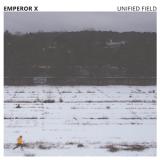
Chad R. Matheny veröffentlicht seit 1998 exzentrische, textlich dichte Underground-Popmusik, oft unter dem Namen Emperor X. Nach seinem Studium der Physik, Philosophie und Musikkomposition legte Matheny eine Pause von der akademischen Arbeit ein und verbrachte einen Großteil der letzten zwei Jahrzehnte damit, die Welt mit Bussen und Hochgeschwindigkeitszügen zu durchqueren, um an Orten Musik zu machen, die von einem kleinen, aber vollbesetzten Konzertsaal in Portugal über eine leere Messehalle im Norden des Libanon bis hin zu buchstäblich unterirdischen Metal-Bars in der ganzen Ukraine reichten. Er tourt oft allein mit Gitarre und Synthesizer, teilt sich aber manchmal die Bühne mit Weggefährten wie Ratboys, The Hotelier, The World is a Beautiful Place and I Am No Longer Afraid to Die, Foxing, AJJ, The Front Bottoms und Xiu Xiu. Er produzierte das neue Brian-Sella-Album ,Well I Mean", war Co-Produzent des Sub-Pop-Albums ,Bits" der Jangle-Punk-Legenden Oxford Collapse zusammen mit Eric Topalski von Don Caballero und Storm & Stress und komponierte Videoundermusik für gemeinnützige Organisationen wie Planned Parenthood und SEIU. In den Jahren 2011 und 2012 wurde Mathenys Ambient-Werk ,Keeling Curve" in einer Multimedia-Installation des Fotografen Joel Sternfeld verwendet, die im Rahmen einer Retrospektive im Museum Folkwang zu sehen war.
Rhiza Semar presents its fourth chapter with Yildizlara, a four-track odyssey shaped from shadow, rhythm, and elemental texture. Crafted as both visceral tools and introspective journeys, the record navigates between ominous density and luminous release, guided by a deep awareness of space, myth, and matter. As an artist, Hitam paves the way for a new sound emerging from his burrows to build bridges between electronic subgenres while shaping a landscape unmistakably his own. Orb Weaver opens the cycle with jagged IDM rhythms that coil and release like threads of a web pulled taut. Originally composed for the graduation project of fashion designer Tim van der Plas, who's collection was inspired on climbing out of depression, its atmosphere is dark and ceremonial, with textures scraping against silence until catharsis emerges from the tension. A confrontation between inner turmoil and release. On Vanishing of the Anasazi, cavernous reverbs carry traces of lost structures, percussion echoing as if across ruins. A relentless drive holds the ghost of ritual processions, summoning a spectral energy that feels at once monumental and hollowed-out. The track suspends itself between presence and absence, architecture and collapse, leaving the listener in a space where echoes become the only surviving form of memory. Mesh Grip plunges downward into subterranean force. A thundering groove rumbles like minerals being unearthed, goblin-like figures at work in hidden shafts, chiseling away at stone in endless rhythm. From this pressure, a sudden swell of melancholy pads rises, reframing the heaviness with emotional resonance as if the whispers of angelic guardians seep into the caverns, transforming extraction into elegy. What begins as pure drive of endurance evolves into an introspective meditation. Closing the release, Yildizlara unfolds as an epic ascent. Layered rhythms rush forward with urgency, intricate yet propulsive, while chopped vocals bring back a sensual human element, scattering like signals across the night sky. Animalistic atmospheres dart through the mix as spectral cries and furtive movements, adding a primal dimension to the drive. What begins as erratic and untamed slowly converges into warmth and ultimate catharsis: a cosmic tale inscribed in sound, both intimate and monumental, familiar yet born of hidden memory. Yildizlara is both innovative and ancestral; a release where turbulence becomes ritual, and where rhythmic complexity unearths fragments of hidden memory. Beneath its dark and erratic surfaces lies a strange familiarity, like echoes of a primal past resurfacing through sound, reminding us of worlds once known but long concealed. Words by A. Veyra
Recorded about a year after Scenery, his second album retains the delicacy and emotional depth of his playing, but adds a new strength that gives the world Fukui paints a clearer contour and striking dimensionality. From the bittersweet, heart-stirring melody of “Mellow Dream” to the vibrant, exhilarating drive of “Horizon”, the album is filled with performances that shine brilliantly. It is also notable that the number of original compositions only one on the debut—has increased to three here, allowing listeners to appreciate Fukui’s musicality even more fully. Considering its maturity and the richness of its content, it may even be fair to say that this work surpasses his first album. Ryo Fukui, who sadly passed away...
- A1: Eclypso
- A2: Relaxin' At Camarillo
- B1: Come Sunday
- B2: He's A Real Gone Guy
- C1: Stella By Starlight
- D1: Juju
- D2: Harlem Blues
This is joy beyond expectation the arrival of a new Ryo Fukui recording. Captured on June 26, 2004, this live session documents the ninth anniversary concert of Slowboat, the jazz club Fukui founded and considered his musical home. The trio features Ryo Fukui on piano, Benisuke Sakai on bass, and Yoshihito Eto on drums. Fukui was 56 years old at the time, and his playing is powerful and expansive, yet still marked by delicacy and razor sharp precision. In terms of energy, stamina, and technique, he was entering a true period of artistic maturity. He delivers the music of his beloved Phineas Newborn Jr. and Tommy Flanagan with depth and elegance, and approaches the works of Wayne Shorter—an early-life influence—with thrilling intensity. The performance captures Fukui at a moment of profound fulfillment, offering a truly compelling glimpse into his late career brilliance.
- A.1 Geoffrey Day, Zemlyane – Trava U Doma (Geoffrey Day Remix)
- A.2 Geoffrey Day, Alla Pugacheva – Arlekino (Geoffrey Day Remix)
- A.3 Geoffrey Day, Alla Pugacheva, Ritm – Zvyozdnoe Leto (Geoffrey Day Remix)
- A.4 Bratstvo Atoma, Bassnpanda, Kvashenaya – Zvenit Yanvarskaya Vyuga
- A.5 Alyans, Bratstvo Atoma – Na Zare
- A.6 Particles, Koshechka – Prekrasnoe Dalyoko
- B.1 Geoffrey Day - Lambada (Geoffrey Day Remix)
- B.2 Geoffrey Day – Pt - 1X12
- B.3 Geoffrey Day, Alla Pugacheva - Pozovi Menya S Soboy
- B.4 Geoffrey Day – Cookie Crumbler
- B.5 Yuliya Kogan, Frenetic Virtual Orchestra, Geoffrey Day – V Sinem More, V Beloy Pene
- (Geoffrey Day Remix)
- B.6 Scary On, Bassnpanda – Bea - D Theme
- C.1 Dvrst, Igor Sklyar – Komarovo (Dvrst Phonk Remix)
- C.2 Boogrov, Zoanoid – Inside Nora
- C.3 Øneheart, Atomic Heart – Quiet Dive
- C.4 Boogrov, Zoanoid – Inventory
- C.5 Geoffrey Day, Mariya Pakhomenko – Stoyat Devchonki (Geoffrey Day Remix)
- C.6 Acid Minerale – Karusel
- D.1 Boogrov – To Ostatnia Niedziela
- D.2 Mick Gordon, Palina – A Fridge Called Nora
- D.3 Mick Gordon – Shrouded In Mystery
- D.4 Mick Gordon – Polivoks
- D.5 Boogrov, Zoanoid – P.e.a.r
- D.6 Boogrov, Zoanoid – Pchela
- D.7 Boogrov – Welcome To Kollektiv
To celebrate the launch of the 4th and last DLC of Atomic Heart, Kid Katana Records teamed up with Mundfish to bring you this high quality album for the first time on an exclusive double vinyl.
With over 10 million players since its release, and a nomination at the 14th Hollywood Music in Media Awards, Atomic Heart has kept on bringing new content in the game, enriching the players’ experience with new Stories, Threats and Music to pursue the fight for freedom and progress.
The physical edition is a premium 2LP designed in close relationship with the game's creative team: Track selection handpicked by Atomic Heart team, including tracks from Mick Gordon, GeoffPlaysGuitar and Boogrov, and 1 new track (DLC #4 trailer exclusive) 2-colored vinyls with unique red and black “corona” effect: handmade vinyl effect melting red and black colors to shape a unique vinyl color on each product, mirroring the cover art.
Exclusive cover art with mat finishing and glossy effect on the Twin and motorcycle
- 1: Sanctus
- 2: Angel
- 3: Far Away
- 4: Venite Adoremus
- 5: Dreaming Of Home
- 6: Voca Me
- 7: Stabat Mater
- 8: Salve Regina
- 9: Ave Maria
- 10: Deep Peace (Gaelic Blessing)
The album Greatest Hits - Wonder is more than a collection - it is a musical journey, bringing together the 10 most treasured songs Invisible Hands Music releases that have touched hearts worldwide. Invisible Hands Music is proud to have enjoyed a dynamic and enduring partnership with Libera, spanning six acclaimed studio albums distributed across more than 200 territories. Each song on embodies the passion, artistry, and collaboration that have driven remarkable achievements - from multiple No.1 chart positions to "Album of the Week" features in major markets including the UK, Japan, and the USA. This definitive collection celebrates Libera's most beloved recordings and offers longtime fans and new listeners a memorable one-stop experience.
- 1: No Me Jodas
- 2: The City Begins
- 3: Sirena
- 4: Yellow Sun
- 5: Viva La Rosa
- 6: Enemy Without
- 7: You're A Ghost
- 8: Albuterol
- 9: Mi Concha
- 10: Public Works
- 11: Public Luxury
Downtown Boys have pushed relentlessly forward as an artistic and political project since their founding. Singer Victoria Marie and guitarist/singer Joey La Neve DeFrancesco first met at union meetings while working together at a hotel in Providence, RI, writing many of the band's early songs about labor organizing and exploitative workplaces. The quintet is completed by Joe DeGeorge (sax/synth), Mary Jane Regalado (bass), and Joey Doubek (drums). Over years of touring, and three acclaimed albums, Downtown Boys have continued to grow as artists, musicians, and organizers. Now, the band has arrived with Public Luxury, an enthralling album that keeps politics front and center while summoning the band's most urgent and powerful sound to date. The definition of Public Luxury falls very much in line with that of the title of the second Downtown Boys LP, Full Communism. Straight up, Public Luxury means, "everything for everyone." It's the stubborn insistence that a better world is possible, while fully recognizing the horrors we witness daily, and the individual and collective responsibility to resist the nihilism and hopelessness we all feel. Sentiments like "everything for everyone," and "we will have it all" perfectly represent the cathartic, communal live experience this cadre of multi-instrumentalists create. These sentiments also encapsulate the inclusive, joyful sonic fusion that defines the album: anthemic punk and indie rock mix with Latin traditions, drum machines blend with acoustic drums, saxophones punctuate riffs, and layers of synths add flourishes from new-wave to industrial. The amount of ground covered on Public Luxury can't be overstated, and yet the album feels totally vital and cohesive. Public Luxury is a revisitation of the band's past for the sake of their future. It was co-produced by DeFrancesco with recording engineer and longtime Downtown Boys supporter Seth Manchester (Lambrini Girls, Lightning Bolt, Model/Actriz) at the Pawtucket, RI studio and arts space Machines With Magnets, not far from the band's first home of Providence, RI. Victoria Marie's grandmother-a monumental figure for the band throughout their existence-passed away in May of 2025, and her influence looms large over the album; the songs "No Me Jodas" and "Sirena" are crystallized representations of the love between a woman and her ancestor. Beyond the loss, rage and frustration of the present, Public Luxury points boldly towards a vibrant, open-hearted vision of both music and the world: "Our music is simply for anyone and everyone who believes in the new future we can make together," Victoria Marie declares. "A world that will be awkward, inconsistent, yet truly free when it comes to all that matters."
“The Long Transition From Death To Wisdom” marks a new chapter in Dmitry’s evolving sonic world – a contemplative, slow‑burning journey through grief, memory, and the quiet emergence of clarity. Rooted in a brooding fusion of shoegaze, goth, and darkwave, the album drifts through washed out guitars, spectral synths, and poignant vocals – its emotional landscape suspended between sadness and awakening. On vocal duties is Dmitry’s longtime collaborator Valeria Simonova, whose presence deepens the album’s atmosphere. Each track feels like a step forward in the ritual of becoming aware of one’s own existence, moving through silence and ancient memories toward a sense of spiritual renewal.
The album opens with the mysticism and layered metaphors of “Liar,” before descending into the ancient, biblical presence of “Serpent Queen.” Midway, “Zenith” rises with shimmering synths and steady, triumphant percussion, while “Echoes of Yesterday” lingers in celestial melancholy, dissolving the boundary between remembrance and insight. The Bside begins with “The Other Side of Life,” a threshold into a quieter, more reflective space, followed by the meditative, ritual like ambience of “Shrine of Ruins.” Closing track “Cold” offers a final exhale from the fading realm of the past – an acceptance shaped by distance, time, and the erosion of old wounds.
An array of musicians contributed to the recoding of the album: Mathys Dubois (No One Is Innocent, exBlack Strobe), Loïc Maurin (M83), Victor Sologub (Deadушки, Странные Игры), Alexander Titov (Кино, Аквариум), Ben Easton (Deary), and others. The album was mastered at Abbey Road Studios by Miles Showell.
Efficient Space continues to bind its mind with Altered States Tapes, offering another service to How So?, Th Blisks' 2022 debut in home-cooked experimentation. A blurring of three vastly different heads into a single disjointed, but fluid organism, How So? finds Yuta Matsumura (The Lewers, Keanu Nelson), Amelia Besseny (Troth, Impatiens) and Cooper Bowman (Troth, CD3) working with vocals, melodica, deeply pulled samples, guitar, drum machine, synths and resourceful percussion. An Elixa-blueprint of sideways ambient rituals, fog-thick melodica dub and paranoid trip hop by way of Sydney's pioneering industrial collagists, the LP recirculates beyond its original 150-copy confines for those who missed its first apparition.
Tomos is no stranger to reinvention. Over the years, his sonic explorations have spanned genres, yet one thread has remained constant—his deep-rooted connection to house music. His earliest co-releases under the alias Vanguard were high-energy French House cuts, built on the foundations of crate-digging and sample collage, channeling the spirit of Daft Punk and the wider French electronic movement.
Now, 15 years later, he returns to those techniques with a fresh perspective, releasing his latest EP Soul Feels Good through the esteemed Noire & Blanche.
Soul Feels Good isn’t just a nod to the past—it’s a showcase of the vast influences that drive his ever-evolving sound. Tomos weaves together an intricate patchwork, merging the meticulous sampling techniques of his early career with a broader, more mature musical palette. The result? A genre-fluid blend of Jazz, House, Dub, Soul, Gospel, Broken Beat, Downtempo and Disco—stitched together with the finesse of an artist who has spent years honing his skills.
For listeners who appreciate the craft of sampling and fans of genre-defying, groove-driven music - Soul Feels Good is a record that demands attention.
Wood White Sessions, the new sub label of Berlin based Sushitech Records dedicated to laid back, atmospheric dub presents its second release.
Roots For Your Soul, the new 12” album from Bristol’s Tubby Isiah, marks their second full length outing.
Featuring right stunning tracks, the record blends fresh material with carefully unearthed, previously unreleased archive sessions.
Together, these pieces form a heartfelt dub journey, rich with warm textures and unmistakable sonic character that define the Tubby Isiah’s sound.
Mastered at Wood White Studios and beautiful finished with artwork by in-house designer Scott Cottrell.