A hill repeating its own name.
Ben Beinn — mountain mountain — an imagined summit, recursive and unstable.
Poole’s new album Ben Beinn follows 2024’s In a River Shadow, and deepens his exploration of environment, voice, and abstraction. If the previous record moved with flowing water and submerged hymns, Ben Beinn climbs into elemental instability: passing storms, coded skies, and sodden ground.
Across ten tracks, Poole entangles the Celtic New Age sound world — traditional instrumentation (flute, low whistle, bagpipe, piano, strings) — with synthesis, environmental recordings, and abstracted voice. The sound palette is tactile — marked by microtonal harmony, swelling dissonance, and a breathy naïvety. Voices in Gaelic, Norwegian, and English surface and dissolve, stretched beyond recognition — more weather than word.
The album’s title refers to a tautological hill — Ben Beinn, or “mountain mountain” — a recursive site where motifs surface, fracture, and re-emerge. On 365 Days of Rain, rainfall data becomes a rhythmic lattice that slips from metrical order. 1000 opens the record in cinematic emergence: mountain icicles and frozen streams swell into strings and breathy melodic weight. Pulling from the connective folktales of hill and mountain trolls — “Dance for a thousand years,” Poole writes, “for jeg har sovet tidlig så lenge.”
Recorded in Scotland between 2024–2025, Ben Beinn draws from environmental recordings of frozen hill passes, storm drains, and peat bogs using contact mics and hydrophones. Rather than simply reflecting place, these recordings press against it — layering the sonic materiality of landscape with synthesis and song. An inflection point between fabrication — folk music as performed identity, a carrier of story — and its obfuscation through digital networks, where tradition is refracted into plural forms.
Musical reference points include the emotionally saturated textures of Inoyama Land, the folk-electronic hybrids of Eli Storbekken, the hyperrealist collage practices of Noah Creshevsky, and the disquieting sonic simulations of James Ferraro. While Ferraro captures the uncanny surfaces of networked life, Ben Beinn turns inward — toward a located listening, shaped by weather, memory, and terrain.
The second in a triptych that began with In a River Shadow, Ben Beinn continues Poole’s excavation of environmental and folk material through contemporary methods. If the first record submerged itself in flowing water and submerged hymns, this one is shaped by the slow pressures of land and sky — a music of erosion, recurrence, and elemental presence.
Suche:materia
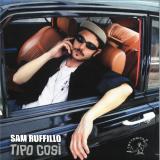
Italian producer, musician, DJ, and groove architect Sam Ruffillo drops his long-awaited debut album Tipo Così on Toy Tonics – a sun-drenched, genre-blurring statement that blends classic house with Mediterranean flair, romantic funk, and tongue-in-cheek Italo vibes. Over 11 expertly crafted tracks, Ruffillo delivers a dancefloor-ready, emotionally rich LP that connects deep musicality with irresistible rhythm and light-hearted elegance.
After three acclaimed EPs and collaborations with revered artists such as Barbara Boeing, Kapote, and Fimiani, Ruffillo has firmly cemented himself as a core artist on the Berlin-based label. Known for his unmistakable signature sound — a warm mix of vintage disco, 90s house, and Italian vocals — Sam’s music has garnered widespread DJ support from tastemakers like Gerd Janson, Palms Trax, Seth Troxler, and DJ Tennis, while becoming a staple on Italian airwaves. His infectious summer anthems like Danza Organica and Perfetta Così have soundtracked countless club nights and festivals, creating a loyal following that eagerly awaited this full-length debut.
Tipo Così is the natural culmination of a musical journey that’s both playful and profound — a travel diary written in grooves, synth stabs, and melodies that feel like postcards from a parallel Mediterranean universe. The album expands and deepens Ruffillo’s world into a fully immersive experience: lush emotional chords meet tight syncopated grooves, vintage synth textures collide with irresistibly catchy pop refrains, and the boundary between sincerity and playful irony is exquisitely blurred.
Entirely written, produced, and recorded in Italy, in his beloved hometown of Bologna, the album finds Ruffillo at the helm on keys, drum machines, and production, supported by a talented cast of musicians contributing live bass, guitar, and other organic elements — further enriching his trademark fusion of electronic grooves and natural instrumentation. There’s a tactile warmth in these tracks, a hands-on feel that adds soul and depth to every beat.
This album also marks Ruffillo’s heartfelt return to singing in Italian, with standout tracks like House Tipo Così, Mi Fa Volare, Ancora, and Dentro Di Me, where romantic naïveté meets pulsing club energy in a way that feels both timeless and refreshingly new. The vocal performances add an intimate, human touch to the music, reinforcing the personal stories woven into each song. There’s poetry in the casual, a bittersweet elegance in the way the lyrics float over groove-heavy production.
Having toured extensively across Europe, Australia, Indonesia, New Zealand, and Mexico — with sets at iconic venues like Panorama Bar and festivals such as Sónar Barcelona — Ruffillo has fine-tuned much of this album in front of live audiences. The real-world testing ground infused the record with a dynamic energy and immediacy that only comes from genuine crowd interaction. These songs weren’t just made in the studio — they were lived on dancefloors around the world.
Tipo Così is not just a collection of tracks. It’s a philosophy — playful, stylish and unmistakably personal. A modern club album bursting with heartfelt emotion and sophistication. Music for dancers with taste; for lovers of beauty, rhythm, and the little imperfections that make things feel real.
But what exactly is Tipo Così? More than just a phrase, it’s a way of being. It’s about embracing elegance without effort, mixing irony with sincerity, and letting nostalgia slip into the room without taking over the party. It’s Sam Ruffillo’s signature language: relaxed, confident, meticulous yet never rigid — where a chord progression can say as much as a lyric, and every beat carries intention.
The album’s visual identity complements this vision perfectly. The artwork and promotional materials lovingly reference Italian design from the ’80s and ’90s, combining bold graphic elements with playful pop culture nods. This aesthetic mirrors Ruffillo’s music — a fusion of vintage warmth and contemporary freshness, delivered with authenticity and charm.
Sam Ruffillo belongs to a new generation of European artists who are reshaping electronic music by blending past and present, analog and digital, groove and emotion — without nostalgia or pose. His artistic universe is coherent, vibrant, and alive; a rich tapestry of sound, images, and stories that coexist with lightness, precision, and a distinctive voice.
Reflecting on his artistic journey, Sam describes music as a vital, deeply human impulse — a tribal connection to rhythm and body that has driven him since he was a teenager. His creative process balances meticulous planning with room for spontaneity, usually sparked by clear melodic ideas that evolve naturally. Collaborations with close friends, especially vocalists like Ninfa, add warmth and authenticity, exemplified in tracks like “House Tipo Così.” For Sam, music is honest self-expression — crafted for listeners who crave memorable melodies and rhythms imbued with genuine feeling.
While technical perfection is tempting, Sam prioritizes emotion, knowing that what truly resonates is the soul behind the sounds. His long-standing partnership with Toy Tonics has been key in nurturing his vision, offering a blend of creative freedom and professional support. Looking ahead, Sam Ruffillo is excited to broaden his live performances, and release new projects that continue to blend electronic grooves with organic, heartfelt sounds — maintaining the delicate balance between playful irony and sincere emotion that defines Tipo Così.
Kurzversion:
Italian DJ, producer and musician Sam Ruffillo drops his debut album Tipo Così on Toy Tonics - a sunny blend of house, funk, Italo and pop, full of groove and emotion. Written and recorded in Bologna with live instruments and Italian vocals, it’s a playful, elegant journey shaped on dancefloors worldwide. A stylish, sincere club album where nostalgia, irony and rhythm meet in perfect harmony.
- Mi Fa Volare
Road-tested across continents and now finally released, “Mi Fa Volare” channels 90s uplifting euphoria with big breakbeats, lush chords, and Italian vocals built to stick. Somewhere between balearic bliss and piano house nostalgia, it’s a feel-good club weapon made for peak-time moments - already sung back by crowds after just one listen.
- Ancora
“Ancora” is a vibrant hi-NRG track inspired by 80s Italo disco, sung entirely in Italian. It blends driving rhythms with dreamy melodies, capturing the radiant spirit of the decade. This fresh yet nostalgic song delivers euphoric vibes and timeless energy, making it a perfect fit for both dancefloors and reflective listening moments worldwide.
- Dentro Di Me
“Dentro Di Me” channels ‘90s sensuality through a fast-paced, UK house-inspired lens. Entirely in Italian, it’s a bold and contemporary dance track where hypnotic vocals meet high-energy grooves. Blending nostalgic textures with forward-thinking production, the result is a seductive and euphoric trip - equal parts emotional and club-ready.
- Amigo
“Amigo” blends Latin groove, acoustic guitar-driven rhythm, and Mediterranean flair into a warm, magnetic, cross-cultural dance anthem. Sung in Spanish and Italian, it celebrates connection, inclusivity, and the joy of moving together - whether stranger or friend. With its unstoppable rhythm and vibrant energy, it’s a feel-good track with a unifying spirit.
- Ma Sei Fuori
“Ma Sei Fuori” is a tongue-in-cheek dancefloor bomb blending raw house energy with catchy vocal phrases and a nod to classic French touch. Driven by hypnotic vocal lines and a playful attitude, it doesn’t take itself too seriously - while still proving serious club impact. Built for late-night moments, it’s bold, bouncy, and impossible to ignore.
Steve Hauschildt returns after 6 years with a new album titled Aeropsia. After a transcontinental relocation from the US to Tbilisi, Georgia, the electronic composer emerges from a personal and global transformation to explore themes of perceptual distortion, disconnection, and renewal.
Aeropsia (which roughly translates as “seeing the air”) refers to a visual phenomenon in which objects appear to float or shimmer, often due to changes in pressure, perception, atmospheric shifts or neurological disturbance. This becomes a metaphor for the liminality that informs the record: blurry visions, dreamlike displacements, and the fragile membrane separating what is seen from what is felt.
In the years since his last solo release, Hauschildt’s world has been marked by relocation and a growing sense of global turbulence. These experiences became the raw material for a work that navigates institutional haze and uncertainty itself. The result is music that employs decay as method, structure as entropy, and mutation as expression.
While Aeropsia remains subjective in its vision, Hauschildt invited two previous collaborators to expand the album’s gravitational pull. Cellist Lia Kohl, who previously performed on Nonlin, returns and brings a tactile warmth to select tracks, while guitarist Michael Vallera threads spectral harmonics into the mix. The album’s electronic foundation and its tactile elements meet in a state of luminous suspension to navigate the shifting in physical and psychological terrain.
- A1: Horace Andy Ain’t No Sunshine
- A2: Sister Nancy Bam Bam
- A3: Mr. Vegas Heads High (Kill ’Em With It Remix)
- A4: Alborosie No Cocaine
- A5: Jimmy Riley Sexual Healing
- A6: Lee “Scratch” Perry & The Upsetters Soul Fire
- B1: The Wailers I Shot The Sheriff (Instrumental)
- B2: The Mighty Diamonds Pass The Kutchie
- B3: Freddie Mcgregor Big Ship Sailing
- B4: Black Uhuru I Love King Selassie
- B5: Gregory Isaacs Oh What A Feeling
- B6: Tenor Saw Ring The Alarm
- C1: Max Romeo Material Man
- C2: Sly & Robbie Inner City Blues
- C3: Althea & Donna Uptown Top Ranking
- C4: Third World De Do Do Do, De Da Da Da
- C5: Yellowman Zungguzungguguzungguzeng
- D1: Sean Paul Feat. Sasha I’m Still In Love With You
- D2: Chaka Demus & Pliers Murder She Wrote
- D3: Ini Kamoze World A Music
- D4: Eek-A-Mouse Ganja Smuggling
- D5: Errol Dunkley Ok Fred
Rediscover some of the best Reggae tracks ever made in a double vinyl package.
Featuring : The Wailers – Errol Dunkley – Max Romeo – Horace Andy – Sly & Robbie – Tenor Saw – Chaka Demus & Pliers - Sean Paul – Sister Nancy – Yellowman – The Mighty Diamonds – Lee “Scratch” Perry & The Upsetters
Mit Run Thru the Cover Crop veröffentlicht das britische Trio Mudlow eine Sammlung von zehn Coverversionen, die stilistisch tief im eigenen Klangkosmos verankert sind. Die Auswahl reicht über Jahrzehnte und Genres hinweg, bleibt dabei aber klanglich konsistent: düster, rau und introspektiv. Mudlow, seit Jahren aktiv an der Schnittstelle von Blues, Jazz und Southern-Gothic, nähert sich dem Material nicht als klassische Coverband. Stattdessen werden die Stücke vollständig in den eigenen Sound überführt - mit reduzierten Arrangements, markanter Instrumentierung und einer Atmosphäre, die an verlassene Landstraßen und verregnete Nächte erinnert. Die Band beschreibt den Entstehungsprozess als eine Art Aneignung: Manche Songs kamen wie selbstverständlich zu ihnen, andere mussten "aus dem Schlamm gezogen" und neu interpretiert werden. Das Ergebnis ist ein kohärentes Album, das sich wie ein Fundstück aus einer anderen Zeit anfühlt - roh, gealtert, aber lebendig. Das Artwork - Strommasten im Zwielicht, Krähen auf Leitungen - unterstreicht die Stimmung der Musik. Die Pressung ist auf 500 Exemplare limitiert. Veröffentlichung erfolgt über das deutsche Label JukeJoint500 auf Vinyl und digital. Empfohlen für Läden mit Fokus auf Americana, Alternative Blues und Independent-Veröffentlichungen. Für Hörer:innen von Tom Waits, Morphine oder Kelly Joe Phelps.
Very exclusive high quality De La Soul T shirt print with raised embossed fabric graffiti design of Mase, Pos and Dove along with the De La font logo. An extremely well made design on a cool light T -shirt material fabric that's perfect for the summer. This is a one-off limited edition. Once they're gone, they're gone. Comes in 3 different colours Black, White and Khaki, in sizes Large, Extra Large and Double Extra Large.
Recorded live at Café OTO, London
Friday, 7 March 2025, as part of Valentina Magaletti’s residency takeover
Mixed by Lottie Lou Poulet at Wysing Polyphonic Studio
Cassette duplication by Tapeline, UK (using recycled plastic)
Plastic covers by TAPE MUZIK, Leipzig
Cover materials:
Organic white cotton gabardine, hand-burnt white paper, Japanese washi tape, printed tracing paper.
12:01, time to wake up! Aris 1201 is back on CAF? with a new record. Deeply rooted in the city center of Geneva, this eight tracker is as smokey as its rush hour traffic jams. Bringing together old tracks with new material, this album spans from 4/4 club-ready highways to hip-hop inspired groovy beats. Using a minimum amount of ingredients (raw samples, percussive rhythmics, grainy textures), Aris 1201 delivers a result full of layers and complexity. So only one thing to do: hop in front of the Blunt Mobile and have a nice ride.
The Alien Dub Orchestra is ragtag collective of Bavarian musicians, featuring members of The Notwist and G.Rag y los hermanos Patchekos. The cohort formed around the idea of performing the standards of the fabled Breadminster Songbook, aka the back-catalogue of lone dubman Elijah Minnelli. Minnelli is known for constructing wheezy, forlorn odes to his hometown, both as highly sought-after self-released 7" singles, and a critically-acclaimed debut album, ‘Perpetual Musket’ for FatCat Records, lauded by the likes of The Guardian, The Wire, and The Quietus. ‘The Alien Dub Orchestra: Plays the Breadminster Songbook’ finds group covering Minnelli’s cumbia-infused dub reggae with full band, playing an eclectic array of instruments including: guiro, accordion, melodica, sousaphone, trumpet and assorted percussion.
The tale begins in 2022, when Minnelli was invited to lend his unique dubbing style to a pair of remixes for The Notwist, and what followed was an ever-flourishing relationship between the Breadminster native and the wider Munich scene. The seeds of the Alien Dub Orchestra were sown during a support gig for The Notwist, where assorted musicians joined Minnelli for a encore, reinterpreting one of his dub remixes across woodwind, brass and assorted percussion.
“The idea of real, competent professionals playing something you’ve muddled together on a computer in a damp basement is quite overwhelming,” reflects Minnelli on the process, “hearing them interpret and improve these melodies is a real joy and privilege.”
Despite the non-traditional origins of the source material, the inherent musicality of Minnelli’s songwriting shines through across his releases, and this creative kinship is what attracted the Orchestra to reimagining his work. The first live collaboration led to recording sessions and further gigs, with the Orchestra building a full set of Minnelli’s music.
The resulting album puts forward the strongest case yet of the shared musical throughline between the acts, where cumbia, dub and folk sensibilities coalesce to something all together unique. The tracks are wrought new, with melodies fleshed out and broader instrumentation expanding the sonic possibilities of the compositions. The tactility of the tracks is perhaps best demonstrated on the gorgeous ‘Vine and Fig Tree’, with it’s layed vocals and expressive bassline returning as a cavorting sousaphone line. Elsewhere, fan favourite ‘SLATS’ sounds as if it was simply written to be performed this way.
To further instill the cylindrical nature of these collaborations, the entire second half of the album is made up of dub versions of the Orchestra’s renditions. For these dubs, Minnelli is joined by Raimund Wong, who had caught his ear with his ambitious live sets, a daisy chain of tape machines and FX pedals. Again, despite their differing creative processes, the two bonded over a shared love of dub music. Each dub was a one-take, with Minnelli riding the faders and Wong’s filters and FX supplying a sound that doesn’t seek to imitate dub, so much as it tries to be it’s own chaotic self. The droning, psychedelic hypnosis of ‘Pundit Dub’ stretches the material to a whole new realm that feels outside of anything else Minnelli has produced before, an ode to the benefits of recycling sound if ever there was one. The whole second half is a perfect closing note to an album that is undoubtedly a love letter to folk tradition, dub ideology and, most importantly, the joy of uninhibited collaboration.
Elijah Minnelli - voc, guiro, percussion
Philip Gross - accordion, melodica
Theresa Loibl - clarinet, melodica
Cico Beck - electronics, keyboards
Sascha Schwegeler - congas, steel drum, percussion
Micha Acher - sousaphone, trumpet
Markus Acher - drums, voc
Dub mixes performed live by Elijah Minnelli & Raimund Wong at Breadminster County Council Studios
Living in the present is an album built around the work of American minimalist poet, Robert Lax (1915-2000) who is widely praised for his artistic concept of reduction, in which a pause becomes as important as the things said.
The album brings together the sound of Robert Lax reading his poetry, narrative field recordings by Nicolas Humbert and subtle yet imaginative timbres by Carina Khorkhordina (trumpet) and Miki Yui (electronics) who is also behind the final mixing of the album.
Living in the present is drawing from an archive of audio recordings originally made by film maker Nicolas Humbert while shooting a film on Robert Lax entitled Why Should I Buy A Bed When All That I Want Is Sleep?, ( Nicolas Humbert and Werner Penzel, Germany, 1999) The film was made on the Greek island of Patmos where Lax has lived withdrawn for 3 decades.
More than 25 years after the premiere of Why Should I Buy A Bed When All That I Want Is Sleep?, Humbert, Khorkhordina and Yui are revisiting the original audio material and patiently open worlds within worlds, pointing to new harmonic textures and isolating timbres, synchronizing different layers of time and traces of various locations into a new composition in its own right.
In some ways this album feels like an expansion of the work Humbert and Penzel did with Lax across six years, between 1993 and 1999, where they developed a unique intimacy in their textual-visual collaboration. On two long pieces, for each side of the album, “Where do i begin” and “One moment passes, another comes on” respectively – Yui’s electronics and Khorkhordina’s trumpet interweave beautifully with Humbert’s field recordings, in a manner that shadows the reflective reduction of Lax’s poetry. Indeed, it's no surprise that Lax’s poetry draws musicians into its orbit; it offers the curious a welcoming reduction in which only individual words and syllables represent the essence of language.
Lax’s poetry is notable for its qualities of near-stillness and its capacity to pause the reader’s thought, asking them to hold the sensuality of language for an extended, quietly revelatory moment. His readings on this album share a similar cadence, interested in settling with syllables, with single or several words, for an extended time.
Ultimately, Living in the present unfolds with unforced grace and poetics – one moment passes, then another comes on. (Jon Dale)
Off The Record (faitiche 39), the new album by French collagist Roméo Poirier, is an amusing romp through the discarded history of recording studios. It contains fourteen miniatures based on accidental recordings of studio talk, revealing things that were never meant for the public: we hear instructions from studio staff, scraps of talk between musicians, or just microphones being adjusted, as well as false notes, false starts: everyone stops. Start again: 1, 2, 3, 4!
Poirier’s approach recalls Accumulation, an artform practiced by Arman, Jean Tinguely and Daniel Spoerri that involved piling up everyday items into assemblages. The objects themselves often remained unaltered, the artistic gesture consisting in the careful curating of a distinctive selection. Poirier’s audio collages explore similar terrain. The fourteen pieces on Off the Record combine more than a thousand found sounds from studio archives into complex miniatures. The audio content of these outtakes is twisted, stretched, cut, reassembled, slowed down and accelerated. Voices cut into a microgroove, from a very old recording, intertwine with digital voices gleaned from YouTube. All of them in dialogue, engaging the listener with the impression of being part of a new music group.
Poirier uses the mundane routine of setting up before the actual recording gets underway to tell a universal story about working in a recording studio. And he manages something few achieve, transforming specialist knowledge into a narrative whose beauty goes far beyond its immediate subject. It speaks to everyone, because the story is told in a musical language that is open and accessible, evoking magical images reminiscent of Oz – a world consisting less of events than of camp hallucinations, captured in grainy black-and-white photographs. En passant, Poirier shows us how the notion of material accumulation can produce great art.
Written and produced by Roméo Poirier, mastered by Stephan Mathieu, photos by Roméo Poirier, graphic design by Tim Tetzner.
»Chitin« captures Berlin-based duo Narval (Peter Strickmann and Evgenija Wassilew) in a series of recordings made during a 2025 residency in the village of Schöppingen, Münsterland. Known for their use of everyday objects, self-built wind and percussion instruments, feedback systems, and small-scale electronics, Narval treat the performance space itself as a collaborator. In Schöppingen, this meant farmhouses, a parish church, a sculptor’s studio, and surrounding cornfields — each site imprinting its acoustics and atmosphere onto the performances. The result is a set of recordings where birds, insects, and ambient traces of rural life seep into the music, blurring the boundary between intentional gesture and environmental chance.
The title refers to chitin: the hard-yet-flexible material that forms insect shells, fungal walls, and crustacean exoskeletons. Like tape or rural matter, it is at once protective and permeable, tactile and intimate — qualities mirrored in the album’s sound world. By working with a deliberately limited palette of tools, Narval allow small sonic details to accumulate into shifting durations, giving each piece the strange, layered texture of surfaces both organic and mechanical. Chitin offers a portrait of site-specific listening where the line between instrument and environment continually dissolves.
Peter Strickmann – objects, smartphone, ceramophone, cornfield, iron bar Evgenija Wassilew – AM radio, prepared Stylophone, feedback, smartphone, Bastl Kastle, iron bar Recorded by Peter Strickmann and Evgenija Wassilew Mastered by Jacob Calland
Metatone is a tonic-containing substance used to help restore health and vitality after illnesses or when you are feeling tired. A metaphor, which perfectly describes Ement's debut album - a mixture of peak-time electro/techno tunes spiced up with the modern traces of EBM, which perfectly fits clubs and festivals. It is a personal dancefloor experience materialization of a non-stop party rebel, who started his music production journey in the periphery and got inspired by his brother's hard dance production experiments. After an intensive exploration of the local and foreign club scene through years of intensive djing, remixing and never-ending afterhours, Ement finalized his recent definition of dance, which launches on the new co-curated PZ Records label.
An unexpected break and a long-lasting limbus of the dancefloor consumption turned out as a perfect slot to reveal one of many underestimated Lithuanian producers, who are too shy and too critical to themselves. It's no fiction, as "How Much Is Too Much" was already noticed and compiled by Dave Clark in his "Whitenoise" radio show.
Some things simply need time to brew. Loek Frey returns to Omen Wapta with his third release on the label: Nayan. The Amsterdam-based artist shares a long-standing friendship with label head Woody92 - keeping each other in motion as artistic peers since the label's inception. Over time, they've built a shared archive of material: sound sketches, tracks, and sonic touchpoints - an ever-evolving third space where their paths continue to meet as they move in parallel. Nayan emerges from this deep-rooted exchange: a distilled six-track release that fuses Frey's cerebral intricacy with the label's primordial uncanniness, reaffirming both as key voices in a yet-to-be-defined sonic realm. Diving into the release, Frey's signature remains intact - tactile, spatial, and rhythmically precise - but a subtle shift is at play. A paring down. A move toward something more reduced, maybe even more patient, yet no less absorbing. The A side leans inward: deep pressure, spectral traces, and an undercurrent of tension that never quite resolves. It's music for staying with, not escaping from. Flip to the B side and the palette widens - kicks land heavier, patterns loosen, textures fill the full frequency field. Still deeply rooted in the Wapta world, but with an assertiveness that whispers rather than shouts. Somewhere between absence and force. With Nayan, Loek Frey carries his Omen Wapta narrative into new territory - merging restless experimentation with dancefloor intention.
- A1: In My Life
- A2: Playing Around
- A3: Do You Wanna
- A4: Turn On Your Funk-A-Phizor
- A5: The Beat Won't Leave You Hangin
- A6: On The Way To The World
- B1: Happiness Is
- B2: Send My Love
- B3: Oh I Love You So
- B4: Down At The Disco
- B5: Let Me Put It In Your Ear
- B6: Errol Flynn
A photo in Rodney Stepp’s scrapbook sums this period in his life in music. It’s 1974, The Spinners were headliners at the “Zaire 74” music festival, a sideshow to Muhammad Ali’s fabled “Rumble in the Jungle” fight with George Foreman. Among the faded snapshots, there’s a picture of Stepp backstage posing arm in arm with Ali; another image shows The Greatest seated at Stepp’s Fender Rhodes alongside vocalist Etta James. It was all a dream for this Naptown wunderkind, who had previously recorded for Herb Miller’s LAMP Records as the Diplomatics and had issued the sweet soul killer “Young Girl” as Jazzie Cazzie and the Eight Sounds on a rare Knaptown 45. (These recordings have been documented on the Now-Again LAMP anthology and our Loving On The Flipside compilation.) But as exciting as his rise out of those local status was, as exciting as it was to headline festivals and arenas and appear on late night talk shows, Stepp grew restless with the mechanical routine of being a sideman. He grew tired of playing the same charts night after night. He was hungry for a creative outlet that mimicked his earliest days in recorded music. So, in 1978, Stepp left The Spinners and returned to Indianapolis, where he established an all-stargroup of musicians–including members of Jazzie Cazzie and the fabled Amnesty–and he named the band Rapture. They inspired countless others. They recorded an album’s worth of material. Now-Again’s Egon first got tapes from Stepp in 2002 and dutifully transferred them, but the time was not right for a foray into this wealth of material. Come 2025, and this is the first time it Rapture’s music is seeing the light of day, a triumphant, late career moment for Stepp and a cause for celebration of those intrigued by deep, sweet soul and disco funk
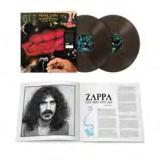
Frank Zappas episches Album „One Size Fits All“ aus dem Jahr 1975 feiert sein 50-jähriges Jubiläum
mit einem weiteren vollgepackten Multi-Disc-Box-Set mit 75 % unveröffentlichtem Material. Die Box enthält vier CDs mit dem 2012 von der Legende Bob Ludwig neu gemasterten Hauptalbum sowie anderthalb
Discs mit Studio-Outtakes, Live-Konzerten, Work-Mixes und relevanten Vault-Tracks. Die Live-Besetzung
bestand aus der klassischen 6-köpfigen Band mit George Duke und Ruth Underwood.Ruth Underwood
steuerte auch neue Linernotes für das Paket bei, zusammen mit historischen Essays von David Fricke und
„Vaultmeister“ Joe Travers. Das Booklet zum 50. Jahrestag enthält außerdem neu veröffentlichte Fotos
von Sam Emerson.
Die Blu-Ray Disc enthält brandneue Dolby Atmos- und 5.1-Mischungen direkt von den 24-Spur-Masterbändern
des Albums, Hi-Res-Versionen des Hauptalbums und zwei Bonus-Surround-Tracks mit alten Mixes von
Zappa selbst. Außerdem sind zwei Bonusvideos von den klassischen KCET-TV-Dreharbeiten enthalten, die
zum ersten Mal neu bearbeitet wurden, seit FZ 1974 das Material in die Hände bekam.
Die 2LP „black glitter“ Jubiläumsedition enthält einen brandneuen analogen Schnitt des Albums, eine
Bonus-LP mit den Highlights des Box-Sets und das Booklet der 50th Anniversary Edition.
GAISTER (Olivia Salvadori, Akihide Monna and Coby Sey) release their self-titled LP.
The record captures the embodiment of an encounter, one moment of the trio’s ongoing relationship as artists who communicate with each other through sound, voice and music.
After orbiting in the same circles at each other's shows around 2016 in London, Sey and Salvadori eventually crossed paths. In 2017 Sey joined Salvadori’s artistic collective Tutto Questo Sentire on a residency in Capalbio, the southernmost part of Tuscany, Italy, and started working together. Down the line the pair ended up joining with Akihide Monna (of Bo Ningen), performing together in 2019 at Camden Art Centre on Cork Street in London.
When the trio come together something new is created, brought out after laying dormant, like an Icelandic Geysir. The setting of this particular encounter amongst the trio is essential in the album’s sonic palette, process and emotion. The album was recorded in Iceland at
Greenhouse Studios, where the trio formalised a set of intuitions; how nature can provide a guideline in the choices of the instruments, their materials and related rhythms; reflections on the voice as a sculptural element, pure sound and words.
As Akihide has said of the experience during their short and intense recording period: “The sound spontaneously spun out as if we were pulling at each other's hearts and minds with a strange internal connection and sensation. Something pure was brought out.”
‘Gaister’ itself is a made up word, sprung from the German ‘Geist’ to mean ‘spirit’, and made into a sound of its own. A purity, spirit and essence is pulled from the trio, in spite of their varying mother tongues (Italian, Japanese and English), musical genres and identities to create something new. Olivia Salvadori’s operatic vocals run free, flowing and moving in
synergy with Monna’s rhythmic drumming. Sey sings freely with Salvadori, their voices braided together like a waterfall.
This flowing nature is reflected in the album itself, its timestamps and scores are marked by encounters rather than tracks themselves. This album can be considered as one constant piece and a journey of its own that is not foreclosed, in keeping with the band’s ethos of
constant conversation and collaboration.
As Sey speaks of the trio’s relationship: “Olivia, Monchan and I had performed live together once before, several years before this song and this album came to be… and yet, we fully trust each other’s intuition when performing and creating music together because of our unified belief in the ability of sound and music to communicate and connect.”
credits
releases November 1, 2024
Olivia Salvadori: voice
Akihide Monna: voice, drums, percussions
Coby Sey: voice, percussions, synths, wurlitzer
Recorded at Greenhouse Studios in Reykjavik, Iceland
Recorded and producer: Sandro Mussida
Sound engineer: Francesco Fabris
Studio assistant: Domiziano Maselli and Jakob Vasak
Mixing engineer: Kristian Craig Robinson at Total Refreshment Centre, London, UK
Strut presents Mulatu Plays Mulatu, the first major studio album in over 10 years from the father of Ethio-jazz, Mulatu Astatke. Featuring masterful new arrangements of some of his classic compositions, Mulatu Plays Mulatu finds Mulatu revisiting the sounds that helped to change the face of Ethiopian music during the late "60s and early "70s. The album was recorded between London and Addis Ababa, working with his long-standing UK band, a tight, intuitive ensemble honed through years of live performance, alongside cultural musicians resident at his Jazz Village club in Addis. Mulatu Plays Mulatu realises Mulatu"s long-term vision of Ethio-jazz, intricately balancing Western jazz arrangements with the rich sounds of traditional Ethiopian instruments including the krar, masenqo, washint, kebero and begena. Throughout the album, he reshapes familiar material with rich textures, expanded improvisations and a deepened rhythmic complexity, creating a body of work that feels as vital and contemporary as it does steeped in tradition. Familiar compositions like "Yekermo Sew", "Netsanet" and the celebratory "Kulun" are reinvented here as elegant big band performances. Bridging continents and generations throughout his 50-year career, Astatke now offers us an invitation to hear his music again, with a completely fresh perspective. Ethio-jazz, like its creator, is always in motion.
- A1: Ersatz
- A2: Demain Berlin
- B1: Mauve
- B2: Peine Perdue
First time reissue of this French cold-wave / minimal-synth treasure.
November 1981 – In the heart of autumn, we set off in two cars along the Nationale 1 (!) to reach Choisy-le-Roi, where a 16-track studio was waiting for us—a place where, over the course of a weekend, we would finally be able to carve our own grooves into vinyl. We were quite nervous, as Guerre Froide had already been around for a year and a half. Our elders in Kas Product had already released two EPs—one with four tracks, the other with three—in 1980, even though they’d started only a few months before us. Admittedly, there wasn’t really a sense of urgency—some of us came from the punk movement, where the prevailing mood was still very much No Future, even if we’d long since stopped believing in it... And yet others had truly lost everything, like those from the generation before us. The reasons, ironically, were often the same: heroin and/or love—hard drugs, in both cases.
Speaking of which, I had a terrible stomach ache—due to nerves or some form of tension—which forced us to make a pit stop in the Oise region so I could rush to the toilet of a local café. That same stomach discomfort would hit me again once we arrived at the studio—whose name, incidentally, I’ve since forgotten...
We had gotten there thanks to the generous initiative of a friend, Sylvain S., known as “Perlin” (what a phonetic coincidence!?), who had specifically created the Stechak Products label to produce our record. Stechak because it was consistent with his earlier association called Tchernoziom, and Products as a plural tribute to the trailblazers from Nancy.
Guerre Froide originally consisted of four members: Fabrice Fruchart on guitar-synth (Korg MS-20), Patrick Mallet on bass, and Gilbert Deffais, known as “Bébert”, on Korg drum machine. At the time, I was already singing in a rock/post-punk band called Stress, and that’s how Guerre Froide picked up the bad habit of rehearsing in the same basement in Amiens as Stress. Within a month or two, we had half a dozen songs. We then had the opportunity to record a 4-track demo with a friend from Radio France Picardie, and to perform in October at a festival held at the Amiens municipal circus. Then came the now-legendary concert on November 11 at B.J.’s Club. After that, we self-produced and released 50 completely DIY copies of a cassette titled Cicatrice. A few concerts later—after Jean-Michel Bailleux had joined us on bass and Patrick had switched to guitar, which felt more natural to him—and with more concrete plans starting to take shape, we had to find a new rehearsal space and start renting a room.
Then came the moment when Fabrice told us he was leaving to go study in Lille... After the June 19, 1981 concert, which was naturally dubbed “Farewell to 2F,” Marie-José, Bébert’s wife, offered to take over on synth.
That’s when Perlin, who was a close friend of the Deffais couple and a great fan of our music, offered to fully finance the production of a 4-track 12-inch EP—covering the studio time, mastering, pressing, and artwork. What up-and-coming band would have turned that down? An improvised contract was signed with each member of Guerre Froide. The first step was choosing which four songs we would record. Berlin 81 was an obvious pick, having already become the group’s flagship track. We wanted to avoid reusing songs from Cicatrice, so the focus shifted to new material—some written before, some after Fabrice’s departure. Ersatz, for example, was his composition, but Mauve and Peine Perdue, which were also selected, were both written by Patrick.
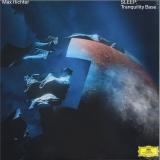
Max Richter presents SLEEP: Tranquility Base, a thirty-minute EP of new SLEEP music alongside remixes from electronic musician Kelly Lee Owens and German sound artist Alva Noto. Richter returns to his celebrated eight-hour magnum opus SLEEP with this new EP which offers a glimpse into the original material from an electronic perspective. “Tranquility Base” is the site on the Moon where, in July 1969, humans landed and walked on a celestial body other than Earth for the first time. With this in mind, the EP functions as a vessel that disconnects and travels through the body of work, allowing art to provide something which resembles peace within ourselves.