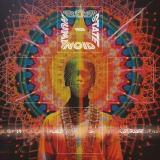
Die Montrealer Ikone Tiga kehrt mit seinem vierten Album HOTLIFE zurück und läutet damit eine neue Ära in seiner unsterblichen Techno-Reise hin zu absoluter geistiger Freiheit ein. Mit Beiträgen von Boys Noize, Matthew Dear, Fcukers, MRD, Gesloten Cirkel, Paranoid London, Maara und den neuen Studio-Experten seiner Heimatstadt Priori und Patrick Holland befindet sich Tiga mit HOTLIFE auf dem Gipfel des Musikbergs und versetzt die Zuhörer mit ansteckenden Dancefloor-Klängen in Begeisterung: ,Wenn ich die Catharsis Machine einschalte", sagt der berühmte Sänger und Produzent, ,spielt es keine Rolle, ob Sie reich oder arm sind, denn Sie werden ein freier Mensch sein ..." Die Rückeroberung seines Platzes an der Spitze des himmlischen Firmaments der zeitgenössischen Tanzmusik verlief nicht ohne eine fesselnde und nachvollziehbare Erzählung. Nach einem mühsamen Kampf mit einer neurologischen Erkrankung, die er entdeckte und ,Vibe Fog" nannte, befand sich Tiga an einem Scheideweg: ,An einem bestimmten Punkt hieß es entweder, das Exoskelett zu kaufen und meine Virgin Megastore-Aktien zu verkaufen, oder Tiga City von Grund auf neu aufzubauen, Stein für Stein, Wasserspeier für Wasserspeier." Das Ergebnis ist ein Tiga, den langjährige Tiga-Beobachter als ,engelsgleich" und ,furchteinflößend" bezeichnen, was zu einem Album geführt hat, das die destillierte Essenz eines Trendsetters einfängt, der über alle menschlichen Grenzen hinausgeht. ,Meine Ja/Nein-Reaktionszeit bei künstlerischen Entscheidungen ist außergewöhnlich", fügt Tiga hinzu. ,Wir haben jede Sekunde, die wir bei jeder kreativen Entscheidung eingespart haben, in die Laufzeit des Albums reinvestiert. 12 Songs. 60 Minuten. Bemerkenswert."
Cerca:matt mus
British electronic music pioneers Graham Massey (founding member of Manchester legends 808 State) and Brian Dougans (the mind behind acid house milestone Humanoid and one half of The Future Sound Of London) join forces for their debut collaboration In Place Of Language, released on Belgian label De:tuned.
Both 808 State and Humanoid helped shape the UK's early rave and acid house movement. Here, Massey and Dougans channel that legacy into a beautifully balanced four-track EP that radiates warmth and energy, drawing on more than three decades of experience in electronic music. Inspired by key elements of the '89-91 era while embracing a contemporary edge, the duo merge their distinct sonic identities into a sound that feels both timeless and forward-looking.
In Place Of Language is not a nostalgia trip, but a natural evolution: a meeting point between foundation and future, and a blueprint for a new wave of electronic experimentation!
Kevin Foakes (Openmind, DJ Food, Ninja Tune) created all the graphic work. Mastered by Matt Colton at Metropolis. A separate digital release will also be available at the usual digital shops. Stay tuned!
- A1: Evangelina - Hoyt Axton
- A2: Lady Love - Lou Rawls
- A3: Castles In The Air - Don Mclean
- A4: Why Have You Left The One You Left Me For - Crystal Gayle
- A5: Lost In Love - Air Supply
- A6: Danny's Song - Anne Murray
- B1: Train In The Distance - Paul Simon
- B2: The Bargain Store - Dolly Parton
- B3: We're Gonna Change The World - Matt Monro
- B4: Run Like The Wind - Barbara Dickson
- B5: Stumblin' In - Suzi Quatro & Chris Norman
- B6: Matrimony - Gilbert O'sullivan
- C1: You Belong To Me - Carly Simon
- C2: The Best Is Yet To Come - Clifford T Ward
- C3: Daylight Katy - Gordon Lightfoot
- C4: Deeper Than The Night - Olivia Newton-John
- C5: Warm Feeling - Lindisfarne
- C6: The Danger Of A Stranger - Stella Parton
- D1: Who What When Where Why - Dionne Warwick
- D2: 99 Miles From La - Art Garfunkel
- D3: Calypso - John Denver
- D4: Old And Wise - The Alan Parsons Project
- D5: Theme From 'Taxi' (Angela) - Bob James
Bob Stanley’s latest compilation “Wednesday Morning 6AM” literally turns back the clocks.
In the late 70s and early 80s, there was a parallel world of hits that people only heard when their clock radio went off. BBC Radio 2 had little time for the Top 40 music played by Radio 1 and beamed into living rooms by Top Of The Pops. Radio 2 effectively created a chart of its own playing singles or album tracks that their DJs enjoyed and wanted to share with their listeners. These tracks were given multiple plays on rotation and became earworms for millions of listeners.
“Wednesday Morning 6AM” is the warming soundtrack of eating breakfast or driving to school or to work in the cold and dark early hours to the sound of Art Garfunkel’s ‘99 Miles From LA’, Dolly Parton’s ‘The Bargain Store’, Hoyt Axton’s ‘Evangelina’, Paul Simon’s ‘Train In The Distance’ and Air Supply’s ‘Lost In Love’.
Other featured artists include Gilbert O’Sullivan, Crystal Gayle, Carly Simon, John Denver, Lou Rawls, Lindisfarne, Bob James, Stella Parton and Dionne Warwick.
The 2-LP version includes the bonus track ‘Danny’s Song’ by Anne Murray.
UILTY RAZORS, BONA FIDE PUNKS.
Writings on the topic that go off in all directions, mind-numbing lectures given by academics, and testimonies, most of them heavily doctored, from those who “lived through that era”: so many people today fantasize about the early days of punk in our country… This blessed moment when no one had yet thought of flaunting a ridiculous green mohawk, taking Sid Vicious as a hero, or – even worse – making the so-called alternative scene both festive and boorish. There was no such thing in 1976 or 1977, when it wasn’t easy to get hold of the first 45s by the Pistols or the Clash. Few people were aware of what was happening on the fringes of the fringes at the time. Malcolm McLaren was virtually unknown, and having short hair made you seem strange. Who knew then that rock music, which had taken a very bad turn since the early 1970s, would once again become an essential element of liberation? That, thanks to short and fast songs, it would once again rediscover that primitive, social side that was so hated by older generations? Who knew that, besides a few loners who read the music press (it was even better if they read it in English) and frequented the right record stores? Many of these formed bands, because it was impossible to do otherwise. We quickly went from listening to the Velvet Underground to trying to play the Stooges’ intros. It’s a somewhat collective story, even though there weren’t many people to start it.
The Guilty Razors were among those who took part in this initial upheaval in Paris. They were far from being the worst. They had something special and even released a single that was well above the national average. They also had enough songs to fill an album, the one you’re holding. In everyone’s opinion, they were definitely not among the punk impostors that followed in their wake. They were, at least, genuine and credible.
Guilty Razors, Parisian punk band (1975-1978). To understand something about their somewhat linear but very energetic sound, we might need to talk about the context in which it was born and, more broadly, recall the boredom (a theme that would become capital in punk songs) coupled with the desire to blow everything off, which were the basis for the formation of bands playing a rejuvenated rock music ; about the passion for a few records by the Kinks or the early Who, by the Stooges, by the Velvet mostly, which set you apart from the crowd.
And of course, we should remember this new wave, which was promoted by a few articles in the specialized press and some cutting-edge record stores, coming from New York or London, whose small but powerful influence could be felt in Paris and in a handful of isolated places in the provinces, lulled to sleep by so many appalling things, from Tangerine Dream to President Giscard d’Estaing...
In 1975-76, French music was, as almost always, in a sorry state ; it was still dominated by Johnny Hallyday and Sylvie Vartan. Local rock music was also rather bleak, apart from Bijou and Little Bob who tried to revive this small scene with poorly sound-engineered gigs played to almost no one.
In the working class suburbs at the time, it was mainly hard rock music played to 11 that helped people forget about their gruelling shifts at the factory. Here and there, on the outskirts of major cities, you still could find a few rockers with sideburns wearing black armbands since the death of Gene Vincent, but it wasn’t a proper mass movement, just a source of real danger to anyone they came across who wasn't like them. In August 1976, a festival unlike any other took place in Mont-de-Marsan – the First European Punk Festival as the poster said – with almost as many people on stage as in the audience. Yet, on that day, a quasi historical event happened, when, under the blazing afternoon sun, a band of unknowns called The Damned made an unprecedented noise in the arena, reminiscent of the chaotic Stooges in their early adolescence. They were the first genuine punk band to perform in our country: from then on, anything was possible, almost anything seemed permissible.
It makes sense that the four+1 members of Guilty Razors, who initially amplified acoustic guitars with crappy tape recorder microphones, would adopt punk music (pronounced paink in French) naturally and instinctively, since it combines liberating noise with speed of execution and – crucially – a very healthy sense of rebellion (the protesters of May 1968 proclaimed, and it was even a slogan, that they weren’t against old people, but against what had made them grow old. In the mid-1970s, it seemed normal and obvious that old people should now ALSO be targeted!!!).
At the time, the desire to fight back, and break down authority and apathy, was either red or black, often taking the form of leafleting, tumultuous general assemblies in the schoolyard, and massive or shabby demonstrations, most of the time overflowing with an exciting vitality that sometimes turned into fights with the riot police. Indeed, soon after the end of the Vietnam War and following Pinochet’s coup in Chile, all over France, Trotskyist and anarcho-libertarian fervour was firmly entrenched among parts of the educated youth population, who were equally rebellious and troublemakers whenever they had the chance. It should also be noted that when the single "Anarchy in the UK" was first heard, even though not many of us had access to it, both the title and its explosive sound immediately resonated with some of those troublemakers crying out for ANARCHY!!! Meanwhile, the left-wing majority still equated punks with reckless young neo-Nazis. Of course, the widely circulated photos in the mainstream press of Siouxsie Sioux with her swastikas didn’t necessarily help to win over the theorists of the Great Revolution. It took Joe Strummer to introduce The Clash as an anti-racist, anti-fascist and anti-ignorance band for the rejection of old-school revolutionaries to fade a little.
The Lycée Jean-Baptiste Say at Porte d’Auteuil, despite being located in the very posh and very exclusive 16th arrondissement of Paris, didn’t escape these "committed" upheavals, which doubled as the perfect outlet for the less timid members of this generation.
“Back then, politics were fun,” says Tristam Nada, who studied there and went on to become Guilty Razors’ frontman. “Jean-Baptiste was the leftist high-school in the neighbourhood. When the far right guys from the GUD came down there, the Communist League guys from elsewhere helped us fight them off.”
Anything that could challenge authority was fair game and of course, strikes for just about any reason would lead to increasingly frequent truancy (with a definitive farewell to education that would soon follow). Tristam Nada spent his 10th and 11th unfinished grades with José Perez, who had come from Spain, where his father, a janitor, had been sentenced to death by Franco. “José steered my tastes towards solid acts such as The Who. Like most teenagers, I had previously absorbed just about everything that came my way, from Yes to Led Zeppelin to Genesis. I was exploring… And then one day, he told me that he and his brother Carlos wanted to start a rock band.” The Perez brothers already played guitar. “Of course, they were Spanish!”, jokes their singer. “Then, somewhat reluctantly, José took up the bass and we were soon joined by Jano – who called himself Jano Homicid – who took up the rhythm guitar.” Several drummers would later join this core of not easily intimidated young guys who didn’t let adversity get the better of them.
The first rehearsals of the newly named Guilty Razors took place in the bedroom of a Perez aunt. There, the three rookies tried to cover a few standards, songs that often were an integral part of their lives. During a first, short gig, in front of a bewildered audience of tough old-school rockers, they launched into a clunky version of the Velvet Underground's “Heroin”. Challenge or recklessness? A bit of both, probably… And then, step by step, their limited repertoire expanded as they decided to write their own songs, sung in a not always very accurate or academic English, but who cared about proper grammar or the right vocabulary, since what truly mattered was to make the words sound as good as possible while playing very, very fast music? And spitting out those words in a language that left no doubt as to what it conveyed mattered as well.
Trying their hand a the kind of rock music disliked by most of the neighbourhood, making noise, being fiercely provocative: they still belonged to a tiny clique who, at this very moment, had chosen to impose this difference. And there were very few places in France or elsewhere, where one could witness the first stirrings of something that wasn’t a trend yet, let alone a movement.
In the provinces, in late 1976 or early 1977, there couldn’t be more than thirty record stores that were a bit more discerning than average, where you could hear this new kind of short-haired rock music called “punk”. The old clientele, who previously had no problem coming in to buy the latest McCartney or Aerosmith LP, now felt a little less comfortable there…
In Paris, these enlightened places were quite rare and often located nex to what would become the Forum des Halles, a big shopping mall. Between three aging sex workers, a couple of second-hand clothes shops, sellers of hippie paraphernalia and small fashion designers, the good word was loudly spread in two pioneering places – propagators of what was still only a new underground movement. Historically, the first one was the Open Market, a kind of poorly, but tastefully stocked cave. Speakers blasted out the sound of sixties garage bands from the Nuggets compilation (a crucial reference for José Perez) or the badly dressed English kids of Eddie and the Hot Rods. This black-painted den was opened a few years earlier by Marc Zermati, a character who wasn’t always in a sunny disposition, but always quite radical in his (good) choices and his opinions. He founded the independent label Skydog and was one of the promoters of the Mont-de-Marsan punk festivals. Not far from there was Harry Cover, another store more in tune with the new New York scene, which was amply covered in the house fanzine, Rock News (even though it was in it that the photos of the Sex Pistols were first published in France).
It was a favorite hang-out of the Perez brothers and Tristam Nada, as the latter explained. “It’s at Harry Cover’s that we first heard the Pistols and Clash’s 45s, and after that, we decided to start writing our first songs. If they could do it, so could we!”
The sonic shocks that were “Anarchy in the UK”, “White Riot” or the Buzzcocks’s EP, “Spiral Scratch” – which Guilty Razors' sound is reminiscent of – were soon to be amplified by an unparalleled visual shock. In April 1977, right after the release of their first LP, The Clash performed at the Palais des Glaces in Paris, during a punk night organised by Marc Zermati. For many who were there, it was the gig of a lifetime…
Of course, Guilty Razors and Tristam were in the audience: “That concert was fabulous… We Parisian punks were almost all dressed in black and white, with white shirts, skinny leather ties, bikers jackets or light jackets, etc. The Clash, on the other hand, wore colourful clothes. Well, the next day, at the Gibus, you’d spot everyone who had been at this concert, but they weren’t wearing anything black, they were all wearing colours.”
It makes sense to mention the Gibus club, as Guilty Razors often played there (sometimes in front of a hostile audience). It was also the only place in Paris that regularly scheduled new Parisian or Anglo-Saxon acts, such as Generation X, Siouxsie and the Banshees, the Slits, and Johnny Thunders who would become a kind of messed-up mascot for the venue. A little later, in 1978, the Rose Bonbon – formerly the Nashville – also attracted nightly owls in search of electric thrills… In 1977, the iconic but not necessarily excellent Asphalt Jungle often played at the Gibus, sometimes sharing the bill with Metal Urbain, the only band whose aura would later transcend the French borders (“I saw them as the French Sex Pistols,” said Geoff Travis, head of their British label Rough Trade). Already established in this small scene, Metal Urbain helped the young and restless Guilty Razors who had just arrived. Guitarist for Metal Urbain Hermann Schwartz remembers it: “They were younger than us, we were a bit like their mentors even if it’s too strong a word… At least they were credible. We thought they were good, and they had good songs which reminded of the Buzzcocks that I liked a lot. But at some point, they started hanging out with the Hells Angels. That’s when we stopped following them.”
The break-up was mutual, since, Guilty Razors, for their part, were shocked when they saw a fringe element of the audience at Metal Urbain concerts who repeatedly shouted “Sieg Heil” and gave Nazi salutes. These provocations, even still minor (the bulk of the skinhead crowd would later make their presence felt during concerts), weren’t really to the liking of the Perez brothers, whose anti-fascist convictions were firmly rooted. Some things are non-negotiable.
A few months earlier (in July 1978), Guilty Razors had nevertheless opened very successfully for Metal Urbain at the Bus Palladium, a more traditonally old-school rock night-club. But, as was sometimes the case back then, the night turned into a mass brawl when suburban rockers came to “beat up punks”.
Back then, Parisian nights weren’t always sweet and serene.
So, after opening as best as they could for The Jam (their sound having been ruined by the PA system), our local heroes were – once again – met outside by a horde of greasers out to get them. “Thankfully,” says Tristam, “we were with our roadies, motorless bikers who acted as a protective barrier. We were chased in the neighbouring streets and the whole thing ended in front of a bar, with the owner coming out with a rifle…”
Although Tristam and the Perez brothers narrowly escaped various, potentially bloody, incidents, they weren’t completely innocent of wrongdoing either. They still find amusing their mugging of two strangers in the street for example (“We were broke and we simply wanted to buy tickets for the Heartbreakers concert that night,” says Tristam). It so happened that their victims were two key figures in the rock business at the time: radio presenter Alain Manneval and music publisher Philippe Constantin. They filed a complaint and sought monetary compensation, but somehow the band’s manager, the skilful but very controversial Alexis, managed to get the complaint withdrawn and Guilty Razors ended up signing with Constantin with a substantial advance.
They also signed with Polydor and the label released in 1978 their only three-track 45, featuring “I Don't Wanna be A Rich”, “Hurts and Noises” and “Provocate” (songs that exuded perpetual rebellion and an unquenchable desire for “class” confrontation). It was a very good record, but due to a lack of promotion (radio stations didn’t play French artists singing in English), it didn’t sell very well. Only 800 copies were allegedly sold and the rest of the stock was pulped… Initially, the three tracks were to be included on a LP that never came to be, since they were dropped by Polydor (“Let’s say we sometimes caused a ruckus in their offices!” laughs Tristam.) In order to perfect the long-awaited LP, the band recorded demos of other tracks. There was a cover of Pink Floyd's “Lucifer Sam” from the Syd Barrett era – proof of an enduring love for the sixties’ greats –, “Wake Up” a hangover tale and “Bad Heart” about the Baader-Meinhof gang, whose actions had a profound impact on the era and on a generation seeking extreme dissent... On the album you’re now discovering, you can also hear five previously unreleased tracks recorded a bit later during an extended and freezing stay in Madrid, in a makeshift studio with the invaluable help of a drummer also acting as sound engineer. He was both an enthusiastic old hippie and a proper whizz at sound engineering. Here too, certain influences from the fifties and sixties (Link Wray, the Troggs) are more than obvious in the band’s music.
Shortly after a final stormy and rather barbaric (on the audience’s side) “Punk night” at the Olympia in June 1978, Tristam left the band ; his bandmates continued without him for a short while.
But like most pioneering punk bands of the era, Guilty Razors eventually split up for good after three years (besides once in Spain, they’d only played in Paris). The reason for ceasing business activities were more or less the same for everyone: there were no venues outside one’s small circuit to play this kind of rock music, which was still frightening, unknown, or of little interest to most people. The chances of recording an LP were virtually null, since major labels were only signing unoriginal but reassuring sub-Téléphone clones, and the smaller ones were only interested in progressive rock or French chanson for youth clubs. And what about self-production? No one in our small safety-pinned world had thought about it yet. There wasn’t enough money to embark on that sort of venture anyway.
So yes, the early days of punk in France were truly No Future!
First time reissue of JP / US free jazz rarity.
The 1970s were Marion Brown’s most searching decade, a period during which he sought to move beyond the free jazz of the previous era and find more personal approaches to structuring improvisation and composition. After leaving New York for Europe in 1967, Brown began reshaping his music into what he described as “a more deliberate kind of music that had more structure to it,” pacing it so that moods and modes could develop over time. Albums such as In Sommerhausen, Afternoon of a Georgia Faun, Geechee Recollections, and Sweet Earth Flying trace this evolution: rhythmic structures moved to the foreground, harmony receded, and composition became a matter of orchestrating interlocking rhythmic parts as one would polyphonic lines.
Released in 1976, Awofofora is an overlooked but crucial entry in that sequence. At the time, its use of funk and reggae beats, electric guitars, and grooves drawn from contemporary Black popular music led some to misread it as a jazz-rock detour. In retrospect, it is entirely consistent with Brown’s methodology. As he admired in the Art Ensemble of Chicago, the stimulus comes from within the community. Here Brown filters Afro-Caribbean rhythms and funk through his own sensibility, abstracting their structural qualities rather than adopting surface style.
“La Placita,” making its first recorded appearance, layers distinct rhythmic phrases in a manner reminiscent of African drum ensembles, over which Brown and trumpeter Ambrose Jackson spin extended improvisations. The standard “Flamingo” is reshaped through diasporic rhythm and lyrical soloing, while “Pepi’s Tempo” and “Mangoes” harness crisp funk and reggae grooves to generate what Brown called a “manifestation of community” through collective improvisation. Even the overdubbed solo feature “And Then They Danced” reflects his structural thinking, ingeniously re-voicing a duet composition for two alto saxophones performed by one player.
This was the only recording by a short-lived band that briefly polarized audiences during festival appearances in 1976. Yet Brown consistently sought unity across change: different sounds, same principles — rhythm as structure, melody as architecture, collective improvisation, and above all, the primacy of tone. Awofofora stands not as a departure, but as a vivid synthesis of the elements he had been refining since the late 1960s, its grooves and golden alto lines conveying a sound drawn, in his words, “from life and from the world of experience.”
- 1-: Fire Graphics
- 2: Secret Speech
- 3: Ex-Human Shield
- 4: History's Biggest T-Shirts
- 5: Not A Sound In Heaven
- 6: Company Town
- 7: You Can't Say Dallas Doesn't Love You
Bristol experimental band SUGAR HORSE are delighted to announce that their third album, Not A Sound In Heaven, will be released on 10th April 2026 via Fat Dracula Records.
To celebrate the news, the band are sharing the bruising lead single ‘Secret Speech’, available to stream on all good digital service providers from 12th February 2026.
Also announced today are a run of April 2026 UK album headline tour dates and an appearance at StrangeForms Festival 2026, with tickets on sale now (see below for full listings).
“We are fortunate enough to live in what is generally known as ‘The West’,” says front man Ash Tubb of the lyrical themes behind the new track. “I say fortunate with gritted teeth, because I know—as I’m sure the reader knows—that living in the West isn’t always rosy. The vast majority of people struggle everyday to feed, clothe and house themselves. Let alone receive adequate healthcare, schooling and workers’ rights.”
“We are, however, where all the world’s wealth is hoarded. We are at the centre of Empire. The people outside of this empire—those of the Global South—have had their resources extracted and their populations exploited by our own governments, with very little given back in return. This won’t go on forever. It will inevitably end, as all great empires do.”
“We in The West have a choice to make in the meantime; either help create a new, fairer world, or let the greed of our ruling classes become the undoing of all of us.”
The first glimpse of new material from the quartet, ‘Secret Speech’ starts as Not A Sound In Heaven means to go on—a politically-charged wrecking ball of a song that smashes its way through the often unbelievable chaos and brutality of the 21st century with vitriolic malice.
How do you capture the machinations of the geo-political industrial war machine—and all the horrors that go with it—in the studio, without seeming trite or crass? That’s the question that Sugar Horse have posed themselves on their forthcoming third album Not A Sound In Heaven, and they must surely be one of the only bands in existence capable of delivering on just that premise with both musical substance and cutting philosophical insight.
“Ever since I was born I can remember visions of war, famine, and death being beamed directly into my living room via the magic of television,” says Tubb of the record. “These visions were accompanied by newsreader narratives designed to either humanise or dehumanise the people involved. We humanise our government’s allies and dehumanise their enemies. This is taken as common sense, or even wisdom to some degree. People watch the news and accept it as fact, simple and true.”
“As a person gets older they move in one of three different directions with this acceptance of reality; They embrace what they’re being told, they fall into a kind of trust free nihilism or they learn that there are deeper narratives at play.”
“Not A Sound In Heaven is an aged acceptance of the latter. An acceptance of sitting at the centre of a global empire of both military and economic dimensions. An acceptance that the stories we’re told as a nation, or what’s generally in the zeitgeist, isn’t necessarily reality itself.”
“How does a person cope with the weight—and, frankly, the guilt—of a society that perpetuates such distinct inequalities? A society that thinks a bit of killing abroad is fine, as long as it improves the lives of people at home. You can see why so many choose to embrace it. Hell, nihilism seems pretty sensible. Once a person decides upon pursuing a degree of truth however, things get a bit depressing. Beyond depressing...maddening.”
“This album explores this kind of breezy, frivolous subject matter in a manner that will no doubt be uplifting to the listener and massively financially rewarding for the artist.”
The new album follows on from their standalone AA single ‘What’s Your ETA? Let’s Have A Tear Up’/‘Would You Like Me To Be The Cat?’ which was released late last year as a surprise double drop.
- 1: Twenty Circles To The Ground
- 2: All Falls Together
- 3: All Gone, All Gone
- 4: Almost Let You In
- 5: In The Avalon/Little Killer
- 6: Don't Take My Night From Me
- 7: Each Star Marks A Day
- 8: Lenore's Lullaby
- 9: The Lily And The Brakeman
- 10: Now, Divide
- 11: What You Reckon, What You Breathe
- 12: For As Long As It Will Matter
- 1334: Blues
- 14: Wooden Heart
Nehmt Euch einen Moment und lässt Euch die Kataloge dieser Meister des amerikanischen Folk auf der Zunge zergehen: MAGNOLIA ELECTRIC CO., CENTRO-MATIC, SONGS: OHIA, SOUTH SAN GABRIEL. Und lasst uns ganz ehrlich sein: Eine Dosis des künstlerischen Egos und ein wenig Eitelkeit können einen höheren Dienst erfüllen. Auf dieser Kollaboration von Jason Molina und Will Johnson scheint der jeweils andere Künstler sein Gegenüber und dessen Talent zu befeuern und sowohl die Performance als auch die Kreativität auf neue Höhen zu befördern. Im brüderlichen Teilen von Ideen werden Molina und Johnson zwei Poeten unter Poeten, die sich in ihrer Werkstatt daran machen, eine einzige, übergeordnete Elegie zu erschaffen. Der einzigartige Stil und die typische Produktion jedes einzelnen Musikers fügen sich hier zu einer gemeinsamen Schnittmenge zusammen. Der dokumentarische Ansatz eines Jason Molina richtet sich ganz häuslich in den subtilen Störungen und Produktionstricks eine Will Johnson ein, während der kräftige Tenor von Molina einen perfekten Tanzpartner in der sanften Reibeisenstimme von Johnson findet. Während die individuellen Performances hier bereits atemberaubend sind, ist die Zusammenkunft beider das, was den Zauber von "Molina&Johnson" ausmacht.
- A1: Fkj - Ylang Ylang
- A2: Nightbirds - U&I
- A3: Dabeull - I Can’t Stop (Feat. Reva De Vito)
- A4: Kartell - All In (Feat Che Lingo)
- A5: Cherokee - Don’t Matter (Feat. Darianna Everett)
- B1: Darius - Espoir
- B2: Didi Han - Wake Up
- B3: Wayne Snow - Nina
- B4: Dune X Crayon - Slowdiving (Feat. Lossapardo)
- B5: Fkj - Vibin Out With (((O)))
- C1: Kartell - All I Have (Feat. J-Rican)
- C2: Darius - Cherie (Feat. Darianna Everett)
- C3: Cezaire - The Answer (Feat. Adele)
- C4: Dune X Crayon - Blue Window
- C5: Karma Kid - Like Im On Fire (Kartell Remix)
- D1: Cezaire - Nirvana (Feat. Leven Kali)
- D2: Crayon - After The Tone
- D3: Zimmer - Wildflowers (Feat. Panama)
- D4: Katu - Home Is Not A Place (Feat. Chester Watson & Solv)
- D5: Kartell - Space Odyssey
To celebrate over ten years of groove and sonic elegance, Roche Musique presents its “BEST OF” compilation, available exclusively on vinyl. A handpicked selection of 20 essential tracks tracing the label’s DNA — a refined blend of modern soul, nuanced electronics, and timeless groove.
Featuring the label’s cornerstone artists — FKJ, Darius, Kartell, Zimmer, Cezaire, Crayon, Dabeull, Lossapardo — alongside acclaimed collaborators such as Reva De Vito, Darianna Everett, Ayelle, Leven Kali, Panama, Chester Watson, Sølv, and more. From “Vibin’ Out” to “Espoir”, through “Wildflowers” and “I Can’t Stop”, this compilation captures the very essence of Roche’s sound: warm, heartfelt, and endlessly groovy. A pure analog listening experience designed for true music lovers and vinyl collectors — every groove telling the story of a decade of passion and sound.
- A1: Intro - The Forum, Los Angeles, Ca Sep 15 2019
- A2: Man Like U - The Forum, Los Angeles, Ca Sep 15 2019
- A3: We (Feat Bizhiki) - Xcel Energy Center, St Paul, Mn. Oct 03 2019
- A4: Jelmore - Tennis Indoor Senayan, Jakarta, Id Jan 19 2020
- A5: 666 - The Pavilion At Toyota Music Factory, Irving, Tx Apr 03 2022
- A6: Heavenly Father - Mediolanum, Milan, It Nov 05 2022
- B1: P | D.l.i.f. - Red Hill Auditorium, Perth, Au. Feb 26 2023
- B2: Hey, | Ma - Pitchfork Music Festival, Chicago, Il July 23 2023
- B3: A Satisfied Mind - State Theatre, Portland, Me Dec 08 2017
- B4: 33 "God" - Womadelaide Festival, Adelaide, Au Mar 10 2023
- B5: Sh'diah (Boardmix) - Scotiabank Arena, Toronto, Ca Oct 06 2019
VOLUMES: ONE startet eine neue Archivreihe mit Live-Shows, Demos, unveröffentlichten Aufnahmen und anderem bisher unbekannten Material, das die vielen Epochen und Facetten von Bon Iver zeigt. VOLUMES: ONE "SELECTIONS FROM MUSIC CONCERTS 2019-2023 BON IVER 6 PIECE BAND" ist die erste Folge und vereint 10 Auftritte, die Bon Iver von ihrer wildesten, wärmsten und kraftvollsten Seite zeigen. "Diese 10 Songs sind so etwas wie ,Hier, wenn du Bon Iver noch nie gehört hast oder wenn du es gehört hast und es dir nicht gefallen hat, könnte das hier was für dich sein.' Das ist das, was wir geworden sind. Das ist wirklich unser Bestes. Das ist es", sagt Justin Vernon, der 2020 mit der Arbeit an VOLUMES: ONE begann und Dutzende von Stunden Live-Aufnahmen durchforstete, um die ultimative Trackliste zusammenzustellen. VOLUMES: ONE "SELECTIONS FROM MUSIC CONCERTS 2019-2023 BON IVER 6 PIECE BAND" ist das erste Nicht-Studioalbum von Bon Iver, aber es ist mehr als nur eine Compilation oder ein Live-Album. Die Bandmitglieder Andrew Fitzpatrick, Jenn Wasner, Justin Vernon, Matthew McCaughan, Michael Lewis und Sean Carey sind eine eigene Einheit. Gemeinsam liefern sie sowohl für Neulinge als auch für eingefleischte Fans die definitiven Versionen dieser Songs und lassen die Tracks durch die essentielle Live-Technik von Xandy Whitesel in ihrer reichhaltigsten Form explodieren. Aufgenommen zwischen 2019 und 2023, als Bon Iver ihr bisher letztes Live-Konzert gaben, hebt VOLUMES: ONE die Musik von "22, A Million" aus dem Jahr 2016 und "i,i" aus dem Jahr 2019 hervor, ergänzt durch drei wichtige Stücke. Der COVID-Hymnus "P.D.L.I.F." steht für eine neue Phase von Bon Iver; ein Cover von Mahalia Jacksons "A SATISFIED MIND" erinnert an die frühen Tage von DeYarmond Edison, als Vernon während privater Bandproben sein Falsett entdeckte; und nun endlich kehrt mit "HEAVENLY FATHER" ein beliebter Fan-Favorit zurück. Die berauschende, introvertierte und innovative Seite von Bon Iver, die die Studioalben ausmacht, kann ohne die Live-Band nicht existieren, und VOLUMES: ONE ist wie eine Zeitkapsel - ein prismatischer Blick auf einen alten Freund, der zeigt, wer sie waren und wer sie sind, all das Gute, zu dem sie fähig sind, aber manchmal vielleicht zu schüchtern sind, um es zu zeigen.
- Introduction
- One Light, Sunshine
- My Name
- Breaking Ground
- Directions
- Untitled
- Bridged
- Fade Away
- Friendly Face
- The North
Knumears sind sich bewusst, dass keine Band in einem Vakuum existiert. Sie sind die Verkörperung einer klanglichen Tradition, die über Jahrzehnte hinweg geprägt und geformt wurde und nur von denen weitergeführt werden kann, die sie wirklich schätzen. Ob man es nun Screamo, Skramz, Post-Hardcore oder anders bezeichnet - es ist ein Sound, der die wechselnden musikalischen Strömungen der Jahre überdauert hat und nun eine ganz neue Generation von Underground-Musikern beeinflusst. Das Debütalbum von Knumears, ,Directions", ist gleichermaßen Liebesbrief und Kartografieprojekt, das die tiefgreifende Geschichte einer komplexen Szene erforscht und gleichzeitig einen spannenden Entwurf für eine neue Szene schafft. Knumears sind nicht nur eine Gruppe leidenschaftlicher Musiker, sondern auch Freunde, deren Bindungen ebenso wichtig sind wie die Musik, die sie gemeinsam machen. Seit 2021 schreiben, touren und spielen die Knumears (Bassist Dante Garcia II, Schlagzeuger Frankie Lopez und Sänger/ Gitarrist Matthew Cole) ununterbrochen. Sie haben sich von ausverkauften lokalen Shows mit jubelnden, kletternden, schreienden und tanzenden Jugendlichen zu nationalen Tourneen entwickelt und stoßen im ganzen Land auf die gleiche begeisterte Resonanz. Doch abseits des Tourchaos fand die Gruppe gleichermaßen Wachstum in ihrem Privatleben, stärkte alte Bindungen zu den Daheimgebliebenen, entdeckte neue Verbindungen und kultivierte ihre eigenen Welten. ,Wir alle haben uns irgendwie selbst gefunden und neue Beziehungen aller Art geknüpft", sagt Cole und reflektiert über die Entstehung des Albums. ,Für jeden von uns gab es viele Veränderungen." Zunächst waren all diese persönlichen Umbrüche nicht gerade förderlich für das Schreiben eines neuen Albums. Die Band sollte mit dem legendären Produzenten/Toningenieur Jack Shirley (Deafheaven, Loma Prieta, Touche Amore) aufnehmen, aber der Prozess der Band fühlte sich etwas stagnierend an, bis es plötzlich nicht mehr so war: , Wir hatten alle große Schwierigkeiten, kreativ zu sein", erklärt Cole. ,Wir hatten alle in anderen Projekten ein Ventil gefunden, während wir versuchten, dieses Album zu schreiben. Aber ein paar Wochen vor unserer Zeit mit Jack setzten wir uns zusammen und schrieben im Grunde genommen das gesamte Album. Wir probten dreimal pro Woche, wahrscheinlich anderthalb Monate lang, und es floss praktisch aus uns heraus." Das Ergebnis ist ein Album, das außergewöhnlich eindringlich klingt - selbst für ein viszerales Genre wie Screamo. Knumears bedienen sich eines Sounds, der hyper-unmittelbar und dennoch notorisch schwer zu definieren ist: Er entwickelte sich aus dem Urschlamm des Hardcore der späten 80er Jahre und verdiente sich den Zusatz ,Post" im wahrsten Sinne des Wortes, bevor er sich in den 90er Jahren mit Bands wie Heroin, Pg. 99 und Orchid zu etwas noch Emotionalerem und musikalisch Chaotischerem entwickelte. Der Sound entwickelte sich weiter mit einem weiteren Boom in den späten 2000er/frühen 2010er Jahren, als Loma Prieta, Touche Amore und andere die Musik zu etwas Direkterem und manchmal sogar auf ihre eigene bissige Art Eingängigem verdichteten. Jetzt stehen Knumears und ihre Zeitgenossen an der Spitze der modernen Screamo-Landschaft.
In the spring of 1971, somewhere between Brussels, Paris and a collective pop fever dream, Le Monde Fabuleux Des Yamasuki landed on vinyl. It sounded like nothing else then and it still does not today. More than half a century later, Sdban Records proudly presents a reissue of this singular cult album, available from April 3, 2026 on vinyl.
The album was produced by Jean Kluger and written both by Jean and Daniel Vangarde (aka Bangalter, later the father of Thomas Bangalter of Daft Punk), who were alreadywell ahead of their time, long before electronic music rewrote the rules of pop culture.
Released under the name Yamasuki, also referred to as The Yamasuki Singers, or The Yamasuki's, the project was never intended as a conventional band. It was a studio-born fantasy, a concept album disguised as a pop record. What began as a standalone single quickly expanded into a full-blown pan-cultural pop opera that ignored genres and common sense with joyful abandon.
Musically, the album sits at a delirious crossroads. Psychedelic pop collides with funk rhythms, samba and bubblegum melodies, full of chants and choruses in a phonetic pseudo-Japanese, written with the help of a dictionary. Kluger and Vangarde famously recruited a children's choir to perform the vocals, and for added spectacle, they brought in a Japanese judo grandmaster, whose ritualistic shouts and battle cries erupt throughout the record.
Several singles were released. One of them, Yamasuki, with accompanying dance move, appeared in the United Kingdom and France on John Peel's Dandelion label, a fitting home for a record that thrived on the margins of pop culture. Its B-side, Aieaoa, proved even more potent. In 1975, the song was reborn as A.I.E. (A Mwana) by Black Blood, an African group recording in Belgium, this time sung in Swahili. That melody would travel even further. Aie a Mwana became the debut single of English pop group Bananarama, and in 2010 it resurfaced once more as Helele, an official song of the FIFA World Cup, recorded by South African singer Velile Mchunu with Danish percussion duo Safri Duo. That version became the most widely known incarnation of the song. With Jean Kluger directly involved, it was less a cover than a continuation of the original idea.
The album's afterlife did not stop there. Over the years, Yamasuki has been quietly sampled, covered, and featured across media far beyond the realm of novelty pop. Kono Samourai was sampled in The Healer by Erykah Badu (2007), produced by Madlib, while Yama Yama has found its way into recent pop culture as well: appearing in the television series Fargo, on Angus Stone's project Dope Lemon, and on the 2008 Late Night Tales compilation curated by Arctic Monkeys drummer Matt Helders. Proof, if any were needed, that this strange little record carries a deeper musical DNA than its playful exterior might suggest.
This new reissue of Le Monde Fabuleux Des Yamasuki proves the renewed interest and respect for this cult album, faithful to the original spirit while finally giving it back the physical presence it deserves. In an era obsessed with genres and algorithmic neatness, Yamasuki still laughs, dances and karate-kicks its way past definitions. It reminds us that pop music can be playful without being disposable, strange without being cynical and joyfulwithout explanation. The world of Yamasuki was always fabulous, we are just lucky it found its way back to us!
long content, you may need to expand row to see all... • Warren Zevon’s final concert, recorded August 9, 2002 at the Edmonton Folk Music Festival, available for the first time
• Features “Werewolves Of London,” “Poor Poor Pitiful Me,” “Lawyers, Guns & Money,” “Play It All Night Long,” and more
• Double LP with etched 4th side and liner notes fromlongtime Zevon band member and friend Matt Cartsonis, who accompanied Warren during this performance
• Available for on opaque metallic silver vinyl
One of my favorite repeatable moments in our sets was looking over when he was singing that line from “Don’t Let Us Get Sick”: “I’m lucky to be here with someone I like . . .” to find him looking at me. That’s some pure and precious stuff, and I’m immensely grateful for the memory.
—Matt Cartsonis from his liner notes
Luckily, 2025 Rock & Roll Hall of Fame inductee, Warren Zevon left us with a treasure trove of nearly four decades of incredible songs and performances. Neither Warren, nor his long-time band member, accompanist, and friend Matt Cartsonis, nor the 14,000 people in attendance at the Edmonton Folk Music Festival knew this would be Warren’s final concert—it was just another great performance from an exceptional songwriter and artist. Epilogue: Live At The Edmonton Folk Music Festival offers you the chance to experience it for the first time, or relive it if you were there.
Featuring Warren on guitar, harmonica, and piano, with Cartsonis adding guitar, dulcimer, fiddle, harmonies and more, the pair run through classics like “Werewolves Of London,” “Poor Poor Pitiful Me,” Lawyers, Guns And Money,” and “Play It All Night Long.” The set also features a performance of the song “Dirty Life And Times,” only ever played twice! The pair found room in the set to pay tribute to Canada with a cover of Joni Mitchell’s “A Case Of You” and the traditional, “Canadee-i-o.”
Available on double metallic silver Vinyl (with etched fourth side), Epilogue: Live At The Edmonton Folk Music Festival has been mastered and restored by multiple Grammy-winning engineer Michael Graves and Jordan McLeod of Osiris Studio with Matt Cartsonis. Cartsonis also adds poignant liner notes about the performance, and insight into his musical relationship and friendship with Zevon.
Epilogue: Live At The Edmonton Folk Music Festival is a gift from a truly legendary singer and songwriter. Play it all night long, indeed.
The London based singer and keyboard player Dominic Appleton, known since the early eighties for his musical activity in the post punk/dream pop band Breathless, and perhaps even more for his vocal contributions to the legendary This Mortal Coil project on 4AD, joins forces with the Milanese producer and sound artist Matteo Uggeri, active from 1993 behind several projects spanning from industrial to post-rock and ambient soundscapes, known for collaborating with artists such as Maurizio Bianchi, Nocturnal Emissions, Controlled Bleeding, De Fabriek, OvO, Giuseppe Ielasi, Lau Nau, Giulio Aldinucci and many more.
Starlight Assembly’s first album, “Starlight and Still Air”, was released in 2021 by the American label Beacon Sound. In Italy the album received amazing reviews in all four of the main music monthlies. It was album of the month in Blow Up and Rockerilla ran a four page interview. Several articles and reviews were made, including a special issue on Foxy Digitalis by Brad Rose.
A remix project was launched afterwards, including old and new friends and fans of the two S.A. members: among the others, Robin Rimbaud/Scanner, Auscultation, Gabriel Saloman (Yellow Swans), Patricia Wolf, Insides, Julia Sabra with Fadi Tabbal, Sawako and Pan American.
The new album, “There Will Be Fireworks”, continues the duo’s complex cross-genres approach to music by melding Uggeri’s intricate musical textures with Appleton’s sweet and melancholic melodies, in this case even supported by the haunting guitars of Gary Mundy (in Breathless as well but also in Ramleh and Broken Flag’s label manager). The tracks on this album are more songlike, the journey more cohesive, with the artists playing more to one another’s strengths. The mastering will be done by Martin Bowes/Attrition, making it even more powerful and clean for its publication on Silentes (ex-Amplexus), historic italian label well known for releases by Rod Modell, Gigi Masin, Dirk Serries, Eraldo Bernocchi, Merzbow, Fabio Orsi and the latest releases by AUBE and much more.
1) WAIT FOR THE WORLD
2) TIME
3) THIS DESERT
4) ALL THE LOVE THE STANDS BESIDE US
5) MOTH TO THE FLAME
6) FRICTION
7) SYMPHONY IN MELANCHOLY
8) THE NOT DEAD
9) RELIEF
+
10) THERE WILL BE FIREWORKS (ghost track)
The fifteenth release from electro label Gladio Operations once again brings us a multi-artist format, featuring new faces and a distinctly Spanish flavour.
This EP opens with the return of producer Cycloplex, with his characteristic minimalist sound.
This track, titled ‘EP01-A’, once again showcases his powerful and aggressive bass lines.
From Gerona comes one of the new and talented artists on the Spanish electro scene. David Pasajero makes his debut on Gladio Operations with ‘Dislektro’, a fluid journey of melodies and warm textures infused with acidic touches.
On the B-side we find Barcelona producer Dark Vektor, who needs no introduction, as he is one of the Spanish icons of electro sound. This artist also makes his debut on the label with ‘Te Voy A Dar Ahhhhh’, a dizzying track with suspenseful melodies and a powerful bass line that will keep you on the dance floor no matter what.
The Spanish duo Slit Observers is another of the label’s new faces and treats us to this vibrant track titled ‘Green Machine’, where we encounter dark passages with a perfect dose of acid and embellished with subtle vocoders.
The EP closes with a collaboration between German producers Intergalactic Noize Commander and Elektrotechnik, the latter an artist who has released music previously. ‘Informationen’ is a rough track, created in the most hidden German bunkers, featuring arpeggios and robust bass lines that dominate throughout the whole track, accompanied by gloomy vocals.
MEMORIALS jump off the waterslides and head above the clouds with their stunning second album proper, 'All Clouds Bring Not Rain'. The duo of Verity Susman and Matthew Simms (formerly of Electrelane and WIRE) locked themselves away in a studio in a barn secluded deep in the woods in southwestern France and re-emerged with a beautiful, unusual record that is both melodic and unconventional. For such an ambitious album it's striking that it was written, performed, recorded and mixed solely by the two of them. Sounding like an unearthed classic, MEMORIALS twist their influences into their own unmistakable sound. Imagine Nico singing with Can produced by David Axelrod and you're somewhere in the right ballpark. The record draws inspiration from a wide range of music including folk, dub, post punk, experimental tape music, 60s soul, garage rock, 70s spiritual jazz and Canterbury prog. Verity's distinctive, unadorned singing is a focal point of the record, moving from tender to wild. Her vocal melodies quickly become earworms, providing the tuneful heart around which the songs' more unorthodox elements are arranged, which is where Matthew's unconventional approach to recording and production comes to the fore. With their adventurous arrangements, classic songwriting skills and innovative production techniques, MEMORIALS have created another mesmerising listen that's accomplished and compelling in its unique approach yet remains dizzyingly immersive - just like their acclaimed live shows. "Exciting and unpredictable" The Guardian "Everything you'd expect from a duo adept in the strange and esoteric, while also in thrall to pop music's melodic bent." The Quietus "Stunning, kaleidoscopic tunes" Electronic Sound "Engagingly eclectic" UNCUT "Divinely tuneful yet confrontational" The Wire "Kaleidoscopic art-pop and adventurous psych-rock with an immersive, experimental aura." KEXP.
- 1: Purgatory
- 2: In The Morning
- 3: Highway Ii
- 4: Hollywood
- 5: Country Suep
- 6: Patronised
- 7: The Rain
- 8: Big Jump
- 9 10: Days
- 10: Fornever
The track shows SUEP at their best - glistening synth pop with Marr-esque jangle, sweet but emotionally incisive. Singer Georgie Stott - also known for being the keyboardist of the recently ended Porridge Radio - is at peak performance, marrying catchy melodies with off-kilter storytelling.
Receiving acclaim across BBC 6 Music and the indie press for their ‘car boot sale’ pop music, SUEP rummage through the jumble bin of music history, selecting and reassembling its best parts into something playful, strange and deeply artful. The band are affiliates of the Gob Nation collective - including The Tubs, Sniffany & The Nits, Ex-Void, and others., described by the Guardian as uniting around “a leftfield sensibility, lacerating wit and snotty attitude.”
With a slightly darker edge than their delightful EP Shop or last year’s groovy The Rain, Highway II tells the story of hope slamming into disappointment - a Valentine’s date gone wrong. Tears, cigarette breaks, running makeup and snotty sleeves paint a picture of painful emotional dislocation. It comes with an incredible, multilayered dance-routine music video from frequent collaborator, artist Jess Power.
Singer Georgie Stott says: “The lyrics for this poured out of me on Valentine’s Day when me and my partner went out on a date in the Limehouse area, over the river from where we lived in Rotherhithe. I got drunk too quickly, he got grumpy, and tears started streaming down my face because I just wanted to have a nice romantic time. We made up in the Canary Wharf Wetherspoons at the end of the night, but I went to have a cigarette before, to get out all my sobs and wrote all the lyrics on my phone in one go. Then at a practice studio we quickly wrote it around some chords I made up in the room.”
Forever is a confident debut, a masterpiece of modern indie songcraft. Across the album SUEP dip into country, synthpop, garage rock, post punk, and pub rock, but always retain their signature penchant for melodic hooks, snappy structures and straight-to-the-heart lyrics. Artfully unpretentious, the album was recorded by friend Matt Green, best known for his work with The Tubs, and mixed by Mike O’Malley of the band caroline.
Led by Georgie Stott and Joshua Harvey, SUEP have become fixtures of south-east London’s underground through a series of shared living spaces, improvised studios and DIY venues. Now with George Nicholls (The Tubs, Joanna Gruesome, GN Band), William Deacon (PC World), and Louis Forster (The Goon Sax, Expiry) completing the line up, their debut is finally on its way.
Forever is a glimpse into one of the best bands on the scene, not fitting into any trend, but also never fading into obscurantism - SUEP are a band that wear a joie de vivre loosely but fashionably. Now is their time to shine.
- How To Exist
- Best Days
- Getaway Car
- La Dolce Vita
- Work In Progress
- The Actor
- Magnificent Seven
- The Double
- Well Well Wellness
- Through The Looking Glass
- True Romance
- The Entertainment
Formed in Galway City, Ireland James McGregor (vocals/ guitar), Sean Connelly (guitar) and Damian Greaney (drums) went to school together there and met Tom Freeman (bass) on the music scene. Relocating to London in 2019, the quartet signed to Alan McGee's new record label 'Creation23' almost overnight. They have since impressed audiences across Europe with live performances at festivals including Rock Werchter, Eurosonic and Electric Picnic, performing to a huge crowd at Sefton Park in Liverpool in support of Kings of Leon, as well as a head- turning televised appearance on Sky 1's Soccer AM. Media have been quick to show their support too plus previous singles, taken from their 2023 debut "Exit Strategy" received praise on BBC Radio 1's Annie Mac on her "New Names" showcase, BBC 6 Music's Steve Lamacq on his 'Recommends' show, received day-time radio play on RTE 2FM, and impressed the legendary Rodney Bingenheimer on Sirius XM.
The four-piece are drawn together by not only a mutual appreciation of music past and present but also a love of films and books, notably the ones on the more 'noir' side of the spectrum. You could say Arctic Monkeys got them into a band, The Strokes showed them how tightly you could distil it and Radiohead showed them how wide you could take it. But these days there not afraid to also put Billie Eilish and Charlie XCX into that mixture and films from director Fellini to "Drive". What matters is that from starting out playing acoustic folk, that turned into 3 minute (post-)punkish songs, they now have expanded a lot from there, taking in all the experience they have now recording and touring. Pushing the emotion by being authentic and creating what you really want despite the noise and haste around you.
- Miss Maybelle
- Going Down South
- Long Haired Doney
- Peaches
- Black Mattie
- Out On The Line
- Jumper On The Road
- Over The Hill
- Alice Mae
- Skinny Woman
- 44: Pistol (Bonus Track)
TOO BAD JIMS - Over The Hill ist eine leidenschaftliche Hommage an den legendären North-Mississippi-Bluesman R.L. Burnside. Das britische Trio aus Brighton - bestehend aus Little Victor, Son Jack Jr. und Nick Simonon (Bruder von Paul Simonon, The Clash) - verbindet rohe Energie, hypnotische Grooves und den unverkennbaren Hill-Country-Sound zu einem zwingenden, rauen und erdigen Blues-Erlebnis. Was einst als spontane Zusammenarbeit zweier vielfach ausgezeichneter US-Musiker begann, entwickelte sich zu einer Band, die den Spirit der Juke Joints aus Nord-Mississippi in die Gegenwart transportiert. Minimalistische E-Gitarren, treibende Bottleneck-Soli und ungeschliffener Gesang formen einen Sound, der "absolutely scorching" (Living Blues Magazine) und "relentlessly upbeat" (Blues Blast Magazine) genannt wurde. Over The Hill erscheint streng limitiert und liefert einen kompromisslosen, unmittelbaren Blues, der gleichermaßen Tradition ehrt und vor roher Spielfreude strotzt. Für alle, die echten, unverfälschten Hill-Country-Blues lieben.