Analog Decay 001 Artist: Translate Remix by Jonas Kopp Format: 12" Vinyl & Digital Release Date: 14.11.2025 Analog Decay proudly announces its debut release: a powerful statement of intent from the label, rooted in raw aesthetics and a deep reverence for the analog medium. For this first chapter, the imprint calls upon Argentine producer Translate, whose distinctive take on sci-fi-infused techno sets the tone for what's to come. The A-side opens with "RAD-100", a hypnotic journey into mechanical rhythm and spectral textures, followed by a forceful reinterpretation by the legendary Jonas Kopp, whose remix brings heightened tension and propulsion to the original narrative. On the B-side, "Pyramids" explores geometric pulse patterns and atmospheric depth, while "Infrared" closes the EP with a dense, pulsating groove designed for late-night transcendence. This release has been meticulously mastered by Giuseppe Tillieci (Neel) at Enisslab (Rome), ensuring a dynamic and immersive sound experience. The visual identity is completed by artwork from Mauricio Atencia, with photography by Paula Romero, reflecting the label's commitment to brutalist minimalism and analog imperfection.
Cerca:mau p
- Bidayett Lehjibb
- Lehjibb
- Guéreh
- Wezeun (Lebteït)
- Knou
- Moughadim Karr
- Jraad
- Radatt Lebiyaad
- Tassirit
- El Vaïz (Seni Karr)
- Ch'tib (Naha)
- Wezeun (Vaghou)
- Hagala Geyeul
- Wezeun (Likhal Karr)
- Lebleida
CRYSTAL CLEAR VINYL[23,11 €]
Mit Yenbett kehrt die mauretanische Sängerin Noura Mint Seymali eindrucksvoll zurück. Bereits die ersten beiden Tracks - zwei Versionen des Songs "Lehjibb" - zeigen die Spannweite ihres musikalischen Ausdrucks: archaische Klanglandschaften mit der traditionellen Harfe ardine treffen auf flirrende E-Gitarren, donnernde Drums und hypnotischen Gesang. Seymali verbindet die uralte Tradition der nordwestafrikanischen Griot-Musik mit modernen, elektrifizierten Klängen zu einem tranceartigen, kraftvollen Sound, der tief verwurzelt und zugleich zukunftsweisend ist. Als Tochter des Komponisten Seymali Ould Ahmed Vall und Stieftochter der berühmten Sängerin Dimi Mint Abba trägt sie ein musikalisches Erbe weiter, das sie mit eigener Handschrift neu interpretiert. "Die Griots sind Spiegel der Gesellschaft", sagt Seymali. "Wir bewahren Geschichte, feiern Kultur und schaffen Verbindung." Yenbett, ihr drittes Album und das erste seit 2016, wurde von Matthew Tinari (Drums) und Mikey Coltun (Mdou Moctar) produziert. Es ist roh, experimentell und voller Energie - ein Beweis für Seymalis Status als eine der kraftvollsten Stimmen der Weltmusik.
- Graffiti Palace
- Dance The Crisis
- The Last Goodbye
- Feel The Rage
- The Cradle
- The Game
- Invisible Trade
- Widow Club
- Screens
- The Sharp Bones Of My Sleep
"From the very first seconds of the opening track "Graffiti Palace", this album establishes itself as one of the clearest and strongest in the band's discography. Eric Deleporte assumes his new ambitions and deploys his song-writing across 10 panoramic, dreamy songs. Seven years after "Black Condensed" and 31 years after a debut album "Icy Morning in Paris" released on the legendary French label Lithium (1994), "The Sharp Bones of my Sleep" marks a major turning point in the band's history. Rémy Poncet (Chevalrex) accompanied the construction of this sound architecture and Angy Laperdrix (Tahiti 80, Aquaserge, Chassol, Zombie Zombie, Halo Maud...) produced the mix. The light-dark atmospheres and heartbreaking melodies are more sensitive than ever in Perio's work, and summon the best of US indie (Deerhunter, Devendra Banhart...), the ghosts of punk and new-wave, and the urban poetry so dear to Eric Deleporte. ""Perio is a rare band. Because it sounds like no other, resolutely French-American, in a folk vein that bridges the gap between tradition as recorded in Harry Smith's Anthology of American Folk Music and resolutely contemporary sounds."" -La Blogothèque
- A1: Calling Selassie
- A2: No Tan Distintos
- A3: Come My Way
- A4: Cool Down
- A5: Digital Love
- B1: Ganas De Verte
- B2: Ipanema
- B3: Loco Loco
- B4: Club Paradise
- B5: Nine Mile
Die Nine Mile Section in der Gemeinde Saint Ann ist die Geburts- und Ruhestätte der Reggae-Legende Bob Marley. Das Mausoleum, das seine sterblichen Überreste beherbergt, ist eine wichtige Pilgerstätte für Fans aus der ganzen Welt. Nine Mile wird oft mit der Rastafari-Kultur in Verbindung gebracht, die die Reggae-Musik stark beeinflusst. Die Gemeinde spiegelt das langsamere Lebenstempo, die tiefe Verbundenheit mit der Natur und das afrozentrische spirituelle Ethos wider, das dem Roots-Reggae zugrunde liegt. Dies inspirierte Alborosie zu seinem neuesten Album, das seine persönliche Hommage „Trench Town Legend“ enthält.
„Come My Way“, die erste Single aus dem Album, ist eine Neubearbeitung von „King Tubby Meets Rockers Uptown“, einem weiteren Markenzeichen von Roots Reggae und Dub.
Die kommende Single „Calling Selassie“ liefert einen einheitlichen Roots-Sound und eine inspirierende Botschaft.
Alborosie ist im Frühjahr und Sommer 2025 auf Tournee und wird diese Songs bei seinen Live-Auftritten präsentieren.
- A1: 3 Ecken Ein Elvers
- A2: Am 1.Mai
- A3: Blau An Der Küste
- A4: Arschkanone
- A5: Cpt Käse
- B1: 18:09 Uhr, Mist Verlaufen
- B2: Gehen Sie Über B
- B3: U-Boot Manöver
- B4: Rache Für Mautze
- B5: Wieso Herbst
- B6: Noch Ein Gedicht
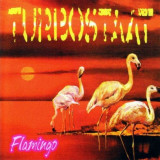
Turbostaat - Role Model für eine ganze Generation deutschsprachiger Post-Punk-Bands - feiert das 25-jährige Bandbestehen mit der Wiederveröffentlichung ihres Katalogs über das bandeigene Label 18Null9. 'Flamingo', das ursprünglich 2001 veröffentlichte Debütalbum, erscheint auf 180g schwerem Vinyl mit großem Textheft im Orginal-Artwork.
- Paris 1942
- Hex
- Headhunter
- Radar
- Damon
- Ancient Time Foretold
- Animale
- Move Out Of Wichita
- Catherine
- Life Is A Killer
- Conversation With My Girlfriend
- Voodoo Blues
- Pontius Pilate
- Lions Paw
- Boy From The North Country
- Fossil In My Pants
- What I Think I Mean
- Lisa's Whip
- Southwind
Difficult as it may be to imagine, there was a time when Sun City Girls did not exist. Prior to the Bishop brothers teaming up with drummer/shaman Charlie Gocher to form SCG's classic trio lineup, there were various ad-hoc assemblages of local Phoenix-area freaks and weirdos – groups which existed only long enough to play a single gig, open mic or house party before disbanding without a trace. Hatched from this milieu was Paris 1942, a short-lived band formed by guitarist Jesse Srogoncik that included Alan Bishop, Richard Bishop and former Velvet Underground drummer Maureen Tucker.
Paris 1942 would play only four shows in as many months, but between April and August of 1982, the band would gather several times a week in Tucker's living room, where the group feverishly wrote and rehearsed with a kind of quotidian discipline. While P42 didn't release anything during their brief tenure, a 7" EP and LP (both self-titled) surreptitiously surfaced on the Majora label in the mid to late '90s. Until now, those two titles – as well as an appearance on Placebo's Amuck comp in late '82 – would be the only documented evidence that this improbable, serendipitous and magnificent band ever existed.
While those expecting P42's music to sound like a tantalizing combination of Sun City Girls' iconoclastic hoodoo havoc and the Velvets' primal drug-chug certainly won't be disappointed, Paris 1942 more often than not transcends even these nearly impossible expectations. Srogoncik's songs, in particular, are a revelation, displaying as much in common with the exuberant raunch of The Gun Club and the chapbook punk of Peter Laughner as they do any of the more obvious touchstones.
The group's foresight to document and capture this meeting of musical minds – a meeting as unlikely as it was short-lived – provides a missing link between the Velvets and the Voidoids, between the Dead Boys and the Dead C, between ESP-Disk' and DNA. Far more than a historical curiosity, Paris 1942 provides a fresh perspective on an embryonic and sadly vanishing US underground. It is music that blinks at the past and anticipates a thousand possible futures.
– James Toth (excerpt from the liner notes)
- A1: Sixfold Radianz (3 45)
- A2: Boktay (2 10)
- A3: 4D-Tögtägtüu (1 23)
- A4: Exosphear (4 07)
- A5: Maurodius-Papeda (1 11)
- A6: Dondoli (The Npc) (3 20)
- A7: Leftrightba (0 56)
- B1: Lygöphobiä (1 49)
- B2: Flossbite (1 36)
- B3: Chipppps (3 32)
- B4: Dodgedog (2 33)
- B5: Bogeygirl (2 16)
- B6: Laserzimmer 1, Raum 3 16 (1 54)
- B7: Binäry Gatoraders On Acid (2 06)
"I live in the arcades. Reality was never an option!"
The 85-year-old video game queen and film composer pdqb (born on November 14, 1939) delivers a beautiful love letter to your boomer childhood, a wild ride through the golden age of video gaming. Hear how she dodges bullets, jumps over cosmic chasms, beats bosses, reaches bonus stages, uses cheat codes and even her last continue...just to stay in a world of pixels and vectors forever. pdqb will bring you back all those fond memories of unburdened joy that you might have lost while growing up. She could be your savior.
Synaptic Cliffs is filled with otherworldly pride to present these 14 timeless masterpieces to its beloved listeners.
- Riparian A
- Riparian B
Eyvind Kang ist Komponist und Bratschist, dessen Werk experimentelle, klassische und traditionelle Musikformen umfasst. Zu seinen Kollaborationen zählen unter anderem Jessika Kenney, Bill Frisell, Laurie Anderson, Bennie Maupin, Stuart Dempster, Sun City Girls und SUNN O))). Kang ist bekannt für seine Erkundungen der Mikrotonalität, der modalen Improvisation und des Klangrituals. Seine Werke wurden weltweit auf führenden Festivals und Veranstaltungsorten präsentiert. Kang ist derzeit Fakultätsmitglied am CalArts und unterrichtet Komposition und experimentelle Klangpraktiken. Seit über dreißig Jahren erforscht Eyvind Kang die verschwommenen Grenzen zwischen Komponist, Interpret und Zuhörer. Auf Riparian präsentiert er eines seiner bisher intimsten und fokussiertesten Werke: zwei Langformstücke für Viola d'amore, improvisiert innerhalb mikrotonaler Systeme, die er während der Pandemie entwickelt hat. Kang bezeichnet diese Improvisationsmethode als ,Riparian" und beschwört damit das Bild eines Flusses herauf, der in verschiedene Richtungen überquert wird - fließend, nichtlinear und lebendig mit subtilen Variationen. ,Ich stellte mir Pizzicato und Arco wie das Springen von Stein zu Stein in einem Bach vor", sagt er. ,Es gibt eine geerdete Zufälligkeit, wie bei einem Frosch oder einer Schildkröte, die sich zwischen Land und Wasser bewegt." Jedes Stück auf Riparian ist eine erste Aufnahme, die im Studio als Teil dessen aufgenommen wurde, was Kang als ,eine Art Geschichtenerzählen unter gleichgesinnten Freunden" bezeichnet. Das Ergebnis ist Musik, die mit stiller Intensität und emotionaler Klarheit fließt und Melodien entfaltet, die sich sowohl uralt als auch lebendig präsent anfühlen. Produziert und aufgenommen von Randall Dunn (SU NN O))), Omar S ouleyman, Kali Malone) produziert und aufgenommen, fängt Riparian die volle Resonanz der Viola d'amore in einem reichen, dimensionalen Klang ein. Dunns Handschrift verleiht Kangs lyrischer Phrasierung Wärme und Transparenz und offenbart subtile Klangtexturen, die ein tiefes Hören belohnen. Meditativ und ausdrucksstark zugleich lädt Riparian den Hörer in einen Raum ein, in dem die Zeit weicher wird und Klang zu einer Form der Einstimmung wird .
- Ohne
- Hurricane & Drum
- Viech & Mog
- Disch
- Kau Des Sei & Kalenda
- My Brain
- Shmafuu & Swing Too
- Japana
- Rian
- Popori
- Nobody Home & Nu A Mau
- Kaklanakariada
- Wüüst
- Dog & Hpolka
- Whats Going On (Bonustrack, Live Stadtwerkstatt
Diese streng limitierte Doppel-LP dokumentiert das Attwenger-Konzert vom 6. Dezember 2023 im Chelsea, Wien. Erstmals erscheint der Mitschnitt auf farbigem Vinyl - transparent Gelb & Grün - als "Extended Limited Edition". Die Aufnahme vereint aktuelle Stücke der Alben Spot und Drum mit Klassikern aus den 1990er- und 2000er-Jahren. Attwenger live bedeutet maximale Energie: Dialekt trifft auf Punk, Quetschn auf Elektrobeats, Tradition auf Experiment. Die dynamische Mischung aus alten und neuen Songs wird auf vier LP-Seiten zu einem intensiven Hörerlebnis. Als Bonus enthält die Edition einen historischen Live-Track mit Oliver Mtukudzi & The Black Spirits aus 1994
- A1-: Mirror House
- A2-: Djinn Dance
- B1-: The Dictionary Of Lost Meanings
- B2-: The Spell
- C1-: Fragmented Realities
- C2-: Three Dimensional Spirits
- D1-: Ila3Sab
PRAED return to Discrepant, after their 2017’s entry Fabrication of Silver Dreams (CREP44)
Known for their signature blend of Egyptian Shaabi, free jazz and improvisation, the Lebanese duo behind PRAED - Raed Yassin and Paed Conca - now assemble a full orchestra for the second time taking the music to a deeper, rooted level.
Following their 2020 release Live in Sharjah, also under the PRAED Orchestra! moniker, the duo now revisit their unique blend of Arabic heritage and free jazz sensibilities with an album that keeps pushing further into strange and unexpected directions.
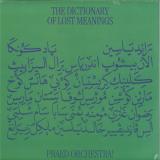
The Dictionary of Lost Meanings is just that, seven fully composed pieces and large-scale improvisations, performed by an expanded ensemble of musicians from across the globe. The result is dense and playful, unpredictable but familiar, a record where Arabic rhythms and microtonal melodies collide playfully against electronics, warped vocals and orchestral textures.
It’s less about genre than about memory — like tuning into a radio station broadcasting from somewhere between the past and the future.
PRAED continue to blur the line between popular culture and experimental music in ways that feel both grounded and completely their own.
PRAED ORCHESTRA! are
Raed Yassin: Synthesisers, Vocals, Beats
Paed Conca: Clarinet, Electric bass
Alan Bishop: Alto saxophone, Electric bass, Vocals
Andreas Bral: Harmonium, Electronics
Elisabeth Klinck: Violin
Christian Kobi: Soprano and Tenor Saxophones
Hans Koch: Bass Clarinet
Martin Küchen: Alto and Sopranino Saxophones
Maurice Louca: Synthesizer, electronics
Stan Maris: Accordion
Radwan Ghazi Moumneh: Buzuk, Vocals, Modular Synth
Youmna Saba: Electric Oud, Vocals
Sam Shalabi: Oud, Electric Guitar
Els Vandeweyer: Vibraphone
Khaled Yassine: Drums, Percussion
Michael Zerang: Drums, Percussion
Recorded by Jasper Jan Peeters at the Summer Bummer Festival, DE Studio,
Antwerp August 26, 2022
Mixed by Adham Zidan
Mastered by Mark Gergis
Produced by PRAED
Photos by Geert Vandepoele
Volume 26 of the 12" series Attack The Dancefloor features four chart topping no.1 singles available on Vinyl for the first time, WOW. First up it's the meeting of giants as we are treated to the huge version from Michael Gray of 'What About My Love' who bumps the tempo and takes the source parts into HOUSE territory, priming it for the peak time & finally satisfying the 'when's it out on vinyl' crowd. Up next the floor filling, gospel tinged "(You Gotta) Give It Up" by Z Factor, still doing damage on the dancefloors since it's recent digital release. On the flip we have the 3rd & current chart topper 'Down Down Down' by Raw Essence aka Dave Lee, his latest dose of Discotheque dopamine. Feeling both familiar yet fresh, it's all about classic good times here backed up with ravishing Moog Wizardy and irresistible vocals. To round of this essential slab of wax is Opolopo's standout 'Bebeccie's Theme' which delivers muso boogie of the highest order. Full of discreet chords and sophisticated string turnarounds, backed up with deft synth touches from the keyboard magician.
- A1: Cadux Plectere I
- A2: Lacinia Off Axis
- A3: Maris Stella Plectere Ii
- A4: Ere
- B1: Arborea Plectere Iii
- B2: Eve
- B3: Sidereus Plectere Iv
- B4: Lacinia In Axis
- C1: Veris Plectere V
- C2: Nova Pt I
- C3: Eve For String Orchestra
- C4: Nova Pt Ii
- D1: Matrix Plectere Vi
- D2: Maris Stella Plectere Vii
- D3: Lacinia Off Axis
- D4: Cycle Plectere Viii
Returning to Die Schachtel with his fourth full-length with the label, the Genoa born, Bologna based, guitarist and electroacoustic composer, Stefano Pilia, delivers “Lacinia”, a new, immersive cycle of compositions, delving deeper into the realm of metaphysical, spiritual, and divine meaning, weaving astounding arrangements of sonority from a palette of synths, strings, brass, organ, various electroacoustic instruments, and percussion. Resting at a refined intersection of the acoustic and electroacoustic, drone, and chamber music - overwhelmingly beautiful, delicate, and bold, - “Lacinia” stands as a high-water mark in Pilia’s already remarkable and forward-looking career.
Since its founding in Milan during the early years of the new millennium, Die Schachtel has occupied a singular place in the landscape of experimental music, issuing a carefully curated body of reissues and archival releases by historically significant figures and projects like Christina Kubisch, Luciano Cilio, Marino Zuccheri, Prima Materia, Claudio Rocchi, Lino Capra Vaccina, Gruppo di Improvvisazione Nuova Consonanza, Roland Kayn, and numerous others, balanced against bristling contemporary counterparts by the likes of Jim O'Rourke, Giovanni Di Domenico, Nicola Ratti, Luigi ArchettI, Valerio Tricoli, etc. Running like a spine through the label’s output is a deep dedication to the work of the Italian guitarist and electroacoustic composer Stefano Pilia. Now Die Schachtel returns with “Lacinia”, Pilia’s forth full-length with the label and their first release of 2024. Building on the ground of deeply personal engagement with metaphysical, spiritual, and divine meaning, explored within his previous LP with Die Schachtel, 2022’s “Spiralis Aurea”, “Lacinia” encounters the composer working in close calibration with various ensembles, including the Bologna based Ensemble Concordanze and Comunale di Bologna String Orchestra, weaving synths, strings, brass, organ, various electroacoustic instruments, and percussion into an astounding reconfiguration of immersive, contemporary minimalism that stands among Pilia’s most noteworthy releases to date. Issued by Die Schachtel in two special double vinyl editions and a CD edition, “Lacinia” features artwork by Bruno Stucchi/Dinamomilano, and is an absolute marvel that draws you in and doesn’t let go.
First emerging during the early 2000s, over the past two decades – via solo releases and numerous collations with artists like Oren Ambarchi, Valerio Tricoli, Alessandra Novaga, Z'EV, Andrea Belfi, David Grubbs, and numerous others - the Genoa born, Bologna based, guitarist and electroacoustic composer, Stefano Pilia has presented a singular voice within Italian experimental music, harnessing visceral energy and hands-on immediacy within delicately woven tapestries of sonority, each investigating the sculptural properties of sound and illuminating its relationship to space, memory, and the suspension of time. “Lacinia”, Pilia’s forth solo venture with Die Schachtel, encounters the composer reentering his longstanding practice of collaboration with various ensemble forms, including the Bologna based Ensemble Concordanze, for the albums central piece, “Lacinia Off Axis”, spinning stunning string confirmations by Pietro David Carami and Elena Maury on violin, Alessandro Savio on viola, and Mattia Cipolli on cello.
A new, important cycle of compositions by Pilia, “Lacinia” (meaning "lace" in Latin) builds upon the exploration of the metaphysical, spiritual, and divine dimensions through numbers, geometry, and the creation of tonal forms explored by 2022’s “Spiralis Aurea”, mirroring archetypal, immutable forms at the juncture of the abstract realm of mathematics and architectural structures in the physical world, expands the poetics and compositional ideas featured in its predecessor. Regraded by Pilia as both a series of individual compositions and a single work, “Lacinia” was conceived to “define a circular path (a sort of "rhizomatic lace") where the beginning and end touch, suggesting the concept of time not only as linear but also cyclical and ritualistic—an eternal return, a process of transformation where matter changes, its state changes, but without altering the invisible internal principle of mutation”, embarking upon a a series of “steps, degrees, and energetic quanta in a progression of archetypal whole numbers and transcendent creation.”
The resulting 16 tracks unfold as a series of complex sonic meditations. While deeply resonant with the minimalism of composers like Arvo Pärt, LaMonte Young, Pauline Oliveros, and Eliane Radigue, Pilia digs deep and moves far beyond the predictable tonal relationships and structures of that idiom, echoing the ancient liturgical and devotional music of composers like Gesualdo da Venosa, Monteverdi, and John Dowland, at a refined intersection of the acoustic and electroacoustic, drone, and chamber music.
Fascinatingly structured as a whole to include a number of motif returns, across which we encounter works like “Lacinia Off Axis” appearing in slightly different rendering, states, or evolutions three times, and compositions like “Eve” appearing twice in subtly different forms and arrangements - first for four oscillators, guitar and voice and then for string orchestra - as well “Maris Stella”, which similarly makes two appearances, first for horn trio, organ and percussion, and then for string orchestra, with “Lacinia” Pilia delves further into the world of chamber music than ever before, creating a deeply inward, mediative body of work the totality of which, guided by its rich string arrangements of arching, sorrowful tone, feels almost like a mass for some unproclaimed loss; simultaneously locked in the nuances of a moment, while managing to suspend time.
Perhaps most remarkable is Pilia's ability to create a remarkable sense of sonic cohesion while using such a varied number of ensembles and instrumentation. From the sprawling string arrangements delivered by Comunale di Bologna String Orchestra, under the direction of Paolo Mancini, and Ensemble Concordanze, and a flute trio (Cadux / Plectere) brilliantly played by Manuel Zurria, to pieces for sax, organ and percussion, violin duo and percussion, organ and percussion, Pilia manages to create a sense of singular, encompassing world that flows forward like a shifting stream.
Overwhelmingly beautiful, delicate, and bold, “Lacinia” is unquestionably a high-water mark in Stefano Pilia’s already remarkable, forward-looking career. Nothing short of a marvel of contemporary Minimalism that, through its shifting arrangements of harmonics, tonality, and texture draws flickering images of ancient forms of music into the present day, “Lacinia” is Issued by Die Schachtel in two special editions on double vinyl and a CD edition, featuring artwork by Bruno Stucchi/Dinamomilano. This is an immersive all-consuming listen that can’t be missed.
Spots auf die Berliner íClubgeschichte. Neuausgabe als Klappenbroschur. Clubs und subkulturelle Freiräume prägen Berlin seit Jahrzehnten und machen die Stadt zu einem Sehnsuchtsort für Menschen aus aller Welt. Legendär sind zum Beispiel die Treffpunkte des Punk- und New-Wave-Untergrunds der 1980er Jahre oder die Technoclubs aus den 1990ern. Die Party- und Konzertlocations sind dabei oftmals auch Zeugen der bewegten Geschichte der Stadt, erzählen vom Kalten Krieg oder dem Fall der Berliner Mauer. Dieses Buch ist ihnen gewidmet, darunter berühmte Diskotheken, geheime Treffpunkte der DDR-Opposition und subkulturelle Abenteuerspielplätze verschiedenster Couleur. Viele dieser Orte existieren heute nicht mehr oder haben eine ungewisse Zukunft. Sie berichten von einem Berlin, das es nicht mehr gibt, und davon, wie stark die Club- und Subkultur von Verdrängung betroffen ist.
- A1: La Muchacha Y Santiago Navas – No Me Toques Mal
- A2: Gato 'E Monte – Cumbia Fumanchera
- A3: Conjunto Media Luna – Cumbia Providencia
- A4: Felipe Orjuela – Manos Limpias (Cuentas Claras)
- A5: Mau Gatiyo – Telekinea
- A6: Las Hermanas – Laura Palmer
- A7: Karen Nerak Y Cristal Prodigia – Pa La Calle
- B1: Briela Ojeda – Doña Justicia
- B2: Julián Mayorga – La Gente Que Yo Conocía Toda Se Está Muriendo
- B3: Mariscos - Garotinha
- B4: Buha 2030 – Dolor Internacional
- B5: Los Clamores – Insectos De La Asamblea
- B6: Zarigüeya – El Arriendo
- B7: Ana Mariía Vahos – Los Días
In-Correcto 15–25 marks the first vinyl compilation by Bogotá’s independent label InCorrecto, created in collaboration with Austrian imprint discos elgozo. Celebrating ten years of sonic exploration and creative resistance from the Global South, this special edition brings together a vibrant constellation of artists that define the label’s sound: La Muchacha, Ana María Vahos, Felipe Orjuela, Mau Gatiyo, Conjunto Media Luna, Briela Ojeda, Zarigüeya, Buha 2030, and many more. Between mutant cumbia, Latin American folk, introspective electronics, and borderless sonic experiments, 15–25 is both a party and a statement: a manifesto of the in-correct as an artistic and collective force.
Since 2015, In-Correcto has grown from a cultural magazine into one of Latin America’s most vital independent hubs, operating as a record label, publishing house, and creative collective. With more than 160 releases ranging from punk and ambient to trip-hop and experimental cumbia, the label has supported a generation of artists whose work is as socially engaged as it is sonically daring. Through compilations, anniversary concerts, and political projects, In-Correcto has solidified its reputation as a catalyst for collaboration, solidarity, and cultural cross-pollination in Bogotá and beyond. Based in Vienna with roots on Colombia’s Caribbean coast, discos elgozo shares this vision. Founded in 2024, the label works with Colombian artists and their diaspora, releasing music that fuses ancestral knowledge, queer-feminist expression, sonic experimentation, and joy as a political force—as a way to resist cultural erasure, reactivate traditions, and recover collective vitality. Its catalog spans salsa brava, bullerengue, psychedelic cumbia, and experimental jazz, with a strong focus on vinyl as an act of listening, memory, and resistance.
Carefully pressed, In-Correcto 15–25 is more than a record: it is a bridge between Bogotá’s underground and a global network of listeners. A sonic archive and an invitation to dance, it reaffirms that joy, experimentation, and community remain powerful tools to imagine the world otherwise.
- Two Crossed Keys
- Under Lanternlight
- Saturn Shadow
- Transmutation
- Prisoner Of The Moon
- Fiery End
- Lash Of The Tyrant
- Phantom
- Dashed On The Rocks
Die wilden Söhne Manchesters, Wode, kehren mit ihrem vierten Album „Uncrossing The Keys“ zurück und erweitern damit selbstbewusst ihren ohnehin schon beeindruckenden Sound, der auf einer düsteren Grundlage aus wildem Black Metal und eisernem Heavy Metal basiert. Nachdem sie sich von der eher geradlinigen Methodik ihres Debütalbums weiterentwickelt haben, haben Wode im Laufe ihrer Diskografie kontinuierlich Elemente aus verschiedenen dunklen Ecken des Undergrounds hinzugefügt, wobei ihr Songwriting schlanker, aber auch komplexer, fokussierter und melodischer denn je geworden ist.
„Uncrossing The Keys“ hat die Musik von Wode nicht milder gemacht, der Sound ist nach wie vor von Flammen und Wut durchdrungen, aber sie haben ein breiteres Spektrum an Stimmungen angenommen und malen mit schwärzeren, satteren Farbtönen als je zuvor. Zerklüftete Post-Punk-/Goth-Einflüsse leuchten düster in neuen Tracks wie „Saturn Shadow“ und dem verträumten Trance des atmosphärischen Instrumentalstücks „Phantom“. Das düstere Tempo und die majestätisch-nachdenkliche Stimmung der Single „Transmutation“ erinnern mit ihrer düsteren Unterströmung sowohl an Paradise Lost als auch an Amorphis, während das melancholisch-hymnische „Under Lanternlight“ mit dynamischen Melodien im Stil von Sentenced durchdrungen ist. Die Gitarren tragen manchmal einen traurigen Schimmer, ihre Hooks sind sowohl von Melancholie als auch von Bedrohung durchzogen und schweben mit Momenten elegischer Schönheit und dunkler Klage über dem Gemetzel. Der höllische, raue Gesang erhebt sich wie rituelle Gesänge aus einer anderen Zeit.
Wode beschwört Bilder einer Welt herauf, die sich ständig am Rande der Dämmerung befindet, und wirft im Verlauf der neun Tracks von „Uncrossing The Keys“ einen langen, kalten Schatten. Es herrscht ein Gefühl von Erhabenheit und Verfall, als hätte die Band ein Tor zu einem Reich geöffnet, in dem verfluchte Städte unter blutroten Himmeln schwelen und ihre Mauern ewig verlassene Hymnen widerhallen lassen. Als Ergebnis eines ständigen Evolutionsprozesses hat Wode einen wahrhaft gespenstischen und imposanten Blackened Heavy Metal geschaffen, der ein dunkles Banner hoch über einem riesigen und öden Königreich hisst.
- Good Vibes Only
- Danke David
- Bullshit Bingo
- Sterne Und Tarot
- Email Von Elon Musk
- Düsseldorf Kotzt
- Menstruieren
- Heizöl Und E10
- Survival Of The Richest
- Null Komma Drei Cent
- Halt Die Fresse
- Nazis Aufs Maul
Splatter Vinyl, Bedruckte Innenhüllen, Download Code Limitiert auf 500 Exemplare Da sind sie wieder. Was zuvor geschah: Christian Lindner wurde durch WAUMIAU und ihrem Song "Lindner Jugend" in den politischen Ruhestand geschickt, aber sonst ist die Welt in den letzten zwei Jahren nicht besser geworden. Also starten WAUMIAU mit ihrem neuen Album GOOD VIBES ONLY einen neuen Versuch, die Arschlöcher der Welt zu stopfen. Denn Bad Vibes gibt es dank Elon Musk, Superreiche, Faschos, Karneval und allgemeine Personenkontrolle viel zu viel. GOOD VIBES ONLY wird die Welt wahrscheinlich nicht verändern, aber auch nicht schlimmer machen - und damit leisten die 12 Songs schonmal mehr als die oberen 10 % unserer Welt. Es darf wieder ausgekotzt werden. WAUMIAU hauen immer noch Parolen raus, sind immer noch dagegen, servieren immer noch mit Sample-Schnipsel und sind eigentlich immer noch nur ein kleines Nebenprojekt ohne große Zukunft. Was dabei rauskommen soll? GOOD VIBES ONLY.
- A1: Polonaise No 3 In A Major, Op. 40 No. 1 ”Military”
- A2: Polonaise No 1 In C-Sharp Minor, Op. 26 No. 1
- B1: Polonaise No 4 In C Minor, Op. 40 No. 2
- B2: Polonaise No 2 In E-Flat Minor, Op. 26 No. 2
- C1: Polonaise-Fantaisie In A-Flat Major, Op 61
- C2: Polonaise No 5 In F-Sharp Minor, Op. 44
- D1: Fantaisie In A-Flat Major, Op 61
Maurizio Pollinis Einspielung der Polonaisen, die inzwischen Klassikerstatus erreicht haben, sind nun als Teil der Original Source Serie erhältlich. Pollinis Spiel ist sowohl von herausragender Beherrschung als auch von subtiler Poesie geprägt. Seine höchste Leistung besteht darin, die Unmittelbarkeit einer inspirierten Improvisation zu suggerieren und gleichzeitig die formschöne Einheit eines vorgedachten Ganzen zu bewahren. Um eine optimale Audioqualität zu gewährleisten, wurde das Werk von den ursprünglichen 4-Spur-Bändern neu gemastert, in 45rpm geschnitten und auf zwei LPs verteilt.
Die audiophile Vinyl-Serie The Original Source präsentiert herausragende Aufnahmen der 1970er Jahre in ganz neuer Klangqualität. Dafür haben die renommierten Emil Berliner Studios die originalen Vier- und Achtspur-Bänder mit eigens für die Produktion der Serie entwickelten Technologien in 100% analoger Qualität (AAA) neu gemastert und geschnitten. Die klanglichen Unterschiede zu den Originalveröffentlichungen sind beträchtlich: Größere Klarheit, mehr Feinheiten und Verbesserungen im Frequenzgang, zugleich weniger Nebengeräusche, Verzerrungen und Komprimierungen ermöglichen ein audiophiles Hörerlebnis wie nie zuvor.
Auf 180g Vinylplatten und in einer Deluxe-Gatefold Edition mit Originalcovers und -texten werden die Exemplare dieser Serie limitiert und nummeriert veröffentlicht, begleitet von zusätzlichen Fotos und Faksimiles der Aufnahmeprotokolle und Bandkartons.
Since their reunion in 2015, Malka Family has been enchanting stages once again and releasing fabulous albums. Le Retour Du Kif (2018) and SuperLune (2022), featuring almost all of the original musicians, have marked their comeback.
Today, Planète Claire, a 16 tracks album, is undoubtedly one of Malka Family’s best works.
It was urgent for the great Funk families to return and give the new generations a lesson of kif…
Back to the Roots
In 1987, after organizing the Chez Roger Boîte Funk parties with Dee Nasty and Actuel/Radio Nova, Joseph Mannix and Isaac Ben Araz (then guitarist and trombonist of the group Human Spirit) decided to create a French-style Funk band.
The group quickly became one of the most spectacular live sensations of the 1990s.
Their self-produced debut album, Malka On The Beach, was released in 1991. Both the press and the public went crazy for these little funkateers, leading to a series of non-stop tours. Their concerts—wild, costumed performances—drew massive crowds. Warner France took notice and signed them.
Their second album, Tous Des Ouf (WEA), a true Space Opera P-Funk featuring guests like Sidney (Hip-Hop), Dee Nasty, Marco Prince (FFF), Juan Rozoff, and more, was released in 1992.
After touring the world multiple times, the band became independent again in 1995 and recorded an EP for Big Cheese Records: Fricassé De Funk.
By the late ‘90s, the rise of DJs and electronic music signaled the decline of large live bands. Due to its logistical weight—the band had over 14 members on their last tour—Malka Family was forced to part ways in 1997 after touring for their album Fotoukonkass (RCA/BMG).
But that was without counting on the resilience and extraordinary freshness of these Funk performers…