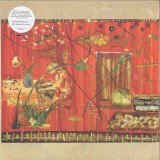
After the success of the 2 Late 4 Love EP, Roy Of The Ravers returns to Emotional Response with a double LP with a deeper perspective, experimenting in ambient and drone textures, lucid techno travails and acid interludes.
Recorded between 1997 and 2017, the album was pieced together over the last six months after Roy's archives were first feared lost and then found. Approached by the label to release a follow up with something more introspective and personal, it was discovered that a recent move to a new studio had led to over 20 years of music being misplaced after it was believed they were mistakenly dropped at a local charity store. However, deep in a box of what were thought to be patch cables were in fact the decades worth of hard drives and here presented, is a sample of those lost recordings.
The nature of the music is introspection, eschewing the acid beats and white noise for a personal encounter between man and machine. The orchestral opening of the title track gives way to the submarine beats, pulsing TB303 and gliding hats of Robinson College 10 to set the outlook to come. Even with the scattering A Dim And Distant Past waking lulled senses, the melodies and feel all lead to a pause and reflect rather than jump and shout.
This is continued with the haunting drives of Bounce Erec and Oriental X0X-Press; the twisted, warped jams of The Weber Traum Boat Pt.3, Ichi and Roland Corp Labs 05; and the beautiful, heartfelt odes in Sade Lost Theme, The Clock House Pt.2 and closer, Nemesis '01. The album's melodic nature hums and shines as CS (6x8) appears as much a centre piece as a alternative consideration to the acid tinged, club bangs of Roy's releases to date.
A surprise package maybe, but in the rolling, word of mouth phenomena that was Emotinium II, all this and more was sensed and so White Sunrise Music II, spreading across 12 songs of contrasting moods, is a further affirmation that there is something good and worthy of exploration.
Suche:may
L’Escalier des Aveugles, or The Stairway of the Blind, was commissioned in November 1990 by Spanish National Radio (Radio Nacional de España). Asked for a piece to premiere as part of the European Day of Music, Luc Ferrari returned with a radiophonic concept that organised his anecdotal music into montage form, sequencing short, elusive narratives in a successive way.
The completed composition is formed of thirteen chapters containing a mixture of environmental and synthesised sound, commentary, chatter, and encounters with people and places. Each focuses on a small event within this playbook, and Ferrari notes that each “in addition to being a realistic photograph, will be the subject of a ‘setting to music’: fragments of voice and atmosphere will be sampled and will produce musical matter or a ‘song’.”
The sonic language of Madrid forms the setting to which Ferrari lays out the persistent theme of the piece, that of the composer being guided throughout the city by a young woman. Using a game-like structure (liners for this edition include Ferrari’s “Regles de Jeu”, or “Rules of the Game” which act as a script or score to the piece) the motivation is posed: imagine that one day you are told “I know a place in Madrid that sounds amazing (or bizarre)”, to which you reply “Let’s go to it together.” The recordings toy with the relationships between guide and tourist, translator, director and actress, and masculine and feminine that emerge as Ferrari and the actresses follow this action, documenting the shared experience and connections they make as they visit these places.
Six actresses guide Ferrari (and the listener) through locations simultaneously ordinary and sonically rich: the metro; the El Corte Inglés department store where we hear the gossip from changing rooms set against music emanating from the PA; vagabonds declaiming their political stance in the Conde de Barajas plaza; interactions buying apples in a market; the reverberant and spacious halls of the Prado Museum where one actress gives a moving description of her favourite painting - Goya’s The 3rd of May 1808.
Ferrari replies in French to their comments in Spanish, and there are several self-referential plots, devices, and word games that flirt with the poetics and rhythm of language and sound. A recital of Lorca’s poem "La Casada Infiel" in “Hommage À Lorca” in amongst the location recordings feels striking, and the call and response of “La Nouvelle de L’Escalier”, where one of the actresses descends the staircase of the blind - a long stone stairway in Madrid proposed to Ferrari as an interesting location to visit during the trip by producer José Iges. She replies to Ferrari’s vocal enunciation of the place (and title) in French - L’Escalier des Aveugles - with the place-name in Spanish: La Escalera de los Ciegos.
Using this repeated title and image of the staircase of the blind as a symbolic place, a line is drawn to a situational landscape experienced and diffused through snapshots and allusion rather than holistically overviewed, sound conjuring pictures within the imagination. In the sensorial qualities of Ferrari’s treatment of emotion and language—fortified with electro-acoustic motifs and musical properties—the piece accelerates towards a render that is truthful, beautiful, yet also surreal; somewhere between theatre and reality, a gonzo cinema of the ear.
O YAMA O explores a certain domestic and democratic quality of everyday life, born through associations to folk music of Japan and a folding of myth, tradition, and routine; the non-spectacular and the sublime.
Formed of musician and artist Rie Nakajima and Cafe OTO co-founder Keiko Yamamoto, the group has performed since 2014 at venues and festivals such as noshowspace, Ikon Gallery, Wysing Arts Centre, Supernormal, Borealis Festival, Mayhem, and allEars Festival.
Nakajima’s performance often focuses on the use of found and kinetic objects, using modest items such as rice bowls, toys, clockwork, balloons and small motors as instruments to create a “micro orchestra”. Elements are layered into impressive and immersive atmospheres. Yamamoto alternatively floats and charges through this with body and voice; chanting, incanting, thundering, whispering, stamping on the floor.
Their debut album consolidates their musical conversations into keenly paced studio music, the duo working with additional instrumentation and a resolved focus on melody to provide vivid portraits of folkloric Japan in song.
They move between pop and the philosophical, defined by the overall space afforded to texture and movement. In small, delicate sound an intimate musical climate is established that reflects on life, telling stories of improvised clockwork, whispered dreams, small movements of the hand and the rhythm to be found in the shuffle of a deck of cards.
Grandly theatric and dramatic flourishes add solidity to these illustrations, operas driven by the swooping energy and power of Yamamoto’s voice can be playful or emotionally charged, particularly when the duo arrange themselves in ensemble with violinist Billy Steiger and percussionist Marie Roux. Production by David Cunningham creates the shadowy presence of a leftfield Flying Lizards dubwise depth that adds subtle strangeness to the atmosphere. The result is something raw, full-bodied; full of energy, grace and mystery.
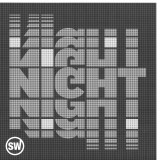
The third long player on Night Defined Recordings sees SUED affiliate SW. presenting his new mini LP ‘Night’ and walking a tightrope between jazz and club music. The tracks manifest and dematerialize themselves almost in a non-tangible and floating way, which can be seen as more than just a musical approach but rather shows the artist referring to issues of volatility and evanescence. While listening, some may find themselves in the dark and dusty atmosphere of a jazz club, where the band in the corner at the other end of the room is playing their instruments just when the beat kicks in and puts you right into the club atmosphere.
Written & produced by SW. at SUEDstudio Mastering by Mattias Fridell
Artwork by Studio Belser
Ramrock Red Records are incredibly excited to present Kameelah Waheed – straight outta New Jersey. Brought to our attention by London DJ/promoter, Barry King, Kameelah immediately delighted us with her direct, no messin’ delivery, compelling, earworm hooks and beautifully crafted lyrics.
Teaming up with Kelly Murray on co-production on the ‘Original Version’, Kameelah unleashes a stripped back, jazzy hip-hop vibe punctuated with a Donald Byrd’ish trumpet riff. The North Street gang take the Donald Byrd flavour a step further with a full on nod to the Mizzell Brothers in the first North Street West dusty funk production. Releasing digitally around April 24th as a five track EP with a further 7” vinyl release around May/June, ‘Holding On’ is set to tick a lot of musical heads boxes.
Growing up in an Islamic household, sneaking snippets of worldly music into her household was close to pulling off a major heist during Kameelah’s teenage years. She was introduced to the world of sound from MTV, rap and house music and the live bands of the 80's courtesy of her older sister, along with tribal and island music that her mother played. Kameelah was encouraged to consider song writing as a career option when she received an opportunity to write for Bunny Sigler of Philadelphia International Records. Heading up the hip-hop rock band band, Gov’t Cheaze in 2000, Kameelah performed at Philadelphia’s Black Lily Film Festival as well as a set at the very first Roots Picnic.
Previous releases have included ‘Traveling’ by Kameelah Waheed & GC, produced by Larry Gold, featured on the ‘Beat Generation Compilation’ released on BBE, making the Top 10 Most Played on UK urban radio stations. In 2011, Kameelah Waheed and Government Cheaze signed with indie label, Philly Through My Ear (PTME) founded by Will Smith Sr. The self-titled CD can be found on iTunes.
In 1976, seven Cabo Verdean musicians going by the name Voz Di Sanicolau gathered in a small recording studio in Rotterdam where they laid down an album of fearsome coladeira songs inspired by the music of their home island of Sao Nicolau.
The album took only a few days to record, which may explain the unexpected urgency that fires each track. Treble-soaked electric guitar lines snake back and forth through percussion-and-cavaquinho driven rhythms rooted in the sound of the islands established by the previous generation of Cabo Verdean emigres; subtle keyboards wash through the background, and the vocals, traded between Joana Do Rosario and To-Ze, alternately push the music forward and soar above it. The resulting album is both deeply felt and fiercely executed, and in its grooves one hears the sound of some of the finest Cabo Verdean musicians of their era locked in complete unity of purpose.
It should have been the beginning of something extraordinary; but the pressures of making ends meet forced the musicians back to their day jobs, and Voz Di Sanicolau vanished as quickly as they had appeared, leaving their lone album, Fundo de Mare Palinha, as sole proof of their existence. Forty-four years later the album sounds as fresh as it did the day it was recorded. It is unknown if dutch sound engineer Frans Rolland, who oversaw the recordings, knew he was helping to make history: during these sessions, Joana Do Rosario, whose majestic vocals were crucial to the sound of Voz Di Sanicolau, became the first Cabo Verdean woman ever to appear on a long playing record.
One of the biggest selling hits by T. Rex from late spring/early summer 1971. These bare alternative versions were recorded in London during January 1971. 500 copies pressed on red vinyl in T.REX House Bags, 500 copies pressed as picture discs. All royalties go to The Light of Love Foundation (These recordings and many more were amongst the tapes stolen from Marc & Gloria’s home in 1977, some of this material was returned to The Light of Love Foundation last year). This year sees T. Rex inducted into the U.S Rock n Roll Hall of Fame in May and has already seen the profile of T.Rex heightened.
- A1: Oneness Of Juju - African Rhythms (Album Version)
- A2: Oneness Of Juju - Follow Me
- A3: Oneness Of Juju – Nooky
- B1: Oneness Of Juju – River Luv Rite
- B2: Roach Om – No Name #3 / Love Is… / My Nigger & Me
- B3: Juju – Nairobi / Chants
- C1: Oneness Of Juju – Chants / Don’t Give Up
- C2: Oneness Of Juju – Be About The Future
- C3: Juju & The Space Rangers – Got To Be Right On It (Original 45 Version)
- D1: Oneness Of Juju – Space Jungle Funk
- D2: Oneness Of Juju – West Wind (Previously Unreleased)
- E1: Juju & The Space Rangers – Plastic (Original 45 Version)
- E2: Plunky & Oneness Of Juju – Every Way But Loose (Original Version)
- E3: Okyerema Asante Feat Plunky – Sabi (Black Fire Mix)
- F1: Okyerema Asante Feat Plunky – Asante Sana
- F2: Oneness Of Juju – Bootsie’s Lament (Unreleased Version)
Strut kick off a brand new deal with the seminal independent black jazz and soul label Black Fire in May with 'African Rhythms 1970-1982', a comprehensive 2CD / 3LP compilation of Oneness Of Juju, led by Plunky J. Branch. Tracing their career from the band's earliest work in 1970 with South African exiled jazzman Ndikho Xaba in San Francisco, the compilation covers the band's journey to New York's loft jazz scene, forming Juju and releasing two landmark albums of hard-hitting percussive jazz on Strata-East. "I saw myself as a cultural warrior," explains Plunky. "We studied about Africa and tried to infuse our music with an African spirit." Moving back to his hometown of Richmond, Virginia during the mid-'70s, Plunky drew in a superb new group of musicians and vocalists and created the band's new incarnation, Oneness Of Juju, retaining the African influence but fusing his sound with funk and R'n'B on the classic 'African Rhythms' album. "We realised that, if we put a backbeat to the Afro-Cuban rhythms, people in Richmond and Washington D.C. could be drawn into it; it didn't change anything about our message." The change would lead to a series of enduring soul-jazz classics on Jimmy Gray's Black Fire label, including 'River Luv Rite', 'Plastic' and 'Don't Give Up' and their biggest crossover international hit, 'Every Way But Loose' in 1982, later famously remixed by Larry Levan. The band received renewed interest in their music during the mid-'80s as Washington D.C.'s go-go innovators cited the band as a major influence and rare groove DJs revived their albums for London dancefloors.
Alinka makes an eagerly anticipated return to Crosstown Rebels with the outstanding Control Transmission, her last appearance on the label featuring in 2016 collaborating with Shaun J. Wright. This solo release demonstrates her versatile sound that is inspired by her experience in scenes across the world.
Control Transmission begins with robust 909 drums as the claps resound with force. The bass, a razor-sharp, distorted and filtered charge is introduced commanding attention, further electro inspired samples and effects are layered in this powerful track. Day Zero captures the spirit of the Mayan jungles, with synth that propels with energy, ebbing and flowing with mystical chords that give a nod to the famous festival spearheaded by Damian Lazarus.
Born in Kiev, Alinka has a unique power on the decks and in the studio, influenced by the city of Chicago, with toes tipped in Detroit techno and Europe’s key cities. Immigrating to Chicago with her family as a child she immersed herself in the scene, digging for records and becoming resident for Justin Long’s Dotbleep party at Smartbar. In 2012 an impromptu meeting with former Hercules and Love Affair vocalist Shaun J. Wright changed her life. The pair launched their Twirl parties and label whilst continuing to evolve their collaboration.
The result has been an impressive catalogue of material from, with music featured on Jackathon Jams, Crosstown Rebels, Leftroom, The Classic Music Company and of course Twirl. Now living in Berlin, Alinka has used this base to play at parties across Europe including the likes Panorama Bar and Circo Loco, whilst regularly returning to the US to play for promoters such as Ladyfag. 2020 will she Alinka’s evolution continue, with a packed schedule of releases and her newly launched label Fantasy Life.
Black Vinyl Edition
The Log and the Leeway follows a 6 year journey of personal exploration and drastic change for Bram Bosteels and his singular Kaboom Karavan universe. What entails is a sound-curiosity of rare format, following a metamorphosis that goes beyond the musical.
Early in the process, Bram was struck by the word/concept of a Leeway : the gradual departure from an intented course due to external influences. Following a boyish fascination for explorers travel journals, logbooks and the far fetched corners of the world, he could not have forseen how fitting of a title he had chosen. Drastically all of a sudden one day, completely unexpectedly, Bram experienced his own father dying in front of him from a rare disease. Shocked and confused by this intense encounter, his perspectives and musical course departed from its original path. But at the same time it was an enlightenment and a necessary influence for him to realise the initial idea and finish this album, started over half a decade before.
The ones familiar with Kaboom Karavan already know that nothing really sounds quite like it. Bram’s musical (and non-musical) universe is of the rare breed that seems to be entirely his own. Self-contained, but never opaque. Quite the opposite actually. Bram never pushes us away, instead, by listening to his music we are given view to a synesthetic wunderkammer of images, places, objects and possibilities. Distant but magnetic, alien but intimately familiar, Kaboom is folk music from another dimension. Listening to The Log and the Leeway is like waking up next to a bonfire in the middle of a swamp wearing somebody else’s clothes: You may not know how you got here, but whatever is happening seems to very directly involve YOU. What will happen?
Note from Erik K Skodvin (Miasmah): All the sounds, fabrics, instrumentation and stories that binds The Log and the Leeway together go far beyond what can be touched up in this simple writeup. As someone who have followed this journey since the beginning, and seen it shift from lighthearted fun to the most crepuscular personal experience, heard the stories behind (almost) every field recording and gone through boundless amounts of clips, visual details, notes, and inspirations – I can only say that it is with great pleasure and certain nostalgia I can present this record in full through Miasmah and close this quite extraordinary chapter. Bram is without doubt the most fascinating person I know. Like I told him in April 2020 during a trying time: “If everything fails, we´ll open a Kaboom Karavan museum” - an idea that might not be as far-fetched as it sounds.
Featuring: Cover painting by John Lurie. 16 page booklet of Musical illustration / collagés by Walter Dhoogh & Erik K Skodvin that more or less connects (or confuses) the dots between the music and stories behind. Mastered by Lupo at Loop-O
Optimo Music presents “Vanessa 77” the debut album from New Zealander Vanessa Worm. Originally due in May it was rescheduled due to the lockdown but we couldn’t wait any longer to get it out into the world, so here it is, on vinyl and digital.
After entrusting us to release 3 much loved singles it seemed right to let Vanessa stretch out across an album and show the world what she is about and how talented she is. Vanessa is exactly the kind of artist Optimo Music dreams of finding; her music fits in with no genre and no scene – it is its own genre and its own scene. Musically free and anarchic, Vanessa conforms to nobody’s dogma. Before lockdown Vanessa played a series of Southern Hemisphere live shows that entranced all who saw them. Hopefully next year she can come and do the same in the Northern Hemisphere.
We asked her for a few thoughts about her album. Vanessa says – “Vanessa 77, like most creative endeavours is a journey of self discovery. Mentally, emotionally and creatively. I spent most of my time alone in winter 2019 – focused solely on personal development & self realisation via the creation of this album. It was a way for me to put my mental state onto a plate – the joys, the fears, the epiphanies, and so on. I so desperately wanted to share what I was learning with the world too – I intended for Vanessa 77 to help others to heal, self-realise and alchemise. It was a 9 month process of death and a re-birth from the old into the new. Much like the world is experiencing now entering 2020, I hope this album can provide some form of healing, soothing, celebration and act as a sub-conscious guide for us as we enter into this New Earth. Thank you to all who listens, enjoy!”
Commodo returns to Black Acre for the first time in over two years with surprise new three-track EP, ‘Loan Shark’. Slated for release on May 22, ‘Loan Shark’ will land as his third release with the label, following 2018 standout ‘Dyrge’ and 2016’s blistering debut album, ‘How What Time’. A quietly elusive producer, Commodo’s recent work for Deep Medi, Bandulu and Black Acre has seen him established as one of UK bass music’s contemporary frontrunners, who continues to influence the wider landscape through the strength and imagination of his output alone. His latest EP continues this theme apace, melding together supreme bass weight, texture and meticulous sampling (‘Loan Shark’, ‘Hot Pursuit’) and vivid, sepia-tone melodies (‘Contraband’) across a record that, as the track titles suggest, plays out like a filmic, magnum-plated car chase.Tracklist : A1/Commodo - Loan Shark B1/Commodo – Contraband B2/Commodo - Hot Pursuit
Very very limited please aware
Tetrode Music head honcho and Sound Signature affiliate, Specter, lines up the next Second Hand Records NYC release and it’s that deep, soulful goodness you need in your life.
'Peace of Mind' hits right from the needle drop. Made for the dancers! Listen to this on a real sound system for that enhanced feeling.
'Front & Center' keeps the energy flowing, mixing deep chords over dark warehouse bass lines. Big leagues tune!
'Cold Sweat' would fit snuggly against any Larry Heard record, or maybe its just that Chi-town flavor soul music we love! Byron The Aquarius adds another layer of flavor to this already killer cut. Deeeeeeep!
DJ Support:
DJ Spinna, Kai Alce, Ash Lauren, Byron The Aquarius, Stefan Ringer, Hugo LX
More Swiss jazz bliss! We Release Jazz (Ryo Fukui’s Scenery and Mellow Dream, Marc Moulin’s Placebo Live 1971…) is madly happy to unleash another reissue from Geneva’s very own Boillat Thérace Quintet. The My Greatest Love album features none other than bebop and hard-bop legend Benny Bailey and is available for the first time since 1975 on vinyl LP as well as digipack CD. Galvanized by the creation of the Montreux Jazz Festival in the late 60s and lively local scenes, jazz music was healthy and booming in Switzerland in the 1970s. One band that beautifully captured this energy was Jean-François Boillat and Raymond Thérace’s Boillat Thérace Quintet whose self-titled debut and impressive Montreux appearance set the tone for quality Helvetic jazz in 1974. Following this first excellent impression, the Boillat-Thérace ensemble connected with American trumpeter Benny Bailey and recorded the magnificent My Greatest Love in May and June of 1975. The modal, hard bop and soul-jazz gem includes first-class takes on Freddie Hubbard’s “Gibraltar”, Kenny Dorham’s “Blue Bossa”, and Jimmy Heath’s “Gemini”, plus deliciously funky originals from the Geneva crew, including the upbeat “Le Colin” and the swaying fan-favorite “Prompt” and its thrilling solos. Bailey is on trumpet and flugelhorn, Boillat on Fender Rhodes and piano, Thérace on saxophone and flute, Roger Vaucher on Fender bass, Eric Wespi on drums, and Rogelio Garcia on percussion and tenor saxophone…heavy sessions and deep vibes! This is reissued in conjunction with Boillat Thérace Quintet’s self-titled debut album (1974), also available via We Release Jazz.
Written in 2012 using just a MicroKorg and a mic, “Penguins Can’t Fly” is a magnificent slice of italo disco and a tribute to the Ghent based italo night Pingwing. It became a bit of a local underground hit which lead to Club Mayz performing it live at one of the parties at SMAK Ghent – once. The track never saw the light of day before so we’re stoked to announce this 7inch containing the original version backed with a powerful instrumental on the flip.
Startisha introduces Naeem as a restlessly creative artist with an impressionistic, genre-bending album. As a complete work, Startisha exemplifies artistic daring and emotional intelligence while exploring new ideas and sounds, and philosophically excavating the artist's histories. Startisha may be loaded with impressive collaborations and left-field sounds, but don't get it twisted_this music comes straight from Naeem's heart, representing the journey he's taken to get to this point as well as what lies in the future for him. Baltimore-hailing Naeem Juwan has spent much of the last decade stretching his creative legs in a variety of ways: he's hit the road with artists ranging from the Avalanches and Bon Iver to Big Red Machine and Mouse on Mars, took part in a 37d03d residency in Berlin, and was selected as the music resident in 2019 for New York's Pioneer Works space. Through it all, he's been building the songs that make up Startisha, a record a half-decade in the making that featured Juwan pulling from creative circles all across the U.S. to craft a truly unique document of sound. After studio sessions in Philadelphia and New York, Juwan decamped to Minneapolis and holed up in Justin Vernon's home studio, where Startisha continued to come together with contributions from Vernon, Ryan Olson (Gayngs, Polica), Swamp Dogg, Velvet Negroni, Francis and the Lights, and regular collaborators Amanda Blank and Micah James.
“Here we have new music by an artist you may have heard but have never heard of, reason being the Austro-Balinese surf goth formally known as The Hands would now like to be referred to as Dully. Yes, Dully. The ESP Institute proudly presents his second official release which can only be described as independent gothic technotic antipop. Enjoy!” –DJ Harvey
Emotional Rescue is proud to reissue a collection of global music band, International Noise Orchestra, presented across 4 special EPs.
Founded when Berlin based musician Ulrich Hornberg mixed a newly acquired Commodore 64 with visiting Algerian drummer Jol Allouche's tablas "old culture meets new technology" the fundamentals were laid. Simple, maybe naive, with a curiosity to combine and inspire. 'The means of production must belong to the workers', investing in a studio, label and publishing house allowed INO the adventure to record what they wanted, a project via 'gastes', taking their influences and culture, in a melting pot of eastern melodies, african percussion, jazz, soul, dub, and pop an orchestra not of size, but of different playing styles and idiosyncratic interpretations.
Old meets new starts with their cover of Gimme Your Lovin, taking Winwood's classic and molding a white funk, pop, rock, dance hybrid, with enigmatic actor / singer Richard Strange's distinctive poetic delivery. Following Dr. Sarmaz, released under INO's alias - Internationales Gerauschorchester - the global dance vibrations begin.
Feel It Flow is pure 80's dance pop, with Glynnis Thomas (Savage Progress) distinctive tones leading to the jazz fusion of Atai, before closing with the guitar / synth / tabla rhythms of Culture Rescue Service.
Repress
First up is a reinvention from Coby Sey - the Lewisham, South London musician who's founded the Curl collective alongside Mica Levi and Brother May and collaborated with Babyfather, Klein and Tirzah, noted as one of the 50 best new artists of 2019 by the guardian. The tone and atmospherics of the original’s combination of synthesiser and woodwind are sliced into ghostly, mesmeric fragments and refitted in layers around loping, propulsive rhythms with something like UKG's steppiness - languid despite being uptempo, bright and almost gleeful despite the inescapable mournfulness of the source material.
Who’s The Technician? of Ireland's Wah Wah Wino label - turns in a remix that wrestles with the original over seven- and-a-half-minutes of relentlessly captivating deep digi-dancehall, less of a remix than a rebirth cycle, with the latent soul-splitting lament of Kolida Babo’s duduk copy-pasted onto a delirious mercurial lead rotating through hedonistic ecstasy and burnout, a snake-eating-its-own-tail of a version cracking open the third eye with a crowbar, plus a post- apocalyptic, ruthlessly space-invading dub that blasts the remix’s scale out to the starkest retreats of the universe in search of...
Smooth acid injected edgy house cuts on this new Klasse Wrecks! For the last 3 years SJ Tequilla (Naota Matsuda) and Aaty Matoba have been a regular but hidden fixture in Berlin's underground music scene. You may have caught them at their regular spot in a dark tunnel next to the sprawling Ostkreuz station in Kreuzberg, lucky to sneak a quick listen before the cops came in and shut things down yet again. Armed only with an electrical generator, a 606, 303 and various dub echo delay units the pair have slowly been refining their Teknobusker project into quite a special thing. Proving that creativity blooms best when using a limited set of tools, the SJ Teknobuskers music is gritty and dark but also retains an important sense of humour. WRECKS029 was recorded between the years 2018-2019 and does a deft job in capturing a flavour of the rhythms, tones and squelches that echoed down the tunnels during Berlin's endless summers.