Since launching two years ago, Craig White has used the Mister Bear label as a vehicle for quality, musically expansive deep house from a handful of established artists. Chief among these is Chicago great Vick Lavender, who here once more joins forces with trusted multi-instrumentalist Justin Dillard (and on side B, Will Jackson) for a pair of cuts fronted by honeyed vocalist Brian 'Smokey' Williams. A-side 'Experimental' is particularly special, with Williams seemingly improvising atop a chunky, bass-heavy organic house groove marked out by funky Clavinet licks, Ron Trent style percussion, spacey synths and rich organ chords. The collective goes deeper, smoother and even more intricate on flip-side 'Love Times', which is presented in both full vocal and instrumental forms.
Daniele Baldelli
"A pleasant surprise to find in this release various atmospheres and sounds that have always been part of my DJing. It even made me rediscover M’Bamina, whom I used to play back in 1974 at the Tabù Club in Cattolica.
There are afro vibes as well, with Black Line – Myele, which is featured on one of my Cosmic tapes, and Nowhere by the Stratosferic Band recalls a track I used to play at the Baia degli Angeli…
Excellent work!"
Voom Voom Music was an independent Italian record label based in Turin, founded and managed by record producer Ivo Lunardi (Turin, December 6, 1940 – December 9, 2010). A pivotal figure in the Piedmont music scene, Lunardi was active both as a DJ and as the owner of several disco clubs.
The label operated for several years in the latter half of the 1970s, releasing mainly productions connected to the Italian dance and pop scene.
Since 2016, the original master tapes from the Voom Voom Music catalog have been owned by Gianluca Pandullo (I-Robots), a close friend of Ivo and Luca Lunardi. Through his labels Opilec Music and Turin Dancefloor Express, Pandullo oversees their preservation and historical enhancement.
The artistic direction of Voom Voom Music was marked by a distinct sonic identity — eclectic yet visionary. The Turin-based label founded by Ivo Lunardi embraced a sound that blended disco, pop, and rock influences, interwoven with African American grooves in a pioneering, international perspective.
Voom Voom Music was among the first Italian labels to introduce this kind of musical language in the country. A prime example is the Italian edition of the debut album by B.T. Express, Do It ('Til You're Satisfied), released in LP, 8-Track Cartridge, cassette, and 7" single formats.
The label’s productions clearly reflected the influence of black and funk music, as evidenced by the references and inspirations running through its catalogue. The track “Lady Pick-Up”, for instance, includes direct nods to “Do It Good” by KC & The Sunshine Band and Manu Dibango’s iconic “Soul Makossa”, revealing a musically refined and contemporary sensibility.
Among the label’s most representative works is Splash (1977) by the Stratosferic Band, a project conceived by Luigi Venegoni — producer, songwriter, and guitarist of Arti e Mestieri. Venegoni’s artistic journey spanned from progressive rock to space and Italo disco. The album artwork was designed by Piero D’Amore (1944 - 2022), a charismatic and multifaceted figure of Turin’s art scene (one of his works was even acquired by the MoMA in New York).
The record includes a disco reinterpretation of Van Morrison’s classic “Gloria”, and “Splashdown”, a track fusing the disco-rock energy of Rockets and Space. In contrast, “Nowhere” revisits the 1975 single by Hokis Pokis, a soul/disco band from Nassau County (New York), transforming it into a vibrant disco-funk number.
Another significant expression of the label’s catalogue is the afro-rock sound of M’Bamina, an Italo-Congolese group whose rhythmic energy and dialogue between African percussion and Western funk evoke the style of international formations such as Osibisa — themselves linked to a rich artistic history in Italy.
Dies ist das erste Release von Saxophonist, DJ und Produzent Marc Spieler auf seinem neu gegründeten Label FLOVE.
Ein wahres Meisterwerk, das seine einzigartige Art elektronische Musik zu produzieren und seinen unverwechselbaren Style präsentiert.
Jeder einzelne Track ist ein wahres Kunstwerk. Gönn dir diese Platte und lass dich von seiner emotionalen und echten Musik treiben und verzaubern.
Hol dir jetzt dein eigenes Exemplar der limitierten Vinyl Auflage inklusive einem im Bleisatz handgefertigten Kunstdruck Cover.
This is the first release from saxophonist, DJ, and producer Marc Spieler on his newly founded label FLOVE.
A true masterpiece that showcases his unique way of producing electronic music and his unmistakable style.
Every single track is a true piece of art. Treat yourself with this record and let yourself be carried away and enchanted by his emotional and authentic music.
Get your own copy of the limited vinyl edition now, including a handcrafted art print cover in lead type.
Alleviated Records is proud to present a re-mastered classic single, 'Donnie' by THE IT. Produced by Chip E., producer of house classics 'Time To Jack' and 'Like This' (Chip E./Chip E. Inc.) and co-producing 'MB Dance' (Mirage), this is one of the first releases where audiences started to encounter and love Harry (Harri) Dennis' unique style of poetry and Robert Owens' exciting vocal work in 1986. There's also an appearance from Larry Heard, who just happened upon one of the recording sessions. Have fun with the 5 original mixes, including the 'Hardy mix' by Chicago House-Music legend Ron Hardy!
Last summer, London fusionistas Lokkhi Terra joined forces with former Fela Kuti keyboardist Dele Sosimi for the four track album "Cubafrobeat", an ingenious blend of Cuban dance music and Nigerian/Yoruban Afrobeat. MoBlack Records present dope up-tempo re-imaginations of "Cubafro" by Peppe Citarella who contributes an uplifting latin jazz infused interpretation, and Armonica, Francesco Chiocci and MoBlack who serve downright tantalizing afro house renditions oozing with their respective landmark style.
In July 2019, eleven years after Jay-Z became the first hip-hop artist to headline Glastonbury, Stormzy became the first English rapper to follow suit. Wearing a customised stab-proof vest designed by Banksy, the South London rapper delivered an explosive performance and finished by thanking the “legends for paving the way,” name-checking Wiley, Dizzee Rascal, and Giggs. Despite how unlikely it seemed for decades, UK rap was now firmly a part of pop music and the greater hip-hop canon.
Rich, nuanced, and often misunderstood, the history of UK rap is a story of music that refused to stand still. Factoring in socioeconomics, gender, identity, music industry disruption, and innovation, What Do You Call It? charts the artform’s first four decades, beginning when rap landed on our island in the early 1980s. Shaped by sound system culture, inspired by punk, and accelerated by rave, it has evolved from Britcore, UK hip-hop, and trip-hop of the late twentieth century to garage, grime, and drill.
Through cultural theory, historical research, and original interviews with key figures and collaborators in the UK rap scene, from pioneers like Malcolm McLaren, Soul II Soul, Tricky, Roots Manuva, and Roll Deep to modern artists like Dave, CASISDEAD, Little Simz, Loyle Carner, and Skengdo x AM, adds a rich human dimension to the UK rap story — one that helped change British music and culture forever.
“A long overdue exploration of rap music in the UK and its longstanding – albeit overlooked – legacy and influence. In an era when UK rappers dominate the charts, star in major movies and TV shows and front huge advertising campaigns for multi-national corporations, Kane traces back the arduous journey from maligned sub-culture to celebrated mascot of neoliberal capitalism.” Jehst
“David Kane writes with a deft touch and possesses a disarming and deeply insightful interview style. Sparking life, humour, and sorrow across every page of more than three decades of UK rap history.” Charlie Dark MBE
“Kane builds bridges in a rich musical universe full of heroes and villains—and plot twists. With an inimitable style, he merges culture high and low to bring new meaning to the music. What Do You Call It? is a landmark tome for UK rap music.” Brian DiGenti, Wax Poetics
“A mind rich in ideas” Stanley Ledbetter, The New Yorker
With one foot planted in jazz and the other in the township groove of Mbaqanga, saxophonist Sello Mmutung was a powerful crossover figure in the history of popular music in South Africa. Using the stage name Bra Sello, meaning “brother” and used as a term of affection and respect in the jazz community, he came up in the era of shellac 78s as an exponent of the 1960s sax jive sound that brought the swinging rhythm of kwela into the domain of South African jazz. Despite the injection of American rhythm and blues into South African pop in the late-1960s, Bra Sello’s first releases on vinyl on the CBS label saw him backed by the group Abafana Bentuthuko and holding down an unapologetic township sound.
Joining the independent Soweto label under producer Cambridge Matiwane in the mid-1970s, Bra Sello recorded two records in the hit-making bump jive style popularised by serious jazz musician Dollar Brand on the one hand and prolific studio group the Movers, operating in funk and soul territory, on the other. Blending modern American and traditional African elements into joyful hip-swinging rhythms, Butterfly (1975) and The Battle of Disco (1977) reflect the vivacity of urban life in South Africa and document an era when dance music was performed by bands as extended jams laced with jaw-dropping solos. With music trends shifting dramatically in the late-1970s, the title of The Battle of Disco was an ironic call to arms in response to the territory that group musicians were beginning to cede to synthesisers and DJs.
For enthusiasts of African music from the 1970s, a full appreciation of the continent’s output is incomplete without South Africa’s pop-jazz sound providing a regional counterpoint to the funk experimentation of West Africa. Reissued for the very first time, Bra Sello returns in 2023 with limited replica editions from Afrodelic using master tape sources from the As-Shams/The Sun collection. Afrodelic’s unique edition of Butterfly features a previously unreleased track on Side B.
With one foot planted in jazz and the other in the township groove of Mbaqanga, saxophonist Sello Mmutung was a powerful crossover figure in the history of popular music in South Africa. Using the stage name Bra Sello, meaning “brother” and used as a term of affection and respect in the jazz community, he came up in the era of shellac 78s as an exponent of the 1960s sax jive sound that brought the swinging rhythm of kwela into the domain of South African jazz. Despite the injection of American rhythm and blues into South African pop in the late-1960s, Bra Sello’s first releases on vinyl on the CBS label saw him backed by the group Abafana Bentuthuko and holding down an unapologetic township sound.
Joining the independent Soweto label under producer Cambridge Matiwane in the mid-1970s, Bra Sello recorded two records in the hit-making bump jive style popularised by serious jazz musician Dollar Brand on the one hand and prolific studio group the Movers, operating in funk and soul territory, on the other. Blending modern American and traditional African elements into joyful hip-swinging rhythms, Butterfly (1975) and The Battle of Disco (1977) reflect the vivacity of urban life in South Africa and document an era when dance music was performed by bands as extended jams laced with jaw-dropping solos. With music trends shifting dramatically in the late-1970s, the title of The Battle of Disco was an ironic call to arms in response to the territory that group musicians were beginning to cede to synthesisers and DJs.
For enthusiasts of African music from the 1970s, a full appreciation of the continent’s output is incomplete without South Africa’s pop-jazz sound providing a regional counterpoint to the funk experimentation of West Africa. Reissued for the very first time, Bra Sello returns in 2023 with limited replica editions from Afrodelic using master tape sources from the As-Shams/The Sun collection. Afrodelic’s unique edition of Butterfly features a previously unreleased track on Side B.
There’s more than a hint of ambition on the double LP sophomore effort from Sam Austin Rabede, the producer known as DJ Black Low. Pretoria, South Africa-born and based, the young man makes amapiano with new ways of expressing this local turned-global style of dance music.
In DJ Black Low’s musical imagination, the songs manage to smoothly vacillate between dreamy and firmly-grounded. Adorned with vocalists across most of the twelve tracks, there’s a new dimension to Black Low’s now-signature approach to abstract, angular deconstruction of the rhythmic developments in his songs.
The album references influences and ambitions in its song titles and lyrics while the music itself is anthemic in its sonic and structural aspirations. On many of the songs a slow-burning tension transforms into something unexpected until you’re somewhere else as the track concludes. There is an emotional and compositional maturity that builds on his earlier work. Vocals and lyrics are in focus.
Production collaborators among Black Low’s Gauteng Province circle add to the constantly churning array of ideas that populate this consistently surprising release. Despite being a relative newcomer, DJ Black Low is onto something here.
For this uniquely personal retrospective spread over twelve vinyl discs, Sven Väth takes us back to the early days of his DJ career. On What I Used To Play we meet great pioneers of electronic music, gifted percussionists, obscure wave bands, and innovative producers of a bygone 'new electronic' era. Rough beats and irresistible grooves from the identification stage of house, techno, and acid remind us not just how far electronic music has evolved over the past four decades, but how great it was to dance to EBM, techno, and house for the very first time.
If there is one protagonist of the electronic music scene who has remained curious, innovative and at the very cutting edge of music for over four decades, it's Sven Väth. His multi-layered artist albums and Sound of the Season mix compilations have been defining the genre for over two decades, and even today, he is constantly on the lookout for the next top tune to add to the highlights of his next set. At least, that's the case when he's not producing them himself as an artist or remixer. "Actually, it's always been part of my DNA to think ahead," and nothing had been further from his mind than looking back at his past, but when in spring of 2020 the international DJ circuit had to be scaled down to virtually zero, the 'restless traveler' suddenly had time. Time to stop and reflect on "how it actually was back then, at the very beginning of my career..."
"It was a great trip and with every track, beautiful memories came flooding back".
In the London apartment, he had just moved into, Sven has set up a "little music room", where he cocooned himself for several days, "to look way back for the first time and review my musical journey through the eighties, so to speak."
The interim result was six thematically oriented playlists with a grand total of 120 tracks from 'early 80s' to 'Balearic late 80s', together with excursions into afrobeat, European new wave, and EBM sounds and a few epochal techno/house tracks from the USA in between. From these 'Best of Sven Väth's favorites', the project What I Used To Play crystallized. Sven remembers how the Cocoon team reacted to his proposal: "They found the idea of making a compilation out of it MEGA from the beginning and everyone said 'Sven, go for it', but then, of course, the work really started, namely, to clear the rights and to get clean sounding masters of the up to 40-year-old tracks. There was also disappointment, of course. We couldn't clear certain titles because the rights holders in the USA had fallen out with each other or simply disappeared from the scene. In short, it wasn't easy, but now I can safely say we got the most important tracks."
Finally, after two years of research, curation, design, and administrative fine-tuning, the "little retrospective" from 1981 to 1990 is available. The exquisitely packaged, and three-kilo heavy box set is not only physically impressive, WIUTP is also the definitive record of Sven Väth's musical development. On each of the twenty-four sides of vinyl, you can trace track by track, what influenced him during which phase, and how he took off as a DJ from his parents' Queen's Pub straight into the spotlight at Dorian Gray. There and at Vogue (later OMEN), Sven became the style-defining player in the DJ booth that he still is today.
1981 - 1990: Future Sounds of Now
In the early eighties, the crowd in clubs like Vogue and Dorian Gray danced to what nowadays we call 'dance classics' - mainly disco, funk, soul, and chart pop. It was up to a new generation of DJs, including Sven Väth, the youngest protagonist in the Rhine-Main area at the time, to create their own club-ready music mix. Good new tracks and potential floor-fillers were rarities that had to be sought out and found, in order to prove oneself worthy.
Without MP3s, internet streaming, or other digital download possibilities, music didn't just gravitate to the DJ, instead, it had to be tracked down. In well-stocked record stores in Frankfurt and Wiesbaden or even in Amsterdam, London, or New York, Sven and friends sourced the material for countless magical nights. On WIUTP we can follow Sven's very personal journey through this wild, innovative era in which synth-pop, funk, hip-hop, and disco were successively replaced as 'club music' by house, techno, acid, and breakbeat. By the end of the decade, it was clear to see that these once exotic 'fringe' phenomena would soon become 'mass' phenomena.
Early 80s
Dirty Talk by the Italian-American duo Klein & M.B.O. represents the most innovative phase of the Italo-disco genre in the early eighties like no other track. Mario Boncaldo (I) and Tony Carrasco relied entirely on the original synthetic drum and percussion sounds of the Roland TR-808, coupled with the raunchy vocals of Rossana Casale and guitar accents of Davide Piatto. Of course, other tracks from this period were also influential in style, most notably Unit by Logic System, which worked as the perfect soundtrack to the laser lighting system at the legendary Dorian Gray club. With stomping beats and robotic rap interludes, Bostich by Yello also belongs on Sven's eternal playlist - after all, it caught the attention of Afrikaa Bambaataa, who invited the Swiss duo to perform at the Roxy in New York in 1983.
EBM Wave - Mid 80s
From today's point of view, the almost ten-minute-long, downtempo track Giant by Matt Johnson's band project The The, would probably not be considered an obvious club classic. However, a closer (re)listen reveals the rhythmic intricacies of the percussion overdubs by JG Thirlwell (aka Foetus) on Johnson's composition, and it becomes clear why this exceptional piece of music is one of Sven's absolute favorites. Other classics from this phase include Kaw-Liga by the mysterious The Residents, the hypnotic-synthetic Our Darkness by Anne Clark (and David Harrow), and last but not least, the somber, monotonous anthem Where Are You? by 16Bit, one of Sven Väth's projects together with Michael Münzing, Luca Anzilotti from 1986.
US House - Late 80s
You certainly can't talk about Chicago house without mentioning Frankie Knuckles. The resident DJ at the Warehouse not only gave the name to an entire genre, but also produced epochal floor fillers on the Trax label like the timeless Your Love, sung (and moaned) by Jamie Principle. Acid house protagonists Phuture also hail from Chicago, and on We Are Phuture (also released on Trax) we hear the chirping acid sounds of the legendary Roland TB-303 in full effect. Another featured classic is No UFO's by Detroit's Model 500 aka Juan Atkins, who is rightly considered the 'Godfather of Techno' even if the genre-defining track from 1985 still breathes with the spirit of hip-hop and electro from the first breakdance era.
Afrobeat
Le Serpent, by Algerian-born Abdelmadjid Guemguem, is a track that sounds completely different from everything else on WIUTP. Made in 1978, it's a monumental, rousing groove created without bass or synths, just with five congas! Even though Guem sadly passed away in 2021, his immortal, acoustic beats are understood all over the world and will continue to enrich many thousands of DJ sets for years to come. Another classic that not only Sven appreciates beyond measure is Hugh Masekela's Don't Go Lose it, Baby. In addition to being one of the most important jazz pioneers, the trumpeter and freedom fighter from Johannesburg was very experimental, integrating electronic sounds into his music in later years, in a similar vein to Miles Davis and Herbie Hancock. Dutch jazz pianist Jasper van't Hof's afrobeat project Pili Pili has also aged well. The trance-like, almost sixteen-minute-long track of the same name, manages to fill a whole side on the seventh of twelve vinyl discs in the WIUTP box.
UK-US-Euro - Late 80s
Time for a change of scene, in the truest sense of the word, and from a musical perspective, this section is like landing on another planet. First up is Andrew Weatherall's classic remix of Primal Scream's Loaded, featuring the iconic Peter Fonda sample (lifted from the 1966 biker film Wild Angels) that came to personify the mood triggered by the British Second Summer of Love in the late eighties: "We wanna be free to do what we wanna do, and we wanna get loaded...". This period also saw the emergence of M/A/R/R/S whose only single, 1987's Pump Up The Volume, became a club classic with support from DJ legend CJ Mackintosh. In this most eclectic of sections, we also encounter New York house and reggae producer Bobby Konders and his seminal Nervous Acid.
Balearic - Late 80s
Those who know him, know that Sven had already lost his heart to the 'magic island' of Ibiza as a teenager, so with that in mind, the WIUTP project couldn't end without a Balearic chapter. Inspired by Manuel Göttsching's E2-E4, the immortal, eponymously titled Sueño Latino belongs in there without question. Equally popular on the island was, and still is Break 4 Love by Raze, which thinking about it, would also fit perfectly into the house chapter. Last, but not least, there's an overdue reunion with Sven Väth himself, in his role as frontman of the successful Frankfurt trio OFF. Together with Michael Münzing and Luca Anzilotti (later of Snap!) this 'Organization For Fun' created the off-the-wall club hit Electric Salsa in 1986 which incidentally turned into an international chart smash, putting Sven in the enviable position of having to decide between pop stardom and a DJ career. Well, we all know how that decision turned out and the rest, as they say, is history. A not insignificant part of his story is What I Used To Play. Enjoy!
Fresh from beginning his stint on Eastenders, the ridiculously multi-faceted Omar Lyefook MBE drops a new refix of 2013's The Man.
Originally forming the title track of his standout album of the same name - his first album for the Freestyle label - the infectious melodies and low-slung beats of The Man represented some of the UK icon's best work to date, not to mention some of the funkiest use of a bass clarinet ever. This fresh and contemporary take uses the final few bars of the original track as its starting point in a "part 2" style - and though retaining its gloriously sun-soaked & laid-back groove, Omar somehow manages to simultaneously pull off a speaker rattling banger to boot. It should come as no surprise that Omar continues to surprise us, and this is no exception.
Three incredible reimaginations of Nina Simone classics from Francois K, Tony Humphries and Coldcut each with their own unique touch and trademark style weaved within.
Francois K kicks off with a sublime deep house rework of 'Here Comes The Sun'. Reminiscent of Larry Heard's output, Francois nods to Mr Fingers with a bassline that harks back to those early Chicago classics, coupled with deft mbira touches that create an other-worldy feel to the remix. Celestial waves and singing rides mix with a buzzing top line melody that lay the foundations for Simone's spiritual voice to hang in the air with a perpetual elegance and grace. A timeless slice of house music that earned Francois' version a spot on one of Innervisions acclaimed 'Secret Weapons' compilations.
Next up, Zanzibar royalty Tony Humphries lays out a bumping remix of 'Turn Me On' turning the bluesy soul leanings of the original on their head and flipping it into an uplifting summertime groover. Simone's words take on a different tone with this revitalising rework backed by staccato guitars and chopped up vocal melodies that give a playful yet soulful character to this slab of sunshine.
Rounding off the EP in classic Coldcut style, the duo meld 'Save Me' into a chopped, screwed and crunched remix. Lo-fi percussive elements and distorted textures blend with glitching samples and stuttering sequences that turn Simone into a tripped-out goddess. An atmospheric piece of electronica but with a harden edge purpose made for the dancefloor.
GREEN VELVET MAKES HIS CIRCUS RECORDINGS DEBUT WITH BIGGER THAN PRINCE, HIS MOST TALKED ABOUT TRACK IN YEARS...
BIGGER THAN PRINCE WAS BORN OUT OF A CONVERSATION BETWEEN LABEL BOSS YOUSEF AND GREEN VELVET WHEN BOTH PLAYED THE INDONESIAN LEG OF THE ANNUAL CIRCUS TOUR. THE IDEA OF THE CHICAGO LEGEND CONTRIBUTING A BRAND NEW TRACK FOR THE CIRCUS X // PART 1 COMPILATION WAS FLOATED AND SOON HE WAS JOINING NINE OTHER FRIENDS OF CIRCUS WHO WERE ALL TO FEATURE IN CELEBRATION OF TEN YEARS OF EVENTS.
'BIGGER THAN PRINCE' IS A CLASSIC GREEN VELVET VOCAL NUMBER AND SHARPER AND FRESHER THAN ANYTHING WE'VE HEARD THIS SUMMER. QUIRKY AND DRIVING, ITS SET TO BE ONE OF THE TRACKS OF THE SEASON.
TO BACK THE ORIGINAL, YOUSEF HAS DRAFTED IN MORE FRIENDS OF CIRCUS ON REMIX DUTIES, HOT SINCE 82 AND THE MARTINEZ BROTHERS...
DJ FEEDBACK
STEVE MAC - "LOVE THIS RECORD AND THE REMIXES... GREAT RELEASE!!"
TOTALLY ENORMOUS EXTINCT DINOSAURS - "I LOVE THIS RECORD!!! I'LL PLAY THE ORIGINAL!"
MATTHIAS TANZMANN - "BOTH REMIXES REALLY ARE GREAT!! PERFECT FOR ME!"
LEE BURRIDGE - "IT WAS ALWAYS GOING TO BE THE ORIGINAL FOR THIS GREEN VELVET FAN!"
SINDEN - "ORIGINAL WINNING FOR ME!!!! CLASSIC GREENB VELVET... I LOVE IT!"
ZOMBIE DISCO SQUAD - "WOW! I DON'T THINK I NEED TO SAY MORE. THAT COVERS MY ENJOYMENT MARTINEZ BROS. MAYBE MY FAV."
TIEFSCHWARZ (ALI) - "A GREAT GREAT RELEASE FROM GREEN VELVET. SUPPORT!"
AXEL BOMAN - "THIS IS SUCH A COOL TRACK... LOVE THE ORIGINAL FROM GREEN VELVET!"
DANNY HOWELLS - "MEGA PACKAGE... SUPERB ORIGINAL AND STUNNING REMIXES TOO... ALL GOOD!"
DEETRON - "REALLY LIKE THE ORIGINAL AND THE MARTINEZ BROTHERS REMIX AS WELL. I'LL BE PLAYING."
UNER - "THE MARTINEZ BROTHERS REMIX IS SUPERB!! <3"
DRUMS OF DEATH - "I LOVE THIS WHOLE PACKAGE... WILL PROBABLY PLAY THEM ALL ACTUALLY! "
SOUL CLAP - "PURE FUNK, STRAIGHT UP NASTY!! "
MOXIE - "BIG BIG TUNE!!"
RALPH LAWSON - "THE MARTINEZ BROTHERS REMIX IS BEST OF THE PACKAGE FOR ME. GONNA TRY IT OUT AND LET YOU KNOW."
ALEX WOLFENDEN - "CLASSIC GREEN VELVET TRACK WITH GREAT REMIXS! MARTINEZ BROS' THE ONE FOR ME, FULL SUPPORT."
ANNIE NIGHTINGALE - (BBC RADIO 1) - "HOT SINCE 82 SOUNDS QUITE HOT IN 2013!"
LARSE - (KLUBBING, WDR 1LIVE, GERMANY) - "I LIKE THE MARTINEZ BROTHERS REMIX. WELL DONE GUYS!"
WAIFS & STRAYS (AMOS) - "ALL TRACKS ARE KILLER! THE MARTINEZ BROS REMIX IS AMAZING...FULL SUPPORT."
LUKE SOLOMON - "I HATE TO SAY IT AS I AM SUCH A HUGE GV FAN...BUT MB'S MIX KIND OF TIPS IT FOR ME. SORRY CAJ."
&ME - "I DON'T LIKE IT, I LOVE IT!!!!!!!!!!!!!!!"
GERD - GREEN VELVET = BIGGER THAN PRINCE! LOVIN' THE LINNDRUM WINK... GREAT REMIXES TOO!"
ZDAR - "LOVE THIS TUNE!!! CURTIS IS THE BEST AND ALWAYS BE... VERY GOOD MARTINEZ BROS. MIX TOO! LOVE!"
DJ HELL - "AND ANOTHER BIG TUNE FROM THE NEW PRINCE OF DANCE MUSIC! THIS IS GREAT!"
TOM FINDLAY (GROOVE ARMADA) - "GREAT EP!! MASSIVE, SUPER FRESH! GREAT CHOICE OF REMIXES TOO, BOTH SMASH IT!"
SHADOW CHILD - "YES! THE HOT SINCE 82 REMIX SOUNDS DOPE!!! "
SKREAM - "SICK RECORD!! MARTINEZ BROTHERS REMIX IS MY FAV ON FIRST LISTEN."
JORIS VOORN - "WAHAAHA CLASSIC GREEN VELVET ATTITUDE! GREAT STUFF GUYS!!"
ALIX ALVAREZ - "GREAT PACKAGE. GREAT MIXES, ESP FROM MY GUYS TMB, BEING MY FAVORITE. GONNA TRY IT OUT THIS WEEKEND."
TAYO - "THE COOLEST MOFO OUT THERE. CLASSIC GREEN VELVET. SLEAZY "CONTROVERSY" STYLE BUSINESS. LOVE."
CATZ N DOGZ (VOITEK) - "FUCK!! YES PLEASE!!! THIS IS FANTASTIC... MARTINEZ BROS. MIX MY FAV TO PLAY ON FIRST LISTEN."
IAN POOLEY - "THE HOT SINCE 82 MIX IS WICKED!! I'LL BE PLAYING THIS OUT FOR SURE!"
JD TWITCH (OPTIMO) - "I REALLY LIKE THE ORIGINAL OF THIS!! SUPPORTING."
MARC ROMBOY - "GREAT SELECTION OF VERSIONS AND GREAT TO HAVE A NEW GREEN VELVET IN THE BOX! HS82 IS MY PICK TO PLAY OUT THOUGH!!!"
DIESEL (X-PRESS 2) - "THE ORIGINAL AND THE HOT SINCE 82 MIXES AT ARE THE BEST FOR ME. WE'LL BE PLAYING THESE!!"
COPYRIGHT (DEFECTED RADIO) - "HARD TO CHOOSE A FAV. WHAT A PACKAGE...LOVE THE BEATS ON THE MARTINEZ BROS MIX...KILLER!"
Strut presents Nigeria 80, the next essential chapter in the legendary Nigeria 70 series, diving deep into the explosive sound world of 1980s Nigeria.
Following the global impact of 2001's Nigeria 70, which helped introduce rare Nigerian recordings to international audiences, Nigeria 80 continues the journey, unearthing a rich, restless, and wildly creative decade of music from Lagos to Enugu. Despite economic instability and restrictive political conditions in the 1980's, Nigeria’s music industry flourished, driven by a growing network of independent labels such as Tabansi and Phonodisk, which championed local artists and expanded creative freedom. The 1980s also marked a significant rise in visibility for female artists, with trailblazers like Onyeka Onwenu helping to reshape the landscape and open doors for a new generation of performers, writers, and producers.
Nigeria 80 showcases the extraordinary breadth of this era, with all tracks reissued here for the first time. The compilation brings together essential recordings from across Nigeria’s musical spectrum: highlife greats Victor Uwaifo and Nico Mbarga appear alongside Paulson Kalu, whose personal favourite “Akugbue Nwa Ewu” stands out as a prime example of the style. Prince David Bull’s “Soko Soko” (later reinterpreted in Starboy’s Afrobeats hit “Soco”) features as a key touchpoint between eras. Segun Adewale delivers a driving juju workout, while Lekan Animashaun, longtime bandleader of Africa 70, contributes a late-era Afrobeat classic produced in collaboration with Fela Kuti.
The compilation also highlights more experimental and hybrid sounds, from I.C. Rock’s proto–hip hop gem “Advice” to Evi-Edna Ogholi’s self-produced reggae statement “The World”. The set closes with “Apama” by Ibealaoke Chukwukeziri, the “Apama Boy” from Achi in eastern Nigeria, featuring hypnotic vocals and percussion from his Anaedeonu band.
Nigeria 80 is available as a black vinyl 2LP housed in a gatefold sleeve or CD digipak, which includes a 16-page booklet with artist photos and liner notes by Francis Gooding. Compiled by Duncan Brooker. Audio restoration by See Why Audio. Mastered by The Carvery.
No en stock
Última entrega hace 37 días disponible para reposición sin garantía
Seminal sounds from the golden age of Ghanaian music. Highlife, rock, and soul collide and merge with tradition and culture. New styles meet old styles. A new generation renews old musical customs. New fashions meet old fashions, creating new fusions. Features rare tracks from Hedzoleh Soundz, Ogyatanaa Show Band, Honny & the Bees and early Ebo Taylor (Asaasa Sa). These tracks were originally available on vanishingly rare 70s pressings, then a highly collectible 5LP box set released in 2009. This special vinyl edition is produced in conjunction with the James Barnor archive, featuring a previously unpublished 1976 photo from the archive of Ghana’s most famous photographer. Comes with Obi-strip.
No en stock
Última entrega hace 64 días disponible para reposición sin garantía
Originally released as a digital double a side both lead tracks were chosen by the remixers and the results are like an electrical storm.
Newark, NJ’s Dälek (Will Brooks) drags T. Relly’s growl through the quicksand, a cacophony of whiplashed beats and visceral loops spurring our protagonist on. It’s a gaggle of Ghostface Killas trapped in a hall of mirrors; it’s next door’s MBV heard through the walls whilst submerged in a low-lit bathtub. And Wu Tang are pulling the plug out.
Kevin Martin aka The Bug continues to release teeth rattling sonic masterpieces, his most recent being November’s ‘Implosion’ on his own Pressure label. In his hands ‘Protein’ becomes a submarine bass, head n’ rig wrecker opting here for more of his hooky ‘In Blue’ style Bug mix. As Kevin said – “to my fantastical mind it sounds like Bug dirt ‘n’grind Vs Yin Yang Twins’ louche swagger and Neptunes funk”.
“In Bristol, it was hip-hop and reggae renegades meeting up with white ex-punk guitarists, alternative pop pioneers hanging out with underground roots music makers, and sound system sonic stalwarts grooving out with rave’s space cadets that laid the bedrock for such an explosion. And if you think that such an eclectic melting pot ever went away, you would be wrong. Ree-Vo is all the proof that you need” – The Big Takeover
'The joyous harmonies and high-octane jive dances of South Africa’s greatest mbaqanga girlgroup, the Mahotella Queens, have enthralled audiences for six decades. "Buya Buya: Come Back" is the first full album of exciting new Queens material in nearly 20 years and marks their long-awaited return to the world stage. "These songs are in the Mahotella Queens’ original style and I can promise fans that it has been worth the wait," says lead singer Hilda Tloubatla, who at the grand age of 83 is the group’s last surviving original member. Hilda has been leading the Queens with her famously resonant voice since the beginning in 1964 and is now actively preparing the ground for the group’s future. She is now accompanied on record and on stage by the youthful voices of Amanda Nkosi and Nonku Maseko – the next generation of Queens – proof if ever it were needed that the mbaqanga beat is as indestructible now as it was 60 years ago. "Buya Buya: Come Back" is the group’s debut album for Umsakazo Records in the UK and is being launched with a two-week tour of Japan, the first performances of the Mahotella Queens outside South Africa since 2019 and their first appearance in Japan since 2005.'
Following releases on Longform Editions and her own Paralaxe imprint, Dania descends on Somewhere Press with crepuscular, quixotic pop that hits a sweet spot between Mark Clifford’s Cocteau Twins remixes and Massive Attack.
Parked next to Alliyah Enyo, Slowfoam, and Angel R, Dania’s found an ideal home at Somewhere Press, and »Listless« is her most confident, transcendent set to date. Her last few albums were steeped in meaning – a way for the Iraq-born, Tasmania-raised artist to explore her identity and probe the impacts of colonisation. Here, she gives herself more room to breathe, thriving in the mysteries of nighttime – a direct reference to her nocturnal existence as an emergency doctor in Australia. The album was completely composed in the midnight hours, but it’s not self-consciously dark in the way you might expect. Opening track »On a Grassy Knoll« is one of the prettiest – and poppiest – tracks Dania has released, cracking open her voice with thrumming harmonies that she complements with granulated, Guthrie-esque guitars and, most unexpectedly, half-speed drums. It’s the first time Dania’s used percussion, and it suits her extremely well.
In fact, even when the powdery breaks drop away in the album’s final breaths, you can almost hear an outline of where they might remain. On »Write My Name«, Dania loops her voice between waved strings and slippery piano phrases, and the hypnotic closer »A Hunger« is a thudding, sub-heavy 4/4 away from being Peak Oil-style contemporary dub techno.
But the big draw here is Dania’s batch of hazy dream-pop miniatures, like the Seefeel-adjacent »Heart Shaped Burn« (with Rupert Clervaux on drums), and the Bristolian »Car Crash Premonition«, that features a rolling bassline taking us right back to 1998. Very strong – peak listening if you’re into Bowery Electric, MBV, or Mark Van Hoen.
No en stock
Última entrega hace 10 meses disponible para reposición sin garantía
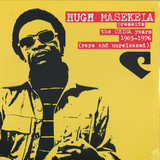
The Chisa Years: 1965-1975 (Rare and Unreleased) is a compilation album by South African jazz trumpeter Hugh Masekela. The album consists of 14 rare or forgotten tracks recorded by Stewart Levine and Hugh Masekela from 1965 to 1975 when they ran their own Chisa Records label.Thom Jurek of Allmusic wrote 'In sum, there isn't a weak moment on this entire collection. It's appeal is wide and deep and one can only hope this is the first of many volumes of this material to appear. BBE Records has done a stellar job in making this slab available.' Dan Nishimoto of the Prefix Magazine stated 'The compilation focuses on Masekela's original idea of 'African American Music.' From the early experiments of the Zulus (a group featuring M'Bulu) in mixing doo-wop, rhythm & blues and South African gospel and the mbaqanga/'Grazing in the Grass'-style work of the generically named Johannesburg Street Band to the clearly Fela-influenced Ojah (Masekela's band in the mid-'70s, consisting of players from Ghana and Nigeria) and the readyfor-primetime belting of M'Bulu, each track reveals a multi-pronged effort to find and challenge the notion(s) of how African and American cultural forms could interact.'
Accomplished musical documenters Analog Africa shine a long-overdue spotlight on the trailblazers of Zimbabwe's Chigiyo sound with this lovingly curated new collection. Emerging from Kwekwe in the 1980s, the group fused reggae grooves with Shona chants, mbira-inspired guitars and bold brass to create a style uniquely their own. Anchored by legendary guitarist Gilbert Zvamaida, Zig-Zag's music carried spiritual weight and infectious energy with classics like 'Gomo Ramasare' and 'Mudzimu Mukuru' shaping the country's cultural landscape. This lovingly curated compilation revives their groundbreaking catalogue and celebrates their fearless creativity while introducing a new generation to one of Zimbabwe's most distinctive and visionary bands.
Mutant is proud to present Academy Award®-winning composer Michael Giacchino’s latest installment of his Exotic Themes for the Silver Screen series - Featuring more iconic scores from Giacchino’s career that have been exclusively rearranged and re-recorded for this series in the retro lounge style of the 1950s.
Volume 2 spans the period of 2012 to 2022 and features not only his work with Marvel Studios (including their iconic Marvel Studios Fanfare, Spider-Man, Doctor Strange and more!) but also more career defining music for Disney • Pixar (Inside Out, Coco and Lightyear) as well as smaller, cult classics like John Carter, and Tomorrowland, more personal films such as Jojo Rabbit and The Book of Henry. He has taken these iconic themes and transformed them into soothing, beautiful 60’s lounge-inspired reworks.
Other highlights include ‘The Batman Suite’, taken from Matt Reeves' 2022 blockbuster The Batman, ‘Jyn Erso’s Theme’ from Rogue One: A Star Wars Story, as well as themes for War For The Planet Of The Apes, Jurassic World and two selections taken from his directorial debut Werewolf By Night
"We are thrilled to continue exploring Michael’s storied career with this incredible collection of some of his most beloved themes reworked for warm summer nights with a cocktail (or mocktail) in hand," says Mutant co-founder Spencer Hickman. "Michael is a rare composer who is comfortable with superheroes, horror, action, or intimate drama. He always manages to create incredibly beautiful earworms that have been further highlighted by these stripped-back downtempo versions of his award-winning themes.’
Featuring liner notes by Charles Phoenix, artwork by Luke Insect, and pressed on limited edition color vinyl (also available on CD)
“So much was rooted in the big orchestral sound, so it was really about scaling it back. The real trick is figuring out the little fun hooks and things you can add along the way. There were no rules; I was up for anything. It was a way to re-engage with the material and be creative in a new way.”
Exotic Themes for the Silver Screen – Volume 1 includes an array of reinterpreted pieces from Michael Giacchino’s career. Highlights include ‘Primordial Forest’ from the 1997 video game The Lost World: Jurassic Park, ‘Life and Death’ from Lost, the theme from Ratatouille, ‘Roar!’ from Cloverfield, ‘Enterprising Young Men’ from Star Trek (2009), ‘A Man, A Plan, A Code, Dubai’ from Mission: Impossible - Ghost Protocol, and a Super 8 suite.
Featuring package design by Luke Insect, and liner notes by Charles Phoenix.
This is an album made during a crucial period in South Africa’s history during which there was a palpable feeling of a slow turning towards the collapse of the apartheid state side by side with an increasingly well-organised culture of resistance through the formation of the United Democratic Front (UDF) and various affiliated bodies. However, as a result, there was increased pushback from the state security establishment, a turning to dirty tricks and the formation of hit squads whose members murdered and tortured many of our friends and created chaos throughout South Africa as well as neighbouring countries.
This album is situated in this political environment however it took advantage of the new do-it-yourself music technologies available at that time. Technologies that made it possible to make and release records without interference from traditional record company executives. Two musician friends of mine pooled their resources after their respective bands had broken up. Ivan Kadey (National Wake) and Lloyd Ross (Radio Rats) built an 8-track recording studio control room and fitted it out in a second hand caravan and called it Shifty. They parked it in a garage attached to the only house left in a demolished and derelict mining village near Soweto on the outskirts of Johannesburg.
All the work on this album was completed there, mainly after hours and mostly alone where I enjoyed an exhilarating freedom to develop a whole new set of musical skills and ideas, incorporating my love of a wide range of music I’d grown up with. Influences of 1970s progressive/kraut/and psychedelic rock combined with mbaqanga bass styles, early reggae/dub and Indian tabla rhythms. Stockhausen, early Zappa and Holgar Czukay were radio text and shredding influences, and Chris Cutler’s band Henry Cow & Art Bears helped me see a way to political expression. Mostly though was the exciting post-punk and no-wave music coming through to us from Europe and America: bands like This Heat, the Mekons, Raincoats, Sonic Youth and Pere Ubu were immensely important to me as was my reading from the period: J.M.Coetzee’s first 3 novels are strong influences on Free State Fence; the stark landscape, superstition, ritual, and sexual repression are in many of his settings. JG Ballard was a constant presence throughout that period, especially whilst living in such a surreal environment, surrounded by mine dumps, but mostly I think the whole French post-modern philosophical movement—Derrida, Foucault and of course, Baudrillard’s Simulacra and Simulation—set out a new sense of possibilities, possible ways to express oneself, ways to think, and ways to try and analyse the political intersection of public and private life. Most important at that time was the influence of sound recordings I had made and experiences garnered from working as a sound recordist on documentary films. These financed my work and later the studio and were consistent employment throughout the 1980s. Film work also enabled me to experience much of South Africa that was hidden from most. The track Independence Day is a good example; drawn from some time spent in the rural homeland of Venda. This then was the first full length Kalahari Surfers album, completed in summer of 1984 it was taken to EMI pressing plant but rejected by the cutting engineer as being ""political, pornographic and anti religious"". Chris Cutler at Recommended Records took up the challenge and released the album through his label. He wrote the original liner note
"Amazing! Like stumbling on a treasure-trove of unheard Charlie Patton and Blind Willie McTell 78s, but imbued with the spirit of Mahlathini and Ladysmith." Joe Boyd
'But for this compilation of rescued songs masterfully restored from rare 78 rpm shellacs, few could imagine the diversely beautiful roots of Zulu Guitar Music emerging during the period 1950 – 1965. Story-tellers and master musicians appropriate outlaw personae, re-purpose country and western, Hawaiian and other styles, to stretch and challenge our notion of “the Zulu guitar”.
Twenty-five songs (18 on vinyl) plunge us into the depths of the migrant experience. Translations in the liner notes offer us glimpses of pugnacity, melancholy and heartache, all coloured by the paternalism that circumscribed the singers’ apartheid-dominated lives.
The early *mbaqanga* undertow in many of the songs subverts the wanderlust of Country and Western music into a fugitivity burdened by nostalgia. Something irretrievable has been lost, prompting a blending of ideas and cultures to make sense through thankless acts of musical divination. Inadvertently they have been thrust into the role of the antihero, where outwitting competition for lovers is as important as evading the Black Jacks (apartheid’s municipal cops) and their informants.
Considering the politically repressive period that this music emerges from, we can surmise that the specificity in the storytelling went a long way towards evading censure. But even when words are absent, there is a narrative arc suggested by the musical expression.
With most of the master tapes wilfully destroyed or lost, modern transcription and restoration techniques from the original shellac discs present the original sound most likely more clearly than ever heard before.'
Produced for reissue by Chris Albertyn and Matt Temple at Matsuli Music and Siemon Allen at Flatinternational.
Artwork design by Siemon Allen.
Liner note and translations by Kwanele Sosibo.
Audio restoration and lacquers by Frank Merritt at The Carvery and pressed at Pallas, Germany.
Original 78rpm recordings sourced from the collections of Chris Albertyn at Matsuli Music, and Siemon Allen at the Flatinternational Archive.
Googling “paradise house”, the first results to pop up are an endless list of European b&b’s with whitewashed lime façades, all of them promising “…an unmatched travel experience a few steps from the sea”. Next, a little further down, are the institutional websites of a few select semi-luxury retirement homes (no photos shown, but lots of stock images of smiling nurses with reassuring looks). To find the “paradise house” we’re after, we have to scroll even further down. Much further down.
It feels like yesterday, and at the same time it seems like a million years ago. The Eighties had just ended, and it was still unclear what to expect from the Nineties. Mobile phones that were not the size of a briefcase and did not cost as much as a car? A frightening economic crisis? The guitar-rock revival?! Certainly, the best place to observe that moment of transition was the dancefloor. Truly epochal transformations were happening there. From America, within a short distance one from the other, two revolutionary new musical styles had arrived: the first one sounded a bit like an “on a budget” version of the best Seventies disco-music – Philly sound made with a set of piano-bar keyboards! – the other was even more sparse, futuristic and extraterrestrial. It was a music with a quite distinct “physical” component, which at the same time, to be fully grasped, seemed to call for the knotty theories of certain French post-modern philosophers: Gilles Deleuze, Félix Guattari, Paul Virilio... Both those genres – we would learn shortly after – were born in the black communities of Chicago and Detroit, although listening to those vinyl 12” (often wrapped in generic white covers, and with little indication in the label) you could not easily guess whether behind them there was a black boy from somewhere in the Usa, or a girl from Berlin, or a pale kid from a Cornish coastal town.
Quickly, similar sounds began to show up from all corners of Europe. A thousand variations of the same intuition: leaner, less lean, happier, slightly less intoxicated, more broken, slower, faster, much faster... Boom! From the dancefloors – the London ones at least, whose chronicles we eagerly read every month in the pages of The Face and i-D – came tales of a new generation of clubbers who had completely stopped “dressing up” to go dancing; of hot tempered hooligans bursting into tears and hugging everyone under the strobe lights as the notes of Strings of Life rose up through the fumes of dry ice (certain “smiling” pills were also involved, sure). At this point, however, we must move on to Switzerland.
In Switzerland, in the quiet and diligent town of Lugano, between the 1980s and 1990s there was a club called “Morandi”. Its hot night was on Wednesdays, when the audience also came from Milan, Como, Varese and Zurich. Legend goes that, one night, none less than Prince and Sheila E were spotted hiding among the sofas, on a day-off of the Italian dates of the Nude Tour… The Wednesday resident and superstar was an Italian dj with an exotic name: Don Carlos. The soundtrack he devised was a mixture of Chicago, Detroit, the most progressive R&B and certain forgotten classics of old disco music: practically, what the Paradise Garage in New York might have sounded like had it not closed in 1987. In between, Don Carlos also managed to squeeze in some tracks he had worked on in his studio on Lago Maggiore. One in particular: a track that was rather slow compared to the BPM in fashion at the time, but which was a perfect bridge between house and R&B. The title was Alone: Don Carlos would explain years later that it had to be intended both in the English meaning of “by itself” and like the Italian word meaning “halo”. That wasn’t the only double entendre about the song, anyway. Its own very deep nature was, indeed, double. On the one hand, Alone was built around an angelic keyboard pattern and a romantic piano riff that took you straight to heaven; on the other, it showcased enough electronic squelches (plus a sax part that sounded like it had been dissolved by acid rain) to pigeonhole the tune into the “junk modernity” section, aka the hallmark of all the most innovative sounds of the time: music that sounded like it was hand-crafted from the scraps of glittering overground pop.
No one knows who was the first to call it “paradise house”, nor when it happened. Alternative definitions on the same topic one happened to hear included “ambient house”, “dream house”, “Mediterranean progressive”… but of course none were as good (and alluring) as “paradise house”. What is certain is that such inclination for sounds that were in equal measure angelic and neurotic, romantic and unaffective, quickly became the trademark of the second generation of Italian house. Music that seemed shyly equidistant from all the rhythmic and electronic revolutions that had happened up to that moment (“Music perfectly adept at going nowhere slowly” as noted by English journalist Craig McLean in a legendary field report for Blah Blah Blah magazine). Music that to a inattentive ear might have sounded as anonymous as a snapshot of a random group of passers-by at 10AM in the centre of any major city, but perfectly described the (slow) awakening in the real world after the universal love binge of the so-called Second Summer of Love.
For a brief but unforgettable season, in Italy “paradise house” was the official soundtrack of interminable weekends spent inside the car, darting from one club to another, cutting the peninsula from North to centre, from East to West coast in pursuit of the latest after-hours disco, trading kilometres per hour with beats per minute: practically, a new New Year’s Eve every Friday and Saturday night. This too was no small transformation, as well as a shock for an adult Italy that was encountering for the first time – thanks to its sons and daughters – the wild side of industrial modernity. The clubbers of the so-called “fuoriorario” scene were the balls gone mad in the pinball machine most feared by newspapers, magazines and TV pundits. What they did each and every weekend, apart from going crazy to the sound of the current white labels, was linking distant geographical points and non-places (thank you Marc Augé!) – old dance halls, farmhouses and business centres – transformed for one night into house music heaven. As Marco D’Eramo wrote in his 1995 essay on Chicago, Il maiale e il grattacielo: “Four-wheeled capitalism distorts our age-old image of the city, it allows the suburbs to be connected to each other, whereas before they were connected only by the centre (…) It makes possible a metropolitan area without a metropolis, without a city centre, without downtown. The periphery is no longer a periphery of any centre, but is self-centred”.
“Paradise house” perfectly understood all of this and turned it into a sort of cyber-blues that didn’t even need words, and unexpectedly brought back a drop of melancholic (post?)-humanity within a world that by then – as we would wholly realise in the decades to come – was fully inhuman and heartless. A world where we were all alone, and surrounded by a sinister yellowish halo, like a neon at the end of its life cycle. But, for one night at least, happy."
No en stock
Última entrega hace 3 meses disponible para reposición sin garantía
Apollo / R&S are delighted to welcome back The Primitive Painter, aka the duo of Roman Flügel and Jörn Elling Wuttke for a timely reissue of their 1994 lost classic self-titled album of sonorous IDM.
Growing up in Frankfurt, in the 80s and 90s the duo met at an indie rock club in their home town of Darmstadt, bonding over their shared obsession with the first wave of acid, Chicago house and early Detroit techno as well as their patronage of now iconic Frankfurt club nights like The Omen or Dorian Gray or the infamous Delirium Record shop run by scene stalwarts Ata (Robert Johnson) and Heiko MSO (Playhouse).
Taking inspiration from the likes of The Black Dog and Transmat as well as seminal compilations such as Planet E’s Intergalactic Beats and Warp’s Artificial intelligence compilation the duo honed their inventive take on the Detroit techno blueprint under the monicker Acid Jesus, debuting on their freshly minted Klang Elektronik label. The label was started in conjunction with Ata and Heiko after Fluegel & Wuttke (regular patrons of the Delirium store) pressed a demo on them, muttering the immortal line; “Please listen to the tape, we are big Mr. Fingers fans.”
Through the mid ’90s the project flourished giving rise to a classic album and a brace of singles that number amongst the best of the era’s techno, winning them a influential fans most notably Sven Väth, David Holmes and Andrew Weatherall who invited them to play live at one of the legendary Sabresonic parties in London.
Alongside the success of the Acid Jesus project, the duo found great inspiration in outside of the club, including an ambient happening when the KLF came to play Frankfurt; “There were live sheep eating grass on stage while they played at Mark Spoon’s club XS”, as well as cinematic influence from the likes of Jim Jarmush and Wim Wenders. It was however the euphonic IDM grandeur of Apollo Recordings self titled compilation of 1993 that really got their creative juices flowing: “It was a ten track compilation with artists like David Morley, Model 500, Aphex Twin which still sounds so good today,” Jörn enthuses. “ It was really the trigger to go away from the Detroit sound and more towards the big melodies of B12 etc.”
Deciding to make their tribute to this style of music the duo turned out 10 tracks of gauzy, melodious electronica in a white hot fever, one after another over the ensuing months. Settling on a name for the new project they picked ‘The Primitive Painters’ taking inspiration from the band Felt. “We are both children of the C86 movement,” explains Jörn. “this attitude of noisy art school influenced rock like Primal Scream, MBV, The Jesus & Mary Chain really inspired us to take a DIY approach to our music.”
They sent the resulting demo cassette to Renaat at R&S / Apollo. “We really had no expectations,” Jörn explains. “So we were shocked and delighted when we received a fax saying that he wanted to release it”.
The resulting release was bungled by an R&S mix up that attributed the album to the duo’s own Klang Elektronik label which confused both fans and distributors alike, denying the release the critical boost and attention that it so richly deserved. Accordingly the release slipped out without much fanfare, with a chastened Fluegel & Wuttke returning to their Acid Jesus activities which would eventually lead to their blockbusting success as Alter Ego.
Over the ensuing years the reputation of The Primitive Painter album has only grown, with second hand copies (only 500 vinyl were pressed) changing hands for exorbitant amounts on Discogs, leading us to this opportune moment of a richly deserved ‘first’ release on the label for which the project was started, Apollo / R&S.
“This really brings us full circle,” says Jörn. “Apollo / R&S meant and means so much to us as artists and so it was bittersweet to not have the official release - to put that right all these years later feels really good.”
This new vinyl release comes in re-created original gatefold artwork and includes all original 10 tracks (Stoned Soul Picnic was previously on the CD only).
No en stock
Última entrega hace 14 meses disponible para reposición sin garantía
Vinyl Only / Sleeve manufactured with 400 mcn Fedrigoni "Shiro Eco" paper / Original unreleased poster with alternative artwork insert with notes by Tony Higgins printed on schedography peach past color paper / PVC outers / original artwork /
Personnel:
Tete Mbambisa - Piano
Basil Coetzee - Tenor Sax and Flute
Zulu Bidi - Bass
Monty Weber - Drums
Notes:
Mbambisa first gained prominence as a pianist in 1961 as a member of the Jazz Giants, this time with Pukwana as saxophonist, bassist Martin Mgijima and drummer Makaya Mtoshoko, setting the sound and shape of a scene that became known as Cape Jazz. Following an introduction from Chris McGregor, Mbambisa formed a band, The Swinging City Six, with saxophonist Ronnie Beer before going on to play at the end of the 1960s in the groups The Soul Jazzmen and Spirits Rejoice with Duku Makasi. As a member of The Soul Jazzmen, Mbambisa recorded the breakthrough album 'Inhlupenko Distress' in 1969 for the City Special label. After a recording hiatus, Mbambisa returned in 1974 with an octet album, 'Tete's Big Sound' released on a newly formed label, As Shams or The Sun, established by South African record store owner and independent producer Rashid Vally. 'Tet's Big Sound' included tracks like 'Unity' and the 'Black Heroes Lamentation', now considered a classic in the South African jazz underground.
The sound that Mbambisa carved in this period was wholly acoustic, and is a style that now is often loosely labelled spiritual jazz, a sound that alludes to deep African textures and rhythms balanced with clear nods to American hard bop and modal jazz, sometimes edging toward free improvisation in echoes of John Coltrane and Pharaoh Sanders. The music is often centred around a fulcrum of trance like vamps with repeated motifs that allow for extended pieces that create a hypnotic effect. This clearly exemplified on Mbambisa's next album, 'Did You Tell Your Mother', released in 1979, once more for The Sun label. (Tony Higgins)
While music traditions are often defined by established and protected sets of characteristics, popular music in South Africa betrays a willingness to adapt homegrown styles and an enthusiasm to adopt new influences. Musical currents like marabi, goema and mbaqanga help define what makes indigenous jazz unique, but it’s the eclecticism and hybridisation found in South African crates that keeps vinyl archaeologists like Fred “Voom Voom” Spider digging deeper. If we consider jazz to be a global musical dish, it follows that South Africa brings a distinct sonic salsa to the table. Spider calls it “Chakalaka Jazz” after the local tomato, onion and chilli relish that frequently accompanies South African meals. It’s the essential ingredient that unites and spices this diverse selection of tracks spanning the years 1969 through 2003. Featuring locals, exiles and expats with a reverent nod to the golden years of the 1970’s, these rare musical treasures are held together by that magical South African flavour.
Compiled by Fred Spider, Notes by Calum MacNaughton, Executive Producer: Franck Descollonges for Heavenly Sweetness
No en stock
Última entrega hace 9 meses disponible para reposición sin garantía
Hardwarez, the third LP by Master Boot Record (aka MBR) on Metal Blade, sees multi-instrumentalist mastermind Vittorio D'Amore (aka Victor Love) aurally exploring the duality of technology and humanity in 9 intense and incandescent tracks. The LP, which follows 2022’s Personal Computer and 2020’s Floppy Disk Overdrive, comes from the expansive mind of Love, an Italian producer who emerged from the underground as an anonymous project in 2016 to create the soundtrack for the cyberpunk point-and-click adventure game VirtuaVerse. The project seamlessly evolved into a standalone entity, releasing over 14 albums in just a few years.
To create Hardwarez, the technologist worked by live streaming his desktop on YouTube while composing new music. Everything is programmed via MIDI. “The very first song I wrote is actually also the first single, “CPU,” he says. “Even though the other songs on the album have a quite different style, the type of riffing and the different melodic section of this track worked as a base to upgrade the sound before moving forward.” “CPU” is also where Love decided to test the real guitar overdubs and was inspired by the results.
“With every album I’ve upgraded bits of the sounds, adding new layers,” he says. “In Hardwarez the core sounds for synth guitars, leads and pads are still those that constitute the trademark MBR sound, but what makes this album very different is the addition of guitar overdubs that play along synth guitars for both the rhythmic and solo sections.”
Intensive touring augmented with live musicians helped Love to make the decision to include real guitars to achieve a massive sound and boost the enhanced frequency spectrum of the instrument. “On this record there are a lot of heavy riffs with palm muting and my lead guitarist Shreddy recorded most of those leads and solos as well playing in unison with synth leads and adding extra energy to them.”
Hardwarez, the third LP by Master Boot Record (aka MBR) on Metal Blade, sees multi-instrumentalist mastermind Vittorio D'Amore (aka Victor Love) aurally exploring the duality of technology and humanity in 9 intense and incandescent tracks. The LP, which follows 2022’s Personal Computer and 2020’s Floppy Disk Overdrive, comes from the expansive mind of Love, an Italian producer who emerged from the underground as an anonymous project in 2016 to create the soundtrack for the cyberpunk point-and-click adventure game VirtuaVerse. The project seamlessly evolved into a standalone entity, releasing over 14 albums in just a few years.
To create Hardwarez, the technologist worked by live streaming his desktop on YouTube while composing new music. Everything is programmed via MIDI. “The very first song I wrote is actually also the first single, “CPU,” he says. “Even though the other songs on the album have a quite different style, the type of riffing and the different melodic section of this track worked as a base to upgrade the sound before moving forward.” “CPU” is also where Love decided to test the real guitar overdubs and was inspired by the results.
“With every album I’ve upgraded bits of the sounds, adding new layers,” he says. “In Hardwarez the core sounds for synth guitars, leads and pads are still those that constitute the trademark MBR sound, but what makes this album very different is the addition of guitar overdubs that play along synth guitars for both the rhythmic and solo sections.”
Intensive touring augmented with live musicians helped Love to make the decision to include real guitars to achieve a massive sound and boost the enhanced frequency spectrum of the instrument. “On this record there are a lot of heavy riffs with palm muting and my lead guitarist Shreddy recorded most of those leads and solos as well playing in unison with synth leads and adding extra energy to them.”
Mutant is proud to present Academy Award-winning composer Michael Giacchino's latest album, Exotic Themes for the Silver Screen – Volume 1, featuring iconic scores from Giacchino's extensive portfolio rendered in the retro lounge style of Exotica from the 1950s.
“It's no secret that we at Mutant are huge fans of Michael Giacchino,” says Spencer Hickman, Co-Founder of Mutant. “We're excited to release a retrospective of his astonishing three decades as a composer. Rather than just curating a simple compilation of his previous works, Michael went back into the studio, rearranged and re-recorded every major theme from his career. These tracks have been recorded in an Easy Listening style inspired by such greats as Martin Denny and Les Baxter, creating not just a unique and incredible look back at some of the most beloved movie and television themes of the modern age, but also bringing a fresh, exciting take to the beautiful journey he has taken us all on with him. It feels like you are discovering these songs for the very first time: timeless, beautiful, and a joy to listen to. These newly recorded themes transport you to a far-off sunset, looking out at the ocean, complete with a cocktail in hand, providing a much-needed escape from the stress of modern times, and we can all agree that is something we all crave right now.”
Exotic Themes for the Silver Screen – Volume 1 spans nearly two decades of Michael Giacchino’s music, from his early video game scores to his television hits and blockbuster films. The album transforms these works through the lens of Exotica, replacing epic strings and thundering drums with vibraphones and marimbas.
“This album was inspired by the work of Arthur Lyman and Martin Denny,” says Giacchino. “What would they do with the Star Trek theme? Or video games like Medal of Honor? It was a way for me to play in that world I loved so much growing up. I thought it would be fun to create a fantasy world, where this album was recorded back in 1967 and then lost, only to resurface today.”
The album showcases Giacchino’s unerring talent for melody, stripping down grand symphonies to their essential elements while retaining their aesthetic and emotional core.
“So much was rooted in the big orchestral sound, so it was really about scaling it back. The real trick is figuring out the little fun hooks and things you can add along the way. There were no rules; I was up for anything. It was a way to re-engage with the material and be creative in a new way.”
Exotic Themes for the Silver Screen – Volume 1 includes an array of reinterpreted pieces from Michael Giacchino’s career. Highlights include ‘Primordial Forest’ from the 1997 video game The Lost World: Jurassic Park, ‘Life and Death’ from Lost, the theme from Ratatouille, ‘Roar!’ from Cloverfield, ‘Enterprising Young Men’ from Star Trek (2009), ‘A Man, A Plan, A Code, Dubai’ from Mission: Impossible - Ghost Protocol, and a Super 8 suite.
Featuring package design by Luke Insect, and liner notes by Charlie Brigden.
'Reet' is a lost treasure of late 1960s folk/psych-folk. The only album she ever put to tape, with clear pure voice and guitar. luckily recorded by Andres Raudsepp in 1969.
Reet will be loved in the same breath as ;Sibylle Baier, Vashti Bunyan, Molly Drake, Bridget st John, Reet Hendrikson deserves wider listening and recognition.
Reet Hendrikson was born in Estonia only months before the "great escape" into exile in 1944. Brought up and educated in Sweden, she went to study in the US in 1967 on a Fulbright scholarship, before she made her mark as an Estonian musician in Canada. While her arrangements of Estonian folksongs on the guitar reflected the styles of the sixties, her voice and choice of material sounded authentic and made a connection with ages past.
When Hendrikson arrived in Canada in 1968 via the US, her Estonian was native-like because of the high quality of Estonian schools in Sweden. She was thus able to characterise the identity of young ex-patriate Estonians – especially those born in exile from Soviet occupation – in a new and meaningful way. A formal musical background allowed her to create the arrangements that accompanied her simple but pure singing voice. Having heard her under northern Muskoka pines at an Estonian summer seminar, it didn't takeAndres Raudsepp ( of raindeer records)long to bring her to a recording studio. "Reet – Estonian folksongs" appeared in 1969.
Hendrikson soon found her way to the scholarly atmosphere of Boston where, as a multi-instrumentalist, she joined a group of musicians who favoured traditional folk music. Back in Sweden in the 1980ies, she was invited to join a scholarly society of Estonian young women, which she led during musical sessions. She visited Estonia as frequently as possible, trying in particular to be helpful to Estonian musicians by providing sheet music and much-needed repertoire from the Swedish National Radio Archives, where she worked for a while..
Reet Hendrikson died in Stockholm in the autumn of 2000.
Egil Kalman has levelled up on this one; we were stunned by his last solo opus, and on ‘Forest of Tines’, the bassist/synthesist has traded the EMS Synthi 100 for the Buchla Series 200, recording at Stockholm’s illustrious Elektronmusikstudion (EMS). Here, he builds on themes he explored on his debut with a generous 20 track double album that marks firmer lines between Scandinavian folk music and contemporary electro- acoustic minimalism.
Using woody, synthesised tones that gradually open into sawing wails, Kalman suggests harmonies that lie between the 17th century polska and earlier, pre-Renaissance sounds, mimicking the tonal and textural fluctuations of strings with advanced tuning and sequencing techniques. There are plenty of artists delving into the past to unravel their identity, but Kalman’s approach is refreshingly unadulterated. He recorded the entire set on the fly, using just spring reverb to add extra texture, without overdubs or modern DAW-style layering, the Buchla 200 played almost like an acoustic instrument.
There’s a glimmer of vintage acid on the lithe ‘Dub One’, a complex, rhythmic experiment that lashes its pulses together with willowy portamento slides. And on ‘Klystron’, he absorbs warehouse techno’s architectural oomph, splaying psychedelic, reverberating ascending sequences over jagged kicks; listen carefully, and there’s something else going on in the background too, as Kalman meets his stabs with flute-like echoes. It’s a peculiar cocktail of ideas and provocations: ‘Mbira’ finds the composer shaping his synth into dusty, fluttering hits that resemble the titular Zimbabwean finger harp, and on ‘Drums’, he pipes pre-recorded percussion through the system, triggering its oscillators and helping shape its rhythmic patterns. He’s most comfortable when he’s mines a hazier past, ‘Autumn Leaves’ is a mystickal, just intoned droner that harmonises with Mattias Petersson’s awesome ‘Triangular Progressions’, and ‘Subtines’ sounds as if Kalman has deployed his instrument in a subterranean crevice, resonating his rumbles around synthetic water droplets.
If it’s uncanny court music you’re particularly interested in, there’s plenty of that too. ‘Polska’ is another sublimely hauntological Swedish folk interpolation, while closing track ‘Ocquet’ appears to blur Kalman’s ideas more thoroughly, melting folk phrasing and peaceful, uneasy drones to draw us to a neat conclusion. Soft-hearted but animated, it’s modern electronic music that isn’t afraid of employing vintage techniques to suggest new directions.
Following the success of Eric B & Rakim covers on 45, touching Hip Hop and rare groove fans, Medline explores new horizons. Well known to be free from styles boundaries, the French Chilean multi - instrumentalist unveil a two side Afro Funk killer.
Marked with the "universal power" title on the label, third 7 inch on My Bags catalog, this new 45 shows Medline's abilities to produce high quality music in a wide range of styles. The compositions are produced with a brilliant contrast. The uptempo "Run For Cover" is a huge Afro beat runner with a hardcore feeling while "Azul", is a heavy downtempo soul funk anthem, and shines like a massive solar energy boost.
Medline brings back the 70's West African sound signature, carried by a hot drum and bass couple, leaded by the Farfisa organ and harmonized with a powerful brass section. The rhythm is wild, mastered by dynamical arrangements when the breaks are hitting loudly around. And yes as always Medline is the ONE playing all.
The artistic fate offered beautiful colors and forms to the music. Clément Laurentin's elegant painting "Run For Cover" reminding Bob Marley and Lee Perry's records, baptized the first composition which includes a "Jamaican" surprise. "Azul" (Blue in Spanish) is the main color of Clément's creation which remind the look of the famous azulejos. The link happens without any previous consultation, all was here to be done this way, connecting cultural areas and eras. To end, the acrylic painting on linen canvas is the perfect organic mirror to this new 7 inch.
My Bags is happy to offer this "tratra" (Ivorian pancake), designed with all the elements of a ready to dig holy grail, Soul inspired, Afro beat to the core.
No en stock
Última entrega hace 2 años disponible para reposición sin garantía
These outstanding Technics slipmats featuring the skull and headphones dj design will look great on any set of turntables.
Based on iconic, Mexican Day of the Dead imagery, cleverly features a distressed vintage, tattoo style print of classic dj related equipment;
Including turntable tone arms, 7” single adapators, 12” vinyl, cross-faders, speakers, switches and headphones.
These slipmats are suitable for any set of vinyl decks.
Made from the finest but strongest felt material, DMC slipmats are the no.1
choice for djs and vinyl lovers across the World.
Dependable & hard wearing, they are also resistant to dust & other
particles, so will not scuff, scratch or damage vinyl.
Great for your home, studio, club or in competition.
and Sebastian Kokus and the prolific Ulf Schütte, the Hamburg-based trio has tirelessly expanded upon its sound and extended its musical style. After 2022’s »S/T« documented the results of their first jam sessions as a newly-founded group, »V.A.« started even more modestly and became an even bigger undertaking. Originally conceived as a small one-off release, it grew into a full record which sees the group embracing dub music, collaborating with Peaking Lights’ Aaron Coyes and inviting other artists—No UFO’s, Seekers International, Coco Em—who reworked select tracks in true dub style. »V.A.« is marked by inconsistency, openness, and heterogeneity in the best sense of those words: ever-changing, constantly surprising and consistently in motion.
The starting point for »V.A.« was a Hamburg concert in December 2022 together with Coyes, who played a solo set as Peaking Lights. On the request of the event organiser, Cloud Management teamed up with him for a jam session after the gig, laying the foundation for a track that the group took to the studio before sending it to Coyes to record vocals for it. Another song quickly followed and even though the band initially intended to release »PST« and »0rten Pitch« as standalone 7” single, they soon decided to have others create versions of the two tunes to round them off in the form of a 12” EP. Once more though, one thing led to another and now »V.A.« collects five original pieces by Cloud Management as well as three—four on the digital version—remixes by other artists.
Collaborating with Leipzig-based Canadian producer No UFO’s, the Canadian Seekers International collective, and Kenyan multi-disciplinary artist Coco Em came about organically. As fans of their friend Konrad Jandavs’ work for labels such as Spectrum Spools, Root Strata and his own Nice Up International, Korf, Kokus and Schütte asked him for a remix and granted him full creative freedom for his take on »PST«. Jandavs also connected them with the prolific Richmond-based soundsystem worshippers, who present their take on the same track on this record as well as a version of »Electric CD.« Also this track appears three times on the record, having been re-rubbed by Emma Mbeki Nzioka, who was introduced to the the trio by its label Altin Village & Mine.
There isn’t really a common thread running through the rough digi-dub of No UFO’s take on »PST«, Seekers International’s traditionally-minded yet infinitely playful dub-psychedelia and Coco Em’s bass-heavy, percussive, pulsating take on »Electric CD.« However, as a group dedicated to staying in flux at all times, Cloud Management ended up embracing the creative differences between their own work and those of their respective collaborators. In calling it »V.A.,« they paid tribute to their somewhat loose, but conceptually consistent concept of giving various artists full creative licence over their own work. Neither a true album in the strict sense of the world nor just a compilation, »V.A.« is actually the essential Cloud Management record: ever-changing, constantly surprising, consistently in motion.
On his third voyage as Skyway Man, artist + producer James Wallace is still seeking answers beyond the stars and still coming back with more questions in the form of ten brilliant songs. On its surface, 'Flight of the Long Distance Healer' registers as another concept album replete with aliens and alternative philosophy, but this time around, Wallace coats the glass with a vital layer of self-reflection. Like a West Coast Dr. John—but more preoccupied with flying saucers than voodoo dolls—Skyway Man is in the business of opening new aural worlds, cracking open reality just enough to get the message through. 'Flight of the Long Distance Healer' sparkles and blinks, whispers and moans—hugely enjoyable music rendered in imaginative and gleaming style. There are hints of the polyrhythmic cinematic sensibility from Wallace’s contributions to the Joe Pera television series, rhythms of the Stax-inspired Spacebomb house band, and ripples of the current East Bay scene outside San Francisco. In a real showcase for the extended Skyway Man family, Wallace has coaxed personal and masterful performances from the likes of Erin Rae, Vetiver’s Andy Cabic, pedal steel wizard Spencer Cullum, Kelly McFarling, and more. Cooking up genres in such a way as to keep their nutrients intact; he packs prog, blues, glam rock, acid folk, swamp boogie, and future folk into a beautiful Martian bouillon.