
4

Quartz gehören nicht nur zu den ältesten, aktiven Metalbands, sondern auch zu den Gründungsvätern der NWOBHM. Zusammen mit Samson und Marseilles fegte man die angesagte Punkbewegung der späten Siebziger, quasi als Vorhut zu Iron Maiden oder Saxon, zur Seite – noch bevor der Begriff „New Wave Of British Heavy Metal“ wenig später entstand. 1977 erschien das stark an Black Sabbath erinnernde Debütalbum „Quartz“, später als „Deleted“ ein zweites Mal vermarktet, auf Jet Records (u.a. Ozzy Osbourne). 1980 wechselte man zum nächsten Branchenriesen: MCA. Dort bescherte man uns im gleichen Jahr die LP „Stand Up And Fight“. Beide Alben sind heute beliebte Klassiker, doch zwischen diesen Veröffentlichungen gab es eine spannende Phase, die zwei Singles und eine Live-LP hervorbrachte. Und natürlich den Signature-Song von Quartz:
„Satan´s Serenade“! Zwischen den fetten Majordeals kümmerte sich das kleine Label Reddington´s Rare Records um die Band. Wie der Name schon verrät, handelt es sich eigentlich um einen Plattenladen, was direkt an die Geschichte von Metal Blade und Brian Slagel erinnert. Man merkt die Liebe zum Detail: „Satan´s Serenade“ erschien als 12“ in rotem Vinyl, während „Nantucket Sleighride“ eine 7“ Single war, die dafür in fünf Versionen erschien (farbiges Vinyl und rotes oder schwarzes Cover). Getoppt wurde dieser positive Wahnsinn mit einer durchsichtigen 7“ Flexidisc, die als Promocopy verteilt wurde. RRR waren übrigens auch für Paralex und
Mayday verantwortlich. Golden Core sind extrem stolz, beide legendären RRR-Singles nun als 12“ EP (Spieldauer: 25:47) in einer limitierten Auflage von 300 Stück zu präsentieren. Die LP beinhaltet ein bedrucktes Inlay und einen Nachdruck der „Nantucket Sleighride“-Single (auf Papier). Als Liner-Notes findet man ein aktuelles, exklusives Interview mit Drummer Malcolm Cope! Die Original-Singles wurden von Patrick Engel überspielt und audiogereinigt, danach von Neudi remastert und von Vadim Kulin (ZYX Studio) auf das Medium Vinyl angepasst. Das riecht schon im Vorfeld nach einem Sammlerstück…

Tape Crackers: An Oral History Of Jungle Pirate Radio. Rollo Jackson is a London-based filmmaker who grew up immersed in the city's dance music culture of the mid-90's. His films, whether for the likes of Hot Chip, Man Like Me, or Warp Records bare the traits of someone whose formative years were spent clad in the brash hues of a Versace print shirt and the bright white of a fresh pair of Reeboks. Whatever his subject, the spirit of too many late nights spent doing homework to the crackling sounds of pirate radio, or of weekends spent in booming, sweaty warehouses on the outskirts of London is always threaded throughout. Rollo presents a documentary DVD entitled Tape Crackers, an oral history of Jungle music and an affectionate, touching, and, at times, incredibly funny, tale of bedroom obsessiveness. Told through Michael Finch's tape collection which he recorded while growing up in Islington, North London, it's also an untold (or more accurately unheard) history of UK underground music of the last 10 years - Jungle, Garage and Grime are all knitted into the story through the MCs and DJs who manned the decks and mics. Movers of the underground today such as Riko Dan and B Live are on some of the tapes played in the film. The D90s might be dusty but this music still sounds ultra-crisp. Warning, may contain: late days of Dream FM, middle days of Kool FM/MC Ruff and DJ Uproar on Dream FM/MC Fize and DJ Swiftly/Riko Dan on Pressure FM/Evil B on Rude FM/DJ Target and Maxwell D on Rinse FM/DJ Brockie, MC Five-O and MC Moose on Kool FM in 1993/DJ SL with Strings, Koji and Flinty Badman (Ragga Twins) + Demon Rockers.

Fantas is the epic opening track on Caterina Barbieri’s acclaimed 2019 release Ecstatic Computation. The original Fantas laid out a magical path of patterns leading the listener on a journey into the sound itself. Fantas Variations maps out eight new potentials sprung from this initial path as constructed by a diverse mix of artists lending to a wide spectrum of new works extrapolated from the original work. For this project Barbieri invited friends and long time collaborators from a variety of musical backgrounds to create a more sustainable and inclusive landscape in terms of stylistic, geographical, gender and generational balance. The results are a diverse array of approaches and instrumentation which blur the boundaries between the acoustic and electronic.
Fantas Variations embraces a platform for mutual exchange and support between like-minded artists, where active and collective re-imagination is prioritised over the traditional model of remixes, which is often strategic, functional and more passive.
Longtime friend and collaborator Kali Malone rearranged Fantas to a slowed-down, austere and eerie version for two Organs. Evelyn Saylor created a piece for a vocal ensemble consisting of her, Lyra Pramuk, Stine Janvin and Annie Garlid, joining forces to express the choral, psychedelic and vitalistic nature of the piece. Barbieri’s former guitar professor at the Conservatory in Bologna, Walter Zanetti, composes Fantas for electric guitar, by translating every single gesture of the original electronic piece into a personal, nuanced and detailed interpretation. Bendik Giske’s reinterpretation for Saxophone and Voice captures the atmospheric essence of Fantas and its psychic meteorology. Longtime collaborator and along with Barbieri the other half of the outfit Punctum, Carlo Maria, resynthesizes Fantas for TR808 and MC202, bringing a more club-oriented dimension of the piece to life whilst unveiling the sonic continuum between rhythm and pitch through a sensitive timbral approach. Jay Mitta’s Singeli reinterpretation of Fantas transpires with pitched-up percussion and turbo-fast polyrhythmic patterns unleashing the frenetic, shifting, transformative matter within the piece to a higher plain of euphoric dance. Baseck’s variation is a rave fantasia, where the prismatic trance of the original is channeled into fierce, uncompromising hardcore, whilst Kara-Lis Coverdale’s take is a phantasmagoria for piano that gently, yet inexorably, captures the relentlessness chimerical qualities of the original, unveiling its spectral backbone.
Evelyn Saylor (feat. Lyra Pramuk, Annie Garlid & Stine Janvin) - Fantas Variation for Voices (7’38’’)
Composed by Evelyn Saylor. Performed by Evelyn Saylor, Lyra Pramuk, Stine Janvin and Annie Garlid. Recording, mix and additional production by Bridget Ferrill at Real Surreal Studio, Berlin 2021.
Bendik Giske - Fantas for Saxophone and Voice (7'31'')
Adapted and performed by Bendik Giske. Recorded, mixed, and produced by Bendik Giske in Funkhaus, Berlin 2020.
Kali Malone - Fantas for two Organs (10'21'')
Arranged for The Utopa Baroque Organ, The Sauer Organ and tuned sine waves. Recorded by Benny Nilsen at Orgelpark, Amsterdam 2020.
Walter Zanetti - Fantas for Electric Guitar (7'27'')
Recorded by Walter Zanetti, Bologna 2020.
Jay Mitta - Singeli Fantas (12'03'')
Recorded by Jay Mitta in Sisso Studios, Dar Es Salaam 2020.
Baseck - Fantas Hardcore (4'44'')
Mixed by Anthony Baldino, Los Angeles 2020.
Carlo Maria - Fantas resynthesized for 808 and 202 (4'29'')
Recorded by Carlo Maria, Milano 2020.
Kara-Lis Coverdale - Fantas Morbida (3'04'')
Performed, recorded and mixed at The Shop in Valens, Ontario by Kara-Lis Coverdale, January 2021. Engineering assistance from Robert Coverdale and Adam Feingold.


The third release from Exalt Records Fallen Entertainers series is by an artist so hot right now, it's ridiculous. Having has recent releases on some of the hottest electronic music labels on the planet, this producer is certainly having 'a moment'. Electro superstar Sound Synthesis submits an incredible remix to complete the package.

Where have you gone, Charles Tolliver? There was such promise in the concept of Music Inc., and in Strata East, but evidently the music world's attention was elsewhere and this tremendous live set was probably heard by only a few hundred sets of ears. On the back of the record sleeve, Tolliver undersigned his mission statement: "Music Inc. was created out of the desire to assemble men able to see the necessity for survival of a heritage and an Art in the hopes that the sacrifices and high level of communication between them will eventually reach every soul." And he isn't kidding. You won't find a much higher level of communication than he, Cecil McBee, Stanley Cowell, and Jimmy Hopps engaged in on May 1, 1970 at Slugs' in New York City. This was much more than an attempt to merely 'preserve acoustic jazz' as in the stilted Marsalis vein. This was an attempt to preserve a measure of authenticity while maintaining the notion of forward-thinking, present-tense improvised music. They deserved a greater response than the lukewarm, sparse applause they received that night, and continue to deserve a far more cognizant audience for their efforts.
Tolliver ('Drought"), McBee ("Felicite"), and Cowell ("Orientale") each contribute a track to the set; though very much distinct, each is equally strong. "Drought" is the kind of dark-hued, well-honed burner which Tolliver routinely produced in his fertile years. "Felicite" is a more contemplative affair, a deeply felt and empathically performed piece; the unit here is in particularly sublime form, merging considerable skill with a staggering depth of emotion. "Orientale" falls somewhere in between the pace of the two, with Cowell's Eastern scales establishing an austere, industrious tone throughout its seventeen-and-a-half-minute length.
Through its duration, the music on Live at Slugs' is often riveting and incessantly compelling. Hopps is a lesser-known entity to me, but the other three players featured here are some of the all-time underrated presences in the jazz pantheon, and they play nothing short of masterfully. Always a presence on his recordings, Tolliver demonstrates tremendous range, flair, and command as a trumpeter and leader. Had he not come along at a time when pure jazz was falling out of favour, I have to believe his name (along with Woody Shaw's) would be every bit as prolific as Freddie Hubbard's or Lee Morgan's; the same holds for the always brilliant and expressive McBee on bass.
I feel saddened that Music Inc. fell so far short of "eventually reaching every soul" - yet fortunate that it eventually reached mine.

Re-mastering by: Ray Staff at Air Mastering, Lyndhurst Hall, London
Owning both this disc and Live at Slugs', Volume 1 is essential for hardcore Jazz fans. Part two of the Slugs' date is just as impressive and again feature three originals all penned by the group. Here we get a better example of Tolliver's compositional work with the touching Coltrane tribute Our Second Father. Again Tolliver's trumpet is simply stunning. The rhythm section of Cecil McBee and Jimmy Hopps also deserve mention as these two really drive the quartet along in a similar fashion to Garrison and Jones did with Coltrane. The McBee original Wilpan's also highlights the strength of McBee's writing and is probably the pick of the tunes here.
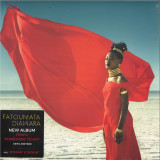
Fatoumata Diawara ist eine malische Singer/Songwriterin und Schauspielerin. Ihr Debüt "Fatou" (2011) und darauffolgende Aktivitäten machten die Künstlerin zu einer der wichtigsten Vertreterinnen moderner afrikanischer Musik. Sie sang auf Alben von Dee Dee Bridgewater ("Red Earth"), Oumou Sangaré ("Seya") und Herbie Hancock ("The Imagine Project"). Darüber hinaus kollaborierte sie mit Bobby Womack, Mulatu Astatke, Cheikh Lô, dem Orchestre Poly-Rythmo de Cotonou, Blick Bassy sowie Rocket Juice & the Moon. Diawara spielte bereits Glastonbury und andere große Festivals, trat in der Carnegie Hall auf und begab sich an Bord von Damon Albarns Africa Express, wo sie sich als Höhepunkt eine Bühne mit Paul McCartney teilte. Parallel setzte sie ihre Karriere als Schauspielerin fort, unter anderem in den Filmen "Timbuktu" (2014) und "Mali Blues" (2015). Ihr Album "Fenfo" (deutsch: "Etwas zu sagen") wurde in Mali, Burkina Faso, Paris und Barcelona aufgenommen und von Diawara selbst sowie dem französischen Superstar Matthieu Chedid alias -M- produziert. "Fenfo" geriet zu einem im besten Sinne grenzenlosen Album. Die elf Songs verbinden alte afrikanischen Saiteninstrumente wie die Kora und Ngoni mit elektrischen Gitarren sowie traditionelle Perkussion mit Kit-Drums. Diawara, die meist auf Bambara singt, wird unter anderem von -M- (Gitarre, Keyboards) dem brillanten Cellisten Vincent Ségal und dem Kora-Spieler Sidiki Diabaté begleitet.


On her second album Ursgal Mongolian singer Enji creates a unique blend of Jazz and Folk with the thousand-year-old traditions of Mongolian music. Currently based in Munich, her lyrics tell personal stories about unbearable distances, the oddness of being on earth and the simple truths in life.
She's accompanied by Paul Brändle on guitar and Munguntovch Tsolmonbayar on double bass.
Born in Ulaanbaatar, Enji grew up in a yurt to a working-class family. Having always been drawn to music, dance and literature, she initially wanted to become a music teacher with little ambitions to compose or be on stage. A program by the local Goethe Institute sparked her passion for Jazz and eventually led her to become a performing artist. Inspired by the music of Carmen McRae, Ella Fitzgerald and Nancy Wilson, Enji started writing songs of her own, cherishing this newfound means of expression. Ursgal is the first record featuring her original compositions.

Limited edition gold vinyl edition.
Hamburg's funk adventurers at the top of their game with special guests Ice-T, Charlie Funk, Peter Thomas, Gizelle Smith, Lee Fields, JSwiss & the Mocambo Kidz.
Original press release note (2019):
Carrying blistering funk lines in their fingers and worldly influences in their hearts, the unique and distinctive Mocambo sound is not one to be confused with retro bands trying to recapture an era. Eschewing traditional recording methods, this DIY crew are committed to driving forwards, and 2066 sees them at the height of their powers, broadcasting a call for unity.
After reaching new audiences worldwide and earning critical praise for their two long players on Brooklyn's Big Crown Records in their tropical guise as Bacao Rhythm & Steel Band, the band have reassembled and refocused in their original form, the workhorses behind dozens of 45s on the Mocambo label and beyond. Crossing generations, this album introduces some of the world's youngest funk talent to step up and rub shoulders with soul and rap legends, soul sisters, an elder statesman composer/arranger and a brand new emerging artist out of New York.
As with all Mocambo releases, the two sides of the record have been meticulously sequenced by the
band. Side A welcomes us aboard with joyous instrumental stomper Preaching To The Choir, and a call to build bridges from Mocambo chanteuse and percussionist Nichola Richards, duetting with emerging rap talent, New York MC JSwiss. B-girls and b-boys are called to the dancefloor as Superstrada and Concrete Stardust commence, all buzzing synth lines and relentless drums. New Jersey legend and Big Crown associate Mr Lee Fields is guest of honour for Where Do We Go From Here before a horn workout brings us to a close with Macumba. It's time for a breather.
The B side kicks off with the grand return of the Golden Girl of Funk, Gizelle Smith, a sister who's been busy taking on the world. Composer and presenter Peter Thomas narrates a Return To Space to mark the centenary of the debut of his score to sci-fi show Space Patrol, which first broadcast in 1966. We're back down to Earth and the mean streets for the furious drums and car chase workout of Golden Shadow. Today slows down the pace for a reflective ballad with Nichola front and centre - and here's the next generation: the Mocambo Kidz sing along to their parents' instrumentation for Here We Go, a new kids' block party anthem... with no sleep 'til bedtime. The album closer makes it clear that the Mocambos are nowhere near powering down as Ice T and Charlie F unk bring their A-game for an old school attack which, since you're up bouncing anyway, gives you no excuse not to flip the LP and drop the needle right back on to Side A. Onwards!
A summation of their journey so far and a celebration in anticipation of what's to come, the album is set
to take its place in a legacy of open minded, organically recorded music, showering listeners with the crew's maze of tantalising sounds pulled from funk, afro, hip hop with cinematic composition and storytelling.

A year before Wild Pitch Records properly introduced us to the trio of Queens native Large Professor and Toronto’s Sir Scratch and K-Cut, the soon-to-be-legendary group self-released their own debut single. Dropping on Actual Records, the 12” of ‘Think’ and ‘Atom’ was soon a sought after rarity, with scarce originals still fetching upwards of three figures.
On it, they only hint at the greatness to come, while simultaneously showing that they’d already mastered the three-minute rap single – this is concise brilliance with no flab whatsoever.
Engineered by the late, esteemed Paul C, ‘Think’ is a study in how to turn well-worn samples into something new. The combination of several James Brown snatches, along with bits lifted from Lyn Collins and Jimmy Castor Bunch, could have been tired and almost parodic by 1989, but instead the group weave something interesting from old fabric.
‘Atom’ is arguably even better, built around a brace of elements from Marvin Gaye and Tammi Terrell’s 1967 duet ‘Little Ole Boy, Little Ole Girl’. On it, Large Pro gives the first real hints that he’ll not just be a super-producer, but a committed MC to watch. Mixing threats with humour, positivity with braggadocio, it’s a calling card performance on a track that could have still sat comfortably on 1991’s ‘Breaking Atoms’ album.
Heavily bootlegged, this is the first official double-sided 7” release bringing together both these foundational cuts.

![Grateful Dead - Grateful Dead (Skull & Roses) [Live] [2021 Remaster]](https://www.deejay.de/images/l/3/1/977131.jpg)
Celebrating the 50th Anniversary of Grateful Dead’s first album to be certified Gold, this 2021 Remaster pressed onto 180g Black vinyl features all newly remastered tracks, remastered by GRAMMY ® Award winning engineer, David Glasser with Plangent Process Speed Correction.
Originally released in 1971, this is the American rock band’s second live album, known by fans as Skull and Roses due to the iconic cover art. The album was originally released without a title after the band initially submitted the album name “Skull Fuck”, but the band, fans and almost everyone who knows the Grateful Dead fondly refers to the album as Skull and Roses.
The album was their first album to be certified Gold in the US by the RIAA and is their second best-selling album. Pressed here onto 180g black vinyl, this remaster transports the listener back to the Dead’s residency at The Fillmore East, New York and, as with the first release, features three tracks previously unreleased on the studio album, “Bertha, “Playing In The Band” and “Wharf Rat”.
[a] a1. Bertha (Live at The Fillmore East, New York, NY, April 27, 1971) [2021 Remaster]
[b] a2. Mama Tried (Live at The Fillmore East, New York, NY, April 26, 1971) [2021 Remaster]
[c] a3. Big Railroad Blues (Live at The Fillmore East, New York, NY, April 5, 1971) [2021 Remaster]
[d] a4. Playing in the Band (Live at The Fillmore East, New York, NY, April 6, 1971) [2021 Remaster]
[e] b1. The Other One (Live at The Fillmore East, New York, NY, April 28, 1971) [2021 Remaster]
[f] c1. Me & My Uncle (Live at The Fillmore East, New York, NY, April 29, 1971) [2021 Remaster]
[g] c2. Big Boss Man (Live at The Fillmore East, New York, NY, April 26, 1971) [2021 Remaster]
[h] c3. Me & Bobby McGee (Live at The Fillmore East, New York, NY, April 27, 1971) [2021 Remaster]
[i] c4. Johnny B. Goode (Live at The Fillmore East, New York, NY, March 24, 1971) [2021 Remaster]
[j] d1. Wharf Rat (Live at The Fillmore East, New York, NY, April 26, 1971) [2021 Remaster]
[k] d2. Not Fade Away / Goin’ Down the Road Feeling Bad (Live at The Fillmore East, New York, NY, April 5, 1971) [2021 Remaster]

Madness’ fourth studio record “The Rise & Fall” has often been cited as the band’s best record and is home to one of their biggest tracks in “Our House” UK #5. Originally released in 1982 and reaching #10 in the UK album charts, it is now subject to a brand new re-release on 180g black vinyl in a gatefold sleeve as part of an ongoing reissue campaign.
Featuring exclusive liner notes by journalist Stevie Chick (MOJO, The Guardian & NME) and interviews with band members Lee ‘Kix’ Thompson, Mike Barson, Suggs McPherson, Woody Woodgate and Chrissyboy Foreman. Also featuring the hit single “Tomorrow’s (Just Another Day)” [UK #8].

Tape
It might be easy to assume that the distinctly focused compositional voice unveiled on Rose Bolton's The Lost Clock is the product of its creator's rigorous, almost hermetic dedication to her own particular aesthetic universe. A quick survey of Bolton's artistic career, however, reveals that her carefully sculpted approach to abstract electronica has been forged through a longstanding engagement with a wide range of intertwining creative activities.
This album—coming out on Important Records' cassette imprint, Cassauna—demonstrates both the Toronto-based composer's unique mastery of colour and her gift for breathing a tactile, organic quality into synthetic landscapes. Bolton's distinctive sensibility is akin to that of a painter—every hue has been carefully mixed so as to imbue its accompanying gesture with its own life and personality. This tangible dimensionality her electronic work assumes, however, can be traced back to the work Bolton has been doing since the 1990's. She has produced a large and varied catalogue of work that includes pieces for solo performers, chamber ensembles, orchestra, electronics, voice, and to accompany installations and films. A number of her works reside in several of these zones simultaneously, such as Song of Extinction, an ambitious collaboration between herself, filmmaker Marc de Guerre, poet Don McKay, and multiple live ensembles, that was mounted in an abandoned power station for Toronto's Luminato Festival.
This quasi-instrumental vitality isn't the only feature of The Lost Clock that reflects Bolton's diverse artistic practice. It can also be heard within the structural realm. Each of the collection's four tracks trace a patient unfolding and favour a certain roundness of timbre, even as finer details begin to fidget along the perimeter of the music. As with her writing for the concert hall, Bolton doesn't shy away from the evocative here, yet she doesn't pursue this poignancy through conventional, direct or quasi-narrative means. Her compositions lead the listener gradually through their impressionistic sonic scenery, but neither the path they take nor their ultimate destination are at all predictable. The ostensible gentleness each piece exudes dissolves as dissonances slowly insinuate themselves, obscure textures writhe just out of earshot, percussive lattice work materializes, or as the overall blend begins to exert a heavier weight. Her lucid-dream vision of form functions in tandem with her acute micro-level attentiveness to engender a vivid and elusive soundworld that resists classification.
Over more than two decades Rose Bolton has been garnering acclaim and enthusiasm from audiences and major collaborators alike. Last year, her brooding string quartet The Coming Of Sobs was nominated for Classical Composition of the Year at the JUNO Awards, following earlier accolades such as SOCAN Awards for Young Composers, and the Canadian Music Centre's Norman Burgess Fund. Her music has been commissioned by the likes of the CBC, stalwart experimental music festival the Sound Symposium, as well as key interpreters and ensembles such as percussionist David Schotzko, accordionist Joseph Petric the Esprit Orchestra, Continuum, Arraymusic, the Kitchener-Waterloo Symphony, and guitar quartet Instruments of Happiness (led by Tim Brady). Together with Marc de Guerre, she produced an 8-speaker sound and video installation for Toronto's Nuit Blanche Festival. She's also been featured by the likes of revered pianist Eve Egoyan, The Vancouver Symphony, L'ensemble contemporain de Montréal, The Music Gallery, and AKOUSMA, while appearing in concert alongside the likes of Jerusalem in My Heart (Constellation Records), Tanya Tagaq, and Francis Dhomont. Bolton is also a respected film composer, notably contributing music to the highly regarded documentary Anthropocene: The Human Epoch (co-directed by Jennifer Baichwal, Nicholas de Pencier and Edward Burtynsky).
As a performer, she variously employs electronics, violin, and viola. Parallel to her engagement with exploratory approaches, she's invested in the fiddle traditions of the British Isles, and various Canadian regions. She teaches this repertoire at the Royal Conservatory of Music. Bolton has also performed with Rhys Chatham, Owen Pallett, opened for Charlemagne Palestine, and appears on recordings by the likes of Chatham and Aidan Baker. In 1999 she joined the Canadian Electronic Ensemble, whose fifty-years together make them the world's longest-running live-electronic music group. In February 2020, the CEE held a residency and provided guest lectures at Carnegie Mellon University's music department. Bolton has also led workshops at the Banff Centre, also founded the SOCAN/ Moog Audio-sponsored program EQ: Women in Electronic Music, which worked to foster community and mentorship among (trans/cis) women and non-binary individuals.

Phobophobes new album Modern Medicine follows the band’s critically acclaimed debut album Miniature World, released 2018 via Ra Ra Rok Records, which received the accolade of being 6Music’s ‘Album of the Day’ following heavy support from Lauren Laverne, Steve Lamacq and Iggy Pop. Press coverage was a who’s who of tastemakers clambering to define their undefinable sound ….”dark and dreamy” (DIY), “gothic” (Clash), “unique warped pop” (Best Fit); and live the band were invited to tour with Killing Joke including a date at London’s Roundhouse, and a headline slot at the Rise Stage at Green Man Festival.
All songs on Modern Medicine were written and arranged by Phobophobes** except ‘Hallow Body Boy’ which was written and arranged by Phobophobes and Jessica Winter. The album was produced by Phobophobes and recorded at El mirador Studios, Andalusia, Spain during the summer of 2018, mixed by Dave Emery at ‘Assault and Battery,’ and mastered by Nick Watson at Fluid Mastering.
**Phobophobes current line-up consists of original members Jamie Bardolph Taylor (guitar, vocals), Jack Hussey (guitar) and Chris Olivares Chandler (keyboard, vocals), alongside new members Daisy Smith (bass) & Lisa Martin (drums). Due to recent line-up changes the latter two musicians do not feature on Modern Medicine, instead credits include Nathan Ridley (drums/backing vocals) and Elliott Nash (lap steel/baritone guitar/keyboards/percussion), with additional appearances from Christo Mccracken (guitar/effects), Gamaliel Traynor (cello/violin) and Jessica Winter (keyboards on ‘Holly Body Boy’).

JP Harris has a secret: his name is actually “Squash.” Long before Harris
became a well regarded honky-tonker, he used his childhood nickname
while playing archaic “old-time” American tunes at underground fiddlers’
gatherings, engrossed in this punkish folk music world.
‘Don’t You Marry No Railroad Man’, his debut recording of traditional music
under the moniker JP Harris’ Dreadful Wind and Rain, features ten tracks spanning the breadth of American old-time repertoire. Harris wades between ancient ballads that traveled from the British Isles to Appalachia like “Barbry Ellen,” to droning banjo ditties such as Hobart Smith’s entrancing “Last Chance,”
here played on one of Harris’ coveted homemade banjos. Harris also works as a
serious carpenter which adds a unique authenticity to his versions of the classic
“House Carpenter” and lesser known “The Little Carpenter.”
Alongside Harris’ haunting vocals, the album prominently features the lowtuned fiddle and harmony singing of his longtime friend and Old Crow Medicine Show member Chance McCoy, who produced the record at his West Virginia studio in an old barn. On this sparse and arresting recording, Harris isn’t
mining his roots as a marketing pitch, he has the chops to back it up. In fact,
this collection of songs made him who he is today. Welcome home “Squash.”
