The "Phunk Investigation vs. James Senese" collaboration, specifically the track "E'na Bella Jurnata,"
is seen as a high-quality fusion of Italian Disco and funky house, praised for its driving beats,
70s disco melodies, and signature saxiness from the legendary Senese,
making it an instant anthem for clubs and Ibiza.
Reviews highlight it as a grand cru of Italian dance music, blending classic vibes with modern house energy,
a must-have for disco and house lovers.
Поиск:mcp
Все
- 1
Reissue 2025
"Get Up Stand Up" is a 2004 song by the Italian dance project Stellar Project,
created by singer-songwriter and producer Stefano Sorrentino, featuring American actress and singer Brandi Emma.
Their song, thanks to mixes by Phunk Investigation, reached number one on the US dance airplay chart (Billboard) on November 20, 2004.
The song also reached number 14 on the UK singles chart that same year.
Reissue 2025
"Get Up Stand Up" is a 2004 song by the Italian dance project Stellar Project,
created by singer-songwriter and producer Stefano Sorrentino, featuring American actress and singer Brandi Emma.
Their song, thanks to mixes by Phunk Investigation, reached number one on the US dance airplay chart (Billboard) on November 20, 2004.
The song also reached number 14 on the UK singles chart that same year.
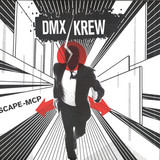
UK wave funk veteran DMX Krew returns to Abstract Forms with his latest double album project. Escape-MCP features 13 tracks of synth drenched electro and elastic techno grooves drawing inspiration from a 1983 computer game where the player is trapped inside a computer by a rogue processor. Fortunately DMX Krew isn't trapped inside a computer and is still with us making killer grooves. Don't sleep!
- It Gets So Hot
- Dancing On The Wall
- Eastside Girls
- Wannabeher
- On Call
- So What
- Party's Over
- Big Stick
- Mary Jane
- Girl's Girl
- Unless
- Why Do I Get A Good Feeling
- Buzzkiller
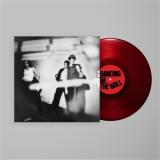
CLEAR RED VINYL[23,49 €]
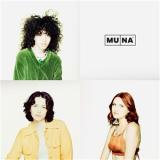
Die Reise von MUNA war schon immer davon geprägt, Raum für die komplexen, chaotischen und ekstatischen Realitäten des Lebens zu schaffen, und mit ihrem vierten Album "Dancing On The Wall" sind sie so prägnant, düster und mitreißend wie nie zuvor. Ausgehend von den funkelnden, mit Konfetti übersäten Höhen ihres selbstbetitelten Albums aus dem Jahr 2022 kanalisieren sie nun die ängstliche, unsichere Energie des Lebens in einem Los Angeles, das von politischen Spannungen, Umweltzerstörung und dem stillen Druck der Prekarität der Millennials geprägt ist. Das Ergebnis ist ein Album, das sich sowohl intim als auch spektakulär anfühlt, eine Popwelt, die mit Biss, Witz und emotionaler Resonanz aufgebaut ist, ein Soundtrack für Herzen, die gleichzeitig in Flammen stehen und das Chaos um sie herum beobachten. Auf dem gesamten Album erkundet MUNA Sehnsucht, Intimität und Verbundenheit vor dem Hintergrund einer Welt im Wandel. Es gibt eine stille Auseinandersetzung damit, wie man weiterleben, lieben und sich gegenseitig erreichen kann, während man Zeuge politischer Brutalität und systemischer Gewalt wird, und wie Freude ohne Verleugnung überleben kann. Tracks wie "Wannabeher" fangen den schwindelerregenden Nervenkitzel ein, sich vollständig in die Fantasie eines anderen zu begeben, während "Why Do I Get A Good Feeling" noch lange nach dem Ende des Beats nachhallt, eine Meditation über flüchtige Freude und ausgesetzte Möglichkeiten. Das Album schließt mit "Buzzkiller", einer schonungslosen Auseinandersetzung mit Sehnsüchten und ihren Folgen, dem Schmerz, etwas erreicht zu haben, nur um festzustellen, dass neue Fragen, Zweifel und Sehnsüchte zurückbleiben. "Dancing On The Wall" wurde von Naomi McPherson produziert, wobei ihre charakteristische Liebe zum Detail mühelos mit der ausgefeilten Pop-Technik ihrer Bandkollegin Josette Maskin hinter den Kulissen verschmilzt, um lebendige, atmende Welten für die prägnanten Texte und die unverwechselbare Stimme der Leadsängerin Katie Gavin zu schaffen. "Dancing On The Wall" verbindet euphorische Klanglandschaften mit prägnanten, menschlichen Geschichten. Das Album spiegelt einen intensiven, selbstgesteuerten kreativen Prozess wider, der von Instinkt, Vertrauen und vollständiger künstlerischer Kontrolle geprägt ist. Es wirkt lebendig, eindringlich und filmisch und spiegelt eine Generation wider, die sich durch Unsicherheit navigiert und sich dennoch nicht von ihrer Freude abbringen lässt. Mit diesem Album beweisen MUNA erneut, dass Pop gewagt, intim und sozialbewusst zugleich sein kann: ein Album, das nicht nur den Moment einfängt, sondern ihn zu einer Welt destilliert, in der man leben möchte.
Melbourne / Naarm stronghold Butter Sessionsclock 15 years in the game with a trilogy of 12"s, sustaining their uncompromising streak of peak-form electronics. The family-style V/A binds friends, collaborators, former studio neighbours and DJ booth allies, capturing a label that exists as community as much as catalogue.
Disc Two lifts off with recurring contributor Rory McPike's first label outing as Rings Around Saturn, a blissed-out cosmic floater skimming the periphery. Booked in the early days of the label's formative Mania residency, Japanese don Gonno twists freestyle, techno and breaks into pure ecstasy, before the unerringly bold Jennifer Loveless spikes the punch with a hallucinatory mix of drums, disembodied voice and jazz club keys.
On the flip, Boorloo's Guy Contact rolls out Dance In The Grey, a shadowy prog churn pitched between new-romantic vocal sheen and EBM muscle, with Kate Miller completely rewiring the script on Sub Series E - a masterfully minimal, double-time meditation. suki presents his Sniper1 alias to close with a demonic body-jacking groove loaded for the system.
Whether taken alone or folded into the three-disc triptych, each instalment stands as a bag-ready constant, charged with Butter Sessions' curatorial finesse.
Reissue 2026
A hit born... three times over!
Released in 2005, "Born Again" was re-released in 2011 after becoming one of the most sought-after dance records in Europe.
It went straight to #1 in the Netherlands, where it also went gold!
Now available again on vinyl, remastered by Gianni Bini at HOG Studio, with versions by Balearic Soul, Pastaboys, and Funkerman.
The lyrics are truly powerful and different. I was born into a system that doesn't give a shit about you, or me, or life.
Don't be a victim of the things I do to survive, because I've always known, you Babylonians are good...
Reissue 2026
"Call Me" is an electronic/house track by DJ Dino (Dino Lenny) on Nu-Tella Records, released in 2003.
It's praised for its deep, emotional, and melodic atmosphere, occasionally shifting from darker tones to uplifting major keys,
recalling classic electronic sounds with modern touches, though specific aggregate scores are scarce.
Official 2026 reissue includes, in addition to the original and remixes by Par-T-One and Santos, the previously unreleased version by Walterino.
Mixes completely remastered by Gianni Bini at HOG Studio.
- 1: Everybody's Valentine
- 2: Mean Lovin' Machine
- 3: Monday Morning
- 4: The Voices
- 5: Today I Forgot To Cry
- 6: Kiss Me
- 7: And When You Cry
- 8: After A Long Life
- 9: One Legged Woman
- 10: Quiet
Goose Bumpsis Hutter's second solo release and was produced by Hi-Style Records's Jimmy Sutton (JD McPherson, Pokey LaFarge, The Bellfuries). Sutton assembled an all star cast of musicians, including Alex Hall (engineer, drums) and Joel Paterson (guitar). Almost all recording was done live at the analog Hi-Style studio in Chicago. Bonafide contemporary rock star JD McPherson wrote "Everybody's Valentine" for Hutter; it could easily find its way into the next Bond film. Emanuela's influences draw from disparate historical musical threads like doo- wop, German punk, and classic country. From the balladry of "Monday Morning" to the punk-surf rock of "The Voices," Hutter's original songwriting shines throughout. Goose Bumpsis a must listen for fans of modern rock with a classic twist
- Silk Chiffon (Feat. Phoebe Bridgers)
- What I Want
- Runner's High
- Home By Now
- Kind Of Girl
- Handle Me
- No Idea
- Solid
- Anything But Me
- Loose Garment
- Shooting Star
MUNA sind magisch. Welche andere Band hätte das verlorene Jahr 2021 mit Pailletten und Pompoms geprägt - und dich dabei ganz nebenbei zum Singen bringen können (und vielleicht sogar zu glauben), dass "Life's so fun, life's so fun" ist? All das während der vielleicht unruhigsten Phase deines Lebens? "Silk Chiffon", der Instant-Hit von MUNA mit Labelchefin Phoebe Bridgers, schlug wie ein doppelter Regenbogen in den grauen Himmel der anderthalbjährigen Pandemie ein. Pitchfork nannte es einen "Strudel von Schmetterlingen im Bauch", NPR einen "Queerwurm", der US-Rolling Stone "eine der süßesten Melodien des Jahres, die die Art von purer Pop-Seligkeit ausstrahlt, die so viele Bands anstreben, aber fast nie richtig hinbekommen." Für MUNAs Gitarristin und Produzentin Naomi McPherson war es ein "song for kids to have their first gay kiss to." Und so blühten mehrere Tausend verrückte Twitter- und TikTok-Memes auf. Seit Beginn ihrer Karriere haben MUNA den Schmerz als Fundament der Sehnsucht, als Zentrum der radikalen Wahrheit, als Teil des Erwachsenwerdens und als inhärenten Faktor der Erfahrung von Marginalität betrachtet - die Bandmitglieder gehören Queer- und Minderheitengemeinschaften an und spielen ihre Songs vor allem für diese. Gavin, McPherson und Josette Maskin - die Gitarristin von MUNA - verbindet eine bald zehnjährige Freundschaft. Sie begannen im College an der USC zusammen Musik zu machen und veröffentlichten 2017 mit der Single "I Know a Place" einen frühen Hit als eine aufgestaute Beschwörung zur LGBTQ-Zuflucht und Transzendenz. Jetzt, in ihren späten Zwanzigern, ist das Trio so etwas wie eine Familie geworden. Sie verbrachten einen Großteil der frühen Pandemie als eine Gruppe, die füreinander und für MUNA da war, selbst als sie sich über nix in Bezug auf Zukunft sicher sein konnten. Sie wurden von ihrem vorigen Label RCA gedroppt und es gab nur wenig Einkommen, kein Adrenalin, mit dem sie arbeiten konnten, keine Live-Shows mit Publikum, das sie an den Beistand erinnerte, den ihre Songs bieten können. "Muna", das selbstbetitelte dritte Album der Band, ist mehr als eine Rückkehr. Die Zeit der Unsicherheit und des offenen Hinterfragens der Band hat alles weggebrannt und ein Meisterwerk von einem Album hinterlassen - die kraftvolle, bewusste, dimensionale Leistung einer Band, die niemandem außer sich selbst etwas beweisen muss. Der Synth auf "What I Want" funkelt wie eine ROBYN-Tanzflächenhymne; "Anything But Me", das im 12/8-Takt galoppiert, erinnert an SHANIA TWAIN im Neonlicht der Achtziger; "Kind of Girl" mit seinem aufsteigenden, klagenden THE CHICKS-Refrain bittet darum, mit deinen besten Freund*innen bei maximaler Lautstärke gesungen zu werden. MUNA arbeiteten mit dem Quellcode des Pop, der das Herz berührt - das Album ist voller Sehnsucht und Offenbarung und hart erkämpfter Freiheit.
English composer Andy Cartwright aka Seabuckthorn uses picking & bowing techniques combined with various open tunings on string instruments to form a mixture of approaches, often with layered accompaniments. Generally the songs lean towards to the experimental genre, whilst on the edge of the ambient and folk.
Having grown up in Oxfordshire, Cartwright studied sound engineering in Cornwall and then lived in the cities of London, Paris & Bristol working as a broadcast wireman. He now resides in the French Southern Alps making music.
Cartwright has been actively touring internationally for several years performing in festivals and events throughout Europe. Since 2009, he has released several releases on some labels such as Lost Tribe Sound, IIKKI, Fluid Audio and recently Quiet Details. Various songs have featured in documentaries, film, websites and contemporary dance, as well as making original scores for film.
- A1: Creation Of Tron ( 46)
- A2: Only Solutions (Journey) (3 15)
- A3: We’ve Got Company (2 16)
- A4: Wormhole (2 27)
- A5: Ring Game And Escape (2 55)
- A6: Water Music And Tronaction (2 22)
- A7: Tron Scherzo (1 44)
- A8: Miracle And Magician (2 38)
- A9: Magic Landings (3 41)
- A10: Theme From Tron (1 32)
- A11: 1990’S Theme (Journey) (2 25)
- B1: Love Theme (2 05)
- B2: Tower Music - Let Us Pray (3 45)
- B3: Light Sailer (2 34)
- B4: Sea Of Simulation (3 21)
- B5: A New Tron And The Mcp (5 08)
- B6: Anthem (1 37)
- B7: Ending Titles (5 11)
A reissue on black vinyl of the cult 1982 soundtrack to Tron by legendary electronic pioneer and composer Wendy Carlos (The Shining, Clockwork Orange). The music, which was the first collaboration between Carlos and her partner Annemarie Franklin, featured a mix of an analogue Moog synthesizer and GDS digital synthesizer, along with non-electronic pieces performed by the London Philharmonic Orchestra. Two additional musical tracks (“1990’s Theme” and “Only Solutions“) were provided by the American band Journey. This is the first reissue of the black 18 track 1 LP vinyl. 2022 will mark the 40th anniversary of the Tron Franchise. The original film tells the story of computer engineer Kevin Flynn who finds out that an executive at his company, has been stealing his work. Flynn tries to hack into the system but instead is transported into the digital world of The Grid , where he has to battle Sark, and the imposing Master Control Program. Helped by Tron (a security program) and Yori , Flynn becomes a freedom fighter for the oppressed programs of the grid. The soundtrack perfectly captures the geometrically intense landscapes of cyberspace and the virtual gladiatorial computer game.
John McLaughlin feiert sein Comeback mit "Live at Montreux Jazz Festival 2022". Dieses unverzichtbare Live-Album gibt den einzigartigen Auftritt von John und seiner langjährigen Band "The 4th Dimension" in Musik und Film wieder.
Am 11. Juli 2022 kehrten John und The 4th Dimension gemeinsam mit der preisgekrönten Künstlerin Jany McPherson, die den Auftritt mit ihrem Gesang und ihrer Klavierkunst bereicherte, zum Montreux Jazz Festival zurück. Zusammen boten sie dem Publikum im Stravinski Auditorium eine beeindruckende Show und spielten Fan-Favoriten wie "New Blues Old Bruise", "El Hombre Que Sabia" und Pharoah Sanders' "The Creator Has a Master Plan".
- A1: Bob Crewe Pygar's Persecution / The Black Queen's Beads 4 39
- A2: Klaus Doldinger Sitar Beat 1 31
- A3: Serge Gainsbourg En Melody 3 08
- A4: Michel Legrand Marins, Amis, Amant Ou Maris 2 35
- A5: Nelson Riddle Lamento 2 59
- A6: Marian Mcpartland Love For Sale 6 15
- B1: Gabor Szabo Sophisticated Wheels 4 58
- B2: Phil Moore Iii Batucada 2 13
- B3: Luis Enriquez Mas Que Nada 2 58
- B4: George Garvarenz Hascisch Party 3 02
- B5: Shocking Blue Acka Raga 3 10
- B6: Claude Denjean Kiss This 3 04
- B7: George Shearing Aquarius 3 25
Back in an unmissable picture disc reissue: THE MOOD MOSAIC
Vol.1 – The Hashish Party, ready to win over collectors and vintage sound lovers. Originally released in 1997 by Yellowstone
Records, this iconic compilation blends jazz-funk, lounge, Latin
jazz, soul-jazz, and psychedelia into a truly unique musical
journey.
The tracklist features legendary artists like Serge Gainsbourg,
Michel Legrand, Gábor Szabó, George Shearing, and Shocking
Blue, delivering an irresistible mix of exotic grooves and retro
atmospheres. The picture disc format enhances the series’ visual
appeal, making every copy a true collector’s item
- I Don't Need Anyone
- Groundhog Day (Damn The Piper)
- Forever
- Academy Award For Best Actor In A Supporting Role
- Friend Of Mine
- Famous Orange Sweatshirt
- Time And Distance
- 17: Th Last Cigarette (Thinkin' Bout Drinkin')
- Wrote You A Letter
- The Darkest September
- Great Actress
- I Love You (Liar)
- Adjectives
- Don't Want To Dream (About You)
- I Likes Your Style
- Wasting Your Time
- It's Love That Chooses You
SWEARING AT MOTORISTS haben einen langen Weg hinter sich, seit der Name 1994 auf Plakaten für eine Fake-Band erschien Die hingen auf mysteriöse Weise in Plattenläden und Musiklokalen in Dayton, Ohio, Ein paar Monate nachdem die Plakate auf auftauchten kritzelte Dave Doughman den Namen auf eine Kassette mit homerecordings, die er an Freunde verschenkte, und 1995 war die Band dann offiziell geboren. Ende der 90er Jahre veröffentlichten S@M eine Reihe von 7"-EPs bei verschiedenen Labels, und nachdem sie wiederholt von John Peel gespielt wurden und die Presse weltweit positiv über sie berichtet hatte, erhielt die Band einen Vertrag mit dem damals neuen Label Secretly Canadian. Sie veröffentlichten 2 EPs und 4 LPs auf Secretly Canadian, darunter Number Seven Uptown aus dem Jahr 2000 und This Flag Signals Goodbye aus dem Jahr 2002, die beide in den Jahren ihrer Veröffentlichung vom MOJO Magazine zum Underground Album of the Year" gewählt wurden. Swearing At Motorists zogen 2005 nach Berlin, Deutschland, und veröffentlichten im folgenden Jahr ihre letzte LP für Secretly Canadian, Last Night Becomes This Morning, bevor sie leise in der nicht enden wollenden Berliner Nacht verschwanden... 8 Jahre später war die Band plötzlich in Hamburg wieder aufgetaucht, mit einem neuen Album: "While Laughing, The Joker Tells The Truth", das 2014 auf Anton Newcombes Label A Recordings Ltd. erschien. Co-produziert von Dave und Rick McPhail (von Tocotronic), erzählt das Album die Geschichten dieser verlorenen" 8 Jahre im klassischen Motorists-Stil. Der Autor Camden Joy, vielleicht eine weitere Underground-Figur der 90er/00er Jahre, beschreibt es am besten: "Like Iggy Pop's great lost Nashville record or the legendary demos for the Strokes masterpiece that never was, this recording is full of catchy courage, significant low notes, bedroom rhythms, hooks, and so on, all of which make for an impossible amount of pleasure. This Swearing At effort towers heads and squirrels above whatever that was you were just listening to. I see why Rolling Stone gave it five stars." - Camden Joy 11 Jahre später ist die Band in Hamburg erneut aufgetaucht, aus einer weiteren Auszeit und mit einem neuen Album, das im Herbst 2025 über BB*ISLAND erscheinen soll. Vor der Veröffentlichung stellen wir euch das Album von 2014 noch einmal, oder zum allerersten Mal vor. Vielleicht lag Camden Joy genau richtig. Zu gut, um vergessen und vergriffen zu sein. Das Beständige an Swearing At Motorists sind ihre Auszeiten als Band. Alles andere ist Bonus, aber das ist natürlich der beste Teil. "...While Laughing...demontrates Doughman's unerring abilitity to turn autobiographical minutiae and emotional turmoil into exquisitely heartfelt rock'n'roll poetry. From the warmly familiar powerpop chug of Groundhog Day (Damn The Piper) and Great Actress, to the tearjerker wistfulness of Wrote You A Letter and acoustic closer It's Love That Chooses You, this is classic Swearing At Motorists throughout...." - Andrew Carden/ MOJO
- A1: Do U Fm
- A2: Novelist Sad Face
- A3: Green Box
- A4: Dusty
- A5: The Linda Song
- A6: Dm Bf
- B1: I Tried
- B2: Melodies Like Mark
- B3: Wildcat
- B4: How U Remind Me
- B5: Pocky
- B6: Bon Tempiii
- B7: Pt Basement
- B8: Alberqurque Ii
- B9: Mary's
Yellow Coloured Vinyl[29,37 €]
Kneading dough is tricky – you should know how it’s supposed to feel. If you try too hard you could make it worse. It’s a beautiful practice – creation with a gentle touch, to work at something so it can be left alone. “If it’s too drawn out it’s awful. It’s easy to give too much.” Dance in the mirror. Contemplate your veiny hands. Who do they remind you of?
You begin by mixing flour and water. “What happens when your people die? Why’d they move the rock to the other side of Ulster Park?” Eliza Niemi asks two seemingly unrelated questions in a rising melody with guitar accompaniment, like fingers playing spider up to the nape of your neck. Gentle pressure. Strands of gluten form to bind the mix. A new question lingers in the binding. When she admits “but I don’t know how to tell if I’m feeling it or not,” that question surfaces through the text. It is reiterated throughout the album. When I’m working with dough I think the same thing to myself.
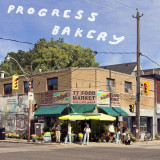
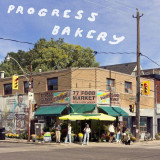
On Progress Bakery, her second album as a solo artist, Eliza knows to leave some questions alone – to let juxtaposition and tension be the proof. It doesn’t have to be hard. The feelings and revelations they provoke rise in the heat. The smell is sweet. Crispy on the outside and soft all the way through. She playfully slip-slides through words and sounds and images, delighting in surprise, skimming ideas like stones cast across clear water, touching down briefly with uncommon grace.
The question provoked between those opening lines resurfaces in the strands between songs – “Do U FM” is fully formed and beautifully layered, while “Novelist Sad Face” is a short, acapella rendering of gentle curiosity. What is holding these ideas together? Some songs demand more, seem to carry a whole load – eventually the skipping stone will halt to sink and resume its idle duty – while others drift in and out of focus, the way thoughts and dreams become interwoven before the mind is sunk into true sleep.
Music and words don’t always have to interact. Where she decides to keep them apart gives a new contour to where and how she puts them together. The kind of thing you’re supposed to take for granted with songs and their singers comes alive in Eliza’s hands – the little miracle of mixing, kneading, stretching, and stopping.
So often on Progress Bakery, Eliza teases out truth and meaning by asking questions. “Do I wanna be crying?” “Do you want me good or do you want me bad?” “Do I need an eye test?” “I’m writing songs in my head while you’re going over stuff with me — is that cruel??” In “Pocky” Eliza ends with a question that feels to me like the actual biography, succinct and revealing:
I don’t wanna be made to see
I just wanna ask “what’s that?”
Grace that ought to be rare, but in its care and precision is offered humbly, with great generosity, and without announcing itself. Eliza’s simple, miraculous music is given further form and shape by a group of collaborators – invaluable guest musicians Jeremy Ray, Evan Cartwright, Steven McPhail, Kenny Boothby, Ed Squires, Carolina Chauffe, Dorothea Paas, Louie Short, and Avalon Tassonyi. Together with Louie Short, who recorded, mixed, and produced the album along with Jeremy Ray and Lukas Cheung, Eliza has cultivated a richness in sound and texture that prods and provokes the ticklish ear. Barely audible guitar tinkering, a brief lo-fi field recording of trumpets, the harmonic clicking of a looped synthesizer, a flourish of reeds, a child’s conversation, each uncanny sound perfectly placed, rippling out under a soft breeze.
Lay in bed alone at night and ask aloud to the stillness,
“What were you doing at the Albuquerque Airport?
What were you doing there??”
And hear your question answered by a dream of swelling, undulating cellos. Try to grasp at the melody and structure. It’s not an answer (if there could be one), but it moves deeper, closer to the weird layer of fleeting moments and disconnected images, barely perceptible at its core. Wait for the dream reel to click into place.
Eliza took me for a ride in Nicole (her beloved Dodge Grand Caravan) and told me she’d been thinking of the album as an embodiment of transition – and I think every transition, known or unknown, carries the weight of new meaning, skittering off the surface tension of life as you know it, creating ripples, sometimes bouncing off and sometimes breaking through. There is a trick you can use to tell if a dough is glutinous enough. You’re supposed to stretch it out as thin as you can without breaking it and hold it up to the light. If you can see through, even if it renders the world murky and uncertain, you should leave it alone. I love this trick. It’s one that Eliza seems to know intuitively: work gently and ask questions and don’t always expect answers, and when you can, take a glimpse at something new, and then leave.
Kneading dough is tricky – you should know how it’s supposed to feel. If you try too hard you could make it worse. It’s a beautiful practice – creation with a gentle touch, to work at something so it can be left alone. “If it’s too drawn out it’s awful. It’s easy to give too much.” Dance in the mirror. Contemplate your veiny hands. Who do they remind you of?
You begin by mixing flour and water. “What happens when your people die? Why’d they move the rock to the other side of Ulster Park?” Eliza Niemi asks two seemingly unrelated questions in a rising melody with guitar accompaniment, like fingers playing spider up to the nape of your neck. Gentle pressure. Strands of gluten form to bind the mix. A new question lingers in the binding. When she admits “but I don’t know how to tell if I’m feeling it or not,” that question surfaces through the text. It is reiterated throughout the album. When I’m working with dough I think the same thing to myself.
On Progress Bakery, her second album as a solo artist, Eliza knows to leave some questions alone – to let juxtaposition and tension be the proof. It doesn’t have to be hard. The feelings and revelations they provoke rise in the heat. The smell is sweet. Crispy on the outside and soft all the way through. She playfully slip-slides through words and sounds and images, delighting in surprise, skimming ideas like stones cast across clear water, touching down briefly with uncommon grace.
The question provoked between those opening lines resurfaces in the strands between songs – “Do U FM” is fully formed and beautifully layered, while “Novelist Sad Face” is a short, acapella rendering of gentle curiosity. What is holding these ideas together? Some songs demand more, seem to carry a whole load – eventually the skipping stone will halt to sink and resume its idle duty – while others drift in and out of focus, the way thoughts and dreams become interwoven before the mind is sunk into true sleep.
Music and words don’t always have to interact. Where she decides to keep them apart gives a new contour to where and how she puts them together. The kind of thing you’re supposed to take for granted with songs and their singers comes alive in Eliza’s hands – the little miracle of mixing, kneading, stretching, and stopping.
So often on Progress Bakery, Eliza teases out truth and meaning by asking questions. “Do I wanna be crying?” “Do you want me good or do you want me bad?” “Do I need an eye test?” “I’m writing songs in my head while you’re going over stuff with me — is that cruel??” In “Pocky” Eliza ends with a question that feels to me like the actual biography, succinct and revealing:
I don’t wanna be made to see
I just wanna ask “what’s that?”
Grace that ought to be rare, but in its care and precision is offered humbly, with great generosity, and without announcing itself. Eliza’s simple, miraculous music is given further form and shape by a group of collaborators – invaluable guest musicians Jeremy Ray, Evan Cartwright, Steven McPhail, Kenny Boothby, Ed Squires, Carolina Chauffe, Dorothea Paas, Louie Short, and Avalon Tassonyi. Together with Louie Short, who recorded, mixed, and produced the album along with Jeremy Ray and Lukas Cheung, Eliza has cultivated a richness in sound and texture that prods and provokes the ticklish ear. Barely audible guitar tinkering, a brief lo-fi field recording of trumpets, the harmonic clicking of a looped synthesizer, a flourish of reeds, a child’s conversation, each uncanny sound perfectly placed, rippling out under a soft breeze.
Lay in bed alone at night and ask aloud to the stillness,
“What were you doing at the Albuquerque Airport?
What were you doing there??”
And hear your question answered by a dream of swelling, undulating cellos. Try to grasp at the melody and structure. It’s not an answer (if there could be one), but it moves deeper, closer to the weird layer of fleeting moments and disconnected images, barely perceptible at its core. Wait for the dream reel to click into place.
Eliza took me for a ride in Nicole (her beloved Dodge Grand Caravan) and told me she’d been thinking of the album as an embodiment of transition – and I think every transition, known or unknown, carries the weight of new meaning, skittering off the surface tension of life as you know it, creating ripples, sometimes bouncing off and sometimes breaking through. There is a trick you can use to tell if a dough is glutinous enough. You’re supposed to stretch it out as thin as you can without breaking it and hold it up to the light. If you can see through, even if it renders the world murky and uncertain, you should leave it alone. I love this trick. It’s one that Eliza seems to know intuitively: work gently and ask questions and don’t always expect answers, and when you can, take a glimpse at something new, and then leave.
- A1: Do U Fm
- A2: Novelist Sad Face
- A3: Green Box
- A4: Dusty
- A5: The Linda Song
- A6: Dm Bf
- B1: I Tried
- B2: Melodies Like Mark
- B3: Wildcat
- B4: How U Remind Me
- B5: Pocky
- B6: Bon Tempiii
- B7: Pt Basement
- B8: Alberqurque Ii
- B9: Mary's
Kneading dough is tricky – you should know how it’s supposed to feel. If you try too hard you could make it worse. It’s a beautiful practice – creation with a gentle touch, to work at something so it can be left alone. “If it’s too drawn out it’s awful. It’s easy to give too much.” Dance in the mirror. Contemplate your veiny hands. Who do they remind you of?
You begin by mixing flour and water. “What happens when your people die? Why’d they move the rock to the other side of Ulster Park?” Eliza Niemi asks two seemingly unrelated questions in a rising melody with guitar accompaniment, like fingers playing spider up to the nape of your neck. Gentle pressure. Strands of gluten form to bind the mix. A new question lingers in the binding. When she admits “but I don’t know how to tell if I’m feeling it or not,” that question surfaces through the text. It is reiterated throughout the album. When I’m working with dough I think the same thing to myself.
On Progress Bakery, her second album as a solo artist, Eliza knows to leave some questions alone – to let juxtaposition and tension be the proof. It doesn’t have to be hard. The feelings and revelations they provoke rise in the heat. The smell is sweet. Crispy on the outside and soft all the way through. She playfully slip-slides through words and sounds and images, delighting in surprise, skimming ideas like stones cast across clear water, touching down briefly with uncommon grace.
The question provoked between those opening lines resurfaces in the strands between songs – “Do U FM” is fully formed and beautifully layered, while “Novelist Sad Face” is a short, acapella rendering of gentle curiosity. What is holding these ideas together? Some songs demand more, seem to carry a whole load – eventually the skipping stone will halt to sink and resume its idle duty – while others drift in and out of focus, the way thoughts and dreams become interwoven before the mind is sunk into true sleep.
Music and words don’t always have to interact. Where she decides to keep them apart gives a new contour to where and how she puts them together. The kind of thing you’re supposed to take for granted with songs and their singers comes alive in Eliza’s hands – the little miracle of mixing, kneading, stretching, and stopping.
So often on Progress Bakery, Eliza teases out truth and meaning by asking questions. “Do I wanna be crying?” “Do you want me good or do you want me bad?” “Do I need an eye test?” “I’m writing songs in my head while you’re going over stuff with me — is that cruel??” In “Pocky” Eliza ends with a question that feels to me like the actual biography, succinct and revealing:
I don’t wanna be made to see
I just wanna ask “what’s that?”
Grace that ought to be rare, but in its care and precision is offered humbly, with great generosity, and without announcing itself. Eliza’s simple, miraculous music is given further form and shape by a group of collaborators – invaluable guest musicians Jeremy Ray, Evan Cartwright, Steven McPhail, Kenny Boothby, Ed Squires, Carolina Chauffe, Dorothea Paas, Louie Short, and Avalon Tassonyi. Together with Louie Short, who recorded, mixed, and produced the album along with Jeremy Ray and Lukas Cheung, Eliza has cultivated a richness in sound and texture that prods and provokes the ticklish ear. Barely audible guitar tinkering, a brief lo-fi field recording of trumpets, the harmonic clicking of a looped synthesizer, a flourish of reeds, a child’s conversation, each uncanny sound perfectly placed, rippling out under a soft breeze.
Lay in bed alone at night and ask aloud to the stillness,
“What were you doing at the Albuquerque Airport?
What were you doing there??”
And hear your question answered by a dream of swelling, undulating cellos. Try to grasp at the melody and structure. It’s not an answer (if there could be one), but it moves deeper, closer to the weird layer of fleeting moments and disconnected images, barely perceptible at its core. Wait for the dream reel to click into place.
Eliza took me for a ride in Nicole (her beloved Dodge Grand Caravan) and told me she’d been thinking of the album as an embodiment of transition – and I think every transition, known or unknown, carries the weight of new meaning, skittering off the surface tension of life as you know it, creating ripples, sometimes bouncing off and sometimes breaking through. There is a trick you can use to tell if a dough is glutinous enough. You’re supposed to stretch it out as thin as you can without breaking it and hold it up to the light. If you can see through, even if it renders the world murky and uncertain, you should leave it alone. I love this trick. It’s one that Eliza seems to know intuitively: work gently and ask questions and don’t always expect answers, and when you can, take a glimpse at something new, and then leave.
JP’s historic restoration carpentry has continued to be a baseline for his relationship to music; the yin to his yang, the Burt to his Ernie, the Dolly to his Porter. It was through this concurrent line of work that he met another twice-initialed singer with a penchant for old Americana music, obscure film, and overly elaborate ethnic meal preparations: one JD McPherson. The two became fast friends and would eventually, through many twists, turns, false starts, and biblically-proportionate plagues, enter a modest studio in Nashville to record Harris’ latest album.
Over the course of nine months in 2023, they recorded a sometimes lush, sometimes sparse, and sometimes jarring country album of Harris’ originals, loudly and violently squelching any attempt to pigeon-hole a song into any subgenre of country music. Only albums by Lee Hazelwood and an obscure folk album Waylon Jennings made when his hair was still short were allowed to be mentioned in reference. Featuring the guest vocals of Erin Rae, The Watson Twins, Shovels & Rope, and producer JD McPherson himself, the record is equal parts satire, reflection, and apology to those that would listen.
In a musical landscape of period-correct reproduction, “outlaw” internet posturing, and flavor-of-the-month variants on country,
“JP Harris Is A Trash Fire” burns bright as a dumpster in a Walmart parking lot on a moonless night; some will fear it, some will gravitate to its acrid warmth, and most will have no idea what to make of the situation. Harris has been steadily elbowing the definitive boundaries of “country music” wider with every album, both sonically and lyrically, and his latest piece of self described “Avant-Country” is no exception.
Free jazz poetry by a spry, 85 year old Joe McPhee, adapting his renowned improvised practice to words - juxtaposed with Mats Gustafson’s sparing brass and electric gestures. It’s an utterly timeless and transfixing salvo, another shiny notch for Smalltown Supersound’s Le Jazz Non Series.
As a common ligature to the OG free jazz scene of ‘60s NYC, with formative binds to its European offshoots and the experimental avant garde, Joe McPhee is a true force of nature who has represented jazz at its freest over a remarkable lifetime. In duo with Swedish free jazz and noise standard bearer Mats Gustafson, he upends expectations with an astonishingly vivid and upfront example of his enduring contribution to freely improvised music. In 11 parts he variously reflects on everything from the neon sleaze and scuzz of NYC to contemporary US politicians and laugh out loud imitations of his previous sparring partners such as Peter Brötzmann, with a head-slapping immediacy that leaves you reeling, spellbound.
McPhee’s flow of rare, organic cadence, ranging from urgent to contemplative and dreamlike, is blessed with a unique turn-of-phrase that surely mirrors his decades of instrumental work. Gustafsson, meanwhile, dextrously takes up the mantle with a multi-instrumental spectrum of sounds, leaving McPhee unbound and able to float and sting on the mic. There’s obvious wisdom in his perceptively penetrative observations, as derived from a rich cultural life well spent, but also a playful naivety and levity in his ability to veer from almost melodic speech to explosive aggression and a knowing, bathetic wit. It’s perhaps hard to believe that McPhee only started incorporating and performing spoken word in his work in the past ten years, a half century since his declaration of “What Time Is It‽” announced his arrival on a legendary debut ‘Nation Time’ (1971), ushering in one of free jazz’s most singular characters in the process.
Oscillating between discordant reflections on life as a touring musician, set to Gustafsson’s skronk and culminating in a snort-worthy imitation of Peter Brötzmann’s gruff German accent, on ‘Short Pieces’ or the glowering growl and noise exhortations of ‘Guitar’, he evokes a more sweetly consonant calm in ‘When I Grow Up’ and eerie threat of ‘The Dreams Book’, and viscerality of ‘Disco Death’, where Gustafson’s tonal versatility comes into hugely mutable play, whilst McPhee’s extraordinary, unaffected voice is a constant. It’s perhaps McPhee’s balance of cool measuredness and wellspring of barbed energies that allows us, at least, to get the most out of this one; not stifling with mannered or manicured enunciation that can trigger certain icks; keeping close to the nature of spoken word in a way that avoids cliche and becomes inherently critical of it within his purposeful, non-hesitant clarity and unflinching approach.
Originally released and sold on their fall 2009 US tour, Flower-Corsano Duo’s “The Chocolate Cities” stands as one of the group's most spirited releases. Recorded live in Cambridge, England and Geneva, Switzerland these recordings capture the power and energy being harnessed by the duo at a time of frequent touring, just after the release of their monumental double-LP “The Four Aims.” Michael Flower is perhaps best known for his work in Vibracathedral Orchestra, along with a slew of other bands, collaborations, and solo work. Meanwhile, Chris Corsano is well known as one of the premier drummers of modern times, and a frequent collaborator of Joe McPhee, Bill Orcutt, Bill Nace, Paul Flaherty, and many more. As a duo Flower and Corsano present an endlessly shifting and transforming sound, meshing elements of free jazz, drone, and ecstatic psychedelia into something all its own. While Corsano guides with his nimble and dynamic drumming, Flower plays amplified Japan Banjo (also known as a Shahi Baaja) providing melody, lead, and drone, often simultaneously. Gripping even in its quietest passages, thoughtful even in its most unrestrained crescendos, “The Chocolate Cities” documents a duo at the height of their collective prowess. Saved from the obscurity of its original CDr format and presented for the first time on vinyl with stunning new artwork by Chris Corsano, “The Chocolate Cities” stands as testament to the power of two magnificent players even 15 years on.
After the successful release of Paulette Tajah's 'Journal Of A Butterfly' EP on digital format, it's now turn for the vinyl LP to be released. The quality is excellent and the whole album is an absolute must to listen to. The songs are brilliantly recorded and we at Mad Clown Productions are sure it will end up in many vinyl collections across the world.
Limited to 500 copies on gold vinyl, contains download also. The second of three groundbreaking albums by the ultimate power trio who morphed blues into hard rock and spawned punk. A much-loved opus with a side-long concept piece. A bona fide inspirational rock classic. “Tony McPhee has turned to anarchic paranoid battlegrounds of the mind for inspiration,” Melody Maker. And a second side that delivers the mighty ‘Cherry Red’, McPhee’s take on The Beatles’ ‘A Day In the Life’, a sideswipe at junk food and a glorious interpretation of John Lee Hooker’s ‘Groundhogs Blues’. “Both musically and lyrically, ’Split’ speaks for a lost time, a nomad time when ideals took to the hoof and musicians stayed on the road rather than confront the fact that the '60s 'war' had been lost.” Julian Cope // “Murky, fuzzy, and wisely esoteric.” AllMusic. // “Supercharged, fractured and raging.” MOJO // Remastered and packaged with bonus tracks on the download (out-takes from the original sessions that spawned this spontaneous monster).
Beloved tenor Andrea Bocelli, the most celebrated classical singer in modern history celebrates his 30th anniversary as a global icon with a brand new album Duets – 30th Anniversary. This new definitive career-spanning collection features all the classic duets with Ed Sheeran, Céline Dion, Sarah Brightman, Dua Lipa, Matteo Bocelli, Stevie Wonder, Jennifer Lopez, Laura Pausini, Giorgia, Christina Aguilera, Veronica Berti, Lang Lang, Ellie Goulding, Edith Piaf, Ariana Grande, Mary J Blige, Cecilia Bartoli, Katharine McPhee, Alison Krauss, Bryn Terfel, Mary J Blige alongside brand new superstar collaborations with Shania Twain, Chris Stapleton, Gwen Stefani, M° Luciano Pavarotti, Marc Anthony, Lauren Daigle, Matteo Bocelli & Hans Zimmer, Karol G, Sofia Carson, Elisa & Virginia Bocelli. Andrea Bocelli - 30 years of bringing people together.
The Well is the second album by the duo So Sner, composed of Susanna Gartmayer (bass clarinet) and Stefan Schneider (electronics). Recorded over nearly two years in various studios and spaces, the album reflects So Sner's extensive touring across Europe. The final mixing took place in Vienna at the studio of Martin Siewert, who served as both co-producer and mastering engineer. Known for his meticulous attention to sonic detail, Siewert brings his unique techniques and distinctive sound enhancements to the album, resulting in a work that is both stylistically cohesive and daringly uncompromising.
So Sner’s critically acclaimed debut album REIME (TAL26, 2021) was celebrated for its innovative fusion of bass clarinet and electronic sounds in unexpected and surprising ways. With The Well, the duo explores both fluid and dissonant sonic landscapes, embracing different structural and sonic challenges. The result is a quieter, more introspective set of compositions than many might have anticipated. The album is a statement of two confident collaborators crafting complex, spatial musical moments in their own distinct manner.
The music on The Well generates a multiplicity of effects that transcend conventional oppositions such as hand-played versus programmed, composition versus improvisation, or analog versus digital. The album suggests a re-articulation of these categories, allowing the ten tracks to gradually blend one musical idea into another, and one musician into another, in a circular and complementary fashion. The polymetric permutations and exploratory reed components create a soundscape where all elements coexist harmoniously, without compromising or diminishing each other’s presence.
With its sparse sound architecture, The Well invites listeners into a space of effective emptiness, offering room for the mind and body to explore—a sonic island where one can develop sensuality through patient movement.
For So Sner, live performance is a passion of the mind, and since they began working together in 2020, their music has taken them to many different places. The live experience has deeply influenced the recorded music on this album, with the interplay between live performance and studio work informing their creative process. The Well captures the genuine act of exploring new territories, serving as a storage place for the time and space shared by the duo, re-filtering their experiences of performing and traveling together.
The Well is a lucidly playful and ambitious album by two contemporary musicians who are continually learning to create and respond to the subtle and significant changes in their music, maintaining momentum throughout the entire work.
In addition to her work with So Sner, Susanna Gartmayer has recently collaborated with artists such as Joe McPhee and Maria Portugal, and remains a member of her long-running band, the Vegetable Orchestra. Stefan Schneider, founder of the label TAL, has recently performed with Garth Erasmus from Cape Town and fine art luminary Katharina Grosse.
The second studio album from The Groundhogs, now slimmed to the classic three piece line up of Tony TS McPhee on guitar, Pete Cruikshank on bass and Ken Pestelnik on drums. The beginning of their domination as the hardest working band on the circuit, a testament to their creativity as they re-tooled the blues into a neo-psyche groove. Breaking from their traditional influences, the first stepping stone for the power trio who would blossom with ‘Thank Christ For the Bomb’, ‘Split’ and ‘Who Will Save The World?’. Inspired by a Yardbirds’ freak out, hearing authentic Indian drumming and the magic that existed between this legendary trio, ‘Blues Obituary’ is a juggernaut of riffs. According to Tony in Zig Zag’s John Tobler’s sleeve notes to the 1987 re-issue of ‘Blues Obituary’ it was the BBC’s John Peel producer John Walters that forced the band’s hand. “He decided he hated the blues,” McPhee told Tobler, “We figured it was time to get away from it.” “A deep excursion into musical depths further down than Canned Heat ever dared go.” The re-issue also includes a mono-friendly single cut of ‘BDD’ plus its original B-side ‘Gasoline’, an aching solo Tony TS McPhee track
- Sunshine Getaway
- I Can T Go Anywhere With You
- Just Like Summer
- Nite Owls
- Shinning Like Gold
- The Rock And Roll Girls
- Baby Blues
- The Phantom Lover Of New Rochelle
- Don T Travel Through The Night Alone
- That S What A Love Song Does To You
JD McPherson has created something unique and amazing with his latest album, Nite Owls. His first album release since 2018’s critically acclaimed Christmas classic, SOCKS. Over the past 5+ years, McPherson has stayed consistently busy writing new songs while at the same time touring with Alison Krauss and Robert Plant. Being a touring musician offers the chance to see the sights, tour the town and pick up some inspiration from the local record shop. With Nite Owls, JD wanted to try something new and different. He wanted to take the inspiration from multiple decades and styles and incorporate them into his own sound. “The initial idea for the record was: It’s like if The late-60s Ventures were the session band on the first New Order record.” Says, McPherson. Idea achieved. Nite Owls delivers the signature sounds of vintage garage-rock while also seamlessly bridging the sounds of Bowie and Alan Vega. Songs such as “Sunshine Getaway”, “The Rock and Roll Girls” and “I Can’t Go Anywhere with You” sound like Chuck Berry is jamming with Buddy Holly. While song’s like, “Nite Owls” and “Don’t Travel Through the Night Alone” give a nod to the Factory sound from the UK. The throwback sound of the lone instrumental track “The Phantom Lover of New Rochelle” would make Dick Dale ride and Link Wray rumble. With Nite Owls, McPherson takes inspiration from multiple genres of the past and combines them together to evolve a sound that is all his own.
"Still", eine Kollaboration der beiden Pianisten The Vernon Spring und Gwilym Gold, besteht aus vier meditativen Werken, die aus dreieinhalb Stunden kollektiver Klavierimprovisationen nach einem Trauerfall entstanden sind. Die Aufführung erfolgte am präparierten Klavier und Flügel, die beide mit dem Mechanical Resonator Piano (einer Andrew McPherson-Erfindung) ausgestattet sind. Das Ergebnis ist gekennzeichnet von Freundschaft und Grosszügigkeit in einer Zeit der Verletzlichkeit und unterstreicht die Schönheit sowohl der reinen menschlichen Interaktion als auch der modernen technologischen Instrumentierung.
This time we present 4 solo tracks by Lethal One (USA) on the exclusive label of Chris Liberator. Wellknown from Stay Up Forever. Check this one out !!
Shop Assistants formed in Edinburgh in 1984 and quickly gained a cult following, playing with kindred spirits the Pastels and the Jesus & Mary Chain and gaining positive coverage in fanzines and the music press. Their Shopping Parade EP and Safety Net single both hit the top of the indie charts and charmed listeners with their unique melodic blend of punk rock and 60s pop. The band signed to Geoff Travis' new Chrysalis Records imprint, Blue Guitar, in 1986 for the release of their debut album 'Will Anything Happen'. The album has since become a cult classic and is an essential listen for fans of indie, dream-pop, and shoe gaze. Stand-out songs include the lead single 'I Don't Wanna Be Friends With You', 'All Day Long', and 'Somewhere In China'. This newly expanded edition has been remastered from the original master tapes and compiled in collaboration with David Keegan and Laura McPhail from the band. CD 1 features the newly remastered version of 'Will Anything Happen' accompanied by B-sides from the era, plus previously unreleased instrumental demos from 1986. CD 2 contains a further 18 previously unreleased tracks including recently unearthed alternate versions and rough mixes from the making of the album, live recordings from London and Deinze, and a John Peel session featuring a cover version of Motorhead's 'Ace Of Spades'. The discs are housed in a 6-panel digisleeve with a 12-page booklet featuring lyrics and photographs.
Lovesick is an Italian based band formed of Paolo Roberto Pianezza and Francesca Alinovi. Two multi-instrumentalists, whose influences are deeply rooted in the American country, rock"n"roll and western swing music of the 40s and 50s. In addition to their vocal harmonies, Paolo plays electric and acoustic guitar, as well as lap steel, Resonator and Dobro guitar. Francesca plays double bass with the addition of a brush pad, a percussion built into the double bass to keep the rhythm with a drum brush. The duo is joined by Alessandro Cosentino on fiddle and drums. Lovesick have played as opening act for Ben Harper, JD McPherson, Zucchero, ToquinIo and Edoardo Bennato and they have played big festivals all around Europe, alongside the likes of The Offspring, Social Distortion, Walter Trout, Fu Manchu, Secondo Casadei Orchestra and Ten Years After.
“Joe McPhee’s first international release, Black Magic Man, was issued on the newly formed Hat Hut imprint in 1975. It was a watershed moment for the 35-year-old musician. Based in Poughkeepsie, New York, he was too far away from Manhattan to have participated extensively in the Loft Jazz happenings of the decade. European exposure, however, would give McPhee an alternative circuit, something of an escape route from the trappings of American cultural myopia. “In support of the new record for this Swiss label, McPhee invited John Snyder on a European tour in October 1975. Snyder was a synthesizer player with whom McPhee had made the duet LP Pieces Of Light, released a year earlier on CjR. The two musicians developed an extensive repertoire, playing diverse spaces in the Hudson Valley. Geographically close gigs were a plus, since it took extra energy to hoist Snyder’s ARP 2600. “McPhee and Snyder were invited to play at the Willisau Jazz Festival in Switzerland. If you compare this live record with Pieces Of Light, a studio effort, it’s considerably more open. South African drummer Makaya Ntshoko is rolling thunder on the choral ‘Voices,’ shuffling under Snyder’s bubbly beat on ‘Bahamian Folksong.’ It is quite a special combination, enough so that Hat Hut chose to release it as their next LP, Hat Hut B in their alphabetical series. The Willisau Concert represents the sound of Joe McPhee opening up, opening out, expanding his field of operations to include new figures, fresh experiences, new continents of sound.” —John Corbett (excerpt from the liner notes)
“Black Magic Man is arguably the pivotal Joe McPhee release. It bridged the span between the regional and the international, bypassing the national altogether. “Recorded in the same sessions that produced Nation Time, Black Magic Man consists of music not chosen for that LP. Like its much-feted sister, technically it falls under the domain of CjR, Craig Johnson’s herculean effort in support of McPhee. An erstwhile painter, Johnson became a self-taught audio engineer, acquiring equipment expressly to document McPhee’s music. In December 1970, five years after Johnson and McPhee had met, they recorded two days of activity —a concert followed by an additional day of recordings—at Vassar College where McPhee was teaching in the Black Studies department. About half of the material was used to make Nation Time. While they had planned to issue a follow-up, the money wasn’t there, so the tapes sat dormant. “Fast-forward five years—Werner X. Uehlinger, a Swiss businessman who worked for Sandoz Pharmaceuticals, contacted Johnson while on a trip to the US, and over dinner with McPhee, they discussed putting out some of the unused tracks from the Nation Time sessions. With this casual encounter in 1975, Hat Hut Records was inaugurated. The new label’s maiden release was Black Magic Man, dubbed Hat Hut A, the first in what would become Hat Hut’s letter series. Along the way, the series would feature seven Joe McPhee records, including the first four in a row.” —John Corbett (excerpt from the liner notes)
“There are lots of outstanding Joe McPhee LPs. Nation Time being chief among them, but there’s also Pieces Of Light, Oleo and Topology. The Poughkeepsie, New York-based multi-instrumentalist, by now an international star of free music, has amassed a daunting discography, no doubt. If you want to peer deeply into the soul of Joe McPhee, however, there’s no way around it, you need to spend some quality time with Tenor. “Tenor is McPhee’s first solo record. He did not set out to make it. It was an afterthought, quite literally, born of a gathering of friends at the Swiss farmhouse of cellist Michael Overhage. A beautiful meal, some drinks, warm conversation, and ... why not, an impromptu recital. Hat Hut producer Werner X. Uehlinger was there and a year later issued it as McPhee’s third LP for the label (Hat Hut C in their famed letter series). “The existential blues ‘Knox’ sets the stage, indicating that this will not just be a toss-off postprandial singalong. ‘Good-Bye Tom B.’ carries on with aching melancholy, through burred notes and hushed harmonics. The relatively jaunty ‘Sweet Dragon’ is also emotionally loaded with Ayler-esque vibrato, slurs, wipes, and blasts of tone. The side-long title track comes without a theme, as a kind of pure investigation of the horn, its potential, its limits, its expressive capacity. There have been few solo sessions as comprehensive and devastating as this spontaneous after-dinner diversion in rural Switzerland in 1976. We’re very lucky someone pressed record.” —John Corbett (excerpt from the liner notes)
Bekannte Musiker:innen erzählen von den Umständen, in denen man im deutschsprachigen Raum Musik macht. "Never get old" und "Sex, drugs and rock"n"roll". Das sind die Mythen. Und die Koordinaten, zwischen denen sich der Popkosmos aufspannt. Aber wie sieht das eigentlich im wahren Leben aus? Hinter allen Bühnen und Kulissen: Wie wirkt sich das Alter auf eine Musiker:innenkarriere aus? Kann ein Frank Spilker dem Alter gelassener entgegengehen als eine Christiane Rösinger? Wird es, wenn man älter wird, auch schwieriger, mit Musik Geld zu verdienen? Lohnt sich das überhaupt finanziell, Musiker:in zu sein in Deutschland? Oder sind das eh alles reiche Erb:innen? Über Besuche beim Jobcenter und jünger retouchierte Bandfotos liest man selten in Musiker:innen-Interviews. Alles, was den Mythos zum Wackeln bringen würde, wird lieber nicht angefasst. Schließlich verkauft man nicht nur Musik, sondern auch einen Traum. Oder? "Kommst du mit in den Alltag" bricht mit allen Tabus und bringt in 18 Gesprächen Künstler:innen unterschiedlichen Geschlechts und Backgrounds zusammen, um sie einmal über all das reden zu lassen, was sonst ungesagt bleibt: Wie reagieren eigentlich Freunde und Familie auf den Musiker:innen-Job? Kann man überhaupt Kinder haben, wenn man beruflich kreativ ist? Und wie hält man als Künstler:in Freundschaften zu festangestellten Eight-to-Fivern? Tut man sich etwa gut daran, jemanden zu ehelichen, damit man sich auch "wenn es mal nicht so läuft" noch den Zahnarzt leisten kann? Gespräche u. a. mit Albertine Sarges, Peter Hein (Fehlfarben), Sophie Löw (Culk), Masha Qrella, Carsten Friedrichs (Superpunk), Christin Nichols, Christiane Rösinger, Hendrik Otremba, Michael Girke (Jetzt!), Frank Spilker (Die Sterne), Katharina Kollmann (Nichtseattle), Jan Müller (Tocotronic), Jana Sotzko, Jonas Poppe (Oum Shatt), Julie Miess, Tobias Bamborschke , Bernadette La Hengst, Max Gruber (Drangsal), Paul Buschnegg (Pauls Jets), Paul Pötsch (Trümmer), Pedro Crescenti (International Music), Rick McPhail (Tocotronic) ...
In an inspiring collaboration uniting artists from different corners of Europe and the Middle East, Palestine's Muqata'a, French-Irish Zoë McPherson, and Lebanon's Rabih Beaini have merged their creative forces to remix the Belgian/Iraqi band Use Knife's influential album 'The Shedding Of Skin'.
'Peace Carnival', released on Berlin’s Morphine Records, challenges the narrative around peace through its percussion, glitches, distortions, and Muslimgauze-esque minimalism to critique and rethink perceptions of justice and freedom.
This year, Carnival's usual satire and mockery should be directed towards the so-called and one-sided definition of 'peace'.
Legendary alto saxophonist Charles McPherson makes his Smoke Sessions debut with an inspired new album, Reverence, dedicated to his lifelong mentor and friend Barry Harris. These thrilling performances were captured in front of a live audience at Smoke Jazz Club and feature his quintet of Terell Stafford, Jeb Patton, David Wong, and Billy Drummond and represent the first of a series of live recordings scheduled for release to celebrate the 10th Anniversary of Smoke Sessions Records and the 25th anniversary of Smoke Jazz Club. McPherson certainly reveals why he’s been held in such reverence for the last 60 years. The set is a showcase for McPherson’s gifts as both composer and soloist and bridges his deep and far-reaching exploration of the full jazz spectrum.
Original Movie Soundtrack to Grant McPhee's film 'The Other Side Of The Forest (AKA Lori and the Six Sixties' by Jowe Head (Swell Maps/TV Personalites. Original Score by Joe Head, featuring vocal performances by the film's star Lori Stott on Physic TV's 'Godstar', Marianne Faithfull's 'As Tears Go By', the Velvet Underground's 'Sunday Morning', Francoise Hardy's 'Tous les Garcons' and Strawberry Switchblade's 'Since Yesterday'. Also includes a previously unreleased Swell Maps track 'Elegia'.
Standard BLACK vinyl repress, DL card with bonus live track. Note new price. The final instalment to the trio of masterpieces from the legendary British rock group. Treading more progressive realms ‘Who Will Save The World?’ sees Tony McPhee moving away from the blues territory of their earlier releases and towards a heavier more psychedelic sound. Achieving Top 10 album success back in 1972, ‘Who Will Save The World’ is the last record that features the classic line up of Tony McPhee, Pete Cruickshank and Ken Pustelnik. A definitive collector’s item as part of the ongoing Fire Records catalogue campaign. This special reissue features the iconic artwork with sleeve notes and an interview with the original Marvel artist Neal Adams. Also includes a bonus download of an unreleased live recording from their final live show in Pocono, USA.
- A1: Glimlip, Mad Keys, Solomon ‘Stay’ (2:26)
- A2: Flozigg ‘Guarded Woman’ (3:08)
- A3: Kiefer, Sara Kawai, Miamore ‘Plum Blossoms’ (4:12)
- A4: Flozigg, Adia ‘One Night’ (3:35)
- A5: Mad Keys, Kaelin Ellis, Miamore ‘Kiatus Haiote’ (1:47)
- A6: Tom Doolie, Dao, Deovi ‘One Of Those Days’ (Ft. Kiefer) (1:56)
- A7: Sebastian Kamae, Joe Bae, Paul Grant ‘30 Minutes’ (1:44)
- A8: Glimlip, Søren Søstrom, Sara Kawai ‘Ta Ta Tee’ (Ft. Loyae & Miamore) (3:05)
- B1: Deovi, Nokiaa, Miamore ‘Deovi’ (2:09)
- B2: Joe Bae, Paul Grant, Loyae ‘Volo’ (2:18)
- B3: Joe Bae, Loyae, Miri ‘Ease The Sky’ (Ft. Tom Doolie) (1:52)
- B4: Kaelin Ellis, Saltyyyy V, Molly Mcphaul ‘For The Year’ (1:42)
- B5: Tom Doolie, Burrito Eats, Miamore ‘Poolday’ (2:10)
- B6: Elaquent, Joe Bae ‘Stay A While’ (1:31)
- B7: Flozigg, Miamore, Dhanya ‘Surrender’ (3:34)
- B8: Kaelin Ellis, Paul Grant, Louk ‘Lemon Soda’ (2:05)
Twentysix artists, lots of wine and pizza, no agenda. This compilation is a collection of vibes and memories from our PLYGRND Beat Retreat in Tuscany, Italy, wrapped in songs. Featuring tracks by Kiefer, Sara Kawai, Flozigg, Adia, Kaelin Ellis, Molly McPhaul, Burrito Eats, DAO, Desh, Dhanya, Elaquent, Elijah Fox, Glimlip, Joe Bae, K Le Maestro, Louk, Mad Keys, miamore, Miri, Nokiaa, Paul Grant, DEOVI, Relyae, Saltyyyy V, Sebastian Kamae, and Tom Doolie. Driving up a hill lined with pine trees and grapevines, arriving at a beautiful arrangement of terracotta colored houses embedded in an unreal scenery made of grapevines and verdurous greens. Roaming this area, worrying about nothing but the day that lies ahead. Bumping into fellow creatives who share the same passion for music and art. Collaborative energy coming out of this; exploring new sounds with new souls. You capture yourself getting lucky, and think to yourself: Don’t take it too seriously, it’s not that deep. But also, make some beautiful stuff, if you can. This year's compilation is a testament to the rich diversity of talent on display. The PLYGRND Beat Retreat Compilation 2023 is not just a collection of tracks; it's a celebration of the artists who brought their A-game to our event. Get your hands on this exclusive gatefold-vinyl, and immerse yourself in the sounds that defined the PLYGRND Beat Retreat 2023. Limited edition, high-quality, and a must-have for any music enthusiast.
The music Charles Mingus and his group recorded during his landmark 1960 sessions for Candid Records produced three of the most revered jazz albums of the era. INCARNATIONS is a new masterpiece thoughtfully assembled from rare and unreleased material from those sessions that stands proudly in the Mingus canon of masterworks. All but one of the tracks here are from the November 11th, 1960 sessions Mingus and producer Nate Hentoff put together. The date was split into two halves: one a pure Mingus-led date, featuring a six-piece band that expanded into an octet for two additional tunes, and another, a partial reunion of a collective that had assembled in opposition against George Wein’s Newport Jazz Festival that past July. (That collective, calling themselves The Jazz Artist Guild, would release the album Newport Rebels, on Candid in 1961.) Of special note here is the one track recorded during the Mingus October 20th 1960 sessions. It is a previously unreleased track titled “All The Things You Are (All.)” Found on a tape that contained material from both of these fall 1960 dates, the piece has its roots in an Art Tatum rendition of “All the Things You Are,” which Mingus had recorded before in various settings. Featuring Booker Ervin, Eric Dolphy, Charles McPherson, Ted Curson Lonnie Hillyer, Roy Eldridge, Jimmy Knepper, Britt Woodman, Tommy Flanagan, Paul Bley, Dannie Richmond and Jo Jones. With audio restored and remastered by Bernie Grundman, and liner notes by Pitchfork and New York Times contributor Hank Shteamer, this album is a must have for any Mingus fan.
Das zweite Album der Alternative-Pop-Band MUNA wurde bei seinem Erscheinen 2019 nur in den USA als sehr limitierte farbige Vinyl-LP veröffentlicht, was es zu einer begehrten Rarität macht. Das Album «Saves The World» enthält auch ihren erfolgreichsten Track «Number One Fan» und erhielt bei seiner Veröffentlichung begeisterte Kritiken, u. a. 4 und 5 Sterne von Rolling Stone, The Independent und Pitchfork, und wurde in vielen Listen der besten Alben des Jahres 2019 aufgeführt, darunter Billboard und The Guardian. Die Band, bestehend aus Katie Gavin, Josette Maskin und Naomi McPherson, ist nun bei Phoebe Bridgers Label (Saddest Factory) unter Vertrag und tourt weiter, zuletzt als Support für Harry Styles, The 1975 und Taylor Swift, sowie als Headliner bei eigenen Konzerten in den USA und Europa.
- 1: Frankie & Johnny - I'll Hold You
- 2: David Essex - So-Called Loving
- 3: The Flirtations - Nothing But A Heartache
- 4: Fearns Brass Foundry - Don't Change It
- 5: Clyde Mcphatter - Baby You've Got It
- 6: Micky Moonshine - Name It You Got It
- 1: Ronnie Jones - My Love
- 2: Fantastics - Ask The Lonely
- 3: Tom Jones - Stop Breaking My Heart
- 4: Billie Davis - Billy Sunshine
- 5: Amen Corner - Our Love (Is In The Pocket)
- 6: Danny Williams - Whose Little Girl Are You
- 1: Eyes Of Blue - Heart Trouble
- 2: Bobby Hanna - Everybody Needs Love
- 3: Dave Berry - Picture Me Gone
- 4: John E. Paul - I Wanna Know
- 5: Elkie Brooks - The Way You Do The Things You Do
- 6: Jon Gunn - I Just Made Up My Mind
- 7: Adrienne Poster - Something Beautiful
- 1: Brotherhood Of Man - Reach Out Your Hand
- 2: Sonny Childe - Giving Up On Love
- 3: Truly Smith - My Smile Is Just A Frown (Turned Upside Down)
- 4: Stevie Kimble - All The Time In The World
- 5: Tony Newman - Let The Good Times Roll
- 6: The Bats - Listen To My Heart
Today's club culture all started with Northern Soul and its roots in the Mod all-nighter scene of London clubs. All the ingredients were there: DJs privy to the latest imports and advance promos, dancers fuelled by illegal uppers, venues which had scarcely opened when the pubs were all but deserted. The records, drugs and clubs have all changed, true, but the lifestyle is identical. Featuring classics from the Northern Soul Scene including Tom Jones, Ronnie Jones, Brotherhood of Man, Sonny Childe, Billie Davis, Tony Newman, Bats and more. Presented for the first time on orange colour vinyl and CD, this is essential for any funk and soul lovers.
For the five members of Punchlove - multi-instrumentalists Jillian Olesen, Ethan Williams, Joey Machina, Ian Lange-McPherson, and visual artist Viz Wel - moving into a maze of a house in Brooklyn together was the transition that created the album they had been writing their whole lives. Quietly evolving from a bedroom project to a headlining live phenom, Punchlove has geared up a densely layered bed of emotionally serrated pain-pop songs that coalesce around a digitally-stimulated, emotional brand of modern neoshoegaze. Channels, out March 1st on Kanine Records, is an album of deeply prepared sounds, sharply honed instrumentals, and a band performing them that knows each other all the way through. Having met studying music technology in college, multiple members of Punchlove work mixing live bands at prominent NYC venues and in the studio. Using that expertise, the inhouse production, mixing, and recording is a palpable highlight; mastered by 2000s shoegaze stalwart Kurt Feldman (The Depreciation Guild), the record melds DIY recording and experimental sonic visions with studio quality. Punchlove is dedicated to pushing the envelope of experimental sonic practices in live performances, where they can be seen performing with real-time audio reactive analog visuals, executing real-time sampling and looping, self-mixing onstage, running radios and tape loops through effects, improvising, and playing guitar with everything from double bass bows to vibrators. In their home recording environment, experimentation is at the core of their creative process, where they integrate self-programmed digital signal processing systems, psychoacoustic phenomena, tailored feedback, elements of 3D audio, immersive field recording soundscapes, early electronic instruments, and experimental recording and mixing techniques into the greater backdrop of pop songwriting. FOR FANS OF: Radiohead, Wednesday, Hum, DIIV, my bloody valentine, The Smashing Pumpkins, bdrmm, A Place to Bury Strangers
Dean McPhee’s fifth full length album 'Astral Gold' sees the Yorkshire-based electric guitarist's music continue to evolve beyond the spacious folk-inspired fingerpicking that typified his earlier releases into a heavier sound combining deep bass, textured reverbs and waves of saturated delay. 'Astral Gold' brings together several now out-of-print tracks that were originally released on the Reverb Worship and Folklore Tapes labels, along with two brand new pieces – all recorded live in single takes. There is a cosmic theme throughout, including a track based on the local lore of The Ilkley Alien (The Second Message), a trance-inducing drone piece inspired by the orbit of the 'doomed moon' Triton (Neptune) and a meditation on lunar volcanism combining baroque melodies, EBow bass and found recordings of a crackling fire played through guitar pickups (Lunar Fire). Throughout this intricately layered and beautifully crafted album McPhee draws on a wide range of influences from Kosmische Muzik and Dub to Stoner/Doom Rock, British Folk and underground electronic music, and the result is both intoxicatingly atmospheric and sonically inventive. ‘Astral Gold’ was mastered and cut by Anne Taegert at Dubplates & Mastering in Berlin and is pressed on 180g heavyweight vinyl. ‘Astral Gold’ follows Dean McPhee’s recent appearances this year on several well received compilation albums ‘I Thought I Told You: A Yorkshire Tribute to Michael Chapman’ on the Tompkins Square label, ‘Ballads of Seduction, Fertility & Ritual Slaughter’ released by Wasistdas, and Folklore Tapes’ limited edition cassette ‘A Web of Braided Willow (The Folklore of the Wickerman)’. "His take on the late folk guitarist’s ‘Caddo Lake’ could have you believing the pinch of callous on string was birdsong – a meditative gem" (Noel Gardner, The Quietus) "Magpahi's synth-drizzled Maypole, Dean McPhee's Sunset and Meg Baird's Willow's Song are particularly gorgeous" (Jude Rogers. The Guardian) "An excellent new single from UK guitarist Dean McPhee...the A-side is an echo-laden slice of smoldering instrumental guitar, pulling at the mind like taffy and living up to its cosmic title" (Raven Sings the Blues) "Absolutely lovely stuff; shimmering, gorgeous, delicate electric guitar playing of the very highest quality
Blind Prophet returns to Dub-Stuy with a 12'' featuring the mystical voice of Daweh Congo, the renowned roots reggae singer from Jamaica. Good Morning Zion is an uplifting cut blending deep dub vibes with positive roots lyrics from Daweh, a heavyweight steppers cut backed by two dub versions. All tracks were mixed live by the engineer McPullish to give this release a deep analogue resonance.
Early DJ Support:
Iration Steppas, OBF, Ras Kwame, Don Letts, and RSD
JD McPherson presents A Christmas Album, SOCKS. Featuring 11 original tracks written by JD McPherson and his friends. SOCKS is an album of Holidays songs sure to be standards while you are decorating the tree. Come get warm by the fire with songs such as , "All The Gifts I Need" and "Every Single Christmas." Or, burn the cookies to "SOCKS" and "Ugly Christmas Sweater." There is something for everyone on this record to enjoy whether you are in the Christmas spirit or if you just wanna say, "Bah Humbug".
- Desperate Love
- Crying's Just A Thing You Do
- Lucky Penny
- Hunting For Sugar
- On The Lips
- Undivided Heart & Soul
- Bloodhound Rock
- Style (Is A Losing Game)
- Jubilee
- Under The Spell Of City Lights
- Let's Get Out Of Here While We're Young
JD McPherson presents what he calls "A truly romantic garage rock record". Undivided Heart & Soul produced by Dan Molad (Lucius) & McPherson, and developed largely in the studio (that studio being the historic RCA Studio B in Nashville), carries a sense of immediacy and irreverence. Putting the hands of Dan Molad on the wheel of the record ensured that the music didn't take too many expected turns. "Having toured with Lucius and befriended Dan, I knew he was the guy to push my buttons and challenge me to try new things. He's a tireless worker. He's constantly tinkering away on something... and music just falls out of him." The vintage recording equipment and instruments still housed in RCA Studio B greatly informed the direction of the record. "Each night, at the end of tracking, someone would invariably say, "You wanna put vibes on this?", speaking of the old RCA Vibraphone. I mean, you can hear THAT vibraphone on Roy Orbison's "Crying"... we couldn't keep our hands off of it. It guided some of the songs into some strange and wonderful places. "Lucky Penny" took such a cool turn once Ray (Jacildo, keys) added some to it. We wrote several songs on the piano that Floyd Cramer played "Last Date" on. We were soaking up so much of the phantom energy in that room, it led to some incredible sonic territory." "Most folks know
Die einzigartigen Aufnahmen von Charles Mingus' Konzertreihe im weltberühmten Birdland, von 1961 bis 1962 - zum ersten Mal veröffentlicht!
Die originalen Tonbänder, die zur Aufnahme der Radiosendungen verwendet wurden, wurden speziell für diese Veröffentlichung aufgespürt, gereinigt und neu gemastert. Die beiliegenden Aufnahmen, die bisher nur in Form von Bootlegs veröffentlicht wurden, zeigen Mingus inmitten einer höchst kreativen Phase. Abwechselnd am Bass und am Klavier spielt er mit einer wechselnden Band, darunter Yusef Lateef, Roland Kirk, Jaki Byard, Booker Ervin, Pepper Adams sowie die Mingus Charles McPherson, Dannie Richmond und andere.
Diese unglaublich seltenen Aufnahmen, die in einem Keller in der Bronx untergebracht sind, bekommen ihre beste klangliche Aufbereitung seit 1962. Das Herzstück dieses Paketes ist ein 44-seitiges Buch mit einem Vorwort von Christian McBride, einem höchst informativen 15.000 Wörter umfassenden Essay von Brian Priestley und einem neuen Interview mit Charles McPherson, das Kontext und Insider-Informationen zu den Daten und der Zeit liefert. All dies ist Design und mit seltenen Fotos und Ephemera illustriert durchgehend illustriert.
Seit ihrem Auftauchen Mitte der 1990er Jahre haben beide eine starke Präsenz im Kontext der amerikanischen experimentellen Musik und beide jeweils seitdem einige der fesselndsten Originalwerke produziert. Kenney ist eine experimentelle Vokalistin, Komponistin und Lehrerin, die sich auf die transformativen Kräfte der Stimme und die Beziehung des Klangs zu mystischen Erfahrungen konzentriert. Neben ihrer Zusammenarbeit mit Oren Ambarchi, Tashi Wada, Avey Tare, Alvin Lucier, Sarah Davachi, dem Ensemble Nist-Nah, Sunn O))) und zahlreichen anderen ist sie bekannt für ihre Aufführung indonesischer Vokalmusik (Sindhenan) und persischer Vokalmusik (Radifs) sowie für ihre eigenen Kompositionen, die Elemente beider Musikrichtungen aufgreifen. Kang, ein Komponist und Multi-Instrumentalist, der für seine einzigartige Herangehensweise an die Bratsche hoch angesehen ist, hat auf zahlreichen Gebieten gearbeitet und auf Alben von Bill Frisell, Joe McPhee, Sun City Girls, Wayne Horvitz, Ikue Mori, Laurie Anderson, Aki Onda, John Zorn, Blonde Redhead, William Hooker, Animal Collective, Lou Reed, Oren Ambarchi und zahlreichen anderen mitgewirkt sowie eine Reihe von Solowerken geschaffen, die Elemente seiner isländischen, dänischen und koreanischen Herkunft enthalten. Azure ist eine hypnotische Rückkehr zu Kenneys und Kangs einzigartigem Ausdruck von "Unisono-Musik" und gehört zu den am stärksten reduzierten und minimalistischen Arbeiten des Duos seit mehr als einem Jahrzehnt. Die fünf Kompositionen werden durch Anspielungen auf die natürliche Welt unterstrichen.
Rory McPike is an artist who holds a special place in the core of Melbourne’s musical heart. His primary alias for the past 5 years, Rings Around Saturn, has been releasing sub loaded technotic synthesis with hints and glimpses of a 140 bpm’d dubstep track on the horizon — The horizon is here — Welcome.
Goose Step pays homage to the UKs 06-07 dubstep powerhouses with undeniable sound system power itself. Minimalistic on first listen, rude tune on the fourth. Goose Step is a piece we have been looking forward to pressing for a long time here on Modern Hypnosis. All this talk about dubstep, we almost forgot about the A side!!?!!
THX Assassin has more character than Mary and Pippin in LOTR. A hot piece of dub garage combining ultra pleasing sonics with clean percussion, articulated wubs and a halfway vibe check.
Both tracks mastered and cut by Beau Thomas @ Ten Eight Seven Mastering. 180g black 12” vinyl.
It would be insufficient to call Rory McPike “prolific”; it does a disservice to the depth and breadth of his oeuvre as Rings Around Saturn, Cactus Head, Bleekman, 2200, Dan White, and as one half of Turner St. Sound. His work can be broken into a litany of different genres, but at the heart of it all lies an endlessly explorative spirit with a restless desire for expression. This impulse spans his diverse body of work and all the different facets of his musical practice.
‘All Things Shining’ touches on ambient, electroacoustic studies and filmic/VGM composition, but outside of these references, it stands as a beautiful suite of songs and a testament to the power of the creative impulse. Best Effort is proud to present the realization of Rory's vision.
Joel Paterson has been a mainstay of the Chicago roots music scene for
over twenty years, playing with many bands and showcasing his unique
blend jazz, blues, rockabilly, country and western swing
'Wheelhouse Rag' is a 14- track collection of original rags and country blues on
solo, finger picking acoustic guitar.
The all- acoustic, 1920's- tinged 'Wheelhouse Rag' may at first seem like a
departure in genre for the guitarist - he is predominantly known for his
instrumental multitracked recordings reminiscent of Les Paul and Chet Atkins -
Joel learned to play guitar by ear from the records of acoustic legends such as
Blind Blake, Robert Johnson, Reverend Gary Davis, and Big Bill Broonzy. He later
expanded his repertoire to include techniques of the thumb-picking giants Merle
Travis and Chet Atkins. These influences can be heard throughout the album,
mixed in with many more twists and turns from the mind of the artist, to bring
you, 'Wheelhouse Rag:' the original fingerstyle guitar instrumentals of Joel
Paterson.
Original fingerstyle guitar rag and country blues instrumentals by in-demand
Chicago roots guitarist Joel Paterson, who has played with Cactus Blossoms, JD
McPherson, Kelley Hogan, and more, bringing his unique blend of jazz, blues,
rockabilly, and country & western style to the mix.
RIYL: Les Paul, Chet Atkins, Reverend Gary Davis, Cactus Blossoms, Pokey
LaFarge, Merle Travis
"Guitarist Paterson's free-ranging music defies easy categorization. He addresses
classic country, blues and Tin Pan Alley tunes as timeless works that reward
repeated listening." - Howard Reich, Chicago Tribune"Of all the "vintage" artists
injecting new life into bygone styles with originality and a sense of humor, Joel
Paterson just might top the list." - Dan Forte, Vintage Guitar Magazine
Black Truffle is pleased to welcome free jazz legend Joe McPhee back to the fold with Oblique Strategies, a wild trio recorded in Antwerp in 2018 in the company of Mette Rasmussen’s fire-breathing alto saxophone and Dennis Tyfus’s post-Fluxus antics on tape, voice, and percussion. Rasmussen and Tyfus have previously recorded together as Bazuinschal, and some similar strategies are on display here: mysterious metallic scrapes, extended tones in which voice and sax become indistinguishable, comic explosions of varispeed tape. With McPhee on board, however, proceedings are more sumptuous, with the two horns moving fluidly from expeditions into the extremes of their instruments’ registers to pointillistic note-splatter and Ayler-esque folk melodies; we even get to bask in some of the slow-motion free blues that McPhee has now been playing for half a century. McPhee is heard primarily on tenor, Rasmussen mainly on alto, but with Rasmussen doubling on sundry objects, and the whole trio contributing vocals, certainty about who is doing what becomes nigh impossible.
The recording and production add to this hazy unclarity. Where much contemporary improvised music aims at dryly clinical hi-fi, the lively reverberant space of Oblique Strategies calls to mind the less-than-pristine sonics of classic free jazz artefacts like John Tchicai’s Afrodisiaca or McPhee’s own Underground Railroad. A further dimension of oblique unpredictability is added by subtle changes in the sense of space: at times merely a reverb tail glimpsed between phrases, at other points the whole mix seems to be momentarily swallowed up in slap-back, blurring the lines between acoustic instruments and the decayed fidelity of Tyfus’ tape playback. Spread across four pieces ranging from four to nineteen minutes in length, Oblique Strategies moves with anarchic swagger from explosions of clattering cymbals and bellowing horns to near-silent episodes of mysterious rumble and clunk. ‘Death or Dinner?’ opens the record with a lovely duet of climbing melodic patterns shared between the two saxophones, played with a buzzing oboe-like tone. A long, wavering note sung by Tyfus cues the first of countless changes of direction, eventually leading to a crescendo of watery splutters and duelling saxes. At points Tyfus’ keening resemble the signature moves of his friend and collaborator, Ghédelia Tazartès; at others, his tape-sped huffs and puffs possess a rawness reminiscent of Henri Chopin or Gil Wolman. The dialogue between wailing saxophones and vocal cries, punctuated by percussive thuds and crashes, can at times feel less like a musical performance and more like the calls of some mysterious forest creatures, possessing a primordial energy that might remind some listeners of the outdoor antics of Brötzmann and Bennink’s Schwarzwaldfahrt.
Oblique Strategies can also be delicate at times, as on the beautiful third piece, ‘Destilled Edible’, dominated by a slow, microtonal melody played with a breathy tone resembling a shakuhachi. The closing side-long ‘Light My Fire’ ranges across classic improv call and response, skittering trumpet blurts, inept cymbal clatter, mock-operatic vocals, and crude tape manoeuvres. Momentarily pausing at the ten-minute mark for an interlude of ghostly room sound and crackling texture, its closing moments unfurl a glorious dual saxophone finale, the almost epic tone subtly undermined by Tyfus quietly tapping out swing rhythms. Arriving in a striking sleeve adorned with Tyfus’ drawings, Oblique Strategies is an invigoratingly free-spirited blast of improvisation.
Downloads
- A1: Echoes: I See Your Eye (Part 1)
- A2: Echoes: Forest Without Shadows
- B1: Echoes: To Gather It All. Once
- B2: Sliding Whisper Of Pain
- C1: Echoes: Lost Eyes In Dying Hand
- C2: Welcoming You Drinking Your Dream
- D1: Echoes: A Lost Farewell
- D2: Nothing Astray All Falling
- E1: In Those Veins A Silvernet
- E2: Echoes: Cala Boca Menino
- E3: Double Loneliness
- F1: Respirations
- F2: Not Yet Born The Blind Courage Of Life
- F3: Echoes: I See Your Eye (Part 2)
Now in its 14th year, the unique and constantly evolving Fire! Orchestra is back with their largest line-up so far, counting an international cast of no less than 43 members that includes mainstay singer Mariam Wallentin as well as newcomers David Sandström and Joe McPhee, both on vocals, McPhee also on tenor sax. The popular and widely praised Arrival is a highlight in both our and the band's catalogue, but this epic triple album ups the ante. While following in the great tradition of ensembles led by the likes of Carla Bley, George Russell and Keith Tippett, Echoes is firmly placed in 2022 and takes in elements of rock, jazz, folk, electronic, classical and contemporary music. Starting out with the working title Big Bang, the near two-hour piece had its concert premiere at Stockholm Jazz Festival in October to rapturous applause from a full house, with major national newspaper Dagens Nyheter calling it a feast for eyes and ears in their ecstatic review. The core elements of Echoes are the seven self-titled parts, each mostly over 10 minutes in duration, interspersed with shorter pieces where we find a string quartet, an "African" stretch and generally music of an exploratory and experimental nature. Considering the size of the orchestra and the somewhat intimidating working title, this is a very open, breathing, organic, detailed and dynamic recording with a lot of space. As previously, a defining base element in the music is the repetitive and hypnotic grooves from the main rhythm section of bassist Johan Berthling and drummer Andreas Werliin. Needless to say, the hand-picked musicians are all on a very high level and on top of their game, conducted by Mats Gustafsson but given free reign when it's called for. And Jim O'Rourke was given free reign when it came to the selections and the mix and is a big part in how the final album turned out. The album closes with a vigorous tribute from Joe McPhee to one of the late, great masters, McPhee being a pretty decent finger wiggler himself, to say the least. Echoes was mostly written by Fire! founders Mats Gustafsson, Johan Berthling and Andreas Werliin and recorded at the legendary Atlantis studio in Stockholm in March last year.It was mixed by Jim O'Rourke in Japan in the course of two autumn months. The mastering and vinyl cut was done by loop-o mastering in Berlin, making for a fantastic sounding album, especially the vinyl edition is a real treat.
Berlin-based French-Irish sound artist Zoë Mc Pherson levels up on their third full-length "Pitch Blender", mangling years of experience DJing and performing live into a tight set of cybernetic soundsystem experiments that flicker between the rave and the art space. Described as a "vanguard" by DJ Mag and "fearless" by Hyponik, Mc Pherson has performed tirelessly across the world, appearing at Berlin's CTM Festival, Madrid's LEV, Malmö's Intonal and presenting installations at Berlin's Silent Green and Monom. They also curate the ambitious A/V-focused imprint SFX with visual artist Alessandra Leone and maintain creative partnerships with Jessica Ekomane and Ciarra Black (as Carbon 96).
Pulling in influence from British bass music and the outer fringes of experimental sound art, "Pitch Blender" is Mc Pherson's most ambitious album to date, splicing bold vocal performances with psychedelic modular synth flourishes, illusory environmental recordings and relentlessly abstract polyrhythmic beats. It's music that's able to balance a constant exploration for newness with a rhythmic pulse that never ignores the dancefloor, connecting the nodes between artists like aya, Elvin Brandhi, ZULI and Slikback. Cinematic and sub-heavy, "Pitch Blender" is a dizzying work of sonic fiction that's permanently in flux, dissolving breaks, beats and acidic leads into queasy, pressurized tracks that act as an antidote to contemporary malaise.
Boppin’ In Baltimore: Live at the Left Bank is a previously unissued recording of saxophone master Sonny Stitt captured live at the Famous Ballroom in Baltimore, MD on November 11, 1973, for the Left Bank Jazz Society. Recorded by Left Bank founder Vernon Welsh, Boppin’ In Baltimore is an official release in cooperation with the Sonny Stitt Estate and features an all-star rhythm section of pianist Kenny Barron, bassist Sam Jones and drummer Louis Hayes. The deluxe limited-edition 180-gram 2-LP set includes an extensive booklet with rare photos by Christian Rose, Raymond Ross, Tom Copi, Burt Goldblatt and others; liner notes by acclaimed jazz critic Bob Blumenthal; and interviews with Barron, Hayes and saxophone icon Charles McPherson, Muse Records founder and producer Don Schlitten, and an archival interview with Sonny Stitt himself from the early 1970s conducted by Marc Vasey in Canada. The vinyl edition is mastered for vinyl by legendary mastering engineer Bernie Grundman.
Lyburnum Wits End Liberation Fly was the one and only full-length album by experimental post-punk innovators, Moss Icon . Recorded in 1988, Lyburnum would not be released until 1993 - several years after Moss Icon 's demise. Originally released on Vermiforn - the esoteric noise label founded by Sam McPheeters of Born Against - the vision that Moss Icon 's Tonie Joy had for Lyburnum failed to manifest in its finished product. Of the process of preparing Lyburnum for its eventual release, Joy recalls, "My creative mind was well into its next chapter, onto an apocalyptic order referring to Joy's post- Moss Icon band, Universal Order of Armageddon . Getting Lyburnum to look like what I envisioned in my mind became an uphill battle that involved misplaced photos, misunderstood instructions by the printer, increasing apathy, and lack of advanced printing knowledge (on my part), amongst many other technical and creative issues. With a deadline near it ended up being an it-is-what-it-is situation. Some corrections were attempted for the second pressing the following year, but a further lack of coordination between various parties saw it losing even more of the original vision." Despite these challenges and shortcomings, Lyburnum Wits End Liberation was instantly cherished as a feral masterpiece - a singular entity that would become a defining influence on post-hardcore and emo in the 1990s and beyond. Nothing before sounded like this, and nothing since has quite captured the same mysterious fury. Now, finally, Moss Icon 's seminal Lyburnum Wits End Liberation Fly LP will be released exactly as it was always intended to look, sound, and feel. The artwork has been fully restored, and includes previously unpublished photos that were inadvertently missing from the original release. Brilliantly remastered by Alan Douches at West West Side Music, the vinyl has been newly cut by Bob Weston at Chicago Mastering Service, and pressed onto audiophile-grade vinyl at Record Technology Inc.
CRYSTAL CLEAR VINYL
Lyburnum Wits End Liberation Fly was the one and only full-length album by experimental post-punk innovators, Moss Icon . Recorded in 1988, Lyburnum would not be released until 1993 - several years after Moss Icon 's demise. Originally released on Vermiforn - the esoteric noise label founded by Sam McPheeters of Born Against - the vision that Moss Icon 's Tonie Joy had for Lyburnum failed to manifest in its finished product. Of the process of preparing Lyburnum for its eventual release, Joy recalls, "My creative mind was well into its next chapter, onto an apocalyptic order referring to Joy's post- Moss Icon band, Universal Order of Armageddon . Getting Lyburnum to look like what I envisioned in my mind became an uphill battle that involved misplaced photos, misunderstood instructions by the printer, increasing apathy, and lack of advanced printing knowledge (on my part), amongst many other technical and creative issues. With a deadline near it ended up being an it-is-what-it-is situation. Some corrections were attempted for the second pressing the following year, but a further lack of coordination between various parties saw it losing even more of the original vision." Despite these challenges and shortcomings, Lyburnum Wits End Liberation was instantly cherished as a feral masterpiece - a singular entity that would become a defining influence on post-hardcore and emo in the 1990s and beyond. Nothing before sounded like this, and nothing since has quite captured the same mysterious fury. Now, finally, Moss Icon 's seminal Lyburnum Wits End Liberation Fly LP will be released exactly as it was always intended to look, sound, and feel. The artwork has been fully restored, and includes previously unpublished photos that were inadvertently missing from the original release. Brilliantly remastered by Alan Douches at West West Side Music, the vinyl has been newly cut by Bob Weston at Chicago Mastering Service, and pressed onto audiophile-grade vinyl at Record Technology Inc.
- A1: Mirror (2:17)
- A2: I'm Back Sleeping Or Fucking Or Something (3:10)
- A3: The Life (2:45)
- A4: Divinity Cove (4:57)
- A5: Locket (4:34)
- B1: Kick The Can (2:49)
- B2: Lyburnum Wits End Liberation Fly (11:24)
- B3: Cricketty Rise (Haverton Road - Browns And Greens) (1:41)
- B4: As Afterwards The Words Still Ring (3:53)
- B5: Happy (Unbounded Glory) (5:20)
Crystal Clear Vinyl[31,30 €]
Lyburnum Wits End Liberation Fly was the one and only full-length album by experimental post-punk innovators, Moss Icon. Recorded in 1988, Lyburnum would not be released until 1993 several years after Moss Icon’s demise.
Originally released on Vermiforn – the esoteric noise label founded by Sam McPheeters of Born Against – the vision that Moss Icon’s Tonie Joy had for Lyburnum failed to manifest in its finished product. Of the process of preparing Lyburnum for its eventual release, Joy recalls, “My creative mind was well into its next chapter, onto an apocalyptic order referring to Joy’s post-Moss Icon band, Universal Order of Armageddon.
Getting Lyburnum to look like what I envisioned in my mind became an uphill battle that involved misplaced photos, misunderstood instructions by the printer, increasing apathy, and lack of advanced printing knowledge (on my part), amongst many other technical and creative issues.
With a deadline near it ended up being an it-is-what-it-is situation. Some corrections were attempted for the second pressing the following year, but a further lack of coordination between various parties saw it losing even more of the original vision.”
Despite these challenges and shortcomings, Lyburnum Wits End Liberation was instantly cherished as a feral masterpiece a singular entity that would become a defining influence on post-hardcore and emo in the 1990s and beyond.
Nothing before sounded like this, and nothing since has quite captured the same mysterious fury. Now, finally, Moss Icon’s seminal Lyburnum Wits End Liberation Fly LP will be released exactly as it was always intended to look, sound, and feel. The artwork has been fully restored and includes previously unpublished photos that were inadvertently missing from the original release.
Brilliantly remastered by Alan Douches at West West Side Music, the vinyl has been newly cut by Bob Weston at Chicago Mastering Service, and pressed onto audiophile-grade vinyl at Record Technology Inc.
- A1: Mirror (2:17)
- A2: I'm Back Sleeping Or Fucking Or Something (3:10)
- A3: The Life (2:45)
- A4: Divinity Cove (4:57)
- A5: Locket (4:34)
- B1: Kick The Can (2:49)
- B2: Lyburnum Wits End Liberation Fly (11:24)
- B3: Cricketty Rise (Haverton Road - Browns And Greens) (1:41)
- B4: As Afterwards The Words Still Ring (3:53)
- B5: Happy (Unbounded Glory) (5:20)
Black Vinyl[27,69 €]
Lyburnum Wits End Liberation Fly was the one and only full-length album by experimental post-punk innovators, Moss Icon. Recorded in 1988, Lyburnum would not be released until 1993 several years after Moss Icon’s demise.
Originally released on Vermiforn – the esoteric noise label founded by Sam McPheeters of Born Against – the vision that Moss Icon’s Tonie Joy had for Lyburnum failed to manifest in its finished product. Of the process of preparing Lyburnum for its eventual release, Joy recalls, “My creative mind was well into its next chapter, onto an apocalyptic order referring to Joy’s post-Moss Icon band, Universal Order of Armageddon.
Getting Lyburnum to look like what I envisioned in my mind became an uphill battle that involved misplaced photos, misunderstood instructions by the printer, increasing apathy, and lack of advanced printing knowledge (on my part), amongst many other technical and creative issues.
With a deadline near it ended up being an it-is-what-it-is situation. Some corrections were attempted for the second pressing the following year, but a further lack of coordination between various parties saw it losing even more of the original vision.”
Despite these challenges and shortcomings, Lyburnum Wits End Liberation was instantly cherished as a feral masterpiece a singular entity that would become a defining influence on post-hardcore and emo in the 1990s and beyond.
Nothing before sounded like this, and nothing since has quite captured the same mysterious fury. Now, finally, Moss Icon’s seminal Lyburnum Wits End Liberation Fly LP will be released exactly as it was always intended to look, sound, and feel. The artwork has been fully restored and includes previously unpublished photos that were inadvertently missing from the original release.
Brilliantly remastered by Alan Douches at West West Side Music, the vinyl has been newly cut by Bob Weston at Chicago Mastering Service, and pressed onto audiophile-grade vinyl at Record Technology Inc.
Especial presents a 2 EP live concept collaboration with Berlin's Giraffi Dog. With live tours cancelled due the on-going changing world, the idea of bringing their live set to vinyl - an opera for your innerspace, while constrained from outerspace - was born.
Setting up Doom Chakra Tapes with DJ Deflektorschild in 2016, Max Webber's project first released the L'Existence Du Reve cassette album as a blueprint for the Giraffi Dog sound, with some tracks appearing on the acclaimed vinyl debut for Aiwo Recs, before a split 7" for the WARNING label series followed.
Teaming up with friend Max Heesen (Dessous, Poker Flat) to take the project live, their backgrounds in punk and hip-hop shine in their take on breakbeat driven club culture.
Recording live in the studio, as a different state of meditation, MCPs trigger drum machines, the duality of live synth and vocoder, while tape machines, reverb and FX looped, twisted and filtered for an inter-mind festival
Cut as a continuous mix, tracks like Concorida, Jam X and Multiverse, are a manifestation of their sets dropped from small basements in Berlin to fields in the outskirts of Paris, this first EP acts as a hypothesis for the parallel, the other, the alternate, the infinite.
As Far As Death is the cross-generational debut of fire music evangelist and saxophonist Paul Flaherty with double bassist and composer Zach Rowden. The Connecticut natives forge an album of dynamic free jazz interplay that also draws on imporous textures of contemporary music - an ecstatic reflection. After a half century of blowing the alto and tenor saxes, Flaherty's playing continues to molt and electrify. Whether solo, or with collaborators (Joe McPhee, Chris Corsano, Bill Nace, Daniel Carter, etc.), his blues-based, lyrical melodies anchor lung-bursting gallops. Rowden - whether as Tongue Depressor (a string duo with Henry Birdsey), in performance with cellist Leila Bordreuil, or his own musique concrète constructions - balances harshness and elegiac drones. His past releases resemble resolute exploration into acoustics and noise. Together, Flaherty's monstrous howl is perfectly matched by Rowden's subterranean pitched drone and glacial pace. Each offers weeping lurches of tune, gasps of balladry and microtonal fields of interplay on five pieces. The side-long "Thrown Shadows" is an epic passage of avant jazz vs minimalism, as Rowden's low-register bowing offers a blackened landscape for Flaherty's most mournful notes. Artwork by Chris Corsano.
“Micro tonal poetry” - Mats Gustafsson
'Its an honor for the AFJ-Series to introduce the self-titled debut album by Danish Oslo resident Signe Emmeluth. Recorded at Flerbruket, in the forest an hour outside of Oslo - Emmeluth alone in a room with her alto and tenor saxophones.
A fantastic session of sax solo ecstasies recorded by Magnus Hemnes Nergård. Much like Joe McPhee’s Tenor and Peter Brötzmann’s 14 Love Songs, this album share the same beautiful intimacy. It is close, sparse, poetic and raw at the same time. Minimalist and soulful free music.
Signe Emmeluth is a Danish saxophonist and composer educated by the Jazz Department in Trondheim and is currently based in Oslo. Emmeluth has recently become a rising star on the international scene for improvised music. She has her own quartet Emmeluth’s Amoeba and has worked with Trondheim Jazzorkester, John Edwards, Tony Buck, Paal Nilssen-Love, Mats Gustafsson and Mette Rasmussen to name a few.'
All music by Signe Emmeluth, except 'I’ll Be Seeing You' by Sammy Fain
Signe Emmeluth: alto saxophone, tenor saxophone, recorder and electronics
Recorded at Flerbruket, Hemnes (December 2020/January 2021)
Sound Engineer: Magnus Skavhaug Nergaard
Mix/Master: Lasse Marhaug
Artwork: Kim Hiorthøy
Tak til Karl, Magnus, Lasse og Joakim for hjælp og gode vibber
"Bobby Dove is a gifted artist, and a brilliant new light on the songwriting scene - A time traveler, Bobby's songs meld genres with the touch of a master - I am a fan" – Mary Gauthier.Bobby Dove has built a following across Canada and beyond Born in Montreal, Quebec, Bobby has become known as one of the country's most dedicated troubadours, crooning live audiences with heart- worn originals, and paying tribute to the golden age of Country music. Along the road, Bobby has worked with a number of legendary players, and shared stages with artists such as Mary Gauthier, Richard Thompson, Irish Mythen, The Sadies and JD Mcpherson.
Bobby Dove's new album, Hopeless Romantic, offers eleven new
original Americana/Country songs on subjects such as unrequited love, being on the road, a haunted hotel and a hard-rocking pallbearer. Co-produced with Bazil Donovan (Blue Rodeo) and Tim Vesely (Rheostatics) at The Woodshed studio in Toronto,On, the record includes some of the finest in Canadian Country music including members of Blue Rodeo Jim Cuddy, Bazil Donovan and Jimmy Bowskill (The Sheepdogs, Blue Rodeo), and Burke Carroll (Kathleen Edwards).
The Dove is currently perched in western Manitoba, supporting the launch of Hopeless Romantic, as well as releasing The Bobby Dove Show, a virtual variety show, featuring Bobby's new songs, and interviews with renowned roots/Country singer- songwriters from across Canada. Sponsored by the Canada Council for the Arts, the show can be streamed on Bobby's social- media as well as on bobbydove.
"Dove can write rings around all but the very best of troubadours, telling stories in a compelling way…. This is very impressive indeed and I suggest you get Bobby Dove on your radar immediately." – Country Music People Magazine
- A1: Creation Of Tron
- A2: Only Solutions
- A3: We've Got Company
- A4: Wormhole
- A5: Ring Game & Escape
- A6: Water, Music & Tronaction
- A7: Tron Scherzo
- A8: Miracle & Magician
- A9: Magic Landings
- A10: Theme From Tron
- A11: 1990'S Theme
- B1: Love Theme
- B2: Tower Music - Let Us Pray
- B3: Light Sailer
- B4: Sea Of Simulation
- B5: A New Tron & The Mcp
- B6: Anthem
- B7: Ending Titles
A reissue on black vinyl of the cult 1982 soundtrack to Tron by legendary electronic pioneer and composer Wendy Carlos (The Shining, Clockwork Orange). The music, which was the first collaboration between Carlos and her partner Annemarie Franklin, featured a mix of an analogue Moog synthesizer and GDS digital synthesizer, along with non-electronic pieces performed by the London Philharmonic Orchestra. Two additional musical tracks (“1990’s Theme” and “Only Solutions“) were provided by the American band Journey. This is the first reissue of the black 18 track 1 LP vinyl. 2022 will mark the 40th anniversary of the Tron Franchise. The original film tells the story of computer engineer Kevin Flynn who finds out that an executive at his company, has been stealing his work. Flynn tries to hack into the system but instead is transported into the digital world of The Grid , where he has to battle Sark, and the imposing Master Control Program. Helped by Tron (a security program) and Yori , Flynn becomes a freedom fighter for the oppressed programs of the grid. The soundtrack perfectly captures the geometrically intense landscapes of cyberspace and the virtual gladiatorial computer game.
- A1: Umzansi (Feat Black Quantum Futurism & Mary Lattimore)
- A2: April 7Th (Feat Keir Neuringer)
- A3: Golden Lady (Feat Melanie Charles)
- A4: Joe Mcphee Nation Time (Feat Keir Neuringer - Intro)
- A5: Ode To Mary (Feat Orion Sun & Jason Moran)
- A6: Woody Shaw (Feat Melanie Charles)
- A7: Meditation Rag (Feat Aquiles Navarro & Alya Al Sultani)
- A8: So Sweet Amina (Feat Justmadnice & Keir Neuringer)
- A9: Dust Together (Feat Wolf Weston & Aquiles Navarro)
- B1: Rap Jasm (Feat Akai Solo & Justmadnice)
- B2: Blues Away (Feat Fatboi Sharif)
- B3: Blame (Feat Justmadnice)
- B4: Arms Save (Feat Nicole Mitchell)
- B5: Real Trill Hours (Feat Yung Morpheus)
- B6: Evening (Feat Wolf Weston)
- B7: Barely Woke (Feat Wolf Weston)
- B8: Noise Jism
- B9: Thomas Stanley Jazzcodes (Feat Irreversible Entanglements & Thomas Stanley - Outro)
Coming out on July, Jazz Codes is Moor Mother's second and latest album for Anti- and a com?panion to her celebrated 2021 release Black Encyclopedia of the Air. Jazz Codes uses free jazz as a starting point but the collection continues the recent turn in Moor Mother's multifaceted catalog toward more melody, more singing voices, more choruses, more complexity. In its warm, densely layered course through jazz, blues, soul, hip-hop, and other Black classical traditions, Jazz Codes sets the ear blissfully adrift and unhitches the mind from habit. Through her work, Ayewa illuminates the principles of her multidisciplinary collaborative practice Black Quantum Futur?ism, a theoretical framework for perceiving and adjusting reality through art, writing, music, and performance, informed by historical Black ontologies.The songwriter, composer, vocalist, poet, and educator Camae Ayewa spent years organizing and performing in Philadelphia's underground music community before moving to Los Angeles to teach composition at the University of Southern California's Thornton School of Music. She released her debut album as Moor Mother, Fetish Bones, in 2016, and has since put out an abundance of acclaimed music, both as a solo artist and in collaboration with other musicians who share her drive to dig up the untold. She has performed and recorded with the free jazz groups Irreversible Entanglements and the Art Ensemble of Chica?go, and made records with billy woods, Mental Jewelry, and YATTA.
Port Sulphur : In contrast to the methodology deployed on the first album,
'Speed Of Life' features no collaborations or vocals, the instrumental
pieces were recorded by Douglas MacIntyre, Paul Turnbull and Samuel
Joseph Smith (at the later's Green Door studios in Glasgow)
The album was constructed using 'automatic' writing and recording techniques
based on an reimagined soundtrack for Andrei Tarkovsky's film, 'Nostalghia'.
Photographer Gavin Fraser and film director Grant McPhee were very much part
of the 'Speed Of Life' team.Speed Of Life features 10 tracks, all of which were cut
live before being reconstructed by editing, in much the same way that Can and
Harmonia shaped their music.
- 1: Manu Dibango - Groovy Flute
- 2: Tenorio Jr. - Nebulosa
- 3: Mark Murphy - Why Don't You Do Right
- 4: Illinois Jacquet - Mambocito Mio
- 5: Frank Minion - Bongo Blues
- 6: Blue Mitchell - Mi Hermano
- 7: Lorez Alexandria - I'm Whishin
- 8: Marian Mcpartland - Coming Home Baby
- 9: Oliver Nelson - 125Th Street & 7Th Avenue
- 10: Ella Fitzgerald, Ernie Heckscher Big Band & Tommy Flana
- 11: Orchester Roland Kovac - Milky Way
- 12: Gene Ammons - Pagan Love Song
- 13: The Monty Alexander Trio - Monticello
- 14: Mel Tormé - Right Now!
- 15: Richard "Groove" Holmes - Six Million Dollar Man Theme
- 16: Dizzy Gillespie - For The Gypsies
- 17: Michel Sardaby - Welcome New Warmth
- 18: Art Farmer Septet - Mau Mau
- 19: Frank Minion - Watermelon
- 20: The Ibrahim Khalil Shihab Quintet - Before The Rain And
- 21 0: Gabor Szabo - Galatea's Guitar
During the later stages of 2020, Damien Duque (City of Dawn) and M Cody McPhail (ATOP) decided to begin writing a collaborative album together. Their styles, although different, compliment each other extremely well and it became apparent that this project would end up flowing out of them with ease. They shared wav files and recording parts individually at each other homes over a few months. City of Dawn's smooth reverbed tonal compositions mixed with ATOP's rougher and meandering synth lines gives the Starwind lp its expansive and cosmic qualities.
The Flower-Corsano Duo, the world’s best and only drums / Japan banjo duo return to VHF for their first album since 2009’s monumental The Four Aims. Mick Flower (Vibracathedral Orchestra) and Chris Corsano (frequently seen with Bill Orcutt, Joe McPhee, and other luminaries) work an area that’s not really jazz, not really anything—a stream of endlessly mutating free sound, a unique mind-merge between Corsano’s nimble drums and percussion and Flower’s amplified Japan banjo (also known as a Shahi Baaja, a type of electric Indian zither with both fretted / keyed and drone strings).
Flower cuts a highly original line, playing neither “leads” nor making drone-music. Less amplified here than on the more “heavy” The Four Aims, the strings ring out with distinct clarity in short snippets of melody and a canvas of pleasing electric sound. Corsano’s bag is to charm out a flow of thoughtful percussion engagement, rolling around on his kit, continually varying his attack and approach in conversational free-jazz style. The Halcyon is a precious addition to a tiny discography, a fortunate event even in today’s world of small press overabundance. Thanks guys!
‘The Syd Barrett of the avant-jazz scene’ British jazz composer, pianist, songwriter, Mike Taylor died tragically young, leaving just two albums as well as co-writes with Ginger Baker for Cream’s Wheels Of Fire album to his name. In 1973, under the direction of Neil Ardley, several of the performers who had worked with him recorded an album of Taylor’s surviving orchestral music, jazz tunes and songs as a memorial to him and to preserve his work as a composer and song writer for posterity. Taken from Ardley’s master tapes, this is their critically-acclaimed tribute to a master of his art by friends and colleagues, themselves representing a cross-section of the cream of modern British jazz talent of the day.
Collective Personnel
Tony Fisher, Greg Bowen, Henry Lowther, Ian Carr (trumpets, flugelhorn) : Chris Pyne, David Horler (trombones) : Ray Premru (bass trombone) : Barbara Thompson (flute, alto flute, soprano sax) : Ray Warleigh (flute, alto sax) : Stan Sulzmann (flute, alto sax, soprano sax) : Bob Efford (oboe, tenor sax, bassoon) : Dave Gelly (bass clarinet, clarinet, tenor sax) : Bunny Gould (bass clarinet, bassoon) : Peter Lemer (piano, electric piano, synthesizer) : Alan Branscombe (vibraphone) : Chris Laurence, Ron Mathewson (bass, bass guitar) : Jon Hiseman (drums, percussion) : Neil Ardley (director) : Norma Winstone (vocal)
Composed by Mike Taylor. Music direction by Neil Ardley. Recorded by Denis Preston at Landsdowne Studios, London, 1973. For publishing credits, contact MCPS London, England.
Mastered by Martin Mitchell at Moorend Studios, February 2007.
He looked like a bank clerk, but acted like a mystic”. Obituary – ‘Melody Maker’, February 15th 1969
“You’ll be returning to this for eons to fully unlock its genius.” Record Collector
“From the eerie opening sounds, like an orchestra tuning up, through a searing chord, and then into the frantic countermelody under long brass on Brown Thursday, and the baleful march-time of Land of Rhyme in Time, Taylor's audacity is plain.” The Guardian
- A1: Clyde Mcphatter - You'll Be There
- A2: Etta James - At Last
- A3: Nina Simone - I Got It Bad (And That Ain't Good)
- A4: Ray Charles - Baby Let Me Hold Your Hand
- A5: Hank Ballard - Annie's Aunt Fannie
- A6: Perry Como - Magic Moments
- B1: Betty Everett - Black Girl
- B2: William Bell - You Don't Miss Your Water
- B3: Screamin'jay Hawkins - I Put A Spell On You
- B4: Sam Cooke - Twistin' The Night Away
- B5: Bob & Earl - Harlem Shuffle
- B6: Dee Dee Sharp - Gravy (For My Mashed Potatoes)
- C1: Solomon Burke - Just Out Of Reach (Of My Two Open Arms)
- C2: Chris Kenner - I Like It Like That
- C3: Eddie Floyd - I've Never Found A Girl (To Love Me Like You Do)
- C4: Clarence "Frogman" Henry - (I Don't Know Why) But I Do
- C5: Wilson Pickett - Land Of A Thousand Dances
- C6: Elvin Bishop - She Puts Me In The Mood
- D1: Percy Sledge - Out Of Left Field
- D2: Etta James - A Sunday Kind Of Love
- D3: Clyde Mcphatter - A Lover's Question
- D4: Ray Charles - Tell The Truth
- D5: Dee Clark - Hey Little Girl
- D6: Skeeter Davis - The End Of The World
- 1: Cherry Red (Richmond Athletic Ground, London - 969)
- 2: Mistreated (Richmond Athletic Ground, London - 1969)
- 3: Natchez Burning (Richmond Athletic Ground, London - 1969)
- 4: Bdd (Richmond Athletic Ground, London - 1969)
- 5: Times (Richmond Athletic Ground, London - 1969)
- 1: Still A Fool (Richmond Athletic Ground, London - 969)
- 2: Group Intro (Richmond Athletic Ground, London - 1969)
- 3: No More Doggin' (Richmond Athletic Ground, London - 1969)
- 1: Eccentric Man (Pocono Raceway, Pennsylvania - 972)
- 2: Music Is The Food Of Thought (Pocono Raceway, Pennsylvania - 197)
- 3: Cherry Red, Split Part 2 (Pocono Raceway, Pennsylvania - 1972)
- 4: Still A Fool, Amazing Grace (Pocono Raceway, Pennsylvania - 1972)
Triple Black Vinyl, 12”x24” Poster, Vinyl “Bumper” sticker, DL card. An essential rock artefact tracing The Groundhogs from their pre - ‘Thank Christ For The Bomb’ blues roots to the final live show for the classic line up of Tony McPhee (guitar and vocals), Pete Cruikshank (bass) and Ken Pustelnik (drums). Never before heard recordings from the Warner Brothers’ vaults including a vintage 1969 set from their show at the Richmond Athletic Ground (AKA The Crawdaddy Club) and their final explosive set at the Pocono Raceway track. Includes the live debut of what would become the anthemic ‘Cherry Red’ and McPhee’s seismic destruction of ‘Amazing Grace’. A career-spanning gem from the ultimate heavy rock power trio book-ending 976 days and 250-plus live shows. “In their stage act they concentrate on being as heavy and as hard-hitting as possible.” The Scene magazine. “Performing on stage we feel that the emphasis is on excitement so we play the numbers that involve the greatest amount of movement and dynamics,” Tony McPhee told Star Pop.
- A1: Elvis Presley - Don‘t Be Cruel
- A2: Buddy Holly & The Crickets - Oh, Boy
- A3: Clyde Mcphatter - Little Bitty Pretty One
- A4: Connie Francis - Lipstick On Your Collar
- A5: Fats Domino - I‘m Walking
- A6: Ricky Nelson - Believe What You Say
- A7: Bill Haley & The Comets - Rock Around The Clock
- A8: Chuck Berry - School Days
- A9: Franky Lymon & The Teenagers - Baby, Baby
- A10: The Platters - Smoke Gets In Your Eyes
- B1: Bill Haley & The Comets - Mambo Rock
- B2: The Diamonds - Little Darlin‘
- B3: Don Gibson - Oh Lonesome Me
- B4: Huey Smith & The Clowns - Don‘t Ha Ha (Don‘t You Just Know It)
- B5: Bobby Freeman - Do You Want To Dance
- B6: Pat Boone - A Woderful Time Up There
- B7: Richard Berry - Louie Louie
- B8: Robin Luke - Susie Darlin‘
- B9: Jill Corey - Love Me To Pieces
- B10: Bob Kelly - Git It
Die überaus erfolgreiche 3 CD-Box “50 Jukebox Hits“ gibt es
jetzt endlich für alle Analog-Liebhaber auf Vinyl. Auch die dritte Ausgabe liefert wieder 20 Hits von original Interpreten aus den 50er Jahren. Elvis Presley, Buddy Holly, Fats Domino, Ricky Nelson,
Bill Haley, Chuck Berry lassen mit ihren zeitlosen und
unvergessenen Hits die Zeit der Tanzcafes, Petticoats noch
einmal aufleben.
The latest entry in the ongoing series of exciting collaborations sees the Turkish free form ensemble KONSTRUKT live on stage with THURSTON MOORE.
# 5 in the continuing series of KONSTRUKT collaborations on KARL is a live document of the concert by the Turkish freeform group with THURSTON MOORE. KONSTRUKT, the Istanbul based free jazz / freeform group founded and led by UMUT ÇAĞLAR and KORHAN FUTACI, are known for their openness to and interest in collaborations – and regularly meet up and perform with new partners that range from JOE McPHEE, WILLIAM PARKER, AKIRA SAKATA, MARSHALL ALLEN, EVAN PARKER, ALEXANDER HAWKINS, KEN VANDERMARK or OTOMO YOSHIHIDE. This latest release sees the quartet join forces with one of the indie rock icons: THURSTON MOORE, who besides his decade-long main band SONIC YOUTH always found time and inspiration for solo projects and collaborations of different kinds.
"Turkish Belly", recorded live at SalonIKSV in Istanbul in february last year, is as adventurous and daring as one will expect from such a pairing and a highly rewarding experience for the fans of KONSTRUKT and those of MOORE alike.
[a] 01: Yapayalnız (Gezerler Sokaklarda) [Live] [feat. Thurston Moore]
[b] 02: Sis (Live) [feat. Thurston Moore]
[c] 03: Kurtadam, Pt. I (Live) [feat. Thurston Moore]
[d] 04: Kurtadam, Pt. II (Live) [feat. Thurston Moore]
[e] 05: Zor (Live) [feat. Thurston Moore]
[f] 06: Uğultular (Live) [feat. Thurston Moore]
- A1: Rise And Fall (2009 – Remaster)
- A2: Tomorrow’s (Just Another Day) (2009 – Remaster)
- A3: Blue Skinned Beast (2009 – Remaster)
- A4: Primrose Hill (2009 – Remaster)
- A5: Mr. Speaker (Gets The Word) (2009 – Remaster)
- A6: Sunday Morning (2009 – Remaster)
- B1: Our House (2009 – Remaster)
- B2: Tiptoes (2009 – Remaster)
- B3: New Delhi (2009 – Remaster)
- B4: That Face (2009 – Remaster)
- B5: Calling Cards (2009 – Remaster)
- B6: Are You Coming (With Me) (2009 – Remaster)
- B7: Madness (Is All In The Mind) (2009 – Remaster)
Madness’ fourth studio record “The Rise & Fall” has often been cited as the band’s best record and is home to one of their biggest tracks in “Our House” UK #5. Originally released in 1982 and reaching #10 in the UK album charts, it is now subject to a brand new re-release on 180g black vinyl in a gatefold sleeve as part of an ongoing reissue campaign.
Featuring exclusive liner notes by journalist Stevie Chick (MOJO, The Guardian & NME) and interviews with band members Lee ‘Kix’ Thompson, Mike Barson, Suggs McPherson, Woody Woodgate and Chrissyboy Foreman. Also featuring the hit single “Tomorrow’s (Just Another Day)” [UK #8].
Purple Vinyl
Even if you're well-acquainted with composer and multi-instrumentalist Colin Fisher's richly varied output, his gentle fifth solo album, Refections of the Invisible World may come as a surprise. Psychedelic lyricism has always been a fundamental aspect of his sonic signature, but his second collaboration with producer Jeremy Greenspan (Junior Boys, Jessy Lanza, Morgan Geist) finds the Toronto native luxuriating in expansive atmospherics for its full duration.
That's not to downplay the eclecticism he finds within this ethereal landscape. Each track tills its own discrete sonic acreage, and while every one emanates from a clear focal point, the spontaneous impulse that drives Fisher's more audibly improvisational music always remains close at hand. Some pieces unfold rippling aquatic vistas or delight in prismatic guitar arpeggiation, elsewhere his plaintive, blues- infected tenor saxophone wafts like some strange jazz apparition, or becomes a chorus of cosmic murmurs. The presence of electronics is undeniable, but equally irrefutable is the organic instrumental sources of these disparate hues. In fact he's discovered a rare balance: no matter how effects-saturated, every gesture on the record feels palpably sculpted by Fisher's hands and breath. As such, Refections of the Invisible World carries a sense of intimacy at the heart of its diffuse, dream-like sonics.
Fisher has a been a major presence in Canada's music community for more than twenty years—particularly in more experimental and improvisational circles. Nothing short of a guitar virtuoso, he also wields saxophone, drums, and various other instruments with similarly refined musicality, vivid textural imagination, and sometimes feral abandon. His one-man-band tape Garden of Unknowning for Manchester's Tombed Visions, showcase all of this as he spars with different iterations of himself. The Quietus' cassette critic Tristan Bath extolled it as "miraculous," adding that "it’s a visceral experience soaking up this record, and it’s all down to Fisher’s utterly innate sense of musicality." He subsequently cited it in his 2018 contributor's year-end chart for the Wire.
In 2014 his partnership with Nick Millevoi's trio Many Arms on Suspended Defnition (Tzadik) prompted Spin's Brad Cohan to remark "Many Arms have dug even deeper into math-metal wizardry, bolstering their already imposing lineup with gale-force blowing guest saxophonist Colin Fisher, thus blasting their outré sonic blitz into a fire-breathing free jazz otherworld." Fisher later engaged the band's bassist, Johnny DeBlase, to team up with him and Kid Millions (Oneida, Man Forever) as Monas. As an ongoing collaborator to introspective dance music auteur Caribou, Fisher frst appeared in offshoot project Caribou Vibration Ensemble, and subsequently on acclaimed albums Swim and Suddenly. He's also made two duo albums with celebrated Nova Scotian jaw harp innovator chik white for Dylan and Lisa Nyoukis' Chocolate Monk label. In addition to performing alongside the likes of Jaime Branch, Joe McPhee, William Parker, Laraaji, Gerry Hemmingway, and Fred Frith, he has contributed to recordings by the Constantines (Sub Pop), Bernice (Arts & Crafts), Rhys Chatham (Table of the Elements), Born Ruffans (Warp), Anthony Braxton and AIMToronto Orchestra (Spool), and many more.
ick Waterhouse takes the colour blue as his hue of choice on Promenade Blue. In Nick’s musical and lyrical world, blue is a refraction of his life and memories — evoking the endless tours, marathon recording sessions, and highs and lows of success he’s experienced in his decade-long career; conjuring romances that were doomed, loves that lingered, and hope for future days of parity and partnership; summoning spirits of people who have gone but permeate his mind forever. That’s the world of Promenade Blue — one that is vivid and magnetic, buoyed by both light and density due to Nick’s newfound collaboration with producer Paul Butler (Michael Kiwanuka, The Bees, St. Paul and the Broken Bones). It’s not Gatsby’s New York in the 1920s, it’s Waterhouse’s California in the 2020s... but as anyone who’s ever listened to a Waterhouse record knows: time, though clearly pegged to the dawn of this new decade, is a more malleable concept. In no uncertain terms, Promenade Blue represents Waterhouse’s finest hour as a writer and bandleader — leveraging the musical partnerships he has built over many years to put something forth that is so fully realized and felt that it sparkles beatifically, reverberating with energy, heart, creativity, and vibe from start to finish. For fans of: Phil Spector, Brian Wilson, Leon Bridges, Nathaniel Rateliff, Jon Batiste, Charles Bradley, Lee Fields, JD McPherson, Van Morrison, Ty Segall, Allah-Las, Michael Kiwanuka, St. Paul and the Broken Bones Full one-sheet:
Christof Kurzmann: lloopp, vocals
Sofia Jernberg: vocals
Martin Brandlmayr: drums
Joe Williamson: double bass
Disquiet is a special quartet that came together on the stage of the Konfrontationen festival in 2018. Initially formed and lead by Austrian electronic musician Christof Kurzmann, the project is reflecting the difficult political situation of the refugee movements to Europe – and how politicians deal with it in a selfish and unhumanitarian way. Christof Kurzmann, Sofia Jernberg, Martin Brandlmayr (Radian) and Joe Williamson reinterpret and process in quiet waves of emotions and thoughtful lyrics - concentrated music between serenity and sheer beauty, esp when Kurzmann and Jernberg sing a duet with Joe McPhees lyrics.
Extended linernotes by Guy Peters
Houston’s reputation for developing first-class jazz acts is well-established, as a stream of young players have been distinguishing themselves for decades…among those musicians and mentors who stood tallest, Bubbha Thomas was no exception (and a major key-player) in this long tradition of talent.
Before becoming an artist and educator, Bubbha Thomas (born 1937) was a Fourth Ward kid who grew up in a music-filled household. In High School he divided his time between music & basketball (he excelled at both) and studied with jazz legend Conrad “Prof” Johnson. “Prof” would later bring jazz glory to Texas with the Kashmere Stage Band, the group of teenagers who would win the “Best High School Stage Band In The Nation” prize in Mobile, Alabama in 1972 and who were anthologized in 2006 on Now-Again’s ‘Thunder Soul’ (which led to the 2010 Jamie Foxx documentary of the same name).
After finishing college, Bubbha got drafted in the service (he was a Korean War veteran) and would return to Houston in the early 1960s where he found work as a session drummer for the Duke and Peacock labels. Thomas drummed on recordings by O.V. Wright, Buddy Ace and the Mighty Clouds of Joy. He was playing his own stuff and backing luminaries such as R&B singer Chuck Jackson and homegrown legends like Lightnin’ Hopkins. Bubbha Thomas also teamed up with some of his equally legendary peers (like guitarist Melvin Sparks & organist Leon Spencer) and eventually established his own group, the Jazz Merchants.
Bubbha learned every style that was thrown at him and he played straight-ahead jazz with renowned artists before the political and social upheaval of the late 1960s led him to a path first charted by Coltrane and Sun Ra…the result of these new found influences was the incredible spiritual jazz ensemble ‘The Lightmen’, who released four incredible recordings in the 1970s. Their first album ‘Free As You wanna be’ predates the deep-set, maverick jazz issued by the likes of Tribe and Strata East and is a harbinger of some of the best in the 1970s jazz underground. The Lightmen albums eventually fell out of print until 2017 when the Now-Again record label brought them back into circulation and generated new interest in Bubbha Thomas’ work.
Thomas had a storied career as a drummer and bandleader, but perhaps his most enduring work is that as founder of Houston’s Summer Jazz Workshop, a remarkable program that nurtured upcoming talent for generations...we can’t begin to count the number of young people who benefitted from the exposure to music-arts because of Bubbha Thomas and what he meant to the Houston music community. In his career he earned five Grammy nominations and authored a pair of books. Next to this he was also a writer/editor for several local newspapers, ran one of the first Houston African American Television shows and he hosted a radio program on KYOK. Impressive to say the least!
Bubbha Thomas passed away in March 2020 at the age of 82. It was obvious he was a principled, fiery & wise person…and any anger he felt at America’s (and the world’s) injustices he met with music, intellect, activism and unity!
Next to his work with ‘’The Lightmen’’, Bubbha also released the fantastic (solo) album ‘Life & Times’ in 1985. ‘Life & Times’ (which we are proudly presenting you today) is particularly interesting to boogie-enthusiasts because of its high doses of funky twerks, solid grooves, crazy synth work, soulful vocals and excellent drum-beats courtesy of Mr. Thomas himself. You’ll quickly find yourself shaking hips the moment the needle hits the first track! The whole album is backed by a fantastic cast of all-star players and includes Howard Harris (Ruth Copeland), Dwight Sills (Bobby Lyle - TLC), Jerry McPherson (Donna Summer), Leo Polk (Kashmere Stage Band), John Gordon (Strata East) and Jackie Simley (Queen Latifah - Lionel Richie). All of the above makes this LP an essential purchase for any self-respecting fan and collector.
Tidal Waves Music now proudly presents the FIRST ever vinyl reissue of this fantastic album (originally released in 1985 on Lightin’ Records). This rare record (original copies tend to go for large amounts on the secondary market) is now finally back available as a limited 180g vinyl edition (500 copies) complete with the original artwork.
Marie Knight's legendary 45 from 1964 that made her a name in the Northern Soul scene. Massive spin in Wigan Casino allnighters, officially reissued here for the first time with 'Say It Again' on the flip, as originally released.
DESCRIPTION
Singer and pianist, Marie Knight made her name as a gospel superstar recording for Decca in duet with the legendary Sister Rosetta Tharpe. Her first solo record for Decca arrived in the mid '50s, just a couple of years before her signing to Mercury. She later toured with rhythm and blues acts like the Drifters, Clyde McPhatter and Brook Benton. Three singles followed on Diamond in 1963/64 before she was signed to Musicor Records later in 64.
Her definitive non-religious song 'That's No Way To Treat A Girl', crafted in this period, failed to become a hit at the time but was the recording that would make her name with the Northern Soul fans in the UK many years later, standing as one of the most celebrated spins at the Wigan Casino allnighters.
The slow-paced ballad on the flip-side, 'Say It Again', is a beautiful deep soul song that echoes the gospel singing Knight had mastered over the years. After her deal with Musicor ended, she was unable to land another secular recording contract. "That's No Way To Treat a Girl' is officially reissued here with 'Say It Again' on the flip for the first time, as originally released.
- A1: Too Bad Part 1
- A2: Dust My Broom
- A3: Unfair Lovers
- A4: Key To The Highway
- A5: Vacation From The Blues
- A6: Steak House Rock
- A7: Letter Missin' Blues
- A8: Ain't Doin' Too Bad
- B1: Blue Coat Man
- B2: The Train Is Coming
- B3: Save Her, Doctor
- B4: Rack 'Em Back
- B5: Too Bad Part 2
- B6: The Big Bell
- B7: Pinetop's Boogie Woogie
- B8: Night Time Is The Right Time
This album from the late 60's features Eddie Boyd backed by some of the best British blues musicians of the time. Player on this album include John Mayall, Tony McPhee, Peter Green, John McVie (Peter and John later known for their involvement with Fleetwood Mac) and Aynsley Dunbar - one of rock's most definitive drummers having played with John Mayall's Bluesbreakers, the Jeff Beck Group, Frank Zappa, and Journey before joining Jefferson Starship for three albums. The album was produced by the legendary Mike Vernon.
“Joe McPhee is a legend of modern music, which from the release of the classic "Nation Time" album almost 50 years ago has had an incredibly diverse career that's spanned a wide range of expressions, from jazz and improvised music to experimental and electronic free music. McPhee's life in music could basically be read as a map of leftfield music of our time, but after all these years he refuses to stand still or lock back with any sense of nostalgia.
After 30 years of making electronic music Lasse Marhaug is now synonymous with Norwegian noise music, with hundreds of releases and countless collaborations and projects to his name, including music for film, theatre and dance. In the last ten years he has also made a name as a producer for other artists, including Jenny Hval and Okkyung Lee.
McPhee and Marhaug has known each other since the early 2000s, but only in 2015 did they find time to record together as a duo. The result is "Harmonia Macrocosmica", an album that the two considers a science fiction inspired work. For McPhee it can be read in the linage of his 70s work with John Snyder, as well as collaborations with Pauline Oliveros and the Nihilist Spams Band. Marhaug of course is well versed in this field, but McPhee's sax and voice puts his electronics in a whole new perspective. The pair also found inspiration in early electronic music and vintage science fiction films, with McPhee describing going to the cinema in the 50s as a kid to see "Forbidden Planet" and being blown away by its electronic score as the start of a lifelong love of cosmic music.”
- A1: This Is Where I Came In
- A2: Massachusets
- A3: To Love Somebody
- A4: I Started A Hoke
- A5: Jive Talkin
- A6: How Can You Mend A Broken Heart
- B1: I've Got A Message To You
- B2: Run To Me
- B3: Too Much Heaven
- B4: Guilty
- B5: Lonely Days
- B6: Nights On Broadway
- B7: How Deep Is Your Love
- B8: You Should Be Dancing
- C1: Three Kisses Of Love
- C2: Claustrophobia
- C3: Spicks & Specks
- C4: I Don't Think It's Funny
- C5: Turn Around Look At Me
- C6: I Am The World
- C7: Monday's Rain
- D1: I Want Home
- D2: You Wouldn't Know
- D3: Theme From Jamie Mcpheeters
- D6: In The Morning Of My Life
- D7: The Battle Of The Blue & Grey
- D4: Could It Be I'm In Love
- D5: Everyday I Have To Cry
To co-incide with 4 new albums on the label, Morphine gives a surprise RE-DOSE with label friends and heroes on re-flip duty.
More info soon
Black Truffle invite you to an evening of drunken revelry in the Batcave! After a chance meeting at a local supermarket in Poughkeepsie, New York, Joe McPhee and Graham Lambkin have performed together as a duo extensively in recent years, in addition to their joint work excavating some of the wildest tapes from McPhee’s archive for Lambkin’s now defunct Kye label. Live in the Batcave documents an evening the two friends spent together in the company of Joe’s brother Charlie and Lambkin’s son Oliver in November 2017 at Charlie’s house in Poughkeepsie. The LP captures seven increasingly drunken snapshots of the four shooting the breeze, playing flutes and whistles, drumming on anything at hand, and playing records.
Edited together in Lambkin’s distinctive style of lo-fi domestic tape collage, the multiple simultaneous cassette recordings of the shenanigans abruptly cut in and out and fall out of sync, creating disorientating, woozy echoes. Mics are bumped, stories are told, drinks are poured, text messages arrive, and AACM-esque flute jams are interrupted by violent bursts of laughter and wet-mouthed sound poetry. All the while, classic soul records play, initially in the background, but coming increasingly to the fore until the record culminates in a strangely moving free-associative singalong. Presented in a gatefold sleeve with extensive photographic documentation and liner notes from Joe McPhee, Live in the Batcave is a truly unique document that exists somewhere between free jazz, audio verité, performance art, and everyday life. File next to your copy of Das Kümmerling Trio. ‘Our music was born from the sounds of jazz, funk, soul, noise … sounds with no other reason so exist, except because they did, sounds which occurred like putting one step in front of the other to see if the way was clear to take the next step. The plan was, there is no plan, just start at the beginning, end at the end and party like it’s 1999’ – Joe McPhee
- A1: Hanna Jones - Super Pit
- A2: Fantastic Twins - Frozen Dreams In Candy Paradise
- A3: Sue Zuki - Didufindher
- A4: Maral - Ey Nezanin
- A5: C.a.r. - Frau
- A+ | Penelope Trappes - Pause
- B1: Marika Underspreche - Bitter Ends
- B2: Slime - P.m
- B3: Odete - Folklore Collage
- B4: Cucina Povera - Kalmankalpea
- B5: Zoe Mcpherson - Thumb Governance
Optimo Music is thrilled to present 'Weaponise Your Sound', which has been curated, conceived and designed by Kristina McCormick (Diet Clinic). Diet Clinic is an NTS radio show showcasing female DJs/artists.
It is the first vinyl release on Diet Clinic's newly-formed sub label of Optimo Music marking International Women's Day 2019 and featuring brand new tracks from artists C.A.R, Cucina Povera, Fantastic Twins, Human Jones, Maral, Marika Underspreche, Odete, Penelope Trappes, Slime, Sue Zuki and Zoe McPherson.
They may be scattered across the globe but their love, strength and support for their art and counterparts continue to inspire on a daily basis.
All proceeds go London based charity, Focus E15 which demands social housing, not social cleansing!
White Shadows In The South Seas is the title of a book written in 1919 by Frederick O'Brien as part of a trilogy he wrote based on his experiences living in the Pacific islands in the early part of the 20th century. His book was taken as the starting point for a film to be directed, initially, by Robert Flaherty (famous at the time for his groundbreaking documentary / fiction film Nanook Of The North) with W.S.Van Dyke as his support. The film, ultimately, apart from the title, had little to do with O'Brien's book and Flaherty left the film after a few months leaving Van Dyke to finish it.
I purchased O'Brien's book, along with many others, from Basement Books, a secondhand bookstore in Melbourne/Australia. Part of my 'Islomania' and on going fascination with all things Pacific. When I discovered there was a 1929 silent film based on the book I sought it out and started to present it as part of my 'Live Music/Silent films' repertoire. Tabu by Frederick Murnau, which coincidently also had Flaherty as co-director originally, was the first film I ever wrote / improvised a score for and presented as a live film/music performance. My repertoire extends to over 23 films now.
My eclectic and diverse musical and artistic interests extend into 'Hawaiian', 'Exotica', 'Ambient' and 'Electronic' Music. I have produced several volumes of so called 'Electronic, Ambient, Exotica' on CD and Vinyl, including Kiribati, Globe Notes, Rayon Hula ( on Vinyl, CD and digital format ) and most recently, New Globe Note on Vinyl and White Shadows In The South Seas on CD.
White Shadows In The South Seas features some of the music presented in my live screenings of the 1929 silent film.
The film is the story of Dr. Matthew Lloyd, an alcoholic doctor who is disgusted by the exploitation by white people of the natives on a Polynesian island. The natives dive for pearls, however, numerous accidents occur and one diver dies. In anger, Dr. Lloyd punches Sebastian, the employer. As revenge and to prevent further interruption of his activities, he tricks Dr. Lloyd onto a ship with a diseased crew (thinking they are ill) and his men rough him up and send the ship off into a storm. Dr. Lloyd survives and is washed ashore on an island where none of the natives have ever seen a white man before. Lloyd is rescued and ultimately falls in love with the chief's daughter, who is Taboo, hence Lloyd is prevented from pursuing his love for her. An incident occurs and a young boy is thought to have drowned but Lloyd is able to revive him, earning him points and permission with the chief's daughter. Lloyd begins to realise that the local islanders have no sense of the value of the black pearls which grow in abundance around their island and he starts to dive for them and collect them. One morning the white man Sebastian unexpectedly turns up on a scooner and starts to offer the islanders trade for their pearls. Llloyd tries to interrupt the encounter and is shot and dies. His wife and the islanders morn for his dead body and, symbolically, the passing of a way of life.
Mike Cooper plays - Electric and acoustic lap steel guitars / electronics / Zoom Sampletrack / Kaos Pad / Casio SK1 / Korg Drum Machine / Self Made Instruments.
It also features field recordings made on Pulau Ubin by Mike Cooper during a month as Artist In Residence for The Artist Village / Singapore.
I would like to acknowledge and thank Lawrence English (Room40 Records) for his assistance and encouragement with the original recordings and the CD version of White Shadows In The South Seas.
All music written and played by Mike Cooper PRS/MCPS - except Po Mahina (trad. Arr. Cooper) and Hilo Hanakahi (trad. Arr. Cooper)
Recorded and Mixed at the Steelworks in Rome 2012/2013.
A White Shadow In The South Seas
In February 2014 'A White Shadow In The South Seas' was the title of an audio-visual installation I made at the Teatro In Scatola in Rome, Italy, presented as part of a series of sound installations titled 'Visitazioni' produced by Proposte Sonore.
The essay below, as well as our collection of Hawaiian shirts, Exotica and Hawaiian vinyl records, was an inspiration for this installation.
'..the transformation and reconstitution of the souvenir commodity as an indigenous ethnic art form and a scarce relic of Hawai'i's romanticized past...' from - Clothing and Textile Reasearch Journal - From Kitsch to Chic by Marcia A. Morgado.
And....
Michael Thompson's Rubbish Theory (1979)
' ...a critical aspect of Western culture is the pre-disposition to see objects in terms of two overt categories: the transient and the durable. Objects identified as transient have finite life spans and lose value over time, whereas those identified as durable have infinite lives and over time increae in value....category assignments are arbitrary, but once assigned a category membership determines relative value. Fashion apparel-by defenition-is assigned to the transient category; paintings commonly are designated durables....how is it that transient objects.. ( e.g. Hawaiian shirts and vinyl records ) ..sometimes become durables.
Objects assigned to the rubbish category are largely invisible, have no value and, ideally, no life span. Fashion for example, no longer worn and relegated to the back of the wardrobe has fallen into the covert rubbish category. But rubbish can be rescued and transformed. Thompson says ' What I believe happens is a transient object gradually declining in value and in expected life span may slide across into rubbish. Here it exists in a timeless and valueless limbo where it has a chance to be re-discovered and be successfully transformed to a durable. Such transferes are radical: objects gradually slide from transcience to rubbish, but the transformation from rubbish to durable involves an all-or-nothing leap across two boundaries, that separating the worthless from the valuable and that between the covert and the overt. Things drift into obscurity but they leap into prominence.
The delightful consequence of this hypothesis is that in order to study the social control of value we must study rubbish.
The rubbish-to-durable transformation is accompanied by the development of highly specialized knowledge derived from the discovery of subtle variations and complex details that went unnoticed in the objects transient stage. The discoveries initiate renewed interest in the object and its market value begins to climb. As prices soar beyond the reach of ordinary people, the object becomes available only in high priced collectors' markets. Furthermore, as market values rise, the aesthetic value of the object undergoes a reassessment as well, and it becomes increasingly apparent that the objects intrinsic beauty has been overlooked. Ultimately the object is re -assigned as a durable and becomes recognized as a timeless classic.
Exotica, Ambience and Pacificism - A dialogue with Mike Cooper & Professor Philip Hayward Deputy Pro Vice Chancellor of Research Southern Cross University, Lismore, Australia.
"It's been nearly five decades since Joe McPhee assembled a group of musicians to perform the weekend concerts that would become Nation Time, his debut LP. It was December 1970, thirty-one-year-old McPhee was inspired by Amiri Baraka's poem 'It's Nation Time,' and the students at Vassar College didn't know what hit them. 'What time is it?' shouted the bandleader. 'C'mon, you can do better than that. What time is it?!'
"The music on Nation Time came out of the fertile, but little-known creative jazz scene in Poughkeepsie, New York, McPhee's home base. Two bands were deployed, one with a funky free foundation featuring guitar and organ, the other consisting of a more standard jazz formation with two drummers and the brilliant Mike Kull at the piano. Across the concert and the next afternoon's audience-less recording session, the band was ignited by McPhee's passion and his gorgeous post-Coltrane / post-Pharoah tenor. On 'Shakey Jake,' they hit a James Brown groove filtered through Archie Shepp, while the sidelong title track is as searching and poignant today as it was during its heyday.
"Originally released in 1971 on CjR, an imprint started expressly to document McPhee's music, Nation Time has a sense of urgency and inspiration. Additional material from those December days would later appear on Black Magic Man, Hat Hut's first release. In fact, the first four records on this seminal Swiss label all featured McPhee.
"Nation Time was largely unknown a quarter century or so later, when it was first issued on CD through Atavistic's Unheard Music Series. On Corbett vs. Dempsey, we reissued the album along with all known tapes leading up to and around it as a deluxe box set, but the standalone LP has long remained incredibly rare. Now is the time for a new generation of freaks to lose their shit when settling into the cushy beat of 'Shakey Jake' and answer McPhee's call with the only appropriate response: It's NATION TIME."
– John Corbett
'String Figures Remixes' is a series of remixes released on December 14th 2018 following the previous-ly highly acclaimed LP String Figures by Zoe Mc Pherson. (Watch her Boiler Room live show)
Remixers for this EP include Ben Vince (Hessle Audio co release w/ Joy Orbison & Where To Now solo album where collaborators include Mica Levi & Rupert Clervaux), N1L (Opal Tapes & UIQ), Hester-1, Bartellow (ESP Institute, Public Possession) & Sukitoa o Namau (First Terrace Recordings).
The EP is pressed on transparent vinyl & comes along with transparent sleeve.
When asked why Zoe chose each artist for her remix album she writes:
Ben Vince is my mate since he opened for my release in London last April and he was really excited about making a remix. Which I think is even nicer is that he only remixed and did not play saxophone. He actually properly very much remixed all the elements, all recognisable, which is a delight to listen to when you know all the parts seperately. The only thing he did is making it a UK club banger track !!!! :)
N1L is a friend whom I admire totally for his capacities of producing incredibly wicked tracks in no time. He's got 10 000 collabs going on ( abit like Ben). I don't know how he does it, but damn his remix is also one of these that are a delight to listen to when the samples are re organised in a very cool way which is his own.
Hester -1 is also a friend, violinist and producer from Antwerp. She is a nerd, her style and projects are developing, we jammed together, and I wanted her to be on the original album, so now she is in the remixes and made a very dark piece and now I'm thinking she should meet N1L :)
Bartellow is also a friend, behind SVS, and he was the first one to make a remix in 1 hour on a flight I think actually even before the album came out!!!! He had already made a proper groovy banger, as he always does, with his style.
Sukitoa O Namau I've been chatting with since a while, she's an incredibly inspiring artist, releasing on First Terrace records, she used to be a dancer and is an explorer of sound and of many things. She basically fucked up my track, by changing the rythms into no rythms and purifying it very much which reveals other things. Only keeping rough elements of it and I think it's absolutely brilliant.
[A] A1 | Sabotage Story (Ben Vince's Perculator Mix) 2) The Gate
A multi-platform production that explores the overlap between the digital and the organic through field recordings of Inuit throat singing may sound, on surface level, to be something that is a rather niche. However, Zoe Mc Pherson's exploration of this world on String Figures is a deeply rhythmic, immersive and forward-thinking piece of electronic- leaning music that remains just as danceable as it does experimental.
The album is fundamentally one of duality, exploring the traditional and the contemporary, organic and electronic, audio and visual, history and the future. Rooted in this duality is also a core theme around string being one of the most ancient and playful art forms and the seemingly infinite possibilities it offers in terms of shapes, structures and figures lines up with this as a trans-global art project. One that over time will involve video art, choreography, 3D motion design, macro film, instrumental and electronic sound. Although for now is being presented through an AV performance, films and a record with Mc Pherson collaborating with director Alessandra Leone.!
Over the seven tracks (which are laid out as chapters) the record explores glitchy electronics, dub-tinged grooves, polyrhythms, and a huge array of instruments that takes in quiet blasts of atonal sax alongside wonky synths. This of course cross-pollinates with the throat singing and experimental field recordings to create an utterly inimitable sonic sphere. For Mc Pherson it's about mixing worlds, histories and timeframes and she uses a 1991 quote from Laurie Spiegel to hit home how she has elaborated upon this original thought of history and future overlapping. 'Folk music is considered anonymous common property in a culture and that's what a lot of computer music and other kinds of music data may end up becoming.' However, there's also a purer reason for the exploration of these worlds and colliding them together. 'Basically I thought that electronic music that is only digital is a bit boring and as I'm connected to jazz music for many reasons, I wanted it to sound organic: real instrumentation, field recordings.'
Bobby Sheen first began singing in late 50s and early 60s vocal groups out of Los Angeles, working with Clyde McPhatter of The Drifters, Phil Spector and even Walt Disney. He recorded singles of note for Capitol (including Dr. Love') and Warner Brothers where Phillip Mitchell penned this evergreen Something New To Do', originally a B side to the also popular modern soul favourite I May Not be What You Want' in 1972, though reversed the following year. This is the first reissue since those two initial releases in the 70s which have become extremely collectable, mint originals selling for over £100.
- A1: Billy Thorpe - Back On The Street Again
- A2: The Id - Feel Awright
- A3: Ross D. Wyllie - Do The Uptight
- A4: Johnny Rocco Band - Funky Max
- A5: Daly-Wilson Big Band - City Sounds (Featuring Kerrie Biddell)
- B1: Dalvanius & The Fascinations - Voodoo Lady
- B2: Renee Geyer - Be There In The Morning
- B3: John Sangster - Hair
- B4: Ray White Revival - Superstition
- B5: Festival Studio 24 Orchestra - Africa (L'ete Indien)
- B6: Brute Force & His Drum - Weird And Wonderful
- C1: Mcphee - The Wrong Time
- C2: Kahvas Jute - Odyssey
- C3: Tamam Shud - Sea That Swells (From Morning Of The Earth)
- C4: Blackfeather - The Rat Suite Main Title
- D1: Al Styne - Vehicle
- D2: Mcphee - Indian Rope Man
- D3: Hot Source - Oz Bump (Soul Thing)
- D4: Count Copernicus & The Cosmic Fire - Painted Ego
- D5: John Sangster - A Day In A Life
COMPILED BY PETE PASQUAL, ERICA OLSON & DJ KINETIC
Following on from acclaimed compilations like 'Down Under Nuggets' and 'Heavy Soul' (and two other new titles 'Running The Voodoo Down' and 'Dodgy Bossa (& Silly Sambas)' - details below), Festival Records presents another deep dig into the archives, this time shining a light on rare Australian soul-jazz, jazz-funk, and freaked-out groove rock from the late '60s and '70s.
BACK ON THE STREET AGAIN - AUSTRALIAN FUNK, SOUL & PSYCH (MOSTLY) FROM THE FESTIVAL VAULTS is a stunning 20 track CD and 2LP release that highlights a point when the previously disparate styles of rock, jazz and soul all started influencing each other, and exciting new genres were created. To quote the liner notes (by DJ Kinetic):
Australia produced some amazing music during the 60s and 70s that sat outside of the normal rock mould. Avant guard artists like John Sangster pushed boundaries and experimented with the fusion of local and overseas influences, artists like Dalvanius recorded soaring disco music that was lost amongst the popular music of the time, only to be rediscovered by DJs overseas who were searching for unknown sounds, composers like Brute Force and His Drum took risks and recorded left-field funky sounds hidden within their more mainstream compositions, and popular artists like Billy Thorpe occasionally strayed from their A&R directions and took leaves from the books of American artists who were largely unknown in Australia at the time. Beneath the veneer of bland rock and roll lay an unknown multitude of funky sounds hidden from mainstream view.
In addition to the artists that Kinetic mentions (and the compilation features two John Sangster tracks - stunning versions of 'Hair' and the Beatles' 'A Day In The Life'), the collection includes iconic names of the era like the Daly-Wilson Big Band (featuring Kerrie Biddell), Renee Geyer and the Johnny Rocco Band. '60s sides from Ross D Wyllie and The ID (featuring Jeff St John) reveal the various styles' roots in American rhythm & blues, and the unexpected inclusion of some legendary Australian rock outfits like Tamam Shud and Blackfeather reveals the psychedelic and progressive rock influences at play. The full range of the music is highlighted by the inclusion of both cabaret/daytime TV performer Al Styne and outrageous Kings Cross club act Count Copernicus & The Cosmic Fire as well as the in-house studio 'pops' orchestra, Festival Studio 24 Orchestra.
Co-compilers Pete Pasqual, Erica Olson and DJ Kentic to undertake interviews with specialist media around release. Facebook ad's around release.
- 1