Me First and the Gimme Gimmes show that they have truly matured as song-thieves on this album! Running at 45 RPM, the 25th anniversary pressing comes with silver foil and silver 25th anniversary labels. But if you like you can buy the original CD still too. Punk pranksters, Me First and the Gimme Gimmes, came forth with their third full length album, Blow In The Wind. That time around the band pays tribute to the tunes of the late 50s and 60s. Once again Me First and the Gimme Gimmes have woven their punk rock magic into the threads of the classics from the likes of The Beach Boys, The Beatles, Del Shannon, and Cat Stevens, just to name a few. On Blow In The Wind, Me First and the Gimme Gimmes don't simply cover 13 songs whose future was dependent upon the AM dial, they breathe the breath of new life into songs that were on the verge of being forgotten! Me First and the Gimme Gimmes is comprised of the following punk rockers: Spike Slawson (Swingin' Utters), Joey Cape (Lagwagon), Fat Mike (NOFX), Chris Shiflett (ex No Use For A Name, present Foo Fighters), and Dave Raun (Lagwagon)
27 years later Me First and The Gimme Gimmes are still a drag, now a neon green (vinyl) one, and the sleeve is foiled! CD still available too. Though it doesn't sound like a brilliant idea, Me First & the Gimme Gimmes, an all-star cover band dedicated to regurgitating punk rock-style the most frothy music in their parents' record collections, are actually extraordinarily entertaining and can make the likes of John Denver and Barry Manilow sound not so bad. The lineup here includes Fat Mike of NOFX, the guitarist from the Foo Fighters, a couple of the guys from Lagwagon, and Spike Slawson, the Gimmes' sweet-voiced singer, who also plays bass for the Swingin' Utters. On their second record, Are a Drag, the Gimmes tackle all of their parents' favorite showtunes, claiming homage rather than satire. Most of their choices are songs that anybody even remotely into musicals knows by heart. Their cover of "Don't Cry for Me Argentina" has more choruses than the original, rocks pretty damn hard, and is certainly worthy of a swirling slam pit. Though it's not as wild as John Coltrane's version, the Gimmes' "My Favorite Things" is raging enough to send Julie Andrews swan diving off the stage into a sea of sweaty punkers. They mess with the jazz standard "Summertime" by Gershwin, adding some fine surfy leads to a song that's been played a million times over. Also, there's their furious rendition of Andrew Lloyd Webber's "Phantom of the Opera." On Are a Drag, the Gimmes succeed at playing showtunes that punk kids can dig, no small feat.
Classic Me First And The Gimme Gimmes reissued: The Gimmes roll into town for a 12-song shootout with Country & Western. These Blue-State bandits are gonna show Kenny Chesney how it's really done. But now the demanding bunch are back, and this time, it's country that gets a kicking. More C&W-styled numbers are easy targets, be it the ever popular "(Ghost) Riders in the Sky," which here gallops straight into hardcore, "Desperado," which will never escape this incendiary melodic punk rock arrangement, and "On the Road Again," which is delivered up in a similar sizzling style. "Jolene," having already suffered the indignities of a goth make-over, is now manhandled by the Gimmes, who storm Dollyland with utter abandon and a barrage of guitars and battering drums, all the better to keep their man -- hmm, shades of Brokeback Mountain. "Annie's Song" is dragged off of John Denver's country roads, and dumped center stage in the middle of a rock concert, which is just where it belongs. Hank Williams' "I'm So Lonesome I Could Cry" gets even more inspired treatment, including a bagpipe! Even a seemingly straightforward punk do-over like "Goodbye Earl" provides some scintillating moments, from the Rancid meets the Clash styling to the bright harmonies and soaring lead guitar licks. The musicianship really shines through on this set, the guitars blaze, the bass becomes assaultive, and the rolling drums sound like the thunder of mortar in the distance, while the production is equally notable. But hey, the Gimmes can play country, too -- well almost -- the first half of "Much Too Young (To Feel This Damn Old)" boasts some fine fingerpickin' guitar, although the country styling keeps sliding into surf: hey, your roots are showing, guys. Now this is country music everyone can enjoy, gimme more! The 20th anniversary edition comes in a yellowish, more brown Mustard colored vinyl.
20 Jahre sind vergangen seit "the Gimmes" die Bar Mitzvah eines
gewissen Johnny zerstört haben, und die beste Punkrock-Coverband ist jetzt zurück, um eine weitere Coming-of-Age-Zeremonie
zu ruinieren. Diesmal war es, wie der Albumtitel verrät, die
Quinceañera einer jungen Dame namens Madison. Angefangen
mit Black Sabbaths "Changes" über ABBAs "Dancing Queen"
oder Olivia Rodrigos "Good 4 U" bis hin zu Dolly Partons "Before
The Next Teardrop Falls" wird die Party erfolgreich gekapert.
20 Jahre sind vergangen seit "the Gimmes" die Bar Mitzvah eines
gewissen Johnny zerstört haben, und die beste Punkrock-Coverband ist jetzt zurück, um eine weitere Coming-of-Age-Zeremonie
zu ruinieren. Diesmal war es, wie der Albumtitel verrät, die
Quinceañera einer jungen Dame namens Madison. Angefangen
mit Black Sabbaths "Changes" über ABBAs "Dancing Queen"
oder Olivia Rodrigos "Good 4 U" bis hin zu Dolly Partons "Before
The Next Teardrop Falls" wird die Party erfolgreich gekapert.
Also, was gibt es wirklich noch über die außergewöhnliche Punk-Supergroup und Coverband Me First und die Gimme Gimmes zu sagen? Nach 7 Studioalben, einer Live-Platte und zu vielen Singles, um sie zu zählen, haben sie so ziemlich jedes Genre unter der Sonne in Angriff genommen. Sei es Motown, Country, Showmelodien, japanischer Pop (gesungen auf Japanisch!), Diese erfahrenen Punkrock-Profis haben bei jeder Gelegenheit auf eine Weise triumphiert, wie es nur die Gimmes konnten.
Me First und die Gimme Gimmes werden 2022 weltweit touren, also schaut sie euch live an. Wenn die Pflicht verlangt, dass einer der Gimmes mit ihrer anderen Band auftritt, können Sie sicher sein, dass ein reisender Gimme einspringen wird. Zu den reisenden Gimmes gehörten: John Reis von Rocket from the Crypt, Johnny "2 Bags" Wickersham von Social Distortion, Jay Bentley von Bad Religion und CJ Ramone von The Ramones, und zuletzt sahen wir UK-Import, Pink von The Damned auf Skins! Du weißt nie, welches mit Stars besetzte Line-up du bekommst, aber du weißt, dass es dich nicht enttäuschen wird.
Erstmalige Nachpressung des Album-Klassikers von 1984! Produziert von Prince Jammy mit der Hi-Times Band und deren Bandleader Earl 'Chinna' Smith im Channel One Studio, am Mischpult saß als Toningenieur Soldgie Hamilton. Mit Half Pints größten Hits: "Mr Landlord", "Puchie Lou", "You Lick Me First", "One Big Ghetto". Half Pint (bürgerlich Lindon Roberts) wurde in 1983 schlagartig bekannt, als er den Song "Winsome" veröffentlichte, der von den Rolling Stones als "Too Rude" gecovert wurde. Riddim Info: A1 = Get A Lick, A2 = Letter From Zion, A4 = Every Tongue Shall Tell, B1 = Hypocrites, B4 = Dub Organizer. Gehört in jede Reggae Sammlung!
Elvis, the record, was released in October 1956 and remained at US No.1 for five weeks. For Elvis, the man, an
incredible year was drawing to a close: he made his first album, saw his records become available all over Europe,
made his television debut, appeared in his first film, and celebrated his first US No.1 single. It seemed inconceivable
that things could get any better, or that the fan fever could grow even more hysterical. But with the release of this, his
second record, Elvis had proved beyond doubt that he was here to stay. And this was just the beginning...
For their much anticipated second release 'Music From Memory' take you into the world of Italian musician Gigi Masin....TIP!
Part of only a small and very much underground music
scene in his hometown of Venice, Gigi Masin self released two modestly pressed LP's 'Wind' (1986) and 'Wind Collector' (1991) and appeared along side Charles Hayward for the Sub Rosa compilation LP "Les Nouvelles Musiques De Chambre Volume 2" (1988).
Having met with little commercial success in Italy at the time, Gigi Masin's solo albums remained for the most part totally unknown. His music has though in recent
years, and seemingly by pure word of mouth, developed almost something of a cult following.
Gigi Masin's uniquely intricate and at times deeply emotive compositions take the listener into a realm of contemplation, a spellbound mind state where time and space appear to dissolve. His sparse and hypnotic often loop-based compositions seem to draw parallels with Detroit Techno's earliest beginnings, all at once conjuring those same feelings of both melancholic longing and ecstatic joy.
out of Stock
Last delivered 15 months ago available to reorder, subject to availability
Jurassic 5 flexed serious old-to-the-new muscles in the '90s, beginning with their independently released single Unified Rebelution' in 1994, and book-ending with their stellar debut full-length: 2000's Quality Control. They walked a tightrope between underground and mainstream hip-hop, and toured alongside rap peers as well as punk rockers on the Vans Warped Tour. With double the pleasure of your average hip-hop group - two DJs and producers (Cut Chemist and DJ Nu-Mark), and four MCs (Chali 2na, Akil, Marc 7 and Zaakir aka Soup) - they brought the late 1970s unison MC' style of pioneering groups like the Fantastic 5 and the Force MCs to a new generation. Even more surprisingly, they did so out of Los Angeles, whose hip-hop flavors generally leaned towards Gangsta, G-Funk or Electro lines. Musically inventive and lyrically forward-thinking, each song on Quality Control is a new adventure, exploring engaging territory, delivered via one of the best live hip-hop shows fans had seen in years. From singles like the strutting groove of the title track to the throwback doo-wop samples on The Influence' and the catchy, keyboard groove-driven World of Entertainment (WOE Is Me),' to deeper album tracks like the lyrical gymnastics of Jurass Finish First' and the thought-provoking Lausd,' Jurassic 5 consistently stepped to the plate and their fans responded in kind, nearly pushing the album to Gold status. Add the innovative DJ-and-sample workout which closes out the album, Swing Set,' and you have one of the 2000s' most unique and solid full-length platters.
Reissue Des Soul-klassikers Des Detroiter Sängers, Komponisten Und Produzenten Lou Courtney (the Fifth Dimension), Im Original 1974 Auf Epic Records Erschienen: "i'm In Need Of Love" Gilt Als Eines Der Besten Modern Soul-alben Aller Zeiten, Insbesondere Die Beiden Rare Groover "i Don't Need Anybody Else" Und "what Do You Want Me To Do" Sind New York-soul Vom Allerfeinsten. Im Gegensatz Zur Ersten Soul Brother-reissue 1999 Enthält Die Cd Nun Zwei Zusätzliche Bonustracks.
out of Stock
Last delivered 3 years ago available to reorder, subject to availability
It's been three years since Jessie Ware released her second album Tough Love. Described by Pitchfork as an album that moves into the territory of real, messy love' Tough Love was the critically-embraced follow up to Jessie's landmark debut Devotion in 2012. Signed to the influential London label PMR, Jessie's deep roots into UK music saw collaborations with SBTRKT and Disclosure bear fruit before her acclaim reached international levels. With both albums now gold-certified in the UK, a million albums sold worldwide and her influence undeniable, Jessie has spent the last three years working on her third album Glasshouse. The album includes multiple Radio 1 & 2 playlist singles and Jessie is confirmed for Sunday Brunch and Later with Jools around album release.
out of Stock
Last delivered 4 years ago available to reorder, subject to availability
Shovel Knight began as a modest, yet highly promising Kickstarter project in March 2013. Billed as 'a groundbreaking love letter to 8 bits!' by Indie developer Yacht Club Games, this 2D side-scrolling platform game released in June 2014 to universal praise and accolades. Fans and industry professionals praised Shovel Knight for its charming retro-2D visuals, humorous story, fun characters and strong gameplay design, which all came together to offer a game that is nostalgic yet very modern. The efforts of Yacht Club Games paid off when Shovel Knight was won the prestigious 'Best Independent Game' award at The Game Awards 2014. The game's chiptune soundtrack, composed by Jake Kaufman and Manami Matsumae, is integral to the game's modern-retro identity and has been similarly praised for its outstanding arrangements, memorable melodies and strong technical composition. This definitive soundtrack contains all music from the original Shovel Knight game released in June 2014, with a vinyl tracklist crafted by Jake Kaufman himself. The package cover and inner-gatefold have been designed exclusively for the soundtrack by Hitoshi Ariga; an interview with co-composer Manami Matsumae; and character artwork from the game.
out of Stock
Last delivered 7 years ago available to reorder, subject to availability
15 Jahre nach seinem frühen Tod feiert - The 20th Century Records Albums (1973-1979)' Barry White als einen der größten Künstler / Songwriter / Produzenten der 70er Jahre. Er etablierte den neuen Klang der Orchesterseele, der über das Jahrzehnt und darüber hinaus zu einem Grundbestandteil wurde. Das Vinyl-Box-Set enthält alle 9 LP-Alben, die Barry White über das Label 20th Century Records veröffentlicht hat und werden hier zum ersten Mal zusammengestellt. Alle neun Alben wurden zum ersten Mal seit ihrer Veröffentlichung in den 70er Jahren von den originalen analogen Masterbändern remastert und werden hier mit ihrem originalen Sleeve und Label Art präsentiert. Die Alben wurden in den Abbey Road Studios in London auf hochwertigem 180g Vinyl geschnitten, um die höchstmögliche Audioqualität zu garantieren.
[ZZA] q4 | Oh Me, Oh My (I'm Such a Lucky Guy)
[ZZB] r1 | I Can't Leave You Alone
[ZZC] r2 | Call Me, Baby
[ZZD] r3 | How Did You Know It Was Me
Walter Gibbons, a true master of the mix, a disco legend, a pioneer of dance music. There's literally very few who can lay claim to progressing the artform of studio mixing and technique than the late Gibbons. His contribution to contemporary music cannot be understated, first as a DJ where his drum laced experimentation captured the ears and minds of his peers and the dancers, then later as a mixer and studio genius where he continued on his quest. Often fixated on the percussion and breaks within records his versions would often dive into spaced out, dubby and stripped back territory that very few of his peers were even contemplating at that time, fervently reconstructing the tracks themselves and often the time, space and dancefloor within which the record was being played. A true original, Gibbons was behind many of the 'definitive' versions of the classics, his unique style often catapulting records that were just fine in their original form into brand new colourful, cosmic interpretations that flourished sonically and rhythmically with brand new sounds that bristled with vision.
Salsoul Records thought a well programmed and thought out retrospective of this legends output was in order and this incredible collection of tracks is where we find ourselves. A stellar compilation across 2 heavyweight slabs of wax featuring of some of Gibbons' finest works. Included you'll find genre defining cuts like his mixes of Double Exposure, Loleatta Holloway, Love Committee, First Choice and many more.
A truly essential package for the die-hard Disco aficionado or for those who are exploring this most important movement in dance music for the first time. Curated with the full input and backing of Salsoul Records and carefully selected to reflect the truly timeless nature of the music contained within. For listening, for dancing, for turning on a party!
Remastered by Optimum Mastering. Artwork & design by Million Dollar Disco. Fully authorised.
Sublime frequencies from the golden era of ambient electronica.
Plumbing hidden depths beneath a deceptively tranquil surface, MLO's mid-90s masterpiece Io is an overlooked gem from a golden era for ambient electronic music. Originally released in 1994, Jon Tye and Pete Smith's collaborative album responded to the growing chill-out movement by leaning into classical and avant-garde influences from Satie, Debussy and Cage through to Soft Machine, Incredible String Band and Eno. Recorded across various studios stacked with classic and rare synths, Io was patiently composed into slowly unfolding suites punctuated with ripples of arrhythmic interference to arrive at a purist vision of true ambient.
The next instalment in Forever Records' ongoing reissue series shines a light back on this landmark piece of UK electronica with the first official reissue since its original edition on Rising High. As well as the original double LP pressing and a new CD digipak version, there will also be a uniquely numbered, limited edition housed in a gatefold sleeve that comes with a bonus 10" featuring two previously unreleased versions of the album's opening cut, 'Wimborne'.
Press response to Io:
"Not so much ambient, more environmental music, Io lets you bring as much (or as little) of your surroundings in as suits your mood. Every listen can be different. Interactive ambient at last.”
IO is pure ambience. Relying on motif as opposed to melody, MLO have produced a truly evocative album.
Peter McIntyre, Mixmag, UK 1994.
"MLO's influences range from the likes of Eric Satie and the intellectual salon music of his era to the more predictable reference point of dubby, modern techno, though they feel, perhaps rather contentiously, that "ambient music can exist in isolation from the rest of the dance music arena". Can it? Take a trip to Io, and find out."
Generator Magazine, UK 1994.
"If you like your ambient deep and moody with long chords that creep along at approximately the speed of drying paint then check out MLO’s Io."
Mixology, UK 1994.
"MLO set the controls for the heart of headspace for their first full album release. Io is top grade ambient brain… Ace album…"
Select, UK 1994.
Minimalista Records' first vinyl does not choose one face: it chooses four. Two MURI collaborations (with C.I.S.C.O and C4STRO), a track from Martim Tonic, and the production debut of Little Freak, the new alias of Alex Mendes, form an Assemblage that favours diversity over uniformity. A conscious decision: to show from the very beginning that the label's philosophy, minimal as a lens not a limit, holds more than one sound. Lisbon, 2026. The first pressing of a scene taking shape.
Major figure in electronic music and pioneer of cosmic disco, Space was founded in 1977 by Didier Marouani.
"Magic Fly", its first single, embodies its futuristic DNA (a melodious, cosmic and disco-inspired composition). Following its worldwide success, 3 albums were released in 2 years :
- "Magic Fly" (1977), blending melodic richness with synthetic innovation, delivered both dancefloor hits and midtempo tracks.
- "Deliverance" (1977) is a typical 70s concept album, ranging from disco to cosmic electronic music.
- "Just Blue" (1978) is a more melancholic album featuring broader orchestrations and complex harmonies.
These 3 records sold over 10 million copies worldwide.
"The Art Of Space Disco (1977-1978)" presents Space's most iconic tracks and sums up two fruitful intense years of musical innovation.
- The Vinyl comes in as 1LP Crystal Clear. It includes 4 edits : Carry On Turn Me On, My Love Is Music, Deliverance & Running In The City.
- The Double CD features original versions . It includes 2 additional tracks (Symphony, Velvet Rape) and 8 remixes (never released physically before) produced in 2026 by artists whose musical careers were shaped by Space.
- CD & Vinyl Exclusive liner notes by Jean-Yves Leloup.
- All tracks have been remastered by Alex Gopher
On Left At Sunset, Tornado Wallace taps into those fragile, glowing moments after a long night in the club, when the lights come up just enough, the bass softens, and the first hint of morning slips through the windows. Time feels suspended.
The lead track Asahi Ga Yondeiru (“the morning sun is calling”) captures that feeling perfectly. Built around Courtney Bailey’s gentle vocal, it drifts somewhere between late-night house and early morning reflection. It is not about the peak. It is about what comes after it. That quiet euphoria when you realize the night gave you something you will carry back into the real world. The rest of the EP stays in that same emotional zone: warm, slightly melancholic, but full of light. These are tracks for the very last dance, when the floor is half-empty, hearts are wide open, and every sound feels a little more meaningful. Not an ending, really. Just the beginning of whatever comes next.
What an unbelievable record. From the wild cover to the iconic breakbeats, Roots from Ian Carr’s Nucleus is one of the dopest albums we know. This is seriously thick, funky-prog jazz-rock heaven. Originally released on Vertigo in 1973, other than a couple of versions at the time for other territories, Roots was never re-pressed since so it’s gone on to become another one of those impossible to find records.
Maybe it was a little too out there for the time, but it’s aged very, very well indeed and this Be With re-issue, re-mastered from the original analogue tapes, shows off just why this deserves to be back in press.
Genius trumpeter and visionary composer Ian Carr was one of the most respected British musicians of his era. He was a true pioneer and saw the potential in fusing the worlds of jazz with rock, just as Miles Davis and The Tony Williams Lifetime did in the US. In late 1969, following the demise of the Rendell-Carr quintet, and tiring of British jazz, Carr assembled the legendary Nucleus. Regarding music as a continuous process, Nucleus refused to “recognise rigid boundaries” and worked on delivering what they saw as a “total musical experience”. We can get behind that.
Under bandleader Carr, Nucleus existed as a fluid line-up of inventive, skilled musicians. This constant evolution and revolution was all part of the continuous musical exploration and discovery that took jazz to new levels.
Working together with producer Fritz Fryer and engineer Roger Wake, the seven compositions by Carr, Brian Smith and Dave MacRae that make up Roots flirt with perfection, and Nucleus at that time made up of the cream of 1970s UK jazz with Brian Smith on tenor saxophones and flutes, Dave MacRae on piano and electric piano, Jocelyn Pitchen on guitar, Roger Sutton on bass, both Clive Thacker and Aureo De Souza on drums and percussion, Joy Yates delivering the vocals and of course Carr on trumpet.
The spellbinding title track immediately renders the album indispensable. Riding the illest of loping breakbeats, “Roots” is low-slung, doped-out heist-funk. An absolute monster. If it sounds familiar then that’s likely down to it being sampled by Madlib for Lootpack and Quasimoto’s “Loop Digga”, as well as by a whole host of beat manipulators. “Roots” conjures prime instrumental hip-hop / beat music, only 20 years ahead of its time. Truly, these are the roots. Through sinuous bass, twinkling keys and a hypnotic guitar riff, a smoky brass motif weaves its way into a gloriously deep haze around Carr’s solos. “Roots” is over 9 minutes long, but there’s not a single wasted second, not surprising given that this is a condensed version of an originally 40 minute long commissioned composition.
The soothing vocal fusion delight of “Images” follows. Meticulously constructed, with gorgeous flute work from Brian Smith, with Joy Yates’ silky vocals and Dave MacRae’s Rhodes never sounding better. The cool, driving “Caliban” closes out the first side. Originally the third movement in a four part commission to celebrate Shakespeare’s birthday it stands up on its own, all robust rhythms and blended brass. Keyboard colour and Carr’s trumpet are splashed across the funk drums and basslines (and there’s even some bamboo flute). This really is fusion: the elements of jazz and rock coming together in beautifully synthesis.
Side two opens in riotous fashion with the short, thrilling samba of “Wapatiti”. Next up, “Capricorn” forms a smoothed-out, jazzy constellation. Mellow and dreamy, its twinkling percussion and languid horns slowly build the vibe before head-nod drums and a killer bassline enter the fray. With a distinct heaviness that Black Sabbath would’ve envied, “Odokamona” is a venomous slice of riff-soaked jazz metal (yes, you read that right), elevated by Carr’s wah-wah horns.
The album closes with MacRae’s exceptionally cosmic “Southern Roots and Celebration”. Very much in conversation with Weather Report, it opens as a languorous, spiritual jazz of chiming keys and serene guitar that turns slowly, gorgeously into a mid-paced, brass-laced banger. It’s another sure-fire party starter and the sound of the band having a righteous blast, building an ecstatic chaos that ends with Yates screaming.
And of course we need to talk about Keith Davis’ cover for Roots. Perhaps the coolest record cover of all time? Certainly one of the most bonkers. Just your run-of-the-mill high-gloss, acid-tinged airbrush dystopian/utopian living-room party scene. Consider this your chemical flashback trigger warning.
Front-and-centre the hip-to-death green robot holds court with their giant ball of yellow barbwire wool, hooked up to… something(?) being teased out from under the stairs (probably best not to ask). A thoroughly zoned-out, long-legged Pop Art party-goer lounges half-plugged in to the painting behind her as a pair of legs flail into shot from the the top of the stairs opposite. We won’t even begin to guess what the chap’s up to in the middle, but the view out of the windows is rather nice, and someone’s already got the hoover out ready to tidy up. All of the Nucleus sleeves are something special, but this particular one? Crikey.
This Be With edition of Roots has been re-mastered from the original Vertigo master tapes, Simon Francis’ mastering working together with Pete Norman’s cut to weave their usual magic with these wonderful recordings. The crazy cover has been restored at Be With HQ as the finishing touch to this long overdue re-issue.
Reissued in 2026 for its 10th Anniversary on limited edition double vinyl 1 X Blue 1 X White, showcasing sought-after tracks from the catalogue.
Rebirth 10, a limited double CD released in 2016, celebrated the 10th anniversary of Rebirth Records. Curated by one of the greatest names in House Music, Larry Heard, aka Mr. Fingers, it featured key releases from the label's first decade.
Featuring original music and remixes from Larry Heard himself alongside further legends of the scene such as Motor City Drum Ensemble, Joe Clausell, Andrés, Jamie 3:26, Ripperton, and Mr Fingers himself. This compilation shines a light on forgotten classics from one of House Music’s most influential labels of the past 20 years. True house from THE house producer of the scene.
Life In Patterns welcomes Uncertain for his first appearance on the label with “Defeat”, a five-track EP bringing together five warehouse-focused techno tracks, moving between darker industrial tones and the classic rave influences that have long been part of his sound. “Defeat” will release on vinyl and digital formats on 16 October 2026. Across the EP, Uncertain explores a broad range of peak-time energy. “Anxiety” and “Dismiss” take a darker route, built around tense atmospheres, heavy percussion, and industrial textures, while the remaining tracks introduce classic rave chords and a more open, melodic character. Despite the differences in tone, the five tracks share the same directness and focus, designed with the dance floor firmly in mind. Uncertain, formerly known as Boriqua Tribez, has been active in electronic music since 1989. Over the past two decades, he has released and remixed more than 50 tracks for labels including KMS, Recycled Loops, and Ingoma, before starting a new chapter under the Uncertain name in 2018. Since then, his more frantic approach to techno has found a home on labels such as Rekids, Symbolism, Beard Man, H-Productions, WRKTRX, ANAOH, Illegal Alien, Mind Medizin, Intec, and Uncage. Alongside his productions, Uncertain is an experienced DJ known for fast, precise three-deck sets, with international performances and support from artists including Ben Sims, Radio Slave, Truncate, Mark Broom, Carl Cox, Blasha & Allatt, Chris Liebing, Richie Hawtin, Luke Slater, DJ Rush, DJ Bone, and others. With “Defeat”, Uncertain makes his Life In Patterns debut with a focused collection of five techno tracks — from dark industrial pressure to classic rave energy, all built for the warehouse.
Yesca is back on Shall Not Fade with ‘Paint on Walls’ 12” EP.
2024’s Yesca EP on SNF - “Mood Loops” - set a high bar, so when we say this record is something special you should take note. Of course if you already know Yesca’s music or have had the pleasure of a Yesca DJ set then you will have already this queued up.
Sweet Spot: Ben Sims, Deetron, Oliver Ho, Vince Watson, Grain (Artwork’s Techno alias). Planet-E, Primate Recordings, Paul Mac & Stimulus Recordings found the sweet spot.
According to the OED the first use of the phrase “Sweet Spot” was in 1976 in reference to tennis rackets and golf swings. It’s where everything hits just right. And that’s what this EP does, hits just right. What strikes me is how descriptive the phrase ‘Sweet Spot’ is. Given enough swings and some luck we all know what it feels like to hit the sweet spot in some regard. Finding the sweet spot regularly though takes time and skill. But being able to hit the sweet spot by design every time, well that’s something different. That’s what makes the greats great.
For us at SNF there’s a consensus that in the lineage of electronic music there have been many moments where artists & labels converged on a sweet spot. One such sweet spot for us is in Techno
around 2003 when at the tail end of Hardgroove tempos began to slow and a groovier more refined tech house infused goodness appeared in the racks from a group of killer techno labels & artists (some mentioned above) that moment before the fuller emergence of the 2nd wave of Tech House in the mid 00’s.
That sound, while often emulated, never quite hit the same for us at least – until Yesca came along. His music has everything that we love about that sweet spot. Raw driving groove, rolling basslines and hip shaking percussion. What’s different on ‘Paint on Walls’ is that Yesca stepped on - he had already found the sweet spot on 2024’s Mood Loop EP - now his sound (or swing) is natural. Repeatable, refined and seemingly effortless. To revisit the tennis and golf analogy, this is the start of a Grand Slam run from an artist ready to etch their name in dance music history. Tiger..... Serena......Yesca.
Run the Tracks:
‘How I Do It (They Wonder)’ - A masterclass in less is more, and a serious DJ tool. Full of groove - slow it down and it will light the touchpaper in a house set - speed it up and you’ve got techno weaponry. Forget gatekeeping, this will make you feel like you just found a 2004 techno white label from the likes of Grain or Ben Sims.
‘I Desire’ - House music that I reckon Deetron would be proud of... Blissed out machine funk, whispered vocals, slick jazzy chords and dubbed out techno stabs are all grounded by Yesca’s impeccable, loopy drum programming. The best tunes always end too soon.
‘Domination’ - The ever rising bass, err, dominates this track and this track will dominate on many a dancefloor, but Yesca's knack for dubbed out swinging synth lines has to get a shout out here too. He turns what would be melodic elements into what feels like part of the percussion. Double Threat. Hands Up and Heads Down business.
‘Paint on Walls’ - It would be a tough call to say Yesca’s saved the best til last with the EP’s eponymous track given what’s come before, but Paint On Walls works all the highlights from the rest of the EP into a latin techno/house infused anthem. Skittering percussion, a hint of Detroit goodness and a deep deep rolling bassline and THAT vocal. In every way hopeful yet resistant, and that is what techno is all about.
Tenuous Links welcomes Torino’s very own VIOLA to the label with his new ‘Wrinkles’ EP. As the label owner of Reflue Records, VIOLA first caught my attention with his debut full-length release, a body of work that showcased a deep, rugged sound and a clear technical prowess shaped by his surroundings rugged coastlines and industrial landscapes of Torino in northern Italy. After speaking with Cristiano for over a year, it felt like a natural progression to bring his music to Tenuous Links. “The music I write almost always functions as a visceral soundtrack to whatever environment surrounds and infects me while I'm creating. Deeply rooted in the architectural contrasts of the places I’ve inhabited.”
‘Wrinkles’ is VIOLA’s second full-length body of work, yet the years of graft and dedication behind it are immediately apparent. Across three original tracks and a remix from London’s Jay Duncan, the EP delivers pure grit and crunch, inhabiting large, cavernous atmospheres grounded by pummelling bass, dynamic drums and intricate rhythmic detail.
The title track ‘Wrinkles’ is an ode to club spaces and the scene that revolves around them. Its broken rhythm channels the dancefloors of Cristiano’s formative years, spent partying in abandoned bunkers and warehouses in and around Torino. VIOLA explains: “Crafting such a raw, gritty bassline felt like an absolute necessity during the writing process, retracing memories of long nights spent dancing in silence.” The track’s cavernous atmosphere mirrors those pitch-black, unlit spaces, drawing us deeper and deeper into the abyss, with only brief glimmers of light offering reprieve from its relentless, all-enveloping bassline.
‘Mon Tom’ draws heavily from VIOLA’s hometown and his complicated relationship with Torino ,a city where tranquillity and beauty sit alongside heavy industry. The calm of the coastline is violently interrupted by vast steelworks and plumes of black smoke, leaving an imposing industrial mark on both the landscape and its people. The track reflects these contrasts. Metallic yet fluid, it moves at a faster pace, built around a driving 4/4 rhythm designed to suspend the listener while skittering percussion creates an increasingly uneasy sense of movement. It’s a meeting point between the beauty and brutality of the environment that inspired it.
‘P Maggiore’ was written between 2019 and 2020 while VIOLA was living in Rome’s chaotic Porta Maggiore district. Surrounded day and night by the grinding noise of trains, screeching tram brakes and beaten metal, he translated those raw auditory memories directly into high-pressure sound design. Yet, in contrast to the intensity of his surroundings, VIOLA deliberately pulls back the tempo.
Rounding off the EP is a skeletal remix of ‘Wrinkles’ from London’s Jay Duncan. She strips the original back into a techy, rolling cut, retaining its atmosphere and darkness while introducing a lighter touch of minimal-esque sound design. The result is a subtly transformed take on the title track that provides a fitting conclusion to the EP.
‘Wrinkles’ EP is a record shaped by place, by architecture, industry, memory and the physical spaces that leave their mark on us. From Torino’s industrial coastline to the chaos of Rome and the darkness of abandoned club spaces, VIOLA turns his surroundings into sound. Coming to vinyl and digital October 16th of October.
Raw Disco Traxx Vol. 001 is the second release on Complejo Records and the label’s first Various Artists compilation, born directly from Raw Disco, our series of parties in Bogotá. Five tracks bringing to vinyl the music played at these nights and the sound we have built on the dancefloor.
From the melancholy of Darkwave to the energy of Acid and Techno, from the roots of Post Punk to futuristic EBM, the compilation brings together Delectro feat. D TRON X, Alpha Sect, CIERŃ remixed by Neu-Romancer, Delectro & Munsinger, and Asymetric80.
On Last Night At Marienbad's latest, the imprint brings together three of the brightest souls found within the realms of Jazz, namely Mauricesax, 9ick and Milan93, with their collective talents synergising effortlessly on 'A Garden Between Us', alongside a stellar cast of remixers who add even further delight between the grooves….
As a genre, Jazz has perhaps lent itself the most to other musical universes, in that its curious heart, endlessly experimental nature, and parameter-defying spirit have wrapped itself deep within the core of countless albums, scenes, and music makers. It's a genre that welcomes reinvention, consistently defying its contents and always reaching out to find new methods of expressionism. Electronic music, in its many forms, has truly embraced Jazz perhaps like no other movement of music has, with a truly astonishing array of records surfacing in the past 40 years which have blended Jazz's unique motifs with grooves, chords, and emotive excellence. From 90s Jazz house and UR Techno, through to Future Jazz, downtempo, and Hip Hop, and around many other suns, there remains such an intrinsic and symbiotic relationship between the two musical realms that caters to those who wish to live music both within and out with themselves.
As practitioners of blending electronica and Jazz, few do it like the trio of Mauricesax, 9ick, and Milan93. All three are known for their distinctive soundscapes, yet share commonalities in terms of musical language, feel, and sense of progression. Bringing them together allows for overlaps in their sounds to emerge, and just like Jazz itself, this is where the intrinsicness of sound begins to blossom. 9ick brings his softly evolving vibe to the table, one which was so prevalent and celebrated on his 2025 album 'SMIL'; Milan93 draws from his focal point of exploring fill-laden grooves and a myriad of emotive sensibilities; and Mauricesax draws up his extensive musicality that exists at the corner of jazz, electronic, and experimental music, along with running musical workshops all over the globe.
'A Garden Between Us' represents the trio's core tenets, with this immediately obvious from the record's opener, 'Rhodora'. A gentle solo piano quickly evolves into a series of powerful rhythmic pulses, with brass lines bringing vitality and feel to proceedings. The track shifts gears with purpose, transitioning between musical vignettes of the highest order, with the synth work doing much to bind the transitions together. 'Tulip' emerges slightly differently, with glossy Rhodes tones and an unravelling rhythmic undercurrent setting an enthralling stage. The track flourishes amongst sweeping textures, coming up for air amongst a deeply hypnotic rhythmic section that holds on and never lets up. 'Honeysuckle' lands next, which sees the trio emerge with a boundless, dynamic soundscape. The drums shift within the undertones, as keys, chords, horns and hip-hop vocal samples dance around the pulse, capturing the imagination with their narrative-like placement. Wrapping up the A side comes 'Camellia'. A dazzling array of harmonic sounds converges around the transfixing rhythm section, which emerges from deep below to lavishly roll out over the midsection, with the delicateness of the instrumentation a real highlight here.
The B side features two exquisite remixes, with Pacific Coliseum's version of 'Tulip' landing first. Beginning with a signature four to the floor to get things going, his careful handling of the source material is seen in the tactful introduction of the blissful elements that made the original cut so impactful, with great focus placed on emotive fidelity. The result is a summer-bound house number that reimagines the original in all the right ways, flipping it into a euphoria-driven jazz-laden pacer that reaches for the heavens as much as it drives right into the heart. Teuteu then showcases their take on 'Honeysuckle', and at 9 minutes long, represents the longest cut on the record - and the experience is all the richer for it. Leaning heavily into dance music flavours, Teuteu shifts perspective totally into the realm of the club, with the walls beating hard to the kicks. The sax lines that drift ethereally up top keep eyes closed and souls full, as the dance shifts into the next phase.
An experience that drifts from the daydreaming, to soul-warming through to the club shaking - what else is left to experience, except for 'A Garden Between Us' and how it will brighten up life itself….
The fifteenth release of Barro comes with an exclusive: behind the Transylvanian mask of Orlok 101 lies Nöle himself, the boss of the label.
Remember that he used this vampiric AKA to kick off Barro—his The End Of The Beginning being the first release, published in late 2018. That same year, his techno-industrial sound—packed with references from the famous work of Bram Stoker and nightmare atmospheres—helped launch another label: Soil, the Valencia-based imprint, with a project that included a suitably fitting remix of The Horrorist. The following year, he released an EP with five original tracks, titled Runaway, while also “spreading blood” on Antikhrist Visions Vol I alongside his Industrias Mekanikas comrades.
His dark influence has been felt across Barro’s catalogue, whether through his own tracks or remixes—sinking his teeth into artists like The Hacker (under his real name, Amato) or Nebula Circuit. In 2025, Orlok made his debut on Aspecto Humano with a powerful EP, equally gritty and dark. In Barro, we’ve recently had Nöle—the most techno side of Imanol Pagola—with the EPs Electro Bloody Music and Demencial Chico Aceleradom, two great showcases of his ability to keep us dancing nonstop, following the popular Mendekua, released by Xtraperlo.
For Barro 15, the two sides of the producer and DJ come together on this EP, titled Sex With a Cop—four tracks released on vinyl and digitally, plus an alternate version of the final composition as a bonus track.
Nöle's knowledge of the dancefloor and Orlok 101's ability to create atmospheres that will give you goosebumps come together on this EP to create an explosive mix.
Sex With a Cop starts with Hilerri, a techno EBM track where Orlok provides repetitive, screeching sounds and a ghostly melody, while Nöle adds incisive synths and a catchy, addictive vocal sample that warns you of the danger of the material you’re listening to. Orlok then takes over with his industrial and metallic sonorities on the next track, Amets Fabrika, although Nöle’s influence still comes through with his powerful bass and addictive synth lines. A stifled scream and a production packed with a thousand details create an unsettling atmosphere that will surprise you on the dancefloor.
The flip side begins with No Voy A Quedar Con Nadie, a track closer to Nöle’s technooid world. Even with its unsettling opening, it doesn’t take long to turn into a danceable bomb, with that dark touch typical of the Navarro producer.
Surprisingly, he saves the best for last: Harina de Huesos Humanos is one of the most interesting tracks created by Imanol Pagoda, and we can hear it in two versions, one as a bonus track. Thanks to complex production full of details and sounds that come and go, a punchy, hard as granite kick drum, and a carefully crafted industrial atmosphere, it all ends up being the perfect union between the two sonic worlds. A spectacular finale for the label’s fifteenth release.
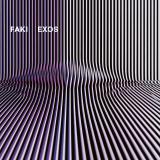
Label head Len Faki joins forces with Icelandic dub techno pioneer Exos for Infinity In Loop, a joint exploration into cavernous depths and shifting tonal landscapes.
Two versions of the title track fill the entire A-side, each unfolding with patient intent. Drifting across icy atmospheres and static hums, Infinity In Loop’s first incarnation slowly builds into a mesmerizing, minimalistic loop—punctuated by delicate percussion and a faint, comforting sprinkle of melodic warmth amidst the arctic chill. The second iteration leans more into a classic 90s dub techno framework, launching straight into a steady pulse anchored by echoing chord pairs and crisp, high-energy percussion.
On the B-side, the duo shifts towards raw, dancefloor-driven territory. Aurora delivers impressive tension with dry, jacking rhythms, snappy percussion, and haunting vocal fragments cut up to drive the groove forward. Closing out the EP, Circuit Flux pairs sub-heavy low-end with unpredictable rave energy. Nostalgic 90s vocal cues, pitched-up hooks, and fidgety FX swell and recede over staunch synths—creating a dynamic, deeply layered track that constantly shifts between space and peak-time momentum.
Often credited as the father of multi-media theatre, Alwin Nikolais (1910-1993) took complete creative control over his productions - including cutting-edge approaches to lighting and costume that transformed human bodies into shifting sculptural shapes, while also composing wildly innovative electro-acoustic and synth-based audio as accompaniment.
After initially experimenting with musique concrète and tape manipulation (as demonstrated on the 1959 LP Choreosonic Music of the New Dance Theatre of Alwin Nikolais) Nikolais became the first owner of Robert Moog's synthesizer at the Audio Engineering Society convention in New York in late 1964. Relying heavily on the Moog and later the Synclavier synth/sampler, these 21 tracks document Nikolais' highly-prescient compositions across the mid 1960s through to the late 1980s - existing not only as extensions of his other-worldly choreographic productions, but standalone pieces of foundational mid-century American electronic and experimental music.
"Born in Southington, Connecticut in 1910, Nikolais’s early years and early career were in acting, music and puppetry. It was not until the late 1930s that he began his work as dancer/choreographer in Hartford, Connecticut, where he was commissioned by the Avery Memorial Theatre, a part of the Wadsworth Atheneum, to create an evening-length work to the music of Ernst Krenek. Previously his work and study as a pianist-organist found him accompanying silent films. This sort of accompaniment required from the musician not only a playing skill but also a versatility in improvisation, matching movement to sound, and evoking mood to situation.
Nik was drawn initially to dance by his involvement with the percussion scores used by the illustrious early twentieth century German dancer Mary Wigman. In trying to learn more about percussion, he was lured into dance class and thus his career began. His development of music and dance occurred simultaneously. His introduction to the twelve-tone technique opened his mind to the expanding areas of atonal music, and his dealing with music as sound per se. In 1948, after being appointed director of the Henry Street Playhouse in New York, Nikolais formed the Playhouse Dance Company, later known as the Nikolais Dance Theater, and began his aesthetic orientation toward dance as a study of motion. By the 1950s, he had ceased creating literal dances and began his explorations and eventual milieu as an abstractionist.
Sound became an important part of his abstract theatre. For his first dances, which involved his new thinking of dance as both a visual and kinetic art, he used live percussion scores in which he directed his dancers to play instruments of all nature. There was a combination of children’s toy instruments as well as harsh and resonant automobile brake drums, and other pitched auto parts which he also used to accompany classes. Once he installed his own tape recording machines, he quickly used the limited range these instruments provided in a new way, slowing and increasing speed and reversing sound. He also made the sounds adhere to the choreographic structure (not the other way around), thereby giving the dance its independence from the musical phrasing. But the real need remained: the search for new sound. Nik made a sound library, recording noises and percussion and vocal sounds, which the French aptly called musique concrète. Needless to say, he became a master at splicing bits and pieces.
From 1956 to 1962 Nikolais composed eleven major scores for his theatre pieces using such techniques. In 1963, James Seawright, who at the time was assisting Nik in his productions and also working at the Columbia-Princeton Center for Electronic Music, recorded a sound bank for the production Imago (1963). With this material, Nikolais created his first synthesizer score. Imago won the Paris Grand Prix in 1968 and launched the Nikolais Dance Theatre towards its national and primarily international acclaim.
During the same period, Seawright came to Nik and told him of a young man who had invented and constructed a simplified synthesizer and insisted that Nik visit the electronic fair currently being held in New York. Nik did so and met Robert Moog. He was completely taken by the new machine and after making some suggestions to Moog, (which Moog made), Nik bought the inventor’s first machine with the aid of a Guggenheim Fellowship. Moog himself was astonished by what his machine could produce for Nik. This machine was later acquired by the Museum of Musical Instruments at the University of Michigan at Ann Arbor as the first Moog synthesizer. The Synclavier was Nik’s next source of sound and since the mid-1970s remained the major instrument in the Nikolais soundroom.
Alwin Nikolais has been honored and awarded throughout the world. He has received the French Legion of Honor, the Kennedy Center Honors, National Medal of the Arts, two Guggenheim Fellowships, as well as Mellon, Ford, and Rockefeller grants. He has been a recipient of NEA grants since 1966, been awarded five honorary doctorates, all for his remarkable achievements in Dance Theater. His genius has influenced several generations of artists."
—Murray Louis
180g Heavy double vinyl LP with liner notes by Tyran Grillo. Limited Japanese Obi for the first pressing. Original artwork by Russell Mills and photography by Jean-Baptiste Mondino.
The third Time Capsule is a body of dub reinterpretations by celebrated producer Bill Laswell of Ethiopian singer Gigi. Curated by Tokyo record collector, music researcher and seasoned reissue supervisor Ken Hidaka, it is the first time Illuminated Audio is pressed to vinyl after its CD release in 2003.
Ejigayehu Shibabaw was born in 1974 in Chagni, northwestern Ethiopia and by pursuing a career as a singer, went against her father’s strict, traditional gender roles. As Gigi, she embraced the same musical freedom she had strived for in her personal life, incorporating the Ethiopian church, funk, hip-hop, West and South African music into her work. She first settled in Nairobi, then Addis Ababa, where she quickly established herself as one of the city’s leading singers. A move to San Francisco in 1998 led to a long and fruitful creative partnership with bassist and producer Bill Laswell.
Around the same time, Chris Blackwell had stepped away from Island Records to start the art house film company and label Palm Pictures. He took an interest in Gigi and together with Laswell, pulled together an all-star cast of musicians for her self-titled US debut album, including Herbie Hancock, Pharoah Sanders and Wayne Shorter. It won international critical acclaim, not just for its musicianship but for making Gigi a “defining voice for the Ethiopian expatriate community”, as journalist Tyran Grillo praises in his Time Capsule liner notes. From the nation-defining 1896 victory over Italian invaders to the quiet revolutionaries who wear simple shemma garments, Grillo believes the themes in Gigi make it “a shower of sunlight on her homeland for those ignorant of its struggles.”
After its success, Blackwell encouraged them to go back into the studio to rethink the album and Illuminated Audio was born. “Anyone can make a voice sound worldly”, Grillo remarks, “but rare are those who can make one sound inner-worldly.” Gigi was clear with Laswell to give her vocals a minor role “because it’s already been done.” Instead her Amharic verse is fleeting, exhaling through the textures like ghostly fragments; soaring yet muted. Yet the album is still titled under her name, an assertion by Laswell of her central role in the album’s creation. Not only was it a fully endorsed project by Gigi, but she would be present throughout its development, giving feedback on half-finished ideas as Laswell played them back in the studio. “It works perfectly”, she reflected after the album’s release. “We wanted to capture the whole spirit of each track, and Bill’s remixes create a different music language that really puts you in a pleasant place”.
This new vocabulary takes its lead from a technical approach that Laswell had been perfecting during a furtive creative period at the turn of the millennium. Much like his ambient interpretations of Miles Davis (Panthalassa, 1998), Bob Marley (Dreams of Freedom, 1997), and Carlos Santana (Divine Light, 2001), Laswell approached Illuminated Audio by returning to the original multitrack masters. Gigi wasn’t just reworked, but recomposed into an expansive lattice of instruments, submerged in a watery ambience of dub and trance undercurrents.
Sonically, this new language that Gigi refers to, is manifested by the original album’s more understated parts being pushed to the fore. Explaining his contrasting methods, Laswell saw Gigi as being “put together in a way that fits”. Contrastingly, in Illuminated Audio, “a lot of things that I featured in the remix weren’t as audible in the original.” Instrumentation laying near-dormant, deep in the mix, are brought to the fore: the acid rock guitar and Wayne Shorter’s saxophone on ‘Tew Ante Sew’, Graham Haynes’ flugelhorn on ‘Nafekeñ’, Laswell’s bass on ‘Kahn’, the melodica in Mengedegna or the floating synths and talking drums in ‘Gud Fella’.
Brought to his attention by mentor DJ Nori, Hidaka describes Illuminated Audio as a “masterful sonic exploration into ethereal ambience and dub” and made sure this reissue also contained a full remaster to give its “deep musicality” much better dynamics and density in the overall sound. Hidaka admits that Laswell's music “is sometimes so out-there, it is often misunderstood” and, indeed, to dub album non-believers this might seem like a prolific producer imposing himself on another artist’s work; eternally developing rearrangements that never quite get to its destination. But that’s missing its true power and triumph. This is more than the reissue of a remix, but “a wholly unique musical entity”, as Hidaka describes. Illuminated Audio refers to the illuminated manuscripts that comprise the major part of Ethiopian art and its new compositions stand in proud solitude as a rare body of reworks that both informs and enhances their originals.