r.hitect opens a new chapter with a refined vinyl release that signals both evolution and intention. Exploring subtle textures, intricate rhythms, and a deeper, more introspective sound, this record marks a shift toward a more personal sonic identity.
The release also introduces Croquis, a new label concept focused on capturing music in its purest form — raw, spontaneous, and essential. More than just a label, Croquis is a space for stripped-back expression and meaningful sound.
This vinyl sets the tone for what’s to come: minimal, emotional, and deeply authentic.
Fall Collection pulls from the vaults. Four tracks, some long out of print, one never
before pressed, all of them worth the dig.
The A-side opens with Ty Tek’s Dirty Fusion, originally released on Gourmet Recordings
in 2005 alongside the Audio Soul Project remix two years later. Both have been
fetching serious money on the secondary market for a reason. This is tech house from
when that phrase still meant something, the walloping cadence, the sci-fi pads, the
seismic synths rolling underneath. You hear it once and it stays with you.
Departed by Wasted Chicago Youth follows. Justin Aulis Long and Mazi Namvar
started from a remix brief and promptly ignored it, building something new from scratch
in a single session. Organs, wailing lead, disco break, 808 subs, a plastic bass line
threading through all of it. Somewhere between an angry Metro Area and a more
psychedelic Jitwam, but really it’s just WCY doing what they do.
Love Thy Enemy by Wasted Chicago Youth appeared on the Chase The Devil EP back
in 2009. The bubbles, shuffles, and wobbling chords hold up, and the vocal samples hit
differently now than they did then.
ASP’s Cloud Dub closes the record. It appeared on Dubs Vol. 2 as a digital release in
2022 and has never been on vinyl, and that’s where the subsonic acid bass line and
the layered string, piano, pad, and organ groove finally get room to breathe. Deep
house the way Chicago made it in the early nineties. Bare, musical, and raw.
Track A1 written by Ty Tek. Remixed by Audio Soul Project
Track A2 written by Justin Aulis Long and Maziar Namvar
Track B1 written by Justin Aulis Long and Mazi Namvar
Track B2 written by Audio Soul Project.
Copyright Control
Fresh Meat Records 2026
When everything just aligns… then it feels like it is meant to be. I think we have all experienced that feeling; a feeling of completeness and that ‘full circle’ moment. Nihil Young lands his debut album packed full or memories stemming from the day he met his wife, to more recent times and the birth of his first child.
‘Compass’ takes you on a real journey of melodic music expertly written and crafted by Nihil from instruments all through to lyrics and songwriting – he has used all of his skills on this body of work – and he does not disappoint! AT ALL!
The album features collaborations alongside Rowland Giles, Leo Wood, Lasada, Jordan Arts, FRDRK, Adriana Stone, TYGR TYGR and more… Each track sounding as special as the last. THIS IS COMPASS….
Veerus & Mattia Saviolo bring their A-game for the brilliant ‘Move Your Body’. The Italian compatriots aren’t new faces to Drumcode. Veerus has earned his stripes via five fantastic EP over an eight-year period, highlighted by ‘Hypnosis’, ‘System’ and ‘Cycle’. Meanwhile Mattia Saviolo is a recent debutant dropping the excellent ‘Parallel Dimension’ on A-Sides Vol.10. When Veerus suggested a collaboration to Mattia, he didn’t mince his words. “Yes, but it has to be a bomb!” Over two days the pair locked in to build an outstanding peak-time production from the ground up. “We started completely from scratch, with no ideas prepared in advance and no project exchanges before meeting. In just two days the track was finished and everything happened very naturally. We both brought our own vision into the process without stepping on each other’s toes, which made the collaboration feel effortless from start to finish,” Veerus shares. ‘Move Your Body’ has a distinct charismatic appeal not commonly found in techno tracks, highlighted by a stomping riff throughout and tension-filled break, before it turns into a pumping cut in the final stanza. A straight-up belter! Accompanying it is a captivating solo track from Mattia, ‘Mindframe’. An absolute gem, file under futuristic techno that sounds like no other.
Seven years after the haunting resonance of Voids, electronic pioneer Martyn returns to the album format with Music For Existing. Arriving on 15 May 2026, the record is more than a collection of tracks; it is a profound exploration of what it means to remain devoted to a craft in an era of relentless noise.
The album’s announcement is heralded by the lead single "Heavy Sound." The track serves as the perfect bridge between Martyn’s past and present - a masterclass in tension and release that previews the album’s dialogue between the producer, the musicians, and the audience. We live inside a culture that has prioritised and monetised restlessness. The modern apparatus runs on the continuous production of "next," driven by algorithms that value novelty over depth.
Music For Existing serves as a love letter to the communal act of making music - something that is both healing and inherently defiant. For Martyn, a musician often finds solace in musical conversation with others; in the moment we press record, we simply exist together. This record is an invitation to build human infrastructure around what we love, leaning into the fluid nature of community and seeing exactly where the music takes us when we choose to listen.
The album is a sprawling, "off-the-grid" tapestry that echoes Martyn’s profound appreciation for jazz - free, instinctive, and bursting in every sonic direction. This collection features an expansive cast of collaborators, including Duval Timothy, Dan Only, Lucinda Chua, and Mark Cisneros. The record is further elevated by the contributions of jazz talents Mischa Porte and Cees Bruinsma, alongside the evocative words of writer and poet Musa Okwonga.
While the acoustic textures and improvisational spirit of this record may feel like a departure, they represent a homecoming. Jazz has always been ingrained in Martyn’s work; even in his most stripped-back club tracks, the DNA of swing, syncopation, and free-form structure was always present, if not always visible.
Music For Existing marks the beginning of an exciting journey that will continue from the studio to the stage, celebrating the radical act of existing in the moment.
Powerful trio music by pianist Takehiro Honda, known for his strong touch and bluesy feeling, together with an American rhythm section. The album features a line up of compelling originals, including the overwhelmingly powerful "Minors Only" and the title track "Salaam Salaam," whose title means “peace” in Swahili.
2026 Repress
In the ever-expanding universe of deep house, Julius Steinhoff is far from being a stranger. Half of the dynamic duo Smallpeople, founder and one of the steersmen behind Hamburg's Smallville empire (record store/ label/ party curator around the globe) as well as a producer and DJ in his own right, Steinhoff is closely associated with a group of like-minded people that unite fresh ideas and individualism with a certain consciousness of tradition. That 'Flocking Behaviour' is well embodied in Steinhoff's debut album by the same name. After a string of 12-inches for the likes of Live at Robert Johnson, Geography or his own-brand Smallville and the very well-received Smallpeople long-player 'Salty Days", Julius Steinhoff makes a submission that is all his. Rooted in the elegiac variety of the big three (New York, Chicago & Detroit) and a romantic concept of house music that is at times utopian, the album gathers eight tracks that evoke late nights, hazy mornings and walks on thin air. But 'Flocking Behaviour' is by no means anachronistic: Tracks like 'Under A Waterfall' could be made in just the same manner by a puerile Baby Ford in 1989 as they represent a swaying dance floor in 2014. 'Treehouse' or the title track 'Flocking Behaviour' are experiences that make you feel like meeting new people who instantly greet you like old friends. With someone that works and lives in the here and now, Steinhoff seemingly has no interest in revisionism, complains or antagonism, his approach is welcoming and caring, embracing and mesmerizing. Along the way, his musical apparatus never makes use of cheap tricks or antique clichés.
No Home is the new album by Lane Hartley, releasing October 23rd 2026 on Royal Oakie Records. Produced in collaboration with David Hartley of The War On Drugs & Adam McDaniel (Animal Collective, Angel Olsen, Geologist), the album was recorded at Drop of Sun Studios in Asheville and features contributions from North Carolina’s tight knit music community–including Mary Lattimore, Seth Kaufman of Floating Action & Dream Sitch, David Hartley, Jack Victor Johnson, and more.
After recording his debut album Naming Horses, Lane left Los Angeles and returned home to the Carolinas, eventually landing in Asheville. It wasn’t too long until the songs started flowing and Lane found himself reaching out to Adam McDaniel at Drop of Sun Studios–a vaunted space that’s been at the heart of indie-rock the past few years, bringing to life recent albums from MJ Lenderman, Wednesday, Fust, and more. McDaniel introduced Lane to David Hartley, and what originally started with discussions to record one song quickly turned into a plan to track a whole album live with a six piece band. Once in the studio, co-producer McDaniel encouraged the group to lean on intuition–“All of the players on this record really brought it to life in such a cosmic way. They instilled so much childlike wonder and fun into the making of the album. It inspired me to keep going” says Lane.
Lyrically the album is a collection of vignettes about people who’ve become alienated from their deepest desires of connection, belonging, intimacy, and autonomy–inspired both by Lane’s own life and the lives of people he’s loved. The unique character of the album emerged when Lane made the decision to pair the dark lyrical content with bright & lush arrangements, inspired by Gene Clark’s No Other, Neil Young’s After the Gold Rush, and Amen Dunes’ Love. In Lane’s words, “The content of the songs got way darker, and my reaction was to make the songs catchier, and to lean harder into the music that influenced me. I wanted each song to feel like a room in a haunted house, with a beautiful garden growing outside”.
Album opener “I Am Not Ashamed” was inspired by the anti-memoir of actress Barbara Peyton, a 1950’s Hollywood starlet who met an untimely end; “It’s about knowing that whatever you’ve done to survive, you still deserve love” says Lane. “Mother” pairs lyrics about ancestral trauma with the sunshine-pop influence of Colin Blunstone, featuring backing vocals from Lane’s sister Barrett Hartley. “It's about coming to terms with the fact that the people meant to protect us are dealing with their own trauma…”
Meanwhile, “All Of This Is Yours” and “Tone Poem” form the spiritual center of the album, an attempt to transmute anger & pain to bittersweet acceptance in the wake of a breakup. “I feel like on the surface this is essentially a breakup album, a lot of these songs are about mourning the end of a relationship and reflecting on what went down. I was falling in love and getting my heart broken, then waking up and driving across the country and doing it all over again.” “Love Is Not A Song” was inspired by Margo Guryan’s Love Songs, pairing bright piano with playful lyrics about an old man who’s been beaten down by life but still believes his greatest love is yet to come. Last but not least, title track “No Home” sums up the album’s key theme of alienation, “It all goes back to this feeling of wanting to belong to someone or somewhere, wanting to belong in your own body.”
“Negative Music / The Poorest! If they still know silence at all, then only as holes in the continuum of noise…” — Günther Anders, 1965
Editions Mego presents GETGETGET, a new release by Thomas Brinkmann which serves as an inquiry into silence, code, and the limits of perception.
The title GETGETGET references the trilogy of ‘Get’ lp’s made by Rehberg under his PITA moniker; Get Out, Get In and Get On. The music is based on material by Rehberg and Brinkmann morphing these two identities into a third colour, a disappearing color.
Emerging from a live performance at the label’s 30th anniversary in Berlin, the work unfolds as both sonic artifact and conceptual system: a study in what remains when sound is reduced, extracted, and reconstituted.
Taking inspiration from Günther Anders’ notion of “negative music”—composition through absence—Brinkmann’s approach aligns with Heinrich Böll’s idea of “collected silence”: silence not as void, but as a material framed against the constant pressure of noise. In GETGETGET, pauses are not gaps but structural elements, cut from a continuum and reinserted as signals.
The two side long tracks weave a dark abstract and ‘twisted’ presence where the ghosts of the machines and their operators fuse into a fantastical whole. One can hear traces of both Brinkmann and Rehberg logic which seems to fuse in a hallucinatory manner.
Brinkmann’s work reflects a broader condition: the translation of material processes into informational ones. As images detach from bodies and code separates from matter, sound too loses its fixed resonance. What remains is circulation—of signals, of data, of meaning—within systems that increasingly define perception itself.
GETGETGET is an album where absence is equal to presence, a metaphor with suggestive tones of the influence Rehberg had and continues to have in the world of the radical experimental electronic avant garde. The “zero” is not empty; it is what makes everything else work.
If you dig deep enough into the internet's lower depths, you'll find a shaky video shot on a camcorder. In 43 seconds, we see a makeshift drum kit built out of backyard Ostbahnhof trash, hear distorted vocals, and feel the anarchic energy of band and ravers dissolving into each other. It's now been twenty years since Bonaparte played their very first show at the legendary Bar25 on Berlin's Spree river. The ringmaster of this unhinged musical theater was Tobias Jundt then, and it's Jundt again now bringing the Bonaparte extravaganza back to the stage. New and nostalgic sit close together when the party's been going this long. Or, as they put it: "PARADISE IF YOU CAN STAND IT."
From late October through mid-November, Bonaparte will tour Germany, Austria, and Jundt's native Switzerland at full intensity, the full lineup - band to burlesque. Since their 2006 debut through their supposed farewell in 2019, Bonaparte played over 800 shows in 28 countries. Bottom line: "Too Much" isn't enough to properly celebrate a body of work like this. And the new songs from "PARADISE IF YOU CAN STAND IT" are far too significant not to bring to the stage. The lo-fi trash-punk of Bonaparte's earliest records has been built out with added layers, in production (largely alongside British avant-garde electronic artist HELiX) and in the songwriting itself.
The world certainly hasn't gotten any simpler since 2006. Tracks like "EVERYBODY PRESiDENT," loosely riffing on Zoe Leonard's poem "I Want A Dyke For President," and the corrosive "BRAiN ROT" mirror the social chaos we find ourselves in 2026. "OBEY (THERE iS STiLL A RiOT GOiNG ON)" is just as furious, though here the principle of hope still holds, as a multigenerational choir concludes "everything will be okay." Jundt speaks across generations again on "i LOVE YOU (MORE LATER)," dedicated in equal measure to his parents and his daughters: "Let the echo chamber bleed - from here into eternity."
The reconciliation and hope Bonaparte allows for and tends to, amid violence and all that noise, make "PARADISE IF YOU CAN STAND IT" a singular document of an artist grown wiser. Separation and grief don't cancel out love and vitality - they depend on each other. Ultimately, the album is a record of searching for and finding a home. To arrive, you have to let go.
And what better place to let go than in step with Bonaparte's wild, hedonistic party circus, finally back to gently terrorize our cities?
By the time Michael Nau completed Popfly, the songs felt less like compositions than companions. Arriving in fragments, notebook lines, and fleeting observations, these pieces kept company for years until taking their final form. The result is one of Nau's most openhearted, expansive records, both homespun and otherworldly at once. Radiant folk melodies, tape-warped textures, and flashes of everyday wonder coexist in perfect balance on Popfly. Nau has never been a songwriter who forces songs into existence. Instead, he follows them, trusting intuition over agenda and allowing songs to gradually reveal themselves. Writing and recording often blur together, with melodies evolving before lyrics are finished and stray recordings forming the basis for new songs. Popfly showcases these creative detours: thoughtful folk songs, sonic experiments, and accidental beauty transformed into fully realized compositions. Many songs began at home, growing in meaning. Since he entered the Vermont studio, Little Jamaica, with longtime friend and collaborator Benny Yurco, many of them had already lived several lives. "Studio recording feels like covering my own songs," Nau says. This idea flows throughout: performances are lived-in, feeling effortless, as if assembling itself. The title track carries a flicker of wonder in its simple observations. "New Slack" moves with the loose confidence of a song content to follow its own path. On "Lost Station Hideaway," soft static and fading signals become something strangely comforting, as if the song itself is being broadcast from somewhere just beyond reach. Family and friendship are deeply woven throughout the record. Nau's children contribute vocals, bringing warmth and spontaneity to the album's communal spirit, with longtime collaborator and wife Whitney McGraw lending her serene voice. The harmonies that drift from them extend the album's central impulse of people gathering to make something beautiful. Across Popfly, loose-limbed folk songs mingle with homespun psych-pop, porchside country-folk, dreamlike atmospherics, and quietly profound observations. The record moves with the ease of conversation among old friends, finding beauty in tiny revelations, strange coincidences, and everyday mysteries. The record is full of transmissions from different moments in Nau's life, stitched together by instinct, affection, and time. Taken together, they form a portrait of a life spent paying close attention to the world and its small miracles.
ALLVEI (pronounced AHL-vay) is an ambient-jazz trio featuring Norwegian guitarist Eivind J. Vullum (HMD,Vibrasjon), Polish saxophonist Jerzy Mączyński (Polish Jazz, UHF) and Swiss drummer Nicolas Stocker (ECM, Nik Bärtsch’s Mobile). With its roots and meaning coming from a specific region on the North-Westcoast of Norway, ALLVEI describes an eternity in time, and the endlessness in space. It’s a musical and physical journey that begins deep in the mountains of Norway via Warsaw, Zürich and ends in Kristiania. It’s a fitting name for the trio’s musical experiments, operating in a continuous evolving sonic space. The five compositions act as a visual site-map of the first cycle of the ALLVEI project. From the subtle minimalism of ‘Almberg’ and unruffled sounds of ‘Driva,’ an enchanting web of rhythmical structures and ethereal sounds unfold, centred around subtle polyrhythms and free improvisation. ‘Mariensztat’ brims with exotic textures and tasteful arrangements, while understated explosions and quietly composed atmospheres dictate the pace of ‘Züri,’ before the album climaxes with the surging ‘Kristiania,’ awash with Stocker’s shuffling drumbeats.
Not only has the Montreal native cemented his place as one of the most talented producers in the dubstep scene, but his incredible work ethic, energy, and passion—matched by his undeniable talent—mean his ascension is quite simply inevitable.
DDD has been proud to play our part in his career journey, and things are taking another step forward with the phenomenal album Rites.
A tour de force of audio sorcery, savagery, and sacrilege, Rites subjects the listener to Wraz.’ trademark mix of filthy 140 dubstep, thumping trap flavours, and industrial grittiness.
This is expertly melded with stunning, captivating, suspense-filled interludes that provide counterpoints to the bass punishment in ways that are both tension-inducing, yet beautiful.
Featuring collaborations with label bossmen Truth and DDD favourite Hypho, Wraz.’ sonic understanding of his craft feels unparalleled throughout. Each track brings its own unique flavour, while sitting together as a body of work with remarkable cohesion.
Keep a lookout for this as the first DDD vinyl drop of 2026—alongside its full digital release—Rites marks a seismic moment for both Wraz. and the 140 scene.
Wraz. is putting the world to Rites, while we’re living in his universe.
,Reona" ist das Debütalbum von REONA bei Kou Records - Stepptänzerin, Metal- Percussionistin, Improvisatorin und eine der originellsten Klangkünstlerinnen der heutigen Zeit, weltweit. Das Album wurde im Januar 2026 an zwei Tagen im Studio Dede aufgenommen und von Randall Dunn produziert. Es fängt REONAs ganzkörperliche Performance in Echtzeit ein: Stepptanzschuhe und ein Holzbrett als rhythmische Grundlage, überlagert von Metallblechen, Ketten, Edelstahlschalen, Plastiktüten, Lautsprechern und einem ganzen Arsenal an gefundenen und handgefertigten Objekten, die im Laufe jahrelanger Auftritte gesammelt wurden. Die Instrumente tragen ihre eigene Geschichte in sich - ein Schild aus Okinawa, auf dem die Warnung vor nicht detonierten Bomben steht, ein Schild einer Transportfirma aus dem Jingisukan-Topf-Museum in Iwamizawa, eine Festglocke, die zu Beginn der COVID-Ära erworben wurde, südindische Essgeschirr, ein Ölkännchen aus Taiwan. Stampfen, kratzen, berühren, schlagen, blasen, stöhnen - REONA nutzt alles voll aus, von ihren Beinen bis zu ihrem Mund, und lässt dabei die Grenze zwischen Tanz und Percussion, Körper und Instrument verschwinden. Ihre Praxis befindet sich an einer selten besetzten Schnittstelle: die japanische Noise-Tradition von Merzbow und Otomo Yoshihide auf der einen Seite, die perkussive Körperlichkeit von Milford Graves und Han Bennink auf der anderen - ohne Präzedenzfall dafür, was passiert, wenn diese beiden Welten in einem einzigen Körper aufeinandertreffen. Track 7, M108, enthält einen Gastauftritt von Atsuo - dem Schlagzeuger der legendären japanischen Rockband Boris - in einer Kollision zweier unterschiedlicher, aber verwandter Ansätze zu Rhythmus und Noise.? Aufgenommen, gemischt und produziert von Randall Dunn. Gemastert von Ben Greenberg. Dolby-Atmos-Mischungen von Ben Greenberg. Lackschnitt von Paul Gold bei Salt Mastering. Cover-Artwork ,Legend of the Snow Spirit" von Kazuki Tomokawa; Porträt auf der Rückseite von Allison Brant.
Tresor Records announces GODSPEED, a new EP from NVST, out on October 23, 2026. From its origins in the Motor City and through to the themes of interstellar travel, techno has always been a genre focussed on forward movement, a tradition that GODSPEED continues boththrough music and title.
The EP is a collection that brings to mind the spirit of early, non-conformist releases on Tresor, full of hypnotic synth loops, spacious FX, and breakbeats, yet with a crisp and modern sonic palette. Side A embarks with two tracks that combine a low, buzzing bassline with trippy melodies and percussion that ventures close to breaks and electro, while the B-side moves intothe fast lane with driving acid and more regimented drums. Digital bonus track "Firliner" combines both approaches across its seven-and-a-half minutes, as a buzzy bassline and spluttering beat ignite into a steady trance-induction.
The EP title arrived the way the best ones do: not so much chosen as absorbed from the aether, the word kept popping up during the creative process until it became the ideal name for this collection, given its connotation with setting out on a journey.
"You remember the nights where you've been on the floor for hours without realising how much time has passed, the conversations you can't fully recall, or how unexpectedly open you've been to everything around you. The music speaks the language of substance not as a statement, but as a way of describing perception. It's about experimenting with yourself, your body, your hearing, your emotions. About reaching a point where things that once felt permanent suddenly lose their grip, even if only for a moment. These recordings come from that place. They capture moments where movement replaces thought, memories blur into feeling, and vulnerability becomes part of the process. They're documents of a very
specific time, but also of something much more familiar: trying to lose yourself just enough to find a different version of who you are." NVST
This fast-paced forward travel is implicit in the word speed, but once this word indicated power or prosperity so that godspeed is a wish for success, forming an appropriate double meaning for this first full release of NVST on Tresor.
‘Finally’, the forthcoming new record from Catz ’n Dogz, belongs to the latter.
There are albums you listen to, and there are albums you live with. ‘Finally’, the forthcoming new record from Catz ’n Dogz, belongs to the latter.
Across sixteen tracks, Voitek and Greg have created their most creatively ambitious and emotionally open work to date. An album about relationships, friendship and the people and places that shape us. At its heart is a simple idea: music should make you feel something, and sometimes the most meaningful moments are the quiet ones when you finally have time to yourself.
Finally is rooted in the emotional contradictions that make memories so powerful. Inspired by classic American Folk and Soul, its songs are happy and nostalgic; hopeful without pretending that the past doesn’t exist. There is melancholy inside the euphoria and warmth inside the sadness, a constant interplay between looking back and moving forward.
The album begins with the soulful breakbeat glow of 'We’re Gonna Be Alright' featuring Ajii, before moving through the smoky jazz and piano-led intimacy of 'Dance For You' with Miller Blue and the bass-driven energy of 'Sun Goes Down' featuring Charlotte Haining. Closing with the reflective 'Miss You' featuring Mateusz Krautwurst, the record takes in a rich cast of vocalists, musicians and producers, alongside a series of deeply personal Catz ’n Dogz solo productions.
Those collaborations are central to Finally. The album is, in many ways, a celebration of the creative friendships Voitek and Greg have built throughout their journey. Relationships that have allowed them to step outside their comfort zone and rethink what their music can be.
Written and recorded between Madrid, New York, Warsaw and the road, the album finds the duo placing renewed emphasis on songwriting, chord progressions and musical craft. Rather than simply chasing the next track, they took the time to learn, experiment and create something with a sense of permanence.
This is an album for driving without a destination. For watching the sun go down. For remembering somebody you haven’t thought about in years. For those rare stretches of time when there is nowhere else you need to be.
With his last three records all landing within a calendar year (2024-25), enigmatic Swedish producer Civilistjävel! (aka Tomas Bodén) is on a hot streak of releases, his singular vision increasingly ambitious and expansive. There are few artists working at this level so consistently right now, reinventing, revising and continually developing their language. Following on from 2025’s radically re-worked ‘Versions’ (of Mayssa Jallad’s ‘Marjaa…’), Bodén returns to break further fresh ground with his new album, ‘Älvgång’. Featuring contributions from Soccer Committee, Carrier and guest (aka Jabu’s Jasmine Butt), ‘Älvgång’ foregrounds a more brittle and insistent rhythm-based sound, whilst comprising his most broad-ranging collection of material to date.
‘Älvgång’ grew out of a series of sketches made from late ‘24 and throughout the whole of ‘25 at Stockholm’s renowned EMS Studios, which gave Boden free rein to its extensive collection of vintage analogue equipment and rare modular synthesizers such as the Serge and Buchla systems. As a loose framework of tracks began to take shape, so did a reflection of sorts, on family and foundations, underpinned or influenced by sounds that drifted into Tomas consciousness around this time - ancient Swedish pastoral music, Georgian lithurgical chants, gongs, chimes. An idea settled into place, a dedication to his Grandfather, as the earlier release Fyra Platser (tr. ‘Four Places’) was to his Grandmother. Älvgång is grounded with the sense of time and place of an old family photograph, with the tracks over each side bearing one of two names that are more or less the same location - Strinne was the old name for a this loose collection of villages. These days it is more commonly known as Bjärtrå. Metaphorically speaking, the river runs through both.
Civilistjävel! conjures so many adjectives and descriptors, ‘glacial’ and ‘ambient’ frequently among them - but while not altogether untrue, such terms belie the tension and drama so often present in Tomas’ music. Listening to ‘Älvgång’ is not a passive experience. The eight tracks here feel like a patchwork of memories that bathe in the same ethereal, otherworldly glow of Tarkovsky’s polaroids’.
The machine pulses that dominate this landscape are reigned in and tempered by a human hand; lithe, untethered coils, breathing in and out. ‘Strinne Ett’ sets out with purpose, sensing awe and wonder through the murk, but as the final tone unfurls like a question mark, another chapter begins, unfolding/building like a Tarjei Vesaas novel. These lyrical, abstract miniatures combine to reveal a wider context, fragile humanity standing alone against nature.
Guest appearances on Civilistjävel! records have become a regular occurrence (including recent collaborations with Mayssa Jallad, Laila Sakini, Cucina Povera, Thomas Bush, Eldon + Withdrawn), but are used sparingly and with increasing precision. On ‘Strinne Tre’ Mariska Baars’ (Soccer Committee) voice feels like a balm, a clearing. But as her simple, three-word incantation drifts further into fog, the meaning changes, and her words seem to curdle. Carrier’s beats widen the parameters on ‘Strinne Fyra’, a skittering promise that builds tension then refuses to release it; all false starts, Photek gongs, and trinkling modulars. Jabu’s Jasmine Butt pulls all the threads together for the final track, Thomas Tallis’ ghost walking over offset machine impulses, that work against their own symmetry.
Side two begins inquisitively, scanning bleached, alien surroundings, its sparse pads recalling Aphex Twin’s ‘Selected Ambient works Vol 2’. 'Bjärtrå Två’ picks up the baton from ' Strinne Fyra’ with a ruptured Simmons SDS200 analogue drum synth set free from its shackles, the rhythm eventually slotting into the spaces that were hiding in plain sight. What follows seems like an epiphany; ‘Bjärtrå Tre’ is achingly beautiful, a euphoric, winding ascent that leads to devotional plainsong. ‘Bjärtrå Fyra‘s final unheralded shift feels both tragic and haunting.
Tears|Ov are Terces Wale (aka D. Wale), L.E. Allen and Lottie Lou Poulet. For real money and in no particular order, they also work odd jobs as digital caterers, shrinking heads, doing laundry and looking up stuff online.
Tears|Ov write: ‘A life on hold! The corporate apology embedded in bad quality, insincere, trashy, patronising hold music it can have no meaning in this stage of Capitalism. There isn’t time - and humility is a waste of money. Still they joke and try to keep us calm, patient and satisfied. This was the starting point for “A Life on Hold” by Tears|Ov - Which quickly drifted into further musings on a collective life that feels forever two steps forward and x-steps back. We wait on hold and reach the top of the queue only for the line to go dead.
Tears|Ov are interested in the ready-made of mainstream media, particularly, the lies, the rub, the promises and the taken for granted. We are the blood plasma of the I in the screens embrace. We seek to find ourselves in that reflection, our real selves – if they even exist – just because it’s kinda fun. You may have seen us on TV, in the bargain basement music section, or some venue in your local area. We take the opportunities the Universe provides.” – Tears|Ov, London, 20 June 2026
"ABYSSUS stand as one of the most significant forces within the Greek Death Metal scene, having forged their path since 2011. Drawing profound inspiration from genre-defining pioneers such as DEATH, OBITUARY and BOLT THROWER, the band preserves the unadulterated spirit of old school death metal while imprinting their own distinct identity.
From the very outset, ABYSSUS placed equal emphasis on studio output and live performance. A steady stream of EPs and split releases established their presence within the international Underground metal community. Their debut full-length, „Into the Abyss“ (2015), garnered widespread acclaim and marked a pivotal moment in the band’s evolution - leading to increasingly frequent appearances both in Greece and across Europe, often sharing the stage with renowned acts, like POSSESSED, SINISTER, SUICIDAL ANGELS and ROTTING CHRIST.
With renewed creative vigour and greater maturity, ABYSSUS unveiled their sophomore album „Death Revival“ in 2022 via Transcending Obscurity Records. Adorned with an arresting cover by the legendary Andreas Marschall (KREATOR, BLIND GUARDIAN, IN FLAMES a.o.), the album was met with universal praise, further cementing the band’s reputation for delivering unrelenting, yet masterfully crafted, death metal. More shows with a.o. ASPHYX, TANKARD, GRAVE DIGGER and THE CROWN followed.
Now in 2026, ABYSSUS return with their third full-length opus, “The Reign” - a ferocious testament to their artistic evolution. The album encapsulates all the core elements that have defined death metal through the decades: raw aggression, blistering riff-work, and a suffocating, commanding atmosphere. Once again, the visual narrative is entrusted to Andreas Marschall, whose artwork enhances the band’s sonic vision with striking intensity.
Relentlessly evolving, ABYSSUS remain true to their roots while continuing to push the boundaries of the genre. With a prolific discography and an ever-growing presence on the live circuit, they have rightfully earned their place as a formidable name within the global death metal landscape."
Recommended. Compilation format, six producers, one shared idea of dub house done properly. Erratic and Nicola Brusegan open heavy on the low end, dubby without overdoing the effects. Nick Italy keeps the A side moving, no drama, just groove. Flip side goes warmer. Lorenzo Dada and Michura work more melody into the pulse, Peter Kir shuts it down slow and hypnotic. Nothing flashy, nothing filler either. Solid all the way through.
Budapest based concept label Blue Sun arrives with the 3rd edition of their annual VA series, showcasing a colorful taste of the local underground music scene, with some international sidenotes.
Following up on the label’s customs, the 19-track selection is not only released digitally, but also on a limited 200-piece cassette series. Curated by the label heads, the tracks follow Blue Sun's listening-oriented concept without genre restrictions with downtempo, trip-hop, jazz, dub, balearic, ambient, experimental, and electronica as highlights, with pieces that are more difficult to classify.
As before, instead of the usual A-B markings, the two sides are divided by the label's colors: “ORANGE” contains more organic and high-energy music, while “BLUE” contains more pensive and experimental tracks. Moreover, the selection has been carefully curated so that it can be listened to as an endless loop: the end of a side always resonates with the beginning of the other, wherever the listener begins.
The list of contributing artists this year are truly various and just as impressive. From uniqe debuting local artists to internationally recognised performers, it gives a taste of how the Hungarian underground scene sounds like atm. Important to note, that the release marks another debut: the label’s new visual identity by Blue Sun’s new designer, Péter Tóth.
Brutal, uncompromising Slam from Greece. Years of obsession, ignorance, and absolute contempt spent keeping slam locked in its lowest, most primitive caveman state. Through collapse, and complete disregard for ourselves, we persevere. The "Embryectomy" project clawed its way from a deranged slam duo into a fully armed three-body beatdown slam monstrosity through uncompromised fury alone. No trends. No mercy. No concern for acceptance. Anyone who stood in the wreckage with us knows what it took to get here. We are now signing with Unique Leader Records. What you will endure in our next release is not meant to inspire or connect. It was composed in a chaotic state of antipathy, and absolute emotional absence. This is the most brutal material we have ever created—not for everyone, not for growth, but for those who understand that misanthropy is the only constant. We thank Unique Leader Records, who pushed us beyond what we thought possible: brutality to its limit while stripping away anything human. No benevolence. No empathy. No relief. Only violence, executed with intent.
Third time’s a charm, or possibly an anomaly. Johannes Volk returns to Running Back for another five exercises in perception, memory and dance-floor physics.
Following Extra Dimensions and Lightweave, this third instalment finds Volk continuing his particular way of making machine music feel strangely human and vice versa.
Shining Force starts somewhere above ground. Gliding across an unfamiliar planetary surface, optical illusions and physical anomalies slowly interfere with the senses. Unknown landscapes,
peculiar vegetation, nature behaving unnaturally: techno as field research. Switching From Bicycle to Spaceship does exactly what it says on the tin, more or less: trading pedal power for propulsion as a deceptively simple groove gathers speed, sheds gravity and quietly leaves the atmosphere behind.
Hidden In Dark belongs to a more immediate kind of archaeology: fog, strobes, bodies and those inexplicably intense emotions that only seem to exist on a dance floor at the right (or wrong) hour.
Back Alley Dancers turns the telescope around and looks backwards. Vocal fragments, pitched, delayed, reversed and removed from their original meaning trigger half-memories of youth, and of
encountering music and culture before you quite understood what any of it meant. Familiar feelings in unfamiliar shapes.
Finally, Drumatury dispenses with introspection and gets down to elementary forces. Morphing bass drums meet a Chicago jacking snare-roll massacre. Drama becomes drumaturgy. Or the other way around.
Five tracks, several states of consciousness, one Johannes Volk. No protective equipment supplied.
LUCIANO LAMANNA — A CARLO Blackwater Label — 2026 Distributed by Triple Vision More than ten years in the making, A CARLO is a single-sided EP by Luciano Lamanna for Blackwater Label, dedicated to Carlo Giuliani and to the memory of the events that unfolded during the G8 protests in Genoa in 2001. This record is the result of a long process, one that began more than a decade ago and has remained unfinished until now. Two tracks, both carrying the name and memory of Carlo, finally complete a circle that has been open for years. The first track, “Il Giorno del Sole”, was previously released on physical CD through Blackwater Label. The second, “Amore Infinito”, arrives more than ten years later, completing the dialogue between the two pieces and giving the project its long-awaited counterpart. Together, the tracks form a deeply emotional and personal statement: melancholic, haunting and at the same time driving and hopeful. Lamanna moves through the industrial language that has always characterised his work, while “Amore Infinito” explores a darker, more intimate territory, evoking the emotional intensity of Coil. A CARLO is not intended as a historical reconstruction or a conventional political statement. It is an act of memory.
Harvey McKay’s “Table for One” returns to Systematic Recordings for a special and deeply meaningful vinyl edition. Originally released digitally on Systematic, the EP captures the unmistakable sound of the Glasgow producer: powerful, hypnotic and uncompromising techno, driven by raw energy while always retaining the musicality and soul that defined Harvey’s work. Following Harvey’s passing in Spring 2026, this release inevitably carries a different weight. For Systematic and Marc Romboy, it is first and foremost a celebration of
his music and the lasting impression he left behind.
For the first time, “Table for One” will be available on vinyl, presented as a strictly limited 12” picture disc pressing of only 500 copies. The original version takes the A-side, while Marc Romboy’s remix opens the Bside, offering his own interpretation of Harvey’s distinctive sound. The release is completed by “Mycelium”, another powerful example of McKay’s ability to combine hypnotic repetition, precision and sheer dancefloor energy. More than a vinyl edition of an outstanding Systematic release, this record has become a tribute to an
artist whose music will continue to live on through clubs, DJs and dancefloors around the world.
Quiet, from the Latin quies, evokes a state of being still. In its verb form, quiet means to clear so that something can gradually come into focus. Kind Stranger by Amedeo Cappelletti is where quiet materializes in a more transient, even foreign, way. Each track takes a step back from noise, borne out of a slow return to music, a different pace, and a familiar place left behind for years.
Kind Stranger, released on Aurora Edition on July 24th, is about the strangeness of a return. Cappelletti's melodic scores work their way between faint noise and disquiet, and sonically muse upon the familiar. That is, when given enough time and distance, the familiar can become unrecognizable, demanding stillness to resituate oneself within it.
The album began taking shape when Cappelletti performed at Aurora Edition at Silent Green, just after he had returned to music following a three-year hiatus. In one month, he wrote forty-five minutes of new material from scratch. Then Cappelletti left Berlin after eight years and returned to the Tuscan countryside where he had grown up, back into slowness.
The album develops as an atmosphere in the truest sense. Resampled voices, found sound, and years of sound design practice converge as compositions form by overlapping texture with spatial depth. Kind Stranger cultivates a quietude that envelops the listener.
Vocal recordings made with Matthew Walsh and Sarah McInerney, collaborators Cappelletti met by chance in a Berlin ice cream shop, appear throughout the album like a current, shaped during a residency at MONOM, Berlin's spatial sound institute. Thematically, the record moves through digital addiction, fragmented attention, and the grief of work done in the darkness.
Kind Stranger is an offering to whoever finds themselves here within the quiet, in this particular quality of sound between return and lingering.
Armoonia is the work of Armooniaman, also known as Lele DJ, together with Mattia Fabbri. It sits between tech house and acid house, and it keeps everything smooth. The grooves are easy and fine, nothing pushes hard, everything rolls. Travel at 6 am and Botta open the first side, Bass again and Temperament follow on the second. The record moves from tech house toward acid house without breaking its flow. On a floor that means a steady, groovin line that lets the room settle in rather than forcing it. Four tracks, one mood, and a smooth way to keep a night moving.
At the foot of the mountain. Our gaze is inclined toward the summit.
Toward the ascent. The destination that awaits us.
From the valley, we look up at the summit: our destination. But also the path: the true destination.
We can already trace our route, and we are already imagining ourselves walking up there. Along the small ridge, just above the tree line. There, we take a short break and look for the exact spot in the valley where we were standing earlier. It is strange to grasp that we have actually climbed this mountain. To look down from up here at the place where we were just moments ago – the same place we looked up from, toward the place where we are standing now.
And now, knowing what it is like to be up here, we remember what we imagined it would be like back then. What we believed it would mean to stand here.
Along the way, our gaze wanders back and forth. Up toward the mountain, down into the valley, sometimes only at our shoes. We keep walking, one step after another. Our thoughts detached. Our body functioning purely mechanically.
Step left. Step right. Step left. Step right.
Our mind has completely detached itself, and our thoughts race at an immense speed. They summon the most different moments. Moments from our lives. Moments that shaped us, that made us who we are. Or are we perhaps simply trying to understand who we are and how we got here?
It is strange that reaching the summit and looking down could make us believe that we have finally reached, or are striving toward, some superior, triumphant position. When in fact, it is really only about looking at the path we inevitably have to take. Processing impressions from a certain distance. Reconsidering what we have experienced, without losing sight of what lies ahead.
Our gaze turns back toward the summit.
Is there a destination?
An ascent? A summit? A descent? The return?
Or is it only about the insights we encounter along the way?
Am Fuß des Berges. Unser Blick ist zum Gipfel geneigt.
Auf den Aufstieg. Das Ziel, das uns erwartet.
Vom Tal aus blicken wir auf den Gipfel: unser Ziel. Aber auch den Weg: das wahre Ziel. Unsere Route kann man jetzt schon abstecken, und wir stellen uns bereits vor, wie wir dort oben laufen. Über den kleinen Grat, leicht oberhalb der Baumgrenze. Dort machen wir eine kleine Pause und suchen genau die Stelle im Tal, an der wir vorhin noch standen. Es ist verrückt, zu begreifen, dass wir diesen Berg tatsächlich hinaufgestiegen sind. Von hier oben auf den Ort hinunterzusehen, an dem wir eben noch waren – an denselben Ort, zu dem wir hinaufgeblickt haben, als wir noch dort unten standen. Und jetzt, da wir wissen, wie es ist, hier oben zu sein, erinnern wir uns daran, was wir uns damals darunter vorgestellt haben. Was wir geglaubt haben, es würde bedeuten, hier zu stehen.
Unterwegs wandert unser Blick hin und her. Hinauf zum Berg, hinunter ins Tal, manchmal nur auf unsere Schuhe. Wir gehen weiter, einen Schritt nach dem anderen. Unsere Gedanken losgelöst. Unser Körper funktioniert rein mechanisch. Schritt links. Schritt rechts. Schritt links. Schritt rechts.
Unser Geist hat sich völlig losgelöst, und unsere Gedanken rasen mit einer ungeheuren Geschwindigkeit. Sie rufen die verschiedensten Momente herauf. Momente aus unserem Leben. Momente, die uns geprägt haben, aus denen wir geworden sind, wer wir sind. Oder versuchen wir vielleicht einfach nur zu verstehen, wer wir sind und wie wir hierhergekommen sind?
Es ist schon seltsam, dass das Erreichen des Gipfels und der Blick nach unten uns glauben lassen könnten, dass wir endlich eine überragende, triumphale Position erreicht haben oder anstreben würden. Dabei geht es doch eigentlich nur um den Blick auf den Weg, den wir zwangsläufig beschreiten müssen. Eindrücke mit etwas Abstand zu verarbeiten. Erlebtes noch einmal Revue passieren zu lassen, ohne den Blick nach vorne zu verlieren.
Unser Blick wendet sich wieder dem Gipfel zu. Gibt es ein Ziel? Einen Aufstieg? Einen Gipfel? Einen Abstieg? Die Rückkehr? Oder geht es nur um die Erkenntnisse, die uns unterwegs begegnen?
Delsin is pleased to announce the second volume of their extensive compilation series combing through the catalogue of landmark Dutch techno label Djax-Up-Beats. The series, curated by Rush Hour co-founder Christiaan Macdonald, continues with a look at the label's legacy in the development of Dutch techno through the early 90s. This second volume in the Djax-Up-Beats 1990-2005 series comprises 25 tracks, presented again as a main triple-vinyl album plus three additional 12" EPs. The compilation also features again all-new illustration from Alan Oldham, design by Lost Communication and liner notes from music journalist Oli Warwick. Crucially, every track featured on the series has been carefully mastered by Johanz Westerman, bringing the best out of tracks that often had very little post-production treatment before they were originally pressed to wax. Volume 2 - The NL Connection takes a deep dive in the development of Dutch techno. Saskia Slegers didn't run her label with a specific focus on any one place, but she naturally connected with artists close to home. Emergent producers from across the Netherlands found a vital outlet in Djax-Up whether they were short-lived dabblers or dance music devotees on their way to lifelong careers. Volume 2 - The NL Connection looks at the first outings in Dutch techno by originators such as Stefan Robbers as Terrace, Dylan Hermelijn as Planet Gong and Edge Of Motion (with Gert-Jan Schonewille) and Sander Friedeman as Random XS. Whether it was sensitive, melodious machine dreaming, gnarly acid tweaking, jackhammer techno or oddball outliers, you could count on Slegers' label to point you to the best underground club music coming out of the Netherlands. With four more, equally extensive, volumes to come in this series, Djax-Up-Beats 1990-2005 is a thorough exploration of a true totem of techno culture -- a renegade label that operated on its own terms and carried surprises and slammers in equal measure.
Ed Nine hails from the birthplace of house and brings plenty of Windy City magic to this EP on Spanish label MATE. It's deliciously emotive tackle drenched in meaningful pads and, in the case of opener 'Feel It In Your Soul', an aching vocal sample that really sets it alight as the organic drums jack down low. 'Free Acid' is a stomping workout with prickly 303 lines defining the peak time vibe, then 'Out Of Line' cuts back into a more sunny sound with synths rising up through the mix and bringing joy. Closer 'The Drum Tool 3' is just that - a raw jam to help you get the floor locked in while moving through the gears.
Crossing their distinctive techno practices in the spirit of mutual appreciation and experimentation, DJ Nobu invites JakoJako to Bitta. Each delivering an original track and then remixing each other's work, both artists examine where their creativity converges, and what happens when their differing qualities collide. JakoJako has forged a reputation within techno and electronica circles centred on her accomplished exploration of modular synthesis. While she comfortably embraces ambient projects, she's also firmly entrenched in the club matching a tough rhythmic sensibility with adventurous textures and subliminal emotional content. As Nobu himself describes, "Beyond standard techno functionality, I deeply respect JakoJako's approach to music making, which stems from a pure, unyielding curiosity about sound itself. Her sound aligns perfectly with Bitta's core philosophy--the coexistence of experimentation and physicality." Nobu's own 'Wax and Wane' opens up the release in a melancholic mosaic of bleeping leads and natural-sounding drum tones, patiently laid out over a dense pad and developed with the elegant but driving style he's made his own over many years. JakoJako's 'Nodus' is a more cybernetic affair--lithe layers of frequency modulation moving over the rugged kick drum thump before opening up to celestial arps and jagged flurries of percussion. For the remixes, Nobu immediately reframes 'Nodus's melodic crescendo as the core theme while steering the track towards an immersive, linear arrangement that ebbs and flows with poise. In the process, he finds his own expressive sound design language to put a unique spin on JakoJako's original sound. Meanwhile, JakoJako steers 'Wax and Wane' into a mesmerising lattice of needlepoint percussion and swooning synth strokes, creating emotive swells out of the raw ingredients of Nobu's original melodies. The end result is a record made up of four distinct pieces, all logically compatible but bringing forth different aspects of two dedicated, ceaselessly curious practitioners of contemporary techno.
Almost 20 years on, Washington-based Drew Sullivan's 2007 debut as Slow Dancing Society hasn't dated the way you'd expect. The Sound Of Lights When Dim is a reserved work with reverberating guitar drifting through broad, unhurried tones. On opener 'Be There' reversed guitar and blurred vocal traces dissolve before they resolve on 'The Delicate Sound Of Silence.' It's deeply emotional ambient with endless oceanic scale and plenty of encouragement to reflect on your own. The glowing synths, patient guitar work and preoccupation with memory that would define Sullivan's next two decades are all present from the start and still have the same lasting impact.
We are heartbroken to announce this very special release — a tribute to the genius of Keith McIvor aka JD Twitch (Optimo), who sadly left us on September 19, 2025. Over 20 years ago, when Skylax had no money and was just starting out, Keith was among the very first to believe in us. He delivered four unforgettable remixes of Denise Motto – I M N X T C, sharp, uncompromising cuts that defined the true spirit of underground dance music. At the time, due to limited means, only one made it to vinyl. Now, for the first time, we are proud to present the complete set: four remixes — the unreleased acid mix, blackrabbit whorehouse mix, industrial mix, and alternative mix , all cut loud and mastered with love. This release is more than a record; it is a homage to Twitch, a true pioneer and tastemaker, our generation’s John Peel. His art of digging, his fearless intelligence in music choices, his no-compromise vision — all of it stands in stark contrast to the disposable culture of today’s Instagram DJs. What we celebrate here is the real thing: edgy, sharp, timeless. A piece of history, pressed in vinyl forever. Featuring a stunning artwork by H5 (Daft Punk, Air, Logorama), specially designed to pay homage to the legend. Ultra-limited, no repress.
Josh Ludlow - one half of MAKE A DANCE - one of London’s most beloved duos - steps out on his own for a rare solo outing on legendary London imprint Rhythm Section International.
A late contender for EP of the year - the record meanders menacingly across four tracks of mind-altering, dissociative Brain Music, precision engineered to transport a listener and hypnotise a crowd without losing any dancefloor impact.
Interestingly, Bradley Zero (RS label boss) and Mr. Ludlow have a connection dating back to the late 2000s, when they were both drummers in rock and roll bands...almost 20 years later - a shared love of experimental electronic music has brought them back together, resulting in this spellbinding EP.
Channelling a much darker, heads down, aggressive sound than the uplifting house M.A.D have become known for, the record begins with 'Brain Music’, which serves as a Detroit techno-inspired wormhole of a track, guiding us into a parallel, inner dimension.
Time Upside Down is next up and it becomes apparent we have entered another realm entirely. The introductory bars of the song feel like a long journey down a dark tunnel. The sound design and acoustic backdrop are so evocative you can almost see it. Obnoxious bass notes reverberate through the space created by the track, slowly giving way to flurries of high-pitched, resonant acid lines - the sum of which escape easy classification. It would be lazy to call it house music, misleading to call it techno - but it’s definitely not tech house. Elements of disco, electro, post-punk, balearic and Weatherall-esque chug are all in the mix but essentially, this is its own thing - this is Brain Music.
The record continues to the penultimate track “The Kettle”, which starts off in more familiar upbeat, bongo-house territory before the calm is betrayed by a hovering intensity which grows out of nowhere before making space for a humungous bass synth melody - so big in fact that it has never once failed to elicit club-wide bass-face; which for a mid-tempo track is no mean feat. We round things off with ‘Mean Mother’, the most playful of the bunch: a Chicago house-indebted workout reminiscent of Paranoid London at their most visceral. The track feels familiar and almost safe until the synth-work is cranked up to 11, creating a cacophonous SH-101 build-up into a disco-esque drop that would get even the most reluctant raver jumping up and down for more.
Besides all the theatrics and acoustic world building, the evocative sound design and the insatiable, no-nonsense grooves - the thing that makes these tracks stand out is the attention to detail. No two fills are alike, every embellishment is EQ’d and polished to perfection - yet no immediacy is lost. The tracks feel alive, intentional and constantly evolving. Hyperbole aside - we have a serious, generational talent on our hands whose mastery of the equipment, understanding of the dynamics of the dance and unabashed
playfulness is being harnessed into something that stands out head and shoulders above the crowd.
A highly anticipated collaboration with Taiwan’s rising star Andr, released on vinyl for the first time with newly shot cover artwork! REJAY, a singer from Niseko, Hokkaido, joins forces with Andr, one of Taiwan’s most exciting emerging singer-songwriters in the alternative pop scene, for their first-ever collaboration, now available as a 7-inch vinyl release. REJAY, a 20-year-old singer whose voice captivated Nulbarich’s JQ, who also serves as his overall producer, released the A-side track “Hangover feat. Andr” in April 2026. The song is an ambitious work in which REJAY portrays a deep immersion into the emotions of a romantic relationship, while Andr offers a more detached and rational perspective. Their vocals and lyrics, spanning three languages, intertwine to create a unique musical experience. The B-side features “Meant to Be,” a fan-favorite track originally released in 2024, making this a must-have record for music lovers.
Repress of 2024’s self titled masterpiece. ‘One More Death’ and ‘Goatbrain’ are spectacular curtain-raisers, embodying a hedonistic spirit driven by incisive funk and possessed by merciless fuzz/wah-drenched guitar. Yet elsewhere, the band’s love of hip hop is the fuel for the end-credits-epic album closer ‘Ourobourus’ which marries infectious chant to breathless Lalo Schifrin-style breakbeat action. And which also means ultimately, like the titular oldest allegorical symbol in alchemy, we’re right back where we started. As Brad Dourif’s character Hazel Moates intones in the 1979 movie Wiseblood, “Where you come from is gone; where you thought you were going weren’t never there. And where you are ain’t no good unless you can get away from it”; in Goat’s eternal now of renewal and revelation, there’s never been a more potent means of escape.
There's a tendency in metal to mistake aggression for honesty, volume for depth. To confuse the performance of darkness with its actual weight. Hidden Fires Burn Hottest, the new album from San Francisco-based post-black metal band Bosse-de-Nage, sidesteps this entirely. It’s the group’s most fully realized work yet, precisely because it refuses to be pinned down.
Bosse-de-Nage have been working with The Flenser for over fifteen years. They were one of the first bands the label ever partnered with and have the longest active relationship in the label's history. But unlike most bands who build momentum through constant touring and visibility, Bosse-de-Nage has largely existed apart from the music world's usual machinery. They've evolved on their own terms, in relative isolation, allowing the work to develop without outside pressure or influence. What began rooted in black metal anonymity has mutated into something that actively defies categorization. The aggression is still there, but it's no longer the point. Hidden Fires Burn Hottest finds the band treating emotions like physical objects, feelings with spatial properties. “No Such Place"" describes a space that can't exist but does anyway, somewhere between thought and location. ""Immortality Project"" examines infinite possibility not as promise but as problem, endless options collapsing under their own weight. These songs don't use metaphor to describe emotion. They make emotion into something you could theoretically touch.
Tracked by Jack Shirley (Deafheaven, Oathbreaker) at Atomic Garden East and mixed and mastered by Richard Chowenhill of Agriculture, Hidden Fires Burn Hottest was years in development, with some tracks beginning in 2018.
The long writing process offered time that most records don't get. Time to live with ideas, revise endlessly, to let structures settle. For the first time, lyricist Bryan Manning wrote everything in advance, creating a surplus to pull from rather than working under deadline pressure. The difference shows.
Coming off Further Still, an album built on constraint and economy, Bosse-de-Nage sought the opposite: sprawl, strangeness, fewer rules. Space for ideas to develop without rushing them. Dynamics that move through quiet as much as noise. Presence earned through atmosphere instead of volume. The record even includes ""Mementos,"" which might be considered the first love song the band has ever written.
Nothing here coheres into a theme. These are pieces pulled from low moments and private feelings made public through sound. The band has never been interested in positivity, in music that resolves cleanly or offers comfort. But bleakness doesn't mean humorlessness. There's something darkly funny running through much of it, even when it shouldn't be.
Hidden Fires Burn Hottest doesn't explain itself. It just insists: what you feel is as real as what you can see."
A new sub-division from Earth Dog Records, reissuing overlooked gems from the North American underground
The ‘90s to early 2000s saw US dance music experience a uniquely innovative gold rush. Records from that period narrate a burgeoning rave-obsessed sub culture, experimenting with the psychedelic sounds of tech house and progressive, with further flirtations with trance, breaks and beyond.
Many of those era’s artefacts have been increasingly difficult to find, and even rarer to hear out in the contexts they were constructed for. Relik exists as a means to preserve the legacy of this formative era, honouring the artists and labels that helped shape an ethos and sound unique to North America, and pivotal to the Earth Dog vision, while exposing this music to a new generation of listeners.
Each reissue will be released with permission and in collaboration with the original artists.
R001: The Vortex Archives
Volume one shines a light on Gainesville’s legendary Vortex Records.
Founded in 1996 by Boyd Westerman and Kyle Hogan, lifelong underground innovators (with Boyd remaining the undisputed king of the Discogs comment section). Vortex was home to a catalog of sounds that helped define a unique tech house and progressive flavoured corner of the North American underground.
Vortex Archives compiles four of our favourite cuts from the label’s discography, that for our money showcases their unmistakable sound best; a seamless fusion of progressive house, tech house, trance and breaks.
Nearly three decades on, these tracks (and the label from where they came) are as timeless and prescient than ever. We’re honored to certify their legacy by bringing them back into circulation.
A huge thank you to Boyd for trusting us with this release and helping to bring a sample of the Vortex catalog back into the world.
Endless respect to all the OGs who archived their catalogues, continued to make incredible music and subsequently paved the way for future generations. We wouldn’t be here without you.
Priding themselves in having cultivated a community and culture at their club nights, they play some of the best music ever cut to wax. It might not be quite what you’d expect from a typical northern soul night, it isn’t stepping back into the past, it’s the music stepping forward into 21st century.
“We’re not interested in nostalgia – we love soul music because it’s brilliant. It probably still resonates with young people because it has a message of something bigger than what’s inside your own head – that what really matters resides in relationships with other people, not material things. We think that is beautiful” – DNSC.
“Deptford Northern Soul Club have emerged as the new faces of northern soul” – Yuck.
As featured in Alan Byron’s documentary Northern Soul: Still Burning (2026).
“By recontextualising northern soul in a modern context, they empower the genre to continuously evolve, imparting new meaning to younger, perhaps previously unaware audiences” – Pilot magazine
(limited red vinyl, including poster / lyric sheet) 'The Way You Talk Reminds Me Of Home' is the second album by Belgian indie band BLUAI. Two years after their warmly received debut 'Save It For Later' and an extensive run of shows across some of Europe's biggest festivals and venues, the three-piece return with their most ambitious and immediate record yet.
Across eleven songs, BLUAI explore what it means to live somewhere between past and present. Conversations with family, friends, partners and people who resurface after years away become starting points for songs about childhood, love, grief, responsibility and the uncertainty of approaching thirty. Rather than a traditional coming-of-age record, 'The Way You Talk Reminds Me Of Home' is about figuring things out while you are already in the middle of them.
Produced by Isabel Gracefield (Adele, Dua Lipa, PJ Harvey, Radiohead...) and recorded at London's legendary RAK Studios, the album was made with a deliberately instinctive approach.
BLUAI much as they sound on stage: raw, direct and closely connected.
“Everybody wants the map, but the correct one is not coming. This is understood, somewhere below language, by everyone who wants a map anyway. Meanwhile the map dealers, those slick druids and wizards, goddamn sell-outs, will try to seduce you with one. Don't buy from them. Their maps only show burned black fields.
What passes instead between the ones still walking is smaller and does not require a subscription. A sign. Nailed to a fencepost, or to an unexpected streetlight surrounded by darkness. Left by someone who was thirsty on this road back when you were only a rumor. It says one thing: water, this way.
So leave signs. Just mark the water you found and move along. It is one of the oldest customs - strangers keeping each other alive and hydrated on a long road.”
Hanne Lippard and Renato Grieco's Today's Special is a suite of language works synthesising melody and diction that integrates the literary and the audible in a repertoire of songs that bask in the melody of voice and the punctuations of structured composition. Working with methods of reduction rather than opulence in both tonal composition and rhetoric, each piece pegs the poetic to the musical with compositional schematics and methods. It is important to state that there is little to none improvisation here, instead, the duo set up matrices, rules and structural links that facilitated meaningful locus of exchange between their two practices. Lippard's texts are a collection of new and previously completed works. In these, as is typical for her work, she enjoys the easy pleasure of wordplay, iterative language, and decontextualised anecdote, as in opener Portrait of a Betrayal, a piece about the loss of a phone and the way it haunted the owner who dropped it, based on a lived experience. Grieco's instrumentation works with Lippard's language art as a form of acoustic typography. "I studied graphic design and I think about how you can express typography through voice," she says. "Renato's use of the viola da gamba becomes like an underline, or a font's brushstrokes, in ways that feel typographical." In this, the classically-trained composer Grieco often finds and echoes the pitch movements of Lippard's voice, intonation mirrored and revealed, linguistic meaning doubled and shadowed by plucked, strummed or bowed strings. His main instrument is the viola da gamba, the instrument considered closest to the human voice for its tonal range and ability to mimic inflections and timbre, and here he brings it even closer to the voice, building systems by which it moves with and around Lippard. He also plays piano and Wurlitzer, and joins her in speaking on Receiver and in conversation for final track The Black Rose. "Hanne's voice is an artist's voice, embodied as the artwork itself," he says. "But where my approach is from the perspective of a composer, hers is around rhetoric and language. We worked towards each other in this sense, Hanne finding a space to welcome my voice, and me designing an acoustic space to enhance her vocal persona." In some tracks the structural connections are obvious - the matched tumbling delivery and stepped pitches of voice and piano in Aficionado sounding like two tipsy friends descending a staircase. In others, like the triptych of tracks Three Rungs Ladder, structured with rules derived from nursery rhymes, or cumulative song (akin to the 12 Days of Christmas). For the Colour 1 and Colour 2 pieces, the duo worked from palettes of colours connected to clusters of harmonies, which underlined the power of the word and its articulation. The absurd Labradorable personifies a people pleaser, A Story About Being Blue is an imagined playful monologue from the Deep Blue supercomputer - requesting in sing-song stop motion to be called Debbie, and Larry - as Grieco echoes in factual reportage. Hurtbeat unpacks and recomposes a tweeted non-apology by a Russian art collector about owning a piece of racist art, Grieco shadowing Lippard's generating a third `drop-shadow' performer from the resonances between the duo, typographic re-articulation of the source material. The Receiver includes lines from Robert Ashley's Improvement (Don Leaves Linda), Ashley existing as a spiritual parent of sorts to the practices contained on Today's Special, and here interpolated as if he is being quoted and written through within the audible world of the piece in a palimpsest of borrowed sentences. Closing track The Black Rose contains its own self-aware comedy, a lightly distorted conversation sourced from a Reddit thread about whether black roses exist, recorded as if it were an internet radio or a low budget podcast, the casual exchange stilted in the delivery of platitudes as scripted speech. Today's Special was developed in person over the course of a series of small residencies - at Deutsche Akademie Rom Villa Massimo, Rome; Fondazione Morra, Napoli; Callie's, Berlin. In these limited periods that rarely stretched beyond a week, Lippard and Grieco developed strategies for the works, keeping tightly locked to musical concepts. This, for Grieco, is about maintaining a solid, meaningful connection within the compositions, and committing to everything having a purpose for existing within the work. Each element pulls its weight; has something to say, literally and metaphorically speaking. In the same way that Lippard's work leaves nowhere for her to hide, he wants the music to exist with its own naked purpose: "It's is about exposing nudity via reduced materials," says Grieco. "This is a form of courage we want to embrace. Once we take off everything, it needs to be extremely precise to maintain a connection with the audience. We have a lot of tools to hide behind now, to protect ourselves and our identities as artists, performers, and in life more generally. It's something I don't want to do. I want extreme reduction: no hiding."
It's fitting that Mike Jefford is both a photographer and a musician, his music career having slowly evolved like a developing photo coaxes Technicolor images out of the shadows. His sonic palette began taking shape in Medway, Kent with darker, grittier strains: teenage grunge and metal turned into drum & bass and IDM, following the Brighton club scene to Berlin as Positive Centre, until he made a nest in rural Portugal where Laguna Seca’s bright, expressive range would blossom.
A longstanding friendship with Chris Clark supported Jefford’s most pivotal artistic evolution yet, jumping from a decade of techno dusk to music practically overflowing with life as Laguna Seca debuted on Throttle Records.
“O tempo” can mean “the time” or “the weather” in Portuguese, two intensely changing powers whose many different connotations Jefford reflects in a highly varied tracklist. The breadth of climatic catharsis permeates through textural production and songwriting experiments, down into the very bedrock of the album’s engineering process where Jefford traces the long signal chain of time: the amps, desks, and tapes of Motown, the vinyl mastering studio’s intricacies, the Akai samplers that gave modern hip hop its “ghostly and impressionistic” sound, the software that drives electronic music today.
Much as 2026’s O Tempo was inspired by vintage tonality, retro aesthetic, and the likes of CAN, Kraftwerk, and Jimi Hendrix, it’s not an exercise in nostalgia; this is music that could have only been made with today’s technological advancements, revelling in anachronisms and collisions between hindsight and present tense.
It’s tempting to view Jefford’s projects as opposites, but they come from the same sonic values. Positive Centre’s “bleak” and “sinister” world is also incredibly detailed, constantly updating pile-driving grooves with microscopic flourishes and vast ambient swells. The flaring psychedelia of Laguna Seca is a continuation of those textural, material, and kinetic explorations, where plate reverb splashes, blistering and crunchy beats, vocal glimmers, and guitar swagger are all glued together by recurrent themes of memory and time. As each of his projects travel to the same destination, all of Jefford’s roads have eventually led to vibrant colour.
WHIMM formed around the shadowy heart of the Toronto post-punk underground over a decade ago. The partnership between Mounir Al Shami and Andrew Matthews has emitted sporadic musical shards over time, while slowly evolving into something so much bigger than its beginnings. Ideas seep out of every corner of No Promotion, showcasing a burning desire to explore and challenge while delivering very direct sonic offerings. The result is an album that feels as if you took the entire Coil discography and smashed it into pieces, assembling these precious songs from the fragments. Or as if Vangelis beckoned Section 25 to the studio in hopes of recording the score to a seedy film. The resulting LP is in a state of flux – equal parts motion and decay.
Patrick Flegel, of Cindy Lee, welcomed Al Shami and Matthews into REALISTIK Studios in Montreal to engineer half of the tracks for the album, including lending guitar to the opening track "Five in Decline." That influence is evident early on, as the first three songs are taken from those sessions. "Five in Decline" throbs and barks before racing through the hallways closing in around it. "Another Labour" slows to a spidery waltz as anxious melodies call out to one another. "Returnal" pulses, floats through the night sky and haunts you forever. "Rye" carves a percussive pathway toward similar travellers like Terry Riley and Jon Hassell, before the lament of "A Death Remembered" forms the perfect midpoint for the record. A slow build countered by twitching drums and blanketed by organs recorded at Metropolitan United Church in Toronto, it feels like emotion right on the edge of resolve.
"Rhymes of December" screeches through on a solitary train under the towering cityscape as the flickering lights blur past, its doors opening to the candlelit altar of "After the Last Sky" (those beautiful organs again) with an operatic swirl. "K'20" throws you into a claustrophobic and chaotic cab ride (Who is talking? Are those sirens?) until you finally find the quiet of the early morning, waiting at the window for the sun to join you once again as the first notes of "No Promotion" are delicately plucked. The final song from the Flegel sessions, it is over eight minutes of contemplative beauty. A restless heart that is ready to rest. Closing with a final apparition in the key of The Caretaker, "After the Last Sky (Reprise)" is a return to melody when words lose all meaning.
Al Shami and Matthews weave their lyrics throughout, words describing a search for lucidity, and of reactions and reflections. Al Shami – speaking from the Palestinian diaspora – ruminates on displacement, both personal and collective. His journey from having "been without a land and I can still see clearly" in "Rhymes of December" to a more defiant "we will be back again, no matter how it ends or where we've been" in "Returnal" takes a very insular turn on No Promotion. That sense of alienation pulls at the very center of a relationship when land and circumstances separate: "And after our last breath, all that's left in me is our flesh and fears, your last words would swim for years, you'll never find a home in me." Hearts on the outskirts that know the direction.
As Eerie Enterprise, upsammy and Piezo have funnelled their singular styles into a classic-feeling but ultra-modern album of elegant, angular electronica. With a strong melodic sensibility and a highly developed palette of playful sound design in their toolkit, the unexpected pairing grew spontaneous jams into a considered collaboration, and Places Remember Events is the end result.
Individually, Thessa Torsing and Luca Mucci have carved out strong identities within contemporary electronic music. As upsammy, Torsing has applied a delicate precision to ambient and uptempo approaches alike, building up a striking catalogue of releases including her 2020 LP for Dekmantel, Zoom. Meanwhile, Mucci has taken a wayward path through contemporary bass music and techno that matches edgy sound design with playful unpredictability. As Eerie Enterprise, both artists tap into their respective creative instincts while arriving at a unique sound with a nurturing quality they were both missing from modern dance music.
Having appreciated each other's work for some years, in July 2024 Torsing and Mucci seized an opportunity to carve out two days in the studio. There was no expectation of an end product, but the sketches conceived during those open-ended, hardware-oriented sessions felt worthy of a deeper exploration developed and finalised over the following year-and-a-half.
Places Remember Events has an unapologetically nostalgic streak, calling to mind the warm glow of melodically-charged, golden-era electronica. The twitchy rhythmic make-up of tracks like 'Decay + Collapse' and 'Folding Origin' speak to the duo's shared affinity for ravey energy, but even within faster frameworks they lean into half-time space to maintain a light-footed agility that allows the relatively busy arrangements to feel grounded and patient rather than frantic.
There's an appreciation for mystery in the emotional make-up of many of the tracks, not least in the slithering textural exploration and spatial tension of 'Capsule', but elsewhere fragile melancholia guides the melody direction of 'Superradiance' and 'Things Fall Upwards'. The final impression is crisp and modern while delivering an accessible experience that seeks to soothe rather than shock when so much contemporary club music tips towards uneasy intensity.
Finding malleable approaches to their chosen sonics and applying them to intentional song structures, Eerie Enterprise collectively land on a sound that promises a lasting reward for the repeat voyager — satisfying headphone gear in the grand tradition of introspective electronic music, but also with a physical immediacy that will manifest in the live set upsammy and Piezo have put together to perform later in the year.
London duo Kassian trade darkness for daylight on Gradients, their third EP for !K7 Records
The EP arrives as a bridge between last year's debut album and a new live show and sophomore LP, due in 2027
As Kassian, Warren Cummings and Joe Danvers continue to sit apart from any one scene. Their fruitful relationship with !K7 has spanned eclectic and global club cuts, including the spatial breaks and bass of 2024's best-selling Supercontinent EP. 2025's debut album, Channels, emerged from lockdown so leaned slow, downtempo and introspective, but this new EP points toward a clubbier, more physical direction that will carry through into album two.
Crucially, the record was written and played live on an array of studio gear rather than assembled piece by piece in the box. It's a way of building towards their first fully live show in 2027 - a hands-on, jam-first approach that leads to "happy accidents" and the unpredictable textures that hardware throws up and no amount of in-the-box planning can replicate.
Gradients is built for the floor without playing to trends and marks some of the duo's most melodic work to date. Rather than sitting purely in heads-down territory, the EP folds in hooks and vocal fragments that lift you out of the smoke and the shadows of the club. The low ends are still rooted in techno with potent drums and bass, but deft vocal hooks and subtle melodies bring a brightness that deliberately steers away from the darker, meaner aesthetic dominating much of dance music right now.
Vocal touches throughout nod to what's going on in the wider underground without tethering to tried and tested tropes. Opener 'Blush' rides warm, soft yet bold melodic riffs, looping in arcs over a hunched, speedy tech house groove. 'Ritmo' is a muscular bouncer with spring-loaded bass, 'Inner Dance' has lurching drums and a cavernous rhythm with vocals that make a playful nod to sound system culture. Last but not least, 'Sweat' is the brightest and most bubbly cut on the EP, with a tight techno low end infused with a velvety whispered vocal.
The Gradients EP is a bright, hardware-built prelude to Kassian's next chapter and a typically well-crafted four-tracker that pairs physical weight with classy emotional release.
Frenchman Janeret heads up the second release on fledgling label Species. Deep in the game for over a decade now, Janeret has an innate ability to blend emotive layers of electronic funk with sultry grooves and hypnotic rhythms. His output is impeccable, each release encapsulating his emotionally rich approach. On the road, he’s an in-demand selector, channelling his love for sharing music that moves people into spellbinding sets from Europe to the USA, Australia and South America.
On the Vibrations EP Janeret embodies the essence of what makes him unique: combining the core foundational components of his sound to produce four dancefloor-ready cuts that epitomise where he’s at right now…
The EP opens with its title cut, ‘Vibrations’, a steppy production with an enchanting riff and mythical melodies. A reggae vocal utters “vibration” intermittently, accompanied by a hip hop sample, demonstrating Janeret’s broad sonic palette. Layered drum arrangement and deep bassline make this one a surefire dancefloor groover.
Up next it’s ‘No End’, a mesmerising trip driven by crisp percussion and a mean b-line. As the drums roll out, Janeret introduces jaunty layers that add cosmic funk to the cut. With each stage of progression the swirling funky synths envelop the listener more and more, immersing you in their wistful vibrations. A spinetingling break allows space for a short breather before the beats come back in, guiding us to the close.
On the flip we have ‘Fazed’, which kicks off with sturdy breaks and a highly effective, simple melody. The low end is immediately captivating, complementing the melody with a little more complexity. Together, the beats, bass and uncomplicated melody build steadily, with more elements added bringing further depth to the cut. This is one for closing your eyes and really losing yourself in the moment.
Finally, ‘Sub Pressure’ closes out the EP with a dreamy, yet bass-heavy atmosphere. Soft pads glide across the top layer, while a hefty b-line balances things out in the bottom end. Janeret’s exquisite production keeps things progressing with subtle elements creeping in throughout, creating a symphony of electronic sound and vibration. Let the brighter layers tantalise your spirit, while the bass moves your body.
Masterful work from Janeret here, with four versatile tracks designed to move the dancefloor across mind, body and soul. Feel the Vibrations…
“Cue Blue”, the latest and fifth studio recording from Australian down under, gritty jazzfunk grooves ensemble Kerbside Collection sees a return to a more classic, stripped back, meat-and-potatoes, home-cooked, quartet formation sound of guitar, bass, drums and brass.
A sound formed on previous, recent recordings (incl. Golden Rules compilation tune “Fleet Streak” etc), seemingly harking back to the approach of the group’s first recordings (2013’s “Mind The Curb”, “Night in Tunisia” etc), whilst embodying inspirations from more ‘true school’, classic, bluesy New Orleans funk and soul groove flavours à la early Meters, Boogaloo Joe Jones, Melvin Sparks, Billy Butler etc. But it’s not all completely ‘retro’ and ‘looking back’, the album definitely taps into some of the current exponents and leaders of the contemporary deep funk sound – The Greyboy Allstars, Eddie Roberts, The New Mastersounds, The Mighty Mocambos, Breakestra and fellow Aussie funksters Cookin’ on 3 Burners, Lance Ferguson and The Bamboos etc.
The lead single and first tune “Shivers” gives us a clear, picture and definitive opening statement to the record with all the characteristics you’ve come to expect from the Kerbside gritty jazzfunk sound: silky guitar line phrasing, rubbery bass-lines, tight crusty drum breaks, and sweet brass arrangements. Then it’s straight into a frenetic, jangly, mod-funk workout complete with Northern Soul & Motown inflections in the surging B sections. “City Park Avenue” conjures up classic New Orleans funk flavours with its strutting brass, slinky guitar and swinging tambourine groove. There’s classic, b-boy funk territory covered in “Coffee Grinder” (a breakdance move) with its razor-sharp drum break groove and chunky riff complete with sizzling trombone solo. Before the pace of the record changes up with the finger-clicken’, hand-clappin’ boogaloo, reminiscent of early 60s Harlem x Puerto Rican Bronx sounds (à la Willie Bobo, Mongo Santamaria, Ray Barretto) loaded with a scintillating baritone sax solo from long standing part of the collection ‘Papa Joe’ Roberts.
“Sittin’ On The Porch” cools the temperature down even more, delving into slight Southern Louisiana Delta blues territory, while suggesting some of the hot and muggy atmosphere and imagery of their home town location in suburban Brisbane Australia, complete with kooky Casio percussion representing familiar yard sounds such as sprinklers (spinning lawn watering devices) and ‘mozzies’ (mosquitos), passing cars indicated by trombone, and guitarist TC Tyler, channelling some bluesy John Lee Hooker, R.L. Burnside guitar flavours - you can almost feel the humidity on your skin.
Then it’s time for a stroll down memory lane, with their version of a People Under The Stairs hip hop classic “San Francisco Knights”, bringing the tune full circle back into band mode, also with another tasty guitar solo. The album then enters its final stages with a mesmerising, soulful, jazz ballad “Shimmer”, complete with Elliott Parker’s sultry upright double bass, and trombone taking the melody for a gentle stroll down the street. The album finally closes and arrives at its title “Cue Blue”, a classic blue-eyed soul number (penned by bassist Parker), emitting the scent of true school, vintage R&B and soul (à la Donny Hathaway, Marvin Gaye).
An album of funky arrangements and refined compositions, mostly penned by recent new-ish member, guitarist Tyler (for fans of Tower of Power & John Scofield guitar playing) taking the ensemble through their paces with all the usual characteristics of the Kerbside sound, on top a groove that will take you round-the-block-and-back :P Gritty jazzfunk and rustic soul grooves with definite bluesy overtones, some classic 60s, 70s flourishes and down-home funk flavours.
Amazing Album! Following his remix on Massiel's Echoform, Nicolas Barnes returns to Devilish Affair for his first full EP on the label, joining Genning for the label's first double LP. Each producer contributes three original tracks before remixing one another, bringing together eight tracks that showcase two different but complementary approaches to deep electronic music. While Barnes leans into darker, dubby grooves, Genning brings a brighter, more driving energy, giving the record a natural balance from beginning to end. The artwork features a photograph taken by Devilish Affair founder Eric Louis while hiking through The Narrows in Zion National Park. A winding stream cuts between shadow and sunlight beneath towering canyon walls, creating a scene that feels right at home alongside the music. Whether you're listening at home or deep into a late-night set, Through the Narrows is meant to be experienced as a complete journey across four sides of vinyl
That infamous bassline from Mr Fingers timeless 'Can You Feel It' has been featured in various shapes and forms, over the years, but definitely never like this !
This rework by UK producer Diesler has been circulating as a secret weapon among a small circle of DJs for years, but it's never been available to the public until now.
Blending together percussive latin rhythms, B-Boy breaks and Chicago 4/4s...all put together, it becomes a serious DJ weapon.
For good measures there's also a highly percussive dub version on the flipside...if you wanna work the floor a bit deeper.
Bill Beau was born in Toronto, Ontario, Canada, but was raised in the western provinces, finishing high school in Edmonton, Alberta. It was while in high school that the "righteous rays" via radio struck Beau in the form of Meade Lux Lewis, Pete Johnson and Albert Ammons at the height of the Boogie Woogie rage. It was while in high school that Bill got his first gig. He played piano and worked with Wilf Harper, a guitarist of local renown. Beau played on weekends and during the week worked as a clothing salesman, stock clerk, refinery worker, service station attendant and freight checker. He travelled all across Canada, and finally landed in Los Angeles, California.
In 1958 his love of music compelled him to direct all of his energy toward the perfection of his musical talent, so he decided to settle permanently in Los Angeles. Beau first worked there as a vibraphonist, gigging with such stars as Ben Webster, Rex Stewart, Pete Fountain, and Stuff Smith. Once, when his regular organist failed to show up for a date, Beau ended up on the Hammond. Beau then formed his own group, and the trio got a standing date at the Blue Port Lounge. The other two members of the trio are Jo Stafford on guitar, Lorenzo Green on drums, plus the pretty and petite vocalist with the group, Chi Chi.
"Live at the Blueport Lounge" by the Bill Beau Trio is mod-soul-jazz at its very best! A stunning treasure rarely to be found - unless it's on Mo-Jazz!
Celebrate the season with Christmas Hits, a festive collection of modern holiday favourites and timeless classics pressed on beautiful opaque green vinyl. Featuring tracks from Wham!, Mariah Carey, Kelly Clarkson, Whitney Houston, Bruce Springsteen, and more, this essential Christmas soundtrack brings warmth, joy, and holiday spirit to every gathering.
After his Studio One days with The Mad Lads and a long break for his engineering career, George Allison went back into the studio for Carl Prince's Gibbous label. The sessions ran across Channel One, Aquarius, Tuff Gong and Music Mountain, and they produced two albums in 1984, So Unusual and Exclusive. Both were released in the UK and the US. This single puts one song from each album together.
Sad - George's version of "Who's Sad" by Smokey Robinson & The Miracles. Smokey was one of his first vocal models, and his school friends called him "George Smokey."
Every Hoe - "I composed Every Hoe from the Jamaican proverb 'Every hoe have him stick a bush', which means there's somebody out there for everyone. The gist of the song is that there are always problems too, because it's a curse on the human race."
Los Angeles-based producer, composer and multi-instrumentalist Dexter Story returns with his sixth album, T'som (pronounced sawm), a deeply personal work inspired by the spiritual practice of fasting. Meaning "fasting" in the Afro-Semitic languages Tigrinya and Amharic, as well as in Arabic, Tsom represents a time of prayer, reflection and discipline across northeast Africa. Guided by this tradition, Story draws on the musical heritage of the Horn of Africa and musical traditions of the Middle East to create a spiritual jazz album that reflects on devotion, transformation and the power of letting go. Working with frequent collaborators Carlos Nino, Sudan Archives, Kamasi Washington, Jimetta Rose and Kibrom Birhane, the album touches on themes of reflection, inner poise and a quest for deeper connections, bound by explorations of traditional rhythms from the Horn of Africa. Named after jazz saxophone legend Dexter Gordon, Los Angeles-based multi-instrumentalist, composer, arranger, music director and producer Dexter Story is one of the key figures in the city's vibrant creative music scene. Renowned for his genre-defying approach, he has collaborated with an extraordinary range of artists, including Carlos Nino, Madlib, Kamasi Washington, Build An Ark and Gaslamp Killer. His acclaimed solo albums Wondem and Bahir, released by Soundway, established him as a distinctive voice at the intersection of jazz, African music and contemporary production. Most recently, Story produced Mulatu Astatke's acclaimed studio album Mulatu Plays Mulatu, further cementing his reputation as one of today's most sought-after creative producers and musical collaborators.
Belfast artist ffolliott draws on family archive and analogue sounds for debut album full of life and texture.
In a world awash with AI slop, here is the antidote. Written and recorded over five years in a Belfast home studio, ffolliott’s debut album Gree leaves the hiss, crackle and instability of life intact - pairing a deeply personal record with decades of artwork and sketches from his late father’s archive.
Released via Kitto Records, Gree is built from vinyl samples, analogue equipment, and intimate guitar with vocals laced with fragments of childhood memory. The album also features unexpected contributions from Grammy Award winning artist Kaidi Tatham. Gree is just the second release from the idiosyncratic artist ffoliott, following IDKWHY, which was released quietly as part of Rhythm Section's Shouts 2021 compilation, and went on to garner millions of streams and support from tastemakers across KCRW, NTS and BBC Radio.
“I generally found that the more I leaned into anything I didn’t like about my music, the more I would end up writing songs that meant a lot to me.” - ffolliott
Los Angeles-based producer, composer and multi-instrumentalist Dexter Story returns with his sixth album, T'som (pronounced sawm), a deeply personal work inspired by the spiritual practice of fasting. Meaning "fasting" in the Afro-Semitic languages Tigrinya and Amharic, as well as in Arabic, Tsom represents a time of prayer, reflection and discipline across northeast Africa. Guided by this tradition, Story draws on the musical heritage of the Horn of Africa and musical traditions of the Middle East to create a spiritual jazz album that reflects on devotion, transformation and the power of letting go.
Working with frequent collaborators Carlos Niño, Sudan Archives, Kamasi Washington, Jimetta Rose and Kibrom Birhane, the album touches on themes of reflection, inner poise and a quest for deeper connections, bound by explorations of traditional rhythms from the Horn of Africa.
Named after jazz saxophone legend Dexter Gordon, Los Angeles-based multi-instrumentalist, composer, arranger, music director and producer Dexter Story is one of the key figures in the city's vibrant creative music scene. Renowned for his genre-defying approach, he has collaborated with an extraordinary range of artists, including Carlos Niño, Madlib, Kamasi Washington, Build An Ark and Gaslamp Killer. His acclaimed solo albums Wondem and Bahir, released by Soundway, established him as a distinctive voice at the intersection of jazz, African music and contemporary production. Most recently, Story produced Mulatu Astatke's acclaimed studio album Mulatu Plays Mulatu, further cementing his reputation as one of today's most sought-after creative producers and musical collaborators
For two decades, The Oscillation has occupied its own space within the psychedelic underground, continually reshaping a sound built as much from texture, repetition and atmosphere as it is from conventional songcraft. On 'Interference', released October 30th 2026 via Fuzz Club, Demian Castellanos pushes that approach further than ever, creating what he describes as "a painting of sound rather than music”. It’s an album where noise and melody constantly collide, dissolve and reform into something strangely beautiful: “I wanted it to be accessible but also quite extreme, a sort of beautiful noise. I did my best to push out the parameters whilst trying not to allow it to disintegrate into something with no meaning or focus.” Chasing an elusive balance between accessibility and abstraction, the result is a record that feels simultaneously immediate and disorientating: dense layers of drones, feedback and motorik rhythms give way to unexpected moments of warmth, colour and even uplifting euphoria. Across its runtime, chaos never overwhelms; instead it becomes another instrument, carefully sculpted into hypnotic, immersive compositions. Much of the album emerged through instinct rather than intention. Fragments originally conceived as intros, outros or abandoned ideas gradually eclipsed the songs they belonged to, with tracks revealing themselves organically through a process Castellanos likens to "playing Chinese whispers with musical instruments." Elsewhere, two long-forgotten compositions – ‘Stasis’ and ‘When You Close Your Eyes’ – finally found their place after lying unfinished for almost twenty years. Recorded and mixed by Castellanos at his home studio in the Czech Republic, ‘Interference’ also benefits from a key collaboration with Lorena Quintanilla of Mexican band Lorelle Meets The Obsolete, who provides a transformative presence. Her haunting vocal on ‘La Alusion’ (which she also wrote the lyrics and melody for) became the breakthrough moment that crystallised the album, turning an instrumental sketch into a dreamlike centrepiece and helping shape the final sequence. She also lends her voice to ‘Isolation Freeway’, adding another layer of mystery to an album that continually blurs the line between structure and dissolution. Perhaps most remarkably, ‘Interference’ was created during a period in which Castellanos had largely stopped listening to music altogether: “My hi-fi broke a couple of years ago so I kind of wanted to see what would happen if I didn’t listen to too much music.” Instead of consciously absorbing outside influences, he trusted instinct, memory and experimentation to guide the process. The result is one of The Oscillation's most adventurous and emotionally resonant records to date: a vivid collision of hypnotic repetition, spectral beauty and controlled sonic disruption that confirms Castellanos remains one of modern psychedelia's most singular voices.
It’s a rare occurrence for a band to continue making music into their fifth decade, even fewer top off that achievement with one of their most recent albums being named one of “2023’s Best Albums” by a venerable magazine like SPIN. But The Church did just that with The Hypnogogue, an album so adored by critics and fans alike that it ushered in an entirely new era for the Australian band.
Now armed with their 28th album Lacuna, the psychedelic dreampop legends continue to evolve and transform, remaining not only relevant but consistently delivering music that is innovative yet true to their signature sound. “Intense, forlorn, and exultant,” is how bassist/vocalist/founder Steve Kilbey describes the album.
With a measured command of melody and instrumentation that only comes with experience and age, it’s an album rife with indelible musical clasps that fasten hold of your attention and refuses easy surrender. It’s a steadfast talent that Kilbey hosts close to his chest that’s been ever-present in the 27 albums that preceded it (best evidenced by the jubilant, nearly sold out 2025-2026 Singles Tour legs across Australia and North America, featuring night after night of incredible three-hour sets).
Starting in 1980, The Church continued expanding their highly cinematic and atmospheric blend of indie rock, shimmering post-punk, icy dreampop and psychedelic post-rock without retreading their steps. Beginning with classic early albums Of Skins and Heart, The Blurred Crusade, and Heyday which built a sturdy foundation, 1988’s Starfish broke into the mainstream and gave The Church the international hit “Under the Milky Way.” The hit single has been regarded as one of the most influential and recognizable Australian rock anthems of all time.
"I See Seaweed" It is one of the great works of art and one or the best album by The Drones. This record gathers all the complexity and greatness of the different sounds and faces of the band lead by Gareth Liddiard. Amazing lyrics fitting perfectly measured and networked melodies where each and every one of the five band members melt creating perfect melodies and sound. Intensity and sound explosions meet anxious quietness and tension. This is one of those records which grows with every listen and never get tired of playing. Don't miss it, this is a very good advice. Bang! is re-releasing this 2013 album by popular demand. A highly sought-after and valued album by its fans. You may know that half THE DRONES today are blowing a TROPICAL FUCK STORM!
Prolific British multi-instrumentalist William Dorey makes music emphasising traditional means of recording under the Skinshape moniker, referencing influences ranging from Ennio Morricone to The Beatles, and a variety of genres including but not limited to retro funk, soul, reggae, psychedelic rock, African music and folk. Far from carrying an anything goes attitude, Dorey's is an evocative melting pot moulded in an orderly fashion, creating output that keeps categorisation open-ended. Whilst tackling a busy tour schedule over the past 18 months, Skinshape has continued to find time to make music in his studio based in North London. The latest endeavour is titled Chapman's Pool - named after a bay on the Jurassic coast in Dorset, located walking distance from where Dorey grew up. Chapman's Pool carries a sense that Skinshape is reconnecting with the sound which formed his musical identity, drawing inspiration from spaghetti westerns, trip-hop, `60s+'70s Ethiopian Jazz, '80s South African bubble gum and so on, all while the multiple years of recording, songwriting and production experience are clearly audible.
Phren, the first collaborative work by Marta Salogni and Stefano Pilia, emerges as a layered and articulated sound-hymn-dialogue between Stefano’s abstract guitar work and Marta’s manipulation of tape machines. Conceived alongside the imagined space created by Sarah Mazzetti for the Opale series, a project by Maple Death Records and Canicola edizioni, the album becomes a form-shifting composition where memory itself is continuously transformed through resonance, repetition and reconfiguration.
Here, sound is not preserved as an object of the past, but treated as a living material: something capable of carrying traces, absorbing new meanings and generating unfamiliar voices.
The album develops from a simple yet constantly shifting principle: a sound is set in motion and then passed through a series of interconnected systems where it is delayed, altered and returned in another form. Stefano Pilia’s guitar travels through a complex chain of modular processes, composed of different stages of preamplification and filtering, before entering a tape echo system that introduces further layers of repetition, resonance and spatial displacement. These signals are then absorbed into Marta Salogni’s Revox tape machines, where additional lines of delay, modulation and environmental transformation reshape the material once again.
The resulting music is not a dialogue between two instruments, but a shared system — a living architecture in which a single signal moves simultaneously through parallel and serial pathways, gathering traces of each passage. Sound becomes a material in constant motion: a gesture becomes an echo, the echo becomes a new gesture, and the distinction between origin and reflection gradually begins to dissolve.
“Carl layers willowy guitar arpeggios, foggy keyboards, and chimes over Windy’s murmured intonations and rippling basswork. Everything sounds fresh and unaffected in the careful hands of these two gentle souls. Pick it up, lie back, and allow it to lull you into an undisturbed reverie.” Big Takeover
At the time of original release it was written that the album "will transport the listener to other plains of reality.” (Acid Test). Meanwhile, Alternative Press called it “alluring and addictive.” and CMJ called it "expansive, daydream enhancing music.”
The pair have also recently released their collaborative album with Optigan Conservatory, which can be revisited here. A beautiful and hermetic energy larger than the sum of its parts was captured in the collaborative process of making this album. There are echoes of the earliest releases from Windy & Carl as well as refractions of the same opacity that surfaced in the early kranky catalog.
A fine time to be shining a light on these label stalwarts as the dark Autumn evenings roll in
Deluxe LP features 140g virgin vinyl; heavy-duty board jacket, artwork by Art Rosenbaum + DL. RIYL: Bob Dylan, John Prine, Townes Van Zandt, Ry Cooder, Michael Chapman, Michael Hurley, The Youngbloods & Bonnie “Prince” Billy. Jake Xerxes Fussell’s 4th album finds the acclaimed folksong interpreter, guitarist, and singer navigating fresh sonic and compositional landscapes on the most conceptually focused, breathtakingly rendered, and enigmatically poignant record of his wondrous catalog. Produced by James Elkington and featuring formidable players both familiar (Casey Toll, Libby Rodenbough) and new (Joe Westerlund, Bonnie “Prince” Billy), it includes Jake’s first original compositions; atmospheric arrangements with pedal steel, horns, and strings. One of the most striking and strangely moving moments on Jake Xerxes Fussell’s gorgeous Good and Green Again an album, his fourth and most recent, replete with such dazzling moments arrives at its very end, with the brief words to the final song “Washington.” “General Washington/Noblest of men/His house, his horse, his cherry tree, and him,” Fussell sings, after a hushed introductory passage in which his trademark percussively fingerpicked Telecaster converses lacily with James Elkington’s parlor piano. That’s the entire lyrical content of the song, which proceeds to float away on orchestral clouds of French horn, trumpet, and strings, until it simply stops, suddenly evaporating, vanishing with no fade or trace, no resolution to its sorrowful minor-key chord progression, just silence and stillness and stark presidential absence. It feels like the end of a film, or the cold departure of a ghost, and is unlike anything else Jake has recorded. In all his work Jake humanizes his material with his own profound curatorial and interpretive gifts, unmooring stories and melodies from their specific eras and origins and setting them adrift in our own waterways. The robust burr of his voice, which periodically melts and catches at a particularly tender turn of phrase, and the swung rhythmic undertow of exquisite, seemingly effortless guitar-playing here he plays more acoustic than ever before pull new valences of meaning from ostensibly antique songs and subjects. On Good and Green Again, Jake not only ventures beyond his established mastery of songcatching and songmaking into songwriting, but likewise navigates fresh sonic and compositional landscapes, going green with lusher, more atmospheric and ambitious arrangements. The result is the most conceptually focused, breathtakingly rendered, and enigmatically poignant record of his wondrous catalog. It’s also his most deliberately premeditated album, representing his fruitful return to a producer partnership after two self-produced projects, What in the Natural World (2017) and Out of Sight (2019) (William Tyler produced his friend’s self-titled 2015 debut.) This time James Elkington produced and played a panoply of instruments, bringing to Jake’s arcane song choices his own peerless sense of harmony and orchestration, balance and dramatic tension. The pair enlisted a group of formidable players including regular bandmembers Casey Toll (Mt. Moriah, Nathan Bowles) on upright bass, Libby Rodenbough (Mipso) on strings, and Nathan Golub on pedal steel. They were joined by welcome newcomers Joe Westerlund (Megafaun, Califone) on drums, Joseph Decosimo on fiddle, Anna Jacobson on brass, and veteran collaborator and avowed Fussell fan Bonnie “Prince” Billy, who contributes additional vocals. Album opener “Love Farewell” (featuring some beautiful singing by Bonnie “Prince” Billy), an elliptical tale of the folly of war, set to the world’s most heartbreaking goodbye march for a lover left behind. “Carriebelle” and “Breast of Glass” each similarly concerns, in its own way, romantic love and leavings. All three songs highlight Jacobson’s diaphanous, understated brass parts, tying them together in a true lover’s knot. “Rolling Mills Are Burning Down,” with its distant keening strings and capacious sense of space, observes and mourns the loss of work and community in the wake of elemental disaster. Nine-minute tour de force “The Golden Willow Tree,” the sole explicitly narrative song herein, is a hypnotic, minimalist rendering of a tragic maritime ballad about scuttling an enemy ship in exchange for wealth and glory and a captain’s inevitable betrayal. “Fussell is creating his own legacy within the long lineage of traditional folk musicians and storytellers that have come before him.” The New York Times // “So elegant … It’s relaxing in the way that pondering a Zen koan is relaxing, and sweet in the way that the wounded, honey-voiced blues of Mississippi John Hurt are sweet.” Pitchfork // “Music that resides at the seams of Appalachia and the cosmos.”
* Dazed and Amazed Duo Color Vinyl * Fully printed inner sleeves * Liner notes by Larry Mizell Jr. // The album is named for the combs used to maintain an Afro hairstyle, and that's significant. The group's Ishmael "Butterfly" Butler said it summed up what they wanted to do with it: "It means the utilization of the natural, a natural style," he has said. Like with 1993's debut _Reachin' (A New Refutation of Time and Space)_, 'utilizing the natural' meant creating hip hop that blended jazz with the formidable rap skills of the aforementioned Butterfly, Craig 'Doodlebug' Irving and Mary Ann 'Ladybug Mecca' Vieira. Unlike that debut, it meant broadening to include guests such as Gang Starr's Guru, Jeru the Damaja, and Jazzy Joyce. Following the gold-selling commercial success of their debut, they here set out to prove their artistic prowess. This is intelligent, alternative hip hop that sounded like party music. Its lyrics are dense with wit, social commentary and politics - and its original inner sleeve was modeled on the newspaper of the Black Panther movement.
Mysticisms’ explores the previously unknown Dub House, Digidub and electronic Street Soul of Manchester émigré Andrew Fitzgerald aka Atone on a 6 track EP, shape shifting from dark basements to summer fields, the music is wide-screen dreams, mixing psychedelic temperaments with ecstatic memories.
Dub Dats is a compendium of a life around or making music, beats, dubs; menageries of sound that encompass a love of reggae mixed with the influences of youth. Growing up in Thatcher’s then declining Manchester housing estates, Fitzgerald found escape first as a young roadie, just aged 15, sorting ‘cigarettes and alcohol’ for visiting bands. Rubbing shoulders with the likes of The Buzzcocks, Ian Dury and The Slits, was a great way to learn the ropes, while avoiding becoming another juvenile delinquent.
A love of Bowie, Kraftwerk, Motown, film scores and the emerging electronic and industrial bands like Throbbing Gristle led to a first studio, featuring the unique and faithful DR-55 Dr. Rhythm, soon followed by Sequential Circuits Pro One, Juno 60, Roland 303 (x 2), Roland 808 and Space Echo.
Working on music solidly, a release finally appearing on Robs Records, before losing all the equipment in a robbery. Manchester was shifting, gangs and “Gunchester” meant it was time to move on and when ‘an out’ appeared, Fitzgerald was landing in Sydney and settling into a new life.
Hooking up with Ali Omar, who he’d met while doing a stint in Brixton, London; the two worked solidly on music, gigging continuously, hanging with the likes Severed Heads and living a good life of that post acid-house party era. The loss of Ali to cancer, still young, hit hard and period “quite liked the madness” ensued. Rehab and starting again, Atone has been gaining some interest.
With 2 EPs of early works recently released on Tonal Oceans, Dub Dats looks deeper, with the dubbed house grooves of title cut, Dats and, the intriguingly named, Somewhere In France With Eric Random. Complimented by the electronic dub of Keep On, the soulful, slow breaks torch song, I Be There, the sample heavy Sound Of Soul and closing, trippy Unlike You, this is a multi-genre producer of considerable capability and talents.
Finally getting his due, Dub Dats perfectly fits the Dubplate Series, broadening its soundscape, while also standing out as its own, sonic release.
Two stripped back downtempo jams from Bristol based producer Jamie Paton up next for SR008. Jamie’s distinctive dubbed out productions have been a firm favourite over the years since discovering his music on Emotional Especial, Hoga Nord, Multi Culti and Club Blanco. He’s a prolific remixer who’s worked with Goat, Plus Instruments, Minami Deutsch, Dâdalus & Bikarus, Blancmange, Johnny Aux, Khidja, Gatos Negros, Food Pyramind, and many more. This release is a perfect fit for Space Ritual and delves into
the darker side of his sound.
Off World is a slow & low spooked out dancefloor trip that meanders through layers of dark, eerie, rattling percussive echos and deep creeping bass. Contrasting atmospheres build throughout entering into a spacious call and response interplay. Fell Swoop's heavyweight bass and haunted sonics take you deep into uncanny space. The raw and swampy bass groove powers through sharp and ominous textures that circle around it.
Pressed to 10” with hand printed artwork on a black reverse board sleeve. Limited to 150 copies.
With this seventh instalment of retweaked heat, Perro Bueno Edits once again prove that less is more when you know exactly what you're doing. Both refixes strike a sweet spot between respectful crate-digger sensibility and dancefloor punch while updating Afro-funk classics without sanding off their soul. 'TFOM' puffs out its chest with big, bold, playful horns leading the charge as Latin vocals bring some sunshine and funky bass keeps things moving. 'SMPP' slows the tempo, which means more room to luxuriate between the dumpy kicks and appreciate the sharp horns and organic percussion before some raw vocals bring a Brownian funk edge.
2027 marks two decades since musician and producer Paul ‘Mudd’ Murphy struck out on his own and launched Claremont 56, a label initially dedicated to “music by Mudd and friends” and named after the house he grew up in. To celebrate its 20th anniversary, Murphy has assembled the label’s first ever decades-spanning vinyl retrospective: a six-LP re-mastered collection bringing together key cuts, cult classics, personal favourites, hard-to-find gems and inspired remixes from across the catalogue.
Unlike the label’s previous 10th anniversary box set, which focused on unreleased material and never-before-heard remixes, 20 Years of Claremont 56 traces the musical story of the imprint to date. Across six records, it showcases the distinctive Claremont 56 sound in all its many forms: acoustic, electric and electronic instrumentation, Balearic sunshine, krautrock grooves, folk-inflected psychedelia, slow-burning chuggers and deeply considered dancefloor music.
The set comes housed in a custom box featuring cover art by long-term label illustrator Mark Warrington. Inside are six slabs of vinyl across three gatefold sleeves, accompanied by liner notes from music journalist and author Matt Anniss, Murphy himself, and many of the artists whose music features in the collection.
The journey begins with a selection of formative late-noughties releases, including Mudd & Pollard’s chugging, picturesque ‘Villa Stavros’, the folksy beauty of Smith & Mudd’s ‘Shulme’ and Murphy’s exotic reworking of Ahmed Fakroun’s ‘Drago’. From there, the collection moves freely through deep cuts, overlooked gems, album highlights and some of the most inspired remixes in the label’s catalogue.
Among those remixes is Murphy’s own über-Balearic rework of Zee Erf’s cover of ‘Southern Freeez’, a mix dedicated to his partner Emma; an extraordinary 22-minute, Manuel Göttsching-meets-ambient-dub revision of Smith & Mudd’s ‘Vegetable Square’ by friends-of-the-family Idjut Boys; Larry Heard’s typically deep and immersive house treatment of Jack Cutter’s ‘Serpent Strut’; and Quiet Village’s ambient-house ‘deep space dub’ of Mudd’s ‘Spielplatz’. Also included are lesser-celebrated but no less rewarding reworks by Recloose, Jex Opolis, Felix Dickinson and Deep88.
The collection represents every corner of Claremont 56’s self-contained musical universe, from the Murphy-assembled in-house collectives Hillside, Paqua and Bison - whose members famously included the late Holger Czukay and his life partner Ursula, to long-serving label artists such as Almunia and Hear & Now, as well as later additions and artists who took some of their first steps on the label through its much-loved Claremont Editions compilations.
That means the deeply cosmic krautrock of Bambi Davidson, the folk-meets-Americana of Torn Sail and the samba-electrofunk of Jpye sit alongside baggy Balearic sing-alongs such as Bel’s ‘Ready To Die’ and Sillyboy’s Ghost Relatives’ ‘In a Small Place’, recent high-profile guest releases such as Chaz Jankel’s ‘Rhumba Jam’, and string-laden ambient pieces such as Four Hands’ wonderful ‘Hizou’.
Packed with classic cuts, formative gems and overlooked treats, 20 Years of Claremont 56 is not only a fabulous label retrospective, but also an essential collection of timeless music from a label whose output has remained distinctive and unique for two decades.
JUNO & Jamek Ortega link up for ‘Deep Breath’ on Crosstown Rebels.
Following an impressive label debut earlier this year alongside Alex Wann on ‘Allo’, crowned Pete Tong’s Essential New Tune, Germany’s JUNO returns to Crosstown Rebels with ‘Deep Breath’ in collaboration with longtime production partner Jamek Ortega. Immediately drawing listeners into a hypnotic, percussive world, snaking rhythms and rattling cowbells build steadily beneath an atmospheric backdrop, before a commanding vocal emerges to anchor the groove. The release continues a relationship that has seen the pair produce across labels including Arodes’ Unreleased Records, Wired World, and more, as well as regular back-to-back performances. On the flip, ‘Sloppy Disk’ sees JUNO step up solo, locking into a driving four-to-the-floor groove where a rolling bassline provides the foundation for pensive chords to drift alongside subtle melodic flourishes, steadily expanding the track’s atmosphere before tumbling into a sweeping, cinematic finale.
JUNO has accelerated onto the scene with hits like ‘Last Dance’ on Magnifik Music and a Hot Mix for Pete Tong on BBC Radio 1, firmly earmarking him as one to watch. Meanwhile, DJ/producer Jamek Ortega continues to connect with audiences worldwide with outings on Three Six Zero, MoBlack, Abracadabra, Madorasindahouse, and more, picking up heavy rotation from the likes of Keinemusik, Solomun, Tiësto, and Black Coffee. Here, the pair show no signs of slowing down as they join forces once again, stepping onto Damian Lazarus’s imprint and marking a major milestone in their respective trajectories.
Rocco Universal presents four cuts of cosmic machine funk on Cosmic Tiger.
Lovingly recorded using analogue synthesis, the floor-focused music favours feeling over control, with saturated drums, thick bass notes and slow-burning melodies loosely entwined over intuitive arrangements. Shaped patiently amid Rocco’s long-running residency at Potato Head Bali, the tracks meander through cosmic disco, proto-house, electro-funk and psychedelic chug, each finding its place beneath evolving twilight skies.
Rocco Universal is the alter-ego of Patrizio Cavaliere — DJ, producer and journalist serving the roots of music from the space in between. His cultured turntable curation alongside years in conversation with some of the scene’s architects and ambassadors inform freeform productions that have previously arrived on labels including Leng, Soul Clap and Adeen Detroit.
Originally launched as a blog, Cosmic Tiger now surfaces only occasionally through interviews and original releases, operating as a slow-moving but trusted archive of influences, conversations and dancefloor oddities.
Amsterdam's Stefan Vincent makes his Aquaregia debut with Until Meaning Emerges. With a discography spanning techno, acid and IDM, Vincent's versatility is on full display here. The four-track transmission uses the 303 as its central signal, soldering together halftime polyrhythms, breaks and techno. The EP opens with "Soothing the Beast", an alluring polyrhythmic acid stepper with squelching 303 and crisp halftime breaks, where interference resolves into coherence. "Full Scope" then slows the pulse down with a chilled-out, growling acid line that moves with a gravitational weight. On the flipside, "Degauss" reboots the system with a high-octane acid techno tool; a recursive groove spiraling deeper into the network. "Paranoid Origin" closes the release with a euphoric final ascent, layering breaks, melodic arpeggios and shimmering fragments that dissolve into open air.
I've always admired DJ Rush for one simple reason: he brings the Funk to Techno like no one else. His tracks are instantly recognizable. The Major’s off-grid grooves are wild, unique and downright irresistible. You just have to move when they hit. That's why I'm beyond proud and excited to present my own take on DJ Rush’s classic "Get On Up”. It’s a track that captures everything I love about his sound. Even more special: For the first time in 20 years we're also releasing the original (remastered) version by means of a strictly limited 12” picture disc. Thomas Schumacher.
A DJ, producer and significant figure in contemporary electronic music, Marcel Dettmann steps forward to contribute to Running Back’s ongoing Mastermix series. Whereas previous editions of Mastermix have taken an ear to the sound of lapsed, legendary clubs such as Wild Pitch and Front, Dettmann’s curation deftly captures the man himself in ongoing perpetual motion, raiding the vault for his own precision-tooled edits, long-employed on dancefloors to devastating effect. Alongside a continuous mix, this release arrives as a 3LP gatefold, and as a limited edition cassette.
Closely associated with Berlin’s techno landscape, Dettmann was born and raised in the former GDR, then later immersed in the bleary-eyed counter cultural landscape of post-unification Berlin. Initially oriented by post-punk, industrial and new-wave music, Dettmann has been DJing since 1993, always expanding and perfecting his repertoire. He later began working behind the counter at the city’s tastemaking rave boutique Hard Wax, and a decade after he first dropped a needle, became (and remains) resident at notable local nightspot Berghain/Panorama Bar, where his instincts have helped sculpt the signature sound of both main dancefloors.
Of course, you’re probably not asking, “Who is Marcel Dettmann?” More importantly, you might want to know; just what treats has he gifted us here? The trip begins with a simple pitch-shift skywards, transforming Identified Patient’s creeping ‘The Female Medical College of Pennsylvania’ into a peak-time freakout, before an alternate take on Toctronic’s ‘Bis uns das Licht vertreibt’ emerges from the vaults for the first time. Dating from 1995, and one of Dettmann’s all-time favourites, Cristian Vogel’s ‘Untitled’ clambers back into the box with respectable cuts, while John Bender’s ‘Victims of A Victimless Crime’ kicks off the flip sporting a new arrangement, transporting us back to the foundations of a confident, stripped-back sound.
A few subtle edits to Clark’s perilously funky ‘Dirty Pixie’ takes us to Dettmann’s remix of Junior Boys. Produced in 2010, it transposes the Canadian duo’s sophisticated pop with our curator in his minimal prime, and has since become an irresistible prize for high-minded diggers. The same can be said for Experimental Products’ explosive proto-electro anthem ‘Who Is Kip Jones?’, empowered from pricey Discogs purgatory with just the slightest of tweaks. It’s deservedly sandwiched between the guiding influences of Chicago and Detroit in the form of Mutant Beat Dance’s raw ‘The Human Factor’ and a shimmering new version of previous solo production ‘Water’, featuring close friend and Ostgut Ton ally, Ryan Elliot.
The second half of the Mastermix seamlessly connects the mechanical past and digital present of EBM and industrial in the dance, with Dettmann’s instincts as a guiding hand. Severed Heads’ iconic ‘We Have Come To Bless This House’ emerges with mere nips and tucks, while Nitzer Ebb’s ‘Shame’ is significantly reimagined as a highwire act of rhythm and tension, setting up a sensual second take on a 2017 remix of ‘Limbo’ from Swiss synth heroes, Yello.
Core musical memories are shaken and stirred with a context-shifting take on Frank Duval’s emotional classic ‘Ogon’, while Ian North’s ‘Sex Lust You’ and Ford Proco’s notable Coil collaboration ‘Expansion Naranja’ effectively throb with only minor adjustments, respectfully imagined as “shadow versions”. Meanwhile, a simple breakbeat lifts Albert Kuningas’s ‘Astraalprojektio’ in the direction of wide-eyed dancefloors, while a fresh take on K-Alexi Shelby’s ‘Season of The Real’ inexplicably emerges somehow even funkier than before.
The conclusion of the compilation leads back to Das Tier from the prolific experimentalist Conrad Schnitzler, whose swirling synths and hypnotic vocals are duly tightened by Dettmann, but only as he puts it, “in conversation with the original.” Concluding three discs and thirty years of commitment to the dancefloor, this Mastermix not only offers us the opportunity to eavesdrop on this endless exchange, but to gain some sought-after material for our own record collections.
*Originally pressed in 2021 - this is a brand new master and cut.**
In partnership with Analogue Foundation, Oshu Records is proud to present the exclusive vinyl repress of "Laroyê" in a thick cardboard tip-on gatefold jacket on 2x 180g vinyl.
Acclaimed Hungarian, Berlin-based producer, composer and pianist Àbáse (AKA Szabolcs Bognár) returns, sharing a special, 5 anniversary remaster of his breakthrough project 'Laroyê'. Releasing on Friday 1 May via Bridge The Gap & Oshu Records, this sensitive exploration of Afro-Brazilian culture originally began as an audio diary, documenting Szabolcs’ travels and collaborations in Brazil through a collection of voice memos, fragmented beats, sketches and field recordings. As his journey progressed, and his collaborations and research deepened, the music project started to take on its own life:
"Laroyê evolved through weeks and months of research and collaborations into the album that it is now. That means that all the sessions were done in different apartments, small studios, often with borrowed equipment, which all adds to the character, but makes the creation of a coherent sound a challenge. Benjamin Tierney, Erik Breuer and Analogue Foundation did an incredible job with the mixes and with this new remaster. I truly believe that we are able to hear the tracks in a new light, with even more depth and clarity."
Coming from the West African Yoruban language, Àbáse stands for "collaboration" – a key element of the music perfectly encapsulated on 'Laroyê'. Recorded in Rio de Janeiro and Salvador, Àbáse spent five months working with diverse artists, from young talents to veterans of the Brazilian scene including Letieres Leite, Luciane Dom, Dofono d'Omolu, Afrojazz and more. The album explores the rich heritage of afro-brasilian culture through samba, MPB and Candomblé, mixing these with broken beat, hip hop and afrobeat, creating a contemporary homage to the classic Brazilian sound. Szabolcs shares:
"Despite already leading and managing musical projects that are close to my hearth, I always felt that one day I would like to start a solo project, where I could take full responsibility for the artistic direction and the music would reflect a truly personal vision. In 2017, I decided to take five months to fulfil a childhood dream and travel to Brazil to expand my creative horizon and expose myself to new influences."
An album standout is the bass-heavy, afro-brazilian ‘Agangatolú, which Àbáse describes as "best exemplifying the story and concept of Laroye as a collaborative effort - a research project exploring the rich heritage of Afro Brazilian culture through my own lens." The track features singers and percussion players Jadson Xabla and Gabriel Santana - two artists based out of one of the oldest terreiros (houses of worship) in Bahia, whilst drummer Jorge Dubman is an integral part of one of the most famous afrobeat bands from Salvador IFA. The contributions of one of Szabolcsoldest collaborators - Hungarian flautist Fanni Zahar - also made the track a full-circle moment.
On a quest for cosmic grooves of unity, Àbáses music pulls from an eclectic blend of global reference points, including modal jazz, Hungarian folk, West African, Brazilian, hiphop and underground electronic music. His work has drawn widespread critical acclaim from the likes of MOJO, Songlines, Soulection and The Guardian, and been supported by key tastemakers including Gilles Peterson, Jamz Supernova and BAMBII. As a keyboard player, Szabolcs has also collaborated with the likes of Wayne Snow, Dele Sosimi, Patti Smith, Emmanuel Wilkins, Gulty Simpson and Zeitgeist Freedom Energy Exchange.
'Laroyê' (2026 Remaster) will release on Friday 1st May via Bridge The Gap & Oshu Records.
The eye of the storm: welcome to Tornado Wallace's debut album! The accumulation of about four years of work, with tracks written in Berlin and Melbourne, 'Lonely Planet' is nothing like you may have expected from the Australian expat. No stranger to fans and followers of ESP Institute, Beats in Space and Music From Memory's sister Label Second Circle, Tornado Wallace's strain of releases so far merged functionality with a musical playfulness that led him to find himself as one of the producer's behind José Padilla's International Feel album. Here, he leaves the needs of the dance floor behind in order to create a magical mystery tour de trance into his and our inner jungle. How about some references New Age sounds meet new wave melodies, Grace Jones runs into the Dire Straits at Compass Point, while a Korg Mini Pops and a Roland CR78 make amends for Sly & Robbie's absence, Michael Mann pictures Joseph Conrad's 'Heart of Darkness', Robert Rauschenberg tries his luck at naturalism and an imagined Wally Badarou echoes through all of it. Sandwiched between the title track and the yearning beauty of the album's final point 'Healing Feeling', you get all of that as well as collaborations with and contributions of NO ZU, David Hischfelder and the voice of Sui Zhen on 'Today', who would easily make Anna Domino take her proverbial hat off. Tornado Wallace created an album that supersedes the requirements and expectations of a debut. Like a lost Island Records or a never released Made to Measure album, 'Lonely Planet' soundtracks notions and ideas that recall the nostalgic future in the past as much as it looks ahead.
Limen brings together two artists whose musical paths converge around a shared sensitivity to listening, resonance, and the evocative power of sound.
Recorded at Ritmo e Blu Studio during a five-day residency between spring and summer 2025, the album emerged from a series of spontaneous encounters free from predetermined structures. The pieces preserve their original form, retaining the immediacy and temporal flow of the dialogues as they first unfolded.
Subsequent interventions were conceived not as revisions, but as an exploration of the open spaces already present within the recordings—deepening what remained unspoken and extending resonances without altering the music's natural evolution.
The title, derived from the Latin word for “threshold,” reflects the nature of the project itself: a place of passage between improvisation and composition, silence and vibration, memory and imagination. Limen inhabits a suspended territory where listening becomes an experience of openness, presence, and transformation.
---
Lino Capra Vaccina
Lino Capra Vaccina is one of the most distinctive voices in Italian experimental music. A percussionist, composer, and pioneer of minimalist and meditative sound practices, he first emerged in the early 1970s as a founding member of the influential group Aktuala, whose visionary fusion of ancient traditions, improvisation, and contemporary research anticipated what would later become known as world music.
Over a career spanning more than five decades, Vaccina has cultivated a unique artistic language centred on vibration, resonance, and the transformative power of sound. His landmark 1978 album Antico Adagio remains a touchstone of European minimalism, while his collaborations have included figures such as Franco Battiato, Juri Camisasca, Markus Stockhausen, Keith Tippett, Paolo Tofani, and many others.
Whether working with percussion, piano, electronics, or voice, Vaccina's music seeks a state of suspension and contemplation. His compositions unfold as immersive sonic environments whereancient echoes and contemporary sensibilities meet, inviting listeners into an experience that is at once intimate, spiritual, and timeless.
---
Luca Formentini
Luca Formentini is an Italian composer, sound artist, and improviser whose work unfolds at the intersection of experimentation, atmosphere, and deep listening. Active since the late 1990s, he has developed a highly personal language in which guitar, voice, field recordings, and electroacoustic processes become tools for exploring memory, perception, and the expressive potential of sound itself.
His music resists easy categorization, moving freely between ambient, contemporary composition, improvisation, and sound art. Throughout his career he has released numerous solo works and collaborated with a wide range of internationally acclaimed musicians, including Holger Czukay, Robert Rich, Markus Stockhausen, Steve Jansen, Theo Travis and Steve Lawson.His recordings have appeared on labels across Europe, Asia, Australia, and the United States.
Rooted in a practice of attentive listening and sonic exploration, Formentini creates evocative musical landscapes that invite reflection rather than certainty, opening spaces where silence, texture, and resonance become as meaningful as melody itself.
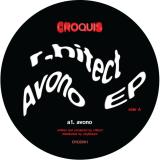

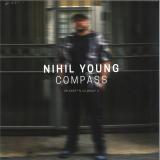


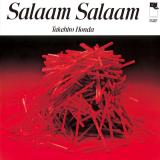






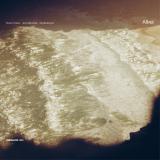








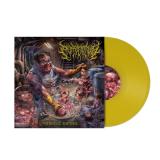




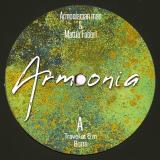




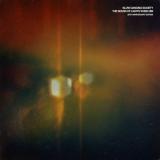
![Denise Motto - I M N X T C (Jack Your Body To The Beat) [JD Twitch Remixes]](https://www.deejay.de/images/l/4/8/1232548.jpg)