Gap Mangione's monumentally influential Diana In The Autumn Wind. AKA BEWITH200LP. And, without question, Be With's White Whale.
They said it could never be done. And with good reason.
We've spent the past 12 years trying to license this legendary 1968 recording from Gap and, after much work, it's finally here. Remarkably, this is the first ever vinyl reissue of Gap Mangione's Diana In The Autumn Wind, produced with the full and extensive participation of Gap. An exceedingly rare album, it's been coveted by funk, soul, jazz and hip-hop sample fiends for decades.
It's unarguably *the* most sought after album for J Dilla / Madlib sample collectors. It has also been brilliantly sampled by A Tribe Called Quest, Large Professor, Ghostface Killah, Kendrick Lamar and Talib Kweli.
But this record is so much more than a sample-spotters curio. It's solid gold throughout. Bursting with killer funky-jazz grooves and tracks adorned with warm electric piano, the release is notable for featuring some extremely significant players at the very outset of their careers; Tony Levin, at 21, whose superb playing on both acoustic and electric bass was the harmonic mainstay of the trio and Steve Gadd, at 23, one of the greatest drummers of his generation.
With acceptable copies of this holy grail changing hands for $400, to call this reissue "much-needed" underplays just how vital it is. Gap's story is told in his words alongside rare photos across a sumptuously designed 2-page insert and, to augment this deluxe edition further, its all wrapped up in a beautiful, no-expense-spared luxury tip-on sleeve, as per the original hens-teeth release. And, while we're talking packaging, just take a look at that cover - a work of art in and of itself.
The tracks are short but complex, with that extraordinary rhythm section backing the beautiful piano, organ and electric piano work of Gap. It's like the best ever library funk breaks record you never heard - but all your favourite golden age rap producers were all over it, long ago. It's a stunning blend of the vibrant, driving music of the Gap Mangione Trio coupled with the sensitive composition and superb orchestration of Gap's legendary brother, Chuck Mangione, who helmed an amalgam of seemingly disparate elements – rock, big band jazz, solo improvisation and "classical" music - into a spectacularly cohesive whole that has aged wonderfully well. As Gap himself notes in the liners, "with this group I was able to explore and add new and exciting elements from rock, Brazilian and then-current pop music."
Opener "Boy With Toys" triumphantly swaggers out the gate, all big band horns, flutes and dextrous organ work. The synthesis of everything going on is nothing short of stunning. When one wise YouTube commentator called this tune "old school superhero music", Gap agreed. Rap luminaries did, too, amongst them Talib Kweli, who rapped over DJ Scratch's chopped up intro for "Shock Body" on his Quality album back in 2002.
You've barely recovered from that incredibly affecting opener when you get hit over the head with the exquisite title-track. And now you see how two of the greatest beats of all time emerged from one single track produced nearly 50 years earlier. Unforgettably utilised by Dilla for Slum Village's heartbreakingly good "Fall In Love" and then Madlib for his "Official" beat for Dilla to rap over, on the Jaylib record. Regardless of the records it went on to spawn, this is just a staggering tune in its own right. Be beguiled by the flutes and the flutter tonguing, the counter-melody from the trombones, the soprano sax solo. All of it. Simply beautiful.
The questing organ and horn workout "Long Hair Soulful" deserves a lot more attention, overshadowed somewhat by the opening two monsters but no less fantastic. It swings, it grooves and Gadd and Levin truly cook. Up next, Gap's wonderfully percussive, mellifluously piano-heavy cover of "Yesterday" by some fellas called The Beatles. It's a subtly arresting gem. "The XIth Commandment" is damn fine, with thick, gorgeous electric piano and snappy drum work underpinning chaotic soundtracky horns. To close out the side, "St. Thomas" showcases the "fourth" member of the Gap Mangione Trio, conga drummer Dhui Mandingo. Having performed with the Trio since 1965, Dhui‘s African-based and jazz-latin-influenced style amazed listeners and its way to hear why.
Opening the B-Side, standard "You're Nobody Till Somebody Loves You" breezes along in the late-night jazz club fashion before things get super deep with the outstanding and - up to now - un-sampled "Pond With Swans". It's simply heavenly, and how its moody, melancholic intro has yet to be pilfered is anybody's guess. It oscillates between gentle, sombre movements and bombastic grooves, equally hypnotic and joyous. The rendition of "You Are My Sunshine" is yet another showcase for Gap's virtuoso playing and Gadd's mastery of the pocket. Indeed Gadd's drumming on "Free Again" is nothing short of neck-SNAPPING! Ghostface took it for not one but two "Iron's Theme" tracks across his seminal Supreme Clientele. It's got that Galt MacDermot "Coffee Cold" feel. Suuuuuper cool. The frantic "Dream On Little Dreamer" hurtles along and must've surely had the whole room absolutely swinging from the chandeliers back in Rochester in the late 60s. The album closes with the magnificent Graduate Medley, featuring memorable renditions of "Scarborough Fair", "The Sounds of Silence" and "Mrs. Robinson". The warm electric piano lines of the former were sampled by The Ummah (Dilla again!) for Tribe's "Pad & Pen" from their reappraised final album, The Love Movement, as well as by Large Professor on his much-loved "The LP (For My People)".
Under the watchful eye - and extremely attentive ears - of Gap Mangione himself, the audio for Diana In The Autumn Wind has been carefully remastered by Be With regular Simon Francis, with a few much needed tweaks here and there, according to the artist's wishes. At the prestigious Abbey Road Studios, Cicely Balston's expert skills have made sure nothing is lost in the cut whilst the records have been pressed to the highest possible standard at the always stellar Record Industry in Holland. The artwork restoration has taken place here at Be With HQ and has that drop-dead gorgeous cover artwork popping like new. Buy on sight!
Cerca:med school music
Extinction Burst! is the new invocation in album-form by Guttersnipe, Leeds’ premier and pre-eminent XFCER (XFCER: Xenofeminist crisis-energy rock)* duo. Slamming at full speed to multi-dimensional oblivion, Extinction Burst! is the most full, hidefinition lurid dream-mare yet spewed out by Uroceras Gigas & Tipula Confusa. Engineered and mixed by Ross Halden at Hohm Studio in Bradford and mastered by Rashad Becker, Extinction Burst! follows 2018’s My Mother The Vent, which garnered universal critical adoration. Nevertheless, this long-awaited follow up is more extreme: it is wildness beyond reason, splitting new tears in the reality gauze, ultimate hallucination through sound ecstasy. 2026’s Guttersnipe are evolved, mutated by 8 years of touring together and with the labyrinthine network of groups both Guttersnipe members are involved with - Tristwch Y Fenywod, Nape Neck, Petronn Sphene, Yexxen to name a few. On Extinction Burst!, as with previous material, the duo are heavily augmented with technology. Tipula Confusa's drum kit triggers chasm-causing synth pulses with thumping low end attack.. Strafing from all over the stereo field the constant shatter of the cymbals and toms feel like Sunny Murray or Rashied Ali in full flight during a John Coltrane session in 1967. Uroceras Gigas’s guitar + synth storm is by-now similarly an instantly recognised tool kit in underground music. Switching from screeching guitar atonality to intricate riffs from the black metal/Voivod hinterland to ultra-distorted synth meltdown, it’s an utterly overwhelming, essential and vital pouring-out of the full emotional spectrum. Both artists vocalise, ecstatic and primal, drawn out or yelped in pain or pleasure or panic. Alive On Tuesday begins with some of the only space on Extinction Burst! Digital crackles and tight-delays blow out into a fullthrottled death-dive into sweet opaqueness, offset by the duo’s vocals. There’s a popular believe that Guttersnipe is chaos, but over 9 mins here the group are clinical in their control of the simulated entropy. Mincing while the Maelstrom Churns’s guitar is modulated into jagged atonal atonement, duetting with the virtuoso drum patterns before it thuds into gear at quadruple the speed. Threads Of Radical Unaliveness veers close to the extreme Metal influences with blast beats and guttural vocalisations until the track exhausts itself into unaliveness. Keep Honking summons a demonic digital panic, with the duo reincarnating in real time as haunted versions of themselves, almost translating the lurid, ultra vivid, simultaneous hell+heaven of being alive in this dimension. Primordial Invagination harnesses No Wave’s dissension of normality before the structured collapse of Skra¨ckblandad Fo¨rtjusning, in which Tipula Confusa’s accelerating drums simulate a bouncing barrel of brimstone descending into a primordial gunky ooze, a respite in the middle before the record splutters to a stuttering finale, both members’ vocals out there in the neon realness, alive with crisis energy. There is nothing on this cursed earth like Guttersnipe. For over 10 years they have whirled in a wiggliness both woebegone and wonderstruck on a mission of radical mutant exaltation using rock music weaponry loaded with a queer hysterical ammunition to rupture the fabric of the known Rock universe and unleash a tendril-soft hallucinatory violence; thrumming with the bracing vividness of insect bodies, crazed with alien synaesthetic emotions, harnessing jagged excoriating illogic as a face meltingly snazzy affront to redundant macho mediocrity with the hope to break minds, squeeze hearts, explode pelvises and maybe even reset the parameters of reality. Addendum: xenofeminist : proposing and creating a world defined not only by sexual/gender equality, queer empowerment and the toppling of the racist heteropatriarchal hegemony and it’s tyranny of phallogocentric signifiers, but a philosophy of radical queerness that explodes the basic notion of embodied existence itself beyond even the human, where we see bacteria, invertebrates, reptiles, marine life, animalia in general, inanimate objects, quantum phenomena and as yet inarticulated bodies and minds as social and political equals that may inspire and inform our concepts of self, feeling and meaning as we labour to build a collective reality that doesn’t completely suck!! crisis energy : a term borrowed from the weird fiction author china mieville to describe a type of extreme concentration of power which emerges when a system or organism is pushed to it’s absolute limit; the point of rupture, chaos, entropic overload, just before it all breaks apart. rock : Rock ’n’ Roll, rock music, the devil’s music, sex, guitar, drums, voice, rhythm, riffs!
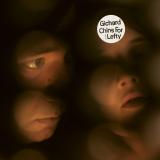
Chins For Lefty is the debut album and first recording by Gichard, a new duo chronicling the absurdities of end-stage capitalism and mouldering social rituals from their vantage point in Glasgow, Scotland. Recorded primarily in the band’s home studio straight to tape, Chins For Lefty combines gorgeous, ramshackle melody, DIY kosmische punk, drum machine + synth and, in vocalist/lyricist Lisa Jones, an absurdist commentator on the human condition as it navigates the anxieties of the modern world. Instrumentalist Chas Lalli’s swirling music accompaniment stitches an evocative mix of musical styles, the ragged wind beneath the lyrics’ wings.
Although the duo first collaborated in their previous group Dragged Up, their disparate musical and artistic backgrounds make for an alluring mix in Gichard. Lalli has spent the last 20 years in the Glasgow underground, most notably in the noise rock group VOM, while Lisa Jones’s practice was in poetry and spoken word. Beginning as co vocalist in her previous band, in Gichard her lyrics are centre stage; the vision concocted alongside Lalli amounts to a total world-build.
Chins For Lefty scans almost like a novel, with each track elucidating a skewed universe that bears only some resemblance to the one you and I partake in. Like all works of fiction Gichard’s songs are rooted in reality and the lived experiences of its authors, but here characters are exaggerated, social mores and habits are pulled apart to reveal their inherent alienness. Universal emotions are laid bare, the bright light of anxious examination searching out every hairline fracture in our relationships. Distorted and cracked, the mirror that Gichard hold up to our world is also pretty damn funny.
Opener Cholesterol Test launches an expansive, cosmic guitar and synth intro that belies the Tascam-tape recorder it was recorded onto, like a Chromatics cut substituting anxiety for overt sexuality. Here Jones intones an apology to a non-responsive recipient, in the medium of a long voice note forensically deconstructing an interaction from the night before. Over punk guitars and shuffling, lo-fi drum machine splutters, the narrator in Asking The Apes “prefers things to people” before being taken hostage in the city zoo to confess an obsession which consumes the protagonist, ending with the immortal two liner “I sleep in a cocoon of old newspapers at the end of your street / And I think I have been fired from my job,” On album standout Posthumous Hologram, the narrator is faced with a human simulacra, in this case an undead pop star; the face of the encroaching technological singularity. Yes, it does requests, it can do My Way in 200 different language options. But what are the implications? While you’re left pondering, the alternating deadpan verse delivery and undeniably catchy chorus keep you company.
By the time Break Up With Johnny Dogbirth rattles into view, the band are satirising a suburban inanity blown up to cartoon proportions, soundtracked with a drawled musicality that recalls Rowland S. Howard’s post-Birthday Party balladeering. This approach is furthered on Human Resources: over an angular guitar+bass track, Jones’s short story recalls Dry Cleaning’s erudite lyrical post punk. On Soft Face, Lalli’s guitar and drum machine are swathed in echo and delay, as Jones dissects dating rituals with a west of Scotland drollness. Hamming It Up brings a porcine perspective in a short story that begins with the line “I was breastfeeding discreetly in the service station. She didn’t mind.” What follows is a passage punctured with canned laughter and a narrative involving tribute acts, modern farming techniques.
Brilliant first single Your Private Hell closes the album, the closest the group get to earnest perhaps, filtered through a surreal central Scottishness. While Your Private Hell might seem like a sardonic take down of romance, perhaps it’s the very distillation of love in all its awkwardness, selflessness and weirdness. Here there’s a distinctive Glasgow-ness to this doomed romance: the protagonist falls for an outsider, offers them cheap jarred hot dogs and carbolic soap (the infamous, excoriating soap dished out in schools and government buildings throughout Scotland), offers to cover up a murder, stalks them in the all-night Spar. It’s a short story of intrigue, murder and the irresistible pull of self-sacrifice to share in someone else’s suffering. If that’s not love, what is it? You can see this vision mapped out in black and white on their video for 'Your Private Hell'.
- Svitlana Nianio Phanton - Fake
- Svitlana Nianio Phanton - Manyspace
- Svitlana Nianio Phanton - Quiet Place
- Svitlana Nianio / Phanton - Політ Світляки
- Няньо, Гинерв & Таран - Nianio, Geenerve & Taran - Шепочуть Cтіни - Whispering Walls
- Няньо, Гинерв & Таран - Nianio, Geenerve & Taran - Pічка Bтома - Tired River
- Solar - Your Secret
- Solar - Three Steps
- Solar - August Samba
- Taran - Death And Bachelor
"I got to know visual artist, musician, and producer Guido Erfen and sound engineer, acoustic artist, and percussionist Michael Springer as part of a group of five by the name of SHM1. The members of the group organised concerts at Rhenania, a disused grain silo, where I performed with The Absurd in 1988 and 1989. The band was also featured on one of Erfen's tape releases. Erfen and Springer met when they were still at the same secondary school and soon became close friends and musical allies. With the other members of SHM they built an independent network for creating and distributing music beyond the mainstream in Cologne. Rent at Rhenania was incredibly low, allowing a recording studio to be established there.
The first traces of the Ukrainian Underground arrived at Erfen's door via a cassette tape with three bands from Kharkiv and Kyiv, the package including a long essay which detailed the rock scene in the two cities by Sergey Myasoyedow. In 1986, Myasoyedow, together with Sasha Panchenko, had founded the “Novaya Scena“ rock club in Kharkiv, presenting bands inspired by punk, the avant-garde, dadaism, and even medieval melodies. If Erfen hadn't been part of the independent mail-art scene, he wouldn't have had the chance to discover this unorthodox music. It was the summer of 1990, shortly before the Soviet Union collapsed and Ukraine became an independent state the following year.
In 1991, singer and keyboard player Soloveyka from Kharkiv arrived in Cologne and gave Erfen half a dozen cassettes with underground bands from Ukraine and a handful with bands from the Soviet Union. Intrigued by the original music of many of the acts, he visited Ukraine twice, made friends there, compiled a tape with his favourite tracks and finally succeeded in convincing Hamburg label boss Alfred Hilsberg to present underground music from Ukraine on the CD “Novaya Scena“ via his label What's So Funny About (the original home of Einstürzende Neubauten).
The album compiled 20 tracks recorded between 1986 and 1992 by 14 bands out of Kharkiv and Kyiv– music beyond the usual Perestroika records, often with jarring dissonances over grooves that fans of Captain Beefheart or The Fall would certainly enjoy.
On the other hand, there are tracks featuring flute and trumpet that seem inspired by folk, classical music, and punk. Ghostly chamber prog miniatures by Cukor Belaya Smert (lit. Sugar White Death) from Kyiv featuring, among others, the classically trained pianist and singer Svitlana Nianio (née Ochrimenko) and guitarist, visual artist, and spokesman Yewgeny "Yenia" Taran. Nianio sang in her native Ukrainian, as did two more of the bands. Today, this seems more relevant than ever, more culturally and historically significant from a Ukrainian point of view than it was even in 1993. Young Ukrainians were amazed at that time that rock music sung in their native tongue could work!
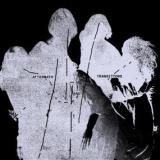
It is in the aftermath of the “Novaya Scena“ album that the music on this LP was created. About a year after the release of the CD in August 1993, Nianio and Taran came to Cologne to work on music for the dance production "Transilvania Smile" by the dance theatre ensemble Pentamonia2.
The seeds for the Traces of Ukrainian Underground in Cologne were sown. Starting in 1994, a series of informal recording sessions took place at Michael Springer’s Phanton Studio and at SHM studio in Rhenania. Together, these sessions formed the basis of the four different incarnations of the Ukraine-Cologne connection heard on STROOMS’s compilation.
- 1: The Cyclones With Count Ossie – Meditation
- 2: Cornell Campbell – Natty Don't Go
- 3: Freddie Mcgregor – Africa Here I Come
- 4: Bunnie & Skitter – Lumumbo
- 5: Willie Williams – Addis A Baba
- 6: L Crosdale – Set Me Free
- 7: Leroy Wallace – Far Beyond
- 8: Lennie Hibbert – More Creation
- 9: Alton Ellis – Blackish White
- 10: Winston Jarrett – Fear Not
- 11: Devon Russell – Drum Song
- 12: The Gaylads – Africa
- 13: Black Brothers – School Children
- 14: Linton Cooper – You'll Get Your Pay
- 15: Sound Dimension – Congo Rock
- 16: Zoot Simms – African Challenge
Soul Jazz Records celebrate 25 years of working in partnership with Studio One with brand new editions of FIVE of their bestselling CLASSIC Studio One collections all released on limitededition one-off pressing coloured double vinyl. Also available in new limited-edition card wallet CD editions. The new edition featured albums are Studio One Funk, Studio One Dub, Studio One Ska, Studio One Roots and Studio One Classics. Studio One Roots set the standard for Soul Jazz Records’ long-standing series and features many of the classic artists from Clement 'Sir Coxsone’ Dodd’s mighty roster of reggae. This album includes Freddie McGregor, Willie Williams, Cornell Campbell, Alton Ellis, Devon Russell alongside some of the defining in-house groups of Jamaican reggae history - The Sound Dimension, Brentford All-Stars, The Skatalites, New Establishment and more. The album is filled with a mixture of seminal cuts and super-rarities from the vast vaults of 13 Brentford Road.
Stand-out tracks include Alton Ellis’s ‘Blackish White’, a surreal and powerful Afro-centric dream, Count Ossie’s Rastafarian drummers’ genre-defying interpretation of Booker T and The MGs ‘Meditation’, Willie Williams aweinspiring versioning of the Skatalites' seminal Rastafari anthem ‘Addis Ababa’ and many, many more. Original sleevenotes by Lloyd Bradley (author of When Reggae Was King), compiled by Mark Ainley (Honest Jons), high-quality Soul Jazz mastering, wicked images of Count Ossie and the Mystic Revelation of Rastafari on the cover, and a rare image of Clement Dodd and musicians inside the studio at Studio One on the full colour inner sleeves. “There isn't a weak number across these 16 tracks, from the Gaylads’ ode to ‘Africa’ and Devon Russell's version of the heavyweight ‘Drum Song’ rhythm, to stunning instrumentals such as Jackie Mittoo and the Cyclones with nyahbinghi drummer Count Ossie on ‘Meditation’, Lenny Hibbert’s sparkling vibe work over Mittoo's ‘Ghetto Organ’ and The Sound Dimension’s ‘Congo Rock.” Pitchfork “The music of this compilation is of a rare, rare beauty and is essential to anyone's reggae collection.” All Music
ALTERNATE ART EDITION[29,83 €]
On a Sunday in the early 70s in South LA one could asily find themselves experiencing the Pan Afrikan Peoples Arkestra doing what they do for the community, performing incredible music. "Live at Widney High December 26th, 1971" is a previously unreleased PAPA recording. It finds director Horace Tapscott conducting the band at Widney Career Preparatory & Transition Center, a special-education magnet high school in Los Angeles. The band played shows here between 1970 and "72, often sharing the bill with contemporaries John Carter and Bobby Bradford"s group, and at one point the Sun-Ra Arkestra. These weekend shows were free and meant for the surrounding Black community. On this date the PAPA performed a range of compositions from the Ark"s expansive songbook, including arrangements of tunes by Pharoah Sanders and John Coltrane.
- A1: Design - Premonition
- A2: Vision - Lucifer’s Friend
- A3: Richard Bone - Alien Girl
- A4: John Howard - I Tune Into You
- A5: Ian North - We’re Not Lonely
- A6: Selwin Image - The Unknown
- B1: Harry Kakoulli - I’m On A Rocket
- B2: Rich Wilde - The Lady Wants To Be Alone
- B3: Billy London - Woman
- B4: Alan Burnham - Science Fiction
- B5: The Microbes - Computer
- B6: The Goo-Q - I’m A Computer
- C1: Gerry & The Holograms - Gerry & The Holograms
- C2: The Warlord - The Ultimate Warlord
- C3: Die Marinas - Fred From Jupiter
- C4: Dee Jay Bert & Eagle - I Am Your Master
- C5: Peta Lily & Michael Process - I Am A Time Bomb
- C6: Sole Sister - It’s Not What You Are But How
- D1: Alasdair Riddell - Do You Read Me?
- D2: Karel Fialka - Armband (The Mystery Song)
- D3: John Springate - My Life
- D4: Idncandescent Luminaire - Famous Names
- D5: Disco Volante - No Motion
- D6: Dream Unit - A Drop In The Ocean
2025 REPRESS ON TRANSPARENT GREEN VINYL
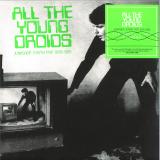
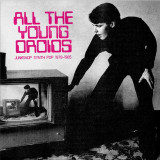
Compiled by Philip King “And then came the rise of synth pop : blokes with dodgy haircuts hunched over keyboard-operated machines stuffed with wires and do-it-yourself tone oscillators making sounds like a brood of geese passing gas in a wind tunnel. Whoopee! This is the way the ‘70s ended : not with a blood-curdling bang bang but with a cheap, synthesized, emasculating whimper.” NICK KENT, NME. All The Young Droids: Junkshop Synth Pop 1978-1985 is a new compilation that charts the underbelly of the epoch-defining sound of the synthesiser in 80s popular music. Compiled by Philip King (previously seen compiling All The Young Droogs, Glitterbest and Boobs - The Junkshop Glam Discotheque), the music here connects the dots between DIY synth enthusiasts grappling with new, cheap synthesisers at the tail-end of punk and wannabe, jobbing songwriters enthral to the new music pioneered by Gary Numan, Depeche Mode and Daniel Miller’s Mute Records. Featuring rare tracks of auto-didactic progressive pop music, proto-techno punk, shoot-for-the-stars-land-in-the-gutter chart flops and heralded, underground synth classics, School Daze paints a picture of beautiful failure. Complete with extensive sleeve notes written by King and never before seen imagery, all 24 tracks were remastered by RPM in-house engineer Simon Murphy, many from vinyl copies due to lost master tapes. The story told on All The Young Droids is one of the dawning opportunity presented by both the emergence to the market of cheaper analog synthesisers and the distribution networks plus indie labels that exploded with the advent of punk music in 1976. While the music that sprouted out all over the globe in the wake of these factors was decried as fake, plastic, a refutation of punk’s guitar-led revolution, it’s telling that much of the music on All The Young Droids.. was created in bedrooms, ramshackle studios and home-made set ups with often borrowed equipment. In the era of record labels jumping to capitalise on the success of The Sex Pistols, The Clash (both on major labels, of course) these artists struggled to stand out from a new gold-rush with next to no budget or PR team. With radio and labels desperate for the new Yazoo, what resulted was a testament to necessity being the mother of invention. At the time, the synthesiser was the music of the future, a shiny new machine that could paint like an orchestra with a single finger and a 4-track. In the hands of Manchester avant-pranksters Gerry & The Holograms it’s a pulsing, sardonic weapon.. the only instrument on the Messthetics classic lampooning of New Wave fashion. In Hamburg, a 16 year old Andreas Dorau used it to write and record (with his female classmates on vocals) a global smash in Fred Vom Jupiter (later licensed to Mute Records). The hard-to-find English version (Fred From Jupiter, natch) is included here. Many artists with alreadystoried careers caught the bug and recorded synthesiser-fuelled peons to space, computers, the future and, of course, love-interests. Harry Kakoulli, late of Squeeze, recorded a solo album in 1979 that included the incredible power-synth-pop smash-that-never-smashed I’m On A Rocket. Similarly, Ian North of Neo and American Power Pop stalwarts Milk ’n’ Cookies bought a Korg MS20 and used a tape machine to record We’re Not Lonely, an absolute lost-classic of minimal synth pop. We’re Not Lonely also features on the Junkshop Synth Pop sampler 7” twinned with John Howard unreleased track You Will See, released April 12th 2025. There are plenty of compilation debuts in evidence. Sole Sister were a mysterious trio who were featured on the Scaling Triangles compilation of female-fronted, queer-adjacent post-punk / underground music that also featured The Petticoats. Selwin Image were from San Francisco and featured members of the recently defunct power pop/punk group The Pushups. Their stupidly catchy The Unknown fizzes with New Wave energy - think XTC to Sparks but remains unreleased until now. Dream Unit’s A Drop In The Ocean is an early synth wave cut, positively teaming with Joy Division instrumentation, previously only released on a long-forgotten and super rare, self-released EP. Incandescent Luminaire’s Famous Names belies an archetypal struggle of a small-town trying to make it in a cruel industry but is a thrilling New Romantic-Synth Wave cross over with a OMD gloominess that’s a joy to hear. Feminist Minimal Wave track I Am A Time Bomb by performance artist Peta Lilly and Michael Chance is a revelation destined for new found cult status. It was released on 7” and lost until now. The flipside to the subterranean, never-made-it synth pop mentioned above are the ambitious, even fruity attempts at success that have a perennial elegance to their confidence. New Jersey-ite Billy London (real name Ed Barth) tried to cash in on the synth boom with Woman, released by a major label, a lurching new wave track built on the Louie Louie rhythm and a wonderfully camp Lou Reedstyle sleazy vocal before exploding in the synthesised chorus. The song bombed but with a chorus like this, you have to wonder why? Ex-Glitter Band member John Springate’s My Life is truly epic, with doomed chord progressions and massive sounding drums turning into at least 3 different songs in the course of the track. Before you wonder what’s going on the song resolves with a glorious return to the main refrain. The dry-ice-dressed dance floor is well catered for too. Design’s Premonition and Vision’s Lucifer’s Friend are stone-cold minimal synth bangers, well loved but given a new lease of life here. The Warlord’s The Ultimate Warlord was released in 1978, a homespun proto Hi NRG banger that was later re-recorded by The Immortals in Canada who had a club hit with it. One-man- band Disco Volante’s No Motion was re-issued by Synth wave label Medical in 2012 but makes its first vinyl compilation appearance here. Close your eyes and you can imagine what Lawrence of Felt would have sounded like with some cheap Korgs a little earlier in his career. Gibraltar-based trio The Microbes imagined a computer programming people to dance - how prescient - and ended up with a propulsive, robo-funk track with splendid rubbery bass playing over a tectonic drum machine. Previously picked up by Belgian label Stroom TV, Dee Jay Bert & Eagle’s heavily Euro-accented I Am Your Master demands the listener to “come to paradise!” In a frankly terrifying manner. All The Young Droids is the first compilation to peel away from the narrative that dour, Minimal Synth and Cold Wave were the only musical children of the first rush of synth pop. Philip King and School Daze Records describe a much more complicated world: along with the austere, Brutalist children of Daniel Miller (who produced Alan Burnham’s Bowie-Low-influenced Science Fiction here) was a plethora of desperate cash-ins, accidental mainstream hits, ambitious pop dramas and major label punts that went nowhere. Crucially, the compilation blurs the line between junk and treasure. What if the two things are interchangeable. What if it’s all science fiction?
- 1: Toronto 20Xx
- 2: Theme From Scott Pilgrim Ex
- 3: Player Select
- 4: One More Summer
- 5: Stephen's House
- 6: Shopping District
- 7: High Fashion
- 8: High Park
- 9: Wallace's House
- 10: Downtown T.o
- 11: Hollie Hawkes
- 12: Food Court
- 13: Julie Powers
- 14: Coffee Break
- 15: Window Shopper
- 16: Wallace Wells
- 17: Band Practice
- 18: Ice Age
- 19: Dino Surf Rock
- 20: The Beaches
- 21: Vegan Banter
- 22: Vegan Brawl
- 23: Playtime
- 24: King Of The Rails
- 25: Chill Minigame
- 26: Benvie Tech 1F
- 27: Benvie Tech 2F
- 28: Benvie Tech 3F
- 29: Benvie Tech Boss Battle
- 30: Vpd Hq
- 31: Eldest Son
- 32: Vpd Boss
- 33: Medieval Julienne
- 34: Subspace Ex
- 35: Unchill Minigame
- 36: Demon Chat
- 37: Demon Attack
- 38: Casa Vania
- 39: Lady Envy
- 40: Let's Fight!
- 41: Movie Studio
- 42: Let's Throw Down!
- 43: Peaceful Casa
- 44: Throne Room
- 45: Demon Boss
- 46: Let's Do This!
- 47: Old Timey Movie Studio
- 48: Big Band Intro
- 49: Big Band Boss
- 50: Riff Rift Revisited
Scott Pilgrim EX, the newest video game from the Scott Pilgrim franchise developed by Tribute Games, is out now with an all new original soundtrack from Anamanaguchi. The sprawling soundtrack, which accompanies a brand-new storyline co-written by series creator Bryan Lee O’Malley, perfectly connects the band's legendary electronic past with their fuzzed out garage rock present while maintaining their unmistakable punchy style. Known for resonant world building across past projects, the depth of emotion and the range of styles displayed on Scott Pilgrim EX are uniquely Anamanaguchi while delivering a host of melodically anthemic and new energetic hooks that are sure to pack a punch for both newcomers and old school fans of the band alike.
Anamanaguchi's collaborative relationship with the Scott Pilgrim universe goes back to the early days of the band. After cutting their teeth programming music with playable Nintendo cartridges and helping to bring a wider audience to a largely internet based 8-bit chiptune scene, the band was brought in to score the fan-favorite soundtrack for Scott Pilgrim vs. the World: The Game. The success of this game soundtrack would help them to launch an early crowdfunding success story with their campaign for their debut album, 2013's Endless Fantasy. From there the band would go on to collaborate with virtual pop star Hatsune Miku (resulting in the perpetually viral, Fortnite featured hit, “Miku”), and later develop the intricately soundscaped compositions displayed across their second album, USA, but throughout it all the connection between the band and the Scott Pilgrim universe would remain a pivotal source of inspiration.
After being brought in to score the animated Netflix series, Scott Pilgrim Takes Off, in 2023, band members Peter Berkman and Luke Silas would credit the live kinetic energy they channeled when writing songs for the in-universe garage band Sex Bob-Omb with helping them get back in touch with the roots of how they learned to play music even before Anamanaguchi's earliest releases. This process would eventually lead to Peter and Luke alongside the remaining two band members — Ary Warnaar and James DeVito — flipping their typically meticulous digital writing process for the more collaborative, straight to tape, distorted angst that can be found on 2025's Anyway, marking another significant evolutionary turn for the band to come out of their relationship with Scott Pilgrim.
Now fresh off the heels of a nationwide tour in support of Anyway, Anamanaguchi have returned to the 8-bit beat em up world of Scott Pilgrim with a relentlessly high energy and genre defying original soundtrack for Scott Pilgrim EX. A return to form that comes with a depth of knowledge and innovative skills that have allowed the band to continue to evolve and grow alongside the characters in the Scott Pilgrim universe and the multi-generational fanbase that continues to follow along with them.
The new soundtrack for the latest installment in the Scott Pilgrim franchise, Scott Pilgrim EX
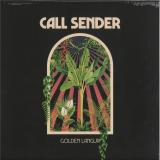
Call Sender is the collaborative brainchild that unites the talents of Paul Elliott, a versatile multi-instrumentalist, composer, producer, and recording engineer from Suffolk/UK and Michael Reed, a multi-talented instrumentalist, recording engineer, and drummer residing in the Bay Area/USA. Despite working together for the past four years, the pair are yet to meet in person!
After connecting on social media over their love of drum breaks and vintage reverbs Elliott and Reed fostered their creative partnership by bouncing recordings back and forth via email and this virtual collaboration resulted in their first album, the jazz-funk inspired “Lost To The Storm” (Tru Thoughts, 2023). With four singles from the album gaining radio play and becoming a favourite for tastemakers and DJs, the pair began work on the follow up “Golden Langur”. With this new record, the aim was to retain their signature Call Sender sound, a heady mix of B-movie soundtracks, classic library music and psychedelic funk and soul, but also introduce elements of lo-fi soul as well as collaborating with some of their talented friends as featured artists.
These features include fantastic instrumental contributions from the incomparable funkmaster Shawn Lee (Ping Pong Orchestra/Young Gun Silver Fox) on “Brainforests” and the legendary JJ Whitefield (Poets Of Rhythm/Whitefield Brothers) who kicks ass in two tempos on “Two Tails”. Not to mention the silky-smooth vocals from the Bay Area’s Andre Cruz, vocal duet from Lucid Paradise that is reminiscent of Gil Scott Heron and Paul Elliott’s seven year old son Buddy drops a vocal on the future B-boy classic “Rainbow”. Together Call Sender has an old-school vintage foundation with a modern perspective. Influenced by iconic acts such as Klaus Weiss, Miles Davis and Nino Nardini and with a hip and funky sonic aesthetic, Call Sender’s music is nostalgic without being pastiche, has a sense of travelling at its core, having been recorded in different parts of the globe, while never hesitating on the direction of the music.
We Release JAZZ is honored to announce the release Shoals, a magnificent full-length album from Earth and Bones, the duo consisting of Liran Donin and Idris Rahman of acclaimed jazz outfit Ill Considered. Their majestic offering is available in an ultra limited edition 180g vinyl LP housed in a heavyweight sleeve with an original artwork by Dutch artist Vincent de Boer.
Carried by Liran Donin on double bass and shakers, and Idris Rahman on bass clarinet, tenor sax, shell, and Tibetan singing bowl, the 5-track album is a deeply entrancing meditative-shamanistic-ambient-jazz journey. The members of Earth and Bones poured their heart and beliefs into the project:
"From shamanic cultures and forgotten traditions, we delved deeper searching our ancient healers, exploring who they heal, what they heal, and how they do it. We wanted to focus on the poisonous human attributes that affect our animal kingdom, as well as how we can heal ourselves by balancing darkness and light. We express our forever gratitude to our community, tribe and animal kingdom.
Despite how governments and multinational corporations try to isolate us from one another, we can't make it alone without our shoal. To truly have a shoal, we need to accept each other for what we are."
Their friend, Vincent de Boer, delivers the visual side of Shoals:
"The living world and all its particular (eco)systems s increasingly a source of inspiration for my art process. When Idris and Liran showed me the new recording and the thoughts behind it, it immediately fell onto good grounds. A school of fish is eminently a metaphor for collective improvisation, something we are all engaged in on an artistic level. The group decisions go beyond causality, the energies provide a simultaneous awareness for choices of direction. The space between the entities thus form a new entity. Non-matter becomes matter and vice versa: an area where music and visual art meet.
I drew a school of fish and tried to make it look like a fixed entity, so that multiple lives become one collective. As a bird and perhaps as a rock or cave: outside becomes inside becomes outside: so that all domains of the living world are linked: the swimming, the crawling, the flying and the playing. The spiritual connection with the music of Idris and Liran is grand, the places it takes me are at once very distant and extremely close. From otherworldly to within the body: the opposites as well as the harmonies are of shamanistic proportions."
Points of interests
For fans of ambient-jazz, meditative music, shamanistic rituals, improvisational process, deep vibes, Ill Considered, Vincent de Boer, heartful connections, healers and healing, the body, the otherworld, life within and outside.
.Super limited edition vinyl of Earth and Bones' debut !
Slowly yet firmly blooming into focus, An Unfinished Rose is the new album from Australian duo Troth.
This is their first since relocating to Hobart, Tasmania and their introduction to Night School Records. With a detailed web of past releases on labels A Colourful Storm, Mammas Mysteriska Jukebox, Knekelhuis and Bowman’s own Altered States Tapes imprint, An Unfinished Rose is the group’s most realised and composed work thus far. While still drawing on the improvisatory and DIY practices that informed Troth’s beginnings, it points to a new incarnation of the duo’s music; an intentional language emerging from the fog of obfuscation and mists of uncertainty.
Over these 9 meditations on change, acceptance, renewal and rebirth, An Unfinished Rose finds Amelia Besseny and Cooper Bowman peeling back some of the roughhewn architecture that defined their earlier releases to reveal a masterful - if auto-didactic - use of space and melody. Composition and improvisation compliment and feed each other throughout, with locked-loop earworms providing the springboard for lines of clarinet or synth melody, and the negative space between chord clusters giving ample room for Besseny’s most confident vocal performances to date. Shaving off a little of the defining dissonance and tape compression of old reveals Troth’s music in radiant daylight, humbly accepting of its place in the world while yearning for better, more sympathetic modes of living. Leaning more heavily on acoustic instrumentation and post-production processes than previously, the result is a transcendent body of work infused with an almost zen-like presence.
Troth’s music exists in the border between forming and becoming, its goal to project a kind of preternatural beauty, leaving interpretation open to the listener. Field recordings, happenstance and improvisation may provide seeds for the duo’s compositions, particularly on Side A, but there is a deft touch of songcraft on show. Loam Loom Leaf Litter opens An Unfinished Rose, directly referencing natural cycles of life, death and regeneration, before the blissed-out drum machine groove of Gold Plum continues a discussion concerning the totality of nature and one’s place in it. Besseny’s vocal, swelling like an ocean churn in duet with itself is adorned with synthesised harp and a revolving synth pattern, conjuring plumes of medieval smoke. Thistle’s rounded, bass-heavy drums, nodding to the vast echo of dub, is a relatively new terrain for Troth. It’s propulsive and thumping, pulsing with a meaning and symbolism consistent with Troth’s past work, referenced overtly in Bessey’s lyrics - “Say it too much and it loses its meaning…”. Similarly, the sprawling modern-classical suite, Tides Reflected In Her Eyes, is intentional in its lyrical themes while traversing new ground, revelling in layers of bowed cello and vocal intonations. Side B’s 4 tracks feel like Troth’s most thoroughly accessible and affecting music to date. Leaning into their own detoured version of Synth Pop, Cocoonist explores downtempoisms via a crunchy low frequency synth, and dream-like, fuzzy trip-hop modalities, not unlike Besseny and Bowman’s other group, Th Blisks. Following on, Myrtle Mystes is an open and searching DIY pop song, forged out of drum machine, bass guitar and cello. (An) Unfinished Rose’s title-track is a clear stand-out, built upon an evocative rhythm sample that appears to change emotional resonance with each undulating repetition. Its cascading waves of affect, interjected with a subtle breeze of synth, bowed instrumentation and soaring, densely-layered vocals.
An Unfinished Rose is enveloping, warm, forgiving. Difficult, yet retaining a unique beauty. Troth’s music aims to celebrate the duo;s shared experiences of being in the world, despite the complexity often surrounding us all. Theirs is a message of hope and perseverance, learning and patience.
Ode To Native Tongues” attempts to capture the feeling of coming of age between the years of 1989 -1993 (and beyond) while listening and witnessing the legendary Native Tongues crew releasing timeless classic albums and singles. Told through the experience of seeing the early episodes of “Yo! MTV Raps”, a friend sharing De La Soul’s first album, sharing that album with my cousin who in exchange shared Queen Latifah’s music or finding out about “Bonita Applebum” by Tribe at my high school’s homecoming dance. Evoking nostalgia as well as tell a story of how this music served as the soundtrack woven into the fabric of my youth, my coming of age, was the aim.
Everything’s For Sale” was inspired partly by a story of an elderly couple who went brokhaving to pay for their medicine.“Everything’s For Sale” speaks to how the value of money permeates all facets of this modern life, and as such it seemed only natural for it to reach into my creative world. This time however I wanted to make a song that cross examined how this super ficiality has affected music culture, let alone how it has rendered some in our society invisible -- a clear sign of a society void of compassion. The Platurn beat with a moving guitar riff pushed this song further, providing me the cover of a funky beat to dive into a topic that might not normally move an audience. Part cheat code for slipping in a conscious message to the audience without raising the alarm of the listener who may not be expecting anything more than entertainment.
Veteran Japanese electronic music producer, AKIO NAGASE, a leading player in the Kansai underground music scene since the late 1990s teams up with Yukino Inamine, a gifted and young female singer from Okinawa who magically mixes traditional Ryukyu (Okinawa) folk songs with her sanshin (Okinawan Shamisen) playing into the modern age, to create this wonderful collaborative album, Yugafu ai KAJI. This album is set to be released on GLOCAL RECORDS, a record store/ record label run by Genta Minowa, an ex-staff at the record store, Disc Shop Zero in Shimokitazawa, Tokyo and who still continues to introduce a great selection of dubby, club music from his HQ in Harajuku.
AKIO NAGASE regularly organised parties at his own venue, as well as ran a record store of the same name while actively being part of the Kansai scene at legendary clubs such as Tsuru no Ma, Sound Channel, etc., the best of what was offered in the Kansai underground dance scene in the 2000s.
As an artist, he released his own productions out of labels such as Sound Channel and RUDIMENTS run by Minowa. His album, Make Dub was released in 2003 out of the label, Sound Channel featured an innovative, techno meets dancehall track, Dance Hall King which connected techno, acid house with reggae and dub. This album is an undiscovered gem whose sound still emulates freshness and originality today (my wish is for it to be reissued on vinyl!) After a brief hiatus of releasing music, he released the EP, Delusion out of Chillmountain Records, a label run by his friend, Ground in 2018 and at his own leisurely pace, he has been slowly but surely releasing material that oozes originality, expressed through a robust acid sound and a variety of elements such as afro and Ryukyu folk music that is then incorporated into the medium of dub. Recently, he has also started to gain international attention by releasing original material and remixes out of labels such as the UK label, Emotional Especial, etc.
For this album, NAGASE teams up with Yukino Inamine who brings her own distinctive singing and sanshin playing magic into this collaboration and they fuse electronic music sounds with Ryukyu folk songs to create this wonderfully imaginative album that has no precedence or equal. Apart from the song, Ishikawa Koiuta, all other songs are covers of Ryukyu folk standards that were handpicked by NAGASE from the repertoire of songs that Inamine regularly performs live. They met up when NAGASE was commissioned to remix one of her original compositions, Miyagi Kaigan that was released in 2023 and that evolved into a collaboration with a concept that mixed Inamine singing Ryukyu folk standards with a backing tracks produced by NAGASE. Whenever she went to the the Kansai area, she would work on the basic track material created by NAGASE at the dub master of Osaka, Soulfire’s studio, HAV who would then additionally edit her takes to create the finishing tracks.
This album, Yugafu ai KAJI opens with Shirahamabushi, a track that slowly builds with an interesting mix of slow acid techno and sanshin and then moves onto the easy-going electro dub of Tinsagu nu hana (it is actually a cover of the track of the same title that first appeared in the label sampler, Comuni ó n Especial that was released on Emotional Especial. NAGASE initially wanted to feature Inamine on vocals for this track but due to scheduling issues, it did not happen but with good fortune, the new version of this track is now included in this album). A side closes with the optimistic Balearic sounds of Tsuki nu Kaisha that converges immaculately with slow-mo steppers. It is also worth noting that the person who introduced NAGASE to Inamine was the Okinawa dub master, HARIKUYAMAKU. They met at a concert held by both him & Yukino Inamine hosted by BUN BUN THE MC at the venue, RAGGA CHANNEL. From this encounter, this album came into fruition and they also asked HARIKUYAMAKU to produce an earthy, traditional rootsy, dub version of Tsuki nu Kaisha that is included as the 3rd track on the B Side.
Ashimizubushi, the track that magically blends old school Chicago house ala TRAX with Ryukyu folk music starts off the B side and it carries on to an uplifting track with a Skaouse (ska + house) feel, Hounen Ondo. Inserted after HARIKUYAMAKU’s dub of Tsuki nu Kaisha, this album closes out with the song, ‘Ishikawa Koi Uta’, the only song written by Inamine who said that she wrote it after falling in love with chill-out music. It is an ambient dub track with a collage like flavour, reminiscent of early The Orb (remixed by Mad Professor) and the latter half of the track finishes off with a message presented by Masao Itokazu (her uncle) who received tutelage from the prior owner of her sanshin that Inamine plays, Moritomo Inamine (her grandfather).
Incidentally, the album title, YUGAFU ai Kaji is derived from an auspicious word from Okinawa, Yugafu which means fruitful year, happiness, prosperity and ai (indigo) is a word that Yukino found inspiration few years ago (she wears a Okinawan indigo clothing called kinonuno in the front cover of this album).
The unique indigo colouring produced by nature overlaps with the unique charm of the human personality, and she wanted to present that current along with the music so the name was integrated to ‘indigo wind’, and the two were connected to form the album title, ‘YUGAFU ai Kaji’.
The photo of the front cover was taken by a young, Uchinaanunishie—- (meaning a boy from Okinawa) 17 year old photographer named Ratio and the designer of this album is Anmonaito who is a childhood friend of Inamine who also did the artwork for her album, Miyagi Kaigan. And the mastering and cutting of this album was done by Rei Taguchi.
The cosmology existing in Yukino Inamine’s singing is fully amplified by AKIO NAGASE’s spacey, abundant with many ideas, dance machine beat~ambient music and all of these elements are organically linked by the adhesive effect of dub.
Mediterranean vibes right in time for summer.
RIVIERA VENTURA is an Italian band that blends organic disco, modern R'n'B and and old school funk into a distinctive and captivating sound with a positive and uplifting vibe.
"Monotono" is is a sun-drenched piece of Italo Disco music with a contemporary edge. Phat drums and bass are topped with ethereal synth echoes and singer Cecilia Preste's soulful Italian vocals and lyrical wit.
"Con Te" is an Italo Disco tune with endless summer vibes and a touch of melancholy. Cecilia's sultry vocals and the band's dreamy groove transport you right into a hot summer night with all its drama and pleasures.
- A1: Design - Premonition
- A2: Vision - Lucifer’s Friend
- A3: Richard Bone - Alien Girl
- A4: John Howard - I Tune Into You
- A5: Ian North - We’re Not Lonely
- A6: Selwin Image - The Unknown
- B1: Harry Kakoulli - I’m On A Rocket
- B2: Rich Wilde - The Lady Wants To Be Alone
- B3: Billy London - Woman
- B4: Alan Burnham - Science Fiction
- B5: The Microbes - Computer
- B6: The Goo-Q - I’m A Computer
- C1: Gerry & The Holograms - Gerry & The Holograms
- C2: The Warlord - The Ultimate Warlord
- C3: Die Marinas - Fred From Jupiter
- C4: Dee Jay Bert & Eagle - I Am Your Master
- C5: Peta Lily & Michael Process - I Am A Time Bomb
- C6: Sole Sister - It’s Not What You Are But How
- D1: Alasdair Riddell - Do You Read Me?
- D2: Karel Fialka - Armband (The Mystery Song)
- D3: John Springate - My Life
- D4: Incandescent Luminaire - Famous Names
- D5: Disco Volante - No Motion
- D6: Dream Unit - A Drop In The Ocean
MB Crystal Vinyl[32,73 €]
LTD Trans Pink Vinyl[32,82 €]
LTD Trans Pink Vinyl[27,69 €]
Compiled by Philip King
“And then came the rise of synth pop : blokes with dodgy haircuts hunched over keyboard-operated
machines stuffed with wires and do-it-yourself tone oscillators making sounds like a brood of geese
passing gas in a wind tunnel. Whoopee! This is the way the ‘70s ended : not with a blood-curdling bang
bang but with a cheap, synthesized, emasculating whimper.”
NICK KENT, NME.
All The Young Droids: Junkshop Synth Pop 1978-1985 is a new compilation that charts the
underbelly of the epoch-defining sound of the synthesiser in 80s popular music. Compiled by Philip
King (previously seen compiling All The Young Droogs, Glitterbest and Boobs - The Junkshop
Glam Discotheque), the music here connects the dots between DIY synth enthusiasts grappling with
new, cheap synthesisers at the tail-end of punk and wannabe, jobbing songwriters enthral to the new
music pioneered by Gary Numan, Depeche Mode and Daniel Miller’s Mute Records. Featuring rare
tracks of auto-didactic progressive pop music, proto-techno punk, shoot-for-the-stars-land-in-the-gutter
chart flops and heralded, underground synth classics, School Daze paints a picture of beautiful failure.
Complete with extensive sleeve notes written by King and never before seen imagery, all 24 tracks
were remastered by RPM in-house engineer Simon Murphy, many from vinyl copies due to lost master
tapes. The story told on All The Young Droids is one of the dawning opportunity presented by both the
emergence to the market of cheaper analog synthesisers and the distribution networks plus indie labels
that exploded with the advent of punk music in 1976. While the music that sprouted out all over the
globe in the wake of these factors was decried as fake, plastic, a refutation of punk’s guitar-led
revolution, it’s telling that much of the music on All The Young Droids.. was created in bedrooms,
ramshackle studios and home-made set ups with often borrowed equipment. In the era of record labels
jumping to capitalise on the success of The Sex Pistols, The Clash (both on major labels, of course)
these artists struggled to stand out from a new gold-rush with next to no budget or PR team. With radio
and labels desperate for the new Yazoo, what resulted was a testament to necessity being the mother
of invention.
At the time, the synthesiser was the music of the future, a shiny new machine that could paint like an
orchestra with a single finger and a 4-track. In the hands of Manchester avant-pranksters Gerry & The
Holograms it’s a pulsing, sardonic weapon.. the only instrument on the Messthetics classic lampooning
of New Wave fashion. In Hamburg, a 16 year old Andreas Dorau used it to write and record (with his
female classmates on vocals) a global smash in Fred Vom Jupiter (later licensed to Mute Records).
The hard-to-find English version (Fred From Jupiter, natch) is included here. Many artists with alreadystoried careers caught the bug and recorded synthesiser-fuelled peons to space, computers, the future
and, of course, love-interests. Harry Kakoulli, late of Squeeze, recorded a solo album in 1979 that
included the incredible power-synth-pop smash-that-never-smashed I’m On A Rocket. Similarly, Ian
North of Neo and American Power Pop stalwarts Milk ’n’ Cookies bought a Korg MS20 and used a
tape machine to record We’re Not Lonely, an absolute lost-classic of minimal synth pop. We’re Not
Lonely also features on the Junkshop Synth Pop sampler 7” twinned with John Howard unreleased
track You Will See, released April 12th 2025.
There are plenty of compilation debuts in evidence. Sole Sister were a mysterious trio who were
featured on the Scaling Triangles compilation of female-fronted, queer-adjacent post-punk /
underground music that also featured The Petticoats. Selwin Image were from San Francisco and
featured members of the recently defunct power pop/punk group The Pushups. Their stupidly catchy
The Unknown fizzes with New Wave energy - think XTC to Sparks but remains unreleased until now.
Dream Unit’s A Drop In The Ocean is an early synth wave cut, positively teaming with Joy Division
instrumentation, previously only released on a long-forgotten and super rare, self-released EP.
Incandescent Luminaire’s Famous Names belies an archetypal struggle of a small-town trying to
make it in a cruel industry but is a thrilling New Romantic-Synth Wave cross over with a OMD
gloominess that’s a joy to hear. Feminist Minimal Wave track I Am A Time Bomb by performance artist
Peta Lilly and Michael Chance is a revelation destined for new found cult status. It was released on 7”
and lost until now.
The flipside to the subterranean, never-made-it synth pop mentioned above are the ambitious, even
fruity attempts at success that have a perennial elegance to their confidence. New Jersey-ite Billy
London (real name Ed Barth) tried to cash in on the synth boom with Woman, released by a major
label, a lurching new wave track built on the Louie Louie rhythm and a wonderfully camp Lou Reedstyle sleazy vocal before exploding in the synthesised chorus. The song bombed but with a chorus like
this, you have to wonder why? Ex-Glitter Band member John Springate’s My Life is truly epic, with
doomed chord progressions and massive sounding drums turning into at least 3 different songs in the
course of the track. Before you wonder what’s going on the song resolves with a glorious return to the
main refrain.
The dry-ice-dressed dance floor is well catered for too. Design’s Premonition and Vision’s Lucifer’s
Friend are stone-cold minimal synth bangers, well loved but given a new lease of life here. The
Warlord’s The Ultimate Warlord was released in 1978, a homespun proto Hi NRG banger that was
later re-recorded by The Immortals in Canada who had a club hit with it. One-man- band Disco
Volante’s No Motion was re-issued by Synth wave label Medical in 2012 but makes its first vinyl
compilation appearance here. Close your eyes and you can imagine what Lawrence of Felt would have
sounded like with some cheap Korgs a little earlier in his career. Gibraltar-based trio The Microbes
imagined a computer programming people to dance - how prescient - and ended up with a propulsive,
robo-funk track with splendid rubbery bass playing over a tectonic drum machine. Previously picked up
by Belgian label Stroom TV, Dee Jay Bert & Eagle’s heavily Euro-accented I Am Your Master
demands the listener to “come to paradise!” In a frankly terrifying manner.
All The Young Droids is the first compilation to peel away from the narrative that dour, Minimal Synth
and Cold Wave were the only musical children of the first rush of synth pop. Philip King and School
Daze Records describe a much more complicated world: along with the austere, Brutalist children of
Daniel Miller (who produced Alan Burnham’s Bowie-Low-influenced Science Fiction here) was a
plethora of desperate cash-ins, accidental mainstream hits, ambitious pop dramas and major label
punts that went nowhere. Crucially, the compilation blurs the line between junk and treasure. What if the
two things are interchangeable. What if it’s all science fiction?
180 G. BLACK VINYL WITH LINER NOTES IN CREOLE, FRENCH, ENGLISH
Originally released in 1979, "Spiritual Sound" lives up to its name, a soaring, triumphant album, six tracks of spirit magic from Guadeloupe.
Telluric, intense, terribly alive, the gwoka drums of Guadeloupe carry the identity of a painful and fervent island. Marked forever by the crime of slavery, Guadeloupe's créolité cherishes the ka drums and their natural environment: the low-pitched boula drum with male goatskin, the high-pitched soloist makè drum with female goatskin, the chacha, ti bwa, triangle, calabash and other percussion instruments that surround them, and the voices - the fiery, proud, timbred, urgent voices of the gwoka.
This album is also a legend for its voices: in his then dazzling youth, singer Lukuber Séjor was one of the first gwoka artists to largely feminize the chorus of répondè, who converse with his text delivered in a straight and powerful voice.
And everything here sets new standards. In 1979, Mizik Filamonik - Spiritual Sound proclaimed a spiritual patriotism of ferocious intensity. The album by Lukuber Séjor - whose spelling alone is a battle - sets out to give Guadeloupe the intangible weapons of self-respect and self-knowledge, through a singular practice of traditional music.
The genesis of gwoka music is less straightforward than one might imagine... The drums performed the servile task of accompanying the work of slaves in the fields and during the “corvées” imposed by the administration, before being freely practiced by the common people after the abolition of 1848. At the heart of the conviviality of the Guadeloupeans furthest from the cities - geographically and socially - the gwoka drums come out for carnival, funeral wakes and neighborhood celebrations, but also during strikes, fits of anger and armed vigils of the riots and revolts that have punctuated the island's history. For generations, governors of the colony and then the prefects of the overseas department of Guadeloupe have been viewing the gwoka as a potential for turbulence and a threat to public order.
But as the Beatlesmania, “chanson engagée” and rock revolutions unfolded in Europe, young people turned to the drums of mizik a vié nèg (“bad negro music”, in Creole), which Guadeloupeans had learned to despise by following the “assimilation” process advocated by the school system and most of the political class. At the end of the sixties, in a Guadeloupe mourning the deadly repression of the May 1967 social movement, they played traditional music, refusing to wrap it up in tourist prettiness and madras folk costumes. Instinctively, they played a rough and contemporary gwoka, led by the incendiary Guy Konkèt. This was the era of decisive 45 rpm records such as Robert Loyson's Kann a la richès, which brought to light the fieriest words of union rallies.
At his home in Sainte-Anne, Lukuber Séjor played with flautist Olivier Vamur and his brother Claude Vamur, who cobbled together a drum kit from tin crockery and became, a few years later, the most influential drummer in Kassav'.
These were the years of the Bumidom program, when young Guadeloupeans were encouraged to emigrate to mainland France. At the age of twenty, Lukuber Séjor embarked on the liner Irpinia, disembarking at Le Havre and taking the train to the Gare Saint-Lazare - the route taken by thousands of young West Indians who went on to study or looked for work, all the while trying to maintain a link with their homeland. In this case, it's at the Antony university residence, where Lukuber played the drum and participated in a thousand gwoka updates and aggiornamentos, while exile reinforced the need for a spiritual link with the native land.
In 1978, Guy Konkèt played at the Salle Wagram, a historic event for West Indian music. After serving as répondè - i.e. backing vocalist - on one of his home-recorded albums, Lukuber joined his live band. Little by little, he became one of the key artists on a circuit parallel to French show business. At a student party in Caen, he met a young woman from Martinique who, at the time, was more motivated by her ambitions as a visual artist than by her vocation as a musician. Her name was Jocelyne Béroard and, a few years before she plunged into the Kassav' adventure and became the greatest West Indian singer of her generation, she designed the cover of Lukuber Séjor's LP.
This ambition was obvious and imposed its will. A more or less regular band was formed, with Roger Raspail, Rudy Mompière and Éric Danquin on ka drums, Claude Vamur on ti bwa, Olivier Vamur and Françoise Lancréot on flutes and Annick Noël on keyboards. Lukuber Séjor is set on wanting to extend the gwoka palette to other instruments, as the jazz-rock revolution opens a thousand new doors. Annick Noël will play a wide range of timbres and textures on electric piano and synthesizer. Another novelty: the répondè are two men and two women, Roger Raspail, Olivier Vamur, Françoise Lancréot and Maryann Mathéus ...
Mizik Filamonik - Spiritual Sound is a self-production in which the singer and leader sank all his savings, allowing him no more than a single day in the studio. The first side is more of a musical manifesto, with the first two tracks, Éritage and Penn é plézi, being instrumentals. The third, Son, forcefully celebrates the need for Guadeloupeans to connect with the gwoka. In fact, Jocelyne Béroard's cover shows a tambouyé in the shadow of a cloudy sky, against which a radiant sun is rising and whose light will soon flood the entire landscape. The silhouette and face of this man strongly evoke the immense Vélo, master of the ka, rejected at the time on the fringes of society.
The second side of the LP is surprising. Formally, three tracks are explicitly linked like the three parts of a triptych. Primyé voyaj evokes the appalling tribulation of Africans deported as slaves to Guadeloupe; dézyèm voyaj speaks of the Bumidom program and the economic, political and social forces driving young Guadeloupeans towards the mirage of prosperity in France; twazyèm voyaj closes the cycle with the emigrants' return from Europe after years away from their island...
This gwoka, obsessed with the need to save Guadeloupe spiritually, appeals far beyond the politicized audience. Mizik Filamonik - Spiritual Sound instantly became a classic, although Lukuber Séjor never really made a career for himself as a musician.
After all, the album was released in 1980, with no promotional resources in France or Guadeloupe - and therefore no concerts. The thirty-two-year-old author, composer and performer made his own third trip back to Guadeloupe. He set up a small woodworking business, which he lost in Hurricane Hugo in 1989. His other activity, teaching in a medical-educational institute, became the core of his professional life. He continued to be an active campaigner - a campaigner for the Creole language, a campaigner for the reawakening of identity, a campaigner for special education, a campaigner for a thousand causes that he ignited with his generous and perceptive enthusiasm, such as the defense of breadfruit fries...
The echoes of his 1979 album have not died down. Of course, the use of Penn é plézi as the theme tune for Radio Guadeloupe's funeral notices from 1980 to 1992 kept him in the collective memory, but he continues to sing and compose sporadically, as with his all-female
vocal group Vwapoulouéka... Still convinced that music is a means of liberating the spirit, he continues the journey of a young man eager to deploy the power of Creole music and language.
Bertrand Dicale
South Londons’ indomitable Medlar delivers an ambitious new album
The long-time underground favourite has collaborated with the likes of Dele Sosimi, Rebekah Reid, Deevoenay, Finn Peters, Sam Virdie, Afla Sackey and Arnau Obiols on an album that finds him taking his production to new levels.
From roots playing illegal raves in the South West to building up a cultured catalogue that bounces between house and garage, Medlar has long been part of the underground conversation. He has dropped a previous album and many innovative remixes and edits for the likes of Billy Cobham and Shirley Lites, worked in the studio and on stage with Afro legend Dele Sosimi and most recently released an album under his own name that collected myriad different sonic sketches from the past 15 years.
Islands is an altogether different proposition that comes after establishing himself as a mix engineer and producer of other people's music. In that time, Medlar has honed his skills, learnt new tricks and grown more able to express himself in sound. The result is an album that explores a more electronic palette inspired by '80s fusion sounds whilst maintaining a loose, organic flow through his use of live instrumentation. “The idea for the LP was for a collection of music which could sit alone as club tracks, but would work equally well as part of a whole. The name Islands came from this, as there's some connecting ideas but the tracks sit independently in their own little sonic worlds. I took a lot of inspiration from early 80’s electronic music produced during early years of MIDI technology… proto house, jazz fusion, electronic disco and experimental ambient. I wanted to juxtapose some of these methods with more contemporary production and make something that's ultimately quite fun!” says Medlar of the record which could easily soundtrack a summer road trip.
Across 11 tracks, he blends old-school techniques like a fusion of live instruments, FM synthesis and MIDI triggered vocal samples with more contemporary touches such as punchy, club-friendly drums and dub inspired, speaker-wobbling low end. The result is less reliant on samples than his previous works and makes for a perfect blend of retro authenticity and future freshness.
Ring the alarm - multi-instrumentalist Jimi Jules scheduled for the album „+“ in 2022, executive produced by Innervisions label boss Dixon. The album features the most sought after and requested tracks of the last month including „My City's On Fire“, revolutionary „Der Aufstand“, dancefloor romance „Burning“ and „Clinomania“ featuring Joy Tyson, and fabulous Lily Allen / Elton John drummer Nathan Curran. The artwork concept is developed and designed by iconic graphic artist Trevor Jackson, whose multi-disciplinary works formed the graphical identities of design, music, fashion, and art by the likes of Soulwax, HFD / Comme des Garcons or Apple Music. Jimi Jules’ second album signifies his return to future-focussed album concepts. A welcomed novelty and venture. Exploring themes such as free thoughts and togetherness after a period of interpersonal absence. Better Together Forever.
A unique character in the electronic music scene, Jimi Jules is a multi-instrumentalist and school-trained musician with much more to offer than the standard four-to-floor sound. Jimi plays nearly everything from drums to trumpet and sings almost all the vocals himself. The talent probably lies in his roots, as many of his family members are known for their playing in jazz bands and classical ensembles. Most recently awarded a silver disk marking 200,000 copies of the 2020 track “Pushin On” in the UK, Jimi Jules also commenced a new collaborative partnership with Berlin-based booking agency, Temporary Secretary, earlier this year.
As the new era is underway for Innervisions, Jimi Jules “+” takes center stage of the label’s fundamental core - artist first, label second. For Jimi Jules especially, this new project represents the beginning of a whole new platform and innovative space for collaborations and symbiosis of mixed media.
2025 Repress on clear orange Vinyl!
Full of bounce and experimentation in equal measure, ‘Triple Transit,’ Braille’s new album for Hotflush is about leaving his Sepalcure project (with Machinedrum) in the rear mirror, moving back to New York and using its energy to fuel new moves, confronting our hyper layered world and overcoming personal difficulties by being creative.
Focused squarely on utilising modular synthesis in sprawling studio sessions, the album covers a wide stylistic range and draws on the artist’s formidable battery of experience to craft a body of work that packs real emotional punch as well as a dancefloor sensibility.
We had a quick chat with him to wet your appetite…
Praveen Sharma aka Braille:
Moving on from Sepalcure
“That period of time when Sepalcure was at its peak was really inspiring. I’m still really in awe and humbled by the fans. It’s always amazing to hear about how music you’ve made has brightened up other people’s lives in some way, but ‘Triple Transit’ is really about transitioning from that period to something new. I’m intentionally not using many vocal samples on this album. That became quite a crutch for Sepalcure and I wanted to try and find ways to evoke those emotions and connect with the audience in other ways.”
The roots of his Bounce
‘Sour Patch Kiss’ and ‘While We’re Free’ are inspired by classic house and some early Detroit stuff. Songs like ‘Big Fun’ (Inner City), ‘I Wanna Be there’ (Model 500) and slowed down ‘Sex on The Beach’ (DJ Assault) have stuck with me since the beginning. I used to listen to this slowed down and doubled version of ‘Sex on The Beach’ on an early Juan Atkins mix cd on REPEAT when I was in high school.
Getting ambient
Triple Transit slows down and transitions through a bit of sadness and eventually acceptance at the end of the album. A lot of the music I’m making these days is trying to recreate that manic feeling so many of us have in 2024. Between social media, ridiculous hustle culture expectations and depressing global and national political events, it’s hard to not feel overwhelmed. I feel like Triple Transit is kind of a parabolic curve from mania to joy to a sober realization that yeah, actually the world is just fucked but somehow we carry on.
Jaden Thompson returns to Crosstown Rebels with ‘Downtown’, with remixes from HoneyLuv and Ghoulish. Marking his first solo outing on the label following ‘Talking Walls’ alongside Seth Troxler, the fabric resident impresses once more following recent material on Classic Music Company, PIV and his own Midnight Parade imprint.
A new school talent whose sound takes cues from Chicago while pointing to the future with forward-thinking allure and energy, Jaden Thompson’s ascent is well-documented, having been tipped by an endless list of industry heavyweights and global media outlets from an early age. Releasing on labels such as Cuttin’ Headz and Classic Music Company, amongst others, plus his own Midnight Parade imprint, Thompson’s sound and dynamic sets have seen the UK talent become a favourite for many while also hosting his ongoing Rinse FM show and curating mixes for the likes of Circoloco and Keinemusik through to Nike for it’s annual Air Max Day. Having made his label debut on Crosstown Rebels in 2022 with his standout collaboration ‘Talking Walls’ with Seth Troxler, Thompson now returns to Damian Lazarus’ legendary imprint as he serves up his first solo record on the label ‘Downtown’ - backed by remixes from surging US DJ/producer HoneyLuv and emerging UK talent Ghoulish, who makes his debut on the imprint.
Merging various shades and sounds from across the electronic sphere, ‘Downtown’ brings vibrant vocals, energy-charged synths, and sharp metallic percussion, all balanced perfectly, to the fore. HoneyLuv’s remix brings jacking drums while warping the original’s vocals todeliver a peak-time interpretation before Ghoulish flips the script, utilising off-kilter drums and spiralling lasers amongst heavy low-ends.