2024 reissue of this Jiro Inagaki & Soul Media jazz rock masterpiece on clear purple vinyl! With vocals by Sammy and Yasushi Sawada. Backed by Masahiko Sato, Kimio Mizutani, Hiro Yanagida. Essential!
Есть у нас в наличии и готов к отправке
2024 reissue of this Jiro Inagaki & Soul Media jazz rock masterpiece on clear purple vinyl! With vocals by Sammy and Yasushi Sawada. Backed by Masahiko Sato, Kimio Mizutani, Hiro Yanagida. Essential!
Есть у нас в наличии и готов к отправке
2025 Repress
"Cake" was a New York band formed in 1973, following a line-up tweak and a change from their previous name "Mixed Company» (referring to the racially mixed personell). At Arabellum Studios in Colony, Albany, NY, the band recorded their only 7-inch single. "Make Up Your Mind" / "Let Your Body Go» was released on Key Records in 1979.
Half a life time later, after appearing in DJ mixes and online auctions in the late 2000s, the single started gaining notoriety among DJs and diggers. Working its way up to "holy grail" status on the modern soul and disco collector scene, original copies of the sought after record would eventually sell for as high as $1000.
In 2012, Hans Jørgen Wærner (Mutual Intentions Co-Founder and notorious disco collector) got in touch with Arabellum studio owner Art Snay who produced the record. This lead him to lead singer Bob Treffiletti who had a cassette tape with unreleased long versions of the songs. The sound quality of the tape was not adequate for what Hans had in mind, and so the hunt for the original master tapes began! Unfortunately, Art Snay later passed away. At one point chances of finding the original recordings seemed so slim, the project was all but abandoned….
Luckily, Bob managed to get hold of the master tapes via Art's wife and they were sent away to legendary disco mixer / remixer John Morales, who transferred the tape to digital format. After several rounds in one of Norway's best mastering studios (Strype Audio), noise reduction and sound surgery were done while retaining the soul of the original recordings. The songs were finally ready to be pressed on the format they have always deserved: the 12-inch disco single!
The 12-inch comes with four 5 min + long songs and can be pre-ordered now. The high-quality lacquer cut pressing is produced at Optimal Media in Germany and limited to 300 copies worldwide.
Есть у нас в наличии и готов к отправке
When Chuck D proclaimed "Bass, how low can you go?" on Public Enemy's anthemic 'Bring the Noise,' maybe he was pre-empting or inciting the 10,000 fathoms-deep, spine-bending basslines and sub-quake tremors of 'Implosion.'
Implosion is a crushing split album, appropriately released on The Bug's own PRESSURE label. Mapping out a new form of spectral dub, the sound is deliberately immersive, introverted, and yes, definitely implosive. In pursuit of heavy lids, blurred vision, and merciless bass bin punishment, it’s one part meditation, two parts low-end theory, and essentially a confession of devoted sound system addiction.
As expected from a tag team featuring British soundlab explorer and 'London Zoo' composer Kevin Martin, aka The Bug, and Michael Fiedler, aka Jah Schulz—a long-time graduate of Germany's new school of sound system reggae culture—the duo approaches their target differently yet share the goal of keeping their sound "raw" (Fiedler) and "brutally minimal" (Martin). This proves that opposites can attract, even if their tools are different and their methods sometimes diverge.
From such a disparate combo, hailing from different geographical and aesthetic backgrounds, contrasts are certainly on display, even within each artist's own contributions. From the melancholia and transcendence of 'Alien Virus (West Indian Centre, Leeds),' to the duality of ascension and descension on 'Hope,' or the Sunn 0))) in dub, visceral drone of 'Dread (The End, London),' to the tripped-out repetitions of 'Midnight,' which reinvents Chain Reaction for post-millennials, the result is both sacred and narcotic. Each track illuminates the emotional impact and atmospheric pressure being explored across this deceptively sparse album—a mastery of tone and texture.
This collection might be as reduced, minimal, and deep as The Bug has ever gone, perhaps echoing the solemnity of his recent Kevin Richard Martin Black release and invoking the futurist steppas self-pioneered on his previous Pressure album. Alternatively, Fiedler‘s Ghost Dubs project ventures into his most heavyweight direction yet, which is no mean feat considering his previous, the critically acclaimed album Damaged, was a monstrously massive triumph of analogue weight and enviable sound design.
Implosion is ice-cool, a stark contrast to the warmth and sociability of traditional Jamaican roots and the current trends in digi-dub. Instead, the mood is soaked in tension and intense dread, finding an unexpected melting point where classic dub's stark rhythm attack, isolationist ambience's eerie drift, dub techno's floatation strategies, and even the relentless riffs of doom metal collide. As the bass-obsessed pair drop what is arguably the heaviest ambient dub album to emerge from any electronic sector—a moody counterpoint to The Orb's fluffy clouds, etc, Martin has cited The Roots Radics, Black Jade, and On U Sound's Pounding System as heavily influencing his approach to the album, while Fiedler has expressed his admiration for Adrian Sherwood's productions and Rhythm & Sound's enchanting soundscape. Yet, the super heavyweight pulsations, emotive resonances, and bone-rattling vibrations detonated here effortlessly go far beyond these influences.
Shadowy and elusive, there’s a mysteriousness at this record's core. A haunting moodiness oscillating between nostalgia and future shock. Despite the deadly fixation with SLOW and HEAVY, the album maintains a totally hypnotic swing throughout. Implosion and its lead single 'Imploded Versions' are testaments to being enveloped in bass, seduced by bass, submerged in bass, and utterly crushed by bass, as The Bug and Ghost Dubs seek to craft a new form of dub for zonal headz and Babylon seekers.
Mastered by Stefan Betke (a.k.a. POLE) at Scape Mastering studio, this record is heavy as f-ck without resorting to continuous distortion. It’s low-end worship taken to an absolute extreme, yet remains highly listenable and definitely danceable, albeit at the slowest of paces. Sacred and narcotic, this is low-end worship amplified to the max. Dive in if you dare.
Есть у нас в наличии и готов к отправке
Hania Rani ist eine mehrfach preisgekrönte Komponistin und Pianistin, die mühelos zwischen der Welt der
klassischen und der experimentellen Musik wechselt.
Aufgenommen in den Abbey Road Studios mit einem 45-köpfigen Orchester, markiert „Non Fiction“ einen
neuen Abschnitt in Ranis Karriere, da sie von den elektronischen Klängen ihres gefeierten Albums „Ghosts“
in den symphonischen Bereich übergeht und eine Brücke zwischen ihrem eleganten Experimentalismus und
ihrer klassischen Ausbildung schlägt.
Non Fiction ist Ranis erstes Klavierkonzert und symphonisches Werk. Es ist auch eine Reaktion auf die Entdeckung der Kompositionen des jungen Musikwunderkindes, Josima Feldschuh, die während der Schrecken
des Zweiten Weltkriegs im Warschauer Ghetto entstanden sind. Bewegt von der Geschichte des jungen
Mädchens, beschloss Rani, sie durch die Linse der aktuellen Schreckenssituationen in der Ukraine und im
Gazastreifen zu betrachten und zu untersuchen, wie wir diese durch moderne Medien wahrnehmen. Dabei
erforscht Rani die ständige Koexistenz von Harmonie und Unordnung, schafft eine klangliche Metapher
für das Überleben des menschlichen Geistes angesichts von Gewalt und nutzt den emotionalen Wert von
Klängen, um diese irgendwie fernen Konflikte für uns auf menschlicher Ebene nachvollziehbarer zu machen.
Есть у нас в наличии и готов к отправке
BQD050–Arno: "We Perfectly Understand Each Other Until We Start To Talk – The Remixes"
To mark the 50th release on Brouqade, we reach back into the catalog and release as a set of remixes Arno's album “We Perfectly Understand Each Other Until We Start To Talk” a work that touches on the finer problems inherent to human communication.For this unique Album, released in 2019, three distinctive reworkings offer new breath to the original tracks: Baby Ford conducts a lean and hypnotic revision played in minimal fashion, Kuyateh widens out textures with deep organic rhythms and Dana Ruh puts her distinctive groove-orientated stamp on the material.
The bonus on the release is from Arno — a meditative composition that acts as middle ground in terms of his musical language.
In operation midway between introspection and movement, BQD050 depicts the very spirit of Brouqade: depth, warmth, a timeless dancefloor poetry.
Есть у нас в наличии и готов к отправке
Acid 1[17,23 €]
2025 Repress
Two revered dance music institutions come together here as Pye Corner Audio steps up to Emotional Response with his debut EP for the label. What's more, it is a two-parter with the second half also available now. This one from Martin Jenkins finds him making an homage to the acid house he has always loved with opener 'Stegan Acid' starting with slow grocers and foggy moods run through with subtle 303 modulations. 'Magnetic Acid Three' is another deep and stripped-back sound with rumbling drums and bass coloured with soft acid contours and 'Thermionic Acid' gurgles a little more as the icy hi-hats cut through a mutant deep techno swamp. 'Magnetic Acid One' is one final meditation on acidic house depths.
Есть у нас в наличии и готов к отправке
Following a string of acclaimed collaborations, including Agua Dulce with percussionist Laura Robles and Mapambazuko alongside Congolese guitarist Titi Bakorta, Peruvian artist Alejandra Cárdenas (aka Ale Hop) returns with her most personal work to date yet, A Body Like a Home. Marking her first album under her birth name, the project is a sonic memoir exploring the tangled realms of trauma, recovery, and love through autobiographical soundscapes.
A Body Like a Home is the artist at her most exposed. Comprising 13 songs and 15 poems, the album sees her set aside collaborative fusions for solo catharsis, channeling years of turbulence - intergenerational scars left by colonialism, racism, domestic violence, and alcoholism - into a work that oscillates between brutality and tenderness. Cárdenas states: “I grew up under Alberto Fujimori’s dictatorship, when a veil of hopelessness seemed to settle over everything. This is the backdrop of the album. The songs and poems trace the inevitable loop between private wounds - addiction, domestic violence, fractured intimacy - and Peru’s national scars, carved by colonialism. It’s not a straight story or a resolution. Writing and composing became a ritual of digging for meaning, into what’s buried, disguised, or renamed, until the body itself became a living archive.
” At the heart of the album is Cárdenas’s own voice - part witness, part confessor - reciting over layers of electric guitars, electronic textures, the haunting violin of Mexican musician Gibrana Cervantes, and a collage of field recordings, from rainfall, muffled whispers, broken glass, to archival protest footage from Peru. The result is a work that resonates like a diary written in sound.
The first single, "Motherland", is a searing testimony where Cárdenas voice cracks under the weight of history and personal loss. Amid a storm of distorted guitars, she traces the cyclical legacies of colonialism, from state massacres branding Indigenous bodies as “terrorists” to the spiral of addiction as an unavoidable future. The lyrics draw parallels between political and domestic violence: a mother’s drunken knife pressed to her chest, and a motherland where racism is currency. She utters: “sacrifice demands a body.” Yet, amid the wreckage, a willful grip on love and faith persists. Ultimately, A Body Like a Home is a document of transformation. Tracks like "Evangelina" and the title piece "A Body Like a Home" hold space for resilience, spirituality, and love, while "Early Road" and "Going South" thread subtle nods to Peruvian folklore, opening up bright vignettes into a sense of belonging.
The poetry chapbook accompanying A Body Like a Home (five of its pieces are also recited on the album) extends the work, building a parallel architecture. Oscillating between the documentary and the mythic, the intimate and the forensic, the profane and the oniric, these poems practice a theology of the ordinary, where everyday objects - cameras, knives, moth-eaten cotton - are charged withspiritual and historical weight. Here, the body is land, house, battlefield, collective pain, geological territory; and trauma is, in contrast, archival, cellular, ritualistic, inherited. Read alongside the music, the stories refract across two mediums: songs give them breath and poems give them bone.
Есть у нас в наличии и готов к отправке
When people think of Yacht Rock-those smooth, sun-drenched sounds that once drifted from Californian radio stations in the late '70s and early '80s-they rarely imagine it echoing through rehearsal rooms in Hamburg or Linz. Yet even far from the Pacific coastline, the appeal of shimmering chords, laid-back grooves, and polished production found fertile ground.
This compilation gathers rare and overlooked tracks from Germany and Austria. These artists embraced West Coast aesthetics with sincerity and subtle twists, resulting in music that feels both familiar and refreshingly new-smooth sounds for cloudy skies. So drop anchor, pour something cool, and enjoy this unexpected cruise through the lesser-charted waters of Euro Yacht Rock.
Our journey begins in Austria, where Reflection's Because (1981) set the tone with blue-eyed soul and analogue warmth-a sunlit blend of Doobie Brothers polish and local charm. Its creator, Dieter Heyduk, reappears with Austrian Sky, a heartfelt nod to his homeland that fuses mountain calm with oceanic longing.
From the North Sea island of Föhr, Ara Pacis dreamed of California on their 1979 self-release To the Westcoast. Inspired by Steely Dan and Lake, they turned German rock precision into breezy, melodic sophistication. Meanwhile, in Düsseldorf, Mainpoint fused funk and jazz-rock on Frisbee, their 1980 single bursting with rhythmic drive and optimism before the tide of the Neue Deutsche Welle swept such grooves aside.
Bremerhaven's Nuages offered the compilation's only instrumental gem, Strange Weekend (1985)-a gentle blend of jazz-funk and rock and largely lost to time. Its cool restraint captures the European interpretation of Californian ease.
Around the same period, British traveler Gavin James recorded River of Laughter in southern Germany, backed by the blues-rock band Black Cat Bone. His acoustic reflections on water and flow mirrored the soft, meditative pulse at Yacht Rock's core.
Berlin's Top Spin kept things playful with Bikin (1985), a funk-fusion snapshot of urban joy that showcased the city's finest session players. From the Ruhr area, the Jan Pack Band is up next. While not a typical Yacht Rock track, Cable Dance is driven by an effortless, groovy '80s vibe.
Peter Seiler's Goldfinger project reimagined Walkin' in the Sand as a relaxed reggae-tinged track, while Munich's Major Seven closed the voyage with Silverboat, a wistful soft rock ballad gliding between melancholy and light.
Across these hidden harbors of German and Austrian pop, the West Coast dream took on new forms-reflected in rivers, skies, and studio lights half a world away from L.A. Under and Above the Clouds celebrates that spirit: the enduring pull of smooth music, wherever it's made.
Есть у нас в наличии и готов к отправке
Helsinki based newcomer DJ Sofa debuts on Up Ya Archives Records with the release of 'Lionheart’, the title track to their forthcoming EP, landing on the 12th November 2025.
Drawing inspiration from pioneering duo Digital & Spirit, ‘Lionheart’ channels a moody, mysterious energy. Driven by an organic-meets-machine dub sensibility, the track weaves hypnotic chants and meditative basslines into a soundscape that’s both harsh and mesmerizing. Letting the amen break breathe, ‘Lionheart’ captures an emotional intensity that runs throughout the wider EP.
Rooted in a love for 90s and early 2000s jungle, DJ Sofa’s production pays homage to the era’s raw sound and spirit whilst pushing it forward. Conceptually, the record explores bravery, self-determination, and finding strength in uncertainty. It’s a personal statement of resilience and creative growth from an artist carving out their own path.
Despite operating under this alias for only a few years, DJ Sofa has already made waves with standout releases on Future Retro, with a Tim Reaper collaboration titled ‘Helsinki to London Connection’ and N4, Straight Up Breakbeat, and Ruff n Tuff. Alongside other statement releases which are reminiscent of nineties jungle and their childhood love of The Prodigy, their performances at iconic nights such as Rupture London have cemented their rising status in the scene.
Есть у нас в наличии и готов к отправке
Amand returns to All Day I Dream alongside Belgian newcomer Capoon for their collaborative two-track Ouverture EP. The release arrives with a bonus remix from producer/DJ Khen.
Guided by a shared sense of musical storytelling, Amand and Capoon find common ground in organic instrumentation and cinematic rhythm. Across its two movements, Ouverture unfolds like a passage through dusk and dawn part meditative, part ascendant. The title track’s first part opens in a space of gentle introspection, carried by fluid percussion and softly woven synths. Its counterpart rises with quiet momentum, layering melodic phrasing, captivating vocals, and subtle rhythmic tension into a transportive finale. It’s a delicate and dreamy 12-minute journey that encapsulates the wondrous imagination of All Day I Dream curation.
Khen’s remix expands the emotional arc further, blending the original’s warmth with his signature precision and dynamic melodic control. The result feels both grounded and dreamlike, aligning seamlessly with the label’s ethos of soulful progression and timeless sound design.
Есть у нас в наличии и готов к отправке
First Word Records are very proud to bring you 'Ghouls', the 6th studio album from Bastien Keb.
Through the reflective and introspective multi-mood journey of its 19-tracks, this album spans psychedelic-chamber-funk, warped anti-ballads, cinematic instrumentals, Ethio-jazz & ethereal ambience.
Part soundtrack, part beat-tape, part memoir, this is a dreamlike soundscape sewn together from half-forgotten memories & late night breakdowns.
Entirely sample-free, this album is full to the brim with musical experimentation, with Keb's compulsion to make all the individual pieces of music independently; combining strings, harps, saxophones, theremins, clarinets, flutes and trumpets.
He signals to the fuzzy, nostalgic nebulous of mid '90s skate videos, as well as harking back to the scores & moods of movies like The French Connection, Taxi Driver, The Warriors and La Haine. There are whispers of sounds in the air from jazz clubs, street preachers & Turkish restaurants.
Keb describes the sonic experience of this album simply as this… "You're half awake, and half asleep, but you're warm…"
For this 19-track opus, Keb is joined extensively by Malik Ameer Crumpler; a poet, composer, editor and professor based in Paris, who's been involved in numerous albums while writing for various forms of experimental media.
A multi-instrumentalist originally from the Midlands, Bastien Keb (aka Sebastian Jones) previously released his highly-acclaimed album '22.02.85' on First Word back in 2017; this new album being a very welcome return to the Worldwide Award-winning UK independent label.
His music has been widely supported across BBC Radio in the past by DJs including Gilles Peterson, Huey Morgan, Huw Stephens, Jamie Cullum, Lauren Laverne, Mary Anne Hobbs, Nemone and Tom Ravenscroft. This is in addition to glowing press reviews from the likes of Pitchfork, The Guardian and The Line Of Best Fit.
He's built up a steady fanbase through his extensive catalogue over the years, with material for labels like Def Pressé, Gearbox, One-Handed Music and most recently for Shabaka Hutchings' Native Rebel Recordings imprint, on a collaborative project with South London's Confucius MC (Speakers Corner Quartet).
Keb concludes "this record is for anyone feeling lost in a world that seems to have lost itself without knowing it. It's for the people who know that the world is missing the beauty of the lights in the distance, whilst being distracted by new shoes and flashy phones..."
'Ghouls' is due to be released on vinyl & digital worldwide, November 14th 2025.
Есть у нас в наличии и готов к отправке
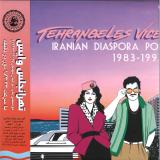
Discotchari is delighted to release a first-of-its-kind various artists compilation: Tehrangeles Vice (Iranian
Diaspora Pop 1983–1993), fully licensed from Taraneh Enterprises. The album is a groundbreaking exposé of
the vibrant subcultural hub of Tehrangeles (portmanteau of Tehran + Los Angeles), and the action–packed, true
story of the Iranian diaspora music industry. Featuring 12 tracks remastered by award–winning Osiris Studio,
lyrics and translations to all featured songs, original cassette covers, a 20+ page album note booklet by Dr.
Farzaneh Hemmasi and more! Sprawling from Westwood to Glendale across the San Fernando Valley, the
Tehrangeles scene was cultivated by the same producers and artists who industrialized the “golden age” of
entertainment in pre–revolution Iran and fled from the 1979 Islamic Revolution along with millions of Iranian
citizens. Through music and visual media, Iranian producers and artists working out of Tehrangeles have
engaged in what the Iranian government calls a “cultural attack” against the Islamic Republic for over 40 years.
The album title Tehrangeles Vice underscores the illicit nature and daring circumstances from which
Tehrangeles pop music was born and compares its legacy within Persian media to one of the most significant
crime–drama TV shows of all time. In the same manner that Miami Vice and its aesthetics had a dynamic
impact on sonic, visual and cultural trends in the United States and around the world, Tehrangeles media was a
shock to the systems of Islamic Republic ideology and Iranian expatriate communities. Listening to these songs
in hindsight, the contribution of Tehrangeles can be better understood as a triumphant effort to preserve Iranian
identity by realizing it in conjunction with prevailing music genres of the ‘80s and ‘90s, and to rebel against the
oppressive regime of the Islamic Republic of Iran through the most seductive of means: dance music.
g C1. Sattar - Khaak ("Home Land")
Есть у нас в наличии и готов к отправке
DJ Support: Axel Boman, Coyote, Rune Lindbaek, Dr Rob (Ban Ban Ton Ton), Lefto, Johan Blende, Feel Fly, Marco Gallerani and many more
Secret Soul Society, aka South Wales's Cal Gibson, continues his red-hot streak of form with four original jams for Hell Yeah that effortlessly weave decades of influences into intimate, unusual sounds that go from Balearic daydreams to after-hours soul burners.
Gibson was one-half of Nottingham's deep house and downtempo outfit Neon Heights back in the 2000s, a collective that label head Marco has long admired. He has landed here before with the superb Keep The Mystique in 2023, a 15-track collection of brand new curveball cuts built from lovingly sourced samples. Since then, he has continued to collide jazz, funk, Afro, beats, dub, soul and reggae on Paper Wave and Magic Wand.
'To Be Happy' opens with gentle, sun-soaked grooves, swirling keys and dreamy pads that evoke a hazy Mediterranean sunset. Nostalgic soul samples tug at the heart while the track’s laid-back vibe is perfect for golden-hour moments. 'Orange Surprise' is a magical slice of downtempo bliss with hints of romantic vocals. It's built on soft broken rhythms and drifts between ambient soul and laid-back electronica, perfect for introspective moments or late-night winding down.
'Keep On Trying' flips the script with more texture. The synths are crystalline, the pads are sugary, and the meandering bassline unfolds in wonky fashion while soft male vocals bring a steamy edge. Last but not least, 'What You Do To Me' is funky and slow motion disco with 80s synths and reverb that drowns you in good vibes.
This EP is Secret Soul Society at his most expressive and emotive.
Есть у нас в наличии и готов к отправке
Dâm-Funk & Lorenzo Soria RETOUCH Elkin & Nelson's Balearic Classic "Vámonos". A Cross-Continental Tribute form the West Coast Funk to Andalusian Rhythms.
Hand stamped 10"
Two generations, two continents, and one timeless Balearic groove — “Vámonos”, the 1970s classic from Colombian-Spanish duo Elkin & Nelson, gets a retouch by the hands of Dâm-Funk and Lorenzo Soria. Infusing the track with new sonic energy while paying homage to its iconic roots, this version of “Vámonos” travels from the beaches of Ibiza to the sun-drenched streets of Los Angeles and Seville.
Together Dâm-Funk — a pioneer of modern-funk and longtime ambassador of the West Coast boogie-funk sound. Known for seminal albums like “Toeachizown” and “Invite the Light” on Stones Throw Records, as well as collaborations with Snoop Dogg, Ariel Pink and Christine and the Queens, Dâm-Funk brings his signature analog synths and laid-back groove to the mix. His unmistakable style draws deeply from Prince, Slave, and the golden era of 1980s funk.
Lorenzo Soria represents a new generation of global-minded producers reshaping the electronic landscape from Southern Spain. A native of Seville, Soria’s collaborations with, Califato ¾, draws from reggaeton, EBM, punk, and traditional Andalusian folklore, Lorenzo’s rhythmic palette is both eclectic and rooted. His contribution to “Vámonos” brings percussive depth and vibrant energy that pulse with Mediterranean warmth.
Together, Dâm-Funk and Lorenzo Soria have created a two versions of “Vámonos” that is both respectful — with lush keys, hypnotic percussion, and genre-defying flair, this collaboration reinvents a Balearic gem for a new generation of listeners and dancers.
Есть у нас в наличии и готов к отправке
Building on the foundations of his Braindance Records label (2017–2020), Korean musician Go Dam now presents the second release on Stellar Systems. The Digifuga Series: Stellar EP finds him in interplanetary hyperdrive, charting trails blazed by pioneers from Hashim to Mad Mike to Gerard Hanson.
The four tracks were written in the studio Go Dam built with his own hands in Eulji-ro — once Seoul’s printing district, now a hive of small businesses. That same meticulous, artisanal approach runs through all of his work, whether composing film scores, producing K-Pop for online personalities, or fine-tuning sound systems around the city. The EP opens with the irrepressible electro funk of 'Fevernova', its slapping beat driving growling bass and wide-eyed synths. 'Dream Powder' is a stormy banger, surfing waves of filtered acid and noise before breaking into light. 'Chrono Flux' sustains the high energy, like the soundtrack to an anime motorbike chase at sunset, while 'Quasiverve' drifts into deepest night, its sinuous leads creeping over a stalking bassline.
Blending heavyweight vintage hardware with sharp digital tools, Go Dam conjures an epic widescreen sound that nods both to the sci-fi optimism of early electro and techno and to today’s fractured, machine-mediated music economy.
Есть у нас в наличии и готов к отправке
Domenic Cappello has prepared an oasis of electronic style through “The Retroactive Future” for Analog Concept Records.
Side A doesn’t hesitate to show a deep mood, via the therapeutic sun pads, jamming New Beat House hybrid that is Hutt’s Groove, followed up by the cinematic late nite synth progressions and the delicious electro techno that thrives in Midnight Drive.
On the flip, we are welcomed to Time, an ethereal trip of aquatic electro, complimented naturally with cloudy synth vibes and charming acid lines.
The dynamic EP affair concludes with the timeless Detroit attitude, sharp percussion, and meditative sunset to lucid nite sky auras that are shining from Constillation Fela.
Analog Concept Records is delighted to bring you this vinyl selection suited for your tastes in classic future House to Techno, “The Retroactive Future” by Domenic Cappello.
Есть у нас в наличии и готов к отправке
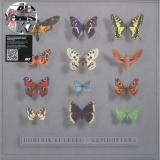
Lepidoptera - the scientific name for butterflies, meaning "scale-winged" - is also the title of the seventh studio album by renowned music producer, bestselling author, ecologist, and knowledge mediator Dominik Eulberg. More than just an album, Lepidoptera is an artistic manifesto: a celebration of butterfly diversity and a profound ecological statement. Set for release via !K7 Records, Lepidoptera blends his signature sound with an urgent ecological message. It marks the pinnacle of a music career spanning over three decades. Eulberg"s fascination with butterflies began in early childhood and has since become a lifelong passion. Drawing from years of experience as a producer and DJ, Eulberg presents his most technically ambitious work yet. At the heart of Lepidoptera are twelve native butterfly species, handpicked by Eulberg from the 3,700 known species in his homeland. Each track is inspired by one species, shaping the album"s structure and grounding its creative focus. The result is a richly textured and immersive journey that moves fluidly between pulsating, danceable rhythms, ambient soundscapes, and orchestral flourishes.
Есть у нас в наличии и готов к отправке
Bringing together the elder statesman of the Zulu guitar Madala Kunene and internationally acclaimed Sibusile Xaba, kwaNTU pulls two generations of South African guitar mastery into a single point of focus. Under-represented on recordings outside of South Africa, Madala Kunene (b. 1951), the ‘King of the Zulu Guitar’, is revered as the greatest living master of the Zulu guitar tradition. Sibusile Xaba, whose collaboration with Mushroom Hour Half Hour reaches back to his first recording in 2017 (Open Letter To Adoniah/Unlearning), has garnered international acclaim for his unique voice and virtuoso guitar stylings, which bring together multiple South African guitar lineages in an original, spiritualised fusion. Collaborating with Mushroom Hour and New Soil for kwaNTU, the two players come together to weave a filigree sonic fabric which reaches down to the heartwood of Zulu guitar music but moves resolutely outward, building on the past to create a deeply rooted statement about present conditions and future travels. kwaNTU – which can be roughly translated ‘the place of the life-spirit’ – is also conclave of teacher and student, as Xaba has been taught by Kunene for the last decade. Meditative, rich and sonically sui generis, kwaNTU finds these two musicians linking up within the inimitable space of sound and spirit that they share through Kunene’s teaching.
The great masters of South African music have not all had equal exposure. For many years the generation of musicians who were exiled during apartheid took centre stage, as the regime made it very difficult for those at home to be heard. More recently, a new cohort of important voices, especially in jazz, has broken through to international consciousness. But for the generation of musicians in between – those who shone like beacons in the most difficult final years of apartheid and immediately afterward – international recognition has been slow in coming.
Madala Kunene, ‘the King of the Zulu Guitar’, is among this number. A revered figure for current generations of South African musicians, Kunene began his recording career in 1990, at the bitter end of apartheid, with a now classic self-titled LP for David Marks’ storied Third Ear imprint. Born in 1951 in Cato Manor, near Durban, he had determined to be a musician from early childhood, and by the time he first entered a recording studio he had already had a long career as a popular performer. His virtuoso absorption and transformation of the venerable Zulu maskanda guitar tradition and his richly spiritualised approach to music immediately marked him out as someone special, and in the years that followed, Kunene cemented his position as one of South Africa’s musical elders. He is without doubt the grand master of the Zulu guitar tradition, but his sound and sensibility ranges far beyond it into varied sonic terrain, and he has collaborated with a wide range of musicians both at home and abroad. Now in his mid-seventies, he remains a shining light for those that are making music in contemporary South Africa.
‘He is really an amazing person,’ says the guitarist Sibusile Xaba, who has been mentored by Kunene for over a decade, and now invites a collaboration with him on kwaNTU. ‘As a mentor, he's really powerful in showing us the way. For us to have this opportunity to make music together and have a project together is really a blessing to me.’
Xaba himself grew up in Newcastle, KwaZulu-Natal, where his mother had been in a band and his father sang in a church choir, and from early childhood Xaba played homemade tin guitars. He only later realised that music was his calling. ‘I just loved music. I was fortunate. My parents loved music. And when it was time for me to leave home and go to study outside Newcastle, I knew that music was what I wanted to do. There was no second option. It was just music.’ Moving to Pretoria to study music formally, Xaba committed himself to his craft, developing a unique style that draws on both US jazz masters such as Wes Montgomery and Jim Hall, and the rich and varied heritage of the South African guitar, from inspirational jazz players such as Allen Kwela and Enoch Mthalane, to the music of the Malombo groups and Dr. Philip Tabane (Xaba has previously collaborated with Dr. Tabane’s late son, Thabang), and the Zulu guitar tradition embodied by Kunene.
‘I was really in love with the jazz guitar, I really admired it, and I was digging a lot in that direction,’ says Xaba, recalling his first encounter with Kunene’s music, over a decade ago. ‘And then one day on my timeline, Kunene popped up, and I was like – “What's this sound?” I was so connected to it. It really touched me deep. I started checking out his records, and then I found out he's from the same region as I am, which is Zululand.’ After Kunene played a show at the Afrikan Freedom Station in Johannesburg, Xaba make contact with him, and visited him at home in Durban. They struck up a friendship, and Xaba became the elder’s student, as Kunene began to pass on his knowledge and his inimitable way of playing.
kwaNTU is a tribute to this relationship and the deep learning that has defined it. The album was recorded in Zululand in the town of Utrecht, at a cultural centre called Kwantu Village, which gives its name to the album. ‘It's such a broad word,’ Xaba says, ‘but the elders teach us that Ntu is basically an energy, almost chi, an energy, a force that all living beings have within them. It's a living energy, so kwaNTU is like, almost the place of this energy.’ The two men sequestered themselves for five days of jamming, improvising and planning, and then the session was recorded in one take over a single night, with Gontse Makhene joining on percussion and backing vocals and Fakazile on vocals. Other voices and overdubs were later added in the studio in Johannesburg.
The result is a rich and meditative recording that finds two generations in a deeply engaged dialogue. Teaching and passing on his knowledge, the elder Kunene has brought Xaba into a space of sound and knowledge that they now share; Xaba’s own practice of deep communion with nature and his dedication to his musical craft make him the perfect interlocutor for Kunene. The result is an album that foregrounds the two musicians engaged at the highest levels of responsive listening, sympathetic unity, and collaborative concentration. Bringing an elder statesman of South African music to an international listening audience for the first time in decades by pairing him with one of South Africa’s most important new voices, kwaNTU is a meeting of generations and a powerful demonstration of musical lineage and continuity.
‘Before music, there is sound,’ Xaba observes, speaking of Kunene’s unique approach to music. ‘And sound is like a common compartment…it's not restricted to particular people or particular geographic places, you know what I mean? It's sound. Everybody can hear it. So when he constructs that sound into music, I think everybody resonates with the energy behind his construction of sound into song. Here at home, we really love him for preserving our history through the guitar, through his stories as well the music, the songs that he writes. We really, really admire him.’
Есть у нас в наличии и готов к отправке