Having worked together for several years on the project 'Zeitgeist Freedom Energy Exchange' Zeitgeist and Tucceri come together here in a very intimate and vulnerable setting. This recording offers a place of reflection and healing amongst an ever imposing and disposable pop culture. In a time where we fight for each others attention in 10 second social media grabs. The duo offer something of the opposite. An opportunity to tap out of the technological bombardment and allow the listener the place to reflect, to ponder, to imagine.
Поиск:medi
Все
Boris Barksdale's first full length on the label is the final joyride of the human mind. Over two sides of screwed proto-beat, street electronics and twisted metal ambiance, Mind Over Matter picks apart the medias domination of the world we live in, drawing on internet advertising campaigns and social commentary to show you how messed up things have really become.
The record builds on from Boris' inclusion in Natural Sciences' Future Works & Age in Decline compilation series.
Kadi Yombo, published in 1989, is the most successful album in the quest for a fusion between tradition and modernity in Bwiti harp music of the Tsogho people of Gabon. Combining beating rattles with a layer of synthesizers, Papé Nziengui blends in a contrapuntal dialogue characteristic of harp playing: male song in appeal and female choir in response, male voice of the musical arc and rhythms of female worship. But above all it’s Tsogho ritual music and modern studio orchestration. The result is an initiatory itinerary of 10 musical pieces which are all milestones likely to be simultaneously listened to, danced, meditated on, and soon acclaimed. In the years since, Nziengui has traveled he world from Lagos to Paris, from Tokyo to Cordoba, from Brussels to Mexico City to become a true icon, the emblem of Gabonese music.
Like Bob Dylan, "electrifying" folk and Bob Marley mixing rock with reggae, some purists have criticized Nziengui for having distorted the music of harp by imposing a cross with modern instruments. They even went so far as to claim that Nziengui was just an average harpist covering his shortcomings with stunts that were only good for impressing neophytes; like playing a harp placed upside down behind his back or playing two or three harps simultaneously. Sincere convictions or venomous defamations, in any case, Nziengui never gave in to such attacks, imposing himself on the contrary to pay homage to the elders (Yves Mouenga, Jean Honoré Miabé, Vickoss Ekondo) while instructing the maximum of young people. He is thus the promoter of many young talents, the most prominent of which is certainly his nephew Jean Pierre Mingongué. In a conservative society where the sacred is confused with secrecy, exposing the mysteries of Bwiti in broad daylight can be punished by exclusion or even execution.
Papé Nziengui has always claimed that he faces such risks because he never felt enslaved to a community that governs his life, that regulates his conduct, that has a right of censorship over his activities. Like Ravi Shankar, the famous sitarist, Papé Nziengui is a man of rupture but also of openness, a transmitter of culture. As proof, he has established himself in Libreville, Gabo’s capital, as the main harpist for sessions and concerts, accompanying the greatest national artists (Akendengué, Rompavè, Annie-Flore Batchiellilys, Les Champs sur la Lowé, etc.) as well as foreign artists (Papa Wemba, Manu Dibango, Kassav', Toups Bebey, etc.). In 1988, he was the first harpist to release an album in the form of a cassette produced by the French Cultural Center (Papé Nziengui, Chants et Musiques Tsogho). At the same time, he created his own group (Bovenga), combining traditional music instruments (musical bow, drums, various percussion instruments, etc.) in the framework of a true national orchestra, which gave the first concert and the first tours of a traditional music that was both modern and dynamic, thus "democratizing" the harp, to the dismay of certain purists.
On the other hand, in modern music, dominated by the logic of profit or even commercialism, artistic creation must often be adjusted for a specific audience based on reason rather than heart. But instead of allowing himself to be distorted, Papé Nziengui has always tried to produce music that is not a caricature, worthy in its expression as in its content, of the sacredness and transcendence of the music of the Origins. This is what makes Nziengui not only the musician, but the man someone whose age hasn’t altered any of his freshness or authenticity
Kadi Yombo, published in 1989, is the most successful album in the quest for a fusion between tradition and modernity in Bwiti harp music of the Tsogho people of Gabon. Combining beating rattles with a layer of synthesizers, Papé Nziengui blends in a contrapuntal dialogue characteristic of harp playing: male song in appeal and female choir in response, male voice of the musical arc and rhythms of female worship. But above all it’s Tsogho ritual music and modern studio orchestration. The result is an initiatory itinerary of 10 musical pieces which are all milestones likely to be simultaneously listened to, danced, meditated on, and soon acclaimed. In the years since, Nziengui has traveled he world from Lagos to Paris, from Tokyo to Cordoba, from Brussels to Mexico City to become a true icon, the emblem of Gabonese music.
Like Bob Dylan, "electrifying" folk and Bob Marley mixing rock with reggae, some purists have criticized Nziengui for having distorted the music of harp by imposing a cross with modern instruments. They even went so far as to claim that Nziengui was just an average harpist covering his shortcomings with stunts that were only good for impressing neophytes; like playing a harp placed upside down behind his back or playing two or three harps simultaneously. Sincere convictions or venomous defamations, in any case, Nziengui never gave in to such attacks, imposing himself on the contrary to pay homage to the elders (Yves Mouenga, Jean Honoré Miabé, Vickoss Ekondo) while instructing the maximum of young people. He is thus the promoter of many young talents, the most prominent of which is certainly his nephew Jean Pierre Mingongué. In a conservative society where the sacred is confused with secrecy, exposing the mysteries of Bwiti in broad daylight can be punished by exclusion or even execution.
Papé Nziengui has always claimed that he faces such risks because he never felt enslaved to a community that governs his life, that regulates his conduct, that has a right of censorship over his activities. Like Ravi Shankar, the famous sitarist, Papé Nziengui is a man of rupture but also of openness, a transmitter of culture. As proof, he has established himself in Libreville, Gabo’s capital, as the main harpist for sessions and concerts, accompanying the greatest national artists (Akendengué, Rompavè, Annie-Flore Batchiellilys, Les Champs sur la Lowé, etc.) as well as foreign artists (Papa Wemba, Manu Dibango, Kassav', Toups Bebey, etc.). In 1988, he was the first harpist to release an album in the form of a cassette produced by the French Cultural Center (Papé Nziengui, Chants et Musiques Tsogho). At the same time, he created his own group (Bovenga), combining traditional music instruments (musical bow, drums, various percussion instruments, etc.) in the framework of a true national orchestra, which gave the first concert and the first tours of a traditional music that was both modern and dynamic, thus "democratizing" the harp, to the dismay of certain purists.
On the other hand, in modern music, dominated by the logic of profit or even commercialism, artistic creation must often be adjusted for a specific audience based on reason rather than heart. But instead of allowing himself to be distorted, Papé Nziengui has always tried to produce music that is not a caricature, worthy in its expression as in its content, of the sacredness and transcendence of the music of the Origins. This is what makes Nziengui not only the musician, but the man someone whose age hasn’t altered any of his freshness or authenticity
Kadi Yombo, published in 1989, is the most successful album in the quest for a fusion between tradition and modernity in Bwiti harp music of the Tsogho people of Gabon. Combining beating rattles with a layer of synthesizers, Papé Nziengui blends in a contrapuntal dialogue characteristic of harp playing: male song in appeal and female choir in response, male voice of the musical arc and rhythms of female worship. But above all it’s Tsogho ritual music and modern studio orchestration. The result is an initiatory itinerary of 10 musical pieces which are all milestones likely to be simultaneously listened to, danced, meditated on, and soon acclaimed. In the years since, Nziengui has traveled he world from Lagos to Paris, from Tokyo to Cordoba, from Brussels to Mexico City to become a true icon, the emblem of Gabonese music.
Like Bob Dylan, "electrifying" folk and Bob Marley mixing rock with reggae, some purists have criticized Nziengui for having distorted the music of harp by imposing a cross with modern instruments. They even went so far as to claim that Nziengui was just an average harpist covering his shortcomings with stunts that were only good for impressing neophytes; like playing a harp placed upside down behind his back or playing two or three harps simultaneously. Sincere convictions or venomous defamations, in any case, Nziengui never gave in to such attacks, imposing himself on the contrary to pay homage to the elders (Yves Mouenga, Jean Honoré Miabé, Vickoss Ekondo) while instructing the maximum of young people. He is thus the promoter of many young talents, the most prominent of which is certainly his nephew Jean Pierre Mingongué. In a conservative society where the sacred is confused with secrecy, exposing the mysteries of Bwiti in broad daylight can be punished by exclusion or even execution.
Papé Nziengui has always claimed that he faces such risks because he never felt enslaved to a community that governs his life, that regulates his conduct, that has a right of censorship over his activities. Like Ravi Shankar, the famous sitarist, Papé Nziengui is a man of rupture but also of openness, a transmitter of culture. As proof, he has established himself in Libreville, Gabo’s capital, as the main harpist for sessions and concerts, accompanying the greatest national artists (Akendengué, Rompavè, Annie-Flore Batchiellilys, Les Champs sur la Lowé, etc.) as well as foreign artists (Papa Wemba, Manu Dibango, Kassav', Toups Bebey, etc.). In 1988, he was the first harpist to release an album in the form of a cassette produced by the French Cultural Center (Papé Nziengui, Chants et Musiques Tsogho). At the same time, he created his own group (Bovenga), combining traditional music instruments (musical bow, drums, various percussion instruments, etc.) in the framework of a true national orchestra, which gave the first concert and the first tours of a traditional music that was both modern and dynamic, thus "democratizing" the harp, to the dismay of certain purists.
On the other hand, in modern music, dominated by the logic of profit or even commercialism, artistic creation must often be adjusted for a specific audience based on reason rather than heart. But instead of allowing himself to be distorted, Papé Nziengui has always tried to produce music that is not a caricature, worthy in its expression as in its content, of the sacredness and transcendence of the music of the Origins. This is what makes Nziengui not only the musician, but the man someone whose age hasn’t altered any of his freshness or authenticity
Available on vinyl for the very first time. ZERO 7 4th album Yeah Ghost from 2007, spans everything from dance pop to acoustic folk and everything in between it's an idea-splattered work of genius that even includes a quartet of instrumental tracks derived from their experimental side projects and sampled, overdubbed and rebuilt from scratch.
Tephra is the latest mesmerizing, propulsive EP by Philadelphia-based rave conjurer Furtive. With captivating woozy arpeggios, high-pressure textural progression, and sharp scintillating sound design, Furtive’s release is a fresh and powerful entry on Mild Fantasy - the brainchild of NYC-based DJ/producer Elle Dee.
Furtive is a full-gonzo rave rat, intractably committed to the dancefloor as a producer, DJ, and DIY event organizer. Tephra showcases a canny approach to creative techno dynamics most familiar to die-hard dancefloor supplicants who’ve both been in the booth and worshiping in front of the speaker stacks.
The EP kicks off with its namesake track: Tephra is a pressure-building whirlwind of dense, textural progression and explosive tension-and-release dynamics. Mounting from a muscular low-end pattern up to a dramatic break, Tephra is a proper warp-drive weapon.
With Strobe Bubble Romance, Furtive dives into pedal-to-the-metal rave acceleration with jagged arpeggio interplay and sharper sound design. In gentler, more romantic contrast, Iris Blur brings back a dizzying melodic progression to even out the blistering pulse of the former.
Question Accelerator (No Answers) is a trippy twist in the EP, comprising a high-torque psychedelic drum and bass journey. As a digital-only bonus, Furtive closes the release with Lullaby, a haunting ambient exploration.
A ferociously productive producer with over a decade of experience bending sounds, Furtive cut their teeth as a DJ and promoter in Washington, DC’s warehouses, where they also played a turnkey role in putting on some of the District’s zaniest techno parties. They’ve supported internationally celebrated non-nonsense acts and held court in dingy watering holes with eclectic selections and a steadfast focus on pacing, dynamics, and surprises. Beyond the fog and strobe lights, Furtive creates art in various mediums, including linocuts, render art, inky drawings, and tattooing.
Gondwana Records sign LA bassist and composer Seth Ford-Young's Phi-Psonics project and announce a remastered deluxe-edition of The Cradle featuring bonus material
Phi-Psonics is a meditative, immersive instrumental group from Los Angeles, led by bassist Seth Ford-Young and featuring Sylvain Carton on woodwinds, Mitchell Yoshida on electric piano, and Josh Collazo on drums. Their deeply soulfulmusic draws on jazz and classical influences together with Ford-Young's own musical experiences, relationships, and his introduction to spirituality, yoga and philosophy at a young age, to create something uniquely its own. Phi-Psonics' name and ultimate aim is to find 'Phi' – the golden mean – in art, nature and self. Ford-Young explains:
"It's a bit of a cliché, but music saved my life many times and instilled in me a belief in the great power of healing through art. It is my hope and intention that this music provides healing to someone somewhere."
Originally from Washington DC area, Ford-Young moved to California in the early 90s and fell in love with the deep sounds of the upright bass and the music of Charles Mingus, John and Alice Coltrane, and Duke Ellington along with Bach, Chopin, Pärt, and Satie. He immersed himself deeply in music and keen to learn combinedintense personal study with collaborations, tours, and recordings with artists such as Tom Waits, Beats Antique, and John Vanderslice. In 2010 he moved from the San-Francisco Bay area to the Los Angeles hills and continued his explorations. But great music is rarely just about music and Ford-Young's meditative, soulful music draws on more than just the twin wellsprings of jazz and classical music:
"My mother was a yoga teacher from the early 70's until recently and taught me yoga and meditation at an early age, my stepfather is an Aikido instructor and student of the teachings of Gurdjieff. Those were all early areas of study that I came back to many times throughout my life. Phi-Psonics has been a project that unapologetically synthesizes some of these ideas into our music".
It's this mixture of influences, musical and extramusical, that gives the music of Phi-Psonics it's immersive quality and quiet power. Revealingly the music that would becomeThe Cradle, wasn't written specifically for an album, originally Ford-Young was just writing down what was coming through. As time went by and the album began to take shape, the world situation seemed to be getting darker and his compositions aim to offer hope as a response to the negative influences that abound today. Remarkably for such a beautiful sounding record, it was recorded at the composer's home, rather than in a studio, but the relaxed nature of this process gives the music an airy lightness that propels the music to some magical spaces.
Originally self-released on vinyl in a limited run just as the world went into lockdown, The Cradle reached Matthew Halsall (founder of Gondwana Records) when he aws looking for music for his Worldwide FM show and he was blown away, hearing a kindred spirit at work. Halsall explains:
"Phi-Psonics make beautiful, humble and honest music, it's not showy, but it has a deep vibe that will elevate your mind and soul if you let it. When we heard The Cradle we reached out and are really super delighted to welcome Seth and his band to our label". Whereas for Ford Young: "Connecting with Matthew and the Gondwana records family has been a light in the darkness of the last years - to have my music make connections even as we are more isolated."
Ford-Young is currently putting the finishing touches to the second Phi-Psonics record, but aware that only a select few had heard The Cradle, let alone had the chance to buy a copy, and entranced by its deceptive simplicity and elevating energy, Halsall suggested that Gondwana present the album as a remastered 'deluxe edition' with an extended running time featuring extra tracks and new artwork from Daniel Halsall.
The Cradle starts with First Step, perfectly setting the tone for the whole album, it is a beautiful, soulful slice of musical calm gently propelled by Ford-Young's resonant bass and elevated by sublime flute and Wurlitzer electric piano solos. The seductive title track The Cradle was written way back in 2011 during a time of great personal change that led the composer to a feeling of newness and nurture. The magical, winsome Desert Ride is inspired by many rides through the grandly cinematic Mojave Desert. You can experience how incredibly full of life it's harsh landscape is if you slow down to its tempo. The gentle, sublime Mama is a tribute to mothers of all kinds, beautiful and heroic. Drum Talk was largely improvised, Ford-Young and the band agreed on a topic and recorded their conversation. Choosing their notes based on how Josh's drums were tuned. Like Glass is named for the special properties of Glass. Like some music, glass is delicate, yet has structure. The first of the two bonus tracks Still Dancing was written during the early days of 2020 in response to the challenges we all were facing then. It's a reminder that the figurative dance continues and that real dancing is essential. And the second, The Searcher, also written as a response to 2020, is a gently hypnotic song about the introspection and growth that can spring from a difficult situation.
This then is The Cradle, a quiet self-contained masterpiece, life-affirming and elevating in equal measure and the first offering from a wonderful new voice in spiritual jazz and the latest members of the global Gondwana Records family.
"We’ve reached book IV in Rupert Clervaux’s series of “Zibaldone” audio diaries, at which point we find him telling a different kind of story.
“The first three all had very specific themes, while this one feels a little bit looser and doesn’t have just one thematic thrust,” he tells me, which maybe explains why listening feels a bit like annotating. I’m underlining, emphasizing, drawing arrows from here to there, highlighting symbols and noting motifs, realising, questioning, eureka-ing. An impressionistic meaning’s been encoded in and we’re lucky to be given the space to play that most poetic and boundless of all mental games: narrativization.
There are no wrong answers, but Rupert offers some clues either way. If there’s any cipher here it’s “something like a meditation on the concept of ‘depth’––in all its connotative forms.” Think below the surface, (the) underground, yawning oceans, being ‘down in the dirt’, soil, roots, rootlessness, pulling at the dregs, collapse, profundity, stable and unstable horizons, distance, perspective, intuition, not to mention relative opposites: to be shallow, to be above, to be beyond.
It’s got me thinking of Bresson’s “Bring things together that have as yet never been brought together and did not seem predisposed to be so.” His: “Dig deep where you are. Don't slip off elsewhere.” Rupert has realized these—two favourite goals of mine!—here.
This is music that catches you at your own periphery, gives pause, has you offering a little “huh” to, asking “I wonder why” to. Again, it’s got me musing on another mindworm, this time from New York publisher and multi-sensory reading room Dispersed Holdings: “Feeling-making-knowing feedback loop; cartography of feeling; water as text, read to know the land beneath and around it, and body as reader.”
Is it ok to offer up these other contexts out of context? I think so, because Zibaldone IV articulates a similarly swirly tone. Like, we’ve got Rebecca Solnit talking through Kropotkin’s “Mutual Aid” and later calling out to Michael Ruppert a ways away, and “Easy Rider” is playing in the wings. We’ve got Susan Sontag magically contextualizing Mariah Carey with poet Thylias Moss triangulating in order to sketch out (Rupert again) “something a little more interesting than wilful eclecticism or that laboured and patronising kind of pop-savvy.”
Are we following? Whether yes or no Vanessa Bedoret follows on with a performance of a performance of Moss’s 'Water Road’: to be once or twice removed, via strange transitions, purposeful confusions, and, suddenly, seagulls. We’re on a boat with Ingeborg Bachmann—and how I wish I could actually be! But maybe thanks to this music I can as literature, films, friends, lethargy, coincidences, little mental links, eternal wormholes, lingering notions come together to imagine something better."
Text by Natalia Panzer
Joe Tatton, keyboard player with UK/US funk/soul jazz kings The New Mastersounds, releases this new 7 inch single in March 2022 and this time there is a lovely double A-side 7" physical vinyl option. Two tracks that showcase Joe's skills as a pianist and vocalist and confirm his talent for writing quality original compositions.
"Timeline" is Joe's spotlight on today's social media obsessed society delivered in the style of his musical hero Mose Allison. The latter was the legendary Mississippi born/New York based jazz/blues musician and singer whose wry and intelligent lyrics married to amazing original music shone a light on society and the world from the mid-1950s until his death in 2015. Mose was a huge influence on musicians like Georgie Fame, Van Morrison and Ben Sidran and was and still is one of Joe Tatton's favourite musicians of all time. This song is the title track for Joe's debut solo album due for release later this year on Rodina Music.
"Stomp" is a slow bluesy instrumental funk burner that has a New Orleans swagger about it and features Joe's grand piano solo followed by JTQ band member Gareth Lockrane cutting loose on the flute. If you like music by Allen Toussaint, Ramsay Lewis and Herbie Mann, you'll be feeling this one.
Joe Tatton has been a member of The New Mastersounds now for 16 years now and has recorded over a dozen albums and many singles with them playing organ, piano and keyboard. Annually, he tours 8-9 months a year with the band, mainly in the USA but also across Europe and Japan too. Prior to joining The New Mastersounds, Joe held down the keyboard role with UK jazz-funk kings The Haggis Horns appearing on their first two albums "Hot Damn!" and "Keep On Movin". He's also featured on piano/keyboards on the worldwide hit single "Put Your Records On" by Corinne Bailey Rae.
Over the years he has played live sets with Maceo Parker and Fred Wesley as well as Art Neville, George Porter Jr and Zigaboo Modeliste of The Meters. He's always maintained his own trio under his own name as a side project, releasing singles and EPs via ATA Records (UK) and Color Red Music (USA).
A few years ago, he needed to find the time and place to record them. So in 2020, between New Mastersounds gigs, he managed to book a few days at a studio near Nashville USA, "The Rockhouse", run by Grammy winning engineer Kevin Mckendree. He hooked up with a couple of Nashville session musicians, Steve Mackie (double bass - longtime Dolly Parton bassist) and Kenneth Blevins (drums), and put down all his original songs and also a cover of Mose Allison's "Ever since the world ended", the first single released last year
Now comes the second double A-side single and a further taste of what's in store from Joe and the band later this year when the "Timeline" album drops later in the year. However this time, there's a lovely little black vinyl offering for all the record lovers out there. Just a small first pressing which will no doubt sell out very quickly so people need to jump on it super fast. Once they're gone, they're gone.
"Time line / Stomp" double A-Side single by the Joe Tatton Trio. Released worldwide on Rodina Music - March 31st March 31st 2022.
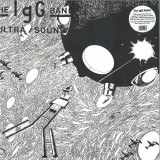
Kalita are excited to announce the first ever reissue of student medical group the IgG Band's highly sought-after 1980 soul, funk and disco grail 'Ultra/Sound'. Originally privately released in a small run on band member Clifford Becker's Infusion Records imprint, the album has since become a treasured prize of but a handful of die hard collectors and DJs as a result of both ist scarcity and quality. Now, in partnership with the band, Kalita shine a light on the album for the first time in over forty years, accompanied by never-before-seen archival photos and extensive interview-based liner notes.
- A1: Prelude
- A2: A Minor Astronomical Event
- A3: A Move To Neptune
- A4: Physical Description Of The Last Human Beings
- A5: Architecture
- A6: Supreme Monuments
- B1: Telepathic Unity
- B2: Childhood/Land Of The Young
- B3: The Navigators
- C1: The Sun
- C2: A New Doom
- C3: Task No 1 The Scattering Of Seeds
- C4: Task No 2 Communicating With The Past
- C5: The Last Office Of Humanity
- C6: Slow Destruction Of Neptune
- D1: The Few That Prevail
- D2: The Last Men
- D3: Remembrance Of The Past
- D4: The Universal End
- D5: Epilogue
(Re-Issue)
This reissued standard vinyl edition of Jóhannsson’s brilliant and seven years in the making work 'Last and First Men' is replacing the limited edition box set, that has originally been released with the album. Please note the Blu-Ray and art prints from the limited edition box set are not included. While composing haunting, elegiac concept albums of lost utopias and working for TV and film the Icelandic composer Jóhann Jóhannsson was thinking about a project on an even larger scale since 2010 - a multimedia work that would include his own visual concept, direction and music. Based on the cult science fiction novel by Olaf Stapledon, Jóhann Jóhannsson's opus magnum Last and First Men artfully combines music, film and narration from Tilda Swinton, sitting somewhere between fiction and documentary to form a poetic meditation on memory and loss.
- A1: One Is True
- A2: Two Is Apocryphal
- A3: Triptych In Mass
- A4: To Fold & Remain Dormant
- A5: Divine Objects
- B1: The Low Drone Of Circulating Blood, Diminishes With Time
- B2: Moral Vacuums
- B3: Take The Night Air
- B4: The Mountain View, The Majesty Of The Snow-Clad Peaks, From A Place Of Contemplation & Reflection
The previously unrecorded Drone Mass was described by its composer, the late Jóhann Jóhannsson, as “a contemporary oratorio”. Written for voices, string quartet and electronics, it was commissioned and premiered by the American Contemporary Music Ensemble, aka ACME, who toured and recorded with Jóhannsson for almost ten years. Now they have made the world premiere recording of this richly atmospheric work, in collaboration with Grammy Award-winning vocal ensemble Theatre of Voices, conducted by Paul Hillier, also a multiple Grammy Award-winner. The members of both ACME and Theatre of Voices worked closely with the composer many times, both in the studio and in multiple live performances and tours, before his untimely death. Drone Mass is an extraordinary, mysterious accomplishment which at times bears comparison with the meditative minimalism of composers such as Arvo Pärt or Henryk Górecki. Beginning with strings and voices, but slowly integrating Joìhannsson’s electronic techniques into its landscape, the work represents what the Icelandic composer called “a distillation of a lot of influences and obsessions”.
The song, subtitled “A Garden of Personal Mirrors”, was written in 1968 by the film’s marketing strategist Mike Kaplan. Kubrick proposed it immediately following an unsuccessful pitch by MGM Records, who wanted to release a single to tie in with the film, and amid reports the Beatles were also writing a song. Presented by Wave Theory as a historical release, 2001: A Garden of Personal Mirrors adds a new chapter to the film’s mythology. This limited edition 7” vinyl will be available for the first time ever on 26th November 2021
2001 is infamous in the annals of film music history for the way that Kubrick abandoned Alex North’s original score in favour of classical and popular pieces that have become synonymous with the movie. Following a digital release last year that caught the imagination of the film’s fans, Wave Theory is now releasing a limited edition vinyl that will give the opportunity for soundtrack aficionados to own a piece of movie history.
Mike Kaplan explains, "The Single's intent was to capture the different responses 2001 was generating from audiences and the media, the many levels of interpretation and appreciation, from its hypnotic visuals to its metaphysical illuminations. We also wanted to instil curiosity among audiences who had not yet seen what was becoming a cultural phenomenon.”
Co-founder of Wave Theory Records Dan Jones said, “Attempting to write any music for Kubrick would be a daunting task, as Alex North — and now we discover Mike Kaplan — were both to discover. Both of them are examples of the complex creative interactions that Kubrick’s films distilled.”
Repress
To emerge from a global pandemic with a renewed sense of situational awareness, hard won insight, and a new album is the kind of move we've come to expect from THRICE over the last twenty years. With Horizons/East, Dustin Kensrue and his bandmates address, with candor and courage, the fragile and awkward arrangements that pass for civilization, while inviting us to dwell more knowingly within our own lives. Without surrendering any of the energy and hard edge of their previous albums, they've given us a profoundly meditative work which serves as a musical summons to everyday attentiveness. Since forming THRICE with guitarist Teppei Teranishi, bassist Eddie Breckenridge, and drummer Riley Breckenridge in 1998, Kensrue has never been one to back down from a mental fight. This mood is set by the opening synth-driven number "Color of the Sky," which sounds well-suited to accompany the closing credits of the Stranger Things season finale. Think Flying Lotus giving way to Elbow and setting the listener down in a new dimension. A self-recorded effort, Horizons/East conveys a palpable sense of danger, determination, and possibility.
10 Track LP - Japanese multi-instrumentalist Masahiro Takahashi's latest album, Flowering Tree, Distant Moon, is a meditation on seasons and distance. Recorded in isolation at his temporary home studio in Toronto, following the coldest winter he’d experienced to date, this is a collection of hushed, lush color wheel electronic vignettes.
Flowering Tree, Distant Moon was created using an array of instruments including software synthesizers, granular samplers and a shruti box. The original Not Not Fun cassette run sold out quickly and this Telephone Explosion re-release will be Takahashi's first official vinyl offering.
The songs shimmer and sway, unspooling in sparkling arcs and alternating between reverie and lullaby. Inspired by blooming apple trees, gagaku music, the nostalgia of immigrants and longing for home, Flowering Tree, Distant Moon moves from soothing to surreal, a swirl of quiet melody and imagined landscapes, as transportive for its listeners as its maker.
Aufgrund der großen Nachfrage: Das erfolgreiche ORDEN OGAN Album nun erneut auf Vinyl erhältlich!
Erstmals als Marbled Vinyl erhältlich!
ORDEN OGAN gehören mittlerweile zu den erfolgreichsten Metal-Bands Deutschlands; ihr aktuelles Album "Final Days" erreichte Platz 3 der Media Control-Charts
Mit „Sweet Unknown“ veröffentlicht die US-Amerikanische Gruppe Ceramic Animal ihr viertes Studioalbum am 04. März 2022. Die aus Doylestown/Pennsylvania stammenden Brüder und Freunde lassen sich nicht auf Genre beschränken: Von Glam, über Post-Punk und Psych Rock, bis zu 70er Pop & Folk sind alle Einflüsse dabei.
Ceramic Animal besteht aus den drei Brüdern Chris Regan (Gesang, Gitarre), Erik Regan (Schlagzeug), Elliott Regan (Gesang, Keyboard) und deren Kindheitsfreunden Anthony Marchione (Gitarre), sowie Dallas Hosey (Gesang, Bass).
Nachdem sie ihre ersten drei Studioalben komplett selbst finanziert, produziert und veröffentlicht haben, schreiten sie nun auf neuen Wegen und kollaborieren mit dem Grammy-ausgezeichneten The Black Keys Frontmann Dan Auerbach als Songwriter und Produzent. Zudem veröffentlichen sie das Album bei dem von Dan Auerbach gegründeten Label Easy Eye Sound. Der Titeltrack ist eine von Roy Orbison inspirierte Meditation über die andere Seite. ”Lyrisch und klanglich verkörpert ’Sweet Unknown’ ein Eintauchen in eine ungewisse, aber wunderschöne Dunkelheit”, sagt Schlagzeuger Erik Regan.
Das gesamte Album taucht in eine Welt ein, in der intime Liebende sich allmählich verlieren und einander
gegenüber kalt werden und in der flackernde Erinnerungen an bessere Zeiten den einzigen Trost bieten.