Before an upcoming album in 2020 on Heavenly Sweetness, Mama is the first single. A track in which the balafon’s woody resonance, the meditative flute and the female choruses return to the Creole roots of David, recall the memory of his Caribbean grandfather exiled to New York but, above all, a title dedicated to his grandmother, who after the last soaring electro-disco, she comes to declaim the text on the ultimate measures. David Walters will have thought of it, conceived and realized in close collaboration with Patchworks. Then, in the wake of the single Mama released in the month of each of them took the title, isolated himself in the studio with instruments and machines to come out only with a total reinterpretation, but especially personal, of the title. Hammering bass drum and snare drum bursts, David has entrusted the direction of operations to the rhythmic, and it is one after the other that digital elements were invited to transform the original maternal softness into a boiling soundsystem. Synths their strings on the hum of the bass, the hypnotic power of the riddim remains.
Two remixes, two atmospheres. The Patchworks scene is set in a jazz-funk setting, an heritage from Roy Ayers and Lonnie Liston Smith. Powerful drum, enrobing bass, the Fender Rhodes becomes a soloist, motivated by this irrepressible groove, first become a soloist. And that the meshes leave the hands of the balafon player to pass in those of the vibraphonist.
Cerca:medi
Maybe it’s too much to ask for a moment of your attention. As we grow older and keep
diving into this era of information, disinformation, fake news and all that, we also tend to
take a step back and listen to the intents of those social media adverts that tell us to slow
down, breathe in, breathe out, enjoy everything around you a little bit. So, if it’s not too
much to ask, you can press play and start enjoying “D-A-D”. If you’re doing that, you can
even stop reading this, because you don’t need further instructions.
It’s the second time in less than two years that we release music from London based
Greek musician Tasos Stamou (Athens, 1978). The wordplay of “Musique Con Crète”
(CREP54, 2018) was a backdoor to an adventurous and ‘concrete’ experience with
sound. “D-A-D” follows up on that. Recorded between 2015-2018 as an homage to both
his Dad and the more commonly used tuning on the Greek Bouzouki, D-A-D, Stamou
delivers 40 minutes of music that explores ancient and modern languages, while crossing
his unique instrumentation with celebrations of new/old folk, field recordings and
electronics. In his music, there’s a constant flow of ideas that defy standard tonalities and
the conception of “traditional”.
Improvisation was the starting point for the creation of some of the nine pieces Tasos
Stamou wrote for “D-A-D”. The electronics often serve to interact with field recordings that
are wisely manipulated, while acoustic instruments, like a Bouzouki, build up the
connection with the tradition and the necessity to slow down.
With his unique atmospheres, Tasos is whispering some life hacks to build a better life.
Nowadays, it’s quite rare for a record to organize the way the listener wants to listen to
music, to sounds. “D-A-D” creates a beautiful systematization between old and new,
folk/traditional music and the technology in sound. There’s – still - some boldness in that.
All songs by Tasos Stamou
Mastered and Cut by Rashad Becker
Fresh from releasing his first artist album for Deep Medi (‘Dark 365’) and overseeing a prolific year in charge of his Navy Cut imprint, J. Sparrow debuts on Coyote Records with two tracks of abstract, excursive pressure. Although long revered as one of dubstep’s core UK innovators, Sparrow has also spent time experimenting with different sounds, palettes and rhythms over the last two years. ‘Single Time’ and ‘VHS’, both written during this period, not only spotlight Sparrow’s willingness to aim for the outer reaches, but also embed themselves neatly within a Coyotediscography defined by the new-gen grime of producers like Last Japan, SilkRoad Assassins and Utah?. Still cut with a rolling dubstep lean, A-side ‘Single Time’ is heavy on the hollowed-out, dubby weight and scything bass jabs, while B-side ‘VHS’ – referred to by Sparrow himself as ‘Egyptian grime in the 1980s’ – is a bleepy, filmic, widescreen stepper that draws from the past as much as it does Sparrow’s take on shiny, sci-fi grime of the future.
After their brilliant label debut with "Grow Yes Yes" in 2017, Professor Wouassa now returns with their brand new third album on Matasuna Records.
The Swiss band's career spans more than 15 years, where they have played at many major festivals in Switzerland and abroad. The 11 members of the band have perfected their musical qualities over the years and captivate as a well-rehearsed live band with their energetic and rousing shows. So it isn't surprising that they supported concerts of Afrobeat legends like Ebo Taylor or Seun 'Anikulapo' Kuti.
Their still exuberant creativity can also be heard on their new work entitled Yobale Ma!, which in Wolof's language can be translated as "take me" or "get me". With their new album they take the listener to their musical island to explore the borders of Afrobeat and beyond.
The song Fallou Fall opens the album in a jazzy & big band way, and quickly switches to an afrobeat theme and solo. In the middle the song breaks into an Afro-style pattern, which is performed by Thaïs Diarra in Bambara (Malian dialect) in a traditional Mandingo way of singing. The track ends with a Sabar percussion part - a traditional Senegalese drum.
Yobale Ma is the single of the album, which is inspired by the funky guitars of a Nile Rodger and some typical fast Ghanaian highlife of Ebo Taylor.
The track Thiaroye Gare is about the Tirailleurs sénégalais, a unit of the French army who fought for France in WWII. After returning from captivity they were taken in Camp Thiaroye northeast of Dakar. Corrupt and racist colonial officials led to a revolt, which was bloodily suppressed by French troops.
From the musical point of view the song shows a link between afrobeat and funky James Brown rhythms, which ends in a fast afrobeat style with baritone saxophone and trombone solos.
Beguente Len in the middle of the album is a kind of interlude that represents Wouassa's own way of interpreting traditional afro beats and rhythms.
With the two songs Djongoma and Sama Yone Professor Wouassa leaves his usual afrobeat path to explore the "sound of the islands" (Mauritius, La Réunion, Cape Verde or Cuba) and blend it with their personal and unmistakable style.
With Iba Niawoulo the professors investigate a kind of Ghanaian highlife medium tempo with a chord progression from Serge Gainsbourg's song "Initial BB". The tracks change in the middle to a fast Rhythm'n'Blues beat, which is accompanied by afro guitars. The singer "Mamadou Diagne" talks about his alter ego in Dakar.
In Djougoudja typical afro rhythms are mixed with pure Ethiopian 70's brass sounds and funk guitars. As heard several times in other songs, the track breaks into a very personal and hard to describe Wouassa beat in it's middle. At this time, Mamadou Diagne recites a big slam about the spiritual ideas and the history of the famous senegalese theologian and poet Serigne Touba (Cheikh Ahmadou Bamba). Under his flow some sabar percussions (typical senegalese percussions) build a strong and intense musical rug.
The first artist other than label head Patrick Topping to release on TRICK , his Geordie compatriot Adamson delivers an eclectic mix of tracks. The EP opener and title track, ‘Electric Acid Tater Tots’ is an acid-soaked techno slammer, strung together by Elliots own robotic vocals. Skream then steps up to deliver the labels first ever remix, a trippy, high-energy workout, before the Electric Acid Tater Vox offers a stripped-back vocal version which is available exclusively on the vinyl. Over on the B-side, ‘NYC Dada’ is an infectious disco-house edit destined to fill countless dancefloors, then ‘11am in Brisbane’ delves into melodic techno waters.
“I don't recall writing the lyrics, but I like to believe they appeared in the notes in my phone delivered by some divine spirit via the medium of an Apple iPhone XR - cheers Steve,” Adamson jokes. “About four instrumentals existed for about four weeks and I would often find myself standing on the table at parties singing out the lyrics excitedly trying to explain that 'this is my song.’” - Elliot Adamson The record is also accompanied by two exclusive bonus tracks. Lesgo Lesgo Lesgo is a true techno odyssey and bonus purely for digital copies of the EP. Then, there is the Electric Acid Tater Tots (Acid Mix) , a secret dubplate that has only been sent out to a select number of DJs. A true weapon for the warehouses.
“Elliot had to be the first artist, other than myself, to release on TRICK!” Topping enthuses. “ I’ve been championing his music for years and this release has been a long time coming. He’s now helping me A&R and is a resident at the label parties. His EP genre-hops and this is what TRICK is all about.” - Patrick Topping
Southern Lord is proud to present reissues of the first two albums from iconic Portland-by-way-of-Nashville-based hardcore punk icons, From Ashes Rise.
Alongside related acts His Hero Is Gone and Tragedy, From Ashes Rise are one of the most iconic pioneer acts of the gloom-heavy American crust/hardcore sound born of the late 1990s.
Following their EPs on Clean Plate Records and Partners In Crime Records, the debut full-length Concrete & Steel was initially released through Feral Ward Records in 2000, followed by the release of their second album, Silence, through the same label later that same year.
Staples of the band’s catalogue, these two seminal LPs have not only stood the test of time, but lie as markers at the beginning of a now well-trodden path, making From Ashes Rise one of the founding acts of the sound so many modern acts continue to draw influence from.
The reissues of Concrete & Steel and Silence have been fully remastered by the band’s Brad Boatright at his revered Audiosiege in Portland, Oregon, the LP’s original covers formatted to tip-on jackets.
Featuring work by a group of 7 international artists, poets, scientists and designers, this record offers a look at the concept of Transparency from a variety of cultural, creative and scientific perspectives. In conversation with Research of Waves curatorial team, 6 of the contributors synthesised their interpretation of the theme within a 5 minute long audio piece, many of them working within the medium for the first time. The front and back cover of the album are designed by graphic designer and digital artist Galina Kruzhilina, creating a visual response to the 6 sound pieces.
Detalji gilt als eine der vielverprechendsten jungen Produzent*innen aus Finnland, die 2019 den "Breakthrough Of The Year Award" des finnischen Radios und den Femma Award (finnischer Indie-Grammy) als bester elektronischer Act gewann. Ihre "Sex EP" auf ihrem eigenen Label Deep Limit ist bester Indie-Electro für den Underground-Club und wird von den Medien abgefeiert.
- A1: Sarah Davachi - Untitled (Live In Portland - Excerpt)
- A2: Carlos Walker - Via Lactea
- A3: The Rationals - Glowin
- A4: William S Fischer - Chains
- B1: Max Roach - Equipoise
- B2: Abu Talib - Blood Of An American
- B3: Sweet & Innocent - Express Your Love
- B4: Robert Vanderbilt & The Foundation Of Souls - A Message Especially From God
- C1: A Message Especially From God - A Message Especially From God
- C2: Alain Bellaiche - Sun Blues
- C3: Alain Bellaiche - Sea Fluorescent
- C4: Kara-Lis Coverdale - Moments In Love (Excerpt)
- D1: Azimuth - The Tunnel
- D2: Kaitlyn Aurelia Smith - Milk (Excerpt)
- D3: Toshimaru Nakamura - Nimb#59
- D4: Floating Points - The Sweet Time Suite (Part 1 - Opening - Exclusive Kenny Wheeler Cover Version)
- D5: Lauren Laverne - Ah! Why, Because The Dazzling Sun (Exclusive Spoken Word Piece)
Floating Points' personal collection of global soul, ambient, jazz and folk treasures form the latest in the warmly revered Late Night Tales series.
Sam Shepherd aka Floating Points' music taste is notoriously tricky to define, ranging from ethereal classical at one end to coruscating techno at the other, united only in a firm belief in the transcendental power of music to move hearts, minds and - yes - feet. Similarly, his production career has ranged from early experiments in dance music with breakout records such as the 'Shadows EP' and collaborating with legendary Gnawa master Mahmoud Guinia to his expansive album 'Elaenia', which met with critical acclaim upon its release in 2015.
This Late Night Tales excursion into the depths of the evening reflects his broad tastes. The globally-travelled producer has collected untold treasures on his travels from dusty stores in Brazil to market stalls near his hometown. There's the gorgeous 'Via Làctea', culled from Carlos Walker's debut album, Abu Talib's (Bobby Wright) plaintive 'Blood Of An American' and Robert Vanderbilt's gospel reworking of Manchild's 'Especially For You'. Raw soul and feeling oozing from each song's pores.
At the other end of the music scale are the modernists, such as Québécoise Kara-Lis Coverdale who weighs in with the indelible 'Moments In Love', Kaitlyn Aurelia Smith whose 'Milk' is an exercise in tranquility, while Sarah Davachi's meditative mix-opener offers respite from a weary world.
We have some exclusive tracks for Late Night Tales; alongside Davachi's offerings there is also Toshimaru Nakamura's 'Nimb #59', as well as the now traditional cover version. hepherd delved into his childhood
memory for this one, a track taken from the first album his parents bought him, Kenny Wheeler's 'Music For Large & Small Ensembles': Sam offers up his interpretation of 'Opening Part 1'. Wheeler also contributes horns to Azimuth
track The Tunnel, written and performed by Norma Winstone and John Taylor who, coincidentally, are the parents of Floating Points' drummer Leo Taylor. Closing the album, Lauren Laverne reads the suitably nocturnal poem 'Ah! Why, Because The Dazzling Sun' by Emily Brontë.
'I tried to find music that reflects the stillness of night. And because my musical interests lie all over the place, it's quite difficult to distil that notion down to just a few songs. I was quite keen to have some electronic music in there but I also really wanted to have some soul music mixed in, so I had to try and find a pathway between all of this different music.' - Sam Shepherd (Floating Points) March 2019
Kompakt welcomes veteran contemporary experimental producer Marcus Schmickler with the release of his spectacular noise/techno fused medallion entitled “Particle/Matter-Wave/Energy”. Marcus Schmickler’s fifty plus release discography is one of the most fascinating in his field. From his studies under Cologne based Stockhausen collaborator Johannes Fritsch to his releases through legendary imprints a-Musik, editionsMego and Mille Plateaux, over the years Schmickler has been behind innumerable collaborations and sonic explorations. Be it through his ground-breaking indie/electronic band Pluramon or through his releases that have included collaborations with musicians such as John Tilbury, Thomas Lehn, Julee Cruise or MIMEO he has even had his works being performed by ensemble recherche, musikFabrik or Paragon Ensemble. Beyond continuing to perform on the world stages, he authors theatre and film and currently teaches at Institut für Musik und Medien in Dusseldorf. This brings us to the release of "Particle/Matter-Wave/Energy" - a 37 minute long piece (split into 2 parts on the LP version) that explores the borders of a scientific universality of sonification towards something that becomes a singular experience – sound. The pieces’ foundational aim was to create an acoustic rendering of what it sounds like when two galaxies collide by gravitational forces. To avoid this one sheet getting lost in theory, the audible result of “Particle/Matter-Wave/Energy” is an incredibly, immersive work that is required listening from start to end. Contemporary experimental music and modern techno collide as waves of synths caress the listener through intense waves of frequency variables. The orchestral enormity of the piece is both discomforting yet embracing as the listener feels engulfed with it’s robotic caress.
Alexander Pletnev started an entirely new journey under his own name two years ago. Release after release on forward thinking and respected labels like Media Fury, KUMP, Fleeting Wax, SZE and Hard Fist, he has built a solid discography of incredible diversity - from percussive DJ tools to viscous synthetic EBM to dreamy weirdness.
His latest EP titled Voranto Bros is a long awaited return to Le Temps Perdu and the prime example of refined musical storytelling. Title track is a cinematic tale, a sound novel about two migrant brothers hitting the shores of USA in the dawn of XXth century to became vicious gangsters, broken souls ruling the night of NYC. Dusty tape hiss, off kilter percussions and melodies all alternate to later sink under the weight of heavy drums. While Hope They Wont Come Back is a severe instrumental ballad with low drums, talking bass lines and noisy guitar riffs - five minutes inside confused man's mind.
On a remix front, Cocktail D'Amore's head honchos Discodromo strip Voranto Bros down to bear bones to deliver EBM style dance floor burner. And Harold Boué aka Abstraxion aka Lion's Drums of Biologic Records fame delivers menacing remix for Hope They Won't Come Back, a dark & mystic journey, which unwinds slowly and builds up to unexpected climax.
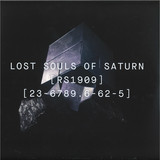
R&S present the eponymous, debut, full length album transmission from Lost Souls Of Saturn.
Epic in scope, time and space, this multidimensional mind trip is for fans of Mark Leckey's 'Fiorucci Made Me Hardcore', David Morales' Red Zone dubs, Don Cherry's 'Organic Music Society', The Orb's 'Ultraworld' and KLF's 'Space' and much more besides.
This ambient house masterpiece combines flavours gathered from across the galaxy, stewing them up into a delicious primordial soup. Old sci-fi soundtracks, acid, free jazz, avant garde, musique concrete, world music and more all whirl around an underground-dance-music axis.
Primarily LSOS are Seth Troxler and Phil Moffa, plus further opaque participants congregating to combine music, imagery, and storytelling into an inextricably linked whole, all wrapped-up in a philosophy of their own making.
The title Ghost Frequency works on several levels. I was introduced to the term when I first began learning about recording techniques. It was used (usually negatively) to describe sounds that appeared on recordings due to signal interactions that resulted from “improper” mixing or recording and read as “noise” rather than the “music” that was being recorded. I became instantly fascinated with the phenomenon and intentionally creating these sounds in my recordings by deliberately using supposedly incorrect techniques has become a big part of my composing and recording process, probably the most central and consistent practice of it. I’m interested in how the presence of these sounds, and traditional production’s insistence on eradicating relates to larger ideas about the eradication of vital social practices relating to the dead such as ancestor worship, mediumship and history itself in favor of state and market dictated modes of understanding existence. The internet abounds with references to the the term, but applied to ultra low frequency or “infrasound” which can allegedly be responsible for inducing supernatural perception experiences. These posts from the margins posit a Ghost Frequency that operates on the same level as a radio station, one can simply tune into paranormal activity. It’s also a pun on an imaginary metric of how frequently ghosts might be around at any given moment. The songs on the EP employ (as does all of my music) a large amount of Ghost Frequencies (i.e. sounds that appear on the recording as the result of signal interactions rather than those sounds being performed on an instrument) and they also orient themselves toward interaction with the dead as a necessary component of human experience, and a mode of resistance to state power and it’s accompanying carceral technologies.
Mondoj presents Jeremy, the latest release from LA's Roy Werner, who is perhaps better known for his work as G.S. Sultan. While the Max/MSP magician's previous works delved into ideas of "avant-garde pointilism" (ad.sculpt tutorial, Orange Milk Records) or presented "abstract noise as a communicative medium" (Redundancy Suite, Phinery), Jeremy repurposes pop music to create abstract, vaporous forms.
Shuta Yasukochi is an artist from the Saitama prefecture in Japan.
'In full Bloom' is Shuta's first outing on Vaknar, it sees the artist readapt the nature themed formula found in previous works, both sonically and in name, while expanding on the thematic by presenting the album in a story like arc, slowly unfolding throughout the duration of the album.
In Full Bloom is most aptly experienced in its entirety, revealing the albums mediative like properties as the listener is slowly enveloped in Shuta's graciously rippling compositions; glimmering chimes and faint strings quietly protrude through layers of serene, reflective ambiance.
Jatinder Singh Durhailay and David Edren released Tea Notes as a cassette back in April of 2018. London-based Jatinder Singh Durhailay is a painter and student of Indian Classical music. He has trained in both the sitar and the Hindi singing technique, Dhrupad. He also plays two traditional Sikh instruments; the bowed, stringed Dilruba and Taus. Poetic Pastel Press issued his solo debut, The Last Ballad Of Mardana, in 2017. David Edren`s expertise lies with machines and modular synthesis. His Kosmische and New Age-Inspired electronics have featured on numerous cassettes, and compilations, produced for imprints from the current Belgian underground, such as Jj Funhouse, Social Harmony, and Ultra Eczema. These recordings appearing, since the turn of the millennium, either under his own name, or the moniker DSR Lines. Jatinder and David’s collaboration, Tea Notes, is a celebration, a meditation, on both the beverage, and the communal time shared imbibing. The coming together to partake in its ritual. Each of the six tracks represents a different infusion. The opening piece is a tribute to semi-oxidised Oolong, from China`s Wuyi Mountains, with hammered dulcimer-like glissando. Gongs shimmering, gently crashing, as if signaling a change in the weather. A calm of thin, stretched synths and Ai angels introduces Tulsi from India. The Holy Basil of Hinduism, used in the worship of Vishnu, Krishna, and Rama. A traditional herb of Ayurveda and Siddha medicine. Automated arpeggiated sequences raising a vibrating wall of hallucinatory sound. Pairing swooning strings with a racing robot heart. Ceylon is a modern twist on the classical raga. Serving to tell the story of a tea smuggled into Sri Lanka in the 19th century. Plants stolen from South West China, where the brew had been enjoyed since the days of the Shang Dynasty (1766 to 1122 BC). The contraband founding fresh industry in its new home when the indigenous coffee crops failed. Muted organ and sleepy, treated sine wave microtones describe Kava, the Polynesian fireweed root, whose extract serves as both sedative and euphoriant.Shincha are the first young leaves of the season. Picked in Southern Japan and steamed to prevent oxidization, retain their flavour and green / gold colour. Their musical counterpart finds Edren establishing an ecclesiastical drone, while Durhailay`s strings chart an ancient romantic ache. Sonic stars shine. Singing out to the infinite, the universe, before dissolving into knots of Radiophonic Workshop noise.Melodies treated with subtle sustain and delay denote Pu-Ehr, from the Yunnan province. The only truly fermented black tea - made distinctive by the action of bacteria, moulds, and yeasts. Its musical themes hovering in the vapour trails, the atmospheres, they themselves create. Spiraling, soaring, reaching for the heavens, while pretty music box glitches - tiny chimes turned in on themselves. Catching, reflecting, like light at play on fresh running water. (words: Robert Harris)
“Bandiera Di Carta” represents the ongoing collaboration between instrument builder and composer Pierre Bastien and the
London based experimental duo Tomaga (Valentina Magaletti and Tom Relleen).
Bastien has been called a “mad musical scientist with a celebrity following” by The Guardian (UK) having collaborated with the
likes of filmmaker Pierrick Sorin, fashion designer Issey Miyake, singer and composer Robert Wyatt as well as Aphex Twin,
who released three of his albums on his label Rephlex.
Tomaga have made more than a dozen records since forming in 2014, pursuing a path of fearless experimentation and sonic
brinksmanship that has won them fans and plaudits from far and wide, including Thurston Moore, with whom they collaborated
on the CAN Project with Malcolm Mooney, Deb Goodge and others in 2017, as well as Wire, Silver Apples and Stereolab, with
whom they toured extensively in summer 2019.
The artistic collaboration between Pierre and Tomaga began with two commissions: from Fructose Festival in Dunkirk and the
revered underground festival Supersonic in Birmingham UK. Recording initially at a studio in the industrial port of Dunkirk, the
uneasy bond between borders and states seems to have been a theoretical motor to the collaborative sessions, as well as the
bleak landscape of the seaport frontier. This inspiration found further manifestation in the cover image for ‘Bandiera Di Carta’.
Resembling a white paper flag, it is, in fact, a photograph of Bastien’s paper and air sound machine installed on stage at
Teatro Carignano in Turin as part of the trio’s performance there. This charged, ambivalent image of a blank flag evokes the
transcendence of the national, a prescient visual motif that meditates on the contemporary uncertainty around notions of
national identity and borders but perhaps also a ‘carte blanche’ for the artists involved, in which they can deviate from the
confines of their usual practice into new and strange territories.
For each piece, Bastien’s unique sonic style: by turns his kinetic mechanoid motors, capriciously arrhythmic pipes, or the
peculiar susurrus of paper, creates a world in which Tomaga introduce their musical palette. Magaletti’s percussion anchors
these sometimes chaotic forces into beguiling syncopations, with Relleen’s synthesizer and organ work creating harmonic
counterpoints and interruptive provocations, to which Bastien responds with lyrical turns on prepared trumpet, rubber band, tin
foil and bass ocarina.
The results are curiously evocative of free jazz by the likes of Sun Ra or Art Ensemble of Chicago paired with the percussive
sound worlds of artists like Francis Bebey or Muslimgauze along with unique and sometimes bizarrely exotic tonal landscapes
of composers like Catherine Christer Hennix, Carl Stone, or Egisto Macchi. All three musicians seem to find space to bloom in
ways that are markedly different from their individual work and the resulting album is a strikingly original and powerfully bold
affirmation of what can happen when venturing beyond the normal in pursuit of the other.All tracks written & produced by Tomaga (Tom Relleen & Valentina Magaletti) & Pierre Bastien.
Mixed and mastered by Rashad Becker.