Ukranian raw black metal debut EP from Selvnatt.
Celestial, melancholic, romantic and heart-spoken black metal spiked with piano arrangements and melodic passages. Selvatt’s debut EP has taken the black metal world by storm and shows his raw, unbristled talent on display, showing he is a true force to be reckoned with. This is the extended edition of the EP featuring two extra bonus tracks, including the single "Pale Stars" with fellow Ukranian raw black metal artist FELVUM.
For fans of Këkht Aräkh, Draugveil and other romantic black metal acts
Available on pink vinyl, includes double-side lyric sheet
Buscar:melo x
Emerging from the Ukrainian darkness in 2011, Kaosophia blend the raw energy of black metal with dissonant tones and emotionally resonant melodics. Their music is a sonic tapestry woven with intricate guitar riffs, powerful vocals, and haunting arrangements.
The band recorded their first demo “Towards The End” which was self-released by them in 2012 on a limited edition cassette.
2013 saw their first album “The Origins of Extinction” released on CD and cassette and the band followed up with many shows across Europe. 2017 saw Kaosophia expand and deepen their abyssal sounds even further with the monumental “Serpenti Vortex”, with lavish cover art produced by occult master artist Dávid Glomba, it rose Kaosophia to the upper echelons and forged their name as one the best and most formidable black metal acts in the scene at the time.
After a long period of silence, bloodletting and transformation, Kaosophia return with their darkest, most mature and powerful work to date. 2025 sees the return of Kaosophia with their new album “Beyond The Black Horizon”.
A dark and malevolent opus that explores themes of darkness, existentialism and the human condition. Delving deep into the complexities of the mind, the fragility of existence and Death itself.
Kaosophia preach orthodox ideas of Satanism in the most straightforward and ruthless form - total unconditional worship. Self-destruction as the overcoming of human essence and the cognition of pain to gain access to another level of reality's perception.
It is time to enter the end of days and venture beyond the Black Horizon…
Introducing Human Behaviour Records, a vibrant new realm where music meets the soul, a home for fresh, innovative sounds and frequencies that resonate with the very essence of what makes us uniquely human. A journey into the deep, timeless grooves of dance music, blending rhythms and harmonious beats that transcend space and time. Our mission is to create a profound, unforgettable connection with all those who hear it, inviting listeners to lose themselves in the universal pulse that binds us together. We hope to spark a sense of unity, bringing together individuals from all walks of life and fostering a community built on shared experience and creative expression.
First up one up on the label is Nic David with his highly anticipated EP “Magnetic”. It pushes and pulls the boundaries of house and electro, connecting frequencies that attract positive feelings and inspire irresistible movement on the dance floor. Followed by A2 we have “The Feelin” a track that takes you on a journey with no destination, an ever-evolving ride through funky basslines and enlightened melodies. B1 taking a turn into the harder sounds with “Work it (Listen up)” capturing the mind with heavy drums and mind altering sounds through peak moments. And for the final track we are proud to have none other than Nate S.U for the remix of “Work It”. A forward thinking human known for his hypnotic sounds, creating timeless music that sits on its own throne. His take on “Work It” fuses electronic textures and a rock inspired rhythm, pushing the boundaries from the ordinary.
Gatzara Records presents its second vinyl single.
This record is a tribute to Jackie Mittoo, a key figure in the development of reggae, ska, and rocksteady. Known for his work at Studio One and his role as keyboardist for The Skatalites, Mittoo left a profound mark on Jamaican music with his melodic style and rhythmic approach to the keyboards.
The track is built on a classic reggae foundation produced by Sergio Caño, with a restrained rhythm and simple structure. The focus is on the organ, played by Joan Sobrevals, who carries the main line with a sober, respectful sound clearly influenced by Mittoo's school. Without seeking to imitate, the performance takes characteristic elements of his style — melodic phrasing, spaced chords, marked beats — to shape a coherent piece that remains faithful to the style.
The production maintains a minimalist aesthetic, without overloading, leaving space for each instrument to breathe and fulfil its function. The result is a serene, mid-tempo piece that invites you to listen carefully, without virtuosity, but with a clear intention: to pay tribute to a great musician who defined a sound, an era, a style.
Thank you, Jackie!
- A1: Overload
- A2: Driven
- A3: Dancing Wth St. Peter
- B1: Song Keeps A Coming
- B2: Clap Hands
- B3: Beautiful Friend
- C1: Bad On Bad
- C2: After Glow
- C3: Falling Down
- D1: Las Meadows Sanctum Divine
- D2: Seems To Me
Originally issued in 2002, from the band formed by UFO vocalist Phil Mogg with guitarist Jeff Kollman (Cosmosquad/Mogg/Way), drummer Shane Gaalaas (Glenn Hughes/Uli Jon Roth) and bass player Jimmy Curtain, soon after the release of UFO studio album Sharks. Sparkling with melody, this album combines guitar-based rock and soulful blues perfectly.
Damian Lazarus reveals the eighth chapter of Crosstown Rebels acclaimed annual ‘SPIRITS’ VA compilation series.
The latest instalment sees the label founder once again curating a carefully balanced lineup of emerging voices and established names, with the eight-track collection set for release on 30th January 2026.
Since its inception in 2017, Damian Lazarus’ SPIRITS series has become a trusted barometer for the year ahead, spotlighting forward-thinking artists and cutting-edge club music from across the global electronic landscape. With ‘SPIRITS VIII’, Crosstown Rebels continues this tradition, delivering a refi ned yet adventurous selection that moves seamlessly between hypnotic house, melodic depth, and late-night energy - building on the momentum of previous volumes and capturing the label’s unmistakable essence.
Opening the release, Raz Alon sets the tone with ‘Hey It’s Me’, a warm and immersive opener that draws listeners in with emotive touches and fluid groove work. Lost Desert follows with ‘Ultima’, leaning into trippy, melodic-tinged sensibilities as tumbling rhythms meet expansive atmospheres and subtly evolving motifs. On the flip, TIMANTI ventures into a captivating voyage with ‘Warrior Spirit’, pairing swirling synths with hazy melodies, before STEB delivers ‘House Of STEB’, a groove-led cut packed with personality, swing, and club-ready flair.
The journey continues with Yuvèe’s ‘Set The Fire’, featuring FADO, a hypnotic and vocal-led track that balances emotional weight with understated rhythmic pressure. Ekoboy then ups the intensity on ‘Lose Control’, combining crisp percussion with infectious momentum designed for peak-time moments. On the final stretch, MADI brings a reflective buy playful touch with ‘Around Me’, weaving lush textures and subtle dynamics into a deeply absorbing listen, before JUAAN closes the compilation with ‘Bass Cliente’, a punchy and bass-forward finale that rounds things out with raw club energy.
With its continued ability to champion new talent while welcoming respected artists into its orbit, Crosstown Rebels remains a vital force within electronic music. SPIRITS VIII stands as another clear statement of the label’s vision, reaffirming its role in shaping the sound of contemporary house and techno.
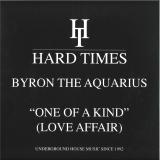
There’s a rare tenderness to the way Byron The Aquarius makes house music. Across every release, the Alabama-born producer brings a deep sense of humanity - chords that breathe, basslines that sway, and melodies that seem to remember. On 'One of a Kind (Love Affair)', his debut for Hard Times, that emotional clarity shines through once again.
A master of the keys with a discography that spans Eglo, Signature, Apron, Axis, and more recently Skylax and Star Creature, Byron has long blurred the boundaries between jazz, soul, and machine groove. Here, he builds four tracks that each glow with feeling and finesse.
‘A New Life' opens with uplift and propulsion - crisp kicks and fluid sax lines circling around tender vocal refrains. 'The Last Mile of the Way' drifts inward, its spoken-word cadence and pulsing rhythm turning reflection into hypnosis. On the flip, 'I Be Like Dat' pushes forward with a tougher, more percussive edge. A laser-guided club moment that still hums with soul. Finally, '4 Mike Huckaby' closes the record as both elegy and celebration: shakers, muted horns, and shimmering keys floating in quiet reverence for a lost friend and inspiration.
As its title suggests, One of a Kind (Love Affair) is less about romance and more about devotion.
Supercoole Debüt-7"-Single von Marco Benevento, einem echten Klaviervirtuosen, der schon seit seinem siebten Lebensjahr spielt. Seine Karriere hat ihn schon oft um die ganze Welt geführt, wodurch er eine umfangreiche Diskografie und einen Ruf als gefragter Session-Musiker aufgebaut hat. Leon Michels, Mitbegründer von Big Crown und Grammy-Gewinner, hat Marco zum ersten Mal während der Aufnahmen zum Album ,Adult Themes" von El Michels Affair ins Boot geholt. Seitdem hat er sein Talent in unzähligen Big Crown-Projekten eingebracht. Außerhalb des Labels ist Marcos unverwechselbarer Stil unter anderem auf Alben von Clairo, Kevin Morby und Freddie Gibbs zu hören. Aber genug davon, was er für andere gemacht hat - diese Veröffentlichung zeigt Marco von seiner besten Seite: Er macht sein eigenes Ding und das richtig gut. Die A-Seite ,Frizzante" ist pure Feierlichkeit, eingefangen auf Vinyl, die darauf wartet, von der Nadel befreit zu werden. Es ist ein energiegeladener, gut gelaunter Kracher, bei dem Marco Melodien mit sich selbst über einem unerbittlichen Groove austauscht. Von der ersten Note an zieht dich der mitreißende Topline-Riff in seinen Bann und macht Platz für kaskadenartige Klavierläufe, üppige Bläserarrangements und Schichten von E-Piano und Synthesizern, die die Energie immer weiter steigen lassen. Es gibt keine Pause, keine Entspannung - nur einen richtigen Soul-Jazz-Tanz. Auf der 2. Seite zeigt Marco mit ,Turnadot" eine ganz andere Seite seines Sounds, zusammen mit der italienischen Sängerin Marianne Mirage. Der Song ist eindringlich schön und filmisch und passt perfekt zwischen Portishead und Serge Gainsbourg. Mariannes Gesang schwebt über Marcos perfekt ausgewogenem Arrangement - seine Produktion ist sowohl zurückhaltend als auch ausdrucksstark und macht den Song universell fesselnd, unabhängig davon, ob man Italienisch spricht oder nicht.
Shep is a new project from respected UK veteran Jay Shepheard, and it has already made a good start with some solid tracks and an even better title with the 'Higher States Of Nonchalance' EP back in December. This third outing on his People Pleasers label opens with the sleek synth warmth and curious melodies of 'Home Again'. 'A Box Ticker' has a darker vibe with daubs of synth, warped bass and jumbled percussion and flip side cuts 'Mongolian Samba Diaries' and 'The Lime Deck' up the energy first with some nice trippy motifs and then with a grittier, more heads down tech cut. Superb sound design makes this another standout 12".
We have sourced a whole bunch of original stock from Charles Webster's very tidy Miso label. This is one of them from 20 years ago, but the sounds still have a future edge. It's deep, dubby, minimal, but with meaningful and intricately crafted melodies that bring astral energies. Lo Rise's 'Life Goes On' is the source material for a quartet of tasty remixes. Charles Webster & Martin Iveson mix it into a fleshy, techy dub with a jazzy vocal, Dean DeCosta brings more bump to the drum and glitch to the texture, and Markus Enochson strides into classic 00s tech house. Jimpster shuts down with a sparkling and jazz-inflected dub.
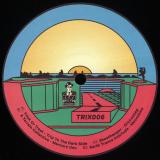
Following the last blend of four timeless cuts compiled into TRIX002 (2023), Party Tricks returns with a new VA that maps the outer edges of UK breaks and garage on the A-side, and a US-tinged psychedelic journey on the B-side.
Stitched with fleeting lines from The Usual Suspects (“The greatest trick the devil ever pulled…”), A1 Trick or Treat - Trip To The Dark Side dives into the darker shades of the UKG spectrum, setting the opening tone with a mysterious heavy stepper.Continuing down this road, Sheethanger – Discostep flips the energy with a dubby, and irresistibly groovy breakbeat workout, complete with spicy vocoders and a kinetic drive engineered to lift every dancer off the floor.
On the B-side, the focus shifts toward the psychedelic zone of the US niche. A Terran Collective - Mercury Uno rolls out in low gear under acidic, foggy tension, gradually accelerating as it climbs toward a hazy, hypnotic eruption.Finally, Earth Trance Interlude - Moonshine delivers an after-hours breaks masterpiece - the right anthem to close the record on a bright and uplifting-melodic-tribal note.
ROTCIV is back with his new EP ‘Memory’, which marks the 20th release on Beartrax’s label Melodize. Throughout the record, the Berlin-based and native Brazilian producer explores his signature dark, mysterious, and atmospheric vibes shaped by the underground and queer club nights and dance-floors that fuel his sound, refined by over almost 30 years behind the decks.
Maintaining Melodize’s specialized sound deep-rooted in moody electronic principles, the EP opens with ‘Memory’, a piercing, dark, synth dynamic alongside rich tonal textures in both harmony and melodies alike. Unapologetic, yet calming and reminiscent of a slow drive through the winter nights; cold, yet bold, sharp, and comforting.
First to remix ‘Memory’ with a nostalgic, synth-heavy 80’s remix is Frankfurt-based DJ, producer, and visual artist Chinaski. Integrating his signature bold synth hooks into the track, Chinaski knows how to roll in with longing sentimentality. The remix features a bouncier approach with re-envisioned acoustic percussion and catchy synth arps, along with an eery dark disco feel.
On the B side, Rotciv kicks in with ‘Trintage’, which gives a sinister sensation with its hypnotising bass synth lines alongside contrasting, choir-like pads. Seeping with articulate poly-rhythmic synth arps, Trintage guides the listener to be indulged into a dream-like state on the border between both digital and analogue soundscapes, blurring the lines between fantasy and reality.
Next up is New York-based and founder of Samo Records, Facets, who takes on the next remix for ‘Trintage’ with a more electro-grunge techno approach consisting of heavier four to the floor kicks in company of Rotciv’s hypnotic textures. Having shifted the synth melody rhythmically, a sense of space and tension is created within the soundworld of this track. The play between gritty bass-end synths along with softer, textured high-ends helps emphasize the groove injected into this remix.
One last remix of ‘Memory’ by Melodize’s own label founder, Beartrax, rounds out the EP. Available exclusively via digital bonus, Beartrax features his deeply hypnotic aesthetic by driving in ethereal synths alongside cosmic arps and slow-rolling rhythmic and pulsating groove lines.
2026 Repress
When Guy J launched his new label, Early Morning, it was clear each release would carry his signature intensity. Now, with this third release, Guy J continues to prove that Early Morning is an intimately personal venture.
Comprising nearly 15 minutes of music, the material presents a hypnotic experience through two meticulously crafted tracks. The opener, Silver Lake, showcases the hallmarks of his style, building layer upon layer until the arrangement transforms into a dynamic fusion of deep emotion and unbridled energy. With a controlled balance of musical motifs, frequency shifts, and refined arrangements, the track oscillates between moods, culminating in an exhilarating high made to ignite the dance floor.
The second track, Evo, opens with a melody-infused bassline that nods to the 1980s, interwoven with synths reminiscent of early Frankfurt's electronic scene. Overlaid with vocal elements evoking meditative depth, Guy J uses every technique in his repertoire, shifting unexpectedly between structured sequencing and bursts of psychedelia. The track takes listeners on an immersive, unexpected journey.
This third release from Early Morning solidifies the label's vision, promising a bright future for dance floors worldwide.
Killer Groove Records proudly presents the debut 45 by Italian cinematic funk trio Atabasca. A syncopated journey where funk, psychedelia, and cinematic groove merge into a timeless narrative suspended between rhythm and vision.
"Cacopoulos" and "Kundela Mawedi" mark the birth of Atabasca's sonic universe: the first two singles from the upcoming self-titled debut album,which will be released on March 27 in limited-edition LP, CD digipack, and digital formats.
On the A-side, "Cacopoulos" is an impetuous, visionary ride that fuses the power of instrumental groove with the evocative imagery of library music and Italian golden-age soundtracks. From the first beat, listeners are drawn into a dry, dusty landscape driven by a primal drum groove and the acid twang of a guitar that evokes the spirit of classic Westerns. Indeed, "Cacopoulos" pays homage to I Quattro dell'Ave Maria (Ace High) and to the legendary Eli Wallach, the sly outlaw who turns deception into revenge, a subtle yet powerful nod that ties the trio's sound to imagery steeped in dust, dreams, and redemption.
On the flip side, the sound of an old lap steel guitar evokes the gentle waves of the sea, opening the doors to "Kundela Mawedi", a dreamy track with exotic tones and heavenly atmospheres. The sonic journey unfolds through hypnotic rhythms and echoes of ancient cultures, where ethereal voices and warm, entrancing bass lines intertwine with psychedelic riffs and evocative guitar melodies, merging into a soundscape rich in warmth and mystery. The chorus, with its unexpected choral chant, adds a spark of magic. An elegant twist that gently stirs the dreamlike mood and transports the listener into a new sonic dimension, steeped in mysticism and tribal vibrations. "Kundela Mawedi" is more than just a song: it's a sensory experience, a musical ritual where tradition meets psychedelia, sand meets sea, and the soul dances upon the waves of time.
Recorded in a single take, the session captures the raw energy and natural atmosphere of the performance. Artistic production was handled by the trio alongside Andrea Fabrizii (digger, musician, producer, and catalogue curator for CAM Sugar), while Riccardo Ricci mastered the tracks at Velvet Room Mastering Studio in Brighton.
A killer double-sider, blending psychedelic and funk moods with percussive, jazzy textures. A must-have gem for every groove-loving DJ.
Like a desert blooming within the evergreen forests of the planet's far north, a unique, alien, disruptive environment: this is the vision behind Atabasca, the project of Luca Mongia (guitars, lap steel, keyboards, vocals), Paolo Mazziotti (bass, keyboards, vocals), and Valerio Pompei (drums, percussion, vocals). Individually active for over twenty years on both national and international scenes, the three musicians came together in 2023 to create a project that merges experience, experimentation, and creative freedom. Their music is imaginative and at times dreamlike, blending the classic concept of the instrumental trio with the worlds of film scoring and sound design.
Atabasca's sound moves through jazz-funk, world, and cinematic territories, weaving together afrobeat, desert, and psychedelic influences into a personal and timeless language. Each piece is a scene; each sound, a fragment of a world, a journey between reality and imagination where groove, texture, and organic timbre merge into a singular sonic ecosystem: a perpetually shifting balance that generates new inner landscapes.
Fans of Khruangbin, Surprise Chef, and instrumental psych-funk, take note!
- A1: Dlp 1 1 (Section I) 21 15
- B1: Dlp 1 1 (Section Ii) 21 00
- C1: Dlp 1 1 (Section Iii) 21 20
- D1: Dlp 2 1 10 50
- E1: Dlp 2 2 (Section I) 16 21
- F1: Dlp 2 2 (Section Ii) 16 20
- G1: Dlp 3 (Section I) 21 00
- H1: Dlp 3 (Section Ii) 20 53
- I1: Dlp 4 20 12
- J1: Dlp 5 (Section I) 17 20
- K1: Dlp 5 (Section Ii) 17 20
- L1: Dlp 5 (Section Iii) 17 39
- M1: Dlp 6 (Section I) 20 20
- N1: Dlp 6 (Section Ii) 20 12
- O1: Dlp 1 2 21 41
- P1: Dlp 1 3 12 00
Since the turn of this century, perhaps no other modern composition has had a more resonant healing effect than The Disintegration Loops. Composer William Basinski’s deteriorating analog tape loops evolved from melodic symphonies to melancholic silence over a span of time that uncannily turned passing minutes into pensive lifetimes. In her foreword for the new box set reissue of The Disintegration Loops, the pioneering multimedia storyteller Laurie Anderson describes the impact of this transformation in poetic detail: “These dissolving sounds, this emptying space, has gained my complete confidence. They are taking me somewhere. I am willingly following these sounds, becoming more and more transparent.”
The Disintegration Loops – Arcadia Archive Edition is an expansive new box set that includes the entire 5-hour suite of iconic work. Newly remastered from the original recordings by Josh Bonati, the hefty package includes eight vinyl records (or four CDs for the less analog-inclined) in sturdy full-color jackets featuring the restored original artwork, and a new 1000-word foreword by Laurie Anderson – all housed in a striking heavyweight, case-wrapped box. It is the ideal encapsulation of one of the 21st century’s most truly transcendent works. As Anderson concludes in her foreword, “this music has created another world, a world to be carried away in.”
The fourth episode of the Barbatus odyssey comes from Torrent, a Barcelona-bred pirate, who translates an intricate story of a malicious time loop that Captain Barbatus and his fellow pirates get stuck in.
From sorrow and remorse, to acceptance and hope, the four tracks are packed with emotion. Bouncing between Progressive house to Breaks, but cleverly stitching it together with Electro, 80s drums, and melodic synths, Torrent describes a voyage of pirate captain and his crew across the seas of the New World.
The new chapter on Barbatus D. Wreckords is out this Autumn.
- A1: Another Lamp
- A2: Roam
- A3: Kyokai To Tabiji
- B4: Nis
- B5: Mid Winter
- B6: Now & Here
- B7: Shuto Shunka
Two years have passed since haruka nakamura released the “Light years” series, a four-part project created in collaboration with THE NORTH FACE Sphere,
tracing the cycle of the seasons. During the two years that followed, he continued to produce beat-based sketches — melodies and fragments born in daily life,
films, and other creative projects — sampling and reworking his own material as an ongoing personal practice.
These works now come together as the culmination of his collaboration with THE NORTH FACE Sphere: the twin albums “ALL DAY” and “ALL RAY,” featuring
sixteen tracks in total.
Compared to his previous works, the melodies and rhythms here resonate more vividly and memorably. Both albums gaze toward the light of the seasons,
yet each expresses a distinct tone and atmosphere.
As a prelude to these albums, eight singles will be released consecutively over eight weeks.
The artwork combines photographs taken by haruka nakamura with watercolor-inspired designs by suzuki takahisa (16 design institute).
Together, the eight singles and two albums create a cohesive visual and sonic world through ten unified jacket artworks.
AboutBlank produces here 3 majestic tunes...
Super positive state of mind style, not too happy through but really sunny and full of energy, with a repetitive serial music acid melody on the Cosmicology A side 45 RPM killer 180BPM hardfloor track.
The flip open on a regular 160 BPM heavy kicker, trippy mental acid-pikes-of-ice more classic but bloody efficient...
Last track (same speed as A1) is a serious hard-kicker too... at the hardcore frontier with a crazy melody coming in, reminding the old school 90's transecore best-of...
This record was produced both by Brain Bending and Acid Night.
Visual by X.G.
- A1: Robert Pico - Le Chien Fidèle
- A2: Annie Girardot - La Femme Faux Cils
- A3: Spauv Georges - Je Suis L'état
- A4: Zoé - Zoé
- A5: Jacques Da Sylva - Fou
- A6: Valentin - Je Suis Un Vagabond
- A7: Jacques Malia - Histoire De Gitan
- A8: Bernard Jamet - Raison Legale
- B1: Jean-Pierre Lebort - Barbara Au Chapeau Rose
- B2: Les Concentrés - Fils De Dégénérés
- B3: Les Missiles - Publicité
- B4: Hegessipe - Le Credi D'hegessipe
- B5: Marechalement Votre - Ethero Disco
- B6: Mamlouk - Decollez Les
- B7: Mozaique - L'amour Nu
- B8: Jean-Marc Garrigues - Je Dis Non
- B9: Penuel - Astronef 328
The journey through French-speaking pop archives continues with this fifth volume, packed with fuzz, gimmicks, and dissent. Far from the charts, the selected tracks display a great creative freedom, often backed by corrosive humor. Welcome to the surprising, kaleidoscopic, and colorful world of the late sixties and early seventies, Wizzz!
Born in Montauban, Robert Pico stumbled into music by chance when he met René Vaneste, then artistic director at Pathé-Marconi. René brought him to Paris to record his first 45 RPM EP in 1964. A year later, Pierre Perret introduced him to Vogue, where he recorded his second album with Claude Nougaro’s orchestra. Sylvie Vartan then introduced him to RCA, where he recorded four singles, including the astonishing "Chien Fidèle," a track backed by a hair-rising fuzz guitar. Alongside his solo career, he also composed for other artists like Alain Delon (the song was recorded but remains unreleased), Magali Noël, Bourvil, and Georges Guétary. In the Paris of the sixties, he mingled with Mireille Darc, Elsa Martinelli, Marie Laforêt, France Gall, Françoise Hardy, Petula Clark, Régine, Dani, Serge Gainsbourg, Joe Dassin, Franck Fernandel, Charles Level, and Roland Vincent. Despite his efforts and winning a Grand Prix Sacem for his final record, Robert Pico didn’t achieve the expected success in show business and decided to leave Paris and return to the Southwest, where he devoted himself to writing. He is the author of 23 books (including Delon et Compagnie, Jean-Marc Savary Editions 2025, a memoir about his youth and his many encounters). Today, he is relieved to never have become a celebrity and devotes himself to his work with passion.
In 1969, the Franco-Italian movie Erotissimo was released, directed by Gérard Pirès (who later directed Taxi in 1998, written and produced by Luc Besson). This pop comedy features Annie Girardot, Jean Yanne, Francis Blanche, Serge Gainsbourg, Nicole Croisille, Jacques Martin, and Patrick Topaloff. The soundtrack was written by Michel Polnareff and William Sheller, with lyrics by Jean-Lou Dabadie. "La Femme Faux-cils," performed by Annie Girardot. It recounts the feelings of a rich CEO's wife who seeks to develop her sex appeal under the influence of advertisement and magazines. Groovy, sparkling and light, this track, with ITS lush arrangements humorously critiques consumer society and feminine beauty standards.
“Je suis l’Etat” (1967) is the flagship track of the first EP by singer-songwriter Spauv Georges, aka Georges Larriaga, better known as Jim Larriaga (1941-2022). Born into a family of bakers, the young man was initially planning to become a hairdresser when he discovered English-speaking music through Elvis Presley and the Beatles. After this revelation, he decided he would become a songwriter and gave himself five years to succeed. He recorded his first two EP’s independently for RCA under the pseudonym Spauv Georges; meaning “that poor George”, a nickname given to him by the mother of her friend Jean-Pierre Prévotat (future drummer of the Players, Triangle, or Johnny Hallyday). Portraying a depressed and eccentric young man, Spauv Georges created corrosive and amusing songs that didn’t reach a wide audience, despite a TV appearance with Jean-Christophe Averty.
Supported by his loyal friend and fellow songwriter Jean-Max Rivière, Georges Larriaga met the future singer Carlos in the early '70s, then Sylvie Vartan’s assistant. He wrote songs for Carlos, including the popular "La vie est belle," "Y’a des indiens partout," and "La cantine", which went onto become a huge hit in 1972. He also composed for Claude François (“Anne-Marie”, 1971), Charlotte Julian (“Fleur de province”, 1972), helped launch child singer Roméo (who sold 4 million records), and later wrote the hit "Pas besoin d’éducation sexuelle" (1975) for the young Julie Bataille. In 1971, Jim recorded an album for Disc'Az: “L’univers étrange et fou de Jim Larriaga”, which featured pop gems like “La maison de mon père”.
The story of the song "Zoé" began when Pierre Dorsay, artistic director at Vogue Records, asked Swiss singer and musician Pierre Alain to write a song for a new female singer. The inspiration came when he realized that Zoé (the artist's name) was also the name of France's first atomic battery, created in 1948, which consisted of uranium oxide immersed in heavy water! The lyrics reflect a bubbling energy that must be handled with caution, while the instrumentation echoes this atomic theme, notably with the use of a theremin.
Zoé’s career lasted only as long as a single 45 RPM, but it seems Christine Fontane was the vocalist behind this pseudonym, who is known for several EPs, a good "popcorn" album in 1964, and a handful of children’s singles in the '70s. Regardless, the photograph on the cover is of a different girl entirely.
Later, Pierre Alain continued his career, writing songs for himself, Marie Laforêt, Danièle Licari, Alice Dona, Arlette Zola (3rd place in Eurovision 1982), and achieving multiple gold and platinum records in Canada. Also an inventor with several patents, president of the Romande Academy, and head of the French Alliance in Geneva, he now composes atonal music, books, and poetry. Moreover, he is also the host of "Les Mardis de Pierre Alain" at "Le P'tit Music'Hohl" in Geneva.
Filled with oriental choruses and fuzz guitar, "Fou" is from Jacques Da Sylva's only EP released by Vogue in 1967. Despite the quality of this recording, all traces of this singer disappear after this first effort.
Valentin is a baroque pop singer born in Belgium. He is the songwriter and composer of most of the tracks on his three singles released in the late 60s in Canada. A legend says that he reincarnated himself as Jacky Valentin during the 1970s for a rock'n'roll revival career in Belgium, but his older brother sadly debunked this story. Valentin's first two singles were arranged by Claude Rogen, a Parisian session pianist who had come to Canada to promote the song “Mister A Gogo”, a cover of David Bowie’s “Laughing Gnome”, adapted by singer Delphine, his wife at the time. Far from his usual network, Claude Rogen arranged music for Polydor, including the arrangements for “Je suis un vagabond” in 1969, a jerk tune with string arrangements and a furious optimism.
Jacques Malia wrote, composed, and recorded his only 45 EP for Festival in 1966. “Histoire de gitan” is an incredible beat track with bohemian scat that tells the story of a gypsy musician who came to Paris to make it in the Music-Hall, to no avail. The hero of the song and its author probably shared a similar fate, as Jacques Malia faded into anonymity after this remarkable attempt.
Bernard Jamet recorded two EPs for Barclay in the late sixties and co-wrote several songs with Christine Pilzer, Pascal Danel, and prolific songwriters Michel Delancray and Mya Simile. The track “Raison Légale” (1968), his masterpiece, immerses the listener in a courtroom right when a murderer is being judged, with jerk rhythm and free arrangements. A unique, paranoid, judicial, and psychedelic oddity.
Jean-Pierre Lebrot-Millers started his career in show business in 1967 as a singer and songwriter for the Philips label. After three singles, he wrote several songs of a new kind with his friend Pierre Halioche, in the midst of the sexual liberation movement and the democratization of drugs. With provocative lyrics, “Les filles du hasard” and “Barbara au Chapeau Rose” were released on a Philips singles in 1968. The character of Barbara was inspired by a queen of Parisian nightlife during the psychedelic years: model Charlotte Martin, who dated Eric Clapton from 1965 to 1968, then Jimmy Page from 1970 to 1983. Jean-Claude Petit’s arrangements, with a table-filled intro, soul brass, and Hendrixian guitar, emphasize the flamboyance of a hedonistic and sexy character, whose dog is named Junkie because “Junkie est un nom exquis”! The track was recorded live in three takes with a full orchestra.
Upon its release, the record was censored by Europe 1 and RTL due to its references to drug use. Jean-Pierre Lebrot was then banned from the airwaves and later dismissed by his record label. He changed his artist name to Jean-Pierre Millers, while his companion Pierre Halioche became D. Dolby for a new dreamy composition, “Chilla”, which Jean-Pierre produced himself with arrangements by Jean Musy. Once again, the song was immediately censored everywhere. After this setback, he decided to stop singing and started taking on odd jobs to support his Swedish wife and their son until the day he met Jean-Pierre Martin, then production manager at Decca, who had worked with Manu Dibango. Martin offered Jean-Pierre Lebrot-Millers, then employed at Rank Xerox, the position of artistic director at Decca. He accepted and became, a year later, promotion director (radio, press, TV). He worked on Julio Iglesias’s first album for Decca, which became a massive hit and allowed him to meet Claude Carrère. The latter asked him to write new songs and find their performers, much like a “talent scout.” It’s through him that Jean-Pierre discovered Julie Pietri and Corinne Hermès. He composed “Ma Pompadour” for Ringo, Sheila’s husband, and took the microphone again for the syncope hit “Rendez-Vous” in 1982.
That same year, Jean-Pierre Lebrot-Millers tried to release a track for which he had heavily gone into debt: “Si la vie est un cadeau”. Having recorded it in London, he presented it to numerous professionals, all of whom refused to get involved. The same thing happened with Antenne 2 and the Sacem when he proposed the song as France’s entry for Eurovision. He then met Haïm Saban, who was producing cartoon soundtracks and had just launched the Goldorak theme song. Saban, having listened to the song, declared it had the potential to become a hit. He sent Jean-Pierre and Corinne Hermès to meet the CEO of the Luxembourg radio and television network. The latter received them, asked to hear a verse and chorus a cappella in his office, and immediately hired them to represent Luxembourg at Eurovision 1983. They reworked the arrangements and recorded a new version with Haïm Saban as co-producer. The song ended up winning Eurovision 1983, a great comeback for our hero. He continued producing and hung out with the band Nacash in Belgium when a couple came to introduce their daughter for an impromptu audition in a hotel room. The girl sang “Les démons de minuit” while dancing to a radio cassette. Impressed, he had her take singing lessons for a year and composed a song for her (for which he had the melody and title, but no lyrics). This required him to go on the hunt for a lyricist, who ended up being Guy Carlier. They recorded the song, which was initially a ballad, at Bernard Estardy’s CBE studio, and gave the singer a new name: Melody. They showed the song around their industry network without success. Later, Estardy called Jean-Pierre to suggest changing the rhythm and making it pop-rock. Orlando, Dalida’s brother, liked the result and decided to co-produce the track. “Y’a pas que les grands qui rêvent » became a classic hit. The song has since been covered by Juliette Armanet (as a ballad, like the original) and Valentina.
Born into an aristocratic Breton family, Hervé Mettais-Cartier worked as a DJ at Queen Kiss, a nightclub in Poitiers, where he formed the band Les Concentrés with Michel (an actor) and Christian (a radio technician). Together, they created a repertoire of whimsical songs (“Ma bique est morte”, “J’suis un salaud”, “Fils de dégénéré”...) that they performed on stage dressed in white (in homage to “concentrated milk”). They performed at Bliboquet and Olympia in 1968 for the 10th edition of the “Relais de la chanson Française” organized by L’Humanité-Dimanche and Nous les Garçons et les Filles, sponsored by Pepsi Cola. Winners in the author-composer category, alongside Danish singer Dorte, their visibility allowed them to record a 45, and appear on television in Jean-Christophe Averty’s show. The A-side of the disc features Bruno le ravageur, a casatchok dedicated to Bruno Caquatrix, the director of Olympia, nicknamed in the song “Coq Atroce” or “croque-actrices”. The B-side is dedicated to “Fils de dégénéré”, a quirky tribute to Hervé's aristocratic roots, mixing absurdity with sophisticated vocal harmonies.
After Les Concentrés, Hervé Mettais-Cartier formed the duo La Paire et sa Bêtise with his friend Olivier Robert. They performed in Parisian cabarets and toured with Pierre Vassiliu. In the late 1970s, Hervé began a solo career. He recorded two albums for the Motors label in 1978 and 1979, which did not achieve their anticipated success due to lack of promotion. In 1980, he met Bernadette, with whom he started a family and created a “Chansons à voir” (songs to see) show that he performed until his death at the end of 2024.
Publicité comes from the final EP by the Missiles (Ducretet Thomson, 1966), a disc that also includes “La (nouvelle) guerre de cent ans”, featured on Volume 4 of our Wizzz! series. Please refer to the booklet for the story of the band.
“He’s 1.82 meters tall, 28 years old, weighs 135 kg, is black and Belgian”: this is the description of singer Hegesippe on the back of his sole single (Decca, 1967). He appears on the album cover wearing a Greek toga, like a hippie gag – we are at the end of the year 1967. In “Le crédo d’Hegesippe”, this former bodyguard of Antoine and the Charlots plays the delightful card of the thick brute converted to Flower-Power and non-violence, with arrangements by Jean-Daniel Mercier, aka Paul Mille.
“Ethéro-disco” was released on a promotional record for clients of the Maréchal company (Liège, Belgium) for the New Year 1979. Over a funky rhythm, celebrity impersonations (Brigitte Bardot, Jacques Dutronc, Fernandel…) deliver an enigmatic text about pharmaceutical products like ether, bismuth, and aspartate. The track was composed by Dan Sarravah (responsible for Joanna's “Hold-up inusité” featured on Wizzz! Volume 3) and Tony Talado, who was also a singer (one 45 in 1967), songwriter (with over a dozen credits between 1964 and 1985 in various styles from surf music to disco), author (Devenez Végétarien, Dricot Editions, 1985), ad designer, and psychologist.
Décollez-les is on the A-side of Mamlouk's only single, a pseudonym for Marsel Hurten, who is known for his work on several EPs in the late sixties, as well as composing music for Hervé Vilard’s “Capri, c’est fini”, Claude Channes' “La Haine”, Annie Philippe’s “On m’a toujours dit”, and Nancy Holloway’s “Panne de Cœur”.
This strange song, with Afrobeat horns and absurd dialogues between a chef and his kitchen staff, is the result of a collaboration between Marsel Hurten and one of his neighbors, a photographer from Pavillon-sous-Bois (93), where the musician settled after returning from the Algerian War. A music video was shot to promote the record.
Marsel Hurten was born in Tourcoing (59) into a musical family. At a young age, he joined the brass band founded by his grandfather, playing the piston before studying trumpet at the conservatory, as well as teaching himself how to play the guitar. As an orchestra musician, he toured in France, Belgium, Germany, and England. He released a series of solo 45’s between 1965 and 1968 for the DMF and Az labels before stopping recording to focus on working for other artists (Gilles Olivier, Noëlle Cordier…).
“L’amour nu” (Vogue, 1971) is the work of the short-lived Belgian band Mozaïque. The track, written by singer Jacques Albin, closely resembles another of his compositions, “Carré Blanc”, which he recorded in 1969 for Disc’AZ.
Represented by the Lumi Son micro-label based in Marignane (Côte d'Azur), Jean-Marc Garrigues released two 45 RPMs in the late sixties, defending the French jerk sound. The song “Je dis Non” is a short, joyful ode to youth, pop music, and rebellion.
Songwriter and performer Jacques Penuel released three singles. The first one, “Astronef 328” (Fontana, 1969), features a dizzying series of chords punctuated by sound effects, a sci-fi story, and arrangements by Jean-Claude Vannier.
We would like to sincerely thank Pierre Alain, Moon Blaha, Marsel Hurten, Bastien Larriaga, Jean-Pierre Lebrot-Millers, Bernadette Mettais-Cartier, Robert Pico, Olivier Robert, Claude Rogen, Micky Segura.