Neon Christ, the Atlanta hardcore luminaries founded by Alice in Chains singer William DuVall have announced the official release of 1984 for 17th September. This collaboration between Southern Lord Recordings/DVL Recordings was originally released on Record Store Day U.S.only, now to be made available more widely.
The package includes a full-colour gatefold sleeve and a 12-page oral history booklet featuring dozens of never-before-seen photographs. Heavyweight vinyl at 45 RPM for maximum fidelity.
Neon Christ formed in the fall of 1983 with William DuVall on guitar, Jimmy Demer on drums, Danny Lankford on bass, and Randy DuTeau on vocals. They made their debut in the early morning hours of New Year’s Day 1984. That March, they recorded their eponymous debut 10-song EP. Released in June ’84, the EP's songs exemplify the band's signature musical diversity, from DRI-style thrashers like "Parental Suppression" to the atmospheric improv of "After." A short east coast tour followed. On Labor Day 1984, the band recorded four tracks in the home studio of Nick Jameson, of Foghat fame. A few months later, "Ashes to Ashes" was included on the International Peace/War compilation released by MDC's R Radical Records, bringing the band worldwide exposure.
Neon Christ shared the stage with the luminaries of 80s hardcore including the Dead Kennedys, Circle Jerks, and Corrosion of Conformity. In 1985, the band added Shawn Devine on second guitar, as their sound and songs became slower, heavier, and more melodic. DuVall wrote an album's worth of songs in 1985, but only "Savior (Drawn In)" was ever recorded in what would be the band’s final studio session on December 26, 1985 (the master tapes were lost). Returning to the four-piece original lineup, the band played a handful of Atlanta shows and then took a break in March of 1986. A few months later, William moved to Santa Cruz, CA, to join BL’AST!, and Jimmy, Danny, and Randy formed Gardens of…William later founded jazz/punk/world improvisers No Walls. In 1999, he would form Comes With The Fall and move the band to Los Angeles, where he struck up a friendship and musical collaboration with Jerry Cantrell. William joined Alice in Chains as vocalist and guitarist in 2006. On February 2, 2008, Neon Christ reunited to headline the Ratlanta Punkfest 2.
To this day, the band members maintain a close friendship, as well as a desire to honour the legacy of the group. So when longtime fan Greg Anderson of Southern Lord contacted them about reissuing a deluxe edition of Neon Christ's 1984 sessions, "1984" quickly came to life. To remaster the original tapes using an all-analog process, William DuVall made multiple trips to Nashville to one of the few remaining studios maintaining the vintage technology to play and process the audio. Side one of "1984" features the original Neon Christ 7" EP, and side two contains the four songs of the Labor Day session
Поиск:members only 3
Все
Spirits Having Fun records are ones made from and for shows and spaces—arrangements rooted in a deeply collaborative process, that come to life through intuitive and locked-in live improvisation. Following their 2019 debut Auto-Portrait, Two finds the New York and Chicago based four-piece continuing to challenge ideas of what a rock band can be, pulling apart their musical experiences and reimagining them as kinetic compositions, equally studied but palpably organic.
Two is constructed around gut feelings and strong grooves, elastic rhythms and playful pacing. Its twelve songs expand, contract, and make sharp turns between melodies under singer-guitarist Katie McShane’s meditative lyrics. “Broken Cloud,” which was also released last year on a compilation in support of Chicago Community Jail Support, offers a glimpse into her reflections on the natural world: "A city grew out of the ground / to a mountain it's only a blur."
True to its name, the internal logic of the band is also just a lot of fun, built on trust and deep-rooted musical relationships. Before there was Spirits Having Fun, McShane, bassist Jesse Heasly, guitarist-vocalist Andrew Clinkman, and drummer Phil Sudderberg had performed together in various arrangements over the years. McShane, Heasly and Clinkman met in a specific corner of the Boston underground in 2013, a time when a scene had coalesced around students from local music conservatories frequently collaborating with punk bands and noise artists, exchanging ideas and warping musical worldviews. Heasly and Clinkman played together in Cowboy Band, making mutant, free jazz-inspired takes on old country tunes. When Clinkman moved to Chicago, Heasly and McShane played in experimental groups like EKP and Listening Woman; in Chicago, Clinkman met Sudderberg playing in projects like jazz scene fixture Ken Vandermark’s high-powered band Marker.
Spirits first came together as an attempt at a long-distance collaboration among friends in 2016, driven by the simple feeling of missing each other; they’d meet up for marathon weekends here and there to practice, playing small loops through dive bars and art spaces around the Midwest—just enough for McShane and Heasly to afford plane tickets back home. Being split between Chicago and New York forced the project into a deliberate pace. “We tried to take it slow and let it be what it was,” said McShane. That sense of patience unexpectedly prepared them for March of 2020, when their planned tours and the release of Two were indefinitely delayed.
Two was mostly recorded in the summer of 2019 with the help of omnipresent Chicago engineer Dave Vettraino and DPCD’s Alec Watson, whose contributions on organ, synths, and piano are laced throughout the record. The album reflects a synthesis of solitary and communal songwriting processes—each song drawing on fragments written by individuals, which McShane threaded together and shaped through her distinct compositional lens, making the songs whole before returning to them to the band to mature collectively. When composing, McShane writes first on the keyboard before adapting parts for guitars played by herself and Clinkman. Their dueling approaches to guitar are complementary: McShane, being a newer guitarist, brings a freshness to the project (“I'm just discovering the whole time,” she says) while Clinkman has been playing since childhood.
“There's a lot more collaboration on this record,” says Clinkman, “in terms of all of us letting stuff bloom a little bit more.” The record’s first single, “Hold The Phone” is a good example of this process—it started with a playful intro riff from Clinkman, a melody and bridge added by McShane, a wobbly outro groove added by Heasly, which Sudderberg brought to life. Another single, the dynamic “See a Sky,” written primarily by Heasly, underscores the rhythm section chemistry at play across the record, the song ebbing and flowing around Heasly and Sudderberg’s eclectic percussive palettes.
“Entropy Transfer Partners” is the only song on the record with lyrics by Clinkman, and the album’s most politically direct—a call for solidarity in the face of systemic failures, an acknowledgment of the shared material devastation caused by our country’s ongoing healthcare and housing crises: “These are not things we're experiencing individually. We struggle through them collectively. And we could actually declare, all of us, that it doesn't have to be this way, and fight and organize to ameliorate some of those conditions.” (“We won't work to create the shit you monetize, to run our lives,” they sing.)
From front to back, Two is an absorbing listen simply for its impressive range. But as the members explain themselves, the complexity of the record is about more than its intricate riffs, or how often they count out an odd time signature, but how they reject the notion of boxing the songs in, letting the melodies take on lives of their own. “Making music that feels alive is important to us,” says Clinkman. “Music feels most powerful to me when it deepens our sensation of feeling alive and connected to other humans. It’s so easy to feel worn down and isolated; that your life’s value is fixed to your productivity at your job, or the things that you have or don’t have. Making music that feels joyful and fun seems like one effective antidote to that feeling.”
Ipek Yolu is the Turkish name for the Silk Road which connected the East and the West. This band does not deal in silk but they connect flavors, smells and sounds from different corners of the globe, connecting the world.
The band merges bass-heavy electro-tinged cumbia grooves, saz riffs and surf guitar into a multicultural melting pot of South American rhythms, Anatolian folk music and 60s psychedelic rock. A unique universe of sound that bridges the tropical jungles and the dusty deserts in a kaleidoscopic blend of music. Ipek Yolu has used 2020 to write their debut album Tropical Anatolia and are ready to hit the venues and festivals.
The members of Ipek Yolu first got together for an improvised jam session during the Aarhus Roots & Hybrid Festival in 2018. The show was set up as a special one-time-only show merging members from the bands Hudna & Junglelyd. The show ended up lasting for almost three hours. It didn’t take them long to discover they were onto something special. If you know any of these bands mentioned you know you’re in for a body-shaking party, characterized by musical curiosity and improvisation.
The three members of Ipek Yolu have all been part of the Danish music scene for several years. The band leader, Orhan Özgür Turan, is a well-known and respected saz player all over Denmark, and has made a name for himself through his efforts in the Anatolian Folk band Hudna. In 2018 he won an award as Global Roots Artist of the year at The Danish World Music Awards. Olaf Brinch and Lasse Aagaard have worked together for many years making high energy cumbia with their band Junglelyd and Afrobeat with their band African Connection. Olaf is also an integral part of the Danish band AddisAbabaBand. In addition, Olaf and Lasse have toured and recorded with great musicians such as CC Yoyo, former drummer of Fela Kuti, in both Ghana and Denmark. All of the past experiences collided to create Ipek Yolu.
In the fleeting moments between the state of being awake and reaching the doors of dreamworld lies a borderland whence comes the mood music of ancient stories told – the celestial unison of three creative souls known as AURI.
Originally born in 2011 from the special connection of Johanna Kurkela, Tuomas Holopainen and Troy Donockley, AURI was first introduced to the world as late as 2018. Now complemented by the dynamic percussive talents of Kai Hahto, the threesome carves fantastical worlds entirely their own.
Comprised by Tuomas’ keys and infinite imagination, Troy’s arsenal of flutes, other folk instruments and magical touch, and Kurkela’s youthful and tender voice full of childlike wonder – fragile and gossamer, yet powerful and moving beyond words – the flow of AURI’s celestial, uplifting mood music captures from the first notes and does not let go.
To its key members AURI is a creative outlet unconfined by the preconceptions caused by their other bands and their respective audiences. Leaning to Celtic folk and cinematic pop yet not shackled by any specific genre, AURI isn’t the kind of music that can be described by words alone. No, an equal effort of the enchanted three, AURI runs a lane of completely their own. Unburdened by anyone’s expectations but their own. This is the sort of music that taps directly into emotions.
Embrace the atmospheric auditory imagery of fantastical valleys of other fairytale dimensions and soon gone fireside bards. Dwell for just a moment in treasuries of dreamlands and ponderings that see mundane things turning into otherworldly miracles.Feel welcomed to embark on endless adventures on long roads untrodden and ships never sailed.
As if frozen in time, you’ll be captivated by heart-burstingly elating fare-thee-wells for those dearly departed.
Hear the soft words that empower those feeling inadequate and reassurance to others fearing death.AURI’s are the keys to a dimension of awe no one else sees. Only theirs to offer are the mystical, soundscapes and ethereal vocals.
Theirs to hold are the magical powers that can melt the steeliest of hearts and make grown men cry. AURI invites the listener along for journeys no other band can provide.
Come, my love – now it‘s calm enough to go.
The Jesus & Mary Chain picked the perfect time to make this record. Their sonic assaults and industrial pop could’ve only taken them so far. Proving that they were capable of making more intuitive and subtle art, Stoned & Dethroned positions the underlying desperation of the Reids’ music in a different light. Previously known for feedback-drenched pop songs and gothic surf / blues storms, The Jesus & Mary Chain followed a successful year of touring in 1992 (including a slot on the second Lollapalooza tour) by entering the studio to record an acoustic album. The sessions were the first time that principal members Jim and William Reid had embarked on a recording with a full band since their incendiary debut, but the results could not have been different. Though the hooks were still there, Stoned & Dethroned emerged with a calmer, almost folk / country-tinged sound. Any feedback appears as hazy atmospherics rather than pain-inducing squeals. The sound of the album nobly approximates the drugged swagger of the classic early-’70s Rolling Stones records, but with The Jesus & Mary Chain’s uniquely foreboding lyrical perspective.
Only Up is the second Breeze album by producer and artist Josh Korody
(Nailbiter, Beliefs).
Enlisting a whirlwind of performances from Tess Parks, Cadence Weapon and
an array of the Toronto music scene, including members of Orville Peck, Tallies,
Vallens, Zoon, Sauna, Fake Palms, Rapport, Praises, Civic TV, Moon King, Blonde
Elvis, For Jane, Ducks Ltd, TOPS and Broken Social Scene. Only Up sees Korody
digging through and channelling three decades of anthemic British bands.
From the angular guitars of late 70”s post-punk (Gang Of Four, Wire), to the
lush gloom of 80’s electro-pop (Tears for Fears, OMD), with the dance floor
psychedelia of the Manchester sound (Primal Scream, Happy Mondays), and
through the late ‘90s and early 2000s post-punk / new wave revivalists.
When originally tasked with making this album, Korody and his long time music collaborator Kyle Connolly (Orville Peck, The Seams) quickly threw down
ideas in a session, however with Connolly embarking on a world tour, and with
Korody’s demanding schedule at his Candle Recording Studio, the project sat
unattended.
Somehow, by the time of the album’s delivery deadline, Korody not only orchestrated a creative ensemble of friends and collaborators, he wrote, recorded and mixed the entirety of the album in two weeks without a single regret
or compromise.
“It was the best way I could have done it. A strict deadline to make decisions,
move on and focus on things that matter the most. Every decision was made in
that headspace. The ease of technology to endlessly tweak with, it sometimes
can end up destroying records until there is no soul in it, no happy accidents
and it’s completely sterile. You can have a well produced record without going
down that dark rabbit hole.” Only Up is out via Hand Drawn Dracula.
The Paradise Projex is a reunion of key original members of former 80s UK soul band Paradise. Co-founder, songwriter, musician and music director Phil Edwards joins musician and producer Karlos Edwards and lead singer Paul Johnson for this brand new entity made of some friends new and old. The outstanding quality and investment in the music remain the same. Paul Johnson features on “Feels Like Home” and a new take on the 1983 Paradise classic “One Mind, Two Hearts”. These 4 tracks are only being issued on vinyl for the time being, 1000 copies with an individually numbered picture sleeve.
Originally released in 1995, Garbage’s self-titled debut album was met with critical acclaim upon its release. Featuring the band’s most recognizable single “Stupid Girl”, the album has since sold over four million copies and achieving double platinum certification in the UK, US and Australia. Formed in 1993 comprising of members Duke Erikson, Steve Marker, Butch Vig and Shirley Manson, Garbage have gone onto sell over 17 million albums worldwide over a 28 year career.
This 2LP Gatefold & 2CD Digipack release, alongside the repress of their follow up album Version 2.0 (1998), is the first time the newly remastered album has been made available via BMG, ahead of their new studio album No Gods No Masters, to be released on Infectious Records in June 2021.
Limited Coke Bottle Green vinyl, 250 copies only for the UK. Any future pressing will be on black vinyl. Massage feature Alex Naidus from Pains At Being Pure At Heart. Recorded by Lewis Pesacov (Fool’s Gold, Foreign Born, Peel’d). Massage was supposed to be low-stakes, no big deal "anti-ambition," as Andrew Romano, guitarist and vocalist, put it. The L.A.based jangle-pop group's first album, 2018's Oh Boy, was a sweet and simple weekend warrior's affair, or more specifically, an every-other-Monday one, as the band members gathered to bash out songs that offered messy but heartfelt tribute to their chosen heroes: The Feelies, the Go-Betweens, Twerps, Flying Nun. For Romano, not taking things too seriously is a dead-serious affair: “Nothing kills the kind of music we want to make faster than the sense that a band is trying too hard,” he says. The kind of music Massage makes sunny, bittersweet, tender is less a proper genre than a minor zip code nested within guitar pop. Take a little "There She Goes" by the La's, some "If You Need Someone" by the Field Mice; the honey-drizzled guitars from The Cure's "Friday I'm In Love," a Jesus & Mary Chain backbeat, and you're almost all the way there. Indie pop, jangle pop, power pop whatever you call it, pushing too hard scares the spirit right out of this sweet, diffident music, and Massage have a touch so light the songs seem to form spontaneously, like wry smiles. Still, on their sophomore effort, Still Life, they manage to take a quantum leap forward in songwriting, production, and depth, all somehow without seeming to try. These 12 deft songs are full of late-summer sunlight and deep shadows, pained grins and shared jokes, shy declarations of love and quietly nursed heartbreak. Still Life resurrects a brief, romantic moment in the late-'80s, right after post-punk and immediately before alt-rock, when it seemed like any scrappy indie band might stumble across a hit. When Andrew Romano and Alex Naidus first met in 2007, Naidus had just joined a band with his friends Kip Berman and Peggy Wang that was about to stumble into many of them. When Naidus finally left Pains for L.A. in 2013, two hit albums and a few world tours later, he started playing with Romano to recapture the no-stakes, suburban-garage joy of making music for its own sake. It was "friendship incarnate," Naidus remembers. The other members came from within the friend circle Gabrielle Ferrer (keyboard/vocals) is Romano's sister-in-law, Michael Felix (drums) is one of Naidus’ best friends, and David Rager (bass) is a childhood friend of Felix’s. When Felix moved to Mexico City in early 2020, Naidus’ wife, Natalie de Almeida, stepped in. The result is the finest batch of songs they've ever produced. From Naidus' velvet-lined JAMC tribute "Half A Feeling" to Ferrer's Let It Be-era Replacements-tinged lament "The Double" to Romano's "In Gray & Blue," these are gold-standard indie-pop gems from emerging masters of the form. Still Life glows with the sincerity and unfakeable warmth of the era they so lovingly channel. Like the best Gin Blossoms chorus you still remember, the songs on Still Life stir big, pure emotions, but beneath them, uneasy truths about adulthood linger, just below the surface. Maybe the exact mix of ringing guitars and two-part harmonies can chase those feelings away, or redeem them, for at least a minute or three. Massage won't stop trying.
REISSUE - from original press release: For three decades the reclusive Revolutionary Army of The Infant Jesus (RAIJ) have confounded musical classification and studiously declined every invitation to explain their unique form of musical and artistic experimentation. Initially the Liverpool outfit built their reputation on their extraordinary immersive multi-media performances combining multiple layers of visual imagery, elements of ritual, enigmatic samples, field recordings and mesmeric live music. Their cult status was further reinforced with the release of the now much sought-after two studio albums The Gift of Tears (1987) and Mirror (1990) and two EP collections, Liturgie Pour La Fin Du Temps (1992) and Paradis (1995). After an 18-year hiatus the appearance of a new RAIJ album, and the apparent relaxation of their strict vow of silence, are generating predictable excitement and expectancy. Beauty Will Save the World does not disappoint. RAIJ's intoxicating mix of ethereal beauty, dazzling soundscapes and oblique mystery reach new levels of intensity and subtlety. The album title - a quote from Russian novelist Fyodor Dostoevsky - is one of the many literary, cinematic and spiritual references underpinning RAIJ's unexpected comeback. Founder members Paul Boyce, Jon Egan and Les Hampson, joined by a fresh wave of collaborators, have crafted an album of unique beauty and originality. Prolonged silence seems to have deepened rather than dimmed their creative impulse. As ever it is the breadth of musical genres, cultural references, borrowings and retrieved sounds that define the RAIJ aesthetic, but there is also a more consistently meditative and melodic strain that underpins the album's integrity and purpose. In a rare insight into the RAIJ's creative method, Jon Egan explains: "Although our work takes elements and inspiration from many disparate sources we have never viewed it as deconstruction. We are looking for the thread that connects every manifestation of beauty, however fragile, transitory and seemingly accidental. " In addition to the album release on Occultation, RAIJ's second coming also includes a live performance at this year's Greenbelt Festival and the re-release on vinyl of The Gift of Tears by California-based label Feral Sounds. "There is renewed interest and appreciation of our music and that's great", said Leslie Hampson. "We have never tried to cultivate obscurity or anonymity, we simply wanted to avoid having to explain and justify a creative process that isn't necessarily premeditated. Isn't it enough to listen to and experience it?"
- A1: Bye Bye Bye
- A2: Tale Of My Lost Love
- A3: You Need Me
- A4: Peace Of Mind
- A5: Baby Buggy
- A6: Stop & Think It Over
- A7: I'm Gonna Make It
- A8: Explain Why
- A9: Tying The Leaves
- B1: Coast To Coast
- B2: There's A Rainbow
- B3: Sooner Or Later
- B4: Here Comes The Night
- B5: Till The Moon Don't Shine
- B6: In The Moonlight
- B7: Someone Lock Me Up
- B8: Chinchilla Hat
This is the story of two sisters who nurtured a dream for half a century and never let it die. Vicki and Ronni Gossett launched their musical career as teenagers in Whittier, California in 1966. They called themselves the Female Species. Members came and went; their base of operations moved to Las Vegas, back to LA, and over to Nashville. Along the way their sound transformed from garage rock to lounge to country pop, the only constant being an innate mastery of hooks and harmony.
These ladies had it. Along the way, they crossed paths with The Carpenters, Paul Revere & The Raiders, The Judds, and seemingly half of the industry’s power players, rebuffing all untoward advances, focused always on their craft. In the 1980s they became staff songwriters for music publishing companies in the hit-making business. Relentless pushing landed them a once in a lifetime audition before the court of RCA’s top executives — the kind of new talent showcase that almost never happens after 30.
Vicki and Ronni were by then in their 40s. Tale of My Lost Love is the whole story from beginning to end of two sisters who gave everything to their dream, yet never made a single record... until now. Sometimes great music just isn’t enough to break through — until it is. Numero Group is thrilled and proud, at long last, to introduce Female Species.
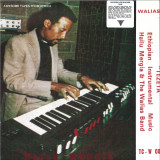
From their genesis as members of the Venus club in-house band in the early 70s, Hailu Mergia and the Walias Band were at the forefront of the musical revolution during an era where modern instruments and foreign styles superseded the traditional fare to become the staple sound of Ethiopia. No one would argue that the Walias were the trailblazing powerhouse of modern Ethiopian music. They were the first band to form independently without affiliation to a theatre house, a club or a hotel; unprecedented and risky as they had to raise all funding for expenses by themselves including buying equipment. They were the first to release full instrumental albums, considered to be commercially unviable at the time. They opened their own recording studio, with band members Melake Gebre and Mahmoud Aman doubling as technical buffs during sessions. They were also the first independent band to tour abroad. In short, they were the pioneers every band tried to emulate; some more successfully than others.
Odds are, any Ethiopian over the age of 35 who had access to TV or radio by the early 90s, will instantly recognize the sound of Walias. What is not a given is, how many would actually identify the band itself. Barely a day went by without hearing the Walias either in the background on radio or as an accompaniment to various programs on TV.
This Tezeta album, the band’s second recording, released in 1975, is one of those that have been impossible to find for nearly three decades. Sourced by Awesome Tapes From Africa and expertly remastered by Jessica Thompson, its unique and funky renditions of standards and popular songs of the day are so quintessentially Walias, flavorful and evocative. Hailu's melodic organ, unashamedly front and center in every track, makes even the complex pieces accessible.
Profoundly engaging; it's an immersive trip down memory lane for those of us getting reacquainted with it, while also an enthralling and gratifying experience for fresh ears.
Virtually unknown recording outside Ethiopia.
Documents Mergia & Walias legendary early period.
Follow-up to reissue of hugely popular seminal Ethiopian instrumentals LP Tche Belew (ATFA012)
Cassette-only, released in 1975 on the band’s in-house label to fund their record store.
Beautifully-rendered instrumentals of classic Ethiopian standards.
The furious double LP "AL AZRAQAYN" documents KARKHANA (with members of KONSTRUKT, THE DWARFS OF EAST AGOUZA, LAND OF KUSH, PETER BRÖTZMANN CHICAGO TENTET, "A" TRIO) at their very best and intense: live on stage.
Consisting of seven of the most adventurous and innovative artists from the Middle Eastern experimental scene (and a veteran jazz percussionist from Chicago), KARKHANA are surely among the most unique and interesting ensembles around. When MAURICE LOUCA (THE DWARFS OF EAST AGOUZA), SAM SHALABI (LAND OF KUSH, THE DWARFS OF EAST AGOUZA), UMUT ÇAĞLAR (KONSTRUKT), MAZEN KERBAJ ("A" TRIO, JOHNNY KAFTA ANTI-VEGETARIAN ORCHESTRA), MICHAEL ZERANG (PETER BRÖTZMANN CHICAGO TENTET), SHARIF SEHNAOUI ("A" TRIO, ORCHESTRA OMAR) and TONY ELIEH (ORCHESTRA OMAR, JOHNNY KAFTA ANTI-VEGETARIAN ORCHESTRA ) come together to perform and / or record, the result is as diverse as their individual musical backgrounds. The septet's sound is neither retro nor avantgarde, not folklore nor jazz or rock – it's an astonishing blend of all these different styles and elements where seductive oriental melodies can intensify and turn into a psychedelic freak-out, fuelled by reeds, guitars and electronics, only to re-start again from quiet sounds till the ensemble seeks catharsis in a collective improv outburst! Defying simple categorization, and in lack of proper terms for the intense experience of KARKHANA's music (as well as the member's other projects mentioned before), someone labelled it "free Middle Eastern music".
And it's not surprising that these skilled musicians are at their best live on stage – as documented on this live recording from a furious, highly energetic concert at Bimhuis / Amsterdam!
Bella Union announce the release of Piroshka’s stunning second album,
‘Love Drips And Gathers’. The album builds on the acclaim of the band’s
2018 debut LP ‘Brickbat’ and the reputations of former members of Lush,
Moose, Elastica and Modern English.
Piroshka emerged in 2018, four individuals with distinct musical identities but
also overlapping histories - a combination that might have unsettled, or even
overwhelmed, some bands. But in their case, the bond only got stronger.
After ‘Brickbat’ explored social and political divisions by way of what MOJO
described as “Forceful, driving garage songs and dream-pop epics,” ‘Love
Drips And Gathers’ follows a more introspective line - the ties that bind us, as
lovers, parents, children, friends - to a suitably subtler, more ethereal sound,
whilst still revelling in energy and drama.
“If ‘Brickbat’ was our Britpop album, then ‘Love Drips And Gathers’ is
shoegaze!” reckons vocalist/guitarist Miki Berenyi, formerly of Lush, a band
that effortlessly bridged the two genres like no other. “It wasn’t intentional; we
just wanted a different focus. I’ve always seen debut albums as capturing a
band’s first moments, when you really have momentum, and then the second
album is the chance for a more thoughtful approach.”
Bassist Mick Conroy (Modern English) agrees. “‘Brickbat’ was a classic first
album; noisy and raucous. On ‘Love Drips And Gathers’, we’ve calmed down
and explored sounds, and space.”
The way ‘Love Drips And Gathers’ changes shape and dynamic is less a
reprise of Nineties Brit indie than a transformation into a more shivery, Euromantic version with glistening electronic filigrees. The opening ‘Hastings’ sets
the tone. Luminous drops of guitar underpin Miki’s becalmed vocal before
drums, bass and a Mellotron add pace while the decorative coda features
their old pal Terry Edwards on flugelhorn.
‘Love Drips And Gathers’ - named after a line in a Dylan Thomas poem - was
inspired by love, family, belonging, memory. Miki and Moose split the eight
lyrics, with some poignant overlaps here too. Miki’s ‘Loveable’ looks to
Moose; Moose’s ‘The Knife-Thrower’s Daughter’ looks to Miki but also their
daughter Stella and his sister Anna; an empathic, touching embrace of the
women in his life.
Staying within the family, Moose eulogises his late mother (the idyllic
childhood seaside trip of ‘Hastings 1973’) and father (the more conflicted
‘Scratching At The Lid’). On ‘V.O.’, Miki pays fond tribute to Vaughan Oliver,
4AD’s legendary in-house art director who died suddenly in December 2019
and who had a particularly close relationship with Lush during their time on
the label (like ‘Brickbat’, ‘Love Drips And Gathers’’ beautiful and enigmatic
artwork is by Vaughan’s former design partner Chris Bigg).
LP pressed on clear vinyl.
Reissue for John Joseph’s own all-star group 2017 debut album
At its purest, there is little that can match the visceral thrill and empowering spirit of hardcore. As front-man of New York City hardcore kings Cro-Mags, this is something John Joseph knows very well, and with Up In Arms, he and his Bloodclot compatriots deliver a furious collection that hits hard on every level. "In this band we're doing what each of us have always done: give it our all," he states plainly. "We work hard, and we have a lot to say. Look around the planet - people are fed up with the corrupt ruling class. They destroy the planet and kill millions for profit, and the formula for our response is simple: Anger + applied knowledge = results. Don't just bitch. Change it."
The results reflect the roots and passions of the individual members. Danzig/Murphy's Law guitarist Todd Youth was the first piece of the puzzle. "We've always talked about doing this record together, Todd had songs written and I had notebooks full of lyrics. In late September 2015, I went out to LA to do a triathlon and injured my calf muscle, so I couldn't race, and Todd said he could get some studio time. So, we went in and cut the demo. While there are things we may perceive as a negative in our lives, in fact the universe has a bigger plan, and that experience ultimately resulted in the record." Having been friends with Queens Of The Stone Age and Danzig powerhouse drummer Joey Castillo for three decades, the two musicians had long admired each other's work, and their collaboration has been a long time coming. Following Castillo's suggestion of bringing in Nick Oliveri (Queens Of The Stone Age/The Dwarves) to handle bass duties, the lineup was complete. The songs that comprise Up In Arms manifested after the quartet plugged in and let the music speak for them. "We didn't decide to try to play anything, these are the songs that happened when we started jamming, and I love this band because there are no egos involved. Our goal is to make the best music possible, period. I love it when those guys contribute with melodies, etc., and I've even helped with some of the arrangements. Because we all think alike, our lyrics deal with the issues of the day, and that makes for better songs."
Every track on Up In Arms lives up to the rallying cry of the album's title - the bursts of high energy hardcore act as the perfect accompaniment to Joseph setting his sights on injustice and the seemingly endless flaws of the contemporary world. The breakneck thrashing of "Slow Kill Genocide" is an anthem for everyone sickened by those responsible for "killing the planet and all its inhabitants through industry and war. They're fucking maniacs and must be stopped." The suitably titled "Manic" attacks with bared fangs, Joseph making it clear that you can only push someone so far before they will react with violence - a call to arms for the disenfranchised who want tomorrow's world to be better than today's. Tracked at NRG in Los Angeles, the raw, old-school production that leaps out from the speaker comes courtesy of producer Zeuss (Hatebreed, Revocation), and the record was mixed by Kyle McAulay at NRG. From the moment the opening title track explodes to life, it's clear that everyone involved is having a blast and playing from the heart, and that this is no frills / no bullshit music at its most passionate - every song evoking mental images of utter chaos in a heaving mosh pit.
For anyone approaching the album for the first time, Joseph has only this to say: "Turn the volume way the fuck up!" And with plans to tour everywhere, Bloodclot will be getting in a lot of faces in 2017 and beyond. "We are already writing material and the next album is in the works. But, for now, all we want is to hit the stage to support 'Up in Arms', and every single night leave every ounce of ourselves up there."
For more than five decades, John McLaughlin has deployed his peerless guitar technique, compositional gifts, and imagination in service of a deeply personal higher calling, forging a vast legacy unmatched in improvised music. Now as the world reels from the toll of the ongoing viral-induced global lockdown, McLaughlin reflects on both the perils and potential of this challenging moment with ‘Liberation Time’. Characterised by both joy and reflection, ‘Liberation Time’ finds McLaughlin harnessing his frustrations and redirecting that energy. “The result,” he explains in a candid liner note, “was an explosion of music in my mind.”. Unusual for McLaughlin’s recent projects, ‘Liberation Time’ is not the work of one fixed ensemble. With physical proximity no longer a prerequisite, McLaughlin drew upon decades of experience as a bandleader to select musicians best suited to each composition. “That is a choice that can only be made correctly if you know how the musicians play,” he explains. “Not just how well they play technically, but how they play intuitively. Only then can you make the right decisions.” “As the Spirit Sings” introduces the album by contrasting churning rhythmic tension (stoked by drummer Vinnie Colaiuta and bassist Sam Burgess) with McLaughlin’s soaring guitar figure - all underpinned by Gary Husband’s subtle,expansive piano. Knotty post-bop figures form the basis of “Right Here, Right Now, Right On,” one of the most jazz-inflected performances McLaughlin has laid down in some time, featuring Nicolas Viccaro (drums), Jerome Regard (bass), Julian Siegel (tenor saxophone), and Oz Ezzeldin (piano). It is impossible to ignore the profound brotherhood that exists between the members of 4th Dimension - McLaughlin’s current ensemble, which includes Husband along with Etienne Mbappe (bass) and Ranjit Barot (drums). They are featured on the soulful “Lockdown Blues,” a playful refraction examination of blues tropes first released last summer to benefit the Jazz Foundation of America.
Here is the the effortless work of a band entirely confident in their own craft - the consolidation of nearly three decades of peerless songwriting and almost telepathic musicianship amongst the band's three founder members: Norman Blake, Raymond McGinley and Gerard Love. Recorded with the band’s soundman David Henderson alongside regular drummer Francis Macdonald and keyboard player Dave McGowan in three distinctly different environments (initially at Vega in rural Provence, then at Raymond’s home in Glasgow before mixing at Clouds Hill in the industrial heart of Hamburg), it’s a record that embraces maturity and experience and hugs them close.
As ever, song-wise the Fanclub present a textbook representation of democracy in action, the record offering four each by Blake, Love and McGinley. From the almighty chime of opener I’m In Love through The First Sight’s ecstatic soul-search and the paean to unerring friendship With You, Here is a a collection of twelve songs about the only things that truly matter - life and love.
Teenage Fanclub will be touring the UK extensively throughout the Autumn, including two London shows – Islington Assembly Hall and Electric Ballroom – both of which sold out within days of going on sale. Glasgow's finest will also be making an exclusive appearance at this year's End Of The Road festival in early September.
“Riding On The Tide Of Love” is the companion album to Deacon Blue’s recent hit record “City of Love”. Recorded during the ongoing pandemic, the companion album features 8 brand new tracks, all previously unheard, unreleased and individually recorded by the band members. “Riding On The Tide Of Love”, also the album’s focus track, presents a mix of newly written songs and previously unheard material from the “City of Love” writing sessions. UK & Europe Tour 2021 - starting November 08th in Newcastle - 30 shows - special guest: Jamie Lawson more information: https://deaconblue Now available as a Limited edition of only x500 on blue vinyl.
- Crossfire
- Fylingdale Flyer
- Working John, Working Joe
- Black Sunday
- Protect And Survive
- Batteries Not Included
- Uniform
- 4: W D (Low Ratio)
- The Pine Marten’s Jig
- And Further On
After completing their acclaimed folk-rock trilogy in 1979, Jethro Tull returned a year later with A, an album that introduced a different sound and a new line-up. Originally intended as a solo record by the band’s founder Ian Anderson, the album’s single-letter title refers to the studio tapes, which were marked “A” for Anderson. When the album was finished, the group’s label Chrysalis insisted that it be credited to Jethro Tull, even though only two members from the band’s previous incarnation were featured: Anderson and guitarist Martin Barre. Despite that, the album and subsequent tour were well-received by fans around the world.
Back in April, Rhino released ‘A’ (A La Mode) (The 40th Anniversary Edition), a new 3CD/3DVD set to mark the album’s anniversary. Featuring on this album anniversary set, we will release the 1LP breakout of the original album ‘A’, newly mixed by Steven Wilson.
Produced by Anderson and Robin Black, A was recorded in London during the summer of 1980 at Maison Rouge Mobile and Maison Rouge Studios. Along with Anderson and Barre, the band also featured Dave Pegg (bass, mandolin) and Mark Craney (drums), along with guest performer Eddie Jobson – a Roxy Music alumnus – on keyboard, synthesizer and electric violin.
After completing their acclaimed folk-rock trilogy in 1979, Jethro Tull returned a year later with A, an album that introduced a different sound and a new line-up. Originally intended as a solo record by the band’s founder Ian Anderson, the album’s single-letter title refers to the studio tapes, which were marked “A” for Anderson. When the album was finished, the group’s label Chrysalis insisted that it be credited to Jethro Tull, even though only two members from the band’s previous incarnation were featured: Anderson and guitarist Martin Barre. Despite that, the album and subsequent tour were well-received by fans around the world.
Back in April, Rhino released ‘A’ (A La Mode) (The 40th Anniversary Edition), a new 3CD/3DVD set to mark the album’s anniversary. Featuring on this album anniversary set, we will release the 1LP breakout of the original album ‘A’, newly mixed by Steven Wilson.
Produced by Anderson and Robin Black, A was recorded in London during the summer of 1980 at Maison Rouge Mobile and Maison Rouge Studios. Along with Anderson and Barre, the band also featured Dave Pegg (bass, mandolin) and Mark Craney (drums), along with guest performer Eddie Jobson – a Roxy Music alumnus – on keyboard, synthesizer and electric violin.
Originally conceived as a medium for Chicago-based multi-media artist/activist Damon Locks's sample-based sound collage work, Black Monument Ensemble (BME) has evolved from a solo mission into a vibrant collective of artists, musicians, singers, and dancers making work with common goals of joy, compassion, and intention. A genuinely multi-generational collective, ages of BME members range from 9 to 52 years old; members include instrumentalists and fellow IARC recording artists Angel Bat Dawid and Ben LaMar Gay. Their debut album Where Future Unfolds was released in 2019 by International Anthem glowing praise; landing at #3 on Bandcamp's "Best Albums of the Year," #25 on WIRE Magazine's "Best Albums of 2019," and being repeatedly dubbed "The Best Album of 2019" by BBC/Worldwide radio titan Gilles Peterson. Locks & BME's new album NOW was created in the final throes of Summer 2020, following months of pandemic-induced fear & isolation, the explosion of social unrest, struggle & violence in the streets, and as the certain presence of a new reality had fully settled in. Set up safely in the garden behind Chicago's Experimental Sound Studio, the music was recorded in only a few takes, capturing the first times members of BME had ever played or sang the tunes. For Locks, the impetus was more about getting together to commune and make art than it was about producing an album. In his words: "It was about offering a new thought. It was about resisting the darkness. It was about expressing possibility. It was about asking the question, 'Since the future has unfolded and taken a new and dangerous shape... what happens NOW?'"
CRIMSON/BLACK COLORED
Indie Retail Exclusive Crimson & Black color vinyl Originally conceived as a medium for Chicago-based multi-media artist/activist Damon Locks's sample-based sound collage work, Black Monument Ensemble (BME) has evolved from a solo mission into a vibrant collective of artists, musicians, singers, and dancers making work with common goals of joy, compassion, and intention. A genuinely multi-generational collective, ages of BME members range from 9 to 52 years old; members include instrumentalists and fellow IARC recording artists Angel Bat Dawid and Ben LaMar Gay. Their debut album Where Future Unfolds was released in 2019 by International Anthem glowing praise; landing at #3 on Bandcamp's "Best Albums of the Year," #25 on WIRE Magazine's "Best Albums of 2019," and being repeatedly dubbed "The Best Album of 2019" by BBC/Worldwide radio titan Gilles Peterson. Locks & BME's new album NOW was created in the final throes of Summer 2020, following months of pandemic-induced fear & isolation, the explosion of social unrest, struggle & violence in the streets, and as the certain presence of a new reality had fully settled in. Set up safely in the garden behind Chicago's Experimental Sound Studio, the music was recorded in only a few takes, capturing the first times members of BME had ever played or sang the tunes. For Locks, the impetus was more about getting together to commune and make art than it was about producing an album. In his words: "It was about offering a new thought. It was about resisting the darkness. It was about expressing possibility. It was about asking the question, 'Since the future has unfolded and taken a new and dangerous shape... what happens NOW?'"
After over two years we are finally are back with another split EP for our 12′ Vinyl Series ‘No Boundaries’ this time for the edition number three, we are extremely happy to have 3 Illegal Alien members involved in this record. For the A Side we got an incredible collaboration between the greats Mari Mattham, Ricardo Garduno and the one and only Stanislav Tolkachev who is no stranger and the label, the Ukrainian artists has been releasing on the Illegal Alien Records for a very long time and it is a pleasure to always have him back and to complete this fantastic release for the B Side we got the mighty French Producer DJ Saint Pierr
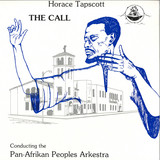
Nimbus West spirit jazz essential: the Creative Arts Ensemble's classic debut One Step Out. One of the most sought after and highly-regarded titles to have appeared on Tom Albach's celebrated Nimbus West imprint, One Step Out is a timeless work of spiritualized jazz. A true gem from the Los Angeles jazz underground, the album was pianist and composer Kaeef Ruzadun Ali's first recording as leader of the Creative Arts Ensemble, the only large ensemble group that emerged directly from Horace Tapscott's legendary Pan Afrikan Peoples Arkestra community jazz group. A Los Angeles native, Kaeef was introduced to the Tapscott circle in the late 1970s. His first experience of the Arkestra's ethos was through PAPA tenorist Michael Session, who took him to the famous "Great House" at 2412 South Western Ave., LA -- a large mansion house which members of the Arkestra had taken over as a space for communal living. Life in the Great House was a continuous stream of music, dance and community events. "When I walked in there," recalled Kaeef, "it was like this whole rush came over me, just from going in the front door -- It was like a very, very warm feeling of love. I went and I came out with 'Flashback Of Time', and that was my first arrangement." Kaeef quickly became a significant contributor of compositions to the Arkestra's songbook -- his piece "New Horizon" would be recorded by Horace Tapscott for the latter's Tapscott Sessions series. But "Flashback Of Time" would eventually appear on One Step Out, played by the new group he had put together from stalwart Arkestra members. Inspired by both Tapscott's example and by the Art Ensemble of Chicago, Kaeef had wanted to follow their lead by assembling a larger unit. Featuring seasoned Arkestra regulars including reedsman Dadisi Komolafe, drummer Woody "Sonship" Theus and altoist Gary Bias, with veterans Henry "The Skipper" Franklin on bass and George Bohannon on trombone, One Step Out is a key document of the Los Angeles radical jazz underground. Featuring the sanctified vocals of Kaeef's sister, B. J. Crowley, the album is a tour de force of spiritually energized independent jazz music.
From their genesis as members of the Venus club in-house band in the early 70s, Hailu Mergia and the Walias Band were at the forefront of the musical revolution during an era where modern instruments and foreign styles superseded the traditional fare to become the staple sound of Ethiopia. No one would argue that the Walias were the trailblazing powerhouse of modern Ethiopian music. They were the first band to form independently without affiliation to a theatre house, a club or a hotel; unprecedented and risky as they had to raise all funding for expenses by themselves including buying equipment. They were the first to release full instrumental albums, considered to be commercially unviable at the time. They opened their own recording studio, with band members Melake Gebre and Mahmoud Aman doubling as technical buffs during sessions. They were also the first independent band to tour abroad. In short, they were the pioneers every band tried to emulate; some more successfully than others.
Odds are, any Ethiopian over the age of 35 who had access to TV or radio by the early 90s, will instantly recognize the sound of Walias. What is not a given is, how many would actually identify the band itself. Barely a day went by without hearing the Walias either in the background on radio or as an accompaniment to various programs on TV.
This Tezeta album, the band’s second recording, released in 1975, is one of those that have been impossible to find for nearly three decades. Sourced by Awesome Tapes From Africa and expertly remastered by Jessica Thompson, its unique and funky renditions of standards and popular songs of the day are so quintessentially Walias, flavorful and evocative. Hailu's melodic organ, unashamedly front and center in every track, makes even the complex pieces accessible.
Profoundly engaging; it's an immersive trip down memory lane for those of us getting reacquainted with it, while also an enthralling and gratifying experience for fresh ears.
Virtually unknown recording outside Ethiopia.
Documents Mergia & Walias legendary early period.
Follow-up to reissue of hugely popular seminal Ethiopian instrumentals LP Tche Belew (ATFA012)
Cassette-only, released in 1975 on the band’s in-house label to fund their record store.
Beautifully-rendered instrumentals of classic Ethiopian standards.
- A 1: Till The End (Live)
- A2: Hold The Line (Live)
- A3: Pamela (Live)
- B 1: Kingdom Of Desire (Live)
- B2: White Sister (Live)
- C1: You Are The Flower (Live)
- C2: I Won't Hold You Back (Live)
- C3: Stop Loving You (Live)
- C4: Band Introductions (Live)
- B1: Home Of The Brave (Live)
- B2: Rosanna (Live)
- B3: With A Little Help From My Friends (Live)
With A Little Help From My Friends captures one special night on November 21, 2020 when Steve Lukather, Joseph Wil-liams and David Paich appeared with the new line-up of Toto for a global event originating from Los Angeles, CA. Join-ing Lukather, Williams and Paich for this next chapter in their indelible history are new band members bassist John Pierce (Huey Lewis and The News), drummer Robert "Sput" Searight (Ghost-Note / Snarky Puppy), and keyboardist / back-ground vocalist Steve Maggiora (Robert Jon & The Wreck). Keyboardist Dominique "Xavier" Taplin (Prince, Ghost-Note) and multi-instrumentalist / vocalist Warren Ham (Ringo Starr) segued over continuing their tenure in the ensemble. This marks the fifteenth incarnation of the Toto line-up in consideration of band members or sidemen who joined or exited.
The track listing features “Till The End,” “Hold The Line,” “Pamela,” “Kingdom of Desire,” “White Sister,” “You Are The Flower,” “I Won’t Hold You Back,” “Stop Loving You,” “Home Of The Brave,” “Rosanna,” and “With A Little Help From My Friends.” In the DVD and Blu-ray releases, a documentary is featured alongside the performance, featuring thoughts from all members of the band that appeared that evening.
Steve Lukather a.k.a. Luke shares, “When the music is performed by great musicians it honors TOTO. The documentary featured on the DVD and Blu-ray offers great insights in to our thoughts looking forward. David, who stands with us, alongside Joe and myself, desire to keep this music alive. And Paich could pop in any time for a show as a special surprise. When it came to plan this specific set list, we picked an eclectic group of songs for this one night only show.
The album will be released on June 25, 2021 on transparent 180 grams vinyl, CD+DVD and CD+Blu-ray.
The DVD is region-free, and playable worldwide. DVD audio track: PCM 2.0
Transmeridian is the first album from Departure Lounge (ex-Bella Union) in 19 years. It features all four original members plus a guest appearance from legendary REM guitarist, Peter Buck, one of many long-standing admirers of a band that embodied a lost age of reflective, experimental pop music coming to the fore at the turn of the Millennium alongside The Beta Band, Tunng, Boards Of Canada and Gorky’s Zygotic Mynci.
The surprise new album, named after the defunct ‘golden age of aviation’ cargo airline for which singer/guitarist Tim Keegan’s dad was chief pilot, is released on Violette Records (formed by Michael Head (Shack, The Pale Fountains) and Matt Lockett ) on digital and vinyl formats on Fri 26 March 2021.
Originally scooped up by Simon Raymonde’s Bella Union label (labelmates with John Grant’s Czars) following the self-funded release of their debut album Out Of Here (1999), Departure Lounge’s sophomore outing, Too Late To Die Young (2002) was equally acclaimed and was honoured as the first ever Album Of The Week on the emergent BBC 6 Music. The band toured extensively in the UK, Europe and the US, including outings with The Go-Betweens, Morcheeba, Paul Heaton and Robyn Hitchcock, peers whose stylistic contrasts reflect the eclectic nature of Departure Lounge themselves.
Calling a halt in late 2002, citing family and geographical reasons (drummer Lindsay lives in Nashville, where their second album Jetlag Dreams (2001) was recorded), the four members remained firm friends and occasional collaborators, before reuniting in late 2019 for shows at The Green Door Store, Brighton and The Lexington, London, ostensibly to support the digital reissues of their first three cult-classic albums. With no plans other than to make some new music, the next day they set off for Middle Farm Studios, Devon.
Tim Keegan (vocals/guitar), Chris Anderson (lead guitars/keyboards/bass), Lindsay Jamieson(drums/keyboards) and Jake Kyle (bass/guitar/drums) channelled their evident joy at being back together into a complete 13-track album, largely conceived and recorded in just one 24-hour session in the company of studio owner and co-producer, Peter Miles. Ranging from soulful Americana to piano and mellotron-fuelled melancholia via pastoral musings on the nature of post-youth and eerie Spaghetti Western-tinged instrumentals, the next leg on the Departure Lounge journey is a multi-mood expression of pure artistic freedom.
The ‘leak’ of instrumental track Al Aire Libre (remixed by Parisian groovemeister Kid Loco) in October 2020 gave little away as to what fans could expect from a new Departure Lounge record, the track going gracefully everywhere and nowhere on a whistled Latino breeze. First single proper, Mercury In Retrograde, covered in the twinkling lights of a music box Casio CZ101 melody, turned the clock back - this was an old live favourite that never got past the studio door. Unfinished business brought to a happy conclusion, the single returned Keegan’s honest and distinctive lyrical voice back to British music at just the time listeners needed it.
It was an emotional thread, rather than one musical style, which gave the first three Departure Lounge albums their coherence. The songs told the story of the band. Transmeridian has the same sense of deeply connected musical energy. The purring, campfire acoustica of Timber and So Long bear no obvious resemblance to the ethereal, end-of-the-evening, piano-led interlude Paging Marco Polo, whilst the quasi-glam stomp of Mr Friendly would normally have no business sharing space with the strange, spacey Gurnard Pines (named after an abandoned holiday camp on the Isle Of Wight). Yet the journey’s ebb and flow, accelerations and pauses make for compelling, grown-up listening. Australia, showcasing the chiming Rickenbacker 12-string of Athens, GA’s finest guitar slinger, leaves no doubt that Departure Lounge’s pop sensibilities also remain solidly intact.
These four friends from different musical backgrounds came together originally with the stated aim of ‘creating music to soothe the troubled soul’. Citing their love of (and placing on record their debt to) influences including Robert Wyatt, Nick Drake, Talk Talk, Lou Reed, Arvo Pärt and Cocteau Twins, the band’s diversity of taste is reflected in the music they create.
Transmeridian is only the second full-length LP released by Violette Records, formed by Michael Head (Shack, The Pale Fountains) and Matt Lockett as a platform for Head’s work and developing into a respected independent label as well as multi-disciplinary event organiser, drawing in outsiders working in music, literature, art and design. The label continues to host live events whenever possible and recently initiated an ELP (halfway between and EP and an LP) vinyl series, putting out acclaimed releases by The Pistachio Kid and Studio Electrophonique.
Released in 2000, this debut and only album from Lucy Pearl an R&B super-group put together by former Tony! Toni! Tone! member Raphael Saadiq, boasting Dawn Robinson from En Vogue and Hip Hop innovator Ali Shaheed Muhammed from A tribe called Quest as additional members, set the tone for neo-soul’s evolution in the new decade. With additional collaborators Snoop Dogg and Q tip also featuring on the album, it is no surprise that Lucy Pearl went on to sell over 1 million copies worldwide and is still revered today, 21 years later as one of the greatest R&B albums from the early 00’s.
Released for the first time on pearl white vinyl, this edition allows a new generation to discover this classic album from RnB’s golden age.
Melbourne-via-Tasmanian four-piece Quivers first released
their 2018 debut We’ll Go Riding On The Hearses as hand-made
cassettes. The album dealt with singer Sam Nicholson’s loss
of his brother in a freediving accident, and “trying to not think
about that, and often coming back to ghosts, benders, water,
and pissing in the snow.” When demand for the album grew,
it received a vinyl release and led Quivers to tour the US, film
a KEXP session, and be selected by NPR Music for both the
Austin 100 SXSW preview and as a “Slingshot” artist to watch.
Their life-damaged but hopeful jangle pop has only sharpened
since then, and while 2021 follow-up Golden Doubt conjures
up REM or The Clean, there is a lyrical directness that sets this
record apart as always its own.
Golden Doubt is carried by shimmering guitars and the
harmonizing vocals of members Holly Thomas and Bella
Quinlan. Elevated by the production of Matthew Redlich
(Holy Holy, Husky, Ainslie Wills), the record explores what
comes after grief, and how one throws oneself back into love. As
Nicholson explains, the album tries to bottle “the rush of feelings
and fears when you give in to falling for someone. It’s also an
album in love with other albums, and the other bands around
us.” Before each take at Woodstock and The Aviary studios in
Melbourne, Australia, the band would imagine a scene together
(a waterhole for “Laughing Waters”, an overgrown carpark for
“Videostores”) and then dive in to capture live group takes.
Quivers need to get words on the page and sounds out to keep
moving on. Both Nicholson and Thomas lost their brothers in the
same year, and through that shared vulnerability they all have
together that runs deep. Golden Doubt is also a love letter to
playing music as a band and processing it all together rather than
just carrying it as a weight. The cancellation of a 21-date US
tour they had slated for 2020 has left them undeterred; Quivers
plans to continue being a band and get back out into the world
as soon as it’s possible.
Unknown recording outside Ethiopia which documents Mergia Hailu & The Walias legendary early period. Beautifully-rendered instrumentals of classic Ethiopian standards, "Tezeta"is the follow-up reissue of the hugely popular seminal Ethiopian instrumentals LP "Tche Belew" (ATFA012). It was a Cassette-only release in 1975 on the band's in-house label, to fund their record store. From their genesis as members of the Venus club in-house band in the early 70s, Hailu Mergia and the Walias Band were at the forefront of the musical revolution during an era where modern instruments and foreign styles superseded the traditional fare to become the staple sound of Ethiopia. No one would argue that the Walias were the trailblazing powerhouse of modern Ethiopian music. They were the first band to form independently without affiliation to a theatre house, a club or a hotel; unprecedented and risky as they had to raise all funding for expenses by themselves including buying equipment. They were the first to release full instrumental albums, considered to be commercially unviable at the time. They opened their own recording studio, with band members Melake Gebre and Mahmoud Aman doubling as technical buffs during sessions. They were also the first independent band to tour abroad. In short, they were the pioneers every band tried to emulate; some more successfully than others. Odds are, any Ethiopian over the age of 35 who had access to TV or radio by the early 90s, will instantly recognize the sound of Walias. What is not a given is, how many would actually identify the band itself. Barely a day went by without hearing the Walias either in the background on radio or as an accompaniment to various programs on TV. This Tezeta album, the band's second recording, released in 1975, is one of those that have been impossible to find for nearly three decades. Sourced by Awesome Tapes From Africa and expertly remastered by Jessica Thompson, its unique and funky renditions of standards and popular songs of the day are so quintessentially Walias, flavorful and evocative. Hailu's melodic organ, unashamedly front and center in every track, makes even the complex pieces accessible. Profoundly engaging; it's an immersive trip down memory lane for those of us getting reacquainted with it, while also an enthralling and gratifying experience for fresh ears.
After the moderate success of the debut album "Live in Montreux", Agorà published their first and only studio work in 1976. The possibilities offered by the recording studio seemed more congenial to their proposal, which turns out to be a deeply matured LP, technically flawless and with songs that still belong to the best Italian jazz-rock, with a more intense jazz component at the expense of the progressive one.
Unfortunately, both “Agora 2” and the single “Cavalcata Solare” taken from this work were almost completely ignored, in a period in which the vast universe that revolves around the Italian progressive was slowly decaying.
The Atlantic label, also due to a very poor familiarity with the Italian bands and scene, didn’t renew Agorà’s contract and the group disbanded after a final appearance at the Parco Lambro Festival in 1976, with their various members that dispersing in many other jazz bands, in some cases up to the present day.
“Agorà 2” still sounds wonderfully today, and deserves a respectable place within a serious Italian progressive rock discography. The album is here reissued on LP for the first time ever, in a faithful reproduction of the original edition of ‘76.
Split #1 marks the debut of a new vinyl series, to be hosted on the Various Artists catalogue of Pi Electronics. The split series will be bringing two artists on the same vinyl, with this very first release presenting music by Greek producers Fragedis and Nemmett.
Coming from different backgrounds of electronic music, prolific figure of the Cretan islands' dance scene, Fragedis and one of the Athenean founding members of the "π" crew, Nemmett, contribute their sharpest weapons to this release.
On the A-side, Fragedis delivers a techno/breaks cut of dystopian melodies and vocal samples with his opening track "Flantza". His second track, "Klirish" blends industrial leaning percussions with Detroit techno flavored synths.
On the flip side, Nemmett returns with his trademark industrial / breaks sound, in a hypnotic, rap vocal atmosphere with the track "Altars". His broken beat influences go more noise with his second track "Teeth", which concludes the B-side of the vinyl.
Exclusive: The "excerpt" version of "Teeth" is available only on the Pi electronics Bandcamp page.
The Black Keys release their tenth studio album, Delta Kream, via Nonesuch Records. The record celebrates the band’s roots, featuring eleven Mississippi hill country blues standards that they have loved since they were teenagers, before they were a band, including songs by R. L. Burnside and Junior Kimbrough, among others. Dan Auerbach and Patrick Carney recorded Delta Kream at Auerbach’s Easy Eye Sound studio in Nashville; they were joined by musicians Kenny Brown and Eric Deaton, long-time members of the bands of blues legends including R. L. Burnside and Junior Kimbrough. The album takes its name from William Eggleston’s iconic Mississippi photograph that is on its cover.
Auerbach says of the album, “We made this record to honor the Mississippi hill country blues tradition that influenced us starting out. These songs are still as important to us today as they were the first day Pat and I started playing together and picked up our instruments. It was a very inspiring session with Pat and me along with Kenny Brown and Eric Deaton in a circle, playing these songs. It felt so natural.”
Carney concurs, “The session was planned only days in advance and nothing was rehearsed. We recorded the entire album in about ten hours, over two afternoons, at the end of the “Let’s Rock” tour.”
Auerbach says of Delta Kream’s first single ‘Crawling Kingsnake’: “I first heard John Lee Hooker’s version in high school. My uncle Tim would have given me that record. But our version is definitely Junior Kimbrough’s take on it. It’s almost a disco riff!” Carney adds, "We fell into this drum intro; it's kind of accidental. The ultimate goal was to highlight the interplay between the guitars. My role with Eric was to create a deeper groove."
The music from northern Mississippi, which came to life in juke joints, has long left an imprint on the band’s music, from their cover of R.L. Burnide’s ‘Busted’ and Junior Kimbrough’s ‘Do The Romp’ on their debut album, The Big Come Up; to their subsequent signing to Fat Possum Records, home to many of their musical heroes; and to their EP of Junior Kimbrough covers, Chulahoma.
Formed in Akron, Ohio in 2001, The Black Keys, who have been called ‘rock royalty’ by the Associated Press and ‘one of the best rock ‘n’ roll bands on the planet’ by Uncut, are guitarist/singer Dan Auerbach and drummer Patrick Carney. Cutting their teeth playing small clubs, the band have gone on to sell out arena tours and have released nine previous studio albums: their debut The Big Come Up (2002), followed by Thickfreakness (2003) and Rubber Factory (2004), along with their releases on Nonesuch Records, Magic Potion (2006), Attack & Release (2008), Brothers (2010), El Camino (2011), Turn Blue (2014) and, most recently, “Let’s Rock” (2019), plus and a tenth anniversary edition of Brothers (2020). The band has won six Grammy Awards and a BRIT and headlined festivals in North America, South America, Mexico, Australia, and Europe.
Cuernavaca / Stateville / Frankincense And Myrrh / Apsara / Ancestral / Spin / Zincali
Approaching his eighty-fifth birthday, sharp and lean, Phil Cohran lives a couple of blocks from the lake on the north side of Chicago. His modest apartment is filled with a palpable richness. His cornet and trumpets, zithers, French horn, harp and frankiphones (an electric kalimba of his own invention); his beloved telescope; African art; a mural of the Chinese monastery where Muslim monks bestowed on him the name Kelan ('holy scripture'); hand-printed posters from the culture wars of 1960s Chicago; all reflect a life dedicated not just to music, but also to science and astronomy, to history and activism. In its range of subject matter the track-list of Kelan Philip Cohran & The Hypnotic Brass Ensemble embodies this invigorating and all-embracing curiosity: a Mexican hill-town filled with perfume and flowers... an Illinois state prison where Cohran taught inmates in the 1960s... heavenly dancers in the temples of Cambodia... a tribute to a sixteenth-century Venetian musicologist. Welcome to the musical world of Kelan Philip Cohran.
Cohran was born in Mississippi and grew up in St Louis. In the immediate post-war years St Louis was a jazz heartland, home of stalwarts like Clark Terry and Oliver Nelson (both of whom he played with), not to mention a genius called Miles Davis. In 1950 Cohran moved to another heartland, Kansas City, where he played trumpet in one of the hardest swinging swing-groups, led by Jay McShann (who famously had given Charlie Parker his first job). With McShann he spent 'the best year of my life', touring as far as Mexico and playing proto-rock'n'roll in Texas with the likes of Big Mama Thornton on vocals. Back in St Louis Cohran led his own group, the Rajas Of Swing, whose show involved wearing red jackets, grey slacks, blue suede shoes and turbans.
Then in the mid-50s he moved to Chicago. He had a small group with a friend, the legendary tenor saxophonist John Gilmore, whose regular gig was to play at Sarah Vaughan's weekly 'birthday' parties, an excuse for the Sassy One to splash the cash and have some fun. ('What, Sarah Vaughan would sing with you and John Gilmore' 'No way, Sarah didn't sing, she was too busy partying.') And in 1959, through Gilmore, he was invited to join Sun Ra's Arkestra, at a crucial period in the evolution of that extraordinary group. Effortlessly wrapping traditions as divergent as boogie-woogie and electronica in an Afro-centric, intergalactic mythology of his own making, Sun Ra casts a huge shadow across conventional narratives of jazz history. 'With Sunny', Cohran simply says, 'I found my own voice'.
You can hear the emergence of this voice on the LP Angels And Demons At Play, recorded in 1960 - Sun Ra's masterpiece from the period. On the track Music From The World Tomorrow, against the urgent whipped and chopped percussion of the Arkestra, it is Cohran's zither, initially bowed and then plucked and strummed, which is the track's magic ingredient. More profoundly it was Sun Ra's example - his defiant self-confidence and sense of purpose - that set Cohran on his own (to quote another Ra composition) 'pathway to unknown worlds'. Indeed this spirit of self-belief led Cohran to turn down the invitation to accompany the Arkestra when Sun Ra moved east in 1961.
Staying in Chicago, Cohran founded the Affro-Arts Theater and performed with the Artistic Heritage Ensemble, recording the group for his own Zulu Records imprint. (Co-members went on to become Earth Wind & Fire; Cohran taught the group's leader Maurice White the mysteries of the frankiphone). The AACM, a musicians' collective of immense influence and importance, had its first meeting in Cohran's front room. With Oscar Brown Jr and Gene Page he wrote and performed in a show celebrating the nineteenth-century Afro-American poet Paul Lawrence Dunbar. He taught music tirelessly in schools and prisons. His studies into music theory and history led him to the discovery of a key book in his life, Gioseffo Zarlino's treatise on harmony, published in Venice in1558. Astronomy is another passion and another area of expertise. One of the gems of the Cohran discography is African Skies, with its lovely harp playing, commissioned by the Chicago Planetarium in 1993.
In Chicago he also raised a large family. Many of his children have gone on to become professional musicians; eight of them are the Hypnotic Brass Ensemble. For each of them, their first teacher was their father, who famously insisted on giving them music lessons not just for several hours after school, but for several hours before school as well. Their father's music was all around them as children; they all vividly remember lying in bed at night not being able to sleep because their father was rehearsing with the Jazz Workshop downstairs.
For the Hypnotic Brass Ensemble, the voyage to where they are now - whether tearing up festivals from Glastonbury to Melbourne, or touring with Gorillaz, or recording their first album on Honest Jon's - has involved a necessary stepping away from their father's shadow. Phil Cohran is the first to recognise this, happily allowing their sound - heavy on the funk, with the urgency of hip hop never far away - to blossom.
But likewise this album is for all of them a natural step. Recorded in Chicago in June 2011, the idea was beautifully simple - 'my music and their band' as Phil puts it, 'we don't have to rattle on more than that'. Only to point out perhaps that here - in the majestic surge of Zincali, for instance, or in the sheer verve and bounce of Cuernevaca - is music not just filled with the warmth of home. This is music that plumbs the depths and rings with joy.
'Cuernevaca is a town in the mountains south of Mexico City. I was there in 1950 when I was on the road with Jay McShann's band. It's a place close to paradise, a city filled with the fragrance of flowers. I always wanted to go back... In 1974 I taught workshops at the prison in Stateville, the Big House where Al Capone spent time. There's a huge wall around the prison, and once I took Hypnotic there - ha - to see what the future holds for them... Makeda, the Queen of Sheba, sent a caravan of gifts to King Solomon - a caravan that took more than a day to pass one point - and the main gifts were Frankincense And Myrrh... I wrote Apsara in 1967, when Jackie Kennedy was in the news with her visit to the temple of Angkor Wat in Cambodia. Apsara were celestial beings, dancers who brought forth the civilization of ancient Cambodia, by dancing in the holy nectar called Amrita... Ancestral is a meditation drone written for my Friday-night residence at the Ethiopian Diamond Restaurant in Chicago's Rogers Park... Spin is the latest of these compositions. Everything in the cosmos spins, from the smallest objects we can see in a microscope to the largest galaxies. Spin is the motion of all things whether it looks like it or not... Zincali is a name Spanish gypsies call themselves. 'Zin', East Africa; 'cali', the people. One of the offshoots in my research into Moorish Spain has led me to Gioseffo Zarlino, the sixteenth-century master of music at St Mark's in Venice. It's said that Bach lost his sight reading Zarlino's treatise on counterpoint. His greatest composition is his setting of the Song of Songs - 'Nigra Sum', 'I am black'. This is my tribute to Zarlino and to the zincali.'
- 01: A Higher Place
- 02: Hard On Me
- 03: Cabin Down Below
- 04: Crawling Back To You
- 05: Only A Broken Heart
- 06: Drivin’ Down To Georgia
- 07: You Wreck Me
- 08: It’s Good To Be King
- 09: House In The Woods
- 10: Honey Bee
- 11: Girl On Lsd
- 12: Cabin Down Below (Acoustic Version)
- 13: Wildflowers
- 14: Don’t Fade On Me
- 15: Wake Up Time
- 16: You Saw Me Comin’
Finding Wildflowers (Alternate Versions) - the latest offering of Tom Petty music, curated with help from his loving family, bandmates and collaborators - will be released on April 16 via Warner Records. The tracks, which were previously released on the limited-edition Super Deluxe version of 2020’s Wildflowers & All The Rest, will now be available on standalone CD & vinyl and digitally for the first time.
The first track to be released is “You Saw Me Comin’,” a previously unreleased song and recording from 1992 and the final track on the collection, which will be premiering alongside a video directed by Joel Kazuo Knoernschild and Katie Malia. Reflecting upon recording “You Saw Me Comin’” for Wildflowers, Heartbreaker Benmont Tench notes, “There’s this kind of longing in the song, in the way that he wrote the chord structure, the melody and the lyrics. It’s wistful, and it would have been the perfect way to end the disc.”
Finding Wildflowers (Alternate Versions) follows Wildflowers & All The Rest which was hailed by Rolling Stone as “the definitive artistic statement that newly illuminates one of the most fruitful, inspired periods of the American legend’s career,” and by Variety, who called it “the best and most justified boxed set of this kind since the Beatles’ White Album compendium.” In fact, the songs on Finding Wildflowers (Alternate Versions) first initiated the estate’s discovery and curation process for the larger project.
Finding Wildflowers (Alternate Versions) features 16 studio recordings of alternate takes, long cuts and jam versions of Wildflowers songs as Tom, band members and co-producer Rick Rubin worked to finalize the album in 1994. The release offers fans further deep access into the writing and recording of Wildflowers, as well as realizing the full vision of the project as Tom had always intended.
The collection was produced by Tom’s longtime engineer and co-producer Ryan Ulyate who listened to 245 reels of 24-track tape, revealing Tom and his collaborators’ evolutionary process and finding the group willing to do whatever it took to discover the essence and magic in the material.
Bob Mintzer has the knack. Whether he developed it during his brief
association with the Thad Jones-Mel Lewis Orchestra, his two years with the Buddy Rich Big Band, or his time with Jaco Pastorius’ Word of Mouth Big Band is unclear.
What is certain, however, is that the great tenor saxophonist has continued to perfect his instincts for orchestration and counterpoint over the years.
With ‘Soundscapes’, the maestro now returns as leader of the WDR Big Band with ten newly arranged pieces. “At WDR, there is, after all, a tradition that the chief conductor implements a project of his own writing at some point during his tenure,” he explains. “So I pulled together some of the things I’ve written for the band over the last five years, as well as a number of brand new numbers, for this recording.”
‘Soundscapes’, an amalgam of moods, grooves and complex textures, not only showcases Mintzer’s work for this widely acclaimed ensemble, but he does double duty. After all, he is also featured as the main soloist on tenor saxophone and the Electronic Wind Instrument (EWI), while spotlighting other outstanding soloists - such as long-time WDR members Paul Heller on tenor saxophone, Karolina Strassmayer and Johan Horlen on alto saxophone, Ruud Breuls
and Andy Haderer on trumpet, and Andy Hunter on trombone. Recorded in December 2019, the album is certainly among the very best of Mintzer’s long career.
Jump Salty contains the first songs by Pinhead Gunpowder, recorded
thirty years ago but sounding just as fresh today. This compilation
of singles and compilation tracks is back on vinyl for the first
time in over a decade! Originally a CD-only release on Lookout!
Records, this has been re-cut at 45rpm for the first time and comes
on limited indie-exclusive translucent gold vinyl! Sonically this LP
is a confluence of the bands from which members Aaron Cometbus
(Crimpshrine, Cleveland Bound Death Sentence, Sweet Baby), Billie
Joe Armstrong (Green Day, The Longshot), Sarah Kirsch (Fuel,
Baader Brains, Mothercountry Motherfuckers), and Bill Schneider
(Monsula, Uranium 9 Volt, Dead Sound) hail from.
Formerly of the legendary band Liquid Liquid, Dennis Young is proud to announce his new vinyl recording titled ‘Open Roads.’
The new record is a proud testament of Young’s talent and ability to expand the boundaries of his music, excelling in all facets. The vocal acoustic recording consists of 14 new and original tracks, accompanied by cello/viola and bass guitar.
The exciting new recording shows that Dennis Young isn’t able to be locked into any boundary, and is continuing to surprise new listeners whilst satisfying his current audience with the sounds they have grown to adore, and embrace.
Best known as the marimba player and percussionist for Liquid Liquid, Dennis Young is a self-taught musician who started his music journey at a young age, picking up drums first – which led him to other instruments, later on.
Liquid Liquid was an American no wave and dance-punk group that only lasted 3 years, but released many legendary hits like ‘Cavern’ and ‘Optimo’ which have granted the band a cult-like status within music history. Originated in New York in 1980, the quartet consisted of members Sal Principato, Scott Hartley, Dennis Young, and Richard McGuire.
Dennis Young believes ‘Open Roads’ will become one of your favourite albums as it easy to consume in one sitting, whilst being intoxicating enough to draw you back in for continuous listens.
Favorite Recordings and Charles Maurice proudly present the 5th edition of the AOR Global Sounds compilations series: 8 rare and hidden tracks, produced between 1977 and 1984 in various parts of the world. Started in 2015, the AOR Global Sounds series was born from the will of Charles Maurice (aka Pascal Rioux) to share his longtime love for the AOR and WestCoast movement and highlight its influence for many artists in the late 70s and early 80s. In this 5th volume, he selected again highly forgotten productions, deeply infused with Disco and Soul flavors.
Half of the compilation’s tracklist is naturally coming from the US, homeland of this music style, while the other half is made of productions from all over the globe, from France or United Kingdom to Venezuela. And for most of these beautiful songs, it came from artists and bands rather unknown and often released as private press.
Often, these records will have a special story, sometimes they’re just part of the universal quest of finding true love. Nonetheless, they all carry a wide range of emotions magnified by the music.
For example, “Don’t Take It Away” by Westside is as a love song about a new relationship, recorded in Minnesota and mastered on Sunset Bld. (Hollywood) by Bernie Grundman, who worked on Thriller – funny thing, the original LP is a picture-disc, which was still quite rare back in the days because the singer saw one from Mickael Jackson when visiting the studio. “Til’ Mornin’ Comes”, the only release by The Ferry Brothers, is also a love song, recorded in NYC with notably Gwen Guthrie, Vivian Cherry & Patti Austin singing as backup vocalists. On “What Its Meant To Me”, Jonathon Hansen remembers with emotion the good times spent with the members of his band including the vocalist he was in love with. On “J’Irai Squatter Ton Cœur”, Didier Makaga better-known as a French Boogie & Pop singer, arranger & composer, sings a charming declaration of love on a heavy and groovy eighties production. “You Never Know” by Rhapsody, recorded in Connecticut, sounds more like an East coast fusion of Soul and Jazz-Funk à la James Mason. “What You Do To Me” by Sugar Cane was highlighted on a Pittsburgh Rock Radio compilation: listening to this smooth ballad with its amazing Moog synth break will lift your soul. “Kailua” by Venezuelan Jazz-Funk band Esperanto, is a song about Hawaii which evocates bucolic dreamy nights facing the ocean, a typical AOR vibe. Finally, “I Need You” from Mark Williamson is a blue-eyed soul UK groover ending on a four-on-the-floor climax!
And we could detail stories but our guessing is the best way to learn more about all these gems is to listen to the compilation, fully remastered from originals, and whether your preference is for vinyl or CD formats.
The Peterson Brothers - keyboard player Ricky, bass player Billy, drummer / guitar player Paul and their nephew, saxophonist Jason - are true
brothers in arms, Minneapolis institutions, members and survivors of that city’s musical revolution. They lay the music out like an
uptown groove buffet.
You don’t need to be smart to feel the beat of the heart; you don’t need to play dumb to feel the beat of the drum. This is music everybody can get with.
Natural talent by the yard and years of playing with the some of the best of the best - from Prince to Bonnie Raitt, Eddie Harris to Mose Allison, Dave Sanborn to Boz Scaggs, Fleetwood Mac to Bob Dylan, and that barely scratches the surface - make this tribute to a legendary musical family a back-slapping, finger-popping good time.
The fact that it took a couple of decades to get these world travellers together into the same room for a couple of days only proves that when the time is right the real deal is on the table. Praise the lord and pass the ammunition, the Peterson Brothers are in town!
Ed Cosens is stepping out of the shadows to take centre stage. The bewitching ‘If', his debut single, marks both the start of an overdue solo career and the latest chapter in the life of a longtime lynchpin of the Sheffield music scene. Best known as the guitarist/bassist and co-songwriter in Reverend & The Makers, Ed has spent 15 years conquering the charts and touring the world, yet leaving the limelight to others. With ‘If', the first song written for his forthcoming solo album, Fortunes Favour (due early 2021), he’s finally ready to reveal his true self. “It’s only taken 10 years or so for me to find the confidence!” says the self-depreciating singer, who shared stages with Arctic Monkeys members Matt Helders and Alex Turner before the Makers took off. “I subscribe to the fine wine way of thinking - allow things to mature fully before enjoying. Nobody wants to be Lambrusco!” ‘If' distils a lifetime of longing and loss, of dreams Vs. desires, into three mesmerising minutes of tremolo-rich, strings-soaked melody. Plangent chord progressions and mournful tones pair with poetic reflections on life’s twists and turns. Shades of The Beatles, Echo & The Bunnymen and Richard Hawley snake in and out. Emotions take over as Ed opens up fully for the first time. Drawing on Ed’s personal experience, he says of ‘If' "Its a love-lorn tale of the struggle between true love’s path and the path which you think you're destined to follow. It’s about the conflict between what you think you want, where you unwittingly lead yourself and ultimately where you should really be." “After several attempts, it became the song that sent me in the right direction. With a lot of albums, it takes one song to kick things off and this was that moment for me. It set out the stall for who I wanted to be as an artist with its strong sense of emotion and the journey that runs through it.” ‘If' was produced by Dave Sanderson, recorded at Giant Wafer studios in Wales at the tail end of 2018 and finally the man from Sheffield’s musical shadows can relish the start his solo career. “People ask why I waited so long, but there was no masterplan,” says Ed. “The time had to feel right. I found my voice along with an inner confidence and suddenly the itch was too much not to scratch. Once I'd started, I scratched like there was no tomorrow.”
“A good piece of rocking jazz, miles away from an academic approach but with a good shot of euphoric guitar and down-to-earth energy instead.
Here the band “”Tini Thomsen MaxSax”” brings its own nuanced,
powerfully stylistic sophistication.
”Just moving up a gear,” says Tini Thomsen. One woman and one saxophone - a match made in heaven! In the hands of Katharina ”Tini” Thomsen, the baritone saxophone - a rather massive, heavy instrument, after all - attains a sonic beauty definitely worth listening to.
The spectrum ranges from robust, resounding rhythms to versatile melody parts and fast-paced, earthy solos and - occasionally! - on to excursions into the more tender and balladesque. Considering that the instrument is a rarity among male musicians, the combination, Thomsen & ”Bari” holds membership - both nationally and internationally - to a small and exclusive group of such ”duos”.
It is even more fortunate that, in Nigel Hitchcock on alto saxophone, she has found the perfect counterpart not only musically, but privately as well.”
Zwerm is a Belgian-Dutch electric guitar quartet (with a backyard rehearsal shed located in Antwerp) that operates along the borders between styles and traverses traditions that are typically not convergent. Zwerm rhymes Larry Polansky with Nadah El Shazly and are galvanized by the likes of guitars pioneers like The Velvet Underground and Sonic Youth, the microtonal DYI-er Harry Partch, Middle Eastern sonorities and the prog-madness of Kind Gizzard & the Lizard Wizard. ‘Musical adventure’ is not just a hollow cliché for this quartet, but a genuine commitment. Zwerm calls itself a ‘guitar quartet’, but that can be interpreted broadly as well as with a pinch of salt: “If we want to do something on instruments we don’t really master, we’ll just figure out a way to make it work.”
Toon Callier, Johannes Westendorp, Kobe van Cauwenberghe and Bruno Nelissen all met in 2007 while working on a project with Glenn Branca. A new guitar quartet was born and it became clear rather quickly that staying in the strictly contemporary compositions lane was not for this quartet-with-five-to-six-members (an organizational chart is available upon request).
An appetite for new and lasting collaborations has been a constant theme throughout their artistic parcours. The group has shared stages with theatrical producers like Walpurgis and Post uit Hessdalen, dancers such as Ecce and with the musicians Fred Frith, Stephen O’Malley, Shiva Feshareki, Rudy Trouvé, Mauro Pawlowski, Larry Polansky, Eric Thielemans, Yannis Kyriakides, François Sarhan, Serge Verstockt and Stefan Prins. These projects have not always translated into records, but they have been decisive in creating a unique musical approach. In 2015, when Zwerm was asked by De Handelsbeurs to collaborate with Fred Frith, they proceeded to pen a few new musical sketches over which Firth sublimely improvised. In 2018 ‘Badminton in Tehran’ was released, their first record that was made up completely of only the group’s compositions.
“a basket full of buttons here
and if you push the wrong one: fear
and if you push the right one: love
or maybe none of the above”
The route that Zwerm has taken is often defined by the question “What if... ?” - like a dart thrown at a musical map, not quite blindly, but naive enough to lead to unexpected endings.
“What if we play Renaissance pieces written by John Dowland, but instead of playing lutes we play these tunes with a Telecaster – and then jam it through effect pedals and an amplifier?”
“What if we connect one hundred guitar pedals and just leave our guitars at home?”
“What if we record a record with ten different one-page-pieces that we found on the Internet?”
In 2020 our metaphorical dart landed on “What if we tried microtonality?”.
‘Microtonality’ sounds a bit creepy, but actually there is nothing to be afraid of: there are no out-of- tune notes, just alternate notes. On the continents where Western musical theory is less stringently applied, microtonality is the rule, and has become the subject of many deep and thoughtfully written theories. However for Zwerm, this phenomenon occurs in many, often surprisingly lighthearted forms. A dilapidated piano that has settled into a beautiful microtonal tuning of its own accord, enthusiastic choral singing, a guitar whose three strings are tuned a quarter-tone higher, a saz (Turkishquarter-tone lute), a maddening guitar pedal, ...
"the dreams they were convicted for telling only lies reality came after for claiming to be wise what you don’t see is what you get just never light a spark I’m a crow in the dark”
“And… what if we work with a drummer?” Enter Karen Willems - dummer, extraordinaire, and ardent player in groups, projects and collaborations galore. One chance meeting and the deal was done. It was obvious before the start that Willems was the versatile and creative percussionist-in-a-toy-store necessary for this project. And in the studio, to our delight, she demonstrated an easy dexterity when switching quickly from one idea to the next.
At the reins behind the scenes was producer Rudy Trouvé, who – during previous sessions for ‘Badminton in Terhran’, when the classically trained guitarists went completely off the rails, staring deeply and forlornly into their scores, looking for answers – was able to pinpoint the problem and get the wagons rolling in the right direction again. Completing the team were Mark Dedecker (recording)and Joris Calluwaerts (mixing).
The results are in and it’s called ‘ Great Expectations’ – a title that, in several ways, fits perfectly with these strange times.‘Great Expectations’ goes wide! Zwerm is at its best when it can run along the borders between style and across traditions that otherwise would not necessarily intersect. The most straightforward rockers have a proggy tinge while the dreamy psychedelic songs lean more toward Richard Youngs. And if a nice melody dared come to close to becoming a ‘Kit-Katjingle’, then barbs-a-la-Pere-Ubu were trailed, tracked, found and promptly embedded. ‘Heavy Machinery’ sits neatly somewhere between Captain Beefheart and Richard Wagner, and ‘On My Way To Aguno’, set to an Iranian folk song chord progression, grew into a hyper-personal lullaby. Zwerm used the saz (Turkish lute) and the sinter (Moroccan gnawa bass instrument) without falling into pastiche psychedelia, but you can still sense the orient.
Citizen have always eluded definition. The Toledo, Ohio-based four-piece have been making dynamic, wide-ranging guitar music for over ten years, challenging expectations with each new album and refusing to fit neatly in a box. On their fourth full-length, Life In Your Glass World, Citizen have crafted their most singular work to date completely on their own terms—proving that only the band themselves can define their identity.
This definition meant taking the entire process home to Toledo, Ohio – the Glass City – and creating everything in-house. Recorded in vocalist Mat Kerekes’ home studio in his garage, Citizen’s need to continue moving forward creatively went hand in hand with their desire to be fully in control of their creative destiny. The new process afforded the band time to focus on each song’s individual mood, making their sig-nature blend of aggression and melody all the more pronounced, and even capturing appealing imperfections. The result is an album that represents the members’ vision in its purest form, something that feels distinctly Citizen while also marking the start of a fresh chapter.
One of the most immediately striking elements of the direction on Life In Your Glass World is the band’s attention to rhythm. Many of the songs feature undeniably danceable beats and sharp, groove-laden guitar lines, which give both the barnburners and the brooding atmospheric tracks a pulsating heart. The band’s desire to assert themselves is palpable both in the music and Kerekes’ lyrics, mirroring not only their creative frustrations but also a long year of personal upheavals. It’s fitting for Life In Your Glass World, a record that proves Citizen’s true identity is rooted in the raw energy of constant evolution.
- A1: Ebony Jam
- A2: Do You Wanna
- A3: Sunshine Of My Life
- A4: My Old School
- B1: Funny Feeling
- B2: Cold Duck Time
- B3: I'll Be Good To You
- B4: Can't Hide Love
- B5: Nesila Funk
This is a new release of the Groove Diggers series, the only work released in 1977 by 8-members funka soul band "Moonpie" based in Nashville, USA. Aused to be known as just collectors items but you can listen to high quality sound with skillful performance and various arrangements from this record. The cover take of "Stevie Wonder / Sunshine Of My Life" is really awesome.
∙ Live they were a revelation. The only group from
the UK scene who could do tight and slick, without
slipping into ‘lift music’ blandness. The core
membership of Andrew Levy, Simon Bartholomew
and Jan Kincaid had been playing together since
college and knew where the other was going. Their
ability to write classic soul songs lifted them above
their contemporaries.
∙ Shibuya 357 is the quintessential (and only live)
document of an era that quickly passed. The hits –
‘Never Stop’ , ‘Dream Come True’, ‘Stay This Way’
and ‘Don’t Let It Go To Your Head’ are all here – as
are some compelling funk jams. This recording
captures the ecstatic rush of joy; when you go from
youthful dream to accomplishment in such a short
period.
∙ The album was only ever released in Japan in the
late 90s and then only for a very short time. Acid
Jazz is pleased to release this new version
remastered from the source tape, and the album
appears on vinyl and on streaming services for the
very first time.
∙ 1991 was a momentous year for The Brand New Heavies.
They started it without a singer second on the bill to
The James Taylor Quartet and by the end they were
had a Top 3 US hit and were about to embark on a
run of 16 Top 40 hits in the UK. N’Dea Davenport
was by this point fronting the group as their guest
singer, and the brilliant string of singles from their
debut album were becoming locked in the minds of
an ever growing fan base.
Clear vinyl LP (VIRUS500LPX) is for Indies only and is very limited.
Political punk rock legend returns with a much needed current situation skewering. First release in six years! Features supergroup of members of UK Subs, The Mob, Victims Family, Triclops and more!
Hot on the heels of five viral video singles, Tea Party Revenge Porn, the first full album since 2014 by Jello Biafra And The Guantanamo School Of Medicine, is finally here! This is very strong stuff. Hear the inimitable Mr. B skewer the place the country has put itself in like no one else would or could as he and The Guantanamo School Of Medicine capture the full power of their live shows on disc as never
before.
Only so many artists have a track record of lyrics this good, and back it up with music as good or better. It’s usually one of the other, but rarely this fierce, thanks to the wall of sound production of the mysterious Marshall Lawless, with Kurt Schlegel at the board this time. Co-conspirators now feature both string-titans of longtime AT mainstay Victims Family: guitarist Ralph Spight (also Freak Accident) and wonder bassist Larry Boothroyd (also Triclops, Brubaker); plus drummer / metal percussionist Jason Willer (UK Subs, Nik Turner, Charger, The Mob).
So as germs and police riots rage, there’s no better primal scream therapy than a long-awaited new Jello Biafra album. From Dead Kennedys to Lard to the now-classic albums with the Melvins, DOA, NoMeansNo, Mojo Nixon; and of course, The Guantanamo School Of Medicine, Tea Party Revenge Porn is right up there with all of it.
Operation Ivy's contribution to the history of US punk rock has never been in doubt. Not only did they invent and define the entire ska-punk subgenre, but they also featured Tim Armstrong and Matt Freeman, i.e. half of the members of one of the most successful punk bands ever: Rancid. This 14 track scorcher collects a killer set from KSPC radio in Pomona, CA, March 1988. 'Junkies Running Dry', 'The Crowd'', and more of their uncountable hits played live and raw! Skank to the beat!
* The Menahan Street Band includes members of The Roots, Budos Band, Lee Fields and The Expressions and The Dap-Kings...an all star Brooklyn line up!
* First album in 9 years.
*LPs are In gatefold sleeve and contain download code.
* MSB tracks have been the foundation for some of modern hip-hop's most successful beats; their music has been sampled by the likes of Eminem, Jay-Z, Kendrick Lamar, Travis Scott, 50 Cent, Curren$y, to name a few.
Menahan Street Band, a veritable supergroup of some of today's most prolific songwriters, arrangers, and producers return with this beat-forward, cinematic masterpiece.
Their unique brand of instrumental soul has not only been the foundation for some of modern hip-hop's most successful beats, it has also become the perennial soundtrack and veritable vibe-generator for countless parties, art shows, and restaurants throughout NYC and abroad.
While this album carries the aesthetic torch that MSB has skillfully woven into the tapestry of their DNA, it also delves deeper into the experimental, exotic sounds that fill many of the coveted Sound Library and Soundtrack LPs of the late sixties and early seventies - an amalgamation of moog synths, electric pianos, drum machines, and a bevy of analog instrumentation, that ebb and flow in lush swells of Morriconian grandeur.
That Japan’s breakthrough record Quiet Life was released in both 1979 and 1980 is uniquely fitting for a band who were about to step out of the glam rock, post punk shadows of the late 70s and deliver an as yet genre-less record that would come to define the 80s.
Quiet Life was the third, final and most successful release on the Hansa Records label. A forerunner for the alternative/new wave sound of the new decade, the album would become one of the great classic British albums.
The record is now the subject of a major new reissue featuring a brand new Abbey Road half-speed remaster of the original album, alt mixes, b-sides, singles, rarities and live material – including the sought after ‘lost’ Live at Budokan show from March 1980 previously only available as the 4 track EP ‘Live in Japan’.
We are working directly with original band members Steve Jansen and Rob Dean, producer John Punter and with consultant advice from band biographer Anthony Reynolds and the Japanese Shinko archive.
The release features newly restored original album artwork, new liner notes with contributions from band members and original producer, rare and unseen photography and memorabilia.
- A1: The Ironsides - Sommer
- A2: Thee Sinseers - What's His Name
- A3: The Resonaires - Standing With You
- A4: Jr Thomas & The Volcanos - Sunk In The Mist
- A5: Ikebe Shakedown - Adonai
- A6: Ben Pirani - More Than A Memory
- A7: The Winston Brothers - Winston Theme
- A8: The Harlem Gospel Travelers - Nothing But His Love
- A9: Delvon Lamarr Organ Trio - Inner City Blues
- A10: Dojo Cuts - Here We Are
- A11: The Soul Chance & Wesley Bright - Who Could It Be?
- A12: Monophonics - It's Only Us (Acoustic)
- A13: Ghost Funk Orchestra - Fuzzy Logic
- A14: Reverend Baron - Jackie
- A15: Rudy De Anda - Espume
- A16: Andrew Gabbard - Cloud Of Smoke
- A17: Young Gun Silver Fox - Baby Girl
- A18: Kendra Morris - This Life
- A19: M Ross Perkins - Wrong Wrong Wrong
- A20: Ga-20 - I Ain't Got You
- A21: The Gabbard Brothers - Too Much To Feel
- A22: Neal Francis - Changes (Demo)
From label owner Terry Cole, "It was on March 16, 2020 that we closed up our storefront as the reality of a worldwide pandemic began to spread across the Midwest. We had no idea how it was going to impact our shop, our label, or the artists we represent. We were all fortunate to have our family members stay safe and healthy; however, the livelihood of many of our friends and artists were drastically and immediately impacted. No tours, no live performances, record shops closed, pressing plants shut down, etc. And while the level of uncertainty was unnerving, from that uncertainty came the idea for Brighter Days Ahead. We knew we wanted to continue to release new music, but proceeding with our heavy 2020 release schedule as planned seemed ill advised. So the idea was to release individual tracks from many of our artists on a weekly basis and as a musical family, we could all help shine light on each individual artist weekly. Strength in numbers! So throughout the summer and into the fall, that's what we did. We released several dozen tracks and the weekly announcements certainly garnered a strong sense of community for our artists and fans alike. We're very proud to present Brighter Days Ahead: a compilation from our talented stable of artists on both our Colemine and Karma Chief imprints."
The band that became Nightshift formed in 2019 in the ecosystem of Glasgow's current indie scene. The city's fertile & creative group of musicians have been committed to pushing the boundaries of and blurring the lines between DIY, punk, experimentalism and indie pop for decades now; a home to bands like Shopping, Vital Idles, Current Affairs, Still House Plants, and Happy Meals as well as forebears like Orange Juice, Teenage Fanclub and Yummy Fur. Nightshift slot right in with all mentioned, featuring members from current indie stalwarts Spinning Coin, 2 Ply and Robert Sotelo. Initially formed by guitarist David Campbell and bassist Andrew Doig as a "No Wave/No New York/ early Sonic Youth/This Heat-esque" group, the addition of Eothen Stern (keyboards/vocals) and Chris White (drums) instantaneously transformed their approach (guitarist/vocalist/clarinetist Georgia Harris joined as the band was writing "Zöe"). The band self-released a full-length tape on CUSP Recordings in early 2020, laying the foundation of their sound; hypnotic, melodic, understated indie post-punk with hooks that stick around long after you've heard them. "Zöe" is the band's newest effort, and first for Trouble In Mind. Unlike the band's previous album, the songs on "Zöe" weren't conceived live in the band's practice space, but rather pieced together and recorded remotely during quarantine lockdown, with each member composing or improvising their parts in homes/home studios, layering ideas over loops someone made and passing it on. The isolation actually allowed for an openness and creativity to flow and many of the songs took on radically different forms from when they were originally envisioned. Vocalist & primary lyricist Eothen Stern says "The process of writing these songs separately during lockdown was a kind of exquisite corpse - I liked this gesticulation of reaching out to one another and responding. Building up the next layer and passing it on." Stern says "poetic restraints" to writing & Eno's Oblique Strategies concepts were on their mind when composing the words to the songs on "Zöe" and lists the influence of author Rosi Bradiotti's book "The Posthuman". "Zöe" means "live drive", derived from the word conatus. Bradiotti defines conatus as "an effort or striving, endeavour, impulse, inclination, tendency, undertaking, serving is an innate inclination of a thing to continue to exist and enhance itself." and Stern views it as "...a kind of feminist re-claiming of communal public, anti- privatisation, looking to strive for social and environmental justice. Zöe kind of became a character of striving for me when writing.". "Zöe" kicks off with "Piece Together", a hypnotic song anchored by the band's chanted vocals and serpentine guitar licks. "Spraypaint the Bridge" showcases Harris' clarinet in an unexpected & delightful melodic shift during the song's anti-chorus. Elsewhere tunes like the swooning "Infinity Winner" and "Outta Space"s minimalist, slinky rhythm swirl in a late-night vibe, while "Make Kin" ruminates on "Looking to kinship as a way of engaging with entangled environmental and reproductive issues... how a band is a bond" and lurches forward with kinetic guitar strangling and staccato rhythmic percussion from White and Doig. "Power Cut" is the album's centerpiece, kicking off side two and lures the listener into its world over it's 7-minute runtime. Lulling them into involuntary movement with its waves of melodic harmonies, synth drones and metronomic pulse, until they all come crashing down in the song's dissonant midsection. The band acknowledges the whiffs of nostalgia prevalent in "Zöe"s songs (the title track in particular), and the nature of writing and recording the album is soaked in the self-work, reflection and reevaluations involved not only personally but creatively in each member's lives. Consequently, the album becomes a collection of sketches of hope, growth, awareness of the power of the world and the power of self, kith, kinship, friendship, resistance, and possibility.
- A1: Noriko Miyamoto - Arrows & Eyes
- A2: Mishio Ogawa - Hikari No Ito Kin No Ito
- A3: Yoshio Ojima - Days Man
- B1: Mkwaju Ensemble - Tira-Rin
- B2: Rna-Organism - Weimar 22
- B3: Naoki Asai - Yakan Hikou
- B4: Takami Hasegawa - Koneko To Watashi
- C1: Mammy - Mizu No Naka No Himitsu
- C2: Dip In The Pool - Hasu No Enishi
- C3: Wha Ha Ha - Akatere
- D1: D-Day - Sweet Sultan
- D2: Perfect Mother - Dark Disco-Da Da Da Da Run
- D3: Neo Museum - Area
- D4: Sonoko - Wedding With God (A Nijinski) (A Nijinski)
Somewhere Between: Mutant Pop, Electronic Minimalism & Shadow Sounds of Japan 1980–1988 hovers vibe–wise between two distinct poles within Light In The Attic’s acclaimed Japan Archival Series—Kankyō Ongaku: Japanese Ambient, Environmental & New Age Music 1980–1990 and Pacific Breeze: Japanese City Pop, AOR & Boogie 1976–1986. All three albums showcase recordings produced during Japan’s soaring bubble economy of the 1980s, an era in which aesthetic visions and consumerism merged. Music echoed the nation’s prosperity and with financial abundance came the luxury to dream.
Sonically, Somewhere Between mines the midpoint between Kankyō Ongaku’s sparkling atmospherics and Pacific Breeze’s metropolitan boogie. The compilation encompasses ambient pop, underground electronics, liminal minimalism and shadow sounds—all descriptors emphasizing the hazy nature of the nebula. Out–of–focus rhythms wear ethereal accoutrements, ballads are shrouded in static, and angular drums snake skyward on transcendent tones. From the Avant–minimalism of Mkwaju Ensemble and Yoshio Ojima, to the leftfield techno-pop of Mishio Ogawa and Noriko Miyamoto (featuring members of YMO), and highlights from the groundbreaking Osaka underground label Vanity Records, these are blurry constellations defying collective categorization.
These tracks also exist in a space of transition when the major label grip on the Japanese recording market began to give way to the escalation of independents. Thanks to the idyllic economic climate and innovations in domestically–manufactured music gear, creators on the edges were empowered to focus on satisfying their artistic visions in the open headspace of home studios. While labels like Warner Music and Nippon Columbia explored new sounds through traditional channels, it was possible for Vanity, Balcony and other indie labels, not to mention self–released artists like Ojima and Naoki Asai, to publish their work via affordable media such as cassettes, 7" vinyl, and flexi–discs.
Expertly curated by Yosuke Kitazawa and Mark “Frosty” McNeill (dublab), Somewhere Between is a collection of music, much of it released for the first time outside Japan, that is bound more by energetic vibration than shared history, genre or scene. They are the sounds of transition and searching—a celebration of the freedom found in floating.
Note: The track “Days Man” by Yoshio Ojima is only available on the LP and Cassette versions.
- A1: She Strings
- A2: Elaine Paige
- A3: La Puissance Live
- A4: Lazy Demo
- A5: By The Sea Acoustic Version
- A6: Indian Strings Protocol Demo
- A7: She's In Fashion Protocol Demo
- B1: Simon Demo
- B2: Beautiful Loser Parkgate Demo
- B3: When The Rain Falls Stanbridge Demo
- B4: Untitled Stanbridge Demo
- B5: Attitude Mick Jones Remix
- B6: Still Life Strings
• After their huge success throughout the 90s, Suede called it a day (for the first time) in 2003. The Suede Information Service (SIS) compiled and issued this special collection of demos, acoustic versions and other curios in 2004. Only 2000 CDs were manufactured, and these were distributed free to the members of the SIS.
• Whilst some of the tracks have appeared on the Edsel reissues, several tracks, including “Elaine Paige”, the Mick Jones remix of the band’s last single “Attitude” and the live French version of “The Power” have not been reissued since 2004.
• This release also marks the first time this collection has been issued on vinyl.
- A1: Yes We Can Can – Allen Toussaint
- A2: World I Never Made – Dr. John
- A3: Back Water Blues – Irma Thomas
- A4: Gather By The River – Davell Crawford
- A5: Cryin' In The Streets – Buckwheat Zydeco
- B1: Canal Street Blues – Dr. Michael White
- B2: Brother John Is Gone / Herc-Jolly-John – Wild Magnolias
- B3: When The Saints Go Marching In – Eddie Bo
- B4: My Feet Can't Fail Me Now – Dirty Dozen Brass Band
- B5: Tou' Les Jours C'est Pas La Meme (Every Day Is Not The Same) – Carol Fran
- C1: L'ouragon (The Hurricane) – Beausoleil
- C2: Do You Know What It Means To Miss New Orleans –Preservation Hall Jazz Band
- C3: Prayer For New Orleans – Charlie Miller
- C4: What A Wonderful World (Feat. Donald Harrison) – The Wardell Quezergue Orchestra
- C5: Tipitina And Me – Allen Toussaint
- C6: Louisiana 1927 (With Members Of The New York Philharmonic) – Randy Newman And The Louisiana Philharmonic Orchestra
- D1: Do You Know What It Means – Davell Crawford *
- D2: Let's Work Together – Buckwheat Zydeco & Ry Cooder *
- D3: Crescent City Serenade – Dr. Michael White *
- D4: Walking By The River – Dr. John *
- D5: Do You Know What It Means (Feat. Donald Harrison) – The Wardell Quezergue Orchestra *
Nonesuch releases a remastered, special edition of the 2005 record Our New Orleans for the first time on vinyl. The two-LP set, also available digitally, includes five previously unreleased tracks: ‘Do You Know What It Means’, by Davell Crawford; ‘Let's Work Together’, by Buckwheat Zydeco and Ry Cooder; ‘Crescent City Serenade’, by Dr. Michael White; ‘Walking By the River’, by Dr. John; and ‘Do You Know What It Means’, by The Wardell Quezergue Orchestra featuring Donald Harrison.
The $1.5 million raised from the 2005 release went toward providing housing in partnership with low-income musicians and others through the New Orleans Habitat Musicians’ Village, a concept that was developed by New Orleans Area Habitat for Humanity, working with Branford Marsalis and Harry Connick, Jr. Habitat–built homes in the village now provide musicians and others of modest means the opportunity to buy decent, affordable housing. The centerpiece of the village is the Ellis Marsalis Center for Music, dedicated to celebrating the music and musicians of New Orleans and to the education and development of homeowners and others who live nearby.
For Our New Orleans, many of the Crescent City’s best-known musicians recorded songs that are integral to their lives and that express their feelings about the city and the trauma of Katrina. The album was made swiftly and simply, over the course of a month, in one-day sessions across the country. Nick Spitzer, host of public radio’s New Orleans–based American Routes, contributed liner notes to the record, as did Pulitzer Prize–winning author Richard Ford, also a Crescent City resident. Other producers who made enormous contributions include Mark Bingham, Ry Cooder, Joel and Adam Dorn, Steve Epstein, Joe Henry, Doug Petty, Matt Sakakeeny, and Hal Willner.
Nonesuch’s parent company – Warner Records, part of the Warner Music Group – donated all production costs for Our New Orleans as part of the Group’s larger efforts on behalf of hurricane victims on the Gulf Coast. Many others involved in creating the album also generously donated their time and services.
Nonesuch President David Bither recalls, “What was most remarkable to me was the immediate response of the musicians. Many were in New Orleans when Katrina struck. Many lost everything they owned including even the musical instruments that are their livelihood. Yet they responded within days to the question of whether they might participate in this project. The emotion and the power of Our New Orleans come both from their anguish and from their incredible generosity.”
And the label’s Chairman Emeritus Bob Hurwitz said, “When we pick up a CD booklet, we usually skip over the page that says, ‘Special thanks to…’, but in the case of Our New Orleans, it is, after the listing of the musician’s names, the most important part of this package. Everyone wanted to help – studios that insisted on contributing free time, caterers, photographers and videographers, instrument rentals, producers, engineers – every step down the line, people gave, not only their profits, but absorbed all of their costs. It was an incredible outpouring of generosity.”
“Our New Orleans is a testament to the power of music to heal and provide a sense of community,” said Marguerite Oestreicher, Executive Director of New Orleans Area Habitat for Humanity. “Musicians helped the city heal after Hurricane Katrina, and Musicians’ Village helped them come home. We’re grateful to Nonesuch and everyone who worked on this album. This year has brought new challenges to everyone, but especially to our culture-bearers. This re-release could not be more timely.”
2 printed inner sleeves, insert. first ever legal reissue with permission of Phil Newtons family and Heir, the copyright owners. Sleevenotes by band members and family.
a masterpiece of progressive rock, heavy yet melodic, dominated by phil newtons brilliant guitar playing and songwriting. remastered sensitively to retain the power of the original which was lost in all the previous pirated editions. the record collector edition was unofficial. 6 perfect songs ranging from the melodic charm of dawn and leaving, to the fab riffs of saga of the sad jester. a string of mishaps destroyed a career that should have seen grannie the equals of stray and wishbone ash. instead the world is left with one lp, badly mixed in 1971 by amateur srt engineers, and a legacy of just six songs on one of the most cohesive, consistent and masterful lps of the early seventies. one of the only uk private lps that may attain classic status alongside Argus and Led Zep IV.
Originals have sold for over £5000.
This is a particularly deluxe edition with die-cut sleeve, inner sleeves and special art work, hence slightly more.
In 1968 Status Quo’s first hit record “Pictures of Matchstick Men” was released and the debut album soon followed. The single reached #7 in the UK, and remains the band’s only major hit single in the US, where it reached #12. Picturesque Matchstickable Messages from the Status Quo features several covers, including “Green Tambourine” by The Lemon Pipers and “Spicks and Specks” by The Bee Gees.
South London members Alan Lancaster (bass) and Francis Rossi (guitar) were the original members and founders of Status Quo. Formerly known as The Spectres and later renamed to Traffic or Traffic Jam they settled for Status Quo as their band name in 1967. The following years they were joined by John Coghlan (drums), Roy Lynes (keyboard) and Rick Parfitt (guitar).
Today Margot share new single Walk With Me via Full Time Hobby. The Peckham band ended 2019 supporting Swimming Tapes on their U.K. as well as releasing their debut EP earlier this year. New single Walk With Me is a song about empathy, depression and the power of talking. All channelled by frontman Alex Hannaway's pastel vocal hues and searingly honest delivery. Walk With Me works as a conversation between someone experiencing a depressive episode and another trying to understand. "It’s about listening, friendship, understanding, I’ve had experiences where friends, family members have been patient, they’ve been persistent and caring, and it’s this that has really helped me in my life" explains Hannaway. In addition to the official video, the band have also shared a 'Karaoke Video' for the single. "We've been using home karaoke sessions to blow off steam during the lockdown period. Often feeling confined, bored, angry, frustrated; the elation and release of belting out familiar songs in our living room felt cathartic. So it felt perfect for the video, capturing not only the isolation of lockdown but also the communal, spirited moments too" explain Margot. Margot comprises of five friends who moved from the suburbs of south London to Peckham after finishing University. In two separate bands at the time, drunken nights out discussing the merits of a merger evolved into the first few rehearsals. It went well - Margot formed in 2018 and released a steady stream of singles across the year. The band employ a DIY ethic, self-producing their recordings in their home studio. After ending 2019 supporting Swimming Tapes on their UK tour, the band released their debut EP in February 2020 and are set to support Dana Gavanski on her upcoming tour in March 2021. Margot's nuanced blend of dream-pop, neo-psychedelia and jangle-guitar create a propulsive, cruising feel reminiscent of Real Estate or War on Drugs. Expect to hear more from them in 2020.
- A1: The Stars We Are
- A2: These My Dreams Are Yours
- A3: Bitter-Sweet
- A4: Only The Moment
- A5: Your Kisses Burn (Featuring Special Guest Star Nico)
- B1: The Very Last Pearl
- B2: Tears Run Rings
- B3: Something’s Gotten Hold Of My Heart (Featuring Special Guest Star Gene Pitney)
- B4: The Sensualist
- B5: She Took My Soul In Istanbul
- C1: The Frost Comes Tomorrow
- C2: Kept Boy (Featuring Special Guest Star Agnes Bernelle)
- C3: Everything I Wanted Love To Be
- C4: King Of The Fools
- C5: Real Evil
- D1: The Stars We Are (Full Length Mix)
- D2: These My Dreams Are Yours (Through The Night Mix)
- D3: Something’s Gotten Hold Of My Heart (Solo Version)
his is the first vinyl re-issue of Marc Almond’s 4th solo album, “The Stars We Are”, since the album’s original release in September 1988. This re-issue is a limited edition double vinyl that couples the original album with a second record that compiles together all the Bsides of the associated singles as well as two first-timeon-vinyl extended versions of album tracks ‘The Stars We Are’ (Full Length Version) and ‘These My Dreams Are Yours’ (Through The Night Mix). The final extra track included is Marc's solo version of ‘Something’s Gotten Hold Of My Heart’, which after the album’s original release, was re-recorded with the 1967 hit song’s original singer Gene Pitney, creating a duet that became a UK #1 single for four weeks in early 1989.
“The Stars We Are” was the first of two albums recorded for Parlophone and was Marc Almond’s return to a highly infectious and chartable pop. The first single ‘Tears Run Rings’ confirmed the revitalised, unabashed pop that characterised the record and reached #26 on the UK Singles Chart. The album was recorded with an assembled band ‘La Magia’ which comprised of former Willing Sinners members Annie Hogan, Billie McGee and Steve Humphries as a core unit. The album is a shimmering arc of musical textures, compulsive melodrama and euphoric uplift. As well as further
singles ‘Bitter-Sweet’ (UK#40) and ‘Only The Moment’ (UK#45), the album contains an homage to goth sensibilities in ‘Your Kisses Burn’ a duet with Nico (her last ever studio recording) as well as an extravagant mini-operetta, ‘Kept Boy’, a duet with cult chanteuse
Agnes Bernelle.
Contains sleeve notes from celebrated cult poet and biographer, Jeremy Reed.
The fourth 10-inch EP from the 10th anniversary of U Know Me Records series comes from Immortal Onion. The album consists of 5 pieces. For those missing live concerts there are 2 songs taken from the band's performance on 8th of August at Jassmine club in Warsaw. The B-side starts with a rework of the song called "Leaving", originally composed by Hania Rani (who often performs with 2 members of Immortal Onion). The next song ("Zu Hause") was created especially for this album as the result of the band's experiments with electronics. The EP closes with a rework of "Eye Tracking" - a song from "XD Experience Design - made by Kadrych.
The rework of "Leaving" will be released only on vinyl and won't be available on streaming services.
Strictly limited edition - 300 hand-numbered copies. The first hundred will be released on red vinyl and copies from 101 to 300 as classic black ones.
The album was created with help of trusted people, who also worked on "XD Experience Design" - graphic design by Martiszu, mix by Envee (except the last song mixed by Maciej Stendek) and mastering by Eprom.
NEP was a loose multimedia collective formed in 1982 Zagreb, ex-Yugoslavia. The founder Dejan Krsic collaborated with various artists in a quest of re-thinking the stale concepts of art history, position of the author and the barriers between pop and elitist high culture. Heavily influenced by Walter Benjamin and Andy Warhol in theory and Brian Eno and Kraftwerk in music, Krsic created NEP as an umbrella term (meaning Nova Evropa or New Europe) of diverse rule-breaking activities, covering graphic design, music, photography, video, news-media and theoretical work. Musically NEP focused on experiments in ambient and tape-music, self-released and hard to find compilation tapes like "The Cassette Played Poptones" (1988). Deeply immersed in pop-culture, politics and art theory Krsic's search for perfect pop music with cutting critical edge peaked in 1989, the year 'Decadance' track was conceived in studio. Fox & His Friends published the single in 2017 with Snuffo Remix on B-side. It received rave reviews in music press like MixMag and DJ Mag and it is still played on dance-floors around the world. But the story around the NEP is musically (as well as artistically) much wider: for the first time Fox & His Friends team compiles best cuts from unreleased and rare NEP tapes, covering the period from 1985 to 1989 on POP NOT POP abum. Dejan Krsic is now famous graphic designer and art historian in Croatia. Other collaborators include Laibach and Borghesia photographer Jane Stravs, artist and TV director Gordana Brzovic, Jovan Culibrk, now Bishop at The Serbian Orthodox Church and Anja Rupel, singer of cult Yugoslavian synth-pop group Videosex as well as the other members of Videosex, Iztok Turk and Janez Krizaj who produced some of the tracks. Other collaborators were talented producers Robert Logozar and Davor Daga Devcic, singers Linda Cooper, Natalija, Alexx Kovacs... The list of collaborations is long. Some of the memorable moments on POP NOT POP album are early demo version of Decadance 'How Do I Dance To This Music?' with blue movies samples and drum machine experiments like early Cabaret Voltaire, then Krsic's reinterpretation of legendary Kraftwerk's Trans Europe Express anthem as 'Transcendance', or 'Radical Chic', where Dejan himself and Anja Rupel from Videosex make lovely couple of dandy-esque fashionistas, singing chart-friendly radio synthpop tune that contrasts the A-side (The 'NOT POP' side) - full of experiments, dark wave and industrial nods to Test Department and Cabs. B-side is 'THE POP' side that will surprise most of the NEP followers from their early experimental cassette days. Sunny, danceable, joyfull pop that reveals the many faces of NEP. As Kraftwerk today is more of a concept than a band, NEP does the same by re-writing its products (musical, graphical, theoretical, activist) and constantly puts them in permanent state of change or re-mix. In the future, only NEP logo will be enough to consider something an art piece, and NEP will be everybody who wants to, as their Art Manifest claims. Until that day comes, 'POP NOT POP' is a document of how the vivid and creative were art-scenes in socialist Yugoslavia. Some of the graphic work, cut-ups from theory and Manifesto are also included on this LP, designed by Dejan Krsic aka NEP himself. This release is made from the original master tapes and published for the first time on vinyl.
The fourth 10-inch EP from the 10th anniversary of U Know Me Records series comes from Immortal Onion. The album consists of 5 pieces. For those missing live concerts there are 2 songs taken from the band's performance on 8th of August at Jassmine club in Warsaw. The B-side starts with a rework of the song called "Leaving", originally composed by Hania Rani (who often performs with 2 members of Immortal Onion). The next song ("Zu Hause") was created especially for this album as the result of the band's experiments with electronics. The EP closes with a rework of "Eye Tracking" - a song from "XD Experience Design - made by Kadrych.
The rework of "Leaving" will be released only on vinyl and won't be available on streaming services.
Strictly limited edition - 300 hand-numbered copies. The first hundred will be released on red vinyl and copies from 101 to 300 as classic black ones.
The album was created with help of trusted people, who also worked on "XD Experience Design" - graphic design by Martiszu, mix by Envee (except the last song mixed by Maciej Stendek) and mastering by Eprom.
- Unreleased full version of this rare 45 for the first time.
- Cut from tape to lathe by the masters at Timmion Cutting Lab.
Western Michigan had a very healthy music scene throughout the '60s and '70s, with Georgia-born soul legend Jackey Beavers (aka Jackie Beavers) and producer Palmer James forging that area's soul identity. Beavers produced the recording by this obscure band from Battle Creek and issued their only 45 on his Jaber label. The rhythm section of Wright, Teasley and Scurlock were better known as Jr. Walker's All Star group, and they made this recording shortly before leaving the bandleader's ranks. The Us would share ties with the Apachies (track 20), for both bands included at some point members of Jr Walker's All Stars. Trombonist Jack Hill would be involved in both bands and would help create the unique arrangement on 'Let's Do It Today.' Bassist Larry Scurlock recounts the origin behind the song's theme, "We were ready to get on with it. No draggin' around, let's do this now, today is the day! I've lived this motto for all of my life."
The full-length version here shows The Us head into psychedelic regions in the final minutes of the song that have never been heard since they were recorded over 30 years ago. "I wrote it in less than half a day to get some royalties" remembers Scurlock. "We were experimenting with tuning, a quarter tone below the note. We were sure under the influence back in those days!"
Technically, Syrup are a hip-hop group with unmistakable leanings towards soul and jazz. The group consists of an MC (Turt), a pianist/singer (C.Tappin) and a beatmaker (Twit One).
Their music is rooted in the tradition of collectives like Native Tongues and Soulquarians, and they have come up with a pretty appropriate term to describe their sound, which is "cool bap". But if we put formalities aside and look at the bigger picture, Syrup are also a perfect example of how music can connect people beyond national borders, language and tradition. And furthermore, how Afro-American culture has influenced not only the musical taste but the views and opinion-making of generations of young people worldwide. The sheer existence of Syrup is also a big fat "Fuck Brexit!" which makes the group even more likeable. The story of Syrup begins in 2015 when Twit One is booked to play a dj gig in Bristol. Twit One is a producer, DJ, radio host, record friend and former bass-player from Cologne (where he also co-owns the Groove Attack Record Store). He is a member of a small group of pioneering producers, who during the 2010s laid the foundation for the European beat-scene as we know it today. Inspired by the likes of Dilla and Madlib these guys made it look cool to not be the rapper. And they recorded some pretty dope music, too, which we had the honour to release via Melting Pot Music as the "Hi-Hat Club" series (a title that Twit came up with). During that night in Bristol, Twit got acquainted with two young men by the name of Turt and C.Tappin. Two childhood friends who had moved from London to Bristol for their studies and had been avid fans of Twit's music for some time. "Back in Cologne, Twit told me about these MCs from Bristol with whom he might record some tracks" Olski remembers, "Needless to say that I never heard about them again until summer 2017 when the annual Radio Love Love boat party was about to happen and Turt and Tappin were actually coming over for the first time, to party and to rock the mic. A couple of months later we released "Hay Luv" a new Twit album that featured Turt and Tappin on two songs. On their next visit, the two were accompanied by Turt's brother Slim, a very talented beatmaker and one half of Summers Sons. We spent some quality time while mastering the 'Undertones' EP (including remixes by Twit One, FloFilz and Cap Kendricks) and shooting the album cover at the Groove Attack record store basement. Since then we released two more album by Summers Sons ("Uhuru" - a joint project with Tappin and "The Rain"), C.Tappin's debut EP "Ashes To Ashes" (with remixes by Reginald Omas Mamode IV, Hulk Hodn & Slim) and a KOOP beat tape by Slim. During the same time, Twit recorded two albums: "Dispo To Dispo" as Flatpocket (a project with Lazy Jones) and "Two", the long awaited follow up to the very first Hi-Hat Club album as Testiculo Y Uno (with Hulk Hodn)." In 2018, Turt and Tappin moved back to London (the Lightworks headquarter is now located in Streatham). They toured with Children of Zeus and shared stages with artists like Melodiesinfonie and FloFilz. But it wasn't until Brexit before the long talked about super group finally became a reality. At the final recording sessions in September 2019 we already knew that the next Eurostar ride would be a different one. Now with Covid-19 we have no clue when all three members of the group will be in the same room again – let alone rock a stage together. But fortunately, we were sitting on a big pile of great singles that we released over the summer months. The album "Rosy Lee" will follow in late September.
Thaba is a collaboration between South African singer/
songwriter Khusi Seremane and American producer/musician
Gabriel Cyr. Tragically in July 2020, while the two were
working with Soundway to prepare the release of their first
record, Seremane died a few days past his 41st birthday, after
battling health issues for several years.
The particular Thaba sound reflects a sonic duality drawing
on a double pop heritage of Mbaqanga and Bubblegum artists
like The Soul Brothers, Paul Ndlovu and Pat Shange alongside
traces of Roxy Music, Grace Jones, Sade, and Talk Talk that’s
wrapped up in a modern, electronic, layered, introspective
and at times jazz-tinged production style.
Brought together by a shared love of kwaito, 90’s R&B and
classic downtempo, Seremane and Cyr collaborated for a
decade after meeting online in the halcyon days of Myspace
Music. While the pair initially planned for Seremane to guest
on a Teleseen track, their ideas eventually evolved into an
entire record. Their debut, Eyes Rest Their Feet, was created
remotely over the course of several years, with the core
recorded during a 2016 studio session in Cape Town.
After returning to New York, Cyr honed these recordings with
several Brooklyn-based musicians, calling upon members
of Antibalas, Underground System, Midnight Magic, Loboko
and others. Eyes Rest Their Feet spans genres as well as
geography, touching on elements of soul, reggae, synth-pop
and beyond, with lyrical themes that explore loneliness and
the challenges of human relationships.
Eyes Rest Their Feet not only represents the apex of
Seremane’s work as an artist but also a meditation on the
transformative power of love and the impermanence of all
things.
- A1: Le Grand Néon À Roulettes
- A2: Deviationist Muzak (Version 2)
- A3: Dancing Le Mômo
- A4: Unicazzz
- A5: L’horizon Perdu Du Cornet À Gidouille
- A6: Leviens Vendledi
- B1: Roll Over Fuzmanchu
- B2: Stigmates De La Ligne Crade
- B3: Flip-Side Of Sophism
- B4: Last Ghost Train To Nothing
- B5: Sardana Dels Desemparats (Version 7)
- B6: Vals Burlesco (Version 4)
- C1: Coucher De Soleil Sur L’adriatique
- C2: Des Rails En Mou De Veau
- C3: Despintura Fonica
- C4: Evaporisme Sonor
- C5: Ze Orthopedic Doo-Wop
- C6: Alzina Muntanera
- D1: Élévation De Marie-Madeleine
- D2: Don’t Touch My Blue Oyster Shoes (Version 2)
- D3: (Mc) 5 Pianos In Detroit
- D4: No Sympathy For Symphony
- D5: Le Cut-Up Populaire
- D6: Ha Passat Un Angel (Version 3)
Le nouvel album de Pascal Comelade, dont la réalisation court sur 3 ans , expose avec frénésie ses éternelles obsessions pour la Muzak dégénérée, la répétition combinée aux rhizomes, les guitares bruitistes,les trompettes en plastique, les boites de conserves,les pianos désaccordés (qui sonnent comme un orchestre),l’auto-réduction de jouets sonores, les orgues à piles et à distorsion intégrée,les déviations chromatiques, la mélodie degenre, le Riff conducteur et le grand trémolométaphysique. On y retrouve entre autre Richard Pinhas (pionnier de l’électronique en France et compagnon de route depuis 1974, des figures historiques du Bel Canto Orquestra, et pour la 1ère fois en 45 ans de production : la présence d’un quatuor à cordes et d’ un « assez long solo de piano ».
Pascal Comelade has been working for 3 years to achieve his brand new album. Not only it features all of his musical obsessions & trademarks , some long time partners and friends such as Richard Pinhas & members of his former backing band Bel Canto Orquestra but for the very time in 45 years, ladies and gentlemen there is “quite a long piano solo” and a string quartet in the album.
Repress
Carthago: Rare Tunisian Disco Including Unreleased Instrumentals And Eight Page Booklet When we first decided to start Habibi Funk, a label dedicated to re-releasing "funky" Arabic music from the 1960s to 1980s, a band called Dalton was the first release we worked on. Dalton was a band from the Tunisian capital of Tunis and they played a unique mix of soul & funk with an Arabic DNA. We licensed the release from the band's composer Fawzi Chekili, and when we spoke to him on the phone in preparation of the release he mentioned another band he was part of, called Carthago. Our work with Habibi Funk is like a big treasure hunt. There are too many great bands that fully vanished into obscurity and didn't leave any traces in the digital sphere yet. We are so used to the internet providing all informations we might be looking for, but Carthago was one of those bands where the internet largely failed to provide any infos despite the fact that Carthago created some incredible music in the form of an highly infectious Tunisian take on disco music. Luckily most of the members of the 1970s musical scene of Tunis are still around to tell their story.
Carthago was founded in the late 1970s as a fusion of Dalton and a second band called Marhaba Band. Both bands frequently played at hotels and night clubs in Tunis and Sousse. They had similar musical influences and despite the fact that they were competition for the most part, they came up with the idea to join forces for a new band. Musically Carthago kept on walking on the musical path of Dalton and Marhaba but incorporated disco music, a new style that was making its way to North Africa from Europe and North America. The band had quite some success on local radio and played a number of big shows with thousands of people showing up. The band's concerts were a mixture of their own compositions as well as cover versions of the hits of the time from Stevie Wonder to Chicago. At the end of the 70s they went to Paris to record their only, self titled album. For our reissue we picked out two of our favorite tracks: "Hanen" and the outstanding disco version of the Dalton track "Alech" which has proved to work on every dance floor we played over the last two years.
When I came to Tunis for the first time after the Dalton reissue I met Fawzi in person. He still lives in Tunis and still works as a full time musician though his focus has shifted more towards Jazz over the years. Luckily he did not only keep a spotless copy of the Carthago album but he also kept the master tape of the instrumental versions of the album which to this day were unreleased. Being able to add exclusive content to a reissue is something that is rare and we feel highly privileged to be able to do so. Futher more we are so happy that we will be able to add something new to the bands legacy not only musically but also visually: One day I realized that most of the releases from Tunisia I liked, be it from Dalton, Carthago or Marhaba Band had the same photographer credit.Hassen Turki started taking photos at a young age and when he was 18 he started going to the gigs of the bands of the time that were playing in the Marhaba Hotel which was managed by his father at the time. He became friends with the bands and ended up being the person to be asked when it came to shooting the photos for the covers of the records. After some research I managed to get in touch with Hassen and met him in his hometown Sousse. Luckily he kept most of the negatives of the photos he took so we're more than happy to be able to share these unseen photos with whoever is interested.
Not only was Joe Strummer the co-founder, lyricist, rhythm guitarist and lead vocalist of one of the all-time great British bands, The Clash, he also gifted us a musical legacy which reaches far beyond.
His career included membership of the 101ers, Latino Rockabilly War, The Mescaleros and the Pogues. He embraced the opportunity to create as a musician through his song writing and solo work as well as producing scores for film and television.
This exclusive 12' single includes a selection of solo tracks and has been curated by the Joe Strummer Estate.
The sleeve features never-before-seen artwork created by Joe Strummer and Josh Cheuse, Joe's long-term creative collaborator.
GES: Anthology of American Pop Music
Six great pop standards remembered: five pop songs are dissected by sampler, stretched, compressed, and re-collaged. In this way, their identity is lost. What remains is a vague concreteness: flashes of déjà vu and remote echoes that evoke the original.
GES (Gesellschaft zur Emanzipation des Samples)
-
Active members: Helmut Schmidt, Jan Jelinek
Founded: 2009
Headquarters: Federal Court of Justice, Karlsruhe, Germany
-
GES Glossary
Acoustic Surveillance Series
A 7-inch vinyl record series curated by GES focussing on historical methods of acoustic surveillance. Each record introduces a surveillance system from the past. Starting with Uguisubari in 2017, the series will continue with the release of Orecchio di Dionisio in 2021. GES is open to further suggestions on this subject.
Bundesgerichtshof (German Federal Court of Justice), Karlsruhe
“The use of audio samples as artistic practice may justify the infringement of copyright and intellectual property rights.” (ruling of the German Federal Court of Justice pertaining to Metall auf Metall II, 2016). The court is also the official headquarters of GES.
Circulations
What happens to copyright claims when music from a passing car is captured in a street recording? Is it legal to use this recording freely or is it necessary to obtain licensing rights? Circulations re-enacts this recording situation: audio players are placed in public spaces, where they reproduce the desired sample material. The acoustically choreographed space is then recorded, creating a field recording in which everyday noises circulate together with seemingly incidental music.
Emancipation of Sampling
Fuelled by its criminalization, the act of sampling existing recordings forfeited some of its artistic prestige (see Sampling). GES wishes to rehabilitate and re-emancipate the practice of sampling as a form of art in its own right. Strategy: 1. Name samples and sources explicitly. 2. Choose samples that are as popular and as recognizable as possible (Beatles, Carpenters, etc.). 3. The editing and manipulation of the sample must not compromise its recognizability (negotiable). 4. Use as many samples as possible. 5. Always name more sample sources than were actually used in the composition.
Field Recording
A compositional practice widely used in sound art and ethnomusicology that involves the recording of natural acoustical phenomena. Two additional requirements are usually imposed: The recording process should take place outside a studio environment, i.e. outdoors. And the person recording does not generate any of the acoustic material him/herself. GES expands this definition by introducing the concept of choreographed public space (see Circulations).
Gambling
An acoustic event favoured by GES, already used in numerous sound collages (must take place in public). The most popular option is thimblerig, a cup and ball gambling game commonly played in the street. Compositional instruction by GES: Place an audio playback device in the proximity of a thimblerigger. Play works for orchestra (by Debussy or Mahler). Move slowly towards the gamblers with a microphone.
Helmut Schmidt
Multiple identity and fictional character devised by GES. Figures variously within the semiotic system of GES as member, guest artist or public representative. Following the historical example of Subcommandante Marcos (EZLN).
Kraftwerk
The German band founded by electropop musicians Florian Schneider-Esleben and Ralf Hütter (a.k.a. Die Prozessoren) is the natural enemy of GES. Protected by computer-generated avatars, Kraftwerk operates a quote-hostile cultural hegemony. Their strategy: Install a special brand in the collective consciousness by means of a sophisticated system of quotations and references that may in turn not be quoted by anyone else. Other bands with such delusions of omnipotence: U2, Metallica.
Marcel Duchamp
As the inventor of the readymade, Duchamp may be viewed as a precursor to the art of sampling. However, the artist is appreciated above all for his sonorous qualities, as his vocal silence has often been sampled and processed. It was the inspiration for Jelinek's radio play Zwischen.
Orecchio di Dionisio
This 65-meter-deep limestone cave in the Sicilian town of Syracuse, carved out of a hillside in ancient times, has exceptional acoustics: A person standing at the cave entrance can hear every word whispered deep down inside it. The painter Michelangelo da Caravaggio gave it its name (The Ear of Dionysius) in 1608. The cave indeed resembles an ear and – according to Caravaggio – had a specific function: The tyrant Dionysius I imprisoned his political prisoners in the cave in order to spy on them. Orecchio di Dionisio will be featured in the Acoustic Surveillance Series in the near future.
Sampling
Compositional practice whereby recorded music is fragmented, turned into sound collages and transferred into different contexts of meaning. Since the advent of affordable sampling technology in the 1990s, the music industry has been trying to criminalize and/or promote the practice. Both strategies are driven by the same principle: Profit.
Uguisubari
Sound-making floorboards in Japanese temple and castle complexes, featured in the Acoustic Surveillance Series in 2017. In the Edo period, the “nightingale floor” (literal translation of uguisubari) was a popular acoustic warning system. The principle was straightforward: When someone stepped onto the boards, nails would rub against metal clamps beneath the floor, creating a tell-tale squeaky sound that was said to resemble the chirping of the Japanese nightingale.
Wind
A generator of acoustic events and an amplifier/transmitter of existing sounds. A meteorological form of energy appreciated by the GES on account of its unpredictability. A series about wind as an acoustic phenomenon is planned. Working title: Hotel Corridors.
Zwischen (Between)
Radio play by GES member Jan Jelinek based on recordings of various public interview situations. From the speech of the interviewees (all of them eloquent personalities) the pauses between coherent utterances were extracted and assembled. What we hear is an archaic body language: modes of breathing, word particles and onomatopoeic turmoil. A key question for GES: Which comes first, personal rights or artistic freedom? For Zwischen, Jelinek used only recordings by public figures that were already available to the public.
Nihiloxica is a project that harnesses the full force of the ancient Bugandan drumming tradition of Uganda and focuses it on the contemporary dance floor through a dark lens of techno sensibility.
Formed by UK musicians Spooky-J & pq and members of the Nilotika Cultura Ensemble and incubated in Kampala by acclaimed label Nyege Nyege Tapes the cross-continental band explore the common ground between techno an tradition, a conversation between two cultures with a common aim: to mak people dance. Already tearing apart dance floors and festivals across the worl with an at once transcendental and earth-shattering live show, Nihiloxica ar
only just getting started.
Deluxe 2 x 140g LP edition, gatefold sleeve, colour innersleeves, includes download card.
Bing & Ruth, the ever-evolving project helmed by New York composer David Moore, has announced details of a new album, scheduled for release this summer. Entitled Species, the 7-track, 49-min record will be released via 4AD.
While on a surface level, Species is an exploration of the sonic possibilities of the Farfisa organ, aided only
by a clarinet and double bass (played respectively by
founding members Jeremy Viner and Jeff Ratner), the
title Species is a nod to both humanity and humility –
a devotion to the godly intuition with which we are all
endowed, and the humbleness required of us to
perceive it. It’s also about suspended time and trance;
not just a steady movement from A to B, but as
something that flows, meanders and eddies, like
water.
Species, and the transcendental state it embodies,
was inspired by two recent loves of Moore’s: the
desert and long-distance running. Briefly relocating
from his New York base to Point Dume, between the
Pacific Ocean and the desert, Moore was able to
indulge in both passions, which in turn provided
stimulus for new work. He says, “I’d found myself in
places unfamiliar enough that I could easily lose all
sense of direction, size and, more than anything, all
sense of time. The music I was making became a kind
of reflection of these intentional detachments - and a
place to mirror that feeling of trance that had pushed
them out in the first place.”
- A1: Pezulu (Way Up) (Way Up)
- A2: Thulula (Fill It Up) (Fill It Up)
- A3: Kuthwasi Hlobo (Spring) (Spring)
- A4: Half Moon
- A5: Yini Njalo (Stick Around) (Stick Around)
- B1: Kwa Thula (Thula's Place) (Thula's Place)
- B2: Joe's Jika (Joe's Groove) (Joe's Groove)
- B3: Nobomvu (Red Head) (Red Head)
- B4: Qonqoza (Knock) (Knock)
- B5: Phola (Cool It!) (Cool It!)
- C1: Pezulu (Extended Take)
- C2: Pezulu (Alternate Take)
- C3: Studio Interlude
- C4: Half Moon
- D1: Izulu Liyaduduma
- D2: Sibuyile (Take 1)
- D3: Sibuyile (Take 2)
- D4: Church Mouse
- D5: Untitled (Andromeda) (Andromeda)
Pressure Cooker South African Township Jazz and Mbaqanga
• Dudu Pukwana’s 1968 debut album, recorded in London, released only in South Africa.
• A second album of mostly unreleased 1969 recordings featuring Richard Thompson, Simon Nicol, Joe Mogotsi, Chris McGregor, Mongezi Feza, Louis Moholo, members of Osibisa, and others.
• Originally produced by Joe Boyd.
• Re-mastered audio, double gatefold album, heavyweight 180g vinyl.
Names You Can Trust is proud to present a special collaboration with Barbès Records and the legendary godfathers of cumbia amazónica, Los Wembler's de Iquitos. Featuring two songs mixed expressly for 7-inch directly from the reels of their 2019 album, VISIÓN DEL AYAHUASCA, it's the latest entry in the group's historic canon of a particular brand of bonafide psychedelia, a worthy addition to a catalog of recordings that have made their way around the world to fans, DJs and sound systems since the group's beginnings in the late '60s.
The band's 50 year-old origin story begins when electric instruments started showing up at the port city of Iquitos, Peru. This seminal moment of international trade at the gateway to the Amazon inspired a shoemaker named Solomon Sanchez to start a band with his five sons. Los Wembler's were the first band in the capital of the Peruvian Amazon to play popular local rhythms with electric guitars. Their revolutionary sound, fuzzy lysergic guitar helixes wrapped around melancholic melodies, would go on to have an enormous impact on the whole of South American popular music, echoing throughout the continent and further, into the States and eventually across the world.
The past few years have seen a new wave of interest in the band's music. Los Wembler's, the sons, now fathers and grandfathers themselves, have brought their trademark sound on recent tours to Mexico, Europe and North America, where it has been embraced by a new generation of musicians and listeners.
As Los Wembler's prepared for a lengthy tour in 2020 to coincide with this new 7-inch issue, the world abruptly changed course. The COVID-19 outbreak has had particularly devastating consequences in the Peruvian Amazon. With an urban density of around a million people, Iquitos is the largest isolated city in the world, reachable only by boat or plane and surrounded by the vastness of the rainforest. A buzzing multicultural city, Iquitos was catapulted into modernity during the late 19th century's rubber fever. It is home to not only the members of Los Wembler's, but several legendary and influential musicians who helped lay the groundwork for the roots of chicha, the distinctively Peruvian brand of cumbia.
All sounds recorded at various locations in Europe, South America and at EMS, Stockholm using the Buchla 200 modular synthesizer.
soar, all sounds recorded with Klara Lewis in Montreal 2018
Mastered by Russell Haswell. January 2020
Cut at Schnittstelle, Berlin by Andreas Kauffelt, January 2020
Image : Mark Hogben
Layout: Nik Void
The last two years have seen me maintaining an association with an unusual bedfellow, death. The loss of Mika Vainio, as well as three members of my own family, has had a profound effect on me and spurred a lengthy reflection on life, death, and everything in between.
Parallelly, while studying the philosophy of science, I came across shadow photons:
"Tangible photons are the ones we can see or detect with instruments whereas shadow photons are intangible (invisible) detectable only indirectly through the interference effects on the tangible photons.
There is no intrinsic difference between tangible and shadow photons: each photon is tangible in one universe and intangible in all the other parallel universes.
They travel at the speed of light, bounce off mirrors, are refracted by lenses, and are stopped by opaque barriers or filters of the wrong colour. Yet, they do not trigger even the most sensitive detectors. The only thing in the universe that a shadow photon can be observed to affect is the tangible photon that it accompanies. This is the phenomenon of interference.
Shadow photons would go entirely unnoticed, were it not for this phenomenon and the strange pattern of shadows by which we observe it.
Thus the existence of a seething, prodigiously complicated hidden world of shadow photons has been inferred."*
I have drawn a parallel between shadow photons and death. The interference phenomena, parallel universes, and how shadow photons affect tangible photons they accompany, offer, in my opinion, similarities, an unknown universe which is death and how we, remaining tangible human beings, are affected. This quest has led me to be more willing to accept chaos in my life and to conclude that Death is perfection, everything else is relative.
South African disco 12” originally released in 1983, the start of the country’s ‘bubblegum’ era. Adaye was a once-off studio project featuring members of Stimela, the SA supergroup formerly known as The Cannibals and at the time also recording under aliases like the Street Kids and Kumasi. As Adaye they roped in singer Al Etto and went into the studio with Heads Music boss Emil Zoghby, who shares songwriting credits with Ray Phiri on the only track they released: ‘Turn It Up’ - an eight-minute slice of guitar funk throbbing to a disco beat. Remastered from the original tapes and reissued on DJ Okapi’s Afrosynth Records.
The Bees are a textbook case of the chew and spit cycle that was the late 80’s South African music industry. Although their unknown story is likely unique, it is just as likely that it is no different to that of many other young artists who dreamed of getting their music heard at the time.
By 1988, the independent record label was no longer as uncommon as it had been at the beginning of the decade. As the 80s went on, more seasoned A&R reps and Producers that had gained experience and connections from their work under major labels would be trying to cash in on a market they helped create. Without the need of big rooms or expensive recording equipment, the digital advancements allowed many Producers to open or work in smaller studios and promote unknown artists under their own imprints. They would then have their catalogs marketed and distributed by the same major labels they had been working for just years prior. This would open up the possibility of a new era of stars as potential talent no longer had to be pitched to major labels in hopes of them taking a chance on a new signee over their already established artists. With the market growing and a struggle to keep up with the demand for new sounds this agreement would allow the major labels to put new emerging artists or groups on their catalog with little investment and high reward if it happened to be a hit.
ON Records was just one of the independent players at the time. Ronnie Robot had just signed the unlikely trio The Bees in hopes of adding a hit group to his label roster that consisted of solo acts. Despite the debut’s fresh house inspired sound, it failed to catch on was outsold by the bubblegum disco the label was known for. Over the years unsold back stock and promos would build up with the distributor. Luckily this allowed sealed copies from the label’s catalog to survive into the 90s when the distributor’s stock was unloaded and picked up by legendary Johannesburg jazz shop Kohinoor. Here sealed copies of the Bees first attempt sat under appreciated for over 20 years before becoming a hot title after they started circulating online and became club staples. This is how the first album of an unknown group with no success was able to become a collectors item and earn a reissue over 25 years later.
With their first record behind them The Bees were ready move forward and get back into the studio. A suggestion from producers had the trio change camps and go work with the newly formed Creative Sound Recordings, the label that promised “Music for the Future” and ended up being an essential studio in the early years of Kwaito. They would work with producer Chris Ghelakis and guitarist George Vardas, while a young Marvin Moses sat behind the desk. Musically the sophomore album was as good as a follow up as you could get. Building on the first album, Mashonisa delivers catchy melodies backed by heavy drum programming that would score points with any Pantsula. The Black Box inspired “ Never Give Up” was one of two tracks chosen to be pressed as the promo for the album, hoping to trick listeners with their catchy version of the hit( A year later the label would release their first volume of Black Box covers sang by neo soul diva BB, it would be a great seller). The label printed up an unknown amount of these in a last attempt to push the release in Shabeens and on Radio. The cheaper route of flooding the market with promo copies would only pay off 25 years later when unplayed copies started being rediscovered and had survived the years in a quantity that original run of the full album could not. Once again it was clear that with no mainstream appeal, the quality of the music on its own was not enough to garner any success at the time. The album flopped worse than their first and failed to make it past it’s initial run, making it one of the harder titles to get from the CSR catalog.
Mashonisa would be the last attempt from the Bees. They would disappear from the scene as quickly as they appeared. Of the three members it is only known that lead Singer Solomon Phiri continued in music fronting a wave dance group before he mysteriously vanished in 1993, never to be heard from again. Through a combination of luck and circumstance the group, which is unknown in South Africa to even the most plugged in musicians, producers and radio hosts of the time, managed to finally get some of the recognition they deserved 30 years later. Unfortunately this small blip of fame would happen with none of the band members present to give their side of the story, or even aware of how their two albums became popular enough to be printed on different continents in a new millennia. The Bees suffered the same fate as countless other artists of the time, who thanks to emerging independent labels and willing producers were given an opportunity to have a short career, only to be replaced by the meat grinder of the music industry when they failed to produce a hit.
Cap'tain Créole - formerly known as Trenchtown Meditation - was a band formed in 1984 by Clément, José, Jean-Pierre and Serge.Cap'tain Créole was a pioneering creole-speaking French reggae band with the aim of exploring new musical horizons. With the help of 3 new members - among them a sax player and a trumpet player, both coming from the jazz scene, Cap'tain Créole recorded their unique outing, Ni Bel Jounin.
A single composed of 2 titles Fré Moin / Ni Bel Jounin, both sung in creole, using with great impact some subtle electronic elements.Both tracks are at the crossroads of many universes: Afro, Rock, Funk, Reggae. The result is quite unique and foremost, the spiritual vibe that oozes from the record is an obvious marker of their reggae roots.Privately pressed and self-distributed in small quantities at the time, BeauMonde is proud to make the one and only record of Cap'tain Créole available again
- A1: Choir Of The Damned
- A2: Enemy Of God
- A3: Hail To The Hordes
- A4: Awakening Of The Gods
- A5: People Of The Lie
- B1: Gods Of Violence
- B2: Satan Is Real
- B3: Mars Mantra
- B4: Phantom Antichrist
- C1: Fallen Brother
- C2: Flag Of Hate
- C3: Phobia
- C4: Hordes Of Chaos
- D1: The Patriarch
- D2: Violent Revolution
- D3: Pleasure To Kill
- D4: Apocalypticon
One thing‘s for sure: There aren‘t many bands with a history as long and eventful as Kreator‘s, who fascinatingly succeed in exploring new horizons while challenging and reinventing themselves time and again.That was perfectly illustrated by their latest record ‘Gods Of Violence’ in 2017. With this 14th studio album of their impressive career, the thrashers from Essen, Germany crafted a work of art of utmost vigor, drawing its unfailing power from the pounding heart of one of the greatest, most versatile metal bands of all time.
Mainman Mille Petrozza’s influences range from Hannah Arendt, Pink Floyd and Tocotronic to Slayer, even though he was born and bred in the metal scene. Nevertheless, he is and always has been open to inspiration from various sources, which is why his lyrics are by no means merely based on corny genre templates but offer trenchant observations of our time combined with a witty aside to long-standing cliches: One of the best songs on ‘Gods Of Violence’ is really called ‘Satan Is Real’.
Formed in 1982, Petrozza and ‘Ventor’ – the only two remaining founding members – have come a long way from playing in a small-scale student band. “In my history book, Kreator didn‘t really exist until 1985“, says Petrozza, laughing. “Although we had already started jamming together in `82, we only entered the stage two or three times up until `85. Back then, our set list consisted of five original tracks and five heavy metal cover songs, we went through several line-up changes and didn‘t really find ourselves until ‘Endless Pain’.Over the years, Kreator, the leaders of the German ‘Big Four’ of thrash, have sold more than two million albums worldwide and have played countless shows all around the globe. It is one of these shows that is captured on ‘London Apocalypticon’. Recorded in December 2018 at London’s legendary Roundhouse venue, headlining a bill with US hardcore pacesetters Hatebreed and Norwegian Black Metal legends Dimmu Borgir. Kreator’s explosive set was quite rightly heralded as “a demonstration of consummate musicianship and stagecraft” by Metal Hammer magazine.
**LP FORMAT IS VERY LIMITED - PLEASE BE AWARE THAT UNFORTUNATELY THERE MAY BE CUTS TO ORDERS**
For Los Angeles' The Black Queen, the depths of isolation and loss have always functioned as a gateway to being born anew. Much has transpired since the band released their cold, cutting debut album Fever Daydream (a record that Revolver described as 'a haunting exploration of the darker side of pop music'). But throughout it all, the trio of Greg Puciato (former frontman of the now-defunct The Dillinger Escape Plan), Joshua Eustis (of Telefon Tel Aviv, Puscifer, and Nine Inch Nails), and Steven Alexander (a tech member for Nine Inch Nails, Ke$ha, and A Perfect Circle) have emerged as triumphant and intense as ever, documenting their journey via the synth-streaked industrial anthems of their sophomore release, Infinite Games.Formed in 2011 after a chance meeting between Puciato and Eustis backstage at a Dillinger show in which they both realized they were huge fansof each other's work, The Black Queen became a labor of love for its members to explore sounds and emotions that they couldn't quite fit into their full-time projects. Injecting a pained, twilit edge into slick new-wave tracks as fit for the dance floor as they are for some imagined dystopian skyline, the trio have managed to channel their scattered, eclectic influences into a surprisingly cohesive vision. 'We've got a pretty weird cross section,' Puciato says of the band's musical chemistry. 'We can go out for food and listen to Power Trip on the way there, then Baltimore club music on the way back, and then talk about how killer Maxwell's Embrya album was, and then get sidetracked and talk about the Celeste video game soundtrack, then all have to be quiet so that we can grab a voice recording of some weird sounding radio interference. It's all over the place and unusually far reaching,and there's a lot of passion for discovery.'After releasing their 2016 debut album Fever Daydream to critical acclaim however, the trio underwent several major upheavals that cast the project in a completely new light. Puciato's main project The Dillinger Escape Plan disbanded. Chris Cornell of Soundgarden killed himself while Puciato was on tour with him. Eustis put out music under his beloved Telefon Tel Aviv monikerfor the first time since his former bandmate Charles Cooper died in 2009. Thetrio's storage space was robbed. Puciato suffered a relapse into crippling anxiety and paranoia. Once again, in the face of tragedy, The Black Queen had to rebuild everything from the ground up.The first step was acquiring a new studio space, which immensely helped the band get back into the rhythm of freely collaborating with one another, and experimenting with sounds for as long (and as loud) as they wanted. The resulting album, Infinite Games, marks a massive leap forward for The Black Queen. Not only are the band's icy R&B instincts more sharply pronounced; they've also rendered their morbid electronics in more lush detail than ever before, filling out the corners of their songs with chilling ambient passages
that create a wide-screen backdrop for Puciato's eerie, tortured vocals. 'I think this album is actually hookier, but more insidious in that it reveals itself over time,' Puciato says about Infinite Games. His choice of words says something about the album's creeping, pitch-black approach to pop music.With this release, the group have also announced a new undertaking in the form of their new label, Federal Prisoner. Resisting the more marketing-centricapproach that feels standard at this point for the record label game, the goal of Federal Prisoner is to provide an outlet for projects that emerge naturally from The Black Queen's own creative endeavors and collaborations with otherartists. In a way, Federal Prisoner solidifies TBQ's commitment to creating music on their own terms, following the same organic sense of inspiration that led them to forming in the first place. As Puciato puts it, 'It's just an expression of passion and individualism in a way that opens more doors for us to create and to own what we create with minimal compromise. It's as much an act of refusal as it is a statement of intent.'Infinite Games, the second album from experimental Los Angeles synth-pop trio The Black Queen, comes out on September 28th
It goes without saying that the global metal scene would not be the same without Sepultura. For 35 years now, the Brazilian icons are not only a band revered worldwide; they have been, are and forever will be at the very forefront of Thrash Metal, trailblazing ever since they released their long-since legendary debut album “Morbid Visions” in 1986.
While quickly establishing themselves as leaders of the second wave of Thrash already in the late eighties, to this day they never came even close to stagnation. “Quadra”, their mighty new undertaking, is proof of a will unbroken, a thirst unquenched and a quality so staggeringly high it’s a wonder this band doesn’t implode. Now three albums deep into what may very well be their strongest incarnation yet – uniting the talents of old-school members Andreas Kisser (guitars, vocals) and Paulo Xisto Pinto Jr. (bass), vocal force of nature Derrick Leon Green (vocals) and drummer Eloy Casagrande – Sepultura are an unleashed power to be reckoned with, uniting bucketloads of experience and youthful vigour in a totally revived way.
“On ‘Quadra’, we felt the urge to revisit that old thrash feeling of ‘Beneath the Remains’ or ‘Arise“,’ only seen through the eyes of today,” Andreas Kisser utters the magic words. “Add to that the tribal percussion, the orchestral elements, the choirs, the melodies and the clean vocals and you get a thorough run-through of our entire career, backed by a very contemporary approach.” Fuelled by an energy almost uncanny for a band that has been active for so long, Sepultura storm through a contemporary thrash monument, backed by sublime melodies, a very eerie atmosphere and a fiendishly high level of technicality. Kisser is appreciating these compliments, still maintaining his very down to earth approach. “We don’t heed the past and we don’t try to be preoccupied by the future too much,” he shrugs. “We’re in the now, trying every day to make Sepultura a little bit better. That’s what keeping us strong.”
And that’s what they have been doing for the last 30+ years. Album after album, tour after tour, no gap in between records longer than three years. “Music is all we do,” Kisser states matter-of-factly. “If it wouldn’t be for Sepultura,” he laughs, “I would be a sad and lonely guy. Sepultura is what we are.” And “Quadra” is living testimony to that. The old Sepultura echo through the very fibre of the songs in all its raw and morbid splendour, but yet it’s the present, the experienced and refined beast that is Sepultura in 2020 that’s blasting out thrash metal anthems for a fucked-up age.
With now 15 albums under their belts, Sepultura are the work horses of the metal world, always ready to attack. In many ways, “Quadra” broadens the vision the Brazilian thrash troopers had on “Machine Messiah” (2017), again relying on the impeccable talent of Swedish producing giant Jens Bogren and his Fascination Street Studios. “He is so full of passion, it’s unbelievable, man,” Kisser raves. “He’s really there, he really cares about the projects he’s doing. For Sepultura, he’s like the fifth member of the band. The chemistry was so amazing, 99 percent of what we were trying do to actually worked. That was insane!” Even after more than 30 years at the forefront of international thrash, guitarist Kisser sounds positively baffled by working with Bogren. “We felt like we were in our rehearsal room.”
Bringing together a monumental grandeur and a wild, untamed ferocity, Sepultura stepped up their game musically – and conceptually as well. “We were possessed by the number four, by the numerology of it”, Kisser starts to explain. “I divided the album into four parts as if we were doing a double vinyl. Side one is the pure and raw thrash side. Side two brings in the rhythms and percussion from our ‘Roots’ era. Three is getting a bit experimental and four brings forth the melodies and the acoustic guitars.” With John North’s book “Quadrivium” as a further source of inspiration, Sepultura dive deep into a mystical world full of hidden meanings. “You have four seasons and twelve month in a year just to pick one example. A lot of stuff in our culture is divided like that.”
Plus, Quadra also is the Portuguese word for ‘sport court’ that by definition is a limited area of land, with regulatory demarcations, where according to a set of rules the game takes place,” he adds. “We all come from different Quadras. The countries, all nations with their borders and traditions; culture, religions, laws, education and a set of rules where life takes place.” In the Quadra of thrash, however, we all are the same. And we bow our heads in unison to the mighty leader that is Sepultura.
Thembisa’s Hot Soul Singers were formed in 1975 by promoter and producer Sam “Jiza Jiza” Mthembu. In the early years the trio was called the Thembisa Happy Queens and consisted of sisters Ntombifuthi and Nombuso Mabaso and Lindiwe Ndlovu. The trio would start out playing Jive, Zulu Disco and other popular sounds of the 70s . In 1979 they became the Hot Soul Singers and would begin a career in the emerging Disco scene which their group name was now more fitting for.
Their first single under the new name was a tribute to their producer Sam, and their first album “Together” would come 2 years later in 1981. It contained their Lamont Dozier rip off from a year earlier, and biggest hit to date “ Give Me My Love Back” which was playing in jukeboxes across the country. At this time the Hot Soul Singers were also gaining popularity due to their demand as an opening act for American groups. Sam’s ongoing pursuit to be a successful promoter also helped to ensure they were always in the headlines and playing shows. It would be in 1983 that the group would temporarily step away from a major label and go onto record their first Maxi single with the independent Raintree Records new Lyncell Imprint.
Like most places in the world the early 80s was a fast changing time in music for South Africa. Although the Maxi had a disco standard for years in other parts of the world it had only recently been popularized in South Africa. Thanks to the Brenda and the Big Dudes smash, Weekend Special, the maxi took over as the preferred format for pop music, replacing the cheaper but time restricting 7” single. Singles were being pushed to the limits in the early 80’s with running times of 4+ minutes a sides by some labels. The Maxi allowed for groups to extend their grooves onto a full side and later album art containing smiling musicians infant of cheesy backdrops became the norm. Synthesizers had been used in pop music for years already but the DX7 wouldn’t land in the country for another year. Drum machines were being used but had yet to fully replace live drummers like would happen in the years to come. The recording of this new single would require a full band resulting in it being one of the gems of the crossover period before the complete midi takeover. Durban’s Graham Handley was recording some of the best upcoming Disco sounds for labels like Heads Music and groups like Kabasa and Masike Mohapi and was tasked as engineer. Other known musicians in the session would be Jimmy Mgwandi from the group Image, who’s signature bass playing can be heard on both songs. A young Daniel Phakoe aka “sox” was also present and took care of the male parts of the vocal line. Both musicians have writing credits along with lead singer Nombuso. Other possibilities of musicians would be Thami Mduli aka Professor Rhythm who had been with the group since their early days as well as a young Chicco who was best friends with Jimmy at the time.
The single, which was packaged in a customized but simple company disco sleeve, went on to do quite well. Less than a year later they would feature on a track with Sunset which would lead to them singing with Sounds of Soweto records label. The group would enjoy the growing fame when tragedy struck in 1984. On their way to a show in Mpumalanga they were involved in a car accident which took the life of Nombuso and left her husband Sam with a leg injury he limps with to this day. Upon recovering Sam would organize a tribute concert at Soweto’s Jabulani Amphitheatre. Even though the tragedy left the group broken and without a member the band went back to work to record their second full length album. They worked with Mac Mathunjwa who had written Nombuso’s favourite song “Going Crazy”. This album would be released with two different names and covers. One took the former singer’s favourite song as the album name and used a photo consisting of all three girls where the other released under the name “ A Tribute” and would only have the remaining members on the cover.
Although the tragedy never halted the group, moving forward the trio of singers would see a few members change. Lindiwe would leave to join Freeway and then become Linda “Babe” Majika so by the time they were ready to record in1986, now with Teal records, the only original member was Ntombifuthi. She would also shortly leave the group and provide backing vocals to other artists including her old band mate Linda. The Hot Soul Singers would be kept alive by Jiza Jiza and go on to record 5 more albums before calling it quits in 1990 after a successful 15 year career. Today the only core member left is Sam Mthembu who still lives in Thembisa and is occasionally promoting live events. Even though he did produce a handful of artists back in the 70s, his most significant additions to the music industry were the Hot Soul Singers and his event promotions, which is what he is best known for and will most likely be the legacy of his career.
LIMITED EDITION 300 ONLY WHITE VINYL
There was a terrible egregious shift in vibration the day the transmission arrived. It came to me in a dream, as was natural for these particular occurrences, and left no time for preparation. The sound was unmistakable, a low baritone that echoed wildly and reeked of ancient fumes. A deeply monumental and monolithic apparition stood before what appeared to be a crowd of hexagonal beings. The vibrations worked through them in an apparent communicatory way, though would be impossible to translate in any logical linguistic fashion. I don’t know how but I knew they were aware of me, though their disposition was imminent of their consciousness as being collective, rather than individual; and were largely unbothered by my presence.
Once the transmission had finished it was clear that there had been a tamper. The kind of which Id seen before, and had resulted in definite yet undefinable change in the fabric of reality.
I initially stumbled upon the odd and highly dangerous musical practices of Perhaps while on an assignment in Bermuda. There had been rumors of a local tribesman partaking in occult practices, of which I knew was native strictly to the Goat Bleeding Bad Men of the Congolese jungle. These rumors intrigued my journalistic nature, so I took the afternoon off in the hopes to possibly glean something that would be an easy pitch to a tabloid back home.
Upon arrival it was clear there was a strange foreign intervention within the community of the tribe, which was largely uninhabited upon first glance. Much of the surrounding foliage had been strung with the entrails of various animals and there were several disturbing fixtures composed of bones and various organs lining the commune. I managed to track down the tribesman, who appeared to be in some deep trance and was entirely unable to communicate, though seemed to be fixated on a single task: the drawing of a peculiar symbol. My researching the symbol resulted in only one hit, a piece of musical literature by a band Perhaps, who I later found to be recording in the area just weeks before.
It didn’t take long for me to become fully fixated on Perhaps, who were anything but coy about their whereabouts and metaphysical practices. Wherever they went a small commune followed, which was typically composed of deranged acid freaks, occultists, and Norweigian dairy farmers who had sold all their assets to follow the band after “hearing their music speak from the mountains”. After managing to crack into one of their camps that was stationed in an abandoned motel, I spoke with Jim Haney of Perhaps regarding their cultish practices, who gave little in way of detail but claimed to be working towards a deconstruction of reality through a linguistic utilization of vibration.
My stint with the cosmic beings through the telekinetic transmission had lead to one conclusion; that Perhaps have been in the works on something new. It seems as if they may have landed on the result which Haney had mentioned years ago. Through my continued interest I’ve procured the names of other members of this current project, which include: Sean Mcdermott, Tom Weeks, Ricky Petraglia, David Khoshtinat, Ben Talmi, Makoto Kawabata, Lucas Brode, Isiah Mitchell, Olivia Kieffer, Tyler Skoglund, Chang Chang. Though I can’t say exactly what is to come, it seems as if the ideas that were proposed during my initial meet may have been surpassed. Perhaps’ plans have begun to surface, and we are all at risk, for whatever that means. The great column and the vibrational prismic beings have shifted their attention to earthly matters, it would be foolhardy to not heed their warning. Though, self-preservation may be an impossibility.
Sam Hailstone Dec 24/ 2019
It is hard to think of many 7” singles where both sides are as heavy as this one! "Change The World" & "Try, Try" were released in 1977 by 'Solat', a Dutch-based funk group made up of Surinamese and Dutch-Antillian musicians.
Formed after ex-band members of Reality/Tony And Reality; Eddy Veldman, Franky Douglas, Ivor Mitchell and Glenn Gaddum teamed up with singer Billy Jones, Solat went on to release two singles for Poker records. With it's crossover nature, it pleases disco, funk and modern-soul collectors and DJs alike, plus due to only been released in the Netherlands, the record has now become an extremely sought-after item with a high price tag to match.
Both amazing cuts are aimed straight for the dance-floor, but retain conscious and positive messages that are as relevant now as they were back then. 'Change TheWorld’ is an anthemic feelgood disco funk gem, whilst 'Try, Try ‘ is reminiscent of a Mizell Brothers golden-era production.
Mr Bongo present a replica edition with dinked centre- and original cover- and also label artwork, for all to enjoy!
The compilation "Celestial Birds" reveals and focuses on the widely unkown electronic compositions of the AACM founder and jazz pianist MUHAL RICHARD ABRAMS. #5 in the Perihel Series, curated by zeitkratzer director REINHOLD FRIEDL.
Anybody interested in jazz knows that Chicago has always been an impressive hot spot for new talents – and still is. One essential landmark in the history and development of jazz was the founding of the AACM (Association for the Advancement of Creative Musicians) in May 1965. This non-profit organization was a melting pot (and starting point) for artists like ANTHONY BRAXTON, ROSCOE MITCHELL, GEORGE LEWIS or LESTER BOWIE and his ART ENSEMBLE OF CHICAGO but one of its actual founding members is known only to the deep connaisseurs: MUHAL RICHARD ABRAMS (1930 – 2017).
The autodidact pianist and composer left music school and university, deciding to learn music by himself.
From 1961 on, the EXPERIMENTAL BAND was his first ensemble, but it soon turned out that ABRAMS' interests went beyond jazz and that he was open to the avant-garde and new music and most of all: electronic music. Which led to a double problem: On the one hand, black musicians had almost no access to the rare electronic music studios located in and funded by universities or broadcasting corporations. On the other hand, there were strong reservations regarding electronic music in the black music community.
In his important book "A Power Stranger Than Itself – The AACM and American Experimental Music" GEORGE LEWIS writes that "the use of electronics … proved controversial and widely misunderstood in a world of jazz in which acoustic instruments became conflated with musical, and eventually, cultural and even racial authenticity." ABRAMS' response was to actually "hide" his electronic pieces on the B-sides of his albums, and this compilation focuses on some of his best electronic experiments: the 22-minute long epic "The Bird Song" from 1968 in its original version incl. the reverb that was removed on the later CD reissue on DELMARK, the synthesizer compositions "Conversations With The Three Of Me" (1989) and "Think All, Focus One"1995) plus " Spihumonesty" (1980) with a 2nd synthesizer played by GEORGE LEWIS and YOUSEF YANCEY on theremin.
"Celestial Birds" casts a new light on the underrated experimenter MUHAL RICHARD ABRAMS, his innovative approach to composition and pieces that lay dormant for way too long!
At home, in the islands of Cabo Verde, there was grog, or grogu, a strong sugarcane moonshine not dissimilar to Colombian aguardiente, copiously consumed at Funaná parties. In the diaspora, in Europe, there was leite quente (hot milk). "I can still remember the taste of the first leite quente I drank in Lisbon," says Antonino Furtado Gomes, Pilon's drummer and current band leader.
Synthesize the Soul, Ostinato Records' second compilation, revealed chapter one of the Cabo Verde cultural story in Europe, zooming in on visionaries like Paulino Vieira who made Lisbon the headquarters spearheading the musical revolution taking place within Cape Verdean emigre communities across Europe in the 1980's. Musicians from across the diaspora would eagerly travel to the Portuguese capital to record.
Grupo Pilon represents the second chapter of the Krioulu diaspora story. In smaller pockets, second generation musicians were independently contributing to one of the most lush periods of cultural innovation by immigrants in Europe. In Luxembourg, in 1986, a group of teenagers formed the largely unknown (outside of Cape Verdean circles) but consistently brilliant band named after the blunt instrument used in the islands to pound corn for Cabo Verde's national dish, cachupa.
With only five members, Pilon combined searing estilo Krioulu drumming and the hybrid ColaZouk style with blissful synth work and rugged guitar licks, creating a stripped-down, addictive sound that masterfully straddled two worlds, a seductive electro-Funaná carnival born from the first few sips of hot milk.
The band drew from the inspiring political changes of the day: the release of Nelson Mandela in South Africa and the fall of the Berlin Wall. The right to democracy became a constant theme in Pilon's songs.
With access to better opportunities than their parents' generation, Pilon's roster were part time musicians. Music was not part of their academic upbringing nor a full-time gig. Their rhythm and style were wonderfully imperfect, made out of rawer skills and inexperience. Pilon did not follow the templates established by revered Cabo Verde bands. Keyboard player Emilio Borges played off beat and the band preferred arranging their songs to start from the beat normally heard in the middle of a composition rather than the beginning.
These two elements made Pilon's music simple, unique, and inimitable. From 1997-2015, a lack of concerts and professional musicians proved near fatal. Today, Antonino and what remain of the original quintet are slowly piecing back together the puzzle of their once mighty outfit from an unlikely pocket of Europe. In it's heyday in the 90's, Pilon serenaded audiences in Paris, Lyon, Marseille, Lisbon, Rotterdam and Frankfurt, securing their reputation as a respected and unifying cultural force.
This LP, drawing from the six most powerful songs from Pilon's three-album catalog, is the serving of still fresh leite quente to spice the summer and maybe even fuel the next generation of musicians in the Krioulu corners of Europe.
Mar & Sol presents the reissue of "Na Cambança" the first album of the big band from Guiné Bissau SUPER MAMA DJOMBO.
The band was formed in the mid-1960s, at a Boy Scout camp, when the members were only children (the youngest was six years old)!
Djombo is the name of a spirit that many fighters appealed to for protection during Guinea-Bissau's War of Independence.
In 1974, the politically conscious band leader Adriano Atchutchi joined. The group became immensely popular in the young country, which had gained its independence on the same year. They would often play at President Luís Cabral's public speeches, and their concerts were broadcast live on radio.
In 1980, they went to Lisbon and recorded six hours of material. The first album "Na Cambança" was released in this same year, and the song "Pamparida" which was based on a children's song became a huge hit throughout West Africa, and an important historical masterpiece that finally see the lights again by the hands of our label.
Pacific Express emerged from Cape Town, South Africa in the 1970s. The band were from the so called "Coloured" community and were ground breakers in both musical and political arenas. The founder members Paul Abrahams (Bass), Jack Momple (Drums) and Issy Ariefdien (Guitar) were joined by Chris Schilder (Piano), Vic Higgins (Pecussion), Barney Rachabane (Alto Sax), Stompie Manana (Trumpet) and Zayn Adams & Kitty Tshikana on vocals for their second album "On Time" in 1978.
On several occasions the group fell foul of Apartheid laws and discrimination by the state broadcaster, SABC. On one occasion they were asked to leave the stage of an international tour by Australian act John Paul Young, because the law forbade racially mixed performers on the same stage. The promoter, management and band members all resisted and once he incident made the Australian newspapers the authorities had little choice and turned a blind eye.
And so to the music. The most important thing. The LP opens up with the slick jazz-boogie funk of "We Got A Good Thing Going On", a perfect vehicle for the vocals of Zayn and the statement-of-intent, on-point musicianship of the band.
"I Hear Music" is the first of three smooth sweet string-laden ballads to feature on the LP. The majority of the songs on the LP were written by keyboard player Chris Schilder. As well as high-craft songwriting Chris also contributes layers of effortless musicality with his Rhodes and piano. "Good Old Days" (the only cover on the LP) is next and its smooth-rock grooves swing effortlessly to the fore. The A-Side of the vinyl closes with the instrumental jazz funk of "Saturday Night".
The flip side of the album opens with the bands biggest commercial success. A sweet soul ballad penned "Give a Little Love". Stepping outside their usual sound. This hit however was not without controversy as the video was removed from the TV airways after the South Africa Broadcasting Corp realised that the group were of mixed race, which was against rules for so called local artists in public performance at the time.
"Dream" follows on with the driving jazz rock and travelling keyboard solos. "Reaching Out For Love" is a power-pop boogie groover powered by guest vocalists Erica Lundy and Kitty.
"Say The Last Goodbye" is the last of the trio of ballads. A smooth style moment sounding all the bit like a 70's US TV drama closing theme. The LP features with a funky workout where the band show off their chops and slick level of musicianship.
Besides the success in southern Africa this album became a regional hit as a pirated music cassette in Nigeria. It was also released in France and Japan.
The band would go on to record one further LP in 1979 and a single in 1981. They carried on performing however well pass that. Throughout their years together the band acted as central hub for Jazz musicians within the Cape Town area. Players as Tony Cedras, Jonathan Butler and Alvin Dyers gaining experience alongside established names such as trumpeter Stompie Manana and alto saxman Barney Rachabane.
Here at World Seven we are ever so pleased to be re-releasing what we consider the bands finest album moment.
Cap'tain Créole - formerly known as Trenchtown Meditation - was a band formed in 1984 by Clément, José, Jean-Pierre and Serge.Cap'tain Créole was a pioneering creole-speaking French reggae band with the aim of exploring new musical horizons. With the help of 3 new members - among them a sax player and a trumpet player, both coming from the jazz scene, Cap'tain Créole recorded their unique outing, Ni Bel Jounin.
A single composed of 2 titles Fré Moin / Ni Bel Jounin, both sung in creole, using with great impact some subtle electronic elements.Both tracks are at the crossroads of many universes: Afro, Rock, Funk, Reggae. The result is quite unique and foremost, the spiritual vibe that oozes from the record is an obvious marker of their reggae roots.Privately pressed and self-distributed in small quantities at the time, BeauMonde is proud to make the one and only record of Cap'tain Créole available again
... Medjool's story starts in 2010, at "Samar", it's a Kibbutz in the Arava valley in the far south of Israel, based on a unique, hippic and cooperative community. The band's four members met and lived there after their Military service. Being surrounded by musicians they started jamming together a lot, finding a joint creative language.
... In 2011, three of the band, – Ori, Nur & Aviram, moved to Tel-Aviv, trying their luck in the big city. 'Gilad' joined them in 2013 and the four friends became Medjool. The next three years were hectic with shows all over Israel, from small clubs to big festivals, gathering loyal crowd which followed the band everywhere. Nowadays, the band's members turned their energy to other musical projects, saying "we only took a short break which we're not sure when it'll end".
'Gbells' and 'Savana' are two energetic wild Afrobeat tunes.
The fact that the rhythm section comprises of a double base and percussion, grants 'Medjool' its unique highlife, groove color.
The guitar and saxophone travel through middle eastern to ethiopian melodies, suggesting the listeners the option either dancing or riding a camel in the desert, on your way to a flush oasis.
SOS: This two tracks on the 7", ... which were recorded in 2015, were the only music of 'Medjool', they had recorded professionally !!!!!
- A1: Miss Love (First Version)
- A2: Here Come I, Here Is Me (First Version)
- A3: Hospitals
- A4: One Moment It Will Last
- A5: North South East The West
- B1: The Rose (First Version)
- B2: Mister Nothing
- B3: Looking For
- B4: Roots Of Life
- B5: What's There Left
- C1: Twinkling Stars
- C2: Blinded By The Lies
- C3: Bullshit
- C4: Foolin
- C5: How's About The Aims In Life
- D1: Intro (Live In Queekhoven 1982)
- D2: Miss Love (Live In Queekhoven 1982)
- D3: Here Come I, Here Is Me (Live In Queekhoven 1982)
- D4: The Rose (Live In Queekhoven 1982)
- D5: Something Between You & Me (Live In Queekhoven 1982)
Early Days maps out Nine Circles interpretation of Cold Wave and Minimal Synth. Unbelievably the tracks are mostly from a brief time period, ’80—’82. Alienation and uncertainty course through the 2LP with heavy Yamaha chords, metallic machine beats and brittle vocals.
Nine circles was formed in the early 80s by Peter Van Garderen and Lidia Fiala. In 1980 there was a band called Genetic Factor. This band split up when their three members got girlfriends and they started to make music together with their girls. So at that time there were 3 bands living together in one house.
One of the couples were Peter van Garderen and Lidia Fiala. Lidia had been writing lyrics since she was 15 years old. Nine Circles was born. Within 2 years they wrote about 60 songs.
Also living in the house was Richard Zeilstra, who had a job at the VPRO radio, hosting a show called „Spleen“ where he gave New Wave bands a chance to play. He asked bands to send tapes to him and the best bands had the opportunity to play live at the radio and also got the chance to be on the „Radio Nome“ compilation. Peter and Lidia sent their tape to him and were the only ones from this house to be on the show. Richard knew their music was special. Nine Circles never played a live show on stage, only one concert live at the radio which is also featured on this LP.
Two years later Peter and Lidia split up and Nine Circles disappeared. In 2009 Lidia’s son googled her name just for fun and found a lot about the band Nine Circles. Lidia was surprised, she never knew how popular Nine Circles have been over the years. She got herself on Facebook and since then she got in touch with many people and decided Nine Circles should come back! Peter was not able to join the band these days, he had a different life but he was supporting Lidia and liked that she enjoyed doing music again. Peter still had all the old recordings and sent Lidia a lot of the music they made together back in the days. The best tracks are collected on this 2LP.
Together with Per-Anders Kurenbach Lidia revived Nine Circles. They recorded new material (released on the album „Alice“) and played live until Lidia had to stop playing live for health reasons in 2016. Nevertheless they‘re working on a follow-up album called „Emerge“ which is planned to be released in 2020 and hopefully Lidia will be able to go on stage again soon.
One of the original catalysts of Latinx music in New York City, MAKU Soundsystem has been the connective tissue for several creative projects, bands and community roots for over a decade. As a group with a rotating membership, they've recorded multiple albums both DIY and for worldwide labels. Throughout their various iterations, the heart and mission of the ensemble has consistently built bridges, rather than tearing them down, remaining a remarkable beacon of positivity in a consistently competitive environment. The inspiring atmosphere has nurtured several notable musicians and acts over the years, including members of Combo Chimbita, Dilemastronauta, Bulla en el Barrio, Leon Brothers and Prince of Queens. Now down to a core group of three musicians, alongside percussionist Moris Cañate, MAKU and Names You Can Trust have finally teamed up for a vinyl edition after many years of collaborative shows and connections.
Perhaps their rawest and darkest recordings to date, this stripped down quartet is an ode to the creative source of their core members, lead singer & bassist Juan Ospina, drummer Andres Jimenez and guitarist Camilo Rodriguez. The A-side, "Culebra Coral" is a snakebitten taste ofla cumbia, played with an experience and restraint that only enhances the end result. It's a free driven approach born from familiar experimentation, rather than modern day trends — a singular jam, refined from years of playing together. Part psych, part cumbia, total MAKU. The B-side, "Contra Tambor," is emblematic of the group's roots in the traditional sounds of thetambora, a drum-forward percussive arrangement that follows Jimenez and Cañate on a free-driven approach to the ritualistic movements of the drums, this time drowned with an antidote of analog FX, synthesized glitches and atmospheric coros.
Thousand Knives Of Ryuichi Sakamoto's Landmark First Solo Album From 1978 Issued On The Better Days Label And Featuring The Synth Classics "plastic Bamboo," "end Of Asia" & "thousand Knives" Is Reissued Outside Of Japan For The First Time In Decades.
Wewantsounds is proud to announce the release of Ryuichi Sakamoto's first solo album originally released in 1978 on the soughtafter Better Days label. Sakamoto was a member of Yellow Magic Orchestra at the time but the group hadn't released their first album yet. Featuring Sakamoto on a wide range of synthesizers and keyboards programmed by Hideki Matsutake, and accompanied by a few musicians including Haruomi Hosono and Pecker, "Thousand Knives" was a blueprint for the YMO sound and includes cult classics that were to become live favourites. Save for a small-scale release in 1982, this is the first time the album is being released on vinyl outside of Japan. Remastered from the original tapes by renowned producer and engineer Seigen Ono, the LP edition comes with original artwork including OBI and 4p insert with new introduction by Paul Bowler. 1978 was a key year for Japanese music. Haruomi Hosono, one of the country's most innovative musicians had just formed Yellow Magic Orchestra pursuing the sonic experimentation he had started with his solo album "Paraiso." The album, credited to "Harry Hosono and The Yellow Magic Band," had been recorded between December 77 and January 78 and featured both Ryuichi Sakamoto and Yukihiro Takahashi. Hosono quickly invited both musicians to form YMO but before the group could release their first album, Sakamoto entered the Nippon Columbia studios in April 1978 with a plan. Sakamoto had become an in-demand session musician after studying composition at the Tokyo University of Art and had played in many key albums of the time: Taeko Ohnuki's "Sunshower" and Tatsuro Yamashita "Spacy" to name just two famous albums. This led to an invitation by Hosono to feature on "Paraiso". A penchant for avant-garde and improvisation had gotten Sakamoto interested in Electronic Music early on and with “Thousand Knives”, he decided to get Hideki Matsutake on board as he had mastered the art of synth programming following a stint with Electronic Music pioneer Isao Tomita. “Thousand Knives” took several months to record as Sakamoto would be busy during the day with his session work and would only record at night. Named after Belgian-born poet Henri Michaux’s description of a mescaline experience, the album is a reflection on how synthesizer technology might come to change the face of music. The first side conceived as a long suite opens with the title track and a recitation of the Mao Zedong poem "Jinggang Mountain" filtered through a vocoder, before morphing into a mid-tempo synthpop instrumental. It is followed by "Island Of Woods", a ten minute track buzzing with insect-like synth sounds reminiscent of the tropical exotica of "Femme Fatale" on “Paraiso” (also featuring Sakamoto). Side one ends with "Grasshoppers," a beautiful acoustic piano melody underlined by a subtle synthesizer soundscape. Side two opens with "Das Neue Japanische Elektronische Volkslied," acknowledging the influence of the German sound spearheaded by Kraftwerk. The track features a mid-tempo metronomic beat skilfully intertwined with a Japanese folk sounding melody. The album ends with two catchy uptempo synthpop tunes in the form of "Plastic Bamboo" and "The End Of Asia," which both became staples of YMO’s and Sakamoto's live shows. Although "Thousand Knives" sold modestly upon release, it was hugely influential in setting the agenda for what was to follow. YMO's sound included various influences from its three members but there is no denying “Thousand Knives” paved the way for the group's Computer Music sound. Thousand Knives remains a fascinating insight into the making of a music revolution.
Edition of 100 copies only.
Side A: 'Vodou'. Head priest: Gran Sèvitè Jean-Daniel Lafontant. Vodou priests: Oungan Eddy Saint-Jean and Anperè Jean Céus. Vodou priestesses: Manbo Françoise Célestin, Manbo Christine Lamour, Manbo Marie-Marthe Similien and Manbo Jacqueline Thélus. Other participants: Ounsi and members of Sosyete Na-Ri-VéH. Percussionists: Ountògi and the drummers of The Sacred Temple Na-Ri-VéH 777. Side B: 'Rara'. All-female rara band: Forever Rara Fanm of Belair.
Grand Rue recordings made by AMé in front of the Atis Rezistans, Port-au-Prince on 21 December 2015, 4:54pm to 5:18pm. Vodou ceremony and all-female rara band recorded by AMé at Temple Na-Ri-VéH 777 in Port-au-Prince, 16 December 2015, 9pm to 1am. Edited by Philip Marshall with AMé in Cologne, 16 May 2016. Mastered by Zachary James Watkins at Stank House, 3 August 2016. Artwork by Stefan Fähler. AD&D by Don Wyrm.
With thanks to: Ghetto Biennale, Leah Gordon, Atis Rezistans, Gabriel Toso, the priests and priestesses, the members of the all-female rara band, the percussionists, Clocktower Radio and all the Haitian People.
An introduction to Vodou music and Rara, by Gabriel Toso:
"Tanbou prete pa janm fè bon dans" ("A borrowed drum never makes good dancing")
"Music is to Vodou what water is to our bodies or fire to our hearts: all embracing, all inflaming. The spirits of Vodou are called upon and energised by the inexhaustible rhythms of Africa. Brought by the slaves to the New World, and merged with indigenous and European traditions, their magical power is the soundtrack of Vodou itself, its life-force.
Dancing, singing, praying are all fundamental aspects of Vodou; but above all it is the drumming that plays a major role during the ceremonies, an invitation to the lwas (gods) to join and partake in the rituals. Like the heartbeat of an infant in its mother's womb or the vibrations of our planet, the percussions of the tanbou (drum) are at once instrument and creator. Different batteries of drums correspond to different rites, countless rhythms to a multitude of nations of laws. The drum is not only a musical instrument but a sacred object, an expression of the divine. Its sound guides the initiates to their appointment with the spirit world.
Rara festivals are yearly celebrations that begin following Carnival during the Catholic Lent season, when the activity of the Vodou temples is at its quietest. During those six weeks Rara bands parade for miles playing music, dancing, and performing rituals for Afro-Haitian laws, while wearing specific costumes and using a variety of musical instruments. Probably originated in Haiti during the colonial period, Rara bands and their vast repertoire of songs are both politically and socially engaging while keeping an amusing, irreverent, and at times risqué personality. Traditionally connected with a Vodou temple, Rara bands leave the ceremonial spaces to interact in the public sphere through parading, thus reminding both participants and spectators of the physical presence of the lwas." – Gabriel Toso, London, 3 November.
Nuovo Testamento is a new half-American half-Italian trio featuring members from Horror Vacui, Sheer Mag, Tørsö, Terremoto and Crimson Scarlet. With such references you wouldn’t expect this to be any less good than it actually is. Exposure is their very first recording and its six songs perfectly blend colwave bass lines, minimal electro beats, synthpop melodies, ethereal female vocals. That’s why we decided to give this its well-deserved vinyl run after the first band-released tape limited edition. Expect more from this cult in the future but for now we only have a couple hundred copies here so don’t snooze on this.
Beijing-based techno producer HWA (aka ELVIS.T) is releasing his first 12" EP "Granular Line" on Ran Groove, the sub-label of Bejing's Ran Music. This EP has 2 Deep Pulsating Techno tracks included as well as one Droning Ambient track produced using his customized modular synth system. As one of the leading figures in China's techno music scene, HWA's left-field experimental sound design, delicate poly rhythmic beat groove, dark and twisted massive soundscapes and the full hardware workflow, have earned him a reputation across China's dance music scene. Granular Line is the crystallization of HWA's persistent efforts on using the modular synth to produce techno music, it is the new envelope of his techno sound aesthetic.
HWA was born and grew up in Taipei and kicked off his DJ career in 1998 and soon started to produce his own music. He relocated to Beijing in 2006 and immediately became a part of China's electronic music scene, which had just emerged a few years before and was on its fast-rising phase. HWA is considered a brute force in the promotion of techno music and culture in the country, he was the early co-founder of Beijing's Lantern club, the most influential techno club in China's capital, he was also the co-owner of Acupuncture Records, which is the only techno label in China back in the 00's. In the past decade, he has played in the finest clubs and festivals in Europe, such as Tresor in Berlin and ADE festival in Amsterdam, as well as the top clubs in Toyko, Seoul, and Taipei, where Asian's best dance music scene exists. In 2016, he appeared in China's first ever Boiler Room event with his modular synth system, created the climax of that night and his live set was considered one of the best moments of Boiler Room China.
HWA has deeply embraced modular synthesis in recent years and it has become the centerpiece of his music production workflow and live performances. He attempts to explore randomized beat sequences and experimental sound design furthermore. He's one of the initial members of The Modular Commune, a Beijing artist community focused on the use of modular synths, which has gained a lot of attention across the globe. Through his music work and live sets, HWA's unique athletics and understanding of techno music made by machines, has become a unique label of his.
FPO (onesheet currently in development):
-
The digitally remastered release of JAK3's Moonlight Radiation is a menagerie of cyberpunk mutations arising out of the Memphis revival rap movement. The album's big, blown-out sound might have seemed an incidental result of an analog recording process in its original cassette release. Now, rendered in digital clarity, listeners can better perceive how JAK3 sculpts varying degrees of panic, aggression and resolve very intentionally through the hard mix of industrial noise, inventive beats, flush synths and recordings from a slew of rappers including Freddie Dredd (Toronto), Apoc Krysis (Memphis), and fellow Waistdeep Clique members Agnarkea and Calsutmoran.
The short format of Moonlight Radiation's 16 tracks allows JAK3 to cover a lot of ground, and even within a single track he keeps one guessing. Track 2, "2FAKE," goes from an atmospheric burn, to a slow drive with the snappy flow of Moistbread, and then abruptly crashes back into an oozing vortex of synths. The penultimate interlude "Return from Hyperspace" sounds like one is being forced through a hellish modem, only to land in a haunted and abandoned transmitter for the closing track, "This Night Will Never End."
Between, those tracks, one gets a tour of the wild possibilities that could come next from this producer and the sounds emerging from the Memphis chopped-and-screwed scene. In a milieu that is retreading the past, the mutants of Moonlight Radiation may seem to be arriving a little prematurely. But you can't stop evolution when the field is so wide, and young producers like JAK3 are moving fast.
- A1: Jacques Thollot - Cécile
- A2: Philippe Besombes - La Plage
- A3: Igor Wakhévitch - Materia-Prima
- A4: Mahjun - Les Enfants Sauvages
- B1: Lard Free - Warinobaril
- B2: Etron Fou Leloublan - Le Désastreux Voyage Du Piteux Python
- B3: Jean Cohen-Solal - Captain Tarthopom
- C1: Z. N. R. - Solo Un Dia
- C2: Red Noise - Sarcelles C’est L’avenir
- D1: Pierre Henry - Générique (Thème De Myriam)
- D2: Horrific Child - Freyeur
- D3: Dashiell Hedayat - Fille De L’ombre
- D4: Jean Guérin - Triptik 2
After years of mythology, misinterpretation and procrastination Nurse With Wound’s Steven Stapleton finally chooses Finders Keepers Records as the ideal collaborators to release “the right tracks” from his uber-legendary psych/prog/punk peculiarity shopping list known as The Nurse With Wound List, commencing with a French specific Volume One of this authentically titled Strain Crack Break series. Featuring some Finders Keepers’ regulars amongst galactic Gallic rarities (previously presumed to be imaginary red herrings) this deluxe double vinyl dossier demystifies some of the essential French feee jazz and Parisian prog inclusions from the alphabetical “dedication” inventory as printed the anti-bands 1979 industrial milestone debut.
When Steven Stapleton, Heman Pathak and John Fothergill’s anti-band Nurse With Wound decided to include an alphabetical dedication to all their favourite bands on the back of their inaugural LP the notion of creating a future record dealers’ trophy list couldn’t have been further from their minds. By adding a list of untravelled European mythical musicians and noise makers to their own debut release of unchartered industrial art rock they were merely providing a suggestive support system of existing potential likeminded bands, establishing safety in numbers should anyone require sonic subtitles for Nurse With Wound’s own mutant musical language. Luckily for them, the record landed in record shops in the midst of 1979’s memorable summer of abject apathy and its sound became a hit amongst disillusioned agit-pop pickers and artsy post-punks, thus playing a key role in the bourgeoning “Industrial” genre that ensued. On the most part, however, the list , like most instruction manuals, remained unreadable, syntactic and suspiciously sarcastic... As potential “real musicians” Nurse WIth Wound became an Industrial music fan’s household name, but in contrast many of the names on The Nurse With Wound List were considered to be imaginary musicians, made-up bands or booby traps for hacks and smart-arses. It took a while for the rest of the record collecting community to catch on or finally catch u
Since then, many of the rare, obscure and unpronounceable genre-free records on The Nurse With Wound List have slowly found their own feet and stumbled in to the homes of open-minded outernational vinyl junkies, D’s and sample hungry producers, self-propelled and judged on their own merit, mostly without consultation of the enigmatic NWW map. But, to the inspective competitive collector’s chagrin, one resounding fact recurs, NWW got there first! Via vinyl vacations, on cheap flights and Interrail tickets, buying bargain bin LPs on a shoestring while oblivious to the pending pension worthy price tags after their 40 year vintage, Stapleton and Fothergill, even if you’ve never heard of them, were at the bottom of the pit before “digging” became paydirt. And NOW at huge international record fairs that occur in massive exhibition halls (or within the confines of your one-touch palm pilot) amongst jive talk acronyms such as SS, PP, BIN, DNAP and BCWHES the coded letters NWW have begun to appear on stickers in the corner of original copies of the same premium progressive records accompanied by a customary 50% price hike to titillate/coerce the initiated as dealers extort the taught. Like “psych” “PINA” or “Krautrock” did before, “NWW” has become a buzzword and in the passed decades since its first publication The List has been mythologised, misunderstood and misconstrued. It’s also been overlooked, overestimated and under-appreciated in equal measures, but with a growing interest it has also come to represent a maligned genre in itself, something that all members of the original line-up would have deemed sacrilegious. Bolstered by the subtitle “Categories strain, crack and sometimes break, under their burden,” all bands on the inventory (many chosen on the strength of just one track alone) were chosen for their genre-defying qualities... A check-list for the unchart
Forty years after Nurse With Wound’s first record, Finders Keepers Records, in close collaboration with Steve Stapleton remind fans of THIS kind of “lost” music, that there once existed a feint path which was worn away decades before major label pop property developers built over this psychedelic underground. As long-running fans and liberators of some of the same records, arriving at the same axis from different-but-the-same planets, Finders Keepers and Nurse WIth Wound finally sing from the same hymn sheet resulting in a collaborative attempt to officially, authentically and legally compile the best tracks from the list, succeeding where many overzealous nerds have deferred (or simply, got the wrong end of the stick). Naturally our lavish metallic gatefold double vinyl compendium would only scratch the surface of this DIY dossier of elongated punk-prog peculiarities hence out decision to release volume one in a series which, in accordance with Steve’s wishes, focusses exclusively on individual tracks of French origin, the country that unsurprisingly hosted the highest content of bands on the list. Comprising of musique concrète, free jazz, Rock In Opposition, Zeuhl School space rock, macabre ballet music, lo-fi sci-fi, and classic horror literature inspired prog, this first volume of the series entitled Strain Crack And Break throws us in at the deep end, where the Seine meets the in-sane, introducing the space cadets that found Mars in Marseilles.
Like the Swedish flat-pack record shelves that attempt to house the vast amounts of vintage vinyl that goes into a multi-volume compilation like this, its time to prepare your own musical penchants and preconceived ideas about DIY music and hear them slowly strain, crack and b
Dreamin' Wild's second album Heaven in Thirty Eleven owes a lot to Footscray. The inner-western suburb of Melbourne features not only in the album title (its postcode is 3011) but goes deeper to form a central part of the record's narrative and reflection.
For all six members - Chris Jennings (Swazi Gold, Sagamore, Sledgehammer), Sam Cooper (Crepes, Swazi Gold, Sagamore, Sledgehammer), Tim Karmouche (Crepes, Swazi Gold, The Murlocs), Sarah Quirk, Monty Hartnett (Sleep Decade, Miris, Sagamore) and James Guida (Laguna, Environments) - Footscray buoyed periods of music exploration and discovery. After more than six year of writing, rehearsing and recording in the suburb, there's no doubt that Footscray is home for the band.
Jennings adds that the album is, "a bit of a recap of the last three years for Dreamin' Wild," drawing attention to the change and growth many of the eight songs have undergone since creation.
"I Don't Disagree" is an album highlight; an almost seven-minute track that struts along calmly, taking life as it is. Quirk's soulful refrain soars atop Jennings' laconic vocals, carrying the song to its end. "Dynon Life" is another album gem, reminiscent of summer in the city, and happy seeking excess.
Heaven in Thirty Eleven is an ode to a Melbourne suburb brimming with culture and stories, made by artists who are proud to call it home.
In-demand deep modal jazz tune from Belgium featuring Babs Roberts!
The lesser-spotted jazz atoms that formed the fusion of Futurist Flanders! It might sound like an ambitious claim but having been a firm fixture at the top of many European jazz collector want lists over the past decade Finders Keepers wouldn’t be alone when proclaiming this extremely rare, lesser-known two-track 7” from 1969 as one of the best jazz 45s of all time! Alongside Polish pianist Krzysztof Komeda’s soundtrack 7” for the film Cul-De-Sac and ranking closely with François Tusques’ commemorative Le Corbusier exhibition 45 (featuring Don Cherry) this format-specific release known only as Brussels Art Quintet might well sit at the top of the podium while striking similarities and arguably combining the best stylistic traits of both aforementioned contenders.
This is all speculative and clearly a matter of individual opinion but it’s not often that one should find a recording from this era, comprising such high production qualities, keen compositional values and robust craftsmanship spread across two equally spellbinding individual tracks, all of which awards this record justified hyperbole albeit subject to a 50 year delay. It is safe to say that this unique release is “rare” on many levels. Like all privately pressed art projects this 45 comprises some serious outsider art trappings. However, on closer inspection it also stands as a pivotal record in the micro-genre of Belgian jazz, pin-pointing an early axis for some vital progressive jazz players who went on to become sturdy pillars of the central European happening.
Essentially as a five-piece, the short-lived Brussels Art Quintet neatly combines members of both the mythical Babs Robert Quartet (early exponents of Belgian spiritual jazz) and key players from the leading progressive jazz/rock/funk unit known as COS (formally Classroom) who would stand as close affiliates of the likes of Marc Moulin, Kiosk and Placebo through the 1970s. Reproduced in close collaboration with COS leader Daniel Schell, who, under the early guise of Daniel “Max” Schellekens, authored both tracks that make up this facsimile 45 single, this one-off single includes the only known output by the Brussels Art Quintet thus marking the essential in-road to instantly start and complete your entire BAQ collection not without reliving the early germination of the froward-thinking jazz fusion that came to shape Belgium’s truly unique movement.
Mekanik Kommando was a post punk / New Wave band from Nijmegen, the Netherlands founded in 1979 by Peter van Vliet and Laszlo Panyigay. The duo became a quartet with the addition of Simon van Vliet and Mirjam van Hout. The name Mekanik Kommando comes from the album ?Mekan?k Destrukt?w Kommand?h? by the French progressive rock band Magma. Inspired by a DIY ethos, Kraftwerk and Magma, the band began recording songs at home using two tape recorders. Their demo cassette was discovered by Wally van Middendorp of Minny Pops and owner of Plurex Records, who booked them for a gig at Paradiso in Amsterdam. In 1981 they were asked to contribute music on a flexidisc for the first issue of newly established magazine Vinyl. In the summer of that year the band recorded their debut album ?It Would Be Quiet In The Woods If Only A Few Birds Sing? released on Torso. In February 1982 the band secured five days of studio time at Salisbury Sound in Dordrecht. The end result was the mini-album ?Dancing Elephants? released on Torso later that year. Musically, the five songs are a mix between cold wave, experimental electronic and industrial pop. The band utilized two bass guitars plus a Korg 770, KR-55 drum machine, violin, effects, metals and plastics. Lyrics explore themes of decay and morality, hypnotically spoken on top of playfully metallic sounds. All songs have been mastered by George Horn at Fantasy Studios in Berkeley. Each EP is housed in a replica of the original jacket, which features artwork by the group members, and includes a 4-page booklet with lyrics and notes designed by Eloise Leigh.
Formed in Bradford in 1980, New Model Army's beginnings were inspired by Northern Soul, Punk Rock and the incendiary atmosphere of the times. Since then, they have had a long, creative and eventful journey. They have been massively influential in 'post-punk', 'folkrock', 'political-rock', 'goth', 'metal' and all kinds of musical sub-cultures but they have steadfastly refused to belong to any club or style. Members have changed over the years and musical styles have evolved but at the heart of the band Justin has remained, along with a distinct and sincere belief in the power of music to inspire and effect change on both a personal and political scale, locally and globally. 'From Here' was recorded earlier on the tiny Norwegian island of Giske at the beautiful Ocean Sound Recordings studio and reflects the spectacular isolation of that environment yet has profound messages for the world we all live in and the times we are experiencing. The album was mostly written in just two months and recorded in only nine days and is the follow up on the two hugely acclaimed albums Between Dog And Wolf (2013) and Winter (2016). New Model Army decided to work again with Lee Smith and Jamie Lockhart, with whom they have developed a productive relationship over a few years and who persuaded them to leave a lot of the details of the music to spontaneity. “This album has a feel that is different to our other albums, but it still contains all the elements that characterise our peculiarly unidentifiable music – perhaps even more than ever. And “From Here” was an obvious title. The record belongs to a very special place and a particular time – what is happening in the world, where we are as a band and where we are as people.” Print ads:Vive Le Rock, Classic Rock, Record Collector, Classic Pop). Artist undertaking promotion/interviews/press (Classic Rock, Record Collector, Vive le Rock, Louder than War, Long Live Vinyl). Extensive UK live tour Oct 8th - Dec 21st.
- A1: Phoner To Arizona
- A2: Revolving Doors
- A3: Hillbilly Man
- A4: Detroit
- A5: Shy-Town
- A6: Little Plastic Bags
- A7: The Joplin Spider
- B1: The Parish Of Space Dust
- B2: The Snake In Dallas
- B3: Amarillo
- B4: The Speak It Mountains
- B5: Aspen Forest
- B6: Bobby In Phoenix
- B7: California & The Slipping Of The Sun
- B8: Seattle Yodel
The Fall is the fourth studio album by British virtual band Gorillaz. The album was officially announced on 20 December 2010 as a holiday gift to fans. The Fall was first released on 25 December 2010 to stream for free on the Gorillaz website, only available as a download for paying members of the band's Sub-Division club, a premium access campaign the band ran throughout 2010. The album features fewer guest artists than previous Gorillaz albums; collaborators include Mick Jones and Paul Simonon of The Clash and Bobby Womack.
Available on vinyl for the first time in 40 years, Outernational Sounds proudly presents a cornerstone document from the Los Angeles jazz underground, Flight 17 – the first appearance on record of the legendary Pan-Afrikan Peoples Arkestra, led by their founder and mastermind, Horace Tapscott.
"The Arkestra would allow the creativity in the community to come together, would allow people to recognize each other as one people and ask, “Now what can we do to make this community better? What can we do for this community together?”...That’s how the Pan-Afrikan Peoples Arkestra – the Ark – began, with the knowledge that we wanted to preserve the black arts in the community."
Horace Tapscott
Horace Tapscott’s Pan-Afrikan Peoples Arkestra (P.A.P.A.) was one of the most transformative, forward-thinking and straight-up heavy big bands to have played jazz in the 1960s and 1970s. Countless musicians passed through its ranks, and in Tapscott it was led by a musical visionary who should be ranked with the very greatest names in the music. If P.A.P.A. doesn’t have the interstellar rep of that other famous Arkestra, and if the name Tapscott doesn’t ring bells like Monk or Tyner, there’s a reason why: in an industry dominated by record labels, a band that doesn’t record doesn’t count. And the Pan-Afrikan Peoples Arkestra didn’t record for nearly twenty years. But recording success was never their concern – they weren’t about that.
First formed as the Underground Musicians Association in the early 1960s, Tapscott always wanted his group to be a community project. From their base in Watts, UGMA got down at the grassroots. They played for the people, organising fundraisers in parks and coffee houses, hosting teach-ins and workshops for young and old, and mixing it with radical theatre groups, firebrand poets, political radicals, Black separatists, community groups and churches. They lived communally, supporting each other and their people, and built an ark for the Black arts in the heart of the city. The group was renamed the Pan-Afrikan Peoples Arkestra in 1971, and soon after they established a monthly residency at the Immanuel United Church of Christ which ran for over a decade, while still playing all over LA and beyond. But through all this, they never released a note of music.
It was the intervention of Tom Albach, a fan of Tapscott and the group, that finally got them on wax. Determined that their work should be documented, Albach founded Nimbus Records specifically to release the music of Tapscott, the Arkestra, and the individuals that comprised it. The first recording sessions in early 1978 yielded enough material for two albums, and the first release was Flight 17. From the surging avant-gardism of Herbie Baker’s title track to the laid- back summertime groove of Kamonta Lawrence Polk’s ‘Maui’, or Roberto Miranda’s uptempo Latin jam ‘Horacio’, Flight 17 showcased the radical voices of the Arkestra’s members. Led out by Tapscott’s hard-swinging piano, this is the first flight on wax of the West Coasts’ foundational community big band – energised, hip and together. Open up the gates and prepare for departure!
This edition of Flight 17 contains two tracks previously only available on the 1997 CD edition: ‘Coltrane Medley’ and ‘Village Dance’, recorded live at the Immanuel United Church of Christ. It is released as a limited vinyl-only edition on a 180g pressing by Pallas. Fully licensed from Nimbus West founder Tom Albach.
Numbers 28, 29 & 30 in the Jazzman Holy Grail Series.
Fable is a small independent record label started in Austin, Texas in the early 1970s by a young trombone player named Michael Mordecai. In autumn 1975 he debuted a trio of albums on Fable by Austin bands 47 Times its Own Weight, Steam Heat and Starcrost. With only 1000 of each pressed, and each carrying a different emphasis on soul, funk or jazz, all 3 have gone on to become highly sought after by collectors and DJs around the world.
We meet with Michael at our UK offices and over several hours he tells us the highs and lows of running Fable Records, leaving no stone unturned and with success and tragedy in equal measure. We also speak with members of all 3 bands, and they share with us interesting stories and cool anecdotes of the wild times in the mid '70s when their records were made. We acquire informative press cuttings and some awesome posters & flyers, and all of this we publish in a booklet included with each LP which are housed in a US-style tip-on sleeve. Jazzman Records - We Dig Deeper.
Psychedelic deep soul of the highest order, Symphonic Four was a St Louis based band (as was the original label Zudan). Word is the record was recorded in Detroit, and the backing band was made up of some members of Parliament/Funkadelic which would make a lot of sense. A long time spin for Deep Soul head but deserving of a wider audience and that why we could not resist to pull this one from the now again Catalogue, 500 copies only.
Repress available in early May.
Faitiche releases a new collaboration between the Japanese sound artist ASUNA and Jan Jelinek: the album Signals Bulletin brings together joint improvisations and compositions made over a period of three years in Berlin, Kyoto and Kanazawa. ASUNA’s meandering organ drones merge with Jelinek’s pulsating synthesizer and field recording loops to create dense superclusters that span broad harmonic arcs.
"Watching the Japanese sound artist ASUNA playing the organ, some people might be surprised. ASUNA is no virtuoso flying over the keyboard in a rage. Instead, with the calm gestures of an office worker, he cuts strips of adhesive tape to the correct length before sticking them onto the keys of his instrument. In this way, large clusters of keys are held down, creating a dense and sustained range of frequencies, while the sound artist continually prepares further sets of keys or removes tape again. I have rarely seen a more convincing performance concept, with such a power to fascinate.
I first met ASUNA when we both gave a concert at the 21st Century Museum of Contemporary Art in Kanazawa, his home city. He performed the organ drones as described above and I immediately knew I wanted to collaborate with him. Six years and five meetings later, we completed Signals Bulletin. The album includes both joint improvisations and compositions, recorded in Berlin, Kanazawa and Kyoto.
Whether using prepared organ, Casio keyboards or mechanical plastic toys, ASUNA creates rich textures of sound that barely change over long stretches of time. It is a music without breaks. For a while, I was unsure how my loops made using modular synthesizers and live sampling fitted here – until I realized the role I had to take in this duet: I would provide the rhythmically pulsating foundation over which his dense continuums could unfold.
The result is harmonically drifting superclusters that put us into a meditation-like state. It can perhaps be compared to Automatic Writing – a mode of creative expression floating somewhere between concentration and distraction. Both the structure of our pieces and our approach to our instruments allow a similar “absence”: we let the machines play and repeat themselves – while we, in a mild form of trance, adopt the role of observers, intervening only occasionally.
It is no coincidence that ASUNA owns a collection of Doodle Art – drawings jotted down during conversations or while talking on the phone. It is said that works made like this point to the unconscious and reveal pet motifs – because a doodler always inadvertently returns to his or her favourite themes. The artwork for Signals Bulletin features pictures from the collection, in this case sheets of paper from the pads provided in stationery shops to test out pens. The special quality of such doodles is that the jumble of drawings is the work of a collective whose individual members do not know each other. Layer by layer is added, by someone different each time – until it becomes a dense cluster of lines and symbols ..."
Jan Jelinek, Berlin 2018
Transcendence was not only Alice Coltrane's last studio album for Warner Bros., it would also be her last studio work for nearly three decades. While Eternity and Radha-Krsna Nama Sankirtana followed the composer's muse through an exciting range of musical styles and influences, Transcendence is perhaps the most fully realized of the three LPs, synthesizing the best elements of each into a monumental whole.
Side one consists of intimate compositions with Alice's pointillist harp enhanced by intricate string arrangements. At times, the emotional climaxes in "Radhe Shyam" and the title track sound like the score to an epic film. This would be the closest Coltrane ever came to chamber music, yet rendered with her uniquely spiritual tint.
Side two moves into celestial territory with uplifting chants, light handclaps and bluesy organ. These call-and-response chants, featuring members from her Ashram, completely embody both African-American gospel and Hindu devotional traditions, an uncanny fusion that is transformed through Alice's pure spirit.
What runs through the album's two musical halves is a powerful sense of devotion and discovery. At this point in her life, Coltrane was on a journey toward truth through sound, and Transcendence gives the listener a front row seat to this quest.
Following their hotly tipped 2018 debut album 'On' - Altin Gün returns with an exhilarating second album. 'Gece' firmly establishes the band as essential interpreters of the Anatolian rock and folk legacy and as a leading voice in the emergent global psych-rock scene. Explosive, funky and transcendent.
Some words from the label:
The world is rarely what it seems. A quick glance doesn't always reveal the full truth. To find that, you need to burrow deeper. Listen to Altin Gün, for example: they sound utterly Turkish, but only one of the Netherlands based band's six members was actually born there. And while their new album, Gece, is absolutely electric, filled with funk-like grooves and explosive psychedelic textures, what they play - by their own estimation - is folk music.
'It really is,' insists band founder and bass player Jasper Verhulst. 'The songs come out of a long tradition. This is music that tries to be a voice for a lot of other people.'
While most of the material here has been a familiar part of Turkish life for many years - some of it associated with the late national icon Neset Ertas - it's definitely never been heard like this before. This music is electric Turkish history, shot through with a heady buzz of 21st century intensity.
Pumping, flowing, a new and leading voice in the emergent global psych scene.
'We do have a weak spot for the music of the late '60s and '70s,' Verhulst admits. 'With all the instruments and effects that arrived then, it was an exciting time. Everything was new, and it still feels fresh. We're not trying to copy it, but these are the sounds we like and we're trying to make them our own.'
And what they create really is theirs. Altin Gün radically reimagine an entire tradition. The electric saz (a three-string Turkish lute) and voice of Erdinç Ecevit (who has Turkish roots) is urgent and immediately distinctive, while keyboards, guitar, bass, drums, and percussion power the surging rhythms and Merve Dasdemir (born and raised in Istanbul) sings with the mesmerizing power of a young Grace Slick. This isn't music that seduces the listener: it demands attention.
Altin Gün - the name translates as 'golden day' - are focused, relentless and absolutely assured in what they do. What is remarkable is the band has only existed for two years and didn't play in public until November 2017; now they have almost 200 shows under their belt. It all grew from Verhulst's obsession with Turkish music. He'd been aware of it for some time but a trip to Istanbul while playing in another band gave him the chance to discover so much more. But Verhulst wasn't content to just listen, he had a vision for what the music could be. And Altin Gün was born.
'For me, finding out about this music is crate digging,' he admits. 'None of it is widely available in the Netherlands. Of course, since our singers are Turkish, they know many of these pieces. All this is part of the country's musical past, their heritage, like 'House of The Rising Sun' is in America.'
As Verhulst delves deeper and deeper into old Turkish music, he's constantly seeking out things that grab his ear.
'I'm listening for something we can change and make into our own. You have to understand that most of these songs have had hundreds of different interpretations over the years. We need something that will make people stop and listen, as if it's the first time they've heard it.'
It's a testament to Altin Gün's work and vision that everything on Gece sounds so cohesive. They bring together music from many different Anatolian sources (the only original is the improvised piece 'Soför Bey') so that it bristles with the power and tightness of a rock band; echoing new textures and radiating a spectrum of vibrant color (ironic, as gece means 'night' in Turkish). It's the sound of a band both committed to its sources and excitedly transforming them. It's the sound of Altin Gün. Incandescent and sweltering.
Creating the band's sound is very much a collaborative process, Verhulst explains.
'Sometimes me or the singer will come in with a demo of our ideas. Sometimes an idea will just come up and we'll work on it together at rehearsals. However we start, it's always finished by the whole band. We can feel very quickly if it's going to work, if this is really our song.'
Just how Altin Gün can collectively spark and burn is evident in the YouTube concert video they made for the legendary Seattle radio station KEXP. In just under 20 minutes they set out their irresistible manifesto for an electrified, contemporary Turkish folk rock. It's utterly compelling. And with around 800,000 views, it has helped make them known around the world.
'It certainly got us a lot of attention,' Verhulst agrees. 'I think a lot of that interest originally came from Turkey, plenty of people there shared it.'
That might be how it began, but it's not the whole tale. The waves have spread far beyond the Bosphorus. What started out as a deep passion for Turkish folk and psychedelia has taken on a resonance that now travels widely. The band has played all over Europe, has ventured to Turkey and Australia and will soon bring their music to North America for the first time.
'Not a lot of other bands are doing what we do,' he says, 'playing songs in that style and seeing folk music in the same way.'
Available on vinyl for the first time in 40 years, Outernational Sounds is proud to present a masterpiece from the Los Angeles jazz underground - Horace Tapscott's burning, spiritualised 1978 set, The Call.
One of the unsung giants of jazz music, the composer, bandleader, arranger, pianist and community activist Horace Tapscott was the undisputed keystone in the grassroots Los Angeles jazz scene. Throughout the 1960s and 1970s, his radical community arts and music formations the UGMA (Underground Musicians Association, later changed to UGMAA - Union of God's Musicians and Artists Ascension), and his protean big band, the Pan Afrikan Peoples Arkestra, were at the epicentre of music, culture and politics in the Los Angeles area.
From their 1960s base at the Watt's Happening Coffee House on 103rd St, to their decade-plus- long 1970s residency at the Immanuel United Church of Christ on 85thE St and Holmes Ave, Tapscott's groups were the beating heart of underground music in LA. Hundreds of musicians passed through and played their part. Major figures in LA jazz such as Arthur Blythe, Azar Lawrence, Jimmy Woods, John Carter, Bobby Bradford, Sonny Criss, Ndugu Chancler and dozens of others all paid dues or just got down with Tapscott, not to mention the core Arkestra regulars who have since become celebrated names - Nate Morgan, Jesse Sharps, Adele Sebastian, Dadisi Komolafe, Gary Bias, to mention only a few.
Tapscott and the Arkestra were down on the ground - playing fundraisers in park and street, organising teach-ins and workshops for young and old, mixing it with radical theatre groups, firebrand poets, political radicals, Black separatists, community groups and churches. They lived communally, and built an ark for the Black arts in the heart of the city. But as a result of this grassroots community focus and Tapscott's antipathy to the music industry, the Arkestra didn't record for nearly two decades. That only changed when long-time jazz fan Tom Albach started Nimbus Records. The label was initiated specifically in order to document Tapscott and his circle, and the first three records showcased Horace and the Arkestra.
The Call was put together from two studio sessions in April 1978, one at Hollywood Sage and Sound, one at United Western - the latter session had the addition of a string section, who can be heard on the moody Cal Massey composition 'Nakatini Suite' and Jesse Sharps' swinging modal trip, 'Peyote Song No. III', with its swirling soprano solo. In keeping with the communal nature of the Arkestra, the other two compositions, 'The Call' and 'Quagmire Manor at Five A.M.' are also by Arkestra members. But at the centre of the music is the builder of the Ark, the visionary whose original call to action started a movement whose legacy continues to this day - Horace Tapscott.
Heed The Call!
- A1: Rain Of Terror (Prince Fatty Dub)
- A2: We Must Be Sacred (Prince Fatty Dub)
- A3: How Many Bullets (Prince Fatty Dub)
- A4: Certain Images (Prince Fatty Dub)
- B1: The Music (Prince Fatty Dub)
- B2: Understand What Black Is (Prince Fatty Dub)
- B3: What I Want To See (Prince Fatty Dub)
- B4: North, East, West, South (Prince Fatty Dub)
Last year saw The Last Poets celebrate their 50-year anniversary with the righteous, politically-charged poetic record, "Understand What Black Is". Now to continue the party, Brighton production-maestro Prince Fatty has reworked the album with a fresh twist and blend of smooth, dub-delights. Set to land on the 29th March, the revolution marches on - this is "Understand What Dub Is".
After Prince Fatty's involvement in the production of the original project, he was the perfect person to help update the record with five decades of experience for a new audience to enjoy. The ten tracks of "Understand What Black Is" depict a relevant, historical philosophy of identity and race that has followed The Poets over the last 50 years. Since the origins of the civil rights movements back in the late 60's, Abiodun Oyewole and Umar Bin Hassan (two of the longest-standing group members) have provided social commentaries and a voice to African-American consciousness that has now been heard on a global scale.
Their raps, exploitations and insights quickly evolved into the origins of hip-hop in Harlem, New York back in 1968, and now in 2019 they continue to voice their dedication to the cause with the backing of slick rock-steady infused beats to keep things moving. Having had their work sampled by the likes of NWA, Dr Dre, Kanye West, Snoop Dogg and countless others is just a testament to the timeless sounds and prophecy they have created, and now Prince Fatty has stepped up to put his stamp on it.
Prince Fatty's ever-reliable work gives "Understand What Black Is" another lease of life as he maintains an undeniably slick groove throughout. Both therapeutic and warm, the soulful rhythms of "Understand What Dub Is" provide the perfect platform for The Last Poets to delve into everything from Trump's inauguration, nods to Biggie Smalls and respect to Prince. The calm, collective and downright thought-provoking words go hand-in-hand with the roots-driven reggae medleys with ease - this is dub in its rawest form.
Not only do these songs explore personal struggles and individual endeavours, they also represent a collective of deprived aspects of humanity and socialism, that perhaps now need to be pointed out more than ever. Although there is a variation of sound, the overlying topics remain a constant - it is time to "Understand What Black Is" once more.
Big John K began singing in church at age five and taught himself to play piano. His performing career actually began in Dayton, Ohio around 1957 where he played with Ray Charles and several members of Count Basie's band. In the late 1950s he recorded around twenty different songs but only six singles were released. He then changed his name to Johnny K. and was signed to Epic Records in 1969. He played shows with Jerry Lee Lewis, Charlie Rich, B.J. Thomas and opened for Jimi Hendrix but left Epic Records in 1971. "Poor Souls" and "Marching Home" were both released on tiny indie labels and remained unknown even in collector circles to this day. The Tramp crew is extremely happy to finally re-release these two cuts - 110% rhythm & blues dynamite!
The Edwards Generation were a San Francisco family group that were lead by Chuck Edwards, who was the father of the group members. Chuck had been a recording artist since the 50s and had recorded for labels such as Duke, Kapp and Apollo before establishing the Edwards Generation as a force in Frisco during the 1970s. Their one and only album 'The Street Thang,' which was released in 1976, is a much revered and sought after album by serious soul collectors across the globe. We will be releasing an album of unreleased songs in 2019, but in the meantime we have the groups first vinyl release since 1977 with the uptempo dancer 'I Like Your Style' on the A Side, This version will not feature on the album and is only available on this single release. Whilst on the flip we've got the only song from our album that features their father Chuck on lead vocals with the Motownesque 'The Love I Found In You.' The Edwards Generation were a talent that deserved a greater exposure and with this we're happy to be partnering with them in releasing their unreleased gems.
This EP focuses on the group's prescient dance-floor DIN-sync workouts which share sensibilities with contemporaneous early Detroit experiments by Juan Atkin's Cybotron, Ron Hardy's visionary Kikrokos tape edit, Shoc Corridor's extended 808
exercises, and 90s Techno Pop by Haruomi Hosono. Rounding off the EP is the existential electronic soul ballad Words. Remastered from the original reels, 45rpm DMM pressing.
Kansas City, 1983: a band formed, wires connected and synapses fired. Three friends, tired of guitar/bass/drums rock started jamming with newly acquired synths and Roland TR 808. They called themselves Short-Term Memory. Thanks to the vanguard technology of the time, these electronic instruments spoke to each other, and Jim Skeel, John Paul & Robert Duckworth could program their instruments, riding the DIN-sync wave. Weekly jams became more ambitious, and in 1983 they released their first album Every Head Needs Cleaning on their own Silly Poodle Music label. Over the 80s members drifted in and out of the group, and they released two cassettes, an LP and a 7' EP. By the 90s Jim Skeel was at the helm, the only original member, and joined by Tim Higgins he continued to record in MIDI mode for a few years before pulling the plug, leaving recordings and memories that resisted the great fadeout of time, and today sound vibrant and more visionary than ever.
Third LP of Cabaret Contemporain, French band (featuring Fabrizio Rat on keys) who use acoustic instruments (piano, guitar, bass, drums, contrabass) to produce a « hand-crafted » club music infused with techno. Inspired by Jeff Mills, Robert Hood or Drexciya, the five members already had a career on classical scene; their idea is not to replay classical techno tunes but to create a new path for the electronic music. 2 tracks featuring with the label boss, Arnaud Rebotini.
« Ballaro », which opens Cabaret Contemporain's third album, begins with light percussions, which seem to turn on themselves, while being conveyed by reverberations close to dub. After a few minutes of convolutions, the piece gets out of hand, transporting the listener into a rich form of pulsating trance, irrigated by a soaring melody and punctuated by persistent piano tones. « La selva »; more subdued, has the same energy, the track ending in an even more powerful way, a kind of paroxysm.
Finally, the strangest and most minimal « Cactus », features a singular groove, which evokes the most brutal house from Chicago, or the sometimes obsessive techno from Detroit. Just like other tracks such as « Transistor » or « TGV », fuelled by sweat and trance, Séquence Collective bears all the intensity of a techno cut for clubs' dancefloors. The only difference being that their music is not played with synths, drum machines or software, but with acoustic instruments. Dual curriculum The band is composed of five musicians and a sound engineer: Fabrizio Rat on piano, Giani Caserotto on guitar, Julien Loutelier on drums, Ronan Courty and Simon Drappier on double bass and of course Pierre Favrez on console. They are all in their thirties and met at the prestigious Paris Conservatoire in the late 2000s. However, all the musicians in the band have a double curriculum and navigate freely between the institutional realm and the underground or pop music scenes. Through classical or contemporary music, jazz and improvisation, rock and experimentation, they share a common passion for the original and futuristic techno of the 1990s, that of Jeff Mills, Robert Hood or Drexciya, which they have decided to reinvent and further in their own way. Not as a simple stylistic exercise practiced by virtuoso musicians, but rather as a new path for modern music, and for their generation. « The original idea » they say, « was to make club music by hand, like craftsmen. Like in the early days of jazz, our band managed to transform itself into a kind of dancing machine. Our music is therefore functional because it is danceable, but also mental and abstract, while offering several layers of listening. You can dance and play, have a purely physical and sensory connection to the music. But you can also immerse yourself in its listening, perceive refined harmonies or more complex rhythmic superpositions »
If the tones of Cabaret Contemporain are truly unique it is because each member of the band has developed a very personal approach through the use ''prepared'' instruments. The strings of their piano, guitar or double bass may recall strange machines with literally incredible sounds, obtained using objects such as chopsticks, clothes pegs, foil, hangers, a tiny pie mould or many other utensils from a DIY store. A collective energy
Cabaret Contemporain is first and foremost a live band that has been performing in venues and festivals since its inception in 2012 (Nuits Sonores, Siestes Electroniques, L'Aéronef, Le Trabendo, Philharmonie de Paris, Gaîté Lyrique, Rewire, Dancity, Barcelona Accio Musical...), both at traditional jazz and contemporary music venues, and more often at electro music hubs. When facing the audience, the band, which plays each of its sets in one go, without a break, shows an intense physical presence, which competes with the musical power of DJs who share the stage with them. Their performance, full of tension and repetition, which requires maximum concentration and a state close to trance from the musicians, is sometimes, according to them, « a mental journey and a mystic experience ». A dimension that brings to mind the historical techno culture and its dancers who, communicating on the dancefloor, were carried until the early hours of the morning by the power of the beat. An album inspired by the stage Since their beginnings, their compositions on record have drawn their energy directly from the practice of their concerts, whether referring to Terry Riley (2014) or Moondog (2015), an EP and an album dedicated to the repertoire of the two American artists, the original compositions of Cabaret Contemporain (2016) and Satellite EP (2017), as well as this new album. Séquence collective can be listened to as a condensed transcription of their inventions and their live experiments. The tracks, more than half of which were improvised during sessions held in the former Vogue studios near Paris, were recorded in live conditions, « like an old school rock band » they say. As usual, they invited a new musician to join them in the studio. After collaborating with Étienne Jaumet or Château-Flight, Arnaud Rebotini, César winner for best film music, added a welcome synth touch on two tracks (Pro- One, Prophet 600), which boosted the group's formidable collective energy. The album ends with « October Glide », again performed with Rebotini, a lyrical and lively track, built on a powerful and slow progression of timbres and percussions, which would ideally find its place at the core of a techno party « peak time »
The Daktaris is a well-disciplined army of two hundred African Bull Elephants marching relentlessly up your business to the beat from Funky Drummer. Or so began the liner notes on the original pressing of this album.
Truth is often stranger than fiction. In 1998 Desco Records—a precursor to Daptone and Soul Fire records—released The Daktaris' Soul Explosion, ostensibly as a reissue of an unearthed Nigerian LP from the seventies. Though it's now common knowledge that the story was a bit of a hoax, the record's significance as a seminal part of the Afrobeat and afro-funk renaissance of the last two decades cannot be denied. The roots of the Budos Band, Antibalas, and uncountable others can be traced back to this enigmatic afro-funk release.
Now, two decades later, Daptone has remastered the album from the original tapes, including a bonus track that had previously only been available on a 45, and featuring extensive all new liner notes by Bosco Mann telling the bizarre true story behind the Daktaris sessions.
KEY MARKETING POINTS:
- FULLY REMASTERED, including new bonus track, 'In the Middle.'
- Extensive new liner notes by BOSCO MANN explaining the real story behind The Daktaris.
- Features members of The DAP-KINGS and ANTIBALAS.
- Features JOJO KUO (drummer for FELA KUTI) on vox and percussion.
- Originally released on DESCO RECORDS in the 1998, has been out of print for years.
- The spirit of the late, great Fela Kuti runs through The Daktaris' Soul Explosion. - Jazz Times
White Shadows In The South Seas is the title of a book written in 1919 by Frederick O'Brien as part of a trilogy he wrote based on his experiences living in the Pacific islands in the early part of the 20th century. His book was taken as the starting point for a film to be directed, initially, by Robert Flaherty (famous at the time for his groundbreaking documentary / fiction film Nanook Of The North) with W.S.Van Dyke as his support. The film, ultimately, apart from the title, had little to do with O'Brien's book and Flaherty left the film after a few months leaving Van Dyke to finish it.
I purchased O'Brien's book, along with many others, from Basement Books, a secondhand bookstore in Melbourne/Australia. Part of my 'Islomania' and on going fascination with all things Pacific. When I discovered there was a 1929 silent film based on the book I sought it out and started to present it as part of my 'Live Music/Silent films' repertoire. Tabu by Frederick Murnau, which coincidently also had Flaherty as co-director originally, was the first film I ever wrote / improvised a score for and presented as a live film/music performance. My repertoire extends to over 23 films now.
My eclectic and diverse musical and artistic interests extend into 'Hawaiian', 'Exotica', 'Ambient' and 'Electronic' Music. I have produced several volumes of so called 'Electronic, Ambient, Exotica' on CD and Vinyl, including Kiribati, Globe Notes, Rayon Hula ( on Vinyl, CD and digital format ) and most recently, New Globe Note on Vinyl and White Shadows In The South Seas on CD.
White Shadows In The South Seas features some of the music presented in my live screenings of the 1929 silent film.
The film is the story of Dr. Matthew Lloyd, an alcoholic doctor who is disgusted by the exploitation by white people of the natives on a Polynesian island. The natives dive for pearls, however, numerous accidents occur and one diver dies. In anger, Dr. Lloyd punches Sebastian, the employer. As revenge and to prevent further interruption of his activities, he tricks Dr. Lloyd onto a ship with a diseased crew (thinking they are ill) and his men rough him up and send the ship off into a storm. Dr. Lloyd survives and is washed ashore on an island where none of the natives have ever seen a white man before. Lloyd is rescued and ultimately falls in love with the chief's daughter, who is Taboo, hence Lloyd is prevented from pursuing his love for her. An incident occurs and a young boy is thought to have drowned but Lloyd is able to revive him, earning him points and permission with the chief's daughter. Lloyd begins to realise that the local islanders have no sense of the value of the black pearls which grow in abundance around their island and he starts to dive for them and collect them. One morning the white man Sebastian unexpectedly turns up on a scooner and starts to offer the islanders trade for their pearls. Llloyd tries to interrupt the encounter and is shot and dies. His wife and the islanders morn for his dead body and, symbolically, the passing of a way of life.
Mike Cooper plays - Electric and acoustic lap steel guitars / electronics / Zoom Sampletrack / Kaos Pad / Casio SK1 / Korg Drum Machine / Self Made Instruments.
It also features field recordings made on Pulau Ubin by Mike Cooper during a month as Artist In Residence for The Artist Village / Singapore.
I would like to acknowledge and thank Lawrence English (Room40 Records) for his assistance and encouragement with the original recordings and the CD version of White Shadows In The South Seas.
All music written and played by Mike Cooper PRS/MCPS - except Po Mahina (trad. Arr. Cooper) and Hilo Hanakahi (trad. Arr. Cooper)
Recorded and Mixed at the Steelworks in Rome 2012/2013.
A White Shadow In The South Seas
In February 2014 'A White Shadow In The South Seas' was the title of an audio-visual installation I made at the Teatro In Scatola in Rome, Italy, presented as part of a series of sound installations titled 'Visitazioni' produced by Proposte Sonore.
The essay below, as well as our collection of Hawaiian shirts, Exotica and Hawaiian vinyl records, was an inspiration for this installation.
'..the transformation and reconstitution of the souvenir commodity as an indigenous ethnic art form and a scarce relic of Hawai'i's romanticized past...' from - Clothing and Textile Reasearch Journal - From Kitsch to Chic by Marcia A. Morgado.
And....
Michael Thompson's Rubbish Theory (1979)
' ...a critical aspect of Western culture is the pre-disposition to see objects in terms of two overt categories: the transient and the durable. Objects identified as transient have finite life spans and lose value over time, whereas those identified as durable have infinite lives and over time increae in value....category assignments are arbitrary, but once assigned a category membership determines relative value. Fashion apparel-by defenition-is assigned to the transient category; paintings commonly are designated durables....how is it that transient objects.. ( e.g. Hawaiian shirts and vinyl records ) ..sometimes become durables.
Objects assigned to the rubbish category are largely invisible, have no value and, ideally, no life span. Fashion for example, no longer worn and relegated to the back of the wardrobe has fallen into the covert rubbish category. But rubbish can be rescued and transformed. Thompson says ' What I believe happens is a transient object gradually declining in value and in expected life span may slide across into rubbish. Here it exists in a timeless and valueless limbo where it has a chance to be re-discovered and be successfully transformed to a durable. Such transferes are radical: objects gradually slide from transcience to rubbish, but the transformation from rubbish to durable involves an all-or-nothing leap across two boundaries, that separating the worthless from the valuable and that between the covert and the overt. Things drift into obscurity but they leap into prominence.
The delightful consequence of this hypothesis is that in order to study the social control of value we must study rubbish.
The rubbish-to-durable transformation is accompanied by the development of highly specialized knowledge derived from the discovery of subtle variations and complex details that went unnoticed in the objects transient stage. The discoveries initiate renewed interest in the object and its market value begins to climb. As prices soar beyond the reach of ordinary people, the object becomes available only in high priced collectors' markets. Furthermore, as market values rise, the aesthetic value of the object undergoes a reassessment as well, and it becomes increasingly apparent that the objects intrinsic beauty has been overlooked. Ultimately the object is re -assigned as a durable and becomes recognized as a timeless classic.
Exotica, Ambience and Pacificism - A dialogue with Mike Cooper & Professor Philip Hayward Deputy Pro Vice Chancellor of Research Southern Cross University, Lismore, Australia.
The story of Seattle's rise to global rock supremacy in the late 80s and early 90s begins with Green River. Made up of Jeff Ament (bass), Mark Arm (guitar/vocals), Bruce Fairweather (guitar), Stone Gossard (guitar) and Alex Shumway (drums), the
quintet put out three 12's and a 7' single during its brief existence.
Green River's influence on Seattle's music scene spread far and wide thanks to the members' dispersion into bands including Pearl Jam, Mudhoney and Love Battery, as well as the punk glam sludge rock songs they left behind. 'By '83, '84, there was
definitely a movement that was happening within hardcore, like Black Flag slowing down for My War,' says Arm. 'The Replacements and Butthole Surfers were rearing
their heads, and they're very different bands, but they're not hardcore - the Replacements are pretty much straight-up rock, and Butthole Surfers were God knows what. Sonic Youth's Bad Moon Rising was around, and a lot of really
interesting post-hardcore things were happening.'
Green River, formed in 1984, were part of that evolution, with a sound that straddled a lot of different genres - blues, punk, bloozy straight-ahead rock. The mini-LP 'Dry As A Bone' - which came out in 1987 - and the band's lone full-length
'Rehab Doll' - which came out in 1988 - were released as a single CD with a few bonus cuts, including their sneering cover of David Bowie's 'Queen Bitch' and their marauding version of Dead Boys' 'Ain't Nothin' to Do', in 1990 - but they've been
unavailable on vinyl for years.
Now, these slices of Seattle music history are not only back in print, they're accompanied by items from the vaults that had been forgotten about for decades.
'Dry As A Bone' was recorded at Jack Endino's Reciprocal Recording in 1986 and it shows the band in furious form, with Arm's yowl battling Fairweather and Gossard's
ferocious guitar playing on 'This Town' and 'Unwind' opening as a slow bluesy grind then jump-starting itself into a hyperactive chase. The deluxe edition includes Green
River's cuts from the crucial Seattle-scene compilation 'Deep Six', as well as long-lost songs that were recorded to the now-archaic format Betamax.
'Rehab Doll', recorded largely at Seattle's Steve Lawson Studios., bridges the gap between the taut, punky energy of 'Dry As A Bone' and the bigger drums and thicker
riffs that were coming to dominate rock in the late 80s. This new edition of 'Rehab Doll' includes a version of 'Swallow My Pride' recorded to 8-track at Endino's Reciprocal Recording, which features a more accurate depiction of how the band
sounded when they played live. 'When I listen to these mixes, I think, 'This is how we actually sounded - this is the kind of energy we had,'' says Shumway.
Green River's place in American music history is without question but these recordings paint a more complete picture of the band - and of rock in the mid to late 80s, when punk's faster-and-louder ideals had begun shape-shifting into other ideas.
CDs in digipack with 12-page booklet. 2LP formats in gatefold jacket with custom dust sleeve and digital download code.
Perhaps one of the most unique and unlikely exponents of the highly collectible genres of ambient electronics, experimental tape-music and PINA (Private Issue New Age), this English-born Jamaican- raised sound designer, artist and existentialist furrowed his own unblinkered path through lesser chartered electronic fields for many moons before eventually teaming up with Bill Laswell (with Material) and Daevid Allen in New York to bring self-taught synthesis to Gong during their most oblique periods.
Creating two impossibly rare self-pressed vinyl LPs of conceptual inner-visionary outer-galactic angular tonal-dronal alien-art soundscapes in the process, the man known under figure shifting guises such as Dennis Wise/Denis Weise/Dr. Wise etc, combined a culture of sound system circuitry and radiophonic trickery adding Tea-pot poetry and sci-fidelity future- folk to his magnetic mesh.
Presented here as the first ever dedicated Wize Music collection this record combines compositions spanning 1979-1984 in both a solo capacity as well as small- group projects featuring members of the Emerald Web band.
Imagine a comic book where a Funkenstein monster called 'Laraaji-Scratch Perry' invaded your record shelf while Komendarek and Holger Czukay kept lookout... Dr. Dennis might be the only one Wise enough to outsmart all of them with his powerful amorphous anaesthetic.
Process Blue was formed in the fall of 1981, at Antioch College near Dayton, Ohio. The group essentially consists of Chel White (tapes, keyboards, percussion) and Dan Gediman (keyboards, vocals, bass). Additional members contributed at various points to both recorded works and live performance. Process Blue's original interest was in electronic music and the interfacing of electronic sounds with acoustic instruments, non-musical instruments, and tape-manipulated sounds. The group's primary objective has been to strive for creative experimentation within the format of contemporary pop music.
We are proud to release a 12-song LP featuring music recorded between 1981 and 1982. 7 of the tracks were originally self released on a cassette album in 1982. The only song in this batch to ever appear on vinyl is 'Control Panel' released on a French LP compilation called 'Folie Distinguee Alternative Funk.' The songs range from experimental dance music to quieter, more melodically-oriented pieces. They used an array of synthesizers used were Moog Sonic-Six, Casiotone MT-30, Korg MS10, Roland SH 101, Casio VL Tone. Analog instruments included electric guitar and bass, and drums. Guest musicians included Gil Belton (melodic rototoms percussion and synthesizer bird sounds) on Industrial Park, Eric Zimmerman (Korg synthesizer) on Up to $100 and Subterrania, Patricia Yarborough (vocals) on Pink Razor and Air, Mike Pummel (engineer) on Control Panel, and John Flansburgh (of They Might Be Giants) engineer on Up to $100. All songs have been remastered by George Horn at Fantasy Studios. Each LP is housed in a jacket designed by Maycec featuring original drawings by Chel White and include a double-sided insert with photos and lyrics.
Lost Futures is a new label that explores experimental and often radical approaches to dance music from the past. In a musical landscape that increasingly claims to seek and reward new forms and ideas, Lost Futures delves into the recent past to revisit forward-thinking, optimistic projects that, owing to the social, musical or outright political climate, perhaps struggled to find an audience. Allowing only time to re-contextualise these leftfield, sometimes misunderstood and ultimately human bodies of work, Lost Futures taps into the inherent idealism of rave.
LF001 trips back until the early nineties to revisit the alternative scene emerging from the Dutch city of Utrecht. Here, three young men - DJ Zero One (Sander Friedeman), TJ Tape TV (Arno Peeters) and DJ White Delight (Richard van der Giessen) - joined forces to form 'The Awax Foundation'. Inspired by the transcendent and revolutionary electronic music arriving on their shores imported from Chicago and Detroit, combining their knowledge, gear and ever-expanding vinyl collection allowed additional freedom in paying sincere tribute to these intoxicating sounds, while also developing their tastes in a more personal, eclectic direction.
The musical flavours of Awax initially leaned toward acid house and the roots of techno. However, with three different mindsets in the mix, their tastes were rarely fixed. One thing each shared in common was a devotion to collecting rare sounds, specifically more adventurous and international samples than those emanating from the increasingly-hard, masculine dance music emerging from the Netherlands during the period. Inspired by the cross-over global sound of bands like Suns of Arqa, or 'World Music', as it was perhaps patronisingly termed at the time, the trio became interested in the idea of making techno with 'ethnic instruments'.
Of course, this being 1992, none of The Awax Foundation had access to such instruments, instead, they had a vast, collective library of samples from all over the world. There were no collaborations and no clear plan. Instead, they set to work using a Yamaha TX16W sampler, the legendary Atari 1040ST computer, a cheap mixing desk and a couple of low-end synths and FX machines. When Richard mentioned the project to his friend, Akin Fernandez, the London DJ and owner of cult label Irdial Discs, Fernandez was intrigued enough to invite the trio to record a one-hour show for his 'Monster Music Radio' series on London's then-burgeoning Kiss FM.
Forced to come up with a name, 'CultureClash' seemed like the obvious choice, even if the members of Awax were only creatively sparring among themselves. Along with the term 'ethno-techno', slightly dubious to a hopefully more conscious Western audience in 2017, these were the only guiding principles to the quietly ambitious project that soon combined cutting-edge machine rhythms with samples sourced from everywhere from Bolivia to Togo, and inspired by everything from Ravi Shankar's epic soundtrack to the Oscar-winning movie Ghandi, to the technical limits of their own setup requiring a dazzling degree of cut-and-paste work. Some tracks even emerged out of academic studies within the ethnomusicology department at The University of Amsterdam.
The show aired on October 2nd, 1992, recorded in one blistering take and without any rehearsals, traversing a huge variety of tempos and styles. If the performance wasn't seamless, it was undeniably thrilling, fresh and ambitious. As such, several labels, including Fernandez's aforementioned Irdial Discs expressed an interesting in commercially releasing CultureClash, while another imprint proposed a series of twelve-inches and an album. But the sheer complexity of the project meant that it never saw the light of day, while the trio embarked on different journeys ahead, both creative and personal.
Twenty five years later, and the original CultureClash lineup and founding members of The Awax Foundation provide the sound of the first release from Lost Futures. An otherworldly, ambitious and optimistic compilation, accompanied by extensive sleeve notes from the trio, CultureClash is a timeless ode to experimentation in dance music's ever-overlapping culture.
'Sounds from the Great House! Outernational Sounds proudly presents a Nimbus West spirit jazz essential: the Creative Arts Ensemble's classic debut One Step Out. Mastered at 45rpm on double vinyl for enhanced sound, this release features all tracks at full length for the first time on wax.
One of the most sought after and highly regarded titles to have appeared on Tom Albach's celebrated Nimbus West imprint, the Creative Art Ensemble's One Step Out is a timeless work of spiritualised jazz. A true gem from the Los Angeles jazz underground, the album was pianist and composer Kaeef Ruzadun Ali's first recording as leader of the Creative Arts Ensemble, the only large ensemble group that emerged directly from Horace Tapscott's legendary Pan Afrikan Peoples Arkestra community jazz group.
A Los Angeles native, Kaeef was introduced to the Tapscott circle in the late 1970s. His first experience of the Arkestra's ethos was through PAPA tenorist Michael Session, who took him to the famous 'Great House' at 2412 South Western Ave., LA - a large mansion house which members of the Arkestra had taken over as a space for communal living. Life in the Great House was a continuous stream of music, dance and community events. 'When I walked in there,' recalled Kaeef, 'it was like this whole rush came over me, just from going in the front door...It was like a very, very warm feeling of love. I went and I came out with 'Flashback of Time', and that was my first arrangement.'
Kaeef quickly became a significant contributor of compositions to the Arkestra's songbook - his piece 'New Horizon' would be recorded by Horace Tapscott for the latter's Tapscott Sessions series. But 'Flashback of Time' would eventually appear on One Step Out, played by the new group he had put together from stalwart Arkestra members. Inspired by both Tapscott's example and by the Art Ensemble of Chicago, Kaeef had wanted to follow their lead by assembling a larger unit. 'I would like to form a group that would be an extension of the Pan Afrikan Peoples Arkestra,' he told Tapscott. The group was to be known as the Creative Arts Ensemble, and One Step Out, released in 1981 by Nimbus West, was their debut.
Featuring seasoned Arkestra regulars including reedsman Dadisi Komolafe, drummer Woody 'Sonship' Theus and altoist Gary Bias, with veterans Henry 'The Skipper' Franklin on bass and George Bohannon on trombone, One Step Out is a key document of the Los Angeles radical jazz underground. Featuring the sanctified vocals of Kaeef's sister, B. J. Crowley, the album is a tour de force of spiritually energised independent jazz music. Community uplift and sacred vision straight from the Great House, back on vinyl for the first time since 1981!
"In 2016, 21 years after Acid Mothers Temple & The Melting Paraiso U.F.O. were founded in Osaka, Japan, there was a major shift in the line-up and "Next Generation" was added to the bands name. We now view the first 20 years of the bands career as chapter one in our story, and we are now turning the page to start chapter two. In 2018, it's time to re-record our classics with this new line-up, we just opened the door to the next stage!' (Kawabata Makoto 2018)
Twenty four years into their existence, Acid Mothers Temple & The Melting Paraiso U.F.O. have circled the globe at least a few dozen times, released over 100 albums in their various guises and played thousands of shows.
In recent years, they've experienced seismic line up changes which has given them yet another new lease of life ... or a rebirth if you will. Original members Kawabata Makoto (guitar, speed guru) and Higashi Hiroshi (synthesizer, noodle god) are now joined by Jyonson Tsu (vocal, midnight whistler), Satoshima Nani (drums, another dimension) and Wolf (bass, space & time) and as anyone that has seen the new line up live will testify, things have gone even more cosmic ...
'Reverse Of Rebirth In Universe' sees the band return to their old label Riot Season for the first time since 2012's 'IAO Chant From The Melting Paraiso Underground Freak Out' (CD still available). Both label and band have gone on some wonderful journeys during that time apart but both felt the stars were finally correctly realigned to renew their partnership in all things weird.
Long time AMT fans will immediately recognise some of the song titles listed on the album sleeve here. But the songs themselves have been reworked and transformed far away from their original versions. New boy Jyonson Tsu's quiet, almost whispered vocals bring a whole new aura to proceedings, despite the familiar riffs hidden in the depths below them. It's so laid back in places it's practically horizontal, with only occasional trademark piercing guitar squeals threatening to destroy the peace and calm. The whole of side two is taken up with the twenty minute epic 'Black Summer Song' .. and if this is an indicator to where the AMT mothership is heading going forwards we're all in for another fucked up and magical ride.
If you stepped off the AMT ride over the years, possibly overwhelmed by the amount of releases they were once firing out ... it could be time to step back on it and check out where they're currently at. In a world that's more messed up than ever, we could all use a little break away from the norm, and nobody takes you as far away from the norm as possible as Acid Mothers Temple & The Melting Paraiso U.F.O.
The new album from Danish electronic trio System is a special kind of collaborative effort with piano magician Nils Frahm. His purpose-built improvisations on synth, organ and piano served as source material for the members of System (Thomas Knak, Anders Remmer & Jesper Skaaning), who merged his warm acoustic tones with their minimalist digitalism and set out to translate their distinctive clicks 'n' cuts electronics into vivid soundscapes. Over two years in the making, the resulting nine tracks are as sonically intriguing as they are touching. Ranging from the mellow bliss of the title track to echoes of 90's and 2000's electronica and ambient sequences frequented by mesmerizing movements and sounds. The blending of piano and digital tones and noises into emotive pieces might instantly recall the work of Alva Noto and Ryuichi Sakamoto, though System and Frahm come to quite different results.
Thomas Knak met Nils Frahm at one of his concerts in Copenhagen. They stayed in touch, exchanging thoughts and ideas. Two years later, Anders Remmer was also introduced to Nils. From then serious ideas for a collaboration formed. As Nils was a fan of System's self-titled debut album (released in 2002 via Pole's Scape label) their talks centred around Dub and minimalism, elements that constitute most of System's music as well as their side and solo projects. This in mind, System began producing sketches and brought them to Nils´ Durton Studio in Berlin in December 2015, where they recorded ten hours of him playing keys and effects to their drafts. Back in Copenhagen, they decided to change direction. - As Nils had told us about his fascination with our debut album, we tried to rediscover this minimal clicks 'n' cuts era. But hearing Nils playing to our rhythmic beds, we felt the need to scrap those beats and instead head in a more cinematic direction.'
So they started building new pieces from the Durton recordings, maintaining some of the minimal and static quality while new layers of synth sounds and noises created a richer and more organic quality compared to older System albums. The solo projects of Thomas (Opiate), Anders (Dub Tractor) and Jesper (Acustic) always relied on steady beats or rhythmic material, so the productions of 'Plus' with their focus on acoustic and melodic elements, ambient layers and cinematic moods, sees them pushing forward into new areas.
This way, the trio avoided copying what they had already done years ago, when they built a reputation as Denmark's prime originators within electronic music in the 90's and 2000's. 'Plus' is a triumphant example of collaborative experimentation and may be the dawn of a new era for System: - For us it was really satisfying to focus more on actual sound rather than rhythmic aspects. There is a lot of potential in this field, so it would only be natural for us to pursue this, maybe as a series of collaborations with other people who's music we admire.'
The Afro National Band Was Formed In Freetown, Sierra Leone In 1972. Their Inspirational Leader, Sulay Abu Bakarr Accompanied By His Wife Patricia And Ayo Roy Macauley Split From The Sabanoh Jazz Band To Form Their New Group. They Skillfully Merged Highlife And Jazz Sounds With A Deep Knowledge Of West African Sounds. Growing To Become One Of The Premiere Bands To Emerge From Sierra Leone They Not Only Defined The Sound Of The Country For A Generation But Also Crafted Some Of The Country's Most Popular And Memorable Songs (for Example Sonjo Which Is Included On This Collection).
The Band Toured Extensively Throughout Africa And Europe In The 70s (working With The Giant Of Sierra Leone Music Akie Deen In The Process). Towards The End Of The 70s The Band Departed Sierra Leone, Sulay And His Wife Moving To Maryland In The Us And Other Members Moving To London.
Our Collection Focuses On Possibly Not The Best Known Songs Of The Band But The Tracks Which Have The Rhythms To Move The Dance Floor. We Open With The Foot Tapping "jokenge" And Its Driving Shuffle Beat, Swirling Organ And Percussive Guitar Lines. "push Am Forward" Takes A Afro-psychadelic Turn With Its Hypnotic Rhythms And Driving Distorted Guitar. "mr Who You Be" Is A Cover Of The Fela Kuti Track, Doing It Fine Justice. "gowa" Highlights The Vocal Prowess Of The Band, As Dose The Ever Popular "sonjo" (the Version Featured Here Is A Rare Alternate Recording).
"money Palava" Opens Up Side Two With Its Infectious Highlife Beat And Hooky Vocals. "money Nor Bataya" Highlights The Bands First Use Of Synthesizers. "mother In Law" Sweeps Up Back To Free Town 1973 With Its Clever Vocal. "set My Soul On Fire" Is A Bonus Track Which Brings In The International Flavour Of The Band.
The Afro National Band Continues In Various Guises To This Day, With Sulay And Patricia Acting As The Proud And Talismanic Figures For A Whole Generation Of Sierra Leonean Music.
Soundway Records delivers a beautifully remastered reissue
of Brazilian duo Grupo Controle Digital's only album, 'A Festa
É Nossa'. First released in 1988, the album is now housed in a
tip-on heavyweight sleeve and restored artwork.
With the title track 'A Festa É Nossa' having circulated the
last few years in the DJ sets of influential tastemakers, the
album has become highly sought after by electronic fans
and collectors alike. Lo-f synths and cruising bass lines
permeate the record, influenced by the group's Brazilian
contemporaries at the time such as Tim Maia, Cláudio Zoli,
Secos E Molhados, and rock outft Made In Brazil.
Band members Billy Jaguar and Gel Valiery regularly
performed in various groups in São Paulo throughout the
80s and 90s, but after Gel passed away, Grupo Controle
Digital was no more - the band and the album faded into
obscurity and Billy became a priest, working with gospel
music. It remained that way until Brazilian DJ Millos Kaiser
(from label Selva Discos, and one half of Brazilian street party
organisers Selvagem) tracked down the remaining member
of the group to be able to include one of their tracks on the
highly anticipated Soundway compilation 'Onda De Amor:
Synthesized Brazilian Hits That Never Were (1984-94)',
released in July 2018.
Audio restored by Neal Birnie and re-mastered by Frank
Merritt at The Carvery, London. Artwork restored by Lewis
Heriz.
FOR FANS OF:
Soundway 'Onda De Amor' compilation, Music From Memory
'Outro Tempo' Brazil compilation, Spacetalk compilations,
Sabor Do Brasil
'Garage bands suddenly obtain cult status and become the antithesis of their initial appeal'
Garage Class were a group of reluctant outliers who produced one of the finest contributions to the wave of UK DIY music that emerged during the late 70s and early to mid-80s.
Hailing from Alsager in North West England and comprised of Tim Shutt (vocals) Phil Murphy (lead guitar) Clive Williams (guitar) Lynne Sanders (bass) and Phil Bourne (drums / bass on studio recordings) Garage Class originally went by the name of The Pits before their then manager Steve Hurt imposed an alias which, though unpopular within their ranks, would nevertheless reflect the shambolic art they would eventually capture on their first and only single.
As The Pits the group offered a loutish inflection on glam-punk flamboyance, evoking Johnny Thunder hitting the north and remaining disowned yet undeterred in a dreary old boozer. But as Garage Class the group distilled a roughcast and homespun primitivism that felt quintessentially their own. In this they proved too unruly to be assimilated into any wider scene. Early gigs descended into acrimony and recognition proved elusive. Yet what they managed to make back then now sounds like an extraordinary article of underdog ambition.
Released in 1984, four years after it was originally recorded, the Terminal Tokyo single is an unlikely triumph of exceptional messthetic punk. Though raw and unpolished the songs here are precariously pop-minded and indisputably anthemic. The titular A-side reveals the dry and detached drawl of Shutt aka The Subliminal Kid, a sharp, jaded and poetic voice that has some of the most iconic lines never heard in punk. Accompanied by second-hand guitars, on-the-fly handclaps and a chorus like a terrace chant this is the cult hit that never was, a heroically artless masterpiece that has all the ragged character and misfit euphoria of Swell Maps and The Buzzcocks if they were more impulsive and boisterous, and left to their own devices in the remote margins of a Cheshire town. The original B-side is here substituted for I Got Standards, a track that, until now, has somehow remained unreleased. An ideal twin to Terminal Tokyo there's the same brusque and dog-eared quality to the band's delivery, as well as the same upfront emphasis on strong hooks and insistent momentum. Yet again, Shutt is on impeccable form, perfecting an inflated, adolescent antagonism that has all the sardonic, malcontented charm of similarly 'shirty' buggers like Dan Treacy (Television Personalities), Patrik Fitzgerald and Mark Perry (Alternative TV).
Although never accepted in their own time both tracks represent a brief but inspired moment of fervent imperfection, one that epitomized the best of a diffuse and autonomous underground movement spearheaded by The Desperate Bicycles and built upon by the likes of Amos & Sara, The Homosexuals, The Cleaners From Venus and Family Fodder. Like them Garage Class were situated at a point where punk, art, humour and a sense of stubborn independence all intersected.
In the years since Terminal Tokyo has accumulated a retrospective appeal among certain trusted circles, with Jon Dale celebrating the single in his exhaustive and essential Story of UK DIY for Fact Magazine, and original copies regularly changing hands for a foolish forty quid or so. With this inaugural release on the Outer Reaches label Terminal Tokyo is not only restored for the very first time but given a worthy expansion courtesy of JD Twitch (Optimo).
Continuing his own fascination with the fringe history of UK DIY - documented on his own outstanding compilation Cease & Desist: DIY! (Cult Classics From The Post Punk Era 1978-1982) and in his re-edits of Crass Records classics for an early release on RVNG INTL - Twitch reinterprets I Got Standards as an incisive, dubwise outing that pictures Jaki Liebezeit and Muslimgauze on a bender in England's provinces, tasked with remixing the raw product of local punks. A new slant on Garage Class' crude magnificence, built to play loud on contemporary soundsystems.
Although the latter part of 1980 spelled the end for Garage Class with members moving on to other projects (Bourne fell in with The Colours Out of Time, Murphy went on to front The Regular Guys and Shutt eventually left to form Happy Refugees) this reissue attempts to give their fleeting time together and the unique single statement they made the treatment it deserves. If this means Garage Class have obtained cult status, their initial appeal remains. Just listen for yourself.
The music contained in this album invokes the vibes and spirit that were so crucial to much of the music recorded during the 1960's & 70's in Jamaica. If you talk to the musicians and singers of this era, they will tell you that the driving force behind the songs they created was the sheer love of music. This is one of the reasons these recordings are so powerful and move listeners to this day. Music like this can only be made by those who were schooled in the studios and yards around Kingston and is not something that can be easily reproduced outside Jamaica. The Kingston All Stars represent some of the most legendary musicians to ever grace the little island & it is thanks to their passion and dedication that we have a lifetime of music to enjoy.
The members of KAS have been working & recording with each other in some of Jamaica's most legendary studios for over 50 years. The vibes and music that are created when they get together is nothing short of magic. This is the 3rd KAS LP showcasing the talents of Jamaica's top session musicians from the golden era of Jamaican music. These are the artists who laid the foundation for Rocksteady, Reggae, Roots and beyond in countless recording sessions around Jamaica & without them the music we love would not exist.
The album's intro piece 'Boo Rock', is a tribute to the legendary drummer Mikey 'Boo' Richards. Mikey has recorded with many of the Kingston All Stars in some of Jamaica's most fabled studios. It is obvious that Mikey is revered by all of the Kingston All Stars and it is fitting that this is the 1st track on the album.
Singer Allen Jahsana who is known for his work with Mikey Chung in the early 70's brings two amazing songs to the project. The first 'Jungle Justice' is a commentary on the lack of justice in the tough streets of Kingston, one which Alan knows firsthand as a longtime Kingstonian. The second vocal 'Rising from the Ghetto' is a call to the youth to rise up out of sufferation with some seriously heavy basslines courtesy Jackie Jackson.
New to the KAS family Carol Brown's 'Only Jah Knows' on a sweet dubbed out Rocksteady riddim shines that much brighter with the help of her daughter, Krystal Mittoo. Carl was married to Jackie Mittoo before his untimely passing.
Greenwich Farm rasta and legendary roots vocalist Prince Alla adds a real classic vibe to a new he wrote titled 'My Vision". The deep and powerful style Alla is known for was voiced on a riddim built by keyboard legend Ansel "Stagalag" Collins.
'Guns & Pulpit', the companion vocal for 'Clappers Dub' which saw release on the KAS Dub LP, finally sees the light of day. A proper roots anthem from singer RZee Jackson with conscious lyrics and RZee's unique vocal style.
The Kingston All Stars include Sly Dunbar, Hux Brown, Mikey 'Mao' Chung, Ansel Collins, Jackie Jackson, Robbie Lyn, Everton & Everald Gayle with the guidance of musician, writer & engineer Moss ' Mossman ' Raxlen. Members of the Kingston All Stars have been part of / or recorded with The Revolutionaries, Lynn Taitt & The Jets, Studio One's Sound Dimension and Soul Vendors Band, Lee 'Scratch' Perry's Upsetters, Peter Tosh's Word Sound and Power Band, Toots and the Maytals, Now Generation, In Crowd, Wailers Band and countless others.
The music contained in this album invokes the vibes and spirit that were so crucial to much of the music recorded during the 1960's & 70's in Jamaica. If you talk to the musicians and singers of this era, they will tell you that the driving force behind the songs they created was the sheer love of music. This is one of the reasons these recordings are so powerful and move listeners to this day. Music like this can only be made by those who were schooled in the studios and yards around Kingston and is not something that can be easily reproduced outside Jamaica. The Kingston All Stars represent some of the most legendary musicians to ever grace the little island & it is thanks to their passion and dedication that we have a lifetime of music to enjoy.
The members of KAS have been working & recording with each other in some of Jamaica's most legendary studios for over 50 years. The vibes and music that are created when they get together is nothing short of magic. This is the 3rd KAS LP showcasing the talents of Jamaica's top session musicians from the golden era of Jamaican music. These are the artists who laid the foundation for Rocksteady, Reggae, Roots and beyond in countless recording sessions around Jamaica & without them the music we love would not exist.
The album's intro piece 'Boo Rock', is a tribute to the legendary drummer Mikey 'Boo' Richards. Mikey has recorded with many of the Kingston All Stars in some of Jamaica's most fabled studios. It is obvious that Mikey is revered by all of the Kingston All Stars and it is fitting that this is the 1st track on the album.
Singer Allen Jahsana who is known for his work with Mikey Chung in the early 70's brings two amazing songs to the project. The first 'Jungle Justice' is a commentary on the lack of justice in the tough streets of Kingston, one which Alan knows firsthand as a longtime Kingstonian. The second vocal 'Rising from the Ghetto' is a call to the youth to rise up out of sufferation with some seriously heavy basslines courtesy Jackie Jackson.
New to the KAS family Carol Brown's 'Only Jah Knows' on a sweet dubbed out Rocksteady riddim shines that much brighter with the help of her daughter, Krystal Mittoo. Carl was married to Jackie Mittoo before his untimely passing.
Greenwich Farm rasta and legendary roots vocalist Prince Alla adds a real classic vibe to a new he wrote titled 'My Vision". The deep and powerful style Alla is known for was voiced on a riddim built by keyboard legend Ansel "Stagalag" Collins.
'Guns & Pulpit', the companion vocal for 'Clappers Dub' which saw release on the KAS Dub LP, finally sees the light of day. A proper roots anthem from singer RZee Jackson with conscious lyrics and RZee's unique vocal style.
The Kingston All Stars include Sly Dunbar, Hux Brown, Mikey 'Mao' Chung, Ansel Collins, Jackie Jackson, Robbie Lyn, Everton & Everald Gayle with the guidance of musician, writer & engineer Moss ' Mossman ' Raxlen. Members of the Kingston All Stars have been part of / or recorded with The Revolutionaries, Lynn Taitt & The Jets, Studio One's Sound Dimension and Soul Vendors Band, Lee 'Scratch' Perry's Upsetters, Peter Tosh's Word Sound and Power Band, Toots and the Maytals, Now Generation, In Crowd, Wailers Band and countless others
Tired of reading the words 'classic', 'masterpiece', 'missing link', 'cult', in every press release Just trust us on this one: We have no choice but to use those words and urge you to(re)discover one of the ultimate Afro-Disco lost classics.
How could such a masterpiece stay in obscurity for so long Well, no one knows where N'Draman is. He's presumed dead, and so is Mr Patrick, the label owner, an ex-football player
who turned his focus into fashion after suffering a career ending injury. Selling jeans from an outlet in Monrovia (Liberia), he only ventured in the music business for a short period of time,
releasing a handful of incredible albums on his Cosmic Sounds imprint. The word on the street was that Nigerian legend William Onyeabor was somehow involved with the production of the album, or maybe playing synths on it. Both were inaccurate, although N'Draman Blintch's previous and first record Cikamele, was indeed recorded at Willfilms, Onyeabor's studio. And some of the musicians playing here were also key members in his pool
of session musicians. Cosmic Sounds is many things: Psychedelic, politically engaged, funky to death, full of synths,
with an artwork to die for, a perfect crossover of African and Western culture: Music for the body and soul, Cosmic disco before the genre even existed. Did DJ Danielle Baldelli hear it
Was it ever played by Larry Levan or Mancuso In a pre-internet era, it's unlikely but not impossible. We are extremely honored in carrying the reissue of this gem and have treated the task with
utmost respect: both artwork and audio were restored by specialists, and liner notes were written by Temitope Kogbe, Afro-Funk expert who runs the Odion Livingston label, founded
with legendary producer Odion Iruoje. 38 years after its original release, the world is finally ready to hear Cosmic Sounds in all its glory.
At first, it's difficult to pinpoint exactly what makes Our Girl so special, or why the Brighton-formed, London-based trio's music stands out within a busy crowd of fellow guitar-wielding-types. But if an explanation didn't jump out when they first emerged with a debut EP of mighty fuzz-soaked songs in November 2016, it surfaces with 'Stranger Today', a debut album of personal, emotional juggernauts that could have only been made by these three people: Guitarist / vocalist Soph Nathan, bassist Josh Tyler and drummer Lauren Wilson.
Since forming in Nathan and Tyler's Brighton home four years ago - Wilson joining as a late recruit when she was wowed by a demo of their self-titled debut track, and 'Stranger Today''s opener - Our Girl's members have only had pockets of time to work together. A day booked in a local studio here, a soundcheck there, full-time jobs and other projects meant the three rarely had a concentrated, collective patch. This changed in September 2017, when they stayed in Eve Studios in Stockport for a week, recording with Bill Ryder-Jones. Their week in Stockport became a crucial catalyst for what would follow. Ryder-Jones is a guitar virtuoso himself ('He did stuff neither me or Soph had ever seen anyone do before,' Tyler remarks), and he became an unofficial fourth member of the group.
'Stranger Today' is a special debut for several reasons: First, because it's the sound of a band beginning to grasp their own value and place in the world. Secondly, because you can hear the trio's hunger to finally get in the same room and put to tape years' worth of scrapbooks, half-finished ideas, and a slowly-forming feel for how their first album would actually sound. 'What band isn't itching to make their debut But it's quite frightening, knowing you're about to do it,' Wilson remembers.
The real clincher, however, is Our Girl's dynamic, and how it plays out across 'Stranger Today'. Best friends in person, the trio share the same close kinship and chemistry on record. On one side is Nathan's visceral lyricism, which has a habit of detailing and chipping away at precise moments; the first heart-flutter of a new crush; the moment a long-term friendship begins to ebb away. Around her, Tyler and Wilson's rhythm section carefully mirrors each feeling Nathan conveys. When she sings pointedly about love ('I Really Like It'), she's backed by a major-key afterglow. When the subject turns on its head ('Josephine'), out steps a wall of taut, earth-shaking noise. They each 'serve the song,' in Wilson's words, moving in sync but with their own personal slant. Not least on the closer 'Boring', where all restraint is thrown aside and the trio let out one final, violent thrash. They inhabit a space bigger than the first loves, sleepless nights and growing pains that define this record.
Nathan remembers being in Brighton four years ago, shortly after Our Girl formed, and realising, 'I was finally in the band I wanted to be in.' Almost half a decade later, and this eureka moment is sewn up on 'Stranger Today'. It's the sound of three friends totally at ease in their own space, discontent with being anywhere else; a vibrant document of what it's like to be young, invigorated and amongst people who feel the same.
- A1: La Tuna Club (S. Mantequilla' Font)
- A2: Azul Trompeta (S. Mantequilla' Font)
- A3: Whisky Jazz (S. Mantequilla' Font)
- A4: Jamboree (S. Mantequilla' Font)
- A5: Blue Note (S. Mantequilla' Font)
- A6: Full De Ases (S. Mantequilla' Font)
- B1: Moanin' (Timmons)
- B2: Not Problem (Marray)
- B3: Blues 3/4 (S. Mantequilla' Font)
- B4: Atmosfera (S. Mantequilla' Font)
- B5: Vat 69 (S. Mantequilla' Font)
- B6: Balada (S. Mantequilla' Font)
Salvador Font studied violin, clarinet, composition and harmony at the Conservatori Municipal de Barcelona, but very soon started to gain notoriety as a saxophonist in the rich jazz scene of 1940s Barcelona. Font would soon be playing tenor sax and clarinet in the Orquesta Gran Casino. He was in his early twenties and his hot swing technique was already praised through the citiy's scene, he would grow to be considered the best saxophonist in Spain by playing in many orchestras and combos, among them: José Puertas', Antonio Vilá's Virgina, Bonet de San Pedro's band, Pierre Michel, El Lirio Campestre, Los Marios, Luis Rovira y su orquesta, Orquesta brasileña Fon-Fon, Jaime Camino, Los Embajadores, Italo Leone's... With these and others, Font toured constantly, visiting many countries and even staying on some for long seasons: Mexico, Morocco, Switzerland, Egypt... Hungarian violinst of Turkish ancestry Kurt Dogan gave him the "Mantequilla" surname - he felt "Mantequilla" (which means "butter") fit Font's mellow yet swinging improvisation style.
Mantequilla y su conjunto
In the early sixties, "Mantequilla" had the chance to lead his own combo, Mantequilla y su conjunto, with which he was to record the three splendid EPs that are compiled on the present album. All these 7" have become elusive collector pieces in the record market, with sellers demanding from 200 to as much as 950 euros per copy.
In 1961 "Mantequilla" was at his best moment, his gigs at the Jamboree Jazz Cava had brought him back to the first line of Barcelona's jazzmen after he had been working abroad for a long time, and was approached by the Belter label to record an EP. On the sessions he was accompanied by Manolo Mercedes on trumpet, Pedro Ferré on piano, Rafael Lizandra on double bass and Rafael Verdura on Drums. The material chosen for the disc were four original compositions by Salvador Font which had a high West Coast flavour all over: "La Tuna Club", "Whisky Jazz" and "Jamboree" named after famous jazz clubs and "Azul Trompeta", dedicated to Manolo Mercedes.
In late 1962, after spending some time in Madrid working as members of the Italo Leone combo, "Mantequilla" and pianist Manuel Gas came back to Barcelona for the recording of the second "Mantequilla" EP, also on Belter. We find again Manolo Mercedes on trumpet, Pedro Ferré on piano and Rafael Lizandra on double bass, the drummer this time was José Farreras. Another news is that Manuel Gas also sat on piano and vibraphone. The songs chosen for the occasion were two tunes from the Art Blakey Jazz Messengers repertoire: Bobby Timmons' classic "Moanin'" and the Jacques Marray track "No Problem" from the soundtrack of the Les liaisons dangereuses film (mispelled "Not Problem" on the sleeve and label), plus the Salvador Font penned "Blue Note" and "Full de ases" - on "Full de ases" "Mantequilla" trades his sax for the violin, which he also mastered under high influence from Stephane Grapelli. The record was released on Belter in early 1963 and showed "Mantequilla" adding a certain aggressivity to his sound, in a soloist style which has been compared to that of tenor saxophonists Barney Wilen or Benny Golson.
1965 was the year of release of Mantequilla y su conjunto's third EP, now on the Discophon label. Mercedes and Farreras are again present in the recording sessions, joined by Ricardo Miralles on piano and Enrique Ponsa on double bass. Four original Font compositions make up the fantastic EP: "Blues 3/4", "Atmósfera", "Vat 69" and "Balada".
There would be a further EP on Belter, released in 1971 as Mantequilla Group it was a cash-in operation to take some redits of the ye-yé discothèque phenomenon, it gets quite afar in style from the jazz works of Mantequilla y su conjunto, so we just left it aside for the present edition.
"Mantequilla"'s career would continue, in 1968 he would settle in Majorca and form a swing band with Bonet de San Pedro and Manuel Bolao. He played in local orquestras and also with first class world acts like Gerry Mulligan, Tete Montoliu, Errol Gardner, a.o. He was even approached by Henry Mancini to play sax on The Pink Panther Theme in a gig Mancini did with his orchestra in Palma de Mallorca in 1975, He also joined his son Salvador Font (a demanded drummer himself who has played with Máquina!, Orquestra Mirasol, Música Urbana, Gary Burton Quartet, Georgie Fame, and many others) and his peers Carles Benavent, Emili Baleriola, Josep Mas 'Kitflus' and Jordi Bonell with whom he recorded his acclaimed "Mantequilla" album in 1987.
Now, for the first time ever, the legendary three ultra rare and imposible to find EPs by Mantequilla y su conjunto are compiled in a lavish vinyl LP with remastered sound, featuring liner notes and photos and a fantastic period inspired, three backflaped, front laminated sleeve. It is a stricly limited edition of only 500 copies and they are expected to sell out very soon, do not miss your chance of getting yours - it may be the last chance of chasing the Mantequilla sound on vinyl at a reasonable price!
l
Austin Based Experimental Collective Thousand Foot Whale Claw Is Back With The New Cosmic Full Length black Hole Party, Out June 29, 2018. Featuring Members Of S U R V I V E, Troller, Single Lash And Future Museums, This Is The Supergroup's Second Lp And Their Most Accomplished Work To Date. Inspired By Progressive 70's German Kraut-rock, Thousand Foot Whale Claw Maintains A Classic Style While Establishing An Original Voice. With Album Art By Renowned Contemporary Sci-fi/fantasy Illustrator Kilian Ang, black Hole Party's Aesthetic Is Cohesively Curated Throughout Its Dense, Multi-layered Track List, Ranging From Serene Sound Baths To Driving Dance Beats.
Tfwc Was Founded In San Marcos, Tx By A Core Group Of College Friends Who Bonded Over Loose Collaborative Jams Of Effects Driven Improvisations. Eventually These Unstructured Practices Evolved Into Refined Studio Sessions And Intense Live Performances, Leading To A Rich Discography And Enthusiastic Fanbase. Balancing Repetition With The Unexpected, Tfwc's Sustained Motifs Slowly Reveal The Band's Signature Free-form Experimentation. Known For Heavy Walls Of Guitar And Electronic Drones, Tfwc Spirals Into Circular Rhythms And Looping Riffs Stacked With Shredding Guitar Solos And Ambient Soundscapes. Explorations Spurring From A Central Theme Is The Basis For The Band's Compositional Approach, Always Seeking New Instruments, Sound Sources And Production Techniques For Each Piece. Recorded And Engineered At Stassney Studios In Austin, Tx With Producer/artist Dylan Cameron, black Hole Party Has Become The Band's Most Defining Body Of Work Thus Far.
On black Hole Party, The Polished Structure And Acute Development Of All Six Tracks Is Distinct And Tangible, Making This Record More Composed Than Any Of Their Previous Releases. Propulsive Songs Such As deridium Rail' And The Album's Title Track Are Driven By Four-on-the-floor Dance Beats And Arpeggiated Synthesizers, Contrasting Songs Like genesis Effect' That Predominantly Features The Natural Tones Of 12-string Acoustic Guitar And Harmonium. The Wide Variety Of Sonic Flavors Is Reflective Of Tfwc's Vast Musical Tastes, Refusing To Settle On One Approach And Allowing The Band's Idiosyncrasies To Shine Regardless Of Genre. To Classify Tfwc As An Instrumental Psych Band Is Only Partially Accurate, However There Are A Lack Of Proper Terms To Fully Encapsulate The Band's Broad Scope. Black Hole Party Is The Latest And Brightest Collection Of Songs From Thousand Foot Whale Claw, Meant To Be Enjoyed In A Multitude Of Environments For All Fans Of Expansive Listening.
Sfetsas formed GFO in 1976, in order to accomplish an ambition dating back to his 1960's Avant-garde period in Paris: to create a piece of work that would expand the boundaries of Greek traditional music. The result is a Progressive-Jazz Fusion masterpiece comprising complex and intriguing compositions, and performed by Athens' best musicians of the day.
.
Sfetsas grew up on the island of Lefkada where he studied classical music from an early age at the local conservatory. At the same
time he was genuinely connected to traditional music and especially to the sound of the clarinet, the lead instrument in the region's
folk music. From a young age Sfetsas would perform with Gypsy orchestras in local feasts. It was this experience that inspired him
to create the GFO after his return from Paris in 1975. Sfetsas founded the orchestra while working at the National Radio, an orchestra comprised mostly of members of the Variety Music Orchestra, who had a solid background in both classical and traditional music. In that way, he was able to realise his ambition. Something he could not do in Paris, since it was impossible to find musicians trained
in both musical cultures.
The recordings on this album, forming only a small part of his overall body of work with GFO, are previously unreleased. The music
was recorded Stereo on Reel Tape and with high standards for the time, with the current mastering process highlighting even more
the quality of the recordings. The result is a truly impressive and pure audiophile album.
Co´meme writes a new chapter of its own history, introducing a new artwork, a new logotype and new music starting with these three Various Artists EPs. We have decided to call it 'Solidarity Forever' as a motivator for our everyday actions, and as a reminder of why we are doing what we do.
These 12's will introduce artists new to the label, new collaborations and new approaches from Co´meme members already familiar to you.Volume One will feature tracks by MATIAS AGUAYO, KATERINA, DANIEL MALOSO x RED AXES and GLADKAZUKA, you will be able to hear heavy modern latin riddims, technotic melancholia, lysergic disco fantasy and post internet underground funk - utopian music against dystopian times.And this is only the beginning.
With MEL011, it is Melodies International's immense pleasure to direct their focus towards both Soul and House royalty, selecting and reissuing two of Frankie Knuckles' scarcer remixes of an all-time classic: Womack & Womack - MPB (Missin' Persons Bureau). Now known as Zekkariyas and Zeriiya, partners Cecil and Linda Womack, two eminent members in an extensive lineage of music artistry (i.e. Bobby Womack was Zekkariyas' brother, Zeriiya is Sam Cooke's daughter) engaged in one of music history's most successful and exciting singing and song writing partnerships in the early 1980s. Zeriiya says her process with Zekkariyas flowed like water, their shared complicity and talent led them to write and produce strings of chart topping hits and classic albums as Womack & Womack but also for other renowned artists of the time such as Patti Labelle, Teddy Pendergrass and the O'Jays to only name a few. The original version of Missin' Persons Bureau was first released in 1988 on 'Conscience' (Island Records), a classic album with impeccable instrumentation and thoughtful and relatable narratives that reflect on the nature of life, true friendship, love or in the case of MPB, it's subsequent loss. Following the release of the LP, Island records founder Chris Blackwell introduced the idea of getting Missin' Persons Bureau reworked by House legend Frankie Knuckles and whilst the Womacks weren't originally set on the idea of having their songs remixed by other artists, Blackwell, who Zeriiya describes as a 'record label manager seriously involved in making sure the project is what the creators really want it to be", had earned their trust. With these remixes, Frankie managed to turn a radio hit into underground club classics. The Paradise Ballroom mix conserves the essence of the original, reinterpreting the rhythm section whilst drawing it out over 8 minutes, with expert tension building and release clearly aimed at the dance floor.
Over the past few years orchestral instrumental music from outside the classical establishment has become huge, and Neil Leiter and Margaret Hermant of the Belgian Echo Collective have witnessed the evolution and extraordinary rise of this movement right up close. They've worked with some of the most important players, including Stars Of The Lid, Dustin O'Halloran and Adam Wiltze's A Winged Victory For The Sullen and O'Halloran's solo projects, as well as Jóhann Jóhannsson. And though the Echo Collective members themselves very much do come from within the classical music establishment, they don't care which side of the fence they are seen to be on. It was this which grabbed the attention of German music hub !K7's new sub-label 7K! - who have signed them for a two album deal: first to release the Amnesiac reinterpretation, then for a record of Echo Collective's own compositions. Not only that but they have been signed for publishing by Mutesong, which led to a hook-up with Mute mainstays Erasure, re-arranging and re-recording their latest album World Be Gone with classical instrumentation backing Andy Bell's vocals. This ability to flow easily from black metal to Radiohead, from Erasure to Stars Of The Lid shows exactly what kind of musicians Echo Collective are. The album, which features artwork by the renowned photographer and artist Roger Ballen, will be released on 30 March on CD, 2LP and digital platforms.
- New album by belgian band Echo Collective covering Radiohead's classic Amnesiac'.
- Perfect balance between classical, neoclassical & indie.
- Past and ongoing collaborations include Erasure, A Winged Victory for the Sullen, Stars of the Lid, Johann Johannsson and Dustin O'Halloran.
- Echo Collective have produced, arranged and performed on Erasure's upcoming album due to release early March on Mute.
- Artwork by renowned photographer / artist Roger Balle.
(12"+ Poster)
What is Infoline Infoline indicates new content components via an intuitive union of several media forms. We see the medium record/cover as a placeholder that does not contain enough information or limits itself only to the audio (music). The goal is to break open that standard by collaborating with designers, artists and musicians to find the improbable (formula) within the limit (format). The label Infoline is built on that collaboration because via that connection the network of possibilities grows and the intensification becomes more complex. POSTER & BLOTTER ART BY MARC JAUSLIN A SIDE PROVIDED BY LUCA DIGILIO AS AUDIOGUIDE AND B SIDE BY FLAVIO AUDINO & WALID EL BARBIR AS MEMBERS OF INFOLINE
Limited Edition Clear Vinyl
Includes 12' Vinyl and Deluxe CD album, 30 page hard back book
Now that I've been to Nashville,' Kylie Minogue says with audible affection, I understand. It's like some sort of musical ley-line...'
Golden, Kylie's fourteenth studio album, is the result of an intensive working trip to the home of Country music, a city whose influence lingered on long after the pop legend and her team returned to London to finish the record: We definitely brought a bit of Nashville back with us,' she states. The album is a vibrant hybrid, blending Kylie's familiar pop-dance sound with an unmistakeable Tennessee twang. It was Jamie Nelson, Kylie's long-serving A&R man, who first came up with the concept of incorporating a Country element' into Kylie's tried-and-trusted style. That idea sat there for a little while, with Minogue and her team initially unsure about how to bring it to life. Then, when Grammy-winning songwriter Amy Wadge's publisher suggested Kylie should come over to collaborate in Nashville, a city Kylie had previously never visited, something clicked. You know when you're so excited about something,' she recalls, that you repeat it an octave higher and double the decibels I was like that. 'Nashville! Yes! Of course I would!'. I hoped it would help the album to reveal itself. I thought 'If I don't get it in Nashville, I'm not going to get it anywhere.''
Kylie's Nashville trip involved working alongside two key writers, both with homes in the city. One was British-born songwriter Steve McEwan (whose credits include huge Country hits for Keith Urban, Kenny Chesney and Carrie Underwood), and the other was the aforementioned Amy Wadge, another Brit (best known for her mega-selling work with Ed Sheeran). It was then a truly international project: Golden was mainly created with African-German producer Sky Adams and a list of contributors including Jesse Frasure, Eg White, Jon Green, Biff Stannard, Samuel Dixon, Danny Shah and Lindsay Rimes, and there's a duet with English singer Jack Savoretti.
However, the album's agenda-setting lead single Dancing was, significantly, first demoed with Nathan Chapman, the man who guided Taylor Swift's transition from Country starlet to Pop megastar. If anyone knows how to mix those two genres, Chapman does. Nathan was the only actual Nashvillean I worked with. He's got a huge studio in his house, which is probably due to his success with Taylor... there's plenty of platinum discs of her, and others on his walls.' There's something of the spirit of Peggy Lee's Is That All There Is, of Dylan Thomas' Do Not Go Gentle Into That Good Night, even of Liza Minnelli's Cabaret about Dancing, a song which not only opens the album but sets out its stall, providing a microcosm of what is to come. You've got the lyrical edge, that Country feel, mixed with some sampling of the voice and electronic elements, so it does what it says on the label. And I love that it's called 'Dancing', it's immediately accessible and seemingly so obvious, but there's depth within the song.'
The experience of simply being in Nashville was an overwhelming one, before Kylie had even arrived. Once I knew I was going to Nashville, people talked about the place with such enthusiasm. They said without doubt I would love it and, I would come back with songs. They were sending lists of restaurants, coffee shops and bars. It really was a beautiful and genuine response and it felt like I was about to have a life changing experience and in a way, I did.' The reality came as something of a surprise, when she found a far more modern metropolis than the vintage one she'd envisaged. I thought it would be like New Orleans: little houses and bars, with music spilling out onto the street. It reminded me more of Melbourne: apartment blocks going up everywhere! The main strip, Broadway, where the honky tonk bars are, that's where the street was filled with music and it was just amazing.' Mainly, Minogue remembers the heat and humidity. It was 100 degrees. It was like it was raining with no rain.' She also relished the chance to wander around unrecognised, visit a few venerable music bars and soak in the atmosphere. I didn't get to the Grand Ole Opry or the music museums but I managed to go to a couple of the institutions there like The Bluebird Cafe and The Listening Room, and just by being there, through some kind of osmosis, you get this rejuvenated respect for The Song, and the writing of The Song. There's no hoo-hah around it. There's a singer-songwriter there, talking about the song and singing the song, to an audience who are there to listen. Although, I have to confess I was guilty of starting to clap too soon during a long pause at the end of one of the songs. The guy made a bit of a joke out of it and got a laugh from it, but I thought 'Of all people in the audience, no...''
It's probably no coincidence, therefore, that every track on Golden is a Kylie co-write, making it arguably her most personal album to date. The end of 2016 was not a good time for me,' she says, referring to well-documented personal upheavals, so when I started working on the album in 2017, it was, in many ways, a great escape. Making this album was a kind of saviour. I'd been through some turmoil and was quite fragile when I started work on it, but being able to express myself in the studio made quick work of regaining my sense of self. Writing about various aspects of my life, the highs and lows, with a real sense of knowing and of truth. And irony. And joy!'
The songwriting process allowed Kylie to get a few things out of her system. Initially, she admits, it was cathartic, but it also wasn't very good. I think I was writing too literally. But I reached a point where I was writing about the bigger-picture, and that was a breakthrough. It made way for songs like Stop Me From Falling and One Last Kiss. It also meant I had enough distance to write an autobiographical song, like A Lifetime To Repair, with a certain amount of humour. The countdown in that song: 'Six-five-four-three, too many times...'. I don't know if that will be a single, but I can just imagine a girl with framed pictures of past boyfriends, and kind of going 'Oh god, when am I going to get this right'' When she listens back to Golden, Kylie can vividly hear the Nashville in it. It is, she'll agree, probably the first time that a Kylie album has sounded like the place it was made. You wouldn't normally relate my songs to the cities. Can't Get You Out Of My Head sounds more like Outer Space than London. But Shelby '68, for example, was written in London but it was done with Nashville in mind. It's about my Dad's car, and my brother recorded Dad driving it! I don't think I'd have written a number of the songs, including Shelby '68 and Radio On without having had that Nashville experience.'
The latter, she says, is about music being the one to save you.' Throwing herself into the making of the record, she says, crystallised that idea. If there's one love that will always be there for you, it's music. Well, it is for me, anyway.' That song, in particular, carries nostalgic echoes of the golden age of Country, as heard through Medium Wave transistors and tinny home stereos in the distant past. Like any child of the Seventies, Kylie had a basic grounding in Country music, mainly absorbed from older family members. My Step-Grandfather was born in Kentucky and though he lived most of his adult life in Australia, he never stopped listening to his beloved Country artists.' If there's any classic Country singer whose imprint can be heard on Golden, it's Dolly Parton.
Kylie saw Dolly live for the first time at the end of 2016, at the Hollywood Bowl. It was like seeing the light,' she beams. It was incredible. Everyone, whether they know it or not, is a Dolly Parton fan. When I was in Nashville, I did pick up a T-shirt that said 'What Would Dolly Do' Maybe that should be my mantra.' And, whether consciously or otherwise, there's a timbre and trill to Kylie's vocals on Radio On that is distinctly Parton-esque. My delivery is quite different on this album,' she says. A lot of things are 'sung' less. The first time I did that was with Where The Wild Roses Grow. On the day I met Nick Cave, when I recorded my vocals, he said 'Just sing it less. Talk it through, tell the story.' This album wasn't quite to that extreme, but a lot of the songs were done in fewer takes, to just capture the moment and keep imperfections that add to the song. I remember on my last album, a lot of producers were trying to take out literally every vibrato they heard. And that's not natural to my voice. I mean, I can make myself sound like a robot, but it's nice to sound like a human!' Working within the Country genre also gave Kylie permission to write in the Nashville vernacular. Because we were going there, I wasn't afraid to have lines like 'When he's fallen off the wagon we'd still dance to our favourite slow song', 'Ten sheets to the wind, I was all confused', 'I'll take the ride if it's your rodeo'. The challenge of bringing a Country element to the album made the process feel very fresh to me, kind of like starting over. I started to look at writing a different way, singing a different way.'
If ever Kylie lost confidence in the Country-Pop concept, and found herself pondering This is great, but back in the real world - my real world - how will this work', Jamie Nelson was there to badger her into sticking to the path. We found a way to make it a hybrid with what we'll call my 'usual' sound. It had to stay 'pop' enough to stay authentic to me, but country enough to be a new sound for this album. The closer we zoomed in, and the more we honed it, I knew Jamie was right. We sacrificed good songs that weren't right for this album, because we wanted it to be as cohesive as possible. The songs that were hitting the mark were these ones, so we decided to be strong, and that's how we wrapped up the album. What he said, that stuck with me, was that 'I'd hate to get to the end of this and really wish we'd gone for it.'' Having worked with Kylie for so long, Nelson was able to put this latest shift of direction into perspective. He said 'You've traditionally done it throughout your career. You had your PWL time, then you did a complete turn when you went to deConstruction, then another complete turn with Spinning Around, and R&B dance-pop, and then another turn with Can't Get You Out Of My Head, icy synth-pop, and this is another one.' He was right. It felt like the right time to have a change sonically. New label, new stories to tell, and a new decade almost upon me.'
Kylie Minogue will, it's scarcely believable, turn 50 this year. This looming milestone is partly behind the album's title, and title track. I had this line that I wanted to use: 'We're not young, we're not old, we're golden' because I'm asked so often about being my age in this industry. This year, I'll be 50. And I get it, I get the interest, but I don't know how to answer it. And that line, for my personal satisfaction, says it as succinctly as possible. We can't be anyone else, we can't be younger or older than we are, we can only be ourselves. We're golden. And the album title, Golden, reflects all of this. I liked the idea of everyone being golden, shining in their own way. The sun shines in daylight, the moon shines in darkness. Wherever we are in life, we are still golden.' One of the album's shiniest moments is Raining Glitter, an exuberant banger which ventures closest to Kylie's traditional dance-pop comfort zone. Eg White, who is one of the producers and writers and a great character, was talking about disco one day. I said 'I love disco, but you know the brief.' We needed to be going down the Country lane, so to speak. But we managed to bring them both together. When I wrote it, I was thinking about the Jacksons video for Can You Feel It where they're sprinkling glitter over everyone. And I think there's a Donna Summer record that's got that feel to it. I think that's my job: I basically leave a trail of glitter after every show I do anyway.'
Kylie is looking forward to the challenge of incorporating the Golden material into her live shows. Mixing these songs in with my existing catalogue is going to be fun. And it could be fun to do some of those songs with just a guitar. It'll make my acoustic set interesting...'Her incredibly loyal fans - to whom one Golden song, Sincerely Yours, is intended as a love letter' - will, she believes, have no problem with her latest stylistic shift. My audience have been with me on the journey, so I shouldn't be afraid that they won't come with me on this part. I've had fun with it, and I'm sure they will too.'
The time spent making Golden has, Kylie says, been a time of creative and personal renewal. I've met some amazing people, truly inspiring writers and musicians. My passion for music has never gone away, but it's got bigger and stronger.' And if there's an overriding theme to the record, it is one of acceptance. We're all human and it's OK to make mistakes, get it wrong, to want to run, to want to belong, to love, to dream. To be ourselves.'
I was able to both lose and find myself whilst making this album.'
There are some records that manage to sound both of a time and utterly timeless and Bon Voyage Organisation's Jungle Quelle Jungle (a nod to Supertramp's Crisis What Crisis) is one of those albums. Its silken-smooth production, irresistible grooves, funk-tinged guitars, lush soundscapes and general glowing presence could easily lead one to believe that have dug up a lost disco gem from the 1970s. However, behind the disco-pop gleam lies eerie dystopian sci-fi ruminations of a futuristic bent and tones that can often feel as French as they do Asian or African.
This sort of cross-continental exploration is an expansion on BVO's previous two EPs, the man behind the Organisation, Adrien Durand, says. 'I tried to continue the musical expedition between dystopian Science-Fiction Haunted Africa - plus Haitian Vaudou on 'Soleil Dieu' - and futuristic Asia. Addressing, in a double entendre manner, some of the political issues that I am sensitive to.' In fact the jungle in question in the album's title is a metaphorical one and one that creates a vast series of environments for Durand to explore such subjects as world trade, utopian ideals and themes of idols, as well as of time and communication. However, one will need to speak French to decipher such explorations, as well as shake off the natural impulse to move with every glorious beat on its 13 tracks, of which are moved along by Maud Nadal and Agathe Bonitzer's golden vocals.
Durand is a full-time producer based in Paris, working with the likes of Amadou & Mariam, so it makes sense that this record would absolutely sparkle in this department. Durand feeds off the variety of musicians coming and going during recording sessions as well as the rotating members and numbers of people involved with the band but fundamentally he writes all songs on piano first before bringing them to record live. 'We recorded a rhythm section of five - drums, percussion, guitar and myself on bass/synth bass and keyboards - at La Frette which is a studio located in a mansion outside of Paris and fitted with a beautiful 1973 NEVE desk. We only used analogue gear, by taste really, and found it a pretty reliable way of doing things. This simply consists of putting good players together in a room and waiting for the right take to happen.' Two four-day sessions and a 'cooling off' period (to let the recordings settle) soon followed before Durand picked the material back up to give it a final polish.
The resulting album is one loaded with intricacies and idiosyncrasies, something that Durand puts down to his own unique approach. 'I don't consider myself much of a songwriter but I love arranging rhythm sections and I'm pretty proud of the ones on this record.' This applies when it comes to working with such musicians as Inor Sotolongo Zapata, who with Durand used traditional Cuban percussive instruments and explored Haitian rhythms. When Durand expands on some of the ideas and influences that were funnelled into the record, you begin to get a sense of the vastness of the sounds that fill his world, from Trevor Horn's production work on ABC's Lexicon of Love, to the literary work of JG Ballard to the visual flair of the original Blade Runner and even the Tuareg sounds of Tinariwen, due to the fact that his studio neighbours their manager's and he would hear their rhythms bleeding through the walls. You therefore end up with an album that offers tracks such as 'GOMA' that fuses Chinese and African rhythms as well as 'SI D'Adventure' a piece of pop music that is dazzlingly hook-laden.
As a result of this cooking pot of sounds, influences, thoughts and creations, Durand has more of a gumbo approach to making this music than a set-out scientific formula. 'There is no definite recipe for me to like the production of a record,' he says. 'Of course it really sticks out that my work is really influenced by the 1978-1983 period, the golden age and last stand of analogue studios and session musicians.' Whilst Durand adores the traditional and conventional music, he really views this as something bigger and wider. 'I have a taste for the otherworldly vibe from records coming from less sought-after musical scenes, particularly Poland, Haiti, Ethiopia, Somalia, Congo and early Cantonese pop. Languages and the rapport of the people involved in the making of those records really inspires me. I particularly hate the use of the word 'World Music' as a potpourri for everything that doesn't sound quite western enough.'
- A1: 2094
- A2: Trippin
- A3: Need It (Ft Dj Manny)
- A4: Smokeout (Ft Dj Lucky)
- A5: Same Sound (Ft Odile Myrtil)
- B1: 9090
- B2: Anotha4 (Ft Dj Manny)
- B3: Bonfire (Ft Dj Paypal)
- B4: The Matrixx (Ft Dj Manny)
- C1: Get It Jukin' (Ft Chuck Inglish)
- C2: Pop Drop (Ft Dj Paypal)
- C3: Gimme Some Mo (Ft Uniiqu3)
- D1: Truu (Ft Dj Paypal)
- D2: Closer
- D3: I'm Trippin
- D4: I Don't Know (Ft Fabi Reyna)
A generation younger than the founders of the Teklife crew, DJ Rashad and DJ Spinn, DJ Taye was originally a rapper and beat maker before hooking up with the collective and jumping into the world of footwork production and DJing.
However, it was Rashad's untimely passing in 2014 that was the unlikely catalyst for developing the sounds and ideas for this album. He says, "When Rashad passed away I felt inspired to continue evolving the music that I loved so much coming up in this world. So, I had to do something...make something brand new."
100% committed to pushing further the potential of the footwork template, Still Trippin' is ambitious in its range and scope. Taking two years to formulate, the record broadens the possibilities of the sound, forcing it to adapt to songwriting, and also revives Taye's talent for MCing and producing beats to which he can rap and sing. Furthermore Taye definitely ups the ante with his complex and precise drum programming, never losing sight of footwork's ability to confound. The album features a range of guests that span contemporary music, the eccentric, instructive rapping of Chuck Inglish of Detroit duo the Cool Kids is featured on 'Get It Jukin', Odile Myrtil, a young vocalist from Montreal, lends her smokey soul to 'Same Sound', Fabi Reyna, the editor of the celebrated women's guitar magazine She Shreds, sings and plays bass and rhythm guitar on 'I Don't Know' and Jersey club queen UNIIQU3 offers production and rapping on 'Gimme Some Mo'.Also, Teklife members DJ PayPal and DJ Manny assist on production, and DJ Lucky is a guest MC on 'Smokeout'. Taye is ambitious in his hopes for the album, "I took this as an opportunity to not have boundaries with footwork. Different approaches to our 'underground' sound to make it broader. It's only underground until it crosses that visible threshold.' This album brings all of this to the forefront.
Try love was originally recorded by Norma Jenkins and pitched to Motown who passed on the track (this version only survives on acetate). Master of the girl group Herb Bernstein picked up the track and recorded the version you hear on this 45 which for whatever reason failed to make a dent until it was picked up first by the Belgian Popcorn scene and later the Northern scene, demand far outstripped supply and this rare 45 became very expensive. A haunting, odd and beautiful record to this day the members of The Sparkles remain a mystery.
There were several groups within the Detroit music scene that shared the name of 'The Holidays'. From the 1950's through to the late 1960's our version of The Holidays who took their name from a group members car, a 1954 Oldsmobile 'Holiday', would record for the Star-x, Markie, Master and Holiday record Labels. Founding member James Holiday would also briefly pursue a solo career with releases on the Markie, Syco and Blue Rock labels respectively.
In 1969 James joined by his brother Jack, a baritone saxophonist and the former leader of the band within influential Detroit DJ 'Frantic' Ernie Durham's legendary Gold Room at the 20 Grand Theatre. The brothers together, with Maurice White and former Contours member Joe Billingslea formed 'The New Holidays' who recorded the 'Popcorn' Wylie produced song Maybe So, Maybe No' (Soul Hawk 1008). This current in demand 45 featured If I Only Knew' on the flipside, an excellent cover version of a previous Jimmy (Soul) Clark recording If I Only Knew Then (What I Know Now)' This was recorded at a later session to Maybe So, Maybe No' and featured a slightly different line up with Joe Billingslea making way for a youthful Elliot Smith.
By 1972 The Holidays found themselves without a label, so they formed their own, Marathon Records. Their initial release was the excellent double sider I'm So Glad (That I Met You)/Too Many Times' (Marathon 257). Both songs were written by James Holland and Sylvester Potts another former member of the Motown group 'The Contours' and were recorded under the artist name of 'The Fabulous Holidays.
Into 1973 and their next release was the soulful ballad Getting Kind Of Serious' (Marathon 18475) a Fritz Hale and Fredrick Charles Hawkins composition backed with an instrumental version. Followed by Ego Tripping' (Marathon 18475) an upbeat funky little mover backed with the ballad Lazy Day' written by James Holland, Anthony Hawkins and Fritz Hale.'
During 1975 The Holidays resumed their acquaintance with former record store owner Ronald Holmes a collaboration which led to the release of another excellent double sider This Is Love b/w The Love We Share' on the Rob-Ron (RR-75) label. The Love We Share' was recorded twice. Firstly as the issued 45 version under the shortened title of The Love We Share' and as an unissued longer version under the title of (Been Together Too Long) The Love We Share' with slightly different lyrics. During 1976 a further Holland/Holmes collaboration saw the release of the message song Procrastinate (Why Do We)' (Ron-Hol 76). After this release Ronald Holmes and the Holidays parted company.
During late 1976 into 1977 the Holland brothers wrote and produced two further songs which they recorded with Charles Hawkins (a founding member of the Psychedelic Rock and Funk Band, 'Black Merda') The up tempo dance track You Make Me Weak' and the less frenetic Lost Love' although never issued at the time both songs can be found on the recently released Soul Junction cd album Getting Kind Of Soulful' (SJCD5012). A later discovery of a alternative take of You Make Me Weak' (Take 2) is now available on vinyl for the first time backed with their uptempo dancer I'm So Glad (That I Met You)' The Motorcity continues to yield its long lost legacy.
It's impossible to talk about this album without acknowledging the spectre of death that hangs over it - not only is it the third entry in Strata-East Records' Dolphy Series, a collection of archival recordings from some of the label's close associates honoring the recently deceased multi-instrumentalist, but it is actually dedicated to two members of the band, Wynton Kelly and Kenny Dorham, who died in between the recording sessions and its release. The point is driven home even further by the fact that the album begins with a tribute from Payne to the fallen Martin Luther King, Jr., a piece that acts as a de facto solo for Dorham - his playing all rosy elegance and regal warmth - before shifting into the lighter (though equally coolly-paced) "I Know Love," a showcase for Payne's sax. While not the most somber jazz track ever recorded, this opening suite is a low-key and mournful way to open the affair, but thankfully the album really picks off and shows these musicians more in their element the rest of the way.
"Girl, You Got a Home" is a funky piece, beginning very soulfully with some tight interplay among the rhythm section of Kelly, bassist Wilbur Ware and drummer Albert Heath. Ware is in especially fine form on this track, tying together the disparate passages of the piece by grounding the more ponderous moments in a deep funk, while Kelly's playing is especially ear catching in the way he stabs at his piano like it's an organ. After the first two tracks take up nearly twenty minutes, the four-minute "Slide Hampton" feels almost impossibly brief, a feeling that's enhanced by its quick, jittery, and infectious rhythm, driven by some really dexterous work from Kelly. The final track, "Flying Fish," may be the album's highlight, a Caribbean-inspired composition that casts the rhythm section as flighty ground for both Payne and Dorham to vamp on. The track is oddly danceable for something released on Strata-East, maybe the most fun moment ever for the label, and relentlessly uptempo. Though this release may be in part defined by the deaths that preceded it, it's clear that the recording process was actually a lot of fun for everybody, as their enthusiasm and energy jumps right out of the speakers. This is one of the first Strata East records I really got into and is still one of my favorites, a must-hear for any fans of the flightier moments of Dorham or Kelly's career, and a fitting tribute for both master musicians.
Bewitching Avant-Pop album from impromptu supergroup built around acclaimed Japanese duo, Tenniscoats. Featuring members of Notwist, Jam Money and Joasihno.
In these dark and uncertain times, there's an ever-growing collective of peaceful, loving types, bound together by an understanding of one peculiar word: Tenniscoats. Aside from being the name of an influential Tokyo-based duo, it represents fun, artistic freedom, experimentation and - perhaps most important of all - inclusivity.
A Tenniscoats gig is rarely the audience watching the performers. Instead, Saya and Takashi regularly shun the stage in favour of any particular spot that takes their fancy, whether it's an empty seat in the auditorium or the roof of a neighbouring cafe. In the world of Tenniscoats, music can happen anywhere, and everyone is invited to join in.
During the winter of 2016, the music happened in Munich. As a long-time fan, Markus Acher (Notwist) jumped at the chance not only to put Tenniscoats on the bill at the Alien Disko festival he was organising, but also to invite Saya & Takashi to a small apartment studio, together with Mat Fowler (Jam Money) and Cico Beck (Aloa Input, Notwist). This is where Spirit Fest was recorded over the following 14 days.
Tenniscoats are known for their collaborations - some of their finest work was done in conjunction with Tape, The Pastels, Jad Fair and many others - so making good use of the time and friends available was natural to them. For me, timing is important,' Saya said. We met in season, and the song flowers are now blooming!' Mat Fowler recalls the Spirit Fest sessions taking place in an idyllic, festive atmosphere. Every morning we'd all share breakfast, chat and learn about German Christmas customs. We'd catch the bus in the morning and walk home in the evening. The journey ran parallel to the beautiful flowing Isar River that bubbles, ebbs and flows right through the middle of Munich.'
While Tenniscoats sit at the heart of proceedings, it isn't their album alone. Markus, Mat and Cico also brought songs, providing a solid base on top of which the artistry could evolve. Mat explains that, a melody would begin, and slowly, each of us - in our own time - would find our way into the music.
Producer Tadklimp would sensitively set-up around us in this narrow window of time, so as to document that first and intuitive moment of collective discovery.' Nearly everything was recorded live,' agrees Markus, playing and singing together in one room with piano, guitars, percussion and some keyboards.' The collaborators came from Germany, Japan, the UK, Greece and beyond. That sense of inclusivity is palpable.
From the tender beauty of Markus's River River' and Saya's Mikan' to the electro-Merseybeat of Tenniscoat's Nambei' and the half-crazed pianica-reggae of Shuti Man', the resulting album is a testament to the manner of which these musicians are able to channel their songwriting through their spontaneity. It's also a snapshot of a gentle and intuitive moment in time - a beautiful meetup that expands this community, happily, even further.
Jon Willks (Grizzly Folk)
Detroit producer Norm Talley shares his debut album, Norm-A-Lise' on FXHE Records. Having started his career when disco was king, Talley's real life influences over his 25+ year career have included the originations of house through various iterations. His reference points as one of the original members of the West 6 Mile Detroit crew and his dedication to his Analog only studio position him as one of the more dynamic Detroit artists who's finally taking the time to release a complete project for his long awaiting fans.
The album features 14 original tracks with influences of disco, house, and beyond taking his signature infectious style deeper. On top of all of that, the album includes a track written by FXHE label boss Omar S aka Alex Smith featuring L 'Renee.
The debut vinyl release from label Supervoid Records, out August 21st, 2017, has already made some waves, with two of its three tracks finding their way onto several prominent mixes, including Ben Sims' Run It Red' and Resident Advisor's 513th podcast, performed by Markus Suckut. The release has also been given the nod by other heavy-hitters, including members of the Droid Behavior crew and a Berghain resident. Label owner and artist Dustmite has been remixed by Audio Injection and long ago, Distance. His track Bare appeared on Photek's DJ Kicks.
The music of 7073 was largely inspired by the experience of an intimate, 6+ hour set by Jeff Mills in a US warehouse some years back. There is a feeling one can get in such a setting, with the right sound, the right DJ and the right people - a feeling that anyone who is reading this is probably familiar with - where at some point in the night, when people are in their own worlds, it feels as though at any moment the building could just lift into the sky. Simply put, the track entitled '7073' is Dustmite's attempt to capture some of that magic. Tracks 'Advanced Persistent Threat' and 'Lightwall' stand out as fast, sci-fi-inspired techno drivers, a modern take on early 2000's fast-paced, irreverent but melodic bangers.
Having worked in the video game industry for over a decade, Dustmite has taken a unique approach to pushing his vinyl-based label apart from the rest: each record has its own unique QR code, which, when scanned, will contribute to the unlocking of bonus content via a modern, interactive visual experience on the Supervoid website. Not only does this mean each record has its own distinct identity, which can be used in interesting ways, but those who purchase a future Supervoid release will have a singular narrative across their collection, which the label can use as a seed for generating content, experiences and rewards, unique to each individual.
Casino Shanghai was a 'techno-pop' band started in the mid-80s in Mexico City. They released their debut and only album 'Film' in December of 1985. An album considered today as cult status.
Casino Shanghai were part of a great cultural change in Mexico and its music scene. The band made various controversial appearances on TV when a band without a drummer or guitarist was unheard of. All members had been in different notorious bands in the local scene. Ulalume was the lead singer of The Casuals (Punk-New Wave) and DenseUndergrowth (Avant-garde). Carlos Robledo and Walter Schmidt were part of Size (Post-punk) and have been playing together for many years in Decibel (Experimental). Humberto Alvarez played with MCC (Prog Rock) and is currently a well-known musician and multi-instrumentist.Before the band split-up they recorded two last songs in 1986, 'Le Tombeau d' Edgar Poe' and 'L'Action Minimal', as part of an unreleased solo EP for Ulalume. These tracks were edited in 2014 on 12 by Mannequin Records together with a remix by In Aeternam Vale.The music of Casino Shanghai was also used for the soundtrack of some Mexican films. 'Crónicas de Familia' directed by Diego López and nominated for the Ariel Award for best original soundtrack in 1986, and 'Juana La Cantinera' directed by José Loza.'Film' has been restored and remastered for this new edition including all original tracks plus two bonus: 'Le Tombeau d' Edgar Poe (Haunted Version)' and 'Cuerpos Huecos' (Spanish version of 'Hollow Bodies' available only on a promotional 7). Limited to 350 copies on white vinyl with a new artwork and printed inner sleeve with photos and song lyrics.
Summer has not officially kicked in yet but Antinote's new addition to its roster will sure soundtrack perfectly its upcoming warm nights: encapsulating the teenage dream of an endless summer, 18 RAYS is the moniker behind which some of the label's most steady fixtures gave a try at recording music together, somewhere straight in the heart of Paris' 18th arrondissement.
.
Nico Motte, Zaltan & Raphaël Top-Secret have been friends way before each of them occasionally played his part in the Parisian label and it is mainly out of this friendship that they conceived 18 RAYS, a vessel to finally give life to the band they dreamed of in their teenage years. It is safe to say that 18 RAYS has been in their mind for quite a while, but it was only last winter, after a couple of bottles of natural wine on a hazy evening, that they decided that it was time to give it a real go and to pick up the instrument each learned years ago: the guitar, the bass and
the drums.
Produced by Nico Motte - the man behind all the artworks of the label - the trio spent 5 weeks between Synth City (Motte's studio) and Red Bull Studio in Paris working on these 4 songs, each sitting somewhere between some sort of timeless and somehow aquatic dream pop and blurred visions of an eerie grunge sound, that probably
never was.
That being said, the genesis of 18 RAYS might explain why their debut EP turns out to be such an intimate affair: while it took its members down memory lane, the listener will embark on an ethereal trip, taking him to a parallel universe in which the sounds of Cocteau Twins,
»island people« is a new band project consisting of mastering engineer conor dalton, grammy award winning producer david donaldson, and musician and DJ graeme reedie. on their first self- titled record, they present their collaborative work that evolved over the past three years.
being based in different cities, namely berlin and glasgow, files had to be exchanged back and forth between the three band members in order to create tracks. for their delicate sound structures, field recordings and other sound sources were heavily processed and rendered unrecognizable. layer after layer, the tracks came into being quiet naturally, not only reflecting their continuous way of working, but also incorporating their different and individual backgrounds: 'during the whole creation of the album, we never realized our actions were quickly leading us into forming »island people«, we were too busy having fun, making music and sharing ideas.'
the result of their collaboration is a timeless music that is as open as a natural phenomenon, developing a certain feeling of euphoria over time. all in all, »island people« is a pure listening record in the best tradition of ambient.
The totality of the many in one: Cologne Tape, an on and off gathering band from all over the world, did not call their second album "Welt" without reason. The collective incorporates the nucleus of the label Magazine and consists of the artists Ada, Barnt, Jens-Uwe Beyer, Jörg Burger, John Harten, Philipp Janzen, Mario Katz, John Stanier and Axel Willner. All members live scattered between Berlin, Cologne and Hamburg. They meet rarely and abruptly, but each of them always has the feeling that something relevant needs to be done. The ensemble's name represents a city and the musical recordings that are made in it.
Their "rst release, "Render", marked the start of the label Magazine in 2010 and found the way into DJ sets by famed artists like Dixon with music, which does not necessarily have the dance#oor in mind. Subsequently, little, absolutely sublime pieces of Cologne Tape appeared in the public.
Sometimes in the middle of a Magazine mix for London's online magazine Dummy, or on compilations like "My Heart's In My Hand, And My Hand Is Pierced And My Hand's In The Bag, And My Heart Is Caught" a double-vinyl sampler for an exhibition by British video artist Phil Collins.
And now, after six years of more or less overwhelming silence, "Welt" arrives and brings the world eight musical arrangements, all of which answer to the same name and only differ numerically in their title. They were performed and recorded at the Dumbo Studios in Cologne as part of a happening, during which the nine Cologne Tape members gathered in a room to play a solemn concert for themselves without a given frame.
Un"ltered emotions, which were later, re"ned with drums and synth sounds by John Stanier and Axel Willner and then arranged into a dramatic story arc under the direction of Jens-Uwe Beyer. Furthermore some of the recordings feature friends of the collective such as Mexican artist Rebolledo, the guitarist Burkhard Mönnich and the singer Isis Lace, who all happened to be close by and joined the band spontaneously during in their musical ritual. Now the recordings of their time without time will see the light of the day.
They all tell - together and alone - stories of deeply felt musical
experiences, which quickly become profound experiences too for those who listen to Cologne Tape, when they play the grand piano, synthesizer,vibraphone, organ, drums, guitar and more while celebrating afreewheeling ceremony. Panoramic music that enables the listener to enter a world of sounds and rhythms, which all re#ect in depth what Cologne Tape is as a band and a piece of art.
Mesh-Key is thrilled to present this mind-bending solo album of electronics and vocals from legendary Japanese musician Phew. Phew's career began in the late 1970s as lead singer of Osaka punk group Aunt Sally (whose only full-length was released by Vanity Records in 1979). Ryuichi Sakamoto produced her debut solo release in 1980, a two-song single, and in 1981 Pass Records released her debut album, a bonafide masterpiece recorded with original Can members Holger Czukay and Jaki Liebezeit at Conny Plank's studio in Germany. She has forged a singular path over the past thirty-plus years, collaborating with folks like Anton Fier, Bill Laswell, and Seichi Yamamoto (Boredoms). It's borderline sacrilegious to compare an artist as unique as Phew with anyone else, but for those unfamiliar with her work, 'Light Sleep' might be described as a more animated Nico singing (in Japanese) for early Suicide. Prepare to be floored.
Released in 1982, "Weltweit" was the sole output of the band. It has appropriately become quite rare and difficult to find with the resulting high prices to obtain an original copy. Inspired by the greats such as Kraftwerk, YMO and Klaus Schulze, the three members crafted an exquisite collection of electronic pop songs played on a very impressive collection of analog synthesizers (Arp Odyssey, Korg MS series, MiniMoog, PolyMoog, Moog Modular System 55, PPG 360, some Rolands, and Doepfer sequencer), self-builds and drum machines (Roland TR-808) that were considered cutting edge at the time. The band would have recorded a second album but split up before that was possible. Members of the band continued to be involved in the music industry at least peripherally but didn't participate in further collaborations or bands. Also interestingly, MONOPOL was basically a studio-only project and actually never played live (despite some TV appearances).
Definitely a must-have for fans of NDW such as Bal Paré, Grauzone, Piefke & Pafke, Rheingold, Stahlnetz, Ti-Tho and the like.
A real rarity! 1977's "Stepping Out" by obscure Oliver Sain produced Funk/Soul outfit The 13th Floor has always been a tough LP to catch, the only release by this lesser known St.Louis outfit showcased a unique blend of jazz, funk and soul that has intrigued hardcore collectors of rare grooves and black music since it's release. Released on the highly collectable Blue Candle sub label of Miami's TK Disco empire, "Stepping Out" features lots of different musical flavours - from the languid, Ohio Players-esque "Hang loose" and the incessant mid-tempo burner "Leanin" to the dance-floor groove of "Sweet thang", the LP showcases across it's 9 tracks show a band at the top of it's game, completely in tune with each other and firmly in the pocket. This should be no surprise when you consider the opening track of the album is co-written by a young Chaka Khan and members of the band went on to form parts of her band Rufus and played alongside artists such as Patti Austin, Maxayn Lewis, Ronnie McNeir and High Voltage. The overall feel of the album is one of amazing musicians keeping it gritty, soulful and most of all, funky! This album has always demanded high prices on the second hand / used vinyl market and is a truly lesser spotted gem, which is surprising considering the eye catching sleeve artwork!
This is the first time that The 13th Floor's "Stepping Out" has been reissued on vinyl, fully remastered from TK's original tapes, represented the way the the LP was issued in 1977 with all original cover and label artworks intact. Now, almost 40 years after it's original release the album has now been made available again for 2016, fully licensed in conjunction and with the full permission of Henry Stone music / TK Disco, Miami, FL.
Drums, bass, saxophone. Three main ingrediences for the three members in Kriget. In this gorgeous 7" they've added mad nice electronics. It's krauty, spacey, free jazzy etcetera, so forth, blah blah blah. Lets settle at free music for free people.
A-side Dincons bass seduces you so subtle that you hardly notice that you're about to take off for a ride that you can't fight. Only feel. When you think you've landed safe and sound its time for side
B: Sama kicks of like a no-nonsense session with a sleazy elektroschaman who wants to hypnotize and program you with so vicious methods that the CIA would be impressed. When the acid kicks in at the end it's time to breathe slowly and quietly repeat for yourself:
Keep calm and remember that being paranoid doesn't mean they aren't after you.
RAWAX proudly welcomes Mr. Lamont Norwood aka Dj Di'jital to the family! A true pioneer from Detroit!
Truly an old school Techno Bass jewel, DJ Di'jital has been a key player in the development of what some call the "Second Generation" of Detroit Techno. Having released on classic Detroit labels like Metroplex, Direct Beat, and Twilight 76, there is plenty of good reason why his name and his work have become so legendary over the years.
Influenced by early groups like Kraftwerk and Parliament, it was no surprise that the 80's fusion of Electronic Music, Funk and Hip Hop that brought about the Electro Funk sounds, would have such an impact on him. As a kid, Lamont Norwood aka DJ Di'jital became acquainted with the idea of mixing two songs together using tape decks, which while being limited, still gave him the drive and passion to pursue a career as a professional DJ. Over the years he played many different house parties and underground clubs, even spending some time as a Cabaret DJ.
Throughout this time, Di'jital became an incredibly skilled turntablist, quickly gaining the reputation of being a formidable force behind the wheels of steel. The year 1996 would prove to be quite a momentous one for Norwood, not only signing to the already well established label Direct Beat, but also becoming the official DJ for one of the label's finest and most important artists, Aux 88. Having already released his first EP, "Prototype", on Direct Beat, this would become a great opportunity that would help seal him as an icon of what was now known as the Detroit Techno Bass scene. Over the next few years,
Di'jital continued recording for Direct Beat, releasing some of the greatest and most unique Techno Bass classics to date, even doing a few remixes for some of Aux 88's most well known releases like "Electro/Techno", "I Need To Freak", and "Break It Down". Hit EPs like "From The Mind Of The Master", and "360 Degrees" became instant classics, still very sought after to this day. He also had some of his songs appear on some of the various Direct Beat compilations that were released between the years 1996 and 1999 like "Xperience De Bass II", which released "Radar2Bass", one of his most notable works, as well as the all time collector's album, "Techno Bass: The Mission".
Perhaps what may have been one of the biggest signs that his career was becoming exactly what he had hoped for, was the opportunity presented to him to remix Aaron Carl's classic "Down", which was released on the iconic Metroplex Records in 1998; Something that to any Detroit native would have been an honor and a milestone, given the reputation and level of success and influence that Juan Atkin's imprint had on the Detroit Electronic Music scene, as well as the global Electro/Techno movement.
Between the years 2000 and 2002, there was a small hiatus in complete EPs or albums being released by DJ Di'jital, although there were 2 different tracks released on the labels Bipolar and Studio iK7. In 2002, he went on to sign to another of Detroit's legendary imprints, Twilight 76, where he released 2 EPs, "Bass Programmers", and Di'jital's Revenge". In 2005, already a veteran and having amassed the necessary skill and knowledge needed to be a true beat warrior, Di'jital was now ready to join the resistance...Underground Resistance that is! Featured on the Interstellar Fugitives Vol. 2 compilation ( also later released as a 2xCD/DVD set ), Di'jital also released on the Electrocuter EP, which featured the previously released "Bang", as well as "Track 19".
In 2006, already well into the digital age ( no pun intended ), Norwood would release his first set of downloadable works, starting with an album called "The Prototype", on Twilight 76, which was completely unrelated to his first EP which was also called "Prototype". Recently, Twilight 76 has also released what is so far a 2 volume set of battle cuts dubbed "Electro Battle Tools".
The only known material that is known to be in the future for DJ Di'jital at the moment is a remix of Morphogenetic's "Techno Bass Is Back!", which was originally released as a free download to members of Technobass, but will soon be released on a 12"/Digital release that will launch the site's own label "Techno Bass Music". There will also be a follow EP by Di'jital, so stay tuned! Over the years, DJ Di'jital has proven to be an unstoppable force in the Techno Bass scene, tirelessly working to push the boundaries of Electro forward with his futuristic and visionary beats that have unleashed mayhem across the globe, not just in his published works, but also in his incredible DJ acts, where one can truly witness one of the few actual turntablists in this style of music. Expect more in the future as Di'jital's revenge continues to spread across the globe with his out of the ordinary approach towards Techno Bass music.
How time flies. There are only a few months left till the summer begins. Right on time there is a new record on forTunea coming out too. Therefore we present our new members on the label. JAKOBIN & PELETRONIC will release this may their new EP called "Girlo"! The title track from this sympathetic Vienna based duo is a fluffy laid back tune, that will fit perfectly for this year's open air season. While the second track on the A-side features a more harder and faster version by Klaus Benedek. On the other hand "The Ghetto Code" focuses more on a darker note with its use of minimalistic drumpatterns, deep heavyweight synths and a thought-provoking speech. Last but not least on B2, MPC wizard Roman Rauch did a remix of that track aswell. In total a good diversified record that has useful material for everyone!
Limited to 300 copys --- Mastering by Patrick Pulsinger
Speedy Ortiz is proud to announce their sophomore album, Foil Deer, which will be released via Carpark Records on April 20th.
'Major Arcana' released in 2013 won them glowing reviews , features and several UK tours (highlights below):
- 4 PAGE NME FEATURE
- 9/10 LEAD REVIEW IN NME: 'One of the reasons 'Major Arcana' works so well is because it's addictive and fun. The guitars and bass sound incredible, like the last Deerhunter album without the Yankee Doodle Dandy'
8/10 Drowned In Sound : ' Speedy Ortiz are way too euphoric and glorious to suffer for their artfulness. Stripping away the frills, at heart Major Arcana is a mournful treasure that asks to be celebrated.'
*NME RADAR FEATURE: 'What's miraculous, though, is that Major Arcana doesn't sound at all self-pitying; it's torrid Slint-meets-Pavement rattle bolsters Sadie's relished words so that yelling along is an exercise in gleefully exorcising your own demons'
8.4 ON PITCHFORK: : 'There's the squalling, guitar-on-guitar carnage of Archers of Loaf, the grungy mysticism of Helium (Dupuis lifted the title Major Arcana from a book she was reading on black magic), and of course the deadpan wit of vintage Liz Phair ('I was never the witch that you made me to be,' Dupuis tells a burnt-out old flame on 'Plough', 'Still you picked a virgin over me').
Standard LP is gatefold, single black LP with chapbook, plus digital download card.
Deluxe LP Is as above but with metallic gold coloured vinyl, and sticker.(200 ONLY FOR UK)
CD comes in digipak with a folded poster approximating the chapbook in the LP.
Speedy Ortiz said they would get the flowers themselves. What a lark! What a plunge!
When considering Massachusetts' Speedy Ortiz, that line from Virginia Woolf comes to mind. Not only for the obvious echoes to DIY, a form and function that's characterized the band's nascency, but in the proto-feminist undertones driving much of their sophomore album, Foil Deer. "I'm not bossy, I'm the boss," Sadie Dupuis sings on "Raising the Skate," invoking in spirit one half of the Carter-Knowles clan and echoing the other's wordplay. And wordplay makes sense, considering Dupuis-the band's songwriter, guitarist, and frontwoman-spent the band's first few years teaching writing at UMass Amherst. She's drawn to the dense complexity of Pynchon, the dreamlike geometry of Bolaño, the confounded yearning of Plath-all attributes you could easily apply to the band's 2013 debut Major Arcana, which fans and press alike have invested with a sense of purpose and merit uncommon in contemporary guitar rock.
The group, including Mike Falcone on drums, Darl Ferm on bass, and new addition Devin McKnight of Grass is Green on guitar, have spent the last year on an almost endless cross-continental touring jag, tagging along with the likes of The Breeders, Stephen Malkmus & the Jicks, and Thurston Moore. That shift into full-time musicianship brought with it an attendant reordering of priorities when it came to songwriting, and the band members' lives in general. They would get the damn flowers themselves.
Dupuis wrote much of Foil Deer at her mother's home in the Connecticut woods, where the songwriter imposed a self-regulated exile and physical cleansing of sorts, finding that many of the songs came to her while running or swimming alone. "I gave up wasting mental energy on people who didn't have my back," she says. "Listening to our old records, I get the sense I was putting myself in horrible situations just to write sad songs. This music isn't coming from a dark place, and without slipping into self-empowerment jargon, it feels stronger." Many of the songs deal with a similar sense of starting over, editing out the unnecessary drama. "Boys be sensitive and girls be, be aggressive," she sings on "Mister Difficult."
And while their debut album was recorded on the fly, Speedy Ortiz spent almost a month in the studio on Foil Deer. Falcone's drums are taut, mechanistic; Ferm's bass ranges from the aggressive rattle of an AmRep classic to smoother, hip-hop inspired lines. McKnight, meanwhile, lends spacier, textural riffs to complement Dupuis' wiry, melody-driven guitar style. "The demos for our songs have always had tons of small details and production experimentation, but we never had any money to pay for more than a couple days in the studio, so the songs came out very live-sounding and guitar heavy," Dupuis says. It was recorded and mixed at Brooklyn's Rare Book Room with Nicolas Vernhes (Silver Jews, Enon, Deerhunter), with the record mastered by Emily Lazar (Sia, Haim, Beauty Pill), lending a more polished sound and a pop sensibility that will stand out to existing fans and new converts alike. For all the lyrical complexity and guitar-based excursions Speedy Ortiz have built their reputation on to this point, Foil Deer has a sense of light-footed fun. What's the point of doing things yourself if you're not going to enjoy the trip
Standard LP is gatefold, single black LP with chapbook, plus digital download card.
CD comes in digipak with a folded poster approximating the chapbook in the LP.