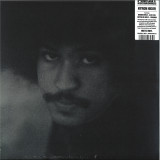
Limited Edition White Vinyl
At the forefront of a rising wave of Brazilian artists captivating international audiences, Nyron Higor brings a quiet yet potent sense of wonder to his new self-titled album. Born in Maceió, Higor’s latest work is rooted in the traditions of Northeastern Brazilian music and golden-era MPB. Within the peaceful surroundings of his home, Higor weaves these roots together with global influences and contemporary production techniques, for a uniquely dreamlike vision of hope.
Following the success of his self-released debut Fio de Lâmina—an instrumental record of delicately balanced rhythmic and harmonic patterns, which earned support from tastemakers like Mr. Scruff, Gilles Peterson, and John Gomez—Higor’s new album is a move towards a more expansive, lyrical exploration of transcendence and triumph. As Higor explains, “This album is a test of resistance and a big event in my life as a young Black man from the Northeast and coming from a humble background, financially speaking, its context is political.”
Taking his demos and unfinished tracks to São Paulo, Higor worked alongside friends and collaborators from Brazil’s vibrant contemporary music scene—including fellow Maceioense artists Bruno Berle, Batata Boy, and New York-based Brazilian vocalist Alici Sol—assembling a rich musical landscape and a cutting edge development on the musical world from which he emerges.
For Higor, the process of recording and producing in close collaboration with Berle and Batata Boy allowed him to fully cultivate the emotive power of his compositions. Album opener "Ciranda" sets the tone with a slow frevo rhythm, as wistful trombone melodies and melancholic acoustic guitar harmonies create an atmosphere both intimate and grand. Lead single "São Só Palavras," featuring Alici Sol and Bruno Berle, captures both the lightness and depth of young love in an all too fleeting minute-and-a-half moment of soaring brilliance.
Building upon the instrumental sound of his debut, “Louro Cantador” with its playful organ, birdlike whistles and elegant acoustic guitar, emanates a kind of rare natural beauty, as each sound dances amidst the gentle pulse of Higor's bass—his main instrument.
Through ten carefully crafted tracks, Higor’s acuity for sound and silence draws listeners into a place that feels both deeply personal and universally resonant. “Above all, I value making music that brings me genuine satisfaction. I’m always looking for depth in the things I create.”
This album is a testament to the timeless themes that define Higor’s artistry, as well as his creative drive to overcome the obstacles he faces. Conveying his feelings of jubilance for his work, Higor notes, “This work is liberating, contemplative and victorious!” Each track invites the listener to experience the raw intimacy, the joy and longing, and the otherworldly ingenuity of Brazilian music, which seems to endlessly keep us coming back for more.
CREDITS
Ciranda (Nyron Higor)
Tico Lima: Trombone, Nyron Higor: Drums, Bass, Synthesizers, Electric Piano, Guitar, Molho de Jatobá, Ganzá, Caxixi, and Indigenous Whistle
Louro Cantador (Nyron Higor)
Nyron Higor: Drums, Bass, Keyboards, Guitar, Percussion, and Direct Sound
Demo Love (Nyron Higor)
Nyron Higor: Drums, Bass Synth, Keyboards, and Synthesizers
São Só Palavras feat. Alici, Bruno Berle (Nyron Higor, Batata Boy, Alici Sol, and Bruno Berle)
Alici Sol: Vocals, Bruno Berle: Vocals and Bass, Nyron Higor: Drums, Guitar, Keyboards, Synthesizers, and Whistles
Estou Pensando Em Você feat. Johanna (João Menezes, Rubens Adati)
Nyron Higor: Vocals, Johanna: Vocals. Bruno Berle: Vocals, Rubens Adati: Piano, Guitar, Programming, Stefan Costilhes: Bass, Batata Boy: Programming
Maravilhamento feat. Nathalia Grilo (Nyron Higor, Nathalia Grilo)
Nathalia Grilo: Vocals, Nyron Higor: Drums, Bass, Guitar, Keyboards, and Synthesizers
Som 24 (Nyron Higor)
Nyron Higor: Sampler, Keyboard, Bass Synth, Vocoder, and Steel Guitar
Pizzicato (Nyron Higor)
Nyron Higor: Double Bass and Keyboards
Eu Te Amo (João Menezes)
Nyron Higor: Vocals and Bass, João Menezes: Guitar, Batata Boy: Rhodes Piano, Bruno Berle: Xylophone
Me Vestir De Você feat. Johanna (Paulo Novaes and João Menezes)
Nyron Higor: Vocals, Johanna: Vocals, Bianca Godoi: Drums, Bruno Berle: Bass, Guitar, Percussion, and Rhodes Piano, Batata Boy: Rhodes Piano and Guitar
===================
Tracks 1, 2, 3, 4, 6, 7, and 8 were recorded by Nyron Higor in Maceió
Track 4: Bass and Synthesizers recorded by Ico dos Anjos. Vocals recorded by Batata Boy at Estúdio Rural
Track 5: Guitars, Bass, Programming, and Pianos recorded at Inhame Estúdio. Coproduced by Rubens Adati
Tracks 9 and 10 Recorded and Co produced by Ico dos Anjos
Mixed by Batata Boy, Ico dos Anjos, Bruno Berle, and Nyron Higor
Mastered by Batata Boy
Produced by Batata Boy, Bruno Berle, and Nyron Higor
Lacquer Cut by Caspar Sutton Jones @ Gearbox Records
Cover photo by Claudio Virginio
Vinyl centre label artwork by Tadáskía
Sleeve design by Alessandro Renaldin

Cerca:men o dee
Repress!
Mint Condition - A record label focused on excavating the outer fringes of classic House and Techno. Unreleased mixes, classics, overlooked gems and never heard before material, mined from the last 30+ years of contemporary dance music are the order of the day. From Chicago, Detroit and New York to London and beyond. Mint Condition have got their digging hats on to bring you exclusive heat and those rarer than rare jams that have been in your wants list for years. Dig in....
Tobias Menguser, AKA Leon De Winter, was a very influential figure in the 90's Frankfurt techno scene, releasing around 100 records under various aliases, including collaborations with Ricardo Villalobos, but it was his Leon De Winter alias that really caught the ears of legendary London label Eukahouse, who originally releases this 12" all the way back in 1997. A one-off, it is not only unique in its sound design but also genre defying, spanning deep house, tech-house, techno, electro and breaks.
A-Side 'Apollo Jazz' is truly that, sounding like it was composed from a freeform jam on a trip to the Moon. Opening with emotive chords, the track lifts off and builds, melodies effortlessly twist and turn, superbly pulling together a variety of well crafted synths, bass and percussion whilst keeping the energy to the fore. Over to the B-Side, 'Metamat', is bold and more playful in its execution, more sonic trickery abounds as the opening riffs and breakbeat percussion give way to a solid 4/4. The bass is as memorable as it is quirky, but again it's the strength in the way all the elements build and combine that creates some real tripped-out musical moments without ever losing its dance floor appeal.
This is one of Tobias's most sought after releases and it's no wonder his collaborative work with Ricardo Villalobos is legendary. The tracks themselves have remained exciting and relevant, achieving cult status amongst the most discerning DJs, record collectors and music heads alike. Legitimately re-released with the full involvement of Tobias Menguser, lovingly remastered by London's Curve Pusher from the original DATs especially for Mint Condition. 100% legit, licensed and released. Dug, remastered, repackaged and brought to you by the caring folks at your favourite reissue label - Mint Condition!
- A1: Cangilón
- A2: Piedras
- A3: Aquí
- A4: Agua Pa Fantasmas
- B1: Rio De Las Tumbas
- B2: Viento
- B3: Mi Viejita
- B4: No Hope
- C1: Radio Chomio (Con Eli Wewentxu)
- C2: Rio Radio Correspondencia Anfibia
- C3: 3Eee
- C4: F Collect
- C5: Even Heaven Is Uneven
- C6: El Azar
- D1: I, You
- D2: Heterodina
- D3: Sin Conexión
- D4: Sss1
- D5: Sss2
- D6: Sss3
he initial seed for this project was planted in 2020 when Nicolás Jaar wrote the song “Piedras” for a concert at the Museum of Memory & Human Rights in Santiago, Chile, which commemorates the victims of human rights violations during the military dictatorship led by Augusto Pinochet between 1973 and 1990. Between 2022-2023 it took on a new form as a radio play entitled 'Archivos de Radio Piedras', which was shared on a dedicated Telegram channel. In 2024, the play was converted into a 24 channel installation at the University Museum of Mexico City (MUAC), where it was exhibited for 5 months.
Piedras 1 and 2 is a collection of the tracks featured within the play, all new music by Jaar, but partly presented within the play as the music of Salinas Hasbún (the name a composite homage to Jaar's grandmothers, Graciela Salinas and Miriam Hasbún).
The play follows two friends mourning the disappearance of Salinas Hasbún, a musician and writer who vanished in the early 2020s. Although they live in a future where technology is advanced, they
resort to DIY radio methods because the anonymous group “Las 0cho” has launched a worldwide attack on undersea internet cables, causing a global internet blackout.
The play's central theme revolves around the idea that truths, memories and identities speak from the cracks (“rasgaduras”), or the "in-between" spaces ("en el entre"). This concept is supported by the
way much of the narration unfolds - in the liminal spaces between radio frequencies. The instability and transitory nature of a constantly shifting radio dial becomes not just a metaphor but the structure of the play itself. It’s in these moments of noise, static and interference that the deeper revelations of the story emerge. This disjointed, ever-changing medium mirrors the way memory and trauma operate within the play - non-linear, slipping through the gaps, found in fragments or ordinary moments, rather than direct transmissions of “official” historical accounts.
This notion reaches its climax at the end of the narrative, when a text is discovered in which Salinas speaks of finding a new number in a small pond in a cave mentioned in the first episodes of the radio play. This pond, inside the “cochlea of the world”, is seen as a way to introduce real-life randomness to computation. Embodied in the salt lakes of northern Chile, home to the world’s oldest bacteria, this randomness disrupts the rigid order of binary code, paving the way for a transformation of digital life.
First solo release by Nicolás Jaar since 2020’s Telas and Cenizas.
DFR presents its fourth release, introducing London-based artist Thomas Wall aka ShadowScience.
This four-track release is a blend of futuristic breaks intertwined with deep atmospheres and mental soundscapes. Haunting textures meet precise, relentless rhythms. With powerful basslines and detailed production, this EP is crafted for the late-night hours and those who revel in dark, immersive spaces.
A standout debut for a promising artist.
Dark Knite continues its run of deep, dark and heavy releases with the old skool jungle don himself, Danny Styles, ripping up the rule book on his debut EP for the label. I'm Not Sick is a driven slice of menacing jungle, amen led and heavy as hell, its a simply unstoppable track. Dark Place is just as relentless as the A side, taking the Kid & Play break and melding it with amens and the darkness of the title. Lastly, Badman Bass switches it up to slightly later style of d'n'b, with its warped bass and tough as nails beats...
System Error’s Flow Series proudly welcomes Gianluca Pellerano, a dedicated DJ and producer from Rapallo, Italy, and the founder of labels Cime di Rapax Records and RPX16035.
This record marks Gianluca’s second vinyl release, showcasing four punchy, head-turning tracks blending playful energy with electro sensibilities. Grounded in his deep-rooted passion for hardware, the record reflects his continuing journey through analogue sounds, pushing boundaries with finesse.
The record’s closing track, ‘Streghe’, is a special collaboration with Gianluca’s mentor, Niki il B. Featuring a driving bassline and fluid drum patterns, the track delivers a captivating and dynamic finale to the EP.
"Brothers In Arms" by Juan Dairecshion & Martin Vora
The new record label Mental Disorder, founded by Martin Vora (co- founder of Novi Orbis), makes its debut with the EP "Brothers in Arms", a collaboration between Juan Dairecshion (Montevideo Electric Recordings, SOEN and Osmosis Records) and Martin Vora.
This release offers a blend of tech house with elements of techno.
The EP opens with "Más de lo Mismo", a track designed for the closing of a DJ set. It combines passages of breaks and vocals, providing an emotional and memorable finish.
"Alma de Club" introduces a dystopian techno atmosphere. Acid sounds and deep basses create an immersive atmosphere, complemented by percussions that reflect the Uruguayan sound.
"Aux2" continues with acid rhythms and forceful percussions, offering a sonic journey that captures the energy of contemporary techno.
Finally, "Bienvenidos al Nuevo Mundo" closes the EP with a mix of dystopian techno and tech house, presenting dark and futuristic soundscapes.
"Brothers in Arms" showcases the creativity of Juan Dairecshion and Martin Vora, celebrating their roots in Montevideo while bringing a new perspective to the global tech house scene.
Poly dance Theatre speeds up the tempo (perhaps in search of lost time) and so here already the first announcement for the next release: POL008, called "Le Commerce" (The Business).
It's a very special record. Beyond the deep bass line, the efficient ryhtmics and the ghostly apparitions of dubbed-out commercial romantic melodies, this 10" is above all an object-question, a small political gesture of sabotage. Be careful. Be careful. Rare! Very very very rare! even unique! (…300 copies)
Prepare yourself "mentally", as the EP contains 4x the same track (and that's all). A track that spins. A track that does the trick. An eternal return. Difference and repetition? All this is a opportunity to question consumption, especially in the "world of music", the "world of records", the "world of DJs", the "world of nightlife"... and so on. Production, distribution, consumption. Objects. Things. A history from the 60s to today. Where are we now? Still here: Organizing lack in the abundance of production. Lack. Abundance. A history of desires. And music? What's its role? What do we want? What do you want?
On the cover, there are poems/collages about commerce, scarcity, abundance, commodity fetishism, an insulting letter and other little things.
Stellar Systems, the latest imprint from the Rings of Neptune crew, readies its first release, "Archived Dreams" — a four-track EP signed by Berlin-based techno luminary Michael Melchner. Drawing influences between electro-charged techno and IDM-tinged minimalism, "Archived Dreams" explores cosmic, genre-blending themes through high-octane machine funk and tons of atmosphere. Crafted with pure analog equipment, the four tracks of the EP capture Melchner’s dedication to pushing sonic boundaries while channelling the raw energy of 90s electronic music.
The EP opens with 'Archived Dreams' (A1), a powerfully hypnotic track of pulsating drums and mesmerizing melodies, layered modular sequences and subtle percussion, setting an entrancing tone. Decollage (A2) dives into breakbeat territory, balancing intricate, syncopated rhythms with deep basslines and shimmering synths. On the B-side, Berlin Phenomena(B1) delivers a groove-laden, robotic vibe—a testament to Melchner’s knack for crafting infectious, funk-inspired rhythms. Closing out the EP, 'OE Underground' (B2) ramps up the intensity, blending raw, mechanical beats with intricate melodic threads to create an entrancing, slightly euphoric finale.
Stellar Systems emerges as an exciting extension of the Rings of Neptune collective dedicated to explore electronic music's rich sonic landscape. From deep, leftfield groovers to dynamic dancefloor stompers, Stellar Systems aims to capture a galactic range of sounds and styles. Michael Melchner, with his body of work — spanning solo projects and collaborations like Omega Men — and his esteemed reputation in the underground techno scene, aligns perfectly with the label's ethos.
Darone Sassounian’s debut album, ‘Synthetic Instincts’ is a full length journey that will allow you to be familiar with Darone Sassounian’s unique ability of sound sculpting. It’s an album that may seem pleasant on the surface, but becomes thought provoking and more revealing the longer you listen. Grounded on reality, the album takes from the world’s political landscape, loss of life and native land, and the trajectory humanity is walking towards. However, there is a sense of hope lingering, for the future may hold brighter days. Transcending borders and limitations, ‘Synthetic Instincts’ is Darone Sassounian’s deepest and most spirited milestone to date. Forward motion with a touch of history meant to move you, whether it is physically, mentally, or emotionally.
Into The Light is the new 2LP Black set from Whitesnake, and is based on David Coverdale's three solo records. The Into The Light album was originally released as David Coverdale’s 3rd solo album, in September 2000, and was his first solo record in 22 years. With an impressive musical lineup, David is joined on Into The Light by guitarists Earl Slick and Doug Bossi, bassist Marco Mendoza, who would later join Whitesnake, legendary drummer Denny Carmassi, who as well as Whitesnake, has played with Montrose and Heart, and Mike Finningan on keyboards, who had previously played with Jimi Hendrix in the 1960s. As well as plenty of unreleased songs and bonus tracks, the set includes “Too Many Tears,” a song David wrote with Adrian Vandenberg and originally featured on Whitesnake’s Restless Heart album. Also included is “River Song,” David’s tribute to Jimi Hendrix, and “With All Of My Heart,” a song David wrote for his wife, and in his own words, one of top ten songs that he’s written. Into The Light also features the singles “Slave,” “Love Is Blind” and “Don’t You Cry.” The box set will also include David’s first two solo records, WhiteSnake MCMLXXVII from 1977 and NorthWinds from 1978, the two titles he recorded immediately after leaving Deep Purple in 1976, in both remixed, expanded and remastered form.
LP + insert with extended liner notes and download code including extra bonus track 'Movements of The Mind'.For his second album on the Belgian leftfield imprint Cortizona, Devin Brahja Waldman gathered a group of insanely gifted and talented musicians to start a new and highly moving musical chapter titled 'Nebulizer'.
From the first moment the pulsating tone of Devin's synth blends with the whispering voices of Earth, Wind and Choir and the menacing bells Naima Karlsson set in motion this record you just know and feel immediately 'Nebulizer' will be a soul-searching journey, soaking you deep into an unknown and very personal musical world.
Devin Brahja Waldman is a New York saxophonist, drummer, synthesizer player and composer who leads the group BRAHJA. He has performed with Patti Smith, William Parker, Nadah El Shazly, Malcolm Mooney, Thurston Moore, Godspeed! You Black Emperor, Charles Hayward, Luke Stewart and Yoshiko Chuma. Waldman is also a member of NYC's Heroes Are Gang Leaders (led by poet Thomas Sayers Ellis and saxophonist James Brandon Lewis), of Sam Shalabi's Land of Kush, and of the Norwegian hardcore group MoE.
In 2022 BRAHJA released the critically acclaimed album 'Watermelancholia' on the Belgian leftfield imprint Cortizona. For his second album on the same Cortizona label, Devin Brahja Waldman gathered a group of insanely gifted and talented musicians to start a new and highly moving musical chapter titled 'Nebulizer'.
Together with Adam Kinner, Georgia Wartel Collins, Earth, Wind and Choir, Luke Stewart, Kenichi Iwasa, Naima Karlsson, Alexis Mercelo, Janice Lowe, Watson and Damon Hankoff, Devin forms a slow-burning fireball unity.
A devotional séance channelling unknown powers proving music is a healing force of the universe.
Rejoicing the Holy Jazz Spirit.
Ready to nebulize the world and bring light out from the darkness. Head cleaning the world in 4 musical parts: Geological Drum, Nebulizer, Bushido and Movements of The Mind. Nebulizer is an elevating meditation on our estrangement of nature.
Interstellar sonic stardust from a mindblowing collective that will leave you flabbergasted.
Be prepared and hear it to believe it.
For fans of: Art Ensemble of Chicago, Archie Shepp, Pharoah Sanders, John & Alice Coltrane, Kamasi Washington, Shabaka Hutchings, SAULT, Ill Considered, Jamie Branche, Angel Bat Dawid, Mackaya Craven, Matana Roberts, Sun Ra and other good music.
Spanish duo Los Suruba have done it all over the last 25 years, captivating dancers with their blend of House, Minimal, Electro, psychedelic, and deep vibes.
They have established their own network of record labels, with almost 250 releases, Nazca being the latest addition. They’ve also released music on labels like Crosstown Rebels, Diynamic, and Get Physical and have been remixed by international artists such as Solomun, Adriatique, Clarian, and Okain. They describe their music as "Memories of the Future," the motto of their brand Nazca.
As DJs, they’ve performed at the world’s best clubs and festivals, bringing their unique sound across the globe, holding residencies from Ibiza to London, and creating countless underground hits.
They are in top form once again with this latest journeying EP, where Los Suruba and their label Nazca return to vinyl releases, featuring two new remixers for this vinyl edition of the ‘+33 EP’.
Innovative opener 'Dial Banger' is a wonky house sound with wet claps and a gurgling bassline that gets ever more wild. It's a playful cut that teases and pleases in equal measure as the low-slung grooves, string stabs, and unhinged leads keep dancers locked.
'Elegancia La de Francia' is a more experimental house affair with eerie synth leads and freaky filtered vocals, making a dark and menacing atmosphere.
Warm melodies infuse the track with soul and make it perfect for the late-night hours.
First remixer Cristina Lazic launched her own label La Zic, earlier this year. It's a platform that looks to uplift and mentor exceptional female talents next to the Italian's own blend of minimal, deep and tech house sounds. Her fantastic take on 'Elegancia la de Francia' is stylish and stripped back with supple minimal drums and the muted synth sounds bubbling away over punchy kicks.
Romanian artist BRYZ has a refined minimal sound that has established him in the European scene over the last decade. He deals in intricate melodies, pulsating rhythms, and atmospheric textures on labels like Storytellers and Esente Records.
His version of 'Elegancia la de Francia' is silky and deft, with sustained pads locking you into a trance while gurgling bass and trippy melodic motifs add great detail to the rolling minimal house grooves.
We are thrilled to announce the release of "Sequoia" by Reptile on vinyl, a track that has made waves in the techno scene since its digital debut! This anthem, which has taken over dance floors and garnered support from key figures in the industry, now returns in a special edition: an exclusive vinyl release featuring the original track alongside four powerful remixes.
The remixes come from renowned artists Blasha & Allatt, JKS, Not A Headliner, and Mental Duality, each delivering their own unique take on "Sequoia." These reinterpretations bring fresh energy while maintaining the deep, driving essence that has made "Sequoia" a standout.
This release celebrates the impact "Sequoia" has had and serves as a tribute to the artists who have supported and elevated the track to new heights. Don't miss the chance to own this gem on vinyl!
Michael Mayer albums don’t come round too often, which is one of many reasons why his fourth collection, The Floor Is Lava, is a genuine event. It’s been eight years since his last one, the collaborative & released on !K7; its predecessors, Mantasy (2012) and Touch (2004), took their sweet time, too. It’s no real surprise, given the many hats Mayer wears – globetrotting DJ, revered remixer, inveterate collaborator, and boss of both Kompakt and Imara – that his solo productions are relatively sparing. But this also speaks to their quality: Mayer’s name on a record sleeve is a sign of quality, of music that’s both looking to the future and calling back to the past, that balances the imperatives of the dancefloor and the loungeroom, that’s as exploratory as it is functional.
On The Floor Is Lava, Mayer seems to be taking the temperature of both the music that surrounds him (past and present), and the ides of the industry he works within. There’s that iconic album title, for a start. “The album’s mindset,” he says, reflecting on those four words together. For Mayer, it’s partly a critique of the way the industry boxes in both producer and listener, focuses them on genre, on market, on the next new thing: “Being a free minded spirit that transcends genres has become an uphill battle.” A battle worth fighting, though, and with The Floor Is Lava, the result is an album that’s varied, quixotic, idiosyncratic, charming, and deeply, addictively listenable.
Throughout, Mayer finds thrills in exploration and juxtaposition, allowing unexpected things to blossom and giving them their life, their platform, throwing the listener exciting curveballs: “It’s a DJ album by a DJ that’s easily bored.” Either easily bored, or endlessly curious, The Floor Is Lava is rich with ideas. It opens with “The Problem”, which looks back to look forward, embracing the rickety way early house productions threw samples together with gleeful abandon. Mayer mentions Pal Joey, and the scene around Rockers Hi-Fi and their Different Drummer imprint, as reference points, and you can hear that freewheeling spirit throughout.
It’s followed by “Vagus”, a slinky, sensual minimal house number that Mayer describes as his “musical catnip”. The flow of these two opening cuts defines the dynamic of The Floor Is Lava, defining the dialectical drive at its core: thesis and antithesis leads to synthesis, but with a welcome prickliness that means you’re always excited, always engaged. It’s also productive in the way it derives energy from rubbing genres and sounds against each other, in unexpected ways, for maximum musical frisson. There’s psychedelic techno on “Feuerstuhl”, more minimal techno with “Ardor” (Mayer mentions ‘Immer 1’ era 90s minimal as inspiration), slippery, Shepard-tone breakbeat through “Sycophant”, a lovely, lush vocal turn on the poppy “The Solution”.
The album closes with the melancholy “Süßer Schlaf”, where Mayer sets a poem by Goethe to one of his most haunted, moving pieces of music yet, in abstract tribute to a lost friend. It’s one of the most affecting moments on The Floor Is Lava. There’s also an update on 2020’s wild Brainwave Technology EP, with the surrealist glitter-stomp of “Brainwave 2.0” (check out those handclaps!),where Mayer’s thinking about the socio-political precipice of the now: “I’m reading with great interest about this whole complex of how humanity is about to cross so many lines and the implications that the resulting financial and educational inequality will bring.”
That’s The Floor Is Lava: then and now, brainwaves and nerve structures, problems and solutions, genres on fire; the real, the unreal, and the surreal. An album for the easily bored and the endlessly curious. Mayer has the last word, telling us all you need to know about the album’s spirit: “Burning for the cause, being zealous, being addicted to the heat of the night, the exuberant powers of music.”
Michael Mayer veröffentlicht nicht oft Alben, was einer von vielen Gründen ist, warum ‘The Floor Is Lava’ ein echtes Ereignis ist. Es sind acht Jahre vergangen seit seinem letzten Werk, dem Kollaborationsalbum &, das auf !K7 erschien; seine Vorgänger, Mantasy (2012) und Touch (2004), ließen ebenfalls auf sich warten. Es überrascht nicht wirklich, da Mayer viele Rollen gleichzeitig erfüllt – weltreisender DJ, vielbeschäftigter Remixer, unermüdlicher Kollaborateur und Chef von sowohl Kompakt als auch Imara – weshalb seine Solo-Produktionen eher sparsam ausfallen. Doch das spricht auch für deren Qualität: Ein Album mit Mayers Namen auf dem Cover steht für Qualität, für Musik, die sowohl in die Zukunft blickt als auch auf die Vergangenheit verweist, die das Gleichgewicht zwischen den Anforderungen des Dancefloors und des Wohnzimmers hält, die genauso erforschend wie funktional ist.
Auf The Floor Is Lava scheint Mayer sowohl die Musik um ihn herum (vergangen und gegenwärtig) als auch die Strömungen der Branche, in der er arbeitet, zu reflektieren. Da wäre zunächst der ikonische Albumtitel. „Die Grundhaltung des Albums“, sagt er, drückt sich in diesen vier Worte aus. Für Mayer ist es teilweise eine Kritik daran, wie die Industrie sowohl Produzenten als auch Hörer in Schubladen steckt, sie auf Genres, auf den Markt und auf das nächste große Ding fokussiert: „Ein freier Geist zu sein, der Genres überschreitet, ist zu einem steinigen Weg geworden.“ Ein Kampf, der sich jedoch lohnt, und mit The Floor Is Lava ist das Ergebnis ein Album, das vielfältig, eigenwillig, charmant und tiefsinnig, aber auch süchtig machend ist.
Im gesamten Album findet Mayer Freude an der Erforschung und Gegenüberstellung von Stilen, lässt unerwartete Dinge erblühen und gibt ihnen Raum, überrascht den Hörer mit spannenden Wendungen: „Es ist ein DJ-Album von einem DJ, der sich schnell langweilt.“ Entweder langweilt er sich schnell oder er ist unendlich neugierig – The Floor Is Lava ist reich an Ideen. Es beginnt mit „The Problem“, das in die Vergangenheit blickt, um nach vorne zu schauen, und die wilde Art, wie frühe House-Produktionen Samples mit fröhlicher Unbekümmertheit zusammenwarfen, aufgreift. Mayer nennt Pal Joey und die Szene um Rockers Hi-Fi und ihr Label Different Drummer als Referenzpunkte, und dieser freie Geist zieht sich durch das gesamte Album.
Es folgt „Vagus“, eine sinnliche Minimal-House-Nummer, die Mayer als seine „musikalische Katzenminze“ beschreibt. Der Fluss dieser beiden Eröffnungstracks definiert die Dynamik von The Floor Is Lava und den dialektischen Antrieb im Kern: These und Antithese führen zu einer Synthese, jedoch mit einer willkommenen Schärfe, die dafür sorgt, dass man immer aufgeregt und engagiert bleibt. Zudem gewinnt das Album Energie, indem es Genres und Klänge auf unerwartete Weise aneinanderreibt, um maximalen musikalischen Nervenkitzel zu erzeugen. Es gibt psychedelischen Techno in „Feuerstuhl“, mehr Minimal Techno mit „Ardor“ (Mayer erwähnt ‘Immer’ Ära Minimal als Bezugspunkt), gleitenden Shepard-Ton-Breakbeat in „Sycophant“ und einen lieblichen, üppigen Vocal-Auftritt im poppigen „The Solution“.
Das Album schließt mit dem melancholischen „Süßer Schlaf“, in dem Mayer ein Gedicht von Goethe vertont und eine seiner bisher eindringlichsten und bewegendsten musikalischen Kompositionen schafft, als abstrakten Tribut an eine verschiedene Freundin. Es ist einer der ergreifendsten Momente auf The Floor Is Lava. Ebenfalls gibt es ein Update der wilden Brainwave Technology-EP von 2020, mit dem surrealistischen Glitzer-Stampfer „Brainwave 2.0“ (hör dir diese Handclaps an!), in dem Mayer über den sozio-politischen Abgrund der Gegenwart nachdenkt: „Ich lese mit großem Interesse über diesen ganzen Komplex, wie die Menschheit dabei ist, so viele Grenzen zu überschreiten und welche Auswirkungen die daraus resultierende finanzielle und bildungstechnische Ungleichheit haben wird.“
Das ist The Floor Is Lava: Damals und heute, Gehirnwellen und Nervengeflechte, Probleme und Lösungen, brennende Genres; das Reale, das Unreale und das Surreale. Ein Album für die schnell Gelangweilten und die unendlich Neugierigen. Mayer hat das letzte Wort und sagt uns alles, was wir über den Geist des Albums wissen müssen: „Brennen für die Sache, leidenschaftlich sein, süchtig nach der Hitze der Nacht, den überschwänglichen Kräften der Musik.“
From London to Ibiza via Berlin, inspired by Chigago and Detroit, Ceri finds her truth in proper house music. ‘Can’t Pay My Bills’ EP provides a message of hope during uncertain times. Acknowledged as a “rising selector” by Crack Magazine, producer, label boss and record digger Ceri steps into 2024 with a brand-new EP ‘Can’t Pay My Bills” via her imprint “Find Your Own Records”.
“The title track is inspired by the current economic situation in the world, and also features a positive message that reflects the values and true origins of house music, reinforcing the belief that we can overcome our circumstances and improve our situation” - Ceri
The new four track EP drips with Chicago, New York and Detroit jackin’ house with garage influence, and a sprinkle of ripping UK breakbeat for good measure. The people’s producer D'Julz steps up, on remix duties, contributing not one but two remixes to the label’s ongoing message of artist authenticity and collaboration. The remixes will be vinyl only, and the originals will see a digital release later in the year.
“I have collected D'Julz music for many years, his label started around the same time I started DJing, and it was and still is, one of the few labels that I buy on sight. I know it will always be quality. Something I aspire to do with my label too.”– Ceri
As an artist led label 'Find Your Own Records’ has become a home for genuine house legends Mr G, Fred P, Alex Arnout, and has rightly gained support from Mixmag, Resident Advisor, BBC Radio 1, BB6Music and BBC1Xtra.
Support for the label so far comes from the likes of:
Midland, Ben UFO, Move D, K-HAND, Fumiya Tanaka, Fred P, Paranoid London, Steve O'Sullivan, Tristan Da Cunha, Ryan Elliot, Lakuti, DJ Deep, Kerri Chandler, Chloe Caillet, Fred P, Jeremy Underground, Cici, D’Julz, Chez Damier and more…
As a DJ Ceri has performed marathon sets at Fabric, Corsica Studios, Pikes Ibiza, Thisishaven, and recently made her debut at the legendary Panorama Bar/Berghain. Confidently sharing the booth with club favourites Ryan Elliot, Jeremy Underground, Paranoid London and Objekt it’s certain the next year of live shows will be ones to remember for the UK artist. Inspiring far beyond the dancefloor, Ceri also regularly steps up as a masterclass host / panelist on creativity, mental health, meditation and wellness with renowned platforms Beatport, ADE, RedBull, Point Blank and Native Instruments, earning her a distinctive reputation as a multifaceted artist and
thought leader.
Ceri – ‘Can’t Pay My Bils’ EP is out on Find Your Own Records. Vinyl end of Feb tbc. The remixes re vinyl only. And the originals will be released digitally in the summer.
A1. Album track “Isoma Per Sempre” is a hypnotic deep techno track with an eternal melody dedicated to the producer's own record store.The record continues with “Armonia Solare” (A2) techno loop with an almost irregular progression but that mixes with the drums perfectly. On the B side instead opens “Il Visionario Della Periferia” (B1) with a soft techno mood that slowly rises in a mental growing up where minimalism and psychedelia intersect. The EP closes with “Bangerang” (B2) an ambient piece that unfolds in a hypnotic and positive melody.
A sense of destiny hangs over Sentir Que No Sabes, Mabe Fratti’s fourth solo-credited album released in a five year span. Her work has always possessed a finely tuned sense of drama capable of expressing a range of emotional states, and across this new album, she conveys the struggle to process various relationships or situations–and the actions that come next. Sentir Que No Sabes is urgent and clear, poppy, generous and approachable, while showcasing a considerable emotional hinterland. It is also, as Fratti is quick to mention, “groovy.”
Written and recorded with her partner, multi-instrumentalist, and co-composer Héctor Tosta (I.La Católica, Titanic), Sentir Que No Sabes is the result of an intense, detail-oriented process. Fueled by a new confidence gained in their collaborative project, Titanic, and its critically acclaimed 2023 LP, Vidrio, the two hunkered down in the familiarity of their studio (aka Tinho Studios) to bash out the initial sonic coordinates of her new record. “We talked and talked, and discussed ways of playing and recording, until things became inevitable,” Fratti explains. “We recorded a bunch of demos at our home studio and that meant we had a lot of time to re-edit and experiment. We really dug in. We were super focused on detail.” Tosta also took up the controls as producer and arranger-in-chief for all additional instruments. The album was later completed at Willem Twee Studios in Den Bosch in the Netherlands, and Pedro y el Lobo Studios and Soy Sauce Studios, in Mexico City.
For the final studio recordings, the pair were joined by drummer Gibran Andrade and trumpetist Jacob Wick to fill out and expand on Tosta’s percussion and brass arrangements. This small group of friends were able to work quickly and openly, and without fear: a testament to the exhaustive groundwork put in at Tinho Studios. This can be heard in three short, intermediary tracks that also manage to be the most aggressive on the record: “Kitana” (a scratch-laden instrumental that acts as a strange prelude for the last track, “Angel nuevo”) and a pair of two-minute instrumental interludes, “Elastica” I and II. None are throwaway mood pieces; rather they act as emotional cue cards, and hint at the way Fratti and Tosta created the overall atmosphere of Sentir Que No Sabes.
A strong sense of rhythm irrigates the sound from the jump, as heard on the glorious opening track, “Kravitz.” Here, the brilliant plucked cello line acts as a bassline and props up the steady thump of the kick drum. The cello’s growl serves as a conduit for a set of slightly paranoid lyrics that tell us “Quizás haya oídos en el techo” (“maybe there are ears in the ceiling”), while the song also introduces another staple of the record: the clever brass stabs, whistles, parps, and other interjections that paint a canvas of traffic in a city. It’s a postmodern, widescreen sound that for some might recall The Blue Nile’s Hats.
Sentir Que No Sabes is a record full to the brim with a modern pop sensibility, invoked by the sort of magpie spirit that ensnares anything it can find, repositioning sounds for the here and now. The keys and melody on the melancholy “Pantalla azul” (“Blue screen error”) transport us back to the glossy mid-1980s. “Oídos” (“Ears”) is a beautiful slice of contemporary, hybrid pop, in which Fratti’s vocal lines delicately spin themselves around the lean structures erected by the brass and drums, and the descending “plink” of a set of piano chords. Then we have a gloriously strong ending with the swell of “Angel nuevo” (“New angel”), another cinematic track full of gentle, instrument-rich swells and eddies that manages to be almost endless in its range–and yet intensely personal, as Fratti’s voice is close, almost whispering in your ear. A much needed lullaby for our fractious times.
The lyrics, for their part, have a stop-start quality to them, and hint at the small, incremental emotional taxes we pay through just living our lives. They circle around the music like birds waiting to swoop. There is something of the spiritual in all of Fratti’s work that expresses itself in a form of yearning: she looks to new horizons while personal dramas find themselves internalized, contextualized, and then dealt with through metaphor. Here, she was keen to mention Tosta’s constant encouragement in her finding a path to best sing or phrase her words to impart their maximum effect. “Hector was super inquisitive about my lyrics and asked me questions about what I meant, which sometimes is something you don't wonder so much about in isolation,” Fratti explains. “Besides, he is a great poet, and you can see that in what he did on the Titanic record. This made me go deeper into my lyric writing and definitely transformed it into something that I feel super happy about now.”
Take “Enfrente” (“In Front”), a track that initially comes across as a languid, glossy number, with plucked cello strings standing in for a bass line and brittle synth parts. Soon we catch on to a brilliant minor chord switch, which mirrors the fear and doubt expressed in the lyrics as someone “trembles up to the podium” in a “search for meaning.” There’s also the startling introduction of a vocoder in “Quieras o no” (“Whether you want it or not”); it comes precisely at the point Fratti sings “Quieras o no es un desastre” (“Whether you want it or not, it's a disaster”). Moments like these leave room for interpretation and, over time, create a strong bond between the listener and the record.
In fact, across Sentir Que No Sabes, each phrase–whether instrumental or vocal–becomes at some level emblematic of acts and moods that impart deep emotional significance. We see this best on “Intento fallido” (“Failed attempt”), which could be the score to feeling trapped in self-doubt, only to suddenly be sprung free by the song’s gloriously upbeat ending. On “Márgen del índice” (“Index margin”), the quicksilver switch between initial disharmony and a beautiful melody is breathtaking, all augmented by evocative arrangements, textured production, and the slightly playful, gnomic lyrics. The track’s emotional ecosystem allows another brilliant ending, which uses the simple repeated phrase, “Cómo lo va a ver?” (“How are you going to see it?”).
So what to make of Sentir Que No Sabes? High gloss Pastoralism? The sound of a city-bound, post-post modern soulscape? No matter the emotions evoked, it's the work of an artist coming into their own, and creating a benchmark record.
The Concealed Club Manifesto project pays homage to the mid 2000s underground UK club music scene, an era of music which acts as well of inspiration and creativity for the Nouveau Monica, and has no doubt helped shaped his sound. For the French producer, the UK club scene holds a special allure and mystique, especially since he observed this phenomenon from afar, and was idealized as one of the most “pivotal” moments in underground club culture, making it seem intangible, hence concealed. Nouveau Monica’s sound palette is deeply rooted in the UK scene, which he combines with his own personal musical background. This mid 2000s UK club sound is what the producer defines as his “Golden Era” and the genres created during that time are the building blocks of the Concealed Club Manifesto EP.
“See the Light” closes the EP as a triptyque. First with the OG version, cut out to be the straightforward, grimy, clean, and uncluttered bass track the producer always seeks for when going for the uncompromisingly strong raw material.
The second version conducted by Nouveau Monica as an alternate 4/4 version of the same title, harmonizes the repetitive chopped vocals with a technically syncopated drum loop designed for a new mental perspective, an after-hours sensation that blurs the line between euphoria and melancholy.
The last iteration of “See The Light” comes from none other than Hodge himself. A club tailored cut with a heavy groove, pattered with percussive elements, followed by sun drenched melody and sweltering pads that unleash into a a bellowing bass track, perfectly suited for peak sunset hours at a day rave an unforgiving Soundsystem.