An absolute sound system killer, this 2002 Jah Works classic is now available for distribution through Triple Vision. The enigmatic Mene Man joins Jah Rej on a riddim guaranteed to shake up your woofers.
Cerca:mene man
- 1
* Partial Records return to the vaults of the legendary Jah Works label, originally based in Reading and formed in the late 1980's. The label produced some of the most essential UK roots reggae with a string of artists recording for the label including Martin Campbell, Donette Forte, G.T. Moore and many more.
* Reading-based Mene Man recorded a handful of tunes for the label including `Who Are You' (reissued in 2014 on a Partial Records 10" " PRTL10002) and `Dub Them' (reissued simultaneously with this release on a Partial Records 7" PRTL7036).
* `Save This World' is a slice of vocal roots and indicated by the title, deals with the perils and tribulations of our planet. The rhythm is hard as nails.
* Backed with a different dub mix from the original release in 2002.
- 1: Lucky To Be Me (Leonard Bernstein)
- 2: God Only Knows (Brian Wilson)
- 3: The Shadow Of Your Smile (Johnny Mandel)
- 4: La Javanaise (Serge Gainsbourg)
- 5: As (Stevie Wonder)
- 6: A Time For Love (Johnny Mandel)
- 7: Trains And Boats And Planes (Burt Bacharach)
- 8: What Goodbye Is For (Jim Tomlinson)
- 9: Carinhoso (Alfredo Da Rocha Vianna Filho /Pixinguinha)
- 10: E La Chiamono Estate (Bruno Martino)
Stacey Kent is an American jazz singer in the mould of the greats, with a legion of fans, a host of honors and awards including a Grammy nomination, album sales in excess of 2 million and more than one billion streams, and Platinum, Double-Gold and Gold-selling albums that have reached a series of chart-topping positions.
Stacey, a comparative literature graduate with a passion for music, travelled to Europe to further her studies after receiving her degree from Sarah Lawrence College in NY. Through a series of twists of fate, she found herself in London where she enrolled in a graduate music program at the Guildhall School of Music and Drama, where she met her future husband and musical partner, Jim Tomlinson.
Kent's musical journey began with childhood piano lessons. A keen ear and true voice lead her to search out opportunities to express her love of music. However, nothing suggested the shift from the academic path to the one that propelled her to international recognition as one of the foremost jazz singers of her generation. With a catalogue of 13 studio albums, including the Platinum selling, Grammy-nominated Breakfast On The Morning Tram (Blue Note/EMI 2007) and an impressive list of collaborations, Stacey has graced the stages of nearly 60 countries over the course of her career.
Her worldwide fan base is testimony to her ability to express the emotional heart of her songs with delicately nuanced interpretations that transcend borders and defy categorization. Her unique multi-lingual repertoire includes standards, chanson, Bossa Nova, and originals written by Jim Tomlinson, her saxophonist/producer/composer/arranger husband in collaboration with the Nobel Prize-winning author, Kazuo Ishiguro with whom they have worked since 2006. She has also recorded with Brazilian legends, Marcos Valle, Roberto Menescal and Danilo Caymmi, and the celebrated French string quartet, the Quatuor Ébène.
Stacey's last studio album, Summer Me, Winter Me, was released in November 2023 on Naïve Records. A collection of fans' requests from her as yet unrecorded concert repertoire, Summer Me, Winter Me entered the French jazz charts at number 1 and has quickly established itself as a new highlight in her discography. She now returns with A Time For Love.
- 01: Tafese Tesfaye - The Dove &Amp; The Pigeon
- 02: Yetemwork Mulat - Heathen &Amp; Earth
- 03: Alemu Aga - The World Is But A Place Of Survival
- 04: Sosena Gebre Eyesus - Save Us From Our Death
- 05: Abiy Seyoum - The Last Judgement
- 06: Tafese Tesfaye - You Who Take Good Care Of Me
- 07: Sosena Gebre Eyesus - When I Say Your Name
- 08: Akalu Yossef - Who Can Doubt
- 09: Abiy Seyoum - We Are All Mortals
- 10: Yetemwork Mulat - The Second Coming Of Christ
- 11: Akalu Yossef - Our Father
- 12: Alemu Aga - Song Of Praise Played With A Plectrum
LP 2x12"[28,36 €]
The begena is a large ten-stringed lyre which is part of the traditional Amharic heritage of Ethiopia. The Amharas, who have long formed the politically and culturally dominant people of Ethiopia, mainly inhabit the central and northern part of the country. In the majority, they follow the monophysite Orthodox Tewahido Church established in the early fourth century AD.
Music plays a very important part in the life of the church. Most of the liturgy is sung and, contrary to secular music, it is accompanied by percussion instruments only. The begena occupies a special place because it is the one melodic instrument exclusively dedicated to the spiritual repertory. Because of its mythical origin, it is highly respected. Tradition holds that the begena was given to king David by God, and brought to Ethiopia by Menelik I, together with the Ark of the Covenant. It has always been the instrument of kings and nobles. Played by pious men and women of letters, it never became widespread. But it never disappeared either, not even under the Derg regime (1974-1991) which had banned the instrument.
Among Amhara string instruments, the begena is the most carefully crafted, especially with regard to the ornately sculpted crossbar. Its ten gut strings are cleaned and twisted several times. The characteristic buzzing timbre equalled by no other Amhara instrument is due to the enzirotch, that is, small bits of leather placed between each string and the bridge. This plays an important part in the sound production by creating a brief contact between the string and the upper rim of the bridge, thus modifying the vibrating properties of the string. In this manner, the spectrum of the sound is considerably enhanced (up to over 10 kHz).
The begena is a very powerful instrument, it keeps the devil thirty steps away, and its presence in the home wards off malicious spirits. Priests and preachers recommend its presence, especially during Lent (Fassika Tsom) when the Orthodox Amharas ponder their sins and repent. Because of its spiritual import, the begena generates intense emotion. According to some musicians, playing the begena brings them into direct contact with God or the Virgin Mary. The religious role of the begena is underscored by the shape of the instrument, each part symbolises an important element of the faith. The crossbar for instance, which reaches across the entire width of the instrument, represents God who is above all things. The belly which "gives birth" to the sound represents the Virgin Mary, and the ten strings recall the Ten Commandments.
Recorded by Stéphanie Weisser in Addis Ababa, Ethiopia, March 2002-December 2005.
Mastered by Renaud Millet-Lacombe.
Issued under license from VDE-Gallo, Switzerland.
- A1: Tafese Tesfaye - The Dove &Amp; The Pigeon
- A2: Yetemwork Mulat - Heathen &Amp; Earth
- A3: Alemu Aga - The World Is But A Place Of Survival
- B1: Sosena Gebre Eyesus - Save Us From Our Death
- B2: Abiy Seyoum - The Last Judgement
- B3: Tafese Tesfaye - You Who Take Good Care Of Me
- C1: Sosena Gebre Eyesus - When I Say Your Name
- C2: Akalu Yossef - Who Can Doubt
- C3: Abiy Seyoum - We Are All Mortals
- D1: Yetemwork Mulat - The Second Coming Of Christ
- D2: Akalu Yossef - Our Father
- D3: Alemu Aga - Song Of Praise Played With A Plectrum
Cassette[16,18 €]
The begena is a large ten-stringed lyre which is part of the traditional Amharic heritage of Ethiopia. The Amharas, who have long formed the politically and culturally dominant people of Ethiopia, mainly inhabit the central and northern part of the country. In the majority, they follow the monophysite Orthodox Tewahido Church established in the early fourth century AD.
Music plays a very important part in the life of the church. Most of the liturgy is sung and, contrary to secular music, it is accompanied by percussion instruments only. The begena occupies a special place because it is the one melodic instrument exclusively dedicated to the spiritual repertory. Because of its mythical origin, it is highly respected. Tradition holds that the begena was given to king David by God, and brought to Ethiopia by Menelik I, together with the Ark of the Covenant. It has always been the instrument of kings and nobles. Played by pious men and women of letters, it never became widespread. But it never disappeared either, not even under the Derg regime (1974-1991) which had banned the instrument.
Among Amhara string instruments, the begena is the most carefully crafted, especially with regard to the ornately sculpted crossbar. Its ten gut strings are cleaned and twisted several times. The characteristic buzzing timbre equalled by no other Amhara instrument is due to the enzirotch, that is, small bits of leather placed between each string and the bridge. This plays an important part in the sound production by creating a brief contact between the string and the upper rim of the bridge, thus modifying the vibrating properties of the string. In this manner, the spectrum of the sound is considerably enhanced (up to over 10 kHz).
The begena is a very powerful instrument, it keeps the devil thirty steps away, and its presence in the home wards off malicious spirits. Priests and preachers recommend its presence, especially during Lent (Fassika Tsom) when the Orthodox Amharas ponder their sins and repent. Because of its spiritual import, the begena generates intense emotion. According to some musicians, playing the begena brings them into direct contact with God or the Virgin Mary. The religious role of the begena is underscored by the shape of the instrument, each part symbolises an important element of the faith. The crossbar for instance, which reaches across the entire width of the instrument, represents God who is above all things. The belly which "gives birth" to the sound represents the Virgin Mary, and the ten strings recall the Ten Commandments.
Recorded by Stéphanie Weisser in Addis Ababa, Ethiopia, March 2002-December 2005.
Mastered by Renaud Millet-Lacombe.
Issued under license from VDE-Gallo, Switzerland.
Neroli's own Volcov selects some favourites that never been available on vinyl before and shares them re-mastered and ready for all the music lovers. Music ranges from Larry Heard collaborator's Lee Pearson jr to Blaze collaboration with the late Dj Man X, passing through a Manoo deep and hypnotic late nite jam.
Limited Edition White Vinyl
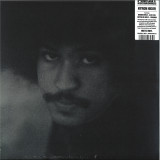
At the forefront of a rising wave of Brazilian artists captivating international audiences, Nyron Higor brings a quiet yet potent sense of wonder to his new self-titled album. Born in Maceió, Higor’s latest work is rooted in the traditions of Northeastern Brazilian music and golden-era MPB. Within the peaceful surroundings of his home, Higor weaves these roots together with global influences and contemporary production techniques, for a uniquely dreamlike vision of hope.
Following the success of his self-released debut Fio de Lâmina—an instrumental record of delicately balanced rhythmic and harmonic patterns, which earned support from tastemakers like Mr. Scruff, Gilles Peterson, and John Gomez—Higor’s new album is a move towards a more expansive, lyrical exploration of transcendence and triumph. As Higor explains, “This album is a test of resistance and a big event in my life as a young Black man from the Northeast and coming from a humble background, financially speaking, its context is political.”
Taking his demos and unfinished tracks to São Paulo, Higor worked alongside friends and collaborators from Brazil’s vibrant contemporary music scene—including fellow Maceioense artists Bruno Berle, Batata Boy, and New York-based Brazilian vocalist Alici Sol—assembling a rich musical landscape and a cutting edge development on the musical world from which he emerges.
For Higor, the process of recording and producing in close collaboration with Berle and Batata Boy allowed him to fully cultivate the emotive power of his compositions. Album opener "Ciranda" sets the tone with a slow frevo rhythm, as wistful trombone melodies and melancholic acoustic guitar harmonies create an atmosphere both intimate and grand. Lead single "São Só Palavras," featuring Alici Sol and Bruno Berle, captures both the lightness and depth of young love in an all too fleeting minute-and-a-half moment of soaring brilliance.
Building upon the instrumental sound of his debut, “Louro Cantador” with its playful organ, birdlike whistles and elegant acoustic guitar, emanates a kind of rare natural beauty, as each sound dances amidst the gentle pulse of Higor's bass—his main instrument.
Through ten carefully crafted tracks, Higor’s acuity for sound and silence draws listeners into a place that feels both deeply personal and universally resonant. “Above all, I value making music that brings me genuine satisfaction. I’m always looking for depth in the things I create.”
This album is a testament to the timeless themes that define Higor’s artistry, as well as his creative drive to overcome the obstacles he faces. Conveying his feelings of jubilance for his work, Higor notes, “This work is liberating, contemplative and victorious!” Each track invites the listener to experience the raw intimacy, the joy and longing, and the otherworldly ingenuity of Brazilian music, which seems to endlessly keep us coming back for more.
CREDITS
Ciranda (Nyron Higor)
Tico Lima: Trombone, Nyron Higor: Drums, Bass, Synthesizers, Electric Piano, Guitar, Molho de Jatobá, Ganzá, Caxixi, and Indigenous Whistle
Louro Cantador (Nyron Higor)
Nyron Higor: Drums, Bass, Keyboards, Guitar, Percussion, and Direct Sound
Demo Love (Nyron Higor)
Nyron Higor: Drums, Bass Synth, Keyboards, and Synthesizers
São Só Palavras feat. Alici, Bruno Berle (Nyron Higor, Batata Boy, Alici Sol, and Bruno Berle)
Alici Sol: Vocals, Bruno Berle: Vocals and Bass, Nyron Higor: Drums, Guitar, Keyboards, Synthesizers, and Whistles
Estou Pensando Em Você feat. Johanna (João Menezes, Rubens Adati)
Nyron Higor: Vocals, Johanna: Vocals. Bruno Berle: Vocals, Rubens Adati: Piano, Guitar, Programming, Stefan Costilhes: Bass, Batata Boy: Programming
Maravilhamento feat. Nathalia Grilo (Nyron Higor, Nathalia Grilo)
Nathalia Grilo: Vocals, Nyron Higor: Drums, Bass, Guitar, Keyboards, and Synthesizers
Som 24 (Nyron Higor)
Nyron Higor: Sampler, Keyboard, Bass Synth, Vocoder, and Steel Guitar
Pizzicato (Nyron Higor)
Nyron Higor: Double Bass and Keyboards
Eu Te Amo (João Menezes)
Nyron Higor: Vocals and Bass, João Menezes: Guitar, Batata Boy: Rhodes Piano, Bruno Berle: Xylophone
Me Vestir De Você feat. Johanna (Paulo Novaes and João Menezes)
Nyron Higor: Vocals, Johanna: Vocals, Bianca Godoi: Drums, Bruno Berle: Bass, Guitar, Percussion, and Rhodes Piano, Batata Boy: Rhodes Piano and Guitar
===================
Tracks 1, 2, 3, 4, 6, 7, and 8 were recorded by Nyron Higor in Maceió
Track 4: Bass and Synthesizers recorded by Ico dos Anjos. Vocals recorded by Batata Boy at Estúdio Rural
Track 5: Guitars, Bass, Programming, and Pianos recorded at Inhame Estúdio. Coproduced by Rubens Adati
Tracks 9 and 10 Recorded and Co produced by Ico dos Anjos
Mixed by Batata Boy, Ico dos Anjos, Bruno Berle, and Nyron Higor
Mastered by Batata Boy
Produced by Batata Boy, Bruno Berle, and Nyron Higor
Lacquer Cut by Caspar Sutton Jones @ Gearbox Records
Cover photo by Claudio Virginio
Vinyl centre label artwork by Tadáskía
Sleeve design by Alessandro Renaldin
The music on this album was inspired by the original ska recordings coming out of Jamaica in the early to mid 1960s. In particular, the fiery horn instrumentals played by musicians like Don Drummond, Tommy McCook, Roland Alphonso, Lester Sterling, Baba Brooks, Dizzy Moore, Lloyd Brevett, Ernest Ranglin, Jackie Mittoo, Lloyd Knibb, Drumbago, to name just a few. Many of them were originally jazz musicians, and they played in groups like Prince Buster’s All Stars, the Skatalites, Baba Brooks’ Band, King Edwards’ group, and many more.
This is my humble paean to their great works in this now largely neglected era of music. I hope you enjoy it.
Peace,
Nat Birchall.
Superstar Silvestre strikes strong on Studio Barnhus, bringing moronic dance music and stupendously haunting
ambient ditties to the forefront once again, following his highly reputable It's 2024!! EP, released in 2024.
On his most expansive and accomplished work yet, tensions between Silvestre’s many expressions – bass-faced rave maker,
hazy lo-fi crooner, absurdist beat poet, etc. – reach catastrophic levels, resulting in an album that shimmers and convulses
with both inviting warmth and that rare, essential hint of danger at the core of club music's spirit.
There's just never a dull moment with this Silvestre guy, whether he's out blessing club crowds with electroid techno sets or
effortlessly delivering instant classic albums like this one. Delivered via 16 digital tracks and/or cassette tape designed by
Stefan Fält, Silvestre’s Fantasma arrives on Studio Barnhus on Sept 26
François and Sylvain Rabbath have turned six years of touring into a joint album that patiently and intensely distills a variety of musical flavors gathered from around the world.
Since the early 1960s, François Rabbath's double bass has resonated through enough landmark recordings to fill several shelves in a record collection. As an arranger, composer, and musician, his imprint on music goes far beyond his collaborations with Barbara, Paco Ibáñez, Charles Aznavour, or Édith Piaf. Aspiring double bassists owe him a groundbreaking method for learning the instrument. Born into a lush musical universe that quickly became his own, his son Sylvain first accompanied him on his travels before settling at the piano and sharing stages around the world at his side.
Those years of accumulating visas in their passports were put to good use by father and son. The continents, countries, and cities they passed through became a rich source of inspiration for composing Amall, the album by the Rabbath Electric Orchestra.
Long hours spent in the air or on the road, watching passing landscapes that never stayed the same, were transformed into compositions imbued with the atmospheres of the places they crossed or visited. Inspiration sometimes struck with force, like a green oasis appearing in a desert of stone—unexpectedly, as glowing red rocks suddenly dominated an otherwise open landscape with an endless horizon, while the mind wandered into a state between meditation and introspection.
Born from these travels, the pieces took on their final colors once brought into the studio, refined, and finally arranged to welcome the guitars of Keziah Jones and Matthieu Chedid, the piano of Laurent de Wilde, the bass of Victor Wooten, the saxophone of Raphaël Imbert, and the percussion of Minino Garay. Enhanced by the scale of the jazz-soul orchestrations, by the richness of arrangements bursting from strings, brass, rhythms, or keyboards, the epic breath of vast plains became ingrained. The urban tension of funk, echoing their movements, found its place—alongside more electric expressions or the ambience of a darkened room.
Melancholic and melodious, expressive and edgy, the bowed double bass—played in the high register where few dare to go—emerged as the musical guide. One that draws a path between Seville and Minneapolis, connects François Rabbath's native Syria to France, and bridges South America to Europe. It sets the tone to follow—the emotion that will carry the piece, and if not filled with light, will carry it there nonetheless.
Musical visions packed in luggage, transported in cargo holds, or imprinted in their minds just long enough to cover the distances to the next stop—father and son deepened their bond, beyond family and art. And their hands have never held each other more tightly.
François et Sylvain Rabbath ont fait fructifier six ans de tournées pour un album commun distillant patiemment et intensément la variété de parfums musicaux récoltés autour du monde.
Depuis le début des 60’s, la contrebasse de François Rabbath résonne dans assez de références pour combler plusieurs étagères d’une collection de disques. Arrangeur, compositeur, musicien, l'empreinte laissée dans la musique va bien au-delà de ses collaborations avec Barbara, Paco Ibanez, Charles Aznavour, ou Edith Piaf. C’est à lui que les
apprentis contrebassistes doivent une méthode novatrice pour apprendre l’instrument.
Né dans un univers musical luxuriant qui est vite devenu aussi le sien, c’est d’abord dans ses voyages que son fils Sylvain l’a accompagné, avant de s’installer au piano, et parcourir les scènes du monde à ses côtés. Ces années où les visas se sont entassés sur leurs passeports, père et fils les ont mises à profit. Continents, pays, et villes qui se sont succédés sont devenues un gisement pour composer Amall, l’album du Rabbath Electric Orchestra.
Les longs moments passés dans les airs ou sur la route à contempler un paysage qui défile sans pour autant rester le même, se sont convertis en compositions habitées par les ambiances de ces endroits traversés ou visités. Là où l’inspiration s’est imposée parfois brutalement, sous
la forme d’un oasis de verdure surgissant au milieu d’un désert de pierres. Au hasard d’imposantes roches rougeoyantes s’invitant dans un paysage jusqu’alors dégagé sur un horizon sans fin, quand l’esprit se laisse aller à un mélange de méditation et d'introspection.
Nés de ces pérégrinations, les titres ont pris leurs couleurs définitives une fois ramenés en studio, peaufinés puis, enfin, pensés pour y inviter les guitares de Keziah Jones et de Matthieu Chedid, le piano de Laurent de Wilde, la basse de Victor Wooten, le saxophone de Raphaël Imbert, les percussions de Minino Garay. Sublimé par la dimension des orchestrations jazz-soul, par la richesse des arrangements jaillissant des cordes, des cuivres, des rythmiques ou des claviers, le souffle épique des plaines immenses s’est imprimé.
La nervosité citadine du funk rythmant les déplacements a trouvé sa place, non loin d’une expression plus électrique ou d’une atmosphère de salle obscure.
Mélancolique et mélodieuse, expressive et nerveuse, la contrebasse jouée à l’archet, dans les notes hautes du manche où peu s’aventurent, s’est érigée en guide musical. Celui qui trace le chemin entre Séville et Minneapolis, relie la Syrie natale de François Rabbath à la France,
réduit la distance entre l’Amérique du Sud et l’Europe. Donne la note à suivre, l’émotion qui traversera le morceau qui, s’il n’est pas habité par la lumière, le portera néanmoins jusque là.
Visions musicales mises dans le coffre, transportées en soute ou imprimées dans l’esprit le temps de couvrir les distances qui les mèneront aux prochaines, c’est côte à côte que père et fils ont prolongé leur lien par delà des seules limites familiales et artistiques. Et leurs mains ne se sont jamais serrées aussi fort.
credits
- A1: De Vrouwen Die Ik Nooit Heb Gekend
- A2: Broekjes Aan De Lijn
- A3: Alzheimer Blues
- A4: Mooi Zoals Je Bent
- A5: Ijsje Met Chocola
- A6: Sex Op Vreemde Plaatsen
- B1: Jessica
- B2: Vaginale Vakantie
- B3: Meneer De Generaal
- B4: De Zuchter
- B5: De Blik Die Je Die Gast Geeft
- B6: Ik Wil Mezelf Bedanken
‘Tedere Baldadigheden’, Guido Belcanto's new, long-awaited album in a production by Firmin Michiels and Guido Op De Beeck, was released on 4 October, 2024 at the beginning of a very extensive, sold out tour. It is a special retrospective from an award-winning singer who looks back with melancholy and humour on the many mischievous adventures that marked his life. Love prevails, but tragedy and tristesse also leave their mark on Belcanto himself and the scarred souls of the many colourful characters who come to life in his songs.
This 15th studio album undoubtedly represents a new high point in Belcanto's oeuvre, which now numbers over 300 songs, with 11 of his own songs and 2 surprising adaptations of songs by Eels and Guido's idol Renaud. Besides members of his loyal backing band Het Broederschap, guest musicians such as Stoy Stoffelen, David Poltrock, Evert Verhees, Jan De Smet, Alban Sarens, Adriano Cominotto and Chris Peeters also play along. Also notable are certainly the passages of Lara Chedraoui (Intergalactic Lovers) and The Bonnie Blues.
For more than 40 years, Guido Belcanto has been creating a universe all his own with his songs. A warm, recognisable home for everyone, young or old, rich or poor, winner or loser. A home too, masterfully brought to a stage where the audience is allowed to be themselves without embarrassment, praising happiness, measuring the damage suffered, letting the tears flow and the laughs ring out.
Buh Records presents "El tiempo quiere cantar" ("Time Wants to Sing") the debut album by Pacha Wakay Munan, a duo formed by Peruvian musicians and researchers Dimitri Manga Chávez and Ricardo López Alcas. This album explores the sonic possibilities of pre-Hispanic instruments in a contemporary musical context. Through their performance, they explore their tonal possibilities, the interaction between their frequencies, and their ability to generate new dialogues. The work of Pacha Wakay Munan aligns with the tradition of sound explorers such as the Peruvians Arturo Ruiz del Pozo and Luis David Aguilar or the Colombians Yaki Kandru. The album's repertoire consists of pieces that explore diverse sonorities and musical concepts. "Pacha Wakay Munanqa" introduces the timbral variety of the instruments used. "El Taki Onkoy" draws inspiration from historical accounts and the meaning of its name ("Sick Song"), based on a Culina chant documented by Rodolfo Holzmann. It features vocals by the experienced singer Ximena Menéndez. "Mundo Posible" is a reinterpretation of an improvisation session with musicologist Chalena Vásquez Rodríguez, where the piano dialogues with ceramic antaras. Other pieces delve into the sonic construction of these instruments in relation to their cultural contexts. "Machu Tara" explores the concept of tara, a rough and vibrant sound quality found in certain Andean musical traditions. "Túpac Huaca" references the Huaca Aliaga in Lima, creating a sound palette where pututos, whistling vessels, and quenas converge. "Agua, Cuarzo y Viento" introduces quartz sikus and bowls tuned to different frequencies, evoking the interaction between natural elements and resonant vibrations. In the piece "Qinray Tema", Camilo Angeles plays the metal transverse flute, creating a contrast with the pre-Hispanic ceramic flutes and pelican bone flutes.
- A1: Day Tripper Jazzystics Feat. Deborah Dixon
- A2: Yesterday Betty Says
- A3: Come Together 48Th St. Collective
- A4: Let It Be Richard Eastwood
- A5: 5 Oh! Darling . The Cooltrane Quartet
- A6: A Hard Day's Night Deborah Dixon & Les Crossaders
- B1: Here Comes The Sun Sarah Menescal
- B2: Honey Pie The Bryan J. White Quartet
- B3: Something Scubba Feat. Sarah Menescal
- B4: Blackbird Eve St. Jones
- B5: All You Need Is Love Jamie Lancaster
- B6: Hey Jude Renauld & The Smooth Jazz Quintet
- C1: Sgt Pepper's Lonely Hearts Club Band . Apollinare Rossi
- C2: Can't Buy Me Love Stella Starlight Trio Feat. Lizette
- C3: Revolution Celso Mendes Feat. Lua
- C4: Paperback Writer Mandy Jones
- C5: Get Back Jazzystics Feat. Deborah Dixon
- C6: In My Life Sarah Menescal
- D1: She Loves You Deborah Dixon & Les Crossaders
- D2: Penny Lane The Brian J. White Quartet
- D3: I Feel Fine 48Th St. Collective
- D4: Ticket To Ride Scubba Feat. Sarah Menescal
- D5: The Long And Winding Road Les Crossaders Feat. Julie Benson
- D6: I Want To Hold Your Hand Francis Trevor & Michelle Simonal
Being one of the most popular albums in the history of the label,
Music Brokers is happy to announce the release of Jazz And Beatles in a limited-edition double LP.
The album features 24 stellar Beatles classics reinvented in jazz form that highlight the catalog of the biggest band of all time.
Gems such as “Yesterday”, “Here Comes The Sun”, “Revolu- tion” and “She Loves You” have new life with reworked versions
by many of the biggest names in the nu-jazz move- ment including Jazzystics,
Les Crossaders, The Cooltrane Quartet, Eve St. Jones and Apollinare Rossi. With stellar artwork and remastered sound,
this is another essential addition to your jazz-lounge music collection in vinyl format.
"The film soundtrack for Marcel Camus' film Black Orpheus, written by Antônio Carlos Jobim, Luiz Bonfá, Vinícius de Moraes & Antônio Maria. Among the musicians heard here are Luiz Bonfá and Roberto Menescal on guitar, as well as the vocals of Elizeth Cardoso and Agostinho dos Santos. Includes the classic songs ""Manhã de Carnaval"" and ""Samba de Orpheus."" Three songs from the film recorded shortly after by the great Joâo Gilberto have been added as a bonus.
THE COMPLETE ALBUM + 3 BONUS TRACKS - 180-GRAM VINYL - LIMITED EDITION"
- Ou Sont Les Hommes
- L'abbe Caillou
- Je Ne Veux Plus Te Pardonner
- La Nuit Est Mauve
- C'est Les Femmes Qui Menent La Danse
- On Pourrait (Duo Stephan Eicher)
- J'en Tremblerai Encore
- Je T'aime Et Je Ne T'aime Plus
- C'est La Faute A La Vie
- Je Le Garde Pour Toi
- Ma Blessure
- Des Regrets
- Tu Pourras Dire
- Peut-Etre Que Peut-Etre
White 180g Vinyl[30,46 €]
Sexe Fort is the seventh studio album by Patricia Kaas. With this album, the singer has maintained her status as one of the most important chansonniers of her generation. The album is notable for its many collaborations with important French singers and songwriters such as Jean-Jacques Goldman, Stephan Eicher, Pascal Obispo, Patrick Fiori, Louis Bertignac and Renaud. The album was a huge success in Belgium, France and Switzerland and had "Où Sont Les Hommes" as a popular single. This is the first time the album has been released as an LP. Sexe Fort is a limited edition of 1000 numbered copies on white coloured vinyl.
Two records came out in 1988 that forever changed the perception of "experimental" or "serious" music produced in Portugal. These were "Plux Quba" by Nuno Canavarro and "Música de Baixa Fidelidade" by Tózé (António) Ferreira. Both were released by the same label - Ama Romanta -, an influential independent imprint closely linked to avantgarde pop band Pop Dell'Arte. Because those records appeared in what could be perceived as an "alternative pop" framework, they rescued this difficult music from Academia. It helps that Canavarro played in a successful new wave pop band (Street Kids) during the period 1980-83. By association, being a friend since 1976, António was in close contact with many of the musicians and bands that were part of the equally celebrated and detested Portuguese Rock Boom (roughly 79-82).
He was not a musician then but through his friendship with Canavarro, who had the means to acquire electronic equipment, António became involved with that equipment and shared Canavarro's passion for experimentation and curiosity for knowledge. They tried to get hold of as many technical magazines as possible and learn while testing ideas. In 1983, Street Kids were about to break up, young lives drafted into the Army and maybe, in Canavarro's case, a whole new passion for challenging music similar to his bandmate Nuno Rebelo, by then in the process of discovering a wide range of "other" music mainly through Jorge Lima Barreto. Barreto, who had started Telectu with Vítor Rua, possessed a huge book and record collection and, like Rua before them, Canavarro, Rebelo and Ferreira became fascinated by the pool of knowledge they now had access to by frequenting Barreto's house in Lisbon. He was roughly a decade older, had published several books and other writings throughout the 1970s, cultivated an anarchic stance and a penchant for cultural indoctrination. Rebelo was the first to be introduced via his contact with Rua (who had invited him to play in his other band GNR).
Overwhelmed, he felt the need to share his enthusiasm with friends and eventually took a few to the house in true pilgrimage fashion. To see the Light. Among the few he led there was even João Peste, founder of Ama Romanta. Canavarro and Ferreira preceded him.
Ferreira recalls an exciting learning process added to his experiments with Canavarro's array of synths such as the Korg Ms 20, Korg polysix, ARP Axxe, Roland SH-01, the Ensoniq Mirage sampler... He read in a magazine article about someone who had studied at the Institute of Sonology (then in Utrecht, Netherlands) and went there during a vacation trip in the Summer of 1983. He became excited by the prospect of studying at the Institute but money was a problem. Canavarro, on the other hand, was admitted there in the following year. Back in Portugal, Ferreira eventually abandoned his Chemical Engineering studies in Lisbon's Technical Institute in favour of a more focused music practice. He collaborated with Telectu during 1984 and 85 as a sort of technical engineer, implementing some recording solutions and background tapes and went to work at a thermoelectric power plant in Sines, hoping to make enough money to fund his musical studies. He did and proceeded with the paperwork for admission at the Institute of Sonology, now based in The Hague. António studied there in 1986-87 and the present album includes two compositions developed at the Institute: "More Adult Music" and "This Is Music, As It Was Expected", both featuring the voice of Rodney Waschka II. Among other activities and talents, Rodney is an expert in computer music and to António his voice sounded similar to Robert Ashley's, whose work he admired.
What happened at the Institute was a systematization of António's self-taught practice. Computer software, Musique Concrète, noise and silence, organisation of abstract ideas and sounds. The original notes on the back sleeve of the LP give some indication of process and thinking, but a more detailed account was given by António in the liner notes of the CD reissue in 2002, which are also included in this 2025 LP reissue.
The music sounds deep and detailed, despite the fact of António calling it low-fi ("Baixa Fidelidade"). It flows like an improvised performance where several musicians might be responding to each other, respectful of their mutual space. Drama occurs, as a natural emotional connection is sought by the listener. Piano, bells, drone, processed voices, even the clear narrative of Rodney Waschka II, contribute to create a sort of alternative perceptual reality. The sounds are almost tangible, more a part of the physical world than ethereal manifestations and thus it would not be correct to invoke "ambient music" as a selling point. But although "physical" and distinct, this music is still alien, more so in Portugal's 1988 environment. In March, helped by Canavarro, António set up a home studio and there he recorded the remaining material for this album: "Algumas Pessoas Olharam O Sul E Viram Deserto", "Um Som, Seguido De Uma Cena Negra E Malva" and "O Verão Nasceu Da Paixão De 1921".
"Música de Baixa Fidelidade" stands not only as a proof of great resilience but as one of those magnificent works of art coming from someone who balanced technical inclination and emotional sensibility. Because of that, Tózé Ferreira is able to decode the phantom world of sound for anyone who cares to experience the sensation of inhabiting a version of the Future. First ever vinyl reissue, reproduction of the original artwork with an additional insert. Made in collaboration with the artist and the support of Paulo Menezes (Plancton Music), who provided valuable assistance. Remastered by Taylor Deupree.
- Ou Sont Les Hommes
- L'abbe Caillou
- Je Ne Veux Plus Te Pardonner
- La Nuit Est Mauve
- C'est Les Femmes Qui Menent La Danse
- On Pourrait (Duo Stephan Eicher)
- J'en Tremblerai Encore
- Je T'aime Et Je Ne T'aime Plus
- C'est La Faute A La Vie
- Je Le Garde Pour Toi
- Ma Blessure
- Des Regrets
- Tu Pourras Dire
- Peut-Etre Que Peut-Etre
180g SILVER COLOURED VINYL[30,46 €]
Sexe Fort is the seventh studio album by Patricia Kaas. With this album, the singer has maintained her status as one of the most important chansonniers of her generation. The album is notable for its many collaborations with important French singers and songwriters such as Jean-Jacques Goldman, Stephan Eicher, Pascal Obispo, Patrick Fiori, Louis Bertignac and Renaud. The album was a huge success in Belgium, France and Switzerland and had "Où Sont Les Hommes" as a popular single. This is the first time the album has been released as an LP. Sexe Fort is a limited edition of 1000 numbered copies on white coloured vinyl.
The unconscious and unknown must be really nice places. In any case, if you take the second album of Menelaos Tomasides under his given name as travelogue. A trip into dreamlike territory, yet concrete enough, a journey without target yet looking forward and looking back into familiar places, „dreamhike“ both continues and departs from the style Menelaos has found earlier, in “When the Moon Comes Through”, or his more conceptual-intentional “31 Minuten” works. As the album title - which roughly translates to “dream hiking” but also hints on “walkabout” and “songlines” – suggests, we are rambling between the real and the imaginary. From the bucolic border triangle of Belgium, Germany, and the Netherlands to the buzzing streets of the capital of Cyprus, where Menelaos has lived for many years, the tracks are about real places, about real experiences and emotions yet interwoven with a dreamlike fabric. Something that is just not tangible, yet substantial and palpable. Something concrete that manifests in the genuine and special sound design of this records - basically all of Menelaos’ works - his really special treatment of dynamics and loudness. It is one of the very few records where the established language of music making, specifically Techno, House, Dub, and early 2000’ Electronica, the clicks, thumps and plops from an earlier age of electronic music, transmogrify into slow movements of something new. Something that is gentle and truly personal, looking inwards. There are four-to-the-floor beats, there is wobbly bass, and dubby chords, even sublimated clarion calls. There is an immense energy in these tracks, the sheer materiality of low frequencies of a massive sound system manifested in a tiny room. Yet it is without any aggression, stripped bare of sonic pressure. It is quiet music no matter how high you turn up the volume. A rare treat, that requires exceptional skills and exceptional restraint and control on the technical side of music making. Probably it is a result of Menelaos specific combination of instinctual, intuitive approach to making music, which meets a genuine love for sound in seemingly endless loops of refinement that can lead to such a result as „dreamhike“. The elegant floating balance of control and playful experimentation manifests for example in a track that continues the ongoing collaboration with seasoned Cologne improviser Achim Fink on bass trumpet. Not only in this respect, the album can be described as a product of openness. It comes from a lot of taking in the world, of travel, of places and people met, of friendship and conversation (not necessarily with words). The deep trip of “dreamhike” further manifests Menelaos as one of the truly independent voices of electronic Cologne and beyond. Somewhat alike in character and attitude probably to what late Pete Namlook has established for Frankfurt with his label Fax +49-69/450464 (though ultimately warmer and much less uncanny) Menelaos has found his very own sound and vision. Music that answers to no one but speaks to everyone. Uncompromising yet gentle to the core: kind sounds from a kind spirit, arguably the most extraordinary and valuable quality music can have these days.
Dark Entries and Honey Soundsystem Records have teamed up once more to release the final volume of gay porn soundtracks by San Francisco-based musician and producer, Patrick Cowley. One of the most revolutionary and influential figures in the canon of disco, Cowley created his own brand of Hi-NRG dance music, The San Francisco Sound.' Born in Buffalo, NY on October 19, 1950, Patrick moved to San Francisco in 1971 to study at the City College of San Francisco. He founded the Electronic Music Lab at the school, where he would make experimental soundtracks by blending various types of music and adapting them to the synthesizer.
By the mid-70's, Patrick's synthesis techniques landed him a job composing and producing songs for disco superstar Sylvester, including hits like You Make Me Feel (Mighty Real)', Dance Disco Heat' and Stars.' This helped Patrick obtain more work as a remixer and producer. His 18-minute long remix of Donna Summer's I Feel Love' and his production work with edgy New Wave band Indoor Life were both of particular note. By 1981, Patrick had released a string of dance 12 singles, like Menergy' and Megatron Man'. He also had founded Megatone Records, the label upon which he released his debut album, Menergy'. Around this time Patrick was hospitalized and diagnosed with an unknown illness: that which would later be called AIDS. Throughout 1982, he recorded two more Hi-NRG hits, Do You Wanna Funk' for Sylvester, and Right On Target' for Paul Parker, as well as a second solo album Mind Warp'. On November 12, 1982, he passed away.
In 1979 Patrick was contacted by John Coletti, owner of famed gay porn company Fox Studio in Los Angeles. Patrick jumped on this offer and sent reels of his college compositions from the 70s to John in LA. Coletti then used a variable speed oscillator to adjust the pitch and speed of Patrick's songs in-sync with the film scenes. The result was the VHS collections Muscle Up' and School Daze' released in 1979 and 1980. Afternooners' is the third collection of Cowley's instrumental songs, recorded in May 1982. These recordings were culled from two 23-minute reels in the Fox Studio vaults. All songs were originally untitled, so we've used the titles from Fox Studio's 8mm film loops. This compilation also includes three bonus tracks found in the archives of fellow Megatone Records recording artist Paul Parker and the attic of teenage friend Lily Bartels. Influenced by Tomita, Wendy Carlos, and Giorgio Moroder, Patrick crafted a singular sound from his collection of synthesizers, percussion, modified guitars, and hand-built equipment. The listener enters a world of forbidden vices, evocative of Patrick's time spent in the bathhouses of San Francisco. The songs on Afternooners' reflect the advances of the equipment available at the onset of the 1980s. Cowley's unadulterated electronic forms are stripped down and dubbed up. Lush electronic percussion, soaring synthesizer riffs and low slung funk grooves comingle on these magnificent soundscapes.
Featuring 70 minutes of music never before released on vinyl. All songs have been remastered by George Horn at Fantasy Studios in Berkeley, CA. The vinyl is housed in a gatefold jacket designed by Berlin-based artist Gwenael Rattke, featuring black and white photos of Patrick in his studio that opens to a full color array of x-rated scenes from the Fox Studio vaults. Included is a fold-out poster featuring a handmade collage using photography and xeroxed graphics of classic gay porn imagery and an essay from Drew Daniel of Matmos. For Patrick's 67th birthday, Dark Entries and Honey Soundsystem Records present a glimpse into the futuristic world of a young genius. These recordings shed a new light on the experimental side of a disco legend who was taken too soon.
A song is a song until it isn't, until it's pushed to its limits and beyond to become harder, faster and more dissonant. The music on Oneida's 17th full-length album, Expensive Air, all started as tightly structured, melodic rock songs _ very much in line with the non-stop bangers of Success from 2022 _ but along the way, they changed. Bobby Matador sketched the structures of these songs from his home base in Boston, then sent the demos to Oneida's New York contingent: Kid Millions, Hanoi Jane, Shahin Motia and Barry London. "We were working out the songs in New York without Bobby. We would start out riding the riffs, and then Shahin and Jane would add wild, out-of-tune licks," said Kid Millions. "It seemed so perfect." Oneida has long straddled gray-area boundaries between the NYC punk/psych/rock world and the art/experimental world, playing at gritty rock clubs and elevated cultural institutions, including the Guggenheim, MoMA PS1, ICA London, MassMOCA and the Knoxville Museum of Art. The band has been known for extended live improvisational performances, collaborating onstage with Mike Watt, members of Flaming Lips, Portishead, Boredoms, Yo La Tengo, Dead C, Godspeed You! Black Emperor, and many others. Oneida's members juggle a wide variety of other music projects. Drummer Kid Millions has played with Spiritualized, Royal Trux and Boredoms and releases solo compositions under his own name and as Man Forever. Shahin Motia founded noise - punk's Ex-Models and currently plays in Knyfe Hits. Kid and Fat Bobby perform and release music as People of the North, and Bobby's outside projects New Pope and Nurse & Soldier each released new albums in 2023. Oneida's previous album, Success, came after a four-year hiatus, unleashing the band's pent up creative energy in a set of catchy, accessible, nearly poppy songs. Song structure remained important in the run up towards Expensive Air, but so was the instinctual, improvisatory interplay that has always been a part of Oneida's process. The band had been playing live together for two years, sharpening its attack and pushing its songs to go harder, faster and wilder. Oneida recorded Expensive Air in three sessions scattered across 2023, convening at Colin Marston's Menegroth The Thousand Caves studio in Woodhaven, Queens, whenever they had a few songs ready. Marston and the band mixed the album in February 2024 at Menegroth. The new album expands on what Oneida achieved with Success, but also pushes past it, laying down irresistible song structures then blowing them to psychedelic bits. "I found myself thinking about this record as a darker, looser, louder, counterpart to Success," Bobby explains. "Both records charge forward from the jump and mix the elliptical with the blunt, and longing with self-mockery. But Success is like laughing in a car gunning carelessly through an ice storm, and Expensive Air is how you laugh at yourself as the car spins into the ditch, or a tree. Same trip, but a little closer to the bone."
2024 Restock
BaianaSystem are from Bahia, the state with the strongest African cultural heritage in the country and a motherlode for Brazilian music. BaianaSystem manifest and champion the sound of the Black Atlantic, deep and future connections between Africa, Brazil and the Caribbean, from the roots of samba to global bass culture.
- A1: Pikiran Dan Kepentingan (Thoughts And Concerns)
- A2: Fenomena Demi Fenomena (From Phenomena To Phe-Nomena)
- A3: Lubuk Yang Terdalam (The Depths Of The Depths)
- A4: Manusia Oh Manusia (Human, Oh Human)
- B1: Selalu Ada Jalan Keluar (There Is Always A Way Out)
- B2: Meyakini Sebuah Jawaban (Believe In An Answer)
- B3: Kepada Cahaya Yang Menerangi Jiwa (To The Light Which Illuminates The Soul)
Born in 1977, in Malang, East Java, Wukir Suryadi began playing music for theatre at the age of 12 with the Idiot The-ater Studio, and later with the Rendra Theater Workshop. In his solo work, and as a member of Senyawa, Error Scream, Bendera Hitam Setengah, Potro Joyo and other groups, Wukir breaks the boundaries of traditional music, death metal and avant-garde performance. On this new release, “Cycle and Prayer,” recorded in 2023, he expands the edges of his unique artistic world further, by digging in to meditative improvisation, art, and community building in his home workshop in the mountains of central Java. These recordings vibrate inwards, toward the microcosmic ecologies of forests and rivers; they distort outwards, resonating with global waves of apocalyptic change that are forcing all living beings to the edges of existence on earth. The result is a meditative poem that moves, as its titles an-nounce, from phenomena to phenomena, praying that humans find a way out from the depths of the depths to the light that illuminates the soul.
An essential mode of creative work for Wukir is the creation of unique instruments, using these sound sources as “bullets of expression.” In addition to the spear-like tube zither Bambu Wukir, he has created the Solet, Enthong, Garu, Luku, Arrows, and Industrial Mutant instruments, which in addition to being used in live performance, have been exhibited in the Instrument Builders Project and the 2017 Jakarta Biennale. In the past few years, Wukir has begun to collaborate with local guitar makers, carpenters, and suppliers of native endemic wood in the mountain region of Salatiga. Using earthen bricks along with local woods (suren, coconut, mindi, and waru lengis) as building materials, he constructed a new studio and workshop space in Tingkir, where this album was made. The trees, water and air of the local environment have exerted a powerful influence in Wukir’s documentations of instrumental sound. On this recording, he uses the simple Cetta guitar, an instrument designed in Bali and made for Indonesian children and local communities of folk and popular musicians, in order to explore the different sonic characteristics of a more “normal” instrument built from local wood.
The themes of the album -- cycle and prayer -- arise from a foreboding series of meta-events that shook Indonesia and the world over the past years, following one after the other: the COVID-19 pandemic, the Ukrainian-Russian war, the Kanjuruhan Stadium tragedy in which football supporters were gassed and killed by police, revelations of govern-ment failures and corruption, the rise of personal vehicles, the increasing disturbance of natural patterns of the rainy season and other ecological cycles. “In these waves of technology and narratives of truth made for certain interests, playing a sound at a certain frequency and repeating can try to bring images and feelings to a certain point of con-sciousness,” Wukir told me. “Sound is a prayer that creates a change, whether gradual or rapid, in the behaviour of living things, to face the demands of the time, as humans struggle to live according to what they believe.” The draw-ings and sketches used for the cover spontaneously emerged alongside the recordings, as an instinctive depiction of “time and sound, nature that is outside of oneself, and nature that is within.”
As mood changers go, this track is up there with the best. Last year whilst DJing with miche at Shapes festival in the snow-capped mountains of Switzerland, a breathtaking yet ominous Alpine sky suddenly became a picture postcard moment. The clouds parted and a double rainbow formed, as miche dropped Studio Rio's bossa nova remake of Bill Withers’ all-time classic 'Lovely Day'. From there, the dancefloor shifted gears and morphed into full-swing feel-good vibes, in a beautiful, spontaneous moment nobody could have planned for.
Mr Bongo now proudly presents a reissue of this brilliant, bossa-channelling Bill Withers reinterpretation from Studio Rio’s 2014 release ‘The Brazil Connection’. Masterminded by the German Grammy award-winning Berman Brothers, the project was born out of their deep love of Brazilian music. “Our goal was to bring the Brazilian joie de vivre to iconic performances by well-known artists. What would these classic songs sound like had they been recorded in the studios of Rio de Janeiro in the first place, with the best Brazilian musicians and arrangers?” the brothers reflect.
Capturing the life force of Brazil, the beating heart that is its music, they set out to find the musicians who would fit best with their concept. Landing in Rio in 2013 a series of coincidences led to them being introduced to their idols Marcos Valle and Roberto Menescal, who both agreed to come on board. The Berman Brothers also wanted to find some of the musicians who recorded with one of Brazil’s most influential composers Tom Jobim. “Fifty years after Jobim made the music that really defines bossa nova, we found that many of his sidemen were still active, including Paulo Braga of Jobim’s famed rhythm section. It was magic; everything just fell into place.”
There's no question that the original of ‘Lovely Day’ is up there as one of the most feel-good, spirit-lifting anthems of all time. Here the brothers, with the help of a whole host of Brazil’s finest musicians, rework Bill’s soul-fuelled groove into a bossa nova slice of sunshine. With the blessing of Bill and Sony, they were given access to the original multitracks so they could incorporate Bill’s vocals perfectly into the new arrangement.
Joy-injected horns and bouncing double bass blend with the smile-inducing samba flavour of Pretinho da Serrinha’s cavaquinho playing. Tying it all together Torcuato Marinao who worked with the likes of Gal Costa, Gilberto Gil and Caetano Veloso, completes the line-up as arranger of the songs.
The perfect end-of-the-night track, mood lifter or soul warmer, remakes don’t get much better than this.
Stepanida Borisova is an outstanding singer from the republic of Sakha-Yakutia, Siberia, and its most reknowned exponent of folk theatre. As a singer, Stepanida performs in many different styles of traditional Sakha singing. She is mostly known as a performer of poems - tojuks, one of the genres of Sakha storytelling folklore. Tojuks, long with other genres of singing, form the core of the Sakha epic Olonkho, an anthology of supernatural and heroic legends and fables, an absolute essence of Sakha poetic and vocal expression.
Her signature style of singing is "enelgen", a disturbing and somewhat dark yet mesmerising, ecstatic, meditative and improvisational style, conveying a very intimate and personal feeling of love, loneliness or longing. "Music puts restrictions on you. It puts you in the mould. But the real life is different. Without thinking about musicality and form, one must sing what one feels" Stepanida Borisova comments on her art and performance.
During her long career, her desire to break out of the restrictions of tradition and to expand her sound, led her to perform with musicians from many different cultures - Europe, Middle East and Asia. But of all Stepanida's collaborations, the duo with the Czech drummer and composer Pavel Fajt is undoubtedly the most long standing and well documented project.
Fajt, with his relentless desire for experimentation and musical challenge, is probably one of the most reknowned musicians on the Czech alternative rock/jazz scene. With his musical career starting in the early 1980s, he was crucal in laying the foundations of the Czech folk/rock movement, first with legendary rock band Dunaj, then moving on to work with the violin player and singer Iva Bittova, guitarist Fred Frith, Jim Meneses and many other musicians.
The soaring spiritual dialogue between the two free spirits in music began with a run of successful concerts and a TV debut in Prague in 1998 and still continues. Stepanida's stunning embodiment of the ecstatic female shaman, Pavel's vibrant and expressive drumming manner - combined with the theatrical background and performing experience of both - make an amazing spectacle of sound and vision, in which all the colours of Stepanida's unearthly and powerful voice are neatly dovetailed into Pavel's ornamentation of beats and rhythm.
The songs presented on this album were recorded in Brno in 2002 and are finally seeing their first vinyl release.
- A1: Onde Ando O Meu Amor - Bossa Três 02 13:00
- A2: Cochise - Ed Lincoln 02 27:00
- A3: A Felicidade Breno Sauer Quinteto 02 14:00
- A4: Os Grilos - Marcos Valle 02 14:00
- A5: Samba De Uma Nota Só -Lalo Schifrin & Orchestra 03 46:00
- A6: Samblues - Sambalanço Trio 02 16:00
- A7: So Danco Samba (Jazz 'N' Samba) - Wanda De Sah 02 11:00
- B1: Bert's Bossa Nova - Bert Kaempfert & His Orchestra 02 25:00
- B2: Oba-Lá-Lá - Sérgio Mendes 02 28:00
- B3: Lamento - Nelson Riddle 03 03:00
- B4: Chora Tua Tristeza - Geraldo Trio 02 58:00
- B5: Mas Que Nada - Elza Soares 02 25:00
- B6: The Man From T H. R. U. S. H. - Lalo Schifrin 02 55:00
- B7: O Pato - Pedrinho Mattar E Seu Conjunto 01 53:00
- C1: Groovy Samba - Cannonball Adderley And The Bossa Rio Sextet With Sérgio Mendes 05 05:00
- C2: Amanhã -Edgard E Seu Conjunto 02 45:00
- C3: Caminho De Casa - João Donato 02 28:00
- C4: É Bom Assim - Os Cobras 02 47:00
- C5: Você - Roberto Menescal 01 58:00
- C6: Reza - Paul Winter Feat Luiz Bonfá, Roberto Menescal & Luiz Eça 03 19:00
- D1: Tarde Em Itapoã - Amilton Godoy 03 50:00
- D2: Wave - Toots Thieleman & Elis Regina 03 08:00
- D3: Baia - Bill Perkins 03 34:00
- D4: So Nice (Samba De Verão) - Sérgio Mendes & Wanda De Sah Feat Bud Shank 02 11:00
- D5: Mentira - Marcos Valle 03 43:00
- D6: The Bobo ( Bossa Nova ) - Francis Lai 02 13:00
Brazilia Maravilha... A real wonder of selected Brazilian tunes.
You will feel the mood and breeze like you were over there!
28 songs including some great classics as "Lamento" by Nelson Riddle, "Mas Que Nada" by Elza Soares, "Groovy Samba" by Cannonball Adderley and "So Nice (Samba De Verao) by Sérgio Mendes as well as more unique ones.
Kindly remastered tracks from master tapes to keep the dusty roots of the original sound. Double vinyl in a balanced mix of vocals, instrumentals, bossa nova and some jazzy beats tunes.
- A1: The Beat Goes On
- A2: Little Boat = O Barquinho
- A3: Lou-Ise
- A4: What Is This Thing Called Love?
- B1: Space
- B2: Stronger Than Us
- B3: Mizrab
- B4: Comin' Back
VERVE ACOUSTIC SOUNDS SERIE: Stereo, komplett analog von Ryan K. Smith bei Sterling Sound von den Originalbändern gemastert, QPR-Pressung (180 g), stabiles Tip-On-Gatefold (Stoughton Printing),
wattierte Innenhülle.
Den Hungaro-Amerikaner Gábor Szabó konnte man mit Fug und Recht als einen wahren “Scorcerer”, also Zauberer oder Hexenmeister bezeichnen. Nicht nur wegen seiner Virtuosität an der Gitarre und seiner fantasievollen Improvisationen, sondern auch, weil er es verstand, Popsongs in echte Jazzschmuckstücke zu verwandeln.
Das zeigte er besonders eindrucksvoll 1967 auf “The Sorcerer”, live im Bostoner Jazz Workshop eingespielt. Das Repertoire reflektierte, was damals hip war: eine Bossa Nova von Roberto Menescal, ein
Top-10-Hit von Sonny & Cher und ein Stück des französischen Filmkomponisten Francis Lai.
Gábor Szabós ”The Sorcerer” erscheint am 14. April zeitgleich mit der verschobenen LP: Ahmad Jamal - The Awakening (Verve By Request).
We love nothing more than house music direct from the Windy City and that's what Vick Lavender's Sophisticado Recordings has got for us here. Angel-A is actually a native of Detroit currently living in Chicago and influenced by everything from jazz to gospel. She brings that to the fore here on the 'Master Fusion' single which is as soulful, lush and heartwarming as house can be. Her voice takes on many different forms from wordless coos to expressive declarations of love via diva wails. Lavender himself serves up a mix, while Albert Menendez offers both a piano-laced vocal mix and a broken beat, jazz-licked and synth-heavy instrumental which does still have the standout original vocal.
BASSIST/COMPOSER PETROS KLAMPANIS LOOKS TO PAST AND FUTURE AS HE TRANSFORMS TRADITIONAL GREEK MUSIC WITH TORA COLLECTIVE
Unique instrumentation bridges Greek folkloric and modern jazz worlds, with Klampanis (bass, artistic direction), Areti Ketime (vocals), Thomas Konstantinou (oud, laouto), Giorgos Kotsinis (clarinet), Kristjan Randalu (piano), Ziv Ravitz (drums, electronics, co-production) and more.
Following up his acclaimed recent outings Rooftop Stories and Irrationalities, bassist and composer Petros Klampanis creates one of his most inventive musical settings to date with Tora Collective, his sixth album as a leader. For Klampanis, who grew up in Athens, Greece
surrounded by the confluence of Mediterranean and Balkan folk cultures, making music has always meant navigating cultural crossroads. With Tora Collective (“Tora”=“Now”) he puts traditional Greek music at the centre, even as he presents it from a bold new angle.
In addition to the two new originals “Disoriented” and “South By Southeast,” Klampanis and his compact hybrid jazz/Greek folk ensemble interpret popular Greek songs such as “Xehorismata,” “Sybethera,” “Hariklaki” and “Menexedes ke Zoumboulia.” These songs, Klampanis asserts, are “not just part of Greek cultural heritage or a fragment of the past, but also as part of the future: they live into the present, breathe into the ‘here and now,’ while constantly evolving in a dynamic state and in dialogue with contemporary music.”
“For me it’s a personal thing,” he says. “I want to reflect on what Greek music and culture offer the world. How can music from the Aegean to Epirus and from the Ionian Islands to Crete, meet and speak to the hearts and minds of musicians and audiences from different parts of the world, different traditions and backgrounds?”
To that end, Tora Collective draws on regional characteristics, as Klampanis explains: “Every region has a strong identity. In Epirus the clarinet is more prominent and the music has this slow, groovy, meditative vibe. The islands are lighter sounding, Macedonia is groovier, faster tempos and energetic dances. Music from Asia Minor or Istanbul is more sophisticated. Greeks often refer to Istanbul as ‘Poli,’ from Constantinopoli, so the songs from there are called ‘Politika.’”
There is magic in the clear and consistent voice of Areti Ketime throughout Tora Collective, as can also be said for the supremely voice-like articulation of Giorgos Kotsinis on clarinet. Ziv Ravitz, on drums and electronics, also plays a pivotal role as coproducer: “He added so much in the orchestration,” says Klampanis. “His knowledge of electronics, all these non-acoustic sounds and keyboards, treatments of the acoustic instruments, it’s all because of Ziv. He brought a new perspective on the whole thing.”
The string element in Tora Collective is also strong: in addition to Klampanis’ bass there is Thomas Konstantinou on oud and the traditional Greek laouto, as well as Kristjan Randalu (the pianist in Klampanis’ Irrationalities trio) providing an anchor and bringing Klampanis’ inventive arrangements into harmonic focus. Additional guests appear: Alexandros Arkadopoulos on clarinet for “Disoriented,” Laura Robles on percussion for “South by Southeast” and trumpeters Sebastian Studnitzky and Andreas Polyzogopoulos on “Milo Mou ke Mandarini” and “Hariklaki,” respectively. (“Milo Mou” is slated as a post-release bonus track.)
Using traditional Greek music to discover a common new voice, the project aims to build dialogue, spark creativity, cultivate respect for the past, pave a path forward, discover a new musical storytelling powerful enough to reach and touch audiences in many countries. This is an experiment that bridges worlds: the east and the west, the traditional and the modern, the nostalgic and the forward-looking, using the power of music and improvisation.
11 track album by Patrick Cowley. Perhaps one of the most revolutionary and influential people in the cannon of disco music, Cowley created his own brand of Hi-NRG dance music coined 'The San Francisco Sound.' By the mid-70ies, Patrick's synthesizer skills landed him a job composing and producing songs for disco superstar Sylvester such as 'You Make Me Feel (Mighty Real)', 'Dance Disco Heat' and 'Stars.' This helped Patrick obtain more work as a remixer and producer. Of particular note was his 18-minute long remix of Donna Summer's 'I Feel Love'. By 1981 Patrick released a string of dance 12inch singles, like 'Menergy' and 'Megatron Man', creating the soundtrack for a generation. Prior to his passing on November 12, 1982, he recorded two more Hi-NRG hits, 'Do You Wanna Funk' for Sylvester and 'Right On Target' for Paul Parker. In 1981 Patrick was contacted by John Coletti, owner of famed gay porn company Fox Studio in Los Angeles. John had heard about Patrick's music from the legendary Sylvester and proposed he write music for his films. Patrick jumped on this offer and sent reels of his college compositions from the 70s to John in LA. Coletti then used a variable speed oscillator to adjust the pitch and speed of Patrick's songs in-sync with the film scene. 'School Daze' is a collection of Cowley's instrumental songs recorded between 1973 and 1981 found in the Fox Studio vaults. Influenced by Tomita, Wendy Carlos and Giorgio Moroder, Patrick forged an electronic sound from his collection of synthesizers, modified guitars and self-constructed equipment. The listener enters a world of dark forbidden vices, introspective and reflective of Patrick's time spent in the bathhouses of San Francisco. The songs on 'School Daze' range from sparse prototechno to high octane funk to somber post-punk to musique concrete, revealing the depth of Cowley's unique talent.
Igziabeher Yi mas gan (Let Jah be Praised!) - as we follow up with the next release forwarding from Ashanti Selah Music; we are proud to present a fresh combination to the label with Iqulah Rastafari who is a true ambassador and master of his faith as well as being a high-caliber artist in his own right; this release delivers the whole roots and nothing but the roots in its full entirety. Hailing from Jamaica and toured the 4 corners of the world with his band 'Giddeon Family' as well as performing many shows in Africa with the 'Azania Band' - Iqulah always brings the spiritual power and most honourable Rasta energy in connection with the music; making it a such an engaging experience when being among the vibration.
The Maxi-single offers two original vocals and two dub mixes per side with strong lyrics and heavy riddims to accompany!
Born in Juazeiro, Bahia, Brazil on June 10, 1931 (and 87 years .old at this writing), singer/song writer Joao Gilberto is a living legend of bossa nova. While Antonio Carlos Jobim set the standard for the creation of bossa nova in the mid-’50s (with songs like “The Girl from Ipanema” and “Desafinado”), it was Gilberto who brilliantly reimagined (and, arguably, defined) the genre. The first bossa nova song, titled “Bim-Bom”, was written as Gilberto watched passing
laundresses on the banks of the Sao Francisco River balance loads of clothes on their heads. In 1956 he went to Rio de Janeiro and struck up old acquaintances, most significantly Antonio Carlos Jobim, who was by then working as a composer, producer and arranger with Odeon Records. Jobim was impressed with Gilberto’s new style of guitar playing, and set about finding a suitable song to pitch the style to Odeon management. In 1959 Gilberto presented his first LP, Chega de Saudade. The title song turned into a hit, launching Gilberto’s career and the bossa nova craze. Besides a number of Jobim compositions, the album featured older sambas and popular songs from the 1940s and 1950s, all performed in Gilberto’s distinctive style. This album was followed by two more in 1960 and 1961, by which time the singer featured new songs by a younger generation of performer/composers such as Carlos Lyra and Roberto Menescal.
By 1962, bossa nova had been embraced by North American jazz musicians such as Herbie Mann, Charlie Byrd, and Stan Getz, who invited Gilberto and Jobim to collaborate on what became one of the best-selling jazz albums of all time, Getz/Gilberto. Chega de Saudade was issued in the United States as The Warm World of Jo o Gilberto.
repressed !
Some people are just not destined to have enough sleep.When you don't sleep enough the world appears to be a different place, compared to the way it is when the mind is fully rested. In such cases very different scenarios may occur.
Starting with a dreamy melody of Roma Zuckerman's 'Sleep not found', which inspired the entire 008 album, and ending with a thirteen minute live recording by a_000, the side project of Alex Backdrop, the entire record has a dreamy and tripped out flow. 008 continues the tradition of gatefold double EPs as conceptual album.All tracks are selected around a particular story, a trip, and presented as a continuous sonic landscape.All tracks are structured in a way that they can be mixed one with another an endless amount of times making a continuous loop, a trip, that needs only end when the party stops. Kraviz works without release dates or deadlines, enabling her to achieve a certain sound bank to shape the story, unmasking the thoughts and unravelling like a dream. A1. Roma Zuckerman - Sleep Not found (North Edit) Apart form the fact that he leaves in Krasnoyarsk in the middle of Russia, very little is known about Roma (short version of the name Roman). But listening to his music and engaging in random short conversations late at night makes it clear that there are really a lot of things going on Romas mind... Minimalistic yet emotionally complex, his music always stands out with it's murkiness and signature moodiness that Roma creates like nobody else.
A2. Deniro - G Deniro continues the record's journey with his new live cut that like pretty much everything he did so far is a beautiful sparse atmospheric groover. He says he wanted it to be angry and it its done with triggering synths from the tr909 and tr808.
B1. Maayan Nidam - Infinite Rattle
Maayan was born in Tel-Aviv. She does not like computers and prefers to record her music live using hardware only. In order to do so she built her incredible studio in Berlin where she recorded "Infinite Rattle'.There is much more to come from Maayan on
B2. Bbbbbb - Prins Polo Caramel milkshake.
Side project by Bjarki-bbbbbb. Like any other normal Icelander, Bjarki really likes ice cream. In Iceland they are absolutely crazy about it.They walk the streets, ice cream in hand, even when its freezing cold outside. But even more than that Icelanders like Milkshakes with all sorts of added cookies and candies. Bjarki's favourite is called Prince Polo after the name of a chocolate bar. He always believed Prins Polo was an Icelandic brand but a couple of months ago somebody proved him wrong.
C1. Exos- dub jazz
In Iceland Exos is a legend. Everybody knows him there. He's been playing incredibly powerful and technically advanced techno sets since the late 90s and releasing delicious dub techno on Icelandic label Thule. Nina always appreciated his subtler, dubbier side, and this short recording a the continuation of it.
C2. Maaayn Nidam - Justice for some
This second live recording was a perfect fit for this album. Maayan has managed to create a particular mysterious night time dreamer here. Sound wise it's even more unique. It took a few times to get the master right, because we wanted to keep the original breathing of the machine that has captured a seriously freaky vibe. Maayan has always been one of Nina's favourite DJs as they share a similar attitude towards music. But after this tune she has also reserved a place in Nina's collective of favourite producers. D1. A_000
This is a side project of Italian native Alessio Meneghello (Alan Backdrop) & Enrico Voltan. . A beautiful 13-minute sonic journey.
- A1: (Chaleur Humaine - Russian)
- A2: Uman Spirit
- A3: Aubade
- A4: Human Warmth
- A5: Entrelacs
- A6: Mémoire Vive
- A7: Chaleur Humaine
- A8: (Chaleur Humaine - Arabic)
- A9: Cordes Sensibles
- A10: Atmosphère
- A11: Calor Humano
- A12: Hoi Am Cua Nhân Loai (Chaleur Humaine - Vietnamese)
- A13: Lalala
- A14: Menselijke Warmte
- A15: Ménestrel
- A16: (Chaleur Humaine - Hebrew)
- A17: Deambulation
UMAN is the project of French musicians and sibling duo Danielle and Didier Jean. "Chaleur Humaine" is their debut album, resurfacing for the first time on vinyl and remastered CD since its original release in 1992. UMAN experienced varying degrees of recognition with Chaleur Humaine at the time of its release, specifically around tracks plucked for various New Age / Chillout compilations, but ultimately the album defies genre in its exploration of voice and sampling / synthesizer technology and places it alongside the futurist works of Ryuichi Sakamoto, Nuno Canvarro, and even Enya. UMAN resembles human' in many Romance languages but signals a spirit from a deeper earth force that the duo channel throughout Chaleur Humaine, manifesting in a mantra found throughout the album reimagined in various languages across different tracks: "It's this force, almost animal, warm, like a kiss, fresh like the morning dew, that we call human warmth.ü" Chaleur Humaine has become a leftfield classic since its initial release, and long sought after on vinyl (the album was only available on CD until now). RIYL: Nuno Canavarro's Plux Quba, Piero Milesi and Daniel Bacalov's La Camera Astratta, Cocteau Twins and Enya
Rudie will recognise Bobby Sarkie from The Tartans and The Immortals (not to mention his solo roots killer Better World). His singing here is expertly reined in by desolation, numbness and regret, over a hollowed-out, mesmeric rhythm, with some nasty synth-work and casually brilliant effects on the drums. The vocal cut is more than a minute longer than the version which opens the Jah Son Invasion album with such a flourish; and the mix is different, with more prominent keys, and toned-down bass. It's previously unreleased, like the dub.The B-side is booby-trapped with sensational instrumental excursions on Junior Delahaye's Working Hard For The Rent Man and Jackie Mittoo's almighty Drum Song, which conclude the same original tape-reel as Over And Over. Rent Rebate features masterful, boppish soprano saxophone-playing by Roland Alphonso, and restrained guitar interjections by Barry Vincent, with a Spanish tang. The superb hand-drumming on Mount Zion is by Ras Menelik; and it's Mittoo himself on organ (or just maybe Clive Hunt, Wackies can't quite remember).
Running Back welcomes Andreas Grosser for the start of it's non-dancefloor series 'Running Back Incantations'. Think Tornado Wallace's 'Lonely Planet' or Suzanne Kraft's 'Missum' who both would have been good and early contenders for a series like that, and you are half way there. Andres Grosser though, was 'there' and that way before. Probably best-known for his 1987 collaboration 'Babel' with Klaus Schulze, Grosser is a bit of a dark horse in the universe whose big bang was krautrock and that went on to be called cosmic, space music or simply new age.
A native East-Berliner, Grosser crossed the Wall in 1981 and next to studying piano, his day job was to advise, sell, maintain and invent electronic music instruments. Naturally, Grosser had a good connection to and support from local Berlin musicians and groups, while working at night in his own studio and in those of others. Fast forward 37 years and Andreas is now one the worlds leading microphone technicians specialising in German and Austrian vintage types.
'Venite Visum' is an anthology of recordings made between 1976 and1980. Released in 1981 on UK's York House Recordings as a cassette tape only, it features some of the most out there, hypnotic and still state-of-the art space music ever to be known to man. For the first time transferred onto vinyl, compact disc and available as a digital download, it was perhaps best described by one reviewer at the time as; "powerfully relentless, repetitive themes which are constantly embellished and subjected to variations in tone colour and instrumentations. The music surges, coming in waves that approach and recede, but with each surge the waves seem to be higher up the shore.'
Now carefully transferred from an archived tape, remastered and compiled on a double album for the first time, it features the previously unreleased and not less mesmerizing 'The Quantum Leap'. Come and visit the hidden and almost forgotten
- 1


![Silvestre - Fantasma [Casette Tape]](https://www.deejay.de/images/l/6/1/1165561.jpg)