Search:metro area

Styles
All
  • 1
Metro Area - Metro Area LP (15th Anniversary Remastered) 3x12"

2025 Repress

(remastered classic incl DL card) Environ is proud to present the Metro Area 15th Anniversary Edition, Metro Area's eponymous debut album, meticulously remastered using the original source tapes and generously spread across three slabs of vinyl. The12-track triple LP and digital package combines all the songs from both the original US and licensed European releases, and features new commemorative artwork unique to this edition. In the late nineties, the budding producers Morgan Geist and Darshan Jesrani bonded over their shared love of slower tempos and '70s and '80s NYC club culture. Obsessed with record digging and the sounds they heard on late-night "club classics" radio shows—and turned off by current releases they saw as artlessly "updating" sublime disco by sampling, filtering and subjugating them with huge kick drums —the duo set out to discover how their favorite old 12" records were made. They naturally gravitated towards extended dubs of songs—full of strange mistakes and echoing backing tracks—instead of the better-known vocal versions. Lacking the big budgets and gear that made so many of their favorite classic records come together, they were forced to take a guerrilla approach. They reprogrammed their techno-oriented arsenal of secondhand synths and samplers, using novel digital recording technology to capture live instrumentation and prioritizing mood over hooks, and the resulting music was just wrong enough to sound unlike anything else being released at the time.After just four underground 12" releases, the duo—now well-known as Metro Area—released their first and only album, Metro Area, in the fall of 2002. Fifteen years later, it's time to celebrate the culmination of their shared history and inspiration once again. Environ is proud to present the Metro Area 15th Anniversary Edition, Metro Area's eponymous debut album, meticulously remastered using the original source tapes and generously spread across three slabs of vinyl. The 12-track triple LP and digital package combines all the songs from both the original US and licensed European releases, and features new commemorative artwork unique to this edition.

pre-order now30.05.2026

expected to be published on 30.05.2026

29,37

Last In: 67 days ago
Metro Area - Metro Area Ep 4

Metro Area

Metro Area Ep 4

12inchENV014R
Environ
15.04.2026
 
3
also available

EP 3[12,82 €]

EP 2[12,82 €]

EP 1[12,82 €]


2026 Repress

Autumn of 2022 marked 20 years since the initial release of Metro Area's first and only album, Metro Area. Environ had already remastered and re-released this essential LP for its 15th anniversary. So this time around, we're doing something a bit different.

To celebrate two decades of Metro Area, Environ has partnered with renowned mastering engineer Matt Colton (Metropolis Studios) to remaster and recut the first four Metro Area 12"s: Metro Area, Metro Area 2, Metro Area 3 and Metro Area 4. Unlike the album reissue, these records include the original, extended 12" versions of all songs, including some which have never been re-released.

Metro Area 4 is the duo's fourth 12" EP, originally released in 2001.

In Stock

On Stock and ready to ship

13,66
Metro Area - Metro Area Ep 2

Metro Area

Metro Area Ep 2

12inchENV010R
Environ
16.02.2023
 
3
also available

EP 3[12,82 €]

EP 4[13,66 €]

EP 1[12,82 €]


Autumn of 2022 marked 20 years since the initial release of Metro Area's first and only album, Metro Area. Environ had already remastered and re-released this essential LP for its 15th anniversary. So this time around, we're doing something a bit different.

To celebrate two decades of Metro Area, Environ has partnered with renowned mastering engineer Matt Colton (Metropolis Studios) to remaster and recut the first four Metro Area 12"s: Metro Area, Metro Area 2, Metro Area 3 and Metro Area 4. Unlike the album reissue, these records include the original, extended 12" versions of all songs, including some which have never been re-released.

Metro Area 2 is the duo's second 12" EP, originally released in 2000.

out of Stock

Order now and we will order the item for you at our supplier.

12,82

Last In: 3 months ago
Metro Area - Metro Area Ep

Metro Area

Metro Area Ep

12inchENV008R
Environ
16.02.2023
 
3
also available

EP 3[12,82 €]

EP 4[13,66 €]

EP 2[12,82 €]


Autumn of 2022 marked 20 years since the initial release of Metro Area's first and only album, Metro Area. Environ had already remastered and re-released this essential LP for its 15th anniversary. So this time around, we're doing something a bit different.

To celebrate two decades of Metro Area, Environ has partnered with renowned mastering engineer Matt Colton (Metropolis Studios) to remaster and recut the first four Metro Area 12"s: Metro Area, Metro Area 2, Metro Area 3 and Metro Area 4. Unlike the album reissue, these records include the original, extended 12" versions of all songs, including some which have never been re-released.

Metro Area is the duo's first 12" EP, originally released in 1999.

out of Stock

Order now and we will order the item for you at our supplier.

12,82

Last In: 6 months ago
Metro Area - Metro Area Ep 3

Metro Area

Metro Area Ep 3

12inchENV011R
Environ
16.02.2023
 
3
also available

EP 4[13,66 €]

EP 2[12,82 €]

EP 1[12,82 €]


Autumn of 2022 marked 20 years since the initial release of Metro Area's first and only album, Metro Area. Environ had already remastered and re-released this essential LP for its 15th anniversary. So this time around, we're doing something a bit different.

To celebrate two decades of Metro Area, Environ has partnered with renowned mastering engineer Matt Colton (Metropolis Studios) to remaster and recut the first four Metro Area 12"s: Metro Area, Metro Area 2, Metro Area 3 and Metro Area 4. Unlike the album reissue, these records include the original, extended 12" versions of all songs, including some which have never been re-released.

Metro Area 3 is the duo's third 12" EP, originally released in 2000.

out of Stock

Order now and we will order the item for you at our supplier.

12,82

Last In: 17 months ago
Fashion Flesh - Atoms Revolt/New Freedom

Fashion Flesh tears the fabric of space and time. This is his first offering for the ESP Institute. With side A’s 'Atoms Revolt', ESP cordially introduces Fashion Flesh, AKA John Talaga, to the deepest corners of your mind. Using largely homemade electronics, circuit-bent gadgets, and tape manipulation, John manages to tap into the innate character of these otherwise introverted machines, eavesdropping and documenting their buried inner dialogue. His command of distortion is multi-tiered. On a micro level, he induces happy accidents and shepherds stray elements. Zooming out a bit, we begin to understand the sonic meat grinder that equalizes his bag of disparate ingredients. And from a macro vantage point, we fully recognize the greater tool that sculpts all of the above into form. Side B’s 'New Freedom' conjures a specific dystopian image—the byproduct of an artist involuntarily conditioned by the commute between up-river Bay County, Michigan and the Detroit metropolitan area. Like cutting away at flesh and muscle, breaking through the bone to suck the marrow, John depicts both the contrast and parallels between two post-industrial urban landscapes, the banal trek across The Thumb between them, and the gradual disintegration of agriculture as one nears the Techno city. Voice fragments begin to stutter in syncopation like radio frequencies interfering with our psyche, Geiger counters wail and moan, untamed oscillations mimic caged primates rioting at the zoo, and a steady-firing piston of drums struggles to break through a dense harmonic soot. The depth of personality John extracts through his manipulation process is remarkable— a point-of-view that foreshadows humanity’s looming technological singularity while hinting that it may have always been here, hiding in plain sight, waiting to be given a voice. These two songs will trip your circuit breakers.

In Stock

On Stock and ready to ship

13,24
VARIOUS - ARCHIPELAGO - COSMIC FUSION GEMS FROM FRANCE (1978-1988)

Isle of Jura teams up with French digger Switch Groove on the next compilation titled ‘Archipelago – Cosmic Fusion Gems from France (1978-1988)’.

Switch Groove explains the concept “When I seriously began to search for and collect records, I was mostly interested in sounds from african-american, afro-latin and UK contemporary scenes. Sounds from distant territories, faraway from my native Massif Central, a highland region in the middle of France. The grass is always greener, I guess however, as I was digging in fleamarkets in the early sunday morning light, as well as spending regular sessions in second hands record shops, I began to discover hidden treasures, underground gems and side-projects of an unknown French musical repertoire.

French music is often reduced to its most famous musical forms, characters and signatures : French songwriting and voices, 60s yéyé, prog rock concept albums and soundtrack explorations, 80’s indie rock scene or more recently electronic French touch. All these sounds have a common feature : a geographical link, forged on mainland French territory, following the contour of the so-called Hexagone, the border that shapes the grounds for an homogeneous cultural expression. But beyond this showcase lie more complex, hybrid and global French productions. From French Caribbean Antilles to Parisian suburbs - especially during the ‘Sono Mondiale’ era -, in French areas outside urban cultural centers, musicians have created fusion and cosmic musical expressions. As the mid-seventies meant a greater freedom to make and record music, a wider use of electronic instruments like synthesizers and drum machines helped to deliver some magical projects you could only find lost in the middle of cheap records during a sunny record digging session. I selected these tracks, in an attempt to shape an ARCHIPELAGO that highlights significative contributions of African diasporas and ultramarine territories into French musical borders. It is the map of a land I have gradually drawn, thanks to deep listening of amazing cosmic and fusion tunes. I hope you enjoy the journey.”

In Stock

On Stock and ready to ship

20,59
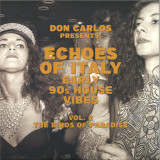
Various - ECHOES OF ITALY – THE BIRDS OF PARADISE – EARLY 90S HOUSE VIBES VOL.2 (2x12")

Googling “paradise house”, the first results to pop up are an endless list of European b&b’s with whitewashed lime façades, all of them promising “…an unmatched travel experience a few steps from the sea”. Next, a little further down, are the institutional websites of a few select semi-luxury retirement homes (no photos shown, but lots of stock images of smiling nurses with reassuring looks). To find the “paradise house” we’re after, we have to scroll even further down. Much further down.

It feels like yesterday, and at the same time it seems like a million years ago. The Eighties had just ended, and it was still unclear what to expect from the Nineties. Mobile phones that were not the size of a briefcase and did not cost as much as a car? A frightening economic crisis? The guitar-rock revival?! Certainly, the best place to observe that moment of transition was the dancefloor. Truly epochal transformations were happening there. From America, within a short distance one from the other, two revolutionary new musical styles had arrived: the first one sounded a bit like an “on a budget” version of the best Seventies disco-music – Philly sound made with a set of piano-bar keyboards! – the other was even more sparse, futuristic and extraterrestrial. It was a music with a quite distinct “physical” component, which at the same time, to be fully grasped, seemed to call for the knotty theories of certain French post-modern philosophers: Gilles Deleuze, Félix Guattari, Paul Virilio... Both those genres – we would learn shortly after – were born in the black communities of Chicago and Detroit, although listening to those vinyl 12” (often wrapped in generic white covers, and with little indication in the label) you could not easily guess whether behind them there was a black boy from somewhere in the Usa, or a girl from Berlin, or a pale kid from a Cornish coastal town.

Quickly, similar sounds began to show up from all corners of Europe. A thousand variations of the same intuition: leaner, less lean, happier, slightly less intoxicated, more broken, slower, faster, much faster... Boom! From the dancefloors – the London ones at least, whose chronicles we eagerly read every month in the pages of The Face and i-D – came tales of a new generation of clubbers who had completely stopped “dressing up” to go dancing; of hot tempered hooligans bursting into tears and hugging everyone under the strobe lights as the notes of Strings of Life rose up through the fumes of dry ice (certain “smiling” pills were also involved, sure). At this point, however, we must move on to Switzerland.

In Switzerland, in the quiet and diligent town of Lugano, between the 1980s and 1990s there was a club called “Morandi”. Its hot night was on Wednesdays, when the audience also came from Milan, Como, Varese and Zurich. Legend goes that, one night, none less than Prince and Sheila E were spotted hiding among the sofas, on a day-off of the Italian dates of the Nude Tour… The Wednesday resident and superstar was an Italian dj with an exotic name: Don Carlos. The soundtrack he devised was a mixture of Chicago, Detroit, the most progressive R&B and certain forgotten classics of old disco music: practically, what the Paradise Garage in New York might have sounded like had it not closed in 1987. In between, Don Carlos also managed to squeeze in some tracks he had worked on in his studio on Lago Maggiore. One in particular: a track that was rather slow compared to the BPM in fashion at the time, but which was a perfect bridge between house and R&B. The title was Alone: Don Carlos would explain years later that it had to be intended both in the English meaning of “by itself” and like the Italian word meaning “halo”. That wasn’t the only double entendre about the song, anyway. Its own very deep nature was, indeed, double. On the one hand, Alone was built around an angelic keyboard pattern and a romantic piano riff that took you straight to heaven; on the other, it showcased enough electronic squelches (plus a sax part that sounded like it had been dissolved by acid rain) to pigeonhole the tune into the “junk modernity” section, aka the hallmark of all the most innovative sounds of the time: music that sounded like it was hand-crafted from the scraps of glittering overground pop.

No one knows who was the first to call it “paradise house”, nor when it happened. Alternative definitions on the same topic one happened to hear included “ambient house”, “dream house”, “Mediterranean progressive”… but of course none were as good (and alluring) as “paradise house”. What is certain is that such inclination for sounds that were in equal measure angelic and neurotic, romantic and unaffective, quickly became the trademark of the second generation of Italian house. Music that seemed shyly equidistant from all the rhythmic and electronic revolutions that had happened up to that moment (“Music perfectly adept at going nowhere slowly” as noted by English journalist Craig McLean in a legendary field report for Blah Blah Blah magazine). Music that to a inattentive ear might have sounded as anonymous as a snapshot of a random group of passers-by at 10AM in the centre of any major city, but perfectly described the (slow) awakening in the real world after the universal love binge of the so-called Second Summer of Love.

For a brief but unforgettable season, in Italy “paradise house” was the official soundtrack of interminable weekends spent inside the car, darting from one club to another, cutting the peninsula from North to centre, from East to West coast in pursuit of the latest after-hours disco, trading kilometres per hour with beats per minute: practically, a new New Year’s Eve every Friday and Saturday night. This too was no small transformation, as well as a shock for an adult Italy that was encountering for the first time – thanks to its sons and daughters – the wild side of industrial modernity. The clubbers of the so-called “fuoriorario” scene were the balls gone mad in the pinball machine most feared by newspapers, magazines and TV pundits. What they did each and every weekend, apart from going crazy to the sound of the current white labels, was linking distant geographical points and non-places (thank you Marc Augé!) – old dance halls, farmhouses and business centres – transformed for one night into house music heaven. As Marco D’Eramo wrote in his 1995 essay on Chicago, Il maiale e il grattacielo: “Four-wheeled capitalism distorts our age-old image of the city, it allows the suburbs to be connected to each other, whereas before they were connected only by the centre (…) It makes possible a metropolitan area without a metropolis, without a city centre, without downtown. The periphery is no longer a periphery of any centre, but is self-centred”.

“Paradise house” perfectly understood all of this and turned it into a sort of cyber-blues that didn’t even need words, and unexpectedly brought back a drop of melancholic (post?)-humanity within a world that by then – as we would wholly realise in the decades to come – was fully inhuman and heartless. A world where we were all alone, and surrounded by a sinister yellowish halo, like a neon at the end of its life cycle. But, for one night at least, happy."

In Stock

On Stock and ready to ship

28,99
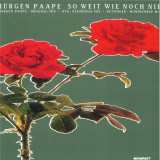
Jürgen Paape - So Weit Wie Noch Nie

...Finally repressed! No more words needed... Classic!

The original version of this gorgeous schlager techno track, released in august 2001 on Kompakt's Total 3, would put a smile on a lot of people's faces. Apart from the reworked original version, you'll get two sensational remixes: The one from Frankfurt's high-aesthete, super hipster, club- and label-owner with a three-letter name: Ata. Since the very beginning, his Playhouse label has always been a guarantee for finest German House music. It's his first (!) remix ever and his first studio work since the legendary first Playhouse release 'Holy Garage' in 1993. The 'Playhouse Mix' turns the original version into a mega-hip, late-night monster and reminds a bit of the great Larry Levan and Metro Area's congenious adaption of early-80s disco music. The 'Robert Johnson' club is going down on its knees. Wonderful. The other remix comes from one of Kompakt's in-house pioneers of pop ambient: it's Olaf Dettinger. Who didn't want to miss this chance and has interrupted his creative pause only for doing this wonderful 'Moonlight Mix'. Dettinger's cosy hi-tech sounds and Sonja Luebke's seraphic voice, both singing a duet to the moon. Very, very beautiful, indeed.

DER SMARTE HIT VON JÜRGEN PAAPE MIT REMIXEN VON PLAYHOUSE'S ATA UND DETTINGER. HERRLICH !

In Stock

On Stock and ready to ship

11,72
Various - Tropical Disco Records, Vol. 25
 
4
also available

Vol. 1[14,24 €]

Vol. 2[14,50 €]

Vol. 4[13,66 €]

Vol. 5[14,24 €]

Vol. 7[14,50 €]

Vol. 11[13,87 €]

Vol. 19[14,50 €]

Vol. 20[14,08 €]

Vol. 22[14,24 €]

Vol. 24[14,50 €]

Vol. 27[13,87 €]

028[14,24 €]


Tropical Disco continue to rewrite the disco handbook as they clock up an impressive quarter century of vinyl releases with a sublime Volume 25 of their series.

Featuring four disco cuts laced with jazz, funk, touches of electro and lots of dancefloor swagger it perfectly continues to build and diversify the sound of the series. Getting in on the party are a trio of Italian disco lovers Musta, an artist whose releases regularly set the disco and house charts alight, alongside the highly rated Corrado Alunni and the mysterious Fun Kool both of whom also hail from Italy.

Opening proceedings, and in stellar form, is co-label boss Sartorial whose ‘Hootin N Tootin’ is a real jazz funk gem. Incessant piano riffs, a groove of a bassline which edges towards acidic in places, guitar licks aplenty and choppy drums all combine for a track which could be played anywhere from a jazz inspired pool party to the funkiest of clubs. ‘Hootin N Tootin’ is as musical as it is dance worthy, two very handy traits which will see it survive the ever onwards march of time.

Musta’s ‘El Matador’ meanwhile has a high energy, fun-filled approach to life. It’s a track which very much defies pigeon holing but which comes from the same effusive family of earworms as Samin’s ‘Heater’ and may well prove to be just as big a breakthrough hit if it lands in the right hands over the summer. It’s very much a track with a big mischievous smile on its sun worshiping face.

Corrado Alunni’s ‘Funk Decision (Dub Mix)’ falls very much into the early Soulfuric camp of Soulful house music, a sound which Tropical Disco has regularly flirted with recently with some fantastic results. Divine live sax, guitar loops and ass shakin’ bass all merge perfectly for a very classy six = minutes of shimmering dancefloor groove.

Fun Kool’s ‘Low Tow’ sees out the EP and takes us off on an 80’s inspired electro journey. Stabby synths, subtle cowbell and Vangelis-esque keys all combine for a track which brings Metro Area’s take on the genre immediately to mind. ‘Low Toe’ deserves all the plaudits which undoubtedly come its way, a future classic for sure.

That Tropical Disco keep conjuring up EP’s of this quality is a major cause for celebration in itself. Disco in 2022 is a progressively more and more interesting place to live given the multifarious avenues which it continues to open up and this EP is a perfect example of the depth, diversity and incredible quality of a genre overflowing with passion. We very much hope that the first 25 volumes are only the beginning.

In Stock

On Stock and ready to ship

13,87
C.L.A.W.S - Splat City II

C.L.A.W.S

Splat City II

12inchDE-322
Dark Entries
23.02.2026

C.L.A.W.S. comes to Dark Entries with a new ripping LP, Splat City II. C.L.A.W.S. is the solo project of musical luminary Brian Hock, who has been a key figure in the Bay Area underground for over two decades via his involvement in projects like Bronze and The Vanishing, as well as helming the record labels Squirrels on Film and Immortal Sin. With C.L.A.W.S., Hock takes on the dancefloor, picking up cues from the Hague’s Giallo-dipped electro, the skewed minimalism of Chicago acid, and the mind-rending forays of San Francisco post-punk icons like Chrome and Tuxedomoon. Following 2019’s inaugural Splat City EP, Splat City II continues to map the psychogeography of a metropolis both alien and immediately recognizable, one where life is cheap, but so are the thrills. Previously released on Squirrels on Film in digital-only format, this expanded vinyl edition of Splat City II features two new cuts. Things kick off with “Route 505” and “One Tear,” a duo of rompers that vibe like Tom Ellard and Chip E locked in a room with a vial of liquid. Next up, Bay Area deckmaster Tyrel lends his editing chops to “Vigilant Slimy Monsters,” sculpting a moody space disco beast. Squirrels on Film co-founder Solar teams up with Hock for “Black Magic Carpet Ride III,” a cavernous downtempo banger. The slow-mo pace continues with “Wild Slugs United,” which features the no wave-esque clarinet work of Paul Costuros. Closer “Don’t Flip the Crystal Ship” pays homage to Bayview venue Bay Area 51 with melancholic strings and a quartz-solid electrofunk bassline. Splat City II comes in a sleeve with artwork by Bert Bergen, which features a vampiric cat and sci-fi cityscapes.

out of Stock

Order now and we will order the item for you at our supplier.

20,59

Last In: 26 days ago
Soinuarenbidea II - Sintesis de Paisaje sonororos y Electrónica post industrial

Una interpretación de Soinuarenbidea II debería partir de esta premisa: todo es posible, nada es aleatorio, y en sí mismo es un imposible de aleatoriedades. El escenario planteado explora la idea de realidad aumentada desde una percepción sonora, ambiental y colectiva. La obra transita hacia adelante y hacia atrás recreando experiencias extintas de porvenir incierto, tratando de facilitar un fin pacificador. Cada pieza sonora se crea, se despliega, se repliega y se destruye, en una torsión permanente de toda la realidad que hace posible cada fragmento musical, cada identidad acústica, cada espacio sonoro. Lo onírico, la ficción, y el viaje están continuamente presentes, y es en el transitar de cada fragmento donde se produce el diálogo de la exposición musical. Los elementos de esta ficción se recrean continuamente, en un continuum donde se entrelazan y se van contorsionando a medida que crecen o decrecen con cada fragmento de síntesis concreta. Los temas explícitamente musicales son el magma que conduce a dar voluptuosidad al disco, siendo la piel un contexto o límite que en sí mismo fluctúa indefinidamente en texturas y configuraciones posibles. Y la urdimbre del silencio es la síntesis que está continuamente presente y que trata de cohesionar los fragmentos en continua colisión expresiva. Las grabaciones de campo proporcionan el material sonoro concreto, y como un fractal sonoro cada una de ellas ofrece diferentes grados de interpretación que a su vez conduce a nuevos fragmentos y nuevas creaciones. Así que se puede pensar que esta es una síntesis de una posible realidad, pero interpretable en infinidad de maneras. Un movimiento y una estaticidad implícitas que generan estructuras y dinámicas acústicas. Lo que se escucha no es real, pero en sí mismo forma parte de la realidad, creando un escenario expectante. Lo cinematográfico, plástico y teatral, danzante y dinámico cobra importancia en este juego, porque se trata de contar una historia, una experiencia recreada desde los puntos de vista del arte visual. Es a su vez hilo conductor y entretenimiento, discurso político y puro divertimento. Es desde este espacio de convivencia artística que tiene sentido la totalidad y justifica el formato sonoro planteado. La contradicción de la obra es patente en el formato, y es a su vez el planteamiento de una accidentalidad en el devenir vital. Contenedor de Ruido recoge todas estas contradicciones y las manifiesta en la obra Soinuarenbidea II. Es una historia sonora, es un cuento acústico. Es un fragmento de vitalidad en imágenes audibles. Es una invitación a la reflexión, a la crítica, al disfrute, a la meditación, a la celebración. Y sobre todo es esperanzadora apreciación de la realidad como algo maleable que confeccionamos colectivamente, que requiere de una paciente observación y la participación colectiva global, en un mundo finito pleno de diversidades y del que ignoramos prácticamente todo, al que deberíamos volver con respeto y devoción.

Soinuarenbidea II-ren interpretazio batek premisa honetatik abiatu beharko luke: dena da posible, ezer ez da ausazkoa, eta, berez, ausazkotasun ezinezko bat da. Planteatutako agertokiak errealitate areagotuaren ideia aztertzen du, soinu-, ingurumen- eta talde-pertzepzio batetik abiatuta. Lanak aurrera eta atzera egiten du, etorkizun zalantzagarriko esperientzia desagertuak birsortuz eta helburu baketsua lortzen saiatuz. Soinu-pieza bakoitza sortu, hedatu, tolestu eta suntsitu egiten da, musika-zati bakoitza, identitate akustiko bakoitza eta soinu-espazio bakoitza ahalbidetzen dituen errealitate osoaren etengabeko bihurdura batean. Onirikoa, fikzioa eta bidaia etengabe daude presente, eta pasarte bakoitzaren joan-etorrian gertatzen da musika-erakusketaren elkarrizketa. Fikzio honen elementuak etengabe birsortzen dira, continuum batean, non sintesi zati zehatz bakoitzarekin hazi edo txikitu ahala elkar lotzen eta bihurritzen diren. Esplizituki musikalak diren gaiak diskoari atsegintasuna ematera eramaten duen magma dira, azala testuingurua edo muga izanik, testura eta konfigurazio posibleetan mugarik gabe aldatzen dena. Eta isiltasunaren irazkia etengabe presente dagoen sintesia da, zatiak etengabeko adierazpen-talkan kohesionatzen saiatzen dena. Landa-grabazioek soinu-material zehatza ematen dute, eta soinu-fraktal batek bezala, horietako bakoitzak interpretazio-maila desberdinak eskaintzen ditu, eta horrek, aldi berean, zati eta sorkuntza berrietara eramaten du. Beraz, pentsa daiteke errealitate posible baten sintesia dela, baina hamaika modutan interpreta daitekeena. Egitura eta dinamika akustikoak sortzen dituzten mugimendu eta estatikotasun inplizitu bat. Entzuten dena ez da erreala, baina, berez, errealitatearen parte da, eta agertoki espektakularra sortzen du. Zinematografikoak, plastikoak eta antzerkikoak, dantzariak eta dinamikoak garrantzia hartzen dute joko honetan, ikusizko artearen ikuspegitik birsortutako istorio bat, esperientzia bat, kontatzea baita helburua. Aldi berean, hari gidaria eta entretenimendua da, diskurtso politikoa eta dibertimendu hutsa. Elkarbizitzarako espazio artistiko honetatik osotasunak zentzua du eta planteatutako soinu-formatua justifikatzen du. Obraren kontraesana nabarmena da formatuan, eta, aldi berean, bizi-bilakaeran istripu-tasa bat planteatzea da. Zarata-edukiontziak kontraesan horiek guztiak jasotzen ditu eta Soinuarenbidea II obran adierazten ditu. Soinu istorio bat da, ipuin akustiko bat. Bizitasun zati bat da, irudi entzungarrietan. Hausnarketarako, kritikarako, gozamenerako, meditaziorako eta ospakizunerako gonbidapena da. Eta, batez ere, itxaropentsua da errealitatea modu kolektiboan egiten dugun gauza xaflakor gisa hautematea, behaketa pazientea eta partaidetza kolektibo globala eskatzen dituena, dibertsitatez betetako mundu mugatu batean, ia guztia kontuan hartzen ez duguna, eta errespetuz eta debozioz itzuli beharko genukeena.

An interpretation of Soinuarenbidea II should start from this premise: everything is possible, nothing is random, and in itself is an impossible randomness. The proposed scenario explores the idea of ​​augmented reality from a sonic, environmental, and collective perception. The work moves back and forth, recreating extinct experiences of an uncertain future, seeking to facilitate a peaceful end. Each sound piece is created, unfolds, retreats, and is destroyed, in a permanent twisting of all reality that makes each musical fragment, each acoustic identity, each sonic space possible. The dreamlike, the fictional, and the journey are continually present, and it is in the transit of each fragment that the dialogue of the musical exposition takes place. The elements of this fiction are continually recreated, in a continuum where they intertwine and contort as they grow or diminish with each fragment of concrete synthesis. The explicitly musical themes are the magma that leads to the work's voluptuousness, the skin being a context or boundary that in itself fluctuates indefinitely in possible textures and configurations. And the warp of silence is the synthesis that is continually present and seeks to unite the fragments in a continuous expressive collision. The field recordings provide the concrete sound material, and like a sonic fractal, each one offers different degrees of interpretation that in turn lead to new fragments and new creations. So one can think of this as a synthesis of a possible reality, but interpretable in an infinite number of ways. An implicit movement and staticity that generate acoustic structures and dynamics. What is heard is not real, but in itself is part of reality, creating an expectant scenario. The cinematic, plastic and theatrical, dance and dynamic aspects take on importance in this game, because it is about telling a story, an experience recreated from the perspective of visual art. It is at once a common thread and entertainment, political discourse and pure entertainment. It is from this space of artistic coexistence that the whole makes sense and justifies the proposed sound format. The contradiction of the work is evident in its format, and it is, in turn, the presentation of an accidentality in the course of life. Noise Container gathers all these contradictions and manifests them in the work Soinuarenbidea II. It is a sound story, an acoustic tale. It is a fragment of vitality in audible images. It is an invitation to reflection, to critique, to enjoyment, to meditation, to celebration. And above all, it is a hopeful appreciation of reality as something malleable that we collectively craft, requiring patient observation and global collective participation, in a finite world full of diversity and of which we know practically nothing, to which we should return with respect and devotion.

Paisajes sonoros, diseño sonoro, drones y música grabada, realizada y arreglada para Contenedor de Ruido por David Aranaz. Coro: Basandere Ahotsak. Producido y mezclado por David Aranaz. Mástering: Estanis Elorza. Fotografía: David Aranaz. Texto: David Aranaz. Traducción: Saioa Aranaz Oreja. Trabajo y Diseño artístico: Cristina Martinez. Edición: Contenedor de Ruido Producciones y Sarbide Music. Distribución: Contenedor de Ruido.

Contenedor de Ruido agradece el apoyo en la realización de Soinuarenbidea II al coro Basandere Ahotsak y en especial a Eva Orbara Goicoa.

Soinuarenbidea II está dedicado al pueblo palestino.

Paisajes y objetos Sonoros, samplers y otras músicas transformadas para Soinuarenbidea II
Burlada: Paseos sonoros matinales por Merindad de Sangüesa, Calle Mayor, Capuchinas, Parque Uranga y varias iglesias y plazas. Pasajes del cotidiano: basura de papel, cristal y plástico.
Pamplona: Cementerio de San José. CEIP Sanduzelai /// Quinto Real: Fábrica de Armas, Puerto de Urkiaga y alrededores. Suite del silencio, bosques en movimiento /// Fábrica de armas de Orbaiceta: regatas, biosques, paseo sonoro hasta regata /// Belate: Puerto de Belate y alrededores. Vacas en pradera junto a las turberas /// Bardenas Reales: Suite de guitarra y Suite del silencio, estepa desértica /// Austria: Tranvías de Graz y Viena. Muchedumbre del metro de Viena.
Voces cinematográficas de: Matanza en Texas, Robocop, Espíritu Sagrado, Solo los Amantes Sobreviven, Voces de Gaza, Yojimbo, Terciopelo Azul, Los 7 Magníficos.
La pista A2 está dedicada a la memoria de David Lynch.
La pista B4 está dedicada a Eva Orbara Goicoa.
Pista A4: Contiene interpretaciones de piano de Three Piano Pieces Op.11 de Arnold Schoenberg.
Pista A5: Es una interpretación expandida con síntesis FM del Concerto Op. 24 - Etwas lebhaft - de Anton Webern.
Pista A7: Contiene la canción Besarkatu ninduzun (Letra de Josune López y música de Josu Elberdin) en interpretación de Basandere Ahotsak en la iglesia de Burutain bajo la tormenta.
Pista B2: Contiene la canción Recuerdos de la Alhambra (Fernando Tárrega) en interpretación torsionada de David Aranaz Sarasa.
Pista B14: Contiene la canción Agur María (Letra y Música de Estíbaliz Robles “Estitxu” y arreglo exclusivo de Alfonso Ortiz para Basandere Ahotsak) en interpretación de Basandere Ahotsak.

Equipamiento para Soinuarenbidea II.
Micros de condensador SE7, configuración XY y ORTF; Micros de cinta ORTIZ LUTHIER configuración XY y Blumlein; Grabadoras MARANTZ y ZOOM; Sintetizadores y samplers Elektron MONOMACHINE SPS-1, MACHINEDRUM SFX6 y MODEL:SAMPLES. Dave Smith MOPHO. Torso Electronics S-4. Sintetizador Modular 333 DIY; Guitarra clásica ALHAMBRA 6P; Esculturas Sonoras tipo Baschet, cristal y metales; Mesa Soundcraft FX16ii; Interface de Audio RME Babyface Pro FS; DAW Logic Pro; Procesamiento de modelado analógico con Acústica Audio, Waves, Softube, Brainworx, Sonible, Analog Obsesion, Tokio Dawn. Metering de Logic y RME DigiCheck . Amplificación Hafler PRO2400. Monitorización BW DM602 S3. Mezcla digital; Mastering híbrido.

pre-order now30.01.2026

expected to be published on 30.01.2026

26,47
Harvey Sutherland - Debt LP

Debt is a new album by Harvey Sutherland about the cost of doing business in the meme economy. In his first LP since the 2022 debut, Boy, the Australian artist reduces his fusiony disco repertoire to ten microhoused funk essentials. This is minimalism not so much as aesthetic conceit than pressurised container, shaken in the Escherised time and space unique to our overdriven, red-lining present. The album's title nods to the financial contortions necessary to strive/survive/thrive as an independent artist. But Debt is better understood as the ledger of what we owe, and to whom, in the course of a creative life. What's the ROI on being an artist, a son, a friend, a partner, a father? Have we been worth our loved ones' own investments? If that sounds transactional, this is merely the lingua franca of our overwhelmingly digital culture, a grifter's bazaar in which Bob Dylan tunes up over Salt Bae, and Wordsworth's pitch is opposite the Rizzler.

Debt came to life when Harvey Sutherland acquired a freightload of Y2K minimal cargo from Akufen, Ricardo and Baby Ford—courtesy of local Melbourne hero Martin L—which bent the album towards a moreish pointillism. The resulting music's eyes-down minimal gestures within expressive pop shapes feels apt for the apparently contradictory things we can't help craving: immediacy and craft, on-tap "authenticity," life lessons drawn from Reel nonsense. A few years after the "neurotic funk" of Boy, a thorough excavation of interiority that comprised Harvey Sutherland's first LP proper, Debt is his to-the-point response to pressures that manifest outside the self. But in its own way it remains a reflection of Harvey Sutherland's musical innerscapes, which stretch across the grit and glitter of private-press disco and the sensual grids of Metro Area.

out of Stock

Order now and we will order the item for you at our supplier.

19,96

Last In: 5 months ago
Spirit Catcher - Night Vision LP 2x12"

20/20 Vision is doing a fine job of digging into its archives and reissuing genuine treasure. Next up is a Spirit Catcher classic from 2007 that has been long out of print. The Belgian pair of Jean Vanesse and Thomas Sohet really hit on a fresh sound with their blend of electro-deco and deep house and this double pack still sounds hot all these years on. From the mid-tempo and seductive boogie of 'Motown Spring' to the cosmic tech of 'Search Is Over' via the dazzling disco radiance and sleek Metro Area style vibes of 'Rollercoaster', these are sophisticated sounds that marry dancefloor clout with great sound design. Check 'Voodoo Knight' for a playful and well-worked party starter, by the way.

out of Stock

Order now and we will order the item for you at our supplier.

28,36

Last In: 3 months ago
Jt Donaldson - DR-EP-2079

Jt Donaldson

DR-EP-2079

12inchDREP2079
Dolfin US
04.07.2025

US veteran JT Donaldson makes the sort of killer tech house that immediately makes you want to move. This time out the Dallas, Texas resident lands on Dolfin Records with a deeper sound that is raw and heavy. 'Choose' rides on knackered-sounding kick with just deft synth smears for company. 'Don't Sweat' has a double-time rhythm with sombre chords adding the soul and 'Want Her Around' gets the hips swinging with its lovely claps, muted, softly glowing sustained synths and lumpy deep house drums. Flipping the script yet again. 'Sunday Drive' is a more nimble and jazzy dancer and 'Take 2' is a sunny house sound with hints of Metro Area nu-disco synth magic and a big fat bassline.

out of Stock

Order now and we will order the item for you at our supplier.

25,63

Last In: 7 months ago
Morgan Geist - Premise Ep

Morgan Geist

Premise Ep

12inchENV001R
Environ
10.04.2025

This reissue of ENV001 "Premise EP" is remastered from the original tapes and features the original artwork by Todd Sines. Featuring a remix from The Connection Machine, the 1995 EP was recorded in Ohio and originally mastered inDetroit by the legendary Ron Murphy. The release marked the end of four years of Geist living the midwest and his return to the metro area of New York City, a dramatic shift that would soon be reflected in Environ's sound.

In 1994, with only a single 12" in his discography, Morgan Geist decided to start his own record label. His debut on Dan Curtin's Metamorphic label was inspired by the sounds of Detroit techno and Chicago house. But Geist was equally fascinated by UK imports from labels like Warp, B12, and ART. He sought to combine these inspirations on the first release of his new label, Environ. Featuring a remix from The Connection Machine, whose unique "Bitflower" was released the year before on Carl Craig's Planet E, "Premise EP" (1995) was recorded in Ohio and mastered in Detroit by the legendary Ron Murphy. The release also marked the end of four years of Geist living the midwest and his return to the metro area of New York City, a dramatic shift that would soon be reflected in Environ's sound. This reissue of ENV001 "Premise EP" is remastered from the original tapes and features the original artwork by Todd Sines.

out of Stock

Order now and we will order the item for you at our supplier.

12,82

Last In: 8 months ago
Various - Volcanic Tongue - Late 20th Century Underground (LP 2x12")

"Volcanic Tongue" war ein Plattenladen, der von 2005-2015 in Glasgow von David Keenan und Heather Leigh betrieben wurde und zeitgenössische DIY-Musik aus der ganzen Welt in kleinen selbstgemachten CD-R-Auflagen veröffentliche. Parallel versuchte man, vergessene Künstler aus der Vergangenheit ins Rampenlicht zu rücken, die ihre Musik oft als Privatpressung veröffentlicht hatten. Der Laden war für seine wöchentliche Mailingliste bekannt, in der Keenan enthusiastisch über Neuankömmlinge rappte, insbesondere über die Platte der Woche, die den Spitznamen "tip of the tongue" (Zungenspitze) erhielt. Dieser eklektische Sampler mit 20 "tips of the tongue" - von Outsider-Synth über Psych-Folk bis zu kaputtem Rock'n'Roll, aufgenommen zwischen 1968-2013 - ist eine Hommage an eine lebendige und vielseitige Underground-Avantgarde. Black Vinyl 2LP in PVC-Hülle, von Julian House designt, mit bedruckten Innentaschen samt Linernotes von David Keenan zu jedem Künstler.

PS: Gleichzeitig erscheint beim White Rabbit-Verlag eine Deluxe-Ausgabe des gleichnamigen Buches mit einer CD-Version des Samplers, limitiert auf 1.000 Exemplare, und signiert von Autor David Keenan und Designer Julian House.

out of Stock

Order now and we will order the item for you at our supplier.

35,25

Last In: 13 months ago
Various - ECHOES OF ITALY - ARTISTS IN WONDERLAND – EARLY 90S HOUSE VIBES VOL.1 LP 2x12"

Volume 1 of this expertly curated project of 90s Italian House - put together by Don Carlos.

If Paradise was half as nice… by Fabio De Luca.

Googling “paradise house”, the first results to pop up are an endless list of European b&b’s with whitewashed lime façades, all of them promising “…an unmatched travel experience a few steps from the sea”. Next, a little further down, are the institutional websites of a few select semi-luxury retirement homes (no photos shown, but lots of stock images of smiling nurses with reassuring looks). To find the “paradise house” we’re after, we have to scroll even further down. Much further down.

It feels like yesterday, and at the same time it seems like a million years ago. The Eighties had just ended, and it was still unclear what to expect from the Nineties. Mobile phones that were not the size of a briefcase and did not cost as much as a car? A frightening economic crisis? The guitar-rock revival?! Certainly, the best place to observe that moment of transition was the dancefloor. Truly epochal transformations were happening there. From America, within a short distance one from the other, two revolutionary new musical styles had arrived: the first one sounded a bit like an “on a budget” version of the best Seventies disco-music – Philly sound made with a set of piano-bar keyboards! – the other was even more sparse, futuristic and extraterrestrial. It was a music with a quite distinct “physical” component, which at the same time, to be fully grasped, seemed to call for the knotty theories of certain French post-modern philosophers: Gilles Deleuze, Félix Guattari, Paul Virilio... Both those genres – we would learn shortly after – were born in the black communities of Chicago and Detroit, although listening to those vinyl 12” (often wrapped in generic white covers, and with little indication in the label) you could not easily guess whether behind them there was a black boy from somewhere in the Usa, or a girl from Berlin, or a pale kid from a Cornish coastal town.

Quickly, similar sounds began to show up from all corners of Europe. A thousand variations of the same intuition: leaner, less lean, happier, slightly less intoxicated, more broken, slower, faster, much faster... Boom! From the dancefloors – the London ones at least, whose chronicles we eagerly read every month in the pages of The Face and i-D – came tales of a new generation of clubbers who had completely stopped “dressing up” to go dancing; of hot tempered hooligans bursting into tears and hugging everyone under the strobe lights as the notes of Strings of Life rose up through the fumes of dry ice (certain “smiling” pills were also involved, sure). At this point, however, we must move on to Switzerland.

In Switzerland, in the quiet and diligent town of Lugano, between the 1980s and 1990s there was a club called “Morandi”. Its hot night was on Wednesdays, when the audience also came from Milan, Como, Varese and Zurich. Legend goes that, one night, none less than Prince and Sheila E were spotted hiding among the sofas, on a day-off of the Italian dates of the Nude Tour… The Wednesday resident and superstar was an Italian dj with an exotic name: Don Carlos. The soundtrack he devised was a mixture of Chicago, Detroit, the most progressive R&B and certain forgotten classics of old disco music: practically, what the Paradise Garage in New York might have sounded like had it not closed in 1987. In between, Don Carlos also managed to squeeze in some tracks he had worked on in his studio on Lago Maggiore. One in particular: a track that was rather slow compared to the BPM in fashion at the time, but which was a perfect bridge between house and R&B. The title was Alone: Don Carlos would explain years later that it had to be intended both in the English meaning of “by itself” and like the Italian word meaning “halo”. That wasn’t the only double entendre about the song, anyway. Its own very deep nature was, indeed, double. On the one hand, Alone was built around an angelic keyboard pattern and a romantic piano riff that took you straight to heaven; on the other, it showcased enough electronic squelches (plus a sax part that sounded like it had been dissolved by acid rain) to pigeonhole the tune into the “junk modernity” section, aka the hallmark of all the most innovative sounds of the time: music that sounded like it was hand-crafted from the scraps of glittering overground pop.

No one knows who was the first to call it “paradise house”, nor when it happened. Alternative definitions on the same topic one happened to hear included “ambient house”, “dream house”, “Mediterranean progressive”… but of course none were as good (and alluring) as “paradise house”. What is certain is that such inclination for sounds that were in equal measure angelic and neurotic, romantic and unaffective, quickly became the trademark of the second generation of Italian house. Music that seemed shyly equidistant from all the rhythmic and electronic revolutions that had happened up to that moment (“Music perfectly adept at going nowhere slowly” as noted by English journalist Craig McLean in a legendary field report for Blah Blah Blah magazine). Music that to a inattentive ear might have sounded as anonymous as a snapshot of a random group of passers-by at 10AM in the centre of any major city, but perfectly described the (slow) awakening in the real world after the universal love binge of the so-called Second Summer of Love.

For a brief but unforgettable season, in Italy “paradise house” was the official soundtrack of interminable weekends spent inside the car, darting from one club to another, cutting the peninsula from North to centre, from East to West coast in pursuit of the latest after-hours disco, trading kilometres per hour with beats per minute: practically, a new New Year’s Eve every Friday and Saturday night. This too was no small transformation, as well as a shock for an adult Italy that was encountering for the first time – thanks to its sons and daughters – the wild side of industrial modernity. The clubbers of the so-called “fuoriorario” scene were the balls gone mad in the pinball machine most feared by newspapers, magazines and TV pundits. What they did each and every weekend, apart from going crazy to the sound of the current white labels, was linking distant geographical points and non-places (thank you Marc Augé!) – old dance halls, farmhouses and business centres – transformed for one night into house music heaven. As Marco D’Eramo wrote in his 1995 essay on Chicago, Il maiale e il grattacielo: “Four-wheeled capitalism distorts our age-old image of the city, it allows the suburbs to be connected to each other, whereas before they were connected only by the centre (…) It makes possible a metropolitan area without a metropolis, without a city centre, without downtown. The periphery is no longer a periphery of any centre, but is self-centred”.

“Paradise house” perfectly understood all of this and turned it into a sort of cyber-blues that didn’t even need words, and unexpectedly brought back a drop of melancholic (post?)-humanity within a world that by then – as we would wholly realise in the decades to come – was fully inhuman and heartless. A world where we were all alone, and surrounded by a sinister yellowish halo, like a neon at the end of its life cycle. But, for one night at least, happy.

out of Stock

Order now and we will order the item for you at our supplier.

28,99

Last In: 12 days ago
Random Factor - Ricochet

Random Factor

Ricochet

12inchVIS048R
20/20 Vision
30.09.2024

Reissue

Carl Finlow has been turning out killer electro since forever and is the man behind the revered Random Factor alias. He started it back in 1994 and since he's brought us four full lengths on 20/20 Vision, with a new one dropping very soon. In the meantime, here's a reissue of one of his most in demand classic EPs that's back on wax after initially making waves way back in 2000. The cuts draw on electro-pop and lithe future disco a la Metro Area, from the sparkly 80s-vibed opener 'Old News', 'Richochet' - imagine dub techno rerouted through guitar-led funk - to the more heads down, deep and moody dancefloor delight 'Update' and the indelible melodies of closer 'Swing'. Timeless machine funk from one of its latter day masters.

out of Stock

Order now and we will order the item for you at our supplier.

17,02

Last In: 69 days ago
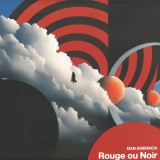
Dan Ghenacia - Rouge ou Noir

Dan Ghenacia

Rouge ou Noir

12inchSTSC003
Stratasonic
25.09.2024

Dan Ghenacia's influence on the European underground over the last 25-plus years cannot be overstated. He has run vital labels, hosted essential parties, laid down definitive DJ sets, and produced seminal sounds both solo and as part of the tastemaking Apollonia trio with friends Shonky and Dyed Soundorom. His understanding of house music across the ages and continents is second to none, and he brings all that experience to this fantastic new solo EP.

The bumpy and infectious 'Rouge Ou Noir' opens with looped and funky guitar riffs and neon synths winding their way through dusty, dynamic drums. Cooing vocal stabs ramp up the steaminess of this most tasteful party starter. The superb 'Chilly' has a bustling blend of louche rhythms and rugged synth arps that dart about the mix. They hurry along beneath swirling vocal sounds up top with hints of Metro Area magic and tripped-out colours, all making it a characterful groove. Last but not least, 'Chilly' gets dubbed out and becomes a more low-slung sound with a fleshy bassline popping up the choppy, playful and synth-infused rhythm.

out of Stock

Order now and we will order the item for you at our supplier.

15,92

Last In: 4 days ago
DOBLE FUERZA - 1987 LP

A journey, in 16 tracks, through the career of this pioneer band of the Latin American Punk 'n' Roll scene, active since 1987 and founded in the city of Quilmes (Argentina). Punk 77, Street Punk and Punk 'n' Roll on glorious vinyl and for the first time in Europe. DESCRIPTION Doble Fuerza is a pioneering band of the Latin American punk 'n' roll scene that has been active since 1987 (hence the title of the LP). Founded in the city of Quilmes (Argentina), south of the Buenos Aires metropolitan area, they have built their own recognizable sound, influenced by punk 77, street punk and punk 'n' roll. For the first time in Europe, on a long-playing record, on glorious vinyl, 16 tracks that represent a detailed tour through Doble Fuerza's 35-year career, remastered for the occasion. The result is most entertaining and activating. Primitive sonorities of angry young men doing street-punk without concessions in "Disturbios" Riots and "La Vida Se Va" Life Goes, give way to heartfelt street love in a hard-power-pop vein ("¿Por Qué No Me Llamas?" [Why Don't You Call Me?], "Encontrarte" [Find You], "Sola" [Alone]) and Ramonesian essences in "Desocupado" [Unemployed]. And all of this leads to their personal punk 'n' roll sound with a Buenos Aires accent, i.e. punk-rock clearly influenced by punk 77 and the rock 'n' roll of the 50s and 60s. In "Leave Me Alone", "Anestesiado" [Anaesthetised], "Grito de Revolución" [Revolution Yell], "Almas Gemelas" [Twin Souls] and "Canción de Libertad" [Song of Revolution] you can sense some of the many bands of the three decades that are part of their wide musical background and that have served as teachers to forge their style. Nor do they forget the cheerful tavern hymns to sing loudly and to overcome the struggle and heartbreaks with good humor, "Otra Vuelta de Cerveza" [Another Round of Beer] and "El Rey del Fernet" [The King of Fernet]. The three covers of this collection deserve special mention. Three adaptations sung in Spanish that the quintet led by Hugo Irisarri makes totally their own: "Pibes de Barrio" (Cockney Rejects), "Laburando" (Cock Sparrer) and "Spanish Bombs" (The Clash). The accent may be different, but the situations, the sound references, the messages... become immediately familiar and recognizable. "1987" is a careful presentation letter on this side of the pond of the Argentinean band's wide repertoire that unites commitment, fun and enthusiasm in equal parts

pre-order now12.07.2024

expected to be published on 12.07.2024

21,64
Imogen Soundsystem - Paloma EP

Imogen Soundsystem

Paloma EP

12inchIMO020
Imogen
26.04.2024

Entering a decade of existence since the first release back in 2015, Imogen Recordings has a constant flow of hi-quality releases. Based on an inhouse sound and artists that perfectly fits to that sound, Imogen label gained small but finger picked releases catalog and artists repertoire. Among those few Label released music from Darshan Jesrani ( Metro Area, Startree ), Charles Webster - Presence, Don Carlos, Ian Pooley, Ilija Rudman, Kai Alce to name a few and most recently Antonio Zuza.

New Catalog Number 19, brings Antonio Zuza and a duo Project between Ilija and Antonio - Imogen Soundsystem on the table. It's a "never leave my bag" material.
Antonio's "Palmizana" or Imogen Soundsystem's " Paloma" are both strong munition for any dancefloor request by simply delivering that vibe that we all love.
Powered by pristine production as Imogen's standard signature Darshan Jesrani and Ilija Rudman brought 2 sublime remixes to wrap this beautiful 12" Vinyl.
If we are talking about modern house approach with all the respect to it roots, we are talking about this record. It is here to satisfy old diggers and new people on the scene.

out of Stock

Order now and we will order the item for you at our supplier.

11,35

Last In: 16 months ago
Mood llSwing - I Need Ur Love/penetration

Mood II Swing are giants of NY metro area club culture. On calibre with heavy-hitters like Masters At Work and Blaze, Lem Springsteen and John Ciafone's output boasts the bejeweled crown of deep house supremacy, spanning from the early 1990's to the latter part of the decade, molding and modeling a sound painstakingly tailored to the vanguard of minority and transgendered club scenes, pre-purge New York. One of their first and most explosive claims to the throne was 1992's "Wall of Sound" EP, a no-prisoners-taken masterpiece with the confidence and cockiness of two producers just out the gate and fully assured of their total domination of the craft. "I Need Your Luv" is, to this day, the indisputable measuring stick of cunty club tracks, opening as the curtain lifts with the outpouring of one fierce ruling diva, quickly picking up force in a storm of wide swinging-drum programs, punching bass drives and sparse, splitting synth stabs, all punctuated with unyielding vocal cut-ups and yearning cries. On the flip, "Penetration" delivers the same expert method, albeit with a more abstract, dreamy air about it, a bumping, endlessly ascending standard of the vocal-sample driven deep house track of the early 1990's, constantly building and morphing in its deceptive complexity. Brilliant, timeless and time-defying, "I Need Your Luv" & "Penetration" have finally been reissued for the first time since their original debut 21 years ago, the latest feature in Slow to Speak's ongoing CORE series, a testament to the formative years of NY house lore.

out of Stock

Order now and we will order the item for you at our supplier.

18,70

Last In: 13 months ago
Jammin’ Sam Miller - Super Metroid 2X!"2

WRWTFWW Records is happy to announce the first-ever physical release of Louisiana-based composer and producer Jammin’ Sam Miller’s full HD re-creation/restoration of the beloved Super Metroid video game soundtrack. The limited biovinyl double LP is packed with 27 tracks and features an exclusive artwork by French illustrator Pierre Thyss, as well as an obi strip.

Composed by Kenji Yamamoto and Minako Hamano, the soundtrack for 1994 SNES exploration / action-adventure / sci-fi / alien video game Super Metroid has always been a fan-favorite. A true masterclass in music storytelling, it beautifully evokes the epic and eerie adventure of the game’s protagonist Samus Aran with superb use of atmospheric sounds, space-operatic arrangements, rumbling bass, oppressive techno-futurist moods, tribal drums, and airy synth themes, admirably balancing the ominous feel of a dark menace and contemplative, even soothing, ambient soundscapes.

Jammin' Sam Miller assiduously recreated the soundtrack note by note, by finding the original equipment used to create it, translating the MIDI into a modern studio context, adding in keyboard samples, and re-mixing and re-mastering the whole score. He explains: "This was made possible by locating the original instrument samples from workstation keyboards and drum machines before they were put into the game and rebuilding the soundtrack from the ground up, applying some modern mixing techniques along the way to lift the veil of 16bit compression and create an updated listening experience."

Super Metroid is pressed on biovinyl, a sustainable alternative to traditional vinyl. Biovinyl replaces petroleum in S-PVC by recycling used cooking oil or industrial waste gases, resulting in 100% CO2 savings in bio-based S-PVC production. Furthermore, it is 100% recyclable and reusable, embracing the circular economy ideology.

out of Stock

Order now and we will order the item for you at our supplier.

28,36

Last In: 4 months ago
Various - The Missing Boys - Selection of Sardinian Wave 1980-1989

“The Missing Boys” is a film born from the need to tell the story of the emergence and affirmation of a forgotten music scene, like much of the youth movement that spread in metropolitan areas as well as in the provinces more than forty years ago, dealing with the same critical issues of everywhere. It’s a story of mostly unknown bands, who from Sardinia, especially from Cagliari and Sassari, interrupt the blissful isolation of an island, only apparently distant from that revolution that ignited wherever there was a stage and a power socket. The birth of a path that began with punk and quickly transformed into a magmatic picture where research, experimentation, sound subversions and slivers of darkness, shape a multifaceted and unique scene in balance between affinities and divergences with its whole surroundings. The examined period between 1979 and 1989 marks a seminal decade, a ten years time-frame linked to an indelible generational transition, like an imaginary journey “from the ants to the clouds”, an invisible thread suspended between those kids and their great dream. This album contains music from a vibrant and uncompromising season, just like all that cannot be recognized as industrial product and maintains an independent spirit. (Davide Catinari)

pre-order now02.02.2024

expected to be published on 02.02.2024

21,81
Trym Søvdsnes - Trym Søvdsnes

Trym Søvdsnes is a relative newcomer to the scene, but he’s been putting in work in and around Bergen for years, scoring a residency at the infamous Café Opera, where he snagged the attention of local house legend Bjørn Torske. Soon, the duo were DJing, producing and performing together, eventually running the monthly radio show Pigs in Space where they would go head-to-head for six hours at a time, plumbing the depths of their immense record collections.

It’s this lust for bottom-of-the-crate oddities that guides Søvdsnes’ self-titled debut album, a concoction of dub techno, hard-swung house and percussive club music that positions itself a few paces away from any conventional modes. Basically, a perfect fit for Le Jazz Non.

‘Gølles Dans’ opens with a filtered acid bassline and bone dry kick that’s like some psychedelic, slower variant of Basic Channel’s ‘Enforcement’, slicing into the groove with gristly acoustic percussion that drags it up from the basement. The producer leans into asymmetry on ‘Døgnrytmen’, wrangling 303 squelches with booming Berghain kicks and tight snares, enhancing the psychedelic potential by layering ticking percussion into loopy spirals. If you’ve ever caught an extended Dozzy set, this is the kind of ruff-edged gear he would likely play an hour before sunrise. ‘Ordnings Mix’ is weirder still, slopping chirpy bleep/rave stabs into a jazzy hybrid that sounds like a bossa meltdown.

Søvdsnes saves his most cosmic mettle for last, on ‘Cowboy Acid (Solstikk Dub)’ he strips the kickdrum to a faint knock, before building up into a sort of screwed Metro Area mirrorball that sounds brilliantly out of time.

out of Stock

Order now and we will order the item for you at our supplier.

27,94

Last In: 2 years ago
RICCARDO CIONI - FOG (REMIXES)

‘Fog’ is one of most obscure and dark italo instrumental works done in 1984 late at night in Riccardo Cioni’s garage/studio by his trusty Stephen Head experimenting on PPG Wave 2.2, Linn 9000 and Phophet 5.

Mondo Groove release this 12″ 45rpm involving 4 key figures of analog electro: Morgan Geist (Metro Area), Tiger & Woods, N.O.I.A. and Daniele Baldelli.

out of Stock

Order now and we will order the item for you at our supplier.

15,34

Last In: 19 months ago
40 Thieves, Gary Davis & Cinnamon Jones - The Gift

Long time Leng recording artists 40 Thieves are back with one of their most notable singles to date – a surprise collaboration with two NYC disco originals, storied vocalist Cinnamon Jones and multiinstrumentalist/producer Gary Davis.

San Francisco outfit 40 Thieves has been serving up cosmic, dubbed-out and otherworldly contemporary disco treats since the mid 2000s, and have been part of the Leng family since 2011. The crew, headed up by Layne Fox, Jay Williams and Corey Black, have released countless killer cuts on the label, as well as an expansive
debut album, 2014’s The Sky Is Yours.

They’ve worked with other artists before, but nobody at the same legendary level as Cinnamon Jones and Gary
Davis. The latter cut his teeth as a musician working with iconic disco producers Patrick Adams and Peter Brown at their P&P Records stable, before becoming a producer and artist in his own right writing and arranging the disco classic ‘Got To Get Your Love’ performed by Clyde Alexander & Sanction.

Jones, meanwhile, has enjoyed a hugely successful career both in her native New York (as Joyce Jones, an original member of First Choice) and on the West Coast, where she not only became an in-demand performer, but also snagged a role in the Supremes biopic Dream Girls.

‘The Gift’ is one of Jones’ most cherished solo songs – a joyful celebration of a new day dawning that has long been popular in her live sets. With input and instrumentation from Davis and a fantastic delivery of her own lyrics by Jones, 40 Thieves has successfully re-framed the track as a sunrise-ready future Bay Area free party
favourite; a dubbed-out, suitably cosmic creation that’s presented in three potent versions.

Leading the charge, and stretched across side A of the vinyl version is the band’s ’Disco Mix’ which boasts a fully realised instrumental arrangement and extensive use of passages from Jones’ vocals. Not all the lyrics are present as the Bay Area band has chosen to focus on selected lines that most neatly fit their musical vision and
celebrate the joys of dancing at sunrise. There are more spaced-out keyboard solos, sharper guitars (smothered in effects in true 40 Thieves fashion) and sound design that’s as immersive as it is heady and intoxicated.

On the flip is the ‘Disco Dub’. A bona-fide dub disco chugger rich in relentless synth-bass, addictive guitar licks, echo-laden vocal snippets, sparkling nu-disco electronics, tactile, deep house style electric piano stabs and cosmic effects aplenty, it’s a track tailor-made for slowly shuffling while the sun peeps over the horizon.

To complete an inspired package, 40 Thieves have also included a killer DJ tool: a ‘Beats’ take that wraps energy packed percussion hits, trippy electronic noises, trailing dub delays and sparse melodies around a metronomic drum machine beat. It’s a wavy, groovy and pleasingly mind-altering way to conclude one of 40 Thieves’ most magical EPs to date.

out of Stock

Order now and we will order the item for you at our supplier.

18,07

Last In: 15 months ago
Bright & Findlay - Everything Is Slow LP

Bright & Findlay - James Alexander Bright und Tom Findlay (Groove Armada) - eint ihre gemeinsame Liebe zu Machine-Funk, Outsider-Soul, 70'/80'er Nautica und Basement-Disco des 21. Jahrhunderts. Auf ihrem Debütalbum 'Everything Is Slow' auf Athens Of The North präsentieren sie eine atemberaubende Bewegung und Atmosphäre, vollgepackt mit Sunshine Boogie, Cosmic Disco, einer Prise balearischem Funk und Inspirationen und Widmungen von Dâm Funk bis Metro Area.

out of Stock

Order now and we will order the item for you at our supplier.

25,00

Last In: 18 days ago
Bright & Findlay - Everything Is Slow LP

Bright & Findlay - James Alexander Bright und Tom Findlay (Groove Armada) - eint ihre gemeinsame Liebe zu Machine-Funk, Outsider-Soul, 70'/80'er Nautica und Basement-Disco des 21. Jahrhunderts. Auf ihrem Debütalbum 'Everything Is Slow' auf Athens Of The North präsentieren sie eine atemberaubende Bewegung und Atmosphäre, vollgepackt mit Sunshine Boogie, Cosmic Disco, einer Prise balearischem Funk und Inspirationen und Widmungen von Dâm Funk bis Metro Area.

out of Stock

Order now and we will order the item for you at our supplier.

25,00

Last In: 13 months ago
Salami Rose Joe Louis - Akousmatikous (LP+MP3)

Die Singer-Songwriterin, Multiinstrumentalistin und Produzentin Lindsay Olsen aus der Bay Area ist der brillante Kopf hinter dem schrägen und magischen Projekt Salami Rose Joe Louis. Auf der Grundlage ihres Studiums der Planetenwissenschaften erschafft sie eine einzigartige Erfahrung: Sie erforscht Ideen von Multiversen und Klimawandel durch die Linse eines fiktiven postapokalyptischen Erdenbürgers mit Keyboard, einer Taschenlampe, einer Dose Cashews und einem hoffnungsvollen Optimismus. Durch die Verschmelzung von Einflüssen aus Jazz, Rock und Hiphop, wie bspw. Shuggie Otis, Captain Beefheart, Stereolab oder R. Stevie Moore, schafft sie eine einzigartige Mischung aus experimentellen Klängen aus der Galaxis mit jazzbeeinflusstem Gesang und Keyboard.
Das neue Album folgt auf kürzliche Kollaborationen mit Toro Y Moi oder Alice Phoebe Lou für ihr Strongboi-Projekt, auf einen Remix für die Brainfeeder-Labelbuddies von Hiatus Kaiyote und auf die Mitwirkung am Song „Scapegoat“ des mit einem GRAMMY ausgezeichneten Rappers Baby Keem. Olsen hatte außerdem die Ehre, mit Flying Lotus, The Cinematic Orchestra, Toro Y Moi, TuneYards, Clairo, MNDSGN, Homeshake, The Comet is Coming und Still Woozy zu touren. „Akousmatikous“ ist die erzählerische Fortsetzung von ihrem letzten Studio-Album: Nachdem das Metropolis-Raumschiff am Ende von „Zdenka 2080“ auf die Erde gestürzt ist, kommt es zu einem dimensionalen Kollaps. In der Folge verwandeln sich die Köpfe und Hände der Erdbewohner:innen in Bildschirme, womit das neue Album beginnt. Die Erdbewohner:innen stecken in einer nicht enden wollenden Video-Feedback-Schleife zwischen ihren Köpfen und Händen fest. Ein interdimensionales Wesen, Zeeanori, manipuliert diese Rückkopplungsschleife, weil es will, dass die Pflanzen die Erde zurückerobern und die Natur wieder blüht und gesund wird. Ein alter Freund und frühere Liebe des Monsters, Akousmatikous (von einem fernen Planeten), kommt auf die Erde, um es zu sprechen, weil er neugierig auf seine Motive und die komplizierte ethische Situation ist. Akousmatikous stimmt zu, dass die Natur schön sein und blühen wird, ist aber besorgt über das Schicksal der Erdbewohner:innen, die in unendlichen Rückkopplungsschleifen gefangen sind. Akousmatikous hofft auf eine Lösung, die für jedes Wesen und jede Entität von Vorteil sein kann, einen Weg zur Symbiose.

pre-order now19.05.2023

expected to be published on 19.05.2023

27,94
Rinne & Majamäki - On The Border

Since the beginning, space and the sound of it has been one of the cornerstones of Tapani Rinne and Teho Majamäki's music. The two previous albums contain meditative music recorded in acoustically interesting and atmospheric locations - temples and caves in India, as well as deep underground in the railway tunnels of Helsinki's metropolitan area.

With the new album, the musicians wanted to keep outside factors to a minimum and record compositions in controlled studio conditions. In this way, different spaces can be created electronically afterwards into the works. Aleksi Myllykoski and Mika Kalmi are responsible for mixing and post-production. The tracks are based on Teho's metal percussion instruments and Tapani's woodwinds.

In the finished pieces, the duo went towards free musical dialogue, in which the boundaries between improvisation and composed music become blurred and insignificant. Instead of listening to the sound of the space itself, musicians tuned in to listen to the vibration of the metal and wooden instruments. ”We focused on sensing the mutual resonance of the instruments and the sensitivity of the improvisation. A presence on the border of familiar and unknown.” Says Tapani and Teho. The recordings took place in Kitee, Eastern Finland, near the Russian border. The location and way of working gave birth to the name of the record - On The Border.

pre-order now19.04.2023

expected to be published on 19.04.2023

27,10
Trevor Beales - Fireside Stories (Hebden Bridge circa 1971-1974)

‘’Ace Todmorden label makes a significant discovery on its own doorstep: a superb cache of ‘loner folk’ songs recorded in the early-70s by Hebden Bridge’s answer to Nick Drake’’ UNCUT PLAYLIST

"This is music that can confidently hold its own with pioneers such as Davey Graham, Michael Chapman, Bert Jansch and Jackson C Frank, as influenced by jazz, blues and steel guitar as any of the old songbook classics from ancient Albion.” Benjamin Myers
"Defiantly Northern and out of this world" Folk Radio

Anti-counter culture loner folk from a teenage attic in the heart of rural Northern hippiedom.
Today the valley town of Hebden Bridge in West Yorkshire is world-renowned as something of a bohemian backwater. It wasn’t like this back in the late 1960s and the early 1970s, when a disparate selection of radicals, drop-outs, heads, musicians, artists and writers started to be attracted to the Calder Valley. Local lad and future poet laureate Ted Hughes called the area “the fouled nest of industrialisation”.
Over time, those seeds of radicalism and collectivism ensured Hebden Bridge evolved into a place where people could be themselves and all shades of individual oddness not only tolerated but actively encouraged. But back at the turn of the dreary 1970s it remained a monochrome world defined by its unforgiving surrounding landscapes, where the old gritstone over-dwellings were stained with soot and rain lashed down for weeks.
It was here that Trevor Beales, who was born in 1953, grew up, and from where he drew musical and lyrical inspiration.
Perhaps it was this dual nationality heritage, unusual in the valley’s largely white working class population at the time, that gave the teenager Trevor Beale’s music an outsider’s perspective. The discovery of Bob Dylan, Django Reinhardt, The Byrds and James Taylor at a young age, lead to him picking up a guitar at the age of ten, and he was soon writing his own originals and performing them at local (though often remote) folk clubs and pubs.
Recorded in the attic of the family home at Ivy Bank in Charlestown on the verdant wooded slopes at the edge of Hebden Bridge between 1971 and 1974, these early recordings are collected here for the first time and mark Trevor Beales long-overdue solo debut.
In these songs is a suffer-no-fools sense of realism that is defiantly Northern, yet also expresses a worldliness that belies Beales’ young years, whilst also showcasing an inherent storyteller’s ear for narrative. Here is a postcard from the past at that crucial musical period of transition, when the idealistic exponents of the 1960s emerged into an austere new decade that was to be shaped by strikes, rising unemployment and economic upheaval.
Two aspects of this music make it remarkable: Beales’ natural ability showcases a sophisticated guitar-picking style that was leagues ahead of many of his (older, more recognised) contemporaries. This is music that can confidently hold its own with pioneers such as Davey Graham, Michael Chapman, Dave Evans, Bert Jansch and Jackson C Frank, as influenced by jazz, blues and steel guitar as any of the old songbook classics from ancient Albion.
Secondly, his lyrics are a far cry from either the naïve bedroom scribblings of a teenager who has barely left his upland home, nor do they fall foul of the type of lazy cliches and sub-Tolkien imagery that was still in abundance in the early 1970s. Most remarkably the earliest songs here were laid down less than a year after he left school (an unearthed report written by his headteacher on July 3rd 1970 noted he had “a considerable ability and interest in music”, though his education ended abruptly when he simply walked out of a science lesson one sunny day while at sixth form, never to return).
Trevor’s music is grounded in reality – his reality. ‘Then I’ll Take You Home’, for example, considers the Guru Marajai, who encouraged his acolytes to give over their worldly possessions, yet who drove a Rolls Royce and lived like a playboy. Unsurprisingly, this latest in a long line of spiritual charlatans found several followers in Hebden Bridge, and Beales casts a disdainful eye over the growing popularity for such false prophets.
With its ancient narratives and propensity for myth-making, folk has certainly produced it’s fair share of cult figures who have enjoyed rediscovery or career resurgence and with this debut compilation of home recordings, rescued from cassette tapes, Trevor Beales might just be the latest addition. Certainly he was the real deal.
Crucially, Beales' music is never jaded or cynical, but instead possesses a poet’s ear, a strong sense of self and some sound critical faculties. And much of it recorded at an age when he could neither vote nor order a pint of heavy.
Trevor Beales died suddenly and unexpectedly on March 29th 1987, aged 33. He left behind Christine and their young child Lydia.

pre-order now14.04.2023

expected to be published on 14.04.2023

19,62
Dürerstuben - Sheet Of Rane

Dürerstuben

Sheet Of Rane

12inchPAMPA016
PAMPA
25.11.2022

2022 Repress

After a few nice but largely unnoticed 12"s for lower-profile labels, Dürerstuben is ready to make a serious maneuver, and Pampa is pleased to provide them with the proper platform. The Sheets of Rane EP is the Berliner duo's most sophisticated statement yet, imbuing cold programmed sounds with a glowing human touch and a penchant for melody. A1 'Gscheids Planet' unfolds with a deceptive intro, click-clackety downtempo stomps and crunchy snares beneath a tender vocoder coo, just when some muted guitar plucks crescendo into a burst of robo-synths. Although three minutes have passed, only now does the song reveal its true nature, a summery tune with rich synths that billow in the wind. Then, as its title indicates, 'Haeckles Kosmos' further explores Dürerstuben's fascination with the unlimits of outer space. This star system in particular has a very tropical flair, punctuated with bouncy parallel fifths straight out of the Italo Orient. In between movements, the duo makes some brief non sequiturs into piano balladry, the kind that force a smile (and a record deal) out of DJ Koze. Finally, venturing even further into jacking territory, 'Freiherr in der Wall' hinges upon syncopated, sometimes faltering beatbox rhythms, a swaggering bassline and fluttering arpeggiation. Coupled with hand-played chords, this is a prime example of how Dürerstuben can tame the beast machine and let irregularities be strengths. If you can get down with Metro Area, Zapp, Tensnake, and yes, even Survivor, then pick this one up.

out of Stock

Order now and we will order the item for you at our supplier.

10,71

Last In: 20 months ago
MORGAN GEIST - DUPER LP

Morgan Geist

DUPER LP

12inchENV042
News
16.11.2022

Duper, the new release from Morgan Geist, is a not-so-subtle callback to his 2001 EP, Super. "I was working most days with Kelley Polar on our new vocal project, Au Suisse, which isn't really dance music at all," he explains. "I started fooling around with these instrumental tracks at night for fun. Each track was in a different style, but they seemed to work nicely as a group. By the time I asked Kelley to contribute strings to the A-side, the record really started feeling like the sequel to Super."

Super Duper ­- get it?

Indeed, the playful synth riffs and sweeping disco strings of "Twilight Express" echo the palette of Geist's cult classic "24K" and early Metro Area. "Black Test Car" is a unique collision of minimal, almost Krautrock-style drums, sound library textures and spacy electro percussion. Meanwhile, "Feeling Is Mutual" is a rare acid outing that pushes beyond the usual comfort zone, the 303 acting more as feather than hammer on top of major-key modulations. "I love a lot of Aphex Twin and I love sweet, "quiet storm"-style R&B," says Geist. "I figured, why not?"

out of Stock

Order now and we will order the item for you at our supplier.

12,14

Last In: 17 months ago
Yazzus - BLACK METROPOLIS

Yazzus

BLACK METROPOLIS

12inchTRESOR345
Tresor
21.10.2022

Yazzus follows up her appearance on the Tresor 30 compilation with a new EP named BLACK METROPOLIS.

Within its, at times, rough-hewn textures lies a core
that explores joy and energy within the roots of black techno. In her words: “I want this release to be black and beautiful, to be queer, and playful, a nostalgic nod to the 90s but also reimagining it in the current times.”

The Ghana-born, London-bred, now Berlin-based producer’s research into afro-futurism, envisaging a path forward for science, technology and culture through the black experience, has impressed a deep
vision on this EP. Yazzus sets like a cartographer, using her tracks to explore a technologically advanced world, each representing dierent regions and environments.

Human Error Processor introduces an ear-worming percussion pattern nearly swamped by distorted bass drums and a vocal sample screwed just beyond recognition. Perforated leads with a 150bpm four to the floor stomp, infectious and supercharged. Gluey synth
motions soak in an otherworldliness, where industrious,
mechanical rhythms map out futurist structures in all directions.

Metro City Bay Area exhibits a ghettotech soul, lean and bouncy - this part of the galaxy is an infinite source of fun, with the heart of groove at it’s core. Three Deities brings adventurers of its region towards higher powers, its ravey synths and an engulfing bass provoke a complete NRG release, ascending into a spiritual trance where dense melodies bubble and fizz.

Digital-only track United By Fate meddles busy vocal samples with searching melodies, a fitting end to the kaleidoscopic that is BLACK METROPOLIS.

out of Stock

Order now and we will order the item for you at our supplier.

9,20

Last In: 2 years ago
Lee Tracy & Isaac Manning - Is it What You Want

As the sun sets on a quaint East Nashville house, a young man bares a piece of his soul. Facing the camera, sporting a silky suit jacket/shirt/slacks/fingerless gloves ensemble that announces "singer" before he's even opened his mouth, Lee Tracy Johnson settles onto his stage, the front yard. He sways to the dirge-like drum machine pulse of a synth-soaked slow jam, extends his arms as if gaining his balance, and croons in affecting, fragile earnest, "I need your love… oh baby…"

Dogs in the yard next door begin barking. A mysterious cardboard robot figure, beamed in from galaxies unknown and affixed to a tree, is less vocal. Lee doesn't acknowledge either's presence. He's busy feeling it, arms and hands gesticulating. His voice rises in falsetto over the now-quiet dogs, over the ambient noise from the street that seeps into the handheld camcorder's microphone, over the recording of his own voice played back from a boombox off-camera. After six minutes the single, continuous shot ends. In this intimate creative universe there are no re-takes. There are many more music videos to shoot, and as Lee later puts it, "The first time you do it is actually the best. Because you can never get that again. You expressing yourself from within."

"I Need Your Love" dates from a lost heyday. From some time in the '80s or early '90s, when Lee Tracy (as he was known in performance) and his music partner/producer/manager Isaac Manning committed hours upon hours of their sonic and visual ideas to tape. Embracing drum machines and synthesizers – electronics that made their personal futurism palpable – they recorded exclusively at home, live in a room into a simple cassette deck. Soul, funk, electro and new wave informed their songs, yet Lee and Isaac eschewed the confinement of conventional categories and genres, preferring to let experimentation guide them.

"Anytime somebody put out a new record they had the same instruments or the same sound," explains Isaac. "So I basically wanted to find something that's really gonna stand out away from all of the rest of 'em." Their ethos meant that every idea they came up with was at least worth trying: echoed out half-rapped exhortations over frantic techno-style beats, gospel synth soul, modal electro-funk, oddball pop reinterpretations, emo AOR balladry, nods to Prince and the Fat Boys, or arrangements that might collapse mid-song into a mess of arcade game-ish blips before rallying to reach the finish line. All of it conjoined by consistent tape hiss, and most vitally, Lee's chameleonic voice, which managed to wildly shape shift and still evoke something sincere – whether toggling between falsetto and tenor exalting Jesus's return, or punctuating a melismatic romantic adlib with a succinct, "We all know how it feels to be alone."

"People think we went to a studio," says Isaac derisively. "We never went to no studio. We didn't have the money to go to no studio! We did this stuff at home. I shot videos in my front yard with whatever we could to get things together." Sometimes Isaac would just put on an instrumental record, be it "Planet Rock" or "Don't Cry For Me Argentina" (from Evita), press "record," and let Lee improvise over it, yielding peculiar love songs, would-be patriotic anthems, or Elvis Presley or Marilyn Monroe tributes. Technical limitations and a lack of professional polish never dissuaded them. They believed they were onto something.

"That struggle," Isaac says, "made that sound sound good to me."

In the parlance of modern music criticism Lee and Isaac's dizzying DIY efforts would inevitably be described as "outsider." But "outsider" carries the burden of untold additional layers of meaning if you're Black and from the South, creating on a budget, and trying to get someone, anyone within the country music capital of the world to take your vision seriously. "What category should we put it in?" Isaac asks rhetorically. "I don't know. All I know is feeling. I ain't gonna name it nothing. It's music. If it grabs your soul and touch your heart that's what it basically is supposed to do."

=

Born in 1963, the baby boy of nine siblings, Lee Tracy spent his earliest years living amidst the shotgun houses on Nashville's south side. "We was poor, man!" he says, recalling the outhouse his family used for a bathroom and the blocks of ice they kept in the kitchen to chill perishables. "But I actually don't think I really realized I was in poverty until I got grown and started thinking about it." Lee's mom worked at the Holiday Inn; his dad did whatever he had to do, from selling fruit from a horse drawn cart to bootlegging. "We didn't have much," Lee continues, "but my mother and my father got us the things we needed, the clothes on our back." By the end of the decade with the city's urban renewal programs razing entire neighborhoods to accommodate construction of the Interstate, the family moved to Edgehill Projects. Lee remembers music and art as a constant source of inspiration for he and his brothers and sisters – especially after seeing the Jackson 5 perform on Ed Sullivan. "As a small child I just knew that was what I wanted to do."

His older brother Don began musically mentoring him, introducing Lee to a variety of instruments and sounds. "He would never play one particular type of music, like R&B," says Lee. "I was surrounded by jazz, hard rock and roll, easy listening, gospel, reggae, country music; I mean I was a sponge absorbing all of that." Lee taught himself to play drums by beating on cardboard boxes, gaining a rep around the way for his timekeeping, and his singing voice. Emulating his favorites, Earth Wind & Fire and Cameo, he formed groups with other kids with era-evocative band names like Concept and TNT Connection, and emerged as the leader of disciplined rehearsals. "I made them practice," says Lee. "We practiced and practiced and practiced. Because I wanted that perfection." By high school the most accomplished of these bands would take top prize in a prominent local talent show. It was a big moment for Lee, and he felt ready to take things to the next level. But his band-mates had other ideas.

"I don't know what happened," he says, still miffed at the memory. "It must have blew they mind after we won and people started showing notice, because it's like everybody quit! I was like, where the hell did everybody go?" Lee had always made a point of interrogating prospective musicians about their intentions before joining his groups: were they really serious or just looking for a way to pick up girls? Now he understood even more the importance of finding a collaborator just as committed to the music as he was.

=

Isaac Manning had spent much of his life immersed in music and the arts – singing in the church choir with his family on Nashville's north side, writing, painting, dancing, and working various gigs within the entertainment industry. After serving in the armed forces, in the early '70s he ran The Teenage Place, a music and performance venue that catered to the local youth. But he was forced out of town when word of one of his recreational routines created a stir beyond the safe haven of his bohemian circles.

"I was growing marijuana," Isaac explains. "It wasn't no business, I was smoking it myself… I would put marijuana in scrambled eggs, cornbread and stuff." His weed use originated as a form of self-medication to combat severe tooth pain. But when he began sharing it with some of the other young people he hung out with, some of who just so happened to be the kids of Nashville politicians, the cops came calling. "When I got busted," he remembers, "they were talking about how they were gonna get rid of me because they didn't want me saying nothing about they children because of the politics and stuff. So I got my family, took two raggedy cars, and left Nashville and went to Vegas."

Out in the desert, Isaac happened to meet Chubby Checker of "The Twist" fame while the singer was gigging at The Flamingo. Impressed by Isaac's zeal, Checker invited him to go on the road with him as his tour manager/roadie/valet. The experience gave Isaac a window into a part of the entertainment world he'd never encountered – a glimpse of what a true pop act's audience looked like. "Chubby Checker, none of his shows were played for Black folks," he remembers. "All his gigs were done at high-class white people areas." Returning home after a few years with Chubby, Isaac was properly motivated to make it in Music City. He began writing songs and scouting around Nashville for local talent anywhere he could find it with an expressed goal: "Find someone who can deliver your songs the way you want 'em delivered and make people feel what you want them to feel."

One day while walking through Edgehill Projects Isaac heard someone playing the drums in a way that made him stop and take notice. "The music was so tight, just the drums made me feel like, oh I'm-a find this person," he recalls. "So I circled through the projects until I found who it was.

"That's how I met him – Lee Tracy. When I found him and he started singing and stuff, I said, ohhh, this is somebody different."

=

Theirs was a true complementary partnership: young Lee possessed the raw talent, the older Isaac the belief. "He's really the only one besides my brother and my family that really seen the potential in me," says Lee. "He made me see that I could do it."

Isaac long being a night owl, his house also made for a fertile collaborative environment – a space where there always seemed to be a new piece of his visual art on display: paintings, illustrations, and dolls and figures (including an enigmatic cardboard robot). Lee and Issac would hang out together and talk, listen to music, conjure ideas, and smoke the herb Isaac had resumed growing in his yard. "It got to where I could trust him, he could trust me," Isaac says of their bond. They also worked together for hours on drawings, spreading larges rolls of paper on the walls and sketching faces with abstract patterns and imagery: alien-like beings, tri-horned horse heads, inverted Janus-like characters where one visage blurred into the other.

Soon it became apparent that they didn't need other collaborators; self-sufficiency was the natural way forward. At Isaac's behest Lee, already fed up with dealing with band musicians, began playing around with a poly-sonic Yamaha keyboard at the local music store. "It had everything on it – trumpet, bass, drums, organ," remembers Lee. "And that's when I started recording my own stuff."

The technology afforded Lee the flexibility and independence he craved, setting him on a path other bedroom musicians and producers around the world were simultaneously following through the '80s into the early '90s. Saving up money from day jobs, he eventually supplemented the Yamaha Isaac had gotten him with Roland and Casio drum machines and a Moog. Lee was living in an apartment in Hillside at that point caring for his dad, who'd been partially paralyzed since early in life. In the evenings up in his second floor room, the music put him in a zone where he could tune out everything and lose himself in his ideas.

"Oh I loved it," he recalls. "I would really experiment with the instruments and use a lot of different sound effects. I was looking for something nobody else had. I wanted something totally different. And once I found the sound I was looking for, I would just smoke me a good joint and just let it go, hit the record button." More potent a creative stimulant than even Isaac's weed was the holistic flow and spontaneity of recording. Between sessions at Isaac's place and Lee's apartment, their volume of output quickly ballooned.

"We was always recording," says Lee. "That's why we have so much music. Even when I went to Isaac's and we start creating, I get home, my mind is racing, I gotta start creating, creating, creating. I remember there were times when I took a 90-minute tape from front to back and just filled it up."

"We never practiced," says Isaac. "See, that was just so odd about the whole thing. I could relate to him, and tell him about the songs I had ideas for and everything and stuff. And then he would bring it back or whatever, and we'd get together and put it down." Once the taskmaster hell bent on rehearsing, Lee had flipped a full 180. Perfection was no longer an aspiration, but the enemy of inspiration.

"I seen where practicing and practicing got me," says Lee. "A lot of musicians you get to playing and they gotta stop, they have to analyze the music. But while you analyzing you losing a lot of the greatness of what you creating. Stop analyzing what you play, just play! And it'll all take shape."

=

"I hope you understood the beginning of the record because this was invented from a dream I had today… (You tell me, I'll tell you, we'll figure it out together)" – Lee Tracy and Isaac Manning, "Hope You Understand"

Lee lets loose a maniacal cackle when he acknowledges that the material that he and Isaac recorded was by anyone's estimation pretty out there. It's the same laugh that commences "Hope You Understand" – a chaotic transmission that encapsulates the duality at the heart of their music: a stated desire to reach people and a compulsion to go as leftfield as they saw fit.

"We just did it," says Lee. "We cut the music on and cut loose. I don't sit around and write. I do it by listening, get a feeling, play the music, and the lyrics and stuff just come out of me."

The approach proved adaptable to interpreting other artists' material. While recording a cover of Whitney Houston's pop ballad "Saving All My Love For You," Lee played Whitney's version in his headphones as he laid down his own vocals – partially following the lyrics, partially using them as a departure point. The end result is barely recognizable compared with the original, Lee and Isaac having switched up the time signature and reinvented the melody along the way towards morphing a slick mainstream radio standard into something that sounds solely their own.

"I really used that song to get me started," says Lee. "Then I said, well I need something else, something is missing. Something just came over me. That's when I came up with 'Is It What You Want.'"

The song would become the centerpiece of Lee and Isaac's repertoire. Pushed along by a percolating metronomic Rhythm King style beat somewhere between a military march and a samba, "Is It What You Want" finds Lee pleading the sincerity of his commitment to a potential love interest embellished by vocal tics and hiccups subtlely reminiscent of his childhood hero MJ. Absent chord changes, only synth riffs gliding in and out like apparitions, the song achieves a lingering lo-fi power that leaves you feeling like it's still playing, somewhere, even after the fade out.

"I don't know, it's like a real spiritual song," Lee reflects. "But it's not just spiritual. To me the more I listen to it it's like about everything that you do in your everyday life, period. Is it what you want? Do you want a car or you don't want a car? Do you want Jesus or do you want the Devil? It's basically asking you the question. Can't nobody answer the question but you yourself."

In 1989 Lee won a lawsuit stemming from injuries sustained from a fight he'd gotten into. He took part of the settlement money and with Isaac pressed up "Saving All My Love For You" b/w "Is It What You Want" as a 45 single. Isaac christened the label One Chance Records. "Because that's all we wanted," he says with a laugh, "one chance."

Isaac sent the record out to radio stations and major labels, hoping for it to make enough noise to get picked up nationally. But the response he and Lee were hoping for never materialized. According to Isaac the closest the single got to getting played on the radio is when a disk jock from a local station made a highly unusual announcement on air: "The dude said on the radio, 107.5 – 'We are not gonna play 'Is It What You Want.' We cracked up! Wow, that's deep.

"It was a whole racist thing that was going on," he reflects. "So we just looked over and kept on going. That was it. That was about the way it goes… If you were Black and you were living in Nashville and stuff, that's the way you got treated." Isaac already knew as much from all the times he'd brought he and Lee's tapes (even their cache of country music tunes) over to Music Row to try to drum up interest to no avail.

"Isaac, he really worked his ass off," says Lee. "He probably been to every record place down on Music Row." Nashville's famed recording and music business corridor wasn't but a few blocks from where Lee grew up. Close enough, he remembers, for him to ride his bike along its back alleys and stumble upon the occasional random treasure, like a discarded box of harmonicas. Getting in through the front door, however, still felt a world away.

"I just don't think at the time our music fell into a category for them," he concedes. "It was before its time."

=

Lee stopped making music some time in the latter part of the '90s, around the time his mom passed away and life became increasingly tough to manage. "When my mother died I had a nervous breakdown," he says, "So I shut down for a long time. I was in such a sadness frame of mind. That's why nobody seen me. I had just disappeared off the map." He fell out of touch with Isaac, and in an indication of just how bad things had gotten for him, lost track of all the recordings they'd made together. Music became a distant memory.

Fortunately, Isaac kept the faith. In a self-published collection of his poetry – paeans to some of his favorite entertainment and public figures entitled Friends and Dick Clark – he'd written that he believed "music has a life of its own." But his prescience and presence of mind were truly manifested in the fact that he kept an archive of he and Lee's work. As perfectly imperfect as "Is It What You Want" now sounds in a post-Personal Space world, Lee and Isaac's lone official release was in fact just a taste. The bulk of the Is It What You Want album is culled from the pair's essentially unheard home recordings – complete songs, half-realized experiments, Isaac's blue monologues and pronouncements et al – compiled, mixed and programmed in the loose and impulsive creative spirit of their regular get-togethers from decades ago. The rest of us, it seems, may have finally caught up to them.

On the prospect of at long last reaching a wider audience, Isaac says simply, "I been trying for a long time, it feels good." Ever the survivor, he adds, "The only way I know how to make it to the top is to keep climbing. If one leg break on the ladder, hey, you gotta fix it and keep on going… That's where I be at. I'll kill death to make it out there."

For Lee it all feels akin to a personal resurrection: "It's like I was in a tomb and the tomb was opened and I'm back… Man, it feels so great. I feel like I'm gonna jump out of my skin." Success at this stage of his life, he realizes, probably means something different than what it did back when he was singing and dancing in Isaac's front yard. "What I really mean by 'making it,'" he explains isn't just the music being heard but, "the story being told."

Occasionally Lee will pull up "Is It What You Want" on YouTube on his phone, put on his headphones, and listen. He remembers the first time he heard his recorded voice. How surreal it was, how he thought to himself, "Is that really me?" What would he say to that younger version of himself now?

"I would probably tell myself, hang in there, don't give up. Keep striving for the goal. And everything will work out."

Despite what's printed on the record label, sometimes you do get more than one chance.

out of Stock

Order now and we will order the item for you at our supplier.

11,72

Last In: 3 years ago
Lee Tracy & Isaac Manning - Is it What You Want LP

As the sun sets on a quaint East Nashville house, a young man bares a piece of his soul. Facing the camera, sporting a silky suit jacket/shirt/slacks/fingerless gloves ensemble that announces "singer" before he's even opened his mouth, Lee Tracy Johnson settles onto his stage, the front yard. He sways to the dirge-like drum machine pulse of a synth-soaked slow jam, extends his arms as if gaining his balance, and croons in affecting, fragile earnest, "I need your love… oh baby…"

Dogs in the yard next door begin barking. A mysterious cardboard robot figure, beamed in from galaxies unknown and affixed to a tree, is less vocal. Lee doesn't acknowledge either's presence. He's busy feeling it, arms and hands gesticulating. His voice rises in falsetto over the now-quiet dogs, over the ambient noise from the street that seeps into the handheld camcorder's microphone, over the recording of his own voice played back from a boombox off-camera. After six minutes the single, continuous shot ends. In this intimate creative universe there are no re-takes. There are many more music videos to shoot, and as Lee later puts it, "The first time you do it is actually the best. Because you can never get that again. You expressing yourself from within."

"I Need Your Love" dates from a lost heyday. From some time in the '80s or early '90s, when Lee Tracy (as he was known in performance) and his music partner/producer/manager Isaac Manning committed hours upon hours of their sonic and visual ideas to tape. Embracing drum machines and synthesizers – electronics that made their personal futurism palpable – they recorded exclusively at home, live in a room into a simple cassette deck. Soul, funk, electro and new wave informed their songs, yet Lee and Isaac eschewed the confinement of conventional categories and genres, preferring to let experimentation guide them.

"Anytime somebody put out a new record they had the same instruments or the same sound," explains Isaac. "So I basically wanted to find something that's really gonna stand out away from all of the rest of 'em." Their ethos meant that every idea they came up with was at least worth trying: echoed out half-rapped exhortations over frantic techno-style beats, gospel synth soul, modal electro-funk, oddball pop reinterpretations, emo AOR balladry, nods to Prince and the Fat Boys, or arrangements that might collapse mid-song into a mess of arcade game-ish blips before rallying to reach the finish line. All of it conjoined by consistent tape hiss, and most vitally, Lee's chameleonic voice, which managed to wildly shape shift and still evoke something sincere – whether toggling between falsetto and tenor exalting Jesus's return, or punctuating a melismatic romantic adlib with a succinct, "We all know how it feels to be alone."

"People think we went to a studio," says Isaac derisively. "We never went to no studio. We didn't have the money to go to no studio! We did this stuff at home. I shot videos in my front yard with whatever we could to get things together." Sometimes Isaac would just put on an instrumental record, be it "Planet Rock" or "Don't Cry For Me Argentina" (from Evita), press "record," and let Lee improvise over it, yielding peculiar love songs, would-be patriotic anthems, or Elvis Presley or Marilyn Monroe tributes. Technical limitations and a lack of professional polish never dissuaded them. They believed they were onto something.

"That struggle," Isaac says, "made that sound sound good to me."

In the parlance of modern music criticism Lee and Isaac's dizzying DIY efforts would inevitably be described as "outsider." But "outsider" carries the burden of untold additional layers of meaning if you're Black and from the South, creating on a budget, and trying to get someone, anyone within the country music capital of the world to take your vision seriously. "What category should we put it in?" Isaac asks rhetorically. "I don't know. All I know is feeling. I ain't gonna name it nothing. It's music. If it grabs your soul and touch your heart that's what it basically is supposed to do."

=

Born in 1963, the baby boy of nine siblings, Lee Tracy spent his earliest years living amidst the shotgun houses on Nashville's south side. "We was poor, man!" he says, recalling the outhouse his family used for a bathroom and the blocks of ice they kept in the kitchen to chill perishables. "But I actually don't think I really realized I was in poverty until I got grown and started thinking about it." Lee's mom worked at the Holiday Inn; his dad did whatever he had to do, from selling fruit from a horse drawn cart to bootlegging. "We didn't have much," Lee continues, "but my mother and my father got us the things we needed, the clothes on our back." By the end of the decade with the city's urban renewal programs razing entire neighborhoods to accommodate construction of the Interstate, the family moved to Edgehill Projects. Lee remembers music and art as a constant source of inspiration for he and his brothers and sisters – especially after seeing the Jackson 5 perform on Ed Sullivan. "As a small child I just knew that was what I wanted to do."

His older brother Don began musically mentoring him, introducing Lee to a variety of instruments and sounds. "He would never play one particular type of music, like R&B," says Lee. "I was surrounded by jazz, hard rock and roll, easy listening, gospel, reggae, country music; I mean I was a sponge absorbing all of that." Lee taught himself to play drums by beating on cardboard boxes, gaining a rep around the way for his timekeeping, and his singing voice. Emulating his favorites, Earth Wind & Fire and Cameo, he formed groups with other kids with era-evocative band names like Concept and TNT Connection, and emerged as the leader of disciplined rehearsals. "I made them practice," says Lee. "We practiced and practiced and practiced. Because I wanted that perfection." By high school the most accomplished of these bands would take top prize in a prominent local talent show. It was a big moment for Lee, and he felt ready to take things to the next level. But his band-mates had other ideas.

"I don't know what happened," he says, still miffed at the memory. "It must have blew they mind after we won and people started showing notice, because it's like everybody quit! I was like, where the hell did everybody go?" Lee had always made a point of interrogating prospective musicians about their intentions before joining his groups: were they really serious or just looking for a way to pick up girls? Now he understood even more the importance of finding a collaborator just as committed to the music as he was.

=

Isaac Manning had spent much of his life immersed in music and the arts – singing in the church choir with his family on Nashville's north side, writing, painting, dancing, and working various gigs within the entertainment industry. After serving in the armed forces, in the early '70s he ran The Teenage Place, a music and performance venue that catered to the local youth. But he was forced out of town when word of one of his recreational routines created a stir beyond the safe haven of his bohemian circles.

"I was growing marijuana," Isaac explains. "It wasn't no business, I was smoking it myself… I would put marijuana in scrambled eggs, cornbread and stuff." His weed use originated as a form of self-medication to combat severe tooth pain. But when he began sharing it with some of the other young people he hung out with, some of who just so happened to be the kids of Nashville politicians, the cops came calling. "When I got busted," he remembers, "they were talking about how they were gonna get rid of me because they didn't want me saying nothing about they children because of the politics and stuff. So I got my family, took two raggedy cars, and left Nashville and went to Vegas."

Out in the desert, Isaac happened to meet Chubby Checker of "The Twist" fame while the singer was gigging at The Flamingo. Impressed by Isaac's zeal, Checker invited him to go on the road with him as his tour manager/roadie/valet. The experience gave Isaac a window into a part of the entertainment world he'd never encountered – a glimpse of what a true pop act's audience looked like. "Chubby Checker, none of his shows were played for Black folks," he remembers. "All his gigs were done at high-class white people areas." Returning home after a few years with Chubby, Isaac was properly motivated to make it in Music City. He began writing songs and scouting around Nashville for local talent anywhere he could find it with an expressed goal: "Find someone who can deliver your songs the way you want 'em delivered and make people feel what you want them to feel."

One day while walking through Edgehill Projects Isaac heard someone playing the drums in a way that made him stop and take notice. "The music was so tight, just the drums made me feel like, oh I'm-a find this person," he recalls. "So I circled through the projects until I found who it was.

"That's how I met him – Lee Tracy. When I found him and he started singing and stuff, I said, ohhh, this is somebody different."

=

Theirs was a true complementary partnership: young Lee possessed the raw talent, the older Isaac the belief. "He's really the only one besides my brother and my family that really seen the potential in me," says Lee. "He made me see that I could do it."

Isaac long being a night owl, his house also made for a fertile collaborative environment – a space where there always seemed to be a new piece of his visual art on display: paintings, illustrations, and dolls and figures (including an enigmatic cardboard robot). Lee and Issac would hang out together and talk, listen to music, conjure ideas, and smoke the herb Isaac had resumed growing in his yard. "It got to where I could trust him, he could trust me," Isaac says of their bond. They also worked together for hours on drawings, spreading larges rolls of paper on the walls and sketching faces with abstract patterns and imagery: alien-like beings, tri-horned horse heads, inverted Janus-like characters where one visage blurred into the other.

Soon it became apparent that they didn't need other collaborators; self-sufficiency was the natural way forward. At Isaac's behest Lee, already fed up with dealing with band musicians, began playing around with a poly-sonic Yamaha keyboard at the local music store. "It had everything on it – trumpet, bass, drums, organ," remembers Lee. "And that's when I started recording my own stuff."

The technology afforded Lee the flexibility and independence he craved, setting him on a path other bedroom musicians and producers around the world were simultaneously following through the '80s into the early '90s. Saving up money from day jobs, he eventually supplemented the Yamaha Isaac had gotten him with Roland and Casio drum machines and a Moog. Lee was living in an apartment in Hillside at that point caring for his dad, who'd been partially paralyzed since early in life. In the evenings up in his second floor room, the music put him in a zone where he could tune out everything and lose himself in his ideas.

"Oh I loved it," he recalls. "I would really experiment with the instruments and use a lot of different sound effects. I was looking for something nobody else had. I wanted something totally different. And once I found the sound I was looking for, I would just smoke me a good joint and just let it go, hit the record button." More potent a creative stimulant than even Isaac's weed was the holistic flow and spontaneity of recording. Between sessions at Isaac's place and Lee's apartment, their volume of output quickly ballooned.

"We was always recording," says Lee. "That's why we have so much music. Even when I went to Isaac's and we start creating, I get home, my mind is racing, I gotta start creating, creating, creating. I remember there were times when I took a 90-minute tape from front to back and just filled it up."

"We never practiced," says Isaac. "See, that was just so odd about the whole thing. I could relate to him, and tell him about the songs I had ideas for and everything and stuff. And then he would bring it back or whatever, and we'd get together and put it down." Once the taskmaster hell bent on rehearsing, Lee had flipped a full 180. Perfection was no longer an aspiration, but the enemy of inspiration.

"I seen where practicing and practicing got me," says Lee. "A lot of musicians you get to playing and they gotta stop, they have to analyze the music. But while you analyzing you losing a lot of the greatness of what you creating. Stop analyzing what you play, just play! And it'll all take shape."

=

"I hope you understood the beginning of the record because this was invented from a dream I had today… (You tell me, I'll tell you, we'll figure it out together)" – Lee Tracy and Isaac Manning, "Hope You Understand"

Lee lets loose a maniacal cackle when he acknowledges that the material that he and Isaac recorded was by anyone's estimation pretty out there. It's the same laugh that commences "Hope You Understand" – a chaotic transmission that encapsulates the duality at the heart of their music: a stated desire to reach people and a compulsion to go as leftfield as they saw fit.

"We just did it," says Lee. "We cut the music on and cut loose. I don't sit around and write. I do it by listening, get a feeling, play the music, and the lyrics and stuff just come out of me."

The approach proved adaptable to interpreting other artists' material. While recording a cover of Whitney Houston's pop ballad "Saving All My Love For You," Lee played Whitney's version in his headphones as he laid down his own vocals – partially following the lyrics, partially using them as a departure point. The end result is barely recognizable compared with the original, Lee and Isaac having switched up the time signature and reinvented the melody along the way towards morphing a slick mainstream radio standard into something that sounds solely their own.

"I really used that song to get me started," says Lee. "Then I said, well I need something else, something is missing. Something just came over me. That's when I came up with 'Is It What You Want.'"

The song would become the centerpiece of Lee and Isaac's repertoire. Pushed along by a percolating metronomic Rhythm King style beat somewhere between a military march and a samba, "Is It What You Want" finds Lee pleading the sincerity of his commitment to a potential love interest embellished by vocal tics and hiccups subtlely reminiscent of his childhood hero MJ. Absent chord changes, only synth riffs gliding in and out like apparitions, the song achieves a lingering lo-fi power that leaves you feeling like it's still playing, somewhere, even after the fade out.

"I don't know, it's like a real spiritual song," Lee reflects. "But it's not just spiritual. To me the more I listen to it it's like about everything that you do in your everyday life, period. Is it what you want? Do you want a car or you don't want a car? Do you want Jesus or do you want the Devil? It's basically asking you the question. Can't nobody answer the question but you yourself."

In 1989 Lee won a lawsuit stemming from injuries sustained from a fight he'd gotten into. He took part of the settlement money and with Isaac pressed up "Saving All My Love For You" b/w "Is It What You Want" as a 45 single. Isaac christened the label One Chance Records. "Because that's all we wanted," he says with a laugh, "one chance."

Isaac sent the record out to radio stations and major labels, hoping for it to make enough noise to get picked up nationally. But the response he and Lee were hoping for never materialized. According to Isaac the closest the single got to getting played on the radio is when a disk jock from a local station made a highly unusual announcement on air: "The dude said on the radio, 107.5 – 'We are not gonna play 'Is It What You Want.' We cracked up! Wow, that's deep.

"It was a whole racist thing that was going on," he reflects. "So we just looked over and kept on going. That was it. That was about the way it goes… If you were Black and you were living in Nashville and stuff, that's the way you got treated." Isaac already knew as much from all the times he'd brought he and Lee's tapes (even their cache of country music tunes) over to Music Row to try to drum up interest to no avail.

"Isaac, he really worked his ass off," says Lee. "He probably been to every record place down on Music Row." Nashville's famed recording and music business corridor wasn't but a few blocks from where Lee grew up. Close enough, he remembers, for him to ride his bike along its back alleys and stumble upon the occasional random treasure, like a discarded box of harmonicas. Getting in through the front door, however, still felt a world away.

"I just don't think at the time our music fell into a category for them," he concedes. "It was before its time."

=

Lee stopped making music some time in the latter part of the '90s, around the time his mom passed away and life became increasingly tough to manage. "When my mother died I had a nervous breakdown," he says, "So I shut down for a long time. I was in such a sadness frame of mind. That's why nobody seen me. I had just disappeared off the map." He fell out of touch with Isaac, and in an indication of just how bad things had gotten for him, lost track of all the recordings they'd made together. Music became a distant memory.

Fortunately, Isaac kept the faith. In a self-published collection of his poetry – paeans to some of his favorite entertainment and public figures entitled Friends and Dick Clark – he'd written that he believed "music has a life of its own." But his prescience and presence of mind were truly manifested in the fact that he kept an archive of he and Lee's work. As perfectly imperfect as "Is It What You Want" now sounds in a post-Personal Space world, Lee and Isaac's lone official release was in fact just a taste. The bulk of the Is It What You Want album is culled from the pair's essentially unheard home recordings – complete songs, half-realized experiments, Isaac's blue monologues and pronouncements et al – compiled, mixed and programmed in the loose and impulsive creative spirit of their regular get-togethers from decades ago. The rest of us, it seems, may have finally caught up to them.

On the prospect of at long last reaching a wider audience, Isaac says simply, "I been trying for a long time, it feels good." Ever the survivor, he adds, "The only way I know how to make it to the top is to keep climbing. If one leg break on the ladder, hey, you gotta fix it and keep on going… That's where I be at. I'll kill death to make it out there."

For Lee it all feels akin to a personal resurrection: "It's like I was in a tomb and the tomb was opened and I'm back… Man, it feels so great. I feel like I'm gonna jump out of my skin." Success at this stage of his life, he realizes, probably means something different than what it did back when he was singing and dancing in Isaac's front yard. "What I really mean by 'making it,'" he explains isn't just the music being heard but, "the story being told."

Occasionally Lee will pull up "Is It What You Want" on YouTube on his phone, put on his headphones, and listen. He remembers the first time he heard his recorded voice. How surreal it was, how he thought to himself, "Is that really me?" What would he say to that younger version of himself now?

"I would probably tell myself, hang in there, don't give up. Keep striving for the goal. And everything will work out."

Despite what's printed on the record label, sometimes you do get more than one chance.

out of Stock

Order now and we will order the item for you at our supplier.

23,49

Last In: 3 years ago
Au Suisse - Au Suisse LP

Au Suisse

Au Suisse LP

12inchSLANG50405LP
CITY SLANG
16.09.2022

Ltd weiße 140G Vinyl mit bedruckter Innenhülle und Artwork/Design von Trevor JacksonMorgan Geist and Kelley Polar present their debut album as Au Suisse which features contributions from Dan Snaith (a.k.a. Caribou / Daphni). A streamlined mixture of funk, synthpop and disco for fans of Hot Chip.


Born from the collective mind of producer Morgan Geist (Storm Queen, Metro Area) and songwriter/multi-instrumentalist Kelley Polar, AU SUISSE is a new project that promises to stake a milestone in both its members' already storied careers. Crafting immersive soundscapes using a patchwork of electro, synthpop, funk and disco, AU SUISSE's self-titled debut album evokes both a post-rave comedown on a tropical beach and a weekend alone icy chalet, ruminating on life and love. Guest players include friends and labelmates Dan Snaith (Caribou) and Jeremy Greenspan (Junior Boys).


Having met in college in the early '90s and continued to forge a close friendship throughout the years, AU SUISSE is the first time Geist and Polar have set out to gel their creative relationship into its own musical project. But this is no bashed-together collection of random tunes — this is a band, through and through, and Geist and Polar's shared expertise give the album its own indelible identity.

pre-order now16.09.2022

expected to be published on 16.09.2022

25,00
Au Suisse - Au Suisse LP

Au Suisse

Au Suisse LP

12inchSLANG50405X
CITY SLANG
16.09.2022

Morgan Geist and Kelley Polar present their debut album as Au Suisse which features contributions from Dan Snaith (a.k.a. Caribou / Daphni). A streamlined mixture of funk, synthpop and disco for fans of Hot Chip.

Born from the collective mind of producer Morgan Geist (Storm Queen, Metro Area) and songwriter/multi-instrumentalist Kelley Polar, AU SUISSE is a new project that promises to stake a milestone in both its members' already storied careers. Crafting immersive soundscapes using a patchwork of electro, synthpop, funk and disco, AU SUISSE's self-titled debut album evokes both a post-rave comedown on a tropical beach and a weekend alone icy chalet, ruminating on life and love. Guest players include friends and labelmates Dan Snaith (Caribou) and Jeremy Greenspan (Junior Boys).

Having met in college in the early '90s and continued to forge a close friendship throughout the years, AU SUISSE is the first time Geist and Polar have set out to gel their creative relationship into its own musical project. But this is no bashed-together collection of random tunes — this is a band, through and through, and Geist and Polar's shared expertise give the album its own indelible identity.

pre-order now16.09.2022

expected to be published on 16.09.2022

25,63
Vernon Felicity - Days Of Leisure 2x12"

Boris Bunnik with a Vernon Felicity debut album! Days Of Leisure is a very well produced warm and analogue sounding house album. Think Metro Area vs. Larry Heard and you are almost there.. This is the sound of the summer and a future classic in the making.

out of Stock

Order now and we will order the item for you at our supplier.

22,65

Last In: 3 years ago
James Duncan - Innermoods #1

repressed !

Debut 12" from the Brooklyn based INNERMOODS label founded by JAMES DUNCAN, known as the trumpet player for METRO AREA and currently playing horns for LUKE SOLOMON and HORSE MEAT DISCO. 2 stomping and moody house tracks made for basement sessions. Hand stamped 1-sided limited 12"s.

out of Stock

Order now and we will order the item for you at our supplier.

14,50

Last In: 3 years ago
Let’s Eat Grandma - Two Ribbons LP

Let’s Eat Grandma, the duo composed of songwriters,
multi-instrumentalists and vocalists Rosa Walton and
Jenny Hollingworth, release their third full-length
album, ‘Two Ribbons’.

 Co-produced by David Wrench and Let’s Eat
Grandma, the album includes previously released
singles ‘Happy New Year’, a celebratory song about
friendship, plus the stunning, melancholic title track
‘Two Ribbons’, glistening pop song ‘Hall Of Mirrors’
and ‘Levitation’, a glimmering and expansive track
driven by soaring synths.

 The band have also announced details of a UK tour,
their first in over three years, including a homecoming
headline appearance at the Sunrise Arena at Latitude
Festival, with further international shows to come.

 Deluxe 140g vinyl LP in 300gsm gatefold sleeve with
matt UV varnish and embossed foiling area, with
150gsm matt UV varnished inner sleeve and digital
download card, also with matt UV varnish.

 Deluxe LP includes exclusive 7” in spined sleeve disco
bag and 180gsm matt machine varnish inner sleeve.

 Tourdates - April 30 & May 1 Stag and Dagger Festival
Glasgow, July 24 Latitude Festival Southwold, October 6
Clwb Ifor Bach Cardiff, 7 Yes (Pink Room) Manchester, 8
Belgrave Music Hall Leeds, 13 Cluny Newcastle, 14
Metronome Nottingham, 15 Space 54 Birmingham, 16
Mash Cambridge, 18 Thekla Bristol, 19 Koko London, 21
Patterns Brighton, 22 Epic Norwich.

pre-order now29.04.2022

expected to be published on 29.04.2022

34,66
Various - SOMEWHERE BETWEEN: MUTANT POP

LTD. COLORED VINYL

Somewhere Between: Mutant Pop, Electronic Minimalism & Shadow Sounds of Japan 1980–1988 hovers vibe–wise between two distinct poles within Light In The Attic’s acclaimed Japan Archival Series—Kankyō Ongaku: Japanese Ambient, Environmental & New Age Music 1980–1990 and Pacific Breeze: Japanese City Pop, AOR & Boogie 1976–1986. All three albums showcase recordings produced during Japan’s soaring bubble economy of the 1980s, an era in which aesthetic visions and consumerism merged. Music echoed the nation’s prosperity and with financial abundance came the luxury to dream.

Sonically, Somewhere Between mines the midpoint between Kankyō Ongaku’s sparkling atmospherics and Pacific Breeze’s metropolitan boogie. The compilation encompasses ambient pop, underground electronics, liminal minimalism and shadow sounds—all descriptors emphasizing the hazy nature of the nebula. Out–of–focus rhythms wear ethereal accoutrements, ballads are shrouded in static, and angular drums snake skyward on transcendent tones. From the Avant–minimalism of Mkwaju Ensemble and Yoshio Ojima, to the leftfield techno-pop of Mishio Ogawa and Noriko Miyamoto (featuring members of YMO), and highlights from the groundbreaking Osaka underground label Vanity Records, these are blurry constellations defying collective categorization.

These tracks also exist in a space of transition when the major label grip on the Japanese recording market began to give way to the escalation of independents. Thanks to the idyllic economic climate and innovations in domestically–manufactured music gear, creators on the edges were empowered to focus on satisfying their artistic visions in the open headspace of home studios. While labels like Warner Music and Nippon Columbia explored new sounds through traditional channels, it was possible for Vanity, Balcony and other indie labels, not to mention self–released artists like Ojima and Naoki Asai, to publish their work via affordable media such as cassettes, 7" vinyl, and flexi–discs.

Expertly curated by Yosuke Kitazawa and Mark “Frosty” McNeill (dublab), Somewhere Between is a collection of music, much of it released for the first time outside Japan, that is bound more by energetic vibration than shared history, genre or scene. They are the sounds of transition and searching—a celebration of the freedom found in floating.

Note: The track “Days Man” by Yoshio Ojima is only available on the LP and Cassette versions.

out of Stock

Order now and we will order the item for you at our supplier.

43,49

Last In: 2 years ago
CUBENX - FRACTAL CITY

Cubenx

FRACTAL CITY

12inchIF1045
InFiné
26.08.2021

Fractal City, the latest Cubenx album is a collection of terrestrial jams and arachnean ambient ballads that are particularly apt for urban listening. If its predecessors cracked the musical codes in force and shone by the versatility of their references, this new opus offers its listener an intense and symbolic sound environment.


The raw material of Fractal City was first conceived as a series of sound patches, designed to run in parallel with Canadian digital artist Maotik's installation. Broadcasted in real-time by generative patches reacting to various external and non-human data, those musical excerpts have been rendered in hundreds of nuances and extended over infinite durations. This unusual approach confers to the recording of the finished album's outstanding immersive strength.

Recorded live on a single track over a short period of a few weeks, the nine compositions of Fractal City capture the obsessions of its author for postmodern urban landscapes, and the revelation of new perspectives on the city of Paris.

The opening piece `Ssarg´ seems to hide the figure of the Mexican ambient producer Jorge Reyes. Cubenx built a cocoon of energetic layers, a new home of the mystical kind harmoniously integrated in a flourishing rainforest ecosystem.

`Transect ´refers to the urban development model of the same name, which is based on a division of the city into autonomous "fractal" zones. It also echoes the concept of "metro polarities" which considers the city as a mosaic of social groups. "By cycling in the evening with a friend, we could get away from the city centre to the suburbs of Paris. The contrasts are striking. You move from chic districts to bedroom communities, from industrial zones to improvised caravan camps. But there is a kind of energy in this heterogeneity that pushes you to always pedal further."

A few miles away, it would look like Art and urbanism have tried to level the cultural and social discrepancies of the outskirts of Paris. "Architectural sites like the Arcades of Bofill are splendid. There are completely extravagant projects, which seem to emerge from nowhere."
These buildings with ambitious aesthetics off the beaten tourist track, deteriorate over time and often remain far from the expectations of the local population. A feeling of nostalgic beauty is particularly perceptible on the slowest and most introspective ballads of the album as 'Urban Decay', 'Hagel' or 'Axe Majeur'. The producer leaves nonetheless no room for melancholic emptiness. "Every time, I have the impression that urban culture is taking its rights back and that young people appropriate the places in one way or another."

Just like `Transect', ` Quantified' and `Fractal City' present themselves as mirrors of a daily urban life in constant motion. All three are empowered by an overheated factory, which dispatches hypnotic beats and burst of analogue compressors with a clinical precision and direct them straight away to the reptilian areas of their listener's brains.

The sequencing leaves however space and time to take breath and makes way for aerial sonic excursions of spiritual and enlightened nature. On `Human Dilemma', Cubenx shows some concerns to opening the Pandora's box of transhumanist theories. While a long cosmic wave gives the listener a feeling of perfect fullness, a dizzying guitar distortion cast doubts on long term outlooks. `Smash Other' on the other way alternates gentle dissonances over an ocean of white noise and concludes the album on ethereal note.

With ´Fractal City", Cubenx eludes his irreconcilable love for shoegaze pop song and techno to concentrate exclusively on the production of mutant experimental materials. The result is an uncanny musical object, rich in image and sensation. Cubenx give us a guiding framework, enthralling enough to engage the listener to a tour of town. But he leaves it to the sole listeners to design their own projection of the city.

out of Stock

Order now and we will order the item for you at our supplier.

14,24

Last In: 4 years ago
Cole Odin fest Eddie C - Little Boxes

Leng Records has long had close ties with the underground music scene in San Francisco, with low-slung dub disco and psychedelic disco outfit 40 Thieves releasing their acclaimed album The Sky Is Yours on the imprint way back in 2014. Now Leng has turned to another stalwart of the Bay Area scene, Cole Odin, on a single that’s every bit as trippy and engrossing as you’d expect from one of San Francisco’s most frequently overlooked talents. Cole made his Leng debut earlier in the year, contributing the electro-influenced track ‘Numbers Game’ to the label’s 10th anniversary compilation. On ‘Little Boxes’, he’s joined by good friend Eddie C, a much-loved disco and house producer from Canada best known for his releases on Endless Flight and Red Motorbike. The pair recorded the track while Eddie was staying with Cole in San Francisco last year.


In keeping with the low-slung, hallucinatory sound that has always been a big feature of the San Franciscan scene, ‘Little Boxes’ is a trippy, mind-altering affair in which waves of sitar sounds, cosmic synths, effects-laden guitars and kaleidoscopic electronics rise above a weighty punk-funk bassline and crunchy, snare-heavy beats. It has serious dancefloor chops but is also atmospheric and immersive: perfect 5am music for Bay Area beach parties and mushrooms-fuelled forest raves.


Fittingly, it’s 40 Thieves who provide the accompanying remix, a 10-minute epic created with the assistance of Adonis and Rodney from the psych rock band ‘Guavatron’ for additional synths and the guitars. Beginning with tabla-style percussion, swirling chords, psychedelic guitar licks and mystical sitar sounds, the remix builds in waves, with looser drums and even weightier bass propelling the track forwards at a metronomic and hypnotic pace. By the time the eyes-closed guitar solos drop two thirds of the way through, you’ll be tripping hard and reaching for the lasers. It’s a genuinely stunning remix of a genuinely intoxicating, mind-mangling track.

out of Stock

Order now and we will order the item for you at our supplier.

14,24

Last In: 4 years ago
Various - SOMEWHERE BETWEEN: MUTANT POP

Somewhere Between: Mutant Pop, Electronic Minimalism & Shadow Sounds of Japan 1980–1988 hovers vibe–wise between two distinct poles within Light In The Attic’s acclaimed Japan Archival Series—Kankyō Ongaku: Japanese Ambient, Environmental & New Age Music 1980–1990 and Pacific Breeze: Japanese City Pop, AOR & Boogie 1976–1986. All three albums showcase recordings produced during Japan’s soaring bubble economy of the 1980s, an era in which aesthetic visions and consumerism merged. Music echoed the nation’s prosperity and with financial abundance came the luxury to dream.

Sonically, Somewhere Between mines the midpoint between Kankyō Ongaku’s sparkling atmospherics and Pacific Breeze’s metropolitan boogie. The compilation encompasses ambient pop, underground electronics, liminal minimalism and shadow sounds—all descriptors emphasizing the hazy nature of the nebula. Out–of–focus rhythms wear ethereal accoutrements, ballads are shrouded in static, and angular drums snake skyward on transcendent tones. From the Avant–minimalism of Mkwaju Ensemble and Yoshio Ojima, to the leftfield techno-pop of Mishio Ogawa and Noriko Miyamoto (featuring members of YMO), and highlights from the groundbreaking Osaka underground label Vanity Records, these are blurry constellations defying collective categorization.

These tracks also exist in a space of transition when the major label grip on the Japanese recording market began to give way to the escalation of independents. Thanks to the idyllic economic climate and innovations in domestically–manufactured music gear, creators on the edges were empowered to focus on satisfying their artistic visions in the open headspace of home studios. While labels like Warner Music and Nippon Columbia explored new sounds through traditional channels, it was possible for Vanity, Balcony and other indie labels, not to mention self–released artists like Ojima and Naoki Asai, to publish their work via affordable media such as cassettes, 7" vinyl, and flexi–discs.

Expertly curated by Yosuke Kitazawa and Mark “Frosty” McNeill (dublab), Somewhere Between is a collection of music, much of it released for the first time outside Japan, that is bound more by energetic vibration than shared history, genre or scene. They are the sounds of transition and searching—a celebration of the freedom found in floating.

Note: The track “Days Man” by Yoshio Ojima is only available on the LP and Cassette versions.

out of Stock

Order now and we will order the item for you at our supplier.

37,44

Last In: 4 years ago
Linus Hillborg - Magelungsverket

Linus Hillborg

Magelungsverket

12inchMOLOTON015LP
Moloton
22.01.2021

Linus Hillborg’s solo debut Magelungsverket lures listeners through despaired soundscapes of justly tuned electroacoustic orchestral arrangements seeped in rich harmonic synthesis.

Magelungsverket is a rendering of materials from Hillborg’s own computer game hacking project, Orphan Works, where an obsolete game engine was modified to create an interactive installation in which participants drive through the purple midnight streets of a decrepit and abandoned Stockholm. The game's generative soundtrack interacts with the player’s haphazard navigation of a ceaseless digital void of factories, housing projects, run down bars, ditches and lakes. Displaced, uncanny narratives and depictions of both real and semi-fictional locations in Stockholm that could have existed - but do not - procures distinct sequences of sound constructed with the Buchla 200 system, programmed synthesis, bowed cymbals, metal clarinet and tape machines.

The rendered pieces on Magelungsverket have been adapted from Orphan Works’ interactive and generative material into separate, fixed compositions, bound by duration, each one named after a location in this fictional, virtual Stockholm. For instance, Vårbergsobservatoriet (The Vårberg Observatory), draws its name from an artificial mountain that exists in the outskirts of Stockholm, amidst the sprawl of residential areas far beyond the sparkling city center. It was built from garbage scraps left behind after the underground metro system was constructed in the 1970s. In this fictional version, a public observatory was wishfully imagined to have been built on top of it. However fictitious Hillborg has imagined these locations, it is a bittersweet reflection and fragmented mental image of a Stockholm that never existed. Magelungsverket will be released on the 4th of December in a limited run of 200 black vinyls and across digital platforms.

Linus Hillborg (b. 1989, Stockholm) is a composer, musician and sound artist based in Stockholm, operating in numerous fields, ranging from experimental musics and audio-visual installations to post-punk and noise formations.

pre-order now22.01.2021

expected to be published on 22.01.2021

24,92
ASYMPTOTE - LIQUID LOVE

Another Killer Ep by the duo behind Suburban Avenue label is coming. Liquid Love is the first part of a collection of works divided in two releases.
Acid, Raw, 90’s inspired Techno missiles,with a modern touch and high-pressure explosiveness. Times are hard, but the team is solid: It’s now time to Resist, once again.

out of Stock

Order now and we will order the item for you at our supplier.

9,03

Last In: 4 years ago
Escort - Body Talk

Escort

Body Talk

12inchESCRT028
Escort Records
09.12.2020

More heat from the Escort back catalog pressed to 7” for the first time ever! On the A side it’s the electropop banger ‘Body Talk’ and on the flip Metro Area’s Darshan Jesrani dubs out ‘Temptation’ for a tasty build of synths and percussion climaxing in a huge vocal chorus.

out of Stock

Order now and we will order the item for you at our supplier.

10,50

Last In: 5 years ago
Woo - Arcturian Corridor

The premise for Quindi Records is simple – to represent music with a universality at its core.
Without adhering to specific genre tropes, the releases are intended to have a meaning and purpose in all kinds of situations – a social soundtrack as much as a stimulating experience,
feeding emotions and the psyche with a sentimental palette of sounds. Lovers’ music, loners’ music, music for friends and family alike.
Woo makes for a perfect choice to meet this loose concept head-on – the music of Clive and Mark Ives straddles disparate worlds and finds its own peculiar balance. On one hand it’s delicate synthesizer music with a minimalist bent, while on the other their joyous, twinkling harmonies have an immediacy that speaks to the soul. You can detect privacy in their craft – the brothers originally recorded their music in relative isolation in London in the 70s, 80s and early 90s. It’s only in recent years their sublime work has enjoyed a wider audience through an extensive run of reissues.
Arcturian Corridor ? presents a rare, previously unreleased piece of music from Woo – the expansive suite of the title track that unfurls across five parts. It’s an enchanting listen that shows a new breadth and depth to the duo – detailed drum programming and a broader palette of synth tones cascading in elegant unison. The name refers to Arcturus, the fourth brighteststar in the night sky. As Woo themselves explain, “The Arcturian Corridor is said to be a channel of light that brings unconditional love and wisdom from Arcturus to Earth.”
In addition to the 20-minute A-side piece, Woo also presents a new version of “Love On Other Planets”, a standout piece from their 1990 album ?Into The Heart of Love? . The fragile subtlety of the original has been embellished here with rich new passages that turn it into a kind of electronica epic, although still marked out with the sensitivity one expects from a Woo record.
Two remixes complete the set, both furthering Quindi’s modus operandi as a genre-agnostic force for cosmically charged music. Dublin’s Wah Wah Wino collective present their Wino Wagon manifestation for a tastefully strange house version of the fifth part of “Arcturian Corridor” that channels the freakiness of Pepe Bradock, the robo-funk of Metro Area and a soupcon of pop nous. British duo Ultramarine maintain the stylistic ambiguity as they channel decades of expressive experimentation between live band dynamics and machine soul on their version of the title track’s second chapter.

out of Stock

Order now and we will order the item for you at our supplier.

12,90

Last In: 5 years ago
TALKING DRUMS - DROMEDARY/SUPER EXPRESS

After a global trek we're back at base camp with a pair of thrillers from the chiller for your next rumble in the jungle...

Prepare to take a cosmic cruise on the A side with 'Dromedary', a masterclass in daft drum-breaks, Saharan strings and syrupy synth-lines perfect for Arabian nights and disco daze.
This one's been a TD sure shot since our first parties, so it's high time we shared the love boat.

Move to the flip for an interdimensional trip, as TD Transport welcomes you aboard the 'Super Express', a lysergic locomotive burning up the mainline from Mos Eisley to Mumbai.
Linn drum lasers lock into a lurching groove, fuelling the furnace as we blast past Bollywood, take a detour into the Metro Area and arrive right on schedule to save your party.

100% Drum fun guaranteed.

Limited pressing inc. hand numbered insert...

out of Stock

Order now and we will order the item for you at our supplier.

8,87

Last In: 3 years ago
MAAT - SOLAR MANTRA

Any botanist will extol the virtues of cross-pollination, and musical hybrids are a Growing Bin speciality. For the latest release Parisian outfit Maât splice jazz with Balearic, dub, house and Afro to create a free thinking LP dedicated to world fusion fore-runners Codona.

If Singu found calm amongst the chaos of Tokyo for ’Siku’ (GBR017), then Maât map out a Sunday stroll through the sun dappled streets of the Parisian banlieue on ’Solar Mantra’. Humming reeds converge into a pre-dawn chorus before dewy sequences and drifting syncopation signal sunrise over La Vilette, a perfect place to start ‘The Walk’. Skirting the Périphérique, the Parisian ensemble pick out a street percussionist by Boulevard d’Algérie then detour to Pré-Satint-Gervais to draw a bassline out of the Metro Area, adding an Environ cool to the uptempo ‘Jaki & Bryn’. With icy bells, brooding guitars and melancholic vocals, ‘Feuglace’ transports Miko’s garten to the 20th arrondissement while the polyrhythmic patter and micro-tuned guitars of ‘Solar Mantra’ see out the A-side with a fourth world hymn.

Chakras cleansed and ready for a B-side rebirth, Maât take us dancing through Père Lachaise via organic house bomb ‘Quetzal Pacino’, an emotive exploration of rhythmic mallets, dreamy pads and propulsive bass, which moves like the Innerzone Orchestra re-arranged by Jon Hassell. Rest comes with the soothing pianos and swelling sine waves of the pastoral ‘Clarière’, a hazy homage to the noon sun on a clearing. Circular motifs, limber grooves and dubby bass mean we’re on the move again, slipping into Montreuil with the echo-drenched scat and firm back beats of ‘Mount Beuvray’, before ‘Llomé Dub’ takes us home in time for a cool beer and much needed smoke on the balcony. Acoustic guitar, lilting piano and a gorgeous female vocal ride the punchy bass and clattering drums to perfection, keeping us company until the day fades into a contented haze.

Patrick Ryder

out of Stock

Order now and we will order the item for you at our supplier.

19,96

Last In: 5 years ago
Stellar Om Source - I See Through You

The hyper talneted Stellar Om Source (NOT NOT FUN, RVNG, NO 'LABEL) blowing up new styles on this one!

"If there is one thing that leaps out from Stellar OM Source’s music, it is the sense of a highly active mind at work. There is an indivisible feeling that a real person is behind this dynamic flurry of tones, waves, vibrations and modulations. On I See Through You, the first full Stellar OM Source release in over four years, the spark that first LP piqued the interest of so many listeners is glowing stronger than ever.

In the 2010's, Christelle Gualdi carved a name as one of the most essential live electronic musicians around, dazzling dancers and home listeners in kind with her bombastic, acidic hardware jams. Circumstances outside her control forced a stop for the Stellar OM Source project. It was touring, including two shows in the summer of 2019 at Dekmantel Festival and Listen! that Gualdi credits as year highlights, which proved to be the integral jump-start to the engine.

Inspiration came rushing back thanks to the human connection of performing. Seeing a younger generation connect with her put fresh charge into the circuitry of her gear. All this accrued into new material on the road, and thus I See Through You was born.

The spirit of 2013’s cult favourite Joy One Mile is alive and well on I See Through You. There is once again immediacy, urgency and lust. But Stellar OM Source stepping into a comparatively more poppy and playful mode on these four tracks could also throw some. Fundamentally she says, it comes from a similar place, and ends with an enmeshed and positive outcome. Gualdi credits both “1995 rave” and “the clarity, bass and breath” of hi-def hip-hop productions as being twin northern stars for her to follow.

The artwork comes from friend and highly respected photographer & director Pierre Debusschere, whose work similarly flits between arresting close-ups and, well, the widescreen luxe of Beyoncé videos. “I’m definitely not a purist anymore,” Gualdi laughs – and with club-ready impact meeting human warmth, this shows in abundance.

“Night Alone” wastes no time in getting the listener up to speed. Is that an LFO sample running through “Night Alone”? Is this a lost Metro Area classic? Is that Stellar OM Source taking a diversion into searching Ibiza-rousing vocal for a moment, or did we imagine that in a heat haze? Where are the kicks? Oh there they are. How many elements are buried and revived within just over five minutes?
It’s hard to tell. Before we know it, “Lost Codes” is up and away, keeping pulses racing. A pitter-patter of baby kicks feel like a pre-tremor before a welting electro-Italo lead crashes into play. With fizzing energy, rasping synths and a frisson of danger, fans of Unit Moebius and The Hacker will be doing somersaults of joy.

“White Echoes” wastes kicks off the flip side with low gurgles descending briefly like a UFO reverse parking into the spot SOS had vacated. Soon, 303s are twisting like Chinese burns while warm chords offer a salve. The mood maintains on “Wild Palms”, the only song on this record not to feature additional mixing work from Peaking Lights’ dub-wise sensei Aaron Coyes.

True to form, the B2 is all Stellar: elements switching up and out, with all the fun and frenzy of capital-L Live action. Kick drums and bassline darting back and forth like a synchronised swimming routine, all elements in concert. The momentum of a runaway mine cart that you can’t help but strap yourself to. I See Through You is one for the dancers who have given Stellar OM Source the motive to move forward once again."

out of Stock

Order now and we will order the item for you at our supplier.

10,29

Last In: 6 years ago
Juan Ramos - Oxford House

Oh, Juan! We love thee, we love but thee with a love that shall not die ‘till the sun grows cold and the stars grow old.
Once in a blue moon, there is a star for whom we see limitless possibilities, whose inevitably long and fruitful œuvre all but insists we do everything in our power to nurture and provide support.

We diligently examine that sky, seeking rarefied meaning from an often desperate and banal universe, and over this past decade you have surely proven one of the brightest, most wondrous and tenacious cosmic forces we’ve encountered.
Your kaleidoscopic wealth of personality, your emotionally urgent storytelling, your obsessive-compulsive weaving of voices siphoned from the pop culture æther, your ability to synthesize teachings from the Atlantic Northeast, Caribbean and Fatherland to pen an ever-evolving musical autobiography; these superhuman strengths are not lost on us.

The 'Oxford House' EP is particularly special, as 'Fahrt Im Himmel' was our fateful introduction to your work, and though that meeting in a writhing maniacal pit of half-naked sweaty bodies was nearly five years ago, it still lives romantically close to our hearts. We just know the world will fall in love and 'Let It Go', just as we did.

It’s exciting to see you merge a musical adolescence with the now evolved Juan Ramos of 'Oxford House', recognizing your significant coming-of-age and never shying away from your roots, but rather confronting and embracing them at your every turn.

We will continue to champion your creative process and output, in hopes of fueling your inherent quest to illuminate uncharted regions of your vision.
... With all our love, always and forever, the ESP Institute.

out of Stock

Order now and we will order the item for you at our supplier.

10,88

Last In: 5 years ago
THE GALLERIA - STOP & GO

The Galleria

STOP & GO

12inchENV041
News
20.11.2019

The Galleria is a project from Morgan Geist (Storm Queen, Metro Area) that ripples with echoes of the indigenous music of long-dead suburban New Jersey shopping malls and NYC radio stations: bombastic freestyle, club dubs, razor-edits and bubblegum-pop R&B. The newest single, Stop & Go, is the second release since the 2015 debut, Calling Card/Mezzanine. Vocals are once again provided by Jessy Lanza, whose two solo albums on Hyperdub were met with critical acclaim and were both shortlisted for the Polaris Prize. Stop & Go features a drum-a-pella for creative mixing, plus an extended, dancefloor-friendly dub.

out of Stock

Order now and we will order the item for you at our supplier.

8,70

Last In: 6 years ago
SEE THRU HANDS - THE HOT CITY EP

"We Can Do Anything We Want Because They Say We Can't Afford The Police"

Talking Heads lost in Ancoats. Prince in a Berghaus. The Compass Point All-Stars meet the Piccadilly Gardens Spiceheads.
Welcome to the world of SEE THRU HANDS.

Here to bring salvation to a Broken Brexit Britain, See Thru Hands is a fresh band from Manchester with hooks for days and a SERIOUS live vibe. Their debut EP on Manchester legend RUF DUG's label RUF KUTZ - "The Hot City EP" - brings you two new songs backed with remixes tested on the world's best dance floors.

Opener HOT CITY's energetic punk/funk conveys a dark story of British city life outside the London bubble.
Our councils are fucked, our public services neutered and all anyone cares about is when Deliveroo is gonna be available in their neighbourhood. Throw away your post-apocalyptic fantasies because it's already like that - the only option is to dance. It's grim up north.

After dancing ur arse off and simultaneously coming to the realisation that we're all fucked pls don't worry - See Thru Hands are here to pick up your pieces with NOTHING TO LOSE, a whimsical modern pop banger with shades of New British House that will instil in you a sense of freedom and ease all your worries.
Yes we are all going to hell in a handcart but with See Thru Hands as our companions, I think it's all gonna be just fine.

The package comes backed with a pair of deadly remixes - boss man RUF DUG strips back Hot City to the bare bones, rigs up a couple of jazzy neon lights and a DMX drum machine and brings you his 'Metrolink Vibes In The Area' version, while young upstart METRODOME completes the all-Mancunian lineup on this record with a twisted Marmite 2-step interpretation that is either gonna make you buzz or spew. It's not for everyone.

out of Stock

Order now and we will order the item for you at our supplier.

9,20

Last In: 5 months ago
Mirlaqi - Systeme Ep

This new imprint, TELESCOPE BUYERS GUIDE, is a spin-off from Chicago’s STAR CREATURE. The debut record is from Switzerland’s MIRLAQI with a deep space approach to funktech, “a STAR CREATURE twist combo of METRO AREA meets STRICTLY JAZ UNIT". Props/support from RON TRENT. 4 tracks.

out of Stock

Order now and we will order the item for you at our supplier.

10,88

Last In: 6 years ago
Darshan Jesrani - Gotta Do EP

Darshan Jesrani

Gotta Do EP

12inchIMO010
Imogen
10.01.2019

We at Imogen Recordings believe in High Calibre Quality Music Outputs . For our 10th Vinyl release we invited a legendary Producer and Dj Darshan Jesrani ( Metro Area / Siren ) Brooklyn , New York to deliver his original music to the table .

out of Stock

Order now and we will order the item for you at our supplier.

9,62

Last In: 7 years ago
DWART - Taipei Disco

Dwart

Taipei Disco

12inchZAM002EP
Holuzam
08.08.2018

The music on this EP was conceived in China, between 1989 and 1993. The original tracks were mixed to DAT in real time, in a small neighbour-proof studio inside my apartment in Macau, a 19th floor with a view to the hurricanes. There's a small, unexpected or improbable story behind each track, some little magic fused with the local atmosphere, certainly guaranteeing their lasting authenticity 25 years later.

TAIPEI DISCO
Late 80s Guangzhou was an exotic city where the traditional past coexisted in harmony with the present and even already with the future.
I'd rather spend my weekends in Guangzhou than diving into Hong Kong consumerism - as most ex-pats in Macau did. I took a cab at the border and travelled 150 Km through chaotic roads with family and friends until reaching the hot, humid, mega South China metropolis.
We ate on street joints in the evenings, went on to a karaoke bar and ended up at Taipei Disco, the only proper club in town. All the others were inside hotels and played generic music or they were seedy, sleazy, smoky cabarets.
Taipei Disco used to be a cinema and played cantonese pop music and anglo-saxon pop/rock (that was new). The spacious dance floor was generously lighted, the atmosphere was airy and modern. Boys and girls were in the habit of dancing in pairs, one in front of the other, observing a respectful yet sensual distance. When the girl took a few steps back, the boy went along and vice versa. With legs and feet (more than the upper bodies) synchronized with the music, they never exceeded in extroversion. Cool.
I always carried a MicroComposer and a portable DAT recorder in my travels through China and weekends in Canton. Any spontaneous musical idea was imediately recorded and memorized. The MicroComposer allowed multitrack recording, which was very handy on the road. Based on the emphatic choreography of Taipei Disco's dancers, i started to compose a rhythm track while sitting at a table, with headphones, listening to Cantopop in the background. As if by magic - not a rare occasion in music - everything began fitting together. Odd as it may seem, the track ended up sounding more germanic (Kraftwerkian) than Cantonese pop.

The story ends in a circle: the cantonese DJ at Taipei Disco, whom i used to ask to play certain records, wanted to play my music at the disco when it was basically only just a rhythm track and little else. From a cupboard under his set up he took out a battered keyboard (unrecognizable brand) and invited me to play over the track with the available sounds on the keyboard. The circle was complete, with Cantonese clubbers happily dancing forwards and backwards, as if it were another Cantopop hit.
I didn't get payed but the house offered us free ice cream cups in which little Portuguese flags were sticked.
The track would be finished later, in studio, with vocoder strings ensemble and synth solos.

TAIPEI DISCO (LIVE)
The live version of 'Taipei Disco' was recorded during a live set at the China Pop venue, in Macau, 1993. China Pop was a rock club built in the ample space of an old fishing warehouse, located in the labyrinthic Inner Harbour area. It was decorated with large Mao Zedong and Cultural Revolution posters and memorabilia and had a unique atmosphere, fusing Pop Art with film noir. We began our performance at 1AM, pretty early for Macau's nightlife standards. We were lucky. An audience showed up. And in Macau there were always several friends among the audience, which tranformed a musical performance into a relaxed party.
The atmosphere was particularly surreal on that night. The front row was dominated by French Crazy Horse dancers, a sort of Oriental Moulin Rouge. The girls had finished their last performance of the evening at the Crazy Horse and were still energized from their show. During our performance, right in front of us and perfectly synched, we could hear the famous irreverent screams of can-can dancers. You always had to expect the unexpected in Macau.

RED MAMBO (IMPROMPTU)
I was familiar with the Portuguese-speaking African countries well before having lived in China. I found myself returning several times to one in particular, always attracted by its magic and very distinct, identitary culture and music: Cape Verde.
During the early years of DWART a lot of the inspiration for drum machine rhythms (Roland's TR series) came from African music, especially from new musical trends that gained full autonomy with Cape Verde's independence from Portugal, as was the case with funaná.
I had the privilege of having known and befriended some of the greatest Capeverdian composers, musicians and singers during the 70s and 80s, such as Bana, Luís Morais, Cesária Évora, Paulino Vieira, Chico Serra, Tito Paris, and historical bands such as Bulimundo (ambassadors of funaná) and Os Tubarões (great innovators of morna, coladera and funaná, with the sonic impact of an afro-beat big band).
When Luís Filipe de Barros began playing Os Tubarões for the first time on Portuguese radio, that was the turning point for African music in Portugal. The 'Tabanca' album was so widely heard and talked about that it quickly got a Portuguese release through one of the big labels of the time.
The mystic of this band from the Santiago Island would reach the East. Os Tubarões played to a packed room in Macau in 1992, and after the bombastic gig we arranged a dinner and party at my place.
We ate and drank generously and the moment came for a jam session at the small studio on the 19th floor. Because Os Tubarões didn't all fit in the studio, we recorded an impromptu with only three of the musicians: Tótó Silva (electric guitar), Mário Russo Bettencourt (bass) and Zeca Couto (piano). And there we were improvising without barriers, suddenly detached from cultural roots, labels and constraints, a truly unique moment. The track is now being released exactly as it was recorded, imbued with the real communion between the musicians. And it could only be titled 'Red Mambo'. I wish to dedicate it to the memory of Ildo Lobo and Jaime do Rosário, founders of Os Tubarões, sadly and too soon departed from the land of music.

out of Stock

Order now and we will order the item for you at our supplier.

13,99

Last In: 7 years ago
Sorcerer - White Magic LP 2x12"

Sorcerer

White Magic LP 2x12"

2x12inchBEWITH032LP
Be With Records
04.06.2018

A near-perfect record, White Magic was the lauded CD-only debut album by Sorcerer (Californian native Dan Judd, one half of Windsurf with Hatchback). Just in time for Spring/Summer, we present the first ever vinyl issue, released as a deluxe double LP.

Back in summer 2007, this majestic set gently nestled itself into the Balearic soundtrack-to-summer slot for many, making him a household name for Cosmic Disco heads alongside the likes of Lindstrom, Metro Area, Todd Terje, Mudd, Studio and Quiet Village. In the intervening years, exceptional producers have created vibrant variations on the dreamy, dubby, melodic nu-disco theme. Happily, the emergence of such luminaries as Jex Opolis, Harvey Sutherland, Suzanne Kraft, Tornado Wallace et al has only served to make the master - Sorcerer - sound ever more brilliant and vital.

Utilising his array of guitars, drum machines, synths, and trusty MPC, the loved-up Sorcerer sound inspires halcyon memories of warm days, endless sunsets and pure youthful abandon. Influenced by surf, 80s dance pop, acid-R&B, space jazz, krautrock, disco, dub, and am radio gold, his music maps a tour through a uniquely Californian lifestyle. Yet when music so vividly captures a vibe and a feeling, it can make writing about it appear almost redundant. Instead, to glean the full colour of what your turntable will soon gratefully radiate, we prescribe the generous soundclips presented here.

And, for a unique insight into the process behind the wonderful sounds conjured up, here's Sorcerer himself:

"White Magic is a reflection of personal freedom and discovery. Having been in bands for years, this was a chance to develop music that stood alone and for me to be in full control.

I was living alone and worked on jams whenever I could. I was highly inspired by a new openness to music as a pure inspiration, not being part of any scene. I tapped into the mixes I was hearing coming out the UK where deejays were playing "cosmic" sounds that were so strangely familiar.

I was picking up all kinds of $1 vinyl and throwing bits of it into my sampler almost randomly to see what would come out.

In my mind, I was making music to be played at my friend's Broker/Dealer Pop nights where they fused golden German techno sounds with the new disco emerging at the time. Also, I took vacations and reconnected with the Pacific Ocean where I spent so much time as a kid: it spilled out into the sounds.

Lastly, I forged a partnership with Hatchback (Sam Grawe) who was working on music in the same way. I learned so much about arrangement and the colors of music. We began recording together as Windsurf and released our own stuff. It all seems like a small glorious moment in time, so I am so excited to keep the legacy alive and I continue to work on my music with these spirits inside of me."

Lovingly remastered by the esteemed Simon Francis, cut reassuringly loud on to heavyweight double vinyl and presented in a deluxe gatefold jacket with freshly commissioned artwork throughout from original designer Rich Robinson, this limited edition of 500 copies is sure to fly.

out of Stock

Order now and we will order the item for you at our supplier.

21,39

Last In: 3 years ago
Various - A Totally New Sound

Somewhere between electro soul and melodramatic pop. Music focused towards the youth set in some strange dream. Not sugarcoating anything.
.
Aset was a collective founded by a group of individuals deeply involved in community improvement initiatives and the struggle for justice and equality. A project that would link motivated adults with talented young people in the Washington, DC metropolitan area.

The compilation takes songs from three released projects of Aset, and one semi-unreleased single. Latonya, a spunky 11 year old kid singing about divorce, love, and dancing. The poster child of Aset. Treo, a trio of high school gals in harmony singing about love and relationships. Whax, the high school boys who were a bit stranger, the silly side of Aset. All backed by The Aset Players.

Release comes housed in a newly designed jacket with inner sleeve containing info on the label/artists and an interview with the label director, Mba Mbulu.

out of Stock

Order now and we will order the item for you at our supplier.

22,48

Last In: 8 years ago
Willie Graff & Darren Eboli - The Tribeca Tapes

Quality is the key word from Copenhagen based Music For Dreams and here is another home run. Willie Graff splits his year between DJ residencies in New York and Ibiza. In this new outing with studio partner Darren Eboli, the influence is, as the title suggests, clearly NY-based. Over only four tracks, the pair manage to craft a stunningly comprehensive exploration of the essential elements of dance music.

Opening track "Love Flight" staggers into a lush string-driven groove that recalls the glory of Metro Area meets Wally Badarou vibes. Minimal yet playful, it lounges somewhere in the depths of the house tradition, calling on familiar sounds while throwing in odd details along the way (harmonicas). It takes both skill, devotion and a sense of humor to pull this track off, making for a strong opening. "Moon Tan" lingers on a metallic hook that drags you into a plethora of percussion followed by a rubbery soft baseline. Dubby key work would suggest this was a new wave band jamming at Compass Point, while the icy chill of the xylophone transports you into 80s italo territory.

"Second Sun" pulls out the bag of boogie tricks, relying on a firm but humble baseline and smattering drum machine claps. Nile Rodgers-style guitar licks guide us onwards into a well-orchestrated jam that builds up and breaks down with perfect timing while dreamy chords reach for the sky. "First Light" keeps the groove tight while dipping over towards more Balearic temperatures. Steeped in a watery atmosphere and gentle organic percussion, it focuses in on a trance-inducing arpeggio that lulls you in to the swaying Badarou-style synth swirls that intercept it.

out of Stock

Order now and we will order the item for you at our supplier.

10,88

Last In: 8 years ago
Nick Klein - Lowered Flaming Coffin

Nick Klein's new record, 'Lowered Flaming Coffin,' was recorded in Brooklyn, NY, on an economic set-up. With a spartan modular synth and Korg MS-20, Klein describes the process of recording as "focused around the relentless role of filtering out and managing the anxiety of existing in a metropolitan area in the current political climate."Though 'Lowered Flaming Coffin' starts on an almost uplifting note with the glistening melodic cycles of 'Burning Mattresses,' the asphyxia soon takes over, and the vertigo of the metropolis comes into lurching clarity for the remainder of the record. The height of the following track, 'Peña Adobe,' has the panicked terror of an archaic ringtone hitting the volume of an air raid siren, 'Smelling The Sheets' skulks rather than bangs, its momentum stifled and edgy, as if not enough was on Klein's side when making his way to the studio that day. The anguish doesn't taper, but rather culminates in the despairingly titled 'The God In Vodka.' At nearly 14 minutes, its disfigured rave stabs and blunted military tattoo-snare furiously pace into a clammy, toxic rush.Despite the wry funerary image of its title, 'Lowered Flaming Coffin' is far from a lament for better times, nor a report on descending into contemporary hell. Like a frenzied metronome, the record syncs itself with the dynamics of unrest in order to grasp the brazen tactics that perpetuate the seemingly boundless inequalities in the world today. Klein forges this link with his own minutiae in stride, tethering the conceptual motivations to a fidgeting, personalized atmosphere of rhythmic dysphoria.Pitching agitation in this way, the record unapologetically presents itself as a soundtrack for participatory intervention, forcefully side-stepping the queues and suspended beliefs of much party-centric electronic music. Overwhelmingly focused, and overbearingly raw, 'Lowered Flaming Coffin' is a bleeding mess of grazed attempts and small triumphs in clawing back hope.

out of Stock

Order now and we will order the item for you at our supplier.

9,20

Last In: 8 years ago
Pete Herbert - Expresso

Its Riot Gear number 2 and it's a party monster from the ever reliable Pete Herbert The EP is packed with Italo madness, house pianos, arpeggios and beats galore. Bottin & Yam Who provide the remixes. Venice based Bottin adds a classic Metro Area-esque feel, with new wave boogie touches, proto house beats and killer analogue synthesizers. Yam Who tears apart 'Expresso' with rough disco beats, a stripped down pulsating bass and brings in dreamy Rinder & Lewis keys over an authentic '70s disco production, fully optimised for all the late night dance floors.

out of Stock

Order now and we will order the item for you at our supplier.

8,11

Last In: 5 years ago
Andre Bratten - Be A Man You Ant

Andre Bratten was born in Oslo and grew up in a suburb of the Norwegian capital, which borders on the deep, dark Scandinavian forest. Like most kids in the late 1990s, he was bitten by the hiphop bug, but he also got turned on by the Led Zeppelin records he picked out from his father's record collection. He's broadminded enough to be into everything from the Norwegian electronica masters Røyksopp to Metro Area, Sigur Rós, Eno, Cluster and Weather Report. Currently dwelling in the heart of the city, his efforts with the synthesizer coincided with a huge boom in Norwegian electronic music, his productions recently came to the attention of Norwegian 'cosmic disco' mogul Prins Thomas and his Full Pupp colony. Andre's tracks share the exploratory vibe of the 80s synth pop pioneers, and misfit electronic pop musicians like John Foxx, who were forced learning to sculpt new sounds with new tools. Yet he updates those sounds to a contemporary rhythm matrix, in parallel with the dayglo analogue dance music of Lindstrøm, Todd Terje and Prins Thomas himself - and he just happens to share the central Oslo studio space used by that glorious trinity. But Andre has always known his own mind and was never going to be content with being just another anonymous insect in the logpile. So his debut album, Be A Man You Ant, is a string individual statement, his 'I am Spartacus!' moment. It computes almost infinite variations on the sounds he could extract from a single modular synthesizer - 'the limitations are inspiring', he says. So you'll find squelchy bugs in the bassbin, weird analogue squeegee smears, bright drum machine splats and the occasional significant pause. The spaces in his music are at least as important as what fills it.

out of Stock

Order now and we will order the item for you at our supplier.

17,27

Last In: 4 years ago
Earthen Sea - An Act Of Love

Earthen Sea

An Act Of Love

12inchKRANK208LP
Kranky Records
17.02.2017

Jacob Long's newest recordings under the Earthen Sea moniker deepen his compelling synthesis of shadowy rhythms and opaque atmospherics, drawing on the most potent qualities of melancholic ambient and dub techno.

An Act Of Love' follows 2015's Ink,' released via Ital's Lovers Rock imprint,
and was inspired by internal tribulations and the experience of exploring an empty nocturnal metropolis. Careful waves of tones drift and decay, beats materialize and pulse across twilit landscapes, a noir mood reigns.

Given Long's background as bassist for revelatory tribal-punk trio Mi Ami, An Act Of Love' showcases a musician in the midst of transcendent redefinition, crafting an immersive language of texture and motion.

From Jacob Long:
This record was made over the course of the most emotionally difficult and stressful year in my life thus far. As such, it is both a reflection of that experience and also something that gave me space to begin working through issues to see a way forward, to a better place both psychically and physically.

An idea that was also central to my thoughts while creating the album was the concept and reality of being out in the city at night, wandering around a large urban area after dark - the contrast of empty streets but with life still going on all around, and the openness and possibilities that can bring. This music was an attempt to capture that feeling.

out of Stock

Order now and we will order the item for you at our supplier.

21,43

Last In: 8 years ago
Wolf & Lamb - Versus

Wolf&Lamb

Versus

12inchWLM026
Wolfandlamb Music
04.07.2016

The eight tracks on 'Versus' exemplify a remarkable cross-pollination of genres, a true testament to the intense, 'it takes a village' spirit of collaboration among the artists in the Wolf & Lamb aquarium.

The LP kicks off with "Real Love," an electronic duet with San Francisco's PillowTalk. A sparse, airy kick and lackadaisical, scale-climbing bass line complement a vocoder-drenched croon, evoking nothing less than an R&B version of Aphex Twin's Selected Ambient Works. In the album's next track, "Fo Porter," butter soft vocals from Voices of Black ("I want it/I need it/I just can't get enough/I hold it/I squeeze it/I just won't give it up") complement lush orchestral arrangements, doing for hip-hop inflected dance music what Metro Area does for disco.

"In The Morning," an after the after party, hands to the air entry into the house of god, will instantly conjure up for those lucky enough to have visited the Marcy the familiar image of Gadi's hands feeling up the wall in ecstasy while Zev soldiers through the groove. "Weekend Affair," perhaps the real standout of an all-round exemplary album, punctuates stuttering, oscillating synths with a ferocious cowbell and moaned vocals, continuing a long-standing New York tradition of sexualized Downtown funk.

The gorgeous "Serpentine," with it's kettle-drum compression worthy of Phil Collins's "In the Air Tonight" and atmospheric vocals from French chanteuse Rap Lisa, is rounded out by the it's a perfect ending to the album, a moment of calm before the sharks, always on the move, start circling again.

out of Stock

Order now and we will order the item for you at our supplier.

6,09

Last In: 8 years ago
Dj Spider / Dakini9 / Disaroen / Nicuri - Village Elders 001

Storming into our fifth release from the dirty shores of New Jersey, Green Village is proud to present Village Elders 001, a compilation EP featuring new material from artists who have already flown the flag for GV. The A-side is held down by the Plan B duo of DJ Spider and Dakini9, purveyors of the Metro Area's dirtiest and deepest house sounds. Spider gets toxic a second time, following his 2013 Instruction drop with 'Toxic Trace 2', a thickly layered deep house cut whose seedy percussion underbelly contrasts vividly with the more traditional deep house pads that accompany it. Dakini9's 'Lost Paradise' is dark and mysterious like its title, the hats, trumpets, and vocals emerging in tangled webs of dub effects, a strong follow-up to her dope EP for the label. Disaroen, a duo from Toronto, half of which previously appeared on GV, turns in the most barren of the four tracks, 'Serious Doorman', heads-down techno that crackles to life halfway in and an auspicious debut for a promising new group. Last is NJ heavyweight Nicuri, a rising star whose 'Ripples of Time' closes the EP in his signature searching, melodic style.

out of Stock

Order now and we will order the item for you at our supplier.

8,36

Last In: 5 years ago
James Duncan - Brooklyn Beats Vol.1

James Duncan - producer of a flawless string of sublime House EP's for labels such asReal Soon and his own Le Systeme imprint, horns man for Metro Area, Morgan Geistand Lem Springsteen (Mood II Swing) and currently on trumpet duties for Sal Principato (Liquid Liquid) - invites us to join him on a whistle stop tour through some of the subway stations in his neighbourhood for the first in a series of Brooklyn Beats'.

out of Stock

Order now and we will order the item for you at our supplier.

8,95

Last In: 5 years ago
Introverted Dancefloor - Introverted Dancefloor

Introverted Dancefloor is Bevan Smith, a New Zealander who has released music under names like Signer and Aspen, and who has played in the Ruby Suns and Skallander throughout the last decade. His prior output has been spread over many international labels and has touched on sundry genres (like techno, IDM, folk, ambient) while featuring restraint and sophistication as compositional hallmarks.

As Introverted Dancefloor, Smith has kept those features as guiding principles while allowing a more propulsive low end to dominate the construction of this music, winding up with understated but energetic dance tracks. Gestation, too, is a prominent attribute of this music, though not necessarily an obvious one. Smith started these songs with hundreds of layers, which he then pared down to a few core elements before rebuilding again.

For Introverted Dancefloor, Smith limited himself to the use of two synthesizers, one mic, one filter, and one effects processer. This constraint is not obvious upon listening as the album works across the idioms of electro, Detroit techno, pop house, and leftfield disco, playing with the line between fluid melody and drum machine programming. Each track has a playlist as its scaffolding, Smith's goal being to filter a certain set of varied influences through just a couple of instruments. Metro Area's Miura' (Original Mix) turned into Introverted Dancefloor's Happiness is such a mess/Pipedream.' If there can be such a thing as a subtle banger, then Smith may have earned that distinction here. Take it high' seems to be a constant ascent with its climbing bass and layers of chords, relying on no hackneyed drops or releases for its crescendo. Smith's layering practices show their precision on tracks like Even if you try' and Tiger bones,' in which disparate elements contribute to pointed melodies, an unidentifiable percussive part entering the same expressive plane as a sung line.

One of the record's most striking features is Smith's inclusion of certain elements of a song in a neighboring one (vocals from Pipedream' in Happiness is such a mess,' a synth line from Even if you try' in Always turn your head') to lend a phantasmagorical effect to the procession, blurring the distinction between a track and its reprise. The result is a song cycle wrought from painstaking labor, while nonetheless retaining core values of amorphousness and motion.

pre-order now27.09.2015

expected to be published on 27.09.2015

13,87
Wrong Steps - Wrong Steps Ep

Like all great music, it's often difficult to explain what it sounds like or convey the excitement you experience upon first hearing. Wrong Steps falls into this category exactly. Describing his music as 'melodic house' wouldn't do the intricacies and depths on display justice.

Instead, it might be easier to liken him to artists such as Floating Points, Metro Area and Portable - and we don't use those comparisons lightly!

Big boots to fill of course, but this is a very promising debut from a very promising debutante. Watch this space for more.

out of Stock

Order now and we will order the item for you at our supplier.

8,98

Last In: 11 years ago
Moniker - Billy D, Patrice Scott Rmx

It's always a treat here at Circus Company to be able to shed the light on a lesser known talent. After all, it's a philosophy we have built the label on, but there's no denying we need to have that personal connection with the artists whose music we release. In the case of San Francisco act Moniker, our own dear Dave Aju has a previous history with Kenneth Scott from the duo, having lent some vocals to his 2009 jam 'What Do I Do' So it is that we come to release this, the first fully fledged vinyl offering from Scott and his studio partner Emilio Orlandi after years spent treating Californian crowds to their live, hardware-driven sound. The machines definitely rule the roost in the world of Moniker, but unlike so much of the current obsession with analogue noise and the lo-fi aesthetic, Scott and Orlandi instead coax heartfelt emotion and hand-crafted grooves from an array of beat boxes and synthesisers without making any self-conscious moves to demonstrate how .undigita' they are. Instead, the music takes priority, coming forth in soothing waves of harmonious chords, captivating leads and understated drums that speak volumes for simplicity and soul within deep house. The live aspect of Moniker's mission undoubtedly shines through, manifesting itself in smart switch-ups and breakdowns, impulsive edits and subtle variations that can only result from an on-the-fly jam. Mainly though, this is an exercise in satisfaction, speaking to the same pleasure neurons that would have been tickled the first time you heard Metro Area. In keeping with the warm tones of the original material, Patrice Scott makes for a thoroughly welcome addition to the fold.

out of Stock

Order now and we will order the item for you at our supplier.

8,36

Last In: 6 years ago
Ernesto Vs Mario & Vidis - Care

Ernestovs.Mario&Vidis

Care

12inchSILENCE012
Silence Music
19.06.2012

Special tracks have a special story behind them. And this one certainly does. After Mario & Vidis recorded a couple of tracks with Ernesto for their debut album Changed they invited him to perform in their home country. During his short stay in Lithuania Ernesto performed two times and both times closed his set with a track called Care. It was kind of a mash-up - Swedish singer & songwriter was using lyrics of his old song to sing over Metro Area's classic Caught Up to a big effect - leaving the packed dance floors to a sing along to lyrical hook of 'sisters and brothers, smokers and lovers, care for me' every time. Big fan of Metro Area's sound Vidis offered him to do a reversion of this mash-up using Caught Up as a reference and inspiration. The vocals were re-recorded, new arrangement was done, and the song was tested in the clubs as well as live on stage. So here it is - another big tune from the three to sing and dance along

out of Stock

Order now and we will order the item for you at our supplier.

7,22

Last In: 8 years ago
  • 1
Items per Page:
N/ABPM
Vinyl