Four years on from the release of Astral Projection, ASC's last LP for Horo, a re-listen reveals a body of work that still sounds prescient and current, mapping out a simmering landscape that stood proudly on it's own in the crowded world of electronica.
Hiding in Plain Sight takes the musical baton left by Astral Projection and expands the environment. The two opening tracks (No Mask, A Whisper In Your Ghost) are sumptuous palette cleansers that paint the walls with bliss. As we continue on, mesmerising waves of melancholy wash over Grey Area themed constructions, sometimes jagged (No Mask, Dying Star, Centrifuge, Galaxies), other times propulsive (Dreadnought, Surface Encounters). Pensive, frozen constructions that come off as soundtracks to movies only James has seen pepper the LP (Overscan, Dying Star, Mirrored Sequence) while the centrepiece of the LP soars unbound over stuttered, sculpted breaks (Orbiting Neptune).
ASC's great gift is his ability to create worlds of music that are densely layered and complex and yet project a sense of perfect effortlessness while they assimilate into your psyche.
Hiding In Plain Sight is not so much a journey, as a destination. A rich, full bodied alien planet intricately designed to envelop your senses.
out of Stock
Last delivered 3 years ago available to reorder, subject to availability
— Der „Sänger des Cellos, Akrobat des Kontrabass und
Meister des geschmackvollen Anspruchs“ (Jazzthing) mit
Quintett und dem Gothenburg Symphony Orchestra
— Traumhaftes Zusammenspiel zwischen Orchester, Band
und Solisten
Seit über 10 Jahren kulminiert Danielssons Kunst in der Liberetto-Band, die internationale Erfolge feiert. Jetzt hat er die bekanntesten Stücke dieser Formation in ein symphonisches Gewand gekleidet, federleicht und atmosphärisch dicht: Eleganz, Verve, Drive und musikalische Frische versprühen die Orchesterversionen, die der Schwede mit dem Gothenburg Symphony Orchestra und seinem Quintettinterpretiert.
Im zweiten Teil des Albums erklingt Danielssons Concerto für Kontrabass und English Horn.
London Brew is a reimagining of Miles Davis’ legendary album Bitches Brew. Produced by Martin Terefe and Downtown Music UK Limited, the record reflects an emotional journey of the times, having been recorded during the pandemic after many months of isolation and the inability to collaborate in person. Recorded in December 2020 at Church Studios in London, the recording session brings together UK jazz artists, Nubya Garcia, Shabaka Hutchings, Theon Cross, Dave Okumu, Benji B, Tom Skinner and more. Producer Martin Terefe describes, “Sometimes the music is uncomfortable, other times it's familiar and joyous and other times it's like deep meditation.” This album will be a 2-LP set.
Bongo Joe Records is pleased to announce the release of Yalla Miku's debut album. It is a new way of combining African, European, electronic, acoustic and electric music and cultures. The project was launched by Cyril Cyril duo, then joined by Simone Aubert and Vincent Bertholet from Hyperculte and three musicians with migrant backgrounds: the Moroccan Anouar Baouna, the Eritrean Samuel Ades and the Algerian Ali Bouchaki.
For its initiators, the idea was not to appropriate a non-European heritage and to interpret it in the company of musicians from these countries. They opted for a more radical approach: to propose a base of compositions on which the migrant musicians then worked with their instruments, which range from the derbouka to the guembri via the krar, the Eritrean lyre.
The album, nourished by these stage performances, was recorded in autumn 2021. The result is full of vibrations, unusual sounds and life experiences. Sung in Arabic, Tigrigna and French, the lyrics glide over throbbing rhythms, borrowing from gnawa, krautrock and electro trance. Their eponymous debut album sounds like a call to travel beyond the barriers of sound, a call to a horizon without a visa.
London Brew is a reimagining of Miles Davis’ legendary album Bitches Brew. Produced by Martin Terefe and Downtown Music UK Limited, the record reflects an emotional journey of the times, having been recorded during the pandemic after many months of isolation and the inability to collaborate in person. Recorded in December 2020 at Church Studios in London, the recording session brings together UK jazz artists, Nubya Garcia, Shabaka Hutchings, Theon Cross, Dave Okumu, Benji B, Tom Skinner and more. Producer Martin Terefe describes, “Sometimes the music is uncomfortable, other times it's familiar and joyous and other times it's like deep meditation.” This album will be a 2-LP set.
180g clear vinyl. This is for Indies only. Milan/London experimental band Throw Down Bones are returning with their new album 'Three' on February 24th. A towering body of work that feels both apocalyptic and jubilant, 'Three' is Throw Down Bones' eagerly-awaited return following 2018's 'Two' and the tragic passing of founding member Dave Cocks in a motorcycle accident in 2019. Choosing to continue the band in honour of Cocks, in February 2020, surviving co-founder Francesco Vanni returned to London's New River Studios with long-term collaborator and producer James Aparicio (Spiritualized, Nick Cave) and a new band in tow, made up of bassist Marion Andrau and drummer Raphael Mura. Working in the studio with the new band for the first time, several hours of improvised recordings were captured over the course of those early New River sessions, which were then expanded and pieced together between Aparicio in London and Vanni in Milan. Ready to lacerate eardrums and send into a trance once more, the result is a 9-track album spanning feedback-blasted industrial psychedelia, heavy electronics, krautrock and dark ambient. Overcoming huge psychological and practical difficulties, 'Three' is a powerful and moving record in more ways than one - a post-industrial triumph that's at once hedonistic, cathartic and poignant. Describing 'Three' and its intentions, Vanni says: "This album tries to reverse the usual band-listener interaction. We hold no truth and we're not willing to serve any universal answers to anything. Instead, we question the listener who, according to their experiences and sensitivity, will find a reply for themselves. That's the role of instrumental music and why we love it so much. It brings the listener to the centre of the project, giving them an active role in translating music into meaning. Every single note in this album is dedicated to our brother Dave Cocks."
Brendan Perry und Lisa Gerrard haben als Dead Can Dance eine ganze Reihe herausragender Veröffentlichungen eingespielt. Doch ihr fünftes Album "Aion" von 1990 nimmt dabei noch einmal eine Sonderstellung ein. Es wurde in Perrys Studio im Süden Irlands aufgenommen. Mehr als alle anderen DCD-Einspielungen spiegelt "Aion" ein tiefes Interesse an der Musik des späten Mittelalters und der Renaissance wider. Die aus früheren Werken bekannten elektronischen Klangteppiche tauchen nur noch vereinzelt auf, die Instrumentierung ist damit überwiegend akustisch. Teilweise kommen mit Drehleier und Dudelsack sogar historische Instrumente zum Einsatz, verpackt in mittelalterliche Chorgesänge. Das Spektrum reicht von sakralen Arrangements mit gregorianischen Gesängen ("The Song Of The Sybil", "The End Of Words") über beschwingte Tanzmotive ("Radharc", "Saltarello") und Liedern wie "The Promised Womb", die von Gerards magischem, berührend-traurigem Elfengesang leben. Atmosphärisch!
Doppelalbum mit den ersten 4 Singles samt B-Seiten sowie der selbstbetitelten, nordamerikanischen Debüt-EP (1983) der legendären, britischen Alternative-Rock-Band The Alarm. Remastered von den Original Tapes unter Aufsicht des Sängers Mike Peters. Ausführliche Sleevenotes mit Beiträgen sämtlicher Bandmitglieder, Original-Artwork und bislang unveröffentlichtem Fotomaterial. Beide Formate wurden jeweils mit unterschiedlichen, exklusiven Bonus-Live- oder Live-Versions ihrer Klassiker erweitert.
This special edition 2LP package comes housed in an a silver jacket featuring DOOM’s infamous metal mask icon embossed on it.
Each record is pressed on black vinyl. An absolute must have for the DOOM completist. The long awaited reissue of DOOM's first solo gem, Operation: Doomsday. Remastered from the original Fondle 'Em 1999 issue. Side A is listed as "Side Zero". Side B is "Side One". And so forth. Underneath his mysterious metal mask, MF DOOM hides the cachet underground legends are made of. After KMD (his first group)’s 1994 sophomore album Bl_ck B_st_rds was shelved by Elektra in 1994 and his blood brother Subroc (one half of the sibling rap duo) passed away, surviving frontman Zev Love X mutated into the MC Avenger known as MF DOOM and the Rap world is better for it. This 19-cut deep album is ridiculously dope, in a bizarro Ol’ Dirty Bastard kind of way. Doom sounds either high or drunk on most of the tracks, his self-produced beats are gritty, and his rhyme styles are almost indecipherable. On arguably the best track, “Rhymes Like Dimes,” Doom weaves some pointed lyrics through his abstract wordplay, spitting ‘only in America could you find a way to earn a healthy buck / And still keep your attitude on self-destruct.’ Who You Think I Am? features DOOM‘s crew M.onster I.sland C.zars, while on “?” he trades hot verses with former Columbia artist Kurious Jorge. Doom’s avant-garde ghetto-rhyme philosophies take even more intentionally weird twists on “Tick, Tick...” where he and guest MC MF Grimm’s flows warble over a rhythm track whose tempo speeds up and slows down continually. The comic-book themed skits, will help take you deep into the mind of an MC who is as otherworldly as they come. And in today’s bland commercial Rap universe, Operation Doomsday’s left-of-center beats and rhymes are the perfect remedy.
out of Stock
Last delivered 4 years ago available to reorder, subject to availability
Originally conceived as a standard EP, the remixes of The Human & Assets' original composition Jugem Jugem have proven to be an eclectic array of high-quality tracks, ranging from warm and rounded minimal sounds to rumbling low-end rigidness - and a few classic techno bombs to round things off.
The project turned into a two-disc collection of remixes, each giving the listener a specific and original flavour of electronica. Remix duties were masterfully executed by Japan's own Ko-ta, known by his sly releases on DJ Nobu's Bitta label; rising underground marvel and Edit Select Record's household name Linear System, with his hypnotic syncopations - and to finish the release off in massive style, French heavyweight Moteka (Skryptom) brings his colossal version of the original.
out of Stock
Last delivered 3 years ago available to reorder, subject to availability
J. Alberts “config” EP for Couldn’t Care More is one more step into his very own microcosm of electronic music wizadry: There is the flickering groove of “Armor”, myriads of cut-up sonic pieces morphed into a glorious track somewhere next to Techno and House and there’s the distorted quiet beauty of slowly breathing “config4”, ambientesque but filled with tension like Huerco S does it. There are the holographic breakbeats of “config5”, with voice samples and synth stabs melted in New Yorks fiercest heat and there’s the sped-up ambient groove of ghostly “config2”. The last track “Court” sums it up, a breathless groove mutation topped by spheric keyboard sounds. J. Albert gets it all together and he does it with a quite uncanny certainty. A different level.
out of Stock
Last delivered 3 years ago available to reorder, subject to availability
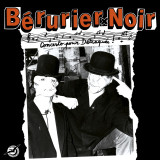
Concerto Pour Détraqués" was ranked 52nd best French rock album by Rolling Stones magazine in 2010.
Eleven tracks like so many vitriolic pictures of a sick society: rape, extreme right-wing, psychiatric confinement, security paranoia, alcoholism and all the other crap that the future seems to hold. Loran and François express more than ever their rage and their refusal of the adult world in a recital with three chords: more aggressive guitars, more incisive lyrics and voices while an armada of chorus members and a saxophone come to heckle or underline this darkness.
"Concerto Pour Détraqués" is the band's reference album, with a string of hymns to insubordination and freedom: Petit Agité, Vivre Libre ou Mourir, Les Rebelles, Porcherie, Hélène et le Sang...
The band's name alone evokes the epic of alternative rock: rebellious and committed.
Born by mistake on a February evening in 1983, Bérurier Noir soon found itself the driving force behind a vast "Youth Movement", determined to take control of its life in the face of a society that was ultra conservative at the time. Times have hardly changed.
From the first self-produced records distributed by hand to the creation of self-managed labels, from concerts in squats and wild appearances in demonstrations, on the street or in the metro to endless tours, from interviews given to fanzines and free radio stations to unclassifiable appearances in the mainstream media, Bérurier Noir has waged the most exciting war of independence in the history of French rock, with only a microphone, a guitar, a drum machine, a few red noses and patched-up theatre masks.
The last finger of honour of this turbulent and irrecoverable raia, François, Loran and their "Troupeau d'Rock" commit hara-kiri, at the peak of their glory, during three last concerts in the heart of Paris in November 1989.
Forty years after its birth, Bérurier Noir's work still resonates, whether in demonstrations or free parties, nourishing the hopes of those who wish to overthrow this world to build a truly libertarian, united and fraternal society.
The label Archives de la Zone Mondiale reminds those who missed this unprecedented adventure, 8 discographic parts of the group Bérurier Noir in the form of reissues on particularly original colour vinyls (crown finish), in a limited series and distributed throughout the year.
Born in Milan to a Cameroonese father and a Polish/Lithuanian mother, Nathan Dawidowicz moved at the age of 6 to Jerusalem. He was spending his childhood in a Jewish ultra-orthodox environment playing the piano and dreaming of being a Fashion designer and musician. After waking up from the reality he was raised in, he moved to Venice and started to explore the "outside world" of the mental barriers of religion. Music and fashion were his medicine, and he quickly became addicted to musical textures and vinyl. His love for music brought him quickly to Berlin, where he currently lives and loves.
Sanctuary Of Ideas is a very personal and optimistic journey by Nathan Dawidowicz. His first solo album is a spiritual path, as cosmic and adventurous as Nathan`s trajectory, with beautiful twists and psychedelic twirls into Dawidowicz personal rabbit hole. A record full of memories and positive affirmations, filled with Jazzy yet psychedelic Cosmic and Krautrock elements. A fusion of inspiration - and a perfect reflection of Dawidowicz heritage.
Idea`s Eve is a stargate to our ancestral power. The source of our inspiration is connected to our past - to the spirits of our ancient memories. Dawidowicz leaves a lot of space to breathe in this magical opener. Enchanting melodies and bubbling sounds surround the listener while his voice keeps repeating a mantra of an ancient love spell. A track where you feel your DNA spiraling up the ladder of evolution. Yet so natural and healing.
Full Moon Dance is the spiritual continuation of the first track. A swirl of magical melodies, yet jazzy but truly cosmic walking up the ladder to another dimension, where warm moon rays and fluffy clouds surround love. The synth lines represent the playful and smooth moon rays reflected on a rhythmical heart-beating ground where tears can be joyfully spent to honor the emotions we usually oppress.
To close the EP, Nathan Dawidowicz worked a half a year to finalize the last track in full detail. 23 Minutes and 18 Seconds long is the Capricorn Rising Over Jerusalemite Temple. This story is where the listener is brought to a higher level of consciousness. Against the rules of our consumerist world, Nathan Dawidowicz focuses on a dramaturgy full of patience for our own lifetime. Acidic lines come and go, powerful synth solos trigger unknown brain parts, and an epic melody accompanies the listener and lets dark emotions melt in a brass-filled part where a voice tells us that time is on our side. The song ends with an epic twist and promises a new start, where our most lovely memories stay in a vortex of light. Beam me up Nathan.
out of Stock
Last delivered 17 months ago available to reorder, subject to availability
Das neue Album des elektronischen Erkundschafters James Holden, 'Imagine This Is A High Dimensional Space Of All Possibilities', ist Rave-Musik für ein Paralleluniversum, getragen von der Hoffnung, Freiheit und Möglichkeiten der frühesten Tage der Dance Music. Im Gegensatz zum jazzigen Liveband-Vorgänger 'The Animal Spirits' (2017) ist Holdens viertes Soloalbum ein kontinuierlicher Soundcollagentrip, der kunstvoll Audiowelten und Field Recordings mit dem anything-goes-Ansatz pastoraler Früh-90er Klassiker (The KLF 'Chill Out') und ausufernder Radiolandschaften (Future Sound Of London) kombiniert. Mit 12-seit. 4-Farb-Booklet mit Illustrationen von Jorge Velez (Professor Genius).
out of Stock
Last delivered 4 days ago available to reorder, subject to availability
There's no denying the power of the drum. It's primal, it cuts across borders and most importantly, it makes you want to move. Ghetto Kumbé don't just understand that_they celebrate it, and it's why the tambor was at the heart of the Bogotá-based trio's 2020 self-titled debut album. Rooted in mysticism and the Afro-Caribbean rhythms they'd grown up with all their lives, the critically acclaimed LP thrillingly updated the traditional Latin template, folding in elements of modern hip-hop, house and bass music while also delivering a transportive Afro-futurist vision. On Clubbing Remixes, that vision has been further amplified, as Ghetto Kumbé_who were already one of Colombia's most prominent alternative acts_have now gone fully global; enlisting an all-star roster of artists from four different continents, they've put together a fresh version of their debut album that's been specifically geared to the world's diverse slate of dancefloors. As the title implies, the new LP is meant for the club, which is why Ghetto Kumbé have turned to Latin music heavyweights like Trooko_a multiple Grammy winner whose resume includes work with Lin-Manuel Miranda and Residente_and Monte (a.k.a. Bomba Estéreo founder Simón Mejía), along with top-shelf DJs like Nickodemus and Uproot Andy, two NYC artists who've spent decades championing Afro-Latin rhythms. True to the LP's global spirit, the record also includes reworks from batida maestro DJ Firmeza, fellow Afro-Portuguese outfit Studio Bros and Parisian house groovers Les Enfants Sauvages, plus genre-blurring remixes from sonically adventurous Colombians Montoya (himself another ZZK artist) and Cero39. Even the artwork on Clubbing Remixes is a remix, as Ghetto Kumbé have tapped Uganda's Denzel Muhumuza to transform the cover of their debut album into a new, explicitly Afro-futuristic illustration. Depicting a strong Black face and glowing neon fauna beneath a sparkling moonlit sky, the fantastical image speaks to both the ritual magic and Afro-indebted heritage of Ghetto Kumbé's music, and thanks to Clubbing Remixes, the group's passionate, drum-fueled sounds will soon be blasting out of sound systems around the globe.
When Ella Fitzgerald began recording her series of albums devoted to the work of
America’s greatest song writers, she elevated the art of Jazz singing into a new
dimension while celebrating a unique musical heritage bequeathed to the world of
popular music. Norman Granz encouraged the bold decision to record five albums all
featuring the extraordinary output of songs composed by the brothers George and Ira
Gershwin during the Golden Age of popular song. Gershwin show tunes had long been
a staple diet for bandleaders, pop-vocalists and star-instrumentalists eager to perform
such exhilarating material as Strike Up The Band, Oh, Lady Be Good!, S’Wonderful and
I Got Rhythm. But there was also a gamut of ballads and romantic dance themes
needing to be interpreted with greater sensitivity. Ella was more than capable of
focusing on lyrics and caressing melodies of songs like Someone To Watch Over Me, A
Foggy Day and Embraceable You. They are among the 53 Gershwin classics she
recorded over an eight month period in 1959 and now featured in this superb collection.
French electronic producer Blutch is back with another supremely trippy EP “Condate” on home label Astropolis Records, featuring a remix from Azo.
This Brittany native has a broad, borderless sound that mixes up electronica, breakbeat, house and IDM with stirring emotional undercurrents that range from nostalgia to melancholy. Last year he served up his superb ‘Terre Promise’ album on the label, and once again, it combined a raft of different sounds on one majestic record. He again shows off his ability to layer captivating melodies over compelling rhythms on this fresh new EP which extends his LP released last year with a more dancefloor suite. "Condate" is the original name of the city of Rennes in Brittany, France, where he lives. A city he loves passionately. The tracks featured in this EP are mainly taken from his live act "Terre Promise". The cover artwork also comes from the audiovisual live act: a motion design work made by Romain Navier, mixing landscapes from Brittany and hallucinated 3D creations, dressing Blutch's stage with a fabulous work around the album's theme. These tracks represent the more festive part of the live show, just as Blutch's love for Rennes is also linked to its festive character.
First single ‘Condate’ is a physical cut driven by a slick breakbeat. Melodic rain falls down the face of the track as booming bass roots you to the dance floor, and once again, the whole track is doused in heavenly synth work and subtle waves of euphoria.
‘Condate’ is a perfectly impactful EP, both physically and emotionally. The EP drops on the 24th March (vinyl/digital).
out of Stock
Last delivered 3 years ago available to reorder, subject to availability
A reissue of Nikolaus Utermöhlen’s »Karlsbad« album, originally released in 1989. Utermöhlen was a founding member of Die Tödliche Doris and this is his sole solo release. A collection of 23 witty oddball compositions for clarinet, accordion, percussion, recorder, violin, guitar, organ. It definitely has a Doris dose but even more so it shines for its totally singular mélange of tribal dada chamber folk, dilettante dissonant poetry, hard to compare with anything else. A slice of flamboyant wellness.
The recordings of this album were made for the "Georgette Meunier" film by Tania Stöcklin and Cyrille Rey-Coquais. Issued from the original master tapes and includes the 8 page booklet with engravings from the Karlsbad spa era.
On the heels of his already critically acclaimed (yes, already!) retrospective, World Spirituality Classics 3: The Muslim Highlife of Alhaji Waziri Oshomah, Alhaji Waziri Oshomah — the Oyoyo King, the Godfather of Afemai Music, the Etsako Super Star, Mr. Please Please Please, Mr. Dynamite — returns with Vol. 2.
Along with the other four volumes of the series, Vol. 2 is now available—for the very first time!—as part of a complete set (in a box): Vol 1 - 5 (1978 - 1985) (November 4, 2022).
Waziri hails from a small part of Edo State in southern Nigeria called Afemailand, known for being a harmonious region where Muslims and Christians live—and dance—together. And there, as a devout Muslim and an exemplar of religious piety in his community, Waziri’s music fuses Etsako/Afemai folk styles with pan-Nigerian highlife and pop to create a sublime vehicle for his Islamic philosophy that gets everyone—Muslims, Christians, whoever—on the dancefloor.
Vol. 2 focuses on Waziri’s illustrious mid-career output—the music he created during the years leading up to and after he performed his first hajj. Every song here (one of which you might recognize from The Muslim Highlife) strikes his signature balance of traditional music, highlife, and funk, as he entreats you to stay on the straight and narrow, though there’s nothing straight about his beat.
On and off the record…
This is the second of the five-part Volume Series, which was recently compiled for the first time in the limited-edition box set, Vol. 1 - 5 (1978 - 1984) (November 4, 2022).
This release follows World Spirituality Classics 3: The Muslim Highlife of Alhaji Waziri Oshomah (September 23, 2022).
The Muslim Highlife of Alhaji Waziri Oshomah, received an 8/10 from Uncut, ★★★★ from MOJO, and has been called “therapy, worship, ecstasy” by Pitchfork (7.2).
Release supported by archival and new video content.
Alhaji Waziri Oshomah will play select shows—along with his wife and musical collaborator Madam Hassanah Waziri—in the U.S. and Europe throughout 2023. l He can perform sets as long as 3-4 hours! (Depending on the financial strength of the village).
Sings in English and local languages and is regarded as #1 Singer in all of Edo State.
Meshuggah wurden 1987 im schwedischen Umeå gegründet, vom legendären Rolling Stone-Magazin bereits als "eine der zehn wichtigsten Hard- und HeavyBands" bezeichnet, und haben sich den Respekt und die Bewunderung von Fans und Musikern gleichermaßen
verdient.
Es ist unmöglich, über Experimental- oder Avantgarde-Metal zu sprechen, ohne diesen wirklich bahnbrechenden Act zu erwähnen: MESHUGGAH mischen ultra-komplizierte rhythmische Muster mit
massiven Riffs und aggressiven Growls und kombinieren
Death Metal, Mathcore, Thrash und Progressive Metal, um ihren einzigartigen Stil zu kreieren.
Das Jahr 2023 markiert nun das 15-jährige Jubiläum des Meilensteins der Band: "ObZen"
The "Punctual Problems" EP is the first solo release of Paul Prier, who has already accompanied artists such as Charlotte Gainsbourg, Christine & The Queen or Woodkid on stage or in the studio.
The record is in perpetual balance between a learned music, inspired harmonies and an impeccable production and the desire to propose a pop record accessible to all.
Ex-member of the electro-pop duo Toys and decisive stage man on the keyboard for Charlotte Gainsbourg, Christine & The Queens and Woodkid, Paul Prier is the brand new signature of the Research and Development house (Jacques, Miel de Montagne, PPJ). With his first EP "Punctual Problems", the Parisian finally presents himself alone, with the audacity to turn his phobias into strengths and the elegance to make them light.
We can better appreciate what Punctal Problems means - and what drives its engine. All the technique (his classical and jazz training), the hard work (an obsession with detail that is the lot of arrangers), the erudition (always ready to talk about harmonies with Stevie Wonder or choruses with Thundercat), are here only to serve the beauty of simple and limpid melodies, that we will hum everywhere. Inner dialogues, self-critical and tender at the same time, disguised as love songs so that everyone can project themselves into them. "It's harder to make a really good, sophisticated pop song that speaks to everyone than an ultra-codified jazz song reserved for a niche. In pop, anything goes, so it's all a matter of dosage. That's why Paul Prier can do a hundred versions of a song before he finds the right one... and too bad if it's the first.
out of Stock
Last delivered 3 years ago available to reorder, subject to availability
Requiem for Jazz is a 12-movement suite composed and arranged by Angel Bat Dawid, inspired in part by dialogue from Edward O. Bland’s 1959 film “The Cry of Jazz.”
The original form of the music was premiered at the 2019 edition of the Hyde Park Jazz Festival in Chicago, where Angel conducted a multigenerational fifteen-piece instrumental ensemble (all Black musicians from Chicago’s creative music community) alongside a four- person choir (featuring singers from Black Monument Ensemble), dancers, and visual artists in performance.
Angel mixed and post-produced recordings from the performance – adding interludes, vocals and additional sounds, as well as transcribing a piece from “The Cry of Jazz” film. The final movement of Requiem for Jazz features Marshall Allen and Knoel Scott of the Sun Ra Arkestra. Their contributions were recorded remotely at the historic Arkestral Institute of Sun Ra in Philadelphia in late 2020.
The final Requiem for Jazz work in album form is an immersive 24-track, double LP experience. The physical package is a deluxe, heavyweight gatefold jacket with liner notes by South African writer Nombuso Mathibela, artwork by Damon Locks, and a large fold out poster designed by Jeremiah Chiu, featuring poetry written by Angel Bat Dawid in dedication to all of her collaborators on the project. Additionally, there is a limited Thy Kingdom Come purple color vinyl edition of Requiem for Jazz available for the first pressing only.
Steve Gunn and David Moore’s Let the Moon be a Planet is a volume of improvisatory exchanges between classical guitar and piano, and a meeting place where two artists become acquainted through instrumental dialogue without a single expectation distracting them from the joy and open field possibility of collaboration.
A project enveloped by an aura of reciprocity, Let the Moon Be a Planet unfolded from an invitation to connect between two New York-based musicians who admired each other’s work but had never intersected: guitarist and songwriter Steve Gunn, whose solo, duo, and ensemble recordings represent milestones of contemporary guitar- guided material, and pianist and composer David Moore, acclaimed for his minimalist ensemble music as the leader of Bing & Ruth.
The exchange began remotely as Gunn and Moore responded to one another’s solo improvisations, embarking on a synergistic progression of deep listening and connection through musical conversation. “We were both fans of each other’s music and this was a chance to try a different process which was much more open,” says Moore. “It felt like something I needed personally as an artist, to not be so controlling over the final output, and to truly collaborate with somebody else.”
Similarly for Gunn, who was exploring new pastures and passages in classical guitar when the dialogue began, the project was an invitation for pure conversation and exchange, creating space for him to revisit foundational forms with his playing: “I was trying to break out of what I was doing, to have something that just pulled away all the elements of usual structured things.”
Let the Moon Be a Planet intertwines the trajectories of two musicians acclaimed for pushing the boundaries of their instruments, unified by a shift away from what they recall as more “detail- oriented” approaches to composition. Fueled by the magnetism of their call and response exercise, Gunn and Moore set out on a nomadic songwriting venture without an intended destination.
“We didn’t know it was going to be an album,” Gunn explains. “There was never pressure on us to complete or make something. It was interesting to start realizing that this could be an album and to take a step back... to arrive at a project after the fact.”
After the experience of Camizole, Dominique Grimaud began a new (and different) adventure in 1979 with Monique Alba. Alongside Gilbert Artman (Urban Sax), Guigou Chenevier (Etron Fou Leloublan), Jean-Pierre Grasset (Verto) and Cyril Lefebvre (Maajun), Vidéo-Aventures is composed of instrumentals capable of reconciliating Captain Beefheart, Henry Cow, Suicide and... John Barry. All with the backing of Rock In Opposition, which enabled this Musiques pour garçons et filles to become known worldwide.
“Let us enter your hearts”: is the request made by Vidéo-Aventures, and how can we refuse? Especially as Musiques pour garçons et filles, recorded by Dominique Grimaud and Monique Alba fifty years ago along with handpicked colleagues, is as fresh as ever.
1979: having improvised a huge amount (and how!) with Camizole, Grimaud tried his hand at composition and studio recording with Alba. Their first instrument was the AKS synthetiser, with which the duo recorded the instrumental tracks that were then offered to their comrades Guigou Chenevier (Etron Fou Leloublan), Gilbert Artman (Lard Free, Urban Sax), Jean-Pierre Grasset (Verto) and Cyril Lefebvre (Maajun).
At the end of the year, they all came into the studio for a week to record the eight tracks of this mini- album that Chris Cutler would issue a few months later on his label, Recommended. In France it was the beginning of the agitation around Rock In Opposition, to such a point that Musiques pour Garçons et Filles would rise to second place in the NME independent Charts. And this is hardly surprising...
For these instrumental miniatures (here with the bonus of rare archives, some of which are previously unpublished) are uncontrollable: electronics augmented by lap-steel guitar (“Tina”), cunning pop (“Zazou sur la piste”), mechanic sound (“Une vie modern”), street piano (« French Kiss »), disturbing atmospheres (“La ballade des cardiaques”) or something like a TV theme tune capable of adjusting all the colours (“Telstar”)... With such promising ingredients, why stop Vidéo-Aventures from entering?
Das erste Album in voller Länge seit fünf Jahren von den kanadischen Melodic-Metal-Helden Gatekeeper! Eine fesselnde Reise mit acht Songs, die epischen, melodischen Heavy Metal neu definiert! From Western Shores ist messerscharfen in Ausführung und Produktion. Der gefragte Arthur Rizk (Cavalera Conspiracy, Kreator, Sonja) übernahm die Mixaufgaben. Letztendlich verdoppelt sich From Western Shores auf die Elemente, die Gatekeeper zu einem internationalen Metal-Schwergewicht gemacht haben. Die epischen Teile sind epischer und die traurigen Teile - wie die Band unterstreicht - "sad as fuck". Es verstärkt die Vorstellung, dass Gatekeeper ein Schmelztiegel von Stilen ist, anders eben als diverse Protagonisten in der Melodic-Metal-Szene.
Umfangreiche Presse- und Online-PR durch Sure Shot Worx
Reviews / Features / Ratings: Deaf Forever, Rocks, Classic Rock, Eclipsed, Rolling Stone, Visions, Slam Magazine, Rock Tribune, Rock Hard, Legacy, Rock Hard, Rockway, Metal Invader, Loud and Proud u.a.
"Hungarian guitarist Gabor Szabo (1936-82) issued only three live recordings during his lifetime. Significantly, the first of these, The Sorcerer (1967), remains the most popular album in the guitarist’s all-too abbreviated discography. But there were also More Sorcery (1968) and Gabor Szabo Live with Charles Lloyd (1974), offering Szabo totally in his element and at his bewitching best.
Several more of Szabo’s concert recordings have surfaced in the intervening years, including this one, superbly captured for radio broadcast live in 1976 at the 600-seat Agora Ballroom in Cleveland, Ohio. It is a revelation. There is a sense here that concert patrons may have been hearing an altogether different Gabor Szabo than record buyers.
For one thing, Szabo is heard fronting what is likely his own group, rather than an army of studio musicians. In 1976, Szabo was leading a tremendous quartet with George Cables (or Joanne Grauer) on piano, Tony Dumas on bass and Sherman Ferguson on drums. Szabo had not had a band with this much jazz clout since his famed quartet with Jimmy Stewart in 1967-68 – and it is a union worth savoring: Szabo’s records during this period were light, at best, on jazz.
It’s unclear if any of these musicians are on the Agora date, but as Dumas’s “It Happens” opens the program, it’s a good bet, at least, that the bassist is on board here. But as Szabo’s ’76 quartet is not known to have recorded a studio record, Live in Cleveland is the closest thing to what a mid-seventies Szabo jazz album would sound like.
Gone, are the strings, vocals and concessions to commercial consideration so prevalent on so many of Szabo’s studio records at the time. What is present, though, is fine craftsmanship, tremendous interplay, and the exciting improvisation that good jazz always yields.
This particular concert was part of Sansui’s “New World of Jazz,” a series of 13 hour-long jazz concerts recorded at Cleveland’s iconic Agora Ballroom and broadcast over 40 FM radio stations. The series was sponsored by Sansui Electronics, a Japanese manufacturer of audio and video equipment, which previously sponsored a similar series of rock concerts recorded at the Agora as well.
Sansui was promoting its matrix QS 4-channel sound system – offering, what was considered at the time, superior diagonal separation and stereo compatibility. The firm, partnering with Agora Ballroom and Agency Recording Studio owner Hank LoConti (1929-2014), was looking to take advantage of what they rightly felt was the then-current jazz renaissance.
Each show’s 16-track master tape was mixed through the Sansui QS 4-channel encoder,” according to an August 1976 Billboard article detailing the arrangement, “for distribution to the 40 FM stations throughout the United States that bought the series” – allowing for three commercial spots for local dealers to advertise."
The recording is available for the first time on CD and VINYL. Mastering by grammy-nominated Jessica Thompson.
After almost two years of work, we're glad to invite you to a new journey through the fog of time and enjoy the upcoming reissue of the great Ambient/Folk record from 1984. A well-known to collectors but extremely rare record by Jon Iverson a multi-instrumentalist from Palo Alto and his college friend, mandolinist Tom Walters. They shared a love for singer/songwriter fare and gigged around campus playing covers of Neil Young, CSN, and Loggins/Messina in the late '70s.
"First Collection" was recorded during the Spring of 1984 in a small garage that had been converted to a one-room apartment in the seaside community of Los Osos, California.
With an instrumentation of 12-string guitar, piano, mandolin, analog synthesizers, and sampler, the duo has recorded nine bright, weightless, and diverse compositions where electronic experiments mix with ethnic rhythms, sweeping through inspired folk reminiscent of the work of William Ackerman, John Fahey, Master Wilburn Burchette, and Robbie Basho, to homemade pastoral space folk exuding sophisticated, pale, lunar sonic moods that somehow might remind of the work of Roedelius from the early 80s.
Equipment used for tracking included a rented 1/2" 8-track Otari MX5050 analog tape machine and assorted mics. With only a few thousand albums pressed, First Collection has become a collectable in some circles.
Now, almost forty years later, First Collection has been remixed and remastered from the original 1/2" tapes for this release.
The next album release on Goldie's fast-rising, boutique label Fallen Tree 1Hundred, The Day Out of Time by The Degrees is the Acid Jazz/Soul and Trip Hop long-player from drum and bass man of the moment Break, alsongside singer songwriter isha Campbell, heavily inspired by their home town of Bristol.
The album follows a year of lead-in singles nicely supported by Mary Anne Hobbs, Huey Morgan on BBC Radio 6Music, Mi-Soul, Solar and playlisted on the legendary Jazz FM.
Apparel Music Review:
Perhaps it's nostalgia for that wonderful time when making music was more challenging, at times laborious, and the more tiring was the process that led to the creation the more the final product acquired value, but this album brings you back to those times, without sounding outdated.
We know how much work goes into a record of this kind and, even if today's music world runs fast, presenting hundreds of thousands of releases a day, it is important to remember that records can still be timeless. Well, this is the first thing I thought while listening to this LP for the first time: it is timeless. It sounding ageless is perhaps ascribable to the fact that it recalls that famous sound coming from South-West England in the late 90s/early 00 but, having that musical wave had such an impact and therefore created a sonic standard, it can easily be revived and revisited in a current key without sounding obsolete. In addition, this album is full of different influences coming from R&B, Soul, Hip-Hop which, over the years, have grown and developed to become the daily bread of many listeners who have refined their taste with time, and can now perfectly incorporate the multiple sound stimuli coming from it, as 'The Day Out Of Time' satisfies every type of taste
The endlessly prolific and unpredictable Richard Youngs returns to Black Truffle with Modern Sorrow. As any Youngs fan knows, one of the great pleasures of following his career comes from not being able to predict what the next entry in his inexhaustible string of releases will bring: Unaccompanied voice? Country songs? Shakuhachi? Guitar pieces played with his feet? Shredding fuzz bass over the top of hyper-speed distorted drum machine beats? Continuing in the grand Youngs tradition of exploring new techniques, instrumentation and approaches while bringing to all of them his idiosyncratic touch, Modern Sorrow serves up two sides of twistedly elegiac, radically stark takes on contemporary pop production. The side-long title track is built from a piano sample, synthetic bass notes and organ swells, and an iterative blurt that seems to have wandered out of a 90s jungle track. Eventually joined by a shuffling drum machine, the track moves very slowly through a series of chords, each delayed long enough that its arrival comes as a major event. Over the top, Youngs’ heavily pitch-corrected voice is heard. The processing paints his signature wandering melodic improvisations with shades of contemporary R&B; at the same time, it cuts the natural swoops and glides of Youngs’ melodies into rapid microtonal trills, giving his voice a quavering, middle eastern feel. Unfolding languorously over more than 17 minutes, the piece’s final minutes make room for an extended drumless coda, returning to the stark palette of its opening moments. On the second side, the two parts of ‘Benevolence’ push this minimalism ever further, its first half consisting of nothing more than a remarkably slow drum machine hit, bass-heavy chords and pitch-corrected voice, here so heavily processed that it starts to resemble a shawn solo. In its second part, the harmonic foundation drops out from under the piece while two more voices join; at some moments the voices pause, leaving nothing more than isolated, metronomic drum hits. Though Youngs has explored the sound worlds associated with dance music and contemporary pop in previous work, here these elements are radically reduced, foregrounding a meditative bed of silence with a boldness equal to any more academically inclined contemporary composer. Embracing the accessible digital tools of contemporary music production just as at another moment he would pick up a kazoo, like much of Youngs’ work Modern Sorrow uses simple DIY tools to generous ends, producing formally radical music that remains both free from pretension and deeply moving.
out of Stock
Last delivered 3 years ago available to reorder, subject to availability
Calisthenics is the first album by Institute for Certified Nomadic Illicit Sonic Practices (ICNISP), the Berlin-based duo of Brazilian musicians Marina Cyrino (flute) and Matthias Koole (el.guitar).
With a mixture of electronic and acoustic sound sources, objects and preparations, inside amplification and no-input mixing, the duo leads guitar and flute towards a common hybrid terrain. Sound perspectives are shifted, instrumental identities are displaced. The piccolo can function as a noise generator and a percussion instrument, the guitar can sound like a bird, the alto flute can be played by an external balloon that moans. Partly inspired by drawings of the Handbook of Calisthenics and Gymnastics: A Complete Drill- book with Music to Accompany the Exercises by J. Watson, first published in 1864, ICNISP came up with a series of musical exercises to stay healthy and fit during the several lockdowns over the past few years. In a playful way, the title Calisthenics also translates an agitation present in many of the duo's energetic playing modes.
On Side A, Calisthenics comprises 7 tracks - or exercises - of different lengths, with a focus on specific instrumental materials or preparations. Side B consists of one track in which a larger form unfurls, with elements of the exercises concatenated into a Full Arch.
No cuts or overdubs.
Marina Cyrino - Amplified Piccolo and Alto Flute.
Matthias Koole - Electric Guitar.
Recorded and mixed by Rabih Beaini at Morphine Raum in Berlin.
Mastered by Paulo Dantas in Rio de Janeiro.
Cover art by Sara Lambranho.
Limousine has returned to this experimental ground where simplicity of composition, haunting loops and a sense of release are combined, but now voices come to dress their tracks and propel the vehicle into a new dimension.
Vocals in Limousine: a revolution for a quartet whose concept was precisely to do without them, so much so that they have often defined themselves as a band for singers who don't exist. From then on, the mission was to find that these singers, or singers, exist.
A cast that alternates iconoclastic figures and young hopefuls for a certified Grand Tourism trip: Malik Djoudi, Amber Burgoyne, Lucas Santtana, Victor Solf and Akhenaton take part in this new adventure. Rappers, singers or vocalists, these five performers slip naturally into Limousine's saps, as if each of the tracks had been specially cut for them.
Tropical stroll for the Brazilian Lucas Santtana, hip hop aside with AKH, soulful and intimate nocturne with the revelation from Brighton Amber Burgoyne or melancholic wandering with Malik Djoudi, Limousine purposely gathers a beautiful international French style.
For the rest, the quartet keeps its iconoclastic line and confirms its ability to create weightless themes.
In the end, Hula Hoop is an authentic Limousine album, whose elegance it perpetuates while constituting its expanded version.
out of Stock
Last delivered 3 years ago available to reorder, subject to availability
Tape Runs Out's debut album, Floodhead On 180GSM, River Green Vinyl, with beautiful matt varnish artwork, Green vinyl strictly limited run of 350 ,. Floodhead is an exploratory sonic journey from the mind and soul of long-time band leader, Liam Goodrum-Bell (guitar, vocals). Tape Runs Out’s experimental sound comes in part from their excellent array of instrumentation - the band members bring violin (Clare Myerscough) and the hammered dulcimer (Ellie Winter), as well as bass (Takeshi Kanemoto) and drums (Laurence Moore). Recorded and produced by Liam and Dan Dawson (band’s guitarist) at Dan’s home studio over the course of a year, the album thrives off experimenting with different textures and sounds, with each song seeking to be its own microcosm of creativity, delivering its unique part within the whole. The painstaking detail and time spent by Liam and Dan between the initial recording session during the summers of 2021 and 2022 has resulted in an incredible production, and one that takes the listener through the Tape Runs Out universe. The first single from Floodhead, Souvenir made God is in the TV's track of the week and was heaped praise on by Steve Lamacq on his BBC 6 Music afternoon show and new music fix.
All of us carry a piece of where we’re from with us, but these parcels of fallow land often in a uniquely mysterious way become the prey that nourishes our aspirations. Agnès Gayraud a refined thinker by day that transforms into la Féline at night left Tarbes many years ago in search of greener pastures. After making a name for herself with Adieu l’Enfance (2014), Triomphe (2017), and Vie Future (2019), the author and musician has evolved once again. Her latest release Tarbes reinvents the circle of life and challenges our preconceived notions. She welcomes us to her hometown with sweet and clear melodies over the backdrop of an electronic hum, reminiscent of Mark Twain classic Tom Sawyer. Tarbes is no more than a listen away. Physically prevented from returning to her hometown by the viral threat we all know all too well, Agnès found her way back with a small Electone home organ. The constraints of off-peak hours that called for some DIY savvy, slowly but surely, roused her spirit. With a drum machine, a bass and a guitar, she succeeded in making the young girl inside her smile again. With 13 songs and just as many adventures Tarbes is a concept album that tells the story of a young woman’s formative years, as spent in her hometown. The returning hymn doesn’t only imprint nostalgia, it paints the full emotional portrait of a town. Because for Agnès, Tarbes is not just her theater, but her whole world, showing how fiercely protective she is of her hometown in the song Solazur. Under a magnifying glass of emotion, and with the sentimental testimony that is La Panthère des Pyrénées, the artiste shows us the skeletons in our own closets. Tarbes, more than a brief stopover in a rail journey to the coast, broaches issues that touch on abandonment, desertification, aging and redevelopment that many French towns and cities face today. Alexandre Guirkinger’s photographs serve as album art that illustrates this strangely unique singularity. While fine-tuning this collection of stories, in an oh-so-intimate album where solitude rips away the mask of confidence, Agnès found solace in uniting with other spirits. For 3 songs Tarbes, Jeanne d’Albret and Fum, inspired by an Occitan poem of Louisa Paulin (1888-1944), she invited the young voices of Conservatoire Henri Duparc a building she knows intimately, despite never feeling allowed to enter as a child to breathe the energy of their adolescence into this record. She also collaborated with Lyon’s own François Virot to imbue his delicate rhythms into her work, as well as Belgian guitarist Mocke Depret. Lastly, La Féline entrusted the last production stages to her eternal partner in music, Xavier Thiry, with Stéphane “Alf” Briat on the mixing board. The final piece has a complex tranquility, surrounded by non-verbality, with Jeanne d’Albret, Louisa Paulin and the Pyrénées safeguarding Agnes’ secrets. With the calm reassurance of her metamorphoses, La Féline delivers a slice of silence to her town, serving as both her cradle and theater. Tarbes’ Théâtre des Nouveautés is where Agnès Gayraud, La Féline, has decided to present Tarbes to its residents on October 14, 2022. While “nouveautés” evokes newness, this theater is reminiscent of a future which is already outdated, where modernity is only vague and fictional, carrying reminders of French haute-kitsch accordionist Yvette Horner, whose parents were the caretakers of what was then called the Cani Eldorado a bastion of virtue through the 30s, with its lineup of Catholic films. However, by the 60s, it would have become a temple of pornographic cinema. Tarbes, “Les Nouveautés”, end card. In the mid 90s, then 16 years old, Agnès discovered the volatile dust and the ghosts of the past that were hidden in this apostate theater. This phantom bequeathed song the teenager with the gift of her undeniable talent at her first appearance on stage a high school performance of a guitar-laden ballad sung in Spanish, a language her Andalusian mother has infused her with. On October 14, 2022, Agnès returns to the stage, bass in hand and joined by François Virot (drums), Mocke Depret (guitar), Léa Moreau (keyboard) and the Conservatoire de Tarbes singers to perform the album in its entirety
Circassian-Turkish Producer Sine Buyuka debuts new solo project Sinemis with lush, graceful album ‘Dua’, gently combining the ancestral Sufi music of her homeland with sophisticated techno-inflected ambient. Dua’s life began with a life-threatening illness. “I started feeling unwell last year and no one could figure out the reason,” Sine writes. “It was a scary time, not knowing and trying to manage symptoms while they slowly worsened. In late 2021, while I was visiting my family in Turkey during the Christmas break, I was taken into A&E. After more tests, I had a diagnosis and had surgery in January.” Following this, within the healing process - highly emotional as well as physical - Sine was drawn to the traditional Sufi music of Turkey and the Middle East. Ritualistic music to accompany ancient sema ceremonies, in which whirling dervishes enter a transcendental consciousness through ecstatic movement and repetition. With this influence at heart, Sine began work on ‘Dua’, with a newly-formed artist name to signify new, unfamiliar music from a celebrated electronic producer. For her, the album marks a significant step in her recovery. But it is also a potent marriage of contemporary and ancestral trancestates, interweaving sci-fi synthesis and floor shaking bass tones with mystic imagery, textures and timbres. A meditative, spiritual balm that melds field recordings, found sounds, ambient soundscapes, electronics and acoustic instrumentation to celebrate life and survival in challenging circumstances. The breathy, cinematic tones of album opener ‘Dua’ hover and shiver in preparatory stasis as broken-machine punctuation begins to dot rhythmically through the space. A yearning, repeated vocal sample - a living, beating heart inside the machine - characterises a crucial theme for the album: the marriage of digital instrumentation with the analogue, the human and the organic. Later, ‘Elegy’ reflects its title with heartbreaking chordal shifts and glitching birdsong, conjuring a sound world somewhere between KMRU and Max Richter. Key track ‘Gazel’ moves in glacial slo-mo, like whirling dervishes frozen in time at the peak of their trance. Euphoric ceremony made haunting and poignant without losing a mote of power…Across the album, the timbres of Sufi ritual are often captured by the otherworldly presence of the historic ney flute, said to be as old as the Holy Books. “Sufi music can be created using several different instruments but the ney flute is at the heart of it. The sounds emanating from this fascinating instrument kept capturing my imagination,” Sine tells us. Working both with samples and with Turkish musician Omar Faruk Tekbilek, Sine achieves a rare balance of reverence and recontextualisation for such a time-honoured instrument, here performed by a lifelong student of its intricacies and mysteries. In Sinemis’ hands, the processing and sonic treatment of the ney even sometimes renders it indistinguishable from Dua’s synthesis and sound-design
Balancing traditionally timeless grit with 21st century gusto, Judiciary hammer out hardcore grooves at breakneck thrash speeds. The Texas quintet—Jake Collinson vocals, Kyle Calfin [bass], Austin Looney [drums], Jimmy LaDue [guitar], and Israel Garza [guitar]—wield a searing signature style unlike anything in heavy music. With calculated intensity, it bludgeons without compromise, draws back for a breath, and strikes again even harder. Piling up millions of streams and inciting the applause of Stereogum, Revolver, and more, the group perfects this incendiary hybrid of metal and hardcore on their 2023 second full-length LP, Flesh + Blood [Closed Casket Activities]. “It’s a mashup of old school heavy metal with contemporary energy,” says Kyle. “We didn’t just change anything for the sake of change—we’ve elevated everything in every way.
Darling West decamped for a tiny island on Norway’s west coast to begin writing what was to become Cosmos, their fifth studio album. For the first time, the band’s core – married couple Mari and Tor Egil Kreken – have included band members Thomas Gallatin and Christer Slaaen in the songwriting and production process. As a larger united, Darling West has really evolved. Cosmos is indeed the sound of expansion. West coast, cosmic folk, americana… Call it what you will – there are even hints of afro blues on here – but where the band once fit firmly in the folk/americana category, you might as well just call it pop these days. Cosmos was recorded and produced in its entirety by Darling West. Vocal guests on the album include Matthew Logan Vasquez (Delta Spirit) and Jarle Bernhoft, while David Wallumrød, Lars Horntveth and Torjus Vierli all excel on keys. Finally, the one and only Rob Moose (Paul Simon, Bon Iver, Sufjan Stevens, Phoebe Bridgers) provides strings on “Till Night Turns to Day” and “Old Man”. The listener is also awarded plenty of what we’ve come to love from Darling West: Mari Kreken’s gorgeous voice and Tor Egil Kreken’s incredibly versatile playing (guitar, bass, banjo, etc.) playing. The sum of these parts makes up a magical record, with songs and melodies that will stay on your mind for the unforeseeable future. While many struggled to keep their heads up during the pandemic, the band did their best to contribute positively, and came out on the other side with a growing, dedicated fanbase, due to their incredibly popular “Family Sessions” on Youtube. A recurring concept where they featured a host of friends and other artists, thus creating a community – or family – which is still going strong. The music on Cosmos searches outward, while the lyrics look inward. The resulting record includes elements of pop, while it pushes the envelope for what Norwegian americana can sound like. Cosmos is also about loving yourself, and there are of course a handful of love songs about shaky relationships – as we’ve come to expect from Darling West. The band continues to develop their unique musicianship and Cosmos is indeed another masterstroke from the band.
Gargantuan volcanoes erupting with primal force, fountains of molten lava bursting sky high and massive boulders hurtling capriciously through the air. These potent and violently alluring images in the documentary series The Living Planet captivated Raoul Björkenheim's imagination in 1986. The search for a band name had come to an end. -”I was mesmerised. The name Krakatau sounded like a drum fill to me”. After studying at the Helsinki Conservatory for a year and the Berklee College of Music in Boston for three, Björkenheim relocated to Finland where he played in bands with Jone Takamäki, Antti Hytti and Tom Nekljudow, and later went on to work with composer and drummer Edward “Eetu” Vesala (1945-1999). His always original and highly demanding Sound & Fury workshops were a pivotal hotbed in the local improvised music scene, but after four years of Vesala's strict leadership Björkenheim felt a need to leave Sound & Fury behind and direct all of his attention towards Krakatau. The lineup on the first album “Ritual” consisted of reed virtuosos Jorma Tapio and Tapani Rinne, the bassist Sampo Lassila and two drummers, Michel Lambert and Heikki “Lefty” Lehto. “Krakatau’s debut album was very challenging to make, as I felt that it might be my one and only chance to record my own music, so I wanted it to be as intense and effective as possible”, says Björkenheim, “I was lucky enough to work with an incredibly talented cast of musicians. I can still listen to the album and feel satisfied that it really works. The first guitar solo illustrates what was to become my modus operandi: to try and play the electric guitar in unexpected ways.” Svart Records will release an expanded double LP version of Krakatau’s Ritual. Limited to 500 copies and due out on March 24th, the album contains an album’s worth of previously unheard material recorded in 1987 in Studio Helsinki and at the Finnish Broadcasting Corporation studio.
Steve Gunn and David Moore's Let the Moon be a Planet is a volume of improvisatory exchanges between classical guitar and piano, and a meeting place where two artists become acquainted through instrumental dialogue without a single expectation distracting them from the joy and open field possibility of collaboration. A project enveloped by an aura of reciprocity, Let the Moon Be a Planet unfolded from an invitation to connect between two New York-based musicians who admired each other's work but had never intersected: guitarist and songwriter Steve Gunn, whose solo, duo, and ensemble recordings represent milestones of contemporary guitar-guided material, and pianist and composer David Moore, acclaimed for his minimalist ensemble music as the leader of Bing & Ruth. The exchange began remotely as Gunn and Moore responded to one another's solo improvisations, embarking on a synergistic progression of deep listening and connection through musical conversation. "We were both fans of each other's music and this was a chance to try a different process which was much more open," says Moore. "It felt like something I needed personally as an artist, to not be so controlling over the final output, and to truly collaborate with somebody else." Similarly for Gunn, who was exploring new pastures and passages in classical guitar when the dialogue began, the project was an invitation for pure conversation and exchange, creating space for him to revisit foundational forms with his playing: "I was trying to break out of what I was doing, to have something that just pulled away all the elements of usual structured things." Let the Moon Be a Planet intertwines the trajectories of two musicians acclaimed for pushing the boundaries of their instruments, unified by a shift away from what they recall as more "detail-oriented" approaches to composition. Fueled by the magnetism of their call and response exercise, Gunn and Moore set out on a nomadic songwriting venture without an intended destination. "We didn't know it was going to be an album," Gunn explains. "There was never pressure on us to complete or make something. It was interesting to start realizing that this could be an album and to take a step back_ to arrive at a project after the fact." Calibrating their focus to connect with a spectrum of inner and external emotional realities, the duo found their way into a world where the most subtle of gestures can eternally flow. Let the Moon be a Planet is an ode to experimentation over outcome; it holds a candle light to the corners of introspection and captures the patterns that flicker within. Cast across the compositions of the album is a gritty, filmic grain _ a quality that emerged partially from recording "without the greatest microphones" or their usual studio environments. For both artists, this lo-fi sensitivity felt integral to the record and its production, and they worked closely with engineer Nick Principe to preserve its otherworldly haze in the final mixes. Across the record's eight compositions, the rippling impulses of Gunn and Moore's inner worlds converge in the spirit of two strangers wandering the same path, engaged in a daydream state of natural back and forth. Melodic tableaux arise, drift and disperse across serene open spaces, painted in earthy hues of nylon string and balmy, undulating keys _ side by side, the duo converse in tessellating motifs and gestures of lucid introspection, cultivated by a shared desire for intuitive play. "This project was such a simple idea," says Gunn. "It got down to the very core of where I am or where I was, and where I'm trying to be as a musician. Making this record became a very beneficial ritual for me, almost a meditative process." As Moore recalls, "Our only motivation for making these tracks was that it felt good to make them and there was nothing else behind it_ I don't know that I've ever made a record that came about so naturally." While Let the Moon Be a Planet was envisioned through a deeply collaborative process, it uncovered a path for Gunn and Moore to respectively return home as musicians. Imbued with the forces of interconnection and balance, the record is an exploration of creative synergy while following the currents of inner experience _ of looking outwards to arrive at one's natural self. Steve Gunn and David Moore's Let the Moon Be a Planet will be released March 31, 2023 in LP, CD, and digital editions. The album represents the first volume of Reflections, a new series of contemporary collaborations orchestrated by RVNG Intl. A portion of the proceeds from this release will benefit St. John's Bread and Life, whose mission is to respect the dignity and rights of all persons by ensuring access to healthy, nutritious food and comprehensive human services resulting in self-sufficiency and stability.