The label is crated by Mathtiiaas Rosén (Mattias Lindgren) AKA Microman in 1995 in Stureby outside south of Stockholm Sweden.
in the beginning as a way of getting out things that Plumphuse Records did not...
After moving to UK in 98 more got in to it´s own "style" much because of London and that market, ...The label is just Microman´s backyard for experiments and try fix the holes in a dj set, the tunes needed in between the other. A techouse deep house funk house techno hybrid, now lately with the Ahab 13 taking the jump in to Brake Beat and Jungle looking back paying respect to 1998 old school.
Ahab 15 is here and Microman is on the case with a four track ep called: Freja - With a melodic yet stomping sound for both the bar before the gig.
A1: Stoopid Geneie 126 BPM a dark random bass and motion progressive rhymes.
A2: Omberg 122 BPM deep house soft rumble bass positive cords... To the more Techno style.
B1: Freja 132 BPM hybrid techouse journey with a brake down after 03:30 going into strings and full bass line revealed.
B2: Lite mer forskning 130 BPM balearic style sound with electric live bass and steel guitar melancholic melody.
Suche:mic line
Als autodidaktische Musikerin und charakteristisch private Künstlerin, die ihr Leben ihrer Arbeit widmet, taucht die amerikanische Songwriterin Julie Byrne nach über sechs Jahren seit ihrem ihrem letzten Album "Not Even Happiness" aus einer zutiefst anstrengenden und generativen Phase mit der kraftvollsten, glänzendsten und lebensbejahendsten Musik ihrer Karriere auf. The Greater Wings wurde über mehrere Jahreszeiten hinweg geschrieben, mit Bildern von Nächten auf Tour, Zeiten der Isolation und den Fahrten quer durchs Land für die verschiedenen Kollaborationen zwischen Chicago, New York und Los Angeles. Die Aufnahmen begannen mit dem verstorbenen Eric Littmann (Phantom Posse, Steve Sobs), ihrem langjährigen kreativen Partner und Not Even Happiness-Produzenten, und endeten in den Catskills von New York mit dem Produzenten Alex Somers (Sigur Rós, Julianna Barwick). Obwohl sie die Plastizität des Verlustes in sich tragen, sind die Lieder universell, ungezügelt in ihrer Hingabe und Freude. Byrne lehnt sich weiter in Atmosphären, die sowohl weitläufig als auch intim sind; das üppige, beschwörende Songhandwerk fließt zwischen ihrer charakteristischen fingergezupften Gitarre, dem Synthesizer und einem neu hinzugefügten Klavier, das durch Ausschmückungen mit Harfe und Streichern erweitert wird. Es ist der transzendente Klang von Ressourcen, von Freundschaft, die nie ohne Romantik war, von Loyalität, die von innen heraus brennt wie ein brennendes Herz, und der Lebenskraft, die in unwiederholbaren Momenten heraufbeschworen wird - roh, wunderschön und wild. "Meine Hoffnung für The Greater Wings ist, dass es als Liebesbrief an meine auserwählte Familie und als Ausdruck der Tiefe meines Engagements für unsere gemeinsame Zukunft lebt", erklärt Byrne. "Durch die Trauer neu geformt zu werden, hat mir auch bewusster gemacht, was der Tod mir nicht nimmt. Das nehme ich mir zu Herzen, in Worte, in Töne. Musik ist nicht an eine lineare Zeit gebunden, so dass sie in der Lage ist, die Zukunft aufzuzeichnen und zu ihr zu sprechen: So hat es sich für mich angefühlt, als wir gleichzeitig lebendig waren und alles auf einmal geschah. Wie es sich angefühlt hat, an meine Grenzen zu gehen und zu stoßen, die Liebe, die diesen ganzen Kampf wert war. Diese Erinnerungen sind meine Werte, sie gehören zu mir."
Singular Texan musician Craig Clouse hurtles unstoppably towards the 20th birthday of his dancefloor-splintering electronic project Shit And Shine, releasing a landmark LP, his first full-length for The state51 Conspiracy, ‘2222 And AIRPORT’. Acid house, minimal techno, electro, funk, krautrock, hip hop, found sound, spoken word, live percussion and industrial are blown apart stupendously and then reassembled – mad-scientist style, in a way peculiar to Clouse – into 13 hypnotic and transportative tracks.
Lead single SWISS, out 24 March, is a gloriously minimalist funk jam that sounds like the exact point at which someone turns the lights off at a lowkey house party and a wild night for the ages gets under way. An almost scornfully skeletal riff, sounding like a misfiring Cyberdine Systems Model 101 summoning up a Prince circa Sign “O” The Times riff while crashing head first into the hyper-processed early work of Prefuse 73, also featuring a cheeky sample of revered Mancunian DJ Luke Una talking about “existential fucking darkness”.
This is followed on 4 April by INFINITE SHITE, arguably the epic central track to the album, is a Shit And Shine banger for the ages, its dancefloor affect, undeniable. An unforgiving, pulsating Byetone-style bass drone worthy itself of being blasted on a Funktion-One rig, is just the background for a colossal acid b-line, destroying all in its path.
Micro details bristle at the liminal level, threatening to only reveal themselves to those in a club, those listening on headphones or those experiencing a heightened sensory state.
Routes is the result of their musical camaraderie, anchored in the musical tradition of the island and firmly rooted in jazz.With his brand new group consisting of Alex Wilson on keys, Hammond and melodica, Ira Coleman on bass, Dion Parson on drums, Michael Blake on tenor sax and Soweto Kinch on alto and vocals, one could argue that Blaser has successfully rounded up the ultimate lineup to present Jamaican jazz to a larger audience.
Selected by Jim O’Rourke for his Tone Glow list of 25 albums that “never got their due”, Org was founded in the early 90’s by Espen Jensen and Kjetil D Brandsdal who would later go on to variously record as Elektrodiesel, Noxagt and Ultralyd in the swirl of the highly active Norwegian underground. “Org" was the only album the pair recorded as a duo, pressed in a meagre edition of just over 100 copies which disappeared almost as soon as they were made, lodged in the memory of the select few who have managed to hear it in the years since.
Made up of three long tracks, the near 20-minute ‘001’ opens the album with an extended organ zone-out matched with scraping factory machinery saturated into a dense cloud of harmonic fuzz. There's something transcendental about the sound that intersects with microtonal Alice Coltrane (particularly the unfairly maligned organ-only edition of "Turiya Sings"), as well as Pauline Oliveros and Ramleh. It’s music that pulls you in subconsciously; before you know it, you're fixating on the uncomfortable grind of metal on metal, buried mechanical rhythms and liturgical organ vamps that wind between industrial cacophony and sacred ritual music. For its last few seconds, we go into a full death metal tearout that fades out before it takes full flight, a glorious wtf.
‘002’ connects between minimalist drone styles and shoegaze, distorting fuzzed organ into pliable, dreamlike warbles that end up sounding like Kevin Shields' ‘Loveless’-era glides, or even Sunn O))) at their most devotional. Never losing the numbing overdriven mettle, its a piece that sounds spiritually entwined with Matthew Bower's Skullflower - a minimalist re-reading of high-contrast guitar music that takes all the psychoacoustic power and none of the annoying posturing.
For ‘003’, subaqueous organ is joined by synth and drum machine, sounding like the inspirational spark for Religious Knives' screwed 'n chopped cosmic psychedelia. The choice of sounds links it to Antena's foundational electro samba recordings too, but the overwhelming drone - a constant on all three compositions - connects the music to minimalist spirituals that have simmered beneath the DIY/avant garde for decades.
‘Org’ sits heavy on the nerves with overproof levels of mulched amp worship and ungodly, palms-down organ chords and wheezing, bezonked lines of melodic thought. 25 years out of sight and marinading in the archives, with the benefit of hindsight we can better understand the role these sounds played in the development of music in the contemporary sphere. It’s an important piece of the puzzle, one that makes valuable connections that, over time, have looked progressively more faint.
Tucked in the heart of Koreatown, Los Angeles, lies The Libra Hotel—the titular architecture of Nick Malkin's new album and site of his musical and psychogeographic exploration. Unlike most musical "site-specific" studies, Malkin remains wholly ambivalent to the documentarian approach, instead sharpening an auteur-like focus on the site as a conceptual and highly expressive backdrop. The Libra is musically explored as a space that houses a noir fragmentation of identity—the exhausted trope of a complicated protagonist walking through rain-soaked street corners and fumy neon lights—where an inner monologue is rendered in both miniature and at a cosmic scale. Casting aside stifling tropes around field recording, ambient, and improvised music, Malkin's work finds its own unique fidelity and emotional core through the assembly and reassembly of memory. Nearly every sound on the album—from frayed saxophones, lambent pianos, and dissected jazz drum kits—are multiplied, shattered, and reconstituted into shapes that adorn The Libra in a motion-blurred fog. The narrative of the Hotel suddenly appears as if out of the mist, with intersecting characters interacting within its walls by happenstance. Adminst the languid set pieces, wraith-like sonic grains gravitate around wide subbass beams that give structural form to The Libra, a narrative tension like when a scene is shot from hundreds of different perspectives: an image both luminous and veiled.
Much like Frank Sinatra's own spatial residency immortalized on "Live at The Sands," "At The Libra Hotel" showcases an exuberant view of entertainment, hospitality, and a form of masculinity, one that can quickly detourn into darkness. Knowing this, Malkin extracts a melancholic core out of The Libra locale. The flickering shadows of American decadence are shown in their ephemeral honesty, lines that trace how even in everyday life virtue is tested, sanity is tested, even reality is tested within the confines of desire, within the night. The album is draped in fleeting textures, carefully arranged with a trance-like microtonality, the faint inflections and articulations of a jazz band cascading into dissipated stillness. Voicemails about changed locations and covert eavesdropping on guests' whispered conversations provide an atmosphere of missed connection and voyeurism—a purloined letter of desire receding into a vanishing point. Like the music itself, The Hotel, a chapel perilous at the intersection of desolation row, the center of it all, yet simultaneously at the edge of town, becomes a structure between libidinous virtuality and actuality—our inevitable half-light.
Ultimately, the pensive atmosphere of "At The Libra Hotel," powerfully asserts a plea for the kinds of intimacy only possible in transient spaces. Here, memory cascades into a force that feels like something supernatural, perhaps even religious, yet always subject to the infidelity of our imagination. Here, the album opens into its primary psychodrama, the transient nature of subjectivity itself and how this becomes fractured in the tumult between our commitments and desires. Within this nocturnal space, to quote Louise Bourgeois, "you pile up associations the way you pile up bricks. Memory itself is a form of architecture."
Über Iris aus dem Raum Stuttgart/Esslingen ist nicht viel bekannt. 1981 hat die siebenköpfige Band ihr einziges Album für das kleine Label PEAK aufgenommen, die natürlich nicht die finanziellen Mittel hatten, Iris zu etablieren. Zudem klang das anspruchsvolle und dennoch teils hart rockende Material nach dem, was man allgemein als Krautrock bezeichnet, oder bezeichnen kann. Somit war ein Drängen in die damals angesagte NDW-Richtung absolut ausgeschlossen.
Der Übergang von den späten Siebzigern zu den frühen Achtzigern war musikalisch auch in Deutschland extrem spannend. Iris hielten stilistisch eher an den Siebzigern fest, was ihnen heute mit dieser Wiederveröffentlichung posthum neue Fans bringen wird. Auch in der Hardrock- und Heavy Metal-Szene gibt es immer mehr junge Bands, die mit der Klangästhetik spielen, die auch auf „Iris“ zu hören ist. Ein
„veralteter Sound“ wird wieder modern.
Die CD und LP kommt mit Liner Notes von Fachmann Michael Lörber. Ausserdem wurden alle Komponenten des Albums, also auch das Textblatt, gescannt und hinzugefügt. Den Audiotransfer hat Patrick Engel (Sony Music, High Roller, etc.) vorgenommen, das Remastering erfolgte durch Neudi.
Ein in Zukunft nicht mehr vergessenes Stück deutscher Rockgeschichte!
Not much is known about Iris from the Stuttgart / Esslingen area.
In 1981, the seven-member band recorded their only album for the small label PEAK, which of course did not have the financial means to mainstream Iris. In addition, the sophisticated yet sometimes hard rocking stuff sounded like what is generally called, or can be called, Krautrock. Thus, a push towards the NDW style that was in vogue at the time was absolutely out of the question.
The transition from the late seventies to the early eighties was musically extremely exciting, even in Germany. Iris stuck stylistically more to the seventies, which will bring them new fans posthumously today with this re-release. Also in the hard rock and heavy metal scene there are more and more young bands playing with the sound aesthetics that can also be heard on „Iris“. An „outdated sound“ is becoming modern again.
The CD and LP comes with liner notes by expert Michael Lörber. In addition, all components of the album, including the lyric sheet, were scanned and added. The audio transfer was done by Patrick Engel (Sony Music, High Roller, etc.), the remastering was done by Neudi.
A piece of German rock history that will not be forgotten in the future!
- A1: Crossroads
- A2: Bell Bottom Blues **
- A3: Lay Down Sally
- B1: Holy Mother
- B2: I Shot The Sheriff
- B3: Hard Times **
- B4: White Room
- C1: Can’t Find My Way Home (Feat. Nathan East On Lead Vocals)
- C2: Edge Of Darkness**
- C3: Old Love
- D1: Wonderful Tonight
- D2: Layla
- E1: Concerto For Electric Guitar Part 1
- F1: Concerto For Electric Guitar Part 2
In 1990, Eric Clapton performed 18 nights at one of his favorite venues - the famous Royal Albert Hall in London. During the 18 run of shows Clapton performed with three different line-ups: a rock band, a blues band, and an orchestra. Eric returned to the same venue in 1991 with the same three line -ups and played a further 24 shows. The huge undertaking of rehearsing for performances of three distinctly different genres was made even more challenging by the line-up for the rock shows varying from 4, 9 or 13 band members.
Clapton has always played with superlative musicians, and these shows were no exception. The bands included Johnnie Johnson, Jimmie Vaughan, Chuck Leavell, Nathan East, Greg Phillinganes, Steve Ferrone, Ray Cooper, and Jerry Portnoy. Additionally, legendary special guests joined Clapton on stage: Phil Collins in the rock ensemble; Robert Cray, Buddy Guy and Albert Collins for the blues shows.
The Orchestral performances were arranged and conducted by Michael Kamen the highly regarded and successful composer who had worked with Clapton previously (Lethal Weapon, Edge Of Darkness). The set list included the epic 30 minute ‘Concerto For Guitar’ that Kamen composed especially for Clapton - released now for the first time.
Many of the performances in both years were filmed and recorded. The huge volume of audio and film material from the archive has been painstakingly restored and upgraded by Clapton’s team of Simon Climie (audio production and mixing), producer Peter Worsley (Slowhand at 70 and The Lady In The Balcony), and director David Barnard (The Lady In The Balcony).
This remarkable series of shows will finally be given the release that they deserve. A full concert of each genre (Rock, Blues, Orchestral) has been assembled from the hours of material available and will be released on audio (CD, LP, digital) and with an accompanying film on Blu-ray and DVD.
Orchestral show features a stunning version of ‘ Layla’, plus stand-out highlights of ‘Bell Bottom Blues’, ‘Edge Of Darkness’ and ‘Sunshine of Your Love’. Great covers of ‘Cocaine’, ‘I Shot the Sheriff’ and ‘Knockin’ on Heaven’s Door’ also feature.
- A1: Pretending**
- A2: Running On Faith**
- A3: Breaking Point
- B1: I Shot The Sheriff (Feat Phil Collins On Drums
- B2: White Room**
- B3: Can’t Find My Way Home (Feat Nathan East On Lead Vocals
- C1: Bad Love **
- C2: Before You Accuse Me
- C3: Lay Down Sally
- D1: Knocking On Heaven’s Door (Feat Phil Collins On Drums)
- D2: Old Love
- D3: No Alibis (This Version Was Released As A B-Side Of The Single ‘Wonderful Tonight’
- E1: Tearing Us Apart
- E2: Cocaine
- E3: Wonderful Tonight**
- F1: 1. Layla
- F2: Crossroads
- F3: Sunshine Of Your Love
- G1: Key To The Highway
- G2: Worried Life Blues **
- G3: Watch Yourself **
- G4: Have You Ever Loved A Woman**
- H1: Everything’s Gonna Be Alright
- H2: Something On Your Mind
- H3: All Your Love (I Miss Loving)
- H4: Johnnie’s Boogie
- I1: Black Cat Bonei
- I2: Reconsider Baby
- I3: My Time After A While
- J1: Sweet Home Chicago
- J2: Watch Yourself (Reprise)
- Orchestral Show
- Side One
- 1: Crossroads
- 2: Bell Bottom Blues **
- 3: Lay Down Sally
- Side Two
- 1: Holy Mother
- 2: I Shot The Sheriff
- 3: Hard Times **
- 4: White Room
- Side Three
- 1: Can’t Find My Way Home (Feat. Nathan East On Lead Vocals)
- 2: Edge Of Darkness**
- 3: Old Love
- Side Four
- 1: Wonderful Tonight
- 2: Layla
- Side Five
- 1: Concerto For Electric Guitar Part
- Side Six
- 1: Concerto For Electric Guitar Part 2
In 1990, Eric Clapton performed 18 nights at one of his favorite venues - the famous Royal Albert Hall in London. During the 18 run of shows Clapton performed with three different line-ups: a rock band, a blues band, and an orchestra. Eric returned to the same venue in 1991 with the same three line -ups and played a further 24 shows. The huge undertaking of rehearsing for performances of three distinctly different genres was made even more challenging by the line-up for the rock shows varying from 4, 9 or 13 band members.
Clapton has always played with superlative musicians, and these shows were no exception. The bands included Johnnie Johnson, Jimmie Vaughan, Chuck Leavell, Nathan East, Greg Phillinganes, Steve Ferrone, Ray Cooper, and Jerry Portnoy. Additionally, legendary special guests joined Clapton on stage: Phil Collins in the rock ensemble; Robert Cray, Buddy Guy and Albert Collins for the blues shows.
The Orchestral performances were arranged and conducted by Michael Kamen the highly regarded and successful composer who had worked with Clapton previously (Lethal Weapon, Edge Of Darkness). The set list included the epic 30 minute ‘Concerto For Guitar’ that Kamen composed especially for Clapton - released now for the first time.
Many of the performances in both years were filmed and recorded. The huge volume of audio and film material from the archive has been painstakingly restored and upgraded by Clapton’s team of Simon Climie (audio production and mixing), producer Peter Worsley (Slowhand at 70 and The Lady In The Balcony), and director David Barnard (The Lady In The Balcony).
This remarkable series of shows will finally be given the release that they deserve. A full concert of each genre (Rock, Blues, Orchestral) has been assembled from the hours of material available and will be released on audio (CD, LP, digital) and with an accompanying film on Blu-ray and DVD.
The Clapton classics performed with the rock band include ‘White Room’, ‘Lay Down Sally’, ‘Wonderful Tonight’, ‘Pretending’ and ‘Layla’. The Orchestral show features a stunning version of ‘ Layla’, plus stand-out highlights of ‘Bell Bottom Blues’, ‘Edge Of Darkness’ and ‘Sunshine of Your Love’. Great covers of ‘Cocaine’, ‘I Shot the Sheriff’ and ‘Knockin’ on Heaven’s Door’ also feature. The 14-song Blues set includes standards such as ‘Sweet Home Chicago, ‘Have You Ever Loved A Woman’, and ‘Key To The Highway’.
The limited-edition ‘Definitive 24 Nights’ deluxe box sets include 47 songs and almost 6 hours of music on 6 CDs or 8 LPs and 3 Blu-ray’s.
In the 1980s, Michael Morley helped to push the jangly New Zealand music scene towards rougher, more exploratory realms, as a member of Wreck Small Speakers on Expensive Stereos, The Weeds, and the almighty Dead C. His gnarled, distorted guitar tone and aggressively moan-based vocal style are both as distinctive as they are secretly beautiful. Morley has released dozens of solo recordings—starting in the late 1980s as Gate, then more recently under his own name, and as the Righteous Yeah. He’s also unafraid to tackle entirely new genres and sounds, and to move into interactive installation-based music as well. Birdman is beyond excited to present the first vinyl release of this archival Gate release. “...I think it is classic Gate material. The idea of the palette is fascinating as I think I did approach it with a set of limited instrumentation and the desire to make something again that could sound like rock music. There is certainly a direct line from Wreck Small Speakers On Expensive Stereos, through the Dead C, and to Gate. I think I was also inspired by listening to infamous and tragically short-lived early 1980s band the Double Happys, and remembering their performances as a duo with the drum machine. There was such utter chaos and anarchy during their sets, with a desire to represent punk rock at its nascent truth, I wanted to see if it was possible to re- imagine that feeling. I was possibly also listening to the Stooges and MC5. —Michael Morley
Black Truffle is pleased to announce Symphony No. 107 –The Bard, a previously unheard archival recording of the legendary improvising ensemble MEV (Musica Elettronica Viva), captured in concert at Bard College, New York in 2012. Formed by a group of American expat composers in Rome in 1966, the MEV ensemble played an important role in the development of free improvisation, bridging the live electronics tradition begun by Cage and Tudor and the high-energy squall of free jazz. Early recordings like Spacecraft or The Sound Pool unleash volleys of metal and glass amplified with contact microphones, howling winds, primitive synthesizer bleep and raucous audience participation, the intensity of which puts much later ‘noise’ to shame. In later decades, the ensemble would go through many iterations, often including legendary free players like Steve Lacy and George Lewis. In its final years, MEV settled into the core trio of founding members heard here: Alvin Curran, Frederic Rzewski, and Richard Teitelbaum, using piano, electronics, and small instruments.
Curran, Rzewski, and Teitelbaum were life-long friends blessed, as Curran says, with ‘incompatible personalities’: major figures in the post-Cagean experimental tradition, they explored countless divergent and even contradictory paths as composers and performers, from agitprop songs to brainwave-controlled synthesis. MEV is the sound of these three personalities coming together, their contributions radically individual yet attaining a state of ‘fundamental unity’ that Rzewski, in a text written in the collective’s earliest years, defined as the ‘final goal of improvisation’. Of course, listeners familiar with aspect of the trio’s individual works might hazard some guesses about who is doing what: the crisp piano figures are probably Rzewski’s, the cut-up hip-hop samples most likely Curran’s, the sliding, squelching synth possibly Teitelbaum’s. But often these identities are dissolved in a constantly shifting hall of mirrors, the listener unable to tell which of these pianos is live and which is a sample of a past virtuoso, or whether a horn blast derives from ethnographic documentation or Curran cutting loose on Shofar. The two side-long sets here occupy a similar terrain of constantly shifting texture and instrumentation, unexpected interruptions, and moments of sudden beauty. The first set is sparser, at times almost ominous, as a bell repeatedly sounds across wheezing harmonica, seasick orchestral textures, and creaking wood, making room for episodes of yodelling and delicate prepared piano before exploding into a storm of buzzing synth and piano fragments. The second set is more frenetic, moving rapidly across centuries and continents: cars crash into post-serial piano pointillism, wailing voices collide with chopped and screwed hip-hop samples, Hollywood strings are buried under layers of electronic gurgles. The performance slows in its final moments, making way for a sampled voice repeating the phrase ‘protest and the good of the world’, reminding us that MEV’s idea of freedom was always more than musical. Symphony No. 107 –The Bard is a beautifully recorded example of the endlessly multi-layered later MEV sound, accompanied by new liner notes by Alvin Curran (now the only surviving member of the group) and a selection of previously unseen photographs from across the many decades of the group’s activity. Arriving in an elegant sleeve bearing a beautiful photograph by Francis Zhou of the Olin Hall at Bard College where the concert was recorded, this is an essential document from a major group in the history of experimental music. As Rzewski wrote, this music is ‘like life, unpredictable, sometimes making sense, mostly not’.
- A1: Rudy's Midnight Machine - Crystal Dragonfly
- A2: Faze Action - Floating World (Chuggy Dub)
- A3: Rudy's Midnight Machine - Shy Smile
- B1: Micky Milan - Les Vacances On S'eclate On S'evade
- B2: Andromeda Orchestra - Kano Line Dance
- B3: Rudy's Midnight Machine - In The Air
- C1: Faze Action - Mangwana
- C2: Faze Action - Echoes Of Your Mind
- C3: Rudy's Midnight Machine - Reach Backless
- D1: Faze Action - Weightless
- D2: Faze Action - Magic Touch (Paradise 89 House Mix)
- D3: Faze Action - Paradise (Faze Action Paradise Edit)
Please take the five stars not as a statement that this is the best record of 2013, but as a delighted endorsement of a genre classic. With his fifth record (3 with Harpoons, and 2 solo) Ezra Furman has made an album of classicist rock'n'roll that never feels like an exercise, but a living, breathing piece of self-expression. The foundations are obvious, but the simple touches that adorn them are what elevates Day of the Dog. Been So Strange, for example, is the Velvet Underground's chugging R&B reincarnated, but with the delicious addition of a horn section. It leaves you wondering why Lou Reed never thought to do the same, so well does it work. Slacker/Adria is nervy, jittery powerpop until two minutes in, when the bottom drops out of the song and it turns into a doomy riff over which Furman appears to be telling us his nightmares: "I see white crosses burning across a dark landscape." He's seen his critics coming, too: the liner notes contain an index so you can check off the references. Clever, funny, sharp and tuneful – a great rock'n'roll record.” Michael Hann (The Guardian).
- A1: Jpye & E11E - Freedom Ain't Free
- A2: Jpye & Da Roc - You Freak Out
- A3: Jpye & E11E - Shiver
- B1: Jpye & Da Roc - Xcuse My French
- B2: Jpye & Renato - Va La-Bas (Feat Michael T)
- B3: Jpye & Renato - Tutto Ok
- C1: Jpye & Leonidas - Lazyjack
- C2: Jpye & Renato - Take Off
- C3: Jpye & Da Roc - Spinnaker
- D1: Jpye & Iamrobd - Fingers Crossed
- D2: Jpye - Freedom Ain't Free (Instrumental)
- D3: Jpye & Da Roc - Spinnaker (Instrumental)
Jean-Philippe Altier’s first full-length excursion as Jpye, 2021’s Samba With You, was heralded a contemporary Balearic pop gem – a superbly summery, sun-kissed set full of atmospheric instrumentation, colourful synth sounds, strong songs and star turns from a wide variety of musical friends and guest performers.
Bleu Your Mind, his hotly anticipated follow-up, takes a similar sonic approach to its predecessor, with Altier being joined in the studio by friends old (vocalist e11e, keyboardist Michael T and fellow Twonk members Leonidas and Renato Tonini all reprise their roles from ‘Samba With You’) and new (Da Roc and Iamrobd) on a set that effortlessly mixes and matches elements of nu-disco, jazz-funk, laidback synth-pop, Italo-disco and Balearic beats.
Those who savoured ‘Samba With You’ will feel at home right away, as e11e sings softly and sweetly atop the gentle Latin infused shuffle, dusk-ready instrumentation and chiming vibraphone solos of ‘Freedom Ain’t Free’. French composer and keyboardist Da Roc make’s his first appearance on the following track, the duelling electric pianos and synths of sun-splashed instrumental Balearic pop gem ‘You Freak Out’, before e11e returns on the throbbing and suspenseful ‘Shiver’– a re-imagined and genuinely glassy-eyed cover of Marie Laure Sachs’ sleazy 1978 Italian disco jam of the same name. So, it continues, with Altier and his collaborators painting scintillating sonic pictures in kaleidoscopic colours.
Impeccable arrangements and pin-sharp instrumentation work in perfect harmony with seductive grooves that pack plenty of subtle swing. Even more impressively, ‘Bleu Your Mind’ is an album that genuinely rewards repeat listens, with each successive spin revealing more musical touches and cannily crafted melodic motifs. As a result, highlights come thick and fast throughout, from the delay-laden jazz-funk-goes-electrofunk fizz of ‘Xcuse My French’ (with Da Roc), and the humid afternoon heat of ‘Va Là-Bas’ – a gorgeous and immersive, sunset-ready affair produced alongside Renato and featuring dazzling kets from Michael T) – to the slow-motion Gallic/Italian reggae-pop of ‘Tutto OK’ (a nod to the tropical-tinged reggae sounds created in France during the 1980s), and the slap-bass sporting, smoothed-out (but low-down) grooves of Renato hook-up ‘Take Off’.
As ‘Bleu Your Mind’ progresses, the musical details become more refined, the grooves drowsier and the mood more horizontal. This subtle shift can be heard in Leonidas co-production ‘Lazyjack’ – all chiming lead lines, languid bass guitar, snappy drum machine beats and glistening guitar motifs – the vocoder-sporting stoner funk of ‘Spinnaker’, and the yearning brilliance of ‘Fingers Crossed’. The album’s most emotive and immersive moment by some distance, ‘Fingers Crossed’ sees Altier and collaborator Iamrobd (also a fellow Twonk member) tease out a slow-motion groove in combination with lilting Spanish guitar solos, ultra-dreamy chords, twinkling pianos and delay-laden drum machine hits. Bittersweet and brilliant, it’s a track guaranteed to send shivers down your spine. By the time it fades out, via a sustained piano chord, you’ll be sat or stood in wide-eyed, open-mouthed wonder.
The highly esteemed, A7 Edits lines up Volume 6 in their much sought after, official edits series. Four feel good dancefloor re-works of obscure Afro-disco gems, plucked from the extensive Africa Seven vaults.
Opening up the EP, John Talabot & Pional take on Cameroon’s Ekambi Brillant giving a deep electronic twist to ‘Afrika Afrika’ before Ghana’s Gyedu Blay Ambolley gets his disco funk heater ‘Highlife’ re-edited by Alan Dixon.
On the B, another double dose of Cameroonian cuts, as Jacques Renault breathes new life into the jazz funk joint from Michael Amara - New Bell and Pasteur Lappe’s standout hit ‘Na Real Sekele Fo Ya’ gets a housed up edit from Escapade.
On June 2, 2023, Schacke will release MTY009 «Looks are deceiving», the 11th release on Anetha’s label Mama told ya. Already invited on the second compilation MTY-TERRE «Contre tout, toutes et tous, la terre demeure», Schacke is now casting his own spellbinding EP, entrancing our worlds.
«Looks are deceiving» includes 1 overwhelming vinyl and 4 surreal tracks. 3 are produced by Schacke and one is co-produced between Schacke and Anetha. MTY009 embarks you into one metaphysical truly mental journey: go forth.
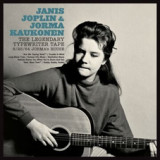
The legendary 1964 rehearsal collaboration receives its first official issue Restoration and Mastering by Grammy®-winning engineer Michael Graves Packaging contains rare photos plus liner notes from Jorma Kaukonen Jorma Kaukonen (later of Jefferson Airplane and Hot Tuna) met a singer named Janis Joplin at a hootenanny in San Jose, California, in the fall of 1962. Over the following years, Janis would call on Jorma to accompany her at gigs. As they continued to play together, the Bay Area was changing musically and developing into the legendary San Francisco scene to which both Janis and Jorma would be integral. During a rehearsal for a show in North Beach, Jorma started his reel-to-reel machine to capture what they were working on. For decades, this recording was the stuff of legend, with inferior, multi-generational transfers making their way through select collector’s circles. Now, for the very first time, it is available officially, with the blessing and cooperation of both the Janis Joplin Estate and Jorma Kaukonen. The Legendary Typewriter Tape: 6/25/64 Jorma’s House contains this legendary recording, featuring Restoration and Mastering from acclaimed, Grammy®-winner Michael Graves. The tracks include Joplin on vocals, Kaukonen on guitar, and Jorma’s wife Margareta typing away intermittently in the background. This may have just been a rehearsal, but it is so much more. Featuring Joplin originals, as well as blues classics, The Legendary Typewriter Tape is an intimate glimpse into two major artists at the beginnings of what would become highly influential careers. As Jorma says in his liner notes: “This is indeed a window into a simpler time when the music truly was everything.” Available on CD and Digital December 2, 2022, the release will also be available on vinyl exclusively for Record Store Day Black Friday, November 25, 2022 Enjoy being a fly on the wall and revel in the magic of The Legendary Typewriter Tape.
'Malombo music is an indigenous kind of music. If you listen to it, you can feel that it can heal you, if you’ve got something wrong. It’s healing music.'
Lucky Ranku
"Lucas ‘Lucky’ Madumetja Ranku (1941-2016) was one of the greatest African guitarists of his generation. He first made his name with the Malombo Jazz Makers – the successor group to the legendary Malombo Jazzmen, formed in Mamelodi township by guitarist Philip Tabane, drummer Julian Bahula and flautist Abbey Cindi. When Tabane left the Jazzmen in 1965, Bahula and Cindi called on Lucky to replace him, and the Malombo Jazz Makers were born. Building on the popularity and success of the original Malombo Jazzmen, the Malombo Jazz Makers become immensely popular, touring widely, winning numerous jazz competitions, and recording two successful albums for the Gallo label.
The deep and hypnotic Down Lucky’s Way was their third album. Recorded in 1969, it was the first Malombo Jazz Makers album to feature additional instruments, and the first to feature Abbey Cindi on soprano saxophone as well as flute. But more than anything else, Down Lucky’s Way is a transfixing showcase for Lucky Ranku’s sui generis guitar virtuosity. Quite different from their previous recordings, the album shifted the Jazz Makers’ sound toward hypnotic, extended compositions, layered by organ bass and guitar overdubs. Of all the Malombo Jazz Makers recordings, Down Lucky’s Way is the deepest of mood, and the richest of vision.
However, through one of the erasures that are ubiquitous in South African musical history under apartheid, it seems that the record may not ever have been properly issued. Original copies are outrageously rare – only a few are known among collectors. When we asked Lucky about the album, he was unaware it had ever been released, and had never seen a copy. Perhaps it was pulled; perhaps it was pulped; perhaps Gallo simply took their eye off the ball. Nobody knows, but it is not impossible that the apartheid authorities were involved, for by 1969, the Malombo Jazz Makers were well known to them.
Julian Bahula’s introduction of malopo drums to the music of the original Malombo Jazzmen was a moment of crucial political and cultural radicalism for South African jazz. Traditionally used by BaPedi people for healing, the malopo drums of Malombo music re-centered jazz
around indigenous sounds and culture, and over the next decade, the Malombo Jazz Makers became deeply involved in political opposition to apartheid. Their recovery of indigenous sounds made them the musical standard bearer for the Black Consciousness movement, and they toured South Africa clandestinely with the writer and anti-apartheid activist Steve Biko. They also broke apartheid laws by playing with the white rock group Freedom’s Children, sometimes appearing on stage in masks or made up with UV paint to avoid detection by the authorities; they appeared regularly at the rule-bending Free People’s Concerts organized by David Marks, where Marks’ clever exploitation of a loophole – mixed audiences were prohibited from attending ticketed concerts where anyone was being paid, but the law said nothing about private functions played by artists for free – meant people could come together in defiance of apartheid laws. The notorious Special Branch would raid their concerts; Lucky remembered police storming an auditorium, throwing smoke bombs.
Eventually the political situation became too dangerous, and the band were being actively sought by the police. Though Abbey Cindi remained in South Africa, both Julian Bahula and Lucky Ranku went into political exile in the UK, where Bahula founded the group Jabula with Lucky and former members of Cymande, Steve Scipio and Michael ‘Bami’ Rose. With Jabula, Julian and Lucky worked tirelessly for the anti-apartheid movement, raising funds and awareness all over Europe and in the US. They played with Dudu Pukwana’s Spear in the joint formation Jabula-Spear, and worked together in Bahula’s Jazz Afrika formation, and Bahula organized the first Concert for Mandela in 1984 (it was Jabula that supplied the chorus for The Special A.K.A.’s hit single ‘Nelson Mandela’). Lucky also played and recorded with Chris McGregor’s South African Exiles Thunderbolt group. After the fall of apartheid, they both remained living and working in the UK. In 2012 the South African government awarded Julian Bahula the Gold Order of Ikhamanga for his cultural work during the struggle against apartheid.
Until his death in 2016, Lucky continued to play with countless groups and musicians. putting together the band Township Express with Pinise Saul, and leading his own African Jazz Allstars. The influence of his playing on the international perception of South African township music was immense, and he was held in the highest regard by his peers – ‘Lucky was a guitarist who could bring any house down’, said Michael ‘Bami’ Rose.
But despite his continuous presence on the UK live circuit over four decades, Lucky Ranku never recorded an album as leader. And so as well as restoring an important lost piece of South African musical heritage, Down Lucky’s Way is a precious opportunity to hear one of Africa’s foremost guitarists stretching out, in focus and in his element."
First issue since 1969 of the Malombo Jazz Maker’s unknown third album.
Liner notes featuring interviews with Julian Bahula and Lucky Ranku.
Fully licensed from Julian Bahula.
"Ihr seid jetzt beide Gefangene des Robotov-Imperiums!"
Die dritte und letzte umfangreiche Box mit Audio-Abenteuern bei denen Tom Baker den Doktor gibt. Die zum ersten Mal auf Vinyl in limitierter Auflage veröffentlichte 10LP-Box enthält jeweils ein exklusives Porträt des vierten Doktors, welches von Tom Baker handsigniert ist. Limitiert auf nur 1.200 Exemplare weltweit und präsentiert auf 10 (!) abwechselnd schwarzen und grünen Vinyl-LPs. Das Audio-Abenteuer kommt mit Susan Jameson als Mrs Wibbsey und Richard Franklin als Mike Yates. Zu den Nebendarstellern gehören David Troughton, Michael Jayston, Simon Shepherd, Terrence Hardiman, Joanna David, Sophie Ward, Andrew Sachs und Nerys Hughes. Alle im Original-Sound begleitet vom bekannten Doctor Who-Thema aus dem BBC Radiophonic Workshop.
Die Box kommt mit 10 wunderschön individuell illustrierte LP-Hüllen mit Besetzung und Credits für jede der fünf Geschichten. Ein 16-seitiges, vollfarbiges Booklet enthält Liner Notes und Illustrationen des Doktors, die im Laufe dieser fünf Abenteuer entstanden sind.