Tuff City anthology of early Hip-Hop solo performers with insert 7" half on red, half on yellow vinyl featuring Spoonie Gee, T-Ski-Valley, Ultramagnetic MC’s featuring Kool Keith, Grandmaster Caz, etc. Tuff City is pleased to present the best possible reissue program of Hip-Hop's first decade. These reissues were made as a tribute to Hip Hop’s 50th Anniversary. Each volume represents an important facet of performers on Tuff City: The Solo MC’s, The MC Crews, The DJ’s and The Female MC’s.
Each volume features an inner sleeve with liner notes and bonus 7” insert. Each pressing consists of 750 on red vinyl and 750 of an opaque color specific to the volume (Yellow, Gold, Blue, Orange). A bonus 7” single is slipped in the cover encased in a Tuff City logo sleeve in the style of its iconic 12” singles. The series was also conceptualized as a multiset release to stand side by side with the classic Old School Rarities series (The Funky Drum Jams, The Electro Jams, The Linn Drum Jams & The Disco Jams) issued by our Ol’ Skool Flava imprint.
The Solo MC’s kicks off with Harlem’s pioneering Spoonie Gee’s influential “Spoonin’ Rap” from 1979. “Catch The Beat” from T-Ski Valley captures the post-Disco Bronx era of Rap. The side closes with the underground personality Funkmaster Wizard Wiz whose “Knucklehead Rappers” came after he broke from The Undefeated Three. Brooklyn’s Jimmy Spicer delivers a 14+ minute marathon “Adventures of Super Rhyme (Rap).” Grandmaster Caz from Cold Crush is paired with the Fantastic’s Whipper Whip for “To All The Party People” Captain G Whiz from Freddy B’s Mighty Mic Masters closes with his solo 12” track “All The Way Live.” The bonus single features a Kool Keith solo from the Ultramagnetic MCs backed with Grandmaster Caz by himself doing “I’m What Is and You’re What Wants To Be.” Track Listing: A1 Spoonin' Rap-Spoonie Gee; A2 T-Ski Valley-Catch The Beat; A3 Funkmaster Wizard Wiz-Knucklehead Rappers; B1 Adventures of Super Rhymes-Jimmy Spicer; B2 Grandmaster Caz with Whipper Whip-To All The Party People; B3 All the Way Live-Captain G. Whiz; Single A: Ultramagnetic MC's-Kool Keith Wild; B: Grandmaster Caz-I'm What Is Your What Wants To Be
Marjaa: The Battle of the Hotels” is a concept album born of the idea of merging singer & songwriter Mayssa Jallad’s two vocations: music and urban research/architectural history. Written in collaboration with producer Fadi Tabbal, the music builds upon Tabbal’s spatial approach to sound and Jallad’s research on Beirut’s Hotel District. The album is a reference to Jallad’s Historic Preservation master's thesis, in which she detailed the history of the “Battle of the Hotels”, a 5-months battle that took place in Beirut at the beginning of the Lebanese Civil War, from October 22nd, 1975 to March 29th, 1976. Jallad saw architecture as a main protagonist of the battle, as she discovered it was the first high rise urban battle in the world. The close of the battle resulted in the 15-year Green Line, an urban rift which split Beirut into “East and West”, restricting movement and communication and creating a violent divide that still resonates today. The album comprises two parts. Part A: Dahaliz, is a stroll in the city, where Jallad tries (and fails) to follow an old map. Musician Youmna Saba is a companion in this journey of remembering the once winding corridors (“Dahaliz”) of the city, destroyed by new developments since the 1960s. Empty skyscrapers propel her onto a past filled with the violence of snipers, and a present filled with the glamorous injustice of empty luxury real estate endorsed by powerful warlords-turned-politicians. In Part B: Maaraka, Jallad inhabits the building of the Battle of the Hotels, as its events unfold. She calls the fighting militias the Blues and Reds, respectively the Lebanese Front (Christian Nationalists) and the Lebanese National Movement (Pro-Palestinian leftists), leveling the playing field, and drawing a map of the battle through songwriting. Sary Moussa produces the conclusion of the battle in “Holiday Inn (March 21 to 29)”, which ends with the ultimate severance of the city of Beirut. The music caters to post-war youth who have never been taught this difficult history. Once we consider the “Battle of the Hotels” as our common heritage, it provides an opportunity to teach the value of civil peace. It is also a call to protest for the renewal, rather than the recycling of the political class that has once destroyed the country and holds us, to this day, hostage of its violence. Limited edition of 300 copies. 140gsm vinyl pressed at Microforum (Canada).
The Kotiomkin band was born from a great passion for 60s-70s-80s Italian genre cinema, a series of movies characterized by aesthetically innovative approach, in complete opposition to the mainstream and to more or less politicized intellectual cinema of the time The duo are devoted to the creation of instrumental soundtracks for non-existent movies, with invented plots featured in the liner notes, having as a reference the classic soundtracks of the time but revisiting them with the violence of the most modern stoner, pushing the boundaries of doom. It is the rediscovery of a never really finished cinematic world that is also celebrated in terms of its extraordinary soundtracks by musicians such as the masters Ennio Morricone, Nico Fidenco, Fabio Frizzi, Franco Micalizzi, Berto Pisano, Lallo Gori, up to bands such as Goblin, Osanna, Libra, Marc 4 and many others. Kotiomkin not only look at horror movies but also at those more niche genres, ranging from erotic, to "giallo", to "poliziottesco" and more extreme subgenres such as cannibal movies, "mondo" movies or sexploitation, all with a violence of sounds unknown to Italian B-movies.
The Kotiomkin band was born from a great passion for 60s-70s-80s Italian genre cinema, a series of movies characterized by aesthetically innovative approach, in complete opposition to the mainstream and to more or less politicized intellectual cinema of the time The duo are devoted to the creation of instrumental soundtracks for non-existent movies, with invented plots featured in the liner notes, having as a reference the classic soundtracks of the time but revisiting them with the violence of the most modern stoner, pushing the boundaries of doom. It is the rediscovery of a never really finished cinematic world that is also celebrated in terms of its extraordinary soundtracks by musicians such as the masters Ennio Morricone, Nico Fidenco, Fabio Frizzi, Franco Micalizzi, Berto Pisano, Lallo Gori, up to bands such as Goblin, Osanna, Libra, Marc 4 and many others. Kotiomkin not only look at horror movies but also at those more niche genres, ranging from erotic, to "giallo", to "poliziottesco" and more extreme subgenres such as cannibal movies, "mondo" movies or sexploitation, all with a violence of sounds unknown to Italian B-movies.
The first-ever LP box set gathering the entire 10 albums collection of Obscure Records produced by Brian Eno’s.
Curated by Gavin Bryars
Originally issued between 1975 and 1978, nearly 50 years on the output of Obscure remains radically forward-thinking - offering glimpses of a future yet to be fully seen - and amounts to one of the most important, influential, and creatively accomplished album series ever conceived.
Co-curated by Eno and the composers Gavin Bryars and Michael Nyman - issuing the recording debuts of Bryars, Nyman, John Adams, Christopher Hobbs, David Toop, Max Eastley, Jan Steele, Simon Jeffes / The Penguin Café Orchestra, and Harold Budd, in addition to important works by John Cage, Tom Phillips, and John White - Obscure’s collective output is a groundbreaking landmark in the histories of Minimalism, modern composition, and Experimental music, and laid much of the groundwork for the soon to emerge movement of Ambient music.
Illuminating the remarkable, and largely otherwise undocumented, creative ferment within and between the British and American scenes of experimental music during the mid to late 1970s, this collection - made in full collaboration with all of the composers or their estates - contains the entire 10 album output of Obscure, the majority of which have been out of print for years, with a number having never received a CD reissue.
Offering each of Obscure’s albums, completely remastered and housed in faithful replicas of their original covers and liner notes, as well as a 80-page book (LP dimension) for LP-BOX SET, filled with rare photos, archival material and texts by - among others - Gavin Bryars, Bradford Bailey, David Toop, Max Eastley, Richard Bernas, and Tom Recchion, this historic collection marks the first time this seminal series has received a complete LP repress.
After almost 25 years a new studio album of the German prog rock legend in original lineup! Agitation Free was one of the leading representatives of German experimental rock
music in the early 1970s. The Berlin band developed long, for that time unusual, free
instrumental improvisations from the end of 1967. They achieved cult status as early as
1972 with an independent mixture of improvised rock paired with electro, ethno, jazz and
trance elements.
Extensive live activities gave the band a steadily increasing level of recognition throughout
Europe. For example, the group performed in the cultural program of the Olympic Games
in Munich in the summer of 1972, toured France for two months in early 1973, performed
at the "German Rock Super Concert" in Frankfurt in May, produced the second album "2nd"
and then went on tour through France and major German cities. In 1974, the band began
to show signs of fatigue, which led to their temporary breakup at the end of the year after
a farewell concert.
Although a number of albums (with recordings from 1972 to 1974) were released after the
group's breakup and the studio album "River of Return" was released in 1999, it took
almost 35 years for the original band to reunite for concerts. In February 2007, Agitation
Free, with the original lineup from 1974, gave a series of concerts at Tokyo's "Shibuya
O'West."
In retrospect, it became clear that the experimental circle Agitation Free was one of the
important bands of the "Berlin School" and furthermore a career springboard for several
German musicians. Christopher Franke, for example, helped the band Tangerine Dream
achieve worldwide recognition. Michael Hoenig worked with Klaus Schulze and Tangerine
Dream before he became known as a film composer in Hollywood after a solo album
(among other things, the film music for the blockbuster "9 1/2 Weeks" with Kim Basinger
and Mickey Rourke). Axel Genrich moved to Guru Guru, Burghard Rausch became a
founding member of Bel Ami. Gustl Lütjens, toured with Shirley Bassey and Nena and later
found a large audience with his new age band Living Mirrors, especially in the USA. Lutz
"Lüül" Ulbrich joined Ashra, worked with ex-Velvet Underground singer Nico, produced
solo records in addition to theater music, and has enjoyed success with the 17 Hippies since
the late 1990s.
In the line-up Michael Hoenig (keyb, syn, el. perc), Burghard Rausch (dr, el. per), Lutz GrafUlbrich ((git, acc. git, bj), Gustl Lütjens (git acc. git, vocals) and Daniel Cordes (b, syn) the
new studio album "Momentum" was recorded.
After almost 25 years a new studio album of the German prog rock legend in original lineup! Agitation Free was one of the leading representatives of German experimental rock
music in the early 1970s. The Berlin band developed long, for that time unusual, free
instrumental improvisations from the end of 1967. They achieved cult status as early as
1972 with an independent mixture of improvised rock paired with electro, ethno, jazz and
trance elements.
Extensive live activities gave the band a steadily increasing level of recognition throughout
Europe. For example, the group performed in the cultural program of the Olympic Games
in Munich in the summer of 1972, toured France for two months in early 1973, performed
at the "German Rock Super Concert" in Frankfurt in May, produced the second album "2nd"
and then went on tour through France and major German cities. In 1974, the band began
to show signs of fatigue, which led to their temporary breakup at the end of the year after
a farewell concert.
Although a number of albums (with recordings from 1972 to 1974) were released after the
group's breakup and the studio album "River of Return" was released in 1999, it took
almost 35 years for the original band to reunite for concerts. In February 2007, Agitation
Free, with the original lineup from 1974, gave a series of concerts at Tokyo's "Shibuya
O'West."
In retrospect, it became clear that the experimental circle Agitation Free was one of the
important bands of the "Berlin School" and furthermore a career springboard for several
German musicians. Christopher Franke, for example, helped the band Tangerine Dream
achieve worldwide recognition. Michael Hoenig worked with Klaus Schulze and Tangerine
Dream before he became known as a film composer in Hollywood after a solo album
(among other things, the film music for the blockbuster "9 1/2 Weeks" with Kim Basinger
and Mickey Rourke). Axel Genrich moved to Guru Guru, Burghard Rausch became a
founding member of Bel Ami. Gustl Lütjens, toured with Shirley Bassey and Nena and later
found a large audience with his new age band Living Mirrors, especially in the USA. Lutz
"Lüül" Ulbrich joined Ashra, worked with ex-Velvet Underground singer Nico, produced
solo records in addition to theater music, and has enjoyed success with the 17 Hippies since
the late 1990s.
In the line-up Michael Hoenig (keyb, syn, el. perc), Burghard Rausch (dr, el. per), Lutz GrafUlbrich ((git, acc. git, bj), Gustl Lütjens (git acc. git, vocals) and Daniel Cordes (b, syn) the
new studio album "Momentum" was recorded.
»Arches« is the first collaborative album by brothers Simon and Tobias Lanz. It was written for and performed on self-built prototypes of wind instruments that were inspired by the classic pipe organ, but allowed the two composer-performers to go beyond its limitations in several ways. The music on this 40-minute long album for the Swiss Hallow Ground label was conceived and recorded by the two co-founders of the CRTTR collective and label during an artist residency in May 2022 in their home town of Bern. More than a mere document of a performance however, »Arches« combines the artists’ interest in exploring uncharted new creative and tonal ground inside of and beyond the realm of drone music with their background in visual art and design as a conceptually concise whole.
Simon and Tobias have a combined background in electronic music as well as a shared penchant for drone music. They hence designed these novel instruments in a way that allows for microtonal tuning to be able to overcome the restrictions inherent to the dominance of a twelve tone-based scale in Western music and work with a sonic palette that is much wider and nuanced than that of the conventional pipe organ. Furthermore, the physical design of these instruments widely differs from that of those which inspired them. This allows—or more precisely, forces—the musicians to freely invent and explore entirely novel playing techniques.
These factors, of course, also have an impact on the compositional process, which by design needs to be unconventional. The Lanz brothers worked with a graphic score for the four movements of the piece that forms »Arches« so as to adequately visualise the manifold tonal nuances of their instruments. This graphic score in turn was reinterpreted for the album release by Ramon Keiming, adding another dimension to it. Read from left to right, this remix of the score allows the listeners to follow an interpretation of the evolution of these dronescapes while the record plays, urging them to add their own interpretation.
This retroactive visualisation and thus spatialisation of the music is perfectly in line with its performance, which at all times factored in the acoustic affordances of the Prozess Bar in Bern. In many different ways, the Lanz brothers now invite their audience to join them there and explore the near-infinite possibilities of their curious instruments together with them. Much like Hallow Ground label mates such as Kali Malone or FUJI||||||||||TA, they are dedicated to enriching and expanding upon the musical and sonic qualities of pipe organs, but with widely different aesthetical results. To call »Arches« a unique record with an unheard-of sound is not hyperbole, but only factually correct.
For years Feeling Figures have tinkered away at the edge of the Montreal scene, never fitting neatly into the ebb and flow of the city's cultural trends or its more traditionalist camps. A geographer, a music therapist, a writer, and an underground arts biz maverick, the four Figures have long been friends and collaborators in various musical formations and continue to propel multiple projects. At the core of Feeling Figures is the Zakary Slax and Kay Moon songwriting partnership, which itself stretches back a decade, the pair first crossing paths in a vibrant period of musical upheaval in Sackville, NB - a college town on Canada's East Coast. In the big city, a series of self-releases, shifting monikers, and revolving live lineups eventually coalesced with Thomas Molander & Joe Chamandy as the ultimate rhythmic vehicle and spiritual consorts for Slax & Moon's unconstrained syntheses of multiple eras of indie rock, punk, psychedelia, folk, and outsider pop. Their debut 7" of 2021 was an early entry in Montreal upstart label Celluloid Lunch's catalog. We're nearly 3 years past the debut 7" from Montreal quartet Feeling Figures and in some ways it feels like 300, Such are the seismic changes that have occurred during that spell. But enough about Feeling Figures' musical depth and laser-like lyrical focus, I understand some things have happened in the real world, too. 'Migration Music' is not this generation's first ramshackle-as-fuckk art punk album and I'm not sure it's even the 30 thousandth. But I do know Feeling Figures have arrived fully formed, with a real voice of their own (several in fact, that must be a really good microphone). This album is simply too much fun to have been the product of years of serious study, though I'm told students occasionally have fun, too. I wouldn't know, i'm a university drop out. I did once see an episode of the television adaptation of "The Paper Chase" where one of the new Harvard Law hopefuls had a Kiss poster over his bed and that seemed highly implausible. The utter lack of affectation on 'Migration Music' may or may not be considered a selling point (affectation seems pretty huge — almost always) but Feeling Figures' rock'n'roll atom smashery is nothing short of astonishing. Maybe there will be a better record in 2023 perhaps two or three, even. But for now, this is the band to beat. 10 tracks 33RPM
Volume 3 of the TRUST XY recombination series again sees four unique artists channel sonic echoes from the label's past. Stenny is up first, the Italian producer whose name is synonymous with Ilian Tape's much acclaimed crossover of techno and bass music. He complements the deep pads of Versalife's 'Nova Prospekt' with a scorching bass line and rolling breaks programmed in his unmistakable style. Canadian producer and Planet Euphorique label owner D.Tiffany is a champion of complex percussions and an obvious choice to rework Alex Cortex's percussive electro anthem 'We Run Your Life'. Her take chops and warps Cortex's vocals around a twitching techno beat that's both experimental and effective. Side B has UK electro and breakbeat pioneer Clatterbox return to TRUST, reshaping one of the very first Microthol tracks into modern form. At his hands 'Intertronic' turns into a bleeping and hissing, snarling and growling electro bass monster. Lastly Delsin's dub master and TRUST alumni VC-118A takes on 'Tides' by /DL/MS/, replacing the original's sparse funk with a low slung dub techno groove that serves as the foundation for perpetually cascading ebbs and flows of lush and dreamy soundwaves.
out of Stock
Last delivered 22 months ago available to reorder, subject to availability
Saxophonist Alex Hitchcock continues his mission to seek out new sounds and textures at the forefront of contemporary jazz, and to act as a catalyst to bring together some of the finest musical talents drawn to the fervid internationalism of the contemporary London scene His response to the current challenging climate for artistic endeavour is to go big and go bold: Dream Band: Live in London is a truly groundbreaking project presenting three different 'dream bands' of his favourite musicians, captured live over three nights at London's legendary Vortex club performing music specially composed for each ensemble. The extraordinary line- ups he assembled are testament to the respect he has earned among his peers as a composer, player and bandleader with a uniquely inspiring vision. The band for the first night features the frontline of Mark Kavuma's trumpet and Liselotte Ostblom's vocals blending together over the trio of Rob Luft, Rio Kai, and Jamie Murray: the second features James Copus on trumpet with longtime musical partners Kit Downes on piano and Lewis Wright on vibes, and Conor Chaplin and Marc Michel supplying bass and drums, and the third sets Downes' piano alongside the guitar of Ant Law and Alexandra Ridout's trumpet, with the international all-star rhythm section team of Orlando le Fleming and James Maddren. Part of the album's delight lies in the unexpected combinations of these acclaimed players, and the new levels of creativity that they bring forth; the constant presence of Hitchcock's unmistakeable voice on tenor sax and the strength and consistency of his writing gives the project a compelling unity. Each of the three bands brings their own unique blend of voices to Hitchcock's compositions, taking them in directions unforeseen even by their composer.
Synth pioneer and musical polymath, Wally Badarou is a genius. But you know that already. A vinyl version of his majestic Colors Of Silence has been craved by the Balearic cognoscenti ever since its low-key 2001 release. Indeed, when we first started work on Be With, we asked some pals with exquisite taste what their dream release would be. We asked Balearic legend Moonboots and, without hesitation, he said Colors Of Silence by Wally Badarou. We didn't know Wally had made this album. And most still don't. But that's about to change.
Colors Of Silence is ostensibly a new age album. As ever though, Wally's sophisticated synth textures and expressive keyboard runs are so full of character, so full of life, that this work of art transcends any easy genre categorisation. It's simply stunning, throughout. It sounds like A.r.t. Wilson or Suzanne Kraft, with traces of CFCF and Jonny Nash. But it was made a good decade earlier than the work of these modern giants. Sometimes, it doesn't seem far from some Larry Heard albums.
Island Records founder Chris Blackwell's friend Nathalie Delon asked Wally to provide music for the yoga DVD she was to release. Lack of time on both sides made them agree on using "quality demos" Wally had in his ideas bank. It's understandable why Colors Of Silence remains somewhat of a lost gem. As Wally explains: "Total lack of promotion made it an 'intimate' release, which was exactly what I was looking for: just a buzz-maker and time-buyer that would allow me to concentrate on the real thing as soon as I'd have time, which could also turn into a rare collecting item later, once the final versions made their way to success. You never know."
Over the years, Colors Of Silence has become a true cult record for the ambient/Balearic heads.
The beguiling but brief "Dance In The Dust" is the shuffling, hyper-percussive, hypnotic opener. It gives way to the deep serenity of "Amber Whispers". It's a gliding, divine, mini melodic masterpiece. It'll make you swoon in its extreme beauty. The bright and breezy "Where Were We" follows, a tropical, reggae-tinged bounce through the islands.
The uptempo groove is maintained on the keys-drizzled soca-funk of "The Lights Of Kinshasa" before Side A is rounded out with "Pictures Of You". It starts with stately, melancholic, unadorned piano and this alone would make for a beautiful song. But Wally always gives us that bit extra and he effortlessly introduces warm, dreamy pads and minimal, slo-mo percussion to augment a frankly stunning piece of work.
Ushering in Side B, Wally's mesmeric piano playing is to the fore again, in the intro to uber-chilled "Serendipity For Two". The playing becomes more mellifluous as the track progresses and adds warmth through exotic percussion, woodwind, sweeping synths and digi-drums. It has echoes of, er, Echoes. It segues seamlessly into the more propulsive, wavy "Smiles By The Millions". If you're not nodding and grinning along widely to the gently throbbing bassline underpinning this, we can't help you. The meditative "Higher Still" follows, cinematic in feel and ever so slightly sinister with the strings. It sounds particularly Badalamenti-esque, if you ask us.
That unmistakable, almost peculiar Badarou funk - so lyrical, so texturally rich and so rhythmically spacious - is all over "Oriental". Next up, "Days To Wonder" brings the serenity back, insistent yet melodic keys, as if played in a place of worship, coupled with birdsong, conjure a kind of instant nostalgia for halcyon days of youth. The contemplative "Dawn Of Europa" is a sombre, beatless, ambient journey whilst the glorious, too-brief "Crystal Falls" features soft percussion and sparkle before fully glistening with some gentle head-nod beats. Wally brings this incredible collection to a mellow, tender close with the graceful "Purple Lines".
There can be few artists more under-appreciated given their vast influence than Wally Badarou. His solo work practically defined the sound of the Balearic DJs of the 1980s, and thus the more sophisticated sound of dance culture thereafter. A synth specialist, Badarou was the long-time associate of Level 42. He was one of the Compass Point All Stars (with Sly and Robbie, Barry Reynolds, Mikey Chung and Uziah "Sticky" Thompson), the in-house recording team of Compass Point Studios responsible for a series of albums in the 1980s recorded by Grace Jones, Tom Tom Club, Mick Jagger, Black Uhuru, Gwen Guthrie, Jimmy Cliff and Gregory Isaacs. Badarou's keyboard playing could also be heard on albums by Robert Palmer, Marianne Faithfull, Herbie Hancock, M (Pop Muzik), Talking Heads, Manu Dibango and Miriam Makeba. He also produced Fela Kuti. Phew!
Meticulously remastered and cut by both Simon Francis and Cicely Balston respectively, it has been pressed to the highest possibly quality at Record Industry in Holland. Special thanks must go to Apiento from Test Pressing who first introduced us to Wally and facilitated all those early zoom meetings. It couldn't have happened without his help. Not least on pulling the art together, too, which features striking original photography by Mads Perch. Benji Roebuck of Roebuck Press did his thing brilliantly in art working the whole package to completion. All in all: essential.
out of Stock
Last delivered 22 months ago available to reorder, subject to availability
Ancient Infinity Orchestra is a 14-member jazz ensemble led by double-bassist and composer Ozzy Moysey, based in the bustling creative city of Leeds in the North of England – home to one of the most innovative and community-based jazz scenes in the UK. Saxophonist Matt Cliffe who also performs with Matthew Halsall is a key member and the rotating line-up which includes drums, two bassists, keyboards, harp, violin, cello, two tenors, alto, oboe, flute and percussion. "River of Light’ drinks deep from the well of spiritual jazz and is especially inspired by the soulful sounds of Pharoah Sanders, Alice and John Coltrane but also channels a certain Northern sensibility that can be heard in the music of Matthew Halsall or Alabaster de Plume. Melodic, warm and honest this is music that is happy to wear its heart on its sleeve.
Grafh is one of only a handful of rappers from the early 2000s NYC scene to successfully transition into the new underground movement. After releasing two solo LPs and collab albums with Flee Lord and DJ Shay (RIP) in the last four years, he recently dropped his highest profile project to date, Art of Words, entirely produced by the top emcee/producer in the game, 38 Spesh. The 10-track offering reaffirms Grafh is a force to be reckoned with on the mic. To add gas to the already blazing fire recruited an all-star guest line-up for the album that includes Conway The Machine, Rome Streetz, Bun B, Dave East, and Giggs.
After last years „4 THA CULTURE“ and his collaboration with horsegiirL „My Little White Pony“ MCR-T releases his debut album „My Voice My Weapon Of Choice“. My Voice My Weapon Of Choice weaponises MCR-T ́s fierce Soul Power on the mic. This album being more personal than usual, MCR-T does not shy away from giving his listeners insights to his inner demons and personal battles over the course of making this release. Tracks that all tell deep and personal stories while staying true to their club functional nature. MCR-T pays homage to Grace Jones' opening statement on her record “This Is”. Realizing that the liberation of self starts with the paper and pen, the means to an end - therapeutic self expression. Bold statements backed by even bolder sounding rracks all across the electronic music spectrum to underline not only his versatility on the dancefloor but also in the studio. Different flavors for the deserving multifaceted raver of tomorrow.
out of Stock
Last delivered 2 years ago available to reorder, subject to availability
“A piece of music never truly comes to An end. Revisiting a theme illustrates this idea that life goes on.” These are the words of Wayne Shorter, uttered in 2018 upon the release of Emanon, his final opus. On this record, the octogenarian uses dusky hues to shade in the passions of his youth - drawing and science-fiction, as well as the causes he has defended all his life - the fight against ecological upheaval and structural racism. This sentiment did not fail to resonate with Julien Lourau, who has reached a stage in life where he has begun to look back over certain pages written by the man he has always considered one of the masters of his trade. Five years later, this Parisian native has also chosen to revisit his glory days, offering reworked versions of specific tracks composed by his titular elder throughout the 80s. “When I play this music, I find myself back in my teenage bedroom. These are my standards, and they remind me of autumn in Rambouillet.” At that time, after practising his scales, Julien would also play Dungeons & dragons, and immerse himself in SF as well as heroic fantasy - epic influences which are not without a certain connection to the dreamworlds Shorter conjured up, as another fan of landscapes beyond the grasp of reality.
This album features four themes taken from Atlantis, which came out in 1985, and two from Joy Ryder, released three years later. To these, he has added a composition penned at around the same time for Sportin’ Life, the penultimate LP by Weather Report. This is rounded off by a tune taken
from Native Dancer, the record which, ten years earlier, in 1975, brought together this saxophonist who learnt his trade alongside Art Blakey, before joining Miles’ second quintet, and Brazilian Milton Nascimento.
“Between Native Dancer and Atlantis, Shorter did not release anything under his own name, but he took the time and care to really perfect his writing. Upon his return, he injected a very Brazilian form of subtlety into his compositions, especially rhythmically. And from a harmonic point of view, these themes are extremely sophisticated, and reveal truly singular colours. In fact, he decided to display the score as if it constituted the liner notes of Atlantis.”
Julien Lourau is a fan of every Wayne Shorter era, from his Blue Note days, where Mr Gone defined the bases of a truly unique repertoire, all the way to his final quartet - a reference like no other. He decided to focus on this “highly electric” period, which is not necessarily Shorter’s best known, nor his most widely appreciated - despite being a unanimous reference, Shorter has nonetheless never had a direct descendent. In Lourau’s line of sight there lies a desire to focus on typically South American tonic accents which characterise this repertoire, twinned with the ambition to switch up their actual sound “by attempting to open up onto a production highly influenced by eighties fusion". However, he admits that modifying the structures of these most unique of worlds constituted a fresh challenge. “There’s this labyrinthine harmonic system where you’ve no idea how it holds together, but where it’s actually impossible to touch the slightest element without the whole edifice wavering. It is in fact a very difficult thing to achieve!”
In order to successfully transcribe all this creativity free of obstacles, Julien Lourau once again called upon the help of Mathieu Debordes. From January 2023 onwards, Mathieu endeavoured to break down all the musical elements, on paper, before creating any actual music. The record was therefore constructed on the faith of these scores, without necessarily transiting through a creative residency - just two live gigs, to make sure the setup worked. Besides Mathieu Debordes and his synthesisers, Julien Lourau has assembled an ad hoc team by his side. On the bass, according to the track, we can hear erstwhile companion Sylvain Daniel or a new acolyte on the fretless bass, Joan Eche Puig.
Stéphane Edouard, on percussion, even dives headfirst into an unlikely proto-rap of sorts, on Pearl On The Half Shell (where, on the original version, Bobby McFerrin adjusted his interventions in a rather madcap style). Aesthete and drummer Jim Hart as well as pianist Leo Jassef also figure on this release - both were present on previous project devoted to label
CTI. “At sixteen, I wanted to sound like Michael Brecker rather than Ben Webster - that was equated with modernity in those days”, adds Julien with a smile, as for him, all this rings out a little like a logical next step, a joyful immersion into the fountain of youth. And if, for this record, he plays the soprano more than ever, the saxophone Shorter set in his sights on, he never tries to replicate an unattainable ideal note by note. What would be the point?
“Wayne Shorter is not just a saxophonist’s saxophonist. In fact, I don’t know a single person who has risen to challenge of his solos. I have not done it myself either, but on the other hand, I have retained a lot of his phraseology. His way of approaching the instrument reveals a more evanescent language, a work on colour and shape. Keeping this in mind has allowed me to gravitate towards certain elements, that in hindsight, I find echoes of in my work, even in Groove Gang.” Shorter etches out these phrases, creating a groove within which Lourau had traced subtle punctuation, managing, from a highly written base, to create fresh apertures, promises of a great escape. Emblematic of this standpoint, his regal version of Ponte de Areia, originally a wonderful dialogue between Milton Nascimento and Wayne Shorter. Here, the Frenchman takes liberties with the original melodies, without ever growing distant from the original spirit, extending one section with delicacy, offering a rubato development and then a groove “like a little suite”. Julien Lourau also renews with an accomplice from last century, Magic Malik, who lends his high-pitched vocals to the track. Though they had not recorded together for more than twenty years, the two of them got on as if they had only ceased collaborating yesterday, everything flowed naturally. The track was wrapped up in just one take, much like other themes, such as opener Who Goes There where the flautist deploys smooth, enchanted and smoky wisps.
Fundamentally, reflecting of the sleeve which features a child playing with a ball, image that could symbolise the sun just as much as the moon, Julien Lourau manages to translate the ambiguous candour which characterizes Shorter’s work - solar and crepuscular at the same time, that of a visionary and poet definitively situated outside of all chronology, but with whom Julien shares surprising and ‘timely’ coincidences. Shorter was born August 25, 1933, the same day as Julien’s father, “if we take time zones into account”, and who died on Lourau’s birthday, March 2, 2023. Should we take this as a random fact? Or could we not see here the sign of a destiny connecting the agnostic Frenchman to the man who, as a fervent Buddhist, believed in the transmission of his spiritual flow ?
Mick Jenkins, lyrical hip-hop mastermind and Chicago's Finest, returns with the album "The Patience." He chose to title it "The Patience" because it was that patience that he needed to get to the point in his career where he is now.
Waiting to get free from a label that didn't share his vision was very frustrating, especially since he had to consciously hold back his musical gems in order to release them in collaboration with a partner and team that believed in his art and supported him in his vision for his music.
During this time, Mick worked on his upcoming amazing body of work that has evolved into something very special. Mick at times compares himself to a star chef, brewing up lyrics, seasoning each line to perfection. The album is bursting with offbeat rhymes, sophisticated grooves and complex metaphors. On 'The Patience', the artist shows in an impressive way that he is one of the best in his genre.
Features on the album include JID, Freddie Gibbs, Benny The Butcher and Vic Mensa, who are no less eloquent as rappers and round out the record excellently. Also the production, peppered with live instruments and many jazz influences, makes the hip-hop hearts beat faster.
Worthy re-issue of Robert Cotter's second late 70's soul album! Comprising five songs, with four of them being quite lengthy and well-structured for the dance floor, was entirely recorded in the United States by top-notch American musicians. "Timeless", a fresh and lively expression of late 70s soul music, was recorded at the Sundragon Studio in New York. This studio was home to legendary bands such as Talking Heads and Ramones, as well as a few 'disco studio groups' like Andrea True Connection, Tony Valor Sound Orchestra, and Camouflage, who recorded songs that later became considerable hits. For this reason, it's believed that the positive outcome of the album can be partially attributed to Ned Liben, an eclectic New York musician and co-founder of the studio in the Flatiron district of Manhattan, served as an exhaustive interlocutor for any artistic and technical needs. He was also the arranger of "Rock Me With Your Love", the most significant song on the album. Ned's successful mission was to capture the maximum timbral fidelity of Robert Cotter's voice using appropriate recording techniques, assisted by Michael George Ewing, a talented engineer who had previously worked on similar projects with well-known artists like Carol Williams, Maryann Farra & Satin Soul, Touch and Tony Valor. In fact, the piece features original and melodious lines, coupled with an excellent steady rhythm, spanning approximately 8 minutes and 30 seconds - in short, "a delightful sound for every beat." This ensured that the performance of the young singer-songwriter from New Jersey was faithfully reproduced without neglecting the overall musical landscape. The other four songs, arranged by Ben Lazzaroni with the same musicians as the first piece, are no exception. Best Record also delivered on the promise to Robert's older brother, Karl Potter, a powerful percussionist transplanted to Rome, for whom the roman label produced "Sweet & Salty Cha-Cha-Cha" (12", 1986). Robert Cotter, an artist about whom almost nothing has been written, is poised to gain recognition once word spreads about his album, which has been entirely remastered by Dom Scuteri and features a more congenial tracklist. This album is destined to be truly 'timeless', ready to captivate audiences around the world. Even the new cover artwork, created by Nerina Fernandez, pays homage to an artist who, despite expressing himself with elegance and simplicity, radiates energy and exudes love. "Timeless" is an inevitable revelation for anyone who missed it at the time, and for the next 40-plus years, it will remain an absolute must-listen for Robert Cotter's many fans, leaving them all in awe. In addition to the reissue on the classic glossy black vinyl, a strictly limited edition on red vinyl will be released exclusively by Clone Distribution.
out of Stock
Last delivered 2 years ago available to reorder, subject to availability
Worthy re-issue of Robert Cotter's second late 70's soul album! Comprising five songs, with four of them being quite lengthy and well-structured for the dance floor, was entirely recorded in the United States by top-notch American musicians. "Timeless", a fresh and lively expression of late 70s soul music, was recorded at the Sundragon Studio in New York. This studio was home to legendary bands such as Talking Heads and Ramones, as well as a few 'disco studio groups' like Andrea True Connection, Tony Valor Sound Orchestra, and Camouflage, who recorded songs that later became considerable hits. For this reason, it's believed that the positive outcome of the album can be partially attributed to Ned Liben, an eclectic New York musician and co-founder of the studio in the Flatiron district of Manhattan, served as an exhaustive interlocutor for any artistic and technical needs. He was also the arranger of "Rock Me With Your Love", the most significant song on the album. Ned's successful mission was to capture the maximum timbral fidelity of Robert Cotter's voice using appropriate recording techniques, assisted by Michael George Ewing, a talented engineer who had previously worked on similar projects with well-known artists like Carol Williams, Maryann Farra & Satin Soul, Touch and Tony Valor. In fact, the piece features original and melodious lines, coupled with an excellent steady rhythm, spanning approximately 8 minutes and 30 seconds - in short, "a delightful sound for every beat." This ensured that the performance of the young singer-songwriter from New Jersey was faithfully reproduced without neglecting the overall musical landscape. The other four songs, arranged by Ben Lazzaroni with the same musicians as the first piece, are no exception. Best Record also delivered on the promise to Robert's older brother, Karl Potter, a powerful percussionist transplanted to Rome, for whom the roman label produced "Sweet & Salty Cha-Cha-Cha" (12", 1986). Robert Cotter, an artist about whom almost nothing has been written, is poised to gain recognition once word spreads about his album, which has been entirely remastered by Dom Scuteri and features a more congenial tracklist. This album is destined to be truly 'timeless', ready to captivate audiences around the world. Even the new cover artwork, created by Nerina Fernandez, pays homage to an artist who, despite expressing himself with elegance and simplicity, radiates energy and exudes love. "Timeless" is an inevitable revelation for anyone who missed it at the time, and for the next 40-plus years, it will remain an absolute must-listen for Robert Cotter's many fans, leaving them all in awe.
out of Stock
Last delivered 2 years ago available to reorder, subject to availability
Run-D.M.C.'s Raising Hell remains the turning point at which hip-hop crashed through mainstream barriers and never left. Anchored by the crossover smash "Walk This Way," the 1986 blockbuster still sounds like a revolution unfolding in real time. It has everything – hard-rock riffs, turntable scratching, itchy rhythms, hit singles – not the least of which are the trio's invigorating raps and inseparable chemistry. And now it's the first rap record afforded audiophile treatment, courtesy of Mobile Fidelity.
Sourced from the original master tapes and pressed on MoFi SuperVinyl, the reissue label's numbered-edition 180g 33RPM SuperVinyl LP elevates Raising Hell to sonic heights on par with its musical and cultural significance. Ranked the 123rd Greatest Album of All Time by Rolling Stone, 43rd on Pitchfork's Greatest Albums of the 1980s, one of the Top 100 Albums of All Time by TIME – and included on "Best of" lists by Spin, Paste, XXL, Entertainment Weekly, and basically every other significant media outlet – the triple-platinum effort rocks the house.
Benefitting from the ultra-low noise floor and groove definition of SuperVinyl, Raising Hell unleashes a torrent of massive dynamics and tsunami of frequency-plumbing details underlined by Rick Rubin's taut, crisp, albeit raw and streetwise production. Just as the Queens-based group both defined what hip-hop could represent – and displayed just how big it could get – Rubin's work melded ear-worm hooks, savvy drum loops, metal-leaning guitars, and, of course, Run and D.M.C.'s cross-fire lyrical interplay into watertight frameworks bursting with ideas, tones, samples, and beats. Heard anew on Mobile Fidelity vinyl, Raising Hell is in every regard the aural equivalent of a direct-to-console 1970s classic. And it sounds as fresh as hell.
As for the music, it ranks among the most influential, inventive, and invigorating ever released – rap or otherwise. Vanguard artists such as Ice-T, Eminem, Jay-Z, and Public Enemy's Chuck D – who declared it his all-time favorite and "the first record that made me realize this was an album-oriented genre" – have testified on behalf of its brilliance. And never mind the presence of the Top 5 single "Walk This Way," whose power helped make Aerosmith's Steven Tyler and Joe Perry relevant for the first time in nearly a decade – and literally put Run-D.M.C. in bedrooms ranging from the Bronx to Bartlett to Bad Axe.
Look instead to the rest of the entirely filler-free set, be it the corkscrew turns, slippery wordplay, and "My Sharona"-meets-"Mickey" mixology of the boisterous "It's Tricky," the fat-but-minimized bass grooves and warped turntable wobble of the hysterical "You Be Illin'," chimes-accented inertia and boombox-on- shoulder thunder of the now-iconic "Peter Piper," or voice-as-percussion attack of the funky "Is It Live." With Raising Hell, the answer to the question is always affirmative – a sensation bolstered by the fact the group always had something to say.
The definition of Golden Age Hip-Hop in every way, Run-D.M.C. avoids the negativity and misogyny that later plagued the style, spinning assertive tales about identity (the biographical and culture-changing "My Adidas"), work ethics ("Perfection"), and, most notably, pride (the Harriet Tubman- and Malcom X.-referencing "Proud to Be Black"). Pavement-packed inner cities, tree-lined suburbs, and cornfield-rimmed rural areas would never again be the same. And rocking a rhyme that's right on time would become trickier than ever.
Breaking Teeth (3rd Single / Will have a music video & Reddit AMA) Breaking Teeth is the 3rd of 4 singles from their new album The Fear Of Letting Go. Tyler Tate (vox) describes this track as the heaviest song on the record and sounds simply - "pissed off". "When I wrote the lyrics I was so fed up with the world & my life in general. Set back after set back, problems around every corner. Living should be simpler but the society we live in prevents that. We should all be pissed about it.” Band will do Reddit AMA & MV Visualizer We're All Left Suffereing (2nd Single / With Album announce) 'We're All Left Suffering' is the second of four singles from Michigan based metalcore band Hollow Front's upcoming album 'The Fear Of Letting Go'. The release follows their 2022 album ‘The Price Of Dreaming’ (#9 Current Hard Music Albums, #35 Current Digital Albums, #42 Independent, # 48 Current Rock Albums) which received praise from New Noise “a blistering and bruising experience, evoking myriad emotions and conveying a heady and moving blend of euphoria and despair.” and RockNLoad “Hollow Front has dropped nothing short of a phenomenal album with The Price of Dreaming. While the release doesn’t do anything new, it takes an already established formula and polishes it into a perfect shine. If you’re a fan of any of the modern Metalcore titans, you’ll love this release, hopefully as much as I do. Utterly brilliant.” 'We're All Left Suffering' is the first song the band has released since the announce of Dakota Alvarez's departure (former guitarist/singer) and marks the next chapter in the bands journey. The song will be accompanied by a music video and lined up with the announce of their forthcoming record "The Fear Of Letting Go" (Out October 27th). Lead vocalist states “This track is an anthem for the broken spirited. We live in a world riddled with heartache and constant struggle. Whether mentally, physically, or financially; we area collective of human beings doing our best to survive. I think with everything that’s happened in the world over these last three years, things might seem hopeless. It feels like the whole world has gone mad, and we’re all just here suffering along for the ride. It can be incredibly discouraging being a human in today’s social and economic climate. So I think this song is for those people who are sick of dealing with the bullshit life is throwing at them, and just want to truly breathe for once.”
Video Age make breezy and timeless songs that are so ineable, they can only be the result of a decades-long friendship and songwriting partnership. Across four albums, Ross Farbe and Ray Micarelli have gleefully worn their influences on their sleeve, writing inviting tunes that reference sounds ranging from disco to pop and indie rock. On their latest LP, Away From The Castle, the New Orleans duo have strayed from nostalgia and instead have honed their own unique musicality, making songs that sound like themselves with a taste of inspiration from classic singer-songwriters of the 60s and 70s. The album is a testament to the possibilities that come from getting out of your comfort zone, the freedom of writing vulnerably and unselfconsciously, and the joys of getting to work with your closest companions. After releasing and eventually touring their critically-acclaimed third album Pleasure Line in 2020, Farbe and Micarelli sought inspiration for their next project through collaboration. They worked with Drugdealer on his album Hiding In Plain Sight, Micarelli gigged throughout New Orleans' jazz and blues scenes, and Farbe recorded local artists at his home studio, most recently producing Esther Rose's new album Safe to Run. Feeling refreshed, they rented a cabin in Eunice, Louisiana with touring members Nick Corson and Duncan Troast, where they spent eight days in August 2022 jamming, cooking and writing together. Through this process, Video Age have made their best collection of tracks to date by perfectly alchemizing their influences and experiences into a record still tinged with nostalgia, but moving towards a more succinct and authentic voice. Away From The Castle is a document of a band having fun and rediscovering their love for making music together, but it's also their most honest and personal work yet-Video Age distilled to its purest form.
Video Age make breezy and timeless songs that are so ineable, they can only be the result of a decades-long friendship and songwriting partnership. Across four albums, Ross Farbe and Ray Micarelli have gleefully worn their influences on their sleeve, writing inviting tunes that reference sounds ranging from disco to pop and indie rock. On their latest LP, Away From The Castle, the New Orleans duo have strayed from nostalgia and instead have honed their own unique musicality, making songs that sound like themselves with a taste of inspiration from classic singer-songwriters of the 60s and 70s. The album is a testament to the possibilities that come from getting out of your comfort zone, the freedom of writing vulnerably and unselfconsciously, and the joys of getting to work with your closest companions. After releasing and eventually touring their critically-acclaimed third album Pleasure Line in 2020, Farbe and Micarelli sought inspiration for their next project through collaboration. They worked with Drugdealer on his album Hiding In Plain Sight, Micarelli gigged throughout New Orleans' jazz and blues scenes, and Farbe recorded local artists at his home studio, most recently producing Esther Rose's new album Safe to Run. Feeling refreshed, they rented a cabin in Eunice, Louisiana with touring members Nick Corson and Duncan Troast, where they spent eight days in August 2022 jamming, cooking and writing together. Through this process, Video Age have made their best collection of tracks to date by perfectly alchemizing their influences and experiences into a record still tinged with nostalgia, but moving towards a more succinct and authentic voice. Away From The Castle is a document of a band having fun and rediscovering their love for making music together, but it's also their most honest and personal work yet-Video Age distilled to its purest form.
Video Age make breezy and timeless songs that are so ineable, they can only be the result of a decades-long friendship and songwriting partnership. Across four albums, Ross Farbe and Ray Micarelli have gleefully worn their influences on their sleeve, writing inviting tunes that reference sounds ranging from disco to pop and indie rock. On their latest LP, Away From The Castle, the New Orleans duo have strayed from nostalgia and instead have honed their own unique musicality, making songs that sound like themselves with a taste of inspiration from classic singer-songwriters of the 60s and 70s. The album is a testament to the possibilities that come from getting out of your comfort zone, the freedom of writing vulnerably and unselfconsciously, and the joys of getting to work with your closest companions. After releasing and eventually touring their critically-acclaimed third album Pleasure Line in 2020, Farbe and Micarelli sought inspiration for their next project through collaboration. They worked with Drugdealer on his album Hiding In Plain Sight, Micarelli gigged throughout New Orleans' jazz and blues scenes, and Farbe recorded local artists at his home studio, most recently producing Esther Rose's new album Safe to Run. Feeling refreshed, they rented a cabin in Eunice, Louisiana with touring members Nick Corson and Duncan Troast, where they spent eight days in August 2022 jamming, cooking and writing together. Through this process, Video Age have made their best collection of tracks to date by perfectly alchemizing their influences and experiences into a record still tinged with nostalgia, but moving towards a more succinct and authentic voice. Away From The Castle is a document of a band having fun and rediscovering their love for making music together, but it's also their most honest and personal work yet-Video Age distilled to its purest form.
Wewantsounds is delighted to announce the release of "TOUCH," a selection of sought-after tracks produced by Yuji Ohno, one of the most revered producers and arrangers on the Nippon music scene. His blend of Jazz, Space Funk and Disco have long been highly sought-after by DJs around the world and we've been given unique access to the Nippon Columbia vaults and to Mr. Ohno himself to come with a versatile selection from his 70s body of work, all bearing his uniquely recognisable sound. The set includes works with singers Nanako Sato, Hatsumi Shibata and Ken Tanaka alongside tracks from his cult anime soundtracks for "Lupin III" and "Captain Future." Approved by Yuji Ohno himself, "Touch" was remastered in Tokyo by Nippon Columbia and features liner notes by Nick Luscombe in conversation with the maestro and artwork by Optigram's Manuel Sepulveda.
Born in Atami in 1941, Yuji Ohno started learning the piano at a young age and formed his own band during his teenage years, getting into Jazz in the process. After high school, he entered the prestigious Keio University in Tokyo and played in the revered university big band alongside two other pianists, Masahiko Sato and Hirosama Suzuki, who would have an illustrious career in their own right. After University, Ohno became a professional musician and started playing with the new wave of Japanese Jazz musicians forming his own trio and recording with the likes of Hideo Shiraki, Terumasa Hino and Masahiko Togashi from 1967 onwards.
At the turn of the 60s, Ohno started to veer away from the Jazz scene as he realised, as told to Nick Luscombe that "the jazz music being played by the Japanese at the time was only chasing the cutting edge, and was ignoring the roots and origins of jazz." Ohno therefore shifted his efforts to film and TV and also to producing artists for various Japanese labels, becoming one of the most in-demand composers, arrangers and producers in Japan. This is when Ohno developed his unique sound across a wide variety of styles. More than anything else, he got renowned for his anime soundtracks, particularly with the Lupin III series - represented here by the superbly funky "Silhouette" - which made his fame in Japan
Whether it's jazz, funk, disco or Pop, the "Ohno Sound" is unmissable both in terms of melodies and arrangements, on a par with those of such legends as Quincy Jones and Michel Legrand. Ohno's melodies are sophisticated yet accessible and there's a great sense of space in his productions especially when it comes to slow-burning grooves as heard on "Kirameku Inner Space" from the cult anime soundtrack "Captain Future" or "The Soaring Seagull" from the sought-after 1975 album "Electro Keyboard Orchestra." This album was recorded with seven fellow musicians including Kentaro Haneda and Ohno's old friend, Masahiko Sato and using twenty Korg synths to create a unique blend of futuristic jazz funk. "The Soaring Seagull" could be the perfect embodiment of Ohno's signature sound when it comes to instrumentals. The producer was however equally at ease with producing lush disco extravaganzas such as "Subterranean Futari Botchi" by Nanako Sato or "I Wish You Love" by Hatsumi Shibata, a revamp of Charles Trenet classic, both colourful and glitzy.
Ohno's versatility is on display here with a couple of jazz vocal tracks, "Speak Low" by Ann Young accompanied by the Yuji Ohno Trio and Mieko Hirota's fast and furious "I Want to Be Happy" while he also excelled at crafting gorgeous mellow songs such as Ken Tanaka's "Lilac-gai No Aki" and Hatsumi Shibata's "Mouichido Kikasete" closing the selection on a perfect note. "Touch" is just a tiny selection from Yuji Ohno's immense body of work and it will hopefully open the ears of Japanese music lovers to one of the most important musician, producer and arrangers of his generation.
Therapy? are an alternative metal band from Northern Ireland. The band was formed in 1989 by original members guitarist-vocalist Andy Cairns and drummer-vocalist Fyfe Ewing and Michael McKeegan. For their fourth album Semi-Detached, which was released in 1998, the line-up included Graham Hopkins and Martin McCarrick as full-time band members while Fyfe Ewing left the band before recording. The album entered several European album charts and features the singles "Church Of Noise" and "Lonely, Cryin' Only" and the final single "Stay Happy".
Semi-Detached is available for the first time as full-length vinyl LP, celebrating its 25th anniversary. The album is pressed on yellow and black marbled vinyl and includes an insert with lyrics.
Limited to 300 copies, this 2x12" double vinyl VA is the third physical release of the industrial techno label, Askorn Records. Including 8 tracks ranging from dark and tortured slow beats to hard and industrial techno bangers, this release brings together 9 producers from Belgium, UK, Poland, Australia and France: Twan, Dahryl, Mickey Nox, Tripped, 14anger, Draugr, Hel.IV, Ogmah and Hatelove.
A1: Twan & Dahryl - Ammunition
Pure industrial techno banger. 142bpm bomb full of fast rolling drums and screaming synths, this collaboration between
Belgium based artist TWAN and Dahryl from United Kingdom, is a furious dancefloor destroyer.
A2: Mickey Nox - Switching Horsepower
Classic industrial hammer by Mickey Nox from Australia. A crazy 4-4 techno track with his famous stomping kick, strange FX sounds, chopped with some glitchy voices. Sounds like an unstoppable engine.
B1: Tripped - Fat Load
Tripped demonstrates the perfect mix between hardcore and techno into this track, using his famous and indescribable style. Industrial hardcore and destroyed 909 gabber kickdrums, scary synths, amen breaks and terror atmosphere.
B2: 14anger - Bachman
Heavily distorted bass-line, overdrived kickdrum, an acid break and some electrical noises: Bachman is the latest 14anger
banging track. This raw industrial techno track definitely brings some oldschool rave vibes to this project.
C1: Draugr - Discipline
A dark and groovy track by Draugr. He brings his famous threatening atmospheres, spooky bass and catchy drums on
this one. Crunchy kickdrum, radar noises and a perfectly chosen speech about order and discipline.
C2: Hel.IV - Brave & Thick
Hard, dark and punchy as usual, let's introduce Hel.IV from Paris. Deep and hard kickdrum with catchy drums patterns
surrounded by a screaming distorted vocal sample, and an epic and menacing synth.
D1: Ogmah - No Feelings, Pure Wrath
New harsh and scary bomb by Askorn's founder, Ogmah. A slashing and industrial beast with some shrill highs drums,
creaky and industrial FX sounds, and a long break with scary vocals about sins.
D2: Hatelove - Snakebyte
A slow and dark track with a deep as hell atmosphere, produced by the one and only Hatelove from Poland. Full of filters
automations, psycho and spooky noises, banging drums and crazy sound design. Angering af.
The artwork is an engraving by the artist Daniel Girault from Brittany in France. This is the result of a dark and disturbing
abstract design engraved on a hard metal surface, made by cutting grooves into it with differents sharp tools. After being
drowned into an acid bath, this metal plate is finally pressed with black ink on a thick paper sheet.
out of Stock
Last delivered 2 years ago available to reorder, subject to availability
Mickey Nox is back with his latest original EP 'Strictly Commercial'.
Four new hammers all hand made by his Ghost Producer (Read credits). After testing 'Lines' successfully on his 2022 tour. It then kicked off the rest of the production once he returned back in the studio. Techno Tourist. A piss take done well that will blow the doors off. Slammer and Corruption & Lust come in more typical Nox Fashion. Still No fillers though. Own it on marble pink wax. #f*&kinghammers only
out of Stock
Last delivered 4 months ago available to reorder, subject to availability
Bacao Rhythm & Steel Band return with another set of covers bound to get you out of your seat and on your feet. The mysterious German steel pan outfit is working on their fourth studio album now and treat us to another must have two-sider to hold us over while they finish it. This one is sure to become another favorite among DJs worldwide. The A side finds BRSB taking on a huge hit with an eerie cover of Drake's "Hotline Bling". The intro melodica hints at the melody and when the beat drops and the top line plays on the pans all bets are off. The B side is something of a Big Crown family affair as Bacao covers "Murkit Gem" from El Michels Affair's Yeti Season album. The tune lends itself to the pans with its infectious melodies and the way BRSB plays it, it takes on a James Bond spy chase energy that works perfectly. Tracks: A Side. Hotline Bling B Side. Murkit Gem
out of Stock
Last delivered 2 years ago available to reorder, subject to availability
Kingdom Eighties is the latest videogame instalment in the award-winning Kingdom series by gaming studio Raw Fury. It's a single-player adventure game of micro-strategy and base building, heavily inspired by the memories and references of Eighties Americana. You play as The Leader, a young camp counsellor who will have to defend their town and family from the relentless attack of the mysterious Greed. Kingdom Eighties provides a minimalist feel with a beautiful, handcrafted modern pixel art aesthetic, combined with the neon lights of the Eighties and an Eighties inspired synthwave soundtrack.
The score is composed by Andreas Hald, a Copenhagen-based film and media composer who has written scores for movies and television. For Kingdom Eighties, Andreas used the exact same instruments that music producers were utilizing in the Eighties, using nothing but analogue gear and tools to create a signature, authentic Eighties sound. To top it off, the soundtrack was mastered for vinyl by Grammy Award-winner Adam Ayan at the Gateway Mastering Studios. The master audio went through multiple iterations to make sure the highest quality sound was obtained for this specific vinyl release.
Kingdom Eighties is available as a limited edition of 500 individually numbered copies on translucent magenta coloured vinyl. This 2LP set includes a poster of the game and a 4-page booklet with liner notes by the composer and game director. Additionally, it includes two full colour printed innersleeves and is housed in a deluxe gatefold sleeve with gloss laminate finish.
OVERVIEW: This is essential. We don't just refer to the album title: this new record by multi-instrumentalist and producer Thysenterprise is essential material for lovers of spiritual jazz with a hip-hop edge. As described in the liner notes: "The spirit of Pharoah Sanders, Archie Shepp, and Coltrane permeate the music here. At times, Thysenterprise and his guests meld the influence of the great jazz cannon with the rhythms of hip-hop."
'ESSENTIAL' moves with ease from spiritual sounds to hip-hop-infused head nods. The liner notes by writer John Morrison perfectly encapsulate the type of sonic trip you're in for: "While the improvisational heights that Thysenterprise and crew reach throughout the album owe a debt to hardbop and the avant-garde, there are beats and textures here akin to the work of Karriem Riggins or A Tribe Called Quest. The result is a truly contemporary sound that plays freely within the depths of human feeling."
'ESSENTIAL' is by far Thysenterprise's most personal album to date. From beginning to end, he pays a heartfelt tribute to his late father. The artist revisits and rearranges melodies from iconic jazz records that formed a profound connection between the two of them. Throughout the album, there are nods to songs that were essential for Reinier's musical upbringing. It shows that the saxophonist plays with heart and doesn't shy away from expressing grief and loss. Or as stated in the liner notes: "We play for pleasure, we play to understand ourselves and the world around us, we play to celebrate and remember our loved ones."
Renowned Dutch alto saxophonist Benjamin Herman joins Thysenterprise for intimate call-and-response on "Feedback of Silence." Next to that, Michael Moore graces "Happiness Is a Memory" with a heartfelt bass clarinet solo. Moore is part of the Han Bennink-founded ICP Orchestra. It's safe to say that Thysenterprise builds on that rich lineage of improvisation, playfulness, and distinct originality. On 'ESSENTIAL,' he takes that to new heights. The album comes beautifully packaged as a gatefold 2LP with vinyl-exclusive alternate takes on the D-side.
Demi Riquísimo and his Semi Delicious imprint return for their 15th edition with another versatile, club ready collection of cuts from old & new members of the label family set for a release on the 7th July.
The EP features contributions from regulars Lulah Francs, Jive Talk & label owner Demi alongside debuts from NairLess, Last Magpie, Corbi and Michelle Manetti.
The A-side kicks off with ‘All I Need’, a collaborative track from Demi & Michelle Manetti. A bouncing, progressive house number with some old school Italian flavour that sets the tone nicely for the EP. Corbi’s ‘Kraken’ is up next providing some driving, analog acid squelch to SEMID015. ‘Don't Make Me Wait’ by Lulah Francs & Nebari wraps up the Ice Cream side. Proto house style drum programming and bass are juxtaposed nicely to the psychedelic synth work and impeccable vocals from Lulah creating a unique and versatile track to close out the A-side. The B-side opens with NairLess’ ‘Swell’, a tripped out slice of balearic trance. The EP takes a slightly more heads down turn on ‘Release It’ by Last Magpie. A menacing track driven by a sharp synth line that you’re sure to hear over festival season. Jive Talk’s ‘Wizard’s Slippers’ wraps up the EP in their imitable style. Off kilter drums, unique bass and minimalism with the perfect amount of elements to pique the listener’s interest bringing SEMID015 to a close in style.
out of Stock
Last delivered 63 days ago available to reorder, subject to availability
Dark Horse Records veröffentlicht das legendäre Live-Konzert von Joe Strummer & the Mescaleros in Acton Town Hall, neu gemastert vom Grammy-Preisträger Paul Hicks (The Beatles, The Rolling Stones, George Harrison) erhältlich auf 2LP-Vinyl und CD.
Das am 15. November 2002 aufgezeichnete Konzert war ein Benefizkonzert für streikende Feuerwehrleute und war einer von Joes letzten Auftritten (er verstarb einen Monat später). Teil des Auftritts eine Reunion mit Mick Jones, Strummers ehemaligem Bandkollegen von The Clash, der zum ersten Mal seit fast zwanzig Jahren für drei Songs wieder mit Strummer auf der Bühne zusammenkam. Es war auch das letzte Mal, dass sie gemeinsam auf der Bühne standen.
Die Vinyl ist in einer Gatefold-Hülle verpackt, inklusive bisher ungesehenen Fotos von der Show sowie neue Linernotes vom ehemaligen Feuerwehrsekretär Andy Gilchrist, der die Band bei der Show vorstellte und die Streiks anführte, die Joe unterstützte. Dies ist das erste Mal, dass das Konzert mit einer umfassenden Verpackung auf Vinyl veröffentlicht wird. Die extrem limitierte vorherige Version, die 2012 exklusiv zum Record Store Day erschien, hatte nur eine DIY-inspirierte Klarsichthülle und war das erste Mal, dass es auf CD
veröffentlicht wurde.
TOP PRIORTY RELEASE. Escape Music is delighted to announce the release date for the long awaited Jelusick debut album title “Follow The Blind Man” featuring Dino Jelusick the most well loved and respected vocalist in the Rock World! will be available on CD, Vinyl, and digital platforms! The Vinyl will be limited edition to 500 copies only! “Blade Bullet” colour and all will be numbered 1-500.Jelusick is: Dino Jelusick – vocals, keyboards, guitar / Ivan Keller – guitar / Luka Broderick – bass, backing vocals / Mario Lepoglavec – drums, backing vocals / Produced by Dino Jelusick, Mixed and Mastered by Simon Jovanovic, Executive Producer Dario Jelusic - JELUSICK played on 4 European tours during 2021- 2023 which also included Guitar Scene festival 2021 where they played with all star band together with John Norum and Gus G. The same line up also played there in 2022 and shared the stage and jammed with Airbourne, Johnny Depp & Jeff Back, Black Label Society, and Beth Hart. Dino Jelusick, born 4 June 1992, is a Croatian rock singer, musician, and songwriter. He was the founder, principal songwriter and lead singer of hard rock band Animal Drive, which was formed in 2012. and dissolved in 2020. Since 2016 Dino became a permanent member of American rock band Trans-Siberian Orchestra. He also worked with Gus G, Mike Mangini, George Lynch, Will Hunt, Michael Romeo, Jeff Scott Soto, Joel Hoekstra, Steve Smith, Jon Oliva, Kip Winger, John Macaluso, Deen Castronovo, Phil Demmel, Mike Portnoy, Henrik Linder, Justin Johnson, Tony Franklin, Kyle Hughes, Virgil Donati, Kiko Loureiro, Jordan Rudess, David Coverdale, Tommy Aldridge, Reb Beach, Michele Luppi, Lachy Doley etc. On July 27th, 2021, upon direct phone call from David Coverdale shortly after that David announced that Dino had become the new member of Whitesnake! In 2009 he started recording a new studio album in Melbourne, Australia which was finalised with producer Robert Ahrling in Malmö, Sweden. The album named “Living My Own Life” was released in August 2011. Between 2012 and 2013 Dino was hired to take part in an international project in South Africa named “Synkropation” where he was featured in several songs and played to an audience of 50.000 people in Johannesburg and also participated in two rock operas. In 2015, American drummer John Macaluso (Ark) invited him as singer and the keyboardist for his new American-Croatian band Stone Leaders. During this time, Dino was also a member of Croatian metal band The Ralph with whom he released the album “Enter Escape” in February 2017. In February 2016 he was noticed by American rock band Trans-Siberian Orchestra. After auditioning and meeting with producer Paul O’Neill and Dino was chosen to join the group. 2018 his band Animal Drive released debut album, “Bite!”, to critical acclaim. April 2019, they released a covers EP titled “Back to the Roots”. Dino was also featured singer on two songs on Magnus Karlsson “Free Fall” album. 2020 Dino Joined ex-Krokus members and Mandy Mayer (Gotthard, Asia, Unisonic…) for a concert project named Gotus and they released a video for the song “Souls Alive” (Unisonic). July 2021 Michael Romeo, guitar master from NY insisted that Dino should sing on his new album “War of the Worlds part 2” and it became a great and successful collaboration. 2022 Dino toured Europe with Whitesnake. As the last part of the EU tour was cancelled due to some DC health issues, Dino joined The Dead Daisies tour replacing Glenn Hughes who got unwell at the end of November 2022.A 2 year long legal battle with Dino’s ex-label was over and he immediately started recording new songs for his band JELUSICK…Welcome back Dino!
If you were to ask for a defining Habibi Funk track, there are a few that come to mind: from Fadoul’s “Sid Redad,” Dalton’s “Soul Brother” to Ahmed Malek’s “Omar Gatlato.” However, none are as widely connected with us at this point as Hamid Al Shaeri’s “Ayonha.” We heard the track for the first time when we were working on selecting tracks for your first compilation and we instantly loved it. We obviously had heard of Hamid El Shaeri’s music before, but only material from his Al Jeel phase when he was already the full-blown
superstar he is now.
Listening to his releases from the early 1980’s opened a whole new door for us. At the time, Hamid had just left Libya to pursue his career in Egypt via a detour in London, where he recorded his first album. Hamid’s distinct sound of the sound is quintessentially reliant on heavy synths and so it was particularly important to purchase these synths in a timely manner. “Whenever a new one synthesizer would come out, we would have to buy it immediately, otherwise someone else would get their hands on that sound.” London also played an important role for Hamid as a musical epicenter.
He fondly reminisces about the many live shows he attended there, including some of the biggest international musicians like Freddie Mercury and Michael Jackson. After returning to Cairo where he also recorded his following albums, he connected with SLAM! for the
release of his debut, laying the foundation of a collaboration that lasted for 5 albums. Luckily, we were able to connect with Hamid through our friend Youssra El Hawary, whose extensive network has opened many doors for us within the Egyptian music scene. We met Hamid for the first time probably in 2016 at his office / rehearsal studio in the outskirts Cairo. We were expecting a larger-than-life
character in-line with his status as a certified superstar, yet the actual person turned out to be very approachable and super easy to connect with. He liked the idea of an effort to amplify his early works again,
which, when originally released, were far from an economic success.
While he was down to assist with an interview and his blessing for the project he also told us that for any license we needed to speak with the original label SLAM! who released these songs, still held the rights and also remained in business over the decades though they didn’t actively release any new music. Hany Sabet had started SLAM! records in the early 1980s and focused on cassette tape releases, the
format that expedited the success of a new generation of record labels in Egypt. By the mid 1980’s, SLAM! had become one of the most successful and economically dominant record labels in Egypt, with Hamid El Shaeri being just one of their key artists, alongside Mohamed Mounir, Hanan, Hakim, Mustafa Amar and many more. Luckily, Hany Sabet turned out to be a friend of our colleague Malak Makar’s father, which probably helped to warm him to the idea of licen- sing “Ayonha” to this - in the scale of his world - tiny label
from Germany. Eventually “Ayonha” ended up becoming a widely successful release and either Hany or we brought up the idea of a full album dedicated to Hamid El Shaeri’s work on SLAM!.
"Maktoub Aleina” is the first single and will be released January 14th. Following the massive success of "Ayonha,” “Maktoub Aleina” is another mid-tempo groover with a beautiful, synth-forward melody, that brings together a lovely combination of soul, disco and Arabic pop music of the highest order, giving a taste of full album. The second single, “Yekfini Nesma Sotak” will be released January 28th and combines Hamid’s unique formula of soul and pop, held together by a catchy synth melody. “Yekfini Nesma Sotak” picks up the
pace a bit, making the uplifting mood of the track even more powerful. Third single, arriving February 11th, is “Dari Demou’ek,” one of the stand out tracks of Hamid’s early recordings done for SLAM! in the early 1980s. Dominated by a disco infused bassline, the track offers a lot of space of the funky production to shine while Hamid inserts his vocals at all the right moments. A masterpiece of disco touched by Arabic pop music.
Full album arrives February 25th. This release is dedicated to Hany Sabet, the founder of SLAM! and his wife Rosemary Jane Sabet (who
took the photos we used for the cover and the booklet), who sadly passed away during the time it took us to prepare the release.
Vinyl comes with an extensive booklet with an interview with Hamid as well as unseen photos
out of Stock
Last delivered 18 months ago available to reorder, subject to availability
If you were to ask for a defining Habibi Funk track, there are a few that come to mind: from Fadoul’s “Sid Redad,” Dalton’s “Soul Brother” to Ahmed Malek’s “Omar Gatlato.” However, none are as widely connected with us at this point as Hamid Al Shaeri’s “Ayonha.” We heard the track for the first time when we were working on selecting tracks for your first compilation and we instantly loved it. We obviously had heard of Hamid El Shaeri’s music before, but only material from his Al Jeel phase when he was already the full-blown
superstar he is now.
Listening to his releases from the early 1980’s opened a whole new door for us. At the time, Hamid had just left Libya to pursue his career in Egypt via a detour in London, where he recorded his
first album. Hamid’s distinct sound of the sound is quintessentially reliant on heavy synths and so it was particularly important to purchase these synths in a timely manner. “Whenever a new one synthesizer would come out, we would have to buy it immediately, otherwise someone else would get their hands on that sound.” London also played an important role for Hamid as a musical epicenter.
He fondly reminisces about the many live shows he attended there, including some of the biggest international musicians like Freddie Mercury and Michael Jackson. After returning to Cairo where he also recorded his following albums, he connected with SLAM! for the
release of his debut, laying the foundation of a collaboration that lasted for 5 albums. Luckily, we were able to connect with Hamid through our friend Youssra El Hawary, whose extensive network has opened many doors for us within the Egyptian music scene. We met Hamid for the first time probably in 2016 at his office / rehearsal studio in the outskirts Cairo. We were expecting a larger-than-life
character in-line with his status as a certified superstar, yet the actual person turned out to be very approachable and super easy to connect with. He liked the idea of an effort to amplify his early works again,
which, when originally released, were far from an economic success.
While he was down to assist with an interview and his blessing for the project he also told us that for any license we needed to speak with the original label SLAM! who released these songs, still held the rights and also remained in business over the decades though they didn’t actively release any new music. Hany Sabet had started SLAM! records in the early 1980s and focused on cassette tape releases, the
format that expedited the success of a new generation of record labels in Egypt. By the mid 1980’s, SLAM! had become one of the most successful and economically dominant record labels in Egypt, with Hamid El Shaeri being just one of their key artists, alongside Mohamed Mounir, Hanan, Hakim, Mustafa Amar and many more. Luckily, Hany Sabet turned out to be a friend of our colleague Malak Makar’s father, which probably helped to warm him to the idea of licen- sing “Ayonha” to this - in the scale of his world - tiny label
from Germany. Eventually “Ayonha” ended up becoming a widely successful release and either Hany or we brought up the idea of a full album dedicated to Hamid El Shaeri’s work on SLAM!.
"Maktoub Aleina” is the first single and will be released January 14th. Following the massive success of "Ayonha,” “Maktoub Aleina” is another mid-tempo groover with a beautiful, synth-forward melody, that brings together a lovely combination of soul, disco and Arabic pop music of the highest order, giving a taste of full album. The second single, “Yekfini Nesma Sotak” will be released January 28th and combines Hamid’s unique formula of soul and pop, held together by a catchy synth melody. “Yekfini Nesma Sotak” picks up the
pace a bit, making the uplifting mood of the track even more powerful. Third single, arriving February 11th, is “Dari Demou’ek,” one of the stand out tracks of Hamid’s early recordings done for SLAM! in the early 1980s. Dominated by a disco infused bassline, the track offers a lot of space of the funky production to shine while Hamid inserts his vocals at all the right moments. A masterpiece of disco touched by Arabic pop music.
Full album arrives February 25th. This release is dedicated to Hany Sabet, the founder of SLAM! and his wife Rosemary Jane Sabet (who
took the photos we used for the cover and the booklet), who sadly passed away during the time it took us to prepare the release.
Vinyl comes with an extensive booklet with an interview with Hamid as well as unseen photos
out of Stock
Last delivered 3 years ago available to reorder, subject to availability
Throughout their legendary, decade-long run, the Shadow Ring were an enigmatic force on the international musical sub-underground. Before their disbandment in 2002, this shambolic rock outfit, formed by a group of rowdy teenagers in southeast England, left behind a mighty run of eight LPs, a handful of 7"s, and a spate of raucous live shows and cryptic zine appearances on both sides of the Atlantic, all which have bolstered their enduring word-of-mouth mystique. Beginning this year with the first-ever vinyl pressing of the self-released pre-Shadow Ring tape The Cat & Bells Club (1992), Blank Forms Editions is conducting a systematic retrospective of the storied group, including a multi-year LP reissue effort and a forthcoming comprehensive CD box set and an over five hundred page book. Recorded and self-released by the group's own Dry Leaf Discs in 1993, City Lights is the debut record of the then duo Graham Lambkin and Darren Harris_an assured arrival statement teeming with stripling angst and ambition. Lifelong chums Lambkin and Harris were barely nineteen and living at home in the seaside town of Folkestone, Kent, with few overhead expenses. The two were freshly employed as a forklift operator at a hardware store and an aide at a home for children with disabilities, respectively, affording them the time and funds to commit to a proper full-length release. Frontman Lambkin describes the album as a "microscopic examination of leisure activities, this time centered around a nightclub," a conceit surging through its lyrics, song titles, cover art (depicting an audience of cats and mice at the Leas Club, a Folkestone fixture), and flip side (replete with fictional bandmates and pseudonymous liner notes). On a recently-acquired secondhand guitar, Lambkin plays repetitive, brooding licks that form the record's backbone, weaving in and out of sync with Harris's free-form percussion and the pair's sing-song poetry. Tracks range from unraveling nursery-rhyme ditties to extended jams awash with Casiotone and toy piano noodling. The duo's musical hobby-horses work themselves in: the influence of Mark E. Smith's breathless deadpan, the headless outer-edges of ESP-Disk's back catalog, the eerie atmospherics of Hirsche Nicht Aufs Sofa, and the deconstructed rock tunes of the Dunedin scene are all detectable, although there is a sui generis quality to the Shadow Ring's artless temerity. "I've got to see and taste those city lights," intones Lambkin on the album's title track_indeed, this is a record of naked drive and pent-up desperation, and a shimmering glimpse of what's to come. For Fans of The Fall, Royal Trux, The Dead C, Shirley Collins, '70s British progressive rock, Dean Blunt.
Since stepping onto the scene over a decade ago, Romanian producer Nu Zau has become a figurehead for the microhouse scene his homeland is synonymous with, racking up releases on the likes of the Italian Modbox helmed Castanea, Stockholm’s Sono Unica and Aurum, sub-label of the renowned white label Telum imprint. Here, we see Nu Zau joining the roster of Basel, Switzerland’s Adam’s Bite, home to material from the likes of Barac, Cristi Cons, Traumer and Ion Ludwig amongst others.
Leading the way on the package is ‘Feeling Alive’ a subtly unfurling journey that twists and turns through bouncy bass notes, an amalgamation of modulating synth flutters, hypnotic voices and crisp percussion. ‘Your Turn’ follows next and shifts gears towards squelchy acid bass, choppy stab sequences and ethereal pads, all underpinned by a crunchy, raw drum workout.
On the flip-side ‘Intense Jazzy’, as the name would suggest leans into a more organic feel with a snaking bass line, a shuffled jazz-tinged rhythm and a murky underlying tension perfectly crafted for dark, smoky rooms. ‘The Light We Carry’ then rounds out the release, bringing swirling resonant synth textures and robotic voices into the mix alongside a swaying sub bass groove and low-slung drums
out of Stock
Last delivered 2 years ago available to reorder, subject to availability
TPG long term friend and homeboy Ben Oyefeso pulls out a trio of double-jointed cuts for the club and not, the German producer's debut EP ‘Lagerfeuer’ packs that left-of-centre house punch that’s come to define the label throughout the previous ten releases and certainly more than just that. Cutting his lane at the junction of oddball party music and deconstructionist boogie, Oyefeso’s maiden sortie floats like a butterfly and stings like a bee. A weird, buzzing slab of body-jacking electronics that doesn’t play by the book.
An off-road bouncer of a track, the opening number ‘Matt’ has us nodding our heads to a high-in-vitamin mix of jacking house programming and erratic acid patterns gone astray. Knee deep in 303-marinated puddles of psychedelic squelch, Oyefeso keeps swinging the pendulum between a proper syncopated 4x4 motif’d framework and frantic digressions into an abstract-leaning headspace.
A2 ‘Kool’ opts for a further sliced-and-diced rhythmic line of action, generously infused with twisted Rephlexian phrases and sustained waves of micro-house clicking. Topping off that strange journey, the title-track ‘Lagerfeuer’ merges polyrhythmic intricacies with a forward-moving, earwormy kind of linear groove, all laced with a spooky baseline that stretches out into a purgatory of frankly eerie dissonances. Enough with the words, just jump on board Ben Oyefeso’s ghost train for a seriously tortuous, nonconformist ride across dance music’s jagged ridges and most secret crevasses.
out of Stock
Last delivered 2 years ago available to reorder, subject to availability
1981 SYNTH CLASSIC BY JAPANESE KEYBOARD WIZARD AND YMO PROGRAMMER HIDEKI MATSUTAKE REISSUED OUTSIDE OF JAPAN FOR THE FIRST TIME IN 40 YEARS. REMASTERED FROM THE ORIGINAL TAPES WITH STRIKING ORIGINAL ARTWORK BY LEGENDARY ILLUSTRATOR PATER SATO INCLUDING ITS STUNNING FULLY ILLUSTRATED
8-PAGE BOOKLET
His name may not be instantly familiar, but Hideki Matsutake has had a huge influence over Electronic music. Starting his career as the assistant of Japanese Electronic Music master Isao Tomita in the early 70s, he went on to work with Ryuichi Sakamoto and then Yellow Magic Orchestra as their keyboard programmer and unofficial fourth member. In 1981 he started his own Logic System project recording "Venus" that year in Los Angeles with Don Grusin, Nathan East and Michael Boddicker, brilliantly mixing Synth Funk, Ambient and Boogie with a touch of Fusion Jazz predating Vaporwave by a mere 30 years. Wewantsounds is delighted to reissue this visionary album, which
comes remastered from the original tapes and features Pater Sato stunning artwork including the rare beautiful 8-page insert with an exclusive interview of Hideki Matsutake by Hashim Kotaro Bharoocha.
The early 80s were prolific for Hideki Matsutake. As the go-to keyboard programmer for the tokyo music scene, he worked on Akiko Yano's "Gohan Ga Dekitayo", YMO's "BGM", Ryuichi Sakamoto's "B-2 Unit", Mkwaju Ensemble's "Mkwaju" and found time to record two Logic System albums in 1981. While the first album, "Logic" had a harder techno feel, the second one "Venus" was different affair. Recorded in Los Angeles at the new state of the art Yamaha Studio, it was loosely themed on the Greek goddess Venus and had a funkier more organic sound. For the album Matsutake had asked a handful of American musicians to provide songs he would then add his synth magic touch to. Michael Boddicker, Don Grusin, Nathan East and Roger Powell duly complied and also played on the album.
The updated sound was achieved by switching from the Moog III to the E-mu modular System (which Matsutake brought over to LA) and other synths like the Prophet 5, the Roland MC-8 and TR 808 and the Yamaha GS-1, a forerunner of the DX7.
The result is an amazing futuristic mix of electronic music and early 80s funk, announcing many genres to come, from techno and house to French electro and Vaporwave. From the breezy ambient synth of "I Love You" to the city pop edge of "Be Yourself" (originally written by Nathan East for Debra Laws) and the vocoder-led Daft Punk-ish "Take A Chance", Venus is a fascinating album that both pushes the boundaries of electronic music and is yet strangely accessible and beautiful.
The other key elements of Venus is the artwork designed by Japanese legendary illustrator Pater Sato. Sato had started in Japan in the early 70s doing many album covers for Japanese artists including Tatsuro Yamashita's cult Spacy LP before moving to New York in 1979 to pursue a career in fashion and advertising. His airbrush style became hugely influential over the years and in 2018, Stella McCartney dedicated a whole Men’s collection based on his Venus. Star make up artist Pat McGrath also regularly posts his artwork to her 3 million fans on her instagram.
The original album came with a beautiful 8-panel insert illustrated by Sato which Wewantsounds has reproduced on this deluxe reissue also featuring remastered sound, OBI strip and a second insert featuring credits and line up plus liner notes by Hashim Bharoocha. The notes will feature an exclusive interview with Hideki Matsutake reminiscing about the making of this visionary album which Wewantsounds is delighted to reissue.
out of Stock
Last delivered 6 years ago available to reorder, subject to availability
Prika Amaral am Mikrofon und doppelte Riffpower - NERVOSA läuten mit Jailbreak ein neues Zeitalter der Bandgeschichte ein!
Die Thrash Metal Institution NERVOSA kehrt mit unaufhaltsamer Power, neuem Line-Up und ihrem neuen Studioalbum Jailbreak zurück, das am 29. September 2023 über Napalm Records erscheint.
Mit ihrem Vorgänger Perpetual Chaos (2,8 Mio. Plays auf Spotify) sicherten sich NERVOSA nicht nur ihre ersten Chartplatzierungen (#18 der offziellen Deutschen Albumcharts, #6 US Hard Music Albums, #9 US Top New Artist Albums Charts), sondern traten auch auf einigen der größten Festivals Europas auf, wie z.B. Copenhell, Resurrection, Metal Days, Summer Breeze, Wacken Open Air, und vielen mehr. Jailbreak steht mit seinen insgesamt 13 Tracks nicht nur für eine rasende Thrash Metal Attacke, sondern läutet auch ein neues Kapitel in der Geschichte der Band ein. Es ist die erste Veröffentlichung mit Gründungsmitglied Prika Amaral an den Vocals. Darüber hinaus geben NERVOSA mit der talentierten und erfahrenen Helena Kotina als zweite Gitarristin, Hel Pyre am Bass und Michaela Naydenova am Schlagzeug weitere spannende Neuerungen im Line-Up bekannt. Mit Jailbreak senden die vier Frauen die Botschaft, sich von allem und jedem zu befreien, das einen daran hindern könnte, den eigenen Weg und die eigenen Vorstellungen zu verfolgen und umzusetzen. Es geht darum, stolz auf sich selbst zu sein und auf die eigenen Stärken zu vertrauen.
Occasionally, you find music outside the commercial mainstream, outside of everything – the music of visionaries, eccentrics, inventors, loners, the keepers of secrets, the path-finders. Moondog, Daphne Oram, Harry Partch are from this mould. And so too is Lori Vambe.
New on Strut, the first ever reissue of Vambe’s privately pressed original albums from 1982, Drumland Dreamland and Drumgita Solo. A self-taught drummer, inventor, and sonic experimentalist, Lori Vambe is a unique figure in British music. Creator of his own instrument, the drumgita (pronounced ‘drum-guitar’) or string-drum, Vambe intended to create a kind of music that had never been made in order to pursue access to the fourth dimension.
Vambe was born in Harare, Zimbabwe and his father, Lawrence Vambe, was a noted Zimbabwean journalist and author. Moving to London in 1959, Vambe immersed himself in the Brixton squat movement of the early 1970s, teaching himself to drum and creating a short-lived performance group, The Healing Drums of Brixton (Vambe, the sculptor Alexander Sokolov and outsider musician Michael O’Shea). Vambe later had a dream-vision involving a feeling of ecstasy while playing an unknown instrument that extended from his own umbilical cord; the instrument would manifest itself as the drumgita. In 1982, he privately produced a pair of home recordings, the diptych set Drumgita Solo and Drumland Dreamland, releasing them on his own label Drumony. On these records, he rejected any commercial aesthetic and employed tape effects, temporal shifts, reversed sound and overdubbing to investigate space-time and access the fourth dimension. Combining layered drums with the rhythmic throb of the drumgita and, on Drumland Dreamland, an improvised piano performance by Brazilian concert pianist Rafael Dos Santos, the albums are both hypnotic and perturbing.
Both albums were cut at Portland Studios by Chas Chandler and stand as a concealed monument of Black British experimental music. 500 copies of each record were originally pressed, and both were released together. The albums were never performed live.
For this first ever reissue of Drumland Drumland and Drumgita Solo, Strut presents the two albums in their original artwork, housed in a deluxe slipcase including an additional 8-page 12”-sized booklet featuring unseen photos, liner notes and an interview with Lori Vambe by The Wire magazine writer Francis Gooding. Both albums are fully remastered by The Carvery.
The EP also includes a remix of the popular single ‘SAMO’, which
spent four weeks on the BBC 6 Music playlist, accompanied by an
animated lyric video paying homage to the graffiti tag it was named
after by Al Diaz and American artist and wunderkind, Jean-Michel
Basquiat. The final track on the EP is a remix of ‘Waiting on a Train’,
presenting a new and special version of the original song, with the
presence of featuring artists Ellen Beth Abdi and Chunky remaining
strong.
Formed in 1978 with a core line-up of Jez Kerr, Martin Moscrop and
Donald Johnson, A Certain Ratio emerged from the hallowed grounds
of the late 1970s punk scene, and from that day on they’ve moved
forwards with gleeful disregard for the boundaries of style and genre,
their eye fixed firmly on constant progression.
out of Stock
Last delivered 3 years ago available to reorder, subject to availability
GAF are back!!! This time under their Estrella de la Muerte configuration and with a gateway musical behemoth double album into the cosmic unknown.
The prolific project, helmed by local Canarian anchorman Mladen Kurajica, dwells deep into esoteric rock genres and this time, they waste no time in plunging the listener into their brave new type of cosmic rock with a deeply influenced krautrock voyage of 70’s jamming and psychonautic exploration.
Recorded over three days in the cultural space of El Tanque, Santa Cruz de Tenerife, at the height of the covid pandemic of 2020 and during one of the hottest summers to date, the band entered the space with no plan in mind deciding instead to approach the recording sessions without any preconceived ideas or pre-composed songs. Clean out of external influences and ready to experiment they loaded in all their available gear, including an array of modular synths, in order to create a new approach to song writing and flesh out some ideas for a future album in situ. The very process of that search, through pure improvisation and jamming, became the album we’re presenting here.
No overdubs or subsequent edits were done, except for cutting some songs so that they could fit on the album. Almost 5 hours of recordings in total, finally reaching a 7 track, 69-minute double LP. All the reverb heard on the record is the natural reverb of El Tanque, a 16 second tail natural reverb recorded with several room mics at different locations in the venue. Eventually this became the first fully instrumental album by the Estrella de la Muerte configuration, with a line up of 7 musicians (Gaf y Estrella de la Muerte are normally a sextet).
Enter then, this inspired selection of psychedelically damaged tunes, 70’s space rock, psychoacoustics and Kosmishe inspired jamming. This is healing music for your mind altering journeys. The titled Pyramids here serving not only as a gateway to the cosmic unknown but also as an exploratory symbol of the bands willingness to freely embrace their subconscious inner flows into a cosmic collective. Ecstatic music for our times!
out of Stock
Last delivered 3 years ago available to reorder, subject to availability
Alek Lee is back on Antinote to release his debut LP ‘You’. Covering 16 songs and crafted in theproducer’s studio over the past few 4 years, the Tel Avivian has swapped the misty aura of his first two EPs for a smoked out haze. ‘You’ effortlessly blends digi-dub, boogie, and yacht rock to create a washed out, dub-pop sound befitting of its place of recording sat at the edge of the desert and the sea. If Lee’s earlier works were defined by brooding downtempo beats with kids television vocal samples sprinkled amongst them, then the album hears the producer open himself up to the process of the singer-songwriter, getting behind the microphone and optimistically speaking words of his own.
But perhaps that may be put too bluntly. Fankly, Lee fluidly moves between crooning, whispers, gasps all the way to full on ballad style singing effortlessly and with ease. His newly develop vocal experiments are too supported by an impressive array of collaborators which can be found in the LP’s liner notes. These collaborations also help to mix far-flung musical styles into the LP. For instance, take Kol Hayom featuring Keren Ilan. It’s a laid-back tune that would sit comfortably beside Rita Lee tropicália. Or Love To Puff You Baby featuring $hkuru, which upends Donna Summer’s bodily groove into a heady bop.‘You’ is a testament to Alek Lee’s prolific exploration of his own brand of dub: shimmering off-beat guitars, low-fidelity beats and deep grooves. Oh and always a melodica line found somewhere amongst it.
out of Stock
Last delivered 2 years ago available to reorder, subject to availability
'Hearts For Sale' ist die fünfte und neueste Compilation der Ace-Serie mit Compilations, die den US-Girlgroup-Sound der 1960er Jahre in den Mittelpunkt stellen. Wie bei den Vorgängern liegen der LP umfangreich illustrierte Inner Sleeves mit 2.500 Wörter umfassenden Liner Notes des Compilers Mick Patrick bei. Klassisch, schwarzes Vinyl. Tracklisting auf B2B!
If the Corona pandemic and the accompanying concert bans have at least one good thing going for them, it's the extra time musicians have to write songs and live out their creativity. This circumstance was also the driving force for the SAMURAI PIZZA CATS, who come from the Electric Callboy environment. Frontman Sebastian Fischer was behind the microphone in their predecessor band Her Smile In Grief, whose line-up also included Daniel "Danskimo" Haniß, who is now celebrating success as guitarist, songwriter and producer of Electric Callboy. The contact between the two never broke off and so Daniel also produced Sebastian's later band Fall Of Gaia in recent years, whose former drummer and multi-instrumentalist Stefan Buchwald is also involved in this new project - family business from downtown Castrop Rauxel! So while Stefan contributes the music, Sebastian writes the lyrics and Daniel, as a creatively involved producer, ensures a well-rounded overall result. Okay, before we try your patience any further, let's talk about the elephant in the room: the band name. The SAMURAI PIZZA CATS have named themselves after a Japanese anime series from the early nineties. Why? Stupid question! Of course, because they are fearless warriors on their instruments, love to eat pizza and like cats! And maybe a little bit because they have soft spots for anime and silly band names - but only maybe. Rumour also has it that "Banzai! Smack! Meow!" is an onomatopoeic description of the band's sound.
Japan has produced some exceptionally talented jazz drummers and among them is Tatsuya Nakamura, who joins the BBE Music J Jazz Masterclass Series with his album ‘Locus’ from 1984, a session covering several bases, from heavy percussive samba to meditative avant-ambient. This is the album’s first ever reissue, although a track from ‘Locus’, ‘¼ Samba’, was included on J Jazz vol. 3. Nakamura began his drumming career as a teenager, inspired after seeing the documentary film “Jazz on A Summer’s Day” and listening to his idols Art Blakey and Miles Davis. By his early twenties, Nakamura was working with such luminaries as free jazz guitarist Masayuki Takayanagi, pianist Masaru Imada and band leader & composer Mitsuaki Kanno. In the mid-70s, like several other Japanese jazz players, Nakamura decided to make the move to New York where he studied drumming with Roy Haynes, and performed with members of the AACM and players from the loft and free jazz scenes including Richard Davis, George Adams, John Hicks, and Pharaoh Sanders. Returning to Japan, Nakamura continued playing as leader of his Japanese band The Jazz Fellows and in 1979, he went into the studio as leader for the classic “Where Is The Quarter” session featuring Masaru Imada, Hideto Kanai and Kenji Mori. This session includes the original percussion heavy version of ‘¼ Samba’ and was followed by a period back in NYC during which he recorded the funky/free session ‘Rip Off’ in 1980. 1984 saw Nakamura working as leader of a heavy-duty fusion septet and in February of that year he led them in a performance at Audio Technica Hall. The album ‘Locus’ on Sea Horse Records is the label’s one and only release. On ‘Locus’, Nakamura is joined by a stellar line-up. On trumpet is Shinobu Fujimoto and he’s joined by seasoned bass player Hideto Kanai (1931 -2011) who began playing in the mid-1950s, appearing on King Recs All-Star Jazz Series before going on to be a regular fixture on the legendary Three Blind Mice (TBM) label, backing many of its leading artists. He even released his own album on TBM, ‘Ode to Birds’ in 1975. On guitar is Kazumasa Akiyama. Born in Tokyo in 1955, he taught himself guitar at 10 years old and was influenced initially by The Beatles and Ray Charles, and later Jimi Hendrix, Cream, Chicago Blues, and jazz. When he was a student, he got a chance to appear on Sadao Watanabe's radio program ‘My Dear Life’, which led him to join the Isao Suzuki Group and Mikio Masuda Group. Akiyama released his first leader album ‘Dig My Style’ in 1978 and is still an active musician. On keys is the incredible Jun Fukamachi (1946-2010). Born in Harajuku, Tokyo, Fukamachi started playing the piano at the age of three, showing an extraordinary talent, recognised as a child prodigy. He became a professional musician while still in school and released his first album ‘Portrait of a Young Man’ on Polydor in 1971.
Different Fountains return with Time Signatures, an ep that boasts luscious leftfield house grooves, other-worldly rhythms and dubby melodies. Four tracks, ready for the dancefloor, whilst brushing against the avantgarde.
"Dirty Tree" (A1) is moody four to the floor, carried by tumbling percussion over a droning synth line, while "Drain Eye" (A2) serves some jumpy not-quite-jungle vibes over a smooth melody, on the flip "Said Its Fine" (B1) is broody house again revolving around warm chords and whimsical percussive elements, "Water Ending" (B2) is a more introspective yet funky track where counter-rhythms are the true stars.
Time Signatures sees the light a year after Different Fountains’ acclaimed album “Cue Raw City”.
Different Fountains also released records on Meakusma, Shubaka and their own imprint Different Fountains Editions.
Different Fountains consists of Michael Langeder (Austria) and Bernardo Risquez (Venezuela).
Time Signatures is the fourth record on the Brussels’ based label Someguy Records, a label that focuses on leftfield house music.
out of Stock
Last delivered 3 years ago available to reorder, subject to availability
“Can’t Slow Down“ was originally released in 2009, 15 years after Foreigner’s previous studio album. It marked the Melodic Rock comeback of the year; praised by fans and critics alike. “It was our first studio album with the new lineup and I think it has a tremendous amount of energy in it“, says founding member and lead guitarist Mick Jones. “The title just seemed to sum up the way we were feeling at the time. It captured the fact that Foreigner had become a powerful live band and was ready to take on the world again. I’m happy to say that it drew the attention of Foreigner fans, old and new, and went on to become a chart album in several countries.“ CD1 includes the complete studio album, produced by Mick Jones & Marti Frederiksen (Aerosmith, Ozzy Osbourne, Mötley Crüe) and featuring the song ‘Fool For You Anyway‘, produced by the acclaimed Grammy Award-winning producer Mark Ronson. Exclusive to this 2CD Deluxe Digipak Edition is the second CD „B-Sides And Extra Tracks“ which includes a carefully selected set of Foreigner’s biggest hits as well as beloved fan favourites – all recorded in energetic live versions of which some will be released the first time on CD. This collection istopped of by an exclusive Radio Edit of “Can’t Slow Down“’slead single ‘In Pieces‘. CD2 will also become available as a Strictly Limited Heavyweight Double LP Edition on transparent orange vinyl.
Perth-based artist hub 823, led by the extraordinary producer / creator Ta-ku joins forces with Berlin's Jakarta Records for the release of Godblesscomputers's fourth full-length LP, "Faded Views." The LP melds bright electronic flourishes with laidback synth-driven backdrops, weaving tapestries of mellow folktronica and groovy jazz harmony with continuous sonic intrigue that will keep you grooving into a tropical disposition. Paying homage to his musical moniker, the Bologna-based producer makes timely metallic interjections amidst lush, effortlessly groovy soundscapes. Explore a world of found, recycled, and synthesized sound on "Faded Views" out everywhere September 8.
Bologna-based producer, DJ, and sound collector Godblesscomputers (122k Spotify listeners) has returned with the release of his fourth full-length record, "Faded Views." Godblesscomputers's latest LP "The Island" (2020, La Tempesta Dischi) earned him placement on Spotify playlists like "Brain Flood" and "Coffee Club." Since then, his appearance on Willie Peyote's track "La colpa al vento" landed GBC on "Best of Indie Italia 2022." On "Faded Views," it was Godblesscomputers's creative project to explore the sonic potentials of his direct environment, picking up recordings and threads of inspiration from the most commonplace occurrences. A sonic scavenger, Godblesscomputers explored the expanses of his-both digital and physical-soundscapes. "Faded Views" does the work of crafting a unified, yet complex compilation of the noises that mark the experience of being digital natives in ever-expanding dimensions.
Godblesscomputers's use of musique concrète and found-sound composition melds curiously with his undeniable electronic and techno acumen. Superimposing metallic electronica onto esoteric sound bytes creates the occasion for complex sound collage. "Faded Views" marks a decade since the genesis of the Godblesscomputers project; the entire LP testifies to how time warps perception and sound. Godblesscomputers's music seems to decorate time, both commemorating the moments passed with mind-melting sonic collages and looking forward to the infinitudes of the future with frenetic electronic experimentation.
Themes of impermanence and transience-hence "Faded Views"-pervade the record. Godblesscomputers blurs time as each track seeps into the next in what feels like a seamless transition. He makes these swift passages in genre as well-the record opens on "Colors" with a rich horn section which frictionlessly becomes a lo-fi dance groove. It is this melding of the analog and the electronic that makes sense of his found approach to beat-making: Godblesscomputers marries the found and the synthesized; the creator and the created; the past and the future. The process of sonic dissection and recomposition that drives much of Godblesscomputers's creative process yields not only assertive breakdowns and animated dance tracks, but also complex tapestries of sound that keep the listener ever-intrigued-piano, saxophone, and modular synthesis all find a natural home on tracks like "Hello." In an apt description, the producer's work has been described as "sounding like wood, metal, and microchip."
Godblesscomputers's artistic objective lies in blurring definitive lines, constantly shifting perspectives, genres, and origins of inspiration. On "Faded Views," this design cultivates a folktronica record that truly evades definition.
Feelgood lead single "Mirrors" is out June 30th and features a rich meld of warbling layers, mixing upbeat dance music with complex instrumentation. Stream second single, "Above the Lake," for a mellow summer cut on July 21. Finally, the effortlessly groovy third single "You Feel Me" captures a genre-warping foray into folktronica. Listen to "You Feel Me" on August 11.
All LP artwork and stunning single visualizers were single-handedly put together by multi-disciplinary designer Michael Norman. "Faded Views" will be available everywhere physically and digitally on September 8, 2023. Be sure to listen for focus track "Hello" that captures the vast scope of Godblesscomputers's musical prowess. Find the LP, CD, and digital release on 823's and Jakarta Records's Bandcamp and local record stores.
out of Stock
Last delivered 2 years ago available to reorder, subject to availability
Despite the name, the band does not perform exclusively in trio formation, but expands the lineup with illustrious guests of the jazz genre. In the past AMC Trio has collaborated with Philip Catherine, Bill Evans, Ulf Wakenius, Mark Whitfield, Michael Patches Stewart and many others, including the guest on 'Following the Light' Randy Brecker.
The AMC Trio band has been around for about twenty years and consists of pianist Peter Adamkovic, bassist Martin Marincak and drummer Stanislav Cvanciger. It has its musical foundations in mainstream jazz but over the years has managed to develop its very own musical sound and style. The band incorporates many self-experienced stories and emotions in their compositions.
Although their music is influenced by Slovak music, it goes beyond the usual jazz progressions and touches on a number of diverse genres. For example, the wide range of melodies is inspired by popular and classical music, melodies from Eastern Slovak folk music, nature, literature and spirituality.
Machine's self-titled album is shrouded in mystery. Supposedly released in 1972 on All Platinum Records, it completely disappeared without a trace and only a few copies seem to have survived, making it one of the rarest Funk albums on the planet. The album, only known to a handful of hardcore collectors, fetches prices in excess of $5000 whenever one turns up on the auction market, which happened four times in the last twenty years. Consisting of three young session musicians backing their label mates The Whatnauts, the group display a superb mix of socially-conscious hard-hitting funk and earthy soul, the album is reissued here in its original artwork and remastered by Colorsound Studio in Paris. It includes a 2-page insert with new liner notes by Charles Waring. Masterminded by singer and guitarist Michael Watson accompanied by bass player Curtis McTeer and drummer Donald McCoy, the album Machine came straight out of the New Jersey-based All Platinum studios where the label was based. The musicians had been active as session musicians for the label since the late 60s, mainly backing such label acts as The Whatnauts. As a matter of fact, the Whatnauts' manager, Bunch Herndon, makes guest appearance on the album as percussionist. Beside the core group of Watson, McTeer and McCoy, the album's line-up features several other cult musicians and also the orchestrator Sammy Lowe, a seasoned professional who had been arranging for Sam Cooke, James Brown and Nina Simone to name just a few. âÇ
out of Stock
Last delivered 4 years ago available to reorder, subject to availability
Following up on the incredible success of El Michels & Black Thought's Glorious Game album the duo treat us to another 7" with two of the standouts from the album. The A Side "Hollow Way" is a testament to the chemistry between Leon & Thought. EMA uses his signature sound with a new approach pulling records from his collection and sampling them. The result is a gritty lofi sonic backdrop that Black Thought flexes his lyrical brilliance on weaving a tune about guns and gun violence. The beat change at the end drives the point home, leaving any samples behind and lets the band remind people why they are one of the most in demand acts out there today. The B side "I'm Still Somehow" is a deeply introspective tune that Thought rhymes about vulnerability and overcoming challenges with heavy lines like "a happy black boy is like an alien" and "one crown, who was run down, somehow still standing tall". Michels again takes his ear and sensibility to the sampler, chopping up an old 45 that makes the perfect backdrop for this powerful and timeless song.
Coke Bottle Clear Vinyl. High Vis were formed in 2016 from the ashes of some of the UK's best hardcore bands. Gild-toothed frontman Graham Sayle's anguished lyrics about life in working class Britain were familiar to fans of Tremors' full-throttle thrash, but alongside his former bandmate Edward `Ski' Harper and veterans of Dirty Money, DiE and The Smear, High Vis sought to transform that energy and intensity into something entirely new.Like scene-mates Chubby and the Gang did by pulling in unlikely source material from classic doo-wop or Micromoon have by combining everything from psychedelia and metal into their high potency mix, High Vis' 2019 debut album, No Sense No Feeling showed the band were never going to be constrained by any sense of genre rules or regulations. Its claustrophobic rattle bore traces of Joy Division, Bauhaus, Crisis, The Cure and Gang Of Four lurking in the shadows. 2020's synth-driven EP, Society Exists, was further evidence of the band's restless creative MO.High Vis' second album Blending sees them open their viewfinder wider than ever before. Alongside longstanding favourites such as Fugazi and Echo and The Bunnymen; Ride and even Flock Of Seagulls were shared reference points as the band worked on the album together.From the anthemic sweep of opener "Talk For Hours", through the title track's psychedelic swirl and "Fever Dream"'s baggy groove, it sees High Vis' sound blossoming into something with an unlimited richness. The hazy drift of "Shame" or the melodic jangle of "Trauma Bonds" may take them until uncharted waters, but they still have all the power and bite that made No Sense No Feeling so remarkable.Lyrically, the album represents another leap forward too. Talking frankly about poverty, class politics, and the challenges of everyday life, Sayle's lyrics have always addressed the downtrodden and discarded communities across Britain slipping below the waterline. This time around, Sayle's lost not of that social consciousness, but he's looked at himself and his own emotional landscape, and in the process created something that feels more universal, that reaches a hand-out to people and ultimately gives a message of hope."To me, the lyrics are less selfish," reflects Sayle. "In the past, I couldn't see past whatever was going on with me. It's about accepting things and being open to conversations and learning to talk to people rather than just thinking that we're all doomed."The song "Talk for Hours" is a prime example of that. Born out of an afternoon meeting up with an old group of mates "repeating the same thing and not actually learning anything about each other" it offers to actually break the cycle and to listen and speak frankly about shared feelings and experiences. "Trauma Bonds", meanwhile, traces the broken lines of those living in lost communities, but ultimately realises that despite our shared scars, there's still hope to move on to a better future."The message of the album is you're not who you're told you are," Sayle summarises. "You're not your class background. Whatever it is, you're not that. Don't resign yourself to thinking you can't be this and you can't be that."It's a vitally important message right now, and one that could be the motto for not only Blending, but for High Vis themselves.
Laura Nyro Live In Concert in 1994! Previously available only in Japan Includes live versions of the classics “And When I Die,” “Wedding Bell Blues,” “Stoned Soul Picnic,” and more Member of both the Songwriters and Rock & Roll Halls of Fame A member of both the Songwriters and Rock & Roll Halls of Fame, Laura Nyro not only wrote songs that became hits for acts including The 5th Dimension, Blood, Sweat & Tears, Three Dog Night, Barbra Streisand, and many more, but has been cited as a major influence by Kate Bush, Elton John, Elvis Costello, Cyndi Lauper, Todd Rundgren, Broadway composer Stephen Schwartz Godspell, Wicked, and countless others. She recorded 10 studio albums (one released posthumously), but a live performance from Nyro was always an event. Originally issued only in Japan as Live In Japan in 2003, these 16 tracks recorded at Kintetsu Hall, plus 5 recorded at On Air West return as Trees Of The Ages: Laura Nyro Live In Japan. From Nyro-penned hits including “And When I Die,” “Wedding Bell Blues,” and “Save The Country,” to covers of Bacharach/David, Smokey Robinson, and Phil Spector classics, Trees Of The Ages is an essential document of Laura’s February 1994 historic visit to Japan. With Laura on piano and vocals, with harmonies by Diane Wilson, Dian Sorrell, Diane Garisto, the performances are sublime. Newly remastered by Grammy®-winner Michael Graves, and produced for release by Grammy®-winner Cheryl Pawelski and George Gilbert with the approval of The Laura Nyro Trust, the packaging contains updated artwork and new liner notes from author and musician John Kruth. Looking and sounding incredible, this essential addition to Nyro’s discography is available worldwide for the first time. Trees Of The Ages: Laura Nyro Live In Japan cements the legend of the incomparable Laura Nyro.
Black Truffle is pleased to welcome free jazz legend Joe McPhee back to the fold with Oblique Strategies, a wild trio recorded in Antwerp in 2018 in the company of Mette Rasmussen’s fire-breathing alto saxophone and Dennis Tyfus’s post-Fluxus antics on tape, voice, and percussion. Rasmussen and Tyfus have previously recorded together as Bazuinschal, and some similar strategies are on display here: mysterious metallic scrapes, extended tones in which voice and sax become indistinguishable, comic explosions of varispeed tape. With McPhee on board, however, proceedings are more sumptuous, with the two horns moving fluidly from expeditions into the extremes of their instruments’ registers to pointillistic note-splatter and Ayler-esque folk melodies; we even get to bask in some of the slow-motion free blues that McPhee has now been playing for half a century. McPhee is heard primarily on tenor, Rasmussen mainly on alto, but with Rasmussen doubling on sundry objects, and the whole trio contributing vocals, certainty about who is doing what becomes nigh impossible.
The recording and production add to this hazy unclarity. Where much contemporary improvised music aims at dryly clinical hi-fi, the lively reverberant space of Oblique Strategies calls to mind the less-than-pristine sonics of classic free jazz artefacts like John Tchicai’s Afrodisiaca or McPhee’s own Underground Railroad. A further dimension of oblique unpredictability is added by subtle changes in the sense of space: at times merely a reverb tail glimpsed between phrases, at other points the whole mix seems to be momentarily swallowed up in slap-back, blurring the lines between acoustic instruments and the decayed fidelity of Tyfus’ tape playback. Spread across four pieces ranging from four to nineteen minutes in length, Oblique Strategies moves with anarchic swagger from explosions of clattering cymbals and bellowing horns to near-silent episodes of mysterious rumble and clunk. ‘Death or Dinner?’ opens the record with a lovely duet of climbing melodic patterns shared between the two saxophones, played with a buzzing oboe-like tone. A long, wavering note sung by Tyfus cues the first of countless changes of direction, eventually leading to a crescendo of watery splutters and duelling saxes. At points Tyfus’ keening resemble the signature moves of his friend and collaborator, Ghédelia Tazartès; at others, his tape-sped huffs and puffs possess a rawness reminiscent of Henri Chopin or Gil Wolman. The dialogue between wailing saxophones and vocal cries, punctuated by percussive thuds and crashes, can at times feel less like a musical performance and more like the calls of some mysterious forest creatures, possessing a primordial energy that might remind some listeners of the outdoor antics of Brötzmann and Bennink’s Schwarzwaldfahrt.
Oblique Strategies can also be delicate at times, as on the beautiful third piece, ‘Destilled Edible’, dominated by a slow, microtonal melody played with a breathy tone resembling a shakuhachi. The closing side-long ‘Light My Fire’ ranges across classic improv call and response, skittering trumpet blurts, inept cymbal clatter, mock-operatic vocals, and crude tape manoeuvres. Momentarily pausing at the ten-minute mark for an interlude of ghostly room sound and crackling texture, its closing moments unfurl a glorious dual saxophone finale, the almost epic tone subtly undermined by Tyfus quietly tapping out swing rhythms. Arriving in a striking sleeve adorned with Tyfus’ drawings, Oblique Strategies is an invigoratingly free-spirited blast of improvisation.
Downloads
out of Stock
Last delivered 3 years ago available to reorder, subject to availability
Heatwave is an international disco-funk group formed in 1975. They are known for their singles "Boogie Nights", "The Groove Line", and "Always and Forever".
Heatwave's Greatest Hits is a compilation album from 1984 and features all their biggest hits from their entire discography, with the lone exception of the Hot Property album. Most of the songs on this compilation album are written by Rod Temperton, who later wrote several hit singles for Michael Jackson.
Heatwave's Greatest Hits is available as a limited edition of 750 individually numbered copies on translucent green coloured vinyl.
Freak Frequency was a fitting title for the new material Greg Obis was planning for Stuck, the frenetic and twisted post-punk outfit he formed in 2018. Inspired by the doomy social economics of Mark Fisher’s Capitalist Realism, the bleak worldbuilding of horror games Demon’s Souls and Bloodborne, and the bombastic yet arty satire of Devo, Obis channelled his audio analogy into Freak Frequency, an album ringing out with explosive sounds and ideas.
Stuck formed after Obis’ previous projects, Yeesh and Clearance, called it quits in short proximity. Obis is on guitar and vocals, which span from booming theatrics to ecstatic yelps. The project’s rhythm section is completed by shoegaze guitarist-turned-chugging bassist David Algrim and tightly wound drummer Tim Green—also a graphic designer, and the artist responsible for Stuck’s distinctively unified visual aesthetic. Original co-guitarist Donny Walsh contributed freely inventive lines for the first few years of the project, including on Freak Frequency; Ezra Saulnier of Red Tunic, the newest member of the band, now brings calculated contrapuntal riffs to match Obis’ parts.
The building blocks of Stuck include the egg punk eccentricities of Uranium Club and The Coneheads filtered through noise rock power, à la Jesus Lizard or Slint; that melange is glittered with the precision microtones of Unwound and Women. “I want the feeling of immersion and chaos and tension, with a big guitar amp playing a big chord,” says Obis of his inspirations, citing friends and peers Cloud Nothings and Preoccupations. “But I want it delivered by having a lot of smaller points of light poking through.”
In fact, writing for Freak Frequency began while Content’s recording was still underway—beginning with “Scared,” which features acoustic layers under feedback squalls. “Time Out,” with motoric guitars in the sputtering lineage of Wire, was also composed in late 2019. Obis wrote it about the cycles of compulsion and shame woven into social media use, and the way negativity drives algorithmic engagement. It became an exciting exercise for the group in ramping up speed; “I thought I knew how far I could push Tim’s tempos,” Obis recalls. “But Tim kept insisting we do it 20 bpm faster than what I had. He is an absolute monster for playing that.”
Album opener “The Punisher,” a spiral staircase of disembodied guitars and rhythmic slams over a 2/4 beat, came in the aftermath of the January 6 insurrection. It felt immediately emblematic to Freak Frequency, and Obis describes it as his favorite Stuck track: one he wishes he could write again and again. “It hits all the boxes that Stuck can do: it’s goofy, but there’s a lot of intricate guitar interplay, and at the end, there’s a big payoff,” he explains. The last song written was “Do Not Reply,” a pre-album single that came to Obis after engineering for Melkbelly and channelling their earworm melodies. Algrim wouldn’t let it on the record unless Melkbelly’s front person Miranda Winters dueted on vocals; she was happy to oblige, and the gritty epic closes Freak Frequency.
With slippery snark, percussive heft, and funhouse mirrors of sludge, Freak Frequency delivers its needed screeds with gratifying nuance. If Stuck’s interpretation of this messed-up world goes down like a bitter pill, it’s only because its sugar coating is too delicious to keep from eating.
out of Stock
Last delivered 3 years ago available to reorder, subject to availability
Diese Neuauflage des 1968er Klassikers 'Members, Don't Git Weary' des US-Jazzdrummers Max Roach auf Arc Records wurde vom mehrfachen Grammy-Gewinner Bernie Grundman (Steely Dan, Michael Jackson, Prince, Dr Dre) von den analogen Original-Masterbändern in Mono gemastert, auf 180g Vinyl gepresst und enthält eine 4-seitige, farbige Beilage mit neuen Liner Notes von Charles Tolliver und Gary Bartz sowie nie zuvor veröffentlichte Bilder. Deluxe-Format in der charakterischen Arc Records-Bandage.
out of Stock
Last delivered 3 years ago available to reorder, subject to availability
A long-awaited release, this is the 7” version of the Bob Dylan Classic “Blind Willie McTell”, out exclusively on black vinyl on August 20, 2021. The record will be available only at indie record stores and the Third Man Records online and physical stores. The 7” features two previously unreleased takes of the song, with the A-side being exclusive to this vinyl release. The B-side (take 5) will be included as part of Spring In New York: The Bootleg Series, Vol. 16 (1980-1985). The recordings on this single feature a formidable lineup of session musicians, including Mark Knopfler, Mick Taylor, Sly Dunbar and Robbie Shakespeare. “Blind Willie McTell” was the first track seriously worked on at the Infidels sessions and the last attempted as recording concluded almost a month later. In the end, it did not make the Infidels album, but in 1991, the acoustic piano-guitar version that Bob Dylan and Mark Knopfler recorded the last day was released on The Bootleg Series Volumes 1-3. The full band version from the first day of the sessions will now see the light of day as part of Springtime In New York: The Bootleg Series, Vol. 16 (1980-1985). Notes: ● Two previously unreleased takes of the Infidels outtake “Blind Willie McTell” ● The A-side (take 1) is not available elsewhere and is exclusive to this 7” ● Indie exclusive Packaging: Full-color glue-pocket sleeve, standard weight vinyl
Pressed On Clear Vinyl! 'We are the planters of the weeds or roses in our garden. Take the plunge within yourself to find The Main Ingredient.' So reads CL Smooth's album dedication in the liners to Pete Rock & CL's underrated, soulful and deeply grooving sophomore album. For fans, it was bittersweet, as it would be their last as a duo. By 1994, Pete and CL were darlings of both fans and critics, still on a high after 1992's Mecca & The Soul Brother and the album's emotional smash single 'They Reminisce Over You (T.R.O.Y.).' Two years later, they had grown even more as men and artists. Gone was some of the righteous striving of their earlier work, replaced by mature - yet still righteous - wisdom. And a lot more love as well, bringing a larger female constituency into their fanbase. They were adults now, reveling in the plateau they had reached. The duo's '90s swan song is a powerful double album that still resonates with Golden Era hip-hop fans: 16 cuts deep and full of intelligence, fire and warmth. Beats-per-minute-wise, the album mostly clocks at a comfortable strutting pace, bolstered by Pete Rock's pioneering use of filtered basslines and a recently-hatched obsession with Rhodes piano. The new tracks filled speakers and headphones with soul, as CL continued to assert his lyrical prowess all throughout. The lead single, 'I Got A Love,' is a perfect example of the group's '94 steez: a super-catchy and respectful, but far-from-soft love track, suitable for any rap fan's romantic needs. 'Take You There' and 'Carmel City' cover similar ground. Considering CL Smooth's top-level brag rapper status, cuts like 'I Get Physical,' 'Get On The Mic' and 'Check It Out' effectively reminded competitors not to test him. Pete also gets in the game on the mic several times on the album, acquitting himself nicely (and solo) on the cloudy day soul of 'Escape,' alongside other cuts. Add more pensive lyrical forays like 'All The Places,' 'Searching,' and - perhaps the album's sleeper cut - 'It's On You' and you have one of the more complete rap full-lengths of the mid-1990s. This isn't surprising, considering the wonder twins-esque skills of Pete and CL. But it does make fans wonder what would have happened if they had stayed together longer.
The Counts formed in Michigan in 1964 as the Fabulous Counts, releasing two singles, ‘Jan Jan’ and ‘Get Down People’ on the Moira label in 1968 and 1969 that became R&B chart hits. This led to the album “Jan Jan”, issued by Cotillion in 1969.
Snapped up by Westbound, the line-up that recorded “What’s Up Front That Counts” included Mose Davis (Organ), Leroy Emmanuel (guitar), Demetrius Cates (sax) and Andrew Gibson (drums). Although tenor player Jim White is on the front cover, he left the band shortly before the album was recorded. Extended, mostly instrumental tracks like ‘Why Not Start All Over Again’ and the title track are now recognized as some of the juiciest funk ever laid down in the studio. Shorter tracks like ‘Rhythm Changes’, ‘Thinking Single’ and ‘Bills’ are equally sweet. What gives the album such powerful musical chemistry was the fact that the Counts were jazz players weaned on the likes of Miles Davis who were also into the funk of James Brown and Sly & The Family Stone so every track features groove-driven interplay. One might argue this is the sound that Miles Davis was trying to find on his early 70s albums.
The Counts were to tour with Funkadelic and record more singles and albums but it is this 1971 offering that is, and remains, an all-time classic. Indeed, the track ‘What’s Up Front That Counts’ has been sampled by artists like Queen Latifah and Eric B & Rakim, keeping the music of the Counts firmly in the minds of a young contemporary audience.
Out of print on vinyl for nearly two decades, Ace is proud to reissue this beauty
-15 year anniversary and first time on vinyl with brand new artwork, including previously unseen pieces from the Tame One archive.
-Remixed and remastered audio for a fresh listening experience. -Featuring guest appearances from Sean Price and Del Tha Funky Homosapien - One half of legendary graffiti rap group The Artifacts. -140 gram black vinyl, matte flood jacket with spot uv, 12x12 double sided insert with black poly lined inner sleeves. Rough, rugged and raw. Nothing better describes one's listening experience when they first heard Tame One & Parallel Thoughts, “Ol Jersey Bastard”. It was 15 years ago when Tame One came to "The Paradigm", the recording studio of Freehold's own Parallel Thought. One session turned into two, then quickly turned into three, resulting in a twice-weekly recording ritual that spanned three years. This ritual would give birth not only to this album, but three (Acid Tab Vocab & Parallel Uni-Verses w/ Del Tha Funky Homosapien) instilling a lifelong creative partnership. But let's focus on "Ol Jersey Bastard," Tame One's homage to the almighty and original OL Dirty Bastard. It was not the cleanest record to listen to, but it was true to Tame One's style and vision. He was not constrained by working with a group or having to answer to a label. As a side note, Amalgam Digital, the joke of a label who originally released this album wouldn't let us follow through with our original artwork concept. So the new cover and layout created by close friend Michael Interrante is Tame’s original concept. We also were able to include original scans of unseen artwork, tags & lyrics from Tames archive. This was unfiltered raw hip-hop, showcasing Tame One's unparalleled ability on the mic. Sometimes that called for no hook or maybe a 54 bar verse, traditional song structures were out the window. That being said, coming back to this album all these years later as producers, we wanted to elevate the album's listening experience. We cleaned up the mixes, so you might notice Tame sounds a little clearer, or those beats might knock a bit louder. It was what was needed to further elevate the music while not compromising our and Tame’s vision. Further demonstrating that music is a living, breathing piece of art. Always able to evolve. We hope you enjoy it!
Western Massachusetts band Landowner play abrasively clean minimalist-punk. Singer Dan Shaw began Landowner in 2016, writing and recording Impressive Almanac with a practice amp and a laptop drum machine. Those available tools would inform the band’s unapologetic sound—clean, confrontational, and absurdly stark. With a stated goal to sound like “Antelope playing Discharge”, Landowner’s diamond hard structures, repetitious instrumentals and caricatured hardcore make space for lyrics that reflect on the global systems our lives are tangled in and the dark absurdities we take for granted.
Landowner’s fourth Born Yesterday full length Escape the Compound focuses on the powerful grips manipulators and reality-deniers have on their victims, examining the social, political and interpersonal damage of cult-like influence and control. “A lot of the lyrics focus on cult manipulators and narcissists: falling victim to their toxic dynamics, and the difficulty of escaping their grip” says Shaw. From climate change deniers and conspiracy theorists to deceptive narcissists and actual cult leaders, Landowner explores the ubiquity of modern unreality through evocative imagery and a keen sense of awareness. The band’s plain instrumentation sheds and subverts hardcore punk’s noisy veil in favor of a direct, unswerving examination of these themes.
Written and recorded following the release of 2020’s Consultant, Escape the Compound finds Landowner leaning into the studio through deeper experimentation with a wider palette of sounds. The group’s lineup of Josh Owsley (bass), Elliot Hughes (guitar), Jeff Gilmartin (guitar), Josh Daniel (drums) and Dan Shaw played often since coming together in 2017. But with pandemic restrictions in place, the making of Escape the Compound became a much more insular pursuit, one where the mixing and mastering process helped turn the band’s most varied batch of material into a cohesive, thematic collection of songs.
Album opener “Witch Museum” is a collage of dark Massachusetts historical imagery. The song evokes a kind of cult dynamic travelling like a shadow through time, where dark absurdities are taken for granted, toxic behaviours are excused, and normalcy begins to shift. The line “Gail's behaviour has changed” casts fictional “Gail” as the dark manipulator, whose whim we’re at the mercy of. She sheds her toxic behaviour and the crisis finally ends - “and peace returns to the Commonwealth”- an absurdity, given that cult leaders and narcissists rarely seem to change.
By considering the past, Landowner sheds light on the present. The band challenges egomaniacs reluctant to accept an uncomfortable reality with both cynicism and concern. The literal landowner described in “Heat Stroke” collapses in exhaustion, cooked by a suffocating bass line and sizzling hi-hats. “You'd rather die of heat stroke than to let anybody see you change your mind,” Shaw gasps, later pleading with the character in “Floodwatch” to “please reconsider” their brazen stubbornness as they plunge through the rising waters of a flooded road.
The character in “Swimmer of Note” refuses to admit their miscalculations, instead doubling down on an ever-growing and increasingly-unsteady tower of lies. The sneering “Damning Evidence” sets a scene all too familiar: a smoking gun scenario with zero consequences. Shaw’s exaggerated vocal refrains and sarcastic inflections mock false hope: “how will they be expected to keep their minds intact, at the shock of simply hearing such damning evidence?”
“Beyond the Darkened Library” creaks open a secret passageway into a dimly lit, endless labyrinth of conspiracy theories, in which the character becomes hopelessly lost. “Aftermath” sounds the alarms: “stare so long that you start getting used to it; one glance says you should never get used to it.” The pair of “Tactics” tracks express what Shaw calls “an interpersonal microcosm of the album’s themes.”
Perhaps the most ambitious arc on Escape the Compound loosely begins with the title track. The subject in “Escape the Compound” gradually recognizes their own victimhood and plans a calculated flight from the “captivating shepherd” – hop the fence, flee, and regain autonomy. As the narrator escapes their stifling and abusive cult microcosm, a much grander existential timeline begins to appear. “Thousands of Years in Fast Forward” narrates a psychedelic surrender to the shared human experience through space and time, an ego-death adjacent to our ancestry, our own existence, and the before and after. “At the site of the crater, molecular hands unclasp molecular hands as you lose conditioning,” Shaw sings on the title track, “Your grandmother's garden. Your grandmother's kitchen. Your grandmother's primordial ocean.” It’s a profound actualizing glimpse into a true, forgotten reality and a startling reconnection with the self.
Western Massachusetts band Landowner play abrasively clean minimalist-punk. Singer Dan Shaw began Landowner in 2016, writing and recording Impressive Almanac with a practice amp and a laptop drum machine. Those available tools would inform the band’s unapologetic sound—clean, confrontational, and absurdly stark. With a stated goal to sound like “Antelope playing Discharge”, Landowner’s diamond hard structures, repetitious instrumentals and caricatured hardcore make space for lyrics that reflect on the global systems our lives are tangled in and the dark absurdities we take for granted.
Landowner’s fourth Born Yesterday full length Escape the Compound focuses on the powerful grips manipulators and reality-deniers have on their victims, examining the social, political and interpersonal damage of cult-like influence and control. “A lot of the lyrics focus on cult manipulators and narcissists: falling victim to their toxic dynamics, and the difficulty of escaping their grip” says Shaw. From climate change deniers and conspiracy theorists to deceptive narcissists and actual cult leaders, Landowner explores the ubiquity of modern unreality through evocative imagery and a keen sense of awareness. The band’s plain instrumentation sheds and subverts hardcore punk’s noisy veil in favor of a direct, unswerving examination of these themes.
Written and recorded following the release of 2020’s Consultant, Escape the Compound finds Landowner leaning into the studio through deeper experimentation with a wider palette of sounds. The group’s lineup of Josh Owsley (bass), Elliot Hughes (guitar), Jeff Gilmartin (guitar), Josh Daniel (drums) and Dan Shaw played often since coming together in 2017. But with pandemic restrictions in place, the making of Escape the Compound became a much more insular pursuit, one where the mixing and mastering process helped turn the band’s most varied batch of material into a cohesive, thematic collection of songs.
Album opener “Witch Museum” is a collage of dark Massachusetts historical imagery. The song evokes a kind of cult dynamic traveling like a shadow through time, where dark absurdities are taken for granted, toxic behaviors are excused, and normalcy begins to shift. The line “Gail's behavior has changed” casts fictional “Gail” as the dark manipulator, whose whim we’re at the mercy of. She sheds her toxic behavior and the crisis finally ends - “and peace returns to the Commonwealth”- an absurdity, given that cult leaders and narcissists rarely seem to change.
By considering the past, Landowner sheds light on the present. The band challenges egomaniacs reluctant to accept an uncomfortable reality with both cynicism and concern. The literal landowner described in “Heat Stroke” collapses in exhaustion, cooked by a suffocating bass line and sizzling hi-hats. “You'd rather die of heat stroke than to let anybody see you change your mind,” Shaw gasps, later pleading with the character in “Floodwatch” to “please reconsider” their brazen stubbornness as they plunge through the rising waters of a flooded road.
The character in “Swimmer of Note” refuses to admit their miscalculations, instead doubling down on an ever-growing and increasingly-unsteady tower of lies. The sneering “Damning Evidence” sets a scene all too familiar: a smoking gun scenario with zero consequences. Shaw’s exaggerated vocal refrains and sarcastic inflections mock false hope: “how will they be expected to keep their minds intact, at the shock of simply hearing such damning evidence?”
“Beyond the Darkened Library” creaks open a secret passageway into a dimly lit, endless labyrinth of conspiracy theories, in which the character becomes hopelessly lost. “Aftermath” sounds the alarms: “stare so long that you start getting used to it; one glance says you should never get used to it.” The pair of “Tactics” tracks express what Shaw calls “an interpersonal microcosm of the album’s themes.”
Perhaps the most ambitious arc on Escape the Compound loosely begins with the title track. The subject in “Escape the Compound” gradually recognizes their own victimhood and plans a calculated flight from the “captivating shepherd” – hop the fence, flee, and regain autonomy. As the narrator escapes their stifling and abusive cult microcosm, a much grander existential timeline begins to appear. “Thousands of Years in Fast Forward” narrates a psychedelic surrender to the shared human experience through space and time, an ego-death adjacent to our ancestry, our own existence, and the before and after. “At the site of the crater, molecular hands unclasp molecular hands as you lose conditioning,” Shaw sings on the title track, “Your grandmother's garden. Your grandmother's kitchen. Your grandmother's primordial ocean.” It’s a profound actualizing glimpse into a true, forgotten reality and a startling reconnection with the self.
Shapes of Rhythm is proud to present the self-titled debut LP of Turkish psychedelic pop from MLDVA & Çınar Timur. This record is a celebration of the classic music and culture typically of the 70s and 80s, but which also leans into western jazz funk and soul jazz moments. If you're into the Turkish music legends of the 70s and 80s such as Barış Manço and more recently Altın Gün or Derya Yıldırım & Grup Şimşek, you've come to the right place.
MLDVA were formed in Krakow, Poland in 2013 as a DJ and production outfit. Under the influence of Greek and Turkish folk and psych-rock music they began to transform into a band, taking up instruments including the Saz which is one of the most recognisable trademarks of the Turkish sound. Two years later in 2015 they invited Turkish instrumentalist Çınar Timur to join them and this completes the line up on their debut. This electric album is packed with excellently-recorded expansive tracks which are full of energy, psychedelic deep grooves, hard-hitting breakbeats and everything else you'd expect with classic Turkish sounds.
The instrumental double-header of Neşat Erkaş' Zülüf Dökülmüş Yüze, moving into the time-honoured traditional Kozan Dağıis the perfect opening track. The introduction is an overture of sorts with two minutes of Çınar Timur's pondering guitar. This tees up the record perfectly before heading into a break-beat driven workout with the band matching Çınar's evocative and energetic riffing. The result is a tight sound and a heavy groove that sets the tone for what's to come.
With the band unveiled, Sarı Çizmeli Mehmet Ağa, written by Barış Manço (a legend in Turkish popular music), hits a relaxed, deeper and more psychedelic groove, dominated by Wojciech Długosz's dreamy Rhodes piano, set against choppy wah-wah guitar licks that characterize that classic electric Turkish pop sound. We're introduced to Ulaş Çıbuk's vocals for the first time, telling the historic tale of a charitable village lord Mehmet Ağa from 19c Anatolia known for his generosity. He shared his fortune with people inneed and as a result, died penniless. This track also features the unique sound of Çınar's Mictrotonal electric guitar.
Bir Adım Öte is MLDVA & Çınar Timur's magnificent mellow moment, marking the halfway point in their debut. The group shows that it's not all about the frenetic in a nod to western Soul-Jazz constructs. They showcase restraint, emotion and that joy in repetition of a wonderful guitar refrain. Not content with holding this down, Wojciech Długosz's Rhodes solo steps into a world that's US-influenced Soul jazzand is a lesson in reduction and feeling. Çınar Timur then takes a solo turn, keeping it western-influenced with an on the spot improvisation. When the three minutes of solos are over, we're brought back out of thedream and towards the East again.
Adımız Miskindir Bizim kicks off like a hip hop/funk crossover tune, until the chord changes muscle in, to remind you where you are in the world. As with other tracks on the debut, the tune is marked by recurring motifs, this time from Çınar's microtonal electric guitar. We've more solo Rhodes action, thist ime busier and more urgent. The lyrics–originally written by Yunus Emre – criticizevalues such as holding grudges that destroy ideas of love, friendship and peace among people which causes hostility. Adımız Miskindir Bizim concludes with an uplifting vocal vamp which switches it up unlike any of thetracks on the LP.
In Fesupanallah– made most popular by Erkin Koray – Ulaş Çıbuk sings about the simple subject ofbeing patient with never ending problems in life, and trying to find a solution for them. This cut takes a rhythmical side-step to the rest of the album. The kick drum maps out a solid four-four, but the vocals and guitar lines move around it to impose Fesupanallah as being the record's most traditionally Turkish-sounding cut.
The album's closing track Ölüm Allah'ın Emri (another Manço classic) was recorded live in the band's more familiar surroundings of Krakow's Cheder Cafe during 2020's Jewish Culture Festival. The lyrics tell the tale of someone who has accepted death but cannot accept the separation that comes with it. We open with a dreamy, psychedelic mood before progressing into a heavy-riffing rock feeling with probing synths. Ulaş delivers his vocals over the top of a stripped back, shuffling groove. As the track progresses towards a frenetic conclusion, drummer Szymon Piotrowski cuts loose, combining with Grzegorz Dąbek's synth lines.
MLDVA & Çınar Timur's debut LP is not the sound of a band starting out. Taking time to hone their craft and let influences across the global spectrum of music mature, this is the result of years of jamming, gigging and collaborating. Now, after prestigious festival appearances and their place on Saz Power – an essential modern Turkish music compilation – they're making a lasting contribution to a rich, time-honored culture. MLDVA & Çınar Timur releases Friday 30 June 2023 on limited edition vinyl LP and digital download/streaming services on Shapes of Rhythm. Global distribution by Kudos Records.
out of Stock
Last delivered 17 months ago available to reorder, subject to availability
Habibi Funk is excited to share “Marzipan” - our first full length contemporary release courtesy of Beirut’s multi-instrumental phenom Charif Megarbane, also known as the man behind prolific Cosmic Analog Ensemble. The LP is a journey into Charif’s styling, one he terms “Lebrary”: a vision of Lebanon + Mediterranean expressed through the kaleidoscopic sonics of library music. Drawing from artists that encapsulates the HF sound, such as Ziad Rahbani, Ahmed Malek and Issam Hajali, Charif translates these influences into an LP that is equally at home in ’23. We always wondered why Charif’s music stayed under the radar for so long, that all changes with “Marzipan”.
Charif Megarbane, the staggeringly prolific producer, instrumentalist, and all-around musical mastermind returns with full LP “Marzipan.” Following his previous release of EP “Tayara Warak” in 2022, “Marzipan” is a sonic journey that seeks to capture the full scope of Megarbane’s habitus. As a composer and producer, Megarbane touts hugely versatile, sometimes volatile musicianship — his 100+ catalogue of projects (including legendary groups like the Cosmic Analog Ensemble, Free Association Syndicate, Monumental Detail, etc.) features a huge domain of sonic direction. This collection was previously developed in Megarbane’s own Hisstology label which hosts a wealth of collaborative efforts. Now, Habibi Funk represents Megarbane under his own name. Megarbane finds a sonic through-line in his surrounding soundscapes as he draws on the chaotic energy of the crowded Beirut metropolis (“Souk El Ahad”), the warm atmosphere of the Lebanese countryside (“Chez Mounir”), or the lushness of a Mediterranean beach resort (“Portemilio”). Reflecting the aural composition of his direct surroundings into kaleidoscopic instrumentation provides a unique insight into how one musical phenomenon transposes sight into sound. Habibi Funk is thrilled to share “Marzipan” and finally throttle this under-theradar phenomenon into the solo spotlight. Despite the magnitude of his catalog, Megarbane’s LP sounds as fresh—as resolutely inspired—as a debut record. “Marzipan” continues down the winding path he trod on EP “Tayyara Warak” (released Decmber, 2022) which features solid footing in the hectic city sounds Megarbane hears as home. Despite his obvious musical acumen, Megarbane’s greatest talent seems to be his open ears. In many ways, “Marzipan” is a cartographic feat — it travels and traces a journey across many dimensions (both sonic and physical). Megarbane’s instrumental catalogue is vast: toy glockenspiel, harpsichord, pedal steel, a classic Wurlitzer, et al are used liberally on the record. The resultant sound is as sprawling as the musician’s instrumental dexterity. “Marzipan’s” closing track “Bala 3anouan” can be translated loosely to “without address” — a fitting final word. Despite the entire record being a sincere testament to Megarbane’s environmental approach to music-making, the record is not bound to any particular coordinates, or any particular sound for that matter. The vastness of his influences — beloved artists like Ahmed Malek and Issam Hajali (both Habibi Funk veterans); West African funk deep cuts; European cinematic scores; et al — result in a record of somewhat unparalleled expansiveness. Floating melodies and frantic rhythmic interludes both find natural homes across “Marzipan.” The record is tinged with psychedelic elements—fuzz-drenched guitar, sliding microtonal interludes, hypnotic rhythmic breakdowns. Reflecting on his creative process, Megarbane cites a stream of consciousness approach: “It’s a very spontaneous, playful, and diary-like approach and workflow…I trust my instinct because instinct is based on experience.” Lead single “Souk El Ahad” opens the roll-out with a raucous energy, out June 12. Megarbane abstracts busy city sounds into a psychedelic framework, casting technicolor hues on everyday experience. Following is second single “Pas de Dialogue” out June 23. The track jerks the listener towards a more meditative state with lulling harpsichord and expanding, cinematic sound. “Marzipan” will be available physically and digitally everywhere on July 14, 2023. Be sure to listen for focus track “Chez Mounir” that captures the warmth of community in a joyful, laidback groove.
Uncover greater insight into the world of Charif Megarbane in the booklet accompanying the LP
out of Stock
Last delivered 17 months ago available to reorder, subject to availability
The label is crated by Mathtiiaas Rosén (Mattias Lindgren) AKA Microman in 1995 in Stureby outside south of Stockholm Sweden.
in the beginning as a way of getting out things that Plumphuse Records did not...
After moving to UK in 98 more got in to it´s own "style" much because of London and that market, ...The label is just Microman´s backyard for experiments and try fix the holes in a dj set, the tunes needed in between the other. A techouse deep house funk house techno hybrid, now lately with the Ahab 13 taking the jump in to Brake Beat and Jungle looking back paying respect to 1998 old school.
Ahab 15 is here and Microman is on the case with a four track ep called: Freja - With a melodic yet stomping sound for both the bar before the gig.
A1: Stoopid Geneie 126 BPM a dark random bass and motion progressive rhymes.
A2: Omberg 122 BPM deep house soft rumble bass positive cords... To the more Techno style.
B1: Freja 132 BPM hybrid techouse journey with a brake down after 03:30 going into strings and full bass line revealed.
B2: Lite mer forskning 130 BPM balearic style sound with electric live bass and steel guitar melancholic melody.
out of Stock
Last delivered 3 years ago available to reorder, subject to availability
Als autodidaktische Musikerin und charakteristisch private Künstlerin, die ihr Leben ihrer Arbeit widmet, taucht die amerikanische Songwriterin Julie Byrne nach über sechs Jahren seit ihrem ihrem letzten Album "Not Even Happiness" aus einer zutiefst anstrengenden und generativen Phase mit der kraftvollsten, glänzendsten und lebensbejahendsten Musik ihrer Karriere auf. The Greater Wings wurde über mehrere Jahreszeiten hinweg geschrieben, mit Bildern von Nächten auf Tour, Zeiten der Isolation und den Fahrten quer durchs Land für die verschiedenen Kollaborationen zwischen Chicago, New York und Los Angeles. Die Aufnahmen begannen mit dem verstorbenen Eric Littmann (Phantom Posse, Steve Sobs), ihrem langjährigen kreativen Partner und Not Even Happiness-Produzenten, und endeten in den Catskills von New York mit dem Produzenten Alex Somers (Sigur Rós, Julianna Barwick). Obwohl sie die Plastizität des Verlustes in sich tragen, sind die Lieder universell, ungezügelt in ihrer Hingabe und Freude. Byrne lehnt sich weiter in Atmosphären, die sowohl weitläufig als auch intim sind; das üppige, beschwörende Songhandwerk fließt zwischen ihrer charakteristischen fingergezupften Gitarre, dem Synthesizer und einem neu hinzugefügten Klavier, das durch Ausschmückungen mit Harfe und Streichern erweitert wird. Es ist der transzendente Klang von Ressourcen, von Freundschaft, die nie ohne Romantik war, von Loyalität, die von innen heraus brennt wie ein brennendes Herz, und der Lebenskraft, die in unwiederholbaren Momenten heraufbeschworen wird - roh, wunderschön und wild. "Meine Hoffnung für The Greater Wings ist, dass es als Liebesbrief an meine auserwählte Familie und als Ausdruck der Tiefe meines Engagements für unsere gemeinsame Zukunft lebt", erklärt Byrne. "Durch die Trauer neu geformt zu werden, hat mir auch bewusster gemacht, was der Tod mir nicht nimmt. Das nehme ich mir zu Herzen, in Worte, in Töne. Musik ist nicht an eine lineare Zeit gebunden, so dass sie in der Lage ist, die Zukunft aufzuzeichnen und zu ihr zu sprechen: So hat es sich für mich angefühlt, als wir gleichzeitig lebendig waren und alles auf einmal geschah. Wie es sich angefühlt hat, an meine Grenzen zu gehen und zu stoßen, die Liebe, die diesen ganzen Kampf wert war. Diese Erinnerungen sind meine Werte, sie gehören zu mir."
Als autodidaktische Musikerin und charakteristisch private Künstlerin, die ihr Leben ihrer Arbeit widmet, taucht die amerikanische Songwriterin Julie Byrne nach über sechs Jahren seit ihrem ihrem letzten Album "Not Even Happiness" aus einer zutiefst anstrengenden und generativen Phase mit der kraftvollsten, glänzendsten und lebensbejahendsten Musik ihrer Karriere auf. The Greater Wings wurde über mehrere Jahreszeiten hinweg geschrieben, mit Bildern von Nächten auf Tour, Zeiten der Isolation und den Fahrten quer durchs Land für die verschiedenen Kollaborationen zwischen Chicago, New York und Los Angeles. Die Aufnahmen begannen mit dem verstorbenen Eric Littmann (Phantom Posse, Steve Sobs), ihrem langjährigen kreativen Partner und Not Even Happiness-Produzenten, und endeten in den Catskills von New York mit dem Produzenten Alex Somers (Sigur Rós, Julianna Barwick). Obwohl sie die Plastizität des Verlustes in sich tragen, sind die Lieder universell, ungezügelt in ihrer Hingabe und Freude. Byrne lehnt sich weiter in Atmosphären, die sowohl weitläufig als auch intim sind; das üppige, beschwörende Songhandwerk fließt zwischen ihrer charakteristischen fingergezupften Gitarre, dem Synthesizer und einem neu hinzugefügten Klavier, das durch Ausschmückungen mit Harfe und Streichern erweitert wird. Es ist der transzendente Klang von Ressourcen, von Freundschaft, die nie ohne Romantik war, von Loyalität, die von innen heraus brennt wie ein brennendes Herz, und der Lebenskraft, die in unwiederholbaren Momenten heraufbeschworen wird - roh, wunderschön und wild. "Meine Hoffnung für The Greater Wings ist, dass es als Liebesbrief an meine auserwählte Familie und als Ausdruck der Tiefe meines Engagements für unsere gemeinsame Zukunft lebt", erklärt Byrne. "Durch die Trauer neu geformt zu werden, hat mir auch bewusster gemacht, was der Tod mir nicht nimmt. Das nehme ich mir zu Herzen, in Worte, in Töne. Musik ist nicht an eine lineare Zeit gebunden, so dass sie in der Lage ist, die Zukunft aufzuzeichnen und zu ihr zu sprechen: So hat es sich für mich angefühlt, als wir gleichzeitig lebendig waren und alles auf einmal geschah. Wie es sich angefühlt hat, an meine Grenzen zu gehen und zu stoßen, die Liebe, die diesen ganzen Kampf wert war. Diese Erinnerungen sind meine Werte, sie gehören zu mir."
Singular Texan musician Craig Clouse hurtles unstoppably towards the 20th birthday of his dancefloor-splintering electronic project Shit And Shine, releasing a landmark LP, his first full-length for The state51 Conspiracy, ‘2222 And AIRPORT’. Acid house, minimal techno, electro, funk, krautrock, hip hop, found sound, spoken word, live percussion and industrial are blown apart stupendously and then reassembled – mad-scientist style, in a way peculiar to Clouse – into 13 hypnotic and transportative tracks.
Lead single SWISS, out 24 March, is a gloriously minimalist funk jam that sounds like the exact point at which someone turns the lights off at a lowkey house party and a wild night for the ages gets under way. An almost scornfully skeletal riff, sounding like a misfiring Cyberdine Systems Model 101 summoning up a Prince circa Sign “O” The Times riff while crashing head first into the hyper-processed early work of Prefuse 73, also featuring a cheeky sample of revered Mancunian DJ Luke Una talking about “existential fucking darkness”.
This is followed on 4 April by INFINITE SHITE, arguably the epic central track to the album, is a Shit And Shine banger for the ages, its dancefloor affect, undeniable. An unforgiving, pulsating Byetone-style bass drone worthy itself of being blasted on a Funktion-One rig, is just the background for a colossal acid b-line, destroying all in its path.
Micro details bristle at the liminal level, threatening to only reveal themselves to those in a club, those listening on headphones or those experiencing a heightened sensory state.
out of Stock
Last delivered 3 years ago available to reorder, subject to availability
Routes is the result of their musical camaraderie, anchored in the musical tradition of the island and firmly rooted in jazz.With his brand new group consisting of Alex Wilson on keys, Hammond and melodica, Ira Coleman on bass, Dion Parson on drums, Michael Blake on tenor sax and Soweto Kinch on alto and vocals, one could argue that Blaser has successfully rounded up the ultimate lineup to present Jamaican jazz to a larger audience.
Selected by Jim O’Rourke for his Tone Glow list of 25 albums that “never got their due”, Org was founded in the early 90’s by Espen Jensen and Kjetil D Brandsdal who would later go on to variously record as Elektrodiesel, Noxagt and Ultralyd in the swirl of the highly active Norwegian underground. “Org" was the only album the pair recorded as a duo, pressed in a meagre edition of just over 100 copies which disappeared almost as soon as they were made, lodged in the memory of the select few who have managed to hear it in the years since.
Made up of three long tracks, the near 20-minute ‘001’ opens the album with an extended organ zone-out matched with scraping factory machinery saturated into a dense cloud of harmonic fuzz. There's something transcendental about the sound that intersects with microtonal Alice Coltrane (particularly the unfairly maligned organ-only edition of "Turiya Sings"), as well as Pauline Oliveros and Ramleh. It’s music that pulls you in subconsciously; before you know it, you're fixating on the uncomfortable grind of metal on metal, buried mechanical rhythms and liturgical organ vamps that wind between industrial cacophony and sacred ritual music. For its last few seconds, we go into a full death metal tearout that fades out before it takes full flight, a glorious wtf.
‘002’ connects between minimalist drone styles and shoegaze, distorting fuzzed organ into pliable, dreamlike warbles that end up sounding like Kevin Shields' ‘Loveless’-era glides, or even Sunn O))) at their most devotional. Never losing the numbing overdriven mettle, its a piece that sounds spiritually entwined with Matthew Bower's Skullflower - a minimalist re-reading of high-contrast guitar music that takes all the psychoacoustic power and none of the annoying posturing.
For ‘003’, subaqueous organ is joined by synth and drum machine, sounding like the inspirational spark for Religious Knives' screwed 'n chopped cosmic psychedelia. The choice of sounds links it to Antena's foundational electro samba recordings too, but the overwhelming drone - a constant on all three compositions - connects the music to minimalist spirituals that have simmered beneath the DIY/avant garde for decades.
‘Org’ sits heavy on the nerves with overproof levels of mulched amp worship and ungodly, palms-down organ chords and wheezing, bezonked lines of melodic thought. 25 years out of sight and marinading in the archives, with the benefit of hindsight we can better understand the role these sounds played in the development of music in the contemporary sphere. It’s an important piece of the puzzle, one that makes valuable connections that, over time, have looked progressively more faint.
Italy-born, Ibiza-based producer and DJ, Tuccillo, joins the roster of Kerri Chandler’s Kaoz Theory with ‘The Waves’ EP, made up of five original compositions.
Based on the balearic island of Ibiza, Giuseppe Tuccillo, better known simply by his last name is a producer synonymous with a groove driven sound which blurs the lines between House, Deep House, Disco and Micro House with unparalleled finesse. Over the years his music has graced the likes of Nu Groove, Kwench, 20:20 Vision, Defected and Holic Trax, run by Tomoki Tamura with whom he collaborates on the Doublet project.
Here though, Tuccillo’s latest works come via the much-loved Kerri Chandler helmed, Kaoz Theory. Title-track ‘The Waves’ leads the way and winds through bright stab sequences, crisp drums and processed vocal textures. ‘Breaking Leds’ follows next and divers deep with diva vocals, classic house chords, pulsating subs and skippy drums before ‘Apple Eyes’ shifts the focus over to reduced percussion, dubbed out stabs and a snaking bass line.
Opening the flip side is ‘Good Vibration’, as the name would suggest a feel good journey through a bouncy bass line, intricately programmed organic drums and hypnotic vocal chants before ‘Around Five’ then concludes the EP, piecing together gritty bass flutters, a bumpy drum workout, subtly unfurling atmospherics and psychedelic, swirling guitars.
out of Stock
Last delivered 5 days ago available to reorder, subject to availability
In 1990, Eric Clapton performed 18 nights at one of his favorite venues - the famous Royal Albert Hall in London. During the 18 run of shows Clapton performed with three different line-ups: a rock band, a blues band, and an orchestra. Eric returned to the same venue in 1991 with the same three line -ups and played a further 24 shows. The huge undertaking of rehearsing for performances of three distinctly different genres was made even more challenging by the line-up for the rock shows varying from 4, 9 or 13 band members.
Clapton has always played with superlative musicians, and these shows were no exception. The bands included Johnnie Johnson, Jimmie Vaughan, Chuck Leavell, Nathan East, Greg Phillinganes, Steve Ferrone, Ray Cooper, and Jerry Portnoy. Additionally, legendary special guests joined Clapton on stage: Phil Collins in the rock ensemble; Robert Cray, Buddy Guy and Albert Collins for the blues shows.
The Orchestral performances were arranged and conducted by Michael Kamen the highly regarded and successful composer who had worked with Clapton previously (Lethal Weapon, Edge Of Darkness). The set list included the epic 30 minute ‘Concerto For Guitar’ that Kamen composed especially for Clapton - released now for the first time.
Many of the performances in both years were filmed and recorded. The huge volume of audio and film material from the archive has been painstakingly restored and upgraded by Clapton’s team of Simon Climie (audio production and mixing), producer Peter Worsley (Slowhand at 70 and The Lady In The Balcony), and director David Barnard (The Lady In The Balcony).
This remarkable series of shows will finally be given the release that they deserve. A full concert of each genre (Rock, Blues, Orchestral) has been assembled from the hours of material available and will be released on audio (CD, LP, digital) and with an accompanying film on Blu-ray and DVD.
Orchestral show features a stunning version of ‘ Layla’, plus stand-out highlights of ‘Bell Bottom Blues’, ‘Edge Of Darkness’ and ‘Sunshine of Your Love’. Great covers of ‘Cocaine’, ‘I Shot the Sheriff’ and ‘Knockin’ on Heaven’s Door’ also feature.
In 1990, Eric Clapton performed 18 nights at one of his favorite venues - the famous Royal Albert Hall in London. During the 18 run of shows Clapton performed with three different line-ups: a rock band, a blues band, and an orchestra. Eric returned to the same venue in 1991 with the same three line -ups and played a further 24 shows. The huge undertaking of rehearsing for performances of three distinctly different genres was made even more challenging by the line-up for the rock shows varying from 4, 9 or 13 band members.
Clapton has always played with superlative musicians, and these shows were no exception. The bands included Johnnie Johnson, Jimmie Vaughan, Chuck Leavell, Nathan East, Greg Phillinganes, Steve Ferrone, Ray Cooper, and Jerry Portnoy. Additionally, legendary special guests joined Clapton on stage: Phil Collins in the rock ensemble; Robert Cray, Buddy Guy and Albert Collins for the blues shows.
The Orchestral performances were arranged and conducted by Michael Kamen the highly regarded and successful composer who had worked with Clapton previously (Lethal Weapon, Edge Of Darkness). The set list included the epic 30 minute ‘Concerto For Guitar’ that Kamen composed especially for Clapton - released now for the first time.
Many of the performances in both years were filmed and recorded. The huge volume of audio and film material from the archive has been painstakingly restored and upgraded by Clapton’s team of Simon Climie (audio production and mixing), producer Peter Worsley (Slowhand at 70 and The Lady In The Balcony), and director David Barnard (The Lady In The Balcony).
This remarkable series of shows will finally be given the release that they deserve. A full concert of each genre (Rock, Blues, Orchestral) has been assembled from the hours of material available and will be released on audio (CD, LP, digital) and with an accompanying film on Blu-ray and DVD.
The Clapton classics performed with the rock band include ‘White Room’, ‘Lay Down Sally’, ‘Wonderful Tonight’, ‘Pretending’ and ‘Layla’. The Orchestral show features a stunning version of ‘ Layla’, plus stand-out highlights of ‘Bell Bottom Blues’, ‘Edge Of Darkness’ and ‘Sunshine of Your Love’. Great covers of ‘Cocaine’, ‘I Shot the Sheriff’ and ‘Knockin’ on Heaven’s Door’ also feature. The 14-song Blues set includes standards such as ‘Sweet Home Chicago, ‘Have You Ever Loved A Woman’, and ‘Key To The Highway’.
The limited-edition ‘Definitive 24 Nights’ deluxe box sets include 47 songs and almost 6 hours of music on 6 CDs or 8 LPs and 3 Blu-ray’s.
In the 1980s, Michael Morley helped to push the jangly New Zealand music scene towards rougher, more exploratory realms, as a member of Wreck Small Speakers on Expensive Stereos, The Weeds, and the almighty Dead C. His gnarled, distorted guitar tone and aggressively moan-based vocal style are both as distinctive as they are secretly beautiful. Morley has released dozens of solo recordings—starting in the late 1980s as Gate, then more recently under his own name, and as the Righteous Yeah. He’s also unafraid to tackle entirely new genres and sounds, and to move into interactive installation-based music as well. Birdman is beyond excited to present the first vinyl release of this archival Gate release. “...I think it is classic Gate material. The idea of the palette is fascinating as I think I did approach it with a set of limited instrumentation and the desire to make something again that could sound like rock music. There is certainly a direct line from Wreck Small Speakers On Expensive Stereos, through the Dead C, and to Gate. I think I was also inspired by listening to infamous and tragically short-lived early 1980s band the Double Happys, and remembering their performances as a duo with the drum machine. There was such utter chaos and anarchy during their sets, with a desire to represent punk rock at its nascent truth, I wanted to see if it was possible to re- imagine that feeling. I was possibly also listening to the Stooges and MC5. —Michael Morley


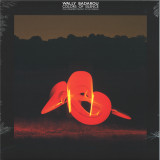


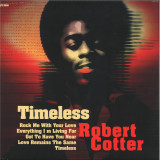







![Various - [R]3volution V|KT|MS Vol.1](https://www.deejay.de/images/l/9/7/1020797.jpg)


