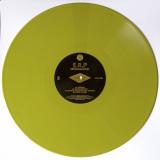
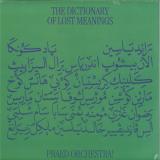
Raw deep house pressure from Sascha Dive, four cuts blending soul, groove, and late-night mood, with Roland Clark blessing the mic. Limited green vinyl for those who still move to the real sound.
DJ Feedbacks :
Laurent Garnier : Cool tracks
Josh Wink (Ovum) : Liking 'Im Inspired' the best here.
C-Rock : Those Nights for me, nice NYC dub House touch!
Radio Slave (Rekids) : I've always been such a big fan of Sasha's productions and "There Is No Tomorrow" hits the spot.
Fleur Shore (Undergrowth / Cuttin' Headz) : im inspired, beautiful track
Reboot (Cecille / Cadenza) : schöne tracks ️
Satoshi Tomiie (Abstract Architecture) : Solid release!
Alinka (Twirl, Classic, Crosstown Rebels, Batty Bass) : Nice one
PBR Streetgang : Invocation and Im Inspired are great
D'Julz (Bass Culture) : those night is the one for me here
Damian Lazarus (Crosstown Rebels) : Thanks for sending. Xx
Ben Sims : Now downloading... will check asap!
Archie Hamilton (Microhertz / FUSE) : Nice thanks
Eddie Fowlkes (Detroit Wax, Rekids, Classic Music Company) : thanks
Tim Sweeney (Beats In Space) : Lovely
Doc Martin (Sublevel) : Sascha on a good one,with the voice of house music Roland Clark no less!!!
Terry Farley : THOSE NIGHTS WORKS FOR ME
Chloe Caillet (Smile Records) : love this!
Oliver $ (Classic Music Company / Play It Down) : Sooo gooood!
Ame (Innervisions) : thanks
Danny Tenaglia : Downloading for Danny Tenaglia, thanks!
Robert Owens (Trax / Musical Directions) : Cool tracks
Kai Alce (Real Soon) : Nice deep tracks from Sascha
Mark Farina : dig them.
Lea Lisa (Phonica Records / Folklor Club) : Really good definition of House
Alexkid (Rawax / FUSE / NG Trax) : Phonogramme (and Sascha Dive) on fire at the moment...
Harri (Sub Club) : lovely stuff, will play and support
Search:micro dj
- A1: DJ Shufflemaster - Modern Exorcist
- A2: Nicolas Vogler - Tailgating
- A3: Gene Richards Jr & Fixon - Rare Punch
- A4: Phil Berg - Nympho
- A5: Dig-it - Variables Ocultas
- B1: Mathys Lenne - Energy Never Dies
- B2: Damian Vargas - Transformacion
- B3: Truncate - Microcosm
- B4: DJ Dextro - kelt 9B
- B5: Kashpitzky - Hammer Smashed Face
One more year and our annual compilation 'Hate & Tenderness' is back. This time in its fifth edition, where we have agreed a group with some of our favorite artists from the last years to create a wonderful compilation full of love.
Being faithful to our philosophy based on contrasts, legendary artists such as DJ Shufflemaster, Truncate or DJ Dextro join youngsters such as Gene Richards Jr, Phil Berg, Mathys Lenne, Kashpitzky, Nicolas Vogler or Damian Vargas to name a few, all of them accompanied by the label heads Fixon & Dig-It, to leave a release that moves us indescribably and that we want to share with everyone!
credits
Order now and we will order the item for you at our supplier.
Introducing the second release from Principauté de Bowl-Air — PBAVINYL002
Principauté de Bowl-Air is a label founded by DJ Bowlcut, a key figure in supporting Seoul’s underground scene through Seoul Community Radio. The project presents his vision of deep, glitchy minimal house music, woven with the story of a secret micronation hidden in the heart of Seoul.
Following the debut vinyl release, PBAVINYL002 features an original track by DJ Bowlcut alongside reinterpretations by his friends Slowmouth and Furz.
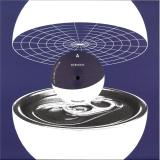
The cover artwork references one of the first K-pop acts to introduce rave sounds to Korean audiences — Seo Taiji and Boys. Their first techno album featured an image of the top of an aluminum can, and PBAVINYL002 draws from the same visual reference. The track “Dig This” also reworks elements from their song “You in Illusions (Techno Taiji Mix).”
The A-side opens with “Falling”, a hypnotic-groove track built around deep synths and designed for afterhours. It works as a perfect DJ tool for gently guiding the crowd into a subtle trance state, further enhanced by the vocal sample “Everybody Falling, Anybody Feel that Falling?”, which pulls listeners into a slow, spiraling moment.
The second A-side track, “Dig This”, takes direct inspiration from one of the earliest K-pop tracks to feature rave stabs, TB-303, and classic rave elements — “You in Illusions (Techno Taiji Mix)”. DJ Bowlcut reuses many of the same samples that Seo Taiji originally layered, reconstructing them into a deep minimal cut with a distinctive Mentasm stab woven into the minimal house framework.
The B-side features remixes by Slowmouth and Furz.
Slowmouth transforms “Falling” into a brighter, more festive exploration that reveals the hidden layers of the original hypnotic groove.
Furz, meanwhile, turns “Dig This” into a funky, dancefloor-ready banger aimed at a wider crowd.
Order now and we will order the item for you at our supplier.
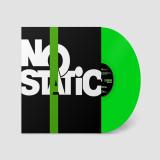
The No Static series continues with NS12001, another essential release from the Reel People Music Group's vinyl-only label. Pressed on striking neon green 12" vinyl and strictly limited to just 300 copies worldwide, this collector's edition revives four timeless instrumentals from Blaze's legendary The Instrumentals Project, originally released on Papa Records in 2004. While the original vinyl has long been deleted and now commands premium prices on the collectors' market, No Static gives these sought-after cuts a welcome return to wax. Featuring Sapporo, Celestine Prophecy, Microboards and Astrology, this release celebrates Blaze's unmistakable blend of soulful, deep and hypnotic grooves. A must-have for DJs, house music collectors and lovers of classic underground dance music.
Order now and we will order the item for you at our supplier.
In a landslide of writhing textures and hypnotic rhythm, prolific techno explorer DOLTZ. returns to DJ Nobu's Bitta imprint for an expansive album that foregrounds his skill creating living, breathing soundscapes out of pure synthesis. Since debuting in 2020, Shun Watanabe has issued a steady stream of LPs and EPs that quickly established him at the forefront of techno innovation in the Japanese scene. It was natural then for him to forge a connection with DJ Nobu's celebrated Bitta label via 2024 release Inception EP, a forthright club-focused statement to balance out his more experimental output on Muzan Editions and other labels. Elsewhere, Watanabe has also been developing a fruitful collaboration with German techno veteran Tobias Freund, resulting in two bold yet elegant albums on Dutch label Delsin. On Final Trace, the DOLTZ. sound is steered with purpose towards tactile sonic terrain where microscopic detail rewards the patient listener. He explains a core inspiration for the album was Kobo Abe's avant-garde 1960s novel Woman In The Dunes, which drew on repetition and the quiet madness of an inescapable environment. That manifests as a forbidding demeanour that courses throughout Final Trace, detectable in every slithering trail of static interference and mind-warping tonal loop. This is expertly sculpted wormhole techno of the highest calibre, delivered by an artist with the creative spark to make something visceral and thrilling out of a technically advanced approach. The power of Final Trace lies in the subtlety of its progression as a seemingly incessant refrain slowly morphs before your ears, but this is far from a static album. From the mesmerising throb and thrilling crescendo of 'Faz' to the sprightly ripples and pulses darting across 'Resonance', there is a constant sense of movement and the bright-eyed wonder of new ground being broken at every turn. It's the perfect summation of everything exciting about Watanabe's rich expression as DOLTZ. -- stunning sonics driven by brilliant ideas.
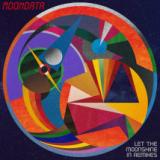
Moondata’s little-known sole single, 1984’s decidedly Balearic, jazz-funk/boogie fusion gem ‘Let The Moonshine In’, is a very important record to the Rotation Sound System crew. It has become a familiar favourite at their annual Rotation Garden Party micro-festival and formed the centrepiece of their first compilation, summer 2025’s superb Everything You’re About To Hear Is True Volume 1. It’s increasingly rare these days for an artist from the 80s to still have their master tapes but even rarer still for them to have the multitrack tapes too. This is something of the holy grail when it comes to licensing old music so when it happens the opportunity to remix and create new versions needs to be grabbed with both hands.
The original record, a genuine rarity beloved of synth-loving crate-diggers, had an unusual gestation. Originally recorded in demo form by musician Jean-Marie Gogniat, it was turned into a finished single by a group of German musicians with a little help from lyricist and vocalist Joe Mwenda, and a crew of backing vocalists whose number included a locally based American singer – a pre-fame Jennifer Rush. Fittingly, the pre-vocal instrumental mix, which has sat unreleased since 1984, is included as a bonus track on the digital edition of this new remix package. The Rotation Sound System crew’s mixes, headed up by long-serving producer Dean Meredith, sprinkle 21st century magic across Gogniat’s one-off masterpiece while retaining core elements of the original and offering nods aplenty to club-focused sounds of the 1980s. They are, in effect, the versions the track deserved – but never got – back in the mid 1980s.
To begin, Meredith reunites with long-time production partner Andrew Meecham for the pair’s first remix as Chicken Lips in three years – a typically sparse and spaced-out ‘Malfunction Dub’ with delay-laden synths, vocals and guitar snippets sit over a sparse post-electro beat and bass guitar. Meredith then joins forces with fellow Rotation Sound System member Ben Shenton for takes under their two bestknown aliases. First, they don the T-Kutt guise for some dubbed out, funky bass guitar-propelled boogie-meets-proto house action that rocks out a killer, Clavinet-expanded groove while spinning in talkbox and backing vocals.
The pair then re-emerge as Mind Fair, famed for their releases on Golf Channel Recordings and their own Rogue Cat Sounds, and deliver a warmer, deeper and more organic-sounding take that’s as languid and tactile as it is warm and saucereyed. To round off the vinyl version of the EP, Rotation Sound System’s other core members – Rob J, Rich Hall and Stuart Robinson – don the now-familiar Wrekin Havoc guise and re-invent the track as a raw, analogue-rich shuffle through 1980s electro – all squelchy synth-bass, stabbing, cut-up vocal samples, chiming synth melodies and echoing beats. The expanded digital download edition of the EP contains a trio of additional bonus rubs. Alongside instrumental versions of the T-Kutt and Mind Fair mixes, we also get a full vocal T-Kutt rework that adds back in Joe Mwenda’s beautifully delivered verses. These additional DJ tools round off a beautifully rendered set of re-imaginations of a genuine cult classic. Gogniat, the man who started it all way back in the summer of 1984, certainly approves.
Order now and we will order the item for you at our supplier.
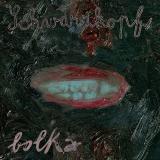
Bolka is known as the man with the cap. His cap has lived through a lot: his glitchy and microtonal experiments, studies at Institute of Sonology in The Hague or through countless performative works. A few years ago, Bolka’s cap fell apart. By that time he was already a fixture on the slovak experimental scene, but only releasing his debut album, “smutné stropy.” He started wearing new caps from then: somehow reminiscent of the old one, but much more varied — same as “smutné stropy,” bubbling with motifs, charming humour and pop sensitivity layered over detailed soundscapes popping with surprises.
On schwarzkopf, Bolka returns wishing for a thick black hair. With his charming love songs, that are positioned somewhere between a tightly run freak folk orchestra, deconstructed ballads and colorful ecstatic melancholy, he creates an album that thrives on juxtapositions that are completely unique, yet strangely familiar. Bolka’s songwriting is at once tender and irreverent — lovestruck whispering suddenly tripping over absurdist jokes and surreal images that fizz like soda. His songs move in that strange space between vulnerability and mischief, where intimate confessions collide with radical playfulness and the poetic rubs shoulders with the delightfully ridiculous.
On schwarzkopf, Bolka expands his world with a wide circle of collaborators and an even richer sonic palette. The album is meticulously detailed yet carefree: delicate moments sit next to sudden explosions, drifting from gentle pop to bursts of noise. Toward the end, the album even slips into a footwork-infused remix by Kodiki, passes through Julek ploski’s signature neon-baroque string perspective, and briefly wanders into Lénok’s cinematic sonic world. Bolka sings that he wants to dissolve into a healing ointment, to be ground in a mortar with calendula — and he invites us into this musical spa with him: a place that stings a little but ultimately soothes, a gorgeous soundscape that is both painful and joyful at the same time.
expected to be published on 05.06.2026
- A1: Walk Walk Walk
- A2: Too Much Noise (feat Joe Yorke)
- A3: Dem Try (feat Nazamba)
- B1: Machines
- B2: In & Out (feat Marina P)
- B3: This is Music (feat Nazamba)
- C1: LSD Explosion (feat Jah Thomas)
- C2: Waterhouse Club
- C3: Shaka
- D1: Dem Try (Jeanville Remix)
- D2: LSD Explosion (Mad Profesor Dub Mix)
- D3: Too Much Dub (Androo Re-Interpretation)
New Stand High Patrol album, featuring Joe Yorke, Nazamba, Jah Thomas - and remixes from Mad Professor, Androo & Jeanville.
Dub and House Music. Two aesthetics born in the shadows, shaped far from the mainstream music industry. Two underground cultures where independence is often a necessity and ingenuity is essential. Two scenes rooted in the margins of society, with dance, sound systems and minorities at their heart.
From the Jamaican sound system sessions of the late sixties, through the nights at Chicago's Warehouse, to the murmurings of the New York house scene in the early eighties — history shows that house, reggae and dub share far more than many people may assume. Collective action, resistance as a driving force, music moving straight from studio to turntable, shared messages: these are the threads that bind these landmark musical movements together. It is at this crossroads, driven by the spirit of experimentation that defines them, that the members of Stand High Patrol found yet another territory worth mapping.
"Skanking & Jacking", the new Musketeerz album, reveals a side of the Dubadub sound never heard on record before. Built for the dancers and for DJs, the LP brings together the pulse of house music and the vibrant groove of reggae. Uncharted territory, never interfaced like this before. The result of a meticulous blending of styles, house, reggae and dub intertwine across 12 extended tracks. The sound is carefully crafted. Built on immersive loops and interlaced with micro-variations that give it an organic texture. Born from the interaction between being and machine. This is not about simply bringing worlds closer together; it's about mobilising influences to chart a new sonic galaxy.
Beyond it's aesthetic statement, "Skanking & Jacking" also stands out for its international cast. The most extensive Stand High Patrol have ever assembled on an album. From England, Italy, Switzerland and Jamaica, the guest vocalists, producers and MCs deepen the sense of dialogue between cultures and styles. At the mic, Joe Yorke, Marina P, Nazamba and Jah Thomas join the Dubadub Musketeerz on their explorations. Each appearance subtly reshaping the contours of the project.
Never fixed, always in motion, "Skanking & Jacking" pays tribute to the traditions that shaped it and closes, as a final nod, with remixes from Jeanville, Androo and the legendary Mad Professor. The album stands as further proof of a crew that shows no signs of stopping its reinvention. Available on stream, digital and double LP on May 29th.
mixed by aloisius
mastered by Amir Shoat
tracklist poem written by Isaiah Hull
releasing on digital + physical (Vinyl, CD & Cassette) 9th April 2026. Physical editions will feature a secret unlisted bonus track.
aloisius is a prolific, artist and producer, who recently produced a full length album for Pretty V, which released via life is beautiful records (and sold out at Big Love & Rough Trade). aloisius has also collaborated with artists such as: James Massiah, CTM, Nova Varnrable, DJ Spanish Fly, Cities Aviv, zukovstheworld, Kenichi Iwasa & many others.
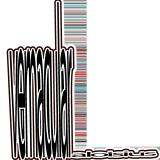
‘vernacular’ is the debut studio album by improvisation-based artist, and founder of life beautiful, aloisius.
Built entirely from layers of improvised instrumentation recorded via laptop microphone, using various instruments such as guitar, piano, cello, trumpet, saxophone, drums & voice. vernacular is inspired by the spirit of collective improvisation, and embodies aloisius' instinctual & organic approach to musical composition.
Crafted solely by aloisius (except for track 6, which features a layer of piano by life is beautiful member, friend & collaborator Bianca Scout).
To celebrate the release of the album, a semi-improvised interpretation of the project will be performed live by ‘orchestra379’ (a collective improvisation project curated by aloisius, consisting of a fluctuating lineup that differs on each occasion of performance). Initially in London, then at a select few cities across Europe.
Order now and we will order the item for you at our supplier.
ost euro presents – kvisha aka qwqwqwqwa: a modular-fueled love letter to the afterhours. Each track stands as a sonic snapshot – not just of a sound, but of a moment, a space, a memory. Rather than chase trends, this record offers a reflection – a subjective lens on the sound and spirit of club culture through the ears of someone who’s been on both sides of the booth. It’s a celebration of groove, chaos, intimacy, and memory – with nods to the past and eyes still on the floor. kvisha is the sonic playground of producer and DJ qwqwqwqwa, where bass-heavy, glitch-laced micro-percussive soundscapes take shape.
Order now and we will order the item for you at our supplier.
A cocktail of rebellious queer vocal fragments, deceptive percussive granules and swaying hammered vibrations, upsammy and Valentina Magaletti's first collaboration trembles with suspense. The seeds of 'Seismo' were sown following a commission from Amsterdam's Rijksmuseum to soundtrack an exhibition of work from the Museum Boijmans van Beuningen in Rotterdam and the duo didn't want to approach their collaboration flippantly. So, wandering the museum's maze of rooms, they recorded various improvised percussive sounds with their arsenal of microphones, using the space to inform various rhythms and textures that were sculpted later into electroacoustic vignettes. This was just the starting point, though; as Magaletti and upsammy began performing together, the project evolved and 'Seismo' began to take shape. The duo had struck on a salient aesthetic concept, using mostly digital and acoustic mallet instruments to blur the boundary between their roles and create friction between the synthetic and the authentic. And the finished record is a phantasmagoric push-and-pull between its various conflicting elements: harmony and dissonance, randomness and predictability, openness and constraint. 'Seismo' isn't the first time that upsammy has studied her environment in search of revelation. On her acclaimed second album, 2024's 'Germ in a Population of Buildings', the Amsterdam-based DJ, producer and multidisciplinary artist erected her complex, unorthodox rhythms and eerie melodies around a modernist frame of field recordings collected in various cityscapes, countering heavyweight basslines with subtle, microscopic sounds. London-based Italian vanguard Magaletti, meanwhile, has applied her unique logic to innumerable projects at this point, working with everyone from batida icon Nídia and hardcore-dub outfit Moin to French writer Fanny Chiarello and British bass scientist Shackleton. For years she's approached the drums with criticism, attempting to challenge any preconceptions, something that's most visible on 2020's 'A Queer Anthology of Drums'. And both artists' thoughtful perspectives are welded together seamlessly on 'Seismo', a dizzying suite of eight eccentric statements that's fragile but never insecure, gauzy but not indistinct. An unnerving sense of space characterizes 'It Comes to an End' as Magaletti's in situ improvisations herald for upsammy's microscopic glitches and chiming pitch-bent melodies. It's almost unbalancing to witness the track's impossible dimensionality, the interplay between reverberant marimba hits and bone-dry synths, or percussion that's been recorded and processed in consciously different settings. A new architecture emerges in the sound itself that the two artists scan and explore meticulously, testing its boundaries with undulating hybridized rhythms on the invigorating 'Superimposed' and offsetting the powdery drums with liquified smacks and alien voices. The duo's vibrations are knotted with piano flourishes on 'Hyperlocalize', balanced with artificial clanks and clangs that disappear into the track's sonorous atmosphere, replaced by whispers and half-hallucinated insectoid chirps. 'Seismo' is an album that feeds off the energy generated by its juxtapositions: the tension and anticipation that's melted by rapid, hyperactive movement and the finely drawn rhythms disrupted by a layer of indistinct, barely perceptible microsounds. It's a collaboration that sounds like two minds challenging each other but not wrestling, each peering from their own distinct vantage point and imagining a third landscape shaped by optimistic, queer vibrations.
Order now and we will order the item for you at our supplier.
mixed by aloisius
mastered by Amir Shoat
tracklist poem written by Isaiah Hull
releasing on digital + physical (Vinyl, CD & Cassette) 9th April 2026. Physical editions will feature a secret unlisted bonus track.
aloisius is a prolific, artist and producer, who recently produced a full length album for Pretty V, which released via life is beautiful records (and sold out at Big Love & Rough Trade). aloisius has also collaborated with artists such as: James Massiah, CTM, Nova Varnrable, DJ Spanish Fly, Cities Aviv, zukovstheworld, Kenichi Iwasa & many others.
‘vernacular’ is the debut studio album by improvisation-based artist, and founder of life beautiful, aloisius.
Built entirely from layers of improvised instrumentation recorded via laptop microphone, using various instruments such as guitar, piano, cello, trumpet, saxophone, drums & voice. vernacular is inspired by the spirit of collective improvisation, and embodies aloisius' instinctual & organic approach to musical composition.
Crafted solely by aloisius (except for track 6, which features a layer of piano by life is beautiful member, friend & collaborator Bianca Scout).
To celebrate the release of the album, a semi-improvised interpretation of the project will be performed live by ‘orchestra379’ (a collective improvisation project curated by aloisius, consisting of a fluctuating lineup that differs on each occasion of performance). Initially in London, then at a select few cities across Europe.
expected to be published on 09.04.2026
BOSLTD013 brings Luminér in a tight, floor-minded 12" that leans into the warm end of micro house and minimal without losing its bite. Analogue Forma is all about motion and detail: elastic grooves, crisp drum work, and that slightly dusty, hardware-fed sheen that sits perfectly between deep and functional.
Across four cuts, the record shifts from rolling, hypnotic pressure to sharper, twisted angles, keeping the swing present and the space alive. The B-side closes with “Forma (Gogan Remix)”, flipping the original into a more driving, late-night tool while staying true to the release’s analogue character. Vinyl only, built for DJs, and made to live in the mix.
- 1: Live On The Road - Kool Keith / Blade
- 2: Digging My Grave - Eskar / ILL BILL / DJ Bnutz
- 3: Whole New Chapter - Kurious / OnlyOneOnlySon
- 4: Freedom Or Death - Goretex / Ruste Juxx / ill Sykes
- 5: Wu Who? - Ghostface Killah / bood / Montener the Menace
- 6: Drive You Insane - Hypnopottomas / Farma G / Cymarshall Law
- 7: False Narrative - Scorzayzee / Goretex
- 8: Microphone On Fire - A-F-R-O /Junior Disprol
On this 8 track EP every song has UK and USA lyricists side by side as equals. It includes older icons of Hip-Hop, established talent from the current underground rap scene, and young emerging rappers who haven't been given a platform until now. This project is a collaboration between producer Sam Seed, a dozen rappers, 4 record labels,
the 05:21 music platform and a DJ night. No filler, all killer.
Introducing Sam Seed
A rising name on the underground rap scene. North London producer Sam Seed has a list of top tier production credits to his name with artists including Vinnie Paz, Billy woods,
Mickey Diamond, Conway the Machine. The Unaligned Vol.1 is his eagerly awaited debut EP.
expected to be published on 20.03.2026
At the start of this summer, following a three-year hiatus for Daphni (punctuated only by his first ever collaborative Daphni track ‘Unidos’ alongside Sofia Kourtesis), he dropped ‘Sad Piano House’. The track represented something of a continuation in the Daphni catalogue, its roots growing from Cherry’s ‘Cloudy’ and its subsequent Kelbin remix, something in that song’s makeup having a profound effect when played on dancefloors by Snaith and countless others. ‘Sad Piano House’ deployed more intangibly irresistible bendy piano to equally satisfying effect and continues to achieve similarly rhapsodic dancefloor saturation.
Though a sizeable gap for Daphni releases, between Cherry and Butterfly however of course sits Honey, the latest Caribou album and one that saw the more instantaneous and dancefloor leaning traits of Daphni peaking through the cracks more than ever before. This blurring of the lines leads to an intriguing collaboration in Butterfly’s lead single ‘Waiting So Long (feat. Caribou)’. An unlikely duo - in that both artists are the same man, Dan Snaith - ‘Waiting So Long’ is not so much an identity crisis, ego trip, or the result of a chemical spill in the Snaith laboratory. It’s simply a track that Snaith felt for the first time belongs to both aliases, and might appeal to fans of both. He has never sung on a Daphni track before, and did not set out with the intention to do so this time, and yet this strange billing was born.
Daphni music has always been Snaith’s way of hitting directly to the core of the dancefloors he spends so much of his time playing to, and those dancefloors have been steadily expanding as his name grows, with the music following suit. This album however also draws from further back with a definite kinship to the very first Daphni album, the invigorating bag of ideas that was Jiaolong.
Butterfly is a showcase of the wonderful variety and surprising twists and turns that made that album such an exciting new prospect and that still to this day make Snaith such an intriguing DJ. There are more heavy hitters here, tracks that fill those dancefloors better than anyone, like ‘Clap Your Hands’ which picks up the energy of ‘Sad Piano House’ and flips it, exposing the gritty and intoxicating underbelly of Snaith’s hitmaking side, while retaining the playful urgency that runs through all of his work of late. Meanwhile ‘Hang’’s comic-strip horns are unpinned by gleeful force, unrelenting and thrillingly unshakeable. Elsewhere though comes a clutch of other tunes that might creep out somewhere more off the beaten path, a path Snaith has never stopped seeking in amongst his larger billings. ‘Lucky’ is squirmy and elusively intoxicating, ‘Invention’ skitters down meandering, inviting corridors, ‘Talk To Me’ grumbles and broods in the murk, and ‘Miles Smiles’ could roll on endlessly, so confident in its groove. There are no obvious peaks in these tracks or unifying moments, in fact many of them really have no business being on the dancefloor at all, and yet in the right setting, they could be the most fun to be had all night.
One such club is a good microcosm for the ethos of Butterfly as a whole. “Around the time I was finishing up this album I played a long set in a club called Open Ground in Wuppertal, Germany.” Snaith recalls, “It’s kind of, in one sense, the platonic ideal of the kind of club I’d want to play in. Every single decision has been taken, at great expense, with the aim of making the perfect sounding medium sized club room. But on top of it being the perfect acoustic environment it also is run by an amazing collection of people in a way that gives it a sense of community that dance music at its best provides. It is an absolute pleasure to play in that room to a crowd of people who come from all over. Playing in there you feel like you can play anything, and I played works in progress of pretty much every track on this album in my set there. Don’t get me wrong, I love playing a short set at a festival or in a more raw warehouse kind of club where you bang it out and only really functional music works but on record I guess the point of these Daphni records is to keep in mind a more expansive idea of dance music where the parameters are broad and the church is broad. I think that actually, putting really functional stuff next to weirder tracks (both on an album and in a dj set) might be the thing that’s still most interesting to me.”
This is the feeling that’s most palpable on Butterfly, and in every single time you see Snaith DJ. Right from the inception of the Daphni alias - and even before that – the thrill of trying stuff out, pushing at the boundaries has always been there and on Butterfly is present in all its twists and turns. It leaps all over the place and yet it hangs together, never feeling like a grab bag of dancefloor utilities but rather a distillation of all the strings to Snaith’s bow, exhilaratingly human and unified by one singular concept – simple and joyful exploration.
Order now and we will order the item for you at our supplier.
Repress
Anthony Naples returns with his second full length album, "Take Me With You", arriving first as a 'Mixed Version' cassette inspired and commissioned by the Good Morning Tapes series, followed by Digital, Vinyl and even Long Sleeve T-Shirt formats.
Originally conceived as a D.J. mixtape dedicated to friends and the time spent with them in the morning hours after the parties over (or beginning) - it quickly morphed into a soft focused meditation on all things warm and intangible.
'Take Me With You' fires off in all styles - the opening triptych of the extra-cosmic 'Alto', post-rave pianos of 'Goodness' and slow-dance-inducing 'Drifter' bring the attention inward — taking cues from a host of personal favorites including: 'Space' LP by Space, The Theater Of Eternal Music, Panda Bear's 'Person Pitch' , Atlas Sound's 'Let The Blind Lead...', Arthur Russell's 'World Of Echo', Suzanne Ciani's 'Buchla Concerts: 1975', The Microphones 'The Glow Pt. II' & 'Mount Eerie', A mixtape of Krautrock from DJ Ivan Berko and most definitely Holger Czukay, 'Take Me With You' is a fresh turn for Naples as he ascends into a blend of his most personal work to date — touching on trip-hop, psychedelic pop, ambient house, and much more along the way.
Make no mistake - 'Take Me With You''s message is undoubtedly about escapism, given away by its happy-abductee cover art done by the legend Biscuit— but first and foremost it reflects on that lingering feeling one gets when walking away from the ones they love.
Order now and we will order the item for you at our supplier.
- A1: State Of The Nation Featuring – Damon Albarn
- A2: 3030
- A3: The Fantabulous Rap Extravaganza Featuring – Prince Paul
- A4: Things You Can Do
- B1: Positive Contact
- B2: St. Catherine St. Featuring – Beans, Mr. Lif, P. Wingerter, Peanut Butter Wolf, Verna Brown
- B3: Virus
- B4: Upgrade (A Brymar College Course)
- B5: New Coke Featuring – Mark Ramos-Nishita
- C1: Mastermind
- C2: National Movie Review Featuring – Brad Roberts
- C3: Madness
- C4: Meet Cleofis Randolph The Patriarch Featuring – MC Paul Barman
- C5: Time Keeps On Slipping Featuring – Damon Albarn
- C6: The News (A Wholly Owned Subsidiary Of Microsoft Inc.) Featuring – Hafdis Huld
- D1: Turbulence (Remix) Remix – Mark Bell
- D2: The Fantabulous Rap Extravaganza Part 2 Featuring – Prince Paul
- D3: Battlesong
- D4: Love Story
- D5: Memory Loss Featuring – Sean Lennon
- D6: The Assman 640 Speaks
Following the release of Deltron 3030, all three members participated in the Gorillaz' self-titled debut album. With Del aka Deltron Zero on vocals, Dan the Automator aka The Cantankerous Captain Aptos on production, and Kid Koala aka Skiznoid the Boy Wonder on turntables, this album takes the listener on a paranoid journey set in a dystopian year 3030 dealing with viruses, the apocalypse, an oppressive government, and a war waged against a huge company called the Corporate Bank of Time that rules the universe, all to the well-crafted and consistent musical backing of the Automator. Appearances by Damon Albarn (The Gorillaz, Blur), Prince Paul, Peanut Butter Wolf, DJ Money Mark, Paul Barman, Mark Bell (Bjork, production), Sean Lennon, and Mr. Lif compliment Del's vocal style and add the right amount of flavor to this classic period piece.
expected to be published on 06.02.2026
- A1: Robert Pico - Le chien fidèle
- A2: Annie Girardot - La femme faux cils
- A3: Spauv Georges - Je suis l'état
- A4: Zoé - Zoé
- A5: Jacques Da Sylva - Fou
- A6: Valentin - Je suis un vagabond
- A7: Jacques Malia - Histoire de Gitan
- A8: Bernard Jamet - Raison Legale
- B1: Jean-Pierre Lebort - Barbara au chapeau Rose
- B2: Les Concentrés - Fils de dégénérés
- B3: Les Missiles - Publicité
- B4: Hegessipe - Le credi d'Hegessipe
- B5: Marechalement Votre - Ethero Disco
- B6: Mamlouk - Decollez les
- B7: Mozaique - L'amour nu
- B8: Jean-Marc Garrigues - Je dis non
- B9: Penuel - AStronef 328
The journey through French-speaking pop archives continues with this fifth volume, packed with fuzz, gimmicks, and dissent. Far from the charts, the selected tracks display a great creative freedom, often backed by corrosive humor. Welcome to the surprising, kaleidoscopic, and colorful world of the late sixties and early seventies, Wizzz!
Born in Montauban, Robert Pico stumbled into music by chance when he met René Vaneste, then artistic director at Pathé-Marconi. René brought him to Paris to record his first 45 RPM EP in 1964. A year later, Pierre Perret introduced him to Vogue, where he recorded his second album with Claude Nougaro’s orchestra. Sylvie Vartan then introduced him to RCA, where he recorded four singles, including the astonishing "Chien Fidèle," a track backed by a hair-rising fuzz guitar. Alongside his solo career, he also composed for other artists like Alain Delon (the song was recorded but remains unreleased), Magali Noël, Bourvil, and Georges Guétary. In the Paris of the sixties, he mingled with Mireille Darc, Elsa Martinelli, Marie Laforêt, France Gall, Françoise Hardy, Petula Clark, Régine, Dani, Serge Gainsbourg, Joe Dassin, Franck Fernandel, Charles Level, and Roland Vincent. Despite his efforts and winning a Grand Prix Sacem for his final record, Robert Pico didn’t achieve the expected success in show business and decided to leave Paris and return to the Southwest, where he devoted himself to writing. He is the author of 23 books (including Delon et Compagnie, Jean-Marc Savary Editions 2025, a memoir about his youth and his many encounters). Today, he is relieved to never have become a celebrity and devotes himself to his work with passion.
In 1969, the Franco-Italian movie Erotissimo was released, directed by Gérard Pirès (who later directed Taxi in 1998, written and produced by Luc Besson). This pop comedy features Annie Girardot, Jean Yanne, Francis Blanche, Serge Gainsbourg, Nicole Croisille, Jacques Martin, and Patrick Topaloff. The soundtrack was written by Michel Polnareff and William Sheller, with lyrics by Jean-Lou Dabadie. "La Femme Faux-cils," performed by Annie Girardot. It recounts the feelings of a rich CEO's wife who seeks to develop her sex appeal under the influence of advertisement and magazines. Groovy, sparkling and light, this track, with ITS lush arrangements humorously critiques consumer society and feminine beauty standards.
“Je suis l’Etat” (1967) is the flagship track of the first EP by singer-songwriter Spauv Georges, aka Georges Larriaga, better known as Jim Larriaga (1941-2022). Born into a family of bakers, the young man was initially planning to become a hairdresser when he discovered English-speaking music through Elvis Presley and the Beatles. After this revelation, he decided he would become a songwriter and gave himself five years to succeed. He recorded his first two EP’s independently for RCA under the pseudonym Spauv Georges; meaning “that poor George”, a nickname given to him by the mother of her friend Jean-Pierre Prévotat (future drummer of the Players, Triangle, or Johnny Hallyday). Portraying a depressed and eccentric young man, Spauv Georges created corrosive and amusing songs that didn’t reach a wide audience, despite a TV appearance with Jean-Christophe Averty.
Supported by his loyal friend and fellow songwriter Jean-Max Rivière, Georges Larriaga met the future singer Carlos in the early '70s, then Sylvie Vartan’s assistant. He wrote songs for Carlos, including the popular "La vie est belle," "Y’a des indiens partout," and "La cantine", which went onto become a huge hit in 1972. He also composed for Claude François (“Anne-Marie”, 1971), Charlotte Julian (“Fleur de province”, 1972), helped launch child singer Roméo (who sold 4 million records), and later wrote the hit "Pas besoin d’éducation sexuelle" (1975) for the young Julie Bataille. In 1971, Jim recorded an album for Disc'Az: “L’univers étrange et fou de Jim Larriaga”, which featured pop gems like “La maison de mon père”.
The story of the song "Zoé" began when Pierre Dorsay, artistic director at Vogue Records, asked Swiss singer and musician Pierre Alain to write a song for a new female singer. The inspiration came when he realized that Zoé (the artist's name) was also the name of France's first atomic battery, created in 1948, which consisted of uranium oxide immersed in heavy water! The lyrics reflect a bubbling energy that must be handled with caution, while the instrumentation echoes this atomic theme, notably with the use of a theremin.
Zoé’s career lasted only as long as a single 45 RPM, but it seems Christine Fontane was the vocalist behind this pseudonym, who is known for several EPs, a good "popcorn" album in 1964, and a handful of children’s singles in the '70s. Regardless, the photograph on the cover is of a different girl entirely.
Later, Pierre Alain continued his career, writing songs for himself, Marie Laforêt, Danièle Licari, Alice Dona, Arlette Zola (3rd place in Eurovision 1982), and achieving multiple gold and platinum records in Canada. Also an inventor with several patents, president of the Romande Academy, and head of the French Alliance in Geneva, he now composes atonal music, books, and poetry. Moreover, he is also the host of "Les Mardis de Pierre Alain" at "Le P'tit Music'Hohl" in Geneva.
Filled with oriental choruses and fuzz guitar, "Fou" is from Jacques Da Sylva's only EP released by Vogue in 1967. Despite the quality of this recording, all traces of this singer disappear after this first effort.
Valentin is a baroque pop singer born in Belgium. He is the songwriter and composer of most of the tracks on his three singles released in the late 60s in Canada. A legend says that he reincarnated himself as Jacky Valentin during the 1970s for a rock'n'roll revival career in Belgium, but his older brother sadly debunked this story. Valentin's first two singles were arranged by Claude Rogen, a Parisian session pianist who had come to Canada to promote the song “Mister A Gogo”, a cover of David Bowie’s “Laughing Gnome”, adapted by singer Delphine, his wife at the time. Far from his usual network, Claude Rogen arranged music for Polydor, including the arrangements for “Je suis un vagabond” in 1969, a jerk tune with string arrangements and a furious optimism.
Jacques Malia wrote, composed, and recorded his only 45 EP for Festival in 1966. “Histoire de gitan” is an incredible beat track with bohemian scat that tells the story of a gypsy musician who came to Paris to make it in the Music-Hall, to no avail. The hero of the song and its author probably shared a similar fate, as Jacques Malia faded into anonymity after this remarkable attempt.
Bernard Jamet recorded two EPs for Barclay in the late sixties and co-wrote several songs with Christine Pilzer, Pascal Danel, and prolific songwriters Michel Delancray and Mya Simile. The track “Raison Légale” (1968), his masterpiece, immerses the listener in a courtroom right when a murderer is being judged, with jerk rhythm and free arrangements. A unique, paranoid, judicial, and psychedelic oddity.
Jean-Pierre Lebrot-Millers started his career in show business in 1967 as a singer and songwriter for the Philips label. After three singles, he wrote several songs of a new kind with his friend Pierre Halioche, in the midst of the sexual liberation movement and the democratization of drugs. With provocative lyrics, “Les filles du hasard” and “Barbara au Chapeau Rose” were released on a Philips singles in 1968. The character of Barbara was inspired by a queen of Parisian nightlife during the psychedelic years: model Charlotte Martin, who dated Eric Clapton from 1965 to 1968, then Jimmy Page from 1970 to 1983. Jean-Claude Petit’s arrangements, with a table-filled intro, soul brass, and Hendrixian guitar, emphasize the flamboyance of a hedonistic and sexy character, whose dog is named Junkie because “Junkie est un nom exquis”! The track was recorded live in three takes with a full orchestra.
Upon its release, the record was censored by Europe 1 and RTL due to its references to drug use. Jean-Pierre Lebrot was then banned from the airwaves and later dismissed by his record label. He changed his artist name to Jean-Pierre Millers, while his companion Pierre Halioche became D. Dolby for a new dreamy composition, “Chilla”, which Jean-Pierre produced himself with arrangements by Jean Musy. Once again, the song was immediately censored everywhere. After this setback, he decided to stop singing and started taking on odd jobs to support his Swedish wife and their son until the day he met Jean-Pierre Martin, then production manager at Decca, who had worked with Manu Dibango. Martin offered Jean-Pierre Lebrot-Millers, then employed at Rank Xerox, the position of artistic director at Decca. He accepted and became, a year later, promotion director (radio, press, TV). He worked on Julio Iglesias’s first album for Decca, which became a massive hit and allowed him to meet Claude Carrère. The latter asked him to write new songs and find their performers, much like a “talent scout.” It’s through him that Jean-Pierre discovered Julie Pietri and Corinne Hermès. He composed “Ma Pompadour” for Ringo, Sheila’s husband, and took the microphone again for the syncope hit “Rendez-Vous” in 1982.
That same year, Jean-Pierre Lebrot-Millers tried to release a track for which he had heavily gone into debt: “Si la vie est un cadeau”. Having recorded it in London, he presented it to numerous professionals, all of whom refused to get involved. The same thing happened with Antenne 2 and the Sacem when he proposed the song as France’s entry for Eurovision. He then met Haïm Saban, who was producing cartoon soundtracks and had just launched the Goldorak theme song. Saban, having listened to the song, declared it had the potential to become a hit. He sent Jean-Pierre and Corinne Hermès to meet the CEO of the Luxembourg radio and television network. The latter received them, asked to hear a verse and chorus a cappella in his office, and immediately hired them to represent Luxembourg at Eurovision 1983. They reworked the arrangements and recorded a new version with Haïm Saban as co-producer. The song ended up winning Eurovision 1983, a great comeback for our hero. He continued producing and hung out with the band Nacash in Belgium when a couple came to introduce their daughter for an impromptu audition in a hotel room. The girl sang “Les démons de minuit” while dancing to a radio cassette. Impressed, he had her take singing lessons for a year and composed a song for her (for which he had the melody and title, but no lyrics). This required him to go on the hunt for a lyricist, who ended up being Guy Carlier. They recorded the song, which was initially a ballad, at Bernard Estardy’s CBE studio, and gave the singer a new name: Melody. They showed the song around their industry network without success. Later, Estardy called Jean-Pierre to suggest changing the rhythm and making it pop-rock. Orlando, Dalida’s brother, liked the result and decided to co-produce the track. “Y’a pas que les grands qui rêvent » became a classic hit. The song has since been covered by Juliette Armanet (as a ballad, like the original) and Valentina.
Born into an aristocratic Breton family, Hervé Mettais-Cartier worked as a DJ at Queen Kiss, a nightclub in Poitiers, where he formed the band Les Concentrés with Michel (an actor) and Christian (a radio technician). Together, they created a repertoire of whimsical songs (“Ma bique est morte”, “J’suis un salaud”, “Fils de dégénéré”...) that they performed on stage dressed in white (in homage to “concentrated milk”). They performed at Bliboquet and Olympia in 1968 for the 10th edition of the “Relais de la chanson Française” organized by L’Humanité-Dimanche and Nous les Garçons et les Filles, sponsored by Pepsi Cola. Winners in the author-composer category, alongside Danish singer Dorte, their visibility allowed them to record a 45, and appear on television in Jean-Christophe Averty’s show. The A-side of the disc features Bruno le ravageur, a casatchok dedicated to Bruno Caquatrix, the director of Olympia, nicknamed in the song “Coq Atroce” or “croque-actrices”. The B-side is dedicated to “Fils de dégénéré”, a quirky tribute to Hervé's aristocratic roots, mixing absurdity with sophisticated vocal harmonies.
After Les Concentrés, Hervé Mettais-Cartier formed the duo La Paire et sa Bêtise with his friend Olivier Robert. They performed in Parisian cabarets and toured with Pierre Vassiliu. In the late 1970s, Hervé began a solo career. He recorded two albums for the Motors label in 1978 and 1979, which did not achieve their anticipated success due to lack of promotion. In 1980, he met Bernadette, with whom he started a family and created a “Chansons à voir” (songs to see) show that he performed until his death at the end of 2024.
Publicité comes from the final EP by the Missiles (Ducretet Thomson, 1966), a disc that also includes “La (nouvelle) guerre de cent ans”, featured on Volume 4 of our Wizzz! series. Please refer to the booklet for the story of the band.
“He’s 1.82 meters tall, 28 years old, weighs 135 kg, is black and Belgian”: this is the description of singer Hegesippe on the back of his sole single (Decca, 1967). He appears on the album cover wearing a Greek toga, like a hippie gag – we are at the end of the year 1967. In “Le crédo d’Hegesippe”, this former bodyguard of Antoine and the Charlots plays the delightful card of the thick brute converted to Flower-Power and non-violence, with arrangements by Jean-Daniel Mercier, aka Paul Mille.
“Ethéro-disco” was released on a promotional record for clients of the Maréchal company (Liège, Belgium) for the New Year 1979. Over a funky rhythm, celebrity impersonations (Brigitte Bardot, Jacques Dutronc, Fernandel…) deliver an enigmatic text about pharmaceutical products like ether, bismuth, and aspartate. The track was composed by Dan Sarravah (responsible for Joanna's “Hold-up inusité” featured on Wizzz! Volume 3) and Tony Talado, who was also a singer (one 45 in 1967), songwriter (with over a dozen credits between 1964 and 1985 in various styles from surf music to disco), author (Devenez Végétarien, Dricot Editions, 1985), ad designer, and psychologist.
Décollez-les is on the A-side of Mamlouk's only single, a pseudonym for Marsel Hurten, who is known for his work on several EPs in the late sixties, as well as composing music for Hervé Vilard’s “Capri, c’est fini”, Claude Channes' “La Haine”, Annie Philippe’s “On m’a toujours dit”, and Nancy Holloway’s “Panne de Cœur”.
This strange song, with Afrobeat horns and absurd dialogues between a chef and his kitchen staff, is the result of a collaboration between Marsel Hurten and one of his neighbors, a photographer from Pavillon-sous-Bois (93), where the musician settled after returning from the Algerian War. A music video was shot to promote the record.
Marsel Hurten was born in Tourcoing (59) into a musical family. At a young age, he joined the brass band founded by his grandfather, playing the piston before studying trumpet at the conservatory, as well as teaching himself how to play the guitar. As an orchestra musician, he toured in France, Belgium, Germany, and England. He released a series of solo 45’s between 1965 and 1968 for the DMF and Az labels before stopping recording to focus on working for other artists (Gilles Olivier, Noëlle Cordier…).
“L’amour nu” (Vogue, 1971) is the work of the short-lived Belgian band Mozaïque. The track, written by singer Jacques Albin, closely resembles another of his compositions, “Carré Blanc”, which he recorded in 1969 for Disc’AZ.
Represented by the Lumi Son micro-label based in Marignane (Côte d'Azur), Jean-Marc Garrigues released two 45 RPMs in the late sixties, defending the French jerk sound. The song “Je dis Non” is a short, joyful ode to youth, pop music, and rebellion.
Songwriter and performer Jacques Penuel released three singles. The first one, “Astronef 328” (Fontana, 1969), features a dizzying series of chords punctuated by sound effects, a sci-fi story, and arrangements by Jean-Claude Vannier.
We would like to sincerely thank Pierre Alain, Moon Blaha, Marsel Hurten, Bastien Larriaga, Jean-Pierre Lebrot-Millers, Bernadette Mettais-Cartier, Robert Pico, Olivier Robert, Claude Rogen, Micky Segura.
Order now and we will order the item for you at our supplier.
- Somewhere, Nowhere
- Angles Mortz
- False Prophet
- Fluoride Stare
- The Void
- Ascension
- Just a Kid
- Host
- Landslide
- Renaissance
- 7: am
- Blue In Grey
2026 Repress
Flickering in ultraviolet, there is an elusive place where blue pill meets red, ups become downs, and day merges with night. Those liminal spaces where anything is possible is where you’ll find Nightbus and their hypnotic debut album Passenger. Doom, uncertainty, and opportunity lurk in the shadowy corners of their murky existence with stops at disassociation, co-dependency, and addiction before reaching its final destination - a glimmer of hope.
The in-between of Nightbus’ own Gotham lies where Manchester’s city pulse meets Stockport’s outer realm. An audio-visual entity formed among a musical family of friends, freaks, and foes in messy mills and after hours on dancefloors alike, their sound bleeds from tension where collective creative forces are bound together and collide with the fallout of being torn apart. Before even playing a show, their So Young released single ‘Mirrors’ – a knowing nod of respect to some well-known gloomy Northerners - may have made old school indie heads shimmy at shows in Salford’s The White Hotel but also signalled the duo’s knack for offering listeners a Bandersnatch approach to hitchhiking their own personal Nightbus in whatever direction they choose to take. “Everyone can have their moment with our songs; the music is our response to who we are as young people, living in the city full of this energy right now,” they say.
Whilst reverb hefty melodies and dread-filled loops embody isolation from writing at each of their home studio set-ups, magic happens in the ether across 90s trip-hop, indie sleaze and electronica; Jake’s production layers Olive’s pop sentimentality with drums and samples whilst tales of a cast of faceless characters place Olive as puppet master; her severed self’s perspective manipulating their stringed limbs at arm’s length to see how their stories play out when scenes reflecting her own lie close to the bone. “It’s a bit fucked; like having this out of body experience with a made-up movie running through my head,” she says. “As I write I can see they’re all from a similar world, but they allow me to explore different feelings without giving away part of myself.”
Recorded at The Nave in Leeds with producer-engineer Alex Greaves (Heavy Lungs, Working Men’s Club), surprise and danger lies in every crevice. Brooding whispers turn to chants on 6-minute opus ‘Host.’ Improvised when performed live, its immersive shift in tempo leads to hefty dub courtesy of Jake’s pedals. Even then, you won’t know shit’s hit the fan until its mid-point reveal when ominous bass blasts a thunderous soundtrack as its protagonist defiantly walks away after committing the perfect crime. “It makes you wait, and more songs should have sirens,” Olive grins.
Leaning deeper into alter-egos via the video game-psychological horror of a Silent Hill dystopia, the band’s Fight Club moment ‘Angles Mortz’ turns its literal translation of death angles on its head as it reflects upon kink and internalised shame reincarnated as pride. Elsewhere the ice cool ‘Landslide’ is a Requiem for a Dream about the addiction of being in a band; ‘The Void’ explores co-dependency and estranged relationships; and carefully selected samples revive house track ‘Just A Kid’ from the band’s early incarnation. Passenger’s every direction is to face challenges head on. “That is what’s so great about horror; you can see through predictable patterns so when the unexpected occurs it's more realistic and uncomfortable… I want to own the dark stuff!”
As for Passenger’s first single, the pulsating ‘Ascension’ is a spiralling deep dive into death, suicide, and legacy around who or what we leave behind. A noughties club banger by way of NYC beats - ergonomically designed for those who like to stay out a little too often and too late - it throbs like a house party’s partition wall as the literal levelling up undergoes a neon transformation; blue glitching to pink, diffusing the white construct of the Nightbus Matrix. “It really does feel like the end of something and was purposely written that way,” they say, “the ascension is like a firework going off!”
With wheels in motion, Nightbus has become a movement surpassing sonic realms. Between shows from Porto to Brighton taking in The Great Escape, Rotterdam’s Left Of The Dial and Paris’ Supersonic; DJing; remixing; guesting (BDRMM’s Microtonic album); and even enlisting talented like-minds to craft a 3-part queer coming-of-age music video series which ties in with a new ‘hyperpop’ phase in the evolution of their popular Nightbus Soundsystem club night, heads are now being turned from sports brands to high-end fashion designers. “There are things we can’t reveal just yet,” tells Olive, “but we’re excited about the direction this beast we’ve created is heading.” As the album philosophises and asks one ultimate question; what does it truly mean to be ‘Passenger’? Nightbus may not claim to offer a definitive answer, but it might make you feel a bit better about those demons.
expected to be published on 16.01.2026
Swan Song
The vinyl LP at the heart of this éthiopiques 31 tracks 2 to 11 was one of the very last vinyl records ever released in Ethiopia. But above all it represents, we felt, the absolute masterpiece of the Ethiopian Groove – the Swan Song of Swinging Addis. The album leaves a clear idea for posterity of the level of sophistication and mastery that modern Ethiopian music had achieved, before being crushed under the Stalino-military heel of the Derg – as the bloody revolution that was unfolding came to be called.
Ethiopia1976.
The Revolution that broke out in February 1974 rolled on in a ruthless march. The whole of Ethiopian society was utterly stunned. The bouquets of flowers handed joyfully to the first tanks of the coup d'état were to wilt very rapidly. From September 1976 to February 1978, 18 months of Red Terror (the name given by the junta itself) spilled blood throughout the country. This fratricidal conflict took its heaviest toll among students and youth. The shift from feudalism to a cruel and primitive Stalinism left the country's citizens deeply traumatised, and snuffed out any pretence of activism, whatever the sector of society. This ice age was to last for seventeen long years.
ሙሉቀን፡መለሰ Mulukèn Mellèssè Muluqän Mälläsä
It was three tracks by Muluken that served as the opener for éthiopiques-1 more than 25 years ago. Seven more tracks appeared on éthiopiques-3 and 13, all accompanied by The Equators, which was soon to become the Dahlak Band.
The first track, Hédètch alu, also the very first piece that Muluken ever recorded, left audiences both unsettled and amazed. Reflecting the singer's extremely young age (he was just 17 at the time), this angelic voice mystified many, who thought they were in fact listening to a feminine voice. He was not yet 22 when he released his last vinyl record in 1976 with Kaifa Records (KF 39LP), one of the very last to be issued in Ethiopia, before the cassette tape became the dominant medium for music distribution – and before the new revolutionary regime put a stop to all independent musical life, via an unspeakable barrage of prohibitions and other persecutions.
Mulu qèn, literally, “A well filled day”. This tender maternal intention wasn't enough to ward off the cruelty of fate. His mother's premature death drove Muluken to leave his native Godjam, in northeast Ethiopia, to live with an uncle in Addis Ababa. Born Muluken Tamer, he took his uncle's last name – Mèllèssè.
The spelling Muluken appeared in his administrative records. Transcription of Amharic to the Latin alphabet, both in Ethiopia and for scholars, gives rise to controversies and quibbles that can never be neatly settled. French allows for a closer approximation of the original pronunciation, thanks to its battery of accent marks, confusing as they may be to anglophones.
Between rather accommodating administrative record-keepers and the various versions that pop up in interviews given by the artist, Muluken's year of birth oscillates between 1953 and 1955…
1954? One thing is certain: the artist's talent made itself known very early indeed, because he got his start in 1966-67, at the age of 13 or 14. Photos from the period attest to his extreme youth. It's a strange sort of initiation for a very young teenager to become a sensation in the heart of Addis's nightlife at the time, Woubé Bèrèha – the Wilds of Woubé. And what's more, in the club of the Queen of the Night, the Godjamé Assègèdètch Alamrèw herself, the very same that was portrayed by Sebhat Guèbrè-Egziabhér in his novel-memoir Les Nuits d’Addis Abeba2… The legendary female club owner who is remembered to this day by the capital's ageing boomers.
Muluken first tried his hand at the drums, before he grabbed the microphone. He emigrated briefly to the Zula Club, across the street from the old Addis Post Office, one of the ground-breaking bars of the burgeoning musical scene, before joining the Second Police Band in 1968, for around three years. He spent a few months with the short-lived Blue Nile Band founded by saxophonist Besrat Tammènè. As the musical scene grew increasingly successful, and pulled slowly but decisively away from its institutional ties, Muluken released his first 45rpm single in February 1972 (Amha Records AE 440). It was included in two LP Ethiopian Hit Parade compilation albums in September of the same year. All in all, Muluken released eight two-track 45s and the same number of original cassette tapes between February 1972 and 1984, the year that he departed for permanent exile in the USA. After converting to Pentecostalism in 1980, Muluken gradually abandoned all secular musical activity. In 1985, at the end of a concert in Philadelphia, he decided to quit concerts and recording for good. Mèlakè Gèbré, the historic bass player from the Walias band who was playing with him that night, recalls that everything appeared so irredeemably diabolical in Muluken's eyes, that it was to be the end of his contribution to Ethiopian Groove.
The end of the story, the beginning of a legend.
Dahlak Band, forgotten by History
Aside from his personal history and vocal talents, it must be remembered that Muluken Mèllèssè was one of the biggest names in the musical innovations that marked the end of the imperial period. These éthiopiques aim to convince those who are just discovering this hidden gem... As for Ethiopians themselves, they are to this day captivated by this singular and atypical figure in the Abyssinian pop landscape – even though he withdrew from public life some 40 years ago. Incorrigible devotees of poetic twists, of more or less hidden meanings, Ethiopians appreciate above all the care Muluken took in choosing his lyrics and the writers who penned them, such as Feqerte Haylou, Alemtsehay Wodajo and, here, Shewalul Mengistu (1944-1977). Love songs, written by women, a far cry from the conventional drivel that pleases sappy sentimentalists.
Muluken is equally acclaimed for his perfectionism when it came to music, the opposite of the overly casual approach that is all too common. He remained a faithful partner of musicians who came from a lineage that borrowed from several inventive and pioneering bands (Venus, Equators, Dahlak). Amongst them were certain artists who began their musical lives with Nersès Nalbandian at the Haile Sellassie Theatre and who come of age in around 1973 – at just the wrong time, you might say. Among them were the pillars Shimèlis Bèyènè (trumpet), Dawit Yifru (keyboards) and Tilayé Gèbrè (sax & flute). Most notably Tilayé Gèbrè, certainly one of the most important musicians, composers and arrangers of his generation, of the end of the imperial era, and of the early years of the Derg.
It was only in 1981 that a miraculous opportunity arose for Tilayé to escape the Stalinist paradise of the dictator Menguistou Haylè-Maryam. Once again it was Amha Eshèté (1946-2021) who provided a solution. The spirited and courageous producer, who had been in exile in Washington since 1975, succeeded, thanks to his incredible perseverence, in bringing the Walias Band to the USA. It was, in fact an extended Walias Band comprising ten musicians3, six of whom chose to slip away after a few concerts and the recording of an LP (The Best of Walias, WRS 100). Tilayé Gèbrè was one of these. He has been living in the USA ever since. There he joined the then-nascent Ethiopian diaspora, which lived largely unto itself, and was making only very modest headway in the American musical market. It seems unfair that Tilayé Gèbrè and the Dahlak Band were not able to benefit earlier from the public recognition that they do deserve.
A similar draining away of the top-rate talents would lead to the reorganization of the major groups of the “Derg Time”. The remaining artists spread themselves around between Ibex Band (renamed Roha Band), Ethio Star Band and a remodeled Walias Band. That spelled the end of the Dahlak Band.
With this record, produced by the essential Ali Abdella Kaifa a.k.a. Ali Tango, we can appreciate everything that the Derg not only destroyed, but also prevented from flourishing. This gem of Ethiopian-style afrobeat came out in 1976 (and, by way of a parenthesis, before the FESTAC 1977 in Lagos, which was attended by an impressive delegation of Ethiopian musicians — although Fela was already personna non grata in his own country). Despite everything that might distinguish this ethio-groove from Fela’s music – no colonial axe to grind, no question of political confrontation with the authorities, no claims to negritude or Africanism for the Ethiopian musicians, and less extrovertion! –, this LP fits beautifully into the saga of intense and electrified soul of the new “African” groove that Fela and Manu Dibango embodied so well from that point onwards.
In restoring this record to its place in the afrobeat epic, it can be seen that, if nothing else, the timeline bestows a legitimate pedigree and a historical primacy to works that had no international impact when they were originally released.
Warning! Masterpiece!
Order now and we will order the item for you at our supplier.
R2 2-CHANNEL ROTARY DJ MIXER
Introducing the Headliner R2, a 2-channel rotary DJ mixer that
is perfect for DJ’s looking for precise control and a warm sound,
without breaking the bank. The R2 is packed with features, like an
analog filter and 3-band isolator EQs on each channel, and uses
only high-quality components, including genuine ALPS potentiometers.
Featuring two stereo channels with selectable Line and Phono
RCA inputs, each channel on the Headliner R2 comes equipped
with gain control with a peak LED, a 3-band isolator EQ, a headphone cue selector, a large channel volume control knob, and a
filter activation switch.
The Master channel boasts an analog filter, headphone monitoring,
and output control section. The analog filter features selectable
High Pass / Low Pass Filter modes with Frequency and Resonance
controls, giving you precise control over your sound. Independent
Master and Booth outputs with volume controls, both with balanced
XLR and unbalanced RCA connectors, give you the flexibility to
connect to any sound system.
The Headliner R2 features genuine ALPS potentiometers, and a
sturdy metal enclosure with stained wood side panels for a classic
look that will complement any DJ setup. The modular internal
construction, coupled with the external power supply connected
via locking Mini XLR ensure superior audio performance.
The Headliner R2 is a reliable, high-quality mixer that will give
your DJ performances that classic vibe. Whether you’re spinning
house, techno, or classic funk/soul/disco jams, this fun little mixer
is the perfect addition to your setup.
• Two stereo channels with selectable Line and Phono RCA inputs
• Each channel features Gain control with Peak LED, 3-Band Isolator EQ, Headphones Cue selector with LED, channel
volume control and filter activation switch with LED
• Master channel features analog filter, headphone monitoring and output control section
• Analog filter features selectable High Pass / Low Pass Filter modes with Frequency and Resonance controls
• Genuine ALPS potentiometers
• Headphone Cue control section features volume control, mix control (Cue/Master), and split monitor switch
• High current headphone amplifier with dual 1/4” and 1/8” jacks
• Independent Master and Booth outputs with volume controls, balanced XLR outputs and unbalanced RCA outputs
• Additional Record output with unbalanced RCA jacks
• Dual LED level meters for the Master output
• Microphone input with level control on front panel
• Sturdy metal enclosure with stained wood side panels
• Modular internal construction for superior audio performance
• External split rail power supply connected via locking Mini XLR connector and push-button power switch
• Measurements: 320 x 219 x 106 mm
• Weight: 2.8 kg
Microphone Input
Nominal Input Level: -50dBu
Frequency Response: 20Hz – 20kHz (+/- 0.1dB)
THD + N: 100dB
Crosstalk: 100dB
Übersprechen: < -65dB
THD + N: < 0,05%
Kopfhörerausgang
Maximaler Ausgangspegel: 70mA/Kanal in 150Ω
Minimale Lastimpedanz: 32 Ohm/Kanal
Stromversorgung
Typ: Extern mit verriegelbarem Mini-XLR-Stecker
Eingangsspannung: 100-240v ~ 50/60Hz
Ausgangsspannung: +/-15V; 500mA
Spannungsbereich: 32 Ohm/Kanal
This item has not yet been released. You can pre-order the product now.
The duo Adjustment Bureau, return with another deeply hypnotic 12" on their own Hypnosapiens imprint. Following the label’s first two vinyl-only gems, The Others expands their sound palette between deep house, microhouse, and subtle breaks, all wrapped in a refined analog warmth.
Pressed on black 140-gram vinyl, The Others continues Hypnosapiens’ mission to showcase the minimal scene’s most sophisticated and soulful side. Functional yet emotional, understated yet timeless, crafted for DJs who value precision, patience, and space.
Order now and we will order the item for you at our supplier.
- 1: Broken Radio Intro
- 2: No's One Stop (feat. DJ Romes)
- 3: Community Trenches (feat. Kazi, MED, Blu, and Roc C)
- 4: Around Here (feat. Rah Digga and Talib Kweli)
- 5: Rooftop Shottas (feat. Blacca, Ghostface Killah, and Tristate)
- 6: Dr. Nodega Infomercial (Interlude)
- 7: Gutter Streams (feat. Alchemist)
- 8: Watch Ya Steps (Interlude)
- 9: Grounding Stars (feat. Guilty Simpson, Vic Spencer, and Montage One)
- 10: Nodega Run (feat. J. Sands)
- 11: Money Everyday (feat. Big Twins and Tha God Fahim)
- 12: Nobody Told U (Interlude)
- 13: How Crime Works (feat. Crimeapple)
- 14: Alley Loitering (Interlude)
- 15: No Parking Zone (feat. Logic)
- 16: Czarnobyl Torture (feat. Esoteric)
- 17: Good Beer Therapy (Interlude)
- 18: Likwit Smoke (feat. Wildchild and Tash)
- 19: ICU With Bottle Service (feat. Bishop Lamont and Khrysis)
- 20: Corner Goons (feat. Roc C and Jayo Felony)
Oh No helped shape the texture of modern independent hip-hop, introducing the world to his turbulent lyricism with the 2004 Stones Throw classic The Disrupt before establishing himself as one of the world’s most dynamic beat architects. Ranging from soulful to sinister, hypnotic to chaotic, Dr. No’s psychedelic production has become a vital force in hip-hop, bringing the best out of artists like Mos Def, Action Bronson, Prodigy, Murs, Dilated Peoples, Danny Brown, Elzhi, Your Old Droog, and more. The California native has also released several acclaimed sample-themed instrumental collections, mining Mediterranean psyche funk, the work of jazz icon Roy Ayers, Italian library music, rare Ethiopian grooves, and more. Now, Oh No is back with Nodega, his first vocal album in more than a decade. Conceptualized as a corner store where microphone assassins stop through to lay down their street tales, the project finds Oh No cooking up a fresh batch of wild creations as the drama unfolds. While contributing a handful of memorable verses himself, Oh No mostly focuses on crafting soundscapes for a staggering array of guests, including Logic, Ghostface Killah, Talib Kweli, Tha God Fahim, Alchemist, Guilty Simpson, Blu, Crimeapple, Rah Digga, Esoteric, Vic Spencer, Wildchild, Big Twins, and more. “I work with some of the most dangerous emcees in the game,” he explains. “I wanted the album to be like a hip-hop play, with all these different geniuses showing how they steal the scenes.” This concept is brought to life by music Oh No describes as a “cinematic landscape ranging from dark stabbing pianos to melodic jazz interludes, raw gutter loops to funk grit, dirty synths to nighttime thrills.” A visceral experience elevated by immense collective talent, Nodega is a compelling one-stop shop for Oh No’s expansive artistry.
expected to be published on 12.12.2025
Heavyweight groove from ERP — deep electro pressure with Microcentric on the flip, plus a killer Convextion remix. Pure machine soul for late-night heads.
DJ Feedbacks :
Pariah : amazing
Erol Alkan (Phantasy Sound) : Downloading Thanks!
Ben Sims : Now downloading... will check asap!
Luke Slater : Thanks!
Dave Clarke (white noise radio) : Seismic and well crafted, full support
Peverelist (Livity Sound) : Awesome, thanks!
Tensal (Tensal, Falling Ethicss) : great, Gerard always on point, thx
Call Super (Houndstooth) : thxxxx
Confidential Recipe (Rekids Special Projects) : great ep!
DJ Bone (FURTHER) : The Convextion remix is fire.
Monty Luke (Rekids / Black Catalogue) : solid ep
GiGi FM : <3
Jon Hester (Rekids, EDEC, Les Enfants Terribles, L.A.G.) : Fantastic EP across the board, amazing stuff!!
Jako Jako (BPitch Control, Tresor) : Schön!
Dan Beaumont (Chapter 10 / NTS) : Brilliant! love the Convextion mix
Satoshi Tomiie (Abstract Architecture) : Next level production and quality. Hats off
MoMa Ready (RAVE UNIT, HAUS of ALTR, Method 808) : great remix
Josh Wink (Ovum) : Usually good and sensual Electro from E.R.P.
Carista : love the remix of convextion
DVS1 : Thanks!
Inland : Ace! the remix is so lush! Thanks
Laurent Garnier : Ohhh whaouuuu - THIS IS SUPERB Full support
Radio Slave (Rekids) : I'm sold... This is great and I really love all the tracks.
Marcel Dettmann : thx
2562 / A Made Up Sound (Delsin, Clone) : The Convextion version is fire! Thanks :)
Bake (All Caps/Rinse FM) : love! <3
Interstellar Funk (Rush Hour) : Sounds great! Thank you
Efdemin (Dial) : Insanely good ep from the master!
Darko Esser / Tripeo (Balans / Clone) : Always good in my book, fantastic record!
Bailey Ibbs (Metafloor Records / Habits / Dansu Discs) : Make Electro Great Again!!
Nathan Jonson (Hrdvision) : rad!!!!
Uncertain (RSPX, WRKTRX, Suara) : convextion remix for me
Dj Deep (Deeply Rooted) : super nice release!
ROD / Benny Rodrigues : !!!!!
Surgeon (Dynamic Tension Records) : Great work. Love all tracks. Will play Convexion remix in my DJ sets for sure.
Steffi (Dolly) : simply grea!!!!!!
Kr!z (Token Records) : absolutely fantastic, as always
Phase Fatale (Ostgut Ton, BITE, Hospital Productions, Jealous God) : awesome!
Theo Nasa (Rekids) : WICKED!!!
Kosh (Syncrophone) : Lovely release
Subradeon (Subradeon Records) : interesting stuff! thanks for sending. Convextion rmx is my fav!
Gramrcy (Peach Discs/FTD) : Convextion remix is sick
Stephanie Sykes (Vent) : All tracks are sounding Super nice!!! TY!!! especially feeling Four Alone, so beautifully nostalgic. Cant wait to play!
Tal Fussman (Survival Tactics / Innervisions / Cod3QR / Drumpoet / Rekids) : oh yes
Richie Hawtin (M_Nus) : downloaded for r hawtin
Alan Oldham (DJ T-1000) : Super high quality electro, but the Convextion remix is the one I'm more likely to play out. Will support!
Ben UFO (Hessle Audio / Rinse FM) : convextion remix!
Truncate : Dope cuts thanks
Jonas Kopp : Excellent stuff, but this more of the pre-existent material.
The Advent : amazing stuff, digging all the tracks.. 2 - E.R.P - Microsentric my Fav..
Ste Roberts : Absolutely out of order! Anything Gerard touches turns to gold. 10/10
Joris Voorn (Spectrum) : Downloaded, thanx.
Roberto / R.M.K / Fossil Archive (Fossil Archive) : Love this!
Raffaele Attanasio (Axis) : nicee1!!!
DJ Assassin (Recode Records / Cross Section / Connaisseur) : wicked
“sitting in the terminal at Barcelona airport, health safety warnings echo through empty architecture. feeling slow, and fast, out of sync with rituals and routines. structure and rhythm disintegrate into micro gestures appearing in random order, a daily psychedelia... amid all of the chaos and distraction in the last few years, it’s only through letting go that I've found solid ground to stand on.”
These are some of the experiences and reflections that gave shape to Slipstream, a hallucinatory mini-album by the artist PVAS and the fourth release on Objekt's label, Kapsela. Slipstream is an aural document of PVAS's interior life, conceived not as a grab-bag of DJ-friendly tracks (although it’s clearly inspired by the club) but as a single, delicately crafted artistic statement. The entire record is shrouded in a flickering haze, worn through by smudged breakbeats and wiry drum machines. “Wetland”, with its swampy percussion and crystalline arps, echoes T++ and Kraftwerk. The radiant incandescence of “Gathering Drift” recalls GAS or Monolake's “Hong Kong.” Sampled breakbeats dip and swerve asymmetrically through “Boba” and “Terminal”. Across the record, textures and voices are reshaped by PVAS's homemade algo-software, UMT, which, in PVAS’ own words, “reconstructs one audio file by sampling another, resulting in output that merges their aesthetic qualities, creating rhythm with non-rhythmic sound files and abusing the stereo field.” But the most striking union of technology and poetic self-exploration comes at the end of the record, in the title track, from words murmured through a classic vocoder:
“when i stop framing myself as a boundaried stone
immovable, and powerful, and heavy
when i stop figuring my deepest space as my own
something which i am solely responsible
i surrender, i surrender”
PVAS is Jordan Juras, a Berlin-based artist who grew up outside of Windsor, Ontario. He has released solo EPs on Isla and xpq?, and is half the duo NUG (3XL, West Mineral Ltd.). In addition to developing music software professionally, he has used his UMT software on records by Lyra Pramuk and Dylan Kerr. Slipstream was recorded from 2022 to 2025.
Written and produced by PVAS
Mixed by TJ Hertz
Mastered by Anne Taegert at D&M
Artwork and design by Brodie Kaman
Order now and we will order the item for you at our supplier.
Local Action is proud to present Daughters, the debut album by Jennifer Walton.
Walton is a beloved figure across various sectors of the alternative music underground. Outside of her own music and soundtrack work, she has been a live drummer for Kero Kero Bonito, collaborates with Sarah Midori Perry on the pair’s Cryalot project, has remixed Metronomy and worked with Iceboy Violet, BABii and more. She also makes music and DJs with close friends aya and 96 Back under the name Microplastics, and recently contributed to London collective caroline’s acclaimed caroline 2 album.
The first seeds of Walton’s debut album were sowed during touring North America in 2018, where whilst ticking off life-long music goals, Walton’s father was dying of cancer. Grief is a constant presence throughout Daughters, and specifically the surreal nature of having to process it amongst a blur of airports, flight connections, hotel rooms and battles for stolen medication with the American healthcare system. Strip malls, drug deals, panic attacks; the artificiality of downtown American city districts dovetailing with reality in its most brutal form. Miss America for a day while life is changed forever.
Weaving between real life diary entries, travelogue-style storytelling, imagery that ranges from mechanical to religious and a scattering of fiction (though we are obliged to mention that ‘Shelly’ is based on a true story), Daughters climaxes with the staggering run of ‘Saints’, ‘Miss America’ and its title track. Sampling unattended machines harmonising bleeps into the void in a London hospital ward, ‘Saints’ narrates Walton taking her father to and from cancer research trials, “sat, hunched and sick in the concourse as minutes became hours”. And to be very real for a moment, Jen is a friend, and first hearing the ‘Miss America’ demo is up there with the most emotional moments we’ve had in 15 years of running this record label.
Finished in London across the second half of 2024, Daughters features musical contributions from some of the closest friends and collaborators that Walton has made in her time as a musician: aya (who also mixed the album), Daniel S. Evans, Joshua Barfood and Nick Granata (all of Shovel Dance), Alex McKenzie (of caroline and Shovel Dance), Aga Ujma and Bob Lockwood.
expected to be published on 24.10.2025
- A1-: Mirror House
- A2-: Djinn Dance
- B1-: The Dictionary of Lost Meanings
- B2-: The Spell
- C1-: Fragmented Realities
- C2-: Three Dimensional Spirits
- D1-: ILA3SAB
PRAED return to Discrepant, after their 2017’s entry Fabrication of Silver Dreams (CREP44)
Known for their signature blend of Egyptian Shaabi, free jazz and improvisation, the Lebanese duo behind PRAED - Raed Yassin and Paed Conca - now assemble a full orchestra for the second time taking the music to a deeper, rooted level.
Following their 2020 release Live in Sharjah, also under the PRAED Orchestra! moniker, the duo now revisit their unique blend of Arabic heritage and free jazz sensibilities with an album that keeps pushing further into strange and unexpected directions.
The Dictionary of Lost Meanings is just that, seven fully composed pieces and large-scale improvisations, performed by an expanded ensemble of musicians from across the globe. The result is dense and playful, unpredictable but familiar, a record where Arabic rhythms and microtonal melodies collide playfully against electronics, warped vocals and orchestral textures.
It’s less about genre than about memory — like tuning into a radio station broadcasting from somewhere between the past and the future.
PRAED continue to blur the line between popular culture and experimental music in ways that feel both grounded and completely their own.
PRAED ORCHESTRA! are
Raed Yassin: Synthesisers, Vocals, Beats
Paed Conca: Clarinet, Electric bass
Alan Bishop: Alto saxophone, Electric bass, Vocals
Andreas Bral: Harmonium, Electronics
Elisabeth Klinck: Violin
Christian Kobi: Soprano and Tenor Saxophones
Hans Koch: Bass Clarinet
Martin Küchen: Alto and Sopranino Saxophones
Maurice Louca: Synthesizer, electronics
Stan Maris: Accordion
Radwan Ghazi Moumneh: Buzuk, Vocals, Modular Synth
Youmna Saba: Electric Oud, Vocals
Sam Shalabi: Oud, Electric Guitar
Els Vandeweyer: Vibraphone
Khaled Yassine: Drums, Percussion
Michael Zerang: Drums, Percussion
Recorded by Jasper Jan Peeters at the Summer Bummer Festival, DE Studio,
Antwerp August 26, 2022
Mixed by Adham Zidan
Mastered by Mark Gergis
Produced by PRAED
Photos by Geert Vandepoele
Order now and we will order the item for you at our supplier.
Debuting on Curvature with an impressively deep EP, Reviver delivers a sound that aligns perfectly with the core ethos of the Spatial family - incredible atmospherics and classic breakbeats.
A1 - Call From Space
Opening the EP we are treated to a DJ-friendly intro with thick breaks and crackly backdrops reminiscent of classic sci-fi movies with a slightly oppressive aura. A tapestry of melodies created from intertwining synths and samples follows, as Reviver tells a story of intrigue and redemption through this wonderful medium - a
stunning, rousing melody soon develops and elevates things to otherworldly levels for the latter stages. Quite simply, you've got to hear this.
A2 - Way Of Paradox
Old-school, finely edited breaks open a DJ-friendly intro to Way Of Paradox, a track which quickly builds a darkly suspenseful vibe through synths and pads, rising and swirling across the soundscape with mystique and a sullen vigor, before a mournfully intense earworm melody joins the proceedings. The atmosphere builds and envelops the listener like gathering storm clouds leaving this one etched firmly in the memory.
B1 - Define Or Destroy
Strap in as there is no let up with the intensity - Reviver unleashes Define or Destroy which sees that classic amen break deftly programmed with a variety of filtering and editing techniques on show, while sumptuous operatic female vocals add further depth along with melodic keys. This track rolls and rolls with the best of
them as you appreciate the subtleties of Reviver's varied edits with each listen.
B2 - Journey Alone
Generating an immediate sense of unease straight out of The X Files with delicate pads and synths, Reviver closes the EP in style, serving up a track dripping with atmosphere and intrigue. A wonderfully old-school breakbeat drives proceedings along with sparse kicks and excitable snares, patterns filtered to perfection with swirling micro melodies adding layer upon layer to an already impressive piece. A fitting end to an incredibly intense EP.
Order now and we will order the item for you at our supplier.
- SKYFALL (REG+FAST)
- SK WEB WEB SK FEAT NOFUTURESK
- DISHEVELED
- PLEADING
- GOIN PRO
- TXTS RED ON IMESSAGE (REG+FAST)
- CROCHET - I SWEAR FEAT TNOTSOBAD
- OFFWRLD
- PLAYBOY (REG+FAST)
- ENOUGH
- IS THAT WATCHU SEE IN MYSELE (REG+SLOWED)
- VIP (REG+SLOWED)
- OTR FEAT TNOTSOBAD
- FANTASIZE (REG+FAST)
- CRAZY KEEPYACLOSE (FAST+REG)
- WHATTITDO
- 007: (REG+SLOWED)
- YW SA
- PHONE
In syrupy slow pursuit of a strong 2023 debut, Yungwebster's somnolent sequel is bolstered by pitch-perfect production from Space Afrika and Nathan Melja, who vaporise the rapper's auto-tuned post-Future drawl with euphoric orchestral drones, brittle micro-trap beats and weightless pads.
Over a decade ago at this point, Future released 'Codeine Crazy', the decelerated finale of 'Monster', one of his best-loved mixtapes. The track neatly summarised themes the Atlanta rapper had been circling for years at that point, layering his slurred, lean-dizzy rhymes over producer TM88's rubbery, melancholy synths. "Take all my problems and drink out the bottle," he moaned robotically, using the track's minor key bounce to represent the crushing delirium that followed fame and its tasting menu of intoxicants. It's still Future's high water mark creatively, and its traces can be observed in a full spectrum of contemporary sounds, from 6LACK's downtrodden, self-aware R&B to Lil Uzi Vert's feverish trap. But it's Yungwebster who's taken the haze to its logical conclusion, reimagining the Magic City-sculpted bumps as hypnagogic Actavis- 'n Xanax-hued ambient music. You could argue it was bound to happen - the more you sip, the slower it gets - and plays as a cracked mirror to cloud rap's long-smoked hybrid of Southern psychedelia and post-OutKast eccentricity.
Webster's opiated POV is clearer than ever before on 'II'. Just peep the cracks in his voice on the Space Afrika-produced opener 'Skyfall' as he coughs and splutters over watery samples, booming subs and SA's patented collage of soundtrack-ready strings and sirens. Presented at regular speed and in chipmunked form, it sets the pace for an album that, like its predecessor, constantly fucks with the timeline, pitching the whole master into doubletime or slowing it down to a crawl to present a curved, inebriated narrative rather than a straight line. Even without the tempo switches, Webster singles out beats that accent his warbled rhymes that sound as if they'll fall apart at any moment. French DJ and producer Nathan Melja backs 'Disheveled' with Black Ark-styled oscillations and airlock'd echoes, filtering the bassline until it almost disappears entirely; with room to breathe, Webster's able to take the lead - you might not be able to pick out the words, not entirely at least, but you get the message.
In fact it's Webster's voice that's the revelation on 'II' - with a coherent mix from producer tnotsobad, the nuances and fluttering tonalities emerge more vividly than they have before. It makes the flip between the regular speed and fast on 'Txts Red on iMessage' a textural decision, the different pace shifting the warbled cadences so Webster's voice becomes far more important than the additional elements. And on the album's Space Afrika-produced eight-minute centerpiece 'Crochet / I Swear', Webster's mumbled bio-mechanical whines create a much-needed foil for the decelerated boom-clack and suspended save room ambience. We get to encounter a personality here, not just an aesthetic, so as the album moves into its twilit fourth side, the beatless, voice-led somniferousness of 'YA SA' and ululating 'Phone' come off like a descent into tranquillised sedation. Rap has rarely sounded so chimeric.
expected to be published on 10.10.2025
Francois Kevorkian (Wave) : Lovely EP, atmospheric vibes.
Chris Udoh (Various) : Lovely !!!
Lea Lisa (Phonica Records / Folklor Club) : Fred P is a master of deep house. Live Long Love & When in Miami for me.
Will Hofbauer (Third Place, Wisdom Teeth, Rinse) : nice n deep ty!
Radio Slave (Rekids) : The King is back and what an EP ! Full support.
Jon Hester (Rekids, EDEC, Les Enfants Terribles, L.A.G.) : Lovely vibes on When In Miami and Live Long Love!
Jacques Renault : Nice EP, into When In Miami and The Heights in particular
Danny Howells (Dig Deeper) : Love Fred so much, always the highest quality music with soul. All four are stunners.
Dan Beaumont (Chapter 10 / NTS) : Always brilliant.. deeep! When in Miami for me
DJ Sprinkles (Comatonse) : thank you
Kai Alce (Real Soon) : Live Long Fred P!
Tomoki Tamura (Holic Trax) : pure class, deep house
Raresh (ar:pi:ar) : super! thanks
Laurent Garnier : FRED P alwayssssssssssssssss
Marcel Dettmann : thx
Archie Hamilton (Microhertz / FUSE) : Nice thanks
DVS1 : thanks
Alinka (Twirl, Classic, Crosstown Rebels, Batty Bass) : Beautiful tracks
Pat Hyland (Northside Loft Society) : Fred P is a master of deep. AWEsome EP!
Thor (Thor-Thule Records) : Another great release by the master of Deep House. Full support
Colin Dale : One of my fave producers from way back! Excellent 4 tracker with all the cuts 'hittin' the mark'. Will rotate & support.
Geir Aspenes (G-Ha (Sunkissed)) : Thank u
Jaye Ward (Dalston Super Store / Netil Radio) : Syncrophone just continues to churn out the goodness.. love Fred P too. so deep and full of the good soul ace! thx
Ame (Innervisions) : thanks
Domenic Cappello (Subclub) : love this
Greg Gow (Restructured / Transmat / KMS) : cool vibes full support
Jerome Sydenham (Ibadan) : When Miami is the business! Overall nice E.P!
Bill Brewster (NTS) : FRED P RETURNS!
Bailey Ibbs (Metafloor Records / Habits / Dansu Discs) : Live Long Love <3
Breidenbach returns with its third vinyl release, a four-track V.A. titled Nothing Can Go Wrong — a confident outing from the Heidelberg-based imprint, built around minimal house aesthetics, dub accents, and deeply hypnotic cuts. Uniting artists from Japan, Germany, and Sweden, the EP brings together three distinct voices aligned by a shared sense of groove, texture, and restraint.
On the A-side, Sasaki Hiroaki opens with "Groove Keep Practice", a warm, rolling Deep House track laced with sensual female vocal snippets and dubby pads. Subtle delays, spaced-out beats, and a fluid rhythm create the perfect recipe for dancefloor hypnosis. FilOu follows with two cuts: "Stampede" on A2 is crisp and crunchy, driven by a syncopated, funk-leaning bassline and surrounded by micro-glitches, sampled stabs, and airy textures that keep things moving. On the flip, "Astral" expands the palette with similar percussive tightness, but the basslines hit deeper, growling through the arrangement with attitude — hypnotic, consistent, and built for long blends. Chris Llopis closes the V.A. with "Aetherial Haze", a bright and melodic entry full of FM-style synths, scattered vocal snippets, and dubby echoes. It’s the most playful moment of the EP, but still rooted in the heady minimalism that runs through the entire release.
With Nothing Can Go Wrong, Breidenbach continues to define its space — thoughtful, functional records built for DJs who know that less is often more.
- A1: Fernando - Stations (Pete Herbert remix)
- A2: D S.D. - Manatee Calamity
- A3: Massimo Lamagna - Bossa Pacifico
- A4: Max Essa - Balsam Elevation
- A5: Personal System - In The Lights Of A Sunset
- B1: Sidirum - Ex Plane (Pete Herbert remix)
- B2: Fernando - Microcentro
- B3: Lúlla - Love Comes Quickly (Pete Herbert dub)
- B4: Marius Väreid - Satori
- B5: Bill Mango - Inflight Sample (Pete Herbert remix)
Just a year after the last compilation stood out as one of the best of 2024, Pete Herbert is back with a another brilliant collection of poolside sounds that again explore leftfield Balearica. These are delightfully horizontal grooves that transport you to sunny climes and starry skies in an instant. His own reworks feature, including a version of Sidirum's blissful and astral trip 'Ex Plane', a more tropical and propulsive dub of Lulla's 'Love Comes Quickly' and a quietly epic ambient daydream rework of Bill Mango's 'Inflight Sample.' These are grown-up sounds for cathartic moments lost in your own thoughts.
DJ Feedback
Don Letts/BBC6:
"Good to go on my show!"
Phil Mison/Cantoma:
"Another great MFSP release . Very summery, full support."
Leo Mas/Amnesia:
"Great Stuff."
Sean Johnston/ALFOS:
"PH on fire once again."
Trepanado/Selvagem/Brazil:
"Makes me wanna set sails and just go."
Ruf Dug/Pikes:
"Yeah this ticks loads of my boxes. Mega work."
Bill Brewster/DJ History/Lowlife:
"Some nice cuts on here especially Marius, Fernando etc."
Marco Gallerani/Hell Yeah:
"Beautiful compilation overall."
Sally Rogers/A Man Called Adam:
"Loads of lovely tracks here."
Feel Fly/International Feel:
"Definitely the compilation of the summer! thank you for this fresh breath of summer!"
Max Essa/Jansen Jardin,Tokyo:
"A beautifully curated collection providing a sublime listening experience!"
Order now and we will order the item for you at our supplier.
KEY FEATURES
• 2+1 Mixing channels
• 1 MICRO input
• 2 PHONO inputs
• 3 LINE inputs
• Master Output (HOUSE) on XLR and RCA connectors
• Booth Output on RCA connectors
• 6.3mm Jack and 3.5mm mini-jack Headphone Monitor Outputs
• 3 band full cut EQ for main channels and 2 band full cut EQ for MICRO/LINE channel
• 3 bands isolator (300Hz and 4KHz, -∞/+12dB, 4th order 24dB/oct )
• Maximum Output without distortions: 21dBV (23dBu)
• Mechanized from a solid block of aluminum knob, without visible screw. Ecler Unique design
• Alps Blue Velvet Potentiometers
• FX Send control and Pre/Post fader selector
• Screen-printed faceplate by selective anodizing
• Wooden side panels included
Audio Performances
Inputs Sensitivity nom/Impedance:
—
LINE : 0dBV/50kΩ
PHONO : -40dBV/50kΩ
MICRO : -50dBV/>1kΩ
FX RETURN : 0dBV/>6kΩ
Outputs Level/Minimum Load:
—
HOUSE (BAL) : 0dBV/600Ω 1V *(+12dB 4V)
HOUSE (UNBAL) : 0dBV/2.2kΩ 1V *(+12dB 4V)
BOOTH (UNBAL) : 0dBV/2.2kΩ 1V *(+12dB 4V)
REC : 0dBV/10kΩ
HEADPHONES : 200mΩ/200Ω THD 1%
FX SEND : 0dBV/2.2kΩ
Frequency Response:
—
LINE : 10Hz÷30kHz -1dB
MICRO : 10Hz÷25kHz -1dB
PHONO : RIAA ±0.5dB
FX RETURN : 10Hz÷50kHz -1dB
THD-N:
—
LINE : 70dB @ 1kHz
Signal Noise Ratio:
—
LINE : >99dB
MICRO : >85dB
PHONO : >98dB
FX RETURN : >100dB
Max Undistorted Output Level:
—
HOUSE (Electr.BAL) : 21dBV (23dBu)
HOUSE (UNBAL) : 21dBV (23dBu)
BOOTH (UNBAL) : 21dBV (23dBu)
Trim control:
—
INPUTS 1-2 : ± 15dB
INPUT 3 : ± 20dB
Tone control Inputs 1-2:
—
BASS : +10/-30dB
MID : +10/-25dB
TREBLE : +10/-30dB
Tone control Input 3:
—
BASS : ± 15dB
TREBLE : ± 15dB
Tone control Isolator:
—
BASS : +12/-70dB
MID : +12/-40dB
TREBLE : +12/-70dB
Tone Filter cut frequency at -6dB (slope 12dB/oct):
—
BASS : 200Hz
MID : 200Hz÷6.8kHz
TREBLE : 6.8kHz
Isolator cut frequency at -6dB (slope 24dB/oct):
—
BASS : 300Hz
MID : 300Hz÷4kHz
TREBLE : 4kHz
Order now and we will order the item for you at our supplier.
Release 18 on Atom Trance Force, this time from label favourite Micropulse. Here they deliver three rip roaring hard trance tracks in the form of 'Ecco', 'Evil Twin' and title track 'Heaven's Gate' that take no prisoners, with an ode to yesteryear, just how we like it!
Heaven's Gate & Ecco channel classic hard trance energy with high pace and melodic. Evil Twin slows it down to 140 for a more serene yet driving take.
Support from:
Adam (Last Of The Mohicans) Apple FM, Ben Corner Love Summer Radio, DJ Panda, DJ Strahl Discover Trance Radio, DJs Present, Devastate Gabberhead / Uprising, Dimitri Kechagias, Giuseppe Ottaviani, Hellraiser, J.O.E Tomorrows World, J.O.E Tomorrows World, Jake Nicholls [Uprising], James Brolly, Loki [Terminal Trax], Louk / Hidden Identity, Matt Handy [Contact], Mind Control [Noise Pollution], Paul Nineham [Brisk], Paul-O [Uprising], Remnis, Renegade System, Rennz [Distorted Dreams], Rocco Jonsson [Collide / The Carnival Sweden], Spaceman [Tuned Flow], Tjerk Coers, TripleXL.
Order now and we will order the item for you at our supplier.
Representing the spirit of the underground in Dubai, Shadi Megallaa is a multifaceted music lover whose unwavering passion for music permeates throughout all of his endeavours. A pioneer of Dubai’s electronic music culture, Shadi’s roots lie with the foundations of modern day electronica: all shades of house, techno and beyond. His commitment to preserving and evolving the culture is inherent in his record shop, The Flip Side, which has been intrinsic to the growth and development of music culture in Dubai. As a DJ and producer he draws on a multitude of experience, diverse taste and a refined ear that has instilled the ability to craft compelling productions. On Spirits Of The Deep we find Shadi exploring the deeper side of electronic music, creating layers of vibration designed to immerse the listener in layers of positive vibration.
As prescribed by Shadi himself, we start the traditional way, with Side B (the info side), where ‘Microgravity’ transports us into the cosmos. Soothing sonics envelop a taut low end with crisp percussion and swathes of pad work cultivating an interstellar atmosphere. Subtly shifting layers keep you locked into a groove, as the track maintains its energetic pulse. The synth lines increase with intensity midway through, adding more potency. Across almost nine minutes Shadi takes us on an excursion beyond the stars…
This is followed by ‘G-Dub’, a smooth jazz-inflected piece full of soul nourishing goodness. Intuitive drum programming with a groove-laced low end form the propulsive backbone of this track. The dreamlike melodic elements are almost transcendent in their illuminating impact. With all of its elements combined, ‘G-Dub’ is a glorious foray into the depths of true deep house. Shadi keeps things interesting throughout, adding and subtracting layers to complement the pace. Those hi-hats and intermittent cymbal crashes are especially impactful. A delight.
On the flip we have ‘Pressure’, where Shadi’s UK breaks influence comes through. A characterful vocal sample features throughout the intro before we enter a world of unusual sounds. The beats are, once again, impeccably executed, accompanied by a dubby bassline and an ever-evolving cacophony of squelchy sounds and chirps. Running at just over 9 ½ minutes, ‘Pressure’ sees Shadi flexing his creative muscles with a heady, expansive composition that invites us on a deep musical trip.
Finally, ‘The Poet’ closes out the EP on an emotive tip. The track is dedicated to the Palestinian poet and activist Refaat Alareer, who was killed during an airstrike on Gaza in December 2023. It utilises Refaat’s powerful poem If I Must Die, with the spinetingling words taking centre stage, as Shadi’s beats, bass and bright pads provide the backdrop. A piano-led melody appears in the latter part of the track, amplifying its emotionally-charged atmosphere. A wonderfully imagined homage to a martyr for peace. As the samples state, Let it bring hope…
Order now and we will order the item for you at our supplier.
- A1: Eyeroll (feat Elvin Brandhi) (4 01)
- A2: Malikan (feat Abdullah MIniawy) (4 08)
- A3: Move On (feat Iceboy Violet) (3 44)
- A4: 99 Favor Taste (feat Juliana Huxtable) (0 57)
- A5: Nontrival Differential (feat Elvin Brandhi) (4 25)
- A6: Partygoodtime (feat Ledef) (0 09)
- B1: Cut Cut Quote (feat Elvin Brandhi) (4 22)
- B2: Pique (4 26)
- B3: If The City Burns I Will Not Run (feat Abdullah Miniawy & James Ginzburg) (3 23)
- B4: Hasty Revisionism (3 14)
- B5: Lacrymaturity (2 43)
Black Vinyl LP. The world has changed, we shouldn't try and pretend otherwise. While we were shut away in isolation our routines shifted, social patterns evolved, and our hopes and dreams were twisted into cobwebs we're still trying to wipe from our fingers. Ziúr tentatively approached this on her last album Antifate, an ambitious and complex hybrid pop fever dream that looked back to a Medieval escapist fantasy as the scent of revolution seemed to hum in the air. But when restrictions were eased, she found herself staring down a discombobulated society that had trapped itself in a spiral of microwaved nostalgia and detached, narcotic repetition. Eyeroll then is Ziúr's musical panacea, a tincture to wake us from our creative slumber and prompt external connection and reflection. It's a polyphonous hex that demands human interaction, and Ziúr's hand-picked alliance of collaborators - Elvin Brandhi, Abdullah Miniawy, Iceboy Violet, Juliana Huxtable, Ledef, and James Ginzburg - each provide distinct voices that together herald a bewildering sonic epoch. Ziúr's palette had to evolve to match the scope of the project, but it was pure necessity that informed the album's defining tone. Recording mostly at night, Ziúr was conscious of the noise she was making so developed a unique way to record organic percussion. Using a set of rototoms - low profile tunable drums - she scratched, scraped and gently tapped the skins to build up the undulating and unstable rhythmic backdrop for each track. It's the first sound we hear on the opener 'Eyeroll', rattling like lost marbles against Elvin Brandhi's primal croaks and screams. And when Brandhi's twisted articulations form words, Ziúr matches the energy with chaotic thuds and serrated blasts of saturated electronics. "I roll the shittiest cigarette," she squeals like she's about to start a mosh pit at Paris's GRM Studios. Without pause, Abdullah Miniawy takes over on 'Malikan', building on the promise of material with Simo Cell, Carl Gari and HVAD with corrosive trumpet blasts and charged, politically incendiary Arabic vocals. Inspired by pre-Islamic poetry and the Qu'ranic chanters he heard growing up in Saudi Arabia and Egypt, he spins labyrinthine stories that cross between the worlds, breaking down physical and spiritual borders simultaneously. Miniawy's scope is expanded even further on his second collaboration, 'If The City Burns I Will Not Run'. "If it rains and the city drowns," he utters over gaseous electronics, "I will not run away, but I will be anxious for the heart of one close to me." After a supple vocal turn from Manchester's Iceboy Violet on 'Move On' and a surreal interlude from poet- DJ-artist-theorist Juliana Huxtable on '99 Favor Taste', Brandhi returns with two more hyperactive collaborations: ,'Nontrivial Differential' and 'Cut Cut Quote'. On the former she slices into Ziúr's skeletal jazz eruptions, screaming and crooning interchangeably, fluxing between the rap battle and the cabaret. The latter is completely different meanwhile, with Brandhi settling into her role as front-woman and groaning dizzying improvised passages that sound like grunge crossed with psychedelic no-wave. Brandhi's spiky musical history has prepared her well for this collaboration; she's a prolific producer and has been using her voice spontaneously since debuting with father-daughter improv duo Yeah You in the mid 2020s. She's found an ideal foil in Ziúr, a producer who matches her restless energy and willingness to bend formality, and leaves an indelible mark on Eyeroll. But the album's most tender moments are from Ziúr herself, who winds the album down on 'Hasty Revisionism', growling over collapsible beats and cascading strings, and comes to an unexpected conclusion with country coda 'Lacrymaturity'. Its feverish amalgamation of country music and euphoric, experimental electronics might seem incongruous at first, but in context with the rest of the album is the only possible conclusion. With Eyeroll Ziúr is making a firm statement about togetherness, humanity, and the renewal of hope when all seems lost. By bringing together such a wide but philosophically harmonic team of collaborators, she's conducted a body of work that speaks to the creative fringe in no uncertain terms. Now's the time to throw away what you think you know, and build bridges you didn't think you need. Now's the time for action. She may have spent her entire career avoiding the solipsistic trappings of "queer art", but by assembling a communal statement that questions so many normative assumptions about music, politics, and beyond, Ziúr has chanced upon her queerest album yet. Cringe? Eyeroll.
Order now and we will order the item for you at our supplier.
Motel d'amour - A Lost Electro-Funk Gem from the NDW Era Resurfaces
When we first collaborated with Collage member Markus Kammann on the EP project "Mit den Puppen tanzen" at the end of last year, we never imagined what would follow: Kammann approached us with a completely unreleased full-length album by his former band. Upon receiving the first three preview tracks, we were floored. One of them was "Nachtcafé" - a track that kicks off with a funky bassline layered over the punchy rhythm of a Roland TR-808. Add shimmering synths and Katrin A. Kunze's sharp, distinctive vocals, and we instantly knew we were hearing something special.
For a label dedicated to rediscovering lost treasures, this was exactly what we'd been searching for. The next two tracks - "Rendezvous" and "Casanova" - were just as compelling. When Kammann sent us the full album, we realized we were holding an electro-funk grail from the late golden days of the German Neue Deutsche Welle (NDW). We were listening to "Motel d'amour".
"Motel d'amour" is a concept album, offering a sharp, vibrant perspective from a confident, intelligent, and radiant young woman eager to experience nightlife, love, and music. Kunze's lyrics paint vivid scenes of flirtation ("Nachtcafé", "Rendezvous"), encounters with men ("Casanova"), the pulse of nightlife ("Die Nacht ist noch jung"), love ("Rotes Licht für rote Liebe"), one-night stands ("Motel d'amour"), and more. Rarely has a German album from that era captured emotional nuance and social dynamics so insightfully. Without veering into the overly personal, Kunze's direct, daring lyrical style was groundbreaking at the time - and remains refreshingly bold today.
While German listeners will fully appreciate the lyrical depth, the music speaks volumes on its own. Kunze's words are masterfully complemented by the production of Markus Kammann and Jürgen Grah. As heard on the in-demand "Mit den Puppen tanzen", their creativity seemed boundless. Each track is tightly composed, catchy, and full of character. While many German bands at the time leaned into rock, Kammann drew from the deep grooves of Earth, Wind & Fire, The Isley Brothers, Brothers Johnson, The Commodores, and the electro-futurism of Afrika Bambaataa's "Planet Rock" and "Looking for the Perfect Beat". The result: tracks with unmistakable electro-funk flair, powered by the classic 808 drum sound.
Though primarily rooted in funk and electro, the album retains flashes of NDW aesthetics - "Wir haben getanzt heut' Nacht" being a prime example. The instrumentation is a dream list for vintage gear lovers: Yamaha keyboards, Roland Juno-60, vocoder, Micromoog, Hohner D6 Clavinet, Fender bass, and a Telecaster guitar all feature prominently.
Recorded in 1985 at the high-profile Delta Studio by Richard Rossbach, the album attracted interest from Polydor. However, the label proposed using the compositions for a solo project with singer Inga Humpe (of Neonbabies), who was already signed to their roster. This would have required replacing Kunze as the vocalist, an idea the group firmly rejected. As a result, "Motel d'amour" was shelved, and Kammann, Grah, and Kunze moved on to form Cold End.
The album cover features a rare archival photo of Katrin A. Kunze - rediscovered by Kammann and now finally seeing the light of day, 40 years later.
We believe Motel d'amour deserves recognition alongside cult German classics like P!OFF?, 1. Futurologischer Congress' "Wer spricht?", Ami Marie's "Verrückt nach Glück", the funkier cuts of Cosa Rosa, or Piet Klocke's groove classic "Heute ist nicht sonst". It's a record that fits into adventurous DJ sets but also rewards a full, start-to-finish listen.
A note on audio quality: Sadly, the original master tapes were lost. The tracks were restored from a vintage TDK cassette. Thanks to modern digital tools, we were able to remaster them to a high standard - but in some songs light distortions remain. We appreciate your understanding and hope you enjoy this lost and undiscovered gem.
Order now and we will order the item for you at our supplier.
Motel d'amour - A Lost Electro-Funk Gem from the NDW Era Resurfaces
When we first collaborated with Collage member Markus Kammann on the EP project "Mit den Puppen tanzen" at the end of last year, we never imagined what would follow: Kammann approached us with a completely unreleased full-length album by his former band. Upon receiving the first three preview tracks, we were floored. One of them was "Nachtcafé" - a track that kicks off with a funky bassline layered over the punchy rhythm of a Roland TR-808. Add shimmering synths and Katrin A. Kunze's sharp, distinctive vocals, and we instantly knew we were hearing something special.
For a label dedicated to rediscovering lost treasures, this was exactly what we'd been searching for. The next two tracks - "Rendezvous" and "Casanova" - were just as compelling. When Kammann sent us the full album, we realized we were holding an electro-funk grail from the late golden days of the German Neue Deutsche Welle (NDW). We were listening to "Motel d'amour".
"Motel d'amour" is a concept album, offering a sharp, vibrant perspective from a confident, intelligent, and radiant young woman eager to experience nightlife, love, and music. Kunze's lyrics paint vivid scenes of flirtation ("Nachtcafé", "Rendezvous"), encounters with men ("Casanova"), the pulse of nightlife ("Die Nacht ist noch jung"), love ("Rotes Licht für rote Liebe"), one-night stands ("Motel d'amour"), and more. Rarely has a German album from that era captured emotional nuance and social dynamics so insightfully. Without veering into the overly personal, Kunze's direct, daring lyrical style was groundbreaking at the time - and remains refreshingly bold today.
While German listeners will fully appreciate the lyrical depth, the music speaks volumes on its own. Kunze's words are masterfully complemented by the production of Markus Kammann and Jürgen Grah. As heard on the in-demand "Mit den Puppen tanzen", their creativity seemed boundless. Each track is tightly composed, catchy, and full of character. While many German bands at the time leaned into rock, Kammann drew from the deep grooves of Earth, Wind & Fire, The Isley Brothers, Brothers Johnson, The Commodores, and the electro-futurism of Afrika Bambaataa's "Planet Rock" and "Looking for the Perfect Beat". The result: tracks with unmistakable electro-funk flair, powered by the classic 808 drum sound.
Though primarily rooted in funk and electro, the album retains flashes of NDW aesthetics - "Wir haben getanzt heut' Nacht" being a prime example. The instrumentation is a dream list for vintage gear lovers: Yamaha keyboards, Roland Juno-60, vocoder, Micromoog, Hohner D6 Clavinet, Fender bass, and a Telecaster guitar all feature prominently.
Recorded in 1985 at the high-profile Delta Studio by Richard Rossbach, the album attracted interest from Polydor. However, the label proposed using the compositions for a solo project with singer Inga Humpe (of Neonbabies), who was already signed to their roster. This would have required replacing Kunze as the vocalist, an idea the group firmly rejected. As a result, "Motel d'amour" was shelved, and Kammann, Grah, and Kunze moved on to form Cold End.
The album cover features a rare archival photo of Katrin A. Kunze - rediscovered by Kammann and now finally seeing the light of day, 40 years later.
We believe Motel d'amour deserves recognition alongside cult German classics like P!OFF?, 1. Futurologischer Congress' "Wer spricht?", Ami Marie's "Verrückt nach Glück", the funkier cuts of Cosa Rosa, or Piet Klocke's groove classic "Heute ist nicht sonst". It's a record that fits into adventurous DJ sets but also rewards a full, start-to-finish listen.
A note on audio quality: Sadly, the original master tapes were lost. The tracks were restored from a vintage TDK cassette. Thanks to modern digital tools, we were able to remaster them to a high standard - but in some songs light distortions remain. We appreciate your understanding and hope you enjoy this lost and undiscovered gem.
Order now and we will order the item for you at our supplier.
A1 - Tried So Hard
Intensely atmospheric from the outset, Tried So Hard sees ASC explore a more minimal approach to breakbeats with sparse drums and kicks tentatively held at arm's length by imposing hi hats. Dripping with depth and a dense layer of synthwork enveloping the landscape, this unique track develops continually with a suite of interlocking effects while the vocal yearns "I've tried so hard" - both haunting and thought provoking.
A2 - Parallel Seas
Cheery synths and lively bongos introduce us to Parallel Seas, which quickly becomes a glorious, powerful amen workout providing that perfect blend of atmospheric bliss alongside crunchy, analogue amens programmed with ASC's exquisite attention to detail - crashing triumphantly to an upbeat rhythm, littered with rousing vocal hits, elegant synthwork and nods to yesteryear galore.
AA1 - Alacrity
An energetic, surging breakbeat powers Alacrity as ASC utilises breaks reminiscent of classic driving atmospheric tracks of the past from scene legends including Intense and Artemis. Uniquely constructed with a pulsating, fluid energy, the break pattern utilises relentless kicks, cymbals and a wonderful long snare primed to move the dancefloor as synths wash and a lush vocal whooshes along in ecstasy.
AA2 - Glimmer Of Hope
Jumping straight in with a DJ-friendly beat intro, ASC selects a crisp, definitive selection of old school cuts for Glimmer of Hope, chopped and served with a barrage of sci-fi effects, micro melodies, a bellowing, rumbling bassline and a serene intensity driven by dreamy pads resulting in a perfect patchwork of elements, offering endless layers of detail for your ears to pick through with each listen.
Words by Chris Hayes (Spatial / Red Mist)
Order now and we will order the item for you at our supplier.