quête:micro tools

Genres
Tout
  • 1
Nathan Fake - Evaporator

Nathan Fake

Evaporator

12inchIF1104STD
InFiné
23.03.2026

As Nathan Fake rises from the nocturnal subterranea and rave catharsis of his previous records, on Evaporator, he resurfaces into the domain of daylight, bringing a tangible sense of air rushing against your face, of big skies, and endless landscapes. The idea of pop accessibility that trickled into 2023’s Crystal Vision is refracted here through the prism of sweeping ambient, deep electronica, and trance uplift. Evaporator is Fake’s idea of “airy daytime music”, with each track a different barometer reading across the album’s varying atmospheres, which range from vibrant sunbursts, bracing rainscapes, and fine mists of clement melodics. “It’s not overtly confrontational electronic club music,” states Fake. “It’s quite pleasant, it’s accessible. As I was progressing through making the tracklist, I called it a daytime album. It doesn’t feel like an afterparty album.” For the past decade Fake has been gingerly introducing collaborations with heroes and friends alike into his lone, idiosyncratic working process. Border Community alumni Dextro AKA Ewan Mackenzie transmutes his ferocious drumming for Pigs Pigs Pigs Pigs Pigs Pigs Pigs into the blurred choral thump of ‘Baltasound’. ‘Orbiting Meadows’, meanwhile, is his second collaboration with Clark, an eerily idyllic duet where microtonal 18EDO piano clangs slowly twirl around wailing pads. Evaporator marks the junction point of old technology and ever fresh creativity for Nathan. The trusty “dinosaur” age software, particularly Cubase VST5, that has powered two decades of music is rarely updated. “I used to sort of feel a bit ashamed of using such old software, and then I kind of had an epiphany – that’s just how I work”, comments Fake. “That’s just how I play. I’m very fond of these old tools, and I get the most joy out of them, but now I’ve incorporated new technology too.” When an artist accumulates so much synergy with their instrument, music making becomes instinctual. By Fake’s account, much of Evaporator just fell into place. The album title arrived randomly in his head (“it felt completely perfect. Airy.”), ideas looped and developed until things locked into place and just felt right. ‘The Ice House’ is a fleeting glimpse of the sonic world he taps into in this creative state, its glassy FM synths built around a counterpoint between rough-hewn crystalline arpeggios and sparse yet gravitas-bearing bass. “That riff I just wrote out on the keyboard, I just played it forever and ever and ever. The original track ended up being really short. Here you go, and it’s gone!” These unplanned channellings of sound call forth records from Fake’s past while he looks ahead, perhaps getting at the very essence of his musicianship. The opener ‘Aiwa’ (“the breeziest,” he muses) reminds of the introspection that characterised Providence, excited by the fire and grit of Steam Days’ textural experiments, its chunky slams and clatters surging into a flood of harmonic buzzing as they reach out for old wisdom. ‘Hypercube’ stampedes in a similar chronological confluence, infusing an incessant synth line reminiscent of the golden age of rave with the crackling, ecstatic energy of modern festival anthems. Like the vaporisation of liquid to particles, everything that Evaporator presents has a mutant desire to be amorphous. Sounds rarely settle; the irradiated garage beat of ‘Bialystok’ is pitched downwards to driving, rebounding effect, while ‘You’ll Find a Way’ warps static into shivering energy, cinematic synth strings building anticipation into a gradual gush of chords. This translates into a more expansive stereo field than Fake has explored before. ‘Slow Yamaha’ saves the wildest, most kinetic transformations for last with a cornucopia of crispy melodies and fried drums; a sibilance of cymbals on the left, a susurrus of shakers on the right, and kaleidoscopic lasers pulsing and fizzing all around. Evaporation culminating in pure excited atoms. In a world where music has increasingly become background content, making albums remains lifeblood for Fake: “It makes me realise how long; twenty years is ages! It’s weird to see how much the world has changed. Release day back then you did fuck all, now you spend all day on socials. When I grew up the people who made the electronic music I was into were quite mysterious, and the artwork was very abstract. There was a massive distance between you and that music, and that was a key part of it, really. Now it helps to be an extrovert, and I'm just not, but the album marks the first time my face has graced the cover art. I’ve never wanted to do this before, I'm very shy, and generally I don’t like being seen,” he professes. “But, twenty years in, I supposed I could try something new. I'm very lucky that I'm somehow surviving in this world, where the media world favours extroverts and interesting looking people. It’s not my world but somehow I’m still in it.” Evaporator continues to prove Nathan’s necessary presence, with some of his most engaging, varied, and magical music yet.

En stock

Disponible en stock et prêt pour l'expédition

22,48
Variant - The Setting Sun 2x12"

Variant

The Setting Sun 2x12"

2x12inchFIELD40
Field
03.04.2026

The latest in Field Records' run of essential vinyl pressings revisits Stephen Hitchell's 2009 masterpiece under his Variant alias, The Setting Sun. As part of Echospace and also celebrated for his productions as Intrusion and Soultek, Hitchell is considered a leading light in dub techno, with the versatility in his sound to range from rhythmic, physical pulses to purely tonal, abyssal drone. His work as Variant, which debuted with The Setting Sun, capitalises on this scope to deliver a compelling ambient-with-teeth set richly deserving of a proper vinyl pressing.

The Setting Sun first emerged on Echospace as a download-only release. Hitchell was at pains to map out the tools that went into the sound on the album — field recordings of storms in Berlin, Germany and train rides in Narita, Japan, outboard synths and samplers. Crucially, he declared no computers were used, and it shows. When The Setting Sun was recorded, in-the-box production was largely dominating electronic music and the technology had yet to replicate the warmth and character of analogue equipment. Hitchell's looming chords come baked with harmonic overtones, surface noise becomes another essential layer and fragments of distortion add to the narrative of these glacial, monumental pieces.

Hitchell threads his dub techno tendencies in subtle ways, from the kick pattering underneath 'As Time Stood Still' to the quintessential metallic delay ripples that define 'A Silent Storm'. 'Someplace Else' has a defined, albeit delicate, rhythm section guiding its lighter shades of pads and chords. However, drums are never a dominant aspect of the music, simply another layer in an intentionally coagulated whole. At times, flickering tones hint at space where percussion once stood, since muted to leave the wet signal setting a new course for the sound, somewhere far beyond drum duties. The hushed ceremony of tracks like 'Adrift' are the perfect scenario in which to absorb these microfibres of detail, where the genius of Hitchell can truly be savoured.

In line with the limitations of record pressing and Hitchell's proclivity for long-form tracks, 'The Setting Sun' is reserved for the digital edition of this reissue. It's a logical move, as the sound palette widens to encompass tangible, organic instrumentation evolving over the best part of half an hour. The presence of piano keys feels stark in the Variant sound world, but Hitchell ably folds these coded elements into his process bathed in the same curious luminosity that lingers around all his work. Evolving at a painstaking pace, the plaintive humanity in the cascading keys and plucked guitar strings renders one of the most personal expressions in Hitchell's considerable canon — a unique piece that holds its own space comfortably, while also adding to the overall weight of The Setting Sun as a profound benchmark in a stellar discography.

pré-commande03.04.2026

il devrait être publié sur 03.04.2026

27,69

Last In: 2026 years ago
Silat Beksi - Infinite O’Clock

Silat Beksi is back on Afterhours. with Infinite O’Clock, the labels eighth release — an assured statement where minimal house, tech-house, and groove converge. Over recent years, the label has consistently delivered stripped-back club tools with subtle depth, and Beksi’s latest reinvigorates that tradition with fresh energy rather than repetition.

The EP opens with Infinite O’Clock, a hypnotic minimal-house piece built from syncopated rhythms, deep, lush pads, ambient vocal samples, and a groovy low-end that perfectly fits the early club hours — those moments when the light begins to cut through the windows. On the Flip Side, Beksi shifts into early-00s micro-house mode: shuffled hi-hats, crisp claps, and playful, wonky grooves take the lead, while warm aerial pads reminiscent of 90s video games and acid-tinged basslines elevate the track with sophistication. Closing the record, Godbrother turns up the jacking energy — metallic and robotic samples, an infectious bassline, spatial pads, and delayed vocals give it a menacing, dancefloor-ready drive that ends the EP in full swing.

With Infinite O’Clock, Silat Beksi builds on Afterhours.’ reputation for club-focused minimalism and sound-system fidelity — a release that reaffirms the label’s consistent quality while confidently steering its sound forward.

En stock

Disponible en stock et prêt pour l'expédition

13,87
Lucy Duncombe & Feronia Wennborg - Joy, Oh I Missed You

Lucy Duncombe and Feronia Wennborg compose a modern symphony for virtual choir on 'Joy, Oh I Missed You', muddling sound poetry with Nuno Canavarro and ‘Systemische'-style machine-damaged surrealism. Like a mashup of Lee Gamble's 'Models', Akira Rabelais' 'Spellewauerynsherde' and Robert Ashley's timeless 'Automatic Writing’ screwed to perfection.

Duncombe and Wennborg have been chewing over ‘Joy, Oh I Missed You’ for four long years, working their process until they were "queasily intimate" with their arsenal of artificial voice tools. Tracing the history of the technology, from voice synthesisers and chatbots to AI voice analysis tools, the duo experiment relentlessly to develop a digital-age response to IRL extended vocal technique - think François Dufrêne, Yoko Ono or Phew. Less interested in replicating human sounds exactly, they instead test how various tools might cough up their own idiosyncratic tics as they stretch and stutter through attempts to mimic their "fleshware" counterparts.

Duncombe's got prior form here, most recently re-synthesising her voice on the brilliantly oily 'Sunset, She Exclaims' 45 for Modern Love, following a stunner for 12th Isle in 2021. Wennborg brings along experience from her tenure as one half of microsound duo soft tissue, whose 2022 LP 'hi leaves' (Students of Decay) was a haptic treasure. These approaches mesh remarkably well on their first collaborative full-length, with Duncombe's eerie bio-electronic incantations providing the ideal foil for Wennborg's carbonated hardware processes. It's not completely clear where the human voice ends and the zeroes and ones begin on 'Your Lips, Covering Your Teeth', as rolling cyborg syllables tumble over OS-startup womps and surprisingly svelte outcroppings of glassy, synthetic glitches. The music is surprisingly mannered, a sonic reflection of the cover, where a mouth is pixellated until only colour swatches remain. Duncombe and Wennborg trace the gradual erosion of their voices, leaning into the chaos as their various tools veer off into unique patterns of failure.

What sounds like a far-off, ghosted folk rendition (we're reminded of the Icelandic laments that Rabelais chewed up on 'Spellewauerynsherde') is offset by gnarled, bitcrushed machine faults and pneumatic lip smacks on the brilliant 'Residue', and on 'Brushed My Hair', the duo massage the voice until it sounds like a flute. Assembling stutters and barks and sighs into a celestial chorus alongside time-stretched moans, they create a levitational atmosphere on 'Smell It', freezing the energy from bizarre pitch steps to configure a zonked vocal ensemble.

'Joy, Oh I Missed You’ is an album that, like its source material, constantly morphs, testing the boundaries of its concept repeatedly without bubbling over into conceptual goo. In fact, it's remarkably euphonious, even at its most theoretically abrasive; Duncombe and Wennborg wring out uniquely angelic formations through a process of trial and error that packs a surprising, hefty emotional punch.

En stock

Disponible en stock et prêt pour l'expédition

28,99
Zero Key - False 01

Zero Key

False 01

12inchFALSE01
False Aralia
04.11.2024

in the middle of it we instantiate false aralia: a series of recordings growing in all directions, cataloging the work of a group of north american collaborators centered around the studio practices of izaak schlossman (of aught, s transporter, loveshadow etc.) and facilitated by brian foote (of peak oil, kranky, etc.). with this outlet we hope to provide useful tools for dance and avenues for intentional listening.

the first release, ‘zero key’, explores valences of an idea as it slips, as would a thought or a cloud, into something else entirely across its four tracks of recursive microhouse rhythms and hallucinated dub spatializations. foregrounding its most melodic state, its most percussive, and two points between, the versions cut an indeterminate and continuous process into discrete objects that invite repurposing, layering, and other nonlinear methods of evaluation. played through, it may be interpreted as an emerging, or a coming-to-light, as a soft vocal figure develops a tougher rhythmic architecture that eventually occludes its prior form entirely. each of zero key’s facets spurs a parallel investigation into its internal logic of patterning and form.

En stock

Disponible en stock et prêt pour l'expédition

23,32
Upercent - Persevere

Upercent

Persevere

excl12MCSL014
Microcastle
20.08.2024

microCastle’s second offering of 2024 welcomes Upercent back to the label for a new EP. Since first appearing in 2011, Valencia based sound architect Upercent has developed a distinct brand of electronic futurism. An enthusiastic attitude towards experimentation, coupled with extraordinary creative vision has made the Spaniard one of the more unique artists to emerge in the last decade. Upercent’s first microCastle project, 2018’s 'Vuit', not only served as the imprint's second ever vinyl release, but continued the Valencia resident’s mission to create contemporary club tools and destabilizing sound explorations. Seemingly in constant motion moving forward, Upercent would go on to record projects for Diynamic, Kompakt and Watergate, amongst others, firmly establishing his place amongst the underground’s premiere talents. Now more than five years on from this elusive string of projects, it has been Habitat, Innervisions, Sum Over Histories and TAU which have been vehicles for his creative swell over the last two calendar years, reminding us of the niche he carved out during his initial rise, as he continues to maneuver himself through the confines of electronic music. With 2024 being highlighted by ‘Falling’, a two-track collaborative project with Germany’s Adana Twins, Upercent now returns to microCastle with ‘Persevere’.

Beginning with the organic monochromes of ‘Oracle’, Upercent’s craftsmanship reveals itself across the slow-burning piece, one where funked-up beats and rubbery basslines get peppered with skittering rhythms, thought provoking vocal samples and glitched-out electronics. Its subdued yet swing-heavy suspense while perfect for an astute dancefloor, also acts as an ideal segue into the hopeful qualities of ‘As It May See’. Paul Brenning’s vocals feature here, falling like raindrops atop woody kick drums and clustered sonics, eventually giving way to an interlude of soulful phrasing, coaxing beautifully with granular textures and ghostly swirls of wind, before tastefully moving forward as panoramic arps emerge for a mesmerizing finale.

Upercent’s distinct aesthetic continues on the fourth selection ‘Cult’. Perhaps the most direct composition on the EP, its six-minute running time quickly sets you adrift in a techno-inspired wasteland of deconstructed vocals and retro chord stabs. Both intimate and wide-ranging, it's a series of crystal-like drones which engulf your attention whole, creating a sombre, ceremonial backdrop for misty glitches and fog-like swells to create a scenic storyboard. Reverberating hits and twitchy rhythms fill the space of closer ‘Blau Cel’, a production where Upercent crafts a trek through mountainous dancefloor trails. Unbound by gravity, orchestral gestures sweep across mossy plains and frost-filled sighs, offering listeners another immersive journey into the uncharted realms of musical expression.

En stock

Disponible en stock et prêt pour l'expédition

14,24
Auguste Safar & Raphael Graham - Za Ria

366 DAYS MUSIC, the brand run by Geneva-based artists Auguste Safar and Raphael Graham focused on promoting music events, is expanding its horizons and finally debuting as a record label. Aimed at showcasing house, techno, and minimal techno sounds, the label owners Auguste and Raphael are debuting with "Za Ria." On the remix duties? No other than veterans Dandy Jack and Ricardo Villalobos resurrecting their Ric Y Martin moniker.

The title track, 'Za-Ria' (A1), provides a glimpse into the young duo's talent and producer ethos: robust minimal grooves, rolling basslines, modular bleeps and bloops, ritualistic percussions and meticulous sampling — all the necessary ingredients for peak-time shenanigans. 'Depth's Drunkenness' (A2), on the other hand, follows a somewhat hypnotic path. Its rhythmic structure remains as tight and stomping as the previous track but expands on minimalism. Vocal whispers and synth stabs fill the space, keeping the frequency spectrum exciting and alive. On the flip side, Dandy Jack and Ricardo remix 'Za-Ria' (B1), throwing a 4-by-4 groover into a frenzy of sample mangling in micro/macro proportions. And while granular sampling and modular processing are usually unpredictable tools, here, everything is rhythm, like beautifully organized chaos.

Quickly establishing themselves as some of the most exciting young talents in the Swiss electronic music scene today, Auguste Safar and Raphael Graham, along with their 366 DAYS imprint, are ones to look out for.

En stock

Disponible en stock et prêt pour l'expédition

13,66
Zenk - Alter : Alter 002

altēr:altēr is back with its second release with Zenk, label head of Micro Orbit Records. Zenk delivers his grooves and dark atmospheres with this 4 tracks EP. Zenk showcases once again his talent as a producer aimed to build driven dancefloor tools.

collecting

Order now. Collecting orders for repress.

12,56

Last In: 2 years ago
Azu Tiwaline - The Fifth Dream LP 2x12"

What comprises a dream?

An astral plane of our own making where thoughts, love, and desires of the inner mind abound with irreverence - ripe with connection & perspective beyond constraints of time, set, and setting.

Azu Tiwaline exists within the wonders of these interstitial worlds, diving deeper towards inner sanctums of mystic imagination, sublime intrigue, & profound understanding on her second full length LP “The Fifth Dream”.

Released again through her beloved partnership with I.O.T Records, “The Fifth Dream” finds Azu painting an expansive vision towards unified multitudes, mercurial realities, & abundant inner sanctums.

Where her first album “Draw Me a Silence” was a loving ode to her family & upbringing in the form of an elegant diptych, “The Fifth Dream" is the enactment of actualizing her roots into new routes, taking her multifaceted identity into new means of communication towards herself, the world, & the cosmic unknowns that surround her.

Throughout The Fifth Dream’s 54-minute runtime, we hear all elements of the uniquely transcendental sound that Azu is beloved for worldwide. “Antennae Opening”, “Blowing Flow”, & “Amen Dub” embody her talents for tectonic, dubwise soundscapes that channel the innately maternal elements of bassweight into bold & abstracted pulsations, indebted to the most psychedelic & body activating ends of dubstep.

Still attuned to the spatial awareness of dub sonics but giving way to the hypnotic syncopation & synaptic frequencies of techno, “Reptilian Waves”, “Long Hypnosis”, & “Mei Long” bring forth her spectacular expertise for entheogenic rave rhythms - guiding us warmly towards trance-inducing hyper states of dance & delight. Fluctuating between an adventurous velocity and enveloping stasis, the expansive abyssal planes of “Golden Dawn”, “Night in Palm Tree”, & “Canope Imaginaire” conjures a wondrously invigorating rhythmic enlightenment & celestial comprehension - simultaneously moving us forward, inwards, & outwards through Azu’s uniquely omnidirectional & kaleidoscopic musical visions.

Adorned with sampled field recordings of her deeply inspiring home in the desert of El Djerid in South Tunisia, Azu opens a portal into the synergistic inner sanctums of being, self, and the world around us that’s essential to her work as an artist - from the macro levels of humanity’s naturally intimate connection to the Earth we share, down to each of our own micro levels of culture, ancestry, and belonging. All of this is alchemized through a combination of timeless Saharan knowledge & modern cybernetic tools, creating new dimensions of bewitching, euphonious sonic energy. This is music that gives back as much as the listener wants to give themselves unto it - detailed and layered, orbiting a steady core as ethereal swirls and intonations of the natural world embrace us warmly within a spellbinding journey.

8 of the album’s 9 tracks feature a deep level of collaboration from innovative Franco-Iranian percussionist Cinna Peyghamy. Cinna’s use of Tombak, the principle drum of Iranian music throughout time, is beautifully sonorous - channeling the passion of centuries of Southwest Asian rhythm & expression into his own personalized flourishes, with Azu adding her own electrifying frequencies & undiluted artistic freedom to their shared interplay. This profoundly communicative diasporic essence is transmuted between Azu & Cinna, their expression, & the listener. Both are music lovers, intimately connected to their respected Iranian and Tunisian cultures - concurrently acknowledging the wisdom of their resonant pasts, while proudly bringing the sounds of their heritage into the present & future.

“The Fifth Dream” embodies a cosmic anodyne for those feeling caught in between life’s abyssal inbetweens, whilst aiming for a consonant awareness of where our home truly lies in the swells of life’s spiritual maelstrom. This dream belongs at once to none & to many, that of a common language unified in concentric depth - finding beauty in all aspects of our world, and ultimately, within oneself.

En stock

Disponible en stock et prêt pour l'expédition

25,17
Nathan Fake - Evaporator LP

Nathan Fake

Evaporator LP

12inchIF1104STD
Infine
20.02.2026out soon
  • A1: Aiwa - 04:56
  • A2: Hypercube - 04:52
  • A3: Yucon - 02:49
  • A4: Bialystok - 04:29
  • A5: The Ice House - 01:24
  • A6: Sunlight On Saturn - 03:13
  • B1: You’ll Find A Way - 03:18
  • B2: Baltasound Feat. Dextro - 04:37
  • B3: Orbiting Meadows Feat. Clark - 02:05
  • B4: Slow Yamaha - 09:00
  • B5: Black Drift (Outro) - 01:11

As Nathan Fake rises from the nocturnal subterranea and rave catharsis of his previous records, on Evaporator, he resurfaces into the domain of daylight, bringing a tangible sense of air rushing against your face, of big skies, and endless landscapes.

The idea of pop accessibility that trickled into 2023’s Crystal Vision is refracted here through the prism of sweeping ambient, deep electronica, and trance uplift. Evaporator is Fake’s idea of “airy daytime music”, with each track a different barometer reading across the album’s varying atmospheres, which range from vibrant sunbursts, bracing rainscapes, and fine mists of clement melodics. “It’s not overtly confrontational electronic club music,” states Fake. “It’s quite pleasant, it’s accessible. As I was progressing through making the tracklist, I called it a daytime album. It doesn’t feel like an afterparty album.” For the past decade Fake has been gingerly introducing collaborations with heroes and friends alike into his lone, idiosyncratic working process.

Border Community alumni Dextro AKA Ewan Mackenzie transmutes his ferocious drumming for Pigs Pigs Pigs Pigs Pigs Pigs Pigs into the blurred choral thump of ‘Baltasound’. ‘Orbiting Meadows’, meanwhile, is his second collaboration with Clark, an eerily idyllic duet where microtonal 18EDO piano clangs slowly twirl around wailing pads. Evaporator marks the junction point of old technology and ever fresh creativity for Nathan. The trusty “dinosaur” age software, particularly Cubase VST5, that has powered two decades of music is rarely updated. “I used to sort of feel a bit ashamed of using such old software, and then I kind of had an epiphany – that’s just how I work”, comments Fake. “That’s just how I play. I’m very fond of these old tools, and I get the most joy out of them, but now I’ve incorporated new technology too.” When an artist accumulates so much synergy with their instrument, music making becomes instinctual. By Fake’s account, much of Evaporator just fell into place. The album title arrived randomly in his head (“it felt completely perfect. Airy.”), ideas looped and developed until things locked into place and just felt right. ‘The Ice House’ is a fleeting glimpse of the sonic world he taps into in this creative state, its glassy FM synths built around a counterpoint between rough-hewn crystalline arpeggios and sparse yet gravitas-bearing bass. “That riff I just wrote out on the keyboard, I just played it forever and ever and ever.

The original track ended up being really short. Here you go, and it’s gone!” These unplanned channellings of sound call forth records from Fake’s past while he looks ahead, perhaps getting at the very essence of his musicianship. The opener ‘Aiwa’ (“the breeziest,” he muses) reminds of the introspection that characterised Providence, excited by the fire and grit of Steam Days’ textural experiments, its chunky slams and clatters surging into a flood of harmonic buzzing as they reach out for old wisdom. ‘Hypercube’ stampedes in a similar chronological confluence, infusing an incessant synth line reminiscent of the golden age of rave with the crackling, ecstatic energy of modern festival anthems. Like the vaporisation of liquid to particles, everything that Evaporator presents has a mutant desire to be amorphous. Sounds rarely settle; the irradiated garage beat of ‘Bialystok’ is pitched downwards to driving, rebounding effect, while ‘You’ll Find a Way’ warps static into shivering energy, cinematic synth strings building anticipation into a gradual gush of chords. This translates into a more expansive stereo field than Fake has explored before.


‘Slow Yamaha’ saves the wildest, most kinetic transformations for last with a cornucopia of crispy melodies and fried drums; a sibilance of cymbals on the left, a susurrus of shakers on the right, and kaleidoscopic lasers pulsing and fizzing all around. Evaporation culminating in pure excited atoms.

pré-commande

Cet article n'a pas encore été publié. Vous pouvez pré-commander le produit maintenant.

24,08

Last In: 2026 years ago
Jay Tripwire - Voice Of Reason EP

NRV010 welcomes back Jay Tripwire with a focused, four-track EP that leans into what he does best: groove-led, understated club tools built for long blends and sound systems.

The release is anchored by Tripwire’s signature restraint and flow, alongside a Sublee remix that strips the material back even further, emphasizing hypnosis, reduction, and low-swing momentum.

This is functional, confident material — no excess, no forced moments — designed for selectors who value flow, patience, and control over obvious drops.

For DJs who play: minimal / microhouse / deep tech-influenced selectors who prioritize groove, tension, and longevity over peak-time theatrics.

pas en stock

Commandez maintenant et nous commanderons l'article pour vous chez notre fournisseur.

14,71

Derniere entrée: 13 jours
Jasmine Guffond - Microphone Permission

Editions Mego is proud to release the new album by Australian producer Jasmine Guffond. Developed over a two year period, Microphone Permission is an unsettling musical journey utilising contemporary tools of communication to display Guffond's ongoing research into online surveillance and sound as a method of investigation.

Source material on Microphone Permission are from various projects Guffond has been working on; a commission to sonify the data of the city of Melbourne, a dance performance about the future sounds of an extinct forest, an installation that sonifies Twitter meta data in real time, a job as a composer for a theatre work about music and feminism by five young female identifying performers in Western Sydney and a site specific installation at the Linachtalsperre dam that employed the harmonic frequencies of electric currents.

The results are a stark, brooding, disorientating journey into a paranoid musical field that sits somewhere between ambient club music and a dystopian soundtrack. Elements of techno, classical music and sound art form a dark intriguing masterwork that questions the nature of invasive, algorithmic and computational listening practices.

For example Microphone Permission refers to the consent we routinely give when installing various apps. onto our smart devices. Inspired by a 2018 scandal in which fans of Spain's most popular soccer team were effectively turned into unwitting spies by granting the La Liga application microphone permission. No matter which make or model, all smart devices are built with a microphone that is by default, forever listening. Listening in these situations often takes on an algorithmic form that enables tech developers to bypass public response to what is intuitively considered invasive practice, that is, traditional modes of eavesdropping such as using the microphone to listen and record audio.

pas en stock

Commandez maintenant et nous commanderons l'article pour vous chez notre fournisseur.

18,45

Derniere entrée: 69 jours
Collage - Motel d'amour LP

Collage

Motel d'amour LP

12inchEDGE-032R
The Outer Edge
14.07.2025

Motel d'amour - A Lost Electro-Funk Gem from the NDW Era Resurfaces

When we first collaborated with Collage member Markus Kammann on the EP project "Mit den Puppen tanzen" at the end of last year, we never imagined what would follow: Kammann approached us with a completely unreleased full-length album by his former band. Upon receiving the first three preview tracks, we were floored. One of them was "Nachtcafé" - a track that kicks off with a funky bassline layered over the punchy rhythm of a Roland TR-808. Add shimmering synths and Katrin A. Kunze's sharp, distinctive vocals, and we instantly knew we were hearing something special.

For a label dedicated to rediscovering lost treasures, this was exactly what we'd been searching for. The next two tracks - "Rendezvous" and "Casanova" - were just as compelling. When Kammann sent us the full album, we realized we were holding an electro-funk grail from the late golden days of the German Neue Deutsche Welle (NDW). We were listening to "Motel d'amour".

"Motel d'amour" is a concept album, offering a sharp, vibrant perspective from a confident, intelligent, and radiant young woman eager to experience nightlife, love, and music. Kunze's lyrics paint vivid scenes of flirtation ("Nachtcafé", "Rendezvous"), encounters with men ("Casanova"), the pulse of nightlife ("Die Nacht ist noch jung"), love ("Rotes Licht für rote Liebe"), one-night stands ("Motel d'amour"), and more. Rarely has a German album from that era captured emotional nuance and social dynamics so insightfully. Without veering into the overly personal, Kunze's direct, daring lyrical style was groundbreaking at the time - and remains refreshingly bold today.

While German listeners will fully appreciate the lyrical depth, the music speaks volumes on its own. Kunze's words are masterfully complemented by the production of Markus Kammann and Jürgen Grah. As heard on the in-demand "Mit den Puppen tanzen", their creativity seemed boundless. Each track is tightly composed, catchy, and full of character. While many German bands at the time leaned into rock, Kammann drew from the deep grooves of Earth, Wind & Fire, The Isley Brothers, Brothers Johnson, The Commodores, and the electro-futurism of Afrika Bambaataa's "Planet Rock" and "Looking for the Perfect Beat". The result: tracks with unmistakable electro-funk flair, powered by the classic 808 drum sound.

Though primarily rooted in funk and electro, the album retains flashes of NDW aesthetics - "Wir haben getanzt heut' Nacht" being a prime example. The instrumentation is a dream list for vintage gear lovers: Yamaha keyboards, Roland Juno-60, vocoder, Micromoog, Hohner D6 Clavinet, Fender bass, and a Telecaster guitar all feature prominently.
Recorded in 1985 at the high-profile Delta Studio by Richard Rossbach, the album attracted interest from Polydor. However, the label proposed using the compositions for a solo project with singer Inga Humpe (of Neonbabies), who was already signed to their roster. This would have required replacing Kunze as the vocalist, an idea the group firmly rejected. As a result, "Motel d'amour" was shelved, and Kammann, Grah, and Kunze moved on to form Cold End.
The album cover features a rare archival photo of Katrin A. Kunze - rediscovered by Kammann and now finally seeing the light of day, 40 years later.

We believe Motel d'amour deserves recognition alongside cult German classics like P!OFF?, 1. Futurologischer Congress' "Wer spricht?", Ami Marie's "Verrückt nach Glück", the funkier cuts of Cosa Rosa, or Piet Klocke's groove classic "Heute ist nicht sonst". It's a record that fits into adventurous DJ sets but also rewards a full, start-to-finish listen.

A note on audio quality: Sadly, the original master tapes were lost. The tracks were restored from a vintage TDK cassette. Thanks to modern digital tools, we were able to remaster them to a high standard - but in some songs light distortions remain. We appreciate your understanding and hope you enjoy this lost and undiscovered gem.

pas en stock

Commandez maintenant et nous commanderons l'article pour vous chez notre fournisseur.

23,49

Last In: 8 months ago
Collage - Motel d'amour LP

Collage

Motel d'amour LP

12inchEDGE-032BL
The Outer Edge
14.07.2025

Motel d'amour - A Lost Electro-Funk Gem from the NDW Era Resurfaces

When we first collaborated with Collage member Markus Kammann on the EP project "Mit den Puppen tanzen" at the end of last year, we never imagined what would follow: Kammann approached us with a completely unreleased full-length album by his former band. Upon receiving the first three preview tracks, we were floored. One of them was "Nachtcafé" - a track that kicks off with a funky bassline layered over the punchy rhythm of a Roland TR-808. Add shimmering synths and Katrin A. Kunze's sharp, distinctive vocals, and we instantly knew we were hearing something special.

For a label dedicated to rediscovering lost treasures, this was exactly what we'd been searching for. The next two tracks - "Rendezvous" and "Casanova" - were just as compelling. When Kammann sent us the full album, we realized we were holding an electro-funk grail from the late golden days of the German Neue Deutsche Welle (NDW). We were listening to "Motel d'amour".

"Motel d'amour" is a concept album, offering a sharp, vibrant perspective from a confident, intelligent, and radiant young woman eager to experience nightlife, love, and music. Kunze's lyrics paint vivid scenes of flirtation ("Nachtcafé", "Rendezvous"), encounters with men ("Casanova"), the pulse of nightlife ("Die Nacht ist noch jung"), love ("Rotes Licht für rote Liebe"), one-night stands ("Motel d'amour"), and more. Rarely has a German album from that era captured emotional nuance and social dynamics so insightfully. Without veering into the overly personal, Kunze's direct, daring lyrical style was groundbreaking at the time - and remains refreshingly bold today.

While German listeners will fully appreciate the lyrical depth, the music speaks volumes on its own. Kunze's words are masterfully complemented by the production of Markus Kammann and Jürgen Grah. As heard on the in-demand "Mit den Puppen tanzen", their creativity seemed boundless. Each track is tightly composed, catchy, and full of character. While many German bands at the time leaned into rock, Kammann drew from the deep grooves of Earth, Wind & Fire, The Isley Brothers, Brothers Johnson, The Commodores, and the electro-futurism of Afrika Bambaataa's "Planet Rock" and "Looking for the Perfect Beat". The result: tracks with unmistakable electro-funk flair, powered by the classic 808 drum sound.

Though primarily rooted in funk and electro, the album retains flashes of NDW aesthetics - "Wir haben getanzt heut' Nacht" being a prime example. The instrumentation is a dream list for vintage gear lovers: Yamaha keyboards, Roland Juno-60, vocoder, Micromoog, Hohner D6 Clavinet, Fender bass, and a Telecaster guitar all feature prominently.
Recorded in 1985 at the high-profile Delta Studio by Richard Rossbach, the album attracted interest from Polydor. However, the label proposed using the compositions for a solo project with singer Inga Humpe (of Neonbabies), who was already signed to their roster. This would have required replacing Kunze as the vocalist, an idea the group firmly rejected. As a result, "Motel d'amour" was shelved, and Kammann, Grah, and Kunze moved on to form Cold End.
The album cover features a rare archival photo of Katrin A. Kunze - rediscovered by Kammann and now finally seeing the light of day, 40 years later.

We believe Motel d'amour deserves recognition alongside cult German classics like P!OFF?, 1. Futurologischer Congress' "Wer spricht?", Ami Marie's "Verrückt nach Glück", the funkier cuts of Cosa Rosa, or Piet Klocke's groove classic "Heute ist nicht sonst". It's a record that fits into adventurous DJ sets but also rewards a full, start-to-finish listen.

A note on audio quality: Sadly, the original master tapes were lost. The tracks were restored from a vintage TDK cassette. Thanks to modern digital tools, we were able to remaster them to a high standard - but in some songs light distortions remain. We appreciate your understanding and hope you enjoy this lost and undiscovered gem.

pas en stock

Commandez maintenant et nous commanderons l'article pour vous chez notre fournisseur.

21,81

Last In: 8 months ago
Nev Lilit - Hyperit

Nev Lilit

Hyperit

12inchMOLOTON021LP
Moloton
27.06.2025

Evolving from a performance lecture by philosopher and Jonna Bornemark at Orionteatern in Stockholm, ‘Hyperit’ (Swedish for a volcanic stone; hypersthenite in English) is inspired by Jennefelt’s performances alongside Bornemark. Before each performance, Jennefelt would plant a lawn on stage, with dirt, sand, gravel, rocks, weeds, and a body of water placed underneath. During the performance, Jennefelt would dig a hole in this lawn, delving progressively deeper and recording soundscapes in the process, with microphones attached to her tools of excavation.

With ‘Hyperit’, Jennefelt expands these ideas into a distinct incarnation of experimental world building, reenvisioning the lecture composition project with new sounds, vocals and field recordings. Using the performance lecture as a springboard, she explores the interior geological matter on ‘Hyperit’, sculpting electronic music inspired by the terrain of meteorites, magma and the Earth’s innermost composition. In this Jennefelt aims to capture a sense of being ‘inside’ the eponymous volcanic stone, or, as it’s known in her native Swedish, of being ‘inside the mountain’.

Recorded and composed at Stranden Ateljéer, EMS and Palazzo Stabile 2023. Mastered by Giovanni Conti at Artefacts Mastering, Berlin. To Bruno. Front cover art by Sara Melin. Graphic design by Oskar Laurin.

pré-commande27.06.2025

il devrait être publié sur 27.06.2025

25,42

Last In: 2026 years ago
Stimulator Jones - Cool Green Trees (1999-2005) (LP)

"Chasing the funky symphonies that filled my head and my dreams..."

December 25th, 2023 - an Instagram post. Stimulator Jones shared half a dozen FIRE tracks from his beat tape archive. We were immediately drawn to the rough hewn boom bap.

"I'd release that", Rob commented.

Hours of material was shared and the result is this: Cool Green Trees (1999-2005). A collection of beats and loops Stimulator Jones created between the ages of 14-20 at home in his basement, bedroom and computer room in Roanoke, Virginia.

You will not believe the profound soulful genius contained within these naive schoolboy melodies.

December 25th, 1998 - 25 years ago to the day and his much-coveted Yamaha SU10 sampler was finally bestowed upon young Stimmy AKA Sam Lunsford: "I immediately hooked up a CD Walkman to the input jack and looped the beginning two bars of Grover Washington Jr.'s "Mercy Mercy Me". I don't know what exactly was so thrilling about hearing two measures of music repeating over and over but it was so infectious and hypnotizing and enthralling to me. I'll never forget that ecstatic rush of making my first loop - an uncontrollable, gleeful smile plastered all over my face." When you hear the pocket breakbeat symphonies featured here on Cool Green Trees, you'll feel the same sense of frisson.

In the wake of his Stones Throw breakthrough - Exotic Worlds & Master Treasures - Stimulator Jones was pegged by many as a 90s throwback artist. However, he literally IS a 90s artist. He's been recording music most of his life and he's now 40. He created the bulk of Cool Green Trees as a teenager. Everything before 2004 was recorded when Sam was still in school. He was in 8th grade when he made the 1999 tracks - he didn't even have his learner's permit. This album is a snapshot of a young man in a simpler time. Things were still mysterious back then and he was flying blind, relying on his ears and having to figure things out for himself: "I had no road map for becoming a beatmaker. I have been collecting music since I was a kid, I am a lifelong digger and seeker of cool and interesting sounds. I was there in the golden age of Hip Hop, and while I may have been a suburban white kid in Roanoke, Virginia, I was tuned in and I bought so many classic albums when they came out. I was attracted to Hip Hop because of the musical and poetic quality. I was hypnotized by the rhythms, partially because I was a drummer. I didn't brag about collecting my breakbeat records or making beats - it was something I did in isolation. It wasn't something I generally wanted to bring attention to and it didn't really score me any cool points. I certainly wasn't flexing on social media about it."

Hell, he can do that now!

Opener "Pharoah Jones" was inspired by Yesterday's New Quintet and Madlib's ability to capture that classic 70s sound whilst playing all the instruments. Sam created this one stoned afternoon by laying down a 2 bar loop and a shaker loop on his Yamaha SU700 sampler. He hung a microphone from the ceiling and played his Yamaha Stage Custom drum kit over the top before adding ender Rhodes and playing his dad's Selmer tenor sax through an Electro Harmonix Memory Man echo pedal. Yes! Up next, "Ghost Gospel" utilises a dope loop from a gospel record and adds some soul-funk drums overtop, whilst working that filter knob. Says Sam: "The loop reminded me of something Ghostface would rap over. The sample was in 3/4 waltz time but I flipped it for a 4/4 groove, a technique I picked up from RZA. "Ill Feeling" uses sped-up pieces from a dusty old funk record and putting them over a classic NOLA drum loop; gain chopping up a slow, bluesy 3/4 time signature and bending it to a 4/4 groove. Classy shit. "Capital Punishment" features drums tapped in live, inspired by MF Doom's Special Herbs series. "Do Not Adjust" consists loops found on a compilation of 70s French music at Happy's Flea Market, a classic Roanoke digging spot.

The sublime, evocative title track, "Cool Green Trees" was created when Sam was still living at home. He dumped samples off his SU10 into the family desktop and arranged them in a demo version of Pro Tools: "This track was sort of my ode to the DJ Shadow style of sample based production. Super spacey, slow, and moody. The heavily filtered drums were inspired by Alec Empire's 'Low on Ice' album. I later added some scratches and sounds from a Spider Man storybook record." "Chill Scratch" snags the final bit of a bossanova record and pairs it with a drum loop before adding experimental scratching run through an Electro Harmonix Memory Man echo pedal. "Poisonous Fumes" was made using a sampler, mixer and a turntable; a kind of mixtape beat collage with added scratches and sounds from various records. Using dialogue from superhero records was a nod to Madlib. "Welcome Aboard The Starship" is dark, downtempo trip-hop with a spooky bent. Sam paired a slow, hard drum loop with a guitar sample grabbed off a psychedelic rock record. To finish, he added various backwards sounds and weird atmospheric effects and a little scratching. Swoon.

Side B opens with "Keep On Runnin", made on a borrowed Roland SP202 sampler. Having always loved the sound of the Lo-Fi filter on those machines, reminiscent of the Emu SP1200, Sam always imagined Del or another of the Hieroglyphics crew rapping over this beat. You can certainly hear why. "Sounds Impossible" sees Sam experimenting with layering multiple kick samples at different volumes to create patterns similar to those heard by Showbiz and Lord Finesse during their God-level 1995 period. "Painted Faces" was made by chopping up a REDACTED record which he had gotten from Happy's Flea Market and paired it with a REDACTED drum loop. By the time Sam recorded "The Knew Style", he had acquired a shitty old 1960s portable turntable off eBay. It didn't function properly when he bought it but his brother opened it up, cleaned it out and got it working: "I remember he told me that there was a bunch of sand inside of it when he opened it up, as if its previous owner had taken it to the beach. I would take that turntable on my Happy's Flea Market digs so I could preview records...that's how I found this loop."

"Chicken Wing Blues Sauce" loops up a classic blues joint and pairs it with some REDACTED drums. A bit of filtering and arranging et voilà! "Kool Breeze", from 1999, is one of Sam's oldest surviving beats, as is "Sexx Bullets". The Roots sampled the same record, leaving Sam frustrated yet vindicated. "Soul Child" was an early SU10 creation, looping a dusty old Soul Children 45 and pairing it with 70s rock drum loops to great effect. "Take Off Runnin" was another loop found digging with a portable turntable. Paired with some boom bap drums it makes for a hypnotic head-nod groove. "Centurian" was intended to be a little beat interlude a la Pete Rock. The sample is from a sun-dappled soft-psych record and it's paired with a Robin Trower drum loop that just happens to fit perfectly. Sometimes you slap things together kind of haphazardly and magic happens. "Bozack" was the first beat Sam made using Pro Tools, his first foray into using chopped sounds instead of loops, an exciting new world. "Church" is beat interlude using a Phil Upchurch loop with the "Long Red" drums - a favourite break of Dilla et al. Sam was really on a tear in late 2004, probably because he was unemployed and phoneless and able to just make beats all day. He made "Splash One" on a borrowed Yamaha SU700 and again was experimenting with tapping the drums in live with his fingers, instead of using a loop or sequenced pattern. Channeling 9th Wonder, Sam used a water splash sound effect from a Batman record as a percussive element, hence the title (also a 13th Floor Elevators reference). The main loop is a backwards portion of one of his favourite Roy Ayers songs.

"Hank" is another fun little beat interlude thing, created on a borrowed Roland SP202 sampler with the fantastic Lo-Fi effect that resembled the Emu SP1200 at a fraction of the price. "73 goatee", from 99, is another of his oldest surviving beats, created in his bedroom with his Yamaha SU10 and his brother's Vestax MR-300 4-track recorder: "This one will always feel special. I can remember having a feeling all the way back then on the night that I created it that this was a solid beat with a catchy loop. There was something in the Fender Rhodes melody that resonated with me emotionally, and I had never heard a producer sample that portion before. I felt like I had found my own unique sound, my own unique loop. It came from an Ahmad Jamal '73. I actually even recorded myself rapping and scratching over this beat way back then, I still have that version in all its imperfect sloppy glory."

Sam explains just how much these tracks mean to him: "They all have immense historical and sentimental value and I'm proud of them. These beats come from an innocent, simple time when I was just figuring out how to craft these sounds. They're something very personal to me. They are the initial part of a journey that I really was taking *alone*. There was no YouTube. I couldn't Google shit. I didn't even know any other beatmakers, producers or DJs in my town that could teach me anything. It was always just me, alone, in a room with some equipment - chasing the funky symphonies that filled my head and my dreams. What I was doing wasn't cool. Most of my peers thought I was a weirdo and couldn't care less. Creating these sounds was an anti-social endeavour. In a sense, I felt like it was me against the world, and all I had to instruct and assist me were the recordings produced by my heroes - RZA, DJ Premier, Erick Sermon, Beatminerz, Showbiz, Diamond D, Beatnuts, Prince Paul, The Bomb Squad, Pete Rock, Q-Tip, E-Swift, Mista Lawnge, DJ Shadow, Cut Chemist, Peanut Butter Wolf, El-P and so many more...I dedicate this collection to them, and to my older brother Joe who has always been a musical and technical guiding light for me.

This was a time before every kid was a self-described producer and beatmaker, before everyone had a DAW, before Kanye and "chipmunk soul", before Red Bull beat battles, before there was any social media beyond chat rooms and AOL Instant Messenger, before Soundcloud, before SP-404 mania, before lo-fi beats to study to, before Splice, before targeted ads for MIDI chord packs, etc. In 99 when I told people that I had a sampler and made beats I was mostly met with bewildered confusion and indifference. Kids and adults alike would wonder why I got this weird machine for Christmas instead of something worthwhile like a Playstation or a mountain bike or even a guitar for that matter because at least that could be used to make "real music". Back then, sampling was still not widely respected as an art form - it was seen as lazy, talentless and unoriginal at best and outright criminal theft at worst. I had gotten respect for playing drums and guitar and things of that nature but this was a step in the wrong direction in the eyes of many."

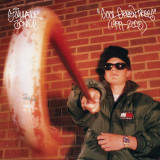
The cover photo is a picture of Sam standing on his back porch in the latter part of 1998, just before he got his first sampler. He was 13 years old, in 8th grade. His dad took the picture with his 35mm film camera: "I actually wanted to be pointing my dad's .22 pistol at the camera lens but he wouldn't let me. He gave me an old walking cane to use instead. The Tommy Hilfiger puffer jacket came from the lost and found at William Fleming High School where my mom worked as a secretary. I was thrilled when she brought it home because we never spent money on expensive name brand clothing like that - we were for the most part strictly a sale rack, bargain bin, thrift store, yard sale, flea market kind of family when it came to clothes. My watch is some cheap off-brand fake gold department store watch." Mastering for this vinyl edition was overseen by Be With regular Simon Francis and it was cut by the esteemed Cicely Balston at Abbey Road Studios to be pressed in the Netherlands by Record Industry.

pas en stock

Commandez maintenant et nous commanderons l'article pour vous chez notre fournisseur.

25,63

Last In: 9 months ago
Disco-Antistat - Ultraclean Set

Disco-Antistat

Ultraclean Set

Equipment1300999
vinyl cleaning tools
Release unknown

EN: The Ultraclean set is designed to mix a total of 5 litres of cleaning fluid.

Set consisting of:

1x 200ml Disco-Antistat Ultraclean concentrate (Art. No. 1302000)
5x 1 liter Disco-Antistat BiDest (Art.No. 1302001)
free of charge:

1x Disco-Antistat mixing bottle (art. no. 1302002)
1x sponge brush for cleaning the Disco-Antistat devices
1x microfiber cloth


DE: Das Ultraclean Set ist abgestimmt um insgesamt 5 Liter Reinigungsflüssigkeit anmischen zu können.

Set bestehend aus:

1x 200ml Disco-Antistat Ultraclean Konzentrat (Art.Nr. 1302000)
5x 1 Liter Disco-Antistat BiDest (Art.Nr. 1302001)
gratis dazu erahalten Sie:

1x Disco-Antistat Mischflasche (Art.Nr. 1302002)
1x Schwammpinsel zur Reinigung der Disco-Antistat Geräte
1x Mikrofasertuch

pré-commande

Cet article n'a pas encore été publié. Vous pouvez pré-commander le produit maintenant.

41,13

Last In: 2026 years ago
Ahmed Essyad - Moroccan Electroacoustic Music 1972-74

Composer Ahmed Essyad was born in Salé, Morocco, in 1938. After studying music at the Rabat Conservatoire (Morocco) he moved to Paris in 1962, where he became a student of Max Deutsch and, later, his assistant. Trained in the avant-garde practices of Western musical composition, he also claimed the Amazigh folk music of Morocco as a fundamental source of inspiration for his work.

In 1965, he was already incorporating elements of oral tradition in his work so as to question the language of his time, and therefore had to cope with the limits of musical notation and communication with musicians who did not share his cultural references. It was difficult to agree on what was implicit, 'behind the notes,' especially regarding the management of musical time and micro-intervals. In search of new compositional tools, he turned to electro-acoustic music. Working in a studio made it possible for him to be the interpreter of his own work, which ensured a certain continuity with music of oral tradition. The pieces presented here were produced between 1972 and 1974 in a studio dedicated to electro-acoustic music, the S.M.E.C.A, which was part of the Music Workshop founded by Jorge Arriagada in Paris. The studio was equipped with EMS and Minimoog synthesizers, a piano, a marimba, a xylophone, as well as various percussion instruments and a tape delay system.

With Toubkal (1972), Ahmed Essyad's interest in ethnomusicology dates back to his training at the Rabat Conservatoire. In 1958, along with Maryvonne Sauvage and Ouahid El Omari, he took part in a campaign to collect popular and traditional music. In his subsequent compositional work, he frequently relied on this experience to further his research on gesture, vocal technique, timbre and instrumental playing. Sultane (1973) is the fruit of a reflection on the ground and the land. Inspired by a war song recorded in Taza in the 1950s, the first movement is festive. The five movements show a clear alternation between dense, rhythmic sections and slower passages from which electronically distorted voices emerge. One of the voices is that of Ahmed Essyad himself. The two parts of Lectures pour bandes magnétiques (1974) are based on two different poems, one by Rainer Maria Rilke, and the other by Bona de Mandiargues. This work celebrates the fundamental role of the body in the musical act: the voice is the body, breathing is the origin of all musical phrasing.

The practice of electro-acoustics may have been a mere parenthesis in Ahmed Essyad's long and prolific career as a composer of contemporary music, but the works presented here are nonetheless important. They show how strongly he both supported North African popular forms of expression and opposed its folklorizing through simplistic and 'exotic' representations. It's not about fusing together East and West - impossible, he says: "the real point is to open up an imaginary space where another modernity can exist outside the largely Eurocentric framework of avant-garde music. Synthesis means anticipation, knowledge. As for me, I'm increasingly ignorant. I write to discover what I don't know. Music feeds me, it pollinates me. It's my daily wine."

pas en stock

Commandez maintenant et nous commanderons l'article pour vous chez notre fournisseur.

20,38

Last In: 15 months ago
Gizelle Smith & The Mighty Mocambos - This Is ... LP 2x12"

15 years onwards from the original release in October 2009, "This Is …" by Gizelle Smith & The Mighty Mocambos remains a classic in its genre. Upfront, raw and melodic, this super sister funk album has not aged at all. Now, in 2024, it is time for a proper re-release with unreleased bonus tracks, rare remixes and a limited edition double vinyl album. Welcome to the deluxe version of "This Is …" by Gizelle Smith & The Mighty Mocambos.

Read here what the original release sheet said about the album:

"Strong album – packs a serious punch" Craig Charles Funk and Soul Show, BBC 6 Music

"A breath of fresh air" Keb Darge

"Really amazing stuff, full of killers" Nick / Record Kicks

"Definitely recommended" Peter Wermelinger, Funky & Groovy Music Records Lexicon

"What a fantastic album – this is proper funk" Tobias Kirmayer, Tramp Records

Ever since their first collaboration on the "Mocambo Funk Forty Fives" compilation, things have gained momentum for Gizelle Smith, the "Golden Girl of Funk", and the much respected Hamburg-based label and live band The Mighty Mocambos. Their first single "Working Woman" became an overnight smash and a prime-time club favourite of funk & soul DJs from all over the world. Initially released on the Finnish private press label Old Capital, producer legend and Grammy nominee Kenny Dope (Masters at Work, Bucketheads) picked up and remixed the song for his own label Kay Dee Records. Gizelle Smith & Mocambo now step up with a full-length album of bonafide sister funk. In the days of digital recording and Pro Tools editing, they show true exception to modern techniques and create their highly regarded, unique and raw soul sound, by making use of simple dynamic microphones and reel-to-reel tape machines. In a genre which is often littered with overused clichés of the past, the charismatic Gizelle Smith adds a lot of her own flavour rather than slavishly copying icons of bygone decades. The result is a refreshing alternative to post-millenium plastic pop without being a mere retro rip-off. From the heavy and determined "Gonna Get You" to vulnerable, gospel-tinged laments such as "Coffee High", "This Is Gizelle Smith & The Mighty Mocambos" is just as deeply rooted in the music from the golden era of soul as it is a modern masterpiece in its own right. Blazing horns, soulful guitars, driving drums and basslines combined with Gizelle's gripping and powerful voice all weave together to create a long player that is varied and coherent at the same time.

pas en stock

Commandez maintenant et nous commanderons l'article pour vous chez notre fournisseur.

28,53

Last In: 15 months ago
Kiwanoid - Vanathühi (LP)

"Vanatühi" by Kiwanoid is a technopagan concept album. Track titles refer to the word "nothing" in various languages.
The sonic landscape is crafted using deprecated tools: a first-generation 4-bit laptop, the DOS operating system, and a tracker program. Inspired by glitch aesthetics, the sound palette includes clicks, error noises, and low-bitrate techno sounds. Initially, the structures of the pieces may appear complex and chaotic. This electronic thicket might seem abstract, cold, and inaccessible, yet upon closer examination, it reveals a plethora of diverse species, coming across as somewhat nostalgic and warm, evoking surreal associations. From beneath towering sequoias peek pixelated ferns, LED eyes are blinking from below the undergrowth, and against the backdrop of a crackling campfire and cave paintings, a lively stomping of microchips unfolds.
Sudden contrasts, sharp cutting edges, a tachycardic bass drum engine, and irregular polyrhythms make themselves physically felt. Elsewhere, haunting lo-fi textures, hidden ambient drones, mysterious hums, and obscurely garbled samples offer introspective breathers. The dynamic range of the music is favourably extensive, and the raw imperfections of the sound are unmasked by reverb effects or other generic tools. Interwoven throughout are outsider rhythm loops, which could find a home at an alien rave party or a hobgoblin honky-tonk. Various human voice samples build a bridge to the listener, allowing them to embody a cyborg-like experience.

While each twist and turn remains unpredictable, these diverse approaches align in complementary patterns and stochastic regularities, making the whole surprisingly coherent, despite its chaos. The album doesn't bore the audience with intentionally irritating compositions or pseudocomplexity - it demands attention, but doesn't try to outrun its listeners.

pas en stock

Commandez maintenant et nous commanderons l'article pour vous chez notre fournisseur.

20,59

Last In: 19 months ago
BLURT - MY MOTHER WAS A FRIEND OF AN ENEMY OF THE PEOPLE LP 2x12"

A sparsely documented yet iconic era for Ted Milton's psycho-funk afro punk fake no-wave pogo jazz group Blurt has been brought to life with an expansive collection of restored versions of live performances. Captured on early camcorders during the frenzy of counter-cultural activity that characterised Europe around the fall of the Iron Curtain, these recordings of Blurt, recently posted by fans on YouTube, are a visceral reminder of a scene whose influence is writ large on today's alternative music culture.

Ted Milton's trio have produced an impressive string of albums, not to mention his numerous solo recordings. Featuring 15 tracks spanning their extensive discography from their 1980 debut single – also the title of this collection – “My Mother Was A Friend Of An Enemy Of The People” to 1999’s “Eat Up Your House”, this live collection of performances have been digitised by whatever means available. The original sound captured by the inbuilt microphones of these camcorders and the videos concerned are in many cases the only documentation of an iconic era whose zeitgeist was so masterfully epitomised for many by Blurt.

Refurbished / restored/ repurposed using new AI tools there is a spectral roughness to them but surfing on these reconstructed waveforms, the inimitable machinations of Blurt ride out once again, emerging from a pixilated oblivion to put into perspective the peculiar absurdity of our human condition.

pré-commande01.06.2024

il devrait être publié sur 01.06.2024

22,90

Last In: 2026 years ago
Eusebeia - Age Of Awareness

Eusebeia

Age Of Awareness

12inchSPTL020
Spatial
22.12.2023

A1 - Healing Properties
Opening his Spatial account with Healing Properties, Eusabia immediately throws down the gauntlet showcasing an inimitable versatility with breakbeats, permeated with a jungle flex so rarely captured in the atmospheric D&B landscape. Pivoting effortlessly as the track progresses from drumloop to thunderous drumloop with a simmering haunted atmosphere and deep, weighty basslines to yearning filtered vocal samples, this track has it all.

A2 - The Space Between
Smooth jungly synthwork seizes the foreground before crisp breaks begin to reveal our direction through The Space Between, jittery key stabs and familiar old school FX create a unique sci-fi style backdrop as the breaks drive the vibe forward, switching and weaving in style, constantly mixing it up to ram the point home that you cannot fully appreciate a Eusabia track until every second has been consumed - many times over, as The Space Between demands.

AA1 - Scope of Understanding
A more contemplative piece, Scope of Understanding strips things back with a synthwave-esque vibe tinged with intrigue and allure. Soon the breakbeats leap into gear and develop with an incredible level of refined detail, expertly edited, chopped and cut to a darkly undertone of sub bass and subtle micro melodies. Scope of Understanding will leave you in awe of the quickfire ideas Eusabia can conjure in the space of 6 minutes.

AA2 - Self Reflection
A smooth atmospheric introduction ushers in a thumping drum tools workout, somehow perfectly in sync with the calm harmonies dancing around in the composition. Certainly a track to enjoy both on the discerning dancefloor and while driving home with rain lashing at the windscreen at 2am, Self Reflection's synths and breaks conclude the EP in style leaving a long lasting memory of a Spatial debut you will not forget.

Words by Chris Hayes.

pas en stock

Commandez maintenant et nous commanderons l'article pour vous chez notre fournisseur.

14,71

Last In: 19 months ago
Various - Kingdom Eighties Game Score LP 2x12"

Kingdom Eighties is the latest videogame instalment in the award-winning Kingdom series by gaming studio Raw Fury. It's a single-player adventure game of micro-strategy and base building, heavily inspired by the memories and references of Eighties Americana. You play as The Leader, a young camp counsellor who will have to defend their town and family from the relentless attack of the mysterious Greed. Kingdom Eighties provides a minimalist feel with a beautiful, handcrafted modern pixel art aesthetic, combined with the neon lights of the Eighties and an Eighties inspired synthwave soundtrack.

The score is composed by Andreas Hald, a Copenhagen-based film and media composer who has written scores for movies and television. For Kingdom Eighties, Andreas used the exact same instruments that music producers were utilizing in the Eighties, using nothing but analogue gear and tools to create a signature, authentic Eighties sound. To top it off, the soundtrack was mastered for vinyl by Grammy Award-winner Adam Ayan at the Gateway Mastering Studios. The master audio went through multiple iterations to make sure the highest quality sound was obtained for this specific vinyl release.

Kingdom Eighties is available as a limited edition of 500 individually numbered copies on translucent magenta coloured vinyl. This 2LP set includes a poster of the game and a 4-page booklet with liner notes by the composer and game director. Additionally, it includes two full colour printed innersleeves and is housed in a deluxe gatefold sleeve with gloss laminate finish.

pré-commande20.10.2023

il devrait être publié sur 20.10.2023

56,51

Last In: 2026 years ago
Luke Sanger - Languid Gongue LP

Luke Sanger

Languid Gongue LP

12inchBALMAT01
Balmat
29.09.2023

Balmat is a new label with a cloudy outline.

Jointly shepherded by Philip Sherburne and Albert Salinas, two friends living in Cardedeu, Catalonia, and on the Balearic island of Menorca, Balmat grew out of Lapsus Radio, a weekly show on Spain’s Radio 3. Balmat’s mission is simple: to foster new ideas, expand upon personal obsessions, and put enveloping sounds out into the world.

“Balmat” means “empty” or “void” in Catalan. But quite apart from any negative connotations, we prefer to think of it in terms of possibility: a space waiting to be filled.

Balmat’s first release comes from Luke Sanger, a Norwich, UK-based artist whose two decades of electronic music making have encompassed a range of tools and techniques, from MaxMSP to modular synthesis. Along the way he has built an extensive catalog encompassing ambient atmospheres, abstract soundscaping, and more. With Languid Gongue, he puts multiple approaches into play. Experiments in microtonal composition balance out pieces in standard tunings, while esoteric electronic machines merge with familiar acoustic treatments and microphone techniques.

The result is a constellation of his signature sounds: freeform new-age fantasia; spring-loaded toytronic arpeggios; quartz-driven braindance clockworks. Drifting between consonant, almost lyrical compositions and shape-shifting textural sketches, the album drifts with the nonchalance of a sky-high cirrus cloud, and it glows as if illuminated from within. When we heard the material, we knew that it was the perfect choice to launch the label. To us, it sounds like a roadmap for points unknown.

pas en stock

Commandez maintenant et nous commanderons l'article pour vous chez notre fournisseur.

22,98

Last In: 2 years ago
Landowner - Escape The Compound

Western Massachusetts band Landowner play abrasively clean minimalist-punk. Singer Dan Shaw began Landowner in 2016, writing and recording Impressive Almanac with a practice amp and a laptop drum machine. Those available tools would inform the band’s unapologetic sound—clean, confrontational, and absurdly stark. With a stated goal to sound like “Antelope playing Discharge”, Landowner’s diamond hard structures, repetitious instrumentals and caricatured hardcore make space for lyrics that reflect on the global systems our lives are tangled in and the dark absurdities we take for granted.

Landowner’s fourth Born Yesterday full length Escape the Compound focuses on the powerful grips manipulators and reality-deniers have on their victims, examining the social, political and interpersonal damage of cult-like influence and control. “A lot of the lyrics focus on cult manipulators and narcissists: falling victim to their toxic dynamics, and the difficulty of escaping their grip” says Shaw. From climate change deniers and conspiracy theorists to deceptive narcissists and actual cult leaders, Landowner explores the ubiquity of modern unreality through evocative imagery and a keen sense of awareness. The band’s plain instrumentation sheds and subverts hardcore punk’s noisy veil in favor of a direct, unswerving examination of these themes.

Written and recorded following the release of 2020’s Consultant, Escape the Compound finds Landowner leaning into the studio through deeper experimentation with a wider palette of sounds. The group’s lineup of Josh Owsley (bass), Elliot Hughes (guitar), Jeff Gilmartin (guitar), Josh Daniel (drums) and Dan Shaw played often since coming together in 2017. But with pandemic restrictions in place, the making of Escape the Compound became a much more insular pursuit, one where the mixing and mastering process helped turn the band’s most varied batch of material into a cohesive, thematic collection of songs.

Album opener “Witch Museum” is a collage of dark Massachusetts historical imagery. The song evokes a kind of cult dynamic traveling like a shadow through time, where dark absurdities are taken for granted, toxic behaviors are excused, and normalcy begins to shift. The line “Gail's behavior has changed” casts fictional “Gail” as the dark manipulator, whose whim we’re at the mercy of. She sheds her toxic behavior and the crisis finally ends - “and peace returns to the Commonwealth”- an absurdity, given that cult leaders and narcissists rarely seem to change.

By considering the past, Landowner sheds light on the present. The band challenges egomaniacs reluctant to accept an uncomfortable reality with both cynicism and concern. The literal landowner described in “Heat Stroke” collapses in exhaustion, cooked by a suffocating bass line and sizzling hi-hats. “You'd rather die of heat stroke than to let anybody see you change your mind,” Shaw gasps, later pleading with the character in “Floodwatch” to “please reconsider” their brazen stubbornness as they plunge through the rising waters of a flooded road.

The character in “Swimmer of Note” refuses to admit their miscalculations, instead doubling down on an ever-growing and increasingly-unsteady tower of lies. The sneering “Damning Evidence” sets a scene all too familiar: a smoking gun scenario with zero consequences. Shaw’s exaggerated vocal refrains and sarcastic inflections mock false hope: “how will they be expected to keep their minds intact, at the shock of simply hearing such damning evidence?”

“Beyond the Darkened Library” creaks open a secret passageway into a dimly lit, endless labyrinth of conspiracy theories, in which the character becomes hopelessly lost. “Aftermath” sounds the alarms: “stare so long that you start getting used to it; one glance says you should never get used to it.” The pair of “Tactics” tracks express what Shaw calls “an interpersonal microcosm of the album’s themes.”

Perhaps the most ambitious arc on Escape the Compound loosely begins with the title track. The subject in “Escape the Compound” gradually recognizes their own victimhood and plans a calculated flight from the “captivating shepherd” – hop the fence, flee, and regain autonomy. As the narrator escapes their stifling and abusive cult microcosm, a much grander existential timeline begins to appear. “Thousands of Years in Fast Forward” narrates a psychedelic surrender to the shared human experience through space and time, an ego-death adjacent to our ancestry, our own existence, and the before and after. “At the site of the crater, molecular hands unclasp molecular hands as you lose conditioning,” Shaw sings on the title track, “Your grandmother's garden. Your grandmother's kitchen. Your grandmother's primordial ocean.” It’s a profound actualizing glimpse into a true, forgotten reality and a startling reconnection with the self.

pré-commande21.07.2023

il devrait être publié sur 21.07.2023

23,95

Last In: 2026 years ago
Landowner - Escape The Compound

Western Massachusetts band Landowner play abrasively clean minimalist-punk. Singer Dan Shaw began Landowner in 2016, writing and recording Impressive Almanac with a practice amp and a laptop drum machine. Those available tools would inform the band’s unapologetic sound—clean, confrontational, and absurdly stark. With a stated goal to sound like “Antelope playing Discharge”, Landowner’s diamond hard structures, repetitious instrumentals and caricatured hardcore make space for lyrics that reflect on the global systems our lives are tangled in and the dark absurdities we take for granted.

Landowner’s fourth Born Yesterday full length Escape the Compound focuses on the powerful grips manipulators and reality-deniers have on their victims, examining the social, political and interpersonal damage of cult-like influence and control. “A lot of the lyrics focus on cult manipulators and narcissists: falling victim to their toxic dynamics, and the difficulty of escaping their grip” says Shaw. From climate change deniers and conspiracy theorists to deceptive narcissists and actual cult leaders, Landowner explores the ubiquity of modern unreality through evocative imagery and a keen sense of awareness. The band’s plain instrumentation sheds and subverts hardcore punk’s noisy veil in favor of a direct, unswerving examination of these themes.

Written and recorded following the release of 2020’s Consultant, Escape the Compound finds Landowner leaning into the studio through deeper experimentation with a wider palette of sounds. The group’s lineup of Josh Owsley (bass), Elliot Hughes (guitar), Jeff Gilmartin (guitar), Josh Daniel (drums) and Dan Shaw played often since coming together in 2017. But with pandemic restrictions in place, the making of Escape the Compound became a much more insular pursuit, one where the mixing and mastering process helped turn the band’s most varied batch of material into a cohesive, thematic collection of songs.

Album opener “Witch Museum” is a collage of dark Massachusetts historical imagery. The song evokes a kind of cult dynamic travelling like a shadow through time, where dark absurdities are taken for granted, toxic behaviours are excused, and normalcy begins to shift. The line “Gail's behaviour has changed” casts fictional “Gail” as the dark manipulator, whose whim we’re at the mercy of. She sheds her toxic behaviour and the crisis finally ends - “and peace returns to the Commonwealth”- an absurdity, given that cult leaders and narcissists rarely seem to change.

By considering the past, Landowner sheds light on the present. The band challenges egomaniacs reluctant to accept an uncomfortable reality with both cynicism and concern. The literal landowner described in “Heat Stroke” collapses in exhaustion, cooked by a suffocating bass line and sizzling hi-hats. “You'd rather die of heat stroke than to let anybody see you change your mind,” Shaw gasps, later pleading with the character in “Floodwatch” to “please reconsider” their brazen stubbornness as they plunge through the rising waters of a flooded road.

The character in “Swimmer of Note” refuses to admit their miscalculations, instead doubling down on an ever-growing and increasingly-unsteady tower of lies. The sneering “Damning Evidence” sets a scene all too familiar: a smoking gun scenario with zero consequences. Shaw’s exaggerated vocal refrains and sarcastic inflections mock false hope: “how will they be expected to keep their minds intact, at the shock of simply hearing such damning evidence?”

“Beyond the Darkened Library” creaks open a secret passageway into a dimly lit, endless labyrinth of conspiracy theories, in which the character becomes hopelessly lost. “Aftermath” sounds the alarms: “stare so long that you start getting used to it; one glance says you should never get used to it.” The pair of “Tactics” tracks express what Shaw calls “an interpersonal microcosm of the album’s themes.”

Perhaps the most ambitious arc on Escape the Compound loosely begins with the title track. The subject in “Escape the Compound” gradually recognizes their own victimhood and plans a calculated flight from the “captivating shepherd” – hop the fence, flee, and regain autonomy. As the narrator escapes their stifling and abusive cult microcosm, a much grander existential timeline begins to appear. “Thousands of Years in Fast Forward” narrates a psychedelic surrender to the shared human experience through space and time, an ego-death adjacent to our ancestry, our own existence, and the before and after. “At the site of the crater, molecular hands unclasp molecular hands as you lose conditioning,” Shaw sings on the title track, “Your grandmother's garden. Your grandmother's kitchen. Your grandmother's primordial ocean.” It’s a profound actualizing glimpse into a true, forgotten reality and a startling reconnection with the self.

pré-commande21.07.2023

il devrait être publié sur 21.07.2023

18,45

Last In: 2026 years ago
Richard Youngs - Modern Sorrow

The endlessly prolific and unpredictable Richard Youngs returns to Black Truffle with Modern Sorrow. As any Youngs fan knows, one of the great pleasures of following his career comes from not being able to predict what the next entry in his inexhaustible string of releases will bring: Unaccompanied voice? Country songs? Shakuhachi? Guitar pieces played with his feet? Shredding fuzz bass over the top of hyper-speed distorted drum machine beats? Continuing in the grand Youngs tradition of exploring new techniques, instrumentation and approaches while bringing to all of them his idiosyncratic touch, Modern Sorrow serves up two sides of twistedly elegiac, radically stark takes on contemporary pop production. The side-long title track is built from a piano sample, synthetic bass notes and organ swells, and an iterative blurt that seems to have wandered out of a 90s jungle track. Eventually joined by a shuffling drum machine, the track moves very slowly through a series of chords, each delayed long enough that its arrival comes as a major event. Over the top, Youngs’ heavily pitch-corrected voice is heard. The processing paints his signature wandering melodic improvisations with shades of contemporary R&B; at the same time, it cuts the natural swoops and glides of Youngs’ melodies into rapid microtonal trills, giving his voice a quavering, middle eastern feel. Unfolding languorously over more than 17 minutes, the piece’s final minutes make room for an extended drumless coda, returning to the stark palette of its opening moments. On the second side, the two parts of ‘Benevolence’ push this minimalism ever further, its first half consisting of nothing more than a remarkably slow drum machine hit, bass-heavy chords and pitch-corrected voice, here so heavily processed that it starts to resemble a shawn solo. In its second part, the harmonic foundation drops out from under the piece while two more voices join; at some moments the voices pause, leaving nothing more than isolated, metronomic drum hits. Though Youngs has explored the sound worlds associated with dance music and contemporary pop in previous work, here these elements are radically reduced, foregrounding a meditative bed of silence with a boldness equal to any more academically inclined contemporary composer. Embracing the accessible digital tools of contemporary music production just as at another moment he would pick up a kazoo, like much of Youngs’ work Modern Sorrow uses simple DIY tools to generous ends, producing formally radical music that remains both free from pretension and deeply moving.

pas en stock

Commandez maintenant et nous commanderons l'article pour vous chez notre fournisseur.

20,97

Last In: 2 years ago
Olli Aarni - Koko maailma

Since the late aughts, Helsinki-based multi-instrumentalist, linguist, and skateboarder Olli Aarni has released a steady stream of diverse and remarkably consistent recordings via labels such as Mappa, Longform Editions, Cotton Goods, Laaps and Superpang. “Koko maailma” constitutes a major new work in his discography, finding a fertile middle ground between what might be understood as his two primary compositional modes: organic/chaotic/aleatoric music and rule-based, longform works of minimalism. The source material for these compositions was recorded exclusively using the Serge system at EMS Stockholm, but the timbres that Aarni arrives at do not recall archetypal Serge music as most know it. Meticulous editing and processing of the material with an array of digital tools has resulted in music that preserves the erratic and cybernetic character of the Serge system but sounds totally unique unto itself. The first piece, “Ylhäällä,” has the sonic character of fireflies at dusk or ants in the dirt — mercurial, hypnotic, flittering, and scattering tones presented in the spirit of the best environmental music. “Alhaalla” functions almost like a zoomed out impression of what precedes it, with just intonation tuning applied to sine wave generators to create grid-like, harmonically rich, and surprisingly emotive drone music. Micro and macro — two pieces of music, two perspectives of a world.

pas en stock

Commandez maintenant et nous commanderons l'article pour vous chez notre fournisseur.

20,13

Last In: 3 years ago
JAIRUS SHARIF - WATER & TOOLS LP

Freedom is both an integral and multi-layered topic for improvised music, describing its mechanics, aesthetics, and values and often an underlying political dimension as well. In the case of free jazz specifically, the word carries additional weight given the music's deep connection to the black liberation movement of the 1960's and 70's.

The passionate and unclassifiable work of Calgary-based improviser Jairus Sharif embraces each of these definitions of freedom and others, albeit strictly on its own personal and idiosyncratic terms. Since early 2020, the 34 year-old autodidact has been generating a steady stream of homespun solo recordings that forge unprecedented connections between hip-hop abstraction, cosmic skronk, outsider jazz, and staunch post-punk DIY ethos.

Leading up to the pandemic, Sharif's immersion in spiritual and exploratory jazz had culminated in him deciding to purchase an alto saxophone. Unbeknownst to him this instrument would be a catalyst for him to discover his own ardently individualistic artistic voice.

Prior to that point, he had always been somewhat of a solitary musical traveler. In 2002, he acquired his first instrument—a pair of Technics 1200s — but struggled to find local collaborators that had equal investment in hip hop culture. Ultimately, Sharif picked up the guitar, turning to the resilient local punk community, that had also nurtured both of his mothers some time earlier.

As Black Lives Matter gained momentum in the wake of George Floyd's murder, Sharif was suddenly flooded with an acute awareness of his own identity. It compelled him to zealously plunge headlong into open-ended spontaneous solo creation. Water & Tools, his strange and stirring debut for Toronto's Telephone Explosion Records (home to full-lengths from the likes of Brodie West's Eucalyptus, Mas Aya, and Joseph Shabason), offers a glimpse into this ongoing hermetic journey.

As Sharif dedicated himself to uncovering his own deeper musical truths, he assembled a home studio in his basement, cobbling together a drum kit from bits his bandmate had left at his house pre-pandemic, chaining effects together and outfitting the entire space with microphones. Somewhere between the chaos of child's treehouse and the tidy import of a shrine, this space (pictured on the album's back cover) consecrated his own imagination. He laid it out to maximize access to any and every tool in his arsenal, providing him a freedom to explore that he had never permitted himself to consummate before.

Within this cozy private universe, his recent purchase—the saxophone—assumed new meaning. It furnished a tangible connection to the black radicalism that mobilized free jazz, but also something far more personal. From a technical standpoint, the instrument was completely unfamiliar to him, yet rather than this being a hindrance to Sharif, his inexperience opened fruitful path forward, unencumbered by preconceptions. Resolving to shirk formal training, convention, and build his own understanding of it from scratch, allowed him to access his most raw, fundamental creative impulses. The Saxophone's inseverable bond with breath compounded this effect, echoing revelatory discoveries he had been making about breathing through yoga, research, and psychotherapy. Of course, the parallels with BLM's harrowing rallying cry—“I can't breathe”—were not lost on him either.

Water & Tools is a dense, contradictory statement with a blustery surface that shelters a soulful heart. It's generous music, exuding profound vulnerability—grappling with the loss of one his mothers, Lisa—all the while brimming with electric wide-eyed wonder. Almost every one of the nine pieces seems to carry some semblance of a groove, while remaining completely untethered from pulse. For Sharif, this collection is an expression of newfound lucidity, however for the listener his sonic concoctions act as powerful psychotropics. At points, there's a timelessness that's conveyed through the music's processional, ritualistic tenor, and yet there's an endless amount of wild, futuristic detail waiting to unspool at any given moment. Similarly, while this recording emerges from Sharif's private pilgrimage and personal emancipation, he also leaves room for collaboration. Woven throughout Sharif's one-man-ensemble textures, one finds Maxmilian Turnbull (of Badge Epoque, U.S. Girls, and Cosmic Range infamy) providing sundry keyboards and treatments, as well as his mixing skills.

Whether conjuring effusive psychedelia or plumbing introspective depths, the music that Jairus Sharif produces is singular, visceral, and wondrously unpredictable. Water & Tools sketches a raw, firsthand account of his nascent explorations within his own unbridled imagination.

pré-commande31.10.2022

il devrait être publié sur 31.10.2022

22,65

Last In: 2026 years ago
Little Skull - Untitled

Necessary vinyl edition of the first Little Skull long player which was originally released as a micro-edition CD-R in 2009. Written, performed and recorded by Dean Brown on borrowed and home made instruments during a year spent living in a cold colonial era house across the street from Len Lye's childhood home in Aro Valley, Wellington. Untitled is a raw and vital document, cognate with later Little Skull offerings as it teases elemental folk, noise, rock and chamber music from the barest of tools. Presented on clear smoke effect vinyl with a printed inner sleeve and handmade semi-opaque outer cover.

pré-commande22.07.2022

il devrait être publié sur 22.07.2022

25,17

Last In: 2026 years ago
DJ Nu-Mark - Creme De La Crate LP (2x12")

Available on vinyl for the first time! -Limited to just 500 records worldwide, this 2XLP is a must have production tool for producers and deejays. -Included are one shot drum tools, loops, song starters, guitar chords, and melodic chops.

DJ Nu-Mark is pleased to present his Creme De La Crate sample pack on vinyl for the first time. This dynamic collection offers the rusty grit and groove of classic funk and soul records at your fingertips without the sticky licensing issues.

The featured drum breaks and one shots were captured through Nu-Mark’s array of vintage ‘60s preamps, compressors and microphones. There’s also complete drum loops and fills provided by J-Zone, Aaron Steele and Jon Radford, as well as an abundance of melodic content thrown into the mix. From Nu-Mark’s own inspiring ‘Song Starters’ to guitar chords, bass guitar lines, tonewheel organ licks and electric piano recorded by Dan Ubick.

Whether you’re looking to create some classic hip-hop, or add some additional energy to your production arsenal regardless of your preferred genre, there’s endless creative paths locked away in this diverse pack. As Nu says; “Enjoy and stretch out! Remember, nobody can replicate you so unlock and reveal your core since ultimately your art will live in perpetuity.”

pré-commande13.05.2022

il devrait être publié sur 13.05.2022

54,58

Last In: 2026 years ago
Alejandro Morse - Stonewalling

Alejandro Morse

Stonewalling

CassetteUR135CS
Umor-Rex
25.02.2022

Tape
“Stonewalling” offers a collection of electroacoustic pieces taking as input the Mexican vernacular music from the golden age of Mexican cinema of the first part of the 20th century. In those films, music was used as communication due their poor verbal communication-skills. This is an album about communication, about the impossibility to do so to resolve conflicts. In the technical side, some of the sources used as layering in the tracks come from radio frequencies taken from explorations into the software-defined radio universe, mixed with microphone feedbacks, oscillators, and random textures with field-recordings. In the melodic/harmonic structures of the tracks, the main instrument used is a classical guitar with hyper-processed chords using DSP tools. "Stonewalling”, in some way, follows to 444 (Umor Rex, 2019), serving as a Morse's follow-up into the Mexican vernacular music expeditions.

Produced by Alejandro Morse aka Edgar Medina in León, México. Mastered by Edgar Medina. Photos & design by Daniel Castrejón.

pré-commande25.02.2022

il devrait être publié sur 25.02.2022

10,71

Last In: 2026 years ago
MOISTURE - ORGONE / GAMMUT

*More downbeat wickedness on the excellent Fasaan!*

This double A-sider is the fruit of a long gestating collaboration with fellow Malmö-based record collector/selector & producer Simon alias Rizzolo DJ (alias Moisture). Closely intertwined with the label in various ways since the start, his path to producing started with re-edits and a more wild-haired approach to deejaying, finally landing into his own groove with the 2018 album A Freak Is Born. Released as a privately pressed cassette, the album featured two tracks co-produced with Fasaan founder Prins Emanuel.

On that first album, the palette was a lo-fi reverie of minimal waves crashing into depths of goth and heights of camp. Here for the 12" format, we instead get the full onslaught of power tools gleaming in the blast of strobe lights. The weight of GAMMUT unfolds and delivers exactly what the title suggests: a complete scope of percussive barrage unleashed in tight locked grooves and smattering reverberations. In addition to that, we are treated with a spine-tingling re-imagining of the concept of a bass drop.

For ORGONE, a 1984 track by Norwegian group Fra Lippo Lippi serves as the backbone of the composition. Championed by cosmic DJ Daniele Baldelli and here pitched down to wrongspeeder tempo, Moisture uses the original song to bridge the gap between his roots in the re-edit scene as well as in the cosmic tradition. Thedry mechanical bassline is flanked by hollow percussion that eventually propels into a crystal-chimmering microcosm of orgone energy.

pas en stock

Commandez maintenant et nous commanderons l'article pour vous chez notre fournisseur.

12,90

Last In: 5 years ago
Ground - Follow Me (Inc. Jay Glass Dubs Remix)

Ground is an Osaka native, but his soul is truly that of a nomad, traversing the planet, befriending kindred spirits found in humans, animals and plants. He is exceptionally receptive to the beauty in everything that surrounds him—the incidental music of a city street, the orchestral chaos of a scrambling radio, the syncopated grace of migrating birds, the simplicity of an isolated hand clap—and as his roadmap continuously unfolds, he accumulates a vast catalogue of visceral tools to musically recount his experiences. 'Sunizm' is a cross section of the artist’s process—an array of complex microcosms overlapping to comprise a thematic whole—gathering field recordings, found instruments, jagged electronics, synthesized chanting, and weaving all into a dense narrative that appears obsessively constructed yet divinely improvised. 'Follow Me', the second of two singles surrounding the album, is complimented with a pseudo drum’n’bass treatment by enigmatic Greek artist Jay Glass Dubs, as well as a massively triumphant b-side entitled 'Ozone House', which is exclusive to this single release. Attention all humans, animals and plants, Ground and the ESP Institute present, 'Sunizm'.

pas en stock

Commandez maintenant et nous commanderons l'article pour vous chez notre fournisseur.

10,46

Last In: 6 years ago
GROUND - LOGOS (INC. BARTELLOW REMIX)

Ground is an Osaka native, but his soul is truly that of a nomad, traversing the planet, befriending kindred spirits found in humans, animals and plants. He is exceptionally receptive to the beauty in everything that surrounds him—the incidental music of a city street, the orchestral chaos of a scrambling radio, the syncopated grace of migrating birds, the simplicity of an isolated hand clap—and as his roadmap continuously unfolds, he accumulates a vast catalogue of visceral tools to musically recount his experiences. Sunizm is a cross section of the artist's process—an array of complex microcosms overlapping to comprise a thematic whole—gathering field recordings, found instruments, jagged electronics, synthesized chanting, and weaving all into a dense narrative that appears obsessively constructed yet divinely improvised. Logos is the first of two singles surrounding the album and is complimented with a monster remix by Bartellow (a fellow ESP artist, collaborator and good friend of Ground) as well as a secret weapon b-side entitled Discopazzle, which is exclusive to this single release. Attention all humans, animals and plants, Ground and the ESP Institute present, Sunizm.

pas en stock

Commandez maintenant et nous commanderons l'article pour vous chez notre fournisseur.

8,87

Last In: 6 years ago
Neunau - Neunau

Neunau

Neunau

12inchPAR009
Parachute
27.05.2016

The Earth was incessantly covered in ice, it's landscape an immense, frozen desert. Boulders and sand washed to the valley, crushed under the glaciers' enormous weight, leaving nothing but the hardest rock behind.'
Neunau draws inspiration from natural phenomenons, sculpting his indelible and furious expression into materials: a ritual guided only by the rhythm of his own heartbeat.
Composed exclusively of sounds recorded at the ancient forge museum in Bienno, in the middle of one of the largest valleys in the central Alps, Neunau presents an experience that goes beyond simple listening. His tools — water, iron and microphones — are used to transport the listener through time and place. A true voyage through forgotten ritualism and symbolism, these extracts aim to grind contemporary dance music to its barest essentials, making long-lost times ours again.
Neunau is the debut EP from Sergio Maggioni's Neunau, released by Parachute on 12" vinyl

pas en stock

Commandez maintenant et nous commanderons l'article pour vous chez notre fournisseur.

8,19

Last In: 8 years ago
  • 1
Articles par page:
N/ABPM
Vinyl