
pas en stock
Commandez maintenant et nous commanderons l'article pour vous chez notre fournisseur.
13,24 €
Last In: 3 years ago
Commandez maintenant et nous commanderons l'article pour vous chez notre fournisseur.

il devrait être publié sur 11.07.2022

il devrait être publié sur 11.07.2022

Commandez maintenant et nous commanderons l'article pour vous chez notre fournisseur.

In 1963, Miles Davis was at a transitional point in his career, without a regular group and wondering what his future musical direction would be. At the time he recorded the music heard on this disc, he was in the process of forming a new band, as can be seen from the personnel: tenor saxophonist George Coleman, Victor Feldman (who turned down the job) and Herbie Hancock on pianos, bassist Ron Carter, and Frank Butler and Tony Williams on drums. Recorded at two separate sessions, this set is highlighted by the classic "Seven Steps To Heaven," "Joshua" and slow passionate versions of "Basin Street Blues" and "Baby Won't You Please Come Home."
A fantastic-sounding album. Mastered by Ryan K. Smith at Sterling Sound, and pressed on 180-gram vinyl by the best in the business, Quality Record Pressings. An old-style tip-on jacket by Stoughton Printing makes this one a jewel for your LP collection.
il devrait être publié sur 30.06.2022

Commandez maintenant et nous commanderons l'article pour vous chez notre fournisseur.

Commandez maintenant et nous commanderons l'article pour vous chez notre fournisseur.

Commandez maintenant et nous commanderons l'article pour vous chez notre fournisseur.

il devrait être publié sur 10.06.2022

Released in 1958 on Columbia, the five- star review by AllMusic's Thom Jurek called it ".. a classic album with blues material in both bebop and post- bop veins…….which introduced modalism in jazz and defined Davis' subsequent music in the years to follow."A precursor to 'Kind of Blue', 'Milestones' was the first session to feature John Coltrane and Cannonball Adderley.
"Davis' statements here are genuinely eloquent. Coltrane's efforts here do indicate that he is rapidly moving toward a niche of his own, absorbing influences but not being obsessed by them. Adderley is less than individualist but is performing on a level of fluency which will make the discovery of a self-sustaining role less difficult in time." - Don Gold, DownBeat (1958)
il devrait être publié sur 29.04.2022

il devrait être publié sur 20.03.2022

il devrait être publié sur 20.03.2022

il devrait être publié sur 20.03.2022

Repress in blue vinyl !
“Sketches of Spain since its release in 1960 has been one of the most widely
distributed and popular of all jazz records. Even people who don’t collect jazz
records tend to have a copy tucked away somewhere.” - Penguin Guide To Jazz
“Sketches of Spain remains, and rightly so, one of the jewels of Miles Davis’
discography.” - Jazz Magazine (France)
“This recording is one of the most important musical triumphs that this century
has yet produced. It brings together under the same aegis two realms that in
the past have often worked against one another - the world of the heart and
the world of the mind. To Davis and Evans goes not the distinction of five or 10
or a zillion stars in a review rating, but the burden of continuing to show us the
way.” - Bill Mathieu, DownBeat
il devrait être publié sur 15.03.2022

il devrait être publié sur 23.02.2022

il devrait être publié sur 23.02.2022

For many years, Trumpet players battled in a competition
to see who could blow the highest, fastest and loudest in
the land of Jazz. Then came Miles Davis and with him
came a peace and calm descended. He created the
seraphic mood that pervades this groundbreaking album
and established his reputation as an innovative stylist,
while ensuring his place in the pantheon of Jazz giants.
il devrait être publié sur 18.02.2022

BLACK VINYL[17,19 €]
Blue Marble Vinyl[25,00 €]
Clear/White Splatter Vinyl[26,68 €]
At the start of the Fifties Miles Davis' career had hit a barrier which, for a period of time, seemed insurmountable, but by mid-decade, with his substance-abuse troubles behind him, he had established himself as one of the major artists on the modern jazz scene.
'Kind Of Blue' can often be found at the very top of jazz record polls and, despite competing claims, is probably the best-selling jazz record of all time. The listener should be in no doubt that they now own some of the most essential music of the twentieth century and on gleaming blue vinyl!
Commandez maintenant et nous commanderons l'article pour vous chez notre fournisseur.

Composed by jazz legends Miles Davis and Michel LeGrand, the movie also included one of Miles Davis’ final filmed performances. This 30th Anniversary Edition of the soundtrack will be the first vinyl pressing since its original release in 1991
il devrait être publié sur 07.01.2022

Miles Davis Kind of Blue meets Analogue Productions' UHQR, the pinnacle of high-quality vinyl!
Best-selling album in jazz history; mastered from the original master tapes by Bernie Grundman
Pressed at Quality Record Pressings using Clarity Vinyl® on a manual Finebilt press
Purest possible pressing and most visually stunning presentation and packaging!
Dream team of Davis, Adderley, Coltrane, Evans, Kelly, Chambers, Cobb make history.
Legends have a way of sticking around. If there was ever an album awaiting a high-fidelity, custom-pressed vinyl treatment of the level you now hold in your hands, it is Miles Davis' Kind of Blue. The top-selling jazz album of all time, it has been lauded, entered into "Best Of" lists and Halls of Fame, and universally acknowledged as a landmark recording — a five-track masterpiece of melancholy mood and melody.
It continues to be one of the most listened-to and studied recordings of all time, a required primer for many young musicians, and one of the most transcendent pieces of music ever recorded. Davis played trumpet sublime with his ensemble sextet featuring pianist Bill Evans, drummer Jimmy Cobb, bassist Paul Chambers, and saxophonists John Coltrane and Julian "Cannonball" Adderley with Wyton Kelly playing piano on "Freddy the Freeloader."
Now Analogue Productions, together with Quality Record Pressings, is putting Kind of Blue where it belongs: the Ultra High Quality Record (UHQR) pressed on Clarity Vinyl on a manual Finebilt press with attention paid to every single detail of every single record.
The 200-gram records will feature the same flat profile that helped to make the original UHQR so desirable. From the lead-in groove to the run-out groove, there is no pitch to the profile, allowing the customer's stylus to play truly perpendicular to the grooves from edge to center. Clarity Vinyl allows for the purest possible pressing and the most visually stunning presentation. Every UHQR will be hand inspected upon pressing completion, and only the truly flawless will be allowed to go to market. Each UHQR will be packaged in a deluxe box and will include a booklet detailing the entire process of making a UHQR along with a hand-signed certificate of inspection. This will be a truly deluxe, collectible product.
Kind of Blue is more than Miles Davis's most enduring recording, it's a testament to Miles' experimental approach, drastically simplifying modern jazz by returning to melody unlike the chord complexity more often heard at the time. "The music has gotten thick," Davis complained in a 1958 interview for The Jazz Review. "... There will be fewer chords but infinite possibilities as to what to do with them." Kind of Blue is, in a sense, all melody — and atmosphere.
None of the musicians had played any of the tunes before heading into the first of two recording sessions in early spring of 1959. In fact Miles had written out the settings for most of them only a few hours before the session. Miles also stuck to his old recording procedure of having virtually no rehearsal and only one take for each tune.
Miles remained proud of the album, performing at least two of its tracks — "So What" and "All Blues" — for years after, until his musical path took him in a different direction.
History was on the side of Kind of Blue; it was born in 1959, at the peak of the golden age of high-fidelity, featuring innovations in studio equipment (magnetic tape, high-quality condenser microphones), matched by advancements in home audio reproduction (long-player records — LPs; high-end turntables, and other stereo components). Kind of Blue also benefited from Miles' being signed to the leading major record company of the day — Columbia Records, a part of the CBS media conglomerate. Columbia had the means and wisdom to invest in cutting edge recording technology, and their own professional recording studio.
A minor audio complication with Kind of Blue has been addressed with this UHQR edition. The motor on the studio's 3-track master recorder was running slowly the day of the album's first session. This speed issue affected the album's first three tracks, "So What," "Freddie Freeloader" and "Blue in Green," making them a barely perceptible quarter-tone sharp. Before now, it was only addressed in 1995 for the Classic Records edition and by Columbia Records — or their latter-day parent, Sony Music — on a CD reissue in the late '90s.
Sixty years have passed; this LP bridges that time span in the best way possible, struck from the master reel of Kind of Blue, free of speed issues and replete with all the instrumental detail, sonic environment and minimal noise. As we set out to make our UHQR series the world's best-sounding vinyl records, we have also used Clarity Vinyl, which is free of any carbon black pigment which might introduce surface noise. All-in-all this edition of Kind of Blue meets the highest audiophile standards and offers the truest sound for the most enjoyment.
il devrait être publié sur 29.12.2021

Wagram compilation of 50s and 60’s Miles’ classic tracks.
Music Legends is the collection made to rediscover the history of modern musics in nice gatefold sleeve single vinyls with liners notes written by journalits. Music Legends, is proud to present a new volume. This new title focusses on one of the greatest jazz maestro of all time : Miles Davies. Often seen as the most influential artist in the Jazz Music field, his legacy will continue to influence the new musicians for years. The LP features 8 of his most famous tracks (So What, Milestones, Round Midnight…)
Commandez maintenant et nous commanderons l'article pour vous chez notre fournisseur.

Classic Miles Davis LP pressed on 180 gram vinyl, with a bonus CD digipack included containing the complete album ‘Birth Of The Cool’ album plus 11 bonus tracks and updated liner notes.
“The virtuosity led to relaxing, stylish mood music as the end result - the very thing that came to define West Coast or ‘cool’ jazz - but this music is so inventive, it remains alluring even after its influence has been thoroughly absorbed into the mainstream.” - **** AllMusic (Stephen Thomas Erlewine)
Commandez maintenant et nous commanderons l'article pour vous chez notre fournisseur.

Thirty years after his disappearance, Miles Davis, both the man and his character, is still a subject for debate and controversy. And haven’t we heard that before with all artists? But when it comes to the importance of his contribution to music in the 20th century there is only unanimity.
Everyone says, sure, he was the greatest trumpeter. Other opinions are that he left the world of jazz behind him in 1965. It’s also said he was the catalyst of every decade from 1949 to 1989; that he revolutionised jazz, and brought it out of the ghetto; that he buried jazz; that he was the most important musician of his century... Each of those statements has its share of truth. Whichever way
you look at him, he remains a major figure in jazz and in 20th century music overall. Miles surpassed (or at least equalled) the importance of both Louis Armstrong and Duke Ellington for the simple reason that he addressed not only the jazz world but all worlds of music, and that he created (among other things) a fusion of the spheres people knew as jazz, blues, rock and pop, and spoke to every audience, either in turn or collectively.
There was a dinner at the White House during which a perfectly respectable lady, married to a politician no doubt, asked Miles what he did for a living. With some annoyance Miles replied, “Well I’ve changed music five or six times, so I guess that’s what I’ve done ... now tell me what have you done of any importance, other than be white? [...] You tell me what your claim to fame is.” The provocative tone in Miles’ words lifted the veil over his refusal to be hassled, his revulsion against America’s treatment of Black people, and Miles’ awareness of his own importance in the world of music. Even when speaking, Miles maintained the art of synthesis.
In the beginning – this was 1944 – there was a concert in St Louis, Missouri where Miles heard Charlie Parker and Dizzy Gillespie for the first time. “Man, that shit was terrible, I mean Dizzy Gillespie, Charlie ‘Yardbird' Parker, Buddy Anderson, Gene Ammons, Lucky Thompson and Art Blakey, all together in one band [...] that shit was all up in my body and that’s what I wanted to hear [...] and me up there playing with them.1” Miles was 18, he’d been playing trumpet for years and now he knew that this was what he wanted to play, and nothing else: to play with Bird! A year later he’d turned 19 and he was in New York, where he learned it all, up there alongside Bird and Dizzy.
il devrait être publié sur 09.07.2021

A modal masterpiece from 1959, Kind of Blue is a true classic that never gets old, no matter how many times you listen to it. Bill Evans’ understated piano is the perfect foil for Miles’ melodies, contrasted by the soaring alto sax of Cannonball Adderley; Jimmy Cobb and Paul Chambers keep the rhythm section steady but unobtrusive, allowing Miles and Cannonball to shine. ‘So What’ and ‘Freddie Freeloader’ are seductive, deceptive gems, imparting all the frustration, begrudging and joy as only a great jazz record can; ‘Blue In Green’ and ‘All Blue’ have melancholy hues and ‘Flamenco Sketches’ a precursor to Sketches Of Spain. Every household should have at least one copy of Kind Of Blue, one of the greatest records ever made.
il devrait être publié sur 30.06.2021

By 1991, the world’s most celebrated trumpeter could look back on five decades of musical evolution – his own, and that of the world around him. Miles Davis had found ways of marrying jazz with classical ideas, then later R&B, rock and funk, producing hybrid offspring that shaped the course of popular music and had come to define his legend. In 1985, he’d left Columbia after thirty years to sign to Warner Bros. Records, a label riding high with best-selling artists like Madonna, Van Halen and Prince, with whom he had a mutual admiration and friendship.
Miles Davis’s lifelong love for France is well-documented, and in July 1991, he became a Knight of their Legion of Honour. Davis received the award from French culture minister Jack Lang, who described him as: "The Picasso of jazz." A few days before, he played this electrifying set at the Vienne Jazz Festival with the Miles Davis Group. He passed away two months later in September 1991.
Miles Davis’ performance at Jazz a Vienne on July 1, 1991 became one of his final live performances before he passed away on September 28, 1991, and this previously unreleased set includes two songs written by Prince, “Penetration” and “Jailbait”. The package features liner notes from music historian, journalist, and producer Ashley Kahn, with art designed by Bruno Tilley.
il devrait être publié sur 25.06.2021

Commandez maintenant et nous commanderons l'article pour vous chez notre fournisseur.

This reissue of Cannonball Adderley’s classic 1958 Bluenote album ‘Somethin’ Else’ features Adderley on alto sax, Miles Davis on trumpet, Hank Jones on piano, Sam Jones on bass and Art Blakey on drums.
The bonus Riverside album, ‘Portrait of Cannonball’, recorded in 1958 includes Cannonball Adderley, alto sax; Blue Mitchell, trumpet; Bill Evans, piano; Sam Jones, bass; Philly Joe Jones, drums. The 20-page booklet contains complete information with specially prepared liner notes by Penguin Guide to Jazz’s writer Brian Morton and by France’s prestigious Jazz Magazine. “ ‘Autumn Leaves’ and ‘Love for Sale’ will never mean the same after listening to this album, this masterpiece of the 1950’s which hasn’t aged at all.” Jazz Magazine
il devrait être publié sur 14.05.2021

Limited edition 180g vinyl reissue of ‘Workin’ With The Miles Davis
Quintet’ on blue vinyl. Classic Miles Davis Quintet studio session from
1956 (released Jan. 1960) produced by Bob Weinstock for Prestige Records.
“This is the sort of thing that is going to be owned and played and dug and redug for all time. Few bands in the history of jazz have had the quality of this group. The whole LP is a gas. I don’t see how anyone can do without it.” - Ralph J. Gleason, DownBeat
Commandez maintenant et nous commanderons l'article pour vous chez notre fournisseur.

A crucial live at Carnegie Hall by the renowned trumpet player, subtitled The Legendary Performances of May 19, 1961. This live performance features Davis with his regular quintet and also accompanied by Gil Evans and his 21-piece orchestra. The orchestra is heard on several selections drawn from Miles Ahead as well as a complete reading of the adagio movement from Concierto de Aranjuez as recorded on Sketches of Spain. The concert begins with the orchestra playing the Gil Evans introduction to "So What", which is performed by the quintet, and then segues directly into the only recording of an Evans arrangement of "Spring is Here".
Commandez maintenant et nous commanderons l'article pour vous chez notre fournisseur.

This reissue of the all-time best-selling jazz album ‘Kind of Blue’ by the legendary trumpeter Miles Davis includes 4 bonus tracks.
The all-star line-up features Julian “Cannonball” Adderley on alto sax, John Coltrane on tenor sax, Bill Evans and Wynton Kelly on piano, Paul Chambers on bass and Jimmy Cobb on drums. The bonus tracks are ‘Blue in Green’ by the Bill Evans Trio and 3 tracks from a session recorded in 1956 with John Coltrane, Red Garland, Paul Chambers and Philly Joe Jones. The 20-page booklet contains complete information with specially prepared liner notes by Penguin Guide to Jazz’s writer Brian Morton and by France’s prestigious Jazz Magazine.
Commandez maintenant et nous commanderons l'article pour vous chez notre fournisseur.

BLUE VINYL[20,80 €]
Blue Marble Vinyl[25,00 €]
Clear/White Splatter Vinyl[26,68 €]
Commandez maintenant et nous commanderons l'article pour vous chez notre fournisseur.

Miles in Tokyo is a live album recorded on July 14, 1964, by the Miles Davis Quintet (featuring Sam Rivers, Ron Carter, Herbie Hancock and Tony Williams) at the Tokyo Kōsei Nenkin Kaikan, Shinjuku, Tokyo, Japan. It is the first recording of Davis in Japan and the only album to showcase an early incarnation of his Second Great Quintet featuring Sam Rivers on tenor saxophone, following George Coleman’s departure. After this, Wayne Shorter’s appointment completed the classic line-up which recorded such albums as ESP and Miles Smiles, through to Miles in the Sky. The legendary Miles in Tokyo album is now available on vinyl in Europe for the first time. The heavyweight gatefold contains a 4 page-booklet glued inside, like the original
1969 Japanese LP version.
180 GRAM AUDIOPHILE VINYL
• GATEFOLD SLEEVE WITH 4 PAGE BOOKLET
• FOR THE FIRST TIME AVAILABLE ON VINYL IN EUROPE
• RECORDED IN 1964 AT THE TOKYO KŌSEI
NENKIN KAIKAN, SHINJUKU, TOKYO
• THE MILES DAVIS QUINTET FEATURING SAM RIVERS, RON CARTER, HERBIE HANCOCK
AND TONY WILLIAMS
il devrait être publié sur 29.01.2021

The music has gotten thick, guys give me tunes and they’re full of chords” declared Miles Davis interviewed on The Jazz Review in 1958, and added: “I can’t play them...I think a movement in jazz is beginning away from the conventional string of chords, and a return to emphasis on melodic rather than harmonic variation. There will be fewer chords but infinite possibilities as to what to do withthem.”
Miles proved his assertion to be true on Kind of Blue (Columbia, 1959), an album that remains one of the most iconic and influential jazz albums of all time.
• LIMITED EDITION CLASSIC LP
• HIGH-DEFINITION PREMIUM VINYL PRESSING
• 180 GRAM VINYL-AUDIOPHILE PRESSING
• INCLUDES 1 BONUS TRACK
THE BEST-SELLING JAZZ ALBUM EVER AND THE MOST IMPORTANT MODERN JAZZ LP!
Commandez maintenant et nous commanderons l'article pour vous chez notre fournisseur.

Lift To The Scaffold Or, In The Original French Title, Ascenseur Pour L'échafaud, Is A Brilliant Film Noir From 1958 That Helped To Establish The Nouvelle Vague And The New Modern Cinema Scenes. No Less Brilliant Is The Score, Composed By Miles Davis And Featuring Mostly French Musicians, Including The Great Barney Wilen On Tenor Saxophone, As Well As Kenny Clarke On Drums, This Is Some Of The Most Lonesome And Morose Music Davis Recorded In His Career. Perfectly Matching The Stark, Dangerous, And Grim Moods Of The Film, This Is A Truly Amazing Score By One Of The Biggest Names In Jazz Music History.
Commandez maintenant et nous commanderons l'article pour vous chez notre fournisseur.

The Miles Davis Quintet, in 1956, were maybe the best and most accomplished young group in jazz. And the quartet of albums that they recorded on 2 days that year (Cookin', Steamin', Relaxin', and this title, Workin') are some of the most famous and timeless jazz recordings in history. They recorded this heavily over the course of 2 days to satisfy contractual obligations, but you wouldn't know it by hearing the recordings. Davis, Coltrane, Garland, Chambers, and Jones are a seamless and incredibly cohesive group, playing off each other perfectly, and it's somewhat shocking to know that they only existed in this particular incarnation for less than 3 years.
Commandez maintenant et nous commanderons l'article pour vous chez notre fournisseur.

Commandez maintenant et nous commanderons l'article pour vous chez notre fournisseur.

Commandez maintenant et nous commanderons l'article pour vous chez notre fournisseur.

Eleven tracks recorded by Miles Davis' nonet in 1949 and 1950, The Birth Of The Cool may just be the most accurately titled album ever. The tracks just bleed hipness - cool, smooth, and swinging - and practically define the genre of "cool jazz". Unparalleled recordings required for any fan of mid-century American jazz.
Commandez maintenant et nous commanderons l'article pour vous chez notre fournisseur.
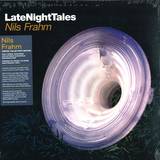
Composer, musician and producer Nils Frahm steers the new edition of Late Night Tales, set for release on 11th September. A hypnotic voyage through modern and classical composition, experimental electronics, jazz, dub techno, soundtracks and soul; Frahm's Late Night Tales haunts and beguiles. It's not mixing, so much as gently layering, like a particularly fluffy goose-down duvet folding in on itself, the folds part of the attraction, the layers part of the overall picture being painted. Many of the tracks have been edited, effected and re-made. The subtly overdubbed parts on Rhythm & Sound's 'Mango Drive' adding to the haunting hypnosis, while choral interruptions aid Miles Davis' 'Générique' on its journey towards the light. Meanwhile, on Boards Of Canada's 'In A Beautiful Place Out In The Country', the tempo is somewhat sluggish, the organs slurred, as Frahm slows it down to a funereal 33rpm that nevertheless fits perfectly. The purring of his girlfriend's cat Cleo transitions playfully between Nina Simone's definitive version of 'Who Knows Where the Time Goes' and unearthing the gentle electronics of Dub Tractor. Eddy Arnold's 'You're The Only Star', a country tune that sounds like its transmitting from a mid-west diner wireless circa 1947, is straight from the soundtrack to an imaginary David Lynch movie, comforting and dismaying all at once. This crackly reality abounds, as on Finnish band Gentleman Losers' 'Honey Bunch', that adds an unsettling texture, with a sound that is modern but as nostalgic. Frahm's own tracks bookend the mix, opening with an inspired "rework" of the infamous silent John Cage piece '4:33' ("I sat at the piano in silence and worked from
there. I listened and took in the atmosphere and this is what came out of it") and ending with a solo piano version of 'Them', taken from his recently released score of the film 'Victoria'. The traditional Late Night Tales spoken word epilogue is voiced by actor Cillian Murphy (Inception, Batman, 28 Days Later), reading a short story by Edna Walsh (Hunger, Disco Pigs).
Commandez maintenant et nous commanderons l'article pour vous chez notre fournisseur.

180g Heavy double vinyl LP with liner notes by Tyran Grillo. Limited Japanese Obi for the first pressing. Original artwork by Russell Mills and photography by Jean-Baptiste Mondino.
The third Time Capsule is a body of dub reinterpretations by celebrated producer Bill Laswell of Ethiopian singer Gigi. Curated by Tokyo record collector, music researcher and seasoned reissue supervisor Ken Hidaka, it is the first time Illuminated Audio is pressed to vinyl after its CD release in 2003.
Ejigayehu Shibabaw was born in 1974 in Chagni, northwestern Ethiopia and by pursuing a career as a singer, went against her father’s strict, traditional gender roles. As Gigi, she embraced the same musical freedom she had strived for in her personal life, incorporating the Ethiopian church, funk, hip-hop, West and South African music into her work. She first settled in Nairobi, then Addis Ababa, where she quickly established herself as one of the city’s leading singers. A move to San Francisco in 1998 led to a long and fruitful creative partnership with bassist and producer Bill Laswell.
Around the same time, Chris Blackwell had stepped away from Island Records to start the art house film company and label Palm Pictures. He took an interest in Gigi and together with Laswell, pulled together an all-star cast of musicians for her self-titled US debut album, including Herbie Hancock, Pharoah Sanders and Wayne Shorter. It won international critical acclaim, not just for its musicianship but for making Gigi a “defining voice for the Ethiopian expatriate community”, as journalist Tyran Grillo praises in his Time Capsule liner notes. From the nation-defining 1896 victory over Italian invaders to the quiet revolutionaries who wear simple shemma garments, Grillo believes the themes in Gigi make it “a shower of sunlight on her homeland for those ignorant of its struggles.”
After its success, Blackwell encouraged them to go back into the studio to rethink the album and Illuminated Audio was born. “Anyone can make a voice sound worldly”, Grillo remarks, “but rare are those who can make one sound inner-worldly.” Gigi was clear with Laswell to give her vocals a minor role “because it’s already been done.” Instead her Amharic verse is fleeting, exhaling through the textures like ghostly fragments; soaring yet muted. Yet the album is still titled under her name, an assertion by Laswell of her central role in the album’s creation. Not only was it a fully endorsed project by Gigi, but she would be present throughout its development, giving feedback on half-finished ideas as Laswell played them back in the studio. “It works perfectly”, she reflected after the album’s release. “We wanted to capture the whole spirit of each track, and Bill’s remixes create a different music language that really puts you in a pleasant place”.
This new vocabulary takes its lead from a technical approach that Laswell had been perfecting during a furtive creative period at the turn of the millennium. Much like his ambient interpretations of Miles Davis (Panthalassa, 1998), Bob Marley (Dreams of Freedom, 1997), and Carlos Santana (Divine Light, 2001), Laswell approached Illuminated Audio by returning to the original multitrack masters. Gigi wasn’t just reworked, but recomposed into an expansive lattice of instruments, submerged in a watery ambience of dub and trance undercurrents.
Sonically, this new language that Gigi refers to, is manifested by the original album’s more understated parts being pushed to the fore. Explaining his contrasting methods, Laswell saw Gigi as being “put together in a way that fits”. Contrastingly, in Illuminated Audio, “a lot of things that I featured in the remix weren’t as audible in the original.” Instrumentation laying near-dormant, deep in the mix, are brought to the fore: the acid rock guitar and Wayne Shorter’s saxophone on ‘Tew Ante Sew’, Graham Haynes’ flugelhorn on ‘Nafekeñ’, Laswell’s bass on ‘Kahn’, the melodica in Mengedegna or the floating synths and talking drums in ‘Gud Fella’.
Brought to his attention by mentor DJ Nori, Hidaka describes Illuminated Audio as a “masterful sonic exploration into ethereal ambience and dub” and made sure this reissue also contained a full remaster to give its “deep musicality” much better dynamics and density in the overall sound. Hidaka admits that Laswell's music “is sometimes so out-there, it is often misunderstood” and, indeed, to dub album non-believers this might seem like a prolific producer imposing himself on another artist’s work; eternally developing rearrangements that never quite get to its destination. But that’s missing its true power and triumph. This is more than the reissue of a remix, but “a wholly unique musical entity”, as Hidaka describes. Illuminated Audio refers to the illuminated manuscripts that comprise the major part of Ethiopian art and its new compositions stand in proud solitude as a rare body of reworks that both informs and enhances their originals.
il devrait être publié sur 19.06.2026

BBC and Parliamentary Jazz Awards winner Tony Kofi 's ANOTHER KIND OF SOUL traces the explosive music of Cannonball Adderley from his first session as leader in 1955 through his work with Miles Davis to the soul-jazz of the 1960's. Recorded live at Luton's Bear Club in 2019, it also features Andy Davies on trumpet, pianist Alex Webb, bassist Andrew Cleyndert and Alfonso Vitale on drums. This is the distilled version of two very special nights, immortalised by Paul Riley's recordings. The album is available in limited edition 180 gm vinyl the medium of Adderley's erato best replicate the ambience of this remarkable live recording, and in digital format. The album is not called A Portrait of Cannonball as there is already one bearing that name by the great man himself. It is however, without a doubt,
Another Kind of Soul by Tony Kofi.
Kofi has performed with the World Saxophone Quartet, Clifford Jarvis, Courtney Pine, Donald Byrd, Dr. Lonnie Smith, Eddie Henderson, Jamaaladeen Tacuma and Ornette Coleman. The Guardian has described his improvisational skill as having "an arrestingly raw power".
L'article est déjà en route pour nous et devrait être expédié de 19.06.2026.

Gary Bartz und das neue Londoner Ensemble Your Brother’s Keeper präsentieren mit "Where Rivers Meet" ein tiefgründiges und intuitives Studioalbum, das die seltene Begegnung zweier Generationen von Jazzmusikern einfängt. Das Album, das pünktlich zum 20-jährigen Jubiläum von Brownswood erscheint, vereint Bartz' Tradition mit der jungen, pulsierenden Szene Londons. Das Ergebnis ist Musik, die sich mit Offenheit und Intensität entfaltet, getragen von tiefem Zuhören und gemeinsamer Improvisation.
Im Zentrum des Projekts steht Bartz, eine der einflussreichsten Vertreter des modernen Jazz. Der Saxophonist, dessen Karriere sich über mehr als fünf Jahrzehnte erstreckt, machte sich einen Namen durch Auftritte mit Charles Mingus, Max Roach und Art Blakey, bevor er sich Miles Davis in dessen elektrisierender Phase der frühen 1970er-Jahre anschloss. Mit seinen gefeierten Aufnahmen mit der NTU Troop wurde er schnell zu einer prägenden Figur des Spiritual Jazz und schuf ein Werk, das Generationen von Musikern und Zuhörern gleichermaßen begeistert. Sein Spiel – lyrisch, tiefgründig und unverkennbar gefühlvoll – zählt nach wie vor zu den markantesten Stimmen des Jazz.
Das Album markiert zudem die Gründung von Your Brother’s Keeper, einem neuen Kollektiv um Schlagzeuger und Produzent Jake Long (Maisha), dessen musikalischer Dialog und die Improvisation tief in der Musik verwurzelt sind. Mit Ali MacSween (Piano, Synthesizer, modulare Effekte), Axel Kaner-Lidstrom (Trompete), Twm Dylan (Kontrabass), Tim Doyle (Percussion) und Chelsea Carmichael (Tenorsaxophon) sowie Long am Schlagzeug spiegelt die Gruppe eine Szene wider, die den Sound des zeitgenössischen Jazz im letzten Jahrzehnt maßgeblich geprägt hat.
il devrait être publié sur 19.06.2026

Straddling an intriguing intersection of Drum & Bass, Jazz, Fusion and unidentifiable electronica, ‘You Won't Find Your Way From Here’ is the debut album from Jhauk.
An extremely talented multi-instrumentalist from Sheffield, UK, Jhauk came to Blu Mar Ten’s attention when, in 2017, he created a wild prog-rock inflected remix of BMT’s track ‘Titans’
Further conversations with Jhauk revealed the depth of his unorthodox approach to electronic music and unearthed a treasure trove of production skills, culminating in the album before you.
Oscillating between the late-night, moody calm of late 50s Miles Davis, John Coltrane & Bill Evans, the riotous 70s instrumentation of Weather Report, the modern cool stylings of Matthew Halsall and the gritty edges of modern D&B production, it’s scarcely believable that this collection of tracks came from one person working alone in their studio. With tempos and time signatures skittering all over the place, Jhauk uses genres as catalysts rather than containers, he finds the interesting stuff in the hinterlands of their structural relationships and tensions.
Talking about the album, Jhauk has strong opinions:
“Drum & Bass emerged as club music, and club music comes with its own logic. Specific structures, specific build-ups, a formula that supports that context.
That's fair enough, but almost 40 years later, why is 99% of D&B still made the exact same way when 99% of the time it's never heard in a club? The same structure, the same formula, barely any development beyond the core idea. Tracks where you can hear 10 seconds of the drop and know almost beat-for-beat how the next 5 minutes sound. No real musical depth or exploration. People regurgitating the same material ad-nauseum but never actually saying anything for themselves.
This period of composition for me was about taking what I love about D&B, the rhythmic energy and potential for creative freedom it presents and really stretching it to its limits. Of taking drum & bass as a starting point and seeing where it ends up without an idea of what that destination might be. Most people would probably never call a lot of the results D&B, but that's okay because it was never the point.”
Dripping with melancholy, euphoria, longing and pure urgency ‘You Won't Find Your Way From Here’ is unlike anything else you’ll hear this year. The sound of an artist entirely unconcerned with impressing peers or performing on ‘socials’; you're hearing a true musician at work, expressing ideas through the skill of his hands, mind and ears. The album’s secrets aren’t revealed with a single play-through, but bears (or even requires) multiple listens to expose its layers.
In previous times, they called this ‘art'.
il devrait être publié sur 19.06.2026

The debut release by Confusion on Incompetence Records documents an exercise in disciplined spontaneity, a jam session where organic interaction is rigorously shaped into form. Recorded live in Belgrade by Dmitrii Steinberg, Aleksei Siubaev, Viktor Volkovich, Evgenii Piankov, and Leonid Lipelis, the material was subsequently dissected and reassembled with a scalpel like precision reminiscent of Teo Macero’s landmark edits for Miles Davis. What emerges is not a loose improvisational document but a suite of cohesive constructed pieces: weightless structures suspended over a hypnotic pulse, steeped in cosmic vibes and soft psychedelia. There is a slo mo insistence to the grooves, a kosmiche drift that folds jazz funk rituals into something both intimate and expansive. For musicians previously orbiting rare groove, house, indie rock, and modern composition, Confusion expands their explorations into a terrain where genre dissolves into texture and intention. The record’s mesmerizing beauty lies in its restraint, motifs surface, dissolve, and return as if refracted through magnetic tape memory, each fragment locked into place yet breathing with human elasticity. Rather than presenting virtuosity, the quintet channels it into atmosphere, into a patient, glowing continuum that feels less like a jam and more like a carefully mapped inner cosmos, calibrated for deep listening and slow revelation.
il devrait être publié sur 19.06.2026

Terumasa Hino’s brilliant New York session, which drew attention for its thrilling collaboration with former members of the Miles Davis Group, is set to be reissued as the sixth title in the "Spin This Now!" series. Featuring Terumasa Hino on trumpet, John Scofield on guitar, Ron Carter on bass, and Tony Williams on drums. Recorded in New York City on May 7, 1977.
il devrait être publié sur 19.06.2026

What happens when the mathematical rigor of Johann Sebastian Bach is stripped of its classical facade? With the album SRDNG x LPZG, the duo AMAS, together with double bassist Frithjof-Martin Grabner, delivers a radical answer on May 15th, 2026. The work does not merely translate Bach’s legacy; it consistently reimagines it within the aesthetics of Minimal, Dub-Techno, and Ambient. The creation of this extraordinary abstraction spanned three years and two geographical poles: the raw isolation of Sardinia and the academic precision of Leipzig.
The project found its origin in the seclusion of Pula, at the southernmost tip of Sardinia. There, AMAS extracted and digitally dissected the rhythmic and tonal essence of 14 selected works by Bach. In a temporary local studio, these minimalist sequences fused with field recordings of the surroundings to form a hypnotic framework of electronic structures. Back in Leipzig, this foundation met Frithjof-Martin Grabner. In an intense session held in a hall of the historic HMT Leipzig, spontaneous improvisations emerged that breathe the spirit of Miles Davis’ approach to "Ascenseur pour l’échafaud": free play based on rudimentary sketches, an intuitive reaction to the material—comparable to Davis’ iconic scoring of silent film images. It is a deliberate prioritization of atmosphere over technical perfection. Grabner utilizes the full spectrum of his instrument, creating sounds that, in post-production, often blur the line between analog depth and synthetic texture.
The result is an organic symbiosis: the vastness of Sardinia (SRDNG) meets the intellectual density of Leipzig (LPZG), while the strictness of the Baroque dissolves into the repetitive energy of Minimal Techno. To do justice to this conceptual ambition, the album will be released in an uncompromisingly audiophile edition. Limited to 200 copies worldwide, the double LP is pressed on 180g vinyl and features a front cover with a special 3D effect, continuing the visual tradition of the AMAS series. An album for listeners who understand Bach as a living origin of modern sound art—and for lovers of electronic music seeking a new, organic soul within the repetitive depth of techno.
Disponible en stock et prêt pour l'expédition

SML is a Los Angeles based quintet featuring Anna Butterss, Jeremiah Chiu, Josh Johnson, Booker Stardrum, and Gregory Uhlmann. Spontaneous Music Live contains two side-length pieces of unedited improvisation, recorded live at Los Angeles venue Zebulon during SML"s December 2025 three-night residency, just weeks after the release of the band"s second album HOW YOU BEEN. It was recorded and mixed live to stereo tape by Bryce Gonzales (the same engineer/wizard known for his gorgeous live captures/mixes of Jeff Parker"s ETA IVtet). Between HOW YOU BEEN and their 2024 debut SMALL MEDIUM LARGE (both of which were heavily edited, shaped and post-produced) the band has developed a reputation for records that are heavily fused, polished, and punchy. The medium is on full post-modern display on those LPs, and the band"s post-production knife can be responsible for much of the perspective - the tastiest morsels collected, arranged, and rearranged just so. But the source material from both those albums were live recordings. Longform, unwieldy, ebbing and flowing. On top of that, every performance the band has ever done has been fully improvised in that spirit. So in the sphere of live performance the band"s esteem has grown down a different path - one of linear, hypnotic, expansion. It"s a perceived split persona shared by some of SML"s most inspiring conceptual bedfellows: compare the extended madness of Can"s Live in Paris 1973 to the relative tight form of Future Days from the same year; the speed-funk chaos of Miles Davis" Dark Magus to the heavily deconstructed On The Corner or Big Fun. Spontaneous Music Live removes the curatorial perspective and pulls the curtain back on that search-pluck-reconstruct editing process. What we"re left with is the psychedelic realism of the band in situ, in their home town, collectively improvising, fully in-the-moment, mining for that moment of discovery. We hear, in macro, each nugget of sound which could be the basis for a future SML album track, spattered amongst the collective chaos-and-control like stars in the night sky.
il devrait être publié sur 26.06.2026

Two rare recordings from the archives of legendary producer Richard Hewson.
Rising Star (Cosmix) began life in 1984 as a vocal single performed by Debbie Sharp. Hewson reworked the original track into a percussive cosmic disco interpretation, aptly titled the “Cosmix”, experimenting with his newly acquired Bel Delay effects unit, which became central to his studio explorations at the time.
Deep Song dates back even further, to the late-70s Richard Hewson Orchestra period - the creative blueprint that would later evolve into Hewson’s cult studio project, The RAH Band. Written, produced and assembled by Hewson in his home studio before additional strings and vocals were layered in, the track was inspired by his deep admiration for Miles Davis, particularly the landmark album Kind of Blue. Deep Song was originally released as a B-side under a mysterious alias in 1979.
il devrait être publié sur 09.07.2026

This first-time reissue of Quinteplus’ 1971 album revives a key moment in Argentine jazz, featuring crisp trumpet and tenor sax, electric piano-driven funk and modal grooves, and a tight, spacious rhythm section. It showcases prominent figures like Jorge Anders and “Pocho” Lapouble.
==================================
Quinteplus was born in Buenos Aires at the end of the 1960s, emerging directly from the ideas and experiments of the legendary Agrupación Nuevo Jazz. Founded in the early ’60s, this collective brought together some of the most forward thinking figures in Argentine jazz functioned as a creative lab where musicians questioned where jazz could go next. Among the key ideas discussed was the fusion of jazz with Argentine folk styles such as zamba, chacarera, malambo, cueca, and candombe, as well as a deeper look into African rhythms as a bridge between musical worlds.
Two members of that collective, keyboardist Santiago Giacobbe and bassist Jorge “Negro” González, carried those ideas forward when they formed Quinteplus in 1969. The group came together naturally: all the musicians already knew each other and had played in different projects around the Buenos Aires scene. They shared a strong admiration for Julian “Cannonball” Adderley’s quintet, along with a clear goal—to develop a modern jazz language grounded in local Argentine rhythms.
From the start, Quinteplus stood out for its openness and adventurous spirit. Rhythm was central, and so was experimentation. The band belonged to a generation of Argentine jazz musicians eager to explore electric instruments and new textures, anticipating what would soon be known as jazz-rock. This was happening in Buenos Aires at the very same time Miles Davis was opening new doors with “In a Silent Way” and “Bitches Brew”. Giacobbe introduced one of the first Fender electric pianos in Argentina, while González pioneered the amplification of the upright bass and even developed a hybrid electric, boxless version of the instrument. Trumpeter Gustavo Bergalli, meanwhile, maintained close ties with the emerging Argentine rock scene, collaborating with Luis Alberto Spinetta and appearing on Almendra’s first album.
In 1971, Quinteplus recorded its first and only studio album for EMI. The original lineup featured Jorge Anders on tenor saxophone, Bergalli on trumpet, Giacobbe on keyboards, González on upright and electric bass, and Norberto “Pocho” Lapouble on drums and percussion—who also illustrated the album’s iconic sleeve. The record is a refined showcase of the band’s musical vision: original compositions, fluent jazz language, folk-derived rhythms, funky electric textures, tight ensemble playing, and standout brass solos. Though critically praised, the album received little label support and sold modestly, eventually becoming a sought-after collector’s item.
Quinteplus disbanded in 1973, their music was perhaps too bold and unconventional for its time.
Disponible en stock et prêt pour l'expédition

This album brings together key tracks from Doug Carn recorded for Black Jazz Records in the 1970s.
Doug Carn is one of the most-important (and least-recognised) forces in the creation of the canon of 'deep and spiritual jazz music' - full of powerfully emotive intensity, consciously-uplifting lyricism and addictively beautiful melodies.
All of his LPs during this period have since achieved cult classic status including 'Infant Eyes', 'Adam's Apple', 'Spirit of the New Land' and 'Revelation'.
Aside from his songwriting and keyboard skills, many of the tracks here feature the stunning and powerful 5-octave range vocals of Jean Carn (later Carne), his wife at the time.
Musicians featured on this album include Alphonse Mouzon, Charles Tolliver, Henry Franklin, Michael Carvin, Walter Booker, Ronnie Laws and others. Aside from Carn’s compositions there are also striking interpretations of music by Lee Morgan, Miles Davis, John Coltrane, McCoy Tyner, Bobby Hutcherson and Wayne Shorter.
Black Jazz became one of the defining labels of independent and conscious jazz music in the 1970s alongside other important labels such as Strata-East and Tribe Records. As well as this Best of Doug Carn release, Soul Jazz Records are also releasing a Best of Black Jazz Records collection at the same time.
Disponible en stock et prêt pour l'expédition
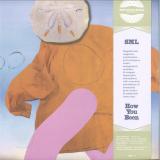
SML is the quintet of bassist Anna Butterss, synthesist Jeremiah Chiu, saxophonist Josh Johnson, percussionist Booker Stardrum, and guitarist Gregory Uhlmann. Their second album, How You Been, finds the supergroup of prolific composer/producers pushing ever further into the hyperrealist, collectivist approach to music creation nascently explored on their debut Small Medium Large, which was lauded as "awe-inspiring" by Glide, "exuberant" by the Los Angeles Times, and "an exciting milestone" by Pitchfork. As SML has evolved and spread out in space-time, their fluencies, both as an improvising unit in performance and as a production team in the studio, have sharpened. At inception the band inspired disparate but distinctive artist comparisons like Essential Logic, Oval, Herbie Hancock"s Sextant, and electric Miles Davis, as well as assorted genre touchpoints like Afrobeat, kosmiche, proto-techno and new-jazz. With How You Been their work manages to both collapse and explode such derivatives, displaying a new, high resolution version of SML, fully-flowered into a new strain of sound, bound to incite its own copycats in due time.
Disponible en stock et prêt pour l'expédition

Arizona-based producer Kareem Ali returns with Renewal, his second EP on the French label Noire & Blanche, a luminous blend of deep house, jazz, and Afrofuturism that captures both personal and collective transformation. Praised by Rolling Stone, Pitchfork, and Boiler Room for his visionary sound, Ali continues to expand the language of modern electronic music with a project rooted in emotion, movement, and hope.
Across five tracks, Feel Everything All At Once, On My Heart, Procession, Wake Up My People, and Want, Kareem Ali invites listeners to experience the full spectrum of feeling. Opening with the warm, jazz-infused pulse of Feel Everything All At Once, the EP unfolds into the hypnotic rhythms of Procession and the heartfelt refrain of On My Heart. The soaring horns and urgent groove of Wake Up My People capture the project’s spirit of resilience, before closing on Want, a meditative reflection on desire and renewal.
Drawing inspiration from Sun Ra, Miles Davis, and Underground Resistance, Kareem Ali continues his pursuit of what he calls Future Black Music — a sound that merges the spiritual depth of jazz with the cosmic potential of electronic music. With Renewal, he offers not just an EP, but a vision: music as liberation, rebirth, and awakening.
Disponible en stock et prêt pour l'expédition

Disponible en stock et prêt pour l'expédition

Joe Chambers ist ein US-amerikanischer Jazz-Schlagzeuger, Pianist, Vibraphonist und Komponist. In den 1960er- und 1970er-Jahren spielte Chambers mit vielen namhaften Künstlern wie Eric Dolphy, Charles Mingus, Wayne Shorter und Chick Corea zusammen und wirkte an mehreren legendären Blue-Note-Alben der 1960er-Jahre mit. Double Exposure, ursprünglich 1978 bei Muse Records veröffentlicht, ist eine seltene und genreübergreifende Session, die zwei visionäre Musiker in einem sehr persönlichen, experimentellen Rahmen zusammenbringt. Der Schlagzeuger und Komponist Joe Chambers wird von Larry Young begleitet, einem wegweisenden Jazzorganisten, dessen modale und avantgardistische Neigungen Tony Williams' Lifetime und Miles Davis' Bitches Brew-Ära mitprägten. Remastered & Cut AAA direkt von den originalen Analogbändern durch Matthew Lutthans bei The Mastering Lab. Gepresst auf 180g-Vinyl und verpackt in Stoughton Old Style® Tip-On Jackets. Enthält ein Insert mit neu verfassten Liner Notes von Bill Milkowski und Barney Fields sowie seltenen Fotos von Jan Persson und Raymond Ross.
Disponible en stock et prêt pour l'expédition

Skilled guitar dances over the ultimate groove by Marcus Miller and Omar Hakim.
This important Japanese fusion album was recorded by guitarist Kiyoshi Sugimoto, who was extremely busy at the time as a first-call musician, together with Marcus Miller, Omar Hakim, and Warren Bernhardt, who were in Japan for Kazumi Watanabe’s "TO CHI KA" tour. The lively playing of Marcus Miller, then 21 years old and just before being discovered by Miles Davis, is a must-hear.
il devrait être publié sur 06.11.2026

Endless – Universal Cosmic Sounds
Endless is a journey through cosmic soundscapes, where jazz-funk, early electronics, and ambient experimentation meet.
Carefully curated by Charles Maurice from his personal collection, this compilation brings together 10 rare recordings from 1969 to 1985, revealing an era of fearless creativity and sonic exploration.
Marking 10 years since Charles Maurice’s first compilation in 2015, Endless also celebrates a milestone — his 13th release in a decade of unearthing rare and beautiful music from forgotten archives.
From Beaver & Krause and their pioneering Moog experiments to the lush electronic symphonies of Jean-Claude Petit, the dreamy synth work of Ector Davis, and the cinematic beauty of Bernard Larquet, each track opens a window into a different musical galaxy.
Highlights include Patrick Marcel’s privately pressed 1985 recording “Bagnols”, an atmospheric fusion of ambient textures and ECM-inspired jazz, and Wlodek Gulgowski’s Scandinavian jazz-funk masterpiece that bridges groove and cosmic elegance.
Unearthed from obscurity, Endless – Universal Cosmic Sounds celebrates a timeless vision of music without boundaries — a rediscovery of the rare, the beautiful, and the endlessly imaginative.
Disponible en stock et prêt pour l'expédition

Carefully arranged jazzy cuts circle the first appearance of the enigmatic Edrift. For sure a future classic to fill your colorful afternoons, or to serve as a tapestry for late night conversations, will most likely end up on your forever loved records. Lovely melodies drift in perfect balance on top of some of the coolest beats. Unpack, throw it on the turntable, and enjoy it in the most relaxed way, as it was intended.
Disponible en stock et prêt pour l'expédition
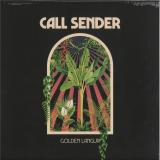
Call Sender is the collaborative brainchild that unites the talents of Paul Elliott, a versatile multi-instrumentalist, composer, producer, and recording engineer from Suffolk/UK and Michael Reed, a multi-talented instrumentalist, recording engineer, and drummer residing in the Bay Area/USA. Despite working together for the past four years, the pair are yet to meet in person!
After connecting on social media over their love of drum breaks and vintage reverbs Elliott and Reed fostered their creative partnership by bouncing recordings back and forth via email and this virtual collaboration resulted in their first album, the jazz-funk inspired “Lost To The Storm” (Tru Thoughts, 2023). With four singles from the album gaining radio play and becoming a favourite for tastemakers and DJs, the pair began work on the follow up “Golden Langur”. With this new record, the aim was to retain their signature Call Sender sound, a heady mix of B-movie soundtracks, classic library music and psychedelic funk and soul, but also introduce elements of lo-fi soul as well as collaborating with some of their talented friends as featured artists.
These features include fantastic instrumental contributions from the incomparable funkmaster Shawn Lee (Ping Pong Orchestra/Young Gun Silver Fox) on “Brainforests” and the legendary JJ Whitefield (Poets Of Rhythm/Whitefield Brothers) who kicks ass in two tempos on “Two Tails”. Not to mention the silky-smooth vocals from the Bay Area’s Andre Cruz, vocal duet from Lucid Paradise that is reminiscent of Gil Scott Heron and Paul Elliott’s seven year old son Buddy drops a vocal on the future B-boy classic “Rainbow”. Together Call Sender has an old-school vintage foundation with a modern perspective. Influenced by iconic acts such as Klaus Weiss, Miles Davis and Nino Nardini and with a hip and funky sonic aesthetic, Call Sender’s music is nostalgic without being pastiche, has a sense of travelling at its core, having been recorded in different parts of the globe, while never hesitating on the direction of the music.
Disponible en stock et prêt pour l'expédition

360 mcn white-white light cardboard paper / one side only hand plasticization / 2 separated parts prints / hand gluing / PVC outers / original artwork / gatefold sleeve / Bandcamp limited edition 30x60 cm insert with extended liner notes by Tony Higgins and Interview with Babs Robert and Sébastien Gorlé with exclusive pictures and self-portrait by Babs Robert himself printed on GF Smith "Takeo Tant Select" Canvas Paper tip-on left jacket panel / Exclusive never released Memorabilia from Babs Robert's vault.
Personnel:
Babs Robert - alt sax, tenor-sax, electric tenor-sax, Bin Recorder, Acme siren, Chinese-bell, sleigh-bells, maracas, tambourine,hand-rattle,claves)
John Van Rymenant - baritone-sax, fluegelhorn, Bala, tambourine, sleight-bells, cowbell, triangle, claves
Johnny Peret - vibes, bongo's, cowbell, maracas, castanets, rattle-snakes, tambourine, drums, woodclock, trinagle
Johnny Brouwers - piano, prepared-piano, triangle, cowbell, sleigh-bells, maracas, caves,hand-rattle, guiro, woodblock, tambourine
Paul Dubois - bass, triangle, cowbell, claves, rattlesnakes, hand-rattle, woodblock, tambourine
Michel Gobbe - bass,Chinese-bell, claves
Robert Pernet - drum, tambourine, seven-notes M'Bichi, guiro, alarm-siren, home-made metal xylophone, African telephone-drum, triangle, sleigh-bells, Siku
Notes:
Despite its modest role on the world stage, Belgium has produced a number of internationally renowned musicians and composers. There is the iconic gypsy jazz guitar maestro Django Reinhardt, whose position remains unassailable, and guitarist/harmonica player Toots Thielemans, who became an internationally renowned artist performing and recording with Bill Evans, Oscar Peterson, Ella Fitzgerald, Peggy Lee, Shirley Horn and Quincy Jones. The other key Belgian figure is composer/arranger Francy Boland, co-leader with US bebop drumming legend Kenny Clarke of Europe's leading big band of the 60s, the Clarke-Boland Big Band.
The Love Planet performed in the main clubs of Brussels, such as Blue Note, Pol's Jazz Place, and Smog as well as in major musical events throughout Belgium including to big festivals in 1969 - the Avant-Garde Festival in Ghent and the First International Jazz Event in Liege – where the Love Planet shared the bill with Miles Davis - and the Bilzen Jazz Festival in 1970. The contrast between the musical architecture of the themes and sonic freedom in the improvised playing perfectly illustrated the polymorphism – an order within disorder – which the Love Planet aimed for.
The initial original quartet line-up was Babs Robert (sax), Paul Dubois (bass), Johnny Brouwers (piano), and Johnny Peret / Robert Pernet (dru- ms). On the album session, the quartet was augmented with the addition of John Van Rjimenant (saxes) and Michel Gobbe (bass). As well as their main instruments, the band members also played an array of unusual instruments, principally percussion. This is the first official re-release
of the 'Babs Robert and the Love Planet'. Original copies of the album fetch many hundreds of Euros on the collecting circuit and it remains a curious and fascinating window into a moment in time that still resona- tes some fifty years later. Come with us to the Love Planet. (Tony Higgins)
Disponible en stock et prêt pour l'expédition

Marbles is the legendary 1970 proto punk / dance classic from John McLaughlin’s US debut album 'De?otion', recorded at the time in which he played on Miles Davis' Bitches Brew and taped the Record Plant session with Jimi Hendrix.
Marbles didn't just deliver jazz rock's most danceable 4/4 beat, played by Band of Gypsies / Electric Flag drummer Buddy Miles. It is also centered with a once-in-ageneration bass line performed by Billy Rich. Larry Young's otherworldly Hammond textures predate a lot of what synthesizers were about to do much later, and the blowtorch energy emanating from John McLaughlin's cranked amp went beyond what most would had dared during the defining era of heavy rock guitar. An apex achievement at the intersection of jazz rock, guitar rock and dance music without parallel, before or since.
Background: John McLaughlin arrived in New York in 1969 to join Tony Williams' new group Lifetime which also featured Larry Young and eventually Jack Bruce (of Cream). On the second day in town he found himself in the studio with Miles Davis, recording 'In a Silent Way.' His playing would also take center stage in Bitches Brew, Jack Johnson, On The Corner and several other Davis key works of his much beloved first electric era. In between a busy schedule with Lifetime and Davis, McLaughlin also recorded two solo albums in 1970, 'De?otion' with an all-electric group and ‚'My Goa|’s B?y?nd' as its acoustic counterpart. By the time he formed his group Mahavishnu Orchestra in 1972, John McLaughlin was firmly established as the most important practitioner of his instrument of his generation within and well beyond the emerging jazz rock / fusion genre, and he has continued to evolve and surprise until today.
Here, a thorough remaster is supplemented by a new and throbbing techno version by Stefan Goldmann.
Disponible en stock et prêt pour l'expédition
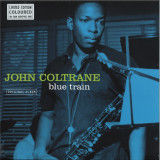
This album was recorded September 15, 1957, in Hackensack, New Jersey. The personnel includes Coltrane's Miles Davis bandmates, Paul Chambers on bass and Philly Joe Jones on drums - both of whom had worked before with pianist Kenny Drew - and trumpeter Lee Morgan and trombonist Curtis Fuller, who were then up-and-coming jazz musicians and would go on to join Art Blakey's Jazz Messengers. All of the compositions were written by John Coltrane, with the exception of the standard "I'm Old Fashioned". The title track is a long, rhythmically variegated blues with a sentimental theme that gradually shows the major key during Coltrane's first chorus. "Locomotion" is also a blues riff tune, in forty-four-bar form.
Disponible en stock et prêt pour l'expédition

Anyone with a passing interest in footwork and juke will know of Traxman. Corky Strong has a long history of deep involvement in Chicago house, first releasing on the legendary Dance Mania label in the mid nineties, and since then splitting his productions between ghetto house, juke and footwork, releasing alongside Steve Poindexter and Fast Eddie and the late DJ Deeon and DJ Rashad, including an seemingly endless supply of self-released juke edits of whatever direction his deep knowledge of Black American music takes him. The third volume of 'Da Mind Of Traxman' is his first since 2014. In the intervening years he's kept things rolling, DJing regularly, releasing lots of music, becoming a grandfather and being a mentor for younger artists coming up in the scene.
This new album was crafted with the help of fellow Planet Mu artist Sinjin Hawke, who took on A&R duties to collate the best from hundreds of tracks dating back to 2005. Sinjin holds Traxman's status in high regard; "This album series is important and holds real documentarian value—working on it feels like the modern equivalent of curating a piece of Miles Davis’s catalog in the '60s and '70s." Volume 3 showcases Traxman's uncanny ability to take old music into the future without losing the feeling and energy of his samples and influences. He knows how to add a hi-definition modern chassis with the skill of someone who deeply and intuitively understands the craft of dance music. These are some of the purest, most innovative ideations of Chicago footwork.
a A1 Kill Da DJ (ft. Bobby Skillz & Sinjin Hawke) explicit
[d] A4 Where They At (ft. DJ Twan) [explicit]
[f] A6 I’ll Write The Hook [explicit]
[i] B1 Trust Me [explicit]
[m] B5 Talaban [explicit]
Disponible en stock et prêt pour l'expédition

2025 Repress
Midnight In Tokyo 2, the second installment to the compilation series that rounds up hidden gems by Japanese artists that's perfect for listening at night in Tokyo, is here. This time the collection brings together some tasty electric jazz fusion from the '80s , compiled by Dubby, the man behind the online record store Ondas.
The compilation begins with "Hikobae," a dark and slow cosmic jazz by saxophonist Genji Sawai, followed by "Danza Lucumi," an odd Caribbean-style jam by Today's Latin Project, a band fronted by Tadaaki Misago of Tokyo Cuban Boys, with arrangements by Yasuaki Shimizu. "On The Coast" is a soulful and mellow vocal track arranged by Ryuichi Sakamoto, from guitarist Shigeru Suzuki's album White Heat, and fusion boogie cut "In The Hot City" is by Mr. Theodore, which was a one-off project by a mysterious artist.
The melancholic soul jazz number "So Long America" is the title track from the album Yasunori Soryo released in '82, following a stint in America with the band Brown Rice. "Twisty" is a tropical reggae tune from the album Samba Kathy, an underrated classic by Jugando which was released on Trash, a sublabel of one of Japan's finest jazz labels, Trio. "Samarkand" is an electric Latin jazz jam that sounds like something Miles Davis and Santana could have played on, performed by a Latin funk band from Fussa. "Imagery" is a primal African fusion track by Katsutoshi Morizono, a member of the prog rock band Yoninbayashi.
"Windmill" is the most acoustic sounding tune on this compilation, a breezy Brazilian affair with a Hermeto Pascoal feel. "Mystery Of Asian Port" is by the band Parachute, which consisted of Japa-nese fusion giants like Akira Inoue, Tatsuo Hayashi and Masaki Matsubara. The cosmic jazz record sounds like something Daniele Baldelli would play in his sets. "Bay Sky Provincetown 1977" is a classic Japanese fusion tune by guitarist Yuji Toriyama.
The set also features the mellow but danceable "Heatwave" by keyboardist Keiichi Oku, featuring a female vocalist (which some have identified as Rie Ida), and last but not least, closing out the 13 track compilation is "Day Dream At The Bob's Beach," a wonderful urban fusion with a beautiful vibraphone melody, from the Japanese fusion classic album that was a one-off project by studio musicians
Disponible en stock et prêt pour l'expédition
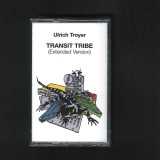
12"[23,49 €]
Ulrich Troyer has been producing music now solidly for over twenty years within a largely genre free framework, but whilst navigating forms such as avant-garde, techno, leftfield, field recording, electronica, glitch and ambient it is the aesthetics of dub that guide his creative direction. Not really recognisable in an orthodox form as remixed versions of roots reggae songs but in the way sonics are manipulated with space, the application and layering of delay, reverb and echo that fixes his output well within the scope of what might be called futurist dub.
The nearest comparisons to his new album TRANSIT TRIBE can only be established by a synthesis of some of the more adventurous explorations in modern music such as African Head Charge, Jon Hassell, Pole (Stefan Betke), Bill Laswell or even Miles Davis; featuring a diverse selection of artists and friends not only from Vienna and environs but also from around the world, sounds are not so much fused but allowed to float along the continuous flowing tide of warm waves of bass.
Rather than to allow the names of Ulrich Troyer's collaborators be merely listed in the album credits, what they bring to this joyful affair needs to be outlined, albeit briefly: Co-producer credits go to Osman Murat Ertel from Istanbul, who employed a variation on the old foolproof Nick Lowe method for checking out the impact quality of his own sound productions by playing tracks through his car sound system speakers!
Murat is a member of the electro-psych-folk group Baba Zula where he plays electric saz, oscillators and theremin and played a key part in the creative development of the album. Mamadou Diabate, the balafon master originally from Burkina Faso and now resident in Vienna, has developed his own unique technique of playing solos that replicate the sound of three instruments playing in unison; however the multi-talented Mamadou is engaged here on singing and playing the talking drum. From South Tyrol Reinhilde Gamper is a member of the experimental trio Greifer who are bringing the sound of the zither into the twenty-first century using new playing techniques and electronic gadgets. Susanna Gartmayer is an Austrian composer and bass clarinetist specialising in improv and multimedia sound research. Diggory Kenrick has been engaged with creating new dub fusions and also re-energising classic rocksteady and roots reggae classics, renowned for his interventions on flute. Didi Kern is an electronic dance musician and drummer from Vienna with a focus on free improvised music. Hamidou Koita, a singer and multi-instrumentalist, is from a traditional Griot family in Burkina Faso but now resident in Vienna and a regular musical partner of Mamadou Diabate playing drums and calabash. Austrian Lukas Lauermann is both a studio and live musician playing cello, also working on electronic sound design and writing string arrangements. He has recorded extensively and appeared on stage with both Mark Lanegan and Hans-Joachim Roedelius. Martin Mallaun is a Tyrol-born specialist in both the development of the zither in modern music and also as a researcher in the effects of climate change on the vegetation of Alpine ecosystems. Mystica Tribe is the musical alias of Tokyo-based dub/techno producer Taka (Takafumi) Noda. He collaborated with Vienna's own Vegetable Orchestra on 2020's "Transplants (Mystica Tribe Version)". After studying classical percussion Flip Philipp is now a jazz vibraphone player and member of the Vienna Symphony Orchestra. Wolfgang Pfistermüller is a member of the Vienna Trombone Quartet and the developer of the incredible bass-trombone Aurora with its uniquely warm and resonant sound. Roger Robinson is a renowned British poet, winner of many contemporary poetry prizes and member of the experimental music group King Midas Sound. Kwame Yeboah is a Ghanaian born UK based keyboard wizard who tours regularly with Yusuf / Cat Stevens, Ms. Dynamite and Pat Thomas.
So contained on the album is an astonishing mix of musicians and instruments: sounds of cowbells recorded in the South Tyrolean alps processed by modular synthesizers and heavy analogue bass synths combined with instruments such as zither, bass-zither, electro saz, flute, talking drum, trombone, cello, vibraphone, marimba, djembe, contra-alto clarinet, melodica, Farfisa - all bound together by organic live-drums and dub effects.
Liner notes by Steve Barker
Disponible en stock et prêt pour l'expédition
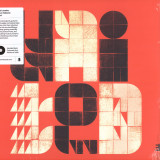
Two musical giants, guitarist Lionel Loueke and bassist Dave Holland, unite their individual talents into one harmonious recording,igniting creativity, honouring cultural roots, and showcasing music's powerful role in fostering unity amidst societal division.
United is an inspiring testament to the power of collaboration, blending Loueke's masterful guitar work with Holland's deep,resonant bass. Both musicians have profoundly impacted the global jazz scene—Loueke, known for his innovative fusion of WestAfrican traditions with modern jazz, has played with a who’s who of virtuosic and celebrated artists, most notably serving asHerbie Hancock’s guitarist for over 15 years, and collaborating with legends like Wayne Shorter, Sting, Terence Blanchard, MarcusMiller, and Esperanza Spalding. Holland, one of the most influential bassists and composers in jazz, has shaped contemporaryjazz since the late 1960s, performing with icons like Miles Davis, Chick Corea, John McLaughlin, Pat Metheny, Sam Rivers, andJack DeJohnette. Though Loueke and Holland have worked together many times in various groups, this album marks their firstcollaboration as a duo. The result is nothing short of extraordinary.
Disponible en stock et prêt pour l'expédition

Black Vinyl[35,08 €]
We’re teaming up with ELUCID and Fat Possum for a limited edition of 300 copies of a Rush Hour black ice coloured edition.
E L U C I D, one half of the illustrious duo Armand Hammer, is here with the full-length follow-up to 'I Told Bessie'. Further experiments in the sonic, expanding on the 'live' side of music paired with the embracing of chaos. Something you haven't heard, or not so for a very long time. E L U C I D is here to reveal the bleakness of reality.
---------------------------------------------------------------------------------
''There is never time in the future in which we will work out our salvation. The challenge is in the moment; the time is always now.''
James Baldwin
A raw, crackling urgency runs through rapper-producer ELUCID’s new album REVELATOR like an underground power line. There is no space here for sepia-toned reminiscences or indulgent self-mythologizing. Intellectual rabbit holes have been filled in with concrete and rebar ; there is nowhere to hide and no off ramp from the audio Autobahn that ELUCID has fashioned—a renegade Robert Moses with gold fronts, bulldozing the homes of the powerful and the complicit. REVELATOR brims with the energy of now, with a refusal to look away. Carpe diem in a murder one mask.
Born in Jamaica, Queens, ELUCID has been on the cutting edge of New York’s underground scene since the mid-2000s. From the beginning, he has defied both convention and expectation. He ran with Okayplayer darlings Tanya Morgan, but his own music eschewed their throwback charm for glitchy noise experiments and bass-swamped culture jamming. His 2016 debut studio project Save Yourself (re-released in a deluxe edition last year) announced him in earnest. But in recent years, his Armand Hammer releases with partner-in-crime billy woods have received significant attention and acclaim. Serving as a followup to his last solo album—2022’s comparatively balmy I Told Bessie—ELUCID hoped to “re-distinguish” himself with REVELATOR, setting himself apart amidst the increasing attention around the music he and his friends are making together.
For ELUCID, this meant setting bold new challenges for himself. One of these was diving further into live instrumentation than ever before—”getting my Quincy Jones on,” as he puts it. The testing ground for this approach was Armand Hammer’s most recent project, 2023’s We Buy Diabetic Test Strips’ Möbius strip soundscapes, warmed with instrumental flourishes and skin-shedding beat progressions. With REVELATOR, though, ELUCID strove to create an atmosphere of chaos, embracing experimental electronics and atonal sample bursts. He worked on much of the album with co-producer Jon Nellen, who comes from a background in avant-garde and Indian classical music. “I wanted to get as freaky as I could at this moment. I wanted people to hear things, maybe for the first time, or in a way they haven’t for a long while,” the rapper explains.
ELUCID arrived at the studio with a collection of noise sources: non-referential samples, glitches and noises. Together he, Nellen, and others created forms out of them and, as ELUCID recalls, “just started playing drums with it.” Their fried, distorted sound was directly inspired by Miles Davis at his most uncompromising—specifically, the tone-clustering funk track “Rated X” from his 1974 double LP Get Up With It. At times, the pairing of rap with avant-fusion sounds also brings Emergency! from The Tony Williams Lifetime to mind, perhaps in an alternate timeline where the late drummer was listening to Ice Cube’s AmeriKKKa’s Most Wanted.
“The World is Dog,” REVELATOR’s lead single, functions as the album’s aesthetic thesis statement. Like the Davis track, the textures are punishing, the tonality is in free-fall, and the driving breakbeat of a groove cuts in and out unceremoniously. Avant-jazz bassist Luke Stewart, who appears throughout the record, holds the whole thing together just long enough for ELUCID to tightwalk over the beat. This tension is exactly where REVELATOR sets itself apart; in a time of drumless loops, and safe soul samples, this is a high-wire act with no safety net. Similarly, the song announces the themes of the album within just a few phrases, evoking the way societies accept and adjust to new levels of debasement and brutality while suffocating under the weight of history: “Can’t clock the kill, all a mystery/Forced past will eating everyone eventually/The world is dog.”
Many of the songs on REVELATOR grapple obliquely with dissolution and disenfranchisement in America and across the world—the grim realities of our domestic sociopolitical climate and our involvement in foreign conflicts. “Much of my artistic and political sensibility comes from the Black arts movement here in New York,” ELUCID explains. “Recognizing the interconnected global struggles against oppression, artists and thinkers created works and actions in solidarity with freedom movements in South Africa and Palestine.” ELUCID cites intellectuals like Amiri Baraka, Kwame Nkrumah, Audre Lorde, Sonia Sanchez, and Nikki Giovanni among his heroes. (One track on the album is specifically inspired by Lorde’s work, “SKP,” citing the scholar’s paper “Uses of the Erotic: The Erotic As Power.”) Songs like REVELATOR’s insistent closer “ZIGZAGZIG,” find ELUCID applying up-to-the-minute messaging, making explicit reference to the conflict in Gaza: “Feed a war machine…from river to sea, in lieu of peace.”
Despite ELUCID’s preference for cacophonous system overload here, the rapper also provides moments of respite. Recorded at The Alchemist’s Los Angeles studio, the laid-back, wheezing “INSTANT TRANSFER” is a collaboration with billy woods, which crystallizes their shared sense of creative determination. “With much momentum behind us and even more on the horizon, I knew a purpose, and that every step was ordered to that purpose,” ELUCID said of the experience. Meanwhile, the jittery “HUSHPUPPIES” is a playful anomaly on the track list, providing a snapshot of ELUCID watching his grandparents in the kitchen while preparing for Friday night fish fry dinners.
“Love still rules over on this side,” ELUCID says. ”I’m raising a family. We are making meaning and finding joy in the midst of all the fucked up-ness of everything around us because the alternative is cowardice and slow death. We remain rooted. We celebrate our people and our wins. Struggle is necessary.”
“IKEBANA” is one of ELUCID’s strongest statements of purpose on the record, blending the record’s heaviest themes with its most hopeful sentiments. supported by a shoutalong refrain and an urgent prog-funk groove. Breaking away from images of dissolution and crumbling societal systems that populate REVELATOR, ELUCID notes that the only way to navigate life’s bleakest landscapes is to cling to love and believe in those around you—to look forward toward something better that may or may not be possible. For the rapper, one of the album’s most trenchant lines comes during a centerpiece of a beat drop: “Being alive/I must look up.”
“The lyric ‘being alive I must look up’ is important especially in the context of this album. Much of the album imagery is harsh and reflects the actual doom some of us experience. But still I/we exist,” ELUCID explains.
Every artist is, in one way or another, the product of their time, bound by life’s leaden gravity to operate within the space of that which is already known. But there are some who are able to shake free of these ties, to shape the culture as it unfolds, to make the present their own.
Revelation, as a concept, points to the scales falling from people’s eyes—something that has been hiding in plain sight becoming clear. “The revelator relates to things that have been talked about, things that have been forecasted,” ELUCID adds. “And now they’re really here, and everyone sees it. And there’s no escaping.” REVELATOR plays out with the unmitigated power of those storms, laying waste to any genre conventions in pursuit of a certain physicality. Here, ELUCID develops a wholly distinctive musical language to explore our fractured modernity.
REVELATOR's packaging was designed by longtime Armand Hammer / Backwoodz art director, Alexander Richter.
Disponible en stock et prêt pour l'expédition

For the first time since its inception 36 years ago, Steve Hiett’s elusive Down On The Road By The Beach is finally made available outside of Japan. Most recognized in the fashion sphere as an English photographer and graphic designer, Hiett‘s transportive audio portraits amplify his serpentine guitar to the infinite blue, recorded across Paris, Tokyo and New York with no coastline in sight. Now widely celebrated as a desert island disc, very little is actually known of its unfathomable genesis.
A career devotee of Brian Wilson’s ground breaking harmonies, Hiett shot The Beach Boys for Rolling Stone - as well as The Doors, Miles Davis and Jimi Hendrix (in one of his final performances at the 1970 Isle Of Wight Festival) - while establishing himself as a fashion photographer. Decamping to Paris in 1972, he began what would become 20-year collaborations with Vogue Paris and Marie Claire, printing his signature warm, saturated and vibrantly hued snapshots.
In 1982, representatives from Tokyo’s Galerie Watari visited him to propose a solo exhibition. Asking if he could insert a 7” of original music into the back of the exhibition catalogue, Hiett laid down ‘Blue Beach - Welcome To Your Beach’ in a Parisian radio station, playing all of the instruments himself, and two more cuts in New York with Yoko Ono, The Doobie Brothers and Steely Dan hired-gun Elliot Randall. Once dispatched, the phone began ringing off the hook with requests for him to fly to Tokyo. Assuming these long-distance callers were wanting him to check proofs for the book, it wasn’t until he arrived that he discovered CBS/Sony had facilitated an entire album. Heitt hastily gripped some petty cash, bought a guitar and retreated to his hotel room to start writing.
Entering the studio the following day, he was further surprised by a waiting room of session players known as Moonriders - one of Japan’s most acclaimed rock bands of the 1980s. Intimidated by their indecipherable sheet music, Hiett suggested Randall join them and with money being no object for major labels at the time, his wingman was on the next plane out of New York to finalise the high production indulgence. Near-ambient arrangements that float in a space between The Durutti Column, Steve Cropper and Ashra, Down On The Road By The Beach also crowns Hiett the master of recontextualization with his zero-gravity blues visions of Roll Over Beethoven, Santo & Johnny’s Sleep Walk and the 1967 Eddie Floyd soul hit Never Found A Girl.
Produced in coordination between Be With, Efficient Space and the artist, this definitive reissue is restored from original masters with vivid reproductions of the Down On The Road By The Beach exhibition catalogue, intended to accompany its original release, and extensive liner notes penned by fellow Steve Hiett obsessive Mikey IQ Jones.
Disponible en stock et prêt pour l'expédition

On Savor Music 025, we summoned a fine selection of remixers to rework Franco Cinelli's "Tracks from the Vault Part 2."
"Tribute To Miles Davis," where Cinelli merges jazz and electronic elements into a hypnotic sonic journey was reinterpreted by Chicago Legend DJ Jes adding a trippier, loose house interpretation, infusing the track with an extra jazzy twist while maintaining its original spirit. Pablo Minuto & Guillermo de Caminos made a minimalistic take on the same cut, transforming the track into a groovy, hypnotic experience with a focus on rhythmic and atmospheric elements.
"Electronic Funk" original’s pulsating bassline, crisp percussion, and intertwining synth melodies are further enriched in Jorge Savoretti’s remix, which introduces an extra layer of synth action, giving the track’s a deeper interpretation.
Disponible en stock et prêt pour l'expédition

Recorded almost entirely in a single day at the legendary Total Refreshment Centre in London, JOY MACHINE brings together some of the most exciting musicians in London’s new jazz explosion. With features from Alabaster DePlume and trumpeter Jonathon Enser (Nubiyan Twist), vocals from Dizraeli (Worldwide Music Awards Best Album nominee), drums from Ben Brown (Alfa Mist, Mulatu Astatke), bass from uk jazz scene favourite Daisy George, synths from Joseph Costi (Yusef Cat Stevens, Bahla) and saxophone from free jazzer Ronan Perrett.
In the tradition of Miles Davis’s Bitches Brew, the band came to the studio in October 23 with only one pre-written track (the uplifting summer anthem Greek Summer) and once that was recorded, spent the rest of the day improvising wild, explosive music laced with Dizraeli’s rap and spoken word lyricism. The result is JOY MACHINE, a record bursting with urgency, intensity and life, and one that cements Dizraeli’s position as an innovative wordsmith, bringing both personal depth (as in Abigail, a homage to the sister who died before he was born) and fierce political commentary (as in Dear Cousin, a goosebumps-inducing narrative that transports the listener aboard the boat Adriana carrying refugees across the Mediterranean, which sank in June 2023 drowning 500 people, and then confronts a very English bigot in the second verse).
Disponible en stock et prêt pour l'expédition

Cassette[10,88 €]
Forest Green Vinyl
Seafood Sam is a futuristic artifact. If that description might sound confusing at first, it matches the eclectic dualities found in true originals. With his effortless cool and timeless style, the North Long Beach native defies convention and exact comparison. He's a virtuosic rapper, a stop-you-in-your tracks singer, and a symphonic producer. Welcome to the lavish life of a laid-back transcontinental man of mystery, rolling in old school Cadillacs, eating caviar with a blade in his pocket, and making plays in vintage Pelle Pelle gear. A blaxploitation icon for the Instagram age, blessed with the bars of a `90s legend and 23rd century swagger. Seafood Sam is a true hero of modernity. On his full-length album debut for up-and-coming label drink sum wtr (Kari Faux, Deem Spencer, Aja Monet) debut, Standing on Giant Shoulders, Sam splits the difference between Snoop Dogg and D' Angelo, Curren$y and David Ruffin. The songs reveal a forward-thinking sensibility rooted in ancestral soul. He creates spiritual hymns for the streets that tap into universal ideals and irrepressible groove. In an era plagued by short-term thinking, his ambitions reveal a crate-digging depth of music history and a meticulous ear for detail. The giant shoulders in the album's title refer to James Brown, Bobby Brown, and Miles Davis - the holy trinity who inspired Sam's process. From the Godfather of Soul, Sam took a perfectionist's rigor and focus. The example of Bobby Brown lent an unshakeable confidence and self-belief. While the constant artistic left turns of the trumpeter that birthed Ccool offered an aspirational archetype. The story starts in the glory days of Long Beach hip-hop. As a young child, the G-Funk era soundtracked rides in Sam's father's car. Some of his earliest memories are trying to memorize Snoop's verse on "Nuthin' But a "G" Thang." Beyond gangsta rap, the LBC has historically doubled as a capital of lowrider soul and carwash oldies. At any intersection, you could hear Dogg Food or Brenton Wood, Warren G or Barbara Lynn. This too was absorbed via osmosis. It also just so happened that the art of performance was always in Sam's blood. So at family functions, he and his sister supplied entertainment by singing karaoke renditions of The Isley Brothers. While his Harlem Shake remains a thing of local lore. Long Beach is a culturally diverse mecca of skate parks and gang life, street fashion and tricky dance moves. This is the place that raised Sam on a diet of Wu-Tang and Nelly Furtado, Lil Bow Wow and Allen Iverson. He was the middle ground between his two older brothers: one who gangbanged, the other who graduated with a master's degree from UC-Santa Barbara. But it wasn't until the end of high school that Sam started to take rap seriously. Alongside long-time collaborators like Huey Briss and Reaper Mook, Sam's name began to make waves on the northside of the city, but he was partially distracted by a modeling career that paid the bills and took him all to way to walk in Paris' fashion week. The first turning point arrived with 2018's "Ramsey," a self-produced, slick-talk anthem with over 10,000,000 streams across all platforms. With each subsequent release, Sam showcased his peerless consistency, building buzz both online and in the city streets. Spin hailed his "smooth and unhurried cadences and understated lyricism_ that sounds like nothing else in Long Beach." Clash raved about Sam's "evolution as an artist, cruising through nostalgic production with slick, witty rhymes." The culmination arrives with Standing on Giant Shoulders. It's the evidence of a master, a young sensei in the model of Quincy Jones. All rhymes, singing, production, and arrangements were handled by Sam - with an assist from his close Long Beach kinsman Tom Kendall from the group Soular System. It's hard-edged and lyrical enough for disciples of Larry June and Roc Marciano, but orchestral and melodic enough for fans of Anderson .Paak and H.E.R.
Disponible en stock et prêt pour l'expédition

Bright Magus is an instrumental quintet born under the influence of Miles Davis' metaphysical electric period, a visceral and magical passion always shared by Giovanni Calella and Leziero Rescigno. Davis' most eclectic and psychedelic period, that of recordings for Columbia from 1969 throughout the 70s. Albums like “In a Silent Way”, “Bitches Brew”, “A tribute to Jack Johnson”, “On The Corner”, “Big Fun” made them immerse themselves in one of the most fascinating experiments that Miles has generated in his long and prolific career. We are talking about music that is difficult to fit into one genre, in these masterpieces you can feel the contemporaneity of that historical period. Electric Jazz, Funk, Psychedelia, Rock, Afrobeat, Ambient, drag you into something absolutely new, mysterious and sometimes furious. Just a year ago Giovanni and Leziero took courage and started recruiting musicians who had to have the right attitude and knowledge. Guitarist Alberto Turra was the first to be interested in the project, then came Mauro Tre, pianist and keyboard player and Gianni Sansone on trumpet. All seduced by Miles and in love with that magical period.
Before making the first album "Jungle Corner", the band did some live shows to amalgamate all the ideas that came out during the improvs recorded by Tullio Treffiletti in the trumpeter's home studio (later baptized Selim Studio). At the Isola Studio in Manuel Agnelli's space and with the help of the very talented Guido Andreani, Bright Magus then recorded in three days live all the material which in the meantime had been enriched with more structured melodic themes and less casual drafts . Mauro's contribution was very important in this. The finalization of the album was then managed by them in the small "Diabolicus Studio" taking care of editing, post production and mixing.
Guest on the album in two songs, Enrico Gabrielle of Calibro 35 on flute and clarinet.
The cover design is a work by Barba Ughi alias BAX.
Disponible en stock et prêt pour l'expédition

Disponible en stock et prêt pour l'expédition

'Vibes player Johnny Lytle was one of the heroes of the early acid jazz club circuit, with his cuts 'Selim' and 'The Man' being anthems of the scene.
The Ohio born player’s first album, as a leader was on the Jazzland label in 1962 with “Nice And Easy” and his second, three years later, on Riverside "The Village Caller" made him a star in the jazz world. When Riverside encountered difficulties, co-owner Orrin Keepnews collaborated with Lytle on two albums which came out on the Detroit label Tuba.
The first of these "The Loop" featured his regular trio partners organist Milt Harris and drummer “Peppy” Hinnant. This line up was augmented on some tracks by former Miles Davis’ pianist Wynton Kelly and bassist George Duvivier. A 7” version of the title track actually spent five weeks in the Billboard Hot 100 in January 1966. As for the album, as well as the acid jazz cut 'The Man' it features a stunning version of Duke Pearson's 'Christo Redentor' and the dancefloor friendly 'Possum Grease' and 'Hot Sauce'. The band also stretch out on extended track ‘The Shyster’.'
Disponible en stock et prêt pour l'expédition

This live album — released on vinyl for the first time — is made up of three European dates in 2001, and introduced Shorter’s ‘Footprint Quartet’: pianist Danilo Perez, bassist John Patitucci and drummer Brian Blade.
All are in top form, especially on challenging reimaginations of the title track and ‘Masquelero’, both from his time with the 1960’s Miles Davis Quintet.
Disponible en stock et prêt pour l'expédition

Eternally Frozen consists of a series of canon based compositions for brass ensemble, percussion and synthesizer by Andrea Belfi. The canon is an ancient compositional technique in which an initial melody is imitated at a specified time interval by one or more parts, creating illusionary never-ending musical journeys.
The work is inspired by the evocative image of the Deprong Mori, a mythological bat with the alleged ability to fly through solid matter by bending atoms by its natural skill of audio echolocation. The myth suggests that one of these bats had been “eternally frozen” in a wall of solid lead in 1952 by the researcher of the Rockefeller University, Donald R. Griffith. This story is exhibited in a display at the Museum of Jurassic Technology in Los Angeles, an institution renowned for both speculative, fantastical reinforcement of mythology and playful and beguiling distortions of mysterious could-be truths.
Both the canon and the “frozen” Deprong Mori are man-made illusory simulations of eternity. Their attempt is to create mirages, where the insinuation of facts is more meaningful than the reality.
After many years of sonic explorations with percussion, drums, and electronics, Belfi is here projecting himself as a composer through the direction of an astonishing brass ensemble in the realization of these canonic works. There are evident echoes of the works of Arthur Russell, Miles Davis, Moondog, William Basinski, and the Italian soundtrack tradition of Ennio Morricone and Egisto Macchi.
Disponible en stock et prêt pour l'expédition

On our latest Savor EP, 'Tracks from the Vault Part 2', South American legend Franco Cinelli delivers the goods.
On the A-side he pays homage to a legendary musician with "Tribute To Miles Davis". This track seamlessly blends elements of jazz and electronic music, creating a hypnotic sonic journey that captivates the listener from start to finish. Cinelli's meticulous attention to detail and impeccable production skills shine through, as he masterfully combines intricate drum patterns with mesmerizing melodies and atmospheric textures.
The B-side introduces us to "Electronic Funk," a high-energy dancefloor mover that blends influences of Detroit and funky electronic music. Cinelli's masterful production skills are once again on display as he creates a dynamic and infectious groove that demands movement from its listeners. The track features a pulsating bassline, crisp percussion, and synth melodies that intertwine flawlessly, creating an irresistible atmosphere that is bound to get any crowd grooving.
Order now. Collecting orders for repress.

Anthiliawaters returns to Isophlux with “Barcelona” after last surfacing in 2017 on Denmark’s Kondi imprint with the double vinyl version of “The Miles Without You” debut album. Anthiliawaters was originally produced by Shad T. Scott (Gosub) and John Wend. This time Shad goes it alone and continues the Anthiliawaters concept of deep electro / techno beats, complex melodies, and Gosub’s trademark spooky vocals.
Keeping to the original DNA of Anthiliawaters Gosub drives deep house beats with classic Chicago organs dubbed out in old school tape delays. Inspired by Miami’s radio station WRBD’s weather reports back in the 80’s Concept1 with heavy synth workouts over deep bass-lines infused with Midnight’s steel drum synths assault on the listeners ear holes. “Night Time Comes” brings the trademark spooky vocals of Gosub speaking to a girl he can’t sleep without with a response from a lead-line inspired by Miles Davis, all held together with deep dubbed bass-lines driving to Detroit style beats.
All in all the Barcelona EP is hits all sides and is a classic to have in any collection. Full colour artwork by Hawaiian Surf art artist Madek.
Disponible en stock et prêt pour l'expédition

Unlock the allure of The Hot Spot through its unforgettable soundtrack, a captivating collection that brings the film's sultry ambiance to life.
Set against the backdrop of a small Texas town, The Hot Spot follows Harry Madox, a charming drifter with a dark past. As he arrives in town, he becomes embroiled in a web of seduction and deceit, navigating his way through a love triangle involving the sultry waitress, Gloria, and the alluring femme fatale, Dolly. Tensions rise and passions ignite, leading to a thrilling climax where desire and danger intertwine. Directed by the visionary Dennis Hopper, the film is a masterclass in mood and atmosphere, capturing the essence of 1990s neo-noir.
The Hot Spot has garnered acclaim for its stylish cinematography and gripping narrative, but it's the music that truly sets it apart. It's an amalgamation of swampy blues, jazz and rock — all mixed and recorded in a sparse, bloomy and eerie sort of way.
Critics hailed the soundtrack as "an electrifying fusion of jazz and blues that perfectly complements the film's seductive undertones." The blend of sultry melodies and haunting instrumentals creates an immersive experience that resonates long after the credits roll.
This recording is just so damn fine, so airy and warm. And the musicians aboard on this Dennis Hopper film are a who's who, including Miles Davis, John Lee Hooker, Taj Mahal, Roy Rodgers, Earl Palmer and Tim Drummond. This has long been a highly sought-after and collectible record among audiophiles. This soundtrack is essential for any music lover or film buff, capturing the very essence of the film's seductive spirit.
Cet article n'a pas encore été publié. Vous pouvez pré-commander le produit maintenant.

Forever – Jazz steht für zeitlose Eleganz und die Essenz eines Genres, das Generationen geprägt hat. Diese stilvolle Vinyl-Ausgabe vereint ausgewählte Meisterwerke und schafft eine Atmosphäre zwischen sanfter Melancholie, swingender Leichtigkeit und virtuoser Improvisation.
Mit unvergesslichen Interpretationen von Nina Simone, Louis Armstrong und Ella Fitzgerald uvm, entfaltet sich ein Klangbild, das sowohl entspannt als auch inspirierend wirkt. Instrumentale Höhepunkte von Miles Davis und Dave Brubeck runden das Hörerlebnis ab.
Forever – Jazz ist mehr als eine Sammlung – es ist ein stilvoller Begleiter für besondere Momente und ein Muss für alle, die echten Jazz in seiner schönsten Form genießen möchten.
il devrait être publié sur 05.06.2026
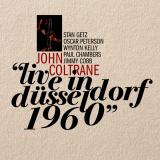
Concert recorded on March 28, 1960 at the Apollo Theater in Düsseldorf, which had been converted into a television studio by German radio for broadcast on TV. Originally planned as a performance by the Miles Davis Quintet + Guests, Miles Davis ultimately chose not to take part in the recording, leaving Coltrane to take the lead.
First time on Vinyl.
Remastered Vinyl by Dominique Blanc-Francard
il devrait être publié sur 24.04.2026
