repress
"The haunting ambience of Beat fit somewhat with the then-popular Massive Attack and Portishead, but the album's subsonic drone made it more of a minimal mood piece than a collection of songs." MAGNET
The second in a trio of albums released by the core duo of Lawrence Chandler and Martha Schwendener, Beat is without doubt their definitive artistic statement.
Coming 20 years to the day of its original release, this is the first time this album has been available on vinyl in almost two decades, and the first ever U.S. vinyl release. (Was released here on Beggars Banquet, original copies very hard to find..)
The second album from New York City's Bowery Electric was released in late 1996, less than 15 months after their self-titled debut, but it found them having traveled light years musically in the interim, the group having seemingly decided to see how far they could take the guitar/ bass/ drums/ vocal setup into the atmosphere.
Every aspect of their approach had been refined and focused: squalling, distorted guitars had been transformed into hazy, sensual sheets; the live drums transmuted to sampled rhythms more in debt to the blossoming downtempo sound of the day; bass lines reduced to their most basic diagrams; vocals submerged to become one with the narcotized fog of the instruments; even the lyrics were reduced to a few minimal lines used sparingly so as not to overshadow the dynamic.
Beat is a lush and dense mantra of shadowy percussion, barely-there vocals and immersive drones that envelops the listener in an opiated blanket of sound.
quotes:
"Bowery Electric have made something utterly astonishing here. So deep, so wide, and somehow as intimate as a train crash. The first six tracks are just the most crushingly beautiful thing I've heard in 1997; the last five are even better. Good god, THIS IS IT." Melody Maker
"While cymbals shower down over the songs like a torrent of shattered glass, their austere beauty is never static. Ambience has rarely sounded so messy." Exclaim
A near-perfect mix of shifting dance beats, menacing electronic drones, analogue bleeps,
syncopated rhythms and ethereal vocals." Now UK
Cerca:mini trio
Avantgarde Metal band IMPERIAL TRIUMPHANT announce their 5th studio album “Spirit of Ecstasy”. The trio from New York manages to surpass their already brilliant recent longplayer “Alphaville” that has been released in 2020. Thereby IMPERIAL TRIUMPHANT convince again with outstanding musical finesse and complex songwriting. Therefore, it is no wonder that "Spirit of Ecstasy" features some well-known guest musicians from the jazz and metal scene. This is a must have for all fans of complex and avantgarde metal. The album will be released as Ltd. CD Edition (Mini-Gatefold), Gatefold 2LP & LP-Booklet and on all digital platforms.
Das Debütalbum des ehemaligen Little Cub Sängers!
Nach der Auflösung des Südlondoner Trios Little Cub hat Gore den elektronischen Synthie-Pop der Band in seinem Solowerk umgestaltet und neu interpretiert, um zusätzliche akustische Instrumente einzubauen, die für einen strukturierteren und gemäßigteren Sound sorgen. "All These Things" überlagert auf gekonnte Weise fantastische dystopische Bilder mit funkelnden Elektronik-Teppichen und treibenden Beats. Es ist eine ähnliche Entwicklung wie bei den Pet Shop Boys zwischen Introspective und Behaviour: von hellem, tanzflächenorientiertem Pop zu melancholischen Mini-Symphonien.
The Idealist is one of the many projects of Joachim Nordwall who has a long history in Swedish experimental music running the quintessential iDEAL Recordings record label since 1998, as a member of the psych-drone duo Alvars Orkester, avant punk rock trio Kid Commando and ritual drone rock group The Skull Defekts and through his many solo recordings and collaborations with people such as John Duncan, Aaron Dilloway, Mika Vainio, Mats Gustafsson, Leif Elggren, Gabi Losoncy, Mark Wastell and Christine Abdelour.
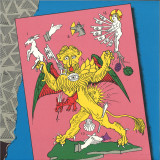
As The Idealist, he has been delving into an amalgam of experimental techno, dub and industrial music since 2006. His new A Lion Is A Lion And Not A Lamb continues this perspective unabatedly, conjuring up six tracks that shimmer with an almost psychotropic intensity, sometimes including acidic touches, dwelling in a confrontational minimalist musical stance where repetition, bursts of gorgeous noise and dubbed out skeletal rhythms make for wayward yet driving grooves at home on the dance floor and a set of headphones alike. The Idealist looks for engagement within rhythm, in its almost purest
form.
Taking direction from both the cinematic song stylings of sardonic yet
unfettered troubadours like Randy Newman, Brian Wilson, and Harry
Nilsson and the "visual scoring" of indie pop song placement in 21stcentury films, Best Move's music suggests the sound of a decade of
winding, disparate avenues finally convening in a perfect center
The Sacramento-based trio is composed of Kris Anaya, Joseph Davancens, and
Fernando Olivia. Anaya, a talented songwriter with a penchant for wry, offbeat
guitar-based folk-pop songs, and Davancens, who holds higher education degrees
in avant- garde composition and jazz double bass, formed the electronic act
Doombird together in 2016, but in 2019 the pair gravitated back to what they
consider more natural inclinations: organic instruments, earnest songwriting, and
a more true-to-themselves direction. Adding Oliva, Best Move was born. Many of
Best Move's songs maintain an intentionally similar sonic feel. Guitars strum and
piano twinkles while a layer of manipulated or synthesized instruments spread a
hazy overtone on top of it all, and steady yet minimal drums keep things moving.
Lyrically, the standards prevail - love, loss, friendship, searching for purpose - but
the themes bubble under the surface of a sea of metaphor, leaving the listener to
decipher the message in their own way. Anaya calls the sound a "thank you to the
past," and while a warm, familiar tone echoes throughout the band's universe,
something unmistakably modern remains.
It's hard to believe it's taken this long for a proper retrospective of legendary Los Angeles collective CVE. "We Represent Billions" is a crucial portrait of one of the West Coast's most low-key influential crews - a hydra-like collective of rappers, producers, designers and engineers who were key members of the Good Life Cafe's open mic scene, going on to inspire artists like Jurassic 5, Kendrick Lamar amongst many other. Initially called Chillin Villain Posse before morphing into Chillin Villain Empire in the late 1980s, they eventually centered around the core trio of Riddlore, NgaFsh and Tray-Loc. The crew were years ahead of their time, self-producing music without samples and pioneering a stream of consciousness lyrics that still sound fresh and innovative. CVE were self-sufficient and motivated from the beginning, named "Chillin Villains" because that's how they were perceived by white America. This social motivation was channeled into their groundbreaking performances at Good Life Cafe, the South Central session that evolved into Project Blowed and later on came to influence LA club night 'Low End Theory'. It was chronicled by Ava Duvernay, herself an MC in short-lived duo Figures of Speech, in her "This is the Life" documentary, where she interviewed CVE alongside Jurassic 5, Freestyle Fellowship, Abstract Rude and Busdriver. On "We Represent Billions", we're treated to a snapshot of the CVE sound from 1993-2003, their most prolific era. The retrospective collects music from the handful of albums the crew released on their own Afterlife Recordz label (mostly as limited edition CD-R's) plus many previously unreleased tracks and highlights their untethered eccentric creativity and sheer breadth of influence. Whether twisting twitchy West Coast electro on 'All Over Da Globe' or free associating over horror synths and foley sounds on 'Made in Chillz Ville' there's a sense that their music was just too future for its time. Assembled from heaving industrial samples and graced by back-and-forth tongue twisting flows, 'Thugs and Clips' is as eerie and hard-hitting as anything 2Pac's "The Don Killuminati: The 7 Day Theory" full-length. Fuzzed-out and unsettling, 'Calistylics' welds an ambient synth loop and bone-rattling percussion to Tricky-esque percussion, while the flickering closer 'Unicycle' is a cross between Dr. Dre's icy G-gunk pressure and Three 6 Mafia's pitch black lo-fi funk. In many ways, 2022 is the perfect time to rediscover this music: an urgent, creative fusion of spine-tingling pre-grime electronic minimalism and mind bending wordplay that still sounds completely idiosyncratic and utterly alien. Tracks: 1 All Over Da Globe 2 Thugs and Clips 3 C.V. Vault 4 Made in Chillz Ville 5 Bring It On 6 Calistylics 7 No Feelins 8 Let's Get It On 9 Today Was A Fucked Up Day 10 Untitled (Freestyle) 11 Unicycle
- 1: Manu Dibango - Groovy Flute
- 2: Tenorio Jr. - Nebulosa
- 3: Mark Murphy - Why Don't You Do Right
- 4: Illinois Jacquet - Mambocito Mio
- 5: Frank Minion - Bongo Blues
- 6: Blue Mitchell - Mi Hermano
- 7: Lorez Alexandria - I'm Whishin
- 8: Marian Mcpartland - Coming Home Baby
- 9: Oliver Nelson - 125Th Street & 7Th Avenue
- 10: Ella Fitzgerald, Ernie Heckscher Big Band & Tommy Flana
- 11: Orchester Roland Kovac - Milky Way
- 12: Gene Ammons - Pagan Love Song
- 13: The Monty Alexander Trio - Monticello
- 14: Mel Tormé - Right Now!
- 15: Richard "Groove" Holmes - Six Million Dollar Man Theme
- 16: Dizzy Gillespie - For The Gypsies
- 17: Michel Sardaby - Welcome New Warmth
- 18: Art Farmer Septet - Mau Mau
- 19: Frank Minion - Watermelon
- 20: The Ibrahim Khalil Shihab Quintet - Before The Rain And
- 21 0: Gabor Szabo - Galatea's Guitar
Das Trio "Girls In Synthesis" wurde treffend als "eher eine Terrorzelle als eine Rockgruppe" beschrieben. Textlich befassen sie sich mit den Erfahrungen der Arbeiterklasse in Bezug auf fragile geistige Gesundheit, soziale Unbeweglichkeit, Gefühle der Machtlosigkeit, Unsicherheit, Angst und die zersetzenden Auswirkungen einer feindseligen Gesellschaft. John Linger bringt es auf den Punkt, wenn er "I've seen a glimpse of the future" in sein Mikrofon bellt. Das Londoner Trio "Girls In Synthesis" ist eine Band, die sich einer Kategorisierung entzieht. Seit ihrer Gründung hat die Band Anarcho-Punk, Noise-Rock, Post-Punk und elektronische Einflüsse aufgenommen, ohne in einem dieser Genres zu verweilen. Der definitive GIS-Sound ist mehr als die Summe dieser Teile. Die Band ist eher ein Kollektiv als eine traditionelle Musikgruppe, da alles (Aufnahmen, Artwork, Fotos und Videos) intern mit den Mitgliedern der Band und ihren Verbündeten kreiert wird. Mit einer unvergleichlichen Live-Show hat sich die Band durch ihre kultige Hingabe an ihre Kunst eine treue Fangemeinde in Großbritannien erspielt, von denen viele die Band auf ihren Tourneen durch das ganze Land begleiten. Ihre neue Veröffentlichung "Konsumrausch", ein exklusives, eigenständiges Mini-Album für das deutsche Label Hound Gawd!, erkundet verschiedene klangliche Territorien und erweitert die bisherigen Veröffentlichungen der Gruppe um weitere Experimente.
- Format: Schwarze 140G Vinyl
Wir sind happy euch hier das lang ersehnte Debüt Mini-Album der Norditalienischen Band DEAD CHASM anzukündigen. An der Spitze der Band steht die zierliche Frontfrau Lorenza, die neben den höllischen Vokillz auch den Gitarrenpart übernimmt. Gigi am Bass und Dave am Schlagzeug komplettieren das Trio.
2021 enterten DEAD CHASM die ADSR DECIBEL Studios, um das selbstbetitelte 4-Song Mini-Album einzuspielen. Euch erwartet extrem morbider Death Metal mit Doom Einschlag.
Ihr mögt Cruciamentum, Krypts, Grave Miasma oder Asphyx...dann sind DEAD CHASM ein absolutes MUSS !
Limitiertes, schwarzes Vinyl!
* Over the past six years, Dimensions has become a leading name in the underground, with its festival, International Series, DJ Directory and Dimensions Soundsystem. Now, Dimensions extends its influence with the start of its label - Dimensions Recordings. The label launches with a 12-track compilation across three separate discs. 'An Introduction' makes a huge statement in setting out the label's intent and breadth. With artists established and new stepping up to present 12 exclusive tracks.
* Dimensions Recordings explores its darker side on An Introduction Part 3 with intergalactic oddities and twisted techno constructions, the release is definitely ones for the late hours. 'Crosstalk' from gear heads London Modular Alliance opens; a squelching, electro, hardware excursion demonstrating a small snippet of what's to come from the talented trio. Next, French artist, Upwellings steps up to demonstrate his purist approach as he unites elements of dub and techno to create the beautifully spacey 'Soft Shadows'. The third offering comes courtesy of Fachwerk label boss and prolific techno artist, Mike Dehnert; who presents raw but melodic track in 'Tokio,'which maintains his minimal and stripped back aesthetic beautifully. Chicago's Steven Tang in his Obsolete Music Technology rounds off the release with 'Comb Freq,' a devastatingly powerful mix of acidic, bleeping dance floor energy!
Bill Evans' 'Easy To Love' plus bonus track pressed on limited edition
180g orange vinyl, includes a unique sticker
Compiled from early sessions for Riverside during 1956, 1958 and 1962, this
elease presents pianist Bill Evens unaccompanied, apart from one trio
performance with bassist Teddy Kotick and drummer Paul Motian. Produced by
Orrin Keepnews, these are among the earliest recordings of Bill Evans under his
own name.
Ltd to 100 copies
Melancholic energy blast from Gran Canaria’s cult trio, MINIATURa, helmed by Eduardo Briganty.
Formed in Las Palmas in 2007 and with three records under their belt, Music Box (2007), La Huida Concéntrica (2012) and Estrategias de Perdición (2015) the trio now unleashes its fourth album with a distillation of Briganty's musical and artistic references, coming like a cross of concept album and an unintentional imaginary soundtrack to a David Lynch flick – an island version of a depressed or irate David Lynch.
Featuring deep rock workouts to somnambulant ballads, Geometría Prohibida (Keroxen, 2022) presents itself like a statement from the band, a crystallization of the bands intentions with a concise and precise 26mins of masterfully produced music showcasing the kind of restrain you’d expect from past giants like Joy Division, Neu! or Scott Walker.
The hallmarks of krautrock and shoegazing/dream pop haunt this record like a benevolent force, another unique reference of music made through an insular lens of remoteness that Keroxen drives to showcase to the world.
MORE unobvious Island music to the outer world.
Following his trio debut ‘Triptych’ last year, trumpeter Matthias Lindermayr presents his duo record ‘Sequence’ with long-time companion and ECM Recording Artist Matthieu Bordenave on tenor saxophone.
In contrast to its technical title, ‘Sequence’ is a very lyrical record, sacral at times. Like two figure skaters, the voices gracefully glide along and whirl around in perfect synch, always sensing where the other one is going. A fitting comparison also, as the recording session was equally exhausting, due to the level of concentration required to perform this music.
The minimalist line-up and the hyper-focused playing gives the album both a breath-like purity and solemn depth.
Als REGENER PAPPIK BUSCH überraschten Sven Regener (Trompete), Richard Pappik (Schlagzeug) und Ekki Busch (Klavier), alle drei bekannt als Musiker der Gruppe ELEMENT OF CRIME im letzten Jahr mit „Ask Me Now“, einer Jazzplatte der ganz besonderen Art. Und gelangten damit auch gleich an die Spitze der Deutschen Jazz Charts im Monat März.
Nun legen sie nach mit „Things To Come“. Und auch auf dem zweiten Album bleiben sie ihrem Konzept treu: Klassikern des Modernen Jazz eine neue, eigenwillige, vor allem aber auch wilde und exzentrische
Interpretation zu geben.
REGENER PAPPIK BUSCH sind ein durchaus ungewöhnliches Trio.
Der Sound ist zuweilen hart und direkt, zuweilen aber auch ausgesprochen zärtlich und cool. Sie schlängeln sich - zwischen Minimalismus, musikalischem Brutalismus und Jazzklassizismus changierend - durch ein Repertoire ausgesprochen berühmter Stücke von Thelonius Monk, John Coltrane, Charlie Parker, Miles
Davis, Ornette Coleman et alteri und drücken ihnen ihren eigenen, unverwechselbaren Stempel auf. Der Blues als Brücke, als wichtiges Element, gepaart mit der Liebe zum Modernen, zum etwas Schrägen, zum Avantgardistischen, was sowohl ELEMENT OF CRIME im Rock, als auch REGENER PAPPIK BUSCH im Jazz auszeichnet.
A new 6-track mini album from a musician with a long list of credits including South African trumpet legend Hugh Masekela, afrobeat co-creator Tony Allen and Ethiopian jazz originator Mulatu Astatke as well as many Brit-jazz and international roots artists. "It's Time" blends spiritual Afro-jazz groove with free improv, spoken poetry and other-worldly atmosphere, with lyrics and titles hinting at unorthodox takes on reality and the times we live in.
Phil Dawson is a top London guitarist who has worked and schooled himself extensively in many different African, Latin and Brazilian music traditions together with styles that more typically cross the radar of someone with a similar British background: roots reggae, punk rock, blues, soul, R'n'B, jazz and funk. As a sideman, he's played with a host of living legends of Afro-fusion music including South African jazz trumpet giant Hugh Masekela, Nigerian afrobeat co-creator Tony Allen, Ethiojazz pioneer Mulatu Astatke, the Algerian "king of rai" Khaled, and London based Ghanaian afro-rock dons Osibisa. Heavy company for sure.
Now he's releasing a new mini 6 track album of original compositions under his own name and band - Phil Dawson ٤-tet - and he's joined by a stellar cast of London's finest players who include Rowland Sutherland (flutes - Airto Moreira, David Murray, Carla Bley), Khadijatou Doyneh (spoken word - The Heliocentrics, Danny Keane), Gaspar Sena (drums - Alfa Mist, Maria Chiara Argiro), Marius Rodrigues (drums - Oriole, Hermeto Hermeto Hermeto), Lekan Babalola (percussion - Cassandra Wilson, Ali Farka Toure) and Matheus Nova (bass - Antonio Forcione, Ed Motta, Jazzinho). Phil himself features on guitars, Fender Rhodes and piano.
'This is great' - Gilles Peterson, BBC Radio 6 (on 'It's Time)
'Beautiful' - Kassin (producer Caetano Veloso, Sonzeira etc) (on 'It's
Time')
'Rapid-fire guitar work with variety and energy' – The Guardian, UK
'A great guitarist' – Tony Allen
'An absolute killer - irresistible' - Snowboy (on 'Gnostic Hilife')
'Phil Dawson and his (quintet) are really smoking at the mo. No wonder the London jazz young guns are ripping it up with bands
like this leading the way. Miss them at your peril' – Russ Jones (Future World Funk)
Jazzwise Review
The British guitarist Phil Dawson is a fixture of a plethora of Brit-jazz bands and international roots outfits; his nuanced stylings have graced the work of A-listers from Ethio-jazz guru Mulatu Astatke to such late African greats as Tony Allen and Hugh Masekela. Like any an in-demand session player worth his chops Dawson also fronts his own trio/quartet/quintet, all of which allow him to stretch out and do his own thing, which – with his quintet - he does to pleasing effect here.
Buoyed by flute, bass and percussion, It's Time is a six-track brew combining free improv and spoken word with Afro-spiritual groove and a far-out esotericism befitting these strangest of times. Opener 'It's Time (Radio Edit)' is a psychedelic romp through a beneficent cosmos where ringing chords and woodwind trills underpin Khaditjatou Doyneh's pathos-laden musings on love and the universe and one of three variations on a theme. Over three minutes longer at 9:34, 'It's Time (aka Ougama)' is a freewheeling instrumental made dazzling by Dawson's silver-fingered guitar work; Doyneh resumes her pronouncing on the more dissonant but equally mind expanding 'It's Time (Fully Spoken)'. Then there's 'Gnostic Hilife', whose three interpretations each juxtapose the structures of this West African lingua franca in ways tight, spacious and inventive
2022 Repress On Elephantine, Cairo-based Maurice Louca guides a 12-piece ensemble through a 38-minute masterwork that might best be described as panoramic. Elements of free improvisation, Sun Ra's cosmic jazz, gorgeous Arabic melody, trancelike African and Yemeni music and minimalism meet in his wholly unique compositional vision. Louca also makes vital contributions on guitar and piano, and inspires stirring performances from a global lineup.
One of the most gifted, prolific and adventurous figures on Egypt's thriving experimental arts scene, Louca has in recent years garnered a global reputation through two previous solo albums and an expanding, evolving lineup of genre-defying collaborations. The Wire called his 2014 sophomore solo effort, Salute the Parrot, "remarkable music-dense, driven and splashed with colour." In 2017, the self-titled debut by Lekhfa, the trio of Louca and vocalists Maryam Saleh and Tamer Abu Ghazaleh, was praised as an "edgy triumph" in The Guardian and picked by BBC Radio 3's Late Junction as one of the very best 12 albums of 2017.
For Louca, 36, Elephantine serves as both the pinnacle of his wide-ranging experience and a bold next step in his development as a composer, arranger and bandleader. The celebrated Egyptian visual artist Maha Maamoun has created the album cover art, following her contribution to Salute the Parrot. "There was a blessed thing about the process of making this record," Louca says of the sessions, held last year in Stockholm and featuring the leader on guitar and piano. "The dynamic between us musically but also as people ...What these musicians delivered was really more than I could ask for, Everyone played their hearts out on this record."
The music-from its pensive lulls through its stretches of hard-grooving hypnosis and moments of avant-jazz catharsis-testifies to that rapport. Best absorbed as a continuous performance, Elephantine's six individually named tracks nonetheless present striking self-contained landscapes. "The Leper" entrances through a deft use of repetition that Louca gleaned from cosmic jazz, African and Yemeni music and other transcendental modal traditions. (Those who've followed Louca's work might be reminded of the Dwarfs of East Agouza, his mesmeric unit with Shalabi and Sun City Girls' Alan Bishop.)
"Laika" manages to evoke the minimalists, though on the combustible terms of '60s and '70s free jazz; "One More for the Gutter," on which Louca ingeniously pits one half of his ensemble against the other, albeit in a synergistic way, mines similarly fiery terrain. "The Palm of a Ghost" distills the band to a Cairo-rooted core, featuring stirring spontaneous melodies from oud player Natik Awayez, violinist Ayman Asfour and vocalist Nadah El Shazly. The album's title track follows, and it too blurs the border between composition and improvisation with gorgeously atmospheric results. "Al Khawaga," with its colossal ensemble riffs, beautifully dirty swing and impassioned blowing, is an ideal finale.
Mit ihrem neuen Album „3“ öffnen die belgischen Krautrocker MOTOR!K ein neues Kapitel ihrer musikalischen Bandgeschichte. Während die Schlüsselelemente ihrer vorherigen Alben „MOTOR!K“ und „2“ (hypnotisierende Basslines, hämmernde Drums und sich repetetiven Gitarrenlinien) auch im neuen Album wiederzukennen sind, unterscheidet sich dieses Album dennoch von seinen Vorgängern.
Von Tracks mit minimalen Techno-Grooves, ambientartiger Gitarren- und Elektronik-Tracks, "Vintage" MOTOR!K Songs bis hin zu Post-Rock Feelings und psychedelischen Gitarren & Synthesizern. Delay-Gitarrenspiel und spacige Elektronik bauen hier neue Horizonte auf und zollen damit den Klängen der späten 70er Jahre ihren Respekt.
Motor!k 3 - ein Album dass geradezu danach schreit, in einer schweißtreibenden Konzertumgebung live gehört zu werden.
Das Belgische Trio bestehend aus Gitarrist/Synthesist & Motor!k Songkomponist Joeri Dobbeleir, Dirk Ivens - Guitar / FX (The Klinik/ Dive) und Drummer Dries D'Hollander, hält den instrumentalen Krautrock Vibe aufrecht & lebendig, sowohl auf Platte als auch live auf der Bühne.
- A1: 日が昇る / Higa Noboru / The Sun Rises (2022 Remaster) 04 39
- A2: ひこうき / Hikoki / Airplane (2022 Remaster) 08 12
- A3: 空気の底 / Kuki No Soko / The Bottom Of The Air (2022 Remaster) 04 29
- A4: パパイヤ / Papaya (2022 Remaster) 04 42
- A5: さっぽろんどん / Sappolondon (2022 Remaster) 03 57
- A6: ニュー・シーズンズ・デッド / New Seasons Dead (2022 Remaster) 05 15
- B1: ポー・フローデン / På Floden / On The River (2022 Remaster) 03 27
- B2: 砂漠 / Sabaku / Desert (2022 Remaster) 06 00
- B3: 誕生日の予感 / Tanjobi No Yokan / Expectation Of Birth (2022 Remaster) 04 10
- B4: 濁る空気わるくない / Nigor / Cloudy Air Is Not So Bad (2022 Remaster) 02 11
- B5: Come Maddalena (2022 Remaster) 05 17
- B6: ルーティー・ルーティー / Lutie Lutie (2022 Remaster) 04 17
Just over a decade ago, Japanese indie-pop duo Tenniscoats recorded »Papa's Ear« (2012) and »Tan-Tan Therapy« (2007), two albums made with musical and production help from Swedish post-rock/folk trio Tape. Originally released on Häpna, they are beautiful documents of the exploratory music made by a close-knit collective of musicians, fully at ease with each other, playing songs written by Tenniscoats and arranging them in gentle and generous ways. Released during a particularly productive time for Tenniscoats – during the late ‘00s and early ‘10s, they would also collaborate with Jad Fair, The Pastels, Secai and Pastacas – they have, however, never been available on vinyl. In collaboration with Alien Transistor, Morr Music is now reissuing these albums both digitally and on double vinyl, with extra tracks.
This reissue mini-series starts with »Papa’s Ear«. The second album from this expanded line-up of Tenniscoats, you can hear the musicians are immediately comfortable in each other’s presence, and they’ve almost intuitively understood what they can offer to one another. Saya and Ueno of Tenniscoats bring their magical, gentle folk-pop sensibility, and their winning way with straightforward, yet lush melodies. Johan Berthling, along with fellow Tape member Tomas Hallonsten, plus guests Fredrik Ljungkvist, Lars Skoglund, Andreas Söderstrom and Andreas Werlin, all generous and creative presences in the Swedish jazz underground, shades in the songs with endlessly inventive arrangements, highlighting the warmth and curiosity at the core of the Tenniscoats’ aesthetic – sometimes taking the songs in unexpected directions, other times pillowing the melodies with the softest of brushstrokes and the kindest of tones.
»Papa’s Ear« includes some of Tenniscoats’ most memorable songs. »Papaya« is a lustrous dreamland of a song, with the Swedish musicians singing ‘pa-pa-ya’ as an enchanted tattoo, while Saya’s piano and melodica clank and huff out, further expanding the song’s horizon. It’s followed by the spindly and mysterious »Sappolondon«, where drums and double-bass shuffle and pulse under weeping accordion and bittersweet clarinet. Saya’s voice sighs into the frame while the musicians breathe lungfuls of sweet drones and flick glittering countermelodies across the song’s surface. It reminds a little of the wild kindness of Movietone, or the regal charm of Carla Bley’s compositions.
Elsewhere, you can hear Tape and their friends embracing the freedom offered by the songs of Tenniscoats: see, for example, the glistening electronics in »På floden«, like a keyboard conducting a music box on a distant planet; or the descending phrase for winds on »Sabaku«, dovetailing beautifully into a creek of moon-lit texturology. The double-LP ends with two extra tracks, drawn from the 2008 Tenniscoats/Tape split single, also released by Häpna., »Lutie Lutie« is a sweet delight, driven by a clacking drum machine, the Tenniscoats duo joined by Hallonsten on glockenspiel and synthesizer, and special guest, Japanese indie-pop legend Kazumi Nikaido, as choir. »Come Maddalena« rounds off the set, a brooding cover of an Ennio Morricone tune, the music by Tape, the vocals by Tenniscoats and Nikaido. Open-hearted and full of puckish spirit, »Papa’s Ear« is an album of great tenderness and warm friendship.
Without the West German-born Väth, techno would look, sound and feel very different. Since falling in love with electronic music and DJing in 1981, his dedication to the art has never faltered. He plays every party as if it were his last. His broad smile has connected with millions of people around the world. His colourful and curious character has imbued techno with a personality it was often lacking. His selections remain hugely unpredictable, despite the fact that he has been playing around the world for more than 40 years. To remain not only relevant but innovative after so long is a testament to Sven's ability to connect through music on a deeper level.
Technically, of course, he is a DJ who can play for thirty hours and not miss a beat. His track selections seem almost divine, and his aura is certainly otherworldly. But more than that, he is a ringleader who is able to mix the artful side of techno with the playful side of partying. Most famously he has done this for more than 20 years at his iconic Cocoon parties in Ibiza. They single-handedly introduced techno to the White Isle and have been its beating heart ever since. Under his charge, strict style guidelines and exaggerated pigeonholing no longer apply. Instead, he has perfected the art of playing far and wide while always remaining true to his own musical identity.
In the studio, Sven has always been just as unique. He has worked under several aliases but always brought a fresh perspective. Whether securing chart hits as part of OFF in the eighties, serving up brutalist techno and trance-tinged sounds in the nineties or crafting major label albums in the 2000s, his music has remained utterly forward-looking. That legacy continues with Catharsis as Sven teams up with highly respected producer Gregor Tresher for his latest long-form offering. Tresher has long been part of the Cocoon family and is a revered artist in his own right, when the two got together in the studio it was clear they had an instant connection and there would only be one person fit to co-author this LP.
It is a record inspired by Sven's interest in the physical and spiritual processes that take place when we dance. "They are realms into which we immerse ourselves to experience our own mysticism and ecstasy," he muses. "Dancing is a conversation between body and soul and it spiritually connects us with each other." Because of the pandemic, that is of course a feeling that we all missed out on for so long. "No dancing, no paradise!" says Sven. "My imagination for this record was fueled by the many cultural experiences and encounters I have had in my life. They gave me the strength to find a way, the way to myself." And that way to himself is through music, through purifying dancing rituals and the exchange of spiritual energies that are generated in the club.
The thirteen-track album explores all facets of Sven's sound. It opens with the stomping drums but sleek synths of 'What I Used To Play' and unfolds through deep and dirty rhythms like 'The Worm', subtly euphoric highs on 'The Inner Voice' and the bubbly tribalism of the title track. There is the impassioned call-to-arms that is 'Feiern', peak-time melodic workout 'Mystic Voices' and soothing electronic lullabies like 'Being In Love'. The second half of the album takes in many more twists and turns such as the exotic strings and driving drums of 'Butoh', the paranoid techno minimalism of 'NYX' and expansive synthscapes of ambient gem 'The Cranes Of Gangtey Valley' before things play out though rugged beats and emotive chords on 'We Are', which is named after the idea that we are what we think. "With our thoughts, we make the world.? says Sven.
Then comes the moody reflection of 'Silvi's Dream', which was written in French for Sven's girlfriend. Last but not least we have the immersive dream that is 'Panta Rhei', which completes a trio of electronica tunes on the album. Ambient music has been an integral part on almost every album Sven has written because it can bring a certain emotional deepness, a quality that Sven always has been looking for.
'Catharsis' is an adventurous album that captures the good times, the sad times and, most importantly, the times of hope.
Historically informed violin player, prize-winning street musician, new age experimentalist, chamber ensemble performer and conservatoire deviant. The career of Valentina Goncharova (b. Kyiv 1953) shares parallels with those associated with the broader new music movement of the 20th century and the dissemination of home recording technologies.
Valentina’s was a youth spent immersed in the world of classical music study under soviet rule, first in Kyiv- later in Leningrad & now St. Petersburg, from the age of 16. With the supervision of professors M. Vayman and B. Gutnikov she learned concert violin and developed alternate playing styles alongside skilled pianists. A student of the Leningrad conservatoire during the years 1969 - 1983, her repertoire included music for violin and later expanded to contemporary music composition.
The improvisatory nature of free jazz and then-budding experimental rock circles also intrigued Valentina during this period in Leningrad. Departing from the rules of the conservatoire, she briefly performed in underground rock clubs alongside future members of the industrial group Pop- Mechanika (Popular Mechanics). This perpetual state of flux is central to the variety found within ‘Recordings Vol. 1’, though as opposed to any degree of uncertainty Valentina’s practice is one
in flux by way of earnest curiosity.
Pushing further into an exploration of solo electro-acoustic sounds, she took to home taping on a modified Olimp reel to reel recorder. Intrigued by the manipulability of dubbing and the fresh sounds of DIY effects chains, Goncharova developed pickups alongside her husband Igor Zubkov. Her infatuation with the music of Stockhausen, Xenakis, Ganelin Trio and Pierre Boulez channels through considerations of space and erratic sound design, the 3 movements of ‘Metamorphoses’ embodying this textural approach to musique concrete.
The compositional skills developed in Leningrad unfold in the romantic gestures of ‘Higher Frequencies’, whilst manipulated cello combines with synthesise keys across ‘Passageway To Eternity’.
The slow, pulsating drone soundscapes recall the likes of Robert Rutman’s US Steel Cello Ensemble or even deep listening pioneer Pauline Oliveros.
The juxtaposition of written notation and improvisatory flare is central to Goncharova’s sound world. This period of home recording documents a confluence of minimalism, free form and flirtations
with new age tropes (inc. bell chimes and cavernous vocal mantras).
Experimenting with unusual performance techniques, such as shouting into amplified cello strings, Valentina’s home studio functioned as a place to foster full artistic and creative freedom
away from any academic strictures.
Relocating to Estonia in 1984, and in parallel to the deeply personal music of ‘Recordings Vol. 1’, Valentina performed at jazz festivals and gave classical concerts across Eastern Europe. In a sense, the recordings on these discs offer only a glimpse into her lifelong body of work. Over the past few decades she has taught at Tallinn Music College, expanded and updated post- Soviet popular music repertoire, collaborated with the Russian Philharmonic Society of Estonia and given concerts and charity events alongside the Catholic Church.
Hers is a life dedicated to the exploration of sound, a career forged through careful study and ceaseless intrigue. In a time where technological interconnectedness has allowed for music of the pas
to be continually mined and evaluated through new lenses, Shukai present an artist whose tendency for private home-taping had allowed recordings to go unheard for thirty years.
With ‘Love on My Mind’ - the six-song mini-album, mixed by Claudius
Mittendorfer (Tennis, Parquet Courts, Johnny Marr) - Bambara condense all the energy and darkness that have made them so compelling and rearrange it into something defiantly new.
Opening track, ‘Slither in the Rain’, all hissing high-hat and spectral
synthlines, is a true statement of intent. It’s minimal and atmospheric,
foregrounding Bateh’s raw vocals as he introduces one of ‘Love on My Mind’s main characters years after the events of the album are over, a lonely man who throws bottles at airplanes and dances a two-step in the pattern of a figure-8. While Bateh has always been adept at character sketches, tracks like ‘Slither’ introduce a newfound vulnerability that runs true through the entire album and cause the songs to hit on a more human level.
Similarly, ‘Point And Shoot’ - in which each stanza describes the louche, lawless scenes of “rooftop girls / standing shoulder-to-shoulder, naked figures with their hips / cocked,” busted up jaws, and couches full of burnholes captured by the snapshots of ‘Love on My Mind’s female lead - displays an autobiographical intimacy that is not as apparent in Bambara’s previous releases. This tenderness is echoed on ‘Birds’, a rare love song (from which the EP’s title is derived), and album closer ‘Little Wars’, a gripping finale of loneliness and isolation.
But while these songs may display a softer side of Bambara, it’s important to note that they haven’t lost the thrill of what attracted so many people to them in the first place. ‘Mythic Love’ (featuring vocals from Bria Salmena), with its driving bassline and ricocheting guitar lines, brings to mind past rave-ups like ‘Serafina’ and ‘Sunbleached Skulls’ but obliterates them in the process, while ‘Feelin’ Like A Funeral’ - a dangerously oscillating tale of a city knifing - is probably the most thrillingly anthemic song the band have ever recorded.
Taken together, ‘Love on My Mind’ amounts to another massive step forward for Bambara - the boldest thing they’ve ever done - and the sound of yet another breakthrough.
“Engrossing, dark and irresistible… an adventurous group, who just keep getting better all the time.” - CLASH
“Never anything less than captivating.” - Upset
“What Athens, Georgia bunch Bambara do, they do very well… the trio’s commitment to the dark side is never in question.” - DIY
“Bambara are ice cold and sharp as a knife’s edge.” - Loud & Quiet
“Brooklyn based doom-mongers delight… the trio go further than most in their quest to rattle.” - Q (4/5)
For fans of Daughters, Protomartyr, IDLES, King Krule, Ice Age.
The instrumental Bruges based trio VENTILATEUR released a promising self-titled EP in 2019. Slowly, plans were forged to record a first full album. The corona pandemic caused those plans to be pushed back, but it provided more time and focus for the music to grow. In April 2021, they finally "went into the studio" to record their debut album. The choice was made not to crawl into a classical studio, but to loft for a week in a country house in a small town in Zeeuws Vlaanderen: Hoofdplaat. It became the title of their first full album.
For this record the band went in search of the most unadulterated and pure form of themselves. The result is minimalistic and stylized compositions that radiate inner peace. Simple but catchy guitar lines, refined bass parts and purified drum grooves are the main ingredients of this cinematic and melancholic album.
Their infectious blend of jazz, post-rock and instrumental soul produces a unique and compelling sound reminiscent of groups like Khruangbin and closer to home Dans Dans.
The album is recorded and produced by Jeff Claeys, who has produced albums by Millionaire, The Van Jets, Isolde Lasoen and others, and who will also produce the new record by Zwangere Guy.
4 Hands ist ein intimes Gespräch unter Freunden - geführt mit den Händen auf dem Klavier. Es ist eine surreal anmutende musikalische Konversation zwischen dem deutschen Klangpionier Hans-Joachim Roedelius und dem US-amerikanischen Komponisten Tim Story. Eindrucksvoll belegt dieses Gemeinschaftsprojekt, welch herzerwärmende und zugleich außerweltliche Schönheit entstehen kann, wenn sich zwei Menschen aus unterschiedlichen, sich überschneidenden Richtungen ihrem geliebten Instrument annähern. 4 Hands vereint minimalistische Klangfiguren, in deren Verlauf sich immer wieder ganz zart ein geisterhaftes Zusammenspiel offenbart und überraschende harmonische Wendungen aufblitzen: Roedelius' auf Instinkt, Intuition und Improvisation basierender Ansatz geht mit Storys gegenläufiger Herangehensweise Hand in Hand, wenn der US-Amerikaner Ideen über längere Zeiträume herausdestilliert. Es entstehen zwei Seiten, zwei Perspektiven einer fesselnden Konversation, die zum Nachdenken anregt und mit jedem Anhören neue Gestalt annimmt, neue Tiefen aufzeigt Seit drei Jahrzehnten für seine wegweisenden Auftritte und Aufnahmen gefeiert, ist der Grammy-nominierte US-Komponist Tim Story für seine einzigartige Mischung aus Komposition und innovativem Sounddesign bekannt. Der in Berlin geborene und heute in Österreich lebende Komponist Hans-Joachim Roedelius hat mit seiner gut fünf Jahrzehnte umspannenden Karriere, in deren Verlauf er solo und in verschiedenen Konstellationen mehr als 100 Alben veröffentlichen sollte, gleich mehrere Generationen von Musiker*innen geprägt. Angefangen beim bahnbrechenden Trioprojekt Kluster (von Conrad Schnitzler ins Leben gerufen), später Cluster (mit Dieter Moebius), bis hin zu genreübergreifenden Soloveröffentlichungen und Aufnahmen mit Größen wie Brian Eno, hat Roedelius die Entwicklungen in den Bereichen Ambient, elektronische und experimentelle Musik entscheidend geprägt - und ist zwischenzeitlich auch immer wieder in schwer definierbare, im Interferenzbereich des Klaviers liegende Klangregionen aufgebrochen.
- A1: Graceful (1:53)
- A2: Drumcrazy (2:58)
- A3: Giants (2:26)
- A4: Sound Inventions (3:04)
- A5: Glide (1:06)
- A6: Greenwich Street (0:50)
- A7: Stretching Out (1:42)
- A8: Air Space (2:11)
- A9: Statements (1:24)
- A10: Don’t Stumble (0:56)
- B1: Beauty (2:12)
- B2: Rhythm Function (1:20)
- B3: On Disco Street (0:56)
- B4: Fidget (0:38)
- B5: Waves (1:44)
- B6: Funky Art (2:06)
- B7: Rainbows (1:28)
- B8: Uncertain (0:56)
- B9: A Few Cuts (1:37)
- B10: Hot Chocolate (1:17)
- B11: Sections (1:20)
- B12: Early Start (1:01)
The second Be With foray into the archives of revered German library institution Selected Sound is one of our favourites, Sound Inventions from Klaus Weiss Rhythm And Sounds, originally released in 1979.
From the notoriously strong mind of Niagara drummer / library-funk overlord Klaus Weiss, Sound Inventions is loaded with tripped out studio funk-freakery, mad samples and swaggering abstract funk grooves. From dramatic deep disco with dark Italo/Moroder leanings to heavy German funk breaks, this is absolutely sensational. Absolute synth-and-string-drenched magic.
Born in 1942 in Gevelsberg, Germany, Klaus Weiss began his career as a jazz drummer at sixteen (with a group called the Jazzopators) before working with the internationally successful 60s groups the Klaus Doldinger Quartet and the Erwin Lehn Big Band. In 1965 he formed his own trio, the first of many groups to bear his name, and as his renown as a bandleader grew over the next decade it naturally lead to working in production music.
About as cult as it gets when it comes to library music legends (German or otherwise), he produced essential records on German library labels Coloursound, Selected Sound and Sonoton, as well as making two essential entries in the Conroy catalogue. Collections of music in the trademark Klaus Weiss sound of electronics unsurprisingly built on top of sometimes funky, sometimes frenetic, but always hard-hitting drums.
Sound Inventions is one of those library records with a hefty track list, 22 in total, but they’re all pretty stunning. That’s not something you can often say and picking out the highlights is almost impossible. If pushed, we’d steer you towards the tough teutonic funk of “Drumcrazy”, the by turns juddering and sweeping majesty of the title track “Sound Inventions”, the aquatic serenity of “Glide”, the elegant strut of “Greenwich Street”, the muted, eerie cosmic-funk of “Air Space”, the squelchy acid-clavs of “Rhythm Function”, the calming, melodic “Waves”, the stuttering proto-Timbaland sensation that is “Rainbows” and the percussive funk-fuelled workout of “A Few Cuts”. Phew. Heavy indeed!
Founded in the late 60s by German composer and musician Klaus Netzle, Selected Sound began as a production music company specialising in jazz, orchestral and electronic recordings. You can’t miss those early LPs in their iconic glossy metallic copper sleeves with minimal German typography. Serious, classy stuff.
This re-issue of Sound Inventions has been mastered for vinyl by Be With regular Simon Francis from audio from the original tapes. Richard Robinson has handled reproducing the glossy metallic (iconic) original Selected Sound sleeve. Essential.
Beyond their highly sought after 1978 album Festa Para Um Novo Rei - home to the mystical jazz-funk classic ‘Vidigal’ and released on Philips’ iconic Musica Popular Brasileira Contemporanea series (MPBC) - little is known about Marcos Resende & Index, even to aficionados of obscure Brazilian music. Far Out Recordings is immensely proud to present their previously unreleased self-titled debut album from 1976, contributing a crucial missing work from the glory days of progressive Brazilian instrumental music.
Born in Cachoeiro de Itapemirim, Brazil in 1947, Marcos Resende was a prodigious child who learned to play the accordion at the age of two, and the piano aged six. In spite of his immense musical potential, he travelled to Lisbon in the 60s to study medicine. Yet continuing to explore his musical passion on the side, he formed a trio which went on to open for Dexter Gordon at the Cascais Jazz Festival in 1971. From here he formed the electronic oriented prog-jazz group Status, who opened shows for the likes of Elton John, Phil Woods, Stan Getz, Art Blakey & The Jazz Messengers, but in spite of their relative live success they have no known recordings.
Now established as a highly regarded keyboardist, composer, and innovative electronic musician, Resende returned home to Brazil following Portugal’s Revolução dos Cravos in 1974. Inspired by US jazz and British progressive rock he’d experienced while residing in Europe, Resende went all out acquiring a keyboard arsenal to be reckoned with, which included the Prophet 5, Yamaha CP-708 and Mini Moog. Determined to integrate his newfound inspirations with Brazilian rhythms and jazz traditions, he formed a new quartet with Rubão Sabino (bass), Claudio Caribé (drums) and the late great Oberdan Magalhães, of Banda Black Rio and Cry Babies fame. Marcos Resende & Index recorded their self-titled debut at Sonoviso Studios with the legendary sound engineer Toninho Barbosa, known as the ‘Brazilian Rudy Van Gelder’ whose impressive resumé includes the era defining classics Light As A Feather by Azymuth, Previsão Do Tempo by Marcos Valle, and Quem É Quem by João Donato. Marcos Resende & Index fits perfectly amongst these masterpieces, sharing both the timeless ethereal qualities as well as the progressive and futuristic ideals of Light As A Feather in particular.
4 Hands ist ein intimes Gespräch unter Freunden - geführt mit den Händen auf dem Klavier. Es ist eine surreal anmutende musikalische Konversation zwischen dem deutschen Klangpionier Hans-Joachim Roedelius und dem US-amerikanischen Komponisten Tim Story. Eindrucksvoll belegt dieses Gemeinschaftsprojekt, welch herzerwärmende und zugleich außerweltliche Schönheit entstehen kann, wenn sich zwei Menschen aus unterschiedlichen, sich überschneidenden Richtungen ihrem geliebten Instrument annähern. 4 Hands vereint minimalistische Klangfiguren, in deren Verlauf sich immer wieder ganz zart ein geisterhaftes Zusammenspiel offenbart und überraschende harmonische Wendungen aufblitzen: Roedelius' auf Instinkt, Intuition und Improvisation basierender Ansatz geht mit Storys gegenläufiger Herangehensweise Hand in Hand, wenn der US-Amerikaner Ideen über längere Zeiträume herausdestilliert. Es entstehen zwei Seiten, zwei Perspektiven einer fesselnden Konversation, die zum Nachdenken anregt und mit jedem Anhören neue Gestalt annimmt, neue Tiefen aufzeigt Seit drei Jahrzehnten für seine wegweisenden Auftritte und Aufnahmen gefeiert, ist der Grammy-nominierte US-Komponist Tim Story für seine einzigartige Mischung aus Komposition und innovativem Sounddesign bekannt. Der in Berlin geborene und heute in Österreich lebende Komponist Hans-Joachim Roedelius hat mit seiner gut fünf Jahrzehnte umspannenden Karriere, in deren Verlauf er solo und in verschiedenen Konstellationen mehr als 100 Alben veröffentlichen sollte, gleich mehrere Generationen von Musiker*innen geprägt. Angefangen beim bahnbrechenden Trioprojekt Kluster (von Conrad Schnitzler ins Leben gerufen), später Cluster (mit Dieter Moebius), bis hin zu genreübergreifenden Soloveröffentlichungen und Aufnahmen mit Größen wie Brian Eno, hat Roedelius die Entwicklungen in den Bereichen Ambient, elektronische und experimentelle Musik entscheidend geprägt - und ist zwischenzeitlich auch immer wieder in schwer definierbare, im Interferenzbereich des Klaviers liegende Klangregionen aufgebrochen.
Haiku Salut, the acclaimed electronica trio from the Derbyshire Dales release their fifth album, ‘The Hill, The Light, The Ghost’ on Secret Name records on August 27th. Note the LP follows in November.
A beautiful study of ghosts and memory, the gestation of the record began when Haiku Salut’s Sophie Barkerwood was given a Tascam field recorder. “I carried it around with me in case anything interesting happened. I guess I wanted to capture little pieces of the world in the same way we all take photographs,” explains Sophie. “It wasn’t immediately apparent that we would begin to use these sounds as the architecture for an album but as our writing process evolved the textures of these memories became a bank of inspiration.”
“We then began actively searching for ghosts in the world and framing the songs around their qualities,” Sophie continues. “Gathering recordings, removing them from their context and building worlds around them. Capturing and preserving personal experiences, and evoking vivid spaces. You could say the record is a miniature exploration of sound in relation to memory. Each piece is intimately connected to a place in time.”
Musically, the album marries the expansive vision of their third album, ‘There Is No Elsewhere’, which celebrated identity and community, with the darker, more contemplative feel of their fourth album, the trio’s original soundtrack for Buster Keaton’s ‘The General’. Building on the lessons learned working on ‘The General’, ‘The Hill, The Light, The Ghost’ is a cohesive suite, nine songs that combine to tell a larger story – that of experience and memory, of precious moments and echoes of past lives.
Truly adventurous and life enhancing music that invigorates your soul. TIP!
Press Release:
Gordan join traditional Serbian singing with abstraction, energy and minimalism. Their music is marked by radical reduction, seemingly endless ascension and a passion for experiments.
The Serbian singer Svetlana Spajić is an internationally recognized and acclaimed artist. She, like almost no other contemporary singer, is a master of all the complex local stylistic variations of singing from Balkan music. Guido Möbius plays bass and various electronic sound generators. Additionally he uses guitar amps, microphones and effects to provoke feedback which either harmonize or are juxtaposed with the song. It is a dialogue between sound and noise which is accentuated or fragmented by means of Andi Stecher’s expressive drumming. With a rich pool of ideas the percussionist drives the sound forward breathlessly and grounds it. Together the trio form a dynamic body of sound.
Gordan recorded their debut during the first wave of the Covid19 pandemic in Europe in March 2020. Due to the lockdown in Berlin at that time the city didn’t have many distractions to offer, so the trio just concentrated on work. The atmosphere of being isolated in a recording studio had a big impact on the musical results. All three band members came up with ideas for new pieces, which were immediately tested, worked out and recorded. On abstract instrumentals provided by Stecher and Möbius, Svetlana Spajic sometimes reacted with personal interpretations of serbian traditionals, and the other way around. Most of the time it was as if the music just happend to the band; playing together felt natural from the first moment on.
Some of the old serbian traditional songs that Spajic sang are extinct forms with a specific local melodic mode. The skillful improvisation of their lyrics and ornaments was of great importance and very estimated among village singers. The title song Down In The Meadow for instance originally is a love song from the village of Odevce in eastern Kosovo, Serbia. The singing manner is of a great intensity and sonority, with lots of specific local ornaments. It disappeared along with the village communities from the area. Oh, my Rose flowers is from the region of Kopaonik mountain (southwest Serbia) and the mode, scale is known as ”kopaonički glas” (Kopaonik mountain air). Svetlana adopted the style from the late singer Veličko Veličković from the village of Ostraće. It is an old mountain solo chant, rich in fast ornamentation movements and microtonal intervals. Don’t ask how I live is Svetlana’s homage to the new popular folk music movement from the 80ies known as Južni Vetar (Southern Wind) led by a musician and composer Mile Ilić, known as Mile Bas (“Mile the Bass”) which revolutionized popular music introducing tabooed oriental music and original arrangements.
All music by Spajic Stecher Möbius except ‘Don’t Ask How I Live’ by Miodrag M. Ilić, original title Što me pitaš
All lyrics are traditional, except ‘Don’t Ask How I Live’
Svetlana Spajic — vocals
Andi Stecher — drums & percussion
Guido Möbius — bass, feedback, electronics
Recorded by Alberto Lucendo at UFO sound studios Berlin in March 2020 mixed by Morphosis
Mastering by Neel at Enisslab, Rome
Artwork by Lorenzo Mason Studio
- A1: Structurotron
- A2: Snakes & Scorpions
- A3: Morgan’s Thrill
- A4: Post-Teenage State
- A5: Telecabine
- A6: Safari Deluxe
- A7: Labrado
- B1: Formes Flottantes
- B2: Kraken
- B3: Pandor
- B4: Facteur Cheval
- B5: Thalassa
- B6: Alvéole
- B7: Léviathan
- C1: Nicholson
- C2: Golem
- C3: Hazel
- C4: Sauvabelin
- D1: La Maison
- D2: Minibiche
- D3: Les Impôts
- D4: Easy Rider
Die Karriere des Schweizer Post-Rock Trios Honey For Petzi ist von einer Reihe herausragender Platten geprägt. Die hier vorliegende Wiederveröffentlichung vereint die beiden Album-Klassiker 'Heal All Monsters' (2001) und 'Nicholson' (2003) auf einer Doppel-Vinyl!
"The beauty of all this, as well as its sorrowful brutality, is even more powerful and stupefying since Ghédalia's sudden departure. Because retrospectively, not only is this recording the trace of a rare moment in a Parisian garden, it also summons a ghost, that of a loved one that is gone, and of his voice, which is fully alive here."
Tazartes and Chatham had met once in 1977 at CBGC's and had not seen each other since then when they were asked by their mutual agent to play a private show in Paris. This happened in September 2018 in a house with a garden where sax player Steve Lacy had lived back in the 1990s. This album presents the recording of this show plus another show at La semaine du bizarre festival in Montreuil, France a year later, mixed with a couple of studio sessions. This was probably the last music Tazartès, who died in February 2021, recorded. His unique singing blends perfectly with Chatham's loops on electric guitar, trumpet and flute.
Rhys Chatham is a composer, guitarist, trumpet player and flutist from Manhattan, currently living in Paris, who altered the DNA of rock and created a new type of urban music by fusing the overtone-drenched minimalism of the early 60s with the relentless, elemental fury of the Ramones — the textural intricacies of the avant-garde colliding with the visceral punch of electric guitar-slinging punk rock. Starting with Guitar Trio in the 1970s and culminating with A Crimson Grail for 200 electric guitars in 2009, Chatham has been working for over 30 years to make use of armies of electric guitars in special tunings to merge the extended-time music of the sixties and seventies with serious hard rock. Parallel with his rock-influenced pieces, Chatham has been working with various brass configurations since 1982, and recently has developed a completely new approach to collaborations, improvised and compositional pieces involving trumpet through performances and recordings that started in 2009. Chatham’s trumpet work deploys extended playing techniques inherited from the glory days of the early New York minimalist and 70s loft jazz period. Starting in 2014, Rhys has been touring a solo program featuring an electric guitar in a Pythagorean tuning, Bb trumpet, and bass, alto and C flutes. Rhys was introduced to electronic music and composition by Morton Subotnick in the late 60s, and in the early seventies he studied composition with La Monte Young and played in Tony Conrad’s early group. These composers are, along with Terry Riley, the founders of American minimalism and were a profound influence on Chatham’s work. Chatham’s instrumentation ranges from the seminal composition composed in 1977 entitled Guitar Trio for 3 electric guitars, electric bass and drums, to the epoch evening-length work for 100 electric guitars, An Angel Moves Too Fast to See, composed in 1989… all the way to Chatham’s recent composition for 200 electric guitars, Crimson Grail, which was commissioned by the City of Paris for La Nuit Blanche Festival in 2005. A completely new version of the piece was commissioned by the Lincoln Center Outdoor Summer Festival in 2009. What does a composer do after mounting many performances with forces of 100-200 electric guitars? The composer gets back to basics, at least that’s what Rhys does! Along with the G100 and G3 programs, Chatham is currently offering a solo program, an evening length work with the composer performing himself on electric guitar, trumpets and bass alto and C flutes.
French cult artist Ghedalia Tazartes is an uncompromising character who defied categorization. He recorded alone more than 20 albums, calling his Art “Impromuz” for lack of a better term. Before the years 2000s, his public appearances remained exceptional events. Ghédalia Tazartès’ music has always been a mystery. It switches from musique concrète to – existing or invented – ethnic music, from poetry to noise, or from loops and collages to sad and extremely beautiful tunes in a second, but it constantly is in flux and coherent. In 2004, Ghedalia finally decided to do live performances again. He first worked with other musicians (Les Reines d’Angleterre, David Fenech & Jac Berrocal, Norscq & Black Sifichi, Nicolas Lelièvre) then went solo for ten years. Since then Tazartes has played many shows across Europe including a show in the Patti Smith exhibition at Fondation Cartier in Paris and a cinemix to the “Haxan” silent movie in 2008. In 2018 Ghedalia decided to stop playing solo and to collaborate with other musicians again: Maya Dunietz, Rhys Chatham, Chris Corsano and Dennis Tyfus, Quentin Rollet and Jérôme Lorichon. Ghedalia died at his home in Paris on 9th February 2021.
Daniel Brandt/John Kameel Farah/Paul Frick/Erol Sarp/Kai Schumacher/Gregor Schwellenbach
Live im Haus des Rundfunks
- A1: John Kameel Farah - Introitus
- A2: Gregor Schwellenbach - Superpitcher's Happiness
- A3: Erol Sarp / Gregor Schwellenbach Vulcanus
- A4: Daniel Brandt / Erol Sarp / Gregor Schwellenbach - Geduld Ungeduld
- B1: Daniel Brandt / Paul Frick / Kai Schumacher - Ocean Drive (Schamane)
- B2: Kai Schumacher - The Fool
- B3: Kai Schumacher - Rausch
- B4: John Kameel Farah - Fugal Metamorphosis
The story of six soulmate musicians meeting at the intersection of classical composition, pop, electronic and minimal music begins in 2016 with their celebrated performance at the Cologne Philharmonie. After follow-up performances at the Bundeskunsthalle Bonn as well as the Hamburg Elbphilharmonie, Gregor Schwellenbach, Daniel Brandt, John Kameel Farah, Paul Frick, Erol Sarp and Kai Schuhmacher made a guest appearance at the invitation of Radio Berlin Brandenburg in the iconic Haus des Rundfunks in Berlin's Westend on February 2, 2019. "Live im Haus des Rundfunks" documents the first half of this evening, in which the individual composer-pianists introduced themselves to the audience in solos, duos and trios. This carefully choreographed set served as an electrifying prelude to the grand finale, the 20-minute collective mantra of Steve Reich's 1973 composition Six Pianos, a studio recording of which has already been released on the 2016 record Steve Reich "Six Pianos" – Terry Riley "Keyboard Study #1" (FILM LP/CD 002).
Im Jahr 2016 beginnt die gemeinsame Geschichte der Pianisten Gregor Schwellenbach, Daniel Brandt, John Kameel Farah, Paul Frick, Erol Sarp und Kai Schuhmacher, sechs seelenverwandten Musikern, die sich zu einem Kollektiv an den Schnittstellen von klassischer Komposition, Pop, Elektronik und Minimal Music zusammengefunden haben. Nach gefeierten Auftritten in der Kölner Philharmonie (mit Hauschka, ohne Kai Schumacher), der Bundeskunsthalle Bonn sowie der Hamburger Elbphilharmonie gastierte das Projekt am Abend des 2. Februar 2019 auf Einladung des RBB im geschichtsträchtigen Haus des Rundfunks im Berliner Westend. Die damals entstandene Aufnahme des Konzerts im Großen Sendesaal bildet die Grundlage der nun vorliegenden Veröffentlichung. “Live im Haus des Rundfunks“ dokumentiert den ersten Teil des Abends, innerhalb dessen sich die einzelnen Pianisten solo, im Duo oder Trio, dem Publikum vorstellen. Dieser Part stellte das Vorspiel zum großen Finale dar, dem 20-minütigen, kollektiven Mantra von Steve Reich’s Komposition Six Pianos aus dem Jahr 1973. Eine Studioaufnahme hiervon wurde bereits auf der 2016 auf FILM erschienenen Schallplatte STEVE REICH "SIX PIANOS" - TERRY RILEY "KEYBOARD STUDY #1" (FILM LP/CD 002) veröffentlicht.
Clear History are a scorching post-punk trio from Berlin who make a big deal out of little things, sometimes vice versa.
Pressing of 500 copies worldwide on 180GM black vinyl.
Clear History’s debut mini-album is entitled 'bad advice good people' and will be released by Upset The Rhythm on November 5th. The six songs here cast a huge net across themes of raucous opposition, identity, closeness, gifting and exploding cars. They are a full-hearted call to arms from a stubborn Aries concerned with wasting time and energy. With such rapport for the touchstones of danceable post-punk (ESG, Kleenex, Gang of Four) Clear History are proud hi-hat botherers, bounding along with the plummy bassline, joining the dots whilst thinking to the beat. This debut documents the tantalising first sparks from a band intent on holding up a magnifying glass to the sun.
Their influences include correct grammar, Rihanna & ‘The Waiting Room’ by Fugazi. They make muscular songs about intimacy whilst dreaming of an extravagant breakfast the day after the rapture. What will the dance floors look like over there? What music will ring true and make the people move? Clear History are giving this their full atttention!
- A1: Soul Machine
- A2: Distant Memories
- A3: Black Butterfly
- A4: Atomic Heart
- A5: Eternal Time Machine
- A6: Quantum Mysticism
- A7: Reflections
- A8: Trees Speak
- B1: Nothing Remains
- B2: Everlasting
- B3: Spirit Oscillator
- B4: Waiting
- B5: Unconscious Though Control
- B6: Ghost We Know
- B7: Silance In The Sky
- C1: Shadow Circuit (Part I)
- D1: Shadow Circuit (Part Ii)
Trees Speak is an experimental rock band that transcend mainstream influences by incorporating elements of Avant-garde, Neo-psychedelic, Minimalism, art and electronic - along with violin-bowed guitar, Theremin and a glut of effects pedals, and it's an ear-bending rush of lush soundscapes.
Trees Speak - as much a sound laboratory as a rock and roll band - is the musical venture of acclaimed visual artist and musician Daniel Martin Diaz (formerly of Blind Divine and Crystal Radio). For the debut double-LP Trees Speak is joined by Michael Glidewell (Black Sun Ensemble), Gabriel Sullivan (XIXA, Giant Sand), Connor Gallaher (Myrrors & Cobra Family Picnic), Damian Diaz (Human Error), and Julius Schlosburg (Jeron White Acoustic Trio). The studio itself should also take top billing, because in the tradition of krautrockers Can and Bitches Brew-era Miles Davis, the band takes its winding, incandescent motoric rock and roll improvisations and edits them into coherent compositions using the mixing desk after recording. And that's where the sound lab half of the equation appears. The end result is flowing and droning ambient proto-punk reminiscent of fellow travelers NEU!, Stereolab,
Our intention is to create music with an unrehearsed minimalist approach performing simple beats, riffs, and sequences that take one inward. We attempt to create a sonic environment to set one's mind free and to become aware of the nuances of tone, melody, and structure. We organize our recording equipment with the same approach, in a transparent manner. Our recorded performances are never rehearsed. Our belief is that a brilliant rehearsal is a lost opportunity to capture a magical moment. We are chasing the mystery of music and tone. We let the musical performance sculpt its own destiny and create imperfect perfection. Our tool of creation is the anxiety one feels when they are unrehearsed or prepared for a performance. We believe this approach brings us closer to the authentic self. The result is genuine music without an agenda that captures the unfiltered spirit.
- Trees Speak
The music was recorded live in one room with no overdubs or repairs, only using edits to create arrangements. All tracks were written over a 5 day period at Sacred Machine Studio and Dust & Stone Studio.
This is the follow up to Kero Hero Bonito’s 7” ‘Flamingo’ release from November last year.
Kero Kero Bonito are a London-based experimental pop trio, comprised of bilingual Anglo-Japanese singer Sarah and producers Gus and Jamie. Having previously made college radio indie (Time 'n' Place, #1 NACC 2018) and viral Casio megahits ("Flamingo", "I'd Rather Sleep"), the six track Civilisation mini-album compiles the "lost world junk pop" of the band's Civilisation I and Civilisation II EPs.
Civilisation was inspired by the art pop lineage of artists like Kate Bush, David Sylvian and Peter Gabriel, with a sonic palette informed by Warp's Artificial Intelligence series, homemade New Age music and early digital synth experiments. It was created entirely with dusty old musical hardware and uses both ancient musical tropes (pentatonic scales, minimalist repetition) and contemporary songwriting techniques to summon an out-of-time atmosphere that spans the past, present and future simultaneously. The songs tackle widescreen themes like psychological warfare (on the mystical polyrhythmic funk of "Battle Lines"), ancient mythology (on the energetic, melancholy synth-pop of "The Princess and the Clock") and the resurrection of the dead (on "Well Rested", the record's 7-minute psychedelic house closer).
Maxed out and burning hot nasty, Electric Rag brings together the electric organs, electronics and alto sax of Jean-Luc Guionnet, with the closely amplified drums and percussion of Will Guthrie. After years of playing together in the minimalist pointillist free jazz noise core trio ‘The Ames Room’ (with Clayton Thomas on bass) Electric Rag offers up another point of view on a musical history of nearly 15 years of playing together. The 8 titles of Electric Rag draw on their various experience in electronic music, free improvisation and experimental sound research, however the music is deeply rooted in their love of jazz, in its most potent, aggressive and antisocial form.
Starting their 2020 with a bang, OdD swiftly follow up their D Construction EP with another trio of reductionist sure shots for adventurous travelers in the minimal realm. "Pythagorean" lives up to its name with an intricately arranged pattern of percussive threads creating a kind of geometry that crystalises around a sturdy minimal groove. "Do Re Me" features plenty of tripped out FX sweeps and swishy pads that give this roller a dubbed out flavour perfect for the after hours. "Solfegio" switches things up with a crooked broken beat template and some pointed chord drops that really lift the track into an intriguing new realm - this is classy minimal with personality so don't sleep on it!
Concentric Records presents Radiant, the third compilation of its introductory release trilogy. Featuring music by ASWA, HOLOVR, Max Loderbauer, Petre Inspirescu, Supply, The Waves, William Selman, the album evokes luminous, iridescent and ethereal sonic spaces - a journey that overcomes struggles, spinning upward towards the light.
The album opens with calm, bright and assertive tonalities, evoking mental spaces prone to exploration and wondering. Molecular textures and real-world sounds bring us closer to an intimate and physical sphere, a voice. Ultimately everything dissolves into a synthetic domain of acid-like washes, in a cinematic sense of departure.
MAX LODERBAUER has been an active engineer, producer, and musician across four decades. He first came to notice in the late ‘80s as a member of Fischerman’s Friend. Known then as Daimler Max, Loderbauer’s associates included Stephan Fischer and Tom Thiel, as well as producer Thomas Fehlmann. Once the group went dormant, Loderbauer and Thiel established Sun Electric; one of the leading sources of entrancing downtempo and ambient techno through the ‘90s. During the 2000s and 2010s, Loderbauer collaborated in numerous settings, including NSI with Tobias Freund, Chica & the Folder with Paula Schopf, and Moritz von Oswald Trio with Vladislav Delay and Moritz von Oswald. Loderbauer was partly responsible for some of the most progressive and experimental electronic music released during these years. In 2011, he and contemporary Ricardo Villalobos assembled Re: ECM, a project that involved radical transformations of ECM label recordings by the likes of Bennie Maupin, Christian Wallumrød, John Abercrombie, and Arvo Pärt. More recently he consolidated the collaboration with Ricardo Villalobos via the Vilod project, and with Samuel Rohrer and Claudio Puntin as Ambiq - both described as ‘a fertile patch of inspiration, shaking up the principles of minimal techno with the loose, expressive qualities of jazz’. The album opening track - ‘Harmonic’ - feels like a glowing dream. Composed of stunning electronics in a polychromatic, blinding and shimmering light; harmonious interwoven melodies calmly wind down invoking a serene mental state and grounding peace.
WILLIAM SELMAN was the very first artist ever approached by Concentric Records prior to the label’s birth, back in 2018, following his defining release ‘Musica Enterrada’. A musician and multimedia artist currently based in Portland, Oregon, his work employs analogue and digital synthesis techniques, live percussion and instrumentation, and his own rich field recordings to create compositions and sound art focused on the ideas of place and environment. Selman's recent works have been released on Mysteries of the Deep and Hausu Mountain.
PETRE INSPIRESCU is an extremely versatile composer. As co-founder of the legendary RPR Soundsystem together with Rhadoo and Raresh, he mostly produced club-ready, heavily textured takes on tech-house and minimal techno. In 2015 he released his first album on Mule Musiq, considered a significant departure from his previous work, scoring piano, strings and woodwind instruments for the first time, resulting in a set that sat somewhere between ambient and neo-classical. Since then, he continued to explore further sonic territories, adding in vintage synthesizers and occasional nods to dub techno, resulting in melodious sequences of musical movements that relate to the work of classical composers, American minimalists and ambient legends. ‘The Garden’ is a dreamy, intimate and nature inspired composition, recorded in his home studio in Ibiza sometime in the Summer.
DJ and producer SUPPLY (youngest so far on the label) was born and raised in Gießen, within sight of the skyscrapers of Frankfurt am Main, and has been living in Berlin since 2017. Musically socialised through hip hop, he found his connection to electronic music produced in Chicago and Detroit in the 90s by moving to FFM in 2013. For almost 6 years he has hosted his own events in his hometown. His productions connect the dots between hip hop, retro futuristic movie soundtracks and techno, he recently released on YAY Recordings. ‘Inhale / Exhale’ was created during a time of stress and mental tension, partly self-inflicted, partly result of my surroundings, as it turned out in retrospect. The track tries to capture a moment of taking a deep breath by releasing that tension for a moment. I came up with the first sketch one night around 4am, the final arrangement found its way onto a C60 Chromoxid Cassette - inhale - exhale.’ - Supply
THE WAVES is a post-punk and synthwave-inspired project led by Maayan Nidam, that places her vocals at its front and centre. As a musician obsessed with sound and the technology behind its creation, her workflow places a strong focus on the studio environment. Triggering chain reactions between guitar pedals, drum machines, modular synths and acoustic instruments, generating sounds in unpredictable ways. Drum machines keep a steady groove as to give support to an array of guitars and synthesisers, all topped with The Waves own, mostly unmasked, lyrics and voice. ‘Hold On’ was written by Maayan during the 2020 pandemic as she dived deeply in studio work in Berlin. Her lyrics are featured as part of the art print insert, and have became a central statement to the LP and its narrative - the power to hold on and break through.
Jimmy Billingham's HOLOVR project has racked up various releases on some of the most forward-thinking electronic music labels over the past few years, including Firecracker Recordings, Likemind, Further Records, Opal Tapes and his own Indole Records. Though best known for melodic, drifting acid techno and electronica, he's equally at home crafting textured ambient soundscapes. HOLOVR's deeply emotional synth passages and pads will take you on a journey into the outer. 'Melancholy of Time came out of a period exploring ways of producing and recording outside of the grid-based structures that I was previously working with. I wanted to strip it back to what I often find to be the emotional core of a piece of electronic music - ebbing and flowing synth pads - but to push and pull it a bit to create a slight disjointedness, unpredictability and shop-worn texture, as if it's coming apart and fraying, yet retaining a sonic clarity. I recorded it live using looped and layered synth phrases, underpinned by a layer of hiss and pin-prick textures. I find reflections on time and its passing to be a recurrent feature of my work, both in a more straightforward way of harking back to music of a certain period or pieces of equipment but also in a more abstract sense of creating a feeling where time doesn't matter - a deep feeling of now; that escape that you find in music and other ecstatic experiences. Though of course we’re always in - and running out of - time, and hence the melancholy.’ - Jimmy Billingham
Hailing from the German underground scene, ASWA aka Attila Fidan has an intricate, hypnotic style of electro, techno and ambient. Coming from visual arts and not primarily a trained musician, Attila produces under various and multiple monikers: ‘I never really start out knowing which moniker the track will be made under’. Since 2017 he runs a boutique Berlin label named ‘Tape Archive’. ‘Dust Palace’ is a synthetic piece that resonates with a cinematic vastness, closing the LP in an uplifting tone that evokes new departures and new beginnings.
Techno isn't a genre that has birthed many consistent albums, and the dub techno subgenre even less so, but one indisputable classic is Porter Ricks' debut 'Biokinetics'. Originally issued on the legendary Basic Channel sub-label Chain Reaction in 1996 following a trio of 12"s, 'Biokinetics' was the first of the label's album releases, and still stands as its crowning achievement. Porter Ricks are Thomas Köner and Andy Mellwig, and between them they re-framed the techno sound, imbuing the spacious ambience pioneered by label bosses Mark Ernestus and Moritz Von Oswald with a frosty, isolated experimental bent, and combining it with the sort of haunted minimalism of early Plastikman.
What separated 'Biokinetics' from other albums at the time was its unwavering narrative - the exact sound has been interpreted countless times since, but the immersive qualities of this singular record have rarely been touched. Maybe it is down to the silvery underwater concept that ties each track together - the bubbling pads, sub-aquatic basses and muffled kick drums. But as with any great album, it's hard to exactly put your finger on what makes it a classic. Simply put 'Biokinetics' is one of the most important records in the genre and one of techno's finest albums. It has been re-released ten years ago by Type Records, and now Mille Plateaux is celebrating Porter Ricks' and Biokinetics' 25th anniversary with this sumptuous double viny edition.
“Montreal’s genre-defying post-rock combo BIG|BRAVE could very well be the most noteworthy recent heavy curiosity to come out of the city in recent years.” - NOISEY
“…combines elements of Björk, Neurosis and Sunn O))) into a cohesive whole; but this whole is an ever evolving and challenging sonic mass.
- THE QUIETUS
Minimalism and instinct, structure/freedom and meticulous timing form the cornerstones of their precise, rhythmical sound.
Lyrically, the album explores the weight of race and gender, endurance and navigating other people’s behaviours, observation and protest. The band further comment “this album involves what it means navigating the outside world in a racialized body and what it does to the psyche as a whole while finding individual worth within this reality.”
This time featuring the core trio Robin Wattie, Mathieu Ball and Tasy Hudson, for their most collaborative record they’ve made so far. The band elaborate “having cut our teeth in very different musical backgrounds respectively, our intuitions vary, which has an interesting effect on our individual approaches and ears.”
For this record, BIG | BRAVE once again made the trek down to Rhode Island to record with Seth Manchester at Machines with Magnets. They remark “we fully trust his instinct as an engineer and his creative output, getting to experiment with textures, concepts, layers, and with pretty much every single recorded sound, the process of making records with Seth is an absolute journey and pleasure.”
With the initial seeds planted in 2012, with no other goal than simply experimenting with the instruments in their possession, Robin Wattie and Mathieu Ball started writing subtle ambient/minimalistic folk songs together. When long time friend Louis Alexandre Beauregard joined on drums, the goal still remained to play as tranquil as possible. After an incident where Wattie’s acoustic guitar broke, and having borrowed a friend’s electric as a replacement, larger amps that Ball had in storage from previous bands started to get incorporated to the outfit. Now with amplitude as a compositional tool, BB never lost interest in the power of minimalism and fragility. It became clear that loud volume would become just as effective as the lowest possible ones and the juxtaposition of both would become something BB still uses as their main MO to this day.
After self-releasing Feral Verdure in 2014, the band had the opportunity to open for Thee Silver Mt Zion in Montreal QC. After which, Efrim Manuel Menuck found something meaningful in the members and the band and invited them to open on future shows with Mt Zion and with Godspeed! You Black Emperor.
In 2015, the band entered the studio with Menuck and recorded “Au De La”. With no home for the record, they decided to take a chance in writing to Southern Lord. As luck would have it, Greg Anderson happened upon their email among hundreds and responded. Since then, the band has had a home with Southern Lord Records. (Along with Au De La, Southern Lord has released Ardor in 2017, A Gaze Among Them in 2019 and VITAL in 2021).
After Beauregard’s departure in 2018, the band traveled down to Rhode Island with Loel Campbell on drums to make a first record with Seth Manchester at Machines with Magnets. After the album’s release, with Campbell unable to tour, Tasy Hudson joined the ranks and the band spent most of the year touring their 2019 album “A Gaze Among Them”.
In 2020, the core trio of Ball, Wattie and Hudson once again made the trek down to Machines with Magnets to record their 5th LP “VITAL”.
Since their inception, the band has had many honours and privileges of touring a number of times in North America and Europe with bands such as Sunn O))), MY DISCO, The Body, Thou, Primitive Man and Thee Silver Mt Zion.