Spectral Bounce returns with a groovy and moody set of tracks by Uruguayan tastemaker Molen. 'Future is Gone' explores dark yet glistening corners of minimal tech house, blending distorted basslines, resonant synth leads, and muffled vocals to create a cinematic aesthetic.
Spectral Bounce’s third release continues to solidify the label’s sonic identity while opening avenues for artists to present their unique interpretations and perspectives, and Molen delivers on that promise.
Art by Susanne Janssen
Words by Hervé Kacou
Поиск:mini
Все
space•lab presents the Negen EP from Human Space Machine, a journey into Mike Jungerius’ unique take on the deeper shades of techno. Featuring four meticulously crafted tracks, this release showcases his signature sound—as rolling basslines and hypnotic acid lines weave seamlessly through intricate percussion, beautifully balanced with the perfect dose of melody and harmonics.
Each track offers a unique glimpse into Human Space Machine’s refined approach to techno: atmospheric yet grounded, minimal but rich in texture. With tracks ranging from 100BPM to 144BPM, this is the record you can reach for at any time of the night.
"Since 2017, Thirdface has intrigued their audiences and peers alike with their raw, intense technicality. The Nashville quartet consisting of drummer Shibby Poole, guitarist David Reichley, bassist Maddy Madeira, and vocalist Kathryn Edwards bring an atypically musical approach to hardcore with release after invigorating release. Thirdface takes the most harrowing elements of punk, grindcore, and death metal and fuses them into a ferocious sound that is quite considerably their own. From their inception, Thirdface has developed consistently, culminating in their new release Ministerial Cafeteria, due through stalwart unconventional rock label Exploding in Sound Records.
Thirdface is decidedly remarkable in their dedication to Nashville DIY. Edwards runs the beloved all ages venue Drkmttr; Poole is a go-to recording engineer for local bands; and all four members have played in various other projects over the years. Within the constellation of Nashville’s DIY scene, Poole, Reichley, and Madeira were already well acquainted with each other’s playing styles through a previous band. Starting as a side project in 2017, the three shifted gears and began leaning toward a more intense sound requiring a vocal presence unburdened by an instrument. Since then, the release of 2021’s self-recorded Do It With A Smile led Thirdface to regional tours with the likes of Touché Amoré and City of Caterpillar.
On Ministerial Cafeteria, Thirdface loosens the reins only a little more than on Do It With A Smile, but the small change makes a profound difference. Thirdface’s onslaught of blasts and D-beats are no less present than ever, but now ‘grooves’ are allowed a little more life, stretching for an extra measure or for a full repetition before they’re snatched away. Simply, Ministerial Cafeteria gives more space for the dancers, but their faces will still be on the ground as they try to process what they’re hearing."
2024 Reissue
The syndicate manifests its sonic potential in full glory. Giving rise to this collection of colossal heavyweights, Sentry demonstrates its spotless record of selecting certified heavyweights for the discography once again, twenty-fold. Stepping into the ring are some of the scene's most prolific artists alongside a plethora of promising, choice newcomers.
Boasting more than an hour of supercharged sound system pressure with names like Caspa, Truth, Bukez Finezt, Nomine and Youngsta himself on the controls - the subsequent inferno proves to be an authoritative display of quality bass music, that is sure to reach roaring stacks of speakers all around the globe for years to come."
"Vintage flavours transmute into fiery low-end excursions in 'Sun Ra' as Onhell reigns with fire and brimstone and makes way for what's to come. Rolling on, Taso lays waste with dimly lit half-time flows as we enter the smoke-filled mansion of Argo's meticulously crafted 'Since Then' - a prime cut of hip-hop infused breakbeats and bass.
Abstrakt Sonance & Substance set the heater into overdrive and blunts aflame as we proceed into the shelling of 207's 'Gypsy Dub' - then promptly being crunched to bits by 'Crocodile' - encapsulating Dayzero's cold-blooded dance floor armaments. Brace yourself for battle as we step to the drums of Caspa's tribal warfare, full-frontal assault engineered for the club.
Unrestrained power surges propelling us onwards in Coltcut & Ourman's decidedly high-grade collaboration as listeners march through Khiva's haunting sound system belter 'Teeth' and a zealous dosage of Dubstep as envisioned by Truth. Led through eerie alleys and pressure-ridden environments with LSN on the buttons, the onslaught proceeds with the relentlessly driving 'R U Broke' in Mr. K's signature style.
Opus merciless injects straight fury in an auditory form in the spiked 'Lime Pickle' - Bukez Finezt keeping pace with a murderous Cembalo-ridden thug anthem, lunacy! Minimal instrumentation to its fullest effect, Sukh Knight's 'Modulate' keeps it spicy - as does the claustrophobic sub-bass chiming by Leftlow. Thanom ignites what's left of the residual air in 'Tumble It' - dangerous goods.
The subsequent time bomb armed by A:Grade & Feonix, cast into the abyss that is Nomine's space-bending 'Judas' - big speaker business. The clock strikes its final hour - Youngsta & Cimm finish off the survivors with a no-holds-barred showdown, the 'Last Judgement' executing its massive verdict.
Camelot, the legendary seat of King Arthur's court in Early Middle Ages Britain, was probably not a real place. A corruption of the name of a real Romano-Briton city, the word "Camelot" accumulated symbolic, mythic resonances over centuries, until achieving its present usage as a near-synonym of "utopia." In the mid-20th century alone, Camelot inspired an explosion of representations and appropriations, among them the violent, affectless Arthurian court of Robert Bresson's 1974 film Lancelot du Lac and the absurdist iteration of Monty Python's 1975 Holy Grail, both of which feature armored knights erupting into fountains of blood; the mystical Welsh world of novelist John Cowper Powys's profoundly weird 1951 novel Porius, with its Roman cults, wizards and witches, and wanton giants; and the nationalist nostalgia of President John F. Kennedy's White House. Unsurprisingly there are fewer Camelots in more recent memory. Camelot, Canadian songwriter Jennifer Castle's extraordinary, moving 2024 chronicle of the artist in early middle age, charts a realer, more rooted, and more metaphorical place than the fabled Camelot of the Early Middle Ages (or its myriad depictions), but it too is a space more psychic than physical. In Castle's Camelot, the fantastic interpenetrates the mundane, and the Grail, if there is one, distills everyday experience into art and art into faith, subliming terrestrial concerns into sublime celestial prayers to Mother Nature, and to the unfolding process of perfecting imperfection in one's own nature. Co-produced by Jennifer and longtime collaborator Jeff McMurrich, her seventh record is at once her most monumental and unguarded to date, demonstrating a mastery of rendering her verse and melodies alike with crisply poignant economy. For all their pointedly plainspoken lyrical detail and exhilarating full-band musical flourishes, these songs sound inevitable, eternal as morning devotions. "Back in Camelot," she sings on the lilting, vulnerable title track, "I really learned a lot / circles in the crops and / sky-high geometry." The album opens with a candid admission of sleeping "in the unfinished basement," an embarrassing joke that comes true. But the dreamer is redeemed by dreaming, setting sail in her airborne bed above "sirens and desert deities." If she questions her own agency_whether she is "wishing stones were standing" or just "pissing in the wind"_it does not diminish the ineffable existential jolt of such signs and wonders. This abiding tension between belief and doubt, magic and pragmatism, self and other, sacred and profane, and even, arguably, paganism and monotheism, suffuses these ten songs, which limn an interior landscape shot through with sunstriped shadows of "multi-felt dimensions" both mystical and quotidian. The epic scale and transport of "Camelot," with its swooning strings, gives way dramatically to "Some Friends," an acoustic-guitar-and-vocals meditation in miniature on Janus-faced friends and the lunar and solar temperatures of their promises_"bright and beaming verses" versus hot curses_which recalls her minimalist last album, 2020's achingly intimate Monarch Season. (In a symmetrical sequencing gesture, the penultimate track, the incantatory "Earthsong," bookends the central six with a similarly spare solo performance and coiled chord progression, this time an ambiguous appeal to _ a wounded lover? a wounded saint? our wounded planet?) Those whom "Trust" accuses of treacherous oaths spit through "gilded and golden tooth"_cynics, critics, hypocrites, gurus, scientists, doctors, lovers, government, the so-called entertainment industry_sow uncertainty that can infect the artist, as in "Louis": "What's that dance / and can it be done? What's that song / and can it be sung?" Answering affirmatively are "Lucky #8," an irrepressible ode to dancing as a bulwark against the "tidal pools of pain" and the "theory of collapse," and "Full Moon in Leo," which finds the narrator dancing around the house with a broom, wearing nothing but her underwear and "big hair." But the central question remains: who can we trust, and at what cost faith, in art or angels or otherwise? Castle's confidence in her collaborators is the cornerstone of Camelot. Carl Didur (piano and keys), Evan Cartwright (drums and percussion), and steadfast sideman Mike Smith (bass) comprise a rhythm section of exquisite delicacy and depth. This fundamental trio anchors the airiness of regular backing vocalists Victoria Cheong and Isla Craig and frames the guitars of Castle, McMurrich, and Paul Mortimer (and on "Lucky #8," special guest Cass McCombs). Reprising his decennial role on Castle's beloved 2014 Pink City, Owen Pallett arranged the strings for Estonia's FAMES Skopje Studio Orchestra. On the ravishing country-soul ballad "Blowing Kisses"_Pallett's crowning achievement here, which can be heard in its entirety in the penultimate episode of the third season of FX's The Bear_Jennifer contemplates time and presence, love and prayer_and how songwriting and poetry both manifest and limit all four dimensions: "No words to fumble with / I'm not a beggar to language any longer." Such rare moments of speechlessness_"I'm so fucking honoured," she bluntly proclaims_suggest a state "only a god could come up with." (If Camelot affirms Castle as one of the great song-poets of her generation, she is not immune to the despairing linguistic beggary that plagues all writers.) Camelot evinces a thoroughgoing faith not only in the natural world_including human bodies, which can, miraculously, dance and swim and bleed and embrace and birth_but also in our interpretations of and interventions in it: the "charts and diagrams" of "Lucky #8," a daydreamt billboard on Fairfax Ave. in LA in "Full Moon in Leo," the bloody invocations of the organ-stained "Mary Miracle," and all manner of water worship, rivers in particular. (Notably, Jennifer has worked as a farmer and a doula.) The album ends with "Fractal Canyon"'s repeated, exalted insistence that she's "not alone here." But where is here? The word "utopia" itself constitutes a pun, indicating in its ambiguous first syllable both the Greek "eutopia," or "good-place"_the facet most remembered today_and "outopia," or "no-place," a negative, impossible geography of the mind. Utopia, like its metonym Camelot, is imaginary. Or as fellow Canadian songwriter Neil Young once sang, "Everyone knows this is nowhere." "Can you see how I'd be tempted," Castle asks out of nowhere, held in the mystery, "to pretend I'm not alone and let the memory bend?"
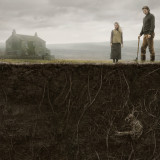
Matthew Herbert setzt seine Soundtrack-Produktionsreihe mit der Musik für den britischen Horrorfilm "Starve Acre" des Regisseurs Daniel Kokotajlo mit Matt Smith und Morfydd Clark in den Hauptrollen fort, der im September 2024 erscheinen soll - eine düstere Untersuchung von Trauer, Glauben und Übernatürlichem, die stark auf Folklore und Mythologie zurückgreift. Der OST folgt auf Arbeiten für Independentfilme wie "The Wonder", "The Cave" oder den Oscar-nominierten "A Fantastic Woman" und ist eine minimalistische Übung in Spannung und Zerbrechlichkeit, die geduldige Instrumentierungsfäden mit atmosphärischem Sounddesign verbindet – romantische Wogen der Orchestrierung gegen drohenden Druck im unteren Frequenzbereich und körperlose, unnatürliche Stimmen, die die bösartigen Kräfte darstellen, die im gesamten Film angedeutet werden. Er enthält zusätzlich zwei Versionen von "Let Me In", einer Interpretation des englischen Volksliedes "It Hails, It Rains, It Snows, It Blows" aus dem frühen 20. Jahrhundert, gesungen von Matt Smith und gespielt vom Folk-Elektronica-Duo Crewdson & Cevanne (Hugh Jones & Cevanne Horrocks-Hopayian) - ein bezauberndes Finale für die allgegenwärtige Düsterkeit der weiteren Partitur.
based songwriter Henrik Appel returns with third album Shadows. Ranging from freewheeling garage rock to intimate moments, and adding touches of jazz, Shadows is inspired by the likes of Bob Dylan’s Blond on Blonde and The Fall’s Hex Enduction Hour and another step of his continued evolution as a songwriter and artist.
For as long as he’s been a solo artist, Henrik Appel has been in a constant state of evolution. His first album, 2018’s Burning Bodies, was a meticulous construction project, one that came togeth-er over a five-year period and that saw him chronicle, with searing honesty, the slow death of a relationship, with its nine songs written according to a stringent set of self-imposed rules, intend-ed to keep the songwriting minimalist and bare-bones in nature.
His 2021 follow-up, Humanity, represented a remarkable progression of its own. It was born out of a break-up of a different kind, this time with his former bandmates in Stockholm outfit Lion’s Den; piecing together aspects of the vision he’d had in mind for the band’s never-realised second al-bum, he built from them his own sophomore LP, one that took the classic feel of Burning Bodies and imbued it with adventurous new influences, as he began to carve out a genuinely singular sound.
Now, three years on from Humanity, Appel has made another ambitious left turn. Neither of his first two albums were made in complete isolation; on both, he enlisted the production services of Stockholm underground legend Martin ‘Konie’ Ehrencrona, and also collaborated on his lyrics with his partner, Emma Lind. Now, on this thrilling reinvention of a third record, Appel has turned away from perfectionism, placing chief importance instead on making a raw, human record.
Das klassische Debütalbum von Trouble aus dem Jahr 1984 mit originalgetreu restauriertem Ton repräsentiert alles, was Doom Metal sein sollte! 40th
anniversary Picture-LP edition includes an A2 poster! Das Frühwerk von Trouble und insbesondere "Psalm 9" repräsentiert alles, was Doom Metal sein
sollte (aber so oft nicht ist). Man bedenke, dass es sich hier um eine Band handelt, die wirklich sehr vielfältig ist, was Tempo, Arrangements und
Stimmung angeht, und die sich nicht scheut, mit dem zu brechen, was von einer Doom-Band üblicherweise erwartet wird. Für 1984 ist dies eine
unglaublich zeitgemäße Platte; sie ist Doom durch und durch, aber auch thrashig und mit einigen, für die damalige Zeit, modernen Heavy
Metal-Anleihen versehen. Im Grunde gibt es nichts Rückschrittliches oder Abgedroschenes an dieser Platte. Ehrlich gesagt, es ist zum Lachen, wenn so
etwas als traditioneller Doom Metal" bezeichnet wird; was ist daran traditionell? Bands wie Trouble und Candlemass bewegten sich nicht in einer
etablierten Tradition, sondern schmiedeten ihren eigenen Sound.Zu oft hört man Doom-Bands, die den Metal aus dem Doom herausnehmen. Doom
scheint heutzutage oft ein Synonym für "spiel langsam, minimiere deine metallischen Anleihen" zu sein. Natürlich erhört "Psalm 9" die Gebete, denn
es gibt Leadgitarren und schnelle Parts in Hülle und Fülle. Der Kontrast ist der Schlüssel zum Erfolg, und jedes stampfende, niedergeschlagene Riff
wird durch einen schnellen Break ausgeglichen. Trouble lieben es, langsam zu spielen, aber verdammt, sie werden dir auch das Gesicht abreißen!
Kenner von Richard Swift wissen, dass sein Katalog umfangreich und phantasievoll ist, vollgepackt mit ebenso vielen ausgefeilten, eiskalten Klassikern wie verrückten Ein-Take-Experimenten. Diese Kleinode kommen in allen Formen und Größen, und während das den Eingefleischten nichts ausmacht, ist der Einstieg in die Musik von Swift für den Neuling schwierig: Wo soll man anfangen? Was kommt in die engere Wahl? Wie viele Crooner? Wie viele wilde Lieder? Vor diesem Hintergrund präsentiert Secretly Canadian "4 Hits & A Miss - The Essential Richard Swift", einen bescheidenen Versuch, die siebenundvierzig Minuten und vierzehn Songs zusammenzutragen, die die Uneingeweihten einführen können. Wenn Sie Richard Swift nicht kennen, lassen Sie sich von dem unvergleichlichen Kevin Morby aufklären: "Es gibt einen alten Pfadfindermythos, von dem ich als Kind gehört habe, dass man eine Kapelle bauen kann, wenn man die richtige Person mitten in den Wald setzt, bewaffnet nur mit einem Schweizer Taschenmesser. Wenn ich an diesen Mythos zurückdenke, denke ich an Richard Swift, der, wenn man ihn mitten im Wald mit einem 10-Dollar-Radio-Shack-Mikrofon absetzte, irgendwie ein Studio bauen konnte und in diesem Studio eine Kapelle des Klangs errichtete. Tatsächlich hat er genau das in seinem eigenen National Freedom Studio mitten in den Wäldern von Oregon getan, in einer Stadt namens Cottage Grove, wo er unzählige Stunden seiner eigenen Musik und der anderer Leute aufgenommen hat. Diese Kapellen des Klangs werden - und ich habe es bereits erlebt - kommende Generationen in Ehrfurcht versetzen und inspirieren, so wie es die Steinkapellen im frühen Europa tun. Beide lassen die Menschen verblüfft zurück und fragen sich: Wie konnte etwas so Massives und Schönes mit so minimalen und archaischen Mitteln gebaut werden - und in Richards Fall so schnell? Nach ihrem Tod scheinen die meisten Künstler endgültig zu ruhen, ihre Kataloge ruhen für immer neben ihnen. Aber Richard scheint aus dem Jenseits rastlos zu sein, und die Arbeit, die er hier unten auf der Erde begonnen hat, geht weiter. Sein letztes Album, The Hex, wurde nur wenige Monate nach seinem frühen Tod im Jahr 2018 veröffentlicht, und jetzt haben wir mit 4 Hits and A Miss eine Sammlung seiner beliebtesten Songs sowie einen neuen, noch nie zuvor gehörten Track "Common Law", aufgenommen um 2012. Ob Gelegenheitsfan oder Swift-Purist, 4 Hits & A Miss ist entweder ein perfekter Startpunkt oder ein Ziel für uns eingefleischte Fans, um wieder einmal etwas Neues zu finden, das uns beeindruckt und inspiriert. Wie ein versteckter Raum in seiner bereits beeindruckenden Kapelle gibt es immer etwas Neues von unserem geliebten Freund und Helden, dem verstorbenen großen Richard Swift, zu entdecken." Viel Spaß!
The acclaimed trio of Mikkel Ploug, Sissel Vera Pettersen, and Joachim Badenhorst is set to release their fourth studio album, Lento, on November 1, 2024, through the Klein label. Following their celebrated albums 'Equilibrium', 'Walking Voices', and 'Liquid Light', this new release further cements the group’s position as an innovative voice in contemporary music.
Lento offers an evocative blend of jazz, folk/world, classical, minimalism, and avant-garde influences, crafted through a dynamic mixture of free improvisation and original compositions. The trio’s unique synergy is evident in every track, pushing the boundaries of genre while maintaining an intimate and expressive core.
The trio comprises of the Norwegian vocalist and saxophonist Sissel Vera Pettersen, a multifaceted artist known for her collaborations with Chick Corea and Marilyn Mazur, Her contributions to Lento showcase her versatility, moving seamlessly between voice and saxophone with a fluidity that anchors the group’s explorative sound.
On guitar is Danish virtuoso Mikkel Ploug, who is renowned for his work with saxophonist Mark Turner and composer Bent Sørensen, Ploug's playing on Lento is both intricate and expansive. Completing the trio is the Belgian reed player Joachim Badenhorst, whose talents on the clarinet have earned him a spot in Downbeat Magazine’s "Rising Star" polls. Badenhorst is known for his work with Han Bennink Tony Malaby’s, Kris Davis and his own projects Carate Urio Orchestra and Zero Years Kid.
Having garnered praise from critics and fans alike for their previous albums, the trio continues to evolve and captivate. Lento is a testament to their ability to fuse disparate musical elements into a coherent, deeply moving whole. Expect meditative passages, explosive bursts of improvisation, and moments of pure musical dialogue that transcend traditional boundaries.
. For Fans Of: The Weather Station, Weyes Blood, Adrianne Lenker, Phoebe Bridgers, Joan Shelley, Lana Del Rey, Cass McCombs, Angel Olsen & Neil Young. Camelot, the legendary seat of King Arthur’s court in Early Middle Ages Britain, was probably not a real place. A corruption of the name of a real Romano-Briton city, the word “Camelot” accumulated symbolic, mythic resonances over centuries, until achieving its present usage as a near-synonym of “utopia.” In the mid-20th century alone, Camelot inspired an explosion of representations and appropriations, among them the violent, affectless Arthurian court of Robert Bresson’s 1974 film Lancelot du Lac and the absurdist iteration of Monty Python’s 1975 Holy Grail, both of which feature armoured knights erupting into fountains of blood; the mystical Welsh world of novelist John Cowper Powys’s profoundly weird 1951 novel Porius, with its Roman cults, wizards and witches, and wanton giants; and the nationalist nostalgia of President John F. Kennedy’s White House. Unsurprisingly there are fewer Camelots in more recent memory. Camelot, Canadian songwriter Jennifer Castle’s extraordinary, moving 2024 chronicle of the artist in early middle age, charts a realer, more rooted, and more metaphorical place than the fabled Camelot of the Early Middle Ages (or its myriad depictions), but it too is a space more psychic than physical. In Castle’s Camelot, the fantastic interpenetrates the mundane, and the Grail, if there is one, distills everyday experience into art and art into faith, subliming terrestrial concerns into sublime celestial prayers to Mother Nature, and to the unfolding process of perfecting imperfection in one’s own nature. Co-produced by Jennifer and longtime collaborator Jeff McMurrich, her seventh record is at once her most monumental and unguarded to date, demonstrating a mastery of rendering her verse and melodies alike with crisply poignant economy. For all their pointedly plainspoken lyrical detail and exhilarating full-band musical flourishes, these songs sound inevitable, eternal as morning devotions. “Back in Camelot,” she sings on the lilting, vulnerable title track, “I really learned a lot / circles in the crops and / sky-high geometry.” The album opens with a candid admission of sleeping “in the unfinished basement,” an embarrassing joke that comes true. But the dreamer is redeemed by dreaming, setting sail in her airborne bed above “sirens and desert deities.” If she questions her own agency whether she is “wishing stones were standing” or just “pissing in the wind” it does not diminish the ineffable existential jolt of such signs and wonders. This abiding tension between belief and doubt, magic and pragmatism, self and other, sacred and profane, and even, arguably, paganism and monotheism, suffuses these ten songs, which limn an interior landscape shot through with sunstriped shadows of “multi-felt dimensions” both mystical and quotidian. The epic scale and transport of “Camelot,” with its swooning strings, gives way dramatically to “Some Friends,” an acoustic-guitar-and-vocals meditation in miniature on Janus-faced friends and the lunar and solar temperatures of their promises—“bright and beaming verses” versus hot curses which recalls her minimalist last album, 2020’s achingly intimate Monarch Season. (In a symmetrical sequencing gesture, the penultimate track, the incantatory “Earthsong,” bookends the central six with a similarly spare solo performance and coiled chord progression, this time an ambiguous appeal to … a wounded lover? a wounded saint? our wounded planet?). Those whom “Trust” accuses of treacherous oaths spit through “gilded and golden tooth” cynics, critics, hypocrites, gurus, scientists, doctors, lovers, government, the so-called entertainment industry sow uncertainty that can infect the artist, as in “Louis”: “What’s that dance / and can it be done? What’s that song / and can it be sung?” Answering affirmatively are “Lucky #8,” an irrepressible ode to dancing as a bulwark against the “tidal pools of pain” and the “theory of collapse,” and “Full Moon in Leo,” which finds the narrator dancing around the house with a broom, wearing nothing but her underwear and “big hair.” But the central question remains: who can we trust, and at what cost faith, in art or angels or otherwise? Castle’s confidence in her collaborators is the cornerstone of Camelot. Carl Didur (piano and keys), Evan Cartwright (drums and percussion), and steadfast sideman Mike Smith (bass) comprise a rhythm section of exquisite delicacy and depth. This fundamental trio anchors the airiness of regular backing vocalists Victoria Cheong and Isla Craig and frames the guitars of Castle, McMurrich, and Paul Mortimer (and on “Lucky #8,” special guest Cass McCombs). Reprising his decennial role on Castle’s beloved 2014 Pink City, Owen Pallett arranged the strings for Estonia’s FAMES Skopje Studio Orchestra. On the ravishing country-soul ballad “Blowing Kisses” Pallett’s crowning achievement here, which can be heard in its entirety in the penultimate episode of the third season of FX’s The Bear Jennifer contemplates time and presence, love and prayer and how songwriting and poetry both manifest and limit all four dimensions: “No words to fumble with / I’m not a beggar to language any longer.” Such rare moments of speechlessness “I’m so fucking honoured,” she bluntly proclaims suggest a state “only a god could come up with.” (If Camelot affirms Castle as one of the great song-poets of her generation, she is not immune to the despairing linguistic beggary that plagues all writers.) Camelot evinces a thoroughgoing faith not only in the natural world including human bodies, which can, miraculously, dance and swim and bleed and embrace and birth but also in our interpretations of and interventions in it: the “charts and diagrams” of “Lucky #8,” a daydreamt billboard on Fairfax Ave. in LA in “Full Moon in Leo,” the bloody invocations of the organ-stained “Mary Miracle,” and all manner of water worship, rivers in particular. (Notably, Jennifer has worked as a farmer and a doula.) The album ends with “Fractal Canyon”s repeated, exalted insistence that she’s “not alone here.” But where is here? The word “utopia” itself constitutes a pun, indicating in its ambiguous first syllable both the Greek “eutopia,” or “good-place” the facet most remembered today and “outopia,” or “no-place,” a negative, impossible geography of the mind. Utopia, like its metonym Camelot, is imaginary
- A1: Jusant
- A2: Estran
- A3: Amer
- A4: Sémaphore
- A5: Finisterre
- B1: Migration
- B2: Adret
- B3: Contre Jour
- B4: Impluvium
- B5: Champs D'en Haut
- B6 9: C+ (Caillasses)
- C1: Solstice
- C2: Hydrochorie
- C3: Marché Des Canaux
- C4: Reservoir
- C5: Les Affluents
- C6: Mouvements
- D1: Mirage
- D2: Ballast
- D3: Ascension
- D4: Anthropocène
- D5: Syzygie
- D6: Vives Eaux
Jusant is an action-puzzle climbing game by DON'T NOD highly anticipated for its unique vertical gameplay, graphics and story. Its OST was composed by the piano genius Guillaume Ferran influenced by neoclassical artists like Nils Frahm or Max Richter: it follows the game’s meditative vibes with 23 minimalist orchestral tracks that give each instrument its place in a colorful soundscape.
2024 Repress
Alleviated Records is proud to present the new Mr. Fingers EP. After many years of the moniker being dormant and a long journey trying to get back into a creative mindset, we have a new offering. First up, "Outer Acid" delivers up a Minimal-Space-Acid flavor. Next, "Qwazars" continues the Space motif with a Minimal-Tech touch. "Nodyahed" moves toward a Dark Club Bounce with a dash of Tribal flavor. "Aether" offers up a more late-night Ambient-Space-House flavor. Hope you enjoy these selections at the club and at home for a long time to come. Musically Yours...
2024 Repress
Sublunar proudly presents "Pareidolia II," the latest EP by Sciahri, marking the next chapter in an evolving sonic journey following its first installment. This four-track release explores a spectrum of techno landscapes, offering a blend of pulsating rhythms, hypnotic sequences, and emotive soundscapes.
On the A-side, "One Letter" captivates with its infectious groove and fluid bassline, while "Homid" invites listeners on a minimalist journey, where hypnotic synth sequences create an enthralling atmosphere that captivates from start to finish.
Flipping to the B-side, "10k In One Year" enthralls with its sharp stabs and captivating rhythms, while "No Tears" delves into deeper, more introspective territories, combining classic elements with modern sensibilities.
"Pareidolia II" invites listeners to immerse themselves in a diverse array of techno experiences, each track offering a unique perspective on the genre. It's a testament to Sciahri's artistry and Sublunar's commitment to pushing sonic boundaries.
Robert Sotelo is a bedroom pop songsmith who lives in Glasgow. Sotelo has released six albums since 2017, three of which came out on Upset The Rhythm. He also performs in Order of the Toad, Dancer and Nightshift. Mary Currie is best known as half of touchstone DIY experimentalists Flaming Tunes, alongside Gareth Williams (of This Heat). Currie also performed in Officer! with Mick Hobbs amongst others.
Introduced via a mutual friend, Sotelo approached Currie last year about collaborating on four songs he was constructing with producer/electronic guru Joe Howe. This resulted in the ‘Dream Songs’ 7” EP (out October 4th on Upset The Rhythm).
Not only does the title capture the hazy, reflective nature of the music it also expounds on the origin of tracks. Sotelo experienced several lucid dreams in the first half of 2023 that left him in a state of confusion. He recalled visiting parts of London vividly, including a disused theatre of great familiarity, yet it slowly transpired that these places and circumstances were not real, much to Sotelo's disbelief.
These reveries informed the lyrical narrative of the four songs from the forthcoming EP. Currie took a similar approach with her lyrics, focusing on memory and time for her passages on the record. Currie recorded her parts in London (assisted by her good friend Alison Craig) and then sent them to Howe, alongside additional location recordings to consolidate into the mixes. These four tracks flutter with a minimalist bass, drum machine and keys dynamic, allowing Sotelo and Currie’s vocals to speak deeply into the back of your mind. ‘Expectations’ is a pensive triumph of whirled moments and momentum with Currie’s final words lending much gravity “the outcome of my days is always the same, a void that must be filled, a battle against time that drags us along; mutating, spinning, ebbing, flowing. Begin again, we work to give value to time.” ‘Telegraph Hill’ boasts a glossy fluidity, as it plays with images of motorways, ancient citadels, crows, paralysis and emanations. ‘Lady Fortune’ meanwhile is a tranquil treatise on fate, imbued with finessed electronic embellishments and clarinet flourishes. You can't quite trust where these songs will take you, they feel particularly mercurial. Dreams indeed.
‘Dream Songs’ by Robert Sotelo & Mary Currie will be released on October 4th, followed by some live performances from the band. These will include the aforementioned EP tracks, as well as recreated cuts from the Flaming Tunes era, leaning into happenstance rather aptly.
Saxophonist and musical omnivore Benjamin Herman has been one of Holland’s most productive musicians of his generation for over three decades. Aside from thousands of gigs, Benjamin has released over 50 albums as a solo artist and as frontman of his groove-orientated ensemble New Cool Collective. His wonderfully diverse musical output includes straight-ahead jazz, Gypsy jazz, punk jazz, film scores, Afrobeat, Latin music and postmodern interpretations of pieces by Dutch composer Misha Mengelberg, as well as collaborations with vocalists, poets, pop stars, hip-hop artists, and instrumentalists from all over the world. The common thread is his quest for a recognizable, personal sound on the alto saxophone. As usual, his latest album finds him exploring new territory.
With his Bughouse project, he fulfills his long-standing desire to blend his old loves of punk and jazz. The latest Bughouse album, "Bughouse: The ERUS / ARC Sessions”, displays the versatility of Benjamin Herman's Bughouse, covering a wide range of styles from jazz-punk to noise, free jazz, and beyond.
A new SOS, from 024... Nijmegen Tekno crew !
A side from Wazig opening with a Breakbeat minimal killer threartening to fall 4/4... and doin' it !
Then will come his second tune, a Pumpin Mental Acid run !
Frixion side kicks harder, louder, kicker... Pityless swing in a Hardfloor ambiance. Heavy stuff !
This is a colored vinyl ! Red&Black transparent !
8 cuts of minimalist electronic bliss
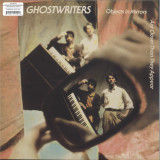
"Dark Entries calls on Philadelphia experimental duo The Ghostwriters to resurrect their 1981 LP of minimalist mayhem, Objects In Mirrors Are Closer Than They Appear.
The late Buchla maestro Charles Cohen and multi-instrumentalist Jeff Cain joined up in 1971 to craft electroacoustic chaos as Anomali, later renaming themselves The Ghostwriters. Their collaborations with choreographers and visual media artists led to their singular style, straddling improvisation and composition, the oneiric and the immediate.
1981 saw the release of their debut album, Objects In Mirrors Are Closer Than They Appear, a whirling, messy, telepathic slipstream cascading across an imaginary landscape. Recorded in Don Buchla’s childhood home, Objects offers 8 cuts of minimalist electronic bliss, equal parts icy and quirky, with standout cuts including the grooving havoc of “Fix it in the Mix” and the otherworldly hymn “Moon Chant.” These angular pearls will be cherished by fans of John Bender, Ceramic Hello, and all strains of outsider 80s electronics.
Objects In Mirrors Are Closer Than They Appear has been freshly remastered and includes an insert with photos and liner notes. Proceeds from the album will be donated to SOSA (Safe from Online Sex Abuse), a nonprofit that combats online child sex abuse and trafficking"
"Cerulean Blue vinyl limited to 700 units! On her second full-length record as Waxahatchee, former P.S. Eliot singer Katie Crutchfield’s compelling hyper-personal poetry is continuously crushing. Cerulean Salt follows American Weekend -- a collection of minimal acoustic-guitar pop written and recorded in a week at her family’s Birmingham home. On this new record, Crutchfield’s songs continue to be marked by her sharp, hooky songwriting; her striking voice and lyrics that simultaneously seem hyper-personal yet relentlessly relatable, teetering between endearingly nostalgic and depressingly dark. But whereas before the thematic focus of her songcraft was on break ups and passive-aggressive crushing, this record reflects on her family and Alabama upbringing. Whereas American Weekend was mostly just Crutchfield and her guitar, Cerulean Salt is occasionally amped up, with a full band and higher-fi production.
At times, Cerulean Salt creeps closer to the sound of PS Eliot: moody, 90s-inspired rock backed by Keith Spencer and Swearin’ guitarist Kyle Gilbride on drums and bass. The full band means fleshed-out fuzzy lead guitars on “Coast to Coast”, its poppy hook almost masking its dark lyrics. Big distorted guitars and deep steady drums mark songs like “Misery over Dispute” and “Waiting”.
There’s plenty of American Weekend‘s introspection and minimalism to be found, though. “Blue Pt. II” is stripped down, Crutchfield and her sister Alison singing in harmony with deadpan vox. She’s still an open booking, musing on self-doubt versus self-reliance, transience versus permanence. “Peace and Quiet” ebbs and flows from moody, minimal verses to a sing-song chorus. “Swan Dive” tackles nostalgia, transience, indifference, regret — over the a minimal strum of an electric-guitar, the picking at a chirpy riff and the double-time tapping of a muted drum. The album closes with a haunting acoustic-guitar reflection on “You’re Damaged,” possibly the best Waxahatchee song to date."