Search:mino

Styles
All
Amarante-Cerisier - Amarante-Cerisier

Amarante-Cerisier

Amarante-Cerisier

12inchOKRAïNA#19
Okraïna
30.04.2026

"What if, alongside the mainstream history of music, with careers and discographies spanning ten or fifty years from album to album, there was an underground, minority history, that of artists and projects with only one record? A flash, a burst of brilliance, a gem, but no follow-up, no repetitions, no decline.
"This will most likely be the case for this album by Amarante-Cerisier, a duo formed by Mauricio Amarante (RadikalSatan, Équipage, travelling companion of Canan Domurcakli and Austin Townsend) and Marine Debilly Cerisier (dancer, performer, writer, co-founder of alternative cultural venues in Marseille and Brussels), with these eight poetic songs in French having more in common with the visionary essence of certain songs from the early 1970s (Brigitte Fontaine-Areski, for example) than with the post-modernism of the ‘nouvelle chanson française’ of the1990s and 2000s.
"But – and this is undoubtedly no coincidence – this is also the case for two unique albums, which had no immediate follow-ups but which, 50 and 20 years after their release, inspired Mauricio and Marine's album and discreetly found their way into it:
"At the very end of the 1960s, Tchékov Minosa (Marine's grandfather) embarked on a journey to the East with his partner Brigitte de Saint-Preux, during which they were married ten times, in ten different traditions (in Kurdistan, among the Kuchi people of northern Afghanistan, among the Kalash people of north-eastern Pakistan, in Rajasthan,etc.). This three-year journey was documented in numerous articles in the European press, in documentaries, in a book... and on a double LP of traditional music recordings released in 1973 by Le Chant du Monde. And sampled today by Mauricio Amarante at the end of the track ‘Parfois’.
"In the early 2000s, Austin Townsend, a tall, bony figure, washed up on the banks of the Garonne River near Bordeaux, arriving from New Zealand. With a voice that was sometimes very Bob Dylan-esque, at other times buried in the gravelly depths of the low frequencies, he strung together contemporary blues songs on his only album, Introvenus (Potagers natures, 2007), beautifully accompanied in subtle tones on banjo and double bass by Mauricio and Cesar Amarante (alias Radikal Satan). Beyond this unique record, Mauricio played extensively with Austin in concert. And when his friend died in the spring of 2024, he received his guitar, used the instrument for some of the tracks on the upcoming Okraïna record, and decided to dedicate the album to him.
"In our conception of music, fleeting appearances, unexpected reunions, and timeless records outside the dictates of current musical trends thrill us more than overly well-planned career paths."

pre-order now30.04.2026

expected to be published on 30.04.2026

23,32 €
Natrus - Natrus

Natrus

Natrus

12inchNEMYLP023
Needle Mythology
24.04.2026
  • 1: Mash It (ft. Ranking Glad(Stone))
  • 2: Freedom Inna Babylon
  • 3: Don’t Cry (Never Gonna Run)
  • 4: Free At Last
  • 5: Come From Africa
  • 6: Time Has Come
  • 7: Free At Last Dub
  • 8: Don’t Cry (Never Gonna Run) Dub

FOR THE FIRST TIME EVER: THE LONG-LOST RECORDINGS OF BIRMINGHAM ROOTS REGGAE PIONEERS NATRUS Mastered from the original tapes by Guy Davie at Electric Needle Mythology, the label founded by music writer, author and broadcaster Pete Paphides, is thrilled to announce the archival release of newly-discovered recordings by Birmingham reggae band Natrus. Comprising members of the same family – seven in total – Natrus were a ubiquitous presence of the live circuit within and beyond the West Midlands in the late 1970s. Used as an ad hoc “Wrecking Crew” by local producer and promoter Toney Owens, NATRUS frequently provided live accompaniment to visiting Jamaican artists such as Sugar Minott, Johnny Osbourne and Freddie McKay. With an age span ranging from 9 to 25, NATRUS’S live work had to be structured around the educational obligations of their younger members. But when they weren’t playing live, they would frequently hone their own compositions at Owens’ studio in Saltley, Birmingham.

During their collective lifetime, NATRUS released one very limited edition single Mash It, with a stellar guest vocal from deejay Ranking Glad(Stone). Featured alongside Mash It on this release are a selection of recordings previously thought lost by the group who laid them down. They were only discovered after Toney Owens’ alerted Needle Mythology’s Pete Paphides to the existence of some 60 quarter-inch reels featuring all the music recorded by Owens over a period of ten years or so. When Paphides finally tracked down NATRUS rhythm guitarist Owen Taylor, he was stunned to hear of their existence. After a meeting with Taylor and his siblings, Needle Mythology collaborated with NATRUS on the restoration and remastering of the tracks featured on this, their very belated debut album. As well as Mash It and its original flipside Come From Africa, highlights on ‘NATRUS’ include a superb version of Slim Smith’s The Time Has Come and the deep roots entreaties of Freedom Inna Babylon, both showcasing the soulful vocal of lead singer Fitzdonald “Fitz” English and the almost psychic sense of musical attunement that percolates right down the the formidable rhythm section of Beverley Stewart (bass) and Clinton Gordon (drums).

pre-order now24.04.2026

expected to be published on 24.04.2026

32,35 €
CHET BAKER - Memories LP

CHET BAKER

Memories LP

12inchNAS-2089
KING RECORD
22.04.2026
  • A1: Stella By Starlight
  • A2: For Minors Only
  • A3: Almost Blue
  • B1: Portrait In Black and White
  • B2: My Funny Valentine

This is a miraculous live album capturing Chet Baker's moving performance in Japan on June 14, 1987.

out of Stock

Order now and we will order the item for you at our supplier.

Last In: 5 months ago
40,97 €
Black Sun Ensemble - Whirlpool Ocean LP
  • 1: Whirlpool Ocean
  • 2: Baby Serpentine Love Sea
  • 3: Dangerous Pussy
  • 4: Cherokee Mist
  • 5 66: 7
  • 6: Dove of the Desert
  • 7: Blues for Rainer in C Minor
  • 8: The Hunger
  • 9: Children Look Like Burnt Paper
  • 10: It's Not the End of the World
  • 11: Lord of the Fleas
pre-order now17.04.2026

expected to be published on 17.04.2026

30,46 €
Nicolas Remondino - Hìeratico LP
  • A1: hìeratico
  • A2: litho non-danse
  • A3: blue hymne (feat Limpe Fuchs)
  • A4: cuerda de piedra
  • A5: aranha
  • A6: tombal (feat Pierre Bastien, Massimo Silverio & Marco Baldini)
  • B1: boku ga (feat Adele Altro)
  • B2: meridiana (feat Giuseppe Ielasi)
  • B3: lode (feat Natalia Rogantini & Jonas Torstensen)
  • B4: sospire (feat Roberto Musci)
  • B5: muracetra (feat Vipera & Dròlo Ensemble)
  • B6: vessel (Digital Bonus Track)

Like its cover, Nicolas Remondino's Hìeratico plays in the rich shades of crepuscular spaces. A night-tuned, percussion led album where prepared drums are accompanied by flickers of spoken word, acoustic instruments and muted electronics,

The title translates to 'hieratic', for Remondino a "black and gold" term laden with dualities and complex connotations. A sense of teetering between sparkling light and richly coloured darkness imbues the music, the compositions simulating a sense of heightened acuity as they convey us through a spooky elemental soundworld. The opening title track begins with a metallic shimmer, a drum skin activated in a way that sounds like it's being smelted. A cushioned rhythm enters, a smothered timbre akin to hearing something lurking around the garden. On "litho non-danse", percussion cracks like branches and dried foliage under foot.

Remondino recorded initial outlines for the pieces at Giuseppe Ielasi's studio in Milan, before fleshing out these ideas with his own additional instrumentation and contributions from a globe-spanning network of collaborators. On "blue hymne", chiming percussion equal parts jubilant and sinister heralds spoken word from Limpe Fuchs. "Tombal" opens with Massimo Silverio whispering in the Carnic dialect, a minority language from the Carnic Alps. Around, Marco Baldini, Pierre Bastien and Remondino construct a somber soundscape that cranks and sighs in the crevices.

Hìeratico is an album of hybrids. Diverse voices, accents and dialects deliver its lyrics, the instrumentation underpinning it crosses idioms. The drumkit at its core is modified to amplify its resonant tones and harmonics. Inspired by natural substances and phenomena: stone, wood, wind, earth, metal, grass, rain, clouds and bark, Remondino explores how percussion could evoke their materiality, treating drums as lucid textural instruments as much as rhythmic timekeepers. It gives the album a finely shaded depth and clarity as it conjures the vibrancies that reside in darkened corners. Hìeratico dwells in a sensation that crosses borders, the speckles of light in the oblique night sky. Listening is an aural equivalent to stepping into a pitch black forest and waiting for your eyes to adjust, a lightless void turning into a spectacular tableau of shadows and glows. Daryl Worthington

out of Stock

Order now and we will order the item for you at our supplier.

Last In: 5 months ago
25,17 €
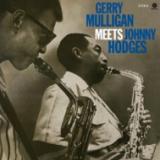
Gerry Mulligan & Johnny Hodges - Gerry Mulligan Meets Johnny Hodges LP
  • Sunny
  • What's The Rush
  • Back Beat
  • My Funny Valentine
  • What It's All About
  • 18: Carrots For Rabbit
  • Shady Side
  • Festive Minor

n the late 1950's Norman Granz produced several studio sessions where he paired Gerry Mulligan with some of the most important saxophonists of the day, including Ben Webster, Stan Getz, and alto player Johnny Hodges as heard on this exemplary 1959 session Gerry Mulligan meets Johnny Hodges. includes the bonus tracks 'My Funny Valentine' 'Festive Minor'

pre-order now10.04.2026

expected to be published on 10.04.2026

21,43 €
Guilty Razors - Complete Recordings 1977 - 1978

UILTY RAZORS, BONA FIDE PUNKS.


Writings on the topic that go off in all directions, mind-numbing lectures given by academics, and testimonies, most of them heavily doctored, from those who “lived through that era”: so many people today fantasize about the early days of punk in our country… This blessed moment when no one had yet thought of flaunting a ridiculous green mohawk, taking Sid Vicious as a hero, or – even worse – making the so-called alternative scene both festive and boorish. There was no such thing in 1976 or 1977, when it wasn’t easy to get hold of the first 45s by the Pistols or the Clash. Few people were aware of what was happening on the fringes of the fringes at the time. Malcolm McLaren was virtually unknown, and having short hair made you seem strange. Who knew then that rock music, which had taken a very bad turn since the early 1970s, would once again become an essential element of liberation? That, thanks to short and fast songs, it would once again rediscover that primitive, social side that was so hated by older generations? Who knew that, besides a few loners who read the music press (it was even better if they read it in English) and frequented the right record stores? Many of these formed bands, because it was impossible to do otherwise. We quickly went from listening to the Velvet Underground to trying to play the Stooges’ intros. It’s a somewhat collective story, even though there weren’t many people to start it.
The Guilty Razors were among those who took part in this initial upheaval in Paris. They were far from being the worst. They had something special and even released a single that was well above the national average. They also had enough songs to fill an album, the one you’re holding. In everyone’s opinion, they were definitely not among the punk impostors that followed in their wake. They were, at least, genuine and credible.

Guilty Razors, Parisian punk band (1975-1978). To understand something about their somewhat linear but very energetic sound, we might need to talk about the context in which it was born and, more broadly, recall the boredom (a theme that would become capital in punk songs) coupled with the desire to blow everything off, which were the basis for the formation of bands playing a rejuvenated rock music ; about the passion for a few records by the Kinks or the early Who, by the Stooges, by the Velvet mostly, which set you apart from the crowd.
And of course, we should remember this new wave, which was promoted by a few articles in the specialized press and some cutting-edge record stores, coming from New York or London, whose small but powerful influence could be felt in Paris and in a handful of isolated places in the provinces, lulled to sleep by so many appalling things, from Tangerine Dream to President Giscard d’Estaing...
In 1975-76, French music was, as almost always, in a sorry state ; it was still dominated by Johnny Hallyday and Sylvie Vartan. Local rock music was also rather bleak, apart from Bijou and Little Bob who tried to revive this small scene with poorly sound-engineered gigs played to almost no one.
In the working class suburbs at the time, it was mainly hard rock music played to 11 that helped people forget about their gruelling shifts at the factory. Here and there, on the outskirts of major cities, you still could find a few rockers with sideburns wearing black armbands since the death of Gene Vincent, but it wasn’t a proper mass movement, just a source of real danger to anyone they came across who wasn't like them. In August 1976, a festival unlike any other took place in Mont-de-Marsan – the First European Punk Festival as the poster said – with almost as many people on stage as in the audience. Yet, on that day, a quasi historical event happened, when, under the blazing afternoon sun, a band of unknowns called The Damned made an unprecedented noise in the arena, reminiscent of the chaotic Stooges in their early adolescence. They were the first genuine punk band to perform in our country: from then on, anything was possible, almost anything seemed permissible.

It makes sense that the four+1 members of Guilty Razors, who initially amplified acoustic guitars with crappy tape recorder microphones, would adopt punk music (pronounced paink in French) naturally and instinctively, since it combines liberating noise with speed of execution and – crucially – a very healthy sense of rebellion (the protesters of May 1968 proclaimed, and it was even a slogan, that they weren’t against old people, but against what had made them grow old. In the mid-1970s, it seemed normal and obvious that old people should now ALSO be targeted!!!).
At the time, the desire to fight back, and break down authority and apathy, was either red or black, often taking the form of leafleting, tumultuous general assemblies in the schoolyard, and massive or shabby demonstrations, most of the time overflowing with an exciting vitality that sometimes turned into fights with the riot police. Indeed, soon after the end of the Vietnam War and following Pinochet’s coup in Chile, all over France, Trotskyist and anarcho-libertarian fervour was firmly entrenched among parts of the educated youth population, who were equally rebellious and troublemakers whenever they had the chance. It should also be noted that when the single "Anarchy in the UK" was first heard, even though not many of us had access to it, both the title and its explosive sound immediately resonated with some of those troublemakers crying out for ANARCHY!!! Meanwhile, the left-wing majority still equated punks with reckless young neo-Nazis. Of course, the widely circulated photos in the mainstream press of Siouxsie Sioux with her swastikas didn’t necessarily help to win over the theorists of the Great Revolution. It took Joe Strummer to introduce The Clash as an anti-racist, anti-fascist and anti-ignorance band for the rejection of old-school revolutionaries to fade a little.

The Lycée Jean-Baptiste Say at Porte d’Auteuil, despite being located in the very posh and very exclusive 16th arrondissement of Paris, didn’t escape these "committed" upheavals, which doubled as the perfect outlet for the less timid members of this generation.
“Back then, politics were fun,” says Tristam Nada, who studied there and went on to become Guilty Razors’ frontman. “Jean-Baptiste was the leftist high-school in the neighbourhood. When the far right guys from the GUD came down there, the Communist League guys from elsewhere helped us fight them off.”
Anything that could challenge authority was fair game and of course, strikes for just about any reason would lead to increasingly frequent truancy (with a definitive farewell to education that would soon follow). Tristam Nada spent his 10th and 11th unfinished grades with José Perez, who had come from Spain, where his father, a janitor, had been sentenced to death by Franco. “José steered my tastes towards solid acts such as The Who. Like most teenagers, I had previously absorbed just about everything that came my way, from Yes to Led Zeppelin to Genesis. I was exploring… And then one day, he told me that he and his brother Carlos wanted to start a rock band.” The Perez brothers already played guitar. “Of course, they were Spanish!”, jokes their singer. “Then, somewhat reluctantly, José took up the bass and we were soon joined by Jano – who called himself Jano Homicid – who took up the rhythm guitar.” Several drummers would later join this core of not easily intimidated young guys who didn’t let adversity get the better of them.

The first rehearsals of the newly named Guilty Razors took place in the bedroom of a Perez aunt. There, the three rookies tried to cover a few standards, songs that often were an integral part of their lives. During a first, short gig, in front of a bewildered audience of tough old-school rockers, they launched into a clunky version of the Velvet Underground's “Heroin”. Challenge or recklessness? A bit of both, probably… And then, step by step, their limited repertoire expanded as they decided to write their own songs, sung in a not always very accurate or academic English, but who cared about proper grammar or the right vocabulary, since what truly mattered was to make the words sound as good as possible while playing very, very fast music? And spitting out those words in a language that left no doubt as to what it conveyed mattered as well.
Trying their hand a the kind of rock music disliked by most of the neighbourhood, making noise, being fiercely provocative: they still belonged to a tiny clique who, at this very moment, had chosen to impose this difference. And there were very few places in France or elsewhere, where one could witness the first stirrings of something that wasn’t a trend yet, let alone a movement.

In the provinces, in late 1976 or early 1977, there couldn’t be more than thirty record stores that were a bit more discerning than average, where you could hear this new kind of short-haired rock music called “punk”. The old clientele, who previously had no problem coming in to buy the latest McCartney or Aerosmith LP, now felt a little less comfortable there…
In Paris, these enlightened places were quite rare and often located nex to what would become the Forum des Halles, a big shopping mall. Between three aging sex workers, a couple of second-hand clothes shops, sellers of hippie paraphernalia and small fashion designers, the good word was loudly spread in two pioneering places – propagators of what was still only a new underground movement. Historically, the first one was the Open Market, a kind of poorly, but tastefully stocked cave. Speakers blasted out the sound of sixties garage bands from the Nuggets compilation (a crucial reference for José Perez) or the badly dressed English kids of Eddie and the Hot Rods. This black-painted den was opened a few years earlier by Marc Zermati, a character who wasn’t always in a sunny disposition, but always quite radical in his (good) choices and his opinions. He founded the independent label Skydog and was one of the promoters of the Mont-de-Marsan punk festivals. Not far from there was Harry Cover, another store more in tune with the new New York scene, which was amply covered in the house fanzine, Rock News (even though it was in it that the photos of the Sex Pistols were first published in France).
It was a favorite hang-out of the Perez brothers and Tristam Nada, as the latter explained. “It’s at Harry Cover’s that we first heard the Pistols and Clash’s 45s, and after that, we decided to start writing our first songs. If they could do it, so could we!”
The sonic shocks that were “Anarchy in the UK”, “White Riot” or the Buzzcocks’s EP, “Spiral Scratch” – which Guilty Razors' sound is reminiscent of – were soon to be amplified by an unparalleled visual shock. In April 1977, right after the release of their first LP, The Clash performed at the Palais des Glaces in Paris, during a punk night organised by Marc Zermati. For many who were there, it was the gig of a lifetime…
Of course, Guilty Razors and Tristam were in the audience: “That concert was fabulous… We Parisian punks were almost all dressed in black and white, with white shirts, skinny leather ties, bikers jackets or light jackets, etc. The Clash, on the other hand, wore colourful clothes. Well, the next day, at the Gibus, you’d spot everyone who had been at this concert, but they weren’t wearing anything black, they were all wearing colours.”

It makes sense to mention the Gibus club, as Guilty Razors often played there (sometimes in front of a hostile audience). It was also the only place in Paris that regularly scheduled new Parisian or Anglo-Saxon acts, such as Generation X, Siouxsie and the Banshees, the Slits, and Johnny Thunders who would become a kind of messed-up mascot for the venue. A little later, in 1978, the Rose Bonbon – formerly the Nashville – also attracted nightly owls in search of electric thrills… In 1977, the iconic but not necessarily excellent Asphalt Jungle often played at the Gibus, sometimes sharing the bill with Metal Urbain, the only band whose aura would later transcend the French borders (“I saw them as the French Sex Pistols,” said Geoff Travis, head of their British label Rough Trade). Already established in this small scene, Metal Urbain helped the young and restless Guilty Razors who had just arrived. Guitarist for Metal Urbain Hermann Schwartz remembers it: “They were younger than us, we were a bit like their mentors even if it’s too strong a word… At least they were credible. We thought they were good, and they had good songs which reminded of the Buzzcocks that I liked a lot. But at some point, they started hanging out with the Hells Angels. That’s when we stopped following them.”

The break-up was mutual, since, Guilty Razors, for their part, were shocked when they saw a fringe element of the audience at Metal Urbain concerts who repeatedly shouted “Sieg Heil” and gave Nazi salutes. These provocations, even still minor (the bulk of the skinhead crowd would later make their presence felt during concerts), weren’t really to the liking of the Perez brothers, whose anti-fascist convictions were firmly rooted. Some things are non-negotiable.
A few months earlier (in July 1978), Guilty Razors had nevertheless opened very successfully for Metal Urbain at the Bus Palladium, a more traditonally old-school rock night-club. But, as was sometimes the case back then, the night turned into a mass brawl when suburban rockers came to “beat up punks”.

Back then, Parisian nights weren’t always sweet and serene.

So, after opening as best as they could for The Jam (their sound having been ruined by the PA system), our local heroes were – once again – met outside by a horde of greasers out to get them. “Thankfully,” says Tristam, “we were with our roadies, motorless bikers who acted as a protective barrier. We were chased in the neighbouring streets and the whole thing ended in front of a bar, with the owner coming out with a rifle…”
Although Tristam and the Perez brothers narrowly escaped various, potentially bloody, incidents, they weren’t completely innocent of wrongdoing either. They still find amusing their mugging of two strangers in the street for example (“We were broke and we simply wanted to buy tickets for the Heartbreakers concert that night,” says Tristam). It so happened that their victims were two key figures in the rock business at the time: radio presenter Alain Manneval and music publisher Philippe Constantin. They filed a complaint and sought monetary compensation, but somehow the band’s manager, the skilful but very controversial Alexis, managed to get the complaint withdrawn and Guilty Razors ended up signing with Constantin with a substantial advance.

They also signed with Polydor and the label released in 1978 their only three-track 45, featuring “I Don't Wanna be A Rich”, “Hurts and Noises” and “Provocate” (songs that exuded perpetual rebellion and an unquenchable desire for “class” confrontation). It was a very good record, but due to a lack of promotion (radio stations didn’t play French artists singing in English), it didn’t sell very well. Only 800 copies were allegedly sold and the rest of the stock was pulped… Initially, the three tracks were to be included on a LP that never came to be, since they were dropped by Polydor (“Let’s say we sometimes caused a ruckus in their offices!” laughs Tristam.) In order to perfect the long-awaited LP, the band recorded demos of other tracks. There was a cover of Pink Floyd's “Lucifer Sam” from the Syd Barrett era – proof of an enduring love for the sixties’ greats –, “Wake Up” a hangover tale and “Bad Heart” about the Baader-Meinhof gang, whose actions had a profound impact on the era and on a generation seeking extreme dissent... On the album you’re now discovering, you can also hear five previously unreleased tracks recorded a bit later during an extended and freezing stay in Madrid, in a makeshift studio with the invaluable help of a drummer also acting as sound engineer. He was both an enthusiastic old hippie and a proper whizz at sound engineering. Here too, certain influences from the fifties and sixties (Link Wray, the Troggs) are more than obvious in the band’s music.

Shortly after a final stormy and rather barbaric (on the audience’s side) “Punk night” at the Olympia in June 1978, Tristam left the band ; his bandmates continued without him for a short while.

But like most pioneering punk bands of the era, Guilty Razors eventually split up for good after three years (besides once in Spain, they’d only played in Paris). The reason for ceasing business activities were more or less the same for everyone: there were no venues outside one’s small circuit to play this kind of rock music, which was still frightening, unknown, or of little interest to most people. The chances of recording an LP were virtually null, since major labels were only signing unoriginal but reassuring sub-Téléphone clones, and the smaller ones were only interested in progressive rock or French chanson for youth clubs. And what about self-production? No one in our small safety-pinned world had thought about it yet. There wasn’t enough money to embark on that sort of venture anyway.

So yes, the early days of punk in France were truly No Future!
out of Stock

Order now and we will order the item for you at our supplier.

Last In: 6 months ago
21,43 €
CHARLES JOSEPH SMITH - EXPERIMENTAL WORKS AND WAR OF THE MARTIAN GHOSTS LP 2x12"
  • SOUNDS OF THE BEACH
  • LE LEADER NEGATIF
  • BEATS FOR KATIE S. RAP SONG
  • SELECTION FROM FIRST TECHNO MIX
  • LOVE THEME
  • RUBBER BAND IMPROVISATION
  • MY DAYS ARE NOT OVER FOR ME
  • EXPERIMENTAL JAZZ PIANO B LATIN (IMPROVISATION)
  • A MIXTURE OF MUSICAL STYLES
  • THE FIVE LOUISES (EXPERIMENTAL OPERA)
  • DREAMS OF BEING VIOLA
  • ACID RAIN
  • DISTRIBUTION
  • INSTRUMENTAL EXTENSION OF MARCHING TO WAR (ACT 1)
  • WAR OF THE MARTIAN GHOSTS
  • DANCE IN HOMAGE TO THE STARS SHINING AT NIGHT
  • FOGGY, CLOUDY AND A LITTLE WINDY
  • SECOND MOVEMENT OF "JAZZ SONATA
  • UNDERSCORE MUSIC BEFORE DISSOLUTION OF BEING (ACT 2) INSTRUMENTAL
  • DISSOLUTION OF BEING - ORCHESTRAL VERSION
  • RECAPITULATION
  • BUTTERFLY STUDY IN F# MINOR
  • FINAL DESCENT
  • AN UNUSUAL WELCOMING PARADE
  • COUNCIL OF ELDERS
  • MARCH TO WAR
  • WAR OF THE MARTIAN GHOSTS
  • THE AFTERMATH
  • RESTORATION
  • FLOURISHING CITIES OF UNDEAD
  • RECAPITULATION
  • DISSONANCE OF BEING

"Collected Works and War of the Martian Ghosts" ist die ultimative Sammlung von Aufnahmen der lebenden Chicagoer DIY-Legende Dr. Charles Joseph Smith. Es ist auch die erste Archivveröffentlichung von Sooper Records aus Chicago. Die Musik hier ist zum ersten Mal überhaupt für alle zugänglich. Diese 90-minütige Sammlung umfasst 30 Jahre von Charles' selbstveröffentlichter Musik, darunter Konzertklavier, elektroakustische Experimente, elektronische Beats, freie Improvisation und zwei Instrumentalversionen seiner sich weiterentwickelnden Science-Fiction-Oper "War of the Martian Ghosts" (eine elektronische Version von 2023 und eine Klavierversion von 2018). Diese Doppel-Vinyl-/Dreifach-CD-Sammleredition enthält ein umfangreiches Booklet mit 9000 Wörtern über das Leben und Werk des Künstlers sowie Gedichten, Interviews, Zitaten und 30 Archivfotos. Dies ist ein Stück Musikgeschichte Chicagos. Die bemerkenswerte Geschichte von Dr. Charles Joseph Smith beginnt mit der musikalischen Begabung eines stummen Kindes und der zielstrebigen Art und Weise, wie er dieses Talent förderte, um es zu seiner Lebensaufgabe und Daseinsberechtigung zu machen. Charles erzählt von dieser künstlerischen Reise in seiner Autobiografie ,The 88 Keys that Opened Doors", einem selbst veröffentlichten Buch, das ein Leben beschreibt, in dem Musik der wichtigste Schlüssel war (und immer noch ist), um die großen Herausforderungen durch Autismus-Spektrum-Störungen (ASD) zu meistern. Seine Karriere als Musiker startet in der Kirche, führt ihn in die internationale Konzertszene und endet schließlich in Chicagos experimenteller Underground-Szene, wo sie seltsame Früchte trägt. Auf diesem Weg hat Charles Joseph Smiths kompositorische Stimme populäre Musik von Pop bis Jazz, den Gospel der Kirche, den Kanon des klassischen Konservatoriums, moderne Tanzmusik und den regelbrechenden Experimentalismus der DIY-Subkultur seiner Stadt, in der er seit über 30 Jahren eine tragende Rolle spielt, aufgenommen und verarbeitet. Seit Mitte der 1990er Jahre tritt Charles auf, tanzt und verkauft seine selbst veröffentlichten Musik- und Schriftwerke persönlich, oft bei lokalen Shows, die er regelmäßig besucht. In Chicago ist er als lebendes Symbol für die Kraft der Musik und den beliebten Gemeinschaftsgeist im Herzen der DIY-Szene bekannt. Dies ist die definitive Sammlung seiner Originalaufnahmen - auch wenn es unmöglich wäre, die ganze Bandbreite der Musik, Poesie und Prosa des produktiven Dr. Charles Joseph Smith zu erfassen.

pre-order now03.04.2026

expected to be published on 03.04.2026

37,40 €
THE FALL - FALL HEADS ROLL (2x12")

THE FALL

FALL HEADS ROLL (2x12")

2x12inchBRED2LP935
CHERRY RED
27.03.2026
  • A1: Ride Away
  • A2: Pacifying Joint
  • A3: What About Us?
  • B1: Midnight Aspen
  • B2: Assume
  • B3: Aspen Reprise
  • C1: Blindness
  • C2: I Can Hear The Grass Grow
  • C3: Bo Demmick
  • D1: Youwanner
  • D2: Clasp Hands
  • D3: Early Days of Channel Führer
  • D4: Breaking the Rules
  • D5: Trust in Me

The Fall were an English post-punk band, formed in Manchester in 1976. The band existed in some form ever since, and was essentially built around its founder and only constant member Mark E. Smith. Initially associated with the punk movement of the late 1970s, the group's music went through several stylistic changes over the years, but is often characterised by an abrasive guitar-driven sound and frequent use of repetition, and was always underpinned by Smith's distinctive vocals and often cryptic lyrics. The band was noted for its prolific output: and released over 25 studio albums, and more than triple that counting live albums and other releases. They have never achieved widespread public success beyond a handful of minor hit singles in the late 1980s, but maintained a strong cult following. The band were long-associated with BBC disc jockey John Peel, who championed them from early on in their career and cited The Fall as his favourite band, famously explaining, "They are always different; they are always the same.

pre-order now27.03.2026

expected to be published on 27.03.2026

35,50 €
Iivana Mišukka & Arja Kastinen - Iivana Mišukka (Tape)
  • 01: Maanitus & Tšiižik
  • 02: Markka
  • 03: Melkutus
  • 04: Letška
  • 05: Kuuen parin hoirola
  • 06: Brišatka
  • 07: Tšiižik
  • 08: Kirkonkellot
  • 09: Kirkonkellot korkea
  • 10: Hoirola, 3 parin
  • 11: Lippa
  • 12: Kyngäkiža
  • 13: Ristakondra
  • 14: Vanha polkka
  • 15: Viistoista
  • 16: Vanha valssi
  • 17: Kiberä
  • 18: Maanitus Kuokan kanteleella
  • 19: Tuuti lasta nukkumahe
also available

Vinyl[22,65 €]


Death Is Not The End present a further volume of Arja Kastinen's eerie amalgamations of 110 year old wax cylinders with her own meticulously transcribed takes, this time focussing in on Armas Otto Väisänen's field recordings of kantele player Iivana Mišukka (b. 1861 d.1919).

"Ivana Mišukka (1861–1919) was one of the Karelian kantele players recorded by the folk music researcher Armas Otto Väisänen on wax cylinders in 1916 and 1917. In the early 20th century, the remote areas of Border Karelia were undergoing the final phase of a transformation in musical culture, with the ancient runo song tradition giving way to newer forms of music. This transition is reflected in Mišukka's repertoire and choice of instrument. The ancient small kantele, hollowed out of a single piece of wood, was already rare at the turn of the century. Mišukka's kantele was a new type of instrument with 26 strings, constructed of several parts, but he played it using the traditional plucking technique. Like other Border Karelian kantele players, his repertoire consisted of music rooted in runosong culture, as well as newer dances and songs from the east and west. Most of the recorded material falls into the latter category.

Ivan Bogdanov Mišukka was born out of wedlock in Suursara village, Suistamo, on 1 May 1861. He began playing the kantele at the age of five or six, quickly mastering the instrument. In adulthood, he was considered one of the area's best master players. Mišukka was landless for most of his life and lived in different parts of the Suistamo parish. His first wife, Tekla Markintytär, died in 1897 at the age of 40, and his second wife, Jevdokia Filipintytär Jeminen, died in 1907 at the age of 50. Seven children were born from the first marriage, two of whom died young. The third wife, Maria Ignatintytär Gurnan (Kuurnanen), was a well-known master of lamentations. Together with Maria, Iivana Mišukka worked as a tenant farmer in the village of Suursara. Mišukka suffered from rheumatism, which prevented him from participating in physical work like Maria. This was apparently partly the reason why Iivana Mišukka went to earn extra money by playing the kantele on gig trips. He often had other traditional artists from Suistamo as his travelling companions, such as the runosingers Konstantin Kuokka and Iivana Onoila. Iivana Mišukka died in Leppäsyrjä village, Suistamo, on 18 May 1919 at the age of 58, and his kantele was donated to Teppana Jänis.

Mišukka only used 14 of the 26 strings on his kantele, playing the same tunes either a fourth higher or lower. He tuned his kantele to the major scale using fifths, except for a low seventh scale degree on the upper strings, but not below the fundamental. Since he did not use the seventh note of the scale on the upper strings at all, he could use the major scale both lower and a fourth higher with this tuning. According to Mišukka, the sound of higher, or 'finer', strings is 'more beautiful', while that of lower ones is 'greater'. Among runosingers, the size of the thirds varied, ranging from major to minor to neutral. A similar phenomenon can be observed in kantele tunings, where the third, sixth and seventh scale degrees vary in a comparable way.

During a meeting, Väisänen suggested that Mišukka play the smaller kantele belonging to Konstantin Kuokka. The idea was to bring it closer to the horn to improve the recording quality. However, the kantele was completely out of tune, and now Mišukka tuned it to the Lydian scale (track 18).

Using the old plucking technique, Mišukka placed his right middle finger on the fundamental tone, his right index finger on the second scale degree, his left middle finger on the third scale degree and his left index finger on the fourth scale degree, and his right thumb on the fifth. The thumb also played the notes above the fifth note of the scale. As Mišukka remarked to Väisänen: 'Peigaloll' tuloo enemb ruadoa' (the thumb has to do more work). However, he did not use the seventh note of the scale on the upper strings at all. Below the fundamental note, he played the seventh and sixth notes of the scale with his right middle finger of and the fifth note of the scale with his right ring finger. This fifth scale degree below the fundamental is almost always used as a drone. Sometimes, when the melody required it, Mišukka, like other players, also varied the fingering. He would also occasionally strike the same string with the side of his fingernail after plucking it.

The wax cylinder recordings of Karelian kantele players are kept in the archives of the Finnish Literature Society in Helsinki, Finland. Copies were made of them onto reel-to-reel tapes in both the 1960s and 1980s. The 1960s copies are mono and the 1980s copies are stereo. However, not all kantele recordings from these decades have survived.

The sound of the kantele is difficult to hear in wax cylinder recordings due to its low volume, and it occasionally becomes completely obscured by noise. During the copying process, the cylinder sometimes rotates unevenly, resulting in breaks or jumps in the music. Additionally, the rotation speed of the cylinder in the copies does not correspond to the performance speed of the original music, which alters the pitch. However, since Väisänen's precise notes are available in the archive, it is possible to deduce the melodies, their speed, and the tuning level of the kantele in the recordings. Of the copies of the original recordings from the 1960s and 1980s, I have selected the one that best met the requirements of this publication and adjusted the speed of the recording to align with Väisänen's notes. To enhance the listening experience, I have replayed the songs, which now partly overlap the old recordings on this release."

— Arja Kastinen

pre-order now27.03.2026

expected to be published on 27.03.2026

16,39 €
Iivana Mišukka & Arja Kastinen - Iivana Mišukka LP

Death Is Not The End present a further volume of Arja Kastinen's eerie amalgamations of 110 year old wax cylinders with her own meticulously transcribed takes, this time focussing in on Armas Otto Väisänen's field recordings of kantele player Iivana Mišukka (b. 1861 d.1919).

"Ivana Mišukka (1861–1919) was one of the Karelian kantele players recorded by the folk music researcher Armas Otto Väisänen on wax cylinders in 1916 and 1917. In the early 20th century, the remote areas of Border Karelia were undergoing the final phase of a transformation in musical culture, with the ancient runo song tradition giving way to newer forms of music. This transition is reflected in Mišukka's repertoire and choice of instrument. The ancient small kantele, hollowed out of a single piece of wood, was already rare at the turn of the century. Mišukka's kantele was a new type of instrument with 26 strings, constructed of several parts, but he played it using the traditional plucking technique. Like other Border Karelian kantele players, his repertoire consisted of music rooted in runosong culture, as well as newer dances and songs from the east and west. Most of the recorded material falls into the latter category.

Ivan Bogdanov Mišukka was born out of wedlock in Suursara village, Suistamo, on 1 May 1861. He began playing the kantele at the age of five or six, quickly mastering the instrument. In adulthood, he was considered one of the area's best master players. Mišukka was landless for most of his life and lived in different parts of the Suistamo parish. His first wife, Tekla Markintytär, died in 1897 at the age of 40, and his second wife, Jevdokia Filipintytär Jeminen, died in 1907 at the age of 50. Seven children were born from the first marriage, two of whom died young. The third wife, Maria Ignatintytär Gurnan (Kuurnanen), was a well-known master of lamentations. Together with Maria, Iivana Mišukka worked as a tenant farmer in the village of Suursara. Mišukka suffered from rheumatism, which prevented him from participating in physical work like Maria. This was apparently partly the reason why Iivana Mišukka went to earn extra money by playing the kantele on gig trips. He often had other traditional artists from Suistamo as his travelling companions, such as the runosingers Konstantin Kuokka and Iivana Onoila. Iivana Mišukka died in Leppäsyrjä village, Suistamo, on 18 May 1919 at the age of 58, and his kantele was donated to Teppana Jänis.

Mišukka only used 14 of the 26 strings on his kantele, playing the same tunes either a fourth higher or lower. He tuned his kantele to the major scale using fifths, except for a low seventh scale degree on the upper strings, but not below the fundamental. Since he did not use the seventh note of the scale on the upper strings at all, he could use the major scale both lower and a fourth higher with this tuning. According to Mišukka, the sound of higher, or 'finer', strings is 'more beautiful', while that of lower ones is 'greater'. Among runosingers, the size of the thirds varied, ranging from major to minor to neutral. A similar phenomenon can be observed in kantele tunings, where the third, sixth and seventh scale degrees vary in a comparable way.

During a meeting, Väisänen suggested that Mišukka play the smaller kantele belonging to Konstantin Kuokka. The idea was to bring it closer to the horn to improve the recording quality. However, the kantele was completely out of tune, and now Mišukka tuned it to the Lydian scale (track 18).

Using the old plucking technique, Mišukka placed his right middle finger on the fundamental tone, his right index finger on the second scale degree, his left middle finger on the third scale degree and his left index finger on the fourth scale degree, and his right thumb on the fifth. The thumb also played the notes above the fifth note of the scale. As Mišukka remarked to Väisänen: 'Peigaloll' tuloo enemb ruadoa' (the thumb has to do more work). However, he did not use the seventh note of the scale on the upper strings at all. Below the fundamental note, he played the seventh and sixth notes of the scale with his right middle finger of and the fifth note of the scale with his right ring finger. This fifth scale degree below the fundamental is almost always used as a drone. Sometimes, when the melody required it, Mišukka, like other players, also varied the fingering. He would also occasionally strike the same string with the side of his fingernail after plucking it.

The wax cylinder recordings of Karelian kantele players are kept in the archives of the Finnish Literature Society in Helsinki, Finland. Copies were made of them onto reel-to-reel tapes in both the 1960s and 1980s. The 1960s copies are mono and the 1980s copies are stereo. However, not all kantele recordings from these decades have survived.

The sound of the kantele is difficult to hear in wax cylinder recordings due to its low volume, and it occasionally becomes completely obscured by noise. During the copying process, the cylinder sometimes rotates unevenly, resulting in breaks or jumps in the music. Additionally, the rotation speed of the cylinder in the copies does not correspond to the performance speed of the original music, which alters the pitch. However, since Väisänen's precise notes are available in the archive, it is possible to deduce the melodies, their speed, and the tuning level of the kantele in the recordings. Of the copies of the original recordings from the 1960s and 1980s, I have selected the one that best met the requirements of this publication and adjusted the speed of the recording to align with Väisänen's notes. To enhance the listening experience, I have replayed the songs, which now partly overlap the old recordings on this release."

— Arja Kastinen

pre-order now27.03.2026

expected to be published on 27.03.2026

22,65 €
hoyah חיה - Can I Get A Chayah? (TAPE)

On his second album for Bruk, hoyah חיה continues to take an unflinching look at his Jewish identity while confronted with the heinous actions of the Israeli state. Echoing the name of his Refuge Worldwide radio show, he examines the shared histories of the Jewish diaspora across the Middle East and North Africa — from Morocco to Uzbekistan and everywhere in between. Can I Get A Chayah? is an honest attempt to explore what Judaism could become at a time when the culture faces an existential crisis.

The sonic approach hoyah חיה takes on Can I Get A Chayah? is central to the album's theme, as hard-gated processing on every sound creates a disorienting effect aiming for a kind of 'functional transcendentalism'. From the opening strains of preceding single '808s n Trance Gates' the jagged stop-start intensity of the samples sets a head-spinning tone for the album. The source material comes from across the aforementioned Jewish diaspora, challenging the nationalist idea of the single Jewish state.

Balancing beauty and aggression, hoyah חיה also reaches to a strong cast of collaborators to round out his cultural explorations. Principle among these is the late David German, the US-born guitarist and songwriter behind Silver Jews, whose repeated, bewildered mantras on 'Shalom Aleichem' embody hoyah חיה's own struggles with faith in the face of current horrors. Internationally celebrated Turkish-descent German musician Derya Yıldırım graces 'Talmuds' with her haunting vocal — a tribute to ancient Jewish mysticism that gets passed through the album's unrelenting sonic framework. On 'The Lock' Muha tackles African transcendentalism, while Rael pulls no punches with the questions he poses on the barbed 'This Song Has A Different Title But It Can't Be Published Here Because Of "Reasons"'.

With further prayer recitals on 'Lekha Dodi' and 'The Nose' and videos examining the psychedelic nature of reading the talmud and repetitive prayer movement shuckling, hoyah חיה has taken his research deep into the spirituality of his heritage at a time of crisis for Jewish identity. Naturally, Can I Get A Chayah? is not an easy listening experience, but neither is it a bleak one. There is beauty, mystery, complexity and nuance woven within the stark approach — an intentional, considered statement on a culture much deeper and wider than the barbaric acts of an unrepresentative group of twisted ethno-nationalists.

pre-order now20.03.2026

expected to be published on 20.03.2026

14,92 €
SAXON - SOLID BALL OF ROCK LP

SAXON

SOLID BALL OF ROCK LP

12inchMOVLP3568S
Music On Vinyl
13.03.2026
  • A1: Solid Ball Of Rock
  • A2: Altar Of The Gods
  • A3: Requiem (We Will Remember)
  • A4: Lights In The Sky
  • A5: I Just Can't Get Enough
  • B1: Baptism Of Fire
  • B2: Ain't Gonna Take It
  • B3: I'm On Fire
  • B4: Overture In B Minor Refugee
  • B5: Bavarian Beaver
  • B6: Crash Dive

Solid Ball of Rock is the tenth studio album by legendary heavy metal band Saxon and was originally released in 1991. Five of its eleven tracks were written by new bassist Nibbs Carter, who co-wrote another three songs.

The addition of young bassist Nibbs Carter seemed to inject new life into the group, which unleashed some of its most aggressive songs in years, including the full-on thrashing "Altar of the Gods" and positively scorching "Baptism of Fire."

"For our audience – and without an audience there is no band – our focus returned on Solid Ball of Rock…" noted singer Biff Byford. "Since then, we've been right on it."

Solid Ball of Rock is available as a limited edition of 1000 individually numbered copies on silver vinyl and includes an insert.

pre-order now13.03.2026

expected to be published on 13.03.2026

33,19 €
WHAT-A-NIGHT'S - With The Neon Rats LP
  • 1: The Best Is Yet To Come
  • 2: One Track Mind
  • 3: Love City
  • 4: Teenage Riot
  • 5: Feel Every Moment
  • 6: Hero
  • 7: R'n'R is My Life
  • 8: You Are My Love
  • 9: Sleepless Waltz
  • 10: Music From My Heart

WHAT-A-NIGHT’S, formed by members of Minority Blues Band and I Excuse who spearheaded Snuffy Smile in the 2000s.
Their second album, infusing their solid rock sound into melodic punk, finally arrives from POWER ELEPHANT!"

pre-order now13.03.2026

expected to be published on 13.03.2026

35,92 €
Taupe - waxing | waning

Taupe

waxing | waning

12inchMIN75LP
Minority Records
06.03.2026
  • 1: Lemonade Tycoon
  • 2: Anti-Bird-Spike-Bird-Nest
  • 3: Interlude (Stride)
  • 4: allcapsallbold
  • 5: Pet Boss

Taupe’s latest album release, waxing | waning delivers jazz experimentalism, ‘skronk’, avant-rock, and electronics, by the Glasgow-based trio, due out via Minority Records. Across its seven tracks, waxing | waning captures Taupe’s approach – bold and boundary pushing – shaped by a fresh shift in the band’s dynamic and compositional approach.

Taupe’s waxing | waning, co-composed and realised by its players in a studio that was once an undertaker’s premises in Glasgow, is an absolutely affirmative album, an act of cultural defiance in desperate times.

Comprising Mike Parr-Burman (guitar, bass guitar, electronics), Jamie Stockbridge (alto and baritone saxophones) and Alex Palmer (drum kit, percussion), Taupe work up a storm of skronk, free jazz and harmolodic frenzy whose closest relations include Zu, Melt Banana and John Zorn. However, waxing | waning is from its opening, stuttering blasts, an exercise in seeking out and claiming new territory, finding unique and novel permutations in which jazz, rock, electronics interbreed at breakneck pace. Here is a group determined to say and do things they don’t get to say and do elsewhere in their musical lives.

‘Lemonade Tycoon’ hits the ground skronking. It’s cubistic jazz, cumulative in its impact, avoiding the white lines of the conventional freeway, bridling, bustling, coming at you from all angles – a three way conversation of astonishing rapidity, fast track, telepathic communication – everyone from James Chance to Albert Ayler coming at you at once, before morphing in to a spidery scrawl of electronics and furious percussion. ‘Anti-Bird-Spike BirdNest’s‘ title somehow sums up the sort of mental images evoked by the music – its sheer creative disobedience, as if being chased in vain, like a delivery rider evading capture by ICE agents -– shapeshifting, assuming different shades, sprouting metal quills and, in its midsection, seeming almost to swallow itself alive, before regurgitating itself in a sublime mess.

‘Interlude (Stride)’ is not exactly ambient, more a horizontal enmeshment of percussion, drones, reverberant noise, electronics, a sonic mulch. ‘allcapsallbold' reminds of early Aksak Maboul, in its playfulness, a haywire series of short phrases, subject to mechanical interference, a complex weave of irregular rhythms, increasingly eloquent sax phraseology and caustic guitars, which land heavier and heavier. ‘Pet Boss' is the new jazz equivalent of a highly evolved, mature conversation among brilliant equals, sharp, empathetic, complementary, rising to a collective, joyful noise. On the title track, electronics descend like a shower of bright particles, intensifying in their luminosity, whitening the skies, as sax and drums kick up a tempestuous, spontaneously sculpted noise that summons the ghosts of the great free jazz players, before a dark calm descends slowly. Finally, ‘Turn Push Kick’, a burgeoning chatterstorm of electronics, before the group kicks in, at angles to one another, led by abrasive guitars, reminiscent of Sunn O))) in their ritualistic concussion, riffing, digging deep amid squealing sax and piledriving percussion.

pre-order now06.03.2026

expected to be published on 06.03.2026

22,65 €
Nathan Johnson - Wake Up Dead Man 2x12

Nathan Johnson

Wake Up Dead Man 2x12

2x12inch0810155841683
MUTANT
27.02.2026
  • Overture
  • Eve's Apple
  • The Flock
  • Monsignor Wicks
  • The Confrontation
  • The Good Friday Murder
  • Jud's Prayer
  • The Hollow Man
  • The Red Thread
  • A Minor Omission
  • False Priest
  • Betrayed
  • Torching the Flock
  • Wake Up Dead Man
  • The Empty Tomb
  • In the Flesh
  • Blanc's Revelation
  • The Confession (Violin Concerto in G Minor)
  • Vengeance Is Mine
  • Requiem

Mutant präsentiert in Zusammenarbeit mit Cut Narrative und Netflix stolz Nathan Johnsons unglaubliche Filmmusik zu Rian Johnsons drittem Benoit-Blanc-Krimi „Wake Up Dead Man“.In diesem bislang düstersten Teil der Reihe wechselt Nathan Johnson geschickt von der helleren, weltumspannenden Musik des Vorgängers „Glass Onion“ zu einer gotischen und wunderschön gespenstischen Filmmusik. Nathans charakteristische Streicher entführen Sie in das Herz der Finsternis von Our Lady of Perpetual Fortitude, einer unruhigen Kirche im Bundesstaat New York, die vor einer Abrechnung steht.Nathans Filmmusik ist emotional kraftvoll, aber niemals düster und bildet eine brillante Fortsetzung einer der klanglich markantesten und einzigartigsten Krimiserien aller Zeiten.

pre-order now27.02.2026

expected to be published on 27.02.2026

50,63 €
Thelonious Monk & John Coltrane - Thelonious Monk With John Coltrane LP
  • RUBY MY DEAR
  • TRINKLE TINKLE
  • OFF MINOR
  • MONK'S MOOD
  • NUTTY
  • EPISTROPHY
  • FUNCTIONAL
  • OFF MINOR

After being fired by Miles Davis and traveling to Philadelphia to combat his drug addiction in 1957, John Coltrane accepted an invitation from Thelonious Monk to join his quartet. They famously played at New York's Five Spot Cafe and despite the exquisite quality of the band's music, it yielded few recordings and Coltrane's tenure with Monk only lasted six months. Produced by Orrin Keepnews for his label Milestones, the album is compiled from sessions recorded during April, June, and July of 1957. It wasn't released until 1961 though, four years after the sessions took place, and after Coltrane had become a leader and jazz star in his own right.


[c] OFF MINOR [tk 4]


[f] EPISTROPHY [alt tk]
[g] FUNCTIONAL [alt tk]
[h] OFF MINOR [master]

pre-order now27.02.2026

expected to be published on 27.02.2026

21,43 €
Arthur Russell - Another Thought 2x12"

2026 Repress


Another Thought was the first collection of Arthur Russell’s music to be released after his death in 1992. Released in 1993 on Point Music it marked the beginning of nearly 30 years of work to let the world hear the enormous archive of unreleased recordings Arthur left behind. Be With revisits this first compilation for a new gatefold double vinyl version and a triple-fold digipak CD reissue.

Both versions of Be With’s 2021 reissue of Another Thought have been mastered by Simon Francis and the vinyl cut by Pete Norman. The original artwork has been restored and tweaked at Be With HQ for the gatefold sleeve and the triple-fold digipak, with the essential help of Janette Beckman. Each version comes with an insert reproducing the liner notes and lyrics from the original CD release.

Together with Calling Out Of Context, Soul Jazz’s World of Arthur Russell, and much of the ongoing work of Audika, Another Thought is absolutely essential for even the most casual Arthur Russell collection. In fact we’d argue it’s essential for any fan of non-obvious pop music. This is the only place where you can hear some of Arthur’s most recognisable tunes and it’s an album that absolutely deserves to be kept in press.


We’ll assume that by now you’re all at least a little familiar with the story of Arthur Russell, the farm boy from Iowa who moved to 1970s New York. Arthur Russell the genuine musical genius who died just 40 years old, leaving behind a wealth of music that dwarfed the few 12"s and LPs that were released during his short life.

Although Arthur had been working on an album for Rough Trade during his last years, with the label no-longer operating it was Point Music (Philip Glass and Michael Riesman’s label set up together with Philips) who stepped in to help Arthur’s partner Tom Lee start working out exactly what Arthur had left behind.

Tom suggested that Arthur’s friend Mikel Rouse was the right person to make the first catalogue. Working in Tom and Arthur’s apartment he had only two weeks to go through what turned out to be around 800 tapes.

As Tom explained “at the end of each day he would generally wait for me to come home and I would, to the best of my knowledge, name and identify pieces in question from that day’s work. As he worked Mikel compiled about a dozen cassettes that he thought would present the most finished sounding songs for Don/Point to use. As Don listened he would then suggest and ask me and thus we collaborated on the choices.”

Don is Don Christensen, Another Thought’s producer. With a final selection of songs from recordings made between 1982 and 1990, including sessions with some of Arthur’s regular collaborators Peter Zummo, Steven Hall, Mustafa Ahmed, Elodie Lauten, Julius Eastman, Jennifer Warnes and Joyce Bowden, it was then Don’s job to turn these into a finished album.

Another Thought is a little different from the compilations of Arthur’s music that came out since. In our conversations with Steve Knutson (who founded Audika Records and who manages Arthur’s estate together with Tom), he explained that “more than any project released by Arthur during his lifetime or posthumously by Audika, ‘Another Thought’ is the most worked over. The material was significantly edited and rearranged from the original source tapes”.

If the aim was to release a comprehensive exploration of every facet of Arthur’s music, from the most avant-garde of his avant-garde compositions through to the most disco-not-disco of his disco-not-disco tunes then the project was a spectacular failure. But as a coherent album of non-obvious pop music Another Thought is wonderful.

Starting with the sparse voice-and-cello of the title track, A Little Lost adds some guitar along with the sneaking suspicion that we’re listening to something nowhere near as simple as it first sounds. By the time we get to This Is How We Walk On The Moon - it could be the moment you notice the congas, or the percussion that’s been building behind them, or maybe it’s that blast of trumpet and trombone - we realise we’ve gone from splashing around to being completely submerged in the musical world of Arthur Russell.

From here the album heads off on its journey around the sounds of the left-field contemporary classical music of the time, re-directed towards pop ears, with minor detours through the swirling woozy disco of the half-remembered night before on In The Light Of The Miracle and My Tiger, My Timing. Whether it’s just Arthur, his cello and some bleeps on Just A Blip, or whether he has some vocal help as he does on the bounding Keeping Up, this is difficult music made so, so easy. And through it all is Arthur’s voice and cello. Sometimes drowned in distortion and sometimes clear as a bell, but always there somewhere.

A Sudden Chill finally returns us to the calmer waters we started in and this last track closes the album with a melancholy that’s not surprising given how soon after Arthur’s death the album was put together.

Whilst Another Thought holds together with the consistency of a proper album, there’s still no getting away from the fact that this was put together from audio recorded in different ways, in different places, with different people at different times. Those with keen ears will hear traces of tape hiss, the occasional blown-out note and some digital fuzz, all fingerprints of those original recordings as well as of the 1990s digital equipment that was used to piece Another Thought together.

Add to this Arthur’s obvious pleasure in making music from the sort of sounds that can make microphones, speakers and ears uncomfortable, it’s no surprise that Another Thought isn’t glossy and pristine. Don Christensen’s productions have been careful to not scrub up those original recordings so much that they lose their original vibe, understandable given that Arthur wasn’t around as a guide. We’ve applied a similarly light touch with the mastering for these Be With versions, just working to make sure they sound like they should on both the vinyl and the CD.

Despite the Discogs rumours, Another Thought was never originally released as an LP. So when it came to the sleeve for this Be With vinyl version we took the original CD artwork as a starting point to come up with something that looks like it could have been in the record racks back in 1993.

We have to thank Janette Beckman for helping us reproduce her iconic photograph of Arthur in his newspaper boat hat. One of many photographs she took of Arthur, Janette shot this in her New York studio back in 1986 for a short article in the January ’87 issue of The Face Magazine. Those with eagle-eyes will notice we’ve used an ever-so-slightly different shot from the one that appeared in The Face and then again on the original cover of Another Thought. The original has long since been lost so we’ve worked with what is left in Janette’s archives. And we also have to thank Tom Lee for giving us permission to reproduce his liner notes from the original CD booklet, together with Arthur’s lyrics.

out of Stock

Order now and we will order the item for you at our supplier.

Last In: 4 years ago
28,19 €
GANGLOFF / SCHENKER / SHEPPARD - UNIVERSAL LIGHT LP

GANGLOFF / SCHENKER / SHEPPARD

UNIVERSAL LIGHT LP

12inchVHF168LP
VHF
27.02.2026

Debut by a new string trio of Pelt and Elkhorn veterans with the wild card contributions of Kaily Schenker, creating a new variant of supremely pleasing acoustic-psychedelic-drone-Americana etc. “Lullaby>Summer Field” is an aptly named gentle rise, with Sheppard’s fingerpicked 12 string snaking through waves of elongated fiddle and cello. “Triode>Freedom” follows a darker minor-key ostinato with Gangloff’s keening melody over the top. “Freedom>Universal Blues” starts as a dirge and builds to a transition into the traditional “The Squirrel is a Pretty Thing,” with Kaily Schenker’s droning harmonium and vocal delivering a riveting, epic version of what’s usually cast as a short “kids”/folk-tale song (e.g. Peggy Seeger’s version). Originally this album was released by the band in an instantly sold-out edition of 100 for sale at their shows. This updated version includes a new insert by Kaily, a new cut by John Golden and a thick pressing from Smashed in Chicago.

pre-order now27.02.2026

expected to be published on 27.02.2026

24,79 €
PinkPantheress - Fancy Some More? (2x12")

PinkPantheress

Fancy Some More? (2x12")

2x12inch5021732873491
Warner UK
27.02.2026
  • A1: Illegal
  • A2: Illegal + Anitta
  • A3: Illegal + SEVENTEEN
  • A4: Illegal + Nia Archives
  • A5: Girl Like Me
  • A6: Girl Like Me + Oklou
  • A7: Girl Like Me + Kaytranada
  • B1: Tonight
  • B2: Tonight + JADE
  • B3: Tonight + Basement Jaxx
  • B4: Tonight + Joe Goddard
  • B5: Stars
  • B6: Stars + Yves
  • B7: Stars + DJ Caio Prince + Adame DJ
  • C1: Noises
  • C2: Noises + JT
  • C3: Noises + Mochakk
  • C4: Nice to Know You
  • C5: Nice to Know You + Sugababes
  • C6: Nice to Know You + Loukeman + Leod
  • C7: Nice to Know You + Sega Bodega
  • D1: Stateside
  • D2: Stateside + Kylie Mingoue
  • D3: Stateside + Bladee
  • D4: Stateside + Zara Larsson
  • D5: Stateside + Groove Armada
  • D6: Romeo
  • D7: Romeo + Ravyn Lenae
  • D8: Romeo + Rachel Chinouriri
  • D9: Romeo + KILIMANJARO

PinkPantheress announces a suite of physical products available to pre-order now.

Fancy Some More? sees PinkPantheress bring together an international spectrum of artists, delivering 22 remixes. Remixes come from artists including Anitta, Bladee, JADE, JT, Kylie Minogue, Oklou, Rachel Chinouriri, Ravyn Lenae, Yves, and Zara Larsson; genre-defining groups and collectives such as Basement Jaxx, Groove Armada, SEVENTEEN (THE 8, MINGYU, VERNON.), and Sugababes; and acclaimed producers and DJs including Adame DJ, DJ Caio Prince, Joe Goddard, Kaytranada, Kilimanjaro, Leod, Loukeman, Mochakk, Nia Archives, and Sega Bodega. Each track offers a new perspective to the signature PinkPantheress sound, expanding the Fancy That universe.

Released in May this year and written and produced by PinkPantheress, Fancy That was created alongside aksel arvid, Count Baldor, phil, Oscar Scheller, The Dare and others, bringing together a collective of creative minds to shape her latest sonic evolution. As she steps into her fun and kitsch-y era, rooted in British culture, the 9-track project showcases her signature vocals and genre-blurring sound.

pre-order now27.02.2026

expected to be published on 27.02.2026

37,40 €
Communards - Red (35th Anniversary Edition) 2x12"

Red Vinyl

The Communards’ sophomore album ‘Red’ consolidated the genius of the musical partnership between Bronski Beat singer Jimmy Somerville and pianist Richard Coles. Fusing synths and hi-NRG production with lush string and horn arrangements, The Communards straddled pop and the political, the album’s themes set against the political unrest and moral panic of late 80s Britain. A global smash upon its release, this remastered and expanded 35Th Anniversary Edition features an extensive array of B-sides, live tracks, demo versions and remixes, including classic mixes by legendary 80s club doyens Shep Pettibone, Clivilles & Cole (better known as C&C Music Factory) and a euphoric new 2022 remix of ‘Never Can Say Goodbye’ by UK outfit The 2 Bears (Hot Chip’s Joe Goddard and DJ Raf Rundell). Available on Deluxe Double CD , Collector White & Red Double Vinyl , Black Vinyl. All editions remastered , with new sleeve notes.

out of Stock

Order now and we will order the item for you at our supplier.

Last In: 7 months ago
40,97 €
DJ Quik - Rhythm-al-ism 2x12"

DJ Quik

Rhythm-al-ism 2x12"

2x12inchBEWITH098LP
Be With Records
20.02.2026

2026 Repress

DJ Quik is a giant of West Coast hip-hop. With his fourth album Rhythm-Al-Ism he created his masterpiece, a perfect hip-hop album. As Quik explains, “the name Rhythm-Al-Ism alone tells you what I was doing. I was mixing up rhythms. I was meshing R&B with hip-hop and jazz. And a little bit of comedy”. It’s absolutely sensational and as with a lot of mid-90s albums those original vinyl copies are now rare so here’s the Be With re-issue.

A preternaturally gifted producer/rapper, DJ Quik has produced scores of LA gangsta rap classics. He’s released platinum and gold records of his own, as well as helped craft them for the likes of Tupac, Snoop Dogg, and Dr Dre. Quik has always been quirkier and more interesting than his gangsta rap peers, both musically and lyrically. An old-school funk producer at heart, he’s also incredibly nice on the mic. His raps often deal in boasts, jokes and good times but also cover his beefs, his trials and his trauma. Partying and pain, all mixed up. DJing and producing hype beat tapes from age 14, Quik’s tracks blended the languid funk and rubbery synths of Zapp and George Clinton with a gangsta aesthetic, creating a more danceable foil to Compton’s more typical nihilistic hedonism. Ultimately, his records sound custom engineered to drift out over sun-soaked barbecues.

Released in 1998 on Profile, Rhythm-Al-Ism was the closest Quik ever got to making a commercial splash. “You’z A Ganxta” and “Hand in Hand” made radio waves across the country and the less radio-friendly tracks like “Medley For A ‘V’” were bumping out of car stereos. Combining his soulful, jazzy P-Funk/G-Funk beats with his effortlessly smooth flow, Rhythm-Al-Ism was the quintessential West Coast Party. Squelchy synths, bouncy bass, monstrously knocking drums and freaky keys - this is peaking acidic party-rap, straight out the gate. Music for gliding, for skating, for time with your people and your poison. Sunshine. No cares. BBQs. Heavy smoke in the air. Dripping with wit and good humour. A real swing to the vibe.

The album opens with Quik setting out his mission statement with “Rhythm-Al-Ism (Intro)”, telling us what this is all about before the self-explanatory “We Still Party” rocks the spot. It’s definitely all about the party here, complete with Quik’s signature head-nod/body-moving beat. Next up, the undeniable laidback funk and dripping swing of groove-laden “So Many Wayz”. This positively slaps.

Then we get to the three huge singles. The R&B-tinged radio-friendly minor-hit “Hand In Hand” closes the first side only for the flip to get straight into the rolling and scratching of bleepy computer-funk banger “Down, Down, Down” (featuring a particularly nice use of Howard Johnson’s epochal “So Fine”). The effortlessly smooth, flute and guitar-laced “You’z A Ganxta” completes the trio. Next up the fast-paced, vocoder-enhanced, woulda-beena-global-hit “I Useta Know Her”. This coulda (shoulda) been a single too. Head-nod funk workout “No Doubt”, with its ace sample of Prince's “Sexy Dancer”, closes out the second side.

“Speed” races out the gate on the second disc, sampling Edwin Birdsong’s “Rapper Dapper Snapper” in a harder, better, faster, stronger way than those daft Parisian punks. Amphetamine-swift raps over soaring, string-drenched b-boy beats. A total anthem. Up next, the staggering, near 8-minute laconic, lounge-y sax-rap of “Whateva U Do” cools things down and smooths things out with its flute wrapping around a sample of Smokey Robinson’s “So In Love” and some oh-so-classy lounge-piano tinkling. And speaking of smooth, things don’t get much smoother than the blissfully melodic glider-anthem “Thinkin’ ’Bout U” riding that ace flip of SWV’s “Use Your Heart”. Exceptional.

The exquisite funky-flute-slapper “Medley for a ‘V’ (The P***Y Medley)” opens the fourth and final side, with star turns from Snoop Dogg and a typically suave Nate Dogg. It’s followed by the supremely skanked-out “Bombudd II”, a beautifully sweet reggae-fuelled ode to the herb. “Get 2Getha Again” is slick funk. Stunning.

This 2022 Be With double LP re-issue has been mastered for vinyl by Simon Francis, cut by Pete Norman and pressed at Record Industry. Unusual for the time, Rhythm-Al-Ism was originally pressed as a double and we’ve reproduced the original LA vibe picture sleeve and insert to match.

As that original front cover says, this is “over 70 minutes of commercial free music” and it’s absolutely perfect from start to finish. There are no stand-out tracks here. It’s all gold.
: Rhythm-al-ism (2LP)

out of Stock

Order now and we will order the item for you at our supplier.

Last In: 19 months ago
27,69 €
Tom Hodge & Floex - Je Suis Karl OST
  • 1: Lost Future
  • 2: Slow Deep Dive (Intro Version)
  • 3: Lonely Choice
  • 4: In Motion
  • 5: Twisted Plans (Car Park Version)
  • 6: Grief Process
  • 7: Distorted Idea (Maxi In Prague Version)
  • 8: Absent Mind
  • 9: Acceptance
  • 10: Event Flow
  • 11: Slow Deep Dive (Alex Version)
  • 12: Deep Dive (JSK Version)
  • 13: Twisted Plans (Red Club Version)
  • 14: Strange Love

Political thriller Je Suis Karl, produced by German director Christian Schwochow, has a strong Czech connection. The soundtrack has been created by Czech musician and composer Tomáš Dvořák, a.k.a. Floex, who joined forces with British composer and pianist Tom Hodge. The soundtrack for Je Suis Karl will be released on September 16, 2021.
"In this project, Tom and I built on music that we wrote together three years ago for the album A Portrait Of John Doe. While this was the first feature film for me, Tom has extensive experience with composing music for movies and series," commented Dvořák.
Co-produced by the Czech company Negativ and filmed in part in the Czech Republic, the movie features characters played by Czech actresses Anna Fialová and Elizaveta Maximová. The picture makes use of the story of a young German girl, Maxi, and her family to draw attention to rising extremism among right-wing nationalists. Je Suis Karl was premiered during this year's Berlinale film festival in the Berlinale Special section.
At the director's initiative, music for Je Suis Karl was composed based on the script before the emergence of the COVID-19 pandemic. “Christian Schwochow asked for a demo, but when Tom and I set to work in Prague, we came up with a huge amount of inspired stuff within a short time, and the music became the foundation of the soundtrack. Because of the pandemic, the music itself was created on a long-distance basis. It was a game of ping pong of sorts," Dvořák added.
The soundtrack for Je Suis Karl features a unique timbre, far from the traditional symphonic sound. Instead, the sonic design relies on a fusion of dark, discordant, dirty sounds that present the symphony orchestra in a novel fashion.
Floex and Hodge created a database of loops, sounds, soundscapes, and sonic experiments with no specific compositional context. In composing music for individual scenes, they used this musical database, remixed themes and versions of compositions, and worked with vintage equipment, such as the Yamaha MT4X cassette player. Considering the large quantity of music recorded, the album contains 14 compositions from the movie itself, plus bonus tracks that did not make it into the film.
Tomáš Dvořák, a.k.a. Floex, is a Czech clarinetist, composer, producer, and multimedia artist, the recipient of multiple Anděl Music Awards. His discography includes two long-play records, Pocustone and Zorya, soundtracks for the games Samorost 2, Machinarium, Samorost 3, Pilgrims, and Papetura, remix albums, and extended-play records. In 2018, he joined forces with Tom Hodge to release the album A Portrait Of John Doe.
British composer, pianist, and clarinetist Tom Hodge challenges the boundaries of contemporary experimental music. He composes music for film, series, documentaries, advertising, and ballet. His most recent projects include the soundtrack for Je Suis Karl and music for the movie The Mauritanian filmed by director Kevin Macdonald. He has released several solo albums, including Piano Interrupted and Second Moon of Winter, and has pursued a long-term collaborative partnership with musician Max Cooper.

pre-order now20.02.2026

expected to be published on 20.02.2026

20,59 €
Oum - Dialddar LP

Oum

Dialddar LP

12inchTER4
Modulor Records
20.02.2026

Born in Casablanca, Oum is a talented songwriter and melodist, whose songs are deeply rooted in the complex rhythms that can be found in Moroccan traditional music. Over the years, she has crafted a unique signature, with songs infused with sensual themes, carried by a voice that is both powerful and warm. While she sometimes borrows from jazz, soul or trance music, Oum defies categorization. Her music is that of a singular, free and universal artist.

A dedicated artist, Oum champions freedom, the rights of women and minorities, as well as an ecological and humanist vision of the world. As a UNAIDS Goodwill Ambassador, she makes her art a space of resistance and sharing, where spirituality and poetry rise as a life force. With Dialddar ("homemade"), Oum takes on a radical approach: composing an album without strings or wind instruments, relying solely on voice and percussion. A choice that constitutes both a technical challenge and an artistic manifesto. The percussions used are mostly handcrafted in Marrakech. Their tuning, sensitive to variations in temperature and humidity, make each recording fragile, vibrant, and unpredictable. It is precisely this organic dimension that Oum wanted to preserve: music that breathes, escapes control, and finds its true expression in the moment. With Dialddar, Oum continues her quest for a universal, rooted, and visionary music that invites a sensitive listening to the world. TER004 - CD comes with a 44 page book.

pre-order now20.02.2026

expected to be published on 20.02.2026

27,31 €
DREW GARDNER - WAVE FIELD LP

DREW GARDNER

WAVE FIELD LP

12inchVHF170LP
VHF
20.02.2026
  • 1: Rhizoid
  • 2: Space Ray
  • 3: Shadow Casting Glass
  • 4: Wave Field
  • 5: Mayan Bees

If you’ve been following the wanderings of prolific psychedelic magicians Elkhorn, you might be surprised that Elkhorn guitarist Drew Gardner’s solo LP Wave Field is the most out and out “rock” record on VHF in many years. Working here in a small group with excellent players Tom Malach (guitar), Andy Cush (bass), and Ryan Jewel (drums), Gardner cuts loose on a set of propulsive and swinging material that allows him to greatly expand his sound into unexpected areas. “Rhizoid” starts with a sneaky groove riding the nimble bass and drums of Cush and Jewel before a leap into the ripping Sonic Youth/NEU! hybrid of “Space Ray.” “Shadow Casting Grass” brings things back down to end the side with some Elkhorn-adjacent gentle guitar weave backed again by the sly rhythm section. “Wave Field” kicks off side 2 with an extended buzzy guitar raga with Cush’s melodic and fat bass providing jammy counterpoint. The epic “Mayan Bees” closes the LP with an extended workout on another extremely fine drum and bass ostinato, a hypnotic minor key riff that slow builds over 10+ minutes.

pre-order now20.02.2026

expected to be published on 20.02.2026

24,79 €
Sylvain Chauveau - Politique du silence LP 3x12"
  • A1: Des Plumes Dans La Tête (Variation 1) 1:15
  • A2: Situation Initiale 1:20
  • A3: Pour Les Oiseaux 1:16
  • A4: Feu 0:24
  • A5: Le Brasier De Tristesse 3:36
  • A6: Ferme Les Yeux 1:08
  • A7: Des Plumes Dans La Tête (Variation 2) 1:15
  • A8: Les Débutants 1 1:50
  • A9: Pour Les Oiseaux (Variation 1) 1:17
  • B1: Anthracite 1:28
  • B2: Nocturne Urbain 2 0:59
  • B3: Pour Les Oiseaux (Variation 2) 0:39
  • B4: Sinon Le Vent Qui Passe 0:41
  • B5: Noir 1:19
  • B6: Ferme Les Yeux (Variation) 0:42
  • B7: Les Débutants 2 1:16
  • B8: Pour Les Oiseaux (Variation 3) 0:36
  • B9: Blanche Comme L'Infini 1:58
  • B10: Situation Finale 2:02
  • B11: Des Plumes Dans La Tête 1:20
  • Un Autre Décembre LP
  • C1: Minéral 3:28
  • C2: Sous Tes Yeux probablement 1:16
  • C3: Granulation 1 1:38
  • C4: Neuf Cents Lunes 3:56
  • C5: Alors La Lumière Vacille 1:07
  • C6: Granulation 2 0:56
  • D1: Il Fait Nuit Noire à Berlin 2:12
  • D2: La Lettre Qu'il N'envoya Jamais 2:00
  • D3: Granulation 3 1:35
  • D4: Un Autre Décembre 2:24
  • D5: Granulation 4 1:26
  • D6: Du Rève Dans Les Yeux 1:30
  • Nocturne Impalpable LP
  • E1: Blanc 2:23
  • E2: Cet Enfer Miraculeux 2:59
  • E3: Radiophonie N°1 2:54
  • E4: Doucement, Le Grain De Sa Peau 3:41
  • E5: 0:36
  • E6: Ocre 2:47
  • E7: 0:35
  • E8: Radiophonie N°2 3:15
  • E9: Adieu Miséricorde 1:14
  • E10: 0:31
  • E11: Léger 2:25
  • E12: 0:40
  • F1: Le Monde Intérieur 4:01
  • F2: Arachnéenne Encore 1:29
  • F3: 0:27
  • F4: Je Me Suis Bâti Sur Une Colonne Absente 4:04
  • F5: 0:33
  • F6: Radiophonie N°3 2:07
  • F7: Nocturne Urbain 4:56

Minority Records is releasing a unique boxset Politique du silence with three early albums from Sylvain Chauveau, French composer of minimalist neoclassical music.
“When I made my first albums as a composer, I was obsessed with minimalism, and this quote from the film director Robert Bresson summed up my state of mind. I set myself three principles: 1) Use silence as a starting point, 2) Only add sound when it's absolutely essential, 3) Don't imitate the Anglo-Saxon musicians I admired, but draw on the musical culture of my country, France which lead me to listen intensively to Satie, Debussy and Ravel.” Chauveau explains the background to his work.

The collection Politique du silence contains the recordings of Des plumes dans la tête (2004), Un autre Décembre (2003) and Nocturne impalpable (2001) on coloured 180 gram vinyls. The cover features artwork by French photographer Valéry Lorenzo.

“When I discovered the simple and powerful black and white pictures by Valéry Lorenzo, in the 90s, I immediately fell in love with them. We became good friends and since then I ask him to let me use one of his photos for most of my album covers, or to make my portrait for press shots. It has become a real collaboration, music and images, for more than 25 years. It was then logical to ask him again for the cover of this boxset, like a gentle reflection on my piano and strings era. It's a true honour for me to see my early music recollected, repackaged, remastered after all this time. Which gives me hope that this music, in which I've put all my soul and heart during the years 2001 to 2003, is maybe not forgotten yet.” Chauveau himself adds of his collaboration with Valéry Lorenzo.
Nocturne impalpable and Un autre Décembre were re-issued by Minority Records in 2014 and 2015 and both titles completely sold out. This year’s release also includes the album Des plumes dans la tête in its world premiere on vinyl.

Nocturne Impalpable is a world of minimalism, abstraction, and contemporary rendition of classical music with variations for the piano, clarinet, strings, and accordion which are often compared to the compositions of composers Harold Budd and Claude Debussy. Here, Chauveau partially reveals his versatility as a composer by connecting electronic elements, noises, and ambient planes with monumental strings and piano preludes. The
album of piano variations Un autre Décembre is interspersed with field recordings and electronic noises. The inspiration for the recording of the album and for its name was the song Jaurès by the Belgian singer and composer Jacques Brel. This song tells the story of the grandparents’ generation who toiled in the mines. “Comfort and health won’t protect our generation from sadness and discontent. We also live through winter times, even if these are slightly warmer due to the current climate.” An album of 20 short instrumental sketches with several delicate intermezzos for the piano, string quartet, and the clarinet, Des plumes dans la tête, was composed for the eponymous film by director Thomas de Thier.
Sylvain Chauveau was born in 1971 in the French town of Bayonne and currently lives in Barcelona. His extensive discography of mainly meditative neo-classical recordings for the music labels FatCat, Sub Rosa, Sonic Pieces, and Flau is enriched by several collaborations and his participation in the Ensemble 0, Arca, and On projects. Chauveau has also composed many film soundtracks as well as music for the theatre. He has presented his works in Prague several times, most recently in the spring of 2024 at the Spectaculare festival. His compositions get tens of millions of streams on streaming services, and he’s been called the French king of minimalism.

pre-order now19.02.2026

expected to be published on 19.02.2026

105,84 €
Manon Meurt - Unravel
  • 1: Timeless
  • 2: Peony Garden
  • 3: Marrow
  • 4: Moonflower
  • 5: Linen
  • 6: Boy Beneath
  • 7: Mirrors

Intricate structures with an intertwining of spontaneity and randomness, meeting the diverse genre influences of the band members from mediaeval music to shoegaze to noise. That is Unravel, the new album, and first in six years, from Czech band Manon Meurt.
"Unravel reflects the different stages of dissociation, a person's thoughts, observations - whether of the environment or of oneself - and admiration for the beauty and cruelty that nature mirrors," multi-instrumentalist and lyricist Kateřina Elznicová says of the album.
Produced by Eddie Stevens (Freakpower, Zero 7, Moloko, Roisin Murphy) the album was pieced together from recorded fragments, meticulously pieced together. The title Unravel refers to the development of the band, unravelling what they are to find the full potential of their music as well as uncovering the layered nature of the songs and emotions.
"Eddie Stevens’ approach to recording was a big surprise. We understood that there was no one right version of the songs. Each of our themes carries a certain energy that can manifest and blossom in many ways. Compared to previous records, the vision of each member was much more evident, while we learned not to cling to our individual ideas of a signifying break or a nu-metal bounce at the end of an ambient song. The main thing was a common concept," adds keyboardist David Tichý on creating the seven songs on the record.
Abum producer Eddie Stevens describes the collaboration, “Each album is an adventure. You do some preparation, check the route over and over, prepare for any eventuality that your packing space and imagination will allow, plan some places to stop and rest en route, places to eat, sleep, then consider the challenges - the ice wall, the summit, even just finding your way in foreign land. But despite all that planning, you can never really say for sure what’s going to happen, what unexpected path you might take, what strangers might invite you in for a cup of tea and to what ends. So it was making Unravel with Manon Meurt and engineer and studio owner Lukas Martinek at Svárov studios and of course back home in the relative safety of my studio. Musicians who quickly became friends showed me more than I showed them, people with ideas, with creativity seeping from their pores. Music making the right way: no blinkers, no walls, no preconceptions, no barriers, no rules. What a pleasure, and what a magical, technicoloured,
kaleidoscopic album we’ve made together, “
The combination of industrial material with plant motifs in the work Untitled_1 by Ukrainian artist Liza Libenko, which adorns the cover of Unravel, strongly attracted the band. After all, floral motifs have always been close to Manon Meurt's music. Libenko, a student of the Academy of Fine Arts and a finalist of the prestigious Austrian Strabag Artaward International Prize, has recently been working on overcoming the narrative boundaries of the canvas, the paintings "attack"the viewer. Sunflowers are a powerful symbol of life and the sun; in Libenko's paintings they are black and burnt, serving as an allegory for contemporary conditions. The work was photographed by photographer and artist Marcel Rozhoň, and the final processing of the Unravel album was done by graphic artist Zuzana Malá.

pre-order now19.02.2026

expected to be published on 19.02.2026

22,65 €
Restive Plaggona - Short Story

“Short Story” is the new album by Restive Plaggona. Eight new tracks of industrial techno beats and raw atmospheres. Over the course of 40 minutes the album takes us through different territories and landscapes of immense bass weight sound, sometimes dark and raw, sometimes droning and minimal, always energic.

Restive Plaggona is the music project of the Corfu-based artist Dimitris Doukas, known for his heavy and deep industrial soundscapes with subtle traces of darker forms of techno music. Dimitris is a particularly productive musician, having released more than a dozen records including his own imprint Several Minor Promises.

out of Stock

Order now and we will order the item for you at our supplier.

Last In: 6 months ago
25,42 €
múm - Smilewound

Múm

Smilewound

12inchMORR124LP
Morr Music
18.02.2026

You don’t need to be Freud to regard teeth as a delicate issue. They can make joy look joyous and pain look painful, and on the cover of the new múm album they do both at the same time. As »Yesterday Was Dramatic – Today Is Okay« (2001), »Finally We Are No One« (2002) and »Sing Along To Songs You Don’t Know« (2009) »Smilewound« is another example of the band’s art of juxtaposing two conflicting meanings and taking advantage of the energy created through the tension between both.

Sparser in sound than many of its predecessors, »Smilewound« is an airy, relaxed record. The múm-core-duo of Örvar and Gunni doesn’t make you laugh out loud (except maybe for the quirky vintage Arcade-sound-start of »When Girls Collide«), but it will make you smile often - despite the heavenly voices singing about violence in one form or another in most songs. Musically, múm’s capability to build playful electronic sound-ornaments around simple melodies is in full bloom. And these days they know that trimming the ornamentation can strengthen the melody. Take »The Colorful Stabwound«: an aguish drum’n’bass piece and »Smilewound« gets close to a straight pop-song. Even that isn’t very close, but it combines its rhythmic strength with a simple yet effective piano-line and the soothing lushness of a female voice to something compelling that follows you like the smell of a delicate eau de toilette. Or »Candlestick« which started out as a little ditty strummed on an acoustic guitar many years ago and has grown into this bouncy piece of synth-pop that changes its musical colours every couple of beats until you feel comfortably dizzy. Perfect pop in very fancy clothes. No wonder that antipodean pop-princess Kylie Minogue wanted to collaborate with múm on the »Whistle«, the main song in 2012-movie »Jack & Diane«.

Recorded in, among other places, the band’s practice-space, an old baltic farmhouse and on the kitchen-table after dinner, the album was produced by múm themselves. And being the revolving collective they are, it comes as no surprise that we see the return of former member Gyda. Defining satellites as part of the core fits nicely with the band’s penchant for ambivalence - in fact that's part of the album's charm.

out of Stock

Order now and we will order the item for you at our supplier.

Last In: 7 months ago
21,64 €
Jackie Mittoo - Rides On LP
  • A1: JAH JAH HARMONY
  • A2: NATTY CONGO RIDES ON
  • A3: SOULFUL TIMES
  • A4: JUMPING UP
  • A5: FREEDOM SMILE
  • A6: TAKING YOU SOMEWHERE
  • B1: NANNY SKANK
  • B2: LOOK AT LIFE
  • B3: HARD TIMES
  • B4: PRAY TO PLAY
  • B5: TOO BAD BULL
  • B6: NO GET DUB OVER

Jackie Mittoo, organ and piano maestro, was also one of the founding members of Jamaica's top session band The Skatalites. Musical arranger for Studio One he provided the backbone to so many of Jamaica's finest tunes. The invention of Ska music and the sounds that rode through the Rocksteady and Reggae period all carry his stamp. Whether it be in his various incarnations, the aforementioned Skatalites, The Soul Brothers, Soul Vendors and the Sound Dimension or under his own name, his distinctive organ and piano sound and musical arrangements have all played a major part in Jamaica's musical history.

Jackie Mittoo (born 1948, Kingston, Jamaica) began playing musical instruments at a very early age. Taught piano by his grandmother he was performing live by the age of 10 and recording by the age of 15. Two Kingston bands that he played with the Rivals and the Sheiks brought him to the attention of Studio One's founder Coxsone Dodd. Who at the time was putting a group of musicians together to be his studio band. Impressed by his skills on both the organ and the piano, Jackie was asked to join in what would become Jamaica's foremost band The Skatalites. The fellow band members were Lloyd Brevett (bass), Lloyd Knibbs (drums), Don Drummond (trombone), Tommy McCook, Roland Alphonso and Lester Sterling (Sax), Johnny Moore (trumpet), Jah Jerry (guitar) and Mr Mittoo (piano). This line up ruled the Jamaican scene between 1964 - 1965 as well as inventing the Ska sound, they also performed the backing duties for the other top labels of the time including Duke Reid's Treasure Isle and Justin Yap's Top Deck label.

1965 saw The Skatalites disband and Jackie Mittoo move on to his next musical project The Soul Brothers. Formed with fellow Skatalite Roland Alphonso, this band would back all the hits coming out of Studio One for the next three years with Jackie Mittoo working as band leader and musical arranger. Around this time Jackie also had his own single released, a Ska underground classic called 'Got My Bugaloo'. Rare, as it also features Jackie in the unusual role for him, as lead singer!!!!.

1966 saw the Ska sound evolve into Rocksteady, again with Jackie's band at the helm, and his first hit single the Rocksteady cut 'Ram Jam'. The success of which would lead to a solo career and album releases under his own name such as 'Now', 'Macka Fat', 'Evening Time', 'In London' and 'Keep on Dancing', to name but a few. In1967 the hits at Studio One were still flowing when The Soul Brothers morphed into The Soul Venders and began backing such luminaries as Ken Boothe, Alton Ellis, Delroy Wilson, The Heptones, The Cables, The Wailers and many other of the labels solo artists.

By 1968 Jamaican music was ready for another change and Rocksteady rolled into a slower groove soon to be called Reggae. Jackie Mittoo would be at the forefront with his latest band The Sound Dimension. A line up that included Leroy Sibbles (bass), Roland Alphonso and Cedric Brooks (saxophone), Eric Frater and Ernest Ranglin (guitar) and Bunny Williams (drums). Being the house band at Studio One they backed all the leading names of the time, John Holt, Horace Andy and Alton Ellis, all of Studio One's output carried his sound.

Jackie Mittoo emigrated in the late 60's to Canada, but travelled to Jamaica and London to record with many of the big new names, who were trying to redress Studio One's supremacy and needed his magic touch. Such Producers as Bunny Lee used Jackie Mittoo on many of his sessions, Sugar Minott among others were always glad of his services.

We have captured some fine 1970's cuts that feature Jackies numerous talents, showing his ability to embellish tracks with a feel that few could better, Musical arranger, band leader all round studio ace. We hope you enjoy the set and I'm sure you'll agree with us Jackie Mittoo does indeed Ride On.........

pre-order now13.02.2026

expected to be published on 13.02.2026

13,24 €
WILL WOOD - IN CASE I MAKE IT

WILL WOOD

IN CASE I MAKE IT

12inchHCDWWLP1
HOSTILE CITY
06.02.2026out soon
  • TOMCAT DISPOSABLES
  • BECOMING THE LASTNAMES
  • CICADA DAYS
  • EUTHANASIA
  • FALLING UP
  • THAT'S ENOUGH, LET'S GET YOU HOME
  • UM, I MEAN, IT'S KIND OF A LOT
  • HALF-DECADE HANGOVER
  • VAMPIRE REFERENCE IN A MINOR KEY
  • YOU LIKED THIS (OKAY, COMPUTER!)
  • THE MAIN CHARACTER
  • AGAINST THE KITCHEN FLOOR
  • SEX, DRUGS, ROCK 'N' ROLL
  • BIG FAT BITCHIE'S BLUEBERRY PIE, CHRISTMAS TREE, AND RECREATIONAL
  • WILLARD!
  • WHITE NOISE

A pandemic album of songs of heartbreak, virality, and dead rats, which Wood called "goodbye cruel world: the musical." The revealing chamber pop/folk album "In Case I Make it" (ICIMI), which Will Wood playfully dubbed "Goodbye Cruel World: The Musical," turned out to be a surprisingly strong followup to his chaotic and sardonic previous release, "The Normal Album." While divisive among some fans due to its gentler sounds and more traditional vocal stylings than most of his last work, ICIMI attracted new, older audiences and showed a more personal side that provided a new context to his discography. Widely considered to be some of his most powerfully emotional work, both the harshly introspective and humorous songwriting, as well as its unique delivery, are still distinctly Will Wood in their experimental nature and uncompromising unwillingness to conform to the expectations of both die-hard fans and audiences at large. In 2021, the underground singer-songwriter was suddenly the subject of unexpected online attention, which, in tandem with mental health struggles, inspired him to put out a "musical suicide note," intended to express parts of his artistic and personal identity that had gone largely unseen by a fanbase he felt misunderstood. Leading the album with intentionally algorithm-unfriendly singles and putting an eight-minute love ballad as the second track on the LP, Wood aggressively redefined himself as being more than just a handful of wacky, unwitting viral pops. Ironically, the surprise viral success of the deep cut "The Main Character," a relentless satire of online culture, drew attention to the album and its second biggest hit, the angst-ridden yet danceable "Against the Kitchen Floor." However, the immense orchestration and vulnerable writing have kept audiences coming back. Songs like "Euthanasia" and "Tomcat Disposables" have developed reputations as tearjerkers, and songs like "Cicada Days" and "White Noise" have become fan anthems in the years since.

pre-order now

This item has not yet been released. You can pre-order the product now.

32,98 €
Alexander Boldachev - Credo LP

Alexander Boldachev

Credo LP

12inchPTC5187547
Pentatone
30.01.2026
  • 1: Für Alina
  • 2: I. Prelude
  • 3: Summa
  • 4: Toccata and Fugue in D Minor, BWV565
  • 5: Spiegel Im Spiegel
  • 6: V. Chaconne
  • 7: Fratres
  • 8: I. Prelude
pre-order now30.01.2026

expected to be published on 30.01.2026

27,10 €
BUNDLE OF HISS - AUDIO DESIGN SESSIONS: 1987-1988
  • SWAMP
  • SLEEP NO MORE
  • AMPHETAMINE
  • WHITE
  • DROWN
  • WHAT DREAMS MAY COME
  • RABIES
  • STROBE
  • 12: GAUGE

This release resurrects a long-lost cornerstone of Seattle's early grunge history, showcasing Bundle of Hiss, featuring future Mudhoney and TAD guys and singer Jamie lane, one of the genre's missing links. Between 1986 and 1988, when Seattle was still a circuit of small clubs, four-track tapes and bands sharing drummers and singers, Jack Endino went in to record one of the most solid - and most unfairly invisible - outfits of that scene: BUNDLE OF HISS. Two sessions (1986 at Reciprocal and 1987/88 at Audio Design) fell into limbo, stored in the basement of Mudhoney-Drummer Dan Peters and for years they were a kind of pre-grunge legend, everyone knew they existed, but there was no record, until Loveless Records from NYC released both on CD. The second one, Audio Design Sessions, now sees the light of vinyl for the first time, just as it should have come out in the late '80s: a basement document turned into a collectible artifact. For those who want real grunge, not the domesticated version. It gathers the core of those 1987-1988 recordings done by Endino: the moment when the band is tighter, darker and closer to what the press would later call the "Seattle sound": minor-key melodies, thick fuzz, vocals on the edge, and that mix of hard rock, punk and Sabbath-like heaviness we'd later hear in Mudhoney, TAD or early Soundgarden. And Jack Endino himself summed up these sessions: "Vintage Seattle grunge from one of the original practitioners_ I always felt sad that this hard-working band never managed to get a record out and was almost lost to history. It was a pleasure -and a technical pain!- to resurrect all this." Kinda key release of the early grunge days, first-generation material, recorded by the scene's producer, at the exact moment Seattle was shifting from noisy punk to that heavy, shadowy rock that later blew up. It sounds raw, young and dangerous: this is not a polished compilation, it's a snapshot of the scene.

pre-order now30.01.2026

expected to be published on 30.01.2026

23,49 €
Elvis Presley - Good Times

Elvis Presley

Good Times

12inchMOVLP2375P
Music On Vinyl
30.01.2026
  • 1: Take Good Care of Her
  • 2: Loving Arms
  • 3: I Got a Feelin' in My Body
  • 4: If That Isn't Love
  • 5: She Wears My Ring
  • 6: I've Got a Thing About You Baby
  • 7: My Boy
  • 8: Spanish Eyes
  • 9: Talk About the Good Times
  • 10: Good Time Charlie's Got the Blues

On Air is the second solo release by Alan Parsons following the split of The Alan Parsons Project. One of the creative forces was APP long-time guitarist Ian Bairnson. The concept of the album revolves around the history of airborne exploration.

The theme of “Too Close to the Sun” is escaping the labyrinth of the Minotaur. “Brother Up In Heaven” is an emotionally driven song, about the unfortunate death of Ian Bairnson’s cousin. “One Day To Fly” is a song about Leonardo da Vinci’s search to design a flying machine.

A who’s-who of lead vocalists are featured on this album; Christopher Cross, Eric Stewart, Neil Lockwood, Steve Overland and Graham Dye. The amazing looking artwork was recreated for this vinyl edition by none other than Peter Curzon of Storm Studios. Although On Air might be the most underrated Alan Parsons albums, many consider this as one of his best albums. The package includes an insert with lyrics and pictures.

pre-order now30.01.2026

expected to be published on 30.01.2026

33,19 €
SKA FLAMES - DOWN BEAT OFF MINOR / LAST BORELO 7"
  • A1: DOWN BEAT OFF MINOR
  • B1: LAST BORELO

Celebrating their 40th anniversary in 2025, Japan's ska scene pioneers The SKA FLAMES - still going strong and continuing to exert a huge influence
both domestically and internationally - will release five 7-inch singles over three consecutive months!!
The second wave also features two titles released simultaneously!
This time, it includes two original compositions by Michihisa Ishikawa: “DOWNBEAT OFF MINOR” and “LAST BORELO.”
These beloved tracks, often performed live and cherished by fans, are now available on 7-inch vinyl.

pre-order now23.01.2026

expected to be published on 23.01.2026

27,31 €
Items per Page:

Language