Snuff Trax is back on wax! After a loooooong forced break full of exhausting twists and turns, we finally can go on with our little label.
We are so grateful and glad that most artists kept waiting with us, even if it took some years to come back. Now we are super excited to bring you Snuff Trax 20, the „Twilight E.P.“ by our dear friend and long-time supporter Moralez, including dope remixes by the great Etcher.
Those 5 house music and acid house gems will be released on vinyl only, limited to 100 copies, distributed by Melting Pot Records from Madrid. Better be quick!
Search:mo pot
Andrius Arutiunian’s debut album »Seven Common Ways of Disappearing« was first conceived as an installation for the Armenia Pavilion at the Venice Biennale in 2022. The Armenian/Lithuanian artist and composer uses hybrid forms of music, focusing on sonic vernaculars, hypnotic musical forms, and aural cosmologies. Arutiunian is known to work with installations, sound objects, and time-based collaborations with ensembles and performers. The piece on this record was written for two musicians, a retuned piano and analogue electronics, and it borrows an enneagram as its score—the world-ordering model introduced by the controversial Armenian-Greek mystic and composer G.I. Gurdjieff. The result is an album that is both aesthetically and spiritually intoxicating music of the spheres, at once reminiscent of the masterpieces of minimal music and improvised, if not stochastic music. G.I. Gurdjieff was one of the first thinkers and (quite possibly charlatans) to introduce a syncretic idea of Eastern philosophy into the West. His unique way of teaching was based on an esoteric blend of Middle Eastern, Buddhist, and Dervish philosophies, and oscillated between a genuine search for enlightenment and a complex form of trickery. Borrowing from Gurdjieff’s writing on the world ordering and musical tuning, Arutiunian used the enneagram to organise the musical and structural matter of the piece that was originally conceived as a live performance.»Seven Common Ways of Disappearing« is written for a grand piano—the epitome of Western composition and musical production—and follows a simple set of rules: the two musicians have to navigate the topography of the score, rendering the piece in a different configuration each time. In a sense, this gripping recording is thus only one of the potentially infinite versions of how it could be played, but also seems to take on different shapes and forms with each new listen. It documents a truly mystical composition that follows its own logic
Lande Hekt continues her poignant musical introspection with two singles ‘Pottery Class’ and ‘Axis’. Bittersweet ‘Pottery Class’ captures the feeling of yearning for someone and longing for a space to share with that person. In the song, Lande reflects: “we could move to the city, go to shows and join a pottery class / But you’d always be overwhelmed by everything that moves too fast / I don’t care where we live, I just want you back.”
Second single, ‘Axis’, conveys wistful and fleeting thoughts of loneliness and the desire for freedom, transforming elusive feelings into concrete experiences: “Late nights keep me down but it’s different from how it used to be / Birds fly past the window and Lola wishes she was free.” After spinning in a hazy stream-of-consciousness amongst hypnotic guitar-driven instrumentals, Lande resigns “It’s always the bad days that keep me from pushing forward.”
The horses are out of the barn…and it’s time to trot. Introducing Mortar & Pestle: a union between two of Canada’s dance bandits at large. D. Tiffany & Maara come together to bring you pure delicious magic. These tracks are fresh out the skillet and piping hot on your plates. Dip us in maple syrup and throw us to the lezzies!
What do you get when you stir the pot…or grind the pestle? Wet, bubbling, sticky, throbbing bangers that make you lose your mind. Two’s company, but three’s a party. Sweetheart Hannah Karpinski hops in with her provocative Polish vocals, ready to ignite the freak fire and desire in this world and beyond. Unhinged, raw, and chaotic, burning the whole barn down. Enjoy this 4-track offering of hypnotic indulgence. Mortar & Pestle: Pound or be Pounded? Whatever you fancy, you’re in for a treat.
The second album in a planned trilogy for Students of Decay, Theodore Cale Schafer’s “Trust” follows 2019’s “Patience,” building upon its motifs and compositional strategies to arrive at a potent document of artistic and personal growth. Recorded between 2020 and 2022, a period in which Schafer relocated to New York City, these arrangements feel like they bear the mark of a change in scale, not abandoning the private, diaristic sensibility of his earlier work so much as imbuing it with a charged atmosphere of vivid, slow-blooming intensity. These songs find the artist tightrope-walking between drama and austerity, narrative and abstraction. Such is the case on both “Luck,” in which a captivating wash of baroque strings slowly recedes into a bed of inky, flickering ambience, and “Best Friend,” wherein snatches of conversation are halted by entrancing piano motifs and hovering drones. This is an album that develops aspects of Schafer’s previous output– the patiently meted out, barely-there piano melodies, the unexpected resonance of off-the-cuff location recordings– working them like raw materials into robust, lyrical compositions. At times almost drifting into the romantic realm of the orchestral, “Trust” is the most generous and expansive offering we’ve heard from Schafer in his young career.
Theodore Cale Schafer (b. 1994) is a musician based in New York City. Informed by his occupation as an audio engineer, his work combines digitally sourced audio and manipulated self-recordings to create music that is equally influenced by Playstation OSTs, modern classical composition, confessional narrative, and spoken word. Recently, he has collaborated with Natalia Panzer, Angelo Harmsworth, Claire Rousay, Sydney Spann, and picnic, participated in the Neo-Pastiche: Changes in American Music Festival at the Black Mountain College Museum, and curated the “Casualism” mix series with Retreat Radio in Malmö, Sweden.
Angel Deradoorian and Kate NV are Decisive Pink - Ticket To Fame is their highly anticipated debut. After teasing the single 'Haffmilch Holiday' the duo amassed a rapturous response, with The Guardian calling it "a space-age-dancefloor swoon that brings to mind Kate Bush's Waking the Witch" and the New York Times highlighting the single as "substantive and thoroughly hypnotic". On their first LP they do not disappoint, calling on Kate NV's experimental pop leanings and Angel Deradoorian's taste for atmosphere and otherworldliness, Decisive Pink have created a playful and abstract album designed for escape and enchantment. Electronic pop at it's finest, the debut points to the fact that life is a puzzle, but you can still get a lot from living it. 'Destiny' is a smart take on the nature of belief, built on a question-and-answer format, where Angel plays a role as the seer, and Kate the enquirer. The poppy beat is reminiscent of Talking Heads' 'The Great Curve', from Remain in Light. There again, it could be a sinister take on Will Powers' 'Kissing with Confidence'. The synth squeaks, squelches and toots sound like the timid affirmation of the initiate. Ticket to Fame is also unashamedly romantic in atmosphere and tone. Romance is to be found in the simple pleasures, such as listening to a blackbird on the instrumental 'Rodeo', where warm synths, a melancholic guitar pattern and hissing rhythm combine with some vocal snippets to form a soothing contemplation. Then there is 'Ode to Boy'; a perfect pop track. The walking into the room of "more than just an ordinary boy" (doubtless "drunk with fire") allows a set of initially different, and shortened synth patterns to build to a glorious affirmation of the power of love. "Perfect pop music" Marc Riley, BBC6 Music And guess what? The vinyl comes in pink!
Introducing a new scintillating, transatlantic collaboration from Names You Can Trust and Loboko, a new group created in the fertile ground of modern New York City's melting pot. The band's debut recording features the young Congolese vocalist and guitar virtuoso, Yohni Djungu Sungu, alongside Soukouss-Stars legend and master bassist in his own right, Ngouma Lokito. The group is rounded out by drummer and co-founder Morgan Greenstreet (himself a contributor to NYCT and Combo Lulo's debut recording, amongst others). He, along with Yohni, helped spawn the group's few but raucous NYC live appearances with various members throughout a couple year period before 2020.
Built upon those influential jam sessions, Loboko took two original compositions to the studio in an effort to document some of the traditional Congolese music they have been cooking up. Rooted in a now ubiquitous guitar-driven sound of African soukous that have permeated the greater Caribbean music landscape for up to six decades, Loboko's take on the ethnic Baluba rhythm, mutuashi, adorns the single's A-side as "Kanyunyi." The B-side stand-out "Ekenge" draws from the Seben style. It's a familiar sound to those sound system aficionadas, an intoxicating guitar combination that has reverberated from the heart of the Congo, through a wave in France's popular African music industry, and into the discerning selections of Colombia's Pico culture. Loboko's original take on these rhythms is quite unique in 2023, eschewing any modern production crutches for the raw pedigree of an electrified trio, and ultimately represents a clear window into the group's authentic live performances.
Following the partnership between Altrimenti and Quindi for a suite of remixes of Cabaret du Ciel, the two Italian labels collaborate once again to explore three vivid versions of tracks from Woo's exquisite album Paradise In Pimlico. The verdant, delicate musicality of Woo's original material offers an abundance of riches for remixers, and the results are true to Altrimenti's stated purpose to explore and experiment in the fusion of different approaches to electronic music.
On the A side, Joseph Tagliabue offers up a snaking, psychedelically charged dancefloor vision of 'Cadenza d'Innocenza'. Milan-based Tagliabue has developed a potent sonic signature across releases for labels like Invisible Inc. and Sound Metaphors before starting his own Blue Sea Studio as an outlet for his expanding work into the field of contemporary soundtracks. That cinematic sensibility comes through in waves on this subtly trance-licked epic - a soaring set piece for the most dramatic of party situations.
On the B side, Leeway opens proceedings with his remix of 'Even More Notes'. As the founder of Wain Records and the Scram club night, the London-based producer is fostering a culture of leftfield dance music with an organic sensibility. On his interpretation of Woo, he offers up a more experimental, dub-informed strain of 4/4 club rhythms.
Completing the set, Other Lands & Linkwood join forces for their approach to 'Gold Star'. Other Lands is also known as Fudge Fingas, and alongside Linkwood he helped shape the warm, deeply rooted house sound of seminal label Firecracker Recordings. The duo's affinity for soulful musicianship and the disco roots of house music comes through in this spiralling, hazy rendition perfectly pitched at moments when a softer, more spiritual approach is needed without losing the guidance of an insistent groove.
Once again the overarching theme on this collection of remixes remains quality - a pursuit of meaningful expression, originality and open-hearted musicality. From the source material to the resulting remixes, the pursuit was a successful one.
- A1: Cattaneo - Il Raggio (Feat Hamid Shahsavan)
- A2: Giovanni Battagliola – Askja
- A3: Alessandro ‘Petrol’ Pedretti – Paline
- A4: Kick - New Try
- A5: Luca Formentini – Fili
- B1: Eke - Draft Junk (Live Cut)
- B2: Maniscalco - Canicola
- B3: Materie – Landscapes
- B4: Chris Benoit – Brokenspiel
- B5: Corrado Saija & Giorgio Presti - Hypster Calling
A sonic love letter to Italy’s 2023 Capital of Culture, Brescia-Bergamo. Harnessing a creativity and energy without genre, boundaries or filters, Rebirth blends together independent musical paths, which were valid but otherwise fragmented, into a collective and identity project called 'Brixia Sonora' - a tribute to the Brescian music scene in its many facets and declinations.
An image of a city and its atmosphere. A photograph that may be imperfect, potentially blurry, yet alive and authentic. Pulsating. Incorporating multiple inspirations and influences: noise, minimalism, breaking the mold; weaves and beats, polyrhythm and polymetry, glitch music and organic music; and yet electronic fractals, jazz effusions, house beats, Balearic sunsets, post-metropolitan downtempo, other forms of rock. A cocktail of hybridizations that, under the direction of Rebirth, finds a balance on the edge of the unexpected, despite its diversity, infinite facets, and multiple identities.
Exploring the musical landscapes of the protagonists: Giovanni Battagliola, Paolo Cattaneo, Chris Benoit, Eke, Luca Formentini, Kick, Alessandro Pedretti, Corrado Saija e Giorgio Presti, Maniscalco, Materie, Matteo Gamba, Mattia Fontana. Solo projects, bands, collectives, DJs, and producers - a crossroads of generations and multitudes within which everyone has carved out their own space. 'Brixia Sonora' symbolizes a period of dialogue and exchange - from exchanging ideas to sharing passions, syncopated beats and new impulses, leading to the evolution of what is yet to come.
Jealous of the Birds – the musical moniker of acclaimed Northern Ireland-based singer-songwriter Naomi Hamilton - releases her eagerly awaited new album, Hinterland, due via Canvasback/Parlophone Records on Friday, May 19. Produced, engineered, and mixed by Declan Legge, the album is preceded by first single Morse Code, which is accompanied by an animated, official video - directed by filmmaker Andrew William Ralph (Lil Uzi Vert, Iggy Pop) and the recently released second single Beginner’s Luck.
Hamilton spent lockdown working on new music, inspired in part by the untamed figure of Walt Whitman, American sensualist, vagabond and laureate of the wild spaces. Armed with potent, patient new songs like “Beginner’s Luck” and “Borderwalker,” Jealous of the Birds set to recording Hinterland at studios in Northern Ireland including Newry’s Big Space Studios and Analogue Catalogue Vintage Recording Studio
Georg Friedrich Händels Suiten für Tasteninstrument sind den meisten Konzertpianisten fremd. SeongJin Cho möchte mit seinem Album neues Licht auf diese gefühlvollen Werke der Barockmusik werfen.
Aufgenommen für Deutsche Grammophon hat er seine drei Favoriten von Händels Suiten, HWV 427, 430
und 433. Nachdem sich der Pianist jahrelang mit Musik aus späteren Epochen beschäftigt hatte, gelangten
Händels Tastenwerke in seinen Fokus, nicht zuletzt durch ihren Reichtum an musikalischen Einfällen und
melodischer Erfindung. „Für mich kommt Händels Musik von Herzen, die Menschen können ihr leicht
folgen“, sagt Cho. Er verzichtet möglichst auf das rechte Pedal in seiner Interpretation, modifiziert jedoch
einige der dynamischen Markierungen, um das Potenzial des modernen Flügels auszuschöpfen. Aber auch
der Einfluss Händels auf spätere Komponisten interessierte Cho, somit entschied er sich, auch Brahms’
schöpferische Antwort auf Händels Musik einzuspielen: Brahms hat seine virtuosen Händel-Variationen
innerhalb weniger Wochen zu Papier gebracht. Für Cho sind diese „die besten Variationen, die je geschrieben
wurden“. Das Album schließt mit zwei einzelnen Sätzen von Händel: Die Sarabande in B-Dur und das
Menuett in g-Moll – das Letztere in einer magischen Bearbeitung von Wilhelm Kempff. Cho wird mit dem
Repertoire seines Albums auf Tournee gehen - sie beginnt am 5. Februar 2023 in Hannover und führt weiter
nach Düsseldorf, Hamburg, Dortmund, London, Mailand, Berlin und Wien.
What’s Mu about? Mu is about everything: Songs about heartbreak and parting share the album with songs marvelling at the scale of the universe. Mu is a concept from Zen and Chan Buddhism that means: “nothingness” and also, “pure awareness.” The awareness at the source of all things. In Hannah’s words: “There is so much life in every moment. Endless patterns, algorithms and instances repeating and changing and adapting. Spiralling outwards from the source. What source? The source.” In search of the source, Hannah has composed and arranged an undefinable, cinematic album that leads the listener on a winding path through her imagination. Sonically as well as thematically, Mu is an album of extremes and lofty ambitions. Fragile and delicate vocal and violin textures contrast with crunchy noisescapes and brooding synthesizers. Hannah’s commanding voice shares the spotlight with a string section and is backed by spacious production featuring many acoustic instruments. Sonically, producer Nick Herrera has brought a reassuring chunkiness to this unplugged palette, in particular the head nodding drums that anchor Hannah’s celestial musings. Like a film soundtrack or a symphony Mu is best listened to and understood as a whole - it circles back to themes and refrains and re-examines them. Sometimes a song is a song, sometimes it’s a soundscape dreaming of a song. “When making this album, I had a specific concept for how I wanted the music to sound. I don’t mean in terms of genre… it was more of a visceral, sensory concept which I knew I could only realise by allowing myself to experiment and create simultaneously, believing in my rough ideas enough to grow them, to weave them into stories. I began allowing myself to enter and remain in a very heightened state of awareness, which is a state I have continued to pursue and learnt to enjoy ever since. I let my mind dissolve into blackness each day. From there the most wonderful colours can appear. I have decided to call the album “Mu” to signify the empty chasm I allowed to hold within me whilst these songs were born.”
- 1: Mr Cutts - Loving You
- 2: Jitwam - Fukswityu
- 3: Mylo Mott - Thru The Phone
- 4: Dwyer - Potato Peeler Blunt
- 5: Vooo - The Great Beyond
- 6: Apltn - Splash
- 7: G Mills - Whirl
- 1: Shopan - Toki
- 2: Eric Lau - Back Aligned
- 3: Flofilz - Finistère
- 4: Apollo Brown - Glimpse
- 5: Quinn Oulton - Jump
- 6: Evil Needle & Venuz Beats - Bliss
- 8: Makzo, Mama Aiuto & Sam Pomanti - Moon Patrol
- 1: Desh & Nico Harris - Aesthetics
- 2: Cumulus Frisbee - Triangulator
- 3: Teeze - Floatatious
- 4: Kalaido - Summoning Bell
- 5: Hemai & Buddy Analogue - Jaywalk For Pleasure
- 6: Tambala - Coconut Sly
- 1: Don Papa 海賊 - The Merry-Go-Round
- 2: Anatole Muster, Andris Mattson & Çağrı Sertel - Cable Car
- 3: Relyae - Take Time
- 4: Sem0R - Peppermint
- 7: Tall Black Guy (Pharaoh's Spirit)
- 8: Oliver Crosby - Time Of Day
- 5: Kissamilé - Resilience
- 6: Keeth - Gemstone
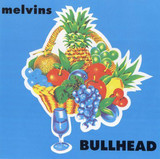
**BACK IN PRINT ON SINGLE LP**After three albums filled for the most part with quick song bursts and the occasional longer track, the eight-song long Bullhead found the Melvins stretching out a bit more at points, this time allowing the heavily stoned tempos plenty of time to really sprawl all over the place. There are fewer sudden shifts between fast and slow moments as well, and a lot more pure lava-flow beat-over-head feedback sludge and noise. It's not all ten mph deliberation, though - "Zodiac" shows the trio at full speed and blasting aside anything that might be so foolish as to get in its way, not to mention one unhinged Osbourne vocal lead. If grunge was achieving breakthrough status in Seattle, it was being perfected in its rawest sense on this album. Opening cut "Boris" does all this in excelsis - the band's longest recorded song at this point, nearly ten minutes long, it practically drips from the bongwater of eight million potheads, with Osbourne invoking his own brand of demons over the deep crawl of the music. Osbourne here really has got the dramatic, theatrical Ozzy Osbourne attitude down, with the occasional double-tracked vocals adding to the off-kilter intensity of the performances. Crover again shows his worth on the drums - he plays things slow most of the time but, crucially, never once sloppily - while Black keeps the bass going, however relatively unheard under Osbourne's guitar attack. "It's Shoved" is the not-so-secret highlight of Bullhead, Crover's brisker drum work and Black's sharp bass playing heralding a wild lead-guitar melody and a great ensemble performance. However, efforts like "Anaconda," with its slowly uncoiling power, and the intense "If I Had an Exorcism," which gets all the more wired and wound up as it goes (Black's bass here is some of her best), are no slouches. (All Music)
Carole King’s The Legendary Demos will be released April 24th, 2012 via Hear Music / Concord Music Group. A previously unreleased collection of 13 history-making Carole King recordings of some of her most celebrated songs, The Legendary Demos traces King's journey from her days as an Aldon staff writer in the 1960's, where she crafted hit after hit for other artists, to the dawn of her own triumphant solo career in the 1970's, and contains her original recordings of future standards like "(You Make Me Feel Like) A Natural Woman," "It's Too Late," and "You've Got A Friend." Featuring liner notes by acclaimed author and Rolling Stone contributing editor David Browne, the collection brings to light a heretofore missing link in the chain of King's career. Fittingly, The Legendary Demos serves as a companion to King’s long-awaited memoir, A Natural Woman, which is being released April 10th, 2012 via Grand Central Publishing.
Aldon Music used these demos—short for “demonstration records”—to pitch King's material to other artists, from Gene Pitney and Bobby Vee to Aretha Franklin and the Monkees. While the recordings have long been coveted and collected within the industry, they have never before been released to the public.
Whether it was a potential single for the Monkees or a solo performer like Pitney, King’s demos were remarkable in their completeness. “When she sat down to the piano and played a demo of one of her songs, the whole arrangement appeared right in front of your eyes magically,” recalls Brooks Arthur, who engineered a number of these efficient sessions for King at one of several midtown Manhattan studios. “A lot of the smarter producers would adhere to Carole’s demos. If you stuck to that, you’d come home a winner.”
King and then-husband / songwriting partner Gerry Goffin signed with Aldon Music in 1959, and anyone who listened to the radio during the first half of the ‘60s will recognize the songs of teen passion and devastating heartbreak heard in King’s original recordings. “Take Good Care of My Baby” was a No. 1 hit for Bobby Vee in 1961. Goffin’s gift for tapping into teen anguish—in this case, hiding behind a stoic public face—was never conveyed better than in “Crying in the Rain,” which the Everly Brothers took into the top 10 in early 1962. “Just Once in My Life” was the Righteous Brothers’ follow-up to their still-spine-tingling “You’ve Lost That Lovin’ Feelin’,” and King’s demo reveals how she and Goffin were instantly able to tap into the duo’s (and producer Phil Spector’s) dramatic, impassioned sound.
Like many of their fellow songwriters at the time, King and Goffin wrote songs for Don Kirshner’s TV show about a fictional, Beatles-derived pop band that debuted in September 1966. The Monkees turned out to be more credible singers (and musicians) than anyone initially expected, as their high-charting 1967 version of King and Goffin's “Pleasant Valley Sunday” revealed. The Monkees also cut “So Goes Love,” a dreamier ballad heard here, but the track didn’t make their first album and wasn’t released until long after they’d disbanded.
The Legendary Demos includes early takes of six tracks that formed the basis for King’s world-wide solo breakthrough Tapestry. King and lyricist Toni Stern’s ever-poignant “It’s Too Late” is here, along with King’s own “Way Over Yonder,” “Beautiful” and “Tapestry,” all three bursting with the artistic and spiritual renewal infusing King’s life during this period.
Among the collection’s numerous gems is the original 1967 demo for Goffin, King, and producer Jerry Wexler’s “(You Make Me Feel Like) A Natural Woman,” a song that would later appear on Tapestry and of course be famously cut by Aretha Franklin later that same year. King’s version offers several different takes from the Franklin and Tapestry versions. Her delivery in the opening lines is looser (check out the way she stretches out “Lord” in “Lord, it made me feel so tired”), and the bridge is even more imbued with palpable romantic and sexual heat.
And finally, there’s King’s initial take on “You’ve Got a Friend,” a classic entry in the Great American Rock Songbook. Milling around in the Troubadour balcony during soundcheck, her friend James Taylor heard King perform the song on a bare stage and was immediately taken with it; his own version, a massive hit, would arrive the following year.
The distinctive rolling grooves, growling basslines and blasting horns of Snakehips Etcetera combined to present Nucleus's most energetic record. First released on Vertigo in 1975, original copies of Snakehips Etcetera are now very tricky to score. Like all the Nucleus records, it’s aged ridiculously well and this Be With re-issue, re-mastered from the original analogue tapes, shows off just why this deserves to be back in press.
Genius trumpeter and visionary composer Ian Carr was one of the most respected British musicians of his era. He was a true pioneer and saw the potential in fusing the worlds of jazz with rock, just as Miles Davis and The Tony Williams Lifetime did in the US. In late 1969, following the demise of the Rendell-Carr quintet, and tiring of British jazz, Carr assembled the legendary Nucleus. Regarding music as a continuous process, Nucleus refused to “recognise rigid boundaries” and worked on delivering what they saw as a “total musical experience”. We can get behind that.
Under bandleader Carr, Nucleus existed as a fluid line-up of inventive, skilled musicians. This constant evolution and revolution was all part of the continuous musical exploration and discovery that took jazz to new levels. And the music has kept relevant. To steal a line from a review of our re-issue of Roots, when it comes to anything Nucleus “it’s basically already hip-hop”
With all restraint out the window, 1975's pimped-up Snakehips Etcetera is the outrageous - in both cover art and sound - follow-up to the brooding Under The Sun. It's perhaps not one for the jazz purists! It finds Nucleus pared down to a core group of six, with Carr, Bob Bertles (sax), Ken Shaw (guitar), Geoff Castle (keys), Roger Sutton (bass) and Roger Sellers (drums) comprising the collective. Snakehips Etcetera reflects a period where the compositions start to become a little more direct and less-cerebral in comparison to some of Nucleus' previous releases. And why would we begrudge them some fun? This one rocks, swings and funks with no little soul. And more than a little jazzy sleaze. Clearly, they were having a good time.
The album has a real live, jamming feel to it, no surprise given the extent to which they were touring at the time. The band is tight and grooving throughout, none more so than on Bob Bertles's effervescent opener, "Rat’s Bag". So darn funky it stings, it's an infectious gem full of punchy clean lines over a killer bassline from Sutton. The thick, driving jazz-rock of "Alive And Kicking" is exactly that. It has a very improvisational feel, but an inspired one at that and features a wailing guitar solo from Ken Shaw that simply slays. The funky "Rachel’s Tune" is amazing, bringing you back to Canterbury days with its fuzzed-out organ solos to close out Side A.
Opening up Side B, the cool psychedelic title track unfolds slowly and sensually over its ten-plus minutes. A stoned soul stew of sorts, each member of the crew gets their chance to shine over Sellers's steady drums. The melodic funk fusion of "Pussyfoot" pairs Carr with Bertles on ace solo flute for a bright, springy melody. This one really gleams over shuffling drums. Changing the pace to close out this memorable set, the particularly cool "Heyday" is a reflective, sober tune which reinforces the sumptuous Nucleus palette, the acoustic guitar and bass high in the mix to make the neck snap, the horns elegantly blasting to help you swoon.
This Be With edition of Snakehips Etcetera has been re-mastered from the original Vertigo master tapes, Simon Francis’ mastering working together with Cicely Balston's cut at AIR Studios to weave their usual magic with these wonderful recordings. The striking, lascivious sleeve has been restored in all its seductive/ridiculous beauty.
- A1: 1916 (1:11)
- A2: Elastic Rock (4:05)
- A3: Striation (2:14)
- A4: Taranaki (1:38)
- A5: Twisted Track (5:19)
- A6: Crude Blues (Part 1) (0:54)
- A7: Crude Blues (Part 2) (2:38)
- A8: 1916 (The Battle Of Boogaloo) (2:58)
- B1: Torrid Zone (8:41)
- B2: Stonescape (2:39)
- B3: Earth Mother (5:15)
- B4: Speaking For Myself, Personally, In My Own Opinion, I Think… (1:31)
- B5: Persephone’s Jive (2:14)
Nucleus's Elastic Rock is undisputedly a milestone in Jazz-Rock. A beautiful and vital debut album, it was first released on Vertigo in 1970. Original copies are now very tricky to score and, like all the Nucleus records, it’s aged ridiculously well. This Be With re-issue, re-mastered from the original analogue tapes, shows off just why this deserves to be back in press.
Genius trumpeter and visionary composer Ian Carr was one of the most respected British musicians of his era. He was a true pioneer and saw the potential in fusing the worlds of jazz with rock, just as Miles Davis and The Tony Williams Lifetime did in the US. In late 1969, following the demise of the Rendell-Carr quintet, and tiring of British jazz, Carr assembled the legendary Nucleus. Regarding music as a continuous process, Nucleus refused to “recognise rigid boundaries” and worked on delivering what they saw as a “total musical experience”. We can get behind that.
Under bandleader Carr, Nucleus existed as a fluid line-up of inventive, skilled musicians. This constant evolution and revolution was all part of the continuous musical exploration and discovery that took jazz to new levels. And the music has kept relevant. To steal a line from a review of our re-issue of Roots, when it comes to anything Nucleus “it’s basically already hip-hop”.
The very title Elastic Rock could be regarded as the group's MO, describing a melting point between their rock and jazz impulses. Indeed, housed in a memorable gatefold jacket designed by Roger Dean, the die cut molten teardrop shape on the front sleeve opens to reveal a fiery volcanic crater. On the back, Dean's drawing has Carr with saxophonist Brian Smith, guitarist Chris Spedding, drummer John Marshall, bassist Jeff Clyne and sax, oboe and pianist Karl Jenkins in a circle, the central core of a movement and the basis for its activity.
Recorded over four days in January 1970, Elastic Rock didn't sound like any other British jazz album. Exploding out the gate, "1916" opens with Marshall's frantic pounding before melancholic horns enter. The smooth title track, "Elastic Rock" is just a gorgeous electric blues track. Light drums, gentle melodic horns, piano and a solid bassline serve as the perfect bed for Spedding's graceful bluesy guitar melodies. The serene "Striation", a Clyne and Spedding collaboration, is led by bowed bass and is the epitome of calm before the late night laid back vibe of "Taranaki" breezes along sweetly and smoothly with great trumpet and tenor.
The truly emotional "Twisted Track" is elegant with horns, while guitar is gently played with drums and bass. Initially deeply soothing, it gradually builds with various solos and duets. "Crude Blues (Part 1)" features an excellent oboe part by Jenkins with laconic guitar helping out. "Part 2" is livelier, with a heavy backbeat and great wind parts. "1916 (Battle Of Boogaloo)" features a steady bassline and great call and response parts from the horn section.
The highly-charged centrepiece of the record, the mesmeric epic "Torrid Zone" features an hypnotic bassline and hi-hat with some of the ensemble's best soloing. Brilliantly encapsulating the jazz fusion aesthetic so desired by the group, the rhythm section is rock-influenced but magically retains a laid-back jazz vibe. Just perfection. Spacey jazz in the style of In a Silent Way, the semi-ambient "Stonescape" features smooth, muted brass, warm, smokey keys and a barely-there rhythm section. Heavenly.
The bubbling, fragile restraint of "Earth Mother" partially utilises the "Torrid Zone" bassline but takes the energy in a different direction with Marshall's frenetic drumming and Spedding's unpredictable riffing. Next comes the very idiosyncratic drum solo track by Marshall in the appropriately-titled "Speaking for Myself, Personally, in My Own Opinion, I Think." The album closes with the raucous "Persephones Jive", a track that ends the album frantically, riotously, just as it began.
This Be With edition of Elastic Rock has been re-mastered from the original Vertigo master tapes, Simon Francis’ mastering working together with Cicely Balston's cut at AIR Studios to weave their usual magic with these wonderful recordings. The stunning die-cut gatefold sleeve has been restored in all its molten glory.
Their masterpiece? With breaks for dayyyyyys and an almost ambient, heavy jazz atmosphere throughout, *this* is the apex of British jazz-rock fusion. We'll Talk About It Later was first released on Vertigo in 1971 and original copies are now very tricky to score. Like all the Nucleus records, it’s aged ridiculously well and this Be With re-issue, re-mastered from the original analogue tapes, shows off just why this deserves to be back in press.
Genius trumpeter and visionary composer Ian Carr was one of the most respected British musicians of his era. He was a true pioneer and saw the potential in fusing the worlds of jazz with rock, just as Miles Davis and The Tony Williams Lifetime did in the US. In late 1969, following the demise of the Rendell-Carr quintet, and tiring of British jazz, Carr assembled the legendary Nucleus. Regarding music as a continuous process, Nucleus refused to “recognise rigid boundaries” and worked on delivering what they saw as a “total musical experience”. We can get behind that.
Under bandleader Carr, Nucleus existed as a fluid line-up of inventive, skilled musicians. This constant evolution and revolution was all part of the continuous musical exploration and discovery that took jazz to new levels. And the music has kept relevant. To steal a line from a review of our re-issue of Roots, when it comes to anything Nucleus “it’s basically already hip-hop”.
We'll Talk About It Later is arguably Nucleus's best album. Not only that, it's in the top 5 of all fusion albums. By the time Nucleus entered Trident Studios in September 1970 to record Elastic Rock's successor, they had already won a best group award at the Montreux Jazz Festival. Once again presented in a Roger Dean designed die-cut gatefold sleeve it continued to demonstrate the chemistry and interplay that worked so brilliantly on Elastic Rock; Carr's sumptuous trumpet and flügelhorn lines, Karl Jenkins's funk-filled electric keyboards, Chris Spedding's wah-wah guitar, Brian Smith's sax and the rhythmic foundation of drummer John Marshall and bassist Jeff Clyne.
The group work and insane musicianship Nucleus were famed for is in evidence from the off. The intensely funky "Song for the Bearded Lady" is absolute FIRE, blasting out the speakers to leave listeners floored. Counterpoint riffing segues into a spacious groove and a Carr trumpet solo demonstrating the influence of electric Miles from the period. The stop-start funk of "Sun Child" would appeal to Soft Machine devotees whilst the genuinely touching "Lullaby for a Lonely Child" is a lovely downtempo ballad. Featuring an understated, reflective horn line from Carr and Smith and atmospheric, shimmering bouzouki from Spedding, there's an exotic flavour which contributes to the bliss. The ominous, sleazy title track retains a swaggering menace and is not the only track to lend a sort of heavy stoner rock atmosphere. The guitars and bass are deep and low throughout, conjuring heavy psych moments to go with the actual jazz and even funk. To say this album was in conversation with Bitches Brew would not be overstating the sheer brain-frying brilliance.
The Weather Report-adjacent "Oasis" opens Side B, a colossal track featuring nearly 10 minutes of steadily building melodic horns, keys and choppy guitar riffs. So ace, it could easily go on for another 10. Mesmeric. Spedding adds unique vocals to the undeniable groove of "Ballad of Joe Pimp" whilst saxophonist Smith's duet with drummer Marshall at the conclusion of "Easter 1916" - inspired by the Yeats poem about the Irish nationalist uprising in Dublin - adopts the wildness of the most incendiary free jazz.
This Be With edition of We'll Talk About It Later has been re-mastered from the original Vertigo master tapes, Simon Francis’ mastering working together with Cicely Balston's cut at AIR Studios to weave their usual magic with these wonderful recordings. The stunning die-cut sleeve has been restored with the original gatefold window pane depicting the Irish uprising in 1916. Incredible, timeless, guaranteed spine-chills.
What a record! The outstanding Solar Plexus, the much-loved third album from Ian Carr and Nucleus, was first released on Vertigo in 1971. Inevitably, original copies are now very tricky to score and, like all the Nucleus records, it’s aged ridiculously well. This Be With re-issue, re-mastered from the original analogue tapes, shows off just why this deserves to be back in press.
Genius trumpeter and visionary composer Ian Carr was one of the most respected British musicians of his era. He was a true pioneer and saw the potential in fusing the worlds of jazz with rock, just as Miles Davis and The Tony Williams Lifetime did in the US. In late 1969, following the demise of the Rendell-Carr quintet, and tiring of British jazz, Carr assembled the legendary Nucleus. Regarding music as a continuous process, Nucleus refused to “recognise rigid boundaries” and worked on delivering what they saw as a “total musical experience”. We can get behind that.
Under bandleader Carr, Nucleus existed as a fluid line-up of inventive, skilled musicians. This constant evolution and revolution was all part of the continuous musical exploration and discovery that took jazz to new levels. And the music has kept relevant. To steal a line from a review of our re-issue of Roots, when it comes to anything Nucleus “it’s basically already hip-hop”.
We'll let Ian describe this one: "I wrote Solar Plexus' last year with the help of an Arts Council grant. It is based on two short themes which are stated at the beginning (Elements I & I1). The first theme is angular and has a slow, crab-like movement: the second theme is direct, simple and diatonic. CHANGING TIME and SPIRIT LEVEL explore the first theme and BEDROCK DEADLOCK and TORSO explore the second one. SNAKEHIPS DREAM tries to fuse both themes. (The title is a reference to the famous dancer 'Snakehips' Johnson)."
Solar Plexus features the same lineup as Elastic Rock and We'll Talk About It Later, but they're augmented by six guests, three of which play brass. Carr himself had almost full control of the writing and it does feel very different to the previous albums. It's more of a jazz record loosely based on a rock foundation rather than jazz fusion jamming.
The haunting synth-and-bass soundscape "Elements I and II" opens the album in dramatic, experimental fashion. It gives way to the bright, funky feel-good jazz of "Changing Times". An elegant onslaught of horns, courtesy of guests Kenny Wheeler and Harry Beckett, ride a solid groove for the duration. How the brass refrains have eluded samplers is beyond us. The melancholic "Bedrock Deadlock" features the brooding majesty of Jenkins' oboe and Clyne's mournful, skittering double bass. Wah wah guitar, drums and funky percussion then take over before the horns ride us out over frenetic beats. The dark, angular "Spirit Level" is a real highlight, by turns harmonic and beautiful then dissonant and wayward. Wonky jazz with no apparent structure or melodic bones. Regardless, it represents a great showcase for each virtuoso performer.
The breezy soul of "Torso" feels like a breath of fresh air, skipping along in the uptempo style with guitar, horns, drums and bass. A track which truly sounds scintillating, featuring sax solos, fantastic propulsive interplay from all the group around the halfway stage before Marshall gets his chance to really shine in closing out with a polyrhythmic drum solo. Final track "Snakehips' Dream" stretches cooly out over 15 minutes to round out a spellbinding album. An epic, suave groove, it's a relaxing piece with warm electric keys, laconic guitar and languorous horns. Truly sophisticated soulful jazz. An absolute masterclass. We could easily listen to this all day long.
This Be With edition of Solar Plexus has been re-mastered from the original Vertigo master tapes, Simon Francis’ mastering working together with Cicely Balston's cut at AIR Studios to weave their usual magic with these wonderful recordings. The stunning gatefold sleeve has been restored to complete this sensational package.
Autokinetic’s techno roots reach back to 1993 when Mike McClure and John Golden formed Auto K in Minneapolis, forming the vibrant MPLS rave scene alongside Freddy Fresh, Woody McBride, and DVS1. Auto K then changed their name to Auto Kinetic, and now Mike McClure is ripping hypnotic modular techno in hyperspace solo as Autokinetic. These tracks have been secret weapons in DVS1 sets for the past couple years.
“great stuff as always” - Decoder
“Very cool” - Justin Cudmore
“It bangs!” - CMD
“Really good” - 2Lanes
“Great release!” - PlayPlay
“Sounds great!!” - Golden Medusa
“Big blend potential with these trax!” - Escaflowne
The A side consists of “Sidewinder” and the cheekily titled “Didgeradont”. Both of these are bonafide heady techno hits. I mean, the production on these…higher consciousness inducing dancefloor rolling mania. For the old ears and fresh feet alike.
The B side opens up with “File003”, which has a robotic restraint and up-beat bassline to keep you locked in for the never ending tunnel ride of a track. “Wakeword” ends the EP with a proper, slightly acidic challenger to meet all late night crowds with taste. But no chin scratching here. This is techno at its tastiest. Mike is a pro who knows how to kick and punch with full peak euphoric power. He’s been in the game for three decades at this point, and is still pushing his craft and himself to new heights.
300 copies pressed worldwide. Not to be missed out on.
Produced and performed by Mike McClure in MPLS, MN USA
Mastered by Dietrich Schoenemann.
Design by Nick Owen.
Distributed by One Eye Witness.