Cory Hanson"s third solo LP follows upon 2020"s luminescent Pale Horse Rider, upping the heat to molten levels, six strings at a time. In search of further adventures, Cory draws with vampiric glee from the madness coursing through the world outside; a spiraling shitshow that"s reawakened a compulsion in him - an old ambition, even! - to crush brutality and elegance together into a fresh set of rocks to hail down upon us. Western Cum is a high-stepping, hard-dancing, first love/heartbreak, tonight"s-the-night, future nostalgia kind of good time - the sound of guitars through the speakers of luxury cars. Like the dream you had once, alone, asleep in an amplifier, blasting Guns N" Roses through every last orifice in your body. And it"s coming through! Western Cum"s map to the treasure is less about pastiche, though; more toward executing the songs by executioner"s axe, rolling their decapitated rhythm heads and soaring melodies, the panoply of Cory"s melodic impulses with guitars, guitars, guitars. Harmony leads are just the tip of the iceberg, but be quick - the guitars like to melt everything in their path! The eight songs of Western Cum are driven by the stalwart bass of brother Casey Hanson and the drums of Evan Backer with a few passing acoustics from Cory and the intermittent spirit-moans of Tyler Nuffer"s steel guitar. The quartet sound - two guitars, bass and drums - acts as beat-making principle/phrasing device, as well as template for Cory"s layers of six-string and vocal textures. From the rooftop of their musical safe house - the band in their makeshift hut and Cory ensconced in an outhouse - they let loose with a blast both face-melting and mind-blowing: a social service that gives constipation a good name.
Cerca:moan
In the 1980s, Michael Morley helped to push the jangly New Zealand music scene towards rougher, more exploratory realms, as a member of Wreck Small Speakers on Expensive Stereos, The Weeds, and the almighty Dead C. His gnarled, distorted guitar tone and aggressively moan-based vocal style are both as distinctive as they are secretly beautiful. Morley has released dozens of solo recordings—starting in the late 1980s as Gate, then more recently under his own name, and as the Righteous Yeah. He’s also unafraid to tackle entirely new genres and sounds, and to move into interactive installation-based music as well. Birdman is beyond excited to present the first vinyl release of this archival Gate release. “...I think it is classic Gate material. The idea of the palette is fascinating as I think I did approach it with a set of limited instrumentation and the desire to make something again that could sound like rock music. There is certainly a direct line from Wreck Small Speakers On Expensive Stereos, through the Dead C, and to Gate. I think I was also inspired by listening to infamous and tragically short-lived early 1980s band the Double Happys, and remembering their performances as a duo with the drum machine. There was such utter chaos and anarchy during their sets, with a desire to represent punk rock at its nascent truth, I wanted to see if it was possible to re- imagine that feeling. I was possibly also listening to the Stooges and MC5. —Michael Morley
The music explores Ekko´s feelings and possibilities, and the unpredictability of the improvisational music is a parallel to an echo that speaks freely. What happens then? «Hva nå, Ekko?» is a commissioned work by Liv Andrea Hauge, written for Festspillene i Helgeland 2022. The ambition behind the work is based on exploring improvisation in a bigger jazz ensemble. Composed by Liv Andrea Hauge, it´s performed by some of the foremost young jazz musicians on the Norwegian stage: Ragnhild Moan, Signe Emmeluth, Torstein Lavik Larsen, Marte Eberson, Fredrik Luhr Diecthricson and Andreas Winther. Drawing on Liv Andrea´s compositions and collective improvisations, the work appears as a collective project colored by tight interaction, and through the hour long work it´s notable how much the musicians enjoy playing with each other. Liv Andrea Hauge is an Oslo based musician, originally from Mosjøen in Northern Norway. She has studied jazz piano at the Norwegian Academy of Music, and despite her young age and carriere she has put a mark on the Norwegian music stage, with bands such as Kongle Trio and Ladybird Orchestra. In 2022 she released the album “Live From St.Hanshaugen” with Liv Andrea Hauge Trio, mentioned as one of 2022’s best Norwegian jazz albums
Fredfades is finally ready with his second album as a solo artist. The producer and DJ and has remained active as a musician ever since his debut single in 2008. Since he released his debut solo album 'Warmth' six years ago he's ben diving into a bunch of different genres and cross-ing musical landscapes such as ambient, hip-hop and house, which has led to releases and productions across labels like his own Mutual Inten-tions imprint, as well as bigger labels like Stones Throw, Fresh Selects and Jakarta Records. This sonic voyage has resulted in ‘Caviar’ - an album that tells the story of a producer who's ready to let go of his youthful love and indulge himself to electronic music.
Fredfades name is more often seen on foreign club posters than back home in Norway. This has colored the musical expression of the Oslo-born multi-artist, and on ‘Caviar’ he is gathering inspiration from every corner of the world where he has traveled. You can clearly hear the inspi-rations from the sounds of Rome, Manchester, South-Africa, Detroit, New York, Berlin, Paris and the Balearic ocean, which are all well repre-sented throughout the album's eight tracks. If you close your eyes and put your ears close to the speakers you will hear loons, running water, African percussion instruments, roaring saxophones, bit-crushed samples, moaning women, TB 303’s, bottom-heavy basslines and recordings of whales communicating at the bottom of the ocean. Everything seamlessly put together for Fredfades’ own sonic world view. The album features a bunch of talented friends of Fred, such as Telephones or the vocalists MoRuf and Kristian Hamilton.
Despite being known as more of a progressive and edgy DJ that haunts down a lot of indie and private press electronic music, Fredfades has cultivated a more elegant and controversial output in his own music. His progressions often consist of dwelling jazz chords from electric pianos or mellow sub-filtered synth patches that creates space where he can unleash rowdy basslines, rhythm sections and leads just as confident and captivating as the man himself. On the jazzy ‘Tenerife 1994’ you can hear a tribute to one of Fred’s greatest heroes in music: Pharoah Sanders, while on ‘My Heart Is On The Edge’ and ‘Summer of Love’ the energy and euphoria is boiling over and directs your mind towards the summer raves which Fredfades is known to throw down in Oslo.
On the LP covers backside Fredfades is posing with a Korg Wavestation in front of the block where he grew up in the suburbs outside Oslo, while the front cover is showing an airbrushed illustration of Caviar from sturgeon - ‘From block to Beluga’. The black vinyl contains magic grooves created by an electronic musical convertite, with the power to transport the listener from a perpetual winter to the 90s warm dance floors and the 'Second Summer of Love’.
***BACK IN PRINT ON RED VINYL!!! Lice-All, from 1992, previously known as self-titled, and also previously known as something else we’re all not gonna talk about, thank you very much. This was the Melvins last release before signing their Atlantic deal, and features the introduction of new bass player Joe Preston (previously of Earth, currently of Thrones). It’s one long, slow, loud blob of drones, moans and fuzztones. The opening endless power chord shimmer influenced Sleep, Sunn O))), and countless other sludge metal drone freaks for years to come.
Total Annihilation Beach is the latest collection from Caveman LSD, one of the handful of monikers of Special Guest DJ / uon / sometimes just shy. Their releases under this name have always had the character of sonic transmissions – crushed sine-waves hurtling out of a wormhole, remote pirate radio bandwidths, whale-song picked up on radar, and so on. Here, the signal seems to come from a place whose remoteness is not defined by distance, but adjacency: these are alternate reality bops.
What does it sound like? Kind of solarpunk, but dirty; not at all an artifact from a hopeless culture. Percussion at the forefront; warm timbres and tones – never have I heard this producer play with tabla and tambourine loops as they do in “Lost Hours,” the opening track of the EP. The buildup holds tension and dynamics tight, with a vocoder-smoothed moan – sampled from the caveman’s own voice, on the low – alternating between two notes; when the beat decompresses for the first time two and a half minutes in, one hears the amorphous and cavernous pads we know so well from shy. “Bottle Service Angels” picks up with another acoustic drum loop, and a clap entering 18 seconds in swings the rest of the track into your hips – there’s even an alternate percussion interlude
sandwiched in the middle. The drums are turned over by a distorted and delayed wave, almost like a cop siren, which finds an answer in the track’s final seconds: we hear them blaring, but distantly (the demo version of this track, from spring 2020, was called “ACAB Beat”).
The B side begins with a textured, heaving slab of ambience: “The Sun Will Sink Into the Ocean.” It is perhaps the sun one sees setting over “Total Annihilation Beach” – a phrase that came to shy while tripping on LSD in San Francisco, which felt to them like a post-apocalyptic haven for the rich. Seems on point. There is a machinic repetition to the track, but also sweeping curtains of sound that move like mist. But what comes at nightfall? Not cops, not raiders nor bottle service angels – nothing, actually. Just a void into which one lobs praise. “H6 Remix” adapts a Mesopotamian hymn to the divine wife of a moon deity, dated to 1400 BCE; the strings of the sampled oud playing it out are rich and trail beautifully with reverb. Caveman LSD’s gesture of remixing such a song reads sincere – the reality we inhabit is likely just as brutal as the one to which these transmissions belong; however, in both, honor exists. Love follows.
- A1: Steamboat Bill - From ’Steamboat Willie’
- A2: Who’s Afraid Of The Big Bad Wolf - From ’Three Little Pigs’
- A3: Whistle While You Work - From ’Snow White And The Seven Dwarfs’
- A4: When You Wish Upon A Star - From ’Pinocchio’
- A5: Little April Shower - From ’Bambi’
- A6: Saludos Amigos - From ’Saludos Amigos’
- A7: Bibbidi-Bobbidi-Boo (The Magic Song) - From ’Cinderella’
- A8: Mickey Mouse March - From ’The Mickey Mouse Club’
- B1: Once Upon A Dream - From ’Sleeping Beauty’
- B2: The Tiki, Tiki, Tiki Room
- B3: It’s A Small World
- B4: Chim Chim Cher-Ee - From ’Mary Poppins’
- B5: Winnie The Pooh - From ’Winnie The Pooh And The Honey Tree’
- B6: The Bare Necessities - From ’The Jungle Book’
- B7: Oo-De-Lally - From ’Robin Hood’
- B8: It’s Not Easy - From ’Pete’s Dragon’
- C1: Under The Sea - From ’The Little Mermaid’
- C2: Beauty And The Beast - From ’Beauty And The Beast’
- C3: Circle Of Life - From ’The Lion King’
- C4: Colors Of The Wind - From ’Pocahontas’
- C5: Reflection - From ’Mulan’
- C6: Hawaiian Roller Coaster Ride - From ’Lilo & Stitch’
- D1: We’re All In This Together - From ’High School Musical’
- D2: Dig A Little Deeper - From ’The Princess And The Frog’
- D3: Let It Go - From ’Frozen’
- D4: How Far I’ll Go - From ’Moana’
Silberfarbenes 2LP-Vinyl zur Feier des 100-jährigen Jubiläums von Disney mit Favoriten von Three Little Pigs, Snow White and the Seven Dwarfs bis Coco, Encanto und mehr!
In a career laden with highlights and hallmarks in the annals of soul history, 'Just As I Am' is rather overlooked as one of the best soul debuts ever issued. Beautifully remastered, 'Just as I Am' is presented to a new generation of listeners who may have missed out the first time. With this remastering comes an intimacy, warmth, and immediacy to the recordings that was only hinted at with previous versions; it's almost as if Withers is in a living room singing to a small group of people, rather than making a record. Of course, the instantly recognizable anthem "Ain't No Sunshine" gets all of the acclaim it so richly deserves, but also in tracks like "Harlem", 'Grandma's Hands' and "Better Off Dead" you can hear the intensity and maturity of Bill's performances. Even when he's doing covers, Withers makes them sound as if they are his own compositions.
Give this classic record a spin, and get ready to be submersed in the Soul of one of the true masters of the genre!
The rock supergroup Beck, Bogert & Appice was formed in
1972 by Jeff Beck, evolving from the Jeff Beck Group. In addition to Beck, the trio consisted of bassist Tim Bogert and drummer Carmine Appice, who had previously played together in Vanilla Fudge and Cactus. They only released one studio album, Beck, Bogert & Appice, which came out in 1973 and features a mix of (hard) rock, blues and funk. The album contains Beck’s version of “Superstition”, written by Stevie Wonder. It was produced by Don Nix, who is one of the more obscure figures in Southern soul and rock and has worked with Freddie King and Furry Lewis amongst others.
To celebrate its 50th anniversary, Beck, Bogert & Appice is available as a limited edition of 1500 individually numbered copies on translucent red coloured vinyl.
Calisthenics is the first album by Institute for Certified Nomadic Illicit Sonic Practices (ICNISP), the Berlin-based duo of Brazilian musicians Marina Cyrino (flute) and Matthias Koole (el.guitar).
With a mixture of electronic and acoustic sound sources, objects and preparations, inside amplification and no-input mixing, the duo leads guitar and flute towards a common hybrid terrain. Sound perspectives are shifted, instrumental identities are displaced. The piccolo can function as a noise generator and a percussion instrument, the guitar can sound like a bird, the alto flute can be played by an external balloon that moans. Partly inspired by drawings of the Handbook of Calisthenics and Gymnastics: A Complete Drill- book with Music to Accompany the Exercises by J. Watson, first published in 1864, ICNISP came up with a series of musical exercises to stay healthy and fit during the several lockdowns over the past few years. In a playful way, the title Calisthenics also translates an agitation present in many of the duo's energetic playing modes.
On Side A, Calisthenics comprises 7 tracks - or exercises - of different lengths, with a focus on specific instrumental materials or preparations. Side B consists of one track in which a larger form unfurls, with elements of the exercises concatenated into a Full Arch.
No cuts or overdubs.
Marina Cyrino - Amplified Piccolo and Alto Flute.
Matthias Koole - Electric Guitar.
Recorded and mixed by Rabih Beaini at Morphine Raum in Berlin.
Mastered by Paulo Dantas in Rio de Janeiro.
Cover art by Sara Lambranho.
Roman artist Heinrich Dressel delivers a sparkling gaze into the future with the glistening ‘Lambda 2077’. Opening with powerful, guttural drones and sweet sweeps from ‘Nebulosa’, the broad sonic scope of this LP is beautifully demonstrated.
Growling arps and magnetic, synthesised moans are throughout this record. Dressel cultivates a cinematic, cerebral experience throughout each track, delicately weaving a visceral soundscape. The rising, slicing tones of the atmospheric ‘CEM 8220’ provide a compelling journey through meandering arps with a defined structure. ‘Arpeggio Jawa’ swims into action with a watery, colourful arpeggio sailing through each intriguing section.

‘Francisco’ opens things up with an electro-tinged, thunderous remix. Building upon the chordal gravitas of the original, the remix provides the release with an acidic percussive journey. The swirling brilliance of the title track ‘Lambda 2077’ presents itself as stunning, emotive work which prepares you for the decade Heinrich Dressel is heading to next. The machine lead release shows Heinrich Dressel as a consistent unstoppable force behind the synthesiser, culminating in an astonishing, sophisticated record.
BROODING PSYCHEDELIC REVELATIONS FROM THE STAVANGERIAN OUTSIDERCORE
The uncanny is never out of bounds in the debut release by shadowy Norwegian duo Firmaet Forvoksen. Gaute Granli and Thore Warland, two archetypes of the Stavanger experimental scene long active through solo work (Gaute Granli’s recent Ultra Eczema notoriety, for one) and other collaborative projects (Thore Warland’s ongoing drum devolutions with Golden Oriole, for another), have joined forces under multiple configurations over the years in order to finally coalesce under the FF banner. Together they project an ever-unfolding vision that sonically erodes into a radiant abyss, like some serious atonement from probable jazz school fugitives.
Undone Shal is an unfurling tapestry of erratic guitar pickings, muffled percussive conjurings, barging synths, and moans that are part lamentation, part incantation. These arrangements evoke a definite psychedelia, plunging the listener into unsettling yet luminous expanses of liminality that recall only the most brooding of outsiders. Like craggly rocks piled on top of each other forming an incomprehensible, gravity-defying tower, Firmaet Forvoksen’s disjointed musical deployments forge something lucid and concrete while grazing the edges of complete inscrutability. This strange relic of a record follows the lineage of KRAAK rosterees past and present - the KRAMPs, Ignatzes, Red Bruts and Calhau!s of our hearths - through its assemblage of crude elements that incite the universe to vomit its hidden harmonies and forcibly test the boundaries between fluency and unintelligibility. No Norwegian wood wisecracking to be made here, for these two dwell in a malleable zone where chaos aligns to draw you in, hinting at all that is obfuscated like a marching band to nowhere.
- A1: Logic System - Unit
- A2: Kraftwerk - Computerwelt (2009 Remastered
- B1: Whodini - Magic's Wand
- B2: Rocker's Revenger - Walking On Sunshine (Feat Donnie Calvin
- C1: Klein & Mbo - Dirty Talk (European Connection
- D1: Liaisons Dangereuses - Los Niños Del Parque
- D2: Yello - Bostich
- E1: The The - Giant
- F1: The Residents - Kaw-Liga
- G1: Clan Of Xymox - Stranger
- G2: A Split - Second - Flesh
- H1: Severed Heads - Dead Eyes Opened
- H2: The Weathermen - Poison!
- I1: New Order - Blue Monday
- J1: Anne Clark - Our Darkness
- J2: 16 Bit - Where Are You?
- K1: Phuture - We Are Phuture
- K2: Model 500 - No Ufo's (Vocal
- L1: Frankie Knuckles Feat Jamie Principle - Your Love
- L2: Quest - Mind Games (Street Mix
- M1: Jasper Van't Hof - Pili Pili
- N1: Guem Et Zaka Percussion - Le Serpent
- N2: Hugh Masekela - Don't Go Lose It Baby
- O1: Sly & Robbie - Make 'Em Move
- Q1: The Ecstasy Club - Jesus Loves The Acid
- R1: Foremost Poets - Reason To Be Dismal?
- S1: Lhasa - The Attic
- S2: A Guy Called Gerald - Voodoo Ray
- T1: M/A/R/R/S - Pump Up The Volume - Usa 12" Mix
- T2: Bobby Konders - Nervous Acid
- U1: Meat Beat Manifesto - Helter Skelter
- V1: Raze - Break 4 Love
- W1: Sueño Latino With Manuel Goettsching Performing E2-E4 - Sueño Latino (Paradise Version
- X1: Off - Electrica Salsa
- O2: Brian Eno - David Byrne - Help Me Somebody
- P1: Primal Scream - Loaded (Andy Weatherall Mix
For this uniquely personal retrospective spread over twelve vinyl discs, Sven Väth takes us back to the early days of his DJ career. On What I Used To Play we meet great pioneers of electronic music, gifted percussionists, obscure wave bands, and innovative producers of a bygone 'new electronic' era. Rough beats and irresistible grooves from the identification stage of house, techno, and acid remind us not just how far electronic music has evolved over the past four decades, but how great it was to dance to EBM, techno, and house for the very first time.
If there is one protagonist of the electronic music scene who has remained curious, innovative and at the very cutting edge of music for over four decades, it's Sven Väth. His multi-layered artist albums and Sound of the Season mix compilations have been defining the genre for over two decades, and even today, he is constantly on the lookout for the next top tune to add to the highlights of his next set. At least, that's the case when he's not producing them himself as an artist or remixer. "Actually, it's always been part of my DNA to think ahead," and nothing had been further from his mind than looking back at his past, but when in spring of 2020 the international DJ circuit had to be scaled down to virtually zero, the 'restless traveler' suddenly had time. Time to stop and reflect on "how it actually was back then, at the very beginning of my career..."
"It was a great trip and with every track, beautiful memories came flooding back".
In the London apartment, he had just moved into, Sven has set up a "little music room", where he cocooned himself for several days, "to look way back for the first time and review my musical journey through the eighties, so to speak."
The interim result was six thematically oriented playlists with a grand total of 120 tracks from 'early 80s' to 'Balearic late 80s', together with excursions into afrobeat, European new wave, and EBM sounds and a few epochal techno/house tracks from the USA in between. From these 'Best of Sven Väth's favorites', the project What I Used To Play crystallized. Sven remembers how the Cocoon team reacted to his proposal: "They found the idea of making a compilation out of it MEGA from the beginning and everyone said 'Sven, go for it', but then, of course, the work really started, namely, to clear the rights and to get clean sounding masters of the up to 40-year-old tracks. There was also disappointment, of course. We couldn't clear certain titles because the rights holders in the USA had fallen out with each other or simply disappeared from the scene. In short, it wasn't easy, but now I can safely say we got the most important tracks."
Finally, after two years of research, curation, design, and administrative fine-tuning, the "little retrospective" from 1981 to 1990 is available. The exquisitely packaged, and three-kilo heavy box set is not only physically impressive, WIUTP is also the definitive record of Sven Väth's musical development. On each of the twenty-four sides of vinyl, you can trace track by track, what influenced him during which phase, and how he took off as a DJ from his parents' Queen's Pub straight into the spotlight at Dorian Gray. There and at Vogue (later OMEN), Sven became the style-defining player in the DJ booth that he still is today.
1981 - 1990: Future Sounds of Now
In the early eighties, the crowd in clubs like Vogue and Dorian Gray danced to what nowadays we call 'dance classics' - mainly disco, funk, soul, and chart pop. It was up to a new generation of DJs, including Sven Väth, the youngest protagonist in the Rhine-Main area at the time, to create their own club-ready music mix. Good new tracks and potential floor-fillers were rarities that had to be sought out and found, in order to prove oneself worthy.
Without MP3s, internet streaming, or other digital download possibilities, music didn't just gravitate to the DJ, instead, it had to be tracked down. In well-stocked record stores in Frankfurt and Wiesbaden or even in Amsterdam, London, or New York, Sven and friends sourced the material for countless magical nights. On WIUTP we can follow Sven's very personal journey through this wild, innovative era in which synth-pop, funk, hip-hop, and disco were successively replaced as 'club music' by house, techno, acid, and breakbeat. By the end of the decade, it was clear to see that these once exotic 'fringe' phenomena would soon become 'mass' phenomena.
Early 80s
Dirty Talk by the Italian-American duo Klein & M.B.O. represents the most innovative phase of the Italo-disco genre in the early eighties like no other track. Mario Boncaldo (I) and Tony Carrasco relied entirely on the original synthetic drum and percussion sounds of the Roland TR-808, coupled with the raunchy vocals of Rossana Casale and guitar accents of Davide Piatto. Of course, other tracks from this period were also influential in style, most notably Unit by Logic System, which worked as the perfect soundtrack to the laser lighting system at the legendary Dorian Gray club. With stomping beats and robotic rap interludes, Bostich by Yello also belongs on Sven's eternal playlist - after all, it caught the attention of Afrikaa Bambaataa, who invited the Swiss duo to perform at the Roxy in New York in 1983.
EBM Wave - Mid 80s
From today's point of view, the almost ten-minute-long, downtempo track Giant by Matt Johnson's band project The The, would probably not be considered an obvious club classic. However, a closer (re)listen reveals the rhythmic intricacies of the percussion overdubs by JG Thirlwell (aka Foetus) on Johnson's composition, and it becomes clear why this exceptional piece of music is one of Sven's absolute favorites. Other classics from this phase include Kaw-Liga by the mysterious The Residents, the hypnotic-synthetic Our Darkness by Anne Clark (and David Harrow), and last but not least, the somber, monotonous anthem Where Are You? by 16Bit, one of Sven Väth's projects together with Michael Münzing, Luca Anzilotti from 1986.
US House - Late 80s
You certainly can't talk about Chicago house without mentioning Frankie Knuckles. The resident DJ at the Warehouse not only gave the name to an entire genre, but also produced epochal floor fillers on the Trax label like the timeless Your Love, sung (and moaned) by Jamie Principle. Acid house protagonists Phuture also hail from Chicago, and on We Are Phuture (also released on Trax) we hear the chirping acid sounds of the legendary Roland TB-303 in full effect. Another featured classic is No UFO's by Detroit's Model 500 aka Juan Atkins, who is rightly considered the 'Godfather of Techno' even if the genre-defining track from 1985 still breathes with the spirit of hip-hop and electro from the first breakdance era.
Afrobeat
Le Serpent, by Algerian-born Abdelmadjid Guemguem, is a track that sounds completely different from everything else on WIUTP. Made in 1978, it's a monumental, rousing groove created without bass or synths, just with five congas! Even though Guem sadly passed away in 2021, his immortal, acoustic beats are understood all over the world and will continue to enrich many thousands of DJ sets for years to come. Another classic that not only Sven appreciates beyond measure is Hugh Masekela's Don't Go Lose it, Baby. In addition to being one of the most important jazz pioneers, the trumpeter and freedom fighter from Johannesburg was very experimental, integrating electronic sounds into his music in later years, in a similar vein to Miles Davis and Herbie Hancock. Dutch jazz pianist Jasper van't Hof's afrobeat project Pili Pili has also aged well. The trance-like, almost sixteen-minute-long track of the same name, manages to fill a whole side on the seventh of twelve vinyl discs in the WIUTP box.
UK-US-Euro - Late 80s
Time for a change of scene, in the truest sense of the word, and from a musical perspective, this section is like landing on another planet. First up is Andrew Weatherall's classic remix of Primal Scream's Loaded, featuring the iconic Peter Fonda sample (lifted from the 1966 biker film Wild Angels) that came to personify the mood triggered by the British Second Summer of Love in the late eighties: "We wanna be free to do what we wanna do, and we wanna get loaded...". This period also saw the emergence of M/A/R/R/S whose only single, 1987's Pump Up The Volume, became a club classic with support from DJ legend CJ Mackintosh. In this most eclectic of sections, we also encounter New York house and reggae producer Bobby Konders and his seminal Nervous Acid.
Balearic - Late 80s
Those who know him, know that Sven had already lost his heart to the 'magic island' of Ibiza as a teenager, so with that in mind, the WIUTP project couldn't end without a Balearic chapter. Inspired by Manuel Göttsching's E2-E4, the immortal, eponymously titled Sueño Latino belongs in there without question. Equally popular on the island was, and still is Break 4 Love by Raze, which thinking about it, would also fit perfectly into the house chapter. Last, but not least, there's an overdue reunion with Sven Väth himself, in his role as frontman of the successful Frankfurt trio OFF. Together with Michael Münzing and Luca Anzilotti (later of Snap!) this 'Organization For Fun' created the off-the-wall club hit Electric Salsa in 1986 which incidentally turned into an international chart smash, putting Sven in the enviable position of having to decide between pop stardom and a DJ career. Well, we all know how that decision turned out and the rest, as they say, is history. A not insignificant part of his story is What I Used To Play. Enjoy!
Brit Taylor’s highly anticipated sophomore album, Kentucky Blue, is a drive down the famed Country Music Highway – Route 23 -- back to her Appalachian roots. Grammy-winner Sturgill Simpson and renowned engineer and producer David Ferguson caught wind of the Kentucky gem after her self-reflective debut album, Real Me, garnered praise from Rolling Stone, American Songwriter and NPR’s World Café. The two legends didn’t hesitate to jump in and get their hands dirty, producing the next musical chapter of Brit’s life story. The album is to be released on Brit’s own Cut A Shine Records in collaboration with Thirty Tigers. Having the courage to find her “real me” set Brit free. Kentucky Blue is a musical celebration of her healing and rebirth. It exudes confidence with a touch of attitude that replaces the melancholy, contemplative sound of Real Me. It is a progression of her life and her music and an introduction to the stand-your-ground and know-your-worth Brit of today. It is a shift back to her East Kentucky influences where the cry of the fiddle, the moan of the steel guitar, the twangy banjo and the atmospheric string section are like a journey floating through space and time. Brit continues to unabashedly write and sing about what she lives and what she knows and sees. It’s genuine. It’s who she is. Kentucky Blue is Brit’s personal invitation to you to join her at her cabin in the woods for a bourbon, a swing on the porch and a story-telling song.
2 LPs-set (3 sides)
Recorded in Paris, November 22 and December 17, 1958.
Original issues: LP Fontana 680.202 ML & EP Fontana 460.642 MR.
”I’ve never played for such an audience” declared Art Blakey in tears. lt was November 22nd, 1958, and he’d just come offstage after one of the “Jazz Wednesdays” concerts at the Paris Olympia. For a first appearance by the “Jazz Messengers”, they’d made quite an impression. Not content with pulling a huge crowd off the Boulevard des Capucines (the demand was so great that a second concert had to be staged on December 17th), they’d converted everybody to the “Hard Bop” religion in two sets where, united in a kind of exultant communion, jazzmen, jazzophiles and curious bystanders alike had been crushed together in high spirits, paying no attention to the presence of Brigitte Bardot escorted by Sacha Distel. That night Blues March had almost replaced the Marseillaise anthem (and Moanin’ the Oignons). Yet none of the Messengers had ever been to Paris. They’d get to that later, and then some, but for the moment they were perfect strangers. Not only strangers to the public, but unknown even to a sizeable group of jazz fans : the next issue of “Jazz Hot” magazine (most of it devoted to them) arrived like an invasion by the carabimeri… the blaze lit at the Olympia had gone out, of course, and Blakey had moved into the “Club St. Germain” to light others; there, each of his gigs could have been a remake of the famous cabin scene in the Marx Brothers’ “A Night At The Opera”…
Among the Messengers’ “greatest hits”, only Moanin’ came close to Blues March. Constructed in the manner of a gospel, with the piano in the role of the preacher, and the orchestra that of the congregation, punctuating the sermon with shouts of approval, the theme was by pianist Bobby Timmons, whose fiery spirit can be explained by his educayion: “… the fact I played rhythm ‘n’ blues had a great influence on my style, and for me, it’s the foundation of jazz.” Moanin’ had sent the Olympia fans Into transports of delight, and even excited the curiosity of Hugues Panassié, who chanced to be passing by (“Bop”, in any form, being hardly his cup of tea) : he was prompted to go backstage and ask what it was he’d heard… Decidedly, in 1958, the Jazz Messengers were miracle-workers!
Originally released 2020 on cassette and digitally.
Forged alone in a cave on the island of Java, and recorded in a fortress in Poland, Antonina Nowacka’s “Lamunan” is an intimate exploration of a mysterious darkness and the earliest of musical forms. Nowacka has co-created raw electronics and audiovisuals as half of WIDT and the enigmatic Mentos Gulgendo, but her solo practice focuses solely on the voice’s inherent connection to mental states, its ability to speak wordlessly, and the apparatus of speech itself – leading her to a six-month trip to study traditional music in Indonesia.
A day trip to visit a Javanese volcano turned into days of exploring, Nowacka eventually stumbling across a cave. “Rarely does anyone come there because Indonesians are afraid of the dark and the cave is poorly lit,” explains Nowacka. “I could sit there and sing for hours without feeling the passage of time.”
Hours spent in the dizzying darkness and echoes of Seplawan Cave produced a series of unaccompanied vocal motifs. Moans, chants, hums, and wordless cries met with the multi-million year-old facades of the stone walls. The freely flowing compositions seem forged from the same natural material as that stone, carved into shape by nothing but water, time, and solitude.
Upon returning to Poland, Nowacka recorded with Rafal Smoliński in the cave-like sonic conditions of the Modlin Fortress some 50km north of Warsaw. The intimate and surreal sound of the cave is recreated, Nowacka overlapping multiple vocal lines to create delicately interwoven chamber choral pieces, musically minimalist and emotionally maximalist. The album’s title – "Lamunan" – comes from the Indonesian word for ‘dreaming’ or ‘fantasy’.
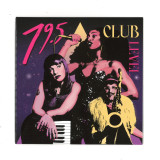
RNT welcomes Brooklyn-based band 79.5 to the family with the first single from their forthcoming eponymous LP. Soulful and psychedelic, the haunting melodies of Club Level float above a steady strutting rhythm section, punctuated by moaning baritone saxophone and drenched in washy reverb.
NYC mainstay Eli Escobar crafts a masterful remix that leans into 80s nostalgia, with a soundscape and arrangement nothing short of perfection.
Tape
By its very nature, intuition is something of which we easily lose sight. Music however, as both bridge and secret technology, connects the natural, artificial, and the earned. It can act as both a reminder of cultures and people gone, while materialising and alchemising from thin air elements not to be found on any periodic tables, and visions no human can see.
»Pin down the dust« is the first meeting of Nighte - Christina Carter (Charalambides) and Mari Maurice (more eaze) - and it feels both automatic and natural. The collaboration stems from a spontaneous decision by the duo to start playing together weekly. “That's how this music was made,” explains Carter, “with gut feeling as the guiding principle. Mari understands the music I've made on such a deep level that playing with her feels so natural.”
The result of this meeting is inarguably some of the most beautiful music to ever emerge from either Carter or Maurice. The structures are spacious, generous, and gentle, with scraped violin strings and seemingly ancient moans strewn sparingly like falling leaves on a picnic blanket. Having begun life as freeform interplays between the duo recorded live at Maurice’s house, overdubs were later added and the material mixed by Maurice alone into finalised pieces.
Maurice’s varied instrumentation litters the background with distant and oneiric miscellanies, from groaned saxophone phrases and heavenly organ drones to glissandi guitars. Carter’s voice sits in the centre, embodying and channelling (mostly) wordless human ecstasy - and at times unease - amidst the allotment of blossoming sounds. Maurice & Carter’s clairvoyant connection notwithstanding, music always offers a portal back to our buried intuitions. “Pin Down The Dust” is both a tribute and a guide to this spontaneity and instinct, putting aside thought in favour of feeling.
The Sol Power All-Stars are back once more on the Rocksteady Disco label with some superb new covers of much-loved British funk band Cymande. Each one brings a fresh perspective while paying heed of the Afro-roots of the originals. 'Anthracite' (feat Denise Henderson) opens up and is designed for moaner dance floors with cosmic synth work and big, bouncing drums. There is a deeper and more steamy sense of rhythm to the tropical sounds of 'Getting It Back' while the Parkway dub of 'Anthracite' sounds like early house music. Two versions of 'Genevieve' offer shuffling rhythms and big horn stabs and stomping, ass-wiggling Afro-jazz.
- A1: Paul Kalkbrenner - Feed Your Head
- A2: Tori Amos - Professional Widow (Armand Van Helden's Star Trunk Mix)
- B1: The Knife - Heartbeats (Rex The Dog Remix)
- B2: Trentemøller - Moan (Trentemøller Remix)
- C1: Yeah Yeah Yeahs - Heads Will Roll (A-Trak Remix)
- C2: Goose - Synrise
- D1: Zombie Nation - Kernkraft 400 (Dj Gius Remix)
- D2: Bomfunk Mc's – Freestyler
Treviso, Italy-based two piece Kill Your Boyfriend will release their fourth album 'Voodoo' on October 14th via Sister 9 Recordings (Europe), Little Cloud Records (North America) and Shyrec (Itay). A frantic and hypnothising bacchanalia of Psych & Industrial tinged soundwaves, the new album is a collection of reverb laden necromantic charms, summoning the souls and bones of the greats in the Rock & Roll pantheon of the 1950s. The duo delivers such glittery dark enchantment via 7 hoodoo hymns, travelling with a crumbling, ghostly and magically whizzing Rocket 88, in the company of Marie Laveau and madame Lalaurie. It's a relentless whirl of Voodoo-Psych, Industrial-Billy, Electro-GrisGris, which you can dance to. The new LP follows 'Killadelica', where Kill Your Boyfriend had refined their debut signature sound, bridging the gap between the semi-obscure but hauntingly fascinating tradition of Veneto's Post-Punk (Death In Venice, Evabraun, Pyramids, etc.) and contemporary Psych-Nouveau. With 'Voodoo', Matteo Scarpa and Antonio Angeli, explore new genres and expand the sonic borders, without losing their original intent. They replace the synth bass with a bass-guitar, adding more fluidity and weight to a renewed and punchier rhythmic section. Electronic and acoustic percussion are fuller and heavier, and the band's new stomp-machine is a hyper-convulsive version of the saturated Rock & Roll and R&B drumming, from the cheap garage studios of 1950s indie labels. Sida A is the most Rock & Roll of the two, and it is inspired by Michael Ventura's essay "Hear that Long Snake Moan", which brought forward the idea that "the Voodoo rite of possession by the god became the standard of American performance in Rock’n’Roll" where the performers "let themselves be possessed not by any god they could name but by the spirit they felt in the music”. Each song invokes one or a set of the lost souls of the Rock & Roll era, with 'The Day The Music Died' referring to the infamous 3rd of February 1959. Side B descends deeper into the magic swamps of Creole magic, with music taking on a much more liturgical function, conjuring shamanic possessions via extra layers of tribal percussion. The band says of side B: "we see it as a one long ritualistic descent into a psychedelic underworld made of echoing voices, claustrophobic spaces populated by lost souls, enchanters and witchdoctors."
TRACKLIST 1. The King 2. The Man In Black 3. Mr Mojo 4. Buster 5. The Day The Music Died 6. Papa Legba 7. Vodoo
U.S. pressed 7" flexi album sampler + foldout poster + full album (10 tracks) download code....
"As friends deep into the forest roamed,
they heard a low and wretched moan.
A pack of starkloons, savage and wild,
whooped and danced and drummed beguiled.
Til they faced each other, in dead of night:
a drum battle! To claim the right
Of soul and body to wander free,
beyond the clearing and the lands of tree."
On July 1st Ploy's ascendance continues with 'Unit 18' – a new EP dedicated to his record label and club night Deaf Test's spiritual home – Venue MOT Unit 18 in Bermondsey, South London. With an already loyal following and fabled atmosphere, the parties inform Ploy's productions and vice versa. "These are three rave tracks, all influenced by sound system culture, with my take on different styles, made for various times of the early hours in our sweaty venue", he comments. Maintaining the floor-focused approach of his previous, acclaimed 'Rayhana' EP, here Ploy brings more organized chaos. Sound waves blast away cobwebs with gale-force power, and jolt you awake, like an intravenous shot from the mains. These forthright, no-nonsense workouts appear simple, but are incredibly well-made, revealing discreetly clever touches likely to provoke 'how did he do that?’ scrutiny from other producers. With ten-ton-kick-drum pressure, snares like booted dustbins and an intense build of energy, on 'Stinky' a soundclash turns into a back alley brawl... with lazers. Influenced by drill bass lines, UK bass music and soundsystem culture, the 'stink and perspiration’ lyric will be surely be apt, especially with a July release date. Imagine the scene: whilst a deranged, malfunctioning robot MC yaps and undulates, vampires chase their victim through a packed rave, before feasting on flesh. Ravey and riotous, with horror flick tropes and a touch of electro, the 138bpm wallop of 'Ninety One' is an ode to his year of birth, when magpie like, sample heavy tracks made for innocent, non-overthought, but compelling anthems. Grimey like the dance after which it's named, title track ‘Unit 18’ is a 155bpm half-time stomper, with nods to bounce, 00s hip hop, UK drill and dubstep. Combining flying congas, wookie moans and a classic DMZ stye flute line, this low slung, personality filled throbber will stand out and turn heads.
American rock band King’s X combines progressive metal, funk and soul with vocal arrangements influenced by gospel, blues and British Invasion rock groups. Recurring themes are their struggles with religion and self-acceptance. During their major label career with Megaforce Records, King’s X secured opening slots for bands like Cheap Trick, Iron Maiden, AC/DC, Scorpions, Pearl Jam and Mötley Crüe.
In 1990 they released their third studio album Faith Hope Love, which charted #85 on the Billboard Top 200 Album Chart. The featured single “It’s Love” peaked on the Billboard Singles Chart at #6. On the tracks “Mr. Wilson” and “Faith Hope Love” you’ll hear the Galactic Cowboys who provided backing vocals.
Tape
Edições CN label founder Lieven Martens (Dolphins Into The Future) joins the Dauw label with his new album Short stories - pleasant and/or rather sad. On Short stories, Martens continues his quest for unique sound collages based on recorded original work, field recordings and samples. He offers 3 pieces depicting their own narrative. But what's the narrative? Martens leaves his listener with only music and a few linguistic traces as guidelines.
(1) Romantic collection
I. Under the 4pm sun (smoke and deep green) II. Two white-tailed tropicbirds III. Waves breaking on black lava rocks IV. The distant lights of fishing boats at night
(2) Sonorities
20 memories of maximum 20 seconds – and an intermezzo.
(3) Madrigal: a Conversation in the Dark
In front of the house across my parents’ house. There are two statues. They’re bought in the local garden shop, on a budget. In their driveway strewn with gravel, they slyly talk at night.
Lieven Martens (Lieven Martens Moana, formerly Dolphins Into The Future) is a composer and observer. He makes a conceptual form of music – programme music - that travels beyond the pure description. His works are like narrative stills; encounters with objects and thoughts.
As a recording artist, the main focus lies on the music album, and the live concert. But other forms come into play too, like an operetta, music for carillon, music for a commercial, a few movie soundtracks, installation music, et al.
Since he never submitted his work for an art prize, he didn’t won any. But a few years back he received a grant from the Flemish Department of Culture.
Next to his music he writes to make an extra euro. He also writes a few emails every week too. In general, you know.
Martens runs Edições CN, a private press that is praised for its catalogue of original works by a list of internationally acclaimed artists. He also hosts an irregular radio show on We Are Various radio in Antwerp (previous programs for Lyl Radio, and Radio Centraal).
- A1: Walk On Back To You - Fred Hughes
- A2: Stop Shoving Me Around - The Delicates
- A3: Stranger At My Door - Fuller Bros
- A4: I Can't Get Over Losing Your Love - The Incredibles
- A5: This Thing Called Love - Johnny Wyatt
- A6: I'm Moanin' - Rose Brooks
- A7: The Hurt Still Lingers On - Mickie Champion
- B1: Silent Treatment - Arin Demain
- B2: He Gave Me Love - The Delicates
- B3: A Losing Battle - Sims Twins
- B4: Together Forever - Viola Wills
- B5: You Don't Have To Have It - King Floyd
- B6: This Feelin' I Have - Jimmy Gresham
- B7: Sneakin' Up On You - Lil & Rene
- B8: The Worst Thing A Man Can Do - Claude Huey
Soul Music in Los Angeles was nearing its peak in 1966. The pre-eminent company was of course the giant Capitol Records and the uptempo songs that they released at the time still retain great power and attraction for many dancers today. But there were several small, private concerns making soul music, looking for that one big hit, and singers who were trying to find the break that would take their careers onto a new and higher plane. This album nods towards Capitol but concentrates on the varying styles of soul that the smaller, more agile labels released at the time. Many of these have been overlooked for far too long now, but here is the perfect opportunity to find out just how strong and varied the West Coast soul scene really was in the middle of the 1960s.
After releasing their 'Kerrang Top 50 Album of 2020' & seething debut
album 'Paradise', Scotland's Rock'n'Roll 3-piece Cold Years were about to
reap the fruits of their labour touring the world spreading their 'fist in the
air' punk rock anthems when the world came to a holt
While for many this kind of obstacle would have stopped them in their tracks but
not Cold Years, the time for pissing & moaning is done.
With singer/guitarist Ross Gordon relocating to Glasgow, never making any secret
of his frustrations with feeling trapped in the suffocating environs of his native
Aberdeen, inspiration for album 2 'Goodbye To Misery' was born.
Written remotely throughout the first 3 months of 2021, Cold Years found a fresh
approach to create using daily Zoom sessions to write emailing ideas back and to
throughout the second lockdown. With a change of scenery and this fresh
approach to writing, 'Goodbye To Misery' is 12 tracks born out of the want for a
more positive future rather than the self-destruction & misery of 2020's 'Paradise'.
Recorded in May 2021 the band yet again travelled south to The Ranch Studios in
Southampton to work with long-time collaborator Neil Kennedy (Creeper, Boston
Manor, Milk Teeth).
"This record is us saying you can break away from those things that are bringing
you down. It's about standing up for yourself and not letting anybody tell you what
you should or shouldn't be doing. It's a defiant statement."
Press ads in Visions, Classic Rock, Piranha (POS), Start (POS), Slam, Rocks,
Eclisped Covermount tracks in Classic Rock, Visions, Rocks Press features in
Visions, Classic Rock, Piranha, Start, Slam, Rocks, Eclipsed Radio: #6 German
Rock Charts for Home (single)
Isabelle Duthoit – clarinet, voice
Franz Hautzinger – quarter-tone trumpet
Hamid Drake – percussion, frame drum, voice
Michael Zerang – percussion, frame drum
Two duos firmly anchored in improvised music - Duthoit/Hautzinger and Drake/Zerang - explore what ritual music can mean in the present time. They moan and groan, sigh and sing in the jungle of their soul. Melodies between tradition and contemporary music in all their extremes ventures forward into a poetry full of sound noises. Recorded live at Artacts, Alte Gerberei, St.Johann, March 7th2020.
This sprawling collection by Belgian loner blues savant Bram Devens aka Ignatz encapsulates the mystery, murk, and melancholy of his uncanny craft at its most windswept and wayward. Originally issued via Goaty Tapes in September of 2015, this long-anticipated vinyl edition expands the saga with an additional 17 minutes of archival material. Deven’s palette remains constant throughout: feathery fingerpicking, modal loops, and intuitive six-string navigations interspersed with candlelit passages of mournful voice, alternately whispered, mumbled, moaned. His is an aesthetic of embers and resin, cracked masks and distant lights, of what’s left behind and what lingers on.
I Live In A Utopia was recorded following a relocation from his longtime base of Brussels to Landen, with a second child due soon: “I remember the weather being nice and having just bought a hammock.” The change of scenery seeded a promise of slower days and lighter times – no utopia perhaps, but a sense of faint hope glowing on the horizon. The songs slide between loose acoustic spirituals and smoky basement ragas, late afternoon haze and midnight moons, a seesawing restlessness reflected in the titles (“I Have Found True Love,” “Time Does Not Bring Relief,” “We Used To Smoke Inside”). The fidelity is grainy but vivid, refracted by tape warp and Flemish dust.
As always, Deven’s playing is deceptively elegant, raw but precise, attuned to resonance, radiance, and negative space. Echoes of Fahey and Jandek reverberate in certain moments but ultimately the world Ignatz maps is one incomparably his own. A landscape both doomed and dawning, weary but undefeated, tracing outlines of lengthening shadows. “I walk in the sunshine,” he sings, uneasily. This is music of a rare inner wilderness, poised at cryptic crossroads, devoted to its ghosts. I Live In A Utopia stands as an apex work by one of the underground’s most veiled and visionary talents.
Double album in gatefold sleeve with artwork by Zully Adler. In co-production with House Rules & released in an edition of 500.
Isabelle Duthoit - clarinet, voice Franz Hautzinger - quarter-tone trumpet Hamid Drake - percussion, frame drum, voice Michael Zerang - percussion, frame drum Two duos firmly anchored in improvised music - Duthoit/Hautzinger and Drake/Zerang - explore what ritual music can mean in the present time. They moan and groan, sigh and sing in the jungle of their soul. Melodies between tradition and contemporary music in all their extremes ventures forward into a poetry full of sound noises. CREDITS: Recording: live at Artacts - Alte Gerberei, St. Johan, March 7th 2020, by Charles Wienand & Markus Massinger Production: Konstantin Drobil, Hans Oberlechner, Franz Hautzinger Mix: Martin Siewert & Franz Hautzinger Mastering: Martin Siewert Artwork: Lasse Marhaug Photos: Cathy Mary-Houdin
"Just As I Am" – wer spät seine Karriere startet, kann sich bereits ein ausdrucksvolles Persönlichkeitsprofil erarbeitet haben, auch wenn es so wie bei Bill Withers zunächst nicht von Musik geprägt worden ist. Withers diente viele Jahre in der US-Marine, jobbte als Milchmann und installierte bei einem amerikanischen Flugzeugbauer Toiletten in Jets, während seine selbst gefertigten und fleißig verschickten Demo-Tonbänder bei den Plattenfirmen im Abfluss landeten. 1971 folgte der steile Aufstieg, als der erfolgreiche Producer Booker T. Jones ihn ins Schlepptau nahm und ihm Top-Musiker wie den Gitarristen Stephen Stills, den Drummer Al Jackson und Donald 'Duck' Dunn als Bassmann ins Studio stellte.
In seinem Debüt-Album zeigt Withers seine universellen und ausgereiften Fähigkeiten als Sänger, Komponist und Interpret, die er in späteren Aufnahmen kaum mehr übertraf. "Harlem", ein ungeschönter Milieu-Funk über die die New Yorker Slums, "Grandma’s Hands", der obligatorische Rückblick in die Kindheit und die gemütslastige Ballade "Ain’t No Sunshine" mit ihrem gebetsmühlenartigen im Off-Beat kreisenden »I know, I know …« sind freigelegte musikalische Jahresringe eines erfahrenen Mittdreißigers, der endlich zu Wort kommt. Zu dieser Schallplatte des großen Songwriters mit dem kleinen Repertoire gibt es keine Alternative.
- 01: Through The Timehole
- 02: Distant Reflections
- 03: Tribal Call
- 04: The Turning Point
- 05: Mutated Perception
- 06: Untrodden Pesonance
- 07: Elemental Waveshore
- 08: Glittering Embalming
- 09: Squirlich Stroll
- 10: Return Of The Mystic Channeler
- 11: Chosen Ones
- 12: The Field Of Draflinis
- 13: Forgotten Valley
- 14: Cavern Of Morphing Stones
- 15: Hovering Over The Magnetic Ground
- 16: New Dawn - Return
Following the release of Collision and Coalescence, Slovakian label mappa commits to the duo Grykë Pyje, releasing their third LP "Squirlich Stroll". Maintaining the fabled tone of their debut on the label, Jani Hirvonen (Uton) and Johannes Schebler (Baldruin) dig deeper into the sonic vein of myth and fabric of yonder. The music in "Squirlich Stroll" unravels as a yarn brought back from a wild voyage.
On uncharted areas of medieval maps where potential dangers were thought to exist, the inscription "Here be dragons" was used to warn as much as to tempt explorers willing to cross limits. Myth awaited them as a blank page of dormant territory, yet also to be proved unlike and reinvented. In such pliable borders, wonder had the favorable conditions to blend experience and imagination, crafting creatures with an eye instead of a bellybutton, arms instead of ears and ears instead of fingers, hypnotizing spirals where a mouth should have been. These chimeras, though fictitious, allowed explorers to express their delusions along with their fears. "Here be dreams", we hear nightmares. Here be mushrooms the size of pyramids that sing lullabies for mountains. Here be talking roads that lead to volcanoes throats and spit you back to flight. Here be art of bending trees into braided bridges like in Meghalaya, and the time gap between seed and living ruins.
Let that be the compass, the astrolabe. Yet, the music in Squirlich Stroll comes with these journeys already embraced, unraveling as a story told by wanderers visiting town, nourishing fantasy. The sonic language and diction employed here are crystal clear. Sounds are sharp and pure. Growls, howls, shrieks, tingles, rattles, moans, excretions and even hymns sung by landscape and creatures alike do not run over each other. There is no chaos, but ambience, cohabitation. The duo masters dramaturgy, providing every voice with focused turns and character, guarding their parley with caution and care, convoking them mainly through soothing synth melodies that enable an analgesic, sedative mood. Clusters of sounds gathered are articulated through the album with the inherent luminosity and required stability to accomplish what peaks in, as the title of the final track reads, a new dawn.
- A1: Stay Out Of My World
- A2: The Zeke
- A3: Just Don't Complain
- A4: Moanin (Stripped Down Instro)
- A5: Chicken Papa
- A6: Quit Talking 'Bout Him
- A7: Pain & Sorrow
- B1: Moanin
- B2: Who Do You Love
- B3: Hey Joe
- B4: Just Don't Complain (Gritty Early Mix)
- B5: Pain & Sorrow (Instrumental)
- B6: Stay Out Of My World (No Frills Mix)
Forever on My Mind, the new album of previously unreleased Son House recordings from Easy Eye Sound, the independent label operated by Dan Auerbach of The Black Keys, is the premiere release from Dick Waterman’s personal cache of ’60s recordings by some of the titans of Delta blues. His collection of quarter-inch tapes — which are being restored to remarkable clarity by Easy Eye Sound — have gone unreleased until now. The collection is due out March 18, 2022.