Rare soul/funk album out of Oakland, CA.
Featuring Marlon Hunter along with the Group The Standards Of Living.
Six songs full of jazz/funk groove and Modern Soul atmospheres.
First time released in 1980 as a private press this rare pearl represents a must have for diggers, djs and collectors
Search:mod it
Premier League Pressings returns with another top of the table seven inch 45 beauty.
It's a game of two halves!
SIDE A
THE CHOPPER - CHOP UP THE PIECES
Picking up an above average classic, the Chopper takes the ball into leftfield and sends it spinning into the stratosphere with some deft cut and paste action.
Dancefloor disco funk with an edge. Back of the net!
SIDE B
LADY SMILEY - QUEEN OF FREAK DANCE
A forgotten disco rap classic of yesteryear is is given a new formation, completely re-arranged and beefed up to bring the funky drums to the fore and the make the dope verses sound even better.
Disco rap for modern dance floors. A premiership title contender!
Maybe some older club music fans know Fred, Deep House maestro from Quebec, Canada.
All is well is his new moniker. We have been checking his release on Trumpet Community,Internatjonal. The music is updated modern Deep House but not too modern. It’s what we like.
“Tortue Jaune” is timeless atmospheric Deep House. There are three versions.
Sarasota reminds us I: Cube stuff bit.
Both tracks could be in your all-time playlist.
Hope you like.
INIT is Benedikt Frey & Nadia D`Alo. We are delighted to present their long delayed vinyl and digital album, NRGY.
Born out of various art performances and installations, INIT states a logical outcome of Berlin based duo Nadia D`Alo and Benedikt Frey. With heavy use of analogue synthesis and drum-machines, INIT rethinks its genre's sonic approach, unfolding a unique and organic, yet alienating sound, somewhere in the mysterious midst of Acid, Techno, Ambient and Kraut-Rock.
This is INIT's third album, following two releases on Hivern Discs, and performances at clubs such as Berghain, Robert Johnson and Pudel Club.
INIT say -
Module, NRGY, and Time were reverse extracted out of our live set and re-recorded and re-arranged after we realised how well they work in clubs. It is the first time we worked this way as we tend not to play our compositions live, like we produced them. Mostly we just extract loops out of our production to mess around with in a loose live project.
Snowglobe, Holes In My CV and N.O.D. were more built up from a studio jam plus a bulletproof-ish arrangement afterwards.
Tried and tested on dance floors this is a surefire hit album on the dancefloor, and at home. NRGY!
Following a 15-year hiatus from publishing, Neapolitan techno's founding imprint - Conform Records - made an emphatic resurgence in 2020 to resume its intrinsic role in the progression of electronic music, ensuring that the genres' virtuous roots and formative values remained instilled within its future. Having re-released its entire back-catalogue in digital format from its original DAT distribution in the 90s, label head Gaetano Parisio now shifts his focus to the modern audience, with contemporary records that serve to marry these two golden eras of dance music.
Showcasing his immense theoretical knowledge and authenticity, earned through decades of experience in the industry, Parisio's latest project - his 6 part "Fragments 2930" EP - honours the meditative euphoria of Conform's early releases. Militant and driving in their effect, each cut presents its own melodious theme; running parallel to the strong percussive undercurrent of high impact techno that can be heard across the extended player. "Fragments 2930" was initially conceived as a single sound block and later fragmented into these 6 single units. As represented in its title, "Fragments 2930" also includes the catalogue numbers 29 and 30, with the double vinyl characteristic of a 2-release miniseries.
Available to purchase on vinyl from May 27th and across digital platforms on June 10th, Gaetano's latest release is further proof that the label's discography now only grows to hold more future classics.
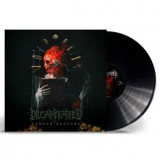
Across eight studio albums, DECAPITATED grew from the adolescent dream of teenagers from a small Central European town to one of the leaders of the metal genre. Each successive album further expands the band’s sound with genre-bending authenticity and integrity. As Metal Injection rightfully observed, “any self-respecting death metalhead knows the name well.”
DECAPITATED’s music is a weapon forged by four young men from a historic medieval-fortified town in Poland, which catapulted them to the top of a worldwide subculture. Like a rose in the devil’s garden, the DECAPITATED story builds triumph from tragedy. The gleeful grotesquery of extreme metal imagery and rifftastic bludgeoning beckons listeners to uncover broader truths.Upon the release of 2017’s Anticult, Metal Hammer declared DECAPITATED “a serious successor to the likes of Pantera and Lamb Of God – a band who can draw new legions into the metal world as its new champions.” Their diverse follow-up, 2022’s Cancer Culture, delivers on that promise.
Instantly recognizable devastation and deceptively sinister hooks abound. Freshly minted DECAPITATED anthems like “Last Supper,” “Hello Death,” “Just Cigarette,” “No Cure,” “Iconoclast,” and “Cancer Culture” shimmer with sonically sharp production and unrelenting bombast. There’s also a newly increased emphasis on melody, even venturing into darkly romantic territory. Wacław "Vogg" Kiełtyka (guitar), Rafał "Rasta" Piotrowski (vocals), Paweł Pasek (bass), and James Stewart (drums) are at the top of their game, delivering the goods at peak performance. Jinjer vocalist Tatiana Shmayluk and Machine Head frontman Robb Flynn make guest appearances.
Set on the descending plains of a mountain range amid a dense forest, Krosno boasts a 14th-century Gothic church, a Subcarpathian museum, and stunning artisan glassware. In this Polish town, teenage music student Wacław "Vogg" Kiełtyka discovered records from bands like Morbid Angel, Cannibal Corpse, Metallica, and Machine Head. The guitarist and his younger brother, drummer Witold “Vitek” Kiełtyka, cofounded DECAPITATED in 1996, inspired by a wide range of technical death, blackened thrash, and local heroes, like KAT and the world-renowned Vader. Death and black metal reigned supreme in the Polish scene of the 1990s, where Behemoth originated as well. In fact, a Vader song called “Decapitated Saints” inspired the band’s moniker.
The organic musical chemistry between the Kiełtykas was akin to the brotherly connectivity and vibe driving Pantera, Gojira, and the classic era of Sepultura. In 2006, Kerrang! praised the first three DECAPITATED albums - Winds of Creation (2000), Nihility (2002), and The Negation (2004) – as “superbly conceived and executed eruptions of technical brilliance and razor-sharp songwriting that turned these youthful Poles into one of the genre’s most widely respected bands.” That year’s Organic Hallucinosis further perfected Vogg’s penchant for blending extremity with catchy hooks.
The rule-breaking ferocity and invention of the first four albums reinvigorated death metal, as DECAPITATED inspired a new generation of bands who followed suit. Sadly, this era came to a shocking end in late 2007. While touring Russia, the band’s bus collided with a large truck near the border with Belarus. Both Vitak and then-singer Adrian “Covan” Kowanek sustained severe head injuries. Tragically, Vitak passed away in a Russian hospital a few days later. He was just 23.Vogg summoned the courage to continue, in honor of his brother and what they created, and returned with a new incarnation of DECAPITATED and the fiercely adventurous comeback album, Carnival is Forever (2011) featuring new vocalist Rafał "Rasta" Piotrowski. Blood Mantra (2014) introduced bassist, Paweł Pasek. Blabbermouth declared it “perhaps the most poised and gutsy” DECAPITATED album, adding “its courageous bends make it a turbulent but pleasurable ride.”
Cancer Culture sounds brilliant, modern, and tasty. “There is no place for any fake, plastic, bullshit drum machine or anything like that,” Vogg insists. “It’s all organic, pure, and clear, showing the true face of the band. Vogg and company entrusted the Cancer Culture mix to David Castillo at Sweden’s Fascination Street Studios / Studio Gröndahl (Sepultura, Carcass, Opeth, Katatonia), and legendary American producer Ted Jensen (Metallica, Slipknot, Pantera, Machine Head, Korn).
The devoted supporters who traveled to see DECAPITATED on international tours with the likes of Lamb Of God, Meshuggah, Soulfly, Fear Factory, and Suffocation over the years will recognize the ever-present pummeling backbone. Longtime fans and newcomers alike will connect to the variety of atmospheric depth throughout Cancer Culture’s ten boundlessly energetic and creative tracks.
“If you told me 25 years ago, in my neighborhood in the South of Poland, that I would be in Machine Head, sharing riffs with Robb Flynn,” Vogg marvels. “It’s simply incredible. It means that everything is possible in your life. That gives me the faith to believe that I can achieve even more in my career. The dreams we have when we are kids, things we can barely imagine, can happen.” Flynn contributes a hauntingly beautiful vocal to the Cancer Culture track “Iconoclast.” “Clean vocal singing is a really new thing in DECAPITATED,” Vogg notes. “It’s really unique and amazing.”
Driven by Vogg’s passion and integrity, the dual emphasis on creative invention and technical prowess maintains DECAPITATED’s stature as genre-leaders in 2022 and beyond. The band’s supporters continually demonstrate confidence and absolute certainty DECAPITATED will deliver.
Across eight studio albums, DECAPITATED grew from the adolescent dream of teenagers from a small Central European town to one of the leaders of the metal genre. Each successive album further expands the band’s sound with genre-bending authenticity and integrity. As Metal Injection rightfully observed, “any self-respecting death metalhead knows the name well.”
DECAPITATED’s music is a weapon forged by four young men from a historic medieval-fortified town in Poland, which catapulted them to the top of a worldwide subculture. Like a rose in the devil’s garden, the DECAPITATED story builds triumph from tragedy. The gleeful grotesquery of extreme metal imagery and rifftastic bludgeoning beckons listeners to uncover broader truths.Upon the release of 2017’s Anticult, Metal Hammer declared DECAPITATED “a serious successor to the likes of Pantera and Lamb Of God – a band who can draw new legions into the metal world as its new champions.” Their diverse follow-up, 2022’s Cancer Culture, delivers on that promise.
Instantly recognizable devastation and deceptively sinister hooks abound. Freshly minted DECAPITATED anthems like “Last Supper,” “Hello Death,” “Just Cigarette,” “No Cure,” “Iconoclast,” and “Cancer Culture” shimmer with sonically sharp production and unrelenting bombast. There’s also a newly increased emphasis on melody, even venturing into darkly romantic territory. Wacław "Vogg" Kiełtyka (guitar), Rafał "Rasta" Piotrowski (vocals), Paweł Pasek (bass), and James Stewart (drums) are at the top of their game, delivering the goods at peak performance. Jinjer vocalist Tatiana Shmayluk and Machine Head frontman Robb Flynn make guest appearances.
Set on the descending plains of a mountain range amid a dense forest, Krosno boasts a 14th-century Gothic church, a Subcarpathian museum, and stunning artisan glassware. In this Polish town, teenage music student Wacław "Vogg" Kiełtyka discovered records from bands like Morbid Angel, Cannibal Corpse, Metallica, and Machine Head. The guitarist and his younger brother, drummer Witold “Vitek” Kiełtyka, cofounded DECAPITATED in 1996, inspired by a wide range of technical death, blackened thrash, and local heroes, like KAT and the world-renowned Vader. Death and black metal reigned supreme in the Polish scene of the 1990s, where Behemoth originated as well. In fact, a Vader song called “Decapitated Saints” inspired the band’s moniker.
The organic musical chemistry between the Kiełtykas was akin to the brotherly connectivity and vibe driving Pantera, Gojira, and the classic era of Sepultura. In 2006, Kerrang! praised the first three DECAPITATED albums - Winds of Creation (2000), Nihility (2002), and The Negation (2004) – as “superbly conceived and executed eruptions of technical brilliance and razor-sharp songwriting that turned these youthful Poles into one of the genre’s most widely respected bands.” That year’s Organic Hallucinosis further perfected Vogg’s penchant for blending extremity with catchy hooks.
The rule-breaking ferocity and invention of the first four albums reinvigorated death metal, as DECAPITATED inspired a new generation of bands who followed suit. Sadly, this era came to a shocking end in late 2007. While touring Russia, the band’s bus collided with a large truck near the border with Belarus. Both Vitak and then-singer Adrian “Covan” Kowanek sustained severe head injuries. Tragically, Vitak passed away in a Russian hospital a few days later. He was just 23.Vogg summoned the courage to continue, in honor of his brother and what they created, and returned with a new incarnation of DECAPITATED and the fiercely adventurous comeback album, Carnival is Forever (2011) featuring new vocalist Rafał "Rasta" Piotrowski. Blood Mantra (2014) introduced bassist, Paweł Pasek. Blabbermouth declared it “perhaps the most poised and gutsy” DECAPITATED album, adding “its courageous bends make it a turbulent but pleasurable ride.”
Cancer Culture sounds brilliant, modern, and tasty. “There is no place for any fake, plastic, bullshit drum machine or anything like that,” Vogg insists. “It’s all organic, pure, and clear, showing the true face of the band. Vogg and company entrusted the Cancer Culture mix to David Castillo at Sweden’s Fascination Street Studios / Studio Gröndahl (Sepultura, Carcass, Opeth, Katatonia), and legendary American producer Ted Jensen (Metallica, Slipknot, Pantera, Machine Head, Korn).
The devoted supporters who traveled to see DECAPITATED on international tours with the likes of Lamb Of God, Meshuggah, Soulfly, Fear Factory, and Suffocation over the years will recognize the ever-present pummeling backbone. Longtime fans and newcomers alike will connect to the variety of atmospheric depth throughout Cancer Culture’s ten boundlessly energetic and creative tracks.
“If you told me 25 years ago, in my neighborhood in the South of Poland, that I would be in Machine Head, sharing riffs with Robb Flynn,” Vogg marvels. “It’s simply incredible. It means that everything is possible in your life. That gives me the faith to believe that I can achieve even more in my career. The dreams we have when we are kids, things we can barely imagine, can happen.” Flynn contributes a hauntingly beautiful vocal to the Cancer Culture track “Iconoclast.” “Clean vocal singing is a really new thing in DECAPITATED,” Vogg notes. “It’s really unique and amazing.”
Driven by Vogg’s passion and integrity, the dual emphasis on creative invention and technical prowess maintains DECAPITATED’s stature as genre-leaders in 2022 and beyond. The band’s supporters continually demonstrate confidence and absolute certainty DECAPITATED will deliver.
- A1: Opening: The Matrix Resurrections
- A2: Two & The Same
- A3: Meeting Trinity
- A4: It's In My Mind
- A5: I Fly Or I Fall
- B1: Set & Setting
- B2: Into The Train
- B3: Exit The Pod
- B4: The Dojo
- B5: Enter Io
- B6: Inside Io
- C1: Escape
- C2: Broadcast Depth
- C3: Exiles
- C4: Factory Fight
- C5: Bullet Time
- C6: Recruiting
- D1: Infiltration
- D2: I Like Tests
- D3: I Can't Be Her
- D4: Simulatte Brawl
- D5: Swarm
- D6: Sky Scrape
- D7: My Dream Ended Here
Tom Tykwer discussed the composers’ work on The Matrix Resurrections. “There’s a powerful and distinct musical legacy here. In my opinion, The Matrix Trilogy is one of the great scores of all time. And what’s particularly fantastic about it is that it was also, to my knowledge, one of the first film scores that so implemented electronic music and connected it with progressive late-modern orchestral music. It started a movement, which we are paying tribute to with this music. And yet, this film is playful and emotional with complex development, open in every direction. Johnny and I felt our challenge for the music was to pay tribute to The Matrix lineage and also support this cinematic endeavor of expanding that legacy to explore new directions. That needs to be represented in the music and that is what we are trying to investigate musically.”
Johnny Klimek elaborated, “We spent several months working on material for The Matrix Resurrections, building the main themes, crafting alternative arrangements and electronic variants. We had a lot of fun mixing electronics with classical orchestra. The technology has come so far since I started scoring film.”
The Matrix Resurrections - Original Motion Picture Soundtrack Includes all 24 tracks composed for the film by Johnny Klimek and Tom Tykwer, mastered for vinyl and pressed on 2x 180 Gram Black vinyl, with original artwork by Mondo's creative director Mo Shafeek
Vector Music by Suren Seneviratne is a true homage to the Yamaha TG33, a synth that he was hoping to keep forever, or at least a very long time until Covid-19 struck.
During the early months of 2020, Suren, like many other artists, went without work and was forced to sell surplus belongings to help subsidise food, rent and other necessities. Some sneakers and clothes went first but he avoided considering his music gear for as long as possible. As the pandemic continued to cause havoc throughout the year, selling gear was inevitable. The rare Yamaha TG-33 programmable synthesizer module was next.
By bittersweet chance, this was the perfect opportunity to make use of this unsung synthesizer one last time, and to make it count. The synth sold via Twitter and Suren suddenly had a deadline in which to make the most of it in the two days before it would be gone forever and so he decided to record a body of work using only the TG33, to shine a spotlight on its quirks and idiosyncrasies and give it the attention it deserved. This ultimatum proved to be really fruitful and resulted in the recordings that form the eight tracks on this album “Vector Music”; a raw and intimate portrayal of a forgotten digital instrument from the 1990s. The broader collective sentiment of loss, anxiety and seasonal depression during the thick of the pandemic mixed with feelings of uncertainty, distress and fear binded throughout the recording process and became sewn into the very fabric of the music.
The song titles are taken from various stages of sleep: the once instinctive process which, since 2020, was radically altered and experienced a new for millions of people around the globe due to the phenomena known as Pandemic Dreams.
Composed and produced by Suren Seneviratne
Mastered by Luca Sammartin
Original artwork and layout by Marco Ciceri
Pauline Oliveros' The Wanderer is available on LP for the first time since it was originally released in 1984. Cut at Golden and pressed at RTI for maximum fidelity.
An utterly essential document of early American minimalism from this Pauline Oliveros. The Wanderer is the sister record to Accordion & Voice, also available on LP from Important Records.
The Wanderer is based on a single modal scale (B C# D D# E F# G#) and rhythmic modes based on a meter consisting of ¾ and ⅜. Part I, Song, is intended to explore the unique resonant qualities of accordion reeds through long sounds. Subtle variations come about from differences in tuning and air pressure. Part II, Dance, demonstrates the sharp accenting power of the accordion bellows in a mixture of cross-rhythms characteristic of jigs, reels, batucadas, Bulgars, klezmer forms, Cajun dances, and music of other diverse cultures.
The Wanderer was composed in November, 1982 especially for the Springfield Accordion Orchestra, directed by Sam Falcetti. This recording documents The Wanderer's world premiere, as it was performed 27 January, 1983 at Marymount Manhattan Theatre. The orchestra consists of twenty accordions, two bass accordions, and five percussionists, with Pauline Oliveros as soloist, Sam Falcetti conducting.
Horse Sings From Cloud, written in 1975, is one of Oliveros' best known works. Like most of her Sonic Meditations, it can be performed vocally and/or instrumentally, solo or in collaboration. A solo version of Horse Sings From Cloud has been recorded on Accordion & Voice. An early version of the score reads, “Sustain a tone or sound until any desire to change it disappears. When there is no longer any desire to change the tone or sound, then change it.” This time, Horse Sings From Cloud is performed in ensemble. Joining Pauline Oliveros on bandoneon are Heloise Gold on Harmonium, Julia Haines on accordion, and Linda Montano on concertina. This quartet version incorporates the microtonal differences in tuning of the selected instruments, creating shimmering reed sounds somewhat similar to the shimmering of a Balinese gamelan.
Modest techno for mindful people, second edition. Luise is glad to present Arutani‘s newest album, a true evolvement of its prodecessor. Still true to the artist‘s handwriting, with a minimal and subtle character, hinting details and bold elements. However even more a unique listening experience and a sta- tement on its own.
12“ TRANSPARENT BLUE VINYL + POSTER + DOWNLOAD
Continuing its tradition of genre bending output, Veyl comes forth with one of its most innovative releases to date. 'Still III' is a collaboration between Supreme Low (Jerome Tcherneyan of Years of Denial) and New York-based MC, Sensational, who has been pushing hip hop’s boundaries for over 30 years. Tcherneyan first saw Sensational in France in 1999 while meeting in New York in 2001. The two quickly connected and kept in touch throughout the years when they finally got the chance to record material together in London in
2016.
With beats created mainly using an SP1200 (a sampler associated with hip hop golden's age and raw Techno), Fuzz/Distortion pedals and dub units like Echoes/Spring Reverb, psychedelic modulations such as Chorus/Flanger/Phaser and a modular synth, Sensational’s rhymes were totally improvised on the spot in a 3 a.m. studio session under heavy influence. The result is a powerful fusion of sound and style that shatters all expectations and delivers an audio vehicle bridging past, present and future.
While not lending itself to categorisation, 'Still III' packs Narcotic beats, llbient, Dub, Noise Rap, Bass terrorist, Freak Style, Raw poetry and more into an 8 track release which is unlike anything out right now.
Joining on the release are Tcherneyan collaborators Broken English Club, who appears on the ominous opener, 'Doomed' as well as Years of Denial co-conspirator Barkosina, who, as always, mystifies with her
vocal presence on 'The World'. Also appearing, Meanad Veyl remixing 'Everybody Ready' and Belgian pioneer hypnsokull finishes off the release in perfect fashion with a remix of 'Raw Shit'.
Los Angeles-based experimental producer Al Lover will release his new studio album ‘Cosmic Joke’ on May 27th via Fuzz Club Records.
A staple of the global psychedelic scene, Lover has spent nearly a decade fine-tuning a broken, abstracted form of electronica that pools together a tapestry of trip-hop, synthesised krautrock, dub and dark ambient. Utilising an arsenal of samples, drum machine, analogue synths and live instrumentation, Lover’s is a kaleidoscopic sound that’s J-Dilla, DJ Shadow and Lee Scratch Perry by way of Brian Eno, Kraftwerk and Kluster. Central to Lover’s music is a desire to explore the fringes of psychedelic music and the common threads that run through its far-reaching styles, drawing elements from the past and connecting them to the future. Through the years he has released a number of studio albums and beat tapes, remixed the likes of Osees and Night Beats, been resident DJ for the Levitation and Desert Daze festivals and collaborated with the likes of Goat, Anton Newcombe, Cairo Liberation Front and White Fence. Now, Lover returns with his latest studio album, ‘Cosmic Joke’ – a series of synthesised philosophical meditations on modern life, in all its tragicomic absurdity. "'Cosmic Joke' came from observing the rising, compounded absurdity in recent years and seeing structures of normalcy dissolving. It’s my attempt to view these things as part of a higher-order process, through a metaphysical lens rather than an ideological one. It’s been an exercise in holding the paradoxical relationship of comedy and tragedy, joy and pain, growth and decay, scale and decline as part of an interlocked system that, at a deep level, is essential to how we interface with the world.”
Deluxe Edition is on 180g transparent green vinyl, gatefold sleeve, printed inner-sleeve.
Los Angeles-based experimental producer Al Lover will release his new studio album ‘Cosmic Joke’ on May 27th via Fuzz Club Records.
A staple of the global psychedelic scene, Lover has spent nearly a decade fine-tuning a broken, abstracted form of electronica that pools together a tapestry of trip-hop, synthesised krautrock, dub and dark ambient. Utilising an arsenal of samples, drum machine, analogue synths and live instrumentation, Lover’s is a kaleidoscopic sound that’s J-Dilla, DJ Shadow and Lee Scratch Perry by way of Brian Eno, Kraftwerk and Kluster. Central to Lover’s music is a desire to explore the fringes of psychedelic music and the common threads that run through its far-reaching styles, drawing elements from the past and connecting them to the future. Through the years he has released a number of studio albums and beat tapes, remixed the likes of Osees and Night Beats, been resident DJ for the Levitation and Desert Daze festivals and collaborated with the likes of Goat, Anton Newcombe, Cairo Liberation Front and White Fence. Now, Lover returns with his latest studio album, ‘Cosmic Joke’ – a series of synthesised philosophical meditations on modern life, in all its tragicomic absurdity. "'Cosmic Joke' came from observing the rising, compounded absurdity in recent years and seeing structures of normalcy dissolving. It’s my attempt to view these things as part of a higher-order process, through a metaphysical lens rather than an ideological one. It’s been an exercise in holding the paradoxical relationship of comedy and tragedy, joy and pain, growth and decay, scale and decline as part of an interlocked system that, at a deep level, is essential to how we interface with the world.”
- A1: Neo & Trinity Theme (Johnny Klimek & Tom Tykwer Exomorph Remix)
- A2: Opening: The Matrix Resurrections (Alessandro Adriani Remix)
- A3: My Dream Ended Here (Marcel Dettmann Remix)
- A4: Nosce (Almost Falling Remix)
- B1: Bullet Time (Moderna Remix)
- B2: Back To The Matrix (Eclectic Youth Remix)
- C1: Welcome To The Crib (System 01 Remix)
- C2: Flowing (Thomas Fehlmann Remix)
- C3: Temet (Esther Silex & Kotelett Remix)
- D1: Choice (Psychic Health Remix)
- D2: Monumental (Gudrun Gut Remix)
The infusion of electronic music into the score ultimately expanded into the inclusion of 11 remixes on the album, and it was an amalgam of inspirations which brought that idea to fruition. Both composers have worked extensively with electronic music, including their work on the celebrated, techno-infused Run Lola Run soundtrack.
The American rock band Cracker origins from Bakersfield, California and was formed in 1990 by lead singer David Lowery and guitarist Johnny Hickman, who both came from the band Camper Van Beethoven. After signing with Virgin in 1991, they released their self-titled debut album the year after. The album included “Happy Birthday To Me” and the radio hit “Teen Angst (What The World Needs Now)”, which peaked at #1 on the US Modern Rock chart. The album went on to sell over 200.000 copies.
Cracker celebrates its 30th anniversary in 2022 and includes an insert.
The 5th anniversary of Bravers was marked by a vinyl release and the start of a distinctive label. These European artists have done a lot for the electronic scene and are gathered under the auspices of the Bravers in this debut. They have been welcome guests at their parties and have opened up boundaries to new sounds.
The A1 is the combined work of Kovyzain D and Alexander. In ‘Modularity’ they've united shades of Belgium new-beat and EBM and have added rhythmic and futuristic synths. The result - a perfect closing track for a journey through the industrial and cosmic layers of electronic music.
A2 ‘Proven Witch Psalm’ is done by British sound producer Antoni Maiovvi. The track was written upon his arrival to the US and was designed to be a relentless funk of machine abuse and futurist analog arpeggios.
B side starts with the track ‘Espace’ done by Marselle’s musician Millimetric. He decided to explore the theme of space conquest, the fears and difficulties of interstellar voyages. This is captured through the use of a futuristic mixture of sturdy bassline and electronic anxious sirens.
B2 track ‘Vardi’ by Moscow DJ and Bravers founder Anton Levdikov is a mixture of arpeggiator roaring bass and Industrial stabs. The sound is complemented by a new-beat and Italo’s sound legacy.
Here comes one you've been waiting for - the vinyl release of Vince Staples' triumphant self-titled 2021 album. As one of the leading lights of modern rap and RnB, Staples offers a subtly off-kilter take on the style without losing sight of immediacy and relatability. From 'Are You With That?' to 'Law Of Averages' you can hear an artist growing ever more confident in himself and his message, whether he's rolling with that sung-spoken swerve or dropping bars. The oddball hooks get under your skin while the lyrics clamp onto your brain with one listen - it's a true landmark release for Staples which his career will be measured against from here on out.
It started, as it so often does, with two old friends hanging out.
John Shima and C P Smith were joking around one evening in their home city of Sheffield. At some point, Smith challenged Shima that, if the latter could produce a record using nothing more than a small modular synth setup, then Smith would release it on his Central Processing Unit label. As heads will know, while Shima has drops on imprints like FireScope and Subwax Excursions to his name, he had never previously released anything via CPU. Shima accepted, and thus we now have his CPU debut, the four-track EP CPU Modular 1.
The specific setup that Shima worked with for these tracks was Smith's Doepfer A-100P6 Suitcase, a small but mighty combination of modules and programmers. It's no surprise that Shima was able to familiarise himself with the equipment in double-quick time - after all, Shima was an early adopter of the Eurorack modular format back in the day. What emerged from the CPU Modular 1 sessions was a quartet of devastatingly effective DJ tools, mid-set rollers which will get the dance moving something crazy.
Opener '003' kicks the EP off as it means to go on. There's something at once stiff-necked and buoyant about the rhythms here, all thwacking Roland tones and snares which crack like someone whipping a length of sheet metal. While the beat barrels unyieldingly onwards, the programming in the tuned modulars is more exploratory and even trippy, full of delay-laced bleeps and flighty rhythmic motifs. It comes together for a cracking mix in the vein of artists like Jerome Hill and London Modular Alliance. Second A-side cut '010' is no different, the street-beat groove and grumbling low-ends underpinning all manner of modular wizardry.
CPU Modular 1 is really timeless stuff, a set of percussion-heavy, future-focussed beats which recalls Smith's own CPU drop 'DJ Tools Vol.1 - 808 Tracks'. '011' kicks of CPU Modular 1's second-half with a dose of Drexciyan dystopia, playing an atonal loop off of an insistent bass wiggle and neurotic hi-hats. Even when Shima tightens or slackens the modulars here, '011' remains unyielding, a dose of pure 'Wip3out' energy that you could happily groove to all day long. The EP closes out with '005', a gnarled, gurgling production which still retains the dancefloor punch of the rest of the record.
For his Central Processing Unit debut, John Shima was tasked to produce four tracks using a single small modular setup. Unsurprisingly given the pedigree of this seasoned machine-funk pro, Shima aced the assignment.
Eastside Edits is back with its follow up to last year’s massive 001 release. After gaining support from all the top open format DJs and Donut slingers across the globe, we present you the label’s second record - 002. Bringing you a unique niche sound that is upbeat,
dance floor friendly and will get the crowd moving. This record features two stellar veteran artists with impressive discographies, both making significant impact in their respective scenes.
Side A is brought to you by Toronto’s very own Jackin House legend. With his signature hardhitting drums and funky soulful sound, Demuir has taken the music world by storm. Touring globally at some of the most sought-after nightclubs and festivals, as well as releasing music on the hottest labels in dance music. He has been featured as Beatport’s Hype Artist and has been awarded the #1 Jackin House Artist of the year multiple times. He takes one of the top Hip Hop
songs of 2020 and injects his personal signature. This raw, edgy edit is an absolute weapon, not to be missed!
Side B is brought to you by a Canadian native, residing in the USA. When it comes to the 45 community DJ Double A needs no introduction. He continues to drop release after release on the top 45 labels in the game. He’s the man behind Mountain 45s, with releases on Friday’s Funky 45s, Private Stock Records and Heat Rock. Double A premieres on this label with an edit that puts a modern spin on an 80s classic. This rework is guaranteed to have the crowd singing
along and humming the vocal well after the show is done. It’s truly a DJs must have