Buscar:mod it

Estilos
Todo
Vaudou Game - Apiafo (2025 Repress)
  • A1: No Problem
  • A2: Dangerous Bees
  • A3: Pas Contente Feat Roger Damawuzan
  • A4: Meva
  • A5: Happiness
  • B1: Ata Calling
  • B2: Wrong Road
  • B3: No Way To Go
  • B4: Djin Ku Djin
  • B5: Think Positive

Repress of the 1 st album of the fresh Afro funk sensation ! Recorded on analog equipment in Lyon in 2014 !


Peter Solo is a singer and composer born in Aného-Glidji, Togo, the birthplace of the Guin tribe and a major site of the Voodoo culture. He was raised with this tradition’s values of respect for all forms of life and the environment. With his new band, Vaudou Game, Peter Solo claims, and spreads this spiritual and musical heritage. Chants are at the heart of the Voodoo practice, but for times immemorial, harmonic instruments have never accompanied them. No balafon, no kora - only the “skins” support the singers. However, in 2012, Peter, along with his band based in Lyon, France, decided to explore and codify the musical scales that are found in sacred or profane songs of Beninese and Togolese Voodoo so they can be played easily on modern instruments. Peter composed the album Apiafo, using the two main musical scales of this tradition. The first musical scale on Apiafo leans towards raw Funk with a sound similar to the famous 70’s bands, L’Orchestre Poly Rythmo De Cotonou and El Rego. Funk, is the skeletal structure of this record, and provided the opportunity for Peter to invite his uncle, Roger Damawuzan - the famous pioneer of the 70s Soul scene - on two tracks. Their collaboration on “Pas Contente” is a highlight on this 100% analog album. Apiafo was entirely recorded, mixed and mastered with old tapes and vintage instruments. The second scale, which had never before been transposed for instruments, evokes deeper feelings and a sacred ambiance. The moving song Ata, an invocation to a supreme divinity is another highlight of this record. Even if some can recognize similarities between this scale and Ethiopian scales, they are in fact different. Peter, the only African band member, introduced the other musicians to the universal values of Voodoo and he taught them his native language. On the recording of Apiafo and during their live performances, the musicians all sing and answer Peter in the Mina language. The strive for authenticity, the analog sound and vintage looks don’t mean that Vaudou Game is looking backwards. This is Togolese funk, born in the post-colonial era but that never before explored its ancient roots so deeply and proudly.


Antoine RAJON

Reservar17.04.2026

debe ser publicado en 17.04.2026

24,58
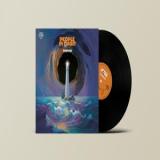
PEOPLE IN ORBIT - VIEWPOINT

PEOPLE IN ORBIT

VIEWPOINT

12inchAPRLP157
APRIL RECORDS
17.04.2026
  • 1: Synchronized Whalestuff
  • 2: Prelude To Cycles - Particles
  • 3: Cycle
  • 4: Cycle
  • 5: Cycle
  • 6: Cycle
  • 7: Cycle
  • 8: Cycle
  • 9: Spinning Downwards

Leading outlet for forward-thinking Scandinavian jazz, April Records, proudly presents the new album from Malmö-based quintet People In Orbit. A followup to their critically acclaimed 2023 release Close/Away (Naxos Prophone), the group continues to explore Scandinavia"s jazz tradition through a contemporary lens, blending acoustic interplay with electronics and a focus on collective improvisation. Led by trumpeter and composer Adam Sass, People In Orbit were formed in late 2020 with the intention of reimagining the classic jazz quintet with a contemporary edge. The group prioritises space, interaction, and ensemble balance, allowing composed material and collective responsiveness to shape the music. Alongside Sass, the band features Edvin Ekman (tenor saxophone, effects), Niklas Bergström (piano, Moog, keyboards), Edvin Elmersson (double bass), and Frank William Reis (drums). Viewpoint is a concept-driven album centred on perspective; how different viewpoints influence the way events are interpreted, and how perspective can foster connection or distance. Much of the album is built around Cycles, a four-part suite composed from a graphic score, with each section representing a different human life and its relationship to the surrounding world. The album moves through shifting emotional and psychological states, from curiosity and tension to reflection and release. Perspective is explored not only through human experience, but also via non-human viewpoints - including music inspired by deep-ocean communication between whales and slow, drifting motion. Musically, Viewpoint continues People In Orbit"s blend of modern jazz-rock and electronics, while drawing influence from the Scandinavian jazz quintet tradition of the 1960s. The music balances structured composition with openness, allowing individual voices to exist within a clearly defined collective sound. With Viewpoint, People In Orbit presents a focused and cohesive statement - an album shaped by shared intent, conceptual clarity, and a continued commitment to collective expression.

Reservar17.04.2026

debe ser publicado en 17.04.2026

23,11
LOS RETROS - EARLY DAYS 2016-2019
  • 1: Deep Sleep
  • 2: Room Gloom
  • 3: Someone To Spend Time With
  • 4: Without You
  • 5: Old Times
  • 6: To My Friends
  • 7: Wave The Blue
  • 8: Roundabout
  • 9: American Spirits
  • 10: Diabla
  • 1: To A Lover
  • 12: Within This Love

Early Days (2016-2019) is a new collection of previously unreleased songs from Mauri Tapia a.k.a Los Retros. From a young age, Tapia has been a prolific songwriter, spending his teenage years writing and recording song after song. Influenced by soft rock and left-field South American pop, Early Days (2016-2019) captures the sound of this formative era Streaming everywhere today, Early Days consisting of 15 tracks, recorded from Mauri's parents' living room using nothing more than an old four-track recorder, that only existed in low quality online, now mastered, sequenced, and physically released for the first time. It was during these sessions that Los Retros created the song "Someone to Spend Time With", now certified Gold. Early Days comes with a companion visual for "Without You", edited by close friend and collaborator Ross Harris from found footage of early Los Retros tour stops. Check out Los Retros proper debut "Odisea" released simultaneously too. FFO soul, bedroom pop, indie, modern jazz, downtempo, soft rock, Mac DeMarco, Thee Sacred Souls, Skinshape, Men I Trust, Too Slow To Disco

Reservar17.04.2026

debe ser publicado en 17.04.2026

28,36
L.D.F. ft Javonntte, Tilman, Böhm, Gari Romalis - Tribute To The Latin Posse EP

Italy’s own L.D.F. makes his debut on Shadow Pressings with a fresh slab of raw, analog funk—pressed strictly to wax and destined for selectors who still worship the turntable altar. With contributions from Detroit icons, Javonntte, Gary Romalis, & European groove architects Tilman & Böhm, the EP threads classic motifs through a modern underground sensibility—never nostalgic, always alive.

No en stock

Haga su pedido ahora y le encargaremos el artículo en nuestro proveedor.

15,34
Kashpitzky - Crossing Path

Kashpitzky

Crossing Path

12inchBAO097
Be as One
17.04.2026

Kashpitzky returns with an era marking new EP on Be As One Imprint, channeling the classic Detroit techno into a modern sonic journey.

Blending driving rhythms with lush orchestration, the release is rich in sweeping strings and cinematic textures, Each track unfolds with emotional depth, balancing raw machine energy and elegant musicality.

The EP pays homage to the golden era of Detroit while pushing its sound into new territory, A timeless yet forward-thinking release, it captures both nostalgia and innovation in equal measure.

No en stock

Haga su pedido ahora y le encargaremos el artículo en nuestro proveedor.

10,88

Ültimo hace: 8 Días
D.A.F. - El Que (Terence Fixmer Remixes)

Mannequin Records presents a special release that bridges two generations of electronic body music: DAF’s iconic track “El Que” reimagined by French techno and EBM pioneer Terence Fixmer.

A lifelong admirer of DAF, Fixmer has been playing El Que in his DJ sets for years, considering it one of the band’s most enduring and powerful pieces. His connection to the track and to DAF’s groundbreaking legacy is the core inspiration behind these two new remixes, created with both reverence and bold creative vision.

On the “El Que (Terence Fixmer Leather Remix)”, Fixmer remains close to the original’s raw, muscular pulse while injecting a sharp, modern club sensibility. The remix builds on DAF’s unmistakable rhythmics but adds a contemporary momentum that feels like a natural extension of the band’s DNA. “It was like imagining what I would do if I were a member of DAF today,” Fixmer says.

The second version, “El Que (Terence Fixmer Drive Remix)”, ventures deeper into Fixmer’s own territory: darker, hypnotic, and peak-time focused. Tension and release are crafted with surgical precision, taking the original’s spirit into a harder-edged, suspense-driven sound world. It’s a version built for late-night floors without ever losing the soul of El Que.

Fixmer explains:
“I’ve been playing DAF’s El Que in many of my DJ sets for years. It’s a track I deeply loved from the first listen. I’m super proud to have remixed DAF — one of my cult bands and a major influence on my sound and electronic universe. For the "Leather Remix", I wanted to stay close to the original while bringing modernity and club momentum. For the "Drive Remix", I pushed the track toward darker, peak-time and hypnotic techno, keeping the soul of the original intact. I wanted to make versions that make you think: ‘I know this track… but wait — what is this version? I want it!’ When I tested them, that’s exactly what happened.”

DAF remains one of the most influential bands in electronic music history. These new remixes by Terence Fixmer reinforce the timeless power of El Que while offering two striking, club-ready perspectives for a new generation of listeners.

No en stock

Haga su pedido ahora y le encargaremos el artículo en nuestro proveedor.

17,44

Ültimo hace: 7 Días
Nicolas Remondino - Hìeratico LP
  • A1: Hìeratico
  • A2: Litho Non-Danse
  • A3: Blue Hymne (Feat Limpe Fuchs)
  • A4: Cuerda De Piedra
  • A5: Aranha
  • A6: Tombal (Feat Pierre Bastien, Massimo Silverio &Amp; Marco Baldini)
  • B1: Boku Ga (Feat Adele Altro)
  • B2: Meridiana (Feat Giuseppe Ielasi)
  • B3: Lode (Feat Natalia Rogantini &Amp; Jonas Torstensen)
  • B4: Sospire (Feat Roberto Musci)
  • B5: Muracetra (Feat Vipera &Amp; Dròlo Ensemble)
  • B6: Vessel (Digital Bonus Track)

Like its cover, Nicolas Remondino's Hìeratico plays in the rich shades of crepuscular spaces. A night-tuned, percussion led album where prepared drums are accompanied by flickers of spoken word, acoustic instruments and muted electronics,

The title translates to 'hieratic', for Remondino a "black and gold" term laden with dualities and complex connotations. A sense of teetering between sparkling light and richly coloured darkness imbues the music, the compositions simulating a sense of heightened acuity as they convey us through a spooky elemental soundworld. The opening title track begins with a metallic shimmer, a drum skin activated in a way that sounds like it's being smelted. A cushioned rhythm enters, a smothered timbre akin to hearing something lurking around the garden. On "litho non-danse", percussion cracks like branches and dried foliage under foot.

Remondino recorded initial outlines for the pieces at Giuseppe Ielasi's studio in Milan, before fleshing out these ideas with his own additional instrumentation and contributions from a globe-spanning network of collaborators. On "blue hymne", chiming percussion equal parts jubilant and sinister heralds spoken word from Limpe Fuchs. "Tombal" opens with Massimo Silverio whispering in the Carnic dialect, a minority language from the Carnic Alps. Around, Marco Baldini, Pierre Bastien and Remondino construct a somber soundscape that cranks and sighs in the crevices.

Hìeratico is an album of hybrids. Diverse voices, accents and dialects deliver its lyrics, the instrumentation underpinning it crosses idioms. The drumkit at its core is modified to amplify its resonant tones and harmonics. Inspired by natural substances and phenomena: stone, wood, wind, earth, metal, grass, rain, clouds and bark, Remondino explores how percussion could evoke their materiality, treating drums as lucid textural instruments as much as rhythmic timekeepers. It gives the album a finely shaded depth and clarity as it conjures the vibrancies that reside in darkened corners. Hìeratico dwells in a sensation that crosses borders, the speckles of light in the oblique night sky. Listening is an aural equivalent to stepping into a pitch black forest and waiting for your eyes to adjust, a lightless void turning into a spectacular tableau of shadows and glows. Daryl Worthington

No en stock

Haga su pedido ahora y le encargaremos el artículo en nuestro proveedor.

25,17

Ültimo hace: 9 Días
Banda Maje / N-Zino - Mo... / Living Disco Club (N-Zino Remixes)

180 GR Records is proud to present a new release by N-Zino, reimagining two tracks previously released by Four Flies Records: Mo... and Living Disco Club, offering two distinct yet complementary interpretations. Mo... (180 GR Disco Mix) takes its cue from the original Banda Maje version, itself a contemporary homage to Peppino Di Capri, already given a club reinterpretation. N-Zino elevates the track with a nu disco approach, emphasizing its elegant groove and sunnier, funkier side, blending disco influences with pulsing basslines, shimmering percussion, and warm synth textures, all infused with contemporary sensibilities while keeping the original melody alive. The result is a bright, danceable reinterpretation designed for both listening and the dancefloor. In a different yet perfectly complementary direction, Living Disco Club (Don Ciccio Tribute Mix) explores a deep house dimension, turning Banda Maje's disco-inspired original into a hypnotic, late-night groove. Deep bass, soft drum machines, essential rhythms, and atmospheric pads create a rich, warm, immersive vibe, ideal for after-hours or more refined, introspective club moments. Together, these remixes highlight N-Zino and 180 GR Records' vision: celebrating strong musical roots, connecting Italy's musical past with contemporary club culture, offering tracks that honor the tradition and the originals released by Four Flies, while speaking directly to modern dancefloors.

No en stock

Haga su pedido ahora y le encargaremos el artículo en nuestro proveedor.

15,34

Ültimo hace: 6 Días
The Appetizers - Keep Your Step LP
  • 01: Feel Like Dancing
  • 02: Thicker Than Water
  • 03: A Message From The Meters
  • 04: Catch This
  • 05: Fussy Girl
  • 06: Cool And Deadly
  • 07: The Life
  • 08: Keep Your Step
  • 09: Make It Reggay
  • 10: Behind My Shoulders
  • 11: Stormy Weather
  • 12: We Shall Overcome

Killer Groove Records proudly presents "Keep Your Step", the explosive comeback by Italian rock steady & early reggae ambassadors The Appetizers, a soulful celebration of reggae's timeless spirit.


"Keep Your Step" marks the band's much-awaited return, landing April 10th on limited edition LP, CD digipack and digital format featuring two exclusive bonus tracks.

The Appetizers deliver a masterclass in roots reggae music with their highly anticipated second studio album, bridging Jamaica's golden age with contemporary relevance. "Keep Your Step" is a heartfelt sonic journey where the band blends rocksteady and early reggae with funk and soul influences to create a sound that's both genuine and refreshingly modern.

The fourteen tracks move fluidly between infectious dancefloor fillers and socially conscious lyrics. From the laid-back swing of "Feel Like Dancing" to the hypnotic rhythm of "Thicker Than Water", the band demonstrates their versatility while remaining true to the roots of Jamaican sound. "A Message from The Meters" pays tribute to the legendary funk pioneers, while the instrumental "Catch This" and "Make It Reggay" highlight the band's musical prowess and the deep connections between reggae and funk.

Meanwhile, tracks like "Fussy Girl" and "Behind My Shoulders" explore love's complexities with humor and soul. The album's heart lies in its social consciousness. "Cool and Deadly", "The Life", "Stormy Weather" and the album title track "Keep Your Step" tell stories of perseverance through life's struggles.

With the hopeful anthem "We Shall Overcome," The Appetizers deliver a timely message about genuine human connection in a social media-dominated era. The digital edition closes with "Get Some Rollin'" and "Swing and Sway," rounding out the journey with two additional gems.

"Keep Your Step" pays homage to Jamaican music legends, from Jackie Mittoo and Tommy McCook to Toots & the Maytals, while carving out The Appetizers' own distinctive sound. This is a groove made for both the dance floor and the soul, proving that reggae's power to inspire, unite, and uplift remains as vital as ever.

The production stays true to The Appetizers' signature sound: organic tones, deep groove, and that live-room vibe you only get when real musicians are locked in together. Luca Monza and Claudio Mambrini, the band's core members, handled the artistic production. Mastering came courtesy of the great JJ Golden (Black Pumas, Sharon Jones & The Dap-Kings, Jr. Thomas & The Volcanos, The Frightnrs) at Golden Mastering in Ventura, California. JJ is one of the most trusted engineers working in this sound, ensuring every ounce of warmth and authenticity came through.

The Appetizers are a rocksteady and early reggae band formed in Milan in 2020 by musicians deeply embedded in the Italian and international reggae scene. Musicians from different paths united by a shared vision: recreating that vintage Caribbean and American sound with authenticity, respect and a forward-thinking edge.

Drawing inspiration from Jamaica's golden era and channeling the soul of Delroy Wilson, Alton Ellis, the early Wailers, and The Upsetters, The Appetizers carry forward the essence of bass culture with a pure, fully organic approach.

Their debut album Listen Up! (2022), released via Belgian imprint Badasonic Records (home to The Slackers, The Aggrolites, David Hillyard & Victor Rice), featured ten original tracks and a dub cut by Victor Rice. Distributed across Europe, the UK, the US, and Japan, it quickly earned international recognition among reggae connoisseurs and selectors worldwide.

Following extensive touring, including shows with The Slackers, Black Uhuru, Skip Marley, and more, the band returned to the studio to record "Keep Your Step", their second album produced by Killer Groove Records. Here the band expands its musical language, weaving together the spirit of historic Jamaican labels like Studio One and Treasure Isle with '60s funk, arriving at a warm, organic, and timeless sound: soul, Jamaican roots, and modern sensibility in perfect balance. Their lyrics explore heartbreak, social issues, and reflections on life and music, performed with dedication and respect for tradition while always pushing forward.


If you're into The Skatalites, The Ethiopians, and those classic Caribbean rhythms, this one's for you.

Reservar10.04.2026

debe ser publicado en 10.04.2026

23,32
Forndom - Faþir LP

Forndom

Faþir LP

12inchLPNVP123
NORDVIS
10.04.2026

The cycle of life and nature is a precious and wondrous thing. We are born. We learn. We live. We die. And after death, another life awaits. When the world succumbs to the cold, dark grasp of winter, the promise of a spring birthing everything anew keeps hope alive. Such is the journey we make, and such is the lifespan of “Faþir”. Heaving, pulsating, filled with contrasts: ardent hostility and fiery revenge, blossoming life and lush fertility, soul-wrenching grief and deep anguish. Such is the path we walk under the guidance of the deities – the helping hand of a father, the nurturing wisdom in times of need. But sometimes, a treacherous god leads us into death and despair, albeit always with an underlying purpose. Such is “Faþir”.

With eloquence, elegance, and emotion, L. Swärd has created another monolith of sublime art to add to Forndom’s impeccable discography. This highly awaited follow-up to 2016’s “Dauðra Dura” is nothing short of a modern masterpiece, rooted in ancient ways. Expressive vocals and strings soar atop a foundation of unyielding drums, like spirits dancing in the skies yet bound to the human pulse. Never surrendering its strong connection to our mortal world, “Faþir” carries a deeply sacred dimension – a glimpse of the divine, seen through a lens of devotion and veracity. The joining of death and life, if you will.

The thick atmospheres and vast inner landscapes Forndom creates are more prevalent than ever, and from the first trembling string introduction of “Jakten” to the last wistful beat of “Hemkomst”, one is transported to another time, another place, and another mindset – leaving behind the calamity, stress, and superficiality of the modern world, and rediscovering the lost wisdom hidden behind the veil of passing years.

Reservar10.04.2026

debe ser publicado en 10.04.2026

23,95
Nathan Fake - Evaporator LP

Nathan Fake

Evaporator LP

12inchIF1104STD
Infine
10.04.2026

As Nathan Fake rises from the nocturnal subterranea and rave catharsis of his previous records, on Evaporator, he resurfaces into the domain of daylight, bringing a tangible sense of air rushing against your face, of big skies, and endless landscapes.

The idea of pop accessibility that trickled into 2023’s Crystal Vision is refracted here through the prism of sweeping ambient, deep electronica, and trance uplift. Evaporator is Fake’s idea of “airy daytime music”, with each track a different barometer reading across the album’s varying atmospheres, which range from vibrant sunbursts, bracing rainscapes, and fine mists of clement melodics. “It’s not overtly confrontational electronic club music,” states Fake. “It’s quite pleasant, it’s accessible. As I was progressing through making the tracklist, I called it a daytime album. It doesn’t feel like an afterparty album.” For the past decade Fake has been gingerly introducing collaborations with heroes and friends alike into his lone, idiosyncratic working process.

Border Community alumni Dextro AKA Ewan Mackenzie transmutes his ferocious drumming for Pigs Pigs Pigs Pigs Pigs Pigs Pigs into the blurred choral thump of ‘Baltasound’. ‘Orbiting Meadows’, meanwhile, is his second collaboration with Clark, an eerily idyllic duet where microtonal 18EDO piano clangs slowly twirl around wailing pads. Evaporator marks the junction point of old technology and ever fresh creativity for Nathan. The trusty “dinosaur” age software, particularly Cubase VST5, that has powered two decades of music is rarely updated. “I used to sort of feel a bit ashamed of using such old software, and then I kind of had an epiphany – that’s just how I work”, comments Fake. “That’s just how I play. I’m very fond of these old tools, and I get the most joy out of them, but now I’ve incorporated new technology too.” When an artist accumulates so much synergy with their instrument, music making becomes instinctual. By Fake’s account, much of Evaporator just fell into place. The album title arrived randomly in his head (“it felt completely perfect. Airy.”), ideas looped and developed until things locked into place and just felt right. ‘The Ice House’ is a fleeting glimpse of the sonic world he taps into in this creative state, its glassy FM synths built around a counterpoint between rough-hewn crystalline arpeggios and sparse yet gravitas-bearing bass. “That riff I just wrote out on the keyboard, I just played it forever and ever and ever.

The original track ended up being really short. Here you go, and it’s gone!” These unplanned channellings of sound call forth records from Fake’s past while he looks ahead, perhaps getting at the very essence of his musicianship. The opener ‘Aiwa’ (“the breeziest,” he muses) reminds of the introspection that characterised Providence, excited by the fire and grit of Steam Days’ textural experiments, its chunky slams and clatters surging into a flood of harmonic buzzing as they reach out for old wisdom. ‘Hypercube’ stampedes in a similar chronological confluence, infusing an incessant synth line reminiscent of the golden age of rave with the crackling, ecstatic energy of modern festival anthems. Like the vaporisation of liquid to particles, everything that Evaporator presents has a mutant desire to be amorphous. Sounds rarely settle; the irradiated garage beat of ‘Bialystok’ is pitched downwards to driving, rebounding effect, while ‘You’ll Find a Way’ warps static into shivering energy, cinematic synth strings building anticipation into a gradual gush of chords. This translates into a more expansive stereo field than Fake has explored before.


‘Slow Yamaha’ saves the wildest, most kinetic transformations for last with a cornucopia of crispy melodies and fried drums; a sibilance of cymbals on the left, a susurrus of shakers on the right, and kaleidoscopic lasers pulsing and fizzing all around. Evaporation culminating in pure excited atoms.

No en stock

Haga su pedido ahora y le encargaremos el artículo en nuestro proveedor.

24,08

Ültimo hace: 13 Días
Stephan Eicher - Spielt Noise Boys

2025 Reissue.


Münchenbuchsee, a suburb of Bern, Switzerland. Stephan Eicher is the youngest of three children. His father, a radio and TV repairman, is also a jazz violinist and a sound tinkerer in his spare time. In the family home's converted fallout shelter turned studio, Mr. Eicher experiments with homemade sequencers, tortures handcrafted drum machines, and abuses reel-to-reel tape recorders—all under the fascinated gaze of young Stephan.

The boy quickly develops a musical curiosity, exploring sound through various experiments and wanderings. Alongside his younger brother Martin, Stephan crafts audio plays on a homemade multi-track recorder (essentially several cassette decks hooked together!), which they write, record, add sound effects to, and perform for family and friends. Just a couple of nice kids, really...

Then comes 1972, and Lou Reed's Transformer album changes everything for the Eicher kids. For 13-year-old Stephan, it's a revelation—especially "Vicious", the opening track, which he plays on repeat for months. He convinces his father to buy him an electric guitar. Not stopping there, his father also builds him a tube amp using an old radio.

Then comes adolescence. A rough one. Stephan leaves home at 16 and moves to Zurich. With obvious artistic talent, he persuades his art teacher to help him get into F+F, a radical, alternative art school—despite his young age. Accepted, he starts learning video techniques, determined to become a filmmaker.

At F+F, Stephan organizes Dada-style happenings and concerts with a group of friends known as the Noise Boys. Among them: one of his teachers on bass, Veit Stauffer on drums (who would later found ReR/Recommended Records), his girlfriend Sacha on vocals, and Stephan on guitar. In one of their early performances, they release a remote-controlled mouse covered in dull razor blades into the audience to create panic and chaos. Keeping with this aggressive, confrontational spirit, they once played a concert while wearing headphones blasting Tristan and Isolde, trying to perform their own songs simultaneously—to maximize the cacophony. The goal was always the same: clear the room.

Their “songs,” if you can call them that, followed suit. Take "Hungeriges Afrika", for instance—performed entirely with power drills and some drum feedback.

To make ends meet, Stephan returns to Bern on weekends to work as a waiter at the Spex Club, the city’s main punk venue. On September 16, 1980, during a show by proto-electro group Starter, the police raid the club and arrest everyone. Stephan, who manages to avoid arrest, seizes the opportunity to “borrow” Starter’s gear left behind. He suddenly finds himself in possession of a Roland Promars synth, a Korg MS20, and a gorgeous CR78 drum machine, which he runs through a Big Muff distortion pedal to get that perfect gritty sound.

He then sets out to reinterpret some Noise Boys tracks, reworking them during impromptu sessions recorded on a dictaphone (yes, a dictaphone—now the lo-fi sound makes more sense, doesn’t it?). He ironically titles the resulting cassette "Stephan Eicher spielt Noise Boys" ("Stephan Eicher plays Noise Boys"). This gem features seven tracks, which are the ones reissued here.

Back in Zurich, he visits his friends Andrew Moore and Robert Vogel, who have a DIY cassette duplication setup. They make 25 copies of Stephan Eicher spielt Noise Boys for Stephan and his friends. Robert encourages him to visit Urs Steiger of Off Course Records and play him the tape.

Without much hope, Stephan shows up at Urs’s office. But Urs is instantly hooked and suggests releasing a 7” single. Due to space constraints, they reluctantly drop two of the seven tracks ("Hungeriges Afrika" and "One Second"). As for the musical score featured on the cover—it was randomly chosen and remains a mystery to this day. Calling all music theory nerds!

The 7-inch is pressed in 750 copies and released in the first week of December 1980—a date Stephan remembers well, as it’s the same week John Lennon was killed. Smartly, Urs sends a promo copy to François Murner, Switzerland’s answer to John Peel, who hosts a show on alternative station Sounds. Murner falls in love with the record and starts giving it airtime. To Stephan’s surprise, sales follow—and people actually seem interested in his music.

Even this modest underground success scares Stephan a bit. He stops making music for a year and moves to Bologna, where he works as a programmer at Radio Città, a feminist radio station.

Meanwhile, Stephan’s younger brother Martin, who’s also involved in the punk scene, joins the band Glueams as a singer and guitarist. Glueams, named after the fanzine run by two of its members (drummer Marco Repetto and bassist GT), eventually rebrands as Grauzone. Stephan is invited to their shows to project hacked Super 8 visuals live on stage.

Urs Steiger, now working on a compilation titled Swiss Wave – The Album, asks Grauzone to contribute alongside bands like Liliput, Jack and the Rippers, The Sick, and Ladyshave (Fall 1980).

For the album, Martin tasks Stephan with producing their recording sessions. Under Stephan's artistic direction, two tracks emerge: "Raum" and "Eisbär". During "Eisbär", Martin plays a minimalist bass line borrowed from post-punk band The Feelies (just an open string). Drummer Marco Repetto struggles to keep time. Later that evening, unhappy with the takes, Stephan builds a four-bar drum loop from a ¼-inch tape and uses it instead of the flawed original. He then adds bleepy synths and wind sounds to complete the track’s icy vibe before handing it over to Urs.

The Swiss Wave – The Album compilation is released quietly at first, but things snowball thanks to "Eisbär", which eventually becomes a smash hit—selling over 600,000 singles.

Meanwhile, Stephan plays in a rockabilly band called SMUV (named after Switzerland’s social security agency) and begins producing artists, including the debut album of Starter (1981), which includes a more pop-oriented version of "Minijupe".

By early 1982, Stephan starts spending time with the post-punk girl band Liliput (formerly Kleenex). They’re older than him, and he happily drives them around in his Renault Major, acting as their roadie.

By 1983, Grauzone—signed to the major label EMI, which turned out to be a misstep—is falling apart. Stephan begins to pivot toward a more mainstream pop sound with his debut solo album Les Chansons Bleues.

But that... is already another story.

No en stock

Haga su pedido ahora y le encargaremos el artículo en nuestro proveedor.

23,11

Ültimo hace: 13 Días
Kjell Bjørgeengen & Lasse Marhaug - Flood Coil
 
9

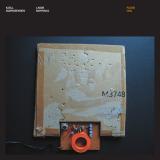
Some years ago, Kjell Bjørgeengen and Keith Rowe attempted to convert video signals into sound by setting up Rowe’s pickups next to an old CRT monitor, turning its magnetic field into a sound generator. Rowe further developed the system with David Jones at Alfred University, slimming down the setup using a copper coil, a circuit board, a video input, and a telephone pickup. Jones named it the »Flood Coil«, and it’s that instrument you can see on the album’s front cover and that lies at the core of these recordings, made without any physical live input from the artists themselves. In essence, it’s generative music in its purest form.

Bjørgeengen’s video feed is generated by oscillators, then routed into Marhaug’s pedals and then back into the Flood Coil, so any visual shifts alter the sound, and any modification to the sound changes the video. The duo have played this setup live many times, but for this studio version they left the system to do its thing without any intervention for two minutes at a time before moving onto the next idea. They recorded hours and hours using this process and then selected 18 highlights for this album, extracting harsh noise, power electronics, lulling feedback drone, and peculiar rhythmic snippets to show the scope of their technique.

A wall of growling, hi-octane Pulse Demon-style noise opens the set, gradually exposing us to more asymmetric textures, shifting through unstable repetitions that transform Merzbow’s metal-inspired screams into »Aaltopiiri«-era rhythmic noise. It’s remarkable, actually, how much Marhaug and Bjørgeengen can squeeze from the system, chancing on shivering, lower-case chugs and pops, galloping drums, soundsystem subs, and grinding blast beats that sound like Napalm Death’s »Scum« piped through a broken amp stack. It ain’t pretty, but noise/industrial freaks will revel in the fierce delights inside.

Reservar10.04.2026

debe ser publicado en 10.04.2026

32,35
Aziz Balouch - Spanish Cante Jondo And It's Origin In Sindhi Music (BOOK)

66 pages, 175 x 129mm paperback w/ litho printed cover & french flaps.

The second outing for our short run book publishing imprint, The End books, takes the form of a reprint of Spanish Cante Jondo and Its Origin in Sindhi Music, originally published in Spanish in 1955 under the name Cante Jondo: Su Origen y Evolución and later in this English translation.

Aziz Balouch here presents his theory on the roots of flamenco's 'deep song' in modern-day Pakistan, a cultural journey that mimics the routes of his own life, having been brought up among the Islamic mysticism and devotional songs of Sindh before travelling to Gibraltar in the early 1930s and becoming transfixed with the cante jondo across the border in southern Spain. Positing this concept through personal accounts rather than solid theoretical backing, this text provides a valuable account of an extraordinary existence that crossed remarkable geographical, musical, and spiritual boundaries. Issued here with a new introduction from anthropologist of sound, the senses and Islam, Stefan Williamson Fa.

"It would be easy to place Balouch on the fringes, as an eccentric footnote in flamenco history. But that misses the shape of his life and work. He was a figure who moved intuitively across boundaries that our present categories of nation, genre, discipline tend to fix in place. His work predates the founding of the academic discipline of ethnomusicology, the global circuits of world music, and the marketplace logic of fusion projects by decades. He was not an ethnographer or a proto–world musician, but someone for whom the deep song of Andalusia and the devotional song of the subcontinent resonated along the same fault lines of feeling, and who spent his life trying to trace them.

This book is one of the few surviving traces of that attempt. To read it now is to encounter a perspective that resists tidy narratives of influence or origin, despite its title and what he claims to do. It stands instead as evidence of an idiosyncratic musical imagination, one that relied less on proof than on listening, and on the belief that certain echoes carry farther than history can easily explain."

— Stefan Williamson Fa

Reservar10.04.2026

debe ser publicado en 10.04.2026

19,12
Marion Brown - Awofofora

First time reissue of JP / US free jazz rarity.

The 1970s were Marion Brown’s most searching decade, a period during which he sought to move beyond the free jazz of the previous era and find more personal approaches to structuring improvisation and composition. After leaving New York for Europe in 1967, Brown began reshaping his music into what he described as “a more deliberate kind of music that had more structure to it,” pacing it so that moods and modes could develop over time. Albums such as In Sommerhausen, Afternoon of a Georgia Faun, Geechee Recollections, and Sweet Earth Flying trace this evolution: rhythmic structures moved to the foreground, harmony receded, and composition became a matter of orchestrating interlocking rhythmic parts as one would polyphonic lines.

Released in 1976, Awofofora is an overlooked but crucial entry in that sequence. At the time, its use of funk and reggae beats, electric guitars, and grooves drawn from contemporary Black popular music led some to misread it as a jazz-rock detour. In retrospect, it is entirely consistent with Brown’s methodology. As he admired in the Art Ensemble of Chicago, the stimulus comes from within the community. Here Brown filters Afro-Caribbean rhythms and funk through his own sensibility, abstracting their structural qualities rather than adopting surface style.

“La Placita,” making its first recorded appearance, layers distinct rhythmic phrases in a manner reminiscent of African drum ensembles, over which Brown and trumpeter Ambrose Jackson spin extended improvisations. The standard “Flamingo” is reshaped through diasporic rhythm and lyrical soloing, while “Pepi’s Tempo” and “Mangoes” harness crisp funk and reggae grooves to generate what Brown called a “manifestation of community” through collective improvisation. Even the overdubbed solo feature “And Then They Danced” reflects his structural thinking, ingeniously re-voicing a duet composition for two alto saxophones performed by one player.

This was the only recording by a short-lived band that briefly polarized audiences during festival appearances in 1976. Yet Brown consistently sought unity across change: different sounds, same principles — rhythm as structure, melody as architecture, collective improvisation, and above all, the primacy of tone. Awofofora stands not as a departure, but as a vivid synthesis of the elements he had been refining since the late 1960s, its grooves and golden alto lines conveying a sound drawn, in his words, “from life and from the world of experience.”

Reservar10.04.2026

debe ser publicado en 10.04.2026

28,15
UPSAMMY / VALENTINA MAGALETTI - SEISMO

A cocktail of rebellious queer vocal fragments, deceptive percussive granules and swaying hammered vibrations, upsammy and Valentina Magaletti's first collaboration trembles with suspense. The seeds of 'Seismo' were sown following a commission from Amsterdam's Rijksmuseum to soundtrack an exhibition of work from the Museum Boijmans van Beuningen in Rotterdam and the duo didn't want to approach their collaboration flippantly. So, wandering the museum's maze of rooms, they recorded various improvised percussive sounds with their arsenal of microphones, using the space to inform various rhythms and textures that were sculpted later into electroacoustic vignettes. This was just the starting point, though; as Magaletti and upsammy began performing together, the project evolved and 'Seismo' began to take shape. The duo had struck on a salient aesthetic concept, using mostly digital and acoustic mallet instruments to blur the boundary between their roles and create friction between the synthetic and the authentic. And the finished record is a phantasmagoric push-and-pull between its various conflicting elements: harmony and dissonance, randomness and predictability, openness and constraint. 'Seismo' isn't the first time that upsammy has studied her environment in search of revelation. On her acclaimed second album, 2024's 'Germ in a Population of Buildings', the Amsterdam-based DJ, producer and multidisciplinary artist erected her complex, unorthodox rhythms and eerie melodies around a modernist frame of field recordings collected in various cityscapes, countering heavyweight basslines with subtle, microscopic sounds. London-based Italian vanguard Magaletti, meanwhile, has applied her unique logic to innumerable projects at this point, working with everyone from batida icon Nídia and hardcore-dub outfit Moin to French writer Fanny Chiarello and British bass scientist Shackleton. For years she's approached the drums with criticism, attempting to challenge any preconceptions, something that's most visible on 2020's 'A Queer Anthology of Drums'. And both artists' thoughtful perspectives are welded together seamlessly on 'Seismo', a dizzying suite of eight eccentric statements that's fragile but never insecure, gauzy but not indistinct. An unnerving sense of space characterizes 'It Comes to an End' as Magaletti's in situ improvisations herald for upsammy's microscopic glitches and chiming pitch-bent melodies. It's almost unbalancing to witness the track's impossible dimensionality, the interplay between reverberant marimba hits and bone-dry synths, or percussion that's been recorded and processed in consciously different settings. A new architecture emerges in the sound itself that the two artists scan and explore meticulously, testing its boundaries with undulating hybridized rhythms on the invigorating 'Superimposed' and offsetting the powdery drums with liquified smacks and alien voices. The duo's vibrations are knotted with piano flourishes on 'Hyperlocalize', balanced with artificial clanks and clangs that disappear into the track's sonorous atmosphere, replaced by whispers and half-hallucinated insectoid chirps. 'Seismo' is an album that feeds off the energy generated by its juxtapositions: the tension and anticipation that's melted by rapid, hyperactive movement and the finely drawn rhythms disrupted by a layer of indistinct, barely perceptible microsounds. It's a collaboration that sounds like two minds challenging each other but not wrestling, each peering from their own distinct vantage point and imagining a third landscape shaped by optimistic, queer vibrations.

No en stock

Haga su pedido ahora y le encargaremos el artículo en nuestro proveedor.

26,01

Ültimo hace: 15 Días
Kit Grill - Andøya LP
  • 01: Cottongrass
  • 02: Tundra
  • 03: Cold Blow
  • 04: Desolation
  • 05: Ascending
  • 06: Voices
  • 07: Metamorphosis
  • 08: First Light
  • 09: Kaleidoscope
  • 10: Adrift
  • 11: White Fields
  • 12: Last Light

London-based musician, composer, and NTS resident Kit Grill presents his extraordinary new album 'Andøya', inspired by a solo residency on the eponymous Norwegian island, a profoundly dramatic territory situated in the Vesterålen archipelago, inside the Arctic circle.

With evocative, sonorous ambient, drone, minimalism, experimentalism, and modern classical music, Grill captures the environmental essence of a remarkable region; an isolated Nordic landscape of small coastline villages, raw peatlands and sublime mountain ranges, surrounded by wide, open views of the Arctic ocean.

Drawn from his experience on solitary excursions around the island - hiking, exploring, and encountering the locals - 'Andøya' is a beautifully stark, stirring exploration of acoustic phenomena, seclusion in nature, and the expressive power of unique landscapes. For Grill, the trip entailed a surreal day-night cycle, and his experience has had far-reaching, existential implications, both for his practice and his perspective:

"On the 8th January 2025 I travelled to the Norwegian island of Andøya, in the Arctic Circle for a three week solo residency. Surrounded by sea, snow, and mountains, I lived in isolation and travelled around the island each day documenting the landscape. At 10am, the background light of the sun beneath the horizon would light the day and in the 4 hour window of light, I would hike into the mountains and explore the wilderness. It was a profound experience that changed the way I thought about sound, solitude, and what it means to be alone in nature."

"Since returning, I created a body of music informed by that time to try and capture the vastness and unpredictability of the Arctic landscape. The album moves through the sensory extremes: ice cracking, storms forming and fading, the rumble of tectonic plates, waves crashing, harsh winds, trudging through snow, and the sharpness of freezing air. The album aims to reflect both the landscape itself and the shifting emotions that came with living in isolation and the Arctic environment. The music and photography serve as a recorded diary of my time there, documenting the experience."

Reservar10.04.2026

debe ser publicado en 10.04.2026

23,32
L. Jacobs - Behind the Great Curve

L. Jacobs

Behind the Great Curve

12inchBLICKWINKEL24LP
blickwinkel
10.04.2026

L. Jacobs releases his second album, Behind the Great Curve, on the Belgian label Blickwinkel. Featuring contributions from Milan W., Sarah Yu Zeebroek, and Joachim Badenhorst, the follow-up to the surprising debut Enthusiasm was initially composed and recorded in Jacobs’ small attic room and later refined at Milan W.’s Van den Nest Studio, where W. also handled production and mixing.

A line or outline which gradually deviates from being straight for some or all of its length.

Behind the Great Curve explores and celebrates the beauty and universality of the abstract notion above and what we commonly refer to as the curve. Its presence, allegedly, is everywhere. It is a form that appears visually, mathematically, and symbolically — a line that suggests motion, time, expectation, and impermanence.

This album aims to listen to all of this — the poetry, the irony, and the faint background hum of modern life — with quiet curiosity. Within a gently meandering, synthesized landscape, a collection of dreamlike compositions unfolds: delicate melodies, sparse percussion, warm buzzing synths, and fragments of field recordings coexist in carefully measured imperfection. Colorful yet minimal in aesthetic, the album does not seek to explain the curve, but to follow it.

Reservar10.04.2026

debe ser publicado en 10.04.2026

23,95
Bodysnatcher - Hell Is Here, Hell Is Home
  • 1: The Maker
  • 2: Writhe And Coil
  • 3: Plague Of Flies
  • 4: May Your Memory Rot
  • 5: Violent Obsession
  • 6: No Savior
  • 7: Blade Between The Teeth
  • 8: Two Empty Caskets
  • 9: Survive Or Die
  • 10: Hell Is Home

Florida deathcore heavyweights Bodysnatcher return with their most punishing and purposeful statement to date. ‘Hell Is Here, Hell Is Home’, out April 10, is not an escape record, it is a confrontation. Brutal, unrelenting, and emotionally unfiltered, the album captures a band fully locked into its identity while sharpening every weapon in its arsenal. True to their roots, Bodysnatcher deliver a sound steeped in suffocating grooves, bone-crushing breakdowns, and feral intensity. ‘Hell Is Here, Hell Is Home’ pushes beyond pure aggression. The record explores cycles of trauma, self-destruction, survival, and the uncomfortable truth that for many, suffering is not a phase, it is a place.

This is deathcore grounded in lived experience, written from inside the fire rather than in hindsight. Across the album, Bodysnatcher balance sonic violence with a disciplined sense of control. Downtuned riffs grind with oppressive weight, drums hit with mechanical precision, and vocals swing between outright hostility and grim reflection. Each track feels deliberate, built not just to hit hard, but to linger. With this release, Bodysnatcher continue to cement their position as one of modern deathcore’s most uncompromising voices. ‘Hell Is Here, Hell Is Home’ is a record built for the pit, rooted in truth, unflinching and heavy in every sense, delivered with absolute conviction.

Reservar10.04.2026

debe ser publicado en 10.04.2026

21,81
Derek Jarman - Through The Billboard Promised Land Without Ever Stopping LP
  • A. Untitled (30:03)
  • B. Untitled (25:27)

Written in 1971 and read here by the author himself "Through the Billboard Promised Land Without Ever Stopping" is Derek Jarman's only known work of narrative fiction. Providing a prelude to some of the imagery Derek Jarman would use later in his career, particularly the alchemical dreamscapes in the film "Blue", it is a surreal, hallucinatory fairytale, signposted with elements of modernity, that has much of the mythic and archetypal about it. With tantalising autobiographical details and a panoply of chromatic landscapes and psychosexual symbols, this richly poetic story details a journey with no destination or purpose across a mythical America, undertaken by the young blind King Amethyst and his valet John. Previously only ever released on cassette (2022, Prototype Publishing, Ltd 80), this vinyl edition features facsimile images of the story's handwritten drafts from Jarman's archive and photos by the artist Michael Ginsborg, a close friend of Jarman's throughout the period of the story's writing. Licensed from House Sparrow Press / Prototype Publishing, and The Estate of Derek Jarman.
• Ltd x 500 copies on heavyweight 180gm black vinyl in gloss sleeve.

Reservar10.04.2026

debe ser publicado en 10.04.2026

23,32
Artículos por página
N/ABPM
Vinyl