Search:modal

Styles
All
Intercommunal Free Dance Music Orchestra - Le Musichien

The Intercommunal Free Dance Music Orchestra was created in 1971 by French free jazz pianist legend, François Tusques. Free Jazz, was also the name of the 1965 recording Tusques made along with and other Michel Portal, François Jeanneau, Bernard Vitet, Beb Guérin and Charles Saudrais. Six years later, in 1971 Tusques would go ahead of free jazz.

Wondering if free jazz wasn’t a bit of a dead end together with Barney Wilen (Le Nouveau Jazz) or even solo (Piano Dazibao and Dazibao N°2), Tusques formed the Inter Communal Free Dance Music Orchestra, an association under the banner of which the different communities of the country would come together and compose, quite simply. If at first the structure was made up of professional musicians from the jazz scene it would rapidly seek out talent in the lively world of the MPF (Musique Populaire Française).French Popular Music, ndlt

As with L’Inter Communal a few years earlier, Le Musichien follows on from the group of varying musicians that Tusques had conceived as a “people’s jazz workshop”. In 1981, at the famous Paris address, 28 rue Dunois, the pianist sang with his partner Carlos Andreu “Le Musichien”, an Afro-Catalan tale over an exceptional bass line from Jean-Jacques Avenel backed by percussion from Kilikus, saxophones from Sylvain Kassap and Yebga Likoba and trombone from Ramadolf which presented a myriad of constellations. The sky has no limits, let’s make the most of it.

“Les Amis d’Afrique” is recorded the following year, at the ‘Tombées de la Nuit’ festival in Rennes, bassist Tanguy Le Doré would weave with Tusques the fabric on which would evolve an explosive “brotherhood of breath”: Bernard Vitet on trumpet, Danièle Dumas and Sylvain Kassap on saxophones, Jean-Louis Le Vallegant and Philippe Le Strat on... bombards. With hints of modal jazz inspired by Coltrane or Pharoah Sanders, the Intercommunal Free Dance Music Orchestra is an ecumenical project which speaks to the whole world.

out of Stock

Order now and we will order the item for you at our supplier.

23,74

Last In: 18 months ago
Les Hommes - Sì, Così

Les Hommes

Sì, Così

12inchSHLP006
Sudden Hunger
09.10.2024

Pulsar-driven groovetronics, folky modalisms in waltz time; dreamvitations to the cine-lounge. Rhythm-n'-mood experimenters Les Hommes return with a plasma-rippling suite of jazzified cuts. The new album – Sì, così – takes us into their usual unusual orbits; with re-explored mid-century Lowrey organ, mellifluous bass clarinet, Arcadian flutes, groovified piano electrique and oscillators scorched on re-entry, it's out there.

With compositions aired on BBC 6 Music, Radio 3, Radio 4 and stations around the world, plus sold-out live shows, global cult combo Les Hommes combine mid-century-cool organ group tropes and heavy percussion with contemporary arrangements and sound-sources. Their new 2024 release, Sì, così, takes the line-up further out again to explore spacier themes, esoteric modes and filmic stratospheres, as well as continuing expeditions into 'live' small-group recordings.

out of Stock

Order now and we will order the item for you at our supplier.

20,13

Last In: 17 months ago
Uyama Hiroto - A Son Of The Sun LP 2x12"
  • A1: . 81Summer
  • A2: . Climbed Mountain
  • A3: . One Dream
  • B1: . Nightwood
  • B2: . Waltz For Life Will Born
  • B3: . Ribbon In The Sea
  • C1: . Port51(Interlude)
  • C2: . Carbon Rose
  • C3: . Vision Eyes Featuring Golden Boy
  • C4: . Fly Love Song Featuring Pase Rock
  • D1: . Last Transit(Interlude)
  • D2: . Stratus
  • D3: . Walk In The Sunset
  • D4: . Color Of Jade

Uyama Hiroto, one of the most important artists behind Nujabes works, released his debut album 'a son of the sun' on 2LP after 12 years.

Uyama Hiroto provided "Letter From Yokosuka" for Nujabes "metaphorical music" released in 2003 and was featured on the title track of "modal soul" released in 2005.

A son of the sun" was released in 2008 and continues to fascinate many listeners to this day.

pre-order now05.10.2024

expected to be published on 05.10.2024

47,35
VARIOUS - 2nd Collection: Hydeout Productions 2x12"
  • Nujabes– Voice Of Autumn 1:56
  • Nujabes– Sky Is Falling 4:41
  • Uyama Hiroto– Waltz For Life Will Born 4:52
  • Clammbon By Nujabes– Imaginary Folklore 5:18
  • Nujabes– Hikari 4:20
  • Nujabes– Counting Stars 4:07
  • Nujabes– Another Reflection 3:44
  • Nujabes– Fly By Night 3:57
  • Pase Rock– Old Light (Voices From 93 Million Miles Away Remix) 4:27
  • Emancipator– With Rainy Eyes 4:59
  • Shing02– Luv(Sic.) Modal Soul Remix 4:48
  • Uyama Hiroto– Windspeaks 4:29
  • Dsk (2)– Winter Lane (Nujabes Remix) 5:11
  • Nujabes– After Hanabi -Listen To My Beats
pre-order now05.10.2024

expected to be published on 05.10.2024

47,86
Tamil Rogeon - Wave Theory

Tamil Rogeon

Wave Theory

12inchBBE642ALP
BBE Music
04.10.2024

Tamil Rogeon, the Melbourne based multifaceted jazz, classical and electronic violin & viola player firmly cemented his reputation with the critical success of his 2021 album Son Of Nyx which was released on Soul Bank Music, Impressive Collective head honcho Greg Boraman's previous label. Lauded as a modal and spiritual jazz fusion opus, Son Of Nyx found favour with Gilles Peterson, Laurent Garnier, Rebecca Vasmant, BBC6 Music's' Cerys Matthews and Deb Grant, was a Jazz FM’ Album of the Week. Building upon that highly original sound concept, Wave Theory draws from the jazz fusion movements of the 70s and 80s and conjures up textured soundscapes rich with cosmic synths, soaring vocals and deep jazz funk, and sees Tamil once again joining forces with Son of Nyx contributors Rita Satch and Daniel Mougerman, plus new collaborators and special guests including Lance Ferguson and celebrated trumpeter, friend Audrey Powne. Listeners can expect the same modal experiments, driving percussion and cosmic synths of Son of Nyx as well as new and exhilarating experiments in electric string instrumentation. Across all 6 tracks the highlights are numerous, but of particular note are the album opener "Ascend it!"; a fusion masterpiece that seamlessly blends psychedelic elements, funk grooves, intricate melodies, and improvisation. When "Doom Date" takes flight we are transported to Mahavishnu Orchestra-like territory, before finishing with an angular melody that is pure jazz-fusion inventiveness. The irresistibly funky 'Gift Of The Gab” is built upon a hypnotic bass line over drum and percussion. Laden with synth and retro keyboards reminiscent of the deep funk of Herbie Hancock’s late 70s period. "Mountain Bug' alternates between minor and major keys, a hallucinatory violin solo is followed by a dazzling trumpet improvisation. A restatement of the melody accompanied by the gunfire of the drum set and percussion. Tamil says of Wave Theory “Sometimes themes reveal themselves through creative encounters and through life experience. I wrote and recorded the album in six months. A lot happened to me and my friends during that time so, for me, ‘Wave Theory’ is like a musical snapshot of life’s relentless ebbs and flows. It’s about the sadness and thrills of endless transformation and the power of creative connection".

pre-order now04.10.2024

expected to be published on 04.10.2024

33,57
CHRIS CORSANO / BILL ORCUTT - MADE OUT OF SOUND LP

REISSUED!!! Received an 8.1 rating from Pitchfork. "Sadly, many will hear Chris Corsano & Bill Orcutt's latest LP, Made Out of Sound, as 'not-jazz,' though it would be more aptly described as 'not-not-jazz.' In a better world, it would warrant above-the-fold reviews in Downbeat, or an appearance on David Sanborn's late-night show (if someone would only give it back to him). More likely, we can hope for a haiku review on Byron Coley's Twitter timeline to sufficiently connect the various improvised terrains trodden by this long-time duo—but if you've been able to listen past the overmodulated icepick fidelity of Harry Pussy, it should surprise you not an iota that Orcutt's style is rooted as much in the fractal melodies of Trane and Taylor as it is in Delta syrup or Tin Pan Alley glitz. As for Corsano, well, it may seem daft to call this particular record 'jazz' (because duh, it has a drummer), but to me Corsano is beyond jazz, almost beyond music, his ambidextrous, octopoid technique grappling many stylistic levers and spraying a torrent of light from every direction. Corsano's ferocity has elevated many 'mere' improv records to transcendence, but here he's crafted his polyrhythms within more narrative channels, bringing to mind his 'mannered' playing in the lamented Flower-Corsano duo. It's not 'groove' playing precisely, but it follows many grooves simultaneously, much like Orcutt's own melodic musings—which is why they're so naturally lock-in-key here. Which maybe makes it all the more surprising that Made Out of Sound was in fact recorded in different rooms on different coasts at different times, and stitched together by Orcutt on his desktop. Corsano recorded the drums in Ithaca, NY, and (as Orcutt states), 'I didn't edit them at all. I overdubbed two guitar tracks, panned left/right. I'd listen to the drums a couple times, pick a tuning, then improvise a part, thinking of the first track as backing and the second as the 'lead', though those are pretty fluid terms. I was watching the waveforms as I was recording, so I could see when a crescendo was coming or when to bring it down.' Fluidity ties the tracks together. With a little more groove and a little less around-the-beat maneuvering, one could almost hear the boiling harmonic layers as Miles-oid in 'Man Carrying Thing,' but with new-found Sharrockian modalities, Corsano accentuating the tumbling nature of the falling notes. The Sharrock vein continues with 'How to Cook a Wolf,' its Blind Willie-esque melodic simplicity and repetition extrapolated 360-style in a repetitive descending riff that falls into Cippolina-isms (by way of Verlaine ) until the end crashes upon the shore. Much like Orcutt's last solo album, Odds Against Tomorrow, there's a gentler, almost pastoral flow to some tracks ('Some Tennessee Jar,' 'A Port in Air,' 'Thirteen Ways of Looking') that calls to mind the mixolydian swamplands of Lonnie Liston Smith—but unlike Odds , other tracks ('The Thing Itself') smash that same lyricism into overdriven, multi-dimensional melodic clumps that push several vector envelopes at once in an Interstellar Space vein. With the help of Corsano, Orcutt has managed to slither even further out of the noise/improv pigeonhole lazy listeners/writers keep trying to shove him into. Looking at the back cover of Made Out of Sound , we should not see Orcutt hurling a guitar into the air with post-punk bravado, Corsano toiling behind him in the engine room—we should witness an instrument levitating from his hands, rising on invisible major-key tendrils of melody, fired by percussion, spiraling into an invisible event horizon..."—Tom Carter

pre-order now20.09.2024

expected to be published on 20.09.2024

33,19
WE ARE WINTER'S BLUE AND RADIANT CHILDREN - "NO MORE APOCALYPSE FATHER"

WE ARE WINTER'S BLUE AND RADIANT CHILDREN (WAWBARC) is the new quartet of Mat Ball (BIG|BRAVE), Efrim Manuel Menuck (Godspeed You! Black Emperor, Thee Silver Mt. Zion), and Jonathan Downs and Patch (both Ada). On "NO MORE APOCALYPSE FATHER" they present six modal lullabies drenched in seared distortion, slathered across striding electronic pulses. Ball and Menuck began creating music in and for the bleakest moments of Montréal winters: "We're honoring that idea of winter, when you come inside and your house is warm, a place that only exists because of how cold it is outside," says Menuck. They later recruited Downs and Patch to flesh out their initial ideas. Menuck met them in 2015 when recording Ada's final album at Montréal's Hotel2Tango _ where they reconvened to make this record. "NO MORE APOCALYPSE FATHER" is an album about witnessing bleakness from a place of safety. Carrying newfound descriptive depth, thanks to the quartet's open-ended songs freeing him from writing in meter, Menuck likens his lyrics to photorealism. On opener `Rats and Roses' he sings of an unnamed city struck by an unknown cataclysm, but the details are local: specifically, his neighbors inadvertently poisoning birds when tackling a rat infestation. It's backed by blown out synths and guitars reaching a soaring crescendo. "Seeing things from a distance and not being able to intervene happens a lot on the record," Menuck explains. "If you're a feeling and thinking person, that's just part of the human condition. We watch horror unfolding from afar, unable to do anything concrete to change it." A powerless witness, able to describe but not intervene. `Dangling Blanket From A Balcony (White Phosphorous)' references Michael Jackson holding his child over a hotel balcony in 2002_the bizarre media spectacle still lodged in Menuck's psyche. This and the album's closing track also elegize white phosphorous, a technology of war designed to light up battlefields but capable of inflicting horrific burns on those it touches. Illumination and horror in one, here underpinning scenes picturesque and terrifying. "The last song `(Goodnight) White Phosphorous' is deliberately like a lullaby," says Menuck. "Written from the viewpoint of watching white phosphorous falling outside your window." Scorched and tarnished and laden with harrowing imagery, "NO MORE APOCALYPSE FATHER" is also a record bathed in light: the bewilderment of hopeful spirits witnessing despair, watching a blizzard of distress unfold outside from a place of relative shelter and comfort. You could call that emotional ambivalence, maybe numbness. But those words are too passive for the weight of conflicted feeling resonating through the album. "I never know how I feel on an overcast day when the sun is still bright despite the grayness and the light is very flat. The colours become more saturated, and you see a single flower, say a morning glory, whose colour is so vibrant beneath the gray, I don't know if that's a lovely sensation or a terrible sensation. It's both," says Menuck.

pre-order now13.09.2024

expected to be published on 13.09.2024

22,27
KATO HIDEKI & KRAMER - THE WALK

Kato Hideki&Kramer

THE WALK

12inchSHIMMY2025
SHIMMY DISC
06.09.2024

Kato Hideki's Statement: "The Walk is the first collaboration between me and my brother from another mother, Kramer. We started working together in the late summer in 2023, discussing the thematics and the sonic palette of the album. We shared strong connections with the writings by Robert Walser and Basho - both of them walked, dreamed, lived and died on the road. Ambient music was our natural plane for us to transduce the power of their literature into our music as signifiers. Neither of us imagined just to make 'another ambient record', nor a direct translation of their writings. My instinct was to use various modal colors with modulation - slow yet structured music that sounds deceivingly similar to ambient music. Kramer's genius was apparent to me: his ability to elaborate the music as a composer / musician with his keen ears; to frame the album conceptually, sonically and musically as a producer. What you hear in this album is a true collaboration between two artists who trusted each other to let the music transcend. Here you have it, enjoy YOUR walk - dream, live and die well!" Kato Hideki - Brooklyn, NY on April 3rd, 2024 Kramer's Statement: "Sometime in the latter 20th Century, I became aware of the art of The Brothers Quay, two American animators living in London and making the most beautiful works of art I'd ever experienced in cinema. I noted that some of their work was inspired by_ 'the writings of Robert Walser'. Fast forward to 2024 and I have now read every word there was to read (translated into English) by this unique Swiss-German writer. I'd waited decades to find the right 'environment' in which to create music in dedication to this great prose writer and poet, and in 2023, I found that it was not 'the right environment' that I'd been waiting for, but rather, the right collaborator. Kato Hideki and his extraordinary work as composer for film, dance and just about every other creative discipline you can imagine, was equally as inspiring to me for this project as the words and worlds of Walser and Basho. Our journey in collaborative composition began all over the global map, but arrived at the same physical endpoint, and at the very same point in time. I'm not sure that I would even be interested in music at all, unless there were other artists to partner with as I worked. Working alone means Nothing to me. This months-long act of co-creation i have shared with Kato for "THE WALK" has made me as happy to be alive as Walser and Basho were so happy to be alive while on their walks, as evidenced by their extraordinary descriptive powers, knowing that the world around them - so simple yet so very complex - made life so wondrous, and so well worth the sometimes seemingly insurmountable struggles of finding a way to survive Today, so that we might try again Tomorrow." - Kramer, April 9, 2024 (Asheville, NC)

pre-order now06.09.2024

expected to be published on 06.09.2024

23,49
Asher Gamedze & The Black Lungs - Constitution LP

This is the repeated call and the rallying chorus of the nearly 40-minute centerpiece to composer and percussionist Asher Gamedze’s new album Constitution. The expansive double album, a minoritarian fellowship in breath, is Gamedze’s follow-up to 2023’s Turbulence and Pulse (IARC0057), and his first with The Black Lungs. The album – recorded in one day at Cape Town’s Sound and Motion Studios – is an elaboration of the possibilities of autonomous constitution in and through polyrhythmic, modal, large ensemble music.
On Constitution, the power of the question, the possibility of an improvised answer and the celebration of being together exists not in the solo but in the group, the ensemble. Here The Black Lungs collectively explore and deconstruct the conceptual, tonal, and atonal possibilities of themes which are at once of old and new dreams - curious and instantiative, melancholic and emergent.

“The Black Lungs is inspired by the revolutionary thought and practice of the Black Consciousness Movement. In particular, the relationship between antagonism – constituting a united front of all the oppressed against white supremacy and racial capitalism – and the possibilities for resistance and elaboration - the creative militant capacities of those assembled – enabled and unleashed by that process of constitution.”

pre-order now30.08.2024

expected to be published on 30.08.2024

28,99
goat - Joy In Fear LP

Goat

Joy In Fear LP

12inchNKD09
NAKID
14.08.2024

goat (JP) are renowned for two albums released in 2013 and 2015 that took Kraftwerk’s man-machine concept back to its roots with swingeing, inch-tight drums, bass and guitar patterns that needed to be heard to be believed. For their long-in-the-making new album ‘Joy In Fear’, band leader Koshiro Hino (YPY, KAKUHAN) describes the process as “90 percent pain” - and we can well believe it - few other records we can think of transmute DAW-composed rhythmic precision into such an expressive instrumental performance. It really is a feat of determination, skill and execution that seems to defy human dexterity.

Make no mistake - an academic exercise it ain’t - in the most visceral sense, goat (JP) make BODY music, for dancing, flailing, for losing yourself in completely. As usual, Hino plays guitar, backed by bassist Atsumi Tagami, while Akihiko Ando joins on saxophone, while Takafumi Okada and Rai Tateishi step in to handle percussion, with the latter moonlighting on flute. Every sound is sculpted into a fragment of cadence: guitar and bass prangs alternately echo and dance between the drums, and Ando's sax is mutated into a respiratory slobber of guttural smacks and phantom breaths.

In some respects, it's tempting to label it jazz, but the kind of jazz that Miles Davis spearheaded on the game-changing 'On The Corner', the blueprint for so much post-punk, electronic music and avant rock. goat (JP) take that raw alloy and sharpen it like a blade, mangling the template with the knotty metrics of Autechre or Ryoji Ikeda. The accuracy is galvanic; it's almost impossible to comprehend each player keeping a mental note of the mathematical time signatures, and yet they floss them out with trills and icy stutters that seem to evaporate around the thick, taiko-like thuds.

They practically get our teeth gnashing with the bruxist rictus chatter of ‘III I IIII III’ , before ‘Cold Heat’ introduces subtly harmonised, new aspects to their sound with slivers of Hassellian flute and ringing overtones of their percussion, while the winding sensuality of ‘Warped’ slips down very nicely. Their links to OG no-wavers like Glenn Branca & Wharton Tiers’ Theoretical Girls - is manifest in the 8 mins of chipping stop/start pulse and parry to ‘Modal Flower’, while a total left turn into Mark Fell-meets-Ligeti-esque messed up metronomics in ‘GMF’ ties it off with a properly beguiling flourish.

out of Stock

Order now and we will order the item for you at our supplier.

31,30

Last In: 13 months ago
ELKHORN - THE RED VALLEY LP

Elkhorn

THE RED VALLEY LP

12inchVHF164
VHF
08.08.2024

Debut standalone VHF album by the Elkhorn duo of Drew Gardner and Jesse Sheppard, a tight set of six studio recordings in a variety of moods and featuring a lot of new sound textures. Elkhorn’s prolific stream of releases since 2016 has highlighted their mastery of sprawling long-form, acoustic-driven hypno-jams, with an emphasis on live performance (including on their collaboration with Pelt’s Mike Gangloff on the Shackamaxon Concert album). The Red Valley is a more layered and composed-sounding set, with the duo overdubbing extensively on top of their own dual guitars. Leading off the LP, “Crystal Hummingbird” features one of their signature minor-modal vamps, with layers of fuzz bass, zither, and frame drum providing weight and psychedelic density. “Gray Salt Trail” continues the vibe, with thick fuzz vibraphone supplementing the cinematic palate, leading into the spare side-closer “Black Wind Of Kayenta,” where Sheppard plays electric 12-string and Gardner solos on acoustic guitar. Side two starts with “Road to Chaco Canyon,” a brooding duet that builds momentum with Gardner’s insistent frame drum cadence, dropping down into the quiet string pool of “Inside Spider Rock” (featuring Fern Knight’s Jesse Sparhawk on gloriously swirling lever harp) and the graceful finale “Jackrabbit Hops.”

pre-order now08.08.2024

expected to be published on 08.08.2024

31,89
Bobby Hutcherson - Medina LP

Bobby Hutcherson

Medina LP

12inch4849856
Blue Note
02.08.2024

BLUE NOTE TONE POET EDITION: Stereo, produziert von Joe Harley, komplett analog von Kevin Gray von den Originalbändern remastert, RTI-Pressung (180g), stabiles Tip-on-Single Sleeve, wattierte Innenhülle.

Als Lee Morgan 1968 “Taru” einspielte, befand sich der Trompeter musikalisch gerade an einem Scheideweg. Reflektiert wird das in der Vielzahl von Stilen, mit denen er sich auf dem Album auseinandersetzt: das Spektrum reicht von modalem Jazz und Post-Bop bis hin zu wunderschönen Balladen und funkigen
Boogaloos. Zusätzliche Inspiration erhielt Morgan von einem progressiv ausgerichteten Sextett mit u.a. George Benson an der Gitarre. (Gatefold Sleeve)

Auf dem Album “Medina” setzte Vibraphonist Bobby Hutcherson 1969 die ungemein inspirierende Zusammenarbeit mit Tenorsaxofonist Harold Land fort, die er ein Jahr zuvor auf “Total Eclipse” begonnen hatte. Hutcherson und den exzellenten Musikern seines Quintetts gelingt es hier, die im modalen Post-Bop verwurzelten und recht anspruchsvollen Originalkompositionen erstaunlich beseelt klingen zu lassen. (Single
Sleeve)

pre-order now02.08.2024

expected to be published on 02.08.2024

32,73
Lee Morgan - Taru LP

Lee Morgan

Taru LP

12inch4864428
Blue Note
02.08.2024

Lee Morgan’s 1968 album Taru found the trumpeter at a crossroads exploring a variety of styles from modal jazz and post-bop to beautiful balladry and funky boogaloos. The band here is notable for the elevating presence of guitarist George Benson and the addition of tenor saxophonist Bennie Maupin. This stereo Tone Poet Vinyl Edition was produced by Joe Harley, mastered by Kevin Gray from the original analog master tapes, pressed on 180g vinyl at RTI, and packaged in a deluxe gatefold tip-on jacket.

pre-order now02.08.2024

expected to be published on 02.08.2024

32,73
Greg Foat - The Glass Frog LP

"The Glass Frog" ist das Ergebnis einer grossen Gruppensession des profilierten, britischen Jazzpianisten Greg Foat mit befreundeten Musikern, wenn tief-spiritueller Modal-Jazz auf New-Age/Ambient-Synthesizer-Pads trifft.

out of Stock

Order now and we will order the item for you at our supplier.

25,00

Last In: 16 months ago
Drew McDowall - A Thread, Silvered and Trembling LP

Scottish experimental/electronic musician Drew McDowall's lifelong interest in an elegiac solo bagpipe style called pibroch (ceòl mòr in Gaelic) has been an inspiration for much of his previous work (including Coil's legendary Time Machines). This form, often traditionally used for laments and for tributes to the dead, fuses modal drones with flickering dissonance and plaintive melody evoking an ancient, solemn mood. His latest work, A Thread, Silvered and Trembling, both incorporates and transforms these elements via exploratory electronic processing, weaving an electro-acoustic tapestry of strings, shudders, voids, and voices, alternately disembodied and displaced. Co-produced with engineer Randall Dunn at Circular Ruin Studios in Brooklyn, the collection's four pieces capture McDowall at his most elevated and elusive, in thrall to "the ineffable - that which refuses to be spoken." McDowall's palette here is unusually eclectic, sourced from a dynamic orchestral ensemble arranged by Brent Arnold and comprised of cello, viola, violin, harp (Marilu Donovan of LEYA), and french horn. Ebbing between shrouded electronics and enigmatic, sometimes spectralist orchestration, the album moves with a seething, simmering energy, surging into elegant, uneasy crescendos. The first two pieces are inspired by a liberatory hijacking and inversion of a grim biblical story (and by a cryptic and strange UK simple syrup branding). Opener "Out of Strength Comes Sweetness" shivers with short echo and resonant pads, before shifting into the album's centerpiece: the 14-minute saga "And Lions Will Sing with Joy." A murmuring electrical storm of keening strings and disorienting drones gradually grows darker and denser, until suddenly there's a crack in the clouds, revealing mutated choral voices and sparkling harp. McDowall describes the track as "an incantation to help usher in a break, and a new beginning." The record's latter half evokes a deep untamed animism shot through with spiraling radiance. "In Wound and Water" sways with harp, plucked strings and eerie cello undertows while lush layers of disorientated electronics hang in the dusk. There is no resolution, only a faint gradient of fragile dissipation, leading into the album's harrowing and climactic closer, "A Dream of a Cartographic Membrane Dissolves." Processed voices (credited on the liner notes to "The Ghosts Who Refuse to Rest") contort, whisper, and gather as the rest of the ensemble sharpens, poising to strike. Then it does - grand, tragic stabs of strings and horns lashing the sky, storming heaven by force. The fallout is poetic and inevitable, raining embers into a dark sea. But the journey and catharsis of A Thread linger long after it goes silent. Like so much of McDowall's multifaceted catalog, this is music of immanence and alchemy, attuned equally to the sacred and the profane, to the tile and the mosaic.

out of Stock

Order now and we will order the item for you at our supplier.

23,32

Last In: 21 months ago
John Coltrane - Impressions LP

Released in July 1963, "Impressions" is a compilation of recordings from various sessions between 1961 and 1963 of John Coltrane. The album showcases the range of Coltrane's musical interests, from modal jazz and hard bop to ballads, reflecting his evolving style during the early 1960s and received positive reviews for its adventurous spirit and technical brilliance. Critics and fans alike praise the album for capturing a pivotal moment in Coltrane's career as he moved towards more experimental and spiritual jazz. The early 1960s were a period of significant evolution for Coltrane. Having recently left Miles Davis's sextet, Coltrane was delving deeper into modal jazz, a style that focuses on scales (or modes) rather than traditional chord progressions. This period saw Coltrane pushing the boundaries of jazz with extended solos, complex improvisations, and a deeper spiritual search, which would later culminate in his iconic album "A Love Supreme."

pre-order now19.07.2024

expected to be published on 19.07.2024

18,28
THROWING MUSES - Sun Racket

Throwing Muses

Sun Racket

12inchFIRELP574
Fire Records
15.07.2024

"Sun Racket" is the brand new album from legendary Boston trio Throwing Muses, consisting of Kristin Hersh, David Narcizo and Bernard Georges. The follow up to 2013's 'Purgatory/Paradise' is an outpouring of modal guitars, reverbed shapes, echoey drums and driving bass set behind Kristen Hersh's well-thumbed notebook of storylines. A ten-song opus of suitably wrought tales set against a wall of sound that's at once calm and ethereal before building into glorious cacophonous crescendos.

When Throwing Muses wrote their last album, they were shattered. Pieces were coming and going, elements repeating and charging the whole. "It sounded beautiful jumping around like that". Two-minute songs reappearing as twisted instrumentals or another song's bridge.

They mimicked the effect live which kept them on their toes. Whatever was happening was already over in other words. 'Sun Racket' is the opposite. It refused to do anything but sit still. It says, "sit here and deal". "All it asked of us was to comingle two completely disparate sonic vocabularies: one heavy noise, the other delicate music box.

Turns out we didn't have to do much. Sun Racket knew what it was doing and pushed us aside, which is always best. After thirty years of playing together, we trust each other implicitly but we trust the music more" - Kristin Hersh And so, they continue. Business unusual.

"A ground-breaking band who changed the face of alternative music rather than follow the rule book." MXDWN "Pioneers of the 80'/early 90's college rock sound" Pitchfork "One of America's finest guitar bands" - The Quietus.

out of Stock

Order now and we will order the item for you at our supplier.

25,17

Last In: 5 years ago
Alexander Robotnick & Stefano ''Cocco'' Cantini - Robocok

When Jazz Meets Italo-Disco. Two Italian legends meet and deliver a unique contemporary jazz-house fusion! ''Stefano Cantini is a well-known saxophonist in the Italian and international jazz scene. In recent years he has focused on a project called Living Coltrane with Ares Tavolazzi, Francesco Maccianti and Piero Borri. Stefano and Maurizio Dami (Alexander Robotnick) had worked together for a while in the mid '80s and Stefano also played on GMM's album (''Love Supreme'' is the best known track). Since then, Stefano has focused totally on Jazz whilst Maurizio Dami produced World Music in the '90s and later on, under the artist name Alexander Robotnick, retrieved in 2000, turned to electronic music again, so the two musicians lost track of each other for 40 years. Robotnick says, ''In March 2023 I received a call from a club in Pisa, Cantiere San Bernardo. They asked me whether I could play live with Stefano ''Cocco'' Cantini on the occasion of a special event dedicated to Giovanotti Mondani Meccanici. I called him and he answered enthusiastically. Shortly before the concert we rehearsed at the Follonica Music School which he directs. He improvised with me on the bases of my live. We liked our rehearsal and a few days later, on June 2nd 2023, we played in Pisa with much success. So came the idea of doing something together. We decided to produce an EP featuring 3 tracks. On some of my bases Stefano created a harmonic texture to improvise on. I mainly took care of the arrangement and the production. But what we play is the result of improvisation, with hardly any editing. It's amazing how we managed to work together so smoothly after so many years, as if we had never stopped. We called this project 'Robocok'''. They are modal tracks with a techno approach and harmonically open. Almost a provocation to the staticity of contemporary dance. On ''Francocco'' and ''Frigiococco'' Stefano plays soprano sax whilst on ''Afrococco'' he plays alto. Guglielmo Bottin took the task of making a remix. He picked ''Francocco'' and skilfully turned it into a pure drums and piano groove. Perfect for the dancefloor.''

out of Stock

Order now and we will order the item for you at our supplier.

12,40

Last In: 20 months ago
Bert Jansch - Edge of a Dream LP

LP Ltd Edition CREAM Vinyl, DL card. Originally released in 2002 ‘Edge Of A Dream’ will be reissued on limited edition Cream vinyl as part of ‘Bert Jansch 80’, celebrating the enduring legacy of Bert Jansch’s peerless guitar playing and songwriting. Following ‘Crimson Moon’, ‘Edge Of A Dream’ is one of Jansch’s last studio records featuring original and traditional songs that are modal with his trademark bluesy and folk sound. It features some traditional reworkings including the lesser-known instrumental ‘Gypsy Dave’ with fiddler Dave Swarbrick and the stunning ghostly track ‘All That Remains’ with Mazzy Star’s Hope Sandoval. Known for his collaborations, ‘Edge Of A Dream’ sees Jansch accompanied by Bernard Butler, Ralph McTell, Johnny ‘Guitar’ Hodge’, Makoto Sakamoto, Paul Wassif, Colm Ó Cíosóig and Loren Jansch. “One of the most revered artists of his generation” Shindig. “Edge Of A Dream remains that period's most overlooked beauty, featuring some beautiful playing and some great collaborations” The Quietus. “Despite 40 years at folk’s vanguard, Jansch was still bright and inventive, as new generation of musicians embraced his music” Mojo

pre-order now15.06.2024

expected to be published on 15.06.2024

25,17
Various - Spiritual Jazz 16: Riverside etc 2x12"

Since 2008 our Spiritual Jazz series has presented unlimited horizons. Each album celebrates the rich tradition of African-American songs based on the belief in a higher force than oneself and has also focused on geographical areas, such as Europe or Japan, thus recognizing that these territories have immense cultural riches. Religions, like Islam, whose musical traditions have vivid Arabic and North African resonances, have also been highlighted. The stylistic range of all the above is wide.

Yet historic record labels, from Blue Note and Impulse! to Prestige and Steeplechase, have also featured because their catalogues are musical treasure troves that could not be more relevant to Spiritual Jazz, even though they issued vast amounts of music between the late '30s and present day, that have not been confined to any one school.

Spiritual Jazz 16 is a focus on Riverside and its associated sister labels. Riverside itself was founded in 1953 by Orrin Keepnews and Bill Grauer, and became an important purveyor in that decade and beyond of what would be marketed as of modern jazz. That coinage was itself an amorphous, umbrella term that essentially created a demarcation from the vocabulary of pre-war classic jazz and inter-war big band swing, thus recognizing that improvising artists were breaking new creative ground that would subsequently give rise to a flurry of sub-genres, for example bebop, hard bop, cool, modal and Latin jazz. And it's from this multiplicity of sub-genres that we choose the deepest, most vibrant selections that the vast, pan-generational catalogue of Keepnews & Grauer has to offer

out of Stock

Order now and we will order the item for you at our supplier.

26,01

Last In: 80 days ago
Harold Land - Choma (Burn) LP

Wewantsounds is delighted to reissue Harold Land's 1971 Mainstream Records LP 'Choma (Burn),' recorded in Los Angeles with Bobby Hutcherson and featuring Reggie Johnson on bass, Ndugu and Woody Theus on drums, Bill Henderson & Harold Land Jr. on piano/Fender Rhodes. Together the musicians create a superb spiritual mix of funky and modal Jazz that was the trademark of the Harold Land-Bobby Hutcherson quintet between 1968 and 72. Choma (Burn) is reissued here in its original gatefold artwork with all the photos scanned from first generation negatives recently found in the Mainstream Records vaults, and comes with newly remastered audio and a 2-page insert including new liner notes by Kevin Le Gendre

out of Stock

Order now and we will order the item for you at our supplier.

27,52

Last In: 23 months ago
Tony Higgins, Mike Peden - J Jazz - Free and Modern Jazz Albums From Japan 1954 - 1988

BBE Music is thrilled to present J Jazz: Free and Modern Jazz From Japan 1954-1988, a
remarkable large-format book covering some of the deepest, rarest, and most innovative
jazz music released anywhere in the post-war era. Compiled by Tony Higgins and Mike
Peden, co-curators of BBE Music's acclaimed J Jazz Masterclass Series, the book also
features a foreword by Japanese jazz icon, Terumasa Hino.
This is the first time a book of this type has been published outside of Japan and the first
anywhere of this size and scale. It is a unique collection of over 500 albums of free and
modern jazz released in Japan during a period of radical transformation and constant
reinvention. An era that saw Japan return from the ravages of World War Two to become a
global economic power and emerge as both a technological leader and an international
cultural force.
Through a unique gallery of albums, J Jazz charts the development of jazz in Japan from the
first stirrings of the modern jazz scene in the mid to late 1950s and on through the hard bop
and modal jazz of the 1960s. It steers the reader into the radical directions of the 1970s when
free jazz, fusion, post-bop, and jazz-funk opened up a growing number of Japanese jazz
artists to a new global audience before consolidating in the mid to late 1980s with a musical
scene that laid the path for the contemporary jazz generation to follow.
Over 500 full-colour sleeves from many of the leading names in Japanese jazz sit alongside
rare and private pressings that tell a story of constant change and musical exploration. J
Jazz includes profiles of several leading record labels such as East Wind, Frasco, King
Records, and Nippon Columbia as well as critical independents such as Three Blind Mice,
ALM, and Aketa’s Disk.
J Jazz includes interviews with celebrated jazz photographer Tadayuki Naito, and pianist
Tohru Aizawa, bandleader on the totemic spiritual jazz album, Tachibana Vol 1, as well as
free-jazz record collector and jazz musician Mats Gustafsson.
The book also features a chapter on albums by non-Japanese artists that only received a
Japanese release, with collectible, rare, and obscure releases by figures such as Herbie
Hancock, Miles Davis, Mal Waldron, Steve Lacy, and Art Blakey. J Jazz includes Japanese
jazz charts from some of the world's leading jazz DJs including Gilles Peterson, Toshio
Matsuura, Paul Murphy, and Shuya and Yoshihiro Okino. Among the specialist content is a
feature on obi strips by record dealer and Japanese jazz expert, Yusuke Ogawa, plus a
special article on Japanese Blue Note albums.
Across its 300-plus pages, J Jazz includes a detailed introduction contextualising the music,
tracing the story of Japan's fascination with jazz back before the war. It also features
biographical information on many of the key artists involved in shaping the post-war
Japanese jazz scene including Sadao Watanabe, Toshiko Akiyoshi, Masabumi Kikuchi,
Masahiko Togashi, Terumasa Hino, Yosuke Yamashita, Fumio Itabashi, Masayuki
Takayanagi, Takeo Moriyama, Isao Suzuki, and many more

pre-order now31.05.2024

expected to be published on 31.05.2024

95,76
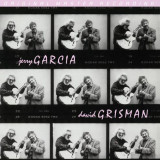
Jerry Garcia and David Grisman - Garcia/Grisman LP 2x12"

Unadorned with any post-production tricks or overdubs, Garcia/Grisman breathes with naturalism and presence. You will effortlessly detect the full body of the instruments, witness the woody grain textures, and get lost in the surprisingly velvety qualities of Garcia's lullaby-like singing. Our pressing also marks the first time this delightfully joyous affair has been issued in analogue form. You will never hear a better-sounding Americana-styled recording.

Pals since the mid-1960s, Garcia and Grisman bonded over their love for traditional folk and bluegrass. The two teamed up amidst what became a gold rush of top-notch productivity and creativity for Garcia. Partnering with bassist Jim Kerwin and percussionist/fiddler Joe Craven, the pair approaches every passage with innate ease, as if either musician could finish the others sentence. The affable chemistry and soothing interplay wash over a selection of songs as notable for their diversity as the way Garcia and "Dawg" turn them into the equivalent of old friends you haven't seen in years.

Exquisite melodies and jewel-shaped notes decorate the simple, convivial structures of tunes that hop, jump, skip, skitter, and bop. The atmosphere is reminiscent of the legendary gypsy-jazz exchanges between Django Reinhardt and Stephane Grappelli, and equally sharp. Swirling with Middle Eastern modality, the closing 16-minute-plus rendition of Grisman's rippling "Arabia" – complete with a section based on a Cuban fold theme - is alone enough worth the price of admission to this sensational session. But there's so much more.

The quartet delves into Celtic themes ("Two Soldiers"), jazz-grass ("Grateful Dawg"), old-world ballads ("Russian Lullaby"), and Appalachian flavours ("Walkin' Boss") with nonpareil skill and soulfulness. Garcia and Grisman's tandem picking throughout epitomize sublime. And for many listeners, the duo's revised version of the Grateful Dead staple "Friend of the Devil" ranks as the finest-ever recorded, the pace patient, the narrative vocals heartfelt, and the synchronous solos tailor-made for the enveloping progression. Better yet, it's all captured in astonishing fidelity.

pre-order now31.05.2024

expected to be published on 31.05.2024

92,40
NUJABES - Other Side of Phase LP

The original beat of "Battlecry," the opening theme of the anime "Samurai Champloo," known as "The Other Side of Phase," will be released.

The song was included on the compilation CD "Listening is Believing" released by Libyus Music, the label from which the albums "metaphorical music"

and "modal soul" were released. In physical form, it was distributed only on CD.

After a long time, "Rainyway Back Home" from "spiritual state" and "Horizon" from "modal soul" were recorded and released on analogue vinyl!

The cover was designed by Meguru Yamaguchi, a Japanese artist based in New York, adding vivid colour and dynamism to the music.

pre-order now25.05.2024

expected to be published on 25.05.2024

34,41
The Selenites Band - Live From The Moon

The Selenites Band returns with a Live album ahead of their 3 Studio album, due for release in late 2024. 8 tracks of psychedelic jazz influenced by Ethio-groove, Swinging Addis and pentatonic grooves, recorded in analog on tape recorders during two concerts between 2021 and 2023.

These recordings are an opportunity to discover 5 previously unreleased tracks, as well as live versions from the previous album "Behind The Mask". The Selenites Band are first and foremost a live band, and we've seen them at the New Morning, in Paris, in Belgium, as well as opening for the prestigious group GONG, on their only date in France, and at many other festivals. The Selenites Band's lively style takes us into a world of traditional music, Shamarnic grooves, spicy jazz and bewitching rhythms. A melodic universe, a music of heady modal trance, a cinematic space of energetic jazz punk! . All compositions are by Antoine "Obi Riddim" Laloux, with the exception of two tracks by Seyoum Gèbrèyès and Tlahoun Gèssèssè.

All sleeves are hand-silk-screened and numbered / limited edition

out of Stock

Order now and we will order the item for you at our supplier.

21,64

Last In: 23 months ago
Lonnie Liston-Smith and The Cosmic Echoes - Astral Traveling LP

Lonnie Liston Smith and the Cosmic Echoes’ groundbreaking albums for Bob Thiele’s Flying Dutchman label don’t get the attention from jazz fans that they should. In fact, among the many distinguished alumni of Miles Davis’ fusion bands, keyboardist Smith and his cohorts arguably ran with Davis’ stylistic breakthrough the farthest. In five albums stretching over four years, Smith and the Cosmic Echoes stretched the fusion aesthetic to embrace post-bop modal and spiritual jazz, funk, rock, pop, and even the smooth jazz, quiet storm, and crossover genres. And if those latter styles raise your traditionalist hackles, Smith imbued all of his records with integrity, vision, and his unique spacy sensibiity; instead of playing it safe or commercial, he fearlessly paved a path for modern jazz musicians to follow (Kamasi Washington, for one, no doubt listened to these records at length). Real Gone Music is proud to present Lonnie Liston Smith’s first two records as a bandleader inside their respective original gatefold jacket artwork… soulful, spiritual, life-enhancing music!

pre-order now15.05.2024

expected to be published on 15.05.2024

37,77
The Jazz Defenders - Memory in Motion LP

UK jazz ensemble The Jazz Defenders release their third album "Memory In Motion" in April on Haggis Records (home of The Haggis Horns and Malcolm Strachan). The Bristol jazz boppers deliver another quality release of original material that takes in their usual diverse mix of influences and genres, from timeless acoustic jazz referencing the classic sounds of Blue Note Records, to a more contemporary fusion where jazz meets soul, funk and hip-hop.

Although they love to mix things up, their roots are in the classic acoustic jazz quintet sound of the late 1950s/early 1960s, back when hard bop and modal jazz ruled. They have already explored this musical path well on their previous albums but they still deliver a couple of classic inspired jazz cuts here. "Chasing Fantasies" and "Fuffle Kerfuffle" both give the band some space to cut loose on solos over swing jazz beats that will keep their original jazz audience happy. The latter bubbles away with a jazz shuffle beat that would make drum legend Art Blakey smile.

"Meanderthal" and "Snakebite Playfight" bring soul to this jazz party. Exactly like jazz legends Lee Morgan/Herbie Hancock/Freddie Hubbard etc did back in the early-mid 1960s. The first is a feel-good, toe-tapping gem that's heavy on the backbeat and short and snappy on the solos, the exact reasons that made it the perfect opening single from the album. "Snakebite Playfight" comes with a jaunty New Orleans shuffle before transforming into a heavy psychedelic soul jazz burner, flipping back with ease to the NOLA shuffle for the Mardi Gras meets bebop piano solo by band leader George Cooper.

"Rolling On A High" is a hip-hop/jazz banger that sees the band continue their collaborations with UK rapper Doc Brown, a perfect combination that began on their second album "King Phoenix''. This time, the Doc spits some old-school block party-style bars over a bouncy uptempo funky beat with the band cooking up some soul stew behind him. Definitely dancefloor material.

Another uptempo jam is the heavy jazz fusion jam "Net Zero". It kicks off with some live broken beat kit playing and piano/bass staccato vamping before taking off into Headhunters territory on the solos, sounding both contemporary and classic at the same time. This is The Jazz Defenders at their fiercest and toughest and delivering a track that will have jazz dancers worldwide in an utter frenzy.

It's not all uptempo numbers or dancefloor-oriented compositions on this album. Two tracks take the musical dynamics right down to give a temporary break from the high-energy numbers. "Take A Minute" has a rolling double bass line locked into the groove while the horns play a lazy and laid-back theme with vibes embellishment, sounding like some trippy independent film soundtrack. Another recurring musical reference point for this band over the years.

The album finishes on a poignant and introspective note with a beautiful piano and double bass feature for George Cooper and bassist Will Harris. It's called "Enigma", it was recorded live in Paris and it closes the album on a peaceful note evoking the music and playing of Bill Evans. The perfect way to close this brilliant third album from The Jazz Defenders.

With Memory In Motion, pianist George Cooper and his band undoubtedly pay great homage to a golden era of jazz music that they love, but also elaborate on this influence with a wealth of modern musical experience, to create their own raw and vibrant compositions. The result is an enthrallingly unique sound that is as danceable as it is listenable.

out of Stock

Order now and we will order the item for you at our supplier.

24,16

Last In: 2 years ago
HOW TO DRESS WELL - I AM TOWARD YOU LP

Limitiertes, farbiges Vinyl exklusiv für den Indie-Handel! In seinen mehr als 15 Jahren als How To Dress Well hat der in LA lebende Musiker Tom Krell mit dem Konzept dessen, was wir hören und wie wir kommunizieren, gespielt, um Musik zu schaffen, die irgendwo zwischen himmlischer Transzendenz und einer Außenseiter-Position für das, was Popmusik sein kann, liegt. I Am Toward You ist das erste neue How To Dress Well-Album seit sechs Jahren und enthält einige seiner bisher lautesten, freiesten und poetischsten Tracks. Krell eröffnet das zweite Jahrzehnt seiner Karriere mit einem Album, das alle Merkmale seiner besten Arbeiten aufweist. Krell begann 2020 zusammen mit wiederkehrenden und neuen Partnern wie CFCF, Chris Votek, Joel Ford, Josh Clancy, Trayer Tryon (Hundred Waters), Brian Allen Simon (Anenon) und Aaron Charles Read, mit der Arbeit an dem, was I Am Toward You werden würde. Er sichtete hunderte von Schnipseln, die er in den vergangenen zehn Jahren aufgenommen hatte, und fand unerklärliche Samples und Tonfetzen, die sich zu einem Album zusammenfügten, das die Dichte früherer Alben zurücknahm, um eine Sammlung von Songs zu schaffen, die zwischen der Gegenwart und der Vergangenheit oszillieren, als ob alles auf einmal geschähe. Eine Erinnerung von vor 20 Jahren hat genauso viel Gewicht wie etwas, das gestern passiert ist. Die ersten Singles und die Ankündigung erhielten eine unglaubliche Resonanz von zahlreichen namhaften Medien, darunter Pitchfork, Stereogum, FADER, Clash, Quietus Brooklyn Vegan und viele mehr. Die Videos für weitere Fokus-Tracks sind fertiggestellt und werden zusammen mit jedem Song veröffentlicht. Digipack-CD sowie als Vinyl mit bedruckter Inenhülle & DLC!

pre-order now10.05.2024

expected to be published on 10.05.2024

31,51
HOW TO DRESS WELL - I AM TOWARD YOU LP

In seinen mehr als 15 Jahren als How To Dress Well hat der in LA lebende Musiker Tom Krell mit dem Konzept dessen, was wir hören und wie wir kommunizieren, gespielt, um Musik zu schaffen, die irgendwo zwischen himmlischer Transzendenz und einer Außenseiter-Position für das, was Popmusik sein kann, liegt. I Am Toward You ist das erste neue How To Dress Well-Album seit sechs Jahren und enthält einige seiner bisher lautesten, freiesten und poetischsten Tracks. Krell eröffnet das zweite Jahrzehnt seiner Karriere mit einem Album, das alle Merkmale seiner besten Arbeiten aufweist. Krell begann 2020 zusammen mit wiederkehrenden und neuen Partnern wie CFCF, Chris Votek, Joel Ford, Josh Clancy, Trayer Tryon (Hundred Waters), Brian Allen Simon (Anenon) und Aaron Charles Read, mit der Arbeit an dem, was I Am Toward You werden würde. Er sichtete hunderte von Schnipseln, die er in den vergangenen zehn Jahren aufgenommen hatte, und fand unerklärliche Samples und Tonfetzen, die sich zu einem Album zusammenfügten, das die Dichte früherer Alben zurücknahm, um eine Sammlung von Songs zu schaffen, die zwischen der Gegenwart und der Vergangenheit oszillieren, als ob alles auf einmal geschähe. Eine Erinnerung von vor 20 Jahren hat genauso viel Gewicht wie etwas, das gestern passiert ist. Die ersten Singles und die Ankündigung erhielten eine unglaubliche Resonanz von zahlreichen namhaften Medien, darunter Pitchfork, Stereogum, FADER, Clash, Quietus Brooklyn Vegan und viele mehr. Die Videos für weitere Fokus-Tracks sind fertiggestellt und werden zusammen mit jedem Song veröffentlicht. Digipack-CD sowie als Vinyl mit bedruckter Inenhülle & DLC!

pre-order now10.05.2024

expected to be published on 10.05.2024

29,62
TONY PRICE - Interview / Discount LP

New York / Toronto producer Tony Price makes his Telephone Explosion debut with the Interview/Discount LP. Made up of two side-long tracks, the record is an electrifying collision of fractured jazz-concréte and combustible downtown funk that crushes the entire continuum between minimalism and maximalism into a hypnotic wreck of metropolitan sound matter. Finding inspiration in the quicksilver impressionism of modal jazz, the manic bombast of early electro-funk and the narcotic non-linearity of 1970s minimalism, Price assembled a crew of jazz-funk heavyweights and free-improv wizards and set out to create an auditory representation of the soundscapes of New York City.

pre-order now22.03.2024

expected to be published on 22.03.2024

37,61
JOHN COLTRANE - My Favorite Things LP 2x12"

John Coltrane's landmark 1961 jazz album My Favorite Things was born of the same recording sessions that yielded a majority of the albums Coltrane Plays the Blues (1962), Coltrane's Sound (1964), and Coltrane Legacy. That My Favorite Things was recorded in less than three days was in itself, remarkable. This record marked a significant turning point in Coltrane's career and showcased his distinctive playing style, which continues to inspire and influence musicians to this day. Coltrane's playing on My Favorite Things can be described as innovative, exploratory, and deeply emotive. The unforced, practically casual soloing styles of the assembled quartet — which includes Coltrane (soprano/tenor sax), McCoy Tyner (piano), Steve Davis (bass), and Elvin Jones (drums) — allow for tastefully executed passages à la the Miles Davis Quintet, a trait Coltrane no doubt honed during his tenure in that band, notes AllMusic. Coltrane was known for pushing the boundaries of jazz and expanding the possibilities of the saxophone as an instrument. Throughout the album, Coltrane's improvisations are characterized by their intensity, virtuosity, and sheer creativity. The title track is a modal rendition of the Rodgers and Hammerstein song "My Favorite Things" from The Sound of Music. Coltrane's use of modal playing made him a pioneer — modal jazz emphasizes improvisation over specific chord progressions. Coltrane's modal approach allowed him to explore a broader range of tonal colors and to create more open and expansive musical landscapes. Each track of this album is a joy to revisit. The ultimate listenability may reside in this quartet's capacity to not be overwhelmed by the soloist. As a soloist, the definitive soprano sax runs during the Cole Porter standard "Everytime We Say Goodbye" and tenor solos on "But Not for Me" easily establish Coltrane as a pioneer of both instruments. In 1998, My Favorite Things received the Grammy Hall of Fame award. The album attained gold record certified status in 2018, having sold 500,000 copies. We've given this definitive reissue of such a landmark album the presentation it deserves: Mastered directly from the original master tape by Ryan K. Smith at Sterling Sound and cut at 45 RPM. Pressed on 180-gram vinyl at Quality Record Pressings, and housed in tip-on old style gatefold double pocket jackets with film lamination by Stoughton Printing.

pre-order now15.03.2024

expected to be published on 15.03.2024

88,19
MILES DAVIS - Milestones LP

Miles Davis created just one studio album with his original sextet: Milestones. And he made every moment count. Pairing with Cannonball Adderley, John Coltrane, Red Garland, Paul Chambers, and Philly Joe Jones, Davis not only laid the groundwork for the modalism that immediately followed but tailored a genuine modern-jazz masterwork laden with performances among the most explosive of his distinguished career. Sandwiched between the more famous 'Round About Midnight and the epochal Kind of Blue, Milestones remains a seminal work of art.

Sourced from the original master tapes and pressed on dead-quiet SuperVinyl, Mobile Fidelity's numbered-edition 180g LP grants each musician their own space amid broad soundstages. Afforded the benefits of a nearly non-existent noise floor and supreme groove definition, this vinyl reissue doubles as a time machine back to the February-March 1958 recording sessions.

Colors, shapes, and dimensions appear in the manner that resembles what you'd glean from behind a studio control room's window. Davis' burnished trumpet is rendered in three-dimensional perspective and seemingly coaxes the band to play with unburdened zest. Coltrane's trademark saxophone teems with lifelike tonality and images with specificity; his solos work in tandem with and against the driving rhythms. Garland's swaggering piano lines? Visualize the keys as he hits full stride, the chords and fills slithering around skeletal frameworks.

Inducted into the Grammy Hall of Fame and selected as a "Core Collection" record by the Penguin Guide to Jazz, Milestones is as famous for its title track – widely considered ground zero for modalism and bolstered by Jones' hallmark "Philly Lick" rim shot – as the players that produced it. The launching pad for many of Davis' improvisational flights, the album teases the explorations Coltrane would soon chase. Davis' own solo work broaches territories that far exceed what he had done in his bop-rooted past. Every song is a highlight.

Take the bravado "Dr. Jackle," featuring a hot-foot pace and bebop strains, or "Sid's Ahead," which continues the album's blues theme while juggling edgy harmonics and inside-out structures. On "Billy Boy," distinguished with an arco bass solo from Chambers, Garland gets a turn in the spotlight and channels the openness practised by one of his heroes, Ahmad Jamal. Even more instructive is the band's reading of Dizzy Gillespie's "Two Bass Hit." Three years removed from the version Davis and company recorded for the trumpeter's Columbia debut, this interpretation demonstrates the extent to which the group had jelled in a relatively short amount of time.


Then there's "Straight, No Chaser," the definitive rendition of Thelonious Monk's signature piece. Coltrane's marbled playing pulls at the tune's borders, Adderley takes liberty with solos, and Davis dances around his mates, at one point quoting "When the Saints Go Marching In" while demonstrating his knowledge of tradition and casting an eye towards the future.

About that future. Garland already had one foot out the door during the Milestones sessions to the extent Davis spells him on "Sid's Ahead." Jones would stick around for a bit longer but soon plot his exit. History proves Davis navigated the changes with visionary aplomb. Yet the chemistry, excitement, and beauty the sextet achieves on Milestones cannot be overstated. This reissue helps put the album in proper perspective – and presents the music the fidelity it deserves.

pre-order now15.03.2024

expected to be published on 15.03.2024

100,80
Kevin Haynes & Grupo Elegua - Ajo Se Po

Back In Stock!

Ajo Se Po is the third album by alto-saxophonist and percussionist Kevin Haynes, released with his band Grupo Elegua. The album integrates musical elements with references to his deepening spiritual understanding. Haynes has created a modal harmonic language incorporating Afro-Cuban melodies and classical kora playing - his alto-sax, infusing the album with a personal 'voice'.

Yoruba spirituality is at the heart of Haynes' musical thinking which also includes both Nigerian and Cuban dimensions. This is especially reflected by the use of recitation and Cuban bata drumming being employed on all tracks, with each piece growing out of a particular bata rhythm. Each such rhythm is dedicated to a particular Orisha, or divinity.

As well as influences from Afro-Cuban, Native Nigerian and folkloric Bata, Haynes' music is a fusion of contemporary jazz incorporating Mandinga folk and praise songs and hard bop.

Kevin Haynes and Grupo Elegua have performed at renowned jazz festivals including Havana Jazz Festival, Cuba and Salamanca Jazz Festival, Spain. Haynes has also featured on Moses Boyd's hit album Displaced Diaspora.

Previously available on digital only, Ajo Se Po is now released on vinyl.

out of Stock

Order now and we will order the item for you at our supplier.

19,29

Last In: 4 years ago
KAREN DALTON - IT'S SO HARD TO TELL WHO'S GOING TO LOVE YOU THE BEST LP

"My favorite singer in the place was Karen Dalton. She had a voice like Billie Holiday's and played the guitar like Jimmy Reed." - Bob Dylan // Karen Daltons Capitol-Debüt aus dem Jahr 1969 ist endlich wieder erhältlich! Light in the Attic freut sich, eine brandneue Ausgabe dieser herzzerreißenden und bluesigen Einführung in die berauschende Welt von Dalton und ihrem tiefen Brunnen voller musikalischer Geheimnisse zu präsentieren. Weltmüde und vom Blues erfüllt, war Daltons unübertroffene interpretatorische Tiefe und emotionale Bandbreite wie keine andere. "It's So Hard To Tell Who's Going To Love You The Best" wurde 1969 für Capitol aufgenommen und reihte sich ein bei klassischen amerikanischen Songwritern wie Lead Belly, Fred Neil und Tim Hardin. Diese Neuveröffentlichung ist die endgültige, rein analoge Version von Daltons umwerfendem Debüt, mit neu gemastertem Audiomaterial von den Original-Capitol-Mastern, dem Original-Artwork von 1969 in einem erweiterten Klappcover, ungesehenen Fotos des Albumfotografen Joel Brodsky und einem Essay, in dem Karens Freunde und musikalische Mitstreiter zu Wort kommen, vom Albumproduzenten und Bassisten Harvey Brooks bis zum Musiker Peter Stampfel von den Holy Modal Rounders. - Features new all-analog mastering by Kevin Gray at Cohearent Audio, direct from the original analog tapes - Pressed at RTI - Includes liner notes by Brian Barr - Featuring unseen photos by legendary photographer Joel Brodsky - LP housed in an expanded gatefold jacket

pre-order now15.03.2024

expected to be published on 15.03.2024

46,85
Olivia Belli - Intermundia

Olivia Belli

Intermundia

12inch19658822251
XXIM Records
23.02.2024

Auf ihrem Album "Intermundia" befasst sich die auf dem Land in der ostitalienischen Region Marche lebende Pianistin und Komponistin Olivia Belli mit spirituellen Orten, die eine besondere Verbindung zwischen Himmel und Erde haben sollen. "An diesen heiligen Orten treffen Himmel und Erde zusammen. Sie beruhigen und besänftigen oder betören und verzaubern und eröffnen einen Blick auf das Transzendente", erklärt Olivia Belli. "Hier wird man von allem Unwesentlichen der modernen Welt befreit und es gibt nur dich und deine Seele".Für die Komposition ihres Albums hat Olivia Belli acht spezielle, spirituelle Orte in ganz Mittelitalien besucht. Jedes Stück auf "Intermundia" repräsentiert das besondere, tiefe Gefühl, das sie dort empfunden hat. So ist erste Single "Valadier" von der einmaligen Atmosphäre des in einer Felsengrotte errichteten Tempels "Tempio di Valadier" inspiriert - ein Jahrhunderte altes Heiligtum in den Frasassi-Höhlen in der Provinz Ancona. Olivia Bellis ruhige, wehmütige Miniatur vermittelt die Hoffnung und das Gefühl der Absolution, das sie an diesem Ort erlebte."'Tempio di Valadier' ist mein Zufluchtsort, an dem ich versuche das wahrzunehmen, was real aber unsichtbar ist, um über die physischen Dinge hinaus den Geist zu formen," erörtert Olivia Belli. "Der Tempel vermittelt eine einzigartige Schönheit und eine besondere Atmosphäre, die von seiner Perfektion ausgeht und im Kontrast zum kahlen Felsen steht." Der Titel "Bet Ha Chaim" ist von dem gleichnamigen, alten jüdischen Friedhof in Pesaro inspiriert. Dieser Friedhof gilt seinem hebräischen Namen nach als "Haus des Lebens". In "Pian Perduto" vertont Olivia Belli die auf einer von drei Tälern umschlossenen Hochebene gelegene Landschaft, in der einst das Dorf Castelluccio zu finden war, bevor es durch ein Erdbeben unwiederbringlich zerstört wurde. "Sybil" ist dem Gipfel des Monte Sibyl im italienischen Apennin gewidmet, wo der Legende nach die Hellseherin Sibylle in einer Höhle lebte. "Sibyl" schließt das Album als Höhepunkt von Olivia Bellis musikalischer Pilgerreise ab. Kompositorisch ließ sich Olivia Belli für ihr Album durch das mittelalterliche Modalsystem der Kirchentonarten inspirieren. Sie ordnet die acht bekannten Modi den jeweiligen Stimmungen der von ihr besuchten Orten zu. Die so entstandenen acht Kompositionen unterbricht sie in der Reihenfolge des Albums mit vier nach dem italienischen Begriff für Atem "Respiro" benannten, ruhigen Klavierzwischenspielen. Sechs der Titel werden von einem Streichtrio begleitet. "Die Orte, die ich auf Intermundia vertonte, sind Plätze, an denen Menschen spirituelles Wachstum suchen und wir uns selbst besser wahrnehmen können. Solche Orte können überall sein - wir müssen sie nur finden" so Olivia Belli.

pre-order now23.02.2024

expected to be published on 23.02.2024

28,99
Schubmodul - Lost In Kelp Forest LP

Das 2.Album von Schubmodul "Lost In Kelp Forest" ist ein Konzeptalbum, das sich thematisch nicht wie beim Vorgänger in den unendlichen Weiten des Weltraums, sondern in einer Unterwasserwelt abspielt. Die sechs hauptsächlich instrumentalen Stücke werden dabei durch Erzählerstimmen belgeitet, die eine zusammenhängende fiktionale Geschichte auf einem dichten atmosphärischen Soundteppich erzählen (Stimmen Alma Chomel aus Frankreich und Shane Wilson aus den USA). Als Fundament donnert das Dreigestirn, geformt in klassischer Besetzung von Gitarre, Bass und Schlagzeug, einen Mix aus Space-, Stoner- und Progressiv-Rock auf's Parkett der gelegentlich durch Synthesizer, Sound- und Sprachsamples ergänzt wird. Verträumte, atmosphärische Passagen treffen auf kolossale Riffs und münden häufig in einem epischen melodischen Zenit aus voluminösen, warmen Sounds, über die sich sanfte bis schnelle Gitarrensoli entladen. Die Kompositionen bedienen sich dabei einer großen modalen Palette und vielseitige Harmonien, die den Zuhörer immer wieder überraschen. Ein sehr hohen Grad an Detailverliebtheit der auch beim mehrmaligen Hören spannend bleibt. Als Inspirationen zu diesem Album diente der Band genretypische Größen wie Elder, King Buffalo, progressivere Bands wie Dream Theatre und Elemente aus der Filmmusik von Hans Zimmer. Das komplette Album wurde in nur 6 Tagen in der legendären Tonmeisterei eingespielt.

pre-order now23.02.2024

expected to be published on 23.02.2024

30,46
BARDO POND - VOLUME 9

Bardo Pond

VOLUME 9

12inchFIRELP708
Fire Records
23.02.2024

Black vinyl, DL card. Bardo Pond's extensive archive recordings series opens up once again with 'Volume 9', an incisive journey into their hypnotic sound. Recorded in the early 2000's it's a heady mix of acoustic ambience and menacing distortion. Infamous purveyors of longform stoner rock, Bardo Pond embrace their sludgestorms with graceful nods to Hawkwind, Earth and my bloody valentine. For anyone uninitiated with the band's tranquilizing sound, Volume 9 leans into their mesmeric practise with reckless abandon. Featuring two tracks recorded with ace percussionist Michael Zanghi (Kurt Vile/The War On Drugs) and the seminal two parter 'War Is Over', a lilting Floydian strum that's invaded - quite literally - by unreconstructed noise. The Zanghi collaboration is an Eastern-facing mantra with percussive flurries and distorted modal shifts - like listening on the other side of feedback. "Effortlessly combining psychedelic inspirations from Pink Floyd's original explorations to the more modern reachings into the beyond" AllMusic

pre-order now23.02.2024

expected to be published on 23.02.2024

27,52
Danielle Boutet - Pièces LP

Danielle Boutet’s P »Pièces« is a mysterious artifact of Quebecois marginalia, self-released in 1985. Moving from languid ennui to high drama, »Pièces« is a dreamy gestalt, an album that borders Chanson, spoken-word, jazz noir, and minimalism, conjured from the chasm between acoustic and electronic realms. »Pièces« allows us a window into the highly intimate songcraft and compositional skill of an artist who longed to linger not in the public eye, but in relation with others and the world around her.

Born in Quebec City, Boutet studied music at the University of Montreal, where she focused on composition and percussion, before becoming involved in Montreal’s feminist and lesbian art scene. Primarily written, performed, and recorded by Boutet, with voice, guitar work, and technical assistance by Sylvie Gagnon, Pièces was created during a paradigm shift in home recording. Originally composed for the piano, Boutet and Gagnon utilized a consumer-friendly Tascam 4-track Portastudio and versatile Yamaha DX-7, alongside guitar, bass, marimba, and the human voice, to expand and contemporize the original composition’s scope.

Inspired by prog rock and British poet and musician Anne Clark, »Pièces« translates Boutet’s influence by moving between sunny, wistful fairytale and dark, wintry dirge. Filled with longing marimba, vertiginous, startling synth pads, and folk guitar, each track on Pièces offers a wholly unique proposition. Some are modal and rife with the ethereal psychological tension of a sci-fi soundtrack, while others are more like entering a smoke-laced lounge, the entertainer embodying seduction.

With the sprechgesang of artists like Serge Gainsbourg, there is an intense intimacy to Boutet’s delivery, sometimes as if she is performing for an audience of one. As one lyric goes, translated to English from French: “Like holograms/ Images from a world/ That inhales souls/ And exudes drama.” Another song contains an excerpt from The Tao of Physics: “The eastern sages specify clearly that they do not identify an ordinary void, but rather, a void having an infinite creative potential.”

To English-language audiences, the album’s title, »Pièces«, might seem to simply refer to the eleven different pieces. The title can also, of course, refer to parts of a larger whole, but Boutet is keen to point out that there is also another meaning: In French, a pièce is a room. On the cover of the original cassette, Boutet is seen sitting on a chair, alone in an empty apartment, a cable snaking at her feet. Listening to »Pièces« is like entering eleven different rooms: whether a study encased in shadow, a greenhouse left to wither in an eternal frost, or a divine nave.

Boutet sold a few dozen copies around Montreal, a scene mostly occupied by the new wave explosion de rigueur, but the inclusion of Pièces in the 1987 issue of Ladyslipper—the North Carolina-based mail order catalog that championed women musicians of all calibers and careers—led to more exposure throughout North America. “In the catalog,” Boutet says, “they included it in the New Age section, but I was, and still am, aware that this album is relatively unclassifiable.”

Boutet would release one more album, titled Musiques Urbaines, before getting pulled in the direction of interdisciplinary art and theory. “Although I never stopped making music, I lost all interest in public diffusion or performance,” Boutet says. Despite her departure from performance and publicly releasing music, she left behind a strange and enthralling document of Montreal’s 1980s feminist fringe, an aural document of the historic moment when self-recorded music and its practical potential became a prismatic reality.

Danielle Boutet’s Pièces arrives February 16, 2024 as part of uncommon¢ (“uncommon sense”), an open-ended, serialized endeavor from Freedom to Spend that provides new meaning for rarefied recordings from music’s outermost fringe.

pre-order now16.02.2024

expected to be published on 16.02.2024

22,98
KLOFINK - VAKANT LP

Klofink

VAKANT LP

12inchFA020
Fasaan Records
09.02.2024

Seasons come and go, so does the moods and modal alternations on Klofink's debut album that we humbly present to the world through this dear label of ours.

Pastoral soundscapes pierce through post-industrial dub riddims on this highly distinctive artefact recorded by Jämtland born and Malmö based producer and musician Linus Jönsson.

The profound and, albeit paradoxically, decorative sounds on this album consists of a minimal-maximal approach; few, well-leveled elements produces an almost ancient sounding sonic signature of sorts, perfect to immerse ourselves in over the many years to come.

out of Stock

Order now and we will order the item for you at our supplier.

18,28

Last In: 2 years ago
YUSEF LATEEF - 1984 LP

Yusef Lateef

1984 LP

12inch700203
Elemental Music
09.02.2024

One of his best albums from the mid-Sixties, Yusef Lateef's 1984 is a truly experimental work. With bassist Reggie Workman, pianist Mike Nock, and drummer James Black, it goes from the eight-minute title track that opens the album to the two-minute, angular modal ballad "Try Love." Reviewer Thom Jurek gave it four out of five stars in AllMusic, stating that "1984 certainly seems to be shaping up into one weird record.

The title is an experimental, noodling improv with Lateef moaning as if in mourning. But then with 'Soul Sister,' featuring Lateef's deep, bluesy, tenor blowing around a gorgeous lyric figure, and Mike Nock's stunningly beautiful soloing on 'Love Waltz,' the entire album moves in another direction, even if it isn't terribly focused. In all, a complex yet emotionally and musically rewarding effort by a master.”

pre-order now09.02.2024

expected to be published on 09.02.2024

34,41
The Circling Sun - Spirits LP

New Zealand’s jazz luminaries have assembled to form an allstar cluster: The Circling Sun.

Originally formed in mid 2000s, the New Zealand based jazz
collective, are set to release their debut LP Spirits, an eight
track collection that channels the greats of spiritual and
modal jazz and their own unique South Pacific spirit and
sensibility.

The group pay homage to Afro-American genre pioneers
such as Alice Coltrane, Yusef Lateef and Pharoah Sanders,
whilst incorporating a whole lot of love and appreciation
for a myriad of Afro, Latin and contemporary musical forms.
The choir used for the recording is made up of mostly
Pacific Island and Maori singers and artists, an important
acknowledgement of and reflection on their countries own
culture and heritage that seeps into all their work.

out of Stock

Order now and we will order the item for you at our supplier.

25,76

Last In: 23 months ago
Lance Gurisik feat. Jeremy Rose - Cull Portal

Lance Gurisikfeat.Jeremy Rose

Cull Portal

12inch33SIDES001W
33 Sides
12.01.2024

‘Cull Portal’ was an idea that came to life during Sydney’s 2nd lockdown in 2021 when the world was in limbo and time felt like it was standing still.
It’s an exploration of modal harmony and improvisation, extrapolated over the course of the eight tracks. Woozing analog synths, grand piano, live drums and Jeremy Rose’s tenor sax set the tone for this fusion spiritual jazz/ electronic release. Cull Portal definitely nod’s its head to the past while intrinsically pushes the genre forward at the same time.
“I set myself the task of writing something as economical as possible that slowly unfolds into larger, more complex structures. The seed idea started as a solo piano piece, which later formed as ‘Cull pt II’ and from a two chord modal vamp. The rest of the album grew organically from there.
The live instrumentation you hear on this album was recorded remote during lockdown and is a true testament to the abilities of the performers, especially Jeremy Rose who brought so much life to the parts.
I was fortunate enough to record the original Yamaha CS-80 (The synth made famous in the cult classic Bladerunner score by Vangelis) down at MESS in Melbourne for the album, once the borders re-opened and we were allowed to travel again.”

pre-order now12.01.2024

expected to be published on 12.01.2024

28,53
Horacio Vaggione - Schall / Rechant LP

A discreet but essential figure in the field of musical creation, Horacio Vaggione has been crafting an ambitious, precise and highly significant body of work for over the last fifty years, coupled with a demanding research activity. This disc offers four purely electroacoustic pieces which illustrate, each in their own way, this singular and fascinating grammar developed by Horacio Vaggione, a complex but fertile grammar which establishes a very special relationship between structure and texture, between matter and formula, to create a fascinating musical space, made up of polyphonies and metamorphoses. (François Bonnet, Paris, 2022)

--

«Schall» (1994), 07’30

Schall exclusively uses piano sounds sampled and processed with various digital techniques. The sound palette focuses on several shapes of various sizes which reiterate, altered to varying degrees, throughout the process. The granular paradigm is clearly assumed here, as is also that of the interactions between various temporal scales. Basically, there is a concern for the articulation of micro-events. The piece essentially plays with low-intensity frames, composed of various planes and punctuated by stronger objects, in a kind of polyphonic dialogue between proximity and distance. (H. V.)

«Rechant» (1995), 15’51

Initially, a few brief sounds of instrumental origin — percussions, flutes, strings. Processed by means of various digital techniques, projected on various temporal scales, analyzed and re-synthesized, worked in their parts (in their saliences), articulated in their edges as well as in their interactions, these sounds show, as Bachelard would say, «pluralism under identity». I thus tried to compose morphologies by targeting properties contained in the material and by projecting them on temporal perspectives of all sizes. The title, an allusion to the old polyphonic technique, refers to the iterative content of these morphologies as well as to the modalities of their interweaving. (H. V.)

«24 Variations» (2001), 09’50

The word «variations» applies here to the morphological transformations of the material, as well as to the various contexts in which these transformations appear. The result can be heard as a continuous interaction between sound particles of different sizes, composed of several layers, reflecting a preoccupation with detailed articulation spanning different time scales. (H. V.)

«Gymel» (2002), 09’25

In Gymel I tried to compose a space-trajectory using layered sounds, produced by morphological operations (splits, clusterings) that spread out from location to location in variously dense objects. The space was treated through phase-decorrelation, a technique which I use extensively, both to create spaces and to locate sounds and movements within a polyphonic (stratified) context. (H. V.)

pre-order now12.01.2024

expected to be published on 12.01.2024

21,22
Elvin Jones - Poly-Currents LP

After two spare trio outings for Blue Note, drummer Elvin Jones expanded his ensemble with additional woodwinds & percussion on his unfettered 1969 post-bop exploration Poly-Currents while maintaining spacious realms for the musicians to delve into on modal originals like ‘Agenda’, ‘Agappe Love’, and ‘Whew’. This stereo Tone Poet Vinyl Edition was produced by Joe Harley, mastered by Kevin Gray from the original analog master tapes, pressed on 180g vinyl at RTI, and packaged in a deluxe tip-on jacket.

pre-order now05.01.2024

expected to be published on 05.01.2024

41,98
Kanaan - Odense Sessions

Kanaan

Odense Sessions

12inchEPR057LP
El Paraiso
12.12.2023

With their 2018 debut album, ”Windborne”, Oslo based trio Kanaan quickly established themselves as one of the most important groups in the youngest generation of psychedelic impro-rockers. As accomplished players – all three educated in jazz – they marry fiery energy with musical intricacy, and possess a rare ability to balance power and delicateness. They devote as much energy to exploring airiness and atmosphere as they do to intensity. On this set the trio join forces with Causa Sui guitar player and producer Jonas Munk, for a series of semi-improvised sonic excursions. Recorded in Jonas Munk's Odense studio, where most of the El Paraiso magic happens, the band explores a looser side of their sound. Jonas Munk joins on guitar on every track, and occasionally synths as well, unlocking new modal possibilities and a Grateful Dead-esque dual-guitar flow that suits the band well. These four tracks unfold in a panoramic slow burn, only occasionally exploding in blazing leads. They know just when to hold back and when to let loose. On the final track, ”Urgent Excursions To The Tundrasphere”, the four eventually let it all rip, creating a complete sonic meltdown. For fans of freeform psychedelic rock this is as essential as it gets.

pre-order now12.12.2023

expected to be published on 12.12.2023

24,79
Boillat Thérace Quintet - Live 1974 + 3 (2x12")

We Release Jazz is sooooo happy to announce the release of a very limited edition double LP for Boillat Thérace Quintet’s 1974 Montreux Jazz Festival performance, with 3 bonus studio tracks! This gem from the Geneva, Switzerland band follows the acclaimed WRJ reissue of their self-titled album (1974) and My Greatest Love (1975), their full-length with Benny Bailey. The 300-copies-only white sleeved DLP comes with the classic obi and features fully remastered audiophile-ready recordings.

Captured live at Montreux Jazz Festival, July 3rd 1974, this rare audio treat features Boillat Thérace Quintet fan-favorites including their infamous homages to Swiss Marmite ("Cenovis"), and Geneva's public transport line Tram 12 ("1224"), as well as remarkable renditions of timeless jazz numbers by Freddie Hubbard ("Straight Life" and "Backlash") and Chick Corea ("Spain").

Additionally, the double LP offers 3 bonus songs taken from the ensemble’s sessions for their self-titled debut: superb takes on Herbie Hancock’s "Dolphin Dance", Wayne Shorter’s "Adam’s Apple", and Claude Engel’s "5th of July, Dulong Street".

All in all it’s a beautiful soul-jazz/modal fest full of flair and heart, one that perfectly encapsulates the vibrant and inventive Swiss jazz scene of the 1970s. A must have for fans and collectors.

This new album from We Release Jazz follows the label’s celebrated releases of the Ryo Fukui catalogue (Scenery, Mellow Dream, A Letter from Slowboat, Ryo Fukui in New York, My Favorite Tune), Hiroshi Suzuki’s seminal Cat album, and Le Cercle Rouge soundtrack by Eric Demarsan among other jazz wonders.

out of Stock

Order now and we will order the item for you at our supplier.

26,85

Last In: 2 years ago
Earth - Primitive And Deadly

Earth

Primitive And Deadly

2x12inchLORD193LPX
Southern Lord
08.12.2023

Red Vinyl

For the first time in their diverse second act, they allow themselves to be a rock band, freed of adornment and embellishment. As much as Carlson’s guitar has always been the focal point of EARTH’s music, it’s been surrounded by consistently diverse instrumentation. Here the dialog between Carlson and Davies drumming remains pivotal, underpinned by the sympathetic bass of Bill Herzog (Sunn O))), Joel RL Phelps, Jesse Sykes and the Sweet Hereafter) and thickened by additional layers of guitar from Brett Netson (Built To Spill, Caustic Resin) and Jodie Cox (Narrows). Perhaps the largest left turn on Primitive And Deadly, though, is the prominence of guest vocalists Mark Lanegan and Rabia Shaheen Qazi (Rose Windows) who transform the traditionally free ranging meditations of EARTH into something approaching traditional pop structures.
On “Rooks Across the Gates,” a song stylistically the closest to the folk inspired modality of Angels Of Darkness, Carlson stretches out into some of his most lyrical playing to date, creating an almost symbiotic relationship between his performance and the vocals of old friend Mark Lanegan. “From the Zodiacal Light,” meanwhile, takes the late 60s San Franciscan/freaked-out jazz-rock transcendence of The Bees Made Honey In The Lion’s Skull and quickly re-appropriates that sound into a musky torch song for the witching hour.
This contradictive tension between a band pushing itself ever-forward whilst surveying their history is reflected in the albums twin recording locales. The foundation of the record was laid in the mystic desert highlands of Joshua Tree, California where EARTH recorded hour after hour of meditations on each track's central theme at Rancho de la Luna. Upon returning to Seattle these were edited, arranged and expanded upon at Avast with the help of long-term collaborator Randall Dunn (who was previously at the helm for the Hex, The Bees Made Honey In The Lion's Skull and Hibernaculum sessions).

pre-order now08.12.2023

expected to be published on 08.12.2023

28,53
Naissam Jalal - Healing Rituals LP

Flutist, vocalist and composer, Naissam Jalal has created a unique and vibrant musical jazz which fuses compositions of great melodic richness, undulating grooves, Middle Eastern music, and a certain modal lyricism evoking in turn the nomadi Lateef, Don Cherry, and the mystical jazz of John Coltrane Naissam Jalal - fute, vocals, nay, daf Clement Petit - Cello, backing vocals Claude Tchamitchian - double bass Zaza Desiderio - drums Recorded at Studio Gil Evens, Amiens, France 2023

pre-order now05.12.2023

expected to be published on 05.12.2023

26,01
McCoy Tyner - Extensions LP

BLUE NOTE TONE POET EDITION: Produziert von Joe Harley, komplett analog von Kevin Gray von den Originalbändern gemastert, RTI-Pressung (180g), stabiles Tip-on-Cover, wattierte Innenhülle. Grant Green - I Want To Hold Your Hand (Gatefold-Sleeve) Die Hits der Beatles und Bossa Novas waren Mitte der 1960er Jahre auch unter Jazzmusikern der letzte Schrei.

Der Gitarrist Grant Green zollte dem 1965 auf seinem Album “I Want To Hold Your Hand” Tribut, interpretierte mit seinem All-Star-Quartett aber zugleich ein paar Jazzstandards. “Auch wenn ein großer Teil des Materials eindeutige Pop-Obertöne aufweist, so klingt das Quartett dennoch auf sehr subtile Weise modern, sowohl bei den rhythmischen Interaktionen als auch bei der Auswahl der Harmonien durch die Solisten.” (AllMusic, 4½ Sterne) McCoy Tyner - Extensions (Single-Sleeve) Für die vier modalen Eigenkompositionen, die der Pianist McCoy Tyner auf “Extensions” vorstellte, hatte er sich - wie das Coverbild gleich signalisiert - von der Musik des afrikanischen Kontinents inspirieren lassen.

Aufgenommen wurde das einschneidende Album 1970 mit einem All-Star-Sextett, das sich durchweg aus Musikern zusammensetzte, die in den Bands von John Coltrane und Miles Davis herausragende Rollen gespielt hatten.

pre-order now01.12.2023

expected to be published on 01.12.2023

41,98
Grant Green - I Want To Hold Your Hand LP

BLUE NOTE TONE POET EDITION: Produziert von Joe Harley, komplett analog von Kevin Gray von den Originalbändern gemastert, RTI-Pressung (180g), stabiles Tip-on-Cover, wattierte Innenhülle. Grant Green - I Want To Hold Your Hand (Gatefold-Sleeve) Die Hits der Beatles und Bossa Novas waren Mitte der 1960er Jahre auch unter Jazzmusikern der letzte Schrei.

Der Gitarrist Grant Green zollte dem 1965 auf seinem Album “I Want To Hold Your Hand” Tribut, interpretierte mit seinem All-Star-Quartett aber zugleich ein paar Jazzstandards. “Auch wenn ein großer Teil des Materials eindeutige Pop-Obertöne aufweist, so klingt das Quartett dennoch auf sehr subtile Weise modern, sowohl bei den rhythmischen Interaktionen als auch bei der Auswahl der Harmonien durch die Solisten.” (AllMusic, 4½ Sterne) McCoy Tyner - Extensions (Single-Sleeve) Für die vier modalen Eigenkompositionen, die der Pianist McCoy Tyner auf “Extensions” vorstellte, hatte er sich - wie das Coverbild gleich signalisiert - von der Musik des afrikanischen Kontinents inspirieren lassen.

Aufgenommen wurde das einschneidende Album 1970 mit einem All-Star-Sextett, das sich durchweg aus Musikern zusammensetzte, die in den Bands von John Coltrane und Miles Davis herausragende Rollen gespielt hatten.

pre-order now01.12.2023

expected to be published on 01.12.2023

41,98
Various - J Jazz Vol. 4: Deep Modern Jazz from Japan (3x12")

With J Jazz volume 4, the BBE J Jazz Bullet Train continues its journey traversing the expansive landscape of modern Japanese jazz. Volume 4 is the latest in the universally praised compilation series exploring the best, rarest and most innovative jazz to emerge from the Far East. Please take your seats for a first-class ticket to J Jazz central. This latest station stop off is with the famed Nippon Columbia label, one of the biggest labels in Japan, whose jazz output embraces every possible style imaginable. Focussing on the key years 1968-1981, J Jazz volume 4 sees compilers Tony Higgins and Mike Peden dig even deeper into their record collections and pull-out tracks that span styles ranging from solo to big band, jazz classical interpretations and heavy jazz rock, to febrile post-bop, white hot samba fusion, and modal psychedelic wig-outs. J Jazz volume 4 features icons such as drum master Takeo Moriyama, keyboard magi Hiromasa Suzuki, Fumio Itabashi, and Masahiko Satoh, and guitar wizards Kazumi Watanabe and Kiyoshi Sugimoto, alongside big band maestros and innovators Nobuo Hara and his Sharps and Flats, and Toshiyuki Miyama’s New Herd. Thunderous basslines nestle alongside glistening runs of electric piano, bubbling synths and air-tight drumming as the heavy psychedelic modal blues of Jiro Inagaki flows with the infectious samba grooves of Takashi Mizuhashi featuring Herbie Hancock; Shigeharu Mukai’s fusion funk epics take the music to another level and Mikio Masuda’s driving keyboard rhythms brings the heat to an incendiary dancefloor zone.

out of Stock

Order now and we will order the item for you at our supplier.

43,66

Last In: 73 days ago
Ralf Schauff - Ralf Schauff LP

Ralf Schauff

Ralf Schauff LP

12inchJUBG03
JUBG
24.11.2023

„ The dissonance, the discord, is the tongue in the cheek of Ralf Schauff's music. Be it that the transverse flute, always underestimated as an instrument of torture, is used or slow synthesizer automations shift the tonality in an agonizingly and unnecessarily cruel way. Without this intention to challenge the listener, the music would have been there before. There are the soundscapes of NEU!, Harmonia or Cluster, the modality of Can, Afrobeat and all kinds of electronics, but also the impression of „Weltmusik" associated with folkloric instruments like the didgeridoo or the recorder. But it's none of these things. It only reminds us of them. And it reminds us listeners that music is also produced. The meta level comes into play and gets in the way of consumption. This is much more amusing, surprising and enriching than the mere description suggests. This is a must hear. It's just insanely fun. " Frank Spilker (Die Sterne)
„ Die Dissonanz, der Missklang, ist die Zunge in der Backe der Musik von Ralf Schauff. Sei es, dass die als Folterinstrument immer wieder unterschätzte Querflöte zum Einsatz kommt oder langsame Synthesizer Automationen die Tonalität qualvoll und unnötig grausam verschieben. Ohne diese Absicht den Hörer herauszufordern wäre die Musik schon mal da gewesen. Da wären die Klanglandschaften von NEU!, Harmonia oder Cluster, die Modalität von Can, Afrobeat und aller möglichen Spielarten von Elektronik, aber auch die mit folkloristischen Instrumenten wie dem Didgeridoo oder eben der Flöte verknüpfte Anmutung von „Weltmusik.“ Das alles ist es aber nicht. Es erinnert nur daran. Außerdem erinnert es uns Hörer daran, dass Musik ja auch hergestellt wird. Die Meta Ebene kommt ins Spiel und stellt sich dem Konsum in den Weg. Das alles ist viel Amüsanter, Überraschender und Bereichernder, als die bloße Beschreibung vermuten lässt. Das muss man gehört haben. Es macht einfach wahnsinnig viel Spass. " Frank Spilker (Die Sterne)
Downloads

out of Stock

Order now and we will order the item for you at our supplier.

18,45

Last In: 2 years ago
Anagrams - Blue Voices LP

Anagrams

Blue Voices LP

12inchBALMAT08
Balmat
06.11.2023

Balmat co-founders Philip Sherburne and Albert Salinas have been fans of Shy Layers’ lilting, Balearic pop for years, so when Shy Layers’ JD Walsh asked us to listen to a set of demos he was working up with fellow Atlanta multi-instrumentalist Jeff Crompton, we jumped at the chance. And once we heard their work in progress, the decision was almost immediate: We have to release this.

Together, Walsh and Crompton are Anagrams, and their debut album together, Blue Voices, might initially seem like a departure from Balmat’s habitually electronic terrain. It’s not ambient music, but it’s also not not ambient music, at least to listeners in the right frame of mind. The two musicians, who met when Walsh moved from Brooklyn to Atlanta in 2016 and began collaborating a few years later, see the music in similarly ambiguous terms. “I like it because it’s not jazz,” jokes Crompton, a veteran and credentialed jazz player. “And JD likes it because it’s jazz.”

Crompton is a musician (and former high-school band teacher) with deep roots in Georgia’s improvised and experimental music scenes; his credits include shows with Eugene Chadbourne, a guest appearance with Godspeed You! Black Emperor, and a collaboration with Duet for Theremin and Lap Steel’s 12-hour drone performance at Knoxville’s Big Ears. On Blue Voices he plays alto and tenor saxophone, clarinet, electric piano, and organ. Walsh has been releasing music as Shy Layers since 2015, when he started self-releasing on Bandcamp; the following year, Germany’s Growing Bin packaged his first two EPs as a self-titled album, and in 2018, Tim Sweeney’s Beats in Space label put out Shy Layers’ sophomore album, Midnight Marker. Where those records channeled Walsh’s playful harmonic instincts into wistful songwriting with tropical overtones, on Blue Voices he lets his experimental tendencies take the lead. Playing acoustic and electric guitars, electric lap steel, bass, Moog Matriarch, modular synth, and programmed drums, he concentrates his energies on richly textural layers and abstract assemblages of tone color.

Across the album’s 11 tracks, there are faint echoes of familiar touchstones: the atmospheric twang of Daniel Lanois’ pedal steel on Apollo: Atmospheres and Soundtracks; the mercurial modal runs of Ethio- jazz; the late-summer calm of Fuubutsushi; the versatility of players and composers like Patrick Shiroishi and Sam Gendel, who are asking similar questions about where jazz ends and some other, nameless territory begins. Mostly, though, what Blue Voices captures is the quixotic sound of two restless musical imaginations making it up as they go along, two voices discovering a shared language in a hitherto unexplored shade of blue.

out of Stock

Order now and we will order the item for you at our supplier.

22,27

Last In: 2 years ago
Boozoo Bajou - Finistère LP 2x12"

Boozoo Bajou

Finistère LP 2x12"

2x12inchPILOTTON020
PILOTTON
03.11.2023

25 Jahre nach ihrem ersten 12" Release "Night over Manaus" präsentieren Boozoo Bajou ihr 5. Studioalbum. Die Nürnberger Downbeat Funkster haben 12 Tracks parat, die am 3.11.2023 auf ihrem eigenen Label Pilotton unter dem Namen "Finistère" veröffentlicht werden. Das Doppel-Vinyl zeigt neben der digitalen Veröffentlichung die Rückkehr von Boozoo Bajou zu ihren Wurzeln, die sie 2001 mit ihrem zeitlosen Debütalbum "Satta" manifestierten. Als reines Downtempo-Album schafft es "Finistère", all diese Elemente und Einflüsse zu einem warm klingenden Hörerlebnis zu verschmelzen.

out of Stock

Order now and we will order the item for you at our supplier.

25,17

Last In: 8 months ago
AKIRA MIYAZAWA, MASAHIKO SATO MASAHIKO TOGASHI & YASUO ARAKAWA - FOUR UNITS JAPANESE JAZZ MEN SERIES VOL. 3

Repress!

Four Units is a kind of Japanese jazz “all star”. Recorded in Tokyo on April 1969, it was released the same year on Union records.
On the first two long songs that open this album, “Four Units” and “Dull Slumber”, we can feel the influence of the “avant-garde” scene of US jazz (and in particular ESP Disk), without however the music sounding too “free”. A whole new vibe on the astonishing cover of “Scarborough Fair”, in a modal style, where the shadow of McCoy Tyner seems to hang over the piano.
The next two tracks, “Rainbow Trout” and “Black Bass”, are still pretty much along the same line, sometimes oscillating towards “hard bop”, the album ending in a blaze of glory with a solo by Masahiko Togashi. While this album had a second pressing in Japan in the 70s, this is the first time it has been reissued with its gatefold cover. Musicians : Tenor Sax, Flute - Akira Miyazawa Piano - Masahiko Sato Drums - Masahiko Togashi Bass - Yasuo Arakawa Recorded in Tokyo, April 2 and 25th 1969

pre-order now20.10.2023

expected to be published on 20.10.2023

28,15
Nick Walters - Marine Moods

Nick Walters

Marine Moods

12inchDOT004LP
Dot Records
13.10.2023

Trumpeter, composer and bandleader Nick Walters returns to his D.O.T. Records imprint with his majestic new album, Marine Moods. The album revives his sextet, who last appeared together on his 2019 album 'Active Imagination' (22a). This stellar collection of musicians picks things up where they left off, delivering an exquisite suite of contemporary jazz-fusion, gleaning the very best elements from afro, modal and spiritual jazz.

pre-order now13.10.2023

expected to be published on 13.10.2023

23,74
Sven Wunder - Late Again LP

Sven Wunder returns with his highly anticipated fourth full-length album Late Again out September 29th on Piano Piano Records. The album compiles some of his most admired compositions to date, like the jazz ballads ”Snowdrops” and ”Asterism Waltz”, and the modal jazz pieces ”Jazz at Night”, and ”Stars Align”. As well as new compositions such as ”Sundown”, ”Pop-Jazz Structures”, and ”Take A Break” with brightly colored textures and vibrant melodies which have become Wunder’s trademark, and so forth.

The Swedish artist and composer have previously catapulted himself onto the global stage of contemporary grooves with his three critically acclaimed albums Eastern Flowers (2019), Wabi Sabi (2020), and Natura Morta (2021), along with a handful of singles such as Harmonica And.... (2023) Sun- Kissed (2022), and Mosaic (2022). His releases have appealed to psych and prog listeners, folk and jazz aficionados, hip-hop connoisseurs, bonafide tastemakers, and fans across the globe which have cemented Wunder’s position as a gifted composer and a musical force to be reckoned with.

When the sun hovers near the horizon, the rays of white sunlight are scattered out of the beam by small particles and molecules in the atmosphere that sprinkle the sky with brilliant hues indicating that the day starts to fade. As night begins to fall, tree-tops redden and begin to glow. Darkness closes in and falls like a blanket covering the sky. It is late again and all is in shadow below. It is when stars align and dreams come true.

Sven Wunder thrives at nightfall and welcomes the horizon of beginnings on Late Again, a collection of nocturnal jazz pieces that depict shooting stars and scattered beams from the setting sun, with an emphasis on gentle compositions for piano and orchestral pop-jazz arrangements for flute, brass, and strings.

out of Stock

Order now and we will order the item for you at our supplier.

22,65

Last In: 2 years ago
Elephantine - Moonshine

Elephantine

Moonshine

12inchSR551V-C
Sub Rosa
29.09.2023

Maurice Louca & his band Elephantine announce Moonshine, shining brightly with a live, raw, collective sound. Maurice Louca's band is incredible: double drummers Tommaso Cappellato & Özün Usta, Piero Bittolo Bon on alto, Daniel Gahrton on baritone and Isak Hedtjärn on clarinet, Rasmus Svale Kjærgård Lund on tuba, Rosa Brunello on bass, Els Vandeweyer on vibraphone, Louca on guitar/lap steel/synth.

As Asher Gamedze puts it in his essay: "Abstract territories of freedom, always grounded, expansive, multiple, internally differentiated, and elephantine."

One of the most gifted, prolific and adventurous figures on Egypt's thriving experimental arts scene, Louca has in recent years garnered a global reputation through three previous solo albums and an expanding, evolving lineup of genre-defying collaborations. The Wire called his 2014 sophomore solo effort, Salute the Parrot, "remarkable music-dense, driven and splashed with colour.

For Louca, Elephantine serves as both the pinnacle of his wide-ranging experience and a bold next step in his development as a composer, arranger and bandleader, from Cosmic Jazz, African and World music to transcendental modal traditions. The music-from its pensive lulls through its stretches of hard-grooving hypnosis and moments of avant-jazz.

pre-order now29.09.2023

expected to be published on 29.09.2023

20,97
Mark Fell & Rian Treanor - Last Exit LP (2x12")

Dreams are made and displaced on Mark Fell & Rian Treanor’s oneiric electro-acoustic inception 'Last Exit', borne from long days in the family garden, and assembled into a mesmerising masterpiece of minimalist modal rhythm and atmospheric exploration, into rapt smallsound detailing in breathtaking form. It’s a bit like listening to Virginia Astley’s ‘From Gardens Where We Feel Secure’, with washes of Autechre seeping into the mix from outside.

‘Last Exit…’ originally appeared in a different form as a cassette release for our Documenting Sound series in 2021, and was edited this year by Mark and Rian for this new expanded and altered edition, mastered by Rashad Becker. It renders a painterly,psychedelic, and diaristic depiction of sublime atmospheric tension, occasionally ruptured by their typical, asymmetric rhythm impulses in a form that rudely transcends their respective aesthetics. Across four parts, they kern, juxtapose and diffract synthesised percussion and field recordings into polymetric arrangements riddled with timbral nuance of a highly unpredictable nature.

While patently inflected with nods to Indonesian gamelan, Ugandan folk, Indian Carnatic classical, Morton Feldman-esque minimalism, free jazz improvisation and a sort of rhythmic cubism that speaks to their mutual, voracious listening habits and tastes, the results are arguably without direct compare. Attentive listeners will recognise, however, that ‘Last Exit’ effortlessly transcends their respective styles, achieving a new high watermark of imaginary future-hyperfolk expressed in a sort of personalised but highly relatable meta-musical language.

Seriously, they’re working beyond known conventions here; opening to a sublime frisson of Feldman-esque keys, birdsong and distant car engines, and closing to a combo of just-intoned drone and wafts of distant ballroom music. The 80 minutes in between feel like returning to a dream, with flashes of FM strings dabbed to sloshing rhythms and domestic detritus, tilting into a nervously tentative tension ruptured with abstract dance dynamism and angular free jazz ballistics.

The rejigged recordings also reflect the fidelity of memory recall, expressing an altered perspective on their time spent in the multigenerational family’s Rotherham garden during spring/summer 2020, replete with their mum/grandmother on piano and overheard singing and in convo, but now fraught with a more melancholic, distempered quality that makes for a genuinely unforgettable listening experience. A long-form isolationist fantasy, consider it crucial listening if yr into Robert Ashley's 'Automatic Writing', Graham Lambkin, Autechre or Nuno Canavarro.

pre-order now29.09.2023

expected to be published on 29.09.2023

40,55
Pharoah Sanders - PHAROAH LP 2x12"

Pharoah Sanders

PHAROAH LP 2x12"

2x12inchLPLBOP8008
LUAKA BOP
14.09.2023

This record"s origin story is as elusive as Pharoah was about everything Pharoah. It was born out of a misunderstanding between him and the India Navigation producer Bob Cummins, and was recorded at a crossroads in his career with a group of musicians so unlikely that they were never all in the same room again. There was a guitarist who was also a spiritual guru, an organist who would go on to co-write and produce "The Message", and a classically trained pianist - his wife at the time, Bedria Sanders - who played the harmonium despite never having seen one. At times ambient and serene, at others funky and modal, PHAROAH radically departed from his earlier work. It would become one of the artist"s most beloved records and one of the great works of the 20th century. With Pharoah Sanders" blessing, the limited edition embossed version of this 2 LP box set presents the definitive, remastered version of PHAROAH, his seminal record from 1977, along with two previously unreleased live performances of his masterpiece "Harvest Time". This is the first official rerelease of PHAROAH, which has been bootlegged often since its original release in 1977. These exceptional live versions of "Harvest Time" - which Pharoah performed during an intense European tour in the summer of "77 and which are included here for the first time - turn the original, beloved composition on its head. PHAROAH will be released a year after the legendary tenor saxophonists" untimely passing, and two years after the release of what was to become his final album, the widely acclaimed PROMISES, a collaboration between the composer Floating Points and Pharoah Sanders, featuring the London Symphony Orchestra. The first pressing of this limited edition box set comes with an embossed cover and is accompanied by never-before-shared photographs and ephemera, as well as a 24-page booklet featuring rarely seen photographs, interviews with many of the participants, and a conversation with Pharoah himself.

out of Stock

Order now and we will order the item for you at our supplier.

47,27

Last In: 2 years ago
Ronan - Leaves of Life

Ronan

Leaves of Life

12inchANP002
Another Place
11.09.2023

Ronan lands on nascent X-Kalay sub-label Another Place with renewed focus and a new EP. Musing on personal crossroads, ‘Leaves of Life’ is a highly evocative contemplation on the tides of life. It’s the culmination of a personal arc having sat with the material for six years, further refining the lush, introspective sound that’s characterised his output to date.

The outcome feels similarly unhurried; a pristine, genre-spanning exploration rendered with meticulous attention to detail. Soul-bearing stuff interspersed with words of reassurance through quietly spoken vocals.

The opener strives for utopia. Carried away on a warm current, ‘Song of Surrender’ initiates with a gorgeous unfurling of life-affirming trance that begs repeat immersion. Comparatively direct, ‘Cure for Toxicity’ comes on a breaks-driven flex before a fleeting switch-up into 2-step territory.

Supple groove and jazz modalities fuel airily introspective D&B as we shift focus to title track ‘Leaves of Life’. Then, finally, Ronan closes things out with a ritual purification of sorts. Deploying more breaks but bordering on new age, ‘Sacral Dub’ exudes a soothing, massaging quality with dubby tendencies in full effect.

out of Stock

Order now and we will order the item for you at our supplier.

12,82

Last In: 2 years ago
Masaru Imada Trio - Green Catapillar

Japanese jazz is sadly one of best-kept secret. But, it would be stupid to not discover "Green Caterpillar" by Masaru Imada trio + 2. Led by Masaru Imada and his Fender Rhodes, the record opens with " A Green Caterpillar", a 11 minutes piece whose the groove is somewhat reminiscent of Marc Moulin and his Placebo band. "A Straight Flash" continues along this line, while on "Blue Impulse" and "Spanish Flower" Masaru Imada uses the piano in a much more modal style.

pre-order now08.09.2023

expected to be published on 08.09.2023

33,57
Horace Tapscott with the Pan Afrikan Peoples Arkestra - Live At IUCC LP 2x12"

The music of Horace Tapscott and The Pan-Afrikan Peoples Arkestra is part Sun Ra Arkestra, part John Coltrane, part Art Ensemble of Chicago. This groundbreaking and monumental album explores the multi- faceted deep and spiritual jazz of Tapscott - Afro-centric rhythms, hypnotic bass lines, Tapscott's stabbing modal piano playing and stunning flute and horn arrangements. "The Pan-Afrikan
Peoples Arkestra - Live at I.U.C.C." is a true high point in the cannon of great independent underground jazz music recorded during this era.

pre-order now01.09.2023

expected to be published on 01.09.2023

61,30
CHASSOL - Indiamore

Chassol

Indiamore

12inchTRILPFR042
Tricatel
30.08.2023

The first encounters of Chassol with Indian music date from his teenage years where, thanks to John Mc Laughlin and his band Shakti, he could hear ragas, rhythm structures and Indian instruments mixed with jazz.

Then came Ravi Shankar, Hariprasad Chaurasia and the devotional songs.
More recently, the documentaries by Louis Malle (Phantom India) and by Johan van der Keuken (The Eye Above The Well) left their marks on him and after having harmonized New-Orleans in "Nola Cherie", the choice to attempt at an harmonization of life, sounds, motifs, noises and traffic from Northern India quite naturally grew on him.

In Calcutta and Varanasi, India's most ancient city, he went to shoot sitarists, percussionists, singers, dancers, the kids, the Ganga, the city and the apparent chaos of the traffic.

Indiamore spreads over four movements, one same tonal harmonic suite of warm and real pop chords that marries the modal Indian music usually resting on a sole continuous bass line played by the tampura.

In repeating these images, in treating their sound as a music material and in harmonizing the actors' speech with his own harmonic obsessions, he achieves to blend a documentary approach into a

pre-order now30.08.2023

expected to be published on 30.08.2023

19,96
FREDDIE HUBBARD - BREAKING POINT! (Tone Poet)

"One of the more remarkable albums in Freddie Hubbard’s formidable Blue Note oeuvre, Breaking Point! was recorded in May 1964 shortly after the trumpeter left Art Blakey’s Jazz Messengers to form his own band. The quintet—with James Spaulding on alto saxophone and flute, Ronnie Mathews on piano, Eddie Khan on bass, and Joe Chambers on drums—moves assuredly from free-form playing and modal jazz to the blues and balladry on this five-song set of originals by Hubbard and Chambers.
This stereo Tone Poet Vinyl Edition was produced by Joe Harley, mastered by Kevin Gray from the original analog master tapes, pressed on 180g vinyl at RTI, and packaged in a deluxe gatefold tip-on jacket."

pre-order now17.08.2023

expected to be published on 17.08.2023

41,13
MILES DAVIS - Milestones

Miles Davis created just one studio album with his original sextet: Milestones. And he made every moment count. Pairing with Cannonball Adderley, John Coltrane, Red Garland, Paul Chambers, and Philly Joe Jones, Davis not only laid the groundwork for the modalism that immediately followed but tailored a genuine modern-jazz masterwork laden with performances among the most explosive of his distinguished career. Sandwiched between the more famous 'Round About Midnight and the epochal Kind of Blue, Milestones remains a seminal work of art.

Sourced from the original master tapes and pressed on dead-quiet SuperVinyl, Mobile Fidelity's numbered-edition 180g LP grants each musician their own space amid broad soundstages. Afforded the benefits of a nearly non-existent noise floor and supreme groove definition, this vinyl reissue doubles as a time machine back to the February-March 1958 recording sessions.

Colors, shapes, and dimensions appear in the manner that resembles what you'd glean from behind a studio control room's window. Davis' burnished trumpet is rendered in three-dimensional perspective and seemingly coaxes the band to play with unburdened zest. Coltrane's trademark saxophone teems with lifelike tonality and images with specificity; his solos work in tandem with and against the driving rhythms. Garland's swaggering piano lines? Visualize the keys as he hits full stride, the chords and fills slithering around skeletal frameworks.

Inducted into the Grammy Hall of Fame and selected as a "Core Collection" record by the Penguin Guide to Jazz, Milestones is as famous for its title track – widely considered ground zero for modalism and bolstered by Jones' hallmark "Philly Lick" rim shot – as the players that produced it. The launching pad for many of Davis' improvisational flights, the album teases the explorations Coltrane would soon chase. Davis' own solo work broaches territories that far exceed what he had done in his bop-rooted past. Every song is a highlight.

Take the bravado "Dr. Jackle," featuring a hot-foot pace and bebop strains, or "Sid's Ahead," which continues the album's blues theme while juggling edgy harmonics and inside-out structures. On "Billy Boy," distinguished with an arco bass solo from Chambers, Garland gets a turn in the spotlight and channels the openness practised by one of his heroes, Ahmad Jamal. Even more instructive is the band's reading of Dizzy Gillespie's "Two Bass Hit." Three years removed from the version Davis and company recorded for the trumpeter's Columbia debut, this interpretation demonstrates the extent to which the group had jelled in a relatively short amount of time.


Then there's "Straight, No Chaser," the definitive rendition of Thelonious Monk's signature piece. Coltrane's marbled playing pulls at the tune's borders, Adderley takes liberty with solos, and Davis dances around his mates, at one point quoting "When the Saints Go Marching In" while demonstrating his knowledge of tradition and casting an eye towards the future.

About that future. Garland already had one foot out the door during the Milestones sessions to the extent Davis spells him on "Sid's Ahead." Jones would stick around for a bit longer but soon plot his exit. History proves Davis navigated the changes with visionary aplomb. Yet the chemistry, excitement, and beauty the sextet achieves on Milestones cannot be overstated. This reissue helps put the album in proper perspective – and presents the music the fidelity it deserves.

pre-order now14.08.2023

expected to be published on 14.08.2023

100,80
Jerry Garcia and David Grisman - SHADY GROVE 2x12"

Unadorned with any post-production tricks or overdubs, Garcia/Grisman breathes with naturalism and presence. You will effortlessly detect the full body of the instruments, witness the woody grain textures, and get lost in the surprisingly velvety qualities of Garcia's lullaby-like singing. Our pressing also marks the first time this delightfully joyous affair has been issued in analogue form. You will never hear a better-sounding Americana-styled recording.

Pals since the mid-1960s, Garcia and Grisman bonded over their love for traditional folk and bluegrass. The two teamed up amidst what became a gold rush of top-notch productivity and creativity for Garcia. Partnering with bassist Jim Kerwin and percussionist/fiddler Joe Craven, the pair approaches every passage with innate ease, as if either musician could finish the others sentence. The affable chemistry and soothing interplay wash over a selection of songs as notable for their diversity as the way Garcia and "Dawg" turn them into the equivalent of old friends you haven't seen in years.

Exquisite melodies and jewel-shaped notes decorate the simple, convivial structures of tunes that hop, jump, skip, skitter, and bop. The atmosphere is reminiscent of the legendary gypsy-jazz exchanges between Django Reinhardt and Stephane Grappelli, and equally sharp. Swirling with Middle Eastern modality, the closing 16-minute-plus rendition of Grisman's rippling "Arabia" – complete with a section based on a Cuban fold theme - is alone enough worth the price of admission to this sensational session. But there's so much more.


The quartet delves into Celtic themes ("Two Soldiers"), jazz-grass ("Grateful Dawg"), old-world ballads ("Russian Lullaby"), and Appalachian flavours ("Walkin' Boss") with nonpareil skill and soulfulness. Garcia and Grisman's tandem picking throughout epitomize sublime. And for many listeners, the duo's revised version of the Grateful Dead staple "Friend of the Devil" ranks as the finest-ever recorded, the pace patient, the narrative vocals heartfelt, and the synchronous solos tailor-made for the enveloping progression. Better yet, it's all captured in astonishing fidelity.

pre-order now14.08.2023

expected to be published on 14.08.2023

99,37
Tim Hecker - No Highs 2x12"

Tim Hecker

No Highs 2x12"

2x12inchKRANK239LP
Kranky Records
24.07.2023

The latest by Canadian composer Tim Hecker serves as a beacon of unease against the deluge of false positive corporate ambient currently in vogue.

Whether taken as warning or promise, No Highs delivers – this is music of austerity and ambiguity, purgatorial and seasick. A jagged anti-relaxant for our medicated age, rough-hewn and undefined.

Morse code pulse programming flickers like distress signals while a gathering storm of strings, noise, and low-end looms in the distance. Processed electronics shiver and shudder against pitch-shifting assemblages of crackling voltage, mantric horns (including exquisite modal sax by Colin Stetson), and cathedral keys.
Throughout, the pieces both accrue and avoid drama, more attuned to undertow than crescendo. Hecker mentions “negation” as a muse of sorts – the sense of tumult without bombast, tethered ecstasies, an escape from escapism. His is an antagonism both brusque and beguiling, devoid of resolution, beckoning the listener ever deeper into its greyscale alchemies of magisterial disquiet.

out of Stock

Order now and we will order the item for you at our supplier.

36,60

Last In: 75 days ago
Idris Muhammad - Black Rhythm Revolution!

Black Rhythm Revolution! Is the first solo album from the jazz-funk legend Idris Muhammad, a New Orleans-bred rhythm king who successfully made the leap from the finest soulful jazz records of the ’60s to the nastiest fusion funk of the ’70s. Here we catch him literally on the cusp of the two in 1970, with one good foot in the get-down of “Express Yourself” and “Super Bad,” and the other in his own heady excursions into modal rhythm and melody, accompanied by virtuosos Kenny Barron, Ron Carter, Melvin Sparks, who came together for sessions overseen by legendary producer Rudy Van Gelder. This 180-gram reissue of Black Rhythm Revolution! was cut from the original analog tapes by Kevin Gray and pressed at RTI, and comes packaged in a tip-on jacket.

pre-order now14.07.2023

expected to be published on 14.07.2023

45,17
Byard Lancaster - It’s Not Up To Us LP

Byard Lancaster was a composer/multi-instrumentalist born in Philadelphia in 1942. He started playing alto saxophone at an early age and later took up flute and bass clarinet. While attending Berklee College of Music, Lancaster and pianist Dave Burrell organized late-night jam sessions with fellow students and touring musicians. In 1965, he moved to New York and quickly became part of the city's burgeoning scene – playing with jazz luminaries such as Archie Shepp, Sunny Murray, Bill Dixon and Marzette Watts.

It's Not Up To Us, Lancaster's 1968 debut as a leader, was originally released on Vortex, a subsidiary of Atlantic responsible for first albums by Chick Corea, Keith Jarrett and Sonny Sharrock. Featuring guitarist Sharrock (another Berklee alum), It's Not Up To Us is true fire music – fusing elements of free jazz, soul/R&B and traditional folk song.

On the opening title track, Lancaster's luminous flute draws the listener in, while bassist Jerome Hunter grounds the tune with a simple descending theme over Keno Speller and Eric Gravatt's syncopated rhythms. "John's Children," a reference to the group's status as post-Coltrane players, showcases the modal strumming of Sharrock's steady drones as Lancaster cries into the void. After repeated listens, Lancaster's original compositions become visceral aural memories ingrained in the ear, while the standards ("Misty" and "Over The Rainbow") sound the most avant-garde pieces on the album.

This first-time vinyl reissue is recommended for fans of Albert Ayler, Don Cherry and Pharoah Sanders.

pre-order now30.06.2023

expected to be published on 30.06.2023

28,78
Natural Information Society - Since Time Is Gravity LP 2x12"

The next chapter of the Natural Information Society is here. Since Time Is Gravity, credited to Natural Information Society Community Ensemble with Ari Brown, presents a newly expanded manifestation of acclaimed composer & multi-instrumentalist Joshua Abrams nearly 15 year, 7 albums &-counting flagship ensemble. Joining the core NIS of Abrams (guimbri & bass), Lisa Alvarado (harmonium) Mikel Patrick Avery (drums) & Jason Stein (bass clarinet) are Hamid Drake (percussion), Josh Berman & Ben Lamar Gay (cornets), Nick Mazzarella & Mai Sugimoto (alto saxophones & flute), Kara Bershad (harp) & Chicago living legend of the tenor saxophone Ari Brown. Recorded live to tape at Electrical Audio & The Graham Foundation, cover painting Vibratory Cartography: Nepantla, by Lisa Alvarado. 2xLP on Eremite USA, 2xLP & CD on Aguirre/Eremite Europe. Out 14-04.

Since first developing Natural Information Society in 2010, Joshua Abrams has been gradually expanding the group’s conceptual underpinnings, its musical references & the sheer number of the group’s members. Its music is, in a sense, an expansive form of minimalism, based in repeated & overlaid rhythmic patterns, ostinatos & modality. Its roots, its scale & its meaning become clearer in time. If time is gravity, it also allows us to carry more. Having begun as fundamentally a rhythm section with Abrams’ guimbri at its core, the version here can stretch to a tentet, including six horns.

Abrams has been expanding his minimalism gradually, but he has long understood a key to minimalism’s potential: the breadth of its roots in the late 1950s & early 1960s, ranging from the dissatisfaction of young European-stream composers with the limitations of serialism to the simultaneous dissatisfaction of jazz musicians with the dense harmonic vocabulary of bop & hard bop. The former began exploring rhythmic complexity & narrow tonal palates in place of harmonic abstraction (Steve Reich’s Drumming, Philip Glass’ Music with Changing Parts; perhaps above all Terry Riley’s In C & his late ‘60s all-night organ & loop concerts); the later reduced dense chord changes to scales (signally with Miles Davis' Kind of Blue, but rapidly expanding with John Coltrane’s vast project). In the 1950s the LP record opened the world with documentation of Asian & African musics, key influences on both minimalists & jazz musicians. If John Coltrane’s soprano saxophone suggested the keening shehnai of Bismillah Khan, the instrument was rapidly taken up by two key minimalists, LaMonte Young & Riley, similarly appreciative of its flexible intonation, the same thing that kept it out of big bands.

If the guimbri, the North African hide-covered lute that Abrams plays with NIS, involves a rich tradition of hypnotic healing music associated with the Gnawa people, Abrams’ music also touches on other musics as well — other depths, memories & healings, different drones, rhythms & modes. As the group expands on Since Time Is Gravity, he has made certain jazz traditions in the same stream more explicit as well. If there is a mystical & elastic quality involved in the experience of time, both in direction & duration, you will catch it here. The parts for the choir of winds expand on the roles of Abrams’ guimbri, Mikel Patrick Avery & Hamid Drake’s percussion & Lisa Alvarado’s harmonium: at times, the winds are almost looping in the tentet version, each hitting a repeating note in turn, at once drone & distinct inflection on temporal sequence. The brilliance of the work resides in Abrams’ compositions, the NIS’ intuitive execution & in Ari Brown’s singular embodiment of the great tenor saxophone tradition, including the oracular genius of Eddie “Lockjaw” Davis, & Yusef Lateef. The three pieces by the expanded NIS featuring Brown —the opening “Moontide Chorus” & “Is” & the ultimate “Gravity”— have an immediate impact, & togther might be considered a kind of concerto for tenor saxophone. Here Brown presses almost indistinguishably from composed melody to improvised speech, getting so close to language that he might have a text. Everything here is a sign. Note the tap of the Rhythm Ace that links “Moontide Chorus” to “Is”, the attentive heart always present, even when signed by a machine. There’s a link here to the methodologies & meanings of dub music & the linear & vertical collage of beats, textures & tongues: treated with reverence, a sample of a beat-box can be as soulful, as hypnotic, as a mbira or a tamboura. If those pieces with Brown are heard as a suspended concerto, the three embrace & enfold the other works, like the sepals of a flower. That placement will also touch on the mysteries of our perception of time.

Particularly in “Is”, but elsewhere as well, a phenomenon of transcendence arises in which time appears to be tripartite, at once moving backwards & forwards & standing still. This is an act of technical brilliance certainly, but also an illumination of music’s ability to represent temporal consciousness through polymetrics. This particular listener has only heard it before in a few places, including the horn shouts & bowed basses of Coltrane’s Africa, in moments of Charles Mingus’ The Black Saint & the Sinner Lady, in certain pieces where tapes were literally running backwards, & earlier still in Dizzy Gillespie’s Cubana Be, Cubana Bop, in which the composer George Russell & conguero Chano Pozo found a music that spoke at once in the voices of Stravinsky’s Rite of Spring & the vestigial rites, rhythms & songs of the Yoruba language & Santeria religion of inland Cuba.

In Joshua Abrams’ compositions & the realization of them by the NIS, in the time of one’s close listening & memory thereof, distinctions between the “natural” & the “social”, the “quotidian” & the “transcendent” are erased, suspended or perhaps irrelevant. Consider two of the ensemble pieces, one named for nature, the other social science. In “Murmuration” the repeated wind figures of flute & alto saxophone combine with the interlocking patterns of harp, guimbri & frame drum (tar) to create a perfect moving stillness, not an imitation but a witness to the miracle of the starlings’ astonishing collective art, a surfeit of beauty that might be the ultimate defense tactic.

“Stigmergy” takes its name & concept from the Occupy movement’s Heather Marsh, who proposes a social system based on a cooperative rather than competitive models, one in which ideas are freely contributed & developed as ideas rather than an individual’s property. In its form, Abrams’ “Stigmergy” is the closes thing to traditional jazz, a series of accompanied solos by each of the wind players. However, the composed accompaniment is a radically collectivist notion: a repeated rhythmic figure, call it ostinato or riff, in which the different winds each play only a note or two of the figure, a concept both more collectivist & individualistic in its conception than any typical unison figure. It suggests another of the underlying recognitions that propel the Natural Information Society, the group as social organism, the teleology of hypnotic anarchy, all parts in place, functioning systematically, evolving & expressing itself, its nature & society, as a transformative organism.

George Lewis has described music as “a space for reflection on the human condition”. This suggests that, rather than a “distraction”, at least some music might serve as a distraction from distraction. It’s a focus, a clarity, a awareness, an external invitation to interiority, as if music itself is a model for form & contemplation, an organism contemplating for us or as us. If that is a possibility, & I am sure I have heard such musics, than this music is among them. How many of our rhythms, melodies & harmonies (cultural, historical, biological, psychic) might such music carry, translate & transform in the particulate ecstasy of our own murmuration? (Stuart Broomer, April 2022)

out of Stock

Order now and we will order the item for you at our supplier.

33,15

Last In: 2 years ago
Miles Davis - Kind of Blue LP 2x12"

How does one properly introduce an epochal record? Perhaps by unequivocally stating that it is the best-selling jazz album in history. Or by affirming that, every year, it sells tens of thousands of copies more than five decades after its original release. There's also the matter of its status as the most-referenced, and arguably, most important, jazz recording of all-time. And the Dream Team line-up of Miles Davis, Cannonball Adderley, John Coltrane, Bill Evans, Wynton Kelly, Paul Chambers, and Jimmy Cobb. Yes, Kind of Blue is utterly inimitable.

In its three-decade-plus history, Mobile Fidelity has never been prouder to have the honour of handling efforts as important as Davis' key recordings. It's why the our engineers took every available measure to transport listeners to the March and April 1959 sessions that parlayed modal jazz into mainstream language. The blueprint for melodic improvisation and vamping, Kind of Blue simplifies tonal organization and chordal progression into an eminently beautiful, introspective tapestry stitched with swinging poetry, mellifluous soloing, compositional lyricism, transcendental harmonies, and group interplay of the highest calibre.

While no one has ever completely identified the magic behind the record's allure – the otherworldly nature is part of its inherent charm – much of the success lies with the band members. Davis intentionally hand-picked these musicians to comprise this particular cast, with everyone from former foil Evans to blues maestro Kelly to percussive genius Cobb interacting and reacting with peerless skill.

An audiophile favourite from the day it was issued, Kind of Blue takes on nirvanic sonic proportions via Mobile Fidelity's reissue. The expressive warmth, imaging clarity, frequency extension, and window-on-the-world breadth afforded by this new edition places music lovers right in the studio with the sextet. Close your eyes and, no matter how many times you may have heard it before, your experience will parallel that of the players that recorded these gems. Everyone shares in the excitement of not knowing what will happen and, as the music begins to lie out in front of you, you'll feel as if you've been whisked away to a jazz holy land. Quintessential.

pre-order now30.05.2023

expected to be published on 30.05.2023

105,00
Wil Bolton - Like Floating Leaves LP

Wil Bolton

Like Floating Leaves LP

12inchLAAPS026LP
LAAPS
27.03.2023

Wil Bolton is a London-based artist whose work uses synthesizers, guitars, acoustic instruments and effects to create warm and emotive melodies, fragmented and submerged among beds of droning ambient textures and environmental sounds.

Wil has released albums on labels including Home Normal, Hidden Vibes, Krysalisound, Audiobulb, Hibernate, Eilean Rec., Dronarivm and Sound In Silence. He has also shown his sound and video works in exhibitions at ICA, Incheon Art Platform, Liverpool Biennial and others, and has performed at venues including Cafe Oto, Tate Liverpool and Iklectik.

‘Like Floating Leaves’ was recorded January - July 2022 in East London, using modular synthesizers, Mellotron, Yamaha PSR-6, Waldorf Micro Q, Modal Argon8, OP-1, iPhone, glockenspiel, chimes, effects and field recordings from Venice, Stockholm, New York and Tokyo.

out of Stock

Order now and we will order the item for you at our supplier.

23,32

Last In: 3 years ago
DEATH AND VANILLA - FLICKER

DeathandVanilla

FLICKER

12inchFIRELPY629
Fire Records
17.03.2023

Death and Vanilla return with 'Flicker', presenting their unique pop music that defies categorisation. Housed in a beautifully austere post-ironic de-constructed sleeve; 'Flicker' is a modern reflection on these difficult times. World crises notwithstanding, they return reborn, re-arranged and revitalised after assimilating dub reggae, the motorik spirals of Can, the modal meander of Philip Glass and The Cure's dreamier pop sounds; plus the twice removed symphonic ambience of Spiritualized and Talking Heads under heavy manners from Brian Eno. By osmosis their period of transition since 2019's much darker 'Are You A Dreamer?' has hatched new eclectic electronica anthems riddled with melody lines, and layered for lush love. - Forming in Malmö, Sweden, Death And Vanilla gravitated towards vintage musical equipment; from vibraphone, organ and mellotron, to tremolo guitar and Moog synthesisers. Soaking up soundtracks from the 60s and 70s, listening to library music, kosmiche, French Ye-ye pop and 60s psych, Marleen Nilsson, Anders Hansson and Magnus Bodin were fashioned by the city's austere industrial past and flat pack present, and all in the shadow of the Orsesund Bridge that links their dreamworld to mainland Europe and a darker reality. Death And Vanilla at once sound like everything is possible; but nothing else at all. There is a flicker of hope for everyone. - "Deploying vintage instruments in their quest for melancholic utopia." Electronic Sound * "Baroque pop through a dreampop filter." The Guardian Ltd Indie Retail Only Yellow Vinyl LP including DLC!

pre-order now17.03.2023

expected to be published on 17.03.2023

28,95
Blue Mitchell - Bring It Home To Me

American trumpeter Blue Mitchell, as his name suggests, had a sound rooted mostly in the blues. He was a Blue Note artists who recorded this album in 1966 and included in it is 'Portrait of Jennie' which was a ballad originally written for the movie Portrait of Jennie in 1948. Guests Jimmy Heath, Tom McIntosh and J. Russell Robinson all feature across the six tunes which mix up modal harmonies with some lyrical moments and groove-driven and subtly funky rhythms. It's a rare one to find on vinyl so do not sleep on this reissue.

out of Stock

Order now and we will order the item for you at our supplier.

39,92

Last In: 3 years ago
Carmell Jones - The Remarkable Carmell Jones LP

BLUE NOTE TONE POET EDITION: produziert von Joe Harley, komplett analog von Kevin Gray von den Originalbändern gemastert, RTI-Pressung (180g), stabiles Tip-on-Gatefold, wattierte Innenhülle.
Der Pianist und Komponist Andrew Hill gehörte in den 1960er Jahren zu den visionärsten Musikern im Blue-Note-Stall. Tatsächlich waren einige der 12 Alben, die er zwischen ’63 und ’70 für das Label einspielte, ihrer Zeit so weit voraus, dass sie erst Jahrzehnte später veröffentlicht wurden.

So wie das brillante Album “Dance With Death”, das 1968 entstanden war, aber erst 1980 das Licht der Welt erblickte. Zu hören ist Hill hier mit sechs höchst orginellen Eigenkompositionen zwischen Post-Bop, modalem Jazz und Avantgarde.
Exzellente Unterstützung erhielt er bei der Einspielung von gleichgesinnten Modernisten wie Trompeter Charles Tolliver, Saxophonist Joe Farrell, Bassist Victor Sproles und Drummer Bill Higgins.

24 Jahre jung war der Trompeter Carmell Jones, als er 1960 von seiner Geburtsstadt Kansas City nach Los Angeles ging. Schon kurz nach seiner Ankunft erhielt der vielversprechende Youngster, den manche
mit Clifford Brown verglichen, dort einen Plattenvertrag bei Pacific Jazz.

1961 konnte er für das Label sein phänomenales Debüt “The Remarkable Carmell Jones” aufnehmen. Im Zusammenspiel mit Tenorsaxophonist Harold Land, Pianist Frank Strazzeri, Bassist Gary Peacock und Schlagzeuger Leon Pettis präsentierte er auf dem Album eine hochinteressante Mischung aus Cool Jazz und Hardbop.

pre-order now03.03.2023

expected to be published on 03.03.2023

41,98
Andrew Hill - Dance With Death LP

BLUE NOTE TONE POET EDITION: produziert von Joe Harley, komplett analog von Kevin Gray von den Originalbändern gemastert, RTI-Pressung (180g), stabiles Tip-on-Gatefold, wattierte Innenhülle.


Der Pianist und Komponist Andrew Hill gehörte in den 1960er Jahren zu den visionärsten Musikern im Blue-Note-Stall. Tatsächlich waren einige der 12 Alben, die er zwischen ’63 und ’70 für das Label einspielte, ihrer Zeit so weit voraus, dass sie erst Jahrzehnte später veröffentlicht wurden.

So wie das brillante Album “Dance With Death”, das 1968 entstanden war, aber erst 1980 das Licht der Welt erblickte. Zu hören ist Hill hier mit sechs höchst orginellen Eigenkompositionen zwischen Post-Bop, modalem Jazz und Avantgarde.
Exzellente Unterstützung erhielt er bei der Einspielung von gleichgesinnten Modernisten wie Trompeter Charles Tolliver, Saxophonist Joe Farrell, Bassist Victor Sproles und Drummer Bill Higgins.

24 Jahre jung war der Trompeter Carmell Jones, als er 1960 von seiner Geburtsstadt Kansas City nach Los Angeles ging. Schon kurz nach seiner Ankunft erhielt der vielversprechende Youngster, den manche
mit Clifford Brown verglichen, dort einen Plattenvertrag bei Pacific Jazz.

1961 konnte er für das Label sein phänomenales Debüt “The Remarkable Carmell Jones” aufnehmen. Im Zusammenspiel mit Tenorsaxophonist Harold Land, Pianist Frank Strazzeri, Bassist Gary Peacock und Schlagzeuger Leon Pettis präsentierte er auf dem Album eine hochinteressante Mischung aus Cool Jazz und Hardbop.

pre-order now03.03.2023

expected to be published on 03.03.2023

41,98
Siegfried Kessler - Solaire

Solaire, Siegfried Kessler, that is the least we can say! Aged 4: learns piano. Aged 6: his first concert. After this: studies classical music like everyone else... until the jazz of Jack Diéval and Stan Kenton turned everything upside down. So it was goodbye to Bach...

...And hello to Dexter Gordon, Joe Henderson, Ted Curson and Archie Shepp (who he would accompany over a long period). In 1969, with Yochk’o Seffer, Didier Levallet and Jean-My Truong, he formed a group which would mark history and create a sensation: Perception. If French free jazz exists, its thanks to Kessler (and company).

The following year, the pianist recorded his first album: Live at the Gill’s Club. On this one-night concert date can also be heard Barre Phillips and Steve McCall. But it was in 1971 that Kessler would record his greatest album; still in a trio setting, but this time with bassist Gus Nemeth and percussionist Stu Martin: Solaire. Five tracks of extraordinary music, moving back and forth between modal jazz and contemporary music.

Let’s begin at the end, with the title track Solaire, on which Kessler plays a melody on flute and piano which resists all onslaughts. It sends out powerful waves, Kessler’s jazz, bubbling like hot oil (Persécution, Drum), shaking modal jazz to its roots (De l’Orient à Orion) or upsetting the memory of a cantata (Bach Hcab). The piano is an instrument which can provide a tendency towards, demonstrative technique; with Kessler, it is something else: a joyful persecution!

pre-order now10.02.2023

expected to be published on 10.02.2023

23,40
JAMES BRANDON  LEWIS - EYE OF I

James Brandon Lewis

EYE OF I

12inch279501
ANTI
03.02.2023

James Brandon Lewis is a New York-based jazz tenor saxophonist, composer, and bandleader. His instrumental voice marries the emotional power of gospel and the grit and groove of blues and R&B to the modal and vanguard influences of Albert Ayler and John Coltrane, and Sonny Rollins" expressive melodic and tonal discipline. Moments, his 2010 debut, was followed by two outings for Sony Masterworks" revived OKeh imprint: Divine Travels in 2014 and the widely celebrated Days of Freeman the following year. After working American stages and clubs, he toured European and Asian festivals. Radiant Imprints, a duo outing with drummer Chad Taylor, appeared in 2018 and was followed by the quintet offering An UnRuly Manifesto a year later. In 2021, after he was selected as the "Rising Star Tenor Saxophonist" in the Downbeat International Critics Poll, Lewis issued The Jesup Wagon, his debut for Tao Forms. Along the way, Lewis drew the attention of many improvising artists, most notably the saxophonist and jazz deity Sonny Rollins, who doesn"t offer effusive praise very often. Moved by Lewis" deep, spirit-seeking sound, Rollins said "When I listen to you, I listen to Buddha, I listen to Confucius ... I listen to the deeper meaning of life. You are keeping the world in balance." Eye of I opens with 44 seconds of gritty, high-throttling low-down groove, an ear pulverizing opening designed to cleanse all traces of ordinary from the palette. From there, Lewis offers a prayerful cover of Donnie Hathaway"s "Someday We"ll All Be Free" and then the first of his disarmingly addictive originals, "The Blues Still Blossoms" in addition to many others.

pre-order now03.02.2023

expected to be published on 03.02.2023

23,49
LONDON ODENSE ENSEMBLE - JAIYEDE SESSIONS VOL. 2

The second instalment from London Odense Ensemble digs deeper into the group's vision of what modern psychedelic jazz should sound like. Cut from the same sessions as Jaiyede Sessions vol. 1, released last summer, vol. 2 presents a more nuanced approach to the material. On this set the ensemble focuses on shorter, layered pieces - travelling from deep spiritual jazz grooves to gorgeous free-flowing minimalism to full-on acid jazz. There's echo-drenched flutes being absorbed into layers of analog synth pads and guitars, bossa beats and double bass sequences merging with electronics. It's an intoxicating mélange of sounds and styles, spanning wide temporal and geographical distances. London Odense Ensemble came together when two of the finest exponents of London's flourishing jazz scene, flautist and saxofonist Tamar Osborn and keyboard specialist Al MacSween, came over to Denmark to explore new sounds with Causa Sui's Jakob Skott and Jonas Munk, as well as local bass player Martin Rude. For two days the group laid down grooves and ideas and experimented in the studio, and later the best segments were edited and mixed by Jonas Munk, who took a somewhat liberal approach to the mixing process, often dyeing the material with external effects and synthesizers. Jaiyede Sessions are the kinds of records that defy genre-terms, yet have its own instantly recognizable fingerprint. It carries a unique shared vision between the players of what modern psychedelic jazz sounds like. bios: Tamar Osborn: Saxophonist, composer and multi-wind instrumentalist is the creative force behind modal jazz ensemble Collocutor (On The Corner Records). She is a member of the Dele Sosimi Afrobeat Orchestra, performs and collaborates regularly with Sarathy Korwar, Jessica Lauren, Emanative, Ill Considered and DJ Khalab. Al MacSween: Keyboard player & founding member of Kefaya. Collaborations include American jazz legend Gary Bartz, Syrian qanun master Maya Youseff, London Community Gospel Choir, Palestinian jazz singer Reem Kelani & kora player Kadialy Kouyate. Martin Rude: Multi-string instrumentalist & lead singer in Sun River & Edena Gardens with members of Papir & Causa Sui. Jakob Skott: Drummer in Causa Sui with a slew of side projects on El Paraiso, including Chicago Odense Ensemble, Jonas Munk: Guitarist in Causa Sui & studio wizard on most releases on El Paraiso.

pre-order now03.02.2023

expected to be published on 03.02.2023

28,36
Malcolm Strachan - Point Of No Return LP

Scottish jazz trumpeter Malcolm Strachan releases his second solo album "Point Of No Return" on Haggis Records on 27th January 2023. A follow-up to his debut album "About Time" from March 2020 (also on Haggis Records), which received great critical acclaim and strong radio support across the globe. Once again, Malcolm delivers an album of original music written by himself and featuring material covering a broad spectrum of jazz styles. From modal jazz grooves to Brazilian samba beats, Latin rhythms to cinematic soundtrack vibes, and along the way, some beautiful ballads.

If the first album nodded slightly to mid-late 1960s classic Blue Note Records type jazz, this one is more reminiscent of the jazz fusion albums that Malcolms's jazz trumpet hero Freddie Hubbard recorded for the legendary CTI Records label in the early-mid 1970s. The same groove-based jazz where soul and funk beats are at the heart of the arrangement. Rock solid rhythms that allow complex horn parts and improvisation to float over the top with ease. The ensemble playing is strong and the leader's trumpet solos show why he's been one of the most in-demand session musicians in the UK for the last 20 years.

He's recorded and toured with the likes of Mark Ronson, Amy Winehouse, Corinne Bailey Rae, Jamiroquai, Martha Reeves and The Vandellas, Jess Glynne, The Craig Charles Fantasy Funk Band, Black Honey, The New Mastersounds, Abstract Orchestra and Blue Note Records jazz saxophone legend Lou Donaldson. Of course, he's also a founder and existing band member of the UK funk kings The Haggis Horns.

The core band on "Point Of No Return" are musicians that Malcolm has known and worked with for over two decades, often in The Haggis Horns, and most appeared on the debut album. Those musicians making a welcome return are Atholl Ransome (tenor sax/flute), George Cooper (piano), Danny Barley (trombone), Courtny Tomas, (double bass), and Erroll Rollins (drums). Newcomers this time are longtime Haggis Horns guest percussionist Sam Bell plus special guest vocalist UK jazz singer Jo Harrop, who adds non-verbal Flora Purim style vocals on tracks one and three. Three tracks feature strings, arranged by Phil Steel, with all the strings played by Richard Curran. One of the tracks is the beautifully poignant ballad for strings and trumpet "The Last Goodbye" which could easily have come from a film soundtrack and where Malcolm digs deep into his love for jazz ballads in his solo.

"Point Of No Return" by Malcolm Strachan will definitely appeal to lovers of contemporary acoustic jazz with a classic jazz feel. For those who love the music of Blue Note Records and CTI Records and trumpeters Freddie Hubbard, Donald Byrd, Lee Morgan, Art Farmer, and Miles Davis. Without a doubt, it will be one of the standout UK jazz releases of 2023.

out of Stock

Order now and we will order the item for you at our supplier.

22,65

Last In: 3 years ago
Various - ENTER THE DECAGON

Enter The Decagon assembles friends of the label - near and far - for further excursions into the abyss of industrial, folk, jazz and ambient music.

From Copenhagen hails Kristi Brud (Bride of Christ) extending us with a shimmering violin contemplation initially made for the short art film piece "The Abduction of Europa", absorbing a modal ambiance of harmonics rooted in central European renaissance. Recorded in Svalöv in rural Skåne comes a hillbilly folk jazz piece constructed by Joel and Ivar on equal parts violin, flute, upright bass and percussion, recorded somewhere in the misty era of of 2012-2015. Then, an interlude follows, reconstructed from the very early live sets of the label's own Inre Kretsen Grupp, laden with tuned metallic percussions and synthesized bow sounds. Following up, the idiosyncratic local talent Fai Ling offers a piece of Basinski/Hassel-esque horn repetitions in full deterioration. Concluding the A-side of the compilation is the band that never was - the only released material of Prins Emanuel and Golden Ivy's Börringe Kloster project - encapsulating their minimal maximal approach of low quality sound samples turned in to a wall of sound of rhythm of sorts.

The B-side picks up on different musings in the form of ambient cadence and carefully sculpted soundscapes signed Phillipp Otterbach, who gives us an unraveling journey into kalimba-hampered harmonies carried through a bed of industrial, synthesized sounds. Moonilena follows up with an eerie yet beautiful minimal composition of radio disturbances and repetitive, ear catching melodies.
Breaking the barrier of stillness, local producer and Catholic chant music fiend Digge Shim performs a rhytmical, tongue-in-cheek number that pulls widely from both the hymnal traditions of medieval Europe as well as the zonked out ambient trance sounds you'd meet in a mid nineties Goa chill-out room.
Near the tip of the decagon, we find the Cypriot producer, singer and lyricist Spivak presenting us with a feeling of the-familiar-but-never-heard in the form of an ambient pop breakbeat number with carefully crafted choirs oscillating on top - hauntingly beautiful and equally danceable.
Ending in the best of styles, well-mannered umarel and purveyor of drum-smitten metallic sounds shows us what Moisture is really about - the mental image of finding your true self dancing in purgatory in a never-released Kenneth Anger film set, encumbered with red lights and occult paraphernalia.

out of Stock

Order now and we will order the item for you at our supplier.

16,39

Last In: 3 years ago
Amancio D'Silva - Konkan Dance

Back in stock!

Following in the footsteps of the landmark 1966 double-quartet recording by Joe Harriott and John Mayer, Indian born musician Amancio D'Silva produced some of the most adventurous and sophisticated recordings within the canon of 'indo-jazz', a term used to define a pioneering east meets west synthesis that reflected the shifting musical and cultural landscape of post-war Britain. An experiment which reached a pinnacle in 1972 with D'Silva's seminal recording Dream Sequence by Cosmic Eye (The Roundtable TRZY001), an adventurous fusion of modal jazz and Indian classical music viewed through the psychedelic lens of swinging London. Exotic third-stream jazz conceived by a visionary composer whose virtuosic technique and deeply emotive guitar playing defined his two earlier and now legendary 1969 UK jazz albums Integration and Hum Dono with Joe Harriott, both recorded for the much celebrated Lansdowne label.

Also recorded in 1972 although not released at the time was Konkan Dance, an unofficial sequel to Dream Sequence that further explored the unchartered possibilities of an Indian music-jazz fusion. Featuring many of the same personnel, this session also included support from Don Rendell and Alan Branscombe, two giants of the UK jazz scene who add serious credentials to D'Silva's singular and intimate compositions. For reasons unknown the album was cancelled by Lansdowne at the time and never saw the light of day until being resurrected again in the 2000s. The Roundtable are pleased to once again showcase this important artist and present a new addition of this incredible and almost forgotten piece of the Amancio D'Silva story. Pressed on 180g vinyl and packaged in a custom 1960s-style flip-back sleeve.

Unreleased British Jazz from 1972.
Sequel to Cosmic Eye - Dream Sequence
Includes liner notes and rare photos.
Custom Flipback sleeve.
180g Vinyl

out of Stock

Order now and we will order the item for you at our supplier.

23,32

Last In: 3 years ago
Sote - Majestic Noise Made In Beautiful Rotten Iran

It's an all electronic affair, harmonically maximalist, predominantly symphonic-synthetic, requiring active listening. Some pieces function as challengers of musical structural habits, provoking the short attention span culture, others present a problem-solution scenario, collectively via a neoteric noise aesthetic and detailed melodic weaving. Ultimately, the objective was to engineer an assortment of works full of sound, euphonic and vivid in nature.

The making of this album was intentionally a very personal process, going into self therapy territory at times interpreting the composer's contemplating mind dealing with tolerance, destruction, compassion, misery, grace and tyranny in an auditory manner. Some pieces function as challengers of musical structural habits, provoking the short attention span culture, others present a problem-solution scenario, collectively via a neoteric noise aesthetic and detailed melodic weaving. Ultimately, the objective was to engineer an assortment of works, awash with euphonic sound vivid in its essence, with a deep focus on various synthesis techniques within a compositional framework.

Dedicated to Peter Rehberg aka Pita

Ata 'Sote' Ebtekar composes music with a deeply-held conviction that rules and formulas should be deconstructed and rethought. He alters musical modal codes from their original tonality and rhythmic tradition to achieve vivid, synthetic soundscapes. Over the last three decades, his work has been published by labels such as Warp, Sub Rosa, Opal Tapes, Diagonal, Mute and Morphine, among others. In 2018, he founded a new label called 'Zabte Sote', which focuses on releases by Iranian experimental electronic composers from around the globe.

Known for creating compositions that range from the delicate to the abrasive, using sounds both of acoustical and electronic origins, Ebtekar sees music as the expression of cultural habits in sound and anti-sound (silence). Seeking to expand such traditions he creates music that, while rooted in many cultures at once, belongs to none in particular. Sote's work deals with various blueprints, in particular his solo all synthetic music, his electroacoustic audio/visual group project, and his multi-channel sound installations. Sote is on the jury panel of The DAAD Artists-in-Berlin Program, and has created commissioned work for and performed at a.o. Berghain and CTM Festival (Berlin), Unsound Festival (Krakow), Cafe Oto (London), Jazzhouse (Copenhagen), TodaysArt Festival (The Hague), Bozar (Brussels), Ultima Festival (Oslo), Donaufestival (Krems), Donaueschinger Musiktage, Mira (Barcelona), Terraforma (Milan), and many more.

pre-order now20.01.2023

expected to be published on 20.01.2023

18,11
Ayizan - Dilijans

Ayizan

Dilijans

12inchCOMET118
Comet Records
20.01.2023

Comet Records present the new reissue out of the Comet new reissue series, Dilijans by Ayizan. A mind-blowing session of Spiritual Jazz recorded in NYC in 1984 led by Haitian genius Alix Pascal blending traditional Ra Ra elements with modal/spiritual melodies. The result was like nothing else coming out of Haiti or the Haitian exile community in the US at the time. Dark, mystical, lyrical and abstract, with its otherworldly shifting rhythms, Dilijans came off like a Haitian version of Bitches Brew.
The album sounds less like a stylish mini-jazz performing in a hotel dancehall than like a cry of ancestors emanating from the spirit world to lament over the complications of modern Haitian society.

out of Stock

Order now and we will order the item for you at our supplier.

22,65

Last In: 4 months ago
The Maglory Dengluch - The Maglory Dengluch

Originally released in 1969 in a quantity so low that it was once rumored
to not even exist (seriously)
While groups like The Holy Modal Rounders were turning traditional American
folk on its head in the states throughout the 60s, The Maglory Dengluch's
approach took influence from the Scottish and Irish. Armed with banjos, tin
whistles, kazoos, and jugs they recorded the now infamous album to tape.
Officially released for the first time since the storied 99-copy, 1969 run on the long
defunct Granta label and includes exhaustive new liner notes from the band and a
download card with the entire album as well as five bonus tracks recorded during
the same session.

pre-order now20.01.2023

expected to be published on 20.01.2023

31,30
John Surman / John Warren - Tales Of The Algonquin LP

Originally released in 1971, Tales Of The Algonquin, is one of the finest artifacts of the British modal and free jazz scene of the 1960s/1970s. Johns Surman and Warren, like their contemporary Mike Westbrook, take the big band form and flip it on its head by incorporating elements of modal, free, and progressive jazz. The results are powerful and this album is perhaps the greatest example of that quintessentially British jazz style. Long sought after by jazz collectors across the globe, this classic title is finally back in print on LP.

SIDE ONE:
1. With Terry's Help 2. We'll Make It 3. The Dandelion 4. Picture-Tree

SIDE TWO:
TALES OF THE ALGONQUIN I. The Purple Swan II. Shingebis and the North Wind III. The Adventures of Manabush IV. The White Water Lily V. Wihio the Wanderer

pre-order now06.01.2023

expected to be published on 06.01.2023

38,61
Bunn Debrett Quintet - Bunn Debrett Quintet 2

"Bunn DeBrett Quintet is back with volume 2 of the eponymous album series of contemporary Jazz. Following on from the success of the critically acclaimed first album released in 2021 which sold out its vinyl run, volume 2 builds on the artistic and creative expressions of Volume 1 to bring together a group of artists to perform on Stephen Bunn and Jon DeBrett's compositions.

Once again featuring the core musicians of Stephen and Jon along with Neil Corcoran, Alan Barnes, Roger Beujolais, and the stunning spoken word vocals of Tenesha the Wordsmith. BDQ vol. 2 also benefits from the contributions of instrumentalists Nathan Haines, Crispin Taylor, Alastair Martin and the poetry of Daniel B. Summerhill.

Across the five tracks of this album this stellar line-up of musicians, composers and artists have created just under 40 minutes of the most fluid and fluent contemporary Jazz you will hear in many a year. Combining the spiritual with the modal and the modern, the atmosphere of this album will capture, enchant and enrapture all true music fans and those whose boundaries are blurred as to be non-existent."

pre-order now28.12.2022

expected to be published on 28.12.2022

26,01
Nathan Davis Sextet - Peace Treaty

Nathan Davis Sextet

Peace Treaty

12inchSR17 / SAM10003
Sam Records
25.12.2022

Repress !


One of the first true moments of genius from saxophonist Nathan Davis - a mid 60s European session cut for the tiny SFP label - and a record that's even rarer than his early classics for MPS! The sound here is similar to the MPS sides - a mixture of soul jazz and modal jazz - served up with a bit more freedoms than Davis might have gotten on the US scene, and featuring a lineup that includes Woody Shaw on trumpet, Jean-Louis Chautemps on baritone sax, Rene Urtreger on piano, Jimmy Woode on bass, and Kenny Clarke on drums. The tight rhythm of Woode and Clarke is a nice counterpoint to the modernism of Davis and Shaw - Davis works a bit on soprano, which sounds especially great!

pre-order now25.12.2022

expected to be published on 25.12.2022

27,69
Will Shore - People’s Dream EP

Pique-nique Recordings is proud to present People’s Dream, the latest solo release from NYC-based vibraphonist and electronic producer Will Shore.

Inspired by Francis Bebey and Don Cherry’s electronic music from the 70s and 80s, People’s Dream draws heavily from modal jazz, minimalism, and dance music. It blends tightly composed percussive phrases with freely moving melodic improvisations that feel as much at home in a DIY loft space as they do on a custom-built sound system at Nowadays.

Shore says: “The vibraphone is the thing that I know best, but I’ve always found the instrument quite limited. Its pure bell-like tone can seem too pretty to evoke a wide range of feelings. I normally find ways to obscure that pure sound: I distort it, pitch it down, or layer rougher textures over it. But for People’s Dream and Lucid, instead of obscuring the sound quality, I decided to embrace it.

I used the vibraphone for not only melodic parts but also as a driving rhythmic element. I let the entrances and exits of melodies appear and disappear in a dream-like way, and added electronics and percussion as texture, to create a more cinematic atmosphere.”

On the B-side, UK producer and label-head Tom Blip (Blip Discs) flips Lucid into a driving, bass-oriented club track, fit for vibrant dancefloors this summer. On the back of successful collaborations with East African artists Swordman Kitala and Mubashira Mataali Group, Blip unleashes a trademark peak-time drum track designed to elude any dream-like state.

People’s Dream is the seventh release on NYC/Sydney label Pique-nique Recordings, which worked with Shore in 2019 on their signature event, Take Two. Shore led a nine-piece band through a reinterpretation of Albert Ayler’s Spiritual Unity for the occasion, utilizing his mentor Butch Morris’ conduction technique to rapturous effect.

out of Stock

Order now and we will order the item for you at our supplier.

13,40

Last In: 18 months ago
Chris Abrahams - Follower

Chris Abrahams

Follower

12inchRM4162
Room 40
02.12.2022

»Follower« is Abrahams’ 6th album for Room 40 and showcases his continuing interest in the ambiguous spaces between music and noise; tonality and atonality; rhythm and texture. All four tracks have piano as a key factor: in one instance, high-pitched and atonal; in another, emotive yet distant as if projected on to a screen. Follower presents the listener with a sound world of colourful juxtapositions, rich orchestration and organically open forms.

On the opening track, bass piano meanders through a wilderness of de-tuned bells and organ swells; a strange sort of festival. Low frequency sighs evenly punctuate, like a pump or a heartbeat. It’s a procession that takes it time as it wanders the terrain, brought to a close with transcendent distortion. On track 2, muscular modal piano surfs among waves of percussion and analogue synthesisers. A buffeting travel.

pre-order now02.12.2022

expected to be published on 02.12.2022

30,04
Eddie Piller & Dean Rudland - Present…Acid Jazz (Not Jazz)

Eddie Piller & Dean Rudland present Acid Jazz (Not Jazz)

Back in the early 1990s as Acid Jazz began a period of extraordinary commercial success where acts like the Brand New Heavies and Jamiroquai sold millions of records, and US groups such as A Tribe Called Quest, The Roots and Digable Planets were actively influenced by what was being played in London, the whole scene was being fuelled by a small number of clubs, led by Gilles Peterson’s Sunday afternoons at Dingwalls but taking in nights in Leeds, Bari, Munich, Tokyo, Stockholm and New York. In those clubs funky jazz, latin boogaloo and 70s soul soundracks competed for time on the dance floor with import records from New York, and the latest sounds coming out of bedrooms and makeshift basement studios that created contemporary sounds out of the past.

Acid Jazz’s Eddie Piller and Dean Rudland have put together this compilation of the sort of sounds that we were playing at the time. They are releases on Acid Jazz and other label’s that surrounded the scene and they were mainly made by people we knew from either around the club scene, behind the counters of our favourite record shops, or from trips to New York or Europe. They range from The Ballistic Brother anthem ‘Blacker’ to the jazz house of A-Zel - a Roger Sanchez mix that still sounds fresh today. We have the Humble Soul’s instrumental version of ‘Beads Things And Flowers’ which at the time was only available as a DJ special on Acetate. There is the presence of A Man Called Adam before they went to Ibiza, and the early Mo’ Wax (before they went Trip Hop) single by Marden Hill ‘Come On’.

These records could fill a dance floor in seconds and we feel that they are today largely forgotten, as they were non-album, underground club records. It’s time to celebrate them!

out of Stock

Order now and we will order the item for you at our supplier.

28,36

Last In: 2 years ago
Masaru Imada Trio + 1 - Planets LP

Masaru Imada Trio+1

Planets LP

12inchBBE664ALP
BBE
18.11.2022

Since 2018, BBE Music has been leading the field in reissuing rare modern jazz from Japan’s golden period spanning the late 60s to the early 80s. The J Jazz Masterclass Series continues to present the finest in Japanese jazz with Planets by Masaru Imada Trio + 1. Originally released in 1977 as a private press album, Planets showcases the refined playing and sophisticated compositions of one of Japan’s leading pianists, Masaru Imada. In a fifty-plus year career he has released over 40 albums, including several that have won awards from some of Japan’s leading music publications and has recorded with leading US jazz artists such as David Sanborn, Brecker Brothers, Steve Gadd, and Grover Washington Jr. Imada’s Bosendorfer piano is joined by the drums of Tetsujiro Obara and the bass of Kunimitsu Inaba, augmented by Yuji Imamura on percussion. The opening title track on Planets (featured on J Jazz vol 3) is a wafer-thin modal waltz, beginning with gentle bells and shells, followed by Obara’s deft brush work and Inaba’s hypnotically pliant bass that gives a discrete yet steady support to the gossamer melody from Imada-san’s piano. The other standout track is the suite, Sea's Pasture, an epic piece that undulates and heaves, like the dark endless ocean, rich with mystery and each side of the album ends with a solo piece on the haunting Bosendorfer. Planets comes with full reproduction of the original artwork with obi strip, extra photos, a translation of the original sleeve note and a 3000 word new sleeve note by Tony Higgins including an interview with Masaru Imada himself. The J Jazz Masterclass Series is curated by Tony Higgins and Mike Peden for BBE Music.

pre-order now18.11.2022

expected to be published on 18.11.2022

35,25
Tord Gustavsen Trio - Opening

On the album Opening, Tord Gustavsen reveals a fresh angle to his
particularly unique trio investigations into Scandinavian folk hymns,
gospel, chorale and jazz, as he introduces a different voice on bass
With a new fellow- traveller on board and its recording premiere in Lugano's
Auditorio Stelio Molo, the trio discovers inspired new ways to interact with each
other, using innovative approaches to sound and technique in the process. Made
up in equal parts of intricately textured improvisations and understated melodic
hooks, the group's conversations bring an enticing unfamiliarity to the language
the Norwegian pianist has developed over almost two decades of collaboration
with ECM.
Tord Gustavsen: piano, electronics
Steinar Raknes: double bass, electronics
Jarle Vespestad: drums
Press:
"Vibrates between the introspective and the dramatic in rich and singular ways.
Scene-setting opener 'The Circle' sees Gustavsen exploring a modal melodic line
of beguiling simplicity, with the trio's sotto voce approach creating an atmosphere
of hushed intimacy." - **** Jazzwise (Editor's Choice)
"The focus of Opening remains the playing from Gustavsen and the rich
accompaniment from his fellow musicians, creating an atmosphere perfect for a
walk by a cabin at dawn, with the sun peeking in through the trees." - Pitchfork
"Norwegian piano star Tord Gustavsen's long-honed recipe of low-key folk songs,
gospel, classical music and jazz gets a graceful makeover on Opening - with new
bassist Steinar Raknes, a player of uncannily responsive precision alongside
regular percussionist Jarle Vespestad, while subtle electronics sometimes create
ghostly horn-player effects." - The Guardian
"For Gustavsen, pieces such as Floytelat and Vaer Sterk, Min Sjel are routes into
the sort of cerebral mysteries that the former church pianist has made his own.
The first is a funereal theme where the notes he sprinkles like raindrops build into
a fatalistic flood. The second, from the Norwegian Hymnal, is played with an
innocent simplicity. Both are equally powerful...Remarkable music, Norwegian
blues." - The Times
"Quietly beguiling release...With lesser artists the uniformity of mood and
reluctance to turn up the volume would pall. But there's an artistry to Gustavsen's
compositions, a skill in their execution, and a warmth to their spirit that keeps the
listener engaged." - LondonJazz News

pre-order now18.11.2022

expected to be published on 18.11.2022

26,01
Tibor Szemz - Skullbase Fracture

Issued by Leo Fegin's visionary record label in 1993, this refreshed and revised reissue collection of Hungarian composer Tibor Szemző's chamber pieces with spoken text – composed at 1980s for the legendary GROUP 180 – is unlike anything else of its kind.

No one has survived life. Everyone has died from it so far. Man must realize that He is responsible for His own life and fate and must insist upon this responsibility beyond all limits. And since Man has dissociated Himself from the sphere of irrationality, He has no way of getting in touch with death, or of establishing control over it. How we achieve the final result is merely of secondary importance. If the vision is clear to everyone, there is no need at all to look back. In a time of complete mental disturbance, only one chance remains to us: crystal-clear thinking. This leads us back to total mental disturbance, which everyone has died from so far. (Pavel Havliček – Miklós Erdély – Tibor Hajas)

Text and Music | Language and Speech | Sound and Music

The common basis of the three works by Tibor Szemző heard on this album is the inalienable relationship to text – as an a priori principle. Text and music: the formal attributes of significance, intentions, and levels of meaning inherent in verbal communication as it is transformed into audible code. Language and speech: the structural level of communication, where it becomes purposeful expression, acoustic statements of variable modality. Vocalization as sublimation. Sound and music: By becoming an auditory signal, communication is deprived of its sense and reduced to musical articulation and abstraction.

Skullbase Fracture: Shards of reality – senseless, disconnected fragments of recorded “living speech” – simultaneously disintegrate and merge to create meaning through the musical process, while it is degraded and stylized to represent a single layer of the ambient noise one would hear in a hospitality setting.

Optimistic Lecture: The theses – like a practical, everyday user’s manual to cognitive tendencies and aims as they apply to the entirety of existence – convey their meaning through simplified rhythmic speech, galvanized into commands. As a counterpoint to recited prayers, they comprise a uniform soundscape.

The Sex Appeal of Death: The head-on simplicity of communication creates such extremely reductive musical interrelations that they cannibalize themselves in a necessary and inevitable fashion. And, in this manner, the text as well

pre-order now11.11.2022

expected to be published on 11.11.2022

26,51
Lee Tracy & Isaac Manning - Is it What You Want

As the sun sets on a quaint East Nashville house, a young man bares a piece of his soul. Facing the camera, sporting a silky suit jacket/shirt/slacks/fingerless gloves ensemble that announces "singer" before he's even opened his mouth, Lee Tracy Johnson settles onto his stage, the front yard. He sways to the dirge-like drum machine pulse of a synth-soaked slow jam, extends his arms as if gaining his balance, and croons in affecting, fragile earnest, "I need your love… oh baby…"

Dogs in the yard next door begin barking. A mysterious cardboard robot figure, beamed in from galaxies unknown and affixed to a tree, is less vocal. Lee doesn't acknowledge either's presence. He's busy feeling it, arms and hands gesticulating. His voice rises in falsetto over the now-quiet dogs, over the ambient noise from the street that seeps into the handheld camcorder's microphone, over the recording of his own voice played back from a boombox off-camera. After six minutes the single, continuous shot ends. In this intimate creative universe there are no re-takes. There are many more music videos to shoot, and as Lee later puts it, "The first time you do it is actually the best. Because you can never get that again. You expressing yourself from within."

"I Need Your Love" dates from a lost heyday. From some time in the '80s or early '90s, when Lee Tracy (as he was known in performance) and his music partner/producer/manager Isaac Manning committed hours upon hours of their sonic and visual ideas to tape. Embracing drum machines and synthesizers – electronics that made their personal futurism palpable – they recorded exclusively at home, live in a room into a simple cassette deck. Soul, funk, electro and new wave informed their songs, yet Lee and Isaac eschewed the confinement of conventional categories and genres, preferring to let experimentation guide them.

"Anytime somebody put out a new record they had the same instruments or the same sound," explains Isaac. "So I basically wanted to find something that's really gonna stand out away from all of the rest of 'em." Their ethos meant that every idea they came up with was at least worth trying: echoed out half-rapped exhortations over frantic techno-style beats, gospel synth soul, modal electro-funk, oddball pop reinterpretations, emo AOR balladry, nods to Prince and the Fat Boys, or arrangements that might collapse mid-song into a mess of arcade game-ish blips before rallying to reach the finish line. All of it conjoined by consistent tape hiss, and most vitally, Lee's chameleonic voice, which managed to wildly shape shift and still evoke something sincere – whether toggling between falsetto and tenor exalting Jesus's return, or punctuating a melismatic romantic adlib with a succinct, "We all know how it feels to be alone."

"People think we went to a studio," says Isaac derisively. "We never went to no studio. We didn't have the money to go to no studio! We did this stuff at home. I shot videos in my front yard with whatever we could to get things together." Sometimes Isaac would just put on an instrumental record, be it "Planet Rock" or "Don't Cry For Me Argentina" (from Evita), press "record," and let Lee improvise over it, yielding peculiar love songs, would-be patriotic anthems, or Elvis Presley or Marilyn Monroe tributes. Technical limitations and a lack of professional polish never dissuaded them. They believed they were onto something.

"That struggle," Isaac says, "made that sound sound good to me."

In the parlance of modern music criticism Lee and Isaac's dizzying DIY efforts would inevitably be described as "outsider." But "outsider" carries the burden of untold additional layers of meaning if you're Black and from the South, creating on a budget, and trying to get someone, anyone within the country music capital of the world to take your vision seriously. "What category should we put it in?" Isaac asks rhetorically. "I don't know. All I know is feeling. I ain't gonna name it nothing. It's music. If it grabs your soul and touch your heart that's what it basically is supposed to do."

=

Born in 1963, the baby boy of nine siblings, Lee Tracy spent his earliest years living amidst the shotgun houses on Nashville's south side. "We was poor, man!" he says, recalling the outhouse his family used for a bathroom and the blocks of ice they kept in the kitchen to chill perishables. "But I actually don't think I really realized I was in poverty until I got grown and started thinking about it." Lee's mom worked at the Holiday Inn; his dad did whatever he had to do, from selling fruit from a horse drawn cart to bootlegging. "We didn't have much," Lee continues, "but my mother and my father got us the things we needed, the clothes on our back." By the end of the decade with the city's urban renewal programs razing entire neighborhoods to accommodate construction of the Interstate, the family moved to Edgehill Projects. Lee remembers music and art as a constant source of inspiration for he and his brothers and sisters – especially after seeing the Jackson 5 perform on Ed Sullivan. "As a small child I just knew that was what I wanted to do."

His older brother Don began musically mentoring him, introducing Lee to a variety of instruments and sounds. "He would never play one particular type of music, like R&B," says Lee. "I was surrounded by jazz, hard rock and roll, easy listening, gospel, reggae, country music; I mean I was a sponge absorbing all of that." Lee taught himself to play drums by beating on cardboard boxes, gaining a rep around the way for his timekeeping, and his singing voice. Emulating his favorites, Earth Wind & Fire and Cameo, he formed groups with other kids with era-evocative band names like Concept and TNT Connection, and emerged as the leader of disciplined rehearsals. "I made them practice," says Lee. "We practiced and practiced and practiced. Because I wanted that perfection." By high school the most accomplished of these bands would take top prize in a prominent local talent show. It was a big moment for Lee, and he felt ready to take things to the next level. But his band-mates had other ideas.

"I don't know what happened," he says, still miffed at the memory. "It must have blew they mind after we won and people started showing notice, because it's like everybody quit! I was like, where the hell did everybody go?" Lee had always made a point of interrogating prospective musicians about their intentions before joining his groups: were they really serious or just looking for a way to pick up girls? Now he understood even more the importance of finding a collaborator just as committed to the music as he was.

=

Isaac Manning had spent much of his life immersed in music and the arts – singing in the church choir with his family on Nashville's north side, writing, painting, dancing, and working various gigs within the entertainment industry. After serving in the armed forces, in the early '70s he ran The Teenage Place, a music and performance venue that catered to the local youth. But he was forced out of town when word of one of his recreational routines created a stir beyond the safe haven of his bohemian circles.

"I was growing marijuana," Isaac explains. "It wasn't no business, I was smoking it myself… I would put marijuana in scrambled eggs, cornbread and stuff." His weed use originated as a form of self-medication to combat severe tooth pain. But when he began sharing it with some of the other young people he hung out with, some of who just so happened to be the kids of Nashville politicians, the cops came calling. "When I got busted," he remembers, "they were talking about how they were gonna get rid of me because they didn't want me saying nothing about they children because of the politics and stuff. So I got my family, took two raggedy cars, and left Nashville and went to Vegas."

Out in the desert, Isaac happened to meet Chubby Checker of "The Twist" fame while the singer was gigging at The Flamingo. Impressed by Isaac's zeal, Checker invited him to go on the road with him as his tour manager/roadie/valet. The experience gave Isaac a window into a part of the entertainment world he'd never encountered – a glimpse of what a true pop act's audience looked like. "Chubby Checker, none of his shows were played for Black folks," he remembers. "All his gigs were done at high-class white people areas." Returning home after a few years with Chubby, Isaac was properly motivated to make it in Music City. He began writing songs and scouting around Nashville for local talent anywhere he could find it with an expressed goal: "Find someone who can deliver your songs the way you want 'em delivered and make people feel what you want them to feel."

One day while walking through Edgehill Projects Isaac heard someone playing the drums in a way that made him stop and take notice. "The music was so tight, just the drums made me feel like, oh I'm-a find this person," he recalls. "So I circled through the projects until I found who it was.

"That's how I met him – Lee Tracy. When I found him and he started singing and stuff, I said, ohhh, this is somebody different."

=

Theirs was a true complementary partnership: young Lee possessed the raw talent, the older Isaac the belief. "He's really the only one besides my brother and my family that really seen the potential in me," says Lee. "He made me see that I could do it."

Isaac long being a night owl, his house also made for a fertile collaborative environment – a space where there always seemed to be a new piece of his visual art on display: paintings, illustrations, and dolls and figures (including an enigmatic cardboard robot). Lee and Issac would hang out together and talk, listen to music, conjure ideas, and smoke the herb Isaac had resumed growing in his yard. "It got to where I could trust him, he could trust me," Isaac says of their bond. They also worked together for hours on drawings, spreading larges rolls of paper on the walls and sketching faces with abstract patterns and imagery: alien-like beings, tri-horned horse heads, inverted Janus-like characters where one visage blurred into the other.

Soon it became apparent that they didn't need other collaborators; self-sufficiency was the natural way forward. At Isaac's behest Lee, already fed up with dealing with band musicians, began playing around with a poly-sonic Yamaha keyboard at the local music store. "It had everything on it – trumpet, bass, drums, organ," remembers Lee. "And that's when I started recording my own stuff."

The technology afforded Lee the flexibility and independence he craved, setting him on a path other bedroom musicians and producers around the world were simultaneously following through the '80s into the early '90s. Saving up money from day jobs, he eventually supplemented the Yamaha Isaac had gotten him with Roland and Casio drum machines and a Moog. Lee was living in an apartment in Hillside at that point caring for his dad, who'd been partially paralyzed since early in life. In the evenings up in his second floor room, the music put him in a zone where he could tune out everything and lose himself in his ideas.

"Oh I loved it," he recalls. "I would really experiment with the instruments and use a lot of different sound effects. I was looking for something nobody else had. I wanted something totally different. And once I found the sound I was looking for, I would just smoke me a good joint and just let it go, hit the record button." More potent a creative stimulant than even Isaac's weed was the holistic flow and spontaneity of recording. Between sessions at Isaac's place and Lee's apartment, their volume of output quickly ballooned.

"We was always recording," says Lee. "That's why we have so much music. Even when I went to Isaac's and we start creating, I get home, my mind is racing, I gotta start creating, creating, creating. I remember there were times when I took a 90-minute tape from front to back and just filled it up."

"We never practiced," says Isaac. "See, that was just so odd about the whole thing. I could relate to him, and tell him about the songs I had ideas for and everything and stuff. And then he would bring it back or whatever, and we'd get together and put it down." Once the taskmaster hell bent on rehearsing, Lee had flipped a full 180. Perfection was no longer an aspiration, but the enemy of inspiration.

"I seen where practicing and practicing got me," says Lee. "A lot of musicians you get to playing and they gotta stop, they have to analyze the music. But while you analyzing you losing a lot of the greatness of what you creating. Stop analyzing what you play, just play! And it'll all take shape."

=

"I hope you understood the beginning of the record because this was invented from a dream I had today… (You tell me, I'll tell you, we'll figure it out together)" – Lee Tracy and Isaac Manning, "Hope You Understand"

Lee lets loose a maniacal cackle when he acknowledges that the material that he and Isaac recorded was by anyone's estimation pretty out there. It's the same laugh that commences "Hope You Understand" – a chaotic transmission that encapsulates the duality at the heart of their music: a stated desire to reach people and a compulsion to go as leftfield as they saw fit.

"We just did it," says Lee. "We cut the music on and cut loose. I don't sit around and write. I do it by listening, get a feeling, play the music, and the lyrics and stuff just come out of me."

The approach proved adaptable to interpreting other artists' material. While recording a cover of Whitney Houston's pop ballad "Saving All My Love For You," Lee played Whitney's version in his headphones as he laid down his own vocals – partially following the lyrics, partially using them as a departure point. The end result is barely recognizable compared with the original, Lee and Isaac having switched up the time signature and reinvented the melody along the way towards morphing a slick mainstream radio standard into something that sounds solely their own.

"I really used that song to get me started," says Lee. "Then I said, well I need something else, something is missing. Something just came over me. That's when I came up with 'Is It What You Want.'"

The song would become the centerpiece of Lee and Isaac's repertoire. Pushed along by a percolating metronomic Rhythm King style beat somewhere between a military march and a samba, "Is It What You Want" finds Lee pleading the sincerity of his commitment to a potential love interest embellished by vocal tics and hiccups subtlely reminiscent of his childhood hero MJ. Absent chord changes, only synth riffs gliding in and out like apparitions, the song achieves a lingering lo-fi power that leaves you feeling like it's still playing, somewhere, even after the fade out.

"I don't know, it's like a real spiritual song," Lee reflects. "But it's not just spiritual. To me the more I listen to it it's like about everything that you do in your everyday life, period. Is it what you want? Do you want a car or you don't want a car? Do you want Jesus or do you want the Devil? It's basically asking you the question. Can't nobody answer the question but you yourself."

In 1989 Lee won a lawsuit stemming from injuries sustained from a fight he'd gotten into. He took part of the settlement money and with Isaac pressed up "Saving All My Love For You" b/w "Is It What You Want" as a 45 single. Isaac christened the label One Chance Records. "Because that's all we wanted," he says with a laugh, "one chance."

Isaac sent the record out to radio stations and major labels, hoping for it to make enough noise to get picked up nationally. But the response he and Lee were hoping for never materialized. According to Isaac the closest the single got to getting played on the radio is when a disk jock from a local station made a highly unusual announcement on air: "The dude said on the radio, 107.5 – 'We are not gonna play 'Is It What You Want.' We cracked up! Wow, that's deep.

"It was a whole racist thing that was going on," he reflects. "So we just looked over and kept on going. That was it. That was about the way it goes… If you were Black and you were living in Nashville and stuff, that's the way you got treated." Isaac already knew as much from all the times he'd brought he and Lee's tapes (even their cache of country music tunes) over to Music Row to try to drum up interest to no avail.

"Isaac, he really worked his ass off," says Lee. "He probably been to every record place down on Music Row." Nashville's famed recording and music business corridor wasn't but a few blocks from where Lee grew up. Close enough, he remembers, for him to ride his bike along its back alleys and stumble upon the occasional random treasure, like a discarded box of harmonicas. Getting in through the front door, however, still felt a world away.

"I just don't think at the time our music fell into a category for them," he concedes. "It was before its time."

=

Lee stopped making music some time in the latter part of the '90s, around the time his mom passed away and life became increasingly tough to manage. "When my mother died I had a nervous breakdown," he says, "So I shut down for a long time. I was in such a sadness frame of mind. That's why nobody seen me. I had just disappeared off the map." He fell out of touch with Isaac, and in an indication of just how bad things had gotten for him, lost track of all the recordings they'd made together. Music became a distant memory.

Fortunately, Isaac kept the faith. In a self-published collection of his poetry – paeans to some of his favorite entertainment and public figures entitled Friends and Dick Clark – he'd written that he believed "music has a life of its own." But his prescience and presence of mind were truly manifested in the fact that he kept an archive of he and Lee's work. As perfectly imperfect as "Is It What You Want" now sounds in a post-Personal Space world, Lee and Isaac's lone official release was in fact just a taste. The bulk of the Is It What You Want album is culled from the pair's essentially unheard home recordings – complete songs, half-realized experiments, Isaac's blue monologues and pronouncements et al – compiled, mixed and programmed in the loose and impulsive creative spirit of their regular get-togethers from decades ago. The rest of us, it seems, may have finally caught up to them.

On the prospect of at long last reaching a wider audience, Isaac says simply, "I been trying for a long time, it feels good." Ever the survivor, he adds, "The only way I know how to make it to the top is to keep climbing. If one leg break on the ladder, hey, you gotta fix it and keep on going… That's where I be at. I'll kill death to make it out there."

For Lee it all feels akin to a personal resurrection: "It's like I was in a tomb and the tomb was opened and I'm back… Man, it feels so great. I feel like I'm gonna jump out of my skin." Success at this stage of his life, he realizes, probably means something different than what it did back when he was singing and dancing in Isaac's front yard. "What I really mean by 'making it,'" he explains isn't just the music being heard but, "the story being told."

Occasionally Lee will pull up "Is It What You Want" on YouTube on his phone, put on his headphones, and listen. He remembers the first time he heard his recorded voice. How surreal it was, how he thought to himself, "Is that really me?" What would he say to that younger version of himself now?

"I would probably tell myself, hang in there, don't give up. Keep striving for the goal. And everything will work out."

Despite what's printed on the record label, sometimes you do get more than one chance.

out of Stock

Order now and we will order the item for you at our supplier.

11,72

Last In: 3 years ago
Per Husby Septett - Peacemaker

Per Husby Septett

Peacemaker

12inchBBE641ALP
BBE
14.10.2022

Unearthed by Mike Peden for BBE Music, Per Husby Septett's ‘The Peacemaker’ is a beautiful, deep and under-the-radar small big band set recorded in 1976 by the elite of Norway's jazz cognoscenti, led by pianist and band leader Per Husby. Originally issued for Husby on the Studentersamfundets Plateselskap label by the Student Society in Trondheim, Norway, this obscure jazz rarity had no budget for PR or distribution, and with just a mere 500 copies pressed sales were scarce; it soon became a collectors item in Norway and across the globe. The album creates a big-sounding dynamic mix of original compositions by Per Husby and covers, including Harold Land's modal masterpiece title cut ‘The Peacemaker’, plus a top-draw selection of tunes encompassing post bop, modal, bossa and ballads by the likes of Kenny Wheeler, Cedar Walton and Charlie Parker. Reissued with original artwork and the approval of Per Husby himself, who has also provided the sleeve notes, ‘The Peacemaker’ is now available once again for download, streaming, CD and as a double 180g LP cut at 45rpm by the Grammy-nominated Carvery studio.

pre-order now14.10.2022

expected to be published on 14.10.2022

38,03
Tommy Genesis - goldilocks x

“There are no rules to art,” says a definitive Tommy Genesis. “There are no rules to creation, and there are so many exemptions to every rule. I feel so confident about this project that it could literally drop at any time.”

While this assertion accurately describes her own creations, and flexes to the undeniable strength of her upcoming album, Goldilocks X, it’s also an apt assessment of Tommy’s overall identity. Tommy is the exemption to the rule. She is the epitome of standing out by not fitting in. A DIY Superwoman delivered from the millennial heavens and justly labeled Genesis. An army knife of man artist, producing across a spectrum of modalities. Genesis’ inaugural offering, World Vision, arrived to mostly cult (and some critical) acclaim. mComplex acknowledged how “effortless” and “vicious” she came across on tracks like “Angelina”, and the self-produced, ABRA featuring, “Hair Like Water Wavy Like the Sea” showcased a raw, trance-like poetic prowess. As Tommy stated plain and simple, she was just trying to execute her vision. She shot into the music sphere claiming to make songs about “pussy and darkness”, and listeners were ready. It’s not so much that Genesis created the “fetish rap” moniker or genre, moreso she
acknowledged and diagnosed it. “At the time when I called it fetish rap, I didn’t take credit for it because I kind of liked that it was on some subtle shit,” she admits.

pre-order now30.09.2022

expected to be published on 30.09.2022

21,22
Lee Tracy & Isaac Manning - Is it What You Want LP

As the sun sets on a quaint East Nashville house, a young man bares a piece of his soul. Facing the camera, sporting a silky suit jacket/shirt/slacks/fingerless gloves ensemble that announces "singer" before he's even opened his mouth, Lee Tracy Johnson settles onto his stage, the front yard. He sways to the dirge-like drum machine pulse of a synth-soaked slow jam, extends his arms as if gaining his balance, and croons in affecting, fragile earnest, "I need your love… oh baby…"

Dogs in the yard next door begin barking. A mysterious cardboard robot figure, beamed in from galaxies unknown and affixed to a tree, is less vocal. Lee doesn't acknowledge either's presence. He's busy feeling it, arms and hands gesticulating. His voice rises in falsetto over the now-quiet dogs, over the ambient noise from the street that seeps into the handheld camcorder's microphone, over the recording of his own voice played back from a boombox off-camera. After six minutes the single, continuous shot ends. In this intimate creative universe there are no re-takes. There are many more music videos to shoot, and as Lee later puts it, "The first time you do it is actually the best. Because you can never get that again. You expressing yourself from within."

"I Need Your Love" dates from a lost heyday. From some time in the '80s or early '90s, when Lee Tracy (as he was known in performance) and his music partner/producer/manager Isaac Manning committed hours upon hours of their sonic and visual ideas to tape. Embracing drum machines and synthesizers – electronics that made their personal futurism palpable – they recorded exclusively at home, live in a room into a simple cassette deck. Soul, funk, electro and new wave informed their songs, yet Lee and Isaac eschewed the confinement of conventional categories and genres, preferring to let experimentation guide them.

"Anytime somebody put out a new record they had the same instruments or the same sound," explains Isaac. "So I basically wanted to find something that's really gonna stand out away from all of the rest of 'em." Their ethos meant that every idea they came up with was at least worth trying: echoed out half-rapped exhortations over frantic techno-style beats, gospel synth soul, modal electro-funk, oddball pop reinterpretations, emo AOR balladry, nods to Prince and the Fat Boys, or arrangements that might collapse mid-song into a mess of arcade game-ish blips before rallying to reach the finish line. All of it conjoined by consistent tape hiss, and most vitally, Lee's chameleonic voice, which managed to wildly shape shift and still evoke something sincere – whether toggling between falsetto and tenor exalting Jesus's return, or punctuating a melismatic romantic adlib with a succinct, "We all know how it feels to be alone."

"People think we went to a studio," says Isaac derisively. "We never went to no studio. We didn't have the money to go to no studio! We did this stuff at home. I shot videos in my front yard with whatever we could to get things together." Sometimes Isaac would just put on an instrumental record, be it "Planet Rock" or "Don't Cry For Me Argentina" (from Evita), press "record," and let Lee improvise over it, yielding peculiar love songs, would-be patriotic anthems, or Elvis Presley or Marilyn Monroe tributes. Technical limitations and a lack of professional polish never dissuaded them. They believed they were onto something.

"That struggle," Isaac says, "made that sound sound good to me."

In the parlance of modern music criticism Lee and Isaac's dizzying DIY efforts would inevitably be described as "outsider." But "outsider" carries the burden of untold additional layers of meaning if you're Black and from the South, creating on a budget, and trying to get someone, anyone within the country music capital of the world to take your vision seriously. "What category should we put it in?" Isaac asks rhetorically. "I don't know. All I know is feeling. I ain't gonna name it nothing. It's music. If it grabs your soul and touch your heart that's what it basically is supposed to do."

=

Born in 1963, the baby boy of nine siblings, Lee Tracy spent his earliest years living amidst the shotgun houses on Nashville's south side. "We was poor, man!" he says, recalling the outhouse his family used for a bathroom and the blocks of ice they kept in the kitchen to chill perishables. "But I actually don't think I really realized I was in poverty until I got grown and started thinking about it." Lee's mom worked at the Holiday Inn; his dad did whatever he had to do, from selling fruit from a horse drawn cart to bootlegging. "We didn't have much," Lee continues, "but my mother and my father got us the things we needed, the clothes on our back." By the end of the decade with the city's urban renewal programs razing entire neighborhoods to accommodate construction of the Interstate, the family moved to Edgehill Projects. Lee remembers music and art as a constant source of inspiration for he and his brothers and sisters – especially after seeing the Jackson 5 perform on Ed Sullivan. "As a small child I just knew that was what I wanted to do."

His older brother Don began musically mentoring him, introducing Lee to a variety of instruments and sounds. "He would never play one particular type of music, like R&B," says Lee. "I was surrounded by jazz, hard rock and roll, easy listening, gospel, reggae, country music; I mean I was a sponge absorbing all of that." Lee taught himself to play drums by beating on cardboard boxes, gaining a rep around the way for his timekeeping, and his singing voice. Emulating his favorites, Earth Wind & Fire and Cameo, he formed groups with other kids with era-evocative band names like Concept and TNT Connection, and emerged as the leader of disciplined rehearsals. "I made them practice," says Lee. "We practiced and practiced and practiced. Because I wanted that perfection." By high school the most accomplished of these bands would take top prize in a prominent local talent show. It was a big moment for Lee, and he felt ready to take things to the next level. But his band-mates had other ideas.

"I don't know what happened," he says, still miffed at the memory. "It must have blew they mind after we won and people started showing notice, because it's like everybody quit! I was like, where the hell did everybody go?" Lee had always made a point of interrogating prospective musicians about their intentions before joining his groups: were they really serious or just looking for a way to pick up girls? Now he understood even more the importance of finding a collaborator just as committed to the music as he was.

=

Isaac Manning had spent much of his life immersed in music and the arts – singing in the church choir with his family on Nashville's north side, writing, painting, dancing, and working various gigs within the entertainment industry. After serving in the armed forces, in the early '70s he ran The Teenage Place, a music and performance venue that catered to the local youth. But he was forced out of town when word of one of his recreational routines created a stir beyond the safe haven of his bohemian circles.

"I was growing marijuana," Isaac explains. "It wasn't no business, I was smoking it myself… I would put marijuana in scrambled eggs, cornbread and stuff." His weed use originated as a form of self-medication to combat severe tooth pain. But when he began sharing it with some of the other young people he hung out with, some of who just so happened to be the kids of Nashville politicians, the cops came calling. "When I got busted," he remembers, "they were talking about how they were gonna get rid of me because they didn't want me saying nothing about they children because of the politics and stuff. So I got my family, took two raggedy cars, and left Nashville and went to Vegas."

Out in the desert, Isaac happened to meet Chubby Checker of "The Twist" fame while the singer was gigging at The Flamingo. Impressed by Isaac's zeal, Checker invited him to go on the road with him as his tour manager/roadie/valet. The experience gave Isaac a window into a part of the entertainment world he'd never encountered – a glimpse of what a true pop act's audience looked like. "Chubby Checker, none of his shows were played for Black folks," he remembers. "All his gigs were done at high-class white people areas." Returning home after a few years with Chubby, Isaac was properly motivated to make it in Music City. He began writing songs and scouting around Nashville for local talent anywhere he could find it with an expressed goal: "Find someone who can deliver your songs the way you want 'em delivered and make people feel what you want them to feel."

One day while walking through Edgehill Projects Isaac heard someone playing the drums in a way that made him stop and take notice. "The music was so tight, just the drums made me feel like, oh I'm-a find this person," he recalls. "So I circled through the projects until I found who it was.

"That's how I met him – Lee Tracy. When I found him and he started singing and stuff, I said, ohhh, this is somebody different."

=

Theirs was a true complementary partnership: young Lee possessed the raw talent, the older Isaac the belief. "He's really the only one besides my brother and my family that really seen the potential in me," says Lee. "He made me see that I could do it."

Isaac long being a night owl, his house also made for a fertile collaborative environment – a space where there always seemed to be a new piece of his visual art on display: paintings, illustrations, and dolls and figures (including an enigmatic cardboard robot). Lee and Issac would hang out together and talk, listen to music, conjure ideas, and smoke the herb Isaac had resumed growing in his yard. "It got to where I could trust him, he could trust me," Isaac says of their bond. They also worked together for hours on drawings, spreading larges rolls of paper on the walls and sketching faces with abstract patterns and imagery: alien-like beings, tri-horned horse heads, inverted Janus-like characters where one visage blurred into the other.

Soon it became apparent that they didn't need other collaborators; self-sufficiency was the natural way forward. At Isaac's behest Lee, already fed up with dealing with band musicians, began playing around with a poly-sonic Yamaha keyboard at the local music store. "It had everything on it – trumpet, bass, drums, organ," remembers Lee. "And that's when I started recording my own stuff."

The technology afforded Lee the flexibility and independence he craved, setting him on a path other bedroom musicians and producers around the world were simultaneously following through the '80s into the early '90s. Saving up money from day jobs, he eventually supplemented the Yamaha Isaac had gotten him with Roland and Casio drum machines and a Moog. Lee was living in an apartment in Hillside at that point caring for his dad, who'd been partially paralyzed since early in life. In the evenings up in his second floor room, the music put him in a zone where he could tune out everything and lose himself in his ideas.

"Oh I loved it," he recalls. "I would really experiment with the instruments and use a lot of different sound effects. I was looking for something nobody else had. I wanted something totally different. And once I found the sound I was looking for, I would just smoke me a good joint and just let it go, hit the record button." More potent a creative stimulant than even Isaac's weed was the holistic flow and spontaneity of recording. Between sessions at Isaac's place and Lee's apartment, their volume of output quickly ballooned.

"We was always recording," says Lee. "That's why we have so much music. Even when I went to Isaac's and we start creating, I get home, my mind is racing, I gotta start creating, creating, creating. I remember there were times when I took a 90-minute tape from front to back and just filled it up."

"We never practiced," says Isaac. "See, that was just so odd about the whole thing. I could relate to him, and tell him about the songs I had ideas for and everything and stuff. And then he would bring it back or whatever, and we'd get together and put it down." Once the taskmaster hell bent on rehearsing, Lee had flipped a full 180. Perfection was no longer an aspiration, but the enemy of inspiration.

"I seen where practicing and practicing got me," says Lee. "A lot of musicians you get to playing and they gotta stop, they have to analyze the music. But while you analyzing you losing a lot of the greatness of what you creating. Stop analyzing what you play, just play! And it'll all take shape."

=

"I hope you understood the beginning of the record because this was invented from a dream I had today… (You tell me, I'll tell you, we'll figure it out together)" – Lee Tracy and Isaac Manning, "Hope You Understand"

Lee lets loose a maniacal cackle when he acknowledges that the material that he and Isaac recorded was by anyone's estimation pretty out there. It's the same laugh that commences "Hope You Understand" – a chaotic transmission that encapsulates the duality at the heart of their music: a stated desire to reach people and a compulsion to go as leftfield as they saw fit.

"We just did it," says Lee. "We cut the music on and cut loose. I don't sit around and write. I do it by listening, get a feeling, play the music, and the lyrics and stuff just come out of me."

The approach proved adaptable to interpreting other artists' material. While recording a cover of Whitney Houston's pop ballad "Saving All My Love For You," Lee played Whitney's version in his headphones as he laid down his own vocals – partially following the lyrics, partially using them as a departure point. The end result is barely recognizable compared with the original, Lee and Isaac having switched up the time signature and reinvented the melody along the way towards morphing a slick mainstream radio standard into something that sounds solely their own.

"I really used that song to get me started," says Lee. "Then I said, well I need something else, something is missing. Something just came over me. That's when I came up with 'Is It What You Want.'"

The song would become the centerpiece of Lee and Isaac's repertoire. Pushed along by a percolating metronomic Rhythm King style beat somewhere between a military march and a samba, "Is It What You Want" finds Lee pleading the sincerity of his commitment to a potential love interest embellished by vocal tics and hiccups subtlely reminiscent of his childhood hero MJ. Absent chord changes, only synth riffs gliding in and out like apparitions, the song achieves a lingering lo-fi power that leaves you feeling like it's still playing, somewhere, even after the fade out.

"I don't know, it's like a real spiritual song," Lee reflects. "But it's not just spiritual. To me the more I listen to it it's like about everything that you do in your everyday life, period. Is it what you want? Do you want a car or you don't want a car? Do you want Jesus or do you want the Devil? It's basically asking you the question. Can't nobody answer the question but you yourself."

In 1989 Lee won a lawsuit stemming from injuries sustained from a fight he'd gotten into. He took part of the settlement money and with Isaac pressed up "Saving All My Love For You" b/w "Is It What You Want" as a 45 single. Isaac christened the label One Chance Records. "Because that's all we wanted," he says with a laugh, "one chance."

Isaac sent the record out to radio stations and major labels, hoping for it to make enough noise to get picked up nationally. But the response he and Lee were hoping for never materialized. According to Isaac the closest the single got to getting played on the radio is when a disk jock from a local station made a highly unusual announcement on air: "The dude said on the radio, 107.5 – 'We are not gonna play 'Is It What You Want.' We cracked up! Wow, that's deep.

"It was a whole racist thing that was going on," he reflects. "So we just looked over and kept on going. That was it. That was about the way it goes… If you were Black and you were living in Nashville and stuff, that's the way you got treated." Isaac already knew as much from all the times he'd brought he and Lee's tapes (even their cache of country music tunes) over to Music Row to try to drum up interest to no avail.

"Isaac, he really worked his ass off," says Lee. "He probably been to every record place down on Music Row." Nashville's famed recording and music business corridor wasn't but a few blocks from where Lee grew up. Close enough, he remembers, for him to ride his bike along its back alleys and stumble upon the occasional random treasure, like a discarded box of harmonicas. Getting in through the front door, however, still felt a world away.

"I just don't think at the time our music fell into a category for them," he concedes. "It was before its time."

=

Lee stopped making music some time in the latter part of the '90s, around the time his mom passed away and life became increasingly tough to manage. "When my mother died I had a nervous breakdown," he says, "So I shut down for a long time. I was in such a sadness frame of mind. That's why nobody seen me. I had just disappeared off the map." He fell out of touch with Isaac, and in an indication of just how bad things had gotten for him, lost track of all the recordings they'd made together. Music became a distant memory.

Fortunately, Isaac kept the faith. In a self-published collection of his poetry – paeans to some of his favorite entertainment and public figures entitled Friends and Dick Clark – he'd written that he believed "music has a life of its own." But his prescience and presence of mind were truly manifested in the fact that he kept an archive of he and Lee's work. As perfectly imperfect as "Is It What You Want" now sounds in a post-Personal Space world, Lee and Isaac's lone official release was in fact just a taste. The bulk of the Is It What You Want album is culled from the pair's essentially unheard home recordings – complete songs, half-realized experiments, Isaac's blue monologues and pronouncements et al – compiled, mixed and programmed in the loose and impulsive creative spirit of their regular get-togethers from decades ago. The rest of us, it seems, may have finally caught up to them.

On the prospect of at long last reaching a wider audience, Isaac says simply, "I been trying for a long time, it feels good." Ever the survivor, he adds, "The only way I know how to make it to the top is to keep climbing. If one leg break on the ladder, hey, you gotta fix it and keep on going… That's where I be at. I'll kill death to make it out there."

For Lee it all feels akin to a personal resurrection: "It's like I was in a tomb and the tomb was opened and I'm back… Man, it feels so great. I feel like I'm gonna jump out of my skin." Success at this stage of his life, he realizes, probably means something different than what it did back when he was singing and dancing in Isaac's front yard. "What I really mean by 'making it,'" he explains isn't just the music being heard but, "the story being told."

Occasionally Lee will pull up "Is It What You Want" on YouTube on his phone, put on his headphones, and listen. He remembers the first time he heard his recorded voice. How surreal it was, how he thought to himself, "Is that really me?" What would he say to that younger version of himself now?

"I would probably tell myself, hang in there, don't give up. Keep striving for the goal. And everything will work out."

Despite what's printed on the record label, sometimes you do get more than one chance.

out of Stock

Order now and we will order the item for you at our supplier.

23,49

Last In: 3 years ago
Horace Tapscott Quintet - The Quintet
  • 1: World Peace
  • 2: Your Child
  • 3: For Fats

This previously unreleased album by the Horace Tapscott Quintet was unearthed from master tapes in the Flying Dutchman archives. Recorded in 1969 and was intended to be a follow-up album to the classic 'The Giant Is Awakened' which was released that year.

The iconic pianist and composer Horace Tapscott was one of the most unique and important figures in LA’s jazz world. This lost recording was produced by one of the pivotal figures in jazz, Bob Thiele, a leading behind-the-scenes star who worked with many of the greats in jazz, such as Quincy Jones, Duke Ellington, John Coltrane, Della Reese, Shirley Scott, Gil Scott-Heron, the list goes on. His name can be seen gracing, arguably the best, Impulse! releases and those released on his own Flying Dutchman imprint set up in 1969.

Joining Horace for this three-track, deep, heavy, avant-garde session is the same stellar cast featured on 'The Giant Is Awakened'; Arthur Blythe on Alto Sax, Everett Brown Jr on Drums, with David Bryant and Walter Savage Jr. on Bass. Kicking things off we have 'World Peace’, which starts with an almost baroque-esque melody, leading to an eruption in sound, it then ends in the same manner it began. The beautiful 'Your Child' is the jewel in the crown, skirting modal, deep jazz and introducing elements of free jazz. 'For Fats' with its bow bass and piano intro takes you on a journey, dropping into, at times dark, stormy melodies and developing a driving energy as the composition progresses.

After recording this album, Horace was said to be wary of the music industry, so he retreated and distanced himself from this world, recording only for the independent labels UGMAA, Interplay Records, and Nimbus West Records. He set up The Pan-Afrikan People’s Arkestra and reintroduced the pan-African-roots sound back into the heart of jazz. He also developed and promoted the art form through performances and recordings.

Thankfully, this session from these wonderful musical pioneers was preserved and finally has its time to shine.

Featuring brand-new artwork by the illustrious artist/designer/musician Raimund Wong (Total Refreshment / Floating World Pictures)

pre-order now02.09.2022

expected to be published on 02.09.2022

27,19
Jack Mcduff - Live At Parnell's (3x12")

Jazz organist ‘Brother’ Jack McDuff (born Eugene McDuffy in 1926 September 17, 1926 – January 23, 2001) was second only to the infamous Jimmy Smith in terms of fame and the impact he made with the King of keyboard instruments - the Hammond B-3 Organ. Self-taught on the organ, he recorded with Willis Jackson & Roland Kirk in the late ’50s and early ’60s, cutting high calibre souljazz dates for Prestige Records, and later Argo / Cadet. Blue Note and Verve Records. McDuff can also take the credit for launching the career of a particularly gifted young jazz guitarist when he recruited George Benson to his own quartet, which resulted in Benson's first solo deal in the mid 1960’s.

‘Live At Parnells’ is made up of 15 tracks selected from a week-long engagement in June 1982, featuring Danny Wollinski on sax, guitarist Henry Johnson and Garrick King on the drums. Stylistically, Jack and his group cover a lot of ground, especially for an organ quartet – from beautifully old school funky, gritty blues with tracks like Walkin’ The Dog & Blues 1 & 8, jazz standards like April In Paris, and A Night In Tunisia through to some frenetic and distinctly edgy fast paced jazz fusion type numbers - Make It Good and Untitled D Minor - and this reflects how Jack's ears were open to the newer, freer sounds that had developed in jazz and reflected in some of his recordings as ‘The Heatin’ System’ – as several tracks have modal and fusion touches that sound remarkably current. Soul Bank’s Greg Boraman explains the 23 year old back story to how this amazing release of previously unreleased music by a bona fide jazz legend came about.

“I first heard these live recordings in 1999, when I came across Scott Hawthorn’s ’s jazz organ website, where he had made available his personal recordings of Jack and his band playing at Parnell’s in Seattle in 1982. It was amazing to have this music to check out – despite the obvious shortcomings with the condition of the recordings themselves”.

pre-order now02.09.2022

expected to be published on 02.09.2022

38,03
Hugo Heredia - Mananita Pampera

Repress 22.11.22 !

A STUNNING RHYTHMIC FUSION OF LATIN AND JAZZ WITH A UNIQUE SPIRITUAL PULSE.

If ever a record called be called a lost masterpiece then this record more than deserves that epithet. First released on an obscure French label in the 1970's it might have sunk further into obscurity and left no trace of it's passing but somehow a handful of copies turned up in various Jazz shops in London where it was snapped up by DJ Paul Murphy who was then playing to the embryonic jazz dance scene, based at the very first Jazz Room club: The Horseshoe in London's Tottenham Court Road, a decaying, seedy, sticky carpeted old West End ballroom that had seen better days. This and a select few records in a similar vein were being played to an appreciative audience who demanded tough raw percussive rhythms overlaid with some furious jazzy soloing and whenever this record hit the turntable it left even the most demanding groover sated.

It's a really fantastic collection from this barely known reedman and his excellent band which also features a guest appearance by American Legend Horace Parlan who is best known for his Afro-Cuban session "Headin' South" on Blue Note Records.

Superbly produced by drummer Peter Schmidlin, who has conjured up a spiritual modal mixdown of Afro-Cuban & Jazz extended percussive workouts that are uncompromising in their groove and which manage to sound both timeless and modern. The record is being re-released with the original striking artwork, guaranteed to be a talking point.

out of Stock

Order now and we will order the item for you at our supplier.

20,97

Last In: 3 years ago
the MIMIKOTO project - Blackbird’s Philosophy (LP)

Like the MIMIKOTO project’s previous albums, also “Blackbird’s Philosophy” can be described as a symbiosis of jazz with electronic music and other styles of groovy stuff.

On this album the electronic elements melt into the acoustic sounds and rhythms on a quite subtle way, while the acoustic patterns partially adopt styles of electronic music reminding of deep house, ambient and Detroit house.

Jazzy Rhodes, bass, drums and sax solos performed by jazz-rooted musicians like Darius Blair, Uli Schiffelholz, Johannes Schwarting and Justin Zitt, play a more important role than on former releases and bring nuances of funk, modal jazz, free jazz and bebop to this album.

With Fabio Kumori’s string orchestral sound created with upright bass, effects and looper in the track “Notes from Kirishima”, even elements reminding of classical music and atmospheres from soundtracks become a part of this album. These elements merge with rhythmic sound arpeggios of analog synths and vibraphone, which create a maybe unknown style of new music.

On the last track of the album, namely on the track “Blackbird’s Philosophy (Part II)”, you hear the soulful and expressive voice of Noomi Mae Coleman, who joined the MIMIKOTO crew in 2020.

The MIMIKOTO project was founded in 2019 as a collective of musicians related to jazz, funk, soul and electronic music, after a certain period of composing and playing as duo, trio and quartet

out of Stock

Order now and we will order the item for you at our supplier.

14,08

Last In: 3 years ago
Terry Jennings - Piece for Cello and Saxophone 2x12"

Saltern’s latest offering marks the first-ever release of “lost minimalist” Terry Jennings’ visionary 1960 composition, Piece for Cello and Saxophone, as arranged in just intonation by legendary composer La Monte Young for renowned cellist Charles Curtis. Born in Los Angeles in 1940, Jennings was a close associate of Young, Terry Riley, and Dennis Johnson, and an early adopter of minimalist tendencies, creating slow, sustained music, influenced by jazz, modalism, and late romantic classical music. Jennings died tragically in his early forties, most of his work lost to a chaotic life; however, his forward-looking music quietly exerted a lasting influence on composers including Young and Harold Budd. Composed over sixty years ago, Piece for Cello and Saxophone, foreshadows a number of movements in postwar avant-garde music.

Despite the title, there is no saxophone on this album. At over eighty minutes, La Monte Young’s justly tuned realization of Piece for Cello and Saxophone for cello alone unifies and extrapolates Terry Jennings’ dense harmonies, creating an extended field of complex sonorities in motion, all brought to life by the immaculate playing of Charles Curtis. The recording captures Curtis in a performance from 2016 reflecting more than twenty-five years of dedication to the piece.

Highlights:
• Saltern latest offering marks the first-ever release of “lost minimalist” Terry Jennings’ visionary 1960 composition, Piece for Cello and Saxophone, as arranged in just intonation by legendary composer La Monte Young for renowned cellist Charles Curtis.

pre-order now01.07.2022

expected to be published on 01.07.2022

48,32
ANDERSON, FRED/DRAKE, HAMID - From The River To The Ocean LP 2x12"
 
5
also available

Black vinyl[22,65 €]

2LP[36,56 €]

Turquoise and Black splatter vinyl[27,69 €]

Gold LP[25,63 €]

Forest Green Vinyl[39,08 €]

Red / Blue Splatter Vinyl[29,37 €]

Black Vinyl[29,37 €]

Vinyl[35,92 €]

Clear Vinyl[28,53 €]

Clear Vinyl[30,21 €]

LP[30,21 €]

LP2[38,87 €]

Black Vinyl[29,37 €]

Creme White Vinyl[31,89 €]

Clear Green Vinyl[31,89 €]

Lavender Marble[30,63 €]

Yellow w/ red & black splatter[30,63 €]

Black VInyl[30,21 €]

Black VInyl[30,21 €]

Cassette[15,08 €]

Black Vinyl[33,19 €]

Tidewater Tri Color Vinyl[34,87 €]


Available on vinyl for the first time since it's original CD-only release in 2007. Tenor saxophonist Fred Anderson and drummer Hamid Drake had the closest of relationships, as close as a father and son might have. Their communication was at a higher level musically and emotionally. The music on this album reflects not only their masterful musical skills, but a conversation in music that is exceptionally powerful and unique. For From the River to the Ocean, they assembled a band consisting of fellow Chicagoans to record the most relaxed, perfectly balanced album they made together. It may seem hyperbolic to call From the River to the Ocean Fred Anderson's greatest album, but the empathy and cohesiveness of the ensemble, coupled with the saxophonist's brilliant, searching improvisations, makes it a powerful contender. From the River to the Ocean is an especially varied outing, ranging from Anderson's classic set-closing blues "Strut Time" to the meditative, spiritual, modal track "For Brother Thompson," dedicated to the late trumpeter Malachi Thompson and featuring bassist Harrison Bankhead on brooding piano and Drake chanting in Arabic. The record's title track and the closer, "Sakti/Shiva," find bassist Josh Abrams laying down an astounding bed on guimbri, the threestringed Moroccan acoustic bass familiar to fans of Gnawa music. Another of the album's delights is guitarist Jeff Parker, well known Jazz guitarist as well as member of Tortoise. Here, Parker displays an immense sensitivity and melodic genius, sharing solo spotlight with Bankhead's cello on "From the River to the Ocean" and sculpting a stunning array of shapes on the group's swinging take on Anderson's "Planet E." Underneath it all is Hamid Drake, an intensely creative soul continuing to challenge himself. Drake's growth is not measured in how many different instruments he plays - indeed, he's scaled back his arsenal over the years - but in the depth and musicality of his feeling. On this record he is remarkably light and airy, playing with tremendous delicacy and clarity. Propulsion can be introduced without a pneumatic drill, and Drake instigates an avalanche of rolling forward momentum on the opening moments, inspiring the two basses and guitarist to move, to make something moving, and in turn to further inspire Fred Anderson to some of his most forceful and imaginative playing ever documented. If the individual is a small receptacle of expressivity, a mountain spring if you will, then it is in ideal settings like this one that the springs join forces, turning into streams, then bigger and bigger tributaries, finally swelling into rivers that open into the oceanic creative waterways. Thank goodness Anderson and Drake tapped into that wellspring, drawing directly from the source

pre-order now24.06.2022

expected to be published on 24.06.2022

26,85
ANDERSON, FRED/DRAKE, HAMID - From The River To The Ocean LP 2x12"
 
5
also available

Black vinyl[22,65 €]

2LP[36,56 €]

Turquoise and Black splatter vinyl[27,69 €]

Gold LP[25,63 €]

Black Vinyl[26,85 €]

Red / Blue Splatter Vinyl[29,37 €]

Black Vinyl[29,37 €]

Vinyl[35,92 €]

Clear Vinyl[28,53 €]

Clear Vinyl[30,21 €]

LP[30,21 €]

LP2[38,87 €]

Black Vinyl[29,37 €]

Creme White Vinyl[31,89 €]

Clear Green Vinyl[31,89 €]

Lavender Marble[30,63 €]

Yellow w/ red & black splatter[30,63 €]

Black VInyl[30,21 €]

Black VInyl[30,21 €]

Cassette[15,08 €]

Black Vinyl[33,19 €]

Tidewater Tri Color Vinyl[34,87 €]


Available on vinyl for the first time since it's original CD-only release in 2007. Tenor saxophonist Fred Anderson and drummer Hamid Drake had the closest of relationships, as close as a father and son might have. Their communication was at a higher level musically and emotionally. The music on this album reflects not only their masterful musical skills, but a conversation in music that is exceptionally powerful and unique. For From the River to the Ocean, they assembled a band consisting of fellow Chicagoans to record the most relaxed, perfectly balanced album they made together. It may seem hyperbolic to call From the River to the Ocean Fred Anderson's greatest album, but the empathy and cohesiveness of the ensemble, coupled with the saxophonist's brilliant, searching improvisations, makes it a powerful contender. From the River to the Ocean is an especially varied outing, ranging from Anderson's classic set-closing blues "Strut Time" to the meditative, spiritual, modal track "For Brother Thompson," dedicated to the late trumpeter Malachi Thompson and featuring bassist Harrison Bankhead on brooding piano and Drake chanting in Arabic. The record's title track and the closer, "Sakti/Shiva," find bassist Josh Abrams laying down an astounding bed on guimbri, the threestringed Moroccan acoustic bass familiar to fans of Gnawa music. Another of the album's delights is guitarist Jeff Parker, well known Jazz guitarist as well as member of Tortoise. Here, Parker displays an immense sensitivity and melodic genius, sharing solo spotlight with Bankhead's cello on "From the River to the Ocean" and sculpting a stunning array of shapes on the group's swinging take on Anderson's "Planet E." Underneath it all is Hamid Drake, an intensely creative soul continuing to challenge himself. Drake's growth is not measured in how many different instruments he plays - indeed, he's scaled back his arsenal over the years - but in the depth and musicality of his feeling. On this record he is remarkably light and airy, playing with tremendous delicacy and clarity. Propulsion can be introduced without a pneumatic drill, and Drake instigates an avalanche of rolling forward momentum on the opening moments, inspiring the two basses and guitarist to move, to make something moving, and in turn to further inspire Fred Anderson to some of his most forceful and imaginative playing ever documented. If the individual is a small receptacle of expressivity, a mountain spring if you will, then it is in ideal settings like this one that the springs join forces, turning into streams, then bigger and bigger tributaries, finally swelling into rivers that open into the oceanic creative waterways. Thank goodness Anderson and Drake tapped into that wellspring, drawing directly from the source

pre-order now24.06.2022

expected to be published on 24.06.2022

39,08
Rolf Hansen - Tableau

Rolf Hansen

Tableau

12inchKALK125LP
Karaoke Kalk
24.06.2022

»Tableau« is Rolf Hansen's second full-length album under his given name and acts as a sequel to his solo debut »Elektrisk Guitar«, released in 2019 through Karaoke Kalk. On the 14 new pieces, the Copenhagen-based composer and musician further explores the sonic possibilities of the electric guitar by opting for a radically different approach and putting great limitations on himself as a performer. »Tableau« is an experimental record in the truest sense of the word, eschewing conventional modes of playing the instrument and instead turning the guitar into a sound source for compositions that are at once abstract and concrete.

Already on his last album, Hansen had found a different approach to playing and composing, but this time went even further and created a set-up in which the electric guitar becomes a different instrument altogether. This is also expressed in its title: a tableau is, broadly understood, an image-forming momentary bodily pause in a dramaturgical or narrative process. In the context of the album, tableau is the form and sound that emerge when the musician’s usual approach to playing and the compositional practice is halted and transformed. To achieve this, the guitar is placed on a table with microphones installed around it and tuned in a static microtonal modality thanks to wooden replacement frets that have been inserted under the strings. This alters how the sounds are being generated with the instrument, which is now played from above, occasionally strummed or stroked with a tool.

The opener »Begyndelse« already sets the tone by punctuating dense layers of sound with a one-note melody that provides a rough rhythmic structure and harmonic anchor for the track that still seems to mutate wildly the further it progresses. Even in moments in which Hansen opts for a more directly accessible approach like on the following »Over Grænsen« or »Tid«, the pieces’ emotional qualities are greatly amplified by their sonic idiosyncrasies. This is best exemplified by the first track on the second side of the LP, »Højre hånd«. Using high microphone gain to magnify the high-frequency acoustic sounds of the electric guitar, Hansen captured a rich near-symphonic changing spectrum of overtones. This is typical for the attention to detail put into the overall record whose approach maximises the music’s affective impact by focusing on minute nuances.

»Tableau« is full of moments marked by almost unnoticeable shifts and changes, offering a wealth of sounds that are as evocative as they come unexpectedly. Despite their aesthetic differences, the kinship between its predecessor »Elektrisk Guitar« and these 14 compositions is undeniable. Both are based on self-imposed constraints, a radical form of reduction that made it possible for Hansen to broaden his sonic palette and compositional approach. Though mostly short, concise, and abstract-sounding, the pieces on »Tableau« speak a clear, varied and simple language.

pre-order now24.06.2022

expected to be published on 24.06.2022

22,14
Maki Asakawa - Maki Asakawa LP (2x12")

REPRESS

A stunning survey of the 1970s heyday of this great Japanese singer and countercultural icon.

Deep-indigo, dead-of-night enka, folk and blues, inhaling Billie Holiday and Nina Simone down to the bone.

A traditional waltz abuts Nico-style incantation; defamiliarised versions of Oscar Brown Jr and Bessie Smith collide with big-band experiments alongside Shuji Terayama; a sitar-led psychedelic wig-out runs into a killer excursion in modal, spiritual jazz.
Existentialism and noir, mystery and allure, hurt and hauteur.
With excellent notes by Alan Cummings and the fabulous photographs of Hitoshi Jin Tamura.
Hotly recommended.

out of Stock

Order now and we will order the item for you at our supplier.

25,42

Last In: 17 months ago
Pauline Oliveros - The Wanderer

Pauline Oliveros' The Wanderer is available on LP for the first time since it was originally released in 1984. Cut at Golden and pressed at RTI for maximum fidelity.

An utterly essential document of early American minimalism from this Pauline Oliveros. The Wanderer is the sister record to Accordion & Voice, also available on LP from Important Records.

The Wanderer is based on a single modal scale (B C# D D# E F# G#) and rhythmic modes based on a meter consisting of ¾ and ⅜. Part I, Song, is intended to explore the unique resonant qualities of accordion reeds through long sounds. Subtle variations come about from differences in tuning and air pressure. Part II, Dance, demonstrates the sharp accenting power of the accordion bellows in a mixture of cross-rhythms characteristic of jigs, reels, batucadas, Bulgars, klezmer forms, Cajun dances, and music of other diverse cultures.

The Wanderer was composed in November, 1982 especially for the Springfield Accordion Orchestra, directed by Sam Falcetti. This recording documents The Wanderer's world premiere, as it was performed 27 January, 1983 at Marymount Manhattan Theatre. The orchestra consists of twenty accordions, two bass accordions, and five percussionists, with Pauline Oliveros as soloist, Sam Falcetti conducting.

Horse Sings From Cloud, written in 1975, is one of Oliveros' best known works. Like most of her Sonic Meditations, it can be performed vocally and/or instrumentally, solo or in collaboration. A solo version of Horse Sings From Cloud has been recorded on Accordion & Voice. An early version of the score reads, “Sustain a tone or sound until any desire to change it disappears. When there is no longer any desire to change the tone or sound, then change it.” This time, Horse Sings From Cloud is performed in ensemble. Joining Pauline Oliveros on bandoneon are Heloise Gold on Harmonium, Julia Haines on accordion, and Linda Montano on concertina. This quartet version incorporates the microtonal differences in tuning of the selected instruments, creating shimmering reed sounds somewhat similar to the shimmering of a Balinese gamelan.

pre-order now27.05.2022

expected to be published on 27.05.2022

27,69
Maurice Louca - Elephantine

Maurice Louca

Elephantine

12inchSR474
Sub Rosa
20.05.2022

2022 Repress On Elephantine, Cairo-based Maurice Louca guides a 12-piece ensemble through a 38-minute masterwork that might best be described as panoramic. Elements of free improvisation, Sun Ra's cosmic jazz, gorgeous Arabic melody, trancelike African and Yemeni music and minimalism meet in his wholly unique compositional vision. Louca also makes vital contributions on guitar and piano, and inspires stirring performances from a global lineup.

One of the most gifted, prolific and adventurous figures on Egypt's thriving experimental arts scene, Louca has in recent years garnered a global reputation through two previous solo albums and an expanding, evolving lineup of genre-defying collaborations. The Wire called his 2014 sophomore solo effort, Salute the Parrot, "remarkable music-dense, driven and splashed with colour." In 2017, the self-titled debut by Lekhfa, the trio of Louca and vocalists Maryam Saleh and Tamer Abu Ghazaleh, was praised as an "edgy triumph" in The Guardian and picked by BBC Radio 3's Late Junction as one of the very best 12 albums of 2017.

For Louca, 36, Elephantine serves as both the pinnacle of his wide-ranging experience and a bold next step in his development as a composer, arranger and bandleader. The celebrated Egyptian visual artist Maha Maamoun has created the album cover art, following her contribution to Salute the Parrot. "There was a blessed thing about the process of making this record," Louca says of the sessions, held last year in Stockholm and featuring the leader on guitar and piano. "The dynamic between us musically but also as people ...What these musicians delivered was really more than I could ask for, Everyone played their hearts out on this record."

The music-from its pensive lulls through its stretches of hard-grooving hypnosis and moments of avant-jazz catharsis-testifies to that rapport. Best absorbed as a continuous performance, Elephantine's six individually named tracks nonetheless present striking self-contained landscapes. "The Leper" entrances through a deft use of repetition that Louca gleaned from cosmic jazz, African and Yemeni music and other transcendental modal traditions. (Those who've followed Louca's work might be reminded of the Dwarfs of East Agouza, his mesmeric unit with Shalabi and Sun City Girls' Alan Bishop.)

"Laika" manages to evoke the minimalists, though on the combustible terms of '60s and '70s free jazz; "One More for the Gutter," on which Louca ingeniously pits one half of his ensemble against the other, albeit in a synergistic way, mines similarly fiery terrain. "The Palm of a Ghost" distills the band to a Cairo-rooted core, featuring stirring spontaneous melodies from oud player Natik Awayez, violinist Ayman Asfour and vocalist Nadah El Shazly. The album's title track follows, and it too blurs the border between composition and improvisation with gorgeously atmospheric results. "Al Khawaga," with its colossal ensemble riffs, beautifully dirty swing and impassioned blowing, is an ideal finale.

out of Stock

Order now and we will order the item for you at our supplier.

16,60

Last In: 3 years ago
Jon Porras - Arroyo

Jon Porras

Arroyo

12inchTHRILLX563
Thrill Jockey
20.05.2022

Jon Porras draws a staggering array of atmospheres out of even the simplest instrumentation. Across his work as one-half of psych-drone duo Barn Owl and his solo releases, Porras welds monoliths and ether into propulsive music that is deeply felt. Arroyo, named for the Spanish word for "stream" in a nod to Porras' heritage as a first generation Colombian?Japanese American, drifts gently from one tributary to the next in unhurried contemplation and euphoria. The portentous weight and abrasive textures of Porras' previous work give way to the trickle of richly detailed acoustic instruments slipping in and out of the fold. On Arroyo, Jon Porras evokes a distinct sense of resplendent anticipation and calm with a fathomless flow and softly gorgeous colors. For Porras, Arroyo became a rumination on simplicity and simple truths, a work of complete immersion and continuous motion where separate elements coalesce into an ever-changing whole. Porras spent the year leading up to 2020 living nomadically across Europe where he was able to soak in a deep appreciation for the effortless beauty of overgrown gardens, the basic principles of classical architecture and a more transient sensibility. The album was written and recorded in a time of even more change for Porras: after the birth of his daughter. Like a stream's steady glide across bedrock that waxes and wanes with each gradual turn, the music of Arroyo exhibits a transportive stillness. The compositions take on a light, gaseous buoyancy as discreet drones swell with measured fluctuations and ripples of piano rest atop the surface. Arroyo borrows harmonic concepts from modal jazz to create a unique sense of ease and endlessness. Each of the four pieces on the album centers around a single suspended chord, a chord most commonly associated with devotional music which embodies a space between harmonic tension and resolution. Porras embellishes that liminality with arrangements that feel less like distinguishable layers of instruments and more like one undulating nebula of sound. In the past decade of Porras' solo work, his music has grown increasingly engaged with elaborate synth textures and detailed processing. With Arroyo, Porras consciously takes a step back from those more intricate compositions and focuses on more organic, unadorned textures and places each sound with the same precision. Stark piano and guitar patiently hover over modest currents of Hammond organ and Yamaha DX7 with the sustain of each chord and phrase acting as a natural guide to the album's subtle rhythm. The four pieces that comprise Arroyo each encompass their own idyllic channel, slowly weaving their way in and out of the album's elegant stir. Porras' reflections on simplified elements take shape in gorgeous arrangements that impart clarity amidst a tranquil mist. Arroyo is an album that unearths splendor in a unified feeling of space, serenity in perpetual renewal

pre-order now20.05.2022

expected to be published on 20.05.2022

28,15
Pauline Oliveros & Reynols - Half a Dove in New York, Half a Dove in Buenos Aires

Recorded back in 1999, 'Half a Dove in New York, Half a Dove in Buenos Aires' is the recorded debut of a NetCast improv between deep listening pioneer Pauline Oliveros and Argentinian free music trio Reynols >> a fascinating early example of the internet’s capacity to foster remote creativity in-the-moment that deploys the slowest electronics, accordion, voice, trombone and computer sounds on a next level ritual drone incantation recorded in another era, but made for our time.

As the story goes, Oliveros first met Reynols in the mid ‘90s at a Deep Listening workshop she held in their home city, Buenos Aires, where they impressed her with an improvised brass serenade. Years later, in 1999, they met again via NetCast - a series of very early online live improvisations - to explore the Internet’s potential for collaborations between artists thousands of miles apart. Finally mixed down in 2021 and mastered by Helge Sten (aka Deathprod) after marinating in the archive for 22 years, the album resonates with the late, great Oliveros’ legendary work in exploring alternate tunings, spatial dynamics and methods of intuitive performance - a remarkable slab of omnidirectional drone bearing traces of Miguel Tomasin's vox and Oliveros’ just-intoned accordion embedded in its cosmic roil.

Broadcasting from fabled record shop The Thing in NYC, with Oliveros (Accordion) joined by Jennifer McCoy (ICR), Kevin McCoy (Computer processing), and Monique Buzzarté (Trombone), and Reynols revolving Miguel Tomasin (Electronics, subliminal voice & Alclorse drums), Rob Conlazo electronics, leather gloves & e-gtr), and Anla Courtis (electronics, rubber foot & e-gtr) and dialling-in from Florida 943 in Buenos Aires, the results are an incredibly absorbing and consistently surprising testament to vanguard, experimental spirits prizing the internet’s nascent, unprecedented ability to connect minds and art across continents, language barriers, and modalities.

The album's first side, titled 'Micro Macro Wind Dance', puts Oliveros' accordion under a microscope, enhancing it with lower case rumble and noise from Reynolds' arsenal. Shifting glacially over 22-minutes, Oliveros plays subtly and slowly at first, letting the accordion breathe in-and-out like a sleeping mythical beast, before she transitions to fluttering bird-like phrases by the end of the side.

'Astral Netcast Pigeon' expands the dissonant drones to widescreen, submerging Oliveros' trills and drones beneath layers of dirt and grit. It's time-altering music that dissasembles yr head before you've completely worked out what's happening >> basically the perfect mid-point between Oliveros' deep listening practices and Reynols' wildly inspirational free-noise-drone freakouts.

pre-order now20.05.2022

expected to be published on 20.05.2022

27,69
Ignatz - I Live In A Utopia 2x12"

This sprawling collection by Belgian loner blues savant Bram Devens aka Ignatz encapsulates the mystery, murk, and melancholy of his uncanny craft at its most windswept and wayward. Originally issued via Goaty Tapes in September of 2015, this long-anticipated vinyl edition expands the saga with an additional 17 minutes of archival material. Deven’s palette remains constant throughout: feathery fingerpicking, modal loops, and intuitive six-string navigations interspersed with candlelit passages of mournful voice, alternately whispered, mumbled, moaned. His is an aesthetic of embers and resin, cracked masks and distant lights, of what’s left behind and what lingers on.

I Live In A Utopia was recorded following a relocation from his longtime base of Brussels to Landen, with a second child due soon: “I remember the weather being nice and having just bought a hammock.” The change of scenery seeded a promise of slower days and lighter times – no utopia perhaps, but a sense of faint hope glowing on the horizon. The songs slide between loose acoustic spirituals and smoky basement ragas, late afternoon haze and midnight moons, a seesawing restlessness reflected in the titles (“I Have Found True Love,” “Time Does Not Bring Relief,” “We Used To Smoke Inside”). The fidelity is grainy but vivid, refracted by tape warp and Flemish dust.

As always, Deven’s playing is deceptively elegant, raw but precise, attuned to resonance, radiance, and negative space. Echoes of Fahey and Jandek reverberate in certain moments but ultimately the world Ignatz maps is one incomparably his own. A landscape both doomed and dawning, weary but undefeated, tracing outlines of lengthening shadows. “I walk in the sunshine,” he sings, uneasily. This is music of a rare inner wilderness, poised at cryptic crossroads, devoted to its ghosts. I Live In A Utopia stands as an apex work by one of the underground’s most veiled and visionary talents.

Double album in gatefold sleeve with artwork by Zully Adler. In co-production with House Rules & released in an edition of 500.

pre-order now06.05.2022

expected to be published on 06.05.2022

27,94
Amancio D'Silva - Sapana LP

It is widely accepted that the recorded musical output of Indian-born British guitarist Amancio D'Silva came to a premature closure with the landmark 1972 albums,Cosmic Eyeand the unreleased masterpieceKonkan Dance.The Roundtable are here to prove otherwise, announcing the discovery of an extraordinary lost recording. Forty years after it was recorded we proudly presentSapana, the forgotten piece of a remarkable musical legacy, the final recording from one the most singular artists to emerge from the British Jazz scene of the 1960s/70s. Recorded in 1983 and released here for the first time,Sapanais thematically akin toCosmic Eye,a further musical impressions of the subconscious (Dream Sequences), vividly imagined with traditional Hindustani and western improvisation. A spellbinding fusion of Indian raga and New-Age jazz.

Celebrated as a pioneer of the 'Indo-Jazz' movement of the 1960s, D'Silva's adventurous synthesis of modal jazz and Indian classical music defined the seminal 1969 Lansdowne jazz recordingsHum DonoandIntegration. Here we find D'Silva fifteen years later, removed from the jazz scene and musically in place of deep introspection and meditative tranquility. The recording features Sitarist Clem Alford, a collaborator from theKonkan Dancesessions plus renowned Tabla player, Jahlib Millar and Saxophonist/Flautist Lyn Dobson, a musician who had previously worked with Soft Machine, Third Ear Band, and Henry Lowther. Together the quartet construct a deeply evocative set transcending the realm of both jazz and Indian music. Pressed on 180g vinyl and packaged in a custom flip-back sleeve.

out of Stock

Order now and we will order the item for you at our supplier.

25,84

Last In: 4 years ago
Miles Davis - Milestones LP

Released in 1958 on Columbia, the five- star review by AllMusic's Thom Jurek called it ".. a classic album with blues material in both bebop and post- bop veins…….which introduced modalism in jazz and defined Davis' subsequent music in the years to follow."A precursor to 'Kind of Blue', 'Milestones' was the first session to feature John Coltrane and Cannonball Adderley.

"Davis' statements here are genuinely eloquent. Coltrane's efforts here do indicate that he is rapidly moving toward a niche of his own, absorbing influences but not being obsessed by them. Adderley is less than individualist but is performing on a level of fluency which will make the discovery of a self-sustaining role less difficult in time." - Don Gold, DownBeat (1958)

pre-order now29.04.2022

expected to be published on 29.04.2022

22,90
Michael Garrick Sextet With Don Rendell And Ian Carr - Prelude To Heart Is A Lotus LP

Previously unavailable, this unearthed 1968 BBC session contains markedly different versions from Garrick's 1970 classic 'Heart Is A Lotus' album.
A Londoner's rain-soaked riposte to modal jazz exotica, this long lost recording is already being hailed as an essential release.
The acid-rock meets psych jazz title track is a bona fide 60s classic.

12" 180gram 33rpm LP includes free download code sticker

out of Stock

Order now and we will order the item for you at our supplier.

26,01

Last In: 4 years ago
Matthew Halsall - On The Go (Special Edition) LP 2x12"

Special Edition Double Vinyl LP - Pressed at Optimal

Manchester based trumpeter, composer, arranger and band-leader Matthew Halsall is one of the rising stars of the UK jazz scene. His unique sound was brilliantly described as "Rain-streaked spiritual jazz from Manchester" by the Independent On Sunday and as a label-boss he has nurtured the careers of Mammal Hands and GoGo Penguin via his Gondwana Records imprint, while his own recordings have explored modal and spiritual jazz, string-laden minimalism and hard-bop. ON THE GO was Halsall's 2011 breakthrough disc, drawing inspiration from the late 60s hard-bop sounds of Max Roach and Art Blakey as well as the Strata-East and Black Jazz labels. it's Halsall's punchiest recording and won Jazz Album Of The Year at Gilles Peterson's Worldwide Awards while the tracks Music For A Dancing Mind and Song For Charlie have proved amongst Halsall's most requested compositions.

Re-mixed and re-mastered at Gondwana's home from home, 80 Hertz studios in Manchester and reissued here due to popular demand, ON THE GO appears here in an extended format that adds three new tracks alongside the original album and appears on vinyl for the first time. Halsall explains the decision to reissue On The Go,

"I have always loved this album, and when fans kept asking me for a vinyl version I decided to make a special edition release, so I remixed and remastered the whole album with George Atkins at 80 Hertz Studios and in the process decided to include three bonus tracks that were recorded around the same time and took inspiration from one of my favourite jazz records, Miles Davis's Lift To The Scaffold "

out of Stock

Order now and we will order the item for you at our supplier.

22,27

Last In: 3 years ago
Alice Coltrane - Eternity (LP)

Alice Coltrane

Eternity (LP)

12inchWARNERBS2916
Warner UK
28.02.2022

"Eternity" - Alice Coltrane (org, hp, el-p; perc, arr, cond); Terry Harrington (ts); Jerome Richardson (ss); George Bohanon (tb); Oscar Brashear (tp); Tommy Johnson (tba); Hubert Laws (fl); Charlie Haden (b); Ben Riley (b, dr); Armando Peraza (cga); a.o.

When the brilliant saxophonist John Coltrane died in 1967, the core values of jazz music had long drawn him into the spiritual world ("A Love Supreme", "Ascension", "Meditations" etc.). His widow and final pianist followed in his footsteps. Alice Coltrane (1937–2007) sought after »cosmic sounds, higher dimensions, astral levels« – she had an important influence on the spiritualised, esoteric music scene of the 1970s. Her first album was only released after John Coltrane’s death, but "Eternity" was already her tenth. (In the same year she founded a Hindu Vedantic Center in California.) The album draws its power from highly contrasted sound worlds. The size of the ensemble ranges from an unaccompanied harp solo ("Wisdom Eye") to a large orchestra with a big band of up to 25 plus a 12-man string section. Alice Coltrane’s main instrument is the electric Wurlitzer organ, whose rasping sound conjures up John Coltrane’s saxophone (especially in the opening number "Spiritual Eternal"). Mostly she improvises modally, sinuously, or with meditative ecstasy – whether in the style of Latin rock ("Los Caballos") or quite without a firm tempo ("Morning Worship" with a tamboura accompaniment). Support comes from such renowned musicians as Charlie Haden (bass), Jerome Richardson (saxophone and flute), Hubert Laws (flute) and Ernie Watts (cor anglais). In the number "Om Supreme" Coltrane switches to a gently swinging Fender Rhodes electric piano, which is joined by a six-voice vocal group. A surprising finale to the album is an orchestral adaptation of an excerpt from Stravinsky’s "Le Sacre du printemps". Here the moments of dissonance and free jazz are far from meditative contemplation.

pre-order now28.02.2022

expected to be published on 28.02.2022

40,04
MY DAD IS DEAD - ...AND HE IS NOT GONNA TAKE IT ANYMORE

Originally released in 1986, the debut album by My Dad
Is Dead is remarkable not only for its strong and varied
material, but also how the aesthetic of MDID’s music was
fully formed and instantly recognizable from the git-go.
Here are the open modal guitar tunings, the primitive
drum machine paired with live drums, the complete
rejection of the pentatonic scale and related 1970s guitar
techniques, and the dry, journalistic language that brings a
distanced, subdued pathos to the harrowing characters and
their situations.
Few artists who traffic in the darker realms of the human
condition do so without some degree of melodrama; Mark
Edwards’s penchant for understatement and distance
brings even more gravity and impact to these songs of lost
souls in a dying city. All these qualities would become
hallmarks of the My Dad Is Dead sound for years to come.
Like Edwards’s next few albums, ...And He’s Not Gonna
Take It Anymore was performed and written entirely by
himself, which only deepens the feeling of isolation that
permeates the album.
This 2021 reissue was remastered by John Golden Sr.
and is a huge sonic improvement over the original pressing
and early ’90s European editions. Best of all, it includes
an entire bonus LP of rare 1985 recordings that were only
issued on cassette at the time. These are raw, primitive
4-track recordings that ooze with post-industrial Cleveland
malaise. They include nine previously unnreleased songs,
and early versions of four songs that were re-recorded for
the album. Fans are certain to find some new favorites here.

pre-order now04.02.2022

expected to be published on 04.02.2022

34,66
Items per Page:
N/ABPM
Vinyl