Buscar:mode 1

Estilos
Todo
Kansas Smitty's - We're Not In Kansas Anymore
También disponible

Green Vinyl[27,69 €]

Red Vinyl[33,57 €]

Black Vinyl[32,73 €]


Giacomo Smith’s critically acclaimed outfit Kansas Smitty’s embark on a new chapter with a twist on their sound; modern jazz, African rhythms and classic cinema sculpt We’re Not In Kansas Anymore.

As the title suggests, We're Not In Kansas Anymore is the beginning of a new dawn for Kansas Smitty’s. Their fifth studio album marks a progression from their swing led palette, instead pulling inspiration from modern jazz, African rhythms and classic cinema. Kansas Smitty’s continues to be the primary outlet for bandleader, alto-saxophonist and clarinetist Giacomo Smith, a musician and producer whose tireless creativity continues to lift his reputation, recently producing albums for both Jamie Cullum and rising star Jas Kayser.


“I want people to feel a big range of emotion - I want people to see things”, says Smith. “There's joy and there's humour, but there's also spirituality. There's seriousness, there's loss and longing - and those are all there on purpose. We've experienced them as a collective and I’ve experienced them as an individual”.

Reservar21.10.2022

debe ser publicado en 21.10.2022

24,33
Kansas Smitty's - We're Not In Kansas Anymore
También disponible

Black Vinyl[24,33 €]

Red Vinyl[33,57 €]

Black Vinyl[32,73 €]


Giacomo Smith’s critically acclaimed outfit Kansas Smitty’s embark on a new chapter with a twist on their sound; modern jazz, African rhythms and classic cinema sculpt We’re Not In Kansas Anymore.

As the title suggests, We're Not In Kansas Anymore is the beginning of a new dawn for Kansas Smitty’s. Their fifth studio album marks a progression from their swing led palette, instead pulling inspiration from modern jazz, African rhythms and classic cinema. Kansas Smitty’s continues to be the primary outlet for bandleader, alto-saxophonist and clarinetist Giacomo Smith, a musician and producer whose tireless creativity continues to lift his reputation, recently producing albums for both Jamie Cullum and rising star Jas Kayser.


“I want people to feel a big range of emotion - I want people to see things”, says Smith. “There's joy and there's humour, but there's also spirituality. There's seriousness, there's loss and longing - and those are all there on purpose. We've experienced them as a collective and I’ve experienced them as an individual”.

Reservar21.10.2022

debe ser publicado en 21.10.2022

27,69
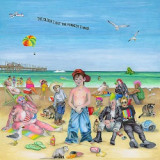
WHITMER THOMAS - THE OLDER I GET, THE FUNNIER I WAS

The Older I Get, the Funnier I Was, which follows Thomas’ brilliant 2020 HBO special The Golden One and his Can't Believe You're Happy Here EP released earlier this year, surveys a range of emotion and offers a broad sonic palette, moving between pop punk, electro, and the obvious influence of the singer-songwriters he grew up listening to in early childhood. It conjures the ennui of Bright Eyes alongside the barefaced storytelling of John Prine, the overstuffed lists of Fred Thomas with the lackadaisical humor of Colleen Green, among many others.

Thomas attributes the dexterity of the record to Duterte, who recorded and engineered most of it in addition to serving up plenty of encouragement when Thomas got down on the process. “As a comic, I used to test out new songs during sets to see if the funny bits were hitting, but since I wrote this in isolation I ended up writing lyrics and worrying less about making jokes,” Thomas says. That said, the album’s plenty funny. Stand-out and lead single “Rigamarole” opens with a Thomas-voiced infomercial that recalls his oft-cited lookalike Jim Carrey as the Grinch, before launching into a buoyant pop song about being depressed.

Whitmer Thomas will admit that when he traveled home to small town Gulf Shores, Alabama to record his HBO stand-up special, The Golden One, he expected to be greeted as a returning hero, a conquering king, or at minimum, a guy with a moderately successful career as an entertainer in Los Angeles. “I expected a big welcome home, open arms, but when I went back I realized: nobody fucking knows me. Nobody remembers me,” Thomas says. “In the years I’d been performing that show, I’d been romanticizing my childhood in this mythologized place, but the visit made me see that I’m not really from there anymore.”

The sense of alienation compounded when Thomas recognized how few people in town remembered his mom, to whom The Golden One is dedicated and largely about. Thomas grew up watching her perform with her twin sister at the legendary Flora-Bama Lounge, where he set the special, and still counts her as one of his musical influences. His new album, The Older I Get, the Funnier I Was, isn’t overtly about his mom, her presence is deeply felt throughout. While in Gulf Shores, Thomas discovered dozens of her old recordings, all of which had been wrecked by Katrina, but upon returning to LA, Thomas paid “a fancy place in Hollywood” to fix the tapes and hired Melina Duterte (Jay Som, Bachelor, Routine) to mix them. The two struck up a collaborative friendship, and Thomas had the sound of his mom’s voice back. “I was listening to songs she recorded when she was about my age, just these heartfelt, sweet Americana songs,” he says. “I decided then that I wanted to lose the Ian Curtis voice I always sing with; I wanted to do what came naturally, because my mom always sounded like herself, even when she was singing some cheesy reggae song about, like, Jamaica.”

Thus he went into The Older I Get, the Funnier I Was knowing it was time to retire his darkwave persona, and leaning into his natural, chirpier voice, which he says sounds “like a 12-year-old’s.” It makes sense: much of the album chronicles what Thomas calls “being a kid and feeling like you have no control and overcompensating by being annoying.” “So much of the album is about witnessing drug and alcohol addiction as a kid and seeing what it does to people, but also realizing that there's nothing you can do about it,” Thomas says. It’s familiar territory (see: “Partied to Death”) but the methodology is different this time around; true to its title, The Older I Get, the Funnier I Was isn’t always looking for laughs. Thomas might’ve left his hometown behind, but his kid self is still tagging along, a Peter Pan shadow he can’t untether himself from. The first line he sings on The Older I Get, the Funnier I Was is: “There should be a room at every party where you can just sit and watch a movie.” Find a 12-year-old who wouldn’t say the same.

Reservar21.10.2022

debe ser publicado en 21.10.2022

27,10
Daniel Lanois - Player, Piano LP

Daniel Lanois

Player, Piano LP

12inch4050538837377
Modern Records
21.10.2022

Press play on Lanois’ captivating new instrumental collection, Player, Piano, and you’ll be transported, too. Each song here is a portal, an invitation to lose yourself in the moment and disappear into a world of imagination and memory. Lanois recorded the entire collection himself, capturing a series of gentle, exotic piano performances at his studio in Toronto with the help of co-producer Dangerous Wayne Lorenz, and the results are both intimate and expansive all at once. Melodies unfold slowly with patience and grace; ethereal arrangements drift around them like fog rolling through the mountains. More than just an album, Player, Piano is a gateway into a cinematic sonic universe full of mystery and wonder, a place where the lines between reality and fantasy blur and deep truths and desires reveal themselves in profound and unexpected ways.


“Making this record transported me,” says Daniel Lanois. “I got to travel to Cuba and Mexico and Jamaica. I got to visit with the ghosts of Erik Satie and Oscar Peterson and Harold Budd. I got to go back in time to my work with Brian Eno and Kate Bush and Emmylou Harris. And I did it all without ever leaving my studio.”

Reservar21.10.2022

debe ser publicado en 21.10.2022

25,00
Byron the Aquarius - Akira EP

Heist Recordings has been pushing the envelope for house music since day one and we’re always on the lookout for artists that represent our vision on electronic music. Our next guest on the label fits that profile and more. He is the embodiment of modern-day electronic funk and a true wizard on the keys: Atlanta raised cool guy Byron the Aquarius.

Byron has a solid history on the label: He remixed Parker Madicine back in 2017 and did a mad solo on the 2019 released Dam Swindle track ‘The life behind things’. We’ve done some shows together and stayed in touch while Byron was working together with Jeff Mills on his 2020 jazz crossover record ‘Ambrosia’ on Axis. Now, after a solid string of releases on labels like Shall not Fade and Purveyor Underground, Byron is making his solo appearance on Heist. His ‘Akira’ EP goes from dark basement grooves to dreamy broken beats and features a remix by New York dance music wizard Kush Jones.

The Akira EP kicks off with ‘I love yo’. In this track, Byron decides to leave his keys at home and goes in deep with a moody club workout. ‘I love yo’ is a track that juxtaposes dreamy samples with rough percussion and vocal chops with a clear nod to the work of Mr. G. The melody is mellow, but don’t be deceived; clever drum programming and plenty of sub take this track into the club vibe just the way Byron likes it: warm, hazy and sexy AF.

Byron is not known for delivering straightforward house tunes, but when he does deliver them, he does it in style. Enter ‘Get up’; the A2 of the EP. There’s everything we love about house music: smart vocal chops, driving percussion, classic house keys and a booming sub to get you bumping to this beat.

The B-side sees Byron up the tempo and take a deep dive into bass territory with ‘Love’. In this track, there’s lush pads running over a percussive broken beat and chopped R ’n B vocals to add some serious sex appeal. It’s deceptively simple and clean but ever so catchy, which clearly shows Byron’s prowess as an electronic music producer.

Going back to classic house mode, we’ve got ‘Success’: A spoken word house track that fits right in with the classics. Byron sets the mood with some bumpy key-and synth work while brainstorming about originality and blackness throughout the track. Even though the message underneath might be a serious one, Byron succeeds in delivering this in a fun, uplifting way that never gets pretentious or divisive.

The EP finishes with a remix by New Yorker Kush Jones. This is an artist who understands how to build a groove. He could take you anywhere from house to juke, footwork and techno, which is exactly why he’s been getting so much love for his music recently. Kush is an artist who sees no boundaries in his music and still manages to create his own sonic universe. His remix of ‘I love yo’ takes a dreamy approach with soft chords running over an electronic groove with a pure and improvised feel. All elements fit together perfectly and it’s the clever ad-hoc programming and arrangement that suck you into his unbounded world from the first beat.

As always, enjoy the music and play it loud.

Yours sincerely,
Maarten & Lars

No en stock

Haga su pedido ahora y le encargaremos el artículo en nuestro proveedor.

11,39

Ültimo hace: 15 Meses
We Are The Ocean - Maybe Today, Maybe Tomorrow

We Are The Ocean's third album 'Maybe Today, Maybe Tomorrow', pressed on vinyl for the first time in celebration of the 10th anniversary of it's original release.

Features the singles 'Young Heart', 'Machine', and 'TheRoad'. Available in this cream pressing variant, limited to just 500 worldwide.

Reservar21.10.2022

debe ser publicado en 21.10.2022

26,01
RAY CHARLES - GENIUS LOVES COMPANY LP

(REISSUE)

Genius Loves Company is the final studio album by rhythm and blues and soul musician Ray Charles, posthumously released August 31, 2004. Recording sessions for the album took place between June 2003 and March 2004. The album consists of rhythm and blues, soul, country, blues, jazz, and pop standards performed by Charles and several guest musicians, such as Natalie Cole, Elton John, James Taylor, Norah Jones, B.B. King, Gladys Knight, Diana Krall, Van Morrison, Willie Nelson, and Bonnie Raitt. Genius Loves Company was the last album recorded and completed by Charles before his death in June 2004.The album is known as one of Ray Charles" most commercially successful albums. On February 2, 2005, Genius Loves Company was certified triple-platinum in sales by the Recording Industry Association of America following sales of over three million copies in the United States. It also became Charles" second to reach number one on the Billboard 200, after Modern Sounds in Country and Western Music (1962). On February 13, 2005, the album was awarded eight Grammy Awards including Album of the Year and Record of the Year.

Reservar21.10.2022

debe ser publicado en 21.10.2022

37,77
The Exaltics - Retrospective LP 2x12"

The Exaltics need no further introduction.. operating since 15 years now and become one of the stalwarts of the international underground electro scene. Robert Witschakowski-Jockel founded the project The Exaltics in 2006 as well as the electro/ techno label SolarOneMusic with his long term friend Nico Jagiella. Since then he published countless 12"s and several LP's with labels like Clone, Creme Organization, Bunker or his own label SolarOneMusic and worked during that time with outstanding artists like Drexciya's Gerald Donald, Helena Hauff or the legendary Martin Gore from Depeche Mode. He turned his deep cinematic and most of all charismatic electro into his own trademark. The collection contains 13 Tracks recorded between 2009-2019 including tracks from long out stock titles first time on vinyl. Probably the best overview over the world of The Exaltics.

No en stock

Haga su pedido ahora y le encargaremos el artículo en nuestro proveedor.

20,13

Ültimo hace: 20 Meses
SHINEDOE - WAKE UP EP

Shinedoe readies her fifth album ‘Freedom Riders’ on her MTM Records imprint with the release of her vinyl-focused ‘Wake Up’ EP, offering a four-track preview into the project while unveiling a selection of diverse electronic productions for home listening through to the dancefloor.

Over two decades, Dutch DJ and producer Chinedum Nwosu, aka Shinedoe, has established her presence as one of house and techno’s most loved talents, while carving a true path to her own vision. Based in Amsterdam and featuring as a key part of the city’s rich and blossoming underground scene, with performances across De Martkantine, Shelter and Thuishaven to international institutions such as Berghain to fabric, her releases on the likes of Rekids, Cocoon, Bpitch Control and her 2021 release ‘The Observer’ on Jeff Mills’ iconic Axis cemented her reputation as one of the scene’s first talents. Having launched her own label MTM Records in 2018, releasing four EPs on the label to date, October signals the arrival of the label’s first album in the form of her ten-track ‘Freedom Riders’ - an expansive and diverse project created in lockdown capturing sonics from across the spectrum - with the LP preceded by Nwosu’s four-track album sampler EP titled ‘Wake Up’.

“Freedom Riders is about living in a world where there is peace, and all our basic needs are fulfilled. Each being having the right to live in peace, be happy and to be. We are all Freedom Riders, some of us get lost and need to get back to the source.” - Shinedoe.

Opening production ‘Wake Up’ is a tension-building journey through metallic textures, warped vocals and eerie interludes, while album title cut ‘Freedom Riders’ fuses hazy atmospherics, rich chords, crisp percussion and sweeping acid lines to offer a late-night ride through smoky territories. On the flip, B1 ‘Peace’ offers an exemplary balance of light and dark with delicate yet vibrant leads guiding murky undertones and sharp percussion throughout, before closing with the hypnotic, off-kilter and mind-altering sonics of ‘Safety First’, traversing soundscapes to showcase and excellently crafted early-morning cut.

Cuts across the album continue this wide-reaching and rich variation, with the likes of ‘Shine’ and ‘Lockdown’ drawing on classic and modern house influences to offer striking additions for the dancefloor, while ‘Floor Action’ and closing track ‘See The Light’ veering into more dubby, paired back territories to offer up a sense of space and tranquillity - with the ten-track project showcasing a carefully crafted album rich in sound design showcasing one of Amsterdam’s finest talents.

DJ FEEDBACK

early support from


Laurent Garnier: Really like PEACE & SAFETY FIRST niiiiiiiiice

Marcel Dettmann: thx

Luke Slater: nice release thanks!

Ame (Innervisions): thanks

Ben Sims: safety first my fave, thx!!

Slam (Soma): Thanx

Chris Liebing (CLR): great vibe

Radio Slave (Rekids): Woah ! "Freedom Riders" is great... and just in time for the weekend ! Thankyou x

Bambounou (50 Weapons / Sound Pellegrino): There's a vibe I like it thanks

Anthony Parasole (The Corner) this is so good

Truncate: Solid cuts!

No en stock

Haga su pedido ahora y le encargaremos el artículo en nuestro proveedor.

12,14

Ültimo hace: 3 Años
NZE NZE - ADZI AKAL LP

At the crossroads of ritual, industrial, and electronic music, there exists a niche where many experimenters are blurring the lines between genres. Among them are the three members of Nze Nze (UVB76 and Sacred Lodge). Summoning sequenced machines, digital samplers, and multi-effects, they make instrumentals collide with guttural vocals and warrior tales from Fangs mythologies (the vernacular language of Central Africa), arranging it all to create hybrid, unclassifiable, and disorienting pieces.

The fundamentals of radical electronic music are there, but the production is on the level of the great free-jazz records, allowing it to claim a heritage far beyond modern-day offerings.

No en stock

Haga su pedido ahora y le encargaremos el artículo en nuestro proveedor.

18,87

Ültimo hace: 3 Años
Lack Of Afro - Press On LP

A colossus of the funk & soul world, Adam Gibbons (aka Lack of Afro) has been releasing music for 15 years and continues to go from strength to strength. Previously signed to Freestyle Records in London and running his own label The Bastion Music Group since 2015, he has been responsible for some of the genre’s most important releases, not least his debut album Press On described by iDJ as “one of the most important albums of the modern funk era” and more recently given ‘classic’ status by Future Music Magazine.

An accomplished multi-instrumentalist, producer, DJ and composer, his music has won worldwide critical acclaim and to date has gained 115 million streams on Spotify. It has been featured on films, TV shows and adverts all over the globe, on networks including HBO, ABC, Sony Pictures, BBC, ITV, Sky TV, Fox Pictures & Warner Brothers Television, and used in multi million ad campaigns by the likes of Google, Spotify, Miller Lite and Adidas.

As a DJ and live performer, he has performed in over 20 countries worldwide and undertaken countless live sessions for radio and TV including two for the BBC at the highly revered Maida Vale Studios.

To date, he has released seven albums under the Lack of Afro moniker (most recently I’m Here Now in 2020), three as The Unity Sextet, one under LUSTRE, one under his own name, an EP with Herbal T as The Damn Straights, albums for other artists, music for several TV shows and over 60 remixes. He has also produced 13 award winning, sample packs for Loopmasters.

No en stock

Haga su pedido ahora y le encargaremos el artículo en nuestro proveedor.

28,11

Ültimo hace: 3 Años
Kuedo - Severant (10th Anniversary Edition) LP 2x12"

We are excited to reissue Kuedo's classic 2011 album 'Severant' on double vinyl for the first time, and with a bonus track 'Work, Live & Sleep In Collapsing Space'. The cover artwork has been redesigned by Raf Rennie (Who also designed Kuedo's recent album on Brainfeeder, Infinite Window). In terms of feeling, ‘Severant’ explores the space between the detached world of the imagination and the real-time world; that feeling of coming out of a daydream, on the edge of the drift from the day-to-day grind. Jamie says of this moment ”As reality shapes imagination and escapism affects your choices in the real world, there is a strange relational loop between the two and the space in between the two. There’s a bitter sweetness in that gap, it has a certain emotive quality, kind of in between being and non-being”. Again, musically ‘Severant’ is inspired by related themes. It sounds as if it’s in a sweet spot between the emotive, innately futurist synth soundtracks of Tangerine Dream and Vangelis, borne from a time when the very idea of futurism was more prevalent, in combination with musical ideas and inspiration from the emotionally ambivalent, materialist fantasies of ‘coke rap‘ such as The Clipse. Rhythmically the record is influenced by what Jamie calls ”the two ultra modernmusics of modern times”, footwork from Chicago, which Planet Mu has explored in depth on its recent releases, and again the drum machine grids of coke rap. Jamie says ”I wanted to capture a really futurist sentiment, kind of melancholy and grand luminescent, so I used the instrument that most evokes that for me - that sweeping Vangelis brass sound.” And on coke rap he talks about the emotional ‘half being’ of the music, the energetically charged, detached ambivalence of the MCs, and the admission that the MCs could be ”fantasising without admitting to doing so.”

No en stock

Haga su pedido ahora y le encargaremos el artículo en nuestro proveedor.

27,69

Ültimo hace: 3 Años
Boy Harsher - Country Girl Uncut

Boy Harsher

Country Girl Uncut

12inchNUDE12XXX
Nude Club
17.10.2022

Country Girl marked a distinct sonic shift with the band, as the EP was the first group of songs written in their new home in rural Massachusetts. The novel isolation of the Northeast gave Jae and Augustus plenty of time to write and explore new sounds, while reminiscing about their time in the south. The move also put the band within driving distance of New York City which was another important factor in their progression. The band attributes partial influence on Country Girl EP to their frequent shows in Manhattan and Brooklyn. Playing parties like Nothing Changes and Lost Enterprises gave them access to a vibrant new music community. From industrial to noise table techno, the band was enamored by the raw sound and fearless attitude of the artists and crowds alike. The sound of Country Girl is defined by these two worlds that the band existed within - their quiet, modest life in small town Massachusetts and their speedfueled weekends in New York. Country Girl Uncut includes the complete track list of songs from this time period. The album is out on the band’s imprint “Nude Club” on digital, cd, tape, and vinyl formats.

No en stock

Haga su pedido ahora y le encargaremos el artículo en nuestro proveedor.

25,17

Ültimo hace: 3 Años
Lee Tracy & Isaac Manning - Is it What You Want

As the sun sets on a quaint East Nashville house, a young man bares a piece of his soul. Facing the camera, sporting a silky suit jacket/shirt/slacks/fingerless gloves ensemble that announces "singer" before he's even opened his mouth, Lee Tracy Johnson settles onto his stage, the front yard. He sways to the dirge-like drum machine pulse of a synth-soaked slow jam, extends his arms as if gaining his balance, and croons in affecting, fragile earnest, "I need your love… oh baby…"

Dogs in the yard next door begin barking. A mysterious cardboard robot figure, beamed in from galaxies unknown and affixed to a tree, is less vocal. Lee doesn't acknowledge either's presence. He's busy feeling it, arms and hands gesticulating. His voice rises in falsetto over the now-quiet dogs, over the ambient noise from the street that seeps into the handheld camcorder's microphone, over the recording of his own voice played back from a boombox off-camera. After six minutes the single, continuous shot ends. In this intimate creative universe there are no re-takes. There are many more music videos to shoot, and as Lee later puts it, "The first time you do it is actually the best. Because you can never get that again. You expressing yourself from within."

"I Need Your Love" dates from a lost heyday. From some time in the '80s or early '90s, when Lee Tracy (as he was known in performance) and his music partner/producer/manager Isaac Manning committed hours upon hours of their sonic and visual ideas to tape. Embracing drum machines and synthesizers – electronics that made their personal futurism palpable – they recorded exclusively at home, live in a room into a simple cassette deck. Soul, funk, electro and new wave informed their songs, yet Lee and Isaac eschewed the confinement of conventional categories and genres, preferring to let experimentation guide them.

"Anytime somebody put out a new record they had the same instruments or the same sound," explains Isaac. "So I basically wanted to find something that's really gonna stand out away from all of the rest of 'em." Their ethos meant that every idea they came up with was at least worth trying: echoed out half-rapped exhortations over frantic techno-style beats, gospel synth soul, modal electro-funk, oddball pop reinterpretations, emo AOR balladry, nods to Prince and the Fat Boys, or arrangements that might collapse mid-song into a mess of arcade game-ish blips before rallying to reach the finish line. All of it conjoined by consistent tape hiss, and most vitally, Lee's chameleonic voice, which managed to wildly shape shift and still evoke something sincere – whether toggling between falsetto and tenor exalting Jesus's return, or punctuating a melismatic romantic adlib with a succinct, "We all know how it feels to be alone."

"People think we went to a studio," says Isaac derisively. "We never went to no studio. We didn't have the money to go to no studio! We did this stuff at home. I shot videos in my front yard with whatever we could to get things together." Sometimes Isaac would just put on an instrumental record, be it "Planet Rock" or "Don't Cry For Me Argentina" (from Evita), press "record," and let Lee improvise over it, yielding peculiar love songs, would-be patriotic anthems, or Elvis Presley or Marilyn Monroe tributes. Technical limitations and a lack of professional polish never dissuaded them. They believed they were onto something.

"That struggle," Isaac says, "made that sound sound good to me."

In the parlance of modern music criticism Lee and Isaac's dizzying DIY efforts would inevitably be described as "outsider." But "outsider" carries the burden of untold additional layers of meaning if you're Black and from the South, creating on a budget, and trying to get someone, anyone within the country music capital of the world to take your vision seriously. "What category should we put it in?" Isaac asks rhetorically. "I don't know. All I know is feeling. I ain't gonna name it nothing. It's music. If it grabs your soul and touch your heart that's what it basically is supposed to do."

=

Born in 1963, the baby boy of nine siblings, Lee Tracy spent his earliest years living amidst the shotgun houses on Nashville's south side. "We was poor, man!" he says, recalling the outhouse his family used for a bathroom and the blocks of ice they kept in the kitchen to chill perishables. "But I actually don't think I really realized I was in poverty until I got grown and started thinking about it." Lee's mom worked at the Holiday Inn; his dad did whatever he had to do, from selling fruit from a horse drawn cart to bootlegging. "We didn't have much," Lee continues, "but my mother and my father got us the things we needed, the clothes on our back." By the end of the decade with the city's urban renewal programs razing entire neighborhoods to accommodate construction of the Interstate, the family moved to Edgehill Projects. Lee remembers music and art as a constant source of inspiration for he and his brothers and sisters – especially after seeing the Jackson 5 perform on Ed Sullivan. "As a small child I just knew that was what I wanted to do."

His older brother Don began musically mentoring him, introducing Lee to a variety of instruments and sounds. "He would never play one particular type of music, like R&B," says Lee. "I was surrounded by jazz, hard rock and roll, easy listening, gospel, reggae, country music; I mean I was a sponge absorbing all of that." Lee taught himself to play drums by beating on cardboard boxes, gaining a rep around the way for his timekeeping, and his singing voice. Emulating his favorites, Earth Wind & Fire and Cameo, he formed groups with other kids with era-evocative band names like Concept and TNT Connection, and emerged as the leader of disciplined rehearsals. "I made them practice," says Lee. "We practiced and practiced and practiced. Because I wanted that perfection." By high school the most accomplished of these bands would take top prize in a prominent local talent show. It was a big moment for Lee, and he felt ready to take things to the next level. But his band-mates had other ideas.

"I don't know what happened," he says, still miffed at the memory. "It must have blew they mind after we won and people started showing notice, because it's like everybody quit! I was like, where the hell did everybody go?" Lee had always made a point of interrogating prospective musicians about their intentions before joining his groups: were they really serious or just looking for a way to pick up girls? Now he understood even more the importance of finding a collaborator just as committed to the music as he was.

=

Isaac Manning had spent much of his life immersed in music and the arts – singing in the church choir with his family on Nashville's north side, writing, painting, dancing, and working various gigs within the entertainment industry. After serving in the armed forces, in the early '70s he ran The Teenage Place, a music and performance venue that catered to the local youth. But he was forced out of town when word of one of his recreational routines created a stir beyond the safe haven of his bohemian circles.

"I was growing marijuana," Isaac explains. "It wasn't no business, I was smoking it myself… I would put marijuana in scrambled eggs, cornbread and stuff." His weed use originated as a form of self-medication to combat severe tooth pain. But when he began sharing it with some of the other young people he hung out with, some of who just so happened to be the kids of Nashville politicians, the cops came calling. "When I got busted," he remembers, "they were talking about how they were gonna get rid of me because they didn't want me saying nothing about they children because of the politics and stuff. So I got my family, took two raggedy cars, and left Nashville and went to Vegas."

Out in the desert, Isaac happened to meet Chubby Checker of "The Twist" fame while the singer was gigging at The Flamingo. Impressed by Isaac's zeal, Checker invited him to go on the road with him as his tour manager/roadie/valet. The experience gave Isaac a window into a part of the entertainment world he'd never encountered – a glimpse of what a true pop act's audience looked like. "Chubby Checker, none of his shows were played for Black folks," he remembers. "All his gigs were done at high-class white people areas." Returning home after a few years with Chubby, Isaac was properly motivated to make it in Music City. He began writing songs and scouting around Nashville for local talent anywhere he could find it with an expressed goal: "Find someone who can deliver your songs the way you want 'em delivered and make people feel what you want them to feel."

One day while walking through Edgehill Projects Isaac heard someone playing the drums in a way that made him stop and take notice. "The music was so tight, just the drums made me feel like, oh I'm-a find this person," he recalls. "So I circled through the projects until I found who it was.

"That's how I met him – Lee Tracy. When I found him and he started singing and stuff, I said, ohhh, this is somebody different."

=

Theirs was a true complementary partnership: young Lee possessed the raw talent, the older Isaac the belief. "He's really the only one besides my brother and my family that really seen the potential in me," says Lee. "He made me see that I could do it."

Isaac long being a night owl, his house also made for a fertile collaborative environment – a space where there always seemed to be a new piece of his visual art on display: paintings, illustrations, and dolls and figures (including an enigmatic cardboard robot). Lee and Issac would hang out together and talk, listen to music, conjure ideas, and smoke the herb Isaac had resumed growing in his yard. "It got to where I could trust him, he could trust me," Isaac says of their bond. They also worked together for hours on drawings, spreading larges rolls of paper on the walls and sketching faces with abstract patterns and imagery: alien-like beings, tri-horned horse heads, inverted Janus-like characters where one visage blurred into the other.

Soon it became apparent that they didn't need other collaborators; self-sufficiency was the natural way forward. At Isaac's behest Lee, already fed up with dealing with band musicians, began playing around with a poly-sonic Yamaha keyboard at the local music store. "It had everything on it – trumpet, bass, drums, organ," remembers Lee. "And that's when I started recording my own stuff."

The technology afforded Lee the flexibility and independence he craved, setting him on a path other bedroom musicians and producers around the world were simultaneously following through the '80s into the early '90s. Saving up money from day jobs, he eventually supplemented the Yamaha Isaac had gotten him with Roland and Casio drum machines and a Moog. Lee was living in an apartment in Hillside at that point caring for his dad, who'd been partially paralyzed since early in life. In the evenings up in his second floor room, the music put him in a zone where he could tune out everything and lose himself in his ideas.

"Oh I loved it," he recalls. "I would really experiment with the instruments and use a lot of different sound effects. I was looking for something nobody else had. I wanted something totally different. And once I found the sound I was looking for, I would just smoke me a good joint and just let it go, hit the record button." More potent a creative stimulant than even Isaac's weed was the holistic flow and spontaneity of recording. Between sessions at Isaac's place and Lee's apartment, their volume of output quickly ballooned.

"We was always recording," says Lee. "That's why we have so much music. Even when I went to Isaac's and we start creating, I get home, my mind is racing, I gotta start creating, creating, creating. I remember there were times when I took a 90-minute tape from front to back and just filled it up."

"We never practiced," says Isaac. "See, that was just so odd about the whole thing. I could relate to him, and tell him about the songs I had ideas for and everything and stuff. And then he would bring it back or whatever, and we'd get together and put it down." Once the taskmaster hell bent on rehearsing, Lee had flipped a full 180. Perfection was no longer an aspiration, but the enemy of inspiration.

"I seen where practicing and practicing got me," says Lee. "A lot of musicians you get to playing and they gotta stop, they have to analyze the music. But while you analyzing you losing a lot of the greatness of what you creating. Stop analyzing what you play, just play! And it'll all take shape."

=

"I hope you understood the beginning of the record because this was invented from a dream I had today… (You tell me, I'll tell you, we'll figure it out together)" – Lee Tracy and Isaac Manning, "Hope You Understand"

Lee lets loose a maniacal cackle when he acknowledges that the material that he and Isaac recorded was by anyone's estimation pretty out there. It's the same laugh that commences "Hope You Understand" – a chaotic transmission that encapsulates the duality at the heart of their music: a stated desire to reach people and a compulsion to go as leftfield as they saw fit.

"We just did it," says Lee. "We cut the music on and cut loose. I don't sit around and write. I do it by listening, get a feeling, play the music, and the lyrics and stuff just come out of me."

The approach proved adaptable to interpreting other artists' material. While recording a cover of Whitney Houston's pop ballad "Saving All My Love For You," Lee played Whitney's version in his headphones as he laid down his own vocals – partially following the lyrics, partially using them as a departure point. The end result is barely recognizable compared with the original, Lee and Isaac having switched up the time signature and reinvented the melody along the way towards morphing a slick mainstream radio standard into something that sounds solely their own.

"I really used that song to get me started," says Lee. "Then I said, well I need something else, something is missing. Something just came over me. That's when I came up with 'Is It What You Want.'"

The song would become the centerpiece of Lee and Isaac's repertoire. Pushed along by a percolating metronomic Rhythm King style beat somewhere between a military march and a samba, "Is It What You Want" finds Lee pleading the sincerity of his commitment to a potential love interest embellished by vocal tics and hiccups subtlely reminiscent of his childhood hero MJ. Absent chord changes, only synth riffs gliding in and out like apparitions, the song achieves a lingering lo-fi power that leaves you feeling like it's still playing, somewhere, even after the fade out.

"I don't know, it's like a real spiritual song," Lee reflects. "But it's not just spiritual. To me the more I listen to it it's like about everything that you do in your everyday life, period. Is it what you want? Do you want a car or you don't want a car? Do you want Jesus or do you want the Devil? It's basically asking you the question. Can't nobody answer the question but you yourself."

In 1989 Lee won a lawsuit stemming from injuries sustained from a fight he'd gotten into. He took part of the settlement money and with Isaac pressed up "Saving All My Love For You" b/w "Is It What You Want" as a 45 single. Isaac christened the label One Chance Records. "Because that's all we wanted," he says with a laugh, "one chance."

Isaac sent the record out to radio stations and major labels, hoping for it to make enough noise to get picked up nationally. But the response he and Lee were hoping for never materialized. According to Isaac the closest the single got to getting played on the radio is when a disk jock from a local station made a highly unusual announcement on air: "The dude said on the radio, 107.5 – 'We are not gonna play 'Is It What You Want.' We cracked up! Wow, that's deep.

"It was a whole racist thing that was going on," he reflects. "So we just looked over and kept on going. That was it. That was about the way it goes… If you were Black and you were living in Nashville and stuff, that's the way you got treated." Isaac already knew as much from all the times he'd brought he and Lee's tapes (even their cache of country music tunes) over to Music Row to try to drum up interest to no avail.

"Isaac, he really worked his ass off," says Lee. "He probably been to every record place down on Music Row." Nashville's famed recording and music business corridor wasn't but a few blocks from where Lee grew up. Close enough, he remembers, for him to ride his bike along its back alleys and stumble upon the occasional random treasure, like a discarded box of harmonicas. Getting in through the front door, however, still felt a world away.

"I just don't think at the time our music fell into a category for them," he concedes. "It was before its time."

=

Lee stopped making music some time in the latter part of the '90s, around the time his mom passed away and life became increasingly tough to manage. "When my mother died I had a nervous breakdown," he says, "So I shut down for a long time. I was in such a sadness frame of mind. That's why nobody seen me. I had just disappeared off the map." He fell out of touch with Isaac, and in an indication of just how bad things had gotten for him, lost track of all the recordings they'd made together. Music became a distant memory.

Fortunately, Isaac kept the faith. In a self-published collection of his poetry – paeans to some of his favorite entertainment and public figures entitled Friends and Dick Clark – he'd written that he believed "music has a life of its own." But his prescience and presence of mind were truly manifested in the fact that he kept an archive of he and Lee's work. As perfectly imperfect as "Is It What You Want" now sounds in a post-Personal Space world, Lee and Isaac's lone official release was in fact just a taste. The bulk of the Is It What You Want album is culled from the pair's essentially unheard home recordings – complete songs, half-realized experiments, Isaac's blue monologues and pronouncements et al – compiled, mixed and programmed in the loose and impulsive creative spirit of their regular get-togethers from decades ago. The rest of us, it seems, may have finally caught up to them.

On the prospect of at long last reaching a wider audience, Isaac says simply, "I been trying for a long time, it feels good." Ever the survivor, he adds, "The only way I know how to make it to the top is to keep climbing. If one leg break on the ladder, hey, you gotta fix it and keep on going… That's where I be at. I'll kill death to make it out there."

For Lee it all feels akin to a personal resurrection: "It's like I was in a tomb and the tomb was opened and I'm back… Man, it feels so great. I feel like I'm gonna jump out of my skin." Success at this stage of his life, he realizes, probably means something different than what it did back when he was singing and dancing in Isaac's front yard. "What I really mean by 'making it,'" he explains isn't just the music being heard but, "the story being told."

Occasionally Lee will pull up "Is It What You Want" on YouTube on his phone, put on his headphones, and listen. He remembers the first time he heard his recorded voice. How surreal it was, how he thought to himself, "Is that really me?" What would he say to that younger version of himself now?

"I would probably tell myself, hang in there, don't give up. Keep striving for the goal. And everything will work out."

Despite what's printed on the record label, sometimes you do get more than one chance.

No en stock

Haga su pedido ahora y le encargaremos el artículo en nuestro proveedor.

11,72

Ültimo hace: 3 Años
BEAR BONES LAY LOW / POLONIUS - LIVE

On the 19th of October 2021 Random Numbers invited Bear Bones, Lay Low and Polonius to play at the Circolo Dev. The show was recorded now here it is in a beautiful cassette edition (Limited copies available).

Side A is a shamanic potion cooked by improvisation artist Bear Bones, Lay Low. 45 minutes of slow brewing of hypnotic sounds originated from tapes, synths and various effects. A meditating process that slowly morphs into a tribal dance that ends with estatic liberation.

On side B 37 minutes of the magical improvisation of Polonius, that after a slow spelling brings you in to his world of samples and repetition, in a schizophrenic representation of modern world. A live composition on a laptop and a keyboard where every sample is played live.

Reservar15.10.2022

debe ser publicado en 15.10.2022

12,98
Andrew Collberg - A Modern Act LP

Mit einer Nonchalance, die fast unheimlich selbstverständlich daherkommt, bringt jeder Song auf A Modern Act die menschliche Natur auf den Punkt. Oder eher gesagt die Naturen, Plural, da jeder Song einer bestimmten "modernen" Person, Situation oder Beziehung gewidmet ist. Ultra-spezifisch und zugleich universell, das ist die Schönheit dieses Flickenteppichs aus unverhohlenen Beobachtungen.
Die ehrlichen und schnörkellosen Klavierballaden des ersten und letzten Songs legen sich wie eine zurückhaltende Klammer um die schrilleren Geschichten, die dazwischen erzählt werden. Das heitere und dunkle Long Blonde Hair weckt offensichtlich Erinnerungen an Stars mit wasserstoffblonden Haaren, die wir alle kennen und liebevoll verachten. Indoor Miners lässt uns genüsslich langsam in unseren eigenen Abstieg taumeln. Die verführerische Kombination aus Indie-Folk und Bombast, verpackt in sich wiederholenden Arrangements, lässt Hollywood Diamonds genau nach dem klingen, was es ist: Die scharfe Kritik eines Außenseiters an einer ausbeuterischen Industrie. Typisch für Collberg überlässt er es der eigenen Fantasie, die Leerstellen zu füllen, aber das Gerüst steht.
A Modern Act ist eine Sammlung autobiografischer Vignetten und Kurzgeschichten, die verspielt in persönlichen Befangenheiten schwelgen. In einem Anflug von kreativen Bewusstsein hat Collberg seine eigene kleine Gesellschaft erschaffen. Nicht immer schmeichelhaft widmet er sich dem, was glitzert, und dem, was düster ist. Anders als bei seinen früheren Werken standen diesmal alle Texte, bevor er die Musik komponierte. A Modern Act entstand im Januar 2021 und wurde in den folgenden Monaten zusammen mit Miccel Mohr (History of Sugar, Soho Rezanejad) in Kopenhagen, Dänemark aufgenommen und produziert, wobei Daily Tolliver (Molly Burch) an der Gitarre für den Titelsong "A Modern Act" mitwirkte.

Reservar14.10.2022

debe ser publicado en 14.10.2022

18,91
Jonathan Richman & The Modern Lovers - Modern Lovers ‘Live’

The first live release from the There’s Something About Mary star, recorded at the Hammersmith Odeon Co-Produced by Beserkley Records founder Matthew King Kauffman and pop-legend and Rock ‘n’ Roll Hall Of Famer, Kenny Laguna Available CD & LP, with an exclusive yellow colour variant for Independent Retail While the U.S. might not have caught on to the magic of Jonathan Richman, the U.K. certainly did. Recorded at the Hammersmith Odeon, ‘Live’features Jonathan and the Modern Lovers performing classics from their first two releases to an enthusiastic crowd. (The eight-minute version of “Ice Cream Man” should inform that!) The set includes the recent Top 5 single “Egyptian Reggae,” as well as tracks from the Modern Lovers’ previously releases and new tracks. Captured on tape by Beserkley founder Matthew King Kauffman and Kenny Laguna (whose rock pedigree runs from Buddah Records through Joan Jett’s biggest hits)‘Live’ is a true, time and place document of the magic that is Jonathan Richman. The performer who The Farrelly Brothers chose to include in their classic 1198 film There’s Something About Mary, rather than simple licensing his music. A pivotal release in Richman’s catalog, ‘Live’ spotlights how captivating a performer he was, and continues to be. His original releases return on CD and LP, with a unique coloured yellow vinyl variant available for independent retail His true, Beserkley catalog is available once again. The way Jonathan intended.

Reservar14.10.2022

debe ser publicado en 14.10.2022

21,81
Paul Well - Modern Classics (The Greatest Hits) LP (2x12")

Am 14.Oktober erscheint Paul Wellers ”Modern Classics (The Greatest Hits)“ zum ersten Mal auf Vinyl! Ursprünglich 1998 veröffentlicht und bisher nicht auf Vinyl erhältlich – ”Modern Classics (The Greatest
Hits)“ ist ein Compilation-Album, welches viele der Paul Wellers Solo-Singles von 1991-1998 enthält.

Die Veröffentlichung erscheint als 2LP - Gatefold Sleeve und enthält eine Bonus Live LP, aufgenommen im Victoria Park, Hackney, London, am 8. August 1998

Reservar14.10.2022

debe ser publicado en 14.10.2022

41,39
Various - Sounds of Transonic EP

Various

Sounds of Transonic EP

12inchSAIS004
SAISEI
14.10.2022

SAISEI founder Junki Inoue continues his vital archival work uncovering the riches of Japan’s distinctive electronic music scene and bringing them to new audiences around the world. The Sounds Of Transonic compiles six tracks recorded in Tokyo between 1991 and 1995 and released by the pioneering Transonic label, founded in 1994 by Kazunao Nagata and active until 2004.

Transonic’s catalogue is a glittering roll call of the scene’s major players, whose inventive and genre-blending work established forward-thinking house and techno in Japan in a way that would shape the country’s electronic sound for years to come. Transonic was instrumental in giving exposure to the work of these artists with its emblematic series of CD compilations, released over a short couple of years in the mid 90s. Beginning with 970-1450km/h, Feedback and Range, the series also included The Roots Of Transonic, featuring music from parent label Trigger. Alongside these compilations came much sought-after solo albums each packaged with striking cover art that makes the discs a visual treat for collectors to this day.

The Sounds Of Transonic brings together six tracks from the catalogue into one breath-taking package. The influence of hi-tech jazz and machine funk from Detroit is undeniable in ‘Dream Trance’ (Mind Design) and ‘Blasting Soul’ (Interferon), while ‘Under The Ground’ (Palomatic) and ‘Chelsea’ (Suzukiski) are permeated by the artificial intelligence and trip hop emanating from the UK at the time. The compilation is bookended by two tracks by Nagata himself (as Organization): ‘Space Ball’, a Model 500-worthy chase through the cosmos, and ‘Call’, an eerie echo of Kraftwerk’s telephone, transmitting expectantly out into the void and, finally, receiving its celestial answer.

With The Sounds Of Transonic these formative pieces of music will now be available internationally and, for the first time, on vinyl.

SAISEI is a Japanese word which translates to ‘reproduction’ and ‘to play’ (as in playing records). Japanese culture is widely known for its traditional nature just as much as it is for being forward into the future and this label’s concept does justice to exactly that. Having started digging for records as early as 16 years old, Inoue delved into productions from 1990s Japan to uncover these native gems. SAISEI’s core concept is to recapture and reintroduce unique pieces of Japanese electronic music onto vinyl, to an audience it never reached before as most of this music was only released in Japan.

No en stock

Haga su pedido ahora y le encargaremos el artículo en nuestro proveedor.

11,72

Ültimo hace: 3 Meses
Artículos por página
N/ABPM
Vinyl