Continuing its mission to bring classic records to a modern audience, Tresor Records celebrates the 30th anniversary of The Infiniti Collection with a remastered & expanded edition of this classic compilation from Infiniti, an alias of Detroit originator Juan Atkins, available on vinyl for the very first time.
First gathered together in the mid-'90s, The Infiniti Collection draws together tracks Atkins cut under the Infiniti name across a number of labels into a single, cohesive listen. Where his Model 500 work pushed toward the electro-funk that built Detroit techno's foundation, Infiniti was always the deeper, more
playful persona concentrated on what was then a nascent yet burgeoning techno sound. The collection stands as a document of Atkins at his most exploratory: futurist, hypnotic, and unmistakably human despite its machine architecture.
This collection brings together some of Atkins’ most essential work with tracks like "Sunlight", "Flash Flood", fan favourite "Game One", and the deep dub of the Moritz von Oswald remix of "Think Quick". Alongside Infiniti's Skynet reissue, a significant part of the Infiniti catalogue now lives in Tresor
catalogue, forming the ultimate archive.
The Infiniti Collection will be available from 30th October on triple vinyl and digitally with a cassette version being available exclusively through Tresor.
Black Truffle is pleased to present Even Colder Spring, the latest release from the mysterious and wildly prolific Cities Aviv (a.k.a. Wilbert Gavin Mays, who also records as African-American Sound Recordings), a rare appearance from the artist outside his own D.O.T. Audio Arts label. For over a decade, Cities Aviv has twisted hip-hop conventions into the most skewed and splayed forms, layering and lacerating twitching loops, extreme production techniques and his mercurial vocal stylings into hermetic décollage. Across 16 tracks, Even Colder Spring charts Mays’ restlessly experimental approach: what sound like fully formed productions are interrupted suddenly after seconds; interjections of field recordings cue unexpected shifts; details drown under layers of fuzz. His vocal delivery takes in rhythmically intricate rap, barely articulate murmurs and freely melodic song, the latter often with a disorientating lack of connection to the track’s harmonies. The lyrical shifts are as paratactical as the musical movements. Apocalyptic visions of social and cultural uniformity alternate with reflections on mortality, glimpses of everyday life and head-scratching one-liners: ‘Maybe Mars is bougie?’ His reference points are as surprising as ever, the Dante quotes of previous releases joined here by a track named after Henri Bergson’s idea of the élan vital. Australian listeners, in particular, might be especially taken aback to hear ‘Closing Door’ open with the phrase ‘the tyranny of distance’.
While Mays’ work can sometimes be claustrophobically bleak, the productions here are often sparkling, at times touching on the shimmer of private-issue New Age sounds and the more playful end of krautrock. The instrumental ‘Martine Drift’ could almost be a snatch of Cluster’s Zuckerzeit caught through dial-up internet. The distant echoing drums of ‘L_area’ cross Persona’s Som with lo-fi IDM, while closer ‘Final Heaven’ dissolves a cloud of loops across almost seven minutes into ecstatic, rippling distortion. The graphic design, at the artist’s request closely modelled on the format of Corwood Industries, offers as good a clue as any to what awaits the listener on Even Colder Spring: a world at once impossibly opaque and intensely personal.
From Wisdom Teeth’s recent compilation nagoyaka na kaze / 和やかな風 (quiet wind)—which cast a spotlight on the Japanese city of Nagoya—emerges “2++”, a new label launched by abentis, who curated the compilation alongside Facta and K-LONE as a central figure in the scene. Conceived as a series introducing facets of Nagoya’s underground electronic music to the world on vinyl, its inaugural release is abentis’ debut album, Dim Grow.
Across the album, intricately designed electronic mallet sounds—created using Ableton Live’s physical-modeling synthesizer—take center stage. Fresh and percussive like marimba or kalimba, yet simultaneously carrying an otherworldly, unreal quality, these tones form the core of the record’s sonic identity. In moments of near-silence, a crystalline resonance poised between glass and metal shimmers with subtle shifts in temperature, giving the album its distinctive texture.
While resonating with the sonic sensibilities of fellow Wisdom Teeth affiliates such as K-LONE, Tristan Arp, and Salamanda, abentis’ uniquely strange palette can be traced back to one of his strongest influences: Haruomi Hosono. In particular, Hosono’s mid-’70s tropical-infused solo albums — Tropical Dandy (1975), Bon Voyage Co. (1976), and Paraiso (1978) — serve as a key reference point. Symbolically reflected in Hosono’s marimba and vocal performance at a 1976 live show in Yokohama Chinatown, the marimba functioned as a central instrument for constructing imagined exotic landscapes inspired by Martin Denny and Hawaiian music.
For abentis—who worked at a local jazz bar before becoming active as a hip-hop beatmaker—the language of “tension chords,” a harmonic vocabulary rooted in jazz and R&B that hovers ambiguously between brightness and darkness, forms a consistent grammar throughout Dim Grow.
Behind the album’s core theme of “mallets + tension chords” lies a broad musical lineage: the harmonic sensibility of Claude Debussy, who anticipated the tensions of jazz; the proto-minimalist spirit of Erik Satie; the marimba-centered structures of Steve Reich; their continuation in Japan through Mkwaju Ensemble (with Midori Takada and production by Joe Hisaishi); and the subsequent branches into post-rock, electronica, and ambient music.
Growing up in Nagoya—an industrial city where creative independence is deeply valued—and being rooted in punk and hip-hop counterculture scenes naturally fostered abentis’ affinity with these predecessors. His practice between genres, combined with an encounter with the highly cross-pollinated musical perspective cultivated around Wisdom Teeth, provided the framework through which his own musical language crystallized. Dim Grow stands as the natural culmination of that journey.
The ever-reliant Deepchord kicks off 2014 in his usual stylish way with two deep cuts in the Luxury EP. After last years jaunt into the ambient with 20 Electrostatic Soundfields, Rod Model return to the world of slick beats and even dreamier synths and atmospheres.
Luxury 1 ebbs in majestically as beautifully crafted layers of synths glide across field recorded drops of water that instantly play with your senses. Pumping sub bass fills the rest of the spectrum as Rod does what he does best by creating an unending slick groove, pieced together by crisp percussion.
Yet more atmospherics come into play in Luxury 2 as otherworldly field recordings are brought to life through the use of Rod's unique processing and layers of dream state synths. A perfectly worked groove seems to come out of nowhere and glides gently under the atmosphere; again subtle percussion ties everything together seamlessly.
The master of Deep Techno strikes again with nothing short of 2 elegant works that typify his skills as a producer.
Pan-Pot - Luxury 1 +++++
Alan Fitzpatrick - digging this! excited to play it!
Steve Rachmad - Luv Luxury 2
Joel Mull - Lovely warm music. Timeless pieces right here.
Jonas Kopp - cool vibes over here , thanks.
Tommy Four Seven - thanks!
Markus Suckut - deepchord as I like him!
Martin Landsky - yep...both tracks are brillant..Deepchord never disapoints....
Nadja Lind/Klartraum - what a luxury indeed :) Happy New Year!
John Selway - into Luxury 2
Stacey Pullen - cool thanks
Shlomi Aber - another cool one from soma
Heron - This deepness is more than impressive. Completely mindblowing!
Manic Brothers - Both tracks are super fat ! Thank you :)
Toma Hades - Epic tracks ! it sounds like real film music ! love it ! :)
Daniel Stefanik - follow them from the beginning. i love it! thx.
Vector Lovers - Lovely mixes, really warm production to chase those winter blues away. Great start to 2014!
The Welderz - Great opener tracks !
Master-H - Fantastic release! I Love DEEPCHORD!
Hermanez - love the sound from deepchord, thank you
Kazumi Ihii - Quality release as usual from Deepchord
The London based singer and keyboard player Dominic Appleton, known since the early eighties for his musical activity in the post punk/dream pop band Breathless, and perhaps even more for his vocal contributions to the legendary This Mortal Coil project on 4AD, joins forces with the Milanese producer and sound artist Matteo Uggeri, active from 1993 behind several projects spanning from industrial to post-rock and ambient soundscapes, known for collaborating with artists such as Maurizio Bianchi, Nocturnal Emissions, Controlled Bleeding, De Fabriek, OvO, Giuseppe Ielasi, Lau Nau, Giulio Aldinucci and many more.
Starlight Assembly’s first album, “Starlight and Still Air”, was released in 2021 by the American label Beacon Sound. In Italy the album received amazing reviews in all four of the main music monthlies. It was album of the month in Blow Up and Rockerilla ran a four page interview. Several articles and reviews were made, including a special issue on Foxy Digitalis by Brad Rose.
A remix project was launched afterwards, including old and new friends and fans of the two S.A. members: among the others, Robin Rimbaud/Scanner, Auscultation, Gabriel Saloman (Yellow Swans), Patricia Wolf, Insides, Julia Sabra with Fadi Tabbal, Sawako and Pan American.
The new album, “There Will Be Fireworks”, continues the duo’s complex cross-genres approach to music by melding Uggeri’s intricate musical textures with Appleton’s sweet and melancholic melodies, in this case even supported by the haunting guitars of Gary Mundy (in Breathless as well but also in Ramleh and Broken Flag’s label manager). The tracks on this album are more songlike, the journey more cohesive, with the artists playing more to one another’s strengths. The mastering will be done by Martin Bowes/Attrition, making it even more powerful and clean for its publication on Silentes (ex-Amplexus), historic italian label well known for releases by Rod Modell, Gigi Masin, Dirk Serries, Eraldo Bernocchi, Merzbow, Fabio Orsi and the latest releases by AUBE and much more.
1) WAIT FOR THE WORLD
2) TIME
3) THIS DESERT
4) ALL THE LOVE THE STANDS BESIDE US
5) MOTH TO THE FLAME
6) FRICTION
7) SYMPHONY IN MELANCHOLY
8) THE NOT DEAD
9) RELIEF
+
10) THERE WILL BE FIREWORKS (ghost track)
No en stock
Última entrega hace 6 meses disponible para reposición sin garantía
The journey through French-speaking pop archives continues with this fifth volume, packed with fuzz, gimmicks, and dissent. Far from the charts, the selected tracks display a great creative freedom, often backed by corrosive humor. Welcome to the surprising, kaleidoscopic, and colorful world of the late sixties and early seventies, Wizzz!
Born in Montauban, Robert Pico stumbled into music by chance when he met René Vaneste, then artistic director at Pathé-Marconi. René brought him to Paris to record his first 45 RPM EP in 1964. A year later, Pierre Perret introduced him to Vogue, where he recorded his second album with Claude Nougaro’s orchestra. Sylvie Vartan then introduced him to RCA, where he recorded four singles, including the astonishing "Chien Fidèle," a track backed by a hair-rising fuzz guitar. Alongside his solo career, he also composed for other artists like Alain Delon (the song was recorded but remains unreleased), Magali Noël, Bourvil, and Georges Guétary. In the Paris of the sixties, he mingled with Mireille Darc, Elsa Martinelli, Marie Laforêt, France Gall, Françoise Hardy, Petula Clark, Régine, Dani, Serge Gainsbourg, Joe Dassin, Franck Fernandel, Charles Level, and Roland Vincent. Despite his efforts and winning a Grand Prix Sacem for his final record, Robert Pico didn’t achieve the expected success in show business and decided to leave Paris and return to the Southwest, where he devoted himself to writing. He is the author of 23 books (including Delon et Compagnie, Jean-Marc Savary Editions 2025, a memoir about his youth and his many encounters). Today, he is relieved to never have become a celebrity and devotes himself to his work with passion.
In 1969, the Franco-Italian movie Erotissimo was released, directed by Gérard Pirès (who later directed Taxi in 1998, written and produced by Luc Besson). This pop comedy features Annie Girardot, Jean Yanne, Francis Blanche, Serge Gainsbourg, Nicole Croisille, Jacques Martin, and Patrick Topaloff. The soundtrack was written by Michel Polnareff and William Sheller, with lyrics by Jean-Lou Dabadie. "La Femme Faux-cils," performed by Annie Girardot. It recounts the feelings of a rich CEO's wife who seeks to develop her sex appeal under the influence of advertisement and magazines. Groovy, sparkling and light, this track, with ITS lush arrangements humorously critiques consumer society and feminine beauty standards.
“Je suis l’Etat” (1967) is the flagship track of the first EP by singer-songwriter Spauv Georges, aka Georges Larriaga, better known as Jim Larriaga (1941-2022). Born into a family of bakers, the young man was initially planning to become a hairdresser when he discovered English-speaking music through Elvis Presley and the Beatles. After this revelation, he decided he would become a songwriter and gave himself five years to succeed. He recorded his first two EP’s independently for RCA under the pseudonym Spauv Georges; meaning “that poor George”, a nickname given to him by the mother of her friend Jean-Pierre Prévotat (future drummer of the Players, Triangle, or Johnny Hallyday). Portraying a depressed and eccentric young man, Spauv Georges created corrosive and amusing songs that didn’t reach a wide audience, despite a TV appearance with Jean-Christophe Averty.
Supported by his loyal friend and fellow songwriter Jean-Max Rivière, Georges Larriaga met the future singer Carlos in the early '70s, then Sylvie Vartan’s assistant. He wrote songs for Carlos, including the popular "La vie est belle," "Y’a des indiens partout," and "La cantine", which went onto become a huge hit in 1972. He also composed for Claude François (“Anne-Marie”, 1971), Charlotte Julian (“Fleur de province”, 1972), helped launch child singer Roméo (who sold 4 million records), and later wrote the hit "Pas besoin d’éducation sexuelle" (1975) for the young Julie Bataille. In 1971, Jim recorded an album for Disc'Az: “L’univers étrange et fou de Jim Larriaga”, which featured pop gems like “La maison de mon père”.
The story of the song "Zoé" began when Pierre Dorsay, artistic director at Vogue Records, asked Swiss singer and musician Pierre Alain to write a song for a new female singer. The inspiration came when he realized that Zoé (the artist's name) was also the name of France's first atomic battery, created in 1948, which consisted of uranium oxide immersed in heavy water! The lyrics reflect a bubbling energy that must be handled with caution, while the instrumentation echoes this atomic theme, notably with the use of a theremin.
Zoé’s career lasted only as long as a single 45 RPM, but it seems Christine Fontane was the vocalist behind this pseudonym, who is known for several EPs, a good "popcorn" album in 1964, and a handful of children’s singles in the '70s. Regardless, the photograph on the cover is of a different girl entirely.
Later, Pierre Alain continued his career, writing songs for himself, Marie Laforêt, Danièle Licari, Alice Dona, Arlette Zola (3rd place in Eurovision 1982), and achieving multiple gold and platinum records in Canada. Also an inventor with several patents, president of the Romande Academy, and head of the French Alliance in Geneva, he now composes atonal music, books, and poetry. Moreover, he is also the host of "Les Mardis de Pierre Alain" at "Le P'tit Music'Hohl" in Geneva.
Filled with oriental choruses and fuzz guitar, "Fou" is from Jacques Da Sylva's only EP released by Vogue in 1967. Despite the quality of this recording, all traces of this singer disappear after this first effort.
Valentin is a baroque pop singer born in Belgium. He is the songwriter and composer of most of the tracks on his three singles released in the late 60s in Canada. A legend says that he reincarnated himself as Jacky Valentin during the 1970s for a rock'n'roll revival career in Belgium, but his older brother sadly debunked this story. Valentin's first two singles were arranged by Claude Rogen, a Parisian session pianist who had come to Canada to promote the song “Mister A Gogo”, a cover of David Bowie’s “Laughing Gnome”, adapted by singer Delphine, his wife at the time. Far from his usual network, Claude Rogen arranged music for Polydor, including the arrangements for “Je suis un vagabond” in 1969, a jerk tune with string arrangements and a furious optimism.
Jacques Malia wrote, composed, and recorded his only 45 EP for Festival in 1966. “Histoire de gitan” is an incredible beat track with bohemian scat that tells the story of a gypsy musician who came to Paris to make it in the Music-Hall, to no avail. The hero of the song and its author probably shared a similar fate, as Jacques Malia faded into anonymity after this remarkable attempt.
Bernard Jamet recorded two EPs for Barclay in the late sixties and co-wrote several songs with Christine Pilzer, Pascal Danel, and prolific songwriters Michel Delancray and Mya Simile. The track “Raison Légale” (1968), his masterpiece, immerses the listener in a courtroom right when a murderer is being judged, with jerk rhythm and free arrangements. A unique, paranoid, judicial, and psychedelic oddity.
Jean-Pierre Lebrot-Millers started his career in show business in 1967 as a singer and songwriter for the Philips label. After three singles, he wrote several songs of a new kind with his friend Pierre Halioche, in the midst of the sexual liberation movement and the democratization of drugs. With provocative lyrics, “Les filles du hasard” and “Barbara au Chapeau Rose” were released on a Philips singles in 1968. The character of Barbara was inspired by a queen of Parisian nightlife during the psychedelic years: model Charlotte Martin, who dated Eric Clapton from 1965 to 1968, then Jimmy Page from 1970 to 1983. Jean-Claude Petit’s arrangements, with a table-filled intro, soul brass, and Hendrixian guitar, emphasize the flamboyance of a hedonistic and sexy character, whose dog is named Junkie because “Junkie est un nom exquis”! The track was recorded live in three takes with a full orchestra.
Upon its release, the record was censored by Europe 1 and RTL due to its references to drug use. Jean-Pierre Lebrot was then banned from the airwaves and later dismissed by his record label. He changed his artist name to Jean-Pierre Millers, while his companion Pierre Halioche became D. Dolby for a new dreamy composition, “Chilla”, which Jean-Pierre produced himself with arrangements by Jean Musy. Once again, the song was immediately censored everywhere. After this setback, he decided to stop singing and started taking on odd jobs to support his Swedish wife and their son until the day he met Jean-Pierre Martin, then production manager at Decca, who had worked with Manu Dibango. Martin offered Jean-Pierre Lebrot-Millers, then employed at Rank Xerox, the position of artistic director at Decca. He accepted and became, a year later, promotion director (radio, press, TV). He worked on Julio Iglesias’s first album for Decca, which became a massive hit and allowed him to meet Claude Carrère. The latter asked him to write new songs and find their performers, much like a “talent scout.” It’s through him that Jean-Pierre discovered Julie Pietri and Corinne Hermès. He composed “Ma Pompadour” for Ringo, Sheila’s husband, and took the microphone again for the syncope hit “Rendez-Vous” in 1982.
That same year, Jean-Pierre Lebrot-Millers tried to release a track for which he had heavily gone into debt: “Si la vie est un cadeau”. Having recorded it in London, he presented it to numerous professionals, all of whom refused to get involved. The same thing happened with Antenne 2 and the Sacem when he proposed the song as France’s entry for Eurovision. He then met Haïm Saban, who was producing cartoon soundtracks and had just launched the Goldorak theme song. Saban, having listened to the song, declared it had the potential to become a hit. He sent Jean-Pierre and Corinne Hermès to meet the CEO of the Luxembourg radio and television network. The latter received them, asked to hear a verse and chorus a cappella in his office, and immediately hired them to represent Luxembourg at Eurovision 1983. They reworked the arrangements and recorded a new version with Haïm Saban as co-producer. The song ended up winning Eurovision 1983, a great comeback for our hero. He continued producing and hung out with the band Nacash in Belgium when a couple came to introduce their daughter for an impromptu audition in a hotel room. The girl sang “Les démons de minuit” while dancing to a radio cassette. Impressed, he had her take singing lessons for a year and composed a song for her (for which he had the melody and title, but no lyrics). This required him to go on the hunt for a lyricist, who ended up being Guy Carlier. They recorded the song, which was initially a ballad, at Bernard Estardy’s CBE studio, and gave the singer a new name: Melody. They showed the song around their industry network without success. Later, Estardy called Jean-Pierre to suggest changing the rhythm and making it pop-rock. Orlando, Dalida’s brother, liked the result and decided to co-produce the track. “Y’a pas que les grands qui rêvent » became a classic hit. The song has since been covered by Juliette Armanet (as a ballad, like the original) and Valentina.
Born into an aristocratic Breton family, Hervé Mettais-Cartier worked as a DJ at Queen Kiss, a nightclub in Poitiers, where he formed the band Les Concentrés with Michel (an actor) and Christian (a radio technician). Together, they created a repertoire of whimsical songs (“Ma bique est morte”, “J’suis un salaud”, “Fils de dégénéré”...) that they performed on stage dressed in white (in homage to “concentrated milk”). They performed at Bliboquet and Olympia in 1968 for the 10th edition of the “Relais de la chanson Française” organized by L’Humanité-Dimanche and Nous les Garçons et les Filles, sponsored by Pepsi Cola. Winners in the author-composer category, alongside Danish singer Dorte, their visibility allowed them to record a 45, and appear on television in Jean-Christophe Averty’s show. The A-side of the disc features Bruno le ravageur, a casatchok dedicated to Bruno Caquatrix, the director of Olympia, nicknamed in the song “Coq Atroce” or “croque-actrices”. The B-side is dedicated to “Fils de dégénéré”, a quirky tribute to Hervé's aristocratic roots, mixing absurdity with sophisticated vocal harmonies.
After Les Concentrés, Hervé Mettais-Cartier formed the duo La Paire et sa Bêtise with his friend Olivier Robert. They performed in Parisian cabarets and toured with Pierre Vassiliu. In the late 1970s, Hervé began a solo career. He recorded two albums for the Motors label in 1978 and 1979, which did not achieve their anticipated success due to lack of promotion. In 1980, he met Bernadette, with whom he started a family and created a “Chansons à voir” (songs to see) show that he performed until his death at the end of 2024.
Publicité comes from the final EP by the Missiles (Ducretet Thomson, 1966), a disc that also includes “La (nouvelle) guerre de cent ans”, featured on Volume 4 of our Wizzz! series. Please refer to the booklet for the story of the band.
“He’s 1.82 meters tall, 28 years old, weighs 135 kg, is black and Belgian”: this is the description of singer Hegesippe on the back of his sole single (Decca, 1967). He appears on the album cover wearing a Greek toga, like a hippie gag – we are at the end of the year 1967. In “Le crédo d’Hegesippe”, this former bodyguard of Antoine and the Charlots plays the delightful card of the thick brute converted to Flower-Power and non-violence, with arrangements by Jean-Daniel Mercier, aka Paul Mille.
“Ethéro-disco” was released on a promotional record for clients of the Maréchal company (Liège, Belgium) for the New Year 1979. Over a funky rhythm, celebrity impersonations (Brigitte Bardot, Jacques Dutronc, Fernandel…) deliver an enigmatic text about pharmaceutical products like ether, bismuth, and aspartate. The track was composed by Dan Sarravah (responsible for Joanna's “Hold-up inusité” featured on Wizzz! Volume 3) and Tony Talado, who was also a singer (one 45 in 1967), songwriter (with over a dozen credits between 1964 and 1985 in various styles from surf music to disco), author (Devenez Végétarien, Dricot Editions, 1985), ad designer, and psychologist.
Décollez-les is on the A-side of Mamlouk's only single, a pseudonym for Marsel Hurten, who is known for his work on several EPs in the late sixties, as well as composing music for Hervé Vilard’s “Capri, c’est fini”, Claude Channes' “La Haine”, Annie Philippe’s “On m’a toujours dit”, and Nancy Holloway’s “Panne de Cœur”.
This strange song, with Afrobeat horns and absurd dialogues between a chef and his kitchen staff, is the result of a collaboration between Marsel Hurten and one of his neighbors, a photographer from Pavillon-sous-Bois (93), where the musician settled after returning from the Algerian War. A music video was shot to promote the record.
Marsel Hurten was born in Tourcoing (59) into a musical family. At a young age, he joined the brass band founded by his grandfather, playing the piston before studying trumpet at the conservatory, as well as teaching himself how to play the guitar. As an orchestra musician, he toured in France, Belgium, Germany, and England. He released a series of solo 45’s between 1965 and 1968 for the DMF and Az labels before stopping recording to focus on working for other artists (Gilles Olivier, Noëlle Cordier…).
“L’amour nu” (Vogue, 1971) is the work of the short-lived Belgian band Mozaïque. The track, written by singer Jacques Albin, closely resembles another of his compositions, “Carré Blanc”, which he recorded in 1969 for Disc’AZ.
Represented by the Lumi Son micro-label based in Marignane (Côte d'Azur), Jean-Marc Garrigues released two 45 RPMs in the late sixties, defending the French jerk sound. The song “Je dis Non” is a short, joyful ode to youth, pop music, and rebellion.
Songwriter and performer Jacques Penuel released three singles. The first one, “Astronef 328” (Fontana, 1969), features a dizzying series of chords punctuated by sound effects, a sci-fi story, and arrangements by Jean-Claude Vannier.
We would like to sincerely thank Pierre Alain, Moon Blaha, Marsel Hurten, Bastien Larriaga, Jean-Pierre Lebrot-Millers, Bernadette Mettais-Cartier, Robert Pico, Olivier Robert, Claude Rogen, Micky Segura.
No en stock
Última entrega hace 8 meses disponible para reposición sin garantía
Una interpretación de Soinuarenbidea II debería partir de esta premisa: todo es posible, nada es aleatorio, y en sí mismo es un imposible de aleatoriedades. El escenario planteado explora la idea de realidad aumentada desde una percepción sonora, ambiental y colectiva. La obra transita hacia adelante y hacia atrás recreando experiencias extintas de porvenir incierto, tratando de facilitar un fin pacificador. Cada pieza sonora se crea, se despliega, se repliega y se destruye, en una torsión permanente de toda la realidad que hace posible cada fragmento musical, cada identidad acústica, cada espacio sonoro. Lo onírico, la ficción, y el viaje están continuamente presentes, y es en el transitar de cada fragmento donde se produce el diálogo de la exposición musical. Los elementos de esta ficción se recrean continuamente, en un continuum donde se entrelazan y se van contorsionando a medida que crecen o decrecen con cada fragmento de síntesis concreta. Los temas explícitamente musicales son el magma que conduce a dar voluptuosidad al disco, siendo la piel un contexto o límite que en sí mismo fluctúa indefinidamente en texturas y configuraciones posibles. Y la urdimbre del silencio es la síntesis que está continuamente presente y que trata de cohesionar los fragmentos en continua colisión expresiva. Las grabaciones de campo proporcionan el material sonoro concreto, y como un fractal sonoro cada una de ellas ofrece diferentes grados de interpretación que a su vez conduce a nuevos fragmentos y nuevas creaciones. Así que se puede pensar que esta es una síntesis de una posible realidad, pero interpretable en infinidad de maneras. Un movimiento y una estaticidad implícitas que generan estructuras y dinámicas acústicas. Lo que se escucha no es real, pero en sí mismo forma parte de la realidad, creando un escenario expectante. Lo cinematográfico, plástico y teatral, danzante y dinámico cobra importancia en este juego, porque se trata de contar una historia, una experiencia recreada desde los puntos de vista del arte visual. Es a su vez hilo conductor y entretenimiento, discurso político y puro divertimento. Es desde este espacio de convivencia artística que tiene sentido la totalidad y justifica el formato sonoro planteado. La contradicción de la obra es patente en el formato, y es a su vez el planteamiento de una accidentalidad en el devenir vital. Contenedor de Ruido recoge todas estas contradicciones y las manifiesta en la obra Soinuarenbidea II. Es una historia sonora, es un cuento acústico. Es un fragmento de vitalidad en imágenes audibles. Es una invitación a la reflexión, a la crítica, al disfrute, a la meditación, a la celebración. Y sobre todo es esperanzadora apreciación de la realidad como algo maleable que confeccionamos colectivamente, que requiere de una paciente observación y la participación colectiva global, en un mundo finito pleno de diversidades y del que ignoramos prácticamente todo, al que deberíamos volver con respeto y devoción.
Soinuarenbidea II-ren interpretazio batek premisa honetatik abiatu beharko luke: dena da posible, ezer ez da ausazkoa, eta, berez, ausazkotasun ezinezko bat da. Planteatutako agertokiak errealitate areagotuaren ideia aztertzen du, soinu-, ingurumen- eta talde-pertzepzio batetik abiatuta. Lanak aurrera eta atzera egiten du, etorkizun zalantzagarriko esperientzia desagertuak birsortuz eta helburu baketsua lortzen saiatuz. Soinu-pieza bakoitza sortu, hedatu, tolestu eta suntsitu egiten da, musika-zati bakoitza, identitate akustiko bakoitza eta soinu-espazio bakoitza ahalbidetzen dituen errealitate osoaren etengabeko bihurdura batean. Onirikoa, fikzioa eta bidaia etengabe daude presente, eta pasarte bakoitzaren joan-etorrian gertatzen da musika-erakusketaren elkarrizketa. Fikzio honen elementuak etengabe birsortzen dira, continuum batean, non sintesi zati zehatz bakoitzarekin hazi edo txikitu ahala elkar lotzen eta bihurritzen diren. Esplizituki musikalak diren gaiak diskoari atsegintasuna ematera eramaten duen magma dira, azala testuingurua edo muga izanik, testura eta konfigurazio posibleetan mugarik gabe aldatzen dena. Eta isiltasunaren irazkia etengabe presente dagoen sintesia da, zatiak etengabeko adierazpen-talkan kohesionatzen saiatzen dena. Landa-grabazioek soinu-material zehatza ematen dute, eta soinu-fraktal batek bezala, horietako bakoitzak interpretazio-maila desberdinak eskaintzen ditu, eta horrek, aldi berean, zati eta sorkuntza berrietara eramaten du. Beraz, pentsa daiteke errealitate posible baten sintesia dela, baina hamaika modutan interpreta daitekeena. Egitura eta dinamika akustikoak sortzen dituzten mugimendu eta estatikotasun inplizitu bat. Entzuten dena ez da erreala, baina, berez, errealitatearen parte da, eta agertoki espektakularra sortzen du. Zinematografikoak, plastikoak eta antzerkikoak, dantzariak eta dinamikoak garrantzia hartzen dute joko honetan, ikusizko artearen ikuspegitik birsortutako istorio bat, esperientzia bat, kontatzea baita helburua. Aldi berean, hari gidaria eta entretenimendua da, diskurtso politikoa eta dibertimendu hutsa. Elkarbizitzarako espazio artistiko honetatik osotasunak zentzua du eta planteatutako soinu-formatua justifikatzen du. Obraren kontraesana nabarmena da formatuan, eta, aldi berean, bizi-bilakaeran istripu-tasa bat planteatzea da. Zarata-edukiontziak kontraesan horiek guztiak jasotzen ditu eta Soinuarenbidea II obran adierazten ditu. Soinu istorio bat da, ipuin akustiko bat. Bizitasun zati bat da, irudi entzungarrietan. Hausnarketarako, kritikarako, gozamenerako, meditaziorako eta ospakizunerako gonbidapena da. Eta, batez ere, itxaropentsua da errealitatea modu kolektiboan egiten dugun gauza xaflakor gisa hautematea, behaketa pazientea eta partaidetza kolektibo globala eskatzen dituena, dibertsitatez betetako mundu mugatu batean, ia guztia kontuan hartzen ez duguna, eta errespetuz eta debozioz itzuli beharko genukeena.
An interpretation of Soinuarenbidea II should start from this premise: everything is possible, nothing is random, and in itself is an impossible randomness. The proposed scenario explores the idea of augmented reality from a sonic, environmental, and collective perception. The work moves back and forth, recreating extinct experiences of an uncertain future, seeking to facilitate a peaceful end. Each sound piece is created, unfolds, retreats, and is destroyed, in a permanent twisting of all reality that makes each musical fragment, each acoustic identity, each sonic space possible. The dreamlike, the fictional, and the journey are continually present, and it is in the transit of each fragment that the dialogue of the musical exposition takes place. The elements of this fiction are continually recreated, in a continuum where they intertwine and contort as they grow or diminish with each fragment of concrete synthesis. The explicitly musical themes are the magma that leads to the work's voluptuousness, the skin being a context or boundary that in itself fluctuates indefinitely in possible textures and configurations. And the warp of silence is the synthesis that is continually present and seeks to unite the fragments in a continuous expressive collision. The field recordings provide the concrete sound material, and like a sonic fractal, each one offers different degrees of interpretation that in turn lead to new fragments and new creations. So one can think of this as a synthesis of a possible reality, but interpretable in an infinite number of ways. An implicit movement and staticity that generate acoustic structures and dynamics. What is heard is not real, but in itself is part of reality, creating an expectant scenario. The cinematic, plastic and theatrical, dance and dynamic aspects take on importance in this game, because it is about telling a story, an experience recreated from the perspective of visual art. It is at once a common thread and entertainment, political discourse and pure entertainment. It is from this space of artistic coexistence that the whole makes sense and justifies the proposed sound format. The contradiction of the work is evident in its format, and it is, in turn, the presentation of an accidentality in the course of life. Noise Container gathers all these contradictions and manifests them in the work Soinuarenbidea II. It is a sound story, an acoustic tale. It is a fragment of vitality in audible images. It is an invitation to reflection, to critique, to enjoyment, to meditation, to celebration. And above all, it is a hopeful appreciation of reality as something malleable that we collectively craft, requiring patient observation and global collective participation, in a finite world full of diversity and of which we know practically nothing, to which we should return with respect and devotion.
Paisajes sonoros, diseño sonoro, drones y música grabada, realizada y arreglada para Contenedor de Ruido por David Aranaz. Coro: Basandere Ahotsak. Producido y mezclado por David Aranaz. Mástering: Estanis Elorza. Fotografía: David Aranaz. Texto: David Aranaz. Traducción: Saioa Aranaz Oreja. Trabajo y Diseño artístico: Cristina Martinez. Edición: Contenedor de Ruido Producciones y Sarbide Music. Distribución: Contenedor de Ruido.
Contenedor de Ruido agradece el apoyo en la realización de Soinuarenbidea II al coro Basandere Ahotsak y en especial a Eva Orbara Goicoa.
Soinuarenbidea II está dedicado al pueblo palestino.
Paisajes y objetos Sonoros, samplers y otras músicas transformadas para Soinuarenbidea II
Burlada: Paseos sonoros matinales por Merindad de Sangüesa, Calle Mayor, Capuchinas, Parque Uranga y varias iglesias y plazas. Pasajes del cotidiano: basura de papel, cristal y plástico.
Pamplona: Cementerio de San José. CEIP Sanduzelai /// Quinto Real: Fábrica de Armas, Puerto de Urkiaga y alrededores. Suite del silencio, bosques en movimiento /// Fábrica de armas de Orbaiceta: regatas, biosques, paseo sonoro hasta regata /// Belate: Puerto de Belate y alrededores. Vacas en pradera junto a las turberas /// Bardenas Reales: Suite de guitarra y Suite del silencio, estepa desértica /// Austria: Tranvías de Graz y Viena. Muchedumbre del metro de Viena.
Voces cinematográficas de: Matanza en Texas, Robocop, Espíritu Sagrado, Solo los Amantes Sobreviven, Voces de Gaza, Yojimbo, Terciopelo Azul, Los 7 Magníficos.
La pista A2 está dedicada a la memoria de David Lynch.
La pista B4 está dedicada a Eva Orbara Goicoa.
Pista A4: Contiene interpretaciones de piano de Three Piano Pieces Op.11 de Arnold Schoenberg.
Pista A5: Es una interpretación expandida con síntesis FM del Concerto Op. 24 - Etwas lebhaft - de Anton Webern.
Pista A7: Contiene la canción Besarkatu ninduzun (Letra de Josune López y música de Josu Elberdin) en interpretación de Basandere Ahotsak en la iglesia de Burutain bajo la tormenta.
Pista B2: Contiene la canción Recuerdos de la Alhambra (Fernando Tárrega) en interpretación torsionada de David Aranaz Sarasa.
Pista B14: Contiene la canción Agur María (Letra y Música de Estíbaliz Robles “Estitxu” y arreglo exclusivo de Alfonso Ortiz para Basandere Ahotsak) en interpretación de Basandere Ahotsak.
Equipamiento para Soinuarenbidea II.
Micros de condensador SE7, configuración XY y ORTF; Micros de cinta ORTIZ LUTHIER configuración XY y Blumlein; Grabadoras MARANTZ y ZOOM; Sintetizadores y samplers Elektron MONOMACHINE SPS-1, MACHINEDRUM SFX6 y MODEL:SAMPLES. Dave Smith MOPHO. Torso Electronics S-4. Sintetizador Modular 333 DIY; Guitarra clásica ALHAMBRA 6P; Esculturas Sonoras tipo Baschet, cristal y metales; Mesa Soundcraft FX16ii; Interface de Audio RME Babyface Pro FS; DAW Logic Pro; Procesamiento de modelado analógico con Acústica Audio, Waves, Softube, Brainworx, Sonible, Analog Obsesion, Tokio Dawn. Metering de Logic y RME DigiCheck . Amplificación Hafler PRO2400. Monitorización BW DM602 S3. Mezcla digital; Mastering híbrido.
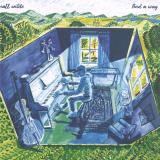
'Find a Way' is the new album from Manchester-based pianist, composer, and producer Matt Wilde, released via his own imprint Hello World Records. The album serves as a reminder that creativity should be accessible and the importance of opening yourself to the unexpected as you 'Find a Way' through all endeavours. Digging into improvisation and jazz harmony on the LP, he crafts a sound that bridges jazz, hip hop, and electronic music, adding: "The creative act is not a matter of waiting for the perfect conditions, but of moving gently, insistently, through the imperfect".
Focus and title track "Find a Way" encapsulates this journey of process. Humans are known for adaptation and response when they face challenges, seeking solutions towards a better world. "Find a Way" leans into our instinctive reaction to improvise and reshape, taking the listener on an unexpected journey. The opening loop could as easily feel at home as part of an electronic soundscape, developing into a clock-like effect from the drums. This keeps time, allowing a duet between keys and trumpet to unfold, symbolising the individual, imperfect and non-linear paths we all carve out day to day.
The album was funded by Arts Council England and created in close collaboration with trumpeter and composer Aaron Wood, with the pair recording in Aaron's rural DIY studio in Huddersfield. Through improvising upright piano, Rhodes and trumpet over intricately programmed beats, the duo captured the spontaneity that makes jazz feel alive, but with the forward-facing touch of Ableton live production. "I actually had live drums recorded for this project and then deleted all of them and instead programmed intricate drums on Ableton live myself to create the kinds of drum sounds I could hear in my head," Matt adds, explaining the onerous process that truly made 'Find a Way' a labour of love.
Matt Wilde discovered jazz through an unconventional journey, and 'Find a Way' is an introspective map of this musical development. Starting out as a self-taught beatmaker, growing up Matt made tracks for friends in the grime scene before falling in love with jazz through the sample-heavy works of Madlib, J Dilla, and Pete Rock. Hints of this influence can be found on "Windup", driven by a deeper bass and a glitchy intensity not commonly associated with jazz. There are also nods to the weekly DJ residencies Matt had in his late teens, establishing a love for club music at iconic Manchester venues like Sankeys. "It's Ok, Feel it" incorporates pitched-up kicks and crisp, papery snares that pay tribute to UK dance culture and the foundation of connection in this world.
Guided by values of accessibility and creativity, Matt has become a key voice in the UK's boundary-pushing jazz and beats scene. His debut album 'Hello World' alongside EPs and single releases, have been championed by the likes of BBC Radio 1, Jamie Cullum and Soweto Kinch (BBC Radio 2), 'Round Midnight (BBC Radio 3), and across BBC 6Music, Jazz FM and Worldwide FM. He has performed headline shows at Band on the Wall (Manchester) and The Lower Third (London) and showcased his music at Brick Lane Jazz Festival and London's iconic Jazz Café.
A proud Mancunian with Polish roots, Matt's values-driven approach reflects his passion for community and empowering others through the arts. Matt founded the UK's first youth-led charity and is a trustee of Manchester music charity Brighter Sound. Driven by these values of equality and inclusion, Hello World Records strives to champion grassroots music with a backbone of fairness built into the business model. The imprint is named after Matt's debut album, released via Band on the Wall Recordings; simultaneously championing the music scene and global musical footprint of Manchester and highlighting the importance of artists reminding people: Hello World, I've made it. I'm still here.
- Martha Cleary, Glow Artists
No en stock
Última entrega hace 6 meses disponible para reposición sin garantía
Fun Fun was an Italian Euro disco band produced by Dario Raimondi Cominesi and Alvaro Ugolini. The group was fronted by models, while the vocals were recorded by
original singers Antonella Pepe, Angela Parisi, and Ivana Spagna. Spagna left after the release of their first album in 1983.
Their breakthrough came with the hit “Happy Station (Scratch Remix),” by Ben Liebrand which climbed the charts in several European countries, including the Netherlands, Germany, and Belgium.
The track became a staple in the hottest discos of the era. The Greatest Fun compilation album brings together their biggest hits, including “Happy Station (Scratch Remix),”
“Give Me Your Love,” “Baila Bolero,” and “Living in Japan.” Additionally, the album features the Fun Fun “Mega Hit Mix,” a special mix by
Dutch producer and DJ Martin Boer of 2 Brothers on the 4th Floor fame, along with many more Euro disco tracks.
Die Schatten des Krieges verdunkeln Europa. Die 20er Jahre des neuen Jahrtausends erwecken beklemmende Erinnerungen an jene Zwischenkriegszeit einhunderte Jahre zuvor, aus der unweigerlich der Zweite Weltkrieg entstand. Nun steht die Ukraine in Flammen, täglich bedrängt von russischen Angriffen. Und Europa ist zerrissen in diesem Konflikt, der oft nur wie der Vorbote eines viel größeren Katastrophe wirkt.
Jerome Reuter hat mit seiner Band ROME die Musik als Mittel gewählt, Europas Schicksal zu kommentieren und zu verarbeiten. Seit 2005 schreibt er Lieder und Konzeptalben, die sich den Schlüsselmomenten der Geschichte widmen, ihre Mythen und Narrative reflektieren und kommentieren. Dabei behandelt er historische Themen aus einer künstlerischen Distanz, dekonstruiert Ereignisse und Ideologeme, betrachtet sie aus unterschiedlichsten Perspektiven und gibt sie uns als Frage zurück. Er wird vom mal melancholischen, mal wütenden Zeitzeugen zum teilnehmenden Beobachter, aus dessen individualsubjektiver Sicht die Dinge unmittelbar mit Pathos aufgeladen erscheinen. Mit ROME sollen wir erkennen, beobachten, erschauern und erschrecken, aber auch neu erstrahlen: "We walk in brightest Black towards the Sun".
Reuters Songwriting gleicht oft einer Reise, auf der sich visuelle Eindrücke mit persönlichen Gesprächen mischen. Als lese man in seinem Tagebuch nach einem turbulenten Tag, der persönlich reflektiert und schließlich in ikonische Metaphern gegossen wird. "Civitas Solis" soll ausdrücklich nicht als Konzeptalbum verstanden werden, wie wir es zuvor so oft von ROME erleben durften. Immer schien sich Reuter ganz jenen Themen zu verschreiben, ging in emotionaler Hingabe und Identifikation auf, nur um dann wieder Distanz einzunehmen, um das Geschehen aus einer neuen Perspektive und in anderem Licht zu betrachten.
Jerome Reuter ist ein Suchender auf den verschlungenen Wegen der Geschichte, getrieben von einer Sehnsucht nach Europa, dem Mythos, der Utopie - zwischen aufgeklärtem Manifest und irrationaler Festung. Als zentrale Metapher dient ihm diesmal Civitas solis, der "Sonnenstaat" aus der utopischen Schrift des Dominikaners Tommaso Campanella (1623). Darin wird der wirtschaftliche und politische Aufbau eines idealen Staates imaginiert - eine der ersten gesellschaftlichen Utopien. In der Welt von ROME kann dieses Modell höchst ambivalent gelesen werden, denn Reuter bewegt sich von jeher assoziativ zwischen Anarchismus und Traditionalismus.
Stilistisch bedient sich ROME auf "Civitas Solis" einer ungewöhnlichen Bandbreite - angelegt zwischen der Liedermacherkunst von Jacques Brel, Leonard Cohen und Townes van Zandt, kalten Dark Wave-Akkorden und akzentuierten Akustikgitarren. Das Wechselbad aus martialischen Hymnen und introspektiven Balladen kehrt zu zahlreichen Schlüsselmomenten aus zwanzig Jahren Bandgeschichte zurück und wie alle ROME-Alben wirft es vor allem Fragen auf. Provozierende Fragen. Was wird unsere Zukunft bringen? Und was bedeutet das für Europa? Uns bleibt nichts übrig, als in die Fern blicken, "standing on the Western Wall". Jerome Reuter ist ein "Man against Time" und mit ihm bezeugen wir den Sturm.
“My introduction to “noise” came from a record shop in Lake Worth, Florida ran by a musician named Kenny 5. Kenny had left Detroit sometime in the mid nineties and had begun selling used records and CD’s from the downtown strip of this tiny southern Florida city in a humble shop sandwiched between a deli and a dog grooming business. Kenny previously was on labels like Amphetamine Reptile and timeSTEREO, and the records and videotapes that would be on repeat at his shop were a vast sonic expanse that spoke to the eclecticism of his experience as a touring musician participating and adjacent to American noise culture through the early to late 90’s. In 1998, I was eleven years old and I would order a pizza with him and watch VHS tapes of Japanese noise and deathmatch bootlegs, as well as any other sonic and subcultural rarities that far outstripped my age to comprehend (notably the RRR “Journey Into Pain” compilation and various Vanilla Tapes videos). This widecast net of information formed an introduction to a reality that did not fall deaf on me, but it took many years later for me to reorient the specific freedoms of what this dense and cathartic sound culture had imparted on my life and would continue onward to.
What does this have to do with this selection of choice recordings from the Secret Boyfriend catalog for the enmossed label? For the uninitiated, Secret Boyfriend is the long running moniker of Ryan Martin, North Carolina musician and label proprietor of the Hot Releases imprint. For over a decade from this writing I have watched Secret Boyfriend, and Hot Releases by extension as a curatorial and archival effort, embodying the multiplanal capacity that noise loosely functions from as an umbrella ideology and formalist avenue for sound creation. For anecdotal purposes, from (before) 2006 until roughly 2023 the East Coast of the United States showcased a vibrant network of eclectic regional festivals that saw wide swaths of artists addressing and negotiating the notion of what qualified “noise” from a conceptual and ideological perspective. Some festivals honed in on particularities in aesthetics and tropes, and others had a kind of “catch-all” implementation that allowed for a salvation of the sort of alienated and singular artistry that was amassing throughout these territories. While clear guidelines had been set from regional predecessors as to how noise with a capital “N” should maneuver, Secret Boyfriend is emblematic in the spirit of fluidity that was either implicitly coupled to the notion of the genre, or grew to evolve towards or devolve from.
Within Secret Boyfriend performances, I have seen and admired a mirroring from a ravenous appreciator of this culture at large back towards itself. Typical of a Secret Boyfriend set is an interchangeable narrative arc wherein blistering feedback laden scrap metal improvisations are forayed into naive ambient or “pop” songs, or skipping CDs, or mixer feedback play, or delayed Roland 707 drum workouts all at once and in a unique hegemony. Secret Boyfriend's stylistic mastery of each endeavor is at once an homage to a history of loving listening and enacting, while a brave step into the realm of actualizing the unique fluidity of his own practice. In performance and the action of network engagement, Secret Boyfriend operates a survey of that which he sought to hear and that which he cultivates around his work. His operations are mirrors, and the project (alongside his other peers) is a reflection on the ethos of his time.
Conversely his recording practice narrows in on these moments and allows for a different kind of intimacy or alienation for the non live listener. This record of selected “pop songs” (let's call them that) is particularly poignant at a time when the culture Martin mirrors is at a strange crossroads with itself. The aforementioned festival networks necessarily change and shift. The onlookers become the artists, the artists find new horizons, and the spaces for these cycles fade into locales of a distant memory. It seems, from my perspective, that audiences currently yearn for a more bottlenecked experience, searching for some ontologically vetted manifestation of an idea, of a sound and less for an experience that functions in opposition to our collective banalities. This makes sense in the face of general global catastrophism that plagues us. We need certainty of what something is somewhere, don’t we? Noise as an idea has expanded and contracted to so many iterations of itself it is hard to tell what it even is, and it is particularly difficult to identify in the absence of solid network activations a moment to reflect on its own complexities and nuances. In the face of so much change, I argue that the language of noise culture at large has on one hand become increasingly didactic and predictable, and laughably inclusive and non linear on the other. Probably has always been this way, but now we are in the midst of a moment of extreme access and indexicality, which somehow cauterizes expansion and naivety and chance.
This record highlights the Secret Boyfriend that obscures didacticism by highlighting output that opens up for more challenging catharsis and emotive signal processing. It provides an entry to the materialism of a cultural field full of ecstatic complexity and beautiful inconsistency. In these muted moments Secret Boyfriend has given us over his career we have an argument for evolving languages that further challenge our notions of what is supposed to happen and how it is supposed to be presented. In his more song oriented expansiveness, we can punctuate the ability to think in new modalities. Listening to these recordings reminds me of the polarity of sitting in the record store as a kid and understanding that His Name Is Alive is on 4AD and (gasp!) timeSTEREO. This trite early impression that nothing is really as different as our imaginations might want them to be, and that we can do whatever we want mostly within the creative realms we work through is an important filter to look through Secret Boyfriend as a project and a vessel. If we can achieve abandon and vulnerability through our artistic endeavors, then we have a sound model for, maybe, new potentialities. If that’s too much projection, or just complete liberal bullshit, I am fine with that. Secret Boyfriend's oeuvre at best offers us moments of reprieve to ponder these complexities, or at least a moment to zone out on a drive through North Carolina Highway 54.
You have one pocket of life that you must do whatever you want to inside of. Secret Boyfriend does it affectionately, in a variety of forms, and always with deep sentimentality. These recordings are a wonderful set of songs to begin further investigation from. Thank you Ryan for allowing as many avenues as possible to continue a broad cultural exchange and conversation that intersect and refract while being the kind of artist that is brave enough to not phone in the effort.”
Following his recent EP, The Circle of Life, on Pushmaster Discs, Milan's rising techno star Maike Depas returns with a brand-new release on his renowned The Innovation Studio Records. Titled “Sexy Devil Horse”, it is a powerful 10-track collection, featuring many iconic international artists from the Hard Techno space such as Etruria Beat’s headmaster Luca Agnelli, Dutch-based sensation OGUZ and the “Demon of hard techno” also known as Michael Katana, as well as Southern Italian talents CHRS and Gianni Di Bernardo.
This release marks a pivotal moment in Maike Depas’ journey to become one of the highest rated talents in the Hard Techno scene. It will also be followed by a key paradigm shift his label’s business model in 2025. For this occasion, Maike has lined up an amazing group of artists to celebrate those who have shared his musical vision along the way.
The title is meant to be provocative and captivating, just like its content: catchy and fresh enough to attract ravers and clubbers from around the world. Its artwork was created by the master Luden Works. It features a plastic female figure with an undefined appearance, yet with sensual curves and a powerful surge of energy, like a wave enclosed in a sphere, representing Maike’s and The Innovation Studio Records’ logos.
From the galloping rhythm of “Sexy Devil Horse” and “Hear The Sound” to the groovy and elegant “Ce Soir” there is an immediate feel about the artist’s singular touch and eclecticism. Same goes for the tangible contrasts which make a key element of this release, where the minimalistic mood of “StarKiller” and its maximalist counterpart “Dark Serenade” carry the listener through a full-spectrum emotional rollercoaster.
Hard Techno and Psy Trance vibes go hand in hand with ‘90s Trance and Rave echoes, creating a blend of recognisable and innovative samples that can resonate with many different types of audience and like-minded artists. This aspect is fundamental in the direction Maike and his team have decided to take.
It all comes from afar: starting with a classical musical background – playing the piano at Conservatory level for many years, including Berlin’s own Funkhaus. This theoretical and practical knowledge, mixed with a long-time passion for electronic music, made it easier for Maike to shape and cultivate his authentic sound since a very young age.
As part of its evolution, The Innovation Studio Records will officially open its doors to new talent and renowned artists starting in 2025. The team’s vision is to create an international reference point for quality and innovation, shaping a brand-new artistic movement based on combining the modern vision of our generation with our cultural heritage from the past, thanks to the team that we put together, both in terms of approach and technique.
It'll be a structure built from the ground up, combining the best of analogue technology in a modern workflow with the highest level of music hardware, audio monitoring and studio design. In their view, there are two types of productions: those that stay ‘inside the box’ and those that get into your heart.
The desire to unite instead of dividing, to join forces instead of competing, is the key to Maike’s success and a real drive to turn the studio lights on every single day. Despite playing a lot with dystopic, cyberpunk-like atmospheres throughout his artistic journey, music doesn’t feel like a means to escape reality for Maike. In fact, it’s quite the opposite.
The definition Maike uses the most to describe what The Innovation Studio Records wants to become is “a mysterious display cabinet”: a place where an artists will never know what emotion will arise or what direction will be taken next. Although hard work, professionalism and common inspiration will ultimately still be its main fuel, a true sense of community and empathy will be crucial to shape the future Maike and his team have in mind for it.
In a very romantic way, the idea is to re-create the same atmosphere from the Italian Renaissance masters’ workshops. Places where different artists - with opposite backgrounds and styles - could all mingle and inspire each other, in order to foster the creation of something unique. A collective effort for a greater good.
About MAIKE DEPAS
Young hard techno DJ-producer Maike Depas (born Michelangelo De Pasquale) has seen the future of music and it’s called metaverse: “In the future it will blow up,” he predicts. “And it’s going to revolutionize the way we experience music.” Bowled over by Skrillex and Martin Garrix by the age of eight, and DJing at smaller Milan clubs by the time he was eleven, Depas went on to study composition and piano at the prestigious
Milan Conservatory before learning ‘life- changing” lessons from the best in the business at Catalyst’s 4-week Advanced Sound Design course in Berlin’s Funkhaus . His production gets inspired by huge 90s trance synths as much as pounding hard techno from artists such as Kobosil, In Verruf and Amelie Lens.
2024 marked the launch of MAIKE DEPAS 2.0, a tectonic audio-visual shift that entails a wide array of content from DJ sets livestreamed from Berlin’s Teufelsberg and other dystopic locations around Europe to cyberpunk-inspired outfits designed by Demobaza, a cyberpunk-inspired casual couture brand best known for their sustainable Dune X Demobaza collection. Over the course of a developing metamorphosis from a flesh-and-bone individual to a mysterious CGI character, Depas is another step closer to revolutionize the dance music scene through the metaverse.
No en stock
Última entrega hace 17 meses disponible para reposición sin garantía
To celebrate the 30th anniversary of bob sinclar"s iconic label, Yellow Productions, step into the catchy world of the french touch with an exceptional and limited boxset with 3 LP vinyl records plus a poster. Discover hits, unreleased nuggets and rare tracks ranging from house to trip-hop, jazz and hip-hop. Discover some of the biggest names on the electronic music scene : Like Dimitri From Paris, Dj Gregory, Kid Loco, Martin Solveig and David Guetta!
No en stock
Última entrega hace 16 meses disponible para reposición sin garantía
I needed to do some recording to cheer myself up. The studio I usually use was booked all month, but before the disasters of Brexit & Covid I’d met pianist Yves Meerschaut in Gent, and he’d shown me his recording studio, Room 13, and that did have a couple of days free in January… I decided to make a record of old songs that other people have liked, and / or that I play differently now, and / or that haven’t appeared on vinyl before. So, here, there’s: “Pennypot Lane”, a fox song that people like, “Winter Turns to Spring” that was Tony Benn’s favourite song, “The Blue Sea Says Yes”, a song about how the sea welcomes us all, heroic or fragile, equally in our mortality (something like that anyway) , that I had forgotten about till people started saying how much they liked it, “More Than Enough”, that Roy Bailey and Martin Simpson have kindly rescued from the obscurity of its previous appearance on a CD in 1992, “Babbecombe at the Closing of the Day”, a song about going to Babbecombe model village, “At the Siege of Madrid” which quite a few people like, but is one of those songs that always somehow eludes a definitive performance, “A True History of Couscous”, a song I like that is more or a less fictionalized autobiography, and lastly.. “You Don’t Have to Say Goodbye”. This is a song from my first CD; Thames Valley folk-stalwart Terry Silver used to enjoy performing it so that afterwards he could shock audiences who’d been happily singing along to it by revealing it had been written by that dreadful lefty Robb Johnson, It’s also, more recently, a song our son Arvin likes very much too, and he graces this version with his characteristically modest tasteful Spanish guitar playing. He also nagged me into doing the artwork for the cover. Three of these songs are lucky enough to have Yves’s breathtaking, exquisite piano playing embellishing them, and Sian Allen gifts “Madrid” some beautiful trumpet accompaniment too. But primarily, for good or ill, it’s mainly me with an acoustic guitar. Robb Johnson, May 24. “in my view one of the best songwriters this country has produced in many a year… the appellation National Treasure is often over-used, but in Robb’s case it is entirely appropriate (St Edith’s Folk) // “an English original”, (Robin Denselow, the Guardian) // “a national treasure” (Mike Harding) // “one of this country’s most important songwriters (no argument!)
Black Truffle is thrilled to present the first vinyl reissue of David Rosenboom’s unique Future Travel, originally released on the short-lived Detroit label Street Records in 1981 and here presented in an expanded edition with an additional LP of wild, previously unheard live and studio material from the same period.
Future Travel emerged from the confluence of two important streams in Rosenboom’s work at this time. First, his exploration of ‘propositional music’, defined as ‘complete cognitive models of music’ that start from the radical question, ‘What is music?’ In this case, the music belongs to the universe of Rosenboom’s In the Beginning (1978-1981), in which proportional relationships determine the material available to the composer in all musical parameters (harmonic relationships, melodic shapes, rhythmic subdivisions, dynamics, and so on). Second, the work documents a key moment in Rosenboom’s long collaboration with synthesizer pioneer Don Buchla. Having played a role in developing concepts for some of the modules of the Buchla 300 Series Electric Music Box (an innovative analogue modular system controlled by micro-processors), Rosenboom went on to write the software for Buchla’s hybrid analogue-digital keyboard synthesiser, the Touché, the instrument heard most prominently here.
In a way that no purely analogue synthesizer could, the 300 Series and Touché allowed Rosenboom to work with the In the Beginning algorithms in real time, the synthesizers becoming ‘intelligent instruments’ that actively collaborate with the performer. Developing the open structures of the electronic pieces from In the Beginning, Future Travel explored the possibilities of simply ‘playing the system’, recording live at Francis Ford Coppola’s Zoetrope studio in San Francisco. Working from loose sketches, Rosenboom added acoustic instruments to the electronic sounds and, on some pieces, the processed voice of Jacqueline Humbert. Like Rosenboom’s collaboration with Humbert on the abstracted synth-chanson of Daytime Viewing, this music set out deliberately to challenge the ‘stratified and illusorily coagulated identities in the musical culture of the time,’ refusing distinctions between ‘serious’ and popular music. But where Daytime Viewing achieves this in part through genre references, Future Travel is bracingly sui generis, existing in a unique universe where radical formalisation à la Xenakis spontaneously gives rise to expressive jazz harmonies and old-timey folk melodies.
The crystalline quality of many of the Touché sounds gives Future Travel a sparkling, immediately enticing surface, its layers of shifting ostinato patterns pulsating outside conventional meter, rippling like waves on the surface of water. On opener ‘Station Oaxaca’, ping-ponging synth arpeggios and hand percussion accompany a sentimental violin melody, abruptly overtaken by layered keyboard runs, before the entry of tinkling marimba-like sounds reframe the scene as sci-fi Martin Denny exotica. ‘Time Arroyo’ begins as an austere study in staccato synth sounds in multiple overlapping tempi, reminiscent of Ligeti’s famous ‘clock’ rhythmic effects. Before long, it opens up into a melodic passage with the gentle heroism of classic Roedelius, which proves to be only a brief interlude before the layers of rhythmically distinct synthesiser patterns begin to build and accelerate into an increasingly dense cacophony. The wildest twists and turns are saved for the epic closer ‘Nova Wind’, where the arrangement focuses on Rosenboom’s virtuoso piano playing, perfectly embodying the project’s radical disregard of stylistic orthodoxies as he moves from hyperactive pointillistic flurries to a kind of space-age gospel.
At several points throughout the record, the distinctive voice of Jacqueline Humbert is heard reading passages from the text component of In the Beginning, a dialogue between The Double (an embodiment of humanity’s timeless desire to replicate itself in spiritual and technological copies) and two Spirit Characters. Fittingly, as all are conceived as embodiments of a future form of techno-human collective consciousness, distinctions between the three characters are not immediately evident in Humbert’s delivery, just as the music blurs the boundaries between intelligent computing and human spontaneity. Adorned with a striking retro-futurist cover (and here accompanied by extensive new liner notes and archival images), Future Travel is a time capsule of radical imaginings at the birth of our digital age, reminding us of utopian possibilities of which our own present seems so often to fall short.
No en stock
Última entrega hace 2 años disponible para reposición sin garantía
MARTY FRIEDMANs Präsenz in der Welt der Musik, der Welt der Gitarre und der japanischen Popkultur ist rätselhaft, bizarr und geradezu inspirierend.Von seinen bahnbrechenden Anfängen mit Cacophony an der Seite des legendären Jason Becker bis hin zu seiner entscheidenden Rolle, Megadeth mit seiner atemberaubenden Bandbreite und seinem unorthodoxen melodischen Gespür auf den Gipfel der Popularität zu treiben, hat MARTY seinen Status als einzigartige Gitarrenikone gefestigt.
MARTY kündigt mit "Drama" sein neuestes Soloalbum an, auf dem er die atmosphärischen Elemente seines gefeierten Albums "Scenes" aus dem Jahr 1992 nur geringfügig aufgreift und sie zu einer modernen und exotischen Sammlung von extravaganten und unverkennbar emotionalen Mini-Symphonien erhebt. Das gesamte Album stellt MARTYs hypnotisierende Melodien, überraschende Arrangements und Motive noch stärker in den Vordergrund als alle seine früheren Werke. In Italien aufgenommen, wo MARTY neben seinen modernen Signature-Modellen auch Zugang zu einer Fundgrube von Vintage-Gitarren hatte, ist "Drama" ein reines Vergnügen für jeden, der Musik schätzt, die Emotionen weckt.
Stuck in the depths of a dark alley, blocked by yet another breeze, hitting a stone wall, road sign ahead: Dead End.
Impasse. "Cul-de-sac".
Hip‐hop. The original, some would say, official music of the late 20th Century Bronx.
Some say it has endured it's fair share of distractions, detractors and defectors. Some say it has murdered itself, having been abandoned by its so‐called best men, those who have gone off in other directions, or who have, simply, just beat‐retired. Yet, there are plenty of Soldier Monks still out there, prepared to sweat it out in the Temple of Machinery and Mics.
Low Cut honored this cause four years ago, with his MPC crafted minimalist version of NY Minute and he's back to ring the bells and unsheathe the samples!
The starting point of Dead End's production remains the 90's boom-bap, but the will to carry it even further brings it to its destination. By decorating it with rich samples flushed out after digging through vinyls pressed several decades ago, it is guided by a compass pointing deposits to the East. With sound quality inherited from a fastidious composition and mix works, using inspiration rather than just being a copycat, Dead End celebrates it without setting it up as a museum piece.
Picturing the beatmaker stuck in the depths of a dark alley, ended with a brick wall, is easy. But far from isolated in his Parisian basement, Low Cut has rung phones in New York, Baltimore and Detroit, rounding up the faithful. He magnetized the hidden but sharp forces, and gained attendance of legends. The casting of Dead End : Ruste Juxx & Nutso, Dirt Platoon, Guilty Simpson, Torae, Rasheed Chappell and the stainless Masta Ace, among other beat crushers. Also starring DJ Duke, Nix'on, Topic and Ordoeuvre with their DMC titles crates, for a deep beatfight on bars scarified of scratches.
Heavy atmosphere, martial beats and street soul, Dead End is also the final episode of the projects initiated by Low Cut, based on the model of a producer inviting various MCs.
He will then replace his turntable needles, refresh his sample banks, and settle the BPMs of his productions on more abstract frequencies.
"After Outer Edges we were trying to find a new direction for Noisia. This resulted in an extensive journey that took us through a lot of new ideas and music.
Although we eventually decided to stop, we are proud of the things we made along the way, and these tunes were always meant to be part of a larger whole. So before we finally close the book on Noisia, we wanted to share them with you, on one last album. Previously released or newly finished, they all represent directions we enjoyed exploring.
In the end, we didn't manage to figure things out. But we did get closer." - Nik, Thijs, Martijn (Noisia)
No en stock
Última entrega hace 18 meses disponible para reposición sin garantía
On Gary’s forthcoming solo acoustic guitar concept album, each song is shot/recorded with a different vintage acoustic guitar of Gary’s private very rare collection. The instruments range from Martin 0-1898 Herringbone to Gary’s “Main Axe” (over the last 4 decades) Martin D28 1941 Herringbone and 7 other significant guitars for this project entitled “Gary Brewer’s House of Axes”. This is a “getting back to his roots” type feel likened unto Leo Kottke’s 1969 album 6- and 12-String Guitar, with a very stripped down/pure raw microscopic view of the essence and soul of these vintage instruments without the blurring accents of other instrumental accompaniments (in our best efforts to capture the true energy this album was cut with no overdubs, and each song was captured in the first take). There are 9 songs with the last song being a moving tribute to Gary’s late Father Finley Brewer whom he lost to cancer in late 2020. Each of these songs have short introductions that tell about each guitar and the song briefly.
If there's one specific component that grounds 'Sky Flesh', it's focus. Italian musician and sound designer Marta De Pascalis flexed her technical muscle on 2020's 'Sonus Ruinae', layering various sounds and processes in an attempt to touch the sublime. In contrast, 'Sky Flesh' is a single thought, composed using just one instrument: the Yamaha CS-60. A slimmed-down sibling to the gargantuan CS-80 - the analog synthesizer used by Vangelis to create his iconic 'Blade Runner' score - the CS-60 was released in 1977, a few years before the MIDI protocol was introduced to help standardize production methods. MIDI would change the electronic music landscape completely, offering a level of control that De Pascalis consciously relinquishes, preferring to highlight expressiveness and timbre, elements more readily associated with acoustic instruments. The album arrives as much of the wider experimental scene busies itself with algorithmic composition and AI-assisted modeling; De Pascalis chooses to work instead like an organologist, harnessing the CS-60's mercurial magic to suggest deeper truths about our evolving relationship with machines.
Currently based in Berlin, De Pascalis grew up in Rome, where she was surrounded by atrophied ruins that piqued her interest in decay and memory. Over her last three albums, she used tape loops and advanced synthesizer techniques to create a unique sound world that's guided by her musical philosophy, rather than a specific aesthetic. As she's developed her technique and confidence, her music has become even more idiosyncratic, and at this stage in her career she's stripped her sound down to its core elements, focusing on emotion, narrative and mystery. Using timbres that recall a time when electronic music still waved towards the future
No en stock
Última entrega hace 2 años disponible para reposición sin garantía
GRAMMY NOMINATED AFRO-FUSION SINGER, SONGWRITER, AND PERFORMING ARTISTE The Nigerian singer-songwriter, Burna Boy, was born Damini Ogulu on the 2nd of July, 1991 in Port Harcourt city, Nigeria to Bosede and Samuel Ogulu and he is the only son and eldest of three children.
He started producing music when he was ten years old. After graduating from college, Burna relocated to London to attend university. After two years, he dropped out and moved back to Nigeria to pursue his passion. Coming from a family where music was loved but where a greater premium was placed on education, he spent most of his summer holidays in the UK and in language immersion summer camps in France, Togo and Cote d'Ivoire, before finally moving to the UK where he picked up the Brixton Patois accents which have become a signature in his music.
Young Damini attended Montessori International primary school in Port Harcourt (1993-2002) and Corona Secondary School, Lagos (2002-2008). It has always been music for Burna Boy as observed by his mum when he was still a teenager. She recounts that he was always hanging around his Grandfather, listening to classical music; little wonder his role model later became the man his grandfather managed, Fela Anikulapo Kuti.
His quest for knowledge took him outside the shores of Nigeria to the United Kingdom to study Media Technology at the University of Sussex (2008–2009) and Oxford Brookes University (2009–2010) to study Media Communications and Culture.
Thereafter, he did a one-year internship with Rhythm 93.7 FM Port Harcourt before officially launching his professional music career when he was signed on to Aristocrat records - prompting a permanent relocation to Lagos.
Burna Boy has released a series of EPs, singles, mixtapes, and albums including 2018’s extraordinary “Outside”. The award-winning collection led to Burna’s U.S breakthrough, debuting at #3 on Billboard’s “Reggae Albums” chart, which was partly fueled by the blockbuster single/video, “Ye”. His most recent album, “African Giant”, released in July 2019 has garnered praise from both Nigerian and international media.
Furthermore, the “African Giant” album got nominated for the 62nd Annual Grammy Award in the Best World Album category. Burna is among the contemporary African music’s brightest stars and also the pioneer of an enigmatic genre he simply dubs “Afro-fusion”. The gifted singer-songwriter got featured on American songstress Beyonce's curated Lion King soundtrack, “The Gift”. He also recently took home the 2019 BET Best International Act Award and 2019 MTV Europe Music Award for “Best African Act”.
Since its beginnings, Hypnótica Colectiva has always shown a special interest in the music recorded and released in the city of Detroit.
A place with which we have both a blood and spiritual bond because of what occurred there socially and artistically during the 20th century.
This love led us to become ambassadors of what was happening there on a musical level, holding cultural events to screen documentaries translated into Spanish, as well as a number of themed sets at our events, dedicated motor city sections in our record shop or recently lectures on the history of the city and its music at the Museum of Illustration and Contemporary Art of Valencia (Muvim).
The time has now come to bring all this history, this musical influence, to the editorial section of our label HC records.
Detroit Legacy was born from the idea of capturing these influences on vinyl. Seeking artists from all over the world who share this passion that inspires them to create their music, what we can define as the universal Neo-Detroit.
For this first edition or first volume, the collective has enlisted in its ranks creators affiliated to the label who have shown us in their careers, this influence and this feeling.
Paul Cignol opens the record with Distance. From Dublin he offers us a track of warm sequences inspired by Deep Techno, with deep pads responding to organ keys and a subtle touch of 303.
Mallorcan LLuis Barcelo Sureda is responsible for the second track Funk Station. With a Techno Soul character that we might hear from Detroitish labels like Acacia or producers like Blake Baxter.
A real eminence in Techno is the Catalan Don Alex Martín, who already released in the mid-90s on Monssieur Garnier's label (France Communications). The Barcelona native brings his wealth of experience and wisdom through Megatech, which transports us to the spectrum of Derrick May’s Transmat who, in his day, was nicknamed "The Innovator". This track provides agile sequences of complex syncopated rhythms, combining with a dreamy Michigan style synth.
The anthem of the album comes from Ghent. The sublime Belgian creator, Mariska Neerman, once again makes our hairs stand on end and our hearts melt with a heavenly composition entitled Stellium.
No one interprets Neo-Detroit quite like Mariska, whom we baptise as a sovereign heiress of the genre in the world. If we have to think of an influence for this piece, we go straight to the genius of Detroit, the one and only Jeff Mills, in his most symphonic and harmonic facet of tracks released on his label Axis Records such as "The March", A Universal Voice That Speaks To All That Will Listen or A New Found Sense Of Being.
Some of these songs have been re-interpreted by world class philharmonic orchestras such as the Montpellier Philharmonic Orchestra at the 2005 Blue Potential (Pont Du Garde). Mariska's score in this song fuses organ keys with harmonic layers and violin - favourite instruments of the Detroitian extraterrestrial - with a harmonic result of strength and hope. An authentic anthem of classic emotional Techno.
Old School electro takes centre stage with the Master from Terrassa Ivan Arnau a.k.a. Dark Vektor. In the influence of Juan Atkins (the creator) as Cybotron or Model 500 and later creators who developed this sound like Aux 88. Metaverso Frik is a great recital of a urban poetry created and interpreted by Ivan, to completely devastating effect.
Croatian Bojan Jascur a.k.a. N-TER, closes the vinyl with We Will Emerge, in a exercise of vindication, a common weapon in the context of Detroit music. Raging, trippy electro in the purest style of Cosmic Force or Dynarec.
This first tribute to 8 Mile doesn't end with the vinyl, as 2 digital bonus tracks are included in the release.
We return to Barcelona with Pastin Futon in another sequence of consecutive oscillated rhythms oscillated much like Kevin Saunderson (The Elevator) in his day and the Techno Groove that we know today.
The most robotic touch of the release is the closer with this synthetic jigsaw puzzle of a track with echoes of the 1967 Detroit Riot, the Detroit Rebellion. Again produced by another Barcelona native, The Bandit (Dj Spy / Util Records). The sequences are very reminiscent of Arpanet and Drexciya.
The idea for the cover comes from Motor City itself by Jon Yowell, first cousin of HC records founder and head of HC records David Verdeguer.
Born, raised and a lifelong resident of Detroit, Jon is an enormously talented musician capable of writing lyrics, performing them on the mic and manipulating a number of stringed instruments as well as the drums, where he is a true master.
The cover is a tribute to the formative backgrounds of many of the city's musicians in every sonic trend. Wayne State University in the capital of Michigan.
Founded in 1868, it has offered didactic teaching to many of the city's musicians.
Not all of Detroit's creators went to university, and even less so when talking about Techno, many artists are self-taught or learned in a non-academic way, but it seems to us a good base to begin to highlight the origins of the city's music in a historic building, where those who have the opportunity to learn about music have been and continue to be educated.
The adapted designs are the work of our image manager Dani Requeni.
Mastering by Steve Voidloss at Black Monolith Studios in London (UK).
No en stock
Última entrega hace 2 años disponible para reposición sin garantía
Three-time Grammy Award nominee, songwriter, actor and model Natalie Imbruglia released Male back in 2015 as her fifth studio album. The album is a collection of famous songs by male artists, including Cat Stevens, Damien Rice, Tom Petty, Pete Townsend, and Zac Brown amongst others. The album is produced by Billy Mann, who has also worked with Pink, John Legend, Celine Dion, Martina McBride, and Sting.
The album features the single "Instant Crush", which was her first single in six years and was originally recorded by Daft Punk and Julian Casablancas (The Strokes).
Male is available as a limited edition of 1500 individually numbered copies on translucent magenta coloured vinyl and includes a 4-page booklet.
Anne-Marie’s second studio album, ‘Therapy’, is the official follow-up to her multi-platinum and four million-selling 2018 debut, ‘Speak Your Mind’ the UK’s biggest-selling debut release of that year. An artist whose everywoman candour and knock-you-down vocal range has reverberated across the globe, ‘Therapy’ is a collection of songs that embody Anne-Marie’s characterful artistry, self-effacing attitude and beautiful honesty; attributes that have not only catapulted Essex-born Anne-Marie to platinum status in the UK to the USA and everywhere in-between, but ones that have seen her reign supreme a fearless Gen Z role model.
With the full tracklisting yet to be announced, Mind Charity ambassador Anne-Marie is delighted to confirm that ‘Therapy’ will feature her already-released UK Top 3 and Gold-selling ‘Don’t Play’ with KSI and Digital Farm Animals; recent feel-good Nathan Dawe and MoStack collaboration ‘Way Too Long’; as well as Niall Horan collaboration, ‘Our Song’, which the pair wrote with Phil Plested and TMS (Lewis Capaldi), with the latter also on production.
An album of candour and vivacity in equal measure, Anne-Marie wrote ‘Therapy’ with Max Martin (Ariana Grande, Taylor Swift), Kamille (Little Mix, Headie One), MNEK, Raye, TMS, Blake Slatkin (The Kid Laroi, 24kGoldn), Ed Sheeran, Nathan Dawe and Plested (Lewis Capaldi) – production comes from Mojam (Aitch, Fredo), Fred Ball (Rihanna), TMS and Blake Slatkin.
Anne-Marie has become one of the globe’s most successful pop stars since hear breakthrough in 2016. An artist with over five billion streams to her name, in her home market, she has secured 1 x platinum album alongside five Top 10 singles to date. And 2021 has seen her continue her winning streak, too – her January release ‘Don’t Play’ spent twelve weeks inside the Top 10 in the UK’s Official Singles Chart and has subsequently become the biggest song of 2021 so far by a British female artist (OCC). Not to mention her prime time debut as the new, and winning, judge on talent show, The Voice, earlier this year.
Rewind to 2020 and alongside charitable work and recording, Anne-Marie released her first-ever documentary titled ‘How To Be Anne-Marie’, exclusively with YouTube. Shot in her home county of Essex at a time when her years’ plans were turned upside down due to the pandemic, Anne-Marie took us back to where it all began. In the hour-long film, we saw her recounting her difficult school years, the close bonds she shares with her family, fans and friends, as well as the plights of stardom that she candidly spoke about with her peers, Little Mix.
Yeketelale is the third album from Franco-Ethiopian group uKanDanz, combining a heady brew of rock energy, saxophone zigzags and Ethiopian melodies, all fronted by veteran singer Asnake Gebreyes grooving harder than ever.
In Ethiopia, sons follow fathers and, together, their names tell a story. Some discographies are the same way. After Yechelal (''It's Possible''), Awo (''Yes!''),here's Yeketelale (''It Continues''), the third album from Ukandanz.
The adventure that links Damien Cluzel (guitars) and Lionel Martin (tenor sax), the two founders of the group, with the Ethiopian singer Asnake Guebreyes continues and, with this album, takes on new colors and a new dimension. It is a polished synthesis that keeps the rock energy of their first recordings and gives even more space to the subtle vocal ornamentations that mark great Ethiopian singers. Add to that a groove that is more danceable than ever, carried by Adrien Spirti's synth bass and Yann Lemeunier's drums, and you have the magic formula of Yeketelale.
This came about slowly over the course of a dialogue that began in the early 2000s when Damien Cluzel, arriving with a circus in Ethiopia, met up with the occupant of the next room in their hotel. A stroke of luck: this was Francis Falceto, high priest of the Ethiopiques collection (Buda, 30 volumes to date) which had introduced to the West the treasures of swinging Addis, the capital that vibrates to the sound of big brass orchestras. With him, he dives into the capital's nightlife and meets a galaxy of musicians. The singer Asnake Guebreyes is among them.
Recruited by the famous Police Orchestra at the tender age of 16, he already had all the power, energy and class of his role model, Tlahoun Guessessé ''the Ethiopian James Brown''. He began his solo career at the beginning of the 1990s with several major successes, most famously an explosive duo with the singer Fekker Addis.
This experience made a big impact on the French guitarist. Having learned how to blend in with a uniquely Ethiopian groove, he was now ready to take it to other places and in other directions. In his old friend Lionel Martin, he found an ideal partner to engage in such experiences. But they needed a singer. The idea of Asnake Guebreyes was mentioned. Then Francis Falceto called and suggested going to see him at the Addis Music Festival. Ukandanz, a rock version of Ethiopian groove, was born.
Some pieces, like the disturbing Yene Hassab, call to mind Herbie Hancock's experiments in the seventies, as well as the Juju guitars of the Gulf of Guinea. Others, like the dark Fetsum Deng Ledj Nesh, allow Asnake's voice to soar above the synthetic waves, like a siren song for a freighter in distress. Dance and trance are not left out, with inspiration from the inexhaustible Ethiopian traditional repertoire. In a nod towards Asnaké's first album (Ahadu, also reissued by Buda) Ukandanz returns to its track Ajiré, transfigured by the guitar, claps and synthetic bass and takes us back to the glory days of breakdancing. Listening to the two versions gives the key to understanding the unique touch of Ukandanz and of the rich musical colours of Yeketelale (''It Goes On''), a fusion musical journey that brings the electric spark of the Frendj (Westerners) to Ethiopian lyricism.
No en stock
Última entrega hace 7 años disponible para reposición sin garantía
Martina Lussi's second album fuses together disparate sound sources with a disorienting
quality that reflects the modern climate of dispersion and distraction. The Lucerne, Switzerland- based sound artist released her debut album 'Selected Ambient' on Hallow Ground in 2017, and now comes to Latency with a bold new set of themes and processes.
The range of tools at her disposal spans field recordings, processed instrumentation, synthesised elements and snatches of human expression. The guitar is a recurring figure, subjected to a variety of treatments from heavy, sustained distortion to clean, pealing notes. Elsewhere the sound of sports crowds and choral singing merge, and patient beds of drones and noise melt into the sounds of industry and mechanics. The track titles manifest as a compositional game of deception complete with innuendos, empty phrases and claims - flirtations with perfume names and ironic assertions.
From the volatile geopolitical climate to the changing nature of music consumption in the face of streaming and digital access, 'Diffusion is a Force' is a reflection on fractured times where familiar modes and models change their meaning with the ever-quickening pace of communication.
Music composed by Felix Kubin, tracks A1+2 together with Milosz, Magda and Hubert.
The pieces are soundtracks to educational and industrial 16mm films dealing with the subject of "work".
They were commissioned by NDR das neue werk (North German Radio).
Recording engineer: Robert Migas, Black Kiss Studio, Warsaw
Mix: Tobias Levin, Electric Avenue Studio, Hamburg
Mastering: Rashad Becker, D&M, Berlin
Production: Felix Kubin
Film archive: Metropolis Kino, Hamburg
NDR editorial department: Dr. Richard Armbruster
Artwork: Stephen O'Malley
Originally developed as a film score "Takt der Arbeit" is inspired by a handful of industrial and instructional films from the early 1960's until the early 1990's that portrait different forms of work. Felix Kubin is translating these historic documents into a musical poem of conceptual depth. "Takt der Arbeit" - the beat of work - is not only serving as a title but also as constructive element in this endeavour.
Being hunted down by the ever accelerated pulse of our reality is an omnipresent issue in capitalist societies of the the Western world. Living in times of constant exhaustion, it's not only our bodies that have been disciplined by and synchronized to the rhythms of working processes, but also our minds that rage in the tempo of our surroundings. Following an almost analytical effort, Kubin and an ensemble of 3 percussionists are investigating the different qualities and intensities of time that are catalyzed in working processes. While picking up precise temporal and motoric motives of the films, condensing paces and excavating rhythmic patterns, the ensemble is mapping out an animist choreography, shifting from a time when labour was still relying on bodily efforts to a time when machines and ticking clocks seem to reign and model our perception. While Side A is dedicated to procedures that are still based on manual and mechanical movement, Side B is inspired by the digital age, marked by invisible processes and subcutaneous pulses that we internalize.
The result is a critical and poetic reflection on the rhythms of our daily life and yet another example of Felix Kubin's skills as a composer, placing him in the field of orchestral music.