Repress!
LTD Edition white vinyl version of RÜFÜS DU SOL's debut LP 'ATLAS' that hit Number 1 in Australia. The album was a testament to the band’s passion, work ethic and DIY approach to music, featuring the much loved singles 'Take Me' and 'Desert Night'.
A labour of love, the album was written, produced and recorded by the band between two studios they built themselves - one in a remote farmhouse on the NSW south coast, the second in a hollowed out water tank under one of their parents houses.
Search:modes
LOSOUL is back on SLICES OF LIFE with two minimal house gems!
Frankfurt-based DJ and producer legend LOSOUL is renowned for his unique sonic language and deep, captivating grooves.
On his latest release for the Berlin imprint, the tracks take us on a journey back to the roots of minimal house - raw, stripped-down, and deeply immersive.
"Post Service Pop" on the A-side flows deep and funky, spreading pads like hot oil, topped with subtly modulated vocal snippets.
"Modesty Bump" on the B-side dives into rawer territory with high-energy sounds and edgy sonic sparkles, while maintaining that minimalistic, steady, driving groove we all love in Losoul’s work: groovers and grinders for the long-distance runner’s soundtrack.
Isa Gordon and Tony Morris were first brought together through their individual releases on Optimo Music, which established mutual respect within the label’s community. While they had not previously performed live together, they were invited to take part in a fundraiser hosted by Queen’s Park Arena in support of Glasgow NW Foodbank and later for JD Twitch’s end-of-life care. Tony asked Isa to contribute guitar and backing vocals to his set, including a track then called Last Night I Had a Dream. That performance became the seed for their collaboration.
The first phase of fleshing it out, recalls Tony: “Somebody said Isa sang like Shania Twain. That got me thinking about country music and call and response, prompting me to come up with alternative lyrics.” Isa remembers: “I cycled over to Tony’s house with my guitar, and we spoke about what the tune meant. It was about him being wrapped up in dreamland, luxuriating in his subconscious, while my character — impatient and trapped in her own routines — barely had time to remember her own dreams.” Tony continues: “Brilliantly I realised that I could never collaborate with anyone in situ and so I sat in the garden for two hours watching my wife tend to plants. Every now and again I would creep up the stairs and put my ear to the door. I could hear Isa warbling away and so would resume my garden watch. After two hours I went back upstairs to see how she was getting on, only to find that she had written one of the greatest songs I’d ever heard. I still think that.” Tony adds: “My overwhelming sentiment about Wake Up Baby is pride. I can honestly say that I’m more proud of it than anything else I have done. It ticks a whole load of boxes. Isa’s singing in various Scottish modes is unique. The way her electric guitar adorns the dance beat makes it a rock song as well as a dance and a C&W song — truly multi-genre.”
The B-side of the 12” release, Syringe Moustache, is a surreal, darkly playful counterpart to Wake Up Baby. The track was inspired by a dream Tony had: “I was in a shopping mall, in a two-level shoe shop, and my attention was taken by a little girl with a syringe taped beneath her nose like a moustache. She went about her business trying on shoes, confident and wise beyond her years. In the dream, I imagined her as the daughter of cultured, intelligent parents determined to raise her independently. I was struck by my own feelings of inadequacy — I knew I could never have coped with such a contraption myself.” Isa’s take on the meaning of this song somewhat differs: “Tony sent me the tune over Instagram months before I met him, and I was spooked — as far as I knew, he didn’t know anything about me, but the story felt like it was written about me as a little girl, growing up around heroin addiction. The syringe beneath the girl’s nose became a symbol of the inescapable constraints of that environment, literally written on her face, yet something you just have to carry on through. On a buzz from the serendipity, I added a full instrumental backing to this most bizarre of works.”
The result is absurd, unsettling, and strangely empowering, staking out its own surreal, cinematic space. The 12” dance single is a format Tony had long wanted to explore — a tangible artefact to leave for family, a medium that celebrates the physicality of sound and the ritual of listening. It allowed the artists to maximise the format’s potential: a strong, multi-genre A-side, a surreal B-side, and remixes that expanded the record’s sonic world. Glasgow music staples Auntie Flo and 100% Positive Feedback were invited to reinterpret the tracks, bringing their distinctive touch — Auntie Flo transforming the A-side into a luscious, dancefloor-ready meditation, and 100% Positive Feedback twisting Syringe Moustache into absurd, playful shapes with false-start drops and over-the-top vocal editing.
The cover photograph, taken at the University Café by Harrison Reid, captures Isa and Tony embodying the characters they brought to life in the songs — a visual reflection of the record’s narrative and emotional stakes. The Café also holds personal significance: it’s where all of Isa’s meetings with Keith McIvor took place, where she first remembers visiting Glasgow as a child, and a place Tony fondly likes to go to drip egg yolk down his tie and watch the world go by. Together, the 12” format, the remixes, and the artwork create a cohesive, tactile experience, amplifying the duality, theatricality, and emotional breadth of the collaboration.
The Éthiopiques series returns! Essential archive recordings from an extremely fruitful period in Ethiopian music.
Before “Swinging Addis” took over the world, there was Moussié Nerses Nalbandian — the Armenian-born composer who shaped modern Ethiopian music. Mentor, arranger, and pioneer, he laid the foundations of Ethio-jazz.
This Éthiopiques volume revives his forgotten legacy, recorded live by Either/ Orchestra First issue ever with new exclusive photos and in depth liner 8-page insert.
“Ethiopian jazzmen are the best musicians that we have seen so far in Africa.
They really are promising handlers of jazz instruments.”
Wilbur De Paris
(1959, after a concert in Addis Ababa)
አዲስ፡ዘመን። *Addis zèmèn* **A new era.**
The time is the mid-1950s and early 1960s, just before "Swinging Addis" bloomed – or rather boomed – onto the scene. Brass instruments are still dominant, but the advent of the electric guitar, and the very first electronic organs, are just around the corner. Rock’n'Roll, R’n’B, Soul and the Twist have not yet barged their way in. Addis Ababa is steeped in the big band atmosphere of the post-war era, with Glenn Miller's *In the* *Mood* as its world-wide theme song, neck and neck with the Latin craze that was in vogue at the same period. Life has become enjoyable once again, with the return of peace after the terrible Italian Fascist invasion of Ethiopia (1935-1941). The redeployment of modern music is part and parcel of the postwar reconstruction. *Addis zèmèn* – a new era – is the watchword of the postwar period, just as it was all across war-torn Europe.
The generation who were the young parents of baby boomers** were the first to enjoy this musical renaissance, before the baby boomers themselves took over and forever super-charged the soundtrack of the final days of imperial reign. Music is Ethiopia's most popular art form, and very often serves as the best barometer for the upsurge of energy that is critical for reconstruction. Whether it be jazz in Saint-Germain-des-Prés or the *zazous* who revolutionised both jazz and French *chanson* after the *Libération*, be it Madrid's post-Franco Movida, or Dada, the Surrealists and *les années folles* that followed World War I, the periods just after mourning and hardship always give rise to brighter and more tuneful tomorrows. Addis Ababa, as the country's capital, and the epicentre of change, was no exception to this vital rule.
**Two generations of Nalbandian musicians**
Nersès Nalbandian belonged to a family of Armenian exiles, who had moved to Ethiopia in the mid-1920s. The uncle Kevork arrived along with the fabled "*Arba Lidjotch*", the** "*40 Kids*", young Armenian orphans and musicians that the Ras Tafari had recruited when he visited Jerusalem in 1924, intending to turn their brass band into the official imperial band. If Kevork Nalbandian was the one who first opened the way of modernism, pushing innovation so far as to invent musical theatre, it was his nephew Nersès who would go on to become, from the 1940s and until his death in 1977, a pivotal figure of modern Ethiopian music and of the heights it. Going all the way back to the 1950s. Nothing less. And it is Nersès who is largely to thank for the brassy colours that so greatly contributed to the international renown of Ethiopian groove. While the younger generations today venture timidly into the genealogy of their country's modern music, often losing their way amidst a distinctly xenophobic historiographical complacency, many survivors of the imperial period are still around to bear witness and pay tribute to the essential role that "Moussié Nersès" played in the rise of Abyssinia's musical modernity.
Given the year of his birth (15 March 1915), no one knows for sure if Nersès Nalbandian was born in Aintab, today Gaziantep (Turkiye/former Ottoman Empire) or on the other side of the border in Alep, Syria... What is certain is that his family, like the entire Armenian community, was amongst the victims of the genocide perpetrated by the Turks. Alep, the place of safety – today in ruins.
Before Nersès then, there was uncle Kevork (1887-1963). For a quarter of a century, he was a whirlwind of activity in music teaching and theatrical innovation. *Guèbrè Mariam le Gondaré* (የጎንደሬ ገብረ ማርያም አጥቶ ማግኘት, 1926 EC=1934) is his most famous creation. This play included "ten Ethiopian songs" — a totally innovative approach. According to his autobiographical notes, preserved by the Nalbandian family, Kevork indicates that he composed some 50 such pieces over the course of his career. This shows just how much he understood, very early on, the critical importance of song as Ethiopia's crowning artistic form. Indeed, for Ethiopian listeners, the most important thing is the lyrics, with all their multifarious mischief, far more than a strong melody, sophisticated arrangements or even an exceptional voice. (This is also why Ethiopians by and large, and beginning with the artists and producers themselves, believed for a long time — and wrongly — that their music could not possibly be exported, and could never win over audiences abroad, who did not speak the country's languages).
Last but not least, one of Kevork's major contributions remains composing Ethiopia's first national anthem – with lyrics by Yoftahé Negussié.
Nersès Nalbandian moved to Ethiopia at the end of the 1930s, at the behest of his ground-breaking uncle. Proficient in many instruments (pretty much everything but the drums), conductor, choir director, composer, arranger, adapter, creator, piano tuner, purveyor of rented pianos,... he was above all an energetic and influential teacher. From 1946 onwards, thanks to Kevork's connexion, Nersès was appointed musical director of the Addis Ababa Municipality Band. In just a few years, Nersès transformed it into the first truly modern ensemble, thanks to the quality of his teaching, his choice of repertoire, and the sophistication of his arrangements. It was this group that would go on to become the orchestra of the Haile Selassie Theatre shortly after its inauguration in 1955, which was a major celebration of the Emperor's jubilee, marking the 25th anniversary of his on-again-off-again reign.
At some point or other in his long career, Nersès Nalbandian had a hand in the creation of just about every institutional band (Municipality Band, Police Orchestra, Imperial Bodyguard Band, Army Band, Yared Music School…), but it was with the Haile Selassie Theatre – today the National Theatre – that his abilities were most on display, up until his death in 1977. To this must be added the development of choral singing in Ethiopia, hitherto unknown, and a sort of secret garden dedicated to the memory of Armenian sacred music, and brought together in two thick, unpublished volumes. Shortly before his death (November 13, 1977), he was appointed to lead the impressive Ethiopian delegation at Festac in Lagos, Nigeria (January-February 1977).
His status as a stateless foreigner regularly excluded him from the most senior positions, in spite of the respect he commanded (and commands to this day) from the musicians of his era. Naturally gifted and largely self-taught, Nerses was tirelessly curious about new musical developments, drawing inspiration from the very first imported records, and especially from listening intensely to the musical programmes broadcast over short-wave radio – BBC *First*. A prolific composer and arranger, he was constantly mindful of formalising and integrating Ethiopian parameters (specific “musical modes”, pentatonic scale, and the dominance of ternary rhythms) into his “modernisation” of the musical culture, rather than trying to over-westernise it. It even seems very probable that *Moussié* Nerses made a decisive contribution to the development of tighter music-teaching methods, in order to revitalise musical education during this period of prodigious cultural ferment. Flying in the face of all the historiographical and musicological evidence, it is taken as sacrosanct dogma that the four musical modes or chords officially recognised today, the *qǝñǝt* or *qiñit* (ቅኝት), are every bit as millennial as Ethiopia itself. It would appear however that some streamlining of these chords actually took place in around 1960. It was only from this time onward that music teaching was structured around these four fundamental musical modes and chords: *Ambassel*, *Bati*, *Tezeta* and *Antchi Hoyé*. A historical and musical “details” that is, apparently, difficult to swallow, especially if that should honour a *foreigner*. Modern Ethiopian music has Nersès to thank for many of its standards and, to this day, it is not unusual for the National Radio to broadcast thunderous oldies that bear unmistakable traces of his outrageously groovy touch.
- A1: Intro
- A2: My Cosmos Is Mine
- A3: Wagging Tongue
- A4: Walking In My Shoes
- A5: It’s No Good
- A6: Sister Of Night
- A7: In Your Room
- B1: Everything Counts
- B2: Precious
- B3: Speak To Me
- B4: Home
- B5: Soul With Me
- B6: Ghosts Again
- B7: I Feel You
- C1: A Pain That I’m Used To
- C2: World In My Eyes
- C3: Wrong
- C4: Stripped
- C5: John The Revelator
- C6: Enjoy The Silence
- C7: Waiting For The Night
- D1: Just Can’t Get Enough
- D2: Never Let Me Down Again
- D3: Personal Jesus
- D6: Give Yourself To Me (Bonustrack Aus Den „Memento Mori“-Sessions )
- D7: In The End (Bonustrack Aus Den „Memento Mori“-Sessions ))
- D4: Survive (Bonustrack Aus Den „Memento Mori“-Sessions )
- D5: Life 2 0 (Bonustrack Aus Den „Memento Mori“-Sessions )
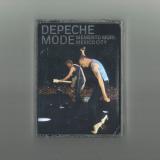
»Memento Mori: Mexico City« ist eine über zweistündige Liveaufnahme von Depeche Modes drei ausverkauften Konzerten im legendären Foro Sol Stadion in Mexiko-Stadt aus dem September 2023 und wird durch vier bisher unveröffentlichte Studioaufnahmen von den »Memento Mori«-Sessions ergänzt.
Die CD-Konfiguration enthält das Livealbum und Bonustracks auf zwei CDs sowie ein 16-seitiges Booklet mit Livefotos von den Shows.
Dieses Livealbum erscheint parallel zu Depeche Modes neuem Film »Depeche Mode: M«, der während der Shows in Mexiko-Stadt aufgenommen wurde. Der Film wurde konzipiert und umgesetzt vom vielfach ausgezeichneten mexikanischen Filmemacher und Regisseur Fernando Frías. Während »Depeche Mode: M« packende Konzertmitschnitte mit stimmungsvollen Nebeneindrücken und ausgesuchtem Archivmaterial vereint, wird gleichzeitig die tiefgreifende Verbindung zwischen Musik und Vergänglichkeit innerhalb der mexikanischen Tradition veranschaulicht. Die Blu-ray- und DVD-Konfiguration von »Depeche Mode: M« enthält zusätzlich das schon erwähnte Livealbum »Memento Mori: Mexico City« sowie einen abendfüllenden Konzertfilm.
- A1: Blinded By The Dark (Feat Dave Clarke)
- A2: Riot Gear
- A3: Full Circle
- B1: Echoes From A Wasted Land (Feat Exzakt)
- B2: The Hooded Figure
- C1: Modesty Is A Virtue (Feat Perel)
- C2: Harvester
- C3: It Doesn´t Matter If We All Die
- D1: Phantom Pain (Feat Kira)
- D2: Sanctuary Of Vices (Feat Jay Denham)
- D3: Infrapunch
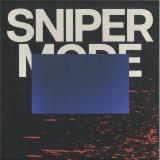
Turbo Recordings is proud to present the revival of German techno giant Gregor Tresher’s Sniper Mode alias with the Riot Gear LP. We have been promised that this release will usher in a Golden Age of Electro in which we will serve at the right hand of the Lord for a starting annual salary of €43,000. Not bad.
Riot Gear showcases Tresher’s established production genius over 11 cuts of S-tier electro marked by menace, depth, and sharp melodic hooks. Lead single “Blinded by the Dark” is a collaboration with Dave Clarke, the most respected man in electro and perhaps just in general, and features the most punishing drop in recent memory. The album also includes standout vocal contributions from Detroit techno pioneer Jay Denham (“Sanctuary of Vices”), Miami Bass kingpin Exzakt (“Echoes From a Wasted Land”), dance-world enigma Kira (“Phantom Pain”), and Turbo favorite Perel (“Modesty Is a Virtue”). We would argue that this album represents a landmark achievement in the genre, which you have to admit would reflect pretty well on us as a label.
It is not every day that Turbo Recordings embraces the responsibility of husbanding a full-album release, and you should know that it comes as a cost. The additional listening time, track title typing, and intensive download/upload workload have pushed our dedicated staff of 90 to its breaking point. We have a lot going on over here.
- A1: The Street Enters The House
- A2: Overthere Comes Overhere
- A3: A Tunnel With Curves
- A4: Surrounded By Trees
- A5: A Light Moves Across Curtains
- A6: Weightless
- A7: No Longer
- B1: Running In The Dark
- B2: Moving In The Rain
- B3: On A Beach Lost At Sea
- B4: The End Of The Road
- B5: And Fall Asleep
- B6: An Empty Corridor
- B7: Outwards And Across
- B8: Goodnight
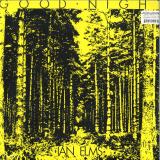
Ian Elms’s cult isolationist synth masterpiece Good Night returns via Dark Entries. Originally released in 1982, Good Night blends Berlin school minimalism and BBC Radiophonic weirdness with the aesthetics of then-nascent DIY punk electronics throughout its fifteen short tracks. According to Elms, these pieces were composed in two broad but interrelated modes: pieces with voice and synthesizer, which are obliquely narrative, and instrumental synthesizer pieces that aspire to capture fleeting emotions. Ian met with producer David Hoser at Octopus Studios and they began constructing pieces using a Polymoog Keyboard 280a, sampled drum tracks, and Elms’s synthesizer. On “The Street Enters the House”, live drums lurch along with skeletal motifs while Elms’s elliptical lyrics evoke domestic discontent. “A Light Moves Across Curtains” features metronomic pummeling and icy strings buttressing the scant cryptic lines from Elms. Instrumental gems like “Goodnight” and “Surrounded by Trees” are built around detuned riffs in round-like structure, both drifting and static like the motion of waves. With original pressings fetching three digits – if you can even find a copy – this reissue is essential listening for fans of John Bender, Transparent Illusion, and the early 80’s DIY cassette scene. Each copy of Good Night comes with a postcard featuring a photograph and notes by Elms. “This record is intended for anyone who by accident or design spends most of their time alone (whether in the body or in the mind).” – Ian Elms.
- A1: Modeselektor - Mega Mega Mega
- A2: Kitschselektor - Permit Riddim (Feat Pobdon)
- A3: Julien Bracht - Melancholia
- B1: Modeselektor - Kupfer
- B2: Siriusmo - Koko
- B3: Beirut - Spillhaugen
- B4: Gaister - Source
- C1: Modeselektor - Movement (Feat Paul St. Hilaire)
- C2: Little Simz - Mood Swings
- C3: Untold - Discipline
- C4: Ben Klock & Fadi Mohem - The Machine
- D1: Modeselektor - Usa Usa Usa
- D2: Szary - Prey
- D3: Maxime Denuc - Ouverture
An’archives is proud to present Hanabi, a compilation of material from legendary Japanese folk singer, actor and writer, Kazuki Tomokawa. Hanabi draws from Tomokawa’s three most recent albums, Vengeance Bourbon (2014), Gleaming Crayon (2016) and Going To Buy Squid (2024), all released in Japan only on the Modest Launch imprint. Pulling together highlights from these three extraordinary albums, Hanabi collects ten songs of shattering intensity, with Tomokawa performing at an ecstatic peak, a mere six decades into his musical career.
Tomokawa’s life story is one of change, risk and dedication. He appeared on the Japanese folk music circuit in the early 1970s, performing at such significant events as the legendary 1971 Folk Music Jamboree. Over the second half of the decade, he released five stunning albums that cemented his reputation as an expansive, lyrical singer-songwriter and performer whose music jack-knifed between pensive melancholy and righteous fury. His recorded output slowed in the 1980s as he became immersed in theatre, acting and painting, but his connection with the sainted Japanese label P.S.F. led to a prodigious burst of albums across the 1990s and 2000s.
Some of those albums had Tomokawa playing alongside free jazz musicians, such as his long-standing collaborator Toshiaki Ishizuka (Brain Police, Vajra, Cinorama), and late double-bass improviser Motoharu Yoshizawa. Some of that spirit can be found amidst the songs on Hanabi, leavened by a more romantic sensibility on a song like “Night Play”, where Tomokawa’s impassioned vocals and guitar swim and bob amongst a drifting string arrangement. The ferocity of “To The Dead Man” is reinforced by a guest appearance, on saxophone, by upcoming free jazz player Harutaka Mochizuki; the two spar with each other while Hiromichi Sakamoto’s cello and electronics swarm under the surface.
For those who’ve missed the three albums that Tomokawa has released across the past fifteen years – understandably so, given the relative impossibility of finding them outside of Japan – Hanabi is a welcome re-introduction to one of Japan’s most significant, poetic and quixotic folk singers and songwriters. As Michel Henritzi notes in his typically perceptive liner notes, capturing the oneiric and unique spirit of Tomokawa’s song, he is nothing less than “a poet who cries out, opening the darkness and shadows with his song, throwing handfuls of ashes from lives that have fled into the wind, to us, his fellow human beings.”
* These tracks were long-forgotten recordings, rediscovered purely by chance when one of us moved house.
In the process, an old Atari ST 1040 computer was unearthed from a box, and as we sifted through its stored files,
we stumbled upon this material—music recorded in our home studio years ago.
We've decided to release it as a testament to the power of creativity and the ability to produce music even with
modest equipment, proving that a professional studio isn't always a necessity.
* Stefano Curti
Slowly yet firmly blooming into focus, An Unfinished Rose is the new album from Australian duo Troth.
This is their first since relocating to Hobart, Tasmania and their introduction to Night School Records. With a detailed web of past releases on labels A Colourful Storm, Mammas Mysteriska Jukebox, Knekelhuis and Bowman’s own Altered States Tapes imprint, An Unfinished Rose is the group’s most realised and composed work thus far. While still drawing on the improvisatory and DIY practices that informed Troth’s beginnings, it points to a new incarnation of the duo’s music; an intentional language emerging from the fog of obfuscation and mists of uncertainty.
Over these 9 meditations on change, acceptance, renewal and rebirth, An Unfinished Rose finds Amelia Besseny and Cooper Bowman peeling back some of the roughhewn architecture that defined their earlier releases to reveal a masterful - if auto-didactic - use of space and melody. Composition and improvisation compliment and feed each other throughout, with locked-loop earworms providing the springboard for lines of clarinet or synth melody, and the negative space between chord clusters giving ample room for Besseny’s most confident vocal performances to date. Shaving off a little of the defining dissonance and tape compression of old reveals Troth’s music in radiant daylight, humbly accepting of its place in the world while yearning for better, more sympathetic modes of living. Leaning more heavily on acoustic instrumentation and post-production processes than previously, the result is a transcendent body of work infused with an almost zen-like presence.
Troth’s music exists in the border between forming and becoming, its goal to project a kind of preternatural beauty, leaving interpretation open to the listener. Field recordings, happenstance and improvisation may provide seeds for the duo’s compositions, particularly on Side A, but there is a deft touch of songcraft on show. Loam Loom Leaf Litter opens An Unfinished Rose, directly referencing natural cycles of life, death and regeneration, before the blissed-out drum machine groove of Gold Plum continues a discussion concerning the totality of nature and one’s place in it. Besseny’s vocal, swelling like an ocean churn in duet with itself is adorned with synthesised harp and a revolving synth pattern, conjuring plumes of medieval smoke. Thistle’s rounded, bass-heavy drums, nodding to the vast echo of dub, is a relatively new terrain for Troth. It’s propulsive and thumping, pulsing with a meaning and symbolism consistent with Troth’s past work, referenced overtly in Bessey’s lyrics - “Say it too much and it loses its meaning…”. Similarly, the sprawling modern-classical suite, Tides Reflected In Her Eyes, is intentional in its lyrical themes while traversing new ground, revelling in layers of bowed cello and vocal intonations. Side B’s 4 tracks feel like Troth’s most thoroughly accessible and affecting music to date. Leaning into their own detoured version of Synth Pop, Cocoonist explores downtempoisms via a crunchy low frequency synth, and dream-like, fuzzy trip-hop modalities, not unlike Besseny and Bowman’s other group, Th Blisks. Following on, Myrtle Mystes is an open and searching DIY pop song, forged out of drum machine, bass guitar and cello. (An) Unfinished Rose’s title-track is a clear stand-out, built upon an evocative rhythm sample that appears to change emotional resonance with each undulating repetition. Its cascading waves of affect, interjected with a subtle breeze of synth, bowed instrumentation and soaring, densely-layered vocals.
An Unfinished Rose is enveloping, warm, forgiving. Difficult, yet retaining a unique beauty. Troth’s music aims to celebrate the duo;s shared experiences of being in the world, despite the complexity often surrounding us all. Theirs is a message of hope and perseverance, learning and patience.
Moto Music proudly presents Time Synthesis, a sonic collaboration of the living legends Dan Piu and DJ Estimulo, creating a future past guaranteed to last. Experience the dynamic aurora of class, seamlessly guiding your senses through savory flavors of funky Detroit and atmospheric Techno hybrids to the smoothest of sunset coastal Deep House designs marinated to move bodies on the dancefloor and influence the mind. Indeed a synthesis of good times where the future of authentic house and techno was never left behind. Perhaps the dreamy chords and confident bassline of Strobes" unlocks your center of rewards via groovy techno modes, or its the Estimulo Ambient class pass of Wayne" that's the perfect sound for your late spring sunsets and nights in the rain; never the less with Moto Music since 1994, complete quality is here to adore in this ep menu of four…
Written and produced by Dan Piu & Estimulo
- A1: Moondata – Let The Moonshine In (Dub)
- A2: Dhuo – Walkin’ (Dub Version)
- A3: Luc Van Acker / Anna Domino – Zanna
- A4: Roger Rönning – Cecilia
- B1: The Quick – One Light In A Blackout (Special Version)
- B2: Colourfool – Hey You
- B3: Amy Cooper – Music
- B4: Maxisand – Don’t Be Talking About That (Vocal)
- C1: Michael Heart – Some Girls (Instrumental)
- C2: Jean Louis Murat – Te Garder Près De Moi (Dream Remix)
- C3: Mind Fair Presents … Sundown Drive – Give It Up (Mark Seven Parkway Dub)
- D1: Gregg Brown – Baby Talk (Club Mix)
- D2: Yeah Bo! – Yeah Bo! (Groove On Mix)
- D3: J Dalton – Game
Leng Records proudly presents Everything You’re About to Hear Is True: Volume 1, a compilation carefully curated by Rotation Soundsystem. Brought together by Rotation founders Dean Meredith and Ben Shenton, alongside the Wrekin Havoc trio of Rob J, Stuart Robinson, and Rich Hall, this debut volume captures the collective’s shared vision – shaped by decades of crate-digging.
Founded in 2013, Rotation has grown from a modest gathering in Staffordshire into a thriving community of like-minded music lovers, attracting heads and partygoers from across the UK – and well beyond. What began as an intimate affair has evolved into a full-scale, three-day celebration, now held in a grand yurt and powered by a bespoke six-way sound system. The rig features four Klipschorns, two JBLs with twin 18” and 15” sub reinforcements, compression horns, and an Isonoe 420 mixer.
Meredith explains: “With the help of my brother, Martin, I’m constantly looking at ways to improve the setup. I love the way Larry Levan did that at The Paradise Garage. We have a few things that are custom-made. I want our system to be unique to us.”
According to regular attendee, DJ and writer Steve KIW: “In the right hands, the sound system at Rotation – very much Dean’s labour of love – is untouchable. The comparisons with Mancuso’s Loft come easily because they are deserved. There isn’t a bad spot in the yurt. Wherever you are, it sounds incredible.”
As the dancing continues through the weekend, the DJ line-up has grown to match the occasion. Guests and headliners have included a roll call of legendary selectors: Bill Brewster, Colleen “Cosmo” Murphy, Phil Mison, Nick The Record, Ruf Dug, Mark Seven, and The Idjut Boys — the latter playing a marathon 10-hour set in 2024. The parties have also featured live performances from Emperor Machine, Quinn Lamont Luke, Reuben Vaun Smith, and Orbs of Light.
Presented on gatefold double vinyl, this lovingly assembled collection is the result of decades spent digging through dusty crates, reflecting the selectors’ deep-rooted passion for uncovering rare gems and overlooked treasures. Decidedly European in spirit, the album brings together 14 rarities with standout selections from Belgium, Sweden, Italy, Germany, and France. The vast majority of tracks are true obscurities, and nearly every one is a mid-tempo bumper.
“This has been a long time coming – something we’ve always dreamed of doing. We’re incredibly thankful to Leng Records, who understand our vision and what we’re trying to build. This compilation pulls together some of our favourite tracks from over the years. It’s not just a playlist – it’s a journey, a window into the sound of Rotation,” says Meredith.
- A1: Timothy Gray - Its Raining
- A2: Stephen Ross David Mason - Untitled
- A3: Planetary Peace - Song Without Words
- A4: Lee Underwood - Quietude Oasis
- A5: Terry Garthwaite - Sacred Within
- B1: Martin Scott - African Sweet Fantas
- B2: Donald Eggers - Full Moon
- B3: Clay Play - Ancestress
- B4: Darrell Devore - Untitled
- B5: Martin Espino - Mexicayotl
A collection of obscure and unheard metaphysical sounds, 1980-1992
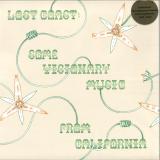
Lost Coast: Some Visionary Music from California assembles little unknown sounds from California’s metaphysical underground. Each recording is stylistically different—dream pop, guitar soli, fourth world, avant-electronic—but they are held together by a regional ethos of the “visionary.” This is music that envisions, seeing through the mind’s eye and conjuring new worlds.
Some people say that California is where “the nuts stop rolling”—where those too eccentric to fit in elsewhere ended up. What was meant pejoratively is easily reclaimed as a celebration of the free-thinking and the freely-freaking. Until the turn of the millennium, all manner of seekers rolled westward until they hit the pacific. Stationed along this edge, music was a way to roll still further: to imagine territories unencountered and wavelengths as yet unheard.
Lost Coast is a commemoration of the people who made these journeys and a resurrection of recordings they made little effort to broadcast. While some of the tracks were originally released on cassettes with modest distribution, others were only shared among friends or never shared at all. Assembled from the personal collection of House Rules operator Zully Adler, these recordings were all found on cassettes in flea markets, barn sales, rural thrift stores, and even stranger places—outside a gem and mineral shop, for example, and on the ranch of a retired mescalin dealer.
Nonetheless, these recordings are eminently listenable. California is a place where the strange and the pleasurable are frequent bedfellows.
- A1: I Am In The World With You
- A2: Telema
- A3: Prado
- A4: A Little Asphalt Here And There
- A5: This Sandy Piece
- B1: Tomorrow
- B2: Greenwich
- B3: Cars
- B4: She Loves Animals
- B5: Die Dinge Des Lebens
- C1: Set
- C2: Cars (Variant)
- C3: Meet The Lucky Kitchen
- C4: Telema (Längs)
- C5: Rocket Fuel
- C6: Copa
- D1: Pantone 6
- D2: Numbers In Love
- D3: Casper
- D4: Milker
- D5: A Day Long
- D6: Pantone 1
Ltd edition!
to rococo rot?s the amateur view (1999) will be reissued as a highly limited expanded edition, featuring 12 bonus tracks on an additional disc, a new gatefold sleeve with previously unseen photos, and liner notes by Jon Dale. The Amateur View is widely hailed as one of the definitive records of late '90s analog electronica. Released in the U.S. via Mute Records, it was named one of UNCUT's Albums of the Year in 1999 and perfectly captured the introspective, experimental mood of the era. The album's influence was far-reaching-so much so that Saint Etienne enlisted To Rococo Rot for their 2000 album Sound of Water. At the time, To Rococo Rot were the band of the moment-jetting across the globe to play the most cutting-edge electronica festivals, including wild WARP events where none other than Aphex Twin spun support DJ sets, The trio was invited three times by John Peel to record radio sessions in the BBC studios between 1997 and 1999. Bands like Modeselektor still cite them as key influences and pioneers. Stephen McRobbie of The Pastels, Mark Fell (SND), and Kieran Hebden (aka Four Tet) are all big fans-Kieran even remixed a track from their debut album so did Mira Calyx and Daniel Miller of Mute, a longtime supporter, and yes Björk is a fan too.
360 mcn white-white light cardboard paper / one side only hand plasticization / 2 separated parts prints / hand gluing / PVC outers / original artwork / gatefold sleeve / Bandcamp limited edition 30x60 cm insert with extended liner notes by Tony Higgins and Interview with Babs Robert and Sébastien Gorlé with exclusive pictures and self-portrait by Babs Robert himself printed on GF Smith "Takeo Tant Select" Canvas Paper tip-on left jacket panel / Exclusive never released Memorabilia from Babs Robert's vault.
Personnel:
Babs Robert - alt sax, tenor-sax, electric tenor-sax, Bin Recorder, Acme siren, Chinese-bell, sleigh-bells, maracas, tambourine,hand-rattle,claves)
John Van Rymenant - baritone-sax, fluegelhorn, Bala, tambourine, sleight-bells, cowbell, triangle, claves
Johnny Peret - vibes, bongo's, cowbell, maracas, castanets, rattle-snakes, tambourine, drums, woodclock, trinagle
Johnny Brouwers - piano, prepared-piano, triangle, cowbell, sleigh-bells, maracas, caves,hand-rattle, guiro, woodblock, tambourine
Paul Dubois - bass, triangle, cowbell, claves, rattlesnakes, hand-rattle, woodblock, tambourine
Michel Gobbe - bass,Chinese-bell, claves
Robert Pernet - drum, tambourine, seven-notes M'Bichi, guiro, alarm-siren, home-made metal xylophone, African telephone-drum, triangle, sleigh-bells, Siku
Notes:
Despite its modest role on the world stage, Belgium has produced a number of internationally renowned musicians and composers. There is the iconic gypsy jazz guitar maestro Django Reinhardt, whose position remains unassailable, and guitarist/harmonica player Toots Thielemans, who became an internationally renowned artist performing and recording with Bill Evans, Oscar Peterson, Ella Fitzgerald, Peggy Lee, Shirley Horn and Quincy Jones. The other key Belgian figure is composer/arranger Francy Boland, co-leader with US bebop drumming legend Kenny Clarke of Europe's leading big band of the 60s, the Clarke-Boland Big Band.
The Love Planet performed in the main clubs of Brussels, such as Blue Note, Pol's Jazz Place, and Smog as well as in major musical events throughout Belgium including to big festivals in 1969 - the Avant-Garde Festival in Ghent and the First International Jazz Event in Liege – where the Love Planet shared the bill with Miles Davis - and the Bilzen Jazz Festival in 1970. The contrast between the musical architecture of the themes and sonic freedom in the improvised playing perfectly illustrated the polymorphism – an order within disorder – which the Love Planet aimed for.
The initial original quartet line-up was Babs Robert (sax), Paul Dubois (bass), Johnny Brouwers (piano), and Johnny Peret / Robert Pernet (dru- ms). On the album session, the quartet was augmented with the addition of John Van Rjimenant (saxes) and Michel Gobbe (bass). As well as their main instruments, the band members also played an array of unusual instruments, principally percussion. This is the first official re-release
of the 'Babs Robert and the Love Planet'. Original copies of the album fetch many hundreds of Euros on the collecting circuit and it remains a curious and fascinating window into a moment in time that still resona- tes some fifty years later. Come with us to the Love Planet. (Tony Higgins)
- A1: Dj G2G - *Ussy (Ft. Jahanam)
- A1: Boys Noize - Bvrning (Vinyl Only)
- A3: Locked Club - Ring My Bells
- A4: Adame Dj - Beat Maquinario
- B1: Safety Trance & Umru - Sidewinder
- B2: Kfr - There Is Something I Can't Find Ft. Mayah Alkhateri
- B3: Slim Soledad - Vai Toma Na Rave
- B4: Manni Dee - Break Me Ft. Bodur
- C1: Schacke - Control Freak
- C2: Øtta - Mão Na Parede
- C3: Anna Lann - Silver Plug
- D1: Tinkerhell - Cross Ways
- D2: David Löhlein - El Baile
- D3: Isaiah - Lone Soldier
- E1: Dj Babatr - Kick The Floor
- E2: Ilya Gadaev - Pleasuredom
- E3: Marceldune - Run And Dream, Kiss And Bye
- E4: Scntst - Feedback
- F1: Baseck - Let It Go
- F2: Dj Wifi - Like 2 Ride
- F3: Æro Nova - B1Te
- F4: Boys Noize - Sireneh
Boys Noize presents ONES and ZEROS OAZ, a new experimental record label with the mission of breaking open the space of possibilities for techno and beyond. Reflecting new modes of subcultural circulation and integrating music,
objects, and a pluralistic network of artists, OAZ debuts with the 22-track Bo compilation, including two Boys Noize solo tracks, one of them “Bvrning” (Vinyl Only), as well as tracks by Locked Club, Safety Trance & umru, DJ Babatr, Slim Soledad, Schacke, KFR, TINKERHELL, David Löhlein, MarcelDune, and more.
Reissue of the 1983's classic Messages From The Stars by British Electronic Funk outfit, The Rah Band.
Released in 1983, "Messages From The Stars" by The RAH Band—AKA multi-instrumentalist and producer Richard Anthony Hewson—emerged as a modest club hit, peaking at number 42 on the UK charts. Four decades later, the song has been rediscovered and revered as a cult classic, transcending time and generations. This reissue celebrates The RAH Band’s pioneering sound and the track’s unexpected rise from obscurity to international acclaim, largely thanks to devoted selectors and fans who never let it fade away.
Created on a Roland SH5 synthesizer in Hewson’s home studio, the track’s iconic vocals, spontaneously delivered with playful innocence by Hewson’s then-wife Liz, proved to be a masterstroke, with her warm, conversational tone giving the track an authentic charm. The interstellar lyrics, cosmic synth-line and funky bassline combined are addictively catchy, undoubtedly contributing to the track's success as a crossover boogie-funk classic.
The RAH Band’s resurgence owes much to DJs like DāM-FunK and Martin Iveson (Atjazz), who introduced "Messages" to new audiences in the ‘90s and ‘00s. DāM-FunK recalls discovering the track in the late '90s and making it the centrepiece of his sets, with crowds demanding repeat plays during his iconic Funkmosphere nights in Los Angeles. Fast-forward to 2019, “Messages” was selected as the opening track on pop superstar Frank Ocean’s ‘Blonded’ radio show and playlist, fuelling the track's viral explosion on TikTok in 2020 and sparking a relentless, enduring internet popularity that continues to this day.
Hewson, now in his eighties and residing quietly near the Sussex coast, continues to create music every day in his garage-turned-studio, using the original vintage gear that once brought "Messages From The Stars" to life. Enjoy this slice of space-disco history, where messages from the past have made their way to the present.
Hello, Do you read me?
I have a message
A message from the stars
Repress!
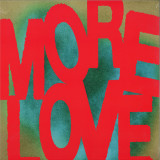
Moderat, the electronic music Voltron formed by Apparat and Modeselektor, released ‘MORE D4TA’ last year to critical acclaim, their first full-length album since 2016. Keinemusik’s Rampa & &ME put their spin on the Moderat albums’ third single ‘MORE LOVE.“ — the vinyl single of the remix will be out December 8th, 2023.
Founded by Matt Hodgson in the mid 90s, 7th Voyage quickly became a cult imprint.
Despite a modest catalogue, the label earned a devoted following among vinyl collectors. Revered for its raw energy and timeless quality, these records have become treasured, often commanding hundreds of euros on the second hand market - some of the rarest electro tracks out there for those who know…
London based Hodgson, a passionate music lover and vinyl purist, poured his heart and soul into every release, crafting records that resonated deeply within London’s underground scene of the 90s. Following the recent reissue on Sushitech, Matt and Yossi have joined forces to present a
retrospective 7th Voyage release on Pariter, a label sharing a natural synergy with the ethos of 7th Voyage, this release honours the legacy of Matt’s work while breathing new life into these rare and sought-after tracks.
‘The Return Voyage’ is a carefully curated compilation of seven standout tracks from the label’s back catalogue, encapsulating its signature sound and unique musical journey.