Originally released in 2021. This record will be re-released.. on Industry Standard. Well deserved re press of an iconic original from Todd Modes. Boss man Oliver Dollar steps up to create a hypnotic remix that will definitely take you to that other place in your head. A truly masterpiece is on the way on 7th June 2024.
Поиск:modes
Все
Explore the Duster universe on the far superior 45RPM format. This deluxe triple 7" box contains Duster's first single_1997's Transmission Flux (including "Stars Will Fall" & "Orbitron"), 1998's Apex, Trance- Like (featuring "Four Hours"), plus Stratosphere's painfully absent "Echo, Bravo" and the lost 2002 outtake "What You're Doing To Me." Housed in replica sleeves and placed in a sturdy two-piece box, Moods, Mode s also contains a Duster-branded hanky for those who like to accessorize .
Yellow Vinyl
Explore the Duster universe on the far superior 45RPM format. This deluxe triple 7" box contains Duster's first single_1997's Transmission Flux (including "Stars Will Fall" & "Orbitron"), 1998's Apex, Trance- Like (featuring "Four Hours"), plus Stratosphere's painfully absent "Echo, Bravo" and the lost 2002 outtake "What You're Doing To Me." Housed in replica sleeves and placed in a sturdy two-piece box, Moods, Mode s also contains a Duster-branded hanky for those who like to accessorize .
Modes continues the forward thinking soundscapes explored on Dyne’s recent album Teal, which garnered acclaim from peers and fans alike -including Late Night Tales, Toddla T, Ransom Note, and BBC6 Music presenters - and sold out quickly on vinyl.
Lush synths and dreamy vocals are paired with up-tempo afro-inspired house, with tinges of percussive jazz and future soul. Dyne's trademark slick production can be relied upon once more, as well as the music's insistent rhythmic drive and intensity.
Modes employs some of New Zealand's most well known and iconic vocalists, in addition to many new rising stars. Frequent collaborators Lord Echo, Ladi 6 and Mara TK (Electric Wire Hustle) return, alongside soul legends Dallas Tamaira aka Joe Dukie (Fat Freddys Drop), Che Fu and Troy Kingi.
New 9-track EP and inaugural release from Detroit label 100 LIMOUSINES.
A fixture in the Detroit DJ world—Todd Modes has spent the last decade quietly releasing music on Going Good, FIT Sound, Golf Channel, M1 Sessions, Still Music, Fat Finger Cosmic, and Detroit Electronic Quarterly. Inspired by the birth of his son and the death of his grandfather—New Life is a deeply personal meditation on the cycles of life and time. An examination of the past and present assembled from recordings spanning the last 20+ years—this EP is an outstanding representation of Modes musical depth and artistic purpose—a prime example of the quality to be expected from 100 LIMOUSINES in the future.
Following the Turner Street Sound collaboration with Rings around Saturn, Melbourne producer and DJ Midnight Tenderness presents his second offering to Butter Sessions, Digi Modes. Throughout, Midnight Tenderness maintains his fixation with dub-wise rhythms and heavenly melody, delivered with his signature silky smooth production.
Digi Modes begins with the complementary pairing of tracks Crosswinds and Dub Dreams which feature on the limited yellow 7". Crosswinds is a bright medley of garage breaks against hazy synth-work that gently inhales and exhales. Dub Dreams, as its title affirms, is a mirage of sweeping synth loops and chattering rhythms. Elastic Dub is a more traditional homage to early dub works of the 1980s, marked by persistent echoes and rumbling bass that divides and conquers. Reflexitones, and the EP's endnote Regent St Dub, both add a sprinkle of house and electro, primed for a discerning dance floor or perhaps for now, a dance at home. As a whole, Didi Modes is an affirmation of Midnight Tenderness' mastery to adopt and adapt acquainted sounds in a unique way.
DJ and producer, co-founder of the legendary London club night Lost, Steve Bicknell returns to the fray with a brilliant new 12", 'Modes of Thought'. Comprising three full tracks and six locked grooves, the record represents the debut release on Bicknell's brand new label, 6dimensions. Art by Harumasa Kono.
Throughout his career, Steve Bicknell has retained a true groundedness, with everything he's stood behind being indelibly marked by a progressive and uncompromising attitude. Sticking firm to ideals and principles, he has remained connected to the roots of techno, eschewing the mainstream to follow an unswerving, singular vision, guided by a deep and enduring devotion to the music that inspires him and a desire to present it in the purest way possible.
Stepping out here with new material and a new venture, Bicknell's trademark raw, minimal aesthetics and conceptual underpinning have clearly been retained. He describes new release 'modes of thought' as being founded upon "the awareness of thought processes, understanding the connection between the heart and the brain through vibrations that are created via the blood-stream." Essential floor gear, 'modes of thought' introduces three tracks of taught, lean minimal techno before handing creativity over to the DJ with the inclusion of six locked groove loops.
Lean and precise, with a beautifully controlled pallette, wide dynamics and rich level of sonic detail, the record flies out of the blocks with the pumping 'harmonious balance', described by its creator as a "reflection on hatred and furthering an understanding of hate and how acceptance induces balance". Continuing to unpack the work, 'the moment I stopped' is described as "a realisation of the importance of self-preservation to balance yourself in order to take care of others close to you"; whilst on the flip, 'messenger molecules' depicts "the flow of blood and how it feeds the brain of feelings through coded information".
- A1: Begleitung Für Tuba
- A2: Inversion
- A3: Proto
- A4: Metazoon
- A5: Momentaufnahme
- A6: 2 Ton
- A7: Speichen
- A8: Modes
- A9: Expansion (Version)
- A10: Synchronton 2
- B1: Atmosphäre 1
- B2: Punkte
- B3: Expansion
- B4: Für Ulrich
- B5: Pulsation
- B6: Testlauf
- B7: Soloresonanzen
- B8: Photosphäre
- B9: Rhythmus 80
2018 Vinyl Remaster. Von Jan Jelinek kompilierte Werkschau der legendären musizierenden Pharmazeutin.
Die Geschichte der Entdeckung dieser Aufnahmen klingt abenteuerlich. Es soll Ursula Bogners Sohn
Sebastian gewesen sein, der auf einem Flug seinem Sitznachbarn, dem Elektronikmusiker Jan Jelinek, vom
ungewöhnlichen Hobby seiner Mutter berichtete. Ursula Bogner, 1946 in Dortmund geboren, dann in Berlin
als Pharmazeutin bei einem großen Pharmaunternehmen beschäftigt, hatte ein Faible für elektronische Musik
und die Musique concrète. Ab Ende der 60er-Jahre nahm sie eigene Stücke auf, die sie jedoch nie
veröffentlichte. Bogner war stark von den pseudowissenschaftlichen Energietheorien Wilhelm Reichs
("Orgon") beeinflusst und bastelte sich einen eigenen Orgon-Akkumulator. 1994 verstarb Ursula Bogner.
2008 veröffentlichte Jan Jelinek unter dem Titel "Recordings 1969-1988" eine erste Werkschau Bogners, die
jetzt als remasterte Vinyl Version wieder veröffentlicht wird.
Some words from Nat about the music – “For this recording I composed some songs using more “exotic” (for want of a better word) modes,
which I have always meant to explore in more depth but never really got around to very much. The first song for instance, Red, Gold & Green, uses an Ethiopian scale.
The title comes from the colours of the Ethiopian flag, which is also symbolic in Rastafari so has a kind of double meaning, like a lot of my songs.The title track, Path of Enlightenment, uses several modes,
starting in a major key then moving to the Phrygian mode, then to a minor key. The piano solo is in a 28 bar minor blues form. Menat is based on a mode of the Byzantine scale,
I’m not sure if it has a particular name or not. Amenhotep was the name of several Egyptian pharaohs,
Amenhotep IV being the original given name of Akhenaten.When I was writing this song it put me in mind of my song, Akhenaten, simply because they are both in 5/4 time,
so I decided to give this one a pharaonic name too. Spheshile is a Zulu word (and sometimes name) that means “beautiful gift”, the title was suggested by a friend from South Africa.
All this means nothing of course if the music doesn’t tell a story, I think the unfamiliar modes allowed us to speak of interesting things that may not have come to us otherwise.
Finally, I chose to use the quartet format for this recording because it occurred to me that it tends to make for a more cohesive group sound, and it had been a while since we recorded this way.”
- 1: Going Out
- 2: Confession
- 3: Drip Drop
- 4: Under The Covers
- 5: Nighttime
- 6: On The Ward
- 7: Blue Skies
- 8: I Go Back
- 9: Off The Beaten Track
- 10: Alone With You
- 11: Gave You Up
- 12: Staying In
‘Confession' is an album of quiet upheaval. An album about closeness that arrives late and unexpectedly. About stability rubbing up against desire. About the way friendship can suddenly tilt into something charged — and how that charge unsettles everything around it. Where earlier work often observed from a distance, Confession turns inward. The voice is closer, warmer, less shielded. “This wasn’t the album I intended to make,” says Carla dal Forno. “I originally wanted something veiled and abstract, but I realised I couldn’t hide behind abstraction — the songs only worked when I leaned into emotional truth.”
This is dal Forno’s fourth LP, written and recorded over several years in a small country town, in a studio housed inside a partially abandoned hospital. Long corridors, humming lights, emptied rooms — a place built for care and waiting, now quiet enough for thoughts to echo. That stillness shapes the record: intimate, watchful, unadorned. “I live in a small country town that offers a stillness my life didn’t previously have,” she explains. “In that quiet, feelings I might’ve ignored in a busy city grew loud.” Dal Forno sings plainly and conversationally, with an emotional precision that sharpens the everyday into something quietly unsettling.
The album moves through paired states: going out and staying in, wanting and withholding, devotion and distraction. Domestic calm set against private unrest. A long-held relationship offers safety and routine, while a newer connection opens emotional fault lines — longing, jealousy, fantasy, self-exposure. “At the heart of the album is a friendship that became emotionally charged in an unexpected way,” dal Forno says. “That shift brought daydreaming, jealousy, tenderness, confusion, self-awareness — and eventually acceptance.”
The drama here is internal, incremental, lived. Musically, Confession feels lighter on its feet than its subject matter suggests. Melodic basslines anchor the songs while guitars, harmonies, and gently off-kilter rhythms move around them. There’s a looseness, even a playfulness — “like the sensation of tension lifting once you finally admit something to yourself,” as dal Forno puts it. The album traces a subtle arc: attraction blooming where it shouldn’t; obsession quietly taking hold; fantasy overtaking reality; clarity arriving slowly, sometimes painfully. Visually and emotionally, Confession returns to modest spaces: backyards, beds, night streets, overgrown paths. “The record exists in that contrast,” dal Forno reflects. “Peaceful surroundings, unsettled interior.”
Like all of dal Forno’s work, Confession resists clean conclusions. It doesn’t moralise desire or romanticise restraint. Instead, it lingers in the in-between — where love is stable but not total, where yearning teaches as much as it hurts, where solitude becomes a form of care. Plain-spoken but emotionally complex. Rooted and restless. Held together by bass, breath, routine, weather. An album about admitting what you feel —and living with what that admission changes.
- 1: Pass Between Houses
- 2: Theatre For Change
- 3: Real Home
- 4: Treat Me A Stranger
- 5: Utopia Of Bog
- 6: Void Attentive
- 7: My Love, Let's Take The Stage Tonight
- 8: The Kiss
- 9: He Had Always Led
Cathartic avant-rock, literate DIY folk & experimental composition exploring displacement, love, climate change, belonging & the places we call home - RIYL Jim O’Rourke, Richard Youngs, This Heat, Richard Dawson, Flying Nun. ‘Real Home’ is the new album by the Manchester-born, London-based artist Kiran Leonard. His sixth album proper (not including innumerable tour-only CD-Rs and short-run cassettes), since his precocious debut in 2013, ‘Real Home’ finds Leonard invigorated by inspiration and experience, making passionate, literate, and mercurial music that explores displacement, love, memory, climate change, connections to home and more. Encompassing songs recorded after moving to South London, ‘Real Home’ reflects on ideas of belonging and domesticity through folkloric, stream-of-consciousness songwriting. Across nine tracks, Leonard traces lived impressions of the household and the city, expressing sentiments of dislocation, alienation and stasis, but contentment too. Infusing the avant-rock effervescence, terraced dynamics and visionary lyricism of his music with what he defines as a greater sense of openness, Leonard is as versatile, fervent and imaginative as ever on ‘Real Home’, yet his music is somehow more intimate, affecting, and acutely expressive. Shaped by dual considerations of simplicity and formalism, ‘Real Home’ is by turns beautiful, allusive, and ruminative, an album on which Leonard considers what his songs have resembled in the past and what they mean now. In recent years, Leonard has crafted eloquent chamber music inspired by the likes of James Joyce and Clarice Lispector (‘Derevaun Seraun’), responded to contemporary politics and communication breakdown in the digital age (‘Western Culture’), and compiled solo works and ensemble recordings for a longform ode to Jonas Mekas and to one of Leonard’s enduring themes; home (‘Trespass On Foot’). On ‘Real Home’, Leonard reiterates this abiding thematic focus yet ascends to new, different heights, in music of cathartic delicacy and dissonance where all the myriad dimensions of his work to date seem to crystallize. There are sinuous songs about struggle and defying the pace of city life through drift and diversion (‘Pass Between Houses’), stirring songs of intense feeling and crescendo, described as a form of speculative detective fiction (‘Theatre for Change’). There are touching solo piano ballads (the title track), symbolic contentions with carbon capture and climate change (‘Utopia of Bog’), modes of experimental minimalism (‘Void Attentive’), and other profuse feats of compositional range, embroidered with wild tendrils of narrative and lyrical depth. A record to pore over, and get lost in. Exemplifying the vast aesthetic scope of Leonard’s music, lead single ‘My Love, Let’s Take The Stage Tonight’ is inspired by country lodestar Hank Williams, Russian poetry and a late period love poem by William Carlos Williams. Yet for Leonard, the song signals a sense of accessible materiality, and is the product of a more linear approach to writing songs: “My imitation of the great Hank Williams, in spirit if not in substance…This is one of the best efforts on Real Home at a song-as-object. Looking at it now I realise I was trying to write a song that made itself known as a song to the listener, and I wonder whether that’s crucial if you want a song to transcend its context. And that this is either accomplished through a total openness – by being inviting, by laying the tricks of the song out plain to see, as Williams and his many ghostwriters did so well – or by adopting a knowing aloofness, positioning oneself against the listener but letting it be known that that’s what it’s doing. In this song I try both, but mostly the former: as in, I wanted to write a song where every line follows on from the next.” Imbuing the endlessly elaborate and inventive qualities of his music with a newfound streak of candid, clear-cut melodicism, Leonard has reached a special place in his artistry, on a record that feels familial, and expresses closeness. Assembled with affiliates including Lauren Auder, Otto Willberg, Jasper Llewellyn (caroline), Tom Hardwick-Allan (Shovel Dance Collective), Magda McLean (caroline, The Umlauts), Alex Mckenzie (caroline, Shovel Dance Collective), Isabelle Thorn (Dear Laika) & more, the recording process had a significant influence on the subject matter of ‘Real Home’, in sessions defined by close-knit camaraderie and artistic eccentricity: “The theme of the home obviously recurs throughout the record; the album was mostly recorded in domestic spaces with friends, and the name of the album is Real Home. I like the qualifier ‘real’, like you’re getting past the cloak of the word and towards the thing-itself…also nearly all the percussion in this record was recorded on items from my dad’s shed (jam jars, sandpaper, blocks of wood, etc). Real home record!” ‘Real Home’, like anything by Kiran Leonard, is a record of dazzling multiplicity. Yet it’s a companionable prospect with a central premise; a collection of songs where listeners old and new can find a home. An album led by a scene; of Leonard standing at the threshold, ready to welcome you inside. “Exceptional songs that linger” - The Guardian // “An autodidact of amazing talent & energy” – Pitchfork // “A ridiculous amount of talent…confrontational, celebratory, provocative or perverse – he manages all of these emotions & more” - The Quietus /
Music From Memory presents inrain, a collaborative project by Rudy Tambala of A.R. Kane and Alison Shaw of Cranes, originally recorded in the early 1990s.
inrain brought together two artists who were at the time shaping distinct yet quietly influential currents within alternative music. Through A.R. Kane, Tambala had helped redefine the possibilities of guitar music, placing atmosphere, abstraction, and emotional ambiguity at its centre in ways that would later resonate across dream pop, shoegaze, trip hop and experimental pop. At the same time, Shaw’s work with Cranes was establishing a singular vocal presence and a deeply intuitive approach to mood and space. inrain emerged at the intersection of these sensibilities.
The project began after Tambala was introduced to Shaw by Geoff Travis, leading to sessions at H.Ark! Studios in Stratford, East London. Working outside the expectations of their primary bands, the pair recorded informally over several months, building songs from minimal foundations. Early sampling technology, drum machines, acoustic guitar, and voice were used sparingly, with arrangements left open and space treated as an active element within the music. Vocals were often improvised, first takes preserved, and the atmosphere of the studio — calm, unhurried — became part of the sound itself.
Originally released in limited form during the early 1990s, the recordings carried subtle traces of the surrounding musical landscape: the low-end experimentation of emerging jungle, dub-influenced rhythmic structures, and a restrained melodic sensibility shaped as much by classical textures as by contemporary underground culture. Though modest in scale, the music feels quietly expansive — intimate, patient, and emotionally direct.
For this release, all tracks have been newly remastered from the original DAT tapes. This edition also includes the additional track 'Biology', written and recorded in 2012
This first-time reissue of Quinteplus’ 1971 album revives a key moment in Argentine jazz, featuring crisp trumpet and tenor sax, electric piano-driven funk and modal grooves, and a tight, spacious rhythm section. It showcases prominent figures like Jorge Anders and “Pocho” Lapouble.
==================================
Quinteplus was born in Buenos Aires at the end of the 1960s, emerging directly from the ideas and experiments of the legendary Agrupación Nuevo Jazz. Founded in the early ’60s, this collective brought together some of the most forward thinking figures in Argentine jazz functioned as a creative lab where musicians questioned where jazz could go next. Among the key ideas discussed was the fusion of jazz with Argentine folk styles such as zamba, chacarera, malambo, cueca, and candombe, as well as a deeper look into African rhythms as a bridge between musical worlds.
Two members of that collective, keyboardist Santiago Giacobbe and bassist Jorge “Negro” González, carried those ideas forward when they formed Quinteplus in 1969. The group came together naturally: all the musicians already knew each other and had played in different projects around the Buenos Aires scene. They shared a strong admiration for Julian “Cannonball” Adderley’s quintet, along with a clear goal—to develop a modern jazz language grounded in local Argentine rhythms.
From the start, Quinteplus stood out for its openness and adventurous spirit. Rhythm was central, and so was experimentation. The band belonged to a generation of Argentine jazz musicians eager to explore electric instruments and new textures, anticipating what would soon be known as jazz-rock. This was happening in Buenos Aires at the very same time Miles Davis was opening new doors with “In a Silent Way” and “Bitches Brew”. Giacobbe introduced one of the first Fender electric pianos in Argentina, while González pioneered the amplification of the upright bass and even developed a hybrid electric, boxless version of the instrument. Trumpeter Gustavo Bergalli, meanwhile, maintained close ties with the emerging Argentine rock scene, collaborating with Luis Alberto Spinetta and appearing on Almendra’s first album.
In 1971, Quinteplus recorded its first and only studio album for EMI. The original lineup featured Jorge Anders on tenor saxophone, Bergalli on trumpet, Giacobbe on keyboards, González on upright and electric bass, and Norberto “Pocho” Lapouble on drums and percussion—who also illustrated the album’s iconic sleeve. The record is a refined showcase of the band’s musical vision: original compositions, fluent jazz language, folk-derived rhythms, funky electric textures, tight ensemble playing, and standout brass solos. Though critically praised, the album received little label support and sold modestly, eventually becoming a sought-after collector’s item.
Quinteplus disbanded in 1973, their music was perhaps too bold and unconventional for its time.
Sound Records proudly presents ‘Morpho’, the debut LP from UK-based producer Benyayer, formerly one-third of celebrated electronic trio Dark Sky. A deeply personal record and a symbolic transition, Morpho captures the emotional and sonic evolution of an artist in metamorphosis.
Having stepped into the solo spotlight following his successful Infiltrator EP, Benyayer (aka Matt) delivers a bold, vinyl release that combines seven previously digital-only tracks with a brand new cut, ‘The Return’, all meticulously curated and pressed for the first time on wax.
Bridging influences from techno, UK bass, Afrofuturism, and electronica, Morpho is a meticulous exploration of rhythm designed to excite, cause chaos, personal reflection and movement. Each track is a raw, rhythmic exploration that draws on his time spent busking on the streets of London with found objects, experimentation with modular synths and years of experience honing his craft as a performer at some of the finest establishments in the electronic music landscape.
This initial vinyl edition is limited to just 300 copies. Designed in collaboration with Harry Cresswell, each sleeve features a deconstructed butterfly motif, laser-cut on both sides of heavy matte stock, paired with a matte-printed inner sleeve and a transparent vinyl disc, making each copy a true collector’s item.
The LP arrives amid support from tastemakers like Gilles Peterson, Benji B, and Tom Ravenscroft (BBC 6 Music), as well as heavyweight artists including Ben UFO, Bicep, Laurent Garnier, Bonobo, and Modeselektor.
Benyayer's new live show, built around these very tools, has already been trailed to great acclaim across Europe, adding a powerful performative dimension to the record. With previous performances at Berghain, Fabric, Glastonbury, MUTEK, Dimensions and Melt Festival. Benyayer's solo trajectory continues to rise with intent, mystery, and a fierce sense of artistic purpose.
Gravity Pleasure welcomes Maude Vôs for their most intimate EP offering to date, Medicinal Properties. Dripping in serenity and grounded in connection, Medicinal Properties is a musical elixir concocted with the healing modalities of the natural world and derived from the intentional planting and nurturing of sapphic seeds. Through minor modes, swimming cinematics and mineral-rich textures, Vôs traverses an ecosystem of sensuality and bonding, a symbiotic journey of long-distance love colored and shaped by their affinity for the earth.
Taking root in California and continuing throughout Ireland, Iceland, and Montreal, the EP translates this cross-continental connection by blurring the lines of timezones, genres, and natural landscapes. Inspired by sea swims, country oyster cottages, diner pancakes, snow flurries, geothermal soaks, mossy mornings, and adventures to igneous formations, Vôs invites you to experience this potent body of work, which forms the harmonious emotional bedrock of both kinship and creation.
Support comes from Yushh (“LOVE, so good!!!”), Jossy Mitsu (“Incredible <3”), Mixtress (“v pretty”), Peder Mannerfelt (“hot”), Batu (“like Maude Vos, downloading”), Vladimir Ivkovic (“Good! Thank you”), and OM UNIT (“Orr kore is lush”), amongst others.
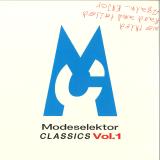
Modeselektor kündigen mit "Classics Vol. 1" einen neuen Release samt begleitender Live-Konzert-Tour an.
Mit "Classics Vol. 1" (CV1) veröffentlichen Modeselektor eine besondere Edition, die wie ein musikalischer Lebenslauf funktioniert. CV steht nicht zufällig für Curriculum Vitae. Eigentlich wollten Szary und Gernot alte Tracks aus ihren ersten beiden Alben "Hello Mom!" und "Happy Birthday!" neu aufnehmen. Doch was als Rekonstruktion begann, verwandelte sich fast vollständig in etwas Neues. Eine frische Sammlung von Stücken, die den Geist ihrer frühen Releases atmet, ohne sie einfach zu kopieren. Das Duo blickt zurück und erschafft dabei Zukunft. Tracks wie "KILL BILL Vol.4", "Edgar" und andere Albentitel dienten als Ausgangsmaterial, wurden zig mal auseinander und wieder zusammengebaut, neu interpretiert und dann doch in den meisten Fällen nur als abstrakte Inspiration verwendet. Das Ergebnis ist eine Rückschau, die sich emanzipiert hat. Ein mutiges Experiment, ein gescheiterter Versuch im allerbesten Sinne.
"Classics Vol. 1" schlägt so eine unerwartete Brücke zwischen damals und morgen und fasst alles zusammen, was Modeselektor ausmacht: Neugier, Chaos, Humor und ein unerschütterliches Bedürfnis, immer wieder Neues aus der eigenen Geschichte herauszuarbeiten. Und was passt besser zu Rückbesinnung, neuem kreativen Schub und Energie: Eine Tour. Modeselektor gehen 2026 auf eine ausgedehnte Konzertreise und spielen auch mehrere Festivals weltweit.
Felipe Gordon is back on Shall Not Fade with his new album Tezeta and f*ck is it special.
Felipe Gordon is SNF label mainstay... (we released his triple repressed debut album "A Landscape Onomatopeya" in 2022 as well as 7 x 12" EPs on SNF over the years plus an extra 12" on Lost Palms)... so given his consistent and exceptional output on our record label you'd probably forgive some complacency with this write up, you might even afford us license to assume we're preaching to the choir and allow us to rest easy knowing that at this stage Felipe Gordon's records sell themselves.... Well none of those things are happening here because when an artist makes a record this complete, this good, you have to try to find the words. You use words like "timeless", "complete and "special". Words that can carry the weight. Because when you've listened to an album dozens of times, and not once, in any part, on any listen in any way has it fatigued you, you need to say. When a record felt so wonderfully familiar from the first listen and just kept on giving you the same feels ever since, you need to say. When a record makes you think about you how you feel about certain Air & St Germain albums (even when you know what it means to put that in a press release), you need to say. So here we are, saying these things.. Tezeta is a special record, one that exists in the rarefied air. A proper album. A record that every time you press play you will immediately remember why you own it and why you love it. A record that your subconscious will know so well that if shuffle is on you will know in an instant. An album that when it's in your collection and the first track starts you get a twinge of annoyance because you didn't listen again sooner and when the final track stops you stop too.
Given paint and a canvas we can most of us paint a picture, but only those that are gifted can paint something that makes us feel. Tezeta makes you feel. Feel familiarity when it's playing, yearning when its not, and absence when it ends. This alone would be enough to make the argument as to why this album is special and justify the gushing opening paragraph of this press release. But we're not done yet.
We don't really have a word in english for what Felipe Gordon has created with this album and how it makes you feel. "Tezeta" that word.
Tezeta is a one of four musical modes within the traditional Ethiopian modal music system known as Qiñit. Mulatu Astatke, the father of Ethio-jazz, frequently uses this mode, often translating it as "nostalgia" or "longing". Gordon says Mulatu's own tezeta recordings convey to him "feelings of melancholy and longing from a point of affection". This is exactly the feeling Gordon has captured. It is what he has woven through every recording on this album. Tezeta is the prime ingredient. It's the base note in recipe, it's sprinkled over the signature jazz-sampled house tracks. It powers the vast array of synthesizers Gordon deploys. It underpins the explorations into trip-hop. It's present in Gordon's varied vocal deliveries and it tunes his guitar. It's in the running order. It's the flow. Tezeta is tezeta in electronic music form, with 4/4, breakbeats, samples and synths.
Gordon says a big part of what differentiates this album from from his previous albums is that is was recorded in a period where he allowed himself to create music without the constraints of time or self-pressure which coincided with a moment of heavy personal growth which allowed him to reflect deeply on his work.
There is a word in Portuguese "Saudade" that Gordon says has a similar meaning to Tezeta - Saudade is defined as a deep, sometimes bittersweet, longing or nostalgia for someone or something that is absent or lost. But here at SNF we think that in Tezeta nothing has been lost. Quite the opposite. Through Felipe Gordon's artistic explorations we have all gained something very special indeed.
- 1: When Hamlet Left Town 0:32
- 2: Radio Four 05:45
- 3 34: E 03:34
- 4: Solid Ground 0:25
- 5: Arc 04:37
- 6: Aelita 03:12
- 7: All Tomorrows Past Part Ii 04:26
- 8: Interlude 03:26
- 9: Henry & The Ghosts 03:22
- 1: Space Minor 03:22
- 2: Loop D 03:36
- 3: Tomorrows Past Part I 0:11
- 4: Modest Farewell 03:5
- 5: Nordlead 03:3
- 6: Momo 03:12
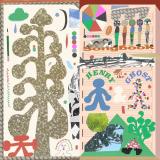
On his new album, Micha Acher rearranged compositions for bands such as Tied & Tickled Trio and Ms. John Soda from previous years.
Why are we interested in ghosts? What fascinates us about the eerie? According to cultural theorist Mark Fisher, the allure that the eerie possesses is not captured by the idea that we „enjoy what scares us“. It has, rather, to do with a fascination for the outside. For that which lies beyond standard perception, cognition or experience, as he writes in his book „The Weird and the Eerie“.
In fact, also none of the 15 pieces from Henry and the Ghost is really scary. On the contrary, they all feel strangely familiar. Like revenants or doppelgängers, which in fact they are. They have all been released before. But in a different form. In different line-ups. With different band projects such as Tied & Tickled Trio, The Notwist or the Alien Ensemble.
With the „Songbook“, Micha Acher's aim was, as he says, to find out how the familiar pieces sound in a chamber music instrumentation. Therefore he met with Theresa Loibl (bass clarinet, piano), Timm Kornelius (bassoon), Markus Rom (guitar, banjo, electronics) and Simon Popp (drums, percussion) in his living room for a musical séance in the summer of 2022. The séance lasted two days. Afterwards, Markus Rom (Oh No Noh), added some haunting electronical ideas.
The mood of most of the pieces is melancholic. There are surprising twists and siren-like melodies. Just as ghost stories should be. However, most of the songs sound very light-footed. With their feet in pop, folk, jazz and classical music. Pieces such as „Johanna“ with its wheezing harmonium and spooky piano, or the dreamy „Modest Farewell“ on the other hand have a cinematic flair. Immediately faces and scenes arise in the mind. But at the beginning, there is „Hamlet“. It starts with ghostly electronics and merges into a calm, almost classical guitar piece. Could it be that the ghost of Hamlet's father is hiding between the strings?
„34E“ begins with a banjo. Then the deep humming of Micha Achers sousaphone and the other brass instruments kick in. In the slow, solemn „Aelita“, the sousaphone starts a dialogue with a children's piano. With the banjo and the other wind instruments acting as mediators. The title of „All Tomorrow's Past“ brings Velvet Undergrounds „All Tomorrow's Parties“ to mind. Another ghost from the past. What connects the two pieces is free-floating percussion, which accompanies the sumptuous melodies.
„Arc“ takes us on an exhilarating voyage at sea, with the sousaphone providing powerful propulsion. Towards the end, things get quite turbulent. With the clarinet stirring up the water, before the sea calms down again. „Henry and the Ghost“ is characterised by a ghostly mood change between major and minor. In „Radio Four“ the banjo with its stoic chords keeps the lively brass section in check. „Solid Ground“ is imbued with melancholy. „Space Minor“ takes us into outer space, with the power of sousaphone and percussion.
„Tomorrows“ is filled with cautious optimism. And the concluding „Nordlead“ turns out to be a revenant of the instrumental „N.L.“ from The Notwist's legendary album „Shrink“ from 1998. In the new version, the piece sounds like a distant echo. One that also brings to mind how Micha Acher's music has evolved. Which new worlds he explored and opened up since the nineties. And yet Acher's signature is recognisable in every single note of this fascinating „Songbook“.