"The Modulations released their album It's Rough Out Here in 1975. This album featured the singles ""Rough Out Here”, “I Can’t Fight Your Love”, and the title track, along with other soulful tracks that explored similar themes of struggle and resilience. The singles received considerable airplay and managed to chart on Billboard’s R&B single Chart. While the group never achieved great mainstream commercial success, they garnered a dedicated following among soul music enthusiasts for their emotive vocals and heartfelt lyrics. The Modulations recorded extensively with MFSB, the house band of the famed record label Philadelphia International. These sessions yielded to this album It's Rough Out Here, which is considered a gem of 1970s soul music, showcasing The Modulations' talent and ability to capture the essence of everyday life through their music. The group reached the pinnacle of its career with an appearance on Don Cornelius’ popular TV show Soul Train in 1976. It’s Rough Out Here is being reissued for the first time in almost 50 years and is available as a limited edition of 500 copies on yellow coloured vinyl. "
Suche:modul
Kompakt is proud to announce, finally, a reissue of the first, self-titled GAS album. Originally released on electronica imprint Mille Plateaux back in 1996, it’s been unavailable in its original form ever since – the version of GAS included in 2008’s Nah Und Fern box featured several different tracks. Here, however, GAS is restored in all its glory, the debut full-length from Wolfgang Voigt’s most enigmatic, quixotic project.
There had, of course, been signs of what was to come. Back in 1995, Voigt essayed the first GAS release, a slender, yet remarkable four-track EP, Modern. Its centre label featured a reduced symbol – an overhead or lamp light, switched on, its glow radiating outwards in four bold black lines – a perfect representation of the tight, stylised ambient electronic pop contained on that 12”. A few curious compilation tracks were floating around, too, for Mille Plateaux’s Modulation & Transformation and Electric Ladyland series. If you were attentive enough, you could tell something was up.
But nothing quite prepared us for the languorous, effervescing loops and regular-like-clockwork beats that Voigt folded together on GAS. Its six long tracks, all untitled, neither begin nor end but hazily fade into earshot, vibrate majestically in your cochlea for fifteen-or-so minutes – some a bit shorter, some longer – and then meander away, reading the mise-en-scène for the next example of Voigt’s drift and dream logic to unfold. The material is referential in the most distant way, and you can sense only the most evanescent of ghostly presences, haunting these six compositions.
GAS feels, also, like a more pliable hint at what’s to come, as the GAS concept really solidified on its successor, 1997’s Zauberberg, and reach its apotheosis on Königsforst and Pop. Those three albums share a very similar palette – blurred, hazy samples, often of classical music, stacked and cross-thatched across a muted 4/4 thud. GAS, then, is an outlier of sorts: it’s more expansive in its remit, lighter in its mood, perhaps more fleet of foot. This, of course, is part of its charm.
In clearing space for Voigt, by preparing the terrain, GAS sits both at the edge of the forest, and at the verge of an expansive, wide-eyed future; one where GAS would become truly eternal.
Text by Jonathan Dale
Kompakt ist stolz, endlich eine Neuauflage des ersten, selbstbetitelten GAS-Albums ankündigen zu können. Ursprünglich im Jahr 1996 auf dem Electronica-Label Mille Plateaux veröffentlicht, ist es seitdem nicht mehr in seiner ursprünglichen Form erhältlich – die gleichnamige Version von GAS, die 2008 in der Nah Und Fern Box enthalten war, enthielt verschiedene andere Titel. Nun liegt das 3er Album in seinem naturbelassenen Originalzustand wieder vor.
Bereits 1995 zeichnete sich mit der Maxi GAS - Modern auf Profan, sowie einigen Kompilation-Beiträgen auf Modulation & Transformation und Electric Ladyland auf Mille Plateaux dieser frühe, weltentrückte, rätselhafte GAS Sound ab, der sich erst in den sechs scheinbar endlosen, majestätisch-sprudelnden Tracks des Albums voll entfaltete. Die Musik ist von ätherischer Leichtigkeit, in der wie aus einer anderen Sphäre abstrakte Referenzen aus weiter Ferne nur andeutungsweise herüberzuwehen scheinen.
Dieser frühe, eher sphärisch-leichte, gleich einer sonnendurchfluteten (Wald-)Lichtung anmutende GAS Sound, stellt gewissermaßen den Ausgangspunkt der audiovisuellen „Welt“-Reise in den düster-romantischen Acid-Wald dar, in den sich GAS ab 1997 mit den Alben Zauberberg, Königsforst, Oktember und ab 2000 mit Pop an anderer Stelle wieder hinaus und in seine ganz eigene Ewigkeit begeben hat.
While Duster went into hibernation in the year 2000, Clay Parton's four-track never stopped rolling. Recorded alone at home over several years, Birds In The Ground is an album of 30-something, post-9/11 malaise. Under his Eiafuawn (Everything Is All Fucked Up And What Not) acronym, Parton hides beneath layers of fuzzy and clean guitars, his hesitant, cottony vocal disappear into noise. This deluxe pressing is packaged in a gorgeous tip on sleeve and includes the complete lyrics for this cryptic entry of the Dusterverse.
PAPILLON DE MER'('Sea Butterfly') is jazz guitarist Jean-Franois Pauvros' and electro musician/composer Alain Mahe's latest collaboration - music inspired bythe paintings of Belgian artist Vincent Fortemps, and their shared attraction to an imagined underwater world withmetaphorical guidance of the legendary trombonist and singer Rico Rodriguez, instigator of Jamaican ska with whom Pauvros was lucky enough to play and record with.
Jean-Francois Pauvros - guitar, vocals
Alain Mahe - Kobol RSF modular synthesizer, tenor sax, stones...
Rico Rodriguez - trombone ( feat. on 'Disparition' and 'Au bout des mondes'
EN: Possibilities offered by the modular construction of the individual boxes are so varied that they can be combined vertically or horizontally. Supplied connection strips stabilise the shelf construction and create the impression of a homogeneous unit.
In addition, the box is ideal for storing the "Disco-Antistat Generation I & II", and also the dry rack can be perfectly accommodated in the Archifix box.
DE: Durch die Systembauweise können die einzelnen Boxen variabel nebeneinander- und/oder übereinandergestellt werden.
Die mitgelieferten Verbindungsleisten geben dem Regalaufbau besonderen Halt und vermitteln den Eindruck eines geschlossenen Ganzen.
Außerdem ist die Box ideal zur Aufbewahrung der "Disco-Antistat Generation I & II" geeignet, sowie auch der Trockenständer perfekt abschließend in der Box verstaut werden kann.
Gefertigt wird die Archifix-Box aus ABS-Kunststoff, welcher sich unter anderem durch Schlag- und Kratzfestigkeit auszeichnet, Temperaturschwankungen standhält und antistatisch wirkt.
Maße: B = 180 / H = 348 / T = 327 mm
Made in Germany!
"Artist, multi-instrumentalist and astral traveller E Ruscha V releases a hypnotic suite of flow-state synth improvisations for Fourth Sounds.
Building on Ruscha’s 2022 collection Thinking A View, also accompanying an exhibition at Cedric Bardawil, Seeing Frequencies is as intuitive and it is experimental, as Ruscha follows melodic and rhythmic modulations like desire paths across 13 spacious recordings.
Drawn in part from the CocoQuantus synth, built by a man Ruscha describes as 'too weird for Buchla', Seeing Frequencies rides high on tremolo waves and organic vibrations, rooted in ambient, Balearic and Kosmische music traditions, while simultaneously engaging in a dialogue with the synaesthetic qualities of Ruscha’ painting practice.
Allowing the music to flow through him, Ruscha describes the optimum moment of creation as one he imagines for the listener too. 'I really love when music forces you to forget,' he explains. 'There's this beautiful moment where everything coalesces, and you just don’t think about anything.'
To immerse yourself in Seeing Frequencies is to understand exactly what he means."
Edition of 300 marbled vinyl with risograph insert, liner notes by Anton Spice.
Viikatory joins Source Material for the Granite City labels 12th record. Following recent releases on Mechatronica, UTTU and Trust, this EP continues her exploration into electro, techno and beatless workouts featuring some relentless kicks and extreme bassline modulation. Limited to 200 copies.
Last Train are an exception on the French indie rock scene. From the Olympia in Paris to the biggest festivals, the four Alsatians have won over a devoted audience with their hypnotic, moving concerts. Independent or nothing, they self-produce their records and tours, as well as their music videos, short films and even documentaries, with rigour and determination. At the end of 2022, the musicians had the luxury of taking their time and the right to experiment. Far from the beaten track, they are rewriting their own repertoire in a cinematic and contemplative way. By collaborating with the Orchestre symphonique de Mulhouse, Last Trainconfirm their viscerallove of large-format sounds and images, and present a veritable compendium of inï¬,uences in twelve tracks.Original Motion PictureSoundtrack is the soundtrack to a film that doesn"texist. From a symphonic chaseto a neo-classical interlude, from an organ requiem to an electronic soaring, the Mulhouse-based band play with the boundaries of genres. Last Train sets the bar ever higher with this unexpected, singular and striking album. It is accompanied by a mini-series documenting the work done in the studio, the collaboration with the orchestra and the day-to-day life of an authentic, inspired band.
Colombian-born, New York-raised producer and instrumentalist Felipe Quiroz aka Prince of Queens brings his unique synthesis of trans-caribbean culture with house and techno to RNT on his Merida EP.
Known for releases on Names You Can Trust and his band Combo Chimbita, this lush and varied EP invites you into a world where vintage tropical sounds and modular synthesizers live side-by-side on the dance floor. With 6 songs stretched across two sides, the record explores a wide range of tempos and electronic Latin vibes, and boasts gorgeous cover art that suits the emotion of the music perfectly.
Although he is a seasoned producer, Prince of Queens is still a relatively new name on the club scene…but with this definitive musical statement it’s a name that the heads will remember.
Following floor shaking four trackers on Bliss Point and his own Professional Music imprint, SPF 50 continues his roll on Amsterdam’s Dzungla label with the Terrarium Trek EP.
Terrarium Trek finds SPF 50 exploring the vanishing space between electronic and organic, returning to us with four sonic ecosystems encased in no-frills club melters. Each track thumps with life, conjuring the beauty, mystery and terror of the natural world, stomping and wriggling out of the sound system and immersing the dancefloor.
Composed using modular synthesis, sampling, and a process that eschews the rational for something deeper, with Terrarium Trek SPF 50 has once again gripped the unknown and pulled it into us, turning the club up, inside and out.
- A1: On Dead Waves - Blue Inside - Beg, Steal Or Borrow Remix
- A2: Groove Armada – Time & Space - Lucca's Pitch Down Stella Remix
- A3: Weekend Players – 21St Century – Stella Polaris Remix
- B1: The Sei – Let It All Go – Stella Polaris Remix
- B2: R Missing - Heavens Lower - Tom And His Computer Remix
- B3: Tina Dickow – Moon To Let - Sekuoia's Stella Polaris Remix
- C1: Tom Adams - Seven Birds - Bsb's Stella Polaris Remix
- C2: Mads Björn Feat Rick Astley – I Have Nothing To Say - Cemetary's Stella Polaris Remix
- C3: Grand National – Talk Amongst Yourselves - Leo Ryan's Stella Polaris Remix
- D1: Funkatarium - Jump - Black Hawks Of Panamá And Massey Chill Out Version
- D2: Beg, Steal Or Borrow – Do Androids Dream Of Modular Synths
- D3: Glitch Garden - Sprout
Stella Polaris is all about quality Scandinavian electronica, chill out, down tempo, leftfield indie music. This 18th edition of the Copenhagen chill-out festival brand comes with a double gate folded colored limited edition (300 copies) vinyl with a focus on inspiring female talent
2024 Repress
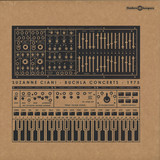
Finders Keepers invite you to witness the incredible first ever Buchla synthesiser concerts/demonstrations providing a distinctive feminine alternative to The Silver Apples Of The Moon if they had ever been presented in phonographic form. This is history in the remaking.
This spring Finders Keepers Records are proud to release an archival project that not only redefines musical history but boasts genuine claim to the overused buzzwords such as pioneering, maverick, experimental, groundbreaking and esoteric, while questioning social politics and the evolution of music technology as we've come to understand it. To describe this records as a game-changer is an understatement. This record represents a musical revolution, a scientific benchmark and a trophy in the cabinet of counter culture creativity. This record is a triumphant yardstick in the synthesiser space race and the untold story of the first woman on the proverbial moon. While pondering the early accolades of this record it's daunting to learn that this record was in fact not a record at all... It was a manifesto and a gateway to a new world, that somehow never quite opened. If the unfamiliar, modernistic, melodic, pulses, tones and harmonics found on this 1975 live presentation/grant application/educational demonstration had been placed in a phonographic context alongside the promoted work of Morton Subotnick, Walter Carlos or Tomita then the name Suzanne Ciani and her influence would have already radically changed the shape, sound and gender of our record collections. Hopefully there is still chance.
In short, Suzanne was a self-imposed twenty-year-old employee of the Buchla modular synthesiser company, San Francisco's neck and neck contender to New York's Moog. Buchla was run by a community of festival freaks and academic acid eaters whose roots in new age lifestyles and the reinvention of art and music replaced the business acumen enjoyed by its likeminded East Coasters. In the eyes of the consumer the creative refusal to adopt rudimentary facets like a piano keyboard controller rendered the Buchla synthesiser the more obscure stubborn sister of the synth marathon, steering these incredible units away from the mainstream into the homes and studios of free music aficionados, art house composers and die-hard revolutionaries. Championed and semi-showcased by composer Morton Subotnick on his albums The Bull and Silver Apples Of The Moon, Buchla's versatility began to open the minds of a new generation, but the high-end design features and no-compromise modus operandi was often confused with incompatibility and, in the pulsating shadow of Moog's marketing, the revolution would not be televised nor patronised. Suzanne Ciani, as one of the very few female composers on the frontline (and also providing the back line) did not lose faith.
These concerts' are the epitome of rare music technology historic documents, performed by a real musician whose skills and academic education in classical composition already outweighed her male synthesiser contemporaries of twice her age. At the very start of her fragile career these recordings are nothing short of sacrificial ode to her mentor and machine, sonic pickets of the revolution and love letters to an absolutely genuine vision of and 'alternative' musical future. In denouncing her own precocious polymathmatic past in a bid to persuade the world to sing from a new hymn sheet, Suzanne Ciani created a bi-product of never before heard music that would render the pigeon holes ambient' and futuristic' utterly inadequate. Providing nothing short of an entirely different feminine take on the experimental records' of Morton Subotnick and proving to a small, judgmental audience and jury the true versatility of one of the most radical and idiosyncratic musical instruments of the 20th century. These recordings have not been heard since then.
The importance of these genuinely lost pieces of electronic musics puzzle almost eclipses the glaring detail of Suzanne's gender as a distinct minority in an almost exclusively male dominated, faceless, coldly scientific landscape. Those familiar with Suzanne's work, a vast vault of previously unpublished non-records', will already know how the creative politics in her art of being' simultaneously reshaped the worlds of synth design, advertising and film composition before anyone had even dropped a stylus in her groove. Needless to say this record, finally commanding the archival format of choice, courtesy of the Ciani and Finders Keepers longstanding unison, was not the last first' with which this hugely important composer would gift society, and the future of a wide range of exciting evolving creative disciplines.
You have found a holy grail of electronic music and a female musical pioneer who was too proactive to take the trophies. With the light of Buchla and Ciani's initial flame Finders Keepers continues to take a torch through the vaults of this lesser-celebrated music legacy shining a beam on these non-records' that evaded the limelight for almost half a century. You can't write history when you are too busy making it. With fresh ink in the bottomless well, let's start at the beginning. Again. You, are invited!
collecting orders for repress :)
DJ Haus drops the last UTTU release of 2019 with Modul8 - a slamming techno-house clone backed with a remix from ItaloJohnson! On the flip Jak Beat an IDM-Houz infused DJ tool gets the remix treatment from Spandau 20’s Nikk who recently turned heads with his incredible split EP with FJAAK. Tek Houz - a glitch house groover co-produced by Marquis Hawkes wraps up the EP of cold DJ kutz for House & Techno DJs alike.
Filipovich is one of a kind. The Belarus-born, Paris-based artist works in a multitude of media - found footage films, painting, silkscreening and performance to name a few. It's her musical output that has caught the attention of late, though, with Filipovich dropping a run of releases in recent years which began with 2021's Magnificat on Time Released Sound. Filipovich takes as much of a novel approach to her music-making as she does with her other artistic endeavours - Magnificat was centred around treated samples of Sergei Rachmaninov's All-Night Vigil, and she's also combined classical composition with contemporary electronic techniques on her subsequent drops.
For Idealized, Filipovich's debut on Sheffield's Central Processing Unit, she maintains the gothic air which characterised her previous releases and applies it to a record of widescreen contemporary techno joints. These tracks represent something of a gear shift for CPU, a label which has long made its name by delivering top-quality electro and machine-funk jams, but such is the quality of Idealized that these superbly-executed techno productions are sure to win over label fans both old and new.
Idealized is very much schooled in the German tradition of minimal/dub techno. Tracks like 'Physical', 'Wave' and 'Dance Minor' all anchor themselves on single, steady drum pulses and delay-drenched single-chord loops. Filipovich generally lets the central idea of these tracks play out across several minutes while introducing increasingly disorientating elements into the rest of the mix - wiccan atmospherics, clashing chords, spiralling delays and so forth. It's an approach at once respectful of Filipovich's predecessors - Basic Channel, Deepchord, Ellen Allien and so on - but also full of idiosyncrasies and individuality.
Many of the club cuts here hardwire us into the moody, murky environs of the darkest Berlin Basements. 'Ultra Red' rides forward on a crisp drum machine snap, a menacing burble of bassline and an eerie single-note synth whistle in the upper end of the mix; 'Dance Minor' shows off a bit of KiNK in the brain-bending modular loop that waxes and wanes at its centre; the second-half run from 'Wave' to closer 'Small Cave' travels ever-further out into deep space - the kick drums remain insistent, yet the textural elements are delivered with an edge and flair that evidences Filipovich's ability to think outside the box.
Filipovich's unusual methods, and the influence of sound art and electroacoustic composition on her music, are drawn out further when Idealized steps away from the dancefloor. 'Hydra' comes off like a more gothic version of Pole - its central pulse draws from dub techno but never quite settles into a danceable groove, and this beat is combined with the kind of unnerving keyboard work that would make John Carpenter proud. Although closer 'Small Cave' eventually locks into another dark-room techno roller, the opening section of the track delivers a weightless soundscape of bright, tinny chords and a scene-setting field recording.
Idealized, the first drop on Central Processing Unit from Paris-based Belarusian Lina Filpovich, broadens the label's horizons with a selection of finely crafted minimal/dub techno joints.
RIYL: Andy Stott, Deepchord, Ellen Allien, Moritz von Oswald
Hole In One is a classic progressive techno-trance track from the early nineties, created by Marcel “Hole In One” Hol. It was a massive worldwide dance hit and was supported by famous artists such as Paul Oakenfold, Ferry Corsten, Speedy J, and Tiësto. The song even reached #1 on the UK Dance Chart in 1997. The Live At Paleis Soestdijk Mix (also featured on the 12”) was the global dance version that utilized a simple and unmistakable modulated five-tone sequence Nord lead line, and the sounds of cheering crowds. Canadian DJ and producer Jerome Robbins brings the dance-floor heat with his more recent energetic, upbeat rolling bassline melodic house version.
White w/ Red Splatter Vinyl. For their third album As You Please, Citizen is looking inward. Pairing up again with longtime producer Will Yip, the band presents twelve songs that fuse aspects of their entire catalog into one neoteric whole. While the cathartic melancholy of their debut Youth and the jarring intensity of 2015's Everybody is Going to Heaven are both present, the most welcome addition to Citizen's arsenal on As You Please is the range of auxiliary instrumentation and sonic experimentation on the album. This is most notable on "In the Middle of it All," where vocalist Mat Kerekes is sampled singing the song title in a modulated, haunting chorus that echoes throughout the song. The addition of organs and unconventional drum effects on songs like "You Are A Star" and "Medicine" create shifting emphases on tension and frailty, while the huge choruses of songs like opener "Jet" and "I Forgive No One" are reminders that while Citizen dove headfirst into uncharted territory with their new album, the band is still as good as ever at writing emotionally-charged anthems. As You Please presents Citizen's vision at the most focused it has ever been - it is delicately crafted to provoke at every moment.
The 303 acid bees are busy at the Hive producing another EP of dark, filthy Acid Techno. Sam DFL teams up with Dirty Stable for a throbbing, bubbling maelstrom of 303,s on the A1, 'No Clue', then again for further dancefloor acid mayhem on the A2 'Bad Time 4 Acid' with Hammermode. On the B1 'Da Track' he produces a more streamlined techno orientated thumper alongside talented new young producer Jack Majic, and finishes off the EP with another cracking collaboration with Martin Modulate on the stomping, 303 buzzing B2 'Monster' .