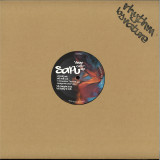
Following the resounding success of Rythm by Nature's first release by Nail, the imprint's second outing, "Deep Cuts", builds upon the previous momentum and introduces label owner SaPu for his first solo EP. "Deep Cuts" features three groove-drenched original works and a foot-stomping remix from Berlin-based groove master and sound wizard Tripmastaz.
Drawing from his 15+ years of experience in the scene, "Deep Cuts" displays SaPu's impeccable production skills and evident passion for deeper house grooves and hypnotic rhythms — the ideal music for extended dancing marathons. The EP's first track, 'Roll Out' (A1), is a classic, tech-house-infused banger: funky bass, filtered samples, and snappy percussion elements. Tripmastaz's version, 'Don't Let Joe Change the Name Dub' (A2), adds new layers of depth to the original, infusing it with dubby, sample-based elements and warm chords. SaPu's inclination for old-school grooves shines through on 'Clappin Iron' (B1), delivering Detroit tribal vibes punctuated by stabby synths and rolling basslines. Closing off the EP, 'Keep it Trill' (B2) provides a relatively stripped-down approach, allowing SaPu to demonstrate his innate skill in dubby sample manipulation.
Поиск:mom
Все
The Mental Groove Classic series returns with a treasure trove of rare and hard to find tracks plucked from the personal collection of label founder Olivier Ducret, a pivotal figure in Switzerland's acid house and rave-era party scene.
On Volumes Two and Three of the series - the first installment hit stores in 2017 - the Mental Groove and Musique Pour La Danse label founder takes us back to the turn of the '90s, a time he spent promoting parties in fields, squats, forests, warehouses and former factories in and around Geneva and behind the counter of a record shopof the same name. While others in Switzerland's emerging dance music scene gravitated towards US house and garage, Olivier and his crew opted for a bass, breaks and techno-focused sound inspired by regular trips to clubs, raves and record shops in the UK.
Drawing directly from his own record box and a memory bank full of snapshots of euphoric dancefloor moments, Mental Groove Classics volumes Two and Three sees Olivier reaching for cuts of near-mythical rarity, genuinely overlooked gems, and undeniably brilliant tracks that have left a long-lasting impression on the local raving landscape. It's an autobiographical audio document, historical archive and personal musical statement all rolled into one, inspired by a moment in time where musical boundaries were being redrawn in a wave of carefree optimism and freedom inspired new rave scenes across Europe and far beyond.
Matt Anniss
Original artwork by Soho's Brain Club co-owner and artist of early British club culture Mark Wigan.
File under house, breakbeat, techno and warehouse rave music
The Mental Groove Classic series returns with a treasure trove of rare and hard to find tracks plucked from the personal collection of label founder Olivier Ducret, a pivotal figure in Switzerland's acid house and rave-era party scene.
On Volumes Two and Three of the series - the first installment hit stores in 2017 - the Mental Groove and Musique Pour La Danse label founder takes us back to the turn of the '90s, a time he spent promoting parties in fields, squats, forests, warehouses and former factories in and around Geneva and behind the counter of a record shop of the same name. While others in Switzerland's emerging dance music scene gravitated towards US house and garage, Olivier and his crew opted for a bass, breaks and techno-focused sound inspired by regular trips to clubs, raves and record shops in the UK.
Drawing directly from his own record box and a memory bank full of snapshots of euphoric dancefloor moments, Mental Groove Classics volumes Two and Three sees Olivier reaching for cuts of near-mythical rarity, genuinely overlooked gems, and undeniably brilliant tracks that have left a long-lasting impression on the local raving landscape. It's an autobiographical audio document, historical archive and personal musical statement all rolled into one, inspired by a moment in time where musical boundaries were being redrawn in a wave of carefree optimism and freedom inspired new rave scenes across Europe and far beyond.
Matt Anniss
Original artwork by Soho's Brain Club co-owner and artist of early British club culture Mark Wigan.
File under house, breakbeat, techno and warehouse rave music
The Issues label keeps up its fine early momentum with a new EP from Pau Roca with a remix from Crue. It is another tasteful 12" that comes on the heels of a deep outing from Dubbyman and an inaugural release featuring fresh versions of Joan Bibiloni by Kiko Navarro & Willie Graff.
Opener 'Daradada' is a spiritual deep house cut with swirling pads and classic vocals drifting next to the jazzy keys. It's expansive and cosmic in design and one that touches the heart on many levels.
'Here Comes The Moon' is another cut that shows off Roca's mastery of astral melodies. His gorgeous chords and delicate keys rise up to the stars as warm, dynamic drums bring the weight down low and spoken words unfurl in a seductive fashion. The Crue remix of 'Daradada' then brings more drive with harder but still organic house drums and hits.
The chords take on a melancholic quality and an elastic bassline pumps the party with a playful sense of energy. Last of all is 'Get Down' which once again sinks you into a beautifully warm and heady world of soft focus chords and late-night synth work.
‘Kevin’, a new collaboration between Ben Bondy and Mister Water Wet, presents what feels like a time-machine hidden in the back of your closet. ‘Laundry’ pleasantly haunts listeners with phantom purrs, harmonies, hums and horns. This project is a hand reaching through the void and out of your speakers responding to moments of isolation and pining with resounding gratitude. It makes space for warmth in slow-healing wounds; the gift of reset that is born from the call and response between friends.
"Deep Dancefloor Jams of African Disco, Funk, Boogie, Reggae & Proto Electro Music 1977-1986reggWhen a passionate DJ and crate digger intuitively selects music for a DJ compilation, without artistic compromise and without the burden of trends, AfroMagic vol.1 emerges from the depths of his soul. Herewith we present the new favorite phonomancer’s tool for all the DJs who experience the dance floor as a sanctuary and a source of freedom and love.
The most fundamental thing that defines African music is that it was created for dancing. In African dance, there is often no clear distinction between ritual celebration and social recreational entertainment – one can seemlessly merge with the other. Because dance and rhythm have more power than gesture and more richness than words, and because they express the deepest experiences of human beings, dance is in itself a complete and self-sufficient language. It is truly an expression of life with all of its emotions – joy, love, sadness and hope – without which there is no African music and dance. For the African people, dance and music are integral parts of the body and soul, thus depicting the expression of life, current emotional states, visions or dreams. Through hypnotic repetitive music and dance, people communicate with each other and with the souls of the dead, the animals, the plants, the stars, the Gods… They free the body and the spirit through ecstatic states, reaching a healing sense of freedom, happiness, and satisfaction.
Throughout history, this transcendental perception of rhythm and dance originating from Africa, influenced popular music worldwide, thus creating new living and breathing forms of musical genres – freeing them from their industrial mold. Funk, disco, soul, boogie, reggae, dancefloor jazz etc., developed in parallel all over the world. It is foolish to perpetually discuss where they originated from and who were the creators of all these fiery dance floor genres – being obvious that they directly or indirectly originate from the African continent and its people who were as well, over the centuries, influenced by disturbing socio-cultural factors of colonialism. However, no one can enslave the soul. The seeds of free and uninhibited dance and rhythm, true to their original form, initially first sprouted onto the USA’s fertile fields of clubbing and popular music while later evolving in other parts of the world.
The disco funk club culture manifested itself as a phenomenal explosion of artists and grooves in the second half of the 70s in the USA. Shortly it spread around the world continually reigning over charts in its various forms – to this day. Clubs emerged where the DJ is an almighty shaman and the dancers are a tribe united under one roof. This urban ritual had and still has a single goal: togetherness, freedom, and love. Clubs have evolved into temples where we free ourselves from the burden of a consumerist lifestyle and suppressed emotions – a place where we receive love and give love – to be who we really are.
Disco funk clubbing was such an influential global phenomenon that its influence can be observed in various other genres from the disco funk era i.e. progressive rock, which mutated by layering complex rock arrangements with a disco funk groove resulting in hybrids, highly sought by today’s diggers, producers and collectors. The profit-hungry music industry of the 80s very quickly commercialized the original disco funk sound by amputating of its original Afro groove to be able to easily ‘sell’ it globally. So, the original disco funk groove became underground again, and it has remained so until this day. Today, for a DJ to unearth that ravishing groove that will lead the dancers to the stars, he must dig passionately like a true musical archaeologist in search of that groove that picks you up after just a few initial beats. That groove which forces the atoms in your body to vibrate, that groove which unites the body and releases the burden.
The AfroMagic compilation series is created as a tool for real DJs who stick to the aesthetics and essence of clubbing.
This continuation of the Afromagic compilation by DJ Borovich was created in a private jam session which served as an escape route from intense and complex love problems.
Unconsciously driven by intuition and emotion and following a live mix tape framework where many tunes are arranged instantaneously, Borovich narrates his story with a strong rhythm that cuts loose even the most blocked off energy nodes and restores happiness to the spirit and the body.
The musical experience of the groove is completed by the lyrics of the songs, which symbolically give DJ Borovich universal answers to his questions arising from questioning the boundaries, nuances and other forms of love.
When considering that Borovich’s selection was created to facilitate an escape from the burdens of reality through rhythm and dance, we can be sure that Afromagic Vol. 2 will have a 100% uplifting, energized and spaced-out effect on the listeners.
The intro to A1, “Feeling Happy” by the Apostles, introduces us to an experienced and slow, cool and irregularly tight groove containing a confidently sung chorus that instantly gives a sense of freedom and hints at the remainder of Afromagic Vol. 2: “I’m gonna feel happy, ´cause I know I’m gonna be myself.” After the anthemic song mantra of the Apostles, Aigbe Lebarty uncompromisingly continues with a dirty disco rhythm. Acidified by accented synths that elevate it to shamanic levels and held together by a female tribal choir, we embark on an uncompromising ritual disco journey. Without a moment to take a breather the prog funk band Mighty Flames and their Road Man launch a highly vicious and raw, thick funk groove spiced with acid synths and dirty RnR breaks, raising the bar for the A side. Jimi Hendrix himself would surely praise it given the ultimate freedom and virtuosity in the solo sections. With the last tune on A side DJ Borovich decides to burn the floor with Geraldo Pino’s psychedelic, acid furious groove and lyrics which describe this HEAVY part of love problems: “The way she walk, the way she talk, the way she does a funky dances, she is really really heavy – that woman”.
While the A side represents a compact intoxicating afro groove machine that separates us from reality and lifts us up to the stars in over 23 minutes, the B side is a treasure trove of proto sub-genres gems. This selection represents the mission of the Afromagic: to find singular events in African recorded discography of popular music from the 70s and 80s that give evidence to the birth of new modern genres on the Dark Continent even before they emerged in the U.S.A. or Europe. The beginnings of electronic music influenced genres are represented back to back with 80s synth jazzy pop, all painted in African colours.
The B side opens big with Jake Sollo and a huge reggae blues number singing about the humiliation of a man – goosebumps guaranteed! “You think I’m nobody that’s why, you don’t know the way for me, I’m somebody I know, I found myself at last”. Adolf Ahanotu then enters the scene with a hard sliding tackle at B2 and an exotic rare disco funk dancefloor napalm. A ‘Sensation’ that would ignite even the coldest of introverts. While we approach the end of the compilation the narrative revolves again and takes a different turn. No less and no more than to the proto-electro that Baad John Cross serves us in “Give Me Some Lovin´”. The fat and repetitive broken electro synth groove, championing many early 90s electro tracks, is presented here without hesitation and with constant tension accompanied by a mantric chorus “Gimme some, gimme some, gimme some looooovin’, EVERBODY!!!”. Finally, we’re guided to the end of Afromagic Vol. 2 by Eji Oyevole’s 80s synth pop style presented in an authentic afro manner, giving us a glimpse at yet another released Afromagic edition, as well as giving an answer to DJ Borovich’s love problems. A smoothly broken electronic rhythm resembling electrified highlife sounds, carried on the wings of a virtuoso dreamy saxophone on top of which Eji presents the most intimate parts of himself. Finalizing the track with a symbolic chorus, on the surface referring to the dancefloor and simply having fun, but in actuality referring to the skill and happiness of living: “I´m a dancer, I can dance”. So, get up and dance among the stars with DJ Borovich and Afromagic.
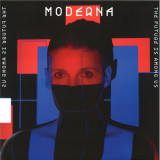
Moderna Ignites the Dance Floor with Debut Album "The Future Is Among Us"
Conceived over seven years in Berlin and Mexico City, "The Future Is Among Us" is a sonic tapestry woven from diverse influences. Each track, produced in a different era, retains its unique character while seamlessly blending into a cohesive album experience.
The album ignites with "DIE4U," a powerful homage to Prince's iconic "I Would Die 4 U." Moderna reimagines the timeless sentiment – entirely self-produced and written in Berlin. Layered vocals, a driving bass line, and a pulsating electro beats that create a controlled yet electrifying atmosphere.
The title track, "The Future Is Among Us," embodies the collaborative spirit at the heart of the album.
Originally conceived before the album was complete, bringing bass lines and a percussive energy that feels like a declaration that the future is not something to wait for, but something we are actively creating together on the dance floor.
The album promises a vibrant blend of electronic and dark wave music, showcasing Moderna's ability to weave together infectious dance floor anthems with deeper, more introspective moments.
This depth is evident in tracks like "Lost at Heart," a collaboration with post-punk artist Skelesys that transcends genre with its raw emotional vulnerability. The album's ability to seamlessly shift
between these contrasting styles is a testament to Moderna's artistry and her ability to curate a cohesive listening experience that invites a provocative energy.
Moderna’s impressive career extends beyond this album. Beyond her solo work, she has showcased her remixing talent on tracks for The Matrix 4 soundtrack and Curses' Next Wave Acid Punx compilation, collaborated on four EPs with Mexican artist Theus Mago who also contributes to the album on the dream wave serenade “Blades”.
The album will be released on her ‘Brave New Rave’ imprint which she established in 2019 from her highly recognized radio show on KCRW Berlin.
A mysterious release, not only for its unique expressive style but also because it isn't even known when it was initially recorded let alone its release date. According to non profit Studio Piccolo owner Vincent Bruley, it could have been recorded during the 70s and eventually released in the early 90s, sometime throughout Nilton Castro's time in Paris making music for contemporary dance classes (often led by his wife). This album was originally intended for accompanying dancers in classes with an emphasis on rhythm and coordination. Given Nilton's background and expertise in percussion, the focal point of this album is to present an array of Afro Brasilian rhythms performed by himself with additional moments of choir, flute and keys/metallophone. Effortless due to Nilton's prowess and unburdened by typical financial pressures (often behind the release of a record), the result feels like charmingly unadulterated and pure expression throughout the entire album. But what really takes the listener to places of unheard-of bliss is “Ondes (Les Vagues)” a track that has plagued the curiosity of diggers and collectors for a while now. With its harmony crescendos elegantly coming and going as per the title, overlayed on Nilton's subtle percussive patterns, an aural landscape of illusory beauty - listening is believing. Remastered and officially re-issued with its original artwork.
Buckle up, explorers! With the third release on HUA3000, we focus on moments of bliss in the here and now. If you’re like us, a fan of the mid-90s, you'll enjoy the familiar unfamiliarity that these tracks bring to the dance floor - perfect to re-energize crowds in the early morning.
The groovy banger on the B2 is a remix by Welwert (aka. Man/ipulate)
What to expect:
4 tracks of the extended House family, 127-132 BPM, punchy kicks, lush pads and moving bass-lines (oh boy oh boy!)
Their newest release “For Barney, Who Was A Bad Dog, But A Good Boy, And Very Much Loved” comes from Brooklyn-based Dekalb Works (debut ‘Duologue’ on Where To Now? Records), the collaborative project of Austin Peru (Vision Fortune) & Daniel Creahan (Sweat Equity / Alien D).
The release summarizes a series of experimentations between live performance contexts and sample-heavy collage work. Since starting their residency on Radio alHara, Dekalb Works found themselves drawn to the act of performing, whether as a live act or DJing, and the space between these two often overly rigid modes.
“For Barney…” draws heavily on the sonic palette of American country and western music, treated through the lens of heavy studio processing and the production techniques of dub, ambient, and trip-hop. Recording hours-long live improvisations with guitar, piano, or drum machines and samplers, they pillaged these sessions as source material. Whereas previous work focused on the voice and the interaction of text, voice and music, these recordings pulled from the sounds of musicians playing together in a room. The arrangement process remains the same, chopping and manipulating small samples and momentary gestures into dense, rhythmic collages.
On the occasion of this first vinyl of the year 2024 and to celebrate its 15th anniversary, Fantastic Friends Recordings sets the bar high by signing 4 new artists on the label among the most talented of the moment which are Daniel Meister, Lukea, M&M and the duo Primarie & Lucide. All the tracks on this EP are rich in texture and catchy melodies. On the A-side, Daniel Meister and Lukea offer you the best of minimal/rominimal sound in its futuristic and acidic orientations, while on the B-side M&M and the duo Primarie & Lucide will delight you with their work on the rhythmic with a deeper side. Either way, it's a "must to have" in your flight cases.
Excelsior Ruth is a composer, DJ and producer born in the North-East of England but who currently resides in South London.
On her eponymously titled debut, she combines a life-long love of euphoric trance with echoes of her live performances as exlRuth, which incorporate sound recordings, drone, traditional choral music and the makina backdrop of her youth. Embedded in community heritage, it’s a record that probes connections between the classical and contemporary.
Gossamer harp drifts across time on ‘Haunt’, leading to the affecting arpeggios, strings and high BPMs of ‘Dream Of Night’, programmed, as much of the EP was, on classic 90s synthesisers, including the Roland JP8080 and Quasimidi Rave-0-Lution 309. Drinkwater’s ‘Dawn Return mix’ reduces ‘Dream Of Night’ down to a moment of 6am E-motion, limbs weaving through dry ice like mist on long-forgotten moors.
A cathedral of angelic voices swells in ‘Dream Of You’, their hymn to oceanic feeling rooted to earth by a raining cascade of kicks. And ‘Sleepy Hollow’ journeys further into deep, unspeakable bodily knowing, pushed and pulled between propulsion and stasis as fizzy high hats and restless melodies weave through shrouds of ambient pads.
Words by Joe Roberts.
Every moment of Skudd offers a place to explore. For his second release on Omen Wapta, Delft-based sound artist, Floid, fuses soundscapes and rhythms in seven tracks that swap peaks and troughs for narrative arcs. Cinematic, immersive, dense and danceable, the new EP, delivers sonic pieces that hypnotically swell and engage brain and body dance. Drop into a snake pit with cavernous moments and unexpected ornaments that rattle and slice. Affected pan flutes, meshed with shamanic vocals and organic percussion conjure a nocturnal fever dream in the jungle. Tempo tricks make high bpms feel stretched. With Skudd, the only thing guiding you through the soundscapes is a certain groove in the constant kicks, rhythms and basslines. Everywhere else it takes your mind is up to you.
Estamos entusiasmados de anunciar el repress de nuestra primera referencia.
Parece que fue ayer, pero han pasado 5 años desde su lanzamiento, un momento que marcó un hito en la historia del mundo del vinilo y la música electrónica. El álbum fue un éxito instantáneo, volando de las estanterías y agotando todas las unidades en cuestión de meses.
¡Pero la espera ha terminado! Ahora tienes la oportunidad de poseer una pieza de historia con este repress limitado. Solo 200 unidades en vinilo de color rojo sólido están disponibles, meticulosamente remasterizada por el legendario Simon Davey en “The Exchange Vinyl” para esta ocasion.
y celebrar el quinto aniversario de este álbum icónico. ¡Haz tu pedido antes de que se agoten!
Así que, queridos melómanos, prepárense para celebrar el quinto aniversario de este álbum icónico.
Este repress es un tesoro que debes tener en tus manos. ¡No pierdas esta oportunidad de ser parte de la historia y haz tu pedido antes de que se agoten!!
The first track of the EP is a prog-heavy requiem, laced with warped synths and a percussive softness inviting you to take it straight to the dance-floor. 'Wandt Uncorked's' sonic agility is framed by the kind of driving energy that only swells more as you move, offering a new rhythm layer by layer.
Offering dreamy synths with echoes of 'A Hundred Days Off'-era Underworld, 'Gottesfuß' bends into a sprawling, sexy-weird five minutes of bliss. Building with a familiar-feeling vibrato and the cosiest anchor of bass, the second track from Niklas is your backdrop for mid dance-floor moments and after-hours alike in love.
The B-side to Wandt’s latest EP glides through every unchartered subaquatic realm imaginable. Slick breaks blend evenly into myriad underwater drones and/or extra terrestrial cries to form a deftly cast soundscape that truly highlights Wandt’s prowess as a percussionist.
Fierce and forlorn, Swarm Intelligence’s “The Shattered Self” delves into the complexities of human existence in an era dominated by technological advancements. In this thought-provoking exploration, the artist challenges listeners to confront the consequences of a near future where physical and mental augmentation are commonplace. In a world where limbs can be upgraded, where consciousness can be uploaded, where memories can be digitally archived and shared on social media, where our AI clones can liberate us from menial tasks… What remains of our selves? Who is our self?
Swarm Intelligence draws influences from black metal, industrial-tinged dub and post rock, splicing these with his distinctive take on techno to devastating effect. "Dejected," the inaugural track, unleashes grinding walls of feedback against a relentless broken beat, its foreboding atmosphere heightened by a menacing low growl of distorted bass that permeates the unease. It's a disquieting overture that sets the stage for the tumultuous journey ahead.
The second track, “Eros” envelops the listener in a visceral soundscape, where haunting atmospheres intertwine with grinding feedback and pounding percussion. Initially tense, the track evolves into an unexpected and almost euphoric climax, adding an unforeseen emotional depth to the sonic narrative. Yet, beneath the surface, an undercurrent of tension remains—an ever-present reminder of the fragility of our self.
On the flip side, "Inciter" channels inner fury through a guttural chant punctuating a Birmingham-styled broken beat, marching forth with unyielding force.
Finally, "Portal" offers a moment of quiet introspection, as haunting pads echo a mournful refrain while micro recordings of whirring machinery are assembled into the percussion section. It serves as a poignant curtain-closer.
Through "The Shattered Self," Swarm Intelligence challenges listeners to reconsider their perceptions of identity, consciousness, and agency in an age where the machine and the human converge. It's a haunting and profound journey—one that invites introspection and contemplation long after the final reverb tails fade into silence.
Bedroom Talks, hailing from Ukraine, is a gifted solo artist whose music, delves into an eclectic blend of genres including coldwave, darkwave, synthwave, post-punk with touches of EBM. “Call Me Malespero,” produced during Ukraine’s shelling, captures the essence of his art in a unique and moving way.
It’s a powerful testament to human resilience and the ability to find beauty even in the darkest moments, evoking a range of emotions from pain and anger to palpable sweetness, all woven into poetic lyrics and enveloping melodies. Presented in ONE-OFF truly limited edition of 300 copies lacquered pressed on 180 gr. high quality solid BLACK vinyl. All tracks have been specially mastered for vinyl by Daniel Hallhuber at Young and Cold Studios (Germany). inc
Northern California psychedelic sorcerers Carlton Melton are brain surfers, mind trippers, … “psychlists,” if you prefer. The band will take your head for a ride, occasionally rushing at superluminal speeds through a wormhole or gliding softly on a gentle breeze in a leafy glade. Sometimes your brain needs to rage, and sometimes it needs to repose. For a decade and a half, the band has yo-yo’ed, almost schizophrenically, between these two modes: walloping space jams with furious guitar solos in one hemisphere of the brain and ethereal, feather-light splashdowns in the other. Not to mention a track here and there that builds from the latter into the former. But with two new releases in 2023, the band has evolved. Whether psych rock or ambient trance, their sound remains driving, organic, and flowing. With the addition of Anthony Taibi (White Manna, DDT), however, the group’s metal freak-outs are Hawkwindier and their droning kraut trances are Spacemen 3-er. In January, the quartet released the playfully spacey Resemble Ensemble, recorded in Taibi’s home studio 3D Light. October now sees the band Turn To Earth, a work with scents of Autumn, a season of death and transition. The cover art evokes a vine-covered, electric crucifix. The sound is, well, earthy but also gritty and striving towards change. The album was recorded in Fall 2022 and now harvested in Fall 2023. Phil Becker (Terry Gross, Pins Of Light) contributed drums and percussion to a few tracks on Turn To Earth, recording the album at El Studio in San Francisco.
With Becker at the helm, the synths have become more prominent (“Cosmicity,” “Roboflow,” “Migration”) and the tone heavier on the doom (“Cloudstorming,” “Unlock The Land,” title track): several moments could even serve as background music for epic dark fantasy films like Conan the Barbarian, Fire and Ice, or Heavy Metal. As exquisite as Turn To Earth is, Melton are best appreciated as a live act: their recordings as well as their gigs are largely improvised – not so much composed as birthed. And yet their most recent tour ended abruptly and perilously. The group had to cancel its final three shows once members were admitted to Arnhem hospital in the Netherlands. Five years later, reinforcements have strengthened the band and restocked its arsenal of great tracks. After the rockus interruptus of that 2018 tour and the tantric tease of the intervening Covid lockdown, Melton have some unfinished business. An October 2023 tour is poised to set the freshly minted quartet back onto the stages of Europe and within the cerebral folds of its fans. Turn To Earth, sure … but keep your head in outer space. Carlton Melton is: andy duvall – drums/gtr; clint golden – bass; rich millman – gtr/synth; and anthony taibi – synth/gtr.
naive's 20th release epitomizes what the Lisbon-based label, run by Violet, has become cherished for: imaginative yet timeless, soothing yet moody, melodic yet sonic music. Entitled 'Computer Hermetics', this new record is an EP by UrbnMowgli, a fairly new Berlin-based artist who began releasing music in 2020. The opening track, 'Fast Love Life', is a 145 bpm electro-bred, breakbeat-driven emotive dancefloor banger. It features menacing stabs juxtaposed with beautiful pads and acid-drenched arpeggio motifs that lend it a oneiric quality. 'Oracle Algorithm' picks up the 303 spirit and delves into trippier territories, densening the dreamlike, expansive atmosphere while infusing the record with electro-driven grit. Closing side A is 'Warschauer Rush-Hour', a futuristik, high-tempo twisted electro banger that's both tough and playful. 'Immaterial Desires' inaugurates side B--an ode to adventurous drum programming and intricate sound design in the form of a percussion-punctuated curveball belter. 'Digital Dawn' brings it all back home to the heart and closes the record with its deepest, most immersive moment, giving us big bass lines that alchemically converse with angelic bleepy melodies as if soundtracking a soulful sci fi movie that doesn't exist yet.
Malted Milk's 1975 album tackles subjects that concern the band's singer in particular, but also paints a picture of a society with which many people identify. Difficult present times, a broken family and dependent children. The character oscillates between moments of great lucidity and optimism, and moments of anger. Feelings that are reflected in a general vision of the world we live in today, devastated by the abuses of the powerful ones and rendered insensitive to the "false" freedoms they offer us. Could it be that the personal condition of the album's character is also the result of a twisted society?
Malted Milk takes a stylistic journey from strong soul and funk roots to resolutely more modern musical influences, all seasoned with sweet hooks ranging from disco to folk-world. Malted Milk is newly committed to speaking openly about uncomfortable subjects and honestly reflecting its passion for American and pop music. The result is an authentic album, in which the singer becomes kind of a spokesman for the band and the listener.