Eine Ella-Entdeckung sondergleichen: die „First Lady of Jazz“ singt und swingt ein dynamisches Konzert mit Top-Musikern der Ellington-Band. Dass dieses Traum-Konzert von 1967 in Stereo mitgeschnitten
wurde, war bislang unbekannt. Im Nachlass ihres Managers Norman Granz fanden sich jetzt die von Wally
Heider hervorragend aufgenommenen 4-Spur-Bänder, und die haben es in sich! Ella war in phänomenaler
Form und wurde vom Trio aus Jimmy Jones, Bob Cranshaw und Sam Woodyard sowie Ellington-Legenden
wie Paul Gonsalves, Jimmy Hamilton und Johnny Hodges zusätzlich beflügelt.
Vom swingenden Opener “The Moment Of Truth” und dem lässigen Klassiker „Let’s Do It“ bis zum
Fitzgerald-Evergreen „Mack The Knife“ ist alles dabei, was man als Fan liebt. Zwei zusätzliche Pop-Songs
der Sixties transponiert Ella meisterhaft in die Jazz-Welt: die bittersüße Ballade „Alfie“ von Burt Bacharach
und den Ohrwurm „Music To Watch Girls By”. Beide Songs waren bislang noch nie von Ella interpretiert
zu hören!
Ausstattung LP: 140g, Gatefold-Sleeve mit ausführlichen Linernotes von Will Friedwald
Ausstattung CD: Mintpack, Booklet mit ausführlichen Linernotes von Will Friedwald
Cerca:moment of truth
Info: Appearing on The Voice in 2012. A semi-finalist on Sir Tom Jones team. Performed nationwide including multiple appearances at London Fashion Week, the alternate Effie White in the London production of Dreamgirls (Sonia Friedman Production). Ruth Brown has also been busy with a successful 2-night sold out show at The Other Palace, a regular for Sofar sounds. Ruth returns with her EP - A Moment Of Truth.
The Red Clay Strays haben in acht Tagen zwölf Songs aufgenommen, die ihre Americana-Seele besser präsentieren als alles zuvor.
In einer digitalen Welt, die auf Perfektion ausgerichtet ist und in der Autotune und elektronische Instrumente in den Studios überhand nehmen, kann es schwierig sein, in der heutigen Zeit noch Authentizität in der Musik zu finden. Die Ära der Alben, die als echte Hörerlebnisse gestaltet wurden, ist auf der Strecke geblieben, doch die Red Clay Strays haben sie mit ihrem Debütalbum Moment of Truth kunstvoll wieder aufleben lassen. Das Ergebnis ist in mehrfacher Hinsicht ihr Moment der Wahrheit.
The Red Clay Strays haben in acht Tagen zwölf Songs aufgenommen, die ihre Americana-Seele besser präsentieren als alles zuvor.
In einer digitalen Welt, die auf Perfektion ausgerichtet ist und in der Autotune und elektronische Instrumente in den Studios überhand nehmen, kann es schwierig sein, in der heutigen Zeit noch Authentizität in der Musik zu finden. Die Ära der Alben, die als echte Hörerlebnisse gestaltet wurden, ist auf der Strecke geblieben, doch die Red Clay Strays haben sie mit ihrem Debütalbum Moment of Truth kunstvoll wieder aufleben lassen. Das Ergebnis ist in mehrfacher Hinsicht ihr Moment der Wahrheit.
ELO Part II were a band formed by Electric Light Orchestra drummer and co-founder Bev Bevan. The band also included former ELO bassist and vocalist Kelly Groucutt and violinist Mik Kaminski for most of its career, along with conductor/keyboardist Louis Clark who toured as a guest with ELO in its later years. Features the hit singles Honest Men, Kiss Me Red and Thousand Eyes as well as a bonus track on Side A, Love For Sale.
"In the early 1960s, the great composer, arranger, and bandleader Gerald Wilson began recording a series of spectacular albums for Pacific Jazz that stand as the most significant of his lengthy career. The second of those albums, 1962’s Moment of Truth, features Wilson’s dynamic big band on an action-packed nine-song set (seven of which were composed by Wilson) with highlights including the swaggering blues of the title track, the irrepressible Latin groove of “Viva Tirado,” and a fleet-footed version of “Milestones” by Miles Davis.
This stereo Tone Poet Vinyl Edition was produced by Joe Harley, mastered by Kevin Gray from the original analog master tapes, pressed on 180g vinyl at RTI, and packaged in a deluxe tip-on jacket."
- Double Exposure - Faaling In Love (5:22)
- Eddie Holman - All My Life (3:16)
- Bunny Sigler - Cry My Eyes Out (7:12)
- The Salsoul Orchestra - Standing And Waiting On Love (3:43)
- Instant Funk - Can You See Where I'm Coming From (4:11)
- True Example - Love Is Finally Coming My Way (6:25)
- Metropolis Ft. The Sweethearts - Here's To You (3:57)
- Loleatta Holloway - That's How Heartaches Are Made (3:04)
- Love Committee - Tired Of Being Your Fool (3:00)
- Flashlight - I Can Be (5:39)
- Moment Of Truth - Come On In (6:06)
- Loleatta Holloway - Two Sides To Every Stroy (4:28)
- First Choice - Sittin Pretty (4:22)
- Doubler Exposure - I Declare War (5:49)
Back In Stock!
a special 2x12" with some funky old school house classics !! limited re-stock !!!!
- A1: Perseverance (Feat. Harry Pane)
- A2: The Brightest Light
- A3: Slide (Feat. Yudimah)
- B1: Focus Uppermost
- B2: Step By Step (Feat. Sôra)
- B3: Make A Change
- C1: Atoms (Feat. Birsen)
- C2: Believe
- C3: Where Your Heart Goes (Feat. Syml)
- D3: Better Days Ahead
- D1: Healing (Feat. Mesita)
- D2: Moment Of Truth
- D3: Late Hours (Feat. Antony Left)
- D4: Uprising
2x12"
UPPERMOST will be releasing his upcoming album on March 23, 2018 with a completely new perspective that should change the course of his career, expanding to a brand new pop oriented approach but keeping his French signature at the core of the project. His previous hit tracks Flashback and Beautiful Light have already generated more than 27 Million combined streams across platforms, while Mercedes-Benz selected Uppermost single Disco Kids to be featured in their Formula One advertising campaign and Starz/Encore chose another of his instrumentals for their 2018 TV spot only few weeks ago. Uppermost is being closely followed by international media leading to great articles from influent press channels such as DJMAG, Vice, Complex, Paper Magazine, and famous radios such as BBC 1 and Virgin. In addition to releasing music via his own independent label Uppwind Records, Uppermost has released music through powerful labels such as Sony and Ministry Of Sound and done official remixes for Dada Life, Lemaitre and Crystal Fighters. He has also already shared french festival SOLIDAYS's stage with Madeon, Yelle, Fakear and Die Antwoord. This new year, Uppermost premiered his upcoming live show at Paris . Point Ephemere . for a sold out event that turned into a great success. Meanwhile, a U.S. tour is already confirmed for the month of March.
- 1: Outside Or The Eastside
- 2: Don't Take Advantage Of Me
- 3: Kiss You All Over
- 4: Downtown At Midnight
- 5: Grand Avenue
- 6: Too Broke To Spend The Night
- 7: Just Like I Treat You
- 8: Don't Bother Me
- 9: Do I Move You
- 10: Close To You
- 11: The Blues Lover
A personal record for Mike shaped by memory, places, and renewal. Walking the streets of his birthplace, St. Louis, Zito reconnects with the sounds, stories, and hard lessons that forged his signature blend of soul-driven blues and fearless storytelling. Thirteen years after Gone to Texas, this album feels like a defining moment, marking a new chapter for Mike, his family, and a life reclaimed in the city that started it all. The songs paint vivid snapshots of city life and personal reckoning, from late- night regret and self-awareness to raw portraits of neighbourhood survival and street-level truth. Tracks like "Downtown at Midnight" and "Grand Avenue" capture the grit, temptation, and consequences of the past with unflinching honesty, grounding the album in lived experience and emotional weight . Zito's writing is direct and cinematic, pairing tough reflection with compassion and hard-earned wisdom.
At its heart, Outside Or The Eastside is a celebration of second chances, an album dedicated to better days, family, friendship, love, and joy found in everyday moments. Life's unpredictable paths open doors you never expect, and for Mike Zito, this record embraces that truth with warmth, humour, and swagger. It's a record about choosing connection over chaos and moving forward with gratitude, purpose, and the volume turned up
- 01: Paimpol
- 02: Marché
- 03: Le Port
- 04: À La Maison
- 05: La Vie Lente
- 06: Bandes
- 07: Adieu
A century-old grand piano, a secluded house surrounded by the greenery of Brittany, no internet connection, and a reel-to-reel recorder.L'Écho de Bretagne, the new EP by Niklas Paschburg, set for release from fall 2025 via Nettwerk Music Group, is a solo piano record as essential as it is intense. An album made of silences, space, slowness. A music that doesn't chase impact, but truth.
the album release is march 26th - 2026.
If his previous work, Mexican Alps (2025), marked the first time the German composer and producer created an ambient-electronic album without his instrument of choice, the piano, L'Écho de Bretagne emerges as a direct response to that absence. "It was exactly the lack of piano that brought about the need for this new record, which instead puts that instrument, so vital to me, at the very center, stripping everything else away," Niklas explains.
Born in 1994, Paschburg has shaped over the years a musical path deeply connected to travel, nature, and introspection. From his debutTuur Mang Welten(2016) toOceanic(2018),Svalbard(2020),Panta Rhei(2023), and the aforementionedMexican Alps— alongside soundtracks, remixes, and collaborations with artists like RY X, Hania Rani, Ásgeir, and Bryan Senti — his sound bridges neoclassical, electronic, ambient, and pop-driven composition.
WithL'Écho de Bretagne, the Hamburg-born, Berlin-based musician continues his exploration by seeking solitude in nature, much like he did onSvalbard, but this time with an even more radical choice: disconnecting completely from the internet, and switching off both computer and smartphone for a while, in order to fully immerse himself in his new music. "I rented an old cottage in Paimpol, Brittany, where I knew there was a grand piano," he recounts. "When I got there, I discovered that not only was the piano more than a hundred years old, but it was also of an unknown brand, never restored, and quite difficult to play. But that gave it a unique character, and I didn't give up. Sure, it was an instrument left to its own fate, I couldn't play anything too fast. But how fascinating was that? I'm convinced that setting limits, instead of giving yourself total freedom when composing, can become an extraordinary source of inspiration."
As for the decision to temporarily detach from a life that demands we stay constantly connected, Niklas describes it as both a creative and human experiment. "I had my laptop and phone with me, just in case, but I kept them turned off. That choice made me wantL'Écho de Bretagneto be a fully analog work, even in how it was recorded." A way of clearing the mind. "I don't think I've ever been as calm as I was during those days in Paimpol. Even though I was working on a very specific project and didn't have much time, that period was more relaxing than any vacation."
Not that it was free of hiccups. "I'd borrowed a reel-to-reel recorder small enough to travel with me, but after recording a session on the piano, I realized it wasn't working properly, the sound was distorted, full of crackles. I got worried, because I wasn't near any big city where I could find a technician. Luckily, I figured out the problem was the old tape reels I had brought along. That was the only time I had to go online, to order new ones. But it was just for a moment. I shut everything off again right after." At that point, Niklas was waiting for the new tapes to arrive. He found out, completely by chance, from a local UPS courier that they had been delivered to a nearby village. "Since my phone was off, I couldn't track the shipment. So one day I asked this delivery guy, who didn't know anything about it. But from that point on, we'd see each other daily and talk… That's what being disconnected also means: reconnecting with people around you, even strangers. It was thanks to that courier that I found out where the tapes had ended up. And he even helped me get them back, writing directions for me on a scrap of paper."
But there's another element that makes this new EP unique.L'Écho de Bretagnewas recorded entirely live; its tracks are all improvised, complete with their imperfections. This approach leads to a sound that is pure, profoundly organic, and deeply authentic, intentionally preserved to give the listener the feeling of a live performance happening in their own living room. The touch of fingers on the keys, the breath of the wood, the tension of the vibrating string, all become part of the music. There is no construction, only expression. "Even now, when I listen back to it, I feel that moment I gave myself to step away from everything: from reality, from words, from noise." The result is a collection of suspended melodies and atmospheres, reflecting a state of the soul. A refuge from the rush of time. A pause from the world.
- 1: First Light
- 2: Cantata
- 3: Hands N Feet (Feat. Estee Nack)
- 4: Make Me Wise
- 5: Coonspeak
- 6: Equiano (Feat. Shabaka Hutchings)
- 7: The Lorax (Feat. Billy Woods)
- 8: Fainting Goats (Feat. Breeze Brewin)
- 9: I Say Self
- 10: Visitation Place
- 11: Alive Herbals
- 12: Parental Advisory
Two turntables and a microphone. There is a truth in the clarity of that simple coda, a truth that also belies the breadth of what is possible within its confines. Sometimes you gotta get reminded. I Guess U Had To Be There, the new album from NYC rapper ELUCID and veteran producer Sebb Bash, is one of those ones. So fresh it sounds like it was made tomorrow, but bet money you could put this on in ’89 and get heads bopping.
There are moments in music when masters of their craft cross paths at the height of their respective powers—records like Madvillainy, Liquid Swords, Dr. Octagonecologyst, and Hell Hath No Fury—where the result is more than the sum of its parts. ELUCID and Sebb Bash find themselves in this heady, seemingly effortless ephemera on I Guess U Had To Be There. Everything is both familiar and groundbreaking. The beats shift and flip under ELUCID’s feet but he tightropes it all, delivery nimble as a mountain goat, producer and rapper moving in perfect synchronization. Some shining stars make memorable appearances: billy woods, Breezly Brewin, Estee Nack, Shabaka Hutchings. But this is a two-man show, and the duo keep the spotlight where it belongs. I Guess U Had To Be There is a captivating, convention-defying listen and a high-water mark for two of the best artists in the genre.
'Matsuli Music is proud to announce the first vinyl reissue of Philip Tabane’s Sangoma ("Spiritual Healer") since its 1978 release. Remastered from the original tapes with lacquers cut by Frank Merrit and pressed on 180g heavyweight vinyl at Pallas in Germany, this definitive edition re-asserts the power of one of South Africa’s landmark recordings. Featuring new liner notes by cultural critic Kwanele Sosibo and artwork restoration by Siemon Allen, Sangoma returns in full force through an extended Malombo line-up, fronted by Tabane's spellbinding guitar - ancestral, timeless, and unbound.
'Philip Tabane (1934–2018), the mercurial guitar genius of South African music, forged a sound that was as rooted in the spirit world as it was in daily life. With the Malombo Jazzmen of the 1960s, Tabane disrupted Western notions of “jazz,” bringing the resonant rhythm of cowhide malombo drums into the foreground. While outsiders and the uninitiated often reached for labels like “primitive yet sophisticated,” Tabane and his collaborators named it more truthfully: “music of the spirit.”
'By the time of Sangoma, Tabane stood at a crossroads. Fresh from a period of three years’ touring in the United States where he graced the Newport Jazz Festival, and played alongside Miles Davis, Herbie Hancock, Pharoah Sanders and others, he brushed off comparisons with characteristic self-assurance: “No, I don’t play like Miles. Miles plays like me.” Back home in South Africa, and with a newly signed international distribution deal with WEA Records, he harnessed this momentum into a larger band setting, capturing a rare intensity.
'The result was Sangoma—an album that bridges contradictions: expansive yet intimate, celebratory yet haunted by exile and return. Tracks such as “Sangoma,” “Hi Congo,” and “Keya Bereka” are not simply performances but living testaments, songs that would remain in his repertoire for decades. Unlike the moody, immersive character of much of his work, here Tabane is on the move—urgent, restless, uncontainable. As he announces on the second track, “Maskanta wa tsamaya” (“something that kicks ass”).
More than four decades on, Sangoma is both an historical document and a timeless invocation. From his home in Mamelodi to the world and back again, Tabane’s spiritual healing endures—raw, electric, and unbowed.'
2026 Repress
Akusmi is the project moniker of French-born, London based composer, multi-instrumentalist and producer Pascal Bideau, who signs to the new Tonal Union imprint for the release of his album 'Fleeting Future.' With its hallucinatory, genre-defying blend of minimalism, cosmic jazz and Fourth World influences, and in its quest for optimism in the face of unknown and limitless possibility. 'Fleeting Future' stands apart as an inventive and inspirational debut.
The creation of the album's richly colourful and multi-layered sound world was originally inspired by Bideau's journey to Indonesia, where he immersed himself in traditional Gamelan and gong music. Many of the themes, motifs and melodies on 'Fleeting Future' seed from the 'Slendro' scale, one of the essential tuning systems used in Gamelan. However it is not musical scales, but scales as in the size or extent of things that most fascinates Bideau, specifically he explains; "the compelling way things dramatically change when you shift from any given scale to another."
The album connects directly to nature and the wider world in its evocation of perceptive shifts and transitions from microscopic to macro scale, as evidenced by the opening title track 'Fleeting Future', on which a simple dotted saxophone line morphs and billows into synths, brass and strings, indicating the musical voyage that lies ahead. Like the start of a journey or adventure it is full of anticipation, its arborescent growth conveying the optimism of the unknown and of limitless possibility. The album centrepiece 'Neo Tokyo' is a vibrating, ebullient mass of colliding elements which feels like zooming in to the electron level, as it teeters on the edge of chaos. The title is a reference to Katsuhiro Otomo's Akira, a dizzying work of art set in a sprawling futuristic metropolis.
'Yurikamome', meanwhile, is an imaginary soundtrack inspired by Bideau's yearning to visit Japan which he fuels by watching Youtube videos of drives and rides through Japanese landscapes and cities. "It's amazing" he adds, "that we have the ability to access almost anywhere in the world and see what it's like, that people document it and upload it. It's never going to be any replacement for the real thing, but with places that really touch you, it works." The track is named after a Japanese monorail train line which rides from Shinbashi to Toyosu, a last journey that feels like a new beginning.
'Fleeting Future' was composed and recorded by Bideau between 2017 and 2019 in his North London studio and features additional contributions recorded in Berlin by Florian Juncker (trombone), Ruth Velten (saxophone) and regular collaborator Daniel Brandt of Brandt Brauer Frick (drums / electronic percussion). Having been living through uncertain times, one thing that keeps spiralling into the unknown is the future, about which Bideau leaves us with a final thought:
"The future is fascinating: It is constantly readjusting to new events. I feel we left a linear approach to the future to enter an arborescent one where all the data and information we have about what could happen is exponentially ever-growing. Following a branch might allow you to glimpse into what it may become, but the evolution of the whole picture might very well render the prediction totally obsolete, and even meaningless. In that sense, there is not one future but innumerable ones all cancelling each other. That's what makes it fleeting."
Guti returns to Crosstown Rebels with improvisational new EP, ‘You Know Ya Miss Me’.An exploration of instinct, groove, and the new Latin sound, the Argentinian live maestro returns to Damian Lazarus’ imprint on 13th March 2026.
A new wave of Latin-infused groove arrives on Crosstown Rebels, and South American favourite Guti is at the helm. Returning to Damian Lazarus’ imprint with a release that captures his music in its most immediate and expressive form, his four-track ‘You Know Ya Miss Me’ EP marks his first material on the label since 2020, reigniting a relationship that stretches back over 15 years. For the Argentinian artist, the studio has always been a living room, a jam space, a place where ideas can breathe, collide, and evolve naturally. Throughout his career, Guti has blended groove-driven house and Latin percussion into a signature sonic language in which spontaneity guides the process. The result here is a new release that feels as alive as it does intentional, designed for ears, hearts, and dancefloors alike.
Title track ‘You Know Ya Miss Me’ opens with warm rhythmic layers and subtle instrumental interplay, a space where melody and movement coexist freely. ‘What You Give’ follows, pulsing with the organic energy of jam-session dynamics, each percussive gesture and melodic line alive with intention. On the flip, ‘The Truth’ unfurls a rich tapestry of percussion, soulful vocals, and improvisational motifs, while ‘La Nueva Onda Latina’ closes the EP as a vivid statement; an embodiment of the “new Latin sound” at the heart of Guti’s ethos, where instruments, electronics, and collaborative energy meet on equal footing. At its core, ‘You Know Ya Miss Me’ is a showcase of a musical mind at work: deliberate yet free, precise yet flowing, rooted in tradition but open to the unexpected. It’s a reflection of Guti’s belief that dance music can be both kinetic and expressive, that improvisation and groove can coexist, and that the most resonant sounds are born when musicians let go in the moment. This EP invites listeners into that space, to move with the rhythms, and to experience a sound unmistakably Guti; organic, vibrant, and alive.
- A1: A Path Into Unknown
- A2: Can't Wait For Today (Feat. Finnoh)
- B1: Disclosed
- B2: Forbidden Truth
- C1: Open The Door
- C2: Mind Extraction
- D1: Take A Break (Feat. Mystic State)
- D2: Infection Of Lies
- E1: Trigger Activation
- E2: Dangerous Road
- F1: This Is My Rap
- F2: 4 Am (Feat. Congi)
- G1: Bubs (Feat. Khromi)
- G2: Hard Choice
- H1: Ballistics
- H2: My Feeling (Feat. Nst)
Kercha’s debut album ‘Open The Door’ arrives this April via DNO Records. The Black Sea artist’s mystical, disorienting style has set the tone for the label since he dropped the inaugural release six years ago. Now, across 16 tracks — including collabs with Mystic State, Congi, NST, Khromi and Finnoh — his smoky sampledelic dubstep is tighter, heavier, and more curious than ever, with a new sense of danger and bubbling rage that feels fit for our chaotic times.
Themes of movement and change course through the LP. On the opening gambit ‘A Path Into The Unknown’, twinkling arpeggios emerge from the gloom like stars lighting the way. Tracks like the eponymous ‘Open The Door’ and ‘Mind Extraction’ deliver that classic Kercha sound, where left-field samples dart in at right angles. ‘Dangerous Road’ weaves between the call and response action of grotty stabs and devilish subs. ‘Take A Break’, featuring Mystic State, goes on the attack with searing acid. ‘Can’t Wait For Today’, though lethargic in its pace, sees San Francisco-based rapper Finnoh deliver stream-of-consciousness bars that skewer our present and nudge us to revolution.
Work took place over the course of several years, during which Kercha relocated with his family from Russia to Georgia, where he now resides in the capital, Tbilisi. “Sometimes I wrote music while travelling on a bus, sometimes late at night while my family was asleep, sometimes just sitting on the grass in a park, and of course in my home studio as well,” he says. “By the time the album was finished, it included music from different periods, and it may vary in sound and concept.”
Any major upheaval in life will result in moments of hardship, but also hope. Both can be found throughout ‘Open The Door’. There’s times when the darkness threatens to envelope everything: during the cold, crackling ‘Disclosed’ and the eerie, dystopian ‘Infection Of Lies’; on ‘Trigger Activation’, with its grunting lows and broken glass hook, and ‘Ballistics’, where a wall of sub-bass is pierced by shrapnel stabs.
The balancing light comes on ‘4 AM’, featuring Nottingham duo Congi, when clashing swords and cinematic strings, meet a soft Rhodes piano — the juxtaposition between heavy low-end and floaty keys and vox reflecting those moments of transcendence often found in the early hours. From the injection of garage energy on ‘Bubs’, with Edinburgh’s Khromi. And on with ‘My Feeling’, featuring South Russian vocalist NST, which closes the album on a deep but expansive note, bookending the experience with more starlight synth tones.
“It’s a reflection of my life journey and the changes connected with emigration and overcoming various difficulties,” explains Kercha. “This period means a lot to me, which is why the album includes tracks from the time of preparing to leave up to adapting to a new country.”
Still, he wants listeners to be able to derive their own understanding. “I think the essence lies in the ability to contemplate, not in any predetermined meaning,” he says. “I can only say one thing: thank you for appreciating what I do and for your support. I hope it inspires you to make the same firm decisions to change for the better as it did for me.”
Out via 4 x 12” vinyl, ‘Open The Door’ is a captivating artistic statement, showcasing the journey of an artist with a truly original signature sound — a rarity that should be treasured and celebrated.
Rhythms of postmodern realism at the very bottom of the DNO.
The breakout underground star of the past year, the deservedly hyped Thought Leadership returns with another X ideas: the deck this time chooses the suit of Cups. This new collection is closer to the Post-Punk tonality of Pentacles, than the breezy Balearic Jazz of Swords. Gone are the brushed drum samples and airy synths and in their place are BIG guitars, 808 thumps and a decidedly more prominent use of bass as a melodic device.
As the suit of Cups reflects the emotional heart of the Tarot, presented within are a further X pieces, this time displaying the full range and fervour of Thought Leadership.
You know the drill by now. Originally out on cassette only, we present the first ever vinyl issue. It's a hideously limited pressing of 300 for the world, so don't sleep on this.
Side A explores the emotional levels of consciousness; angst, joy, love, sorrow, relief, regret – they are all represented across the first seven tracks, and often within the same piece. XXI kicks us off with a huge tumbling D minor passage, layers and layers of guitar front and centre, whilst the drums pound away in the distance. Release is provided with a gorgeous G Dorian section, where we hear the bass take flight with a high melodic line.
We’re still in familiar Durutti Column meets Dif Juz territory here, but things switch up with XXII. This piece showcases a darker, more angular palette of guitars; think Alan Rankine (The Associates), or Deb Demure (Drab Majesty) in the unexpected harmonic shifts, knotty arpeggiated patterns and heavy, goth-adjacent modulation. A real love letter to 45+ years of darkly inclined guitar heritage.
XXIII enters the fray with tight, thumping 808s and Marr-esque guitar figures; and again, the bass providing heavy melodic counterpoint to the guitars. Enter chiming, lyrical lead phrasing, reminiscent of the eternal opening to "Everybody Wants To Rule The World". Another accidental perfect pop moment from the Thought Leader. Whilst on the topic of Tears For Fears, XXIV comes swinging out of the gate with some serious Sophisti-chug; we’re reminded of "Shout" in the A section, before being beautifully juxtaposed in the B section with more Vini-eqsue patterns, reminiscent of his timeless classic, Another Setting.
XXV gives us welcome pause to take stock midway through the A side. No drums this time, but instead a heartbreaking conversation between two guitars; think Kevin McCormick and David Horridge’s masterful Light Patterns, or perhaps even the early solo-Bill Connors mid-70s cuts for ECM. The moment of quiet reflection passes, and is quickly shattered by the thudding march of XXVI – this piece comes across like The Associates playing "Wicked Game"; heavy, moody, and utterly compelling. XXVII ends our journey across Side A with more Marr-inspired playing; one for the heads and already featured on mixes, this one is real testament to the vision of Thought Leadership.
Side B again takes us on a trip through three long-form semi-improvised pieces. XXVIII is like those classic Jonny Nash, early Melody As Truth releases, slowly unfurling, additional details introduced deliberately piece by piece, this idea builds across 7+ minutes culminating in some utterly joyous ebow fireworks at the end – well Balearic.
XXIX again, like XXV before it, dispatches the drums with a focus purely on melody and mood. The piece feels like a lost Save Room Theme from the Resident Evil series, pure golden age Capcom Sound Team vibes. Unadulterated aural nostalgia for hours spent with a PS1 in haze of hash.
XXX completes this majestic voyage with another Modal exercise; this time the Thought Leader has opted for the Lydian Mode. Beautifully dreamy, undeniably Soundtrack-y, and arguably the most concise distillation so far of everything this project stands for; drum machines, guitars, pedals, one-take improvised solos – XXX has the lot, and is surely destined for greatness.
So, another X epic statements for guitar, homespun with the humblest of means, for all the dreamers out there. The first ever vinyl release of IV Of Cups has been carefully remastered by Be With's engineer Simon Francis to ensure it sounds better than ever after its initial tape release. Cicely Balston's expert skills have made sure nothing is lost in the cut at Abbey Road Studios whilst the records have been pressed to the highest possible standard at Record Industry, in Holland. The original tape cover artwork, so crucial to Thought Leadership's striking visual aesthetic, has been rejigged for vinyl issue here at Be With.
The last 2 LPs flew. You have been warned.
Since first forming in 2016, London's High Vis have steadily polished their palette of progressive hardcore with shades of post-punk, Brit pop, neo-psychedelia, and even Madchester groove, mapping a middle ground between hooks and fury, melodies and mosh pits. Singer Graham Sayle describes their third album 'Guided Tour' as an axis of competing forces: "It's trying to be a hopeful record, while also being incensed." Rounded out by drummer Edward 'Ski' Harper, guitarists Martin MacNamara and Rob Hammaren, and bassist Jack Muncaster, the band's deep roots in the UK and Irish DIY hardcore scenes have kept them grounded but growing, inspired equally by restlessness and righteous anger. As Sayle puts it, "Everyone's scratching, everyone's working all the time, and their idea of relaxing is just getting fucked and avoiding reality. This album is an escape from that."From its opening seconds of a cab door slamming, a car revving away, and a baggy rhythm swinging to life, 'Guided Tour' sounds like a band reaching for new heights, bristling with energy. Recorded across a few weeks at Holy Mountain Studios in London with producer Jonah Falco and engineer Stanley Gravett, the results feel dynamic and dialed-in, like anthems burned into sense memory through sweat and repetition. Harper cuts to the chase: "We had a clear idea going in, every moment got used. Maybe when we're 60 we can sit around and get a drum sound right, but for now it's about getting things done."The album's 11 songs span the spectrum of contemporary guitar music, sharpened by experience, camaraderie, and societal frustrations. From swaggering street punk ("Drop Me Out," "Mob DLA") to jangling indie sneer ("Worth The Wait," "Deserve It") to heavy alt ("Feeling Bless," "Fill The Gap") to shoegazey spoken word ("Untethered"), the group's chemistry transmutes any style to their unique intensity. Sayle champions this evolving fusion: "For years coming from hardcore, we had pretty clear boundaries - other scenes were separate worlds. Now things are getting more blended, drawing from different places."Nowhere is this sentiment flexed more boldly than on "Mind's A Lie," a dance- punk anthem inspired by Harper's love of house, garage, and pirate radio. Stabs of sampled female vocals (by celebrated South London singer and DJ Ell Murphy) build into a razor wire rhythm of low-slung bass, tense drums, and sparkling guitar before Sayle's staunch voice starts barking harsh truths ("Face to face with all I've known / I can't call these thoughts my own"). After a sudden breakdown, the track regroups and takes off, cruising into the horizon in a haze of chiming guitars and Murphy's ascendant voice, from the streets to somewhere beyond.
Were FEX the Wildest & Weirdest German New Wave Band in 1984?
Few cult mysteries in modern music have captured the internet's imagination quite like "The Most Mysterious Song on the Internet." Eventually identified as "Subways of Your Mind" by the elusive German band FEX, the track became a viral sensation decades after its creation-and even made its way into a recent Hollywood blockbuster (Black Phone 2).
Now, two more lost FEX recordings have emerged from an old demo cassette: "Dead End" and "Sarah." And they're every bit as electrifying as the legend suggests.
On both songs, guitarist and main songwriter Ture Rückwardt joins forces on lead vocals with his former wife and musical partner Ilona Rückwardt, forming a vocal pairing that channels raw energy and eerie chemistry. What they deliver are two of the most urgent, adrenaline-fueled post-punk artifacts you're likely to hear this year-even if they were recorded more than forty years ago.
Opening with a sharp, melodic guitar solo, "Dead End" bursts forward with uptempo drive-catchy, fierce, and full of momentum. Apparently inspired by Orwell's 1984, its lyrics depict urban desolation-loneliness, homelessness, hopelessness-yet still shimmer with defiance in lines like, "Truth is amazing - hoping is like waiting."
The second track, "Sarah," dives even deeper into darkness. Mixing post-punk intensity with psychedelic textures, Rückwardt tells an imaginary story of a couple lost in drugs and spiraling through a bad trip, only to wake and realize that sobriety offers little comfort-the real world itself can be just as brutal and offers no easy escape.
Neither song makes the slightest concession to commercial trends. Instead, they feel utterly uncompromising-wild, strange, and defiantly timeless. In a world obsessed with polish and playlists, "Dead End" and "Sarah" sound like transmissions from a different planet.
Both tracks were originally recorded as demos in 1984 in the band's rehearsal room, with Hase engineering. The newly restored versions preserve the raw spirit of the original tapes while adding subtle layers to enhance their atmosphere without losing the authentic 1980s sound. FEX hint that the untouched demo versions might surface later, possibly on a second volume of their archival
- A1: Always Been (2011)
- A2: Let Love Live (2019)
- A3: The Scrill Is Gone (2005)
- A4: Catch The Vibe (2020)
- A5: Sandie's Jazz (2007)
- A6: Toyota Corolla (2025)
- A7: Mist Thru The Trees (2019)
- B1: Truth Be Knownst (2014)
- B2: Alexis (2012)
- B3: The Gothschild Family (2014)
- B4: Perfect Moments (2013)
- B5: Blossum (2010)
- B6: Can't Help It (2019)
Indiana Jones never dug this deep.
Church – the brainchild of Joe Washington – were a band both lucky and cursed to come up in the seventies. Lucky, because they rode a wave of community activism, uplifting messages and a moment when music truly mattered. Cursed, because those same times meant their tight, heartfelt output went overlooked.
Mid-sixties to circa 1980 soul and funk were extraordinarily rich. The era’s big releases have aged like fine wine, yet countless hidden gems remain buried. Church’s only single was one of them. Their hypnotic 1976 release “How Long” b/w “Da Da Song” arrived the same year as Stevie Wonder’s Songs in the Key of Life, Marvin Gaye’s I Want You, Diana Ross’s Diana, and at a time when Black mainstream music was shifting toward disco. Church, however, sounded like Sly & The Family Stone in an alternate timeline — gritty, focused, stripped of additives.
“Da Da Song” is pure grits and gravy: furious, tight drums and lyrics that sound like both a plea to DJs to play their record and an insistence to keep the party alive, noticed or not. It cooks from start to finish in just two and a half minutes.
“How Long” is its own universe. Where “Da Da Song” is skeletal, “How Long” blends key strands of Black music in under three minutes: touches of spiritual jazz with a Gary Bartz-like sax, gospel-blues undertones, and echoes of the era’s flower-power-tinged Black creativity — The Undisputed Truth, The Family Stone, even the poetic freedom of Nikki Giovanni. The lyrics are a timeless plea for love.
Church formed in the Bay Area in the early seventies, shaped by the movement, culture and activism of the time. Joseph Washington, based in San Jose, never chased a music career — for him, music was a way to bring people together. Before Church, he led a backing band called Wash, then added gospel singer Linda Williams (née Stephens) and New York–born Joel Como on xylophone to complete the group.
They rehearsed in Joe’s garage, spread through word of mouth and played every gig they could: Black colleges, opening slots for The Whispers, neighbourhood house parties. Some members studied at Nairobi Junior College in East Palo Alto, then a hotbed of Black community activism, with revolution in the air and messages woven naturally into the music.
This single is a message from that era, resurfacing at last — ready to be sampled just as another Joe Washington track, “Look Me in the Eyes”, was on Drake and J. Cole’s “First Person Shooter”. These rare, spirited tunes are begging for new life through samplers, again and again.
With My Best Friend, CHOP — the duo of Cosmo Dance and Whodamanny — return to deliver a new chapter of their analog-driven dance language on Mirella Records.
Built around warmth, groove, and an unspoken dialogue between machines and emotion, My Best Friend reflects CHOP’s purest intentions: to explore rhythm as a living form, to make the floor breathe, and to connect people through sound. Each element feels carefully shaped yet deeply human — the pulse of friendship and creative trust translated into music.
This 7-inch release, pressed on red transparent vinyl, stands as a statement of authenticity. It’s not about spectacle or nostalgia, but about presence — a timeless moment captured in movement and frequency. CHOP invite listeners to tune into the essence of the dancefloor: where simplicity becomes depth, and truth becomes magic.
- D4: Black Smoke (They Never Got Started) (Remastered
- D5: Concrete Concentration (Remastered
- A2: What Did They Asked
- A1: Hex Collapse (Remastered) 5 44
- A3: Porn Shop (Remastered) 7 58
- A4: Crashed Core (Remastered) 5 47
- B1: Black Smoke (Remastered) 4 09
- B2: A Small Book Of Truth
- B3: Like A Coastal Shelf
- B4: Slung (Remastered) 3 03
- B5: Emp 1951 (Remastered) 3:24
- B6: Dust In The Wind
- B7: No Juju (Remastered) 2 42
- B8: Ghiahead (Remastered) 3 03
- C1: Soyo Solitude (Remastered) 3 31
- C2: Cup Noodle (Remastered) 3 30
- C3: Constructivist (Remastered) 5 19
- C4: She Said It Would Happen
- C5: Amberly House (Remastered) 4 36
- D1: Yes Hello
- D2: No Juju (Man Power Version - Remastered
- D3: Cup Noodle (Unemployed Youth Version - Remastered
- D6: They All Live In The Past
Fragments was a completely new way of working for us. We’ve always worked with an internal brief, creating documents, pictures and videos, simply because keeping an idea on track with three individuals can be difficult. It's easy for someone to be edged out of the creative process when the focus is not clearly defined.
It’s a formula we’ve used since the early 2000s, but things have changed a lot since then, particularly when we decided to dip our collective toes into supporter memberships with Patreon. It made us think about what we could do directly for our support- ers rather than just the next album or project. At first, the whole thing felt odd and uncomfortable, but we decided that we’d try a few things and ask for feedback.
"Fragments" was initially a way for us to see how we could include others in an ongoing creative process. There was no over-arching concept, no defined characteristics or purpose, just the promise that there would be at least one new track for members to download every month. Consequently, we never knew what was coming next, so the old, very focused working method was irrelevant. It was difficult for us to let individual tracks go without knowing what was coming next, but this also made the project more interesting.
And then C19 hit and we were forced to continue the project remotely from our home studios. As difficult as the disruption was, it was during this period that we realised we could re-organise and remaster the individual tracks into a coherent album, captur- ing a specific moment in time and drawing a line under the first phase of the project.
Like our "Allegory" EPs, we’ve tried to keep everything stripped back. We used to hide many subtle elements within the layers, but not so much this time.
Fragments is our journey through many changes, both self-im- posed and those imposed upon us, and it ultimately led us to create things differently. We hope you like it.
b A2
r D1 b Yes Hello (Remastered BONUS) 1:53
s D2 No JuJu (Man Power Version - Remastered BONUS) 4:27
t D3 Cup Noodle (Unemployed Youth Version - Remastered [BONUS]) 5:43
[u] D4 Black Smoke (They Never Got Started) (Remastered [BONUS]) 2:18
[v] D5 Concrete Concentration (Remastered [BONUS]) 3:21
[b] They All Live In The Past (Remastered [BONUS]) 1:06
- A1: Raz Olsher Ft. Luzmira Zerpa - Infinite Blue
- A2: La China De La Gasolina - Ricky Ricardo
- A3: Charlie Chimi - Echale Candela
- A4: El Dragón Criollo - Ponte A Trabajar
- A5: Ron Juan - Party People
- B1: Pancæs - One4Chicho
- B2: Juan Hundred - No Pares, Juanito
- B3: Pinchado & Tribilin Sound - Cumbia Ritual
- B4: Q.a.p Band Aka (Swin Batuka) - La Picosa (Remix)
- B5: Whodamanny - La Fiesta
- B6: Addict Ameba - Michael Collins
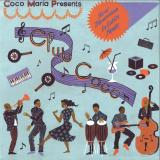
New compilation by Coco Maria on her own new founded imprint Club Coco. Comes with a 4 page folded insert.
There are albums that aren’t just listened to—they’re lived in. Club Coco – New Dimensions in Latin Music is one of them. This compilation, curated by Coco María, marks the first release on her own label and serves as a sonic portrait of what Latin music can become when it’s guided by intuition rather than labels. Eleven tracks open the windows and cross continents as effortlessly as changing a song. Here, Neapolitan synthesizers coexist with digital cumbias, voices whisper from within the groove, and rhythms invite movement—without urgency or pretense.
This selection isn’t defined by a genre but by a feeling: that of someone dancing with an open heart and keen ears. Each track is a postcard from a corner of the world, and also a love letter to rhythm and the emotions it stirs. From Bogotá to Naples, passing through Lima, Amsterdam, and New York, this compilation offers a journey where past and future brush against each other in the present moment. Club Coco doesn’t aim to define a sonic truth, but to invite listeners to discover new ways of hearing and feeling.
The party has already started. Come on in.
Step into the emotional landscapes of Saudade’s new EP Expensive Noise, a multi-textured journey where analog machines speak louder than words. Each track captures a different state of mind, blending depth and groove with raw, honest sound design. The EP opens with “Expensive Noise” — direct, grounded, and hypnotic. No detours, no hesitation — just raw analog power locking into a loop with magnetic tension. The groove builds steadily, shifting your state of mind as the rhythm takes hold. “Anyway” brings a dreamy, bittersweet touch. Exclusive to vinyl, this extended version unfolds like a teenage memory you never shared — warm, nostalgic, somewhere between electro and pop, glowing softly from within. “Colored Life” dives into detailed minimal deep house territory. Rounded and generous, its sound design sculpts soft clouds of melodies against crisp, syncopated snares — floating between dream and presence, like a cushion made of rhythm and light. “Porte de la Villette 45” echoes the EP’s birthplace — a raw area near the Parisian périphérique, where engines roar, people hustle, and concrete weighs heavy. Yet within this urban friction stands Studio Villette 45 — a funky, soulful shelter where the machines find their groove. The record closes on “Cœur” (heart in French) — a stripped-down, heartfelt outro. Just a Prophet 5 pad, no tricks. A moment of vulnerability, stillness, and truth — as if the music had finally dropped its armor. Between analog heat and emotional honesty, Expensive Noise is Saudade at his most sincere — building bridges between power and softness, body and soul, sound and silence.
Mr. Fiel returns with a new collection of introspective sounds on his own label, Faith In Truth. The release — available soon on vinyl and digitally — marks the imprint’s second vinyl outing, exploring deep house and ambient textures beyond the club floor. Dreamy, meditative and emotionally rich, these tracks invite the listener into a gentle inward journey.
Peaceful mind - a warm deep house journey built on deep bass, soft rhodes, and subtle background chords. Peaceful and immersive – a perfect track to slow down and reflect.
No life without dreams - driven by a heavy bassline and hypnotic synths and congas, this track is mainly made for the dancefloor. A surprising flute outro adds a delicate, uplifting twist to the groove.
Beautiful day - emotional deep house with a nostalgic touch, like flipping through old photographs. Warm textures and soft melodies evoke memories of brighter days.
Into the Galaxy - ambient meets electro in a cosmic exploration of NASA-inspired sounds and samples. A spacious and otherworldly piece – are you ready for a sonic spaceflight?
Eternal sunrise - slow-burning at 110 BPM, this track unfolds with deep basslines, ambient pads, and layered synths. Perfect for quiet moments or watching the sunrise in a reflective state of mind.
Echoes of the divine - thick pads and trippy acid tones collide with slow breakbeats and textured drums. A surreal ride into another dimension – hypnotic and unpredictable.
All tracks were written, produced, and mixed by Mr. Fiel between the summer of 2024 and the spring of 2025.
Makhunik Records Presents: "Withdrawals" - A Bold New Vinyl Release by RAKANS Withdrawals, the highly anticipated follow-up to Emergence EP and Deep State (Midnight Stallion) EP, marks a bold new chapter in RAKANS's ever-evolving sonic journey.
Set for release on I Makhunik Records, Withdrawals explores the tension between desire and detachment, featuring five tracks that blur the lines between electronic, experimental, and club sounds. Available on vinyl, Withdrawals invites listeners to experience the raw and intimate emotions that inspired its creation. Following the success of Emergence EP (Gently Leftfield Techno from a Core Dresden Artist - Resident Advisor/Single Review by Andrew Ryce) and Deep State (Midnight Stallion) EP on Boudica, which gained recognition for their atmospheric intricacies and deep, immersive textures, Withdrawals delves deeper into personal and societal themes, paired with the artist's signature ethereal soundscapes and captivating beats. Each track carries a narrative, from late-night reflection to hedonistic encounters, with a pulsating intensity that mirrors the artist's own process of creative and emotional release. With Withdrawals, RAKANS continues to push boundaries, creating a profound listening experience that resonates both in its melancholy and its intensity.
Description of the Title: The title Withdrawals reflects a state of emotional and mental transition, where one is caught between the craving for connection and the unsettling effects of isolation. It symbolizes the artist's inner turmoil and process of reclaiming personal agency after experiences of burnout and separation. The tracks are an expression of that journey-tracking the highs and lows of life in a world that constantly demands more. Through these melodies, RAKANS has captured the intensity of longing and the aftermath of desire, inviting listeners to confront their own internal conflicts. The narrative is personal yet universally relatable, and the title speaks to the often painful but necessary process of letting go, detoxifying from past habits, and learning to be at peace with oneself. "With Withdrawals, He wanted to channel the emotions that often come from the struggle between desire and self-preservation, between the drive to connect and the need to retreat. he's journey, both as an artist and as an individual, has been filled with moments of intense reflection, self-discovery, and sometimes, disconnection.
These tracks are the culmination of that inner conflict, a raw exploration of what it means to both lose oneself and find a deeper, often painful, form of clarity. Like the music he's created before, the sound of Withdrawals speaks to the space between tension and release, the liminal space where truth is often revealed in its most vulnerable form. He's always believed that music is a mirror to the soul, and in this EP, He's tried to reflect that feeling of being both pulled in and out of something greater. It's a raw and intimate look at the way we navigate modern life, often feeling like we're running toward something that we can't quite reach, yet constantly pulled back into our own personal truths.
This EP is personal, but it's also for anyone who's ever felt caught between two worlds, the one they want and the one they need. I hope it resonates with listeners who are experiencing their own form of withdrawal, whether it's from people, places, or even from themselves.
What happens when you combine SUMAC: a band that uses the volume, distortion, and guitar-centric approach of metal to make music that has the malleability of jazz and textural exploration of noise with Moor Mother: a poet and sound artist that has deconstructed hip hop to a point where it"s less about rhyme and rhythm (though obviously both are present in her work) and more about oratorical cadence and power.
The Film is an album that takes attributes of both artists" work and finds common ground in shifting musical patterns, and expressive force. The record is a musical thumbing of their noses at the more traditional approaches of their respective fields, an innovative, powerhouse of an album. The Film"s moniker speaks to the fact that it is conceived and delivered as a complete album, a full story or narrative. Moor Mother puts it best: "The idea is to create a moment outside of the convention. This is a work of art.
Thinking about the work as a Film, instead of an album or a collection of songs. This task is impossible in an industry that wants to force everything into a box of consumption. You won"t understand or get the full picture until the artwork is completed. This work is developing and is requesting more agency within the creative process." The Film is just such a work, a nebulitic collaboration between SUMAC and Moor Mother.
SKYLAX RECORDS proudly unveils the final chapter in its monumental 4-part saga — SKYLAX BLACK 4: Enlightenment Theory. This visionary series, bringing together two of France’s most iconic electronic artists — ARNAUD REBOTINI and ACID WASHED — was never just a collection of records. It was a journey through the deepest layers of the underground — a conceptual project where each release was a coded message, each track a fragment of a greater whole. On the A-side, Enlightenment Theory explodes with fierce urgency — an anthem forged in the spirit of Underground Resistance, echoing the soulful intensity of early ’90s Detroit without imitation. It’s bold, emotional, and militantly underground — a future classic cloaked in defiance and elegance. On the B-side: B1. Space Is The Place channels the weightless gravity of dub techno at its purest — all echo chambers and endless delay, a direct line to the Berlin school of Basic Channel, Maurizio, and Deepchord. B2. Beyond Current Biological Constraints closes the chapter in deep space — an electro masterwork evoking Drexciya, full of aquatic melancholy and cybernetic funk. It’s not retro — it’s timeless. With this last installment, the puzzle is complete. The meaning is revealed: R.A.V.E. — four records forming one powerful word. One timeless idea. A tribute to everything this culture stands for: raw energy, emotional truth, sonic innovation, and spiritual depth. This project could only be born on SKYLAX RECORDS — a label that has always stood apart. Uncompromising. Devoted to physical formats. Fiercely loyal to the culture. While others chase trends, SKYLAX continues to chart a different course — one rooted in the sacred codes of house, techno, electro, and beyond. It is no exaggeration to say that SKYLAX is one of the last true purist strongholds of underground music — and this series, with its layered meanings and fearless artistry, is proof. From Redshifts to Blueshifts to Artificial Darwinism then Vision Quest, every chapter has pointed toward this moment. Now, with Enlightenment Theory, the full vision is revealed. RAVE is not just a word — it is the truth. A philosophy. A myth reborn. The circle is complete. The message endures. The legacy lives on.
- 1: Peace & Purpose
- 2: Safe Room
- 3: Not The Same Thing
- 4: Life On A Farm
- 5: Pick Apart
- 6: Marathon Of Hope
- 7: Stop Cutting Me Down
- 8: Shut The Fuck Up
- 9: Reunion
- 10: Phantom Limb
- 11: Thoughts On My Faith
- 12: Eris On The Run
- 13: Red House
- 14: Truth In Trauma
Can’t go over it. Can’t go under it. Gotta go through it. And somewhere out there in the Pitch black beyond all darkness lies Peace & Purpose. The horizon you never quite crest until the inevitable end. Breathe deep — this fearful moment is the most alive you’re ever gonna feel. For the last decade, Crack Cloud’s vision has grown ever more expansive, more cinematic. Last go around, they dropped from The Heavens and then performed with their bare backs to an endless darkening desert. Now they’ve crammed all that life into some metallic and strange object called Peace & Purpose. All the terror of living. All the helplessness. All the raw human will. All glued and screwed and locked into this impossible tactile shape of dungeon dub; sour milk vox; Avant-protest music. Music arm wrestling itself to the ground. Far afield of beauty. The discordant symphony of factory farming and grim timber of the meat processing plant. The grinding din of the cogs. And yet, never giving up in spite of all good sense. Even in death, we are a coterie of survivors. Look now: There’s Terry Fox on his one-legged Marathon of Hope across The Great White North while cancer spreads through his lungs. A self-annihilating drive to feel alive. Rage against the dying of the light, they say. Well, how ‘bout it then!??! Peace & Purpose is not in any way some art project meditation on Punk Rock. It is Punk Rock. Terrifying, inspiring, vital, invigorating and most importantly, utterly unexpected. Every goddamn stupid day is a sublime slice of fresh hell. That’s the point. Gotta go through it. Wishing you Peace & Purpose — if only in that last big breath.
Netherlands-based artist Jonny Nash returns to Melody As Truth with his new solo album, ‘Once Was Ours Forever.’ Building on 2023’s ‘Point Of Entry,’ this collection of eleven compositions draws us further into Nash’s immersive, slowly expanding world, effortlessly connecting the dots somewhere between folk, ambient jazz and dreampop.
While ‘Point Of Entry’ was characterised by it’s laid-back, daytime ambience, ‘Once Was Ours Forever’ arrives wrapped in shades of dusk and hazy light, unfolding like a slow-moving sunset. Built from layers of gentle fingerpicked guitar, textural brush strokes, floating melodies and reverb-soaked vocals, moments come and go, fleeting and ephemeral.
From the cosmic Americana of ‘Bright Belief’ to the lush, layered shoegaze textures of ‘The Way Things Looked’, Nash’s versatile guitar playing lies at the heart of this album, gently supported by a cast of collaborators who each add their unique touches. Canadian ambient jazz saxophonist Joseph Shabason makes a return appearance, providing his delicate swells to ‘Angel.’ Saxophone is also provided by Shoei Ikeda (Maya Ongaku), cello by Tomo Katsurada (ex-Kikagaku Moyo) and Tokyo acid folk artist Satomimagae (RVNG) lends her haunting multilayered vocals to ‘Rain Song.’
As with much of Nash’s work, ‘Once Was Ours Forever’ deftly finds an equilibrium between softness and weight, offering the listener ample space to interpret and inhabit the music on their own terms. Through his uncanny ability to blend the pastoral and the profound, the idyllic and the insightful, ‘Once Was Ours Forever’ arrives as a tender and understated offering, infused with warmth and compassion.
- A1: Cangilón
- A2: Piedras
- A3: Aquí
- A4: Agua Pa Fantasmas
- B1: Rio De Las Tumbas
- B2: Viento
- B3: Mi Viejita
- B4: No Hope
- C1: Radio Chomio (Con Eli Wewentxu)
- C2: Rio Radio Correspondencia Anfibia
- C3: 3Eee
- C4: F Collect
- C5: Even Heaven Is Uneven
- C6: El Azar
- D1: I, You
- D2: Heterodina
- D3: Sin Conexión
- D4: Sss1
- D5: Sss2
- D6: Sss3
he initial seed for this project was planted in 2020 when Nicolás Jaar wrote the song “Piedras” for a concert at the Museum of Memory & Human Rights in Santiago, Chile, which commemorates the victims of human rights violations during the military dictatorship led by Augusto Pinochet between 1973 and 1990. Between 2022-2023 it took on a new form as a radio play entitled 'Archivos de Radio Piedras', which was shared on a dedicated Telegram channel. In 2024, the play was converted into a 24 channel installation at the University Museum of Mexico City (MUAC), where it was exhibited for 5 months.
Piedras 1 and 2 is a collection of the tracks featured within the play, all new music by Jaar, but partly presented within the play as the music of Salinas Hasbún (the name a composite homage to Jaar's grandmothers, Graciela Salinas and Miriam Hasbún).
The play follows two friends mourning the disappearance of Salinas Hasbún, a musician and writer who vanished in the early 2020s. Although they live in a future where technology is advanced, they
resort to DIY radio methods because the anonymous group “Las 0cho” has launched a worldwide attack on undersea internet cables, causing a global internet blackout.
The play's central theme revolves around the idea that truths, memories and identities speak from the cracks (“rasgaduras”), or the "in-between" spaces ("en el entre"). This concept is supported by the
way much of the narration unfolds - in the liminal spaces between radio frequencies. The instability and transitory nature of a constantly shifting radio dial becomes not just a metaphor but the structure of the play itself. It’s in these moments of noise, static and interference that the deeper revelations of the story emerge. This disjointed, ever-changing medium mirrors the way memory and trauma operate within the play - non-linear, slipping through the gaps, found in fragments or ordinary moments, rather than direct transmissions of “official” historical accounts.
This notion reaches its climax at the end of the narrative, when a text is discovered in which Salinas speaks of finding a new number in a small pond in a cave mentioned in the first episodes of the radio play. This pond, inside the “cochlea of the world”, is seen as a way to introduce real-life randomness to computation. Embodied in the salt lakes of northern Chile, home to the world’s oldest bacteria, this randomness disrupts the rigid order of binary code, paving the way for a transformation of digital life.
First solo release by Nicolás Jaar since 2020’s Telas and Cenizas.
The tree of good and evil knows no morality in this garden. You took a bite of the forbidden fruit -- but nothing happened. But you do feel the taste of the apple on your tongue, an abundance of amazing and fresh flavor. You look around the garden and see others partaking in whatever pursuit their heart desires. Joy, pain, love, wonder and death. Everywhere you look is a new presence, a new moment of bliss, dystopia and truth. You realize that this garden is your playground, and your destiny can be shaped like clay. Play in the garden, laugh in the garden, fight, die and love in the garden.
"Trauma and the shock effect of it - the leftover residue of harsh reality so impactful that it shapes the way you imagine, envision and calculate your position in regard to everything and everyone around you.
A new type of psychological radius evolves. Boundaries are reinforced. Relationships are recessed. A damaged brief system float aimlessly. Vulnerable to and for anything reminiscent of a worthy cause. The truth about facts became satirical monologue, dead end expressions that have no critical arrangement. We all know someone that either has been or will be"
- Jeff Mills
The Eyewitness reveals a habitual pattern in the way it symbolizes a mirror reflection of mankind in our most vulnerable moments. It is the forthcoming album of Jeff Mills and it is composed from the perspective of an unknowingly complicit bystander and it is at the very least, psychologically pathological in nature. What this release is essentially proposing is an admission to the diagnosis that no one is immune to shock and trauma. Not the accuser or the accused. And this abnormality s culturally and generally transmittable - handed down and passed over to one another disguised as righteous theatre.
As an artist, what Mills is notoriously known for is the perspectives and paths he chooses to approach hefty, complex, and sometimes, awkward subjects. The best way to recognize the narratives of his mostrecent album works such as "The Clairvoyant", an eerie transcending album that plays through like a Seance for creating a bridge to reach another dimension or "Mind Power Mind Control", a cautionary warning about the consequences of supporting deceit, mind control and mass mental persuasion is to start by first taking a moment to look at yourself in a mirror. He's suggesting sound as a reflection and what we might be able to see in ourselves. Proposing that we might be the problem and a solution. In the same vicinity of his recent solo albums, the direction, scope or target of The Eyewitness is first about us, then about it.
More than the few previous albums he's released lately, this one has a unique relationship in terms of imagery and visual treatments that represent the concept. The front cover shows Mills, neatly dressed in a black suit that appears to be caught in the act of doing something methodically as he cohorts to supportwith a bright white type of surgical light towards the viewer. Stark and in the act of.......something offensive - it could be some type of hypnotic machine at work. Other photos show him in darkened spaces. Remote and deep in thought.
Other clues are the titles of the tracks such as "Sacred Iridescent Mirror (The Pledge)": this refers to the act of installing value and credit to something ambiguous and "Menticide" which means the systematic effort to undermine and destroy a person's values and beliefs. In the opening track, "in A Traumatized World" we hear the narration spoken by Mills. In a language he specifically created for this album. It's a dialect that is designed to be undistinguishable, but spoken with a compassion that it could be sympathized with. In the latter part of the track, it reaches a climatic point. Meaning, "it" has happened. And the album is the evidence.
On extra note:
In this day and age,it's comforting to see a musician like Jeff Mills administer music conceptually without any conditions attached. The artistry and craft of using sound and rhythm to bring forth a concern, a warning or the result of a diagnosis to the listener.
There is a parallel, submerged dimension in which musicians meet when they improvise. Sound microcosms emerge in those moments, and this is precisely the magic that BOTTAZZ! wanted to photograph in their first album: BOTTAZZ! VOL.1.
A "live" album, capable of transmitting spontaneity, sonic truths, empathy, feelings; ingredients that are difficult to transmit by recording the instruments individually or with other techniques.
Recorded in the historic "Auditorium 900" studios, a true time achine, as well as an institution for music in Naples.
Auditorium 900 took up the challenge in the figure of sound engineer Fabrizio Piccolo and from here the sound of BOTTAZZ was born!
A sound made up of lysergic Funk trips, 70's influences in all possible nuances: from progressive funk to Santana's Hispanic rock, up to touching its darkest and most hidden latitudes; audio waves
nfluenced by the soundtracks of the cinematography linked to those times, organs, synths, percussion and wah wah guitars, which generate a melting pot in which nothing is taken for granted.
BOTTAZZ! VOL.1 is a ship's diary, a journey into which each sailor has inserted its own emotions accumulated over the years, thus giving us a sincere and genuine record. Happy navigation.
'Primavera Cabriolet,' the inaugural album by the talented Italian artist, Fibonnacci, presented by LOT Records.
Prepare to be swept away by a quartet of mesmerizing tracks that intricately weave together a tapestry of rich, minimal sounds and atmospheric layers, reflecting the diverse influences that have shaped Fibonnacci's music.
This captivating release is a fusion of classic rominimal house beats with industrial undertones, adorned with resounding noises, expansive pads, and uplifting chords. 'Primavera' paints a sonic canvas that encapsulates the vibrant spirit of summer, tailor-made for those euphoric after-party moments.
Anticipate enthralling rhythms, immersive soundscapes, and innovative musical crescendos across each unique composition.
Step into the journey with 'Panorama 1986,' the album's opening masterpiece. It's a powerhouse track that boasts a compelling bassline, enigmatic pads, and hints of hip-hop vocals, setting the stage for an electrifying sonic adventure.
Next, 'il Viaggiatore,' the second track, emerges as a dancefloor anthem. Its pulsating bassline, driving beats, and harmonious fusion of vocals with retro piano and pads form an irresistible groove, perfectly suited for peak-time revelry or after-party indulgence. 'Hôtel Casablanca' exudes a delightful, feel-good aura. A delightful blend of industrial elements, crisp rominimal beats, and a deep, melodious tune creates an irresistible fusion that is sure to set feet in motion and spread smiles. This track has already earned high praise and is a must-listen for all.
Rounding off the album with finesse, 'Discoteca Paradiso' delivers an iconic rominimal experience. With classic kicks, hats, and industrial nuances, combined with nostalgic pads and vocals, it invokes the essence of the end of the night or the dawn of a new adventure embracing diverse perspectives within the dance music realm.
Fibonnacci's 'Primavera Cabriolet' promises a spellbinding and deeply immersive experience. Let this musical expedition captivate your senses and transport you.
Mates now for many moons - Mr.G and Duncan Forbes met at the time of Duncan’s Animated project; forging a friendship through weekly record shopping trips; a love of Soho; and regular banter over Duck and Rice. But it was their chance meeting at Glastonbury a few years back which finally sparked them to work together; since leading to a string of remixes for both Phoenix G and 49North, and culminating in their first, combined studio creation, ‘Curry Nite’, in late 2022.
Fast forward to Spring 2023, and what we have here is their first, collaborative full-length on vinyl - artist album, ‘All Under One Moon’. Conceived and created in Duncan’s studio on a long, full moon weekend with cosmic forces at play; the pair - both chomping-at-the-bit with excitement and no real plan or outcome in mind - set about creating, with a pure love of making music and the freedom to go wherever it might take them as their only guide. As G sums up for us…
“Two friends of old with a shared love of music ,having fun making music together in D’s studio. It was a long time coming but in truth caught us both off guard… the sum of both parts being sooo much more (y). The beauty of being free, making music. What a great moment”
So, on paper, we have - two mates, excited to play away in the studio with their favourite toys until they have to come up for air. But on record, what we actually have is - two close friends, united by a deep love of House, Techno and everything between / beyond - relishing a rare opportunity to jam, and with freedom…. it’s only when you consider quite how almanack-like our two music-obsessed pals are anyway, as individuals; that it begins to dawn on you, just how mind-meltingly rich and stylistically explosive - an album, that’s the sum-of-their-parts - is inevitably going to be.”
Since Interstellar Space, John Coltrane's posthumously released duo album with Rashied Ali, the combination of sax and drums has received an aura of sublime spiritual ambition. It is where tireless truth seekers come together to aim for something transcendental. Something too big for words. Of course, a lot has happened in the meantime.
The available options - philosophically, stylistically, temperamentally - are endless. Musicians are aware of those historical turning points, yet they also try to add their own twists and interpretations. Some of them succeed. One of reed player Mattias De Craene's many projects - MDC III - is a project involving drums and saxophone. A striking difference: De Craene invited two drummers (Simon Segers, Lennert Jacobs), that have been active in the worlds of jazz, pop, free improvisation and experimental music. They are the ideal foil for De Craene's vision, which seems to exclude no opposites. While the use of a recorder, electronics and percussion steers the music beyond the classic acoustic limitations, the result becomes strikingly rich with contrasts. What is abstract and introspective the first moment can switch - gradually or abruptly - to moments of fierce ecstasy the next.
The music feels free (free from limitations, free to choose its own logic), but also invites. Shifting moods and textures are combined with intricate rhythmical patterns, as the drummers lock together in dense, complex and/or ritualistic grooves. A minimal pulse, accompanied by murmuring hisses of brushes and a serenading sax is contrasted with moments of exuberance. The result is many things at once, but despite these wildly varying colors, sounds, textures, rhythms and moods, they are all linked, part of a generous, iridescent whole.
The trance-inducing trio MDCIII is back. And that equals yet another delicious load of modular drums, wildly processed saxophone sounds, improvisation & pulsating grooves.
After their first EP, MDCIII ft. Sylvie Kreusch, and their subsequent first (internationally) acclaimed album 'Dreamhatcher', the 'double drums' saxophone trio with Mattias De Craene, Simon Segers & Lennert Jacobs is all set to show what angle rock 'n roll can really come from. On their new album 'Drawn In Dusk' (release: end of September via W.E.R.F records) the trio delivers a whole new palette of sounds that are just as mystical, energetic and wild as 'Dreamhatcher'.
One of the greatest soul voices working in the US today, Billy Valentine's latest release, first plotted out in the summer of 2020, sees the artist responding to the chaos of a global pandemic and the seismic impact of George Floyd's murder via legendary works from Curtis Mayfield, Gil Scot Heron and Pharaoh Sanders. In collaboration with acclaimed producer and songwriter, Bob Thiele Jr. (son of Flying Dutchman founder, Bob Thiele), Valentine's rich, velvety vocals breathe new life into these already-powerful tracks, bringing them into the contemporary political context with renewed urgency. Released on Acid Jazz in partnership with renowned US label Flying Dutchman, Valentine's latest output marks the first new music from the label since the '70s - a momentous return for a keystone tastemaker of the American jazz world.
Orange Vinyl
»Love As Projection« is the new album by Frankie Rose, her fifth studio LP and second for Night School following the reissue of her interpretation of The Cure’s »Seventeen Seconds«. Frankie Rose has forged an enviable musical legacy, from playing with bands like Crystal Stilts and The Vivian Girls but on »Love As Projection« she takes a bold step into electronic pop production. A sumptuous recorded statement, it dances in ecstasy and broods on the tumult of the western world’s decay in equal proportion. At the heart of the album is glowing, confident songwriting, resplendent in hooks and choruses but still touched with an optimism undimmed.
After spending nearly two decades establishing herself across New York and Los Angeles independent music circles, Rose re-emerges after six years with a fresh form, aesthetic, and ethos. Celebrated over the years for her expansive approach to songwriting, lush atmospherics, and transcendent vocal melodies and harmonies, »Love As Projection« is a reintroduction of her established style through the lens of contemporary electronic pop. Recorded with producer Brandt Gassman and mixed with long-term collaborator Jorge Elbrecht this is the album Frankie Rose has been building up to her entire career.
More than a rebirth, a refinement, a resurgence, »Love As Projection« boasts a widescreen scope: a long- form project heavily considered for half of a decade, culminating in the most personal and accessible collection of art-pop that Frankie has ever written. When Rose aims for the pop jugular as in first lead track »Anything«, the result is unstoppable. A majestic pop song built for radio, it erupts into an irresistible chorus that marries classic epic 80s American pop with the cult effervescence of Strawberry Switchblade »It’s like a prom scene in a John Hughes movie. It’s a hopeful song about abandoning fear even if the world is quite literally on fire.. In the end, at least we have each other,« says Rose. »Sixteen Ways« further boasts a propulsive, massive chorus, though tempered by a cynicism built in global post-truth, global malaise. »It’s about getting your hopes up, but simultaneously making lists in your head about how it will never work out in your favour.«
The big anthems don’t let up there. On »DOA« some massive, rolling drums lathered in big mid-80s gated reverb dovetail with a syncopated baseline for the ages as Rose’s vocal sails effortlessly above. The effect isn’t unlike ethereal vocalists Clannad circa Howard’s Way or Enya jamming with Simple Minds in their stadium-conquering heyday. Rose tempers the adrenalin with heart-tugging bittersweet tones and there are plenty of them. »Sleeping Night And Day« takes its time with an off-the-cuff chorus, swirling around in harmony and chorus-bass. »Saltwater Girl« picks up the balladeering baton with another nod to album track-mode Switchblade, deep space opening up in the mid-tempo drum track and soupy, digital atmospherics. Album closer »Song For A Horse«, reimagines modern Pop production a-la-PC Music but shorn of the meta-atmosphere. Pianos, swelling synths, minor keys cut through with major. These moments, also seen in Feel Light offer ballast to the soaring pop choruses. Moments like these are big oceans of emotion to fall into before being led out by Rose into a bright new day.
»Love As Projection« is released in the USA by Slumberland.
3 years have past since the release of the fortunea Cookies Vol. 2 ep. Now, the Viennese label is resurrecting their various artists collection with a third entry.
The A-side begins with a smooth deep house piece by LeSale. Dreamy strings and sparkling pads chime together with a thriving funky bassline. A beautiful opener for estival sunset moments.
Peletronic and Klaus Benedek team up together on A2 with some ‚Analogue Kinda Funk‘. Finished during the lockdown while sending the project back and forth over the web, this track gives you an eerie and compelling feeling of the Zeitgeist we are living in right now. Dark reverberant percs, a crunchy guitar and a stunning drum beat will turn your flat into a club for sure.
The B-side features a new member on the fortunea roster. Dzc. is a young and talented dj and producer and this is her first production that is coming out. It’s called ‚The Truth‘ and is a well made peaktime track and a homage of early to late 90s house, techno and trance music.
Lukas Poellauer finishes this record. But not alone! He brought Schreder with him and together they make a ‚Midnight Ride‘ through a melancholic, acid-fulfilled desert.
fortunea Cookies Vol. 3 is limited to 300 copies! There will be no repress!
Support by Felipe Gordon, Roman Rauch, Jus-Ed, Fred P, Krewcial, Jeff Samuel
Recycled Cherry" (Red/Black) Vinyl[28,53 €]
Australian indie and garage-rock firebrand, GIMMY unveils her new EP Labour of Love — a raw, emotionally charged collection that fuses gritty indie rock, post-punk bite and tender poetic expression, all powered by Gemma Owens’ unmistakable vibrato and fiercely honest songwriting.
Where her 2024 debut Things Look Different Now was a slow-burn, two-to-three–year voyage of change and introspection, Labour of Love hits with an entirely new force: intuitive, immediate and deeply connected to Owens’ emotional world. Written over six months and captured in an intense 4–5 day studio burst with producer Sam Joseph (King Gizzard), the EP moves with the urgency of something that needed to be felt and heard, right away.
Across seven compelling tracks, GIMMY dives into social anxiety, grief, falling in love and the chaotic beauty of everyday life, with each song arriving “on its own terms” — born from late-night home writing sessions, snippets of inspiration while travelling and moments of full-band electricity. Sonically, Labour of Love nods to Soft Play, Nick Cave, Fontaines D.C., The Preatures and The Smiths, yet remains unmistakably GIMMY: expressive, gritty, vulnerable, cheeky and alive in every moment.
Ultimately, the EP is an unfiltered snapshot of emotional truth, celebrating life’s highs, lows and everything in between, and showcasing GIMMY at her most dynamic, powerful and compelling to date.
Black Vinyl[27,31 €]
Australian indie and garage-rock firebrand, GIMMY unveils her new EP Labour of Love — a raw, emotionally charged collection that fuses gritty indie rock, post-punk bite and tender poetic expression, all powered by Gemma Owens’ unmistakable vibrato and fiercely honest songwriting.
Where her 2024 debut Things Look Different Now was a slow-burn, two-to-three–year voyage of change and introspection, Labour of Love hits with an entirely new force: intuitive, immediate and deeply connected to Owens’ emotional world. Written over six months and captured in an intense 4–5 day studio burst with producer Sam Joseph (King Gizzard), the EP moves with the urgency of something that needed to be felt and heard, right away.
Across seven compelling tracks, GIMMY dives into social anxiety, grief, falling in love and the chaotic beauty of everyday life, with each song arriving “on its own terms” — born from late-night home writing sessions, snippets of inspiration while travelling and moments of full-band electricity. Sonically, Labour of Love nods to Soft Play, Nick Cave, Fontaines D.C., The Preatures and The Smiths, yet remains unmistakably GIMMY: expressive, gritty, vulnerable, cheeky and alive in every moment.
Ultimately, the EP is an unfiltered snapshot of emotional truth, celebrating life’s highs, lows and everything in between, and showcasing GIMMY at her most dynamic, powerful and compelling to date.
Strut Records highlights a landmark in British jazz-rock with Second Wind, the 1972 album from keyboard visionary Brian Auger and his powerhouse group Oblivion Express. Capturing a fully matured lineup, the record finds Auger expanding his fusion language - bridging jazz sophistication, funk-driven rhythm, and soul-infused songwriting with the clarity and fire that defined his early ’70s work.
Though Auger’s roots lie in the lineage of hard-swinging jazz organ and the improvisational fire of the ’60s British scene, he has never been an artist content with tradition. With Second Wind, he moves further into a hybrid language that fuses rhythm with harmonic depth and groove, without sacrificing sophistication. His playing is expansive yet precise, translating the electricity of live performance into a studio work that breathes with immediacy.
At the heart of this era of Oblivion Express is the telepathic rapport among its members. Vocalist Alex Ligertwood (in one of his earliest major recordings before Santana fame) brings a soulful intensity that feels both grounded and forward- looking. Second Wind contains tracks that have become deeply significant in Auger’s discography - original compositions Second Wind, and Truth to name a few - but it was Auger's high octane revisioning of Eddie Harris' Freedom Jazz Dance, (adding new lyrics to the original instrumental) that genuinely broke barriers. The track became a DJ friendly classic and highlighted the groups deeply original approach.
The rhythm section of Barry Dean and Robbie McIntosh balances weight and fluidity, giving Auger the space to stretch across Hammond organ, Rhodes, and keys with characteristic boldness. Their collective sound is one of seamless motion: jazz-inflected lines swelling into rock-driven crescendos, funk-leaning grooves locking with vocal hooks, moments of quiet clarity emerging between bursts of improvisation.
Second Wind stands as a pivotal moment in Auger’s discography: a record that bridges the exploratory spirit of his earlier projects with the more groove-oriented approach that would soon bring international attention. More than five decades later, it remains a vivid document of a band carving out its own language. Music born of instinct, collaboration, and a restless desire to push beyond the expected.
"The Outfit release career defining new album, Preservers of the Pearl, asserting themselves as messengers of the new wave of underground rock and roll, pushing the movement forward alongside fellow trailblazers Mystery Lights, Sheer Mag, Shadow Show, Uni Boys + more.
Everything has been leading here. Daniel Romano shifts from his position as sole writer, opening the floor to Outfit stalwarts Ian Romano and Carson McHone, and welcoming into the fold longtime friend and legendary Canadian rock-n-roller, Tommy Major. The band is functioning as a true collective — multiple voices and perspectives — all serving one creative pulse. The result is both a new beginning and a homecoming, a complete and fearless statement.
Tracked to tape at their own Camera Varda studio, the album captures the band live in the room — breathing, musing, and believing. It’s the sound of human hands and hearts at work, in a shared moment of co-creation, preserved in real time in stunning hi-fi.
Here is music as communion — rock n roll as experience. Preservers of the Pearl rejects the flattening forces in modern times — what the band calls “the mono-agriculture of the mind.” In a “target culture”, condemned to homogeny and banality, The Outfit refuse polish and uniformity, embracing imperfection as truth, and promoting curiosity through creativity. At the center of it all is a deep spiritual current — what The Outfit calls Rock & Roll Magick: the belief that music is a sacred act, a force that can reconnect the individual to what is larger.
The Outfit are making music that is purposeful and profoundly urgent. Preservers of the Pearl is an invocation - it’s fearless in a time of great compromise, and resolute in an age of peripheral bullshit. Here is a band serving something greater than themselves."
"The Outfit release career defining new album, Preservers of the Pearl, asserting themselves as messengers of the new wave of underground rock and roll, pushing the movement forward alongside fellow trailblazers Mystery Lights, Sheer Mag, Shadow Show, Uni Boys + more.
Everything has been leading here. Daniel Romano shifts from his position as sole writer, opening the floor to Outfit stalwarts Ian Romano and Carson McHone, and welcoming into the fold longtime friend and legendary Canadian rock-n-roller, Tommy Major. The band is functioning as a true collective — multiple voices and perspectives — all serving one creative pulse. The result is both a new beginning and a homecoming, a complete and fearless statement.
Tracked to tape at their own Camera Varda studio, the album captures the band live in the room — breathing, musing, and believing. It’s the sound of human hands and hearts at work, in a shared moment of co-creation, preserved in real time in stunning hi-fi.
Here is music as communion — rock n roll as experience. Preservers of the Pearl rejects the flattening forces in modern times — what the band calls “the mono-agriculture of the mind.” In a “target culture”, condemned to homogeny and banality, The Outfit refuse polish and uniformity, embracing imperfection as truth, and promoting curiosity through creativity. At the center of it all is a deep spiritual current — what The Outfit calls Rock & Roll Magick: the belief that music is a sacred act, a force that can reconnect the individual to what is larger.
The Outfit are making music that is purposeful and profoundly urgent. Preservers of the Pearl is an invocation - it’s fearless in a time of great compromise, and resolute in an age of peripheral bullshit. Here is a band serving something greater than themselves."
- 2: Against Death
- Smashed
- Can't Touch
- Sit
- Lucky
- Safe
- Son Of
- Destiny
- Billions
- Death Of Music
- No Mail
- I.d.o.l
- Yo
- Bawk
- Crack
- Headless
- In So Many
- Ajukaja Me
“Certain albums hit like howling bullets at pivotal moments, tearing open the face of music to reveal hidden sonic muscles and fusing them back into something both strangely familiar and yet entirely unrecognisable. We believe this is one of those records.”
The double album Death of Music delivers 18 crooked vocal pops, some ruthless, others unexpectedly disarming. In some songs, Ajukaja & Mart Avi function like a two-headed saurus swinging its spiky tail to shady pop-house smackers. In others, Ajukaja's serene organ licks descend into subterranean caverns, allowing Avi to float to the surface on their wavelengths and turn his voice into billions of extinct moths, enslaved by the moonlight’s pull. There are songs that face destruction and those that seek to prevent it.
One kykeon rap goes, “If you die before you die, then when you die, you don't die!”. Ajukaja & Mart Avi have embraced this notion to create new music that allows them to thrive in the algorithmic wasteland. 13 years in the making, these 66 minutes are packed with lifetimes of truths you didn’t know you needed to know. They are Ajukaja & Mart Avi – two against death.
Produced by Ajukaja
Words by Mart Avi, Music by Raul Saaremets
Guitar and Bass by Sten Sheripov (Can’t Touch The Earth, Safe)
Sax by Steve Vanoni (I.D.O.L.)
Recorded between 2011—2024
Mastered by The Bastard
Cover Photo by fs
Sleeve by Marke, Mart Avi
Pressed in Tartu, Estonia
Having transitioned between London, Lisbon and back again as a DJ and producer, as well as across the world as the drummer in beloved pop group, Metronomy, Anna Prior remains an essential and independent force in alternative and electronic music culture. The current epicentre of this creativity is undoubtedly Prior’s own label, Beat Palace. Established in 2021, it has showcased the talent and diversity of FLINTA producers carving an esoteric space within alt-pop and electronic music.
Returning to the imprint for the first time since its inception, Anna Prior utilises this vital platform to refine her own craft across the five-track ‘Firefly’ EP, exploring new moods and styles, balancing playfulness with vulnerability, shadow and light. Prior describes ‘Firefly’ as, “a collection of moments - some fleeting and some stubbornly lingering.... Each track came together almost by accident, but now feels to me like they've always belonged together.”
Lead single ‘True For You’ pulsates with soft euphoria, as Prior weaves softly cascading synths with her own earnest declarations, composing a sensual, sophisticated drama about “letting other people's differing truths sit alongside your own” that nonetheless carries a distinct club energy. In contrast, title track ‘Firefly’, written alongside co-producer Matt Karmil, unfolds as a spoken-word piece, investigating memory, “the tricky mirror that reveals more than it conceals”. Throughout, Prior’s inquisitive, native Yorkshire accent anchors a wide-eyed soundscape that gradually, impressively escalates into the cinematic.
Centerpiece track ‘Silence’ turns this approach inside out, escalating the tempo and revealing a DnB-influenced shade of Prior’s work that is certain to surprise and impress, scattering elegant syllables amongst serious soundsystem pressure as Prior navigates the feeling of being ghosted; by friends, lovers and even her own work. ‘No More Drama’ returns to pop, presenting a bold cover of Mary J. Blige’s classic that inverts the original’s unmatched intensity for a more serene, but no less affecting rendition.
Finally, ‘Beside You’ delivers one last, sublime blend of Prior’s songwriting and sequencing instincts, a simple pop incantation that coaxes dancers into a soft trance while concluding with a reminder from Prior that “amid life’s unanswered calls and fleeting highs, there is always space to feel safe and unjudged.” Concluding this sublime EP, Prior finds new ground to settle into her talents.
- Blink
- Waiting Game
- Telling Me
- Lonely Rose
- Sweet Time
- Tides
- Like This
- What Would I Do
- Without Her Loving You
- Missing Out
- Resting Blues
British singer-songwriter Lucy Kitt unveils her highly anticipated second album, Telling Me, a deeply personal collection that shifts focus from introspection to storytelling, capturing the lives and struggles of those closest to her. Drawing from her love of 70’s Laurel Canyon folk, 90’s indie rock, and country music, Kitt crafts narratives that blend her own experiences with compassionate observations of loved ones. Based on a raw acoustic “three chords and the truth” style of songwriting that ripples throughout, the album expands with full-band arrangements that give a huge range and richness to the sound.
Though influenced by American musical traditions, the Essex-native maintains her distinctive voice and authenticity, ensuring the music remains unmistakably her own. Following her 2018 debut Stand By, this new record represents a more mature approach to songwriting, written during her early 30s and completed in the 2021 lockdown – a storybook of songs capturing that moment in time.
Musically, Telling Me showcases Kitt's stripped-down acoustic foundations, while incorporating fuller arrangements that blend her love of Nick Drake, Bob Dylan, Gram Parsons, Joni Mitchell and Joan Baez, with music she loved as a teenager such as The Lemonheads and Veruca Salt. The album features collaborations with an impressive roster of musicians, including Jay Starkey on drums, Nashville-based pedal steel virtuoso Spencer Cullum, Treetop Flyer’s Sam Beer and longtime collaborator Pat Kenneally on drums and piano.
Recorded between 2021-2023 at London's Lightship 95 studio at Trinity Buoy Wharf, the album was co-produced and engineered by Dave Holmes, with some musicians contributing remotely from Nashville and London.
Kitt's commitment to authenticity extends to every aspect of the album, from the down-to-earth, home-based album artwork which represents her life right now as a musician and a working mum, with all the wonderful chaos that comes along with it. Also her decision to maintain her natural accent throughout her vocals. "I have always retained my authentic self in my songs," she explains. "Always singing with my own accent, despite the influences of all the bands and artists over the years."
Kitt has been songwriting and performing for over 20 years, starting in a riot grrl band in her teens in her hometown of Romford, Essex, before evolving into the thoughtful folk storyteller she is today. A semi-finalist at the BBC Young Folk Awards in the early 2000s, she has performed at major festivals including Glastonbury and Cambridge Folk Festival, building a reputation for intimate, lyrically-focused performances.
Telling Me is a resplendent collection of songs, capturing the human experience with great empathy, honesty and musical sophistication that has become Lucy Kitt's signature.
"Brooklyn-based pianist Eva Novoa returns with The Freedom Suite: Novoa / Carter / Mela Trio, Vol. 2 — the second radiant release from her compelling trio with saxophone icon Daniel Carter and celebrated drummer Francisco Mela. This marks Novoa’s sixth album with 577 Records. The trio first came together live in 2021, followed by a series of performances, including appearances in Cambridge (Boston) and later at the Brooklyn edition of the NY Forward Festival.
"The Freedom Suite is an homage to jazz titan Duke Ellington — particularly his masterful big band suites and legendary orchestra featuring Johnny Hodges and other luminaries who helped define an era of jazz greatness. In contrast, Novoa presents her Suite in a more intimate format: the piano trio. The album comprises twelve pieces — mostly brief — with a few extended tracks such as Free to Be Free and Cyborgs.
"For this recording, Novoa also steps in as a vocalist on several tracks, including Mainstream Media, Big Grande, Global, Free to Be Free, Dream, and Cyborgs. These pieces often feature a vocal dialogue between Novoa and Mela, whose expressive, word-infused style draws from rich Cuban traditions.
'Words are powerful,' says Novoa. 'They define who we are, where we come from, and who we hope to become. Without words, there is no conversation — and without conversation, there is no real sense of time, space, or connection.'
The Freedom Suite emerged from deep philosophical and creative conversations — spoken, written, and improvised — between Novoa, Carter, and Mela. In the studio, Novoa introduced printed texts that served as thematic foundations for spontaneous, in-the-moment musical interpretation. The result is an urgent and organic interplay, where instruments speak to one another in a language as fluid as it is fearless.
"Standout track Cyborgs begins with Novoa’s percussive piano, exemplifying the trio’s dynamic, conversational energy. Creative Destruction features Novoa on electric harpsichord in a wild, electric exchange. While Free to Be Free stands out as the album’s leading single, it also captures the essence and message of the entire Suite.
"Recorded in 2021 at New York City’s legendary Sear Sound Studio, the album captures a creative explosion of sound and spirit. Novoa dazzles on piano, Fender Rhodes, electric harpsichord, Chinese gongs — even whistle — showcasing her expansive sonic palette. Together, the trio embodies the power of free improvisation and emotional storytelling.
"Originally from Barcelona, Spain, Eva Novoa has been cultivating her distinctive voice since childhood. Now a staple of the New York creative music scene, she has performed across the globe and collaborated with some of the most adventurous voices in jazz and beyond."
- 1: Der Brauch
- 2: Der Faden
- 3: Das Seil
- 4: Brauch Reprise
- 5: Der Doppelgänger
- 6: Die Lüge
- 7: Die Brücke
- 8: Das Nachsehen
- 9: Die Heimkehr
Gold Vinyl[33,57 €]
Since their formation, The Hirsch Effekt have carved out a unique niche in the German-speaking music scene. Yet, despite—or perhaps because of—their elusiveness, the band has captivated a devoted audience. Musically, The Hirsch Effekt have always embraced limitless possibilities. Acoustic, introspective moments—where bassist Ilja John Lappin brings out his cello or guitarist Nils Wittrock returns to his classical roots—sit naturally alongside massive progressive metal onslaughts. The band is equally at home on intimate club stages as they are at international festivals, evidenced by repeated appearances at Euroblast and numerous events across the UK. Recently, they toured Germany alongside scene giants like Leprous, Tesseract and traversed Europe with Caligula’s Horse. Yet between these extremes, The Hirsch Effekt continually create songs that flirt with radio accessibility—almost—because the band steadfastly resists any form of standardization. With their seventh album, Der Brauch, they continue this course uncompromisingly. While earlier works, despite their diversity, were still labeled “metal albums,” this new record explores paths first hinted at on the multilayered second album, Holon : Anamnesis—the same album that fans of VISIONS magazine voted the only German-language entry among the 20 best albums of all time. Der Brauch can be seen as a return to that pivotal point—and simultaneously as a bold step forward. Drummer Moritz Schmidt doesn’t entirely forgot blast beats, but the record demands a new heading. In the end, though, there is only one truth: it unmistakably sounds like The Hirsch Effekt.
CAY unveils his personal side on Another Life, a debut album rich in melancholic euphoria
The expressive, multi-faceted 10 tracker comes on Mind Against's HABITAT label in January 2026
Cologne-born producer CAY explores beyond the dancefloor with Another Life, a debut album that trades peak-time pressure for an ambitious and artful exploration of self. Far from being rooted in one genre, the record weaves his own honest vocals with a wide range of powerful rhythms that pull from progressive, broken beat, techno and trance.
For CAY, making music has always offered refuge and a place to calm his mind, process life’s chaos and channel personal experiences into sound. His journey started in the clubs of Cologne, in illegal forest raves and with trips to Berlin to soak up big room techno. His search for more purpose, away from mental demons and the darker side of the party lifestyle, led him to production. DJing followed after a push from his brother turned Manager, and while those experiences around Europe shaped his understanding of dance floor dynamics, he was never in a rush to release his early experiments.
Instead, CAY took private time to evolve into an accomplished artist with his own musical voice. Label heads Mind Against were so impressed when they heard what he sent to their demo inbox, they both reached out to collaborate, and he has since released on their label HABITAT.
With Another Life, he is making music that is multilayered and rich in narrative, rather than defined purely by big moments. It is drawn from years of writing, with more than 60 tracks whittled down to one concise, impactful statement. "There wasn't one big concept,” says CAY “but there was direction. It's a big risk for me, but I wanted to introduce people who like club music to something deeper. I want the music to say something real.”
Because of that, Another Life introduces CAY the vocalist. For the first time, he sings on several tracks. The subjects are real, whether that's an important friend, a moment with his girlfriend or, on 'Runaway', the thought of giving up and escaping everything. The lyrics are honest but often slightly oblique, so they invite your own readings rather than spelling everything out.
Sonically, the album moves between optimistic grandeur and introspective reality. It's cinematic but personal and bridges the gap between dancefloor drive and vulnerable storytelling. There is a grand scale to many of the tracks, with arching synths reaching and heavyhearted drums anchoring a groove: you'll dance, you'll cry, maybe both at the same time.
Another Life is the sound of a producer granting himself permission to sing, turn inwards and risk audience expectations. It’s intimate without being insular, club-capable without being confined, and a compelling first chapter for an artist who has spent years building toward this moment of truth.
- A1: Les Limites
- A2: L'autre Banc
- A3: Ce Que Tu Me Fais
- A4: Tout Pour Moi
- A5: Le Pardon Et L'oubli
- B1: Le Jour Où Tu M'as Regardé
- B2: The Cycle
- B3: Motion (Feat Tony Stone)
- B4: The Love
- B5: Toute Crue
Five years after her bossa nova single "Tes petites fesses" and a notable appearance at the Colors studio in 2023, singer LYNN releases her debut album: La vie me va si bien. Comprising eleven tracks, it blends French neo-soul, smooth R&B, and minimalist pop, with a confident and sincere approach. For LYNN, each song explores the fragility of moments when tenderness shifts into doubt, expressing the fatigue of loving, the fear of losing oneself, and the beauty of longing. Her writing, precise and nuanced, focuses on detail and restraint. Accompanied by guitars, pianos, and layered voices, she tells stories between childhood and lucidity, in an organic and harmonious soundscape. The album exudes a controlled sincerity, meant to be listened to in calm, establishing LYNN as a distinctive voice, ready to mix gentleness with truth in a hurried world.
- A1: Secret Harbour
- A2: The Harvest Is Not Here
- A3: Days Of Assembly
- A4: On Sorrow’s Embankment
- A5: The Chalice And The Blade
- B1: When Light Be Gone
- B2: The Great White Hopeless
- B3: My Frail Ambassador
- B4: The Gods Are Slow To Forgive
- B2: Apollo Of Hyperborea
At the end of the project’s 20th anniversary celebrations, ROME tolls in the next era of the band with two fresh and visionary albums: ‘The Hierophant’ and ‘The Tower’. Whatever the great poets have affirmed in their finest moments is the nearest we can come to an authoritative religion or truth. It is in this spirit that ROME welcomes the listener into the temple of ‘The Hierophant’, ROME’s final album of its second decade of existence.
‘The Hierophant’ represents the enigmatic accompanying piece to the more introspective and seclusive recent work (of ‘The Tower’). Starting its journey during ‘Days of Assembly’, from the opening ‘Secret Harbour’ along ‘On Sorrow's Embankment’ to its logical finale in the mythical North with ‘Apollo of Hyperborea’, ‘The Hierophant’ is a spiritual travelogue seeking out the word and world of this ‘My Frail Ambassador’, the proclaimer of the sacred truce, interpreter of the ancestral laws and our guiding light through these darkened times.
- A1: Main Title
- A2: Fite Nite
- A3: Bumpy Ride
- A4: Dan Ducks Out
- A5: Bonsai Tree
- A6: Decorate The Gym
- A7: Miyagi Rattles Bones
- B1: Miyagi Intercedes
- B2: On To Miyagi's
- B3: The Pact
- B4: Troubled Lovers
- B5: Japanese Sander
- B6: Paint The Fence
- B7: Daniel Sees The Bird
- C1: Fish And Train
- C2: Training Hard
- C3: The Kiss
- C4: Japanese Hand Clap
- C5: No Mercy
- C6: Daniel's Moment Of Truth
- D1: Fish And Train (Alternate Ending)
- D2: Miyagi Rattles Bones (Alternate Ending)
- D3: Fascination
- D4: Japanese Hand Clap (Opening With Overlay)
- D7: Daniel's Moment Of Truth (Alternate Take)
- D5: Japanese Hand Clap (Alternate Opening)
- D6: No Mercy (Opening With Overlay)
In celebration of the 40th Anniversary of the blockbuster summer film of 1984, SPACELAB9, in conjunction with Columbia Pictures, proudly presents The KARATE KID: 40th Anniversary Original Motion Picture Score Double LP!
Released for the first time ever on vinyl, the collection features the full 20 track score album by legendary composer Bill Conti, plus 7 bonus tracks.
Double LP package features beautiful original cover artwork created exclusively for this album by renowned artist Astor Alexander, plus stills from the original landmark 1984 film and a brief note from composer Bill Conti.
- Side A
- Theme Of Zero (From Mega Man X)
- Intermission
- Express Ug
- Deadzone
- Scorching Desert
- Hell Plant
- Infiltration
- Side B
- Crash
- Result Of Mission
- Neo Arcadia
- X, The Legend
- Fake
- For Endless Fight
- End Title
- Area Of Zero / Main Theme Of Zero
- Cyberelf
- LP2: ‘Music From Mega Man Zero 2’
- Side A
- Title Ii
- For Endless Fight Ii
- Departure
- Instructions
- Ice Brain
- Platinum
- Gravity
- Sand Triangle
- Power Bom
- Side B
- Passionate
- Cool Hearted Fellow
- The Cloudy Stone
- Silver Wolf - Yggr-Drasill
- Supreme Ruler
- The Last - The Wish Punished
- In Mother's Light
- Awakening Will
- LP3: ‘Music From Mega Man Zero 3’
- Side A
- Title Iii
- Break Out
- Exiled One -Omegacurse Of Vile
- Prismatic
- Volcano
- Old Life Space
- Final Count Down
- For Endless Fight Iii
- Cold Smile
- LP3: ‘Music From Mega Man Zero 3’ (Cont.)
- Side B
- Trail On Powdery Snow
- Submerged Memory
- High-Speed Lift
- Hell's Gate Open
- Judgement Day
- Cannon Ball
- I, 0 Your Fellow
- Everlasting Red
- Labo - System-A-Ciel
- LP4: ‘Music From Mega Man Zero 4’
- Side A
- Title Iv
- Caravan - Hope For Freedom
- Nothing Beats
- Holy Land
- Esperanto
- Kraft
- Max Heat
- Queen Of The Hurt
- Side B
- Cage Of Tyrant
- Straight Ahead
- Crossover Station
- Cyber Space
- Falling Down
- Ciel D'aube
- Promise - Next New World
- LP5:
- Side A ‘Music From Mega Man Zx’
- Green Grass Gradation
- En-Trance Code
- Wonder Panorama
- Misty Rain
- Onslaught
- Black Burn
- Snake Eyes
- Cannon Ball
- Side B ‘Music From Mega Man Zx Advent’
- In The Wind
- Overloaded
- Path To The Truth
- Trap Phantasm
- Drifting Floe
- Whisper Of Relics
- Mirai E Tsuzuku Kaze
- Green Grass Gradation (Mega Man A Ver)
Capcom and Laced Records invite you to return to a world of Reploids and cyber-elves, betrayal and Bio-Metals...
Thoughtfully sequenced with a disc covering each of the Mega Man Zero games, and a fifth covering ZX and ZX Advent, this box set will allow fans to fully ensconce themselves in the series.
ultimatemaverickx returns as sleeve artist, producing lore-faithful, vibrantly colorful panels depicting memorable story moments and highlighting major characters in iconic poses.
The Mega Man Zero/ZX soundtracks' glorious mix of urgent acid house, ambient, face-melting metal, and even soaring pop feel downright prophetic in the modern music landscape. Transported from their '00s hardware origins to your turntable come the sounds of our present, broadcast from the past - and it rips.
Blue Vinyl[24,58 €]
The brilliantly named duo - formed by Adam Morrow and Jamie Sego - might be based in "the hit recording capital of the world", Muscle Shoals, Alabama, but somehow, they have made a concept album about the ancient religious outpost off the coast of northeast England. It's a stunning record that mixes fuzzy guitars with folk horror and fantastic melodies - for fans of Ride, Slowdive, Galaxie 500, Talk Talk, Yo La Tengo and The Clientele. Despite its lyrical inspiration lying thousands of miles away, it comes imbued with the soulfulness of their surroundings - not least because it was recorded in the old Muscle Shoals Sound studio by the Tennessee River, now Portside Sound, which is run by Jamie. "The story of Lindisfarne gave us a framework for what were otherwise very abstract ideas and emotions," explains Adam. "It became a way to make sense of our own moment in history. We really want our lives and societies to always get better, and to be left alone to make that happen. But we are stuck in these cycles of progress and regression, and I think most people are really driven to make sense of it and assign meaning. Lately, we've lived through a global pandemic, a devaluation of truth and reality, and a resurgence of far-right politics into the mainstream. Not really what I expected out of life in 2025." He is keen to point out that, despite the seriousness of its inspirations, the duo had a lot of fun making the album and really want it to be "a living and breathing thing". "We want people to be able to engage with it regardless of whether they care about it as a concept record," he says. "For me, it's just another reason to expand the pedalboard," concludes Jamie. "We hope you enjoy it. Peace, love and reverb from Alabama." Coloured Vinyl LP, and Bonustrack CD available, this version is `Lindisfarne Sky' Blue & White Vinyl and adds a postcard.
- 1: A Moment Of Truth (Feat. James Labrie)
- 2: Out Of The Dark (Feat. Harry Hess)
- 3: City Of Lights (Feat. Steve Walsh/Jerome Mazza)
- 4: The Voice Inside (Feat. Steve Overland/Kee Marcello)
- 5: In The Shadows Of The Night (Feat. Dan Reed)
- 6: Bag Of Your Bones (Feat. Dino Jelusick/Jimmy Westurland/Ivan Keller)
- 7: Chasing The Dream (Feat. Robin Mcauley/Howard Leese)
- 8: History (Feat. Jerome Mazza/Mick Box)
- 9: I Am The Night (Feat. Andrew Freeman/Doug Aldrich)
- 10: Rose In Hell (Feat. Glenn Hughes/Mike Slamer)
- 11: Closer To Heaven (Feat. Kent Hilli)
- 12: The Nero Decree (Feat. Marty Friedman/Ralf Sheepers)
- 13: Turn Your Head Around (Feat. Mick Devine)
- 14: Wreckage (Feat. Craig Brooks/Doug Aldrich)
The word "amateur" originates from the Latin word "amator," meaning "lover" or "admirer". This Latin term is derived from "amare," which means "to love". The French adopted "amateur" from Latin, and the English then borrowed it from French, initially retaining the sense of someone who loves or is devoted to something. Over time, the English usage of "amateur" also developed a meaning related to a lack of professional skill or experience. How did a word derived from love become a slur? Is love really so defenseless? They say love conquers all, but in reality isn’t love quite ridiculous? It has no intention, no motive, no agenda. How could it possibly prevail? It can’t be bought or sold, or so they say.Its mere existence can't be proven or even measured. What an impossible thing. Trying and failing, time and time again, no wonder cynicism always seems to win. I see “amateurism” as a delighted, even foolish, protest. Protest against everything. Of what’s expected of someone, or expected of someone to desire or strive for. To be elite, to be expert, to be professional, to be a master, to excel and succeed. Where’s the joy in that? I just want to have fun. I want to want. I want to love. And keep doing it, forever. I want to have fun, even when it’s tiring and sometimes even heaven is boring as hell. I want to be bad. I want to do my own thing. “I vant to be alone”. I want to be someone so dedicated to their passion that it starts to seem like there’s something wrong with them. All the way. We can take it all the way, and never get it back. ” - Molly Nilsson Amateur is the 12th studio album by Molly Nilsson. Deep in the teeth of a career that threatens to tip into something resembling a “legacy,” Molly Nilsson celebrates with an album recorded instinctively, quickly and bursting with so many moments of emotional brilliance and clarity it may be her greatest yet. Hers has been a career spent reaching out, perennially powerful in her earnestness, a warrior ridiculously defenceless and armed with a glittering sincerity. Shearing herself of the machinations of the music industry, recording at home, writing direct to the heart. Amateur is a jubilee for losers. A treatise in 13 songs, Amateur states clearly that we should live our life with eternal curiosity, offers us an open hand of comradeship out of the rat race. The songs on the album are both some of the most personal of Nilsson’s career and the most anthemic. First single How Much Is The World asks us to re-evaluate value in the face of a Neo-liberal system squeezing the life out of our loves. Pulsing opener Die Cry Lie satirises the commercialisation of emotion in the form of a shout-along diss-track. With a pounding rhythm track held down by gorgeous chord changes, heartbreaker Valhalla carries the torch for the main themes of the album: never growing up, making mistakes with kindness, moving on. When the drums crash in on the line “It’s going to get better now, you’ll see, going to be much better off without me” there is a world of feeling swirling about in the vocal delivery. One reading of the track might be that it’s a break up song but the subtext is classic Molly Nilsson: by living truthfully, making mistakes, we’re active agents against the myriad oppressions of the world. All The Way takes the theme for a run into the eternal sunset. It’s a manifesto for living fully. “Take it all the way, and never get it back” - it’s the process that’s the important point. The journey not the destination. Big Life, follows on like a part 2: An ode not only to Molly Nilsson’s career of endless gigs, endless connections with people, it’s a massive ode for following your dreams, doing it yourself. Closer The Bitter End is a powerful anthem for friendship, another definition of love infused in Nilsson’s work, A beautifully poignant ode to comradeship til the end, it seems to be the songwriter approaching aging, approaching life’s inevitability with the same vigour and earnestness, the same love of life she enjoyed at the onset of her career. There are moments on Amateur shrouded in reverb, slightly out of focus, forcing the listener to step deeper into the Mollyverse.. Nilsson’s open-armed beseeching to the world permeates every beat, every chord. These are songs exploding with life: the chunky, aggressive bassline on the punker Get A Life can’t hide its massive, catchy chorus. The sweeping Swedish Nightmare might be a tongue-in-cheek self-reference, but at its heart it’s a song about the duality of living life large, what is a dream, what is a nightmare? Molly Nilsson says you can’t have one without the other, and why would you want to? Here’s to making mistakes.
- Turn The Lights Down Low
- Fais Moi La Solitude
- This Perfect Friend
- I See A Morning
- Fear And Chills
- Love Isn't A Right
- Lover Don't Come Around
- Sweet Feather & The Storm
- Wild Is The Wind
- Sailboats
PINK/RED Color Vinyl[23,11 €]
37 years after the release of her multi-million selling debut album "Ancient Heart" Tanita Tikaram will release the sequel entitled "LIAR (Love Isn"t A Right)". The long-awaited new album reveals the emotional and societal differences between the woman Tanita was at just 18 when she made "Ancient Heart" to the woman she is today, taking in four decades of life experience. Her first album in almost a decade, "LIAR (Love Isn"t A Right)" is an album of haunting beauty and exquisite musicianship underplaying her unique voice that tells a masterful story of emotional, political and personal truths. When it was released in 1988, the multi-million selling "Ancient Heart" was the story of an uncertain 18-year-old brown gay woman living in middle England feeling like a stranger in her own home. Almost 40 years later that same woman, now feeling like a stranger in her own country as politics and society become more divisive. "LIAR (Love Is A Right)" is a full circle moment: a comment on community and its importance for all our futures and the perfect accompaniment to her classic breakthrough.
- 1: Love
- 2: Something Better
- 3: Orange Blossoms
- 4: Jasmine
- 5: Colors
- 6: Shine Through
- 7: It's Alright (Sun Shine)
- 8: The Art Of Surrender
Orange Crush Vinyl. GoldFord writes soul music rooted in truth. His raw, unvarnished songs — equal parts introspection and catharsis — grapple with heartbreak, healing, and the quiet revelations that come with growth and maturity. Raised in St. Louis and now based in L.A., he spent a decade mired in corporate America before a devastating loss cracked something open. Since then, GoldFord has built a devoted following with his emotionally charged vocals and timeless style. His breakout single “Upside Down” offered a first taste of virality, while “Orange Blossoms” — inspired by an illuminating moment of presence under a fruit tree — has surpassed 50 million streams on Spotify alone and earned co-signs from Sam Smith and SZA. Tracks like “Ride the Storm” (33M+ Spotify streams) and “Walk With Me” have found homes in major ad campaigns, film, and TV . But for GoldFord, it’s not about placement: it’s about connection. “This is how I sort through my shit,” he says. “The music reflects back who I am.” With a new record on the way and a festival debut at Austin City Limits looming, he’s stepping into the spotlight, one soul-baring song at a time.
- Woozy
- Pistachios
- Big Tings (Feat Tune-Yards)
- J.o.y
- Assumptions
- Gratitude
- Ask 4 Help
- Palma Wise
- Dsntrlymttr
- Untitled (Swirl)
- Sun Baby
JayWood - the nom de plume of Jeremy Haywood-Smith - is embracing new pastures having moved his music-making from Winnipeg, Manitoba to Montreal, and his new album Leo Negro chimes with a different tone as it looks to reconnect the self and grapple with one's identity. Marking a moment of meaningful change where controlled chaos takes the lead, it philosophises on what it truly means to be an experimentalist building a multi-faceted world where genre is infinite through sounds braver, more playful, and truthful than he's dared deliver before. Despite its astute sampling with layers of twists and turns, Leo Negro doesn't showboat but roars in the presence of vulnerability as it considers one's absolutes as a way of navigating the identity crisis. "Always looking for attention, I admit it, I can't help it, I'm a Leo," he reasons between vintage hip-hop scrubs on `Pistachios,' recalling a childhood need to be the centre of attention then stepping out of the spotlight as a grown-up. "Leos are confident and sure about themselves, but this record isn't that; so really, when translated, the title inspires `black confidence.' It's an uncomfortable, weird, and surreal term which bends the truth and embodies everything within." Experimenting in both life and music, Leo Negro and its first cut, `Big Tings' (feat. California, art-pop duo Tune-Yards) couldn't be further from 2023's Grow On EP and the previous year's slick LP Slingshot. Moving with flow akin to D'Angelo with Toro Y Moi textures, its twinkling intro of whirling synth and playful approach circles back to Jeremy's adolescence when he'd reverse, slow down, and speed up his favourite songs through the media player on his computer. Encouraged by his musical squad Will Grierson, Arthur Antony, Brett Ticzon, and enlisting his stylist and thrifter friends to capture the Leo Negro aesthetic, JayWood's big `in' for 2025 is collaboration, with the tight-knit crew of likeminded musical colleagues captured in session photo grins beaming from his Instagram grid. Nominated for Canada's coveted Polaris Music Prize, it'd be easy to be the cowardly lion; to rinse and repeat what's worked up to this point. But for JayWood, leaning into his natural `what if?' curiosity to make up his own rules as he goes along ("I never really knew what they were to begin with") and venture into honesty's unsafe space to seek comfort, confidence and make even greater connections, really is the only option. After all, he can't help it; he's a Leo.
- 1: Iron Gate
- 2: Death Of Day
- 3: It Washes Over
- 4: Hole
- 5: White Noise
- 6: Eviscerate
- 7: October
- 8: Mater Dolorosa
- 9: The Well
- 10: Meet Your Maker
Los Angeles trio Faetooth sophomore album Labyrinthine is a deeply felt exploration of emotional weight: grief, memory, uncertainty, and the quiet work of growing around your own wounds. Following the band's 2022 debut Remnants of the Vessel, which introduced the band’s signature blend of heaviness and mysticism, Labyrinthine pushes further inward. True to its name, the album winds through a maze of feeling and form, where meaning is never handed over easily. It’s rooted in self-discovery through disorientation, the idea that understanding comes not from escape, but from getting lost. Ari May (guitars and vocals), Jenna Garcia (bass and vocals), and Rah Kanan (drums) manage to stay grounded in the immediate in parallel with fantasy themes of the band's namesake. Labyrinthine holds space for this contradiction; tenderness and intensity, restraint and release. The band's self-branded “fairy doom” sound fits between shoegaze, doom, and grunge. It isn’t just texture; it’s a framework for navigating the unsaid. Like the myth that inspired its title, Labyrinthine doesn’t end in victory, but in confrontation—not with escape, but with the Minotaur. Only here, the Minotaur isn’t a monster. It’s something quiet and more familiar: unresolved feelings, old memories, and sadness that refuse to stay buried. The album winds like a maze, sometimes heavy, sometimes hushed, always intentional. Faetooth isn’t chasing catharsis. They’re creating space to reflect, to feel, and maybe to get a little lost along the way.
Artist quote: "White Noise" emerged from a diary entry, and is a relentless and intense reflection on inner turmoil. We’re often drawn to the familiar, even when we don’t realize we’re reaching out for it. It is an emotional upheaval, carrying harsh truths that weigh heavily on the heart. Guitarist, Ari May mentions, “Performing the song always takes me back to a specific place, even if just for a moment.”
“Riffs and melodies brimming with loneliness and longing… this band’s incantations affect my mood the whole day after listening.” — The Sleeping Shaman
“Bringing otherworldly hazy doom goodness… dreamy clean vocals, echoing harsh vocals, entrancing riffs, meditative shoegaze melodies.” — Nine Circles
“Slow, lumbering behemoths of great weight… couched in a melancholy atmosphere and explosions of crushing heaviness.” - Where Strides The Behemoth
Los Angeles trio Faetooth sophomore album Labyrinthine is a deeply felt exploration of emotional weight: grief, memory, uncertainty, and the quiet work of growing around your own wounds. Following the band's 2022 debut Remnants of the Vessel, which introduced the band’s signature blend of heaviness and mysticism, Labyrinthine pushes further inward. True to its name, the album winds through a maze of feeling and form, where meaning is never handed over easily. It’s rooted in self-discovery through disorientation, the idea that understanding comes not from escape, but from getting lost. Ari May (guitars and vocals), Jenna Garcia (bass and vocals), and Rah Kanan (drums) manage to stay grounded in the immediate in parallel with fantasy themes of the band's namesake. Labyrinthine holds space for this contradiction; tenderness and intensity, restraint and release. The band's self-branded “fairy doom” sound fits between shoegaze, doom, and grunge. It isn’t just texture; it’s a framework for navigating the unsaid. Like the myth that inspired its title, Labyrinthine doesn’t end in victory, but in confrontation—not with escape, but with the Minotaur. Only here, the Minotaur isn’t a monster. It’s something quiet and more familiar: unresolved feelings, old memories, and sadness that refuse to stay buried. The album winds like a maze, sometimes heavy, sometimes hushed, always intentional. Faetooth isn’t chasing catharsis. They’re creating space to reflect, to feel, and maybe to get a little lost along the way.
Artist quote: "White Noise" emerged from a diary entry, and is a relentless and intense reflection on inner turmoil. We’re often drawn to the familiar, even when we don’t realize we’re reaching out for it. It is an emotional upheaval, carrying harsh truths that weigh heavily on the heart. Guitarist, Ari May mentions, “Performing the song always takes me back to a specific place, even if just for a moment.”
“Riffs and melodies brimming with loneliness and longing… this band’s incantations affect my mood the whole day after listening.” — The Sleeping Shaman
“Bringing otherworldly hazy doom goodness… dreamy clean vocals, echoing harsh vocals, entrancing riffs, meditative shoegaze melodies.” — Nine Circles
“Slow, lumbering behemoths of great weight… couched in a melancholy atmosphere and explosions of crushing heaviness.” - Where Strides The Behemoth
Los Angeles trio Faetooth sophomore album Labyrinthine is a deeply felt exploration of emotional weight: grief, memory, uncertainty, and the quiet work of growing around your own wounds. Following the band's 2022 debut Remnants of the Vessel, which introduced the band’s signature blend of heaviness and mysticism, Labyrinthine pushes further inward. True to its name, the album winds through a maze of feeling and form, where meaning is never handed over easily. It’s rooted in self-discovery through disorientation, the idea that understanding comes not from escape, but from getting lost. Ari May (guitars and vocals), Jenna Garcia (bass and vocals), and Rah Kanan (drums) manage to stay grounded in the immediate in parallel with fantasy themes of the band's namesake. Labyrinthine holds space for this contradiction; tenderness and intensity, restraint and release. The band's self-branded “fairy doom” sound fits between shoegaze, doom, and grunge. It isn’t just texture; it’s a framework for navigating the unsaid. Like the myth that inspired its title, Labyrinthine doesn’t end in victory, but in confrontation—not with escape, but with the Minotaur. Only here, the Minotaur isn’t a monster. It’s something quiet and more familiar: unresolved feelings, old memories, and sadness that refuse to stay buried. The album winds like a maze, sometimes heavy, sometimes hushed, always intentional. Faetooth isn’t chasing catharsis. They’re creating space to reflect, to feel, and maybe to get a little lost along the way.
Artist quote: "White Noise" emerged from a diary entry, and is a relentless and intense reflection on inner turmoil. We’re often drawn to the familiar, even when we don’t realize we’re reaching out for it. It is an emotional upheaval, carrying harsh truths that weigh heavily on the heart. Guitarist, Ari May mentions, “Performing the song always takes me back to a specific place, even if just for a moment.”
“Riffs and melodies brimming with loneliness and longing… this band’s incantations affect my mood the whole day after listening.” — The Sleeping Shaman
“Bringing otherworldly hazy doom goodness… dreamy clean vocals, echoing harsh vocals, entrancing riffs, meditative shoegaze melodies.” — Nine Circles
“Slow, lumbering behemoths of great weight… couched in a melancholy atmosphere and explosions of crushing heaviness.” - Where Strides The Behemoth
LTD. CLEAR BLUE VINYL
New York painter and musician exploratory industrialist Tor Lundvall initially envisioned his 14th album, Beautiful Illusions, as an entirely instrumental affair, "inspired by memories of sitting in a church or cathedral watching the shifting sunlight through stained glass." Although he ultimately chose to wreath the majority of the tracks with hushed, poetic vocals, his original muse still resonates. These are certainly songs of shadowplay and vaulted skies, the quiet grandeur of dusk deepening on the horizon. Lundvall characterizes the lyrical subject matter, too, in ways both specific and surreal, exploring "the doubts, the anxieties and even the bleak fantasies the mind spirals into during moments of isolation, separation and distance." Tricks of the eye, mind, and ear, magnified by silence and the looming long winter. Shivering pulses and muted bass lines tread the twilight while icicle synths and wiry guitar map the melody until the voice enters, narrating oblique moods of essence and absence, tenderness and truth. Glimpses of dark humor flicker in the wordplay but the greater sonic landscape is one of falling leaves and failing light, small gestures rendered as revelation, cloaked in reverb and spatial fog. Lundvall's mastery of nuance and negative space continues to heighten, whispered brushstrokes of the invisible and the unsaid, what lies beneath and what lies beyond: "Behind the shields and false fronts is usually a sadness. The heartbreaking reflections of what might have been."
- A1: Intro
- A2: Quit Rappin
- A3: Tell You The Truth
- A4: Gta Vi
- A5: Backflip Or Sumn
- B1: Keep It 100
- B2: R.i.p. Barneys
- B3: Bad Timing
- B4: Social Media Can't Help You
- B5: Maestro's Tension
- C1: Fuck The Party Up (Feat. Rio Da Yung Og)
- C2: Chalkzone (Feat. Lil 9)
- C3: Pressure
- C4: I Want It All
- C5: It's A Secret (Feat. Allblack)
- D1: Spousal Abuse
- D2: Ice Chili
- D3: To Be Honest
- D4: Fictional
Thank You For Using GTL is a 2020 album from vaunted Los Angeles rapper, Drakeo the Ruler. The album contains verses recorded entirely through phone service from GTL while Drakeo the Ruler was incarcerated at Men’s Central Jail in Los Angeles, California. The album focuses on topics such as the targeting of rap and rappers by the US criminal justice system, the prison-industrial complex, incarceration, capitalism, and the gray area between what’s real versus fiction in hip-hop. Lauded by Pitchfork as “Likely the greatest rap album ever recorded from jail,” and included at number 32 on their 50 Best Albums of 2020, the album serves as an interesting moment in hip-hop, further cementing Drakeo the Ruler as one of LA’s most beloved rap luminaries. For the very first time, for any album, on any format, Drakeo’s music will be available on vinyl for fans. Pressed on Green & Blue A Side B Side vinyl and limited to 1700 copies.
Congratulations, Electro connoisseur! You are about to enter the Electrifying Dojo. A place where Sifu pdqb and Sensei Rolando teach a transcendental, one-of-a-kind neo-futuristic martial art that does not use hands but something far more delicate and powerful: MUSIC.
Blending martial discipline with the art of electronic music is something deeper, something that no words can properly describe. The skills you will be taught here are feeling music, embodying it. pdqb and Rolando believe that true harmony comes when the mind, body, and soul are united in the sounds that vibrate through the air.
The sounds of this first lesson are soft at first, almost imperceptible. But then they grow into a delicate, trembling melody that fills the room with an emotion that is difficult to place. It isn’t sadness, nor is it joy, but something in between. The more you listen, the more you will be aware of something strange: tears will fall gently, silently. They are not forced, nor are they out of sorrow - it is simply because the music feels so beautiful. Your deepest emotions will be triggered, every note will carry out an old truth, a secret truth, buried deep in your heart.
Another quality drop from Synaptic Cliffs. 4 dark and beautiful signature-style Electrocognition journeys from pdqb, playful with a modern twist while still remaining loyal to its roots. And on the flipside: two stunning, classic Rolando remixes, each with the potential to be the crowning moment in the club.
Modularz is proud to welcome back Venezuelan-born, Buenos Aires-based producer Michel Lauriola for his second full-length release on the respected American techno imprint. A rising figure in the global underground scene, Lauriola has consistently earned acclaim for his raw, immersive sound—an aesthetic rooted in precision, intensity, and emotional depth. With this new release, he further refines his unique sonic identity, presenting a gripping body of work that blends driving, hypnotic rhythms with a bold approach to sound design often described as sonic brutalism.
Each track on the 8-track release is a testament to Lauriola’s dedication to the craft, weaving together pounding drums, industrial textures, and layered atmospheres that build tension with surgical focus. His work evokes the stark energy of warehouse spaces, late-night dance floors, and the darker corners of techno culture, while still maintaining a sense of control and finesse. There is a narrative quality to the arrangement—one that guides listeners through a landscape of intensity, depth, and release.
Lauriola's return to Modularz marks a significant moment for both artist and label, as the project continues to push boundaries and elevate the label’s already rich catalog of forward-thinking techno. This release is not only a showcase of his technical skill and creative vision but also a powerful statement of where modern techno is headed: uncompromising, emotionally resonant, and undeniably physical. Whether heard in a club, warehouse, or on headphones, this is music that demands attention and rewards deep listening.
The official soundtrack to Jean-Cosme Delaloye's documentary about the life and career of Detroit techno pioneer Carl Craig, Desire: The Carl Craig Story is set for release on digital platforms on 20th June 2025, with 2x12” Vinyl and CD editions to follow on 18th July 2025.
The collection, coming via his prolific and seminal Planet E Communications, features music from across Craig’s vast catalog, including several tracks that have never previously seen full digital release. Its selections span his many aliases and projects, offering a rare glimpse into the full scope of his groundbreaking career. rare glimpse into the full scope of his groundbreaking career.
Among the rare and remastered tracks featured is No More Words - originally released in 1991, newly reissued on vinyl and available digitally for the first time. A foundational track in the Detroit techno canon, No More Words captures the emotive synths and tight grooves of Craig’s sound that would soon resonate across dance floors worldwide. Its reissue marks a moment of reflection on the genre’s roots and evolution.
Another remastered track from Craig’s extensive archive is The Truth, a deep cut from Craig’s discography under his Designer Music alias, now widely available for the first time a quarter-century after its original release. The film’s end credits are scored by the contemplative Meditation 4, an ambient production previously only available on Craig's 2013 Masterpiece compilation CD for Ministry of Sound.
Iconic remixes such as his Grammy-nominated rework of Junior Boys’ Like A Child is included alongside lesser-known but equally epic remixes such as his sublime 2012 mix of Slam’s Azure, which is employed for the film’s title credits and had previously only seen a limited release. Also featured across the soundtrack’s multiple formats are iconic Carl Craig productions under his 69, Psyche/BFC and Innerzone Orchestra aliases, and collaborations with Moritz von Oswald and Francesco Tristano. Oswald and Francesco Tristano.
The soundtrack serves as a companion to the new documentary directed by Jean-Cosme Delaloye and produced by Sovereign Films, which follows Carl’s journey from Detroit’s middle-class roots to global stardom, set against the city’s decline and recovery. The film explores his work at the intersection of music, art, and culture, from his collaborations with Bottega Veneta to his Party/After-Party installation, acquired by the Detroit Institute of Arts and exhibited at MOCA Los Angeles. MOCA Los Angeles.
Featuring interviews with Gilles Peterson, Roni Size, Laurent Garnier, DJ Minx, Kenny Larkin, Moritz von Oswald, and James Lavelle, Desire highlights Carl’s championing of Detroit’s Black creative excellence and the often-overlooked African-American roots of electronic music.
Since first forming in 2016, London's High Vis have steadily polished their palette of progressive hardcore with shades of post-punk, Brit pop, neo-psychedelia, and even Madchester groove, mapping a middle ground between hooks and fury, melodies and mosh pits. Singer Graham Sayle describes their third album 'Guided Tour' as an axis of competing forces: "It's trying to be a hopeful record, while also being incensed." Rounded out by drummer Edward 'Ski' Harper, guitarists Martin MacNamara and Rob Hammaren, and bassist Jack Muncaster, the band's deep roots in the UK and Irish DIY hardcore scenes have kept them grounded but growing, inspired equally by restlessness and righteous anger. As Sayle puts it, "Everyone's scratching, everyone's working all the time, and their idea of relaxing is just getting fucked and avoiding reality. This album is an escape from that."From its opening seconds of a cab door slamming, a car revving away, and a baggy rhythm swinging to life, 'Guided Tour' sounds like a band reaching for new heights, bristling with energy. Recorded across a few weeks at Holy Mountain Studios in London with producer Jonah Falco and engineer Stanley Gravett, the results feel dynamic and dialed-in, like anthems burned into sense memory through sweat and repetition. Harper cuts to the chase: "We had a clear idea going in, every moment got used. Maybe when we're 60 we can sit around and get a drum sound right, but for now it's about getting things done."The album's 11 songs span the spectrum of contemporary guitar music, sharpened by experience, camaraderie, and societal frustrations. From swaggering street punk ("Drop Me Out," "Mob DLA") to jangling indie sneer ("Worth The Wait," "Deserve It") to heavy alt ("Feeling Bless," "Fill The Gap") to shoegazey spoken word ("Untethered"), the group's chemistry transmutes any style to their unique intensity. Sayle champions this evolving fusion: "For years coming from hardcore, we had pretty clear boundaries - other scenes were separate worlds. Now things are getting more blended, drawing from different places."Nowhere is this sentiment flexed more boldly than on "Mind's A Lie," a dance- punk anthem inspired by Harper's love of house, garage, and pirate radio. Stabs of sampled female vocals (by celebrated South London singer and DJ Ell Murphy) build into a razor wire rhythm of low-slung bass, tense drums, and sparkling guitar before Sayle's staunch voice starts barking harsh truths ("Face to face with all I've known / I can't call these thoughts my own"). After a sudden breakdown, the track regroups and takes off, cruising into the horizon in a haze of chiming guitars and Murphy's ascendant voice, from the streets to somewhere beyond.
REPRESS
New Delhi-based Peter Cat Recording Co. will release their debut album, ‘Bismillah’ on June 14, 2019 via French independent label Panache Records. Debut UK live shows are soon also to be announced by the band.
Peter Cat Recording Co. could almost have a question mark on the end of its name. Not least as founder & frontman Suryakant Sawhney refuses to explain where that name really comes from or what it means (perhaps a reference to the Tokyo jazz club owned by Haruki Murakami), but also since the very existence of the band itself raises a raft of questions. When was the last time we fell for an indie rock band for the right reasons? Not because the band in question nostalgically imitate a perceived ‘golden age’ but because they innately embody the fundamentals of such music: fantasy, sincerity and the freedom to make music without rules or career aspi- rations. And when was the last time this kind of band sounded like Sinatra, Barry White, the sweetest doo-wop, humid fanfares and a psychedelic wedding band, all at once? And all of this coming from India?
In truth, the story of Peter Cat Recording Co. was written within the triangle of San Francisco, Delhi and Paris.
In the first of these cities, Sawhney (a native of Delhi) pitched up to study film-making. More distracted by the city’s peaking live scene of the early noughties, this is where he started to make music and to sketch out an idea for the band.“
The people I lived with supported my idea of writing music, they introduced me to great mu-
sic. There used to be a great garage scene in San Francisco, like The Oh Sees also Ty Seagall, Mikal Conin, all those bands. This is a world I had never seen in my entire life. A big inspiration from San Francisco was that you could record yourself. You don’t need to be in a studio and spend a lot of money to make an album. You can do it”.
At the end of the 2000s, Suryakant returned home to New Delhi, and started his band for real, more or less the same band that plays today. “I wasn’t so concerned about will we be performing, will we be the greatest band, will we be trendy. I just wanted to make something that was consequential and important for us, I think. Something which would last, something people could listen to and be like « this is life changing ». It was for the sake of beauty”.
For the first few years and in India alone, this is exactly what Peter Cat Recording Co. did, in total indifference to the rest of the world. This was until young Parisian label Panache stumbled across the band online via Vice’s THUMP subsidiary, stupefied by the band’s cosmic video for seven-minutes-and-counting track, ‘Love De- mons’. And so in spring of 2018, ‘Portrait Of A Time: 2010-2016’ was released on Panache - making the first international release from Peter Cat Recording Co., bizarrely enough, an anthology of re-mastered, hidden gems from the band’s ramshackle back catalogue, previously recorded in Suryakant’s own living room. With Peter Cat’s off-kilter charm hitherto unheard of beyond the fringes of India, the release provided a gateway op-
Whilst the title track found its way onto Tracks Of The Year lists at the Guardian & NME, it was tricky for new PCRC enthusiasts to get a firm grip on the startling push/pull between the immediate, uncanny music this release gathered, and the cultural backdrop of New Delhi at which it was so startlingly at odds.
Opportunity for a wider fanbase to fall in love with their cloud-like, drunken songs for the first time.
If discovering your favourite new band via a ‘Best Of’ feels a curious premise, then ‘Bismillah’ does more than hint towards the promise of Peter Cat Recording Co’s future. Blending gypsy jazz, psychedelic cabaret, space disco, bossa supernova, Bollywood and uneasy listening with kaleidoscopic ease, in many senses, the band’s knack hasn’t altered. Always different, paradoxical, unpredictable yet somehow familiar. The new album opens to the strains of bird chatter, the whisper of a city’s soundscape and the first few notes from an instrument which seem to be calling us to the departure lounge, a fore-shadow of the flight ‘Bismillah’ launches its listener
on. Suryakant sings with the detached, rueful elegance of Sinatra marooned on a desert island, whilst his band create small space-time capsules which navigate their way through genres and eras – including the future – and between nostalgia and eccentricity.
Peter Cat recently trailed ‘Bismillah’ with the release of ‘Floated By’, an appositely titled musing on failure & missed opportunities, punctuated by the fulsome brass section which weaves through so much of the album.
The languid, blue quality to the track is offset by the attendant music video, created with footage shot, implau- sibly enough, at Suryakant’s own marriage ceremony (needless to say, the wedding band hired for the day was of course, Peter Cat Recording Co.) Sawhney dryly notes; “Hopefully it’s not a many-a-times-in-a-lifetime event. You can’t fake that set, those people actually having a good time, being really emotional and intense.” ‘Bismillah’’s colour-drenched album cover also captures Suryakant’s father-in-law making his wedding toast on that same day - a nod back towards the cover of ‘Portrait Of A Time’, itself a black & white image taken at the wedding ceremony of Suryakant’s own father.
A stumbling but gracious collection of songs rooted in a kind of drunken soul music, the melancholy nature of some of the songs on ‘Bismillah’ renders them almost liquid, before they develop into more dance-like shapes. Suryakant’s rangy voice swoops from the falsetto glide of ‘I’m This’ to the beat-up baritone blown along by the warm breeze of ‘Soulless Friends’. The elliptical structure of album opener ‘Where The Money Flows’ also al-
lows for the use of brief bursts of autotune effect on his vocal without feeling incongruous, whilst the desultory lyrics of ‘Heera’ (a Hindi word for diamond) - sharing something with the Morricone school of grand storytelling - have an emotional weight that would impress even coming from a native English speaker. Perhaps the most gleefully unpredictable moment on ‘Bismillah’ comes with the illusory, vocal loops on the intro to ‘Memory Box’, errupting into 8 exhilarating minutes worth of unbridled, string-backed disco joy. A cat might have nine lives, but on ‘Bismillah’ and beyond, Peter Cat Recording Co. are hinting towards an un- knowable multitude of dimensions. Throw them all together, and it equates less to a listening experience and more to an out-of-body experience.
Peter Cat Recording Co. are: Suryakant Sawhney (vocals/guitar/organ), Dhruv Bhola (bass), Kartik S Pillai (organ/guitar/electronics), Rohit Gupta (horns), Karan Singh (drums)
- Training
- September Second
- Home
- Little Peace In C For U
- Love Letter
- Cantabile
- Colors
- So What
If there is one quality that best sums up the personality and music of Michel Petrucciani, it is generosity.
It was on stage, in the moment, in close proximity to the audience, in the warm intimacy of a club setting, that he most truthfully expressed his passion for sharing.
Many musicians, he confessed, play too selfishly. They play only for themselves and a few happy few. I play to please and to communicate. I’d like to think I’m a very happy person.
That’s why it’s essential for me to transmit and give others the generosity that is vital in art, music, and life.”
This is proven by these magnificent moments captured live in 1997 in Tokyo.
Accompanied by Anthony Jackson and Steve Gadd - two close friends with whom he shared an almost telepathic musical relationship - Michel Petrucciani delivers an intense hour of pianoforte, performing both standards and original compositions to unleash his boundless generosity and sensual lyrical expression live on stage.
Once again, one is struck by the solar clarity of his phrasing, the vigour and percussive precision of his touch (this master of tempo played ‘deep in the note’), and the breadth of his long lines where each note remains distinct and articulate. Michel infused everything he played with great emphasis and nuance - but above all, with sincerity. His heart sang immediately through the piano. This record is the most brilliant demonstration of that.
· Until now, this album had never been released on vinyl. Now available as a 180g double vinyl edition, mastered specifically for vinyl, housed in a 350g leather-textured sleeve with Struktura finish, offering an elegant texture and refined feel.
- I Feel So
- Lead To Gray
- Leave Me Behind
- Home For The Night
- Pringle Street
- Hereafter
- Time Spent, Too Long
- Autumn
- Chrysanthemum
- As The City Sleeps
For Wilkes-Barre's One Step Closer - the concept of home is complicated. "I've never felt so distant in my life," vocalist Ryan Savitski screams on the lead single "Pringle Street," a place in his hometown that binds the album's lyrics to both a precise location and feeling of displacement. On their first ever full-length album and debut for Run For Cover This Place You Know, the band offers a modern coming-of-age story about growing up and grasping both the known and the unknown. One Step Closer started in 2016 and in their short five years, Savitski, along with drummer Tommy Norton, bassist Brian Talipan and guitarists Ross Thompson & Grady Allen have come into their own as a modern hardcore mainstay. Their 2019 EP 'From Me To You' countered existing trends in exchange for a more melodic sound in the vein of bands like Turning Point and Title Fight. They went on to open for Have Heart at the band's now legendary reunion shows that summer, and joined bands like Knuckle Puck and Turnstile on tour before pausing to write their debut album. This Place You Know grapples with the weight of themes like isolation, depression, and loss - all amplified by driving bass lines, em-phatic guitar riffs and unwavering drumming performed by the band. From the first moments of album opener "I Feel So," the stakes are made clear by the anchoring lyric 'this place you know, sometimes it hides the truth and lets people go" - One Step Closer is attempting to resolve the unresolvable anguish of moving on from everything you once knew.
Fresh off the momentum of his City Smile EP, Aleqs Notal wastes no time unleashing his next seismic release, Pain ofTruth, as a bold statement of his unstoppable creativity.The release delivers four distinctive tracks, unified by a shared identity yet offering unique perspectives through adynamic interplay of melodies and rhythms, allowing for endless interpretation and total emotional liberation.The central theme is "Self-acceptance"—a journey only unlocked by surrendering to the sound and letting go. Can youfeel it now?
A prominent Ukrainian experimental music artist Kateryna Zavoloka creates a follow-up to her previous album “Amulet” – the new album "Istyna" features more melodic structures and complex polyphonic layers that deepen the emotional light.
“Istyna,” which translates to “truth” or “verity” in Ukrainian, explores further the concepts of inner liberation and freedom. The album is Zavoloka’s most personal statement – combining her deep-rooted connection to her homeland with experimental sound steppes, polyrhythms, and polyphonic melodies, this album translates resistance of light.
“Istyna” expresses the quiet truth that lies in the heart. It takes an integral approach to Ukrainian folk traditions in a more complex and harmonious sound, where melodies and polyphony are more affluent. Zavoloka recorded traditional Ukrainian instruments, such as the kobza and kolianka, which are embedded in the album's textures. It is raw emotions, from meditative introspection to moments of intense sonic expression.
Zavoloka a.k.a. Kateryna Zavoloka is a Ukrainian experimental musician, composer, and sound and visual artist whose work seamlessly blends traditional Ukrainian influences with contemporary, avant-garde electronic and experimental music, merging lush melodies, and textures with polyrhythms.
WOW. Daniel O'Sullivan's transcendent new album, Eros, is one of the greatest things we've ever heard. A simply stunning song cycle of hypnotic, experimental contemporary chamber music composed for a 14-piece ensemble. Combining minimalism, complex syncopation, detailed acoustic textures, weird intervals and samurai precision, this record will elegantly blow your mind. When Daniel first sent us this, he pitched it as “Liquid Swords meets Michael Nyman”. Trust us, he wasn't wrong. A "unique hybrid orchestral music", it presents a confluence of Daniel's longstanding fixations; indeed, there's elements of Nyman, Antonio Carlos Jobim, Magma, Aaron Copland and RZA. But this is wholly O'Sullivan's. Originally commissioned for the Sonoton Music Library in Munich, Eros now receives a deluxe vinyl release courtesy of Be With Records, bringing this meticulously crafted work to a wider audience. Limited to just 500 copies for the world, these are gonna fly.
An English composer and multi-instrumentalist, Daniel O'Sullivan’s career has been marked by versatility and innovation. In addition to his work with Sonoton, he has composed extensively for the legendary KPM music library, contributing to its storied legacy of production music. As a deep virtuoso and collaborator, O'Sullivan has also played in a number of influential projects, including Ulver, Sunn O))), This Is Not This Heat, Grumbling Fur and Miracle (with Steve Moore), leaving an indelible mark on the contemporary experimental music landscape.
O’Sullivan’s first foray into classically informed chamber music, Eros is a culmination of his long-standing fixations and expansive musical influences. The album features arrangements that are as detailed as they are emotionally resonant, showcasing his unparalleled ear for intervals and mastery of counterpoint. The music brims with complex rhythmic syncopation and a sensitivity to texture and space, resulting in a soundscape that is both intoxicating and dauntingly precise.
Recorded June 2023 and February 2024, in Brussels, London and Carmarthenshire, Wales, Eros features members of Echo Collective (Neil Leiter and Margaret Hermant), Thighpaulsandra (from seminal post-industrial band Coil), and jazz pioneer Oren Marshall. Daniel's sonic weapons of choice, in his own inimitable words, were "Big Bad Drum, Pee Anne Oh, Low End Brass, Willowy Winds & Samurai Strings." You get the picture. As a cyclical suite, this is a record that really needs to be heard in its entitreity, from start to finish, to truly appreciate the genius at work here.
A jaw-dropping statement of intent, the minimalist "Golden Verses" sets the tone with its complex cue which has your neck snapping right when it feels like it needs to. Listen and you'll understand. A syncopated tangle of sharp strings, crunchy bass, drums percussion and bright piano and mallets vie for position with French horn and woodwind melody in the most compelling and unexpected ways. Quite simply, it's one of the finest album openers I've ever heard. It's followed by the atmospheric rippling minimalism of "Lyre Lyre", a gorgeous gem with shimmering chimes, bright melody, human percussion and syncopated pizzicato strings. It kinda comes on like a less-abstract Boards Of Canada, bursting with typical wonderment. The piano and string-drenched "Dolorous Stroke" effortlessly builds its warm, pastoral orchestration with flowing piano arpeggio, steadfast drums, expressive string quartet, rich low brass, woodwind and lyrical flute. Just sublime.
The insistent frenetic propulsion of "Plain Paper" is utterly beguiling, featuring a determined string motif, urgent drums and percussion, driving low brass and breathless, energetic flute. The haunting, interweaving string arpeggios that propel "Grapes Draped" presents a claustrophobic minimalism for chaos and darkness, with growling low woodwind and brass, spiky harpsichord, skittering flutes and tight drums. Up next, "Xanix Annum" is a stately minimalist waltz with expressive lyrical string quartet and delicate woodwind, anchored by drums and percussion. "Painting Rose" is a bouncy stop-start track with angular syncopated strings and a piano pulse underneath bright harpsichord and flutes. "Rotunda Garden" presents ethereal textural minimalism for landscapes and reflection with flowing string arpeggios, warm, low woodwind drones, floating choir and cymbal swells. Closing out this extraordinary side of music, the glowing, flowing minimalism of "Flowry Orb" features urgent organ, piano and woodwind arpeggios, half-time drums with shimmering cymbals, a soaring, beautiful violin solo and hypnotic vocal chant.
Side 2 opens with "Theia Mania" a determinedly off-kilter, angular track featuring low wind, brass and drum stomp in dialogue with lively string trio, woodwind and solo horn. The light, airy minimalism of "Painting Percy" is built around an interplay of rhythmic motifs for piano, low brass, bassoon, fluttering flutes, urgent strings, drums and percussion whilst "For Archetypes" is a delicate, gently syncopated chamber cue for nostalgia, nature, reflection and moments of calm, with steady piano motif, intimate woodwind and French horn, and warm, graceful strings. The urgent Ars Memoriae is a propulsive march for progress, processes and industry, underpinned by driving tuba, with determined strings, resolute drums, and vivid, expressive flute, clarinet and French horn.
The syncopated energetic minimalism of "Mirrored Seven" presents layers of melodic and cyclical piano, drums, low brass, harp, flute and strings. "Pure Ornament" follows, a slowly evolving chamber cue with flowing clarinet, string and harp arpeggio, plodding tuba and percussion, fluttering flute and graceful, lyrical solos. Stunning! Up next, "Brave Boy" moves from its tender, warm, lullaby-like intro with lyrical flute, clarinet and strings before opening into a playful backend driven by a bouncy tuba riff and syncopated piano, woodwind, string trio, and drums and percussion. Rounding out this astonishing piece, "Waxen Waned" is a warm, pastoral chamber cue with light lyrical woodwind, tender French horn and subtly pulsing string trio.
The album's title is a reference to Plato’s conception of Eros, which is more than romantic or physical desire. It is a dynamic and creative force that drives individuals to seek perfection whether in art, relationships, philosophy or the pursuit of truth. Wholly appropriate, here, we think. When asked what his influences were in making this astounding record, he answered thusly: "Non-musical: Householding, Pythagoras, Goethe, Grail romances, Hermeticism, Doctrine of Signatures (Parcelsus, Bohme, Pliny), Eric Rohmer, John Stezaker, Yasujiro Ozu. Musical: Duke Ellington (late suites), Smile-era Brian, early RZA, Wagner (Parsifal Overture), Magma, Mancini, Axelrod, YMO, Hildegard, Nyman, Penguin Cafe Orchestra, Jobim (Stone Flower), Alessandro Alessandroni, Tavener, Moondog, Orthodox Music, Secular Music." That's some pretty deep shit. Makes you want to dive in, no?
Mastering for this vinyl edition was overseen by Be With regular Simon Francis, and it was cut by the esteemed Cicely Balston at Abbey Road Studios to be pressed in the Netherlands by Record Industry. Truly, Eros is a work of extraordinary depth and sophistication. It invites listeners to immerse themselves in its intricate layers, to lose themselves in its hypnotic rhythms, and to marvel at the precision of its execution. With this release, O’Sullivan reaffirms his position as one of the most inventive and uncompromising voices in contemporary music. Do. Not. Sleep.
- Gas And Matches
- Shit Talker
- Hot Girls
- I Never Wanted You
- Major Cities
- Natural Disaster
- Hello Operator
- Pink And Brown
- Wise Blood
- Slow Car Crash
- The Five Chord (Bonus Track)
- Gas And Matches (Acoustic) (Bonus Track)
In 2005, Headphones arrived as a seismic shift in David Bazan's already formidable canon- a collection of synth-driven confessions that push the boundaries of narrative songwriting. Stripped down to its barest essentials, the album finds Bazan and collaborators Tim Walsh and Frank Lenz constructing an audaciously raw soundscape: no guitars, just synthesizers, live drums, and Bazan's unmistakable vocals. Twenty years later, it remains a masterwork of emotional excavation and geopolitical reckoning, as relevant today as the day it was released. This 20th Anniversary edition, remastered by Christopher Colbert at National Freedom (The Walkmen, Richard Swift, Pedro the Lion), is housed in a gatefold jacket with expanded artwork by Grammy-nominated designer Jesse LeDoux, plus liner notes by writer and Belmont University Associate Professor David Dark. The self-titled album threads a delicate needle, simultaneously personal and prophetic. Songs like "Major Cities" tackle the macrocosm of American imperialism with clarity and anger, while tracks like "I Never Wanted You" unearth the raw wounds of interpersonal defeat. These are stories of inner and outer collapse, of bullies (both personal and political) wreaking havoc, yet rendered with humanity. Even in its darkest moments, though, Headphones pulses with the hope that honesty might light a way forward if only we'll bear witness to the truth. On its twentieth anniversary, Headphones feels more vital than ever. For those who've lived with it since 2005, this reissue is a chance to revisit an old wound, to press on it and see what's healed and what still aches. For new listeners, it's a chance to sit with something audacious and true an album that invites us to reckon with the ways we fail each other-and the ways we might still be good. Twenty years on, Headphones remains a rare album that doesn't just speak to you, but asks you to listen harder. + PROJECT FROM DAVID BAZAN OF PEDRO THE LION + DELUXE 20TH-ANNIVESARY REMASTERED REISSUE WITH BONUS TRACKS + DELUXE FIRST PRESSING ON LIMITED EDITION OPAQUE YELLOW VINYL LIMITED TO 750 COPIES + EXPANDED GATEFOLD ARTWORK BY GRAMMY-NOMINATED ARTIST JESSE LEDOUX + LINER NOTES BY DAVID DARK + REMASTERED BY CHRISTOPHER COLBERT (THE WALKMEN, RICHARD SWIFT, PEDRO THE LION) + LP INCLUDES BONUS 7" ON BLACK VINYL WITH TWO BONUS TRACKS
wetdogg was born in a grotto in Detroit, Michigan with a mission to information to the masses. Through sonic awakening, wetdoggs mission is to enlighten the subconscious and shine light on the deepest crevices of the human psyche. Allowing pathways back into animalistic intuition and away from the technocracy, dig a hole, plant a seed, run in circles and free your mind.
Coming out of Detroit based label Hold Me Records started by Detroit Techno aficionado MGUN and Underground don of all dons Ryan Spencer, wetdogg releases her first Album pssssssp…
From the artist:
"When a dog runs into a river and comes out and shakes itself dry, there is no data collected, technology does not aim to control those that it cannot. Numbers are definite and infinite, a linear path to doomsday. With every move we make, we are tracked and traced and categorized in order to sell ourselves into data hell. Intimacy used to have meaning, the present moment, truth and love but so much of it has been taken captive by technology that seeks to psychologically manipulate and control. A dog runs into the water because that is what dogs do, but it seems these days we are starved from our natural instincts, instead relying on someone else's answer that we of course seek online. "
Using the primitive technology of the password journal (often marketed to little girls to keep their secrets) wetdogg uses the idea of the password journal to imagine a utopia free of the surveillance state in her upcoming album pssssssp…
Founded in 2022, Hold Me Recordings is an independent record label based in southwest Detroit, MI. It is run by Manuel Gonzales (MGUN) & Ryan Spencer, who with a deep-rooted connection to the city's musical history, showcase innovative sounds that challenge the status quo and push the boundaries of contemporary electronic music. Focused on promoting both emerging and established artists, Hold Me is releasing genre-defying tracks that blend unconventional productions with the sincerity of Detroit's legacy. From experimental techno, to downtempo and ambient, Hold Me is committed to offering music that sounds fresh, exciting, and unlike anything you've heard before.
Depth.Request presents Lllneas' debut album, Buried Stories, a powerful 7-track odyssey through life's darkest shadows and most enlightening revelations.
This collection of works traces its origins back to 2018 when the concept of Lllneas was born. Long before the music was written, the idea and name carried the promise of an eventual catharsis, a release that would embody the untold stories and emotional complexities of its creator.
Each composition on Buried Stories weaves a vivid tapestry of experiences, shaped by contemporary events and echoes from the past. With remarkable intensity, Lllneas channels the raw emotions they evoke, transforming music into a catalyst for healing, reflection, and understanding. More than an album, Buried Stories is an unapologetic and honest expression of survival, self-acceptance, and transformation; a tribute to those who feel out of place, offering hope and validation to embrace their unique perspectives. This release marks a moment of liberation, a turning point that sheds light on an issue that deeply resonates with Lllneas: the devastating realities of domestic violence. The artist calls for courage, awareness, and immediate action, urging people to break free from cycles of abuse and fear.
Let Buried Stories inspire you to confront the untold and find freedom in your own truth.
Time in the context of the cosmos is not merely a measure of change but a profound mystery permeating all aspects of existence. It is both present and elusive, like the light of a distant star we see but can no longer touch at its source. The cosmos poses a fundamental question: what is time? Is it the stream in which we exist or an illusion crafted by our perception? The grandeur of the Universe reveals the extraordinary malleability of time. Gravity can slow its flow, while velocity can stretch it to infinity. At the event horizon of a black hole, time can nearly halt, transforming a moment into an eternity. This teaches us that time is not a universal truth but a phenomenon dependent on conditions and perspective
What happens when you combine SUMAC: a band that uses the volume, distortion, and guitar-centric approach of metal to make music that has the malleability of jazz and textural exploration of noise with Moor Mother: a poet and sound artist that has deconstructed hip hop to a point where it"s less about rhyme and rhythm (though obviously both are present in her work) and more about oratorical cadence and power.
The Film is an album that takes attributes of both artists" work and finds common ground in shifting musical patterns, and expressive force. The record is a musical thumbing of their noses at the more traditional approaches of their respective fields, an innovative, powerhouse of an album. The Film"s moniker speaks to the fact that it is conceived and delivered as a complete album, a full story or narrative. Moor Mother puts it best: "The idea is to create a moment outside of the convention. This is a work of art.
Thinking about the work as a Film, instead of an album or a collection of songs. This task is impossible in an industry that wants to force everything into a box of consumption. You won"t understand or get the full picture until the artwork is completed. This work is developing and is requesting more agency within the creative process." The Film is just such a work, a nebulitic collaboration between SUMAC and Moor Mother.
Japanese bamboo flute maestro and goat (JP) cohort Rai Tateishi makes an impressive debut statement with his holistic attempts to transcend the limits of ancient instruments to reveal gently delirious insights.
‘Presence’ is a triumph of improvised, elemental musicality that distills aspects of myriad folk traditions in pursuit of the artist’s own truth. For 40 minutes of singularly weird, locked-in performance, Rai Tateishi diverges his formative training in the shinobue (a bamboo flute) to applications for its elder sibling, the shakuhachi, and its distant relatives in the khene mouth organ of Northeastern Thailand and Laos, and even the Irish flute, with remarkable results returned from each.
Piece to piece, Tateishi adapts a spectra of unusual and extended instrumental experiments to articulate uniquely animist sound arrangements, with judicious use of a ring modulator and delay effects only subtly altering his sound in real-time, gelling the harmonics and smoothing off its contours. Some 15 years of studies and accreted knowledge of histories, timelines, and spirits are deftly tattered in the air and rebound in precisely complex ribbons that become all the more impressive by virtue of its in-the-moment recording.
Presented with no overdubs, the six works were recorded by label head and KAKUHAN/goat lynchpin Koshiro Hino across three days of adventurous improvisation capturing the breadth of Tateishi’s vision in a mix of succinct flights of fancy and one durational wonder where he really cuts loose. An opening piece of rapid percussive fingering and rasping sets the tone for increasingly intricate explorations of the shinobue, and bluesy cadence of a reedy Thai khene - antecedent of the shō - whipped into headier harmonic overtones, whilst his 5th piece for Irish flute best recalls Ka Baird or Michael O’Shea’s lysergic impishness, and a 13 minute closing piece most boldly fucks with folk and jazz traditions, in-depth and with the genre short-circuiting audacity of Rahsaan Roland Kirk.
Landing in the wake of prism-shaking works by Will Guthrie & Mark Fell, goat (jp) and Kakuhan; Tateishi’s ‘Presence’ more than lives up to NAKID’s impressive levels, unflinchingly operating by its wits with a verve and dare-to-differ moxie that gets at it from the first hit to the last, harnessing the kind of skill and ingenuity that’s distinctive but still strikingly minimal and overwhelmingly physical. It's a remarkable achievement.
Dennis Brown has always been cited as Jamaica’s favourite singer. While Bob Marley set out to conquer the world, Dennis’s popularity on the island grew with every year. Overseas success also came Browns way with crossover hits like the massive ‘Money In My Pocket’. He will always be fondly remembered on the sound systems across the caribbean as the Crown Prince of Reggae.
Dennis Brown (b Dennis Emanuel Brown,1957, Kingston, Jamaica) began his illustrious career at the grand age of eleven like many of the other child singers at Coxsonne Dodds Studio One stable. His first hit in 1969 a cover of Van Dykes ‘No Man Is An Island’ still stands the tests of time and also its follow up cut ‘If I Follow My Heart’ as Reggae classics. The 1970’s saw Dennis build on his reputation by working with all the top Jamaican producers and
studio’s perfecting his sound. Lloyd Daley, Impact, Joe Gibbs, Aquarius and Derrick Harriott to name but a few. But it was his work with producer Winston ‘Niney’ Holness that he enjoyed the most success and many say recorded his best work for. Where many of the other producers stayed with the tried and tested Lovers Rock formula that did prove so popular with Dennis’s voice, producer Niney the Observer as he is fondly called, pushed him into a more roots led direction, over stark rhythms created by Niney’s studio band Soul Syndicate.
Two outstanding albums were put together ‘Just Dennis’ (1975) built on a collection of singles they had recorded together, ’Cassandra’, ’Westbound Train’, ’No More Will I Roam’ and ‘Conqueror’. The second 1977 set ‘Wolf and Leopards’ made up again of singles the prolific two had cut including, ‘Here I Come’ (a live favourite that Dennis always liked to start his set with) and ‘Children of Israel’ made these both strong roots era albums.
We have stayed with this period for our Dennis Brown album. Some of the above-mentioned cuts are present alongside the timeless crossover hit ‘Money In My Pocket’ (1979) produced by Niney but often credited as a Joe Gibbs production as it was released (and sweetened by adding Orchestration for the foreign market place) on his label. By the way this is the original Jamaican version (unsweetened) that you will find on this album a more truthful version in our humble opinion. His voice reigns supreme across these Niney produced cuts ‘Smile like An Angel’ ‘Silver Words’, ‘Play Girl’ and the fantastic ‘Poor Side Of Town’ (helped along by the great harmonies of the Heptones group), ‘Tribulation’ and ‘We Will Be Free’. Dennis Brown’s prolific catalogue of tunes that also found an outlet on his own DEB inprint (named after his initials) stands to show what a great artist he was and what a fine team he and Niney made when in the studio creating these magical moments. So sit back and enjoy a killer set of tunes compiled by Niney himself...Tribulation Times indeed and long may the records of the Crown Prince of Reggae Dennis Brown rule the world.....
- A1: Do U Fm
- A2: Novelist Sad Face
- A3: Green Box
- A4: Dusty
- A5: The Linda Song
- A6: Dm Bf
- B1: I Tried
- B2: Melodies Like Mark
- B3: Wildcat
- B4: How U Remind Me
- B5: Pocky
- B6: Bon Tempiii
- B7: Pt Basement
- B8: Alberqurque Ii
- B9: Mary's
Yellow Coloured Vinyl[29,37 €]
Kneading dough is tricky – you should know how it’s supposed to feel. If you try too hard you could make it worse. It’s a beautiful practice – creation with a gentle touch, to work at something so it can be left alone. “If it’s too drawn out it’s awful. It’s easy to give too much.” Dance in the mirror. Contemplate your veiny hands. Who do they remind you of?
You begin by mixing flour and water. “What happens when your people die? Why’d they move the rock to the other side of Ulster Park?” Eliza Niemi asks two seemingly unrelated questions in a rising melody with guitar accompaniment, like fingers playing spider up to the nape of your neck. Gentle pressure. Strands of gluten form to bind the mix. A new question lingers in the binding. When she admits “but I don’t know how to tell if I’m feeling it or not,” that question surfaces through the text. It is reiterated throughout the album. When I’m working with dough I think the same thing to myself.
On Progress Bakery, her second album as a solo artist, Eliza knows to leave some questions alone – to let juxtaposition and tension be the proof. It doesn’t have to be hard. The feelings and revelations they provoke rise in the heat. The smell is sweet. Crispy on the outside and soft all the way through. She playfully slip-slides through words and sounds and images, delighting in surprise, skimming ideas like stones cast across clear water, touching down briefly with uncommon grace.
The question provoked between those opening lines resurfaces in the strands between songs – “Do U FM” is fully formed and beautifully layered, while “Novelist Sad Face” is a short, acapella rendering of gentle curiosity. What is holding these ideas together? Some songs demand more, seem to carry a whole load – eventually the skipping stone will halt to sink and resume its idle duty – while others drift in and out of focus, the way thoughts and dreams become interwoven before the mind is sunk into true sleep.
Music and words don’t always have to interact. Where she decides to keep them apart gives a new contour to where and how she puts them together. The kind of thing you’re supposed to take for granted with songs and their singers comes alive in Eliza’s hands – the little miracle of mixing, kneading, stretching, and stopping.
So often on Progress Bakery, Eliza teases out truth and meaning by asking questions. “Do I wanna be crying?” “Do you want me good or do you want me bad?” “Do I need an eye test?” “I’m writing songs in my head while you’re going over stuff with me — is that cruel??” In “Pocky” Eliza ends with a question that feels to me like the actual biography, succinct and revealing:
I don’t wanna be made to see
I just wanna ask “what’s that?”
Grace that ought to be rare, but in its care and precision is offered humbly, with great generosity, and without announcing itself. Eliza’s simple, miraculous music is given further form and shape by a group of collaborators – invaluable guest musicians Jeremy Ray, Evan Cartwright, Steven McPhail, Kenny Boothby, Ed Squires, Carolina Chauffe, Dorothea Paas, Louie Short, and Avalon Tassonyi. Together with Louie Short, who recorded, mixed, and produced the album along with Jeremy Ray and Lukas Cheung, Eliza has cultivated a richness in sound and texture that prods and provokes the ticklish ear. Barely audible guitar tinkering, a brief lo-fi field recording of trumpets, the harmonic clicking of a looped synthesizer, a flourish of reeds, a child’s conversation, each uncanny sound perfectly placed, rippling out under a soft breeze.
Lay in bed alone at night and ask aloud to the stillness,
“What were you doing at the Albuquerque Airport?
What were you doing there??”
And hear your question answered by a dream of swelling, undulating cellos. Try to grasp at the melody and structure. It’s not an answer (if there could be one), but it moves deeper, closer to the weird layer of fleeting moments and disconnected images, barely perceptible at its core. Wait for the dream reel to click into place.
Eliza took me for a ride in Nicole (her beloved Dodge Grand Caravan) and told me she’d been thinking of the album as an embodiment of transition – and I think every transition, known or unknown, carries the weight of new meaning, skittering off the surface tension of life as you know it, creating ripples, sometimes bouncing off and sometimes breaking through. There is a trick you can use to tell if a dough is glutinous enough. You’re supposed to stretch it out as thin as you can without breaking it and hold it up to the light. If you can see through, even if it renders the world murky and uncertain, you should leave it alone. I love this trick. It’s one that Eliza seems to know intuitively: work gently and ask questions and don’t always expect answers, and when you can, take a glimpse at something new, and then leave.
Kneading dough is tricky – you should know how it’s supposed to feel. If you try too hard you could make it worse. It’s a beautiful practice – creation with a gentle touch, to work at something so it can be left alone. “If it’s too drawn out it’s awful. It’s easy to give too much.” Dance in the mirror. Contemplate your veiny hands. Who do they remind you of?
You begin by mixing flour and water. “What happens when your people die? Why’d they move the rock to the other side of Ulster Park?” Eliza Niemi asks two seemingly unrelated questions in a rising melody with guitar accompaniment, like fingers playing spider up to the nape of your neck. Gentle pressure. Strands of gluten form to bind the mix. A new question lingers in the binding. When she admits “but I don’t know how to tell if I’m feeling it or not,” that question surfaces through the text. It is reiterated throughout the album. When I’m working with dough I think the same thing to myself.
On Progress Bakery, her second album as a solo artist, Eliza knows to leave some questions alone – to let juxtaposition and tension be the proof. It doesn’t have to be hard. The feelings and revelations they provoke rise in the heat. The smell is sweet. Crispy on the outside and soft all the way through. She playfully slip-slides through words and sounds and images, delighting in surprise, skimming ideas like stones cast across clear water, touching down briefly with uncommon grace.
The question provoked between those opening lines resurfaces in the strands between songs – “Do U FM” is fully formed and beautifully layered, while “Novelist Sad Face” is a short, acapella rendering of gentle curiosity. What is holding these ideas together? Some songs demand more, seem to carry a whole load – eventually the skipping stone will halt to sink and resume its idle duty – while others drift in and out of focus, the way thoughts and dreams become interwoven before the mind is sunk into true sleep.
Music and words don’t always have to interact. Where she decides to keep them apart gives a new contour to where and how she puts them together. The kind of thing you’re supposed to take for granted with songs and their singers comes alive in Eliza’s hands – the little miracle of mixing, kneading, stretching, and stopping.
So often on Progress Bakery, Eliza teases out truth and meaning by asking questions. “Do I wanna be crying?” “Do you want me good or do you want me bad?” “Do I need an eye test?” “I’m writing songs in my head while you’re going over stuff with me — is that cruel??” In “Pocky” Eliza ends with a question that feels to me like the actual biography, succinct and revealing:
I don’t wanna be made to see
I just wanna ask “what’s that?”
Grace that ought to be rare, but in its care and precision is offered humbly, with great generosity, and without announcing itself. Eliza’s simple, miraculous music is given further form and shape by a group of collaborators – invaluable guest musicians Jeremy Ray, Evan Cartwright, Steven McPhail, Kenny Boothby, Ed Squires, Carolina Chauffe, Dorothea Paas, Louie Short, and Avalon Tassonyi. Together with Louie Short, who recorded, mixed, and produced the album along with Jeremy Ray and Lukas Cheung, Eliza has cultivated a richness in sound and texture that prods and provokes the ticklish ear. Barely audible guitar tinkering, a brief lo-fi field recording of trumpets, the harmonic clicking of a looped synthesizer, a flourish of reeds, a child’s conversation, each uncanny sound perfectly placed, rippling out under a soft breeze.
Lay in bed alone at night and ask aloud to the stillness,
“What were you doing at the Albuquerque Airport?
What were you doing there??”
And hear your question answered by a dream of swelling, undulating cellos. Try to grasp at the melody and structure. It’s not an answer (if there could be one), but it moves deeper, closer to the weird layer of fleeting moments and disconnected images, barely perceptible at its core. Wait for the dream reel to click into place.
Eliza took me for a ride in Nicole (her beloved Dodge Grand Caravan) and told me she’d been thinking of the album as an embodiment of transition – and I think every transition, known or unknown, carries the weight of new meaning, skittering off the surface tension of life as you know it, creating ripples, sometimes bouncing off and sometimes breaking through. There is a trick you can use to tell if a dough is glutinous enough. You’re supposed to stretch it out as thin as you can without breaking it and hold it up to the light. If you can see through, even if it renders the world murky and uncertain, you should leave it alone. I love this trick. It’s one that Eliza seems to know intuitively: work gently and ask questions and don’t always expect answers, and when you can, take a glimpse at something new, and then leave.
Fraufraulein, the San Francisco duo of Billy Gomberg and Andy Guthrie, are master world builders. Their work is immersive — it wraps around you like a warm coat, guiding you deep into a trance-like state. Time moves in slow circles, folds in on itself, and unspools like caught fishing line. It’s tempting to say Guthrie and Gomberg construct a new reality with their work, but I think they’re revealing the contours of familiar territory, gluing together a complicated mirror more than constructing a quotidian diorama. Their music reflects a truth that we all share in some way. It’s the pauses between thoughts, the little observations that color a day, the beauty of how others’ lives imbricate for brief moments before pulling apart completely. Fraufraulein’s music feels beamed from inner space, the soft parts of our consciousness that glow like a flashlight beneath fingertips.
It’s also tempting to call Greater Honeyguide, the duo’s new record — and first in four years — a tool for fostering presence. Each composition can serve as a meditative space, and observing the quietly unfurling layers of sound — a footfall and a quiet breath, scraps of overlapping melodies sung like notes to self, synthesizers droning lightly in the distance — can be a very calming, grounding experience. But I also love to let these pieces guide me through the sulci of my brain like a slot canyon, emerging at some long-forgotten memory or idea. Think of it as a passively-active experience, like looking out of a train window, watching the scenery blur together. At the end of the album’s 37 minutes, I feel transformed. Not necessarily different, just in tune with something else. Something beyond. Something within.
- A1: Do U Fm
- A2: Novelist Sad Face
- A3: Green Box
- A4: Dusty
- A5: The Linda Song
- A6: Dm Bf
- B1: I Tried
- B2: Melodies Like Mark
- B3: Wildcat
- B4: How U Remind Me
- B5: Pocky
- B6: Bon Tempiii
- B7: Pt Basement
- B8: Alberqurque Ii
- B9: Mary's
Kneading dough is tricky – you should know how it’s supposed to feel. If you try too hard you could make it worse. It’s a beautiful practice – creation with a gentle touch, to work at something so it can be left alone. “If it’s too drawn out it’s awful. It’s easy to give too much.” Dance in the mirror. Contemplate your veiny hands. Who do they remind you of?
You begin by mixing flour and water. “What happens when your people die? Why’d they move the rock to the other side of Ulster Park?” Eliza Niemi asks two seemingly unrelated questions in a rising melody with guitar accompaniment, like fingers playing spider up to the nape of your neck. Gentle pressure. Strands of gluten form to bind the mix. A new question lingers in the binding. When she admits “but I don’t know how to tell if I’m feeling it or not,” that question surfaces through the text. It is reiterated throughout the album. When I’m working with dough I think the same thing to myself.
On Progress Bakery, her second album as a solo artist, Eliza knows to leave some questions alone – to let juxtaposition and tension be the proof. It doesn’t have to be hard. The feelings and revelations they provoke rise in the heat. The smell is sweet. Crispy on the outside and soft all the way through. She playfully slip-slides through words and sounds and images, delighting in surprise, skimming ideas like stones cast across clear water, touching down briefly with uncommon grace.
The question provoked between those opening lines resurfaces in the strands between songs – “Do U FM” is fully formed and beautifully layered, while “Novelist Sad Face” is a short, acapella rendering of gentle curiosity. What is holding these ideas together? Some songs demand more, seem to carry a whole load – eventually the skipping stone will halt to sink and resume its idle duty – while others drift in and out of focus, the way thoughts and dreams become interwoven before the mind is sunk into true sleep.
Music and words don’t always have to interact. Where she decides to keep them apart gives a new contour to where and how she puts them together. The kind of thing you’re supposed to take for granted with songs and their singers comes alive in Eliza’s hands – the little miracle of mixing, kneading, stretching, and stopping.
So often on Progress Bakery, Eliza teases out truth and meaning by asking questions. “Do I wanna be crying?” “Do you want me good or do you want me bad?” “Do I need an eye test?” “I’m writing songs in my head while you’re going over stuff with me — is that cruel??” In “Pocky” Eliza ends with a question that feels to me like the actual biography, succinct and revealing:
I don’t wanna be made to see
I just wanna ask “what’s that?”
Grace that ought to be rare, but in its care and precision is offered humbly, with great generosity, and without announcing itself. Eliza’s simple, miraculous music is given further form and shape by a group of collaborators – invaluable guest musicians Jeremy Ray, Evan Cartwright, Steven McPhail, Kenny Boothby, Ed Squires, Carolina Chauffe, Dorothea Paas, Louie Short, and Avalon Tassonyi. Together with Louie Short, who recorded, mixed, and produced the album along with Jeremy Ray and Lukas Cheung, Eliza has cultivated a richness in sound and texture that prods and provokes the ticklish ear. Barely audible guitar tinkering, a brief lo-fi field recording of trumpets, the harmonic clicking of a looped synthesizer, a flourish of reeds, a child’s conversation, each uncanny sound perfectly placed, rippling out under a soft breeze.
Lay in bed alone at night and ask aloud to the stillness,
“What were you doing at the Albuquerque Airport?
What were you doing there??”
And hear your question answered by a dream of swelling, undulating cellos. Try to grasp at the melody and structure. It’s not an answer (if there could be one), but it moves deeper, closer to the weird layer of fleeting moments and disconnected images, barely perceptible at its core. Wait for the dream reel to click into place.
Eliza took me for a ride in Nicole (her beloved Dodge Grand Caravan) and told me she’d been thinking of the album as an embodiment of transition – and I think every transition, known or unknown, carries the weight of new meaning, skittering off the surface tension of life as you know it, creating ripples, sometimes bouncing off and sometimes breaking through. There is a trick you can use to tell if a dough is glutinous enough. You’re supposed to stretch it out as thin as you can without breaking it and hold it up to the light. If you can see through, even if it renders the world murky and uncertain, you should leave it alone. I love this trick. It’s one that Eliza seems to know intuitively: work gently and ask questions and don’t always expect answers, and when you can, take a glimpse at something new, and then leave.
Known for his indie-folk-inspired singer-songwriter music that envelops emotions and
moods in intimate, breathtakingly beautiful soundscapes, Cunningham has built a
massive following over the years, amassing more than half a billion streams.
With 'In Light', he wanted to push boundaries. Inspired - and unsettled - by the rapid
development of artificial intelligence, he sought to capture the essence of raw human
creativity. The result is a collection of ten tracks, recorded over five weeks in
Tottenham, North London. These songs-- captured as single takes with minimal
editing-- immerse the listener in a profound stream of consciousness. Cunningham
explores personal truths and reflects on the world's complexities, from the unsettling
grip of big data to the hope that genuine human connection still offers. As he sings in
'This I Know', "The best is yet to be / I believe." The album's title, 'In Light', reflects
Cunningham's optimism, shining through even in darker moments. "We're here right
now / Let's be here again tomorrow," he urges in New Symmetry, concluding with the
poignant affirmation, "I am leaving a light on".
- A1: Dear John
- A2: Angel Artist Feat Tom Misch
- A3: Ice Water
- A4: Ottolenghi Feat Jordan Rakei
- A5: You Don't Know Feat Rebel Kleff & Kiko Bun
- A6: Still
- A7: It's Coming Home
- A8: Desoleil (Brilliant Corners) Feat Sampha)
- B1: Loose Ends Feat Jorja Smith
- B2: Not Waving, But Drowning
- B3: Krispy
- B4: Sail Away Freestyle
- B5: Looking Back
- B6: Carluccio
- B7: Dear Ben Feat Jean Coyle-Larner
Loyle Carner will release his highly anticipated sophomore record, 'Not Waving, But Drowning' on 19 April via AMF Records.
'Not Waving, But Drowning' follows Loyle's BRIT (Best Male, Best Newcomer) and Mercury Prize nominated, top 20 debut 'Yesterday's Gone'. The bedrock of honest and raw sentimentality that you heard on 'Yesterday's Gone' left an inextinguishable mark on music in general and UK Hip Hop in particular, standing out as an ageless, bulletproof debut.
'Not Waving, But Drowning', Loyle's new album, gives yet more evidence - as if it were needed - of his razor-sharp flow and his unique storytelling ability. Yes, he can rap, but he allies that with the sensitivity of a poet, the observational skills of a novelist, and warmth of your best friend. The album opens with 'Dear Jean', a letter to his mother in which he's telling her that he has found the love of his life, 'a woman from the skies', and he's moving out.
It goes without saying that Loyle's music is hard to categorise, but what is even more impressive is that for someone who grew up listening to Mos Def, Biggie Smalls, Roots Manuva, and Wu Tang Clan, he doesn't sound like any of them. Although he might from time to time give lyrical nods to them, he's no imitator.
Loyle loves cooking. There are two tracks on this album named after chefs. The British-Israeli chef Yotam Ottolenghi, and the now deceased Italian chef Antonio Carluccio. 'Ottolenghi' the first single from the album was featured on the BBC Radio 1 B-list, BBC 6 Music A-list and has already been streamed over 5 million times.
Loyle refers to real life for everything, the title of 'Yesterday's Gone' came from a song of his step father, the title of his new album 'Not Waving, But Drowning' comes from a poem by his grandfather, which in turn came from a Stevie Smith poem. What you hear on the track 'Krispy' is real. He is pouring his heart out to his best friend Rebel Kleff after their relationship went downhill, he invites him on the track to say his piece but he doesn't turn up, so we get a flugel solo instead.
Loyle also has his own personal black consciousness movement. When he refers to his 'fathers' in the track 'Looking Back' he really is referring to two fathers. His biological father, a black man who he knows, but knows very little of, and his step father, a poet and musician who happens to be a white man but died a sudden unexpected death from epilepsy (SUDEP). With no real emotional ties to his biological father, but a deep connection with a deceased step-father, where does a young child turn He succinctly captures many of the great, unspoken, cultural and historical paradoxes of multicultural Britain on 'Looking Back'.
An album like this is hard to find. It is for those who like their Hip Hop to have soul, and their soul to have spirit. This is because it works on so many levels, but it is reflecting the personality of its creator. There are a host of collaborators here, Jorja Smith, Rebel Kleff, Kiko Bun, Kwes, Jordan Rakei, Sampha, Tom Misch and more, but none are overpowering. They blend righteously into place.
Loyle is not bitter with people who have let him down, or a society that lets so many down, but the combination of anger and love he has gives his voice the perfect blend of strength and vulnerability. This might be a coming of age album, but it's also a coming of ageless album. Loyle's 2019 Spring tour - which includes London's Roundhouse - sold out within 20 minutes of being on sale.
Not Waving, But Drowning
A rapper that raps about family is hard to find. The boys in the 'hood' tend not to be that interested in how much a 'brother' loves his mother, or how much he misses his dad, or even how much he misses his best friend. The boys in the 'hood' tend to be obsessed with the size of their cars, girls, bank accounts, and other personal 'possessions'. Loyle Carner's Mercury and BRIT Prize nominated debut 'Yesterday's Gone' (Released 2017), made it clear that he wasn't that kind of rapper. In fact, every time I talk to him about his work we talk about the world, and we tended to confuse ourselves by calling his work rap, poems, or songs, sometimes in the same sentence. They are in truth all of these things.
Here's some poetry.
Honestly I need them.
I hate them but I grieve them
I think I've finally found the reason
Trust
Like the fire needs the air.
I won't burn unless you're there.
'Not Waving, But Drowning', Loyle's forthcoming new album, gives us yet more evidence, (if it were needed), that he still has what rappers call, flow, but he hasn't lost any of his story telling qualities. Yes, the boy can rap, but a rapper with the sensitivity of a true poet, the observational skills of a novelist, and warmth of your best friend. The album opens with 'Dear Jean', a letter to his mother in which he's telling her that he has found the love of his life, (a woman from the skies), and he's moving out. He really loves the woman from the skies, but he still loves his mum, and so he reassures her that there is no competition, and tells her that 'She's not behind me or behind you, but beside we and beside two', his words. Or to put it another way, moving out without moving out. My words.
It goes without saying that Loyle's music is hard to categorise, but what is even more impressive is that for someone who grew up listening to Mos Def, Biggie Smalls, Roots Manuva, and Wu Tang Clan, he doesn't sound like any of them. Although he might from time to time give lyrical nods to them, he's no imitator. He says finding his own voice was something he always found easy. Although young, (in terms of a musical career), he has confidence in his own words and his own voice, and has never been tempted to sound like he's been hanging out in the USA, or rolling in 'Grime' on the mean streets of East London. And so when it comes to the creative process he doesn't simply find a beat to jump on and ride. Beats are important, but they are tenderly layered with samples, keyboards, or live drums, all imaginatively assembled for the laying on of words. Some tracks start with the idea, some with poetry, and some with a verse from a singer or some other melodic inspiration, but there is no formula.
Here's some poetry.
Don't hold any memories of us
Rather hold you everyday until the memories are dust
Yo we only caught the train
Cos you know I hate the bus
A prolific reader, who has dyslexia is hard to find. Add ADHD (Attention deficit hyperactivity disorder) to that and life should become even more difficult. To deal with your difficulties you devise coping strategies, which can differ from person to person. Loyle loves cooking. There are two tracks on this album named after chefs. The British-Israeli chef Ottolenghi, and the now deceased Italian chef Antonio Carluccio. Loyle describes himself as 'weird' because he is happy to read a cookbook as if he was reading a novel or a book of poetry. He has opened a cookery school for young adults not just because he loves food and wants to make more of it, but because it is one of the few things that can focus the ADHD mind. And when it comes to his other love, football, his approach is the same. Focus. He wanted to be a striker he says, up front scoring goals, but found his best position was in midfield because he was able to focus, check options, and see passes ahead of time, providing passes for other players just when they needed them. He says, 'You don't grow out of ADHD, you grow into it.' Loyle is also working with Levi's® on their music project where he is mentoring young musicians over a six month period, culminating at Liverpool Sound City festival.
More poetry.
When the going is tough
I wait till it falls on deaf ears
Hearsay
Without the boundaries of love
He also said, 'Ask most people and they will say that they love their mothers, but most are not going to rap about her'. On his first album Loyle's mum Jean wrote about the 'scribble of a boy' that growing up would take things apart to see how they worked. On this album she speaks with pride about a man who has found his place in the world.
Yes, poetry.
I'm still looking for the answers
Trying to find the right questions
Still waiting for my fathers
But can't break them in to sections
This poetry is serious. Loyle has his own personal black consciousness movement. He told me that he always felt safe at home, and being the darkest one in the family never meant a thing, but then when he had to face the outside world he felt hostility. It shook him up. Now he had to start asking questions, but what were the questions. This is serious. When he refers to his 'fathers' in the verse above taken from the track 'Looking Back' he really is referring to two fathers. His biological father, a black man who he knows, but knows very little of, and his step father, a poet and musician who happens to be a white man but died a sudden unexpected death from epilepsy (SUDEP). So to whom would a young black (or mixed race) kid turn He succinctly captures many of the great, unspoken, cultural and historical paradoxes of multicultural Britain when he says, 'My great grandfather could of owned my other one.' We are a people descended from enslaved people on one hand, and enslavers on the other, something we are still struggling to come to terms with, and this can be apparent in one family. A big book could have told you that, but here we get it in one line on the track, Looking Back.
Loyle refers to real life for everything. The album is peppered with captured moments that he records on his phone. These moments can range from conversations with taxi drivers, to capturing the moment when England scores a goal in the world cup. The title of 'Yesterday's Gone' came from a song of his step father, the title of his new album 'Not Waving but Drowning' comes from a poem by his grandfather, which in turn came from a Stevie Smith poem. What you hear on the track 'Krispy' is real. He is pouring his heart out to his best friend after their relationship went downhill, he invites him on the track to say his piece but he doesn't turn up, so we get a flugel solo instead. Yes people, this is real.
An album like this is hard to find. It is for those who like their Hip Hop to have soul, and their soul to have spirit, this is an album for those who have, (I'm sorry, I'm going to say it), emotional intelligence. This is because it works on so many levels, but it is reflecting the personality of its creator. There are a host of collaborators here, Jorja Smith, Rebel Kleff, Kiko Bun, Jordan Rakei, Sampha, Tom Misch and more, but none are overpowering. They blend righteously into place. Loyle is not bitter with people who have let him down, or the society that has let him down, but the combination of anger and love he has gives his voice the perfect blend of strength and vulnerability. This might be a coming of age album, but it's also a coming of ageless album. His first album worked, and this second album is a continuation of that work. Not creating a form, but being formless, as someone like Bruce Lee once said.
And here's some poetry from mum.
We talked long in to the darkest hours
Until we saw the burnished sky
And our eyes stung
As our words blurred and became thoughts
As we were silenced by the dawn
We clung to each other like sailors in a storm
- 1: Missing
- 2: White Fleece_^°
- 3: An Eye For A Heart
- 4: Le Ranch De Mes Reves
- 5: I'll Remember This
- 6: The Lighthouse
- 7: Ballad Of Miss Keats
- 8: Free
- 9: How__?
- 10: Florida Mermaids
- 11: For Mary
- 12: Autopilot
- 13: Phony Cowboys
- 14: Codependency Interlude (Horny Country)
- 15: Horse Girl
- 16: Country
Lucy Sissy Miller is a French/British singer-songwriter, performer and artist based in Paris. On her latest release for Mêtron Records, Pre Country, she renders her own personal take on country music, an ambient and airy ode to her love of Americana. Across 16 tracks, Miller recollects about love-like friendships, breakups, mermaids and missing girl mysteries - the album acting as a movie-like homage to girlhood and desire.
“With this album I really enjoyed blurring the lines between fiction and reality, a bit like what movies are able to do to us. I hide a little bit of personal truth behind each song.”
Influenced by the tones of Laurie Anderson and Imogen Heap, as well as the imagery found in Twin Peaks and Paris, Texas, Pre Country is a rich and explorative record that mixes a wide range of sonic sources. Though very much rooted in folk music, Pre Country is laced with layers of autotune, bringing an other worldly and haunted presence to the work.
“It’s an album about memories and how we stitch up these moments, making them movie-like to make sense of these experiences.”
The record was crafted with notes from journals, poetry, voice memos, transformed and collected sounds and here it carries the many layers of desire, loss and fear that Miller wanted to convey in the songs, communicating an unsteady, explosion of feeling whilst remaining delicate and personal.
While 1995's Washing Machine LP moniker was a thinly-veiled jab at the corporate aesthetic ("no, you cannot turn Sonic Youth into a household appliance brand", the band even considered changing its name to Washing Machine but settled on the album title instead), their major label relationship was indeed a curious buzzpoint of talk on the street after their intake to DGC in 1990. It wouldn't be fair to say that this state of existence propelled the band to reinforce its independent mindset by releasing a series of opaque-looking, French-language-dipping, highbrow-looking releases on their own that focused on the more abstract improv/compositional side of the band; in all truths they had been heavily steeped in self-releasing spillover material prior to that. But after a pressure pot of the early 90's indoctrination into a new operational mode for the band and its visibility, and the forces around it attempting to shape their direction, it seemed like a good time to create a strong show of radical concept.
The Anagrama EP became the first in a series of the SYR label's Perspective Musicales releases seemingly cementing Sonic Youth's connectivity to an increasing public awareness in experimental composers of the 20th century (French or otherwise). The irony was that many of those original avant composers being rediscovered by the indie audience (Partch, Neuhaus, Reich, Messaien) often found themselves on major labels anyway! So, perhaps this reverse approach was a necessary concept/comment given the music biz climate of the 90's. Regardless of how apples and oranges fell in Xenakian probability/theory, it was clear that both Sonic Youth's stature in progressive music, aided by now unlimited taperoll time thanks to a home base studio downtown established after their Lollapalooza stint, gave the band plenty of trailblazing time for their self examination of untraveled avenues.
"Anagrama" unfolds into nine minutes of delicate textures, starting with thick drone segueing into moments reminiscent of the post-crescendo flutter/comedown of "Marquee Moon's" trail-out; Thurston, Lee and Kim's guitars all circling round each other taking delicate pokes and stabs before drifting into some post-rock rhythmic moves tapered with delicate percussive guidance from Steve Shelley. "Improvisation Ajoutée" reaches further out into dissolve with whirring oscillations, guitars hissing and clanking radiator-style in a short blast format that continues into "Tremens" and a spooked-out landscape of gelatinous notes snaking up slowly. The sparseness of attack is colorful, textures emit and linger, silent spots shine, all flanked by tasteful drumming that provides the thread to all the abstraction. Shelley's approach here is interestingly sideways to any kind of usual rock action, it's tempered, mutant and metronomic simultaneously. The finale track "Mieux: De Corrosion" is a real pedal-palatte showcase. Here, Plutonian guitar wash flanges upwards to buoy a myriad of colorful eruptions of amp-spuzz, chopped up tone blasts and general confusion. Out of the blue, some metallic one-note choogle kicks in and threatens to explode into some Judas Priestly motion, before it all sputters into aural glass showers, clang, and finally a ferocious wave of more flange hiss that crashes down on a dime.
This initial foray into SY's Perspectives Musicales series continued onward with releases featuring other co-conspirators, peaking with the ambitious 2CD Goodbye 20th Century that finally connects the band into full-on interpretations of other composers' pieces (as well as displaying their own new ones). The whole series is not so much an outlet for another "side" of the band, but a run that went hand in hand building new approaches of songcraft onto their own, more overground direction which included Jim O'Rourke (who hopped on during SYR3), adding additional density to A Thousand Leaves and other LPs of his era. Fans of the '86 Spinhead Sessions as well as the recently-exhumed later jams of In/Out/In will take in the sounds of SYR1 with glee.
Jack Adkins, the creative force behind the moniker Jamin’ Jack, has a multifaceted musical journey that began in the mid-'60s in Cincinnati. Initially cutting his musical teeth in garage bands like the Coachmen, Adkins would later embark on a decade-long journey as Jamin’ Jack, the One Man Band, from 1983 to 1993. A pivotal moment unfolded in the early '80s when, at the age of 36, Adkins walked into London Music studio in Tampa to record his debut LP, 'American Sunset.' This album, distinguished by its evocative portrayal of the West's decline, emerged as a defining piece in Adkins's musical repertoire. Its sonic landscape, characterized by guitars and drum machines, resonates with a familiar and poignant atmosphere. The subsequent decade witnessed Adkins assuming the persona of Jamin’ Jack, the One Man Band, embarking on an extensive ten-year tour. Adapting to a corporate presentation style, he not only refined his musical craft but also mastered the art of bantering and entertaining, overcoming his initial shyness. During this nomadic period, Adkins carried the master tapes of 'American Sunset' with him on the road. In a poetic expression of his transient lifestyle, he pressed LPs and tapes in Houston, selling them directly at various venues. The album, at its zenith, serves as a sonic backdrop to the lonesome and transient life on the road, encapsulating the essence of a nation seemingly heading into the sunset. 'American Sunset' stands as a must-listen for enthusiasts of Trans-era Neil Young and the dystopian vibes reminiscent of Repo Man, offering a captivating musical narrative that echoes the spirit of its time. Neofolk electronica? we're not sure, but its just amazing! Only 500 units of this 'sunset' coloured vinyl will ever exist. You waited 40 years for this anniversary meeting, so don't blow it, buy it!
Danish instrumental collective ALAWARI was founded in 2016, and rapidly garnered a name for themselves on the European jazz scene for their explosive live performances, going on to win Denmark s Young Jazz competition in the same year. A contrast to their eponymous 2022 debut - a cacophonous musical reflection of revolution - their upcoming release is an exploration of spirituality, transformation, and the totality of the human experience. Leviathan oscillates between symphonic grandeur and intimate vulnerability, with moments so delicate that every breath can be felt. In this way, the sextet aims to demonstrate that the path to the divine is found through collective unity unity-a shared experience that transcends the individual. From lamenting melodies on a solo trumpet eventually accompanied by a dense, ominous synth, to hypnotic patterns on a percussive close close-mic d saxophone, to thunderous rhythm section grooves with searing horn harmonies, ALAWARIs innovative and dynamic arrangements offer something brand new and unexpected around every corner. Despite being a six piece, the ensembles sound feels comparable to that of an orchestra or big band, combining through through-composed classical classical-influenced orchestration, intricate interlocking parts, lush waves of texture and a warm, raw, intimate production style to craft a larger larger-thanthan-life listening experience. Leviathan embarks on a profound journey, capturing the divine and spiritual forces that permeate the arts. The album serves as a vessel vessel-slowly navigating like a majestic ship or a steadfast train, embarking on a peaceful yet powerful crusade. It invites listeners to traverse a landscape of sorrow and joy, pain and exaltation, silence and intensity. Through this journey, ALAWARI aims to reveal the primordial truth: that the spirit precedes all, and that the mundane backdrop of everyday life can be transformed and painted anew, if carried by the right vessel.
- The Year I Lived In Richmond
- The Tooth Fairy
- Big Chris Electric
- How You Got Your Picture On The Wall
- Rene Goodnight
- The One About The Rabbit In The Snow
- Brian's Golden Hour
- Little Sable Point Lighthouse
- Andrew & Meagan
- Premonition
- Richmond
Horrible Occurrences is the title of the new Advance Base album, and there is truth in advertising. In these songs_all centered around a fictional town called Richmond and featuring an interlinked cast of characters_you will hear stories of death and disappearance, climactic confrontations and unsolved mysteries. "Richmond is just this place where all the bad memories live," Owen Ashworth explains, and nearly 30 years into his songwriting career, none of his records have packed quite the emotional intensity of this one. And yet something alchemical happens in the telling of these tales. Like a masterful short story collection, Horrible Occurrences is inspiring and alive, idiosyncratic and electric, pulling you closer with each word. In the six years since his last full-length collection of originals, 2018's Animal Companionship, Ashworth gathered ideas from performing live and traveling around the country, returning to cities that he once called home and revisiting old ghosts, memories, and fragments of unfinished ideas. Blending truth and fiction into a dreamlike composite, the songs convey the winding path our memory takes as the years go by, giving voice to a subconscious that is still unpacking old memories for new wisdom. Drawing inspiration from the otherworldly loneliness depicted on '80s masterpieces like Arthur Russell's World of Echo and Bruce Springsteen's Nebraska, the music never crowds Ashworth's detailed storytelling but it also never feels auxiliary. These are beautiful songs, but they stick with you for their ability to strike dissonant, unforgettable emotional chords. It is this pervasive empathy in Ashworth's songwriting_along with his writerly gift for clear settings and complex characters_that has made him a guiding light for so many independent artists. The things that happen throughout Horrible Occurrences are what we tend to call "unspeakable"_events that draw gut-level responses just from acknowledging that they could happen. But part of the triumph of the record is how simply and generously Ashworth finds the language to share them. For the characters in these songs who make it out okay, these are the types of memories they will be tossing and turning their whole lives, waiting for quiet moments to confide them among the people they trust. For the rest of us, they are signs of life along the highway on a dark, snowy night: reminders that, as isolated as we may feel, we are not alone on the road.
"This is the time that we, who have benefitted from the Last Poets shouldbe able to say, 'it's the Last Poets. It's them we should be honouring, because we did not honour them for so many years_"
KRS One wasn't just addressing the hip hop fraternity when he uttered
those words by way of introducing the video for Invocation - a poem
written thirty years ago, around the time of the Last Poets' last significant comeback. He was speaking to everyone who's been affected by the word, sound and power issuing from the most revolutionary poetry ever witnessed, and that the Last Poets had introduced to the world outside of Harlem at the dawn of the seventies.
In 2018 the two remaining Last Poets, Abiodun Oyewole and Umar Bin
Hassan, embarked on another memorable return with an album -
Understand What Black Is - that earned favourable comparison with theirseminal works of the past, whilst showcasing their undimmed passion andlyrical brilliance in an entirely new setting - that of reggae music. Trackslike Rain Of Terror ("America is a terrorist") and How Many Bullets demonstrated that they'd lost none of their fire or anger, and their essential raison d'etre remained the same.
"The Last Poets' mission was to pull the people out of the rubble o f their lives," wrote their biographer Kim Green. "They knew, deep down that poetry could save the people - that if black people could see and hear themselves and their struggles through the spoken word, they would be moved to change."
Several years later and the follow-up is now with us. The project started when Tony Allen, the Nigerian master drummer whose unique polyrhythms had driven much of Fela Kuti's best work, dropped by Prince Fatty's Brighton studio and laid down a selection of drum patterns to die for. That was back in 2019, but then the pandemic struck. Once it had passed, the label booked a studio in Brooklyn, where the two Poets voiced four tracks apiece and breathed fresh energy, fire and outrage into some of the most enduring landmarks of their career. Abiodun, who was one of the original Last Poets who'd gathered in East Harlem's Mount Morris Park to celebrate Malcolm X's birthday in May 1968, chose four poems that first appeared on the group's 1970 debut album, called simply The Last Poets. He'd written When The Revolution Comes aged twenty, whilst living in Jamaica, Queens. "We were getting ready for a revolution," he told Green. "There wasn't any question about whether there was going to be one or not. The truth was many of us still saw ourselves as "niggers" and slaves. This was a mindset that had to change if there was ever to be Black Power." He and writer Amiri Baraka were deep in conversation one day when Baraka became distracted by a pretty girl walking by. "You're a gash man," Abiodun told him. The poem inspired by that incident, Gash Man, is revisited on the new album, and exposes the heartless nature of sexual acts shorn of intimacy or affection. "Instead of the vagina being the entrance to heaven," he says, "it too often becomes a gash, an injury, a wound_" Two Little Boys meanwhile, was inspired after seeing two young boys aged around 11 or 12 "stuffing chicken and cornbread down their tasteless mouths, trying to revive shrinking lungs and a wasted mind." They'd walked into Sylvia's soul food restaurant in Harlem, ordered big meals, then bolted them down and run out the door. No one chased after them, knowing that they probably hadn't eaten in days. Fifty years later and children are still going hungry in major cities across America and elsewhere. Abiodun's poem hasn't lost any relevance at all, and neither has New York, New York, The Big Apple. "Although this was written in 1968, New York hasn't changed a bit," he admits, except "today, people just mistake her sickness for fashion." Umar is originally from Akron, Ohio, but had arrived in Harlem in early 1969 after seeing Abiodun and the other Last Poets at a Black Arts Festival in Cleveland. That's where he first witnessed what Amiri Baraka once called "the rhythmic animation of word, poem, image as word- music" - a creative force that redefined the concept of performance poetry and stripped it bare until it became a howl of rage, hurt and anger, saved from destruction by mockery and love for humanity. When Umar's father, who was a musician, was jailed for armed robbery he took to the streets from an early age where he shined shoes and raised whatever money he could to help feed his eight brothers and sisters. By the time he saw the Last Poets he'd joined the Black United Front and was ready to join the struggle. Once in Harlem, Abiodun asked him what he'd learnt in the few weeks since he'd got there. "Niggers are scared of revolution," Umar replied. "Write it down" urged Abiodun. That poem still gives off searing heat more than fifty years later. In Umar's own words, "it became a prayer, a call to arms, a spiritual pond to bathe and cleanse in because niggers are not just vile and disgusting and shiftless. Niggers are human beings lost in someone else's system of values and morals." And there you have it. It's not just race or religion that hold us back, but an economic system that keeps millions in poverty and living in fear - a system born from political choice and that's now become so entrenched, so bloated on its own success that it's put mankind in mortal danger. It was many black people's acceptance of the status quo that inspired Just Because, which like Niggers Are Scared Of Revolution, was included on that seminal first album. Along with their revolutionary rhetoric, it was the Last Poets' use of the "n word" that proved so shocking, but it would be wrong to suggest that they reclaimed it, since it never belonged to black people in the first place. There's never any hiding place when it comes to the Last Poets. They use words like weapons, and that force all who listen to decide who they are and where they stand. Umar's two remaining tracks find him revisiting poems first unleashed on the Poets' second album This Is Madness! Abiodun had left for North Carolina by then where he became more deeply enmeshed in revolutionary activities and spent almost four years in jail for armed robbery after attempting to seize funds related to the Klu Klux Klan. Meanwhile, the 21 year old Umar was squatting in Brooklyn and had developed close ties with the Dar-ul Islam Movement. A longing for purity and time-honoured spiritual values underpins Related to What, whilst This Is Madness is a call for freedom "by any means necessary," and that paints a feverish landscape peopled by prominent black leaders but that quickly descends into chaos. "All my dreams have been turned into psychedelic nightmares," he wails, over a groove now powered by Tony Allen's ferocious drumming. Those sessions lasted just two days, and we can only imagine the atmosphere in that room as the hip hop godfathers exchanged the conga drums of Harlem for the explosive sounds of authentic Afrobeat. Once they'd finished, the recordings and momentum returned to Prince Fatty's studio, since relocated from Brighton to SE London. This was stage three of the project, and who better to fill out the rhythm tracks than two key musicians from Seun Anikulapo Kuti's band Egypt 80? Enter guitarist Akinola Adio Oyebola and bassist Kunle Justice, who upon hearing Allen's trademark grooves exclaimed, "oh, the Father_ we are home!" Such joy and enthusiasm resulted in the perfect fusion of Nigerian Afrobeat and revolutionary poetry, but the vision for the album wasn't yet complete. He wanted to create a new kind of soundscape - one that reunited the Poets with the progressive jazz movement they'd once shared with musicians like Sun Ra and Pharoah Sanders. It was at that point they recruited exciting jazz talents based in the UK like Joe Armon Jones from Mercury Prize winners Ezra Collective, also widely acclaimed producer/remixer and keyboard player Kaidi Tatham, who's been likened to Herbie Hancock, and British jazz legend Courtney Pine, whose genius on the saxophone and influence on the UK's now vibrant jazz scene is beyond question. The instrumental tracks on Africanism are in many ways as revelatory and exciting as the Last Poets' own. It's important to remember that the kaleidoscope of styles and influences we're presented with here aren't the result of sampling but were played "live" by musicians responding to sounds made by other musicians. That's where the magic comes from, aided by Prince Fatty's peerless mixing which allows us to hear everything with such clarity. Music fans today have grown accustomed to listening to all kinds of different genres. Their tastes have never been so broad or all- encompassing, and so the music on this new Last Poets' album is as groundbreaking as their lyrics, and perfectly suited to the era that we're now living in. John Masouri
- Stolen Moments
- Hoe Down
- Cascades
- Yearnin
- Butch And Butch
- Teenie's Blues
The Blues and the Abstract Truth is not just a landmark album in Oliver Nelson's career but in the history of jazz itself
The album features an incredible ensemble of top-tier jazz musicians, often referred to as a "supergroup": Oliver Nelson (alto saxophone, tenor saxophone), Freddie Hubbard (trumpet), Eric Dolphy (alto saxophone, flute), George Barrow (baritone saxophone), Bill Evans (piano), Paul Chambers (bass), Roy Haynes (drums). The early 1960s were marked by a shift from the hard bop of the 1950s to more experimental forms, including modal jazz, free jazz, and the incorporation of avant-garde elements. Musicians like John Coltrane, Ornette Coleman, and Charles Mingus were all pushing the boundaries of jazz, and Oliver Nelson's work fits within this broader movement: in this album there's a perfect combination of modern compositional techniques, virtuosic performances, and emotional depth make it an essential listening experience for any jazz fan. It captures the moment when jazz was evolving into new, exciting directions while staying connected to its roots in the blues. The Blues and the Abstract Truth is considered one of the essential albums in modern jazz where Oliver Nelson's compositional style blends hard bop, modal jazz, and blues influences with sophisticated harmonic structures and striking arrangements. The album is noted for ts rich orchestration despite having a relatively small ensemble with use of textures and colours, particularly in tracks like "Stolen Moments," created a new standard in azz arranging.
- Vintage Collection
- La Flare
- Deep Ain't It
- Sooth Sayings
- Mollyamory
- Over The Phone
- Candyman
- Supanatural
- Brick That Broke The Window
- Space Blue
- Buttaflies & Brownies
Hailing from the West side of St. Louis, Missouri, Mikahl Anthony’s sonic roots spread far across the global Alt-Soul / Hip-Hop scene. A highly soughtafter multidisciplinary artist (who has collaborated with the likes of Mick Jenkins, Chance The Rapper, Joey Purp, Smino and more), as well as being a founding member of Chicago’s THEMpeople collective, he now prepares to unveil his masterful full-length debut Muse via R&S Records.
Accompanied by several beautiful, self-directed film pieces, Muse is a record with storytelling at its core. Interspersed with commentary from a range of sources telling their stories to Mikhal, whilst collaboratively analysing their personal experiences, it speaks a candid and honest narrative, which reinforce the heartfelt lyrics within. With the project’s name anchored around a dual meaning acronym (1. Ms. Using sensual energy and 2. Making use of seclusion every day). The record is an audio version of docufilm, that creatively interprets the idea of self-therapy, an internal/interpersonal reflection of life experiences that serendipitously connect to Mikahl’s personal romantic relationships. Mikahl explains: ‘I wanted to use a unique style of songwriting, arrangement and filming with the intention of soundtracking my self-development/maturation process’.
On the project’s lasting impression on the listener, Mikahl elaborates ’The exploration of inner truth and vulnerability is key to the future of good music. I want this project to act as symbolism that highlights the mantra that honest approaches and authenticity still has the most value. I also want people to see how important the use of community is when you can connect them to your subject matter...I'd like my audience to observe and engage in their own self-reflections, approaches by way of listening or interacting with the story.’
Drifting to an elevated state of consciousness, Muse is a deeply intoxicating and engrossing listening experience from front to back. From the sliding, kaleidoscopic shadows of opening track ‘La Flare’, via the trepidation-laced atmosphere of ‘Polyamorous’ and the hazy, reverb drenched saxophone notes of LP closer ‘Eddie Kane’ - Mikahl channels moments of joy and pain, infused with spirit enriching instrumentation and gritty textures.
Visual stimuli play an integral role within Mikahl’s music. His songs represent transparency and openness dipped in funk. Layers of soft velvety vocals emerge from jazz harmonies, trap rhythms, and social commentary sourced from voiceovers/excerpts. His creations are the musical representation of documentary films. His art is imagery embodied.
The making of a maiden album can be a capricious process. One moment of outright musical flow paired with another period of sustained creative struggle are feats experienced by seasoned producers the world over. So when Miraclis was forced to hole away in his makeshift studio - in the midst of a global pandemic - the stage was set for something magical. Now it will see the light of day for the very first time.
Having released two singles on Secret Teachings to critical acclaim already this year, Chilean talent Miraclis will accomplish a milestone achievement in July with the release of his debut album: Origin Of Truth.
Difficult experiences were fundamental to the creation of such work, as were Miraclis’ inherent musical interests. He explains: “Origin Of Truth had its birth during the pandemic. I created it as a way of communicating to myself the sensations and feelings that were spinning around my head at the time. I've always been inspired by Bristol trip hop, as well as classical rock, and these genres definitely contributed to the making of these melancholic tracks. In a way I wanted to fuse all the musical influences that were part of my childhood, up until this point now, so this album really means a lot to me. It was my way of communicating, when there was a lack of social contact and communication itself was hard to come by.”
It's this meditative quality that initially drew Damian Lazarus to the project. “It’s a record that has its roots in electronic music, but it’s a very alternative, very deep, melancholic album. I find it both soothing and stirring at the same time, and that’s a quite interesting juxtaposition in that it feels edgy but delicious at the same time,” says Lazarus. “The fact that this was written in this place surrounded by the most incredible desert landscapes makes this a very important piece of work to me. It doesn’t sit in any particular genre, which is why it feels right for a Secret Teachings release. It hints at so many genres that I as a DJ am quite into, and it feels like a first as it’s unique and unclassifiable. That mystical, esoteric, edgy feel makes this a perfect release for the label.”
Sonnet opens proceedings, with ghostly vocals residing next to raw instrumental elements throughout. Miraclis’ signature guitar riffs soon converge on saddened keys, paving the way for Scienter. It takes the form of an instrument-based, electronic-inspired cut, building slowly before reaching a crescendo midway through via an enrapturing acoustic solo.
Floating Child comes next, brimming with a darker intensity courtesy of broody synth pulses and rhythmic hi-hats, as Shiver arrives next. There’s a rock-leaning sensibility to the piece that gives way to earnest lyrical offerings, opening swiftly into the breakbeat-esque world of Perceptions. Hard-hitting drums act as the focal point, with electric chords adding depth and intrigue, whilst Bright continues in a similarly heartfelt vein.
Introspective pads leave us feeling pensive, ahead of Interstellar taking us on a celestial journey through warped bass tones. Acting as the LP’s penultimate number, it’s a four-and-a-half minute showcase of guitar-based musical goodness and one that perfectly sets the stage for Trapped, a closing saga of suitably emotive proportions.
Miraclis earned his stripes as a DJ under the name Max Clementi in his native Chile, as well as Spain after a stint at the Barcelona SAE Institute. Playing and writing music since his parents gave him his first guitar at age twelve, he found himself inspired by synth wave, electronic pop, trip hop, and psychedelic rock of the ‘80s and ‘90s, drenching himself in music by the likes of Massive Attack, Tricky, Depeche Mode, and Nine Inch Nails. However, it wasn’t until he had to move back to Pucón to take care of his father during the pandemic that he began working on what would become Origin Of Truth.
Serendipity seems to play a large part in Crosstown Rebels’ new label Secret Teachings. Just look at the story of how Damian met Miraclis in the first place. It involved a chance midnight encounter in Pucón, Chile at a woodland campfire after the DJ was locked out of his hotel room. This meeting of minds was the start of a remarkable friendship, where Miraclis invited Lazarus to stay at his house and break bread with his family. The two kept in touch, exchanging music and ideas as a result.
The new Wolfed EP sits in the Grumpy discography as their most confident and self-flourished work to date. Delivered in the serene clarity of a vulnerable voice inviting you to share in their world, the record glitters in its yearning for another, in its most jubilant highs and successes, and its most intimate internal monologues. We fall and hit the wrong notes, say the wrong thing. But we do it for love. For Grumpy, those missteps are not avoidable speed bumps in a relationship, but the highlights of the journey itself. For in those painful moments of a relationship, we find Truth about ourselves. There is simple serenity found in realizing your imperfections the hard way. But we can't get too comfortable_ as Wolfed fades out, the jittering, chopped-up melodies leave you on edge in a delicate balance of mistrust and unease. Can we hold on to this love forever? Grumpy has the answer.
When the world — and his previous band Star Tropics — crumbled in the early days of the pandemic, Chicago's Loren Vanderbilt began rebuilding himself through song. Daydreaming to the chime of IRS-era R.E.M., Felt, The Railway Children, New Order, and 90's staples like Ride, Pale Saints and Slowdive, he fell backwards in time through records as a means of escape. To break away from the present and embrace the nostalgia of musical eras gone by, Loren formed Humdrum — a band built around his favorite elements of dream-pop, indiepop, shoegaze, and new wave. On his debut album, "Every Heaven," Loren establishes himself as a talented songwriter and master of melody across 10 tracks brimming with jangly guitars and lovelorn vocals—all punctuated by the pulse of a driving beat. A deeper listen reveals a juxtaposition between the album's carefree melodies, and its sobering truths about the life, loss, and the questions of being a queer 30-something artist. With "Every Heaven" Humdrum has presented 10 songs that speak to life's dynamic moments. And they can't wait for you to hear them.
MICHELLE’s first project of buoyant R&B tracks was an ode to New York City, the city where all 6 members of the band grew up. But amid the success of that project, 2018’s HEATWAVE, and 2022’s AFTER DINNER WE TALK DREAMS, they left home and broadened their perspective. The band travelled across the U.S. and Europe opening for Gus Dapperton, Arlo Parks, and Mitski, headlining their own shows, and playing festivals.
While writing their new album, Songs About You Specifically, MICHELLE decided to rent out a house in Ojai, California. Surrounded by lizards, the smell of ripe cactus fruit, and endless expanses of sand, they experienced a sense of solitude and closeness they hadn’t before. It shifted the tone of their work. While their earlier music channelled the churning restlessness of the city, these news songs meander and expand into starry shoegaze reveries, slick funk riffs, and lilting 80s synth pop.
Their newfound closeness also helped them write more vulnerable music. On Songs About You Specifically, the band members express their complicated desires, voice their regrets, and own up to their moments of selfishness. By slowing down, cutting out any distractions, and fostering a sense of communal closeness that necessitated honesty, MICHELLE ended up with a collection of songs that feel like the truth.
The impact, influence, and importance of Run-D.M.C.'s self-titled debut – the album that invented hardcore hip-hop and bridged rap, rock, and funk in then-unparalleled ways – cannot be measured. The first full-length record released by Profile Records, the 1984 set permanently changed the sound of music, broadcast streetwise wisdom to every corner of the country, and made the notion of a one-man band a distinct reality. Bolstered by an incendiary blend of staccato deliveries, stark beats, aggressive exchanges, evocative hooks, and socially conscious messages, Run-D.M.C. still hits listeners in the jaw with the same intensity it did nearly 40 years ago when it could be heard booming from ghetto blasters carried around city blocks nationwide.
Sourced from the original master tapes, pressed on MoFi SuperVinyl, and strictly limited to 3,000 numbered copies, Mobile Fidelity's 180g SuperVinyl 33RPM LP is the definitive-sounding version of the groundbreaking work cited by Rolling Stone as the 378th Greatest Album of All Time. This reissue also represents the first time this gold-certified effort has been presented in audiophile quality. Benefitting from the ultra-low noise floor, superb groove definition, and dead-quiet surfaces of SuperVinyl, Run-D.M.C. now plays with a clarity, immediacy, punchiness, and directness worthy of the artistry, urgency, and intellect of the trio's material.
The brilliance of Russell Simmons and Larry Smith's production comes into view as if the music is being broadcast on a giant system in a small club — only more focused, lively, and unlimited. Free of dynamic constraints and fatiguing harshness, this LP invites you to turn up the volume and experience the raw, rough, invigorating songs that changed the look, sound, and feel of hip-hop overnight. Think the trio’s sparse framework of drum machines, tag-team rhymes, keyboard accents, and turntable scratches is stuck in the mid-80s? Spin MoFi’s SuperVinyl LP and gain new appreciation for the music, messages, and production on display on Run-D.M.C.
Recorded in the wake of two successful and pioneering singles, both included on the album, Run-D.M.C. effectively took a sheet of coarse-grit sandpaper to the polish, sheen, and linear presentation of all the hip-hop that preceded it. Stripped to bare-bones foundations, the songs grab your attention and shake you by the collar with a combination of industrial-leaning rhythms, staggered deliveries, dance drama, and hard, minimalist percussion. Then there are the lyrics.
The LP broadcasts a smart mix of boots-on-the-ground reports, uplifting advice, and then-nascent b-boy culture. In one fell swoop, its narratives and music rendered the scene’s proclivity toward glamor and softness passé. Run-D.M.C.’s tough, cool-minded fashion sense showed the trio walked its talk and gave fans — particularly those living in long-ignored urban areas — heroes which with they could identify. Kangol hats, black jeans, leather jackets, Adidas sneaks, and gold chains were the new currency.
In every regard, Run-D.M.C. signifies the birth of modern hip-hop. Never more obviously than on the groundbreaking “Rock Box,” where rap and rock were first fused. As the first hip-hop video to receive regular rotation on MTV, the track eviscerated racial and social boundaries, awakened musicians and listeners to new possibilities, and redefined both popular music and, ultimately, popular culture. As the Roots’ Questlove has stated, it “ knocked down many obstacles, enabling hip-hop to become the new gospel."
Such teaching includes the real-world scripture of “Hard Times,” utopian hopefulness of “Wake Up,” and observational truths of “It’s Like That.” Released as the group’s debut single well before its eponymous album, the latter tune established themes and outlooks Run-D.M.C. would embrace during its career. Namely, the keen awareness of various prejudices, economic ills, and disruptive violence as well as the knowledge that education, self-motivation, and hard work were the ways to escape disadvantages and disillusionment.
Inspired and inspirational, the song reflects the spirit and shrewdness that courses throughout Run-D.M.C. That includes a detailed account of the trio’s not-so secret weapon (“Jam-Master Jay”), purpose statement (“Hollis Crew (Krush-Groove 2)”), and a revolutionary hybrid autobiographical narrative-dis track (“Sucker M.C.’s (Krush-Groove 1)”) widely regarded as one of the best hip-hop songs ever created. The same can be said for every moment on Run-D.M.C.
MoFi SuperVinyl
Developed by NEOTECH and RTI, MoFi SuperVinyl is the most exacting-to-specification vinyl compound ever devised. Analog lovers have never seen (or heard) anything like it. Extraordinarily expensive and extremely painstaking to produce, the special proprietary compound addresses two specific areas of improvement: noise floor reduction and enhanced groove definition. The vinyl composition features a new carbonless dye (hold the disc up to the light and see) and produces the world's quietest surfaces. This high-definition formula also allows for the creation of cleaner grooves that are virtually indistinguishable from the original lacquer. MoFi SuperVinyl provides the closest approximation of what the label's engineers hear in the mastering lab.
There is something simultaneously both brand-new and retro about 'All News Is Good News’ - the debut album from Melbourne's instrumental soul group Surprise Chef. It sounds like something dreamt up by lo-fi cousins of David Axelrod and Janko Nilovic, with dramatic Library-music-eqsue cinematic arrangements echoing both light and dark, delving into moments of dissonance and positivity.
There is a meticulous education of 1970’s soul on display that touches on the legacies of the great composer / producers, yet at the same time this is a truly contemporary record that could have only been made now. The first limited pressing of 'All News Is Good News’ was released on the band's own 'College Of Knowledge' imprint in November 2019. It slipped rapidly into the collective consciousness of underground music lovers around the world, with all copies selling out within a week and becoming a firm favourite at Mr Bongo HQ in the process.
We felt Surprise Chef had made something very special, a future-classic, and that needed to be heard well beyond those lucky enough to have bagged those limited first copies. Formed at the end of 2017, Surprise Chef have grown within the fertile, creative, and supportive Melbourne music scene. Whilst the band is comprised of four core members, the album features friends and family as guest instrumentalists on flute, saxophone, vibraphone, congas, and assorted percussion; all adeptly recorded by engineer Henry Jenkins from the band Karate Boogaloo. The warm-raw-authenticity of the album was captured in the recordings live to tape over a handful of sessions in the band’s home studio in Melbourne’s inner-northern suburb of Coburg. As band member Lachlan Stuckey explains “All of the music we record is tracked live to tape, simply because so many of the records we love most were made that way".
The results are a captivating journey of instrumental cinematic-soul that will connect with the hardened Axelrod, Truth & Soul, El Michels Affair, and Daptone's fans, as well as the open-minded first-time listener. We are very excited to share this first slice of Surprise Chef’s world, with plenty more magic from these guys coming around the corner very soon.
Also available on Red Vinyl - Limited Edition of 200 Copies.
With their new album 'Rhapsody, the extraordinary vocalists fedayo Gatling, Dennis Bailey, and George Marage are able to fully explore the entire range of music that influenced them. The follow-up to their acclaimed 2021 release 'Look Up!', the record is a dive into a lesser-known but hugely important era in the evolution of gospel music.
Starting in the mid-1960s, local gospel groups and singers began incorporating elements of popular soul and funk styles and in 2006, Chicago-based reissue label Numero Group released Good God! A Gospel Funk Hymnal. HGT's longtime friend and mentor Eli.
"Paperboy Reed" approached the group with the idea of digging through the Numero catalog and recording some of the gospel funk material, reinterpreted in their own way from the high-energy, old-school soul of "God's Been Good to Me" to the hip-hop-inflected "Get Involved."
The Harlem Gospel Travelers story began when Gatling and Marage met while studying under Reed's tutelage. The group put out their debut LP, 'He's On Time', to rave reviews in 2019, earning them high profile fans like Elton John and landing them festival slots everywhere from Pilgrimage to Telluride Jazz. Originally a quartet, they brought in Bailey and reconfigured as a trio prior to recording Look Up!, their first album of all original material.
At a moment when the world is reconsidering the concepts of genre and category and who's allowed to participate in which traditions, HGT are squarely on the cultural pulse.
"We always found it difficult to stay in this one lane of what people think gospel is supposed to be," says Gatling. "This record allowed us to hear people that were innovators in their own time, pushing how gospel music sounded, and now we've created this project that is message-wise gospel, but the feeling and the sound can be whatever you want it to be."
With their new album 'Rhapsody, the extraordinary vocalists fedayo Gatling, Dennis Bailey, and George Marage are able to fully explore the entire range of music that influenced them. The follow-up to their acclaimed 2021 release 'Look Up!', the record is a dive into a lesser-known but hugely important era in the evolution of gospel music.
Starting in the mid-1960s, local gospel groups and singers began incorporating elements of popular soul and funk styles and in 2006, Chicago-based reissue label Numero Group released Good God! A Gospel Funk Hymnal. HGT's longtime friend and mentor Eli.
"Paperboy Reed" approached the group with the idea of digging through the Numero catalog and recording some of the gospel funk material, reinterpreted in their own way from the high-energy, old-school soul of "God's Been Good to Me" to the hip-hop-inflected "Get Involved."
The Harlem Gospel Travelers story began when Gatling and Marage met while studying under Reed's tutelage. The group put out their debut LP, 'He's On Time', to rave reviews in 2019, earning them high profile fans like Elton John and landing them festival slots everywhere from Pilgrimage to Telluride Jazz. Originally a quartet, they brought in Bailey and reconfigured as a trio prior to recording Look Up!, their first album of all original material.
At a moment when the world is reconsidering the concepts of genre and category and who's allowed to participate in which traditions, HGT are squarely on the cultural pulse.
"We always found it difficult to stay in this one lane of what people think gospel is supposed to be," says Gatling. "This record allowed us to hear people that were innovators in their own time, pushing how gospel music sounded, and now we've created this project that is message-wise gospel, but the feeling and the sound can be whatever you want it to be."
Award-winning UK based genre-blending roots singer songwriter Elles Bailey returns with her stunning new album "Beneath The Neon Glow". The album, Elles" fourth studio album, comes out on Cooking Vinyl Records. "Beneath The Neon Glow" sees Elles intertwine British roots, Americana and blues across ten powerfully, uplifting tracks. Produced by Dan Weller (Enter Shikari) and recorded with Elles" exceptional and trusted live band, the album is an exploration of love"s myriad forms. Through lyrically vulnerable and brutally honest songwriting, Elles delves into the depths of heartbreak, the resilience of friendship, and the enduring power of love that spans a lifetime. From the fleeting moments to the love that withstands the test of time, she fearlessly navigates through the spectrum of human emotion, offering listeners an intimate glimpse into her journey.
Mit As It Happened bringen Horse Lords die Inbrunst und Wut der Shows ihrer geliebten Band auf Vinyl heraus: Horse Lords Live, einer Sammlung von Aufnahmen, die die galvanische Energie des Quartetts wie nie zuvor einfangen und gleichzeitig mit der Trope eines Live-Albums spielen. Aufgenommen bei einer Reihe von Konzerten in ganz Europa, die sich über mehrere Tourneen in den Jahren 2022 und 2023 erstrecken, ist As It Happened eine vermittelte und in manchen Momenten bewusst und auffällig bearbeitete Präsentation einer Horse Lords-Performance, die nach einem gewissen Grad an Idealisierung strebt. Da die Performance im Mittelpunkt der Bandpraxis steht und Elemente des Zufalls mit der straff komponierten und komplexen Musik der Horse Lords kollidieren, funktioniert As It Happened sowohl als Provokation als auch als totaler Spaß.
Marking its first decade of activity, Blume returns with the first ever vinyl reissue of the seminal “New Music for Electronic and Recorded Media”, from 1977, the third and final instalment in a suite of releases that includes James Tenney’s “Postal Pieces” and Ben Vida’s “Vocal Trio”. Unquestionably among the most important collections of experimental music to emerge during the 20th Century, “New Music for Electronic and Recorded Media” is the original feminist presentation in its context, releasing the work of Johanna M. Beyer, Annea Lockwood, Pauline Oliveros, Laurie Spiegel, Megan Roberts, Ruth Anderson, and Laurie Anderson under its collective banner. Includes newly commissioned liner notes by Jennifer Lucy Allen and Bradford Bailey.
Since its founding back in 2014, Blume has carved a unique place in cultural landscape, issuing free standing works, spanning the historical and contemporary, that represent singular gestures of creativity within the field of experimental sound. Joining their broad efforts in building networks of context and understanding that already includes the efforts of efforts of Werner Durand, Sarah Hennies, Bruce Nauman, John Butcher, Jocy de Oliveira, Mary Jane Leach, Valentina Magaletti, Alvin Curran, Julius Eastman, Alvin Lucier, and others, Blume delivers their third release in their first suite of releases for 2024, the fist ever vinyl reissue of the seminal “New Music for Electronic and Recorded Media” compilation, originally issued by Thomas Buckner's 1750 Arch Records in 1977. Out of print for decades on vinyl and arguably the most important feminist statement in the history of experimental music, illuminating the work of Johanna M. Beyer, Annea Lockwood, Pauline Oliveros, Laurie Spiegel, Megan Robert, Ruth Anderson, and Laurie Anderson - in a number of cases representing their recording debuts - during a crucial moment in the history of experimental music. Blume’s brand new edition - complete with newly commissioned liner notes by Jennifer Lucy Allen and Bradford Bailey, as well as reproducing Charles Amirkhanian’s original accompanying text - radically shifts perceptions of the past and present day with its truly revolutionary sounds.
Issued by Thomas Buckner's 1750 Arch Records in 1977, and out of print nearly the entire time since, “New Music for Electronic and Recorded Media” can be understood within two simple frameworks. On one hand, it is an astounding document of the landscape of experimental music toward the end of the 1970s. On the other, it is a historically significant feminist statement, being the first collection of experimental music entirely dedicated to female composers, a number of whom were grossly under-celebrated at the time, but have since gone on to be regarded as among the most important composers of their generation.
The eight pieces gathered by “New Music for Electronic and Recorded Media” - Johanna M. Beyer’s “Music of the Spheres”, Annea Lockwood’s “World Rhythms”, Pauline Oliveros’ “Bye Bye Butterfly”, Laurie Spiegel’s “Appalachian Grove I”, Megan Roberts’ “I Could Sit Here All Day”, Ruth Anderson’s “Points”, and Laurie Anderson’s “New York Social Life” and “Time To Go (For Diego)” - might be regarded as the first cohesive vision of alternate proximity or expression of experimental music to what has always been a frustratingly male dominated environment, and to the tropes, temperaments, and sensibilities that have been historically perceived to define it. It is an expanded vision of truth. While the presence of feminine sensibilities and temperaments in experimental music, however they may present themselves, were anything but new in 1977, “New Music for Electronic and Recorded Media” was the first opportunity, beyond the temporal limitations of live performance, to view them collectively, rather than as individualised expressions within a larger body of similar gestures (as was the case of Oliveros’ inclusion in Odyssey’s 1967 “New Sounds In Electronic Music” and “Extended Voices” compilations) where they might be confused for something else; to regard and celebrate a radical notion of feminine sonority for its unique characteristics and through its interrelations.
While its historical significance and groundbreaking nature can not be debated in its totality, nearly half a century on “New Music for Electronic and Recorded Media” remains compelling in both its musicality and the palpable sense of its lasting influence. Every composition across the album’s two sides is not only engrossing and deeply compelling - feeling as fresh and relevant as the day it was laid to tape - but clearly tangible in their lasting influence. Viewed in context, the album’s eight works feel like breath of fresh air when compared to much of what came before, and laid the groundwork for much of what was to come, introducing a new, often more holistic temperament and more sensitive and inclusive sensibility into the landscape of experimental music.
Particularly in the case of Annea Lockwood, Pauline Oliveros, Laurie Spiegel, Ruth Anderson, and Laurie Anderson, it's hard to throw ourselves back in time and imagine a moment when these composers rested in a fairly marginalised corner of the creative landscape. Blume’s brand new edition of “New Music for Electronic and Recorded Media” - complete with newly commissioned liner notes by Jennifer Lucy Allen and Bradford Bailey, as well as reproducing Charles Amirkhanian’s original accompanying text - brings us back to this confounding moment and points us toward a crucial moment of change set forth by these incredible composers and their sounds. Absolutely seminal and not to be missed.
ACT OF CREATIONs intensives, komplexes und kompromissloses Melodic-Death-Metal-Album "Moments To Remain" fängt die Energie der Band perfekt ein und wartet mit einer massiven Soundwand auf, die stets genügend Raum für die feinen Nuancen des ureigenen Bandsounds lässt.
"Moments To Remain" kann man als die Fortsetzung der letzten drei ACT OF CREATION Alben verstehen, dennoch sollte man es als eigenständigen Release betrachten.
Das ganze Album beruht auf dem Konzept, einen kompletten Tag Revue passieren zu lassen und über bestimmte Themen nachzudenken, während man am Wasser sitzt.
Das Ergebnis ist ein Album, welches trotz aller Komplexität keinerlei Kompromisse bei der Durchschlagskraft eingeht und somit den Hörer auf eine hochemotionale Reise durch die musikalische Welt von ACT OF CREATION einlädt.
"Clinamen" is the random and unpredictable movement of atoms, which inexplicably change direction during their fall and thus encounter each other. From this chance encounter, the divine does not arise but actually dies, since the atom is nothing more than the aggregation of infinitesimal parts of matter, converging into unity. From this one, from this singular, from this self, I want to escape. Having abandoned the vain glory and hope of passions, I strive towards the sacred, for the gods themselves are also made of atoms. In this sacred secularism of mine, in this exodus from myself, I finally recognize the truth: there is no difference between us and them. Everything converges into a single point, which is the whole. And I find peace. You will find the rhythmic and unpredictable chaotic tale of the atomic fall towards oneself. As the infinitesimally small and the infinitesimally large come to coincide in the creative moment, even time bends and adapts in the service of this imperceptible revelation. Through post-tribe sounds of ancient remiescence to the most contemporary clubbing subculture, passing through an exasperated minimalism that leaves no detail behind. Complex, elegant, profound. Open to any change
- A1: Mr Righteous (Intro)0 35
- A2: You Need Knowledge 3 45
- A3: 88 Soul 3 12
- A4: Black Shakespeare 3 02
- B1: For My People ..It's Spiritual 2 55
- B2: Lonely At The Top 3 56
- B3: Just Listen 4 05
- B4: California Dreamin' 4 33
- C1: Purity 3 59
- C2: Kunta Kente 4 20
- C3: 1993 Shit 3 49
- D1: We Got Plots 3 38
- D2: Do Win-Dis 4 11
- D3: Hope She Remembers Me 3 15
A Gilles Peterson-approved deep jazz-rap classic.
2024 first time vinyl release, 140g double vinyl, remastered audio with restored artwork.
Limited and Non-Returnable.
Holy grail hip-hop alert! Superstar Quamallah's Invisible Man was never released on wax so, to celebrate the 15th anniversary of this astounding record, we present the first ever vinyl edition. A stunning record which gained accolades upon its initial release, such as a prominent feature on Gilles Peterson's renowned Best Of 2009 show, it's one of the most essential jazz rap albums of all time.
Deep jazz rap on that mellow-melodic tip, Invisible Man is an unforgettable album with nothing but dope beats and dope bars. There's a strong chance this album has passed you by but we truly believe it to be a lost hip-hop masterpiece. It supremely captures the essence of a golden age classic without being slavish to the past. No, this ain't some facile throwback rap. It's a fresh and deeply soulful, original album shot through straight from the heart. Perfect to chill to, Invisible Man is profoundly jazz-oriented and captures with simplicity and sincerity the essence of hip-hop circa 1983-1994. It sounds like vibing with your nearest, dearest and oldest friends on a long hot summer night as the tantalising thought that anything is possible fills the air. You know what, we can just call this "magic hour rap" and we think you'll know what we mean. It's just beautiful. Just Listen.
Brooklyn-born, California-based emcee, DJ, and producer Superstar Quamallah was active in the West Coast underground scene throughout the 90s and recorded extensively with such revered names as Defari and Tajai. His parents were some serious artistic heavyweights, too; his father was soul organist Big John Patton, a giant in the jazz world known for his releases on Blue Note whilst his mother was an active designer. However, he remains relatively unknown. Invisible Man, named ostensibly after the classic Ralph Ellison novel, could also refer to how he is viewed by the public at large. With close affiliations to the Hieroglyphics, Dilated Peoples and Likwit crew, his debut EP "Don't Call Me John" arrived in 1999 on ABB Records, after which he took a sabbatical from recording which included graduate school, travelling, teaching at Inglewood High and eventually a professorship of African Studies at Berkeley.
With a laidback flow and deep, relaxing presence on the mic, Superstar Quamallah is equal parts Big Daddy Kane, Rakim and Guru. Invisible Man is refined, soulful, feel-good hip-hop of the old school. Its wise, spiritual and literate sound, combined with the summertime vibes projected by the smooth beats and the nostalgia-inducing samples and vocal scratches, created jazzy boom-bap rap reminiscent of prime De La Soul, A Tribe Called Quest and Gang Starr.
Irresistibly bouncing opener "You Need Knowledge" loops sparkling pianos, horns and a nagging whistle refrain with scratched vocal refrains from Slick Rick, Mobb Deep and Guru. The super-smooth head-nod classic "88 Soul" also utilises a beautifully swelling piano line and dusty breaks whilst Quamé reminisces about his childhood in NYC. Deeply moving, the silky, sultry "Black Shakespeare" is built around an elegant piano loop and goes hard on the superman lover tip whilst "For My People...It's Spiritual" is transcendental rap in conversation with Rakim and older gods. The "Moment Of Truth"-sampling "Lonely At The Top" is striking for its undiluted boom-bap stylings and the staccato flute-hop of "Just Listen" is riddled with soulful refinement. The deeply-affecting, wistful-yet-triumphant bells and horn-drenched single "California Dreamin'" is top-tier rap of unimpeachable quality. What a flow!
Another highlight is the rich melodic piano-rap of "Purity", a beautiful ode to the foundations of rap and those keeping the culture authentically alive. Beautifully played instruments and spiritual jazz samples elevate the deep thinking present on "Kunta Kente" whilst the darker jazz-tinged battle-rap of "93 Shit" goes super hard both in a lyrical sense and with its no-holds drum punches. The breezy Rhodes and string loops that serve as the sonic backdrop to the slinky jazz rap of "We Got Plots" are just gorgeous as our hero evokes Common's "I Used To Love H.E.R." with a head-spinning tale of crime, deception and double crossing. And some twist! "Do Win-Dis" has a tense crime-funk backing and rolling beats which complement Quamé's flow perfectly before the record is rounded out by the tough yet jazzy brilliance of rap confessional "Hope She Remembers Me". Just sensational.
Upon its original release, Quamallah himself declared: "My favorite time period for Hip Hop music was definitely between 1983 and 1994 with 1988 and 1993 being two years that standout as extremely impressive years musically and culturally. The fashion, slang, movies, TV shows and vibe during those years was incredible. While totally submerged in the feelings and music of that entire time period, I went to work on Invisible Man and I am excited for people to hear the result! It is an album that I would want to hear from some of my favorite artists of the past and present today. This is not a RETRO trip for me; this is me at my best lyrically and spiritually using the accessories of the 80s and 90s to fuel me. I am a 88 soul as the song states!"
This album goes deep. It goes all in. When Invisible Man first came out it had a real hold on us here at Be With HQ. We couldn't stop listening to it. We'd venture to say it's one of the top 25 rap records of the 2000s. In the years since its release, it has remained a criminally underrated record, an increasingly hidden gem. We sincerely hope this first time double LP release will go some way to correct this.
It's been mastered for vinyl by Simon Francis, cut by Cicely Balston and pressed at Record Industry. Finally available on the format it should always have been on, it must never be rendered invisible again.
As the winds of music blow, a wise heart navigates the spiral, finding wisdom in each of its twists and turns.
As the releases of DUBBLACK’s catalogue pile up, the novelty and exploration for new music keeps on thriving.
A brand-new record is approaching, as always available both on a 12” vinyl – limited to 300 copies – and in digital format, featuring the presence of two Masters from the Electronic Music scene: A2 Abd El Monim and Tocchitek.
The two-track EP baptised “Dark Side” includes the gems “Euriale” and “Steno”; two expansive compositions that, also due to their length, masterly observe the task of narrating two complementary stories, each with its distinct moments, yet marked by a strong rhythmic temper. Both tracks are planned to share similar sonic elements: a pulsating 160 bpm kick drum, ghostly pads serving as an inevitable backdrop, and indispensable rhythmic details enriching the whole structure and arrangement.
A2 Abd El Monim, born Alan Abd El Monim, is an Italian-Egyptian artist/composer. He expresses himself through the creation of music ranging from electronic to purely instrumental, and through the interaction between the arts. His poetics opens in a “dark” dimension that considers and interprets the facts through the notion of shadows and darkness but also through penombre. His “dark” vision stands as a filter through which he reads the world and its interactions, therefore using also the notion of light. His music has been performed in Festivals including Musica d’arte (Riccione – Italy), Luci d’Artista (Salerno – Italy), GAMO (Firenze – Italy), Spazio Musica (Cagliari – Italy), On Air – On site (Den Haag -Netherlands), Sound Spaces (Malmö – Sweden), etc.
He composed songs for the solo exhibition “La pelle degli oggetti” and for works Lui&Lei by the artist Giovanni Oberti. In 2020 he undertook a collaboration with the poet Milo De Angelis , putting to music the lyric “A volte , sull’orlo della notte, si rimane sospesi”. He wrote music for several theatre performances by director Emily Tartamelli and has written music for several directors films including Reto Gelshorn, Enea Francia, Paola Piscitelli and Fabio Corbellini. He collaborated with the London based fashion brand B DODI and was invited as an artist to participate in the collective exhibition “Instructions to Light-Keepers” (Milano – Italy). In March 2023, “Periodo Nero”, its interactive and generative installation music and video, was selected for the tribute to Picasso in the city of Florence, will be presented at the Certosa of Florence in September of the same year. In 2017 he won the International Competition of Composizione Silenzio Musica, in 2020 the diploma from President and Artistic Director of Winterreise International Composition Competition Moscow, in 2021 the Call For Scores banned by the Cultural Association Esecutori di Metallo su Carta. A2 Abd El Monim is signed to international label F.M.T Records and Dubblack Records, with which he regularly publishes his electronic music.
Tocchitek is an underground Tekno producer and performer born in Milan, Italy. He started playing live in 2007 as part of the “Approdo Caronte” sound system based in Milan. His first significant appearance as a live performer was at a “Mayday Parade” in 2008 in Milan. In 2009, he joined the “R909 Records” chapters crew based in Milan, bringing his live set to many local club dance floors. Meanwhile, he collaborated and played with many crews around Europe, spreading his music in the free Underground Tekno movement. In 2021, in Milan, he launched “F.M.T Records”.
Simplicity is often the hardest thing to achieve when producing this type of music, primarily designed for uncompromising dance-floors, but the duo successfully channels their message with purity and truthfulness.
The visual aspects of layout and design are once again entrusted to Vittorio Valigi, who puts a greyscale spiral at the center of the cover. A spiral within which one an eye can be glimpsed – the eye of the musical soul of DUBBLACK harmoniously fused with that of A2 Abd El Monim and Tocchitek, who become worthy ambassadors of the Dubblack’s sonic mission.
My Back Was A Bridge For You To Cross, ANOHNI"s sixth studio album, expresses a world view by shape-shifting through a broad range of subject matter. Through a personal lens, ANOHNI addresses loss of loved ones, inequality, alienation, acceptance, cruelty, ecocide, devastation wrought by Abrahamic theologies, Future Feminism, and the possibility that we might yet transform our ways of thinking, our spiritual ideas, our societal structures, and our relationships with the rest of nature. On her first full album since 2016"s HOPELESSNESS, she explains the creative process was painstaking, yet also inspired, joyful, and intimate, a renewal and a renaming of her response to the world as she sees it. "Some of these songs respond to global and environmental concerns first voiced in popular music over 50 years ago." ANOHNI"s approach since her last record has shifted from someone tasked with challenging global denial, to an artist seeking to support others on the front lines. "I learned with HOPELESSNESS that I can provide a soundtrack that might fortify people in their work, in their activism, in their dreaming and decision-making. I can sing of an awareness that makes others feel less alone, people for whom the frank articulation of these frightening times is not a source of discomfort but a cause for identification and relief. On "It Must Change," ANOHNI soulfully describes systems in collapse with a note of compassion for humanity: "The truth is I always thought you were beautiful in your own way // That"s why this is so sad." ANOHNI"s voice is sensual and smoothed, selectively reaching to the edges of what it can contain. "We"re not getting out of here // No one"s getting out of here // This is our world," she murmurs. A portrait of legendary human rights activist Marsha P. Johnson taken by Alvin Baltrop features on the cover, reflecting a 25-year relationship with the memory of Johnson that ANOHNI has held space for in the presentation of her own work. Elsewhere, the album artwork states "IT"S TIME TO FEEL WHAT"S REALLY HAPPENING". In some ways it feels as if she is reaching across her life"s expression, and has found a moment of unique composure, wearing her long exploration of disarming intensity, with the maturity of a painter carefully choosing her colors. "I want the work to be useful, to help others move through these conversations we are now facing, to move with dignity and resilience through this bitter dawning."
Sect have a lot on their minds. With the release of their brand new single, New Low and the promise of Plagues Upon Plagues, the follow up full-length to 2019’s Blood of the Beasts, Sect explore the intersection of issues which have cascaded over us for the last five years, the “plagues” of the title referring to the literal pandemic, and the metaphorical plague of the political state and the rise of fascism.
Comprised of an international cast of stellar musicians, who cut their teeth in a formative moment of political, cynical, antagonistic extremes, Sect unites Scott Crouse (Earth Crisis, Tooth & Claw) & Jimmy Chang (Undying, Catharsis) - guitars, Steve Hart (Day of Suffering, Mania For Conquest) - bass, Andy Hurley (Fall Out Boy, Racetraitor) - drums and Chris Colohan (Cursed, Unwell) - vocals. They released No Cure For Death in 2017 and Blood of the Beasts in 2019.
Plagues Upon Plagues opens with the bereft waves of “No Uncertain Terms”, a side of the band we haven’t seen before. Vocalist Chris Colohan describes this album as “a funeral rather than a trial”, the activism of previous releases fading to sorrow and grief.
Lead single New Low follows with the advent of marching drums, a funereal procession for the world we hoped to build. There’s frantic horror on the album too, with the track “Drowning in Sorrows” taking a look at the ways in which we numb ourselves as a society. “#ForeverHome” is a bitterly angry track about how people used animals for both narcissistic virtue signalling and one-way comfort in the pandemic, and abandoned them en masse just as selfishly when social life came back. Speaking to their straight-edge principles and how that continues to feed into their songwriting, Chris says, “the only kind of straight edge songs I’m interested in writing are dynamic ones that address human realities that you don’t have to be straight edge to engage with.”
On Plagues Upon Plagues, Sect pierce through the veil of complacency, forcing listeners to confront uncomfortable truths about the fragility of our world. The band wields their sonic arsenal like a prophetic warning and with raw vocals and uncompromising lyrics, they confront the harsh realities of existence in these tumultuous times. As society teeters on the brink of chaos, Sect's cold hard statement resonates with an urgency that cannot be ignored.
THE 1968 ALBUM ON WHICH JOHNNY CASH BECAME A LEGEND: AT FOLSOM PRISON AMONG THE MOST IMPORTANT AND POTENT STATEMENTS OF THE 20TH CENTURY
Johnny Cash already knew his way around Folsom Prison when he and his band stepped inside the institution’s forbidding walls on the morning of January 13, 1968 to record At Folsom Prison. He’d played there two years prior. But this time was different.
Cash took the stage that day for two shows amid a darkening sociopolitical atmosphere and a raging war in Vietnam, as well as the knowledge his career and health hung on by a thread. The Arkansas native shared many of the long odds and abject failures of the inmates for which he performed. The songs he chose, and the conviction with which he delivered them, say as much. The point at which Cash transformed from a country star into a legendary artist, and a bold statement about the American prison state and its commitment to rehabilitation, the triple-platinum At Folsom Prison remains one the most important, potent, and fabled records of the 20th century.
You can hear it echo off the walls of the room; pulse through the itchiness of the Tennessee Three’s acoustic-based boom-chick rhythms; crackle in the announcements conveyed over the intercom; ring in the comedy of the off-cuff remarks and pair of novelty tunes; sense it in palpable energy that wells up within Cash and his audience. And you can experience it like never before via Cash’s knockout singing. The bedrock foundation of all his music, the singer’s baritone resonates with profound degrees of depth, pliability, and passion that underscore how much this appearance meant to him — and the extent he was living the narratives.
Indeed, every song on At Folsom Prison serves a purpose and speaks to the conditions — mental, emotional, physical, geographical, legal, social — the inmates confronted on a daily basis. Beginning with the explicit messages of the opening “Folsom Prison Blues,” Cash makes it clear he understands and shares many of their plights. Not for nothing did the myth of Cash having done hard time persist for decades once this record hit the streets. That’s how real it is, and how dedicated Cash remains to conveying every note with the same truth he invests in the impromptu comments he makes between and amid songs.
Listen to the sorrow, regret, pity, and loneliness of Merle Travis’ “Dark as the Dungeon,” Cash pulling syllables til they threaten to break and inhabiting the mood of bleak phrases such as “pleasures are few” and “the sun never shines.” Witness the isolation, dejection, and sadness punctuating the walking-blues “I Still Miss Someone,” matched in gravity by a solemn reading of “The Long Black Veil” — a traditional dirge that involves murder, cheating, and deception. Cash cuts even deeper on a heartbreaking solo rendition of “Send a Picture of Mother” and plainspoken version of Harlan Howard’s “The Wall,” detailing a suicide disguised as jailbreak through cliched-jaw deliveries that softly curse the impossible situation.
In chronicling temptations, mistakes, mortality, punishment, and life “inside” — for better or worse, the stories of the disenfranchised, forgotten, written-off, and unrepentant — At Folsom Prison also has a blast playing the outlaw role. Cash captures wild-eyed craziness and out-of-control mayhem on a revved-up take of “Cocaine Blues,” taking extra satisfaction in its dastardly tales by way of voice that shifts into character for the sheriff and judge. The gallows humor and racing drama of “25 Minutes to Go”; quicksilver accents and resigned acceptance of “I Got Stripes”; train-whistle blare and twangy locomotion of “Folsom Prison Blues” — all fight the law only to see the law win.
Cash remains deeply committed at every moment, and inseparably connected with the tortured souls removed from the goings-on of the outside world. No wonder all but two songs here stem from the day’s first performance that saw Cash, Luther Perkins, Marshall Grant, and company give everything. As does the Man in Black’s soon-to-be-wife, June Carter. The couple’s fiery duet on “Jackson” scorches; their combination of surrender and fortitude “Give My Love to Rose” puts us in the dying protagonist’s shoes.
And with the closing “Greystone Chapel,” famously penned by convict Glen Sherley, who watched it all happen under the watchful eye of guards, Cash separates the corporeal from the spiritual, relaying lessons about salvation and survival. Heady themes to which he’d return for the remainder of his illustrious career.
Rico Puestel always has a surprise in store: #technohasleftthebuilding ain't finished yet! We've come a long way baby... The original recording sessions has been more extensive than previously known of, based on the incentive question: If Techno has left the building, what is actually left of it?
In the aftermath of it all, Rico Puestel bounces back to the true-bred heart of Techno and its traits that really made him fall in love with it in the first place. He initially kept these additional and special tracks to himself throughout the first album part, but the time has come to deliver them subsequently now.
Literally point by point, Rico Puestel designes a mesmerizing trip into the greater depths of early club nights, thinking of a world without any trials and tribulations of smartphones or the internet - just dancing and loosing oneself in the magic of the the 4/4-impulse and a tapestry of sound woven around our being.
In times, when people felt as a unit-of-one movement on the dancefloor, with Techno being its undeniable soundtrack and moment of truth, diversity was no issue, so #technohasleftthebuilding's aftermath also dives into the realms of Trance and beyond, because way back: Techno was just Techno and it's all about the music in the end.
Starting with a warning from a dystopian point in time, this further album part is an admonition and a refined view back from outside the building...
- A1: Sharkey - Someone Like Me
- A2: Lynne Ann Kingan - If You Love Me - Hate Me
- A3: James Thornbury - So Tan
- A4: Jim Huxley - Only A Song
- A5: Charlie Webster - Snodland
- B1: The Bob Hughes Band - You Broke My Heart
- B2: Goldrust - Going Yesterday
- B3: Jim Kennedy - You Are The Reason
- B4: Jon Betmead - Marie Elene
- C1: Charles Murphy - The Foot That's Holding Me Down
- C2: Remnant - I Will Set You Free
- C3: Fred Potts - Following Rainbows
- C4: The Superwomen - Lowlands
- D1: Robison Kaplan Ltd - Don't Say Goodbye
- D2: Gary Ramey - You Are His
- D3: John Agostino - Loss Of Love
- D4: Ritchie Tierney - Please Stop Breaking Me Down
A humanity-reminding suite of miracle moments, Someone Like Me unites a geographically unbound cast of real people in pursuit of a meaningful connection. Taping their lived experience in economic studios in quiet English counties, Pacific Northwest woodland retreats and the big city bustle of Sydney and Los Angeles, these kindred spirits rendered sheer beauty in the process. Custom pressed folk songs of love, loss and the lord saviour.
Illuminating minor works from seasoned players such as former Syndicate Of Sound chart-topper Sharkey and late-era Canned Heat lynchpin James Thornbury, the collection simultaneously honours the fleeting amateurism of hobby musicians. With their one shot at tangible vinyl, freshman Lynne Ann Kingan realised her loose bubblegum rocker on campus time, while U.S. Navy recruit Fred Potts cut his unconditionally serene ballad remotely stationed on a Spanish naval base. Spartan production continues to reign with Jon Betmead’s hair-raising gospel, howling into infinite space, and Goldrust’s stripped back garden hymn.
Throughout the hour-long reflection, faith has an intermittent yet revelatory presence, most overtly with the divine choral soul of Seventh-day Adventist quartet Remnant. More subtly, Gary Ramey and Jim Kennedy both turned to song in their spiritual quests, offering their all to a universal power. An irrefutable compilation cornerstone, the National Office For Black Catholics showcased Charles Murphy’s lionhearted account of the Black experience at a 1971 concert. Five years earlier, high school seniors The Superwomen would use their hauntingly angelic harmonies to address racial inequity with a breathless take on ‘Lowlands’.
Reaching the furthest corners, Someone Like Me secures the inaugural licence of three homespun masterpieces. Discovered by fluke in the digital haystacks of Youtube and Soundcloud, Jim Huxley’s bedroom pop earworm melds peacefully into Charlie Webster’s synthesized reverie. Meanwhile, Hollywood’s John Agostino introduces us to the bizarre world of tax scam records, with the artist only now learning that his tender psych-folk demos were leaked via a 1977 bootleg.
Compiled and lovingly restored by armchair digger Mikey Young (Eddy Current Suppression Ring/The Green Child), Someone Like Me pays due service to seventeen rarefied journals of truth and devotion. Adorned with visual artist Chris Fallon’s figure and flora dream extractions, the uniting songbook is further detailed by expansive track-by-track liner notes and a forward from San Franciscan poet Rod Roland.
"All our dreamers lose to the light" - from "Angels Go Home" When the pandemic began, and the world shut down, so did the process of creating for Iron & Wine's Sam Beam. In its place was a domesticity that the singer hadn't felt in a long time, and although it was filled with many rewards, making music was not one of them. Reflecting on that time, Beam notes: "I feel blessed and grateful that I and most of my friends and family made it through the pandemic relatively unscathed compared to so many others, but it completely paralyzed the songwriter in me. The last thing I wanted to write about was COVID, and yet every moment I sat with my pen, it lingered around the edges and wouldn't leave. This lasted for over two years." The journey back began with a recording session in Memphis to record a handful of Lori McKenna tracks for the EP Lori with friend and producer Matt Ross-Spang. The cathartic experience reconnected Beam with his love for making music, and soon enough the paralysis had passed, and he was finishing lyrics and booking studio time for what would become Light Verse. Light Verse was recorded with engineer and mixer Dave Way at his studio Waystation high up in Laurel Canyon (with an additional session at Silent Zoo Studio with a 24-piece orchestra), with a host of talented musicians joining Beam: Tyler Chester, Sebastian Steinberg, David Garza, Griffin Goldsmith, Beth Goodfellow, Kyle Crane, and Paul Cartwright. And, Fiona Apple joined Beam on vocals for the duet "All In Good Time." Beam lyrically once again takes focus on a series of both fictional and personal insights, filled with desperate characters and wide-eyed optimists, offering promise and a dose of heartache, tears and laughter, life and love. Taking stock in the album's title, he jokes, "Light verse is a form of poetry about playful themes that often uses nonsense and wordplay, and it's my first official Iron & Wine comedy album!_. Just kidding_." While true this may be Iron & Wine's most playful record, Beam says the title mostly reflects the way the songs were born with joy after the heaviness and anxiety of the pandemic. Where recent records like Beast Epic or Weed Garden gave air to the disquiet of middle-aged frailty and brokenness, these songs trade that for the focus acceptance can bring. Moment by moment, they delight in being pointed or silly (or both) and attempt beauty over prettiness. Light Verse arrives April 26th, and it's Iron & Wine's seventh full-length overall and fifth for Sub Pop Records. Fashioned as an album that should be taken as a whole, it sounds lovingly handmade and self-assured as a secret handshake. Track by track, its equal parts elegy, kaleidoscope, truth, and dare.
Channeling a love affair with classic '90s hip-hop, an affinity for otherworldly themes and an ear for raw funk, Barclay Crenshaw uses his given birth name to bare his soul and deliver a slowed-down, emotive collection of collaborations and instrumentals. This self-titled debut album is a left-field departure from his better-known alias, Claude VonStroke, but the quality is undeniably the same. The themes of ancient alien abductions and exploration of time and space are discovered and brought to life over ten tracks that sound like a mixture of gold rope chains and new age enlightenment. Modern organic beats mixed with gorgeous melodic moments and underlying grittiness create an experience that is eclectic, expressive and expansive. Coded art furthers the sense of mystery and the unknown, harking back to the past while gazing into the future.
How do you follow up a work described in the Independent on Sunday as “the best debut album since Marquee Moon”? That’s the question facing singer-songwriter John Canning Yates, twenty years on from the critically acclaimed ‘The First Album’ by his band Ella Guru.
‘The Quiet Portraits’ will appeal to anyone who loves the beautiful melodic soundscapes woven by Brian Wilson, Burt Bacharach, and Tom Waits, while Yates’s unique vocals evoke the emotional fragility and compelling narrative of Neil Young, Paul Buchanan, Mark Linkous and Elliott Smith.
Mastered by Jason Mitchell (PJ Harvey, Robert Forster), and featuring guest contributions from pedal steel maestro BJ Cole and friend and multi-instrumentalist Andy Frizell (Kevin Ayers, Wizards of Twiddly), those dedicated followers of Ella Guru who stayed the path will find their patience very well rewarded. ‘The Quiet Portraits’ is a remarkable achievement from an unassuming, yet hugely talented artist.
It’s a welcome relief amid the rapidly changing musical landscape to find that all that has changed in John’s world is the number of musicians around him. The beautiful storytelling, the art of finding those magical musical moments that will remain with you for years to come: all of that has survived the passing of time intact.
Happiest with headphones on, working alone in the small hours from his Liverpool home, Yates has created another masterpiece.
He explains: “In the wee small hours, with loved ones safely asleep and the busy day done, there comes a hush. Within it, you can breathe and listen. Listen for the infinite possibilities. From those possibilities emerged these portraits. I have sought to find those precious moments: of love and peace in turbulent times, of truth and hope for calmer days ahead. I hope you find them too.”
Entitled ‘The Quiet Portraits,’ the new solo album from John Canning Yates tells tales of people and places, of time, family, history, belonging, forgetting and remembering.
Big Crown Records is proud to present Brainstory’s sophomore full-length album Sounds Good.
Based in L.A. but hailing from the Inland Empire's own Rialto, California, two-thirds of Brainstory, Kevin and Tony Martin are brothers by blood, while Eric Hagstrom is a brother through their music and long term friendship. Since they started the band they have constantly faced situations that forced them to rise to the occasion. They got signed to Big Crown Records, they stepped up their game. COVID happened, they learned to record themselves. They started touring a ton sharing the stage with the likes of Lady Wray and they got their live show super tight. All of this time spent grinding and growing has certainly paid off. The path to take their art to the next level is clearer than ever, and once again, they are here for it. If there is one thing that is abundantly clear on Sounds Good, it’s that Brainstory has leveled up.
Part of this evolution is undoubtedly attributed to having access to and working constantly in their own studio in Long Beach. Another major factor is that their brotherhood has expanded. "I've been playing music with my brother all my life and now with Eric for a long time," Tony tells us. "Leon, though, is like another brother I've just met."
Leon Michels, Big Crown's co-owner, produced this record and applied his unmistakable golden touch in crucial ways. The other member of the extended Brainstory brotherhood whose contributions were essential to the album, is studio engineer legend Jens Jungkurth who controls the tones and textures of the music. "That's what you're hearing, our connection, the fun moments, the little details," Kevin describes. "This record isn't half what it is without them—and it made us want to match that effort," and match that effort they did. Album opener "Nobody But You" is an uplifting, dance oor burner, that shows off a new side of Brainstory's range. Drummer Eric Hagstrom’s crushing back beat lays the foundation for an inspirational feel good banger that manages to take the uncomfortable truth that “nobody will save you but you” and turn it into pure blissful motivation. "Peach Optimo" is a laid back half time tune that blends the bounce of Down South Hip-Hop with California G funk and Jazz. They once again show off their B said ballad talents with "Gift Of Life" but this time taking the genre to a new place with lyrics about existentialism and a track that is drop dead gorgeous, haunting, and profound all at once. "NyNy" is an homage to Kev and Tony's recently deceased grandfather while "Too Yung" is a show stopping, deeply personal, stripped down number about being introduced to
alcohol at a young age. They put another hit on the boards with "Hanging On," a Latin / Psychedelic Soul inspired banger featuring Claire Cottrill on background vocals while "XFaded” addresses the all too common vicious cycle of smoking and drinking too much over a trippy shufe.
"It's been four years since our last full length record, and with everything that's happened since, it's like we've been catching up to ourselves." That's one way to describe change: catching up to oneself. Each member of Brainstory has gone through shifts, both personally and musically, and all of that threads through Sounds Good. It's easy to say that the music industry can be short on lasting, genuine relationships. However, for Brainstory, from day one it's been about standing by each other, for each other. Their friendship started the group. Track listing:
Empires rise and fall every day in the human heart, and riding these cycles--stories with no beginning or end, only transformation--churns us through the reckless, ridiculous, rueful, redemptive. A founding member of Lake Street Dive and writer of some of their most enduring songs, Iowa-born and Brooklyn-based Bridget Kearney is known for writing smart, unexpected lyrics and melodies built for a heart-baring dance or an introspective drive. Kearney writes music as if filtered through a camera lens. Her stories, steeped in nostalgia and joy, construct a bittersweet framework around the memories that make us human, and shape who we are. As the absurdity of life abounds, Kearney can hold these fragile snapshots and rolling reruns with evident notes of levity, and compassion for a past self. On her new album Comeback Kid, produced by Dan Molad (Lucius, Buck Meek), there are reminders to cherish the moments that make up the collage of what we see in the mirror, but to also plant our feet firmly in the present, for those are the times that will come to form the future. The tracks hop through time, from the relentless, obsessive romanticization of the past, to unrestrained lust for a different future, all inherit the spirit of resilience needed for any move forward, whether it's to dive back in, walk away, or wrestle with the memory itself. In moments, our Comeback Kid wishes to encase a night in amber to revive it at will, like the old man in Jurassic Park, but ultimately is hip to the bittersweet truth that it will never be the same when you return. Kearney began making Comeback Kid back in 2021, in between her work with Lake Street Dive, and a new position as a songwriting teacher at Princeton University. During the process of Comeback Kid, Kearney took inspiration from her Princeton students, as well as her peers when she embarked on a song-a-day workshop. As she found herself surrounded by the thoughts and processes of others, she was able to pinpoint what it is about songwriting that she truly cherishes: namely, the textures and flourishes that come to form the mood of each creation. Comeback Kid is soaked in vintage synths, Kearney's soughing vocals and delicate-yet-driving percussion that ushers in a bright and serene tenor. "If you're driving, baby I wanna go," she soothes on opener "If You're Driving," welcoming us to the LP with windows down, eyes closed, air rushing through our fingers. It's a celebration of staying in the moment, of saying "yes," even though you know it won't last forever. With references to real psychological games, like Rorschach tests and the phenomenon of Ironic Process Theory, they help build the theme of the mind bending nature of obsession, memory, and perspective. Just like the acrobatic brain games we play in relationships, Kearney plays with language and references, with multiple meanings of "comebacks and coming back," and nods that run the gamut from Samuel Barber's mid-20th century masterpiece Adagio for Strings to Jerry Seinfeld's late-20th century masterpiece Seinfeld. The single "Security Camera" captures the carefree liminal space of reminiscence, as Kearney collects those significant, special moments of a past love. There is no animosity or even sorrow here but rather a warm, propulsive rush of gratitude and awe. "You have these really wonderful, blissful times in your life that are fleeting," she explains. "It's an attempt to keep loving the moments in your past, to carry them with you." These moments are carried with care throughout Comeback Kid, but with an eye on the farcicality of simply existing. Kearney is both sincere and silly, somber yet spirited, expertly gathering the iridescent spectrum of what it means to be alive.
Individualität lebt von Unvorhersehbarkeit. Anstatt einem ausgetretenen Pfad zu folgen, bahnt sich Royal Tusk ihren eigenen Weg. Das Trio aus der
kanadischen Provinz Alberta verbindet hypnotische Hooks mit harten Riffs, die von unnachgiebigen Rhythmen und unbestreitbar ehrlichen Texten
begleitet werden. In einem Moment servieren sie ein erdbebenartiges Sperrfeuer aus Verzerrungen, nur um im nächsten Atemzug einen kühnen,
stadiongroßen Singalong zu entfachen.
Nach mehreren Millionen Streams und Lob von Billboard, Loudwire, CoS, Brave Words und vielen anderen, werden sie sich auf ihrem kommenden
dritten Album "Altruistic" noch einmal steigern.
My Back Was A Bridge For You To Cross, ANOHNI"s sixth studio album, expresses a world view by shape-shifting through a broad range of subject matter. Through a personal lens, ANOHNI addresses loss of loved ones, inequality, alienation, acceptance, cruelty, ecocide, devastation wrought by Abrahamic theologies, Future Feminism, and the possibility that we might yet transform our ways of thinking, our spiritual ideas, our societal structures, and our relationships with the rest of nature. On her first full album since 2016"s HOPELESSNESS, she explains the creative process was painstaking, yet also inspired, joyful, and intimate, a renewal and a renaming of her response to the world as she sees it. "Some of these songs respond to global and environmental concerns first voiced in popular music over 50 years ago." ANOHNI"s approach since her last record has shifted from someone tasked with challenging global denial, to an artist seeking to support others on the front lines. "I learned with HOPELESSNESS that I can provide a soundtrack that might fortify people in their work, in their activism, in their dreaming and decision-making. I can sing of an awareness that makes others feel less alone, people for whom the frank articulation of these frightening times is not a source of discomfort but a cause for identification and relief. On "It Must Change," ANOHNI soulfully describes systems in collapse with a note of compassion for humanity: "The truth is I always thought you were beautiful in your own way // That"s why this is so sad." ANOHNI"s voice is sensual and smoothed, selectively reaching to the edges of what it can contain. "We"re not getting out of here // No one"s getting out of here // This is our world," she murmurs. A portrait of legendary human rights activist Marsha P. Johnson taken by Alvin Baltrop features on the cover, reflecting a 25-year relationship with the memory of Johnson that ANOHNI has held space for in the presentation of her own work. Elsewhere, the album artwork states "IT"S TIME TO FEEL WHAT"S REALLY HAPPENING". In some ways it feels as if she is reaching across her life"s expression, and has found a moment of unique composure, wearing her long exploration of disarming intensity, with the maturity of a painter carefully choosing her colors. "I want the work to be useful, to help others move through these conversations we are now facing, to move with dignity and resilience through this bitter dawning."
Skyllumina represents a new evolution of London-based, Italian-born composer, bassist, and vocalist Ruth Goller. Goller is known for her bass and vocal work with Alabaster DePlume, whose music she elevates in live contexts with her genre-less improvisational intuition, and an incredibly diverse résumé that includes performance and recording with Bex Burch"s Vula Viel, Shabaka Hutchings, Rokia Traore, Melt Yourself Down, Sam Amidon, and even a very brief moment with Paul McCartney. For Skyllumina, her International Anthem debut, Goller expands upon the concept of her first solo album Skylla - de-tuned bass harmonics with layered voices - this time collaborating with a different drummer on each track. Her accompanists on the album include The Smile"s Tom Skinner, go-to London drummer Seb Rochford, Berlin-based International Anthem labelmate Bex Burch, and ex-pat Chicago legend Frank Rosaly. But more importantly, the music is an immersive hyperfocus for Goller and her patently distinct, singular compositional vision.
From out of nowhere - if nowhere is the febrile, warped and twilit imagination of Julia McFarlane - comes Whoopee, the second album by J.McFarlane’s Reality Guest. Whoopee is an esoteric, kaleidoscopic movie in music form directed by Julia McFarlane and co-conspirator Thomas Kernot. Full of life, breakbeats and smokey vignettes on the fragile nature of interpersonal relationships, Whoopee is a stylistic evolution from everything McFarlane has done before. Surreal, beautiful in parts and replete with the aching wisdom McFarlane’s songwriting has always promised, this Reality Guest pulls back the curtain on a whole scene of naked truth. Recorded in Melbourne in bursts since the release of 2019’s Ta Da, Whoopee features a new sound palette and band member in Kernot. The duo dive deep into electronic pop tropes, mining digital synths, samples, breakbeats and deep bass grooves, largely dispensing with live instrumentation. If Ta Da took twists and turns with your expectations, offering a Dada-ist, monochromatic take on pop music, Whoopee is McFarlane’s subterranean love-sick pinks, reds, greens, purples and blues. Becoming something of a tradition, the album starts with an instrumental intro pilfered from a 90s’ spy film or cinema intro music, puffing up the listener for the heart-squeezing bathos of Full Stops. Over a bleary backdrop of walking bass lines, jazz- inflected keys and smoked-out atmosphere, McFarlane’s poetry narrates the fragile state of a relationship: “You put a full stop where I thought there’d be a comma, I want the story to continue even with all the drama.” Over a palpable pain, the narrator is revelling in the drama of a relationship, addicted to tumult and heightened emotion. On Sensory, a space age bachelor lounge pad ballad, the converse state of the previous song is explored, here the narrator is battling the numbness of being out of the drama, stuck in a sensory-deprivation tank, anaesthesized and battling to emerge from the fog. Wrong Planet explores an otherworldly pop music, hewing a bright hook out of a sense of confusion. A bona-fide, sing-along chorus bursts out of the narrator musing on the absurdity of existing in this reality. It speaks of one of Julia McFarlane’s main talents, her knack of inspecting human relationships and states with a clear perspective, like an alien visiting Earth and realising everything we are is really, really strange. Whoopee is both more accessible than previous Reality Guest work and somehow more obfuscated. Where the production on Ta Da was dry, sharp and strange, this Reality Guest is blurred, almost smeared with the effluvium of 90s+00s culture and existence. Through it all, it’s hard to deny the undeniable pull of the songs. Precious Boy carries on the lounge theme with a whole sampler of cut up sounds fading in and out of the haze as McFarlane’s voice is right up to the speaker cooing and free- associating, maybe in love or maybe in confusion... maybe they’re the same thing? Sometimes the listener is invited to just bathe in the tone of the vocal, as on Apocalypse, where the texture and timbre of the vocal is luxurious, bathing in piano tinkles and double bass throb. On lead single Slinky, a cut up beat reminiscent of Washingtonian Go-Go drum patterns leads, the song slipping through your fingers, elusive and presenting sound as pure pleasure. Closer Caviar jumps back into the broken breakbeats of a surreal funk, fuelled by the sensory pleasure of the music, a hedonistic whirl in rapture, the narrator now living life to the fullest in all its giddy heights and deep troughs. This is the album’s main character fully-actualised and in the terrible, beautiful moment.
It’s a family affair. One formed almost thirty years ago, back in the mid-nineties, when the pair joined seminal French jazz combo Olympic Grammofon. For twenty-four years they have worked together as Bumcello, each complementing the other, echoing polar opposites. The Boom in Bumcello is none other than Cyril Atef, incisive drummer, relentlessly pushing beats towards new horizons. The Cello is Vincent Ségal, cellist without blinkers and extraordinary musical alchemist. Since 1999, these two die-hard music fans, coming together for mercurial results, have released one record after the other whilst conquering the hearts of their live audiences, old regulars as well as new recruits. We have all been seduced by the way their music leapfrogs categories - these two experts are much more interested in kindred spirits than pigeonholing, and this very spirit is celebrated on more than one track of this ninth record, whose concept is original to say the least.
Everything began with an idea by Cyril Atef - a soundtrack based upon drawings penned by Marin, Vincent’s son, architect and visual artist. The musicians involved then coached their reaction to these images on a score, and the pair were charged with collating and adjusting the results. These thirteen ink drawings, in a heroic fantasy vein, constituted a matrix which was then to serve as a guide, like a roadmap through a singular and multi-faceted labyrinth. The key to this sonic fresco is in Bumcello’s image – an eclectic aesthetic twinned with a great sense of contrast. Herein lies the trademark of this entity animated by the gift of musical ubiquity, gorged on scales and rhythms, capable of a slap as much as a gentle caress. From classical music to electronics, from improvised music to sophisti-pop, everything is allowed with no preconceived ideas. They can even reclaim the traditions of others, all the better to propel them towards new horizons - this is how the very history of music has always panned out.
If you listen between the lines and look at the details, more than one piece bears witness to the moments and individuals that have impacted the criss-crossing lives of Vincent and Cyril. The track Crash is the perfect excuse to create a Jamaican-style jam with New York inflections, and we can see, in capital letters, the name Hilaire Penda, playing alongside Bumcello at the Apollo Theater in the associated drawing. This bass player from Cameroon, who died on 5th November 2018, was more than just a friend for the two Frenchmen. He was one of the family. Similarly, they give a nod to another Cameroonian, and another departed friend - singer of rock band les Têtes brûlées, Zanzibar, through the vocals of fellow countryman Zanzi. The ghost of Rémi Kolpa Kopul, emblematic voice of Radio Nova, haunts the margins of Spark Av, in a vocal sample with a smattering of effects. As for I Remember Tim, it directly honours the memory of Timothy Jerome Parker, aka The Gift Of Gab, another friend who left us in 2021. Tim is depicted in a drawing with the docks of Oakland in the background, and it’s his alter ego within Blackalicious, Chief Xcel, who remotely added his signature to the track, notably by adding the words of Lateef The Truthspeaker to brass and woodwind sounds.
These are the only additions to Bumcello’s original nucleus, all the better to create a genuine musical concoction where Vincent Taurelle is in charge of production and mixing sessions recorded live and direct. He is also invited for a twinkle on the keys (piano, synths, Wurlitzer, organ), on a handful of tracks. Already at the commands of previous opus Monster Talk, always taking care over the slightest detail, the one that makes all the difference, this pianist is now also part of the family. “Everything he brings is perfect, whether added though slight touches or through very important choices”, say the two members of a combo which today, appears to us under the guise of a trio, adding an extra dimension to a far-reaching mix, in the image of the veiled or more explicit tributes making up the cornerstones of this release.
Booker, a drawing where we see the musicians enter a club, honours James Booker, great pianist from New Orleans who has always fascinated Vincent, in a genre that is off-beat and gender defying. Her Story was created by Cyril in support of the Iranian women’s movement. Aysyen Kampe evokes, even in the original drawing, a tradition that remains impactful for Bumcello – Haitian mysticism, and Ouï Khouïette Ouï conjures up the beats of the Allaoui, a war dance from Western Algeria, one they have taken part in in the past with the help of Cheikha Rabia. They deliver a metal version, original and surprising, especially as Marin Ségal’s drawing features the Nicholas Brothers, those iconic dancers of the 30s jazz scene!
Resolutely hard to pin down, Bumcello’s beats can initially take on the structure of disjointed house, though Sangre begins like a film soundtrack, “in a Mexican style” adds Vincent, who was at the origin of this track. A delicate alap on the cello can open up onto afrobeat rhythms, a well-pitched voice can enchant, like on the amazing The City Has Eyes which has everything of a hummable pop hit. Emblematic of this manner of encompassing all music without being exclusive, Le Grand Sommeil, a direct reference to the Howard Hawks movie inspired by Raymond Chandler, a precursor of David Lynch, begins nice and smooth but ends on a wild tempo, on a drum’n’bass tip, as in the good old days of Cithéa, when this Party story began in the other century.
Bella Brown & the Jealous Lovers Unveil "Soul Clap" LP: A Fusion of Retro Soul/Funk and Modern Grooves
Los Angeles-based retro soul/funk sensation Bella Brown & the Jealous Lovers are set to ignite the music scene with their highly anticipated LP, "Soul Clap." Born from the creative genius of Grammy Award-winning vocalist/songwriter Carol Hatchett, Bella Brown emerges as a diva with a fiery stage presence, drawing inspiration from the likes of Tina Turner and Sharon Jones, and channeling the empowered female leads of 70s Blaxploitation films. Led by producer/bassist/songwriter Daniel Pearson, The Jealous Lovers assemble an impressive ensemble of A-list musicians, boasting pedigrees that include names like Mick Jagger, Elton John, Whitney Houston, Prince, and Stevie Wonder. This musical collective is on a relentless quest to redefine the boundaries of music, infusing soul and funk with elements of jazz, rock, and Afro-Caribbean influences.
The essence of "Soul Clap" is derived from the cultural phenomena it is named after—a shared and improvised rhythm-making by a collective. The LP, spanning 40 minutes of pure musical bliss, invites the audience to immerse themselves in the groove and discover their individual truths in the music.
The title track, "Soul Clap," and the infectious "Living Proof" serve as funky dance bangers, echoing the spirit of Bohannan and The Tramps. These tracks, punctuated with jazzy improvisations and soulful horn arrangements, are simple yet joyful expressions of shared humanity and self-love.
"Coming For You" is Bella's audacious response to the soul/funk classic Apache, boldly announcing her and The Jealous Lovers' arrival on the modern soul landscape. "I Found You" takes a northern soul love song approach, reminiscent of Gloria Jones with a touch of modern influence, giving it a distinct Amy Winehouse feel.
Bella Brown seamlessly weaves social commentary into her art. "Bang Bang Bang," an uptempo, funky Motown groove, cleverly uses Curtis Mayfield's sense of sarcasm to reflect on American gun culture. "Lady Time" takes a driving afrobeat groove, employing brassy horns and reggae-like echoes to address the issue of homelessness.
However, the album is not without its lighthearted moments. "Fast As Lightning" celebrates a cleaner future by imagining Jimi Hendrix joining Ike and Tina Turner's band to create a classic Chuck Berry car song. "There Is Love" blends horns, strings, and vocals reminiscent of The Stylistics over a Chi-Lites style rhythm section, to create a lush message of support to those among us that may find the world a bit overwhelming at moments. Finally, "What Will You Leave Behind," is a revamped version of the group's sold-out vinyl 45 release. This track serves as a powerful call to action for a better future, delivered over a straight-up Motown groove with a funky Sly Stone finish.
Bella Brown & the Jealous Lovers have crafted an album that transcends genres, embracing the roots of soul and funk while pushing musical boundaries.
"Soul Clap" is a celebration of individual truths, shared experiences, and the timeless power of music.
Rated 5/5 in UK Music Republic Magazine
What I can say about TORRES is I think the music comes from a convicted place. Not convicted meaning a person is narrowly and foolishly committed to an ideal, or unshakably convinced of themselves, or a zealot, or stubborn. I mean dedicated, I mean: If TORRES' music gets weird, gets brainy, gets funny, gets defiant, provokes, deliberately scandalizes, employs the crass to undermine the austere, courts lofty philosophical truth-it's all done with the conviction of an artist with the (essential) belief in the worth of their task. I think you can hear it in the songs, someone reaching, leaning over the boundary between known and not, probing the almighty. After a decade and six studio albums and however many one-offs and tours and articles read and conversations had, the parts of this pursuit I've been able to observe are all marked by a dedication to creation that treats the act-ongoing-with as much preciousness as the evidence of the act that is left in a record. The modes of being are different: heartbroken, broke, furious (right- and unrighteously), awestruck by love, compelled by desire. sometimes resigned to death, sometimes fascinated by and reverent of the future. Sometimes viscerally present, other times suspended in heady awareness, poised on a fulcrum of observation and participation in the phenomenon that aliveness is. The tools are the same: instruments that growl and shriek and moan, a lyrical voice shouting, swooning, chuckling, snarling as the moment commands. TORRES' music-making is conducted in a melodic vocabulary unique to itself-methods, equipment, circumstances shifting around the impulse to affirm the self within the world, to make art that bears all these little artifacts of the divine and of the real and show it to people and know it is valuable. I think that's what Mackenzie's music does. And I think it's just incredibly good music to listen to. -Julien Baker TORRES is the pseudonym of Mackenzie Scott. She was born January 23, 1991, and lives in Brooklyn, New York, with her wife Jenna, stepson Silas, and puppy Sylvia. She has been releasing albums and performing as TORRES since 2013. What an enormous room is TORRES' sixth studio album (her third with Merge). It was recorded in September and October 2022 at Stadium Heights Sound in Durham, North Carolina. It was engineered by Ryan Pickett, produced by Mackenzie Scott and Sarah Jaffe, mixed by TJ Allen in Bristol, UK, and mastered by Heba Kadry in NYC. The album contains 10 songs. Mackenzie wrote all of them. Sarah played bass guitar, synths, drums, organ, and piano. Mackenzie sang vocals, played guitar, bass, synths, organ, piano, and programmed drums. Additional synth bass, tambourine, and shakers were played by TJ Allen.
Story Of Collapsed Dimention unfold in 4 tracks multi-genres musical accompaniment and 12 frame comics, as artwork. The EP symbolizes a journey of personal transformation, the courage to confront the unknown and fight against circumstances and suffering. In order to become something new, we need to give up what we are now.
The tracks span across various styles, including funky house with a live-band feel, featuring infectious rhythms and vibrant instrumentation. There is a breakbeat track infused with a groovy bassline seized from NBA Live 95 on Sega Genesis, accompanied by turntablism hard drops and scratchy sounds that add an edgy and gritty vibe.
B-side explores psychedelic frequency modulations of polyharmonic intertwined with jungle-oriented breaks, creating a mesmerizing fusion of intricate melodies and rhythmic complexity. Finally, the EP concludes with an electro banger that has been accidentally reinvented with its captivating energy and a profound message.
Overall, the EP showcases a diverse and dynamic musical journey through these genres, offering a rich and immersive listening experience or valuable universal DJ-tool.
The artwork features hand-drawn comics by the talented artist Larisa Shalyapina, script and production by CDA.
The unique texture, blurriness, and overall quality of the illustration are meticulously preserved through a process of manual assembly and duplication, resulting in a visually captivating and tactile experience.
Used gear: Roland MC-808, Roland MC-505, Moog Subphatty, Waldorf Wave XT, MAM33, Volca FM, Volca Bass, Tascam Midistudio 644, Jomox t-resonator II, Boss Digital Delay, Teletron SAQ-206B Amp, KME Sound GBA 80 Bassbox, Culture vulture distortion, Distress compressors. DAW Ableton.
conceptualization:
Tracks are written during frequent relocations, capturing experienced moments and raw emotions. As the physical changes in our living environment are comparable to the collisions and evolving paths within the domain of knowledge reflected in the trials of spiritual awakening.
In Berlin, a city of expats, it has a special relevance to people who came here to find themselves. It also resonates with those who have been brought here by circumstances.
Record id released with all Ukrainian brothers and sisters in heart.
While we find comfort in our safe spaces, it is inevitable that some stress will eventually provoke us to take action. We may long for that period of comfort and feel a sense of anger or sadness for what once was. Once the truth is revealed, much like the unveiling of light, there is no turning back — a path to enlightenment shall be accepted.
Within the EP, each track serves as a chapter for this path.
A1
First track encapsulates escapism by chasing a feel-good sense in the run from responsibilities into fantasy-land. In the moment of careless life in careless time, where the future is sacrificed in the name of immediate pleasure.
A2
Robotboy incorporates a superficial state of mind with a reactive personality rooted in a narcissistic ego, dishonestly denying the righteous path. Subconscious struggle from hedonistic lifestyle with no relief.
B1
A deeply intimate and personal, embodied introspective sentiment kept hidden from the world, revealing when we’re alone and usually stifled with distraction and entertainment. Nostalgic feeling of loss follows us during the abandonment of a beloved place. Overwhelming weight of regret in presents.
B2
Taking action of the first step makes us unstoppable and disclosure of knowledge leads to destruction of the illusory world. Finding out the truth, same as seeing the light, excludes the retreat into darkness. As comprehension is the way to enlightenment.
- 1: Sceptre - Ancestors Calling 03:24
- 2: Truths & Rights - New Language 04:47
- 3: Black Symbol - Travelling 02:56
- 4: Gerald Love - Jah Children 05:59
- 5: Zephaniah - Music Business 0:1
- 6: Truths & Rights - Saddest Moment 04:43
- 7: Black Symbol - Spiritual Reggae 03:0
- 8: Gerald Love - Scandal Man 06:20
- 9: Sceptre - Living On Strong 03:43
- 10: Zephaniah - Free Man 05:05
Back in stock - limited numbers. Note new price. As with the second volume, the original of this release suffered from limited distribution and despite the valiant efforts of band members to promote the album, literally travelling around the UK's record shops with boxes of LPs, the original release sold in very limited numbers. It has justifiably become one of the most sought after and expensive British reggae LPs and one where the music more than lives up to expectations. Black Symbol provided other local Handsworth based bands with the opportunity to record their songs properly in the well equipped Outlaw Studio and then gave them the platform of this album with each band getting two tracks to showcase their talent. This album lifts the lid on a scene that was overflowing with talent and yet rarely documented
SPRINTS' debut album ‘Letter to Self' embodies their substantial evolution over the past 3 years. Transforming pain into truth, passion into purpose and perseverance into strength, the Dublin four-piece have steadily grown in stature, releasing two acclaimed EPs and building a fearsome live reputation.
'Letter to Self' is the sound of SPRINTS consolidating and levelling up. Exhibiting their most vulnerable moments and imbuing their visceral garage-punk with a palpable sense of catharsis that we can all benefit from.
Inspired by Savages, their sound matured into energetic and abrasive garage-punk, synthesising influences ranging from early Pixies, Bauhaus, Siouxsie Sioux, IDLES and LCD Soundsystem.
- A1: Stolen Moments
- A2: Hoe Down
- A3: Cascades
- B1: Yearnin
- B2: Butch And Butch
- B3: Teenie's Blues
Blues And The Abstract Truth is Oliver Nelson’s triumph. Featuring his all-time classic ‘Stolen Moments’, Nelson assembled one of the most potent modern jazz sextets ever. Lead trumpeter Freddie Hubbard is at his peak of performance, while alto saxophonists Nelson and Eric Dolphy (Nelson doubling on tenor) team to form an unlikely union that was simmered to perfection. Bill Evans (piano), Paul Chambers (bass) and Roy Haynes (drums) can do no wrong as a rhythm section. Verve’s Acoustic Sounds Series features transfers from analog tapes and remastered 180-gram vinyl in deluxe gatefold packaging.
Colbie Caillat is a master storyteller whose breezy SoCal folk-pop songs laced with a country shimmer speak truth to both the pain of endings and hopefulness of what’s to come when you’re brave enough to follow your wild, wild heart. Along The Way, Caillat’s solo country debut, embodies the positivity in heartbreak’s wake. Though her move to Nashville was done as one-half of a romantic partnership - a personal and professional adventure to the southern city for this west coast girl - she thrived in all of life’s changes. In her musical journey and experimentation with new sounds, Caillat vividly captured a moment in her life through song. The California-raised, Nashville-based girl delivered songs with gratitude for having known this love, learned so many lessons and the joys shared along the way. “The love that you shared shouldn’t be wasted: you help each other grow and become a wiser and more evolved person. We needed to be together to become who we are today, even if we didn’t end up together.” If Joni Mitchell’s quintessential Blue is the deep dive into the caverns of grief following a break-up, Along The Way is a bright, shiny compass Caillat offers to guide people through the tough times and raw feelings that accompany any dissolution. Lover, leaver, left, the woman who’s sung at the Nobel Peace Prize Concert wants to sow compassion for all parties involved.
Giovanni Di Domenico has now achieved a personal and unmistakable style within contemporary minimalism. His music always expresses a state of concentration, of recollection and contemplation toward a focal node. Repetition is experienced as alchemical state, as truth contained in the small nuances of change, in a crescendo that never reaches a climax. The atmosphere is intuition and is made up of a few compositional touches. To compose is to make synthesis, to unearth purity, simplicity and exactness. This new work for solo piano is almost an imaginary novel…the notes seem to tell of deserted streets, lonely walks in the night or runs down stairs. In this sense the musician is the writer of silence and the fleeting moment. And so, amid slow chords like Chopin or Satie, moods oscillate between brio and allegro, evoking the lightness of love, greater sadness and melancholy, as well as more restless and agitated ostinatos, the product of a more cathartic worldview.
The earth rotates, seasons change_there is but one long day_ Time is a beguiling, indistinct entity_sometimes standing still, sometimes bending back upon itself with premonitions or memories of the future. Growing out of a pen pal style correspondence that took place over the course of a year, separated by the Atlantic Ocean, Gloria de Oliveira and Dean Hurley passed thoughts and music back and forth that would eventually form their collaborative album, Oceans of Time. The result is an aural tapestry of that exchange: woven from conceptual threads of the celestial within, mortality and the realm beyond stars. The duo's partnership is an effortless merge, yet it's the steady presence of de Oliveira's vocals that endows the record with its sense of potency. Throughout the album, there is an innate understanding of how a lyric across a chordal color can sharpen an emotional truth. Much like a sunbeam that pierces a spiderweb to reveal its intricacy, her lyric and melody are purposely aimed in order to illuminate the truths deep within oneself_a process that ties us all to the universal. The Danish philosopher Soren Kierkegaard, a professed influence, wrote about the truth as something that was inherently subjective, less about the concrete reality of what is believed and more about how it is experienced by the believer. Frequent David Lynch collaborator Dean Hurley sets the tonal and sonic landscape of each track on the album, lending a layered ether that envelops, frames and holds de Oliveira's vocals. With its impressionistic synths, shimmering guitars, and ethereal sonics, Oceans of Time at moments recalls the foundational dreampop of 4AD acts like Cocteau Twins and Lush. The album feels especially attuned to the connections between the physical and transcendental realms, and the best dreampop has a way of making the veil between two worlds feel just a little bit thinner. Oceans of Time is a key that has the power to release its listener from the handcuffs of reality, however briefly_
“I hope you die by my side, the two of us at the exact same time, I hope we die not long from now, the two of us at the exact same time”
By the time Molly Nilsson released History, she had already established a fledgling cult status built on homemade YouTube videos and home-burnt Cdrs. Writing from a distance, it’s clear that History is the first classic album in her canon and arguably a classic of the 21st Century underground music panorama.While the methodology on History hadn’t changed from Nilsson’s previous 3 albums – it was recorded solo at The Lighthouse, Nilsson’s home studio based on a Berlin crossroads – on this record the songwriting reached a new peak and the emotional scythe cut deeper. Here, Nilsson managed to combine a cosmic, outward looking perspective with an intimate knowledge of the human condition and its place in these turbulent times. In truth, no other songwriter has excavated the modern psyche so clearly and perfectly.
The tracklist to Nilsson’s fourth album reads as an early greatest hits for Molly Nilsson followers and also serves as the perfect entry point to a whole world the artist has been building for the last 10 years. In Real Life crystalises the millenial obsession with relationships built online, with a generation paying for the baby boomer’s excesses with their anxiety towards the harshness of every day life. It’s a call to arms for a generation who fell in love on Skype. On I Hope You Die, one of Molly Nilsson’s most iconic songs, the songwriter flips the song title into a tale of doomed romance, a relationship based on discommunications and the thrill of the other. It’s also one of the most heartfelt songs full of pathos written by anyone, an ode to obsession. Doomed romance, life lived on the flipside of day and the role of the outsider in society are themes that crop up through-out History. On
Bottles Of Tomorrow, the narrator is sweeping up, in love with the night and examining the remains a society leaves behind.
On City Of Atlantis, Nilsson veers from the plaintive balladry she had begun to make her name with, embracing trance-like synth and dance music details to create an unlikely anthem using the mythological city as a means to comment on the patriarchal rendering of history by power. With by now trademark panache, she turns complicated subject matter into a glorious song that transforms into an ecstatic pop moment.
Hotel Home, another Nilsson classic, paints loneliness not as a debilitating anxiety, but as a powerful to that propels the artist forward through her travels. It’s a song that hints at an endearing self-awareness also; the writer is never at home, living life on the road, content that “the world will find me when the time is ripe.”
There’s never been a greater time.
- 1: Walk Away As The Door Slams (Feat. Your Angel)
- 2: Love + Pop (Feat. Your Angel)
- 3: Gatsby (Feat. Lil Yachty)
- 4: My Shadow Life (Feat. Oddbody)
- 5: Cigarettes
- 6: Bb Put On Deftones
- 7: Dr Satan
- 8: Moon Sickness
- 9: Rock N Roll Dreams (Feat. Brutus Viii)
- 10: I Feel Truth Inside Of U
- 11: 3Lefant (Feat. Slow Hollows)
- 12: U R The Reason
LOVE + POP is a snapshot of a moment in not-so-far-away time; something fast, loud, moody and a little dangerous. It is, in some ways, classic Current Joys: full of wild ambition, sneaky hooks, and songs that move from concept to completion with prolific speed. But LOVE + POP also explodes myriad expectations with aggressive, deconstructed production, house music influence, and a guest appearance from Lil Yachty. It is not so much a twist as it is a unique multiverse identity for Current Joys, as Nick Rattigan's set out to "capture this sonic moment and harken back to the way I first released music." The story of LOVE + POP begins with one of those house parties: the kind that bulldozes your home and, in its aftermath, leaves a wreckage that finds you flattened but also ready to be new. In that mess and mayhem, Rattigan watched Everybody's Everything, the documentary of Lil Peep, and recorded a cover of "walk away as the door slams". But the itch wasn't scratched, and what began as a moment of homage morphed into something bigger, deeper and more fundamental, a point where the seemingly haphazard - in his home, in Peep's process - opened Rattigan up to an entire creative space and a new approach to bending or even detonating genre. Crucially, all of this was recorded at home, in what Rattigan calls a "tribute to the process of creating" in a DIY space. And what began as a singular passion project unexpectedly grew into a uniquely collaborative record for Current Joys. "I've set out to make collaborative records before," Rattigan explains, "but they often end up totally me, with just a couple exceptions. But then this record gave me the opportunity to be extremely collaborative, to let other people write instrumental tracks, sending links around for people to mess with and weigh in on. I sat down to do credits and realized here were all these people and styles and they all came together and worked." LOVE + POP's cover art is an airbrush/spraypaint rendition of the Wild Heart album cover, which is itself a photo of Rattigan's grandparents kissing. It is sacred in some ways and shredded in others. This idea - the aggressive reimagining of something timeless into a present, finite style - is LOVE + POP.
- 1: Walk Away As The Door Slams (Feat. Your Angel)
- 2: Love + Pop (Feat. Your Angel)
- 3: Gatsby (Feat. Lil Yachty)
- 4: My Shadow Life (Feat. Oddbody)
- 5: Cigarettes
- 6: Bb Put On Deftones
- 7: Dr Satan
- 8: Moon Sickness
- 9: Rock N Roll Dreams (Feat. Brutus Viii)
- 10: I Feel Truth Inside Of U
- 11: 3Lefant (Feat. Slow Hollows)
- 12: U R The Reason
LOVE + POP is a snapshot of a moment in not-so-far-away time; something fast, loud, moody and a little dangerous. It is, in some ways, classic Current Joys: full of wild ambition, sneaky hooks, and songs that move from concept to completion with prolific speed. But LOVE + POP also explodes myriad expectations with aggressive, deconstructed production, house music influence, and a guest appearance from Lil Yachty. It is not so much a twist as it is a unique multiverse identity for Current Joys, as Nick Rattigan's set out to "capture this sonic moment and harken back to the way I first released music." The story of LOVE + POP begins with one of those house parties: the kind that bulldozes your home and, in its aftermath, leaves a wreckage that finds you flattened but also ready to be new. In that mess and mayhem, Rattigan watched Everybody's Everything, the documentary of Lil Peep, and recorded a cover of "walk away as the door slams". But the itch wasn't scratched, and what began as a moment of homage morphed into something bigger, deeper and more fundamental, a point where the seemingly haphazard - in his home, in Peep's process - opened Rattigan up to an entire creative space and a new approach to bending or even detonating genre. Crucially, all of this was recorded at home, in what Rattigan calls a "tribute to the process of creating" in a DIY space. And what began as a singular passion project unexpectedly grew into a uniquely collaborative record for Current Joys. "I've set out to make collaborative records before," Rattigan explains, "but they often end up totally me, with just a couple exceptions. But then this record gave me the opportunity to be extremely collaborative, to let other people write instrumental tracks, sending links around for people to mess with and weigh in on. I sat down to do credits and realized here were all these people and styles and they all came together and worked." LOVE + POP's cover art is an airbrush/spraypaint rendition of the Wild Heart album cover, which is itself a photo of Rattigan's grandparents kissing. It is sacred in some ways and shredded in others. This idea - the aggressive reimagining of something timeless into a present, finite style - is LOVE + POP.
- 1: Walk Away As The Door Slams (Feat. Your Angel)
- 2: Love + Pop (Feat. Your Angel)
- 3: Gatsby (Feat. Lil Yachty)
- 4: My Shadow Life (Feat. Oddbody)
- 5: Cigarettes
- 6: Bb Put On Deftones
- 7: Dr Satan
- 8: Moon Sickness
- 9: Rock N Roll Dreams (Feat. Brutus Viii)
- 10: I Feel Truth Inside Of U
- 11: 3Lefant (Feat. Slow Hollows)
- 12: U R The Reason
LOVE + POP is a snapshot of a moment in not-so-far-away time; something fast, loud, moody and a little dangerous. It is, in some ways, classic Current Joys: full of wild ambition, sneaky hooks, and songs that move from concept to completion with prolific speed. But LOVE + POP also explodes myriad expectations with aggressive, deconstructed production, house music influence, and a guest appearance from Lil Yachty. It is not so much a twist as it is a unique multiverse identity for Current Joys, as Nick Rattigan's set out to "capture this sonic moment and harken back to the way I first released music." The story of LOVE + POP begins with one of those house parties: the kind that bulldozes your home and, in its aftermath, leaves a wreckage that finds you flattened but also ready to be new. In that mess and mayhem, Rattigan watched Everybody's Everything, the documentary of Lil Peep, and recorded a cover of "walk away as the door slams". But the itch wasn't scratched, and what began as a moment of homage morphed into something bigger, deeper and more fundamental, a point where the seemingly haphazard - in his home, in Peep's process - opened Rattigan up to an entire creative space and a new approach to bending or even detonating genre. Crucially, all of this was recorded at home, in what Rattigan calls a "tribute to the process of creating" in a DIY space. And what began as a singular passion project unexpectedly grew into a uniquely collaborative record for Current Joys. "I've set out to make collaborative records before," Rattigan explains, "but they often end up totally me, with just a couple exceptions. But then this record gave me the opportunity to be extremely collaborative, to let other people write instrumental tracks, sending links around for people to mess with and weigh in on. I sat down to do credits and realized here were all these people and styles and they all came together and worked." LOVE + POP's cover art is an airbrush/spraypaint rendition of the Wild Heart album cover, which is itself a photo of Rattigan's grandparents kissing. It is sacred in some ways and shredded in others. This idea - the aggressive reimagining of something timeless into a present, finite style - is LOVE + POP.
From Northern Ireland and the South of England hail Jetplane Landing - which, for the last two decades has been variously composed of: Jamie Burchell (Bass/Vocals), Raife Burchell (Drums), Andrew Ferris (Vocals/Guitars), Cahir O’Doherty (Guitars/Vocals) and Craig McKean (Drums). Big Scary Monsters are releasing their debut album Zero For Conduct on vinyl this January as well as putting their entire back catalogue back on streaming services. Their debut album ‘Zero For Conduct’, was recorded on an 8-track tape machine in Jamie's parents' garage in Bognor Regis and mixed during engineer Sean Doherty’s downtime in a London studio owned by a diamond mining company. Hailed a 'masterpiece’ (5Ks - Kerrang!) upon its release in 2001 - it contains fan favourites ‘This Is Not Revolution Rock’ and ‘Summer Ends’ and perfectly encapsulates the vitality of the 00's post-hardcore DIY scene that inspired its creation. Deriving their name from the moment a blissed-out Burchell/Ferris witnessed At The Drive-In perform ‘One Armed Scissor’ on their debut British TV performance - “Fuck me Ferris, they sound like a jet plane landing!” - ZFC channels that riotous energy across its heart-felt eleven cuts. Delicate acoustic confessionals sit alongside full-throated math-rock experimentation; this is an album as varied as it is ambitious. Jamie: “We initially set out to track the record during a two-week period Andrew had off from work. At the end of those two weeks, we didn’t even have all the drums recorded let alone the overdubs. So the idea emerged that Ferris and I would drive down every weekend from London to my parents’ house and we would make the album that way. Cut to… one year later…” Andrew: “When I listen back now, I can physically feel the conversations we had on those long drives, all those micro-decisions - getting the songs to be… right. It was a long process, but truthfully I’d have been happy to let it go longer. Jamie gave me so much confidence and pushed me to places I didn’t know I had or even needed to be. It was a really special time.”. Jamie continues, “There was this weird fusion between us musically which seemed to just work.” Fans of Elliot Smith, Nick Drake, J Mascis, and Stephen Malkmus will feel right at home with this lovingly crafted set. Spoiler alert: heavier sounds and bigger rooms were to come for Jetplane but on Zero For Conduct their musical universe feels at once expansive and deeply personal.
Total Touch was the Dutch duo of Trijntje Oosterhuis and Tjeerd Oosterhuis that infused music with a unique blend of smooth vocals, jazzy harmonies, and funky grooves. After the quintuple Platinum debut album, the follow-up was a guaranteed success. The album is a mix of infectious R&B, pop, and experiments with rap and dance. This Way entered the Dutch album top 100 at number 1 and immediately went Gold. That year the band made their first serious attempt to take their success beyond the Dutch and German borders. The band entered the US Billboard Dance Chart and were nominated for an MTV Award. Eventually, "This Way" became the band's swan song, with another mega hit in the form of "I'll Say Goodbye". In the end, This Way turned out to be the final studio album by the Dutch duo.
2023 marks the 25th anniversary of This Way and is therefore available on vinyl for the first time as a limited edition of 750 individually numbered copies on gold coloured vinyl. The vinyl package also includes an insert.
Rico Friebe is back with the album "Faces Meet" after his recent debut "Word Value" and delivers his personal "deer in the headlight"-moment. What once appeared sparely uncertain and questioning, equalling the fragile try to overcome a state of darkness and forsakenness, now forms into a frenzy of confrontational flashes on "Faces Meet".
Like reflecting on the uncertainties presented on "Word Value", "Faces Meet" reveals some genuinely harrowing findings, creating a wholesome musical moment in time that might never happen like this again.
Besides the uncompromising statements as to find in the opener "Look At Me", refined perceptions in "Nowhere To Run" or "Fifty-One", open-hearted calls in "Do More" and "Let Go", Rico's pivotal confrontation with the irrevocable truth and emotional dissection peaks in his heartbreaking story on "The Best Talk" which marks the crucial lynchpin of the whole album.
Like faces (and therefore people) are constantly meeting everywhere, being faced with the decision how honest and open to meet at all, "Faces Meet" happens to be an even more involved metaphor about surrendering to your true inner self in a mirror-like situation.
Deeply rooted in the seeds of his debut album "Word Value", Rico follows a highly natural and severely plain musical language while implementing new and further ideas and elements throughout his sonic landscape.
"Faces Meet" is an album of insight and self-awareness and the inevitably necessary foundation for his third double LP and magnum opus "Anthems For A Lost Generation" (set to be released in Spring 2024), accelerating a lately unstoppable story into unforeseeable pathways.
Rico Friebe is back with the album "Faces Meet" after his recent debut "Word Value" and delivers his personal "deer in the headlight"-moment. What once appeared sparely uncertain and questioning, equalling the fragile try to overcome a state of darkness and forsakenness, now forms into a frenzy of confrontational flashes on "Faces Meet".
Like reflecting on the uncertainties presented on "Word Value", "Faces Meet" reveals some genuinely harrowing findings, creating a wholesome musical moment in time that might never happen like this again.
Besides the uncompromising statements as to find in the opener "Look At Me", refined perceptions in "Nowhere To Run" or "Fifty-One", open-hearted calls in "Do More" and "Let Go", Rico's pivotal confrontation with the irrevocable truth and emotional dissection peaks in his heartbreaking story on "The Best Talk" which marks the crucial lynchpin of the whole album.
Like faces (and therefore people) are constantly meeting everywhere, being faced with the decision how honest and open to meet at all, "Faces Meet" happens to be an even more involved metaphor about surrendering to your true inner self in a mirror-like situation.
Deeply rooted in the seeds of his debut album "Word Value", Rico follows a highly natural and severely plain musical language while implementing new and further ideas and elements throughout his sonic landscape.
"Faces Meet" is an album of insight and self-awareness and the inevitably necessary foundation for his third double LP and magnum opus "Anthems For A Lost Generation" (set to be released in Spring 2024), accelerating a lately unstoppable story into unforeseeable pathways.
Rico Friebe is back with the album "Faces Meet" after his recent debut "Word Value" and delivers his personal "deer in the headlight"-moment. What once appeared sparely uncertain and questioning, equalling the fragile try to overcome a state of darkness and forsakenness, now forms into a frenzy of confrontational flashes on "Faces Meet".
Like reflecting on the uncertainties presented on "Word Value", "Faces Meet" reveals some genuinely harrowing findings, creating a wholesome musical moment in time that might never happen like this again.
Besides the uncompromising statements as to find in the opener "Look At Me", refined perceptions in "Nowhere To Run" or "Fifty-One", open-hearted calls in "Do More" and "Let Go", Rico's pivotal confrontation with the irrevocable truth and emotional dissection peaks in his heartbreaking story on "The Best Talk" which marks the crucial lynchpin of the whole album.
Like faces (and therefore people) are constantly meeting everywhere, being faced with the decision how honest and open to meet at all, "Faces Meet" happens to be an even more involved metaphor about surrendering to your true inner self in a mirror-like situation.
Deeply rooted in the seeds of his debut album "Word Value", Rico follows a highly natural and severely plain musical language while implementing new and further ideas and elements throughout his sonic landscape.
"Faces Meet" is an album of insight and self-awareness and the inevitably necessary foundation for his third double LP and magnum opus "Anthems For A Lost Generation" (set to be released in Spring 2024), accelerating a lately unstoppable story into unforeseeable pathways.
Timeless. A voice, once heard, forever recognized. Like Edith Piaf, or Patsy Cline. Not that Jill Barber sounds like them, but she has the kind of voice they had. Unmistakable. Somehow so connected to
the heart, that the song comes clear and true to the listener, naffected, unsullied by fashion, untouched by commercial necessity. It is a voice that stops time. And the songs. Great songs need an
underlying truth, even wisdom. Jill’s songs don’t sound “written”. They sound like standards, like they were always there, waiting for her voice to take full flight. For those that believe they don’t write songs
like they used to, there is new hope for old romantics: On Chances, Jill Barber takes a giant step forward from the typical confines of the singer-songwriter and delivers an album of original, fully orchestrated songs that are often mistaken for classics. The moment the music starts you are taken back to a time where music was romantic, where it dwelled in beauty, and was full of life.
With Chances, Jill has aligned herself with a talented array of performers in capturing the classic sound of a bygone era. Outside Music is proud to reissue Chances for its 15th Anniversary, pressed on limited edition Orchid coloured vinyl.
2023 Repress
2001, the first year of the 21st century, but especially for many born in the 60's, 70's and 80's, the year that was surrounded with an aura of "the Future" and which became symbol of the new and unknown things that life has in store, the starting year of a new transgression period in both scientific, cultural and spiritual evolution. In that year Transllusion recorded music in the Dimensional Waves Productions studio of which till date two known productions saw a release: "The opening of the Cerebral Gate" and shortly after that the mysterious "L.I.F.E." album on Rephlex. More than 15 years later, an unknown wave resurfaced, washing up an incomparable emotional state of electronic depth. Music from the Future rooted in an underwater Afro-futurist realm and the grandiose cosmological truths. This time rushing over us in a much more personal, reflective and more introspective way, yet leaving behind sonic confusion. We now know who was responsible for all these futuristic recordings perfectly reflecting what the year 2001 stood for, James Stinson can be seen as one of the last few techno musicians from his generation that lived up to the high expectations of moving forward, finding the unknown and embracing the future without reliving the past. This recently discovered DAT-tape, using his Transllusion alias, is the 3rd outing of the project and, surrounded with an even brighter aureole than the previous recordings, confirms the status of its producers mastermind. No further details are known, except for the project name written on the tape, but these intimate moments in the studio tell us what the future sounds like according to James Stinson!
Morning Glory
Every twenty four hours is a chance to begin again and it is a renewed commitment to be involved in the cycle of nature - to play by rules set forth by something greater than ourselves that constantly resonates in the ears of those who are at peace. At the edge of each one of these beginnings, there is a brief moment that belongs to only "it". A special portion of time that directly connects to the circular motion of Space and Time. It is truth before reality. Realness before rationality. Self before consciousness.
We can feel it when we first see light and the recognize an indication that the new day has begun. It is honoring what makes all this possible.
Axis Expressionist Series.
A collection of vinyl and limited digital releases, curated by Millsart, an alias of Jeff Mills, of his most eclectic and transcendent compositions that derive from his Every Dog Has Its Day project as well as new unreleased works.
Vernacular creations that fall off from the "other side" of the Electronic Music tree, this project is designed for the experienced Techno music listener, and its goal is to reflect upon the pure artistry of the craft of storytelling. A realization between music and life.
Whereas "dancing" is the goal of Dance Music, the goal of this music is about "reflecting on the complexity and simplification of life". Soundtracks for people in their evolutionary process.
A long-in-the-works project of ours, here comes A Tribe Called Kotori's first foray into full-length territories, as the immensely talented Rampue takes us on a melancholy-riddled ride across his phantasmatic mindscapes. A true sound explorer, deftly steering his ship down the junction of electronica, abstract and balearic-infused prog house, the Berlin-based vibist has us transfixed and elevated throughout the twelve cuts that form the backbone to this lushly textured promenade in sound - at times understatedly euphoric, at others rivetingly exotic.
Of the creative process that lead to 'Bubblebath Trance', Rampue explains "It all started and ended in the same moment: my cherished feline companion, my laptop awash with an unintended bath, and alas, a dearth of backups. The resultant calamity, an echo of chaotic tranquility." Under the generous layer of irony lies some unaltered truth about Rampue's debut long-player for A Tribe Called Kotori: this sense of serenity that goes with stepping into this warm and bubbling primitive chaos of sorts infuses the listening experience far and wide. Distantly emulating the "euphonious strains" of iconic PS1 video games soundtracks from his youth days, the album has us surfing a constant paradox of emotions, wistful but not abandoning itself to sorrow, dynamic yet suspended in some sort of mind-expanding stasis. As if you were looking at the world beneath you in exploded view, conscious of all thing, slowly moving up the many layers of our atmosphere towards uncharted skies.
A paragon of Rampue's most poignant take on classic electronica tropes, 'Harmonie' blazes with a poetic fire that engulfs about everything in its wake. Just figure yourself riding a chocobo across the sand-covered expanse of North Corel (toasting to the FFVII nerds here) as this blasts out in the distance. From this trancey bubblebath emerge lots of musical shades and nuances, from the nicely dubbed-out, brass-heavy coastal jazz of 'Schattenschranz' to the choppy, trip-hop-adjacent future electronics of 'Inside', via the exuberantly joyous mess of faux-organic number 'Tripomatic' and cinematic charisma of 'Ich hasse Sonne' high-flying orchestrations.
Connecting the dots between that trance-indebted ebullience and further downtempo-friendly attraction, 'Verfahren' perhaps encompasses best what 'Bubblebath Trance' is about: gracefully walking the tightrope in-limbo nostalgia-soaked inner movements and a powerful outward thrust, burning to let the feelings ooze out from the shell that holds them.Clad in purely 90s-compatible breaksy motion, 'Salz' is another attempt to reconcile emotional and physical dissonance, like kneading all states - solid, liquid and vaporous - into an impossible mega-vibe of its own; malleable, strong and enveloping in equal measure. Borrowing from two-step and UK garage, 'Take Away' is a definite high in Rampue's master unfolding of musical twists and turns, summoning a Boarder Community-esque atmosphere and clashing it alongside floor-ready footwork motifs to fascinating effect.
An ode to his studio companion, 'Buchla Trip' finds Rampue's exploring his machinic friend's quirky yet soulful array of electronic potentialities - making it sound like a conversation you'd have with R2-D2 in the heart of a Sandcrawler, whereas 'Kajal' beams us up to a fragmented headspace, halfway altered PC-Pop and arps-loaded electronica on amphetamines. Effusive and transporting, the title-track 'Bubblebath Trance' could well figure as the album's no.1 medley in essence: a bountiful lucid dream of dancing forms, colours and sentiments to wrap your head around, confidently drifting from a liminal state of consciousness down the rapids of one's troubled inner workings.
Rounding off the package, the languid ambient finale of 'Die Leiden des hungrigen Fruehstuecks' rubber-stamps the feeling that 'Bubblebath Trance' belongs to that rare category of albums. The ones that mint their own alphabet aside from typical norms and expectations, teaching you the ropes of their new language as it unreels between your ears - real and unreal, elusive to any other meaning than the one your guts and brains will be inclined to give it to, in real time. A crystal-pure object if you will, that shall not reveal its secrets, even after a thousand listens and just as many wowing moments.
It contains all the signatures of her best lyricism: delicate and precise phrasings, moments that flicker between beauty and banality, meaning that forms through the accretion of observations, memories, and unexpected adages. This is an album that is at once post-theistic and devoted to a relationship with the divine, each song blinking in and out of "the fragile plane," a place Krieger describes as "a middle ground in the universe," both abstract and peaceful, where time, bodies, and names don't exist.
Krieger initially collaborated with Luke Temple and Jeremy Harris to record her vocals and guitar to tape at Panoramic Studios in West Marin, CA. As the album continued to form, Krieger envisioned instruments - like the French and English horn (Nancy Ranger and Priscilla Reinhart), electric guitar (Jacob Drab), and pedal steel (Kevin Copeland) - as characters which would walk in and out of the soundscape. What emerged from conversations with composer Sammy Weissberg, are brass parts that have a dark, almost surreal logic: horns arise to emphasize a word or phrase, fall out completely, only to rush back with dissonant orchestrations that gesture simultaneously toward deterioration and generation.
While Krieger takes inspiration from Elliot Smith's honesty, Judee Sill's cosmic reaching, and Joni Mitchell's sharp noticing, the dream-like association, harmonic dissonance, and angular melodic ascensions in each song are singularly and delightfully Krieger's.
"I Keep My Feet on the Fragile Plane" is a daring collection of songs by an artist who scries with both the cold glass eye of truth and the beating heart of empathy; who portrays life in all its twisted complexities.
Picking up where Those Who Tell the Truth Shall Die, Those Who Tell the Truth Shall Live Forever left off, The Earth Is Not a Cold Dead Place begins as a flickering twinkle that soon grows to a blinding light. This new sense of hope is the defining characteristic of this record, and ultimately the journey that their music takes us on.
Sam Records and Saga present:
A never-before released Billy Harper 1975 live recordings.
First official release with the full permission and cooperation of the Billy Harper & INA (Institut National de l’Audiovisuel).
Billy Harper Quintet – Antibes ‘75
Two days after recording the first album ever issued on the Black Saint label, Billy Harper and his quintet were onstage at the Antibes Juan-Les-Pins jazz festival. Though Black Saint is a phenomenal album and is rightfully considered as one of the finest jazz releases of the period, Antibes ’75 shows that Billy and his men gathered momentum to push the boundaries of their studio effort even further.
That night, surrounded by stars, pine woods and a captivated audience, the quintet delivered a powerful and inspired performance. Never had Harper’s signature tunes “Cry of Hunger” and “Croquet Ballet” reached such a soulful expression, and we only wish that this moment of truth would have lasted a little longer.
We are honored to present to you this concert for the first time on record, a 180g LP including a 6-page insert with previously unseen photos by Gérard Rouy and Thierry Trombert and an essay by Bernard Loupias.
Virgil Jones (Trumpet)
Billy Harper (Tenor saxophone)
Joe Bonner (Piano, arranger)
David Friesen (Double Bass)
Malcolm Pinson (Drums)